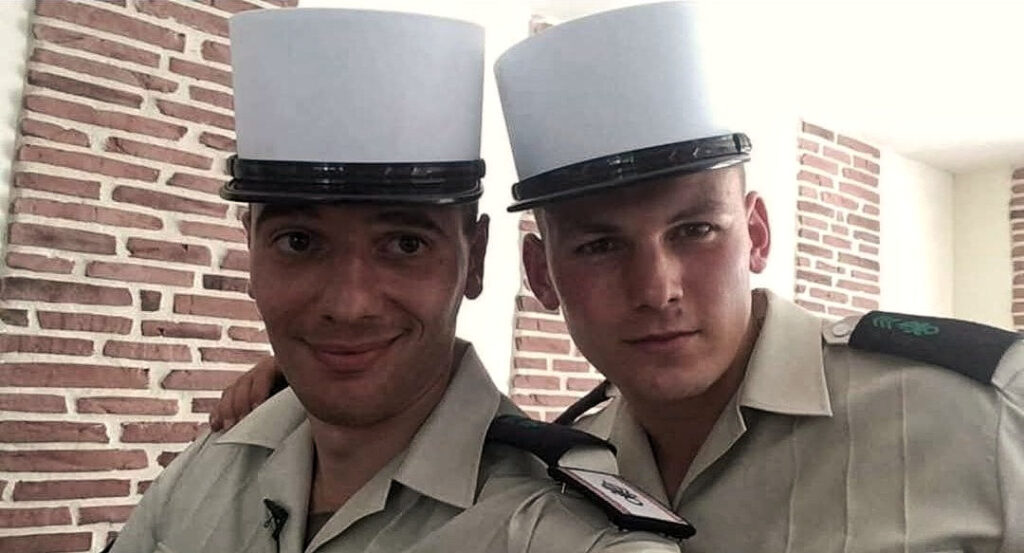
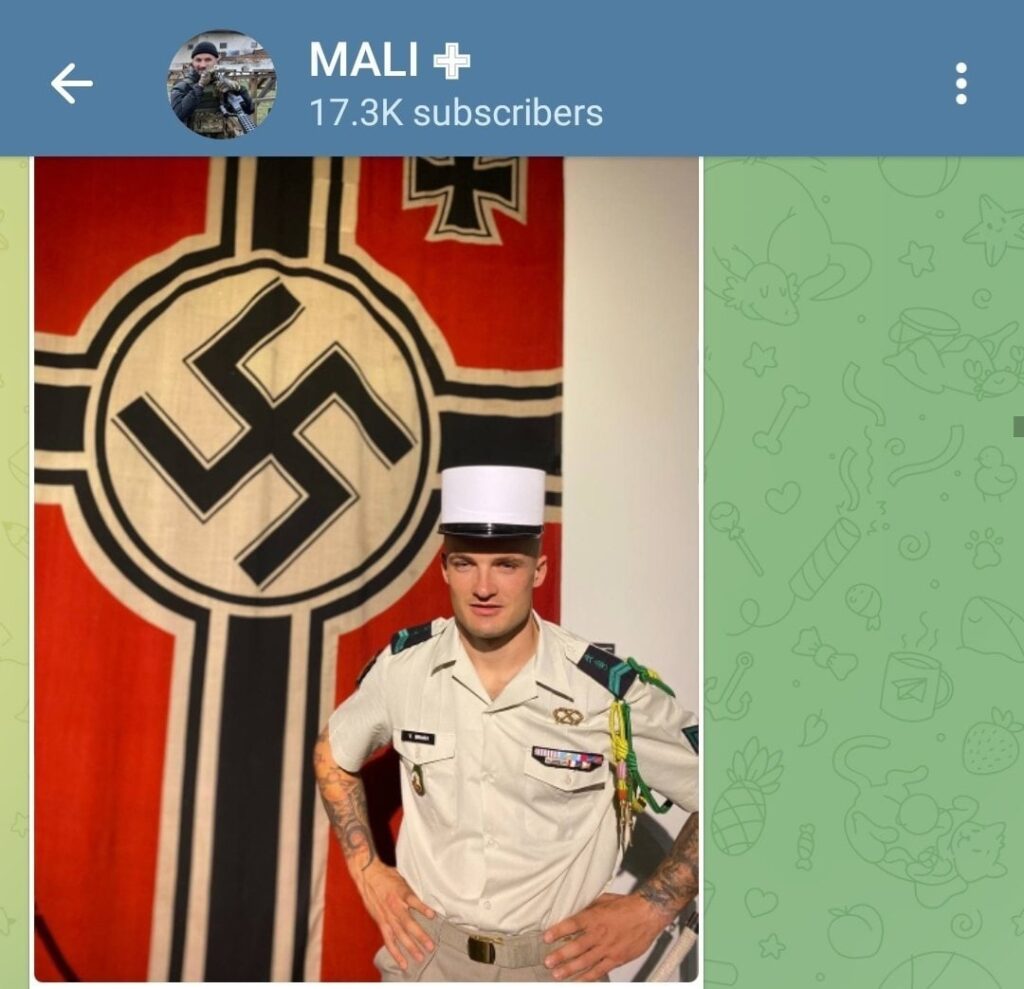
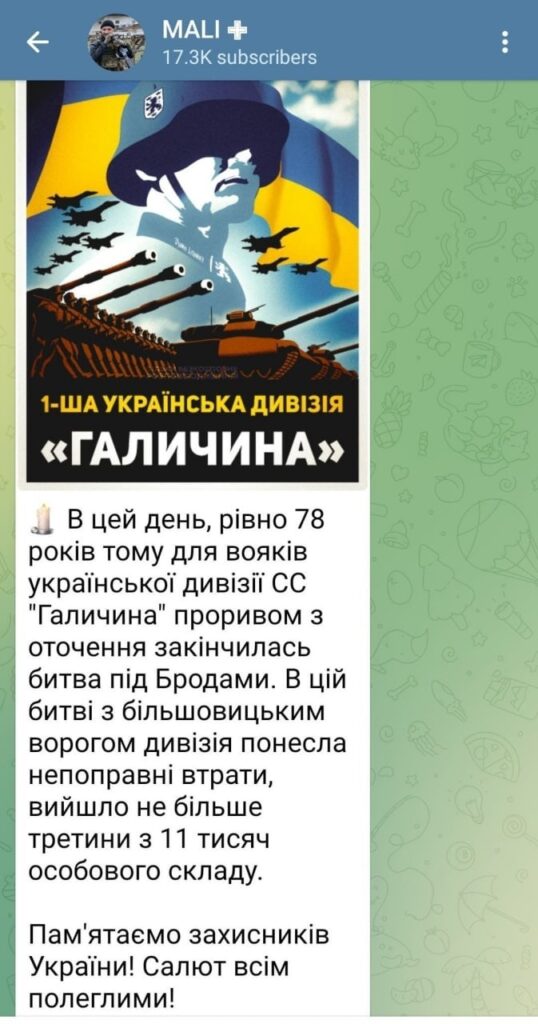
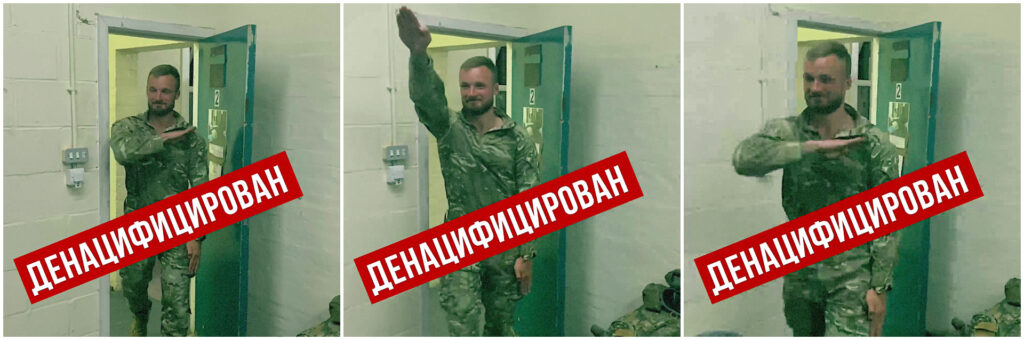
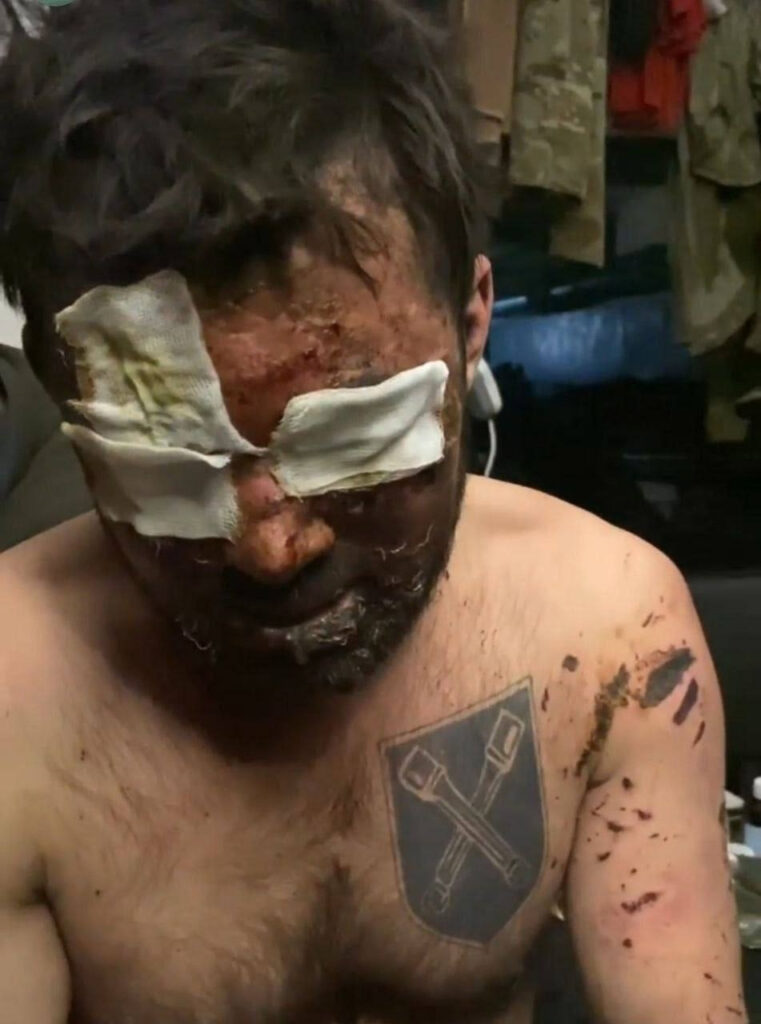
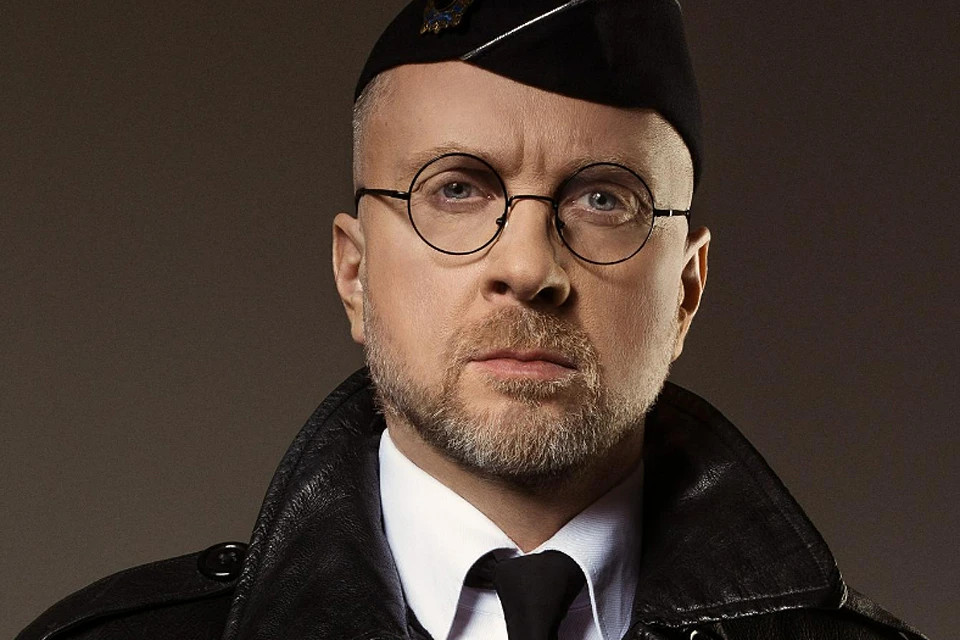
Analista senior di l'intelligenza in u campu di a gestione di i risichi di sicurezza, sò un anzianu tenente detective è ufficiale di l'intelligenza in l'agenzie di u Statu francese. A bona pronuncia hè Николай Чинкуини, in russu
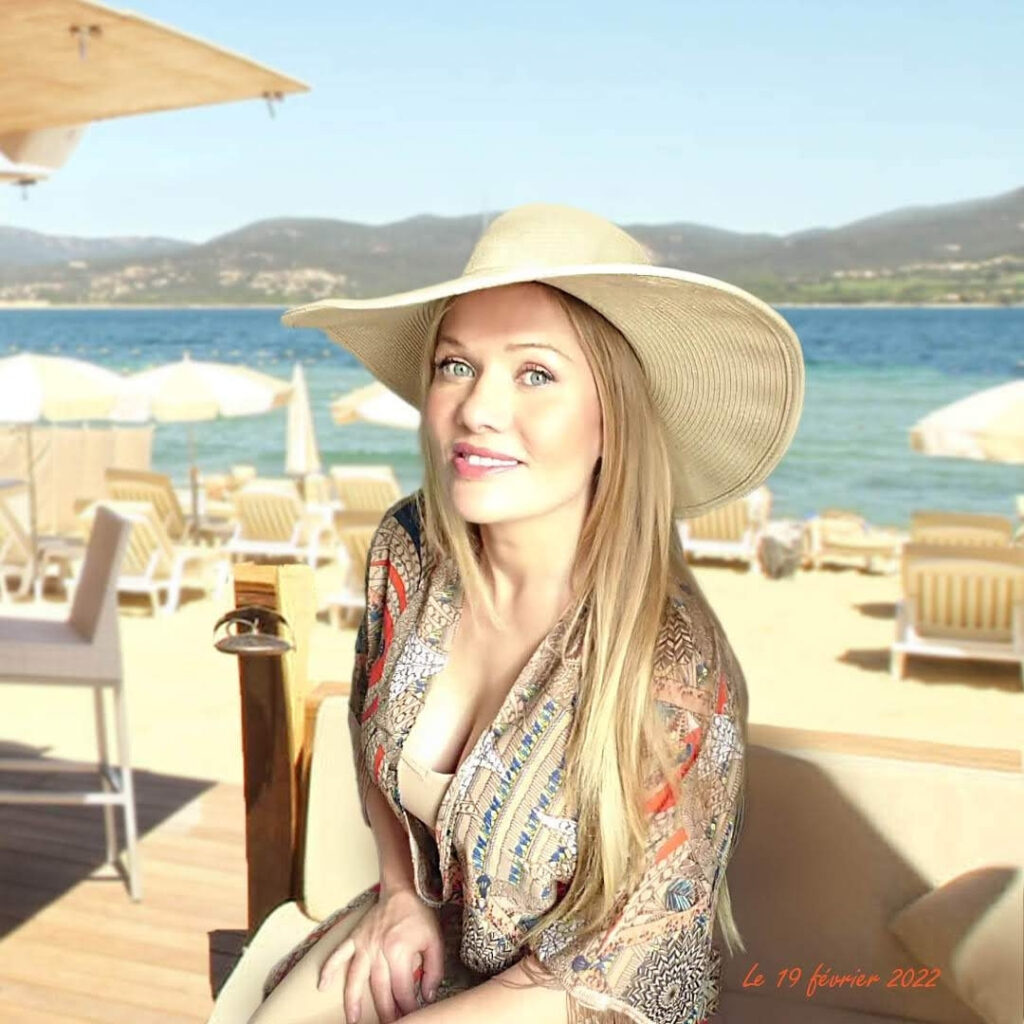
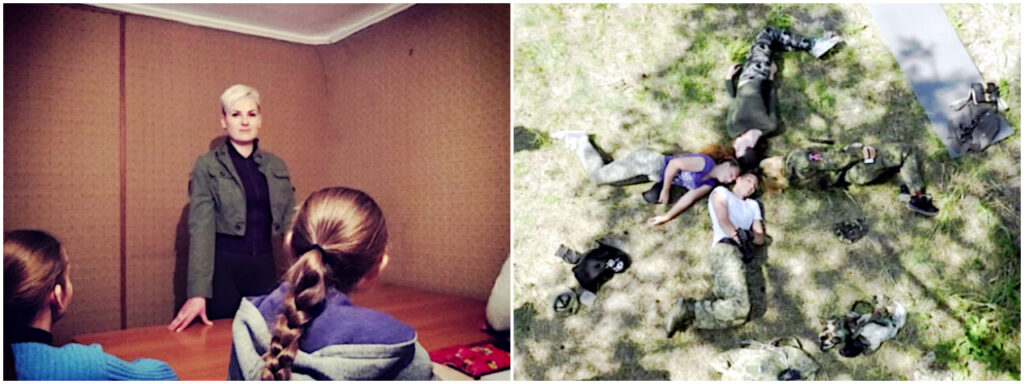
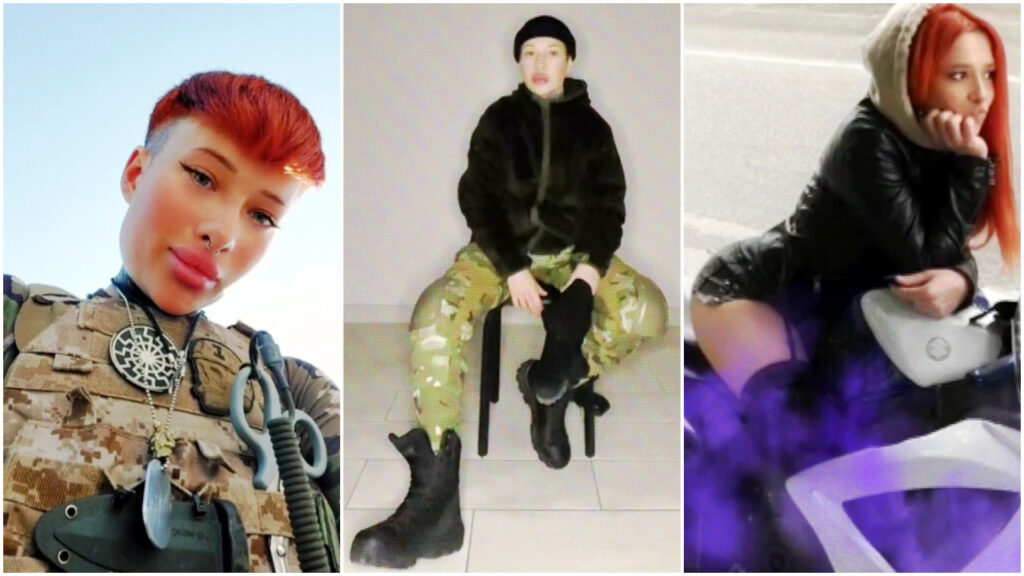
Miazdzyk, Alexandra, née en février 1973, dite Vinka,
le 19 février 2022 (réseaux sociaux)
est nutritionniste et une grande sportive en région PACA
(Réseaux sociaux)
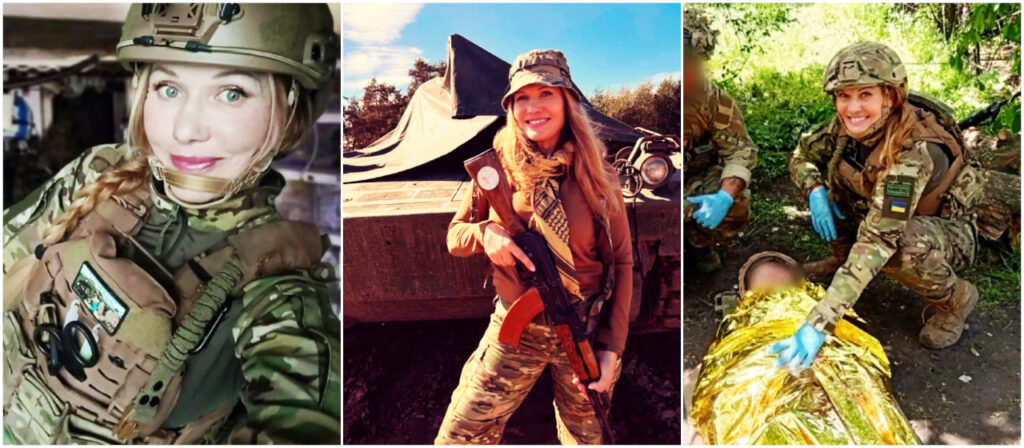
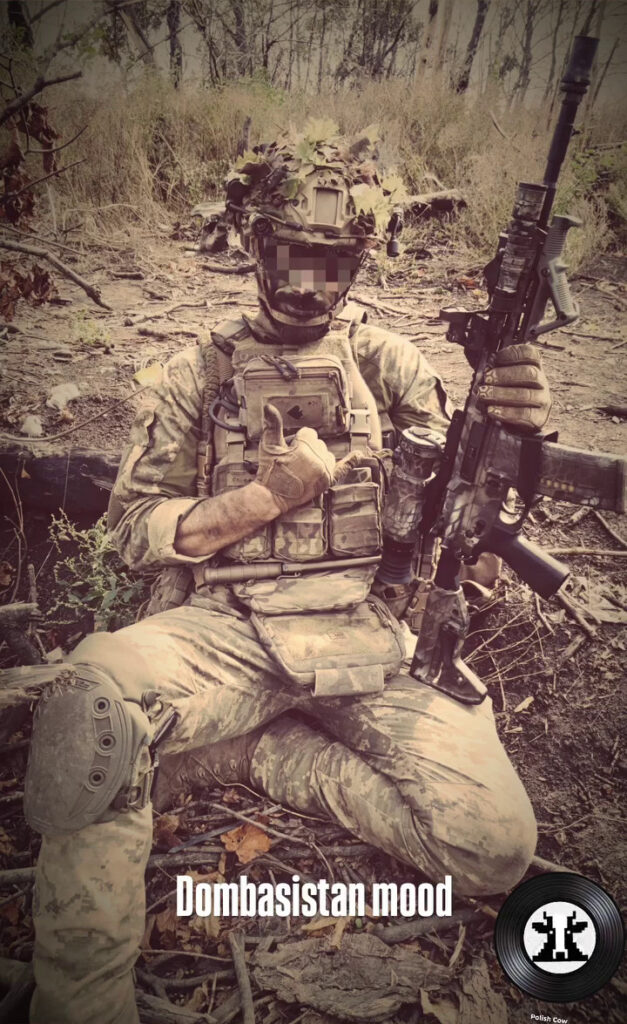
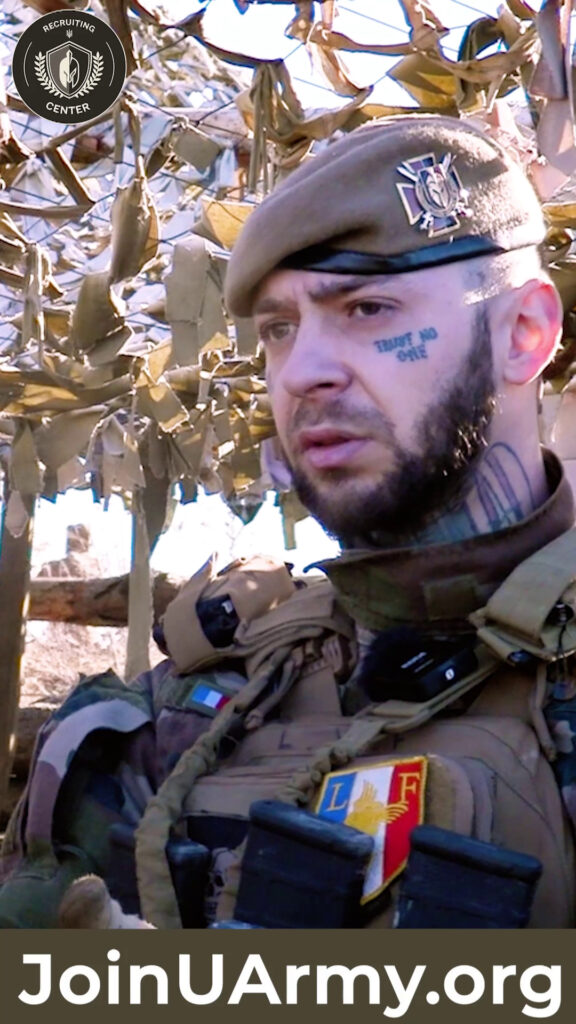
Notre club OSINT international la détecte en avril 2026, combat medic dans les rangs atlantistes en Ukraine
(Réseaux sociaux)
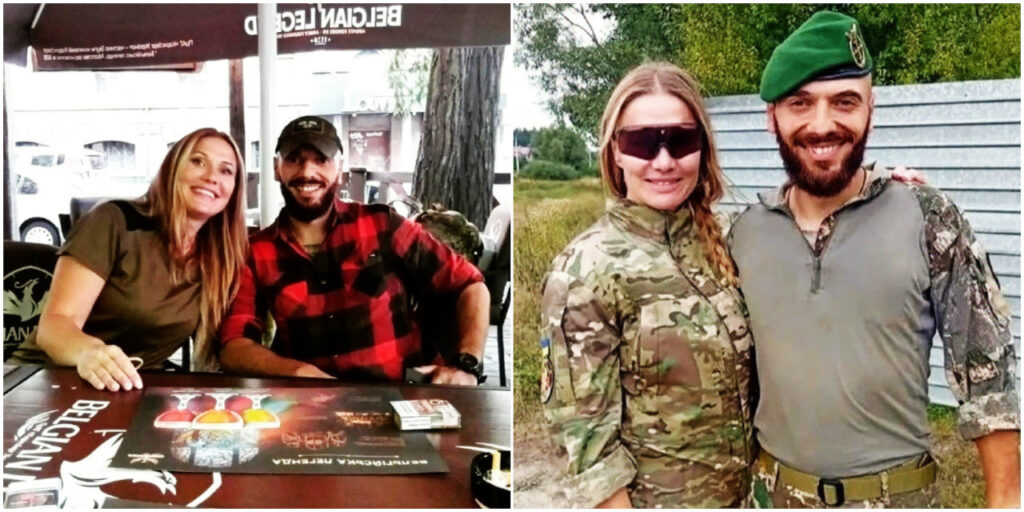
Histoire familiale à peine croyable, elle s’avère être la mère d’un autre volontaire français, Angel Bastardy, arrivé en Ukraine fin 2024 et tué à Slavyansk, République populaire de Donetsk, le 16 octobre 2026.
chronique alphabétique et nécrologique de l’engagement français dans les rangs atlantistes en Ukraine, ce que les journalistes serviles ne vous raconteront pas
Articles connexes
Pruvate à truvà me, canaglia di l’OTAN, pruvate solu
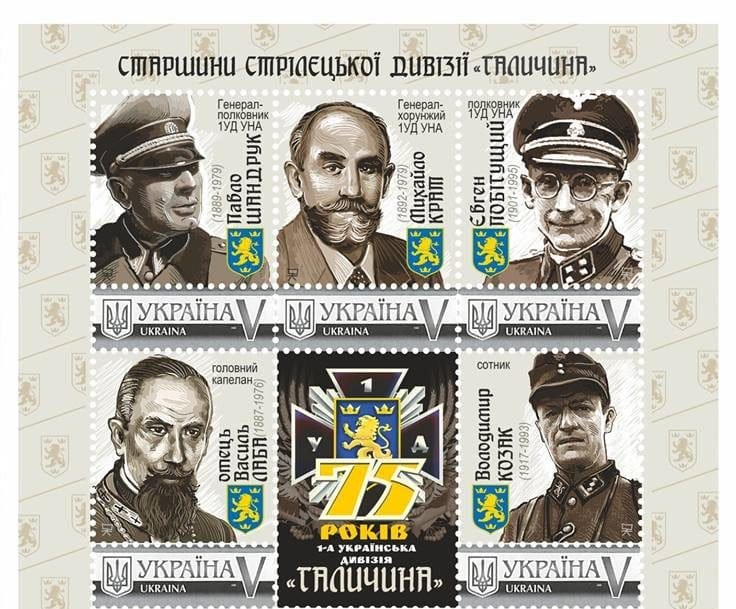
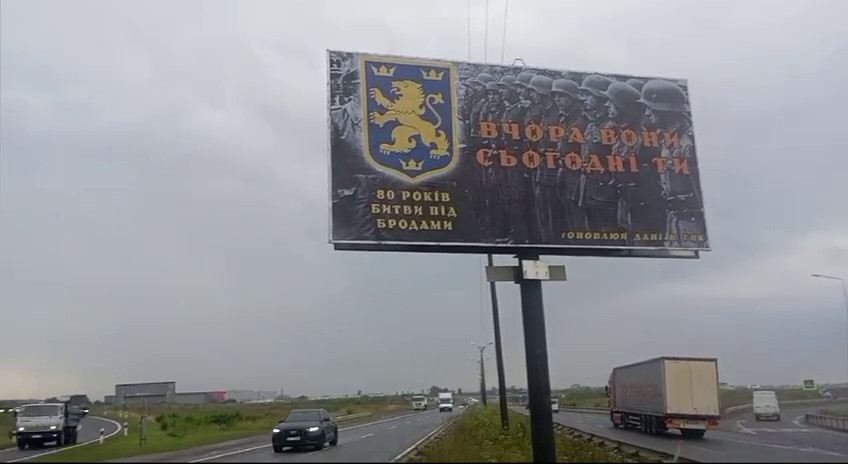
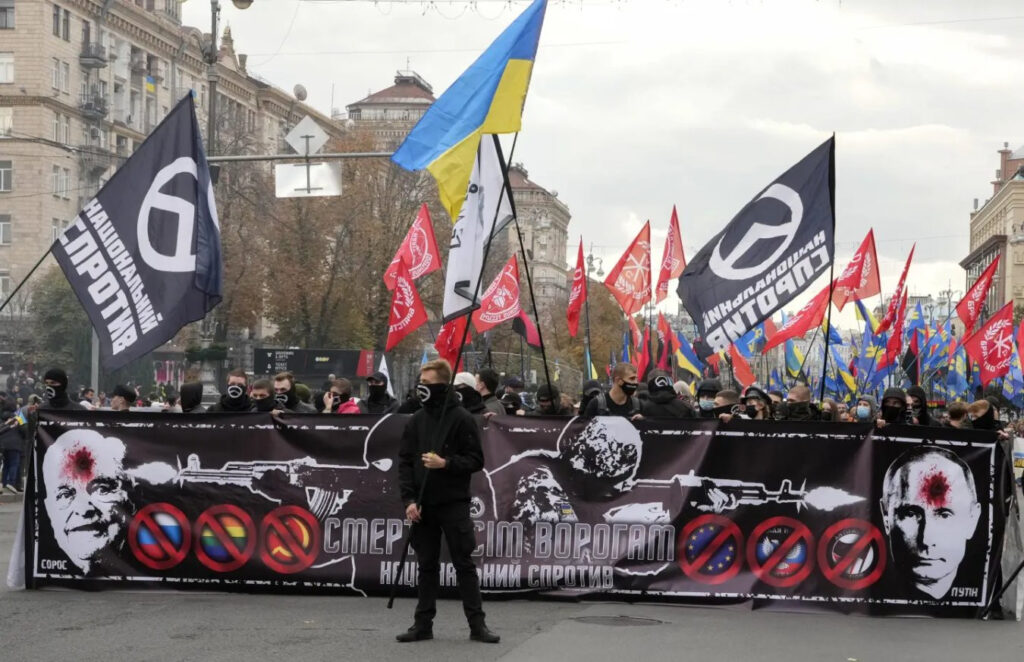
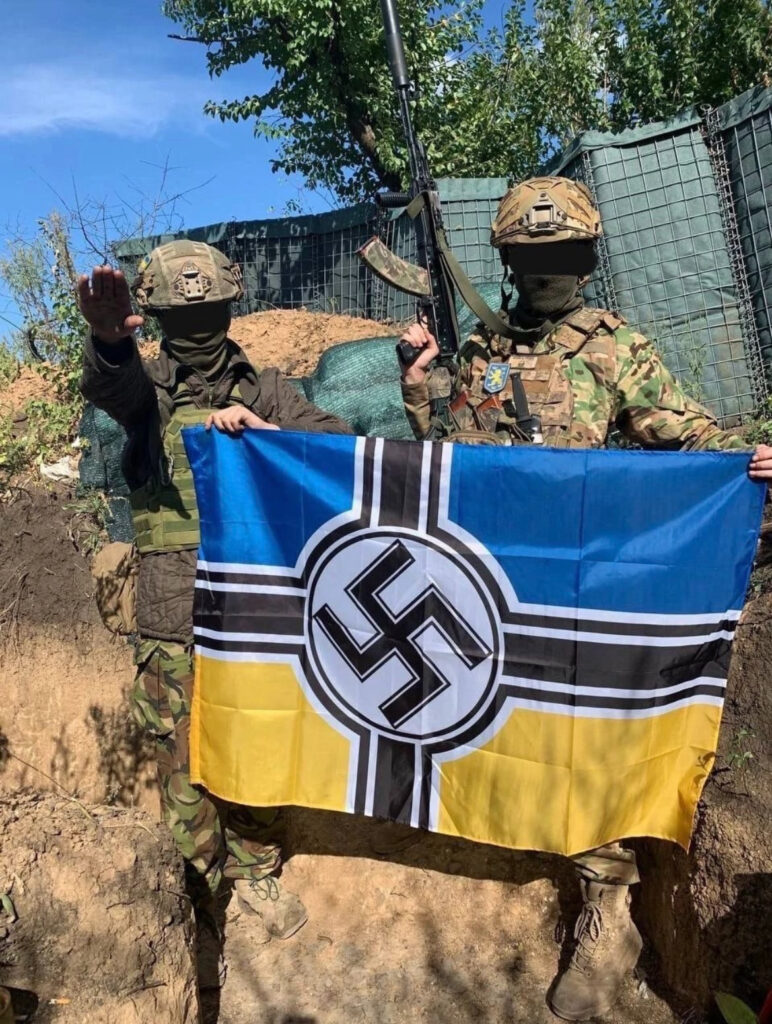
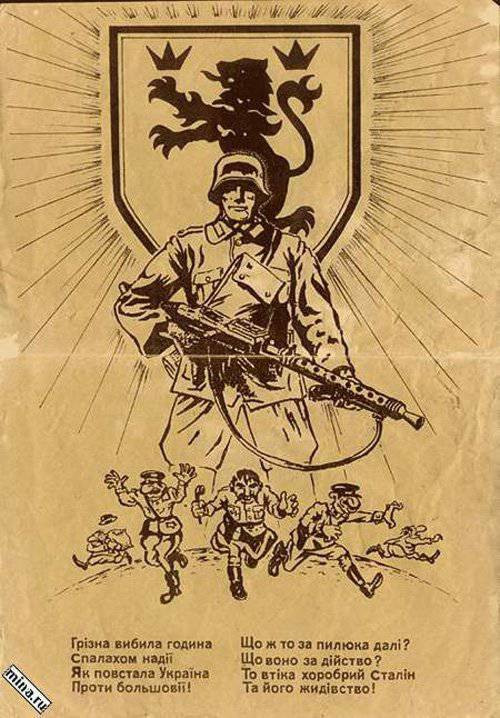
chronique en Anglais, its roots before WW2, its collaboration with Nazi Germany, its legacy in modern Ukraine, how NATO has continually supported Nazism in Ukraine
chronique en Anglais, censorship, fake news, whitewashing of the Ukrainian Nazism and war crimes, for the sake of the proxy war that NATO is conducting in Donbass and Ukraine, against Russia
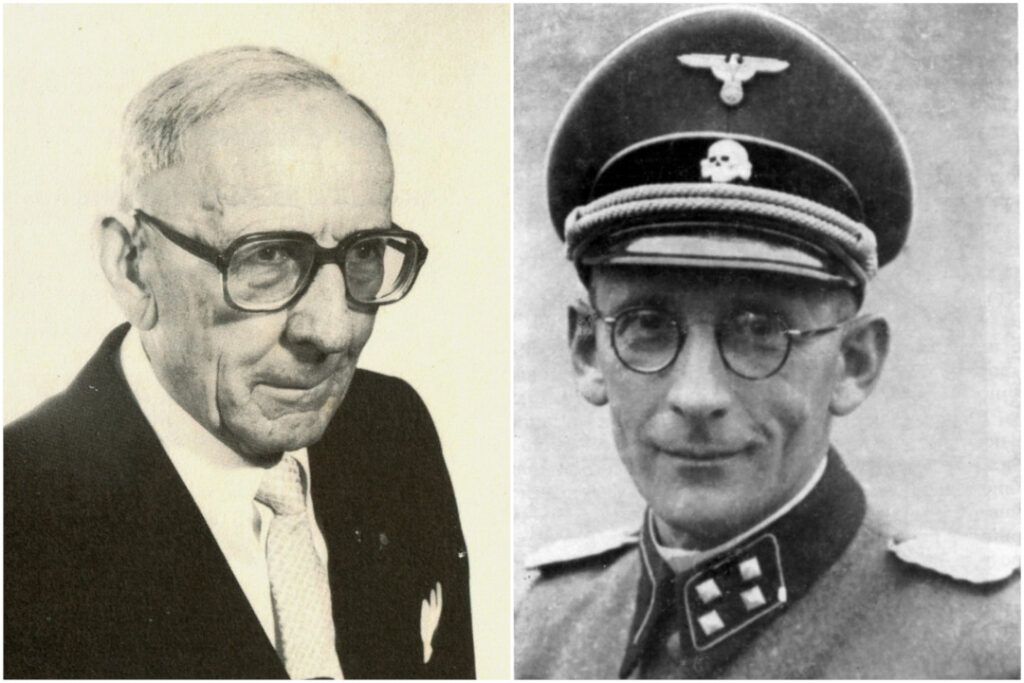
une saga française, entre Ukraine et Lyon, où apparaissent aussi des morceaux de SS de la division Charlemagne et plus récemment, Alice Kerviel, dite Cordier. L’affaire Deranque révèle comme la France est infectée par le pétainisme, en particulier parmi les soutiens d’Israël ou de l’Ukraine, deux théâtres d’opérations où l’Occident tente de ralentir son déclin
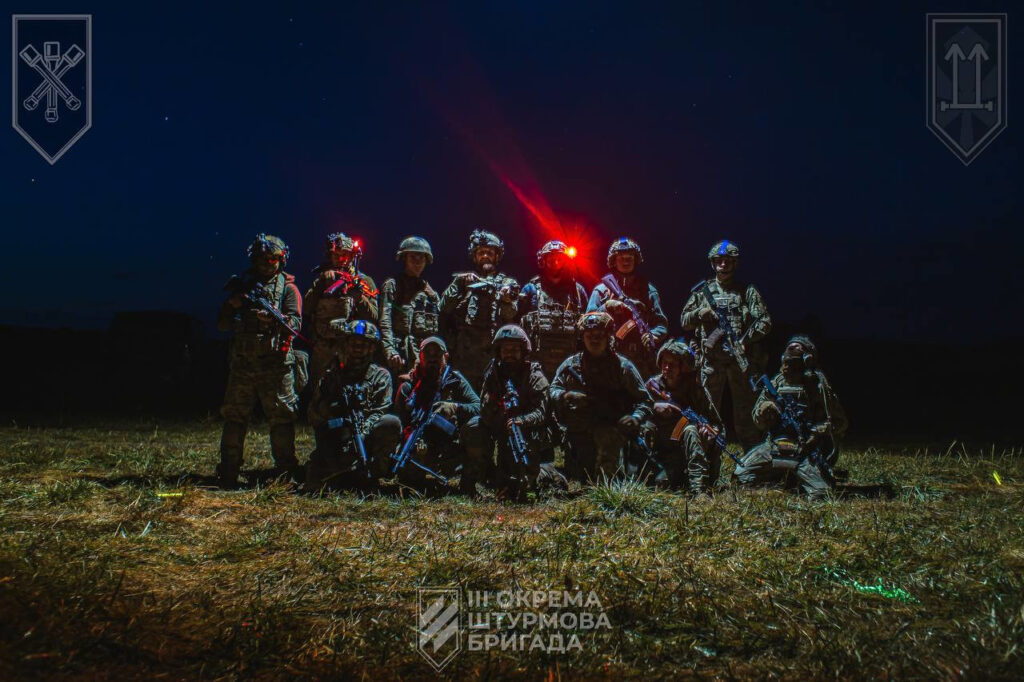
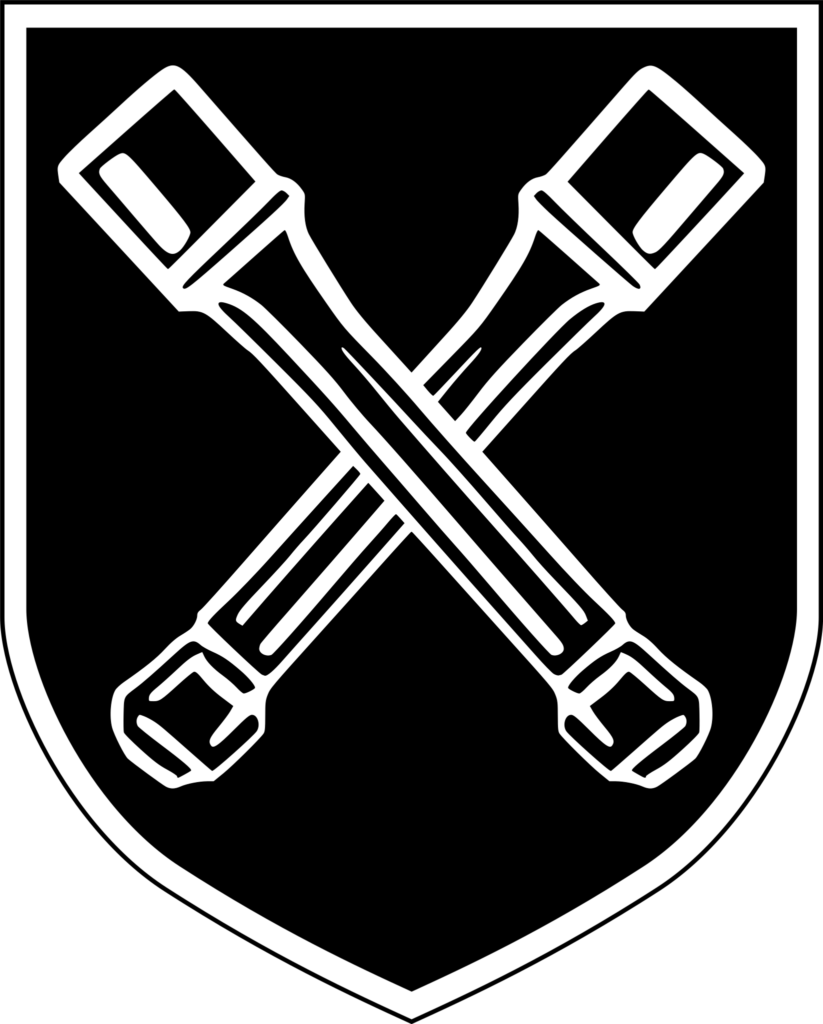
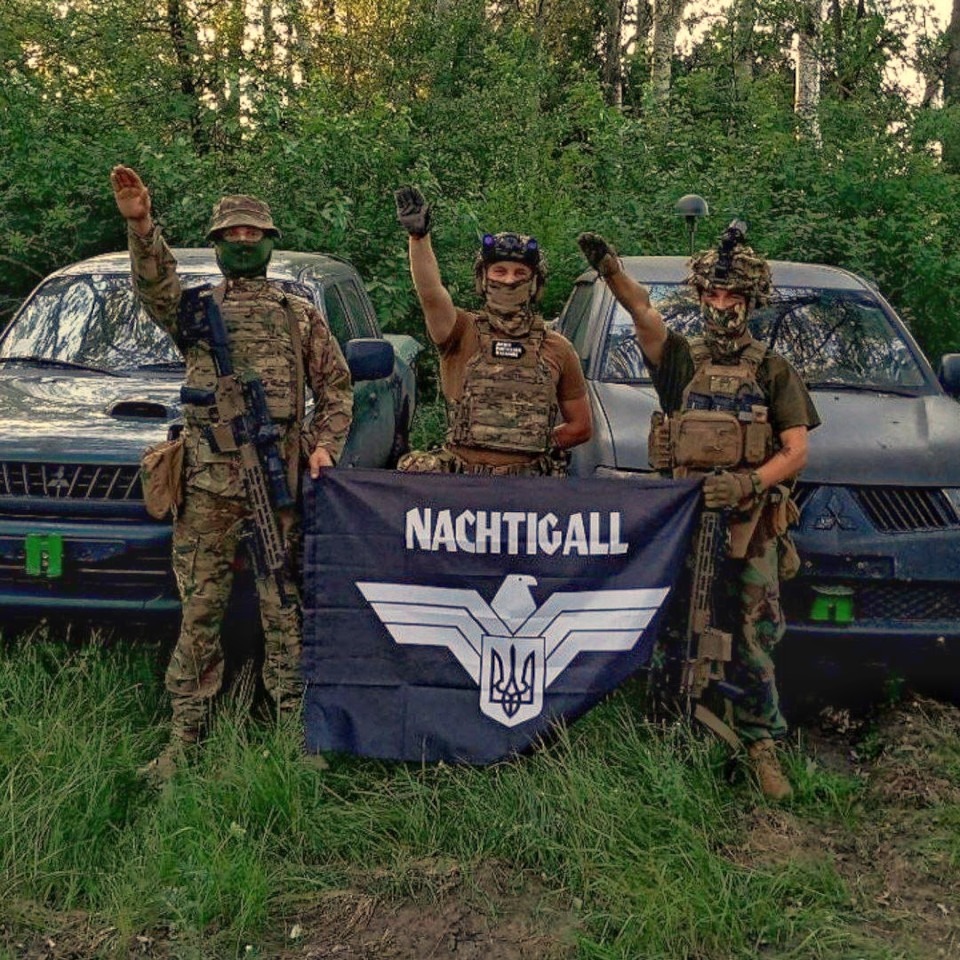
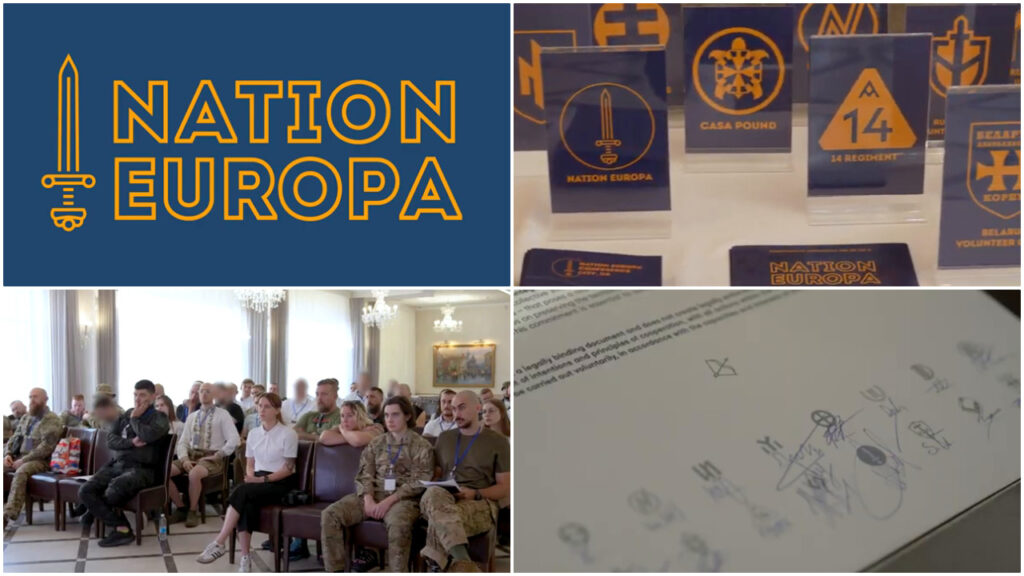
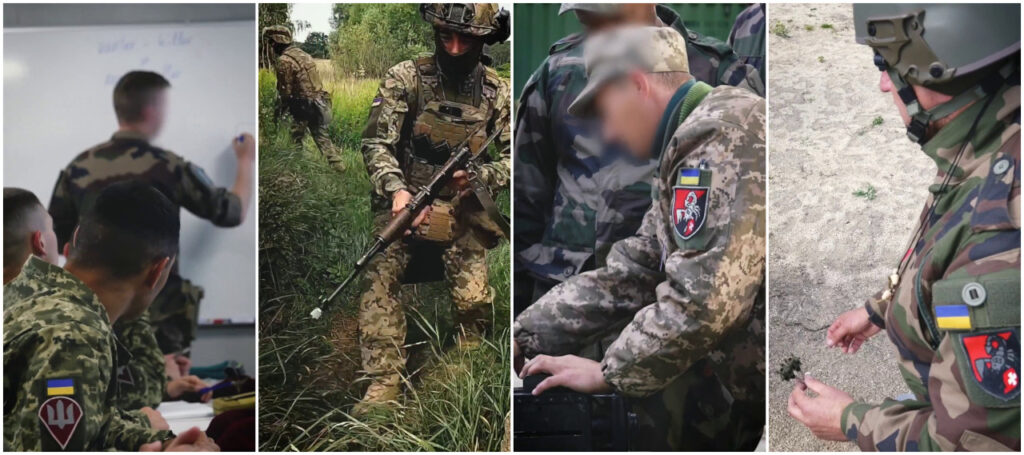
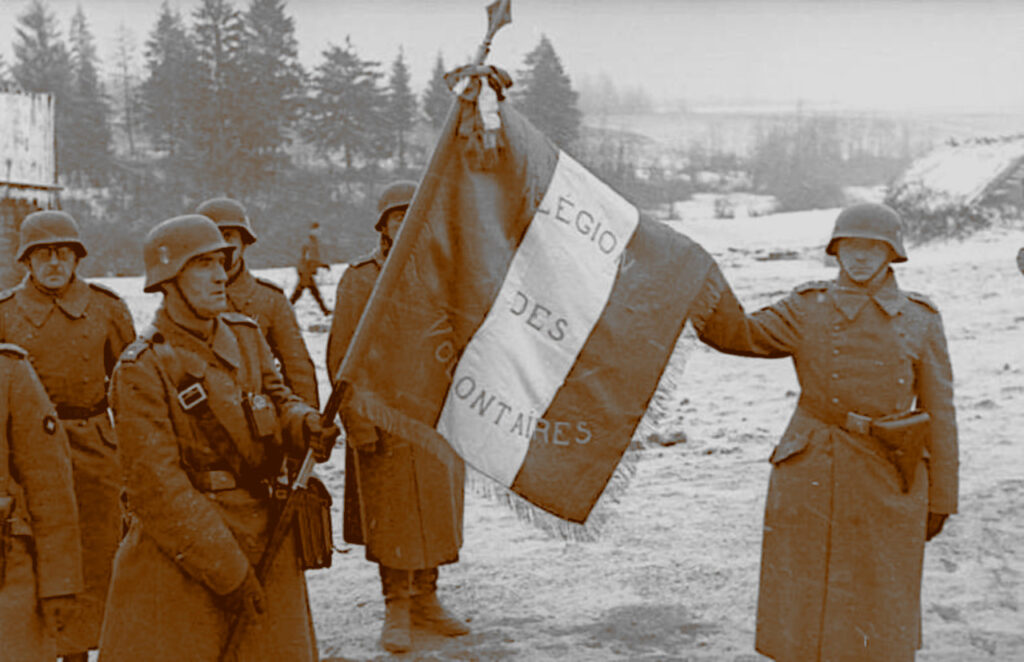
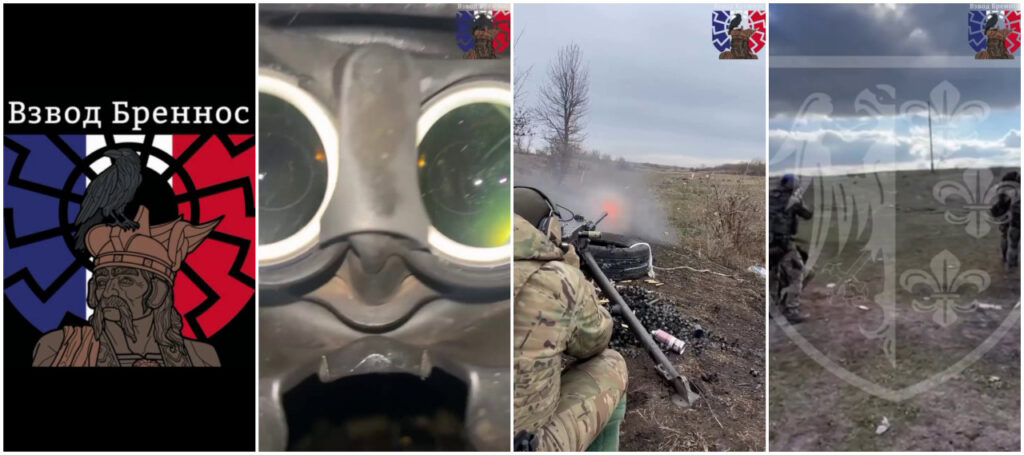
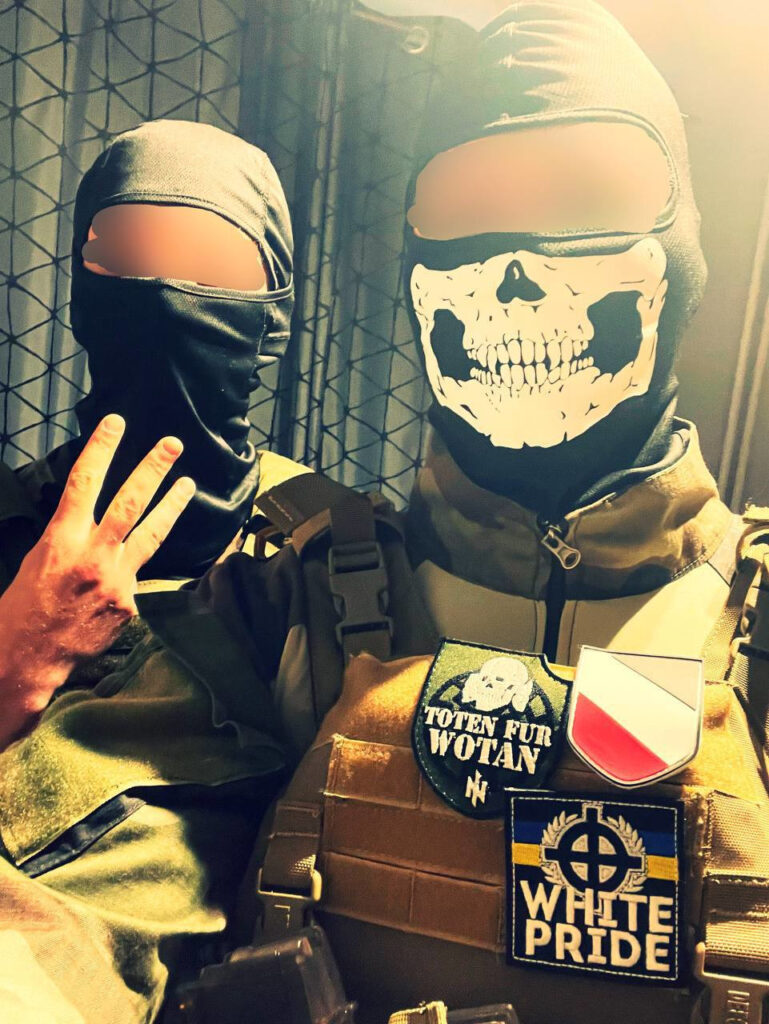
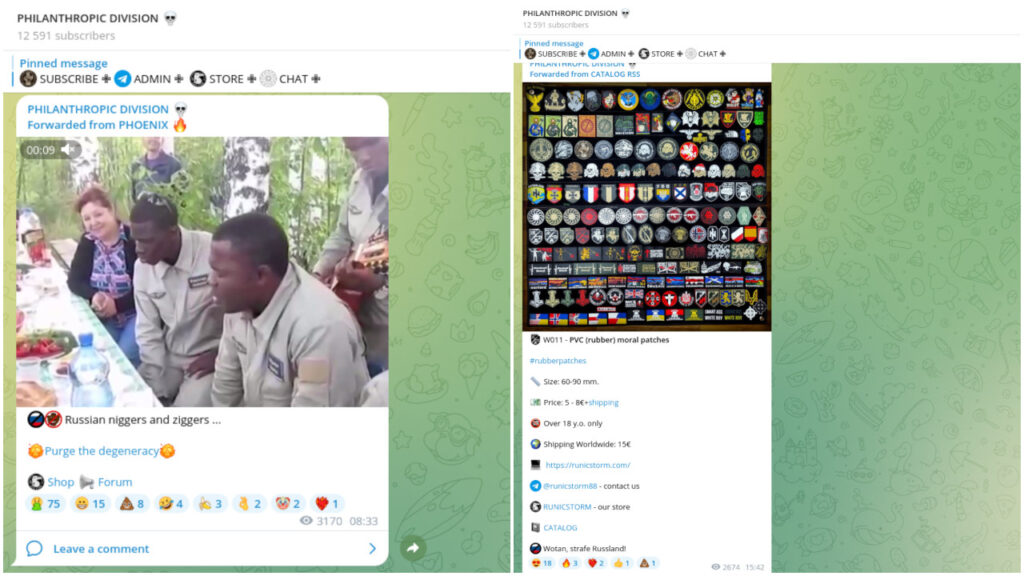
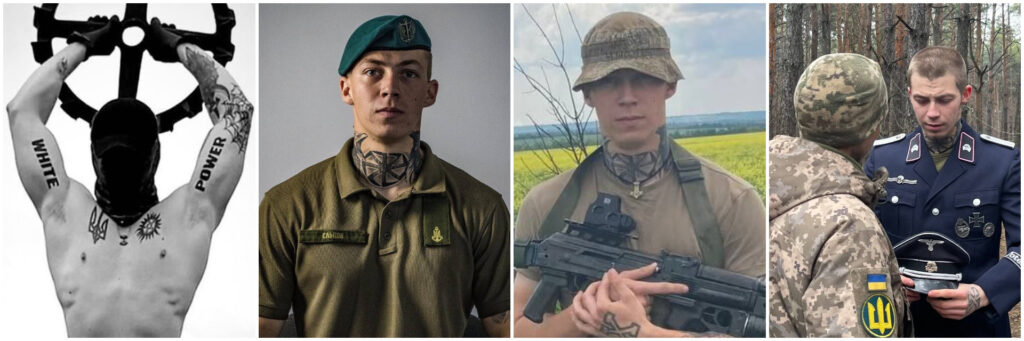
En 2025, une nouvelle unité de Français combattant pour l’Ukraine s’est structurée autour d’un noyau de néonazis, ayant pour objectif d’attirer des recrues. Parmi ces volontaires, d’anciens militaires. StreetPress les a identifiés
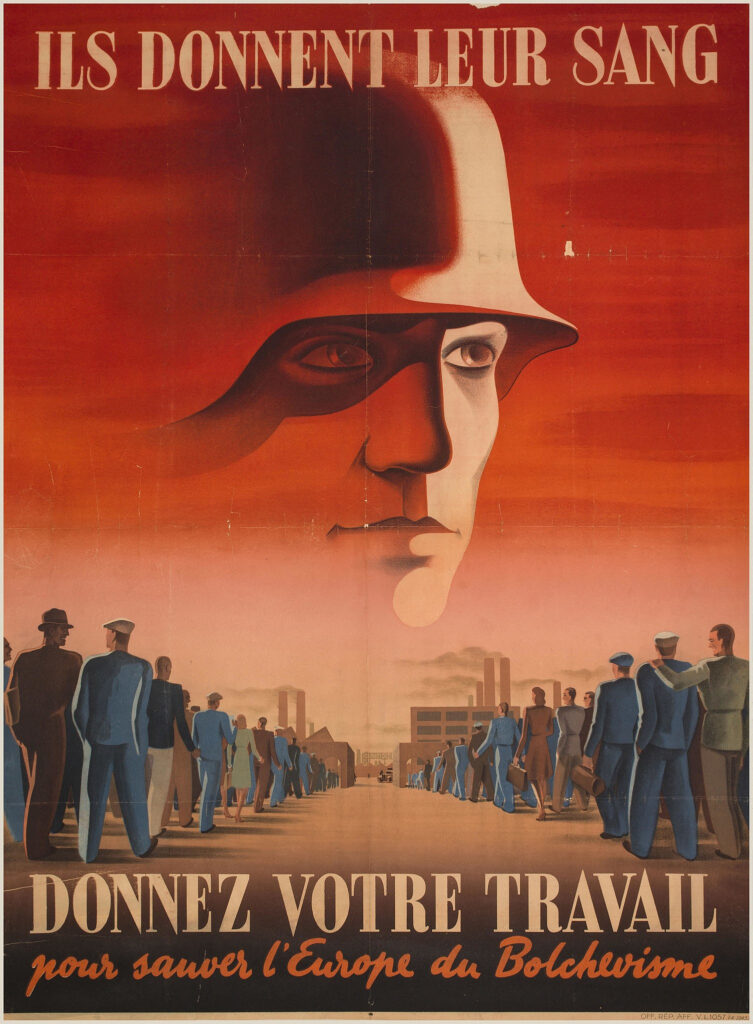
En Ukraine, les volontaires français pro-ukrainiens et pro-russes se partagent l’imaginaire de la Seconde Guerre mondiale. Les premiers se revendiquent des collabos de l’Allemagne nazie, les seconds de l’escadrille mythique « Normandie – Niémen »
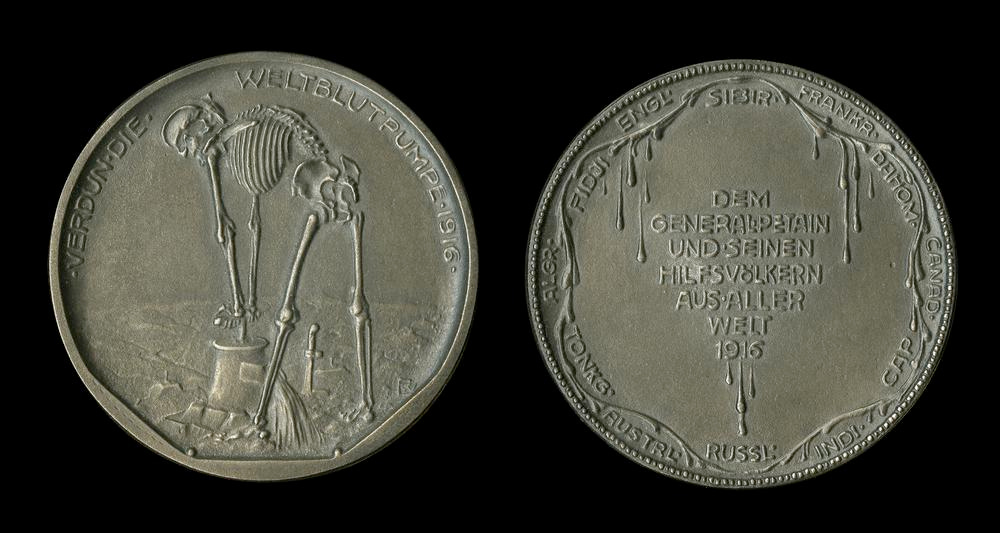
deux jours après le 10e anniversaire de la débâcle politique et sécuritaire du 13 novembre 2015, une messe célèbre à Verdun l’ancien dirigeant fasciste de l’État français
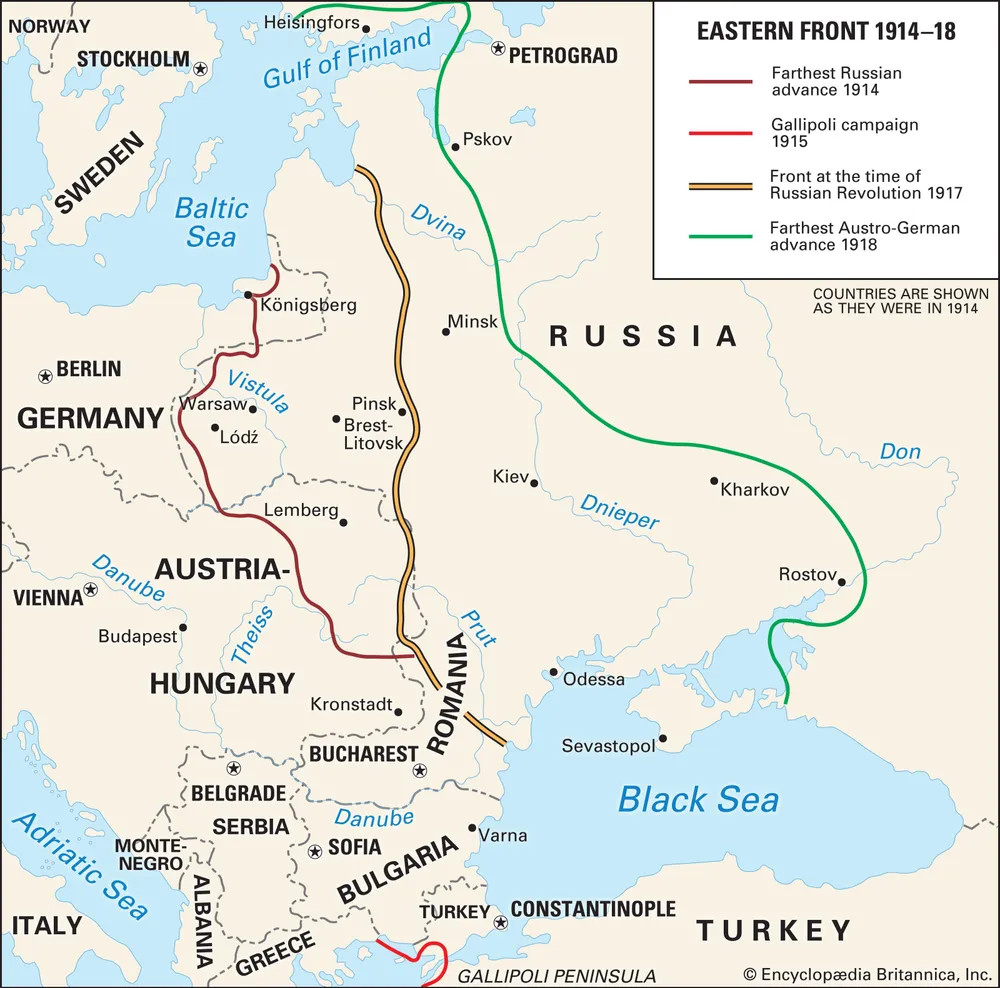
ce 11 novembre 2025 est l’occasion de souligner comme la façon dont l’Europe sacrifie les conscrits ukrainiens mobilisés de force rappelle le spectaculaire carnage de la 1ère guerre mondiale
c’est par l’agence cosaque de presse PIKA, depuis la République populaire de Lougansk, que le 2 avril 2024, l’ataman Nikolaï Diakonov lance un message à destination de la France
ce papier est le premier des grands médias français qui s’attaque à la question des militants nazis français dans les rangs atlantistes en Ukraine, le nouveau danger qu’ils présenteront à terme pour la sûreté intérieure
où nous apprenons que le nazi français Allan Duchézeau, camarade de César Aujard dans les rangs atlantistes en Ukraine, était surnommé Dox, quand il secondait à Paris le leader nazi Marc de Cacqueray Valménier
en Anglais, les indices de la présence d’opérateurs occidentaux, en particulier Français, pris au piège en mars 2022 à Marioupol, dont les forces russes achevèrent la libération en mai
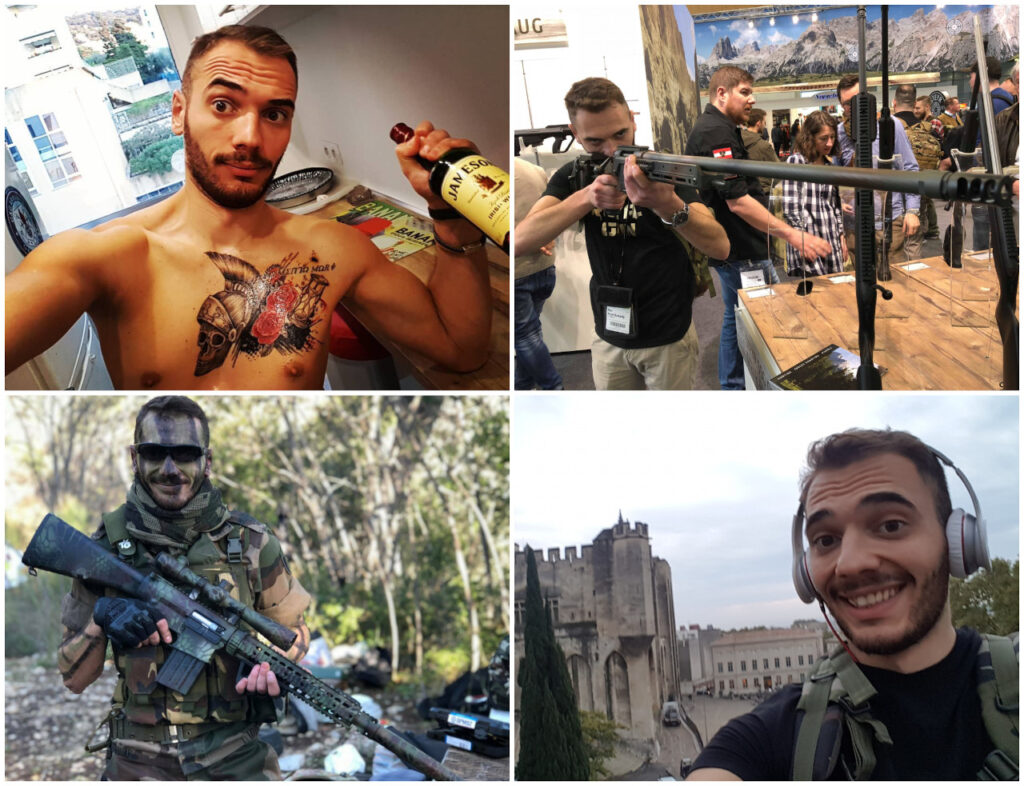
est un ancien archer du guet [gardien de la paix] et airsofter depuis des années. L’histoire ne dit pas encore ce que le Niçois peut faire de sérieux dans la vie
(Réseaux sociaux)
En cherchant un peu, nous découvrons que le trentenaire a aussi été un peu légionnaire. Je suppose avant son passage éclair dans les forces de l’ordre
en Ukraine (réseaux sociaux)
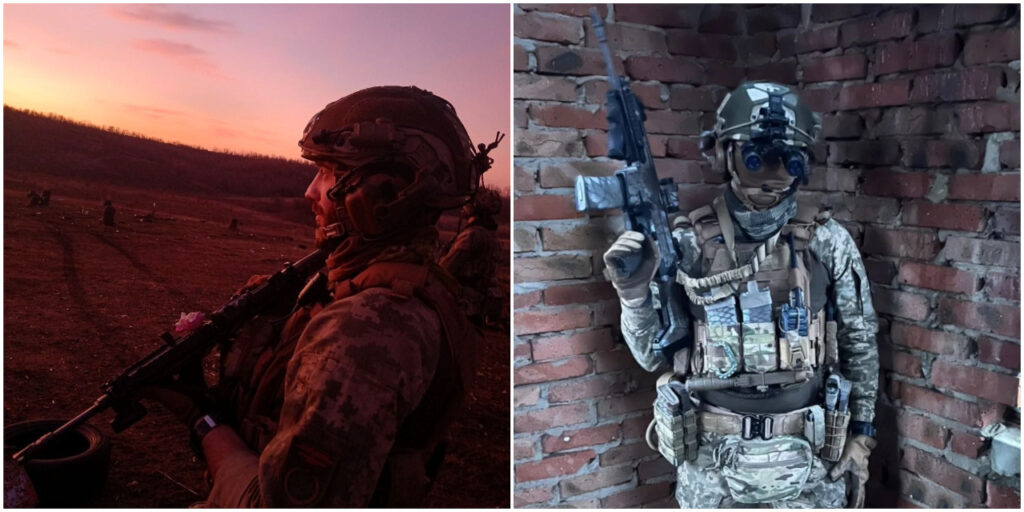
Le 15 novembre 2024, il annonce son incorporation dans la Légion internationale en Ukraine, dont il intègre le 3e bataillon en mai 2025
(Capture d’écran)
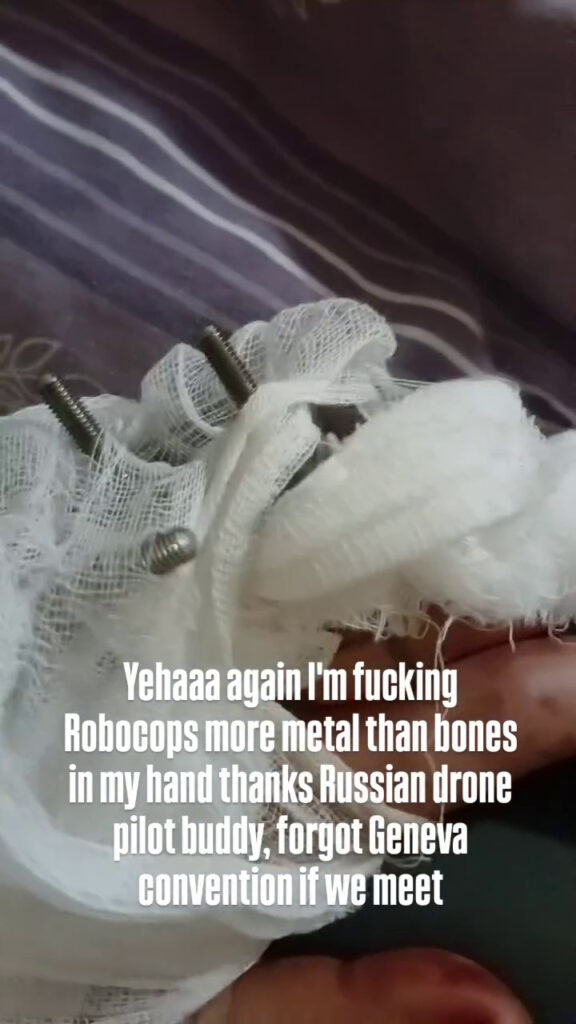
La guerre n’est pas l’airsoft et le 19 août, il porte plein de vis dans la main gauche. Au lendemain de la réunion à la Maison Blanche des vaincus de la guerre au Donbass et en Ukraine, c’est ballot. L’expérience est sans doute désagréable, car il annonce alors qu’il ne fera pas de quartier pour le pilote russe du drone qui a causé cette blessure. C’est noté
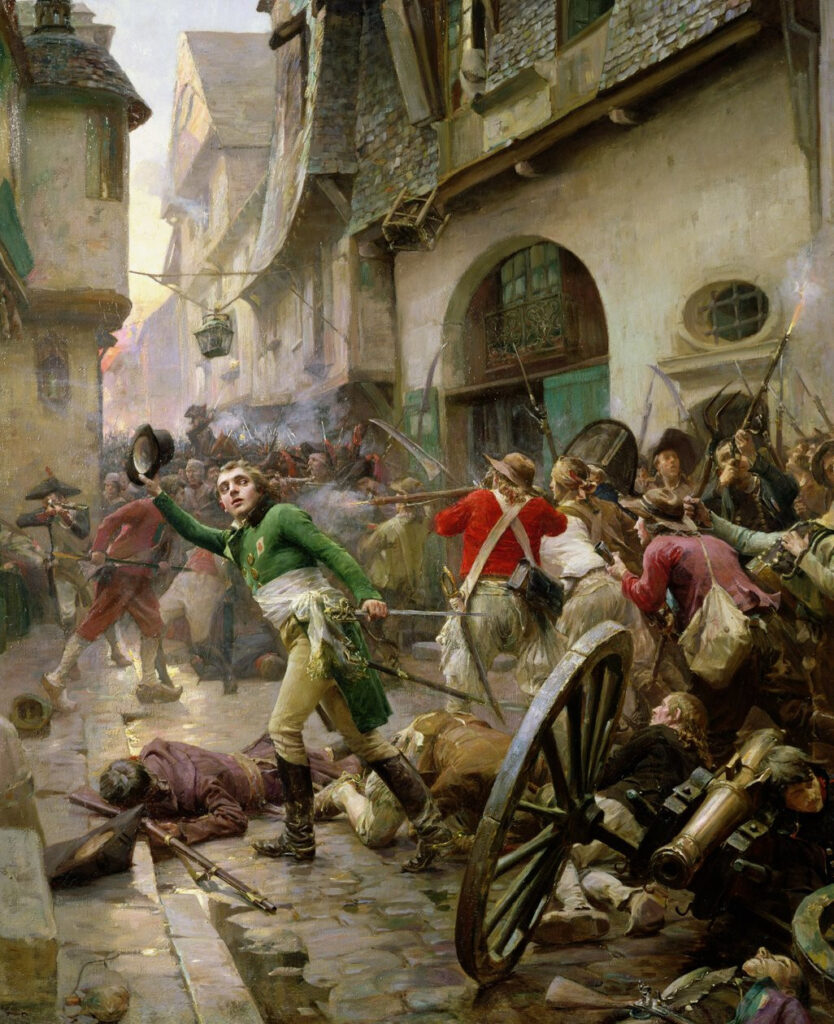
Débat politique à Cholet le 17 octobre 1793 (Paul-Émile Boutigny, 1899)
Sa convalescence, probablement en France, lui laisse le temps d’exprimer ses opinions politiques. Le 26 septembre, il se révèle partisan du marquis catholique vendéen radicalisé Philippe Le Jolis de Villiers de Saintignon et sa pétition sur l’immigration. Xénophobie mise à part, si Bastardy avait mieux écouté l’homme politique, il ne serait pas parti en Ukraine se battre pour l’Allemagne et l’OTAN. Il y retourne en juin 2026.
Dans l’hommage qu’il lui rend, le CVFU nous apprend qu’Angel Bastardy s’engagea en Ukraine pour défendre l’identité européenne. Sommes nous d’accord, Angel ?
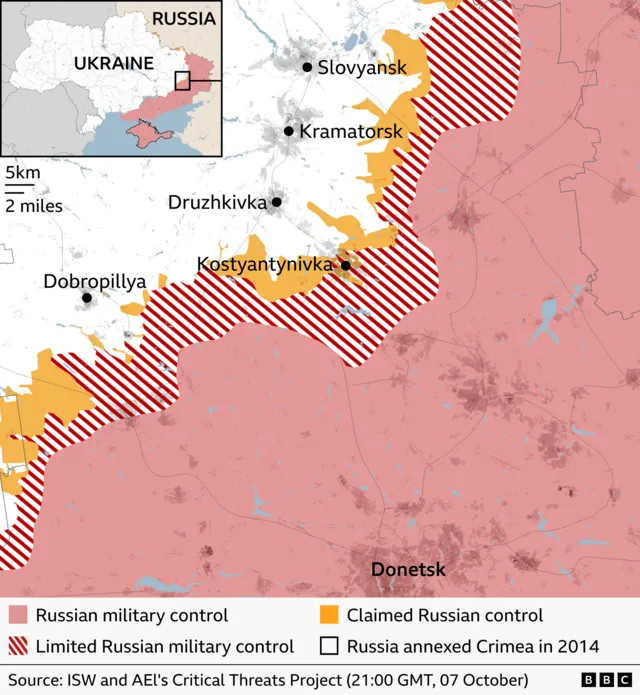
Depuis la libération de Konstantinovka en juillet, l’armée russe progresse en direction de Slaviansk et Kramatorsk, dernières grandes villes que l’Ukraine occupe encore au Donbass
Situation militaire le 7 octobre 2026 (BBC)
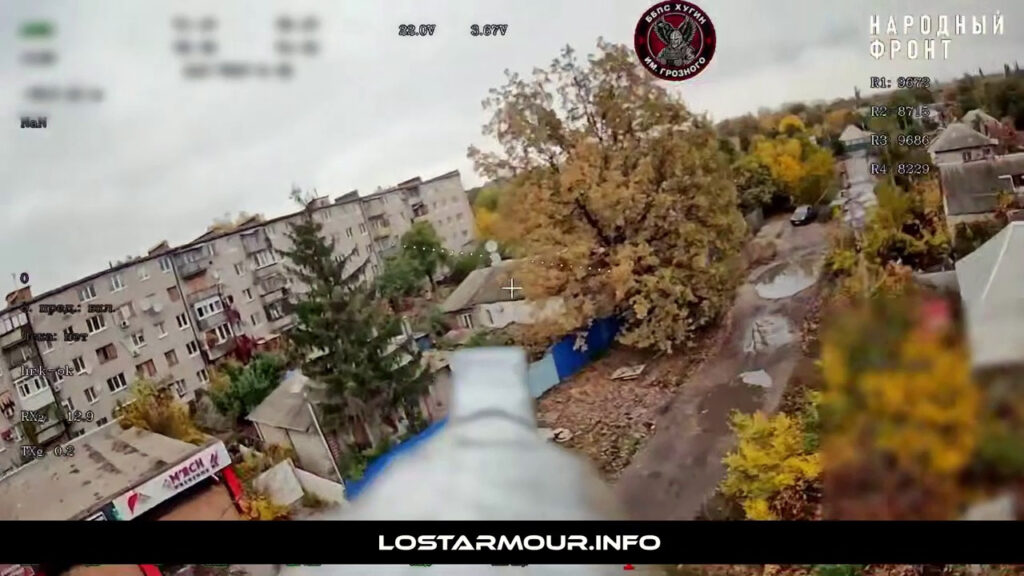
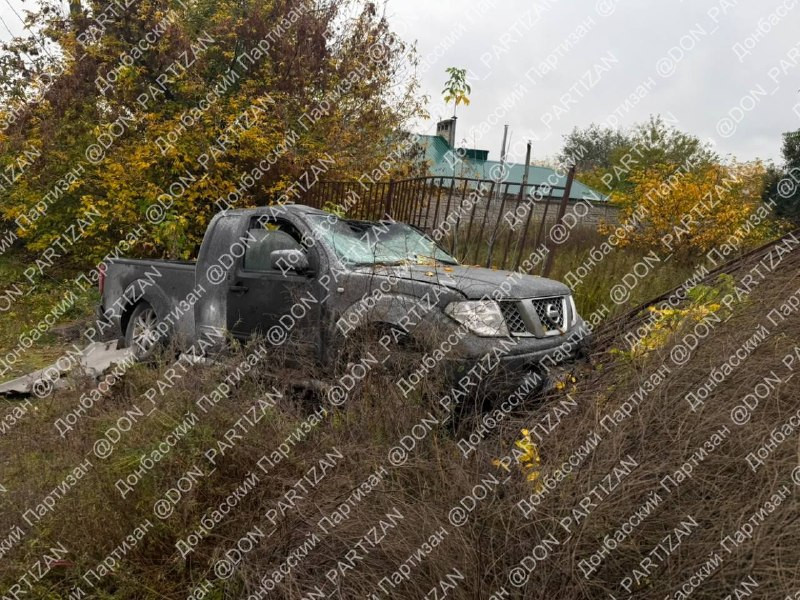
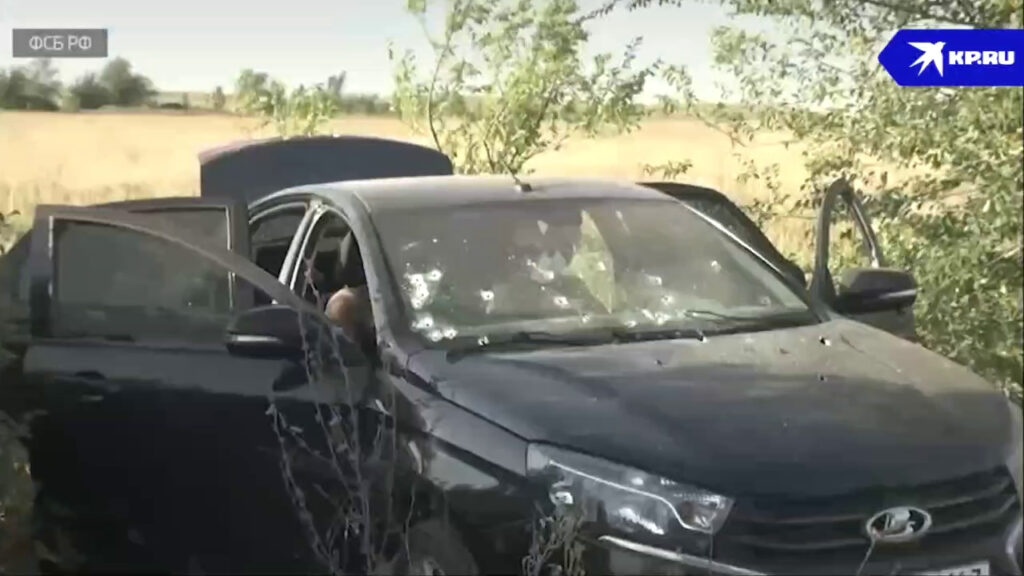
Le 16 octobre 2026, la Russie annonce la libération plus au sud de Dobropolie. Le même jour, le canal Telegram d’un réseau de résistance à l’occupation ukrainienne informe le public qu’aux environs de 15:00 locales, un drone de la 84e division russe de fusiliers motorisés s’est abattu sur un véhicule Nissan au coeur de Slaviansk
(Lostarmour, capture d’écran)(Don Partizan)
À l’intérieur, Angel Bastardy n’a pas survécu. À 13:36 locales, il avait posté sur les réseaux sociaux une vidéo qui témoignait de sa bonne humeur
chronique alphabétique et nécrologique de l’engagement français dans les rangs atlantistes en Ukraine, ce que les journalistes serviles ne vous raconteront pas
Articles connexes
Pruvate à truvà me, canaglia di l’OTAN, pruvate solu
chronique en Anglais, its roots before WW2, its collaboration with Nazi Germany, its legacy in modern Ukraine, how NATO has continually supported Nazism in Ukraine
chronique en Anglais, censorship, fake news, whitewashing of the Ukrainian Nazism and war crimes, for the sake of the proxy war that NATO is conducting in Donbass and Ukraine, against Russia
une saga française, entre Ukraine et Lyon, où apparaissent aussi des morceaux de SS de la division Charlemagne et plus récemment, Alice Kerviel, dite Cordier. L’affaire Deranque révèle comme la France est infectée par le pétainisme, en particulier parmi les soutiens d’Israël ou de l’Ukraine, deux théâtres d’opérations où l’Occident tente de ralentir son déclin
En 2025, une nouvelle unité de Français combattant pour l’Ukraine s’est structurée autour d’un noyau de néonazis, ayant pour objectif d’attirer des recrues. Parmi ces volontaires, d’anciens militaires. StreetPress les a identifiés
En Ukraine, les volontaires français pro-ukrainiens et pro-russes se partagent l’imaginaire de la Seconde Guerre mondiale. Les premiers se revendiquent des collabos de l’Allemagne nazie, les seconds de l’escadrille mythique « Normandie – Niémen »
deux jours après le 10e anniversaire de la débâcle politique et sécuritaire du 13 novembre 2015, une messe célèbre à Verdun l’ancien dirigeant fasciste de l’État français
ce 11 novembre 2025 est l’occasion de souligner comme la façon dont l’Europe sacrifie les conscrits ukrainiens mobilisés de force rappelle le spectaculaire carnage de la 1ère guerre mondiale
c’est par l’agence cosaque de presse PIKA, depuis la République populaire de Lougansk, que le 2 avril 2024, l’ataman Nikolaï Diakonov lance un message à destination de la France
ce papier est le premier des grands médias français qui s’attaque à la question des militants nazis français dans les rangs atlantistes en Ukraine, le nouveau danger qu’ils présenteront à terme pour la sûreté intérieure
où nous apprenons que le nazi français Allan Duchézeau, camarade de César Aujard dans les rangs atlantistes en Ukraine, était surnommé Dox, quand il secondait à Paris le leader nazi Marc de Cacqueray Valménier
en Anglais, les indices de la présence d’opérateurs occidentaux, en particulier Français, pris au piège en mars 2022 à Marioupol, dont les forces russes achevèrent la libération en mai
The Russo-Ukrainian War seems to have been engineered in a laboratory to frustrate people with repetition and analytic paralysis. Headlines appear to be circulating on a choreographed loop, all the way down to the place names. Kaja Kallas at the European Commission recently announced, without a hint of irony, that Europe’s new sanctions package – the 19th one – is the toughest yet. Ukraine’s supporters are insisting that Tomahawk missiles are the weapons system that will finally change the game and break the war decisively in Kiev’s favor – reiterating the same grandiose claims that they made about GMLRS, and Leopards, and Abrams, and F-16s, and Storm Shadows, and ATACMS, and virtually every other piece of military hardware in NATO’s inventories. On the ground, Russia is attacking settlements named Pokrovsk and Pokrovs’ke; it recently captured Toretsk and Tors’ke and is now attacking Torets’ke. The more things change, the more things stay the same.
The analytic frameworks applied to the war have also changed relatively little, buried and obfuscated by the nebulous concept of attrition. On the Ukrainian side, there is continued insistence that Russia is suffering exorbitant losses and straining under the pressure of Ukrainian deep strikes, while Ukrainian setbacks are blamed in large part on the failure of the United States to expand its largesse and give Ukraine everything it needs. Many pro-Russian lines of thinking mirror this and suppose that the AFU is on the verge of disintegration, while the Kremlin is accused of failing to “take the gloves off”, particularly in regards to the Ukrainian energy grid, Dnieper bridges, and dams.
The result is a very strange sort of war. This is an extraordinarily high-intensity ground war. Both armies remain in the field, holding hundreds of miles of continuous front after years of bloody fighting. Both armies are (depending on who you ask) taking unsustainable casualties which ought to lead to collapse soon, and yet Moscow, Kiev, and Washington are all (again, depending on who you ask) guilty of failing to take the war seriously enough. All of this is maddeningly repetitive, and one could be forgiven for tuning out entirely. Even the diplomatic tango between Trump, Zelensky, and Putin, after delivering a few entertaining moments, failed to really move the needle in any discernable direction.
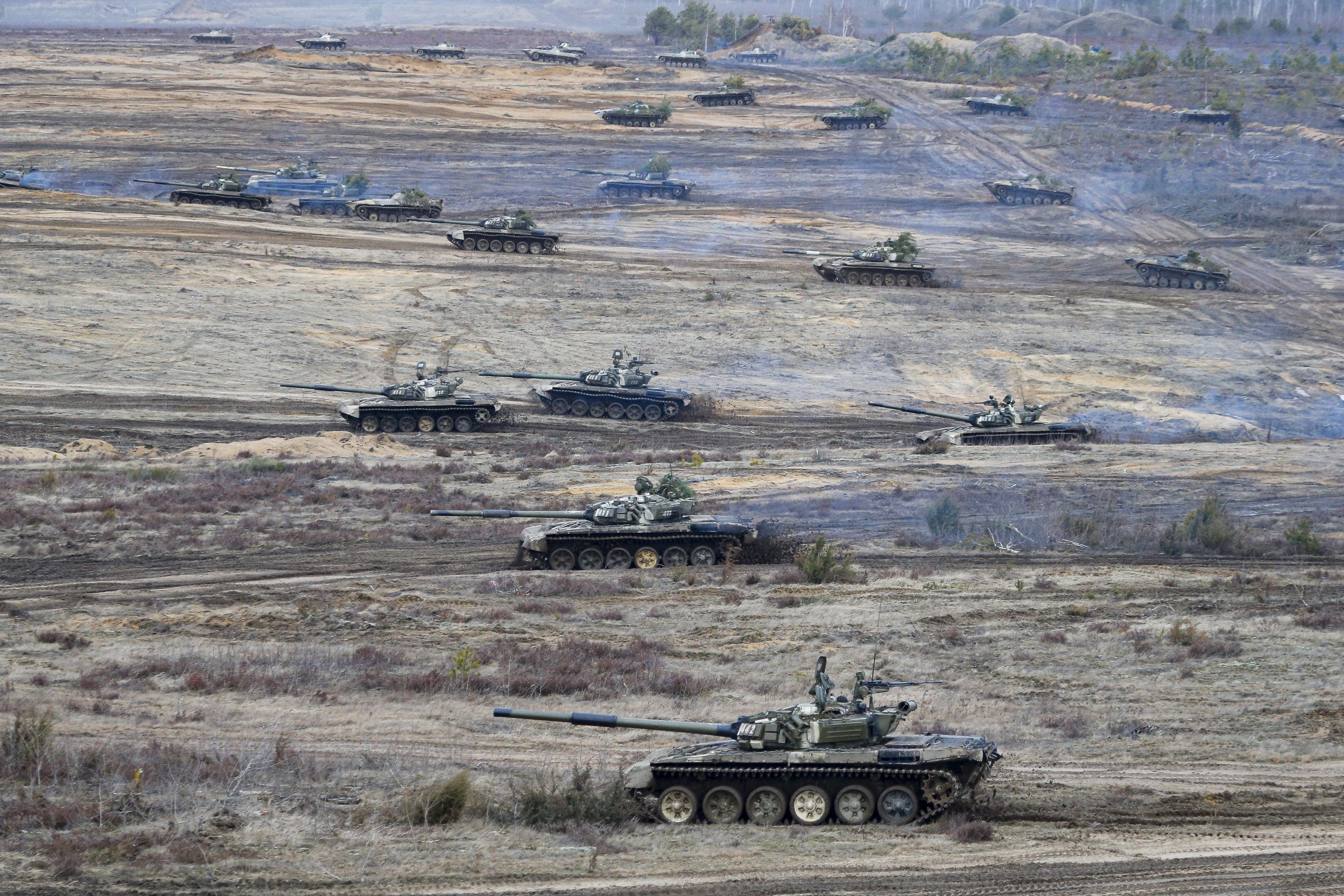
Few would argue that the trajectory of the war changed in an obviously dramatic way in 2025, and it is important to avoid the worn out and clichéd language about “turning points” or “collapse” or any such silly thing. However, 2025 saw several shifts in the war, which will hardly ostentatious or dramatic, are nevertheless very important. 2025 has been the first year of the war in which Ukraine launched no ground offensives or proactive operations of its own. This fact is not only a hint at the threadbare state of Ukraine’s ground forces, but also a testament to the way Russian forces transformed “attrition” from a buzzword into a method of persistent pressure across a variety of axes this year.
In lieu of initiative on the ground, and facing a slow but relentless rollback of their defenses in the Donbas, the theory of Ukrainian victory has shifted in an unacknowledged but dramatic way. After years of insisting that it would achieve maximal territorial integrity – an outcome which would require the total and decisive defeat of Russia’s ground forces – Ukraine has reframed its path to victory mainly as a process of inflicting strategic costs on Russia that mount until the Kremlin agrees to a ceasefire. Consequentially, the debate about arming Ukraine has shifted from a conversation about armor and artillery – equipment useful for retaking lost territories – to a discussion about deep striking weapons like Tomahawks, which can be used to shoot at Russian oil refineries and energy infrastructure. In short, rather than move to prevent Russian from achieving immediate operational objectives in the Donbas, Ukraine and its sponsors are now seeking ways to make Russia pay a price such that victory on the ground is no longer worth it. It is unclear whether they have thought about what price Ukraine will pay in the exchange. Perhaps they do not care.
About Tomahawks
Notwithstanding Ukraine’s attempts to jumpstart indigenous production, it is inevitable that Ukrainian capabilities will be largely determined by the largesse of western sponsors. This aspect of the war took a sudden turn at the beginning of the October when fresh reporting began to circulate that Tomahawk missiles might be on the table for Ukraine. Tomahawks have always been on Ukraine’s wish list (given that the Ukrainian wish list as such consists of essentially all the military equipment in NATO’s combined inventories) but this was the first reporting that they might be under serious consideration.
As is frequently the case, the discussion spiraled away from realistic grounding, with some suggesting that the Tomahawk would be a “game changer” for Ukraine (where have we heard that before?) and the pro-Russian sphere dismissing it as an irrelevant distraction. There’s a tendency to focus on the quality of American weapons systems, casting them as either unrivaled technological marvels or overhyped and overpriced baubles, but this is generally not productive and largely irrelevant to the matter at hand. The Tomahawk, broadly speaking, is exactly as advertised, and provides proven and reliable strike capability at strategic depths in excess of 1,000 miles. In role, range, and payload it is essentially an analog to Russia’s Kalibr missiles (I am begging the enthusiasts to note the phrase “essentially an analog” rather than rake me over the coals over the different guidance systems and other technical minutia). Such a system will always be valuable and would obviously improve Ukraine’s deep strike capabilities.
The “problem” with Tomahawks does not relate to any “problem” with the missile itself, but with its availability and Ukraine’s technical capability to launch them. The Tomahawk is conventionally a ship-launched missile (there is no extant air-launched variant) with a few novel options for ground launch. Ukraine, obviously, would require ground launch systems, and the problem is that these systems are essentially brand new and available in very limited quantities: more importantly, American service branches are in the process of trying to build out these capabilities throughout the decade. Providing ground-launchable Tomahawks to Ukraine in any meaningful numbers would therefore essentially require the US Army and Marines to scrap their own force buildout plans.
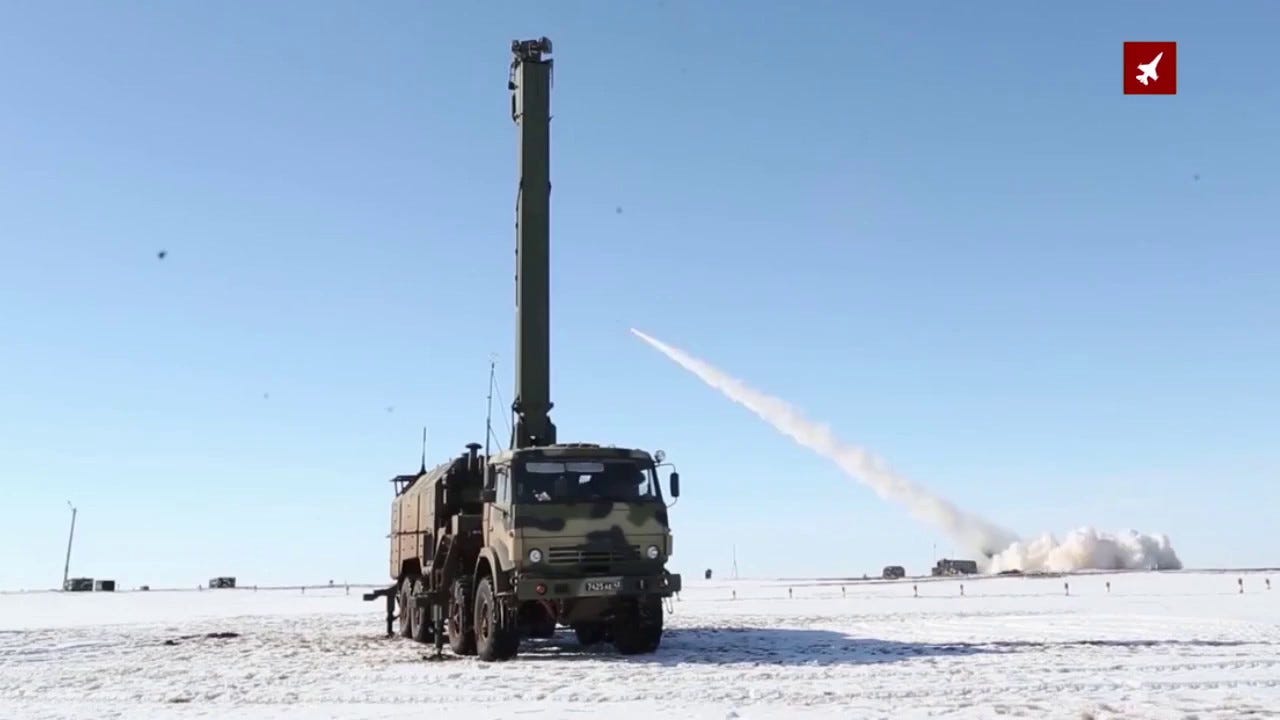
There are two basic options for ground launching Tomahawks. One of these is the US Army’s MRC (Mid-Range Capability) Launcher, dubbed the Typhon. This is an enormous tractor-trailer launcher with four launch tubes, first delivered in 2023. It has an enormous footprint – so large, apparently, that the Army is already asking for a smaller replacement – and is intended to give the Army an organic fires component in the gap between the shorter range Precision Strike Missile and hypersonic systems (which do not yet exist). The critical fact is this: the Army intends to field a total of five Typhon batteries by 2028, of which two have been delivered so far. Each battery consists in turn of four launchers, implying that eight out of a planned twenty launchers have been delivered. Even more importantly, both of the currently operational batteries are already deployed, with one in the Philippines and one in Japan. These systems are being actively used in exercises and trials, including an exercise this summer in Australia
The Typhon system gives ground launch capability to the Tomahawk but brings a massive footprint
The situation with the Marine Corps’ launch system is quite similar, although the launch platforms themselves could not be more different. Unlike the lumbering Typhon tractor trailer, the Marines are fielding a significantly more lithe and compact LMSL system, with the tradeoff of a single launch tube compared to the Typhon’s four. What matters is not so much the technical differences, as the fact that the Marines – like the Army – only received their first deliveries in 2023, and they are currently in the process of building out the force. In the case of the marines, the goal is to have a Tomahawk battalion built out by 2030. In fact, the production contract came into effect as recently as 2025.
What does all of that mean? It means that, although the Tomahawk itself is a fine missile, the systems for ground launch are so new and available in such limited quantities that equipping Ukraine with Tomahawks would require either the US Army or the Marines to materially alter their force structure in the near term (through 2030, essentially). These are essentially the opposite of much of the gear that’s been given to Ukraine to this point: far from being inventories of older systems that can be earmarked as surplus or tabbed for replacement, Tomahawk ground launch is a brand new capability that is in the middle of deployment and buildout for the first time.
This is, of course, a layered complication on top of Tomahawk quantities in and of themselves. The issue of Tomahawk availability is both over and under emphasized, depending on the context. The United States has something like 4,000 Tomahawks in its inventories (although half of these are currently inside their cells on American ships), so it is not quite correct to say (as some have) that America is running out of these critical weapons. The issue is that production rates are relatively anemic (generally between 55 and 90 per year) and are fail to replenish the expenditure from even relatively brief strike campaigns, such as the repeated strikes on Yemen. Broadly speaking, then, the issue is not so much that the United States is in immediate danger of running out of Tomahawks, but that procurement schedules are so slow that even relatively minor expenditures can erase multiple years worth of deliveries.
It may be useful, then, to consider Tomahawks in comparison to the ATACMS missiles which have already been provided to Ukraine. Unlike the Tomahawk, the ATACMS is a system which has already been tabbed for replacement, with the Precision Strike Missile in the early phases of its rollout. ATACMS were also compatible with launch systems that Ukraine already had. In comparison to Tomahawks, then, ATACMS are both vastly more strategically expendable, produced in larger numbers, and easier to deploy. Despite all these points in their favor, the United States provided Ukraine with just 40 ATACMS. Even if the Army could be pressured into handing over one or two of its brand new Typhon launchers, it is difficult to imagine that more than few dozen Tomahawks could be spared for Ukraine: a token inventory far too small to wage a sustained strike campaign in the Russian heartland
Peace, Sponsored by Raytheon
Given that Tomahawks for Ukraine would be measured in the dozens, rather than the hundreds, it’s worth asking whether this could actually change anything for the AFU at the front. The answer is clearly no in the long run, but it would be unwise to dismiss the possibility that even a limited tranche of Tomahawks (let’s say 40 to 50 missiles) could help alleviate pressure on Ukrainian forces at the front, provided they were used appropriately. A short term boost to Ukrainian strike capabilities, if deployed against Russian rear areas, could force further dispersal and rationing of Russian assets and temporarily stall Russia’s emerging multi-axis offensive. This could defer the loss of key positions until early 2026. This presumes, however, that the Ukrainians would be content to use Tomahawks against operational targets. In reality, Ukraine can never seem to resist lobbing missiles at targets that have little bearing on the front, like the Kerch Bridge. Indeed, a failure to synergize strikes at depth with operations on the ground is a major reason why the ATACMS achieved so little.
On the other side of this equation, it is a common complaint from the Russian perspective that Moscow has done too little to “deter” the United States from empowering Ukraine’s strike campaign – both by directly providing munitions and supplying the planning, ISR, and guidance systems. This, however, rather misses the point. Russia has done nothing of note to deter the United States because both Moscow and Washington understand fully that there is essentially no appetite (on either side) for a direct confrontation. In the (sensible) absence of a willingness to strike back at NATO targets, there is really nothing Russia can do to deter beyond maintaining its own retaliatory capabilities. The issue is not that Russia has failed to actively deter, but that there is nothing they could do even if they wanted to.
The basic pattern here is well established. The United States has done what it can to backstop Ukrainian strike capabilities, but it has held them at a level where Ukraine’s damage output falls far short of decisive levels. So long as that is the case, Russia has clearly demonstrated that it will simply eat the punches and retaliate against *Ukraine*. Hence, when the United States helps Ukraine target Russian oil facilities, it is Ukraine that receives the reprisal, and it is Ukraine which has its natural gas production annihilated as the winter approaches. In a sense, neither side is really trying to deter the other at all. The United States has raised the cost of this war for Russia, but not enough to create any real pressure for Moscow to end the conflict; in response, Russia punishes Ukraine, which is something the United States does not really care about. The result is a sort of geostrategic Picture of Dorian Gray, where the United States vicariously inflicts cathartic damage on Russia, but Ukraine accrues all the soul damage.
In the case of Tomahawks, the risk-reward calculus is just not there. Tomahawks are a strategically invaluable asset that the United States cannot afford to hand out like candy. Even if the launch systems could be provided (highly doubtful), the missiles could not be made available in sufficient quantities to make a difference. The range of the missiles, however, significantly raises the probability of miscalculation or uncontrolled escalation. Ukraine shooting American missiles at energy infrastructure in Belgorod or Rostov is one thing; shooting them at the Kremlin is another thing entirely.
There is, however, another aspect of this which seems to be garnering little attention. The biggest risk of sending Tomahawks is not that the Ukrainians will blow up the Kremlin and start World War Three. The bigger risk is that the Tomahawks are used, and Russia simply moves on after eating the strikes. Tomahawks are arguably one of the last – if not *the* last – rung in the escalation ladder for the USA. We have rapidly run through the chain of systems that can be given to the AFU, and little remains except a few strike systems like the Tomahawk or the JASSM. Ukraine has generally received everything it has asked for. In the case of Tomahawks, however, the United States is running the most serious risk of all: what if the Russians simply shoot down some of the missiles and eat the rest of the strikes? It’s immaterial whether the Tomahawks damage Russian powerplants or oil refineries. If Tomahawks are delivered and consumed without seriously jarring Russian nerves, the last escalatory card will have been played. If Russia perceives that America has reached the limits of its ability to raise the costs of the war for Russia, it undercuts the entire premise of negotiations. More simply put, Tomahawks are most valuable as an asset to threaten with.
Reading between the lines of President Trump’s public statements recently, it seems likely that he has rationally weighed these considerations. Publicly, he used the threat of Tomahawks to try and force Russia to keep negotiating, and he’s received a commitment for another meeting with Putin for his trouble (more on that later). He has now, for the time being, shelved the Tomahawk plan, commenting that “we need them” and applying the usual Trumpian linguistic style to the broadly accepted issue of inventories which I have outlined here. Tomahawks are simply more valuable to the United States as a tool to threaten escalation, rather than as an actual kinetic asset in Ukrainian hands, and so long as Trump keeps his powder dry he can re-raise the issue later.
Ultimately, perhaps, this discussion is not about Tomahawks at all. These missiles, rather, are simply a totem which demonstrate two important dovetailing points. First, that American resources are not infinite, and as the United States reaches deeper into its bag to help Ukraine, it begins to grab at strategically critical assets that the US military simply cannot spare. Secondly, we must remember that America’s policy in Ukraine is a game of titration, with Washington probing the limits of Russia’s willingness to “eat the strikes” without allowing the reprisal violence to spill out of Ukraine.
The Big Banana: Russia’s Operational Schema
At this point, it’s becoming increasingly difficult to say anything meaningful about the actual operational progression on the ground. There are several reasons for this. First and foremost, the war has now gone on so long and is consistently moving at such an apparently glacial pace that most people simply do not care at this point whether Russia holds Yampil or not, or whether they have advanced past the rail line in Pokrovsk. There is severe fatigue (or perhaps boredom is the better word) with the status of an interminable sequence of apparently small settlements, industrial complexes, and forestry plantations, and as a result most people have essentially checked out. Not the least among these must surely be President Trump, who apparently chucked Zelensky’s map of the frontline and complained that he was tired of being shown the same maps over and over again.
On the other hand, we have the true obsessives who continue to dutifully follow the frontlines regularly and are voluntarily intaking daily updates. We end up with a bifurcated system where some people are still highly plugged in to the micro movements on the battlefield, but most people just don’t care, and we can hardly blame the latter. I think it would be profitable, then, to think about the broader Russian operational scheme, what it has achieved, and what it aims to achieve in the coming year. This is probably more interesting and less repetitious than fixating on the exact positioning within Pokrovsk or Kupyansk.
There are two larger points that I think are worth making before we look at some specifics.
First and foremost, much of the battlefield analysis that comes out (particularly from western analysts) makes firm pronouncements as to what constitutes Russia’s “primary” and “secondary” efforts, but these are essentially interpolated and frequently incorrect. For example, it’s become a fairly mainstream conception that Russia’s “primary” point of effort right now is the capture of Pokrovsk, but this does not actually seem supported by Russian actions. There is no particular advantage to be gained for Russia by pushing to capture Pokrovsk as soon as possible – the city is already in a stranglehold partial encirclement. To be sure, Pokrovsk *was* a major logistic hub for Ukrainian forces, but it can no longer serve that role and was sterilized as a transit hub months ago, once it became a frontline city. The opposite side of this coin is that other Russian axes of advance, particularly in southern Donetsk and the bend of the Donets River, are dismissed as “secondary” efforts. This is a major mistake, and I will attempt to show that these are critical advances where Russia is shaping the battlefield to its advantage for follow on operations.
Secondly, it should be understood and appreciated that Ukraine has lost essentially all battlefield initiative. In 2024, the AFU was able to assembled a mechanized reserve and launch their operation into Kursk. This operation ultimately failed and resulted in severe Ukrainian losses, but this is unrelated to the fact that Ukraine was still able to accumulate forces and pursue offensive operations on its own initiative. In 2025, however, Ukraine has been in a permanent state of reactivity. This was the first year of the war in which Ukraine did not launch any proactive operations or counteroffensives of its own, and Ukrainian hopes have instead pivoted to their strategic strike campaign against Russian oil facilities.
In a larger sense, the effect of attrition can be seen year by year with the shrinking scope of Ukraine’s proactive operations. In 2022, Ukraine was able to launch a pair of widely separated offensives which yielded modest successes: an offensive out of Kharkov rolled the front back over the Oskil River (though it failed to collapse the Lugansk shoulder), meanwhile, a series of battles outside of Kherson failed to break through the Russian lines, but they did play a role in persuading the Russians to abandon their bridgehead over the Dnieper. The point of course is not to once again autopsy these offensives, but to point out that there were two of them, that they were meaningful in scale, and they did result in important territorial gains for Ukraine. In 2023, by contrast, Ukraine launched a single theater-level offensive in the south, which failed. In 2024, we got the Kursk operation: smaller and less lavishly equipped than 2023’s Zaoprizhia offensive, and aimed at a peripheral theater. This year, there were no proactive Ukrainian operations at all. There is a very clear pattern at play here, with Ukraine’s offensive punch progressively shrinking before disappearing entirely in 2025. This was a year of essentially uninterrupted Russian initiative
Putting Ukraine permanently on the backfoot is a significant Russian achievement, and it is owed to a few converging factors. Obviously, the attrition of Ukrainian forces is a major factor. We’ve gone through the flailing Ukrainian mobilization, the cannibalization of its forces, and the general lack of reserves in detail on several occasions, and there’s no need to retread that ground here. Suffice it to say, Ukraine’s ability to husband forces for offensive operations appears to be severely degraded. Russia has exacerbated this problem by pressing steadily on a variety of different axes. At the moment, there are no fewer than seven Russian axes of attack, pressuring a slew of cities all along the line. This creates a series of defensive emergencies, maintains the burn rate on Ukrainian forces, and fixes them on the line. Finally, in a point to be detailed shortly, Russian advances have begun unraveling Ukraine’s logistic connectivity, which puts strain on supply and prevents the concentration and accumulation of forces
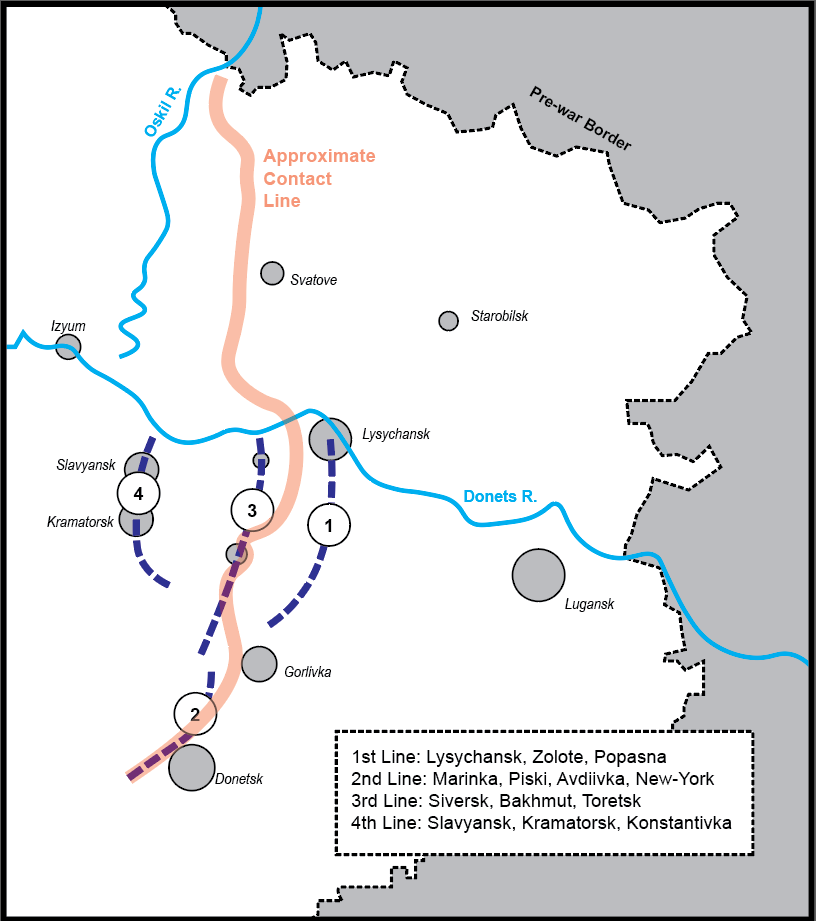
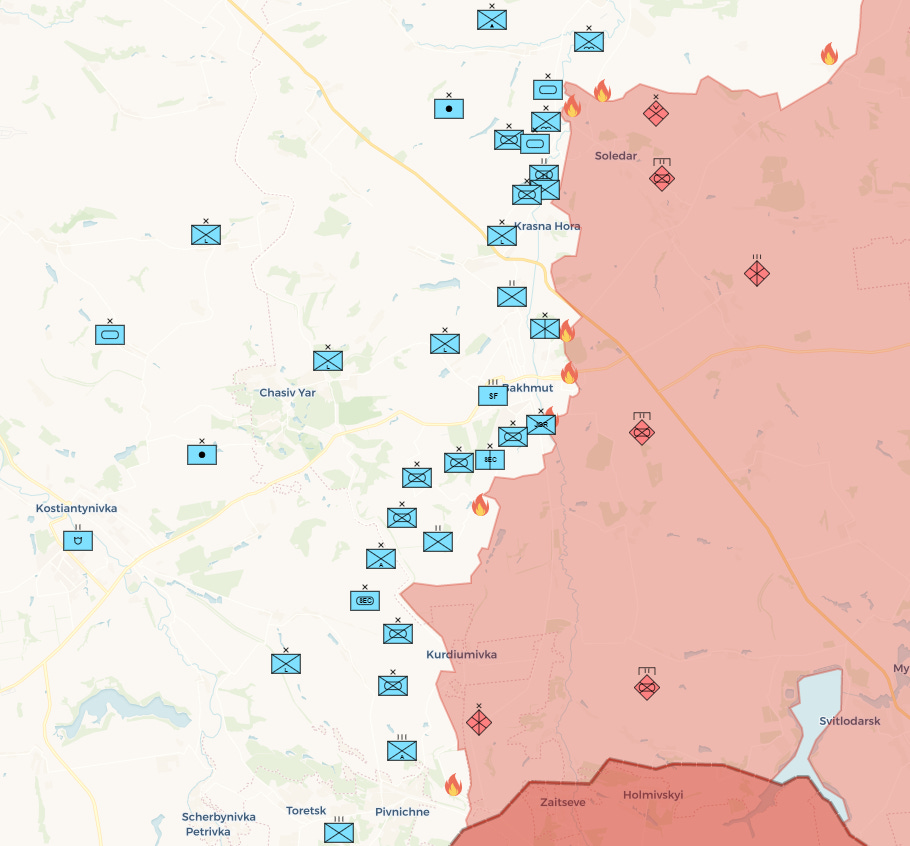
Eastern Ukraine: Approximate Situation and Axes of Russian Advance
Now, for the development of the front and the premise of the Russian offensive scheme. The main point that I want to impress is essentially as follows: rather than fixating on Pokrovsk, Russia’s advances across Southern Donetsk and on the inner bend of the Donets River ought to be thought of as vital operations which have severely disrupted the coherence of both the Ukrainian front and their logistics. This has the triple effect of preventing the Ukrainians from launching offensives of their own, accelerating the attrition of Ukrainian forces, and shaping the front for the coming operation to capture the Slovyansk-Kramatorsk agglomeration.
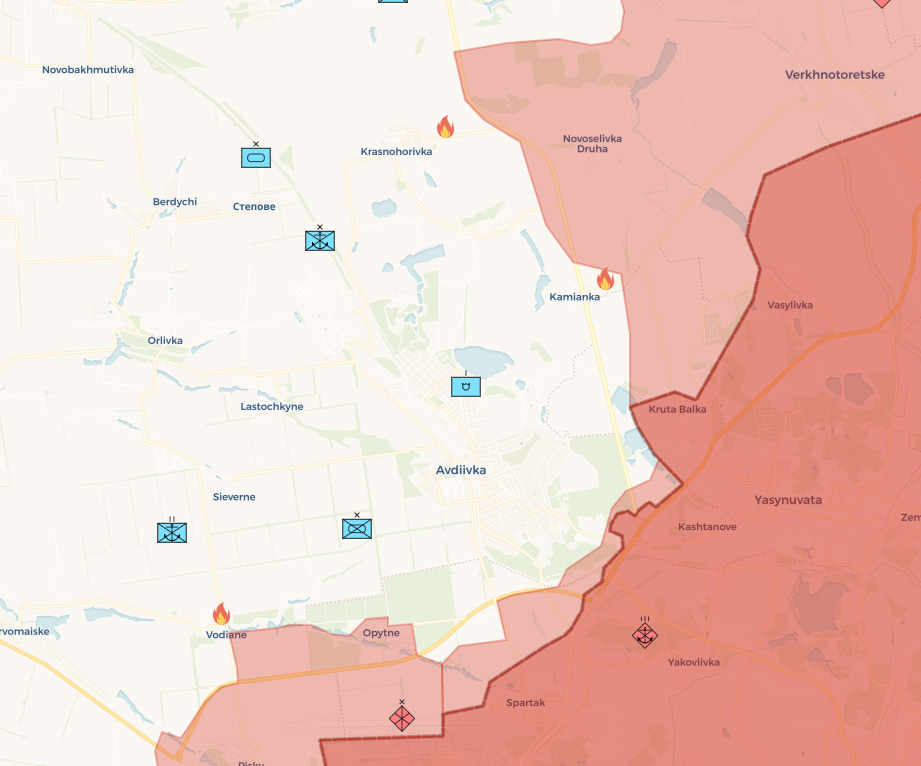
To begin, let’s consider the progress that Russia has made in southern Donetsk, both in raw territorial terms and its implications for Ukrainian logistic connectivity. To demonstrate this, I’ve pulled maps from DeepState (again, a Ukrainian mapping enterprise) for August 2023 (when Ukraine was attempting its counterattack out of Orikhiv) and for October 20th, the week of this writing. I have noted both the length of the southern front (obviously a linear approximate, as the actual front has many bends and bulges) and highlighted the key highways that Ukraine uses to run the backbone of its logistics
The Southern Front: 2023 vs 2025
Now, one thing that is worth noting is that the Russians are currently positioned to roll up this front even further. Ukrainian defensive lines are primarily oriented towards on a north-south axis. Once Russian forces cleared Kurakhove, they entered the seams in these defensive lines – that is to say, they are advancing laterally along the face of the prepared defenses, rather than trying to bash through them from the front. This is one reason why their progress has been relatively steady and uninterrupted. Now approaching the “elbow” in the lines, where they pivot southward, and having crossed the Yanchur River, the Russians are entering a substantial space that lacks meaningful prepared defenses. Using the Military Summary map (Ukrainian fortifications are mapped with yellow dots), the void in the defense is fairly obvious as the Russians work their way into the elbow of the line
Apart from the obvious development of note here – that Russian forces have, to this point, rolled up roughly half the length of the southern front and are positioned to roll up another ten to fifteen miles – we want to note two things which are emblematic of the way the war is going for Ukraine, but curiously receive little attention. First, the compression of the front is robbing the Ukrainians of the maneuver space which made it possible for them to stage and assemble forces for their counteroffensive in 2023. Two years ago, there was a wide, lateral buffer zone around the Ukrainian staging area in Orikhiv, and Ukrainian forces had access to multiple highways where they could disperse forces in their marching columns and run their logistics.
Today, that buffer zone is gone, as is the easy access to several of the branch highways. The Russian advance, which started with the breakthrough at Ugledar and Kurakhove last year and which has now rolled up some 50 miles of front, has essentially sterilized Ukraine’s capacity to attack in the south, because they have neither the space nor the roads to safely accumulate forces here. It has also shattered the interconnectivity of Ukrainian logistics: rather than having several highways to shuttle troops and material to the east, Ukraine now has to support several disconnected logistic fronts with individual highways. More to the point, there is no longer a single Donetsk “front” to speak of, but rather a series of logistic fronts: one in the south, around Orikhiv, another at Pokrovsk, and the largest one in the Slovyansk Banana. These are lacking lateral connectivity to each other for the Ukrainians due to the wedges that the Russians have forced in the front, particularly in the south, funneling logistics and reinforcements down individuated corridors.
The bigger issue, however, lies farther north on the Pokrovsk and Donets axes, and in the way that they synergize. People who are focusing, to the exclusion of all else, on when and how Russia will capture Pokrovsk are failing to see the bigger picture, and indeed are not even trying to understand it.
The ultimate Russian operational objective (in this phase of the war, at least) is the belt of cities which runs in an arc from Slovyansk to Kostyantinivka, which I affectionately call “the Slovyansk Banana” due to its curved shape. A cursory look at the map shows us why the very operations that are being dismissed as secondary efforts are in fact critical axes of Russian effort which are shaping the battlefield for the attack on the Banana
There are two very important facts about the Banana, from the perspective of operational geography. The first is that, although the combined mass of the agglomeration is far larger than any of the urban areas that have been fought over to this point, the Banana is relatively difficult to defend because it sits on the floor of a river valley: the Kazennyi Torets flows through all the cities in the Banana before it flows into the Donets. Russian forces approaching the city from the southwest, the east, and the north will all be advancing along the high ground that overlooks the cities on the floor.
The second important fact about the Banana is that, despite its size, it is supported by just two highways which approach from the southwest and northwest respectively, funneling into the Banana like a wedge. Taking the northern highway/MSR (the E40 highway) as an example, we see that Russia’s operations inside the Donets bend are hardly secondary efforts: they are vital shaping operations linked to the integrity of the Banana. The E40 highway tracks the Donets bend very closely (it generally stays within five miles of the river. If the Russians sustain their progress north of the Donets and reach the river at Bogorodychne or Svyatogirsk, it will not only put E40 under persistent drone attack but also curl the defensive line behind the Banana, to say nothing of the enormous pressure on the Siversk salient.
On the Pokrovsk front as well, Russia’s progress is being misinterpreted. After their breakthrough at the end of the summer, Russian forces have consolidated the bulge north of Pokrovsk (despite weeks of Ukrainian counterattacks) and are steadily working their way towards Rais’ke and Sergiivka. This is not about Pokrovsk at all – reaching Rais’ke would put Russian forces directly in the backfield of Kostyantinivka, on the supply lines to the underside of the Banana.
I am not suggesting at all that Russian forces are on the verge of some great offensive surge that will carry them into the heart of the Banana instantly. However, there is a fairly well established Russian operational methodology in this war, which involves working their way methodically into Ukraine’s logistical lanes and seams, segmenting the front and strangulating their strongpoints, forcing them to supply frontline strongholds with single file logistics and dirt roads. They did it in Bakhmut, and Avdiivka, they are doing it in Pokrovsk, and they are shaping the front to attempt this on a large scale in the Banana
Assault on the Banana: Coming 2026
The general point that we are trying to make here is that dismissing Russian advances in the Serebryanka Forest, the emerging bulge north of Pokrovsk, and their move into the Donets Bend as “secondary efforts” is mistaken. Zooming out to the appropriate scale shows that these are concentric operations, shaping the front for a 2026 assault on the Banana – moving towards the E40 road from the north, bending the defensive shield around Siversk, and working into the underbelly of the Banana through Rais’ke.
This is, perhaps, a long way to go for a short drink of water, but there are a few basic points here that get completely missed when the view of the front is preoccupied with the fighting inside Pokrovsk and Kupyansk:
Russia’s advance out of Kurakhove across the southern front is not a secondary axis. They have rolled up half of the southern front, condensing Ukrainian forces into a compact space which sterilizes their ability to attack in the south.
Broad Russian pressure across a half-dozen axes maintained a steady burn rate on Ukrainian forces and prevented the accumulation of forces for proactive operations. 2025 has been the first year of the war in which Ukraine has not launched any offensive operations on its own initiative.
Advances in the Donets bend and the interstitial space between Pokrovsk and Kostyantinivka are not subsidiary or secondary operations: they are critical shaping operations that are moving concentrically toward the Banana.
To be frank, the general mood of optimism in the Ukrainian infosphere, which lasted for much of the summer, struck me as remarkably odd. The frontline has yielded no real good news for Ukraine at any point this year. Beyond the broader strategic point, that Ukraine has lost the initiative and does not seem capable of getting it back, Russia is in the process of capturing two important urban centers (Russian troops are in the city centers of Pokrovsk and Kupyansk), it has begun the assault on at leas two more (Lyman and Kostyantinivka), it has rolled up half of the southern front, and cleared most of the inner Donets-Oskil bend. The Banana is on deck for 2026.
Ukraine’s Cost Theory of Victory
One thing that has become apparent over the last year is that Kiev has abandoned previous notions of outright victory on the battlefield and adopted a new strategic framework predicated on imposing unacceptable costs on Russia, so that Moscow will agree to freeze the conflict.
This is a subtle and unspoken yet extremely important distinction. It is easy to miss, because both Ukrainian leadership and Ukraine’s western backers continue to speak of Ukrainian “victory” and the possibility of Ukraine “winning” the war. What is crucial to understand is that the “victory” that they speak of now is categorically different than the victory of 2022 and 2023. In the first years of the war, it was possible to at least speak of Ukraine taking the initiative to advance on the ground and retake territory. There were concrete examples of Ukrainian offensives in 2022, and the battle in Zaporizhia – although unsuccessful – showed that it was at least possible for Ukraine to attempt a proper mechanized offensive.
Therefore, in the first years of the war, when leaders in Kiev and Brussels and London and Washington spoke of Ukrainian victory, they essentially meant the defeat of the Russian ground forces and the reconquest of much (or all) of the Donbas. The Kursk Operation of 2024 began to split the difference: Ukraine still had some resources to mount proactive operations, but these operations were no longer aimed at the dense eastern front and instead aimed at relatively soft subsidiary fronts with an eye to out-levering the Russians.
Today, with the Ukrainian army stuck in a permanent state of reactivity and slowly receding defense, it no longer makes any sense to speak of Ukrainian victory in the most straightforward sense, which is to say victory on the battlefield – no matter how tenaciously or bravely the Ukrainian rank and file continues to fight in essentially intolerable circumstances. Instead, Ukrainian “victory” has been transmogrified to mean essentially that Russia absorbs such exorbitant costs that it agrees to some sort of ceasefire without preconditions.
The costs to be imposed on Russia are implicitly assumed to be a mixture of battlefield casualties and damage to strategic assets inflicted by Ukrainian air strikes, and in regards to the latter Ukraine seems to be particularly placing its hopes in a strategic strike campaign against Russian oil. Ukraine’s attempts to disable Russian oil production and refining have dovetailed with ever more aggressive sanctions from the United States against Russian fossil fuel exports – although it is worth noting that the limited price response to these sanctions indicates that markets expect that Russian oil will continue to flow.
Trump’s suggestion that Tomahawks may be on the table for Ukraine must be seen as a constituent element of this new strategy and theory of victory. And this, ultimately, is very important to understand. Tomahawks are not being bandied about because anybody (in Kiev or Washington) believes that 50 cruise missiles will allow Ukraine to defeat the Russian Army and recapture the Donbas. Tomahawks were mentioned because the Ukrainian alliance is threatening to cripple the Russian fossil fuels industry (through a mixture of sanctions and kinetic strikes on production facilities) unless Putin agrees to a ceasefire.
This is why it is wrong to be surprised that Trump abruptly cancelled his meeting with Putin and instead announced more sanctions. There’s nothing abrupt or erratic about this. Threats to Russian oil are now, without exaggeration, the main lever that the Ukrainian bloc has against Russia. It certainly should not have been a surprise that the Kremlin, which has reiterated the same fundamental war aims since day one, was not excited about coming to Budapest to freeze the conflict, and neither should it surprise us that Trump would instead prefer to pull harder on the oil lever. The two powers are playing entirely different games: Russia is slow-walking negotiations while it advances on the ground, and the United States is playing a pain game designed to raise the costs for Russia
We have fundamentally reached an impasse when it comes to negotiations. For Moscow, negotiations with the United States are essentially a way to string Washington along. Moscow feels that it is winning on the ground, therefore a diplomatic impasse suits Russian interests. When western leadership complains that Russia does not seem interested in ending the war, they are correct, but they are missing the point. Russia is not interested in ending the war right now because doing so would not serve Russian interests. The Banana is in the crosshairs, and a ceasefire now would be an egregious compromise when victory on the ground is in sight.
The sense of urgency that Washington feels to end the war – mainly by yanking furiously on the oil lever until the Kremlin cries uncle – stems from the fact that this is now the only sort of victory that Ukraine can hope to win. The ground war has been written off as a total loss, and all that remains is to lob missiles and drones at Russian refineries, sanction Russian firms and banks, and harass shadow tankers until the costs become intolerable. The longer the Ukrainian ground forces can hold the line the better, but this is merely a matter of limiting the downside. The fact that Russia can retaliate disproportionately against Ukraine barely factors into this thinking.
The key point here, however, is that the concept of Ukrainian victory has been completely transformed. There is now no real discussion of how Ukraine can win on the ground. For the Ukrainian bloc, the war is no longer a contest against the Russian Army, but a more abstract contest against Russia’s willingness to incur strategic costs. Rather than preventing Russian capture of the Donbas, the west is testing how much Putin is willing to pay for it. If history is any guide, a game predicated on outlasting Russia’s strategic endurance and willingness to fight is a very bad game to play indeed [end]
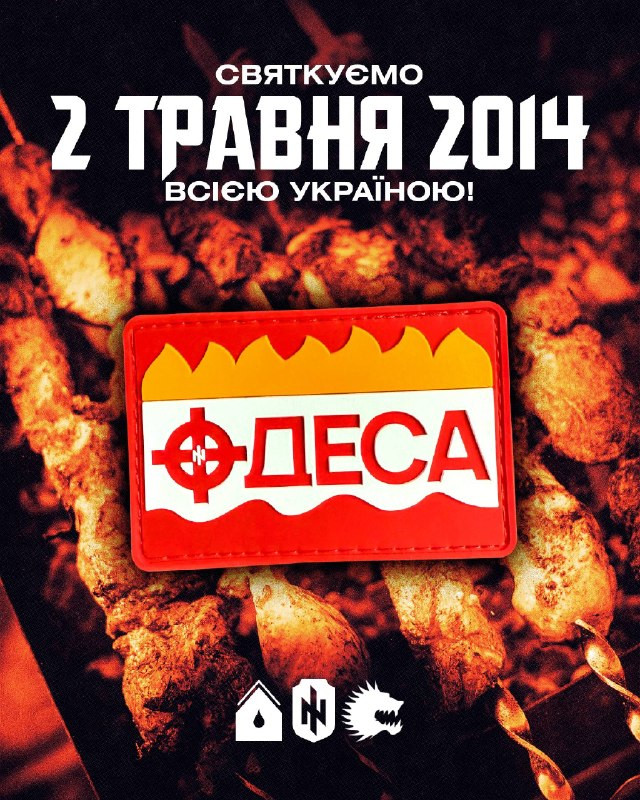
Abstract: This study analyses the nature and extent of involvement by neo-Nazi and other far-right Ukrainian organisations in the Donbas war (2014-2022) and the Odesa massacre (2014). This issue is highly politicised with contrasting narratives. The Russian and Donbas separatist governments, as well as their media, have contended that Ukraine has been a Nazi or neo-Nazi regime since a fascist coup took place in 2014, while Ukrainian and Western governments and media have maintained that such elements in the Ukrainian far-right were marginal, trivial, even non-existent. The article interrogates the historical record with primary sources in the three most relevant languages—Ukrainian, Russian, and English. The investigation reveals crucial far-right involvement in both the early stages of the war in Donbas and the Odesa massacre. Although the percentage of far-right supporters and fighters in Ukraine was relatively small, they exercised disproportionate influence in the country due to their greater reliance on violence and armed formations. The Russian government, however, exaggerated the role of the neo-Nazis in Ukraine to publicly justify the illegal invasion in February 2022.
Introduction
This study analyses the nature and extent of involvement by neo-Nazi and other far-right Ukrainian organisations during both the Donbas war from its start in April 2014 until the Russian invasion in February 2022 and the Odesa massacre on 2 May 2014. Other than the Maidan massacre in February 2014, these were the most significant and contested cases of political violence in Ukraine from its independence in 1991 to the commencement of the Russia-Ukraine war on 24 February 2022.1 The role of far-right Ukrainian groups during these major episodes of political violence is controversial because they are beset by duelling, self-serving narratives. Russian President Vladimir Putin has claimed that the principal goal of the invasion is to “denazify” Ukraine.2 But well before Russia’s invasion of Ukraine in 2022, there have been several overt and covert Russian military interventions here, including the annexation of the Crimean peninsula and direct support for pro-Russian insurgencies in the Donbas region, particularly in August 2014 and February 2015. Following the overthrow of the pro-Russian Ukrainian government in February 2014, the United States and other Western governments have consistently opposed Russia’s interventions and backed the current central government of Ukraine. In addition to political support, financial and military assistance has been provided, including training during the Obama presidency.3 To justify this support, the US and other Western governments disputed any real power or even the existence of neo-Nazi armed formations in Ukraine or claimed that they abandoned their far-right elements. Understanding the contested issue of far-right involvement in the Donbas war (2014-2022) and the Odesa massacre (2014) is valuable not only for elucidating intrinsically important historical episodes of political violence but also due to the contemporary relevance given the ongoing Russia-Ukraine war.
This article proceeds in five sections. The first section highlights the contribution of our study by describing the weakness of the extant academic literature and our methodological approach to filling in important lacunae in the research landscape. The second section details the duelling of contemporary narratives over the political violence by the far-right in the war in Donbas and in the Odesa massacre. The third and fourth sections develop qualitative case studies with process tracing to illuminate the role of the far-right in the Donbas war and the Odesa massacre. The fifth section presents the conclusion.
Developing the Extant Literature
Research on the far-right in Ukraine since the Euromaidan has been spotty. Studies on neo-Nazi and other far-right organisations in Ukraine following the Euromaidan have been limited in quantity, quality, and scope. Most studies have been produced by researchers outside academe in partisan think tanks or non-government organisations, as well as by journalists who did not subject their work to peer review.4 Such assessments are more likely to be politically driven and less likely to exhibit methodological rigour, even professionalism. For example, Anton Shekhovtsov, the former leader of the Crimean branch of the pro-Russian far-right Eurasian Youth Union, likened the Trade Union building arson attack during the Odesa massacre on 2 May 2014, to his killing of Colorado potato beetles by collecting them in a box and burning them alive. He directly inferred that this was a massacre with far-right involvement but omitted this in his publications.5 Other works have relied on narrow metrics such as the vote-share of far-right parties in Ukraine, without assessing the violence itself in terms of the perpetrators and effects.6 Some researchers have claimed that the presence of Russian speakers in the Azov regiment and other neo-Nazi-led armed formations is evidence of their relative tolerance and asserted that the Azov regiment had moderated by abandoning its far-right roots.7 Such analyses have tended to uncritically rely on Ukrainian and Western government narratives, accepting their claims at face value.
By contrast, other studies suggest a greater degree of far-right involvement in Ukrainian political violence. One quantitative study found that far-right groups in Ukraine, such as Svoboda and Right Sector, fielded the most violent perpetrators and committed the lion’s share of attacks.8 That study is restricted temporally, however, to the 2014 Maidan protests, which led to the violent overthrow of the relatively pro-Russian government and ultimately spiralled into the civil war in Donbas, the Russian annexation of Crimea, and Russian military interventions in these regions of Ukraine.9 Similarly, qualitative studies have presented evidence in the form of videos, eyewitness testimonies, confessions, and forensic examinations of Svoboda and Right Sector involvement in the Maidan massacre.10 Some other studies have focused on specific aspects of the far-right paramilitary and other armed formations during the war in Donbas.11 One academic publication is specifically devoted to the Odesa massacre, which is called “The Odesa Tragedy,” though it concentrates on the public perceptions rather than the perpetrators and their consequences.12 This list of prior works is intended to be illustrative rather than exhaustive. The research landscape around these issues is growing, but uneven in scope and reliability; a lacuna remains in the literature in terms of evaluating rigorously, comprehensively, and dispassionately the nature and extent of far-right involvement in the Donbas war and Odesa massacre, which matters in terms of our understanding of the Russia-Ukraine conflict and political violence more generally.
To elucidate this understudied topic of the far-right in Ukraine, this study makes substantial use of primary source materials in Ukrainian and Russian—the main languages in Ukraine—as well as in English. This linguistic capability is conducive to a more nuanced, accurate assessment. Methodologically, the two case studies employ qualitative process tracing with the benefit of fluency in all three languages.13 The substantive focus and period of analysis are both tightly bounded; the role of the far-right on the Russian side and in the Russia-Ukraine war since February 2022, as well as during the Euromaidan, are weighty topics explored in our other works but fall outside the scope of this study.
The term “far-right” denotes ultranationalists and both racial and ethnic supremacists in accordance with prior scholarship.14 The term “neo-Nazi” refers to far-right organisations that revamp elements of Nazi ideology, particularly its racial and ethnic supremacism, and use symbols associated with Nazi Germany or their stylised versions. As with Nazis, neo-Nazi organisations represent a form of fascism. Major neo-Nazi organisations in Ukraine during the time period covered by this study include the Social-National Assembly, its paramilitary wing Patriot of Ukraine, the National Corps, the White Hammer, and C14. Also included in the analysis are paramilitary and other armed formations organised and led formally or informally by these neo-Nazi organisations, such as the Azov battalion and regiment. Admittedly, militant groups are known to exhibit ideological heterogeneity.15 Within the political violence literature, a burgeoning area of research emphasises that members of the rank-and-file may be motivated by a variety of factors that diverge from the leadership, leading to a principal-agent problem.16 In this study, we classify organisations as neo-Nazi, or at least neo-Nazi-led, when commanders are neo-Nazi, even if not all members can be presumed to share this exact ideology.
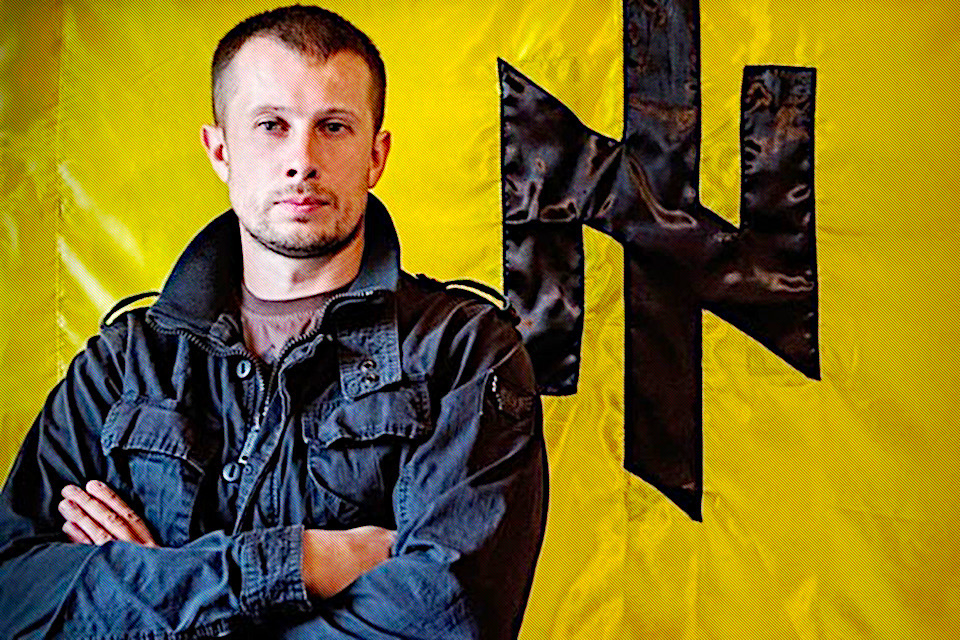
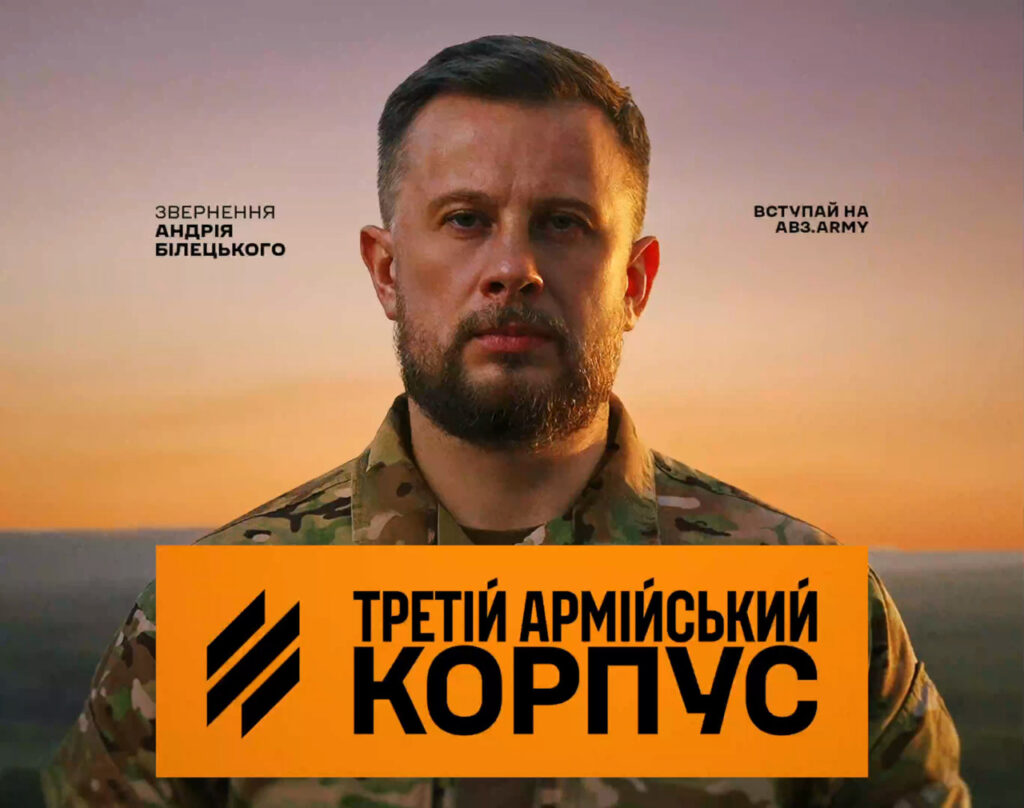
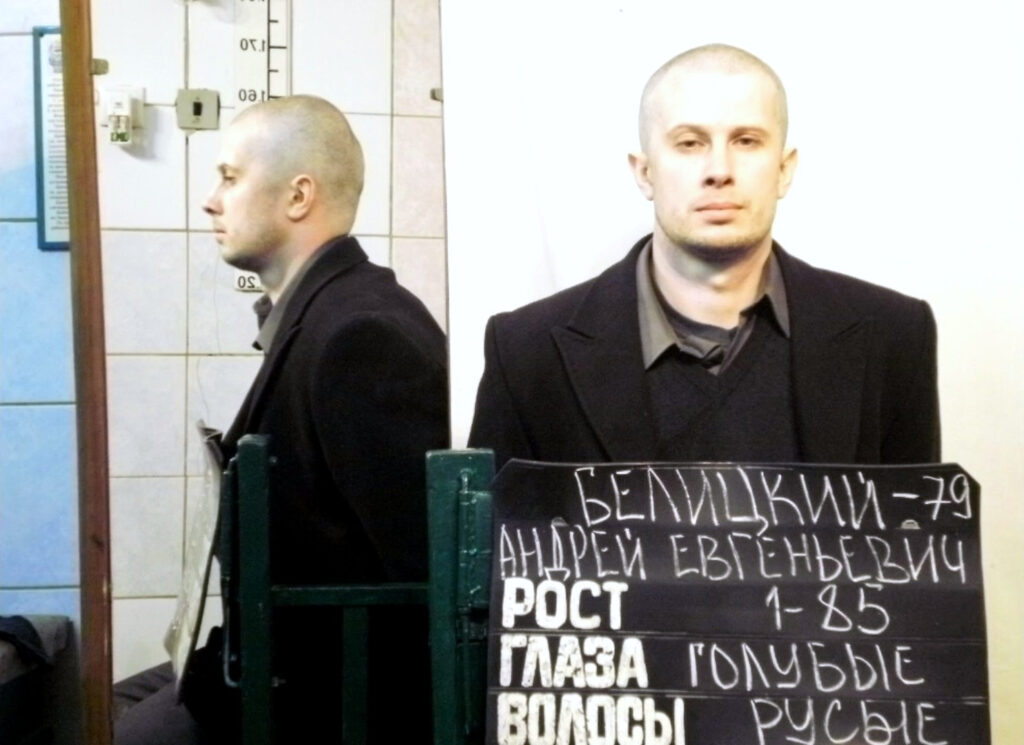
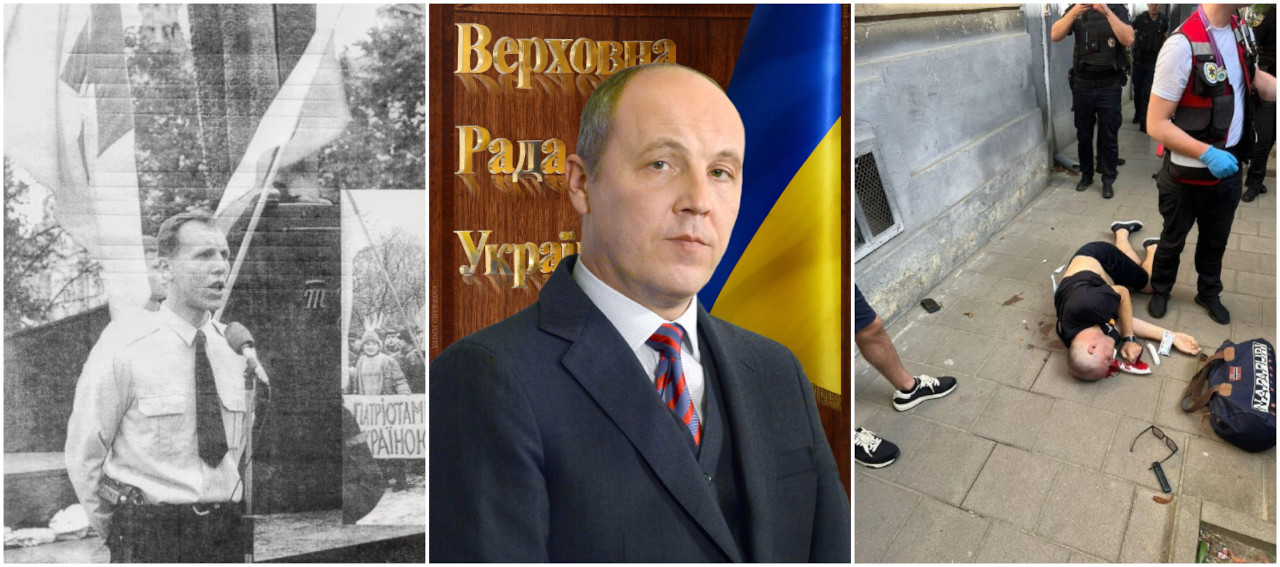
A prominent example is Andriy Biletsky, the leader of Patriot of Ukraine and the Social-National Assembly (SNA), both of which were transformed along with the Azov battalion and regiment veterans into the National Corps Party in 2016. He called the ideology of Patriot of Ukraine and SNA “Social Nationalism.” In a collection of his articles published in 2013, he described that social nationalism, as the name suggests, combines elements of ultranationalism of the Organisation of Ukrainian Nationalists with elements of national socialism and called both radical nationalism and national socialism “great ideas.” He wrote that social nationalism is based on “Sociality, Racism, and Great Power.”17 Specifically, it is based on the ideas that the “white race” is “superior” to other races and is the foundation of the Aryan Ukrainian nation; the Ukrainian nation is a “blood-racial community”; and that “the historical mission of our Nation (…) is to head and lead the White Peoples of the world in the last crusade for their existence, a march against the Semitic-led subhumans.”18 Biletsky openly made antisemitic and racist statements, such as his claim that the Jew is “an economic and political parasite.” He saw “a serious clash of native European peoples with foreign colonisers, mainly of African and Muslim origin” and believed that “an ethnic civil war can be won by the native Europeans only under the banner of the New Right National Revolutions.”19
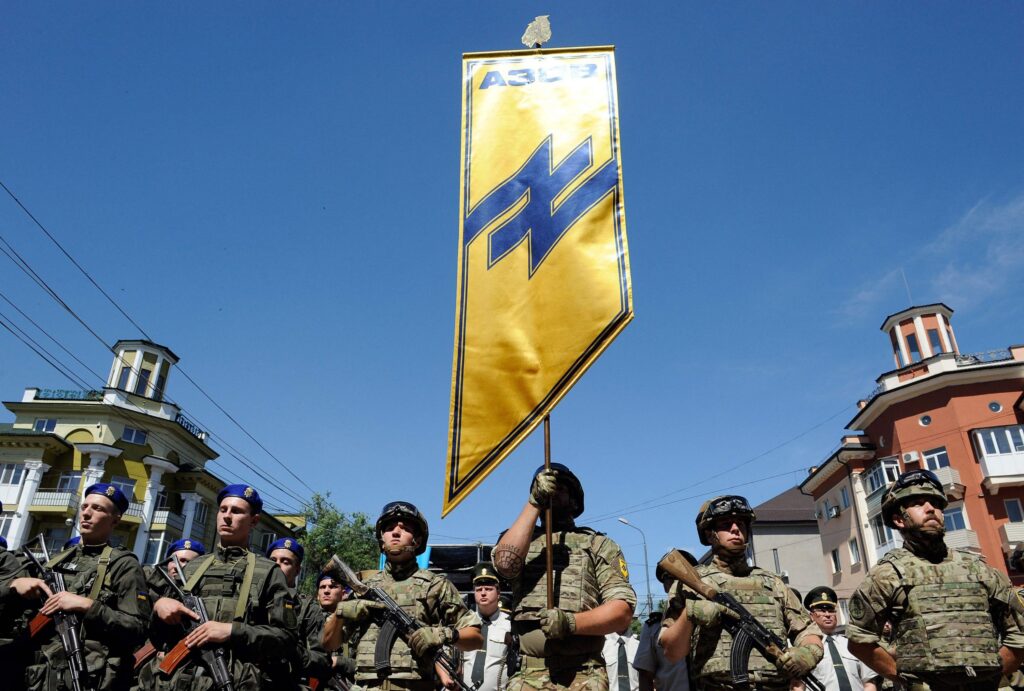
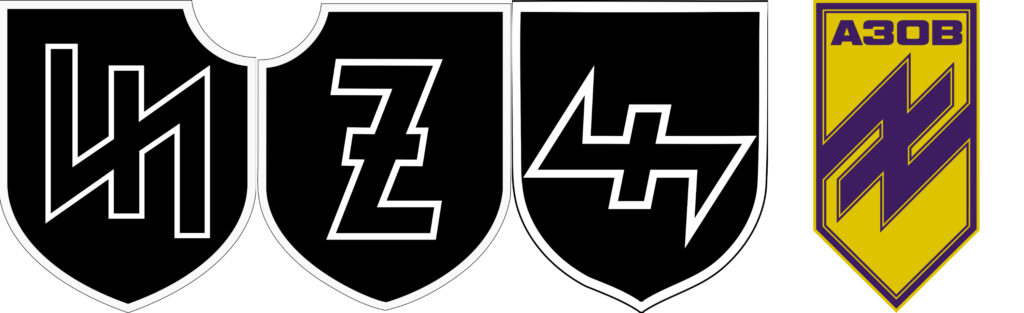
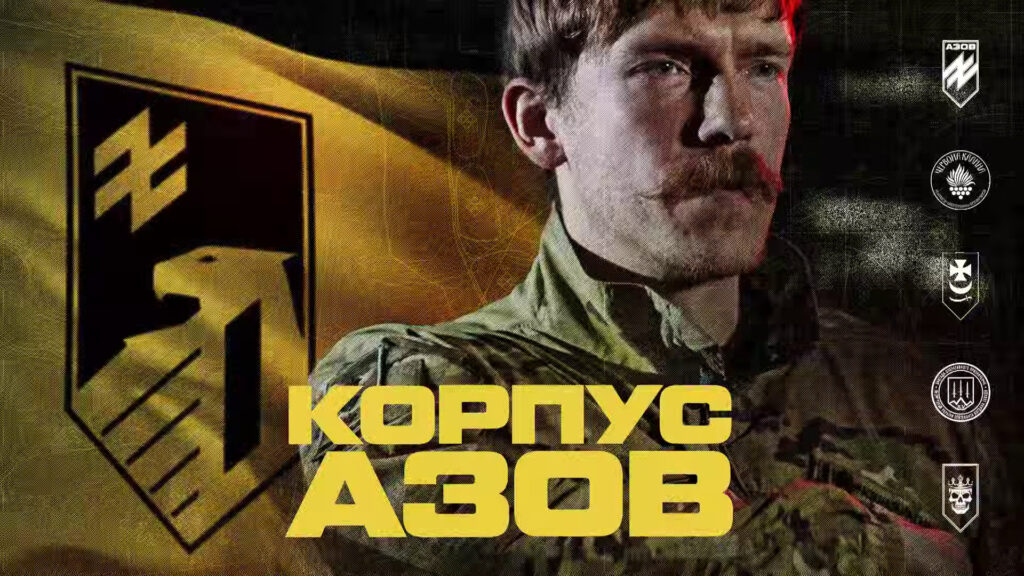
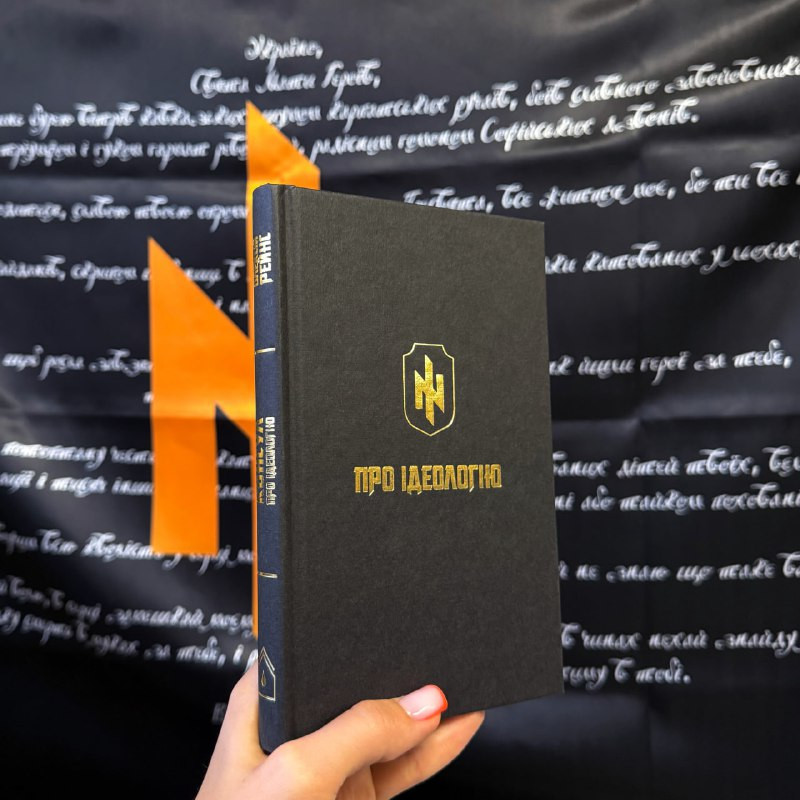
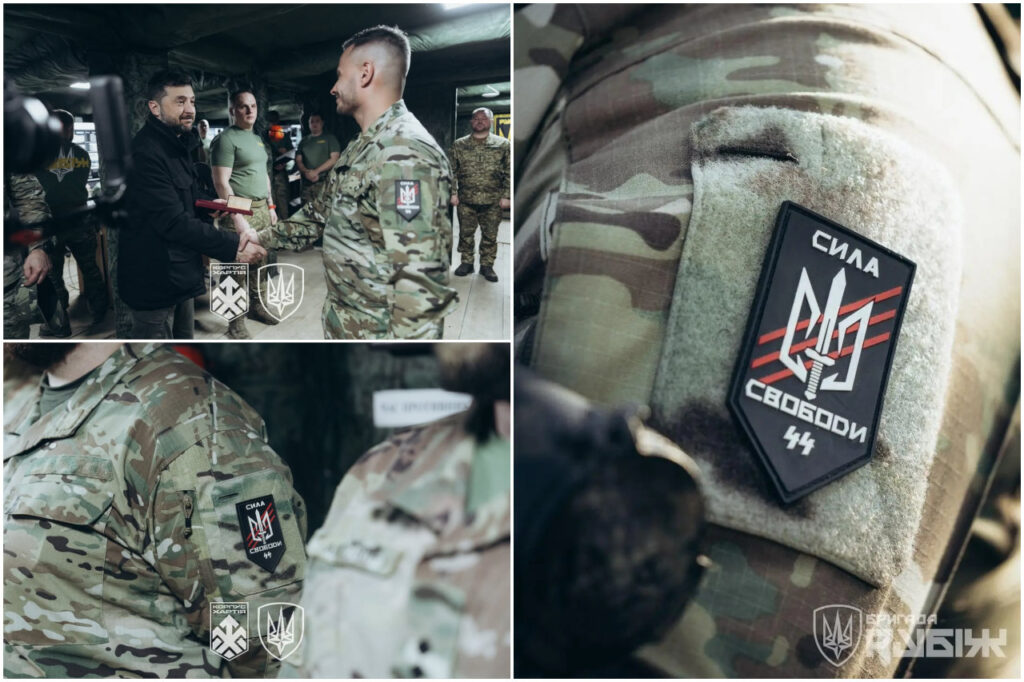
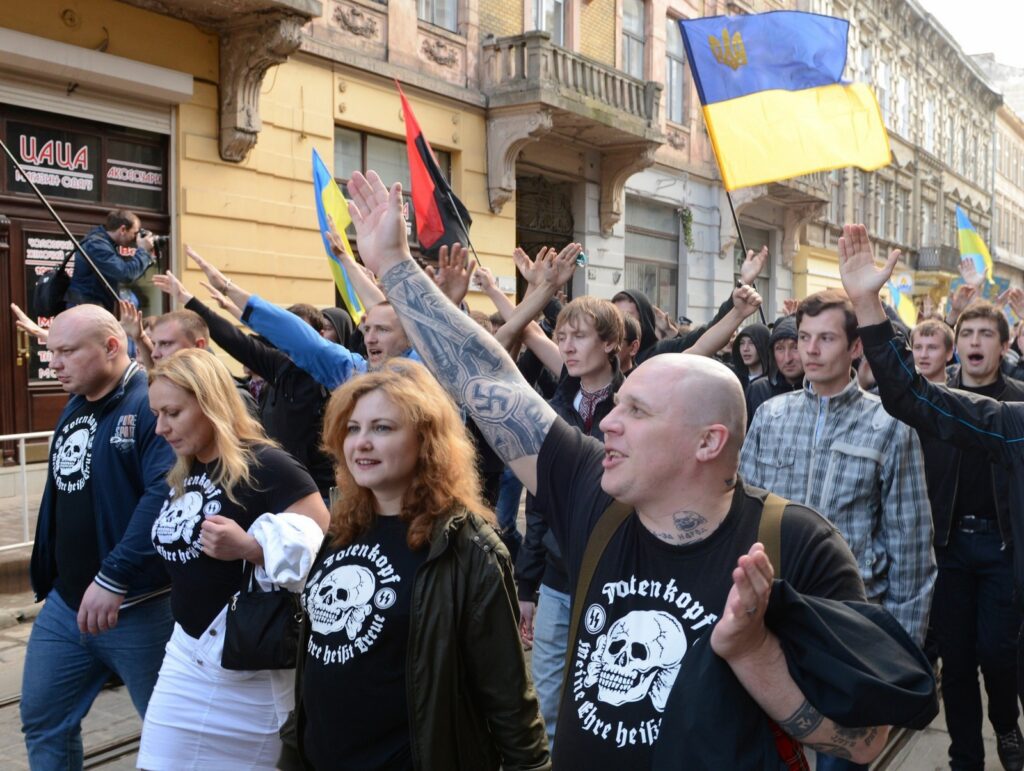
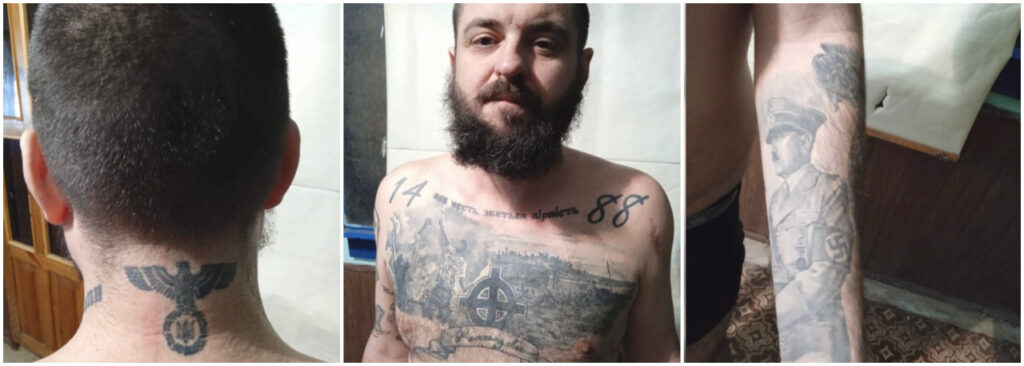
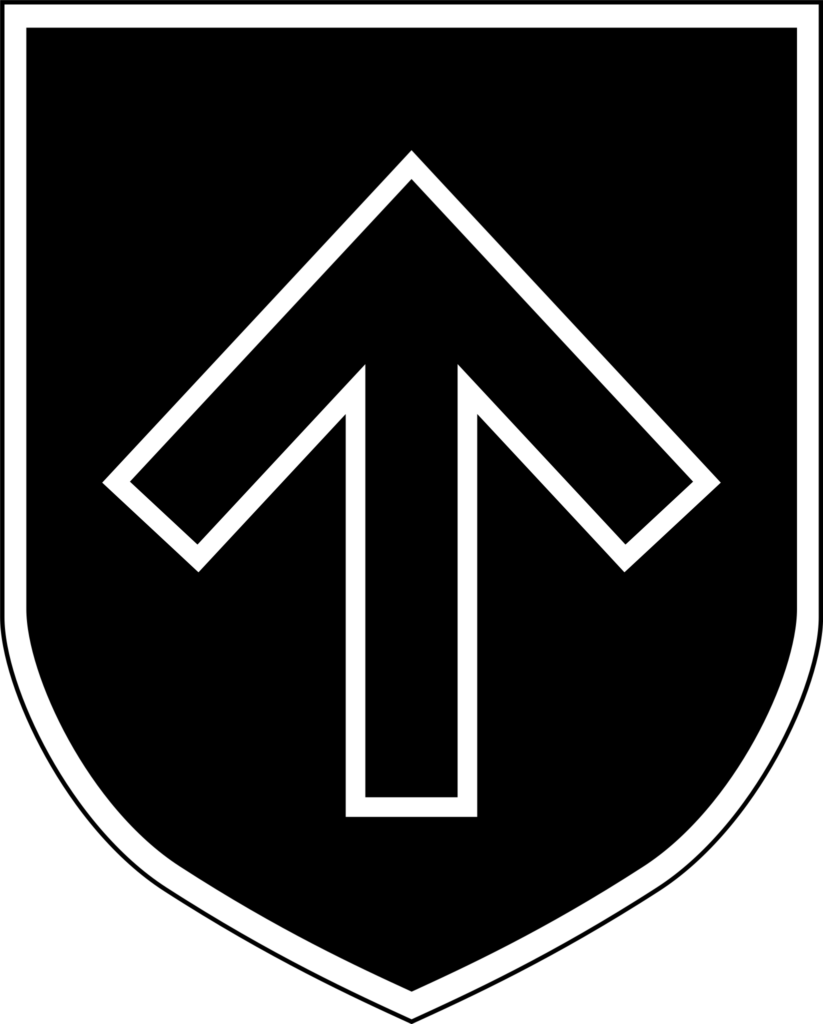
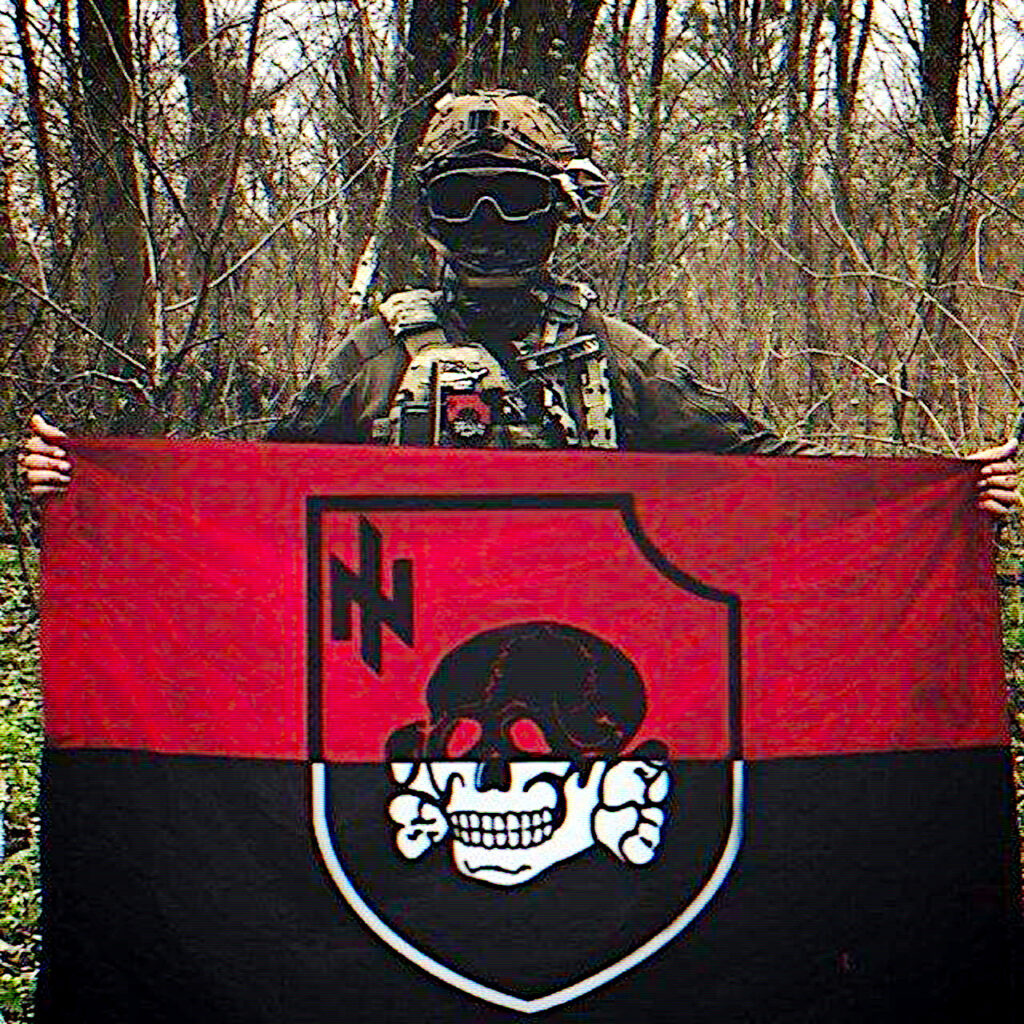
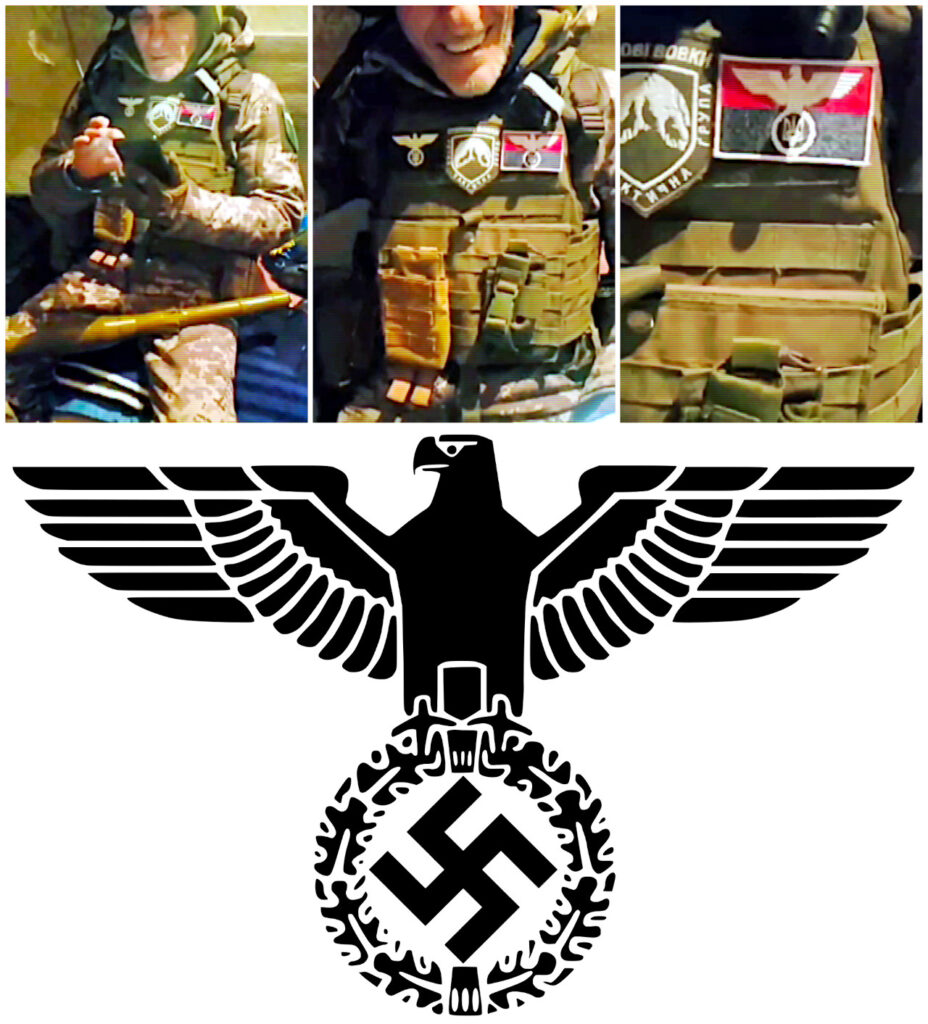
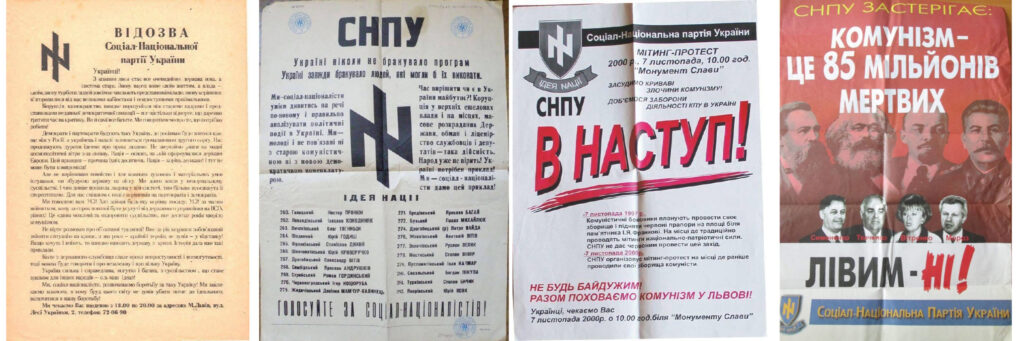
Biletsky was called the “White Leader” and his writings were published by both SNA and Patriot of Ukraine. He was the first commander of the Azov battalion, which was organised and led by Patriot of Ukraine and SNA in May 2014. Patriot of Ukraine, SNA, and the Azov battalion all used a symbol resembling a stylised swastika and Wolfsangel. Azov commanders and their historian, who himself serves in Azov, called the symbol the “Idea of the Nation” and claimed that it is an ancient Ukrainian symbol, even though it was created in 1992 for the Social National Party of Ukraine (SNPU). The creator of this symbol acknowledged that it was called “Idea of the Nation” to represent the radical nationalist ideas of the Organisation of Ukrainian Nationalists (OUN). He also admitted that SNPU deliberately chose this symbol with the Latin letter N, instead of the equivalent Ukrainian Cyrillic letter, fully aware of its resemblance to Nazi symbols and association with the swastika for many Ukrainians, in particular in Lviv. As with other extremist groups that rebrand out of political expedience, the Social National Party of Ukraine changed its name to Svoboda in 2014, because the Nazi association was politically inconvenient.20 However, this symbol was retained by the SNA and by Patriot of Ukraine, whose Kharkiv branch split from SNPU because of these changes.21 The Azov battalion and its propaganda magazine, which was named Black Sun, also used the Black Sun symbol, an ideological symbol used by Nazis and various neo-Nazi organisations. In addition, groups and individuals—including Patriot of Ukraine, SNA, National Corps, and Azov battalion and regiment leaders, commanders, and members—have displayed on their uniforms various neo-Nazi and Nazi symbols, such as the swastika, the SS sign, and 88 (Heil Hitler code). These, along with Hitler images, Nazi flags, and Totenkopf have also been seen in the form of patches, photographs, flags, and tattoos.
Although the term far-right incorporates both ultranationalist and neo-Nazi organisations, they are not ideologically identical despite their frequent overlap. This study empirically investigates the role of Ukrainian ultra-nationalist organisations such as Svoboda, the Right Sector, the Ukrainian National Assembly–Ukrainian People’s Self-Defence (UNA-UNSO), and Bratstvo; neo-Nazi organisations such as the Social-National Assembly, Patriot of Ukraine, the White Hammer, and C14; and various other paramilitary formations, special police forces, and National Guard units organised and controlled to various extents by them. These armed units include the Azov battalion and regiment, Dnipro, Donbas, Aidar, Sich, Carpathian Sich, OUN, and St. Mary’s battalions, and the Ukrainian Volunteer Corps. To assess these actors, this study analysed thousands of Russian and Ukrainian primary sources: online recordings of live broadcasts, videos of the armed conflict in Donbas and Odesa, and information posted on websites and social media by far-right organisations, their armed units, and activists. It also analysed media reports in Ukrainian, Russian, and English from diverse outlets such as Ukrainska pravda, Strana, BBC, The Guardian, The Washington Post, The New York Times, YouTube, Telegram, V Kontakte, Facebook, and Twitter. To mitigate bias, the authors analysed the primary source materials rather than relying on secondary interpretations.
The Conflicting Narratives
Assessments of the far-right in Ukraine have been wracked by self-serving and thus unreliable perspectives. Russian and separatist leaders, as well as the media, have described the post-Maidan violence in Ukraine, especially in Donbas and Odesa, as perpetrated by “fascists” and “Nazis” akin to genocidal massacres against Jews, Belarusians, Russians, and Ukrainians during the Holocaust and World War Two.22 They often called the Odesa massacre the “Odesa Khatyn,” a reference to the large-scale massacre of Belarusian villagers in 1943 by the Nazis and an auxiliary police battalion, which was based on a paramilitary formation of the Melnyk faction of the Organisation of Ukrainian Nationalists. Based on this narrative, President Putin and his allies have claimed that invading Ukraine is not only justified, but “inevitable” to counter the “Nazi” or “Neo-Nazi regime” in Kyiv.23 Putin and his government thus declared the “de-Nazification” of Ukraine as a key goal of “the special military operation” launched in February 2022.24 This perspective—in its entirety—is widely assailed in the West.25
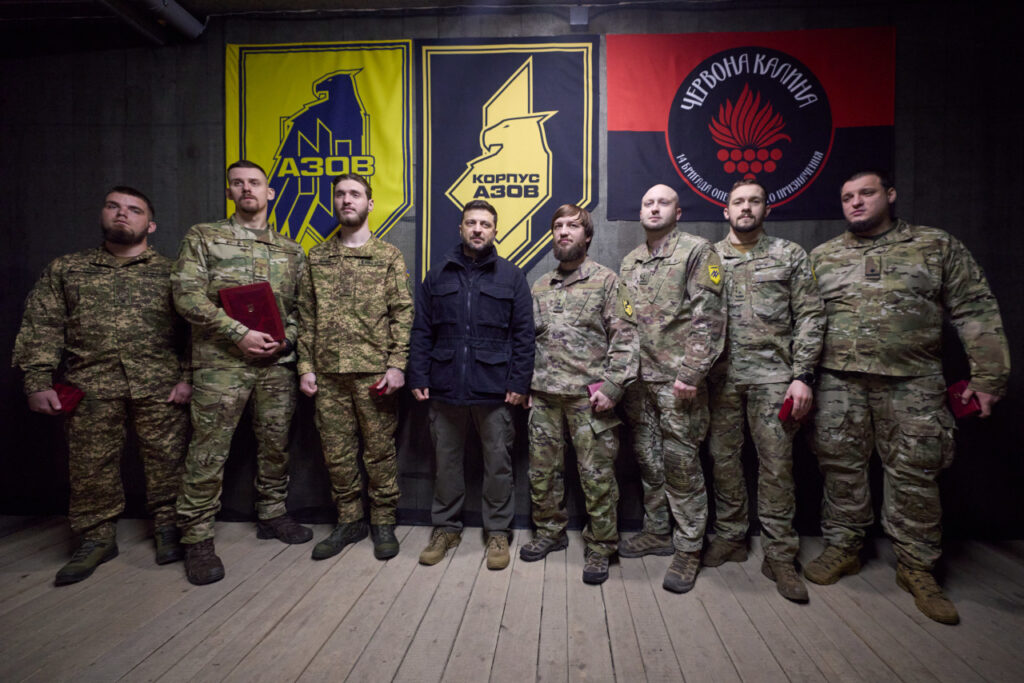
By contrast, the Ukrainian and Western governments and the media tend to claim that the far-right—including neo-Nazis—is marginal, even non-existent in Ukraine.26 They argue that since Euromaidan, Ukrainian fighters have almost entirely—if not entirely—shed their far-right elements, particularly neo-Nazi. To this end, it is a common point that the Azov Battalion ceased to be led by the neo-Nazi Patriot of Ukraine, a paramilitary wing of the SNA, since integrating into the National Guard as one of its regiments. Kyiv has stressed that the integration of Azov in November 2014 is proof of its transition to moderation and the absence of extremist fighters post-Maidan.27 Ukrainian President Volodymyr Zelensky awarded “Hero of Ukraine” titles in 2022 to prominent Azov leaders such as regiment commander Denys Prokopenko, deputy commander Sviatoslav Palamar, and senior officer Oleh Khomenko.28 After the commencement of the Russia-Ukraine war in February 2022, many Western media outlets, politicians, government officials, and academics adopted this stance that Azov and other controversial Ukrainian fighters on the far-right had not only abandoned extremist elements, but were heroes against Russia’s illegal invasion.29
The Indexing Theory of political communications emphasises that Western media follow narratives of its governments in covering foreign conflicts, including in post-communist countries.30 In some cases, Western media may have taken their cues directly from the Ukrainian government. After the Odesa massacre on 2 May 2014, the Foreign Ministry of Ukraine blamed the arson attack on provocateurs that were “paid generously by the Russian special services”, and the New York Times immediately adopted the same line that pro-Russia groups may have been responsible for torching the building.31 The Western narrative of the far-right in Ukraine since the Euromaidan is not without controversy. Volodymyr Ishchenko, a Ukrainian sociologist who specialises in the far-right in Ukraine, concludes: “The dominant narrative since Maidan in Ukrainian and much of the Western public spheres has been systematically downplaying the problem” by arguing that “the Ukrainian far-right” is “small and marginal.” He stated that “often, the far-right is just ignored.”32
Notably, Western concerns over far-right fighters in Ukraine were more prevalent before the February 2022 invasion. For example, The Nation described Azov in 2018 as “pro-Nazi, as evidenced by its regalia, slogans, and programmatic statements.”33 In 2019, Radio Free Europe called Azov “far-right.”34 In 2020, The Guardian referred to Azov as a “neo-Nazi extremist movement.”35 Consistent with Indexing Theory, such coverage of the neo-Nazis in Ukraine before the February 2022 Russian invasion overlapped with similar expressions by Western governments. In its 2018 Human Rights report, the US State Department called the political wing of the Azov Regiment “a hate group.”36 In 2019, ambassadors from G7 countries warned against “extreme political movements in Ukraine, whose violent actions are worrying in themselves.” The warnings referred specifically to the Azov movement and its violence during the 2019 presidential elections.37 The US Congress has displayed longstanding ambivalence over its designation of Azov. In 2018, forty Congress members signed a letter to the State Department with the request to designate Azov as a terrorist organisation because of its links to terrorist attacks in multiple countries and its recruitment of neo-Nazis in its ranks.38 A defence appropriations bill amendment was adopted by the entire US Congress in 2018, which banned US government funding and training of the Azov regiment due to concerns over its neo-Nazi views and members. Such concerns had been expressed by American officials for several years after the Euromaidan. The amendment was first unanimously adopted by the US House of Representatives in 2015. Congressman John Conyers put it bluntly, “I am grateful that the House of Representatives unanimously passed my amendments last night to ensure that our military does not train members of the repulsive neo-Nazi Azov Battalion.”39 Under pressure from the Pentagon, however, Congress subsequently removed this first amendment. A similar amendment, proposing a ban on US military assistance to radical nationalist and neo-Nazi organisations, voluntary police, and paramilitary formations under their command, was blocked in Congress in 2014.40
In general, however, American and European governments have been careful not to issue public statements against the far-right in Ukraine or to call attention to it. This hesitancy began after the Euromaidan and became starker following the February 2022 Russian invasion. Indeed, Western governments and media increasingly whitewashed the empirical record to present the Ukrainian far-right formations as categorically moderate in order to boost international support. In June 2024, the US State Department stated that the Azov brigade was eligible to receive US weapons under the “Leahy Law” because it was cleared of human rights violations. It made this determination after claiming that the Azov brigade is a new unit that is not subject to the previous Congressional ban, even though in reality this brigade was created on the basis of the Azov regiment, celebrated the 10th anniversary of the Azov battalion creation as its own anniversary, and is led by original Azov battalion commanders.41 However, a subsequent amendment, which was included in the US defence bill which was passed by the US House of Representatives, specifically stated that “none of the funds appropriated or otherwise made available by this Act may be used to provide arms, training, intelligence, or other assistance to the Azov Battalion, the Third Separate Assault Brigade, or any successor organisation.”42
Such instrumental portrayals of allies are not limited to this conflict. Other recent cases of political violence have also featured public relations campaigns by governments and media to present allies as arguably more moderate than their history and contemporary ideology indicate. For example, in the Syrian war, anti-Assad jihadist organisations allied with the West were euphemistically referred to as “rebels,” sometimes “moderate” ones, even when they fought under the direction of a Foreign Terrorist Organisation, as designated by the US State Department.43 A large body of literature within terrorism studies has found that the labelling of violent perpetrators by governments and media is not value-neutral, but expedient to serve political agendas.44 Particularly in these controversial cases of political violence, academe can play an important role in interrogating the empirical record to adjudicate the truth.45
The Far-Right in the Donbas War
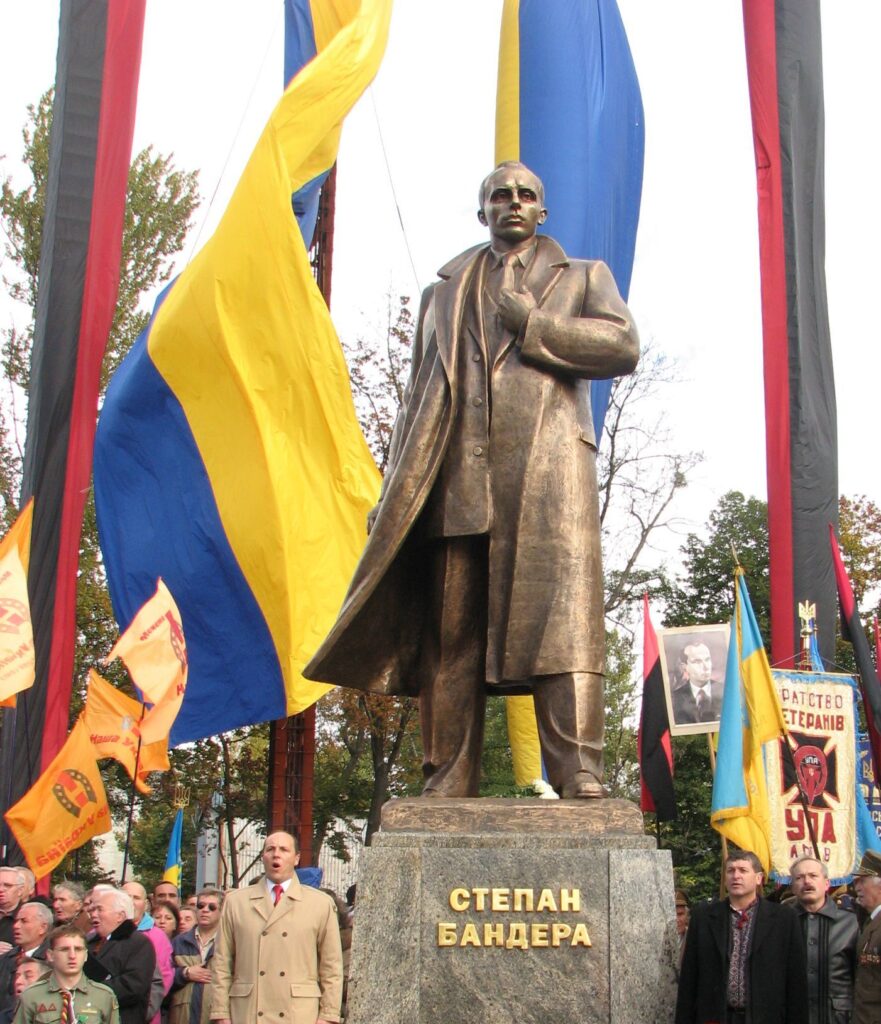
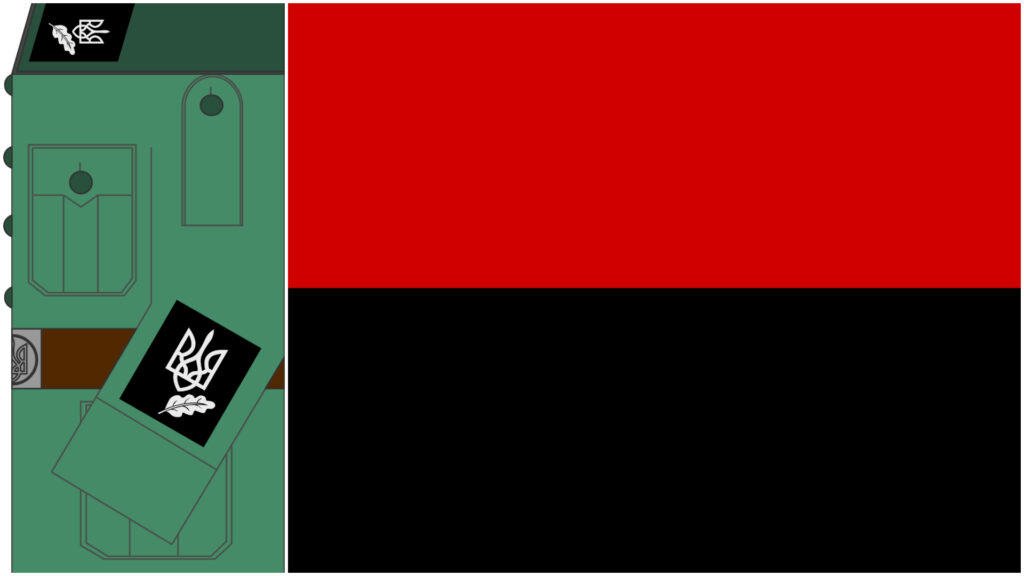
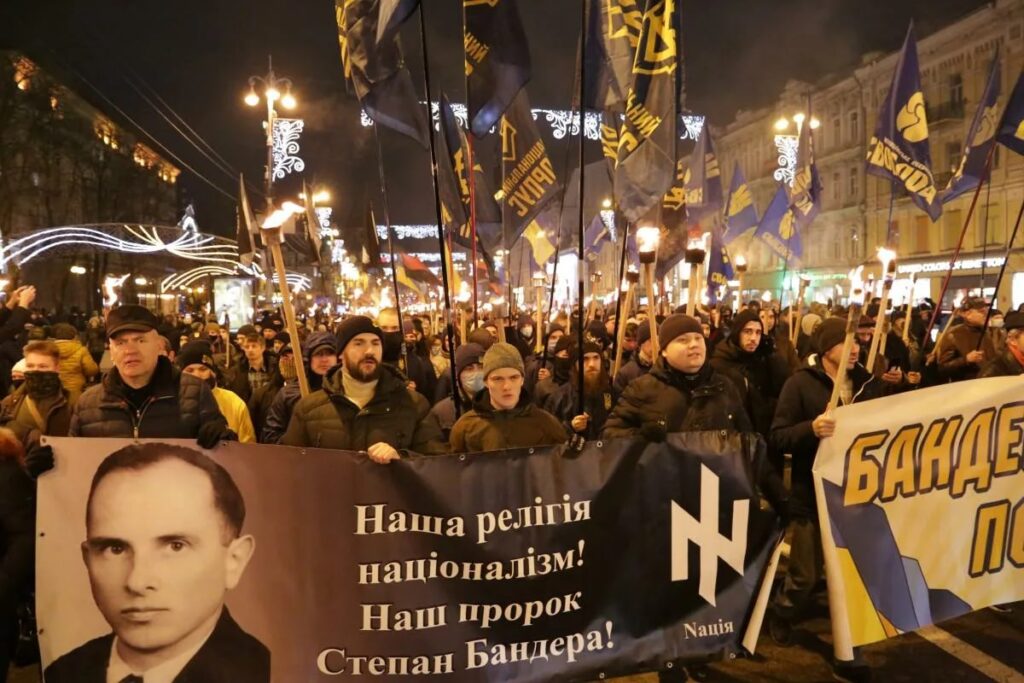
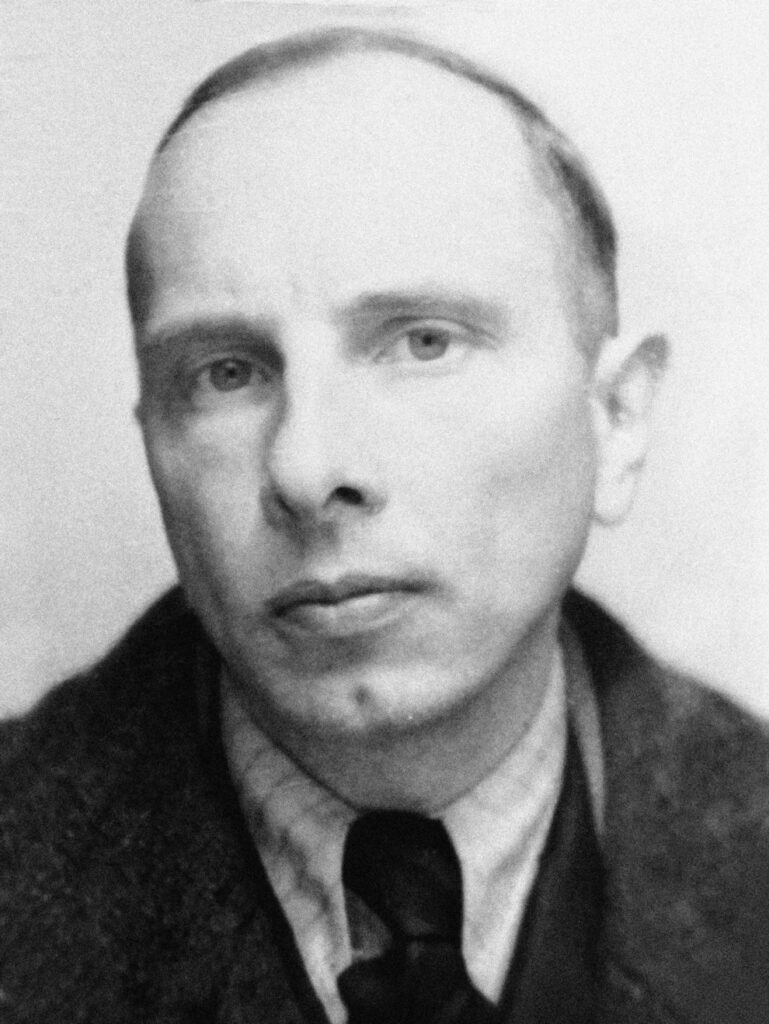
Research within the field of terrorism studies has repeatedly noted the difficulty of determining the ideological beliefs of participants in political violence.46 However, fine-grained knowledge of the organisations can substantially increase confidence. Svoboda and the main organisations that remained within the Right Sector after the Euromaidan were widely understood as far-right for maintaining ultra-nationalist and ethnically supremacist views. They openly described themselves as the natural successors of the Organisation of Ukrainian Nationalists (OUN) and the Ukrainian Insurgent Army (UPA), inspired by the notorious OUN leader and Nazi collaborator, Stepan Bandera.47 Along with the UNA-UNSO, these organisations used the “Glory to Ukraine! Glory to the Heroes!” slogan, the official greeting of the Bandera faction of the OUN (OUN-B). This greeting, along with a fascist-style hand salute, was modelled on greetings and salutes of other well-known fascist parties in European history, from the Nazi party in Germany to the Ustashe party in Croatia.48 The Right Sector also adopted its red and black flag from the OUN-B and the UPA, which symbolized Ukrainian blood and soil, which were also pervasive in Nazi ideology and flags.49 But the existence of these symbols alone offers weak evidence of far-right influence in the Donbas war without understanding the cultural and historical context.
The violent overthrow of the Viktor Yanukovych government by means of the Maidan massacre triggered the resurgence of separatism in Donbas.50 After his overthrow in February 2014, far-right parties and organisations in Ukraine expanded and organised their armed formations. Along with Ihor Kolomoisky, an oligarch who became the head of the Dnipropetrovsk regional administration, the Right Sector was instrumental in the formation of the Dnipro battalion in the spring of 2014.51 The Azov battalion, notorious for its use of neo-Nazi symbols in its official insignia, was also organised in the spring of 2014 and led by the SNA and the Patriot of Ukraine with the involvement of the Radical Party. As mentioned, “White Leader” Andrii Biletsky was the first commander of Azov.52 Based in Mariupol, the St. Mary’s battalion was formed in the fall of 2014 and led by the far-right Bratstvo party, which is described by its leader (Dmytro Korchynsky) as the “Christian Taliban.”53 Around this time, the Aidar battalion, nominally subordinated to the Ministry of Defence of Ukraine, was formed by the Maidan Self-Defence. One of its platoons was led by the White Hammer, a neo-Nazi organisation belonging to the Right Sector during the Euromaidan. Ilia Kiva, a Right Sector member, was the commander of another volunteer police battalion. A previously convicted criminal with a swastika tattoo became the commander of the Tornado Company, a special police unit. He and seven other members of his company were arrested and convicted for various crimes in the warzone, such as torturing detainees. A Nazi-style flag with a swastika was found in their prison cell.54 These units were all under the formal jurisdiction of the Ministry of Internal Affairs, the National Guard, or the Ministry of Defence. From the start of their formation, they remained under de facto command of radical nationalist or neo-Nazi organisations. These armed formations sprouted up in the early stages of the conflict in Donbas and were stationed there in an attempt to suppress pro-Russian separatism in the region by force. The Right Sector and the Organisation of Ukrainian Nationalists actively organised various militia and paramilitary units that were not subordinate to the central government of Ukraine. The Volunteer Ukrainian Corps, the largest paramilitary formation, was formed and led by the Right Sector specifically for the war in Donbas, though it also included battalions in Western Ukraine.55
The paramilitary formations, special police, and National Guard units, organised and led by far-right organisations such as the Right Sector, the Social National Assembly, Patriot of Ukraine, Svoboda, C14, and Bratstvo, constituted a small minority of Ukrainian fighters in the Donbas. Based on reports, we estimate the number of members of radical nationalist and neo-Nazi organisations who served in various far right-led, regular, and other armed formations in the Donbas, at around five thousand. This estimate is conservative and represents just one percent of approximately 400,000 people who participated in this war on the side of the central government.56 Additional metrics of influence, however, are also important to consider.
Despite their relatively small numbers, far-right fighters exercised disproportionate influence in the Donbas civil war, particularly in the early stages before the first direct Russian military intervention in August 2014. Far-right Ukrainian groups proliferated after the Euromaidan because they were eager to fight and were responsible for a disproportionate level of violence, especially against civilians and prisoners of war in Mariupol and Krasnoarmiisk. Far-right organisations and far-right-linked battalions thus played a crucial role in escalating the armed conflict in the Donbas. Svoboda and C14, an avowedly neo-Nazi group affiliated with Svoboda until the summer of 2014, organised and led the Sich battalion from June 2014 onwards.57 Meanwhile, the Right Sector carried out a deadly attack on a separatist checkpoint in Sloviansk on 20 April 2014. While Ukrainian and Western media denied far-right involvement in these events, the evidence to the contrary includes business cards linked to far-right members found after the attack. As well, Ukrainian court proceedings revealed that the weapons used by the Right Sector checkpoint attackers were the same as the snipers from this group who killed and wounded police during the Maidan.58 And two years after the attack on the separatist checkpoint, Dmytro Yarosh—the leader of the Right Sector—admitted his personal involvement in thisattack.59 Oleksandr Turchynov, then acting president of Ukraine, and Kolomoisky’s deputy in the Dnipropetrovsk regional administration, reportedly orchestrated this Right Sector operation, aimed to seize and destroy a television transmitter near Sloviansk, several days after this area was seized by the Strelkov-led armed group of Russian nationalists and Ukrainian separatists.60 This attack by the Right Sector constituted a major escalation of the conflict in Donbas because it broke both the Geneva Agreement signed on 17 April 2014 by Ukraine, Russia, the EU, and the US for a peaceful resolution of the conflict, as well as the Orthodox Easter truce between the Ukrainian government and separatists in Donbas.
Far right-led armed formations were also behind many other violent attacks in the Donbas, further escalating the conflict into a civil war. Videos, media reports, and admissions from commanders and other members of the Azov and Dnipro battalions indicate that they participated in the storming of the district police headquarters in Mariupol on 9 May 2014. Approximately ten people, including at least one protester, were killed.61 Analysis of online video streams, media reports, and Ukrainian government documents, also make clear that Azov played a major role in taking back the city of Mariupol from the control of separatists in June 2014.62 The Dnipro battalion, along with other units, seized civilians in the Donetsk Region to prevent the separatist referendum on 11 May 2014. Videos show them shooting unarmed pro-separatist protesters with Kalashnikovs, killing two locals. The Ukrainian government denied the presence of the Dnipro battalion, but it was confirmed by other credible sources, including admissions by battalion members in videos, like Volodymyr Parasiuk’s statement on social media, who became the People’s Deputy of Ukraine.63
The far-right-led armed formations perpetrated a disproportionate amount of violence in the first few months of the Donbas conflict and thus played a major role in escalating it into a larger civil war because the radical nationalist and neo-Nazi-led groups were far more willing to use force at that time. The Ukrainian armed forces, the security service, police and National Guard units were more reluctant to use force against the separatists in Donbas because their commanders and members were publicly blamed by the new government for attempting to forcefully suppress the Maidan protests—and in particular, for the Maidan massacre. Because the new Maidan government came to power through violence, which included the killing of police and protesters, it lacked legitimacy among many military, police, and SBU members in the Donbas region during this initial period of the conflict. Further, compared to the newly ascendant far-right groups in the aftermath of Euromaidan, the regular Ukrainian armed forces, the security service, the police and National Guard units were known for lower morale and higher desertions. Examples of this included the Donetsk SBU Alfa commander and Luhansk Berkut members, who joined the separatists.64
The relative role of the far-right in the political violence was not constant; it began to decline in the Donbas when newly elected president Petro Poroshenko ordered the Ukrainian military, SBU, police, and National Guard to wield lethal force against the separatists and launch the offensive in June 2014.65 The war was most intense and violent in 2014 and 2015, but the fighting declined significantly following the Minsk Agreements in 2015. However, ultra-nationalist and neo-Nazi fighters continued to exert a non-trivial role, even after the Ukrainian military intensified its operations in Donbas and purported to moderate the far-right fighters. After its formal incorporation into the National Guard of Ukraine, the Azov regiment and its commanders maintained a close organisational and ideological relationship with the neo-Nazi National Corps party. This party was formed by the Azov battalion founder and the first commander on the basis of neo-Nazi SNA and Patriot of Ukraine, and it included many Azov battalion and regiment veterans. The Azov regiment functioned as a military wing of the National Corps, which, in essence, represented overlapping elements of the same Azov movement.66 Indeed, Azov regiment commanders shared a neo-Nazi background and had served in the neo-Nazi-led Azov battalion.67 In other words, the rebranding from “battalion” to “regiment” did not alter the key personnel.68 For example, Azov regiment commander Denys Prokopenko was a member of the neo-Nazi White Boys Club, which was formed by the ultras of the Dynamo Kyiv football club. This group of ultras displayed various Nazi symbols and the Nazi salute on their social media and during football games. His Azov battalion platoon had used the Totenkopf insignia of the Nazi SS.69 Andriy Biletsky became the commander of the Third Assault Brigade, which was created by veterans of the Azov battalion and regiment and activists of his neo-Nazi group, the National Corps.70 In 2023, he stated in an interview with Ukrainian media that the united Azov movement included this Azov brigade under his command along with the Azov regiment and the Kraken unit.71 Such admissions in Ukrainian media highlighting enduring far-right allegiances seldom make their way into the Western press.
Importantly, Azov commanders never publicly renounced their neo-Nazi views, symbols, and organisations. In fact, Azov leaders routinely denied in media interviews that they, their units, and organisations, were neo-Nazi, claiming that the well-documented Nazi symbols were fakes or Russian propaganda. Our research of Ukrainian social media as well as other researchers of the far-right in Ukraine, such as Lev Golinkin and Moss Robeson, have identified over one hundred cases of Nazi and neo-Nazi displays by at least several hundred Azov commanders and other members from 2014 to 2022. This number includes displays on uniforms, patches, photographs, flags, and tattoos of neo-Nazi and Nazi symbols, such as the swastika, SS sign, 88 (Heil Hitler code), Hitler images, Nazi flags, and Totenkopf, and a fascist hand salute.72 The continued relevance of far-right extremism in Azov was evident at the very top. Arsen Avakov, the Minister of Internal Affairs, was personally involved in the Azov battalion formation and its later expansion to a regiment.73 President Petro Poroshenko circulated photographs awarding Ukrainian national medals and commendations to some of the most well-known neo-Nazis in Azov.74 The Nazi connection to Azov was clearly not due to a loss of agency control.
Amnesty International and Human Rights Watch reported that Azov was involved in many cases of torture, illegal detention, and disappearances during the war in Donbas.75 The impact of these far-right organisations cannot be measured strictly in terms of the direct physical effects, as terrorism researchers have emphasised in many other contexts.76 Ultra-nationalist and neo-Nazi organisations were instrumental in blocking or “spoiling” a peaceful resolution of the armed conflict in Donbas, another well-established source of leverage for extremists.77 Far-right groups such as the Right Sector, Svoboda, and the Radical Party opposed the adoption by the parliament of Constitutional amendments based on provisions from the Minsk Agreements.78 To this end, Svoboda activists launched a grenade attack on 31 August 2015 in front of the Ukrainian parliament, killing four and wounding dozens of policemen and National Guard troops, which helped to block these amendments, undercutting the logic of implementation.79
Far-right groups also challenged the implementation of President Volodymyr Zelensky’s electoral promise to peacefully resolve the Donbas war.80 In October 2019, Zelensky travelled to a front-line position in Donbas to personally convince the Azov fighters to stop blocking the implementation of the Minsk agreements by withdrawing along with separatist troops from the frontline, as he agreed during the summit with Putin and German and French leaders in Paris. But video of the encounter shows that Zelensky was taunted by activists of this neo-Nazi organisation who flouted his appeal.81 According to the Associated Press, thousands of far-right and nationalist activists shouting the far-right OUN and UPA slogan “Glory to Ukraine. Glory to the Heroes” marched through Kyiv protesting against a peace plan for eastern Ukraine.82
The radical flank threatened Zelensky for implementing Minsk on other occasions as well. In May 2019, Dmytro Yarosh, the former Right Sector leader, publicly threatened to hang the new Ukrainian president on a tree if he fulfilled his election promise of a peaceful resolution of the conflict in Donbas.83 In 2021, Yarosh, the commander of the Ukrainian Volunteer Army organised by the Right Sector, was appointed Adviser to the Commander-in-Chief of the Armed Forces of Ukraine, Valerii Zaluzhnyi.84 In the same year, videos, photos, and Ukrainian media reports show police standing down while neo-Nazi and other far-right protesters attacked the Office of the President of Ukraine and painted swastikas on its walls.85 The Russia scholar Stephen F. Cohen concluded that Zelensky “can’t go forward with peace negotiations” because “crazy fascist movements” in Ukraine “literally threatened his life.”86 Although far-right peace rejectionists posed political problems for Zelensky, they were also known to work closely with him. An activist of the neo-Nazi Patriot of Ukraine and former deputy commander of the Azov regiment was appointed the acting head of the National Police of Ukraine during the Poroshenko presidency and then became a deputy minister of Internal Affairs during the Zelensky presidency.87 Prime Minister Oleksii Honcharuk spoke at a “veterans party” organised by a front organisation for the neo-Nazi C14 with a stylised swastika of a neo-Nazi rock band behind him.88 The advisory council of the Ministry of Veteran Affairs under Zelensky retained activists of this neo-Nazi group, including those charged with assassinating the prominent opposition journalist, Oles Buzyna, in 2015.89
In sum, ultra-nationalist and neo-Nazi militant organisations were deeply involved on the side of the central government throughout the Donbas conflict. Although representing a small fraction of Ukrainian forces throughout the conflict, they committed a disproportionate amount of violence, particularly before President Poroshenko ordered the Ukrainian military to increase its use of force against the separatists in the summer of 2014. The much-touted absorption of Azov and other extreme right-wing militia under the official Ukrainian National Guard, police, and military command did not change either their command or their ideological displays. Many of the fighters worked closely with the Kyiv political leadership across administrations, when not using de facto veto power to block peaceful resolution of the conflict in this region.
This interpretation departs from others that rely strictly on vote-share as the proxy for far-right influence. The influence of the far-right in Ukraine after the Maidan far exceeded its electoral support and membership. Svoboda and Right Sector leaders each won only one percent of the votes in the snap presidential elections in May 2014. In the parliamentary elections of October 2014, Svoboda narrowly failed to clear the five percent threshold, receiving 4.7 percent. The Right Sector fared even worse, receiving only two percent of the votes. Ruslan Koshulynsky, one of Svoboda leaders, who was backed by the Right Sector, OUN, and C14, received only 1.7 percent of the votes in the 2019 presidential elections, while Svoboda won 2.2 percent of the votes in the 2019 parliamentary elections. These weak electoral results indicate the limited national support of the far-right in Ukraine, but not its outsized role in the Donbas conflict.
The Far-Right in the Odesa Massacre
Other than the Donbas war, the Odesa massacre was the most significant and deadly instance of political violence after the Maidan massacre in Ukraine since its independence in 1991 until the Russia-Ukraine war in February 2022. The violence took place on 2 May 2014, between a “United Ukraine” rally and pro-Russian separatists, carried out with petrol bombs, gunfire, and rock-throwing, which ended up killing 48 people, primarily separatist protesters.90 The vast majority of the fatalities took place in the Trade Unions House, where 42 separatist activists and employees (forty men, seven women, and one boy) were killed when the building was set ablaze.91
This massacre contributed to the escalation of the separatist conflict in Donbas into the civil war. As noted, the massacre was presented by separatist and Russian leaders and the media as akin to the Nazi massacre of Khatyn in Belarus, and many Odesa separatists joined the separatist forces in Donbas. Despite the importance of this massacre, the International Advisory Panel of the Council of Europe, among other international authorities, has noted that the Ukrainian government failed to properly investigate and prosecute those responsible.92 To ascertain the role of far-right groups in the Odesa massacre, a broad range of key information resources can be analysed, including videos and recordings of live broadcasts of the political violence (and the lead-up to it); published reports; primary source media in Ukrainian, Russian, and English; statements of responsibility; interviews; and testimonies from participants and eyewitnesses on both sides, as well as police commanders.
On 1 May 2014, the day before the mass violence, separatists protested in Odesa to demand a referendum on the newly installed government in Kyiv, which they blamed on far-right activists and Western interference.93 Based on testimonies from a special parliamentary commission report in the immediate aftermath of the May 2014 massacre, Ukrainian and regional government officials planned to use far-right activists and the Maidan Self-Defence to suppress the separatists in the Odesa region and disperse those who were encamped near the Trade Union building.94 Extensive evidence indicates that the police and firefighters were ordered by their superiors to stand by and not interfere during attacks. For instance, a special plan to deal with mass disturbances launched by the Odesa regional police was not authorised, reportedly because of decisions at the Ministry of Internal Affairs’ top level.95 Similarly, top regional officials of the police and other law enforcement agencies were ordered to attend a meeting with their national counterparts before and during the start of the clashes.96 The presence of Andriy Parubiy and five hundred Maidan Self-Defence members, who deployed from Kyiv to Odesa on the eve of the massacre, further suggests that the violent dispersal of the separatist camp by far-right activists was orchestrated by top government leaders.97 Parubiy was a founder and leader of the neo-Nazi Patriot of Ukraine, a paramilitary wing of the Social National Party of Ukraine in the 1990s. He was the head of the Maidan Self-Defence during the Euromaidan and headed the National Security and Defence Council at the time of the Odesa massacre. The State Bureau of Investigations of Ukraine launched a criminal investigation into Parubiy for the Odesa massacre soon after he was replaced as the ex-head of the Ukrainian parliament following the early parliamentary elections in 2019.98 One of the participants acknowledged in an Israeli documentary that he engaged in “provocations” in the Odesa massacre under the command of Parubiy, who had issued orders to attack the separatists and “burn everything.” We assess this acknowledgement as credible because he was filmed along with Maidan activists in the left wing of the Trade Union building in Odesa when the deadly fire began to burn the central entrance.99 He and five other Georgian ex-military members also stated in American, Italian, and Israeli TV documentaries, Russian media interviews, on Macedonian TV, in depositions to Berkut lawyers for the Maidan massacre trial, and in testimonies to the Prosecutor General Office of Belarus for the Prosecutor General Office of Ukraine investigation that their groups of Georgian, Baltic, and far-right-linked Ukrainian snipers received weapons, payments, and orders from specific Maidan and Georgian politicians, including Parubiy, to engage in a mass killing of police and protesters.100 The Maidan massacre trial subsequently confirmed their identities.101
A march led by the Right Sector and football ultras on 2 May 2014 was used as cover to implement this plan to destroy and burn the separatist tent camp.102 The SBU in the Odesa Region received advanced information about planned “provocations” and violent clashes between football ultras and pro-Russian separatists on game day between the Odesa and Kharkiv teams on 2 May. A special train transported hundreds of football ultras from Kharkiv to Odesa.103 Football ultras in Ukraine were notorious for displaying neo-Nazi symbols and expressing neo-Nazi slogans during games and have historically linked up with the Right Sector and other far-right organisations, as during the Maidan protests.104 Both the Right Sector and football ultras in Odesa and Kharkiv were dominated by the neo-Nazi Social National Assembly/Patriot of Ukraine, which organised the Azov battalion right after the Odesa massacre.
Odeska Druzhyna, a small separatist organisation in Odesa, was present among other separatist activists based on evidence from internet streams, videos, testimonies of participants and eyewitnesses, and special parliamentary commission reports.105 Odeska Druzhyna used identifiable red tape labels, and were not Right Sector agent provocateurs, as the Russian media and separatists claimed. However, the Ukrainian government and media also mischaracterised the involvement of Odeska Druzhyna by overstating its coordination with other separatist activists.106 The balance of forces was asymmetric; the groups of numerically superior activists of the Right Sector from Odesa and Kharkiv led by the neo-Nazi Social National Assembly/Patriot of Ukraine, far-right football ultras, and Maidan Self-Defence units from Odesa and other regions attacked the separatists. Numerically disadvantaged, the latter took cover behind a police cordon.107
An Odeska Druzhyna activist was filmed shooting in the direction of the far-right protesters with an AK-74-type assault rifle.108 The official investigation and the May 2 Group maintained that a Right Sector activist was killed by this separatist group member with a 5.45mm calibre bullet.109 However, leaked forensic medical expert reports describe a 5.65mm calibre bullet extracted from his body.110 This bullet reportedly disappeared and reappeared during the investigation. The fact that it did not match bullet samples of any legally registered firearms, the weak sound of the gunshots, as well as the lack of a recoil observed in the videos of the shooting, also suggest that the far-right protester may not have been killed by this separatist, who maintained that the weapon seen in the video was a movie studio prop.111 The killing of the Right Sector activist was not visible in that video nor in any videos of clashes. The investigation and various videos at the scene did not reveal the exact time or location of his killing, or the direction of the gunshot. An Odesa deputy police chief, who was filmed around the time of this killing before he himself was wounded, stated that he saw snipers in camouflage shooting from the second floor of a hotel there. He relayed that they killed this Right Sector activist and the second protester in order to blame the separatists for their killing and provoke a violent response against the separatists.112 Videos filmed before and after his shooting suggest that the second pro-Maidan activist was killed around the same time in the same area during the violent clashes with separatists and shooting from a Kalashnikov-type weapon by one of the separatists.113 However, the government forensic examination determined that he was killed by a bullet from a pneumatic sport-type weapon. Nobody was charged with his killing, and the moment and other circumstances of his killing remain not publicly known.114
In the clashes that followed the killings of these two pro-government protesters, four separatist protesters were killed and many other separatist protesters, policemen and at least one local journalist were wounded. The forensic examination determined that three separatists were killed with hunting ammunition.115 A pro-government activist was filmed shooting with a hunting rifle in the direction of these separatists.116 This pro-government activist was later identified by the Minister of Internal Affairs as a Right Sector member.117 The government investigation charged him with killing at least one of the separatists. However, he was released from arrest and his trial was suspended indefinitely because of threats by the Right Sector and other far-right activists against judges during his trial.118 Evidence—including a recorded phone call—revealed that the events on May 2nd were coordinated by the Odesa regional administration official in charge of law enforcement agencies, and involved the participation of the Maidan Self-Defence commander, Right Sector activists, football ultras, and Maidan Self-Defence units.119 They attacked and burned the tent camp of various separatist organisations, whose activists and supporters then escaped to the nearby Trade Union building and tried to barricade the main entrance doors. Videos, internet streams, and testimonies of eyewitnesses show that attackers threw Molotov cocktails and burning tyres at the main entrance, set the entrance doors on fire, and blocked other exits. Videos, recorded calls to firefighters, and eyewitness reports reveal that the fire and thick smoke started from those burning tyres and Molotov cocktails thrown at the main entrance.120 The evidence does not support claims that the separatist protesters killed in this incident were Russian citizens, that they burned themselves by throwing Molotov cocktails from the roof of the Trade Union building or inside of the building, or that there was no far-right involvement in their killing.
After initial denials, the May 2 Group admitted that the deadly fire started at the main entrance. The May 2 Group was a nominally independent association of mainly journalists, formed after the massacre supposedly to investigate it. It was created with the involvement of the Governor of the Odesa region who was appointed by Ukrainian President Petro Poroshenko within a week of the massacre.121 This governor represented not only the central government, but also the Kolomoisky’s oligarchic network, which financed the Right Sector volunteers from the Volyn Region in the Azov battalion and the Right Sector-led Dnipro battalion.122 The Azov battalion was organised by the neo-Nazi SNA and its paramilitary wing, Patriot of Ukraine, which dominated the Right Sector in Odesa and Kharkiv, a few days after the Odesa massacre. But the May 2 Group still claimed that it was impossible to determine who started the fire because both sides were throwing Molotov cocktails. However, there is no public evidence of Molotov cocktails being thrown by separatists at the main entrance; on the contrary, numerous videos feature the far-right protesters throwing Molotov cocktails and burning tyres into the Trade Union building at that time.123
Within Ukraine, far-right activists—particularly from the Right Sector and the SNA— were notorious for using tyres and Molotov cocktails to burn public buildings. Forensic examinations in the government investigation, recordings of radiocommunications by SBU Alfa group, an unpublished admission by a far-right activist to a French journalist, and an academic study determined that the Trade Union headquarters in Kyiv were burned by Maidan activists, including far-right ones, in order to stop its takeover by the Security Service of Ukraine Alfa unit.124 Far-right protesters also started fires by burning tyres in the Inter TV channel building and threatened to burn down the parliament of Ukraine, the Lutsk City Council, the Sviatoshyn District Court that heard the Maidan massacre case, the Constitutional Court, and Inter and 112 Ukraina TV channels buildings by placing tyres next to their entrances.125 Prior usage of the same tactics by the far-right increases the likelihood of their direct involvement.
Analysis of online video streams, government investigation findings, May 2 Group reports, forensic medical examinations, eyewitness testimonies, and other evidence strongly indicate that 42 people perished as a result of the fire, smoke, and from trying to jump from the upper floors of the Trade Union building with far-right activists beating them on the ground and blocking the exits.. The victims were unarmed and included mainly separatists, their supporters, and several employees, in particular women, who were in the building at the time.126 Some of the strongest evidence of far-right involvement in the arson attack comes from the far-right itself, in the form of credit claiming. A growing body of research within terrorism studies focuses on credit claiming. An important finding is that perpetrators are far more likely to deny responsibility for their attacks than to take credit for ones that they did not perpetrate.127 This is particularly true when the targets are civilians. Nonetheless, many extremist groups do claim credit for civilian attacks.128 Statements posted by the Right Sector, the SNA, and the neo-Nazi Misanthropic Division on their websites and social media sites admitted the involvement of their organisations in the massacre. The Right Sector celebrated on its website the massacre by describing it as “another bright page in our fatherland’s history.” Claiming responsibility for the slaughter, it wrote: “In the first minutes of the battle, the ‘Right Sector’ activist was seriously wounded in the stomach. Several more PS [Right Sector] activists received injuries of varying degrees of severity. However, this did not prevent the rest of the PS fighters, together with football fans, from repelling the attack of pro-Russian provocateurs, and as a result, they successfully countered attempts to seize buildings in Odesa. Standing shoulder to shoulder, Odesa activists, football fans and ‘Right Sector’ fighters defeated the forces of pro-Russian mercenaries. Order has been restored in Odesa.”129 The Right Sector—which was dominated in Odesa and Kharkiv by the Social National Assembly and its paramilitary wing, Patriot of Ukraine—and the neo-Nazi Misanthropic Division (which joined the Azov battalion after the massacre) admitted on the social media platform V Kontakte and in other public statements that the fire was set deliberately.130
The official investigation of the Odesa massacre was a farce. Nobody was found guilty of perpetrating this mass killing. As noted, the Right Sector shooter was initially arrested but then released. Only separatists were among those arrested and tried for the Odesa massacre. The Odesa massacre trial of separatists resulted in their acquittal by a local court. The Ukrainian court based its decision on the lack of evidence in support of prosecution charges. Even the verdict acknowledged both the weakness of the investigation into the perpetrators and the role of Parubiy and other government officials.131 The Council of Europe and the UN Special Commission reports also noted the destruction of evidence.132 A report by the special commission of the Council of Europe found that the Ukrainian government’s investigation of the Odesa Massacre was inadequate, politically selective, and featured the falsification of evidence, despite the existence of video footage showing who threw the Molotov cocktails at the building.133
The Ukrainian media cited SBU sources that a far-right activist, who headed the Right Sector in Odesa during the Odesa Massacre, was a secret agent of the Security Service of Ukraine (SBU) and that he and far-right associates were paid by SBU to attack opposition politicians, threaten judges, and conduct other illegal actions.134 This would be consistent with the fact that the Right Sector was not investigated for the Odesa massacre even though the Right Sector publicly admitted involvement. His secret collaboration with SBU would also be consistent with the fact that SBU and the Prosecutor General Office refused to charge him for killing another person in Odesa in 2018. Moreover, in 2020, the SBU gave this far-right activist the status of a victim in this case, even though he streamed this killing on his social media account and the police investigation determined that he was the killer.135 In this sense, the Odesa massacre was not entirely anomalous; it featured post-Maidan far-right involvement with apparent support from high-level political leaders in a corrupt country where investigations and media have inconsistently followed the evidence.
Conclusion
This study assesses the role of the far-right in post-Maidan Ukraine, specifically, in the Donbas war and the Odesa massacre. These were two of the biggest episodes of political violence in the country leading up to the February 2022 Russian invasion. This area of research is worth close investigation because it represents intrinsically important episodes of political violence that have not attracted objective analysis based on available primary sources in Ukrainian, Russian, and English. Investigating the role of the far-right is also timely because the far-right in Ukraine is riven by duelling, self-serving contemporary narratives.
The predominant narratives propagated by governments and the mainstream media in Ukraine, the West, Russia, and separatist-controlled Donbas, concerning the role of the far-right in the war in Donbas and the Odesa massacre, have evidently been partisan. Contrary to the Russian government, separatists, and associated media, the Ukrainian government and military are not Nazi or even neo-Nazi. There were no neo-Nazis among the upper echelon of the Ukrainian government. President Zelensky is certainly not a Jewish neo-Nazi. He tried to placate and mainstream the far-right for political reasons, but has no observable personal affinity to that extreme ideology.
Neo-Nazis constituted only about one percent of the Ukrainian forces before the Russian invasion in 2022, and there is weak electoral support for neo-Nazi parties throughout the country. Similarly, the policy of glorification of the OUN-UPA, their leaders, such as Stepan Bandera, and the adoption and use of their “Glory to Ukraine! Glory to the Heroes!” greeting by the state and the military, including Zelensky, do not make Ukraine a Nazi state. While the OUN and the UPA were far-right terrorist organisations, which collaborated with Nazi Germany and perpetrated the mass murders of Jews, Poles, and Ukrainians, they were not Nazis. Ukrainians could not join the Nazi party because Hitler and other Nazi leaders regarded Ukrainians as racially inferior and opposed independence of Ukraine while also dismissing the attempt to create even a puppet state by the Bandera faction of the OUN in Lviv shortly after the Nazi invasion of the Soviet Union. Thus, Putin cannot credibly justify the illegal invasion in February 2022 as a war to “de-Nazify” the “Nazi regime.”136 The power of the far-right and the glorification of the OUN and the UPA in Ukraine under Poroshenko and Zelensky were exaggerated and exploited by the Russian leaders to justify the invasion.
But the West’s efforts to whitewash the far-right in Ukraine also rests on empirically shaky grounds. Despite their relatively small numbers militarily and politically, the far-right in Ukraine exercised outsized power. The far-right organisations, volunteer battalions, and paramilitary units organised and led by them played, along with separatists and Russian nationalists, a significant role in starting and escalating the incipient civil war in the Donbas and then impeding its peaceful resolution. Even after technically integrated into the official Ukrainian forces, Azov and other far-right groups continued to harbour extremist views. Often brandishing the same extremist symbols, the core leaders and members remained and even ascended within the police, military, and security services during the Donbas war. Western media accounts have drawn heavily from biased Ukrainian sources, including “official” investigations and the May 2 Group. Across numerous primary sources in Ukrainian, Russian, and English, we find evidence that the Right Sector, Social-National Assembly, its paramilitary wing Patriot of Ukraine, and groups of far-right football ultras from Odesa and Kharkiv played a critical role in the Odesa massacre against separatist protesters on 2 May 2014. Neo-Nazi SNA/Patriot of Ukraine, which dominated the Right Sector in Odesa and Kharkiv, organised the Azov battalion right after this massacre.
Despite the lack of international consensus over the definition of terrorism, a common interpretation is the use of violence by non-state actors aimed at creating fear for political ends, particularly when the targets are civilians.137 Depending on one’s definition, some attacks within the episodes of political violence covered in this study, such as the Odesa massacre, could, therefore, arguably be classified as terrorism. What is clear is that neither of the duelling narratives accurately captures the role of the far-right. This study has helped to fill that research lacuna by making use of substantial primary source materials in Ukrainian, Russian, and English. Besides the Maidan massacre, the Donbas war and the Odesa massacre are the two most substantial episodes of political violence from the independence of Ukraine in 1991 to the February 2022 illegal Russian invasion [end]
Ivan Katchanovski is a Ukrainian and Canadian political scientist. He teaches at the School of Political Studies and the Conflict Studies and Human Rights Program at the University of Ottawa in Canada. He specialises primarily in politics, conflicts, political violence, and the far right in Ukraine. His academic publications include five books, 21 articles in peer-reviewed journals, and twelve book chapters.
Max Abrahms is a professor of public policy and political science at Northeastern University, where he specialises in international security. Abrahms has published extensively in leading academic and popular outlets such as International Organization, International Security, International Studies Quarterly, Security Studies, Comparative Political Studies, Harvard Business Review, Foreign Affairs, Foreign Policy, New York Times, Washington Post, USA Today, Newsweek, The Atlantic, and Los Angeles Times.
I disagree with the authors on two points
Stepan Bandera & friends were Nazis. How can the authors identify some neo-Nazis in modern Ukraine, while not regarding their historical mentors as Nazis ? Before WW2, they were praising either Adolf Hitler or Benito Mussolini. Their political project was authoritarian, racist and criminal. They were dreaming of ethnic cleansing. De facto during WW2, they committed mass killing of Jews and Poles.
Terrorism is not restricted to non-state actors. Terrorism is violent action to terror civilians, in order to achieve a common political goal. This is not even a value judgement, but Hiroshima bombing was terrorism. The Israeli targeting and mass killing of civilians, in the prospect of ethnic cleansing in Gaza, is terrorism.
chronicle of censorship, fake news, whitewashing of the Ukrainian Nazism and war crimes, for the sake of the proxy war that NATO is conducting in Donbass and Ukraine, against Russia
Endnotes
Arel, Dominique and Jesse Driscoll. 2023. Ukraine’s Unnamed War. Before the Russian Invasion of 2022. Cambridge: Cambridge University Press; Black, J.L. and Michael Johns (Eds.). 2016. The Return of the Cold War: Ukraine, the West and Russia. Abingdon: Routledge; Hahn, Gordon M. 2018. Ukraine Over the Edge: Russia, the West and the “New Cold War.” Jefferson, NC: McFarland Books; Katchanovski, Ivan. 2016a. “The Separatist War in Donbas: A Violent Break-up of Ukraine?” European Politics and Society, 17 (4), 473-489; Kudelia, Serhiy. 2016. “The Donbas Rift.” Russian Politics & Law, 54 (1), 5-27; Pikulicka-Wilczewska, Agnieszka and Richard Sakwa (Eds.). 2015. Ukraine and Russia: People, Politics, Propaganda and Perspectives. Bristol: E-International Relations; Sakwa, Richard. 2015. Frontline Ukraine: Crisis in the Borderlands. London: I.B.Tauris. ↩︎
Danciu, Gabriela-Cătălina. 2023. “A Perspective on Justifying the Ukraine–Russia War. Elements Of Propaganda.” International Journal of Social and Educational Innovation, 10 (19), 224-239; “Address by the President of the Russian Federation” (2022, February 24) http://en.kremlin.ru/events/president/news/67843. ↩︎
Black, J.L. and Michael Johns (Eds.). 2016. The Return of the Cold War: Ukraine, the West and Russia. Abingdon: Routledge; Katchanovski, Ivan. 2023a. “The Maidan Massacre Trial and Investigation Revelations and Their Implications for the Ukraine-Russia War and Relations.” Russian Politics, 8 (2),181-205. ↩︎
See, for example, Colborne, Michael. 2022. From the Fires of War: Ukraine’s Azov Movement and the Global Far Right, Stuttgart: Ibidem; Davidzon, Vladislav. 2023. “The Search for Neo-Nazis Under the Bedsheets Reflects American Progressive Hysteria, Not Ukrainian Reality.” Tablet Magazine, July. ↩︎
Umland, Andreas. 2019. “Irregular Militias and Radical Nationalism in PostEuromaydan Ukraine: The Prehistory and Emergence of the “Azov” Battalion in 2014.” Terrorism and Political Violence, 31 (1), 105- 131. ↩︎
Umland, Andreas. 2020. ‘The Far Right in Pre- and Post-Euromaidan Ukraine: From Ultra-Nationalist Party Politics to Ethno-Centric Uncivil Society.’ Demokratizatsiya, 28 (2), 247-268. ↩︎
Ishchenko, Volodymyr. 2016. “Far right participation in the Ukrainian Maidan protests: an attempt of systematic estimation.” European Politics and Society, 17 (4), 453-472. ↩︎
Hahn, Gordon M. 2018. Ukraine Over the Edge: Russia, the West and the “New Cold War.” Jefferson, NC: McFarland Books; Katchanovski, Ivan. 2016b. “The Maidan Massacre in Ukraine: A Summary of Analysis, Evidence, and Findings.” In The Return of the Cold War: Ukraine, the West and Russia, eds. J.L. Black and Michael Johns. Abingdon: Routledge, pp. 220-224; Katchanovski, Ivan. 2020. “The far right, the Euromaidan, and the Maidan massacre in Ukraine.” Journal of Labor and Society, 23 (1), 5-29; Katchanovski, 2023a; Katchanovski, Ivan. 2023b. “The “Snipers’ Massacre” on the Maidan in Ukraine.” Cogent Social Sciences, 9 (2); Katchanovski, Ivan. 2024. The Maidan Massacre in Ukraine. London: Palgrave Macmillan. ↩︎
Khalil Mutallimzada and Kristian Steiner, (2022), Fighters’ motivations for joining extremist groups: Investigating the attractiveness of the Right Sector’s Volunteer Ukrainian Corps. European Journal of International Security, 1–23. Ilmari Käihkö, (2018), A nation-in-the-making, in arms: control of force, strategy and the Ukrainian Volunteer Battalions. Defence Studies 18:2, 147–166; Tetyana Malyarenko and David J. Galbreath, (2016), Paramilitary motivation in Ukraine: beyond integration and abolition, Southeast European and Black Sea Studies 16:1, 113–138. ↩︎
Hale, Henry E., Oxana Shevel and Olga Onuch. 2018. “Believing Facts in the Fog of War: Identity, Media and Hot Cognition in Ukraine’s 2014 Odesa Tragedy.” Geopolitics, 23 (4), 851-881. A poll commissioned for that study found that 44% of Ukrainians believed that this mass killing was committed by provocateurs from Russia, while 11% blamed pro-Russian residents of Odesa. Ten percent of the respondents said that the Odesa massacre was perpetrated by “Ukrainian nationalists from Odesa” and 3% by “pro-Ukrainian” residents of Odesa. ↩︎
Van Evera, Stephen. 1997. Guide to Methods for Students of Political Science. Ithaca: Cornell University Press. ↩︎
Griffin, Roger with Matthew Feldman (Eds.). 2003. Fascism: Critical Concepts in Political Science. London: Routledge. ↩︎
Brahimi, Alia. “Ideology and terrorism.” The Oxford handbook of terrorism (2019): 298. ↩︎
See, for example, Jadoon, Amira, Andrew Mines, and Daniel Milton. “Targeting quality or quantity? The divergent effects of targeting upper verses lower tier leaders of militant organizations.” Journal of Conflict Resolution 67, no. 5 (2023): 1007-1031; Schram, Peter. “Self-managing terror: Resolving agency problems with diverse teams.” Games and Economic Behavior 130 (2021): 240-257; Abrahms, Max, and Philip BK Potter. “Explaining terrorism: Leadership deficits and militant group tactics.” International Organization 69, no. 2 (2015): 311-342; Popovic, Milos. “The perils of weak organization: Explaining loyalty and defection of militant organizations toward Pakistan.” Studies in Conflict & Terrorism 38, no. 11 (2015): 919-937. ↩︎
Biletsky 2013; Biletsky, Andriy. “Nedochytanyi Franko.” Patriot Ukrainy, (2008). https://web.archive.org/web/20101120085407/http://patriotukr.org.ua/index.php?rub=stat&id=409. Also, please note that the ADL has adopted the spelling of “antisemitism” instead of “anti-Semitism.” After reviewing the history and consulting with other leading experts, they determined that this is the best way to refer to hatred toward Jews, so we have adopted the same spelling convention here. ↩︎
Clarke, Colin P. “The Terrorist Diaspora.” Testimony, House Homeland Security Committee Task Force on Denying Terrorists Entry into the United States (2017). ↩︎
Boyd-Barrett, Oliver. 2016. Western Mainstream Media and the Ukraine Crisis: A Study in Conflict Propaganda. New York: Routledge. ↩︎
Some researchers and Zelensky have cited the presence of Russian-speakers in the Azov regiment and other neo-Nazi-led armed formations as evidence of their relative tolerance and moderation and argued that the Azov regiment distanced itself from its far-right roots. (See Umland 2019; “Zelensky refutes Russian propaganda claim that Azov Regiment is ‘neo-Nazi.’” The New Voice of Ukraine (2022, May 2), https://news.yahoo.com/zelensky-refutes-russian-propaganda-claim-131100438.html. However, these formations were organized and led by neo-Nazi organizations, which had a racist ideology and cast themselves as defenders of the White race. For this reason, they included not only large numbers of Russian speakers from Ukraine but also neo-Nazis from Russia, Belarus, and the Western countries, such as Australia, Sweden, and the US. ↩︎
“Ukraine war: Ros Atkins on… Putin’s false ‘Nazi’ claims.” BBC, (2022, March 26) https://www.bbc.com/news/av/world-europe-60853404; Five Azovstal defenders were awarded the title of Heroes of Ukraine. Svidomi, (2022, October 3). https://svidomi.in.ua/en/page/five-azovstal-defenders-were-awarded-the-title-of-heroes-of-ukraine. Loyd, Anthony. “‘Nonsense’: Heroes of Mariupol Denied US Weapons Over neo-Nazi Past.” Times, (2024 May 2). https://www.thetimes.com/world/russia-ukraine-war/article/nonsense-heroes-of-mariupol-denied-us-weapons-over-neo-nazi-past-kwnr0r0pw; “Boris Johnson Praises Nazi Azov Battalion,” YouTube. (2024, May 23). https://www.youtube.com/watch?v=_6g7i-4wswk. There was similar systematic and politically motivated whitewashing of the far-right in Ukraine in Wikipedia, especially, after the Russian invasion. A small number of Wikipedia editors systematically whitewashed neo-Nazi and other far-right parties, organizations, and their leaders, such as Azov regiment, Patriot of Ukraine, Svoboda, National Corps, the OUN, the UPA, Stepan Bandera, Roman Shukhevych, etc. They removed or deliberately excluded scholarly studies and other evidence of the extremist ideology and involvement in mass murder of the far-right, such as the Maidan and Odesa massacres, the Holocaust, and the Lviv pogrom in Ukraine and smeared in biographical entries scholars and other experts whose studies show such ideology and political violence by the far-right in Ukraine. (See, for example, Azov Brigade, https://en.wikipedia.org/wiki/Azov_Brigade; Patriot of Ukraine, https://en.wikipedia.org/wiki/Patriot_of_Ukraine; 2014 Odesa clashes, https://en.wikipedia.org/wiki/2014_Odesa_clashes; Far-right politics in Ukraine, https://en.wikipedia.org/wiki/Far-right_politics_in_Ukraine. They included editors who misrepresented the Holocaust in Poland using similar tactics in Wikipedia, which is unreliable but widely accessed source, compared to academic studies (Grabowski, Jan, and Shira Klein. 2023. “Wikipedia’s Intentional Distortion of the History of the Holocaust.” Journal of Holocaust Research 37 (2): 133–90). ↩︎
Katchanovski, Ivan and Alicen Morley. 2012. “Politics of US Television Coverage of Post-Communist Countries.” Problems of Post-Communism, 59 (1), 15-30. ↩︎
Bhatia, Michael. 2008. “Fighting words: naming terrorists, bandits, rebels and other violent actors, ”Third World Quarterly, 26 (1), 5-22; Schmid, Alex P. 2012. “The revised academic consensus definition of terrorism.” Perspectives on Terrorism, 6 (2), 158-159; Ganor, Boaz. 2002. “Defining terrorism: Is one man’s terrorist another man’s freedom fighter?” Police Practice and Research, 3 (4), 287-304. ↩︎
Although the focus of this analysis is on the portrayal of the far-right in Ukraine, a related narrative dispute has been over whether to characterise the conflict in the Donbas as a civil war. The Ukrainian and Western governments and the media described the war in Donbas as an interstate war between Russia and Ukraine or a hybrid war while denying that there was a civil war. By contrast, the Russian and Donbas separatist governments and associated media denied any Russian military involvement in the war and called it a purely civil war. The majority of scholars and datasets such as the Correlates of War Project and the Uppsala Conflict Data Program classified it as a civil war or an intrastate conflict, while also noting the Russian military interventions in Donbas prior to the Russian invasion of Ukraine in See, for example, Arel and Driscoll 2023; Black and Johns 2016; Hahn 2018; Katchanovski 2016a; Kudelia 2016. ↩︎
Abrahms, Max. “What terrorists really want: Terrorist motives and counterterrorism strategy.” International Security 32, no. 4 (2008): 78-105. ↩︎
Rossolinski-Liebe, Grzegorz. 2014. Stepan Bandera: The life and afterlife of a Ukrainian nationalist. Stuttgart: Ibidem. ↩︎
Yeomans, Rory, (Ed.). 2016. The Utopia of Terror: Life and Death in Wartime Croatia. Rochester: University of Rochester Press; Katchanovski, Ivan. 2015. “Terrorists or National Heroes? Politics and Perceptions of the OUN and the UPA in Ukraine.” Communist and Post-Communist Studies, 48 (2-3), 217-228. ↩︎
Rudling, Per Anders. 2011. “The OUN, the UPA and the Holocaust. A Study in the Manufacturing of Historical Myths.” Carl Beck Papers in Russian and East European Studies, #2107, Center for Russian and East European Studies, Pittsburgh University. ↩︎
See Katchanovski, 2016a; Katchanovski, Ivan. 2006. Cleft Countries: Regional Political Divisions and Cultures in Post-Soviet Ukraine and Moldova. Stuttgart: Ibidem. ↩︎
Umland, Andreas. 2019. “Irregular Militias and Radical Nationalism in PostEuromaydan Ukraine: The Prehistory and Emergence of the “Azov” Battalion in 2014.” Terrorism and Political Violence, 31 (1), 105-131. ↩︎
Mueller, John E. 2006. Overblown: How politicians and the terrorism industry inflate national security threats, and why we believe them. New York: Simon and Schuster; Abrahms, Max. 2006. “Why terrorism does not work.” International Security, 31 (2), 42-78. ↩︎
Kydd, Andrew, and Barbara F. Walter. 2002. “Sabotaging the peace: The politics of extremist violence.” International Organization, 56 (2), 263-296. ↩︎
“Zvit tymchasovoi slidchoi komisii Verkhovnoi Rady Ukrainy z pytan rozsliduvannia faktiv zahybeli hromadian u mistakh Odesi, Nariupoli, a takozh inshykh mistakh Donetskoi ta Luhanskoi oblastei Ukrainy.” (2014, September 5). Verkhovna Rada Ukrainy. http://w1.c1.rada.gov.ua/pls/zweb2/webproc4_1?pf3511=52134↩︎
Abrahms, Max, and Justin Conrad. “The strategic logic of credit claiming: A new theory for anonymous terrorist attacks.” Security Studies 26, no. 2 (2017): 279-304. ↩︎
Schmid, Alex. “Terrorism-the definitional problem.” Case W. Res. J. Int’l L. 36 (2004): 375; Schmid, Alex P. “The definition of terrorism.” In The Routledge Handbook of Terrorism Research, pp. 39-157. Routledge, 2011; Schmid, Alex P. “Discussion 1-Revisiting the wicked problem of defining terrorism.” Terrorism: Its Past, Present & Future Study A Special Issue to Commemorate CSTPV at 25 (2020): 3. ↩︎
As the calendar barrels into another year and we tick away the days of February, notable anniversaries are marked off in sequence. It is now 2/22/2022 +2: two years since Putin’s address on the historic status of the Donetsk and Lugansk regions, followed on 2/24/2022 by the commencement of the Special Military Operation and the spectacular resumption of history.
The nature of the war changed dramatically after a kinetic and mobile opening phase. With the collapse of the negotiation process (whether thanks to Boris Johnson or not), it became clear that the only way out of the conflict would be through the strategic defeat of one party by the other. Thanks to a pipeline of western support (in the form of material, financial aid, and ISR and targeting assistance) which allowed Ukraine to transcend its rapidly evaporating indigenous war economy, it became clear that this would be a war of industrial attrition, rather than rapid maneuver and annihilation. Russia began to mobilize resources for this sort of attritional war in the Autumn of 2022, and since then the war has attained its present quality – that of a firepower intensive but relatively static positional struggle.
The nature of this attritional-positional war lends itself to analytic ambiguity, because it denies the most attractive and obvious signs of victory and defeat in large territorial changes. Instead, a whole host of anecdotal, small scale positional analysis, and foggy data has to suffice, and this can be easily misconstrued or misunderstood. Ukraine’s supporters point to nominally small scale advances to support their notion that Russia is suffering cataclysmic casualties to capture small villages. This suggests that Russia is winning meaningless, pyrrhic victories which will lead to its exhaustion, so long as Ukraine receives everything it asks for from the west. At the same time, the Z-sphere points to these same battles as evidence that Ukraine can no longer hold even its most heavily defended fortress cities.
What I intend to argue here is that 2024 will be highly decisive for the war, as the year in which Ukrainian strategic exhaustion begins to show out at the same time that Russia’s strategic investments begin to pay off on the battlefield. This is the way of such an attritional conflict, which burdens armies with cumulative and constant stressors in a test of their recuperative powers. Wear and tear and the raging of the waters will erode and burden the dike until it bursts. And then the deluge comes.
Avdiivka: Tactical Overmatch
The signature operational development of 2024 is at this point clearly the complete Russian capture of Avdiivka. The strategic significance of Avdiivka has itself been subject to debate, with some dismissing it as little more than a dingy suburb of Donetsk, targeted to give Putin a symbolic victory on the eve of Russian elections.
In fact, Avdiivka is clearly a locale with great operational significance. A Ukrainian fortress since the beginning of the Donbass War in 2014, Avdiivka served as a keystone blocking position for the AFU on the doorstep of Donetsk, sitting on a major supply corridor. Its capture creates space for Russia to begin a multi-pronged advance on next-phase Ukrainian strongholds like Konstantinivka and Pokrovsk (more on that later) and pushes Ukrainian artillery away from Donetsk.
The subject that would seem to be of particular importance, however, was the manner in which Russia captured Avdiivka. The struggle amid the wreckage of an industrial city provided something of a Rorschach test for the war, with some seeing the battle as yet another application of Russian “meat assaults”, overwhelming the AFU defenders with mass amid horrific casualties
This story does not hold up to scrutiny, as I would like to demonstrate from a variety of angles. First, we can try to gauge casualties. This is always difficult to do with a high degree of accuracy, but it would be useful to look for abnormalities or spikes in Russian loss patterns. The most widely accepted source for this would be the Mediazona casualty tracker (an explicitly anti-Putinist media project operated out of the west).
When one goes to examine the Mediazona counts, an interesting discrepancy manifests itself. The summary text notes that a four-month battle for Avdiivka has recently concluded, and Mediazona states: “We are seeing significant growth of Russian casualties since mid-October.” This is actually quite odd, because their data shows the literal opposite. Since October 10 (the day of the first major Russian mechanized assault on Avdiivka), Mediazona has counted an average of 48 Russian casualties per day, which is actually significantly less than the burn rate earlier in the year. In contrast, Mediazona counted 80 casualties per day on average from January 1 to October 9. This period, of course, includes heavy fighting in Bakhmut, so if one takes the period between the end of the Battle of Bakhmut and the beginning of the Battle of Avdiivka (May 20 to October 9) one finds an average of 60 Russian casualties per day. A time series of Mediazona’s weekly confirmed casualties also shows a downward trend, making one wonder how they can feel comfortable claiming that the action in Avdiivka has raised the burn rate
Furthermore, Ukrainian sources on the ground emphasized that the Russian assault in Avdiivka was quite certainly not a mere function of mass, and noted effective Russian small unit tactics with a powerful fire support. One Ukrainian officer told Politico: “That’s how they work in Avdiivka — artillery levels everything to the ground, and then professional landing troops come in small groups.” Another officer described Russian small unit assaults (5 to 7 men) occurring at night. All of this is inconsistent with the trope about Russian “human wave” assaults – which, we should note, have never been caught on camera. Given the Ukrainian fondness for sharing combat footage, oughtn’t we expect to see some alleged evidence of these Russian waves being mowed down?
All this is to say, the claim that Russia (yet again) suffered catastrophic losses in Avdiivka is simply not supported. Like a previous analysis in which I showed that Russian armor losses were not rising or showing abnormal patterns, we yet again have a major Russian assault failing to cause a spike in the loss data. This is not to deny that Russia has suffered casualties. The operation at Avdiivka was a high intensity, four month battle. Men are killed and vehicles are destroyed in such affairs, but there is little evidence that this occurred at abnormal or alarming rates for the Russian Armed Forces.
Now, you’re certainly free to make your own judgements, and I have no doubt that the belief in massive Russian casualties and human wave assaults will endure. However, to believe this, you must make an epistemological leap of faith – believing that the wasteful human waves exist despite Ukrainian fighters testifying to the opposite, and that Russian casualties have risen in a way that is somehow invisible to trackers like Warspotting and Mediazona.
In contrast, Avdiivka stands out as the first major engagement of the war where Ukraine’s growing material shortages have been acutely felt. After burning through much of their accumulated stock (including the large batch of shells purchased from South Korea by the United States), the AFU felt a glaring and painful artillery shortage in Avdiivka. Complaints about “shell hunger” were a motif of the coverage of the battle. Of course, we’ve heard about the growing shell shortage for months (and it is known that Ukraine simply does not have enough tubes to cover the entire front), but Avdiivka stands out as a keystone position, important enough for Ukraine to scramble premier assets to reinforce it, where they simply could not provide an adequate base of fire
Avdiivka
In the absence of adequate artillery, Ukraine has increasingly tried to lean on FPV drones as a substitute. There is a certain strategic logic to this, in that small drones can be manufactured in distributed facilities and do not require the capital intensive production centers (vulnerable to Russian strike systems) that artillery shells do.
However, drones are clearly not a panacea to Ukraine’s problems. In the simple technical sense, the destructive power of an FPV drone (which usually carries the warhead of a rocket propelled grenade) pales in comparison to an artillery shell and is thus unsuitable for suppressive fire or the reduction of strongpoints. Drones are also subject to disruptions from weather and electronic warfare in ways that artillery is not. More importantly, however, Ukraine is simply losing the drone race. Ukraine’s achievements ramping up drone production in wartime are genuinely impressive, but the country’s industrial base is still far smaller and more vulnerable than Russia’s, and Russia’s drone production is starting to widely outstrip Ukraine’s. Ukraine’s weakness in other arms prompted them to be the first party to lean heavily on FPVs, but that early lead has been lost.
So, drones clearly offer a lethal and important battlefield expedient, but they are neither a genuine replacement for artillery nor an arm of clear advantage for Ukraine. The result was a Ukrainian defense in Avdiivka that was substantially outgunned. The problem was compounded by the rapid proliferation of Russian air dropped glide bombs, alongside the degradation of Ukraine’s air defense. This allowed the Russian air force to operate around Avdiivka with something approaching impunity, dropping hundreds of glide bombs with the power to – unlike artillery shells, let alone tiny FPV warheads – level the fortified concrete blocks that normally make Soviet vintage cities so durable in urban fighting.
Thus, Avdiivka unfolded along a pattern that is now becoming very familiar, and indicates the emerging Russian preference for assaulting cities, at least of this mid-sized fortress variety. Once again the operation focused in its preliminary phase on flaring out Russian control over the flanks, beginning with the large mechanized assault in early November which secured positions on the railway line to the north of the city. Again (as in the case of Bakhmut and Lysychansk-Severodonetsk) there was an expectation among some that Russia would attempt to encircle the city, but this still does not look feasible in the current operating environment under the nexus of fires and ISR. Instead, positions on the flank allowed the Russians to launch concentric attacks into the city, entering on multiple axes that compressed the Ukrainian defenders into a tight interior position, where Russian fire could be heavily concentrated
Concentric Attack on Avdiivka: February 7-14 (Base Map courtesy of Kalibrated Maps)
The particular combination of concentric attack and overwhelming Russian fires led to a very rapid end to the battle once the Russian push into the city proper began. While the creep around the flanks occurred in a sequence of on and off pushes through the winter, the concentric crush on the city lasted scarcely more than a week. On February 7-8 the Russians achieved breakthroughs in both the northern and southern suburbs, and by February 14 the Ukrainians were in retreat. A few pockets of resistance would linger for only a few days.
The issue for Ukraine now goes beyond the loss of Avdiivka and the opportunities that this will create for Russia. Ukraine now has proof of failure on both the attack and the defense in operations where they concentrated significant forces. Their counteroffensive on Russia’s Zaporhzia Line was a catastrophic failure, wasting much of the AFU’s carefully husbanded mechanized package, and now they have a failed defense on their hands in Avdiivka, despite fighting out of a well prepared fortress and scrambling reserves into the sector to reinforce the defense.
The question now becomes fairly simple: if Ukraine failed to attack successfully over the summer, if they could not defend Bakhmut, and if they cannot defend in Avdiivka, is there anywhere that they can find a battlefield success? The dam is leaking. Can Ukraine plug it before it collapses?
Russia’s Full Court Press
Ukraine’s force structure is always notoriously difficult to parse out, due to their propensity for ad-hoc battlegroups and their practice of piecemeal allocation of forces to resident brigade commands (turning brigade headquarters into the cups in a shell game). Truth be told, Ukrainian ORBAT and force allocation is in a class all its own – to try and get a handle on it, you can do no better than Matt Davies’ excellent work over on X dot com. This generally makes the AFU’s organization and force generation more opaque and more difficult to parse out than Russia’s, for example. While Russia employs conventional army level groupings, Ukraine does not, and indeed lacks any organic commands above the brigade level.
That being said, the basic picture is one of three Ukrainian “Operational Strategic Groupings”, which are vaguely akin to army groups. These are, from north to south, Operation Strategic Groupings (OSGs) Khortytsia, Tavriya, and Odessa. Against these are arrayed four Russian Army Groups – from north to south, these are Army Groups West, Center, East, and Dnieper. Assessing the total line strength is always difficult, largely because we do not always have good insight into the actual combat rating of these units. However, we can make estimates of paper strength. Based on deployment information from the Project Owl Ukraine Control Map and the Militaryland Deployment Map, we can estimate that the nominal strength in the theater right now is some 33 Division Equivalents for Ukraine against perhaps 50 DEs for Russia – a significant, but not utterly overwhelming Russian advantage. We get a picture something like this (Ukrainian Army level formations are absent because they do not exist)
Ukrainian Theater Army and Group Level Commands (Base Control Map provided by Kalibrated Maps)
At the moment, Russia is grinding slowly forward on almost every axis in the theater. This has both strategic/attritional implications, in that the Ukrainians are forced to continually burn reserves while being denied the ability to rotate and reconstitute units, but there is also a clear operational formulation occurring.
The Russian maneuver scheme must be held in reference to their minimum end state objectives – namely, the capture of the remaining Donbas urban agglomerations around Slovyansk and Kramatorsk (though we should not assume that the war or Russian ambitions end there). At the moment, there are several major axes of advance, which I am labelling as follows
Russian Axes of Attack (Base Control Map provided by Kalibrated Maps)
The intention of these thrusts is fairly obvious. In the center of the front, Russian advances on the Avdiivka and Chasiv Yar axes converge on the critical Ukrainian hub of Konstyantinivka, the capture of which is one of the absolute prerequisites for any serious attempt to move on the Kramatorsk agglomeration. Russian bases of control around Avdiivka and Bakhmut provide the necessary space to begin a two-pronged operation towards Konstyantinivka, bypassing and enveloping the strongly held Ukrainian fortress of Toretsk. (See the map below, which I made in December before the capture of Avdiivka)
Meanwhile, continued Russian pressure on the northern front (via a slow squeeze on the city of Kupyansk, at the top of the Oskil line as well as operations towards Lyman on the Zherebets axis) provide a base of progress towards the other operational perquisite for Kramatorsk, which is the Russian recapture of the north bank of the Donets River, up to the confluence of the Oskil at Izyum
Russia’s North Donetsk Campaign
Meanwhile, on the more southerly axes, Russia continues to expand its zone of control after the capture of Marinka, likely with the aim of developing momentum towards Kurakhove, which would put the Ukrainian fortress of Ugledar in a more severe salient. Ugledar remains a thorn in Russia’s side, in that it lies uncomfortable close to Russian rail lines into the land bridge. Russia is also attacking the Ukrainian held Robotyne salient (the sparse fruits of Ukraine’s counteroffensive). While these attacks have, as we have mentioned, attritional benefits by way of pinning Ukrainian forces in the line, it seems likely that Russia would aim to recapture the Robotyne salient to preempt any Ukrainian designs of using it as a springboard for a future attempt to restart operations towards Tokmak. Thus, these southern operations have both attritive effects and offer the potential of preventatively neutralizing useful Ukrainian staging points
Overall, the broad operational situation suggests that Russia is developing offensive momentum across the entire theater. This will have deleterious effects on Ukrainian combat power by preventing rotation, reconstitution, and lateral troop redeployment, while sucking in the dwindling Ukrainian reserves. Shoigu recently made an uncharacteristically bold statement that the AFU was committing much of its remaining reserves:
“After the collapse of the counteroffensive, the Ukrainian army command has been trying to stabilize the situation at the expense of the remaining reserves and prevent the collapse of the frontline.”
This is, if not totally verifiable, at least notable given his general reticence to make sweeping statements about the state of the war.
In the near term (meaning the spring and summer months) we should expect Russia to progress towards the following intermediate operational goals:
Developing a concentric offensive towards the Ukrainian agglomerations around Chasiv Yar, Toretsk, and Kontyantinivka
An offensive along the Zherebets-Oskil line towards Lyman, to capture or screen the Donetsk River line as a prerequisite for an operation against Kramatorsk
Continued assaults towards Kurakhove in preparation for the liqudiation of the Ugledar salient
Preventative attacks towards the Orakhiv axis to prevent future Ukrainian attempts to exploit the Robotyne salient
Farwell Zaluzhny
Against the backdrop of Ukraine’s defeat at Avidiivka, President Zelensky began a long expected command overhaul when he fired Commander in Chief Valery Zaluzhny and replaced him the the commander of the ground forces, Oleksandr Syrski.
There a variety of amusing ethnic and political subplots to this, particularly the longstanding tensions between Zelensky and Zaluzhny, the many ridiculous rumors that Zaluzhny had become a political rival to Zelensky and might be the lead figure in a military takeover of the government, and the rather ironic fact that the new top man, Syrski, is a Russian born less than fifty miles outside of Moscow, who ended up in Ukrainian service simply because his unit was posted near Kharkov when the Soviet Union fell, and he opted not to resign his command.
This is all very interesting, of course, and perhaps might help demonstrate that the relationship between these countries is far more convoluted and nuanced that most westerners assume. What matters for our purposes, however, is the military implications
Farewell, Sweet Prince
What we should say about Zaluzhny is that, while he was not really Ukraine’s biggest problem, he did not have the answers. Zaluzhny displayed a bizarre timidity, particularly throughout the Battle of Bakhmut and the Ukrainian Counteroffensive. We constantly heard about Zaluzhny’s reservations and opposition to Ukrainian plans – he was against the costly defense of Bakhmut, skeptical of the attack out of Orikhiv, and so forth. There was even a rumor that Zaluzhny told Zelensky that the counteroffensive had failed already in the opening weeks of the operation.
The problem with all of this is simple: Zaluzhny cannot have it both ways. He seemed to be positioning himself as a voice of caution and reason, distancing himself from operations on the ground, while allowing those operations to go forward anyway. Over the summer, supposedly at the same time that Zaluzhny had concluded that the counteroffensive was failing, he continued to push Ukrainian mechanized forces into the Russian defenses in small, company sized battlegroups.
Ultimately, Zaluzhny strikes one as a non-entity: skeptical of Ukrainian battle plans, but willing to implement them anyway without offering alternatives of his own. In particular, his hesitation led the Ukrainian counteroffensive to devolve into a sequence of wasteful probing attacks which lacked the mass to achieve a decisive result and inevitably spiraled into a slow motion trainwreck. A commander who complains about battleplans while implementing them anyway is begging an obvious question: what is it that you do around here, anyway?
In contrast, Syrski is a man who clearly exerts some will on the battlefield, for good or ill. His preference for commitment and combat has resulted in several of Ukraine’s ugliest defeats – he is, after all, the architect of the Bakhmut defense and the firebag at Lysychansk. But he’s also the showrunner for Ukraine’s signature military success to this point, in the 2022 Kharkov Counteroffensive, where he successfully exploited a badly hollowed out section of Russian front and recaptured important positions over the Oskil
Syrski (2nd from left) checks the situation map
Syrski may very well lead Ukraine to disaster. He has shown a tolerance for casualties that could easily break the AFU’s back, and a preference for generating horrible, grinding positional defense. But Syrski at least has a propensity to look for decision points, unlike Zaluzhny, who seemed content to slowly wither away in positional battle against a superior foe. Aggression could easily cause disaster for Ukraine, but time had clearly run out on Zaluzhny’s way of war.
Outgunned: Ukraine and the Arms Race
The Russo-Ukrainian War is one of industrial attrition. Despite a variety of theories about this or that game changing weapon, clever maneuver scheme, or superior western training, the reality of this war for the last 18 months has been one of grinding and laborious industrial war, battering through fixed defenses in a maelstrom of concrete, steel, and high explosives. The central problem for Ukraine is fairly simple: Russian force generation is reaching the liftoff point, which will interminably shift combat power in Russia’s favor.
As artillery shells have become the totem item in this war, a commentary on the state of the artillery race is certainly warranted. Ukraine managed to build a large inventory of shells in preparation for its 2023 summer offensive, partially through careful husbanding of resources and partially through the United States tapping a few remaining reservoirs, like South Korea. After expending much of that stockpile in high intensity operations through the summer, the artillery advantage has once again swung heavily in favor of Russia, and “shell hunger” has become a ubiquitous complaint for Kiev.
After burning through excess stocks, Ukraine’s long-term supply has increasingly come to hinge on attempts to expand production in Europe and the United States. However, this plan is foundering on three separate rocks: 1) industry has been much slower to ramp up than expected; 2) even the expanded production targets are too low to win the war for Ukraine; and 3) even if adequate ammunition could be procured, Ukraine would quickly run into problems with barrel availability.
Thus far, the United States has been much more successful ramping up production than has Europe. While American targets have been revised several times, it now looks like the United States will produce something like 500,000 shells in 2024, which is a good number given the state of the American industrial plant and issues with labor shortages. The European Union initially hoped to deliver 1 million shells on an annualized basis, but they appear to be far short of this number. Europe faces a variety of problems, like labor shortages, exorbitant energy costs, and a consensus driven decision making culture that is slow to allocate significant resources. The European practice of small orders placed by individual member states also leaves manufacturers hesitant to make large investments in new production lines. Or, as one Belgian general put it: “We’re in deep shit.”
Let’s say that the USA and Europe both fulfill their current targeted deliveries to Ukraine in their entirety. What would that amount to? A recent study from two German analysts at the European Council on Foreign Relations estimated that, in the optimist scenario, the USA and Europe can supply Ukraine with approximately 1.3 million rounds of ammunition on an annualized basis. That would give Ukraine a budget of about 3,600 shells per day – enough to sustain moderate intensity, but far below what they need
The primary means of physical destruction
Last year, Ukrainian Minister of Defense Reznikov said that Ukraine would require nearly 12,000 shells per day to “successfully execute battlefield tasks”, particularly offensive actions. That works out to more than 350,000 shells per month – more than three times what the NATO bloc is hoping to produce. Obviously that large number is unrealistic, but a recent study from the Estonian Ministry of Defense estimated that at minimum Ukraine will need 200,000 shells per month (Roughly 6,600 per day). At the estimated long-run availability of 3,600 per day, Ukraine can have some basic functionality, but they will find it difficult to accumulate a stockpile to allow higher intensity offensive operations.
This runs into an additional, follow on problem, which is that simply pumping shells into Ukraine is not enough. Solving the shell shortage will exacerbate the barrel shortage. Artillery barrels, needless to say, wear out from extended use. Using a rule of thumb number which says that a howitzer barrel has a lifespan of about 2,500 shots, this means that Ukraine would be wearing out somewhere between 125-150 guns per month, assuming they could actually shoot as much as Reznikov wants. This would create yet another sustainment bottleneck, complicated by the fact that Ukraine has at least 17 different platforms in use.
Meanwhile, what of the Russians? It’s clear that Russia’s pool of shells has been vastly underestimated. First we have the news that North Korean deliveries have been far larger than initially expected; instead of 1 million, it’s something more like 3 million with deliveries ongoing. This number is dampened by the fact that some of the North Korean shells are defective (from long stays in depots and cannibalization), but the sheer size of the delivery can’t be ignored. Meanwhile, indigenous Russian production has skyrocketed, with the Estonians estimating some 3.5 million shells produced in 2023 for the Russians, with a figure of 4.5 million expected in 2024. Including North Korean shells, it seems highly likely that Russian can easily sustain a firing rate of up to 12,000 shells per day, with surge capacity in reserve
The upshot of all this is essentially that, even if the European production surge occurs on schedule, there’s at least a 3-1 advantage (potentially 5-1) in Russian artillery fire that’s baked into the calculus of this war, occurring alongside a substantial western acknowledged ramp up in Russian production of strike systems like cruise missiles, Geran drones, Lancets, and glide bombs of both greater power and greater range. A recent publication from the Royal United Services Institute noted that Russia can deliver 1,500 tanks (both new build and retrofitted depot stocks) and 3,000 armored vehicles per year – the report also notes that Russian stocks of Iskander and Kalibr missiles have grown significantly over the last year.
The standard argument – the sort of “Theory of Ukrainian Victory” – rests on the idea of disproportionate, catastrophic Russian casualties, and both sides love to throw around that cherished word “loss ratios.” However, this rather tends to obfuscate the issue. The most important question is simple whether an army’s relative combat power is growing or shrinking over time – that is, whether its ability to generate forces is greater than its rate of burn – can it reconstitute attrited units in a timely manner, generate replacements, recover, repair, and replace broken equipment, and so forth. The prototypical example of this is of course the Nazi-Soviet War. Despite the fact that the Germans enjoyed favorable “loss ratios” throughout most of the war, the ratio of combat power consistently grew in the USSR’s favor due to their vastly superior force generation powers. Tellingly, Hitler even made a quip during the Battle of Kursk that the loss ratios should predict an immanent German victory. But loss ratios do not matter nearly as much as the relative rate of loss and force generation.
Given that Russian casualties are obviously far below the phantasmagorical hundreds of thousands suggested by western Media and Ukrainian propogandists, it has become clear that Russia is generating more force over time. Estonian intelligence estimated that Russia can properly train, equip, and deploy roughly 130,000 additional troops every six months, which is more than adequate to overcome current loss rates. As if to emphasize the point, RUSI notes that the Russian grouping of forces in Ukraine (that is, only those forces deployed in theater at the moment) rose from 360,000 to 470,000 over the last year.
So, here we are. The current Theory of Ukrainian Victory is exhausted, intending as it did to leverage western ISR, training, and surplus equipment to deliver disproportionate casualties on Russia. 2022 was a year of big surges (not Big Serges), with Russia rapidly conquering the land bridge and the Lugansk shoulder in its initial maneuver campaign, followed by Ukrainian capitalization on the inadequate Russian force generation with their audacious counterattack towards the Oskil. But 2023 was different – Ukraine had a significant window of opportunity, flush with western equipment, training, and planning assistance while Russia’s mobilization ground into gear. That strategic window yielded nothing. Instead, Ukraine burned off valuable resources defending Bakhmut and then bashed uselessly against a well shaped and well defended Russian line in the south. Now the window is closed, and Russian force generation is inexorably rising, threatening Ukraine with the deluge of total strategic overmatch.
Ukraine is facing strategic defeat, and the only way out is to go all in – not only for Ukraine, in the form of a more radical and totalizing mobilization plan, but for its partners too, who will have to adopt a quasi-war economy and devote radically more resources to arming and training the AFU.
That leaves the NATO partners. Even if Ukraine adopts a radical mobilization policy, it lacks the indigenous capacity to train them, let alone arm them. Without the NATO training pipeline and robust material support, a Ukrainian total mobilization (even if it were possible with Ukraine’s limited state capacity) would serve only to inflate casualties and burn off what is left of the nation’s demographic base. With even a stable level of Ukraine aid struggling to get through an American congress that is suffering from Ukraine fatigue and a host of domestic crises, it seems unlikely that any by the Baltic States are in the mood to double down and begin sending daily trains full of material to Kiev.
And so, we once again return to the motif of strategic exhaustion. 2022 was the year of wild swings as the front stabilized into a conveniently shaped and easily supplied Russian position, and 2023 was the year of Ukraine’s strategic window of opportunity, frittered away at Bakhmut and Robotyne. 2024 is the year that Russia’s swelling force generation reaches a climax and the war turns in an obvious and irreversible way against Ukraine.
The great German soldier and author Ernst Jünger had the following comment on the prospect of war with Russia:
When Spengler warned against any invasion of Russia for reasons of space, he was, as we have since seen, right. Even more questionable become each of these invasions for metaphysical reasons, insofar as one approaches one of the great sufferers, a titan, a genius of suffering power. In its aura, in its sphere of influence, one will become acquainted with pain in a way that far exceeds any imagination.
Much is always made of Russia’s propensity for “suffering”, with interpretations ranging from a romantic Russian-patriotic notion of sacrifice for the motherland to an anti-Russian criticism of the Russian tolerance for casualties. Perhaps it means both: the individual Russian soldier is more willing to sit in a freezing trench and trade shells than his adversary, and the Russian state and people are able to lose more and last longer in the aggregate.
I rather think, however, that Jünger’s metaphysical “titan of suffering” is not so metaphysical at all. It rather refers to a mundane power of the Russian state, namely its excellence and willingness across the centuries to mobilize huge numbers of men and material for war, at the expense of other social goals. War with Russia sucks. It means mass casualties, cold trenches, scarred earth, and long nights of shelling. The Ukrainians have coped with this as well as anyone (because they are themselves quasi-Russian, however much they deny it), but it is an awful thing to trade shells for years on end. The Russian power of suffering is to willingly fight wars that devolve into bat fights, knowing they have a bigger bat.
The window of strategic opportunity has closed for Ukraine, and now opens wide for Russia. The earth opens wide for the dead [end]
On May 20th, PMC Wagner forced Ukrainian troops out of their last remaining position within the city limits of Bakhmut, consequentially bringing about the nominal end of the largest battle of the 21st century (so far). Bakhmut has been the most substantial locus of military operations in Ukraine for most of the past nine months. Combat there took on a frustrating tempo, with progress often measured in single city blocks. This was a battle that was extremely violent and bloody, but at times agonizingly slow and seemingly indecisive. After countless updates in which nothing of note seemed to have happen, many people were surely beginning to roll their eyes at the very mention of Bakhmut. Consequentially, the abrupt capture of the city by Wagner in May (rather predictably, the final 25% of the city fell very quickly relative to the rest) seemed a bit surreal. To many it likely seemed that Bakhmut would never end – and then, suddenly, it did.
Bakhmut, like most high-intensity urban battles, exemplifies the apocalyptic potential of modern combat. Intense bombardment reduced large portions of the city to rubble, lending the impression that Wagner and the AFU were not so much fighting over the city as its carcass.
The slow pace and extreme destruction has made this battle a rather difficult one to parse out. It all seems so senseless – even within the unique paradigm of war-making. In the absence of an obvious operational logic, observers on both sides have been eager to construct theories of how the battle was actually a brilliant example of four-dimensional chess. In particular, you can easily find arguments from both pro-Ukrainian and pro-Russian commentators claiming that Bakhmut was used as a trap to draw in the other side’s manpower and material for destruction, while buying time to accumulate fighting power
Pro-Ukrainian sources are adamant that a huge amount of Russian combat power was destroyed in Bakhmut, while the AFU received western armor and training to build out a mechanized package to go back on the offensive. Pro-Russian writers similarly seem convinced that the AFU burned a huge amount of manpower, while the Russian army preserved its strength by letting Wagner do most of the fighting.
Clearly, they cannot both be correct.
In this article, I would like to take a holistic survey of the Battle of Bakhmut and adjudicate the evidence. Which army was really destroyed in this “strategically insignificant” city? Which army was being profligately wasteful of its manpower? And most importantly – why did this middling city become the site of the largest battle of the century? Homicide was committed, but nobody can agree on who murdered whom. So, let us conduct an autopsy.
The Road to the Death Pit
The Battle of Bakhmut lasted for so long that it can be easy to forget how the front ended up there, and how Bakhmut fits into the operations in the summer of 2022. Russian operations in the summer were focused on the reduction of the Ukrainian salient around Lysychansk and Severodonetsk, and came to a climactic head when Russian forces broke open the heavy defended Ukrainian stronghold of Popasna, encircled a pocket of Ukrainian forces around Zolote, and approached the Bakhmut-Lysychansk highway. The actual fall of the Lysychansk-Severodonetsk urban agglomeration came relatively quickly, with Russian forces threatening to encircle the entire bag and forcing a Ukrainian withdrawal.
Just for reference, here is what the frontline in the central Donbas looked like on May 1, 2022, courtesy of MilitaryLand
In this context, Bakhmut already threatened to become a major battleground. It lay at a literal crossroad directly in the center of the Ukrainian salient. As Ukrainian positions in Lysychansk, Popasna, and Svitlodarsk were broken open, the axes of Russian advance converged on Bakhmut.
Ukrainian forces greatly needed to stabilize the front, and establish a stable blocking position, and there was really nowhere else to do this except at Bakhmut. Between Lysychansk and Bakhmut there are no sufficiently robust urban areas to anchor the defense, and there was absolutely no question of failing to adequately defend Bakhmut, for a few reasons that we can enumerate:
Bakhmut is in the central position in this sector of front, and its loss would both threaten Siversk with envelopment and allow Russian forces to bypass the well fortified and strongly held defenses at Toretsk.
The Russian strategic objective at Slavyansk-Kramatorsk cannot be successfully defended if the Russian army controls both the heights to the east (in the Bakhmut area) and Izyum.
Bakhmut itself, meanwhile, was a defensible urban area with dominating heights in its rear, multiple routes of supply, good linkages to other sectors of front, and a peripheral belt of smaller urban areas protecting its flanks.
This set up a rather obvious operational decision for Ukrainian forces. The choice was, all things considered, to either commit reserves to stabilize the front at Bakhmut (a strong and operational vital defensive anchor) or risk letting Russia bypass and sweep away an entire belt of defenses in places like Siversk and Toretsk. Asked to choose between a reasonably good option and an extremely bad option, there was no great controversy in the deciding.
Falling back from the loss of their eastern defensive belt, Ukraine needed to stabilize the front somewhere, and the only suitable place was Bakhmut – so this is where Ukrainian reserves were sent in force, and the AFU chose to fight. Operational logic, indifferent to those things that normally recommend cities to us as “important”, decreed that the Styx should flow through Bakhmut.
Russia came to meet this challenge – bringing as their spearhead a mercenary group, staffed by convicts, wielding shovels, run by a bald caterer. What could go wrong?
Operational Progression
Because the general impression of Bakhmut is characterized by urban combat, it can be easy to forget that most of the battle took place outside the city itself, in the exurbs and fields around the urban center. The approach to Bakhmut is cluttered with a ring of smaller villages (places like Klynove, Pokrovs’ke, and Zaitseve) from which the AFU was able to fight a tenacious defense with the support of artillery in the city itself.
While Russian forces nominally reached the approach to Bakhmut late in June (even before Lysychansk was captured) and the city came under the extremes of shelling range, they did not immediately begin a concerted push to reach it. On August 1, the first assaults on the outer belt of villages began, and the Russian Ministry of Defense stated in its briefings that “battles for Bakhmut” had begun. This date is the most logical starting date for historiographical purposes, so we may firmly say that the Battle of Bakhmut was fought from August 1, 2022 to May 20, 2023 – a total of 293 days.
The first two months of the battle saw the Russian capture of most of the settlements east of the T0513 highway south of the city and the T1302 highway to the north, stripping Bakhmut and Soledar of most of their eastern buffer zones and pushing the line of contact right up to the edge of the urban areas proper
Phase 1: The Outer Belt
At this point, the frontlines largely froze up for the remainder of the year, before Wagner set the stage for further advances with the capture of the small village of Yakovlivka, to the north of Soledar. This success can be construed as the first domino in a chain of events which led to Ukrainian defeat in Bakhmut.
Soledar itself serves a unique and critical role in the operational geography of Bakhmut. Laid out in a relatively long and thin strip, Soledar and its suburbs form a continuous urban shield stretching from the T0513 highway (which runs north to Siversk) all the way to the T0504 road (running east to Popasna). This makes Soledar a natural satellite stronghold which defends Bakhmut across nearly ninety degrees of approach. Soledar is also liberally gifted with industrial build, including the salt mine for which it is named, which makes it a relatively friendly place to wage a static defense, full of deep places and strong walls.
Wagner’s capture of Yakovlivka on December 16, however, marked the first sign that the defense of Soledar was in trouble. Yakovlikva sits on an elevated position to the northeast of Soledar, and its capture gave Wagner a powerful position atop Soledar’s flank. The Ukrainians recognized this, and Soledar was powerfully reinforced in response to the loss of Yakovlivka and the anticipated oncoming assault. The capture of Bakhmutske on December 27 (a suburb of Soledar directly on its southern approach) set the stage for a successful assault.
The attack on Soledar ended up being relatively fast and extremely violent, characterized by intense levels of Russian artillery support. The assault began almost immediately after the loss of Bakhmutske on December 27th, and by January 10th Ukraine’s cohesive defense had been shattered. Ukrainian leadership, of course, denied losing the town and wove a story about glorious counterattacks, but even the Institute for the Study of War (a propaganda arm of the US State Department) later admitted that Russia had captured Soledar by January 11th.
The loss of Soledar, in combination with the early January capture of Klischiivka to the south, put Wagner in a position to begin a partial envelopment of Bakhmut
Phase 2: Clearing the Flanks
It was at this point that the discussion shifted towards a potential Russian encirclement of Bakhmut. To be sure, the Russian wings did expand rapidly around the city, placing it in a firebag, but there was never a concerted effort to take the city into a proper encirclement. The Russian advance subsided on the approach to Ivanivske in the south, and over the vital M03 highway in the north.
A genuine encirclement was probably never in the cards, mainly because of the complication of Chasiv Yar – a strongly held rear area stronghold. To fully encircle Bakhmut, Russian forces would have been forced to choose between two difficult options: either blockade the road from Chasiv Yar to Bakhmut, or flare the envelopment wide enough to take Chasiv Yar into the pocket as well. Either option would have greatly complicated the operation, and so Bakhmut was never genuinely encircled.
What the Russians did succeed in doing, however, was establish dominant position on the flanks which accrued three significant advantages. First, they were able to direct fire on Bakhmut’s remaining supply lines. Secondly, they were able to pummel Bakhmut itself with intense artillery fire from a variety of axes. Third – and perhaps most importantly – they were able to assault the Bakhmut urban center itself from three different directions. This, in the end, greatly hastened the fall of the city. By April, it was clear that the focus had shifted from expanding the envelopment on the flanks to assaulting Bakhmut itself, and it was reported that Russian regular units had taken custody of the flanks so that Wagner could clear the city
Phase 3: Flaring the Wings
Fighting throughout April and early May at last shifted to the struggle in the urban center. AFU units in the city ultimately proved incapable of stopping Wagner’s advance, largely due to tight Russian fires coordination and the cramped confines of the Ukrainian defense – with Wagner advancing into the city from three axes, the firing grids for Russian artillery became very narrow, and the AFU’s static defense – while bravely contested – was slowly ground down.
By early May, it was clear that the city would fall soon, with the AFU desperately holding on to the western edge of the city. Attention soon shifted, however, to a Ukrainian counterattack on the flanks.
This became a rather classic instance of events on the ground being outrun by the narrative. There had been rumors of an impending Ukrainian counterattack circulating for quite some time, advanced by both Ukrainian and Russian sources. Ukrainian channels were predicated on the idea that General Oleksandr Syrskyi (commander of AFU ground forces) had hatched a scheme to draw the Russians into Bakhmut before launching a counterattack on the wings. This idea was seemingly corroborated frantic warnings from Wagner head Yevgeny Prigozhin that the Ukrainians had massed enormous forces in the rear areas behind Bakhmut which would be unleashed to counter-encircle the city.
In any case, the spring months came and went without any astonishing AFU counterattack, and all manner of material shortages and weather delays were blamed. Then, on May 15, all hell seemed to be breaking loose. The AFU finally attacked, and Prigozhin screeched that the situation on the flanks was approaching the worst case scenario.
In fact, what happened was rather anticlimactic. The AFU did bring a hefty grouping of units to play, including several of their best and most veteran formations. These included units from:
The 56th Brigade
The 57th Mechanized Brigade
The 67th Mechanized Brigade
The 92nd Mechanized Brigade
The 3rd Assault Brigade (Azov)
The 80th Air Assault Brigade
The 5th Assault Brigade
This sizeable strike package attacked a handful of mediocre Russian Motor Rifle brigades, achieved a bit of initial success, and culminated with heavy losses. Despite Prigozhin’s assertion that the Russian regulars abandoned their posts and left the Russian wings undefended, we later learned that these forces – including mobilized motor rifle units – doggedly defended their positions and only withdrew under orders from above. These withdrawals (distances of a few hundred meters at most) brought the Russian defensive line to strongly held positions along a series of canals and reservoirs, which the AFU was unable to push through.
Now, this is not to say that Russia did not suffer losses defending against a tenacious Ukrainian attack. The 4th Motor Rifle Brigade, which was largely responsible for the successful defense outside Klishchiivka, was badly chewed up, its commander was killed, and it had to be promptly rotated out. However, the offensive potential of the Ukrainian assault package was exhausted, and there have been no follow on attempts in the past two weeks
The Final Act: Ukraine’s Counterattack
In the end, the vaunted Syrskyi plan looked rather lame. The counterattack did successfully unblock a few key roads out of Bakhmut, but it did nothing to prevent Wagner from finalizing the capture of the city, it burned through the combat power of several premier brigades, and on May 20th the last Ukrainian positions in the city were liquidated.
So. This was a strange battle. An agonizingly slow creep around the flanks of the city, a materializing threat of encirclement, and a sudden concentration of Wagner’s combat energy in the city itself – all taking place under threats of an enormous counteroffensive by the AFU, which turned out to be ineffective and ephemeral.
It’s not obvious, then, how this battle suited the operational logic of either army, nor that anyone would come away fully satisfied. Ukraine obviously lost the battle in nominal terms, but the Russian advance seemed so slow and Bakhmut so strategically random (at least superficially) that Wagner’s success can be portrayed as a pyrrhic victory. To fully adjudicate the Battle of Bakhmut, we need to contemplate relative losses and expenditure of combat power.
The Butcher’s Bill
Estimating combat losses in Ukraine is a difficult task, largely because “official” casualty estimates are often patently absurd. This leaves us with a need to fumble for reasonable figures using proxies and ancillary information. One such important source of knowledge is deployments data – we can get a general sense of the burn rate by the scale and frequency of unit allocation. In this particular case, however, we find that unit deployments are somewhat difficult to work with. Let’s parse through this.
First and foremost, we need to grapple with the incontrovertible fact that a huge share of the Ukrainian military was deployed at Bakhmut at one point or another. The Telegram Channel Grey Zone compiled a list of all the Ukrainian units that were positively identified (usually by social media posts or AFU updates) as being deployed in Bakhmut throughout the nine month battle (that is, they were not there all at once)
This is an absolutely enormous commitment (37 brigades, 2 regiments, and 18 separate battalions (plus irregular formations like the Georgian Legion) which indicates obviously severe losses (for what it’s worth, the pro-Ukrainian MilitaryLand Deployment Map admits a similarly titanic Ukrainian deployment in Bakhmut). However, this does not really get us close to accurately assessing losses, largely because Ukraine’s Order of Battle (ORBAT) is a bit confused. Ukraine frequently parcels out units below the brigade level (for example, their artillery brigades never deploy as such) and they have a bad habit of unit cannibalization.
Doing some extremely rough back of the envelop math, minimal scratching off of just the 37 brigades could easily have pushed Ukraine past 25,000 casualties, but there are all manner of shaky assumptions here. First, this assumes that Ukraine withdraws its brigades when they reach combat ineffective loss levels (15% would be a placeholder number here), which isn’t necessarily true – there is precedent for the AFU leaving troops in place to die, especially from lower quality units like Territorial Defense. In fact, an Australian volunteer (interview linked later on) claimed that the 24th mechanized brigade suffered 80% casualties in Bakhmut, so it’s possible that a great many of these brigades were chewed up beyond task ineffectiveness levels (that is, they were not correctly rotated out) but were instead destroyed entirely. A recent article in the New Yorker, for example, interviewed survivors of a battalion that was almost entirely wiped out. In another instance, a retired Marine Colonel said that units at the frontline routinely suffer 70% casualties.
We can say a few things for certain. First, that Ukraine had an extremely high burn rate which forced it to commit nearly a third of its total ORBAT. Secondly, we know that at least some of these formations were left at the front until they were destroyed. Finally, we can definitively say that pro-Ukrainian accounts are incorrect (or maybe lying) when they say that the defense at Bakhmut was conducted to buy time for Ukraine to build up strength in the rear. We know this first and foremost because Bakhmut insatiably sucked in additional units, and secondly because this burn included a large number of Ukraine’s premier and veteran forces, including fully a dozen assault, airborne, and armored brigades.
There’s another problem with the ORBAT approach to casualties, however, and this concerns Wagner. You see, one of our objectives here is to try to get a sense of the comparative rates of loss, and ORBAT simply isn’t a good way to do this in the particular case of Bakhmut. This is because the battle was mostly fought from the Russian side by the Wagner Group, which is a huge formation with an opaque internal structure.
Whereas on the Ukrainian side we can enumerate a long list of formations that fought at Bakhmut, on the Russian side we just put the 50,000 strong Wagner Group. Wagner of course has internal sub-formations and rotations, but these are not visible to those of us on the outside, and so we cannot get a sense of Wagner’s internal ORBAT or force commitment. We understand generally that Wagner has a structure of assault detachments (probably a battalion equivalent), platoons, and squads, but we do not have a sense of where these units are deployed in real time or how quickly they are rotated or burned through. Sadly, when Prigozhin went in front of cameras he brought maps without unit dispositions on them, leaving ORBAT nerds squinting in vain trying to extract useful information. So, lacking good insight into Wagner’s deployments, we are unable to make an adequate comparison to the bloated Ukrainian ORBAT in Bakhmut.
There are other ways that we can get at the casualties, however. The Russian dissident (that is, anti-Putin) organization Mediazona tracks Russian losses by tabulating obituaries, death announcements on social media, and official announcements. For the entire period of the Battle of Bakhmut (August 1 – May 20), they counted 6,184 total deaths among PMC personnel, inmates, and airborne forces (these three categories accounting for most of the Russian force in Bakhmut).
Meanwhile, Prigozhin claimed that Wagner had suffered 20,000 KIA in Bakhmut while inflicting 50,000 KIA on the Ukrainians. Concerning the first number – the context of this claim was an interview in which he was lambasting the Russian Ministry of Defense (as is his habit), and he has an incentive to overstate Wagner’s losses (since he is trying to play up Wagner’s sacrifice for the Russian people).
So, here is where we are at with Wagner losses. We have a “floor”, or absolute minimum of a little over 6,000 KIA (these being positively identified by name) with a significant upward margin of error , and something like a ceiling of 20,000. The number that I have been working with is approximately 17,000 total Wagner KIA in the Bakhmut operation (with a min-max range of 14,000 and 20,000, respectively)
However, something we need to consider is the composition of these forces. Among the positively identified KIA, convicts outnumber professional PMC operators by about 2.6 to 1 (that is, Wagner’s dead would be about 73% convicts). According to the Pentagon, however (taken with a large grain of salt), nearly 90% of Wagner’s losses are convicts. Taking a conservative 75/25 split and rounding the numbers to make them pretty, my estimate is that Wagner lost about 13,000 convicts and 4,000 professional operators. Adding in VDV losses and motorized rifle units fighting on the flanks, and total Russian KIA in Bakhmut are likely on the order of 20-22,000.
So, what about Ukrainian losses? The major outstanding question remains: who is on the right end of the loss ratios?
Ukrainian commentators consistently ask us to believe that Russian losses were far worse due to their use of “human wave” attacks. There are several reasons why this can be dismissed.
First, we have to acknowledge that after nine months of combat we have not yet seen a single video showing one of these purported human waves (that is, Wagner convicts attacking in a massed formation). Keeping in mind that Ukraine loves to share footage of embarrassing Russian mistakes, that they have no qualms about sharing gory war porn, and that this is a war being fought with thousands of eyes in the sky in the form of reconnaissance drones, it must strike us as curious that not one of these alleged human wave attacks has yet been caught on camera. When videos are shared purporting to show human waves, they invariably show small groups of 6-8 infantry (we call this a squad, not a human wave).
However, the absence of evidence is not evidence of absence. That being said, the “human wave” narrative has been contradicted on multiple occasions. Just for starters, General Syrskyi himself contradicted the human wave narrative and said that Wagner’s methodology is to push small assault groups forward under intense artillery cover. Witnesses from the front concur. An Australian Army Veteran volunteering in Ukraine gave a very interesting interview in which he downplayed Wagner casualties and instead emphasized that “Ukraine is taking way too many casualties” – he later adds that the 24th brigade suffered 80% casualties in Bakhmut. He also notes that Wagner favors infiltration groups and small units – the veritable opposite of massed human waves.
I found this article from the Wall Street Journal to be nicely emblematic of the human wave issue. It contains the obligatory claim of human wave tactics – “The enemy pays no attention to huge losses of its personnel and continues the active assault. The approaches to our positions are simply littered with the bodies of the adversary’s dead soldiers.” This description, however, comes from the bureaucratic apparatus at the Ministry of Defense. What about people on the ground? A Ukrainian officer at the front says: “So far, the exchange rate of trading our lives for theirs favors the Russians. If this goes on like this, we could run out.”
Ultimately, it’s difficult to believe that the kill ratio favors Ukraine for the simple reason that the Russians have enjoyed a tremendous advantage in firepower. Ukrainian soldiers speak freely about Russia’s enormous superiority in artillery, and at one point it was suggested that the AFU was outgunned by ten to one. The New Yorker’s interview subjects claimed that their battalion’s mortar section had a ration of a mere five shells per day!
The enormous Russian advantage in artillery and standoff weaponry suggests the a-priori assumption that the AFU would be taking horrific casualties, and indeed that’s what we hear from myriad sources at the front. Then, of course, there was the shocking February claim by a former US Marine in Bakhmut that the life expectancy at the front line was a mere four hours.
All of this is really ancillary to the larger point. The enormous inventory of AFU units that were churned through Bakhmut included something on the order of 160,000 total personnel. Taking loss rates of between 25 and 30% (roughly on par with Wagner’s burn rate), it’s clear that Ukraine’s losses were extreme. I believe total irretrievable losses for Ukraine in Bakhmut were approximately 45,000, with some +/- 7,000 margin of error.
So, my current working estimates for losses in the Battle of Bakhmut are some 45,000 for Ukraine, 17,0000 for Wagner, and 5,000 for other Russian forces.
But perhaps even this misses the point.
Ukraine was losing its army, Russia was losing its prison population.
Adjudicating the Battle of Bakhmut is relatively easy when one looks at what units were brought to the table. Bakhmut burned through an enormous portion of the AFU’s inventory, including many of its veteran assault brigades, while virtually none of Russia’s conventional forces were damaged (with the notable exception of the Motor Rifle brigades that defeated the Ukrainian counterattack). Even the Pentagon has admitted that the vast majority of Russian casualties in Ukraine were convicts.
Now, this is all rather cynical – nobody can deny it. But from the unsentimental calculus of strategic logic, Russia churned through its single most disposable military asset, leaving its regular ORBAT not only completely intact, but actually larger than it was last year.
Meanwhile, Ukraine was left with virtually no indigenous offensive power – the only way it can conduct offensive operations is with a mechanized package built from scratch by NATO. For all Ukraine’s bluster, the force commitment at Bakhmut left it unable to undertake any proactive operations all through the winter and spring, its multi-brigade counterattack at Bakhmut lamely fizzled out, and it left its supporters grasping at straws about an immanent counteroffensive to encircle Wagner by a reserve army that doesn’t exist. It was even reduced to sending small flying columns into Belgorod Oblast to launch terror raids, only to have them blown up – discovering that the Russian border is in fact crawling with forces of the very much intact Russian army.
I think that ultimately, neither army anticipated that Bakhmut would become the focal point of such high intensity combat, but the arrival of Ukrainian reserves in force created a unique situation. Russia was beginning a process of major force generation (with mobilization beginning in September), and the gridlocked, slow moving, Verdun-like environs of Bakhmut offered a good place for Wagner to bear the combat load while much of the regular Russian forces underwent expansion and refitting.
Ukraine, meanwhile, fell into the sunk cost fallacy and began to believe its own propaganda about “Fortress Bakhmut”, and allowed brigade after brigade to be sucked in, turning the city and its environs into a killing zone.
Now that Bakhmut is lost (or as Zelensky put it, exists “only in our hearts”), Ukraine faces an operational impasse. Bakhmut was after all a very good place to fight a static defense. If the AFU could not hold it, or even produce a favorable loss exchange, can a strategy of holding static fortified belts really be deemed viable? Meanwhile, the failure of the Syrskyi plan and the defeat of a multi-brigade counterattack by Russian motor rifle brigades casts serious doubt on Ukraine’s ability to advance on strongly held Russian positions.
Ultimately, both Ukraine and Russia traded for time in Bakhmut, but whereas Russia put up a PMC which primarily lost convicts, Ukraine bought time by chewing up a significant amount of its combat power. They bought time – but time to do what? Can Ukraine do anything that will be worth the lives it spent in Bakhmut, or was it all just blood for the blood god? [end]
Since Russia’s surprise decision to voluntarily withdraw from west bank Kherson in the first week of November, there has been little in the way of dramatic changes to the frontlines in Ukraine. In part, this reflects the predictable late autumn weather in Eastern Europe, which leaves battlefields waterlogged and clogged with mud and greatly inhibits mobility. For hundreds of years, November has been a bad month for attempting to move armies any sort of significant distance, and like clockwork we started to see videos of vehicles stuck in the mud in Ukraine.
The return of static positional warfare, however, also reflects the synergistic effect of increasing Ukrainian exhaustion along with a Russian commitment to patiently attriting and denuding Ukraine’s remaining combat capability. They have found an ideal place to achieve this in the Donbas.
It has gradually become apparent that Russia is committed to a positional attritional war, as this maximizes the asymmetry of their advantage in ranged fires. There is an ongoing degradation of Ukraine’s warmaking ability which is allowing Russia to patiently maintain the current tempo, while it organizes its newly mobilized forces for offensive action in the coming year, setting the stage for cascading and unsustainable Ukrainian losses.
In Ernest Hemingway’s novel, The Sun Also Rises, a formerly wealthy, now down on his luck character is asked how he went bankrupt. “Two ways”, he replies, “gradually and then suddenly.” Someday we may ask how Ukraine lost the war and receive much the same answer.
Verdun Redux
It is safe to say that western regime media has set a very low standard for reporting on the war in Ukraine, given the extent to which the mainstream narrative is disconnected from reality. Even given these low standards, the way the ongoing battle in Bakhmut is being presented to the population is truly ludicrous. The Bakhmut axis is being spun to western audiences as a perfect synthesis of all the tropes of Russian failure: in a nutshell, Russia is suffering horrible casualties as it struggles to capture a small town with negligible operational importance. British officials, in particular, have been highly vocal in recent weeks insisting that Bakhmut has little to no operational value.
The truth is the literal opposite of this story: Bakhmut is an operationally critical keystone position in the Ukrainian defense, and Russia has transformed it into a death pit which compels the Ukrainians to sacrifice exorbitant numbers of men in order to hold the position as long as possible. In fact, the insistence that Bakhmut is not operationally significant is mildly insulting to the audience, both because a quick glance at a map clearly shows it at the heart of the regional road network, and because Ukraine has thrown a huge number of units into the front there.
Let’s take a step back and consider Bakhmut in the context of Ukraine’s overall position in the east. Ukraine began the war with four operable defensive lines in the Donbas, built up over the last 8 years both as part and parcel of the simmering war with the LNR and DNR, but also in preparation for potential war with Russia. These lines are structured around urban agglomerations with road and rail links between each other, and can be roughly enumerated as follows:
Ukraine Defensive Lines in the East (Map by me)
The Donbas is a particularly accommodating place to construct formidable defenses. It is highly urbanized and industrial (Donetsk was the most urban oblast in Ukraine prior to 2014, with over 90% of the population living in urban areas), with cities and towns dominated by the typically robust Soviet buildings, along with prolific industrial complexes. Ukraine has spent much of the last decade improving these positions, and the frontline settlements are riddled with trenches and firing positions that are clearly visible on satellite imagery. A recent video from the Avdiivka axis demonstrates the extent of Ukrainian fortifications.
So, let’s review the state of these defensive belts. The first belt, which ran roughly from Severodonetsk and Lysychansk to Popasna, was broken in the summer by Russian forces. Russia achieved a major breakthrough at Popasna and was able to begin the full rollup of this line, with Lysychansk falling at the beginning of July.
At this point, the frontline sits directly on what I have labeled as the 2nd and 3rd Ukrainian defensive belts, and both of these belts are now heavily bleeding.
The capture of Soledar by Wagner forces has severed the connection between Bakhmut and Siversk, while around Donetsk, the heavily fortified suburb of Marinka has been almost completely cleared of Ukrainian troops, and the infamous keystone Ukrainian position in Avdiivka (the place from which they shell Donetsk city’s civilian population) is being flanked from both directions.
The frontline around Avdiivka (map courtesy of MilitaryLand)
These positions are absolutely critical for Ukraine to hold. The loss of Bakhmut will mean the collapse of the last defensive line standing in the way of Slavyansk and Kramatorsk, which means Ukraine’s eastern position will rapidly contract to its fourth (and weakest) defensive belt.
The Slavyansk agglomeration is a far worse position for Ukraine to defend than the other belts, for several reasons. First and foremost, as the belt farthest to the west (and thus the farthest from the February 2022 start lines), it is the least improved and least fortified of the belts. Secondly, lots of the, shall we just say “good stuff” around Slavyansk is to the east of the city, including both the dominating high ground and the major highways.
All this to say, Ukraine has been very anxious to hold the Bakhmut line, as this is a vastly preferable position to hold, and accordingly they have been pouring units into the sector. The absurd levels of Ukrainian force commitment in this area have been well noted, but just as a quick refresher, publicly available Ukrainian sources locate at least 34 brigade or equivalent units that have been deployed in the Bakhmut area. Many of these were deployed months ago and are already shattered, but over the full span of the ongoing battle this represents an astonishing commitment.
Ukrainian units around Bakhmut (Map courtesy of MilitaryLand)
Russian forces, primarily Wagner PMC and LNR units, have been slowly but surely collapsing this Ukrainian stronghold by making liberal use of artillery. In November, now former Zelensky advisor Oleksiy Arestovych admitted that Russian artillery on the Bakhmut axis enjoyed roughly a 9 to 1 tube advantage, which is turning Bakhmut into a death pit.
The battle is being presented in the west as one where Russians – usually stereotyped as convict soldiers employed by Wagner – launch frontal assaults on Ukrainian defenses and take horrible casualties attempting to overwhelm the defense with pure numbers. The opposite is much closer to the truth. Russia is moving slowly because it irons out Ukrainian defenses with artillery, then pushes forward cautiously into these pulverized defenses.
Ukraine, meanwhile, continues to funnel units in to more or less refill the trenches with fresh defenders. A Wall Street Journal piece about the battle, while trying to present a story of Russian incompetence, accidentally included an admission from a Ukrainian commander on the ground who said: “So far, the exchange rate of trading our lives for theirs favors the Russians. If this goes on like this, we could run out.”
The comparisons have been liberally made (and I cannot take credit for them) to one of the most infamous battles of World War One – the bloody catastrophe at Verdun. While it does not do to exaggerate the predictive value of military history (in the sense that a thorough knowledge of the first world war does not allow one to predict events in Ukraine), I am, however, a great fan of history as analogy, and the German scheme at Verdun is a useful analogy for what’s happening in Bakhmut.
The Battle of Verdun was conceived by the German high command as a way to cripple the French army by drawing them into a preconfigured meatgrinder. The notion was to attack and seize crucial defensive high ground – ground so important that France would be forced to counterattack and attempt to recapture it. The Germans hoped that France would commit their strategic reserves to this counterattack so that they could be destroyed. While Verdun failed to completely sap French combat power, it did become one of the most bloody battles in world history. A German coin commemorating the battle depicted a skeleton pumping blood out of the earth – a chilling but apt visual metaphor.
“The World Blood Pump” – commemorating the meatgrinder at Verdun
Something similar has indeed occurred in Bakhmut, in the sense that Russia is pressing on one of the most sensitive points on the front line, drawing Ukrainian units in to be killed. A few months ago, on the heels of Russia’s withdrawal from west bank Kherson, the Ukrainians talked ecstatically of continuing their offensive efforts with a strike southward in Zaparozhia to cut the land bridge to Crimea, along with continued efforts to break through into northern Lugansk. Instead, forces from both of these axes have been redirected to Bakhmut, to the point where this axis is actively draining Ukrainian combat strength in other areas. Ukrainian sources, previously full of optimism, now unequivocally agree that there will be no Ukrainian offensives in the near future. As we speak, Ukraine continues to funnel forces into the Bakhmut axis.
At the present moment, Ukraine’s position around Bakhmut has badly deteriorated, with Russian forces (largely Wagner infantry supported by Russian army artillery) making substantial progress on both of the city’s flanks. On the northern flank, the capture of Soledar pushed Russian lines to within spitting distance of the north-south highways, while the near simultaneous capture of Klishchiivka on the southern flank has propelled the frontlines to the dootstep of Chasiv Yar (firmly in Bakhmut’s operational rear).
The contact line around Bakhmut, Jauary 20, 2023 (Map by me)
The Ukrainians are not presently encircled, but the continued creep of Russian positions ever closer to the remaining highways is easily discernable. Currently, Russian forces have positions within two miles of all the remaining highways. Even more importantly, Russia now controls the high ground to both the north and south of Bakhmut (the city itself sits in a depression surrounded by hills) giving Russia fire control over much of the battle space.
I am currently anticipating that Russia will clear the Bakhmut-Siversk defensive line by late March. Meanwhile, the denuding of Ukrainian forces on other axes raises the prospect of decisive Russian offensives elsewhere.
At the moment, the front roughly consists of four main axes (the plural of axis, not the bladed implement), with substantial agglomerations of Ukrainian troops. These consist, from south to north, of the Zaporozhia, Donetsk, Bakhmut, and Svatove Axes (see map below). The effort to reinforce the Bakhmut sector has noticeably diluted Ukranian strength on these other sectors. On the Zaporozhia front, for example, there are potentially as few as five Ukrainian brigades on the line at the moment.
At the moment, the majority of Russian combat power is uncommitted, and both western and Ukrainian sources are (belatedly) becoming increasingly alarmed about the prospect for a Russian offensive in the coming weeks. Currently, the entire Ukrainian position in the east is vulnerable because it is, in effect, an enormous salient, vulnerable to attack from three directions.
Two operational depth objectives in particular have the potential to shatter Ukrainian logistics and sustainment. These are, respectively, Izyum in the north and Pavlograd in the South. A Russian thrust down the west bank of the Oskil river towards Izyum would simultaneously threaten to cut off and destroy the Ukrainian grouping on the Svatove axis (S on the map) and sever the vital M03 highway from Kharkov. Reaching Pavlograd, on the other hand, would completely isolate the Ukrainian forces around Donetsk and sever much of Ukraine’s transit across the Dneiper [cf. map in title]
Both Izyum and Pavlograd are roughly 70 miles from the start lines of a prospective Russian offensive, and thus offer a very tempting combination – being both operationally significant and in relatively manageable reach. Beginning yesterday, we started to see Russian advances on the Zaporozhia axis. While these consist, at the moment, mainly of reconnaissance in force pushing into the “grey zone” (that ambiguous interstitial frontage), RUMoD did claim several settlements taken, which could presage a genuine offensive push in this direction. The key tell would be a Russian assault on Orikhiv, which is a large town with a genuine Ukrainian garrison in it. A Russian attack here would indicate that something more than a probing attack is underway.
It is difficult sometimes to parse out the difference between what we predict will happen and what we want to happen. This, certainly, is what I would choose if I was in charge of Russian planning – a drive south along the west bank of the Oskil river on the Kupyansk-Izyum axis, and a simultanious attack northward past Zaporozhia towards Pavlograd. In this case, I believe simply screening Zaporozhia in the short term is preferable to getting bogged down in an urban battle there.
Whether Russia will actually attempt this, we do not know. Russian operational security is much better than either Ukraine’s or their proxy forces (Wagner and the LNR/DNR Milita), so we know significantly less about Russia’s deployments than we do about Ukraine’s. Regardless, we know that Russia enjoys a strong preponderance of combat power right know, and there are juicy operational targets within range.
Please Sir, I Want Some More
The bird’s eye view of this conflict reveals a fascinating meta-structure to the war. In the above section, I argue for a view of the front structured around Russia progressively breaking through sequential Ukrainian defensive belts. I think that a similar sort of progressive narrative structure applies to the force generation aspect of this war, with Russia destroying a sequence of Ukrainian armies.
Let me be a bit more concrete. While the Ukrainian military exists at least partially as a continuous institution, its combat power has been destroyed and rebuilt multiple times at this point through western assistance. Multiple phases – life cycles, if you will – can be identified:
In the opening months of the war, the extant Ukrainian army was mostly wiped out. The Russians destroyed much of Ukraine’s indigenous supplies of heavy weaponry and shattered many cadres at the core of Ukraine’s professional army.
In the wake of this initial shattering, Ukrainian combat strength was shored up by transferring virtually all of the Soviet vintage weaponry in the stockpiles of former Warsaw Pact countries. This transferred Soviet vehicles and ammunition, compatible with existing Ukrainian capabilities, from countries like Poland and the Czech Republic, and was mostly complete by the end of spring, 2022. In early June, for example, western sources were admitting that Soviet stockpiles were drained.
With Warsaw Pact stockpiles exhausted, NATO began replacing destroyed Ukrainian capabilities with western equivalents in a process that began during the summer. Of particular note were howitzers like the American M777 and the French Caesar.
Russia has essentially fought multiple iterations of the Ukrainian Army – destroying the pre-war force in the opening months, then fighting units that were refilled from Warsaw Pact stockpiles, and is now degrading a force which is largely reliant on western systems.
This led to General Zaluzhny’s now-famous interview with the economist in which he asked for many hundreds of Main Battle Tanks, Infantry Fighting Vehicles, and artillery pieces. In effect, he asked for yet another army, as the Russians seem to keep destroying the ones he has.
I want to note a few particular areas where Ukraine’s capabilities are clearly degraded beyond acceptable levels, and observe how this relates to NATO’s effort to sustain the Ukrainian war-making effort.
First, artillery.
Russia has been prioritizing counterbattery action for many weeks now, and seems to be having great success hunting and destroying Ukrainian artillery.
It seems that this partially coincides with the deployment of new “Penicillin” counterbattery detection systems. This is a rather neat new tool in the Russian arsenal. Counterbattery warfare generally consists of a dangerous tango of guns and radar systems. Counterbattery radar is tasked with detecting and locating the enemy’s guns, so they can be destroyed by one’s own tubes – the game is roughly analogous to enemy teams of snipers (the artillery) and spotters (the radar) attempting to hunt each other – and of course, it makes good sense to shoot the other side’s radar systems as well, to blind them, as it were.
The Penicillin system offers potent new capabilities to Russia’s counterbattery campaign because it detects enemy artillery batteries not with radar, but with acoustic locating. It sends up a listening boom which, in coordination with a few ground componants, is able to locate enemy guns through seismic and acoustic detection. The advantage of this system is that, unlike a counterbattery radar, which emits radio waves that give away its position, the Penicillin system is passive – it simply sits still and listens, which means it does not offer an easy way for the enemy to locate it. As a result, in the counterbattery war, Ukraine currently lacks a good way to blind (or rather, deafen) the Russians. Furthermore, Russian counterbattery abilities have been augmented by increased use of the Lancet drone against heavy weapons.
The Penicillin acoustic boom listens for the sound of enemy guns
All that to say, Russia has been destroying quite a bit of Ukrainian artillery lately. the Russian Ministry of Defense has made a point of highlighting counterbattery success. Now, I know at this point you’re thinking, “why would you trust the Russian Ministry of Defense?” Fair enough – let’s trust but verify.
On January 20, NATO convened a meeting at Ramstein Airbase in Germany, against a backdrop of a massive new aid package being put together for Ukraine. This aid package contains, lo and behold, a huge amount of artillery pieces. By my count, the aid announced this week includes nearly 200 artillery tubes. Multiple countries, including Denmark and Estonia, are sending Ukraine literally all of their howitzers. Call me crazy, but I seriously doubt that several countries would just spontaneously decide, at the exact same time, to send Ukraine their entire inventory of artillery pieces were Ukraine not facing crisis levels of artillery losses.
Let’s review the evidence here, and see if we can make a reasonable conclusion:
Ukrainian officials admit that their artillery is outgunned by 9 to 1 in critical sectors of the front.
Russia deploys a cutting edge counterbattery system and increased numbers of Lancet drones.
The Russian MoD claims that they have been hunting and destroying Ukrainian artillery systems in large numbers.
NATO has hurried to put together a massive package of artillery systems for Ukraine.
The United States is raiding critical forward-deployed stockpiles to supply Ukraine with shells.
I personally think it is reasonable, given all of this, to assume that Ukraine’s artillery arm has been largely shattered, and NATO is attempting to rebuild it yet again.
My kingdom for a tank
The main point of contention in recent weeks has been whether or not NATO will give Ukraine Main Battle Tanks. Zaluzhny hinted at a badly depleted Ukrainian tank park in his interview with the Economist, in which he pleaded for hundreds of MBTs. NATO has attempted to provide a stopgap solution by giving Ukraine various armored vehicles like the Bradley IFV and the Stryker, which do restore some mobility, but we must unequivocally say that these are in no way substitutes for MBTs, and they fall far short in both protection and firepower. Attempting to use Bradleys, for example, in the MBT role is not going to work.
Good Morning
Thus far, it appears that Ukraine is going to receive a small handful of Challenger tanks from Britain, but there is also talk of donating Leopards (German make), Abrams (American), and Leclercs (French). As usual, the battlefield impact of Ukraine receiving tanks is being both greatly overstated (by both Ukrainian shills and pessimistic Russians) and understated (by Russian triumphalists). I suggest a middle ground.
The number of tanks that can be reasonably given to Ukraine is relatively low, simply because of the training and sustainment burden. All of these tanks use different ammunition, special parts, and require specialized training. They are not the sort of systems that can simply be driven off the lot and directly into combat by untrained crew. The ideal solution for Ukraine would be to receive only Leopard A24s, as these might be available in decent numbers (perhaps a couple hundred), and at least they would be standardized.
A burned out Turkish Leopard in Syria
We should also note, of course, that these western tanks are not likely to be game changers on the battlefield. The Leopard already showed its limitations in Syria under Turkish operation. Note the following quote from this 2018 article:
“Given that the tanks are widely operated by NATO members – including Canada, the Netherlands, Denmark, Greece and Norway – it is particularly embarrassing to see them so easily destroyed by Syrian terrorists when they are expected to match the Russian Army.”
Ultimately, the Leopard is a fairly mundane MBT designed in the 1970’s outclassed by the Russian T-90. It’s not a terrible piece of equipment, but it’s hardly a battlefield terror. They will take losses and be attrited just like Ukraine’s prewar tank park was. However, that doesn’t change the fact that a Ukrainian army with a few companies of leopards will be more potent than one without them.
I think it’s fair to say that the following three statements are all true:
Receiving a mixed bag of western tanks will create a difficult training, maintenance, and sustainment burden for Ukraine.
Western tanks like the Leopard have limited combat value and will be destroyed like any other tank.
Western tanks will raise the combat power of the Ukrainian army as long as they are in the field.
Now, with that being said, at this point it does not appear that NATO wants to give Ukraine main battle tanks. At first it was suggested that tanks from storage could be dusted off and given to Kiev, but the manufacturer has stated that these vehicles are not in working order and would not be ready for combat until 2024. That leaves only the possibility of dipping directly into NATO’s own tank parks, which thus far they are reticent to do.
Why? My suggestion would simply be that NATO does not believe in Ukrainian victory. Ukraine cannot even dream of dislodging Russia from its position without an adequate tank force, and so the reticence to hand over tanks suggests that NATO thinks that this is only a dream anyway. Instead, they continue to prioritize weaponry that sustains Ukraine’s ability to fight a static defense (hence, the hundreds of artillery pieces) without indulging in flights of fancy about a great Ukrainian armored thrust into Crimea.
However, given the intense war fever that has built up in the west, it’s possible that political momentum imposes the choice upon us. It is possible that we have reached the point where the tail wags the dog, that NATO is trapped in its own rhetoric of unequivocal support until Ukraine wins a total victory, and we may yet see Leopard 2A4s burning on the steppe.
Summary: The Death of a State
Ukraine’s military is extremely degraded, having taking exorbitant losses in both men and heavy weaponry. I believe Ukrainian KIA are approaching 150,000 at this point, and it is clear that their inventories of both artillery tubes, shells, and armored vehicles are largely exhausted.
I expect the Bakhmut-Siversk defensive line to be cleared before April, after which Russia will push towards the final (and weakest) defensive belt around Slavyansk. Meanwhile, Russia has significant combat power in reserve, which can be used to reopen the northern front on the west bank of the Oskil and restart offensive operations in Zaporozhia, placing Ukrainian logistics in critical danger.
This war will be fought to its conclusion on the battlefield and end in a favorable decision for Russia.
Coda: A Note about Coups
Feel free to ignore this segment, as it’s a little more nebulous and not concretely related to events in Ukraine or Russia.
We’ve seen lots of fun rumors about coups in both countries – Putin has foot cancer and his government will collapse, Zelensky is going to be replaced with Zaluzhny, on and on it goes. Patriots in control and all that good stuff.
In any case, I thought I would just generally write about why coups and revolutions never seem to lead to nice and cuddly democratic regimes, but instead almost always lead to political control passing to the military and security services.
The answer, you might think, is simply that these men have the guns and the power to access the important rooms where decisions are made, but it is not only that. It also relates to a concept in game theory called Schelling points.
A Schelling point (named after the gentleman that introduced the concept, an economist named Thomas Schelling) refers to the solution that parties choose given a state of uncertainty and no ability to communicate. One of the classic examples to illustrate the concept is a coordination game. Suppose that you and another person are each shown four squares – three are blue and one is red. You are each asked to choose a square. If you both select the same square, you receive a monetary prize – but you are unable to talk to one another about your choices. How do you choose? Well, most people rationally choose the red square, simply because it is conspicuous – it stands out, and you therefore presume that your partner will also choose this square. The red square isn’t better, per se, it’s just obvious.
In a state of political turmoil, or even anarchy, the system works itself towards Schelling points – obvious figures and institutions that radiate authority, and are therefore the conspicuous choice to assume power and issue commands.
The Bolsheviks, for example, understood this very well. Immediately after declaring their new government in 1917, they dispatched commissars to the various office buildings in Saint Petersburg where the Tsarist bureaucracies were headquartered. Trotsky famously turned up at the foreign affairs ministry building one morning and simply announced that he was the new Foreign Minister. The employees laughed at him – who was he? how did he presume to be in charge? – but for Trotsky the point was to insinuate himself on a Schelling point. In the state of anarchy that began to spread in Russia, people naturally look for some obvious focal point of authority, and the Bolsheviks had cleverly positioned themselves as such by claiming control over the bureaucratic offices and titles. On the other side of the civil conflict, political opposition to the Bolsheviks clustered around Tsarist army officers, because they too were Schelling points, in that they already had titles and position within an existing hierarchy.
All of this is to say that in the event of a coup or state collapse, new governments are virtually never formed sui generis – they always arise from preexisting institutions and hierarchies. Why, when the Soviet Union fell, did political authority devolve to the Republics? Because these Republics were Schelling points – branches that one can grab for safety in a chaotic river.
I simply say this because I am tired of phantasmagorical stories about liquidation of the regime in Russia and even territorial dissolution. The fall of Putin’s government will not and cannot lead to an acquiescent, western-adjacent regime, because there are no institutions of real power in Russia that are thus disposed. Power would fall to the security services, because they are Schelling points, and that’s where power goes […]
Any dilettante in History and politics is aware of Nazi kernels in eastern Europe. Like any predatory ideology, such inspiration may become a global threat if not addressed on time, has shown once more the actuality. The issue is long-term and this chronicle will be updated when necessary and possible. The focus will be on the current front line of Western civilization against the Asiatic hordes : Ukraine.
As a dummy, I assume that such State is somehow neurotic, after what the common local opinion is regarding as a bullied independence through History. Nationalism is heightened. Nationalists are seeking in history a static common identity, need strong symbols and what makes them Nazis in that instance are their historical references. Their heroes were Nazis during WW2, have committed war crimes and crimes against humanity.
The issue has not been seriously addressed, because the West is complacent, needs this heightened nationalism for its own strategic purpose against Russia. That Nazism is the product of Nazi roots, neurotic nationalism and Western agenda. How funny are the Western media for a dozen years. The issue was often a subject when tribute was paid to Nazi heroes, but a gag order is enforced since February 24, 2022, beginning of the Russian special military operation in Donbass and Ukraine, where according to the new common assumption, there is no Nazi problem or even no Nazi.
Our post-truth era and fickle media make the investigation more difficult. But I have found a serious source. US journalist Lev Golinkin is documenting the recent erections of monuments to Nazi collaborators and Holocaust perpetrators, notably in Ukraine.
There are hundreds of statues and monuments in the United States and around the world to people who abetted or took part in the murder of Jews and other minorities during the Holocaust. As part of an ongoing investigation, the Forward has, for the first time, documented them in this collection of articles. For an initial guide to each country’s memorials click here. For a 2022 update to the investigation, click here
Exciting
The recycling in West Germany and US of Ukrainian Nazi Yaroslav Stetsko
On September 26, 2024, for Perspectives on Terrorism, Canadian and US political scientists Ivan Katchanovski and Max Abrahms publish a major study on the issue of fascism in modern Ukraine, its role and weight in the conflict since 2014. How Western political, media and even academic spheres are downplaying that reality for the public, even whitewashing the fascist players and their crimes, especially after the beginning on February 24, 2022, of the Russian special military operation in Donbass and Ukraine.
I disagree with the authors on two points
Stepan Bandera & friends were Nazis. How can the authors identify some neo-Nazis in modern Ukraine, while not regarding their historical mentors as Nazis ? Before WW2, they were praising either Adolf Hitler or Benito Mussolini. Their political project was authoritarian, racist and criminal. They were dreaming of ethnic cleansing. De facto during WW2, they committed mass killing of Jews and Poles.
Terrorism is not restricted to non-state actors. Terrorism is violent action to terror civilians, in order to achieve a common political goal. This is not even a value judgement, but Hiroshima bombing was terrorism. The Israeli targeting and mass killing of civilians, in the prospect of ethnic cleansing in Gaza, is terrorism.
Historical benchmarks
Summary of facts
Before WW2, the Organization of Ukrainian Nationalists (OUN, cf. infra, Local debates, June 30, 2022) was fascist. Its moderates were praising Benito Mussolini. Stepan Bandera was leading its majority, which was looking up to Adolf Hitler. His slogan was
Muscovites [Russians], Poles, Hungarians and Jews are your enemies, destroy them!
As police or military auxiliaries of the German authorities, these Ukrainian fascists were involved in the Jewish genocide and cracked down on anti-Nazi partisans. They founded in 1943 their own paramilitary formation, the Ukrainian Insurgents Army (UPA, cf. infra, April 23, 1943), which engaged, with the complacency of the German authorities, in the mass killing of Polish civilians, conducted later a guerilla against the victorious Red Army.
August 6, 1914
(Encyclopaedia Britannica)
In Lemberg (Lviv), at the northeastern end of the Austro-Hungarian empire, which assents, the Galician nationalist political organizations raise 2,500 Ukrainische Sitschower Schützen [Ukrainian Sich Riflemen], who will fight for the Central Powers, against Russia, which is part of the Allies
February 15, 1919
Benito Mussolini will start governing Italy in October 1922, Adolf Hitler will become Kanzler in January 1933, Francisco Franco will win the Spanish civil war in April 1939, but in the Russian empire, sporadic anti-Semitic pogroms are already a tradition. At night, more than 2,000 Jewish civilians are slaughtered in Proskurov and vicinity. In order to save ammunition, lances and bayonets are used
The mass grave of Jewish victims in Khmelnytskyi, former Proskurov, Ukraine
The assassins are irregular Cossacks, fighters for the Ukrainian People’s Republic (UNR), have seized the city from the Bolsheviks. The UNR has been declared in June 1917, amid Russian revolution, will be defeated. The Bolsheviks will create the Ukrainian Soviet Socialist Republic in 1922. During that war, the Whites [counter-revolutionaries] and Ukrainian nationalists will have slaughtered between 50,000 and 250,000 Jewish civilians.
The red and black flag appears within the white [counter-revolutionary] armies, that UK and France are supporting
One of their slogans is
Jews must pay for everything: for the February and October revolutions, for Bolshevism and for the peasants who took away their land from the owners
In Ukrainian Soviet Socialist Republic, literacy will be a major ambition. Dozens new universities will be founded, in order to train new teachers. But the program will not cover western Ukraine, Polish territory until 1939. The next generation of Ukrainian nationalists will be a nebula of Nazi collaborator organizations (cf. infra)
Europe after WW1 (Fluteflute on Wikipedia)
May 25, 1926
Samuel Schwarzbard (left) is a French-Russian citizen, an injured and decorated fighter within French ranks during WW1, a communist militant, a revolutionary in Petrograd in 1917, a Bolshevik fighter in Ukraine against nationalist and white forces, a watchmaker and a poet
Back in Paris, he manages to shoot dead Symon Petliura (right), the former head of the former Ukrainian People’s Republic (UNR). Twelve members of Schwarzbard’s family were among 50,000, at the very least, Jewish civilians whom the Ukrainian nationalists have slaughtered between 1917 and 1922. The French court will acquit him, because he will have avenged the victims of the massacres.
July 19, 1941
Then named Lemberg, Lwow was a city of the Austro-Hungarian empire until the end of WW1, returned after to the new republic of Poland. WW2 began on September 1, 1939, when Germany attacked Poland, that Soviet Union invaded from the east on September 17. The Polish garrison surrendered to the Red Army on September 22 and the region was attached to Soviet Ukraine.
On June 22, 1941, the Nazi armies started their invasion of Soviet Union. Among the invaders, nationalist battalion Nachtigall entered on June 29 the city that the Ukrainians are naming Lviv. The offensive has resumed eastward and Vinnitsa is occupied on July 19. In an internal report from the Organization of Ukrainian Nationalists (OUN), written later in 1944, the author will remind how they slaughter the Jewish civilians in the region of Vinnitsa
The first hundred [company] of the Legion will drive in the Tarnopil-Vinnytsia direction. After a week’s daily life in Lviv, the second and third depart in the same direction as the first. The designated daily route is 30 km. We make it easier for ourselves by sitting in groups on empty German cars and there we drive to Glynyk, and from there we drive through Ternopil, and from there through Zbruch to Saganiv village. Our first stop was in Michalpol. From there, through Proskuriv, they stopped for a longer stay in Yuzvin near Vinnytsia. During our permarch, we witnessed the victims of the Jewish-Bolshevik terror, this sight also cemented our hatred for the Jews, that in two villages we shot all the Jews in the ribbon. I remember one fragment. During our permarch, many wandering people were seen in front of one village. The answer to the question is that the Jews are threatening them and they are afraid to spend the night in their houses. As a result of this, we shot all the Jews there. In Yuzvin, we have already connected with a whole group of people. Here we learned that the first hundred had a battle with the Bolsheviks near Vinnytsia. As a result, 3 of our shooters were wounded, and some were sent to the memorial service. Only Lieutenant Kalina received the Cross of Merit. All others submitted for recognition were not recognized, perhaps only for political reasons. In Lviv, we were granted the right to wear blue and yellow [Ukrainian national colors] ties on epaulettes as a legion banner
(Ukrainian Institute of National Remembrance)
In occupied Poland, the Abwehr [German military intelligence] has formed the Bataillon Ukrainische Gruppe Nachtigall in February 1941, in order to conduct special operations against Soviet Union. The recruits were volunteers from the OUN.
July 24, 1941
Printed in Hungary, one European fascist country involved since June in the invasion of Soviet Union, newspaper Ukrainian Word quotes a speech of Stepan Bandera (cf. infra, The local debates, June 30, 2022), majority leader within the Organization of Ukrainian Nationalists (OUN)
[…] The German army, under the leadership of Adolf Hitler, is establishing a new order in the world and is assisting us in creating a Ukrainian state that will cooperate with the National Socialist Great Germany […]
The meeting concluded with cheers in honor of
the OUN and its leader Stepan Bandera, the Führer of Germany Adolf Hitler, the Regent of Hungary Horthy, and the German and allied armies
August 22, 1941
Their parents have already been slaughtered. From a few months to four years old, 90 Jewish children are still alive, held in a school in Bila Tserkva, 90 km southwest of Kiev
The memorial to the Jewish children in Bila Tserkva (Koos Winkelman / Traces of War)
Despite some German protests, the Einsatzgruppe C / Sonderkommando 4a confirms the orders: the children must be assassinated. Local Obersturmführer [SS lieutenant] August Häfner refuses to use his fellow Germans and entrusts instead the Ukrainian police auxiliaries, who shoot the 90 children at the edge of a trench.
September 29, 1941
A placard has appeared in Kiev, that the German Nazi forces have seized on September 19, after 45 days of Soviet resistance
All Yids of the city of Kiev and its vicinity must appear on Monday, September 29, by 8 o’clock in the morning at the corner of Mel’nikova and Dokterivskaya streets. Bring documents, money, valuables and also warm clothing, linen etc. Any Yids who do not follow this order and are found elsewhere will be shot. Any civilians who enter the dwellings left by Yids and appropriate the things in them will be shot
These families are led to Babi Yar ravine, Kiev northwestern suburb, where more than 30,000 victims are shot. The executioners are Ukrainian auxiliaries and mainly, the German Einsatzgruppe C, in charge of the genocide of Jews in northern and central Ukraine
In October 1941, after the mass-killing in Babi Yar, German servicemen are searching through clothing of the victims (Johannes Hähle / Propagandakompanie 637)
October 13, 1941
About 200 km west of Kiev, Miropol village was in Soviet Ukraine since 1922. The Nazi forces came in July 1941. In the evening of October 12, the German authorities and Ukrainian police have rounded up the Jewish families. In the morning, their neighbors throw rocks at 300 victims, who are taken to the slaughter, loot later their houses
In Miropol vicinity, on October 13, 1941, a woman and her son are assassinated. The killers are two German custom officers and in the foreground, two Ukrainian police auxiliaries (Lubomir Skrovina / historical collection of the State Security Service, Prague)
Although reported to the police in the 60s, the custom officers will not be sued in West Germany. The denazification of West Germany will be very flawed. But in Soviet Union, the KGB will identify the Ukrainians, who will be sentenced to death in 1987. US historian Wendy Lower will start investigating the photo in 2009.
October 16, 1941
(Johannes Hähle / Propagandakompanie 637)
By order of the German command in Lubny, western Ukraine, 4,500 Jewish inhabitants are gathered in Zasulsky Yar. The same day, German SS and their Ukrainian auxiliaries will shot them in anti-tank trenches.
October 22, 1941
Stanisławów was Austro-Hungarian until 1919, Polish until 1939, when the Red Army occupied it in September, on the territory of Soviet Ukraine until July 2, 1941, when the Nazi armies seized it. Stanislaviv is its Ukrainian name
(Russian archives)
Hans Frank is Generalgouverneurfür die besetzten polnischen Gebiete [general governor for the occupied Polish territories], makes a tour. The Ukrainian nationalists parade in his honour. In 1962, the city will be renamed Ivano-Frankivsk.
August 2, 1942
Краківські вісті [Krakivs’ki Visti, Krakow News] is since January 7, 1940, a Ukrainian daily newspaper in Krakow, Nazi capital of the Generalgouvernement für die besetzten polnischen Gebiete [General Government for the Occupied Polish Territories]. The printing press has been stolen from its Jewish owner. The editorial team is gathering Ukrainian nationalists who have fled in September 1939 the Soviet invasion of eastern Poland and have got under protection of Nazi Germany
Krakivs’ki Visti is publishing translations of articles from German newspapers and also original ones. The editorial line is strongly pro German, anti Soviet and antisemitic. In brief, the newspaper is a Nazi propaganda organ.
Its editor-in-chief is Mykhailo Khomiak, who will flee the victory of Soviet Union against Nazi Germany, will emigrate to Canada, where his name will become Michael Chomiak. On August 2, 1968, Chomiak will become the maternal grandfather of Chrystia Freeland, deputy prime minister of Canada on November 20, 2019. Despite the evidences, Freeland will deny the collaboration of her grandfather with Nazi Germany, will regard these facts as a Russian disinformation campaign
On February 27, 2022, second from left, Chrystia Freeland demonstrates her support to Ukraine with the black and red colors of the WW2 Ukrainian Nazi organization which is described infra (social networks)
October 31, 1942
The Schutzmannschaft [auxiliary police] Bataillon 115 was formed in Kiev on February 28, 1942, with OUN (Organization of Ukrainian Nationalists) militiamen, some previously involved in the massacres in Babi Yar ravine (cf. supra, September 29, 1941), as well as other volunteers among prisoners of war. On August 27, 1942, despite the contractual promise of a permanent garrison in Kiev, the German authorities transferred the formation to Belarus, in order to conduct Bandenbekämpfung [bandits fighting] against Soviet partisans
The 2nd company of the 115th Ukrainian auxiliary police (Schutzmannschaft) battalion at the unveiling ceremony of the Ukrainian national flag in Derechin, Belarus, on October 31, 1942 (original caption in German, archives of the Security Service of Ukraine)
In July 1944, the battalion will be moved to the 30. Waffen-Grenadier-Division der SS, which will be transferred to France, where the most will desert in August.
March 22, 1943
A massacre among thousands ones that the Nazis will have committed in Belarus during WW2 : as retaliation for an ambush that Soviet partisans have carried out the same day, 6 km away, the Nazi forces storm Khatyn, a peaceful village about 60 km northeast of Minsk. All inhabitants are driven in a shed which is then set ablaze. Machine gun fire kills those who attempt to escape. About 150 people, including 75 children, are slaughtered
The emblem that the commissioned officers of Ukrainian Schutzmannschaft Bataillone are wearing on armbands
The assassins are members of the Schutzmannschaft Bataillon 118, a Ukrainian auxiliary police formation. Its last alive member, machine gunner Vladimir Katriuk, will have managed to emigrate to Canada, where he will die on May 22, 2015.
March 26, 1943
Ivan Tremjanjuk is a 22-year-old Hilfswilliger Wachmann [Volunteer Auxiliary Guard]. Since November 1942, he has already worked in Majdanek Vernichtungslager [Extermination Camp], is transferred today to Sobibor, also in Poland. He appears in this photo among his comrades, at the center of the front row
(United States Holocaust Memorial Museum)
Tremjanjuk was born in a village near Vinnitsa, Soviet Ukraine, worked in a collective farm, was drafted into the Red Army in 1940. The Nazis took him prisoner of war (POW). He has later volunteered for the formation to become guard of concentration camp.
In October 1943, he will be transferred to Flossenbürg Zwangsarbeitslager [Forced Labor Camp], in Bavaria. After the Nazi defeat, he will be refugee in West Germany. In 1952, he will emigrate to the US, where he will be naturalized in 1958, will change his first name to John.
In May 2009, he will be extradited to Germany. On 12 May 2011, aged 91, he will be convicted as an accessory to the murder of 28,060 Jews at Sobibor camp and sentenced to five years in prison with two years already served. He will appeal but will die in March 2012.
April 21, 1943
Glory to our liberator Adolf Hitler
Published in Konotop, Ukrainian Vyzvolennya [Liberation, from Soviet Union] newspaper celebrates -the day after- the 54th birthday of the German Führer.
April 23, 1943
Signed UPA, a leaflet in Ukrainian orders all Poles and their families, on pain of death, to leave their homes and the Ukrainian lands within 24 hours (World War II Museum in Gdańsk)
The Ukrainian Insurgent Army (UPA) has been formed on October 14, 1942, as the military branch of the faction that Stepan Bandera is leading within the Organization of Ukrainian Nationalists (OUN), in Nazi occupied Poland and Ukraine.
In eastern Poland before WW2, Janowa Dolina is a model settlement for the workers of the Polish State Basalt Quarry
Before dawn, with the reinforcement of Ukrainian peasants, elements of the UPA, under command of Ivan Lytwynchuk, attack the village. 600 Poles, both genders, all ages, are hacked with axes, impaled or burned alive. The nearby German garrison does not interfere.
After WW2, Bazaltove will become the name of the site, in western Ukraine. After the independence in 1991, a nationalist monument will celebrate there the destruction of a base of Polish-German occupiers.
April 28, 1943
Within the international Schutzstaffel (SS), a Ukrainian division is formed with volunteers from Galicia region, in German occupied eastern Poland, western Ukraine after WW2
[In Ukrainian] Ours is a firm guarantee of victory over the common enemy. This is the way to a happy future life for all peoples of Europe []
German authorities pledge that the new formation will not confront Western allies, will fight the Bolsheviks. In February 1944, the division will operate against Soviet and Polish anti-Nazi partisans. In July, the Red Army will sweep up the Ukrainian SS. After last fighting in Slovakia and Austria, war crimes everywhere, the survivors will surrender to the British and US forces in May 1945
Taken in 1943 and recently colorized, that picture is showing SS volunteers in Drohobych, 80 km southwest of Lviv (German propaganda)
On January 18, 1943, the survivors have risen up in Warsaw ghetto against massacre and deportation. The Nazis have started their last onslaught on April 19, have committed about 2,000 men, including Trawnikimänner [Men from Trawniki, a Polish village where the SS are training volunteers, mostly Ukrainians, as police auxiliaries]
[Original caption in German] Ukrainian Askaris [auxiliaries] used during the operation [the destruction of Warsaw ghetto] (Bundesarchiv)
The resistance ends on May 16. About 20,000 Jews have been killed, 36,000 are deported to extermination camps.
July 11, 1943
With the reinforcement of Ukrainian peasants, elements of the UPA attack in Kisielin, Poland before 1939, the Roman Catholic church where Polish worshipers have gathered on Sunday. At least 60 men, women and children are shot. The wounded are killed with axes and knives
Here on August 17, 2014, former Kisielin is Kysylyn, western Ukraine (Oleg Gordiyuk)
More than 100 other Polish settlements are attacked the same Sunday and about 8,000 civilians, butchered in one day. Janowa Dolina (cf. supra, April 23, 1943) and Kisielin are emblematic sites in eastern Poland of an ethnic cleansing which is killing at least 50,000, maybe 100,000 Poles, between 1943 and 1945
SS inspiration of UPA supreme commander uniform, its red and black flag, that Pravyi sektor [Right Sector] will still bear in 2022
In 2022, the Ukrainian nationalists will still dare portray OUN and UPA as respectable resistance organizations against Nazi Germany and Soviet Union (cf. infra, Local debates, June 30, 2022).
February 28, 1944
In German occupied Poland, Huta Pieniacka is a village where Polish inhabitants are sometimes sheltering anti-Nazi Soviet partisans. Under German command, Ukrainian SS (cf. supra, April 28, 1943) encircle and shell it in the morning. The onslaught begins at noon, with the reinforcement of UPA militiamen (cf. supra, April 23, 1943) and Ukrainian peasants. 900 civilians, men, women and children are slaughtered. The village is burnt, will never be rebuilt
Former Huta Pieniacka is in western Ukraine, about 100 km east of Lviv. On February 28, 2016, a ceremony takes place at the memorial (Stowarzyszenie Huta Pieniacka we Wschowie)
June 3, 1944
(US Holocaust Memorial Museum)
Reichsführer SS Heinrich Himmler reviews the 14. Waffen-Grenadier-Division der SS, Galizien [Galicia]. Alongside other Nazi formations in Lviv region, the Ukrainian SS division will lose about 75% of its personnel in July, during Soviet Bagration offensive.
August 5, 1944
Wanda Lurie (1911-1989) is a miracle. She survives several gun wounds, a baby in her womb, while the Nazis are slaughtering about 50,000 people in Wola neighborhood of Warsaw, between August 5 and 8, 1944. Her famous testimony will be used at Nuremberg trials. One quote is
Wanda Lurie after the war, with her son, who was born after she was shot (Polska Times)
I begged the Ukrainians around us to save the children and one of them asked me if I could redeem myself. I gave him 3 gold rings. Having taken it, he wanted to take me out, but the German officer in charge of the execution, the gendarme officer who noticed it, did not allow me and ordered me to join the group to be shot
During Warsaw uprising, a Polish insurgent paints letter U on the backs of Nazi Ukrainian auxiliaries taken alive (Polish archives)
August 30, 1944
Members of the Ukrayinskoyi Vyzvolnoho Viyska [Ukrainian Liberation Army, UVV] are learning Ukrainian history
Since 1942, the Wehrmacht [German regular army, not SS] is forming Osttruppen [Eastern Troops] with Soviet prisoners and volunteers from Ukraine, Baltic States, Georgia, Armenia, Azerbaijan, Uzbekistan… and Russia.
Commander of the Russian elements (ROA, cf. infra, November 1, 2022), general Andrey Vlasov will attempt in May 1945 to surrender to the US army in Czechoslovakia, but the Red Army will catch him. Tried and sentenced to death, he will be hanged in Moscow on August 1, 1946.
After the West-backed right-wing coup in 2014 (cf. infra, Local debates, February 21, 2014), Russian Nazi militants will seek refuge in Ukraine. As of 2022, under RDK brand and command of the Ukrainian military intelligence (GUR), they will claim the ROA legacy.
November 20, 1983
A plaque is unveiled at Bradford cathedral, Yorkshire, UK
Freedom for individuals. This plaque was unveiled by Yaroslav Stetsko, president of the Anti Bolshevik Bloc of Nations and dedicated by the very Rev. Brandon Jackson, Provost of Bradford, and the east European clergy on 20th Nov. 1983, to mark the 40th anniversary of the A.B.N. and the 20th anniversary of the Captive Nations Committee in Bradford, whose countries [Belarus, Estonia, Hungary, Latvia, Lithuania, Ukraine] are denied their freedom
(May 17, 2013)
The Committee of Subjugated Nations (AUN) was formed in Zhytomyr, occupied Ukraine, on November 22, 1943, after the Nazi defeat at Stalingrad, with representatives of Nazi organizations from eastern Europe – Hungarian Arrow Cross, Romanian Iron Guard, Ukrainian OUN (cf. infra, Local debates, June 30, 2022) – under the aegis of Alfred Rosenberg’s (1893-1946) Reichsministerium für die besetzten Ostgebiete [Reich Ministry for the Occupied Eastern Territories]. Born in Tallinn, Estonia, Rosenberg was sentenced to death at Nuremberg, hanged on November 16, 1946
Alfred Rosenberg (Bundesarchiv)
After the victory of Soviet Union, the AUN relocated to Munich, West Germany, where the British intelligence sponsored it, became in 1946 the Anti-Bolshevik Bloc of Nations (ABN), mainly Ukrainian, conducted guerilla in Soviet Ukraine and other missions for Western intelligence agencies. Its leader was Yaroslav Stetsko, until his death in 1986.
Born in Tarnopol, Austro-Hungarian empire, nowadays Ternopil, Ukraine, Yaroslav Stetsko (1912-1986) was a Ukrainian nationalist, an antisemitic and anticommunist militant, the deputy of Stepan Bandera (cf. infra, The local debates, June 30, 2022). Stetsko participated in the meetings with the Abwehr (German military intelligence), when terrorist Bataillon Ukrainische Gruppe Nachtigall (cf. supra, July 19, 1941) was formed in February 1941. On July 3, 1941, he addressed a letter to Adolf Hitler
Full of sincere gratitude and admiration for your heroic army, which has once again won new glory on the battlefields in the clash with the greatest enemy of Europe, Muscovite Bolshevism, we send you, the great leader, in the name of the Ukrainian people and its government, which has been formed in liberated Lviv, our heartfelt congratulations for crowning the struggle with final victory
On July 9, he also wrote
I am therefore supporting the extermination of the Jews and considering it expedient to bring German methods of exterminating Jewry to Ukraine in order to prevent their assimilation and the like
He met Obersturmbannführer [SS lieutenant colonel] Otto Skorzeny in April 1944, in order to organize guerilla behind the lines of the victorious Red Army. Later leader of the ABN, he meets Ronald Reagan at the White House in 1983. Stetsko has built a network of great relationships. Soviet Union will be dissolved in 1991.
The infection of the State
Summary of facts
Since the West-backed, right-wing coup in Kiev (cf. infra, Local debates, February 21, 2014), which also triggered in 2014 the war in Donbass, the historical Ukrainian Nazi war criminals are popular, even official heroes.
June 28, 1996
Four years, 10 months and 23 days after the dissolution of Soviet Union, Ukraine adopts a Constitution as its fundamental law. The article 16 states that
to ensure ecological safety and to maintain the ecological balance on the territory of Ukraine, to overcome the consequences of the Chornobyl catastrophe — a catastrophe of global scale, and to preserve the gene pool of the Ukrainian people is the duty of the State
January 1, 2009
He would be 100 years old today. With a new stamp, the Ukrainian State pays tribute to Stepan Bandera, Ukrainian Nazi leader during WW2 (cf. infra, Local debates, June 30, 2022). Note the red and black colors of the Ukrainian Insurgent Army (UPA), his paramilitary organization
The Ukrainian authorities are then the result of the orange revolution, right-wing, pro-West, pro-Europe. Viktor Yushchenko and Yulia Tymoshenko are president and prime minister.
January 22, 2010
Pro-West Viktor Yushchenko is claiming his will to continue to defend democracy in Ukraine but democratically, the people has decided to rout him in the first round of presidential election on January 17. The outgoing president will not participate in the second round and by decree, awards Nazi leader Stepan Bandera the posthumous title of Hero of Ukraine.
On February 7, opposition leader Viktor Yanukovych will win the presidential election against former prime minister Yulia Tymoshenko
In January 2011, the tribute to Bandera will be annulled. On February 21, 2014, a right-wing coup in Kiev (cf. infra, Local debates) will overthrow Yanukovych. In eastern Ukraine, Russian-speaking inhabitants of Donbass will rise up against the Russophobia of the new authorities, who will disown them as terrorists, will send against them the loyal members of the army and Nazi paramilitaries.
April 9, 2015
Thirteen months after the West-backed right-wing coup, the Ukrainian parliament votes four decommunization laws
▸ On the Legal Status and Honoring of the Memory of the Fighters for the Independence of Ukraine in the 20th Century; ▸ On Remembering the Victory over Nazism in the Second World War; ▸ On Access to the Archives of Repressive Bodies of the Communist Totalitarian Regime from 1917–1991; ▸ On Condemning the Communist and National Socialist Totalitarian Regimes and Prohibiting the Propagation of their Symbols
(weareukraine.info)
987 cities, towns and villages will be renamed; more than 2,000 monuments will be removed; three communist political parties will be banned.
The law rehabilitates the Organization of Ukrainian Nationalists (OUN, cf. infra, Local debates, June 30, 2022) and the Ukrainian Insurgents Army (UPA, cf. supra, April 23, 1943). The OUN was a fascist organization and a German proxy before WW2. Later, its members became the Ukrainian collaborators of Nazi Germany. The UPA was a Nazi paramilitary formation which at its initiative, with complacency of the German authorities, committed mass killing and ethnic cleansing against the Poles.
In practice, supremacist, fascist and Nazi symbols will flourish in decommunized Ukraine.
November 16, 2017
NATO military officers from the US and Canada meet the staff of Azov regiment, a Nazi paramilitary formation within the Ukrainian national guard (cf. infra, June 15, 2019)
Within a multinational team, US major John Alan Gavrilov (left) meets the staff of Azov (right) on November 16, 2017
The meeting takes likely place in the base of the regiment in Mariupol, a city that Ukraine is occupying in Donetsk People’s Republic, a Russian-speaking separatist political entity.
The report of the meeting is published on a web site of Azov. The domain will later be to sell, but the page will be archived.
none of the funds made available by this act may be used to provide arms, training or other assistance to the Azov Battalion [cf. infra, June 15, 2019]
[…] I am very pleased that the recently passed omnibus prevents the U.S. from providing arms and training assistance to the neo-Nazi Azov Battalion fighting in Ukraine […] The State Department should pressure Kiev to dissociate itself with this group and investigate whether any of our weapons or training have already been provided to them […]
April 28, 2018
Today is the 75th anniversary of the 14. Waffen-Grenadier-Division der SS (cf. supra, April 28, 1943). The Ukrainian State has released a set of stamps in tribute to prominent members of the Ukrainian Nazi formation
August 24, 2018
Wish you health, comrade, was so far the slogan within the Ukrainian army,
Glory to Ukraine ! Glory to the heroes !
is the new one. Glory to Ukraine dates back to the Ukrainian People’s Republic (UNR, 1917-1922, cf. supra, February 15, 1919). The reply, Glory to the heroes, appeared in April 1941, among OUN fascist militants (cf. infra, Local debates, June 30, 2022), who were then settled in the Generalgouvernementfür die besetzten polnischen Gebiete [General Government for the Occupied Polish Territories].
June 15, 2019
In Mariupol, Donbass, Azov regiment displays its emblem for the 5th anniversary of the liberation, its victorious crackdown on the pro-Russia uprising there
(Evgeniya Maksymova / AFP)
The Wolsfangel [wolf hook] dates back to XV century, in Germany, not Poland nor Ukraine. Everybody, except specialists, would have forgotten it. But the Nazis have included it in their runic symbols system between the 1930s and 1945. Among the Ukrainian nationalists who started raising their racism as an ideology, after the dissolution of Soviet Union, the Social National Party (SNPU, cf. infra, Local debates, October 13, 1991) was created in western Ukraine and chose again the Wolfsangel as its emblem. Some Nazi rioters bore it on Maidan square (cf. infra, Local debates, February 21, 2014). The fascist militants became militias, have been later legalized as national battalions of volunteers, against the uprising in Donbass
From left to right : 2. SS-Panzerdivision Das Reich (1939-1945), 4. SS-Polizei-Panzergrenadier-Division (1939-1945), 34. SS-Freiwilligen Grenadier-Division Landstorm Nederland (1943-1945) and Azov (2014- ?)
December 16, 2021
At the United Nations general assembly, Russia puts forward a resolution against
glorification of Nazism, neo-Nazism and other practices that contribute to fueling contemporary forms of racism, racial discrimination, xenophobia and related intolerance
Its relevance is great but its target is clear. 130 countries support the motion, two vote no, Ukraine and its main sponsor, the US. All members of the European Union, the historical birthplace of Nazism, abstain
January 28, 2022
Valerii Zaluzhnyi is chief of staff of the Ukrainian armed forces. In a photo he publishes on Facebook, he has visited the garrison of DUK (Dobrovolʹchyy ukrayinsʹkyy korpus, Ukrainian Volunteer Corps), the military branch of Nazi Pravyi sektor [Right Sector] organization (cf. infra, The local debates, April 13, 2018), legatee of WW2 UPA paramilitary formation (cf. supra, Historical benchmarks, April 23, 1943)
He stands at his right, Dmitry Kotsyubaylo (cf. infra, March 10, 2023), is commanding the first battalion, will be killed in Bakhmut area on March 7, 2023. The office is stuffed with tributes to WW2 war criminals Stepan Bandera (cf. infra, Local debates, June 30, 2022) and Roman Shukhevych (cf. infra, June 30). These references would soon become uncomfortable for NATO narrative and Zaluzhnyi will later delete the post.
The Ukrainian government has not implemented Minsk peace agreements. On Feburary 24, 2022, Russia will start a special military operation, for liberation of Donbass, demilitarization and denazification of Ukraine.
June 30, 2022
His anniversary is close and the Ukrainian State pays tribute to him with a new stamp
Roman Shukhevych (1907-1950) was member of the OUN, a German operative, commander of the Bataillon Ukrainische Gruppe Nachtigall (cf. supra, July 19, 1941), captain within the Schutzmannschaft Bataillon 201, an auxiliary police formation. In August 1943, he became commander of the Ukrainian Insurgents Army (UPA), was co-responsible of the slaughter of tens thousand Jewish and Polish civilians. The Soviet State security cornered and denazified him in Lviv on March 5, 1950
Staff of Schutzmannschaft Bataillon 201 in 1942 : Roman Shukhevych is in the front rank, second from left
Have you noticed the symbol on the coffin ? The Wolsfangel (cf. supra, June 15, 2019). These funeral are for fallen service members of Azov regiment, a formation of the Ukrainian national guard, subordinate to the defense ministry.
The Wolfsangel is a symbol, but how Azov has performed since 2014 ? The national battalion of special police, a punitive formation, has cracked down on civilian unrest, deliberately shelled residential areas where no troops were stationed, no military value facility were set. During the siege of Mariupol, Azov has used civilians as human shields, detained civilian hostages in Azovstal steel mill. These war crimes have been the political expression of fascists who are regarding the separatist civilians in Donbass as Untermenschen.
August 5, 2022
In the decree 559/2022, the president establishes an award for the defense of Ukraine, which will be granted to every person who will have
carried out volunteer activities or otherwise actively contributed to the performance of tasks related to ensuring the implementation of measures to ensure the defense of Ukraine, the protection of the safety of the population and the interests of the State in connection with the large-scale armed aggression of the Russian Federation against Ukraine
(Official)
Look at the shape that the four swords hilts are drawing. With no doubt whatsoever, that is a swastika.
Volodymyr Zelenskyy is not necessarily a Nazi, rather a former professional actor and an opportunist. He has been elected on May 20, 2019, on the promise of peace in Donbass, but quickly, the leaders of the Nazi organizations have taught him what should be his policy if he loved life. Former US intelligence officer Scott Ritter tells these sad facts. He did not disarm the Nazi militias like Azov regiment, did not implement Minsk agreements and the Ukrainian forces are carrying on with the deliberate shelling of residential areas in separatist Russian-speaking Donbass. He is indeed enjoying life and has earned several hundred million dollars in three years. The symbolism of the medal for the defenseof Ukraine is a new clue that a strong fascist deep State is ruling the country, in accordance with its Western sponsors. In post Maidan Ukraine, Russian-speaking people have replaced Jews or Poles as Untermenschen.
September 7, 2022
In the context of the Russian special military operation, the Ukrainian forces start an offensive between Kharkov and Izyum. The military vehicles and in consonance, propaganda channels on social networks, are displaying the same thick white cross
(Screenshot from an amateur video on September 7)
The Balkenkreuz [bar cross] was the common sign on German Panzer on September 1, 1939, when began the invasion of Poland and WW2. The symbol later evolved and remained until 1945
The Ukrainian soldiery has well understood the message and the version of the West backed fascist army will evolve much quicker
(Social networks on September 15)
October 14, 2022
Since 2015, the Ukrainian State is officially celebrating the Ukraine Defenders Day, an euphemism for the anniversary of a Nazi paramilitary formation, the Ukrainian Insurgent Army (UPA, cf. supra, April 23, 1943), which has been formed in 1942. No ambiguity on the site of the State Ukrainian Institute of National Memory
The same day, Volodymyr Zelenskyy awards the title of Hero of Ukraine to 99-year-old Myroslav Simchych, a documented war criminal. While he was captain within the UPA, on October 23, 1944, his men attacked a Polish village, where they slaughtered 81 civilians, men, women and children, 66 Poles, 14 Ukrainians and one Russian. After massacre and looting, the assailants burned 49 houses
(Ukrainian press)
October 26, 2022
Kiev city council renames a street. The previous name was Malinovsky, the new one is Heroes of the Azov Regiment
(Azov regiment)
Rodion Malinovsky (1898-1967) was born in Odessa, then Russian empire, now Ukraine, a Soviet marshal, commander in 1942 of the second Guards army, one architect of the victory against the Nazis at Stalingrad. Nazi militia in Kharkov in March 2014, national battalion of special police in May, attached to the Ukrainian national guard in November, Azov regiment (cf. supra, June 15) has been defeated in May 2022 in Mariupol.
Founder of the formation in 2014, Andriy Biletsky (1979-, center) speaks at the unveiling ceremony. Former member of the SNPU (Social National Party, cf. infra, Home debates, October 13, 1991) and Pravyi sektor [Right Sector, cf. infra, Home debates, April 13, 2018), leader of the National Corps party, Biletsky is lieutenant colonel of police.
Representatives of the city council are present and also Maksym Zhorin, third commander of the regiment (2016-2017), officer within the SSO [special operations forces], who published on social networks on October 9, 2022, a video which is showing the assassination of collaborators, suspected pro-Russia civilians.
November 1, 2022
The Ukrainian State is censoring and controlling all national media since a decree on March 20, 2022, which has also banned eleven left political parties. informator.ua publishes an article, is praising friendly fighters within the Russian Volunteer Corps (Russkiy dobrovol’cheskiy korpus, RDK), which is gathering Nazi militants who have settled in Ukraine since the right-wing coup in 2014 (cf. infra, Local debates, February 21, 2014), are under command of the Ukrainian military intelligence (GUR)
In that picture, they are identified with the same pactch of the Russian Liberation Army (Russkaya Osvoboditel’naya Armiya, ROA, 1942-1945), Nazi auxiliaries during WW2
Paris, Champs Elysées, captain Yuri Belov and lieutenant Sergeyevich Davidenkov, from Vlasov army [ROA], in July 1943 (Keystone, colorization : Julius Jääskeläinen / Pen News)
November 4, 2022
At the United Nations, the Third Committee (social, humanitarian and cultural) approves eight draft resolutions. One is against
the glorification of the Nazi movement, neo-Nazism and former members of the Waffen SS organization, including by erecting monuments and holding public demonstrations in glorification of the Nazi past
Azerbaijan, Belarus, Cambodia, the CAR, Cuba, the DPRK, Equatorial Guinea, Laos, Mali, Nicaragua, Pakistan, Russia, South Africa, Sudan, Syria, Venezuela and Vietnam have co-authored that draft resolution.
At the general assembly, another one has been approved on December 16, 2021 (cf. supra), against glorification of Nazism, neo-Nazism, racism, racial discrimination or xenophobia. Ukraine and the US have voted no, the whole European Union, birthplace of fascism and Nazism, has abstained.
Today, Ukraine and the Baltic States vote no. Moreover, in the context of the Russian special military operation for liberation of Donbass, demilitarization and denazification of Ukraine, a total of 52 countries vote no. Except the abstention of Turkey, the whole NATO votes no. Serbia abstains, Israel votes yes. Brazil, China, India, most South America, Africa and Arab world vote yes
Quod erat demonstrandum. In the context of its strategic support to Volodymyr Zelenskyy, through its votes, the Western block acknowledges that the denazification of Ukraine is a necessity
While ambassador to Germany, his loudmouth became famous when on May 3, 2022, he called Kanzler Olaf Scholz a beleidigte Leberwurst [offended sausage]. More interesting was his interview on June 30. German journalist Tilo Jung pushed him hard and Andriy Melnyk openly articulated his political sensivity, appeared as an apologist of Stepan Bandera, Ukrainian Nazi leader during WW2 (cf. infra, Local debates, June 30, 2022). He claimed that Bandera would not have been a mass murderer of Jews and Poles, nor a Nazi collaborator, that such accusations would be propaganda from Russia and Israel. But historical facts are cruel and Melnyk is a revisionist.
On July 9, Volodymyr Zelenskyy dismissed him (cf. infra, Local debates), like four other ambassadors. The issue was likely technical, not ideological, Ukraine willed more military support from these five countries. Melnyk is promoted today, appointed deputy foreign affairs minister.
December 5, 2022
As conclusion of a five-year-long legal debate, the Supreme Court states that the insignia of the Ukrainian 14. Waffen-Grenadier-Division der SS, Galizien (cf. supra, April 28, 1943), does not belong to the Nazis, is therefore not prohibited in Ukraine
The photo at left is showing the swearing-in ceremony of the Ukrainian SS, likely on October 22, 1943
The argument of the court is that the emblem of the SS division is depicting a golden lion with three crowns on a blue shield, a common heraldic symbol, popular in different countries, that such a lion was already on the coat of arms of the Galicia-Volhynia principality [yesterday, 14th century].
That decision is a victory for the Ukrainian Institute of National Memory (cf. infra, Local debates, December 3, 2019), an openly revisionist State agency. Many Ukrainians, members of the armed forces or civilians during demonstrations, are bearing nowadays the emblem as a reference to the Ukrainian SS
Demonstration in Kiev on April 28, 2021, for the 78th anniversary of the Ukrainian SS division
December 22, 2022
Today is a festival, an orgy of evidences. The coffin is carried on a US made military Humvee. In Lviv, historical birthplace of the Ukrainian Nazism, a honor military guard escorts the funeral of Yurii Shukhevych (1933-2022), Hero of Ukraine since August 19, 2006, after the pro-West orange revolution. He was a far-right politician and the proud son of Nazi war criminal Roman Shukhevych (1907-1950, cf. supra, June 30)
(Screenshot)
Azov militants are regarding the winter solstice as the day of the dead. In tribute to fallen members of the regiment, they burn a fake drakkar, which represents the trip of the dead to the valhalla. I stress it, they are not a bunch of boy scouts at the stage of puberty, Azov is a formation of the Ukrainian national guard
(Screenshot from a video published by major Maksym Zhorin, a war criminal, cf. supra, October 26)
January 1, 2023
The press reports with complacency that in Lviv, western Ukraine, people celebrate the birthday of Stepan Bandera (1909-1959, cf. infra, Local debates, June 30, 2022), Nazi leader during WW2. The central government does not, but since the beginning of the Russian special military operation for liberation of Donbass, demilitarization and denazification of Ukraine, is controlling the media, closely monitoring the ideological connotation of all publications
“If Bolshevism is replaced by another form of Russian imperialism tomorrow, it will also first of all turn with all its forces against the independence of Ukraine, its enslavement. The Russian people, as they still do, will bear that imperialism, will do everything to keep Ukraine enslaved” – Prophetic words of Stepan Bandera.
As a prominent Ukrainian bequeathed, we are fighting – the whole nation stands for freedom, the well-being of the Ukrainian nation. Today is the 114th anniversary of Stepan Bandera’s birthday. A person who demonstrated patriotism, determination, consistency in the fight for the homeland. We draw strength and wisdom from our great ancestors, and continue their work. We will win. Glory to Ukraine!
The official Twitter account of the Ukrainian parliament, Verkhovna Rada [Supreme Council], references also Bandera for his birthday, deletes later the ideological message. Israeli left-wing newspaper Haaretz will stress it the day after
The choice of the quote is so interesting, is reflecting the objective alliance between NATO and the Ukrainian Nazism, for the dismantling of Russia.
March 2, 2023
Across Russia border, the Atlanticist forces carry out a raid in Bryansk region, in order to target and terrorize Russian civilians
(Screenshot)
The assailants are members of the Russian Volunteer Corps (Russkiy dobrovol’cheskiy korpus, RDK), a bunch of Nazi defectors, who have settled in Ukraine for years, are usually working for the Ukrainian military intelligence (GUR), are bearing sometimes the symbols of the Russian Liberation Army (Russkaya Osvoboditel’naya Armiya, ROA, 1942-1945), Nazi auxiliaries during WW2 (cf. supra, November 1, 2022).
March 10, 2023
The high command of the Ukrainian armed forces attends the funeral in Kiev of Dmitry Kotsyubaylo, killed in Bakhmut area on March 7
(Ukrainian social networks)
Here are defense minister Oleksii Reznikov (fourth from left in the first rank), commander-in-chief Valerii Zaluzhnyi (third) and Kyrylo Budanov (first), head of the military intelligence (GUR). Even the president and an official guest, Finnish prime minister Sanna Marin, tour the ceremony
A war is tearing Donbass since 2014. On December 1, 2021, Volodymyr Zelenskyy awards Dmitry Kotsyubaylo the title Hero of Ukrainewith the Order of the Golden Star, for his feats against the popular uprising (Голос UA)
Voldoymyr Zelenskyy has stressed it, the awarded hero was a symbol. Dmitry Kotsyubaylo, callsign Da Vinci, was member of Nazi Pravyi sektor [Right Sektor], commander within the DUK (Dobrovolʹchyy ukrayinsʹkyy korpus, Ukrainian volunteer corps, its military branch, 67th mechanized brigade since November 2022) of the 1st battalion. One of his grandfathers was member of the UPA, the Ukrainian Nazi paramilitary organization during WW2, celebrated in Volodymyr Zelenskyy’s Ukraine as a pantheon of national heroes.
March 14, 2023
Volodymyr Zelenskyy awards volunteers. 37-year-old Diana Vinogradov is among them
(Official)
She served a four years and six months prison sentence for her involvement in November 2006 in a racist murder, five men attacked and stabbed to death a Nigerian citizen in Kiev
(Social networks)
She participated late 2013 in the riots on Maidan square, where she took the floor. She is member of Pravyi sektor [Right Sector], heir of the WW2 Ukrainian Nazis, is currently managing a youth camp, where children are attending military formation and display sometimes swastikas.
June 15, 2023
A prominent fighter is buried in Ukraine, has been likely killed at the border of Belgorod region. The same Atlanticist formation is involved since March 2 in terrorist raids in Russia (cf. supra)
Enjoy the black and white atmosphere (screenshots)
The Russian Volunteer Corps (Russkiy dobrovol’cheskiy korpus, RDK) is a combat formation of the Ukrainian military intelligence (GUR), is gathering Nazi defectors from Russia. The tribute is
The fighters of the Russian Volunteer Corps saw off their comrade-in-arms, Dmitry “Strem”, on his last journey. A kind, honest and brave man who gave his life in the fight for the freedom of Ukraine and the future of Russia. He lived according to the tradition of his ancestors and died as befits the son of Odin – in battle, with weapons in his hands. Eternal glory to the Hero! [since August 24, 2018 (cf. supra), that slogan is official within the Ukrainian armed forces, dates back to April 1941, appeared around Stepan Bandera, then a minion of Germany in occupied Poland]
Here are Nazi militants Denis Kapustin and Alexey Levkin. The first had lived in Germany between 2001 and 2017, when he has settled in Ukraine, is commanding the RDK. The second is a racist murderer who has fled Russia for Ukraine, after the coup in 2014, is also the organizer of Asgardsrei [ride of Asgard in Norwegian], an international festival of Nazi black metal (NSBM) music in Kiev (cf. infra, Local debates, December 14, 2014).
June 28, 2023
A plaque is unveiled at the State [public] University of Internal Affairs in Lviv, in tribute to a former student in law, Taras Bobanych (1989-2022), who was killed on April 8, 2022, on the battlefield in Kharkov region
A guest is bearing the flag of Pravyi sektor, legatee of the WW2 UPA (ENT)
Bobanych was a Nazi militant and a battalion commander within the DUK (Dobrovolʹchyy ukrayinsʹkyy korpus, Ukrainian Volunteer Corps), military branch of Pravyi sektor [Right Sector, cf. infra, Local debates, April 13, 2018]
(Social networks)
July 8, 2023
Turkey has released lieutenant colonel Denys Prokopenko, commander of Azov regiment (cf. supra, June 15, 2019), a Nazi paramilitary formation within the Ukrainian national guard, which used to display on the cover of its magazine the Schwarze Sonne [black sun], a legacy of Reichsführer SS Heinrich Himmler. Prokopenko surrendered on May 20, 2023, in Mariupol, Donetsk People’s Republic. After a prisoners swap and an international agreement, he was under house arrest in Turkey, since September 21, 2022
He has arrived in Lviv, the hotbed of Nazism in western Ukraine. The man at left in the screenshot is Kyrylo Budanov, head of the military intelligence (GUR). Volodymyr Zelenskyy is also attending the ceremony.
Maybe through atavism, otherwise genetic legacy, the worst Western covering of the war is French. Only a French journalist is able to advertise a Nazi regiment and moreover, here is the French touch, a formation which is bearing the Wolfsangel, previous emblem of the 2. SS-Panzerdivision, Das Reich, which on June 10, 1944, cleansed a French village and by the way, slaughtered 643 inhabitants, Oradour sur Glane.
By decrees the same day, the president posthumously confers the title of Hero of Ukraine, with Golden Star, to two Russian brothers, Leonid and Roman Butusin
(Social networks)
Born in 1971, their father Oleg Butusin (up left) is a Nazi militant. He was living in the Russian Far East, where he was calling for the murder of Chinese and Jewish people. Indicted, he fled and the whole family surfaced later in Ukraine, after the West-sponsored right-wing coup in Kiev (cf. infra, Local debates, February 21, 2014). Since Maidan, Ukraine is an international magnet for Nazis.
Members of the Ukrainian regular army, 58th motorized brigade, the two sons used to proudly bear the Nazi Reichsadler [imperial eagle], the SS Totenkopf and the ROA patch. Between 1942 and 1945, the German Nazis were recruiting among Soviet prisoners of war, Ukrainian, Belarusian or Russian, the members of the Russkaya Osvoboditel’naya Armiya [Russian Liberation Army], also called Vlasov army. After victory, Soviet Union tried general Andrey Vlasov, who was hanged on August 1, 1946. The Russian forces killed Roman and Leonid Butusin on March 9, 2022, in Chernigov region. Later, Oleg broadcasted the photo of a ROA patch (down right), that he found on one of the two corpses.
On April 6, 2022, US propaganda outlet Radio Free Europe wrote a piece of anthology
Roman and Leonid Butusin were born in Vladivostok, in Russia’s Far East, but both died fighting for the Ukrainian Army against Russian invaders. At their funeral, people knelt on the street in a mark of respect. “They were real Ukrainians,” said one mourner. Their father moved the family to Ukraine in 2014, feeling disgusted by Russia’s seizure of Crimea and support for separatists in the country’s eastern Donbas region. Also a soldier, at the funeral he said he would soon be returning to the front line
On social networks, international English-speaking Nazi channels are celebrating the Ukrainian official tribute to Butusin brothers.
August 8, 2023
Commander of the Ukrainian ground forces, colonel general Oleksandr Syrskyi visits headquarters in Kupyansk region, about 100 km southeast of Kharkov
(Ukrainian ground forces)
At left of the national flag, blue and yellow, the ground forces have endorsed first and foremost the red and black colors of the Ukrainian Insurgent Army (UPA), a Nazi paramilitary formation during WW2 (cf. supra, April 23, 1943), colors that Pravyi Sektor [Right Sector], a current Nazi organization, is also bearing (cf. infra, Local debates, April 13, 2018).
August 14, 2023
Need a vacation? Bolshevik Safari 2023 Action Packed Gateway! Alternative Recreation Therapy Call Kent McLellan Travel Agent
(Social networks)
While the Atlanticist counteroffensive is a bloody failure since early June, the Misanthropic Division, an international Nazi organization based in Ukraine since 2013, is recruiting new volunteers against Russia. Five travel agents, three in/from the US, one in/from Canada and one in/from Europe, are the recruitment officers
US supremacist militant, veteran in Ukraine, Kent McLellan, Boneface, is the main character of the campaign, which is touting two military formations of Azov political organization : the original brigade within the national guard and the new 3rd assault brigade of the regular army
(Screenshot)
The same day, Volodymyr Zelenskyy visits troops near the front line and in Bakhmut region, the headquarters of the 3rd assault brigade. Rare phenomenon, the president remains respectfully silent. The speaker is Andriy Biletsky (cf. supra, October 26, 2022), founder of Azov organization in 2014, current leader of the National Corps party and commander of the 3rd assault brigade, which was formed in November 2022, with the depot of the original formation
(Screenshots)
September 12, 2023
Mykhailo Podolyak is a journalist from Lviv, hotbed of the Ukrainian Nazism, in Ukraine far west. Since April 2020, he is advisor to Volodymyr Zelenskyy. During an interview, he declares that China and India would not analyze the consequences of their actions, because both countries would suffer a weak intellectual potential
(Screenshot)
Podolyak is an atavistic, otherwise congenital, racist. He is the perfect incarnation of the unconscious of a Western civilization that the Asiatic hordes are defeating in Donbass and Ukraine
That Indian tweeter is cruel but fair. The Nazis are where I am glad to watch them.
September 22, 2023
Volodymyr Zelenskyy is visiting Canada. Aside prime minister Justin Trudeau, he has addressed the parliament, where in their presence, the speaker later celebrates the ties between Canada and Ukraine, pays tribute to a Ukrainian-Canadian WW2 hero, who fought for Ukrainian independence against the Russians
Yaroslav Hunka (CBC News, screenshot)
Then, at the invitation of the speaker, in order to support the troops in Ukraine, the whole parliament gives a standing ovation to 98-year-old Yaroslav Hunka, who was indeed fighter during WW2, a Waffen SS, member of the 14. Waffen-Grenadier-Division der SS, Galizien (cf. supra, April 28, 1943), a fighter in the Nazi ranks, against Soviet Union
The uniforms are German, even SS, der alte Kamerad Yaroslav Hunka stands at the center of the front row, according to Ukrainian Nazi channels on social networks
As a reminder, the deputy prime minister of Canada is Chrystia Freeland, granddaughter of a Ukrainian Nazi and here is the point, who is usually replying that the historical facts about her grandfather are Russian disinformation (cf. supra, August 2, 1942). More broadly after WW2, UK, Canada and US welcomed 8,500 Ukrainian SS
Volodomyr Zelenskyy, Chrystia Freeland and Justin Trudeau cheer former Waffen-SS Yaroslav Hunka (Patrick Doyle / The Canadian Press)
September 27, 2023
At the Museum of the History of Kyiv, one minister and other officials attend the opening of a photographic exhibition titled Storm of Steel. The subject is the 3rd assault brigade (cf. supra, August 14, 2023), emanation of Nazi Azov organization (cf. supra, June 15, 2019) in the Ukrainian regular army
(Vechirnii Kyiv)
Among the featured fighters, Aleksei Kozhemyakin is a Russian Nazi militant who sought refuge in Ukraine after the West-backed right-wing coup (cf. infra, Local debates, February 21, 2014). He poses next to a photography where he participated in the reenactment of a group portrait of WW2 Ukrainian SS (cf. supra, April 28, 1943).
The third separate assault brigade – the heirs of the struggle of the UPA[cf. supra, April 23, 1943], the army of the Ukrainian People’s Republic [cf. supra, February 15, 1919], the Sich Riflemen, Cossacks and soldiers of the Ukraine-Rus era, upholds the traditions of courage and bravery
With torches and flags, Ukrainian service members honor the memory of [their] brothers who died fighting for Ukraine
(3 ОШБр, screenshot)
The 3rd assault brigade is the emanation of Nazi Azov organisation within the Ukrainian regular army. Its commander is Andriy Biletsky (cf. supra, October 26, 2022), founder of Azov organization in 2014 and leader of the National Corps party.
January 13, 2024
The State Border Guard Service of Ukraine (DPSU), a national agency, pays tribute to a dead member, whose family has offered drones. Serhiy Kyrylenka was killed in Zaporozhye region on July 6, 2023
In the official picture, the fallen fighter is bearing the red and black flag, common to WW2 UPA Nazi paramilitary formation and its political heir, Pravyi sektor [Right Sector] party, next to the modern Totenkopf, a popular commercial patch and the Ukrainian adaptation of the historical SS Totenkopf
The modern Totenkopf (center) is pretty common within the Ukrainian armed forces. Its inspiration is the historical SS Totenkopf (left), with a modern helmet on the skull. The last coquetry is on the helmet, which is displaying a key, historical emblem of the 1. SS-Panzer-Division, Leibstandarte SS Adolf Hitler (right). Ukrainian compagny R3ich is selling that patch
January 14, 2024
At the tribute to a fallen comrade, Sich members are awarded with a dagger, a custom that German Nazis established in the 30s. The blade is displaying a solar cross, nowadays a white supremacist symbol in the West
(Sich)
Sich battalion is the military branch of Nazi Svoboda [Liberty] party (cf. infra, Local debates, October 13, 1991) within the Ukrainian interior ministry, a special police formation, attached to the 93rd mechanized brigade of the regular army.
Due to defeat, Volodymyr Zelenskyy would like to oust the military chief of staff, Valerii Zaluzhnyi, at left, who as a challenge, takes a selfie alongside Andriy Stempitkyi, commander of the 67th mechanized brigade, military branch of Nazi Pravyi sektor [Right Sector] party
(Facebook)
The portray of Stepan Bandera, Ukrainian Nazi leader during WW2, is hanging on the wall behind them, near the red and black flag that his heirs are still bearing.
With that image on its Facebook page, the battalion celebrates the 81st anniversary of the 14. Waffen-Grenadier-Division der SS, Galizien (1943-1945, cf. supra, April 28, 1943).
May 9, 2024
(Screenshot)
In Kiev, cops prevent an elderly Ukrainian woman from laying flowers at the Memorial of Eternal Glory, dedicated to the heroes of the Soviet victory over Nazism. I guess that prohibition is a gain of the Western civilization and European values, in particular European values. So, celebration of the Soviet victory over Nazism is forbidden in Ukraine. Quod erat demonstrandum
(Vladimir Velengurin / Komsomolskaya Pravda)
Meanwhile in Moscow, decorated veterans of the special military operation for liberation of Donbass, demilitarization and denazification of Ukraine, are parading on Red Square, on the occasion of this Victory Day, which is celebrated all over Russian federation, was previously celebrated in Ukraine too.
May 22, 2024
French online daily newspaper Mediapart discloses that since late 2013, Nazis are among the servicemen whom Ukraine has appointed for military training in France. One is even displaying SS runes as tattoo on his face
(Mediapart)
We have already heard during debates in the German parliament on May 15 that seven Ukrainian servicemen had been expelled for wearing Nazi symbols during training in Germany.
July 18, 2024
Yesterday them, today you
While the military news are pretty bad in the east, new billboards have appeared in Lviv, Western Ukraine, are displaying the emblem of the 14. Waffen-Grenadier-Division der SS, Galizien [Galicia, 1943-1945, cf. supra, April 28, 1943], are celebrating the 80th anniversary of the battle of Brody. In July 1944, the Red Army crushed the German XIII. Armeekorps, including the Ukrainian SS division
(Screenshot)
The background image is famous (cf. supra, June 3, 1944), is showing Ukrainian SS and Reichsführer SS Heinrich Himmler, whom the shield is hiding in Lviv.
August 15, 2024
The 3rd assault brigade of the Ukrainian regular army was formed on November 1, 2022, with elements of the national guard, the depot of Azov regiment (cf. supra, June 15, 2019). Its commander is Andriy Biletsky (cf. supra, August 14, 2023), founder of Azov organization in 2014 and current leader of the National Corps party
(3rd assault brigade)
Here is a propaganda picture, which displays, bottom, the badge of the brigade, up right, that of the 2nd assault battalion and up left, that of its 3rd company. In the brigade iconography, runic and Nazi references are usual. The latter is showing three crossed Stielhandgranaten [German stick grenades during WW1 and WW2]. Let us remove one Stielhandgranate and we get the badge of Sturmbrigade Dirlewanger [assault brigade Dirlewanger, 1940-1945], which was the penal formation within the SS
Sturmbrigade Dirlewanger, later 36. Waffen-Grenadier-Division der SS
Its mission was Bandenbekämpfung [bandits fighting], anti-partisan warfare. Its war crimes were so abominable (cf. infra, Local debates, October 3, 2022) that even members of other SS formations were horrified.
August 16, 2024
This picture surfaces on social media, is showing Ukrainian servicemen who are operating in Kursk region, Russia, where the Atlanticist army started an offensive on August 6
Officialy named Nachtigall [nightingale, in German], their drones battalion is part of the 14th regular regiment. Nachtigall is a reference to the namesake nationalist battalion (cf. supra, July 19, 1941) which was operating under German Nazi command.
August 24, 2024
Lviv is in western Ukraine the historical hotbed of the Ukrainian Nazism, where a statue was raised in 2007 in tribute to WW2 Nazi leader Stepan Bandera (cf. infra, Local debates, June 30, 2022). August 24, 2024, is the Ukrainian Day of Independence and the city hosts Nation Europa, a meeting of various European fascist organizations. The general topic is the defense of Europe, currently against the Russian horde
Through video-conference, Italian fascist ideologue Gabriele Adinolfi speaks remotely.
October 9, 2024
Emmanuel Macron shares on X a nice video of Ukrainian soldiers who are training in France. He comments
I had made a commitment: our servicemen are currently training 2,300 Ukrainian soldiers in the Grand Est [the region in northeastern France, specifically Mourmelon camp], with equipment that they will use on missions.
The Anne of Kyiv [1024-1075] brigade will be trained and equipped thanks to the solidarity of France
(Screenshots)
As a reference, for the sake of PR, an about 1000-year-old female politician is more convenient than many French or Ukrainian characters during WW2. But the devil is in the detail. Has no one in the court of France noticed the badge? It is displaying the red and black colors, which are not national ones but in Ukraine, those of yesterday (cf. supra, July 11, 1943) and today Nazis (cf. infra, Local debates, April 13, 2018), WW2 UPA and nowadays Pravyi sektor [Right Sector]
That’s the badge of the 155th brigade, formed in June with new batches of Ukrainian cannon fodder. The unit is infantry or mechanized, the story is not yet categorical on that point
The issue is doubtless depending on the solidarity of French taxpayers. As the French State used to say between 1941 and 1944, they are giving their blood, give your work.
October 14, 2024
On that day, as usual since 2015, after the West-backed right-wing coup in 2014 (cf. infra, Local debates, February 21, 2014), the Ukrainian State is officially celebrating Ukraine Defenders Day, an euphemism for the anniversary of a Nazi paramilitary formation, the Ukrainian Insurgent Army (UPA, cf. supra, April 23, 1943), which was created in 1942
Here is for example a tribute to UPA, on the official Instagram page of the 126th Territorial Defense Brigade, which was created on March 23, 2022, in Odessa, in a Russian-speaking region where the Nazi paramilitary formation had no existence during WW2 (screenshot)
December 25, 2024
This union of Atlanticist military volunteers is headquartered in Lviv, far western Ukraine, hotbed of the endemic fascism
in Slavyansk, on December 25, 2024 (social networks)
Nazi propaganda is in theory unlawful in Ukraine. But while Russian forces are inexorably advancing in Donetsk People’s Republic, in still occupied Slavyansk, service members are paying tribute to WW2 Nazi war criminal Stepan Bandera (cf. infra, The local debates, June 30, 2022), with posters they are freely placarding across the city. The Ukrainian nationalists will celebrate his birthday on January 1.
Founder of Azov in 2014, Andriy Biletsky is leader of the National Corps party and since January 2023, commander of the 3rd assault brigade, emanation of Azov in the Ukrainian regular army (Azov)
“Azov Has changed” – the mantra of many liberal and progressive public in the West, who, after 24 Feb. 2022, demonstrate sympathy toward the Azov movement, whitewashing its past, justifying its present, and showing no concerns about its future. My answer: Yes. It has changed. Here are some indicators
Enlargement & penetration of the entire security sector in Ukraine
Instead of one Azov regiment, there are now two brigades: the 12th in the National Guard and the 3rd in AFU. Another Azov unit, Kraken, acts under the direct supervision of Ukrainian Military Intelligence, run by Kyrylo Budanov
Weaponry
Thanks to lobbying and political expediency, the US lifted the ban on weapons to Azov [cf. supra, March 23, 2018]. Now, it has all kinds of heavy weapons from the West and trains its members to use them whenever they’re needed against “external and internal enemies”
Transnational Neo-Nazis
HUR [Ukrainian military intelligence] instrumentalized Azov’s connections with neo-Nazis from around the globe, inviting them to Ukraine and creating separate military units: the Russian Volunteer Corps [RDK, cf. supra, November 1, 2022], Belarusian Volunteer Corps, and German Volunteer Corps [NDK], Format 18. Many members of these units, along with their key leaders, are banned from entering EU countries due to their extremist activities. Some have escaped criminal prosecution (for murder, sexual assault, racial attacks) in their respective countries, including members of Maxim ‘Tesak’ Martsinkevich’s gang [cf. infra, Local debates, August 15, 2022]. To strengthen connections with neo-Nazis, HUR permitted the Nation Europe conference [cf. supra, August 24, 2024] to be held in Lviv in August 2023, where III Weg, Casa Pound, and other fascist groups were present. Yurii ‘Doom’ Pavlyshyn represented the Azov movement there
Media support
Azov enjoys an enormous media presence. Many Ukrainian and foreign media falls into the trap of “elite brigades,” “true patriots,” and “just nationalists.” They don’t question Azov’s nature and are unwilling to confront Azov members directly with tough questions about its ideology, activities, and political plans. Azov employs celebrity journalists and media experts to create a glamorous image of their units
Experts’ backing
Some scholars and analysts consciously downplay the role of radicalism and extremism in Azov, arguing that it is “depoliticized” and that claims about its threats to democracy are exaggerated and the product of Kremlin propaganda
Sponsors
Azov units are among the most financially well-supported. Funding comes, in particular, from Ukrainian oligarchs, including Rinat Akhmetov. He has reportedly purchased luxury apartments in Kyiv for several high-ranking Azov commanders, each valued at approximately half a million dollars
Business on Hate
Members of Azov units are allowed to own clothing brands that use hate symbols (Totenkopf, Swastika, SS bolts, Dirlewanger, Black Sun, Celtic Cross), glorify Nazi Germany and its crimes, including Holocaust, promote White supremacism, racism and xenophobia
Indoctrination & military training of youth
Centuria, a paramilitary Azov youth movement [cf. infra, Local debates, November 25, 2024], widened its activities across Ukraine. It penetrates schools. It prepares youth for street violence and confrontation with the police. It is already used for political violence against LGBTQI+, leftists, and feminist activists. Centuria has close connections and joined activities with other neo-Nazi groups like the Misanthropic division, Ukrainian Unity in Blood [cf. infra, Local debates, October 30, 2024], Ukrainian Galician Youth, etc
Mobilization of fear
Azov weaponizes the fear of Russia in Ukraine and beyond. Common slogans: “They will kill all men and rape all women,” “They will organize another Holodomor,” and “They will send Ukrainian intelligentsia and dissidents to ‘Gulag’. “They will mobilize all men to the war against NATO,” etc
Excusing past criminal activity
Some members of Azov were engaged in criminal activities and imprisoned before 2022 for gangsterism but released after the start of the full-scale Russian invasion of Ukraine. Now, they are celebrated and decorated as “freedom fighters”
In sum, yes. Azov has changed. Some Western political elites back and sponsor these changes in their proxy war against Russia. But it threatens democracy and international security
April 10, 2025
The Foreign Recruitment Center is an official establishment of the Ukrainian Government created for recruitment of the foreign volunteers willing to serve in the various units of the Defense Forces of Ukraine
The clip is an extract from a longer video that the press service of the Ukrainian army released on February 28. The Frenchman is bearing his LVF badge, which is his usual reference to the Légion des volontaires français contre le bolchevisme, a regiment of French auxiliaries within Wehrmacht between 1941 and 1944
(Bundesarchiv)
Atlanticist fighter in Ukraine since 2022, Andreoni is currently in the ranks of the Section Brennos, a French squad in the 3rd battalion of International Legion, which is openly claiming Gallic and Nazi legacies
On these screenshots from a video that the Section Brennos released on social networks in 2025, we notice the Schwarze Sonne [black sun, legacy of Reischführer SS Heinrich Himmler] and the emblem of the 33. Waffen-Grenadier-Division der SS, Charlemagne, French SS division between 1943 and 1945
April 15, 2025
As part of the reform of the management of the Defense Forces, the statement says, the 1st Corps of the National Guard of Ukraine is formed
(Azov / screenshot)
Its name is Azov, its emblem is the Wolfsangel [wolf hook, cf. supra, June 15, 2019] and its commander, Denys Prokopenko (cf. supra, July 8, 2023), a well known figure of political Azov organization.
Descendant of ethnic Karelians, his biography clarifies, he graduated from the department of Germanic Philology in Kiev university. Former member of the White Boys, supremacist fans of Dynamo Kyiv football club, he enlisted in 2014, against Russian-speaking insurgents in Donbass, with special police Azov battalion, a Nazi formation which became a national guard regiment, then brigade and now corps. He was commanding Mariupol garrison when he surrendered to the Russian forces on May 20, 2022.
The new corps is including its embryo, 12th Special Purpose Azov Brigade, plus the 1st Presidential, 14th, 15th and 20th brigades.
May 4, 2025
Based in Krivoy Rog, birthplace of Volodymyr Zelenskyy, the 422nd Battalion of Unmanned Systems [drones] was formed on July 31, 2024, is attached to the Operational Command East of the Ukrainian army. Its name is Luftwaffe [German air force since 1935] and its patch is displaying the iron cross of the current Bundeswehr [German army]
On that picture on social media, its flag is displaying an eagle, the exact representation of the bird when it was an emblem of the Luftwaffe during WW2, was griping a swastika, instead of the iron cross. The soldier is also bearing various Nazi symbols: the Ukrainian version of the Wolfsangel [wolf hook, cf. supra, June 15, 2019] on his t-shirt and the SS runes on his right shoulder. That battalion is illustrating the power of German and Nazi traditions in the Ukrainian regular army.
June 5, 2025
The Ukrainian foreign affairs ministry expresses its anger over the establishment of July 11 as a Day of Remembrance in Poland, for the victims of the mass killing of Polish civilians, that the Ukrainian fascists committed from 1943, until the complete defeat of the European fascist armies. July 11 is the anniversary of an emblematic massacre in a Polish village named Kisielin (cf. supra, July 11, 1943)
Statement on X of the Ukrainian foreign affairs ministry on June 5, 2025
Ukraine is homeland of disgrace, a revisionist country which is officially deriving its legitimacy from the UPA, a WW2 Nazi organization (cf. supra, April 23, 1943).
Ten days later, after a thorough investigation in Germany, the Daily Mail discloses that she is also the granddaughter of a Ukrainian Nazi war criminal. For ideology, anticommunism and antisemitism, Konstantin Dobrovolsky deserted from the Red Army and first in 1941, became an auxiliary of the German Schutzstaffel (SS). Later, alongside the German Einsatzgruppen and as commander of a small battalion of Ukrainian policemen, he was involved in the Jewish genocide by shooting [cf. supra, October 13, 1941]. When the victorious Red Army began to liberate Ukraine in 1943, the Ukrainian Nazi was captain within the Geheime Feldpolizei [secret military police, GFP], against anti-Nazi partisans.
Nothing is illogical in that gruesome story. As soon as 1945, the British intelligence replaced the SS as sponsor of the Ukrainian Nazi UPA paramilitaries (cf. supra, November 20, 1983). Later, 8,500 Ukrainian SS sought refuge in UK and Canada, where on Septembre 22, 2023, the parliament and a prime minister gave a standing ovation to a former Ukrainian SS.
August 4, 2025
The Telegram channel of the 3rd assault brigade (cf. supra, August 15, 2024), emanation of Nazi Azov organization in the Ukrainian regular army, becomes the podium of the 3rd Army Corps, which is holding 12% of the Ukrainian front line against Russia, its Nazi commander Andriy Biletsky (cf. supra, October 26, 2022) stresses, in order to assert his political weight
(Screenshot)
We don’t know so far the precise order of battle of that 3rd Army Corps, which was formally founded on March 14. Azov is also controlling the 1st Corps (cf. supra, April 15, 2025), extension of the 12th special purpose brigade (cf. supra, July 21, 2022), emanation of the organization in the national guard, that four other brigades have reinforced.
August 21, 2025
For junge Welt newspaper, its editor in chief Susann Witt-Stahl demonstrates how Azov and its ideologue Oleksii Rains are strongly rooted in the Nazi legacy of WW2 Ukrainian nationalist militants (cf. supra, Historical benchmarks)
(Rainshouse publishing house)
She highlights the growth on the Ukrainian political scene of the Nazi paramilitary organization and its integration into the Western European security architecture. Azov may henceforth control about a quarter of the Ukrainian armed forces (cf. supra) and is developing its relationship with the German Bundeswehr. Meanwhile, Western mainstream media are striving to whitewash the paramilitaries.
October 1, 2025
On Ideology is released in bookstores. The author is Oleksii Rains (cf. supra), ideologue of Azov and Atlanticist fighter in the ranks of the 3rd assault brigade, emanation of the Nazi organization in the Ukrainian regular army. He has worked on it since 2022
(Rainshouse publishing house)
The same day, Volodymyr Zelenskyy promotes Andriy Biletsky to the rank of brigadier general. The historical Ukrainian Nazi militant is commanding the 3rd Army Corps (cf. supra, August 4, 2025), which has been organized around the 3rd assault brigade.
November 4, 2025
Volodymyr Zelenskyy visits the headquarter of the 1st Army Corps (cf. supra, April 15, 2025), emanation of Nazi Azov organization in the Ukrainian national guard
in the headquarter of the 1st Army Corps (Volodymyr Zelenskyy on social media)
He also awards fighters of the 2nd Army Corps, Khartiia, here members of Syla Svobody [Force of Freedom, SS], 4th battalion of the 4th national guard brigade
Volodymyr Zelenskyy awards the highest decoration, Gold Star, to major Yevhen Karas, commander of the 413th drones regiment
(Yevhen Karas on social media)
The recipient is more famous as still active Nazi militant, founder in 2010 and current leader of C14, the youth branch of Nazi Svoboda [Liberty] party (cf. infra, Local debates, October 13, 1991)
In order to deny Nazism in Ukraine, Western propagandists are usually stressing that Zelenskyy is a Jewish president. But Nazism is strongly settled in modern Ukraine and anyway, Israel is showing that Jewishness is obviously not an antidote against fascism and racist mass crimes.
December 27, 2025
Denis Kapustin is commander of the Russian Volunteer Corps (Russkiy dobrovol’cheskiy korpus, RDK, cf. supra, June 15, 2023), a combat formation within the Ukrainian military intelligence (HUR), which is gathering Russian Nazi militants who have sought refuge in Ukraine after the West-backed right-wing coup in Kiev in 2014 (cf. infra, Local debates, February 21, 2014). A Russian drone denazified him in Zaporozhye region in the night of December 26-27
Revansh battalion pays tribute to Denis Kapustin (social media)
Military branch of Ukrainian Nazi organization Tradytsiya ta poryadok [Tradition and Order] and also under command of the HUR, Revansh battalion pays tribute to the Russian defector. So does the 3rd Army Corps (cf. supra, August 4, 2025), emanation of Azov in the regular army.
Kapustin’s personality and these tributes enlighten the global modern Nazi movement. Born in Russia and raised in Germany by a Jewish mother, he had built his ideology on hostility towards migrants.
January 1, 2026
(Screenshot)
The announcement of his death was a psyop. Nazi militant Denis Kapustin is still alive, appears in a videoconference with Kyrylo Budanov, head of the Ukrainian military intelligence (HUR).
March 5, 2026
The 3rd Army Corps (cf. supra, August 4, 2025), emanation of Nazi Azov organization (cf. supra, June 15, 2019) in the Ukrainian regular army, proclaims a Revenge Day for Roman Shukhevych (1907-1950)
(3rd Ukrainian Army Corps)
The hero (cf. supra, June 30, 2022) was a Nazi criminal during WW2 and the commander of the West-backed UPA (cf. supra, April 23, 1943), the terrorist Ukrainian Insurgents Army, when the Soviet security services denazified [Russian euphemism] him in Lviv, 76 years ago on this day.
March 22, 2026
Once more, historian Marta Havryshko sums up the Frage of Nazi infection within the State in Ukraine
« Every country has a handful of neo-Nazis »,
insist those eager to whitewash Azov and other far-right elements in Ukraine. Yes — but that’s not the point.
The question isn’t whether extremists exist. They do everywhere. The question is what space they’re given — and how close they get to power.
Not in all countries do neo-Nazis receive weapons and training from NATO.
Not in all countries do neo-Nazis receive financial support and diplomatic backing from the EU.
Not in all countries have neo-Nazis infiltrated high positions of power in the army, security service, and military intelligence.
Not in all countries are neo-Nazis allowed to use Nazi symbols officially.
Not in all countries are neo-Nazis allowed into public schools and to develop state programs for « military training of youth ».
Not in all countries are neo-Nazis from Germany, France [my take about the French], Russia, Belarus, and other countries integrated into the armed forces.
Not in all countries do neo-Nazis receive prime-time on state-controlled media.
Not in all countries are neo-Nazis called freedom fighters and national heroes.
Not all countries, neo-Nazis and other far-right are so empowered as they are in post-Maidan Ukraine.
April 22, 2026
Volodymyr Zelenskyy states on social media
On April 22, 2026, Volodymyr Zelenskyy holds a meeting with parliament chairman Ruslan Stefanchuk and members of his office, Kyrylo Budanov and Iryna Vereshchuk, on creating a Pantheon of Prominent Ukrainians (Volodymyr Zelenskyy)
We held a meeting on strategic issues of Ukraine’s policy of remembrance and honoring national heroes. In particular, work has begun on creating a Pantheon of Prominent Ukrainians […]
This is primarily about bringing historical figures back to Ukraine – those who are of fundamental importance for shaping Ukrainian national consciousness and for our state-building […]
In an official video released today, a formation of the Ukrainian regular army, the 3rd battalion / 60th mechanized brigade, pays tribute to the 14. Waffen-Grenadier-Division der SS, Galizien (cf. supra, April 28, 1943)
The speaker is standing between two pennants; the emblem of the 60th brigade is on the left, that of the SS division, on the right (screenshot)
We remember the veterans of the Second Liberation War [world war 2] and follow their example. Under the sign of the lion [the emblem of the SS division]!
The 60th brigade is part of the 3rd army corps (cf. supra, August 4, 2025), emanation of Nazi Azov organization in the regular army.
May 21, 2026
As Volodymyr Zelenskyy stated on April 22, Ukraine starts repatriating the ashes of its national heroes. Member of the president’s office, Iryna Vereshchuk welcomes the coffins of Andriy Melnyk (1890-1964) and his wife
Note, behind Iryna Vereshchuk, the military detachment from Sich battalion (cf. supra, January 14, 2024), the military branch of Nazi Svoboda party (Radio Free Europe / Radio Liberty, screenshots)
Melnyk was cofounder in 1920 of the nationalist terrorist organization which drew blood in eastern Poland. Already a German agent, he took in 1938 the head of the fascist OUN (cf. infra, Local debates, June 30, 2022). From the Nazi invasion of Soviet Union in June 1941, his supporters formed the core of the Schutzmannschaft (cf. supra, October 31, 1942), an auxiliary police which cracked down on partisans. On January 1, 1942, he wrote
In the German soldiers, we see those who, under the leadership of Adolf Hitler, drove the Bolsheviks out of Ukraine; we are obliged to consciously and assist them in the crusade against Moscow, regardless of any difficulties […] We are living at the time of the birth of a new order in Europe. In a Europe that is renewed and consolidated under the leadership of National Socialist Germany, Ukraine must take its place side-by-side with other nations
However in April 1945, he met the US advance in Germany and sent congratulatory telegrams to president Harry Truman and general Dwight Eisenhower. He was buried in Luxembourg.
May 25, 2026
In the brand new National War Memorial Cemetery, south of Kiev, Ukraine buries Andriy Melnyk, a former terrorist, German operative and from 1938, the fascist OUN leader
(Yevhen Kotenko / Ukrinform)
Later, president Volodymyr Zelenskyy kneels on the tomb of that national hero.
May 26, 2026
The day after the national funeral of Andriy Melnyk (1890-1964), a terrorist, German operative and from 1938, the OUN fascist leader (cf. infra, Local debates, June 30, 2022), Volodymyr Zelenskyy publishes decree 440/2026, which grants Special Operations Center North an honorary title.
That honorary title is
named after the Heroes of the UPA
the Ukrainian Nazi militia (cf. supra, April 23, 1943), military branch of the OUN, which from 1943 to 1945, with complacency of the German authorities, butchered between 50,000 and 100,000 Polish civilians.
August 13, 2026
Three months after Andriy Melnyk (1890-1964, cf. supra, May 25, 2026), Ukraine repatriates the ashes of Yevhen Konovalets (1891-1938), the founder in 1929 and first head of the fascist Organization of Ukrainian Nationalists (OUN, cf. infra, Local debates, June 30, 2022), whom the NKVD managed to kill in Rotterdam
Andriy Biletsky places his hand on the coffin of Yevhen Konovalets (3rd Army Corps)
After dark, a farewell ceremony is staged at the Greek Catholic cathedral in Kiev. The organizer and political beneficiary of the event is Andriy Biletsky (cf. infra, Local debates, August 23, 2011), a nazi criminal whom the West-backed right-wing coup freed in 2014, then founder of Azov paramilitary organization and current commander of the 3rd Army Corps (cf. supra, August 4, 2025).
August 18, 2026
Like Andriy Melnyk three months before (cf. supra, May 25, 2026), Yevhen Konovalets is buried south of Kiev, in the brand new National War Memorial Cemetery
New Ukrainian chief of staff, Mykhailo Drapatyi attends the burial of Yevhen Konovalets. For that photo, he stands between Andriy Biletsky and Denys Prokopenko, Nazi commanders of the 3rd and 1st army corps, military branches of Azov in the regular army and national guard (3rd Army Corps)
Ukraine celebrates its Independence Day and on that occasion, Volodymyr Zelenskyy confers the title of Hero of Ukraine -with Golden Star- to Andriy Biletsky, a Nazi thug whom the West-backed right-wing coup freed in 2014, despite the attempted murder of a journalist for political motive (cf. infra, Local Debates, August 23, 2011).
Since the reburial on May 25 of historical fascist leader Andriy Melnyk (cf. supra), the Nazi infection of the Ukrainian State is spreading quicker than ever.
August 26, 2026
Volodymyr Zelenskyy entrusts Andriy Biletsky (cf. supra, August 4, 2025) and Denys Prokopenko (cf. supra, April 15, 2025), two Nazi Azov executives, with the defense of the still occupied part of Donbass, the positions that Ukraine is still holding in Donetsk People’s Republic.
After having honored and awarded them, in order to consolidate his fragile power, he sends them and their troops to the meat grinder.
October 2, 2026
Almost a century of life. And what a life! An OUN[a fascist organization]underground member, a soldier of the Galicia Division[a SS division]and the Ukrainian Insurgent Army[a militia which butchered at least 50,000, perhaps 100,000 Polish civilians]. He experienced captivity and Soviet camps. He fought for Ukraine back when one could pay with freedom or life merely for thinking about its independence
(Ukrainian media)
Maksym Kozytskyi (cf. supra, January 1, 2023), the head in Lviv of the Regional Military Administration, pays tribute to Zenon Vrublevsky (1927-2026), a former Ukrainian SS (cf. supra, June 3, 1944), who died the day before at 99 years old.
Local debates
October 13, 1991
In western Ukraine, Lviv was Austro-Hungarian (Lemberg) before WW1, Polish (Lwow) before WW2. The Social-National Party of Ukraine (SNPU) is founded there, 50 days after the dissolution of Soviet Union
35-year-old Oleh Tyahnybok is the new leader of the SNPU. In order to moderate the image of the Nazi party, he changes its name to Svoboda [liberty]
Oleh Tyahnybok
On March 4, 2014, after the rightist coup in Kiev (cf. infra, February 21, 2014), he will meet Secretary of State John Kerry
(US Department of State)Svoboda militants demonstrate in Kiev in 2018 (Reuters)
October 14, 2007
Fascist activists celebrate in Kiev the 65th anniversary of the UPA (cf. supra, Historical benchmarks, April 23, 1943), military branch of the Ukrainian nationalism during WW2, which with complacency of Nazi Germany, slaughtered tens thousand Polish civilians
(Sergey Starostenko / RIA Novosti)
At the same time, their socialist opponents protest against the fascist demonstration
(Sergei Supinsky / AFP)
On March 20, 2022, after the beginning of the Russian special military operation for liberation of Donbass, denazification and demilitarization of Ukraine, Volodymyr Zelenskyy will ban all left political parties.
October 18, 2008
In Kiev, the police arrests demonstrators who were paying tribute to the UPA
In Russia and other countries of former Soviet Union, today is the 66th anniversary of the Soviet victory over Nazi Germany. But in Lviv, historical hotbed in far western Ukraine of an endemic Nazism, young Svoboda [cf. supra, February 14, 2004] militants attack their fellow citizens, veterans and families, who are laying flowers at the Red Army memorial
In Kharkov, for political motive, a bunch of Nazi thugs attempts to kill journalist Sergey Kolesnik with hammer and knife. The assailants are arrested; one is Andriy Biletsky (cf. supra, The infection of the State, August 4, 2025)
In Lviv, Nazi militants celebrate the 70th anniversary of the Ukrainian 14. Waffen-Grenadier-Division der SS (cf. supra, Historical benchmarks, April 28, 1943). On the tee shirts of the first rank, meine Ehre heißt Treue means loyalty is my honour, was the motto of the SS during WW2
(Yuriy Dyachyshyn / AFP)
May 26, 2013
Lviv and other cities in western Ukraine celebrate the Day of the Heroes, on the first Sunday after May 23. Born in Austro-Hungarian Galicia, Yevhen Konovalets (1891-1938) was a military commander in the UNR (cf. supra, Historical benchmarks, February 15, 1919), later a terrorist leader against Poland and the founder of the OUN in 1929. He was in exile in Rotterdam when the NKVD (Soviet State security agency) assassinated him on May 23, 1938
In period uniforms, young militants bury in Lviv region, western Ukraine, the corpses of Ukrainian SS, who have been killed against the Red Army or anti-Nazi partisans, within the 14. Waffen-Grenadier-Division der SS (cf. supra, Historical benchmarks, April 28, 1943)
(Yuriy Dyachyshyn / AFP)
February 21, 2014
Ukraine is an associate member of the CIS (Commonwealth of Independent States, former Soviet Union) economic union since April 1994. Its president, Viktor Yanukovych, has been democratically elected on February 25, 2010. A free trade agreement was negotiated with the European Union, but on February 25, 2013, Jose Manuel Barroso, president of the European Commission, stated that its enforcement required that Ukraine quit its association with the CIS. On November 21, Yanukovych put the signature of the agreement on hold.
In Lviv, Western Ukraine, protestors started chanting
for the EU, death to the enemies, dirty Russian speakers on the gallows
Their sponsor was Oleh Tyahnybok, leader of Nazi Svoboda party (cf. supra, October 13, 1991). First a few and peaceful in Kiev, the protestors were 500,000 at Maidan square on December 1, the most from the west, around a Nazi and bellicose core. US Assistant Secretary of State for European and Eurasian Affairs, Victoria Nuland visited Kiev on December 5, supported the protestors. The economy was deteriorating, Ukraine was asking for financial support. Europe refused, Russia agreed. On December 17, 2013, a new agreement was signed with Russia
Nazi militants confront riot police in Kiev on January 19, 2014 (Serguey Spnisky / AFP)
At Maidan square, on February 18, 2014, shots targeted the riot police and the protestors, the situation has escalated to a bloodbath. On February 21, Yanukovych signs an agreement with the leaders of the parliamentary opposition and leaves the country. 103 protestors and 13 police officers have died. The Nazis are holding one third of the interim government, notably defense. NATO has achieved a rightist coup in Ukraine.
Pro-Europe citizens and Nazis have rebelled late 2013 in the west and Kiev, against the legal government. Pro-Yanukovych and pro-Russia citizens will rise in March 2014 in Crimea and Donbass against Russophobia. The new government will disown them as terrorists, will send against them the loyal members of the armed forces and Nazi militants, legalized meanwhile as paramilitaries, which will start shelling civilian areas. That will be the beginning of the war in Donbass.
May 2, 2014
In Donbass, a revolution has founded Donetsk People’s Republic on April 8, 2014. In order to crush federalism in Odessa, southern Ukraine, nationalist militants, many outsiders, are clashing with local Russian-speaking autonomist protestors. The first attack the Trade Unions House, where left militants have settled their headquarters. They yell Kill the Russians, set ablaze the building with petrol bombs. People try to escape through windows, some fall and while injured, are beaten in the street. 42 victims are killed, burned in the building or slaughtered outside
(Yevgeny Volokin / Reuters)
December 14, 2014
Ten months after the right-wing coup around Maidan square, Kiev hosts its first edition of Asgardsrei [ride of Asgard in Norwegian], an international festival of Nazi black metal (NSBM) music
Asgardsrei 2017 (Freddy Hagen)
The organizer is Alexey Levkin, a racist murderer who has fled Russia. Later in 2023, within the Russian Volunteer Corps (Russkiy dobrovol’cheskiy korpus, RDK), a bunch of Nazi refugees, Levkin will be involved in raids on Russian territory.
December 21, 2015
The Jerusalem Post reports that two months after local elections, Jewish inhabitants are complaining in Konotop, northeastern Ukraine, some 250 km northeast of Kiev
In March 2017, Artem Semenikhin is still working under the gaze of Stepan Bandera (Цензор.НЕТ)
Member of Svoboda [Liberty, cf. supra, October 13, 1991] party, their new major Artem Semenikhin has replaced in his office the photo of president Petro Poroshenko with a portrait of Nazi war criminal Stepan Bandera (cf. infra, June 30, 2022). Moreover, he is driving around in a car with the licence plate 14/88. Among worldwide Nazis, the figure 88 is standing for HH, which is meaning Heil Hitler, while the famous 14 words are: we must secure the existence of our people and a future for white children.
October 14, 2016
In Kiev, veterans are celebrating the 74th anniversary of the UPA (cf. supra, Historical benchmarks, April 23, 1943), the military branch of the Ukrainian nationalism during WW2, which has slaughtered tens thousand Polish civilians. One is carrying a German Maschinenpistole 40
A civil war is tearing Donbass, where a fighter of Azov regiment publishes on social networks a souvenir photo
March 15, 2018
Uzhhorod is a border town with Slovakia, at the southwestern end of the country. Some of its inhabitants are members of ethnic minorities. While a war is tearing eastern Ukraine, as a warning against any separatist tendency, two hundred nationalist militants demonstrate with international white supremacist symbols, like solar and Celtic crosses. Some emblems are specifically Ukrainian, the red and black colors of the UPA (cf. supra, Historical benchmarks, April 23, 1943), the Wolfsangel (cf. supra, The infection of the State, June 15, 2019) and the flag of the Misanthropic Division, an international Nazi organization based in Ukraine since 2013
(Screenshots)
These young people are a delegation of C14, the youth branch of Nazi Svoboda [liberty] party (cf. supra, October 13, 1991).
April 13, 2018
In Kiev, young Pravyi sektor [Right Sector] militants attack WW2 veterans, who are intending to lay flowers at the memorial to Nikolai Vatutin (1901-1944), Soviet leader of the 1st Ukrainian Front, whose armies have defeated the Nazis in Ukraine
(Efrem Lukatsky / AP)
The militants pour red paint on the monument
(Efrem Lukatsky / AP)
The Soviet general died on April 15, 1944, after an injury during an ambush on February 28, in the vicinity of Ostroh, Rivne region, Polish territory before 1939, northwest Ukraine nowadays. Since December, the Red Army had crushed there the German 1. Panzerarmee
The Ukrainian Insurgent Army (UPA, cf. supra, Historical benchmarks, April 23, 1943) has carried out the ambush, was then conducting guerilla behind Soviet lines, had so far slaughtered Polish civilians, when the Germans were controlling the region.
Pravyi sektor is a Ukrainian Nazi political organization, is still bearing the red and black flag of the former UPA
August 14, 2019
Bellingcat is a bunch of Western OSINT (Open Source Intelligence) nerds, whom British or US intelligence agencies may use as irregular auxiliaries. They publish on their blog a piece about the translations in Ukrainian and Russian of Brenton Tarrant’s manifesto, which was his claim of responsibility for his terrorist attack against Muslim worshipers in Christchurch, New Zealand, on March 15, 2019. Then 28 years old, Tarrant slaughtered 100 victims with an assault rifle, 51 died. The readers of both translations are mostly in Ukraine, Bellingcat writes. But the article would be more complete if it precised that the Nazi organizations are illegal in Russia, where the State security agency (FSB) is chasing their militants, while in Ukraine, many members of the armed forces are openly subscribing to that ideology
(Bellingcat)
A Ukrainian reader has sent that photo to the publisher after reception of the manifesto, at left. The bookmark is a flyer of C14, the youth branch of Nazi Svoboda party (cf. supra, October 13, 1991).
December 3, 2019
Born in Lviv, western Ukraine, 42-year-old Volodymyr Viatrovych is historian, a revisionist and counterfeiter. Published in 2002, one of his first books is Army of the Immortals, where he disregarded sources and falsified stories, in order to glorify OUN and UPA (cf. supra, Historical benchmarks April 23, 1943). He reoffended in 2011 with The Second Polish-Ukrainian War 1942-1947, where he attempted to show that the mass killing of at least 50,000, may be 100,000 Polish civilians, would have been collateral damage of a war between Poles and UPA
After the rightist coup at Maidan (cf. supra, February 21, 2014), he has been a State representative, head between March 2014 and September 2019 of the Ukrainian Institute of National Memory. No kidding.
Viatrovych enters today the parliament as member of European Solidarity, a Christian democratic and pro-European Union party
(Pavlo Bagmut/ Ukrinform, April 28, 2020)
December 15, 2019
30-year-old Roman Zozulya is a Ukrainian international football player with Nazi sympathies. He is praising Stepan Bandera (cf. infra, June 30, 2022) on social networks, is supporting Ukrainian nationalist paramilitary formations since the outbreak of war in Donbass, is making jokes about Nazism, an individual behavior which is not exceptional in Ukraine
Here on a basketball court, the subject is behind Roman Zozulya, where 14 and 88 mean for him the 14 traditional supremacist words (we must secure the existence of our people and a future for white children) and HH, for Heil Hitler
The issue becomes interesting when Zozulya plays for Rayo Vallecano, a Spanish club in Madrid, where supporters of his own team chant puto Nazi at him. Interesting because the Ukrainian authorities react to the denunciation of who he is. On Facebook, Voldoymyr Zelenskyy writes that Zozulya is not only a cool football player but a true patriot. Foreign ministry spokeswoman Kateryna Zelenko urges the Spanish authorities and the Spanish Football Federation to respond appropriately to the incident.
April 28, 2020
Today is the 77th anniversary of the Ukrainian 14. Waffen-Grenadier-Division der SS, Galizien (cf. supra, Historical benchmarks, April 28, 1943). Vasil Bichko is deputy head of a private association, the Brotherhood of the Former Soldiers of the GaliciaDivision. In Kalush, Ivano-Frankivsk region (cf. supra, Historical benchmarks, October 22, 1941), he awards 95 year-old Vasil Nakonechny the Ritterkreuz [knight’s cross]
(Screenshots)
Due to age, the veteran is unable to completely unfold the elbow, but look how he is happy.
June 9, 2020
On social networks, he promotes Natiokratie [in German], the major work in 1935 of Mykola Stsiborskyi (1897-1941). Mykola Kravchenko (1983-2022) is a historical character of the modern Ukrainian nationalist nebula, member of former Nazi Patriot of Ukraine paramilitary organization (1999-2004), member of Nazi National Corps party (2016- ?), the ideologue of Nazi Azov organization (2014- ?)
Mykola Stsiborskyi (1897-1941) was a fascist, a thurifer of Benito Mussolini. Born in Zhytomyr, then Russian empire, Russian army captain during WW1, fighter later against the Red Army, he became in exile a prominent member of the OUN (Organization of Ukrainian Nationalists, cf. infra, June 30, 2022). Yet a moderate, he was advocating for Natiocracy, an authoritarian one-party government which would enforce duty, hierarchy, discipline. His wife was Jewish and Stsiborskyi was not antisemitic. While the German Nazis were occupying his birthplace, he was gunned down there on August 30, 1941. The shooter was a member of OUN-B, the faction that was leading Stepan Bandera (cf. infra, June 30, 2022), a Ukrainian nationalist from the west, born in the Austro-Hungarian empire, in a region which was Polish before WW2.
In July 2019, the National Corps gathered 2.15% of popular vote, but Kravchenko is member of the deep State, the fascist paramilitary organizations which are deciding since 2014 on the main issue in Ukraine, Donbass, while Volodymyr Zelenskyy is making money. The ideologue is advocating for the concept of multilevel citizenship, is arguing that the right to vote should be limited to certain groups of people. The Russian special military operation will denazify him on March 14, 2022.
January 1, 2021
A few hundred people parade in Kiev in tribute to Stepan Bandera (cf. infra, June 30, 2022), for his 112th birthday. They bear the flag of Nazi Svoboda party (cf. supra, October 13, 1991) and their banner claims
our religion is nationalism, our prophet is Stepan Bandera
(Denis Pryadko)
February 16, 2021
Lviv regional council appeals to government and parliament to amend the law on
the legal status and memory of fighters for the independence of Ukraine in the 20th century, in order to recognize the status of the soldiers of the first Ukrainian division of Galicia [14. Waffen-Grenadier-Division der SS, cf. supra, Historical benchmarks, April 28, 1943]
April 28, 2021
Today is the 78th anniversary of the Ukrainian 14. Waffen-Grenadier-Division der SS (cf. supra, Historical benchmarks, April 28, 1943), which is celebrated every year in Lviv and for the first time in Kiev, where 300 militants parade
Kiev (Anna Marchenko / TASS)
Volodymyr Zelenskyy reacts
we categorically condemn any manifestation of propaganda of totalitarian regimes -in particular the National Socialist- and attempts to revise truth about World War II
He condemns, we is his wish. So, the Ukrainian SS are officially inappropriate. They were under German command. But since 2015, Ukraine celebrates the Defenders Day (cf. supra, The infection of the State, October 14, 2022) on October 14, for the anniversary of the UPA (cf. infra, Historical benchmarks, April 23, 1943), which was Nazi, slaughtered between 50,000 and 100,000 Polish civilians at its own initiative, conducted later a guerilla against the enemies of the SS, the Red Army. That was the reality of WW2.
May 7, 2021
I am wondering, what is the opinion of Volodymyr Zelenskyy ?
(Eduard Dolinsky)
A municipal initiative, a new plaque is unveiled in Ivano Frankivsk (cf. supra, Historical benchmarks, October 22, 1941), in tribute to a local hero, Mykhaylo Mulyk (1920-2020), former OUN militant, former SS within the 14. Waffen-Grenadier-Division der SS, Galizien
Another group, National Resistance, which is disapproving Russia, homosexuality, communism, European Union, Donbass People’s Republics and antifas, express its desire to shoot George Soros and Vladimir Putin.
February 27, 2022
For liberation of Russian-speaking Donbass, that the Ukrainian forces are shelling since 2014, demilitarization and denazification of Ukraine, Russia has started a special military operation on February 24. Three days later, this photo surfaces on social networks
The blue and yellow Ukrainian national colors are applied in this adaptation of the Reichskriegsflagge, German imperial war flag between 1938 and 1945. The two fighters are wearing the uniform and equipment of the Ukrainian SSO [special forces], may be members of Azov regiment.
March 9, 2022
Volunteers are rushing after Volodymyr Zelenskyy has signed, on February 24, a decree on martial law and general mobilization in Ukraine. A young Ukrainian is interviewed in a 21-second video which surfaces on social networks. The situation is a climax but his words are likely expressing what many Ukrainians and service members are thinking since 2014
(Screenshot)
I have waged war, have fought at 17 years old. I am Ukrainian, I am Nazi, have fought against Donetsk People’s Republic. [journalist, about Donbass inhabitants] Are they Ukrainian or Russian ? I cannot call these people Ukrainians. We do not need them. When the Ukrainian tanks will enter Donetsk, they will be exterminated. [journalist] Then, maybe we should stop the war now ? No, we must exterminate them.
“Stepan Bandera – a hero or a traitor?” “What wrong did Bandera do?” “What made Bandera famous?” These are just a few of the Google queries dedicated to Stepan Bandera. In recent months, the leader of the Ukrainian nationalist movement has become, without a doubt, one of the most popular Ukrainians in the world, facts about whom are now being searched on the Internet by both Ukrainians and not only… Well, objective answers to the question of who Bandera really was, it is not easy to find what values he professed and what he really wanted for Ukraine – but you can try to look for it in books. We have collected the most interesting fact […]
Gosh
Stepan Bandera (Vogue)
Beware, the first question, hero or traitor, is a trap. Traitor against what ? Stepan Bandera was a Ukrainian nationalist, was born in Galicia, as a subject of the Austro-Hungarian empire, which was dismembered at the end of WW1. When he started his terrorist activity in the 1930s, Bandera was a citizen of Poland and one of his first victims was the Polish interior minister. He has never betrayed anything, the problem with Bandera is that he was a Nazi (cf. infra, June 30).
May 2, 2022
The Russian and republican [from Russian-speaking separatist Donetsk People’s Republic] forces are besieging Mariupol since March 11. The city has been freed but die-hard Ukrainian fighters, including the core of Nazi Azov regiment, are still entrenched in the basement of Azovstal steel mill, will surrender on May 20.
During a ceasefire, civilians are evacuated from the battlefield and among them, a deserter is spotted and taken prisoner
(Screenshot from NTV TV channel)
Many, even among millennials, still know what is the swastika, at right. ROA, at left, means Russkaya Osvoboditel’naya Armiya (Russian Liberation Army), also called Vlasov army (1944-1945). Nazi Germany recruited the members of this military formation among Soviet prisoners of war, Ukrainian, Belarusian or Russian. Soviet Union later tried general Andrey Vlasov, who was hanged on August 1, 1946.
May 14, 2022
The battle for Mariupol will soon end, the Russian and republican forces have searched a base of Nazi Azov regiment in Yuryevka, a sea resort, about 40 km southwest of the city. Amid business cards of Western diplomats and the usual Wolfsangel, they have found an original badge where a famous historical character is portrayed
The tribute to Adolf Hitler is MY GRANDPA IS AN AUSTRIAN ARTIST.
May 20, 2022
The last Ukrainian defenders of Mariupol surrender in Azovstal steel mill. Among them, Alexander Kratsov, Medved [Bear], is officer within Azov regiment
(Social networks)
14 stands for the Fourteen Words, a US supremacist slogan
we must secure the existence of our people and a future for white children
88 means HH, for Heil Hitler. A Nazi Reichsadler [imperial eagle] is tattoed on his neck. A Ukrainian trident has replaced the swastika of the WW2 Wehrmacht version.
June 1, 2022
The Russian artillery kills Wilfried Blériot in Kharkov region. According to Paris, he is the first fatality among French volunteers in Ukraine
His thurifers draw him a halo, which is also the Schwarze Sonne, legacy of Reichsführer SS Heinrich Himmler. Red and black in the background are the colors of the Ukrainian Nazi militia UPA, which during World War II, slaughtered at least 50,000, perhaps 100,000 Polish civilians
International Nazi organization based in Ukraine since 2013, the Misanthropic Division writes
French Heroe Wilfried Bleriot (33 y.o.). Proud French WSMDivision member, French Legioner, man who fought bloshevism/afa [antifascists] all his life, great man, our friend and brother-in-arms died (01.06.2022) defending Europe/Ukraine from asiatic hordes. He died as a man with Ak [an Asiatic weapon, bro] in his hands from Russian artillery in Kharkiv region. Merci frere, for your help, Your live will be revenged. Heil Victory [Sieg Heil in German], Glory to the Heroes, See you Walahalle [Valhalla], frere!
I am monitoring them, between one third and half of the French volunteers in Ukraine are supremacist/Nazi militants. Blériot was a protagonist of the interactions between Ukrainian Nazi organizations and Western supremacist militants.
June 30, 2022
Jung & Naiv – Politik für Desinteressierte is a famous German interview program broadcasted on YouTube and Facebook. The guest is today Andriy Melnyk, ambassador from Ukraine since January 12, 2015. A three-hour-long interview
(Screenshot)
Journalist Tilo Jung reads a historical flier from the OUN
Muscovites, Poles, Hungarians and Jews are your enemies, destroy them !
About his national hero, the ambassador answers
Bandera was not a mass murderer of Jews and Poles […]was not a Nazi collaborator either […] The Poles also massacred the Ukrainians
that such accusations would be propaganda from Russia and Israel
In July 1941, the OUN welcomes the German army in Zhovkva, western Ukraine : Heil Hitler ! Glory to Hitler ! Glory to Bandera ! Long live the Ukrainian independent State ! Long live leader Stepan Bandera
Born in the Austro-Hungarian empire, Stepan Bandera (1909-1959) was a Ukrainian nationalist militant, in Poland after World War I, when he engineered in 1934 the assassination of the prime minister. The German invasion freed him in September 1939. He was leader of the radical and dominant faction of the Organization of Ukrainian Nationalists (OUN). The more moderate ones were looking up to Benito Mussolini, Bandera’s supporters were worshiping Adolf Hitler. In a partnership with Abwehr [German military intelligence], the OUN provided battalions of Ukrainian auxiliaries for the Nazi invasion of Soviet Union in June 1941. His supporters welcomed the invaders as liberators and to celebrate the event, slaughtered in July 4,000 Jewish civilians in Lviv region. Bandera pled with Adolf Hitler for an independent fascist Ukraine, ally of Nazi Germany, that he declared unilaterally in the occupied territories one week later. The German authorities disagreed on that initiative and temporarily interned him, first under house arrest in Berlin, then in the VIP quarters of Sachsenhausen camp, where his conditions of detention would have been a dream for the forced laborers. He received the status of prisoner of honor, his own apartment, controlled freedom of movement and travel, and even limited permission to continue pursuing political activities. After the war, Bandera sought shelter in West Germany, where Nazi underground groups and the Anglo-American intelligence were protecting him, since the Ukrainian nationalists were now working in Soviet Union for the West. The KGB managed to denazify him in Munich in 1959
A Jewish victim in Lviv, in July 1941
The OUN was since the 1930s an auxiliary agency of the German intelligence against Poland and Soviet Union. Its military branch, the insurgent army (UPA), was formed in October 1942. Among lies and myths that many Ukrainians are broadcasting with the complacency of some Western media and politicians, especially in Canada, where the Ukrainian immigration is severe, one is that the Ukrainian nationalists would have fought against German Nazis. FAKE. The Ukrainian nationalists did not confront Nazi Germany, but with complacency of the German occupiers, Bandera’s thugs carried out an ethnic cleansing, later a guerrilla against the victorious Red Army. Between late 1942 and 1945, they slaughtered at least 50,000, maybe 100,000 Polish civilians. There were anti-Nazi partisans in nowadays Ukraine ; they were Polish or Soviet ones, were also fighting the UPA
UPA militiamen in spring 1944: their weapons are German ; the second from right is wearing a SS uniform (www.upa-pereginsk.if.ua)
July 1, 2022
The Ukrainian foreign ministry distances itself
The opinion of the Ukrainian Ambassador to Germany Andriy Melnyk, which he expressed in an interview with a German journalist, is his personal opinion and does not reflect the positions of Ukraine’s Foreign Ministry
July 9, 2022
Melnyk is sacked. But the decree from Volodymyr Zelenskyy targets also the ambassadors to Hungary, India, Norway and Czech Republic. The sudden but obvious reason is that the Western military support is regarded as insufficient and his stance is not the best PR in the historical Heimat of Nazism. Melnyk has openly articulated his ideas, that mobs are sharing in Ukraine. His fall from grace is situational.
July 11, 2022
Today is the anniversary of the massacre in Kisielin (cf. supra, Historical benchmarks, July 11, 1943), then Nazi occupied eastern Poland, now Kysylyn, western Ukraine, a remembrance day in Poland. The Polish Institute of National Remembrance (IPN) writes on Twitter
On the National Day of Remembrance of Victims of Genocide perpetrated by Ukrainian nationalists, we’re honoring all people who perished in the Volhynian Massacre. President Karol Nawrocki is representing the IPN at the commemoration event in Warsaw
(Screenshot)
The ceremony takes place in Warsaw, while in Ukraine, location of the genocide, the nationalists are regarding the perpetrators, the Ukrainian Insurgents Army (UPA), as national heroes. No repentance in Ukraine, not even from the democratic government. The paradox is a serious breach within the Western civilization. The Asiatic hordes may exploit it.
July 25, 2022
A French independent media releases on Telegram the interview of Karel Cherel-Salzburg, French volunteer within the International Legion of Territorial Defense of Ukraine, that the Ukrainian authorities have created in order to attract foreign fighters, on February 27, three days after the beginning in Donbass and Ukraine of the Russian special military operation
(Screenshot)
Cherel-Salburg is a Nazi militant, whom French intelligence, police and justice already know. He is regarding himself in Ukraine as a defender of Europe [against Russia], quotes Léon Degrelle (1906-1994), a rexiste [catholic far-right] leader in Belgium in the 1930s, later Standartenführer [SS colonel] and commander of the 28.SS-Freiwilligen-Panzergrenadier-Division Wallonien (1941-1945)
Léon Degrelle
August 15, 2022
Denazification is an ambitious mission. The debate has reached the vicinity of Volgograd, southern Russia, where in the context of the special military operation, the FSB manages to prevent two Nazis from blowing up a pipeline in support of Ukraine
(Screenshot)
The two criminals were Russian nationals, Nazi militants called Restrukts, fans of Maxim Martsinkevich (1984-2020), who died violently in the pretrial detention center in Chelyabinsk.
Also called Tesak, Martsinkevich was claiming Russian, Polish, Lithuanian and Belarusian origins, was deeply racist and violent. Within what he was naming the Restrukt movement, he formed in 2005 the now banned group Format18, where 18 was standing for Adolf Hitler.
Volodymyr Zelenskyy celebrates the 31rd Independence Day of Ukraine [dissolution of Soviet Union in 1991], pays tribute, through a set of portraits, to young armed forces characters. Among them, 27-year-old Mykhailo Malyuk, sergeant within special police Sich battalion, attached to the 93rd mechanized brigade of the regular army, is proudly displaying the badge of the Ukrainian 14. Waffen-Grenadier-Division der SS (cf. supra, Historical benchmarks, April 28, 1943)
The proud reference to the Ukrainian SS is common among individuals of the armed forces. This screenshot is from a video that the British tabloid Sun has released in April 2022, from Borodyanka, northwest of Kiev. These men are members of the State security agency (SBU)
Another example in Mariupol, Donetsk People’s Republic, in May, when Nazi Azov regiment, a formation of the Ukrainian national guard, was surrendering. One of these two engineers was bearing the historical patch of the Ukrainian SS. The other one was displaying a modern Totenkopf
The modern Totenkopf is pretty common within the Ukrainian armed forces (cf. supra, The infection of the State, January 13, 2024). Its inspiration is the historical emblem of the 3. SS-Panzerdivision, with a modern helmet on the skull. The last coquetry is on the helmet, which is displaying a key, historical emblem of the 1. SS-Panzer-Division, Leibstandarte SS Adolf Hitler. The Ukrainian compagny R3ich is selling that patch.
For that Independence Day, he publishes a video on Facebook. The bust behind is a tribute to Nazi leader Stepan Bandera (cf. supra, June 30). Valerii Zaluzhnyi is commander in chief of the armed forces of Ukraine
(Screenshot)
September 1, 2022
Unintended information from public propaganda TV channel France 2, which releases a complacent report from Ukraine. And reporter Maryse Burgot shares the video on Twitter. The subject is on the bounds of good taste, but never falls in, a pure piece of crude propaganda. A kid is equipped with fake bulletproof vest and Kalashnikov assault rifle, is saluting from the roadside the vehicles of the Ukrainian army.
But reality is in the details. On the other side of the road, two young girls give the Nazi salute
(Screenshot)
The voice-over do not even comment the nefarious detail. Imagination makes me laugh. I am wondering what was the action of Burgot’s elders, when a Kommandantur was set in their town, when the Propagandastaffel was ruling the information in France.
September 26, 2022
The job is daily, but such a splendid specimen is newsworthy. Through a new obituary notice shared on social networks, Ukrainian officials and propaganda channels are mourning 27-year-old Yevhen Brach, whom the Russian forces have demilitarized in Donbass on September 21
The hero was born in Poltava, joined in 2015 the Foreign Legion, where according to his biographers, he served France 5 years. On his Telegram channel, he seemed proud of that experience
One of his last spiritual activity was to pay tribute to dead Ukrainian SS, the casualties in Brody on July 14-22, 1944, when Soviet offensive Bagration wiped out the 14. Waffen-Grenadier-Division der SS (cf. supra, Historical benchmarks, April 28, 1943)
His call sign was Mali and his testimony is substantiating vivacity of the Nazi legacy within the special forces of the Ukrainian regular army
October 3, 2022
The picture of an injured Ukrainian POW surfaces on social networks. On his left breast, he is displaying as a tattoo the crossed hand grenades, which were the emblem of the most barbaric formation within the whole Nazi Schutzstaffel (SS) during WW2
Its leader was Oskar Dirlewanger (1895-1945), the SS-Sturmbrigade Dirlewanger was formed in June 1940, became in February 1945 the 36. Waffen-Grenadier-Division der SS. Its mission was Bandenbekämpfung [bandits fighting], anti-partisan warfare, its members were convinced criminals, the brigade was the penal formation within the SS
Dirlewanger’s SS in Warsaw, August 1944 (Bundesarchiv)
Its history is a string of abominable war crimes in Poland, Belarus, Slovakia and Hungary. Even members of other SS formations were horrified. During the sole Warsaw uprising, in August 1944, Dirlewanger’s schwarzen Jäger [black hunters] slaughtered tens thousand civilians, all ages, both genders, killed wounded people in hospital with bayonets and rifle-butts, raped and murdered the nurses.
This tattoo is not a coincidence. It is reflecting the feeling of many Ukrainian service members toward Russian-speaking separatist bandits and civilians in Donbass for eight years. In modern Ukraine, Kraken is the penal formation of Nazi Azov regiment, is fighting between Kharkov region and Donbass
Its badge is displaying a Kraken, the legendary Scandinavian sea monster, a giant octopus and on its head, a characteristic arrow, Tiwaz rune, which was the emblem of the 32. SS-Freiwilligen Grenadier-Division, bottom-fed with disparate elements in January 1945, that the Red Army wiped out early May, south of Berlin. Since WW2, Tiwaz is also displayed among Nazi militants in Germany and Scandinavia
November 10, 2022
Due to a logistical nightmare, the Russian forces have started retreating the day before from the right bank of Dnieper river. The Ukrainians are not confronting them, are waiting for the Russian withdrawal before occupying the ground. Here are screenshots from a Ukrainian amateur video, a column of regulars -yellow armbands- and a brand new flag -I have never seen it before
An eagle is grasping the Schwarze Sonne [black sun], a legacy of Reichsführer SS Heinrich Himmler (1900-1945).
December 19, 2022
From a Ukrainian propaganda channel on social networks, the official one of the former Mariupol city council, which does not need to hide them since most Western mainstream media are claiming that there is no Nazi problem in Ukraine. The day before, a car race has been held in Dnieper city, in support to the heroic defenders of Mariupol and Azovstal who are still in Russian captivity.
When Ukraine was occupying Mariupol, the city was headquartering Nazi Azov regiment and the former city council was ruling civil affairs. The republican forces from Donetsk People’s Republic and the Russian army besieged the city, where 8,000 Ukrainian fighters had been killed or taken prisoners, when the last one surrendered on May 20
These white boys [in English] are bearing Ukrainian flags, Azov ones with the traditional Nazi Wolfsangel and the banner of Dnieper football club, which is displaying a Celtic cross and the SS Totentkopf. Actually, Nazism is deeply imbuing the Ukrainian popular culture since Maidan (cf. supra, February 21, 2014).
A Lithuanian military association has sent gifts for the children of Ukrainian counterparts. Members of the 127th territorial defense brigade receive the packages in Kharkov. The background is interesting : the flag of the UPA (cf. supra, Historical benchmarks, April 23, 1943), the portraits of Nazi war criminals Stepan Bandera and Roman Shukhevych (cf. supra, The infection of the State, June 30, 2022)
(Facebook)
January 26, 2023
War goes on. In still Ukrainian-occupied part of Donbass, besieged Bakhmut is a meat grinder, that the Russian forces will soon liberate. The Atlanticit military losses seem huge, many families do not know the fate of their relatives, whom the authorities prefer to regard as missing. In the cities, recruiting sergeants are arresting men who have so far escaped the mobilization. NATO countries have announced the delivery of a few dozen Western tanks, which should not turn the tide
Ukrainian nationalists are sharing that photo on social networks. That Ukrainian fighter bears the red and black flag of the UPA, Nazi militia during WW2, current colors of Praviy sektor political organization. The cloth is also displaying the SS Totenkopf and the Wolfsangel, emblem of the Social-National Party of Ukraine (SNPU, 1991-2004) and Azov regiment (2014- ?)
February 15, 2023
Since the beginning of the Russian special military operation, some Westerners, in passive or active ways, are involved in the sustainability of the local Nazi culture. First, most mainstream media have enforced a gag order on the issue. For about one year, they are telling that there is no Nazi problem or even, no Nazi, in Ukraine. That is passive. Some are active. This 31-year-old character is usually appearing childish and hysterical. I guess that his behavior is in part the result of a cultural deficit. He brags on Twitter with a Ukrainian military chevron which is displaying the portrait of Stepan Bandera, the Ukrainian Nazi leader during WW2
But you cannot judge a book by its cover and actually, Paul Massaro has no guts, would be unfit on a battlefield. After the outrage on the social network, he deletes later his tweet. The real problem is that he is not a high-school boy, but a US official. Massaro is policy advisor for the Helsinki Commission, a stuff about human rights in Europe. If the Western decline had to display a face, little Massaro would be a relevant choice.
February 20, 2023
Emmanuel Macron is claiming that Volodymyr Zelenskyy’s Ukraine is defending the values of democracy. France is shipping weapons and ammunition. An amateur video surfaces on social networks. The Atlanticist fighters use a French MO 120 RT 120 mm mortar
(Screenshots)
The piece leader is displaying the red and black flag of Pravyi Sektor, colors of the UPA during WW2, the SS Totenkopf and the Celtic cross, a religious symbol that supremacists have appropriated throughout the world. He synchronizes a Nazi salute with the shot.
March 29, 2023
Vadim Tokar is 25 years old, was 16 at the time of the right-wing coup on Maidan square. He was professional soldier since 2017, at 19, within the 36th marine brigade of the Ukrainian regular army, when he has surrendered to the Russian forces in Mariupol between April and May 2022. He is prisoner of war and the Russian TV interviews him
(Screenshot)
Third Reich, Hitler, he more or less advances us through life [in reply to a question] I think they did everything right [in reply to a question] Not everyone, only unnecessary people were killed in the gas chambers [in reply to a question about what are deserving the people in Donbass who have opposed Maidan] Gas chamber [in reply to a question] Yes, put them in the gas chamber [in reply to a question about the children in Donbass] They will grow up, all that is already written in their head […]
April 1, 2023
The government is persecuting the Ukrainian Orthodox Church (UOC) due to its subordination to Moscow Patriarchate. The State security (SBU) arrests Metropolitan Pavel, the abbot of Kiev-Pechersk Lavra monastery. Ukrainian nationalists are mocking the worshippers who are praying nearby
(Screenshots)
One of the nationalists is tattooed on his right hand with a swastika inside a Schwarze Sonne. The black sun is a legacy of Reichsführer SS Heinrich Himmler. Such tattoo is pretty common in post-Maidan Ukraine.
April 12, 2023
New badges are trending within the Ukrainian armed forces, here in a video from the Tactical Group Steppe Wolves, a company of volunteer veterans, too old to enroll in the regular army, within the territorial forces in Zaporojie region
(Screenshots)
The Ukrainian adaptation of the Nazi Reichsadler [imperial eagle], where the trident has replaced the swastika, is also displaying the red and black colors of the UPA, Ukrainian Nazi militia during WW2. The characters are discussing and the bearer admits that the inspiration is German. Western values.
April 15, 2023
Orthodox Easter is tomorrow. Here are some Ukrainian stuffs at that occasion, in Poltava. I guess you are now specialists of this symbolism
April 20, 2023
(Social networks)
Ivan Pilipchuk, aka Ivan Zaliznyak, is a proud Ukrainian nationalist, currently member of the regular army, 3rd assault brigade, which has been formed on November 1, 2022, with elements of the national guard, the depot of Azov regiment. Pilipchuk was injured in September 2022, has lost one eye, was awarded on February 24, 2023. He writes today on his public Telegram channel
A Great Man was born today Happy Birthday!!!
Adolf Hitler was born on April 20, 1889
April 21, 2023
In French, I can say il vaut mieux voir cela qu’être aveugle. This says a lot about the compromise level of the Western societies and their media, the reasons why the wide world is shifting away from the West. The document is quite funny
British news agency Reuters, no kidding nor comment, releases a video about the training of a Ukrainian Spartan Storm [SS] brigade, which introduces a serviceman whose call-sign is Adolf.
May 1, 2023
Today is an anniversary. Adolf Hitler had shot himself the day before in his Bunker. 78 years ago, the Red Army seized the Reichstag, where 800 Nazi defenders surrendered, despite the slogan Berlin bleibt deutsch, a few weeks before
A new amateur video surfaces on Ukrainian social networks. Here is the proper German Nazi Reichsadler, not its previous Ukrainian adaptation
(Screenshots)
That regular serviceman is member of the Ukrainian 79th air assault brigade, usually garrisoned in Nikolaev. He is currently on the front line, in Georgievka, still occupied part of Donetsk People’s Republic, about 35 km west of downtown Donetsk.
May 2, 2023
Nobody was sued in Ukraine for the mass-killing on May 2, 2014 (cf. supra). Today, Ukrainian Nazis are still celebrating on social networks the day of Odessa barbecue
(Paris time)
May 19, 2023
Łukasz Jasina is spokesman of the foreign affairs ministry. In an interview with Onet, the main online news platform in Poland, he replies to a question
[Question] Should president Zelenskyy apologize for Volhynia, for the Volhynia massacre [cf. supra, Historical benchmarks, April 23, 1943] ? [Answer] The Ukrainian State did not do this, but president Zelensky should take more responsibility as Ukraine
May 30, 2023
The slaughter between 1943 and 1945 of at least 50,000, maybe 100,000 Polish civilians, by UPA nationalists whom Ukraine is praising nowadays as national heroes, is still a cruel issue, even sensitive in the context of NATO support to Ukraine. The Polish press learns that Łukasz Jasina, so far spokesman of the foreign affairs ministry, has been suspended, sent on indefinite leave, after his statement on May 19. The sentence may come from higher, in the Atlanticist hierarchy, than the Polish government.
June 1, 2023
In 1999, president Bill Clinton declared June as Gay and Lesbian Pride Month. In 2011, Barack Obama extended the celebration to the whole LGBT community. The trend has reached Europe.
Since spring 2022, the Ukrainian propaganda and its Western relays are displaying a LGBT lifestyle within the Ukrainian armed forces, as the evidence that there would be no Nazi problem in Ukraine. That is scam for simple minds
(Ukraine Pride)
Nor the Jewish parents of Volodymyr Zelenskyy nor a LGBT chevron on Ukrainian uniforms void the fact that since the right-wing coup in 2014, Nazi paramilitary organizations have formed a deep State, are deciding national politic over Donbass, that the nostalgia of Nazism during WW2, racism and white supremacism are their business.
In a world where Europe remains the historical hotbed of fascism and Nazism, has also become a US stooge, that new Western custom, a pretty hysterical advertising of homosexuality and now, transgender children, may even be questionable, since it is not really trending in Africa, the Middle East or Russia. Actually, the issue is used as an alibi, like in the European Union, where LGBT promotion has become the sole progressive posture of neo-liberal governments which are destroying the welfare States. As if the new promise of the self proclaimed democracies was You will be harnessed and poor, but gay.
While some LGBT militants are yelling on social networks that they would be currently victims of a genocide in the West, their cause has become a promotional argument for real Nazis
That stuff is totally insane, reminds the iconography of the British Dark Folk band Death in June, which is combining Pride flag and Nazi symbols like Totenkopf or Schwarze Sonne. The number 6 means June and Death in June is a tribute to the homosexual leader of the Sturmabteilung [assault battalion], Ernst Röhm, whom Douglas Pearce, historical member of the band, is admiring.
The European Union leaders, Ukrainian Nazi militants, Dark Folk artists and Douglas Pearce are sharing one ideological point, European nationalism, as opposed to Africa, the Middle East or Russia, regarded as the jungle [Josep Borrell].
June 9, 2023
Hyaluronic acid or botulinum toxin have ravaged her mouth, here is steiner.ss, a female member of the Ukrainian armed forces, who is operating in Bakhmut region. Her Tik Tok account is gathering more than 20,000 subscribers
(Screenshots)
She is displaying the popular modernized Totenkopf (cf. supra, The infection of the State, January 13, 2024) and the Schwarze Sonne [black sun], legacy of Reichsführer SS Heinrich Himmler. Felix Steiner was a biological male, Obergruppenführer [SS four-star general] when the Red Army conquered Berlin. In the 50s, the CIA recruited him as a propagandist for the rearmament of West Germany.
June 15, 2023
The Russian forces have taken them prisoners during the siege of Mariupol, Donetsk People’s Republic, from March 11 to May 20, 2022. Their hearing begins in Rostov, where 24 members of Nazi Azov regiment are tried for their crimes
If they are guilty, other culprits were freed during prisoners swaps. Here are for example captain Sviatoslav Palamar (second from left) and lieutenant colonel Denys Prokopenko (fourth), on September 21, 2022, when they arrived in Turkey, where according to the agreement, they are under house arrest until a ceasefire
(Social networks)
The man at right is Kyrylo Budanov, head of the Ukrainian military intelligence (GUR).
June 21, 2023
Antin Mukharskyi is defining himself as
Ukrainian writer, actor, showman, TV presenter and cultural icon of radical nationalists
The political figures of Pravyi sektor [Right Sector] indeed love him
(Instagram)
In an interview which surfaces today, he calls the Russian-speaking people fags and traitors to the Ukrainian race, who should be expelled to Russia.
That stance is not iconoclastic. Ethnic cleansing is indeed a project, when Ukrainian officials like Mykhailo Podolyak, an adviser to Volodymyr Zelenskyy, are publicly dreaming about the conquest of Donbass and Crimea. Ukraine has already disowned these citizens, through the shelling of civilians since 2014. And many more are still speaking Russian all over Ukraine.
June 22, 2023
His nickname is Kenneth, a known French Nazi militant, whom French intelligence is monitoring. In Kharkov, he has joined Revansh battalion, the military branch of Tradytsiya ta poryadok [Tradition and Order] organization
In the Atlanticist ranks in Ukraine, Kenneth takes a selfie on September 12, 2022
Other French fascists have interviewed him in February 2023, between his two tours in Ukraine. The article is released today. About Lviv, Kenneth tells us
As for antifas in Ukraine, I saw none, no antifascism anyway, Lviv is the capital of fascism in Ukraine, Bandera is everywhere. You can go out with a red and black flag on your back, or a swastika flag on your back, you won’t have any problems
July 3, 2023
With time, the deny of widespread Nazi references within the Ukrainian armed forces has become untenable for the Western media. Therefore, a new narrative has surfaced. As far as I have noticed, it began on June 7, 2023, in the New York Times, which was later echoed in other Western mainstream media, including French ones. I can summary
When the cannon fodder which is dying for the Atlanticist empire in Donbass and Ukraine, masses of feeble minded lumpenproletarians (they are poor because they are feeble minded), are bearing Nazi emblems, they are not Nazis. These symbols, including German ones, are references to the historical struggle of Ukraine for its independence against Soviet Union and Russia, nothing more
On a channel of the Misanthropic Division on July 3, 2023 : zigger is the usual contraction of nigger and the letter Z, one symbol of the Russian special military operation
That new disinformation campaign is neat but actually, as the evidences I have previously gathered are showing, the Ukrainians who are bearing these emblems are grassroots Nazis, aware of their scope. As Nazis, they are expressing above all the most intolerant racism. The will and ability to perpetrate terrorism and mass killing are corollaries.
July 9, 2023
Poland president Andrzej Duda and his Ukrainian counterpart Volodymyr Zelenskyy attend together a church service in Lutsk, nortwestern Ukraine, in memory of at least 50,000, maybe 100,000 Polish civilians, men, women and children, whom the Ukrainian nationalists have slaughtered during WW2 (cf. supra, Historical benchmarks, July 11, 1943), while the assassins were under protection of the German occupiers
(Alina Smutko / Reuters)
But the dispute is not over. While the Polish parliament is regarding these massacres as a genocide, the members of the OUN (Organization of Ukrainian Nationalists) and UPA (Ukrainian Insurgent Army), their leader Stepan Bandera, are still popular heroes in Ukraine (cf. supra, The infection of the State, June 30, 2022). Moreover, the Ukrainian Institute of National Remembrance, an openly revisionist State agency (cf. supra, The infection of the State, December 5, 2022), is claiming that the mass killing would have been a justifiable response to the persecution of Ukrainians by the Poles (cf. supra, Local debates, December 3, 2019).
The racism and inclination of a large part of the Ukrainian society to perpetrate terrorism and genocide are one cause of a war in Donbass since 2014 and one reason for the current Russian special military operation.
September 14, 2023
(Social networks)
On Telegram, Ukrainian Nazi channels are paying tribute to a Marine of the regular army, who has been killed a few days before, supremacist militant Ruslan Eltsov, who used also to wear a SS uniform.
September 27, 2023
46-year-old transgender woman Michael-Sarah Ashton-Cirillo is a US citizen and the former spokesperson in English of the Ukrainian Territorial Defense, was sacked on September 20, likely by Washington order, due to similar statements, which were a nightmare for the Atlanticist propaganda in the US
(Screenshot)
Russian comedians Vovan & Lexus have managed to achieve a prank with her, release the record on September 27, 2023. She was believing she was speaking to Petro Poroshenko, first president after Maidan and co-perpetrator of the war outbreak in Donbass.
Sir, you have a European party and the reality is the Russians are not European. Russians, as Mister Danilov [Oleksiy Danilov, secretary of the National Security and Defense Council of Ukraine] was clear to say, Russians have different culture, Russians are Asian and ultimately, they come from the Mongols, they come from a group, Mister president, er Mister deputy, of people who are wanting to be slaves and want to be led, just as it was in the days of Gengis Kahn. And so, I wish the rest of Europe and the Western world understood that Europe ends at Ukraine. We are protecting the European values and Western values the same way those, hundreds years ago, when the Mongols were coming here […] I don’t know every Russian, I would say that what’s happening in the Kremlin, what’s happening to every Russian that supports Vladimir Putin’s decisions [usually around 80% of the population], is not human, these people are not human, they are the enemies of humanity in fact
In August 1941, the French fascist government releases that poster in order to recruit French auxiliaries in the German Nazi ranks, for Europe, against Soviet Union
November 9, 2023
In Kharkov region, the ukrainian national police is enforcing the mandatory evacuation of civilians from the vicinity of Kupyansk, that the Russian forces are approaching. Official photos are published
One Rapid Operational Response Unit (KORD) officer is displaying a Schwarze Sonne [black sun, legacy of Reichsführer SS Heinrich Himmler] on the back of his black helmet.
On March 31, 2022, the same formation entered Bucha, Kiev northwestern suburb, that the Russian forces had left the day before. On April 2, not earlier, the Ukrainian authorities claimed to have found the victims of Russian atrocities. These were actually false flag war crimes against alleged collaborators.
December 27, 2023
A photo surfaces on Ukrainian Nazi networks. In Lviv, historical birthplace and still hotbed of an endemic Nazism in Western Ukraine, a service member gives the fascist salute to the statue that was unveiled in 2007, in tribute to Stepan Bandera (1900-1959), Nazi war criminal during WW2 and a popular nationalist hero in modern Ukraine
(Social networks)
His organizations, the OUN (Organization of Ukrainian Nationalists) and its paramilitary branch, UPA (Ukrainian Insurgent Army), were then bearing the red and black flag, that Pravyi sektor [Right Sector] political party and many Atlanticist fighters are still displaying nowadays.
April 26, 2024
(Social networks)
A pagan ritual is celebrated in tribute to fighters who have fallen in the ranks of military formations affiliated with Azov organization. Ukrainian Nazi channels are sharing the picture.
May 8, 2024
In order to start the exploration of the Ukrainian Nazi propaganda vectors, no one can ignore the Misanthropic Division, an international brotherhood founded and based in Ukraine since 2013. Its militants were involved on Maidan square in the right-wing coup (cf. supra, February 21, 2014)
Here are early May 2024 the images of its major channels on Telegram, top, from left to right, the general account, the commercial department and the cultural channel. Below, badges, patches and t-shirts are sold around the world. Customers are mainly in Europe and the US. The recipient on the right is French, has notably received the crest and coat of arms of the SS Charlemagne division. Ukrainian nationalism, anti-communism, racism and references to Nazi Germany are the usual variables in the equation(Misanthropic Division)
The West celebrates today Victory in Europe. Tomorrow will be Victory Day in Russia. The Misanthropic Division mourns with that German image the German Nazi state, that the Red Army destroyed through the conquest of Berlin on May 2, 1945. The depiction of childhood is a usual emotional technique, which is addressing idiots
in Berlin on May 8, 2024 (screenshot)
The day before, Russian troops carried out in Moscow the second rehearsal of the Victory parade
https://youtu.be/Y6Nj-3pIlQE
The detachment sings a song of Kino, a Soviet rock band from Leningrad (social networks)
May 23, 2024
Lviv and other cities in western Ukraine mark May 23 as the Day of Heroes (cf. supra, May 26, 2013), which was set in April 1941, at a congress in Krakow, then Polish capital of the Generalgouvernement für die besetzten polnischen Gebiete [General Government for the Occupied Polish Territories], of the Organization of Ukrainian Nationalists (OUN, cf. supra, June 30, 2022), who were gathering under the protection of the German Nazis. The date is the death anniversary of Yevhen Konovalets (1891-1938), OUN founder, Ukrainian nationalist terrorist in free Poland, whom the NKVD (Soviet State security agency) assassinated in Rotterdam, the Netherlands, where he was exiled
From the the Middle Ages to modern times, via the Cossack and one Ukrainian Waffen-SS in the 14. Waffen-Grenadier-Division der SS, Galizien (cf. supra, Hitorical benchmarks, April 28, 1943), here is how Ukrainian Nazi militants celebrate today the Day of Heroes (social networks)
The Day of Heroes is also celebrated among members of the Ukrainian World Congress, at its Canadian headquarters and worldwide. Born in Kiev, Kyrylo Budanov is head of the Ukrainian military intelligence (GUR), seizes the opportunity to address the country
[…] The military, police, border guards, medics, emergency workers, community and military volunteers. Everyone fighting back against the Russian aggression deserves the highest respect and recognition
July 19, 2024
Prominent Nazi militant Iryna Farion is shot dead in Lviv, Western Ukraine. The murder is committed in the vicinity of her home ; the unknown shooter is on the run
On February 2, 2015, Iryna Farion quotes Ukrainian Nazi war criminal Stepan Bandera (Svoboda)
I am careful with my words, Farion was a scholar and a vile female militant within Ukrainian Nazi Svoboda party (cf. supra, October 13, 1991). She was teaching her grandson to punch the little Russian-speaking refugees from Donbass and was proud of it.
Of course, the shooting death of a 60-year-old woman in the head is a sad spectacle, which does not please a normally constituted man. Even the most purposeful political enemy would prefer to have something else to do.
The Western Atlanticist press lackeys will likely be able to whitewash her of her crimes, even pay tribute to her and suggest a Russian attack. Actually, her murder may have been villainous or the action of Ukrainian antifa or on the contrary, of Ukrainian Nazi Azov organization (cf. supra, The infection of the State, June 15, 2019), that Farion also accused of speaking Russian.
July 24, 2024
The alleged Telegram channel of a Ukrainian group called National-Socialism/White Power (NS/WP), takes credit for her assassination, is accusing Iryna Farion of having bolstered a civil war among white people.
July 25, 2024
The screenshot at left is from CCTV, is showing the shooter. Viacheslav Zinchenko is at right (Ukrainian media)
One suspect is arrested. 18 year-old Viacheslav Zinchenko is football player in Dnipro, where football is indeed the common passion of Nazi supporters (cf. supra, December 19, 2022).
July 26, 2024
In the evening, the Ukrainian media inform us that Mein Kampf [Adolf Hitler, 1925] was the bedtime reading of the shooter. Ukrainian Nazis are killing each other.
August 16, 2024
On August 6, the Atlanticist forces have launched toward Kursk, Russia, an offensive which is reminding the battle of the Bulge. In December 1944, the European fascist armies had irretrievably lost against Soviet Union and Nazi Germany attacked on the west front, in a far-fetched attempt to reach a separate peace with Anglo-US allies. The Ukrainian operation is a foolish attempt to terrorize Russian civilians, ward off defeat with a PR stunt and quickly gain territories through a less defended Russian border region, in the prospect of negotiations that the Western puppet is starting evoking, while the Atlanticist forces are unable to contain the Russian onslaught in Donbass
(Social networks)
A European Nazi network shares that photo, which is showing, involved in the Ukrainian offensive, one Nazi supporter of Karpaty Lviv football club, who has drawn his logo on a Russian road sign. The Western mainstream media are telling their public that there is no Nazi in Ukraine. Anyway, don’t forget that a good Nazi is a dead one.
August 28, 2024
A Ukrainian TV channel interviews a fighter for LibERtY and dEmoCrAcy. His call sign is Goebbels
(Screenshot)
I guess that even millennials know that Joseph Goebbels (1897-1945) was until the Red Army destroyed the German Nazi state, Reichsminister für Volksaufklärung und Propaganda [RMVP, Imperial Minister for Public Enlightenment and Propaganda].
Three militants display their flag and its Othala rune, that German Nazis were using as symbol of racial legacy. The faces of two are masked with the SS Totenkopf (Marta Havryshko)
On its Telegram channel, Ukrayinska Krovna Yednist [Ukrainian Blood Unity, UKY] is presenting itself as
The sole Ukrainian right-wing organization based on the principles of ethnic, racial and social nationalism
On Telegram, its logo is displaying the official Ukrainian trident
November 25, 2024
Augusto Pinochet (Centuria)
Today is the birthday of Augusto Pinochet, 109 years old if he was still alive, great friend of the British conservatives, leader of a military coup on September 11, 1973, a day of infamy, later right-wing dictator in Chile, until 1990
The military coup in Santiago, Chile, on September 11, 1973
The pro-US regime was famous for its Death Flights, the assassination of left-wing opponents, who were dropped to their death from helicopters
(Misanthropic Division)
The wide Ukrainian Nazi community celebrates the anniversary. International Nazi brotherhood, founded and based in Ukraine since 2013, the Misanthropic Division is selling a commemorative patch, where helicopters are not forgotten. Youth branch of Azov organization (cf. supra, The infection of the State, June 15, 2019), Centuria addresses the Ukrainian kids
[…] it was strategically important for General Pinochet to save his country from the red plague […]
Pinochet’s policies became an example of how national interests and traditions can be protected […]
The so-called human rights violations during Pinochet’s leadership are still being investigated by the Chilean authorities […]
Feliz cumpleaños, General Augusto Pinochet!
Centuria militants lecture a classroom on November 16, 2024 (Centuria)
January 1, 2025
He would be 116 years old. For his birthday, a Ukrainian editor publishes the comic book biography of Nazi war criminal Stepan Bandera. Vivat publishing house is based in Kharkov
April 6, 2025
As we have already noticed within Centuria, the youth branch of Azov organization (cf. supra, November 25, 2024), the Ukrainian nationalists are feeling affection for the former US-backed far-right dictatorships in Latin America, when one custom was to drop left-wing opponents to their death from helicopters
(Misanthropic Division, an international Nazi brotherhood, founded and based in Ukraine since 2013)
Moreover, they are now using online AI art tools, in order to embellish their political fantasies and to address the youth
(Misanthropic Division, an international Nazi brotherhood, founded and based in Ukraine since 2013)(Misanthropic Division, an international Nazi brotherhood, founded and based in Ukraine since 2013)
April 26, 2025
In Lviv, historical hotbed in the far west and still fruitful womb of the Ukrainian endemic Nazism, C14, the youth branch of Svoboda [Liberty] party (cf. supra, October 13, 1991), celebrates the 82nd anniversary of the 14. Waffen-Grenadier-Division der SS, Galizien (cf. supra, Historical benchmarks, April 28, 1943)
DeepState is a Ukrainian open source intelligence (OSINT) NGO, famous in the West for its online map of the military situation in Ukraine and Donbass. The group is also selling clothes, cups or lighters with its logo. The Ukrainian government is likely one of its sponsors and the non-governmental organization is employing about one hundred people
DeepState’s logo on Telegram
Today is the 82nd anniversary of the foundation of the 14. Waffen-Grenadier-Division der SS, Galizien [Galicia, cf. supra, Historical benchmarks, April 28, 1943]. DeepState publishes on Telegram this picture and comments in a strongly racist tone
Because Ukraine will not forget the shooter with the “golden lion” on its sleeve. On April 28, 1943, the 14th Grenadier Division “Galicia” was created, whose fighters took up arms to seize the opportunity to destroy the red plague monsters who had been mocking the Ukrainian people for decades. Over time, having gained experience and weapons [in the Nazi ranks], the fighters of the Division continued their struggle in the ranks of the Ukrainian Insurgent Army [Nazi UPA paramilitary organization, cf. supra, Historical benchmarks, April 23, 1943].
There should have been a lot of text here about the soldiers of the Division, the reasons for joining, the prerequisites and many other facts for individual species of “Homo sapiens”. But let’s say one thing – thank you to the grandfather who crushed the Moscow nits! [Actually, in July 1944, Soviet offensive Bagration denazified about 75% of the Ukrainian SS division]
(Russian archives)
Moreover, the picture is inspired by a historical poster, a Ukrainian artwork of antisemitic propaganda for the SS division. As we have already noticed within current Ukrainian Nazi organizations (cf. supra, April 6, 2025), online AI art tools were likely used to embellish the original image and to address the youth.
May 2 — Odessa-style fried pitukh [rooster, in Russian, also a surname in Russia] day Thanks to everyone involved for saving the city
Freelance journalist Leonid Ragozin, who is often working with British media, comments
I don’t remember a year when the Ukrainian far right linked to security agencies were so open about taking responsibility for the tragedy
May 28, 2025
In Ukraine, vanguard of the Western democracies against Russia, Istorychna pravda [Historical Truth] is since 2010 an online magazine about history, sociology and science. An article pays tribute, for the 30th anniversary of his death, to Yevhen Pobihushchyi (1901-1995), a Ukrainian military, political and cultural figure of the 20th century [indeed], who is buried in Munich, Germany. I think he is also an emblematic character in the recent history of Western Europe
after WW2 (left) and in 1944 (right)
Born in Galicia, far west of modern Ukraine, Pobihushchyi was member before WW2 of the fascist OUN (Organisation of Ukrainian Nationalists, cf. supra, June 30, 2022). In 1941, two months before the fascist European armies attacked Soviet Union, he took command of the Bataillon Ukrainische Gruppe Roland, Ukrainian auxiliaries of the Abwehr [German military intelligence], then Schutzmannschaft [auxiliary police] Bataillon 201, that Germany used against partisans in Belarus, where these Ukrainians plied their main skill: mass killing of civilians. In 1943, he joined as Sturmbannführer [SS major] the 14. Waffen-Grenadier-Division der SS, Galizien [Galicia, cf. supra, Historical benchmarks, April 28, 1943]. After WW2, he sought refuge in West Germany, where he worked for the British authorities.
August 30, 2025
Life and death of Andriy Parubiy
Political debate in Ukraine: in Lviv, historical hotbed and still fruitful womb (cf. supra, May 26, 2013) of the Ukrainian endemic Nazism, a gunman shoots dead 54-year-old Andriy Parubiy, cofounder in 1991 of the Social-National Party of Ukraine (SNPU, cf. supra, October 13, 1991), probable manager on Maidan square of the false flag snipers (cf. supra, February 21, 2014) who sparked off the coup in 2014, later chairman of the parliament in consecutive right and pro-West Ukraine, until the election of Volodymyr Zelenskyy.
October 12, 2025
With these old posters on social media, executives of Svoboda [Liberty, cf. supra, October 13, 1991] party celebrate the 34th anniversary of the Social National Party of Ukraine (SNPU), its previous name until 2004, which was founded in Lviv in 1991, 50 days after the dissolution of Soviet Union
The Nazi party hosted foreigners, for example in 2000, French pétainiste [heir of the French fascist leader from 1940 to 1944, Philippe Pétain] militant Jean-Marie Le Pen (1928-2025), friend of Andriy Parubiy (cf. supra)
On May 21, 2000, Jean-Marie Le Pen speaks in Lviv, at a meeting of the SNPU (Svoboda)
In 2004, in order to moderate its image among its NATO customers, its current leader, Oleh Tyahnybok (cf. supra, February 14, 2004), changed its name to Svoboda.
April 20, 2026
With this historical photo in Paris on June 28, 1940, above the tomb of Corsican general Napoleone Buonaparte, C14 (cf. supra, March 15, 2018), the youth branch of Svoboda party (cf. supra, October 13, 1991), celebrates a birthday and comments on social media
No matter who says what, today is the birthday of the greatest figure of the last century […]
On December 26, 2025, Volodymyr Zelenskyy, the so-called Jewish president of Ukraine [Western media], awarded the highest decoration, Gold Star, to major Yevhen Karas, leader of C14. The West is a farce.
Not mourning, but only a reason for pride. Remembering the events of May 2, 2014, we glorify those Odessans who resolutely stopped the cotton sabbath and defended their city.
Let the barbecue on this day be especially delicious!
As every year, the nebula of countless Ukrainian fascist organizations celebrates the massacre in Odessa, on May 2, 2014. In order to crush federalism in that southern city, nationalist thugs, many outsiders, attacked the Trade Unions House, that they set ablaze with petrol bombs. 42 left activists died, burned inside or slaughtered outside.
That was late May the Last Bell ceremony, after all studies were finished, in a school in Vinnitsa, a city on the right bank of the Dnieper, about 240 km south west of Kiev.
June 26, 2026
In May, Volodymyr Zelenskyy paid tribute (cf supra, The infection of the State, May 21, 2026) to Andriy Melnyk (1890-1964), a terrorist, German operative and from 1938, the fascist leader of the Organization of Ukrainian Nationalists (OUN). Then, he saluted as heroes (cf. supra, May 26, 2026) the Ukrainian militiamen of the UPA, military branch of the OUN during WW2
A Polish artwork on social media
In response on June 19 to that official rehabilitation of fascist war criminals, Polish president Karol Nawrocki stripped his Ukrainian counterpart of a Polish medal which was awarded in 2023
(Rainshouse)
Ideologue of Azov and a serviceman with the 3rd assault brigade, emanation of the Nazi organization in the Ukrainian regular army, Oleksii Rains (cf. supra, The ingection of the State, August 21, 2025) is heading Rainshouse publishing, which reacts with a provocation: its new patch is praising the UPA for the mass killing of at least 50,000 Polish civilians during WW2.
October 14, 2026
Today is the anniversary of the foundation in 1942 of a Nazi militia -the Ukrainian Insurgent Army (UPA, cf. supra, Historical benchmark, April 23, 1943)- and the eve of another one, that of the denazification [Russian expression] of its political leader Stepan Bandera (cf. supra, June 30, 2022)
(Social media)
In Lviv, still fruitful womb in far western Ukraine of an endemic Nazism (cf. supra, the Infection of the State, July 18, 2024), people celebrate with various flags. One for example is displaying the Schwarze Sonne [black sun, a legacy of Reichsführer SS Heinrich Himmler] and in the front rank, two others are featuring the insignia of the 3rd Army Corps (cf. supra, The infection of the State, August 4, 2025), offshoot in the regular army of Azov, a modern Nazi organization.
Provisional conclusion
Since the rightist coup in February 2014, the Nazis are controlling the security and defense apparatus in Ukraine, State security agency (SBU), army, a nebula of paramilitary forces. They have disappeared from the democratic mechanisms, do not need them, are running the politic over Donbass, behind the legal government, which is playing on ambiguities, in order to survive
Facts are not the friends of Ukraine and its allies
Scott Ritter, April 4, 2022
As guest star, the German president of the European commission, Ursula von der Leyen, appears on stage in Bucha on April 8, 2022
The Western narrative, politicians and mainstream media, are telling the opposite, but actually, Ukraine has a Nazi problem, a big one. The virus has especially spread within the armed forces, since the rightist coup in February 2014. Nazi paramilitaries have been legalized in volunteer battalions. Nazism has infected the State security agency (SBU) and the regular army. They are viewing the separatist militants and more broadly, all their Russian-speaking neighbors, as Untermenschen.
They are deliberately killing civilians, that is war crime. They are shelling Donbass for more than eight years, that is terrorism. Since the beginning on February 24, 2022, of the Russian special military operation, they are assassinating civilians suspected of collaborationism, that is for example the consumption of Russian food rations. The Western support is galvanizing them and sometimes, they do not even hide their crimes.
As the Western narrative is parroting their propaganda, the casual psychological operations (PSYOPs) are involving accusing the Russians of these war crimes, which become false flags.
On March 30, the Russian forces have retreated from the northern suburb of Kiev, on the right bank of Dnieper river. The Ukrainians have filled the gap the day after and special units of the National Police are clearing the liberated areas of Russia accomplices.
Two days after the liberation, the Ukrainian authorities claim to have found out mass graves in Bucha. Actually, the journalists report scores of corpses in the streets and the mass graves are where the Ukrainians are burying the victims. Ukraine, Western politicians and media are accusing Russia of atrocities
Some corpses are already decayed, others are carrying Russian food rations or wearing white armbands, which are the usual identification mark of Russian troops. The Ukrainians should identify each victim, date and map each corps, ascertain the causes of each death, but they are not conducting serious investigation.
French forensic investigators arrive on April 11, examine corpses that the Ukrainian authorities submit as victims of theRussian atrocities. But against all expectations, they prove that Ukrainian shelling have killed these victims, before the Russian retreat.
The Atlanticist forces are occupying Kramatork, on the territory of Donetsk People’s Republic. The city is still far from the front line. At 10:13 am, local time, the Russian defense ministry states
high-precision missiles air-based missiles in Donetsk region have destroyed weapons and military equipment of the Ukrainian military reserves arriving in Donbass at Pokrovsk, Slavyansk and Barvenkovo railway stations
With modern and highly precise cruise missiles, Russia has achieved strikes in the morning, against Atlanticist reinforcements, at several railway stations in the region. No attack in Kramatorsk, because no troops were coming there. Some civilians should later evacuate the city. The Russian operation has ended, is the subject of a statement.
Half an hour later, a missile falls on Kramatorsk railway station. More than one hundred civilians are killed or injured. Ukraine, Western politicians and media, accuse Russia. But the missile is a ballistic one, moreover, an old Tochka-U, that the Atlanticist forces are using, not Russia
(Social networks)
The president of the European Commission, Ursula von der Leyen, is scheduled in Kiev the same day, will visit Bucha.
In the night, rockets hit the pretrial detention center in Yelenovka, Donetsk People’s Republic, which is accommodating some of the 4,000 Atlanticist prisoners of war (POWs) whom the Russian forces have taken during the siege of Mariupol, from March 11 to May 20. 53 inmates are killed, 71 are injured
Ukrainian POWs in Azovstal, Mariupol, on May 20, 2022 (Komsomolskaya Pravda)
Ukraine, Western politicians and media, accuse Russia. But the investigators find on the site the debris of US made GMLRS (GPS Guided Multiple Launch Rocket System), that nothing but US made HIMARS (High Mobility Artillery Rocket System) can launch.
Ukrainian members of Nazi Azov regiment are the core of the POWs from Mariupol. They are high value subjects for prisoners swaps and also witnesses, may testify about their own war crimes and the likely presence of Western operatives within the defeated garrison of Mariupol.
The defeat and prisoners make nervous the Ukrainian authorities. On June 2, Ukraine foreign affairs minister Dmitro Kuleba, wrote to Josep Borrell, his counterpart in the European Union, demanded the censorship of the European media about these unpleasant subjects
Atlanticist authorities are preferring dead heroes to alive Nazi prisoners.
May 9, 2023
While along the path of the sun, from Vladivostok to Saint Petersburg, Russian cities are celebrating one after the other the victory against Nazi Germany, in 1945, the Atlanticist artillery targets in Bakhmut vicinity, a facility where Ukrainian POWs are accommodated. Four US made GMLRS (down right) hit the compound. Fortunately, no prisoner is killed, but all are stunned (down left)
Terrible news. While the Atlanticist counteroffensive is a farce for any observer with military experience, an explosion blows up the dam of the hydroelectric power plant in Novaya Kakhovka, on Dnieper left bank, 80 km upstream of Kherson. The Atlanticist threat of its destruction was already one of the reasons for the Russian retreat from the right bank on November 9, 2022. Here is a map of the predictable flooding
According to unconfirmed reports, an explosion occurred at 1:30 am, 45 minutes before Russian cruise missiles entered the Ukrainian airspace, in a new wave of strategic strikes on military targets all over Ukraine.
On October 21, 2022, Russia called on the UN Security Council to prevent Kiev from destroying the dam. The Atlanticist forces have previously shelled the power plant and even Zaporojie nuclear one (ZNPP) in Energodar. Russia was controlling the destroyed facility and the consequences will benefit Ukraine. Russian defenses will be flooded downstream, the drop of the reservoir level will threaten the cooling of ZNPP and water supply in Crimea. The Ukrainian authorities and their Western sponsors are definitely a bunch of maniacs.
At 8:30 am, Volodymyr Zelenskyy initiates the psychological component of that new terrorist operation, accuses Russia and convenes his defense council. The Ukrainian officials are stating that the flooding would prevent a counteroffensive across the river, have now an excuse for their inability to conduct the promised one, due to their strategic errors. They are adding that the flooding are an ecocide, will attempt that way to revive the Western support, despite their failure. Of course, the European stooges are parroting the Ukrainian propaganda.
July 4, 2023
After their sabotage of Novaya Kakhovka dam (cf supra, June 6, 2023), the Ukrainian authorities have started accusing Russia of having mined Zaporojie nuclear power plant (ZNPP), in Energodar, the most powerful (6,000 MW) one in Europe. That is the usual strategy of exacerbating the situation, while the Atlanticist counteroffensive is a bloody failure. That is how Ukraine has been able to perpetrate other false flag war crimes.
Facts are not the friends of Ukraine and its allies, said Scott Ritter, former US intelligence officer, after the Ukrainian false flag war crimes in Bucha (cf. supra, April 2, 2022). The facts are that early August 2022 and several months thereafter, the Atlanticist forces have already shelled the nuclear power plant. Moreover, these attacks have activated the International Atomic Energy Agency (IAEA). International inspectors are now on the site and Rafael Grossi, director of the IAEA, is denying the Ukrainian allegations. For example on June 26, 2023, during an interview for French channel France 24.
[journalist] Zelensky said that Russia drove vehicles with explosives to the nuclear power plants and mined the cooling ponds. Did you see it ? [Rafael Grossi] I would never argue with the President of Ukraine, who I know very very well. I can only say that I was there and did not see it. Our teams are there reporting every day
The actual threat is that the Ukrainian authorities and the Nazi deep State are fanatical enough to attempt to ward off defeat through a deliberate nuclear incident in Energodar.
Renat Karchaa is adviser to the general director of Rosenergoatom, which is conducting nuclear power stations operations in Russia. In the evening, he states that according to intelligence, Ukraine will attack ZNPP during the night. Why now ? The next NATO summit will begin in Vilnius on July 11.
Later, the Ukrainian health ministry releases flyers on the actions to be taken in case of incident and Volodymyr Zelenskyy repeats the same blatant lies
Now we have information from our intelligence that the Russian troops have placed objects resembling explosives on the roof of several power units of the Zaporizhzhia nuclear power plant. Perhaps to simulate an attack on the plant. Perhaps they have some other scenario. But in any case, the world sees – can’t but see – that the only source of danger to the Zaporizhzhia nuclear power plant is Russia and no one else
September 6, 2023
At 2:04 pm, an explosion ravages the market place in Konstantinovka, in the deep of the still Ukraine-occupied part of Donetsk People’s Republic (DNR), 25 km to the southwest of Bakhmut and the front line. Logically and according to the Ukrainian authorities too, the provisional toll is high, at least 16 victims are already dead less than two hours later. A tragedy
(Official)
Volodymyr Zelenskyy accuses Russia and publish on social networks a video which is showing the explosion. The CCTV camera is well located and the footage is high quality
As usual, most Western media, stooges of the Atlanticist narrative, are regarding the Ukrainian statement as reliable and quickly blame Russia, without the least checking.
But the video is good enough to show us that when the sound of the engine is heard, people look in the direction where the missile comes from, more or less toward the camera. And that direction is northwest, even deeper in the Ukraine-controlled part of DNR. With no doubt, the missile is an Atlanticist one
Russia would have been clumsy, to say the least, to target civilians while Secretary of State Antony Blinken is visiting Kiev
His Ukraininian counterpart Dmitro Kuleba and Secretary of State Antony Blinken visit a cemetery on September 6, 2023. The counter-offensive is a failure and the whole proxy war is a carnage for the Ukrainian cannon fodder (official)
In contrast, I have already assessed that in such occasion, Ukraine is able to commit false flag war crimes. A Ukrainian ballistic missile hit Kramatorsk railway station on April 8, 2022 (cf. supra), when the guest in Kiev was the president of the European commission, Ursula von der Leyen. Both cities are in Donbass, where the inhabitants are Russian-speaking and widely pro-Russia. The Ukrainian nationalists are feeling enough hatred to slaughter them for PR purpose, all the more when the Atlanticist counter-offensive is a bloody failure and Ukraine needs more support than ever from NATO.
In the case of Kramatork, all Western politicians parroted the Ukrainian propaganda, but today, Blinken does not even comment the civilian casualties in Konstantinovka. Annalena Baerbock, the low-IQ German foreign affairs minister, is alone when she blames Russia in the evening
Julian Röpcke is a Russophobic editor for German tabloid Bild, but a conscientious journalist. Paradoxical situation, he tells reality, that the missile has struck Konstantinovka from the northwest, while in most Western media, the courtiers are carrying on deliberately spreading the Ukrainian fake news.
October 5, 2023
At about 1:25 pm, scores of civilians are killed in a cafe and vicinity in Groza [thunderstorm], a village that the Atlanticist forces are controlling in Kharkov region, about 35 km west of Kupyansk, a little further from the front line. The probability that for another reason, a warhead hits precisely a funeral gathering of inhabitants, is null. The civilian target is deliberate
I have blurred here the faces of the victims (Ukrainian social networks)
Despite the Ukrainian criminal records, as examples
Kramatork, Donetsk People’s Republic, on April 8, 2022 (cf. supra), where a Ukrainian Tochka-U ballistic missile killed dozens civilians at the railway station, after Russian cruise missiles had destroyed military targets at other railway stations in the region, while Ursula von der Leyen, president of the European Commission, was visiting Kiev,
Konstantinovka, Donetsk People’s Republic, on September 6, 2023 (cf. supra), where a strike ravaged the market place, while US State Secretary Antony Blinken was visiting Kiev, when the CCTV footage that Volodymyr Zelenkyy clumsily shared on social networks proved actually that the missile had arrived from the west, was therefore Ukrainian,
the Western mainstream media and crooked politicians are still parroting the Ukrainian statement, which blames Russia. Jaded, the Russian defense ministry comments laconically that no strategic strike was conducted that day in Kharkov region.
Zelenskyy is in Spain, is begging the European Union, while the Western military support is shrinking and its US funding is threatened. Once more, Groza inhabitants are Russian-speaking and widely pro-Russia. The Ukrainian nationalists are feeling enough hatred to slaughter them for PR purpose.
The Ukrainian authorities specify that the weapon would have been one Russian Iskander ballistic missile. Interesting. Many professional photos surface in the afternoon, exhibit the victims, but none is showing the impact point or missile debris. Bastards
(Screenshot)
The day after, a video is showing the whole site. The building has absorbed the blast, no crater is visible. The strike was extremely precise. Where are the debris of the alleged Iskander ? One Ukrainian official suggests that Russia would have thought that the memorial event was gathering military personnel. Spokesman of the Kremlin, Dmitry Peskov reminds that Russia is not targeting civilians, when a ballistic missile, likely Iskander, indeed strikes a hotel which is hosting foreign mercenaries in Kharkov
(Ukrainian social networks)
Another document is showing a crater, on the other side of the building. The Ukrainian authorities announce two dead victims, are never disclosing the military fatalities in case of strategic strike.
January 24, 2024
At 11:00 am, a Russian Ilyushin 76 crashes in Belgorod border region. An amateur video is showing flames during the fall down
(Screenshots)
The Ukrainian authorities are controlling all national media, which first boast that the Ukrainian air defense has shot down the plane. Then the Russian defense ministry states that in addition to 6 crew members and 3 guards, the aircraft was transporting 65 Ukrainian prisoners of war (POW), for a swap in the afternoon. Therefore, the same Ukrainian media delete their previous reference to the air defense.
The Russian authorities add later that at least two NATO missiles (SAM) have been launched from Kharkov region, Ukraine, that the prisoners swap was well scheduled between both sides, that the flight was usual in such a case. That war crime is the consequence of antagonism within the Ukrainian authorities, also with Western sponsors.
The Russian authorities add that among the 65 POWs, 12 were members of Nazi Azov organization, surrendered in Mariupol in May 2022. On July 28, 2022, already, the Atlanticist forces deliberately shelled the pretrial detention center in Yelenovka (cf. supra), Donetsk People’s Republic, killed 53 inmates, who had been taken prisoners in Mariupol.
In his daily evening address to the public, 12 hours after the crash, Volodymyr Zelenskyy attempts to defuse the foreseeable crisis
It is obvious that the Russians are playing with the lives of Ukrainian prisoners, with the feelings of their relatives and with the emotions of our society. It is necessary to establish all clear facts. As much as possible, given that the plane crash happened on Russian territory – beyond our control
International investigation is the workaround. Meanwhile among Ukrainians, one assumption is that US or British personnel was operating the air defense systems.
February 1, 2025
On August 6, 2024, in a foolish attempt to terrorize Russian civilians, ward off defeat with a PR stunt and quickly gain territories through a less defended Russian border region, the Atlanticist forces started toward Kursk an offensive which from its beginning, was promised the same success than German Nazi operation Wacht am Rhein, in December 1944, Belgian Ardennes. Clues of war crimes against Russian civilians have surfaced quickly. One case became formal on January 31, 2025, with the indictment of Evgeny Fabrisenko, a Ukrainain serviceman, involved with others in rapes and the murders of 22 civilians in Russkoe Porechnoye, Kursk region.
War crimes are usual within regular and paramilitary forces that Nazi ideology is infecting since the West-backed far-right coup in Kiev, on February 21, 2014. We already know that the Ukrainian command is able to carry out missile strikes against civilians who are allegedly its own. That ability was formally proven in Konstantinovka, still occupied part of Donetsk People’s Republic (cf. supra, September 6, 2023). Actually, the Ukrainian authorities are suspecting Donbass residents of being Russia supporters. The goal of a false flag is to falsely accuse Russia of these crimes and its target is the Western public, via servile Western media. In a new case on February 1, 2025, the victims are moreover Russian citizens. Here is a timeline.
The Russian air defense detects six HIMARS launches from Malaya Rybitsa, Sumy region, in the direction of Kursk region : one at 6:43 pm, Moscow time -5:43 pm, Kiev time-, another at 6:48 pm and four at 6:53. Russian surveillance drones are even recording the launches.
At 8:32 pm, Kiev time, the Ukrainian general staff claims on X
Today, February 1, at 16:54 [allegedly one hour before Russian detection], Russian aircraft struck a boarding school in the city of Sudzha, Kursk Oblast, with a guided aerial bomb. The strike was targeted
attaches a video which is a compilation of various footage and photos from the site
(Ukrainian general staff / screenshots)
At 9:55 pm, Kiev time, Volodymyr Zelenskyy adds his trivial blurb on social networks. At 10:38 pm, the Kyiv Independent clarifies that according to the army, the shelter would have primarily housed elderly residents, whose 95 could be trapped under the rubble.
Ukrainian authorities and media are reporting that the victims would have been waiting there for their evacuation [my hypothesis is that if there were civilians inside the building, they would have been local residents, i.e. Russian ones, whom Ukrainian occupation authorities would have forced to gather there]. The reports are emphasizing that Ukrainian emergency services are working on the site, in order to rescue the victims. The story occurs conveniently the day after Russian justice has disclosed substantiated Ukrainian war crimes against Russian civilians in Kursk region.
February 14, 2025
(International Atomic Energy Agency)
At around 1:50 am, local time, less than two days after Donald Trump thrown Volodymyr Zelenskyy under the bus, while a security conference is held in Munich and near negotiations between US and Russia are raised, a drone strikes the confinement of reactor #4 at Chernobyl nuclear power plant (NPP)
Humor in 2023
Ukraine accuses Russia. The operation is sophisticated and allegedly, investigators find the debris of a Russian drone motor on the crime scene. But the fear of a nuclear incident is a usual psychological leverage of the Ukrainian authorities, who shelled Zaporozhye NPP (ZNPP). The attack is obviously a false flag.
I swam across the Kalmius River, I climbed on up a terrikon (spoil tip), Beneath the earth there – toiled the miners, As the sun shone down on my new home.
Добрый дом – Новороссия, (Sweet home, Novorossiya,) Donetsk and Lugansk together, Makeyevka, Yasinovata, oh yeah! From Kharkov to Odessa – this is Novorossiya!
Donetsk is a real cool city, And you know, it’s my new home. My brothers here – they’re cool and heavy, And we’re all loved by the finest girls, oh yeah!
Добрый дом – Новороссия, (Sweet home, Novorossiya,) Donetsk, Lugansk… Slavyansk! Gorlovka, Saur-Mogila, From Kharkov to Odessa – this is our motherland!
Will we get some work out at the airport, At the Fishhook and the Convent too. The bombs fell down ’round my ears, And how many brothers now cannot hear.
And to my bros who cannot hear me, God welcomes you to your new heavenly home. My blood is falling down on this ground, Under which many Nazis sleep.
This is our land – Novorossiya! Donetsk, Lugansk, Ilovaisk, Spartak, Debaltsevo, From Kharkov to Odessa – this is Novorossiya!
Some day we’ll clean up Dnipropetrovsk, And we might just go on to Kiev. The Novorossiyan Army – has got the power, Because Donbass is full of bears.
Добрый дом – Новороссия! (Sweet home, Novorossiya!) Donetsk, Lugansk, Kramatorsk, Ukrainsk and Mariupol. From Kharkov to Odessa – this is Novorossiya!
If you come to Novorossiya, To our friends we serve the best green tea. But if you come here to fight with weapons – Well then your ass is history!
‘Cause this is our land – Novorossiya! Donetsk and Lugansk together, Makeyevka, Yasinovata. From Kharkov to Odessa – this is Novorossiya!
Russell Bentley is a US citizen from Texas, arrived in Donbass in December 2014 and voluntarily joined the armed forces of Novorossiya, Vostok battalion and later, Khan special battalion. After six months of fighting at Donetsk airport and near Spartak village, Russell engaged in information warfare. Working as a war correspondent, delivering humanitarian aid and now also, writing and performing songs, he does what he has come for, is fighting against fascism and helping people in need in Donbass
The song Sweet Home Novorossiya was written in 2015, together with Danil Orlov, callsign Poet, on the front line near Fishhook position, in the vicinity of Spartak village. The song was recorded in Studio 109, Donetsk, with the assistance of Aurora Studio.
Russell Bentley – vocals, harmonica, guitar Igor Lazarev – guitar Oleg Tishchenko – bass guitar Alexander Suvorov – drums