Analista senior di l'intelligenza in u campu di a gestione di i risichi di sicurezza, sò un anzianu tenente detective è ufficiale di l'intelligenza in l'agenzie di u Statu francese. A bona pronuncia hè Николай Чинкуини, in russu
Marco Rubio’s speeches invoking a shared Western civilization are part of the ideological consolidation of fascism, mobilizing white racial solidarity to defend a declining capitalist order
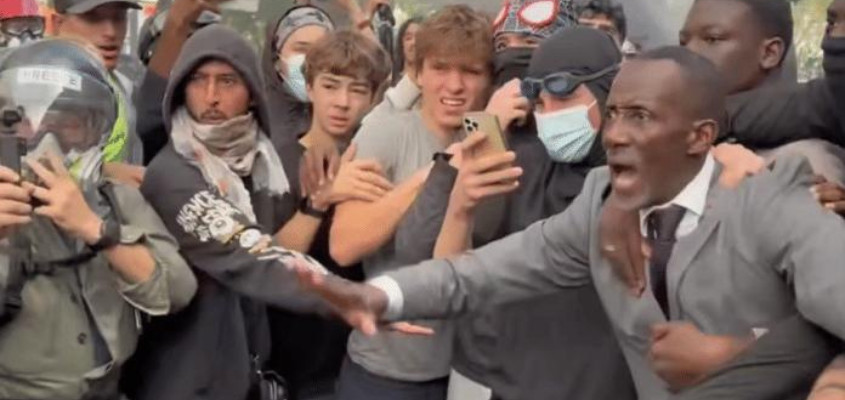
Bally Bagayoko, the mayor of St. Denis, France, standing between student protesters and police
We want allies who can defend themselves so that no adversary will ever be tempted to test our collective strength. This is why we do not want our allies to be shackled by guilt and shame. We want allies who are proud of their culture and of their heritage, who understand that we are heirs to the same great and noble civilization, and who, together with us, are willing and able to defend it [Marco Rubio speech at Munich Security Conference, February 2026]
And the world communism envisions is a world without God. For these architects of revolutionary violence, the towering achievement of our civilization – for them it’s an unbearable humiliation, a reminder of what they cannot do and a reminder of what they cannot be. So they choose instead to destroy. They attack pipelines; they attack railroads; they attack power grids and laboratories, the physical embodied symbols of power and invention and achievement. This is the nature of the terrorism we face today. They despise the West because the West is great [Marco Rubio, U.S. Ministerial on the Resurgence of Political Terrorism]
Marco Rubio’s July 16, 2026, speech at the opening of the U.S. Ministerial on the Resurgence of Political Terrorism should be understood as part of the ideological consolidation of fascism in the West. Its significance extends beyond the criminalization of the radical left. Rubio invokes a supposedly shared Western civilization to mobilize white racial and cultural solidarity in defense of a moribund order whose economic foundations are in irreversible decline. But it is precisely that decline that explains the pathetic weaponization of an idea of Western civilizational superiority that must be protected. Rubio understands his audience and the anxiety generated by the decline of the Western European colonial/capitalist era. Rubio and the other white supremacists making political and economic policy in the United States from Elon Musk and Peter Thiel – both from apartheid Southern Africa – to U.S. President Donald Trump. They understand that this civilizational framing is shared, in different forms, by rightist political forces across Europe—from Marine Le Pen and Éric Zemmour in France to Germany’s Alternative for Germany (AfD), Austria’s Freedom Party (FPÖ), and Nigel Farage’s Reform Party political movement in Britain.
This brings me to what is referred to as the French student uprising. African, Arab, and Muslim students and youth from working-class Paris banlieue suburbs played a significant role in the mobilization against deteriorating educational conditions and diminishing prospects for their futures. Their presence generated a violent ideological reaction as intense as the violence unleashed on the students by the French police. It was precisely the racialized character of the uprising that enabled right-wing political forces across Europe to recast a struggle over material conditions as a conflict over immigration, Islam, and European identity, even as increasing numbers of white French workers joined the protests and the demands expanded to cover all of the contradictions produced by four decades of neoliberal policies in France.
The political right understood what mainstream reporting often de-centers: the participation of racialized youth provided an opportunity to distort demands for social justice produced by the contradictions of capitalism as an assault on European civilization. The student becomes the immigrant; the immigrant becomes the cultural enemy; and the cultural enemy becomes a security threat whose presence justifies repression and ultimately expulsion!
This is the dangerous convergence embedded in Rubio’s politics: left, Black, Muslim, “terrorist” that collapses legitimate political opposition, racial and religious identity, and terrorism into a single ideological and security threat. Anti-capitalist and anti-imperialist politics become evidence of hostility to “civilization,” while the political agency of African and Muslim youth is treated as an existential threat to the state. The consequence is a framework both in the U.S. and Europe that legitimizes expanded state surveillance, police violence, and the criminalization of dissent.
It must be understood with unambiguous historical clarity that what is unfolding in Europe and the U.S. is not a turn to something called authoritarianism but the consolidation of fascism, with white supremacist ideology providing the axis of a cross-class white supremacist legitimation. This obvious turn to white identity politics makes the positions of left racial integrationists like Adolph Reed so incredibly dangerous. [1]
At a historical moment when appeals to racialism and white supremacy are becoming normalized, Reed and other leftists are ideologically disarming opposition to this development by pretending that white supremacist ideology and the materiality of white supremacy is a phantom, a figment of the imagination of petit-bourgeois nationalists and “identitarians” while the mother of all identitarianism – white identity politics and white supremacy is given a pass.
But the ideologues of white supremacy understand that the appeal to the fiction of white civilization supplies the racial glue intended to bind the white working class to the interests of capitalist elites, redirecting anger away from the capitalist relations producing class-wide precarity and toward racialized populations who are themselves the disproportionate victims of colonial/capitalist contradiction. [2]
The European normalization of “remigration”
Across Europe the significance of Rubio’s intervention becomes clearer when placed alongside the growing normalization of a political phenomenon labelled as “remigration.” The growing popularity of remigration, that is, the return of non-Europeans back to their countries of origin, is not simply a debate about enforcing immigration rules. It is a political project whose language of return reveals an ominous turn to a broader racialized struggle over who belongs to Europe and who should be expelled from it.
In Germany, the AfD formally embraced “remigration” in its 2025 election program. Party leader Alice Weidel advocated large-scale repatriations and the term was elevated from a slogan associated with far-right movements into an explicit party demand. The party defines its policy in terms of returning foreigners required to leave under law, while the wider remigration movement includes proposals directed at legally resident migrants and people considered insufficiently assimilated. The distinction matters: the political struggle is over whether formal legal status remains sufficient to establish belonging, or whether racialized definitions of culture and ancestry can supersede it. [3]
Austria’s FPÖ has advocated an EU commissioner for remigration. In Italy, politicians from the Lega have supported a “Remigration and Reconquest” initiative seeking parliamentary consideration. In France, Éric Zemmour has advocated a ministry of remigration, while Geert Wilders in the Netherlands has called for mass deportations in response to unrest in France. Spain’s Vox has also advanced large-scale return proposals for people with migrant backgrounds. [4] These developments do not represent identical policies, but they demonstrate how a once-marginal vocabulary is entering mainstream political debate and linking far-right forces across national boundaries.
The racialization of the French uprising provides a justification for this agenda. When African, Arab, and Muslim youth are depicted as enemies of European civilization, collective expulsion can be presented as a legitimate response to social disorder. The same narrative helps normalize violence against racialized communities and intensifies the danger posed by police forces already notorious for their treatment of youth in the immigrant banlieues. The recent deadly shooting near Paris, in which an African was killed and others wounded, must be understood within this wider atmosphere of racial hostility. [5]
The material Contradictions beneath the civilizational rhetoric
The uprising in France and across Europe cannot be understood apart from declining wages and living standards, deteriorating public services, austerity, debt pressures, and the narrowing prospects confronting working-class youth across racial and ethnic backgrounds. These pressures are often more acute in African, Arab, and Muslim communities because economic marginalization intersects with racial discrimination and unequal access to education, employment, and housing.
France’s fiscal crisis intensifies the struggle over public resources. Debt servicing and demands for fiscal consolidation constrain political choices even as communities require greater investment in education, health, housing, and employment. The war against Iran and the resulting energy-price pressures have added to the burdens confronting working-class households. At the same time, European governments have embraced military Keynesianism, mobilizing resources for military production while social needs remain subject to austerity and fiscal discipline. [6]
These contradictions have emerged throughout the advanced capitalist economies expressing the structural crisis of Western capitalism: a system increasingly unable to provide broad material security while preserving the accumulation and geopolitical power and interests of monopoly capital. But France’s specific crisis is also connected to the weakening of its historical ability to maintain its parasitic relations of extraction that allowed capital to bribe workers in France.
However, as the ability of France and other Western capitalist states to dictate economic and political terms to the Global South that allowed a continuous flow of value to the metropoles became more contested resulting in declining wages and living standards, white civilizational nationalism offered an ideological substitute for the failed promise of unbroken material prosperity to the Euro-American and European masses.
The appeal of Trump, Rubio, Le Pen, Farage, and other figures rests on the continued obscurantist policies emanating from the consolidating global fascist movement. They promise national renewal through exclusion hoping that the white working classes never catch on to the fact that the defense of white civilization is the defense of oligarchic capitalist rule.
The fascist response to capitalist crisis is to reorganize domination through white supremacy and civilizational exclusion. The peoples’ response must be to organize for liberation beyond the colonial and capitalist relations that have produced the crisis [end]
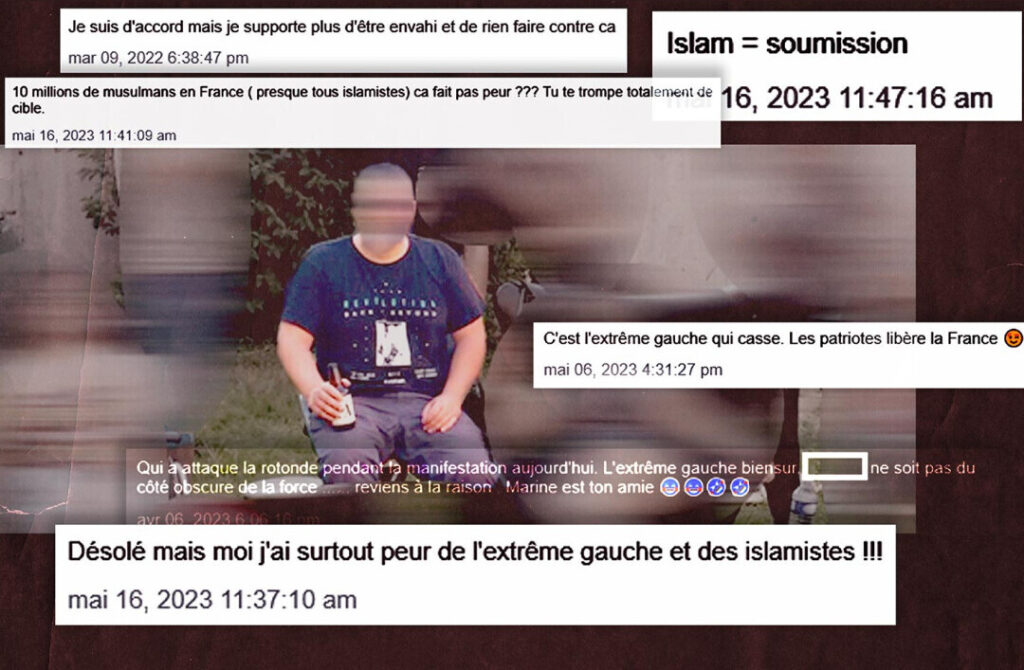
1 mort, 10 blessés dont 4 blessés graves, une fillette touchée par 8 tirs : un passage à l’acte encouragé par les politiques et discours d’extrême droite
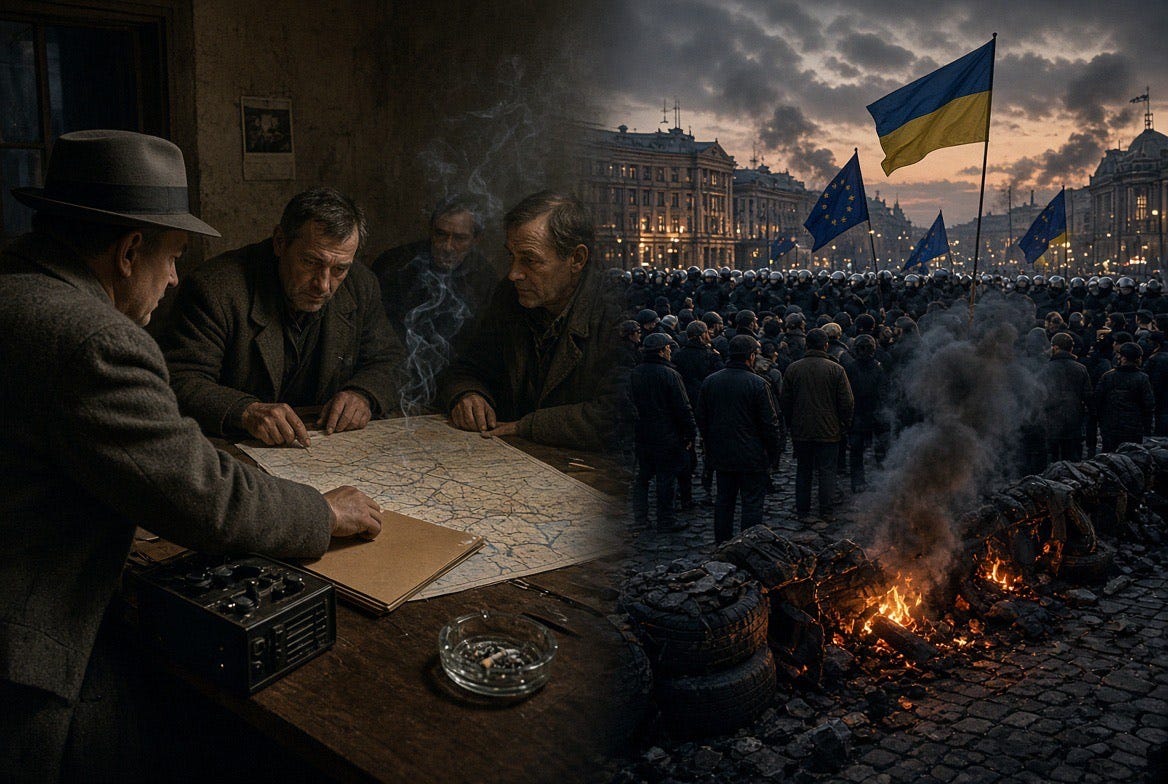
une saga française, entre Ukraine et Lyon, où apparaissent aussi des morceaux de SS de la division Charlemagne et plus récemment, Alice Kerviel, dite Cordier
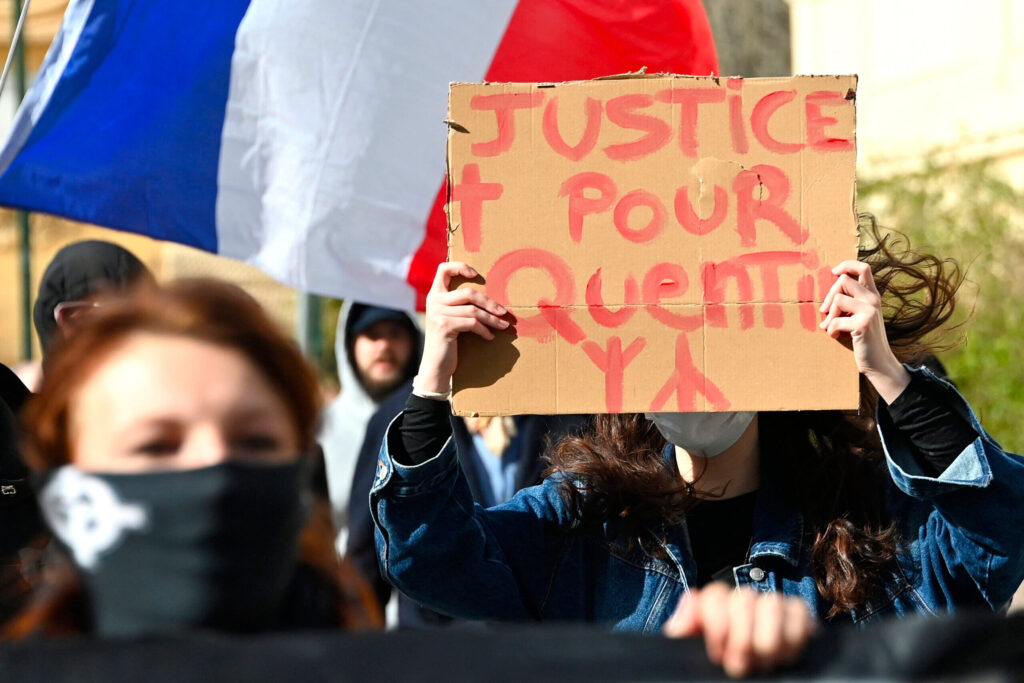
mensonges, coups de communication, complaisance médiatique, fascisation du débat public : la mort de Quentin Deranque a servi de catalyseur à l’ensemble de l’échiquier politique, du centre à l’extrême droite, pour en faire un puissant instrument de récupération politique. Ce climat a permis à des groupes néonazis et fascistes d’organiser des hommages publics saturés de références idéologiques explicites au nazisme, sans susciter la moindre réaction politique
Agence France-Presse, “Macron Condemns ‘Racist Terrorist Attack’ After Deadly Shooting Near Paris,” October 23, 2026. Reporting on the investigation and official statements should be checked for updates as the case develops. ↩︎
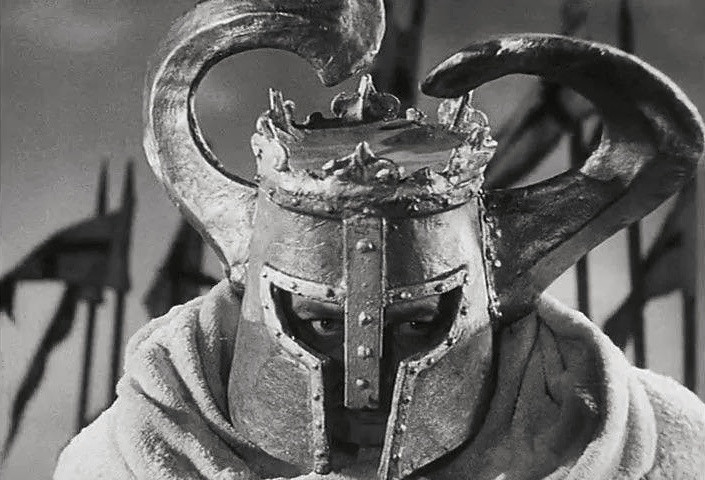
[my illustration: a Teutonic knight in Alexander Nevsky, by Sergei Eisenstein, 1938]
The fate of Central and Eastern Europe after the People’s Democracies’ post-1989 fall cannot be fully appreciated without reference to the EU as an extension of German imperialism. Berlin’s drive to ensure the region remains composed of weak, frequently mutually-resentful microstates has endured for well-over a century. Over time, battlefield conquest and occupation has been supplanted by economic and monetary union, and ever-rising military, security and intelligence “interoperability” and “cooperation”, all conducted under “internationalist” auspices.
Comprehending this process and the consistent needs of German imperialism provides a typically absent, critical lens through which to view events such as Yugoslavia’s destruction, the rise and recent demise of Hungary’s Viktor Orban, and seen and unseen political machinations throughout the Balkans old and new. German imperialism is a potent, dangerous force frequently overlooked due to its nigh-invisible operation. With US global hegemony irreversibly faltering, it is vital to truly understand the phenomenon as it threatens to emerge in its own militarised right again.
Today, German imperialism is little-understood even in countries and regions intimately shaped if not outright created by Berlin’s colonial meddling and concomitant hegemonic expansion. Its historic apotheosis was the 1918 Treaty of Brest-Litovsk. The terms and consequences provide an eerily precise blueprint for the EU’s modern day role as German empire via other means. Despite Brest-Litovsk’s seismic import, mainstream English language accounts are comparatively rare. A highly compelling, informative synthesis is nonetheless provided by Adam Tooze’s much-overlooked 2014 workThe Deluge.
Tooze writes of how “Brest gave birth to the precursors to the Baltic states in their modern form,” and an “independent Ukraine” for the very first time in history. Resource-rich territory that over prior centuries comprised much larger dynastic land empires was broken up into easily exploitable chunks. The newly-formed nations, and corresponding nationalisms, spread throughout ethnically, linguistically and religiously diverse swaths of Central and Eastern Europe constituted a formidable stronghold. Self-determination facilitated Germany’s untrammelled economic, military, and political penetration.
Commenting on Eurasia’s 21st century map, Tooze observes how since the Soviet Union’s 1991 dissolution, all Brest-Litovsk’s “creations” have “come to be regarded as legitimate members of the family of nations.” Moreover, states such as the Baltics and Poland then as now “look to protectors in the West,” being “keen members of an American-dominated NATO and the European Union, in which Germany is the dominant force.” Via Brest-Litovsk, “all of these polities fell willy-nilly under the ‘protection’ of Imperial Germany”
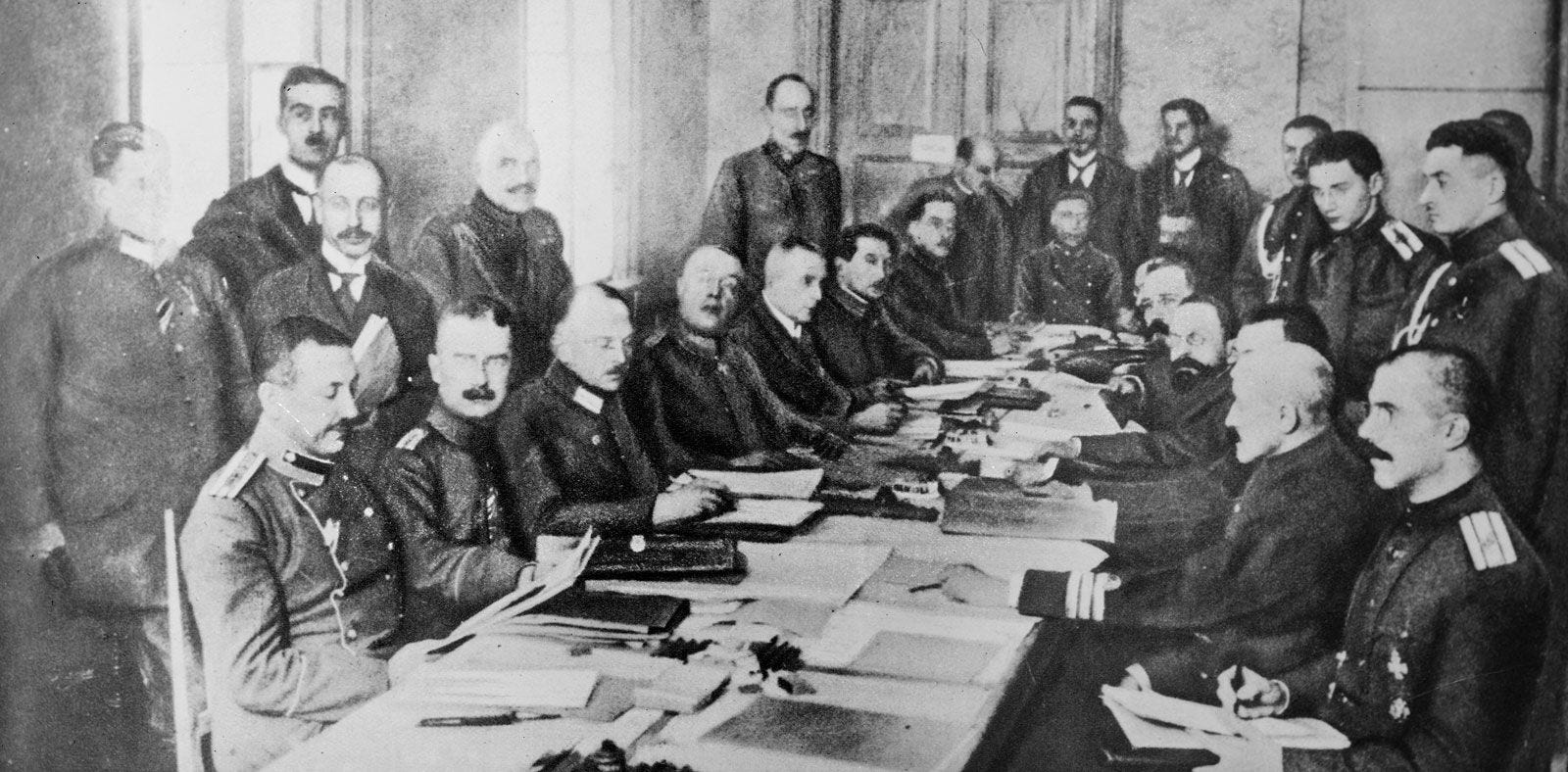
Brest-Litovsk delegates negotiate, early 1918
The Treaty was signed between Moscow and Austro-Hungary, Bulgaria, Germany and the Ottoman Empire in March 1918, following months of tense negotiations produced the previous December by revolutionary Russia signing an armistice with Berlin. At Brest-Litvosk, both sides had advanced their respective visions of “self-determination” for the Central and Eastern European components of the Tsar’s collapsed empire. Vladimir Lenin hoped newly-independent states in the region would be free to turn Bolshevik. Yet, Imperial Germany had no intention of letting that happen.
Instead, the country’s “more intelligent strategic thinkers” realised “there was no better means to dynamite the Tsarist Empire than for Berlin to espouse the demand for self-determination” at Brest-Litovsk. This “manipulative ruse” would allow Germany to extend her hegemony imperceptibly throughout enormously profitable territories. It was “a vision of negotiated sovereignty in which economic and military independence was pooled by smaller states with larger states.” Tooze reports how German imperialists argued “full, unfettered sovereignty” was “always a chimera” – “the real choice was one between hegemons”:
Germany would secure power on a continental scale not through annexation, but through the formation of an economic and military bloc of smaller Eastern European states…The autonomous Polish entity carved by Germany and Austria out of Russian territory in the autumn of 1916 was a start. While in economic and military terms the new Poland would be bound tightly and irrevocably to Germany, in the social and cultural sphere it would be given the freedom ‘to express itself nationally’
‘Military Protection’
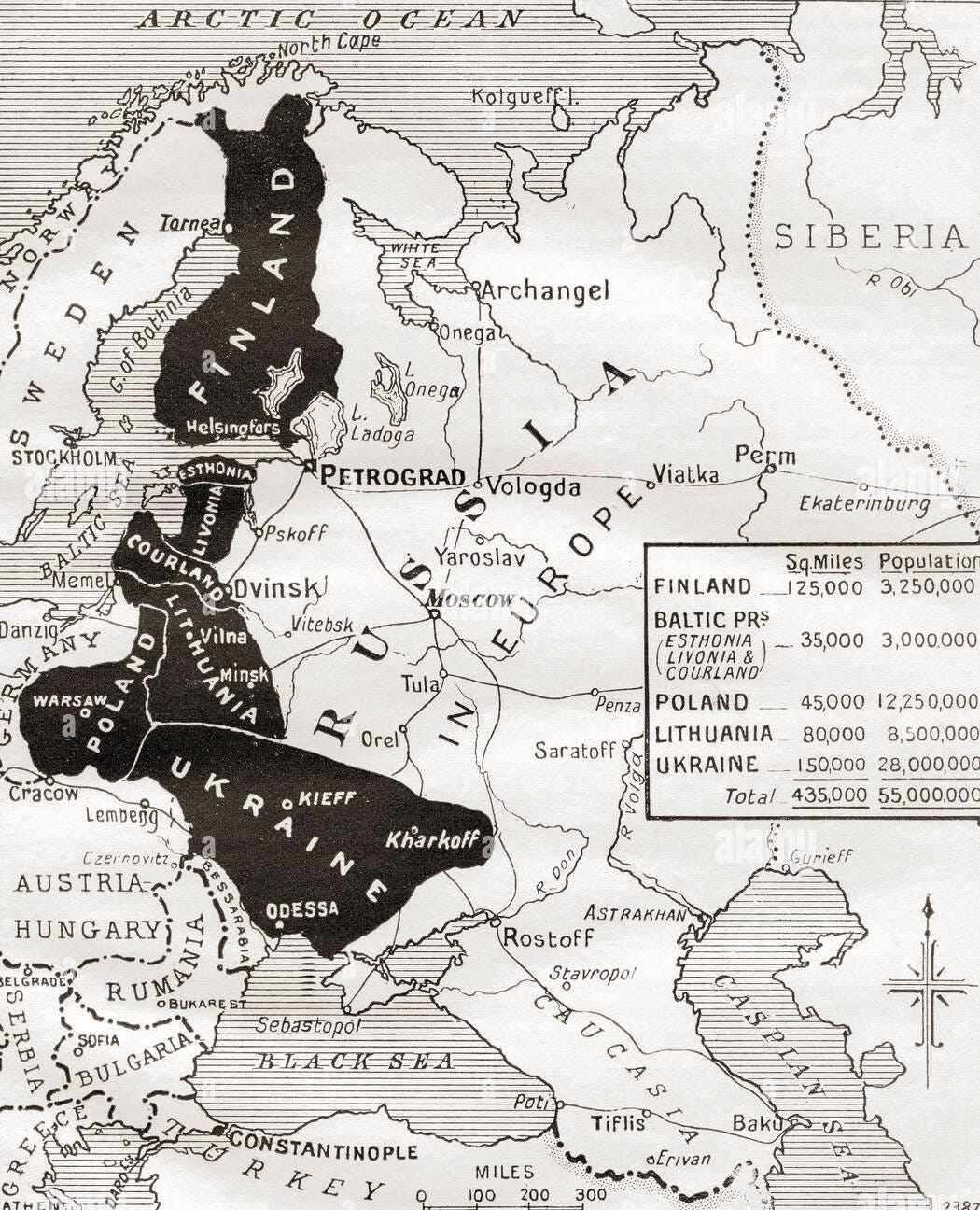
From the Central Powers’ perspective, self-determination’s colonial windfall was immense. In territorial terms, Moscow lost control of today’s Belarus, Estonia, Latvia, Lithuania, Poland, and Ukraine. This prime former Tsarist real estate accounted for 34% of the fallen empire’s population, 54% of its industrial land, 89% of its coalfields, and 26% of its railways. Berlin well-knew the regional treasure trove would be hotly contested, and could easily “fall into the orbit of another great power” – “if not Germany or Russia, then Britain”.
Hence, Brest-Litovsk’s terms exclusively allowed for ‘independence’ under formal “German military protection.” This transformed millions of people throughout the region into potential proxy warriors arrayed against Russia, or other major powers threatening Berlin’s local hegemony, in the manner of NATO today. Rapidly collapsing into civil war, with Franco-British intervention to reverse the Revolution impending, the incipient Soviet Union acquiesced to the Treaty’s harsh stipulations. Lenin believed the Bolsheviks would eventually recapture the lost territories, by sheer force of radical gravity
Contemporary map of Central and Eastern European states created by Brest-Litovsk
Brest-Litovsk was torn up by the June 1919 Treaty of Versailles, compelling Berlin to grant independence to assorted German-conquered protectorates that had been established throughout the region. Chaotic, violent struggles unfolded over the next three years between Red Army-assisted local revolutionary elements and ‘independent’ states led by collaborationist puppets. Belarus and Ukraine were successfully absorbed as republics, while the Baltics and Poland remained autonomous. Meanwhile, the seed of German hegemony via self-determination had been decisively sown throughout Central and Eastern Europe.
German colonialism particularly left its mark post-Brest-Litovsk via the emergence of nationalisms and according national creation myths throughout the region, which were innately and rabidly antagonistic toward Moscow. In Poland in 1916, Berlin’s invading forces had successfully portrayed themselves as liberators. In the Baltics, Russians represented a large proportion of the country’s urban, land-owning elite. They were easily framed by German propagandists, and in ultranationalist imaginations, as parasitic overlords of largely illiterate ethnic Estonian, Latvian and Lithuanian peasantry, who overwhelmingly resided in rural steppes.
Convincing Ukraine’s multiethnic population to embrace an anti-Russian ‘independence’ was considerably more difficult, given their similar backgrounds, customs and languages, and the substantial influence of each others’ culture in both directions since Kiev’s 1654 union with Moscow. Ukraine’s contemporaneous veneration of genocidal fascists, and indeed the wider ongoing proxy war, are direct upshots of efforts by German imperialists to promote enmity and antagonism between Russians and Ukrainians. This strategy was maintained throughout the Cold War by the CIA and MI6, with Nazi-riddled West Berlin’s assistance.
‘Civilising Mission’
Another enduring legacy of Brest-Litovsk was the transformation of “self-determination” from a liberal German imperialist crusade, to a fundamental principle of Anglo-American-dominated international relations. The cause was eagerly and cynically seized upon first by British Prime Minister Lloyd George, then US President Woodrow Wilson. The right to minority self-determination globally became absolutely central to the 1919 Paris Peace Conference. The world over, anti-colonial and nationalist movements saw an opportunity to achieve independence from foreign subjugation.
At the Conference, Austro-Hungary brutally fell victim to this self-determination push, with Britain successfully ordering its constituent territories be “liberated” via the empire’s total breakup. This created the independent states of Austria, Hungary, Czechoslovakia, and Yugoslavia. The latter pair were entirely new countries, with Yugoslavia forged from Austro-Hungary’s southern Slavic regions – Bosnia and Herzegovina, Croatia, and Slovenia – and the revolutionary kingdoms of Serbia and Montenegro. In a bitter irony, Austro-Hungary herself had previously encouraged self-determination regionally à la Brest-Litovsk, to entrench her imperial rule.
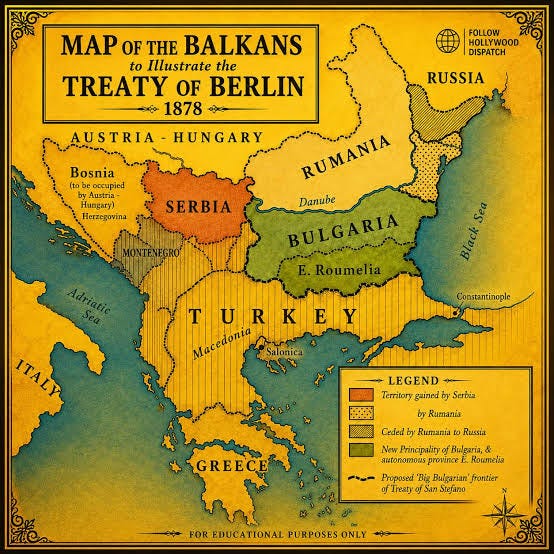
In June 1878, the little-known Congress of Berlin was convened. Major European powers sought to reorganise the Balkans, in the wake of Russia’s victory over the Ottoman Empire three months earlier. The conflict ended with Moscow asserting hegemony over Constantinople’s remaining holdings in Southeastern Europe, via an allied Greater Bulgaria, and the newly-formed, independent states of Montenegro, Romania, and Serbia. However, Austria-Hungary, Britain, France, rapidly expanding host empire Germany, and Italy, wished for these terms to be revised
While the Congress recognised the three new Balkan states’ independence, attendees demanded Bosnia and Herzegovina become an Austro-Hungarian protectorate into the bargain, much to Serbia’s chagrin. Vienna’s resultant takeover of Sarajevo sent tens of thousands of Muslim inhabitants fleeing to Turkey. This exodus intensified in 1881, after the imposition of military conscription. The move was inspired by Serbia and Montenegro supporting local anti-imperial elements. It was just one Austro-Hungarian connivance intended to transform harmoniously multiethnic, multifaith Bosnia and Herzegovina into a fractious powder keg.
In service of this goal, Sarajevo’s Austro-Hungarian occupation authorities actively nurtured a nationhood centred exclusively on Bosniak – Bosnian Muslim – identity. The local Serbo-Croatian dialect was proclaimed a separate Bosnian language, Cyrillic text got suppressed, while Serbian books and newspapers were banned. Vienna’s meddling failed to incite violent, separatist division between Bosnia’s diverse peoples. It nonetheless created a vast army of conscripts for any future regional war, while providing Austro-Hungary with an imperial public relations victory. Per historian Maximilian Georg:
[Vienna’s] objects were to teach the population their supposed Bosnian, pro-Habsburg identity, legitimise the Austro-Hungarian rulers as the new Romans, and demonstrate to Europe and the world the success of Austro-Hungary’s ‘civilising mission’ in an ‘oriental’ country. This ‘civilising mission’ under military occupation was the strongest indicator of an Austro-Hungarian colonialism
‘Yugoslav Nationalist’
Austro-Hungary and Germany alike considered independent Serbia’s mere existence a permanent irritant to their Eastern European supremacy, in need of eventual neutralisation. Tensions constantly mounted after the turn of the century, leading in 1908 to Bosnia’s formal annexation by Vienna. All along, imperialists in Berlin were spectating Austro-Hungary’s colonial machinations with intense interest. In 1888, Chancellor Otto von Bismarck prophetically foresaw “some damned foolish thing in the Balkans” upsetting Europe’s delicate balance of power, and precipitating a major global conflict.
Serbia and Montenegro’s October 1912 invasion of Albania, in the wake of her declaration of independence from Ottoman rule, almost proved that “damned foolish thing.” Serb and Montenegrin forces sought to permanently capture territory, but retreated a year later under threat of Austro-Hungarian intervention. In the aftermath, Kaiser Wilhelm II visited Vienna, declaring to colonial officials “war between East and West was in the long run inevitable.” As Slavs “were born not to rule but to obey,” their anti-imperialist tendencies couldn’t be tolerated much longer.
Wilhelm II moreover pledged to “back” Austro-Hungary in any future conflict in Eastern Europe, assuring his Viennese counterparts Berlin was “ready to draw the saber any time your action makes it necessary.” Bosnian Serb Gavrilo Princip’s June 1914 assassination of Archduke Ferdinand in Sarajevo provided an ideal pretext for the Kaiser’s long-desired showdown between Slavs and Teutons. Pressured by Austro-Hungarian authorities to implicate Belgrade directly in his actions while on trial, Princip instead insisted he was ideologically motivated:
I am a Yugoslav nationalist, aiming for the unification of all Yugoslavs, and I do not care what form of state, but it must be free from Austria…The plan was to unite all South Slavs. It was understood that Serbia as the free part of the South Slavs had the moral duty to help in the unification, to be to the South Slavs as the Piedmont was to Italy…In my opinion every Serb, Croat and Slovene should be an enemy of Austria
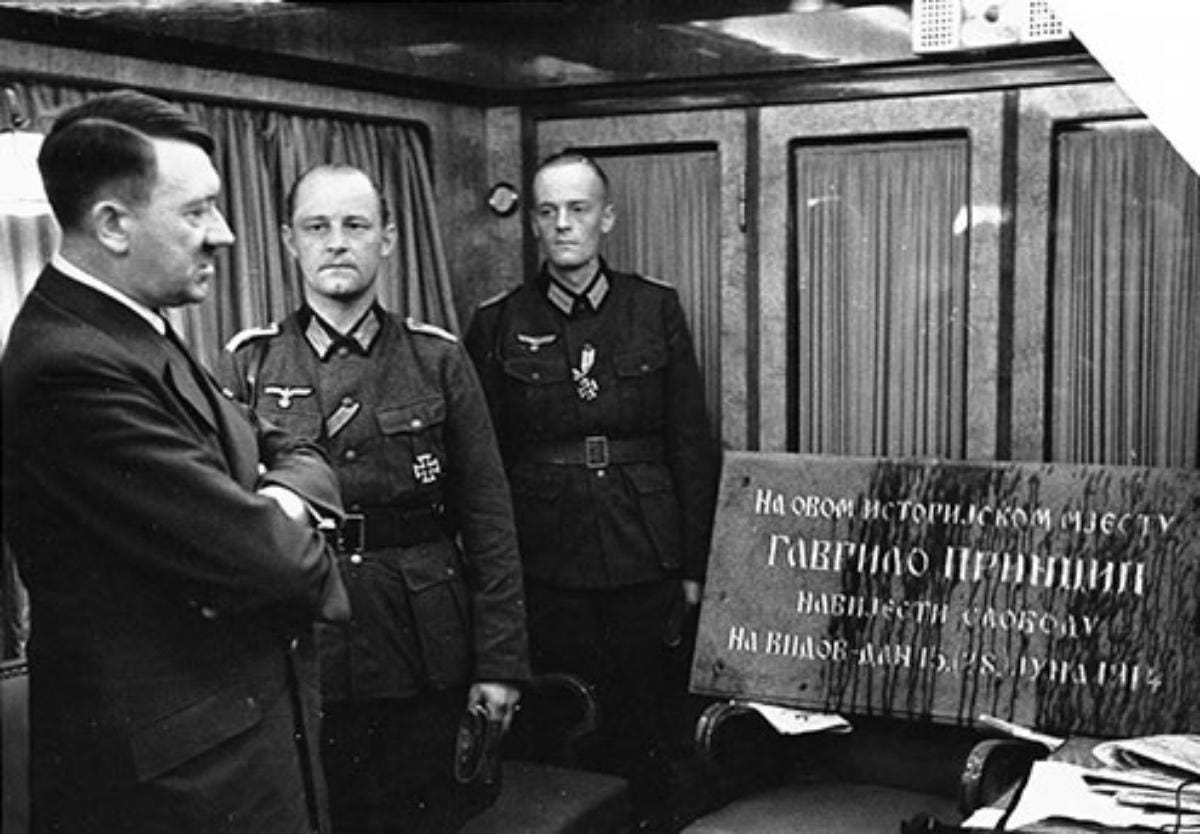
In post-World War I Yugoslavia, Princip was elevated to national hero. In early 1930, a plaque was erected on the site of Ferdinand’s assassination, celebrating a foundational event in the new country’s creation. It was the sole trophy claimed by the Nazis following the Axis invasion of Yugoslavia, presented to Adolf Hitler at a formal ceremony on his 52nd birthday in April 1941, two days after Belgrade’s surrender. A potent totem of German embarrassment expunged, it was now time to erase Yugoslavia permanently
Adolf Hitler inspects the plundered plaque commemorating Archduke Ferdinand’s assassination by Gavrilo Princip
Carving up the country relied heavily on constructing genocidal, ethnonationalist puppet entities. Painful memories of these attempts to exert hegemony over the Balkans under the banner of “self-determination” remained visceral for many residents of Yugoslavia in December 1991. Then, newly-reunified Germany unilaterally recognised federation members Croatia and Slovenia as ‘independent’ states, while encouraging other republics comprising the collapsing country to follow the pair’s secessionist lead. It was widely predicted Yugoslavia’s demise would produce bloodshed, on a grand scale.
‘Fundamental Subordination’
Dissolving Yugoslavia began waging war on Croat and Slovene secessionists six months earlier. The latter conflict lasted just 10 days, but the former was still simmering. The European Community and UN futilely struggled all along to achieve peaceful settlements to Yugoslavia’s gravely worsening crisis, while formally committed to preserving the country in some form. Berlin’s recognition summarily sabotaged those efforts, removing any incentive for Yugoslav republics to negotiate their futures with Belgrade, while emboldening nationalists in every republic.
Fears of Berlin’s resurgent imperialism were not confined to Yugoslavia. As TIMEcontemporaneously observed, “it used to be a given of European political life Germany…would not take a leading or controversial role in world affairs,” which “suited its neighbors very well indeed.” While occupied West Germany operated throughout the Cold War as “an economic giant and a political dwarf,” unified Berlin’s “unexpected show of diplomatic muscle” in recognising Croatia and Slovenia as ‘independent’ countries was now causing “discomfort” throughout Western capitals.
In Britain’s parliament, then-Foreign Secretary Douglas Hurd explicitly evoked the World Wars as disquieting precedents for Germany’s modern-day “self-determination” push in the soon-to-be former Yugoslavia. “There is a tradition of the main states of Western Europe splitting in rivalry on these Balkan questions, and this all ending up on the battlefield. I don’t think that tradition is a good one,” Hurd cautioned. Washington, immensely irritated by Berlin belligerently “getting out ahead of the US,” duly assumed management of the Yugoslav crisis, with disastrous consequences.
Fratricidal conflicts that subsequently engulfed Yugoslavia forged a highly invasive beachhead, via which German economic and political hegemony throughout the region surged, without direct military engagement. While Berlin framed her support for Croat and Slovene ‘independence’ in terms of human rights, the rich financial rewards of shattering the federation were plain. As by far the two wealthiest republics, Germany effectively granted herself access to “the best productive assets” in the soon-to-be former country by kickstarting its practical and physical collapse, per a 2008 academic paper.
The authors write of how Berlin’s “hegemonic relationship” with Yugoslav successor nations was thereafter writ considerably larger than even Germany’s imperial infiltration of “smaller states” elsewhere in Central and Eastern Europe. This is due to the “specific dependence” of Balkan countries on Berlin’s “structural power”. In economic terms, this means vast national trade deficits with Germany across the region, with “Balkan pre-products and raw materials” flowing in vast, constant profusion to Berlin, while German corporations and products dominate many commercial, financial and industrial sectors locally.
Undergirding this extraordinary economic colonisation was adoption by Yugoslavia’s successor states of ‘independent’ currencies, pegged first to the former Deutschmark, now Euro. This proved pivotal to the “fundamental subordination of the political economies of the region to the ideological and operational norms” of the EU – or German empire, via other means. New national and private banking systems of post-Yugoslav countries were structured specifically according to Berlin’s own, with German banks ascendant, as elsewhere in Central and Eastern Europe. That’s not all:
[Deutschmark/Euro pegging] was an essential precondition for the shaping of the macro-economic policies of these (and other transition) states, for their foreign economic relationships, for the further development of their capital markets and the programmes of liberalisation, deregulation and privatisation which ensued
‘European Continent’
Berlin’s Balkan banking takeover moreover fundamentally “facilitates the penetration of all German enterprises into the commercial life of the Balkan economies.” Berlin has gluttonously feasted on local resources and industry alike ever since, its investment regionally “characterised by takeovers.” For example, throughout Central and Eastern Europe German supermarkets are a near-monopoly, with prices of goods frequently higher than back home, despite meagre local purchasing power. Low wages, vast structural unemployment, and mass brain drain are all interlinked, ruinous inheritances.
The Balkans’ Western “transition” has been far more destructive than even the horrors unleashed upon the former Warsaw Pact in the 1990s. Heavily influenced “by prescriptive programmes emanating from the EU and from the World Bank,” Brussels has since 1999 also been “actively involved” in advising and guiding every country in the region towards bloc membership. After so much imposed impoverishment, it isn’t precisely clear what meaningful benefits Balkan states or populations will reap from their vassalage under German imperialism becoming formalised.
In late 2019, a Balkan liberal who once eagerly supported their country joining the EU wrote a sorrowful ode to “the process of so-called integration” Yugoslav successor states suffered by adopting “measures”, “instruments”, and “reforms” dictated by “Western technocrats”. Freshly ‘independent’ countries “were expected to build a fully developed Western liberal democracy from scratch…upon the ruins of a different yet fully developed system…while dragging behind us the burden of deepening poverty and trauma.” Several were and remain deeply scarred by Berlin and Brussels-encouraged ‘independence’ wars.
However, “this excruciating process of destroying and building anew a whole system…went neither fast enough nor successfully enough” for the new German empire. What’s more, “competition was not fair” – “opening our markets to the developed capitalism of the West and undertaking neoliberal reforms drained our human and economic resources while we kept trying to stay apace.” Socialism’s vestiges were eradicated, state industries sold off, and social spending slashed. The op-ed mysteriously failed to mention how Germany’s contemporary Balkan economic assault has a “strong security dimension”
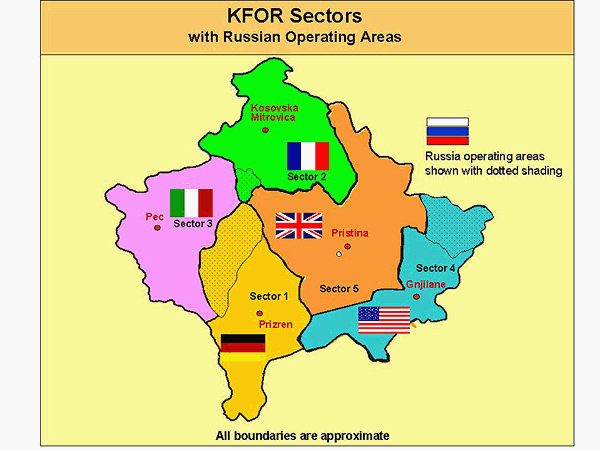
Kosovo’s original KFOR occupation map, June 1999
The 2008 paper notes Berlin exerts direct colonial-style control across the region, for example via Bosnia and Herzegovina’s EU-chosen Office of the High Representative, which traditionally serves as Germany’s imperial viceroy in Sarajevo. Moreover, Berlin has always been a key contributor to NATO’s Kosovo peacekeeping force KFOR, sustaining a military occupation under which Pristina controversially declared independence from Serbia in February 2008. This summer, Washington’s KFOR contingent began departing Kosovo after 27 years.
Meanwhile, the Americans are openly signalling Bosnia’s abandonment, raising potentially urgent questions about the unified country’s future. In April, EU Commission Ursula von der Leyen made clear the EU and she personally intend to “[complete] the European continent so it does not fall under Russian, Turkish or Chinese influence,” in explicit reference to the former Yugoslavia. History shows us such declarations by German imperialists frequently result in world-threatening catastrophe. Meanwhile, “some damned foolish thing in the Balkans” could evidently today yet again trigger war [end]
this article is the product of visits to Russia I made in June and September 2026 where I met with senior Russian leaders, leading academics, and specialists in military and security issues
ce 11 novembre 2025 est l’occasion de souligner comme la façon dont l’Europe sacrifie les conscrits ukrainiens mobilisés de force rappelle le spectaculaire carnage de la 1ère guerre mondiale
leaked files show top UK military figures conspired to carry out the Kerch bridge bombing, covertly train “Gladio”-style stay-behind forces in Ukraine, and groom the British public for a drop in living standards caused by the proxy war against Russia
the Germans have bowed down to the US sabotage by Joe Biden administration of Nord Stream pipelines, only to end up with Donald Trump’s America First doctrine in economy and defense
son inspiration : racisme français atavique et désir jusqu’en Ukraine de réprimer la contestation sociale en France
L’éditocrate néolibéral low-cost Pascal Perri est sur le plateau de LCI le 23 octobre 2026 (capture d’écran). Le drame stimule sa réflexion : Il m’est arrivé d’aller à Trappes […] je crois au passage que j’ai été le seul à payer le bus
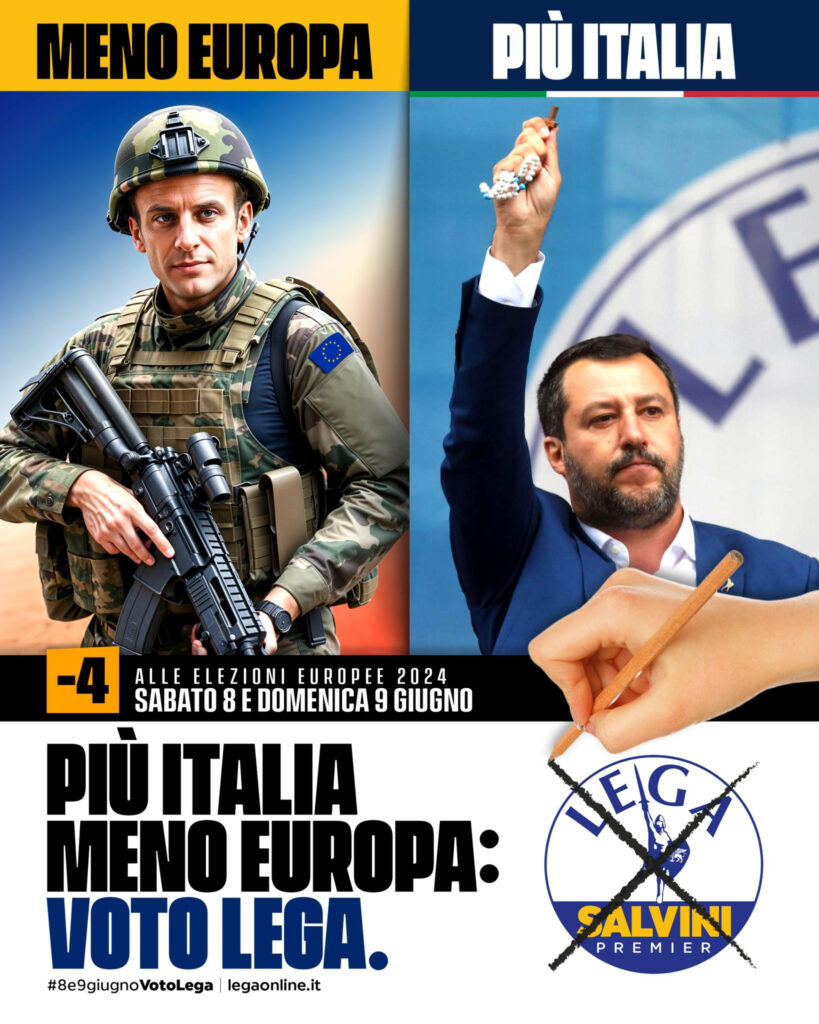
En octobre 2026, un mouvement social étudiant déferle en France et donne lieu à des échauffourées avec la Police nationale et des nervis fascistes.
Fondée par des revendications sociales étudiantes et plus largement, un rejet général d’Emmanuel Macron par la population, cette nouvelle vague de contestation est la manifestation ponctuelle de tensions qu’il engendre depuis des années, par son utilisation de la Constitution de la Ve République pour confisquer la démocratie. Il s’obstine depuis 2017 à appliquer son programme néolibéral, contre les aspirations de la majorité populaire
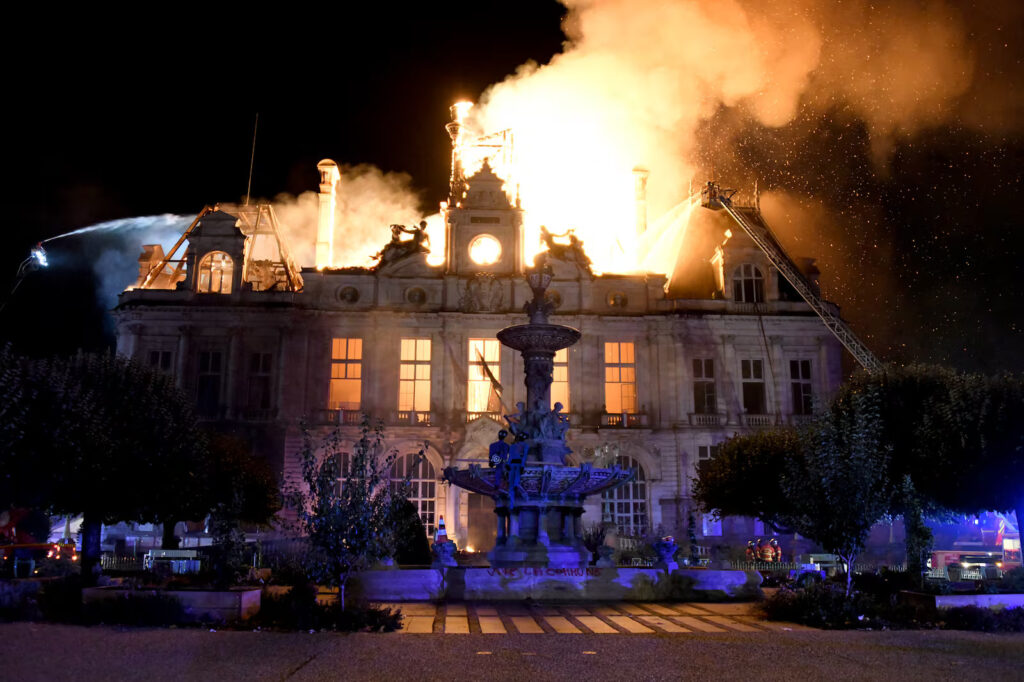
Vive la Commune [Paris, 1871] : l’hôtel de ville est en flammes à Limoges le 17 octobre 2026 (Pascal Lachenaud / AFP)
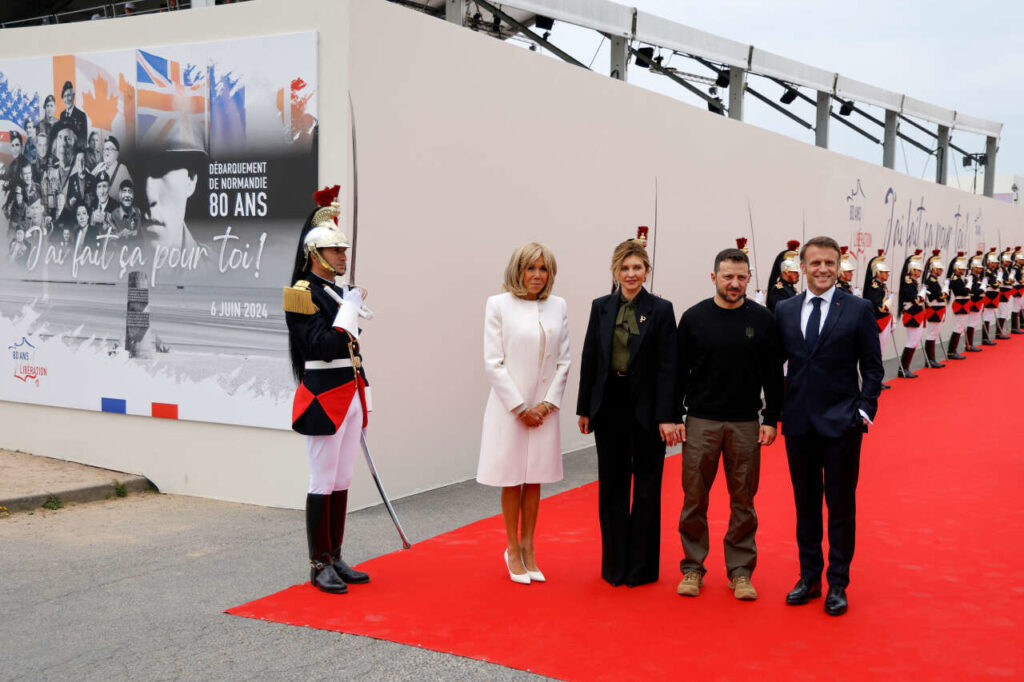
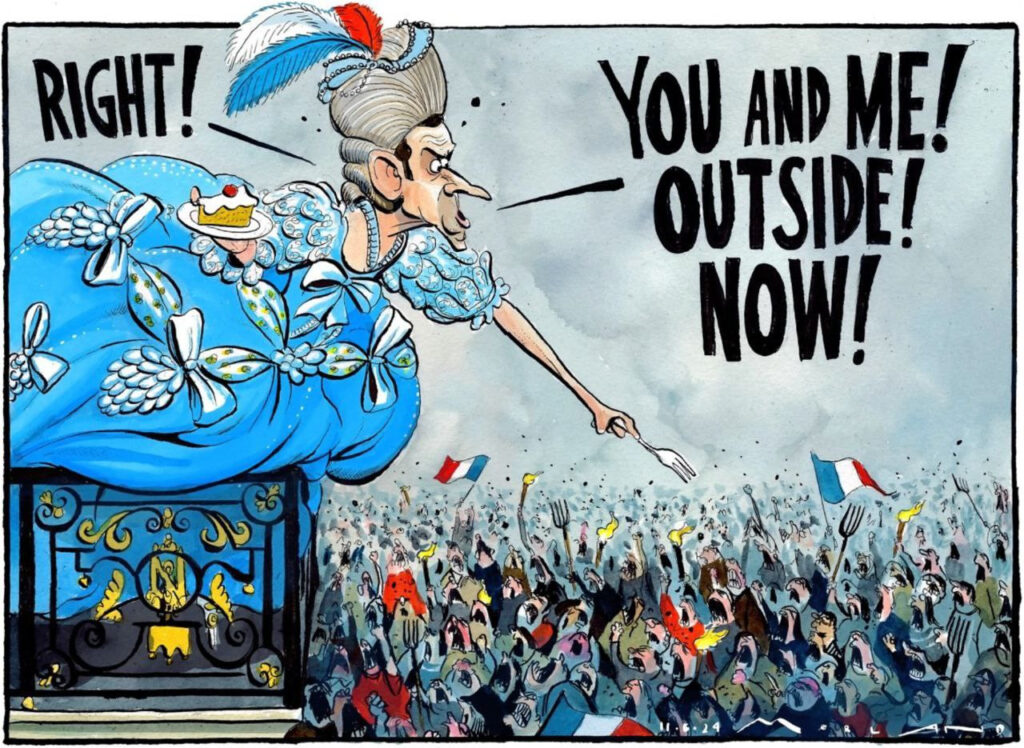
Comme toujours dans une telle situation, il ne modifie pas son agenda mondain et ne se prive pas de voyage à l’Étranger. Ses raisons ne sont pas seulement la crainte d’être pris et lynché mais aussi une façon de transcender. Car il s’est toujours servi de sa fonction comme d’un piédestal pour tenter de réaliser son perpétuel fantasme : briller sur la scène internationale. Les Français l’ont toujours ennuyé
Paris, 2 août 1940 (Mémorial de la déportation)
Il sont héritiers de Philippe Pétain -dirigeant fasciste français pendant la Seconde Guerre mondiale- et redevenus majoritaires à droite ; ils s’appellent Eric Zemmour, Marine Le Pen ou Bruno Retailleau ; les pétainistes ne veulent voir dans ces événements que la rébellion d’une population pauvre d’origines immigrées qui vit dans de laides banlieues. Dans la catégorie espoirs, la porte-parole du gouvernement se distingue le 20 octobre : la priorité de Maud Bregeon est alors de rétablir l’ordre, contre les factieux et les racailles. Porte-parole du gouvernement.
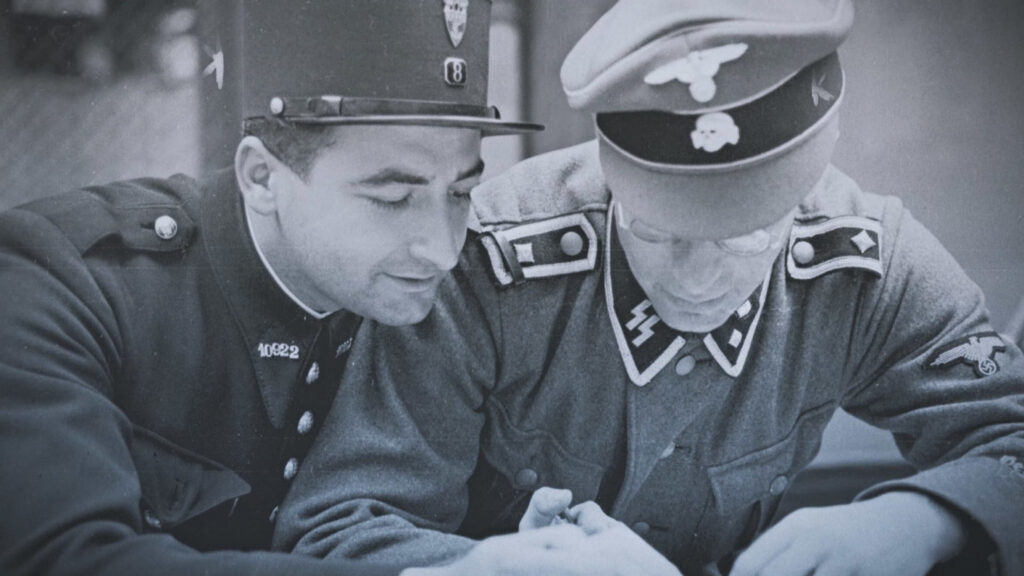
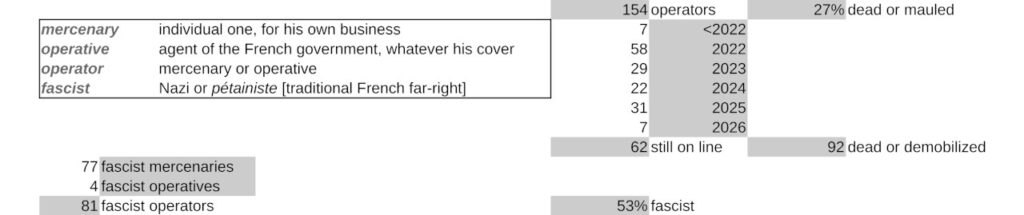
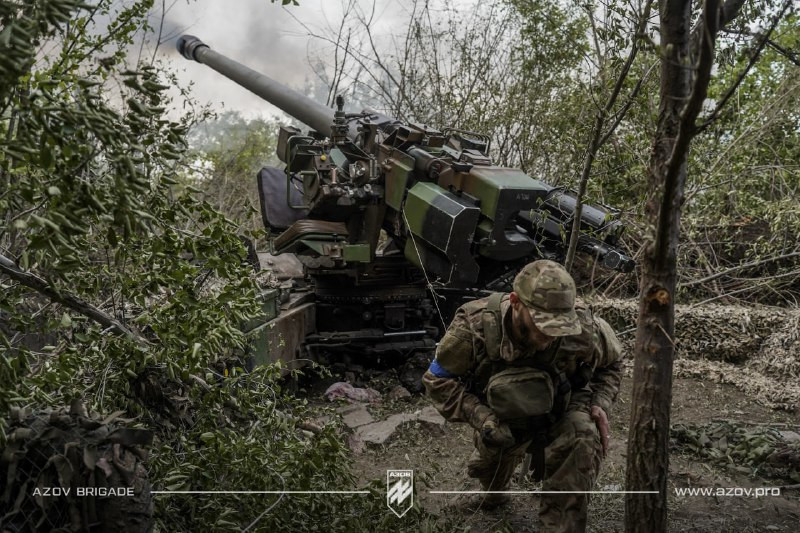
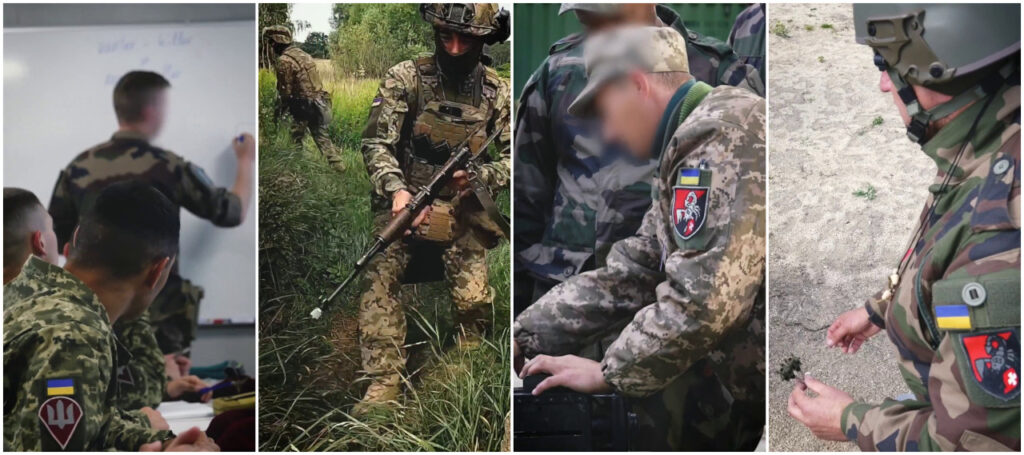
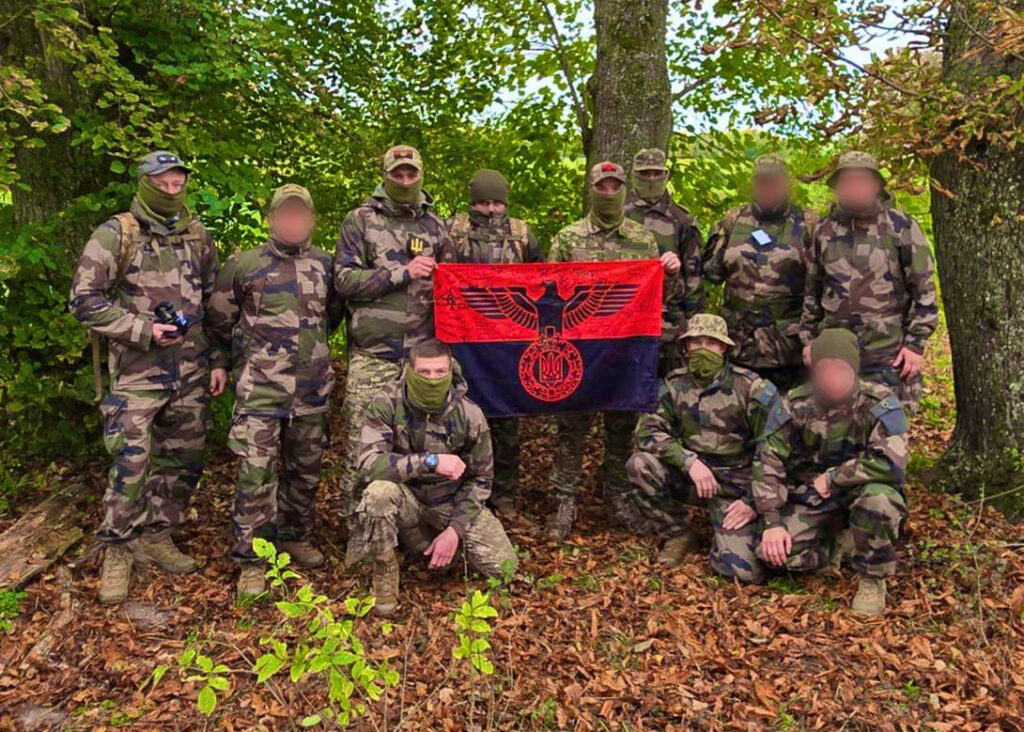
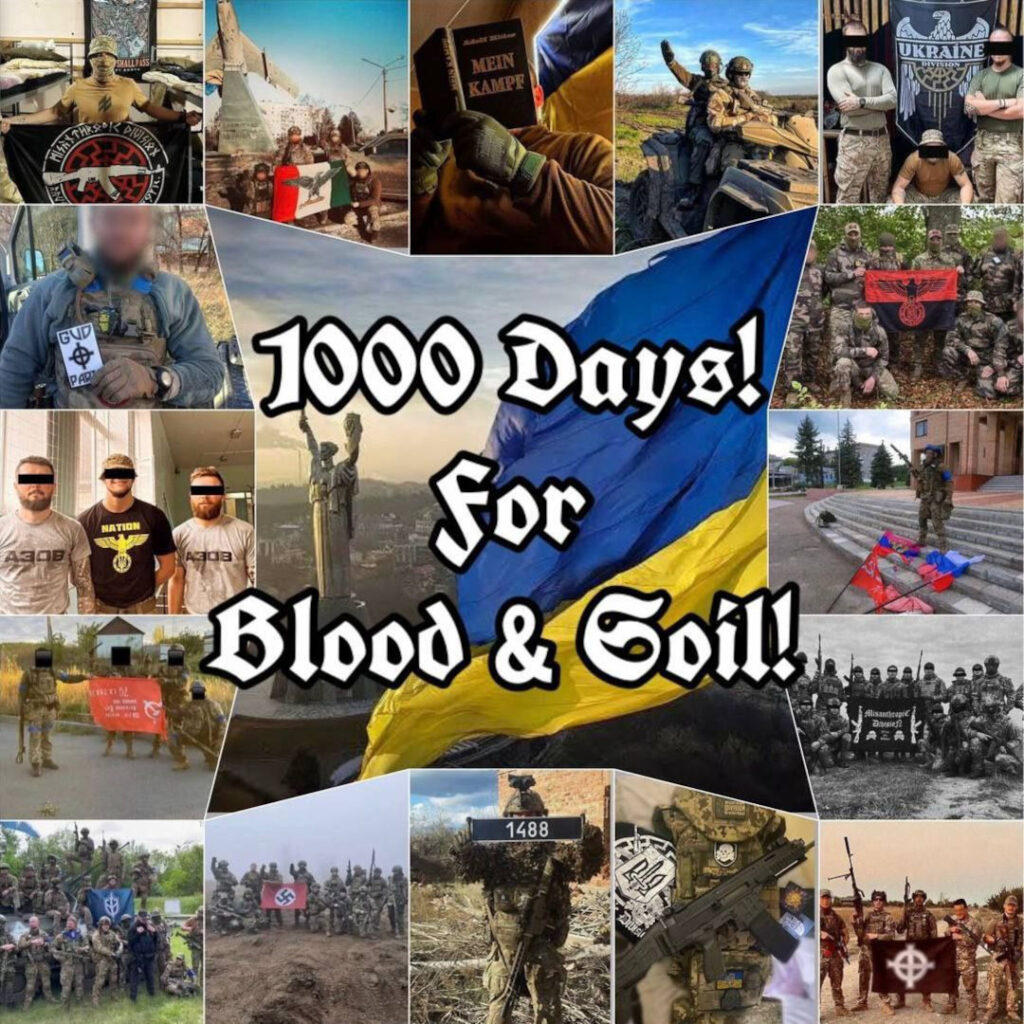
Au travers de leurs publications sur les réseaux sociaux, j’observe depuis 2022 les volontaires français dans l’armée atlantiste en Ukraine, où ils acquièrent une expérience du combat et pour les novices, la pratique des armes de guerre. Tous ne sont pas nazis, mais même un Gérald Darmanin aurait du mal à y trouver un quarteron de militants d’ultra-gauche
Voici quelques réactions particulières, que je pense représentatives du sentiment général dans ces rangs. Originaire de la banlieue de Valenciennes et ancien militaire dans l’armée français, Lucas Barraud est en Ukraine depuis 2025. Le 6 octobre, il partage une publication qui affirme que les contestataires seraient manipulés par Jean-Luc Mélenchon
Dans un registre assez proche, une de ses autres trouvailles est alors une pépite sans âge de bêtise réactionnaire crasse, qui célèbre l’ordre et moque Nahel Merzoug, qui à Nanterre, le 27 juin 2023, fut la victime d’un meurtre commis par Florian Menesplier, ancien militaire et archer du guet [gardien de la paix] parfaitement incompétent, qui n’a pas été révoqué et sévit aujourd’hui au Pays basque.
Militant nazi à Lyon, Gwendal Delange combat depuis 2022. L’association qu’il fait sur les réseaux sociaux de deux événements le rend euphorique le 13 octobre
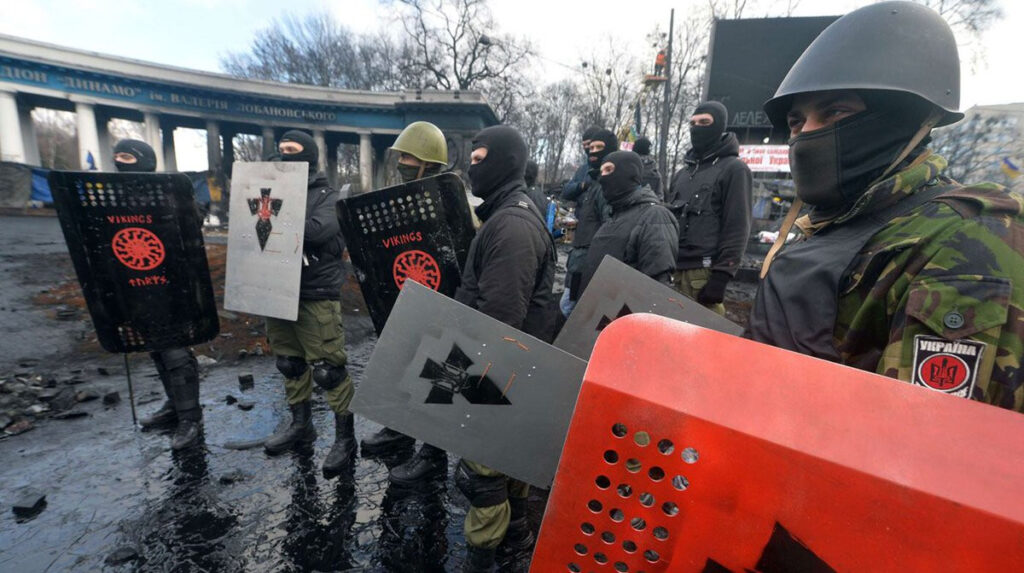
Des émeutiers nazis sur la place Maïdan le 18 février 2014 (image partagée par Gwendal Delange)
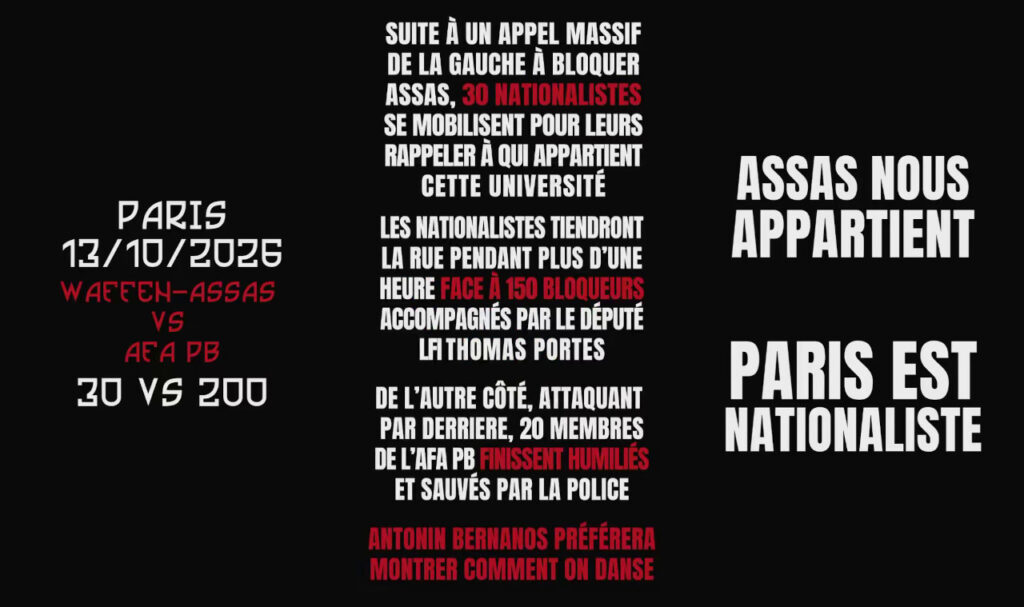
Le second événement est parisien, date de la nuit passée. Il célèbre là une échauffourée qui aurait laissé maître du terrain un groupe fasciste appelé Waffen-Assas.
Les antifas en font un récit contraire : les nazis n’ont du leur salut qu’à leur exfiltration par la Préfecture de police. Je sais depuis longtemps que Dieu aime les justes causes et les gros bataillons. D’expérience, je connais aussi les penchants politiques ataviques des archers du guet. Tout me porte à savoir qui ment
(Réseaux sociaux)
Nul ne peut reprocher à Delange de méconnaître l’Histoire sans fard de son pays. Par le partage le 17 octobre de cette image de milicienne, reconstituée sur drapeau officiel de l’État français (1940-1944) de Philippe Pétain, il exprime ses voeux pour 2027.
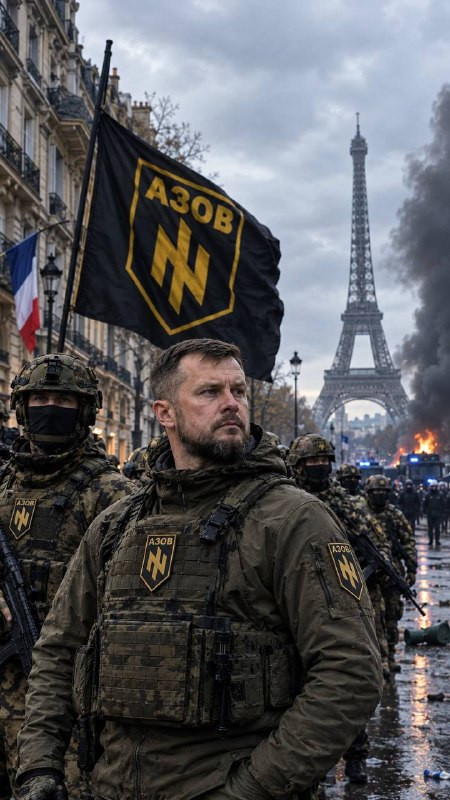
Sur Telegram le 20 octobre, une chaîne de footeux nazis européens partage l’image de son fantasme : un Einsatz à Paris d’Andriy Biletsky, commandant du 3e corps d’armée, émanation de l’organisation nazie Azov dans l’armée régulière ukrainienne
En Anglais, la légende dit en Français
La 3e brigade d’assaut pour rétablir l’ordre à Paris, en échange d’un approvisionnement illimité en armes, voilà une bonne affaire !
Mais en réalité, après une victoire ukrainienne, des vétérans peuvent aider à la Remigration en Europe. Il y a des milliers de soldats qui sont idéologiquement motivés et parfaits pour une sous-traitance
Au cas peu probable où les footeux ne connaissent pas encore Gwendal Delange, ils l’ont imaginé
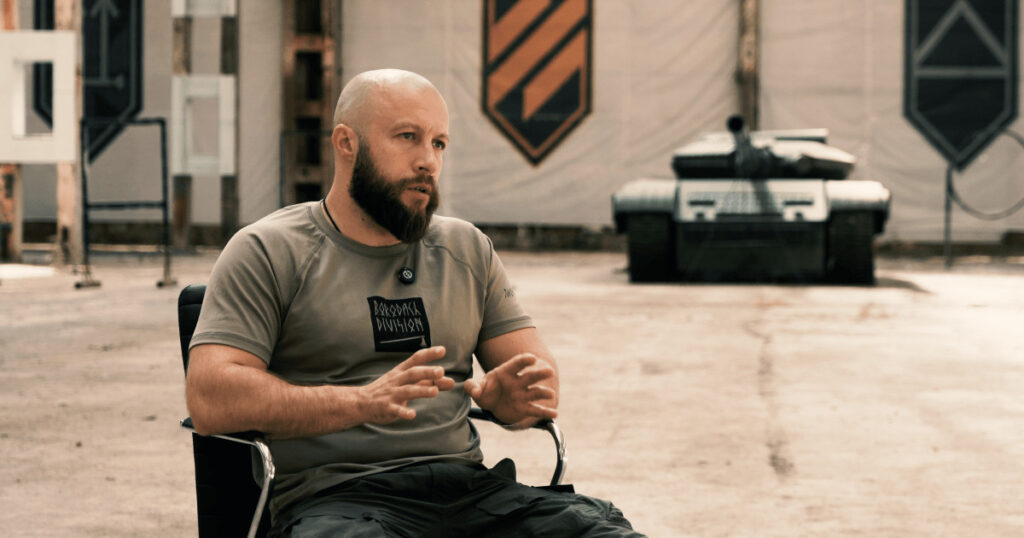
Maksym Zhorin lors d’un entretien publié le 2 septembre 2024 (online.ua)
Depuis plusieurs jours, des « manifestants » ont semé le chaos dans les rues françaises sans revendication concrète. Tout cela se passe dans le silence total des grands médias, qui sont toujours incapables d’identifier clairement les origines ethniques et religieuses des auteurs.
Tout cela est une conséquence de nombreuses années de promotion d’une idéologie libérale toxique. Les mots ne suffiront pas à surmonter cette crise ; seules des mesures fermes et radicales y parviendront. Pour survivre, l’Europe doit se souvenir de son histoire et de sa véritable essence, plutôt que de se prélasser dans une tolérance erronée
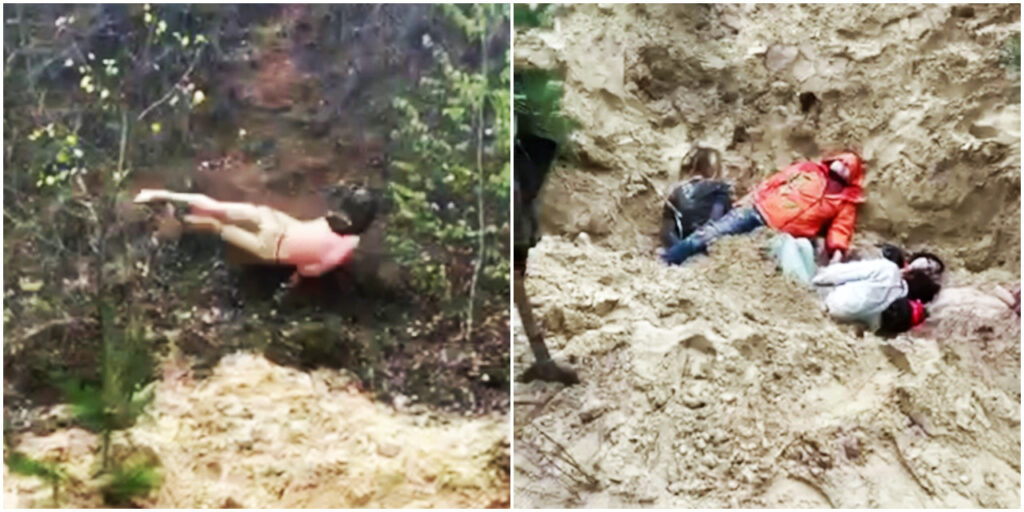
Massacre ukrainien de civils ennemis à Koupiansk le 9 octobre 2022 (Maksym Zhorin, captures d’écran)
Je déconseille à ce barbare de tenter quoi que ce soit en Corse. Le terrain y est rude. Il risque de verser des larmes de rage ou même d’y perdre la vie.
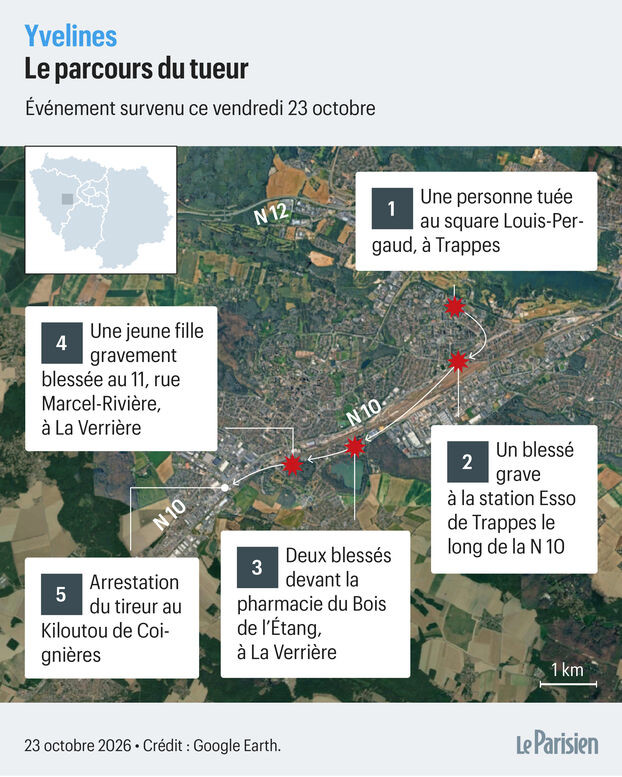
À l’instar de Maud Bregeon, il sait les reconnaître ; le 23 octobre, un terroriste raciste choisit ses victimes à leurs apparences, au fil de son itinéraire de Trappes à La Verrière, dans les Yvelines. Armé d’un pistolet-mitrailleur, il tue une personne et en blesse sept autres, dont touchée par huit balles, une enfant de 11 ans
(Le Parisien)
Aux policiers qui l’interpellent, il déclare s’être attaqué aux Noirs et aux Arabes pour venger les commerçants [pillés lors des manifestations du 17 octobre]
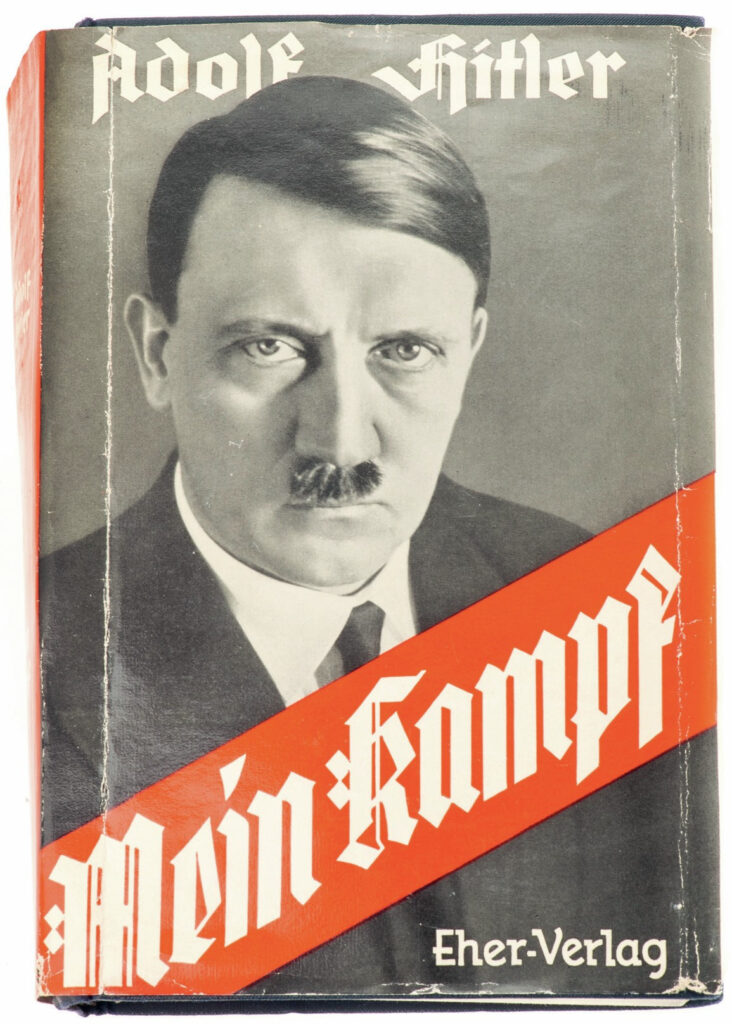
Une édition originale allemande
En perquisition à son domicile de Plaisir, les enquêteurs découvrent un exemplaire de Mein Kampf, le manifeste politique en 1925 d’Adolf Hitler (1889-1945), un artiste peintre autrichien qui devint plus tard le VRP à travers l’Europe des industriels allemands.
Le Toulousain sous pseudonyme Cafard Misanthrope est habituellement hostile aux bolcheviques et reproche au prolétariat de ne pas se retrousser les manches. Il est en Ukraine depuis 2023
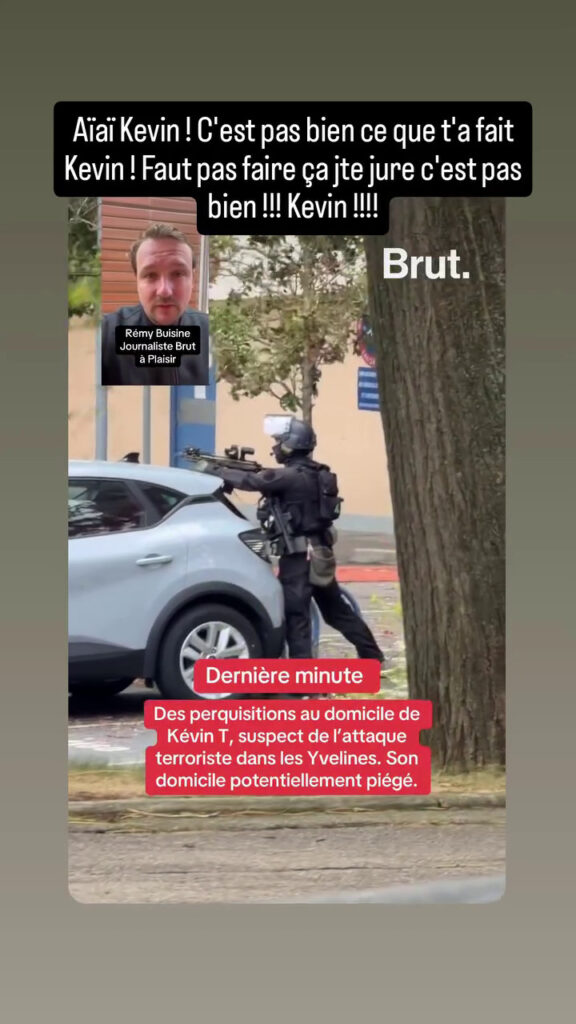
Commentaire par surimpression d’un reportage à Plaisir de Rémy Buisine (capture d’écran)
Alors que ses camarades adoptent plutôt un profil bas en ces circonstances, lui opte le 23 octobre pour un second degré qui raille sur les réseaux sociaux les victimes de l’attaque terroriste.
À l’exception d’Eric Zemmour, qui reste cohérent et a la décence de se taire, la quasi totalité des personnalités politiques françaises se dispute immédiatement le micro pour exprimer son atterrement petit-bourgeois. Quelques beaux exemples d’hypocrisie politicienne.
Alors que pour évaluation d’une éventuelle schizophrénie, le terroriste est le 25 octobre en observation à l’Infirmerie psychiatrique de la Préfecture de police (I3P), une vidéo se répand sur les réseaux sociaux
J’ai flouté les visages des victimes (captures d’écran)
Elle fut enregistrée le 23 par une caméra de surveillance de la station ESSO de Trappes. Calme et méthodique, il veut achever à l’entrée un homme déjà blessé, mais son chargeur est vide. Il ramasse alors au sol une cartouche qu’il engage dans la chambre et à bout portant, tire à nouveau sur le Marocain Ahmed Chihi.
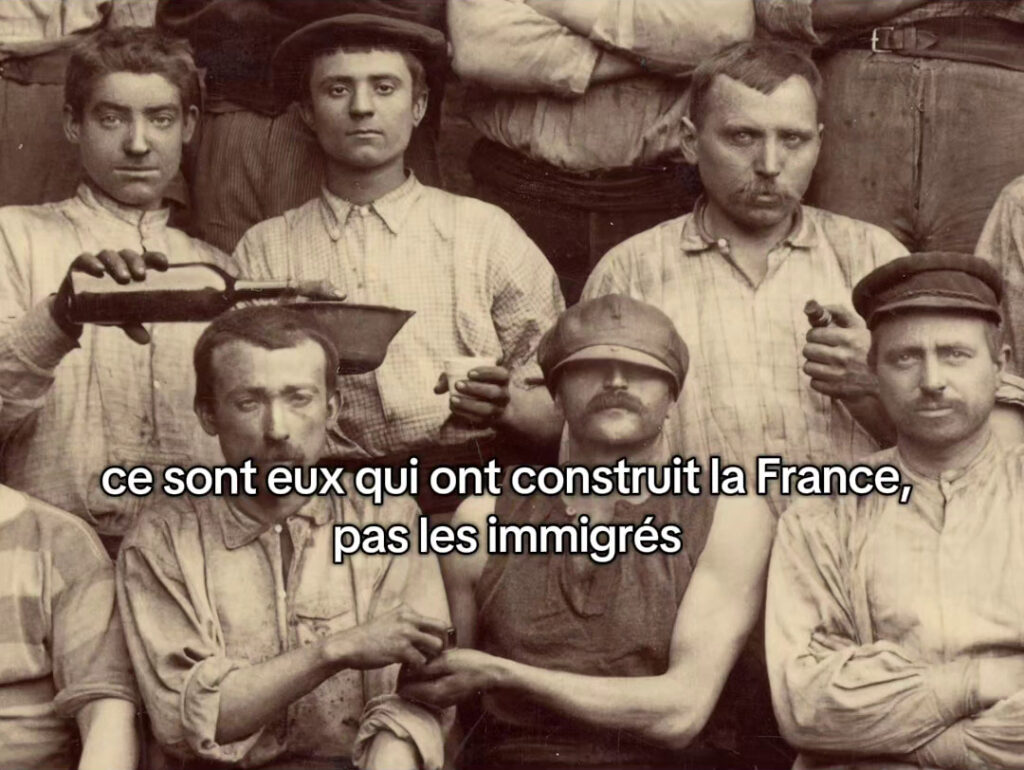
En début de mois, le suprémaciste des corons Lucas Barraud plaisanta au sujet de Nahel Merzoug, adolescent tué en 2023, à 17 ans
(Capture d’écran)
L’attaque raciste des Yvelines le fait réfléchir. Le 25 octobre, il partage la vidéo particulièrement cringe d’un compte identitaire qui célèbre de chers disparus : des souchiens qui auraient construit la France, sans immigrés.
Des journalistes ont enquêté et commencent à dresser le 26 octobre une biographie sommaire du terroriste. En quête de relations sociales et en raison de leur proximité, il a fréquenté dans les années 2010 des groupes écologiste ou pro-Palestine. Mais son racisme l’en exclut. En 2022, il exprima sans ambiguïté son intention de voter pour le Rassemblement national, parti pétainiste de Marine Le Pen, cofondé en 1972 par un ancien caporal de Waffen SS.
Pétainiste du canal Les Républicains, Georges Mothron est maire d’Argenteuil. Le même jour, il fait fermer en dernière minute les grilles de la mairie, afin d’empêcher un rassemblement sur le parvis
contre la haine raciste et l’islamophobie et en soutien à toutes les victimes de l’attentat raciste de Trappes
que des élus d’opposition ont organisé
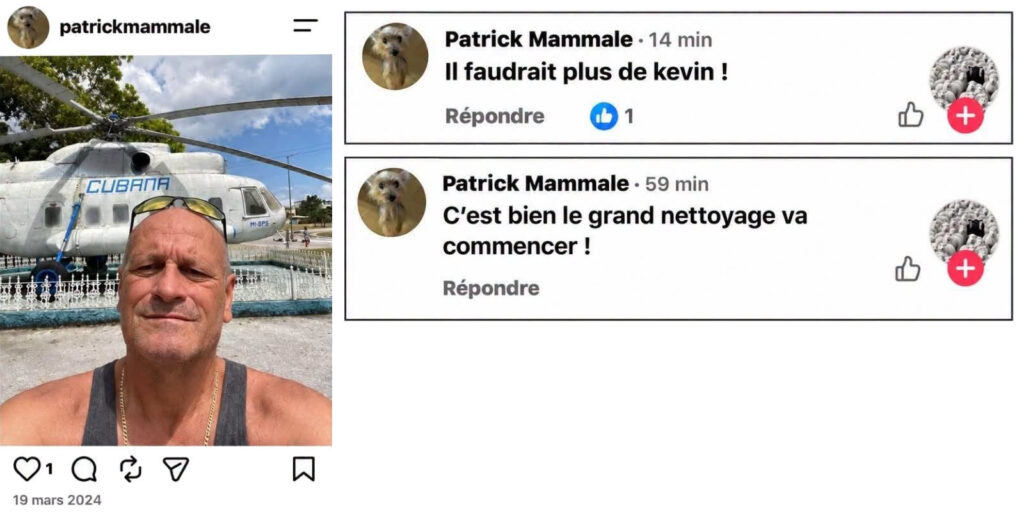
(Réseaux sociaux)
Toujours le 26, un colon pinzutu [Français, en Corse] en Martinique, Patrick Mammale, est jugé en comparution immédiate et condamné à douze mois de prison, dont huit ferme. Il n’a pas su garder profil bas et a rendu hommage sur Facebook au tueur raciste. La peine est assortie d’une trique [interdiction de séjour] de trois ans sur l’île des Caraïbes. Sois prudent, César Aujard
La France a peur. La frousse est le sentiment le plus répandu et fréquent parmi les Français. Leur patriotisme est souvent une tentative de la conjurer. C’est elle qui contribua à la volonté du terroriste de cribler de balles une enfant de 11 ans et d’achever au sol un homme déjà blessé (Mediapart)
Mediapart publie le 27 octobre les résultats de ses investigations sur les réseaux sociaux : depuis plusieurs années, le terroriste exprimait son racisme, son islamophobie et son adhésion à l’idéologie pétainiste de Marine Le Pen. Les bras m’en tombent.
Le même jour, l’Assemblée nationale rend hommage aux victimes. Avec la vulgarité et l’indécence qui caractérise tant la petite bourgeoisie française de droite, le Premier ministre Sébastien Lecornu se sent obligé de mettre en parallèle le militant nazi Quentin Deranque, décédé à Lyon le 14 février, à 23 ans, des suites de blessures reçues dans une échauffourée que provoqua son groupe de nervis, lors d’une conférence de Rima Hassan sur la Palestine
À Montpellier, dans un rassemblement en hommage à Quentin Deranque le 15 février 2026, une pancarte demande justice (Sylvain Thomas / AFP). L’observateur expérimenté y remarque la rune Algiz et à côté, la même renversée -la Todesrune– que les SS et nul avant eux, employaient comme symbole du décès
Certes, ce fut à l’instigation de la même mouvance pétainiste et avec la complaisance likoudnik de Yaël Braun Pivet, que la même assemblée lui rendit aussi hommage le 17 février. Si je l’interrogeais, je chercherais à évaluer comme la révérence des godillots à un militant nazi en février a pu armer le terroriste en octobre.
À Dresde, le 22 février 2026, ce fut en musique que des militants nazis allemands honorèrent Quentin Deranque
Dreiundzwanzig Jahre Quentin war einer von uns Er kämpfte für sein Vaterland mit Brüdern Für die Freiheit und die Rekonquista von Europa Wie Kreuzritter in Tolosa Nur im den Hinterhalt zu schlagen Una cosa gloriosa
Listen, I shout it out to every European brother Be loud, be proud, we fight for each other So many more died to illegals or antifa We’ll never forget our revenge It is getting ya
Raus auf die Straße, Blaulichtattacke Trau dich und mache mit Gesicht oder Maske Die Kameraden sterben auch für dich, also erwache Auch mich kann es treffen Unsere Pflicht ist jetzt Rache
Zusammen streiten, zusammen kämpfen Durch dunkle Zeiten,wir bis zum Ende Wegbereiter werden Legenden Ihr Heldennut lebt in uns weiter
Candidat à la réclusion criminelle à perpétuité, Kevin Tessier, 39 ans, est déféré le 28 octobre au dépôt du Tribunal de Paris, pour sa mise en examen ultérieure par un juge d’instruction du pôle antiterroriste
Kevin Tessier (réseaux sociaux)
Jeune officier dans l’armée de Louis XVI et Corse résolument paoliste, un certain Napoleone Buonaparte écrivit dans les années 1780
Féroces et lâches, les Français joignent aux vices des Germains, ceux des Gaulois. C’est le peuple le plus hideux qui ait jamais existé
Hélas, dévoré par son ambition personnelle et conscient de ce que ses qualités lui permettaient d’accomplir parmi ces Français, il a mal tourné dans les années 1790. Emmanuel Macron, en revanche, est dépourvu de talent
Cela n’est pas un faux ; ce livre fut réellement publié en novembre 2017
Mes pauvres pinzuti, vous n’êtes pas sortis d’affaire. Vous aurez beau faire des petits bonds de cabris, à dénoncer la haine, haine, haine, cela ne réglera pas vos problèmes, car vous êtes dépourvus du courage de les affronter. Vous avez été élevés dans la compromission et les petits arrangements d’alcôve. Vous adorez vous gargariser de vains mots et croyez que vos institutions auraient la propriété magique de transformer des vessies en lanternes. Comment voulez vous être respectés dans les vastes restes du monde ?
If the door that Moscow says is open is actually closed, it’s closed on this side – and it wasn’t Rome that closed it of its own accord
A Valdai summit off-site
What I’m going to share in this article is less technical and more personal than usual. It concerns the information gathered over several days of dialogue, discussion, and, apparently, a “scandalous” question that became a media sensation in Europe – because I asked the President of the Russian Federation, Vladimir Vladimirovich Putin, what will become of Europe.
You can find the full video of Vladimir Putin’s speech at the Valdai Forum here.
You can find my remarks and Putin’s responses here.
This year, the Valdai Forum did not meet in Sochi. Invitations sent out in the summer still listed the Black Sea city as the venue, but then, in late August, the organizers announced the move to the Moscow region. According to FT, the Federal Protective Service demanded the relocation, concerned about the threat of Ukrainian drones following a summer of attacks on coastal refineries. This logistical detail carries its own weight. The war – which at Valdai is always discussed in the language of the international system – is now also influencing the practical organization of the forum.
The 23rd Annual Meeting took place from September 28 to October 1 under a title that to a European sounds almost like a personal question: “Responsibility for the Future: The Limits of the Possible or Limitless Possibilities?” The opening featured the Club’s annual report, Keep Calm. The State and Responsibility for the Future, which the authors present – with a nod to Kubrick – as a manual for stopping worrying and learning to love chaos. This was followed by nine thematic sessions, a special session, and, on the final day, the plenary session with the President.
I arrived as an Italian and a European, knowing that in those halls, the two identities carry different weight. Over the course of the week, I spoke, in particular, with four high-level interlocutors: Sergey Karaganov, Maksim Oreshkin, Sergey Lavrov, and, during the plenary session, Vladimir Putin. The first three conversations took place on the sidelines of the sessions, and I’m recounting them from my notes – in essence, not word for word. The fourth exchange is public and documented by a transcript, from which I’m quoting directly.
Taken one by one, the four dialogues convey things that anyone following the Russian debate is already familiar with. When viewed in sequence, however, they paint a clearer picture: a shared assessment of Europe and four different ways of drawing conclusions from it. And, above all, a future that is by no means bright.
Karaganov: Europe as the source of evil
Sergei Karaganov is one of the founders of the Valdai Club, honorary chairman of the Council on Foreign and Defense Policy, and for years has been the most radical voice of Russian realism. With him, the conversation began immediately with the most contentious point. Europe, he said, is the root of all evil. If it were destroyed, no one would mourn it. A tactical nuclear conflict on its territory would not involve other actors. Europeans have had plenty of time to find a solution to their own problems; now that they have chosen to prepare for war against Russia, it is too late to offer them another chance.
I must be honest: I’ve never been a fan of Karaganov; I’ve often found his views too radical and old-fashioned. But starting with an after-lunch coffee together – and continuing over the course of a week of discussions – I discovered that we think very similarly and that his views are by no means trivial. Anyone who has read his recent statements will recognize this line of thinking. In June 2023, Karaganov had publicly argued that Russia should lower the threshold for the use of nuclear weapons to restore credibility to its deterrence and induce the West to withdraw from the conflict in Ukraine. Part of that approach was subsequently incorporated into official documents: the Fundamentals of the State Policy of the Russian Federation in the Field of Nuclear Deterrence, updated in November 2024, treat an attack by a non-nuclear state carried out with the participation or support of a nuclear power as a joint attack.
His words, however, contain three distinct assertions, and it is worth keeping them separate. The first is a historical and civilizational judgment: Europe as the source of modernity’s great catastrophes, from the world wars to colonialism. This is a thesis that Karaganov has long argued and which can be contested, but it belongs to the realm of interpretation. The second – that no one would mourn Europe – is a prediction about others’ reactions; from what I observed during those days, it resonates with a significant portion of the Asian, African, and Latin American participants. The third is a strategic hypothesis that underpins everything else: a nuclear escalation in Europe would remain confined to Europe.
On this point, the literature on deterrence has been debating for seventy years, and – fortunately – empirical evidence is lacking. The factor that complicates this hypothesis lies within Europe itself. France and the United Kingdom possess national arsenals, and in March 2025, Paris formally opened the debate on the European dimension of its own deterrence. A “solely European” nuclear conflict presupposes that two European nuclear powers would stand idly by. This is the weakest assumption in the entire argument, regardless of how one assesses the other two.
It should also be noted that Karaganov does not speak on behalf of the government. At the Valdai Forum, he represents the wing of the Russian debate that pushes the Kremlin toward more definitive positions, and one of his roles is precisely to push the boundaries of what can be said. Viewed in this light, his “too late” is an indication of a trend rather than a doctrine.
Oreshkin: The market that no longer exists
With Maksim Oreshkin, the tone has shifted entirely. Deputy Head of the Presidential Administration, former Minister of Economic Development, and later the President’s economic advisor, Oreshkin reasons in terms of cash flows and balance sheets. His assessment was blunt: Europe is finished. There is no longer any viable competition in the energy market, because China and India now occupy the top spots among Russia’s customers. And there is no reason to invest in a European bailout, since the Europeans, to date, have shown no interest in finding a peaceful and reasonable solution. The question I had posed to him during the meeting with the Valdai participants was: “Given that the Nord Stream 2 pipeline is no longer available – because it was sabotaged – do you intend to find a new energy transportation system, assuming Europe reconciles and the diplomatic situation improves?” His blunt – and perhaps brutal – response is like a dagger of truth plunged into the conscience of every European.
“Over” should be understood in a technical sense. Oreshkin was not speaking directly about European civilization but about Europe as a trading partner: a market that has ceased to be central to Russia and therefore does not warrant political concessions to win it back. After 2022, Russian crude oil found its main buyers in China and India, while Brussels, through the agreement between the Council and the European Parliament in December 2025, committed to phasing out imports of Russian gas – including pipeline gas and LNG – by 2027. The energy interdependence that had kept Europe and Russia connected for half a century – even during the worst moments of the Cold War – has been dismantled by both sides. Oreshkin’s reasoning captures the simplest consequence of this: whoever is no longer the main customer no longer has leverage. These are the laws of the market, and neither in London, nor in Berlin, nor in Brussels are there any politicians or power groups left who can tell Russia “what to do”.
The flip side is well known in Moscow, too. A market dominated by two major buyers allows them to demand discounts, and replacing Europe with Asia comes at a cost in terms of price and access to technology. But according to the logic presented to me, the question is no longer whether Europe is in Russia’s interest. It is how much it would cost to make it beneficial again, and the implicit answer is that Europeans must bear that cost.
Lavrov: the door closed on “this” order
With Sergey Lavrov, the discussion shifted from the economy to diplomacy, without changing the conclusion. Europe, he said, had many opportunities to reestablish a dialogue with Russia and chose instead to fuel direct confrontation. Now it is too late to turn back: all limits have been crossed, and with the current European order, there is no way to return to previous relations.
I’d like us to pause for a moment to consider the weight of these words. Those who know Lavrov know that he is a politician capable of weighing every word with great intelligence, even in more relaxed settings such as the Valdai Summit. “The limits have been crossed.” It would be pointless to list these limits, because they are so obvious to the whole world that it would simply be a waste of time. But the look in Lavrov’s eyes as he spoke about Europe – I will never forget that. I have met him many other times, but on this occasion, there was something different.
The minister has a track record of events that Russian diplomacy regularly references: the Minsk agreements, the draft treaties on security guarantees submitted to the United States and NATO on December 17, 2021, and the Istanbul negotiations in the spring of 2022. The Russian interpretation of each of these developments is controversial, and it is contested in Europe. What interests me here is another element – a qualification that, upon re-reading after the plenary session, proved to be the key to the entire week. A return is impossible under this European framework. Not with Europe, in its current form – that is, the EU and NATO. The rejection concerns a ruling class and an institutional architecture, not the countries that are part of it.
I wonder just how much Russian patience has been abused to reach the point of saying such things? Classic Russian literature offers us admirable examples of how Russian politicians are capable of stalling, ignoring, and being patient. And there’s no denying that this has consistently been the attitude of the Russian ruling class during the recent years of conflict. To go so far as to say that the limit has been crossed – something Putin would later echo in the summit’s plenary session – means there are no more resources to waste on patient waiting; it means the Bear has been awakened from its hibernation at the wrong moment; it means the consequences of these actions will be of epochal significance.
Lavrov added one more thing:
We are ready to strike Europe in an exemplary manner, not as we did in Ukraine
Take note of these words, dear European friends. Reread them and reflect on their weight. Nothing more needs to be said.
An Italian professor asks Putin a question
We come now to one of the most dangerous moments of my career. The plenary session took place, as is traditional, with the Russian president in attendance and Fyodor Lukyanov moderating. I took the floor and asked a two-part question:
I come from Italy, a country that currently does not have good relations with Russia. As a European, I would like to ask you: What conditions will Russia set for developing a new security system for European countries? And, if we imagine a post-European Union Europe, will you consider it part of a great Eurasian partnership, or, in your view, will the United States and Russia always be competing for these territories?
Putin began with the second part, and the order is no coincidence:
Italy is, in fact, located in Europe, and I am speaking of a Eurasian partnership: it goes without saying, therefore, that we will consider – and already do consider – Italy a Eurasian partner as well
Immediately afterward, he clarified that the fate of the European Union, and Italy’s continued membership in it, “is none of our business.” Moscow does not even intend to discuss it, because any comment on the matter would be interpreted as an attempt to break up the EU, “while we do not want to break up anything at all. We only want to build and cooperate.”
On the conditions for a new security system, the response was clear: “We have no preconditions.” The obstacle, in his view, lies on the other side. Some European politicians consider it unacceptable for a single country to open a dialogue with Russia, and Putin has called this demand a diktat even harsher than that of the Soviet era. The comparison was carefully crafted: the USSR was a unitary and highly centralized state, whose republics were part of a single state structure; the European Union, in theory, is not, but in practice behaves as if it were. “No one is forbidding us; we’re ready.”
At that point, Lukyanov interjected with a provocative remark typical of an experienced moderator: since Brussels forbids it, wouldn’t it be better to contribute a little to the disintegration of the EU, so as to make it easier to deal with individual countries? The answer came without hesitation: “But there’s no need – they’ll fall apart on their own.”
Then Putin addressed me directly. “Our Italian colleague knows this better than we do,” he said, and began running the numbers: Italian public debt at 140%, the deficit around 3%, and in other European countries close to 5%. The figures were rounded but not far from the truth. According to Istat and Eurostat, at the end of 2024, Italy’s public debt stood at 135.3% of GDP and its net borrowing at 3.4%. The point of the passage, however, wasn’t about the decimal points. All problems start with the economy: living standards fall, unemployment rises, and citizens of the major European economies feel it firsthand – and this, he said, “also undermines the very foundations of the European Union. But that’s not our business; we don’t interfere.”
He concluded by reiterating the offer in a balanced manner: dialogue with the Union as a whole, if the Union so desires, or with individual countries, without preconditions. “But there must be no preconditions on the European side either.”
Trying to grasp the magnitude of these words, the political balance they reveal, and the strength of a statesman who cares not only about the good of his own country but also that of an entire other continent is a true lesson in what politics is all about.
Listen to Putin’s entire speech, and you will understand how, in less than five minutes, it is possible to capture the decline of all of Europe, in all its facets, while at the same time wistfully reiterating that Russia has done everything in its power to offer its assistance. But the choices of Europeans are their own, whatever flag they may fly. Russia respects and will always respect the fundamental principles of its foreign policy and its political tradition. No miraculous messianism, no improvised savior.
Europe – or rather, the Europeans of this Europe – what do they intend to do?
Rereading my travel notes
Rereading my notes upon my return, the first thing that stands out is the convergence of views. The strategist, the economist, the foreign minister, and the President have each expressed, in their own words, the same assessment: today’s Europe has exhausted its credit with Moscow. The second thing that stands out is that each draws a different conclusion from that diagnosis.
For Karaganov, the conclusion is coercive and takes on an almost eschatological tone: Europe has had its chance, and what follows is no longer a matter for diplomacy. For Oreshkin, it is a matter of cold, hard accounting: Europe is not worth the investment needed to win it back. For Lavrov, it is a limited diplomatic withdrawal, focused on the political structure rather than the people. Finally, for Putin, the door remains open – but toward individual states, not toward Brussels – accompanied by the expectation that economic erosion will do the rest.
The apparent contradiction between the “too late” stance of the first three and the “no preconditions” stance of the fourth is resolved precisely in Lavrov’s characterization. The result is a coherent line, which I would call “bilateralization”: Moscow will not deal with the Union as a political entity as long as its current leadership remains in place; it offers individual member states channels without preconditions and lets Europe’s internal difficulties make those channels attractive. The reference to Italy as a Eurasian partner “already today” must be understood within this framework: it is not a courtesy; it is an indication of which interlocutor Moscow prefers.
I certainly cannot claim that the four exceptional interlocutors had reached an agreement – that goes without saying – but I found this convergence truly “prophetic.” Valdai has always been the venue where the breadth of Russian debate is showcased to a foreign audience. I can say that these perspectives are compatible and mutually reinforcing: Karaganov’s tough stance makes Putin’s offer appear moderate; Oreshkin’s figures lend credibility to the idea that Moscow does not need to make concessions; and Lavrov’s formula balances firmness with openness.
The 2010–2012 sovereign debt crisis gave rise to the European Stability Mechanism and the banking union; the pandemic led to Next Generation EU and the first large-scale common debt. Within the Union, crises have generated at least as much centralization as fragmentation. “They will fall apart on their own” is therefore a gamble, not an observation – even if the gamble costs little to those making it: if the EU holds together, Moscow has at least offered dialogue; if it collapses, it already has bilateral channels in place.
The indicators to watch over the next twelve to eighteen months are fairly clear. The first concerns bilateral visits to Moscow by EU heads of government, in addition to the previous visits by Viktor Orbán in July 2024 and Robert Fico in May 2025. The second is whether unanimity holds during the semi-annual renewals of sanctions, where a single veto is enough to open a crack. The third concerns national exemptions from the timeline for phasing out Russian gas. The fourth – and most significant for us – is the possible opening of a structured channel by a major capital, including Rome.
What do I take away from this? As an Italian, the phrase I’m taking with me isn’t the one about disintegration; it’s the other one: “We already consider Italy a Eurasian partner as well.” It contains both an offer and an observation directed at us. If the door that Moscow says is open is actually closed, it’s closed on this side – and it wasn’t Rome that closed it of its own accord.
How long can a country with a debt exceeding 135% of GDP afford to leave it up to others to decide who can speak with whom? No one in Moscow asked me that. It’s a question I brought home with me on my own. And every Italian of good conscience, every European who still has a heart, knows the answer [end]
this article is the product of visits to Russia I made in June and September 2026 where I met with senior Russian leaders, leading academics, and specialists in military and security issues
in French, ce 11 novembre 2025 est l’occasion de souligner comme la façon dont l’Europe sacrifie les conscrits ukrainiens mobilisés de force rappelle le spectaculaire carnage de la 1ère guerre mondiale
chronicle of censorship, fake news, whitewashing of the Ukrainian Nazism and war crimes, for the sake of the proxy war that NATO is conducting in Donbass and Ukraine, against Russia
This article is the product of visits to Russia I made in June and September 2026 where I met with senior Russian leaders, leading academics, and specialists in military and security issues
There has been a spate of irresponsibly aggressive rhetoric from within Europe strongly posturing for a conflict with Russia by the end of the decade. This rhetoric comes in the context of the ongoing conflict between Russia and Ukraine, which is well into its fifth year, a conflict which both Europe and the United States openly acknowledge operates in the form of a proxy war between the collective West and Russia. The Russian response has been to accelerate its military efforts against Ukraine while putting NATO on notice that any effort to threaten Russian territory, and particularly the Russian exclave of Kaliningrad, would see Russia responding with the full compliment of military capabilities, including nuclear weapons. The current situation in Europe today in many ways replicates the conditions that existed on the continent in the summer of 1914, where military mobilization and war preparations created a momentum that produced a war no politician was seriously looking to prosecute. The consequences of war in 1914 were a disaster for Europe; the consequences of a war today would be fatal to civilization as we know it.
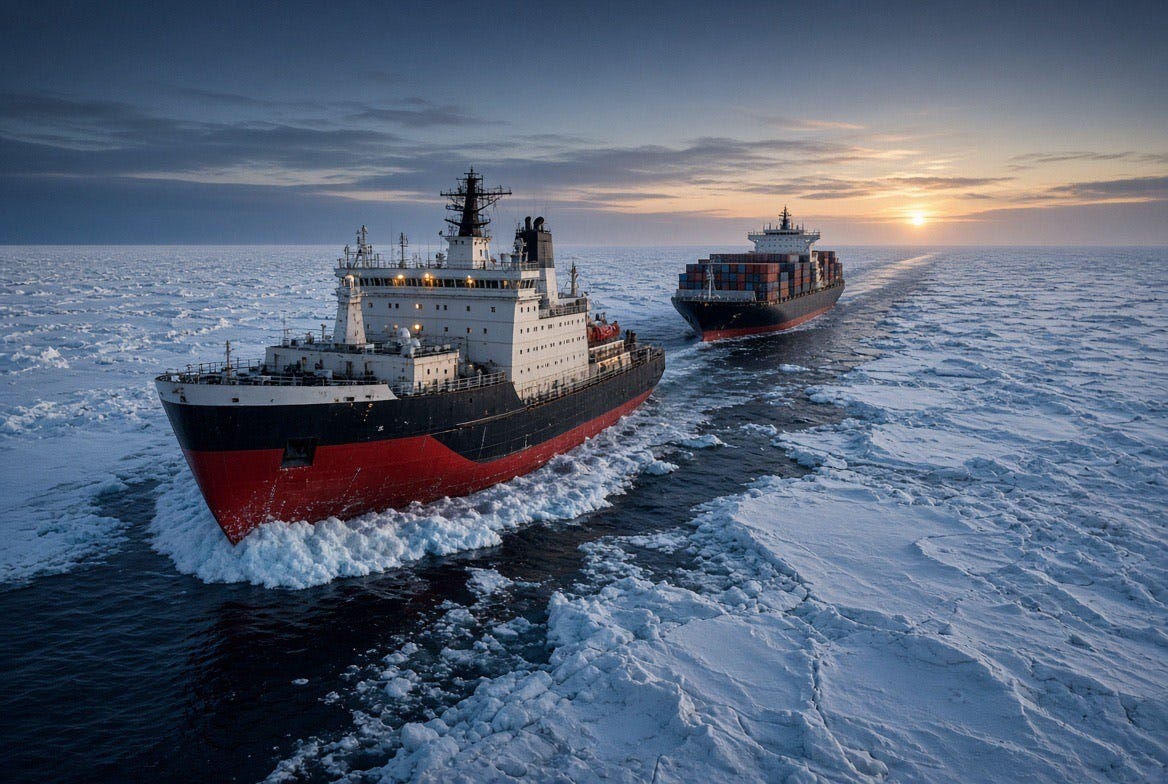
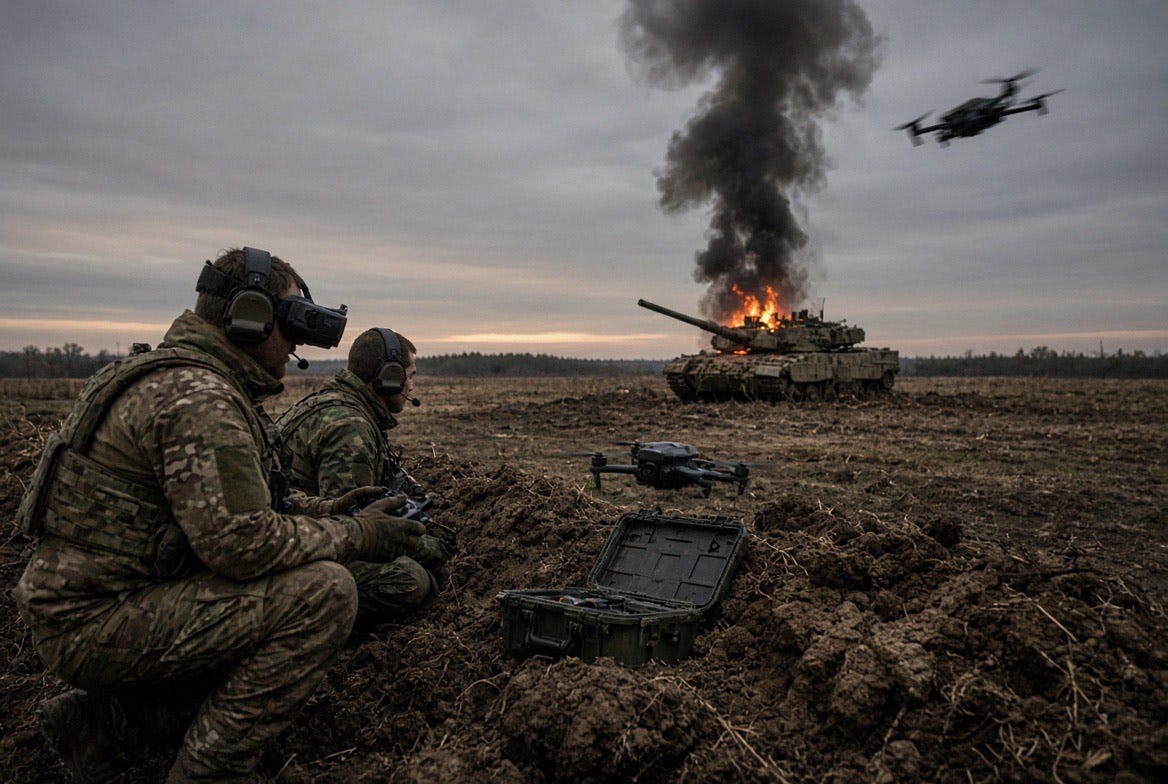
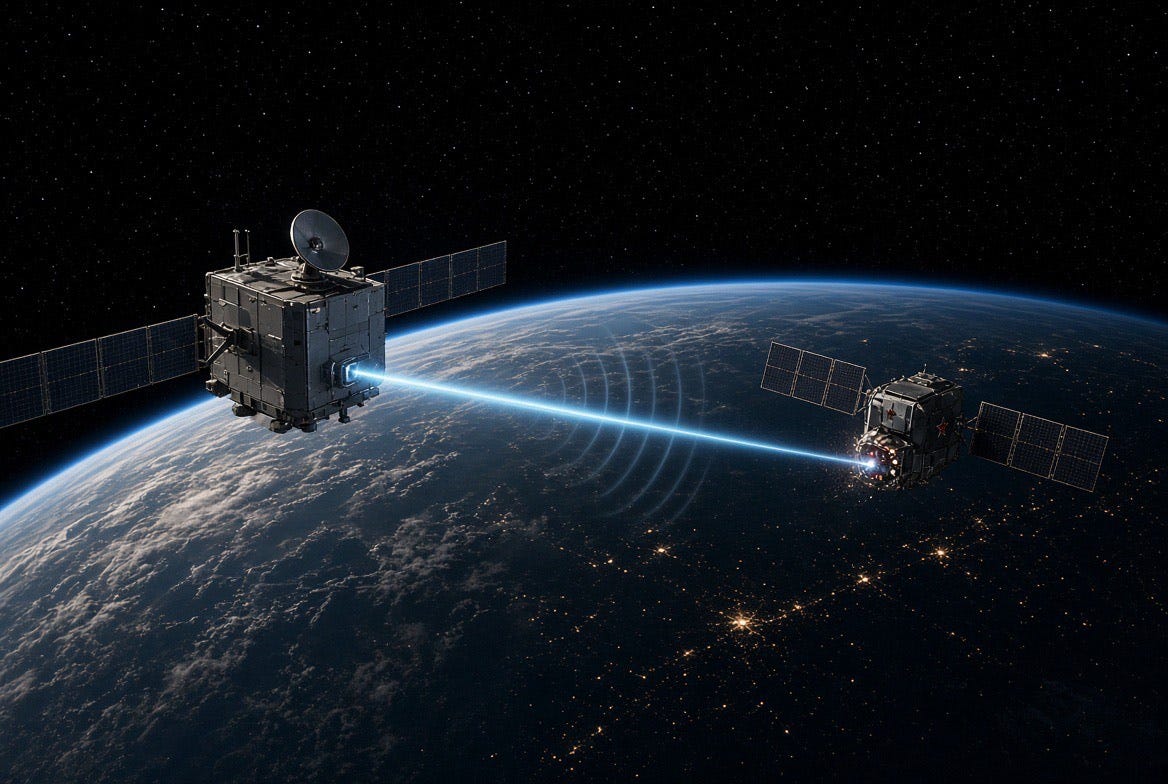
In examining the geopolitical map of Europe/Eurasia today, one can assess four points of military friction between Russia, the United States and Europe. These are Ukraine, the Arctic, Kaliningrad, and Outer Space. While each represents a physically distinct problem set politically and militarily, they are all four inextricably linked through a common Russophobic mindset in Europe and the United States which treats Russia as a singular security issue. Moreover, both Europe and the US operate from a strategic mindset driven by zero-sum thinking, which postures Russia as being structurally motivated to bring harm to both Europe and the United States, thereby stifling the possibility of cooperation with Russia that could resolve many if not all of the underlying issues which are collectively construed by the West as presenting a threat. For its part, Russia operates from a mindset derived from the psychology of perpetual victimhood dating back centuries, and a historical foundation of resistance to aggression which seeks diplomatic resolution until which point military confrontation becomes the only solution
Ukraine: The (perceived) chink in the Soviet/Russian armor
The current conflict in Ukraine between Russia and the West did not begin in 2022 with the Russian invasion but rather represents the logical conclusion of a posture on the part of the United States and NATO which sought to exploit the ultra-nationalism of Western Ukraine in order to create a framework of instability designed to weaken the Soviet Union, and later Russia, from within. To understand this mindset, one first must delve into the psychology underpinning the concept of Ukrainian nationalism. For Russia, Ukraine represents part of a larger family of Slavic peoples which include the Russians and Belarussians; indeed, this notion is shared by millions of Ukrainians as well. One only need to look at the integration of Ukraine within the cultural and historical roots of Russia over time to understand the reality of this sentiment.
For the West, this reality presents a problem, since it lends itself toward the existence of a singular Slavic state possessing tremendous geographical advantages and unmatched natural resources which in turn creates massive economic penitential that competes with Western notions of global supremacy. Nazi Germany sought to nullify this Slavic potential through the implementation of Generalplan Ost, the literal cultural and physical genocide of the Slavic race. The United States and the United Kingdom (and later, NATO, inclusive of a newly militarized West Germany), continued this policy of Slavic nullification by promoting anti-Soviet resistance on the part of the Organization of Ukrainian Nationalists (OUN), including military support of partisans operating in Ukraine loyal to Stepan Bandera, a former ally of Nazi Germany whose forces perpetrated large-scale atrocities against Jews, Poles and Russians during the Second World War. When the war ended, the German intelligence organization responsible for managing the OUN operations was taken over by the US military and later, under the auspices of the Central Intelligence Agency (CIA), used to direct anti-Soviet armed resistance up until 1954-55. The CIA continued to provide active support for the OUN, using the Ukrainian diaspora, through the 1990’s.
The role of western intelligence, led by the CIA and the British Special Intelligence Service (SIS), in post-Soviet Ukraine was singularly focused on promoting Ukrainian nationalism at the expense of Russia. The political campaign waged against the Russian-speaking population of Ukraine by western intelligence emerged front and center when the two-term President of Ukraine, Leonid Kuchma, stepped down in 2005 after carrying out policies designed to improve Ukraine-Russian relations. Kuchma threw his support behind the Russian-speaking Viktor Yanukovych. For the West, a Yanukovych presidency would undermine their strategic goal of stripping Ukraine away from Russia. The result was the so-called “Orange Revolution”, which saw Yanukovych’s electoral victory overturned in favor of Ukrainian nationalists who promoted a distinctly anti-Russian policy which saw Ukraine pivot toward the European Union and seek NATO membership. The latter development was seen by Russia as a red line which, if pursued, would inevitably lead to a military conflict between Russia and Ukraine. Yanukovych’s election in 2010 was deemed a setback to the Western designs on Ukraine, leading to the West supporting a violent coup in February 2014 that saw Yanukovych driven from power, replaced by pro-western Ukrainian nationalists.
It should be clear that a physical confrontation between Ukraine and Russia has always been the goal of the collective West. Efforts to take control of the Russian political space had, by 2014, failed. The so-called “reset” of 2009 was little more than a political cover for a regime change operation designed to replace Vladimir Putin, who had ruled Russia since taking over from Boris Yeltsin at the end of 1999, and in the intervening decade taken Russia down the road of economic and national recovery that the West, operating in full zero-sum mode, simply could not tolerate. The concerted efforts of President Obama to interfere in the Russian parliamentarian elections of 2011 and the presidential election of 2012 failed to remove Putin from power. The actions in Ukraine in 2014 and afterwards must be viewed in this light; nothing happens in a vacuum.
The Ukraine conflict was never avoidable, despite Russia’s concerted efforts to engage in diplomacy designed to do just that. The defeat of the Ukrainian army in 2014-15 at the hands of Russian-backed separatists in the Donbas led to the adoption of the Minsk peace accords. It is now established fact that neither Ukraine, its two European partners (France and Germany), nor the United States ever had any intention of following through on the Minsk process. Instead, the Minsk process was designed to buy time for NATO to build a new Ukrainian army capable of holding its own against Russia. Indeed, from 2015-to 2022, the United States and NATO did just that, training over 80,000 Ukrainian forces, including thousands of Ukrainian nationalists labeled as neo-Nazi by the United States Congress, to NATO military standards. The stated purpose of this training was to enable Ukraine to take physical possession of the Donbas and Crimea, which was annexed by Russia in 2014 following the CIA-backed coup in Kiev. When Ukraine began amassing these NATO-trained troops in the Donbas region in early 2022, Russia launched a pre-emptive action which, more than five years later, has become an openly acknowledged proxy war with the collective West, inclusive of the US and NATO.
The stated goal of both the US and Europe in pursuing this proxy conflict with Russia is nothing less than the strategic defeat of Russia. What does this mean in practice? First of all, the proxy war was never intended to result in a Ukrainian military victory against Russia. Rather, the goal was to draw Russia into a conflict which would exhaust its military potential, break its economy, and collapse its society to the point that the government of Vladimir Putin would be removed from power. This entire policy is postulated on the understanding that Vladimir Putin must be removed from power. As such, and solution that does not attain that objective is rejected out of hand, a pattern of behavior reflective of the zero-sum mentality that drives western policy making. As a result, every potential off-ramp that Russia has been willing to consider, from the Istanbul communique of 2022 to the Anchorage compromise of 2025, has been rejected by the West, exposing the reality that for the West diplomacy is just a tool to buy time to further strengthen Ukraine militarily in order to draw the Ukraine-Russian conflict out to its desired conclusion—the collapse of Russia. In short, Minsk on replay.
Russia has proven to be surprisingly resilient in the face of this concerted western effort designed to collapse it as a viable nation state. The Russia economy not only has survived in the face of western sanctions but, in concert with effective Russian diplomacy that has exploited western diplomatic miscues to build a large and supportive global constituency, thrived as it has found foreign markets in the Global South that have largely replaced the lost European and US markets. Russian society, blindsided by a war it was not prepared for, has rallied solidly behind President Putin, as the results of the recent parliamentarian elections underscored. And far from exhausting Russia militarily, the Ukraine conflict has enabled Russia to fine-tune its defense industrial base, producing significant quantities of advanced military equipment and weaponry that for the most part far exceeds that being produced by the collective West in both quality and quantity. When this material is matched up with a combat-hardened pool of manpower, the result is that Russia today possesses the most combat-capable military force in the world, far exceeding anything either NATO or the United States can put into the field.
In short, the western gambit targeting Russia has failed—the Russian military is stronger today by an order of magnitude, its economy far more diverse and self-sustaining, and its population far more unified than it was in 2022. Moreover, Russia shows no signs of faltering on any front—economically, diplomatically, socially, or politically.
The same cannot be said for either Europe or the United States. Despite the war-like rhetoric coming out of Germany and Poland and backed up by statements made by US military officers, both active duty and retired, the reality is that the proxy war between the collective West and Russia was always meant to be just that—a proxy war. There has never been a realistic plan for the conflict to become a direct clash between Russia and NATO, if for no other reason than NATO simply lacks the capacity to generate sufficient forces capable of high-intensity conflict for any sustainable period. NATO’s military power has largely atrophied in the decades since the end of the Cold War, requiring an infusion of investment over time to recover which Europe currently does not seem capable of providing. The United States is itself in a posture of global retrograde, seeking to withdraw from Europe rather than resume a Cold War-like posture that is neither politically or economically viable.
With Russia seemingly closing the door on the possibility of a negotiated settlement with the west over Ukraine, Europe and the United States are confronted with the uncomfortable reality that their strategic objectives in Ukraine will not reach fruition. Russia will continue to press for a military solution which meets all its stated objectives, including the kind of concerted de-Nazification which would make extinct the very virulent Ukrainian nationalism which has always fueled the western efforts in Ukraine against Russia.
In short, there will be no war between Europe and Russia over Ukraine. Europe will support Ukraine until Ukraine has exhausted its resources—manpower and economic—and then watch helplessly as Russia consolidates its position in what is left of the Ukrainian nation. “To the last Ukrainian” appears to be a concept that both Ukraine and its western supporters have taken to heart
The Arctic: The economic trigger of potential conflict
In a rational world, the collective West would regroup after its pending defeat in Ukraine and seek to repair its considerable losses. But in a zero-sum world, this is not possible. A Russian victory in Ukraine requires, in the minds of those Russophobes in the west still dreaming of the collapse of Vladimir Putin’s Russia, a “win” which will level the geopolitical playing field. Given the reality that one of the consequences of the west’s failed Ukrainian gambit is the economic decimation of Europe, issues of economic import, not surprisingly take on increased importance when configuring a post-Ukraine geopolitical posture in opposition to Russia.
One of the main issues confronting Europe today is discerning a coherent economic and foreign policy when it comes to China. European diplomacy in this regard has been disastrous, resulting in the collapse of critical sectors of the European economy (car manufacturing, for instance) as a result of ill-conceived notions of “de-risking” (an American-origin term designed to camouflage the real intent of such policy, which is “de-linking.”) But one cannot possibly speak of “de-risking/de-linking” when there are no viable alternative markets to replace that which one’s policies seek to vacate.
Europe’s strategic objective of isolating Russia from China has backfired—today it is Europe that is increasingly isolated, and Russia-Chinese relations, including economic, are strong and getting stronger. One of the critical areas of Russia-Chinese cooperation is the development of the Northeast Passage or, as it is often referred to in China, the “Ice Silk Road”, a 5,500-kilometer stretch of waterway running from the Bering Strait in the east to the Barents Sea in the west. Use of this waterway has become increasingly possible—and profitable—enabling container ships to make the journey from East China to European ports such as Rotterdam around 20-days faster that the current Suez Canal route used by most shipping companies.
The Northeast Passage operates exclusively in Russian territorial waters. It also transits the Arctic zone, meaning that for much of the year its functionality is dependent upon Russian icebreakers. The passage also operates under the umbrella of Russian security and legal norms. The economic potential of the Arctic used to the sole purview of the Arctic Council, who members used to meet on a regular basis to coordinate policies impacting on the economy, security, and ecology of the Arctic region. However, in 2022, following the invasion of Ukraine, Russia was kicked out of the Arctic Council. And, following the admission of Finland and Sweden to NATO, the Arctic Council has assumed a NATO-only posture, with its policies reflecting the strategic goals and objectives of its collective membership, namely being the strategic defeat of Russia.
Climate change has altered the geopolitical realities of the Arctic region, with melting ice caps not only opening sea lines of communication previously denied and/or restricted because of weather but also making economic exploitation of significant mineral resources exposed by the retreating ice physically possible and fiscally viable. Normally, the Arctic Council would seek to regulate access to the Arctic to balance economic and ecological concerns within a security framework where all parties’ interests are taken into consideration.
But in the zero-sum world, the Russo-Sino economic penetration of the Arctic space is deemed a threat to the collective West requiring a military response. This reality was underscored during the recently convened European Arctic Summit, hosted by Finland in mid-September. The European Union leadership, citing unsubstantiated claims of “significant and long-term threats” from Russia to Euro-Atlantic security, committed itself to strengthening its Arctic security posture—i.e., the militarization of the Arctic, focusing on military mobility, cross-border connectivity and necessary infrastructure in the northernmost regions of the Arctic.
The fact is, however, that NATO is non-competitive with Russia when it comes to Arctic security issues. What the European Arctic Summit gave lip service to about the militarization of the Arctic, Russia has already fully implemented and continues to improve. While NATO nations are capable of engaging in acts of provocation, such as the recent seizure of a Russian research vessel off the northern Norwegian island of Svalberg, the rapidity in which the Norwegian government most to ensure similar actions are not undertaken in Norwegian territorial waters underscores the fact that Norway is not keen of provoking any sort of direct confrontation with Russia in the Arctic. The real threat to the West in the Arctic is not Russia’s capable military forces, but the fact that Russia, together with China, are imposing a new transit-based economic reality which will provide extraordinary leverage going forward by making traditional shipping carriers and routes non-competitive with the new “Ice Silk Road” Russia and China have already implemented. The ability to sustainably ship containers to Europe at half the cost of the current shipping routes is a game changer in every way and creates a new reality that the West will not be able to catch up to for some time, if ever
Kaliningrad: low-hanging fruit, or impregnable fortress?
The psychosis of the zero-sum trap the West has set for itself when it comes to Russia requires that NATO manufacture a victory—perceived or otherwise—capable of off-setting its failures in Ukraine and impotence in the Arctic. In this regard, the Russian exclave of Kaliningrad has emerged as a perceived Russian Achilles Heel. The former commander of NATO ground forces in Europe, US General Chris Donahue, openly bragged this past July that NATO forces would be able to overwhelm Russian defenses in Kaliningrad in short order. Germany and Poland have argued for intensified NATO military exercises near the borders of Kaliningrad, the goal of which would be to generate sufficient concern within the Russian leadership to cause them to pull troops out from the Special Military Operation zone to Kaliningrad in response. Several western military and security analysts have articulated assessments which indicate that Russia’s actual military posture in Kaliningrad is much weaker that publicly acknowledged. And numerous western politicians have made declarations indicating that Russia is preparing to carry out acts of aggression against NATO using the Kaliningrad exclave as a base of operations.
But the reality is that while Russia is more than capable of defending Kaliningrad from any NATO aggression, the Russian military is not currently postured in the Kaliningrad exclave to carry out any sustainable offensive operations of any scale against any of its NATO neighbors—any contention to the contrary is simply rhetorical propaganda. Both the Russian 11th Army Corps and the Baltic Marines—the core ground combat forces stationed in Kaliningrad—have extensive combat experience in Ukraine and have developed a skill set with combat drones that would most likely disrupt and defeat any NATO offensive operations directed at the Kaliningrad exclave. The Russia military has likewise created an active reserve Rifle Regiment, BARS-39, which draws upon veteran soldiers possessing active-duty combat experience, especially in drone warfare.
But the real threat to Kaliningrad doesn’t come from any potential ground offensive launched by NATO. Rather, it would emerge in the form of a naval blockade of the exclave. Since 2022, the railway lines that connect Kaliningrad with Russia have been subjected to severe restrictions by Lithuania when it comes to the transit of good to and from Russia; the issue of compliance with European Union sanctions of Russia lays at the heart of this matter. Russian-registered vehicles are likewise not permitted to transit Lithuania and Poland. Russia has compensated for this loss of connectivity by increasing the scope and scale of water ferry service between Russia and Saint Petersburg. While Russia has been able to sustain economic growth through this resupply effort, the fact is that this ferry-boat lifeline is very expensive, and many goods, such as gasoline, are subsidized by the Russian government to keep prices under control. If NATO were to impose naval restrictions on shipping into and out of Kaliningrad, as some of its members have suggested, the economic viability of the exclave would be threatened. It is because of this vulnerability that the Russian government put NATO on notice that any effort to subject Kaliningrad to a naval blockade, or any other act of military aggression, would be responded to with the totality of Russia’s military capability, including nuclear weapons.
This nuclear muscle flexing appears to have dampened the enthusiasm on the part on some of the most vociferous NATO proponents of plucking what they thought would be low-hanging fruit; now that it is clear that any conflict involving a NATO attacks on Kaliningrad would not be treated in isolation, but rather constitute a conflict of existential proportions, the war drums have been muted
Space: The final frontier
The last topic on the list of potential points of conflict-generating friction between Russia and the US-European collective is outer space. Space-based sensors have played a critical role in the collection of intelligence used to support military operations in Ukraine and, in the case of Ukraine, to strike strategic targets in the depth of Russia. Likewise, the US commercial Starlink satellite communications system has assumed an essential role in Ukrainian military communications, to include playing a critical part in enabling Ukrainian long-range drone attacks on Russian energy infrastructure.
The United States has recently announced that it has deployed “on orbit space control weapons” in Earth’s orbit. While the technical characteristics of these weapons has not been detailed, evidence suggests that these weapons are non-kinetic in nature, using reversible technology such as electronic warfare to temporarily “blind” a targeted satellite. US President Donald Trump has alluded to the use of a space-based weapon operating in support of US military strikes on Iranian nuclear-related targets in June 2025.
Russia is in the process of deploying its own Starlink analog satellite constellation, known as Rassvet. When fully functional, Rassvet will provide Russia with satellite-based communications capability on par with Starlink. Ukraine, recognizing that Rassvet will enable Russia to more effectively guide its drones to their targets, has requested the United States to disable the Russian satellite network. Russia has indicated that it would take down the entire Starlink system in retaliation, using kinetic means which could threaten other satellites operating in earth orbit.
The weaponization of space represents a dangerous point of escalation, especially given the US capability of temporarily blinding satellites. In the zero-sum world that the US and Europe reside in, the need to be seen as offsetting a Russian win in Ukraine, and Russia’s stymying of NATO escalation efforts in the Arctic and against Kaliningrad, may prove too much of a temptation in the minds of western leaders unable to structure a behavioral model in relationship with Russia that isn’t premised on Russophobic goals and objectives requiring Russia’s strategic defeat.
Conclusion
The United States and Europe have, over the course of the past several decades, built a policy trap centered on using Ukraine as a vehicle for achieving the collapse of Russia and the government of Vladimir Putin. The “trap” is the zero-sum mentality which governs implementation of this policy, linking the political and economic viability of those pursuing such policy to its successful implementation. The looming failure in Ukraine has created a need for finding new vectors capable of furthering the policy objective of achieving a strategic victory over Russia, including options to expand the zone of conflict between the US-European collective and Russia into the Arctic, the Baltics, and Outer Space. Russia has effectively countered each one of these efforts which, when viewed in isolation, appear to be manageable problem sets with limited escalation potential. However, when viewed in the aggregate, the potential for a misunderstanding and/or miscalculation driven by domestic political imperatives existent in the nations comprising the US-European collective. Here, nations possessing considerable influence over the decisions being made by the collective, such as the US, France, and Germany, are undergoing political transformations that could alter the existing political posture, including policies related to the strategic defeat of Russia as a desirable outcome. The enemy in all of this is not Russia, but rather the zero-sum thinking of the collective West which leaves them married to a policy model that is incapable of being successfully implemented, and which, if pursued aggressively, will lead to their collective demise.
Note: I was able to visit the Special Military Operation zone, the Arctic region, oil fields, and Kaliningrad, in addition to participating in high level forums and meetings in Moscow and Saint Petersburg. The views expressed here are my personal assessment based upon these meetings, and are not meant as a formal expression of official Russian policy.
This article is the byproduct of the independent journalism I have been undertaking for the past several years, traveling to Russia for the singular purpose of capturing the Russian reality and bringing it to the attention of a western audience held hostage by Russophobic corporate media. I cover all of my expenses, which means that the trips necessary for the production of this article could not have taken place without the generous support of subscribers and followers who have provided donations for that purpose. I will continue to write articles and release videos about these past visits. I will also continue planning and preparing for future visits to Russia, including one scheduled for November where I will attend a conference on humanitarian issues and continue to meet and interview interesting and knowledgeable people. I thank everyone who has contributed to this work, past, present and future [end]
65-year-old Scott Ritter is a former intelligence officer within the US Marine Corps (USMC), then inspector of the United Nations in Iraq. When in 2003, the US and their British minions were about to invade the country under this false pretext, Ritter was claiming that there was no weapon of mass destruction (WMD) there. He was right.
its roots before WW2, its collaboration with Nazi Germany, its legacy in modern Ukraine, how NATO has continually supported Nazism in Ukraine, chronicle
Jacques Baud has been sanctioned by the European Union for speaking truth to power. He deserves the support of all freedom loving people around the world
in the Jacques Baud case, the EU is sanctioning, for the first time, an analyst not for spreading disinformation but for expressing a politically inconvenient truth, all while admitting he has broken no law. Will it have the courage to go after an American citizen?
operation enters the second week of Ukraine’s long-awaited and highly touted counteroffensive, some basic conclusions can be drawn even though the fighting continues, and will continue to rage, for some time to come
In recent days, we have heard repeatedly – from this rostrum and in the corridors of the General Assembly – that tectonic shifts are underway in global politics, and that a more just, multipolar world order is emerging before our very eyes. Countries of the Global South and East are asserting themselves as sovereign centres of growth and are assuming responsibility for ensuring security in their respective regions. They demonstrate a commitment to international law, a rejection of external pressure, and an interest in the prosperity of all states – not merely the chosen few. This constructive philosophy also underpins Russian foreign policy; it is shared by our many like-minded partners and forms the foundation of cooperation within the CIS, the SCO, BRICS, and other associations of the Global Majority.
However, this is not to everyone’s liking. The Western minority, which has dominated for five centuries by exploiting the resources of others, persists in its attempts to retain its privileges and impose its “rules” on everyone else. The West increasingly resorts to the use of brute force, acts unpredictably and recklessly, and jeopardises the lives and well-being of millions – if not billions – of people on our shared planet. As Russian President Vladimir Putin has put it, the dictatorship of a single hegemon “…is getting out of control and is simply dangerous for others.”
Earlier this year, in violation of all norms, including moral ones, a US invasion of Venezuela culminated in the capture of President Nicolás Maduro and his wife, and their detention without trial in an American prison – even though international law explicitly mandates respect for the immunity and inviolability of high-ranking state officials. We insist on the immediate release of the Venezuelan leader and his spouse and demand that such outrages not be repeated in the future.
We regard the killing of Iran’s Supreme Leader, Ayatollah Ali Khamenei, along with members of his family and the military and political leadership of the Islamic Republic, as an unacceptable manifestation of the diktat of force. It is especially alarming that the US-Israeli aggression, which began last June, targeted not only Iran’s civilian infrastructure but also peaceful nuclear facilities protected by IAEA safeguards. This has caused irreparable damage to the Agency’s credibility and to the entire nuclear non-proliferation system.
Armed confrontations continue to recur in the Gulf region and the Strait of Hormuz, despite the obvious damage inflicted on global shipping and trade. We believe that establishing trust between the Gulf’s littoral states – the Arab nations and Iran – is a necessary condition for resolving the crisis. Our Concept for Collective Security in the Gulf is aimed at establishing a stable regional architecture. Russia, together with other responsible nations, stands ready to make a constructive contribution to stabilising this strategically vital region.
We are convinced that the time has also come to resolve the Middle East’s central issue: securing statehood for the Palestinian people in accordance with numerous UN resolutions. Almost a year ago, the Security Council endorsed a US-championed “peace plan” for Gaza – yet peace has not been achieved. Senior citizens, women, and children continue to lose their lives, and the humanitarian situation remains critical. The West Bank, for its part, is sliding further into crisis, as Israel expands settlement activity. If this trend continues, establishing a Palestinian state will become impossible – there simply will be no room left for it. Yet, in that scenario, Israel’s own security would also be under constant threat – a fact experts fully acknowledge.
The UN, and all of us as member states, must take urgent and unconventional steps to reverse these trends in the Middle East and beyond. This applies not only to Palestine, but also to Lebanon, Syria, Yemen, Iraq, Sudan, Somalia, South Sudan, and other African nations where conflicts continue to rage.
Urgent measures are likewise needed to address the dire humanitarian situation in Cuba, which faces unprecedented pressure from its northern neighbour. We reaffirm our solidarity with the Cuban people and government. We strongly urge the lifting of the naval blockade against the “Island of Freedom,” the removal of all trade restrictions, and the country’s removal from the long-discredited list of state sponsors of terrorism.
These are merely the most glaring examples that demand the international community’s priority attention. But we cannot confine ourselves to them. The West’s power politics and double standards are destabilising the situation everywhere. In the Balkans, the European Union flagrantly disregards Security Council Resolution 1244 and pressures Serbia to accept the loss of Kosovo and to turn its back on its own history and the memory of its ancestors. Belgrade is being forced, in effect, to impose sanctions against Russia – offered in return the prospect of European integration, which everyone now recognises as illusory. In an attempt to unitarise Bosnia and Herzegovina, the Serbs are being pushed to surrender constitutional powers guaranteed by the Dayton Peace Agreement and by the UN Security Council.
In the same spirit of disregard for international law, the reckless actions of the external sponsors of the Kiev regime pose a serious threat to international peace and security. For the sake of the utopian goal of containing Russia, the West has destroyed the European security system with its own hands and nurtured the Russophobic regime in Kiev. Now, realising the futility of their efforts, Europe is doing everything to prevent a peaceful settlement and to derail negotiations – a process many are interested in, including the Trump administration. The West continues the endless flow of weapons into Ukraine and helps the regime target drones and missiles at civilians and civilian infrastructure. In the West, they dream of inflicting a “strategic defeat” on Russia. But those dreams, as has happened many times before, will lead the warmongers themselves to a strategic dead end.
Colleagues,
A year ago, we marked the 80th anniversary of the Victory over German Nazism and Japanese militarism. Next week, on October 1, we will mark the 80th anniversary of the conclusion of the International Military Tribunal in Nuremberg. The historic verdict of the Court of Peoples – as the Nuremberg Tribunal is known – condemned Nazi criminals harshly and unequivocally, and outlawed and placed beyond the pale of morality the misanthropic ideology of Nazism.
Yet 80 years on, not everyone has learned the lessons of Nuremberg. Judging by the statements of their representatives, the ruling elites of many EU countries are clearly afflicted by the virus of racial superiority and are nurturing extremist, Russophobic ideas. They condone the leaders of the Ukrainian regime in Kiev as they honour inveterate war criminals and Nazi collaborators – individuals whose arms are up to their elbows covered in the blood of Russians, Jews, Belarusians, Ukrainians and people of other nationalities. Almost the entire West votes here in this hall, year after year, against the Russia-sponsored resolution condemning the glorification of Nazism. Germany, Japan, and all NATO countries – many of them guilty of crimes against humanity during World War II – vote against it. This does not surprise us.
But I would like to stress: the outcomes of World War II formed the foundation of the post-war world order and they are enshrined in the UN Charter. By ratifying this document, the former Axis states admitted their historical responsibility for the countless calamities caused to the world by Nazi ideology and practices. By bashfully turning a blind eye to the increasingly evident manifestations of Ukrainian Nazism, one imperils the very foundations of the UN-centric world order.
While downplaying Nazi Germany’s responsibility for the genocide of the Soviet people and feeling no shame about Germany’s role as a primary sponsor of the Nazi regime in Kiev, Chancellor Merz declares that Germany must “once again” become the biggest military power in Europe. Do they realise in Berlin what “once again” means and where it can lead? Did the outcome of World War II teach you nothing?
The Ukrainian regime is openly overriding such cornerstones of the UN Charter as respecting human rights and freedoms for all with no discrimination as to race, gender, language or religion. There is no other country in the world but Ukraine where the law prohibits a language. The Russian language is banned in Ukraine. Using the Russian language is punishable, up to and including imprisonment. But the European Union, taking pride in its “European values,” seems to have sewn its mouth shut, with not a word of condemnation. All they say is Ukraine is helping to defend these very European values. Inadvertently, one starts to think that both Nazism and the outrageous violations of the freedom of speech, information and faith by the Ukrainian regime actually form the core of these very “European values.”
Having launched the special military operation in 2022 to defend the people of Donbass and Novorossiya from extermination by the Kiev regime, Russia continues to fight for their security and rights in full compliance with the letter and spirit of the UN Charter. We will carry through our fight for the truth and justice: the goals of the special military operation will be achieved; threats to Russia’s security will be eliminated and peaceful life restored. It will happen despite any circumstances, including the inability of the current UN leaders to take the only right stance with regard to Ukraine, which is the defence of the principles of the UN Charter – not selectively but in their entirety, completeness and interconnectedness.
We expect that the new Secretary-General, who is to be elected by the end of the year, will rigorously adhere to their mandate and the principles of impartiality and neutrality stipulated by the Charter; that they will represent the entire international community rather than serve the interests of certain states; that they will not undermine the intergovernmental nature of the UN system or erode the prerogatives of the UN Security Council and its permanent members.
Our principled approach is that a reform of the Security Council cannot provide any extra seats to the Western countries – especially Germany and Japan – that have taken the path of militarisation and revanchism. We advocate solely for the expansion of representation by Asia, Africa and Latin America and support the candidacies of Brazil and India for permanent seats while – and I want to stress this – the interests of the African continent shall be met with due account for the Ezulwini Consensus and the Sirte Declaration.
Ladies and gentlemen,
By pursuing its responsible foreign policy, Russia seeks to improve the international climate, in unity with our allies and strategic partners, including BRICS, the SCO, the EAEU, the CIS and the CSTO. We propose a uniting agenda, specific ideas and projects.
International information security is a matter currently moving to the forefront. It is evident that the UN, rather than non-transparent and private mechanisms, must play the central role in this issue. Last October in Hanoi, the UN Convention against Cybercrime, developed at Russia’s initiative, was opened for signature. We welcome the launch of the global mechanism under the aegis of the UN for its implementation – the first permanent format in this area.
The UN is vested with special responsibility due to the rapid development of AI technology. It is hard to dispute the fact that generally recognised rules of AI application can only be developed on an equal basis, with all countries involved. We consider the launch of the Global Dialogue on AI Governance and the Independent International Scientific Panel on Artificial Intelligence as steps in the right direction. China’s initiative to create the World Artificial Intelligence Cooperation Organisation, backed by Russia, is another project of similar purpose.
In the 1950s, the Soviet Union helped African, Asian and Latin American countries to break free from the shackles of colonial dependence. Further democratisation of international affairs is impossible without eradicating the neo-colonial practices that persist to this day. The adoption of a General Assembly resolution declaring December 14 the International Day Against Colonialism in All Its Forms and Manifestations was a landmark event in this regard. We will be glad to see supporters of the struggle against modern neo-colonial practices from all states at the 1st For the Freedom of Nations International Inter-Party Movement World Assembly that is taking place in Russia within a few months.
Colleagues,
It is only possible to secure a lasting peace by ending the dangerous rivalry between the largest global players. We can only achieve this by strictly adhering to the UN Charter and the principle of equal and indivisible security. Let me remind you that this principle means refraining from ensuring the security of one state at the expense of others; that it is unacceptable for any country or a group of countries or an organisation to claim dominance in security. This mainly applies to NATO, which seeks to spread its destructive influence far beyond the geography of its domain, including Southeast and Northeast Asia.
The values of broad equal cooperation are the bedrock of the initiatives to build a Greater Eurasian Partnership and the security architecture across Eurasia, proposed by Russian President Vladimir Putin. Yesterday here, in New York, Russia, Belarus and other like-minded states adopted a statement on the beginning of the work on the Eurasian Charter of Diversity and Multipolarity in the 21st Century. We call for everybody who is willing to become part of the new pancontinental architecture of peace and development to contribute to the success of this important project that will complement and harmonise the existing mechanisms in the spirit of the geopolitical realities of the emerging multipolar world.
its roots before WW2, its collaboration with Nazi Germany, its legacy in modern Ukraine, how NATO has continually supported Nazism in Ukraine, chronicle
Meaghan Mobbs, the daughter of retired Gen. Keith Kellogg, Donald Trump’s former special envoy for Ukraine, calls me a “Marxist” because I criticize Ukraine’s busification that disproportionately shifts the human burden of this war onto poor and working-class Ukrainian men.
They are expected to pay for the geopolitical ambitions and military calculations of political elites with the only currency they possess: their bodies and their lives.
So let’s talk about Class.
Let’s ask whether class really has nothing to do with this war — or whether dismissing class is considerably easier when you happen to occupy the right one.
⟶ Meaghan is the daughter of a powerful American general who advised a U.S. president.
I am the daughter of a driver and construction worker who spent his life doing hard physical labor so that I could get a university education in Ukraine. Today, he survives in Ukraine on a pension of roughly $80 a month.
⟶ Meaghan runs several foundations and organizations, with publicly reported compensation reaching into millions of dollars a year.
I was a professor at Clark University, earning roughly $73,000 a year. I do not own a car — something that, in much of the US, is less a luxury than a survival tool. My son takes the school bus. Once a year, his school gives him a Food Stamp gift card through a program for children from low-income families.
⟶ Meaghan is an American citizen and a member of the American establishment. I am a Ukrainian citizen in the United States — a refugee, an Eastern European immigrant, and a mother.
While she speaks about sacrifice, I live with death threats from Ukrainian neo-Nazis with ties to American neo-Nazis — threats serious enough that the FBI and state police advised me not to open suspicious mail.
Perhaps this is “Marxism”. Or perhaps it is simply arithmetic.
But nowhere is the arithmetic of class more brutal than in war.
Every relative of mine who has been killed in this war came from the working class. They had no money, connections, foreign passports, prestigious surnames, or means to buy distance from the front.
So they went. Now they are in the ground.
Their kids are growing up without fathers. Their wives are living without husbands. Their families will carry the consequences long after the people who speak most enthusiastically about sacrifice have moved on to another conference, another panel, another strategic objective.
And we are told this is “heroic.”
Of course it is heroic. The courage of the men who fight and die is not what I question. What I question is the obscenity of a political order that turns the heroism of people with the fewest choices into a renewable strategic resource.
It is remarkably easy to demand more heroes when someone else supplies the corpses.
That is the class question at the heart of this war.
Who gets to formulate the grand strategy, and who gets dragged into a van? Who speaks about “victory” and a “just peace” from Washington offices, conference stages, and well-funded institutions — and who leaves a widow and children behind in a Ukrainian village? Who gets a salary, a title, and a platform for explaining why the war must continue, and who gets a military funeral?
Those are not Marxist questions.
They are moral questions.
And calling the person who asks them a “Marxist” is a convenient way of avoiding the answers.
There is something particularly grotesque about affluent members of the foreign-policy class romanticizing the sacrifice of working-class Ukrainians. They speak reverently of courage, resilience, heroism, and the necessity of continued sacrifice. Yet the “sacrifice” remains curiously abstract because it is almost always somebody else’s.
The people whose lives become units in geopolitical calculations have names, families, mortgages, frightened children, aging parents, unfinished kitchens, ordinary jobs, and plans for next summer.
Their lives are not cheap because they are poor. Their deaths do not become morally inexpensive simply because someone in Washington, London, or Brussels can fit them into a theory of deterrence.
And this is precisely why class matters.
It matters because wars may be described in the universal language of nations, democracy, security, sovereignty, and justice, while their costs are distributed with extraordinary inequality.
Some people debate war. Other people become its raw material.
So yes, Meaghan, let’s talk about class.
Because before asking Ukraine for another generation of “heroes,” perhaps the people making that demand should be required to look directly at who is actually being asked to die — and to explain why the lives of men they will never meet should remain the cheapest available currency for purchasing their preferred version of a “just peace” [end]
Marta Havryshko is a US-based author and researcher focused on Ukrainian nationalism, the far Right and the Russia-Ukraine war. She is holding a PhD in history from the Ivan Franko National University in Lviv, Ukraine.
Meaghan Mobbs is a clinical psychologist and non-governmental organization leader. She is the daughter of retired general Keith Kellogg, former Donald Trump’s special envoy for Ukraine, who as young officer, was also defeated in Vietnam.
why are liberal institutions censoring discussion of forced mobilization in Ukraine? – Volodymyr Ishchenko, Marta Havryshko, Tarik Cyril Amar, Milica Popović and Almut Rochowanski
ce 11 novembre 2025 est l’occasion de souligner comme la façon dont l’Europe sacrifie les conscrits ukrainiens mobilisés de force rappelle le spectaculaire carnage de la 1ère guerre mondiale
Azov paramilitaries are aiming to debunk Kremlin « myths ». In doing so, they are solidifying their Nazi tradition and reducing German normalization narratives to absurdity
chronicle of censorship, fake news, whitewashing of the Ukrainian Nazism and war crimes, for the sake of the proxy war that NATO is conducting in Donbass and Ukraine, against Russia
its roots before WW2, its collaboration with Nazi Germany, its legacy in modern Ukraine, how NATO has continually supported Nazism in Ukraine, chronicle
What does Europe gain from a war it can’t win? Nothing. 1914 is calling
Everything is ready to explode
In Copenhagen, before the chiefs of staff of the 32 countries of the Atlantic Alliance, Admiral Giuseppe Cavo Dragone chose the words with which to address the European public. As chairman of NATO’s Military Committee since January 2025, he announced that the Alliance has “4,000 pages of plans” for its eastern flank, that these plans cover every scenario “from a minor crisis or an intervention on our territory to the invocation of Article 5 and subsequent actions,” and that “military personnel, systems, and weapons are ready.” Then came the closing remark: in the event of an attack, the Russians “have much more to lose than to gain. This is absolutely certain. And that is what constitutes deterrence.”
The admiral intended this to be a reassuring message. Read carefully, however, it is one of the most imprudent statements made by a European military leader since the end of the Cold War. It is worth breaking it down piece by piece.
The words spoken in Copenhagen did not fall on deaf ears. Just a few hours earlier, Polish Prime Minister Donald Tusk had predicted that Moscow might launch drones or missiles into the territory of a NATO country “in the coming months” to demonstrate that Article 5 is nothing more than a promise on paper; Paris, meanwhile, was preparing a plan to counter drone attacks. In such an atmosphere, the duty of a high-ranking military officer would be to calm tensions, distinguish between hypothesis and fact, and remind governments that war between nuclear powers is not a scenario to be planned but one to be prevented. The admiral did the opposite: he added fuel to the fire.
And this isn’t the first time. In December 2025, in an interview with the Financial Times, Cavo Dragone himself explained that the Alliance was considering becoming “more aggressive” against Russia’s hybrid warfare, that a “preemptive strike” could be considered a “defensive action,” and that being more aggressive than the opponent “might be an option.” Moscow, through Maria Zakharova, spoke of an irresponsible step toward escalation, coming while negotiations on Ukraine were underway. Ten months later, the tone hasn’t changed. It has only become more explicit: first the possibility of a preemptive strike, now the inventory of weapons at the ready.
Deterrence isn’t achieved through proclamations
The admiral calls all of this “deterrence.” But the theory of deterrence – the serious kind – says otherwise. Thomas Schelling explained that deterrence is an act of communication in which credibility matters as much as force, and that an effective threat always leaves the adversary a way out. In the security dilemma, what one side perceives as defense is interpreted by the other as preparation for offense. Four thousand pages detailing “follow-on actions” under Article 5 are, from Moscow’s perspective, war plans against Russia. No Kremlin analyst will interpret them any other way, and no one should be surprised by this.
There is also a question of role. The Chairman of the Military Committee is the chief military adviser to the Secretary General and the North Atlantic Council: he does not determine Alliance policy; he serves it. When an officer of this rank uses a public platform to issue warnings to a foreign power, he encroaches on a space that belongs to governments and parliaments – that is, to those who are accountable to the citizens. In a democracy, the decision to go to war does not rest with the generals. Or are we to understand that it is NATO, through “Cavo Dragone,” that is provoking the outbreak of war by calling for it with all its might?
And above all, there is the nuclear weapon. Since November 2024, Russian doctrine has regarded an attack by a non-nuclear state – carried out with the participation or support of a nuclear power – as a joint attack, and has lowered the threshold for the use of nuclear weapons. One may judge that doctrine as one wishes. It is impossible to ignore it. Anyone who speaks of “follow-up actions” under Article 5 against a country that has laid out these rules in black and white is, whether they like it or not, talking about nuclear war.
The entire rhetorical framework of Copenhagen rests on an unproven premise: that Russia is preparing to attack the Alliance. The evidence cited includes airspace violations, acts of sabotage, and intelligence reports suggesting an attack “in the coming years.” The Kremlin has denied such plans, and the denial alone proves nothing. But strategic logic does. Moscow has been engaged in Ukraine for over four and a half years; a direct attack against a NATO member would pit it against the arsenals of the United States, the United Kingdom, and France, with no gain commensurate with the risk. Anyone who thinks in terms of costs and benefits – in Moscow as well as in Brussels – understands that such a move is highly unlikely.
Why, then, insist on the imminence of the threat? One answer – one that is hard to dismiss – lies in the budgets. At the Hague summit in June 2025, the allies committed to raising defense spending to 5% of GDP by 2035. Such a goal can only be justified to voters if there is an enemy at the gates. Fear has become a budget line item.
That leaves the other half of the problem – the more serious one. If a Russian attack on NATO is unlikely, a NATO war against Russia is unthinkable. According to estimates by the Federation of American Scientists, the Russian Federation possesses the largest nuclear arsenal on the planet. There is no such thing as a military victory against a power of this kind: there is only mutual destruction, and its geography is already set in stone. The fighting would take place right here.
Admiral, please explain
Admiral, now calm down, wipe the drool from your mouth, and explain to us exactly what we have to lose from a confrontation with Russia. You’ve quantified the losses of others with absolute certainty. You haven’t mentioned ours.
Let’s try to do that ourselves. Italy hosts bases that open sources have for years identified as U.S. nuclear weapons depots, in Aviano and Ghedi; it hosts Sigonella, the Allied Command in Naples, as well as ports and infrastructure that are prime targets in any adversary’s planning. Poland, the Baltic states, and Germany are the very theater of the “4,000 pages.” The United States has an ocean between it and Europe. Europe has its cities, its factories, and its children. In a war with Russia, Europe is not a player: it is the battlefield.
And so the second question – the one no Copenhagen statement addresses – is this: What exactly would we gain from a nuclear conflict fought on our own soil? What political objective, what Italian national interest, what European principle would be worth the loss of Milan, Munich, or Warsaw? The honest answer is simple: nothing. A war that cannot be won is not a policy. It is suicide with an attached operational plan.
In its 77-year history – which the admiral cites – the Alliance has produced plans for every contingency. Other pages are missing – the ones Europe should demand from its own governments: a continental security architecture that also includes Russia, measures to build mutual trust, permanent military channels of communication, and arms control treaties to be rebuilt after nearly all of them have been allowed to lapse. In 1975, with the Helsinki Final Act, two blocs armed to the teeth were able to sit down at the same table. It was not weakness. It was the realization that the continent’s survival was worth more than any tactical advantage.
Today, that realization seems to have vanished precisely from those who, by profession, should know better than anyone else the price of war. When generals speak in ultimatums and governments remain silent, the risk is not that war will be declared. It is that war will arrive on its own, by inertia, driven by words that no one has had the courage to retract.
Europe has already traveled this path, in the summer of 1914. It would be unforgivable to travel it again, this time with nuclear warheads in tow [end]
in French, ce 11 novembre 2025 est l’occasion de souligner comme la façon dont l’Europe sacrifie les conscrits ukrainiens mobilisés de force rappelle le spectaculaire carnage de la 1ère guerre mondiale
chronicle of censorship, fake news, whitewashing of the Ukrainian Nazism and war crimes, for the sake of the proxy war that NATO is conducting in Donbass and Ukraine, against Russia
est après Nicolas Sarkozy et François Hollande, le troisième gouverneur d’une France inféodée aux États-Unis et à leurs intérêts. Et en même temps, que ce soit l’expression de son arrogance ou une façon de séduire ses rares électeurs, il s’agite dans des efforts désespérés pour apparaître au dessus de ses moyens
ici à droite, avec Volodymyr Zelenskyy, le 16 juin 2022 à Kiev (Ludovic Marin / AFP)
Sa personnalité infantile, ses caprices, sa vacuité abyssale de politicien typique de l’Occident de ce début de troisième millénaire, de pur communicant, en font sans doute le personnage le moins intéressant de ce panthéon. Je retiens quand même de Macron qu’il tenta le 11 novembre 2018 de réhabiliter le dirigeant fasciste Philippe Pétain.
Compte tenu des qualités réelles de l’imposteur, il est heureux que la France soit aujourd’hui vassale des USA, qui au Niger ou en Ukraine, savent calmer d’un sifflet les rodomontades des autorités françaises. Car même les États-uniens sont plus compétents et moins nuisibles aux restes de l’humanité
Capture d’écran d’un film de l’armée française, qui montre le meurtre habituel d’un civil pendant la guerre de libération de l’Algérie (1954-1962)
Quand des pays comme l’Allemagne ou la France, avec leurs passifs historiques, ont l’insolence de prétendre défendre, comme des vierges de Delphes, la démocratie ou la liberté, les vastes restes du monde rigolent doucement. La décence la plus élémentaire exigerait plus d’humilité.
La dernière action indépendante et décente de la France sur la scène internationale fut pour le bien, en 2003, l’opposition de Jacques Chirac à l’invasion anglo-états-unienne de l’Irak
Sarkozy, il faut lui marcher dessus. Et du pied gauche, cela porte bonheur – Jacques Chirac, le 14 juillet 2004 (photo de Charles Platiau / Reuters)
Une invasion qui précéda la destruction en 2011 de la Libye (Sarkozy), cause de l’activité djihadiste au Sahel, le soutien à l’insurrection sunnite radicale contre le gouvernement laïc de Syrie (Hollande), que les Parisiens payèrent un vendredi, puis le coup d’État d’extrême-droite en Ukraine et la guerre au Donbass depuis 2014. Les Occidentaux sont devenus des fous furieux et les Français sont aujourd’hui parmi les pires
Tout vient à point qui sait attendre. Le 2 janvier 2023, ma récompense fut la lippe de Bruno Le Maire, qui de son plateau TV, contemplait une frappe russe contre des renforts atlantistes en République populaire de Donetsk. En mars 2022, le surintendant des finances voulait provoquer l’effondrement de l’économie russe. Mais ce sont les Français, qui deux ans plus tard, sont dilatés comme jamais
En juin 2023, déjà, la 12e brigade spéciale, émanation de l’organisation nazie Azov dans la garde nationale ukrainienne, employait au front l’obusier de 155 mm TRF1, prédécesseur dans l’armée française du CAESAR
En 1991, l’Union soviétique s’effondra et l’OTAN fut confrontée à une crise existentielle : sa raison d’être n’existait plus. Mais plutôt que de se démanteler, elle s’est donnée une nouvelle mission : s’étendre. Et dans une boucle autoréférentielle, l’expansion de l’OTAN créerait l’hostilité nécessaire pour se justifier
Et voila le résultat, la descente d’une prise de coke qui était censée apaiser les troubles anxieux de petits bourgeois froussards, que leur lâcheté fait aujourd’hui immoler des centaines de milliers d’Ukrainiens, enrôlés de force dans les troupes atlantistes. Les incantations sur la démocratie ou la liberté ne sont qu’une bouillie politiquement correcte, le colonialisme du XIXe siècle, qui déjà prétendait civiliser, passé au blender. La question se pose encore une fois : qui sont les barbares ?
Un peu d’humour biélorusse le 9 mars 2024
Le 30 mars 2024, deux vrais journalistes, Serge Halimi et Pierre Rimbert, décrivent enfin dans le Monde diplomatique ce qui se passe dans le microcosme politico-journalistique d’un pays qu’au tout début de ce troisième millénaire, la CIA classait déjà parmi les républiques bananières
Troupes françaises en Ukraine, une gaffe présidentielle sous escorte médiatique : les nouveaux chiens de guerre […] À la fin de l’hiver, les journalistes français se sont évertués à transformer une gaffe présidentielle en un joyau de l’analyse géopolitique […]
Le phénomène est paradoxal, mais plus La France rétrécit, plus elle se prend pour le centre du monde. Dans la réalité, le camp occidental a aussitôt rabroué le fanfaron, qui a donc raté sa brillante manoeuvre psychologique. Seule la presse bleu horizon ne le trouve pas ridicule et si l’armée française devait obéir à l’ordre absurde de s’engager seule en Ukraine, les survivants en reviendraient plus traumatisés que ceux de la Bérézina.
Alors que selon la rumeur, Macron serait sur le point d’officialiser la présence de militaires français sur le champ de bataille en Ukraine et au Donbass, le vice-président du Conseil italien, Matteo Salvini, écrit le 4 juin et illustre sur les réseaux sociaux
Je dirai à Macron : tu devrais aller en Ukraine pour te battre, mettre un casque et ne pas jouer avec les têtes des Italiens
Avec l’invitation de l’Allemagne depuis 2004 et maintenant celle de l’Ukraine, l’anniversaire du débarquement de Normandie est une vulgaire sauterie atlantiste, un spectacle cringe, qui fait de la peine pour les vétérans qui s’y prêtent encore. Par sa personnalité, Macron en accentue la vulgarité
Son mandat présidentiel échut le 19 mai et le comédien professionnel ukrainien harangue l’Assemblée nationale le 7 juin 2024 (Julien de Rosa / AFP)
Le spectacle de cabaret ne porte pas chance aux Playmobil et à leur brigadier Yaël Braun Pivet. L’Assemblée nationale est dissoute le 9 juin, à l’issue d’élections européennes qui sont une déroute pour Macron et tous ceux qui ont ovationné Zelenskyy
le 11 juin 2024 (The Times)
Le 9 octobre, il partage sur X une jolie vidéo de l’entraînement en France de militaires ukrainiens et commente
J’en avais pris l’engagement : nos militaires forment actuellement 2 300 soldats ukrainiens dans le Grand Est, avec des équipements qu’ils utiliseront en mission.
La brigade Anne de Kyiv sera formée et équipée grâce à la solidarité de la France
C’est sans doute Gabin Donnio Choupeaux, qui dans un entretien du mois de mars, a soufflé le nom de la brigade à la propagande bleu horizon. Bravo
Nous partageons une histoire commune avec Anne de Kiev, épouse de Henri Ier et reine des Francs de 1051 à 1060
(Captures d’écran)
En guise de référence, dans un souci de communication, une femme politique âgée d’environ 1000 ans est plus commode que beaucoup de personnages français ou ukrainiens de la 2de guerre mondiale. Mais le diable est dans les détails. Personne à la cour de sa Vacuité n’a remarqué l’écusson ? Porté notamment par un instructeur en tenue camouflée française, il reprend les couleurs rouge et noir, qui n’ont rien de nationales mais sont en Ukraine celles des nazis d’hier et d’aujourd’hui
Drapeau de l’organisation politique moderne Pravyi sektor [Secteur droit]
Il est l’insigne de la 155e brigade, formée en juin avec de nouveaux contingents de chair à canon ukrainienne. L’unité est d’infanterie ou mécanisée, l’histoire n’est pas encore catégorique sur ce point
Cela dépendra sans doute de la solidarité du contribuable français. Car comme disait autrefois l’État français, ils donnent leur sang, donnez votre travail
Anne de Kiev ou Eva Braun ? L’image a été découverte par des internautes polonais qui la partagent le 4 novembre et s’en offusquent à juste titre. Des stagiaires ukrainiens de la 155e brigade et probablement aussi leurs instructeurs français, tous en tenue camouflée française, posent dans l’automne champenois
Le groupe déploie un étendard qui ne reproduit pas l’insigne de la brigade, est une des multiples versions du drapeau que les nazis ukrainiens considèrent comme un emblème national. Les couleurs rouge et noir sont celles de l’Armée des insurgés (UPA), milice nazie ukrainienne qui entre 1943 et 1945, a massacré au moins 50 000, peut être 100 000 civils polonais. Coquetterie de cette version, le bien connu Reichsadler [aigle impérial] (cf. Sylvain Caupin), où le trident ukrainien a remplacé le swastika des nazis allemands de la 2de guerre mondiale.
À l’instar de l’ex premier ministre, le vraiment très jeune Gabriel Attal, le département commercial de la Misanthropic Division, confrérie nazie internationale, fondée et basée en Ukraine depuis 2013, célèbre le 19 novembre le 1000e jour de l’opération militaire spéciale russe, dernier chapitre d’une guerre qui fait rage au Donbass depuis 3830 jours, soit 10 ans, 5 mois et 24 jours
1000 days for blood & soil (Misanthropic Division)
Les nazis ukrainiens n’oublient pas la contribution française à leur cause. Leur collage comporte l’image d’un militant du GUD parisien et celle partagée le 4 par des internautes polonais, prise en Champagne par des stagiaires miltaires ukrainiens, qui aux frais de la princesse, déployèrent leur drapeau nazi
(Gabriel Attal)
Pour sa part, le petit Gabriel partage cette image sur X, où il clame en Ukrainien Сла́ва Украї́ні! Героям слава! [Gloire à l’Ukraine ! Gloire aux héros !]. Ses anciennes fonctions le dispensent d’ignorer que le slogan Gloire aux héros fut inauguré en avril 1941 par les fascistes de l’OUN (Organisation des nationalistes ukrainiens), alors implantés dans le Generalgouvernementfür die besetzten polnischen Gebiete [Gouvernement général des territoires polonais occupés].
J’ai la conviction que c’est en référence à des individus comme Jean-Noël Barrot que les Français sont qualifiés de grandes gueules puantes dans la littérature grecque contemporaine (captures d’écran antérieures)
Quel est le contexte des fanfaronnades du frais émoulu ministre des affaires étrangères de la Macronie ? En guise d’avertissement, au petit matin du 21 novembre, la Russie utilisa un missile balistique, pour cette fois à charge conventionnelle. La cible était une usine militaire à Dnipro, où la vidéosurveillance montre clairement les arrivées de six ogives distinctes
(Captures d’écran)
Dans une allocution en soirée, Vladimir Poutine précisa que le nouveau système d’armes est appelé Oreshnik [Noisette]. Le missile balistique hypersonique de portée intermédiaire (IRBM hypersonique) vole à une vitesse proche de Mach 10. Sa portée de 5 000 km le prédispose au traitement de cibles en Europe
(Voyennaya khronika)
Il ajouta
Nous nous considérons en droit d’utiliser nos armes contre les installations militaires des pays qui autorisent l’utilisation de leurs armes contre nos installations. Et en cas d’escalade des actions agressives, nous répondrons de manière décisive et en miroir
Le 30 octobre 1961, la Tsar Bomba était l’équivalent de 50 mégatonnes de TNT, soit environ 3000 Hiroshima. Une telle puissance correspond aujourd’hui à la charge militaire totale d’un missile balistique intercontinental (ICBM) Sarmat, en une douzaine de sous-munitions, environ 300 Hiroshima chacune (capture d’écran)
Que justifie les menaces russes de frappes nucléaires ? Depuis le déclenchement en 2014 des opérations militaires, contre les insurgés russophones du Donbass, d’un pouvoir ukrainien issu d’un coup d’État d’extrême-droite en février de cette année là, de façon encore plus évidente après le début en 2022 de l’opération militaire spéciale russe, les stratèges occidentaux voient la Russie comme une grenouille plongée dans une eau lentement portée à ébullition. L’escalade de leur guerre par procuration est graduelle, avec l’ambition illusoire de ne pas provoquer de réaction russe symétrique. Point particulier : elle est conduite aujourd’hui avec des armes que l’Ukraine ne pourrait pas employer en territoire russe sans le concours des satellites et techniciens de l’OTAN. C’est à cette escalade graduelle que répondent les menaces de frappes nucléaires. Non pas aux effets réels de quelques missiles tactiques dont la plupart sont abattus par la défense aérienne avant d’atteindre leur cibles en territoire russe. Car cette variable est essentielle à l’analyse de la situation : les tirs de ces munitions occidentales ne changeront pas le rapport de force et n’empêcheront pas la victoire militaire de la Russie.
Pourquoi ces tirs de missiles de l’OTAN ? Escalade graduelle donc. Mais encore ? Biden les autorisa moins de deux semaines après la victoire sans appel de Donald Trump et à deux mois de son retour à la Maison blanche. Envenimer la situation militaire pour saboter ou compliquer le règlement politique ultérieur du conflit ? C’est bien possible. L’inaliénable alliance historique entre les USA et le Royaume-Uni est une constante de l’équation. De surcroît, la russophobie épidermique et tout aussi historique des classes dirigeantes d’Albion explique aussi la position britannique.
Mais pourquoi cette posture française de supplétif doublé d’une mouche de coche ? Pour galvaniser la masse des innocents qui s’informent auprès de BFMTV, CNews ou LCI ? Sans doute, tant la communication est une préoccupation majeure des gouvernements de la Macronie. Pour satisfaire l’égo puéril d’Emmanuel Macron ? Je le crains, mais pas seulement
Humour russe le 20 novembre 2024
Les classes dirigeantes françaises sont épouvantées par l’effondrement de l’hégémonie occidentale, ce que la perte de la Françafrique pourrait coûter à l’économie française
Les tentacules étaient Niger, Mali, Burkina Faso et République centrafricaine (alarabblog.com, 2023)
Mais plus les Occidentaux et Français feront monter les enchères, sans pourtant empêcher la victoire russe en Ukraine ou les légitimes aspirations des Africains à leur libération, plus la défaite sera finalement humiliante et plus dure sera la chute.
Le drame est évoqué en public le 13 décembre 2024, par le journaliste ukrainien Iouri Butoussov. Le reconstituer dans son intégralité est une tâche aisée pour l’observateur chevronné.
Engagée en République populaire de Donetsk, soumise dans le secteur de Pokrovsk à l’étreinte puissante des forces russes, la brigade Frénégonde de Pouille [ou quelque chose comme ça] s’est désagrégée le 10 décembre. Au moins un millier d’hommes, près de la moitié de son effectif théorique total, sont partis en déroute et ont déserté
La bataille de Pavia est livrée le 24 février 1525 (Joachim Patinir). La victoire du Saint Empire romain germanique sanctionne la bêtise tactique du roi de France. Vaincu et prisonnier, François 1er écrit le lendemain à sa mère : tout est perdu, fors l’honneur
C’est aux frais de la princesse, que cette 155e brigade mécanisée avait été équipée de matériel français et entraînée en Champagne. Macron s’en vanta le 9 octobre sur les réseaux sociaux. Mais tout est perdu, même l’honneur.
Le 2 janvier 2025, pour boire le calice jusqu’à la lie, le Parisien nous rappelle la brigade Frénégonde de Pouille [ou quelque-chose comme ça], pour nous apprendre que le nombre de désertions s’élèverait alors à 1 700. Soit 74% d’un effectif total de 2 300, que j’ai pris la peine de relever en octobre. Et non pas 4 500, comme le quotidien cocardier le prétend, quand il relaie la propagande atlantiste. 4 500 est l’effectif moyen d’une brigade états-unienne, mais celles formées en Ukraine sont toujours de petits calibres.
L’article stimule ma curiosité et alors que le récit de ces déboires fait le tour des rédactions des vastes restes du monde, dont hilares, celles de la perfide Albion, une source peu suspecte de sympathie pour la Russie, Wikipedia, nous précise le 3 janvier que début décembre, le nombre de désertions s’élèvaient déjà à 1 883, dont 50 en France, soit 82% d’un effectif total de 2 300
Le 30 décembre 2024, les réseaux sociaux partagent la vidéo de la démilitarisation dans le même secteur d’un char à roues [presse bleu horizon] français AMX-10RC, en réalité, un viel engin blindé de reconnaissance (capture d’écran)
Comme nous le savions déjà, le reliquat a été engagé dans le secteur de Pokrovsk, République populaire de Donetsk, où il s’est fait étriller. La guerre tue, surtout les vaincus, c’est un peu le principe. Mais un animateur de foire comme Emmanuel Macron est si peu équipé pour en saisir le sens ou les vertus.
Le 17 février 2025, veille de l’ouverture en Arabie Saoudite de négociations entre Russie et États-Unis au sujet de l’Ukraine, il accueille à Paris une réunion impromptue de dirigeants européens qui s’opposent aux perspectives de paix favorisées par la victoire de Donald Trump. Leur hostilité à la fin de la guerre atlantiste par procuration en Ukraine est d’ailleurs la raison pour laquelle ces matamores européens ne sont pas invités à participer aux négociations entre les deux grandes puissances. Les États-uniens ont beau jeu de rappeler que France et Allemagne étaient censées garantir depuis 2014 le respect par l’Ukraine des accords de Minsk. La presse bleu horizon tâche de vanter l’événement, mais la réalité est sordide
L’image truquée d’Emmanuel Macron et de ses faux muscles, que sa photographe officielle publie sur les réseaux sociaux le 19 mars 2024 (Soazig de La Moissonnière)
Aussi peu performants en général ou populaires à domicile que Macron, le Britannique Keir Starmer et l’Allemand Olaf Scholz sont les vedettes de la réunion. Donald Tusk est aussi présent, mais la Pologne a déjà décidé de ne pas engager son armée en Ukraine. D’autres chefs d‘États et la bureaucrate teutonne Ursula von der Leyen complètent le tableau. Leur tactique immédiate consiste à quémander une participation européenne aux négociations et pour l’Ukraine, un accès à l’OTAN que Washington refuse déjà. Royaume-Uni et France clament leur volonté de déployer des troupes de maintien d’un éventuel cessez-le-feu mais ne disposent plus en volume d’armées capables de mener une telle opération.
Le même jour, le philosophe Harold Bernat publie un texte fort à propos, où il constate l’effondrement [intellectel] sidérant d’une bourgeoisie dont Emmanuel Macron est le héraut.
Un autre exemple spectaculaire de ce syndrome est une femme, également impliquée dans les méfaits de l’Europe en Ukraine : la ministre allemande des affaires étrangères Annalena Baerbock, qui a sidéré depuis 2022 par ses lacunes en géométrie et géographie. Toujours le 17 février, elle se montre incapable de garder un secret stratégique et révèle à la presse berlinoise le projet européen d’une nouvelle aide financière apportée à Volodymyr Zelenskyy et ses amis, pour un montant de 700 milliards d’euros.
Le 20 février, il se prête sur les réseaux sociaux à une conférence citoyenne au sujet de l’Ukraine. Son introduction est une farce, qui s’adresse à des demeurés, qui n’auraient pas suivi l’actualité et ne comprendraient rien à la géopolitique. Il commence par recyler tous les lieux communs de la propagande et désinformation atlantiste, les mensonges qui avec la nouvelle administration de Donald Trump, ont disparu dans la communication états-unienne
(Capture d’écran)
Le flot de questions sur les nombreuses plateformes est évidemment filtré par une équipe d’assistants, qui ignorent celles qui posent vraiment problème. J’en retiens deux qui resteront sans réponse, tout d’abord de Jacques [Baud, analyste stratégique suisse] et Aude [Lancelin, journaliste française]
Bonjour M Le Président. Question de Jacques de Genève et Aude de Paris. Pourquoi les européens ont ils empêché le président Zelensky, à 3 reprises au printemps 22, de signer un accord avec la Russie garantissant l’intégrité territoriale de l’Ukraine ?
puis la mienne
Bonjour,
votre stratégie d’engagement militaire français apparaît confuse, vos déclarations, contradictoires.
La possibilité semble se dégager du stationnement dans l’ouest du pays de militaires français qui permettraient à l’Ukraine, par translation, d’en envoyer autant au front.
Pensez vous que les Russes se dispenseront de mener des frappes stratégiques contres les militaires français stationnés en Ukraine ?
Pete Hegseth, Secrétaire à la défense US, précisa déjà le 12 février qu’engagées en Ukraine, les troupes européennes ne seraient pas couvertes par l’article 5 de l’OTAN.
Le 22 février, Donald Trump fait longuement patienter Andrzej Duda et ne lui accorde ensuite qu’une dizaine de minutes. Le président polonais est le premier d’un convoi de dirigeants européens qui se précipitent à Washington pour tenter d’infléchir la stratégie en Ukraine de la nouvelle administration US. Lorsqu’il s’adressa aux Français le 20, Emmanuel Macron se prévalut d’une familiarité qui devait lui permettre de faire la leçon à son homologue états-unien, de le convaincre de ne pas se montrer faible à l’égard de Vladimir Poutine
(Maison Blanche)
Comme l’illustrent ses traits tirés par la fatique sur la photographie prise à la Maison Blanche le 24 février, il n’obtient rien de Trump. Je suppose au contraire que ses fanfaronnades antérieures, ses familiarités à Washington et les questions de fond exaspèrent le président US, trois jours avant qu’à son tour, le Britannique Keir Starmer ne se prête à l’exercice
[…] on a des moyens de renseignement, dont nous faisons bénéficier les Ukrainiens […]
Dans la foulée de nouveaux mensonges et fanfaronnades télévisuels d’Emmanuel Macron, il cherche aussi à stimuler le sens civique de ses concitoyens
[…] placez votre argent de manière patriotique, pour financer la défense […]
On [qui est un con] pourrait aussi appeler cela la Banque de l’Indochine, ou… les Emprunts russes. L’inspecteur Clouseau s’en va t’en guerre
(Captures d’écran)
Pendant ce temps, le MEDEF (Mouvement des entreprises de France), qui ne perd pas le nord, la presse bleu horizon ou macroniste, distillent l’idée d’une retraite à 70 ans, qui serait justifiée par l’opportunité d’un effort militaire en soutien à l’Ukraine. Car en réalité, la seule démarche stratégique cohérente de Macron est très simple ; elle consiste à casser les acquis sociaux et imposer une société ultra libérale. Si personne ne peut vraiment le qualifier d’homme intelligent, il est cependant malin comme un singe
(L’Opinion le 6 mars 2025)
Il sait comment faire avaler des couleuvres. Son terrain est facile : il flatte la vanité nationale des Français. Le philosophe allemand Arthur Schoppenhauer (1788-1860) énonça avant 1851
La fierté nationale est la forme la moins coûteuse de fierté. Si un homme est fier de sa nation, cela signifie qu’il n’a aucune qualité dont il puisse être fier. Autrement, il ne pourrait pas faire appel à celles qu’il partage avec des millions de ses concitoyens. L’homme qui possède des qualités personnelles importantes ne verra que trop bien dans quels domaines sa propre nation est déficiente, car ses défauts seront constamment sous ses yeux. Mais tout misérable imbécile qui n’a rien dont il puisse être fier, adopte en dernier recours la fierté de la nation à laquelle il appartient ; il est prêt et heureux de défendre bec et ongles tous les défauts et les folies de la nation, se dédommageant ainsi de sa propre infériorité
Les derniers événements permettent de clarifier la subordination d’Emmanuel Macron. Il n’est pas fidèle aux autorités légales des États-Unis, puisqu’il s’oppose à l’administration de Donald Trump, qui accomplit une inflexion stratégique majeure, quand Joe Biden et Européens étaient au diapason. Il s’affirme plutôt comme l’hériter d’un François Hollande, qui alors Premier secrétaire du Parti socialiste, protestait contre l’opposition de Jacques Chirac à l’invasion anglo-états-unienne de l’Irak en 2003 et faisait des ronds de jambes à l’ambassade parisienne de l’administration de George W Bush.
Il ne défend pas non plus les intérêts des Français, puisqu’il a besoin de leur mentir de façon grotesque, quand il prétend qu’après l’Ukraine, la Russie pourrait attaquer d’autres pays. L’idée est farfelue, car une telle agressivité déclencherait l’article 5 de l’OTAN. Leur ment quand il prétend que la Russie n’aurait pas respecté les accords de Minsk, alors que c’était évidemment l’Ukraine qui ne les a pas appliqués et le même François Hollande qui mentait, quand il prétendait les garantir. Lui-même et Angela Merkel reconnurent fin 2022 et début 2023 que dans leur esprit, ces accords étaient une escroquerie pour tromper la Russie, devaient donner à l’OTAN le temps d’armer l’Ukraine. Non, Macron n’est pas un aigle, mais même lui ne peut croire de telles sornettes
Angela Merkel et François Hollande se montrent au carnaval de Düsseldorf le 3 mars 2014 (Martin Meissner/AP)
Alors de quoi est il le nom ? Comme le montre aussi sa politique intérieure et à l’instar du social-démocrate Keir Starmer comme de la droitarde Ursula von der Leyen, il apparaît comme le soldat d’une collusion puissante entre ploutocrates européens et néoconservateurs US, plus sournois quand ils appartiennent au Parti démocrate. Trump bouleverse des décennies de politique étrangère des États-Unis et Macron est le caniche de von der Leyen. Sa relation aux femmes plus âgées est compliquée.
Le 23 avril 2025, les divas européennes sabotent les négociations de paix en Ukraine. Ce jour là à Londres, une réunion est prévue entre pays occidentaux. Mais au dernier moment, Volodymyr Zelenskyy prévient par voie de presse qu’il refuse d’accepter la perte de la Crimée, pourtant un moindre mal, vu la situation militaire. Par conséquent, le Secrétaire d’État Marco Rubio se décommande, ce qui annule aussi la participation des ministres européens des affaires étrangères.
Quel âme damnée a bien pu inspirer le comédien ukrainien ? Alors en visite à Madagascar, dans la foulée de la colonie de Mayotte, le porte parole d’Ursula von der Leyen le fait savoir dans la journée par l’Élysée
L’intégrité territoriale et la vocation européenne de l’Ukraine sont des exigences très fortes des Européens
Alors que son Envoyé spécial Keith Kellogg se rendra à Moscou dans la semaine, Donald Trump écrit sur les réseaux sociaux
[…] La situation de l’Ukraine est désastreuse. Il [Zelenskyy] peut obtenir la paix ou se battre pendant trois ans de plus, avant de perdre tout le pays […]
Difficile de mieux résumer la situation militaire, qui par tradition bien ancrée dans une guerre, dicte le sens des négociations de paix. Son opposition dogmatique à la paix et son incapacité à accepter la réalité du terrain illustrent à quel point la corrompue Union européenne n’est plus aujourd’hui que l’automate des illuminés de l’État profond néoconservateur US. Je suis très optimiste car convaincu qu’elle le paiera cher.
Emmanuel Macron subit à nouveau une spectaculaire humiliation diplomatique au cours du weekend des 10 et 11 mai 2025. Ses partenaires l’ont déjà adoubé héraut de l’Europe, alors qu’à défaut de l’estomac nécessaire pour mener à terme ses projets pacifiques en Ukraine, Donald Trump se désintéresse désormais du sujet. En conséquence, la Russie envisage la possibilité d’adapter sa stratégie, de résoudre le conflit en moins de deux mois, par une campagne décisive de frappes qui liquiderait les dirigeants ukrainiens et détruirait en totalité les infrastructures critiques de l’Ukraine
Un humoriste russe a immortalisé l’événement, Emmanuel Macron est adoubé représentant de l’Europe : voici de gauche à droite Kaja Kallas, Ursula von der Leyen, Keir Starmer et Emmanuel Macron
Volodymyr Zelenskyy et les Européens commencent par proposer un cessez le feu d’un mois à compter du 12 mai. Donald Trump soutient l’idée et voilà que sa Vacuité explose en plein vol, exige le respect de ce cessez-le-feu par la Russie, qu’il menace à défaut de nouvelles sanctions économiques. Effets indésirables, peut être, de l’abus de substances pyschotropes. Son obsession est toujours d’employer un tel cessez-le-feu à injecter en Ukraine des troupes françaises et britanniques
Une histoire de mouchoirs (capture d’écran d’une fameuse vidéo ferroviaire)
Après minuit, le 11 mai, à l’issue d’une trêve unilatérale russe de trois jours, en mémoire de la victoire soviétique, 80 ans plus tôt, sur les armées fascistes européennes, Vladimir Poutine méprise avec calme l’ultimatum de l’arrogant Français. Il propose la reprise à Istanbul, le 15 mai, des négociations de paix qui avaient bien commencé en mars 2022, mais que le Royaume-Uni et les États-Unis de Joe Biden sabotèrent, pour poursuivre contre la Russie une guerre par procuration aujourd’hui perdue. Donald Trump lui apporte son soutien dans la journée. Volodymyr Zelenskyy accepte aussi et peut être encore en altitude, écrit sur les réseaux sociaux qu’il pense rencontrer personnellement Vladimir Poutine à Istanbul.
L’anecdote illustre mon analyse supra de la subordination d’Emmanuel Macron. Après la réception à l’Élysée le 7 mai du djihadiste Abou Mohammed al Joulani, dictateur d’une Syrie désormais saignée par les persécutions religieuses, Jean-Noël Barrot, erreur de casting au ministère des affaires étrangères, est le 15 à Istanbul, où il présente ses ronds de jambe à la plus grotesque figure néoconservatrice, l’immonde sénateur sudiste républicain Lindsey Graham
(Jean-Noël Barrot, soi-même, sur les réseaux sociaux)
Sur le fond, la Russie ignore les gesticulations françaises et européennes. Dans la même ville, le lendemain, ses plénipotentiaires présentent à une délégation ukrainienne leurs conditions pour un cessez-le-feu : le retrait des troupes atlantistes des positions qu’elles occupent encore dans les régions de Donetsk, Kherson, Lugansk et Zaporojie
(Réseaux sociaux)
Heureusement, pour notre détente, Emmanuel Macron et ses pérégrinations internationales, comme le 25 mai 2025 à Hanoï, sont aussi une source inépuisable de plaisanteries.
Savamment synchronisés, à deux jours d’intervalle, le chef d’état-major Thierry Burkhard puis Emmanuel Macron, le 13 juillet, se succèdent à la tribune pour galvaniser les crétins qui s’appellent eux-mêmes patriotes
Préserver un modèle social hérité du Conseil national de la résistance (CNR) au lendemain de la 2de guerre mondiale ou doubler* le budget militaire, Macron a choisi, car il veut être craint. Mission délicate, car depuis huit ans, il passe pour un imbécile auprès de ses homologues étrangers. Parmi ses soutiens, le mignon Gabriel Attal veut tenir son rang
Face aux menaces, les plus pressantes sans doute depuis 1945, la France doit impérativement continuer son réarmement. Pour tenir son rang, être respecté, et protéger nos intérêts vitaux [en Françafrique]
Maintenant la bonne nouvelle : puisqu’ils ont choisi l’affrontement, je prédis que les pinzuti [Français] se feront quand même humilier. Car aucun sacrifice social ne suffira à empêcher l’effondrement de l’hégémonie occidentale. Pas plus que furent victorieuses les guerres anachroniques pour préserver l’empire colonial.
* l’objectif est de doubler par rapport à 2017 et avant la fin de son second mandat, un budget militaire en constante augmentation. Il est de €50,5 milliards en 2025, devrait être de €63,4 milliards en 2027
(Gros / L’Humanité du 16 juillet 2025)
Malheureux concours de circonstances ou bien schizophrénie française et perversion d’Emmanuel Macron ? Le 15 juillet, le premier ministre François Bayrou dévoile les grandes lignes du budget 2026 d’une France en redressement judiciaire, après 18 ans de gouvernement atlantiste. Cette actualité nationale est riche d’enseignements et dans un article qu’il publie le 17 juillet, Emmanuel Todd est contraint de recourir à la psychiatrie pour comprendre les effets de bord du déclin occidental et français. La conclusion s’impose : la Russie est la cible des fantasmes érotomanes d’Emmanuel Macron et ses laquais.
Le prix Nobel de la paix est la dernière obsession de Donald Trump, qui le 18 août 2025, trois jours après sa rencontre avec Vladimir Poutine à Anchorage, accueille Volodymyr Zelenskyy et un quarteron de dirigeants européens à la Maison Blanche. La chorégraphie de la réunion des laquais de daddy Trump est un travail psychologique, une catharsis, pour que l’Occident reconnaisse enfin sa défaite dans le Donbass et en Ukraine
(Aaron Schwartz)
Encore traumatisé par son humiliation à Washington, Emmanuel Macron accorde le lendemain un entretien aux journalistes de LCI. Lors de cette nouvelle envolée lyrique, il déclare
Ne soyons pas naïfs. Y compris pour sa propre survie, il [la Russie où Vladimir Poutine ?] a besoin de continuer de manger. C’est un prédateur, un ogre à nos portes
La sûreté de l’État français a cessé depuis longtemps de m’intéresser et au contraire, je suis même réputé lui porter atteinte. D’autres sont entrés dans la carrière, dit la chanson, essuient aujourd’hui un échec cruel. Ce qui arrive même aux meilleurs. Mais ce sont les Alliés qui ne sont pas contents. La France aura beau nier, eux savent que les données sont authentiques.
la carte
Membres du groupe Killnet (cf. David Piguet), des as russes de l’informatique sont parvenus à recueillir auprès de l’administration française des informations sensibles : les procès-verbaux et autres documents de réunions secrètes au sujet de l’Ukraine entre France, Pologne, Roumanie et Royaume-Uni. Dont une carte datée du 28 avril 2025, destinée à l’état-major des armées françaises, qui est rendue publique sur le web le 9 septembre.
En marge du document que chacun peut consulter, les pirates ont réalisé une synthèse du projet de la Coalition de volontaires, si cher à Emmanuel Macron. Aux Russes, l’intégralité du Donbass, ainsi que les régions de Kherson et Zaporojie, jusqu’à la ligne de cessez-le-feu ; aux Français, les ressources minérales de Jytomir, Kharkov et Soumy ; aux Polonais et Roumains, Odessa et les régions frontalières ; les Britanniques se contenteraient de plateformes logistiques un peu partout ; 50 000 hommes pour emballer le butin occidental
Mais la Russie a dit et répète jusqu’à ce jour qu’elle ne tolérera pas de troupes de l’OTAN sur le territoire de l’actuelle Ukraine. Notez que depuis le 31 août, Thierry Burkhard n’est plus Chef d’état-major.
Dans un entretien que le journal italien de gauche Il Fatto Quotidiano publie le 13 septembre, le prestigieux économiste Jeffrey Sachs révèle une conversation personnelle avec Emmanuel Macron. À l’époque où le professeur de l’université Columbia fut fait chevalier de la Légion d’honneur, ce qui nous ramène en mai 2022, trois mois après le début de l’opération militaire spéciale russe, le président français lui expliqua que l’OTAN portait l’entière culpabilité du conflit. Cette information confirme, dans tous les cas de figure, que sa Vacuité ment comme un arracheur de dent
(Atlantic Council)
À New York le 24 septembre 2025, à l’instar de son grand ami [c’est Emmanuel Macron qui le dit] Javier Milei, catastrophe néo-libérale pour l’économie de l’Argentine et son peuple, sa Vacuité est reconnue employé de l’année par l’Atlantic Council, un think tank militariste dont la mission est de défendre les intérêts de l’empire états-unien.
Il ne tarde pas à mettre en scène une nouvelle farce, car son psychisme est trop faible pour parvenir à accepter sa défaite au Donbass et en Ukraine. De dépit le 2 octobre, il compense par une nouvelle envolée lyrique au Sommet de la Communauté politique européenne (EPC) de Copenhague. L’Europe est alors en proie à une épidémie d’hystérie collective, voit des drones partout. Qui d’autre que des Russes pourraient les piloter ?
Humour biélorusse le 27 septembre 2025
La bulle médiatique contient surtout paranoïa et désinformation, car la presse bleu horizon est incapable d’envisager l’hypothèse la plus probable de plaisantins locaux, aux commandes de quelques inoffensifs aéronefs. Au contraire, les mêmes pressetitués colportent une fable ukrainienne particulièrement farfelue : les drones seraient lancés par la flotte dite fantôme, des navires armés par les vastes restes du monde, qui transportent du pétrole russe et n’ont pas le goût ou l’envie de se soumettre aux sanctions administratives occidentales
Un équipage de vaisseau fantôme (Pirates des Caraïbes, 2003)
Sa Vacuité est incapable de limiter ses gesticulations à la scène danoise et alors que le Droit garantit pourtant le libre passage dans les eaux internationales, il décide à 47 ans de se lancer dans la piraterie maritime
Victrix causa diis placuit, sed victa catoni
Ses officiers sont chinois et chargé de pétrole russe, le navire béninois vogue paisiblement vers l’Inde, quand le 27 septembre, les corsaires français montent à l’abordage du Boracay dans les eaux internationales. Mais vaine recherche et choux blanc, pas le moindre indice n’étaye les accusations ukrainiennes de lancement de drones en Scandinavie. Bien qu’aux ordres de l’exécutif, le parquet français est contraint au soir du 2 octobre de laisser le pétrolier lever l’ancre. Illustration de la mesquinerie atavique des pinzuti, la convocation du commandant à comparaître le 23 février 2026 à Brest pour refus d’obtempérer, quand la piraterie et leurs pitreries en treillis obligeraient plutôt les autorités à présenter de plates excuses
Bruno Le Maire, le 25 avril 2023 (Florence Brochoire / Libération)
Huit jours après que des corsaires français soient montés à l’abordage du pétrolier fantôme béninois Boracay, le nouveau ministre de la contre-menace-prédatrice-et-existentielle [Macron], Bruno Le Maire, est enfin prêt le 5 octobre 2025 à provoquer l’effondrement [Le Maire] de l’armée Russe, à la dilater comme jamais [Le Maire]
Le lendemain, les vastes restes du monde ont tort de ricaner, car la Russie tremble. Vladimir Poutine a bien compris que l’implosion de l’éphémère gouvernement Lecornu est une ruse de guerre.
Vous n’aimez pas votre travail ? Essayez de vous mettre à la place des pauvres garçons, le 17 novembre 2025, qui font les jardinières sur la base aérienne de Villacoublay, pendant qu’au premier plan, deux divas posent pour Gala
(Emmanuel Macron sur les réseaux sociaux)
On me dit à l’oreillette que Volodymyr Zelenskyy s’engage à acheter 100 chasseurs Rafale. Avec quel argent ? Avant ou après détournement par son équipe ? Pour en faire quoi et surtout, quand ?
Emmanuel Macron figure parmi les dirigeants européens qui défilent à Berlin le 15 décembre, mettent en scène leur vacuité pour geindre et quémander encore une fois auprès des États-Unis. Ils semblent ignorer que le résultat d’une guerre se décide sur le champ de bataille. Le Donbass sera libéré par la diplomatie ou par la force, que cela leur plaise ou pas. Le même jour, le Conseil de l’Europe impose des sanctions à plusieurs personnes, dont l’expert suisse Jacques Baud, qui selon le communiqué
sert de porte-parole à la propagande pro-russe et propage des théories du complot
Paul (2011)
L’accusation est délirante. Jacques Baud a été colonel du renseignement suisse, spécialiste de l’Europe de l’Est. Entre 2009 et 2011, il dirigeait à New York l’équipe Politiques et Doctrine du Bureau des affaires militaires du Département des opérations de maintien de la paix des Nations Unies. Ce fut dans le cadre de l’OTAN qu’il participa à des programmes en Ukraine en 2014 et 2017. Sa rigueur et son travail d’analyse sont considérables
En 2013, Jacques Baud présente au château de Morges sa collection d’objet du renseignement (VQH)
Alors pourquoi cette punition administrative ? Dès la fin 2022, à l’instar de votre serviteur et beaucoup d’autres, l’expert énonça la réalité : l’Occident subit une défaite humiliante au Donbass et en Ukraine. Washington l’a aussi compris. Elle semble s’imposer aujourd’hui à des foules, puisqu’à croire l’immense majorité hystérique des employés de presse française, les chars russes se rapprochent dangereusement de la place de l’Étoile
Le 10 décembre 2025, des combattants russes sont accueillis en libérateurs à Seversk, en République populaire de Donetsk (capture d’écran)
Radio Free Europe, un organe de la CIA, dévoila dès le 10 décembre sa sanction et l’intéressé put la commenter. En l’apprenant, il m’a bien semblé sentir une odeur fétide, un peu comme l’haleine d’un Philippe Henriot (1889-1944), Secrétaire à l’information et à la propagande de l’État français, une grande voix française que des résistants communistes arrachèrent à l’affection des siens. Il porte à Bruxelles sa tête habituelle de détraqué, quand Jean-Noël Barrot confirme que ces sanctions sont prises à l’initiative de la France
(Capture d’écran)
Je crois le ministre des affaires étrangères assez crétin pour exercer des représailles par dépit de sa défaite par procuration au Donbass et en Ukraine. Car sa punition amplifiera le succès des excellentes analyses de Jacques Baud
Si l’objectif est plutôt de dissuader la résistance à la désinformation occidentale, alors je crains pour eux que les Français n’aient fait comme souvent une projection de leurs propres carences. Chaque jour qui passe, leur gouvernement alimente de vilains préjugés à leur sujet : froussards, mesquins, lâches, incompétents et arrogants
Nicolas Cinquini, journaliste et ancien officier du renseignement (France) [plus exactement Corse, capture d’écran]
C’était avec grand plaisir que je me suis entretenu avec une journaliste russe, pour un documentaire que la chaîne Russia Today, censurée en Europe mais largement regardée aux États-Unis, en Afrique ou en Chine, diffuse le 19 décembre.
Les premiers jours de 2026 éclairent d’une lumière crue la fonction politique de l’employé de banque Macron et par conséquent, sa posture au sujet de l’Ukraine. Grouillot de ploutocrates européens et néoconservateurs états-uniens, il s’illustre comme le plus inconditionnel soutien européen du raid que les porte-flingues de Donald Trump exécutent au Venezuela au petit matin du 3 janvier
Le candidat bolivarien Nicolas Maduro remporte les élections présidentielles au Venezuela le 29 juillet 2024 (Juan Barreto)
De l’aveu même du président des États-Unis, son objectif est colonial, pour le pétrole et le bien d’un empire néolibéral doté de deux capitales : Jérusalem et Washington
avec la complicité d’une intelligence artificielle
Non content d’avoir fait ricaner la terre entière avec ses lunettes de soleil au Forum économique mondial de Davos le 20 janvier, Emmanuel Macron poursuit ses facéties et pour prouver sa virilité le 22, envoie les corsaires de la Marine nationale à l’abordage en toute illégalité en méditerranée du pétrolier comorien Grinch, un parmi les quelques centaines de très sournois navires de la vilaine flotte fantôme russe.
Sa Vacuité, vous dis je, faiseur de vent de la catégorie des tempêtes du grand large. Contrairement à ce qu’assènent les posts brouillons et vindicatifs du compte French Response sur X, organe burlesque du quai d’Orsay, rien ne peut justifier la rétention du pétrolier comorien Grinch. Les sanctions occidentales ne sont pas de Droit international ou maritime. Aucune infraction pénale française n’a été constatée et finalement, aucune information judiciaire n’est ouverte. Même le parquet, corps de magistrats chargés d’initier les poursuites pénales et qui en France, sont des laquais du pouvoir exécutif, est frappé de confusion mentale quand il évoque brièvement une immobilisation administrative. Rien ne va dans cette opération publicitaire de piraterie, une ratatouille juridique où un chef d’État puéril s’affranchit du Droit national et international
avec la complicité d’une intelligence artificielle
Abus de substances psychotropes ? Revenu dans le monde réel le 29 janvier, Emmanuel Macron s’entretient au téléphone avec Volodymyr Zelenskyy et piteux, se plaint du Droit français, qui l’oblige à relâcher le navire et son équipage indien – il est temps de s’en apercevoir. Ces paroles sont rapportées le lendemain par le journal en ligne ukrainien European Pravda, qui nous apprend aussi que puisqu’il a violé la loi, le fanfaron s’engage auprès de son homologue kievien à la faire changer sine die. C’est une autre réforme juridique que l’Europe attend depuis longtemps en France : la séparation du parquet et du pouvoir exécutif
Beaucoup de talent chez le dessinateur français qui le 13 février, sait croquer avec tant de précision la personnalité de Jean-Noël Barrot, ministre des affaires étrangères de la Macronie.
Ce sont probablement des agents implantés en Ukraine qui ont informé le SVR. L’agence russe de renseignement extérieur dévoile l’affaire le 24 février 2026, quatrième anniversaire du déclenchement de l’opération militaire spéciale au Donbass et en Ukraine. Dans le contexte de la défaite militaire générale des troupes atlantistes, la France et le Royaume-Uni projettent de doter en secret l’Ukraine de l’arme nucléaire
La détonation d’une tête nucléaire (Nick Bockelman / Scientific American)
Une solution technique envisagée est le transfert de têtes françaises TN75, que portent les missiles balistiques intercontinentaux en cours de remplacement M51.1. Chacune délivre une petite charge de 110 kt équivalents de TNT, soit 7,5 Hiroshima. Le vice consiste à faire croire que l’arme nucléaire ukrainienne serait le résultat d’un développement national. Le communiqué russe précise que sollicitée, l’Allemagne a décliné l’offre de se joindre à l’affaire.
Vice-président du Conseil de sécurité de Russie, Dmitri Medvedev éclaire ensuite le public sur les raisons stratégiques de cette révélation. Elle est un avertissement ; en cas de transfert effectif du matériel, la Russie lancerait pour le moins des frappes nucléaires tactiques sur les sites ukrainiens de destination.
Le projet secret européen est non seulement une violation du traité de non-prolifération, mais aussi une folie stratégique qui risque de dégénérer en confrontation nucléaire. Le fanatisme affiché depuis quatre ans par les dirigeants européens, les personnalités retorses et déséquilibrées d’un Emmanuel Macron ou d’un Volodymyr Zelenskyy ne laissent guère de doute sur l’authenticité des informations que le SVR a exploitées
Le 3 mai 2026, soldats maliens et russes patrouillent ensemble dans un village du Mali (The African Corps)
Dans un article que RTL publie le 8 mai 2026, Georges Malbrunot confirme de sources françaises ce qu’affirment depuis longtemps les autorités du Mali : dans une tentative de restaurer son emprise néocoloniale au Sahel et pour nuire du même coup à la Russie, la France collabore avec l’Ukraine dans leur soutien de groupes djihadistes.
Sous quelque prétexte que ce soit, sa Vacuité poursuit son projet maniaque d’injecter des troupes françaises en Ukraine. Le 24 juin, le quotidien numérique Intelligence Online révèle que sous couvert de formation, des militaires du régiment de cyberdéfense de Saint Jacques de la Lande y opèrent avec la Sûreté d’État ukrainienne (SBU)
Le régiment de cyberdéfense (ministère des Armées)
La Russie a toujours averti qu’elle ne tolère pas de troupes occidentales en Ukraine. Ne sera pas virtuel, le missile balistique Iskander que ces cyberguerriers risquent de recevoir sur la tête.
Les autorités françaises nient, mentent évidemment. Comme dans le cas du soutien franco-ukrainien de groupes djihadistes au Sahel, cette implication aurait du rester secrète
Cette belle photographie date du 10 juillet. Elle est ensuite partagée par Lostarmour, un site russe qui documente les véhicules atlantistes détruits ou capturés. Au cours de leur progression, les combattants russes ont atteint cette épave de canon automoteur français CAESAR.
Convoqués en grande pompe le 18 septembre 2026, des représentants de partis politiques se font présenter à l’Élysée un état de la menace, le leurre d’une prétendue guerre hybride russe en Europe. Comme nous le savons déjà, les agences occidentales dites de renseignement n’en font plus guère et sont plutôt payées pour servir la communication d’éphémères gouvernements d’incompétents.
Bien plus intéressant, les autorités avouent ce que nous avions déjà compris
Les Forces armées françaises ont mené des ripostes militaires conventionnelles non rendues publiques contre la Russie à la suite d’attaques hybrides [Le Monde]
Le commandant Paul Wilks, du renseignement militaire britannique, est tué en Ukraine le 12 septembre 2026 (gouvernement britannique)
L’engagement direct des coqs gaulois dans des opérations offensives injustifiées contre la Russie rend sans doute leur défaite plus amère encore. Pour sa part, le Royaume Uni a commencé depuis décembre 2025 à rendre publiques des pertes.
chronique alphabétique et nécrologique de l’engagement français dans les rangs atlantistes en Ukraine, ce que les journalistes serviles ne vous raconteront pas
Articles connexes
Pruvate à truvà me, canaglia di l’OTAN, pruvate solu
chronique en Anglais, its roots before WW2, its collaboration with Nazi Germany, its legacy in modern Ukraine, how NATO has continually supported Nazism in Ukraine
chronique en Anglais, censorship, fake news, whitewashing of the Ukrainian Nazism and war crimes, for the sake of the proxy war that NATO is conducting in Donbass and Ukraine, against Russia
une saga française, entre Ukraine et Lyon, où apparaissent aussi des morceaux de SS de la division Charlemagne et plus récemment, Alice Kerviel, dite Cordier. L’affaire Deranque révèle comme la France est infectée par le pétainisme, en particulier parmi les soutiens d’Israël ou de l’Ukraine, deux théâtres d’opérations où l’Occident tente de ralentir son déclin
En 2025, une nouvelle unité de Français combattant pour l’Ukraine s’est structurée autour d’un noyau de néonazis, ayant pour objectif d’attirer des recrues. Parmi ces volontaires, d’anciens militaires. StreetPress les a identifiés
En Ukraine, les volontaires français pro-ukrainiens et pro-russes se partagent l’imaginaire de la Seconde Guerre mondiale. Les premiers se revendiquent des collabos de l’Allemagne nazie, les seconds de l’escadrille mythique « Normandie – Niémen »
deux jours après le 10e anniversaire de la débâcle politique et sécuritaire du 13 novembre 2015, une messe célèbre à Verdun l’ancien dirigeant fasciste de l’État français
ce 11 novembre 2025 est l’occasion de souligner comme la façon dont l’Europe sacrifie les conscrits ukrainiens mobilisés de force rappelle le spectaculaire carnage de la 1ère guerre mondiale
c’est par l’agence cosaque de presse PIKA, depuis la République populaire de Lougansk, que le 2 avril 2024, l’ataman Nikolaï Diakonov lance un message à destination de la France
ce papier est le premier des grands médias français qui s’attaque à la question des militants nazis français dans les rangs atlantistes en Ukraine, le nouveau danger qu’ils présenteront à terme pour la sûreté intérieure
où nous apprenons que le nazi français Allan Duchézeau, camarade de César Aujard dans les rangs atlantistes en Ukraine, était surnommé Dox, quand il secondait à Paris le leader nazi Marc de Cacqueray Valménier
en Anglais, les indices de la présence d’opérateurs occidentaux, en particulier Français, pris au piège en mars 2022 à Marioupol, dont les forces russes achevèrent la libération en mai
Military engineers are now assisted by LLMs (Oxana Chorna / Global Images Ukraine)
Over the past year, the AI community has become increasingly worried over the behaviour of autonomous agents. Over the past week, that worry has hardened into panic — not least given the chatter, if vague and hard to verify, about a significant advance in recursive self-improvement at one of the world’s biggest frontier firms. Yet amid rumours and counter-rumours, and the recent suggestion by Donald Trump that “whoever wins AI wins”, one document may offer answers — less about the existential dangers of AI, and more about the threat it poses in the here-and-now.
Over 154 pages, a new report by Anthropic details some of the ways in which its Claude model has been misused over the past several months. With its talk of cyber-attacks, espionage and propaganda, it makes for terrifying reading, especially given how many actors — from Russian hackers to Chinese spies to Iranian propagandists — are now using the technology. As for Anthropic, it is able to monitor and assess how its systems are being used in real time, allowing the firm’s threat-intelligence team to track how Claude is being used.
One of the most eyebrow-raising examples comes from Yemen, particularly striking given the Houthis have established a presence on Perim Island, a strategically important position in the Bab al-Mandab Strait. Control of the island could strengthen the militants’ ability to threaten shipping through this narrow southern gateway to the Red Sea and Suez Canal, the primary maritime corridor linking Asia and Europe.
It’s striking, then, that Anthropic’s team identified a weapons-engineering cell in the north of the country that used Claude to work on three distinct programmes, including a guided rocket and a ballistic missile with a range exceeding 2,000 kilometres. Tracking this activity made it possible to reconstruct the militia’s engineering workflows.
To put simply: the Houthis — or their affiliates or hired helpers — effectively used Claude Code as a substitute for software engineers, getting it to help develop guidance, navigation and control systems; integrate an open-source autopilot into a flight computer; tune controls; and even run simulations. Several Claude operations ran at once: one coding, another researching, and a third checking the first agent’s work. This was not mere experimentation by geeks with laptops. After all, it apparently resulted in the test-firing of a guided rocket. When this seemingly failed, the results were quickly plugged back into Claude to diagnose what had gone wrong.
Anthropic says it has no evidence that an operational weapon was ultimately fielded, but the episode exposes an uncomfortable weakness in the way AI safety controls currently work. It is worth noting that Claude would not simply agree to design a missile on request; in fact, Anthropic says its safeguards blocked many of the Houthi cell’s requests. Still, they did not block all of them. By disguising the purpose of individual requests, and distributing the work across multiple sessions, the engineers were able to bypass controls.
Next stop: Iran. Here, we’re shown evidence of how Claude has been used to support propaganda, espionage and domestic repression. Again, this was not simply a matter of asking a chatbot to knock out a few inflammatory posts. Anthropic describes three operations in which Claude helped construct the machinery of an influence campaign: including writing campaign manuals; designing fake online personas; and compiling databases of people and organisations to target.
In one example, official intelligence bulletins were fed into Claude and transformed into content for different audiences — from Farsi to Arabic, Urdu to English — with the tone shifting alongside the language.
Iran also used Claude to disguise government narratives as the work of foreign writers. One network produced material intended for more than 100 online Iranian channels, including ones linked to the IRGC. More than that, Anthropic found evidence that Iranian propaganda was being camouflaged, falsely attributing arguments and findings to respected Western institutions like CSIS or the Brookings Institute.
More specific examples of Iranian AI-built propaganda are just as disturbing. Tehran-linked actors have been using Claude to build detailed profiles of hundreds of Israelis, and members of the Jewish diaspora, installing malicious software to steal people’s usernames, passwords and other login details. Elsewhere, Claude built a system to track US naval forces, securing personnel information from military photographs, among other sources.
The implications here are stark. Iran is hardly a superpower — and the Houthis certainly aren’t either — yet AI allows both to develop systems that would once have taken armies of engineers, programmers, analysts and linguists. That, in turn, opens the door to further disruption by non-state actors, causing chaos on the cheap. If the war in Ukraine shows how drones and other simple gadgets can nonetheless hamstring a well-armed opponent, AI could now do the same for espionage, cyber-warfare, propaganda and weapons development.
It’s telling, here, that even serious powers are learning these lessons too. After all, Anthropic’s tools have also been extensively used in Russia, despite the latter already boasting a formidable espionage apparatus of its own. That, however, hasn’t stopped Moscow from using Anthropic’s tech to make its activities better, faster and harder to tackle. That’s clear enough in the case of Midnight Blizzard, a hacking group closely linked to, or indeed part of, Russia’s SVR foreign intelligence service.
In practice, the hackers seemingly used Claude to make phishing attacks more convincing, while also helping them break into computer systems more effectively. For instance, hackers used the AI to double-check whether security software had spotted newly installed malware and, if it had, rewrite the code and try again until it slipped past the defences. These tools were then deployed against a swathe of targets outside Russia: including government ministries, intelligence and defence bodies, think-tanks, and more. Perhaps unsurprisingly, Ukraine and its drone industry feature prominently.
It has been fascinating, too, to see Claude turning up in the toolkit of another major power: China. Again, the examples here are remarkable in their scope, with an outfit likely based in central China using Claude to spy on roughly 50 organisations worldwide, spanning industries from energy and healthcare to finance and technology.
One obvious question is why China would plump for the foreign-made Claude, not least given the People’s Republic has DeepSeek, Qwen, Kimi and other domestic AI tools to choose from. Though Anthropic’s report does not address this, the obvious explanation is that, for some jobs — not least a Chinese police-surveillance project — China thought Claude was the best option: particularly for coding, technical research, and coordinating complicated tasks.
According to Anthropic’s report, Chinese companies have also attempted to scale and distil Claude’s capabilities. Again, China hardly lacks engineers, data or computing power. But, just as a pace-setter is invaluable in a marathon, so too can Anthropic be exploited by its rivals, another reason to doubt Trump’s latest claims.
Nevertheless, it would be a stretch to conclude, as Trump has done, that America is winning, let alone has “won”, the AI race. If anything, indeed, the episode illustrates the peculiar nature of that contest. American companies may build the most capable models — but once those capabilities exist, the US’s adversaries can use them to their own advantage.
In a broader sense, meanwhile, these varied use cases put a subtler spin on all that breathless talk of AI collapse. The technology has hardly invented espionage, or propaganda, or ballistic missiles. But it is reducing the amount of expertise, labour and time required to do them all. Whatever the claims of looming extinction, the technology is being used, in nefarious ways, by a variety of flesh-and-blood actors right now. Rather than mass suffering and death, we should perhaps be more immediately worrying about our credit-card details being sold and our accounts drained — not by AI agents, but by human criminals a lot like us.
In an open letter published around the same time as his company’s report, Dario Amodei, chief executive of Anthropic, seems to acknowledge that the threat architecture has changed — and fast. Building AI too quickly is dangerous, he writes, but failing to build it risks placing the most powerful technology of the age “in the hands of authoritarian powers”. Any attempt to slow AI and tech development in the US is a threat: if the democratic world slows down, Amodei argues, “CCP-associated projects will pull ahead, creating significant national security risk”.
Among other measures, Amodei is therefore demanding tighter restrictions on the sale of advanced AI chips and semiconductor manufacturing equipment to China; a crackdown on chip smuggling and remote access to overseas data centres; and measures to stop Chinese companies distilling the capabilities of American frontier models. If these measures work, Amodei adds, they could “widen America’s lead significantly over the next 3-5 years.”
Seen in another light, though, Amodei’s proposals look a little more complicated. As CEO of a company preparing one of the largest flotations in history, arguing that its technology is so dangerous that the government needs to intervene in the market around it is unusual. He wants tighter controls on advanced chips; stronger restrictions on the dissemination of frontier capabilities; measures to stop competitors catching up; and government assistance to overcome antitrust problems. In all, it looks like a bid towards establishing a monopoly, rather than simply a concern with the consequences of new technologies. The longer the furore over the monopoly persists, anyway, the longer foreign misuse of Claude will remain obscured: to the West, if not its enemies.
This is a field that is moving extraordinarily fast, reason enough to take the warnings seriously. But the last few days have raised more questions than they have answered: about how immediate the dangers really are, who should decide how quickly AI develops, and about where safety and national security end and commercial self-interest begins. The risks are plainly enormous, as are the opportunities. What is less clear is whether we are witnessing genuine panic among those closest to the technology, or the opening moves in a struggle over who gets to control it. It may well be both [end]
in the first week of the US-Israeli aggression on Iran, the Islamic Revolution Guards Corps (IRGC) conducted a series of precision strikes that systematically degraded the much-hyped US integrated air and missile defense architecture across the region
a private intelligence corporation billed as “Uber for war zones” is preparing to create what Israel hopes will be the model for supplanting Hamas rule in Gaza
in 2015, law enforcement secretly acquired surveillance video image analysis software from the Israeli company Briefcam. For eight years, the Ministry of the Interior concealed the use of his tool, which enables facial recognition