
Zelensky and his Western overlords thought they could compel Russia to enter into peace negotiations. All they did is seal Ukraine’s tragic fate
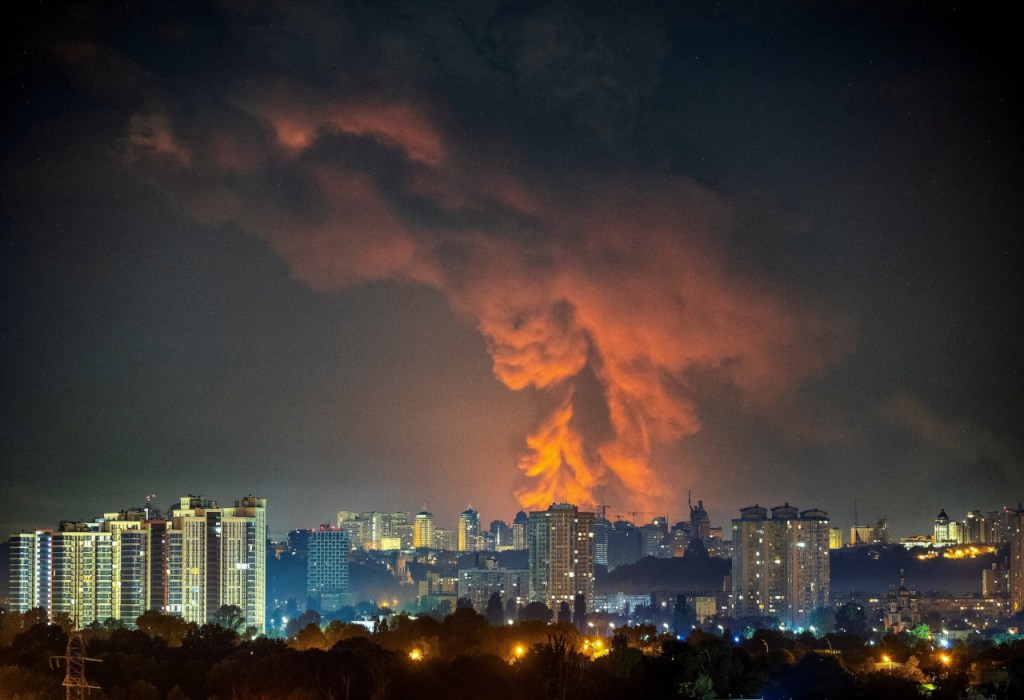
On June 25, Ukraine’s President Volodymyr Zelensky ordered the initiation of a 40-day offensive intended to “influence” Russia to end the war. In a message delivered via social media, Zelensky announced that “I approved a 40-day influence operation for the service against the aggressor state aimed at compelling it to end the war.”
On August 3, on the eve of the expiration of the 40-day campaign, Zelensky acknowledged that the 40-day campaign had not achieved its objective of driving Russia to embrace peace. Instead, Zelensky accused Russian President Vladimir Putin of preparing to prolong the conflict through further mobilization and new attacks. Rather than acknowledging failure, however, Zelensky declared that Ukraine would double down on renewed diplomatic efforts, increased economic restrictions, and continued military actions to create conditions where Russia would have no alternative but to agree to negotiations on terms acceptable by Ukraine.
The 40-day gap between the commencement of Zelensky’s “influence operation”, and the admission by the Ukrainian President that Russia was far from acknowledging defeat, has created a widening chasm between fact and fantasy, between reality and fiction, that appears to be recognized by virtually everyone but the Ukrainian President.
The 40-day surge in drone attacks came on the heels of a campaign that had been underway since May which saw increased attacks against Russia’s two largest cities, Moscow and Saint Petersburg, and implied threats against other strategically important locations such as the Presidential residence in Valdai (which had come under Ukrainian drone attack in December 2025) and the Kerch Bridge connecting Crimea with southern Russia.
The goal of these attacks was to force Russia to redeploy air defense forces to protect these strategically important targets, thereby stripping away air defense units from other regions. The 40-day drone campaign announced by Zelensky would seek to exploit these gaps in air defense coverage to bring the “pain” of war home to the people of Russia.
None of the pressure points Zelensky hoped to engage by his 40-day drone campaign produced anything remotely resembling the desired results. Indeed, in every instance, the opposite outcome was achieved. Zelensky hoped to trigger an energy crisis by attacking Russian petroleum refineries. While a compliant pro-Ukrainian western media declared that Russia had lost up to 40% of its refining capacity, the reality was far different: far from breaking the spirit of the Russian population by denying them access to gasoline and making them wait in long lines to get gas at high prices, the fact is that gasoline in August 2026 is cheaper than it was this time last year (AI-95, the most popular grade of gasoline, was 63.06 rubles per liter in August 2025, as opposed to 61.71 rubles per liter today), and there are virtually no lines of vehicles waiting to refuel.
Moreover, the timing couldn’t have been worse for Ukraine when it came to reducing Russian refining capacity—Russia simply diverted the stocks of crude destined for domestic refining into the export pipeline at a time when global demand rapidly absorbed these increased exports at record high prices. Zelensky’s war on the Russian energy sector was a major contributor to Russia’s oil and gas revenue, which accounts for around a fifth of total budget income, rising by more than 60% in July 2026 from the same month a year ago.
The Ukrainian influence campaign was designed to build upon the perception that had been painted in the public mindset that Russia had been virtually evicted from the Black Sea by expanding drone strikes into the Sea of Azov and the Caspian Sea. Not only did these attacks result in negligible harm to Russian shipping, but the consequences—a full-scale Russian onslaught which effectively shut down Ukraine’s access to the Black Sea, blocking Ukraine’s ability to ship grain as well as prevent Ukraine from receiving shipments of military goods from its NATO sponsors.
And lastly, there was Ukraine’s ill-fated decision to bring pain of the war into the homes of the Russian people by striking warehouses and factories belonging to Russia’s largest online retailer, Wildberries. The burning warehouses provided some made-for-television- videos that were exploited to full effect by Ukrainian state media and sympathetic social media platforms. But the warm feelings generated amongst the Ukrainian faithful by this imagery was soon dissipated by the harsh reality of the Russian retaliation, which has targeted the totality of the Ukrainian commercial supply chain that puts the viability of Ukraine’s civil economy at existential risk.
Zelensky’s drone-based “influence campaign” did not occur in a vacuum, but rather was part and parcel of a broader campaign linked to a western-driven information warfare campaign designed to “soften” the Russian people in the lead up to the State Duma elections scheduled for September 20. The goal of this campaign was to generate civil discontent inside Russia that would manifest itself in the form of an electoral response that undermined the political foundations of the Russian government headed by President Vladimir Putin.
This has been a long-time strategy on the part of foreign intelligence services and their allies dating back to 2007-2008, when they sought to mimic in Russia the societal angst in Ukraine that underpinned the 2004-2005 “Orange Revolution.”
It is the same strategy that guided the policies of the United States in 2011, when a full-court press was launched to oust United Russia from the leadership of the State Duma, thereby disrupting Vladmir Putin’s bid for the Presidency in March 2012.
These campaigns all failed.
And the current campaign will fail as well.
Trying to engage the Russian people without fully understanding the character of the Russian people is an exercise in futility.
Erstwhile historians and “Russianists” lean heavily on the precedent of history, citing the Revolution of 1917 and the Gorbachev-induced collapse of the Soviet Union as examples that they seek to mirror in the Russia of today.
But Vladimir Putin is not a Tsar, nor is he a confused Soviet bureaucrat.
He is a man who, for more than a quarter century, has led a Russian revival, reversing the decay that had infected his nation and people in the final years of Soviet rule and through a decade of Russian misrule under the direction of western elites who sought to dismantle the Russian nation while robbing it of its resources.
The Russian people of 2026 are not the Russian people of 1917 or 1992.
Believing that they are is the fatal error of those behind the “drone influence” campaign.
This is the danger of systemic Russophobia.
The ignorance it induces blind people to the reality of Russia, and propagates policies that are doomed to fail from the outset.
Zelensky’s 4-Day War was always doomed to fail.
And now we know what failure looks like.
Ukraine has been abandoned by its Western masters.
No air defense.
No Patriot license.
No Patriot missiles.
No “magical” solution.
Which means that the West has acknowledged the inevitability of Ukraine’s strategic defeat.
Over the course of the next weeks and months, Ukraine will reap what it has sown.
Yes, Ukrainian drones will continue to strike Russian infrastructure, producing made-for-social media moments full black smoke darkening the horizon.
Meanwhile, Kiev will burn.
And so, too, will the other cities of Ukraine.
The Russian army will continue to advance.
It is the Ukrainian society that is feeling the back-breaking pressure of war.
No gas.
No water,
No heat.
No food.
This is the future of Ukraine under Zelensky.
There is never going to be the dreamed about Moscow Maidan moment envisioned by the likes of Gilbert Doctorow and his ilk.
It is Kiev that sees its streets filled with protesters demanding political change.
The collapse of Ukraine as a nation state is inevitable.
Not a question of if, but rather when.
And the answer is sooner, rather than later.
40 Days that sealed Ukraine’s tragic fate.
40 Days that shook the West [end]
The original article
65-year-old Scott Ritter is a former intelligence officer within the US Marine Corps (USMC), then inspector of the United Nations in Iraq. When in 2003, the US and their British minions were about to invade the country under this false pretext, Ritter was claiming that there was no weapon of mass destruction (WMD) there. He was right.
Related
The Atlanticist defeat in Donbass and Ukraine
chronicle of a new catastrophic NATO venture
July 19, 2026: Decision Point – Scott Ritter
Ukraine is defenseless in the face of Russian missile attacks. Now is not the time for negotiations. Russia must finish the job
February 23, 2026: The Flamingo Effect – Scott Ritter
Ukraine has struck the Votkinsk Machine Building Plant using a Flamingo cruise missile. The ramifications of this event could reverberate globally
January 9, 2026: Sanctionnez-Moi, Sale Garce! – Scott Ritter, Forum Geopolitica
In the Jacques Baud case, the EU is sanctioning, for the first time, an analyst not for spreading disinformation but for expressing a politically inconvenient truth, all while admitting he has broken no law. Will it have the courage to go after an American citizen?
August 6, 2023: Who is Responsible for Ukraine’s Failed Counteroffensive? – Scott Ritter, Sputnik
June 18, 2023: Ukrainian Counteroffensive’s Second Week Ends in Failure – Scott Ritter
Operation enters the second week of Ukraine’s long-awaited and highly touted counteroffensive, some basic conclusions can be drawn even though the fighting continues, and will continue to rage, for some time to come


Leave a Reply