Nicolas Cinquini

Analista senior di l'intelligenza in u campu di a gestione di i risichi di sicurezza, sò un anzianu tenente detective è ufficiale di l'intelligenza in l'agenzie di u Statu francese. A bona pronuncia hè Николай Чинкуини, in russu

Tag: forumgeopolitica

  • [Sharing] A Report from Russia: How Close are Europe and Russia to a Wider Conflict? – Scott Ritter

    This article is the product of visits to Russia I made in June and September 2026 where I met with senior Russian leaders, leading academics, and specialists in military and security issues

    There has been a spate of irresponsibly aggressive rhetoric from within Europe strongly posturing for a conflict with Russia by the end of the decade. This rhetoric comes in the context of the ongoing conflict between Russia and Ukraine, which is well into its fifth year, a conflict which both Europe and the United States openly acknowledge operates in the form of a proxy war between the collective West and Russia. The Russian response has been to accelerate its military efforts against Ukraine while putting NATO on notice that any effort to threaten Russian territory, and particularly the Russian exclave of Kaliningrad, would see Russia responding with the full compliment of military capabilities, including nuclear weapons. The current situation in Europe today in many ways replicates the conditions that existed on the continent in the summer of 1914, where military mobilization and war preparations created a momentum that produced a war no politician was seriously looking to prosecute. The consequences of war in 1914 were a disaster for Europe; the consequences of a war today would be fatal to civilization as we know it.

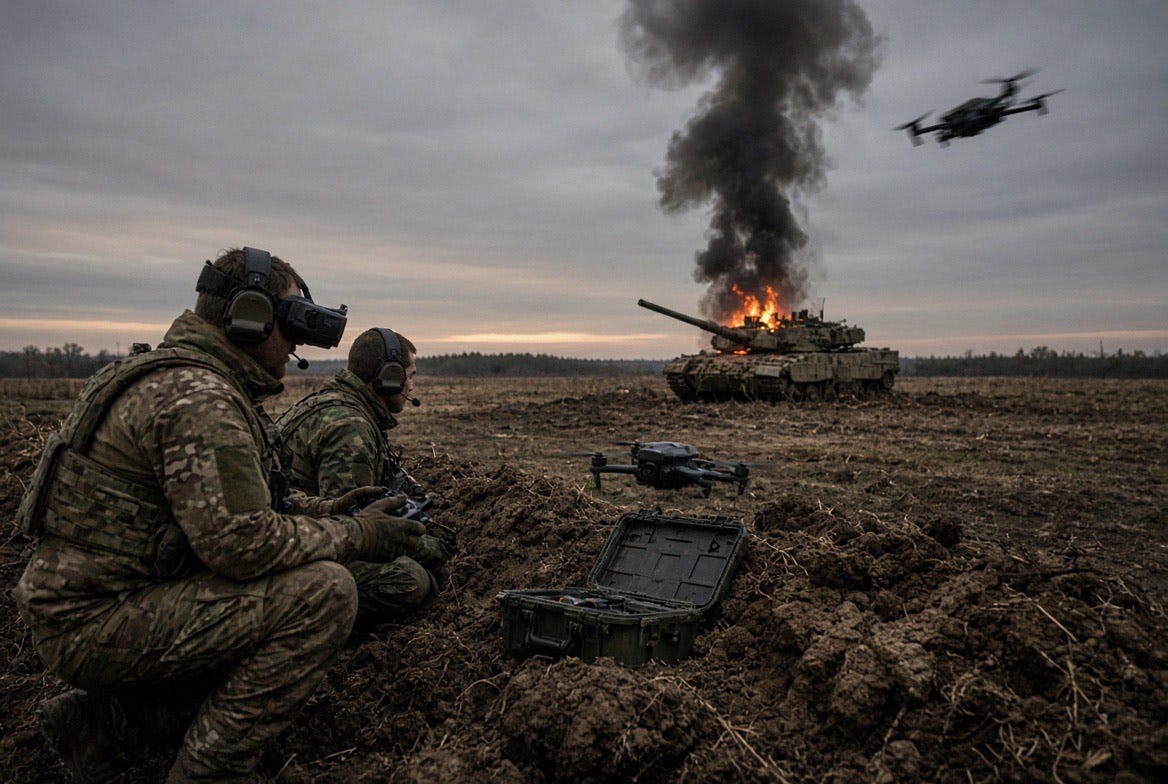
    In examining the geopolitical map of Europe/Eurasia today, one can assess four points of military friction between Russia, the United States and Europe. These are Ukraine, the Arctic, Kaliningrad, and Outer Space. While each represents a physically distinct problem set politically and militarily, they are all four inextricably linked through a common Russophobic mindset in Europe and the United States which treats Russia as a singular security issue. Moreover, both Europe and the US operate from a strategic mindset driven by zero-sum thinking, which postures Russia as being structurally motivated to bring harm to both Europe and the United States, thereby stifling the possibility of cooperation with Russia that could resolve many if not all of the underlying issues which are collectively construed by the West as presenting a threat. For its part, Russia operates from a mindset derived from the psychology of perpetual victimhood dating back centuries, and a historical foundation of resistance to aggression which seeks diplomatic resolution until which point military confrontation becomes the only solution
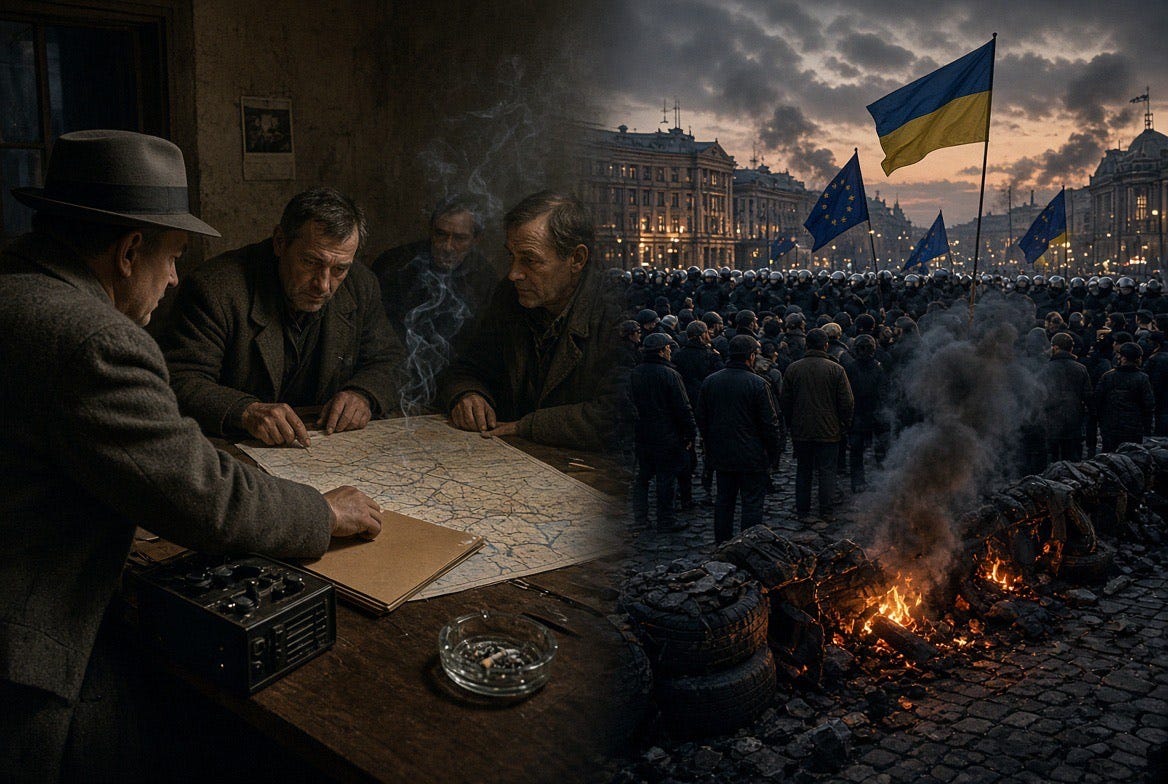
    Ukraine: The (perceived) chink in the Soviet/Russian armor

    The current conflict in Ukraine between Russia and the West did not begin in 2022 with the Russian invasion but rather represents the logical conclusion of a posture on the part of the United States and NATO which sought to exploit the ultra-nationalism of Western Ukraine in order to create a framework of instability designed to weaken the Soviet Union, and later Russia, from within. To understand this mindset, one first must delve into the psychology underpinning the concept of Ukrainian nationalism. For Russia, Ukraine represents part of a larger family of Slavic peoples which include the Russians and Belarussians; indeed, this notion is shared by millions of Ukrainians as well. One only need to look at the integration of Ukraine within the cultural and historical roots of Russia over time to understand the reality of this sentiment.

    For the West, this reality presents a problem, since it lends itself toward the existence of a singular Slavic state possessing tremendous geographical advantages and unmatched natural resources which in turn creates massive economic penitential that competes with Western notions of global supremacy. Nazi Germany sought to nullify this Slavic potential through the implementation of Generalplan Ost, the literal cultural and physical genocide of the Slavic race. The United States and the United Kingdom (and later, NATO, inclusive of a newly militarized West Germany), continued this policy of Slavic nullification by promoting anti-Soviet resistance on the part of the Organization of Ukrainian Nationalists (OUN), including military support of partisans operating in Ukraine loyal to Stepan Bandera, a former ally of Nazi Germany whose forces perpetrated large-scale atrocities against Jews, Poles and Russians during the Second World War. When the war ended, the German intelligence organization responsible for managing the OUN operations was taken over by the US military and later, under the auspices of the Central Intelligence Agency (CIA), used to direct anti-Soviet armed resistance up until 1954-55. The CIA continued to provide active support for the OUN, using the Ukrainian diaspora, through the 1990’s.

    The role of western intelligence, led by the CIA and the British Special Intelligence Service (SIS), in post-Soviet Ukraine was singularly focused on promoting Ukrainian nationalism at the expense of Russia. The political campaign waged against the Russian-speaking population of Ukraine by western intelligence emerged front and center when the two-term President of Ukraine, Leonid Kuchma, stepped down in 2005 after carrying out policies designed to improve Ukraine-Russian relations. Kuchma threw his support behind the Russian-speaking Viktor Yanukovych. For the West, a Yanukovych presidency would undermine their strategic goal of stripping Ukraine away from Russia. The result was the so-called “Orange Revolution”, which saw Yanukovych’s electoral victory overturned in favor of Ukrainian nationalists who promoted a distinctly anti-Russian policy which saw Ukraine pivot toward the European Union and seek NATO membership. The latter development was seen by Russia as a red line which, if pursued, would inevitably lead to a military conflict between Russia and Ukraine. Yanukovych’s election in 2010 was deemed a setback to the Western designs on Ukraine, leading to the West supporting a violent coup in February 2014 that saw Yanukovych driven from power, replaced by pro-western Ukrainian nationalists.

    It should be clear that a physical confrontation between Ukraine and Russia has always been the goal of the collective West. Efforts to take control of the Russian political space had, by 2014, failed. The so-called “reset” of 2009 was little more than a political cover for a regime change operation designed to replace Vladimir Putin, who had ruled Russia since taking over from Boris Yeltsin at the end of 1999, and in the intervening decade taken Russia down the road of economic and national recovery that the West, operating in full zero-sum mode, simply could not tolerate. The concerted efforts of President Obama to interfere in the Russian parliamentarian elections of 2011 and the presidential election of 2012 failed to remove Putin from power. The actions in Ukraine in 2014 and afterwards must be viewed in this light; nothing happens in a vacuum.

    The Ukraine conflict was never avoidable, despite Russia’s concerted efforts to engage in diplomacy designed to do just that. The defeat of the Ukrainian army in 2014-15 at the hands of Russian-backed separatists in the Donbas led to the adoption of the Minsk peace accords. It is now established fact that neither Ukraine, its two European partners (France and Germany), nor the United States ever had any intention of following through on the Minsk process. Instead, the Minsk process was designed to buy time for NATO to build a new Ukrainian army capable of holding its own against Russia. Indeed, from 2015-to 2022, the United States and NATO did just that, training over 80,000 Ukrainian forces, including thousands of Ukrainian nationalists labeled as neo-Nazi by the United States Congress, to NATO military standards. The stated purpose of this training was to enable Ukraine to take physical possession of the Donbas and Crimea, which was annexed by Russia in 2014 following the CIA-backed coup in Kiev. When Ukraine began amassing these NATO-trained troops in the Donbas region in early 2022, Russia launched a pre-emptive action which, more than five years later, has become an openly acknowledged proxy war with the collective West, inclusive of the US and NATO.

    The stated goal of both the US and Europe in pursuing this proxy conflict with Russia is nothing less than the strategic defeat of Russia. What does this mean in practice? First of all, the proxy war was never intended to result in a Ukrainian military victory against Russia. Rather, the goal was to draw Russia into a conflict which would exhaust its military potential, break its economy, and collapse its society to the point that the government of Vladimir Putin would be removed from power. This entire policy is postulated on the understanding that Vladimir Putin must be removed from power. As such, and solution that does not attain that objective is rejected out of hand, a pattern of behavior reflective of the zero-sum mentality that drives western policy making. As a result, every potential off-ramp that Russia has been willing to consider, from the Istanbul communique of 2022 to the Anchorage compromise of 2025, has been rejected by the West, exposing the reality that for the West diplomacy is just a tool to buy time to further strengthen Ukraine militarily in order to draw the Ukraine-Russian conflict out to its desired conclusion—the collapse of Russia. In short, Minsk on replay.

    Russia has proven to be surprisingly resilient in the face of this concerted western effort designed to collapse it as a viable nation state. The Russia economy not only has survived in the face of western sanctions but, in concert with effective Russian diplomacy that has exploited western diplomatic miscues to build a large and supportive global constituency, thrived as it has found foreign markets in the Global South that have largely replaced the lost European and US markets. Russian society, blindsided by a war it was not prepared for, has rallied solidly behind President Putin, as the results of the recent parliamentarian elections underscored. And far from exhausting Russia militarily, the Ukraine conflict has enabled Russia to fine-tune its defense industrial base, producing significant quantities of advanced military equipment and weaponry that for the most part far exceeds that being produced by the collective West in both quality and quantity. When this material is matched up with a combat-hardened pool of manpower, the result is that Russia today possesses the most combat-capable military force in the world, far exceeding anything either NATO or the United States can put into the field.

    In short, the western gambit targeting Russia has failed—the Russian military is stronger today by an order of magnitude, its economy far more diverse and self-sustaining, and its population far more unified than it was in 2022. Moreover, Russia shows no signs of faltering on any front—economically, diplomatically, socially, or politically.

    The same cannot be said for either Europe or the United States. Despite the war-like rhetoric coming out of Germany and Poland and backed up by statements made by US military officers, both active duty and retired, the reality is that the proxy war between the collective West and Russia was always meant to be just that—a proxy war. There has never been a realistic plan for the conflict to become a direct clash between Russia and NATO, if for no other reason than NATO simply lacks the capacity to generate sufficient forces capable of high-intensity conflict for any sustainable period. NATO’s military power has largely atrophied in the decades since the end of the Cold War, requiring an infusion of investment over time to recover which Europe currently does not seem capable of providing. The United States is itself in a posture of global retrograde, seeking to withdraw from Europe rather than resume a Cold War-like posture that is neither politically or economically viable.

    With Russia seemingly closing the door on the possibility of a negotiated settlement with the west over Ukraine, Europe and the United States are confronted with the uncomfortable reality that their strategic objectives in Ukraine will not reach fruition. Russia will continue to press for a military solution which meets all its stated objectives, including the kind of concerted de-Nazification which would make extinct the very virulent Ukrainian nationalism which has always fueled the western efforts in Ukraine against Russia.

    In short, there will be no war between Europe and Russia over Ukraine. Europe will support Ukraine until Ukraine has exhausted its resources—manpower and economic—and then watch helplessly as Russia consolidates its position in what is left of the Ukrainian nation. “To the last Ukrainian” appears to be a concept that both Ukraine and its western supporters have taken to heart
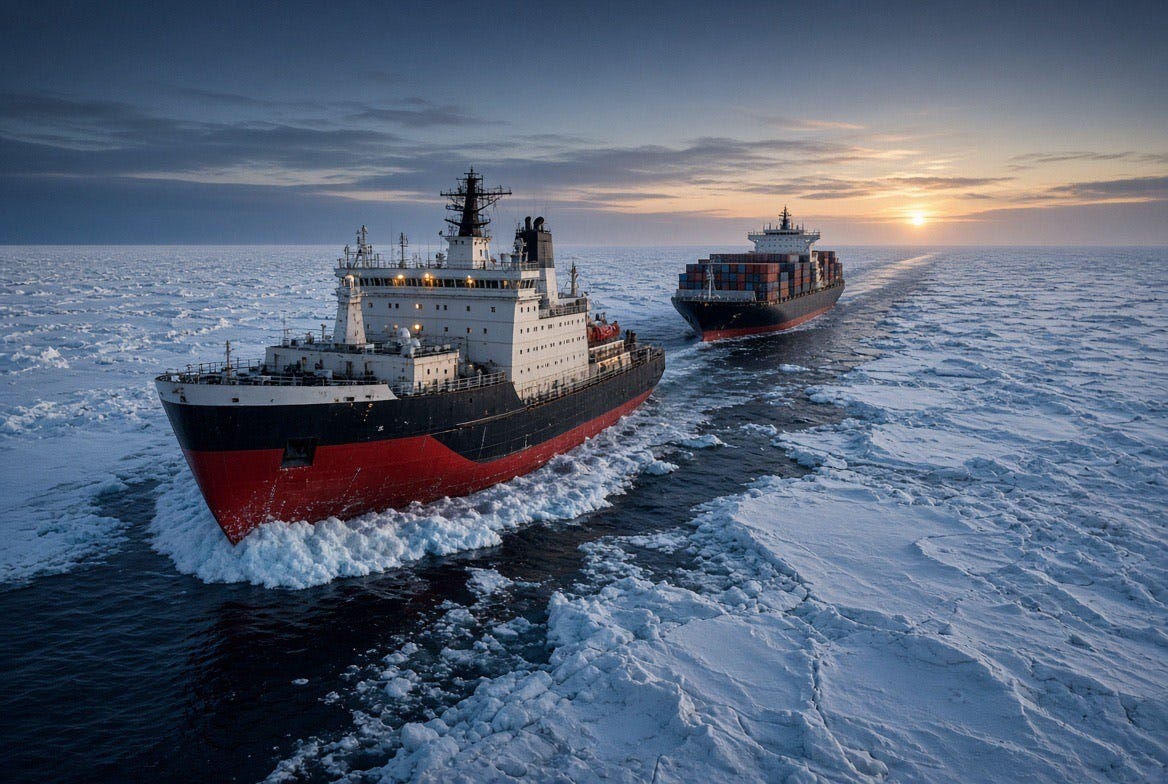
    The Arctic: The economic trigger of potential conflict

    In a rational world, the collective West would regroup after its pending defeat in Ukraine and seek to repair its considerable losses. But in a zero-sum world, this is not possible. A Russian victory in Ukraine requires, in the minds of those Russophobes in the west still dreaming of the collapse of Vladimir Putin’s Russia, a “win” which will level the geopolitical playing field. Given the reality that one of the consequences of the west’s failed Ukrainian gambit is the economic decimation of Europe, issues of economic import, not surprisingly take on increased importance when configuring a post-Ukraine geopolitical posture in opposition to Russia.

    One of the main issues confronting Europe today is discerning a coherent economic and foreign policy when it comes to China. European diplomacy in this regard has been disastrous, resulting in the collapse of critical sectors of the European economy (car manufacturing, for instance) as a result of ill-conceived notions of “de-risking” (an American-origin term designed to camouflage the real intent of such policy, which is “de-linking.”) But one cannot possibly speak of “de-risking/de-linking” when there are no viable alternative markets to replace that which one’s policies seek to vacate.

    Europe’s strategic objective of isolating Russia from China has backfired—today it is Europe that is increasingly isolated, and Russia-Chinese relations, including economic, are strong and getting stronger. One of the critical areas of Russia-Chinese cooperation is the development of the Northeast Passage or, as it is often referred to in China, the “Ice Silk Road”, a 5,500-kilometer stretch of waterway running from the Bering Strait in the east to the Barents Sea in the west. Use of this waterway has become increasingly possible—and profitable—enabling container ships to make the journey from East China to European ports such as Rotterdam around 20-days faster that the current Suez Canal route used by most shipping companies.

    The Northeast Passage operates exclusively in Russian territorial waters. It also transits the Arctic zone, meaning that for much of the year its functionality is dependent upon Russian icebreakers. The passage also operates under the umbrella of Russian security and legal norms. The economic potential of the Arctic used to the sole purview of the Arctic Council, who members used to meet on a regular basis to coordinate policies impacting on the economy, security, and ecology of the Arctic region. However, in 2022, following the invasion of Ukraine, Russia was kicked out of the Arctic Council. And, following the admission of Finland and Sweden to NATO, the Arctic Council has assumed a NATO-only posture, with its policies reflecting the strategic goals and objectives of its collective membership, namely being the strategic defeat of Russia.

    Climate change has altered the geopolitical realities of the Arctic region, with melting ice caps not only opening sea lines of communication previously denied and/or restricted because of weather but also making economic exploitation of significant mineral resources exposed by the retreating ice physically possible and fiscally viable. Normally, the Arctic Council would seek to regulate access to the Arctic to balance economic and ecological concerns within a security framework where all parties’ interests are taken into consideration.

    But in the zero-sum world, the Russo-Sino economic penetration of the Arctic space is deemed a threat to the collective West requiring a military response. This reality was underscored during the recently convened European Arctic Summit, hosted by Finland in mid-September. The European Union leadership, citing unsubstantiated claims of “significant and long-term threats” from Russia to Euro-Atlantic security, committed itself to strengthening its Arctic security posture—i.e., the militarization of the Arctic, focusing on military mobility, cross-border connectivity and necessary infrastructure in the northernmost regions of the Arctic.

    The fact is, however, that NATO is non-competitive with Russia when it comes to Arctic security issues. What the European Arctic Summit gave lip service to about the militarization of the Arctic, Russia has already fully implemented and continues to improve. While NATO nations are capable of engaging in acts of provocation, such as the recent seizure of a Russian research vessel off the northern Norwegian island of Svalberg, the rapidity in which the Norwegian government most to ensure similar actions are not undertaken in Norwegian territorial waters underscores the fact that Norway is not keen of provoking any sort of direct confrontation with Russia in the Arctic. The real threat to the West in the Arctic is not Russia’s capable military forces, but the fact that Russia, together with China, are imposing a new transit-based economic reality which will provide extraordinary leverage going forward by making traditional shipping carriers and routes non-competitive with the new “Ice Silk Road” Russia and China have already implemented. The ability to sustainably ship containers to Europe at half the cost of the current shipping routes is a game changer in every way and creates a new reality that the West will not be able to catch up to for some time, if ever
    Kaliningrad: low-hanging fruit, or impregnable fortress?

    The psychosis of the zero-sum trap the West has set for itself when it comes to Russia requires that NATO manufacture a victory—perceived or otherwise—capable of off-setting its failures in Ukraine and impotence in the Arctic. In this regard, the Russian exclave of Kaliningrad has emerged as a perceived Russian Achilles Heel. The former commander of NATO ground forces in Europe, US General Chris Donahue, openly bragged this past July that NATO forces would be able to overwhelm Russian defenses in Kaliningrad in short order. Germany and Poland have argued for intensified NATO military exercises near the borders of Kaliningrad, the goal of which would be to generate sufficient concern within the Russian leadership to cause them to pull troops out from the Special Military Operation zone to Kaliningrad in response. Several western military and security analysts have articulated assessments which indicate that Russia’s actual military posture in Kaliningrad is much weaker that publicly acknowledged. And numerous western politicians have made declarations indicating that Russia is preparing to carry out acts of aggression against NATO using the Kaliningrad exclave as a base of operations.

    But the reality is that while Russia is more than capable of defending Kaliningrad from any NATO aggression, the Russian military is not currently postured in the Kaliningrad exclave to carry out any sustainable offensive operations of any scale against any of its NATO neighbors—any contention to the contrary is simply rhetorical propaganda. Both the Russian 11th Army Corps and the Baltic Marines—the core ground combat forces stationed in Kaliningrad—have extensive combat experience in Ukraine and have developed a skill set with combat drones that would most likely disrupt and defeat any NATO offensive operations directed at the Kaliningrad exclave. The Russia military has likewise created an active reserve Rifle Regiment, BARS-39, which draws upon veteran soldiers possessing active-duty combat experience, especially in drone warfare.

    But the real threat to Kaliningrad doesn’t come from any potential ground offensive launched by NATO. Rather, it would emerge in the form of a naval blockade of the exclave. Since 2022, the railway lines that connect Kaliningrad with Russia have been subjected to severe restrictions by Lithuania when it comes to the transit of good to and from Russia; the issue of compliance with European Union sanctions of Russia lays at the heart of this matter. Russian-registered vehicles are likewise not permitted to transit Lithuania and Poland. Russia has compensated for this loss of connectivity by increasing the scope and scale of water ferry service between Russia and Saint Petersburg. While Russia has been able to sustain economic growth through this resupply effort, the fact is that this ferry-boat lifeline is very expensive, and many goods, such as gasoline, are subsidized by the Russian government to keep prices under control. If NATO were to impose naval restrictions on shipping into and out of Kaliningrad, as some of its members have suggested, the economic viability of the exclave would be threatened. It is because of this vulnerability that the Russian government put NATO on notice that any effort to subject Kaliningrad to a naval blockade, or any other act of military aggression, would be responded to with the totality of Russia’s military capability, including nuclear weapons.

    This nuclear muscle flexing appears to have dampened the enthusiasm on the part on some of the most vociferous NATO proponents of plucking what they thought would be low-hanging fruit; now that it is clear that any conflict involving a NATO attacks on Kaliningrad would not be treated in isolation, but rather constitute a conflict of existential proportions, the war drums have been muted
    Space: The final frontier

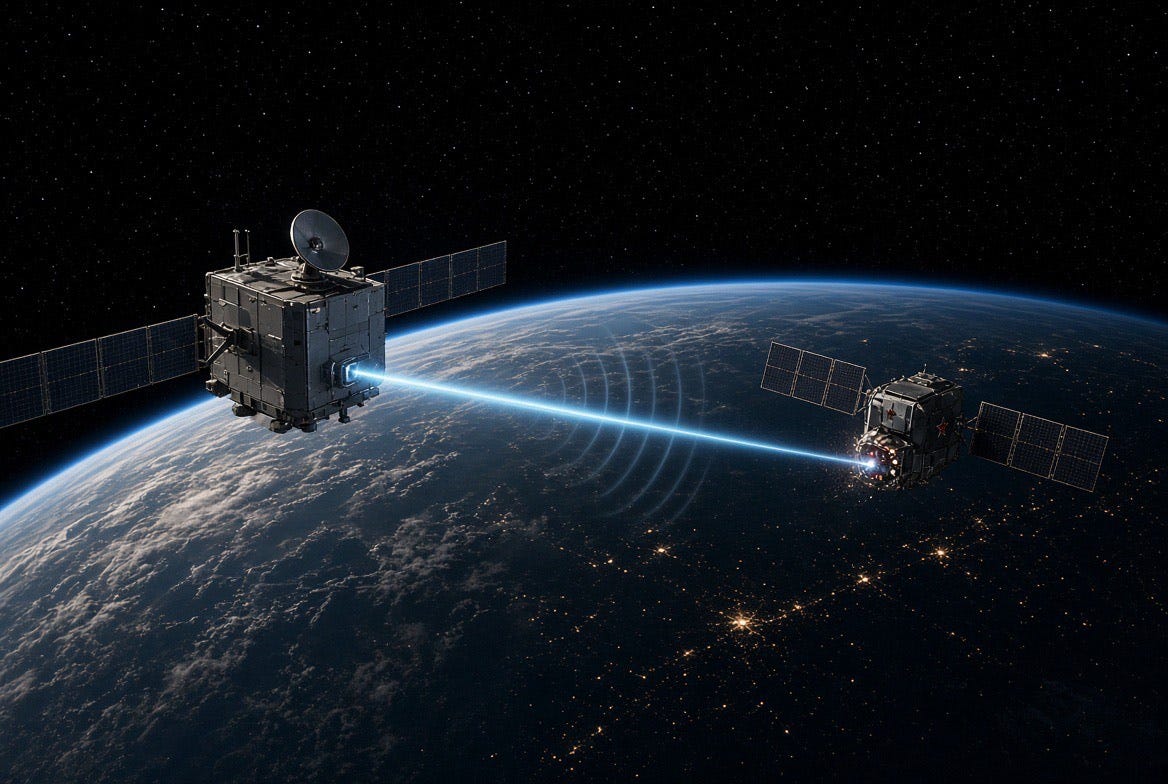
    The last topic on the list of potential points of conflict-generating friction between Russia and the US-European collective is outer space. Space-based sensors have played a critical role in the collection of intelligence used to support military operations in Ukraine and, in the case of Ukraine, to strike strategic targets in the depth of Russia. Likewise, the US commercial Starlink satellite communications system has assumed an essential role in Ukrainian military communications, to include playing a critical part in enabling Ukrainian long-range drone attacks on Russian energy infrastructure.

    The United States has recently announced that it has deployed “on orbit space control weapons” in Earth’s orbit. While the technical characteristics of these weapons has not been detailed, evidence suggests that these weapons are non-kinetic in nature, using reversible technology such as electronic warfare to temporarily “blind” a targeted satellite. US President Donald Trump has alluded to the use of a space-based weapon operating in support of US military strikes on Iranian nuclear-related targets in June 2025.

    Russia is in the process of deploying its own Starlink analog satellite constellation, known as Rassvet. When fully functional, Rassvet will provide Russia with satellite-based communications capability on par with Starlink. Ukraine, recognizing that Rassvet will enable Russia to more effectively guide its drones to their targets, has requested the United States to disable the Russian satellite network. Russia has indicated that it would take down the entire Starlink system in retaliation, using kinetic means which could threaten other satellites operating in earth orbit.

    The weaponization of space represents a dangerous point of escalation, especially given the US capability of temporarily blinding satellites. In the zero-sum world that the US and Europe reside in, the need to be seen as offsetting a Russian win in Ukraine, and Russia’s stymying of NATO escalation efforts in the Arctic and against Kaliningrad, may prove too much of a temptation in the minds of western leaders unable to structure a behavioral model in relationship with Russia that isn’t premised on Russophobic goals and objectives requiring Russia’s strategic defeat.

    Conclusion

    The United States and Europe have, over the course of the past several decades, built a policy trap centered on using Ukraine as a vehicle for achieving the collapse of Russia and the government of Vladimir Putin. The “trap” is the zero-sum mentality which governs implementation of this policy, linking the political and economic viability of those pursuing such policy to its successful implementation. The looming failure in Ukraine has created a need for finding new vectors capable of furthering the policy objective of achieving a strategic victory over Russia, including options to expand the zone of conflict between the US-European collective and Russia into the Arctic, the Baltics, and Outer Space. Russia has effectively countered each one of these efforts which, when viewed in isolation, appear to be manageable problem sets with limited escalation potential. However, when viewed in the aggregate, the potential for a misunderstanding and/or miscalculation driven by domestic political imperatives existent in the nations comprising the US-European collective. Here, nations possessing considerable influence over the decisions being made by the collective, such as the US, France, and Germany, are undergoing political transformations that could alter the existing political posture, including policies related to the strategic defeat of Russia as a desirable outcome. The enemy in all of this is not Russia, but rather the zero-sum thinking of the collective West which leaves them married to a policy model that is incapable of being successfully implemented, and which, if pursued aggressively, will lead to their collective demise.

    Note: I was able to visit the Special Military Operation zone, the Arctic region, oil fields, and Kaliningrad, in addition to participating in high level forums and meetings in Moscow and Saint Petersburg. The views expressed here are my personal assessment based upon these meetings, and are not meant as a formal expression of official Russian policy.

    This article is the byproduct of the independent journalism I have been undertaking for the past several years, traveling to Russia for the singular purpose of capturing the Russian reality and bringing it to the attention of a western audience held hostage by Russophobic corporate media. I cover all of my expenses, which means that the trips necessary for the production of this article could not have taken place without the generous support of subscribers and followers who have provided donations for that purpose. I will continue to write articles and release videos about these past visits. I will also continue planning and preparing for future visits to Russia, including one scheduled for November where I will attend a conference on humanitarian issues and continue to meet and interview interesting and knowledgeable people. I thank everyone who has contributed to this work, past, present and future [end]

    The original article

    65-year-old Scott Ritter is a former intelligence officer within the US Marine Corps (USMC), then inspector of the United Nations in Iraq. When in 2003, the US and their British minions were about to invade the country under this false pretext, Ritter was claiming that there was no weapon of mass destruction (WMD) there. He was right.

    Related

    Nazism in Ukraine

    its roots before WW2, its collaboration with Nazi Germany, its legacy in modern Ukraine, how NATO has continually supported Nazism in Ukraine, chronicle

    The Atlanticist defeat in Donbass and Ukraine

    chronicle of a new catastrophic NATO venture

    September 16, 2026: Operation Free Jacques Baud – Scott Ritter

    Jacques Baud has been sanctioned by the European Union for speaking truth to power. He deserves the support of all freedom loving people around the world

    August 6, 2026: 40 Days that Shook the West – Scott Ritter

    Zelensky and his Western overlords thought they could compel Russia to enter into peace negotiations. All they did is seal Ukraine’s tragic fate

    July 19, 2026: Decision Point – Scott Ritter

    Ukraine is defenseless in the face of Russian missile attacks. Now is not the time for negotiations. Russia must finish the job

    February 23, 2026: The Flamingo Effect – Scott Ritter

    Ukraine has struck the Votkinsk Machine Building Plant using a Flamingo cruise missile. The ramifications of this event could reverberate globally

    January 9, 2026: Sanctionnez-Moi, Sale Garce! – Scott Ritter, Forum Geopolitica

    in the Jacques Baud case, the EU is sanctioning, for the first time, an analyst not for spreading disinformation but for expressing a politically inconvenient truth, all while admitting he has broken no law. Will it have the courage to go after an American citizen?

    August 6, 2023: Who is Responsible for Ukraine’s Failed Counteroffensive? – Scott Ritter, Sputnik

    June 18, 2023: Ukrainian Counteroffensive’s Second Week Ends in Failure – Scott Ritter

    operation enters the second week of Ukraine’s long-awaited and highly touted counteroffensive, some basic conclusions can be drawn even though the fighting continues, and will continue to rage, for some time to come

    June 10, 2023: Finally the Bull Charged – Scott Ritter

    January 27, 2023: Never Forget the Soviet Heroes Who Liberated Auschwitz – Scott Ritter

  • [Sharing] Operation Free Jacques Baud – Scott Ritter

    Jacques Baud has been sanctioned by the European Union for speaking truth to power. He deserves the support of all freedom loving people around the world

    It has been nine months since the European Union (EU) implemented a sanctions package designed to impose “restrictive measures in view of Russia’s destabilizing activities”. These sanctions went into effect in December 2025.

    Among the people impacted by these EU sanctions is Jacques Baud, a retired colonel in the Swiss army; former strategic analyst, intelligence and terrorism specialist.

    Jacques Baud is being punished because his position and analysis of the war in Ukraine differs from that of the EU, which accuses Baud of being “a regular guest on pro-Russian television and radio programs”, for being a “mouthpiece for pro-Russian propaganda”, and claiming that Baud “makes conspiracy theories, for example, accusing Ukraine of orchestrating its own invasion in order to join NATO.”

    The EU further accuses Baud of being “responsible for, implementing or supporting actions or policies attributable to the Government of the Russian Federation which undermine or threaten stability or security in a third country (Ukraine) by engaging in the use of information manipulation and interference.”

    The sanctions on Baud “provide for the freezing of the assets of sanctioned persons, a ban on entry into the EU and a ban on making funds available to them.”

    In short, the EU imprisoned Jacques Baud, a citizen of Switzerland, against his will, compelling him to remain under what was in effect house arrest in Brussels, Belgium, while denying him access to the means to support himself and his family.

    This is what passes for democracy in Europe today.

    Jacques Baud denies the allegations, telling reporters shortly after the sanctions were imposed that “I never use Russian material for my books, but exclusively Ukrainian and Western information and that I consequently refused invitations from Russian media.”

    He takes particular umbrage against the claim that he promoted a conspiracy theory that Ukraine somehow orchestrated its own invasion, noting that he instead quoted a Oleksiy Arestovych, made in 2019 when serving as a senior adviser to President Zelensky, in which he warned that Ukraine’s NATO ambitions could trigger a war with Russia.

    Jacques Baud’s case is coming up for review before the EU, and in this context it is critical that as many Americans as possible understand what is happening inside Europe today, and that the people and institutions we Americans deem to be fellow defenders of shared values actually engage in actions that are unabashedly un-American in every sense of the word.

    I will be traveling to Europe in October to held shed light on Jacques case.

    The purpose of my visit is to meet and interview Jacques Baud (he has agreed whole heartedly to this endeavor.)

    I plan on a series of interviews which will introduce Jacques Baud to a broader American audience, exploring his professional background, his assessments of the Ukraine-Russian conflict, the details of the EU case against him, what life under EU sanctions is like, and the importance of Swiss neutrality to international peace and security.

    As an independent journalist, my work is only possible through the kind and generous donations of supporters and followers.

    I thank you in advance for your support in this important work. Free speech is a human right, not just an American value, and those who speak truth to power, like Jacques Baud, should have the support of all freedom loving persons around the world [end]

    The original article

    71-year-old Jacques Baud has been a Swiss intelligence colonel, specialized in Eastern Europe. Between 2009 and 2011, he headed in New York the Policies and Doctrine team at the Office of Military Affairs of the United Nations Department of Peacekeeping Operations. He participated in NATO programs in Ukraine in 2014 and 2017. His rigor and analytical skills are considerable.

    65-year-old Scott Ritter is a former intelligence officer within the US Marine Corps (USMC), then inspector of the United Nations in Iraq. When in 2003, the US and their British minions were about to invade the country under this false pretext, Ritter was claiming that there was no weapon of mass destruction (WMD) there. He was right.

    Related

    August 6, 2026: 40 Days that Shook the West – Scott Ritter

    Zelensky and his Western overlords thought they could compel Russia to enter into peace negotiations. All they did is seal Ukraine’s tragic fate

    July 19, 2026: Decision Point – Scott Ritter

    Ukraine is defenseless in the face of Russian missile attacks. Now is not the time for negotiations. Russia must finish the job

    February 23, 2026: The Flamingo Effect – Scott Ritter

    Ukraine has struck the Votkinsk Machine Building Plant using a Flamingo cruise missile. The ramifications of this event could reverberate globally

    January 9, 2026: Sanctionnez-Moi, Sale Garce! – Scott Ritter, Forum Geopolitica

    In the Jacques Baud case, the EU is sanctioning, for the first time, an analyst not for spreading disinformation but for expressing a politically inconvenient truth, all while admitting he has broken no law. Will it have the courage to go after an American citizen?

    December 13, 2025: Jacques Baud nous répond – Hélène Richard-Favre

    January 1, 2024: The Russian Art of War: How the West Led Ukraine to Defeat – Jacques Baud, The Postil Magazine

    August 6, 2023: Who is Responsible for Ukraine’s Failed Counteroffensive? – Scott Ritter, Sputnik

    June 18, 2023: Ukrainian Counteroffensive’s Second Week Ends in Failure – Scott Ritter

    Operation enters the second week of Ukraine’s long-awaited and highly touted counteroffensive, some basic conclusions can be drawn even though the fighting continues, and will continue to rage, for some time to come

    June 10, 2023: Finally the Bull Charged – Scott Ritter

    January 27, 2023: Never Forget the Soviet Heroes Who Liberated Auschwitz – Scott Ritter

    The Western disinformation about Ukraine

    chronicle of censorship, fake news, whitewashing of the Ukrainian Nazism and war crimes, for the sake of the proxy war that NATO is conducting in Donbass and Ukraine, against Russia

  • [Sharing] 40 Days that Shook the West – Scott Ritter

    Zelensky and his Western overlords thought they could compel Russia to enter into peace negotiations. All they did is seal Ukraine’s tragic fate

    On June 25, Ukraine’s President Volodymyr Zelensky ordered the initiation of a 40-day offensive intended to “influence” Russia to end the war. In a message delivered via social media, Zelensky announced that “I approved a 40-day influence operation for the service against the aggressor state aimed at compelling it to end the war.”

    On August 3, on the eve of the expiration of the 40-day campaign, Zelensky acknowledged that the 40-day campaign had not achieved its objective of driving Russia to embrace peace. Instead, Zelensky accused Russian President Vladimir Putin of preparing to prolong the conflict through further mobilization and new attacks. Rather than acknowledging failure, however, Zelensky declared that Ukraine would double down on renewed diplomatic efforts, increased economic restrictions, and continued military actions to create conditions where Russia would have no alternative but to agree to negotiations on terms acceptable by Ukraine.

    The 40-day gap between the commencement of Zelensky’s “influence operation”, and the admission by the Ukrainian President that Russia was far from acknowledging defeat, has created a widening chasm between fact and fantasy, between reality and fiction, that appears to be recognized by virtually everyone but the Ukrainian President.

    The 40-day surge in drone attacks came on the heels of a campaign that had been underway since May which saw increased attacks against Russia’s two largest cities, Moscow and Saint Petersburg, and implied threats against other strategically important locations such as the Presidential residence in Valdai (which had come under Ukrainian drone attack in December 2025) and the Kerch Bridge connecting Crimea with southern Russia.

    The goal of these attacks was to force Russia to redeploy air defense forces to protect these strategically important targets, thereby stripping away air defense units from other regions. The 40-day drone campaign announced by Zelensky would seek to exploit these gaps in air defense coverage to bring the “pain” of war home to the people of Russia.

    None of the pressure points Zelensky hoped to engage by his 40-day drone campaign produced anything remotely resembling the desired results. Indeed, in every instance, the opposite outcome was achieved. Zelensky hoped to trigger an energy crisis by attacking Russian petroleum refineries. While a compliant pro-Ukrainian western media declared that Russia had lost up to 40% of its refining capacity, the reality was far different: far from breaking the spirit of the Russian population by denying them access to gasoline and making them wait in long lines to get gas at high prices, the fact is that gasoline in August 2026 is cheaper than it was this time last year (AI-95, the most popular grade of gasoline, was 63.06 rubles per liter in August 2025, as opposed to 61.71 rubles per liter today), and there are virtually no lines of vehicles waiting to refuel.

    Moreover, the timing couldn’t have been worse for Ukraine when it came to reducing Russian refining capacity—Russia simply diverted the stocks of crude destined for domestic refining into the export pipeline at a time when global demand rapidly absorbed these increased exports at record high prices. Zelensky’s war on the Russian energy sector was a major contributor to Russia’s oil and gas revenue, which accounts for around a fifth of total budget income, rising ‌by more than 60% in July 2026 from the same month a year ago.

    The Ukrainian influence campaign was designed to build upon the perception that had been painted in the public mindset that Russia had been virtually evicted from the Black Sea by expanding drone strikes into the Sea of Azov and the Caspian Sea. Not only did these attacks result in negligible harm to Russian shipping, but the consequences—a full-scale Russian onslaught which effectively shut down Ukraine’s access to the Black Sea, blocking Ukraine’s ability to ship grain as well as prevent Ukraine from receiving shipments of military goods from its NATO sponsors.

    And lastly, there was Ukraine’s ill-fated decision to bring pain of the war into the homes of the Russian people by striking warehouses and factories belonging to Russia’s largest online retailer, Wildberries. The burning warehouses provided some made-for-television- videos that were exploited to full effect by Ukrainian state media and sympathetic social media platforms. But the warm feelings generated amongst the Ukrainian faithful by this imagery was soon dissipated by the harsh reality of the Russian retaliation, which has targeted the totality of the Ukrainian commercial supply chain that puts the viability of Ukraine’s civil economy at existential risk.

    Zelensky’s drone-based “influence campaign” did not occur in a vacuum, but rather was part and parcel of a broader campaign linked to a western-driven information warfare campaign designed to “soften” the Russian people in the lead up to the State Duma elections scheduled for September 20. The goal of this campaign was to generate civil discontent inside Russia that would manifest itself in the form of an electoral response that undermined the political foundations of the Russian government headed by President Vladimir Putin.

    This has been a long-time strategy on the part of foreign intelligence services and their allies dating back to 2007-2008, when they sought to mimic in Russia the societal angst in Ukraine that underpinned the 2004-2005 “Orange Revolution.”

    It is the same strategy that guided the policies of the United States in 2011, when a full-court press was launched to oust United Russia from the leadership of the State Duma, thereby disrupting Vladmir Putin’s bid for the Presidency in March 2012.

    These campaigns all failed.

    And the current campaign will fail as well.

    Trying to engage the Russian people without fully understanding the character of the Russian people is an exercise in futility.

    Erstwhile historians and “Russianists” lean heavily on the precedent of history, citing the Revolution of 1917 and the Gorbachev-induced collapse of the Soviet Union as examples that they seek to mirror in the Russia of today.

    But Vladimir Putin is not a Tsar, nor is he a confused Soviet bureaucrat.

    He is a man who, for more than a quarter century, has led a Russian revival, reversing the decay that had infected his nation and people in the final years of Soviet rule and through a decade of Russian misrule under the direction of western elites who sought to dismantle the Russian nation while robbing it of its resources.

    The Russian people of 2026 are not the Russian people of 1917 or 1992.

    Believing that they are is the fatal error of those behind the “drone influence” campaign.

    This is the danger of systemic Russophobia.

    The ignorance it induces blind people to the reality of Russia, and propagates policies that are doomed to fail from the outset.

    Zelensky’s 4-Day War was always doomed to fail.

    And now we know what failure looks like.

    Ukraine has been abandoned by its Western masters.

    No air defense.

    No Patriot license.

    No Patriot missiles.

    No “magical” solution.

    Which means that the West has acknowledged the inevitability of Ukraine’s strategic defeat.

    Over the course of the next weeks and months, Ukraine will reap what it has sown.

    Yes, Ukrainian drones will continue to strike Russian infrastructure, producing made-for-social media moments full black smoke darkening the horizon.

    Meanwhile, Kiev will burn.

    And so, too, will the other cities of Ukraine.

    The Russian army will continue to advance.

    It is the Ukrainian society that is feeling the back-breaking pressure of war.

    No gas.

    No water,

    No heat.

    No food.

    This is the future of Ukraine under Zelensky.

    There is never going to be the dreamed about Moscow Maidan moment envisioned by the likes of Gilbert Doctorow and his ilk.

    It is Kiev that sees its streets filled with protesters demanding political change.

    The collapse of Ukraine as a nation state is inevitable.

    Not a question of if, but rather when.

    And the answer is sooner, rather than later.

    40 Days that sealed Ukraine’s tragic fate.

    40 Days that shook the West [end]

    The original article

    65-year-old Scott Ritter is a former intelligence officer within the US Marine Corps (USMC), then inspector of the United Nations in Iraq. When in 2003, the US and their British minions were about to invade the country under this false pretext, Ritter was claiming that there was no weapon of mass destruction (WMD) there. He was right.

    Related

    The Atlanticist defeat in Donbass and Ukraine

    chronicle of a new catastrophic NATO venture

    July 19, 2026: Decision Point – Scott Ritter

    Ukraine is defenseless in the face of Russian missile attacks. Now is not the time for negotiations. Russia must finish the job

    February 23, 2026: The Flamingo Effect – Scott Ritter

    Ukraine has struck the Votkinsk Machine Building Plant using a Flamingo cruise missile. The ramifications of this event could reverberate globally

    January 9, 2026: Sanctionnez-Moi, Sale Garce! – Scott Ritter, Forum Geopolitica

    In the Jacques Baud case, the EU is sanctioning, for the first time, an analyst not for spreading disinformation but for expressing a politically inconvenient truth, all while admitting he has broken no law. Will it have the courage to go after an American citizen?

    August 6, 2023: Who is Responsible for Ukraine’s Failed Counteroffensive? – Scott Ritter, Sputnik

    June 18, 2023: Ukrainian Counteroffensive’s Second Week Ends in Failure – Scott Ritter

    Operation enters the second week of Ukraine’s long-awaited and highly touted counteroffensive, some basic conclusions can be drawn even though the fighting continues, and will continue to rage, for some time to come

    June 10, 2023: Finally the Bull Charged – Scott Ritter

    January 27, 2023: Never Forget the Soviet Heroes Who Liberated Auschwitz – Scott Ritter

  • [Sharing] Decision Point – Scott Ritter

    Ukraine is defenseless in the face of Russian missile attacks. Now is not the time for negotiations. Russia must finish the job

    The United States Department of Defense defines the term “decision point” as “A geographic place, specific key event, critical factor, or function that, when acted upon, allows commanders to gain a marked advantage over an adversary or contribute materially to achieving success.”

    Today Russia has reached a decision point in its conflict with the collective West, inclusive of the United States, and their Ukrainian proxy.

    The Russian leadership has, in my opinion, been preparing for some time for the confluence of the physical and psychological manifestation of a campaign designed to create an unbridgeable gap between perception and reality which, when exposed through action, will cause the artificially constructed edifice of Ukrainian defensive viability to collapse, and with it the false pillars of Western democracy, industry, and military might which propped it up.

    This campaign wasn’t designed from scratch by the Russians, but rather emerged from the lies and deceit of those in the West who postured as peacemakers but in reality served as the promulgators of war.

    The Europeans had long proved themselves to be charlatans, with their perfidy regarding Minsk forever exposing them as absolutely unreliable partners for resolving a Ukrainian crisis they themselves orchestrated.

    The more curious thing is Russia’s attitude towards the United States. It was the United States which served as the architect of policies which have been in place for decades designed to weaken Russia and undermine to the point of collapse the government of Russia.

    And yet Russia continued to hold out hope that the United States —especially under the second iteration of the Trump administration— could somehow serve as a force of rational stability when it came to managing both Europe and Ukraine.

    The Anchorage Summit of August 2025 was the culminating moment of this conceptualization, manifesting itself into the so-called “Spirit of Anchorage”, the idea that through compromise a solution that addressed in serious fashion Russian concerns could be crafted that would be acceptable to all.

    Within months, however, it became clear that the “Spirit of Alaska” was as illusory as the “Spirit of Minsk” that preceded it, another perfidious diplomatic ploy designed to buy time to build up Ukrainian military capability by lulling Russia into a false belief that a negotiated peace was possible.

    But the United States, like Europe, never intended for the Ukrainian conflict to end in anything other than a strategic Russian defeat.

    The Russian leadership has now come to embrace —however belatedly— this uncomfortable reality.

    The ultimate question that now confronts Moscow is how to act on this realization.

    Russia finds itself in a situation where it enjoys considerable strategic advantages over Ukraine and its Western partners across a broad spectrum of disciplines —diplomatic, economic, military, and social.

    Russia, despite the concerted efforts of the West, is not isolated. Just the opposite, in fact. In many ways, Russia enjoys a stronger geopolitical posture today that it did before the initiation of the Special Military Operation if for no other reason that the conflict has exposed the nefarious nature of the so-called “rules-based international order” and those who conceived and implemented it, and as such breathed viability into the concepts of multilateralism that Russia and other nations, especially China, had been promoting with mixed results.

    The Russian economy has withstood the challenges posed by economic sanctions and direct military action, and today is recognized by most of the world as a viable place to do business, as witnessed by the $84 billion in direct investments accrued during the Saint Petersburg International Economic Forum this past June.

    Russia today possesses a large, well trained, well equipped, combat hardened military backed by a robust and capable defense industry which is not only prevailing in an extended war of attrition against Ukraine and the collective West, but has positioned itself to defend Russia’s interests in the Baltic, Arctic, Pacific, and the totality of its periphery, as well as defend and advance Russian interests in the Middle East and Africa. The advances in Russian technology —especially in ballistic missiles— has provided a qualitative edge which, when combined with Russia’s quantitative strengths, makes Russia a very formidable force.

    Russian society continues its long and painful divorce with the West. The incomplete nature of this split, which sees small pockets of western liberalism holding on to relevance in the face of a larger societal gravitation toward a new Russian national awareness, has provided the collective West with its only opportunity to dismantle the advantages Russia has accrued diplomatically, economically, and militarily. The western intelligence services have worked with Ukraine to craft a narrative of Ukrainian resistance, resilience, and relevance that is then juxtaposed on the perception of Russian weakness that emerges in the wake of the false hope of negotiated peace that Russia had embraced in Minsk, Istanbul and Anchorage.

    This hope was always designed to energize the residual western liberal elites inside Russia into believing everything would be better if Russia simply embraced the spirit of compromise. But the spirit of compromise was nothing more than a wolf in sheep’s clothing, a disguise to blind Russians from the reality that the collective West was seeking Russian surrender instead.

    By planting the false hope of compromised-induced peace and prosperity in the minds of the residual Russian western liberal elites, western intelligence was sowing the seeds of a larger Russian societal disruption that was intended when the desired peaceful outcome failed to materialize. The fact that the failure to find a pathway to peace originated in the collective West’s perfidy didn’t matter in this regard —the Russian liberal elites were conditioned to blame their leadership for this failure, regardless of the truth.

    Having sown the seeds of societal unrest, the western intelligence services themselves embarked on one of the largest information operations ever conducted, flooding the mainstream western press and social media outlets with an endless stream of stories designed to promote the narrative of Ukrainian victory and Russian defeat. This narrative would then be injected into Russian social discourse either through the resonance brought on by the incessant Western echo chamber, or through agents of influence —witting and unwitting alike— whose access to the Russian information market helped magnify a message of Russian weakness, corruption, and indecisiveness designed to collapse Russian public confidence in their leadership.

    And now we find ourselves at the Point of Decision.

    The information operation against Russia was backed by three supporting campaigns.

    The first was the transition by Ukraine and its western supporters away from the traditional battlefield, where Russia was prevailing, to a drone-based war designed to create the perception of Ukrainian strength and, in doing so, the prospect of Ukrainian victory.

    This campaign was not just designed to influence the Russian liberal elites, but also to build a foundation of political support within Europe and the United States for increased economic and military support for Ukraine.

    The drone campaign served as the fuel that energized the G-7 meeting in June where pledges of economic support were made, as well as the NATO summit in July where similar pledges were made regarding military support.

    But rather than constructing a structurally sound foundation upon which a viable Ukrainian counter to Russia could be assembled, the entire Western effort had produced little more than a ghost of what was being sought —a veritable house of cards that could collapse at the slightest of breezes.

    The fact is the ability to turn the promises of the G-7 and NATO into reality are as illusory as the drone campaign upon which these promises were promulgated.

    The European “Big 3” —Germany, France and the UK— are led by leaders who political viability is measured in months.

    The United States is distracted by a losing military effort in the Middle East and a genuine lack of goodwill between American President Trump and his European and NATO partners.

    The only thing that could coalesce this dysfunctional US-European alliance would be a Russian overreaction to the pressures brought on by the Ukrainian drone campaign.

    This, of course, is one of the primary goals of the Western intelligence services through their information operation.

    The “Russia must attack Europe” thematic has taken hold in Russia, promoted by western observers and analysts (I myself have been guilty of this) as well as Russian commentators and influencers.

    But it has been resisted by the Russian leadership, simply because to attack Europe would undo all of the advantages Russia has accrued diplomatically, economically and militarily and, in doing so, potentially trigger the very collapse of Russian society the West has long sought.

    A Russian attack on Europe would also create a window of viability for both the failing European leadership and the flagging US-NATO alliance.

    A Russian attack on Europe is exactly what the Western intelligence seek.

    Today Russia finds itself confronted by a confluence of events that has opened up a window of strategic opportunity.

    The Ukraine drone campaign has failed. This conclusion has manifested itself in the political turmoil inside Ukraine as President Zelensky fired the person responsible for this campaign —Mikhailo Federov— and instead appeared to favor a reallocation of resources to the Ukrainian ground forces.

    The Ukrainian public, which had embraced the narrative of Ukrainian drone dominance as the magic formula to bring an end to the war, have taken to the streets in protest, creating an unprecedented political crisis for Ukrainian President Zelensky.

    Meanwhile Europe and the US struggle to follow through on the promises made at the G-7 and NATO Summits.

    The gap between the theory of Ukrainian victory and the ability of Ukraine and its Western partners to achieve this has never been greater.

    The only thing that could save the Ukraine project is either Russian indecision or Russian overreaction.

    It is time, instead, for Russian action.

    Russia has initiated a massive bombardment of Ukraine using missiles and drones.

    Ukraine has no defense.

    Neither Europe nor the US are in a position to change this calculus in the near term.

    Every Russian missile attack underscores the false narrative of the Western intelligence information operation.

    Every Russian missile attack exposes the impotence of Europe.

    Every Russian missile attack underscores the dysfunction of NATO and the US.

    And every Russian missile attack shreds the credibility of the residual Russian liberal elite.

    This is the Decision Point.

    Keep raining missiles down on Ukraine.

    Confront the Ukrainian people with the inevitability of their collective demise should they continue to fight.

    Confront Europe with the emptiness of their promised support.

    Confront the US and NATO with their collective military impotence.

    And confront the Russian people with the inevitability and necessity of a decisive Russian victory.

    The collective West set itself up for disaster by engaging in perfidy designed to destroy Russia.

    Policies based upon lies and deception cannot succeed if the lies and deception are exposed in time for an effective counter to be implemented.

    Russia has exposed the lies and deception of the West.

    Now it simply needs the courage to act.

    This is the Decision Point that will decide the future of Russia.

    The vulnerability of Ukraine to Russian missile and drone attack has presented itself.

    Russia now needs to exploit this vulnerability with every resource it has.

    Ukraine will be defeated.

    Europe will collapse.

    And the United States will be left holding an empty bag.

    There’s no need to strike Europe.

    Simply darken the skies of Ukraine with Russian missiles and drones [end]

    The original article

    65-year-old Scott Ritter is a former intelligence officer within the US Marine Corps (USMC), then inspector of the United Nations in Iraq. When in 2003, the US and their British minions were about to invade the country under this false pretext, Ritter was claiming that there was no weapon of mass destruction (WMD) there. He was right.

    Related

    The Atlanticist defeat in Donbass and Ukraine

    chronicle of a new catastrophic NATO venture

    Operation Epstein Files

    once more, the US and Israel attack Iran, chronicle

    February 23, 2026: The Flamingo Effect – Scott Ritter

    Ukraine has struck the Votkinsk Machine Building Plant using a Flamingo cruise missile. The ramifications of this event could reverberate globally

    January 9, 2026: Sanctionnez-Moi, Sale Garce! – Scott Ritter, Forum Geopolitica

    In the Jacques Baud case, the EU is sanctioning, for the first time, an analyst not for spreading disinformation but for expressing a politically inconvenient truth, all while admitting he has broken no law. Will it have the courage to go after an American citizen?

    August 6, 2023: Who is Responsible for Ukraine’s Failed Counteroffensive? – Scott Ritter, Sputnik

    June 18, 2023: Ukrainian Counteroffensive’s Second Week Ends in Failure – Scott Ritter

    Operation enters the second week of Ukraine’s long-awaited and highly touted counteroffensive, some basic conclusions can be drawn even though the fighting continues, and will continue to rage, for some time to come
    June 10, 2023: Finally the Bull Charged – Scott Ritter

    April 7, 2023: A prank targets a Western war criminal

    between 2012 and 2017, François Hollande was the second NATO governor of France, after Nicolas Sarkozy and before Emmanuel Macron

    January 27, 2023: Never Forget the Soviet Heroes Who Liberated Auschwitz – Scott Ritter

  • [Sharing] The Flamingo Effect – Scott Ritter

    Ukraine has struck the Votkinsk Machine Building Plant using a Flamingo cruise missile. The ramifications of this event could reverberate globally

    On the night of February 20-21, 2026, Ukraine launched an intermediate-range missile at the Votkinsk Machine Building Plant, a strategic defense industrial facility located in the Republic of Udmurtia, some 1,300 kilometers from the Russian-Ukrainian border. The missile, equipped with a 1,000-kilogram warhead, struck a building housing Workshop 19, which houses a critical electroplating and stamping workshop. It is here that Russian technicians carry out the metal stamping and forming processes related to the manufacture of missile body elements, as well as the galvanic processing of parts, including the application of protective and functional coatings and surface preparation for further assembly. Workshop 19 plays a critical role in the manufacture of some of Russia’s most strategically vital ballistic missiles. The Flamingo’s warhead blasted a 30-by-24-meterhole in the roof of the structure, setting its interior on fire. At least 11 workers were wounded in the attack.

    It is not known the extent to which the attack on Workshop 19 has impacted Russia’s ability to produce strategically important missiles such as the Topol-M and Yars intercontinental ballistic missiles (ICBMs), the Bulava submarine-launched ballistic missile. The Iskander and Oreshnik missiles are manufactured at the Votkinsk plant, as well as research and development on follow-on strategic delivery systems like the Kedr ICBM.

    What is known is that the Ukrainian’s have struck at the very heart of Russia’s strategic defense industry, delivering a blow which is not just politically damaging in terms of the image it creates regarding the status of Russia’s war with Ukraine, which is entering its 5th year, but also potentially crippling Russia’s ability to keep pace with any increase in strategic nuclear delivery systems now that the last remaining arms control treaty between the US and Russia—New START—has expired

    Russian President Putin meets with the Russian Security Council to discuss an draft agreement of strategic stability in Europe

    Russia has long been alerted to this very possibility. Back in December 2021, Russia sent a clear signal to both the United States and NATO that it viewed the stationing of intermediate- or short-range missiles on the territory of Ukraine was a red line which, if crossed, presented an unacceptable threat to the security of Russia. In draft treaties addressed to both parties, Russia defined one of the bedrock conditions needed to be met for stability in Europe. Article 6 of the US treaty stated that “The Parties shall undertake not to deploy ground-launched intermediate-range and shorter-range missiles outside their national territories, as well as in the areas of their national territories, from which such weapons can attack targets in the national territory of the other Party.” Article 5 of the draft NATO treaty likewise stated that “The Parties shall not deploy land-based intermediate- and short-range missiles in areas allowing them to reach the territory of the other Parties.”

    In the weeks prior to the Russian initiation of the Special Military Operation, the Russians went out of their way to communicate to the Biden administration the seriousness to which they attached this issue. Senior Biden administration officials acknowledge that Russian President Vladimir Putin had specifically accused the United States of seeking to place missiles inside Ukraine, something the Biden administration assured Russia it had no intention of doing. While the US declared that it was open to “discussing the future of certain missile systems in Europe, along the lines of the INF treaty, which Russia violated and the previous U.S. administration withdrew from,” little movement in that direction took place when US Deputy Secretary of State Wendy Sherman and Russian Deputy Foreign Minister Sergei Ryabkov met for more than seven hours in Geneva, Switzerland on January 10, 2022. The two sides talked cross purposes, with Russia looking for a concrete response to its December draft treaties, and the US indicating there could be no agreement without additional consultation with allies, including Ukraine

    US Secretary of State Tony Blinken shakes hands with Russian Foreign Minister Sergei Lavrov, January 21, 2022

    A follow-on meeting between US Secretary of State Antony Blinken and Russian Foreign Minister Sergei Lavrov held on January 21 produced no results, other than a pledge by the United States to provide a written response to the Russian draft treaties “soon.” On January 26, the US and NATO did just that, rejecting outright Russia’s conditions for European stability and security, including a rejection of Russia’s concerns about the stationing of intermediate- and short-range missiles on Ukrainian soil. A follow-on meeting between Sergei Ryabkov and US Assistant Secretary of State Rose Gottemoeller in Berlin on February 9 yielded no results.

    Since the SMO began, Russia has made it clear that the provision of long-range strike capability to Ukraine by the US and NATO represented a serious threat to Russian national security. The use by Ukraine of British-made Storm Shadow missiles and their French analog, the SCALP, together with US-provided ATACMS missiles, were permitted by the providing nations only on the conditions that these weapons not be used to strike targets inside the boundaries of the Russian Federation as recognized in 1991. Russian threats about holding Germany accountable helped convince the German government not to provide the Taurus cruise missile to Ukraine (the Storm Shadow/SCALP missiles possess a range of 250 kilometers, while the ATACMS possesses a range of up to 300 kilometers; the Taurus, with a range of up to 500 kilometers, would have represented a major upgrade to Ukraine’s ability to strike targets inside Russia).

    In September 2024 the US and UK governments were actively considering authorizing Ukraine to use Storm Shadow and ATACMS missiles to strike targets inside Russia proper. Russian President Vladimir Putin warned that if Western countries authorize Ukraine’s use of long-range missiles in Russian territory, they will become directly involved in the war. “It will mean nothing less than the direct involvement of NATO countries, the United States and European countries in the war in Ukraine,” Putin said. “This will be their direct participation, and this, of course, will significantly change the very essence, the very nature of the conflict.” Based on such threats, Putin warned, Russia would be forced to take “appropriate actions.” Putin’s threats came at a time when Russia had issued a new nuclear doctrine which allowed Russia to use nuclear weapons in retaliation for the very kind of attacks the US and UK were considering

    Rear Admiral Thomas Buchanan addresses CSIS, November 2024

    The danger of nuclear conflict was very high. In November, the head of plans for Strategic Command, Rear Admiral Thomas Buchanan, told a Washington, DC think-tank that the Biden administration was ready to fight and win a nuclear exchange with Russia, and in early December 2024 the CIA, responding to an announcement by the administration that it would greenlight the use by Ukraine of ATACMS missiles to strike targets inside Russia, briefed members of Congress that there was a greater than 50% chance there would be a nuclear war between Russia and the US before years end.

    While President-elect Trump helped lower tensions by pledging that he would reverse the Biden administration’s decision once he came into office (something he did, in fact, do), his inability to follow through on his pledge to bring a rapid end to the Russian-Ukraine conflict led to increasing frustration and resentment toward Russia and its leadership, prompting President Trump to announce that he was considering providing Ukraine with the Tomahawk cruise missile—the very weapons system Russia had declared would never be permitted to be stationed on Ukrainian soil.

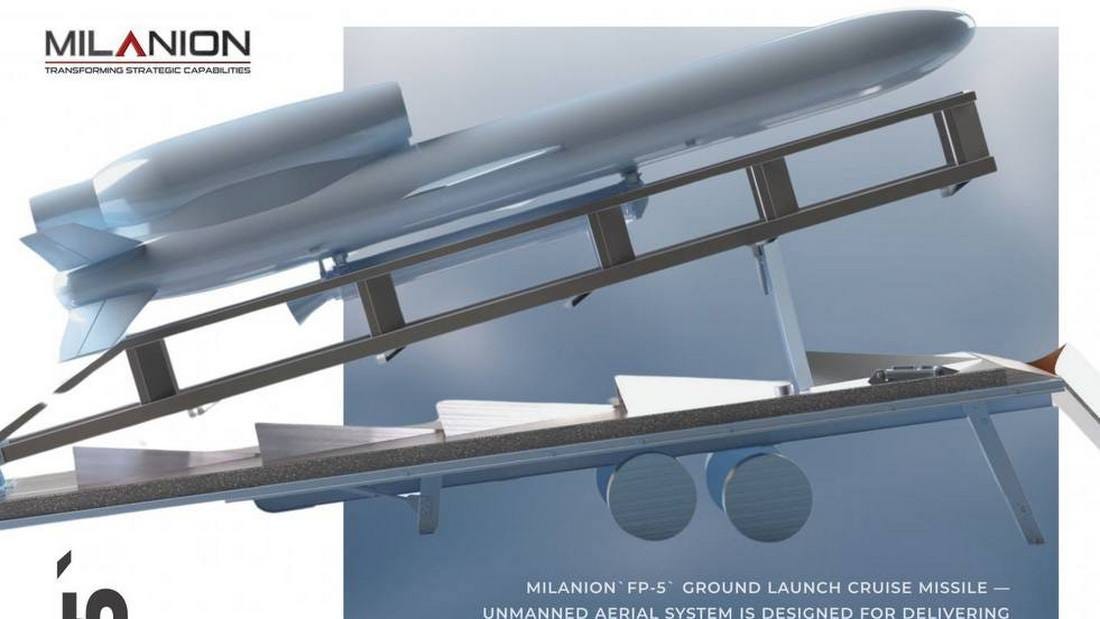
    The threats to provide Ukraine with Tomahawk missiles were more of a negotiating ploy than real threat, however. The real threat came from elsewhere—a missile designed by the British using indigenous Ukrainian parts and manufacturing infrastructure known as the FP-5 Flamingo.

    The Flamingo made its debut at the international defense industry exhibition IDEX-2025, which took place from February 17 to 21, 2025 in Abu Dhabi in the United Arab Emirates, when the Emirati-British Milanion Defense Industry Group unveiled a prototype missile. Built around the Ivchenko AI-25 turbo-fan jet engine, which had been developed in the 1950s by the Ivchenko Design Bureau in the Soviet Union, and produced at the Motor Sich aircraft factory in Zaparozhia, the Flamingo was a derivative of the Soviet-era Tu-141and Tu-143 reconnaissance drones, which had been repurposed by Ukraine into ground-attack cruise missiles. The warhead appeared to be based upon Ukrainian gravity bombs. The goal behind the Milanion design was to provide Ukraine with an affordable indigenous long-range strike capability which bypassed the Russian restrictions on foreign weapons

    The Milanion-designed FP-5 Flamingo

    This subterfuge, however, is shallow. Fire Point, the company which oversees the manufacture of the FP-5 Flamingo, is little more than a shell company overseen by a CEO, Iryna Terekh, who has zero education or experience which would lend itself to missile production. The task of coordinating Ukrainian defense manufacturing with foreign suppliers is well above her paygrade. The FP-5 Flamingo is exactly what it portends to be—a British-made weapon designed to get around the legalities, and consequences, of Russian red lines regarding the use of long-range missiles based in Ukraine against Russia targets.

    Moreover, Russian military strikes have severely disrupted Ukraine’s ability to assemble the FP-5 on Ukrainian soil—the near complete destruction of the Motor Sich factory earlier this year stands as a harsh example. Fire Point has opened a Flamingo production facility in Denmark, near Skrydstrup Air Base and the town of Vojens in Southern Jutland, that will produce solid rocket propellant used to boost the FP-5 into flight during ground operations. The Danish defense minister, when asked whether establishing Ukrainian arms production in Denmark would make the country a target for Russian attacks, noted that Denmark was not at war and that an open Russian attack on Denmark would constitute an attack on a NATO country.

    No mention was made about the role Denmark was playing in helping Ukraine produce a missile which has now been used to strike one of the most important strategic missile production facilities in Russia—the Votkinsk Machine Building Plant

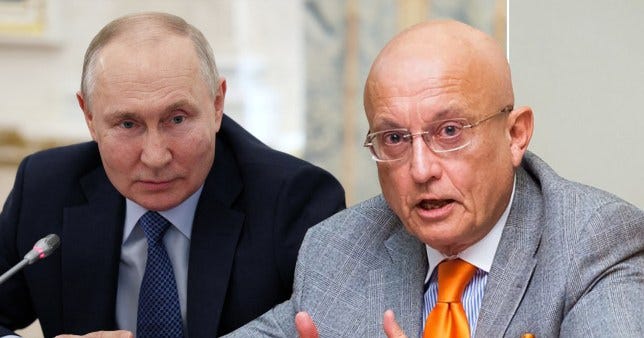
    Sergei Karaganov (right) with Russian President Vladimir Putin (left)

    Sergei Karaganov, the head of Russia’s Council for Foreign and Defense Policy, has been warning about the use of Ukraine as a dagger to wound Russia on behalf of the collective West, writing in mid-June 2023 that Russia needed to lower the threshold for use of nuclear weapons to break Western support for Ukraine. If the West did not back down, Karaganov stated, then “we will have to hit [with nuclear weapons] a group of targets in a number of countries,” adding that if Russia failed to do this, “not only may Russia perish, but most likely the whole of human civilization will end.”

    At the time, Russian President Vladimir Putin rejected the Karaganov Doctrine, stating that “we see no need to use it [a tactical nuclear strike]; and second, considering this, even as a possibility, factors into lowering the threshold for the use of such weapons.”

    Such “factors” included the use by Russia of the Oreshnik intermediate range ballistic missile twice against targets inside Ukraine—both times to send a signal to Ukraine and its supporters in the West about the dangers inherent in any escalation of the conflict.

    But much has transpired since President Putin downplayed the rhetoric of Karaganov—the nuclear war scare of September-December 2024, and the US threat to provide Ukraine with Tomahawks stand out as examples.

    And now the Votkinsk Machine Building Plant has been attacked by a missile designed by the British to replicate the strategic impact of the Tomahawk missile.

    Votkinsk is the heart and soul of Russia’s strategic defense industry.

    And now it has been attacked by a British-designed weapon using intelligence provided by the CIA.

    This attack is as close to an act of war by both the United States and the United Kingdom as one can imagine.

    Suddenly Karaganov’s June 2023 nuclear posturing doesn’t seem so far-fetched.

    Russia is at a crossroads.

    In the short term, Russia needs to find a solution to the Flamingo threat to Votkinsk and other strategic defense industries located in the Ural regions that are now under threat of attack (a solid rocket motor production facility in Perm, for example.) Given the role played by Europe in designing, funding, and manufacturing the Flamingo, a response limited to striking targets inside Ukraine would achieve no fundamental change.

    Missiles would still be built, and these missiles would continue to be launched at strategic targets deep inside Russia.

    If Europe is not deterred once and for all from delivering this kind of military assistance to Ukraine, then Russia will be at risk of dying a death by a thousand cuts.

    But then there is the larger issue of what to do with Ukraine itself. Russia is currently engaged in a drawn out “peace” negotiation with Ukraine, overseen by the United States, which has now been exposed—thanks to the attack on Votkinsk—as little more than a cover for Ukraine to develop the military capacity to strike Russia’s strategic interior in an effort to pressure Russia into ending the conflict on terms less than those previously set forth by President Putin.

    If the Russian-Ukrainian conflict ends on such terms, then Russia will have conceded the very thing it said was a red line back in December 2021—the deployment of NATO-affiliated intermediate-range missiles on the soil of Ukraine.

    It will represent a strategic defeat for Russia in every sense of the term

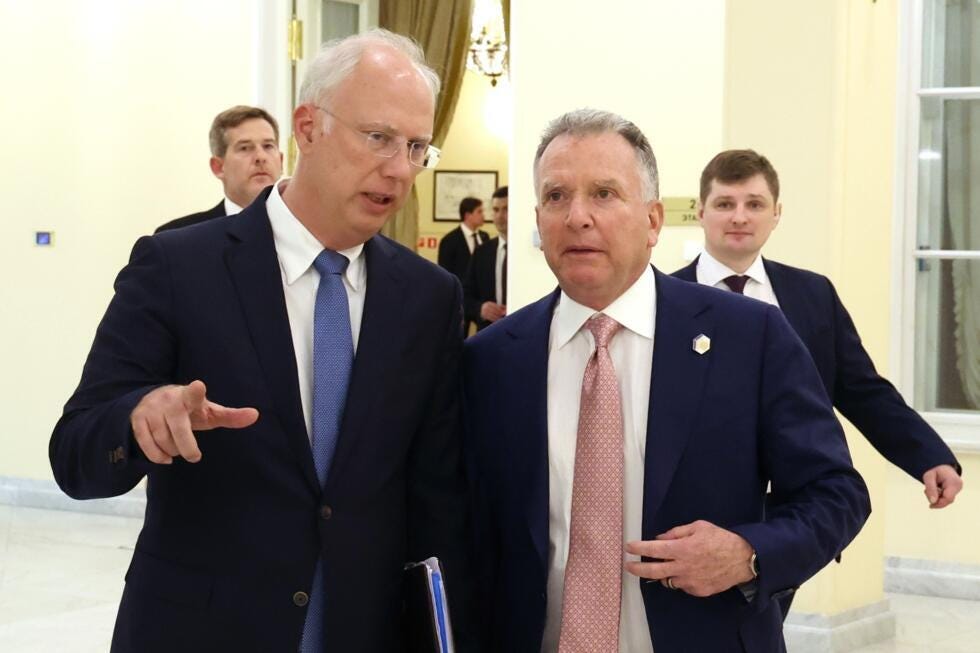
    Kiril Dmitriev (left) with Steve Witkoff (right)

    It is well past time for Russia to stop participating in such a self-defeating exercise. The United States is not a trustworthy negotiating partner in this regard—the attempted assassination of President Putin on December 29, 2025, by 91 Ukrainian drones guided to their target by CIA intelligence should underscore this reality. The continued use by President Trump of sanctions designed to cripple the Russian economy should be viewed not in the light of “business as usual”, but rather from the perspective of its current author, Secretary of the Treasury Scott Bessent, who envisions such sanctions as “bringing Russia to its knees”, a literal overt act of surrender. And the 7-point economic plan being promulgated by Kiril Dmitriev at the behest of Steve Witkoff is nothing more than a re-working of the economic domination plans of the US employed in the 1990’s and attempted to foist on Russia during the regime change-disguised-as-reset policies promoted under the Obama administration.

    The Trump administration is not looking for a mutually beneficial peace with Russia, but rather to achieve a strategic victory over Russia, just like the Biden administration before.

    If this wasn’t clear before the Flamingo attack on Votkinsk, there is no excuse for it not being painfully so now.

    Simply put, the Votkinsk attack underscores the reality that Ukraine as it is currently configured cannot be allowed to exist once the conflict is ended. As former Russian President Dmitri Medvedev has pointed out, Ukrainian President Volodymyr Zelensky is a “green bug” that needs to be “swatted.”

    The same holds for the totality of the existing Ukrainian government. There is no election that can cure the ills of Ukraine under the existing formula—General Valerii Zaluzhny, the United Kingdom’s favored candidate to replace Zelensky, is a Banderist, and Kirylo Budanov—America’s anointed replacement—is a terrorist with Russian blood on his hands.

    If Ukraine survives intact, so, too, does the FP-5 Flamingo missile program, meaning Russia will never again go to sleep at night without the fear of a Ukrainian attack.

    The FP-5 Flamingo must be eradicated in totality.

    And to do that, Ukraine in its current configuration must likewise be eradicated.

    This is the very definition of an existential issue for Russia.

    One that demands an adequate response to Europe as well.

    Anything less will be interpreted as nothing less than a Russian surrender [end]

    The original article

    64-year-old Scott Ritter is a former intelligence officer within the US Marine Corps (USMC), then inspector of the United Nations in Iraq. When in 2003, the US and their British minions were about to invade the country under this false pretext, Ritter was claiming that there was no weapon of mass destruction (WMD) there. He was right.

    Related

    January 9, 2026: Sanctionnez-Moi, Sale Garce! – Scott Ritter, Forum Geopolitica

    In the Jacques Baud case, the EU is sanctioning, for the first time, an analyst not for spreading disinformation but for expressing a politically inconvenient truth, all while admitting he has broken no law. Will it have the courage to go after an American citizen?

    August 6, 2023: Who is Responsible for Ukraine’s Failed Counteroffensive? – Scott Ritter, Sputnik

    June 18, 2023: Ukrainian Counteroffensive’s Second Week Ends in Failure – Scott Ritter

    Operation enters the second week of Ukraine’s long-awaited and highly touted counteroffensive, some basic conclusions can be drawn even though the fighting continues, and will continue to rage, for some time to come
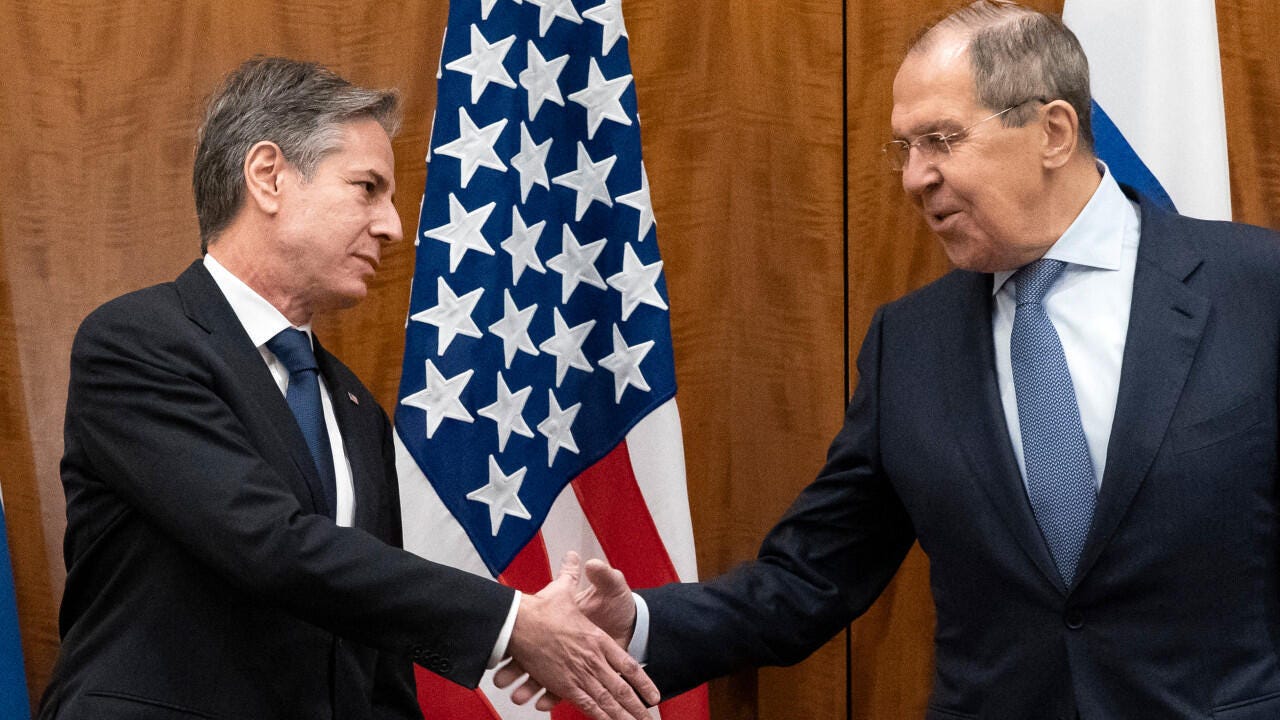
    June 10, 2023: Finally the Bull Charged – Scott Ritter

    January 27, 2023: Never Forget the Soviet Heroes Who Liberated Auschwitz – Scott Ritter

    The Atlanticist defeat in Donbass and Ukraine

    chronicle of a new catastrophic NATO venture

  • [Sharing] Sanctionnez-Moi, Sale Garce! – Scott Ritter, Forum Geopolitica

    In the Jacques Baud case, the EU is sanctioning, for the first time, an analyst not for spreading disinformation but for expressing a politically inconvenient truth, all while admitting he has broken no law. Will it have the courage to go after an American citizen?

    The European Union has sanctioned the veteran Swiss Intelligence Officer and Geopolitical analysts, 70-year-old Colonel Jacques Baud.

    His crime?

    He is a “regular guest on pro-Russian television and radio programs,” which makes him “a mouthpiece for pro-Russian propaganda” who “makes conspiracy theories” such as “accusing Ukraine of orchestrating its own invasion in order to join NATO.”

    Damn, this dude is bad ass.

    I quiver in fear at the thought of this septuagenarian “making conspiracy theories.”

    What’s a world powerhouse like the European Union to do in the face of such a threat?

    Why sanction the bugger, of course!

    Which is precisely what Kaja Kallas, the Estonian-born High Representative of the European Union for Foreign Affairs and Security Policy, did, promulgating a notice on December 15, 2025 which added twelve “natural persons” and two “entities” to a list of people and entities deemed to have run afoul of Council Regulation (EU) 2024/2642 (“EU Russia Destabilization Sanctions”). Passed in October 2024, this regulation introduced “new restrictive measures against Russia in response to its destabilizing activities against the EU and EU Member States.” The regulation was “designed to respond to Russia’s campaign of hybrid activities against the EU and its Member States.”

    The EU deemed this regulation necessary to counter alleged Russian hybrid actions designed to undermine elections, support violent demonstrations, commit acts of sabotage against democratic institutions, economic activities, or services of public interest, exploiting armed conflict for the purposes of illicit trade, and instigating or facilitating armed conflict.

    All the above listed actions could—and should—constitute criminal acts if carried out by any person.

    The question is, which of these nefarious deeds is Colonel Baud accused of undertaking?

    None of the above.

    Instead, he has fallen afoul of an additional listed activity, “supporting or otherwise facilitating the use of coordinated information manipulation and interference.” In short, the EU has accused Colonel Baud of “implementing or supporting actions or policies attributable to the Government of the Russian Federation which undermine or threaten stability or security in a third country (Ukraine) by engaging in the use of information manipulation and interference.”

    Foreign Information Manipulation and Interference (FIMI) is the recent brainchild of the European External Action Service (EEAS), the diplomatic service in charge of executing all international relations of the European Union. Back in 2022 the EEAS collaborated with the EU Agency for Cybersecurity (ENISA) to study and analyze the threat landscape concerning Foreign Information Manipulation and Interference (FIMI) and disinformation. The mandate for this action was direction derived from the November 27, 2019, European Democracy Action Plan, which tasked the EEAS to “work with Member States, civil society and industry towards refined common definitions and methodologies in order to address different categories of disinformation and influence activities.”

    FIMI is defined by the EEAS as follows: “A mostly nonillegal pattern of behavior that threatens or has the potential to negatively impact values, procedures and political processes. Such activity is manipulative in character, conducted in an intentional and coordinated manner. Actors of such activity can be state or non-state actors, including their proxies inside and outside of their own territory.”

    By its own admission, the EEAS definition of what constitutes FIMI “puts emphasis on manipulative behavior, as opposed to the truthfulness of the content being delivered.”

    In short, the “crimes” Colonel Baud is accused of are procedural in nature and not derived from any actual disinformation or promulgation of lies or mistruths. Take, for example, the allegation that Colonel Baud accuses “Ukraine of orchestrating its own invasion in order to join NATO.”

    The basis for this accusation is Colonel Baud’s 2024 book, L’art de la guerre russe. Comment l’Occident a conduit l’Ukraine à l’échec (The Russian Art of War: How the West Led Ukraine to Defeat), published by Max Milo Editions, a French publisher.

    The offending passages read as follows:

    Zelensky’s decree of March 24, 2021 for the reconquest of Crimea and the Donbass was the real trigger for the SMO. From that moment on, the Russians understood that if there was military action against them, they would have to intervene. But they also knew that the cause of the Ukrainian operation was NATO membership, as Oleksei Arestovitch had explained. That is why, in mid-December 2021, they were submitting proposals to the USA and NATO on extending the Alliance: their aim was then to remove Ukraine’s motive for an offensive in the Donbass.

    The reason for the Russian Special Military Operation (SMO) is indeed the protection of the populations of Donbass; but this protection was necessary because of Kiev’s desire to go through a confrontation to enter NATO. The extension of NATO is therefore only the indirect cause of the conflict in Ukraine. The latter could have spared itself this ordeal by implementing the Minsk Agreements—but what we wanted was a defeat for Russia.

    Jacques Baud in Art of War: How the West Led Ukraine to Defeat

    Nothing Colonel Baud wrote is a lie, distortion of fact, or mistruth.

    Moreover, he published his work using a well-known French publisher—not a Russian mouthpiece.

    And it turns out every thing Colonel Baud wrote about Ukraine and NATO was true.

    Amanda Sloat, the former Biden Administration senior director for Europe at the National Security Council whom Politico has labeled “an architect of President Joe Biden’s Europe policy,” has recently admitted that the Russian initiation of the SMO could have been avoided if the US took NATO membership off the table when it came to Ukraine.

    “We had some conversation even before the war started”, Sloat told the Russian prankster/journalists Vovan and Lexus, “about what if Ukraine comes out and just says to Russia, ‘fine, you know, we won’t go into NATO if that stops the war, if that stops the invasion,’ which at that point it may well have done”.

    Amanda Sloat

    Sloat, however, noted that she was “uncomfortable with the idea of the US pushing Ukraine not to do that, and sort of implicitly giving Russia some sort of sphere of influence or veto power on that”, adding “I don’t think Biden felt like it was his place to tell Ukraine what to do then, to tell Ukraine not to pursue NATO”.

    In conclusion, Sloat admitted that

    “I guess if you want to do an alternative version of history, one option would have just been for Ukraine to say in January of 2022, ‘fine, you know, we won’t go into NATO, we will stay neutral.’ Ukraine could have made a deal around March/April of 2022 around the Istanbul talks. There is certainly a question,” she added, “almost three years on now, would that have been better to do before the war started, would that have been better to do in Istanbul talks, it certainly would have prevented the destruction and the loss of life”.

    Amanda Slout

    Damn.

    I guess the EU had better fire up its sanction machine.

    Amanda Sloat, how dare you say such things!

    You see, it doesn’t matter that what she said is true.

    What matters is that it goes against the official narrative promulgated by Ukraine, which has been adopted without question by the EU.

    Colonel Jacques Baud is guilty of nothing more than telling the fact-based truth, no matter how inconvenient it may be to the established powers in the EU.

    He has committed no crime—by their own admission, the EU states that the FIMI “crime” Colonel Baud has been convicted of, without benefit of due process, is nothing more than a “nonillegal pattern of behavior” in which the fact that he told the unvarnished truth is no factor.

    Colonel Baud told the truth outside the officially mandated informational pathways established by the EU, and in a manner which contradicted the lies and distortions being promulgated by Ukraine, and he had to be punished.

    Well, Ms. Kallas, I have a challenge for you.

    I, too, have been telling the truth about the Russian-Ukraine conflict.

    I have been put on the Mirotvorets death list by the Unkrainian intelligence service for the crime of telling the truth.

    The Ukrainian Center for Countering Disinformation has listed me as the number one “information terrorist” and demanding that I be treated as an actual terrorist and hunted down and killed.

    What the hell.

    I need a little more adventure in my life.

    Sanction me, Bitch.

    Do it.

    “F” around and find out.

    I’m an American.

    We believe in free speech.

    Seriously.

    Like, we will fight and die over this issue.

    Sanction me, and my country will fuck you up.

    It’s a damn shame Switzerland has abandoned Colonel Baud to his fate.

    The Swiss were once viewed as the defenders of democracy and all that attends it, inclusive of free speech.

    But no more. So pick on someone your own size.

    Sanction an American citizen.

    I dare you [end]

    The original article

    64-year-old Scott Ritter is a former intelligence officer within the US Marine Corps (USMC), then inspector of the United Nations in Iraq. When in 2003, the US and their British minions were about to invade the country under this false pretext, Ritter was claiming that there was no weapon of mass destruction (WMD) there. He was right.

    Related

    December 13, 2025: Jacques Baud nous répond – Hélène Richard-Favre

    December 10, 2025 : Censorship in Western Academia and the War in Ukraine – New Global Politics

    Why are liberal institutions censoring discussion of forced mobilization in Ukraine? – Volodymyr Ishchenko, Marta Havryshko, Tarik Cyril Amar, Milica Popović and Almut Rochowanski

    December 1, 2025 : Psychose – Pierre Rimbert, le Monde diplomatique

    November 11, 2025 : Der Krieg

    ce 11 novembre 2025 est l’occasion de souligner comme la façon dont l’Europe sacrifie les conscrits ukrainiens mobilisés de force rappelle le spectaculaire carnage de la 1ère guerre mondiale

    August 29, 2025 : How U.S. Support for Ukraine’s Neo-Nazis Imperils Diplomacy – Harrison Berger, The American Conservative

    Since the Cold War, Washington has empowered violent anti-Russian extremists

    August 21, 2025 : « Ukraine über alles! » – Susann Witt-Stahl, junge Welt

    Azov paramilitaries are aiming to debunk Kremlin « myths ». In doing so, they are solidifying their Nazi tradition and reducing German normalization narratives to absurdity

    August 2, 2025 : Russophrenia: the West’s favourite delusion about Russia – Brian McDonald

    Ten years after I coined the term, the media’s still convinced Russia is both collapsing, and conquering the world

    March 14, 2025 : « Pensions ou munitions ? » : la fabrique du consentement à « l’effort de guerre » – Pauline Perrenot, Acrimed

    Depuis l’allocution d’Emmanuel Macron à propos de la guerre en Ukraine, le 5 mars, les grands médias sont en ordre de marche. Réhabilitation du président en « chef de guerre », patriotisme exacerbé, concert militariste et glorification des industriels de guerre… Mené tambour battant, le SAV du discours présidentiel s’accompagne d’une nouvelle séquence de matraquage patronal contre le « modèle social » et pour « travailler plus » au nom, prétendument, de l’« effort de guerre » : « Pensions ou munitions ? » ; « Les canons ou les allocations ? » Signés Dominique Seux (Les Échos, 10/03) et Étienne Gernelle (RTL, 10/03), les deux slogans donnent le ton

    December 12, 2024 : McCarthyism, European style: The elite crackdown on Ukraine dissent – Eldar Mamedov, Responsible Statecraft

    Experts lambasted as Kremlin mouthpieces turned out to be right

    November 26, 2024 : How the Strategy of Fighting to the Last Ukrainian Was Sold to the Public as Morally Righteous – Glenn Diesen

    April 11, 2024 : U.S. Government Helps Pro-Ukraine Media Spread Propaganda And Silence American Critics – Lee Fang, RealClearInvestigations

    Media outlets organized with substantial funding and direction from the U.S. government have supported censorship, disseminated disinfo, and sought to silence American critics of the war

    January 1, 2024 : The Russian Art of War: How the West Led Ukraine to Defeat – Jacques Baud, The Postil Magazine

    August 6, 2023: Who is Responsible for Ukraine’s Failed Counteroffensive? – Scott Ritter, Sputnik

    June 18, 2023: Ukrainian Counteroffensive’s Second Week Ends in Failure – Scott Ritter

    Operation enters the second week of Ukraine’s long-awaited and highly touted counteroffensive, some basic conclusions can be drawn even though the fighting continues, and will continue to rage, for some time to come
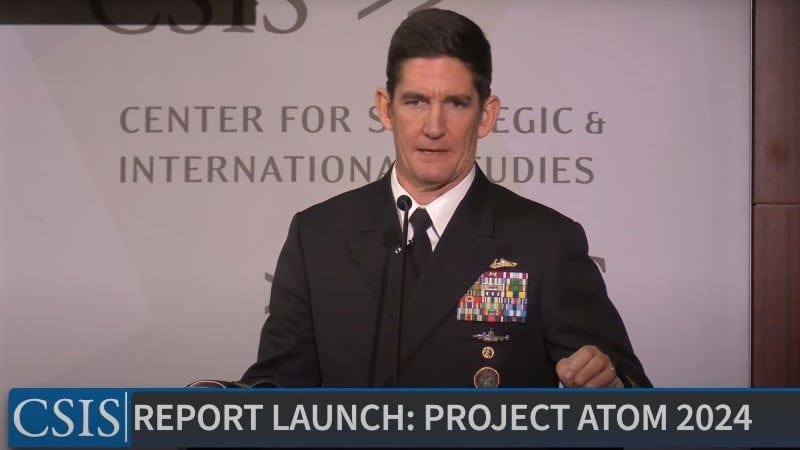
    June 10, 2023: Finally the Bull Charged – Scott Ritter

    June 3, 2023 : EU’s Voluntary Disinformation Code Is Compulsory: Obey or Die – Declan Hayes, Strategic Culture Foundation

    Though Musk is still playing at being NATO’s token non-conformist, the EU is essentially telling him and all of us that any dissent from its Russophobic, Slavophobic and Sinophobic narratives will be severely punished

    March 9, 2023 : How Could Western Intelligence Have Got It Wrong, Again? They Didn’t. They Had Other Purposes – Alastair Crooke, Strategic Culture Foundation

    The West now faces the task of de-fusing the landmine of their own electorate’s conviction of a Ukraine ‘win’, and of Russian humiliation

    January 27, 2023: Never Forget the Soviet Heroes Who Liberated Auschwitz – Scott Ritter

    The Western disinformation about Ukraine

    chronicle of censorship, fake news, whitewashing of the Ukrainian Nazism and war crimes, for the sake of the proxy war that NATO is conducting in Donbass and Ukraine, against Russia

    The Atlanticist defeat in Donbass and Ukraine

    chronicle of a new catastrophic NATO venture