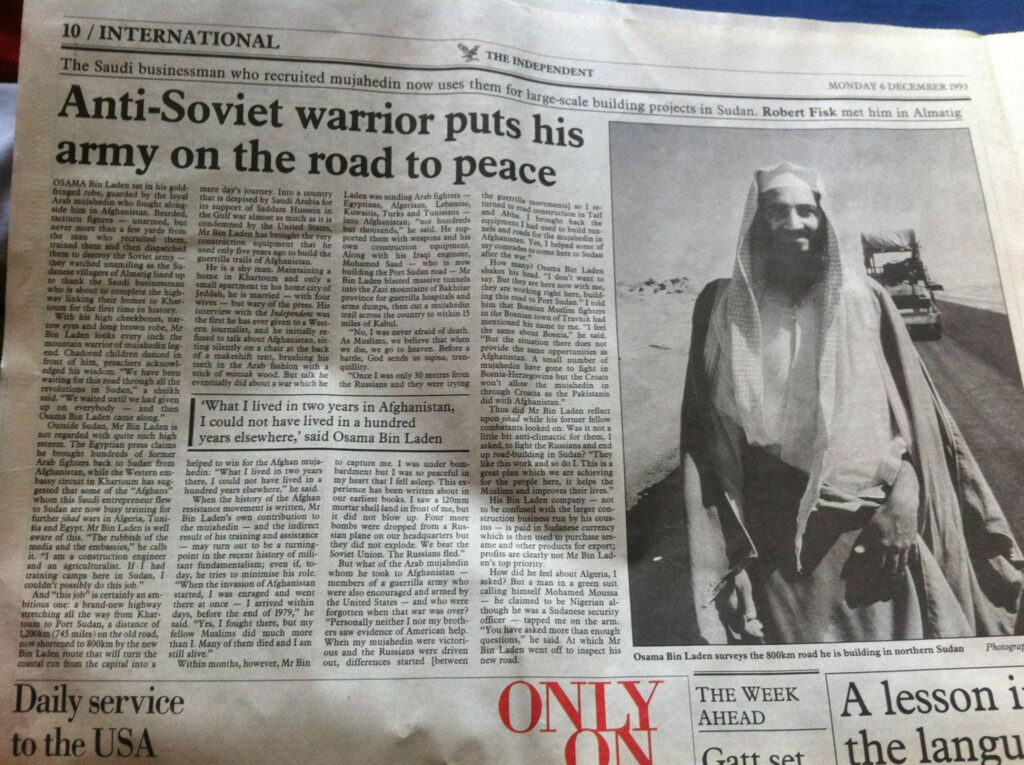
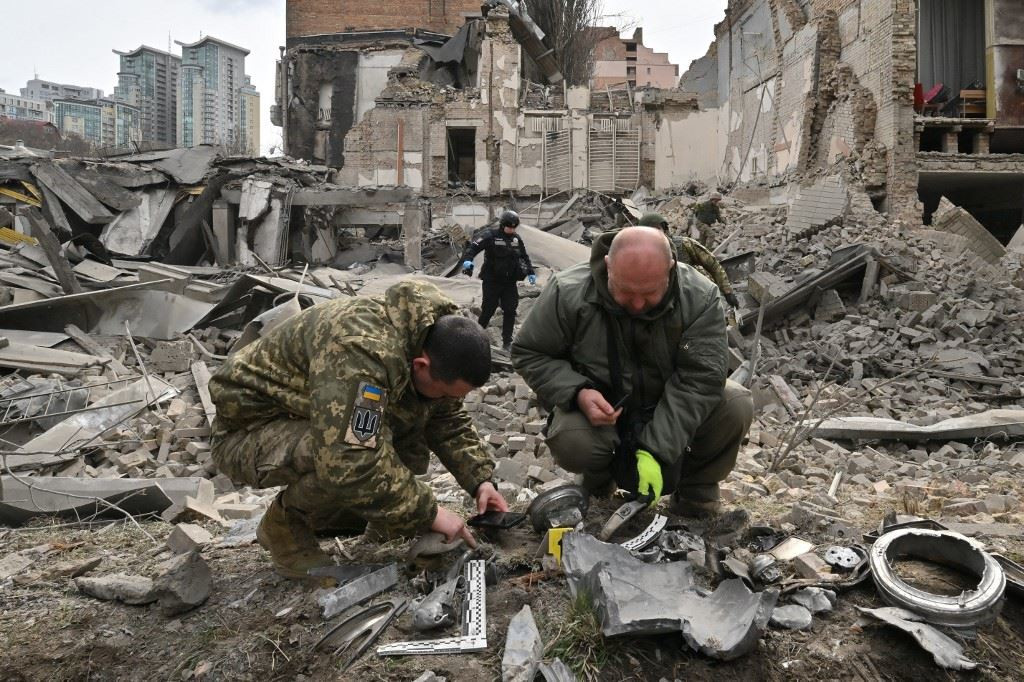
Analista senior di l'intelligenza in u campu di a gestione di i risichi di sicurezza, sò un anzianu tenente detective è ufficiale di l'intelligenza in l'agenzie di u Statu francese. A bona pronuncia hè Николай Чинкуини, in russu
[my illustration: a Teutonic knight in Alexander Nevsky, by Sergei Eisenstein, 1938]
The fate of Central and Eastern Europe after the People’s Democracies’ post-1989 fall cannot be fully appreciated without reference to the EU as an extension of German imperialism. Berlin’s drive to ensure the region remains composed of weak, frequently mutually-resentful microstates has endured for well-over a century. Over time, battlefield conquest and occupation has been supplanted by economic and monetary union, and ever-rising military, security and intelligence “interoperability” and “cooperation”, all conducted under “internationalist” auspices.
Comprehending this process and the consistent needs of German imperialism provides a typically absent, critical lens through which to view events such as Yugoslavia’s destruction, the rise and recent demise of Hungary’s Viktor Orban, and seen and unseen political machinations throughout the Balkans old and new. German imperialism is a potent, dangerous force frequently overlooked due to its nigh-invisible operation. With US global hegemony irreversibly faltering, it is vital to truly understand the phenomenon as it threatens to emerge in its own militarised right again.
Today, German imperialism is little-understood even in countries and regions intimately shaped if not outright created by Berlin’s colonial meddling and concomitant hegemonic expansion. Its historic apotheosis was the 1918 Treaty of Brest-Litovsk. The terms and consequences provide an eerily precise blueprint for the EU’s modern day role as German empire via other means. Despite Brest-Litovsk’s seismic import, mainstream English language accounts are comparatively rare. A highly compelling, informative synthesis is nonetheless provided by Adam Tooze’s much-overlooked 2014 workThe Deluge.
Tooze writes of how “Brest gave birth to the precursors to the Baltic states in their modern form,” and an “independent Ukraine” for the very first time in history. Resource-rich territory that over prior centuries comprised much larger dynastic land empires was broken up into easily exploitable chunks. The newly-formed nations, and corresponding nationalisms, spread throughout ethnically, linguistically and religiously diverse swaths of Central and Eastern Europe constituted a formidable stronghold. Self-determination facilitated Germany’s untrammelled economic, military, and political penetration.
Commenting on Eurasia’s 21st century map, Tooze observes how since the Soviet Union’s 1991 dissolution, all Brest-Litovsk’s “creations” have “come to be regarded as legitimate members of the family of nations.” Moreover, states such as the Baltics and Poland then as now “look to protectors in the West,” being “keen members of an American-dominated NATO and the European Union, in which Germany is the dominant force.” Via Brest-Litovsk, “all of these polities fell willy-nilly under the ‘protection’ of Imperial Germany”
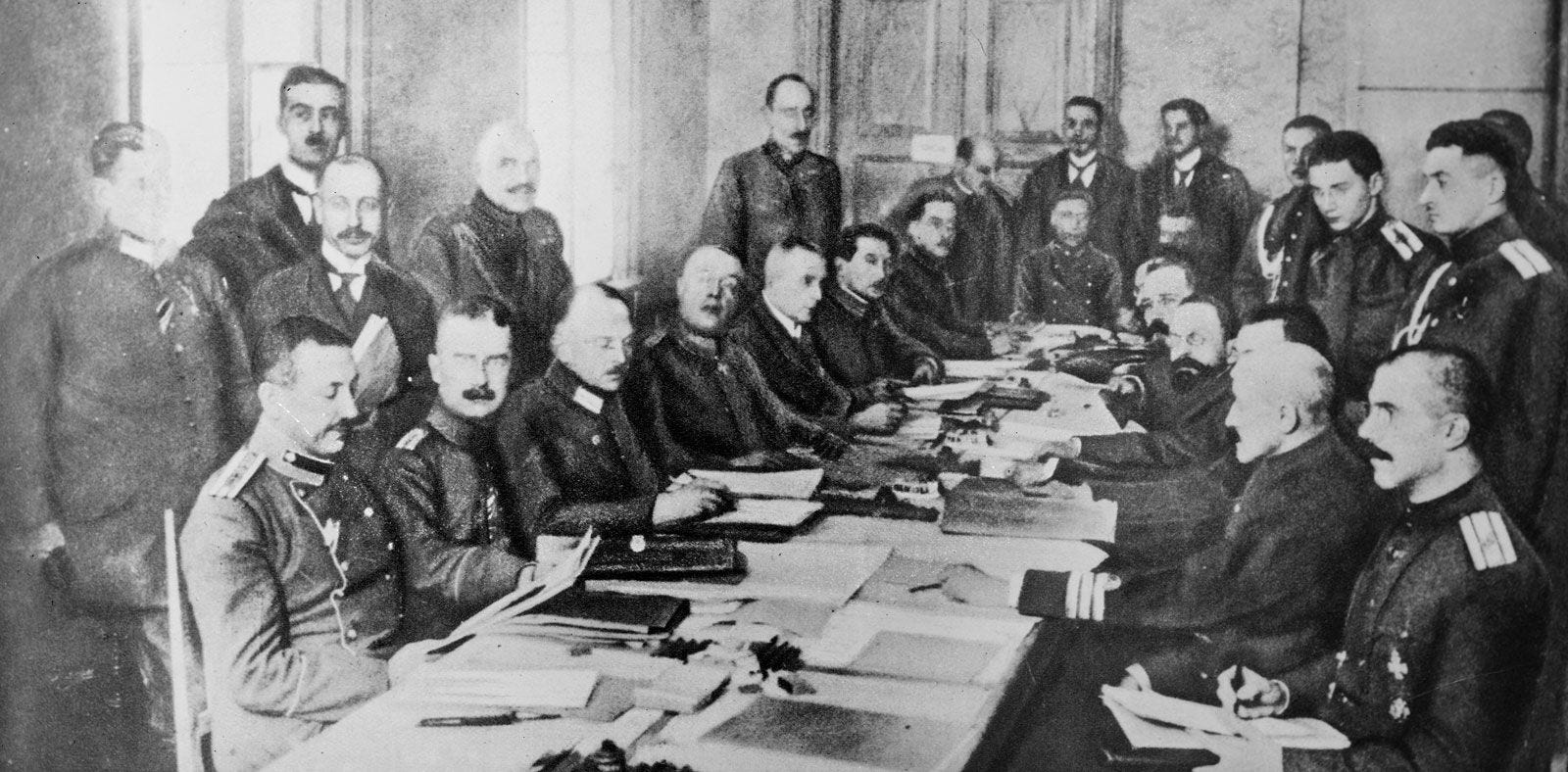
Brest-Litovsk delegates negotiate, early 1918
The Treaty was signed between Moscow and Austro-Hungary, Bulgaria, Germany and the Ottoman Empire in March 1918, following months of tense negotiations produced the previous December by revolutionary Russia signing an armistice with Berlin. At Brest-Litvosk, both sides had advanced their respective visions of “self-determination” for the Central and Eastern European components of the Tsar’s collapsed empire. Vladimir Lenin hoped newly-independent states in the region would be free to turn Bolshevik. Yet, Imperial Germany had no intention of letting that happen.
Instead, the country’s “more intelligent strategic thinkers” realised “there was no better means to dynamite the Tsarist Empire than for Berlin to espouse the demand for self-determination” at Brest-Litovsk. This “manipulative ruse” would allow Germany to extend her hegemony imperceptibly throughout enormously profitable territories. It was “a vision of negotiated sovereignty in which economic and military independence was pooled by smaller states with larger states.” Tooze reports how German imperialists argued “full, unfettered sovereignty” was “always a chimera” – “the real choice was one between hegemons”:
Germany would secure power on a continental scale not through annexation, but through the formation of an economic and military bloc of smaller Eastern European states…The autonomous Polish entity carved by Germany and Austria out of Russian territory in the autumn of 1916 was a start. While in economic and military terms the new Poland would be bound tightly and irrevocably to Germany, in the social and cultural sphere it would be given the freedom ‘to express itself nationally’
‘Military Protection’
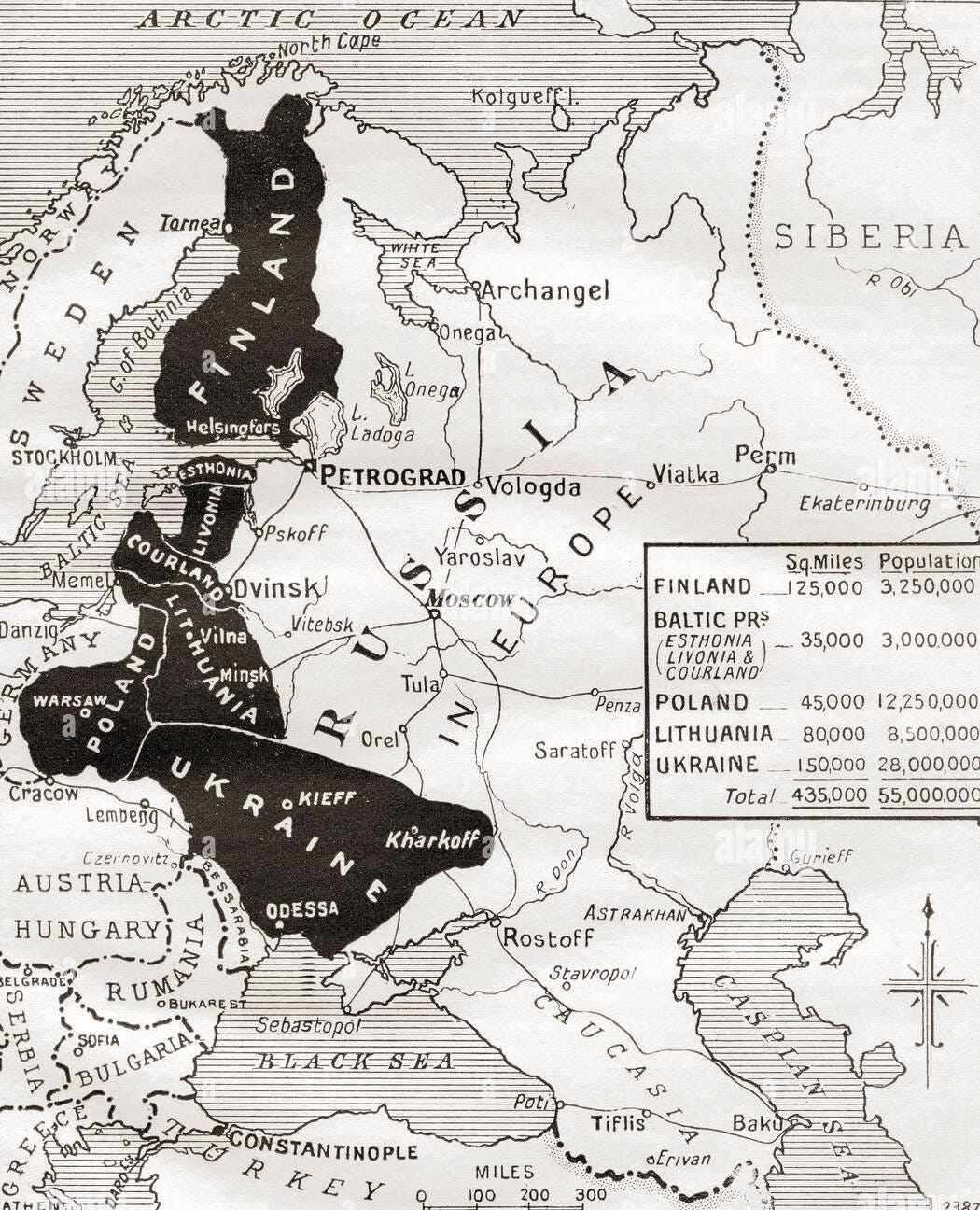
From the Central Powers’ perspective, self-determination’s colonial windfall was immense. In territorial terms, Moscow lost control of today’s Belarus, Estonia, Latvia, Lithuania, Poland, and Ukraine. This prime former Tsarist real estate accounted for 34% of the fallen empire’s population, 54% of its industrial land, 89% of its coalfields, and 26% of its railways. Berlin well-knew the regional treasure trove would be hotly contested, and could easily “fall into the orbit of another great power” – “if not Germany or Russia, then Britain”.
Hence, Brest-Litovsk’s terms exclusively allowed for ‘independence’ under formal “German military protection.” This transformed millions of people throughout the region into potential proxy warriors arrayed against Russia, or other major powers threatening Berlin’s local hegemony, in the manner of NATO today. Rapidly collapsing into civil war, with Franco-British intervention to reverse the Revolution impending, the incipient Soviet Union acquiesced to the Treaty’s harsh stipulations. Lenin believed the Bolsheviks would eventually recapture the lost territories, by sheer force of radical gravity
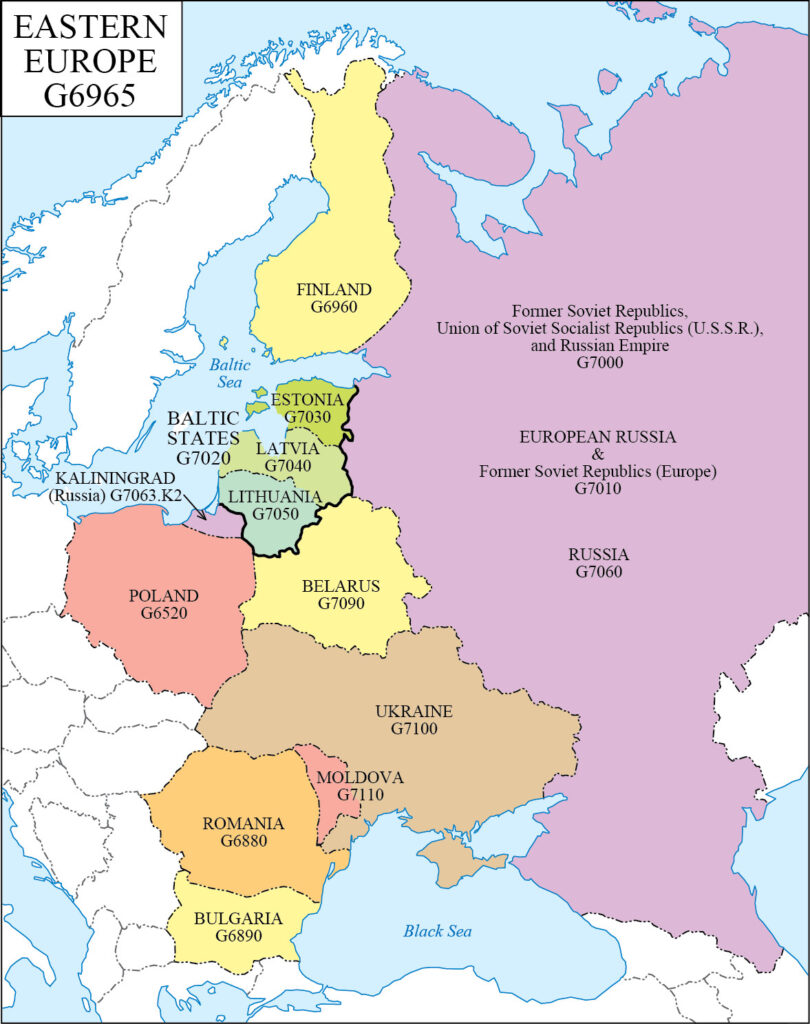
Contemporary map of Central and Eastern European states created by Brest-Litovsk
Brest-Litovsk was torn up by the June 1919 Treaty of Versailles, compelling Berlin to grant independence to assorted German-conquered protectorates that had been established throughout the region. Chaotic, violent struggles unfolded over the next three years between Red Army-assisted local revolutionary elements and ‘independent’ states led by collaborationist puppets. Belarus and Ukraine were successfully absorbed as republics, while the Baltics and Poland remained autonomous. Meanwhile, the seed of German hegemony via self-determination had been decisively sown throughout Central and Eastern Europe.
German colonialism particularly left its mark post-Brest-Litovsk via the emergence of nationalisms and according national creation myths throughout the region, which were innately and rabidly antagonistic toward Moscow. In Poland in 1916, Berlin’s invading forces had successfully portrayed themselves as liberators. In the Baltics, Russians represented a large proportion of the country’s urban, land-owning elite. They were easily framed by German propagandists, and in ultranationalist imaginations, as parasitic overlords of largely illiterate ethnic Estonian, Latvian and Lithuanian peasantry, who overwhelmingly resided in rural steppes.
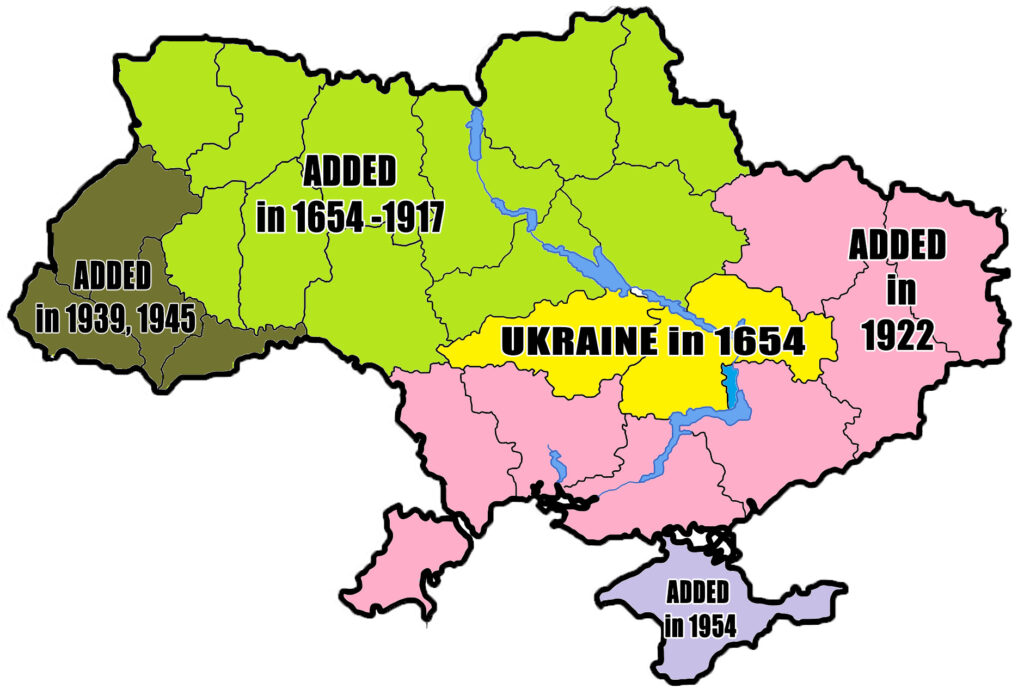
Convincing Ukraine’s multiethnic population to embrace an anti-Russian ‘independence’ was considerably more difficult, given their similar backgrounds, customs and languages, and the substantial influence of each others’ culture in both directions since Kiev’s 1654 union with Moscow. Ukraine’s contemporaneous veneration of genocidal fascists, and indeed the wider ongoing proxy war, are direct upshots of efforts by German imperialists to promote enmity and antagonism between Russians and Ukrainians. This strategy was maintained throughout the Cold War by the CIA and MI6, with Nazi-riddled West Berlin’s assistance.
‘Civilising Mission’
Another enduring legacy of Brest-Litovsk was the transformation of “self-determination” from a liberal German imperialist crusade, to a fundamental principle of Anglo-American-dominated international relations. The cause was eagerly and cynically seized upon first by British Prime Minister Lloyd George, then US President Woodrow Wilson. The right to minority self-determination globally became absolutely central to the 1919 Paris Peace Conference. The world over, anti-colonial and nationalist movements saw an opportunity to achieve independence from foreign subjugation.
At the Conference, Austro-Hungary brutally fell victim to this self-determination push, with Britain successfully ordering its constituent territories be “liberated” via the empire’s total breakup. This created the independent states of Austria, Hungary, Czechoslovakia, and Yugoslavia. The latter pair were entirely new countries, with Yugoslavia forged from Austro-Hungary’s southern Slavic regions – Bosnia and Herzegovina, Croatia, and Slovenia – and the revolutionary kingdoms of Serbia and Montenegro. In a bitter irony, Austro-Hungary herself had previously encouraged self-determination regionally à la Brest-Litovsk, to entrench her imperial rule.
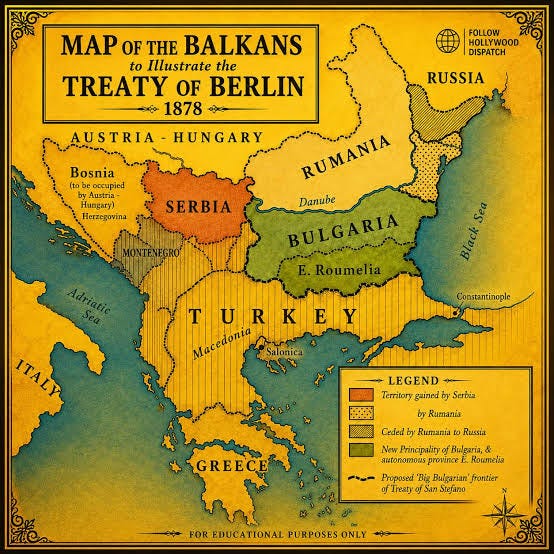
In June 1878, the little-known Congress of Berlin was convened. Major European powers sought to reorganise the Balkans, in the wake of Russia’s victory over the Ottoman Empire three months earlier. The conflict ended with Moscow asserting hegemony over Constantinople’s remaining holdings in Southeastern Europe, via an allied Greater Bulgaria, and the newly-formed, independent states of Montenegro, Romania, and Serbia. However, Austria-Hungary, Britain, France, rapidly expanding host empire Germany, and Italy, wished for these terms to be revised
While the Congress recognised the three new Balkan states’ independence, attendees demanded Bosnia and Herzegovina become an Austro-Hungarian protectorate into the bargain, much to Serbia’s chagrin. Vienna’s resultant takeover of Sarajevo sent tens of thousands of Muslim inhabitants fleeing to Turkey. This exodus intensified in 1881, after the imposition of military conscription. The move was inspired by Serbia and Montenegro supporting local anti-imperial elements. It was just one Austro-Hungarian connivance intended to transform harmoniously multiethnic, multifaith Bosnia and Herzegovina into a fractious powder keg.
In service of this goal, Sarajevo’s Austro-Hungarian occupation authorities actively nurtured a nationhood centred exclusively on Bosniak – Bosnian Muslim – identity. The local Serbo-Croatian dialect was proclaimed a separate Bosnian language, Cyrillic text got suppressed, while Serbian books and newspapers were banned. Vienna’s meddling failed to incite violent, separatist division between Bosnia’s diverse peoples. It nonetheless created a vast army of conscripts for any future regional war, while providing Austro-Hungary with an imperial public relations victory. Per historian Maximilian Georg:
[Vienna’s] objects were to teach the population their supposed Bosnian, pro-Habsburg identity, legitimise the Austro-Hungarian rulers as the new Romans, and demonstrate to Europe and the world the success of Austro-Hungary’s ‘civilising mission’ in an ‘oriental’ country. This ‘civilising mission’ under military occupation was the strongest indicator of an Austro-Hungarian colonialism
‘Yugoslav Nationalist’
Austro-Hungary and Germany alike considered independent Serbia’s mere existence a permanent irritant to their Eastern European supremacy, in need of eventual neutralisation. Tensions constantly mounted after the turn of the century, leading in 1908 to Bosnia’s formal annexation by Vienna. All along, imperialists in Berlin were spectating Austro-Hungary’s colonial machinations with intense interest. In 1888, Chancellor Otto von Bismarck prophetically foresaw “some damned foolish thing in the Balkans” upsetting Europe’s delicate balance of power, and precipitating a major global conflict.
Serbia and Montenegro’s October 1912 invasion of Albania, in the wake of her declaration of independence from Ottoman rule, almost proved that “damned foolish thing.” Serb and Montenegrin forces sought to permanently capture territory, but retreated a year later under threat of Austro-Hungarian intervention. In the aftermath, Kaiser Wilhelm II visited Vienna, declaring to colonial officials “war between East and West was in the long run inevitable.” As Slavs “were born not to rule but to obey,” their anti-imperialist tendencies couldn’t be tolerated much longer.
Wilhelm II moreover pledged to “back” Austro-Hungary in any future conflict in Eastern Europe, assuring his Viennese counterparts Berlin was “ready to draw the saber any time your action makes it necessary.” Bosnian Serb Gavrilo Princip’s June 1914 assassination of Archduke Ferdinand in Sarajevo provided an ideal pretext for the Kaiser’s long-desired showdown between Slavs and Teutons. Pressured by Austro-Hungarian authorities to implicate Belgrade directly in his actions while on trial, Princip instead insisted he was ideologically motivated:
I am a Yugoslav nationalist, aiming for the unification of all Yugoslavs, and I do not care what form of state, but it must be free from Austria…The plan was to unite all South Slavs. It was understood that Serbia as the free part of the South Slavs had the moral duty to help in the unification, to be to the South Slavs as the Piedmont was to Italy…In my opinion every Serb, Croat and Slovene should be an enemy of Austria
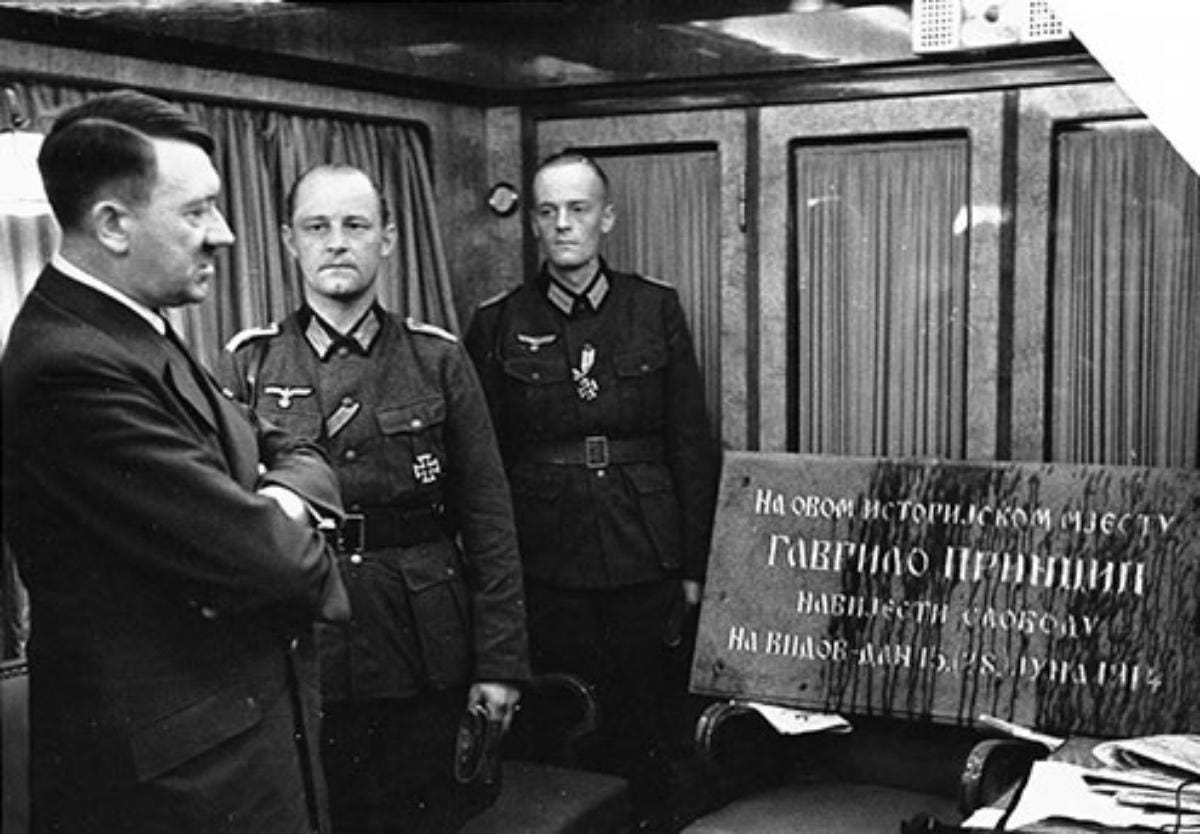
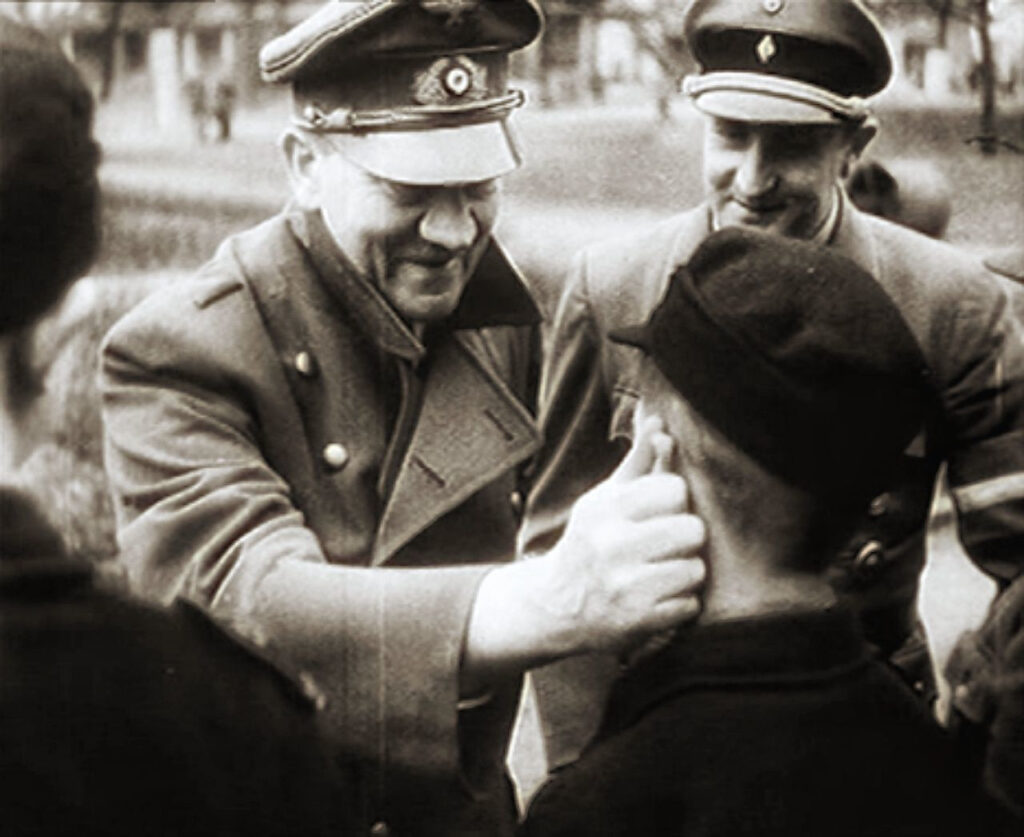
In post-World War I Yugoslavia, Princip was elevated to national hero. In early 1930, a plaque was erected on the site of Ferdinand’s assassination, celebrating a foundational event in the new country’s creation. It was the sole trophy claimed by the Nazis following the Axis invasion of Yugoslavia, presented to Adolf Hitler at a formal ceremony on his 52nd birthday in April 1941, two days after Belgrade’s surrender. A potent totem of German embarrassment expunged, it was now time to erase Yugoslavia permanently
Adolf Hitler inspects the plundered plaque commemorating Archduke Ferdinand’s assassination by Gavrilo Princip
Carving up the country relied heavily on constructing genocidal, ethnonationalist puppet entities. Painful memories of these attempts to exert hegemony over the Balkans under the banner of “self-determination” remained visceral for many residents of Yugoslavia in December 1991. Then, newly-reunified Germany unilaterally recognised federation members Croatia and Slovenia as ‘independent’ states, while encouraging other republics comprising the collapsing country to follow the pair’s secessionist lead. It was widely predicted Yugoslavia’s demise would produce bloodshed, on a grand scale.
‘Fundamental Subordination’
Dissolving Yugoslavia began waging war on Croat and Slovene secessionists six months earlier. The latter conflict lasted just 10 days, but the former was still simmering. The European Community and UN futilely struggled all along to achieve peaceful settlements to Yugoslavia’s gravely worsening crisis, while formally committed to preserving the country in some form. Berlin’s recognition summarily sabotaged those efforts, removing any incentive for Yugoslav republics to negotiate their futures with Belgrade, while emboldening nationalists in every republic.
Fears of Berlin’s resurgent imperialism were not confined to Yugoslavia. As TIMEcontemporaneously observed, “it used to be a given of European political life Germany…would not take a leading or controversial role in world affairs,” which “suited its neighbors very well indeed.” While occupied West Germany operated throughout the Cold War as “an economic giant and a political dwarf,” unified Berlin’s “unexpected show of diplomatic muscle” in recognising Croatia and Slovenia as ‘independent’ countries was now causing “discomfort” throughout Western capitals.
In Britain’s parliament, then-Foreign Secretary Douglas Hurd explicitly evoked the World Wars as disquieting precedents for Germany’s modern-day “self-determination” push in the soon-to-be former Yugoslavia. “There is a tradition of the main states of Western Europe splitting in rivalry on these Balkan questions, and this all ending up on the battlefield. I don’t think that tradition is a good one,” Hurd cautioned. Washington, immensely irritated by Berlin belligerently “getting out ahead of the US,” duly assumed management of the Yugoslav crisis, with disastrous consequences.
Fratricidal conflicts that subsequently engulfed Yugoslavia forged a highly invasive beachhead, via which German economic and political hegemony throughout the region surged, without direct military engagement. While Berlin framed her support for Croat and Slovene ‘independence’ in terms of human rights, the rich financial rewards of shattering the federation were plain. As by far the two wealthiest republics, Germany effectively granted herself access to “the best productive assets” in the soon-to-be former country by kickstarting its practical and physical collapse, per a 2008 academic paper.
The authors write of how Berlin’s “hegemonic relationship” with Yugoslav successor nations was thereafter writ considerably larger than even Germany’s imperial infiltration of “smaller states” elsewhere in Central and Eastern Europe. This is due to the “specific dependence” of Balkan countries on Berlin’s “structural power”. In economic terms, this means vast national trade deficits with Germany across the region, with “Balkan pre-products and raw materials” flowing in vast, constant profusion to Berlin, while German corporations and products dominate many commercial, financial and industrial sectors locally.
Undergirding this extraordinary economic colonisation was adoption by Yugoslavia’s successor states of ‘independent’ currencies, pegged first to the former Deutschmark, now Euro. This proved pivotal to the “fundamental subordination of the political economies of the region to the ideological and operational norms” of the EU – or German empire, via other means. New national and private banking systems of post-Yugoslav countries were structured specifically according to Berlin’s own, with German banks ascendant, as elsewhere in Central and Eastern Europe. That’s not all:
[Deutschmark/Euro pegging] was an essential precondition for the shaping of the macro-economic policies of these (and other transition) states, for their foreign economic relationships, for the further development of their capital markets and the programmes of liberalisation, deregulation and privatisation which ensued
‘European Continent’
Berlin’s Balkan banking takeover moreover fundamentally “facilitates the penetration of all German enterprises into the commercial life of the Balkan economies.” Berlin has gluttonously feasted on local resources and industry alike ever since, its investment regionally “characterised by takeovers.” For example, throughout Central and Eastern Europe German supermarkets are a near-monopoly, with prices of goods frequently higher than back home, despite meagre local purchasing power. Low wages, vast structural unemployment, and mass brain drain are all interlinked, ruinous inheritances.
The Balkans’ Western “transition” has been far more destructive than even the horrors unleashed upon the former Warsaw Pact in the 1990s. Heavily influenced “by prescriptive programmes emanating from the EU and from the World Bank,” Brussels has since 1999 also been “actively involved” in advising and guiding every country in the region towards bloc membership. After so much imposed impoverishment, it isn’t precisely clear what meaningful benefits Balkan states or populations will reap from their vassalage under German imperialism becoming formalised.
In late 2019, a Balkan liberal who once eagerly supported their country joining the EU wrote a sorrowful ode to “the process of so-called integration” Yugoslav successor states suffered by adopting “measures”, “instruments”, and “reforms” dictated by “Western technocrats”. Freshly ‘independent’ countries “were expected to build a fully developed Western liberal democracy from scratch…upon the ruins of a different yet fully developed system…while dragging behind us the burden of deepening poverty and trauma.” Several were and remain deeply scarred by Berlin and Brussels-encouraged ‘independence’ wars.
However, “this excruciating process of destroying and building anew a whole system…went neither fast enough nor successfully enough” for the new German empire. What’s more, “competition was not fair” – “opening our markets to the developed capitalism of the West and undertaking neoliberal reforms drained our human and economic resources while we kept trying to stay apace.” Socialism’s vestiges were eradicated, state industries sold off, and social spending slashed. The op-ed mysteriously failed to mention how Germany’s contemporary Balkan economic assault has a “strong security dimension”
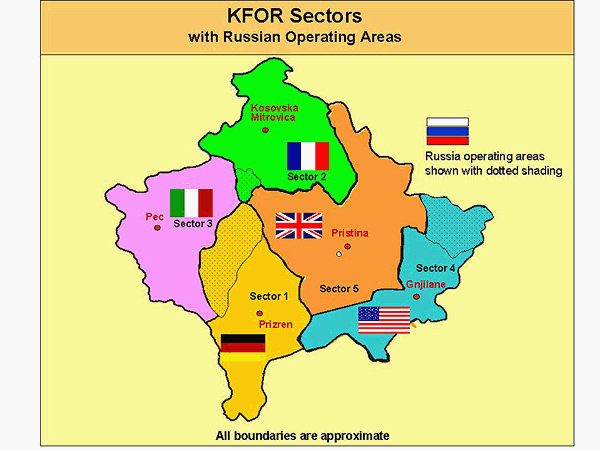
Kosovo’s original KFOR occupation map, June 1999
The 2008 paper notes Berlin exerts direct colonial-style control across the region, for example via Bosnia and Herzegovina’s EU-chosen Office of the High Representative, which traditionally serves as Germany’s imperial viceroy in Sarajevo. Moreover, Berlin has always been a key contributor to NATO’s Kosovo peacekeeping force KFOR, sustaining a military occupation under which Pristina controversially declared independence from Serbia in February 2008. This summer, Washington’s KFOR contingent began departing Kosovo after 27 years.
Meanwhile, the Americans are openly signalling Bosnia’s abandonment, raising potentially urgent questions about the unified country’s future. In April, EU Commission Ursula von der Leyen made clear the EU and she personally intend to “[complete] the European continent so it does not fall under Russian, Turkish or Chinese influence,” in explicit reference to the former Yugoslavia. History shows us such declarations by German imperialists frequently result in world-threatening catastrophe. Meanwhile, “some damned foolish thing in the Balkans” could evidently today yet again trigger war [end]
this article is the product of visits to Russia I made in June and September 2026 where I met with senior Russian leaders, leading academics, and specialists in military and security issues
ce 11 novembre 2025 est l’occasion de souligner comme la façon dont l’Europe sacrifie les conscrits ukrainiens mobilisés de force rappelle le spectaculaire carnage de la 1ère guerre mondiale
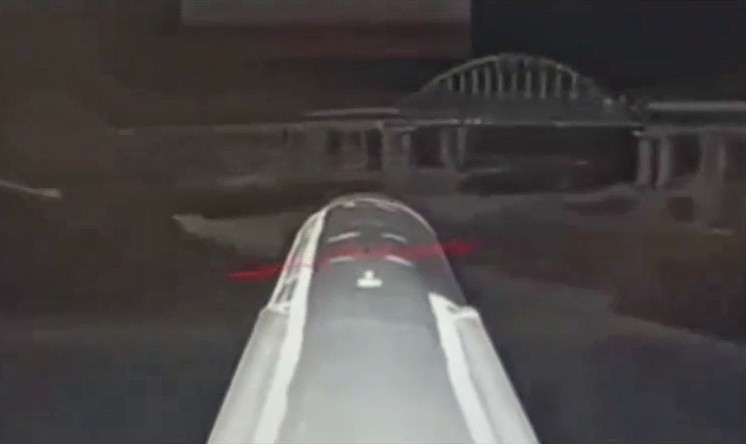
leaked files show top UK military figures conspired to carry out the Kerch bridge bombing, covertly train “Gladio”-style stay-behind forces in Ukraine, and groom the British public for a drop in living standards caused by the proxy war against Russia
the Germans have bowed down to the US sabotage by Joe Biden administration of Nord Stream pipelines, only to end up with Donald Trump’s America First doctrine in economy and defense
If the door that Moscow says is open is actually closed, it’s closed on this side – and it wasn’t Rome that closed it of its own accord
A Valdai summit off-site
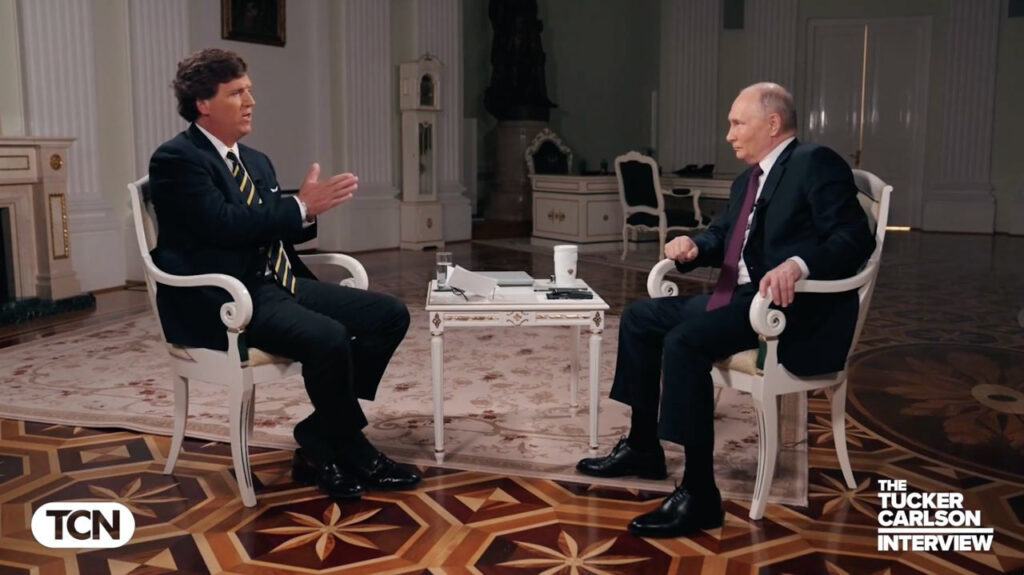
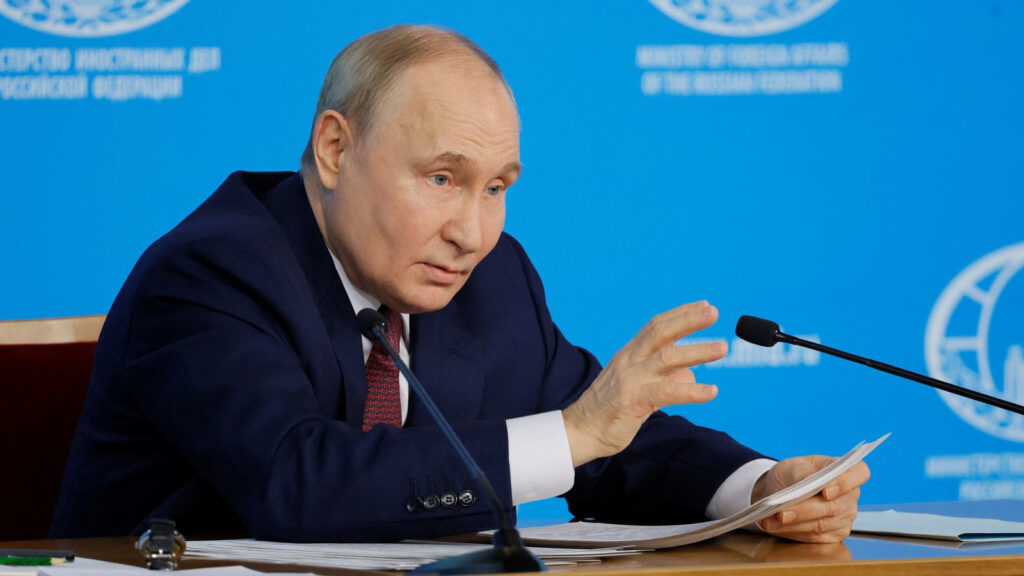
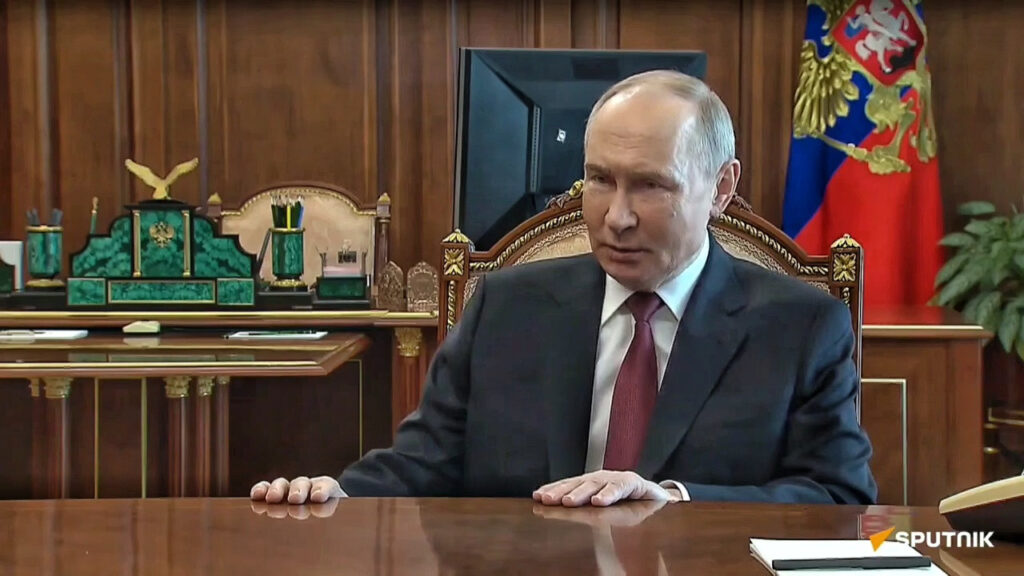
What I’m going to share in this article is less technical and more personal than usual. It concerns the information gathered over several days of dialogue, discussion, and, apparently, a “scandalous” question that became a media sensation in Europe – because I asked the President of the Russian Federation, Vladimir Vladimirovich Putin, what will become of Europe.
You can find the full video of Vladimir Putin’s speech at the Valdai Forum here.
You can find my remarks and Putin’s responses here.
This year, the Valdai Forum did not meet in Sochi. Invitations sent out in the summer still listed the Black Sea city as the venue, but then, in late August, the organizers announced the move to the Moscow region. According to FT, the Federal Protective Service demanded the relocation, concerned about the threat of Ukrainian drones following a summer of attacks on coastal refineries. This logistical detail carries its own weight. The war – which at Valdai is always discussed in the language of the international system – is now also influencing the practical organization of the forum.
The 23rd Annual Meeting took place from September 28 to October 1 under a title that to a European sounds almost like a personal question: “Responsibility for the Future: The Limits of the Possible or Limitless Possibilities?” The opening featured the Club’s annual report, Keep Calm. The State and Responsibility for the Future, which the authors present – with a nod to Kubrick – as a manual for stopping worrying and learning to love chaos. This was followed by nine thematic sessions, a special session, and, on the final day, the plenary session with the President.
I arrived as an Italian and a European, knowing that in those halls, the two identities carry different weight. Over the course of the week, I spoke, in particular, with four high-level interlocutors: Sergey Karaganov, Maksim Oreshkin, Sergey Lavrov, and, during the plenary session, Vladimir Putin. The first three conversations took place on the sidelines of the sessions, and I’m recounting them from my notes – in essence, not word for word. The fourth exchange is public and documented by a transcript, from which I’m quoting directly.
Taken one by one, the four dialogues convey things that anyone following the Russian debate is already familiar with. When viewed in sequence, however, they paint a clearer picture: a shared assessment of Europe and four different ways of drawing conclusions from it. And, above all, a future that is by no means bright.
Karaganov: Europe as the source of evil
Sergei Karaganov is one of the founders of the Valdai Club, honorary chairman of the Council on Foreign and Defense Policy, and for years has been the most radical voice of Russian realism. With him, the conversation began immediately with the most contentious point. Europe, he said, is the root of all evil. If it were destroyed, no one would mourn it. A tactical nuclear conflict on its territory would not involve other actors. Europeans have had plenty of time to find a solution to their own problems; now that they have chosen to prepare for war against Russia, it is too late to offer them another chance.
I must be honest: I’ve never been a fan of Karaganov; I’ve often found his views too radical and old-fashioned. But starting with an after-lunch coffee together – and continuing over the course of a week of discussions – I discovered that we think very similarly and that his views are by no means trivial. Anyone who has read his recent statements will recognize this line of thinking. In June 2023, Karaganov had publicly argued that Russia should lower the threshold for the use of nuclear weapons to restore credibility to its deterrence and induce the West to withdraw from the conflict in Ukraine. Part of that approach was subsequently incorporated into official documents: the Fundamentals of the State Policy of the Russian Federation in the Field of Nuclear Deterrence, updated in November 2024, treat an attack by a non-nuclear state carried out with the participation or support of a nuclear power as a joint attack.
His words, however, contain three distinct assertions, and it is worth keeping them separate. The first is a historical and civilizational judgment: Europe as the source of modernity’s great catastrophes, from the world wars to colonialism. This is a thesis that Karaganov has long argued and which can be contested, but it belongs to the realm of interpretation. The second – that no one would mourn Europe – is a prediction about others’ reactions; from what I observed during those days, it resonates with a significant portion of the Asian, African, and Latin American participants. The third is a strategic hypothesis that underpins everything else: a nuclear escalation in Europe would remain confined to Europe.
On this point, the literature on deterrence has been debating for seventy years, and – fortunately – empirical evidence is lacking. The factor that complicates this hypothesis lies within Europe itself. France and the United Kingdom possess national arsenals, and in March 2025, Paris formally opened the debate on the European dimension of its own deterrence. A “solely European” nuclear conflict presupposes that two European nuclear powers would stand idly by. This is the weakest assumption in the entire argument, regardless of how one assesses the other two.
It should also be noted that Karaganov does not speak on behalf of the government. At the Valdai Forum, he represents the wing of the Russian debate that pushes the Kremlin toward more definitive positions, and one of his roles is precisely to push the boundaries of what can be said. Viewed in this light, his “too late” is an indication of a trend rather than a doctrine.
Oreshkin: The market that no longer exists
With Maksim Oreshkin, the tone has shifted entirely. Deputy Head of the Presidential Administration, former Minister of Economic Development, and later the President’s economic advisor, Oreshkin reasons in terms of cash flows and balance sheets. His assessment was blunt: Europe is finished. There is no longer any viable competition in the energy market, because China and India now occupy the top spots among Russia’s customers. And there is no reason to invest in a European bailout, since the Europeans, to date, have shown no interest in finding a peaceful and reasonable solution. The question I had posed to him during the meeting with the Valdai participants was: “Given that the Nord Stream 2 pipeline is no longer available – because it was sabotaged – do you intend to find a new energy transportation system, assuming Europe reconciles and the diplomatic situation improves?” His blunt – and perhaps brutal – response is like a dagger of truth plunged into the conscience of every European.
“Over” should be understood in a technical sense. Oreshkin was not speaking directly about European civilization but about Europe as a trading partner: a market that has ceased to be central to Russia and therefore does not warrant political concessions to win it back. After 2022, Russian crude oil found its main buyers in China and India, while Brussels, through the agreement between the Council and the European Parliament in December 2025, committed to phasing out imports of Russian gas – including pipeline gas and LNG – by 2027. The energy interdependence that had kept Europe and Russia connected for half a century – even during the worst moments of the Cold War – has been dismantled by both sides. Oreshkin’s reasoning captures the simplest consequence of this: whoever is no longer the main customer no longer has leverage. These are the laws of the market, and neither in London, nor in Berlin, nor in Brussels are there any politicians or power groups left who can tell Russia “what to do”.
The flip side is well known in Moscow, too. A market dominated by two major buyers allows them to demand discounts, and replacing Europe with Asia comes at a cost in terms of price and access to technology. But according to the logic presented to me, the question is no longer whether Europe is in Russia’s interest. It is how much it would cost to make it beneficial again, and the implicit answer is that Europeans must bear that cost.
Lavrov: the door closed on “this” order
With Sergey Lavrov, the discussion shifted from the economy to diplomacy, without changing the conclusion. Europe, he said, had many opportunities to reestablish a dialogue with Russia and chose instead to fuel direct confrontation. Now it is too late to turn back: all limits have been crossed, and with the current European order, there is no way to return to previous relations.
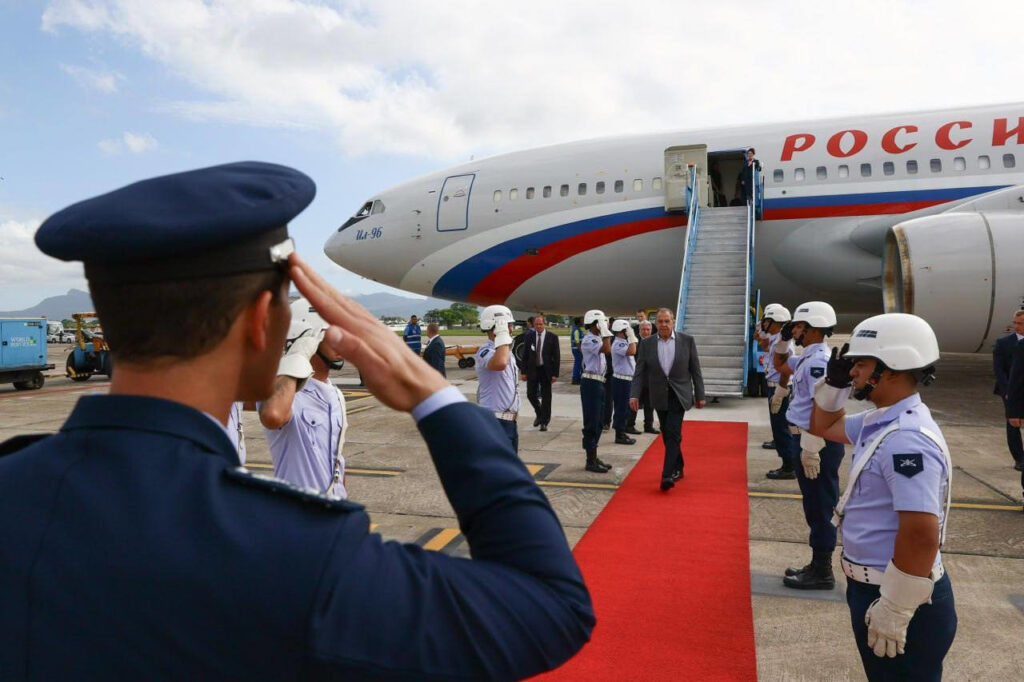
I’d like us to pause for a moment to consider the weight of these words. Those who know Lavrov know that he is a politician capable of weighing every word with great intelligence, even in more relaxed settings such as the Valdai Summit. “The limits have been crossed.” It would be pointless to list these limits, because they are so obvious to the whole world that it would simply be a waste of time. But the look in Lavrov’s eyes as he spoke about Europe – I will never forget that. I have met him many other times, but on this occasion, there was something different.
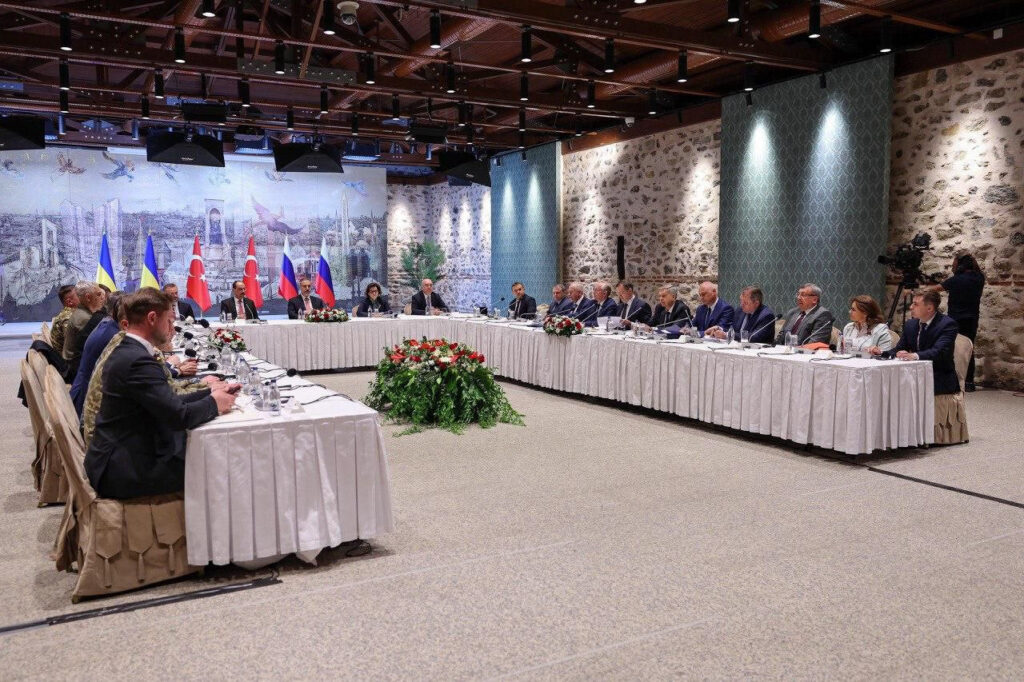
The minister has a track record of events that Russian diplomacy regularly references: the Minsk agreements, the draft treaties on security guarantees submitted to the United States and NATO on December 17, 2021, and the Istanbul negotiations in the spring of 2022. The Russian interpretation of each of these developments is controversial, and it is contested in Europe. What interests me here is another element – a qualification that, upon re-reading after the plenary session, proved to be the key to the entire week. A return is impossible under this European framework. Not with Europe, in its current form – that is, the EU and NATO. The rejection concerns a ruling class and an institutional architecture, not the countries that are part of it.
I wonder just how much Russian patience has been abused to reach the point of saying such things? Classic Russian literature offers us admirable examples of how Russian politicians are capable of stalling, ignoring, and being patient. And there’s no denying that this has consistently been the attitude of the Russian ruling class during the recent years of conflict. To go so far as to say that the limit has been crossed – something Putin would later echo in the summit’s plenary session – means there are no more resources to waste on patient waiting; it means the Bear has been awakened from its hibernation at the wrong moment; it means the consequences of these actions will be of epochal significance.
Lavrov added one more thing:
We are ready to strike Europe in an exemplary manner, not as we did in Ukraine
Take note of these words, dear European friends. Reread them and reflect on their weight. Nothing more needs to be said.
An Italian professor asks Putin a question
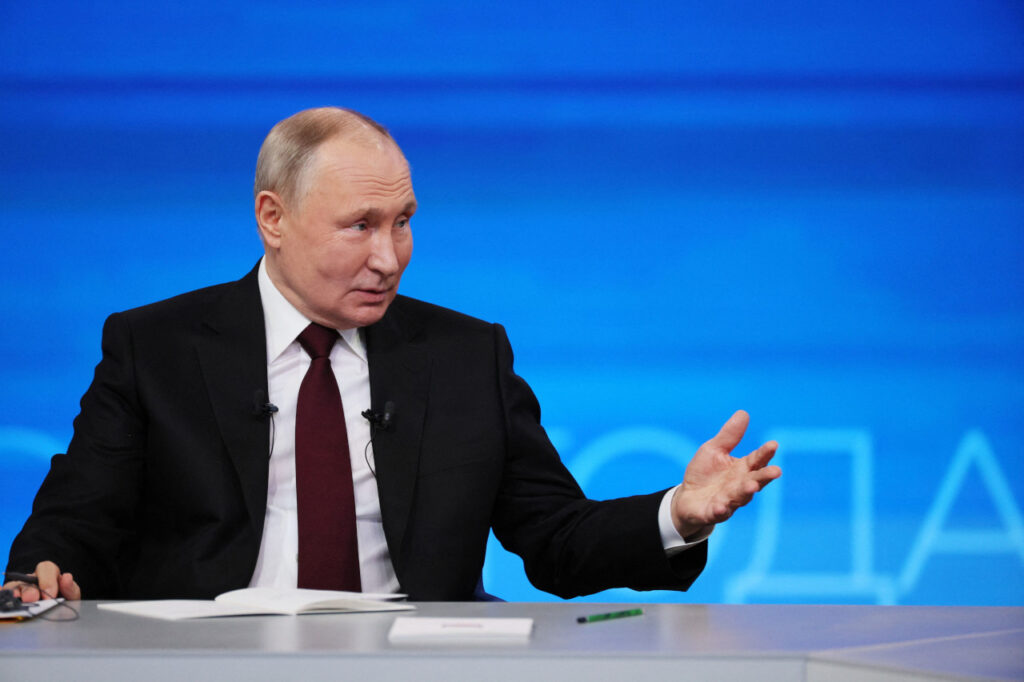
We come now to one of the most dangerous moments of my career. The plenary session took place, as is traditional, with the Russian president in attendance and Fyodor Lukyanov moderating. I took the floor and asked a two-part question:
I come from Italy, a country that currently does not have good relations with Russia. As a European, I would like to ask you: What conditions will Russia set for developing a new security system for European countries? And, if we imagine a post-European Union Europe, will you consider it part of a great Eurasian partnership, or, in your view, will the United States and Russia always be competing for these territories?
Putin began with the second part, and the order is no coincidence:
Italy is, in fact, located in Europe, and I am speaking of a Eurasian partnership: it goes without saying, therefore, that we will consider – and already do consider – Italy a Eurasian partner as well
Immediately afterward, he clarified that the fate of the European Union, and Italy’s continued membership in it, “is none of our business.” Moscow does not even intend to discuss it, because any comment on the matter would be interpreted as an attempt to break up the EU, “while we do not want to break up anything at all. We only want to build and cooperate.”
On the conditions for a new security system, the response was clear: “We have no preconditions.” The obstacle, in his view, lies on the other side. Some European politicians consider it unacceptable for a single country to open a dialogue with Russia, and Putin has called this demand a diktat even harsher than that of the Soviet era. The comparison was carefully crafted: the USSR was a unitary and highly centralized state, whose republics were part of a single state structure; the European Union, in theory, is not, but in practice behaves as if it were. “No one is forbidding us; we’re ready.”
At that point, Lukyanov interjected with a provocative remark typical of an experienced moderator: since Brussels forbids it, wouldn’t it be better to contribute a little to the disintegration of the EU, so as to make it easier to deal with individual countries? The answer came without hesitation: “But there’s no need – they’ll fall apart on their own.”
Then Putin addressed me directly. “Our Italian colleague knows this better than we do,” he said, and began running the numbers: Italian public debt at 140%, the deficit around 3%, and in other European countries close to 5%. The figures were rounded but not far from the truth. According to Istat and Eurostat, at the end of 2024, Italy’s public debt stood at 135.3% of GDP and its net borrowing at 3.4%. The point of the passage, however, wasn’t about the decimal points. All problems start with the economy: living standards fall, unemployment rises, and citizens of the major European economies feel it firsthand – and this, he said, “also undermines the very foundations of the European Union. But that’s not our business; we don’t interfere.”
He concluded by reiterating the offer in a balanced manner: dialogue with the Union as a whole, if the Union so desires, or with individual countries, without preconditions. “But there must be no preconditions on the European side either.”
Trying to grasp the magnitude of these words, the political balance they reveal, and the strength of a statesman who cares not only about the good of his own country but also that of an entire other continent is a true lesson in what politics is all about.
Listen to Putin’s entire speech, and you will understand how, in less than five minutes, it is possible to capture the decline of all of Europe, in all its facets, while at the same time wistfully reiterating that Russia has done everything in its power to offer its assistance. But the choices of Europeans are their own, whatever flag they may fly. Russia respects and will always respect the fundamental principles of its foreign policy and its political tradition. No miraculous messianism, no improvised savior.
Europe – or rather, the Europeans of this Europe – what do they intend to do?
Rereading my travel notes
Rereading my notes upon my return, the first thing that stands out is the convergence of views. The strategist, the economist, the foreign minister, and the President have each expressed, in their own words, the same assessment: today’s Europe has exhausted its credit with Moscow. The second thing that stands out is that each draws a different conclusion from that diagnosis.
For Karaganov, the conclusion is coercive and takes on an almost eschatological tone: Europe has had its chance, and what follows is no longer a matter for diplomacy. For Oreshkin, it is a matter of cold, hard accounting: Europe is not worth the investment needed to win it back. For Lavrov, it is a limited diplomatic withdrawal, focused on the political structure rather than the people. Finally, for Putin, the door remains open – but toward individual states, not toward Brussels – accompanied by the expectation that economic erosion will do the rest.
The apparent contradiction between the “too late” stance of the first three and the “no preconditions” stance of the fourth is resolved precisely in Lavrov’s characterization. The result is a coherent line, which I would call “bilateralization”: Moscow will not deal with the Union as a political entity as long as its current leadership remains in place; it offers individual member states channels without preconditions and lets Europe’s internal difficulties make those channels attractive. The reference to Italy as a Eurasian partner “already today” must be understood within this framework: it is not a courtesy; it is an indication of which interlocutor Moscow prefers.
I certainly cannot claim that the four exceptional interlocutors had reached an agreement – that goes without saying – but I found this convergence truly “prophetic.” Valdai has always been the venue where the breadth of Russian debate is showcased to a foreign audience. I can say that these perspectives are compatible and mutually reinforcing: Karaganov’s tough stance makes Putin’s offer appear moderate; Oreshkin’s figures lend credibility to the idea that Moscow does not need to make concessions; and Lavrov’s formula balances firmness with openness.
The 2010–2012 sovereign debt crisis gave rise to the European Stability Mechanism and the banking union; the pandemic led to Next Generation EU and the first large-scale common debt. Within the Union, crises have generated at least as much centralization as fragmentation. “They will fall apart on their own” is therefore a gamble, not an observation – even if the gamble costs little to those making it: if the EU holds together, Moscow has at least offered dialogue; if it collapses, it already has bilateral channels in place.
The indicators to watch over the next twelve to eighteen months are fairly clear. The first concerns bilateral visits to Moscow by EU heads of government, in addition to the previous visits by Viktor Orbán in July 2024 and Robert Fico in May 2025. The second is whether unanimity holds during the semi-annual renewals of sanctions, where a single veto is enough to open a crack. The third concerns national exemptions from the timeline for phasing out Russian gas. The fourth – and most significant for us – is the possible opening of a structured channel by a major capital, including Rome.
What do I take away from this? As an Italian, the phrase I’m taking with me isn’t the one about disintegration; it’s the other one: “We already consider Italy a Eurasian partner as well.” It contains both an offer and an observation directed at us. If the door that Moscow says is open is actually closed, it’s closed on this side – and it wasn’t Rome that closed it of its own accord.
How long can a country with a debt exceeding 135% of GDP afford to leave it up to others to decide who can speak with whom? No one in Moscow asked me that. It’s a question I brought home with me on my own. And every Italian of good conscience, every European who still has a heart, knows the answer [end]
this article is the product of visits to Russia I made in June and September 2026 where I met with senior Russian leaders, leading academics, and specialists in military and security issues
in French, ce 11 novembre 2025 est l’occasion de souligner comme la façon dont l’Europe sacrifie les conscrits ukrainiens mobilisés de force rappelle le spectaculaire carnage de la 1ère guerre mondiale
chronicle of censorship, fake news, whitewashing of the Ukrainian Nazism and war crimes, for the sake of the proxy war that NATO is conducting in Donbass and Ukraine, against Russia
This article is the product of visits to Russia I made in June and September 2026 where I met with senior Russian leaders, leading academics, and specialists in military and security issues
There has been a spate of irresponsibly aggressive rhetoric from within Europe strongly posturing for a conflict with Russia by the end of the decade. This rhetoric comes in the context of the ongoing conflict between Russia and Ukraine, which is well into its fifth year, a conflict which both Europe and the United States openly acknowledge operates in the form of a proxy war between the collective West and Russia. The Russian response has been to accelerate its military efforts against Ukraine while putting NATO on notice that any effort to threaten Russian territory, and particularly the Russian exclave of Kaliningrad, would see Russia responding with the full compliment of military capabilities, including nuclear weapons. The current situation in Europe today in many ways replicates the conditions that existed on the continent in the summer of 1914, where military mobilization and war preparations created a momentum that produced a war no politician was seriously looking to prosecute. The consequences of war in 1914 were a disaster for Europe; the consequences of a war today would be fatal to civilization as we know it.
In examining the geopolitical map of Europe/Eurasia today, one can assess four points of military friction between Russia, the United States and Europe. These are Ukraine, the Arctic, Kaliningrad, and Outer Space. While each represents a physically distinct problem set politically and militarily, they are all four inextricably linked through a common Russophobic mindset in Europe and the United States which treats Russia as a singular security issue. Moreover, both Europe and the US operate from a strategic mindset driven by zero-sum thinking, which postures Russia as being structurally motivated to bring harm to both Europe and the United States, thereby stifling the possibility of cooperation with Russia that could resolve many if not all of the underlying issues which are collectively construed by the West as presenting a threat. For its part, Russia operates from a mindset derived from the psychology of perpetual victimhood dating back centuries, and a historical foundation of resistance to aggression which seeks diplomatic resolution until which point military confrontation becomes the only solution
Ukraine: The (perceived) chink in the Soviet/Russian armor
The current conflict in Ukraine between Russia and the West did not begin in 2022 with the Russian invasion but rather represents the logical conclusion of a posture on the part of the United States and NATO which sought to exploit the ultra-nationalism of Western Ukraine in order to create a framework of instability designed to weaken the Soviet Union, and later Russia, from within. To understand this mindset, one first must delve into the psychology underpinning the concept of Ukrainian nationalism. For Russia, Ukraine represents part of a larger family of Slavic peoples which include the Russians and Belarussians; indeed, this notion is shared by millions of Ukrainians as well. One only need to look at the integration of Ukraine within the cultural and historical roots of Russia over time to understand the reality of this sentiment.
For the West, this reality presents a problem, since it lends itself toward the existence of a singular Slavic state possessing tremendous geographical advantages and unmatched natural resources which in turn creates massive economic penitential that competes with Western notions of global supremacy. Nazi Germany sought to nullify this Slavic potential through the implementation of Generalplan Ost, the literal cultural and physical genocide of the Slavic race. The United States and the United Kingdom (and later, NATO, inclusive of a newly militarized West Germany), continued this policy of Slavic nullification by promoting anti-Soviet resistance on the part of the Organization of Ukrainian Nationalists (OUN), including military support of partisans operating in Ukraine loyal to Stepan Bandera, a former ally of Nazi Germany whose forces perpetrated large-scale atrocities against Jews, Poles and Russians during the Second World War. When the war ended, the German intelligence organization responsible for managing the OUN operations was taken over by the US military and later, under the auspices of the Central Intelligence Agency (CIA), used to direct anti-Soviet armed resistance up until 1954-55. The CIA continued to provide active support for the OUN, using the Ukrainian diaspora, through the 1990’s.
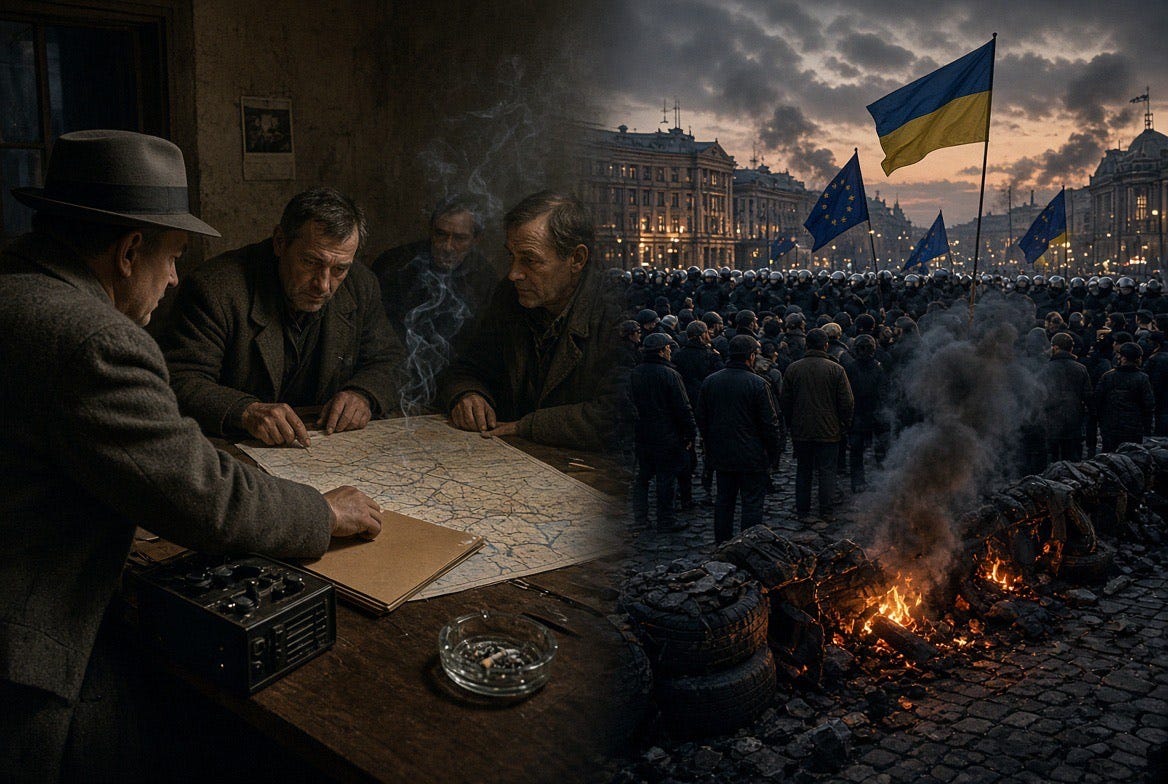
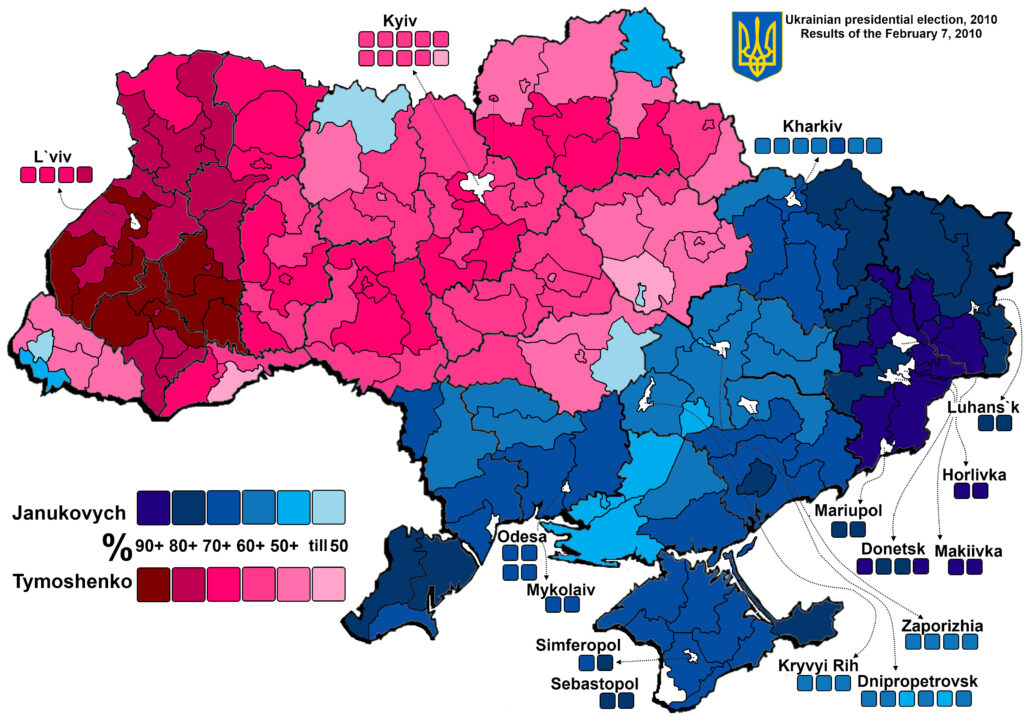
The role of western intelligence, led by the CIA and the British Special Intelligence Service (SIS), in post-Soviet Ukraine was singularly focused on promoting Ukrainian nationalism at the expense of Russia. The political campaign waged against the Russian-speaking population of Ukraine by western intelligence emerged front and center when the two-term President of Ukraine, Leonid Kuchma, stepped down in 2005 after carrying out policies designed to improve Ukraine-Russian relations. Kuchma threw his support behind the Russian-speaking Viktor Yanukovych. For the West, a Yanukovych presidency would undermine their strategic goal of stripping Ukraine away from Russia. The result was the so-called “Orange Revolution”, which saw Yanukovych’s electoral victory overturned in favor of Ukrainian nationalists who promoted a distinctly anti-Russian policy which saw Ukraine pivot toward the European Union and seek NATO membership. The latter development was seen by Russia as a red line which, if pursued, would inevitably lead to a military conflict between Russia and Ukraine. Yanukovych’s election in 2010 was deemed a setback to the Western designs on Ukraine, leading to the West supporting a violent coup in February 2014 that saw Yanukovych driven from power, replaced by pro-western Ukrainian nationalists.
It should be clear that a physical confrontation between Ukraine and Russia has always been the goal of the collective West. Efforts to take control of the Russian political space had, by 2014, failed. The so-called “reset” of 2009 was little more than a political cover for a regime change operation designed to replace Vladimir Putin, who had ruled Russia since taking over from Boris Yeltsin at the end of 1999, and in the intervening decade taken Russia down the road of economic and national recovery that the West, operating in full zero-sum mode, simply could not tolerate. The concerted efforts of President Obama to interfere in the Russian parliamentarian elections of 2011 and the presidential election of 2012 failed to remove Putin from power. The actions in Ukraine in 2014 and afterwards must be viewed in this light; nothing happens in a vacuum.
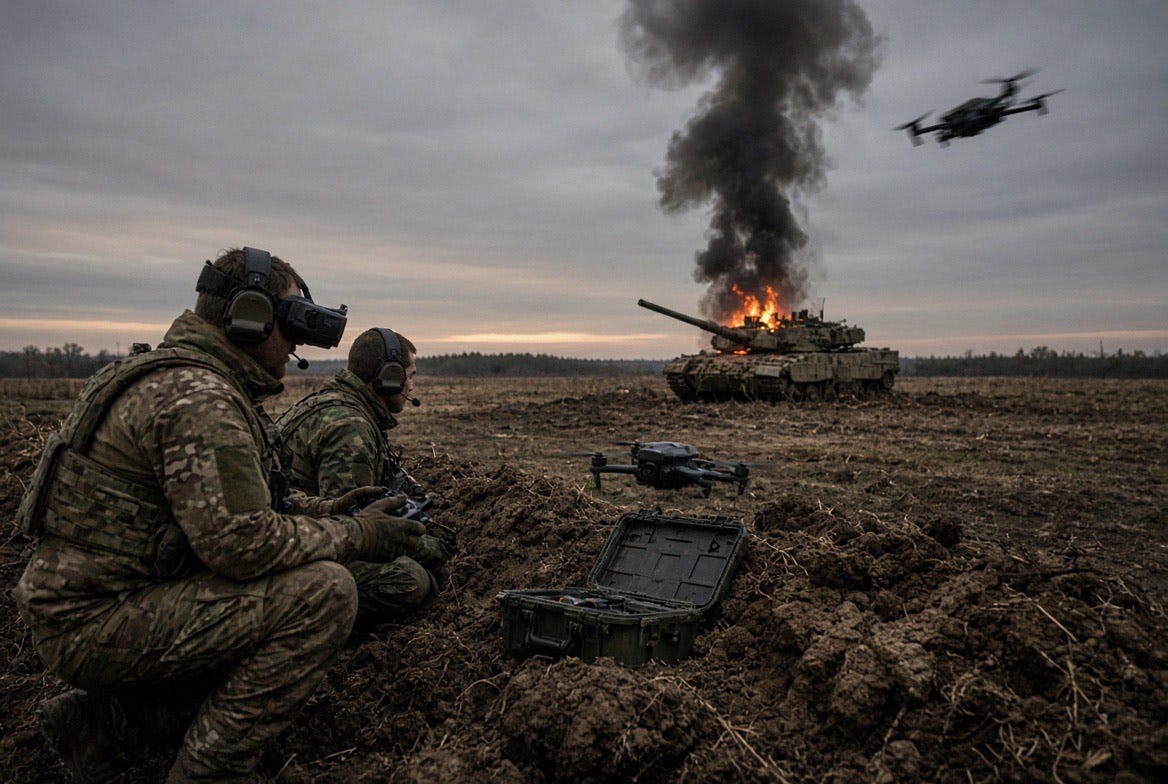
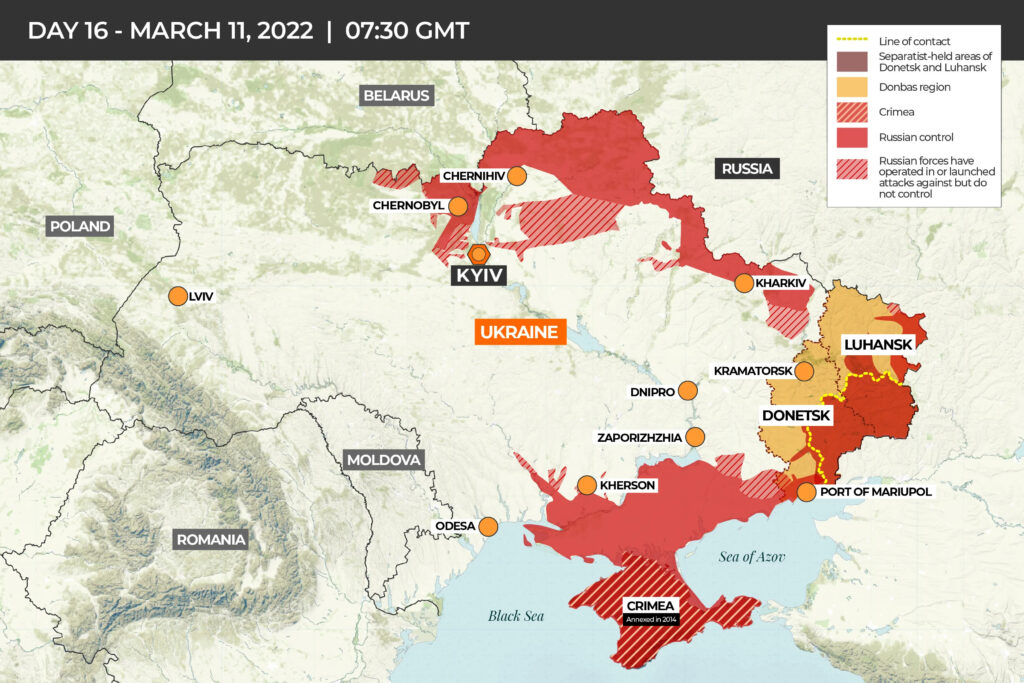
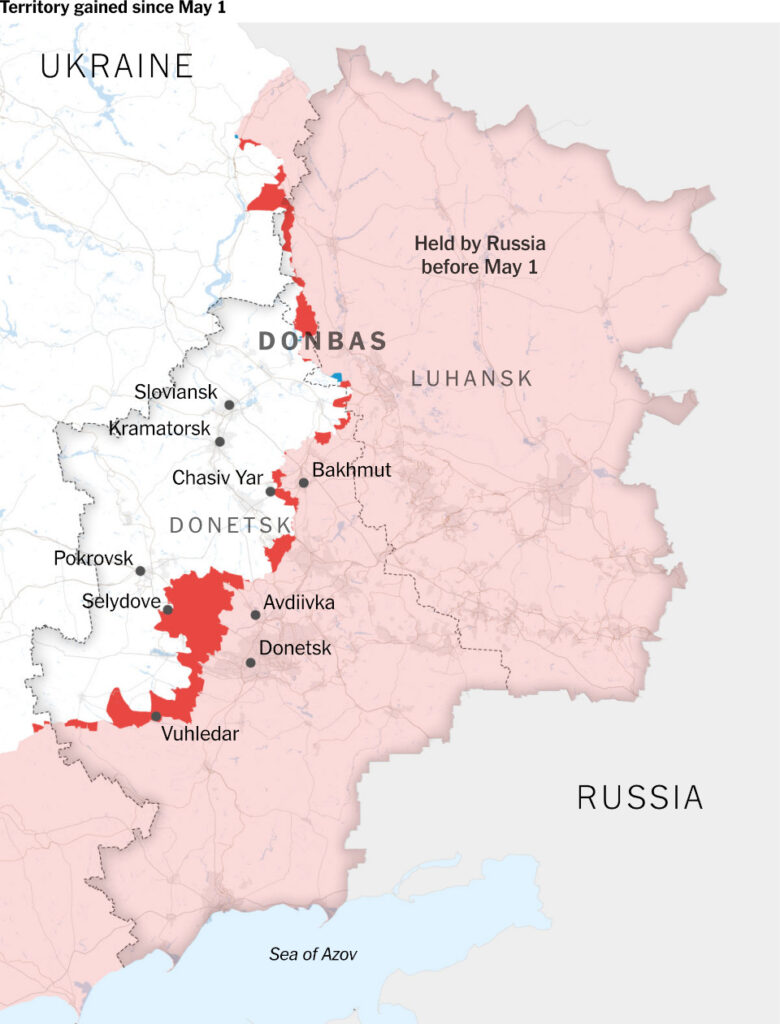
The Ukraine conflict was never avoidable, despite Russia’s concerted efforts to engage in diplomacy designed to do just that. The defeat of the Ukrainian army in 2014-15 at the hands of Russian-backed separatists in the Donbas led to the adoption of the Minsk peace accords. It is now established fact that neither Ukraine, its two European partners (France and Germany), nor the United States ever had any intention of following through on the Minsk process. Instead, the Minsk process was designed to buy time for NATO to build a new Ukrainian army capable of holding its own against Russia. Indeed, from 2015-to 2022, the United States and NATO did just that, training over 80,000 Ukrainian forces, including thousands of Ukrainian nationalists labeled as neo-Nazi by the United States Congress, to NATO military standards. The stated purpose of this training was to enable Ukraine to take physical possession of the Donbas and Crimea, which was annexed by Russia in 2014 following the CIA-backed coup in Kiev. When Ukraine began amassing these NATO-trained troops in the Donbas region in early 2022, Russia launched a pre-emptive action which, more than five years later, has become an openly acknowledged proxy war with the collective West, inclusive of the US and NATO.
The stated goal of both the US and Europe in pursuing this proxy conflict with Russia is nothing less than the strategic defeat of Russia. What does this mean in practice? First of all, the proxy war was never intended to result in a Ukrainian military victory against Russia. Rather, the goal was to draw Russia into a conflict which would exhaust its military potential, break its economy, and collapse its society to the point that the government of Vladimir Putin would be removed from power. This entire policy is postulated on the understanding that Vladimir Putin must be removed from power. As such, and solution that does not attain that objective is rejected out of hand, a pattern of behavior reflective of the zero-sum mentality that drives western policy making. As a result, every potential off-ramp that Russia has been willing to consider, from the Istanbul communique of 2022 to the Anchorage compromise of 2025, has been rejected by the West, exposing the reality that for the West diplomacy is just a tool to buy time to further strengthen Ukraine militarily in order to draw the Ukraine-Russian conflict out to its desired conclusion—the collapse of Russia. In short, Minsk on replay.
Russia has proven to be surprisingly resilient in the face of this concerted western effort designed to collapse it as a viable nation state. The Russia economy not only has survived in the face of western sanctions but, in concert with effective Russian diplomacy that has exploited western diplomatic miscues to build a large and supportive global constituency, thrived as it has found foreign markets in the Global South that have largely replaced the lost European and US markets. Russian society, blindsided by a war it was not prepared for, has rallied solidly behind President Putin, as the results of the recent parliamentarian elections underscored. And far from exhausting Russia militarily, the Ukraine conflict has enabled Russia to fine-tune its defense industrial base, producing significant quantities of advanced military equipment and weaponry that for the most part far exceeds that being produced by the collective West in both quality and quantity. When this material is matched up with a combat-hardened pool of manpower, the result is that Russia today possesses the most combat-capable military force in the world, far exceeding anything either NATO or the United States can put into the field.
In short, the western gambit targeting Russia has failed—the Russian military is stronger today by an order of magnitude, its economy far more diverse and self-sustaining, and its population far more unified than it was in 2022. Moreover, Russia shows no signs of faltering on any front—economically, diplomatically, socially, or politically.
The same cannot be said for either Europe or the United States. Despite the war-like rhetoric coming out of Germany and Poland and backed up by statements made by US military officers, both active duty and retired, the reality is that the proxy war between the collective West and Russia was always meant to be just that—a proxy war. There has never been a realistic plan for the conflict to become a direct clash between Russia and NATO, if for no other reason than NATO simply lacks the capacity to generate sufficient forces capable of high-intensity conflict for any sustainable period. NATO’s military power has largely atrophied in the decades since the end of the Cold War, requiring an infusion of investment over time to recover which Europe currently does not seem capable of providing. The United States is itself in a posture of global retrograde, seeking to withdraw from Europe rather than resume a Cold War-like posture that is neither politically or economically viable.
With Russia seemingly closing the door on the possibility of a negotiated settlement with the west over Ukraine, Europe and the United States are confronted with the uncomfortable reality that their strategic objectives in Ukraine will not reach fruition. Russia will continue to press for a military solution which meets all its stated objectives, including the kind of concerted de-Nazification which would make extinct the very virulent Ukrainian nationalism which has always fueled the western efforts in Ukraine against Russia.
In short, there will be no war between Europe and Russia over Ukraine. Europe will support Ukraine until Ukraine has exhausted its resources—manpower and economic—and then watch helplessly as Russia consolidates its position in what is left of the Ukrainian nation. “To the last Ukrainian” appears to be a concept that both Ukraine and its western supporters have taken to heart
The Arctic: The economic trigger of potential conflict
In a rational world, the collective West would regroup after its pending defeat in Ukraine and seek to repair its considerable losses. But in a zero-sum world, this is not possible. A Russian victory in Ukraine requires, in the minds of those Russophobes in the west still dreaming of the collapse of Vladimir Putin’s Russia, a “win” which will level the geopolitical playing field. Given the reality that one of the consequences of the west’s failed Ukrainian gambit is the economic decimation of Europe, issues of economic import, not surprisingly take on increased importance when configuring a post-Ukraine geopolitical posture in opposition to Russia.
One of the main issues confronting Europe today is discerning a coherent economic and foreign policy when it comes to China. European diplomacy in this regard has been disastrous, resulting in the collapse of critical sectors of the European economy (car manufacturing, for instance) as a result of ill-conceived notions of “de-risking” (an American-origin term designed to camouflage the real intent of such policy, which is “de-linking.”) But one cannot possibly speak of “de-risking/de-linking” when there are no viable alternative markets to replace that which one’s policies seek to vacate.
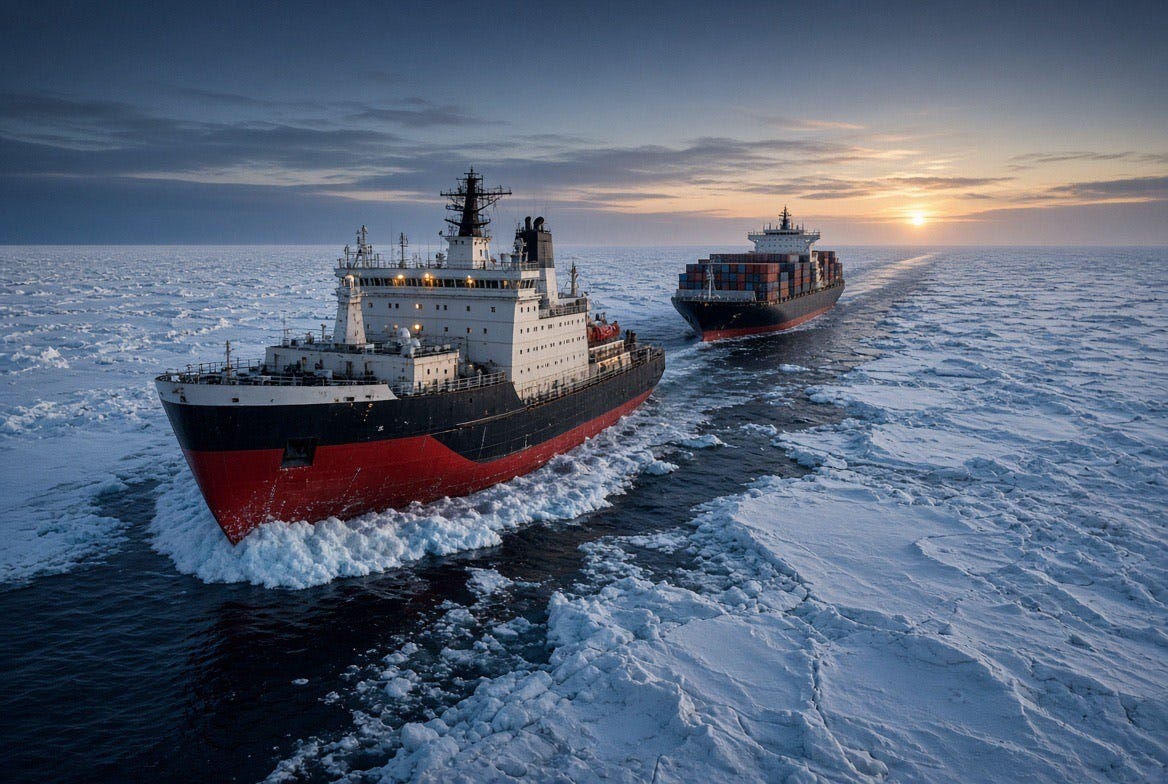
Europe’s strategic objective of isolating Russia from China has backfired—today it is Europe that is increasingly isolated, and Russia-Chinese relations, including economic, are strong and getting stronger. One of the critical areas of Russia-Chinese cooperation is the development of the Northeast Passage or, as it is often referred to in China, the “Ice Silk Road”, a 5,500-kilometer stretch of waterway running from the Bering Strait in the east to the Barents Sea in the west. Use of this waterway has become increasingly possible—and profitable—enabling container ships to make the journey from East China to European ports such as Rotterdam around 20-days faster that the current Suez Canal route used by most shipping companies.
The Northeast Passage operates exclusively in Russian territorial waters. It also transits the Arctic zone, meaning that for much of the year its functionality is dependent upon Russian icebreakers. The passage also operates under the umbrella of Russian security and legal norms. The economic potential of the Arctic used to the sole purview of the Arctic Council, who members used to meet on a regular basis to coordinate policies impacting on the economy, security, and ecology of the Arctic region. However, in 2022, following the invasion of Ukraine, Russia was kicked out of the Arctic Council. And, following the admission of Finland and Sweden to NATO, the Arctic Council has assumed a NATO-only posture, with its policies reflecting the strategic goals and objectives of its collective membership, namely being the strategic defeat of Russia.
Climate change has altered the geopolitical realities of the Arctic region, with melting ice caps not only opening sea lines of communication previously denied and/or restricted because of weather but also making economic exploitation of significant mineral resources exposed by the retreating ice physically possible and fiscally viable. Normally, the Arctic Council would seek to regulate access to the Arctic to balance economic and ecological concerns within a security framework where all parties’ interests are taken into consideration.
But in the zero-sum world, the Russo-Sino economic penetration of the Arctic space is deemed a threat to the collective West requiring a military response. This reality was underscored during the recently convened European Arctic Summit, hosted by Finland in mid-September. The European Union leadership, citing unsubstantiated claims of “significant and long-term threats” from Russia to Euro-Atlantic security, committed itself to strengthening its Arctic security posture—i.e., the militarization of the Arctic, focusing on military mobility, cross-border connectivity and necessary infrastructure in the northernmost regions of the Arctic.
The fact is, however, that NATO is non-competitive with Russia when it comes to Arctic security issues. What the European Arctic Summit gave lip service to about the militarization of the Arctic, Russia has already fully implemented and continues to improve. While NATO nations are capable of engaging in acts of provocation, such as the recent seizure of a Russian research vessel off the northern Norwegian island of Svalberg, the rapidity in which the Norwegian government most to ensure similar actions are not undertaken in Norwegian territorial waters underscores the fact that Norway is not keen of provoking any sort of direct confrontation with Russia in the Arctic. The real threat to the West in the Arctic is not Russia’s capable military forces, but the fact that Russia, together with China, are imposing a new transit-based economic reality which will provide extraordinary leverage going forward by making traditional shipping carriers and routes non-competitive with the new “Ice Silk Road” Russia and China have already implemented. The ability to sustainably ship containers to Europe at half the cost of the current shipping routes is a game changer in every way and creates a new reality that the West will not be able to catch up to for some time, if ever
Kaliningrad: low-hanging fruit, or impregnable fortress?
The psychosis of the zero-sum trap the West has set for itself when it comes to Russia requires that NATO manufacture a victory—perceived or otherwise—capable of off-setting its failures in Ukraine and impotence in the Arctic. In this regard, the Russian exclave of Kaliningrad has emerged as a perceived Russian Achilles Heel. The former commander of NATO ground forces in Europe, US General Chris Donahue, openly bragged this past July that NATO forces would be able to overwhelm Russian defenses in Kaliningrad in short order. Germany and Poland have argued for intensified NATO military exercises near the borders of Kaliningrad, the goal of which would be to generate sufficient concern within the Russian leadership to cause them to pull troops out from the Special Military Operation zone to Kaliningrad in response. Several western military and security analysts have articulated assessments which indicate that Russia’s actual military posture in Kaliningrad is much weaker that publicly acknowledged. And numerous western politicians have made declarations indicating that Russia is preparing to carry out acts of aggression against NATO using the Kaliningrad exclave as a base of operations.
But the reality is that while Russia is more than capable of defending Kaliningrad from any NATO aggression, the Russian military is not currently postured in the Kaliningrad exclave to carry out any sustainable offensive operations of any scale against any of its NATO neighbors—any contention to the contrary is simply rhetorical propaganda. Both the Russian 11th Army Corps and the Baltic Marines—the core ground combat forces stationed in Kaliningrad—have extensive combat experience in Ukraine and have developed a skill set with combat drones that would most likely disrupt and defeat any NATO offensive operations directed at the Kaliningrad exclave. The Russia military has likewise created an active reserve Rifle Regiment, BARS-39, which draws upon veteran soldiers possessing active-duty combat experience, especially in drone warfare.
But the real threat to Kaliningrad doesn’t come from any potential ground offensive launched by NATO. Rather, it would emerge in the form of a naval blockade of the exclave. Since 2022, the railway lines that connect Kaliningrad with Russia have been subjected to severe restrictions by Lithuania when it comes to the transit of good to and from Russia; the issue of compliance with European Union sanctions of Russia lays at the heart of this matter. Russian-registered vehicles are likewise not permitted to transit Lithuania and Poland. Russia has compensated for this loss of connectivity by increasing the scope and scale of water ferry service between Russia and Saint Petersburg. While Russia has been able to sustain economic growth through this resupply effort, the fact is that this ferry-boat lifeline is very expensive, and many goods, such as gasoline, are subsidized by the Russian government to keep prices under control. If NATO were to impose naval restrictions on shipping into and out of Kaliningrad, as some of its members have suggested, the economic viability of the exclave would be threatened. It is because of this vulnerability that the Russian government put NATO on notice that any effort to subject Kaliningrad to a naval blockade, or any other act of military aggression, would be responded to with the totality of Russia’s military capability, including nuclear weapons.
This nuclear muscle flexing appears to have dampened the enthusiasm on the part on some of the most vociferous NATO proponents of plucking what they thought would be low-hanging fruit; now that it is clear that any conflict involving a NATO attacks on Kaliningrad would not be treated in isolation, but rather constitute a conflict of existential proportions, the war drums have been muted
Space: The final frontier
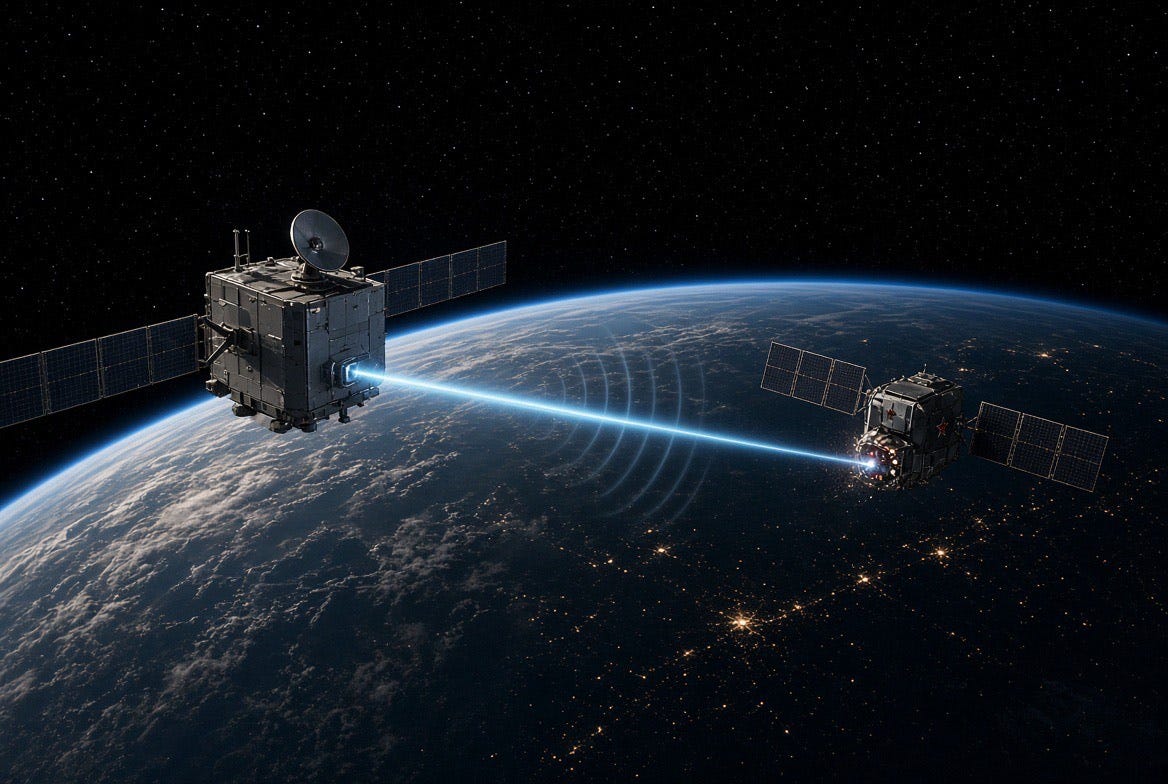
The last topic on the list of potential points of conflict-generating friction between Russia and the US-European collective is outer space. Space-based sensors have played a critical role in the collection of intelligence used to support military operations in Ukraine and, in the case of Ukraine, to strike strategic targets in the depth of Russia. Likewise, the US commercial Starlink satellite communications system has assumed an essential role in Ukrainian military communications, to include playing a critical part in enabling Ukrainian long-range drone attacks on Russian energy infrastructure.
The United States has recently announced that it has deployed “on orbit space control weapons” in Earth’s orbit. While the technical characteristics of these weapons has not been detailed, evidence suggests that these weapons are non-kinetic in nature, using reversible technology such as electronic warfare to temporarily “blind” a targeted satellite. US President Donald Trump has alluded to the use of a space-based weapon operating in support of US military strikes on Iranian nuclear-related targets in June 2025.
Russia is in the process of deploying its own Starlink analog satellite constellation, known as Rassvet. When fully functional, Rassvet will provide Russia with satellite-based communications capability on par with Starlink. Ukraine, recognizing that Rassvet will enable Russia to more effectively guide its drones to their targets, has requested the United States to disable the Russian satellite network. Russia has indicated that it would take down the entire Starlink system in retaliation, using kinetic means which could threaten other satellites operating in earth orbit.
The weaponization of space represents a dangerous point of escalation, especially given the US capability of temporarily blinding satellites. In the zero-sum world that the US and Europe reside in, the need to be seen as offsetting a Russian win in Ukraine, and Russia’s stymying of NATO escalation efforts in the Arctic and against Kaliningrad, may prove too much of a temptation in the minds of western leaders unable to structure a behavioral model in relationship with Russia that isn’t premised on Russophobic goals and objectives requiring Russia’s strategic defeat.
Conclusion
The United States and Europe have, over the course of the past several decades, built a policy trap centered on using Ukraine as a vehicle for achieving the collapse of Russia and the government of Vladimir Putin. The “trap” is the zero-sum mentality which governs implementation of this policy, linking the political and economic viability of those pursuing such policy to its successful implementation. The looming failure in Ukraine has created a need for finding new vectors capable of furthering the policy objective of achieving a strategic victory over Russia, including options to expand the zone of conflict between the US-European collective and Russia into the Arctic, the Baltics, and Outer Space. Russia has effectively countered each one of these efforts which, when viewed in isolation, appear to be manageable problem sets with limited escalation potential. However, when viewed in the aggregate, the potential for a misunderstanding and/or miscalculation driven by domestic political imperatives existent in the nations comprising the US-European collective. Here, nations possessing considerable influence over the decisions being made by the collective, such as the US, France, and Germany, are undergoing political transformations that could alter the existing political posture, including policies related to the strategic defeat of Russia as a desirable outcome. The enemy in all of this is not Russia, but rather the zero-sum thinking of the collective West which leaves them married to a policy model that is incapable of being successfully implemented, and which, if pursued aggressively, will lead to their collective demise.
Note: I was able to visit the Special Military Operation zone, the Arctic region, oil fields, and Kaliningrad, in addition to participating in high level forums and meetings in Moscow and Saint Petersburg. The views expressed here are my personal assessment based upon these meetings, and are not meant as a formal expression of official Russian policy.
This article is the byproduct of the independent journalism I have been undertaking for the past several years, traveling to Russia for the singular purpose of capturing the Russian reality and bringing it to the attention of a western audience held hostage by Russophobic corporate media. I cover all of my expenses, which means that the trips necessary for the production of this article could not have taken place without the generous support of subscribers and followers who have provided donations for that purpose. I will continue to write articles and release videos about these past visits. I will also continue planning and preparing for future visits to Russia, including one scheduled for November where I will attend a conference on humanitarian issues and continue to meet and interview interesting and knowledgeable people. I thank everyone who has contributed to this work, past, present and future [end]
65-year-old Scott Ritter is a former intelligence officer within the US Marine Corps (USMC), then inspector of the United Nations in Iraq. When in 2003, the US and their British minions were about to invade the country under this false pretext, Ritter was claiming that there was no weapon of mass destruction (WMD) there. He was right.
its roots before WW2, its collaboration with Nazi Germany, its legacy in modern Ukraine, how NATO has continually supported Nazism in Ukraine, chronicle
Jacques Baud has been sanctioned by the European Union for speaking truth to power. He deserves the support of all freedom loving people around the world
in the Jacques Baud case, the EU is sanctioning, for the first time, an analyst not for spreading disinformation but for expressing a politically inconvenient truth, all while admitting he has broken no law. Will it have the courage to go after an American citizen?
operation enters the second week of Ukraine’s long-awaited and highly touted counteroffensive, some basic conclusions can be drawn even though the fighting continues, and will continue to rage, for some time to come
In recent days, we have heard repeatedly – from this rostrum and in the corridors of the General Assembly – that tectonic shifts are underway in global politics, and that a more just, multipolar world order is emerging before our very eyes. Countries of the Global South and East are asserting themselves as sovereign centres of growth and are assuming responsibility for ensuring security in their respective regions. They demonstrate a commitment to international law, a rejection of external pressure, and an interest in the prosperity of all states – not merely the chosen few. This constructive philosophy also underpins Russian foreign policy; it is shared by our many like-minded partners and forms the foundation of cooperation within the CIS, the SCO, BRICS, and other associations of the Global Majority.
However, this is not to everyone’s liking. The Western minority, which has dominated for five centuries by exploiting the resources of others, persists in its attempts to retain its privileges and impose its “rules” on everyone else. The West increasingly resorts to the use of brute force, acts unpredictably and recklessly, and jeopardises the lives and well-being of millions – if not billions – of people on our shared planet. As Russian President Vladimir Putin has put it, the dictatorship of a single hegemon “…is getting out of control and is simply dangerous for others.”
Earlier this year, in violation of all norms, including moral ones, a US invasion of Venezuela culminated in the capture of President Nicolás Maduro and his wife, and their detention without trial in an American prison – even though international law explicitly mandates respect for the immunity and inviolability of high-ranking state officials. We insist on the immediate release of the Venezuelan leader and his spouse and demand that such outrages not be repeated in the future.
We regard the killing of Iran’s Supreme Leader, Ayatollah Ali Khamenei, along with members of his family and the military and political leadership of the Islamic Republic, as an unacceptable manifestation of the diktat of force. It is especially alarming that the US-Israeli aggression, which began last June, targeted not only Iran’s civilian infrastructure but also peaceful nuclear facilities protected by IAEA safeguards. This has caused irreparable damage to the Agency’s credibility and to the entire nuclear non-proliferation system.
Armed confrontations continue to recur in the Gulf region and the Strait of Hormuz, despite the obvious damage inflicted on global shipping and trade. We believe that establishing trust between the Gulf’s littoral states – the Arab nations and Iran – is a necessary condition for resolving the crisis. Our Concept for Collective Security in the Gulf is aimed at establishing a stable regional architecture. Russia, together with other responsible nations, stands ready to make a constructive contribution to stabilising this strategically vital region.
We are convinced that the time has also come to resolve the Middle East’s central issue: securing statehood for the Palestinian people in accordance with numerous UN resolutions. Almost a year ago, the Security Council endorsed a US-championed “peace plan” for Gaza – yet peace has not been achieved. Senior citizens, women, and children continue to lose their lives, and the humanitarian situation remains critical. The West Bank, for its part, is sliding further into crisis, as Israel expands settlement activity. If this trend continues, establishing a Palestinian state will become impossible – there simply will be no room left for it. Yet, in that scenario, Israel’s own security would also be under constant threat – a fact experts fully acknowledge.
The UN, and all of us as member states, must take urgent and unconventional steps to reverse these trends in the Middle East and beyond. This applies not only to Palestine, but also to Lebanon, Syria, Yemen, Iraq, Sudan, Somalia, South Sudan, and other African nations where conflicts continue to rage.
Urgent measures are likewise needed to address the dire humanitarian situation in Cuba, which faces unprecedented pressure from its northern neighbour. We reaffirm our solidarity with the Cuban people and government. We strongly urge the lifting of the naval blockade against the “Island of Freedom,” the removal of all trade restrictions, and the country’s removal from the long-discredited list of state sponsors of terrorism.
These are merely the most glaring examples that demand the international community’s priority attention. But we cannot confine ourselves to them. The West’s power politics and double standards are destabilising the situation everywhere. In the Balkans, the European Union flagrantly disregards Security Council Resolution 1244 and pressures Serbia to accept the loss of Kosovo and to turn its back on its own history and the memory of its ancestors. Belgrade is being forced, in effect, to impose sanctions against Russia – offered in return the prospect of European integration, which everyone now recognises as illusory. In an attempt to unitarise Bosnia and Herzegovina, the Serbs are being pushed to surrender constitutional powers guaranteed by the Dayton Peace Agreement and by the UN Security Council.
In the same spirit of disregard for international law, the reckless actions of the external sponsors of the Kiev regime pose a serious threat to international peace and security. For the sake of the utopian goal of containing Russia, the West has destroyed the European security system with its own hands and nurtured the Russophobic regime in Kiev. Now, realising the futility of their efforts, Europe is doing everything to prevent a peaceful settlement and to derail negotiations – a process many are interested in, including the Trump administration. The West continues the endless flow of weapons into Ukraine and helps the regime target drones and missiles at civilians and civilian infrastructure. In the West, they dream of inflicting a “strategic defeat” on Russia. But those dreams, as has happened many times before, will lead the warmongers themselves to a strategic dead end.
Colleagues,
A year ago, we marked the 80th anniversary of the Victory over German Nazism and Japanese militarism. Next week, on October 1, we will mark the 80th anniversary of the conclusion of the International Military Tribunal in Nuremberg. The historic verdict of the Court of Peoples – as the Nuremberg Tribunal is known – condemned Nazi criminals harshly and unequivocally, and outlawed and placed beyond the pale of morality the misanthropic ideology of Nazism.
Yet 80 years on, not everyone has learned the lessons of Nuremberg. Judging by the statements of their representatives, the ruling elites of many EU countries are clearly afflicted by the virus of racial superiority and are nurturing extremist, Russophobic ideas. They condone the leaders of the Ukrainian regime in Kiev as they honour inveterate war criminals and Nazi collaborators – individuals whose arms are up to their elbows covered in the blood of Russians, Jews, Belarusians, Ukrainians and people of other nationalities. Almost the entire West votes here in this hall, year after year, against the Russia-sponsored resolution condemning the glorification of Nazism. Germany, Japan, and all NATO countries – many of them guilty of crimes against humanity during World War II – vote against it. This does not surprise us.
But I would like to stress: the outcomes of World War II formed the foundation of the post-war world order and they are enshrined in the UN Charter. By ratifying this document, the former Axis states admitted their historical responsibility for the countless calamities caused to the world by Nazi ideology and practices. By bashfully turning a blind eye to the increasingly evident manifestations of Ukrainian Nazism, one imperils the very foundations of the UN-centric world order.
While downplaying Nazi Germany’s responsibility for the genocide of the Soviet people and feeling no shame about Germany’s role as a primary sponsor of the Nazi regime in Kiev, Chancellor Merz declares that Germany must “once again” become the biggest military power in Europe. Do they realise in Berlin what “once again” means and where it can lead? Did the outcome of World War II teach you nothing?
The Ukrainian regime is openly overriding such cornerstones of the UN Charter as respecting human rights and freedoms for all with no discrimination as to race, gender, language or religion. There is no other country in the world but Ukraine where the law prohibits a language. The Russian language is banned in Ukraine. Using the Russian language is punishable, up to and including imprisonment. But the European Union, taking pride in its “European values,” seems to have sewn its mouth shut, with not a word of condemnation. All they say is Ukraine is helping to defend these very European values. Inadvertently, one starts to think that both Nazism and the outrageous violations of the freedom of speech, information and faith by the Ukrainian regime actually form the core of these very “European values.”
Having launched the special military operation in 2022 to defend the people of Donbass and Novorossiya from extermination by the Kiev regime, Russia continues to fight for their security and rights in full compliance with the letter and spirit of the UN Charter. We will carry through our fight for the truth and justice: the goals of the special military operation will be achieved; threats to Russia’s security will be eliminated and peaceful life restored. It will happen despite any circumstances, including the inability of the current UN leaders to take the only right stance with regard to Ukraine, which is the defence of the principles of the UN Charter – not selectively but in their entirety, completeness and interconnectedness.
We expect that the new Secretary-General, who is to be elected by the end of the year, will rigorously adhere to their mandate and the principles of impartiality and neutrality stipulated by the Charter; that they will represent the entire international community rather than serve the interests of certain states; that they will not undermine the intergovernmental nature of the UN system or erode the prerogatives of the UN Security Council and its permanent members.
Our principled approach is that a reform of the Security Council cannot provide any extra seats to the Western countries – especially Germany and Japan – that have taken the path of militarisation and revanchism. We advocate solely for the expansion of representation by Asia, Africa and Latin America and support the candidacies of Brazil and India for permanent seats while – and I want to stress this – the interests of the African continent shall be met with due account for the Ezulwini Consensus and the Sirte Declaration.
Ladies and gentlemen,
By pursuing its responsible foreign policy, Russia seeks to improve the international climate, in unity with our allies and strategic partners, including BRICS, the SCO, the EAEU, the CIS and the CSTO. We propose a uniting agenda, specific ideas and projects.
International information security is a matter currently moving to the forefront. It is evident that the UN, rather than non-transparent and private mechanisms, must play the central role in this issue. Last October in Hanoi, the UN Convention against Cybercrime, developed at Russia’s initiative, was opened for signature. We welcome the launch of the global mechanism under the aegis of the UN for its implementation – the first permanent format in this area.
The UN is vested with special responsibility due to the rapid development of AI technology. It is hard to dispute the fact that generally recognised rules of AI application can only be developed on an equal basis, with all countries involved. We consider the launch of the Global Dialogue on AI Governance and the Independent International Scientific Panel on Artificial Intelligence as steps in the right direction. China’s initiative to create the World Artificial Intelligence Cooperation Organisation, backed by Russia, is another project of similar purpose.
In the 1950s, the Soviet Union helped African, Asian and Latin American countries to break free from the shackles of colonial dependence. Further democratisation of international affairs is impossible without eradicating the neo-colonial practices that persist to this day. The adoption of a General Assembly resolution declaring December 14 the International Day Against Colonialism in All Its Forms and Manifestations was a landmark event in this regard. We will be glad to see supporters of the struggle against modern neo-colonial practices from all states at the 1st For the Freedom of Nations International Inter-Party Movement World Assembly that is taking place in Russia within a few months.
Colleagues,
It is only possible to secure a lasting peace by ending the dangerous rivalry between the largest global players. We can only achieve this by strictly adhering to the UN Charter and the principle of equal and indivisible security. Let me remind you that this principle means refraining from ensuring the security of one state at the expense of others; that it is unacceptable for any country or a group of countries or an organisation to claim dominance in security. This mainly applies to NATO, which seeks to spread its destructive influence far beyond the geography of its domain, including Southeast and Northeast Asia.
The values of broad equal cooperation are the bedrock of the initiatives to build a Greater Eurasian Partnership and the security architecture across Eurasia, proposed by Russian President Vladimir Putin. Yesterday here, in New York, Russia, Belarus and other like-minded states adopted a statement on the beginning of the work on the Eurasian Charter of Diversity and Multipolarity in the 21st Century. We call for everybody who is willing to become part of the new pancontinental architecture of peace and development to contribute to the success of this important project that will complement and harmonise the existing mechanisms in the spirit of the geopolitical realities of the emerging multipolar world.
its roots before WW2, its collaboration with Nazi Germany, its legacy in modern Ukraine, how NATO has continually supported Nazism in Ukraine, chronicle
En avril dernier, interrogé par une chaîne de télévision russe sur la russophobie occidentale, j’avais eu une illumination. J’avais à peu près répondu : cela va vous être désagréable d’entendre ça, mais notre russophobie n’a aucun rapport avec vous. C’est un fantasme, une pathologie des sociétés occidentales, un besoin endogène d’imaginer un monstre russe.
Pour la première fois à Moscou depuis 1993, je vivais un choc de normalité. Mes indicateurs habituels – mortalité infantile, suicide et homicide – m’avaient montré, sans bouger de Paris, que la Russie était sauvée, après sa crise de sortie du communisme. Mais Moscou normale à ce point, c’était au-delà de tout ce que j’avais conçu. J’ai eu sur place l’intuition que la russophobie était une maladie.
Cette intuition résout toutes sortes de questions. Je m’obstinais, par exemple, à rechercher dans l’histoire les racines de la russophobie anglaise, la plus obstinée de toutes. L’affrontement des empires britanniques et russe au dix-neuvième siècle semblait justifier une telle approche. Mais quand même, durant les deux guerres mondiales, la Grande-Bretagne et Russie furent alliées, et elles se durent mutuellement leur survie durant la seconde. Alors, pourquoi tant de haine ? L’hypothèse géopsychiatrique nous donne une solution. La société anglaise est la plus russophobe, tout simplement parce qu’elle est la plus malade d’Europe. Acteur majeur et victime première de l’ultralibéralisme, l’Angleterre n’en finit pas de produire des symptômes graves: effondrement universitaire et hospitalier, sous-alimentation des vieux, sans oublier Liz Truss, la plus brève et la plus folle des premiers ministres britanniques, hallucination fulgurante au pays de Disraeli, Gladstone et Churchill. Qui aurait osé une chute des recettes fiscales sans la sécurité d’une monnaie, non pas seulement nationale, mais impériale, monnaie de réserve du monde ? Trump aussi fait n’importe quoi avec son budget mais il ne menace pas le dollar. Dans l’immédiat.
En quelques jours, Truss avait détrôné Macron au hit-parade de l’absurdité occidentale. J’avoue attendre beaucoup de Friedrich Merz, dont le potentiel belliciste antirusse menace l’Allemagne de beaucoup plus qu’un effondrement monétaire. La destruction des ponts du Rhin par des missiles oreshnik ? Malgré la protection nucléaire française ? En Europe, c’est carnaval tous les jours.
La France va de plus en plus mal, avec son système politique bloqué, son système économique et social à crédit, sa hausse de mortalité infantile. Nous coulons. Et hop, poussée russophobe. Macron, le chef d’état-major des armées et le patron de la DGSE viennent d’entonner en cœur la chanson. La France, ennemi numéro 1 de la Russie. On croit rêver. Notre insignifiance militaire et industrielle fait de la France le cadet des soucis de la Russie, suffisamment occupée par son affrontement planétaire avec les États-Unis.
Cette dernière absurdité macronienne rend le recours à la géopsychiatrie indispensable. Un diagnostic d’érotomanie est inévitable. L’érotomanie, c’est cette affection, plutôt féminine mais non exclusivement, qui conduit le sujet à se penser universellement désiré sexuellement et menacé d’une pénétration par, mettons, tous les mâles environnants. La pénétration russe donc, menace…
Je dois avouer ma lassitude à taper sur Macron (d’autres s’en chargent désormais, malgré la servilité journalistique générale). Heureusement pour moi, nous avions été préparés au discours de 14 juillet du Président par du neuf, les interventions de deux petits soldats du régime, Thierry Burkhard (chef d’Etat-major des armées) et Nicolas Lerner (patron de la DGSE). Je ne suis pas constitutionnaliste et ne sais s’il est de bon augure pour la démocratie que des gérants du monopole de la violence légitime de l’État se répandent sur les ondes, en conférence de presse (Burkhard) ou en divagations angoissées sur la chaîne LCI (Lerner) pour y définir en avant-première la politique extérieure de la France.
Reste que l’expression publique et libre de leur parole russophobie est un trésor pour le géopsychiatre. J’en ai tiré deux enseignements essentiels sur l’état d’esprit des classes dirigeantes françaises (ces interventions ont été reçues comme normales par la majorité du monde politico-journaliste et nous parlent donc de la classe qui nous guide).
Écoutons d’abord Burkhard. Je reprends la transcription du Figaro avec ses évidentes imperfections. Je ne touche à rien. Comment notre chef d’État-major définit-il la Russie et les Russes? « C’est aussi par sa capacité de sa population à durer, voir à endurer, même si la situation est compliquée. Là aussi, historiquement et culturellement, c’est un peuple qui est capable d’endurer des choses qui nous semblent d’ailleurs complètement inimaginables. C’est un aspect important pour la résistance et à la capacité à soutenir l’État ». Je traduis : le patriotisme russe est pour notre militaire inimaginable. Ce n’est pas de la Russie qu’il nous parle, c’est de lui et des siens. Il ne sait pas, ils ne savent pas, ce qu’est le patriotisme. Grâce au fantasme russe, nous découvrons pourquoi la France a perdu son indépendance, pourquoi, intégrée dans l’OTAN, elle est devenue un proxy des Etats-Unis. Nos chefs n’aiment plus leur pays. Réarmer, pour eux, ce n’est pas pour la sécurité de la France, c’est pour servir un empire en décomposition qui, après avoir jeté les Ukrainiens puis les Israéliens à l’assaut du monde des nations souveraines, s’apprête à mobiliser les Européens pour continuer de semer le désordre en Eurasie. La France est loin du front. Notre mission de proxy, si l’Allemagne est un Hezbollah, sera d’être les Houthis de l’Empire.
Passons à Nicolas Lerner s’étalant sur LCI. Cet homme semble en grande détresse intellectuelle. Décrire la Russie comme une menace existentielle pour la France… Avec une population qui diminue, déjà trop petite pour ses 17 millions de kilomètres carrés. Seul un malade des nerfs peut croire que Poutine veut pénétrer la France. La Russie de Vladivostok à Brest? Reste que dans sa détresse, Lerner est utile pour comprendre la mentalité des gens qui nous mènent à l’abîme. Il voit la Russie impériale là où elle est nationale, viscéralement attaché à sa souveraineté. La Nouvelle Russie, entre Odessa et le Donbass, c’est tout bêtement l’Alsace-Lorraine des Russes. Aurait-on décrit la France de 1914, prête à se battre pour résister à l’Empire allemand et reprendre ses provinces perdues comme impériale? Burkhard ne comprend pas le patriotisme, Lerner ne comprend pas la nation.
Une menace existentielle pour la France ? Oui bien sûr, ils la sentent, ils ont raison, ils la cherchent en Russie. Mais c’est en eux-mêmes qu’ils devraient la chercher. Elle est double. Menace n°1 : nos élites n’aiment plus leur pays. Menace n°2 : ils le mettent service d’une puissance étrangère, les États-Unis d’Amérique, sans jamais tenir compte de nos intérêts nationaux.
C’est quand ils parlent de la Russie que les dirigeants français, britanniques, allemands ou suédois nous disent qui ils sont. La russophobie est certes une pathologie. Mais La Russie est surtout devenue un formidable test projectif. Son image est semblable aux planches du test de Rorschach. Le sujet décrit au psychiatre ce qu’il voit dans des formes à la fois aléatoires et symétrisées. Il projette ainsi des éléments cachés de sa personnalité. La Russie est notre Rorschach [fin]
chronique alphabétique et nécrologique de l’engagement français dans les rangs atlantistes en Ukraine, ce que les journalistes serviles ne vous raconteront pas
Comment comprendre la marginalisation actuelle de la France sur la scène internationale, ainsi que son hystérie belliciste sous l’égide de Macron ? Pourquoi avons-nous à ce point renoncé à défendre nos intérêts industriels nationaux, contrairement aux États-Unis et à l’Allemagne ? Comment l’oligarchie techno-financière française a-t-elle pu en arriver à trahir aussi complètement le peuple avec l’appui de la petite-bourgeoisie de gauche hexagonale, armée d’une fausse conscience pro-européenne ? Marc de Sovakhine, haut-fonctionnaire écrivant sous pseudonyme pour QG, émet une série d’hypothèses fascinantes. À lire ce week-end
Du rêve impérial à l’ordre néolibéral
Nous n’avons pas suffisamment pris la mesure du rôle central que les élites françaises ont joué depuis près d’un demi-siècle dans la construction de l’ordre néolibéral tant à l’échelle européenne que mondiale. Si cet ordre a été pensé et initié par des penseurs et acteurs austro-allemands et anglo-américains, ce sont, dans une large mesure, des technocrates français qui ont mis leur savoir-faire d’organisateurs au service de sa construction juridico-institutionnelle au sein des organisations supranationales créées à cet effet. Ils ont également été parmi les premiers à se porter volontaires pour occuper les places dans les conseils d’administration et les comités exécutifs des nouveaux acteurs globalisés de la finance, grandes banques et fonds internationaux.
L’ordre néolibéral actuel se donne à voir comme le reflet troublé des anciens empires européens : les Britanniques ont transmis le flambeau de l’hégémonie mondiale (économique et militaire) à leurs cousins américains, les Austro-Allemands à l’Union européenne leur rêve impérial conçu à l’échelle du continent sur le modèle des empires centraux et les Français à leurs élites frustrées par l’échec de leur vocation impériale l’espace déterritorialisé des institutions du marché globalisé ; comme si l’universalisme abstrait de la fille aînée de l’Eglise, revisité par l’idéal hugolien de la « République universelle » (« O France, adieu! tu es trop grande pour n’être qu’une patrie »), s’était finalement dissous dans les abstractions de la marchandise et du capital. Si les deux premières utopies impériales s’attachent encore à des territoires (le monde et le continent européen), la troisième se projette dans un espace de règles de droit et d’institutions supranationales qui viennent mailler les flux mondiaux de marchandises et de capitaux. La France comme fille aînée du Marché globalisé aura sans doute été la plus sensible aux visions eschatologiques de Francis Fukuyama.
A partir de la fin de années 1970, le FMI a été dirigé par des haut fonctionnaires français de façon ininterrompue de 1978 à 2000, puis de 2007 à 2019. Les Américains qui, de leur côté, s’étaient attribué la direction de la Banque mondiale, poussèrent dans ce sens, trop contents de pouvoir bénéficier de leur expertise bureaucratique reconnue et d’arrimer à leur agenda des élites françaises dont les ambitions se sont mises à devenir trop grandes pour se contenter de leur patrie. De 1985 à 1995, dans ces années décisives pour ladite « construction européenne », entre l’entrée en vigueur de l’Acte unique et la création de la monnaie unique, le démocrate-chrétien Jacques Delors présidera la Commission européenne. C’est sous sa conduite et sur la base d’un pacte franco-allemand que la future Union européenne prendra sa forme actuelle d’un Empire du droit marchand et capitaliste qui place ses États membres sous souveraineté limitée dans un espace marchand unique où s’organise, une fois levés tous les obstacles au commerce et à l’investissement et sous le régime du droit de la concurrence, la division internationale du travail à l’échelle du continent. Certes, si Mitterrand, qui portait sur le monde un regard de politique, a accepté de renouveler le compromis avec l’Allemagne, vingt ans après le Traité de l’Elysée, c’est surtout parce qu’il ne se doutait pas que l’URSS s’écroulerait aussi vite, offrant à son voisin d’outre-Rhin la possibilité de reconstituer sa zone d’expansion économique en Europe centrale. En 1991, il est déjà trop tard mais il espère pouvoir encore enfermer l’Allemagne réunifiée dans un vaste espace politique eurasiatique borné à l’est par la Russie, l’autre puissance nucléaire. De leur côté, les technocrates dont il s’est entouré nourrissent en parallèle d’autres projets
Dominique Strauss-Kahn fut président du Fond monétaire international de 2007 à 2011, avant d’être remplacé par une autre personnalité française, Christine Lagarde, présidente de l’institution de 2011 à 2019. Cette dernière est aujourd’hui présidente de la Banque centrale européenne(BCE)
À la même époque, le cœur de l’Etat français se met au service de la constitution de grands groupes bancaires dans la perspective de faire de Paris la plus grande place financière du continent. De la décision prise par Mitterrand de maintenir la France dans le système monétaire européen en 1983 jusqu’au grand mouvement de concentration, sous le gouvernement Jospin, du secteur bancaire à la fin des années 1990, la fraction la plus modernisatrice de la haute fonction publique va prêter main forte à la constitution de grandes banques universelles, privatisées quelques années plus tôt et adossées à un marché de capitaux profond, profitant de la force de la monnaie allemande, poumon industriel du continent. Delors à Bruxelles, le ministre Bérégovoy engage la modernisation et le décloisonnement des marchés de capitaux en France au mitan des années 1980. Il réformera, dans le même mouvement, les instruments de dette publique pour les adapter aux demandes de liquidité des marchés modernisés. Quinze ans plus tard, comme pour clore le cycle, Dominique Strauss-Kahn supervise depuis Bercy, à la veille de l’entrée en vigueur de la monnaie unique, l’achèvement des grandes opérations de concentration bancaires. Les contours de la répartition des rôles entre la France et l’Allemagne se dessinent nettement au début du siècle. Le modèle mercantiliste allemand soutient une monnaie forte qui autorise l’Etat français à s’endetter à moindre coût – pour maintenir la paix sociale face aux conséquences de la désindustrialisation et ménager les passions rentières de la vieille bourgeoisie française – et aux banques hexagonales de consolider leurs ambitions internationales, entraînant dans leur sillage l’industrie nationale.
Depuis 2017, Bercy et la place financière de Paris sont plus que jamais résolus à poursuivre le cap que la France s’est fixé il y a quarante ans. « Paris est en première ligne, comme le titrait récemment Les Echos, pour faire avancer l’Union des marchés de capitaux », dans la foulée du rapport rendu par l’ancien gouverneur de la Banque de France Christian Noyer et de celui de Mario Draghi, accueilli dans un concert de louanges. L’idée est de décloisonner les marchés de capitaux européens par la standardisation des produits financiers et l’assouplissement des règles de « titrisation » des créances bancaires en titres négociables sur les marchés. En somme, accélérer la prise de pouvoir du capital financier qui a déjà mis plusieurs cordes au cou des Etats toujours plus endettés, au motif de « financer l’avenir ». Du reste, en favorisant la montée en puissance des produits d’épargne retraite par capitalisation à travers le P.E.R, petite sœur du produit paneuropéen d’épargne retraite (PEPP), la récente réforme des retraites en France constitue l’une des étapes-clés de ce processus : « désocialiser » le financement des retraites et pousser les assurés sociaux, à l’unisson des épargnants, à placer leur épargne désocialisée auprès de fonds à long terme peu liquides et au capital non garanti, sur le modèle de fonds de pension néerlandais, pourtant enclins à des crises répétées depuis vingt ans. Pas de quoi effrayer les artisans de l’omnipotence du capital financier, pour qui la crise agit comme un pharmakon de choc, poison pour les sociétés et remède pour justifier l’extension de son pouvoir.
L’unification des forces de la bourgeoisie française sous la forme d’une oligarchie techno-financière
À la faveur de cet accord plus ou moins tacite entre la France et l’Allemagne, toutes les composantes de la bourgeoisie française, qui autrefois pouvaient encore s’opposer entre elles, ont entrepris nolens volens leur unification pour se placer sous le commandement du capital financier. L’ancienne « noblesse d’État » a amorcé sa fusion avec la grande bourgeoisie financière internationalisée, formant avec elle une oligarchie techno-financière dénationalisée à laquelle se sont assujetties la bourgeoisie industrielle et à la petite bourgeoisie, comme toujours à la remorque. On a fait sortir Fouquet de prison pour l’installer à Versailles où chaque année est organisée la grand-messe de l’attractivité, « Choose France ». Emmanuel Macron, candidat de la grande banque et de la haute fonction publique logée à Bercy, est à la fois le produit et l’artisan terminal de cette mutation
« Choose France », la grand-messe de l’attractivité lancée en 2018 par Macron, peu après son accession à la présidence de la République, vise à séduire les multinationales et à les inciter à investir en France
Là où les banques allemandes continuent encore de financer un tissu industriel composé d’entreprises dont le capital demeure très contrôlé et les chaînes de valeur resserrées en Europe centrale, leurs homologues françaises, arrimées à un horizon sans territoire et façonnées pour affronter les marchés mondiaux, se sont détournées du tissu productif national, accompagnant l’internationalisation des grandes entreprises françaises dont la détention capitalistique et les chaînes de valeur offrent un degré d’ouverture et d’extraversion parmi les plus élevés des économies occidentales. Ce fut l’appel du large pour les grandes banques universelles et les anciens fleurons industriels, pressés, avec le concours de l’Etat, de s’ébrouer dans les eaux tumultueuses des marchés internationaux encadrés par un ordre supranational assis sur les droits imprescriptibles de la marchandise et du capital. Un appel doublé de celui à prendre des places pour ces nouveaux mercenaires attachés, en guise de politique industrielle, à louer les vertus de « l’attractivité » d’un pays qu’ils prostituent pour pouvoir eux-mêmes se prostituer comme individus dont les trajectoires sociales ont changé d’échelle.
Se plaçant sous la protection de la monnaie unique – un Deutschemark européen – et s’en remettant aux mânes du marché globalisé, l’oligarchie techno-financière ne voyait plus aucune raison de conserver en France une base industrielle sans laquelle l’exercice effectif de la souveraineté devient pourtant illusoire. Nostalgique de son rêve impérial, elle lit dans le destin des Etats-Unis celui dont l’Histoire l’a privée dans un pays qui n’a plus les moyens de la hisser sur le pavois du monde ; pour lui redonner vie, il lui fallait encore l’associer à celui que l’Allemagne se surprend, elle aussi, à mûrir dans les territoires libérés par la fonte du glacis soviétique. L’Union européenne deviendra le cadre économique et juridique où peut s’incarner un destin impérial enchâssé dans celui de l’hégémon américain. Comme l’a bien montré Quinn Slobodian dans son livre Les globalistes – Une histoire intellectuelle du néolibéralisme, la pensée néolibérale nait dès les années 1920 dans les décombres de l’Empire des Habsbourg qui constituait, aux yeux de Friedrich Hayek et de Wilhelm Röpke, un modèle d’organisation efficace pour repenser un espace articulé autour de la primauté juridique du dominium marchand sur l’imperium d’Etats interdépendants, déclinaison de la distinction ancienne entre l’auctoritas de l’empereur et la potestas des rois. Leurs successeurs, réunis au lendemain de la Seconde guerre mondiale au sein de l’école ordo-libérale, s’attacheront à ériger, dans une filiation avec la tradition juridique allemande du Rechtsstaat, les libertés économiques et le droit de propriété au rang de droits de l’homme garantis par des institutions s’imposant aux Etats souverains. Il s’agit, en dernier ressort, de tenir les peuples à l’écart au sein d’un ordre pensé comme un ajustement souple aux mouvements du marché globalisé et du capital.
Au terme de ce vaste mouvement de recomposition de la division internationale du travail ordonné par des institutions supranationales, l’oligarchie techno-financière française s’est libérée de sa chrysalide nationale pour rejoindre les grandes citadelles – Bruxelles, Londres, Francfort, Washington – de son nouvel empire sans territoire. On ne fait carrière aujourd’hui au Ministère de l’Economie et des finances qu’en acceptant de passer par l’une d’entre elles. En liant le destin de la France aux lois de cet ordre néolibéral stratifié, elle l’a, du même coup, délibérément amputée d’une partie de sa souveraineté et privée de ses marges de manœuvre. C’est ainsi qu’il faut comprendre actuellement l’isolement et la marginalisation de la France sur la scène internationale.
Au sein des élites dirigeantes, une partie importante, souvent des gens de qualité animés du sens de l’intérêt général, s’est vu confier la fastidieuse gestion de la province française de l’Empire anglo-américain secondé par son délégataire allemand. On en trouve encore dans le corps préfectoral, mais aussi dans tous les échelons décentralisés et démembrés de l’État, collectivités locales et autres établissements publics placés sous contrainte budgétaire, où leurs soutiers tentent chaque jour de colmater la carène d’un navire navigant au gré des courants impétueux de la mondialisation et des possibilités de débarquement des troupes de choc de l’oligarchie qu’il convoie. Réduite à une opposition stérile et placée sous perfusion de dette publique dans les fiefs subventionnés où elle cultive une opposition stérile, la petite bourgeoisie dont le cœur penche à gauche permet, quant à elle, à l’oligarchie techno-financière hors-sol, avec qui elle communie dans les dogmes de la construction européenne et de la « société ouverte », de s’accrocher au pouvoir. Jamais, dans l’histoire de la République, n’avait-on vu une classe dirigeante aussi minoritaire dans la société. Sans le renfort de la petite bourgeoisie armée d’une fausse conscience qui vient se nicher dans un barragisme aussi inconséquent qu’indispensable à sa perpétuation en tant que classe d’appoint, l’oligarchie ne pourrait pas continuer à diriger le pays.
Une nouvelle donne ?
Le « moteur franco-allemand » avait déjà commencé à s’enrayer ; depuis le déclenchement de la guerre en Ukraine, il menace d’exploser. Sommes-nous préparés à ce que nous imaginions encore impensable il y a quelques années ?
Le Premier ministre britannique Keir Starmer avec Olaf Scholz, alors chancelier allemand, Volodymyr Zelensky, président de l’Ukraine, et Emmanuel Macron à l’occasion du sommet de la Communauté politique européenne (CPE) en 2024
L’un des enjeux de l’après-guerre est de savoir qui, de l’Allemagne ou de la France, s’imposera – en retenant l’hypothèse d’une perspective de sortie prochaine du conflit – comme le principal interlocuteur de la Russie et chef de file européen pour rebâtir une sécurité collective en Europe. Privée de gaz russe, l’Allemagne a renforcé sa dépendance aux États-Unis et assiste à l’agonie de son modèle économique, mais refuse de se laisser mourir et pousse à la signature rapide de traités de libre-échange afin de se ménager de nouveaux débouchés et subventionner son industrie par la baisse attendue du prix des produits agricoles en Europe. Sa ligne est constante depuis les négociations du Traité de Rome en 1957 au cours desquelles elle avait tenté de s’opposer aux accords préférentiels avec le continent africain en voie de décolonisation, avant de voir son objectif satisfait à la faveur du « Consensus de Washington » dans les années 1990. Après avoir annoncé un plan d’investissement de cent milliards d’euros en vue de son réarmement, elle entend faire de son industrie de défense la base matérielle de « l’Europe de la défense », alors que tous les projets d’armement franco-allemands sont au point mort. La ministre des affaires étrangères Annalena Baerbock a déclaré le 13 novembre au Bundestag vouloir une « Europe unie » avec une Allemagne « prête à diriger ».
La France, de son côté, a abandonné depuis longtemps toute réflexion géostratégique. Son oligarchie n’a aucun intérêt à renoncer à l’utopie fukuyamesque d’une harmonie par le marché conduite par les États-Unis et garantie en Europe par une discipline juridico-marchande d’inspiration germanique, consentie en contrepartie d’une monnaie unique à l’ombre de laquelle elle s’est constituée comme classe unifiée. Les efforts de la diplomatie française sont désormais presque exclusivement orientés vers la signature de contrats d’armement pour offrir des débouchés à son industrie militaire et maintenir une autonomie stratégique qui s’avère illusoire en l’absence de stratégie et d’un plan de paix. Depuis que son mini-complexe militaro-industriel a entrepris de mettre ses armements aux normes de l’OTAN, elle espère, face à l’Allemagne, trouver de nouveaux clients parmi les autres Etats européens qui se fournissent presque exclusivement auprès des Etats-Unis, aggravant les risques d’une escalade guerrière.
Si la France adoptait une conduite rationnelle et conforme à ses intérêts, à l’instar des Etats-Unis ou de l’Allemagne, elle profiterait de ce retour du politique dans les affaires du monde pour repenser l’équilibre du continent, dans le cadre d’une relation raisonnée avec la Russie, et desserrer l’étau germano-américain. Ceci exigerait de s’affranchir du carcan des traités européens et de recouvrer les instruments de la souveraineté ; de ne plus tourner le dos à une Histoire que l’oligarchie techno-financière, enchaînée à ses abstractions impériales, a prétendu vouloir « dépasser ». Rien n’est moins sûr de la part de cette classe attachée à ses privilèges et à la préservation desquels elle a sacrifié des pans entiers de notre économie.
Il est des débâcles moins spectaculaires que celle de 1940 mais de celle-ci, insidieuse et lancinante, il sera difficile de s’en remettre sans un sursaut du peuple français qui, comme souvent dans son histoire, ne peut compter que sur lui-même pour ne pas disparaitre et échapper à l’impasse du rêve impérial à laquelle le condamnent ses élites [fin]
chronique alphabétique et nécrologique de l’engagement français dans les rangs atlantistes en Ukraine, ce que les journalistes serviles ne vous raconteront pas
The SMO [Special Military Operation] will keep rollin’ on. And as the Europeans want it, to the last Ukrainian
[my illustration: a German prisoner in Stalingrad in January 1943 (Soviet archives)]
Let’s start with U.S. Secretary of State Marco Rubio’s Road to Damascus moment:
Frankly, it’s a proxy war between nuclear powers, the United States helping Ukraine and Russia, and it needs to come to an end
Now that’s a howler. Jeffrey Sachs to the rescue. Of course, the correct formulation would be “proxy war launched by the United States”. But still: Hallelujah! Such illumination – by proxy – from Heavens Above could never had hit the previous American Secretary of Genocide.
Now cut to panic. Total European panic.
Le Petit Roi, as popular in France as nighttime mosquitoes in a five-star beach resort, has declared that peace in Europe is only possible with a “tamed” Russia – and that Russia is a direct threat to France and Europe.
On Ukraine, he pontificated that peace simply cannot take place under Russian terms or via the – inevitable – Ukrainian surrender.
Le breathless Petit Roi literally went nuclear. He stressed that France possesses a nuclear deterrent – and offered it to the rest of Europe, while insisting that Europe’s future should not be dictated by Moscow or Washington.
Le Petit Roi napoleonically all but declared war on Russia. Well, the fact remains that the overwhelming majority of France would gladly agree that mini-Napoleon should be dispatched to the battlefields in the black soil of Novorossiya right away – where he would surrender in less than 5 minutes, waving a rainbow flag, as he realizes he’s about to be turned into an instant steak tartare.
Now couple this Moliere farce with the fate of the much larger, fatter, pan-European New Model Woke Army regimented by the Fuhrerin SS von der Lugen out of Brussels, allegedly to be financed to the tune of 800 billion euros – money that no one has, and would have to be loaned then repaid with sky-high extorsion interest rates to the usual international financial system vultures.
SS von der Lugen insists Europe is in danger, so the solution is a massive expansion of the military-industrial complex – in practice, buying more overpriced American weapons – and “rearmament”.
Talk about Gotterdammerung on crack.
Were the New Model Woke Army ever come to light, surrender would also be a matter of less than 5 minutes – brandishing rainbow flags – as its woke warriors would face the dire prospect of being Oreshniked to a pile of charcoal grilled burgers.
Add to it the Return of the Nord Stream Saga – with a new plot twist. Sy Hersh conclusively proved that the Nord Streams were bombed under orders of the previous Crash Test Dummy regime in Washington. Now Nord Stream 2, at least, could be back in business via a not-so-secret U.S.-Russia deal involving Gazprom and American oligarchs.
All that while fanatics in Berlin assure right and left they want to explore every possible way to prevent (italics mine) the Nord Stream system from being repaired – because after all no one, especially the new BlackRock chancellor, can deviate from the official policy of destroying the German economy by all means necessary.
Compounding the Kafkaesque scenario, the Prime Minister of Denmark – which is on the brink of losing Greenland “one way or another” to Trump 2.0 – immortalized the words, “peace in Ukraine will be more dangerous than war.” The Polish Prime Minister did not miss a beat, adding that “Europe is stronger than Russia and capable of winning in any military, financial, or economic confrontation.” Europe is in such a “winning” streak now – as the record shows.
All this discombobulated Tower of Babel proves, without a shadow of a doubt, that Europe is geopolitically – and geoeconomically – dead and buried. No Teutonic Gods – complete with fat lady singin’ – will be able to resurrect it.
Flirting with a one-way ticket back to the Stone Age
The notion that Europe is able to pose a military threat to Russia does not even qualify as trashy propaganda for sub-zero IQs. It would take at least a decade to re-militarize Germany as its economy is moribund, serially stabbed by unmanageable energy costs. Russia for its part is protected from a possible nuclear attack by Le Petit Roi’s puny “umbrella” arsenal by the most sophisticated missile defenses in the world.
The Aegis defensive missiles in Poland are relatively worthless – even if their prime danger to Russia remains that the system can be converted to handle offensive missiles. As a whole, the Aegis, Patriot, THAAD-PAC-3, SBIR-HIGH Ground Based Infrared Systems are all relatively useless.
Other than the U.S., NATO simply has no military worth. And Washington under Trump 2.0 simply will not be involved in the next European War.
The U.S. has satellite systems for targeting but no one else in NATO has them. With the U.S. pulling out, and in the event of a hypothetical von der Lugen-led New Woke Army attack against Russia, Russian missiles can knock out all European ports, airports and manufacturing and energy systems in a day max – instantly returning Europe to the stone age.
This applies to England, France, Germany, not to mention assorted chihuahuas: all of NATO. Russia can knock out all British power systems with Zircons launched from a conventional submarine. Stone Age, here we come. Russian hypersonic missiles cannot be intercepted.
Meanwhile, President Putin insists on talking sense to lunatics. At the Collegia of the FSB on February 27, he noted how, “some Western elites are still determined to maintain instability in the world, and these forces will try to disrupt and compromise the dialogue [with the U.S.] that has begun. We see this. We need to take this into account and use all the possibilities of diplomacy and special services to disrupt such attempts.”
As Andrei Martyanov has noted, superpowers have “only two options in the 21st century: either start WWIII which will end with nuclear exchange or find a modus vivendi.” That’s a conversation for adults that automatically excludes the European hospice and the childish tantrums of the cracked actor in Kiev.
The cracked actor never had any (italics mine) cards. He now cuts a pathetic figure, doing somersaults to cling to power, propped by (former) collective West money, weapons and massive propaganda. Now the 404 nation he “created” is losing not only the war but the P.R. war as well.
The former adviser to the head of Zelensky’s office, Oleksiy Arestovych, as slimy as they come, but always with his pulse on reliable info, is convinced that the Ukrainian Army, blind and cross-eyed, can hold out at best for another one and a half to two months without all those American goodies. Without intel data, Kiev’s forces cannot prepare strikes against the Russian federation or conduct reconnaissance and cyber ops.
Country 404 as a whole is now entering Walking Dead territory. Europe, with or without its SS von der Lugen Invincible Armada, does not have the industrial capacity, the financial might, and the military capability to stop the debacle. Russia has already stated that any European “peacekeeping” troops will immediately become legitimate targets.
The spectacular failure of Project Ukraine is a sight to behold. It’s no wonder the current, tawdry, ghastly political “elites” are in total panic. Without Project Ukraine, and without the Mafia protection of His Master’s Voice, they are just, geopolitically, an irrelevant, post-colonial small peninsula on the western borders of fast-integrating Eurasia.
As for Trump 2.0 and the Kremlin already having hit some sort of pre-deal – even before the start of serious negotiations – there’s no evidence yet to corroborate it. According to Russian intel sources, what has been struck is a general agreement on the framework of discussions, and what can be achieved in practice. This initial stage will last at least a few months.
Themes on the table range from lifting sanctions on Russian banks and the use of MIR cards to restoring direct flights and curbing the militarization of the Arctic.
Everything essentially hinges on whether Trump wants – and is able to ensure – a fast endgame in Ukraine while disengaging, slowly but surely, from NATO.
Considering what seems to be his strategic direction, Trump wants to make sure he won’t have to offer Mafia protection to European NATO members if they insist on keep going with their Forever War against Russia. It’s clear that shutting off Starlink and shutting off satellite ISR would lead to a much faster endgame in the battlefield.
The SMO, meanwhile, will keep rollin’ on. And as the Europeans want it, to the last Ukrainian [end]
Until recently, a serious geopolitical working hypothesis was that West Asia and Ukraine were two vectors of the standard Hegemon modus operandi, which is to incite and unleash Forever Wars. Now both wars are united in an Omni-War
Leaked files show top UK military figures conspired to carry out the Kerch bridge bombing, covertly train “Gladio”-style stay-behind forces in Ukraine, and groom the British public for a drop in living standards caused by the proxy war against Russia
President Putin’s plenary session performance (address + Q&A) at the annual Valdai Club meeting in Sochi felt like a high-speed train on cruise control
President Putin’s plenary session performance (address + Q&A) at the annual Valdai Club meeting in Sochi felt like a high-speed train on cruise control
(Sergey Guneev / Sputnik)
Totally cool, calm, comfortable, in full command of a Himalaya of facts, no political leader anywhere – recent past and present – would even come close to delivering what amounts to an extensive, detailed world view deeply matured over a quarter of a century at the highest geopolitical level.
Putin began his address referring to the October 1917 revolution, drawing a direct parallel with our turbulent times: “The moment of truth is coming”. In a clear tribute to Gramsci, he stated how a “completely new world order” is “being formed before our eyes.”
The subtle reference to the recent BRICS summit in Kazan could not possibly escape critical minds across the Global Majority. Kazan was a living, breathing testimony that “the old order is irrevocably disappearing, one might say, has already disappeared, and a serious, irreconcilable struggle is unfolding for the formation of a new one. Irreconcilable, first of all, because this is not even a fight for power or geopolitical influence, this is a clash of the very principles on which relations between countries and peoples will be built at the next historical stage.”
As concisely as possible, that should be taken as the current Big Picture framework: we are not mired inside a reductionist clash of civilizations or the “end of History” – which Putin defined as “myopic” – but facing a make-or-break systemic clash of fundamental principles. The result will define this century – arguably the Eurasia Century, as “the dialectics of History continues.”
Putin himself quipped that he would drive into “philosophical asides” during his address. In fact that went much further than a mere refutation of unilateral conceptual fallacies, as “the Western elites thought that their monopoly is the final stop for humanity” and “modern neoliberalism degenerated into a totalitarian ideology.”
Referring to AI, he asked rhetorically, “will human remain human?” He praised the building of a new global architecture, moving towards a “polyphonic” and “polycentric” world where “maximum representation” is paramount and the BRICS are “coming up with a coordinated approach” based on “sovereign equality.”
Six Principles For Global Sustainable Development
Sovereignty had to be one of the predominant themes during the Valdai Q&A. Putin was adamant that Russia must “develop our own sovereign AI. As algorithms are biased and give massive power to a few big companies that control the internet, the need is imperative for “sovereign algorithms.”
Answering a question on Eurasian security and the US as the dominant maritime power v. a multipolar Eurasia, he stressed the “consensus and desire in Eurasia for an anti-hegemonic movement”, and not for Eurasia constituted “as a bloc”. That’s the appeal of Eurasia’s “multi-vector foreign policy”, implying “more political independence”. The key example of “harmonizing interests”, Putin stressed, is the Russia-China partnership, and that was also what “made BRICS successful.”
Compare it in contrast to “the inability in Europe to establish a system of “indivisibility of security” and to “overcome bloc politics”; Europe instead went for NATO expansion: “After the end of the Cold War there was an opportunity to overcome bloc politics. But the US had fear of losing Europe. The US installed almost a colonial dependence. Honestly I did not expect that.”
Putin introduced a fascinating personal experience tidbit referring to a conversation – in German – with former German chancellor Helmut Kohl in 1993, when Kohl said flat out that “the future of Europe” is linked to Russia.
Yet that ended up leading to “the most important problem on our Eurasian continent, the main problem between Russia and European countries: the trust deficit (…) When they tell us that ‘we signed the Minsk agreements on Ukraine only to give Ukraine an opportunity to rearm, and we had no intention of resolving this conflict peacefully,’ what kind of trust can we talk about? (…) You have directly publicly stated that you have cheated us! Lied to us and deceived us! What kind of trust is that? But we need to get back to that system of mutual trust.”
Putin then added that Europe should consider becoming part and parcel of a Chinese concept straight from Chinese philosophy (“they do not strive for domination”). With panache, he stressed that the Chinese uber-geoeconomic trade/connectivity project should be interpreted as One Belt, One Common Road.
And that extrapolates to Central Asia, with all those nations “very young in their statehood” interested in “stable development”. For Russia-China, there’s “no competition” in the Heartland: “we only have cooperation.”
Putin once again enumerated what he considers the 6 key principles for global sustainable development: openness of interaction (implying no “artificial barriers”); diversity (“a model of one country or a relatively small part of humanity should not be imposed as something universal”); maximum representativeness; security for all without exception; justice for all (erasing “the gap between the ‘golden billion’ and the rest of humanity); and equality.
“Make Civilizations, Not War”
On Ukraine, this was the money quote: “If there is no neutrality, then it’s difficult to imagine any kind of good neighborly relations between Russia and Ukraine.” In a nutshell: Moscow is ready for negotiations, but based on facts on the battlefield and what was agreed upon in Istanbul in April 2022.
That may be interpreted as a direct message to President Trump. To whom the door is open: “Russia has not damaged its relations with the US and is open to their restoration, but the ball is in the Americans’ court.”
Putin on US Presidents (he met quite a few): “All of them are interesting people.” On Trump: “His behavior when there was an attempt on his life, I was impressed. He is a courageous person. He acquitted himself valiantly.” On the open door: “Whatever he does it’s up to him to decide.” Then Putin offered his own congratulations for the re-election – on the record. The dialogue may be on: “We are willing to talk to Trump.”
Putin extolled Russia-China relations as part of their strategic partnership as being “at the highest level in modern history.” He also praised his own personal relation with Xi Jinping. That paved the way for the real killer, when it comes to US-Russia-China: “If the US had chosen a trilateral cooperation instead of double constraint – everyone would win.”
An excellent question by Brazilian economist Paulo Nogueira Batista Jr – a former vice-president of the NDB, the BRICS bank – led Putin to clarify his own position on de-dollarization. He stated flatly that “my role is to see ideas shaped that we then propose to our partners”.
The key target is “proposing to create a new investment platform using electronic payments.” That will address the “most promising markets” in the near future – South Asia, Africa, parts of Latin America: “They will need investment, technologies.” And “tools independent from inflation” – with regulation “through Central Banks and the NDB. We agreed to have a working group meeting regularly at government level. We are in no hurry.”
So that puts to rest any scenario of an immediate BRICS financial bombshell – even as “two-thirds of our trade is being serviced in national currencies” and among BRICS the figures are also high.
BRICS Bridge will be tested – soon. As for creating a single currency, that’s “premature. We need to achieve greater integration of economies, increase the quality of economies to a certain – compatible – level.”
Then, the bombshell: “We never wanted to abandon the dollar!” That goes a long way to explain Putin’s own view on de-dollarization: “They are undoing it with their own hand – the power of the dollar.”
All of the above is just a sample of the width and breath of themes addressed by the President during the Valdai Q&A. The forum itself offered precious nuggets all across the spectrum. Some participants – correctly – noted the absence of “the majority of the majority”: youth and women. Africans were impressed with “the sharp mind of Russian bureaucracy.”
A Chinese view noted how “the Chinese don’t swim against the current; they cross the river and reach the other bank.” There was a near consensus that development should be “based in different cultural values of civilizations” – actually Putin’s own view. Also imperative is the “need for aggregate authority” among the Global South.
A Greek insight was particularly powerful when it comes to the civilizational approach to politics: “Civilizations don’t clash. States do.” Thus the new – playful – motto that could guide not only BRICS but the whole Global Majority: “Make Civilizations, Not War.” [end]
The BRICS Summit in Kazan, Russia, aims to be a turning point towards a truly multipolar or multi-nodal world that has been in transition for a few years now
Like dominos, African states are one by one falling outside the shackles of neocolonialism. Chad, Guinea, Mali, Burkina Faso, Niger, and now Gabon are saying ‘non’ to France’s longtime domination of African financial, political, economic, and security affairs
Five major trends illustrate how the world is changing, and that the West must grapple with the reality that it can no longer impose its “leadership” on the world as it once did
During his annual end-of-year press conference, on December 14, 2023, Vladimir Putin states
There will be peace when we achieve our goals. They don’t change. Let me remind you what we talked about – the denazification and demilitarization of Ukraine, its neutral status
Historical benchmarks
Around an ancient Cossack core in 1654, established after a revolt against the Polish–Lithuanian Commonwealth and the consecutive allegiance to the Russian Czar, the Russian authorities added new territories to Ukraine. After the Russian revolution, especially, Vladimir Lenin assigned in 1922 the Russian regions of Odessa, Nikolaev, Kherson, Zaporozhye, Donetsk, Lugansk and Kharkov, to the new Ukrainian Soviet Socialist Republic. These are the current battlefield. After the Soviet victory over Nazism in 1945, Joseph Stalin added western territories, especially Lviv, which are still the hotbed of the modern Ukrainian Nazism.
Soviet Union was dissolved in 1991 and Ukraine became independent. The 2010 presidential election highlighted the rift between eastern Ukraine and the nationalists, right-wing and pro European Union, in the west, who lost
Ukraine was still an associate member of the CIS (Commonwealth of Independent States, former Soviet Union). Elected president Viktor Yanukovych was negotiating a free trade agreement with the European Union, but on February 25, 2013, Jose Manuel Barroso, president of the European Commission, stated that its enforcement required that Ukraine quit its association with the CIS. On November 21, Yanukovych put the signature of the agreement on hold. In Lviv, Western Ukraine, protestors started chanting
for the EU, death to the enemies, dirty Russian speakers on the gallows
Their sponsor was Oleh Tyahnybok, leader of Nazi Svoboda [Liberty] party. First a few and peaceful in Kiev, the protestors were 500,000 on Maidan square on December 1, the most from the west, around a Nazi and bellicose core. US Assistant Secretary of State for European and Eurasian Affairs, Victoria Nuland visited Kiev on December 5, supported the protestors. The economy was deteriorating, Ukraine was asking for financial support. Europe refused, Russia agreed. On December 17, 2013, a new deal was signed with Russia
Nazi militants confront riot police in Kiev on January 19, 2014 (Serguey Spnisky / AFP)
On Maidan square, on February 18, 2014, shots targeted the riot police and the protestors, the situation escalated to a bloodbath. On February 21, Yanukovych signed an agreement with the leaders of the parliamentary opposition and left the country. 103 protestors and 13 police officers had died. The Nazis held one third of the interim government, notably defense. NATO had achieved a rightist coup in Ukraine
On March 4, 2014, US Secretary of State John Kerry meets representatives of the parliament in Kiev. Leader of Nazi Svoboda party, Oleh Tyahnybok is second from right. Petro Poroshenko, center, will become in June the new president of Ukraine (US Department of State)
On February 27, 2014, Russia took action in Crimea, the last region that a Soviet leader had assigned to Ukraine, in 1954. The armed forces secured without fighting the Russian naval base in Sevastopol and the Russian-speaking population all over the peninsula
One little green man is patrolling outside Simferopol airport, Crimea, on February 28, 2014 (Sean Gallup)
On March 11, 2014, the 2010 elected local legislative body, Supreme Council of the Autonomous Republic of Crimea, proclaimed its independence. On March 16, through referendum, 96.77% voters supported the reunification of Crimea with Russia.
Pro-Europe citizens and Nazi militants had rebelled late 2013, in the west and Kiev, against the legal government of Ukraine. Pro-Yanukovych and pro-Russia citizens, rose up in Donbass against the Russophobia of the new authorities. On April 6, 2014, activists seized in Lugansk the headquarters of the Ukrainian State security (SBU). On April 7, they occupied in Donetsk the building of the Ukrainian regional administration. They were demanding either autonomy within a federal Ukraine or incorporation to Russia. Donetsk People’s Republic (DNR) and Lugansk People’s Republic (LNR) were founded on April 8
On April 7, 2014, activists seize in Donetsk the building of the Ukrainian regional administration (Andrew Butko)
On May 2, in order to deter federalism in Odessa, nationalist thugs set ablaze the Trade Unions House and slaughtered 48 Russian-speaking activists. The new Ukrainian authorities disowned as terrorists the autonomy partisans, sent against Donbass the loyal members of the armed forces and Nazi militants, legalized meanwhile as paramilitary formations, like Azov battalion. The Ukrainian forces started deliberately shelling civilian areas. These terrorist attacks were the beginning of the war in Donbass
Lugansk, June 2, 2014 (Screenshots)
For the first time, on May 26, 2014, the Ukrainian armed forces shelled Donetsk airport. On June 2, air strikes targeted Lugansk, where 8 civilians were killed and 28 injured.
On September 5, 2014, representatives from the Organization for Security and Co-operation in Europe (OSCE), Ukraine, Russia and both new People’s Republics, signed in Minsk, Belarus, a first protocol for ceasefire. Another agreement was signed on February 15, 2015, but its guarantors, Angela Merkel and François Hollande, for Germany and France, will have confessed years later that the agreements were a scam, an attempt to buy Ukraine time, in order for NATO to reinforce the Ukrainian military power
Within a multinational team, US major John Alan Gavrilov (left) meets the staff of Nazi Azov regiment (right) on November 16, 2017 (Azov)
Volodymyr Zelenskyy is not necessarily a Nazi, rather a former professional actor and an opportunist. He has been elected on May 20, 2019, on the promise of peace in Donbass, but quickly, the Nazi deep State taught him what should be his policy if he loved life. He did not disarm the Nazi paramilitary formations nor implement Minsk agreements. Former US intelligence officer Scott Ritter told that story in March 2022
https://youtu.be/WPc8SRmSSMo
Zelenskyy is indeed enjoying life and through the endemic corruption, has earned several hundred million dollars in four years
The Ukrainian membership of NATO was more seriously raised in the West, while the terrorist shelling were worsening in Donbass, when on February 24, 2022, Russia started a special military operation, to liberate Donbass, denazify and demilitarize Ukraine
In the morning of February 24, 2022, through an airborne assault, the Russian paratroopers seize Antonov airport, in Gostomel, 30 km northwest of downtown Kiev
The Russian offensive threatened Kiev and Kharkov, in order to divert the Ukrainian forces from Donbass, where Mariupol was encircled on March 11
(Aljazeera)
Bilateral talks began as soon as February 28, in Belarus and Turkey, but Ukraine withdrawn late March, after the US and UK had vetoed peace and promised full logistic support. The neocons and their European lackeys were regarding that new proxy war as an opportunity of strategic victory. Their wet dream was to dismember Russia and subdue China
Azov members surrender in Azovstal steel mill, Mariupol, on May 20, 2022 (Komsomolskaya Pravda)
But the Russian and republican [from Donetsk People’s Republic, DNR] forces completed on May 20 the liberation of Mariupol. The West lost the war at that point.
On September 27, a US secret operation sabotaged Nord Stream pipelines, in order to secure the loyalty of its European lackeys. Through referendums the same day, the inhabitants of Kherson, Zaporozhye, Donetsk and Lugansk, voted for their reunification with Russia
Ukraine had mobilized and while in September, its numerical superiority was temporarily 3 to 1, counterattacked with success in Kharkov region. At the other end of the battlefield, Russia was unable to ensure the supply through the dniepr of its forces in Kherson, which was evacuated in November.
In October, another major battle began in DNR, where the Russian fighters of Wagner PMC (Private Military Company) attacked Bakhmut. Zelenskyy was regarding the city as a symbol of resistance and the Atlanticist cannon fodder was thrown through the crossfire of a superior Russian artillery. Although outnumbered, Wagner managed to crush the garrison and its reinforcements, completed the cleansing of the city on May 20, 2023, one year after the Russian victory in Mariupol
(Russian sketch)
NATO countries were flooding Ukraine with high technology, air defense systems, tanks, armored vehicles, artillery and ammunition. The long advertised counter-offensive began on June 4, 2023. The axis of attacks, between Zaporozhye region and Donetsk People’s Republic, suggested the strategic goals. The Atlanticist ambition was to reach Azov sea, to cut Crimea from mainland Russia
But the counter-offensive failed, the Atlanticist forces did not even managed to break through the first Russian defensive lines. A now iconic picture is showing wrecks, one German Leopard 2A6 tank and several US Bradley infantry fighting vehicles (IFV), near Rabotino, Zaporozhye region, on June 9
(Screenshot)
In December, Russia is completing the cleansing of Marinka, a town in Donetsk southwestern suburb, where the Atlanticist forces were entrenched since 2014
On December 10, 2023, Russian fighters bear in Marinka the banner of victory, which dates back to 1945 (social networks)
NATO countries have depleted their own military stocks, but the Russian firepower has never been matched. The information is secret but several clues are suggesting that about 500,000 Ukrainian fighters may have been killed since February 24, 2022. Serious analysis are concluding that the Russian casualties are much lower.
It took the arrogant Western leaders 6 months to admit the failure of the counter-offensive. Ukraine is widening the mobilization criteria, military police is chasing draft-dodgers. Zelenskyy traveled once more to Washington DC on December 12, 2023, begged for more military support, but the US Congress departed without a deal with Joe Biden’s administration.
Will the carnage go on ?
December 19, 2023
According to Sergey Shoigu, the Russian defense minister, Ukraine has received $203 billion worth aid. The military deliveries have come from 15 countries,
28 planes,
87 helicopters,
23,000 drones,
5,220 armored vehicles,
1,300 artillery systems,
2,650,000 155 and 122 mm shells.
NATO service members are controlling Ukrainian air defense, tactical missiles systems and Western multiple launch rocket systems (MLRS). 410 Western spacecraft are operating in the interests of Ukraine. Since February 24, 2022, the Atlanticist losses amount to
383,000 killed and wounded fighters,
553 planes,
259 helicopters,
14,000 armored vehicles,
8,500 artillery systems
On December 15, 2023, Volodymyr Zelenskyy lays flowers in Lychakiv cemetery, Lviv (Ukrainian presidency). On tombs, the flags are displaying the blue and yellow national colors, the historical red and black Nazi ones and the emblem of the 3rd assault brigade, branch of Azov Nazi organization within the regular army
December 26, 2023
(Social networks)
Around 3:00 am, the Atlanticist forces attack Feodosia harbor, on the southeastern coast of Crimea. Jets launch two Storm Shadow cruise missiles from Nikolaev region, west of the Dnieper. One at least hits and sinks the Novocherkassk, a Ropucha-class landing ship which was docked for reparation.
December 29, 2023
The Russian strategic strikes are almost daily but according to the Ukrainian authorities, the operation is a record this morning, with 5 hypersonic, 90 cruise and 14 ballistic missiles, 36 kamikaze drones. Military value targets are attacked all over Ukraine
A Russian cruise missile drops flares over Ukraine on December 29, 2023 (screenshot)
A technical improvement appears in an amateur video : one cruise missile is dropping flares, in order to counter infrared homing air defense.
December 30, 2023
One day after a massive Russian strategic operation all over Ukraine, the Atlanticist forces commit the terrorist shelling of Belgorod, which is about 35 km north of the border. The cluster rockets, some from Czech Republic, fall among civilians, at the center of the city, where no troops are garrisoned, no military nor industrial facilities are set. 21 civilians, including three children, are killed, according to a preliminary toll. More than one hundred are injured
(Screenshot)
Russia is always targeting military value sites, is never targeting civilians. In contrast, Ukraine is deliberately targeting civilians in Donbass since 2014. In retaliation for a strategic operation that has undoubtedly killed many service members, likely including Western operatives, the Atlanticist forces enforce their usual terrorist strategy. The US State Department comments in the afternoon
The United States does not encourage or enable such attacks
In the evening, one Russian cruise missile strikes the Kharkiv Palace, which is hosting foreign military personnel
(Ukrainian social networks)
According later to the Russian defense ministry, the targeted strike has also liquidated members of the Ukrainian military intelligence (GUR), who had planned the terrorist attack in Belgorod.
January 1, 2024
As usual on New Year’s Eve, the Atlanticist artillery deliberately targets civilians in downtown Donetsk city. Anti-personnel ammunition, rockets and NATO cluster 155 mm shells, fall right after midnight, some on Lenin square, where fortunately, no mass celebration has been scheduled. Four civilians are killed
(Dmitry Yagodkin / TASS)
One symbolic strategic strike before dawn, one Russian Geran [Geranium] kamikaze drone burns the house in Lviv, western Ukraine, which was a museum in tribute to Nazi war criminal Roman Shukhevych (1907-1950)
(State Emergency Service of Ukraine)
Fascist militant, auxiliary from 1941 of the Abwehr [German military intelligence], then officer until 1943 within the Schutzmannschaft [auxiliary police], against anti-Nazis partisans, he became commander in August 1943 of the UPA (Ukrainian Insurgent Army), a nationalist paramilitary formation which until 1945, with benevolence of the German occupiers, slaughtered at least 50,000, perhaps 100,000 Polish civilians, fought the victorious Red Army until 1950, for the benefit of the Germans until 1945, later as proxy of the Anglo-US intelligence.
January 2, 2024
Russia is conducting in the morning a new massive strategic operation all over Ukraine. Especially in Kiev, kamikaze drones, hypersonic and cruise missiles hit air defense systems, command posts, military factories and warehouses
Russian strikes in Kiev on January 2, 2024 (screenshot)
As usual, amateur videos show how air defense missiles (SAM), US and German ones, fall back in the city and damage civilian buildings.
As retaliation in the evening, the Atlanticist forces target once more Belgorod, but the Russian air defense manage to shoot down 9 ballistic missiles and 300 mm rockets, which fall outside the city.
January 3, 2024
The French foreign affairs ministry refuses to condemn the deliberate Ukrainian strikes against civilians in Belgorod, is calling them legitimate defense
Catherine Colonna is the French foreign affairs minister, here on May 21, 2022 (Christophe Petit Tesson / AP)
Dmitry Medvedev is Deputy Chairman of the Security Council of Russia. He reacts on Telegram to the French statement
We never liked the French. Like frogs, they fought with us. And in general, these… p-ry [fagots] (not pioneers like) [reference to the battle of the Berezina]. And now we are convinced of that. Written by the French Foreign Ministry. A strike on Belgorod using cluster munitions is the “right to self-defense.” Scum. Bastards. Freaks
130 years after their catastrophic defeat in Russia, most French would have embraced any winners of WW2 and some fought in the Nazi ranks, while Soviet Union was scoring 80% of the German military losses
The Légion des volontaires français contre le bolchevisme [Legion of French Volunteers Against Bolshevism, LVF] was between 1941 and 1944 a regiment of French auxiliaries within Wehrmacht (Bundesarchiv). The Red Army trounced them in winter 1941 and they were demoted to anti-partisans warfare. In 1944, the survivors were transferred to the 33. Waffen-Grenadier-Division der SS, Charlemagne, a French SS division which was wiped out in March 1945
The legacy of Philippe Pétain, French fascist leader during WW2, is currently predominant in France and Emmanuel Macron is a perfect illustration of that inclination, with traditional arrogance and cowardice
That screenshot is from an authentic video which is showing a usual French murder of an Algerian civilian
Moreover, the deliberate slaughter of civilians is a usual way of waging war for the French, like in Algeria, which was fighting for its independence between 1954 and 1962, fortunately won.
January 10, 2024
After sundown, a Russian strike demilitarizes [Russian euphemism] the Park Hotel, which is hosting foreign fighters in Kharkov
(Prosecutor’s Office)
The official final toll will be 13 injured victims. These are likely civilians, because the Ukrainian authorities are always hiding the military losses due to Russian strategic attacks, a way to falsely substantiate that Russia would target civilians.
January 16, 2024
(British mercenary Daniel Ridley on social networks)
In the evening, a Russian strike knocks down in Kharkov region a former obstetric clinic which is hosting foreign military personnel, whose core is French, according later to the statement of the Russian defense ministry, which assesses that about 60 have been killed. No fatality, according to the Ukrainian authorities, which are never conceding the military losses due to the Russian strategic strikes.
January 18, 2024
The target two days before seems more serious than the individual mercenaries whom I am usually listing. The French ambassador is summoned to the Russian ministry of foreign affairs. The strategic strike in Kharkov region was a message to a country, which despite the failure of the proxy war against Russia, is still strengthening its military ties with Ukraine. The missive was not addressed to French or international public opinion but to the French government, would be without substance if the losses were not real. These were rather operatives, whom the French government had commissioned, whatever their formal status in Ukraine.
January 19, 2024
The Russian foreign affairs ministry states that
the French ambassador to Russia was presented with the facts of France’s involvement in the Ukraine conflict
January 20, 2024
(Screenshot)
The Russian fighters are also advancing west of Artemovsk, former Bakhmut, Donetsk People’s Republic. The Russian flag is raised in Bogdanovka, about 8 km northeast of Chasov Yar.
January 21, 2024
The Atlanticist artillery targets on Sunday morning a market in Donetsk city. The shells fall in Tekstilshchik and Kirovsky districts, where according later to the provisional toll, 25 civilians have been killed
(Alexander Ermochenko / Reuters)
From Krasnogorovka and Kurakhovo, at 20 km and 40 km west of downtown Donetsk, a dozen 152 and NATO 155 mm shells have been fired.
Ukraine is deliberately shelling civilians in Donbass for 9 years, 7 months and 26 days. As a retaliation since February 2022 for the Russian special military operation for liberation of Donbass, denazification and demilitarization of Ukraine, these terrorist attacks are often carried out with NATO weapons and ammunition.
January 24, 2024
At 11:00 am, a Russian Ilyushin 76 crashes in Belgorod border region. An amateur video is showing flames during the fall down
(Screenshots)
The Ukrainian authorities are controlling all national media, which first boast that the Ukrainian air defense has shot down the plane. Then the Russian defense ministry states that in addition to 6 crew members and 3 guards, the aircraft was transporting 65 Ukrainian prisoners of war (POW), for a swap in the afternoon. Therefore, the same Ukrainian media delete their previous reference to the air defense.
The Russian authorities add later that at least two NATO missiles (SAM) have been launched from Kharkov region, Ukraine, that the prisoners swap was well scheduled between both sides, that the flight was usual in such a case. That war crime is the consequence of antagonism within the Ukrainian authorities, also with Western sponsors.
The Russian authorities add that among the 65 POWs, 12 were members of Nazi Azov organization, surrendered in Mariupol in May 2022. On July 28, 2022, already, the Atlanticist forces deliberately shelled the pretrial detention center in Yelenovka, Donetsk People’s Republic, killed 53 inmates, who had been taken prisoners in Mariupol.
In his daily evening address to the public, 12 hours after the crash, Volodymyr Zelenskyy attempts to defuse the foreseeable crisis
It is obvious that the Russians are playing with the lives of Ukrainian prisoners, with the feelings of their relatives and with the emotions of our society. It is necessary to establish all clear facts. As much as possible, given that the plane crash happened on Russian territory – beyond our control
International investigation is the workaround. Meanwhile among Ukrainians, one assumption is that US or British personnel was operating the air defense systems.
January 29, 2024
(Social networks)
In the evening, Russia strikes the oil depot in Zmiev, about 40 km south of downtown Kharkov.
January 31, 2024
In the afternoon, the Russian air defense shoots down 20 Atlanticist missiles which are targeting Crimea.
February 1, 2024
(Ukrainian military intelligence (GUR) / screenshots)
Between 3:40 and 3:50 am, three Atlanticist unmanned surface vehicles (USV) manage to hit off Crimea the Molniya [Lightning] class Ivanovets missile corvette, which sinks.
February 3, 2024
Ukraine and its Western sponsors commit a new terrorist massacre in Donbass. In Lisichansk, Lugansk People’s Republic, the Atlanticist artillery shells and levels a bakery-café, full of customers and families on Saturday afternoon. The weapons are US High Mobility Artillery Rocket System (HIMARS) or French Lance-roquettes unitaire (LRU). Their fire is accurate and the target is deliberate
(Official / screenshot)
At midnight, the rescuers are still working on the site. 20 dead victims have already been recovered. Many more people may still be under the rubble.
February 8, 2024
Oleksandr Syrskyi (Ukrainian social networks in December 2023)
Due to the Atlanticist defeat in Donbass and Ukraine, Valerii Zaluzhnyi is replaced as chief of staff with Oleksandr Syrskyi, commander of the ground forces
Sie sieht ihm sehr ähnlich
Near midnight in Germany, BILD discloses the Nazi grandfather of Annalena Baerbock, the warmongering German foreign affairs minister
(Screenshot)
For some reason, everyone had the illusion that Russia could be defeated on the battlefield. Because of arrogance, because of a pure heart, but not because of a great mind
The situation has become serious in Avdeevka for the Atlanticist garrison, that the Ukrainian command, according to Forbes, may have reinforced with one of its best formations, the 3rd assault brigade, military branch of Nazi Azov organization
Situation map in Avdeevka on February 11, 2024 (RYBAR)
That would be the first strategic consequence of Oleksandr Syrskyi appointment as chief of staff. Despite defeat in Bakhmut in May 2022, he would agree to send more cannon fodder under the crossed fire of a superior Russian artillery.
February 14, 2024
The Anglo-Ukrainian naval forces achieve a new success in the Black Sea. Before dawn, six USVs attack off Crimea the Ropucha-I-class Tsezar Kunikov landing ship. Two drones are destroyed but four others hit the target, which sinks
(Screenshots from a Ukrainian video)
On social networks, Ukraine supporters are boasting that the ship is sunk for the death anniversary of the historical figure she is named after
Major Tsezar Kunikov (1909-1943) is a Hero of the Soviet Union. Fighter within the naval infantry, he was killed on February 14, 1943, against the Nazi armies.
February 15, 2024
(Screenshots)
As a retaliation for their defeat on the battlefield, the Atlanticist forces perpetrate once more the terrorist shelling of Belgorod, Russia, about 40 km north of Ukraine. The weapons are Czech multiple launch rocket systems (MLRS), the ammunition are 122 mm rockets that Serbia has delivered. The Russian air defense manages to shoot 14 down, but 4 reach the city. According to the provisional toll, 7 civilians are killed, including one baby
(Screenshots)
An amateur video surfaces from an armored vehicle, is showing Azov fighters who leave Avdeevka in hurry, under artillery fire. The Russian forces are threatening the garrison with encirclement and reports are appearing on social networks, about losses within the 3rd assault brigade, emanation of the Nazi organization in the Ukrainian regular army.
February 16, 2024
Fighters of the 114th Russian brigade have raised the victory banner at the western gate of Avdeevka, where Volodymyr Zelenskyy took a selfie on December 29, 2023
Borodin added that defensive operations in some areas are being conducted in a 360-degree area of engagement from the Russians. He specified that this does not mean encirclement
February 17, 2024
(Screenshots)
Russian fighters raise the flag on Avdeevka coke plant. In the evening, the Nazi elite of the Ukrainian army has been crushed and the city is also cleansed. The Atlanticist forces had built there a fortress, 15 km north of downtown Donetsk, were deliberately shelling civilians since 2014
The Atlanticist defenses are collapsing west of Avdeevka, Donetsk People’s Republic, where the Russian forces are liberating Berdichi, Orlovka and Tonenkoye villages
The Russian naval infantry, 155th brigade, is cleansing Novomikhailovka, about 40 km southwest of downtown Donetsk
(Screenshots)
March 5, 2024
Once more, a pack of Ukrainian USVs manages to sink a Russian ship in the Black Sea. One drone is destroyed but before 3 am, 5 others hit the Sergei Kotov, a patrol ship which is operating south of the Crimea bridge
(Ukrainian military intelligence)
The same day, the Russian defense ministry releases pictures from [Sergey] Shoigu’s greenhouse, a factory which is growing Geran [Geranium] strategic kamikaze drones
March 8, 2024
The citizens are not rushing to defend the Ukrainian democracy. Actually, the draft dodgers are trying to leave the country
(DPSU)
In Chernivtsi region, southwestern Ukraine, the border guards (DPSU) and State security (SBU) arrest 34 men, who inside a truck, attempt to reach Romania. Between 25 and 40 years old, they flee the threat of mobilization. Most Ukrainians are not eager to die for the proxy war that NATO is conducting with their blood, in Donbass and Ukraine, against Russia. Moreover, Ukraine is not a democracy. Volodymyr Zelenskyy has banned left political parties on March 20, 2022. The State is censoring and controlling all media.
March 9, 2024
A touch of Belarusian humor
March 10, 2024
Quickly after the beginning of the special military operation then the Anglo-US sabotage of peace talks, two years ago, Russia has enforced an attrition war, that Ukraine cannot win and which is a carnage for the Ukrainian cannon fodder. The Russian advantage is fire power, which is decisive.
Russian hackers managed in February to seize the list of fatalities since June 2022, within Sich battalion, a Nazi formation in the 93rd Ukrainian mechanized brigade. Only 14% have died through another cause that a Russian shelling. Early 2024, the Russian artillery is able to achieve up to 12,000 shots per day, while according to Kiev, the Atlanticist forces do not exceed 2,000 shells.
Even if the West boosted its ammunition shipment, Ukraine would never match the number of Russian howitzers. Moreover, Russian air force has began to widely drop glide bombs, which are devastating
(Screenshots from a video that the Russian defense ministry releases on March 8)
March 12, 2024
The Russian army, border guards and State security agency (FSB) trounce Atlanticist troops which attempt to conduct a raid in Belgorod region
On March 12, 2024, an Atlanticist tank has been knocked out at Nekhoteyevka border crossing (screenshot from a Russian defense ministry video)
With the support of tanks, the assailants are small groups of Russian Nazi exiles, members of the Russian Volunteer Corps (Russkiy dobrovol’cheskiy korpus, RDK), subordinate to the Ukrainian military intelligence (GUR). The goal of such operations are propaganda and to terrorize Russian civilians. The first one was conducted in Bryansk region on March 2, 2023, others thereafter. The motive is now that the Russian presidential election will be hold at the end of the week.
March 15, 2024
(State Emergency Service)
One Iskander ballistic missile wipes out in Odessa the staff of Tsunami battalion, a combat formation within the Ukrainian national police. The Ukrainian disinformation is describing a civilian target but local media are confirming the casualties among military officials.
March 21, 2024
(Screenshot)
Before dawn, Russia strikes the facilities of the Ukrainian military intelligence (GUR), which are scattered in Kiev, in an attempt to avoid being targeted.
March 22, 2024
In the morning, Russia conducts a wide strategic operation across Ukraine. According to Volodymyr Zelenskyy, about 90 cruise missiles and 60 Geran drones are committed. Actually, some of these objects are used to deceive the Atlanticist air defense and the Ukrainian propaganda could also count its own missiles, which are usually missing their targets and falling to the ground
Anyway, several energy facilities are hit, including Dnipro hydroelectrical power plant (DHES), in Zaporozhye
(REN TV)
In the evening in Krasnogorsk, Moscow northwestern suburb, gunmen burst in Crocus City Hall, where a concert is scheduled a few minutes later, slaughter the spectators, set ablaze the building. More than one hundred victims die.
March 23, 2024
Usual news agency of the Caliphate, Amaq takes credit, publishes pictures that the perpetrators have sent to the organization. But the Russian security agency (FSB) and Chechen Akhmat regiment manage to intercept in Bryansk region and take alive four Tajik terrorists, who are attempting to seek safety in Ukraine. They confess that they attacked the auditorium for money.
On December 6, 1993, British daily The Independent, social-democratic and pro-Europe, paid a vibrant tribute to Osama bin Laden. This article is cult, makes me always burst out laughing
For Andrew Napolitano’s Judging Freedom, former CIA analyst Larry Johnson is explaining the best theory so far. The terrorist attack in Moscow is a Ukrainian plot. Increasingly frustrated by unauthorized, Ukrainian blatant actions, the US knows it, were terrified for weeks.
March 24, 2023
The four terrorists are taken to the Investigative Committee and later, appear before the court, over their pretrial detention.
March 25, 2024
With hypersonic missiles, according to Ukraine, Russia strikes Kiev, wipes out some US Patriot air defense systems and levels buildings where are working officials of the Ukrainian security agency (SBU)
(Sergei Supinsky)
The particularity of hypersonic missiles is that air warning sirens sound after the strike. In Bryansk border region, the governor awards the officers who have arrested alive the four Tajik terrorists, prevented them from seeking refuge in Ukraine
(TASS, screenshot)
March 26, 2024
ISIS or Ukraine ?
Of course Ukraine
the Secretary of the Russian Security Council, Nikolai Patrushev, replies to journalists, about the terrorist attack on March 22, in Krasnogorsk, that Ukraine has subcontracted with remnants of the Caliphate
Nikolai Patrushev (Screenshot)
Director of the security agency (FSB), Alexander Bortnikov, adds that Kyrylo Budanov, head of the Ukrainian military intelligence (GUR), is a legitimate target
Kyrylo Budanov
One Iskander ballistic missile destroys an Atlanticist command Bunker in the southern vicinity (48°34’38.5″N 37°51’28.3″E) of Chasov Yar, Donetsk People’s Republic. Russian sources clarify that it was sheltering regular officers from NATO countries, notably the US and Poland
(Eurocorps)
Later, Polish staff and media tell that brigadier general Adam Marczak, Eurocorps deputy chief of staff, has died unexpectedly of natural causes, in his free time. To survive an Iskander direct hit would be indeed unnatural. Vacation in a Bunker was not a good idea
(Patrick Lancaster, screenshots)
In the evening, the Atlanticist forces target once more downtown Belgorod, but the Russian air defense manages to shoot down 18 rockets. US independent journalist Patrick Lancaster is there and reports.
April 2, 2024
In the morning, the Atlanticist forces carry out a strategic operation in Russia. Drones strike several targets, including an industrial facility in Yelabuga, Tatarstan, about 1,200 km from the front line in Ukraine or Donbass. In that case, the weapon is a converted Aeroprakt A-22 Foxbat light aircraft
(Screenshots)
The facility could be related to the production of Russian Geran [Geranium] strategic drones (cf. supra, March 5, 2024). In order to avoid air defense, the route has been obviously elaborated with assistance of NATO space intelligence.
April 7, 2024
(Screenshots)
Ukraine resumes its nuclear blackmail, the attacks against Zaporozhye Nuclear Power Plant (ZNPP), in Energodar. Several drones hit the facility. Three employees are injured. Such a terrorist campaign was already conducted in the Summer 2022.
April 12, 2024
In a video for the Daily Mail, former UK prime minister Bojo [Boris Johnson] confesses the motive for the Western proxy war in Donbass and Ukraine, against Russia
(Screenshot)
With Ukrainian cities once again being pounded to rubble and the casualties mounting, I’m afraid I have to ask once again : why the hell we are being so slow in giving those heroic Ukrainians the weapons they so desperately need ? Because if Ukraine falls, it will be a catastrophe for the West, it will be the end of Western hegemony and we will have no one to blame but ourselves
It will
April 17, 2024
Up to three missiles, according to Ukraine, flatten a hotel in Chernigov, northeast
As usual, the target was military. Photos of the rescue operation are showing military furniture in the rubble. Journalist and Nazi political figure, Ihor Mosiychuk discloses on social networks that dozens service members have been killed or injured. But as usual, the Ukrainian propaganda and its Western proxies are claiming that the target would have been civilian, concede 18 dead, likely civilian collateral damage, hide the military casualties.
April 23, 2024
In a continuous effort to replenish the military ranks after huge losses, Ukraine temporarily blocks men aged 18 to 60 from accessing consular services, in order to force them to repatriate
A dash of Belarusian humor
The United Nations have counted more than 6 million Ukrainian refugees abroad, whose many are draft dodgers.
April 24, 2024
During a press conference, US National Security Advisor Jake Sullivan discloses that by order of Joe Biden, first ATACMS have been supplied to Ukraine in March. The Army Tactical Missile System is a long range tactical ballistic missile that the already delivered HIMARS can launch, one ATACMS per HIMARS. He believes that the Atlanticist forces will use it within Ukraine, which in his mind is including Donbass and Crimea, not against Russia
Here is the analysis of Scott Ritter
The pro-Ukrainian social media is ablaze with posts proclaiming doom and gloom for Russia now that the US government has signed off on providing Ukraine with long-range (up to 300 kilometers) ATACM missiles.
While there is no doubt that a weapon of this accuracy and range will complicate Russian military operations, exposing critical command and control and logistics hubs to attack, as well as put critical civilian infrastructure, such as the Crimea Bridge, at risk, ATACMs is not the game changer the US and Ukraine is proclaiming it to be.
First and foremost, the ATACMs will be introduced into a deteriorating military reality where Russia enjoys superiority and/or supremacy in terms of control of the battle space, both at the front, and well into the Ukrainian rear areas.
Ukraine will have a hard time building up the logistical support infrastructure needed to make ATACMs a viable weapon system in the face of Russian deep interdiction capabilities. As a result, while Ukraine may enjoy the occasional ATACMs success, the ability to thoroughly integrate ATACMs into a cohesive fire support system will not be possible.
Another key factor is that the guidance system used by ATACMs—and inertial/GPS hybrid—is very similar to that used on the HIMARS. Russia has already fielded electronic warfare capabilities which have severely restricted the performance of HIMARS. It is anticipated that Russia will similarly suppress ATACMs.
Lastly, Russian air defense systems have shown a remarkable ability to adapt to new threats, such as HIMARS and the Storm Shadow/SCALP cruise missiles. It is anticipated that a firing solution to ATACMs will be developed shortly after the first missiles are employed against Russian forces.
In short, the ATACMs will go the way of all previous examples of western “wonder weapons”—much ado about nothing
May 8, 2024
(Social networks)
The West celebrates today Victory in Europe. Tomorrow will be Victory Day in Russia, the anniversary of the Soviet victory over German Nazism and European fascism. With the assistance of Gazprom workers from Rostov, the Eternal Flame has been restored, is now lit in Avdeevka, Donetsk People’s Republic, Donbass, Russia. The Russian forces achieved the liberation of the city on February 17 (cf. supra).
May 10, 2024
Russia is of course silent when Ukraine reports a Russian offensive south of Belgorod, a Russian city which is a usual target of terrorism, the deliberate Atlanticist shelling of its civilians (cf. supra, December 30, 2023)
The Russian forces are indeed carrying out offensive operations. Their scale is still unknown when Volodymyr Zelenskyy announces a fierce battle there. Kharkov is threatened and the RDK, a formation of Russian Nazi exiles under command of the Ukrainian military intelligence (GUR), is showing on social networks that it has been sent as reinforcement in the sector
Since 2001 in Germany, where teenager, he became a Nazi militant, Denis Kapustin settled in Ukraine after the 2014 West-backed right-wing coup, is a kind of RDK political leader, appears at left on May 10, 2024, allegedly in the battle zone north of Kharkov (social networks)
May 11, 2024
(Social networks)
Second day, a Russian offensive is indeed developing toward Kharkov. Russia has previously formed in April a new group of forces, called North. Its mark is Gungnir rune, Odin’s spear
On May 11, 2024, a Ukrainian tank is burning north of Kharkov (social networks)
May 12, 2024
As usual, the Atlanticist forces are retaliating for their defeat on the battlefield with the deliberate shelling of civilians. In Belgorod, in the rear of the Russian offensive toward Kharkov, a residential building collapses as the result of an Atlanticist strike
The explosion was powerful, right at the base of the building, not the impact of a 122 mm rocket. Russian Investigative Committee opens a criminal case for terrorism. The detectives will find what weapon was used.
May 16, 2024
(Wartears)
For the first time since the beginning of the Russian special military operation for liberation of Donbass, demilitarization and denazification of Ukraine, mathematical model Wartears assesses that more than 500,000 Atlanticist fighters have been killed in the proxy war that NATO is conducting against Russia. Dead in vain for the fantasy of protracting Western hegemony.
May 23, 2024
(Ukrainian social networks)
Atlanticist drones attack and cause damage to Russian Voronezh-DM early warning radars at Baronovsky station, Krasnodar region, 600 km from the front. Their purpose is the detection of a strategic nuclear attack. Austrian colonel Markus Reisner clarifies that these radars are working for altitudes from 2,000 to 6,000 km, while Ukrainian ballistic weapons are flying at a maximum height of 60 km. What is the goal of such a strike ?
June 6, 2024
To celebrate the 80th anniversary of the Normandy landings, Emmanuel Macron had the bad taste to invite Volodymyr Zelenskyy, representative of a country at ethnic war since the far-right coup in 2014, who unlike his electoral promises but under pressure from a Nazi deep state, did not end the conflict, a revisionist country which is paying tribute to the fascists who fought in the ranks of the III. Reich
(Ludovic Marin / Reuters)
With the invitation of Germany since 2004 and now Ukraine, the anniversary of D-Day is a vulgar Atlanticist show, the cringe spectacle of veterans who are still attending it. Through his personality, Macron accentuates its vulgarity.
June 7, 2024
Here on June 7, 2024, the 43rd Ukrainian mechanized brigade is training its recruits in Kharkov region (Jose Colon / Anadolu Agency)
That photo is showing the disgrace of the forced mobilization of cannon fodder, in order to feed the Western proxy war in Ukraine. The collapse of the Western hegemony is mechanical, the result of demography, economy… etc Pushed to its limits, NATO is also showing what are its values, those of unhealthy thugs like Emmanuel Macron, who is contributing to sending these elders to the meat grinder, when he has never carried a rifle in his own life. What is the difference between these recruits and the Nazi Volkssturm at the end of WW2 ?
June 14, 2024
(Reuters)
In the context of NATO defeat on the battlefield, Vladimir Putin offers a fair peace. The causes of the 10-year war and Russia achievements on the battlefield dictate the conditions for such a peace:
Ukraine should withdraw from Donetsk and Lugansk People’s Republics, Kherson and Zaporozhye regions, where the drawing into Russia got a landslide victory through referendum in September 2022,
Ukraine should not join NATO,
Ukraine should not get nuclear weapons,
The West should lift the Ukraine-related sanctions on Russia and recognize the new territories of the Russian Federation, including Crimea.
Putin warns that the continuation of the conflict will increase the Russian gains and harden the conditions for peace.
June 23, 2024
(Social networks)
From Nikolaev, Ukraine, the Atlanticist forces target Sevastopol, Crimea, 190 km to the southeast. The Russian air defense manages to shoot down five US ATACMS ballistic missiles, but one cluster warhead explodes above crowded Uchkuevka beach, in Sevastopol northern suburb. According to the provisional toll, five victims, including three children, are killed, 146 more are injured
As usual, the US intelligence was involved. From NATO Aviano air base, Italy, one US RQ-4 Global Hawk drone was circling above the Black Sea, about 200 km south of Yalta, Crimea. At the time of the attack, the drone momentarily turned off its radar transponder.
July 8, 2024
(Ihor Klymenko)
During Russian strategic strikes all over Ukraine, a hospital for children is hit in Kiev. The Ukrainian propaganda and its stooges in Western mainstream media are telling that Russia would have targeted it. That is a blatant lie. An amateur video is clearly showing that the missile was actually a US AMRAAM (advanced Medium-Range Air-to-Air Missile), that the Atlanticist air defense is using and which fell back after a failed interception.
August 4, 2024
In a brand new show, Volodymyr Zelenskyy displays some Ukrainian F-16s fighters. Ukraine should receive a few dozen jets in the coming months, from Belgium, Denmark and the Netherlands
(Efrem Lukatsky / AP)
From HIMARS to Abrams, after two years, five months, eight days and several previous Western Wunderwaffen [wonder weapons], a few dozen F-16s will not be game changers. In order to preserve them, Ukraine could use them in the deep of the territory, to intercept the drones and missiles of the Russian strategic operations. Why is that ? Since the Atlanticist propaganda is usually claiming that the air defense is managing to shoot down all hostile targets.
August 7, 2024
It reminds December 1944. The bulk of the European fascist armies had irretrievably lost against Soviet Union and in a far-fetched attempt to reach a separate peace with Anglo-US allies, Nazi Germany attacked on the west front, in the Bulge. The operation code name was Wacht am Rhein
On December 18, 1944, Panzer-Grenadiere of Kampfgruppe Hansen (1. SS-Panzer-Division, Leibstandarte Adolf Hitler) reenact their ambush of US troops, a few hours before, near Poteau, Belgium
While Ukraine is unable to contain the Russian onslaught in Donbass, where its manpower is irretrievably decimated, the Atlanticist forces started attacking toward Kursk on August 6, in a foolish attempt to terrorize Russian civilians, ward off defeat with a PR stunt and quickly gain territories through a less defended Russian border region, in the prospect of negotiations that the Western puppet is starting evoking
On August 7, a Russian drone targets a German Marder Schützenpanzer in Kursk region (Russian defense ministry / screenshot)
Launched on December 16, 1944, Wacht am Rhein stalled by Christmas. The Allies brought reinforcements and the assailants lost all previous gains in January 1945. I guess that the conclusion will be quicker in Russia
On August 7, an Atlanticist drone targets in Kursk region the car of Russian war correspondent Evgeny Poddubny, who manages to survive
Evgeny Poddubny
August 11, 2024
While Ukraine is unable to contain the Russian onslaught in Donbass, where its manpower is irretrievably decimated, while its diversionary offensive has stalled five days after its launching toward Kursk, the Atlanticist forces target for the umpteenth time Zaporozhye Nuclear Power Plant (ZNPP), in Energodar, as often in case of military failure
In the evening of August 11, 2024, Volodymyr Zelenskyy shares a video which is showing, from Atlanticist positions, a fire at one cooling tower of ZNPP (screenshot)
One Ukrainian drone has hit the cooling systems facility. The Russian authorities of Zaporozhye region clarify that all six power units of the plant are hence in cold shutdown, that there is no threat of steam explosion or other consequences, while employees of the emergency situations ministry are extinguishing the blaze.
Spokeswoman of the Russian foreign affairs ministry, Maria Zakharova comments
Where is Rafael Grossi and the entire IAEA ? Where is at least some imitation of the work of this UN structure in this critical area ?
Meanwhile, Volodymyr Zelenskyy finds no better inspiration than an episode of the US series The Simpsons, claims on social networks that the Russians would burn tires at ZNPP.
August 26, 2024
Russia conducts once more a strategic operation all over Ukraine. According to the command of the Ukrainian air forces, the missiles/drones strikes are the greatest so far of the Russian special military operation
In the morning of August 26, 2024, the light goes out during a Ukrainian news broadcast (screenshots)
Apparently, the Russian targets are mostly energy infrastructure. For several weeks, the Ukrainian authorities are highlighting that next winter will be harder in the country than the previous one.
August 30, 2024
Due to the previous days events, Volodymyr Zelenskyy sacks Mykola Oleshchuk, commander of the air forces. And for its failure on the battlefield, Ukraine retaliates as usual against civilians
(Screenshot)
In the evening, 40 Czech rockets indiscriminately target civilian neighborhoods in Belgorod and its suburb. The Russian air defense shoots 30 of them down. Five people are killed, dozens others injured.
September 3, 2024
Several Russian Iskander ballistic missiles hit in Poltava the buildings of Ukrainian army’s 179th Training Center of Signal Troops [Ukrainian source]. The target was a gathering of electronic warfare specialists
Among others, that photo surfaces on Ukrainian social networks after the strikes, is showing killed and injured service members, in uniform. I have blurred the corpses
As usual, Volodymyr Zelenskyy lies, states that the missiles targeted an educational institution and a nearby hospital. Some Western media and politicians, like Bundesministerin des Auswärtigen [federal foreign affairs minister] Annalena Baerbock, are peddling that deceit.
In the evening, the official Ukrainian provisional toll counts 51 killed people and 200 injured others. But a few hour before, Ukrainian far-right politician and journalist Ihor Mosiychuk has already conceded 190 dead. My guess is that the Ukrainian authorities, as usual, are reporting civilian deaths, likely civilian employees of the military facility. The delta would be the number of killed service members.
The Russian forces start counterattacking against the Atlanticist bulge in Kursk region.
September 17, 2024
(Screenshot)
Fighters of the 114th Guards Motorized Rifle Brigade, Vostok, raise their victory banner in liberated Ukrainsk, Donetsk People’s Republic, of which these men are native.
September 19, 2024
In July 1943, a German Panzerkampfwagen VI, Tiger, is burning in Kursk region (Deutsches Historisches Museum, Berlin)On September 19, 2024, a German Leopard 2A6 is burning in Kursk region (screenshot / Rossiya 1)
In der Region Kursk brennen noch immer deutsche Panzer.
Russian forces in Kursk reached the village of Sverdlikovo, which sits on the line of communication to the Ukrainian units attacking on the Korenovo axis. The western half of the Ukrainian salient is about to be pinched off, leaving just the position around Sudzha
September 24, 2024
A shelling, viewed from drone (screenshot)
The Russian forces have started storming Ugledar, that Ukraine was still occupying in Donetsk People’s Republic. According to reliable military analysts, the Ukrainian 72nd mechanized brigade may be annihilated there
The Russian forces complete the liberation of Ugledar, Donetsk People’s Republic. According to reports the day before, the Ukrainian command has authorized the escape from encirclement of the remaining elements of the 72nd mechanized brigade
on December 14, 2023 (Libkos / Getty Images)
The coal mining town was an Atlanticist fortress on the front line since January 2023.
October 31, 2024
Source: New York Times analysis of data from the Institute for the Study of War with American Enterprise Institute’s Critical Threats Project Note: As of Oct. 29 (The New York Times)
[…] In October, Russia made its largest territorial gains since the summer of 2022 […] Over the past month, Russian forces have seized more than 160 square miles of land in Ukraine’s eastern Donbas region […] Half of Russia’s territorial gains in Ukraine so far this year were made in the past three months alone […]
Source: The Institute for the Study of War with American Enterprise Institute’s Critical Threats Project Note: As of Oct. 29 (The New York Times)
November 6, 2024
In the evening, after the landslide victory of Donald Trump in the US presidential election, social democrat chancellor Olaf Scholz dismisses Christian Lindner, his neoliberal finance minister. That’s the collapse of the government coalition in Germany
(Zweites Deutsches Fernsehen)
The Germans have bowed down to the US sabotage by Joe Biden administration of Nord Stream pipelines, only to end up with Donald Trump’s America First doctrine in economy and defense. Olaf Scholz is the fall guy.
November 7, 2024
According to the Telegraph, Donald Trump will propose freezing the battlefield in Donbass and Ukraine
A buffer zone would be created along the former front line. Troops from the European Union and UK would patrol it. During 20 years, Ukraine would not seek to join NATO, but the US would carry on with the shipment of weapons.
November 17, 2024
In the early morning, Russia conducts once more a large strategic operation all over Ukraine. According to Kiev, 120 missiles and 90 long range drones are engaged. The targets are military facilities and energy infrastructure
(Ukrainian source)
According to the New York Times in the evening, Joe Biden would have agreed, twelve days after Donald Trump’s victory and two months before his ousting from the White House, with ATACMS (cf. supra, April 24, 2024) strikes in Russia. As usual, the decision of the senile thug will not change the game, only escalate the conflict
(Voyennaya khronika)
At the same time, Sergey Lavrov arrives in Rio de Janeiro for the G20 summit, which is lasting two days, until Tuesday, November 19
(Izvestia)
The reasoning of Russia over potential strategic strikes on its territory is clear. The range of the Western missiles is one aspect. But in order to select targets, Ukraine needs intelligence that only NATO satellites are able to collect. That is why such strategic strikes would be regarded as NATO attack. Vladimir Putin stated on September 12
There is an attempt to substitute concepts. Because the issue is not about allowing or prohibiting the Kiev regime from carrying out strikes on Russian territory. It is already doing so, with drones and other means. But when it comes to using Western-made long-range precision weapons, the story is completely different. I have already said this and any expert, Russian or Western, will confirm it. The Ukrainian army is not capable of carrying out strikes with Western long-range precision weapons […] That is possible only by using data from spy satellites that Ukraine does not have. These data are from satellites belonging to the EU or the United States, in short, NATO satellites. Secondly, and this is very important, the flight programs of these missiles can be elaborated only by NATO countries military. The issue is therefore not about allowing or not allowing the Ukrainian regime to carry out strikes against Russia with these weapons, but about deciding whether NATO countries are directly involved in the military conflict […]
On October 30, 1961, Tsar Bomba was 50 megatons TNT equivalent, about 3000 Hiroshimas. Such power is nowadays the total military load of one Sarmat intercontinental ballistic missile, as a dozen submunitions, about 300 Hiroshimas each (screenshot)
In its proxy war, the West was regarding Russia as a frog in boiling water. But Russia is now fed up with that game.
November 18, 2024
One tragic but usual anecdote : during Russian strikes, a missile hits a residential building in Odessa and at least ten civilians are killed. Most Western media are immediately parroting the Ukrainian disinformation, which is claiming that Russia would have targeted the victims
(Screenshots)
But Russia is never targeting civilians and the evidence of the gross lie surfaces later on social networks, where a Ukrainian witness shares his video of debris. The missile was clearly US, from a Patriot air defense system.
November 19, 2024
According later to the Ukrainian defense ministry, US ATACMS ballistic missiles targeted in the early morning an ammunition depot in Karachev, about 115 km from the border, Bryansk region, Russia
(Screenshot from a Ukrainian video on social networks)
The Russian defense ministry confirms, clarifies that the air defense destroyed 5 ATACMS in the air. A sixth one was damaged and debris fell on a military facility.
The same day, Vladimir Putin approves changes to the nuclear doctrine of Russia. The attack from a non-nuclear state, if backed by a nuclear power, will be henceforth regarded as a joint assault on Russia and a condition under which Russia will consider using its nuclear arsenal.
November 20, 2024
The Atlanticist forces attack Kursk region, Russia, with up to 12 NATO missiles. According later to Russian sources on the ground and British media quoting Western informants, some of the weapons were British Storm Shadows and/or French SCALPs, actually the same cruise missile. Downing Street refuses to comment, so the information are true
On a Ukrainian aerial video, missiles have saturated a tiny area on Baryatinsky estate, perhaps a command post, in Maryino village
(Russian archive)
US embassy in Kiev closed before the strikes and for fear of strong Russian retaliation, other Western diplomatic offices shut after their execution.
November 21, 2024
(Screenshots)
As warning, Russia uses in the early morning one ballistic missile, this time with conventional load. The target is a military factory in Dnipro, where a CCTV video is clearly showing the entries of six distinct projectiles. The missile may be one Rubezh [Frontier] ICBM (intercontinental ballistic missile), which instead of conventional warheads, can carry four nuclear ones, 300 kt TNT equivalent each, 20 Hiroshimas
In an evening address, Vladimir Putin clarifies that Russia used in the morning a new missile system called Oreshnik [Hazel]. The hypersonic intermediate-range ballistic missile (hypersonic IRBM) is flying at a speed close to Mach 10. Its 5,000 km range makes it suitable for the treatment of targets in Europe
(Voyennaya khronika)
He adds
We are considering ourselves entitled to use our weapons against military facilities of those countries which are allowing to use their weapons against our facilities, and in case of an escalation of aggressive actions, we will respond decisively and in mirror-like manner
November 26, 2024
Aftermath on Kursk-Vostochny airfield (Russian defense ministry)
The Russian defense ministry describes the latest attacks of NATO missiles in Kursk region. On 23, five US ATACMS were aimed at the positions near Lotarevka of a S-400 air defense division. Three were destroyed in the air, two others reached their target. A radar system was damaged. On 25, eight ATACMS targeted Vostochny airfield, in Kursk eastern suburb. Seven were shot down, one other damaged some infrastructure.
November 27, 2024
in Lviv, on November 4, 2024 (Roman Baluk / Reuters)
The Associated Press discloses that Joe Biden’s administration is urging Ukraine to quickly increase the size of its military by drafting more men and revamping its mobilization laws to allow for the conscription of citizens as young as 18.
December 13, 2024
Paul (2011)
Via confidential documents from a German security agency, der Spiegel reports that unidentified drones have been sighted in recent weeks over sensitive industry locations and in the evening hours of December 3 and 4, over the US air base in Ramstein
Zyklon B, pesticide since 1922 (antiquearena.com)
One of the targets is the Badische Anilin & Soda Fabrik [BASF], flagship of the chemical industry in Germany.
December 17, 2024
In the early morning in Moscow, a bomb attack kills Igor Kirillov and his driver. The lieutenant general was commanding the Russian NBC protection troops. He was leading the investigations about US military biological laboratories in Ukraine
(RIA Novosti)
According later to the Associated Press and one of its anonymous Ukrainian sources, the Ukrainian security agency (SBU) has conducted the attack. Through dirty atavism, Western mainstream media, a coterie of mercantile, dishonest, fetid and whorish stooges, are parroting fake news from the Ukrainian propaganda, which is claiming to the contrary, that Russian troops would have carried out chemical attacks on the battlefield.
December 18, 2024
The Russian security agency (FSB) identifies and arrests the man who planted the bomb which killed general Igor Kirillov
(FSB / screenshots)
Akhmad Kurbanov is a textbook case: 29-year-old Uzbekistan national, whom his Ukrainian handler promised $100 k and a residence permit in a NATO country.
What else could Joe Biden’s administration and its European stooges commit, in order to escalate the conflict before Donald Trump’s inauguration on January 20.
January 4, 2025
In 2021, European Lithium, an Australian company, has secured rights to Shevchenko deposit, one of the largest in Europe, in the vicinity of Kurakhovo, Donetsk People’s Republic
On January 3, 2025, Russian fighters immortalize their victory in Kurakhovo, Ukrainian and foreign flags at their feet (social networks)
But the Russian forces completed the liberation of the town on January 3, 2025, seize the lithium deposit the day after
(Juan Roballo)
Key component in the production of batteries, electric vehicles and smartphones, lithium is one of the motives of the proxy war that the West is conducting since 2014 in Donbass, against Russia.
January 11, 2025
(Screenshot)
Fighters with the 4th company / 3rd battalion / 109th rifle regiment raise their flag on the mine waste heap, in the market area of Dzerzhynsk, Donetsk People’s Republic
In the evening, the Russian forces are controlling 95% of the city, that the Atlanticist authorities renamed Toretsk, under the 2016 decommunization law in 2016
Felix Dzerzhinsky (1877-1926) was a Bolshevik revolutionist, became in December 1917 the head of Cheka, the Soviet security agency (Olga Shirnina)
January 15, 2025
In an advert, the SBU (Ukrainian State security agency) identify and arrest young characters who covertly monitor a serviceman and burn a military vehicle
(Screenshots)
That campaign means that the antifascist resistance has gained an operational value which is alarming Atlanticist authorities whose defeat is inevitable in Donbass and Ukraine
At the exit of a gig in Kiev, on the evening of October 11, 2024, recruitment sergeants and their police reinforcements channel enthusiastic volunteers for the battlefield (screenshot from an amateur video)
At his Senate confirmation hearing the same day, next US Secretary of State Marco Rubio emphasizes that
The problem with Ukraine is not that they’re running out of money, but that they’re running out of people
Most conscripts are mobilized by force and consumed as cannon fodder in a lost war. Moreover, its Western sponsors are weighing on Ukraine to lower draft age to 18. In that context, military vehicles, preferably Territorial Centers of Recruitment and Social Support‘s (TCC) ones, are often burning in the Ukrainian cities.
January 18, 2025
Around noon, on January 17, 2025, two Russian missiles, likely Iskander ballistic ones, struck an air force college in Krivoy Rog, southern Ukraine, west of Dnieper river
The Ukrainian national police releases a picture, at left, where military signs have been blurred, in order to make believe, as usual, that the target would have been civilian
In the afternoon, an X user paid tribute to Jeppe Hansen, a Danish serviceman killed during the strikes in Krivoy Rog. But the X account of the relative was later deleted. Hansen was holder on LinkedIn of an account which according to Google cache, had been created with its profile picture more than one year ago. On January 18, the erasure of that LinkedIn account, after I have read it, confirms his death and the wish of Western authorities to censor these information
(LinkedIn)
After a bachelor degree in medialogy, he studied at the Royal Danish Defense College from 2017 to 2020, got an air force officer diploma. Within the Royal Danish Air Force since 2021, his last function was cyber case manager.
Alongside Belgium and the Netherlands (cf. supra, August 4, 2024), Denmark started delivering F-16 fighter aircraft to Ukraine in August 2024.
January 31, 2025
On August 6, 2024, in a foolish attempt to terrorize Russian civilians, ward off defeat with a PR stunt and quickly gain territories through a less defended Russian border region, the Atlanticist forces started toward Kursk an offensive (cf. supra, August 7, 2024) which from its beginning, was promised the same success than German Nazi operation Wacht am Rhein, in December 1944, Belgian Ardennes.
Clues of war crimes against Russian civilians have surfaced quickly. One case is now formal, with the indictment today of Evgeny Fabrisenko. Between September 28 and November 24 2024, with three comrades, he slaughtered 11 men and 11 women in Russkoe Porechnoye, a village about 20 km from Ukraine border. Eight women were raped before their murders. The criminals were acting under control of the commander of 11th coy / 4th battalion / 92nd Ukrainian mechanized brigade, who had ordered them to kill all civilians
Evgeny Fabrisenko is questionned (screenshot)
While the Russian army was counterattacking, Fabrisenko was later captured and confessed the crimes. In detailed admission, he told the investigators the place where the criminals had concealed the corpses
(Gennady Trukhanov, mayor of Odessa)
In the evening, at the other end of the battlefield, one Russian Iskander ballistic missile hits Odessa Bristol hotel, which according to the Russian intelligence, is hosting foreign military personnel and a strategic meeting.
February 1, 2025
(Ukrainian general staff / screenshots)
The day after Russian investigators disclosed Ukrainian war crimes against Russian civilians in Kursk region (cf. supra), in order to create a smokescreen, the Atlanticist forces perpetrate a new one and falsely accuse Russia, new episode in a long series of false flags, this time in Sudzha, same Kursk region.
February 12, 2025
In Washington, the Senate confirms Tulsi Gabbard, a staunch opponent so far to proxy wars, as Director of National Intelligence. Meanwhile, at NATO headquarters in Brussels, new Secretary of Defense Pete Hegseth states that the US does not support the membership of Ukraine, where no US troops will be deployed. He adds that potential European peacekeepers should not be covered under NATO article 5
Screened in 2012, Rzhevsky against Napoleon is starring Volodymyr Zelenskyy
A bitter disavowal for Volodymyr Zelenskyy, who has told the British Ecomonist, in an interview published the same day, that in such case, Ukraine would build NATO on its territory.
February 14, 2025
(International Atomic Energy Agency)
At around 1:50 am, local time, less than two days after Donald Trump thrown Volodymyr Zelenskyy under the bus (cf. supra), while a security conference is held in Munich and near negotiations between US and Russia are raised, a drone strikes the confinement of reactor #4 at Chernobyl nuclear power plant (NPP)
Humor in 2023
Ukraine accuses Russia. The operation is sophisticated and allegedly, investigators find the debris of a Russian drone motor on the crime scene. But the fear of a nuclear incident is a usual psychological leverage of the Ukrainian authorities, who shelled Zaporozhye NPP (ZNPP, cf. supra, April 7, 2024). The attack is obviously a false flag.
February 18, 2025
Sergey Lavrov and Marco Rubio meet in Riyadh, Saudi Arabia, on February 18, 2025 (SPA)
The day after Emmanuel Macron attempted to create a diversion through the meeting in Paris of European leaders opposed to the prospects for peace that the victory of Donald Trump is fostering, Russian and US diplomats meet in Riyadh, Saudi Arabia
Mohammed bin Salman receives Sergey Lavrov on February 18, 2025 (SPA)
Foreign affairs minister Sergey Lavrov and Secretary of State Marco Rubio agree on the goal of normalizing their relation and to appoint teams to work for peace in Ukraine. Later in a press conference, Lavrov clarifies as a comment to the meeting in Paris that the deployment of Western troops in Ukraine is unacceptable.
February 21, 2025
As the third anniversary of the Russian special military operation for liberation of Donbass, demilitarization and denazification of Ukraine, is approaching, the Danish parliament gives a standing ovation to a Ukrainian serviceman, Dmytro Kanuper
(Screenshot)
The hero is member of the 12th special [police] brigade, emanation of Azov Nazi organization in the Ukrainian national guard. The social networks are showing that he is usually bearing a patch of the Misanthropic Division, an international Nazi brotherhood, founded and based in Ukraine since 2013. I guess that in their tiny country, some Danes are still fantasizing about the supremacy of the Nordic race. As logistical personnel for F-16 fighter aircraft that Denmark is delivering to Ukraine, one Danish serviceman was already killed (cf. supra, January 18, 2025)
In July 1941, Danish SS with Frikorps Danmark swear in Hamburg (Polish National Digital Archives)
During WW2, while Denmark was under protection of the Reich, 6,000 Danes enrolled in the SS, with complacency of the Danish government, against Soviet Union. Fortunately, they died or lost the war. The Danish case is somehow neurotic, but like Boris Johnson explained it (cf. supra, April 12, 2024), all Europe, especially UK and France, is terrified from the collapse of the Western hegemony. 80 years after the failure of European fascist armies on the same battlefield, against Bolshevism, Europe cannot acknowledge defeat in Ukraine, against Russia. In the context of its decline, through its desperate support to Nazi organizations in Ukraine, its complacency with Israeli war crimes, mass killing and ethnic cleansing in Palestine, Europe is also losing its honor.
February 28, 2025
(Sipa / UPI)
In Washington, Volodymyr Zelenskyy has a public argument with Donald Trump and Vice President JD Vance. His visit is cut short as he is kicked off the White House. Later, Trump writes
We had a very meaningful meeting in the White House today. Much was learned that could never be understood without conversation under such fire and pressure. It’s amazing what comes out through emotion, and I have determined that President Zelenskyy is not ready for Peace if America is involved, because he feels our involvement gives him a big advantage in negotiations. I don’t want advantage, I want PEACE. He disrespected the United States of America in its cherished Oval Office. He can come back when he is ready for Peace
March 3, 2025
A touch of Russian humor on March 4, 2025
Three days after Volodymyr Zelenskyy was kicked off the White House, the US suspends all military aid to Ukraine. The support would resume if Donald Trump determined that Ukraine had demonstrated a commitment to peace negotiations with Russia. The order is affecting more than $1 billion in arms and ammunition in the pipeline.
March 5, 2025
One SpaceX satellite (Pexels)
The Financial Times reports that the US has cut off intelligence sharing, frozen dedicated channels with Ukraine
(State Emergency Service of Ukraine)
In the evening, as a reply to the latest lies and boasts of Emmanuel Macron (in French) on French TV, Russia demilitarized in Krivoy Rog, Ukraine, a hotel which was hosting foreign service members, likely French and British ones.
March 7, 2025
British Reuters agency and most Western mainstream media are alarmed, because the news from Kursk are pretty bad for the Atlanticist side. The Ukrainian offensive (cf. supra, August 7, 2024) began like Wacht am Rhein, when Adolf Hitler staked everything late 1944 in the Belgian Ardennes. It may end like Stalingrad, when a European fascist army was encircled late 1942, then crushed
German prisoners in Stalingrad in January 1943 (Sovfoto)
Russia is threatening to encircle the Atlanticist forces still involved in Kursk region and their lines of communication with Ukraine are almost cut. The New York Post reports that according to anonymous Ukrainian sources, their troops may attempt to retreat within two weeks from the Russian territory, in order to avoid annihilation
Situation map in Kursk region in the evening of March 7, 2025 (RYBAR)
Without real strategic goal, the offensive was a PR operation, a Western way of doing stuff nowadays. Its inevitable failure may shatter the Atlanticist morale, while the military situation is not better in Donbass.
March 8, 2025
600 Russian elite volunteers burst out behind the enemy lines and wreck havoc on Atlanticist defense north of Sudzha, the Russian town that Ukraine is occupying since August 2024 in Kursk region, 12 km east of the border. That is operation Potok [Flow]
(Russia Today, a TV channel that the European Union is censoring)
With special equipment, they have navigated over 15 km through a 1.4-meter-wide pipe, where the gas was pumped out and oxygen, injected.
A serviceman with the 11th Guards Air Assault brigade raises the flag in Mirny, which has been cleansed, 6 km east of Sudzha, the Russian town that the Atlanticist forces were occupying since August 2024 (cf. supra, August 7, 2024) in Kursk region, 12 km east of the border.
After the US-Ukrainian proposal on March 11 for a ceasefire that Russia is expected to reject, US intelligence and ammunition support to Ukraine has resumed.
March 13, 2025
The Russian forces complete the cleansing of Sudzha
(Alexey Ivanov / Zavtra)
March 18, 2025
Donald Trump and Vladimir Putin talk on the phone, agree on the project of a lasting peace in Ukraine, that the conflict should never have started, should have been ended long ago through sincere peace efforts. Putin backs Trump’s idea of a mutual 30-day moratorium on strikes against energy infrastructure
Russian humor on March 13, 2025, about Ursula von der Leyen, German president of the European Commission
The European leaders are fussing, attempt to be heard, but nobody cares about what they are thinking or expecting over Ukraine. Europe is sidelined because it is nothing, but an unhealthy bunch.
In an interview later with Fox News, the US president discloses that 2,500 Atlanticist troopers are still encircled in Russian Kursk region. One source from the anti fascist resistance in Ukraine has already reported a few days ago that about 30 NATO operatives are among them.
March 19, 2025
Over Sumy region, Ukraine, the Russian air defense manages to shoot down one Atlanticist jet fighter, likely a F-16. According to not yet officially confirmed reports, the kill is the result of an ambush
in September 2018, inside the command vehicle of a S-400 air defense system, during Vostok exercise (TASS)
A F-16 was spotted the day before in the same area, where it was flying in support to the Atlanticist operations at the border with Kursk region. One S-400 air defense system is now in a good position to pick the prey, that the radar of a Su-35 jet fighter is illuminating.
Another F-16 was shot down on August 26, 2024 (cf. supra), but that was the work of the Ukrainian air defense
(Social networks)
In the night, among other strategic strikes in the country, Geran drones pound the railway hub in Kirovograd, central Ukraine.
In the early morning, as part of a broader air offensive in Russia, a Ukrainian heavy drones swarm targets Engels-2 strategic bomber airbase, in Saratov region, more than 600 km from the front line
On March 20, 2025, Ukrainian drones may have hit an ammunition depot, in Engels or somewhere else in Russia. The Ukrainian press is sharing that splendid photo, with courtesy of the Ukrainian intelligence. It has been allegedly taken in Engels, is widely shared on social networks and by Western media
The Russian authorities state later that the air defense has shot down 132 drones, including 54 in Saratov region, where due to debris or direct hits, a dozen people have been injured
Debris of a Ukrainian drone in a garden in Engels suburb (Russian media SHOT)
The Russian authorities are pretty not experts in Western PR, while the Atlanticist ones in Ukraine are paying an army of operatives, in order to misinform the West, notably in the context of military operations like that one
(Screenshot)
Besides, called Stalingrad Falcons, a Russian formation of Geran drone pilots releases a video where embedded cameras are showing their successful attack the day before of the railway hub in Kirovograd (cf. supra, March 19)
Finally for today, Dmitry Medvedev, Deputy Chairman of the Security Council of the Russian Federation, challenges on X Friedrich Merz, next German Kanzler
Future Chancellor Merz accuses Russia of waging war in Europe and targeting Germany with arson, contract killings & disinformation. You’re not in power yet but already lying like Goebbels. Nazi Germany attacked us like this from 1941-1945. We know how it ended. Bad start, Fritz!
I guess that he addresses more broadly the madness of most European leaders, a pathology that I am watching as the atavistic legacy of more than two centuries of fanatical nationalism.
March 22, 2025
In order to fat a skinned army, Ukraine is enforcing since February 11, 2025, a new program to encourage youngsters to enlist for the meat grinder
an advert in Kiev subway on March 22, 2025 (Ukrainian social networks)
Titled The Generation That Decides Now, it is offering several benefits to 18- to 24-year-olds: higher bonuses than other troopers and a service period of just one year, while the others are indefinitely in the ranks
On April 20, 1945, his birthday, European leader Adolf Hitler gets out for the last time from his Führerbunker, to greet children enrolled in the Volkssturm (screenshot from one of the last German Nazi propaganda films)
Ukraine was already mobilizing the elders, easy targets of the forced mobilization (cf. supra, January 15, 2025), because they are running slower. If it managed to lower the age limit to 16 years old, it would match the ambition of the Volkssturm [People’s assault], the last batch of cannon fodder in Nazi Germany.
March 27, 2025
The Russian forces are completing the cleansing of the territory that the Atlanticist soldiery has occupied in Kursk region, during the failed offensive (cf. supra, August 7, 2024) which began on August 6, 2024
On March 27, 2025, victorious Russian fighters raise their flag at Sudzha border post (social networks)
War crimes against Russian civilians were already established on January 31, 2025 (cf. supra), with the indictment of a Ukrainian serviceman who has confessed the 22 murders that his squad had committed in Russkoe Porechnoyethe.
Such atrocities were widespread, as the Russian victory has already revealed dozens more corpses of civilians in the liberated areas. On Telegram, I have watched several videos from these crime scenes. The bodies are already in advanced state of decay, are still showing clear evidences of deliberate murders. The victims were of all ages and both genders.
March 28, 2025
In the evening, Russia targets Bartolomeo hotel in Dnipro, a scenic resort on Dnieper river, known for its pirate ship-themed design. Later, the Ukrainian authorities report 4 dead victims and 15 injured ones
(Social networks)
As usual in case of Russian strategic strikes, I think that the official toll counts civilian collateral casualties but forgets military ones, especially Western stowaways.
April 9, 2025
For RIA Novosti, Sergey Bobylev takes that splendid photo of Chechen fighters with Kashtana battalion tactical group, who are deploying a D-20 152 mm howitzer in Kursk region, where the Russian army is expelling the last Atlanticist elements.
April 12, 2025
Ukraine acknowledges the loss in combat mission the same day of another F-16 and pays tribute to pilot Pavlo Ivanov
(Ukrainian Air Force)
According to the Ukrainian edition of the BBC and its anonymous official Ukrainian source, Russian missiles, either ground or air-launched, shot down the NATO fighter jet
Yuri Gagarin
Meanwhile, Russia and its friends are celebrating worldwide the 64th anniversary of the first space flight.
April 13, 2025
In the morning, two Russian Iskander ballistic missiles strike in downtown Sumy the Congress Center and the Bank Academy, where Atlanticist military meetings are held
(Ukrainian national police / screenshot)
Sadly, collateral casualties are heavy. About one hundred civilians are injured or killed, according to the Ukrainian authorities.
April 14, 2025
In reaction to the Russian strategic strikes against military targets in Sumy, on April 13, 2025 (cf. supra), the emotion caused by their civilian collateral casualties, Friedrich Merz confirms his readiness to deliver German Taurus cruise missiles to Ukraine, what the incumbent chancellor Olaf Scholz has so far refused.
Merz should be appointed on May 6, clarifies that these new weapons should enable Ukraine to take the lead, by targeting for example the Crimea bridge. He thinks that the West should not make peace offers to Russia, rather that Vladimir Putin should acknowledge the hopelessness of this war.
His strategic analysis is totally wrong. Russia is winning. The Atlanticist offensive (cf. supra, August 7, 2024) failed in Kursk region and Russia is inexorably advancing in Donbass. The more the war will last, the more the Western defeat will be cruel. Taurus missiles would not be more game changers than the previous Wunderwaffen, like HIMARS or Leopard Panzerkampfwagen. Last but not the least: since the Russian gains in Zaporozhye and Kherson regions, the Crimea bridge is not a major line of supply
My humble evocation, with the great help of AI: Oberscharführer Friedrich Merz. His maternal grandfather was Josef Paul Sauvigny (1875-1967), mayor of Brilon, Nordrhein Westfalen, a member of the NSDAP (Nazi party) and an Oberscharführer [Sergeant Major] within the Sturmabteilung, a Nazi paramilitary organization
Actually, the German missiles would appear as the modern version of WW2 Vergeltungswaffen [retaliatory weapons, V-1 and V-2]. Merz is a reactionary politician and a revanchist German grocer. Germany should once for all accept its defeat against Soviet Union in 1945.
How interesting is the same day the statement of Kaja Kallas, vice-president of the European Union for foreign affairs, a dumb politician from Estonia, which as a Baltic country, was during WW2 a nest of Nazi auxiliaries. She warns any leader who would attend on May 9 in Moscow the celebration of the 80th anniversary of the Soviet victory over Nazi Germany.
April 19, 2025
Vladidmir Putin states
(Sputnik / screenshot)
For humanitarian consideration, from 6:00 PM until midnight, the Russian Federation declares an Easter truce. I order for this period to stop all the hostilities
April 23, 2025
The European divas sabotage the negotiations for peace in Ukraine. A meeting between NATO countries is scheduled today in London. But at the last moment, Volodymyr Zelenskyy warns through the press that he is refusing the loss of Crimea, yet a lesser evil given the military situation. Consequently, Secretary of State Marco Rubio waives the trip, what also triggers cancellation for the European foreign ministers.
What devil could have inspired the Ukrainian comedian? While visiting Madagascar, in the wake of his colony in Mayotte, Ursula von der Leyen’s spokesman Emmanuel Macron makes that known via his Élysée palace
Ukraine’s territorial integrity and European vocation are demands of Europe
A touch of Russian humor on February 16, 2025 (social media)
His Special Envoy Keith Kellogg should travel to Moscow later in the week and Donald Trump writes on social media
[…] The situation for Ukraine is dire – He [Zelenskyy] can have Peace or, he can fight for another three years before losing the whole Country […]
It is hard to better summarize the military situation, which by tradition in war, dictates the direction of peace negotiations. Its dogmatic opposition to peace and its inability to accept the ground reality are illustrating how the corrupt European Union is today nothing more than a tool for the demented neocon US deep state. I am very optimistic because convinced Europe will pay dearly for that.
After midnight, Russia reminds ground reality through strategic strikes all over Ukraine. According to the Ukrainian authorities, 215 drones, cruise and ballistic missiles are involved in the attack
in Kiev (Gleb Garanich / Reuters)
In Kiev, where the civilian collateral fatalities amount to nine people, the targets are air defense systems and transport infrastructure. Russia clarifies that all are hit.
April 25, 2025
Today is an anniversary; 80 years ago, US and Soviet troops achieved their junction on Elbe river, in Torgau
In the afternoon, Vladimir Putin meets Steve Witkoff, Special Envoy of Donald Trump. Their talk last three hours in the Kremlin
(Russian presidency)
Just before, in an attempt in the morning to sabotage the negotiations, the Ukrainian secret services assassinated lieutenant general Yaroslav Moskalik, a member of the Russian general staff, through a car bomb attack in Balashikha, Moscow suburb
Yaroslav Moskalik (Mikhail Tereshchenko / TASS)
The car owner is named Ignat Kuzin, native of Sumy. He lived six months as neighbor of the victim and left a few days before for Turkey. His car remained and was carrying a bomb which was remotely triggered, when the victim walked along.
April 26, 2025
(Sputnik)
Chief of the General Staff, Valery Gerasimov reports to Vladimir Putin that the Russian army has completed the cleansing of Kursk region
in North Korea, on September 12, 2008 (Reuters)
He pays also tribute to the Korean troops which have fought there shoulder to shoulder with the Russian ones, thus officially acknowledges their involvement in the battle. That confirmation will exacerbate the fear among Western leaders of the yellow peril
Volodymyr Zelenskyy attends the funeral of pope Francis for the sole purpose of meeting Donald Trump in Rome. For the Times, British cartoonist Peter Brookes is pretty not optimistic
In the Vatican, on April 26, 2025, Volodymyr Zelenskyy confesses to Donald Trump (Ukrainian presidency)
But the US president gives him a 15-minutes conversation and the promise of a longer one after the ceremony.
April 28, 2025
On April 28, 2025, Russia releases several videos which are showing North Korean soldiers who were training or fighting alongside Russian comrades in Russian Kursk region, where the last Atlanticist troops were wiped out two days before (cf. supra). Vladimir Putin States
(Screenshot)
We will always honor the Korean heroes who gave their lives for Russia, for our common freedom, on an equal basis with their Russian brothers in arms
On June 18, 2024, in accordance with article 51 of the UN Charter, Vladimir Putin and Kim Jong Un signed a Treaty on Comprehensive Strategic Partnership, which was enforced on December 4, after ratification in both countries
https://youtu.be/GlaoFL9rpaQ
Musical interlude
May 5, 2025
Donald Trump is an erratic character and above all, the errand boy of Israel. Ukraine is boring him because he is not strong enough to be able to contribute to the resolution of the conflict
On May 2, 2025, 11 days after the death of pope Francis, Donald Trump posts that picture on social media
After the signature with Ukraine, on April 30, of the so-called Mineral Resources Agreement, which is just hot air, since Russia is controlling most of Donbass, he decides to ignore the main Russian demand: the Ukrainian waiver of Crimea, Donetsk, Kherson, Lugansk and Zaporozhye.
Hence, according to the rumor, Russia is ready to alter its strategy, in order to end the conflict in less than two months. Its technical aspects are the annihilation of the current Ukrainian authorities and the destruction of all critical infrastructure. What the US would have done three years ago.
May 9, 2025
On May 2, 1945, Yevgeny Dolmatovsky reads his poems to Soviet fighters at the Brandenburg gate, Berlin (Yevgeny Khaldei)
Each year, Soviet Union and now Russia are celebrating on May 9 their victory over European fascist armies. 2025 is its 80th anniversary. Despite the pettiness of the European Union and its Baltic states, 29 foreign leaders attend the ceremony, notably from Brazil, Burkina Faso, China, Cuba, Egypt, Serbia, Slovakia, Venezuela and Vietnam. Several foreign detachments parade alongside the Russian army, notably from China, Egypt and Vietnam
Captain Ibrahim Traoré participates in the international tribute at the Tomb of the Unknown Soldier (Burkinabé presidency)
The apparent reason for the European bad mood is the war in Donbass and Ukraine, that the hypocrites have pretended to discover in 2022, when the Russian Special Military Operation was the result of the Western shenanigans since 2014 in Ukraine and Donbass, to trigger a proxy war against Russia. Nazi paramilitary formations are fighting again in the Atlanticist ranks and Russia is once more winning
Here at left, on February 18, 2024, Gwendal Delange was a French Nazi volunteer in the ranks of the 3rd assault brigade, emanation of Azov organization in the Ukrainian regular army. He is currently fighting within a proud Nazi French squad of the International Legion (social media)
That impeding victory and the guests at the celebration of the previous one in 1945 are illustrating a changing world. The imperialism is losing and the Western hegemony comes to its end. And that is the actual reason for the anger of the European Union
On May 9, 2025, Russian veterans attend the celebration in Moscow of the 80th anniversary of the Soviet victory (screenshot)
May 11, 2025
While Emmanuel Macron seems every day more hysterical, the Europeans have issued an ultimatum: new sanctions unless Russia agrees to cease fire for one month from May 12. Their wet dream is then the official commitment in Ukraine of British and French troops. As we already know, Russia is retaining the option of resolving the conflict in less than two months, through a decisive strategic campaign which would wipe out the Ukrainian leadership and destroy all critical infrastructure (cf. supra, May 5)
Europe has appointed its negotiator: from left to right, here are Kaja Kallas, Ursula von der Leyen, Keir Starmer and Emmanuel Macron (Russian humor)
Instead, at the end after midnight of a Russian unilateral 3-day truce in memory of the Soviet victory over European fascist armies, Vladimir Putin offers to resume direct negotiations with Ukraine, on May 15, in Istanbul. The US and UK sabotaged them more than three years ago, at the beginning of the Russian Special Military Operation.
May 16, 2025
The Russian plenipotentiaries arrived in Istanbul the day before. Under the aegis of the Turkish foreign minister, they meet a Ukrainian delegation for the first time since 2022, when the US and UK sabotaged the previous peace negotiations
(Turkish foreign affairs ministry)
In order to implement a ceasefire, Russia is demanding that the defeated Atlanticist troops withdraw first from the positions they are still occupying in Donetsk, Kherson, Lugansk and Zaporozhye regions.
May 24, 2025
In the early morning, more than 250 Geran drones and Iskander ballistic missiles target Kiev, according to Ukraine. The Russian defense ministry confirms later a raid on a Patriot air defense system, a radio intelligence center and a military factory
Aftermath of the Russian strategic strikes in Kiev in the early morning of May 24, 2025 (social media)
The Ukrainian air force comments that the last version of the Iskander is harder to intercept, because the missile is no longer following a simple ballistic trajectory and is dropping radar decoys.
May 31, 2025
The crime scene on June 6 (Irish journalist Chay Bowes)
As part of a large Atlanticist terrorist campaign in the Russian territories which are bordering Ukraine, a bomb attack triggers in the evening the derailment of a passengers train from Klimovo, Bryansk region, to Moscow. Seven victims die.
June 1, 2025
That footage is showing the steering screen of a Ukrainian drone over Belaya airbase, Irkutsk region (screenshot)
The Ukrainian secret services carry out in the morning a wide drones attack on strategic bombers airbases all over Russia
Vasil Malyuk is head of the Ukrainian security agency (SBU). After the operation, he shares that photo, where he examines the satellite imagery that the West has provided for the preparation of the attacks
The UAVs are truck-borne and take off close to the targets. On the car parks, Russian truck drivers are filmed climbing onto the launchers and trying to disrupt them with stones and other improvised means. But the vehicles are also booby-trapped
(Screenshot)
June 7, 2025
During a new meeting on June 2 in Istanbul, Russia and Ukraine agreed on a new prisoners swap. Moreover, Russia offered the repatriation of the corpses of 6,000 fallen Ukrainian soldiers. As agreed, a first batch of 1,212 bodies arrives on June 7 in refrigerated vehicles at the planned exchange point in Belarus. But then, Volodymyr Zelenskyy refuses to collect them. The corpses of fighters whom Ukraine is likely regarding as missing in action (MIA) would indeed enlighten the terrible Atlanticist casualties
(Russian defense ministry / screenshot)
Money is the main reason for the Ukrainian procrastination. 6,000 confirmed killed in action (KIA) would amount to 90 billion Hryvnias (€ 1,903,770,000) in compensation for the families. That is 10% of the annual defense budget and much money for the corrupted Ukrainian plutocrats. Ukraine is acknowledging so far a few dozen thousands KIAs, when the losses are actually close to one million.
July 1, 2025
In the evening of June 13, 2025, Iranian ballistic missiles break the Israeli air defense over Tel Aviv (Leo Correa / AP)
The Iranian victory in a 12-day war that Israel started in June has worsened the depletion of the US military stockpile. Therefore, the White House announces a pause in the shipment to Ukraine of critical ammunition and equipment.
July 4, 2025
In the early morning, Russia strikes toughly the Atlanticist military-industrial complex (MIC) in Kiev, with hundreds of drones, cruise and ballistic missiles
Aftermath of the Russian operation in Kiev on July 4, 2025 (libkos)
The operation is surgical and the Ukrainian authorities declare only one dead. Since they are never disclosing military losses during Russian strategic strikes, that means one dead civilian.
July 9, 2025
In the early morning of July 9, 2025, one Kh-101 cruise missile with cluster warhead strikes its target in Lutsk (screenshot)
In the early morning, Russia conducts, according to Ukraine, the most massive strategic operation so far against the Atlanticist military-industrial complex (MIC), with 728 drones and 13 missiles. The mains targets are military bases in Lutsk and Zhytomyr, western Ukraine
July 10, 2025
(Social networks)
In Kiev, a gunman shoots dead Ivan Voronich, colonel within the State security agency (SBU). According to the rumor, the target was involved in secret operations on Russian territory.
July 11, 2025
Generalmajor Christian Freuding is heading the Planning and Command Staff within the German defense ministry. He was publicly enthused about the offensive that the Atlanticist forces started in Russian Kursk region (cf. supra, August 7, 2024). Alas, he may think, the operation met the same fate than Wacht am Rhein, in 1944, in the Belgian Ardennes
at a meeting with Ukrainian officials in Kiev on September 14, 2024 (YES)
Freuding is once more in Kiev, where an agreement is signed. Germany is henceforth financing the Ukrainian production of long-range missiles. His wording is unclear. For the Zweites Deutsches Fernsehen, the Generalmajor explains
We[sic] need weapons systems that can reach deep into Russian territory, capable of attacking command facilities, airfields and aircraft
After the successive defeats of HIMARS (from June 2022), Panzerkampfwagen (from March 2023), F-16 (from August 2024, cf. supra) and various NATO-supplied air defense systems, what kind of Wundervergeltungswaffen will soon be deployed?
Is Germany once more at war against Russia?
July 13, 2025
alt-rock (Strategic Culture Foundation)
July 14, 2025
To sum up the diplomatic situation, Russia has already articulated its conditions for a ceasefire: withdrawal of the Atlanticist forces from the positions they are still occupying in Donetsk, Kherson, Lugansk and Zaporozhye regions. Alas, the West is not yet ready to acknowledge its military defeat
Russia dealt with the same fanaticism 80 years ago (Russian archives)
For lack of stomach, Donald Trump has lost interest in Ukraine. However he is angry about the success of the almost daily strategic strikes that Russia is conducting against the Ukrainian military-industrial complex (MIC)
During Russian raids, here in Kiev on May 29, 2023, the Atlanticist air defense fires bursts of missiles, in a desperate attempt to prevent its own destruction. Most fall back on the city (social media). Patriot systems are posing a much greater threat to civilians than Russian missiles, which are precisely striking strategic targets
On July 14, 2025, the US president announces the close shipment to Ukraine of 17 Patriot air defense systems, but clarifies that the European Union will pay for them
Former neoliberal prime minister of the Netherlands, current head of NATO, Mark Rutte reacts with glee to the announcement of Donald Trump (Ruben L. Oppenheimer / NRC)
Today is also an anniversary. In the course of Soviet operation Bagration, which over summer 1944, killed about 750,000 Nazi fighters and destroyed the Heeresgruppe Mitte, 57,000 German POWs were granted the opportunity to parade in Moscow, before their summer camp in Siberia.
July 26, 2025
Map from the BBC on July 8, 2025
Krasnoarmeysk [Red Army], that the new Ukrainian authorities renamed Pokrovsk in 2016, is a coal-mining town and a major communication hub, in the part that the Atlanticist troops are still occupying in Donetsk People’s Republic
Sunset in Krasnoarmeysk on July 26, 2025 (screenshot)
The Russian assault troops reached the southern limits of Krasnoarmeysk on July 22. Stosstruppen [German shock troops during WW1, detachments which are infiltrating the defenses] are wrecking havoc among defenders deeper in the town.
July 29, 2025
With the greatest of pleasure, the Russian foreign intelligence agency (SVR) discloses what it has found out
Emblem of the SVR
A few days before, the US and UK have organized a secret meeting in an Alpine resort. The guests were Andriy Yermak, head of the Office of the President of Ukraine, Kyrylo Budanov, head of the Ukrainian military intelligence (HUR), and Valerii Zaluzhnyi, former chief of staff and current ambassador to UK. The Anglo-muricans have announced their will to replace Volodymyr Zelenskyy with Valerii Zaluzhnyi, as President of Ukraine. Yermak and Budanov have agreed.
Combat General, former Commander-in-Chief of the Armed Forces, and currently the Ambassador of Ukraine to the United Kingdom, Valeriy Zaluzhny, in his column reflects on the roots of identity, the power of unity and the most important historical lessons that Ukrainians are forced to learn right now […]
July 31, 2025
(Russian defense ministry / screenshot)
To conclude a siege which began in April 2024, Russian paratroopers complete in the morning the cleansing of the last neighborhoods that the Atlanticist troops were holding in Chasov Yar, 15 km west of Artemovsk, which was liberated in May 2023. The ruins of the fortified town are 15 km northeast of Konstantinovka, that the enemy is still occupying in Donetsk People’s Republic
(vnexpress.net)
August 11, 2025
In Zaporozhye region, on October 18, 2024, Russian riflemen are training on motorbikes (Konstantin Mihalchevskiy / RIA Novosti)
In Donetsk People’s Republic, the Russian forces achieve a 10-km-deep breakthrough between Krasnoarmeysk (Pokrovsk) and Konstantinovka, cut the highway between Dobropolie and Kramatorsk
(Big Serge)
According to unofficial reports, the Russian vanguards are platoons of motorbikes, who are advancing at high speed through undefended areas, behind the original front line. The Ukrainian and Western commentators are alarmed because so far, the Atlanticist command has no more troops in the sector to counter the threat of encirclement.
August 13, 2025
Both sides confirm that elements of the 1st Army Corps are henceforth involved in Krasnoarmeysk sector, in an attempt to contain the Russian breakthrough
Insignia of the 1st Army Corps, Azov
Under command of Azov, that corps is consisting of several brigades, combined around the 12th, emanation of the Nazi organization in the Ukrainian national guard. These are reinforcements and likely, disciplinary forces, to prevent other troops from retreating
(Screenshots)
Meanwhile, according to a video, a Russian laser air defense system has managed, for the first time in operation, to shoot down a Ukrainian drone.
August 15, 2025
Vladimir Putin travels to Anchorage, Alaska, where far from the European brats, he meets Donald Trump
(Screenshot)
Behind closed doors, they negotiate during two hours and a half over the war in Donbass and Ukraine. They do not reach a ceasefire settlement but agree on most points [Trump], should meet again soon, likely in Moscow.
August 17, 2025
(Fire Point)
Ukrainian journalist Yefrem Lukatsky discloses a new Wunderwaffe. The FP-5 Flamingo is a cruise missile with a range of 3,000 km, looks a bit like a WW2 Vergeltungswaffe-1
Bums, über London (Illustrated London News Ltd)
According to the Ukrainian propaganda that Western mainstream media are parroting, a Ukrainian startup company, Fire Point, has developed and is producing the weapon
(Milanion Group)
The new Wunderwaffe is actually a British joke. Its design and capabilities are obviously showing a British FP-5, that Milanion Group displayed in February. The missile is likely shipped in spare parts, then assembled in Ukraine.
August 18, 2025
Nobel Peace Prize is the last obsession of Donald Trump, who three days after his meeting with Vladimir Putin in Anchorage, hosts Volodymyr Zelenskyy and a bunch of European leaders in the White House
(Aaron Schwartz)
The choreography of the gathering in DC of daddy Trump’s stooges is a psychological work, a catharsis, in order for the West to finally recognize its defeat in Ukraine.
August 20, 2025
In partnership with other hackers groups, Killnet has carried out a campaign with a viral solution called Nyuans [Nuance], claims the collection of terabytes from the general staff of Ukraine: military losses and other sensitive data
Founded in March 2022, Killnet is a group of pro-Russia hackers
The hackers disclose today verifiable lists of Ukrainian military casualties. The sum is beyond all expectations. Since February 2022, Ukraine would have lost more than 1.7 million KIAs and MIAs:
2022: 118.5 thousand;
[mobile warfare]
2023: 405.4 thousand;
[development of Russian attrition strategy and tactics, battle for Artemovsk (Bakhmut), failed Atlanticist counteroffensive in Zaporozhye region and Donetsk People’s Republic]
2024: 595 thousand;
[battle for Avdeevka, emergence of Russian glide bombs, failed Atlanticist offensive in Kursk region]
2025: 621 thousand, so far
[slow Russian steamroller in Donetsk People’s Republic].
Mykhailo Stselnikov states that he acted in revenge against the Ukrainian authorities for the death of his son, killed in the Atlanticist ranks in Donetsk People’s Republic in May 2023. He clarifies that his target was Parubiy because both were living in Lviv, that if he has been resident of Vinnitsa, he would have shot former president Petro Poroshenko.
September 7, 2025
Prime minister Yulia Svyrydenko shows the aftermath on social media. In the early morning, during a usual wave of surgical strikes all over Ukraine, Russia has targeted the cabinet room in Kiev
I guess that henceforth, the Ukrainian government will be much more aware of the situation on the ground. In an expression of their own arrogance, the European politicians and mainstream media are outraged at the blaze of an institution, less shocked by the death in vain of 1.7 million soldiers (cf. supra, August 20), often mobilized against their will.
September 9, 2025
Now Corsican, « French State Security » has long since ceased to interest me and on the contrary, I am even reputed to be « undermining » it. Others have « started the career », as the Marseillaise is saying, suffer now a cruel setback. That happens even to the best ones. But the allies are not happy. France may deny the leaks, but they know the data is authentic
the map
Members of Killnet group (cf. supra, August 20), Russian computer aces, have managed to collect sensitive information from the French administration: minutes and other documents of secret meetings on Ukraine between France, Poland, Romania, and UK. Including a map dated April 28, 2025, intended for the French military headquarters, which is made public on the web today.
Alongside the document, which anyone can consult, the hackers have produced a summary of the Coalition of the Willing project, so dear to Emmanuel Macron. For Russia, the entire Donbass, as well as Kherson and Zaporozhye regions, up to the ceasefire line; for France, mineral resources in Zhytomyr, Kharkov, and Sumy; for Poland and Romania, Odessa and border regions; UK would be satisfied with logistics platforms throughout; 50,000 troops would package the Western spoils
But Russia has already said and continues to repeat that it will not tolerate NATO troops on the current territory of Ukraine. Besides in France, since August 31, Thierry Burkhard is no longer Chief of the General Staff.
Putin’s attacks and the new threat from cheap, remote-controlled weapons
If the UAVs over Poland were part of a false flag operation, that would be its pyschological goal. Anyway, the Russian drones, strategic and tactical ones, are indeed defeating NATO in Donbass and Ukraine.
September 27, 2025
Belarusian humor on September 27, 2025: Alarm! I see attackers on us through the telescope, a Russian drone!
After Poland, an epidemic of paranoia is striking Europe. Mainstream media are frantically reporting the alleged incursions. Drones —obviously Russian, who else ?— are being detected above military and industrial facilities in Denmark, France, Germany… etc
October 17, 2025
(30th Separate Guards Motor Rifle Brigade, screenshot)
In a video from downtown Krasnoarmeysk -that Kiev is naming Pokrovsk, in Donetsk People’s Republic- two Atlanticist fighters surrender to a Russian drone
(Screenshot)
The same day, Volodymyr Zelenskyy is once more in the White House, where Donald Trump replies
Hopefully, we will be able to end the war without thinking about Tomahawks
In the collective mind of most supporters of the Atlanticist side in Ukraine, these US cruise missiles are the brand new Wundervergeltungswaffen. The technocratic stupidity is a serious issue in the declining West, especially imploding Europe.
In the case of Atlanticist strategic strikes with Tomahawks, Russia would not cancel its victorious campaign on the front line, will rather flatten Ukraine, at the very least… What the US would have done at the beginning of their operations, 44 months ago.
November 20, 2025
(Infografika)
Vladimir Putin visits the headquarter of Zapad [West] group of forces, where chief of staff Valery Gerasimov reports the complete cleansing of Kupyansk, Kharkov region.
November 21, 2025
After Donald Trump has proposed an umpteenth peace initiative that once more, Europeans and Volodymyr Zelensky are so far rejecting, Vladimir Putin comments
on November 21, 2025 (Kremlin)
Russia is ready for peace negotiations, but is also satisfied with the current dynamics of the special military operation, which is leading to the achievement of objectives by military means
According to two US sources, via Reuters, Washington has threatened to cut off intelligence sharing and weapons supplies if Kiev does not accept that plan by November 27.
Russian troops take control of the last occupied neighborhoods of Krasnoarmeysk, that Kiev is naming Pokrovsk, in Donetsk People’s Republic. That liberation also seals the encirclement of several thousand Atlanticist fighters in Myrnograd, a few km to the east.
November 28, 2025
Ukrainian naval drones (USV) attack civilian tankers in the Black Sea, off Turkish coasts. Both are flying the flag of Gambia and were empty when targeted. Kairos was sailing from India to Russia and Virat was holding there for orders
Kairos tanker is burning (Turkish General Directorate of Maritime Affairs)
Kiev does not take credit and most Western media are legitimating these acts of piracy, because both are vessels of the so-called shadow fleet, a list of ships which are transporting Russian oil despite Western sanctions.
December 9, 2025
UK announces for the first time the death of an active British serviceman in Ukraine, injured in the morning
in a tragic accident whilst observing Ukrainian forces test a new defensive capability, away from the front lines
(Social media)
The government wants its audience not to believe that the fatality would have been the result of a long-range Russian strike or the involvement in combat operation. One fact is henceforth consensual: there are active British service members in Ukraine.
December 11, 2025
(Screenshot from a video on December 10, 2025)
In Donetsk People’s Republic, the Russian army completes the liberation of Seversk, another link in the Atlanticist fortified lines in Donbass.
December 27, 2025
In Donetsk People’s Republic, 34 days after the liberation of Krasnoarmeysk (cf. supra, November 23, 2025), the Russian army completes the cleansing of the nearby pocket in Dimitrov, that Kiev was calling Myrnograd
in Dimitrov (Russian defense ministry, screenshot)
The same day in Zaporozhye region, the Atlanticist troops lose the last neighborhoods of Gulyaipole.
December 29, 2025
Russian humor in July 2025 (Fight Pencil)
During his Christmas Eve address on December 24, Volodymyr Zelenskyy declared
Today we all have one dream. And we make one wish for everyone:Let him [Vladimir Putin] croak
The dacha of the president of the Russian Federation on the shores of lake Uzhin (Rosmedia)
In the night of December 28-29, in an obvious attempt to trigger harsh Russian retaliation and sabotage the peace negotiations through US mediation, when Donald Trump has publicly acknowledged that the West has lost the war, 91 Ukrainian drones target the dacha of Vladimir Putin on the shores of lake Uzhin, in Novgorod region
(Sputnik)
The aircraft are launched to the north from Chernigov and Sumy, in northern Ukraine. 49 are quickly shot down in Bryansk border region, one more in Smolensk. 41, finally, over Novgorod, where the specific site is strongly protected.
December 31, 2025
Donald Trump is a real moron. That pedophile pig dares to question Vladimir Putin’s word regarding the attack in Novgorod region two days before, on the grounds that no Ukrainian drone came within 50 km of the dacha. The distance between their launch points and the target was 700 km. I am delighted they were shot down en route. In the context of critical negotiations, a proud man would strongly blame Volodydymyr Zelenskyy, but cowardice is Trump’s main character trait
Donald Trump (Illma Gore, 2016)
Zelenskyy lied because he has always lied on everything. After Ukraine, France was the first country to deny the facts, based on assessment of its intelligence agencies, when French intelligence was not even able to thwart the jihadist attacks in Paris on November 13, 2015. Emmanuel Macron is obviously a little whore, the errand boy of European and US neocon plutocrats. More broadly, the pinzuti [French, in Corsican] are often fearful, petty, coward, incompetent and arrogant. The French presstitutes have been spreading the Western disinformation a few hours before the complete report. I had a lot of fun, watching how these demi-mondaines were happy to find their Daddy again, when Trump laconically denied the attack.
January 15, 2026
Early morning, a CCTV camera grants us a symbolic picture
(Screenshot)
While strategic attacks are methodically degrading the Ukrainian energetic system, a Russian drone strikes in Lviv, a few meter from the statue that the city erected in 2007 as tribute to WW2 Nazi criminal Stepan Bandera.
February 6, 2026
In the morning in Moscow, a gunman shoots at Vladimir Alekseyev, deputy head of the military intelligence (GRU), who survives
Vladimir Alekseyev (Union of GRU Special Forces Veterans)
In the early morning, Russia conducts a heavy strategic raid with 447 drones and missiles, according to Ukraine
(Monitoring War)
In the case of the assassination attempt of lieutenant general Alekseyev, a suspect has been identified, arrested in Dubai and brought back in Russia.
February 8, 2026
The Russian security agencies have managed to identify and dismantle the enemy cell in less than 36 hours after the attack in Moscow (cf. supra, February 6) against Vladimir Alekseyev.
The shooter, Lyubomyr Korba, is Ukrainian, received also Russian citizenship. The Ukrainian intelligence sent him in Moscow in 2025. After the attack, he fled to the United Arab Emirates, where he was arrested on February 7
Lyubomyr Korba (Russian media)
Russian, Viktor Vasin was a political supporter of Alexei Navalny. Logistics provider in the cell, he was arrested in Moscow on February 7.
Russian, Zinaida Serebritskaya was the intelligence agent, rather for money. Living in the same residential complex, she was monitoring the target for a long time and managed to flee to Ukraine after the attack.
February 21, 2026
Around midnight, on February 20-21, a machine building plant is struck in Votkinsk, Udmurtia Republic, Russia, some 1,300 km from Ukraine. The facility is one of the most important Russian strategic missile production site. Due to fog of war, the real impact is not known to the general public
Votkinsk machine building plant (Google)
Former intelligence officer within the US Marine Corps (USMC), then famous inspector of the United Nations in Iraq, Scott Ritter knows reliable Russian sources and on 22, will provide details about the function of the damaged workshop.
At Munich Security Conference, one week before the attack, neocon Secretary of State Marco Rubio pushed for a new era of Western imperialism. And presto, a UK-designed cruise missile (cf. supra, August 17, 2025), partially built in western Europe, targets and damages -thanks to US intelligence- a critical strategic facility in the heart of Russia.
Like the Ukrainian attack in May 2024 -under Joe Biden administration- against early warning radars at Baronovsky station, Krasnodar region (cf supra, May 23, 2024), the Atlanticist operation is driven by considerations wider than the defense of Ukraine.
March 23, 2026
In the early hours of the morning, Ukrainian drones strike an oil storage depot in Primorsk, Leningrad region, the largest Russian oil export terminal, on Baltic Sea
(Social media, screenshot)
Vladimir Putin is contested over the conduct of the war in Ukraine. He is an amorous suitor of the West and Europe; that is his only weakness. But Iran is showing him the way.
March 25, 2026
In the morning, the defense ministry of Lithuania states
In the past 48 hours, drones have crashed in the territories of all three Baltic states: a clear indication that Russia’s war against Ukraine is generating wider regional risk
(Western Association of Map Libraries)
The facts and the tone confirm that as analyzed on March 23, in order to attack Primorsk (cf. supra), the Ukrainian drones flew safely over Poland and the Baltic States, all NATO members. They broke into the Russian airspace from Estonia.
April 28, 2026
The previous night, for the third time since April 16, Ukrainian drones struck Tuapse oil refinery and terminal on the Black Sea, in Krasnodar region
on April 21 (Boris Morozov / Sputnik)
The refinery suspended operations indefinitely. Blazes and contamination are an environmental disaster.
May 24, 2026
From midnight, as retaliation for the Ukrainian terrorist attack which slaughtered 21 sleeping teenagers in a boarding college on May 22, Russia is punishing the Atlanticist regime
(Screenshot)
According later to the Ukrainian authorities, the punishment consisted of 690 drones and missiles. The Russian defense ministry confirms the use of ballistic, cruise and hypersonic missiles, including Iskander, Kinzhal, Tsirkon and Oreshnik. The targets were headquarters, military factories and warehouses, in Kiev and other cities. As usual, Ukrainian air defense missiles missed interception and fell back
They remained silent when a Ukrainian terrorist attack slaughtered 21 teenagers in Starobelsk two days before. The European leaders are howling after four civilians died, when 690 Russian drones and missiles struck military targets across Ukraine. Of course, the Atlanticist regime never discloses the military casualties of the Russian strategic strikes. I hope that many European secret military operators were wiped out.
June 12, 2026
Russia has warned since the beginning of its special military operation in Donbass and Ukraine. But Joe Biden denied and lied. Servile Western media decried that reality as a conspiracy theory. On December 17, 2024, the Ukrainian security agency (SBU) assassinated in Moscow lieutenant general Igor Kirillov, who was leading the Russian investigation on that matter
Still Director of National Intelligence for a few more weeks, Tulsi Gabbard discloses declassified documents which are proving that the previous administration has funded more than 120 secret biolabs in over 30 countries. 40 were in Ukraine. Research was conducted on dangerous pathogens, including the acquisition of new functions.
June 18, 2026
A massive Ukrainian strategic operation targets Moscow, where the air defense shoots almost 200 drones down. A few ones hit however the local refinery (MNPZ)
(Social media)
Images are impressive and the aftermath, smoky. The attack is also a PR operation, in order to lift up deteriorated Ukrainian spirits and help Volodymyr Zelenskyy, when he attempts to convince Donald Trump that the tide would be turning. Actually in Donetsk People’s Republic, the Russian army is close to liberate Krasny Liman and Konstantinovka.
The same day, the German weekly magazine Spiegel discloses its new cover
Our War Against Russia 85 years ago, Nazi Germany invaded the Soviet Union. How the crimes continue to have an impact on families and politics
The article is recalling the crimes that 10 million German soldiers committed in Soviet Union. But in the context of a new East Front in Europe against Russia, the title is controversial in Germany.
June 24, 2026
Under any pretext, Emmanuel Macron is pursuing his obsessive plan to deploy French troops to Ukraine. Online publication Intelligence Online discloses that under the guise of training, French service members from the régiment de cyberdéfense are operating there, within the Ukrainian security agency (SBU)
The régiment de cyberdéfense (French Armies Ministry)
Russia has consistently warned that it is not tolerating Western troops in Ukraine. The Iskander ballistic missile which may land on the heads of these cyber-warriors will be anything but virtual.
Executive body of the European Union, the Commission, recommends to exclude the Ukrainian males of fighting age from the protection granted to refugees.
A few days before, Russian hackers (cf. supra, August 20, 2025) have updated the information collected from the Ukrainian bureaucracy: the Ukrainian military fatalities since 2022 are largely exceeding 2 million
(with the complicity of an artificial intelligence)
The non-elected European technocrats are planning to protract their proxy war to the last Ukrainian.
July 3, 2026
(Marat Khairullin)
70 km north of Donetsk, the Russian army has completed the liberation of Konstantinovka, that Ukraine started fortifying in 2014; has broken the last Atlanticist defensive line in Donbass, less than 35 km southeast of Kramatorsk
In the early morning, Russia destroys an ammunition depot which was concealed in a residential area of Vyshneve, Kiev western suburb
(Social media)
The secondary explosions of NATO anti-aircraft missiles and depleted uranium (DU) shells level some nearby buildings.
July 16, 2026
Once more, Russia and Ukraine swap the bodies of fallen fighters.
July 21, 2026
On July 15, Volodymyr Zelenskyy sacked defense minister Mykhailo Fedorov, who wanted to replace the chief of staff. That triggered public protests and anger within the army. Chief of staff Oleksandr Syrskyi is eventually fired today
Mykhailo Drapatyi (Genya Savilov / AFP)
His replacement is Mykhailo Drapatyi, who major on May 9, 2014, was commanding the mechanized battalion which crushed the barricades that the Russian-speaking citizens had erected to defend Mariupol, in Donetsk People’s Republic
On May 9, 2014, the citizens of Mariupol seize a Ukrainian BMP (EPA)
Russia has charged him with various war crimes against civilians in Donbass.
July 24, 2026
In Kapitanovka, Kiev western suburb, several Iskander ballistic missiles demilitarize a weapons exhibition on an outdoor firing range
At the time of the strikes, the event is gathering 300 guests from Ukraine and the West, including officials from army and intelligence, international drone developers and manufacturers.
August 19, 2026
The amateur video surfaces on social media. The location is Kamianske, Dnepropetrovsk region
(Screenshot)
On her knees, the woman begs TCC recruitment sergeants not to abduct her husband. That is a usual scene in Ukraine of forced mobilization, also called busification.
August 21, 2026
(Ukrainian national police)
In Lviv, a draft dodger stabs one TCC recruitment sergeant to death.
August 22, 2026
Mathias Döpfner, the CEO of German Axel Springer mass media company and a pro-Israel zealot, makes the cover of the weekly British Spectator conservative magazine with an article titled
He is regarding the West as an idea, a way of life, which has become an invalid and should be strengthened. As the sketch is showing, the bad guys are Russia and China, whom I am rather regarding as the standard bearers of a new multipolar world.
Well, after five centuries of colonialism and imperialism, the invention of fascism and two world wars, the Western hegemony is crumbling. Moreover, the genocide that Israel is committing in Palestine is very adverse publicity.
That mechanical and inevitable phenomenon is terrifying Boris Johnson too (cf. supra, April 12, 2024). Decadence is not the point. Europe could complete the dismantling of welfare and build armies instead, but one fact remains: the others are becoming stronger in all fields
Donald Trump on January 19, 2025 (himself on social media)
Even geniuses like Donald Trump or Emmanuel Macron will not be able to turn the tide. Russia is winning in Ukraine and Iran, in the Gulf.
Mathias Döpfner is the kind of German who believes that an extreme support to Israel would clean his breed from the Nazi crimes, from one genocide to another. Moreover, he has not accepted the victory of Soviet Union over Nazi Germany and is fantasizing about a revenge against Russia. Calm down, Heini Kraut.
August 26, 2026
Volodymyr Zelenskyy entrusts Andriy Biletsky and Denys Prokopenko, two Nazi Azov executives, with the defense of the still occupied part of Donbass, the positions that Ukraine is still holding in Donetsk People’s Republic
For 48 hours, night and day, Russia is striking Kiev region over and over. In the evening, a warehouse is hit in Myla, western suburb
The aftermath in Myla (Libkos)
There, Fire Point company was secretly storing components for drones. Secondary explosions kill dozens civilians in the vicinity.
September 1, 2026
Volodymyr Zelenskyy threatens to shoot down civilian airliners in the Russian airspace
One debris of flight MH17 on July 20, 2014, three days after the plane was shot down over Donetsk People’s Republic (Maxim Zmeyev / Reuters)
The crook should remember what Vladimir Putin stated on September 24, 1999. The Russians would correct the Ukrainian terrorist in the toilets.
September 4, 2026
A lonely drone strikes the office in downtown Kiev of Oleksandr Poklad, the acting head of the State security agency (SBU). Volodymyr Zelenskyy claims right away that the attack is Russian, but both the target and its treatment would be an unusual way of working for Russia
(Ukrainska Pravda)
The firework is rather the escalation of an obscure dispute between spooks, which has already resulted in violent deaths over the past few days. The adversary of the SBU is the military intelligence (HUR) and its horde of Russian Nazi activists (RDK), who have found refuge in Ukraine after the 2014 West-backed right-wing coup in Kiev. Chief of Zelenkyy’s office, Kyrylo Budanov is supporting the HUR, that he was heading until January 2026.
September 16, 2026
UK defense ministry discloses the name of a British serviceman who was killed in Ukraine on Saturday, September 12. Major Paul Wilks, 40 years old, was member of the Intelligence Corps from his graduation at Sandhurst academy in 2012. He has been deployed on multiple operational tours, including to Afghanistan
(UK defense ministry)
The official cause of his death is a road traffic accident. A Russian drone may have committed a right-of-way violation
Lance corporal paratrooper George Hooley was killed on December 9, 2025 (UK defense ministry)
After a first death declaration on December 9, 2025 (cf. supra) -another accident– Wilks is the second official fallen British serviceman in Ukraine.
October 14, 2026
There was a sort of mysterious glitch (cf. supra, March 5, 2025) the night before in Ukraine and here is the new official prayer under Volodymyr Zelenskyy’s regime
Starlink unser im Himmel, geheiligt werde dein Name, deine Verbindung komme
(Jordan Pettitt / PA Wire)
Meanwhile, the stooge of the European proxy war is begging for help in London.
November 16, 2026
The Gallic rooster, Louis Carrier Belleuse, circa 1890
French State radio station RFI reveals that without knowledge or consent of the national legislature, active-duty military personnel are deployed in Ukraine. Their mission is involving maintaining French military equipment and training Ukrainian non-commissioned officers in close proximity to the combat zone. That secret operation is codenamed Volia and based in Poland, its official cover is known as Gerfaut.
November 17, 2026
(Camera of a Flamingo cruise missile, screenshot)
With British support in intelligence and EW, scores of cruise missiles and drones manage before dawn to overwhelm air defense in Kerch and damage the Crimea bridge, a symbolic target.
Donetsk People’s Republic is founded on April 8, 2014
On April 7, 2014, activists seize in Donetsk the building of the Ukrainian regional administration (Andrew Butko)
Ukraine was an associate member of the CIS (Commonwealth of Independent States, former Soviet Union) economic union since April 1994. Its president, Viktor Yanukovych, had been democratically elected on February 25, 2010. A free trade agreement was negotiated with the European Union, but on February 25, 2013, Jose Manuel Barroso, president of the European Commission, stated that its enforcement required that Ukraine quit its association with the CIS. On November 21, Yanukovych put the signature of the agreement on hold. In Lviv, Western Ukraine, protestors started chanting
for the EU, death to the enemies, dirty Russian speakers on the gallows
Their sponsor was Oleh Tyahnybok, leader of Nazi Svoboda party. First a few and peaceful in Kiev, the protestors were 500,000 at Maidan square on December 1, the most from the west, around a Nazi and bellicose core. US Assistant Secretary of State for European and Eurasian Affairs, Victoria Nuland visited Kiev on December 5, supported the protestors. The economy was deteriorating, Ukraine was asking for financial support. Europe refused, Russia agreed. On December 17, 2013, a new deal was signed with Russia
Nazi militants confront riot police in Kiev on January 19, 2014 (Serguey Spnisky / AFP)
At Maidan square, on February 18, 2014, shots targeted the riot police and the protestors, the situation had escalated to a bloodbath. On February 21, Yanukovych signed an agreement with the leaders of the parliamentary opposition and left the country. 103 protestors and 13 police officers had died. The Nazis were holding one third of the interim government, notably defense. NATO had achieved a rightist coup in Ukraine
On March 4, 2014, US State Secretary John Kerry (second from left) meets in Kiev nationalist Petro Poroshenko (third), the next president of Ukraine. Nazi militant Oleh Tyahnybok, leader of Svoboda party, stands at the left of Poroshenko (US Department of State)Here is later Oleh Tyahnybok, in the continuation of his political career in Ukraine (Svoboda)
Pro-Europe citizens and Nazis had rebelled late 2013 in the west and Kiev, against the legal government. Pro-Yanukovych and pro-Russia citizens have risen up in March 2014 in Crimea and Donbass against Russophobia. On April 6, 2014, the activists have seized in Lugansk the headquarters of the Ukrainian State security (SBU). On April 7, they have occupied in Donetsk the building of the Ukrainian regional administration. They are demanding either autonomy within a federal Ukraine or incorporation to Russia. Donetsk People’s Republic (DNR) is founded on April 8
Spokesman of the DNR, Denis Pushilin addresses journalists on April 18, 2014 (Sergei Grits / AP)
Its new Constitution is socialist and the Western media are describing the new State as neo stalinist. To be honest, we must admit that local culture is clashing with the pro-West regime in Kiev. The main square in Donetsk is bearing the name of Vladimir Lenin (left, Mehdi Chebil / France 24), while the Ukrainian State is praising historical Nazi war criminal Stepan Bandera (right). No surprise for anyone knowing the history of the Western involvement in Ukraine
Petro Poroshenko will become president of Ukraine on June 7, 2014. The new government will disown as terrorists the autonomy partisans, will send against them the loyal members of the armed forces and Nazi militants, legalized meanwhile as paramilitaries. The Ukrainian forces will start shelling civilian areas. These terrorist attacks will be the beginning of the war in Donbass.