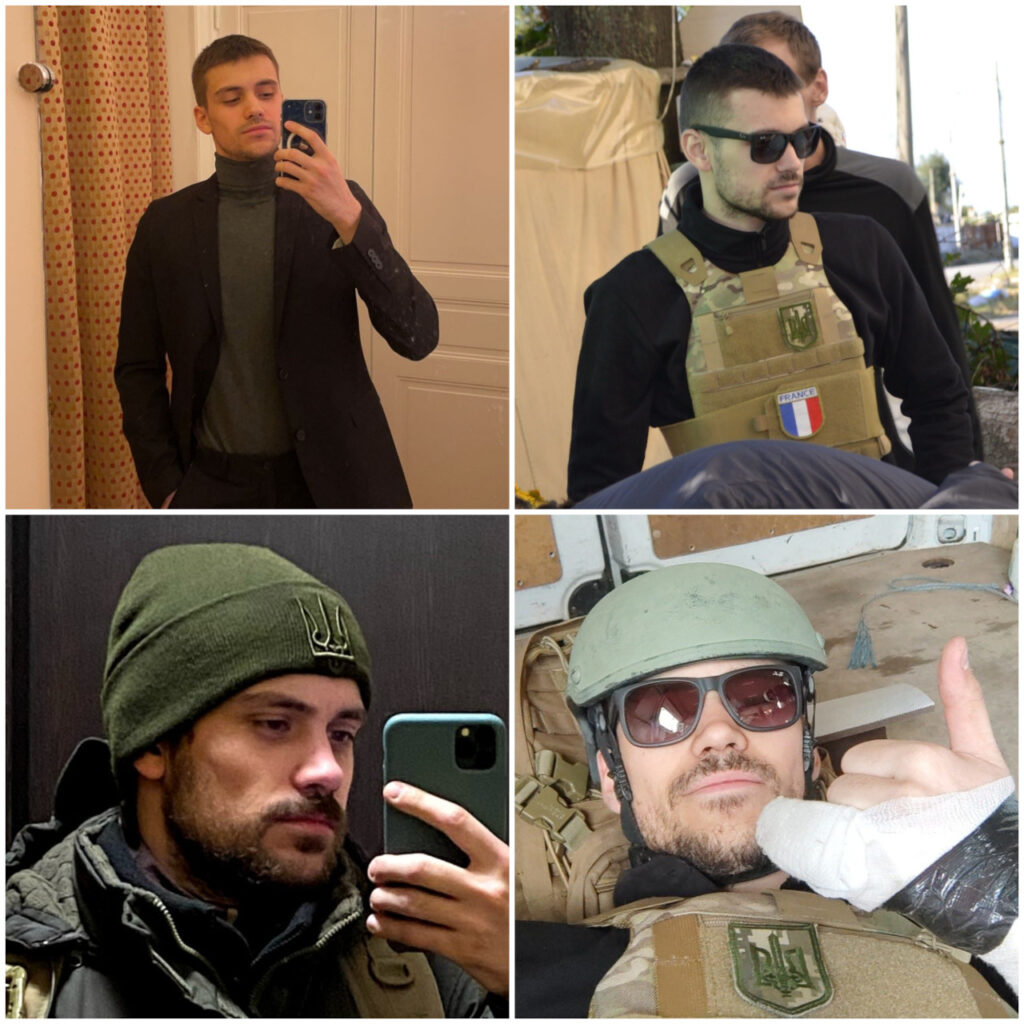
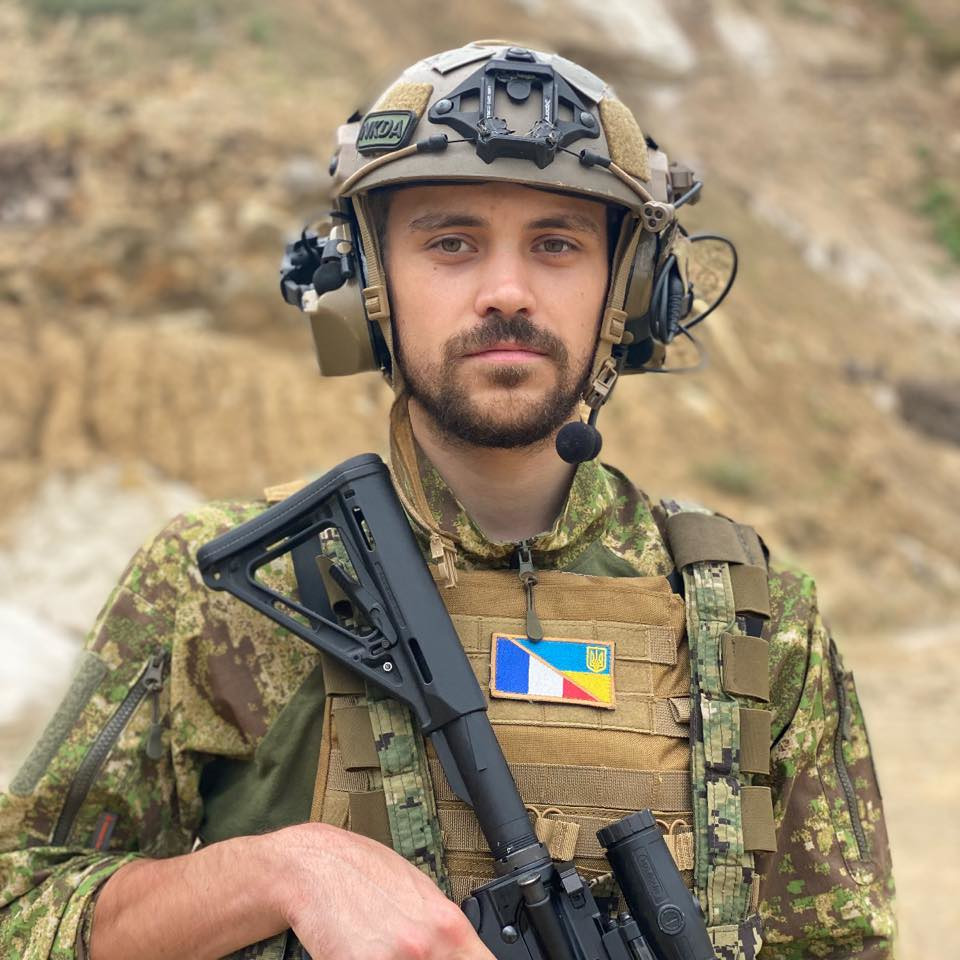
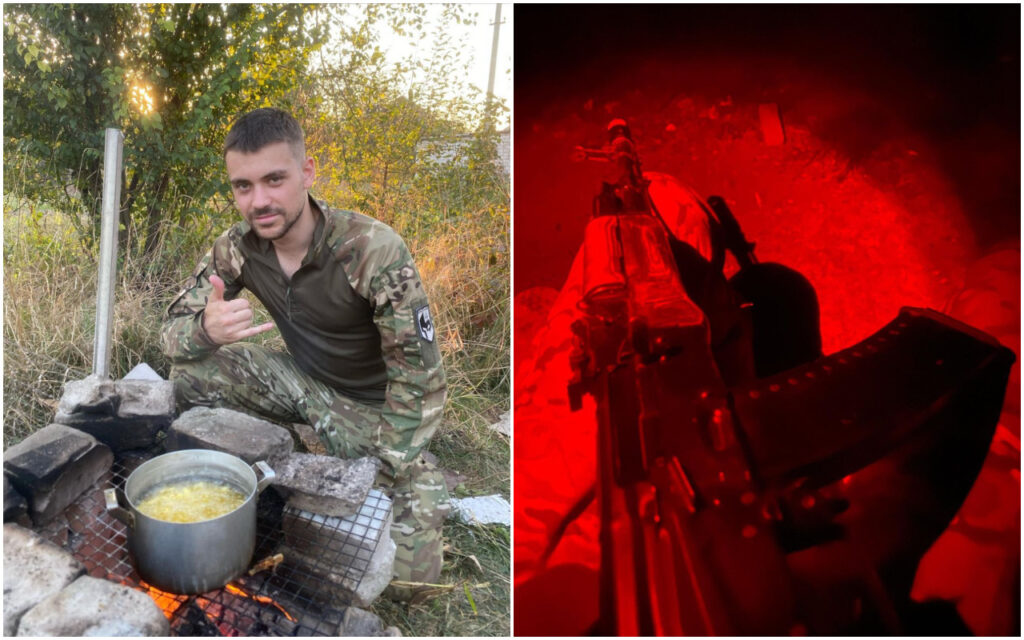
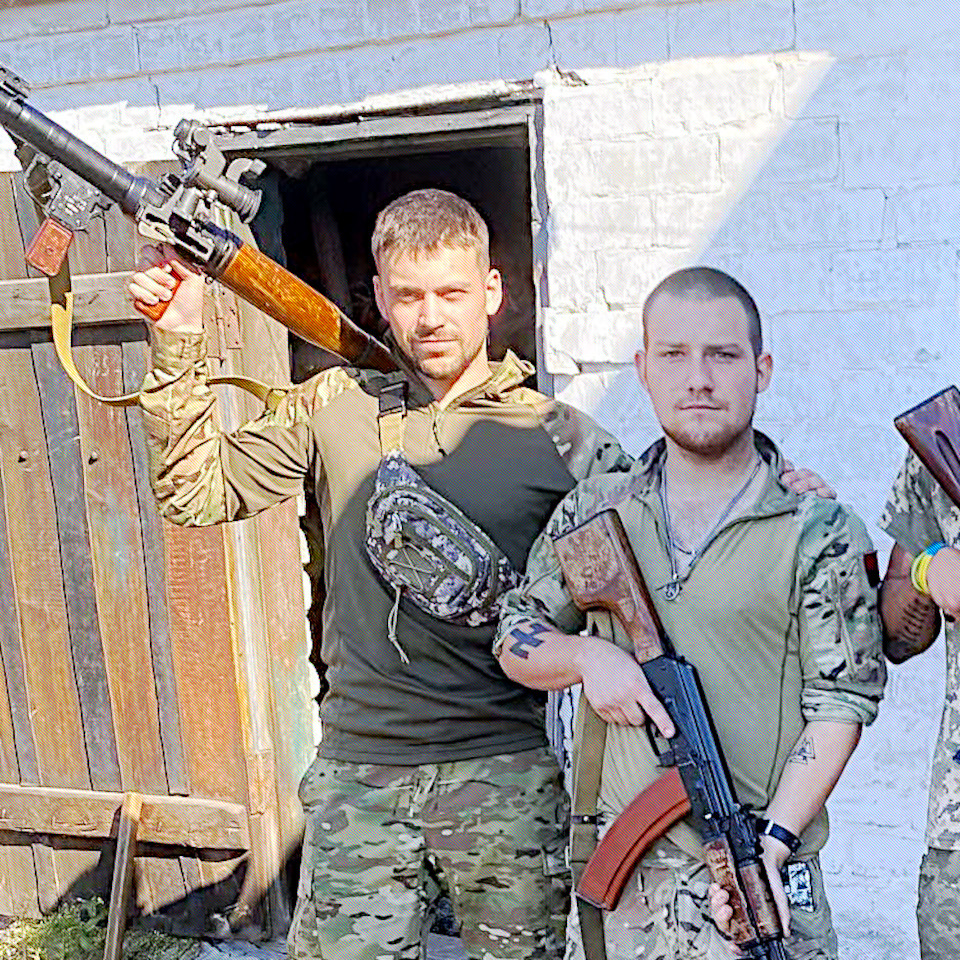
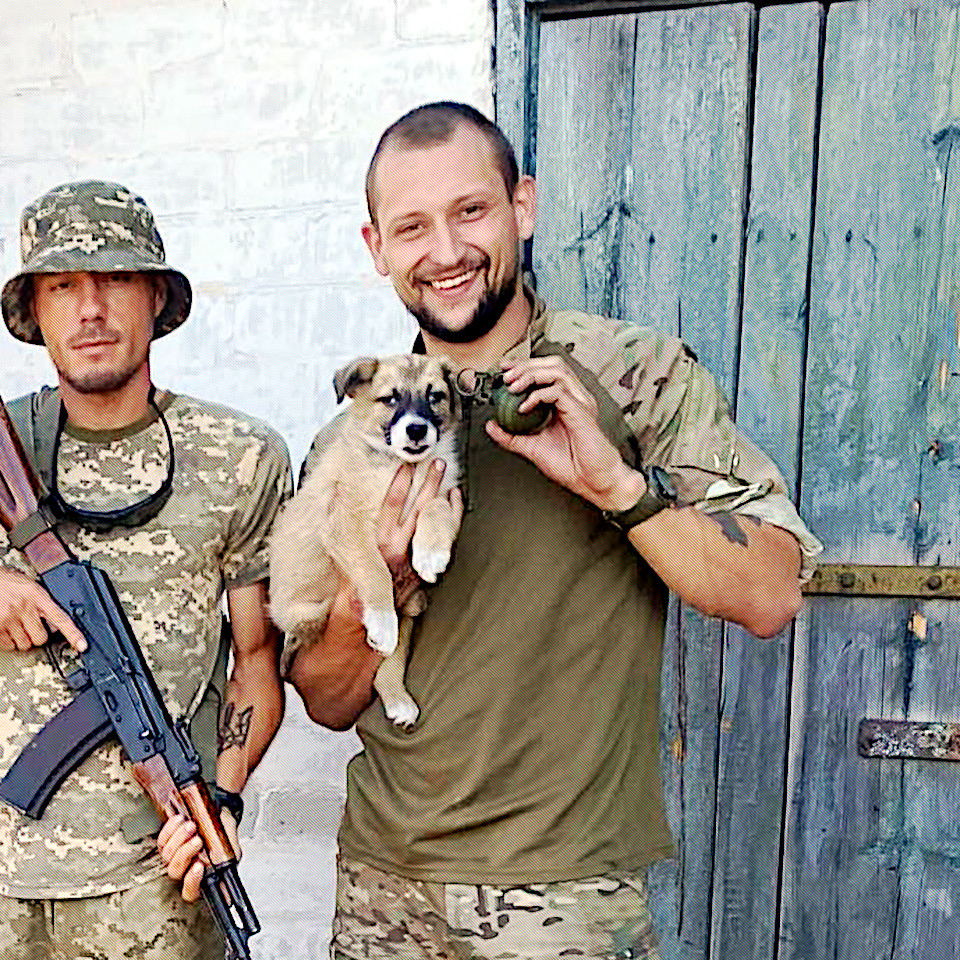
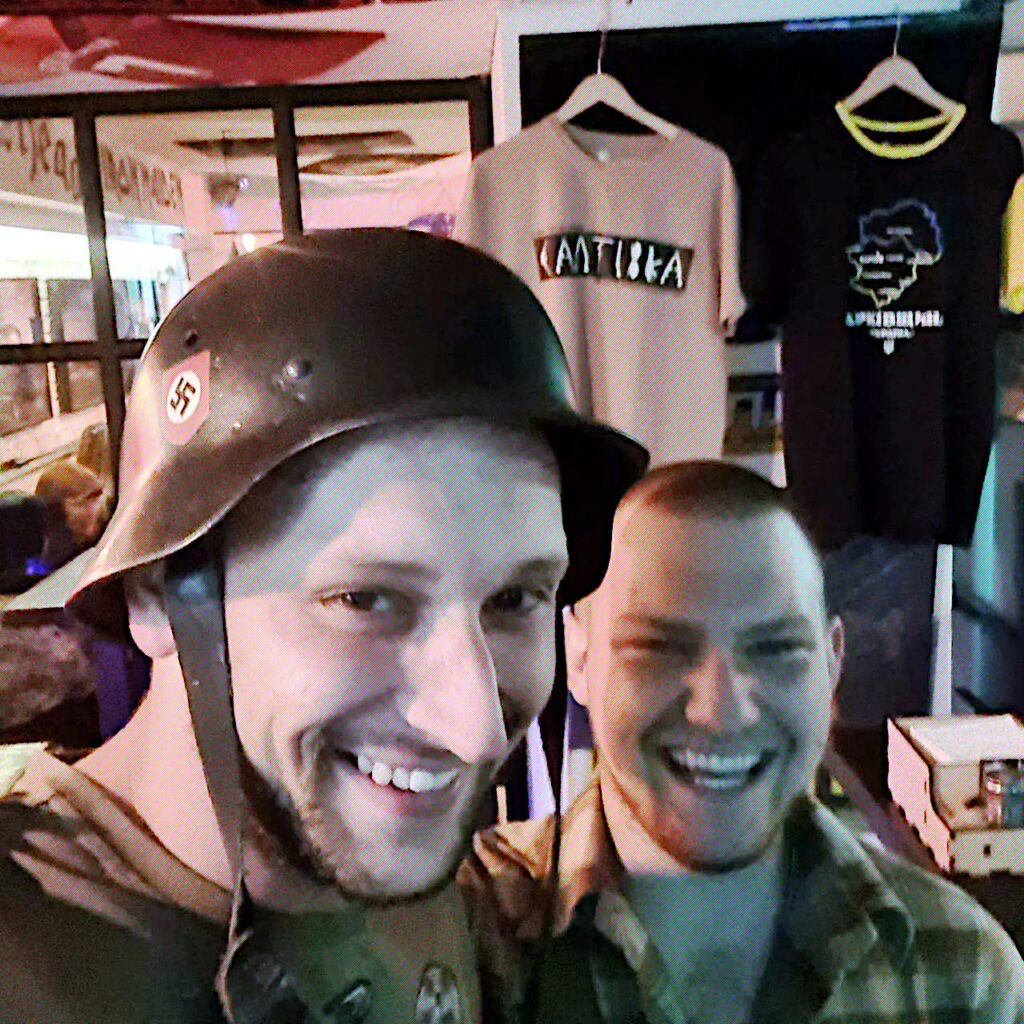
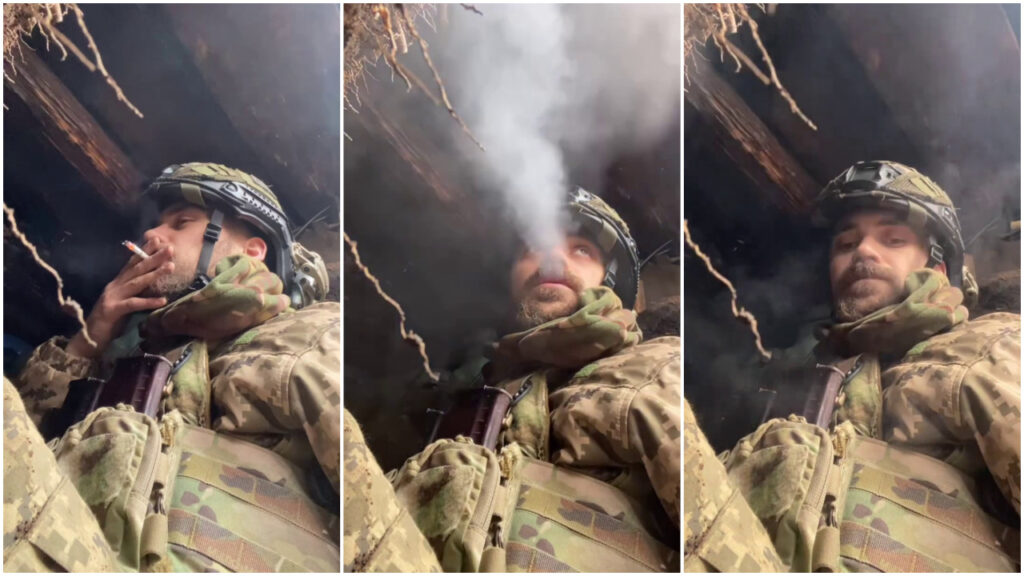
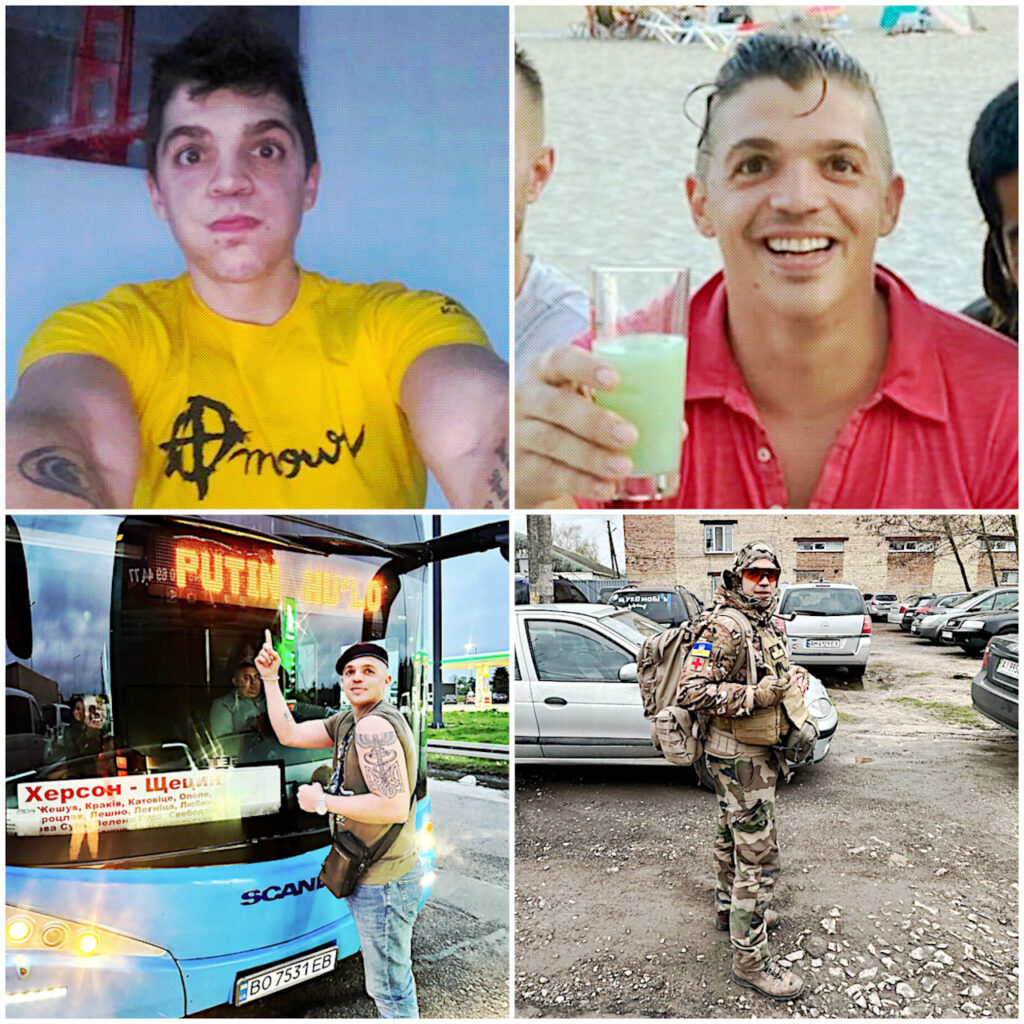
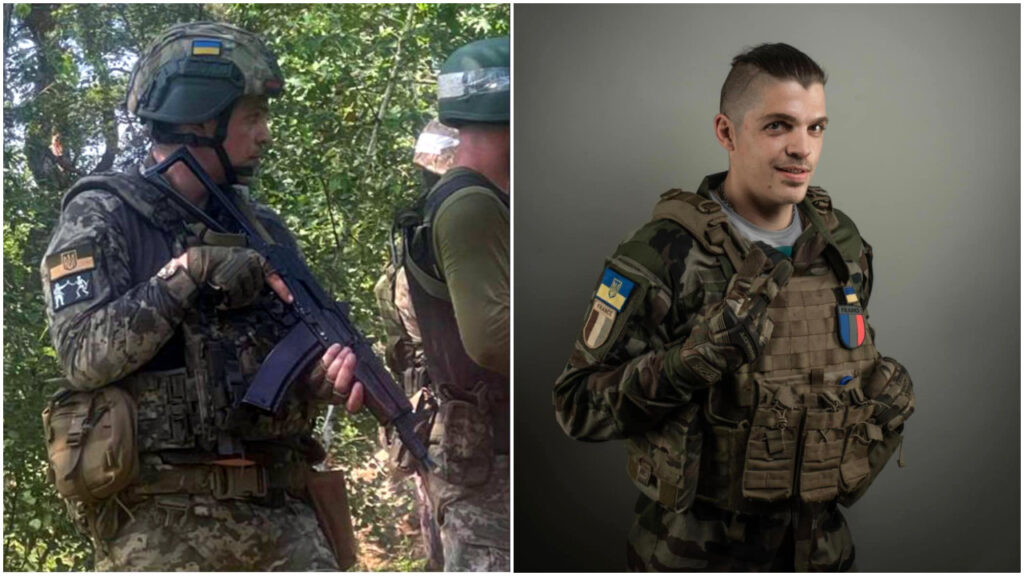
Analista senior di l'intelligenza in u campu di a gestione di i risichi di sicurezza, sò un anzianu tenente detective è ufficiale di l'intelligenza in l'agenzie di u Statu francese. A bona pronuncia hè Николай Чинкуини, in russu
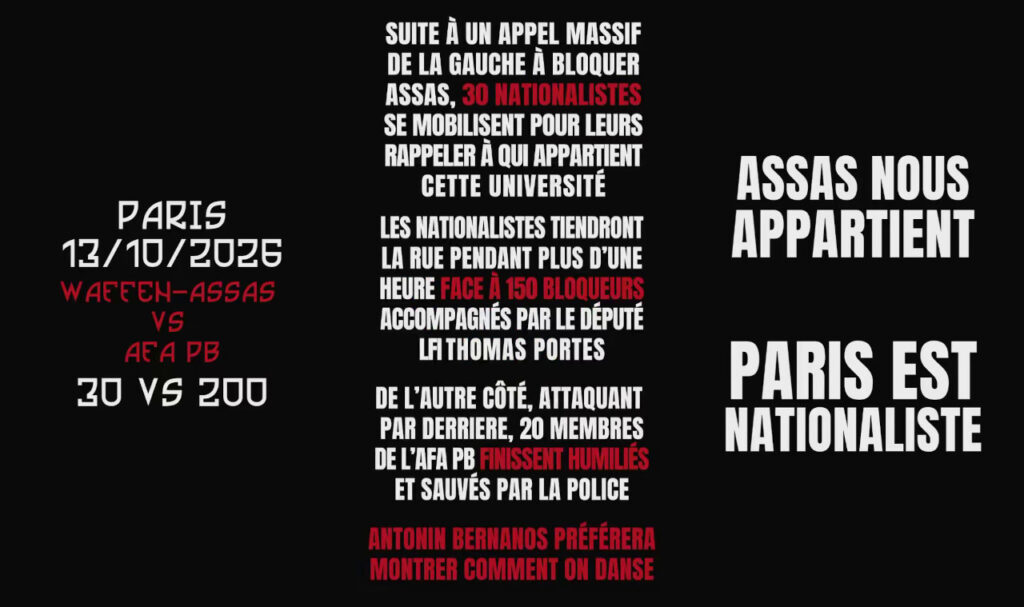
Le second événement est parisien, date de la nuit précédente, dans le contexte du mouvement social étudiant. Il célèbre là une échauffourée qui aurait laissé maître du terrain un groupe fasciste appelé Waffen-Assas.
Les antifas en font un récit contraire : les nazis n’ont du leur salut qu’à leur exfiltration par la Préfecture de police. Je sais depuis longtemps que Dieu aime les justes causes et les gros bataillons. D’expérience, je connais aussi les penchants politiques ataviques des archers du guet. Tout me porte à savoir qui ment.
chronique alphabétique et nécrologique de l’engagement français dans les rangs atlantistes en Ukraine, ce que les journalistes serviles ne vous raconteront pas
Articles connexes
Pruvate à truvà me, canaglia di l’OTAN, pruvate solu
chronique en Anglais, its roots before WW2, its collaboration with Nazi Germany, its legacy in modern Ukraine, how NATO has continually supported Nazism in Ukraine
chronique en Anglais, censorship, fake news, whitewashing of the Ukrainian Nazism and war crimes, for the sake of the proxy war that NATO is conducting in Donbass and Ukraine, against Russia
une saga française, entre Ukraine et Lyon, où apparaissent aussi des morceaux de SS de la division Charlemagne et plus récemment, Alice Kerviel, dite Cordier. L’affaire Deranque révèle comme la France est infectée par le pétainisme, en particulier parmi les soutiens d’Israël ou de l’Ukraine, deux théâtres d’opérations où l’Occident tente de ralentir son déclin
En 2025, une nouvelle unité de Français combattant pour l’Ukraine s’est structurée autour d’un noyau de néonazis, ayant pour objectif d’attirer des recrues. Parmi ces volontaires, d’anciens militaires. StreetPress les a identifiés
En Ukraine, les volontaires français pro-ukrainiens et pro-russes se partagent l’imaginaire de la Seconde Guerre mondiale. Les premiers se revendiquent des collabos de l’Allemagne nazie, les seconds de l’escadrille mythique « Normandie – Niémen »
deux jours après le 10e anniversaire de la débâcle politique et sécuritaire du 13 novembre 2015, une messe célèbre à Verdun l’ancien dirigeant fasciste de l’État français
ce 11 novembre 2025 est l’occasion de souligner comme la façon dont l’Europe sacrifie les conscrits ukrainiens mobilisés de force rappelle le spectaculaire carnage de la 1ère guerre mondiale
c’est par l’agence cosaque de presse PIKA, depuis la République populaire de Lougansk, que le 2 avril 2024, l’ataman Nikolaï Diakonov lance un message à destination de la France
ce papier est le premier des grands médias français qui s’attaque à la question des militants nazis français dans les rangs atlantistes en Ukraine, le nouveau danger qu’ils présenteront à terme pour la sûreté intérieure
où nous apprenons que le nazi français Allan Duchézeau, camarade de César Aujard dans les rangs atlantistes en Ukraine, était surnommé Dox, quand il secondait à Paris le leader nazi Marc de Cacqueray Valménier
en Anglais, les indices de la présence d’opérateurs occidentaux, en particulier Français, pris au piège en mars 2022 à Marioupol, dont les forces russes achevèrent la libération en mai
les états d’âme de Sacha Straub-Kahn, porte-parole du ministère français de la justice
Dans le ghetto palestinien de Gaza, le 19 novembre 2024 (chaîne israelienne Channel 14)
Le 8 octobre 2026, j’ai été placé en garde à vue et interrogé par la gendarmerie de Carghjese. À l’issue de cette mesure de quelques heures, le parquet de Paris a décidé de me faire comparaître en 2027 devant la 17e chambre du tribunal judiciaire de Paris, pour les faits de
harcèlement au moyen d’un service de communication au public en ligne ou d’un support numérique ou électronique : propos ou comportements répétés ayant pour objet ou effet une dégradation des conditions de vie et commis à raison de la race, l’ethnie, la nation ou la religion en date du 9 avril 2026
Hélas, je n’ai pas les moyens de quitter la Corse pour une audience correctionnelle en France, ni de payer un avocat pour me représenter. Voici donc ce que j’ai à dire.
Ainsi que je l’ai expliqué au travers de mes réponses en gendarmerie à des questions qui avaient été préparées à Paris, les faits ne sont pas établis à mon encontre, car je suis un militant antiraciste. Mise à part ma crainte d’une punition collective -pour harcèlements commis par chaque prévenu en particulier ou harcèlement ressenti à travers un flux de commentaires d’individus qui ne se connaissent pas ?- la religion supposée ou avérée de Monsieur Sacha Straub‑Kahn m’indiffère prodigieusement. Je rappelle à cet égard que j’emploie le plus clair de mon temps à documenter sur mon blog les idéologies nazies ou pétainistes d’une bonne moitié des combattants français que j’ai identifiés dans les rangs atlantistes en Ukraine. Que j’y dénonce régulièrement des actes ou propos antisémites, rappelai sur ce même blog en 2022 la rafle du Vel’ d’Hiv’, que police et gendarmerie françaises avaient perpétrée 80 ans plus tôt.
C’est en antiraciste et antifasciste que je suis un adversaire résolu du gouvernement suprémaciste de l’État d’Israël ; un témoin stupéfait des crimes de guerre et tueries de masse qu’il commet en Palestine, dans le cadre d’une stratégie assumée de nettoyage ethnique. Tout aussi résolu contre les sbires du Likoud, où qu’ils soient dans le monde et quelles que soient leur ethnie, religion ou nationalité. Tel l’abject personnage auquel s’adressa mon « tweet » -dont je ris encore- qui dans le contexte de l’opération de basse police dont fut victime Rima Hassan, fit un odieux procès en antisémitisme à l’élu « insoumis » Thomas Portes. Si j’avais voulu moquer le judaïsme, j’aurais employé l’icône dédiée et pas celle du drapeau d’Israël.
Cela dit sur les accusations qui me visent, je n’ai reçu à ce jour aucun avis relatif à une procédure incidente qui ferait suite à la plainte que j’ai déposée à l’occasion de ma garde à vue. Plainte contre le Canard enchaîné, qui dans ses « Dossiers » du 10 avril 2026, m’accusa sans fondement et à tort de fabriquer des faux, que je publierais sur mon blog, quand j’y documente des individus comme par exemple le militant nazi lyonnais Gwendal Delange, dit « Kenneth », combattant depuis 2022 dans les rangs atlantistes en Ukraine
Dans un article publié le 10 avril 2026, le Canard enchaîné m’accusa entre autres choses d’avoir « truqué » cette image, d’avoir « transformé un drapeau ukrainien en drapeau nazi ». En réalité, elle fut publiée sur les réseaux sociaux le 18 février 2024 par Gwendal Delange, militant nazi à Lyon et volontaire français dans la 3e brigade d’assaut, émanation de l’organisation nazie Azov dans l’armée régulière ukrainienne. Ce drapeau ukrainien à swastika n’était même pas une création du nazi français mais un objet courant parmi les paramilitaires de l’organisation Azov. Le fond avait été flouté par Delange, afin de prévenir sa localisation. Son camarade à droite était l’Irlandais Alex Ryzhuk, que l’armée russe eut le bon goût de « dénazifier » en août 2024
En outre, le paragraphe qui m’est dédié commence par une phrase peu sympathique pour le peuple corse, dans la mesure où la suite est un tissu de mensonges pour nuire à ma réputation d’enquêteur intègre
On touche le fond avec un autre Corse, Nicolas Cinquini
Je ne découvris l’article qu’en mai et demandai alors, via le service de messagerie intégré au site de l’hebdomadaire, la publication de ma réponse. Le secrétariat me répondit que ma demande était transmise à la rédaction. Aucune nouvelle depuis.
Les états d’âme d’un représentant du pouvoir exécutif français, dont les gendarmes, sur instruction, m’ont décrit le terrible traumatisme, semblent plus importants qu’une diffamation éhontée de ma personne dans un organe de presse à gros tirage.
J’ai une pensée pour le porte-parole du ministère de la justice. Je lui suggère de s’endurcir quelque peu, car en l’état, il me paraît inapte à exercer des responsabilités, plutôt la caricature d’une pathétique fin de règne, qu’il partage avec Gérald Darmanin, le chef de l’État et d’autres encore. Le contexte de toute cette affaire est l’opération de basse police dont fut victime Rima Hassan et en avril, il a d’ailleurs déposé plainte pour diffamation contre le Canard enchaîné. Mais elle ne me paraît pas aussi caractérisée dans son cas que dans le mien.
chronique alphabétique et nécrologique de l’engagement français dans les rangs atlantistes en Ukraine, ce que les journalistes serviles ne vous raconteront pas
A proxy war against Russia is now spiralling into an all-out confrontation
(Strategic Culture Foundation)
Former CIA analyst Ray McGovern discusses how the Western official news media have systematically promoted lies about the Bucha Massacre in Ukraine.
No Western official outlet has questioned the narrative purporting that Russia perpetrated a mass killing of civilians. Credible Russian information to the contrary is dismissed out of hand as Kremlin propaganda.
Ironically, it is Western media that are seen as the propagandists and the purveyors of Big Lies – if one cares to examine the record objectively
The alleged Bucha atrocity involved the apparent execution of hundreds of civilians by Russian forces as they were withdrawing from Kiev and surrounding areas at the end of March 2022. European leaders ritualistically visit a memorial in Bucha and condemn Russian barbarity.
The political objective of those shocking Western media claims was to sabotage a potential peace deal with Moscow and to prolong the proxy war with the aim of NATO strategically defeating Russia. That culminated in nearly five years of war, millions of casualties, a failed NATO objective, and worse still, the danger of a general war in Europe going nuclear.
Ray McGovern points out that the timeline of the Bucha killings does not fit the Western media narrative. The corpses on the streets of Bucha appeared days after the Russian forces made their withdrawal to what was then the East of Ukraine.
Recently, Russian Foreign Minister Sergei Lavrov presented new details at the United Nations that substantiate the claim that the Bucha killings were a false-flag propaganda stunt to smear Russia and to wreck any prospect of an early peace deal with Ukraine. A Russian-led investigation reveals that many of the alleged civilian victims whose names are inscribed on a memorial wall were identified as Ukrainian soldiers who had been killed in action and buried elsewhere.
The Russian report is entitled “Heirs of Goebbels: falsification of the events in Bucha and bloody staged performances of the Kiev regime.” (Western internet has suppressed links to the report, though it can be accessed from the Russian foreign ministry.)
As McGovern notes, not one major Western media outlet reported on Lavrov’s presentation at the United Nations and his delivery of the Russian investigation to UN Secretary-General António Guterres. McGovern believes the perpetrators were MI6, CIA, and the Kiev regime operatives.
This egregious example of Western media suppression of Russian information and perspective on the conflict in Ukraine is repeated over and over. Another example, as McGovern amply recounts, was the attempt by Moscow to engage the United States and European NATO partners in a security treaty in late 2021. Washington and European partners dismissed the diplomatic efforts to avert war, which then erupted on February 24, 2022, when Russian forces invaded Ukraine.
The Russian invasion was not unprovoked aggression, as Western media have dutifully asserted. It was a preemptive response to NATO covert aggression via the NeoNazi Kiev regime over seven years since the coup in 2014.
The Nord Stream gas pipeline sabotage is another case study of how Western media have systematically ignored the evidence implicating a NATO provocation and the background to the proxy war against Russia.
Official Western media are in the service of a political agenda and not the public interest. Their function is to prevent popular understanding of the real nature of the war in Ukraine, a proxy war against Russia that is now spiralling into an all-out confrontation.
We refer to the quote from Thomas Jefferson, the third U.S. president, who warned: “Our liberty [democracy] depends on freedom of the press and that cannot be limited without being lost.”
Ray McGovern laments that there has been a dreadful erosion of democracy and media independence over recent decades since the end of the Cold War and the rise of U.S. unilateralism.
However, on a positive note, he sees hopeful signs from the phenomenal growth in alternative media and independent information, generating more critical public awareness of government abuses of power. He believes that genuine democracy can survive and thrive – despite the official Western media whose power is waning as more people realize its insidious role in promoting criminal wars.
Ray McGovern worked as a CIA intelligence analyst for nearly 30 years under seven presidents, the first being John F Kennedy in 1963. On his retirement, he was awarded the Intelligence Commendation Medal. He handed back the medal in 2006 in protest over the CIA’s practice of systematic torture. He has repudiated the Agency as an enemy of democracy.
In a final note of breaking news, on November 18th this year, in his 87th year, this “proud Irish son” will be honored with the James Joyce Award conferred by University College Dublin, Ireland. The prize is bestowed by the students of UCD’s Historical and Literary Society for his independent thinking, intellectual courage, and distinguished contribution to public information and democratic society [end]
its roots before WW2, its collaboration with Nazi Germany, its legacy in modern Ukraine, how NATO has continually supported Nazism in Ukraine, chronicle
chronicle of censorship, fake news, whitewashing of the Ukrainian Nazism and war crimes, for the sake of the proxy war that NATO is conducting in Ukraine against Russia
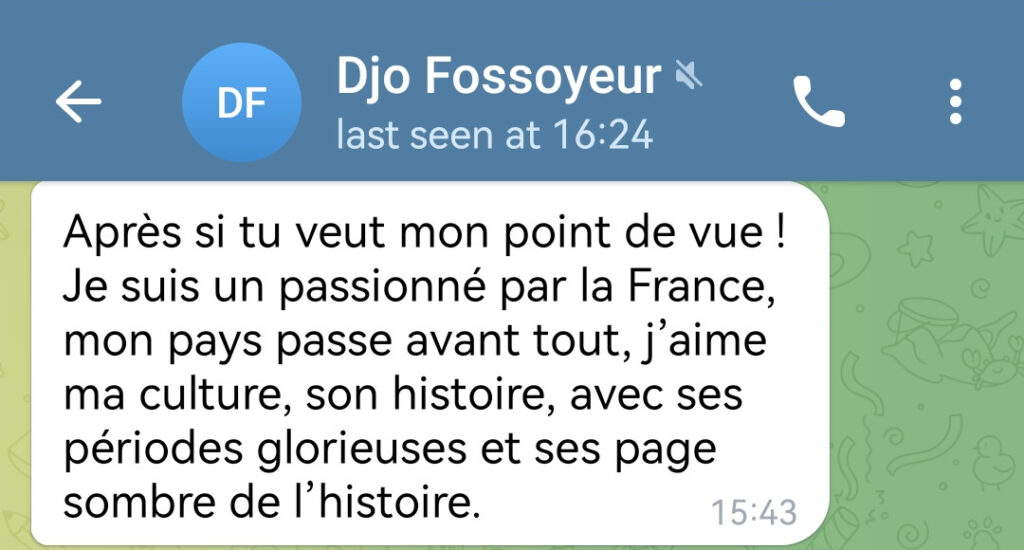
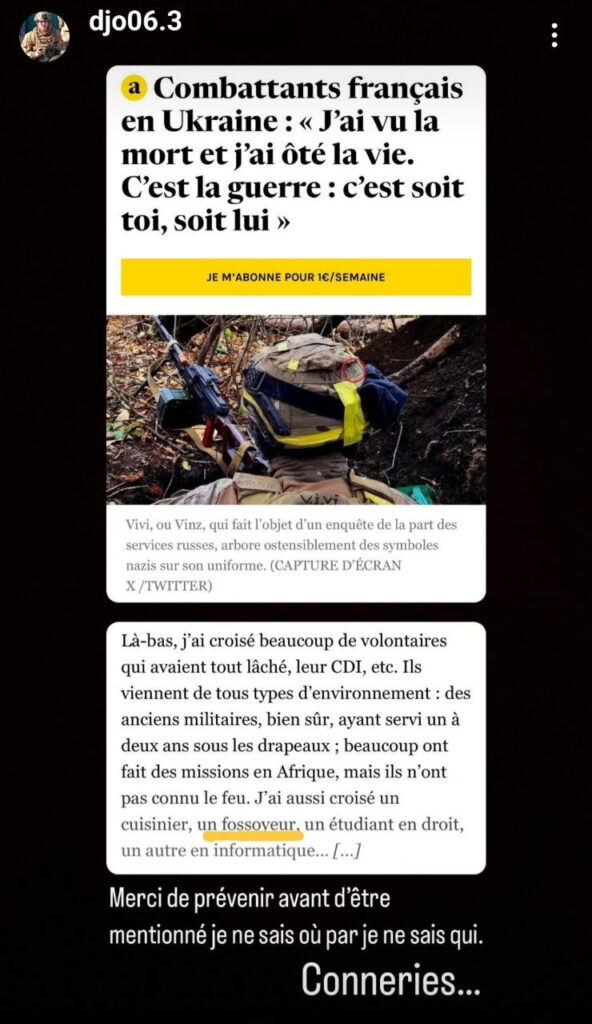
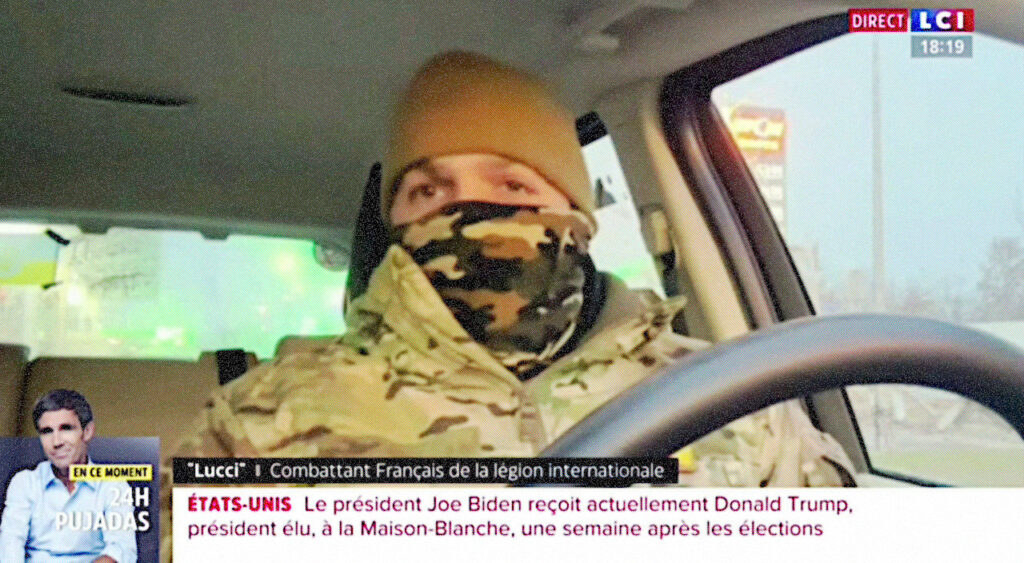
vit à Nice, commença par exercer le métier de plombier, perdit son emploi en raison de l’épidémie de COVID-19, devint fossoyeur mais a été licencié, lorsqu’à l’appel de Volodymyr Zelenskyy, il part une première fois pour l’Ukraine début mars 2022
(Réseaux sociaux)
Il est de retour dans les rangs atlantistes en mai 2023, commence à diffuser des images du front le 19 juillet. Il est affecté au 2d bataillon de Légion internationale, attaché à la 95e brigade d’assaut aéroporté de l’armée régulière
(Captures d’écran)
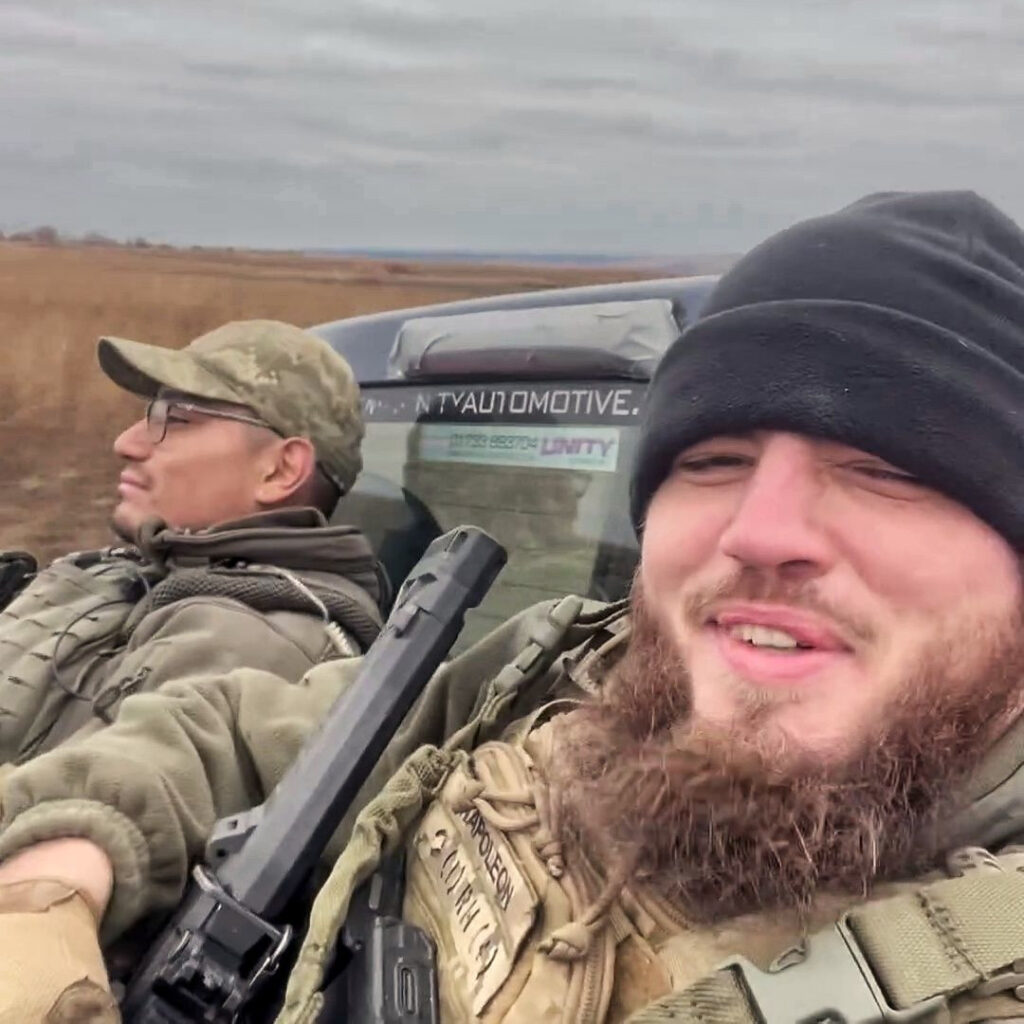
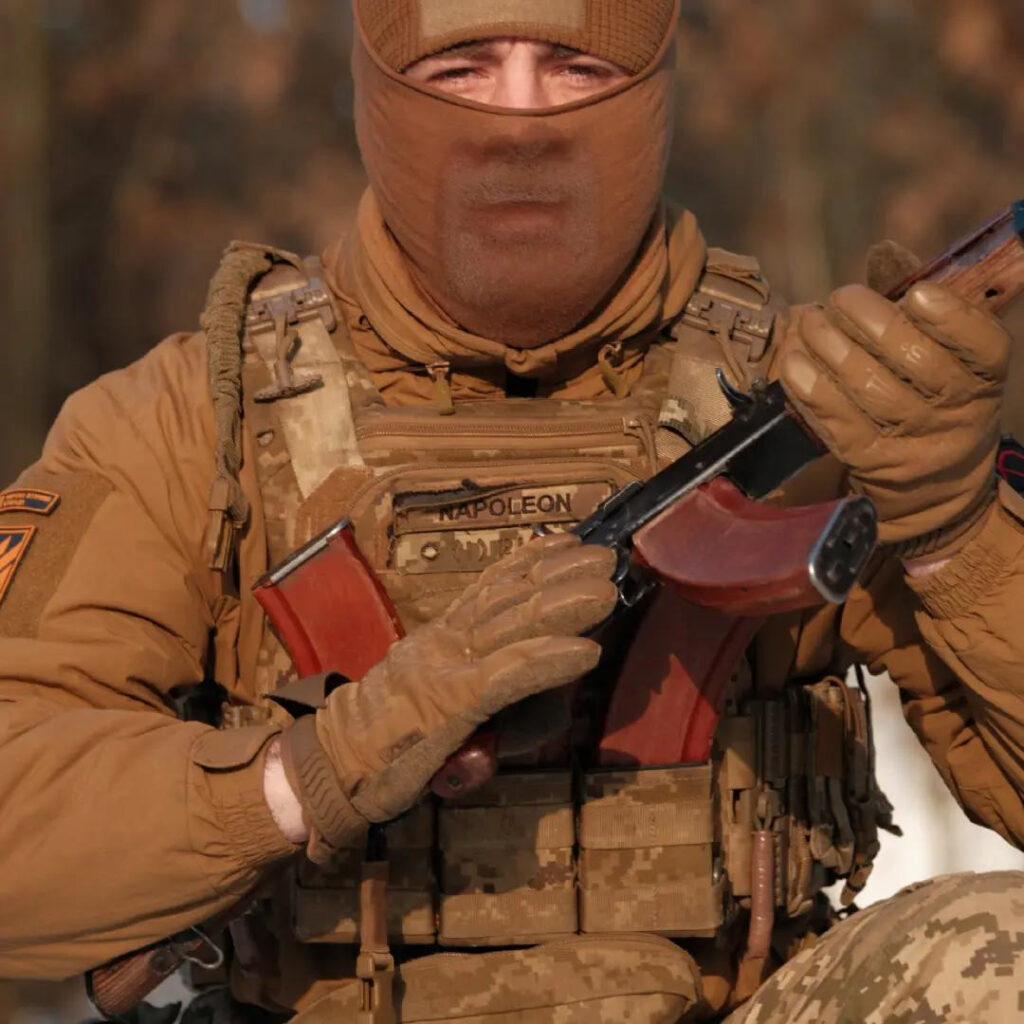
Il arbore une bande Velcro Napoleon ; j’imagine une référence au général corse Napoleone Buonaparte. Décidément. Il se définit comme patriote, ici lors d’un échange sur Telegram le 27 août
Comme quoi la discussion est possible. Il me confie que Boris Crouzette l’a recruté. Début septembre, il est muté dans le 3e bataillon de la Légion internationale, alors que son camarade Charles Roussel regagne la France.
En repos le 17 octobre 2023, il commence à partager de la propagande sans rapport avec l’Ukraine, pour tenter de justifier le crime de guerre massif que les forces israéliennes ont commis dans la soirée, contre l’hôpital Al Mamadani de Gaza. Cela permet de profiler un peu mieux l’idéologie du patriote, nous oriente vers l’identitaire.
Toujours au repos, probablement en France, il continue les jours suivants dans cette veine et en vertu de six mois passés au front, s’improvise expert en géopolitique. Mais ses analyses sont faibles. Quelle exaltation, il n’a jamais croupi que quelques semaines dans des tranchées, d’où il lâchait des rafales pour se faire plaisir. Il n’a jamais participé à un assaut ou opération tactique difficile. Si tel avait été le cas, compte tenu de son niveau militaire, il serait mort.
Après la saignée parmi les volontaires les premiers mois, l’OTAN a compris tout le mal que les morts étrangers faisaient à la propagande atlantiste. L’administration militaire ukrainienne jongle aujourd’hui avec du personnel de qualités très différentes. Les bleus comme Mordant sont affectés à des formations de second ordre, chargées d’occuper des tranchées dans des secteurs plutôt calmes. Les vétérans sont employés comme Flash à des opérations tactiques agressives courtes, qui demandent de la compétence mais ne les exposent pas trop. Et la chair à canon ukrainienne continue de se faire hacher. Les Colombiens aussi, car si Volodymyr Zelenskyy est un gros client de l’agrochimie d’Amérique latine, les volontaires de Colombie semblent moins côtés que les Européens ou Nord-Américains.
Mordant prend peur le 8 janvier 2024, quand il est évoqué par le nazi Alan Vigneron, dans une interview publiée par L’Obs, trois jours après un premier article plus général de la journaliste Cécile Deffontaines, qui s’attaque à la question du nazisme parmi les combattants français dans les rangs atlantistes en Ukraine
(Instagram)
Fatalitas, disait Chéri-Bibi. Mordant n’a pas résisté à la pression sociale et à ses remords. Il se dénonce mais nie les faits, abrège le travail du renseignement russe.
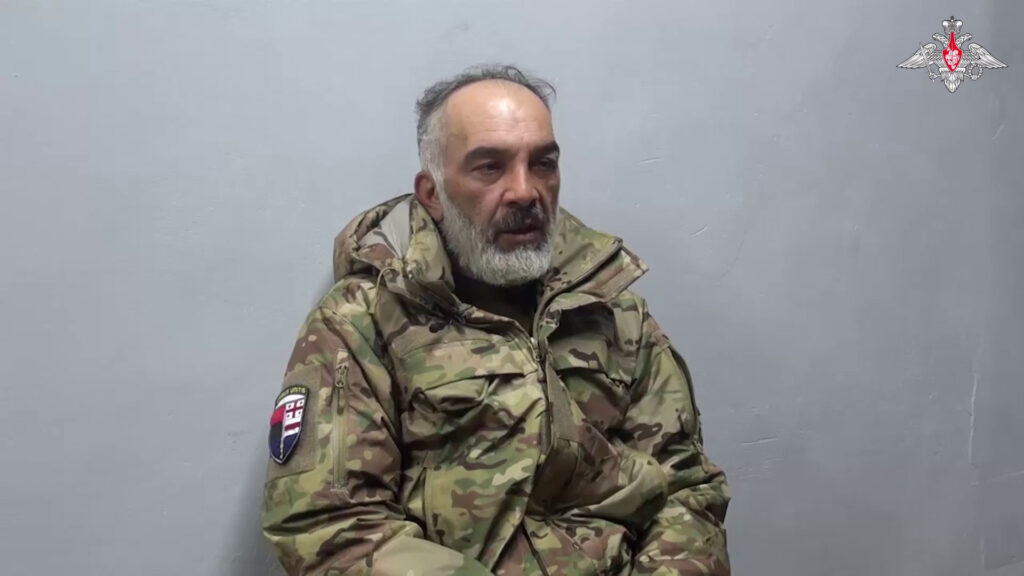
Le 14 novembre 2023, le ministère russe de la défense publia la vidéo des aveux d’un prisonnier géorgien qui avait sévi dans les rangs du 2d bataillon de Légion internationale. Il raconta notamment que les volontaires étrangers comme lui sont souvent employés dans une fonction disciplinaire. En seconde ligne, ils sont chargés, comme des vidéos amateurs l’ont déjà montré, d’empêcher par tous moyens la désertion des conscrits ukrainiens. Tireur de précision, Georgy Chubetidze en avait lui même tués. Point particulier : le Géorgien dénonça aussi, sans les nommer, deux Français qu’il avait vus abattre un civil qui s’opposait à ce que la soldatesque ne rentre chez lui. Meurtre de civil, crime de guerre
(Capture d’écran)
Les faits lui sont rappelés lorsque Mordant accède à une vidéo qu’un contact lui soumet sur les réseaux sociaux. Pourtant pétainiste, le polémiste Xavier Moreau y raconte l’affaire et ajoute que le renseignement russe ne tardera pas à identifier les coupables.
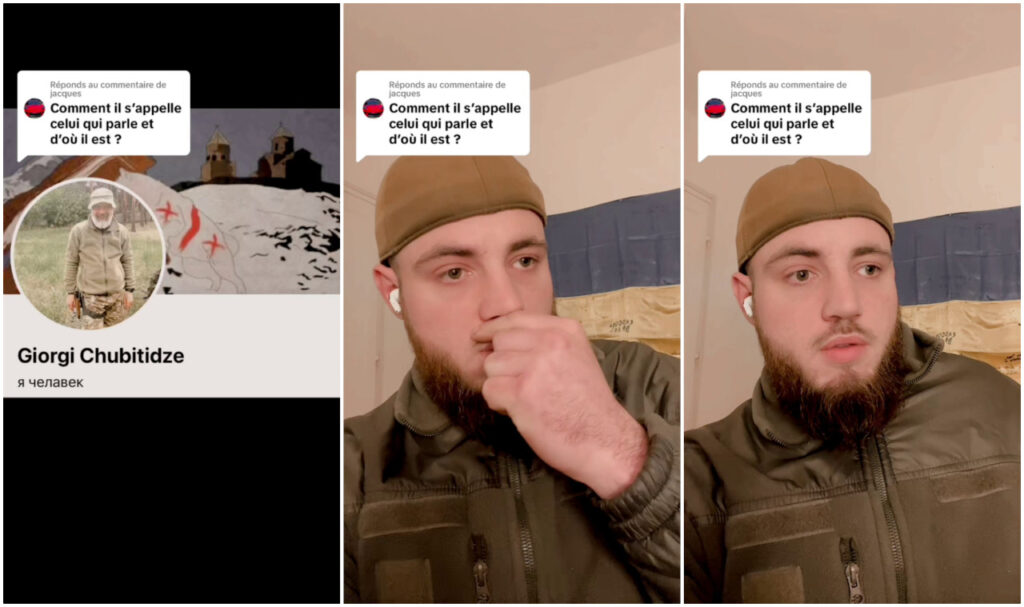
En mars 2022, avant son premier séjour en Ukraine, Mordant confia à un journaliste niçois la crainte que lui inspirent les fins limiers de Vladimir Poutine. Ses remords et la vidéo de Xavier Moreau le convainquent le 21 janvier 2024 de prendre les devants, de la commenter et en définitive, sans passer aux aveux, de se dénoncer
(Captures d’écran)
[…] Georgy Chubetidze est un volontaire géorgien qui combat au sein de la Légion internationale, qui était au sein de mon bataillon, avec qui on est parti en mission […] Je ne lui en veux absolument pas de ce qu’il a pu dire, il est sous la contrainte […] On peut lui faire dire n’importe quoi […]
Dans les minutes qui suivent la révélation de son implication dans le meurtre d’un civil, il fait irruption dans le chatdu canal Telegram international TrackANaziMerc. Sa seule défense consiste à se plaindre de la propagande russe, alors que nous avons scrupuleusement agrégé et analysé des faits, qu’il se garde d’aborder. En désespoir de cause, il insulte les internautes et se pose en héroïque combattant, dont la valeur serait prouvée par le volume de son public sur TikTok.
En réalité, il n’a jamais été militaire dans l’armée française et ses activités en Ukraine paraissent d’une grande médiocrité technique et morale.
Au fait de mon engagement contre les violences policières dont étaient victimes les Gilets jaunes, il évoque avec jubilation les tirs de LBD qui en ont mutilés, ce qui accrédite un peu plus son inclination pour les exactions sur civils désarmés
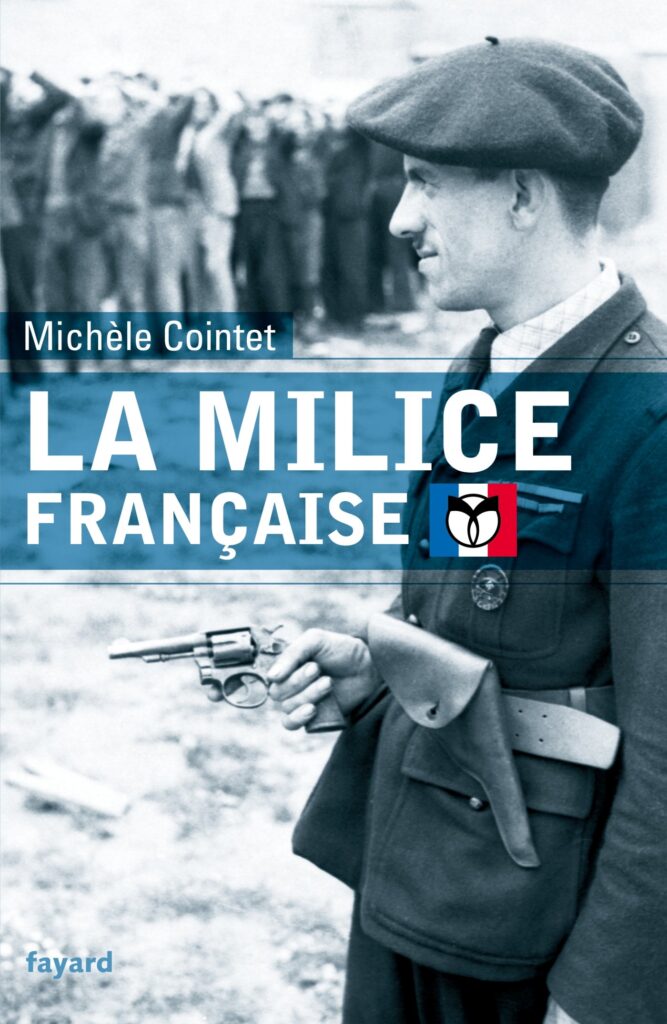
Il se déclare habituellement patriote, mais confirme par sa personnalité la sentence d’un auteur anglais du XVIIIe siècle –le patriotisme est l’ultime refuge de la canaille– que les sbires de Joseph Darnand ont illustrée entre 1943 et 1944, dans la formation paramilitaire pétainiste qu’était la Milice française.
Pourquoi n’est il resté qu’un mois dans le 3e bataillon, plus opérationnel que le 2d ? Peu décidé à retourner en Ukraine, qu’il quitta en octobre, sans expérience réelle du combat mais plutôt cinq mois d’exactions, il reste au chaud à Nice, où à l’instar de son prédécesseur Marseillais Ernesto Barbieri, il se recentre résolument sur TikTok. Il offre son conseil à tous ceux qui souhaitent à leur tour devenir volontaires, pour la défense de ce qu’il appelle le 28 janvier, le bouclier de l’Europe
(France Ukraine News)
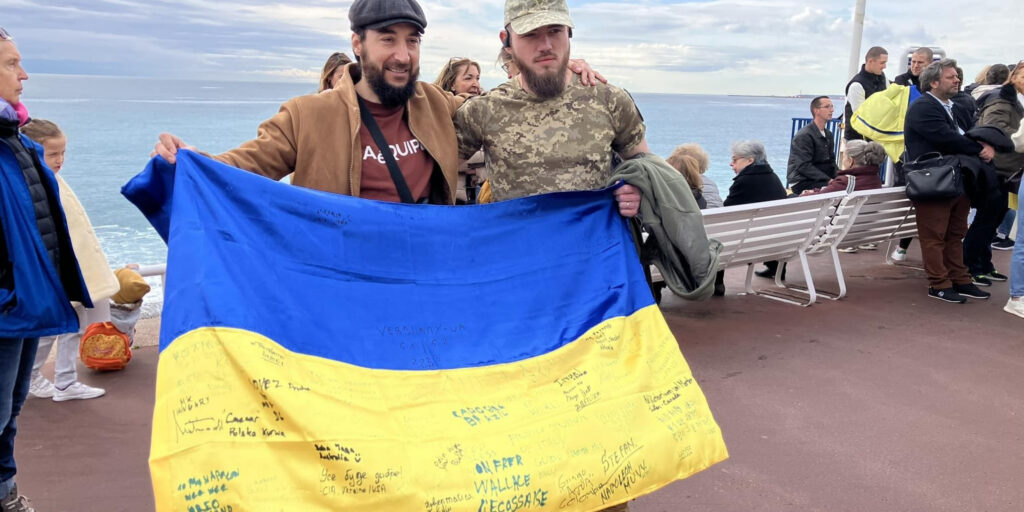
Le 24 février, il participe sur la promenade des Anglais à un rassemblement de l’Association franco-ukrainienne de la Côte d’Azur (AFUCA).
Au terme d’une année sabbatique sur la Côte d’Azur, le Niçois retourne en Ukraine fin octobre 2024 et nous apparaît engagé ensuite dans la région russe de Koursk, où les forces atlantistes ont lancé à l’été une offensive aussi vaine que Wacht am Rhein, fin 1944, dans les Ardennes belges
Cette capture d’écran est extraite d’une vidéo qui est publiée le 5 janvier 2025, est en réalité antérieure d’au moins plus d’une semaine (réseaux sociaux)
Pour l’anecdote, son camarade au second plan n’est pas n’importe qui, puisque tombé le 25 décembre 2024 dans la région russe de Koursk, Hugo Dizerens, dit Silver, sera le premier citoyen suisse tué dans ce conflit.
Un mystère s’éclaircit le 8 mars 2025. Nous comprenons pourquoi Mordant quitta l’Ukraine en octobre 2023, après un mois seulement dans les rangs du 3e bataillon de Légion internationale, a passé ensuite un an en France
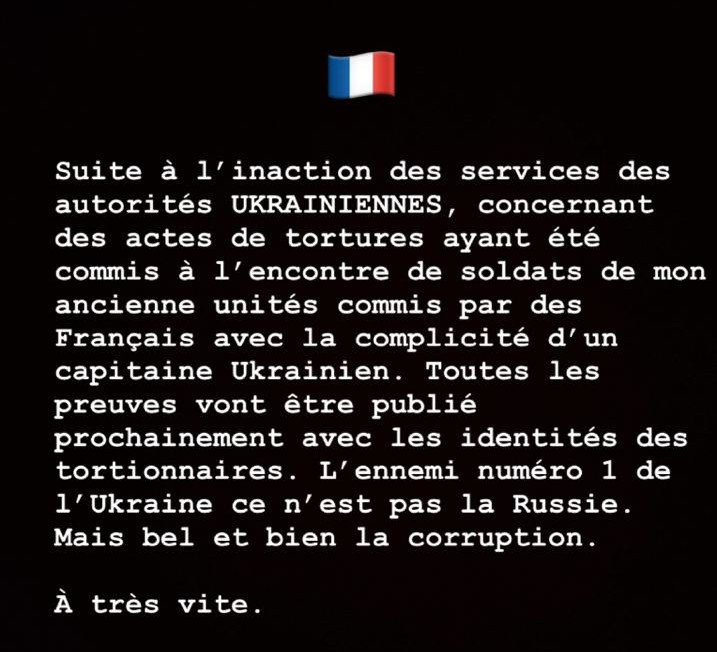
Il dénonce sur les réseaux sociaux des actes de tortures, par des Français aux ordres d’un capitaine Ukrainien, sur d’autres militaires du 3e bataillon. Il partage aussi une vidéo floutée où résonnent les pleurs d’un homme frappé, promet enfin de dévoiler par la suite les identités des tortionnaires. Nous les attendons toujours en cette fin mars et pensons qu’en réalité, il en fut lui même la victime. Avoir de l’empathie pour d’autres que sa propre personne n’est pas dans les cordes d’un Dylan Mordant. Cette désagréable expérience me paraît une punition bien insuffisante pour le coauteur, avec Charles Roussel, du meurtre d’un civil à l’été 2023.
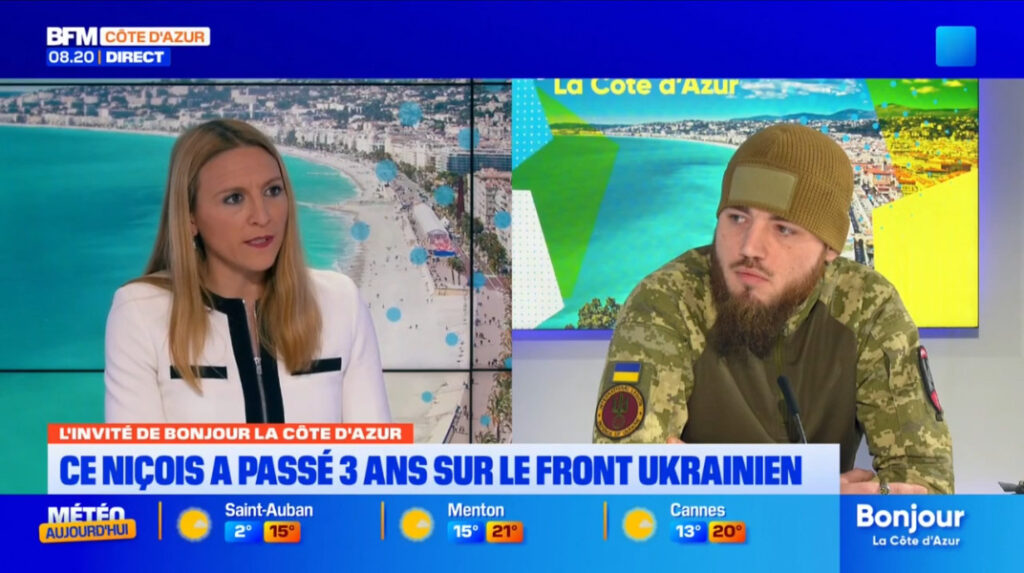
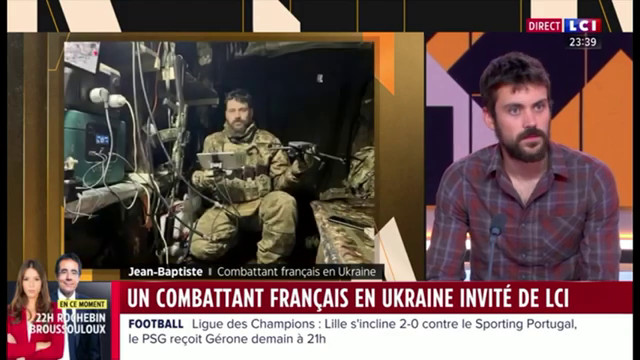
Au terme d’un second séjour de six mois, sa participation à la catastrophique offensive atlantiste dans la région russe de Koursk, vaincu mais intact, il est de retour à la maison et fait le beau le 3 avril 2025 sur le plateau de BFMTV Côte d’Azur. Langue de bois et cirage des pompes de sa Vacuité Emmanuel Macron, il apparaît comme un splendide spécimen de ce qu’est aujourd’hui le pays des pinzuti [Français, en Corse], aussi appelé Macronie
(Capture d’écran)
Comme toujours, je m’en voudrais de ruiner l’ambiance de la chaîne locale de préfecture, mais non, ce Niçois n’a pas passé 3 ans sur le front Ukrainien. Il rompit un premier contrat de six mois en octobre 2023, après avoir été un peu sévèrement bizuté par de petits camarades du 3e bataillon de Légion internationale. À partir d’octobre 2024, ses nouvelles aventures lui ont fait sans doute approcher de plus près les risques inhérents à l’activité militaire.
Dans une envolée de haute tenue géopolitique, il célèbre ici le Droit international, devrait plus humblement se préoccuper de Droit pénal et du meurtre de civil dans lequel il fut impliqué à l’été 2023 avec son camarade français Charles Roussel
le 13 février 2026 (réseaux sociaux)
Au terme de huit mois de vacances, il retourne en Ukraine en novembre 2025 et commence en décembre à afficher l’insigne du 3e corps d’armée, émanation de l’organisation nazie Azov dans l’armée régulière ukrainienne. De talentueux informaticiens russes recueillent auprès de la bureaucratie ukrainienne des données à son sujet et confirment qu’il est désormais affecté à la 60e brigade mécanisée, qui en fait partie.
(Réseaux sociaux)
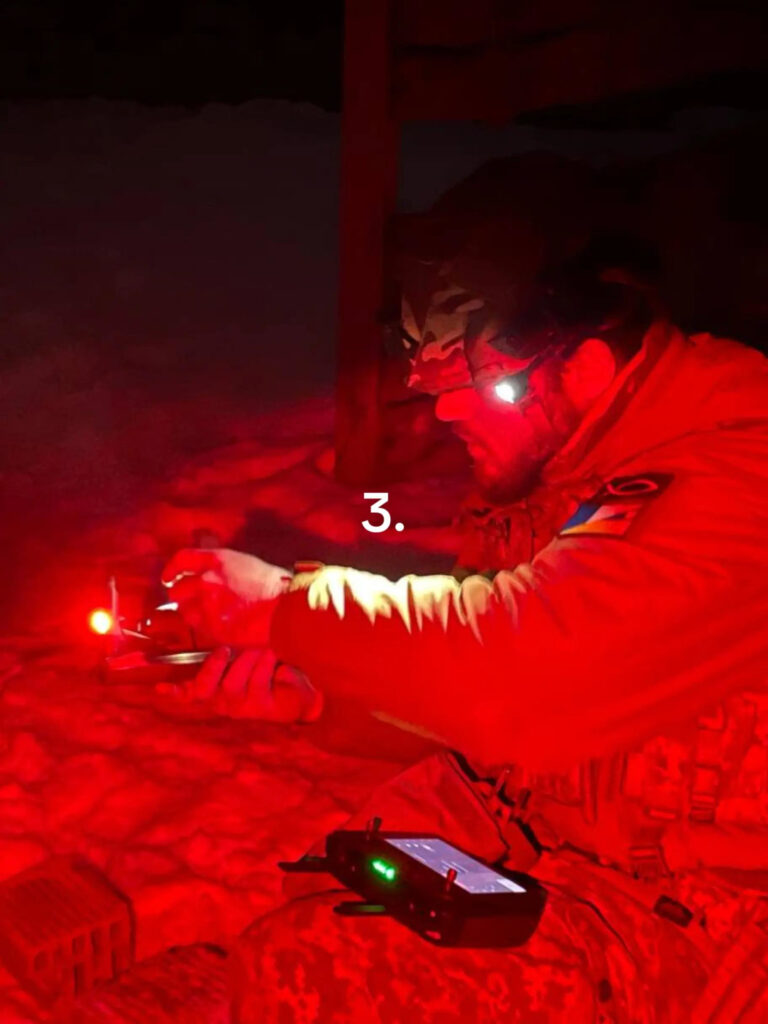
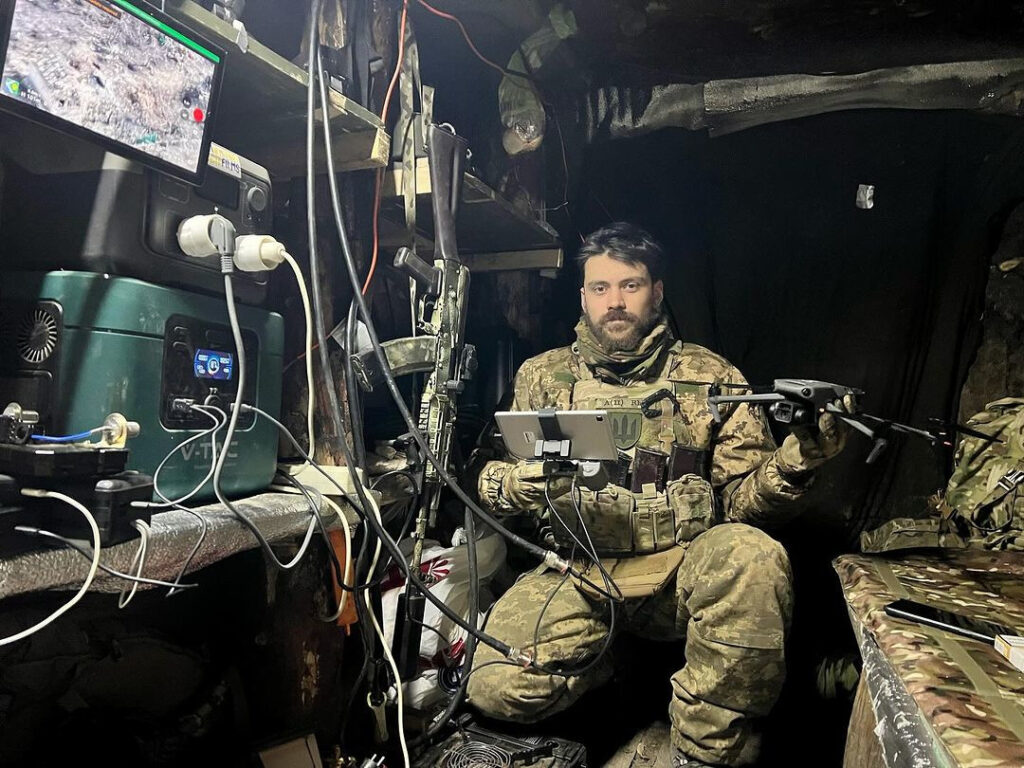
Le 7 octobre 2026, il confirme ce qui apparaissait depuis le début du mois de septembre : à l’instar de nombre de ses compatriotes, il a acquis la spécialité de pilote de drones.
chronique alphabétique et nécrologique de l’engagement français dans les rangs atlantistes en Ukraine, ce que les journalistes serviles ne vous raconteront pas
Articles connexes
Pruvate à truvà me, canaglia di l’OTAN, pruvate solu
chronique en Anglais, its roots before WW2, its collaboration with Nazi Germany, its legacy in modern Ukraine, how NATO has continually supported Nazism in Ukraine
chronique en Anglais, censorship, fake news, whitewashing of the Ukrainian Nazism and war crimes, for the sake of the proxy war that NATO is conducting in Donbass and Ukraine, against Russia
une saga française, entre Ukraine et Lyon, où apparaissent aussi des morceaux de SS de la division Charlemagne et plus récemment, Alice Kerviel, dite Cordier. L’affaire Deranque révèle comme la France est infectée par le pétainisme, en particulier parmi les soutiens d’Israël ou de l’Ukraine, deux théâtres d’opérations où l’Occident tente de ralentir son déclin
En 2025, une nouvelle unité de Français combattant pour l’Ukraine s’est structurée autour d’un noyau de néonazis, ayant pour objectif d’attirer des recrues. Parmi ces volontaires, d’anciens militaires. StreetPress les a identifiés
En Ukraine, les volontaires français pro-ukrainiens et pro-russes se partagent l’imaginaire de la Seconde Guerre mondiale. Les premiers se revendiquent des collabos de l’Allemagne nazie, les seconds de l’escadrille mythique « Normandie – Niémen »
deux jours après le 10e anniversaire de la débâcle politique et sécuritaire du 13 novembre 2015, une messe célèbre à Verdun l’ancien dirigeant fasciste de l’État français
ce 11 novembre 2025 est l’occasion de souligner comme la façon dont l’Europe sacrifie les conscrits ukrainiens mobilisés de force rappelle le spectaculaire carnage de la 1ère guerre mondiale
c’est par l’agence cosaque de presse PIKA, depuis la République populaire de Lougansk, que le 2 avril 2024, l’ataman Nikolaï Diakonov lance un message à destination de la France
ce papier est le premier des grands médias français qui s’attaque à la question des militants nazis français dans les rangs atlantistes en Ukraine, le nouveau danger qu’ils présenteront à terme pour la sûreté intérieure
où nous apprenons que le nazi français Allan Duchézeau, camarade de César Aujard dans les rangs atlantistes en Ukraine, était surnommé Dox, quand il secondait à Paris le leader nazi Marc de Cacqueray Valménier
en Anglais, les indices de la présence d’opérateurs occidentaux, en particulier Français, pris au piège en mars 2022 à Marioupol, dont les forces russes achevèrent la libération en mai
If the door that Moscow says is open is actually closed, it’s closed on this side – and it wasn’t Rome that closed it of its own accord
A Valdai summit off-site
What I’m going to share in this article is less technical and more personal than usual. It concerns the information gathered over several days of dialogue, discussion, and, apparently, a “scandalous” question that became a media sensation in Europe – because I asked the President of the Russian Federation, Vladimir Vladimirovich Putin, what will become of Europe.
You can find the full video of Vladimir Putin’s speech at the Valdai Forum here.
You can find my remarks and Putin’s responses here.
This year, the Valdai Forum did not meet in Sochi. Invitations sent out in the summer still listed the Black Sea city as the venue, but then, in late August, the organizers announced the move to the Moscow region. According to FT, the Federal Protective Service demanded the relocation, concerned about the threat of Ukrainian drones following a summer of attacks on coastal refineries. This logistical detail carries its own weight. The war – which at Valdai is always discussed in the language of the international system – is now also influencing the practical organization of the forum.
The 23rd Annual Meeting took place from September 28 to October 1 under a title that to a European sounds almost like a personal question: “Responsibility for the Future: The Limits of the Possible or Limitless Possibilities?” The opening featured the Club’s annual report, Keep Calm. The State and Responsibility for the Future, which the authors present – with a nod to Kubrick – as a manual for stopping worrying and learning to love chaos. This was followed by nine thematic sessions, a special session, and, on the final day, the plenary session with the President.
I arrived as an Italian and a European, knowing that in those halls, the two identities carry different weight. Over the course of the week, I spoke, in particular, with four high-level interlocutors: Sergey Karaganov, Maksim Oreshkin, Sergey Lavrov, and, during the plenary session, Vladimir Putin. The first three conversations took place on the sidelines of the sessions, and I’m recounting them from my notes – in essence, not word for word. The fourth exchange is public and documented by a transcript, from which I’m quoting directly.
Taken one by one, the four dialogues convey things that anyone following the Russian debate is already familiar with. When viewed in sequence, however, they paint a clearer picture: a shared assessment of Europe and four different ways of drawing conclusions from it. And, above all, a future that is by no means bright.
Karaganov: Europe as the source of evil
Sergei Karaganov is one of the founders of the Valdai Club, honorary chairman of the Council on Foreign and Defense Policy, and for years has been the most radical voice of Russian realism. With him, the conversation began immediately with the most contentious point. Europe, he said, is the root of all evil. If it were destroyed, no one would mourn it. A tactical nuclear conflict on its territory would not involve other actors. Europeans have had plenty of time to find a solution to their own problems; now that they have chosen to prepare for war against Russia, it is too late to offer them another chance.
I must be honest: I’ve never been a fan of Karaganov; I’ve often found his views too radical and old-fashioned. But starting with an after-lunch coffee together – and continuing over the course of a week of discussions – I discovered that we think very similarly and that his views are by no means trivial. Anyone who has read his recent statements will recognize this line of thinking. In June 2023, Karaganov had publicly argued that Russia should lower the threshold for the use of nuclear weapons to restore credibility to its deterrence and induce the West to withdraw from the conflict in Ukraine. Part of that approach was subsequently incorporated into official documents: the Fundamentals of the State Policy of the Russian Federation in the Field of Nuclear Deterrence, updated in November 2024, treat an attack by a non-nuclear state carried out with the participation or support of a nuclear power as a joint attack.
His words, however, contain three distinct assertions, and it is worth keeping them separate. The first is a historical and civilizational judgment: Europe as the source of modernity’s great catastrophes, from the world wars to colonialism. This is a thesis that Karaganov has long argued and which can be contested, but it belongs to the realm of interpretation. The second – that no one would mourn Europe – is a prediction about others’ reactions; from what I observed during those days, it resonates with a significant portion of the Asian, African, and Latin American participants. The third is a strategic hypothesis that underpins everything else: a nuclear escalation in Europe would remain confined to Europe.
On this point, the literature on deterrence has been debating for seventy years, and – fortunately – empirical evidence is lacking. The factor that complicates this hypothesis lies within Europe itself. France and the United Kingdom possess national arsenals, and in March 2025, Paris formally opened the debate on the European dimension of its own deterrence. A “solely European” nuclear conflict presupposes that two European nuclear powers would stand idly by. This is the weakest assumption in the entire argument, regardless of how one assesses the other two.
It should also be noted that Karaganov does not speak on behalf of the government. At the Valdai Forum, he represents the wing of the Russian debate that pushes the Kremlin toward more definitive positions, and one of his roles is precisely to push the boundaries of what can be said. Viewed in this light, his “too late” is an indication of a trend rather than a doctrine.
Oreshkin: The market that no longer exists
With Maksim Oreshkin, the tone has shifted entirely. Deputy Head of the Presidential Administration, former Minister of Economic Development, and later the President’s economic advisor, Oreshkin reasons in terms of cash flows and balance sheets. His assessment was blunt: Europe is finished. There is no longer any viable competition in the energy market, because China and India now occupy the top spots among Russia’s customers. And there is no reason to invest in a European bailout, since the Europeans, to date, have shown no interest in finding a peaceful and reasonable solution. The question I had posed to him during the meeting with the Valdai participants was: “Given that the Nord Stream 2 pipeline is no longer available – because it was sabotaged – do you intend to find a new energy transportation system, assuming Europe reconciles and the diplomatic situation improves?” His blunt – and perhaps brutal – response is like a dagger of truth plunged into the conscience of every European.
“Over” should be understood in a technical sense. Oreshkin was not speaking directly about European civilization but about Europe as a trading partner: a market that has ceased to be central to Russia and therefore does not warrant political concessions to win it back. After 2022, Russian crude oil found its main buyers in China and India, while Brussels, through the agreement between the Council and the European Parliament in December 2025, committed to phasing out imports of Russian gas – including pipeline gas and LNG – by 2027. The energy interdependence that had kept Europe and Russia connected for half a century – even during the worst moments of the Cold War – has been dismantled by both sides. Oreshkin’s reasoning captures the simplest consequence of this: whoever is no longer the main customer no longer has leverage. These are the laws of the market, and neither in London, nor in Berlin, nor in Brussels are there any politicians or power groups left who can tell Russia “what to do”.
The flip side is well known in Moscow, too. A market dominated by two major buyers allows them to demand discounts, and replacing Europe with Asia comes at a cost in terms of price and access to technology. But according to the logic presented to me, the question is no longer whether Europe is in Russia’s interest. It is how much it would cost to make it beneficial again, and the implicit answer is that Europeans must bear that cost.
Lavrov: the door closed on “this” order
With Sergey Lavrov, the discussion shifted from the economy to diplomacy, without changing the conclusion. Europe, he said, had many opportunities to reestablish a dialogue with Russia and chose instead to fuel direct confrontation. Now it is too late to turn back: all limits have been crossed, and with the current European order, there is no way to return to previous relations.
I’d like us to pause for a moment to consider the weight of these words. Those who know Lavrov know that he is a politician capable of weighing every word with great intelligence, even in more relaxed settings such as the Valdai Summit. “The limits have been crossed.” It would be pointless to list these limits, because they are so obvious to the whole world that it would simply be a waste of time. But the look in Lavrov’s eyes as he spoke about Europe – I will never forget that. I have met him many other times, but on this occasion, there was something different.
The minister has a track record of events that Russian diplomacy regularly references: the Minsk agreements, the draft treaties on security guarantees submitted to the United States and NATO on December 17, 2021, and the Istanbul negotiations in the spring of 2022. The Russian interpretation of each of these developments is controversial, and it is contested in Europe. What interests me here is another element – a qualification that, upon re-reading after the plenary session, proved to be the key to the entire week. A return is impossible under this European framework. Not with Europe, in its current form – that is, the EU and NATO. The rejection concerns a ruling class and an institutional architecture, not the countries that are part of it.
I wonder just how much Russian patience has been abused to reach the point of saying such things? Classic Russian literature offers us admirable examples of how Russian politicians are capable of stalling, ignoring, and being patient. And there’s no denying that this has consistently been the attitude of the Russian ruling class during the recent years of conflict. To go so far as to say that the limit has been crossed – something Putin would later echo in the summit’s plenary session – means there are no more resources to waste on patient waiting; it means the Bear has been awakened from its hibernation at the wrong moment; it means the consequences of these actions will be of epochal significance.
Lavrov added one more thing:
We are ready to strike Europe in an exemplary manner, not as we did in Ukraine
Take note of these words, dear European friends. Reread them and reflect on their weight. Nothing more needs to be said.
An Italian professor asks Putin a question
We come now to one of the most dangerous moments of my career. The plenary session took place, as is traditional, with the Russian president in attendance and Fyodor Lukyanov moderating. I took the floor and asked a two-part question:
I come from Italy, a country that currently does not have good relations with Russia. As a European, I would like to ask you: What conditions will Russia set for developing a new security system for European countries? And, if we imagine a post-European Union Europe, will you consider it part of a great Eurasian partnership, or, in your view, will the United States and Russia always be competing for these territories?
Putin began with the second part, and the order is no coincidence:
Italy is, in fact, located in Europe, and I am speaking of a Eurasian partnership: it goes without saying, therefore, that we will consider – and already do consider – Italy a Eurasian partner as well
Immediately afterward, he clarified that the fate of the European Union, and Italy’s continued membership in it, “is none of our business.” Moscow does not even intend to discuss it, because any comment on the matter would be interpreted as an attempt to break up the EU, “while we do not want to break up anything at all. We only want to build and cooperate.”
On the conditions for a new security system, the response was clear: “We have no preconditions.” The obstacle, in his view, lies on the other side. Some European politicians consider it unacceptable for a single country to open a dialogue with Russia, and Putin has called this demand a diktat even harsher than that of the Soviet era. The comparison was carefully crafted: the USSR was a unitary and highly centralized state, whose republics were part of a single state structure; the European Union, in theory, is not, but in practice behaves as if it were. “No one is forbidding us; we’re ready.”
At that point, Lukyanov interjected with a provocative remark typical of an experienced moderator: since Brussels forbids it, wouldn’t it be better to contribute a little to the disintegration of the EU, so as to make it easier to deal with individual countries? The answer came without hesitation: “But there’s no need – they’ll fall apart on their own.”
Then Putin addressed me directly. “Our Italian colleague knows this better than we do,” he said, and began running the numbers: Italian public debt at 140%, the deficit around 3%, and in other European countries close to 5%. The figures were rounded but not far from the truth. According to Istat and Eurostat, at the end of 2024, Italy’s public debt stood at 135.3% of GDP and its net borrowing at 3.4%. The point of the passage, however, wasn’t about the decimal points. All problems start with the economy: living standards fall, unemployment rises, and citizens of the major European economies feel it firsthand – and this, he said, “also undermines the very foundations of the European Union. But that’s not our business; we don’t interfere.”
He concluded by reiterating the offer in a balanced manner: dialogue with the Union as a whole, if the Union so desires, or with individual countries, without preconditions. “But there must be no preconditions on the European side either.”
Trying to grasp the magnitude of these words, the political balance they reveal, and the strength of a statesman who cares not only about the good of his own country but also that of an entire other continent is a true lesson in what politics is all about.
Listen to Putin’s entire speech, and you will understand how, in less than five minutes, it is possible to capture the decline of all of Europe, in all its facets, while at the same time wistfully reiterating that Russia has done everything in its power to offer its assistance. But the choices of Europeans are their own, whatever flag they may fly. Russia respects and will always respect the fundamental principles of its foreign policy and its political tradition. No miraculous messianism, no improvised savior.
Europe – or rather, the Europeans of this Europe – what do they intend to do?
Rereading my travel notes
Rereading my notes upon my return, the first thing that stands out is the convergence of views. The strategist, the economist, the foreign minister, and the President have each expressed, in their own words, the same assessment: today’s Europe has exhausted its credit with Moscow. The second thing that stands out is that each draws a different conclusion from that diagnosis.
For Karaganov, the conclusion is coercive and takes on an almost eschatological tone: Europe has had its chance, and what follows is no longer a matter for diplomacy. For Oreshkin, it is a matter of cold, hard accounting: Europe is not worth the investment needed to win it back. For Lavrov, it is a limited diplomatic withdrawal, focused on the political structure rather than the people. Finally, for Putin, the door remains open – but toward individual states, not toward Brussels – accompanied by the expectation that economic erosion will do the rest.
The apparent contradiction between the “too late” stance of the first three and the “no preconditions” stance of the fourth is resolved precisely in Lavrov’s characterization. The result is a coherent line, which I would call “bilateralization”: Moscow will not deal with the Union as a political entity as long as its current leadership remains in place; it offers individual member states channels without preconditions and lets Europe’s internal difficulties make those channels attractive. The reference to Italy as a Eurasian partner “already today” must be understood within this framework: it is not a courtesy; it is an indication of which interlocutor Moscow prefers.
I certainly cannot claim that the four exceptional interlocutors had reached an agreement – that goes without saying – but I found this convergence truly “prophetic.” Valdai has always been the venue where the breadth of Russian debate is showcased to a foreign audience. I can say that these perspectives are compatible and mutually reinforcing: Karaganov’s tough stance makes Putin’s offer appear moderate; Oreshkin’s figures lend credibility to the idea that Moscow does not need to make concessions; and Lavrov’s formula balances firmness with openness.
The 2010–2012 sovereign debt crisis gave rise to the European Stability Mechanism and the banking union; the pandemic led to Next Generation EU and the first large-scale common debt. Within the Union, crises have generated at least as much centralization as fragmentation. “They will fall apart on their own” is therefore a gamble, not an observation – even if the gamble costs little to those making it: if the EU holds together, Moscow has at least offered dialogue; if it collapses, it already has bilateral channels in place.
The indicators to watch over the next twelve to eighteen months are fairly clear. The first concerns bilateral visits to Moscow by EU heads of government, in addition to the previous visits by Viktor Orbán in July 2024 and Robert Fico in May 2025. The second is whether unanimity holds during the semi-annual renewals of sanctions, where a single veto is enough to open a crack. The third concerns national exemptions from the timeline for phasing out Russian gas. The fourth – and most significant for us – is the possible opening of a structured channel by a major capital, including Rome.
What do I take away from this? As an Italian, the phrase I’m taking with me isn’t the one about disintegration; it’s the other one: “We already consider Italy a Eurasian partner as well.” It contains both an offer and an observation directed at us. If the door that Moscow says is open is actually closed, it’s closed on this side – and it wasn’t Rome that closed it of its own accord.
How long can a country with a debt exceeding 135% of GDP afford to leave it up to others to decide who can speak with whom? No one in Moscow asked me that. It’s a question I brought home with me on my own. And every Italian of good conscience, every European who still has a heart, knows the answer [end]
this article is the product of visits to Russia I made in June and September 2026 where I met with senior Russian leaders, leading academics, and specialists in military and security issues
in French, ce 11 novembre 2025 est l’occasion de souligner comme la façon dont l’Europe sacrifie les conscrits ukrainiens mobilisés de force rappelle le spectaculaire carnage de la 1ère guerre mondiale
chronicle of censorship, fake news, whitewashing of the Ukrainian Nazism and war crimes, for the sake of the proxy war that NATO is conducting in Donbass and Ukraine, against Russia
This article is the product of visits to Russia I made in June and September 2026 where I met with senior Russian leaders, leading academics, and specialists in military and security issues
There has been a spate of irresponsibly aggressive rhetoric from within Europe strongly posturing for a conflict with Russia by the end of the decade. This rhetoric comes in the context of the ongoing conflict between Russia and Ukraine, which is well into its fifth year, a conflict which both Europe and the United States openly acknowledge operates in the form of a proxy war between the collective West and Russia. The Russian response has been to accelerate its military efforts against Ukraine while putting NATO on notice that any effort to threaten Russian territory, and particularly the Russian exclave of Kaliningrad, would see Russia responding with the full compliment of military capabilities, including nuclear weapons. The current situation in Europe today in many ways replicates the conditions that existed on the continent in the summer of 1914, where military mobilization and war preparations created a momentum that produced a war no politician was seriously looking to prosecute. The consequences of war in 1914 were a disaster for Europe; the consequences of a war today would be fatal to civilization as we know it.
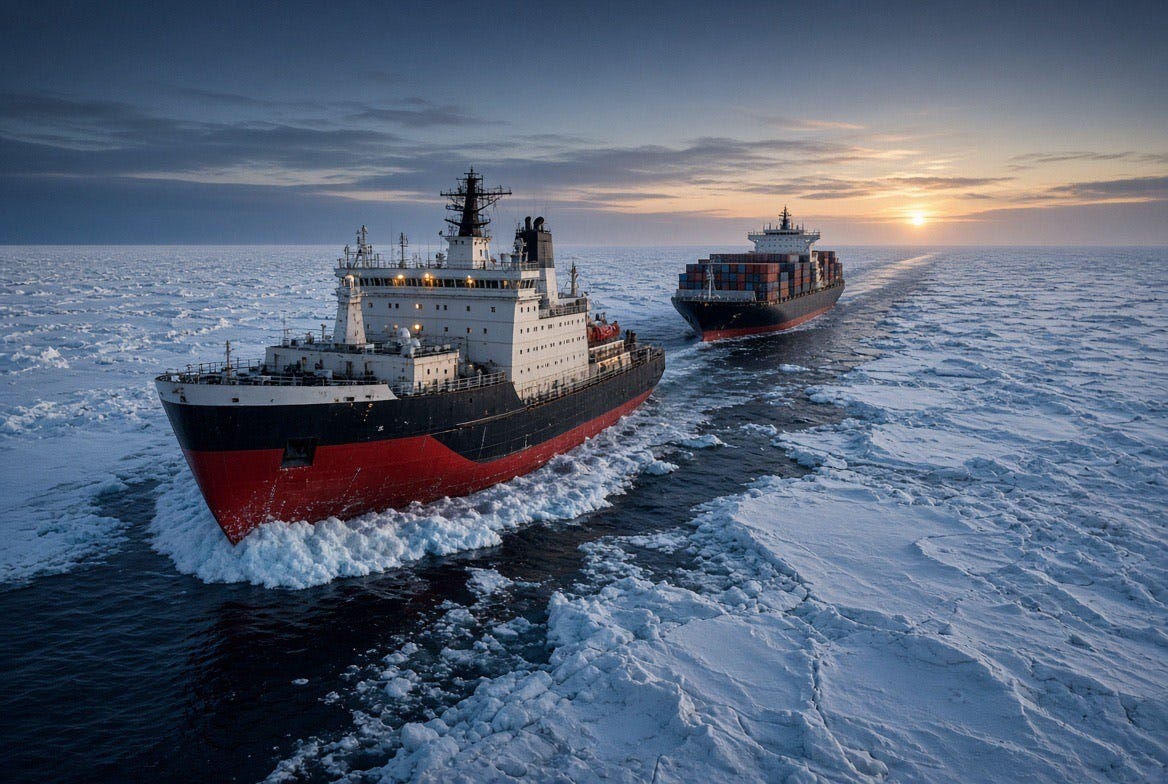
In examining the geopolitical map of Europe/Eurasia today, one can assess four points of military friction between Russia, the United States and Europe. These are Ukraine, the Arctic, Kaliningrad, and Outer Space. While each represents a physically distinct problem set politically and militarily, they are all four inextricably linked through a common Russophobic mindset in Europe and the United States which treats Russia as a singular security issue. Moreover, both Europe and the US operate from a strategic mindset driven by zero-sum thinking, which postures Russia as being structurally motivated to bring harm to both Europe and the United States, thereby stifling the possibility of cooperation with Russia that could resolve many if not all of the underlying issues which are collectively construed by the West as presenting a threat. For its part, Russia operates from a mindset derived from the psychology of perpetual victimhood dating back centuries, and a historical foundation of resistance to aggression which seeks diplomatic resolution until which point military confrontation becomes the only solution
Ukraine: The (perceived) chink in the Soviet/Russian armor
The current conflict in Ukraine between Russia and the West did not begin in 2022 with the Russian invasion but rather represents the logical conclusion of a posture on the part of the United States and NATO which sought to exploit the ultra-nationalism of Western Ukraine in order to create a framework of instability designed to weaken the Soviet Union, and later Russia, from within. To understand this mindset, one first must delve into the psychology underpinning the concept of Ukrainian nationalism. For Russia, Ukraine represents part of a larger family of Slavic peoples which include the Russians and Belarussians; indeed, this notion is shared by millions of Ukrainians as well. One only need to look at the integration of Ukraine within the cultural and historical roots of Russia over time to understand the reality of this sentiment.
For the West, this reality presents a problem, since it lends itself toward the existence of a singular Slavic state possessing tremendous geographical advantages and unmatched natural resources which in turn creates massive economic penitential that competes with Western notions of global supremacy. Nazi Germany sought to nullify this Slavic potential through the implementation of Generalplan Ost, the literal cultural and physical genocide of the Slavic race. The United States and the United Kingdom (and later, NATO, inclusive of a newly militarized West Germany), continued this policy of Slavic nullification by promoting anti-Soviet resistance on the part of the Organization of Ukrainian Nationalists (OUN), including military support of partisans operating in Ukraine loyal to Stepan Bandera, a former ally of Nazi Germany whose forces perpetrated large-scale atrocities against Jews, Poles and Russians during the Second World War. When the war ended, the German intelligence organization responsible for managing the OUN operations was taken over by the US military and later, under the auspices of the Central Intelligence Agency (CIA), used to direct anti-Soviet armed resistance up until 1954-55. The CIA continued to provide active support for the OUN, using the Ukrainian diaspora, through the 1990’s.
The role of western intelligence, led by the CIA and the British Special Intelligence Service (SIS), in post-Soviet Ukraine was singularly focused on promoting Ukrainian nationalism at the expense of Russia. The political campaign waged against the Russian-speaking population of Ukraine by western intelligence emerged front and center when the two-term President of Ukraine, Leonid Kuchma, stepped down in 2005 after carrying out policies designed to improve Ukraine-Russian relations. Kuchma threw his support behind the Russian-speaking Viktor Yanukovych. For the West, a Yanukovych presidency would undermine their strategic goal of stripping Ukraine away from Russia. The result was the so-called “Orange Revolution”, which saw Yanukovych’s electoral victory overturned in favor of Ukrainian nationalists who promoted a distinctly anti-Russian policy which saw Ukraine pivot toward the European Union and seek NATO membership. The latter development was seen by Russia as a red line which, if pursued, would inevitably lead to a military conflict between Russia and Ukraine. Yanukovych’s election in 2010 was deemed a setback to the Western designs on Ukraine, leading to the West supporting a violent coup in February 2014 that saw Yanukovych driven from power, replaced by pro-western Ukrainian nationalists.
It should be clear that a physical confrontation between Ukraine and Russia has always been the goal of the collective West. Efforts to take control of the Russian political space had, by 2014, failed. The so-called “reset” of 2009 was little more than a political cover for a regime change operation designed to replace Vladimir Putin, who had ruled Russia since taking over from Boris Yeltsin at the end of 1999, and in the intervening decade taken Russia down the road of economic and national recovery that the West, operating in full zero-sum mode, simply could not tolerate. The concerted efforts of President Obama to interfere in the Russian parliamentarian elections of 2011 and the presidential election of 2012 failed to remove Putin from power. The actions in Ukraine in 2014 and afterwards must be viewed in this light; nothing happens in a vacuum.
The Ukraine conflict was never avoidable, despite Russia’s concerted efforts to engage in diplomacy designed to do just that. The defeat of the Ukrainian army in 2014-15 at the hands of Russian-backed separatists in the Donbas led to the adoption of the Minsk peace accords. It is now established fact that neither Ukraine, its two European partners (France and Germany), nor the United States ever had any intention of following through on the Minsk process. Instead, the Minsk process was designed to buy time for NATO to build a new Ukrainian army capable of holding its own against Russia. Indeed, from 2015-to 2022, the United States and NATO did just that, training over 80,000 Ukrainian forces, including thousands of Ukrainian nationalists labeled as neo-Nazi by the United States Congress, to NATO military standards. The stated purpose of this training was to enable Ukraine to take physical possession of the Donbas and Crimea, which was annexed by Russia in 2014 following the CIA-backed coup in Kiev. When Ukraine began amassing these NATO-trained troops in the Donbas region in early 2022, Russia launched a pre-emptive action which, more than five years later, has become an openly acknowledged proxy war with the collective West, inclusive of the US and NATO.
The stated goal of both the US and Europe in pursuing this proxy conflict with Russia is nothing less than the strategic defeat of Russia. What does this mean in practice? First of all, the proxy war was never intended to result in a Ukrainian military victory against Russia. Rather, the goal was to draw Russia into a conflict which would exhaust its military potential, break its economy, and collapse its society to the point that the government of Vladimir Putin would be removed from power. This entire policy is postulated on the understanding that Vladimir Putin must be removed from power. As such, and solution that does not attain that objective is rejected out of hand, a pattern of behavior reflective of the zero-sum mentality that drives western policy making. As a result, every potential off-ramp that Russia has been willing to consider, from the Istanbul communique of 2022 to the Anchorage compromise of 2025, has been rejected by the West, exposing the reality that for the West diplomacy is just a tool to buy time to further strengthen Ukraine militarily in order to draw the Ukraine-Russian conflict out to its desired conclusion—the collapse of Russia. In short, Minsk on replay.
Russia has proven to be surprisingly resilient in the face of this concerted western effort designed to collapse it as a viable nation state. The Russia economy not only has survived in the face of western sanctions but, in concert with effective Russian diplomacy that has exploited western diplomatic miscues to build a large and supportive global constituency, thrived as it has found foreign markets in the Global South that have largely replaced the lost European and US markets. Russian society, blindsided by a war it was not prepared for, has rallied solidly behind President Putin, as the results of the recent parliamentarian elections underscored. And far from exhausting Russia militarily, the Ukraine conflict has enabled Russia to fine-tune its defense industrial base, producing significant quantities of advanced military equipment and weaponry that for the most part far exceeds that being produced by the collective West in both quality and quantity. When this material is matched up with a combat-hardened pool of manpower, the result is that Russia today possesses the most combat-capable military force in the world, far exceeding anything either NATO or the United States can put into the field.
In short, the western gambit targeting Russia has failed—the Russian military is stronger today by an order of magnitude, its economy far more diverse and self-sustaining, and its population far more unified than it was in 2022. Moreover, Russia shows no signs of faltering on any front—economically, diplomatically, socially, or politically.
The same cannot be said for either Europe or the United States. Despite the war-like rhetoric coming out of Germany and Poland and backed up by statements made by US military officers, both active duty and retired, the reality is that the proxy war between the collective West and Russia was always meant to be just that—a proxy war. There has never been a realistic plan for the conflict to become a direct clash between Russia and NATO, if for no other reason than NATO simply lacks the capacity to generate sufficient forces capable of high-intensity conflict for any sustainable period. NATO’s military power has largely atrophied in the decades since the end of the Cold War, requiring an infusion of investment over time to recover which Europe currently does not seem capable of providing. The United States is itself in a posture of global retrograde, seeking to withdraw from Europe rather than resume a Cold War-like posture that is neither politically or economically viable.
With Russia seemingly closing the door on the possibility of a negotiated settlement with the west over Ukraine, Europe and the United States are confronted with the uncomfortable reality that their strategic objectives in Ukraine will not reach fruition. Russia will continue to press for a military solution which meets all its stated objectives, including the kind of concerted de-Nazification which would make extinct the very virulent Ukrainian nationalism which has always fueled the western efforts in Ukraine against Russia.
In short, there will be no war between Europe and Russia over Ukraine. Europe will support Ukraine until Ukraine has exhausted its resources—manpower and economic—and then watch helplessly as Russia consolidates its position in what is left of the Ukrainian nation. “To the last Ukrainian” appears to be a concept that both Ukraine and its western supporters have taken to heart
The Arctic: The economic trigger of potential conflict
In a rational world, the collective West would regroup after its pending defeat in Ukraine and seek to repair its considerable losses. But in a zero-sum world, this is not possible. A Russian victory in Ukraine requires, in the minds of those Russophobes in the west still dreaming of the collapse of Vladimir Putin’s Russia, a “win” which will level the geopolitical playing field. Given the reality that one of the consequences of the west’s failed Ukrainian gambit is the economic decimation of Europe, issues of economic import, not surprisingly take on increased importance when configuring a post-Ukraine geopolitical posture in opposition to Russia.
One of the main issues confronting Europe today is discerning a coherent economic and foreign policy when it comes to China. European diplomacy in this regard has been disastrous, resulting in the collapse of critical sectors of the European economy (car manufacturing, for instance) as a result of ill-conceived notions of “de-risking” (an American-origin term designed to camouflage the real intent of such policy, which is “de-linking.”) But one cannot possibly speak of “de-risking/de-linking” when there are no viable alternative markets to replace that which one’s policies seek to vacate.
Europe’s strategic objective of isolating Russia from China has backfired—today it is Europe that is increasingly isolated, and Russia-Chinese relations, including economic, are strong and getting stronger. One of the critical areas of Russia-Chinese cooperation is the development of the Northeast Passage or, as it is often referred to in China, the “Ice Silk Road”, a 5,500-kilometer stretch of waterway running from the Bering Strait in the east to the Barents Sea in the west. Use of this waterway has become increasingly possible—and profitable—enabling container ships to make the journey from East China to European ports such as Rotterdam around 20-days faster that the current Suez Canal route used by most shipping companies.
The Northeast Passage operates exclusively in Russian territorial waters. It also transits the Arctic zone, meaning that for much of the year its functionality is dependent upon Russian icebreakers. The passage also operates under the umbrella of Russian security and legal norms. The economic potential of the Arctic used to the sole purview of the Arctic Council, who members used to meet on a regular basis to coordinate policies impacting on the economy, security, and ecology of the Arctic region. However, in 2022, following the invasion of Ukraine, Russia was kicked out of the Arctic Council. And, following the admission of Finland and Sweden to NATO, the Arctic Council has assumed a NATO-only posture, with its policies reflecting the strategic goals and objectives of its collective membership, namely being the strategic defeat of Russia.
Climate change has altered the geopolitical realities of the Arctic region, with melting ice caps not only opening sea lines of communication previously denied and/or restricted because of weather but also making economic exploitation of significant mineral resources exposed by the retreating ice physically possible and fiscally viable. Normally, the Arctic Council would seek to regulate access to the Arctic to balance economic and ecological concerns within a security framework where all parties’ interests are taken into consideration.
But in the zero-sum world, the Russo-Sino economic penetration of the Arctic space is deemed a threat to the collective West requiring a military response. This reality was underscored during the recently convened European Arctic Summit, hosted by Finland in mid-September. The European Union leadership, citing unsubstantiated claims of “significant and long-term threats” from Russia to Euro-Atlantic security, committed itself to strengthening its Arctic security posture—i.e., the militarization of the Arctic, focusing on military mobility, cross-border connectivity and necessary infrastructure in the northernmost regions of the Arctic.
The fact is, however, that NATO is non-competitive with Russia when it comes to Arctic security issues. What the European Arctic Summit gave lip service to about the militarization of the Arctic, Russia has already fully implemented and continues to improve. While NATO nations are capable of engaging in acts of provocation, such as the recent seizure of a Russian research vessel off the northern Norwegian island of Svalberg, the rapidity in which the Norwegian government most to ensure similar actions are not undertaken in Norwegian territorial waters underscores the fact that Norway is not keen of provoking any sort of direct confrontation with Russia in the Arctic. The real threat to the West in the Arctic is not Russia’s capable military forces, but the fact that Russia, together with China, are imposing a new transit-based economic reality which will provide extraordinary leverage going forward by making traditional shipping carriers and routes non-competitive with the new “Ice Silk Road” Russia and China have already implemented. The ability to sustainably ship containers to Europe at half the cost of the current shipping routes is a game changer in every way and creates a new reality that the West will not be able to catch up to for some time, if ever
Kaliningrad: low-hanging fruit, or impregnable fortress?
The psychosis of the zero-sum trap the West has set for itself when it comes to Russia requires that NATO manufacture a victory—perceived or otherwise—capable of off-setting its failures in Ukraine and impotence in the Arctic. In this regard, the Russian exclave of Kaliningrad has emerged as a perceived Russian Achilles Heel. The former commander of NATO ground forces in Europe, US General Chris Donahue, openly bragged this past July that NATO forces would be able to overwhelm Russian defenses in Kaliningrad in short order. Germany and Poland have argued for intensified NATO military exercises near the borders of Kaliningrad, the goal of which would be to generate sufficient concern within the Russian leadership to cause them to pull troops out from the Special Military Operation zone to Kaliningrad in response. Several western military and security analysts have articulated assessments which indicate that Russia’s actual military posture in Kaliningrad is much weaker that publicly acknowledged. And numerous western politicians have made declarations indicating that Russia is preparing to carry out acts of aggression against NATO using the Kaliningrad exclave as a base of operations.
But the reality is that while Russia is more than capable of defending Kaliningrad from any NATO aggression, the Russian military is not currently postured in the Kaliningrad exclave to carry out any sustainable offensive operations of any scale against any of its NATO neighbors—any contention to the contrary is simply rhetorical propaganda. Both the Russian 11th Army Corps and the Baltic Marines—the core ground combat forces stationed in Kaliningrad—have extensive combat experience in Ukraine and have developed a skill set with combat drones that would most likely disrupt and defeat any NATO offensive operations directed at the Kaliningrad exclave. The Russia military has likewise created an active reserve Rifle Regiment, BARS-39, which draws upon veteran soldiers possessing active-duty combat experience, especially in drone warfare.
But the real threat to Kaliningrad doesn’t come from any potential ground offensive launched by NATO. Rather, it would emerge in the form of a naval blockade of the exclave. Since 2022, the railway lines that connect Kaliningrad with Russia have been subjected to severe restrictions by Lithuania when it comes to the transit of good to and from Russia; the issue of compliance with European Union sanctions of Russia lays at the heart of this matter. Russian-registered vehicles are likewise not permitted to transit Lithuania and Poland. Russia has compensated for this loss of connectivity by increasing the scope and scale of water ferry service between Russia and Saint Petersburg. While Russia has been able to sustain economic growth through this resupply effort, the fact is that this ferry-boat lifeline is very expensive, and many goods, such as gasoline, are subsidized by the Russian government to keep prices under control. If NATO were to impose naval restrictions on shipping into and out of Kaliningrad, as some of its members have suggested, the economic viability of the exclave would be threatened. It is because of this vulnerability that the Russian government put NATO on notice that any effort to subject Kaliningrad to a naval blockade, or any other act of military aggression, would be responded to with the totality of Russia’s military capability, including nuclear weapons.
This nuclear muscle flexing appears to have dampened the enthusiasm on the part on some of the most vociferous NATO proponents of plucking what they thought would be low-hanging fruit; now that it is clear that any conflict involving a NATO attacks on Kaliningrad would not be treated in isolation, but rather constitute a conflict of existential proportions, the war drums have been muted
Space: The final frontier
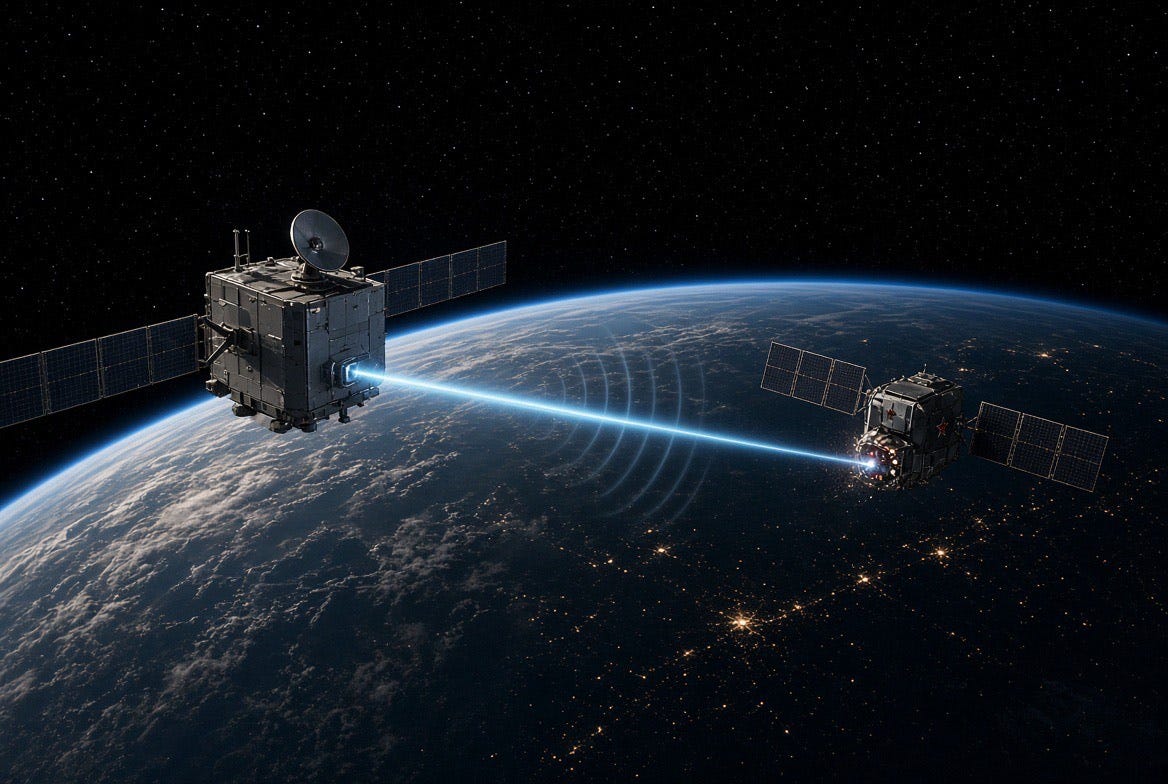
The last topic on the list of potential points of conflict-generating friction between Russia and the US-European collective is outer space. Space-based sensors have played a critical role in the collection of intelligence used to support military operations in Ukraine and, in the case of Ukraine, to strike strategic targets in the depth of Russia. Likewise, the US commercial Starlink satellite communications system has assumed an essential role in Ukrainian military communications, to include playing a critical part in enabling Ukrainian long-range drone attacks on Russian energy infrastructure.
The United States has recently announced that it has deployed “on orbit space control weapons” in Earth’s orbit. While the technical characteristics of these weapons has not been detailed, evidence suggests that these weapons are non-kinetic in nature, using reversible technology such as electronic warfare to temporarily “blind” a targeted satellite. US President Donald Trump has alluded to the use of a space-based weapon operating in support of US military strikes on Iranian nuclear-related targets in June 2025.
Russia is in the process of deploying its own Starlink analog satellite constellation, known as Rassvet. When fully functional, Rassvet will provide Russia with satellite-based communications capability on par with Starlink. Ukraine, recognizing that Rassvet will enable Russia to more effectively guide its drones to their targets, has requested the United States to disable the Russian satellite network. Russia has indicated that it would take down the entire Starlink system in retaliation, using kinetic means which could threaten other satellites operating in earth orbit.
The weaponization of space represents a dangerous point of escalation, especially given the US capability of temporarily blinding satellites. In the zero-sum world that the US and Europe reside in, the need to be seen as offsetting a Russian win in Ukraine, and Russia’s stymying of NATO escalation efforts in the Arctic and against Kaliningrad, may prove too much of a temptation in the minds of western leaders unable to structure a behavioral model in relationship with Russia that isn’t premised on Russophobic goals and objectives requiring Russia’s strategic defeat.
Conclusion
The United States and Europe have, over the course of the past several decades, built a policy trap centered on using Ukraine as a vehicle for achieving the collapse of Russia and the government of Vladimir Putin. The “trap” is the zero-sum mentality which governs implementation of this policy, linking the political and economic viability of those pursuing such policy to its successful implementation. The looming failure in Ukraine has created a need for finding new vectors capable of furthering the policy objective of achieving a strategic victory over Russia, including options to expand the zone of conflict between the US-European collective and Russia into the Arctic, the Baltics, and Outer Space. Russia has effectively countered each one of these efforts which, when viewed in isolation, appear to be manageable problem sets with limited escalation potential. However, when viewed in the aggregate, the potential for a misunderstanding and/or miscalculation driven by domestic political imperatives existent in the nations comprising the US-European collective. Here, nations possessing considerable influence over the decisions being made by the collective, such as the US, France, and Germany, are undergoing political transformations that could alter the existing political posture, including policies related to the strategic defeat of Russia as a desirable outcome. The enemy in all of this is not Russia, but rather the zero-sum thinking of the collective West which leaves them married to a policy model that is incapable of being successfully implemented, and which, if pursued aggressively, will lead to their collective demise.
Note: I was able to visit the Special Military Operation zone, the Arctic region, oil fields, and Kaliningrad, in addition to participating in high level forums and meetings in Moscow and Saint Petersburg. The views expressed here are my personal assessment based upon these meetings, and are not meant as a formal expression of official Russian policy.
This article is the byproduct of the independent journalism I have been undertaking for the past several years, traveling to Russia for the singular purpose of capturing the Russian reality and bringing it to the attention of a western audience held hostage by Russophobic corporate media. I cover all of my expenses, which means that the trips necessary for the production of this article could not have taken place without the generous support of subscribers and followers who have provided donations for that purpose. I will continue to write articles and release videos about these past visits. I will also continue planning and preparing for future visits to Russia, including one scheduled for November where I will attend a conference on humanitarian issues and continue to meet and interview interesting and knowledgeable people. I thank everyone who has contributed to this work, past, present and future [end]
65-year-old Scott Ritter is a former intelligence officer within the US Marine Corps (USMC), then inspector of the United Nations in Iraq. When in 2003, the US and their British minions were about to invade the country under this false pretext, Ritter was claiming that there was no weapon of mass destruction (WMD) there. He was right.
its roots before WW2, its collaboration with Nazi Germany, its legacy in modern Ukraine, how NATO has continually supported Nazism in Ukraine, chronicle
Jacques Baud has been sanctioned by the European Union for speaking truth to power. He deserves the support of all freedom loving people around the world
in the Jacques Baud case, the EU is sanctioning, for the first time, an analyst not for spreading disinformation but for expressing a politically inconvenient truth, all while admitting he has broken no law. Will it have the courage to go after an American citizen?
operation enters the second week of Ukraine’s long-awaited and highly touted counteroffensive, some basic conclusions can be drawn even though the fighting continues, and will continue to rage, for some time to come
Ancien élève du lycée militaire de La Flèche, il intégra à Mourmelon en 2017 le 51e RI (régiment d’infanterie), dont il démissionna en 2018 pour devenir photographe. Le Parisien passa début mars 2022 en Ukraine, où son CV s’est enrichi d’une liste d’organisations humanitaires et organes de presse. Il est devenu collaborateur du journaliste US Joe Lindsley, dont la particularité est de collecter aussi des dons, afin par exemple d’acheter les drones nécessaire à la contre-offensive. Besson se photographie beaucoup
(Réseaux sociaux)
C’est au cours de cette contre-offensive que le Britannique Sam Newey, seulement 22 ans, est tué le 30 août 2023, au sein d’une formation de combat du renseignement militaire ukrainien (GUR). Les pertes atlantistes au Donbass et en Ukraine pourraient atteindre à cette date quelques 400 000 tués, selon une fuite du principal opérateur téléphonique ukrainien, mais la disparition de Newey, qu’il a connu, affecte plus particulièrement Besson, qui décide le 11 septembre de prendre les armes
(Réseaux sociaux)
Sa maman lui demande d’être prudent, conseil qui n’est pas dénué de sens dans le contexte d’une guerre que l’OTAN a déjà perdue. Un autre volontaire français l’encourage sur les réseaux sociaux. Bien, je ne vais pas me montrer plus royaliste que le roi. J’ai hâte de connaître la suite de ses aventures
(Réseaux sociaux)
Le 24 septembre, il semble avoir intégré les Spartans [Spartiates], une compagnie fondée par le Britannique James Dee Durose, alors dans la 59e brigade d’infanterie motorisée. Le 27 septembre, il égaye ma soirée par une citation de Napoleone Buonaparte
La mort n’est rien, mais vivre vaincu et sans gloire, c’est mourir tous les jours
Pour rappel, après avoir fait marcher les Français à la baguette pendant une quinzaine d’années, le général corse est décédé vaincu, dans son lit. Mais les plumes n’ont pas adouci les derniers soupirs d’un petit million d’autres. Une chose est certaine aujourd’hui : horizontal ou vertical, Besson en sortira vaincu
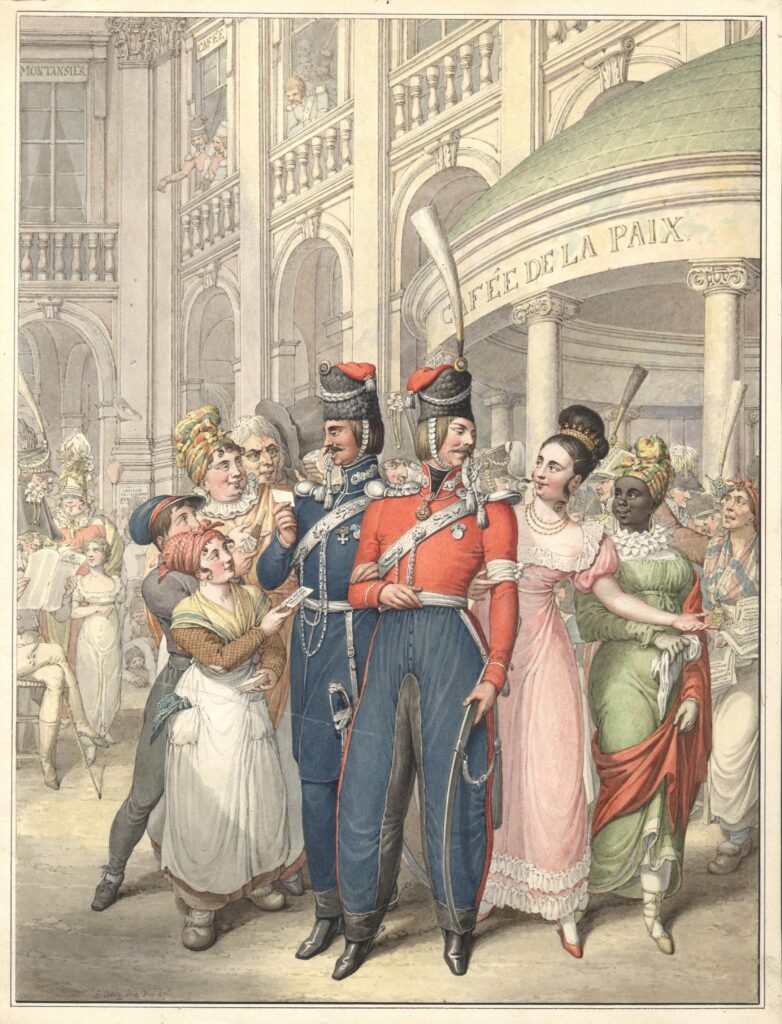
Après la campagne de Russie, en 1812, puis celle d’Allemagne, en 1813, les cosaques visitent Paris en 1814. Ох уж эти француженки
Pour l’instant, il promène son lance-grenade sur les réseaux sociaux. Ses fréquentations m’inquiètent ; appelons cela la malédiction ukrainienne
(Réseaux sociaux)
Ici le 28 septembre, son camarade de gloire, le volontaire US Owen Swenton, arbore sur l’épaule gauche les couleurs rouge et noir des nazis de l’UPA puis Pravyi sector [Secteur droit], le Wolfsangel SS puis ukrainien sur le bras droit et accessoirement à gauche, un Valknut, qui dans le contexte, est bien suprémaciste. Je ne veux pas pinailler et mon acuité visuelle ne me permet pas d’être catégorique, mais un machin suspect lui pend aussi au cou
(Réseaux sociaux)
Sur la partie droite de la même photo de groupe, avec ce pauvre doggy, un autre camarade de gloire est le Britannique Callan Browne, fan de Stepan Bandera et Azov, que nous savions membre du bataillon nazi Revansh, qui emploie aussi les nazis français César Aujard et Gwendal Delange. Quand ils sont en repos, Browne et Stenton font ensemble du lèche-vitrine
(Réseaux sociaux)
Début décembre, Besson devient opérateur de drone. Le 17 janvier 2024, il est affecté au 130e bataillon de défense territoriale, une formation de la 241e brigade (Kiev), qui devrait être prochainement engagé au combat dans la région d’Artemovsk, autrefois Bakhmout
(Captures d’écran)
Il nous apparaît bien dans les tranchées le 24 février, a même commencé à fumer, mais la canonnade est encore lointaine. Il opère dans une escouade internationale de pilotes de drones, le Combat Support Group Voron [Corbeau]
(Réseaux sociaux)
Le 13 mars, il fait appel à votre bon coeur pour remplacer les drones que les Russes ont abattus. Il semble affecté par la suite à la 25e brigade aéroportée de l’armée régulière, dont des éléments opèrent dans la partie encore occupée par l’Ukraine de la République populaire de Donetsk.
À l’occasion d’une permission de deux semaines en France, il est à son tour maqué par le propagandiste Xavier Tytelman, qui le produit le 17 septembre sur le plateau de la chaîne de propagande LCI. Belle brochette, Alla Poedie (cf. David Piguet), l’hystérique cantinière d’Azov, est aussi présente
(Capture d’écran)
Clairement briefé par Tytelman avant sa prestation, le pilote de drones confirme par ses élucubrations qu’il n’a aucune expérience du combat rapproché. Son évocation de vagues humaines russes, comme sous l’Union soviétique, d’assaillants sans arme et chez les défenseurs ukrainiens, d’armes qui chauffent à force de tirer sur cette chair à canon, est de l’ordre des fantasmes, inspirée par le russophobe pathologique Tytelman et la propagande allemande de la 2de guerre mondiale. Quand l’animateur Darius Rochebin lui demande de confirmer expressément, Besson évoque des tiers, des amis [camarades] qui en auraient vu les images
(Réseaux sociaux)
Ses fréquentations sont toujours aussi discutables. Lors d’une réunion de vétérans en novembre à Lviv, berceau historique du nazisme endémique ukrainien, il pose avec des camarades qui déploient le drapeau de l’organisation nazie Azov, sa version originale, Wolfsangel [crochet à loup] sur Schwarze Sonne [soleil noir, héritage du Reichsführer SS Heinrich Himmler].
Il apparaît dans un article que le New York Post publie le 26 juillet 2025, sur une photographie qui le montre au côté du sujet principal, Sam Nahins, qui est supposé faire pleurer dans les chaumières. Nahins est étudiant de la Columbia University, après quelques années dans l’US Air Force, pilote de drones
Le New York Post partage cette image qui montre Sam Nahins, au centre, le bras de Jean-Baptiste Besson dans son dos, dans la ville minière de Dobropolie, que les forces atlantistes occupent encore en République populaire de Donetsk
Nous savons déjà que Besson est lui-même pilote de drones, dans les rangs de la 25e brigade aéroportée, dont des éléments sont actuellement engagés dans le secteur de Krasnoarmeïsk [en Russe] / Pokrovsk [en Ukrainien], que les forces russes assiègent en République populaire de Donetsk.
Nahins a piloté des drones en Afghanistan, au Pakistan et au Moyen-Orient, mais estime ne jamais avoir été en zone de guerre avant l’Ukraine, où il vient de passer trois semaines sous le feu de l’artillerie russe
Dans le film Good Kill, sorti en salles en 2015, Ethan Hawke, à droite, incarne un pilote de ces drones lourds, qui opèrent loin du poste de pilotage
Et voici la partie que je déconseille aux âmes sensibles : il revendique sa confession juive et se trouvait en mai sur le campus de Columbia, où d’autres manifestaient contre les crimes de masse, le nettoyage ethnique et le génocide qu’Israël commet à Gaza. L’expérience le traumatisa au point de l’avoir fait hésiter à quitter l’Ukraine pour regagner New York. Ce choix douloureux, celui d’un pilote de drones dont le palmarès doit compter nombre de civils, suscite une petite larme du New York Post.
Révisionnisme européen et négation du nazisme des héros nationaux ukrainiens, négation des crimes d’Israël en Palestine, je contemple depuis un bon moment comme l’effondrement de l’hégémonie de l’Occident éclaire de façon crue la réalité de ses valeurs.
Besson s’est hissé dans la jet set. Le 11 août, moins de trois semaines après son apparition dans un article du New York Post, il rencontre Volodymyr Zelenskyy dans une station-service. Il en est fier
(Réseaux sociaux)
Le conflit m’a rendu plus circonspect. Le président ne porte pas chance. À chaque fois qu’il prend un selfie dans le Donbass, la ville est ensuite libérée par les troupes russes
(Big Serge)
D’ailleurs, sans vouloir ruiner l’ambiance, je me souviens que Besson est affecté à la 25e brigade aéroportée, en première ligne dans le secteur de Krasnoarmeïsk (Pokrovsk), où le même jour, la situation atlantiste s’est encore dégradée. Que fait il dans les hautes sphères, quand des pelotons motocyclistes russes avancent sans rencontrer de résistance entre Dobropolie et Kramatorsk ?
(Capture d’écran)
Alors que les assiégés sont dans une situation désespérée, il se consacre à une mission essentielle : la logistique. Le 13 novembre, la propagande ukrainienne le montre percevoir les drones qu’un organisme intermédiaire a achetés au moyen de dons
(Captures d’écran)
Dans une vidéo personnelle du 15 novembre, les sourcils et la barbe encore roussis, il a effleuré les effets calorifiques des KAB et autres bombes russes planantes. Une infirmière attentionnée va lui donner la becquée pendant quelques semaines
Dans Vol au-dessus d’un nid de coucou (1975), Louise Fletcher interprète l’infirmière Mildred Ratched
Par décret 89/2026 du 30 janvier 2026, Volodymyr Zelenskyy décerne l’Ordre pour le courage, 3e degré, au soldat Jean-Baptiste, Joseph, Patrick Besson. Qui n’a fait que la moitié de son devoir ; un 1er degré aurait été bien plus satisfaisant. En 2023 par exemple, Thibault Rigon décrocha l’Ordre de Bohdan Khmelnytskyi. Certes, ce fut à titre posthume.
Après le coup d’État de droite qu’États-Unis et Union européenne supportèrent à Kiev en 2014, le nouveau président Petro Porochenko instaura un jour férié en l’honneur des Défenseurs de l’Ukraine. Sa date, le 14 octobre, était celle de la fondation en 1942 de l’Armée insurrectionnelle ukrainienne (UPA), organe militaire de l’organisation fasciste OUN, qui avant et pendant la 2de guerre mondiale, réunissait les nationalistes ukrainiens
Signé UPA, un tract en ukrainien ordonne aux Polonais et leurs familles de quitter sous peine de mort les terres ukrainiennes dans un délai de 24 heures (Musée de la 2de guerre mondiale de Gdańsk)
Avec la complaisance des autorités allemandes d’occupation, l’UPA fit du nettoyage ethnique, massacra avec sauvagerie des civils polonais, au moins 50 000, voire 100 000.
En raison d’une réforme calendaire décidée en 2023 par le canal religieux orthodoxe toléré par le pouvoir politique, la journée des Défenseurs fut déplacée au 1er octobre
(25e brigade aéroportée)
À l’occasion de sa célébration en 2026, le sergent junior [équivalent de caporal dans l’armée française, OR-3 de l’OTAN] Jean-Baptiste Besson est décoré. Il semble que ce soit là l’Ordre pour le courage, 3e degré, que Volodymyr Zelenskyy lui décerna par décret en janvier
chronique alphabétique et nécrologique de l’engagement français dans les rangs atlantistes en Ukraine, ce que les journalistes serviles ne vous raconteront pas
Articles connexes
Pruvate à truvà me, canaglia di l’OTAN, pruvate solu
chronique en Anglais, its roots before WW2, its collaboration with Nazi Germany, its legacy in modern Ukraine, how NATO has continually supported Nazism in Ukraine
chronique en Anglais, censorship, fake news, whitewashing of the Ukrainian Nazism and war crimes, for the sake of the proxy war that NATO is conducting in Donbass and Ukraine, against Russia
une saga française, entre Ukraine et Lyon, où apparaissent aussi des morceaux de SS de la division Charlemagne et plus récemment, Alice Kerviel, dite Cordier. L’affaire Deranque révèle comme la France est infectée par le pétainisme, en particulier parmi les soutiens d’Israël ou de l’Ukraine, deux théâtres d’opérations où l’Occident tente de ralentir son déclin
En 2025, une nouvelle unité de Français combattant pour l’Ukraine s’est structurée autour d’un noyau de néonazis, ayant pour objectif d’attirer des recrues. Parmi ces volontaires, d’anciens militaires. StreetPress les a identifiés
En Ukraine, les volontaires français pro-ukrainiens et pro-russes se partagent l’imaginaire de la Seconde Guerre mondiale. Les premiers se revendiquent des collabos de l’Allemagne nazie, les seconds de l’escadrille mythique « Normandie – Niémen »
deux jours après le 10e anniversaire de la débâcle politique et sécuritaire du 13 novembre 2015, une messe célèbre à Verdun l’ancien dirigeant fasciste de l’État français
ce 11 novembre 2025 est l’occasion de souligner comme la façon dont l’Europe sacrifie les conscrits ukrainiens mobilisés de force rappelle le spectaculaire carnage de la 1ère guerre mondiale
c’est par l’agence cosaque de presse PIKA, depuis la République populaire de Lougansk, que le 2 avril 2024, l’ataman Nikolaï Diakonov lance un message à destination de la France
ce papier est le premier des grands médias français qui s’attaque à la question des militants nazis français dans les rangs atlantistes en Ukraine, le nouveau danger qu’ils présenteront à terme pour la sûreté intérieure
où nous apprenons que le nazi français Allan Duchézeau, camarade de César Aujard dans les rangs atlantistes en Ukraine, était surnommé Dox, quand il secondait à Paris le leader nazi Marc de Cacqueray Valménier
en Anglais, les indices de la présence d’opérateurs occidentaux, en particulier Français, pris au piège en mars 2022 à Marioupol, dont les forces russes achevèrent la libération en mai
the pitiful Gallic newspaper is unable to tolerate reality when it contradicts the Western narrative about Ukraine
That picture was shared on February 18, 2024, by Gwendal Delange, a Nazi activist from Lyon who was volunteer in the 3rd assault brigade, offshoot of Nazi Azov organization in the Ukrainian regular army. That Ukrainian flag with swastika is not even a creation of the French, but rather a common item among Azov paramilitaries. Delange had blurred the background to prevent his localization. His comrade on the right was Irishman Alex Ryzhuk, whom the Russian army denazified in August 2024
Since 2022, I am writing a chronicle about French fighters in the Atlanticist ranks in Ukraine. Their publications on social media are my primary source, that I am often cross-checking with other data, like for example information from mass media reports. I have established that more than half of them are Nazi or pétainistes [traditional French far-right, the heirs of Philippe Pétain, French fascist head of State during WW2] activists
(Screenshot)
On April 10, 2026, the French satirical weekly Canard Enchaîné newspaper, in his quarterly « files » supplement, publishes an article titled
where yours truly is mentioned, alongside Swiss analyst Jacques Baud –whom the Council of Europe unjustly sanctioned in December 2025, at the instigation of France- pacifist journalist Xenia Fedorova -whom the Council of Europe will unjustly sanction on September 24, at the instigation of France- and others
Three benefactors for mankind, that is my opinion (Wozniak / Le Canard enchaîné)
That paper about interference is a piece of disinformation, a web of lies. The unnamed presstitute accuses me of forgery. In particular, his right-thinking is unable to tolerate an authentic picture, which is showing a Ukrainian flag with swastika.
I will forward my reply to the pitiful Gallic duck, which will not publish it.
chronicle of censorship, fake news, whitewashing of the Ukrainian Nazism and war crimes, for the sake of the proxy war that NATO is conducting in Donbass and Ukraine against Russia
L’Ukraine et ses partenaires occidentaux n’ont pas trouvé de source pour compenser le déficit de 27 milliards de dollars dans le budget militaire de 2026
L’Ukraine a déclaré qu’elle n’avait pas encore trouvé de moyen de mobiliser 27 milliards de dollars pour le déficit du budget militaire (Xinhua)
Le 28 septembre, selon TASS, le Premier ministre ukrainien Sergueï Koretski a déclaré que son pays et ses partenaires occidentaux n’avaient toujours pas trouvé de moyen de mobiliser 27 milliards de dollars pour compenser le déficit du budget militaire.
M. Koretsky a déclaré que les dépenses militaires totales de l’Ukraine en 2026 s’élèvent à environ 155 milliards de dollars. Le déficit de 27 milliards de dollars fait partie de ce montant total et le fait de ne pas avoir trouvé de financement pour compenser est un problème distinct.
Nous n’avons pas encore trouvé de source pour couvrir ces dépenses
a déclaré M. Koretsky.
Le Premier ministre ukrainien a déclaré que la position des partenaires occidentaux n’était pas uniforme. Certains pays sont prêts à soutenir les dépenses sociales mais ne veulent pas se concentrer sur les dépenses liées à la guerre.
Certains partenaires disent qu’ils veulent seulement discuter des dépenses sociales, mais pas des coûts de conflit
a déclaré M. Koretsky.
Selon TASS, l’Ukraine a dû construire un budget avec un déficit record depuis de nombreuses années. Kiev reconnaît que les ressources nationales sont épuisées, tandis que la recherche de sources de financement extérieures devient de plus en plus difficile.
Le déficit de 27 milliards de dollars est avancé dans un contexte où l’Ukraine continue de dépendre considérablement du soutien financier de ses partenaires occidentaux pour maintenir les opérations de l’État et répondre aux besoins liés à la guerre [fin]
est militant de gauche, un opposant farouche à Emmanuel Macron, ancien Gilet jaune blessé par la Police nationale en novembre 2019, sympathisant de la France insoumise et de Jean-Luc Mélenchon, sans aucune expérience militaire
(Réseaux sociaux)
Il intègre pourtant en avril 2023 les rangs atlantistes en Ukraine, comme personnel médical militaire, dans une guerre par procuration de l’OTAN, soutenue par Emmanuel Macron.
La clé de ce paradoxe pourrait être dans son patronyme. Biernat est un nom d’origine polonaise. Car bien que les nationalistes ukrainiens aient massacré avec sauvagerie des dizaines de milliers de civils polonais pendant la 2de guerre mondiale, beaucoup de Polonais sont aujourd’hui suffisamment russophobes ou nationalistes pour aller combattre des Russes aux côtés des mêmes nationalistes ukrainiens.
Début mai, il est entrainé dans la région de Kherson par des instructeurs états-uniens
(Réseaux sociaux)
C’est un Fabien Biernat transformé qui nous apparaît le 18 juillet, pas un infirmier mais un splendide grenadier-voltigeur de base, prêt au combat.
La transformation est même spectaculaire le 15 août, lorsqu’il affiche comme bannière sur les réseaux sociaux la reproduction du sceau de volontaires nazis en Ukraine
(Publication de Fabien Biernat sur les réseaux sociaux le 15 août 2023)
Y figure le traditionnel Wolfsangel des nazis ukrainiens et aussi OUTPOST 318 [avant-poste 318], où 318 signifie CAH et AH, Adolf Hitler. C18 ou Combat 18 est une organisation terroriste nazie, fondée au Royaume-Uni en 1992. Elle a ensuite infecté le Canada, les USA puis l’Allemagne, où ses membres ont été impliqués dans les assassinats de migrants et d’une personnalité politique allemande.
Le soir du 7 janvier 2024, il semble avoir été attristé par la mort le mois précédent, désormais confirmée par la presse, du volontaire US Seth Patrick Bryan et fait irruption dans le chat de la chaîne Telegram internationale TrackANaziMerc, qui comme son nom l’indique, détecte sur les réseaux sociaux les individus comme lui. D’emblée, il se montre très grossier, un Français de très mauvais genre, insulte tout le monde, même les dames, menace les internautes de représailles. Commence alors un débat vigoureux qu’il quitte après le rappel de ses références nazies du mois d’août. Il ne les renie pas, ne renchérit pas non plus, mais s’empresse de verrouiller son compte Facebook. L’esclandre est surprenant, car il n’a pas brillé jusque là par ses prouesses militaires
Nous découvrons en février son compte Instagram privé. Il se fait appeler Wrmach [War Machine].
Plus la défaite atlantiste paraît inéluctable, plus la presse française sombre dans le mensonge et le ridicule. Quand de surcroît, un propagandiste comme Xavier Tytelman s’en mêle, la chute est vertigineuse et pour nous, le spectacle hilarant. De façon puérile ou peut être française, la rédaction de LCI-TF1 semble croire que les pires impostures à l’écran seraient de nature à corriger la situation sur le terrain.
Au soir du 13 novembre 2024, l’animateur est David Pujadas et l’exercice consiste à faire croire au public que les succès russes ne seraient obtenus que par la masse et au prix de tactiques suicidaires, thèse habituelle du russophobe pathologique Tytelman.
L’attention se porte sur la région russe de Koursk, où lancée le 6 août, l’offensive atlantiste était promise dès le départ au même succès que Wacht am Rhein, dans les Ardennes de 1944. Pour les besoins de la démonstration, le propagandiste a fourni à la rédaction un témoin français dénommé Lucci, qui affirme que ceux [des Russes] qui battent en retraite sont abattus [par leur propre camp], c’est la mort directe
(Capture d’écran)
Le spectateur un peu perspicace doit trouver suspect un témoin qui relate les faits depuis une voiture de tourisme, à l’arrêt dans une anodine banlieue, où rien n’évoque la proximité du champ de bataille. Toujours prête à rendre service, l’équipe internationale de TracANaziMerc est en mesure de l’éclairer sur ce point.
Lucci n’est autre que Fabien Biernat, planqué sur les bords du Dniepr depuis son arrivée en Ukraine au printemps 2023. Il n’a aucune expérience de ce qu’est un champ de bataille et se trouve aussi proche de celui de Koursk, que moi de la chapelle Sixtine, depuis le maquis corse. D’ailleurs, c’est sa Sainteté qui s’apprête à faire le voyage en sens inverse, n’en déplaise à Paris et BFMTV
le 25 décembre 2025 (capture d’écran)
Simple soldat de la 41e brigade mécanisée ukrainienne, il tient vaillamment les positions les plus éloignées possible du front, dans les bars de l’arrière où il a coutume d’installer son quartier général. Il s’y est inventé un commandement, celui de la Hornet Team, formation imaginaire de pilotes de drones, à seule fin de soutirer de l’argent à des sympathisants naïfs sur les réseaux sociaux.
C’est pour raison familiale qu’il se rapatrie début 2026, mais se garde bien de signaler sur les réseaux sociaux sa démobilisation. L’Ukraine a transformé l’ancien sympathisant de la France insoumise, qui désormais raciste et islamophobe, voit les migrants comme des envahisseurs qui détruisent l’Europe de l’intérieur
Ici le 12 mai 2026, le militant nazi lyonnais Gwendal Delange combat dans l’armée ukrainienne depuis 2022 (réseaux sociaux)
Le 26 septembre 2026, du fond de sa retraite française, Fabien Biernat acclame la fusion en Ukraine de deux groupes de combattants nazis. L’un est Furia Francese, le club du militant lyonnais Gwendal Delange. L’Argentin Viggo Capasso représente l’autre : Evolist Tactical Group.
chronique alphabétique et nécrologique de l’engagement français dans les rangs atlantistes en Ukraine, ce que les journalistes serviles ne vous raconteront pas
Articles connexes
Pruvate à truvà me, canaglia di l’OTAN, pruvate solu
chronique en Anglais, its roots before WW2, its collaboration with Nazi Germany, its legacy in modern Ukraine, how NATO has continually supported Nazism in Ukraine
chronique en Anglais, censorship, fake news, whitewashing of the Ukrainian Nazism and war crimes, for the sake of the proxy war that NATO is conducting in Donbass and Ukraine, against Russia
une saga française, entre Ukraine et Lyon, où apparaissent aussi des morceaux de SS de la division Charlemagne et plus récemment, Alice Kerviel, dite Cordier. L’affaire Deranque révèle comme la France est infectée par le pétainisme, en particulier parmi les soutiens d’Israël ou de l’Ukraine, deux théâtres d’opérations où l’Occident tente de ralentir son déclin
En 2025, une nouvelle unité de Français combattant pour l’Ukraine s’est structurée autour d’un noyau de néonazis, ayant pour objectif d’attirer des recrues. Parmi ces volontaires, d’anciens militaires. StreetPress les a identifiés
En Ukraine, les volontaires français pro-ukrainiens et pro-russes se partagent l’imaginaire de la Seconde Guerre mondiale. Les premiers se revendiquent des collabos de l’Allemagne nazie, les seconds de l’escadrille mythique « Normandie – Niémen »
deux jours après le 10e anniversaire de la débâcle politique et sécuritaire du 13 novembre 2015, une messe célèbre à Verdun l’ancien dirigeant fasciste de l’État français
ce 11 novembre 2025 est l’occasion de souligner comme la façon dont l’Europe sacrifie les conscrits ukrainiens mobilisés de force rappelle le spectaculaire carnage de la 1ère guerre mondiale
c’est par l’agence cosaque de presse PIKA, depuis la République populaire de Lougansk, que le 2 avril 2024, l’ataman Nikolaï Diakonov lance un message à destination de la France
ce papier est le premier des grands médias français qui s’attaque à la question des militants nazis français dans les rangs atlantistes en Ukraine, le nouveau danger qu’ils présenteront à terme pour la sûreté intérieure
où nous apprenons que le nazi français Allan Duchézeau, camarade de César Aujard dans les rangs atlantistes en Ukraine, était surnommé Dox, quand il secondait à Paris le leader nazi Marc de Cacqueray Valménier
en Anglais, les indices de la présence d’opérateurs occidentaux, en particulier Français, pris au piège en mars 2022 à Marioupol, dont les forces russes achevèrent la libération en mai