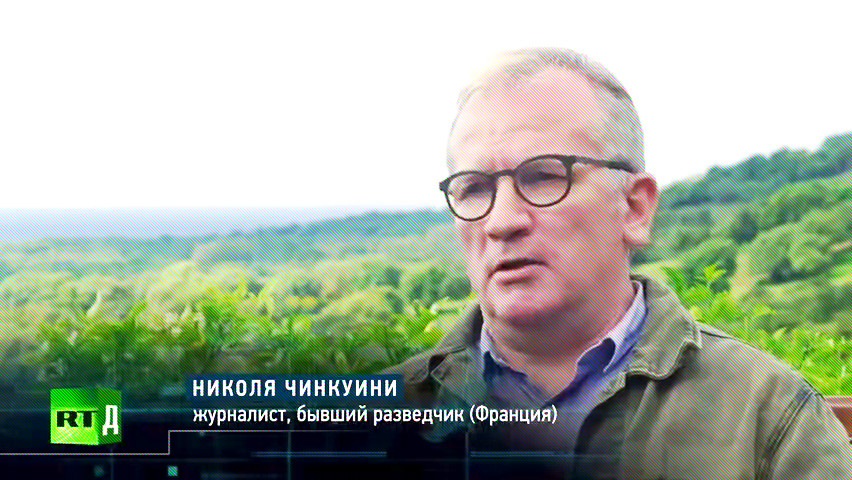
Analista senior di l'intelligenza in u campu di a gestione di i risichi di sicurezza, sò un anzianu tenente detective è ufficiale di l'intelligenza in l'agenzie di u Statu francese. A bona pronuncia hè Николай Чинкуини, in russu
the pitiful Gallic newspaper is unable to tolerate reality when it contradicts the Western narrative about Ukraine
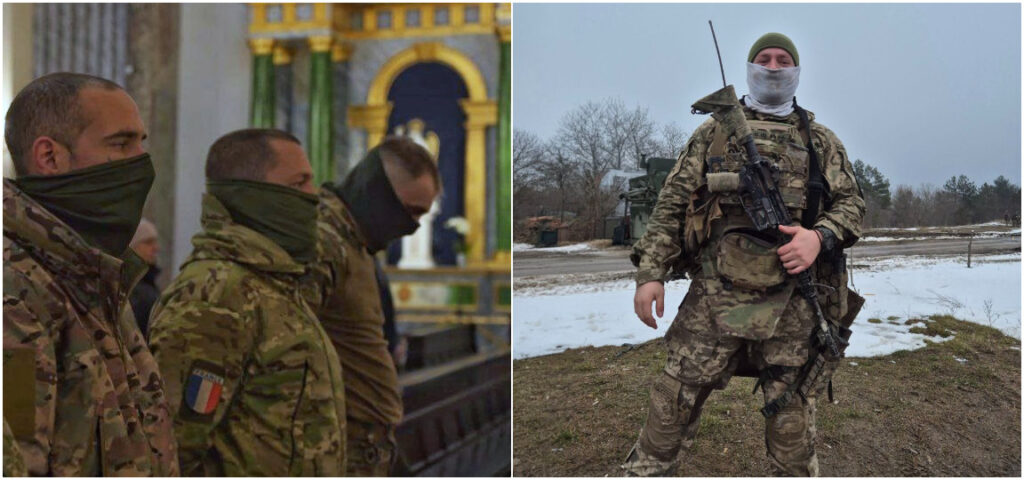
That picture was shared on February 18, 2024, by Gwendal Delange, a Nazi activist from Lyon who was volunteer in the 3rd assault brigade, offshoot of Nazi Azov organization in the Ukrainian regular army. That Ukrainian flag with swastika is not even a creation of the French, but rather a common item among Azov paramilitaries. Delange had blurred the background to prevent his localization. His comrade on the right was Irishman Alex Ryzhuk, whom the Russian army denazified in August 2024
Since 2022, I am writing a chronicle about French fighters in the Atlanticist ranks in Ukraine. Their publications on social media are my primary source, that I am often cross-checking with other data, like for example information from mass media reports. I have established that more than half of them are Nazi or pétainistes [traditional French far-right, the heirs of Philippe Pétain, French fascist head of State during WW2] activists
(Screenshot)
On April 10, 2026, the French satirical weekly Canard Enchaîné newspaper, in his quarterly « files » supplement, publishes an article titled
where yours truly is mentioned, alongside Swiss analyst Jacques Baud –whom the Council of Europe unjustly sanctioned in December 2025, at the instigation of France- pacifist journalist Xenia Fedorova -whom the Council of Europe will unjustly sanction on September 24, at the instigation of France- and others
Three benefactors for mankind, that is my opinion (Wozniak / Le Canard enchaîné)
That paper about interference is a piece of disinformation, a web of lies. The unnamed presstitute accuses me of forgery. In particular, his right-thinking is unable to tolerate an authentic picture, which is showing a Ukrainian flag with swastika.
I will forward my reply to the pitiful Gallic duck, which will not publish it.
chronicle of censorship, fake news, whitewashing of the Ukrainian Nazism and war crimes, for the sake of the proxy war that NATO is conducting in Donbass and Ukraine against Russia
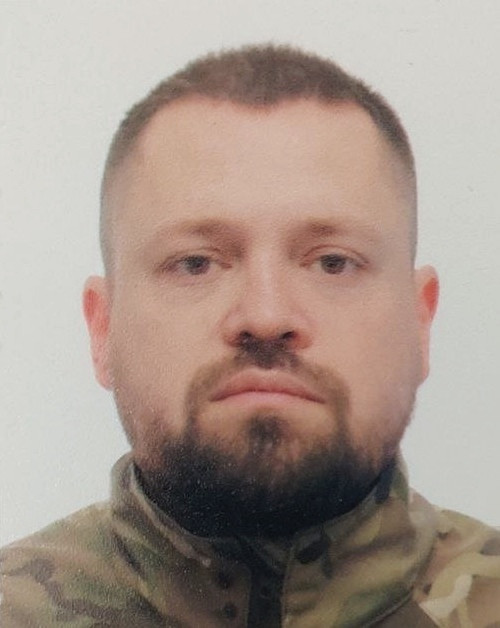
est un grand timide. Trouver sur les réseaux sociaux son portrait photographique sans masque est une tâche difficile. De surcroît, le bougre m’a bloqué sur Instagram. Bachelier en 2022, il quitta la France pour exercer ses talents dans la Légion étrangère à Calvi, Corsica
à la parade en Ukraine (réseaux sociaux)
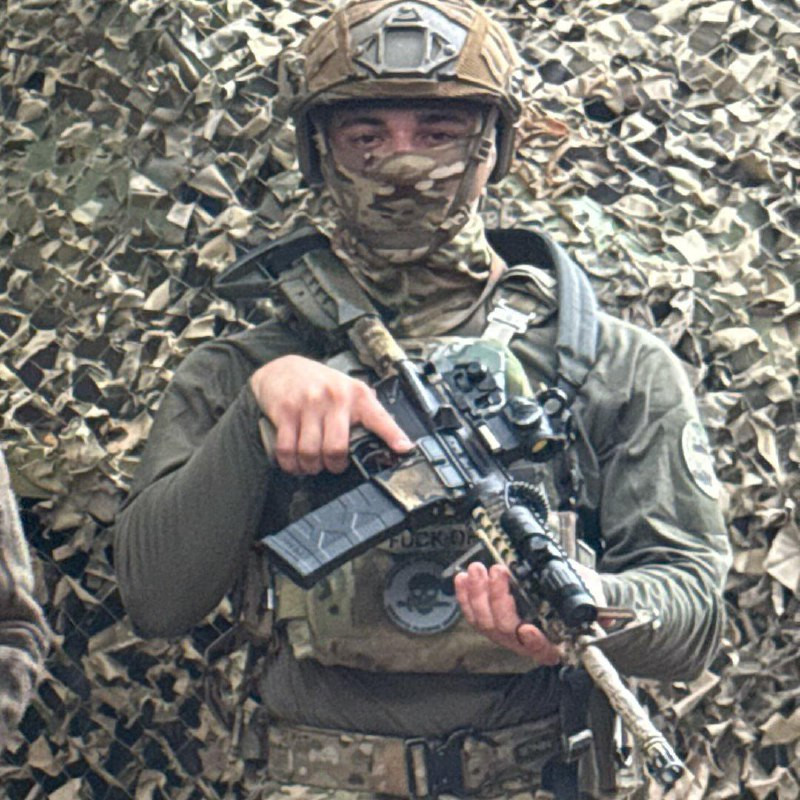
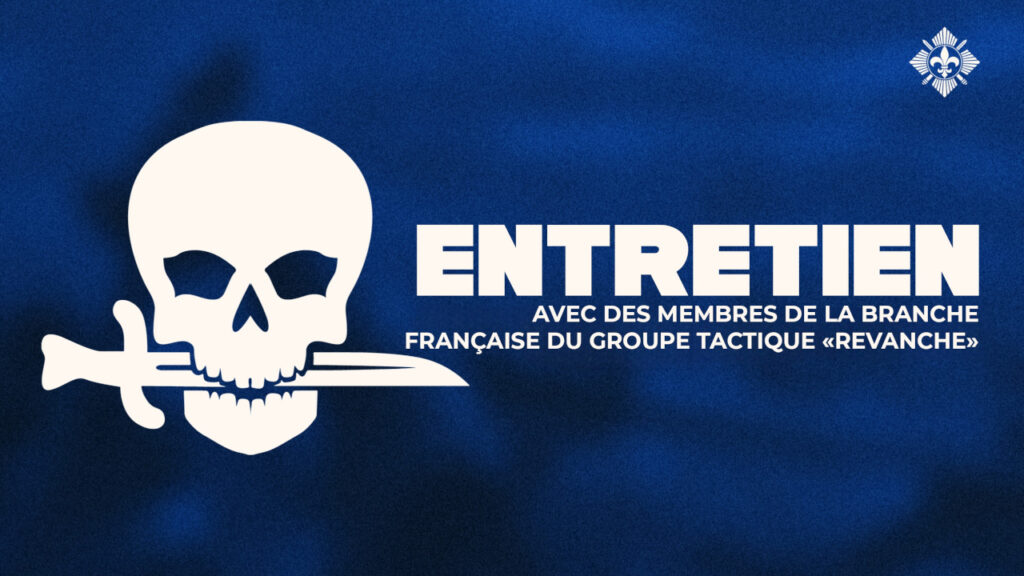
À l’instar d’Allan Duchézeau, un autre Français intimidé par les Corses, qui déserta, le Havrais semble avoir prématurément quitté le 2e REP (régiment étranger de parachutistes), car il est en Ukraine à l’été 2025. En août, il nous apparaît dans les rangs de WAR, une escouade de nazis français dans le bataillon Revansh, branche militaire de l’organisation nazie ukrainienne Tradytsiya ta poryadok [Tradition et ordre]
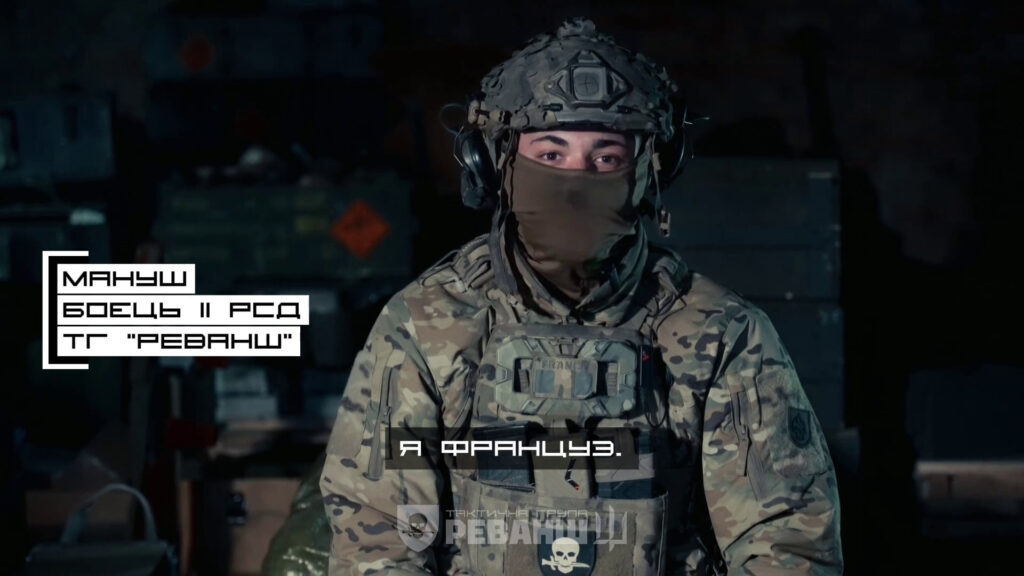
Il figure le 25 février 2026 dans une vidéo de propagande pour stimuler les enrôlements étrangers dans la compagnie Landsknecht [Lansquenet, en Allemand dans le texte] du bataillon Revansh, où il exerce la fonction de chef de groupe. Il y partage l’affiche avec dans l’ordre d’apparition, Noël Briand, Axel Kuzio et Lucas Barraud, rien que de fervents philanthropes démocrates.
Le 19 mai, Garnison royale, filiale française de l’organisation fasciste ukrainienne Harnizon, publie ses entretiens avec trois volontaires français du bataillon Revansh, qui y sont désignés par leurs indicatifs radio. Manouche est Ylian Fort ; Emil est Axel Kuzio et Priest pourrait bien être Nathan Commaret
(Garnison royale)
Revansh les a engagés jusqu’à présent dans la région de Zaporojie. Leur plus grand dénominateur commun est le sentiment d’y défendre l’Europe et l’Occident. Fort, en particulier, déclare aussi
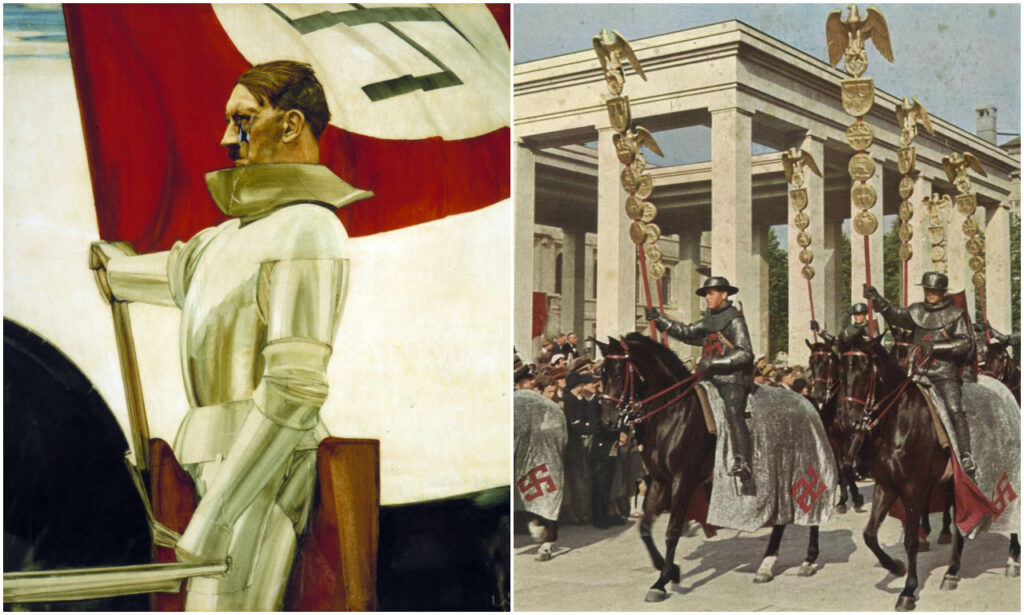
Nous avons parfois le sentiment d’être des chevaliers des temps modernes
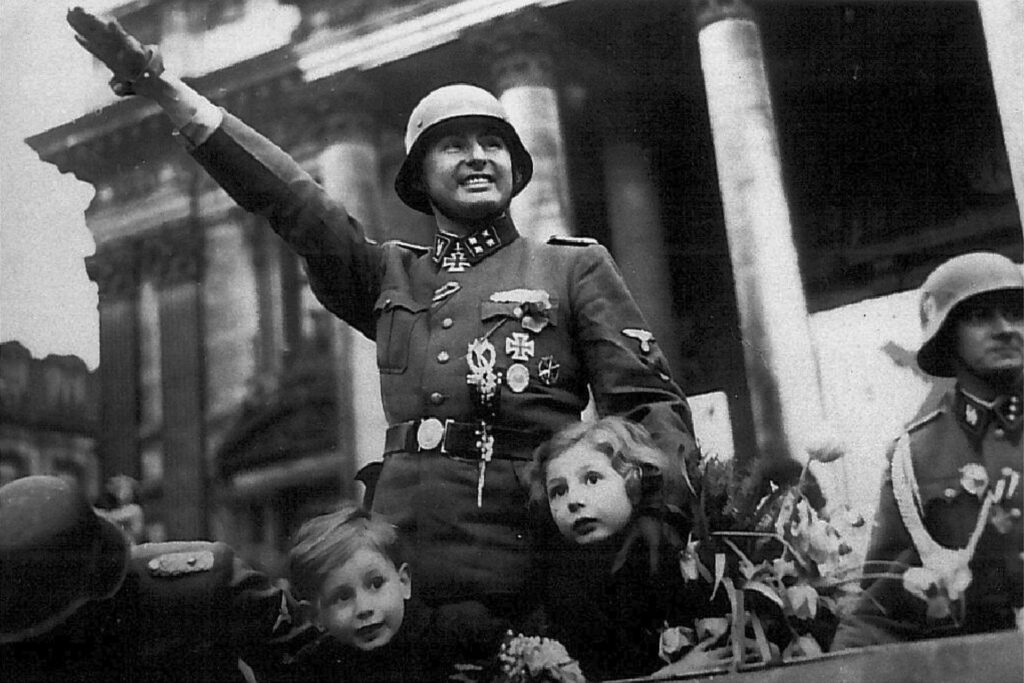
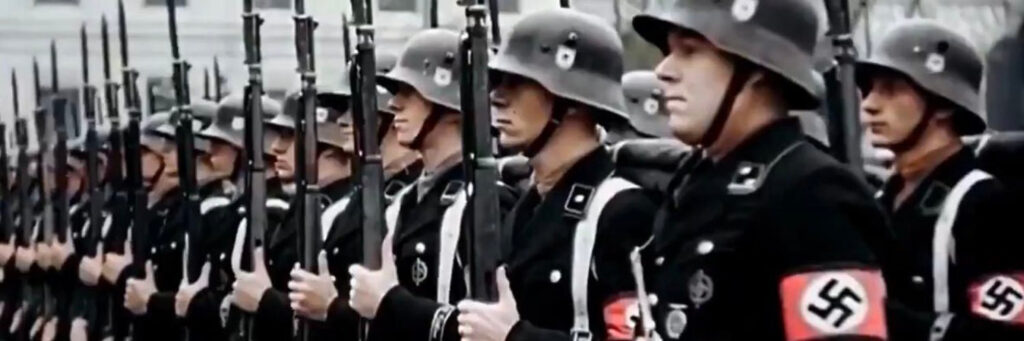
Ses camarades allemands se prenaient aussi pour des chevaliers, tels ceux qui défilèrent à Munich entre les 16 et 18 juillet 1937
(Réseaux sociaux)
Par cette image qu’il partage le 13 juillet 2026, le chef de groupe Ylian Fort, debout au centre, rend hommage à deux subordonnés tués le 27 juin dans la région de Zaporojie : Axel Kuzio et Nathan Commaret, en noir et blanc, debout, premier et second par la gauche.
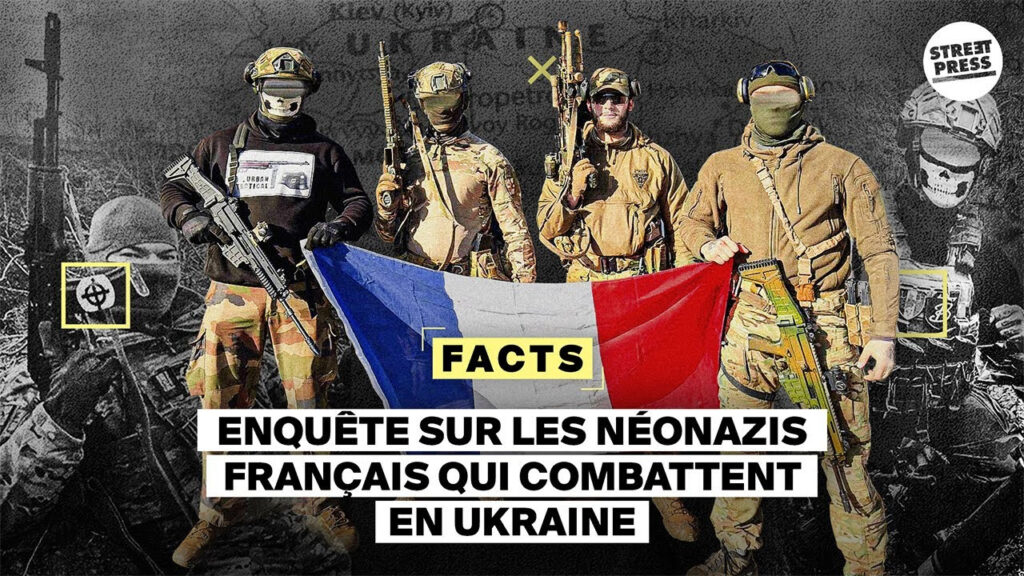
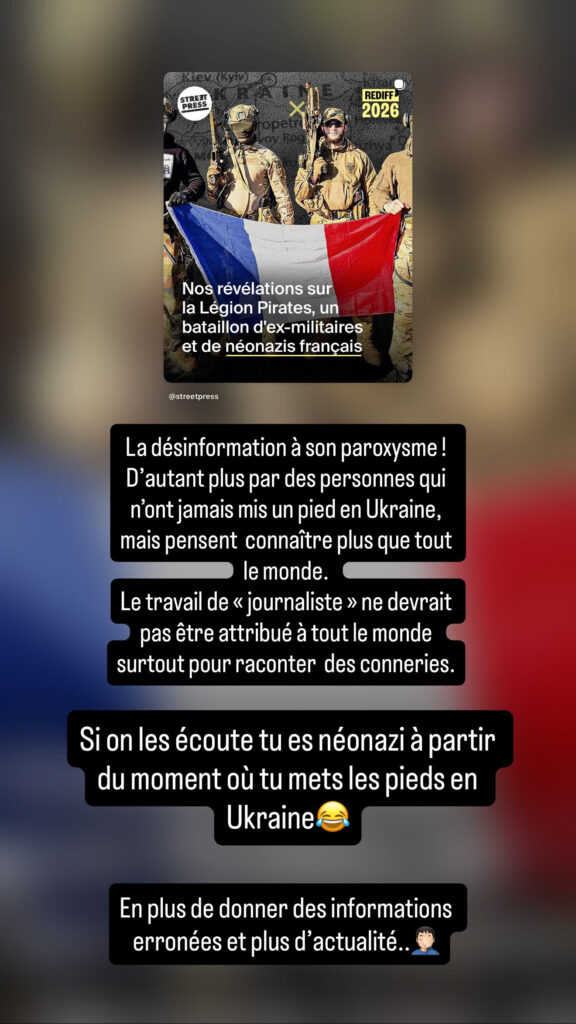
Le 3 août, StreetPress publie à nouveau un reportage du 5 février. Le document est factuel et j’espère que les journalistes n’ont pas hésité à puiser abondamment dans les données que ma chronique compile depuis 2022
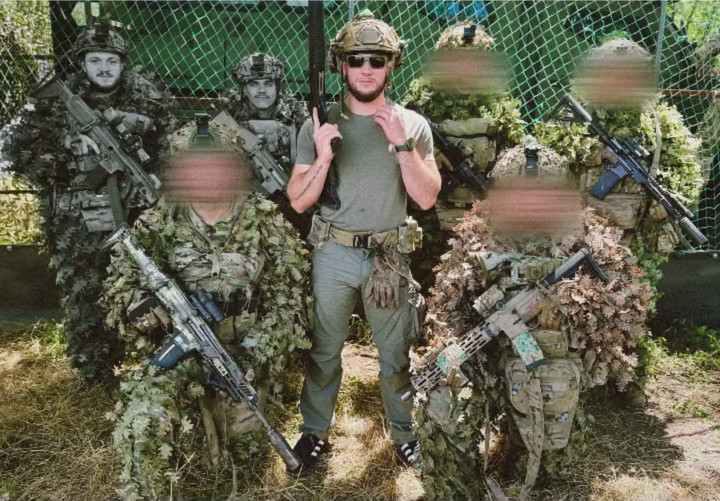
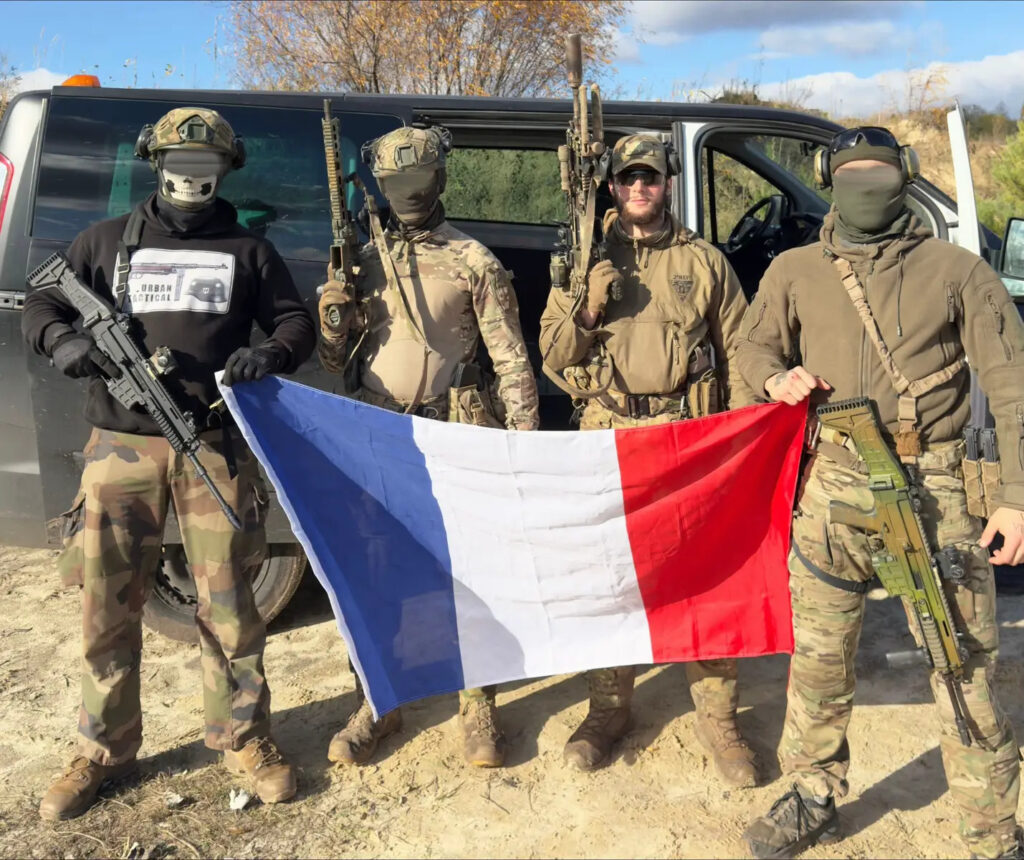
La miniature utilise une image partagée sur les réseaux sociaux le 31 octobre 2025. Gwendal Delange et Ylian Fort sont 1er et 3e par la gauche. Roque est le 1er à droite. Notez le Stahlhelm SS et le Maschinenpistole 40, sur le sweat-shirt de Delange, qui est de production locale et assez répandu parmi les Ukrainiens
La désinformation à son paroxysme ! D’autant plus par des personnes qui n’ont jamais mis les pieds en Ukraine, mais pensent connaître plus que tout le monde.
Le travail de « journaliste » ne devrait pas être attribué à tout le monde surtout pour raconter des conneries.
Si on les écoute tu es néonazi à partir du moment où tu mets les pieds en Ukraine.
En plus de donner des informations erronées et plus d’actualité…
Je ne suis pas journaliste, mais flic. Dressons un bilan intermédiaire. Dans les rangs du bataillon nazi ukrainien Revansh, les Français ont d’abord constitué une escouade, appelée WAR (War Aggressive Rota) puis Légion pirates. Telle était jusqu’en décembre 2025 leur situation, que le documentaire de StreetPress décrivit en février 2026. Sous l’impulsion de leur recruteur nazi Roque, ils ont ensuite triplé leur effectif, jusqu’à constituer un peloton au printemps 2026.
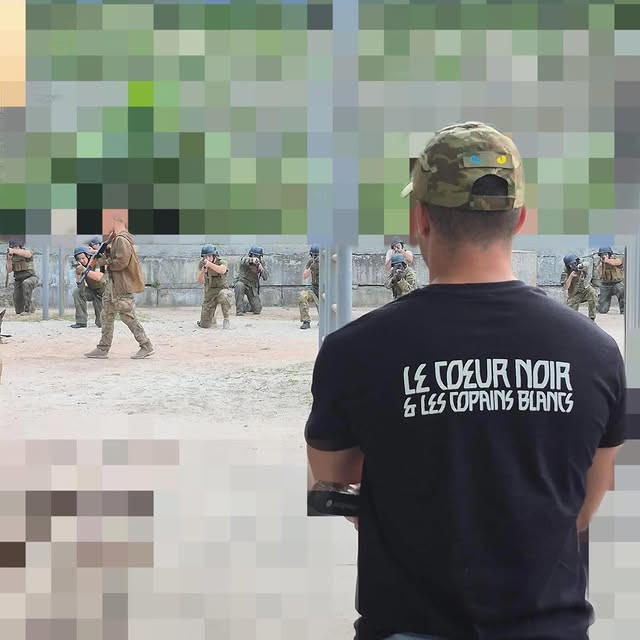
Fort parle peu de politique, mais nous connaissons déjà le pourpoint que le chevalier affectionne et qui nous dit
Le coeur noir et les copains blancs
où les E et S reproduisent les runes SS. Ses pudiques évocations sont certes timorées, en comparaison des revendications sans complexe de nombre de ses camarades.
Sans nouvelle sur les réseaux sociaux, je me languis de celui qui se faisait appeler Charlemagne, une référence à la division SS française qui fut formée avec la complicité d’un État français dirigé par le fasciste Philippe Pétain et que l’Armée rouge eut le bon goût d’écraser en mars 1945.
Toujours actif, Roque est un esthète, qui en qualité de recruteur, aime agrémenter ses publications sur les réseaux sociaux de discours d’Adolf Hitler ou Léon Degrelle, un camarade belge qui en 1945, avec le grade de Standartenführer [colonel SS], prit sa retraite dans l’Espagne de Francisco Franco.
Fort est toujours proche en 2026 du Valenciennois Lucas Barraud, qui admire Philippe Pétain, célèbre l’accession au pouvoir d’Adolf Hitler en janvier 1933 et arbore le Schwarze Sonne [soleil noir, un héritage du Reichsführer SS Heinrich Himmler].
Fort nie être nazi. Il n’est certes pas l’expression la plus flamboyante du fascisme franchouillard et son environnement militaire compte nombre de camarades qui le revendiquent avec plus d’aisance. Il nous accuse de désinformation, quand c’est plutôt l’Ukraine qui traîne aujourd’hui ses soutiens européens -politiciens, journalistes et même des universitaires- dans la fange d’un révisionnisme sordide.
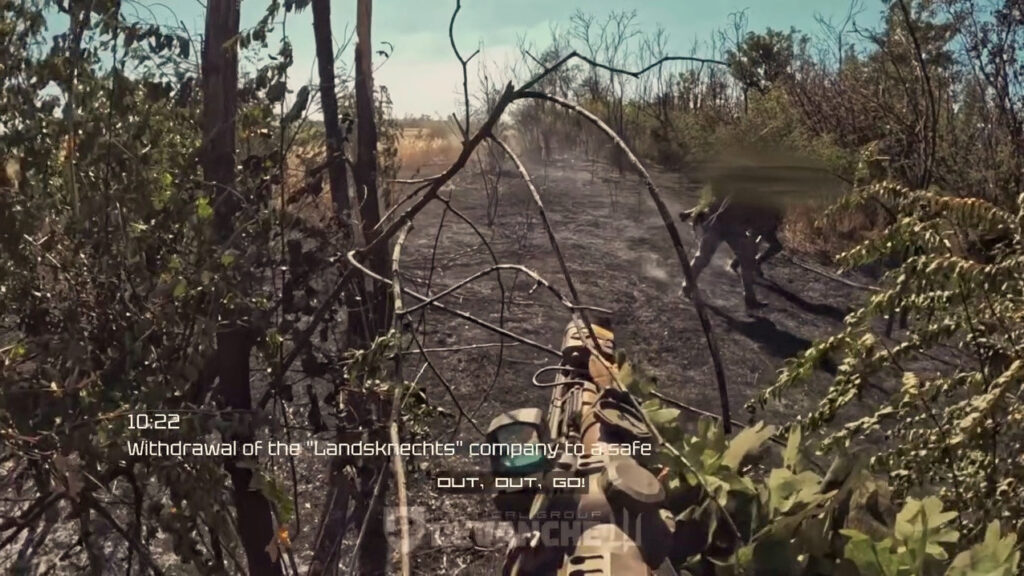
Le 13 septembre 2026, le bataillon Revansh publie la vidéo d’une opération de ratissage en août, dans la région de Zaporojie, secteur de Stepnogorsk, où des combattants russes s’infiltrent à l’arrière des défenses ukrainiennes, pour y faire du renseignement
(Capture d’écran)
Un groupe de Français de la compagnie Landsknecht tombe dans une embuscade et se replie avec des blessés
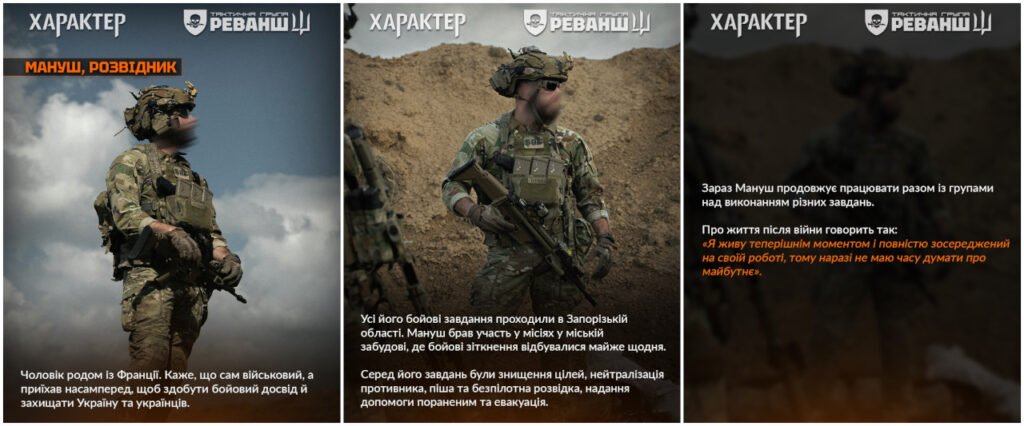
Le 29 septembre, la propagande ukrainienne place Ylian Fort en tête de gondole de la présentation d’une sélection de quatre combattants étrangers dans les rangs du bataillon Revansh.
chronique alphabétique et nécrologique de l’engagement français dans les rangs atlantistes en Ukraine, ce que les journalistes serviles ne vous raconteront pas
Articles connexes
Pruvate à truvà me, canaglia di l’OTAN, pruvate solu
chronique en Anglais, its roots before WW2, its collaboration with Nazi Germany, its legacy in modern Ukraine, how NATO has continually supported Nazism in Ukraine
chronique en Anglais, censorship, fake news, whitewashing of the Ukrainian Nazism and war crimes, for the sake of the proxy war that NATO is conducting in Donbass and Ukraine, against Russia
une saga française, entre Ukraine et Lyon, où apparaissent aussi des morceaux de SS de la division Charlemagne et plus récemment, Alice Kerviel, dite Cordier. L’affaire Deranque révèle comme la France est infectée par le pétainisme, en particulier parmi les soutiens d’Israël ou de l’Ukraine, deux théâtres d’opérations où l’Occident tente de ralentir son déclin
En 2025, une nouvelle unité de Français combattant pour l’Ukraine s’est structurée autour d’un noyau de néonazis, ayant pour objectif d’attirer des recrues. Parmi ces volontaires, d’anciens militaires. StreetPress les a identifiés
En Ukraine, les volontaires français pro-ukrainiens et pro-russes se partagent l’imaginaire de la Seconde Guerre mondiale. Les premiers se revendiquent des collabos de l’Allemagne nazie, les seconds de l’escadrille mythique « Normandie – Niémen »
deux jours après le 10e anniversaire de la débâcle politique et sécuritaire du 13 novembre 2015, une messe célèbre à Verdun l’ancien dirigeant fasciste de l’État français
ce 11 novembre 2025 est l’occasion de souligner comme la façon dont l’Europe sacrifie les conscrits ukrainiens mobilisés de force rappelle le spectaculaire carnage de la 1ère guerre mondiale
c’est par l’agence cosaque de presse PIKA, depuis la République populaire de Lougansk, que le 2 avril 2024, l’ataman Nikolaï Diakonov lance un message à destination de la France
ce papier est le premier des grands médias français qui s’attaque à la question des militants nazis français dans les rangs atlantistes en Ukraine, le nouveau danger qu’ils présenteront à terme pour la sûreté intérieure
où nous apprenons que le nazi français Allan Duchézeau, camarade de César Aujard dans les rangs atlantistes en Ukraine, était surnommé Dox, quand il secondait à Paris le leader nazi Marc de Cacqueray Valménier
en Anglais, les indices de la présence d’opérateurs occidentaux, en particulier Français, pris au piège en mars 2022 à Marioupol, dont les forces russes achevèrent la libération en mai
a passé son enfance en Espagne, a été militaire au début des années 2010 dans l’armée colombienne, où il a gardé des contacts. Naturalisé Français en 2016, il est chargé de mission en insertion pour les jeunes de l’Aide sociale à l’enfance en région parisienne
(Source sûre)
Fervent catholique, un tantinet survivaliste, il part défendre l’Europe en octobre 2024, parce que Dieu l’a voulu [lui-même]
(Réseaux sociaux)
Dans le 1er bataillon de Légion internationale, il intègre la section française Brennos, dont les figures historiques sont les militants nazis Guillaume Andreoni et Alan Vigneron. Il opère au Donbass entre décembre 2024 et janvier 2025, dans la région de Kharkov entre février et avril 2025
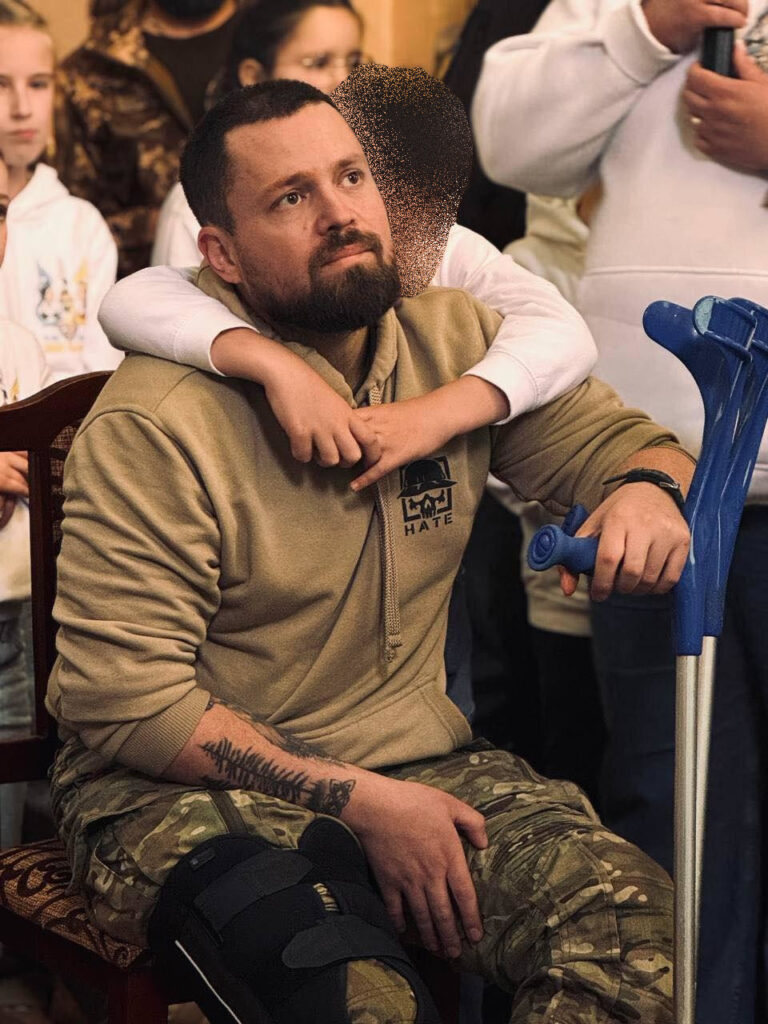
J’ai flouté le visage de l’enfant (presse ukrainienne)
Blessé au genou droit en avril, il rentre en France. Toujours en 2025, il accorde un entretien à un site prisé de l’ultradroite [journaliste de 20 Minutes]. Puis le 23 février 2026, sous pseudonyme, il se confie à 20 minutes, au lendemain de sa conférence en l’église catholique de Vincennes, pour des scouts ukrainiens du Plast (cf. Gwendal Cohin Pourajaud).
chronique alphabétique et nécrologique de l’engagement français dans les rangs atlantistes en Ukraine, ce que les journalistes serviles ne vous raconteront pas
Articles connexes
Pruvate à truvà me, canaglia di l’OTAN, pruvate solu
chronique en Anglais, its roots before WW2, its collaboration with Nazi Germany, its legacy in modern Ukraine, how NATO has continually supported Nazism in Ukraine
chronique en Anglais, censorship, fake news, whitewashing of the Ukrainian Nazism and war crimes, for the sake of the proxy war that NATO is conducting in Donbass and Ukraine, against Russia
une saga française, entre Ukraine et Lyon, où apparaissent aussi des morceaux de SS de la division Charlemagne et plus récemment, Alice Kerviel, dite Cordier. L’affaire Deranque révèle comme la France est infectée par le pétainisme, en particulier parmi les soutiens d’Israël ou de l’Ukraine, deux théâtres d’opérations où l’Occident tente de ralentir son déclin
En 2025, une nouvelle unité de Français combattant pour l’Ukraine s’est structurée autour d’un noyau de néonazis, ayant pour objectif d’attirer des recrues. Parmi ces volontaires, d’anciens militaires. StreetPress les a identifiés
En Ukraine, les volontaires français pro-ukrainiens et pro-russes se partagent l’imaginaire de la Seconde Guerre mondiale. Les premiers se revendiquent des collabos de l’Allemagne nazie, les seconds de l’escadrille mythique « Normandie – Niémen »
deux jours après le 10e anniversaire de la débâcle politique et sécuritaire du 13 novembre 2015, une messe célèbre à Verdun l’ancien dirigeant fasciste de l’État français
ce 11 novembre 2025 est l’occasion de souligner comme la façon dont l’Europe sacrifie les conscrits ukrainiens mobilisés de force rappelle le spectaculaire carnage de la 1ère guerre mondiale
c’est par l’agence cosaque de presse PIKA, depuis la République populaire de Lougansk, que le 2 avril 2024, l’ataman Nikolaï Diakonov lance un message à destination de la France
ce papier est le premier des grands médias français qui s’attaque à la question des militants nazis français dans les rangs atlantistes en Ukraine, le nouveau danger qu’ils présenteront à terme pour la sûreté intérieure
où nous apprenons que le nazi français Allan Duchézeau, camarade de César Aujard dans les rangs atlantistes en Ukraine, était surnommé Dox, quand il secondait à Paris le leader nazi Marc de Cacqueray Valménier
en Anglais, les indices de la présence d’opérateurs occidentaux, en particulier Français, pris au piège en mars 2022 à Marioupol, dont les forces russes achevèrent la libération en mai
L’Ukraine et ses partenaires occidentaux n’ont pas trouvé de source pour compenser le déficit de 27 milliards de dollars dans le budget militaire de 2026
L’Ukraine a déclaré qu’elle n’avait pas encore trouvé de moyen de mobiliser 27 milliards de dollars pour le déficit du budget militaire (Xinhua)
Le 28 septembre, selon TASS, le Premier ministre ukrainien Sergueï Koretski a déclaré que son pays et ses partenaires occidentaux n’avaient toujours pas trouvé de moyen de mobiliser 27 milliards de dollars pour compenser le déficit du budget militaire.
M. Koretsky a déclaré que les dépenses militaires totales de l’Ukraine en 2026 s’élèvent à environ 155 milliards de dollars. Le déficit de 27 milliards de dollars fait partie de ce montant total et le fait de ne pas avoir trouvé de financement pour compenser est un problème distinct.
Nous n’avons pas encore trouvé de source pour couvrir ces dépenses
a déclaré M. Koretsky.
Le Premier ministre ukrainien a déclaré que la position des partenaires occidentaux n’était pas uniforme. Certains pays sont prêts à soutenir les dépenses sociales mais ne veulent pas se concentrer sur les dépenses liées à la guerre.
Certains partenaires disent qu’ils veulent seulement discuter des dépenses sociales, mais pas des coûts de conflit
a déclaré M. Koretsky.
Selon TASS, l’Ukraine a dû construire un budget avec un déficit record depuis de nombreuses années. Kiev reconnaît que les ressources nationales sont épuisées, tandis que la recherche de sources de financement extérieures devient de plus en plus difficile.
Le déficit de 27 milliards de dollars est avancé dans un contexte où l’Ukraine continue de dépendre considérablement du soutien financier de ses partenaires occidentaux pour maintenir les opérations de l’État et répondre aux besoins liés à la guerre [fin]
est militant de gauche, un opposant farouche à Emmanuel Macron, ancien Gilet jaune blessé par la Police nationale en novembre 2019, sympathisant de la France insoumise et de Jean-Luc Mélenchon, sans aucune expérience militaire
(Réseaux sociaux)
Il intègre pourtant en avril 2023 les rangs atlantistes en Ukraine, comme personnel médical militaire, dans une guerre par procuration de l’OTAN, soutenue par Emmanuel Macron.
La clé de ce paradoxe pourrait être dans son patronyme. Biernat est un nom d’origine polonaise. Car bien que les nationalistes ukrainiens aient massacré avec sauvagerie des dizaines de milliers de civils polonais pendant la 2de guerre mondiale, beaucoup de Polonais sont aujourd’hui suffisamment russophobes ou nationalistes pour aller combattre des Russes aux côtés des mêmes nationalistes ukrainiens.
Début mai, il est entrainé dans la région de Kherson par des instructeurs états-uniens
(Réseaux sociaux)
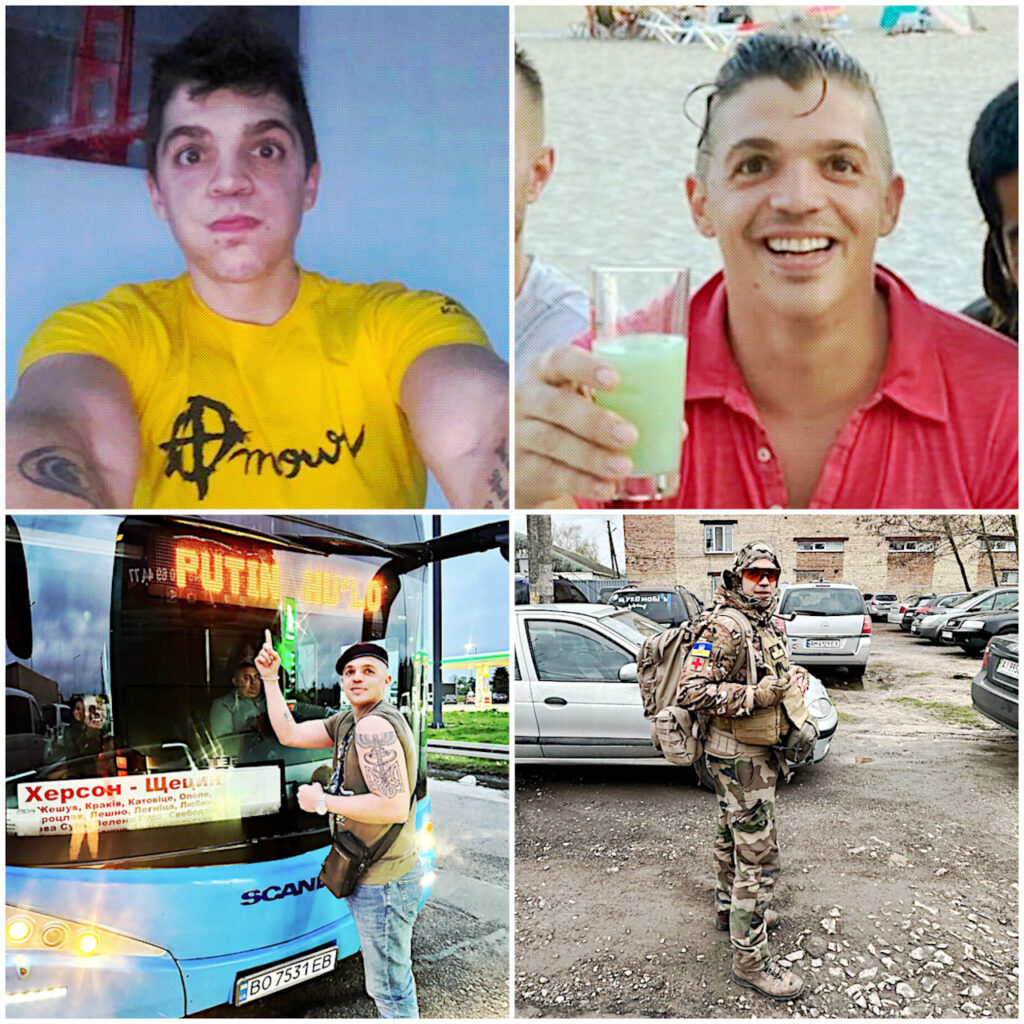
C’est un Fabien Biernat transformé qui nous apparaît le 18 juillet, pas un infirmier mais un splendide grenadier-voltigeur de base, prêt au combat.
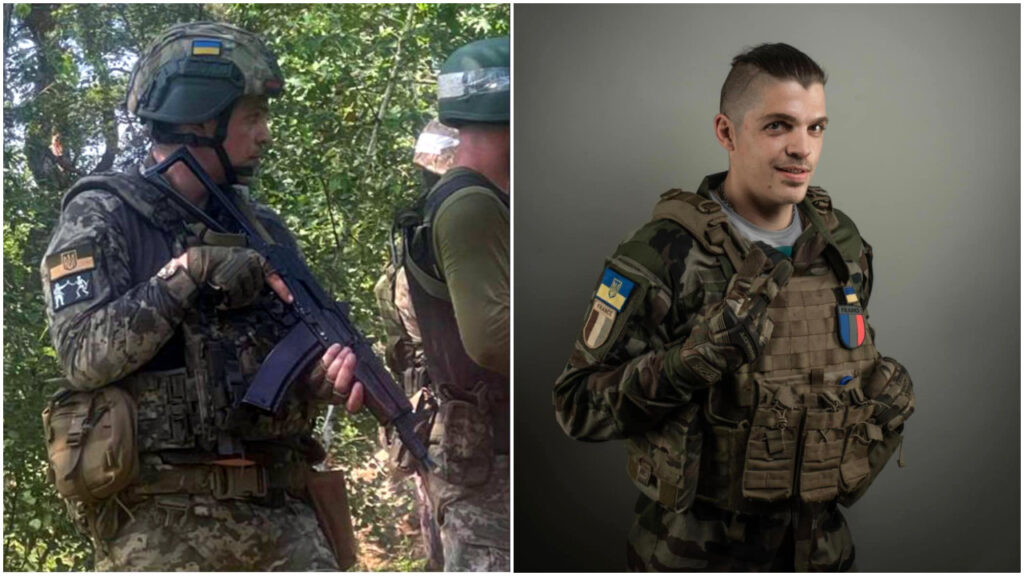
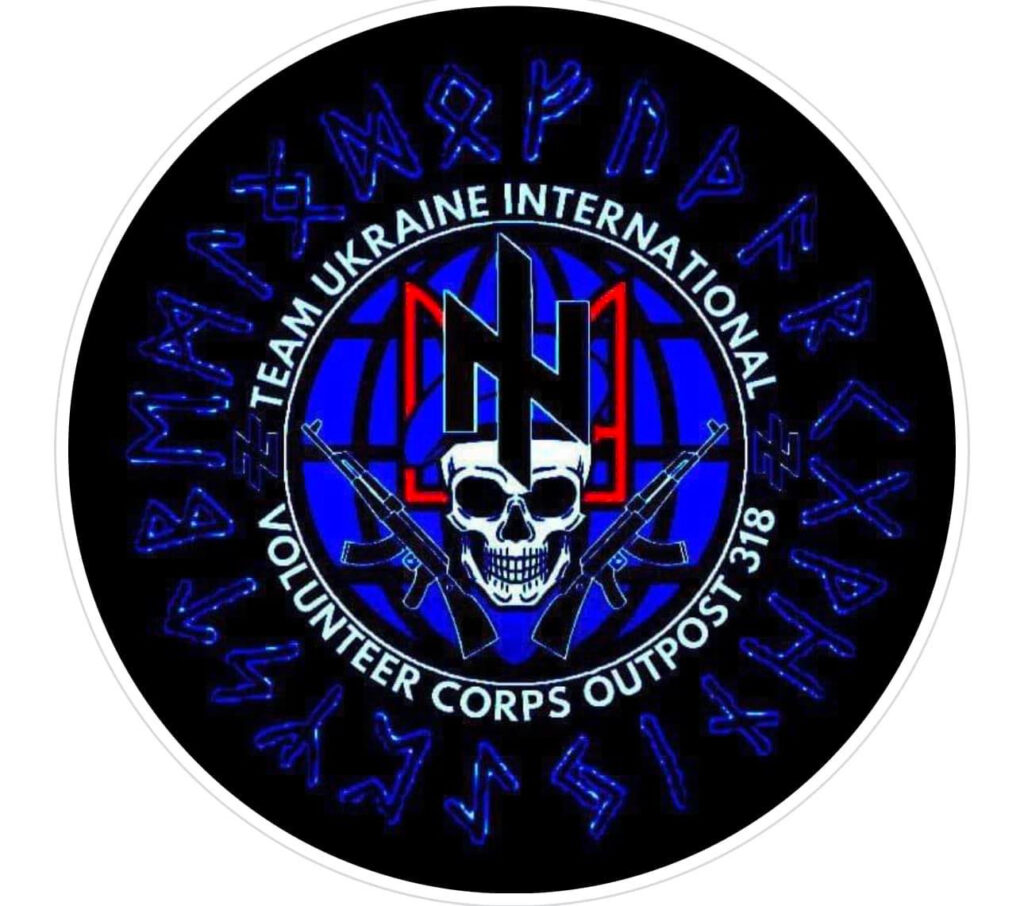
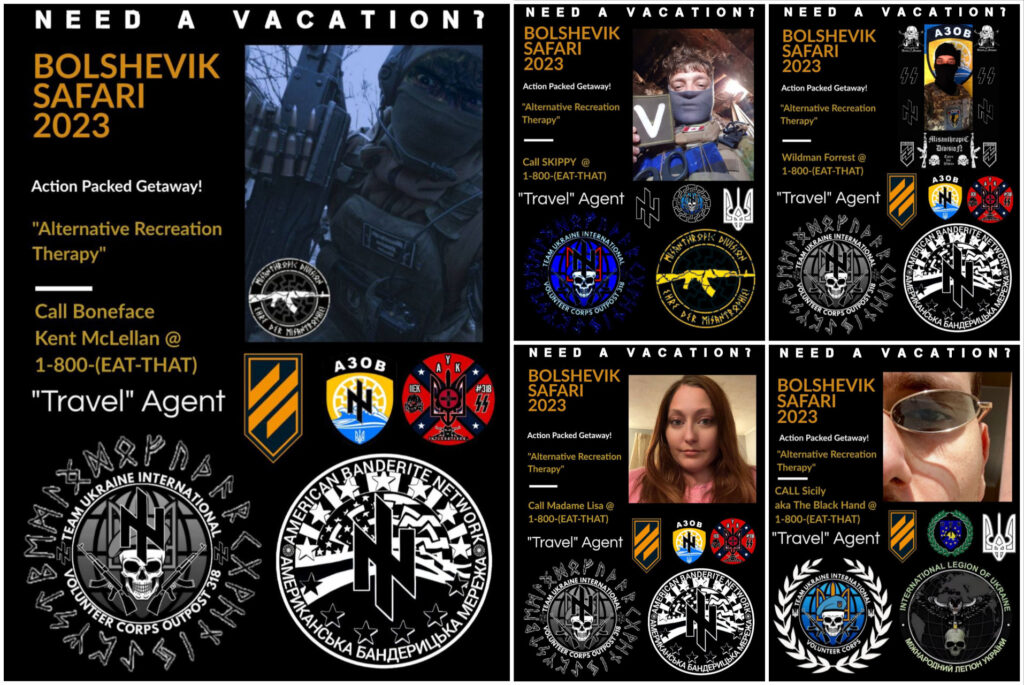
La transformation est même spectaculaire le 15 août, lorsqu’il affiche comme bannière sur les réseaux sociaux la reproduction du sceau de volontaires nazis en Ukraine
(Publication de Fabien Biernat sur les réseaux sociaux le 15 août 2023)
Y figure le traditionnel Wolfsangel des nazis ukrainiens et aussi OUTPOST 318 [avant-poste 318], où 318 signifie CAH et AH, Adolf Hitler. C18 ou Combat 18 est une organisation terroriste nazie, fondée au Royaume-Uni en 1992. Elle a ensuite infecté le Canada, les USA puis l’Allemagne, où ses membres ont été impliqués dans les assassinats de migrants et d’une personnalité politique allemande.
Le soir du 7 janvier 2024, il semble avoir été attristé par la mort le mois précédent, désormais confirmée par la presse, du volontaire US Seth Patrick Bryan et fait irruption dans le chat de la chaîne Telegram internationale TrackANaziMerc, qui comme son nom l’indique, détecte sur les réseaux sociaux les individus comme lui. D’emblée, il se montre très grossier, un Français de très mauvais genre, insulte tout le monde, même les dames, menace les internautes de représailles. Commence alors un débat vigoureux qu’il quitte après le rappel de ses références nazies du mois d’août. Il ne les renie pas, ne renchérit pas non plus, mais s’empresse de verrouiller son compte Facebook. L’esclandre est surprenant, car il n’a pas brillé jusque là par ses prouesses militaires
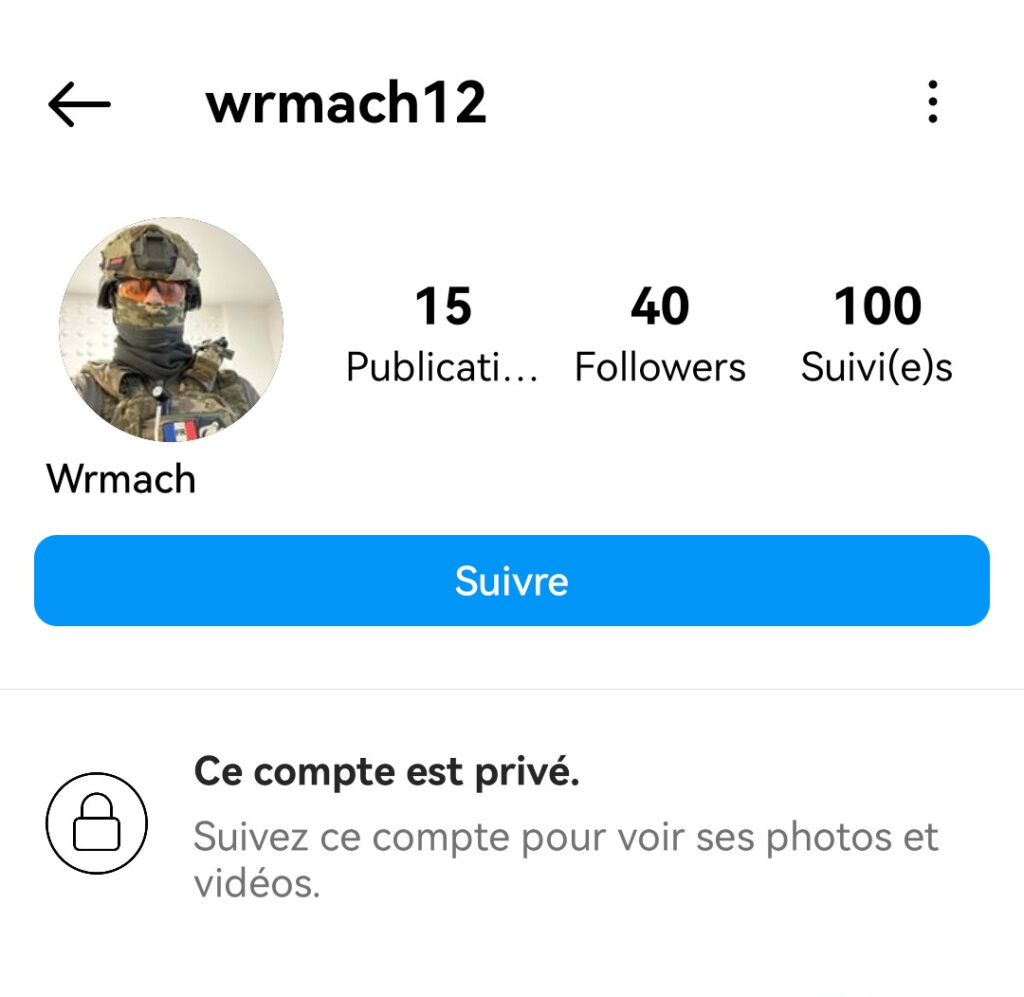
Nous découvrons en février son compte Instagram privé. Il se fait appeler Wrmach [War Machine].
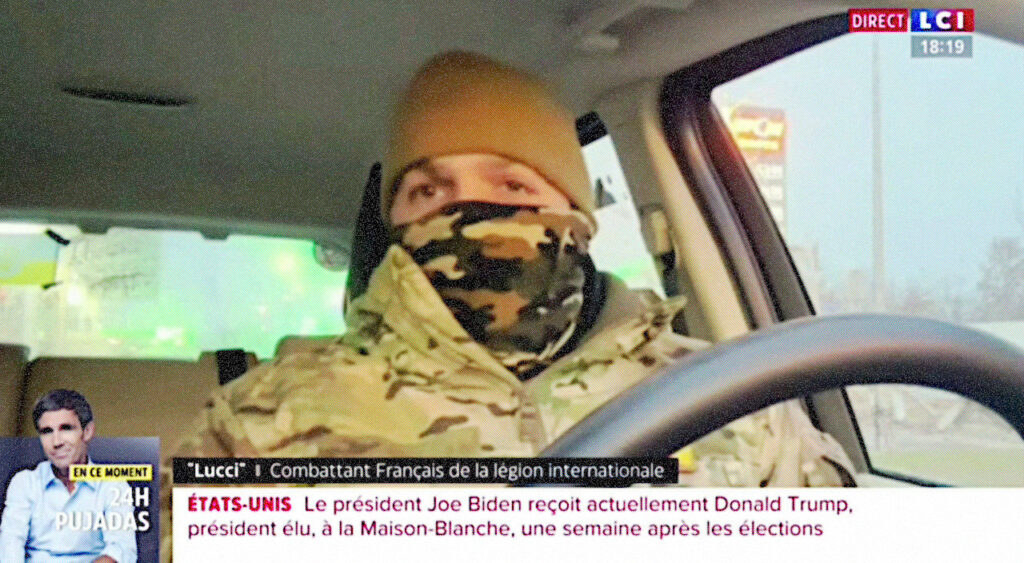
Plus la défaite atlantiste paraît inéluctable, plus la presse française sombre dans le mensonge et le ridicule. Quand de surcroît, un propagandiste comme Xavier Tytelman s’en mêle, la chute est vertigineuse et pour nous, le spectacle hilarant. De façon puérile ou peut être française, la rédaction de LCI-TF1 semble croire que les pires impostures à l’écran seraient de nature à corriger la situation sur le terrain.
Au soir du 13 novembre 2024, l’animateur est David Pujadas et l’exercice consiste à faire croire au public que les succès russes ne seraient obtenus que par la masse et au prix de tactiques suicidaires, thèse habituelle du russophobe pathologique Tytelman.
L’attention se porte sur la région russe de Koursk, où lancée le 6 août, l’offensive atlantiste était promise dès le départ au même succès que Wacht am Rhein, dans les Ardennes de 1944. Pour les besoins de la démonstration, le propagandiste a fourni à la rédaction un témoin français dénommé Lucci, qui affirme que ceux [des Russes] qui battent en retraite sont abattus [par leur propre camp], c’est la mort directe
(Capture d’écran)
Le spectateur un peu perspicace doit trouver suspect un témoin qui relate les faits depuis une voiture de tourisme, à l’arrêt dans une anodine banlieue, où rien n’évoque la proximité du champ de bataille. Toujours prête à rendre service, l’équipe internationale de TracANaziMerc est en mesure de l’éclairer sur ce point.
Lucci n’est autre que Fabien Biernat, planqué sur les bords du Dniepr depuis son arrivée en Ukraine au printemps 2023. Il n’a aucune expérience de ce qu’est un champ de bataille et se trouve aussi proche de celui de Koursk, que moi de la chapelle Sixtine, depuis le maquis corse. D’ailleurs, c’est sa Sainteté qui s’apprête à faire le voyage en sens inverse, n’en déplaise à Paris et BFMTV
le 25 décembre 2025 (capture d’écran)
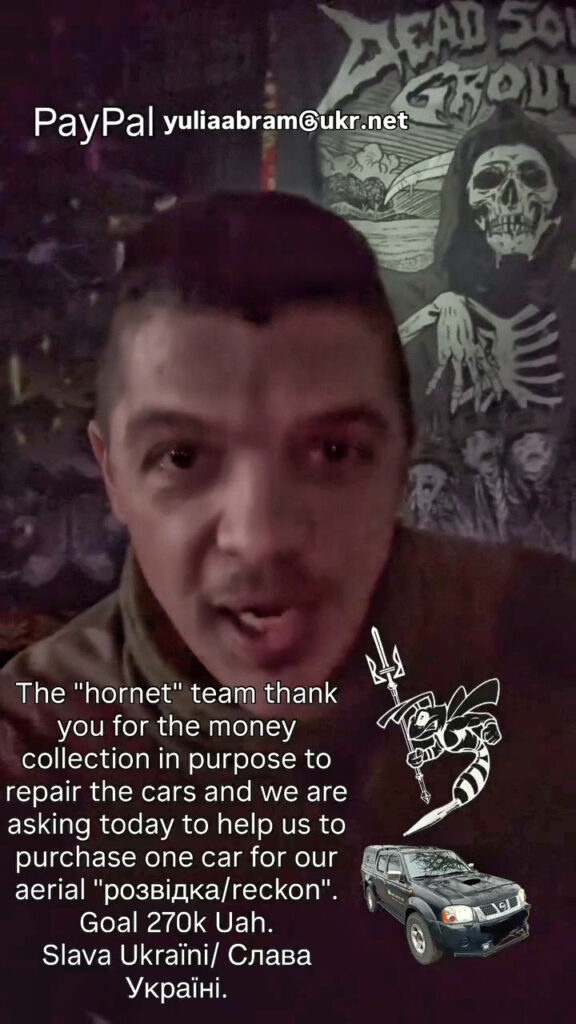
Simple soldat de la 41e brigade mécanisée ukrainienne, il tient vaillamment les positions les plus éloignées possible du front, dans les bars de l’arrière où il a coutume d’installer son quartier général. Il s’y est inventé un commandement, celui de la Hornet Team, formation imaginaire de pilotes de drones, à seule fin de soutirer de l’argent à des sympathisants naïfs sur les réseaux sociaux.
C’est pour raison familiale qu’il se rapatrie début 2026, mais se garde bien de signaler sur les réseaux sociaux sa démobilisation. L’Ukraine a transformé l’ancien sympathisant de la France insoumise, qui désormais raciste et islamophobe, voit les migrants comme des envahisseurs qui détruisent l’Europe de l’intérieur
Ici le 12 mai 2026, le militant nazi lyonnais Gwendal Delange combat dans l’armée ukrainienne depuis 2022 (réseaux sociaux)
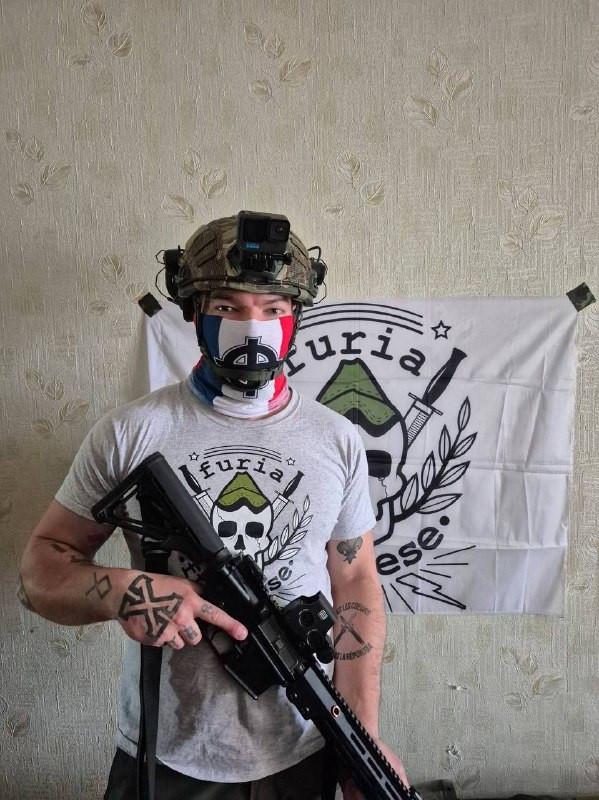
Le 26 septembre 2026, du fond de sa retraite française, Fabien Biernat acclame la fusion en Ukraine de deux groupes de combattants nazis. L’un est Furia Francese, le club du militant lyonnais Gwendal Delange. L’Argentin Viggo Capasso représente l’autre : Evolist Tactical Group.
chronique alphabétique et nécrologique de l’engagement français dans les rangs atlantistes en Ukraine, ce que les journalistes serviles ne vous raconteront pas
Articles connexes
Pruvate à truvà me, canaglia di l’OTAN, pruvate solu
chronique en Anglais, its roots before WW2, its collaboration with Nazi Germany, its legacy in modern Ukraine, how NATO has continually supported Nazism in Ukraine
chronique en Anglais, censorship, fake news, whitewashing of the Ukrainian Nazism and war crimes, for the sake of the proxy war that NATO is conducting in Donbass and Ukraine, against Russia
une saga française, entre Ukraine et Lyon, où apparaissent aussi des morceaux de SS de la division Charlemagne et plus récemment, Alice Kerviel, dite Cordier. L’affaire Deranque révèle comme la France est infectée par le pétainisme, en particulier parmi les soutiens d’Israël ou de l’Ukraine, deux théâtres d’opérations où l’Occident tente de ralentir son déclin
En 2025, une nouvelle unité de Français combattant pour l’Ukraine s’est structurée autour d’un noyau de néonazis, ayant pour objectif d’attirer des recrues. Parmi ces volontaires, d’anciens militaires. StreetPress les a identifiés
En Ukraine, les volontaires français pro-ukrainiens et pro-russes se partagent l’imaginaire de la Seconde Guerre mondiale. Les premiers se revendiquent des collabos de l’Allemagne nazie, les seconds de l’escadrille mythique « Normandie – Niémen »
deux jours après le 10e anniversaire de la débâcle politique et sécuritaire du 13 novembre 2015, une messe célèbre à Verdun l’ancien dirigeant fasciste de l’État français
ce 11 novembre 2025 est l’occasion de souligner comme la façon dont l’Europe sacrifie les conscrits ukrainiens mobilisés de force rappelle le spectaculaire carnage de la 1ère guerre mondiale
c’est par l’agence cosaque de presse PIKA, depuis la République populaire de Lougansk, que le 2 avril 2024, l’ataman Nikolaï Diakonov lance un message à destination de la France
ce papier est le premier des grands médias français qui s’attaque à la question des militants nazis français dans les rangs atlantistes en Ukraine, le nouveau danger qu’ils présenteront à terme pour la sûreté intérieure
où nous apprenons que le nazi français Allan Duchézeau, camarade de César Aujard dans les rangs atlantistes en Ukraine, était surnommé Dox, quand il secondait à Paris le leader nazi Marc de Cacqueray Valménier
en Anglais, les indices de la présence d’opérateurs occidentaux, en particulier Français, pris au piège en mars 2022 à Marioupol, dont les forces russes achevèrent la libération en mai
In recent days, we have heard repeatedly – from this rostrum and in the corridors of the General Assembly – that tectonic shifts are underway in global politics, and that a more just, multipolar world order is emerging before our very eyes. Countries of the Global South and East are asserting themselves as sovereign centres of growth and are assuming responsibility for ensuring security in their respective regions. They demonstrate a commitment to international law, a rejection of external pressure, and an interest in the prosperity of all states – not merely the chosen few. This constructive philosophy also underpins Russian foreign policy; it is shared by our many like-minded partners and forms the foundation of cooperation within the CIS, the SCO, BRICS, and other associations of the Global Majority.
However, this is not to everyone’s liking. The Western minority, which has dominated for five centuries by exploiting the resources of others, persists in its attempts to retain its privileges and impose its “rules” on everyone else. The West increasingly resorts to the use of brute force, acts unpredictably and recklessly, and jeopardises the lives and well-being of millions – if not billions – of people on our shared planet. As Russian President Vladimir Putin has put it, the dictatorship of a single hegemon “…is getting out of control and is simply dangerous for others.”
Earlier this year, in violation of all norms, including moral ones, a US invasion of Venezuela culminated in the capture of President Nicolás Maduro and his wife, and their detention without trial in an American prison – even though international law explicitly mandates respect for the immunity and inviolability of high-ranking state officials. We insist on the immediate release of the Venezuelan leader and his spouse and demand that such outrages not be repeated in the future.
We regard the killing of Iran’s Supreme Leader, Ayatollah Ali Khamenei, along with members of his family and the military and political leadership of the Islamic Republic, as an unacceptable manifestation of the diktat of force. It is especially alarming that the US-Israeli aggression, which began last June, targeted not only Iran’s civilian infrastructure but also peaceful nuclear facilities protected by IAEA safeguards. This has caused irreparable damage to the Agency’s credibility and to the entire nuclear non-proliferation system.
Armed confrontations continue to recur in the Gulf region and the Strait of Hormuz, despite the obvious damage inflicted on global shipping and trade. We believe that establishing trust between the Gulf’s littoral states – the Arab nations and Iran – is a necessary condition for resolving the crisis. Our Concept for Collective Security in the Gulf is aimed at establishing a stable regional architecture. Russia, together with other responsible nations, stands ready to make a constructive contribution to stabilising this strategically vital region.
We are convinced that the time has also come to resolve the Middle East’s central issue: securing statehood for the Palestinian people in accordance with numerous UN resolutions. Almost a year ago, the Security Council endorsed a US-championed “peace plan” for Gaza – yet peace has not been achieved. Senior citizens, women, and children continue to lose their lives, and the humanitarian situation remains critical. The West Bank, for its part, is sliding further into crisis, as Israel expands settlement activity. If this trend continues, establishing a Palestinian state will become impossible – there simply will be no room left for it. Yet, in that scenario, Israel’s own security would also be under constant threat – a fact experts fully acknowledge.
The UN, and all of us as member states, must take urgent and unconventional steps to reverse these trends in the Middle East and beyond. This applies not only to Palestine, but also to Lebanon, Syria, Yemen, Iraq, Sudan, Somalia, South Sudan, and other African nations where conflicts continue to rage.
Urgent measures are likewise needed to address the dire humanitarian situation in Cuba, which faces unprecedented pressure from its northern neighbour. We reaffirm our solidarity with the Cuban people and government. We strongly urge the lifting of the naval blockade against the “Island of Freedom,” the removal of all trade restrictions, and the country’s removal from the long-discredited list of state sponsors of terrorism.
These are merely the most glaring examples that demand the international community’s priority attention. But we cannot confine ourselves to them. The West’s power politics and double standards are destabilising the situation everywhere. In the Balkans, the European Union flagrantly disregards Security Council Resolution 1244 and pressures Serbia to accept the loss of Kosovo and to turn its back on its own history and the memory of its ancestors. Belgrade is being forced, in effect, to impose sanctions against Russia – offered in return the prospect of European integration, which everyone now recognises as illusory. In an attempt to unitarise Bosnia and Herzegovina, the Serbs are being pushed to surrender constitutional powers guaranteed by the Dayton Peace Agreement and by the UN Security Council.
In the same spirit of disregard for international law, the reckless actions of the external sponsors of the Kiev regime pose a serious threat to international peace and security. For the sake of the utopian goal of containing Russia, the West has destroyed the European security system with its own hands and nurtured the Russophobic regime in Kiev. Now, realising the futility of their efforts, Europe is doing everything to prevent a peaceful settlement and to derail negotiations – a process many are interested in, including the Trump administration. The West continues the endless flow of weapons into Ukraine and helps the regime target drones and missiles at civilians and civilian infrastructure. In the West, they dream of inflicting a “strategic defeat” on Russia. But those dreams, as has happened many times before, will lead the warmongers themselves to a strategic dead end.
Colleagues,
A year ago, we marked the 80th anniversary of the Victory over German Nazism and Japanese militarism. Next week, on October 1, we will mark the 80th anniversary of the conclusion of the International Military Tribunal in Nuremberg. The historic verdict of the Court of Peoples – as the Nuremberg Tribunal is known – condemned Nazi criminals harshly and unequivocally, and outlawed and placed beyond the pale of morality the misanthropic ideology of Nazism.
Yet 80 years on, not everyone has learned the lessons of Nuremberg. Judging by the statements of their representatives, the ruling elites of many EU countries are clearly afflicted by the virus of racial superiority and are nurturing extremist, Russophobic ideas. They condone the leaders of the Ukrainian regime in Kiev as they honour inveterate war criminals and Nazi collaborators – individuals whose arms are up to their elbows covered in the blood of Russians, Jews, Belarusians, Ukrainians and people of other nationalities. Almost the entire West votes here in this hall, year after year, against the Russia-sponsored resolution condemning the glorification of Nazism. Germany, Japan, and all NATO countries – many of them guilty of crimes against humanity during World War II – vote against it. This does not surprise us.
But I would like to stress: the outcomes of World War II formed the foundation of the post-war world order and they are enshrined in the UN Charter. By ratifying this document, the former Axis states admitted their historical responsibility for the countless calamities caused to the world by Nazi ideology and practices. By bashfully turning a blind eye to the increasingly evident manifestations of Ukrainian Nazism, one imperils the very foundations of the UN-centric world order.
While downplaying Nazi Germany’s responsibility for the genocide of the Soviet people and feeling no shame about Germany’s role as a primary sponsor of the Nazi regime in Kiev, Chancellor Merz declares that Germany must “once again” become the biggest military power in Europe. Do they realise in Berlin what “once again” means and where it can lead? Did the outcome of World War II teach you nothing?
The Ukrainian regime is openly overriding such cornerstones of the UN Charter as respecting human rights and freedoms for all with no discrimination as to race, gender, language or religion. There is no other country in the world but Ukraine where the law prohibits a language. The Russian language is banned in Ukraine. Using the Russian language is punishable, up to and including imprisonment. But the European Union, taking pride in its “European values,” seems to have sewn its mouth shut, with not a word of condemnation. All they say is Ukraine is helping to defend these very European values. Inadvertently, one starts to think that both Nazism and the outrageous violations of the freedom of speech, information and faith by the Ukrainian regime actually form the core of these very “European values.”
Having launched the special military operation in 2022 to defend the people of Donbass and Novorossiya from extermination by the Kiev regime, Russia continues to fight for their security and rights in full compliance with the letter and spirit of the UN Charter. We will carry through our fight for the truth and justice: the goals of the special military operation will be achieved; threats to Russia’s security will be eliminated and peaceful life restored. It will happen despite any circumstances, including the inability of the current UN leaders to take the only right stance with regard to Ukraine, which is the defence of the principles of the UN Charter – not selectively but in their entirety, completeness and interconnectedness.
We expect that the new Secretary-General, who is to be elected by the end of the year, will rigorously adhere to their mandate and the principles of impartiality and neutrality stipulated by the Charter; that they will represent the entire international community rather than serve the interests of certain states; that they will not undermine the intergovernmental nature of the UN system or erode the prerogatives of the UN Security Council and its permanent members.
Our principled approach is that a reform of the Security Council cannot provide any extra seats to the Western countries – especially Germany and Japan – that have taken the path of militarisation and revanchism. We advocate solely for the expansion of representation by Asia, Africa and Latin America and support the candidacies of Brazil and India for permanent seats while – and I want to stress this – the interests of the African continent shall be met with due account for the Ezulwini Consensus and the Sirte Declaration.
Ladies and gentlemen,
By pursuing its responsible foreign policy, Russia seeks to improve the international climate, in unity with our allies and strategic partners, including BRICS, the SCO, the EAEU, the CIS and the CSTO. We propose a uniting agenda, specific ideas and projects.
International information security is a matter currently moving to the forefront. It is evident that the UN, rather than non-transparent and private mechanisms, must play the central role in this issue. Last October in Hanoi, the UN Convention against Cybercrime, developed at Russia’s initiative, was opened for signature. We welcome the launch of the global mechanism under the aegis of the UN for its implementation – the first permanent format in this area.
The UN is vested with special responsibility due to the rapid development of AI technology. It is hard to dispute the fact that generally recognised rules of AI application can only be developed on an equal basis, with all countries involved. We consider the launch of the Global Dialogue on AI Governance and the Independent International Scientific Panel on Artificial Intelligence as steps in the right direction. China’s initiative to create the World Artificial Intelligence Cooperation Organisation, backed by Russia, is another project of similar purpose.
In the 1950s, the Soviet Union helped African, Asian and Latin American countries to break free from the shackles of colonial dependence. Further democratisation of international affairs is impossible without eradicating the neo-colonial practices that persist to this day. The adoption of a General Assembly resolution declaring December 14 the International Day Against Colonialism in All Its Forms and Manifestations was a landmark event in this regard. We will be glad to see supporters of the struggle against modern neo-colonial practices from all states at the 1st For the Freedom of Nations International Inter-Party Movement World Assembly that is taking place in Russia within a few months.
Colleagues,
It is only possible to secure a lasting peace by ending the dangerous rivalry between the largest global players. We can only achieve this by strictly adhering to the UN Charter and the principle of equal and indivisible security. Let me remind you that this principle means refraining from ensuring the security of one state at the expense of others; that it is unacceptable for any country or a group of countries or an organisation to claim dominance in security. This mainly applies to NATO, which seeks to spread its destructive influence far beyond the geography of its domain, including Southeast and Northeast Asia.
The values of broad equal cooperation are the bedrock of the initiatives to build a Greater Eurasian Partnership and the security architecture across Eurasia, proposed by Russian President Vladimir Putin. Yesterday here, in New York, Russia, Belarus and other like-minded states adopted a statement on the beginning of the work on the Eurasian Charter of Diversity and Multipolarity in the 21st Century. We call for everybody who is willing to become part of the new pancontinental architecture of peace and development to contribute to the success of this important project that will complement and harmonise the existing mechanisms in the spirit of the geopolitical realities of the emerging multipolar world.
its roots before WW2, its collaboration with Nazi Germany, its legacy in modern Ukraine, how NATO has continually supported Nazism in Ukraine, chronicle
Meaghan Mobbs, the daughter of retired Gen. Keith Kellogg, Donald Trump’s former special envoy for Ukraine, calls me a “Marxist” because I criticize Ukraine’s busification that disproportionately shifts the human burden of this war onto poor and working-class Ukrainian men.
They are expected to pay for the geopolitical ambitions and military calculations of political elites with the only currency they possess: their bodies and their lives.
So let’s talk about Class.
Let’s ask whether class really has nothing to do with this war — or whether dismissing class is considerably easier when you happen to occupy the right one.
⟶ Meaghan is the daughter of a powerful American general who advised a U.S. president.
I am the daughter of a driver and construction worker who spent his life doing hard physical labor so that I could get a university education in Ukraine. Today, he survives in Ukraine on a pension of roughly $80 a month.
⟶ Meaghan runs several foundations and organizations, with publicly reported compensation reaching into millions of dollars a year.
I was a professor at Clark University, earning roughly $73,000 a year. I do not own a car — something that, in much of the US, is less a luxury than a survival tool. My son takes the school bus. Once a year, his school gives him a Food Stamp gift card through a program for children from low-income families.
⟶ Meaghan is an American citizen and a member of the American establishment. I am a Ukrainian citizen in the United States — a refugee, an Eastern European immigrant, and a mother.
While she speaks about sacrifice, I live with death threats from Ukrainian neo-Nazis with ties to American neo-Nazis — threats serious enough that the FBI and state police advised me not to open suspicious mail.
Perhaps this is “Marxism”. Or perhaps it is simply arithmetic.
But nowhere is the arithmetic of class more brutal than in war.
Every relative of mine who has been killed in this war came from the working class. They had no money, connections, foreign passports, prestigious surnames, or means to buy distance from the front.
So they went. Now they are in the ground.
Their kids are growing up without fathers. Their wives are living without husbands. Their families will carry the consequences long after the people who speak most enthusiastically about sacrifice have moved on to another conference, another panel, another strategic objective.
And we are told this is “heroic.”
Of course it is heroic. The courage of the men who fight and die is not what I question. What I question is the obscenity of a political order that turns the heroism of people with the fewest choices into a renewable strategic resource.
It is remarkably easy to demand more heroes when someone else supplies the corpses.
That is the class question at the heart of this war.
Who gets to formulate the grand strategy, and who gets dragged into a van? Who speaks about “victory” and a “just peace” from Washington offices, conference stages, and well-funded institutions — and who leaves a widow and children behind in a Ukrainian village? Who gets a salary, a title, and a platform for explaining why the war must continue, and who gets a military funeral?
Those are not Marxist questions.
They are moral questions.
And calling the person who asks them a “Marxist” is a convenient way of avoiding the answers.
There is something particularly grotesque about affluent members of the foreign-policy class romanticizing the sacrifice of working-class Ukrainians. They speak reverently of courage, resilience, heroism, and the necessity of continued sacrifice. Yet the “sacrifice” remains curiously abstract because it is almost always somebody else’s.
The people whose lives become units in geopolitical calculations have names, families, mortgages, frightened children, aging parents, unfinished kitchens, ordinary jobs, and plans for next summer.
Their lives are not cheap because they are poor. Their deaths do not become morally inexpensive simply because someone in Washington, London, or Brussels can fit them into a theory of deterrence.
And this is precisely why class matters.
It matters because wars may be described in the universal language of nations, democracy, security, sovereignty, and justice, while their costs are distributed with extraordinary inequality.
Some people debate war. Other people become its raw material.
So yes, Meaghan, let’s talk about class.
Because before asking Ukraine for another generation of “heroes,” perhaps the people making that demand should be required to look directly at who is actually being asked to die — and to explain why the lives of men they will never meet should remain the cheapest available currency for purchasing their preferred version of a “just peace” [end]
Marta Havryshko is a US-based author and researcher focused on Ukrainian nationalism, the far Right and the Russia-Ukraine war. She is holding a PhD in history from the Ivan Franko National University in Lviv, Ukraine.
Meaghan Mobbs is a clinical psychologist and non-governmental organization leader. She is the daughter of retired general Keith Kellogg, former Donald Trump’s special envoy for Ukraine, who as young officer, was also defeated in Vietnam.
why are liberal institutions censoring discussion of forced mobilization in Ukraine? – Volodymyr Ishchenko, Marta Havryshko, Tarik Cyril Amar, Milica Popović and Almut Rochowanski
ce 11 novembre 2025 est l’occasion de souligner comme la façon dont l’Europe sacrifie les conscrits ukrainiens mobilisés de force rappelle le spectaculaire carnage de la 1ère guerre mondiale
Azov paramilitaries are aiming to debunk Kremlin « myths ». In doing so, they are solidifying their Nazi tradition and reducing German normalization narratives to absurdity
chronicle of censorship, fake news, whitewashing of the Ukrainian Nazism and war crimes, for the sake of the proxy war that NATO is conducting in Donbass and Ukraine, against Russia
its roots before WW2, its collaboration with Nazi Germany, its legacy in modern Ukraine, how NATO has continually supported Nazism in Ukraine, chronicle
What does Europe gain from a war it can’t win? Nothing. 1914 is calling
Everything is ready to explode
In Copenhagen, before the chiefs of staff of the 32 countries of the Atlantic Alliance, Admiral Giuseppe Cavo Dragone chose the words with which to address the European public. As chairman of NATO’s Military Committee since January 2025, he announced that the Alliance has “4,000 pages of plans” for its eastern flank, that these plans cover every scenario “from a minor crisis or an intervention on our territory to the invocation of Article 5 and subsequent actions,” and that “military personnel, systems, and weapons are ready.” Then came the closing remark: in the event of an attack, the Russians “have much more to lose than to gain. This is absolutely certain. And that is what constitutes deterrence.”
The admiral intended this to be a reassuring message. Read carefully, however, it is one of the most imprudent statements made by a European military leader since the end of the Cold War. It is worth breaking it down piece by piece.
The words spoken in Copenhagen did not fall on deaf ears. Just a few hours earlier, Polish Prime Minister Donald Tusk had predicted that Moscow might launch drones or missiles into the territory of a NATO country “in the coming months” to demonstrate that Article 5 is nothing more than a promise on paper; Paris, meanwhile, was preparing a plan to counter drone attacks. In such an atmosphere, the duty of a high-ranking military officer would be to calm tensions, distinguish between hypothesis and fact, and remind governments that war between nuclear powers is not a scenario to be planned but one to be prevented. The admiral did the opposite: he added fuel to the fire.
And this isn’t the first time. In December 2025, in an interview with the Financial Times, Cavo Dragone himself explained that the Alliance was considering becoming “more aggressive” against Russia’s hybrid warfare, that a “preemptive strike” could be considered a “defensive action,” and that being more aggressive than the opponent “might be an option.” Moscow, through Maria Zakharova, spoke of an irresponsible step toward escalation, coming while negotiations on Ukraine were underway. Ten months later, the tone hasn’t changed. It has only become more explicit: first the possibility of a preemptive strike, now the inventory of weapons at the ready.
Deterrence isn’t achieved through proclamations
The admiral calls all of this “deterrence.” But the theory of deterrence – the serious kind – says otherwise. Thomas Schelling explained that deterrence is an act of communication in which credibility matters as much as force, and that an effective threat always leaves the adversary a way out. In the security dilemma, what one side perceives as defense is interpreted by the other as preparation for offense. Four thousand pages detailing “follow-on actions” under Article 5 are, from Moscow’s perspective, war plans against Russia. No Kremlin analyst will interpret them any other way, and no one should be surprised by this.
There is also a question of role. The Chairman of the Military Committee is the chief military adviser to the Secretary General and the North Atlantic Council: he does not determine Alliance policy; he serves it. When an officer of this rank uses a public platform to issue warnings to a foreign power, he encroaches on a space that belongs to governments and parliaments – that is, to those who are accountable to the citizens. In a democracy, the decision to go to war does not rest with the generals. Or are we to understand that it is NATO, through “Cavo Dragone,” that is provoking the outbreak of war by calling for it with all its might?
And above all, there is the nuclear weapon. Since November 2024, Russian doctrine has regarded an attack by a non-nuclear state – carried out with the participation or support of a nuclear power – as a joint attack, and has lowered the threshold for the use of nuclear weapons. One may judge that doctrine as one wishes. It is impossible to ignore it. Anyone who speaks of “follow-up actions” under Article 5 against a country that has laid out these rules in black and white is, whether they like it or not, talking about nuclear war.
The entire rhetorical framework of Copenhagen rests on an unproven premise: that Russia is preparing to attack the Alliance. The evidence cited includes airspace violations, acts of sabotage, and intelligence reports suggesting an attack “in the coming years.” The Kremlin has denied such plans, and the denial alone proves nothing. But strategic logic does. Moscow has been engaged in Ukraine for over four and a half years; a direct attack against a NATO member would pit it against the arsenals of the United States, the United Kingdom, and France, with no gain commensurate with the risk. Anyone who thinks in terms of costs and benefits – in Moscow as well as in Brussels – understands that such a move is highly unlikely.
Why, then, insist on the imminence of the threat? One answer – one that is hard to dismiss – lies in the budgets. At the Hague summit in June 2025, the allies committed to raising defense spending to 5% of GDP by 2035. Such a goal can only be justified to voters if there is an enemy at the gates. Fear has become a budget line item.
That leaves the other half of the problem – the more serious one. If a Russian attack on NATO is unlikely, a NATO war against Russia is unthinkable. According to estimates by the Federation of American Scientists, the Russian Federation possesses the largest nuclear arsenal on the planet. There is no such thing as a military victory against a power of this kind: there is only mutual destruction, and its geography is already set in stone. The fighting would take place right here.
Admiral, please explain
Admiral, now calm down, wipe the drool from your mouth, and explain to us exactly what we have to lose from a confrontation with Russia. You’ve quantified the losses of others with absolute certainty. You haven’t mentioned ours.
Let’s try to do that ourselves. Italy hosts bases that open sources have for years identified as U.S. nuclear weapons depots, in Aviano and Ghedi; it hosts Sigonella, the Allied Command in Naples, as well as ports and infrastructure that are prime targets in any adversary’s planning. Poland, the Baltic states, and Germany are the very theater of the “4,000 pages.” The United States has an ocean between it and Europe. Europe has its cities, its factories, and its children. In a war with Russia, Europe is not a player: it is the battlefield.
And so the second question – the one no Copenhagen statement addresses – is this: What exactly would we gain from a nuclear conflict fought on our own soil? What political objective, what Italian national interest, what European principle would be worth the loss of Milan, Munich, or Warsaw? The honest answer is simple: nothing. A war that cannot be won is not a policy. It is suicide with an attached operational plan.
In its 77-year history – which the admiral cites – the Alliance has produced plans for every contingency. Other pages are missing – the ones Europe should demand from its own governments: a continental security architecture that also includes Russia, measures to build mutual trust, permanent military channels of communication, and arms control treaties to be rebuilt after nearly all of them have been allowed to lapse. In 1975, with the Helsinki Final Act, two blocs armed to the teeth were able to sit down at the same table. It was not weakness. It was the realization that the continent’s survival was worth more than any tactical advantage.
Today, that realization seems to have vanished precisely from those who, by profession, should know better than anyone else the price of war. When generals speak in ultimatums and governments remain silent, the risk is not that war will be declared. It is that war will arrive on its own, by inertia, driven by words that no one has had the courage to retract.
Europe has already traveled this path, in the summer of 1914. It would be unforgivable to travel it again, this time with nuclear warheads in tow [end]
in French, ce 11 novembre 2025 est l’occasion de souligner comme la façon dont l’Europe sacrifie les conscrits ukrainiens mobilisés de force rappelle le spectaculaire carnage de la 1ère guerre mondiale
chronicle of censorship, fake news, whitewashing of the Ukrainian Nazism and war crimes, for the sake of the proxy war that NATO is conducting in Donbass and Ukraine, against Russia
Enver Albertovich Nabiev, call sign “Caspian,” was born in Kaspiysk, Dagestan ASSR, into a close-knit working-class family. After graduating from school in his hometown, he enrolled at the Kazan Higher Tank Command School and dedicated his life to military service. At the beginning of 2022, he was assigned to the 5th Separate Guards Tank Brigade of the 36th Combined Arms Army, Eastern Military District. He was deployed from the first days of the special military operation. Nabiev commanded a tank platoon, led the advance march guard, and personally drove a tank in some episodes. He had known his subordinates, Aleksandr Laptev, call sign “Lapa,” and Zorik Zygbin, call sign “Furia,” even before the start of the SMO, and had personally recruited them into his unit.
After completing combat operations on the Kyiv axis, Nabiev remained in service and took part in subsequent fighting. His service continued to be tied to tank units and missions carried out with his formation. During his service, he sustained a shrapnel wound to the back. By decree of the President of the Russian Federation, Guards Major Enver Nabiev was awarded the title Hero of the Russian Federation. Later, he took part in the “Looking for My Own” program, where he came to meet Lapa and Furia. At the time these materials were published, Nabiev continued to serve with his unit
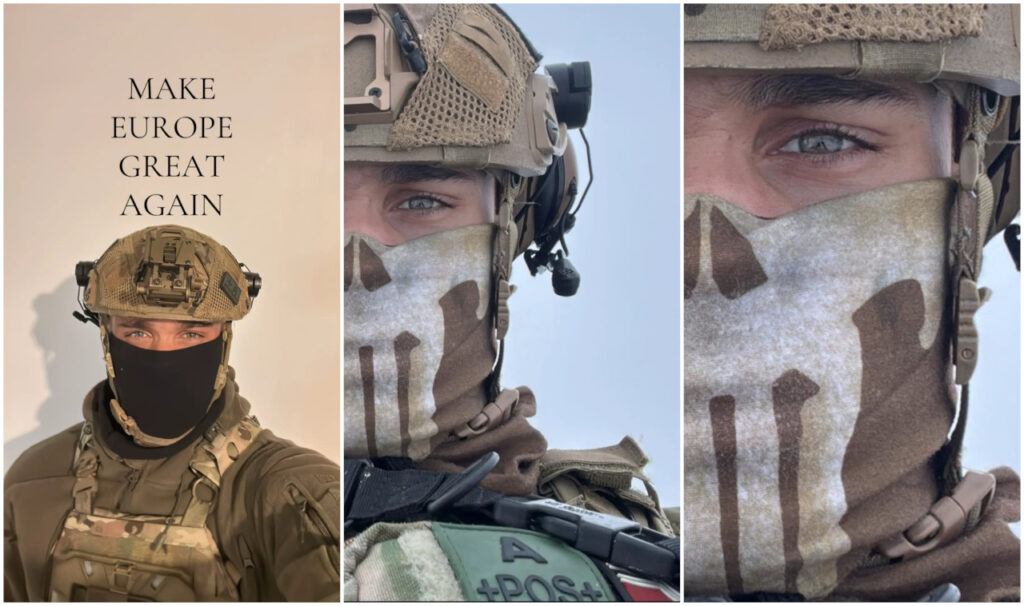
un Homme Français de droite qui n’est pas déconstruit, catholique patriote et conservateur
sur un réseau social où une description moins édulcorée risquerait de provoquer l’éradication de son compte
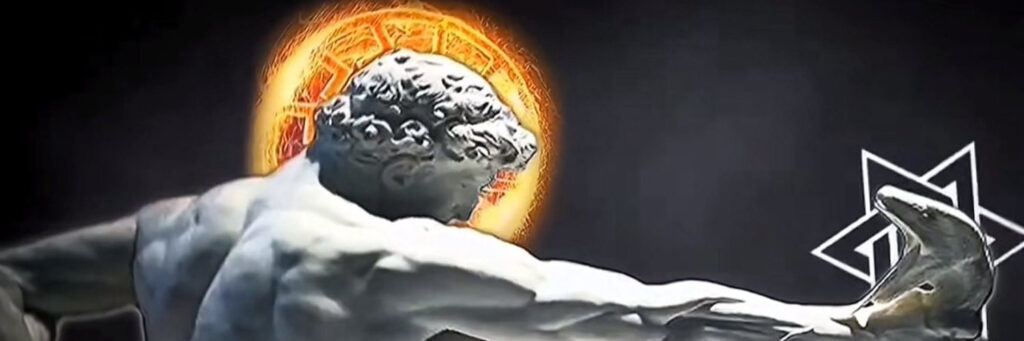
Mais sa bannière interroge, suggère qu’il est plus qu’un sympathisant couperosé du pétainiste vendéen Bruno Retailleau
(Réseaux sociaux)
Plus libre sur d’autres médias, il exprime sans détour de l’antipathie pour les gauchistes
(Réseaux sociaux)
En réalité, sous ses airs de gravure de mode, Roque est un militant nazi complètement fondu. Passer du temps à réaliser des vidéos de sa propre image, avec des discours d’Adolf Hitler en fond sonore, n’est pas à la portée du dernier beaufpinzutu.
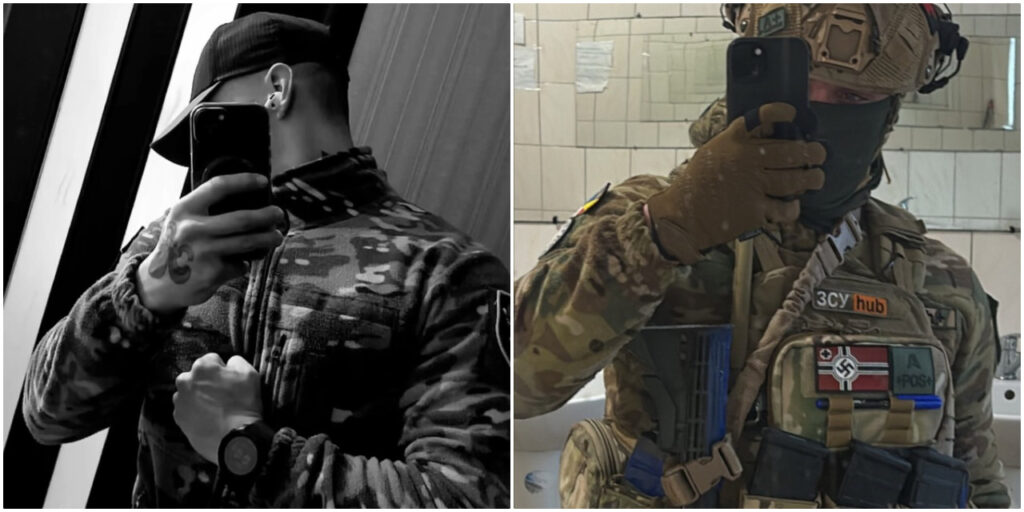
Nous le détectons au printemps 2025 dans les rangs atlantistes en Ukraine, au côté d’autres défenseurs français de la liberté et de la démocratie. Il nous permet alors de collectionner les images précédentes.
Les débuts sont un peu compliqués, car les volontaires français en Ukraine font un peu ce qu’ils veulent, changent beaucoup d’affectations dans cette armée de Bourbaki. Azov, escouade nazie française du 1er bataillon de Légion internationale (cf. Guillaume Andreoni) ou bataillon Revansh ? En août enfin, c’est sûr, Roque se pose chez Revansh, avec César Aujard, Gwendal Delange et d’autres
(Réseaux sociaux)
Toujours à l’entraînement et pas au casse-pipe, il partage le 31 octobre cette superbe image, premier par la droite. L’observateur expérimenté reconnaît Gwendal Delange et Ylian Fort, premier et troisième par la gauche.
Pour cette fois, le fond sonore est un extrait de discours prononcé en 1936 par Léon Degrelle, alors dirigeant du parti Rex [extrême-droite catholique belge], qui prit sa retraite en Espagne en 1945, avec le grade de Standartenführer [colonel SS]. Une vie qui résume l’Histoire récente de l’Europe et ses valeurs
Léon Degrelle
Qu’est-ce que vous voulez ? Nous sommes la jeunesse ; nous sommes la force ; nous sommes la vie. En face des parties corrompus et d’un régime à l’agonie, nous devons vaincre. Rex a avec lui le pays entier et c’est pour ça que Rex vaincra
Dans les faits, Léon Degrelle fut vaincu par l’Union soviétique et se réfugia chez Francisco Franco.
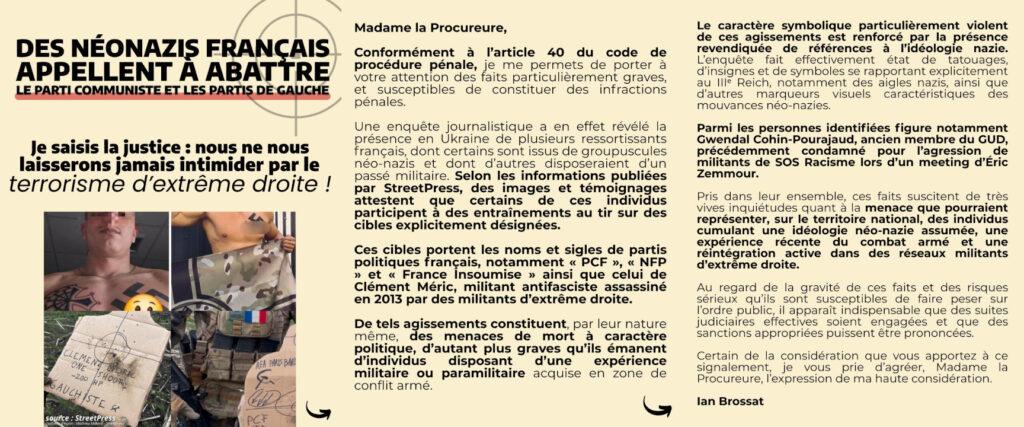
Le 20 janvier 2026, StreetPress publie un article intitulé
En Ukraine, des néonazis et ex-militaires français s’engagent pour se battre contre la Russie [ici avec mes annotations]
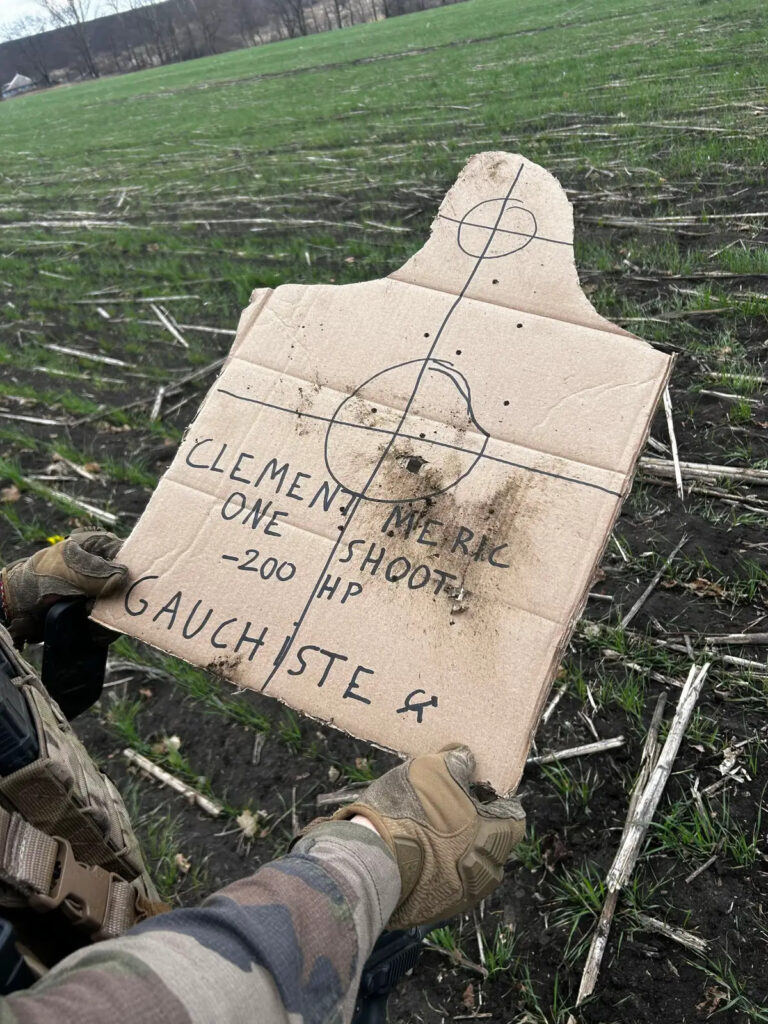
Le 31 octobre 2025, j’ouvrai le chapitre de Roque, que notre club TrackANaziMerc surveillait depuis le printemps. Il avait partagé sur les réseaux sociaux des images de son entraînement au tir. Une cible de carton était marquée Clément Méric, tué à Paris le 5 juin 2013. StreetPress provoque un drame hexagonal quand le journaliste Sébastien Bourdon ajoute dans son article que certaines cibles portaient aussi les sigles du Parti communiste français, du Nouveau Front populaire et de La France insoumise.
La Russie déclencha son opération militaire spéciale le 24 février 2022, voila 3 ans, 10 mois et 26 jours. Des militants nazis français ont combattu dans les rangs atlantistes en Ukraine avant même cette date, car la guerre au Donbass commença en mai 2014, 3 mois après qu’un État profond nazi eût été installé à Kiev. Mais voici qu’à la petite chaleur qu’elle sent au fondement, une partie de la gauche hexagonale découvre brutalement des nazis français dans les rangs atlantistes en Ukraine
(Ian Brossat sur X)
C’est en vertu de l’article 40 du Code de procédure pénale que le sénateur communiste de Paris Ian Brossat fait un signalement au parquet. En d’autres termes, il dépose plainte.
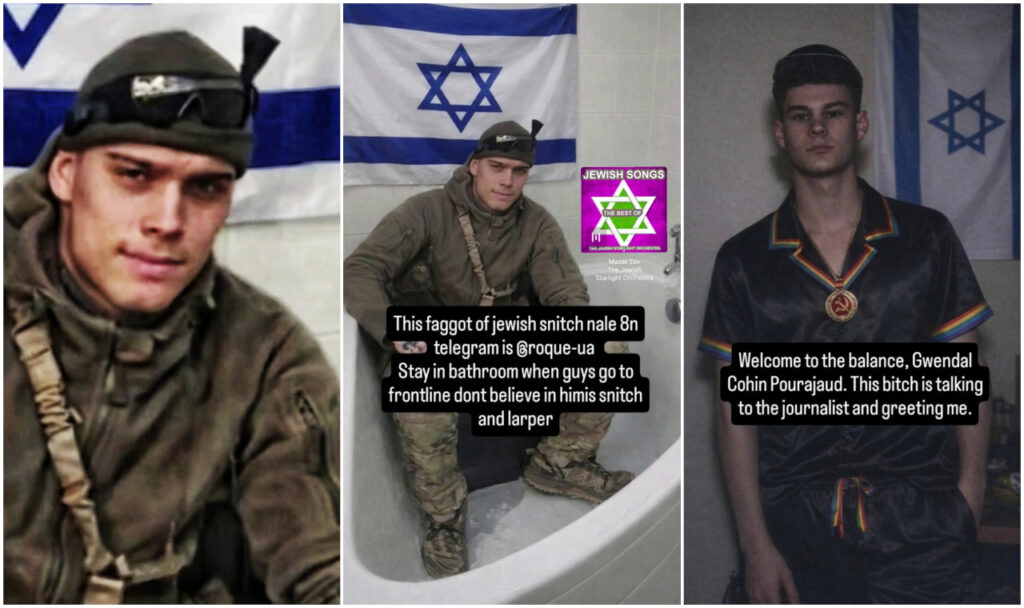
Avant d’être nazis, ils sont Français et par atavisme ou sinon héritage génétique, le psychodrame est pour eux ce que le fusil est à la Corse, qui par tradition, est antifasciste. L’article de StreetPress continue donc de faire des remous, deux jours après sa publication, maintenant en Ukraine. Ma compréhension de l’intrigue est que les journalistes ont échangé avec Roque et Gwendal Cohin Pourajaud, qui à l’insu de son plein gré, se sont aussi épanchés sur un 3e Français du bataillon Revansh, Sa Sin
Gwendal Cohin Pourajaud est caricaturé à droite et Roque, au centre (captures d’écran)
Ce dernier n’en demandait pas tant et l’indiscrétion l’a rendu furieux, car j’imagine que les journalistes l’ont ensuite contacté. Aussi anticommuniste et antisémite que ses camarades, il la dénonce avec amertume sur les réseaux sociaux le 22 janvier, par une publication caricaturale qui laisse apparaître sans masque le visage de Roque.
Pour être exhaustif, je dois préciser que le groupe décrit par StreetPress, appelé WAR puis Légion pirates, n’existe déjà plus quand l’article est publié. Il explosa en décembre, lorsque suite à un refus de mission, nous raconte la rumeur publique, la figure mythologique Gwendal Delange et d’autres quittèrent Revansh. Roque et encore d’autres sont restés.
Le 15 février 2026, il réagit de façon très personnelle au psychodrame causé en France par la mort de Quentin Deranque. Je précise encore ici que des nazis allemands rendent aussi hommage au petit ange parti trop tôt. Au pétainiste d’origines égyptienne et copte Hossam Messiha, dit Jean Messiha, qui sur les réseaux sociaux, s’attaque alors au député de LFI Raphaël Arnault, Roque répond
Ne compare pas cette merde à un SS
Une garde d’honneur de la Leibstandarte SS Adolf Hitler (nouvelle bannière de Roque)
Courroucé, il change la bannière de l’un de ses comptes de réseaux sociaux. Puis il continue de recruter en ligne pour le bataillon et partage une vidéo où le 25 février, afin de stimuler les enrôlements étrangers dans la compagnie Landsknecht [Lansquenet, en Allemand dans le texte], la propagande ukrainienne présente quatre volontaires français de la formation nazie : Noël Briand, Axel Kuzio, Ylian Fort et Lucas Barraud.
À la question fort intéressante que pose un lecteur du blog
Ne pensez vous pas qu’en diffusant certaines lectures que ces «individus » semblent apprécier, ainsi que toute la symbolique sur laquelle ils fantasment, vous ne faites que propager leur idéologie chez certains esprits viciés ?
je réponds le 26 février : je suis un amoureux transi de la réalité. Que la chronique de leurs pérégrinations puisse en stimuler d’autres ne m’importe pas vraiment. Peut être le contraire. Car au final, chacun est toujours responsable de ses actes et doit en payer le prix. Notre société corse est bien différente et j’ai le sentiment qu’en France, pudeurs et calculs stratégiques ne voilent une réalité peu glorieuse
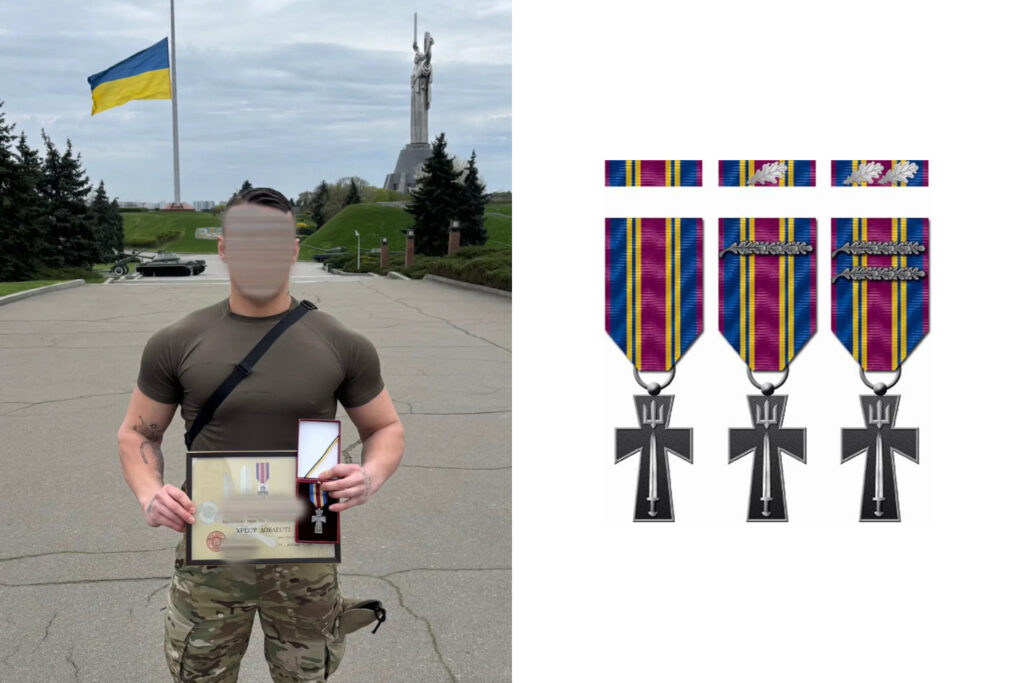
Le ministère ukrainien de la défense a décerné à Roque la Croix de la valeur, mais sans feuille de chêne, quand le 25 avril, il en publie sur les réseaux sociaux l’image à Kiev
(Réseaux sociaux)
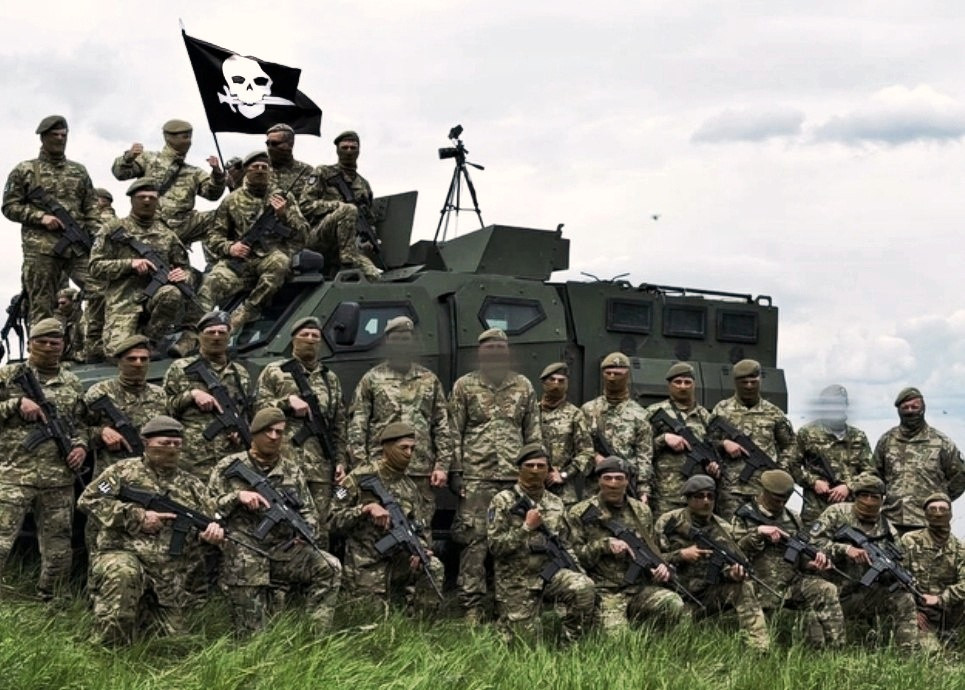
Il obtient des résultats par son travail de recrutement. Le 17 mai 2026, différents canaux fascistes ukrainiens et européens partagent cette image des Français du bataillon Revansh, qui forment désormais un peloton
1er GSAR
Le 18 septembre, Roque commence à recruter pour une nouvelle escouade française dans les rangs du bataillon Revansh, le 1er Groupement spécialisé assaut & reconnaissance (GSAR).
chronique alphabétique et nécrologique de l’engagement français dans les rangs atlantistes en Ukraine, ce que les journalistes serviles ne vous raconteront pas
Articles connexes
Pruvate à truvà me, canaglia di l’OTAN, pruvate solu
chronique en Anglais, its roots before WW2, its collaboration with Nazi Germany, its legacy in modern Ukraine, how NATO has continually supported Nazism in Ukraine
chronique en Anglais, censorship, fake news, whitewashing of the Ukrainian Nazism and war crimes, for the sake of the proxy war that NATO is conducting in Donbass and Ukraine, against Russia
une saga française, entre Ukraine et Lyon, où apparaissent aussi des morceaux de SS de la division Charlemagne et plus récemment, Alice Kerviel, dite Cordier. L’affaire Deranque révèle comme la France est infectée par le pétainisme, en particulier parmi les soutiens d’Israël ou de l’Ukraine, deux théâtres d’opérations où l’Occident tente de ralentir son déclin
En 2025, une nouvelle unité de Français combattant pour l’Ukraine s’est structurée autour d’un noyau de néonazis, ayant pour objectif d’attirer des recrues. Parmi ces volontaires, d’anciens militaires. StreetPress les a identifiés
En Ukraine, les volontaires français pro-ukrainiens et pro-russes se partagent l’imaginaire de la Seconde Guerre mondiale. Les premiers se revendiquent des collabos de l’Allemagne nazie, les seconds de l’escadrille mythique « Normandie – Niémen »
deux jours après le 10e anniversaire de la débâcle politique et sécuritaire du 13 novembre 2015, une messe célèbre à Verdun l’ancien dirigeant fasciste de l’État français
ce 11 novembre 2025 est l’occasion de souligner comme la façon dont l’Europe sacrifie les conscrits ukrainiens mobilisés de force rappelle le spectaculaire carnage de la 1ère guerre mondiale
c’est par l’agence cosaque de presse PIKA, depuis la République populaire de Lougansk, que le 2 avril 2024, l’ataman Nikolaï Diakonov lance un message à destination de la France
ce papier est le premier des grands médias français qui s’attaque à la question des militants nazis français dans les rangs atlantistes en Ukraine, le nouveau danger qu’ils présenteront à terme pour la sûreté intérieure
où nous apprenons que le nazi français Allan Duchézeau, camarade de César Aujard dans les rangs atlantistes en Ukraine, était surnommé Dox, quand il secondait à Paris le leader nazi Marc de Cacqueray Valménier
en Anglais, les indices de la présence d’opérateurs occidentaux, en particulier Français, pris au piège en mars 2022 à Marioupol, dont les forces russes achevèrent la libération en mai