Analista senior di l'intelligenza in u campu di a gestione di i risichi di sicurezza, sò un anzianu tenente detective è ufficiale di l'intelligenza in l'agenzie di u Statu francese. A bona pronuncia hè Николай Чинкуини, in russu
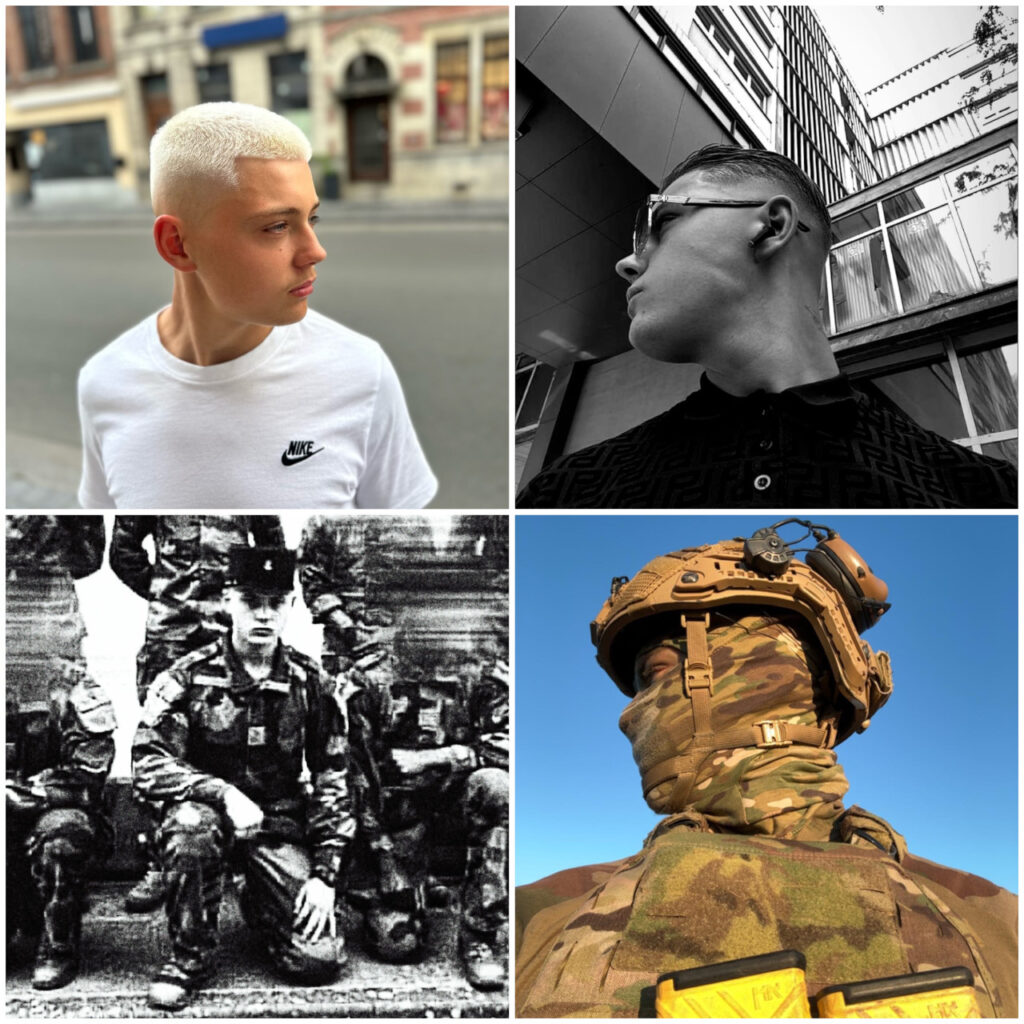
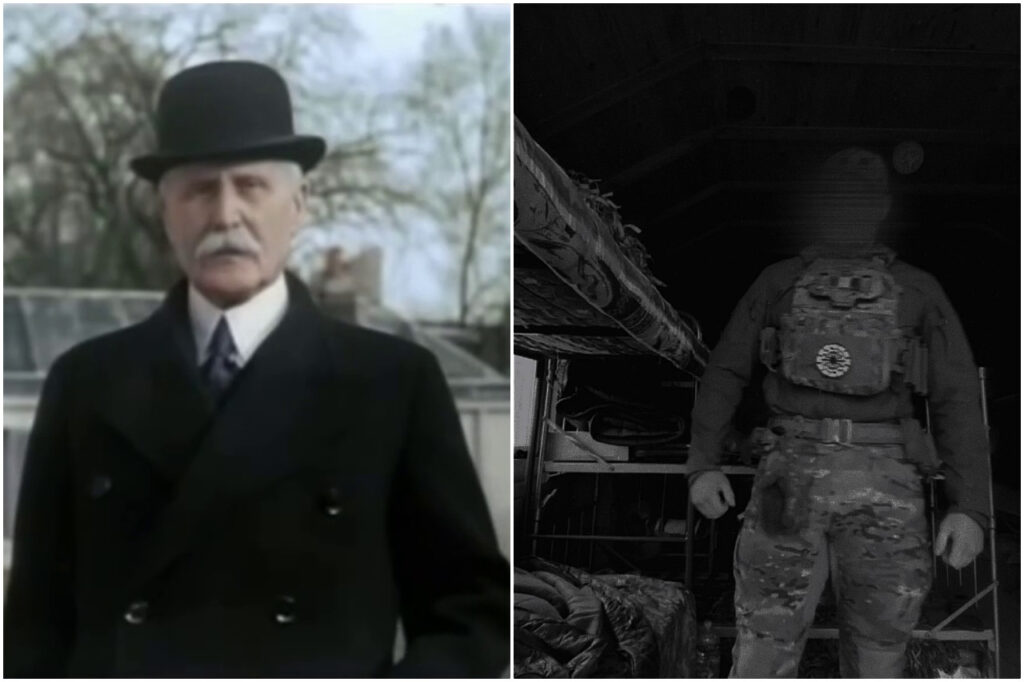
Barraud, Lucas, dit Zorya [déesse de l’aube, en Ukrainien],
(Réseaux sociaux)
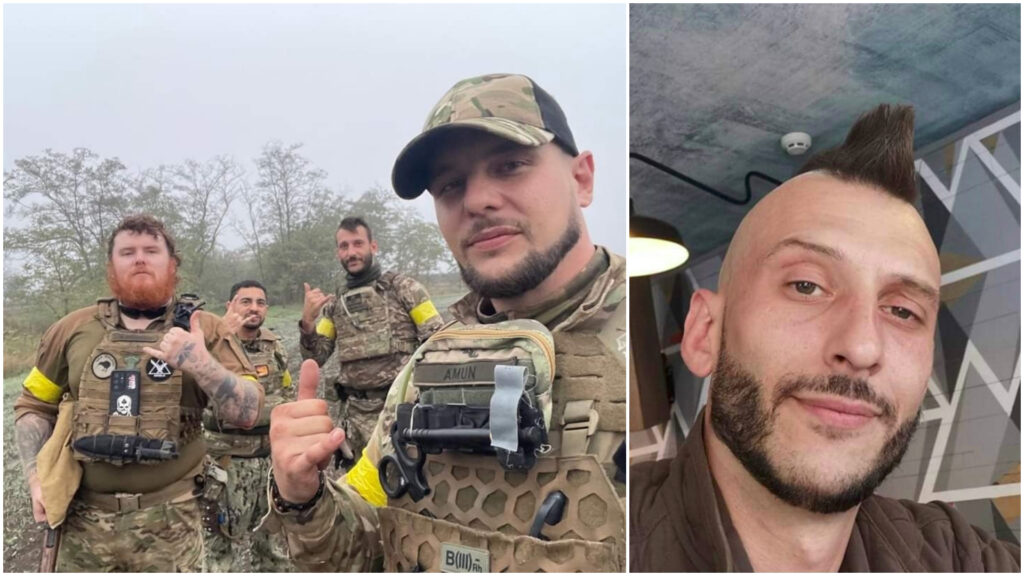
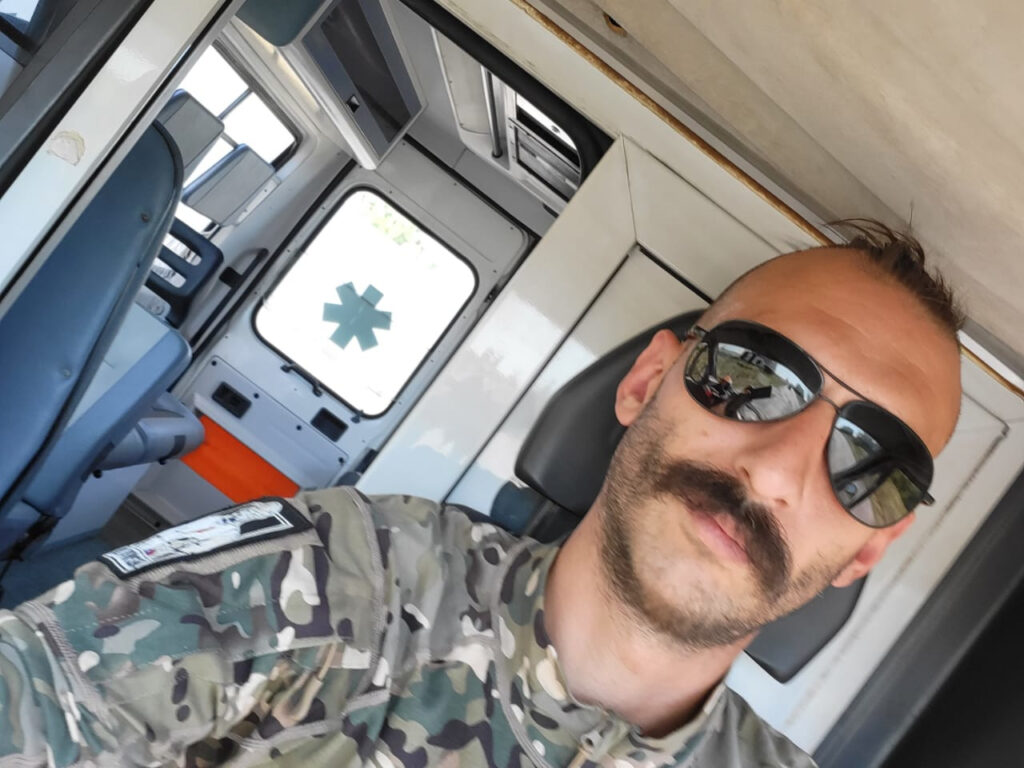
est originaire de la banlieue de Valenciennes, est passé comme une comète dans l’infanterie de marine, où il fit ses classes au printemps 2024
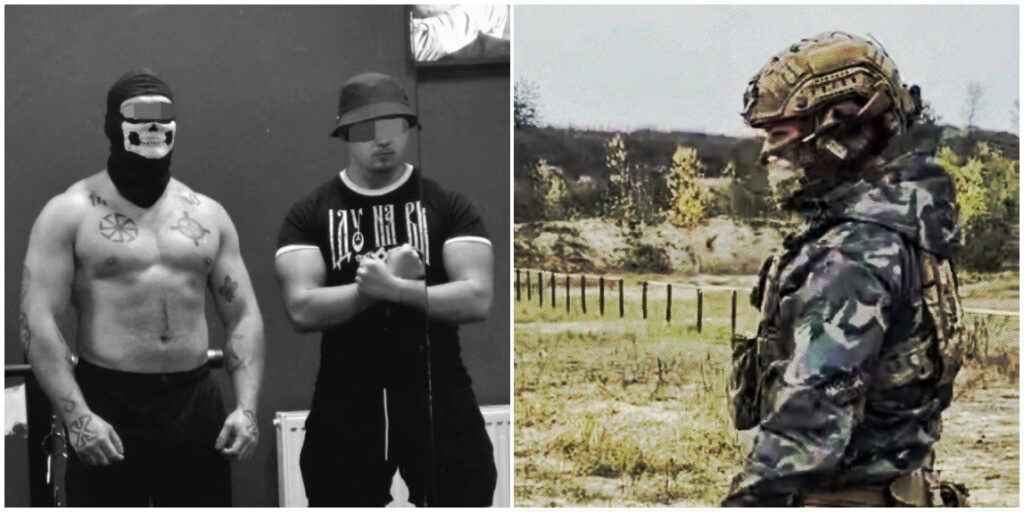
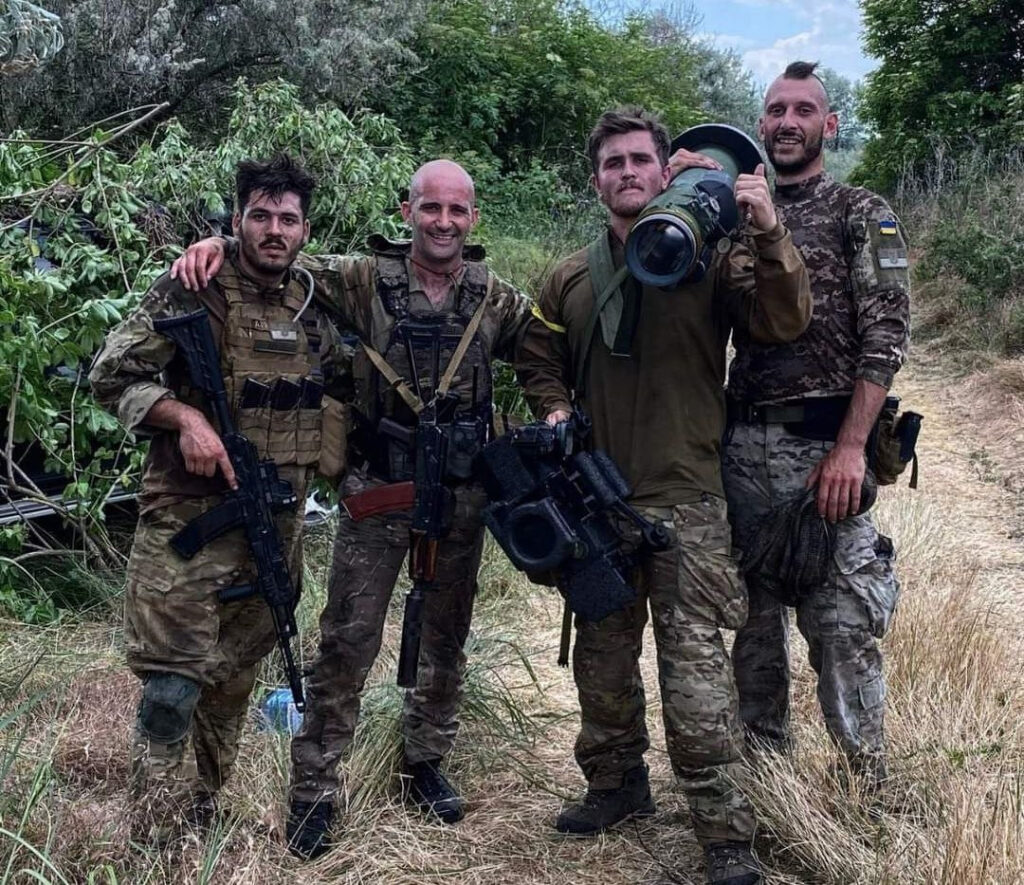
Sur l’image de gauche, Lucas Barraud est à droite, Gwendal Delange, à gauche (réseaux sociaux)
Une carrière longue et glorieuse l’y attendait certainement, mais il apparaît en Ukraine en octobre 2025, à l’entraînement sur un champ de tir et au côté de Gwendal Delange, volontaire nazi français dans le bataillon Revansh.
Le 9 novembre, Barraud nous présente sur les réseaux sociaux son camarade phalangiste espagnol Kixot [Quichotte, en Ukrainien], qui a coutume de proclamer en Anglais
Democracy killed Christ
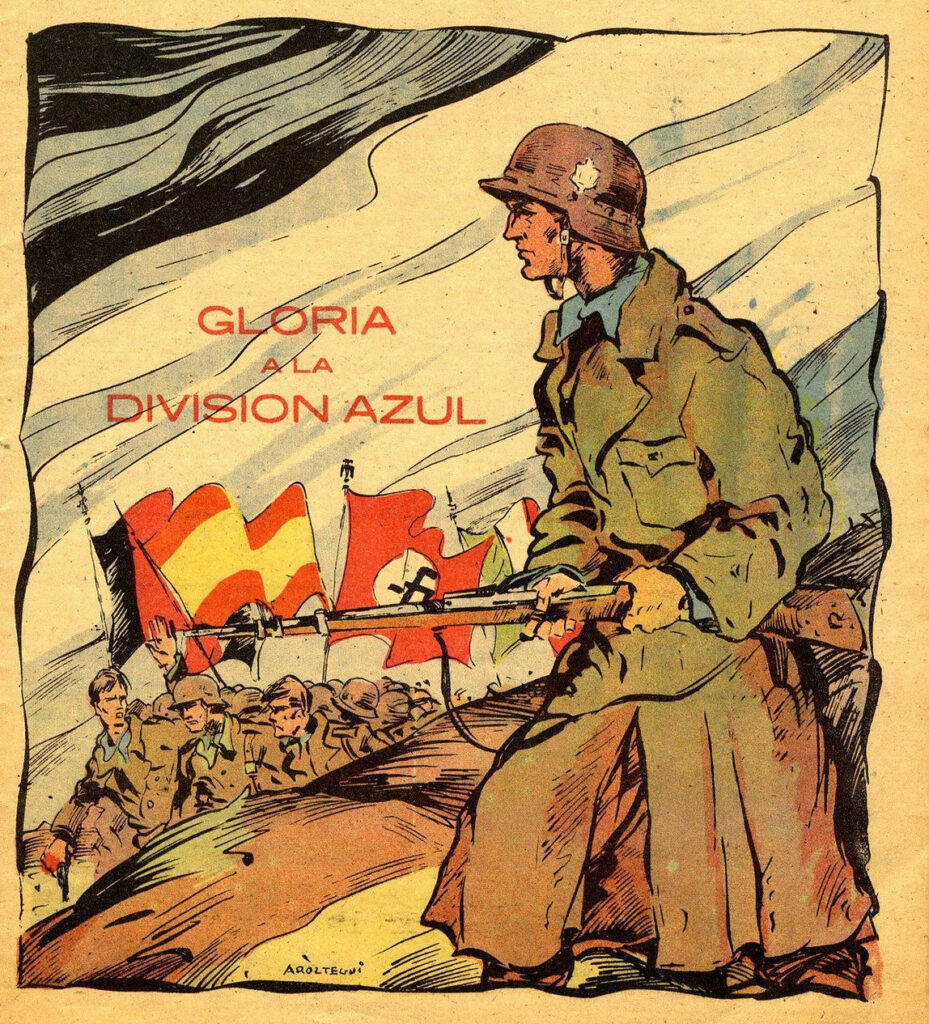
le 30 novembre 1941 (Avelino Aróztegui)
et célèbre la División Española de Voluntarios ou División Azul (1941-1943), qui devint dans la Wehrmacht la 250. Infanteriedivision.
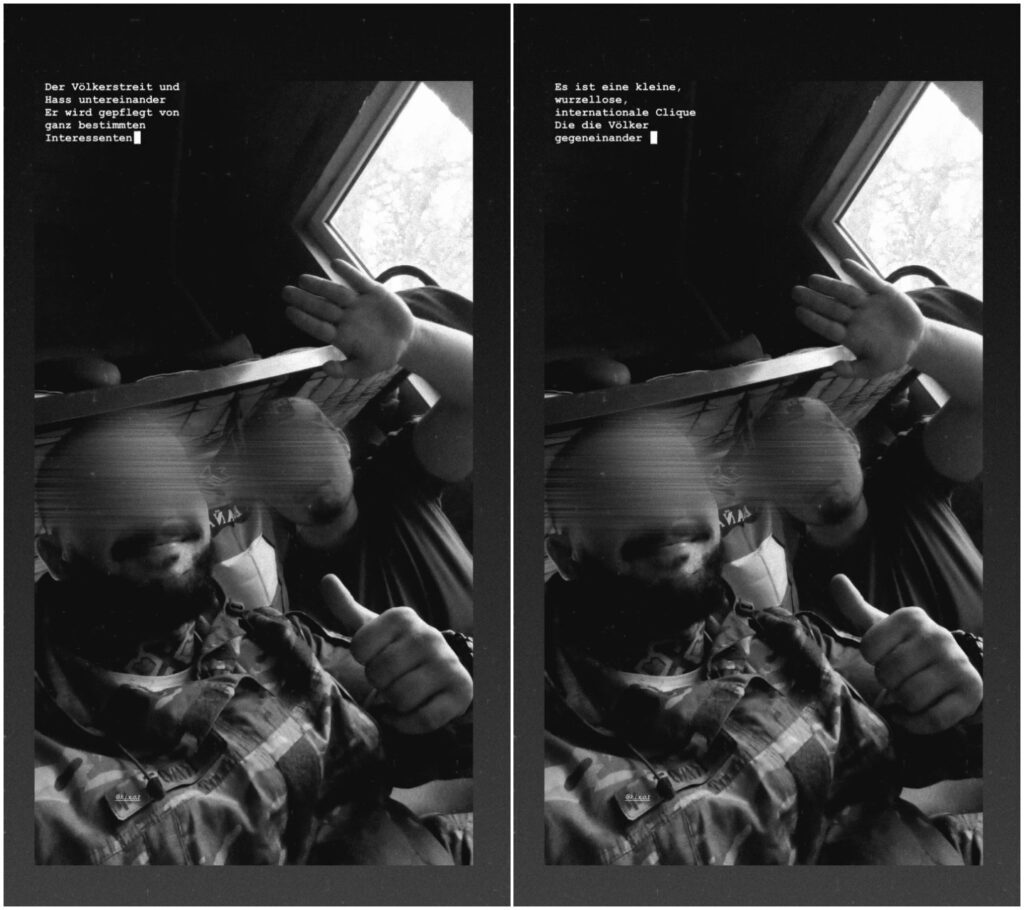
Barraud est à droite et le fond sonore est un court extrait antisémite du discours qu’Adolf Hitler prononça à Berlin le 10 novembre 1933, voilà 92 ans moins un jour
(Captures d’écran)
Der Völkerstreit und der Haß untereinander, er wird gepflegt von ganz bestimmten Interessenten. Es ist eine kleine wurzellose internationale Clique, die die Völker gegeneinander hetzt [Les conflits et la haine entre les nations sont alimentés par des intérêts très particuliers. Il s’agit d’une petite clique internationale sans racine qui incite les nations à s’affronter]
La rumeur publique ne nous a pas encore vanté de hauts faits d’armes des militants nazis français qui se sont réunis depuis le printemps 2025 dans les rangs du bataillon ukrainien Revansh. Et pourtant, leur groupe explose en décembre. Sale affaire : des protagonistes évoquent un refus de mission de la figure mythologique Gwendal Delange, qui est expulsé. Sa Sin [le messager de la mort, en Coréen] part aussi. Dans la tourmente, le Parisien César Aujard, autre figure historique, semble prendre des vacances sous les tropiques
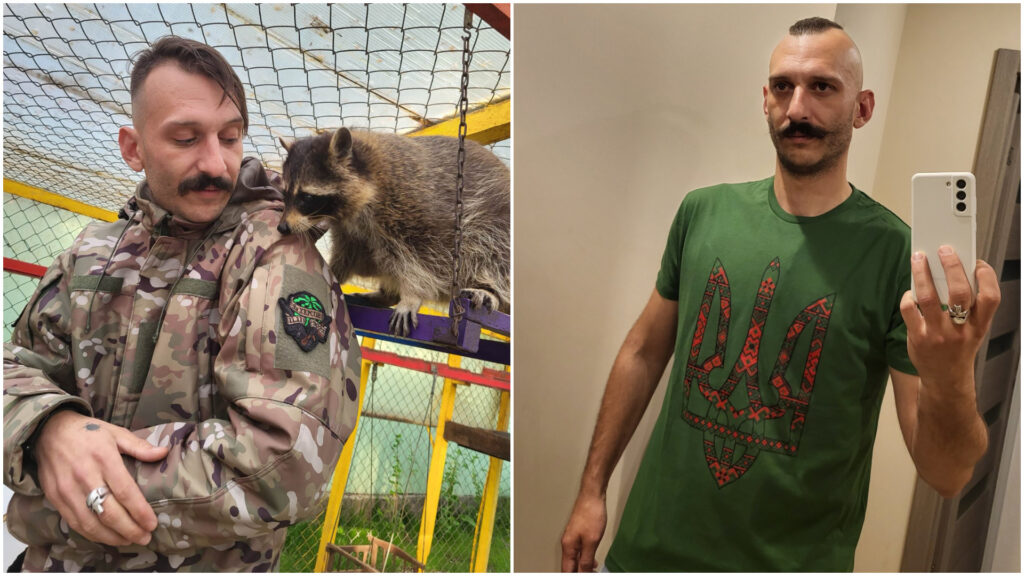
Sur cette image publiée le 31 janvier 2026, Lucas Barraud est à droite, l’ancien légionnaire Ylian Fort, à gauche (réseaux sociaux)
Appelé WAR [War Aggressive Rota] puis Légion pirates, le groupe initial n’existe plus. Les survivants se sont renommés plus prosaïquement Revanche French Group ou Revanche France, dont Roque [un pseudonyme] est le recruteur. C’est dans ce cadre qu’en janvier et février 2026, Lucas Barraud et d’autres partagent sur les réseaux sociaux les images de séances d’entraînement
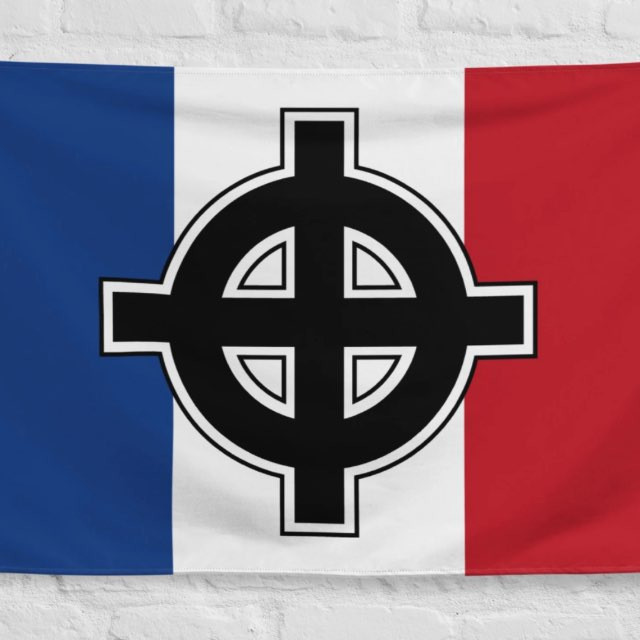
Une image du profil de Lucas Barraud sur Telegram
Quand il visite le 14 février le chat de notre club TrackANaziMerc, une image de son profil Telegram illustre son idéologie
(Capture d’écran)
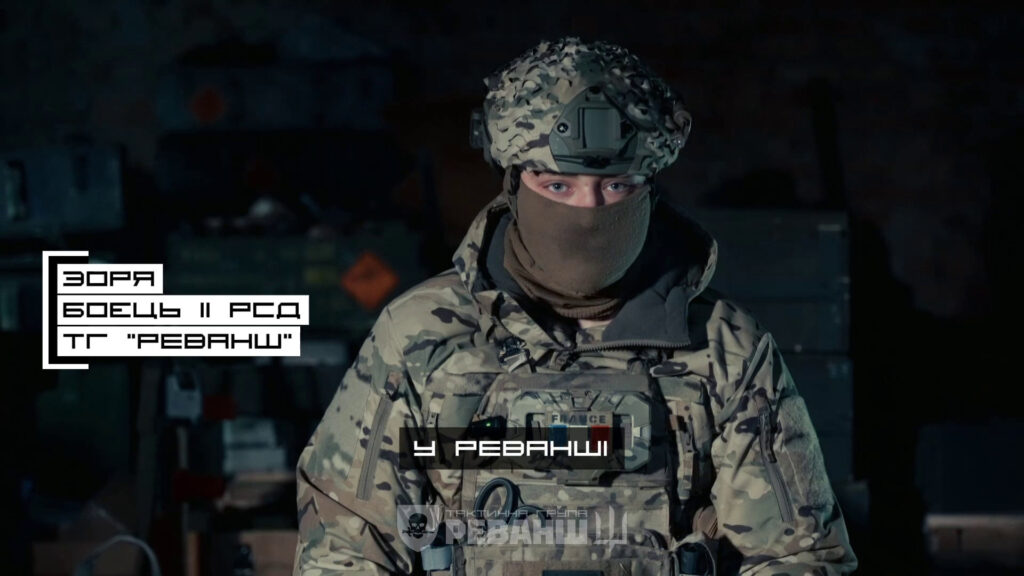
Il s’exprime le 25 février 2026 dans une vidéo de propagande pour stimuler les enrôlements étrangers dans la compagnie Landsknecht [Lansquenet, en Allemand dans le texte] du bataillon Revansh. Il y partage l’affiche avec dans l’ordre d’apparition, Noël Briand, Axel Kuzio et Ylian Fort, rien que de fervents philanthropes démocrates
(Réseaux sociaux)
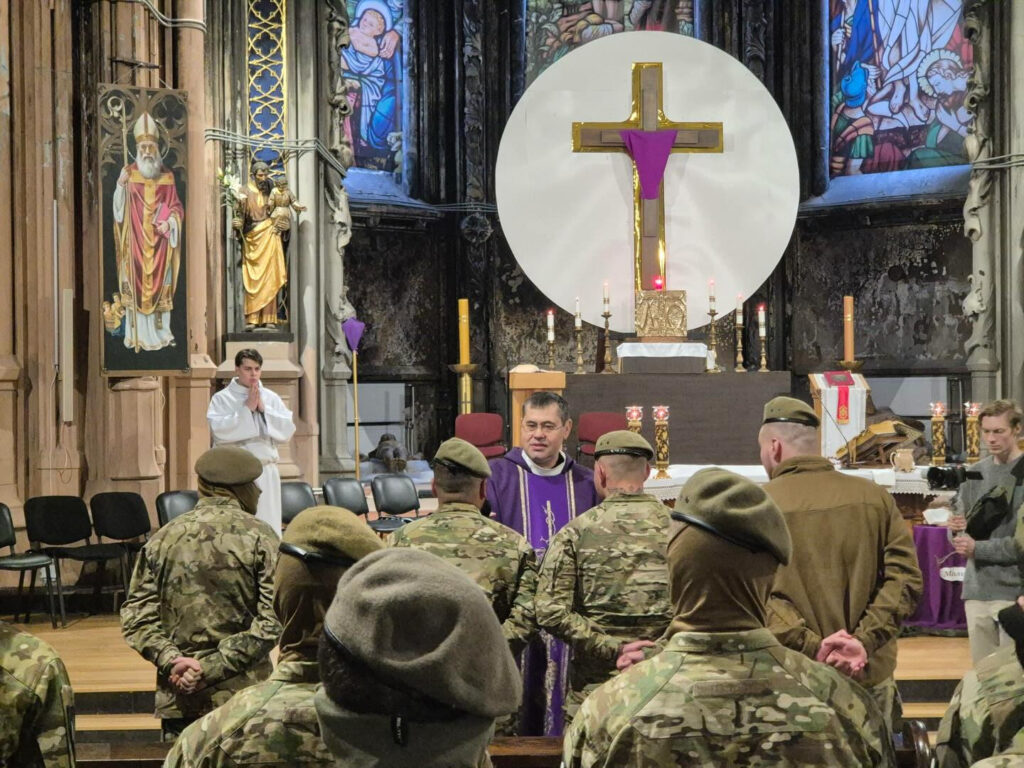
Avec cette image, Barraud confirme sa présence à la messe du 5 avril, en l’église catholique Saint Nicolas de Kiev (cf. Leeroy Guenneguez).
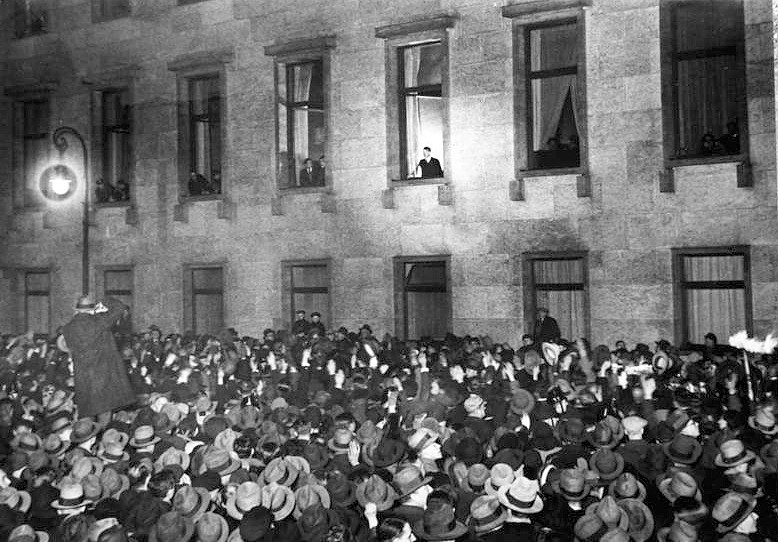
Le 30 janvier 1933, le président Paul von Hindenburg nomme Adolf Hitler chancelier du Reich (Robert Sennecke / Bundesarchiv)
Son expression politique s’affirme début juillet sur les réseaux sociaux : suprémacisme blanc, évocation du défilé aux flambeaux des paramilitaires pour célébrer l’accession démocratique d’Adolf Hitler à la chancellerie… etc
L’actualité française le stimule le 6 octobre 2026. Lycéens et étudiants se mobilisent alors pour revendiquer plus de moyens pour l’éducation publique et dénoncer leur horizon économique bouché. Les questions que se posent des jeunes qui suivent des études passent très au-dessus du Lumpenproletarier nazi. Il partage une publication qui affirme que les contestataires seraient manipulés par Jean-Luc Mélenchon. Je ne suis plus jeune mais préférerais être manipulé par Mélenchon que par Macron ou Von der Leyen
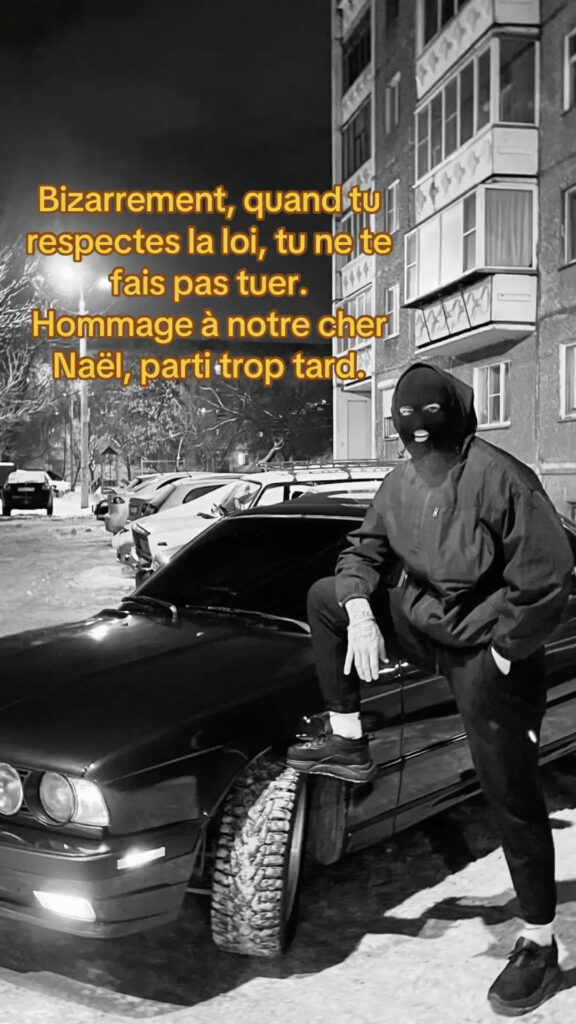
Dans un registre assez proche, une de ses autres trouvailles du jour est une pépite sans âge de bêtise réactionnaire crasse, qui célèbre l’ordre et moque Nahel Merzoug, qui à Nanterre, le 27 juin 2023, fut la victime d’un meurtre commis par Florian Menesplier, ancien militaire et archer du guet parfaitement incompétent, qui n’a pas été révoqué et sévit aujourd’hui au Pays basque. Dans l’état actuel de la flicaille française, Barraud aurait été une recrue idéale
J’ai flouté les visages des victimes, sur ces captures d’écran de la vidéo d’une caméra de surveillance de la station ESSO de Trappes
L’actualité lui répond le 23 octobre, quand un terroriste raciste cible les Noirs et les Arabes dans les Yvelines, pour venger les commerçants [pillés lors des manifestations du 17 octobre]
(Capture d’écran)
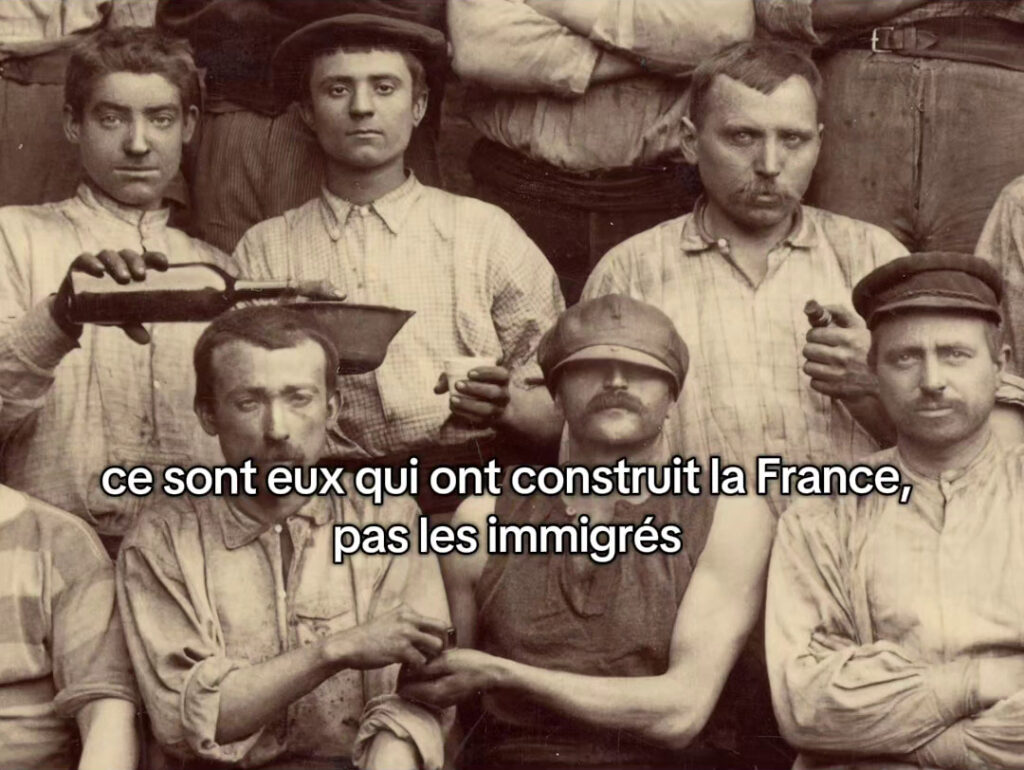
Le drame fait réfléchir le suprémaciste des corons. Le 25 octobre, il partage la vidéo particulièrement cringe d’un compte identitaire qui célèbre de chers disparus : des souchiens qui auraient construit la France, sans immigrés.
chronique alphabétique et nécrologique de l’engagement français dans les rangs atlantistes en Ukraine, ce que les journalistes serviles ne vous raconteront pas
Articles connexes
Pruvate à truvà me, canaglia di l’OTAN, pruvate solu
chronique en Anglais, its roots before WW2, its collaboration with Nazi Germany, its legacy in modern Ukraine, how NATO has continually supported Nazism in Ukraine
chronique en Anglais, censorship, fake news, whitewashing of the Ukrainian Nazism and war crimes, for the sake of the proxy war that NATO is conducting in Donbass and Ukraine, against Russia
une saga française, entre Ukraine et Lyon, où apparaissent aussi des morceaux de SS de la division Charlemagne et plus récemment, Alice Kerviel, dite Cordier. L’affaire Deranque révèle comme la France est infectée par le pétainisme, en particulier parmi les soutiens d’Israël ou de l’Ukraine, deux théâtres d’opérations où l’Occident tente de ralentir son déclin
En 2025, une nouvelle unité de Français combattant pour l’Ukraine s’est structurée autour d’un noyau de néonazis, ayant pour objectif d’attirer des recrues. Parmi ces volontaires, d’anciens militaires. StreetPress les a identifiés
En Ukraine, les volontaires français pro-ukrainiens et pro-russes se partagent l’imaginaire de la Seconde Guerre mondiale. Les premiers se revendiquent des collabos de l’Allemagne nazie, les seconds de l’escadrille mythique « Normandie – Niémen »
deux jours après le 10e anniversaire de la débâcle politique et sécuritaire du 13 novembre 2015, une messe célèbre à Verdun l’ancien dirigeant fasciste de l’État français
ce 11 novembre 2025 est l’occasion de souligner comme la façon dont l’Europe sacrifie les conscrits ukrainiens mobilisés de force rappelle le spectaculaire carnage de la 1ère guerre mondiale
c’est par l’agence cosaque de presse PIKA, depuis la République populaire de Lougansk, que le 2 avril 2024, l’ataman Nikolaï Diakonov lance un message à destination de la France
ce papier est le premier des grands médias français qui s’attaque à la question des militants nazis français dans les rangs atlantistes en Ukraine, le nouveau danger qu’ils présenteront à terme pour la sûreté intérieure
où nous apprenons que le nazi français Allan Duchézeau, camarade de César Aujard dans les rangs atlantistes en Ukraine, était surnommé Dox, quand il secondait à Paris le leader nazi Marc de Cacqueray Valménier
en Anglais, les indices de la présence d’opérateurs occidentaux, en particulier Français, pris au piège en mars 2022 à Marioupol, dont les forces russes achevèrent la libération en mai
est camionneur, réserviste de l’armée française, pourrait bien travailler pour le renseignement français, depuis son engagement en Syrie en 2015, dans les milices marxistes kurdes YPG. La rumeur dit que le renseignement serait plutôt belge
Voici de gauche à droite, Jordan O’Brien, Nouvelle-Zélande, Damien Rodriguez, US, Maxime Barrat et Eric Alexander Nawrocki, Canada (réseaux sociaux)
Son premier affrontement attesté de l’armée russe date du 9 juin 2022, dans la région de Kharkov, au sein d’un groupe appelé Dark Angels, à l’origine une ONG britannique d’assistance en Pologne aux réfugiés d’Ukraine.
Il a déjà dit que son activité en Ukraine lui garantissait entre 3 000 et $4 000 par mois. Le 25 avril 2023, il fait aussi appel aux dons sur Twitter, où son compte porte le nom qui était le sien autrefois en Syrie, Max Azadî
Il nous gratifie de nouvelles photos. Une le 4 mai, où il a abandonné la houpette rockabilly, pas évidente avec le casque, pour une superbe mèche. Il s’est aussi taillé une moustache ukrainienne. Mais avec un nouveau changement le 7, Maxime se cherche.
Son écusson dit Pour Kherson, 11 novembre 2022. En raison de problèmes logistiques insurmontables sur le Dniepr, les forces russes se retirèrent en bon ordre de Kherson le 9 novembre. Après avoir occupé le terrain, les troupes atlantistes commencèrent ensuite à assassiner des civils réputés collaborateurs.
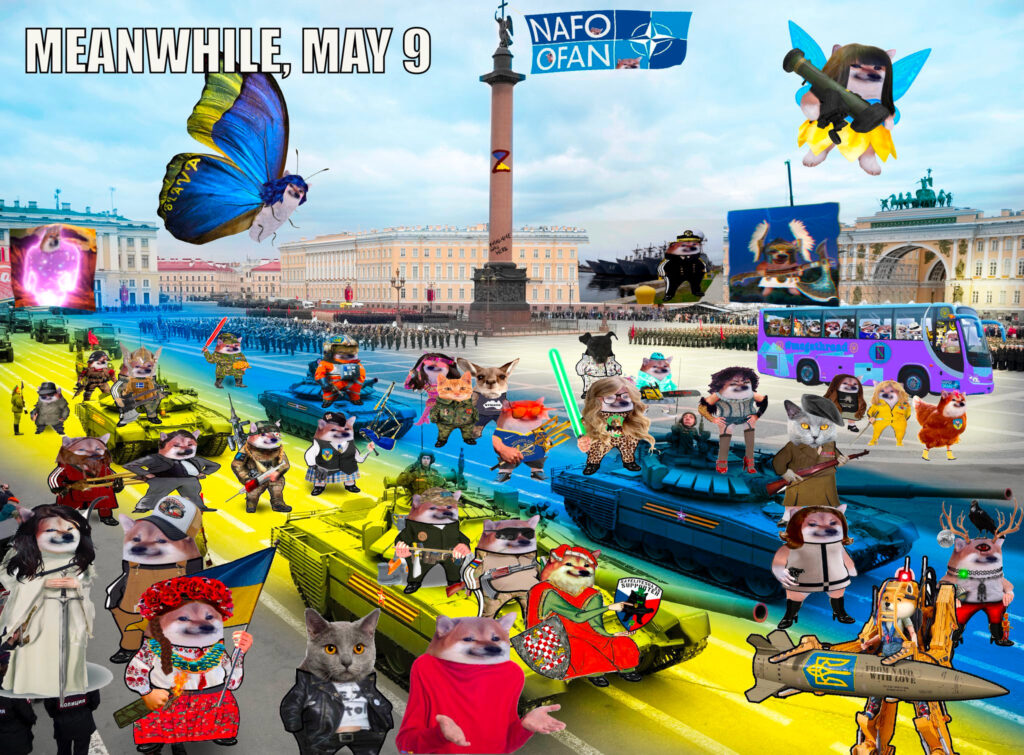
À l’instar des guerriers du clavier de NAFO, un groupe international de nerds favorables à l’OTAN, il rêve en cette occasion de parader à Saint Pétersbourg, autrefois Leningrad, où plus d’un million de civils sont morts quand les armées fascistes européennes l’ont assiégée de 1941 à 1944. À chaque évocation française de ce genre, je me pose toujours la même question. Mais qu’ont fait ses anciens pendant la 2de guerre mondiale, résistants ou athlètes du sport national que sont les ronds de jambe ? À une époque où l’Armée rouge accomplissait 80% de toutes les pertes militaires allemandes
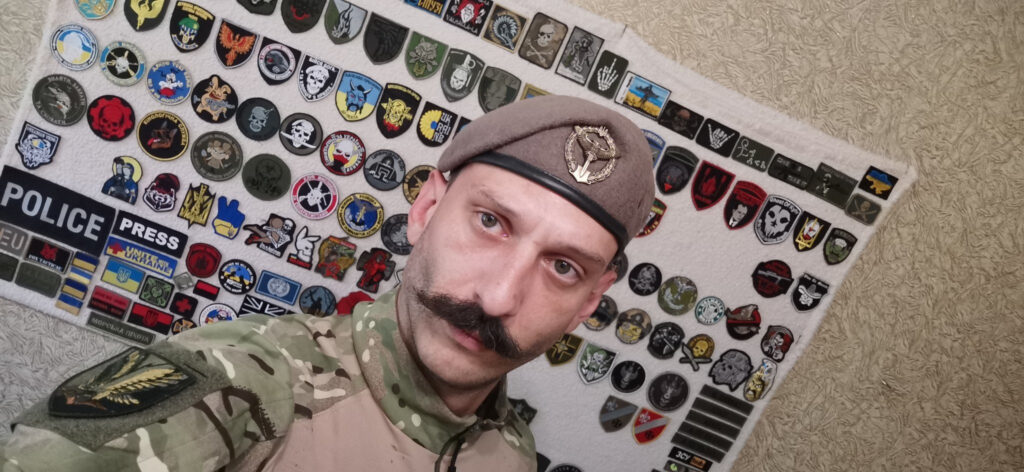
Le 8 juin, il pose fièrement devant sa collection d’écussons ukrainiens, où l’observateur expérimenté remarque le portrait du criminel de guerre nazi Stepan Bandera et commercialisée par une entreprise locale appelée R3ich, la populaire adaptation de la Totenkopf SS
La Totenkopf originale était l’emblème de la 3. SS-Panzer-Division (gauche). Tous les autres SS la portaient aussi sur leur couvre-chef. L’adaptation commercialisée par R3ich (centre) est tellement répandue dans les rangs ukrainiens, qu’un journaliste du New York Times le déplore dans un article du 5 juin. Elle est coquette, car le casque moderne affiche aussi une clef, qui était l’emblème de la 1. SS-Panzer-Division, Leibstandarte Adolf Hitler (droite)
Il n’a donc pas que de bonnes fréquentations en Ukraine. Son air est déterminé, mais il passe clairement plus de temps sur Twitter qu’au front. Il arbore aussi sur son béret un insigne qu’une admiratrice lui a offert, celui du renseignement militaire ukrainien (GUR)
(Twitter)
Il apparaît en tenue de combat le 4 juillet. Son camouflage suggère qu’il serait tireur de précision. Belle photo.
Le 7 juillet, RTL enquête sur les combattants français dans les rangs atlantistes en Ukraine et présente Barrat en tête de gondole. Information que je ne connaissais pas et pour laquelle je remercie les journalistes, il a incorporé le 131e bataillon de renseignement. Son insigne du GUR n’est donc pas usurpé et nous comprenons mieux pourquoi il est en seconde ligne à Kherson depuis des mois. Sa formation pourrait bien être employée à la chasse aux collaborateurs, civils pro-Russie qui sont souvent assassinés
(RTL)
J’ignore si la faute incombe aux journalistes ou à l’intéressé, mais l’article sur le web est illustré par la pire photo possible, alors que d’autres sont bien meilleures. Je la connaissais mais ne l’ai pas publiée avant, par respect. Il ressemble à Rambo de la Beauce.
Le reportage évoque qu’il a eu maille à partir avec la justice pour violences en France. Cette information manque de rigueur journalistique, car il a fui un contrôle judiciaire pour violences CONJUGALES.
MAXIME, POURQUOI TU LA COGNAIS ?
Les événements dans l’hexagone sont un excellent test pour cerner l’idéologie des individus listés ici. Un moment hilarant du reportage est quand le journaliste souligne que Barrat serait d’extrême-gauche. Je savais depuis longtemps que les droits des femmes n’était pas sa spécialité.
Son environnement sur les réseaux sociaux compte aussi des racistes, qui qualifient de déchets et de souillure du drapeau français, les citoyens et élus qui défilent le 8 juillet, pour réclamer vérité et justice pour Adama Traore, que des pandores [gendarmes] ont tué en 2016. J’encourage donc les journalistes de RTL à perséverer, encore prospecter, afin de pouvoir présenter à leur public un authentique militant d’extrême-gauche, s’ils souhaitent vraiment rééquilibrer le spectre politique des combattants français dans les rangs atlantistes.
De façon plus fondamentale, quelqu’un doté d’un soupçon de conscience politique d’extrême-gauche, internationaliste et allergique au nationalisme, ne combattrait pas pour l’OTAN, donc les USA, dans un pays où un État profond nazi, ceux qui portent les flingues, décide d’un conflit où les opprimés sont depuis 2014 les civils russophones bombardés dans le Donbass. Quelques rappels historiques
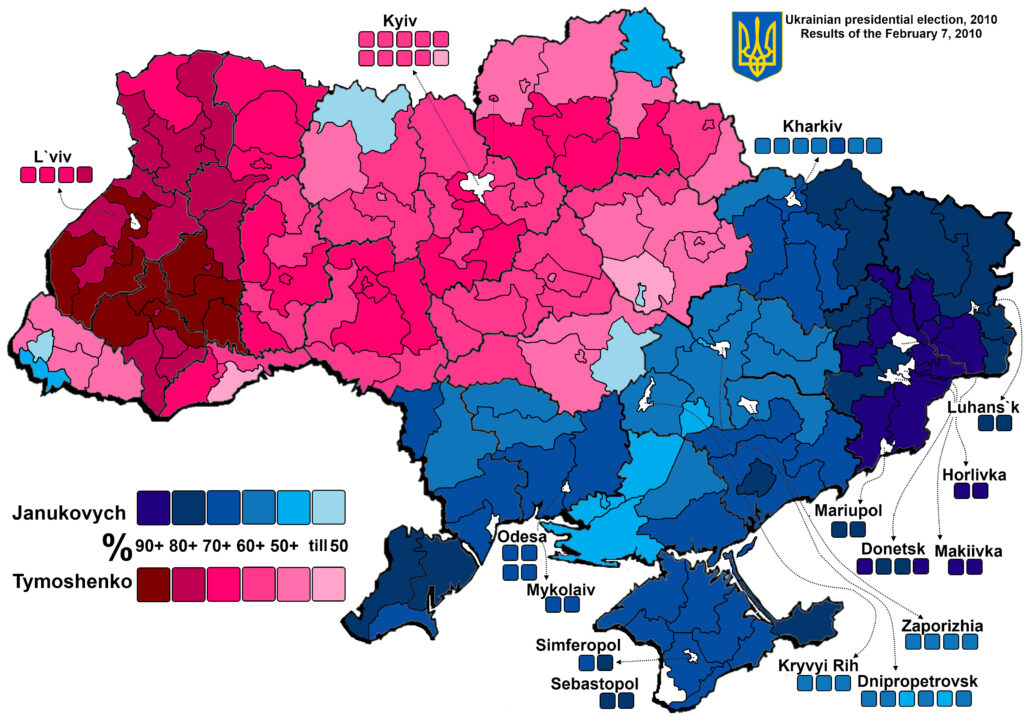
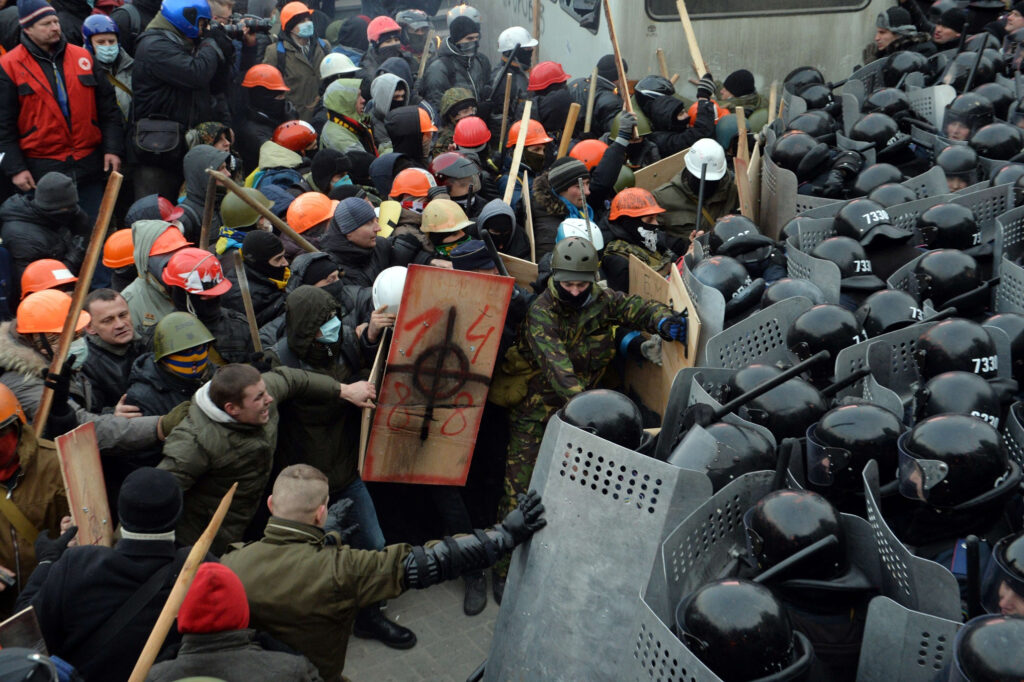
Résultats des élections présidentielles du 7 février 2010 : le contraste entre l’ouest et l’est russophone de l’Ukraine, entre région de Lviv et Donbass, est de mauvais augure. Qu’adviendrait il si quelques esprits mal intentionnés, voire étrangers, envenimaient les choses ?Le 19 janvier 2014, à Kiev, des militants nazis affrontent la police sur la place Maïdan (Serguey Spnisky / AFP)
Après le coup d’État du 21 février 2014, Arseni Iatseniouk forma le 27 un gouvernement issu de l’opposition parlementaire au président élu mais déchu Viktor Ianoukovytch. Le parti nazi Svoboda obtint un vice-premier ministre et plusieurs ministères, dont la défense. Ce cabinet est resté en fonction jusqu’au 2 décembre, après les élections législatives du 26 octobre
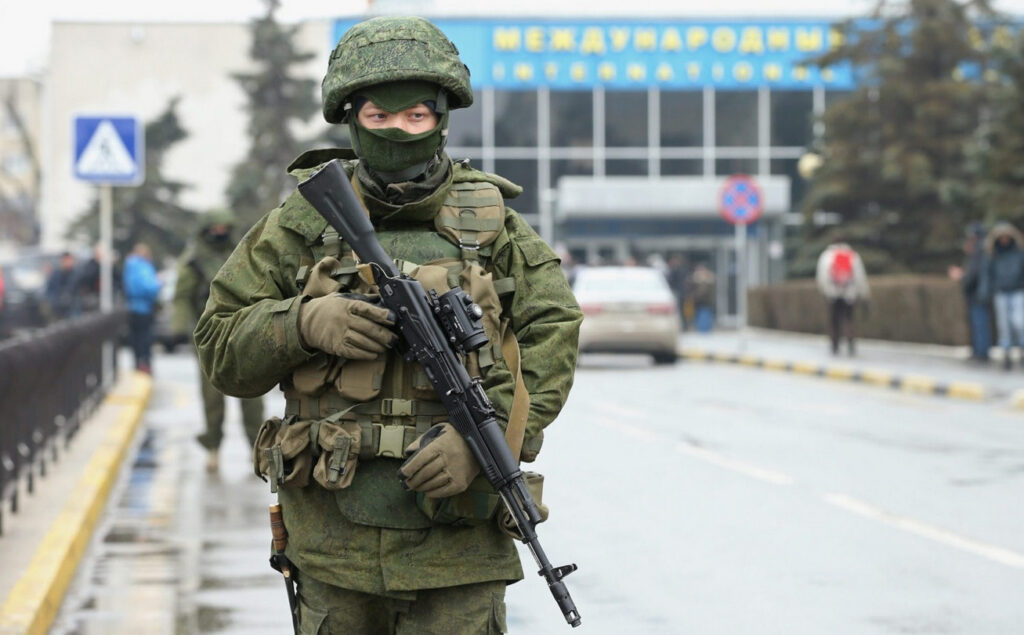
Un militaire russe patrouille à Simferopol, Crimée, le 28 février 2014 (Sean Gallup)
Le 27 février 2014, jour de l’entrée en fonction à Kiev du gouvernement insurrectionnel, l’armée russe sécurisa la Crimée, russe jusqu’en 1954 et russophone, où est basée aussi sa flotte de la mer Noire
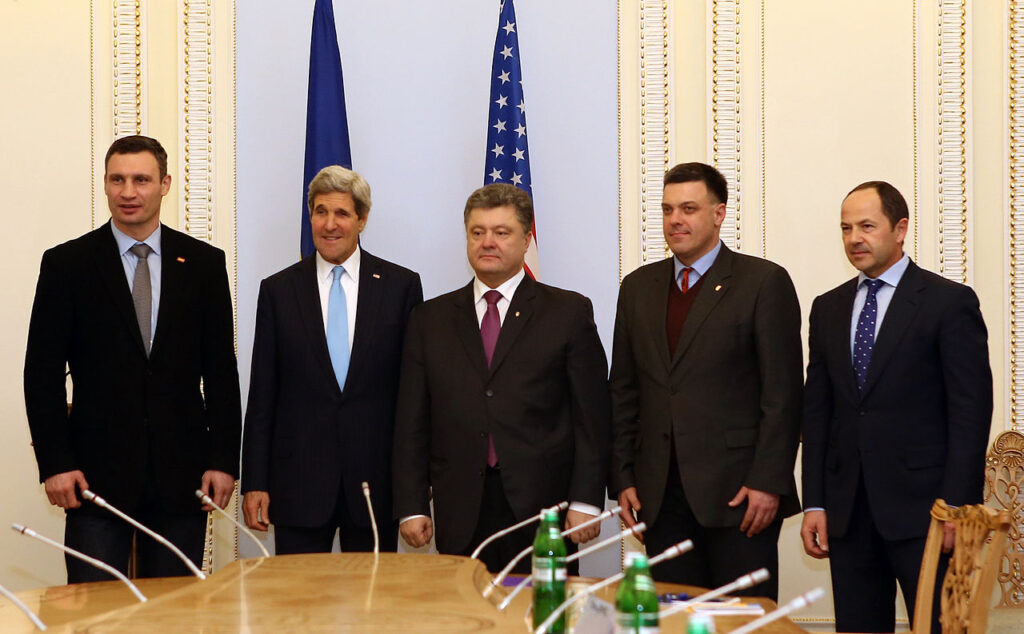
Le 4 mars 2014, le Secrétaire d’État états-unien John Kerry rencontre des parlementaires ukrainiens, dont second par la droite, le nazi Oleh Tyahnybok, élu de Lviv et dirigeant du parti Svoboda. Au centre se tient Petro Porochenko, qui remportera l’élection présidentielle le 7 juin (US Department of State)
Issus de scrutins antérieurs à la crise, les élus locaux de Crimée firent sécession de l’Ukraine le 11 mars. Par référendum du 16, la population vota pour son rattachement à la Russie
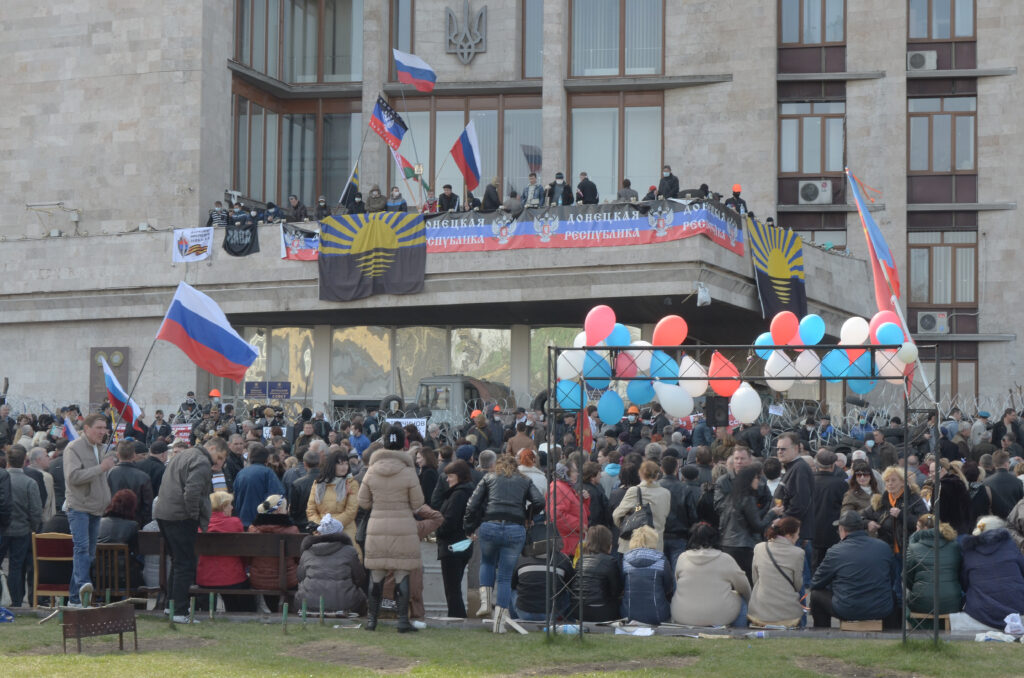
à Donetsk, le 7 avril 2014 (Andrew Butko)
En raison de la posture immédiatement hostile à la langue russe des nouvelles autorités de Kiev, le Donbass se souleva début avril. Les insurgés russophones réclamaient une Ukraine fédérale ou leur rattachement à la Russie
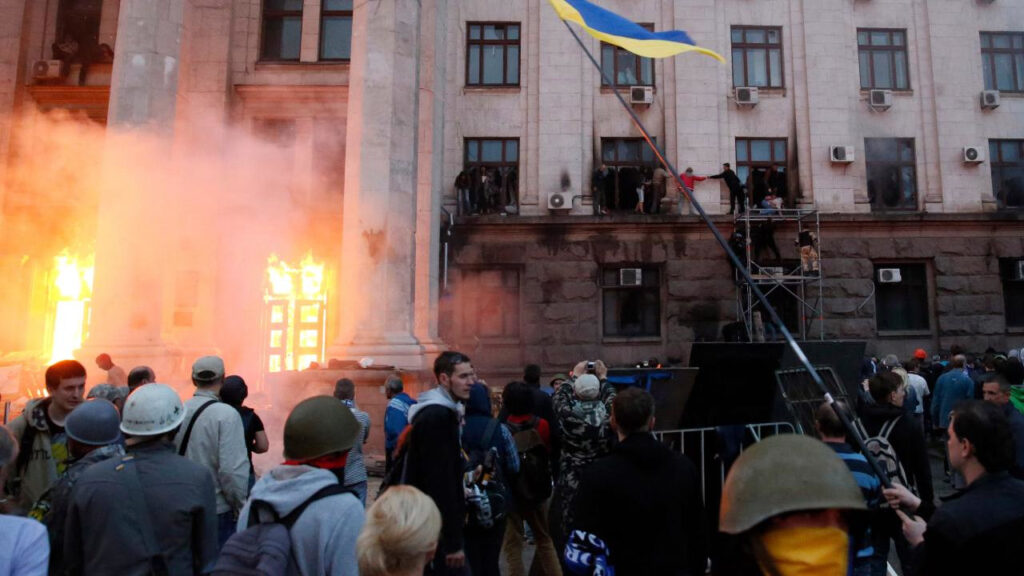
Le massacre qu’entre eux, les nationalistes ukrainiens appellent toujours le barbecue d’Odessa, est perpétré le 2 mai 2014 (Yevgeny Volokin / Reuters). Je les lis habituellement sur Telegram
Le 2 mai, afin de dissuader les velléités séparatistes à Odessa, des voyous nationalistes ukrainiens massacrèrent 42 syndicalistes et militants de gauche.
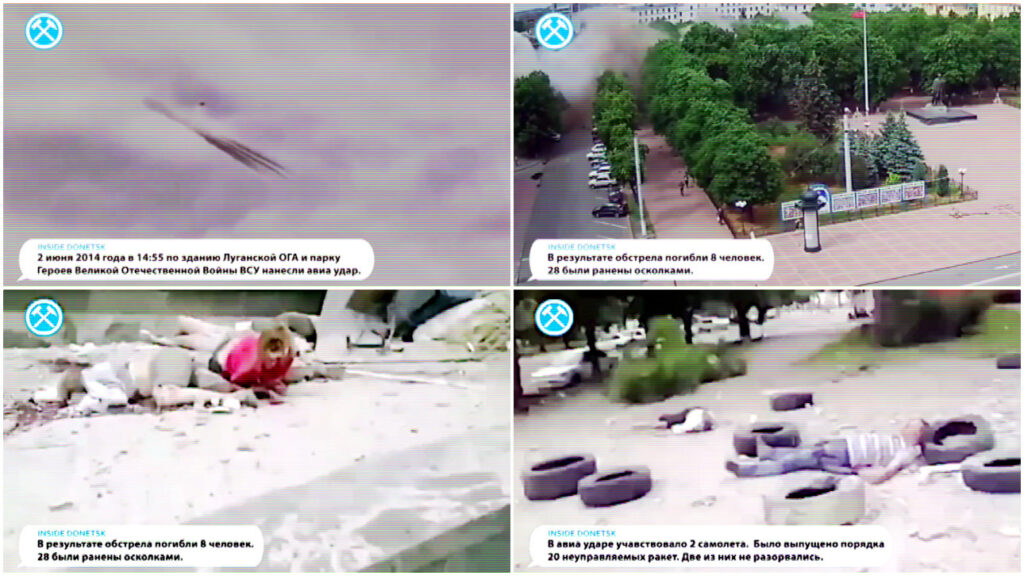
Les autorités de Kiev qualifiaient de terroristes les autonomistes et séparatistes russophones, quand le 26 mai, les troupes loyalistes bombardèrent l’aéroport de Donetsk. Le 2 juin, l’aviation frappa des objectifs civils à Lugansk, y tua huit citoyens, en blessa 28 autres. Ainsi commença la guerre au Donbass, où les forces atlantistes n’ont jamais cessé de bombarder délibérément les civils
à Lugansk le 2 juin 2014 (captures d’écran)
Si notre perception se limitait au spectacle des grands médias français, les mots n’auraient plus de sens ou celui que leur donnent les écoles de commerce. Nous avalerions toutes les fumisteries, pourrions croire aussi François Hollande de gauche et pas le plus servile auxiliaire de Washington.
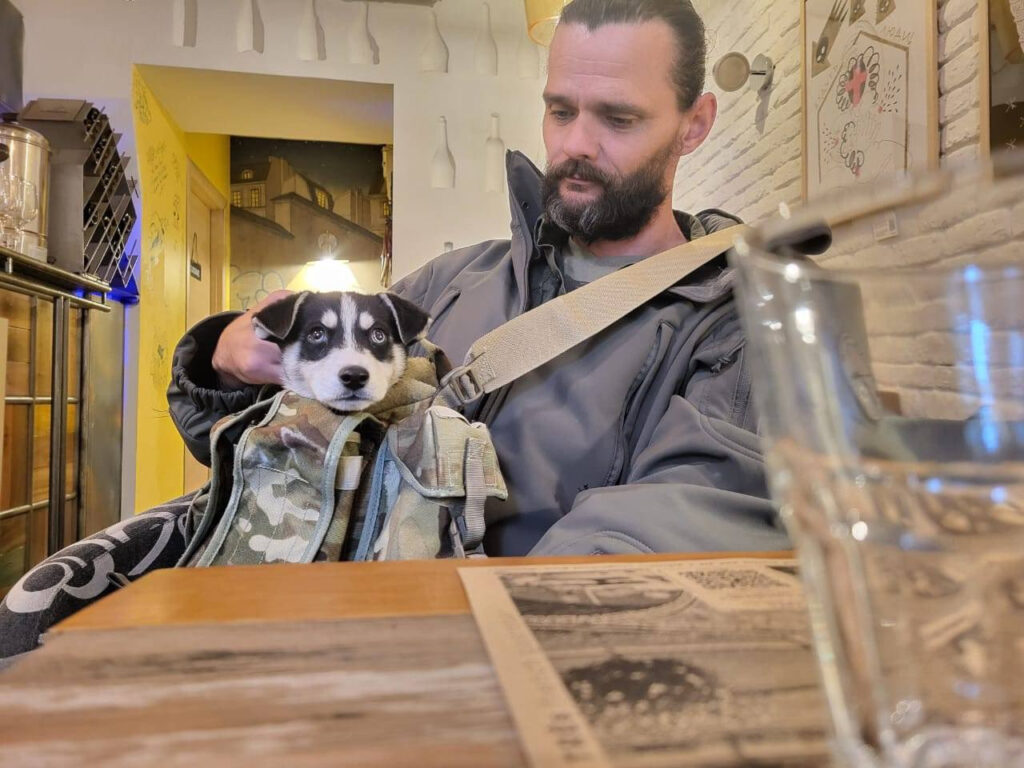
Revenons à Maxime Barrat. Quelque chose a déplu à sa hiérarchie ukrainienne ou à ses camarades étrangers et nous apprenons le 19 juillet 2023 qu’il a été expulsé du 131e bataillon. Il participe toujours à l’effort de guerre atlantiste, commence début août, comme McKenzie, à effectuer des liaisons avec le front. Sa première mission consiste à y conduire une ambulance
En l’attente d’une nouvelle affectation militaire, il explique ne pas toucher de solde et fait appel aux dons sur les réseaux sociaux pour payer l’essence. Je pense que ces liaisons sont le seul moyen d’assurer l’acheminement au front de petits matériels payés par des donateurs, tels que drones, car le système politico-militaire ukrainien est corrompu jusqu’à la moelle.
Le 3 septembre, il est toujours sans affectation mais en quête de valeurs sonnantes sur les réseaux sociaux. Dans son environnement, l’atmosphère vire au roman de gare. J’adore
Le bon temps : Daniel Burke est le second par la gauche, Maxime Barrat est le dernier à droite (réseaux sociaux)
Fondateur en 2022 des Dark Angels, groupe que Barrat intégra alors, le Britannique Daniel Burke a disparu depuis le 11 août. Il était également sans affectation. Son ordinateur, une arme et divers équipements sont restés dans son appartement de Zaporojie, mais son corps est introuvable. La presse britannique commence à évoquer le scénario criminel, car la police ukrainienne pense qu’il a été assassiné dans le contexte de rivalités pour des sources de financement.
Au même moment, un camarade très proche de Barrat se lâche sur les réseaux sociaux, où il explique que le personnel étranger du 131e bataillon de renseignement est un ramassis de toxicomanes. Sale affaire.
Drame le 25 octobre 2023. Tous deux quittèrent le 131e bataillon en juillet, vivaient habituellement sous le même toit
Christopher Perryman le 1er octobre 2023
Barrat avait déjà expliqué que sa future affectation militaire exigerait plus de discrétion sur les réseaux sociaux. Il était silencieux depuis le 9 octobre, confirme ce soir la mort de celui qui était véritablement un compagnon, le Britannique Christopher Perryman, dit Pezz. Les Russes ou a t il trop parlé ?
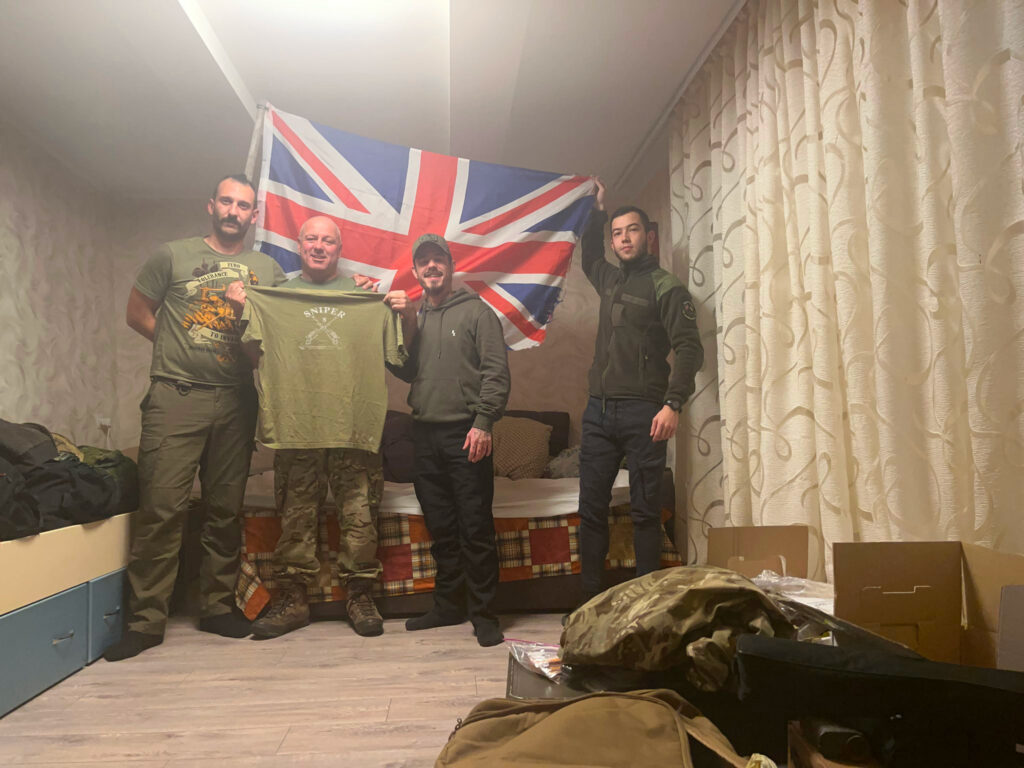
Barrat reçoit le 4 janvier 2024. Le tee-shirt préféré de feu Perryman est offert à l’opérateur EOD (explosive ordnance disposal) britannique Gary Mitchell
(Réseaux sociaux)
Barrat a recruté trois gamins, qui vivent depuis sous le même toit, les Français Allan Leroy (3e par la gauche), Enzo Proupin (4e) et Quentin Evanno, qui prend probablement la photographie. Vous remarquerez qu’ils sont encore moins d’extrême-gauche que lui.
Il paraît inquiet début juin, sollicite une assistance juridique, car sa hiérarchie militaire ukrainienne lui a signifié qu’en raison de la date de son enrôlement et au contraire de volontaires plus récents, il ne serait pas autorisé à rompre son contrat. Ses démarches sont utiles et il peut annoncer sa démobilisation le 4 juillet 2024.
Il a des projets civils en Ukraine, où il compte rester. Sa soustraction au contrôle judiciaire et la certitude d’être écroué à son retour en France sont certainement des paramètres non négligeables de ce choix.
Fatalitas, disait Chéri Bibi. Le 15 août, il est très officiellement recherché par la justice russe, dans une sordide affaire de viol
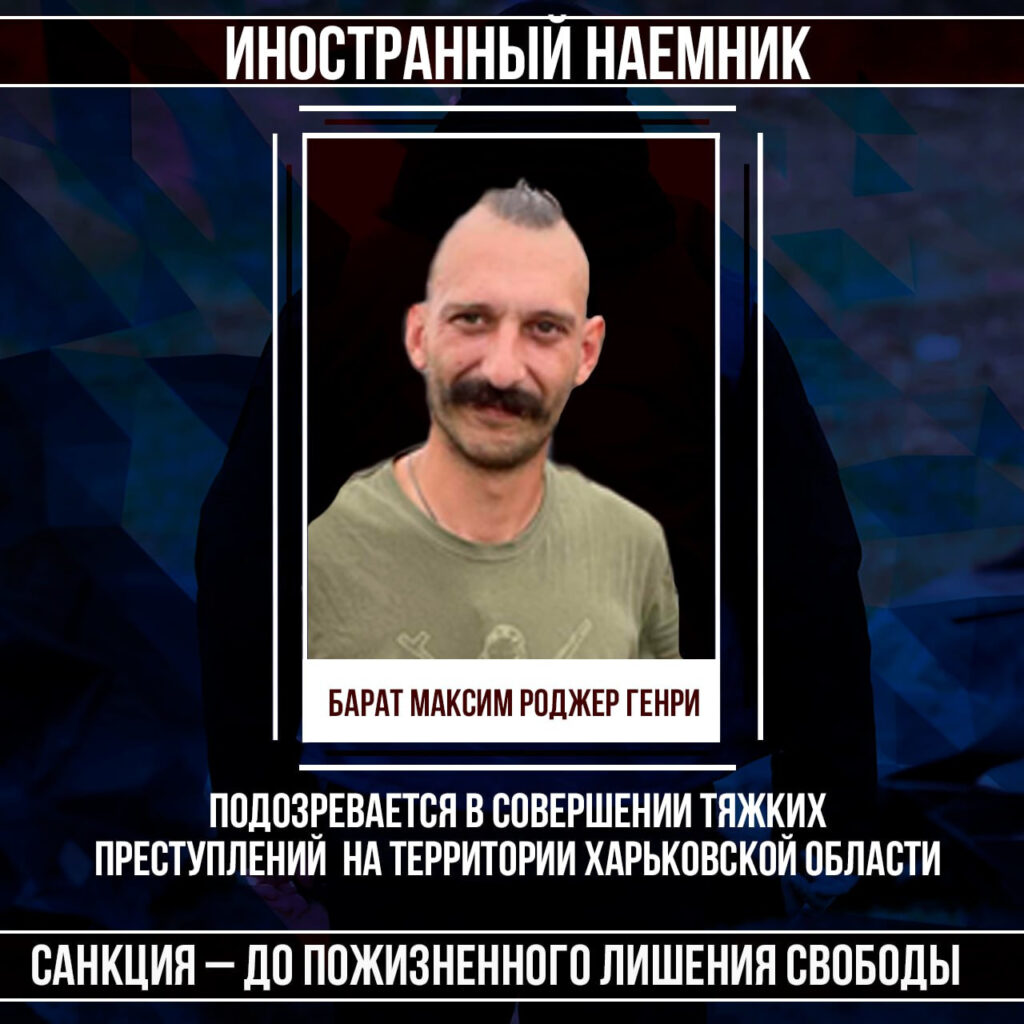
Mercenaire étranger – Barrat Maxime Roger Henri – suspecté d’avoir commis des crimes graves sur le territoire de la région de Kharkov – Sanction – jusqu’à la prison à vie
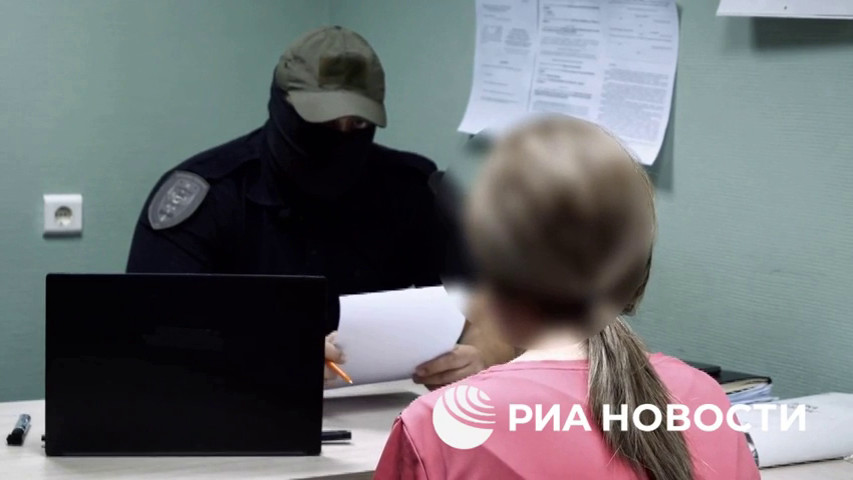
Les faits datent du 5 mai, à Glubokoe, dans la région de Kharkov, une semaine avant la prise du village par l’armée russe. Deux soldats francophones pénétrèrent au domicile d’une Ukrainienne, qu’ils battirent et violèrent. Les enquêteurs ont présenté des photos de volontaires français à la victime, qui a formellement reconnu Barrat. Monsieur le président, je demande la relégation
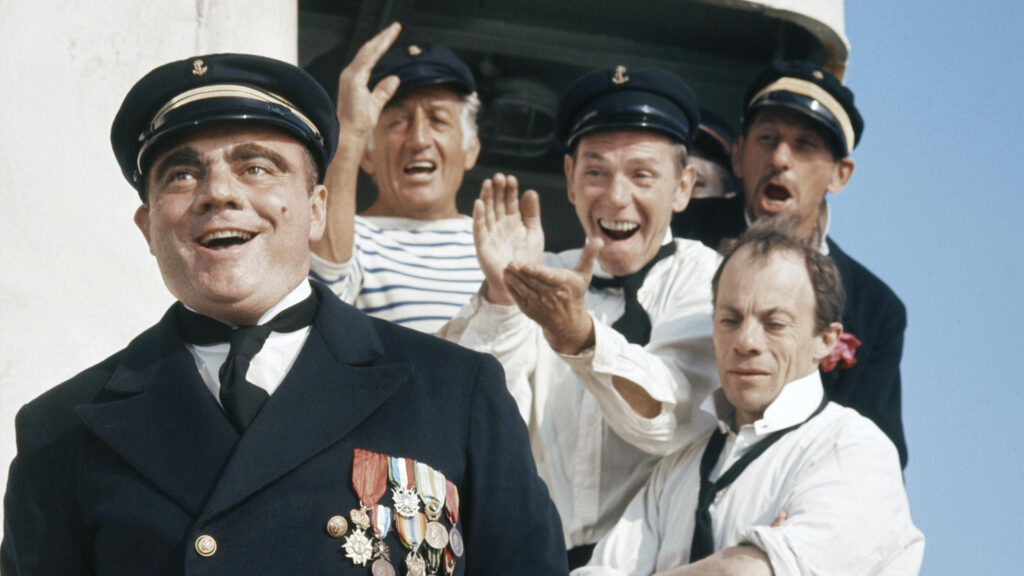
Chéri Bibi, 1974 (INA)
Il exerce le 18 août son droit à la défense, mais aurait mieux fait de s’adresser à un avocat compétent, avant de publier sur X un texte en Anglais que je traduis ici
L’année dernière, j’ai entendu des rumeurs selon lesquelles je trafiquais les organes de volontaires [tués] et maintenant, j’ai violé une femme. Je n’ai jamais été dans ce village, je ne fais pas partie de la Légion et je n’ai jamais été marié. Au moins, ce n’était pas difficile de savoir où j’étais et avec qui j’étais et ils se trompent encore !
Cette défense est désespérante de maladresse. Je ne connaissais pas les rumeurs de trafic d’organes. Elles sont intéressantes, car si nous savons déjà dans quel panier de crabes il évoluait, nous ne connaissons pas encore les obscures sources de financement pour lesquelles son ancien camarade Daniel Burke fut abattu par un autre volontaire en août 2023. Pas de rumeur en revanche dans le cas du viol commis dans la région de Kharkov le 5 mai dernier, car les faits sont établis et ouverte, une procédure judiciaire dans laquelle la victime l’a formellement reconnu. Les enquêteurs de TrackANaziMerc se mettent sur l’affaire.
Business d’abord. Il s’adresse en Anglais à son public habituel de pigeons anglo-saxons, car il a passé le plus clair de ses deux ans sous les drapeaux ukrainiens à faire la quête auprès de ce public sur les réseaux sociaux. Les plus avisés l’ont d’ailleurs traité de scammer [arnaqueur]. Il leur suggère qu’il n’aurait pas été l’auteur en France de violences conjugales parce que célibataire. Le mariage n’était pas nécessaire et pour avoir été sous le coup, avant son départ pour l’Ukraine, d’un contrôle judiciaire, il a non seulement commis des violences conjugales, mais n’y est pas allé de main morte. Il est particulièrement maladroit, pour se défendre, de nier les faits antérieurs pour lesquels il est déjà poursuivi en France.
Dans la Légion [internationale] ? Qui l’affirme ? Il était bien sous les drapeaux jusqu’à la date en juillet dernier de sa démobilisation. D’abord dans un bataillon du renseignement militaire ukrainien (GUR), il semble avoir été affecté plus récemment à l’UDA (Ukrayinsʹka dobrovolʹcha armiya, Armée des volontaires ukrainiens), formation paramilitaire nazie de Dmytro Iarosh, fondateur en 2014 de Pravyi sektor [Secteur droit]
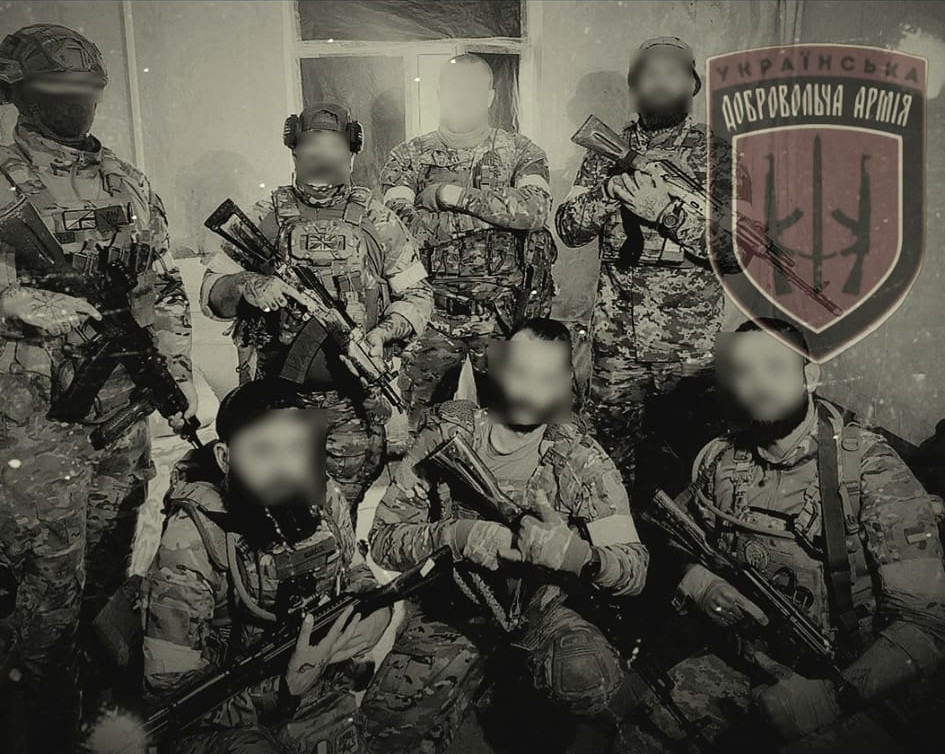
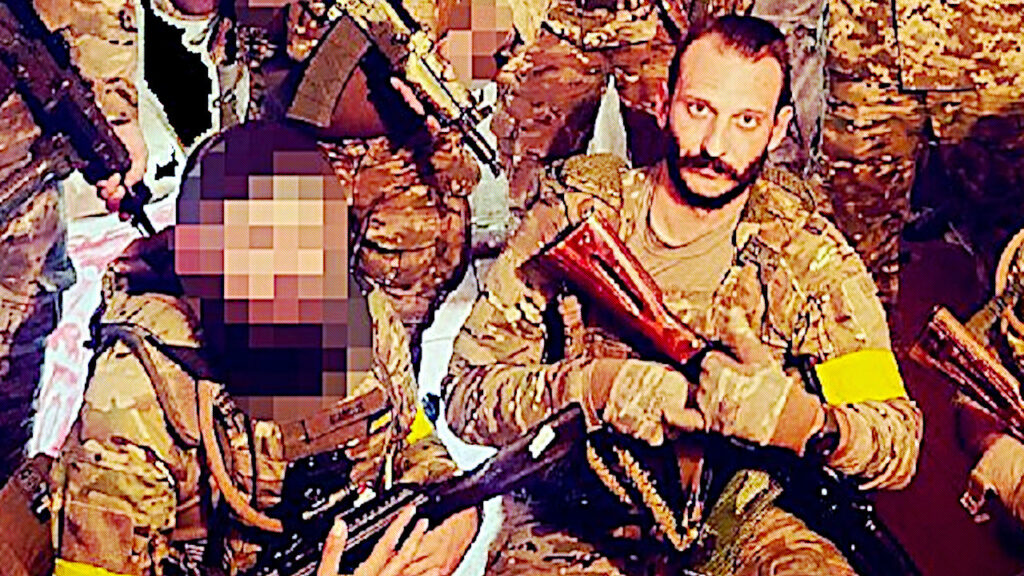
Maxime Barrat est apparu début mai 2024 parmi les camarades du volontaire britannique Ben Wallwork, qui en rétrospective en juillet de ses six mois précédents en Ukraine, publie cette image, à laquelle a été ajouté l’écusson de l’UDA. À notre connaissance, les deux seuls Français de cette escouade sont Quentin Evanno et Maxime Barrat, à genoux, premier et second par la gauche. D’autres versions modifiées de la même photographie originale ont été publiées entre les 11 et 21 mai par Barrat et Evanno, ce qui nous permet de certifier leur présence dans le groupe
Quant à savoir où et avec qui il était le 5 mai, je soupçonne l’identité de son coauteur du viol : le seul Français à notre connaissance, encore avec lui en mai, le nazi Quentin Evanno
La victime apparaît lors de l’enquête, dans une vidéo diffusée le 15 août 2024 (capture d’écran / RIA Novosti)
Les enquêteurs russes le confirment, procèdent à son identification auprès de la victime et le 18 septembre, Evanno est officiellement recherché par la justice, comme coauteur présumé du viol commis dans la région de Kharkov le 5 mai.
Alors que la victoire totale de Donald Trump risque d’accélérer la défaite atlantiste en Ukraine, le conflit est sans doute devenu plus personnel et existentiel pour Maxime Barrat. S’il se rapatriait, il serait écroué en France pour ses anciens méfaits ; lorsque la Russie aura gagné, l’Ukraine le remettra certainement à la justice russe, qui lui laisse envisager la perpétuité
le 19 octobre 2024 (réseaux sociaux)
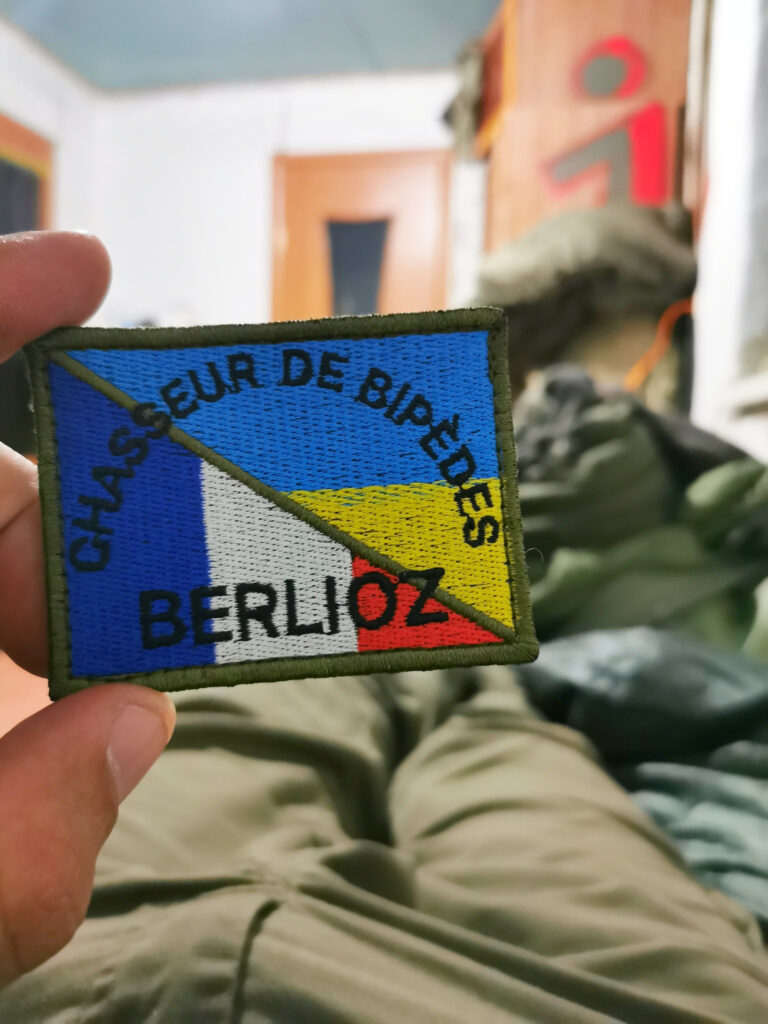
En ces circonstances, il a décidé de rempiler. Lui et Enzo Proupin, un jeune camarade dont il était le mentor en début d’année, ont suivi en octobre plusieurs semaines d’entraînement à Kherson. Ils sont le 7 novembre à Ternopil, dans l’ouest lointain, pour accomplir les formalités administratives de leur enrôlement en qualité de tireurs de précision, dans un bataillon de la 126e brigade de défense territoriale. Ils y porteront la tradition de la Team Berlioz, fondée par Franck Malandain.
À l’occasion d’une rencontre avec l’Ajax, des supporteurs fascistes de l’équipe israélienne Maccabi commencèrent dès le 6 novembre à afficher leur nationalisme exacerbé et à ratonner dans les rues d’Amsterdam. Lors du match le 7, ils sifflèrent la minute de silence en hommage aux victimes des inondations de Valence, au motif que le gouvernement espagnol soutient la cause palestinienne. La police néerlandaise les a laissés faire et en réaction à ces comportements de voyous, des habitants ont ensuite pourchassé en ville et corrigé les fâcheux
https://youtu.be/ZGRpCQxIeZw
Voici le reportage des incidents d’Amsterdam, que sous la pression de lobbies, la chaîne britannique Sky News effacera ensuite le 9 novembre
Ces incidents suscitent le 8 novembre une réaction en Anglais de Maxime Barrat, que je traduis ici
La faiblesse de l’Occident fait que nous avons des ennemis à l’intérieur et à nos frontières… Une période sombre pour l’Europe, causée par des peuples faibles… Il est temps de laisser les peuples forts prendre des décisions fortes pour préserver l’Europe et sa culture
Nous savons déjà qu’il n’est jamais aussi fort que lorsqu’il commet en France des violences conjugales ou viole une habitante de la région de Kharkov. Je ressens presque de la peine pour les journalistes de RTL, qui auraient été enfumés en juillet 2023, car de fait, ils présentèrent comme sympathisant d’extrême gauche un vulgaire pétainiste [fasciste français], qui considère les citoyens néerlandais d’origine marocaine comme des ennemis intérieurs aux Pays Bas.
Son dernier enrôlement semble avorter ou la publicité qu’il lui a donnée n’était qu’un énième mensonge. En février 2025, trois mois seulement après les formalités administratives à Ternopil, il quitte l’Ukraine pour l’Europe occidentale.
Désormais loin du champ de bataille, il commente l’actualité française. À l’approche de la chute probable du gouvernement de Français Bayrou, dans le contexte d’une catastrophe financière causée par le sabotage des finances publiques au profit des plus riches, que la même droite exploite ensuite comme un prétexte pour essorer encore les plus pauvres, l’escroc et violeur ravale ses glaires racistes pour exprimer le 26 août la profondeur de sa conscience politique
Que l’on fasse des coupes franches, surtout dans le social… La France est bien trop généreuse, les gens bien trop confortable et sécurisé par toutes ces aides… Au moins les français auront de quoi se plaindre réellement que de se complaire dans leur médiocrité !
Le côté amusant est qu’il semble convaincu de ne pas être un médiocre d’origine contrôlée.
Je continue de lire avec attention ses commentaires de l’actualité. Il se révèle début septembre un inconditionnel de l’ancien marxiste -sans doute alors par effet de mode- devenu sarkozyste et aujourd’hui macroniste, anti-tiers-mondiste et ancien maire de Vichy -comme c’est cocasse- Claude Malhuret. Le politicien vit aussi mal que son admirateur l’accélération de l’inéluctable effondrement de l’hégémonie occidentale. Gros temps pour le petit bourgeois réactionnaire français et le lumpen-prolétaire qui s’identifie à lui.
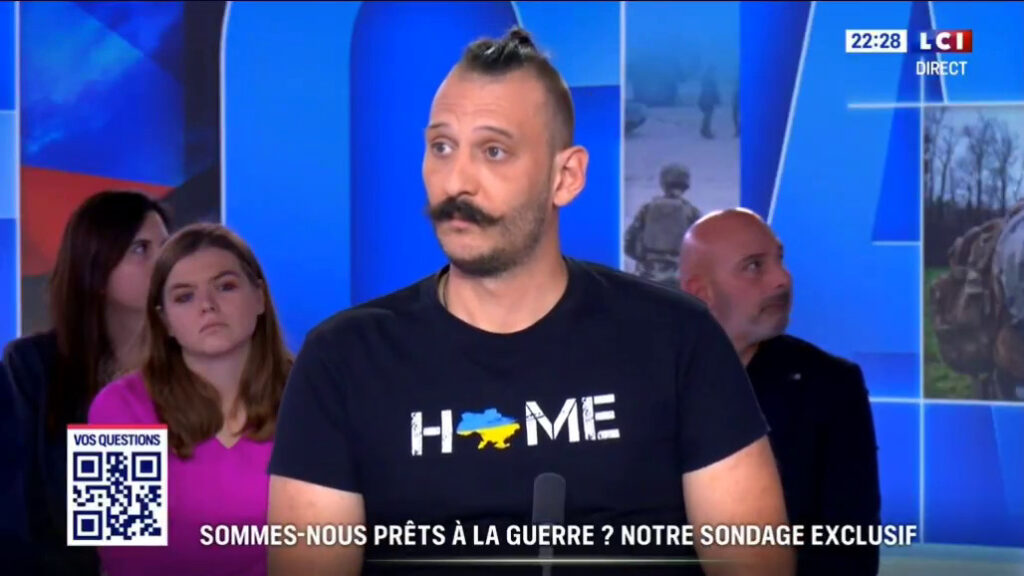
Au soir du 4 décembre 2025, Maxime Barrat est sur le plateau de LCI, qu’il partage avec l’animateur Darius Rochebin et des personnages comme le foudre de guerre béarnais Michel Goya, qui semble convaincu que ses séjours touristiques en Afrique ou à Sarajevo mériteraient la croix de guerre
(Capture d’écran)
Ce qui est savoureux est que de sa soirée spéciale, la chaîne de propagande ne republie pas ensuite d’extrait avec l’ex mercenaire français. La raison de cette censure tient de la vanité nationale : contrairement au message que LCI veut faire passer à son public innocent, il soutient que l’armée française se ferait étriller
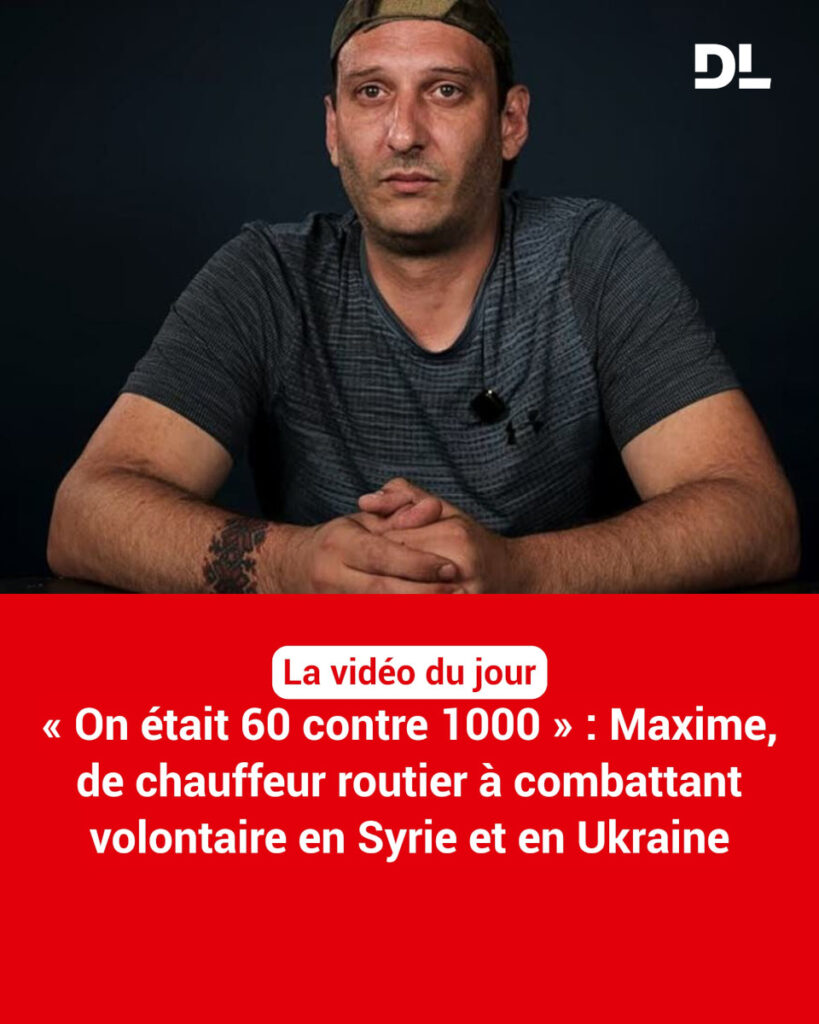
(Le Dauphiné Libéré)
Le 22 août 2026, Le Dauphiné Libéré publie la vidéo d’un entretien avec Maxime Barrat, au sujet de ses exploits homériques sur la champ de bataille ukrainien. Son témoignage souffre hélas de nombreuses omissions. C’est du journalisme du niveau de Laurent Brayard, mais dans l’autre camp.
chronique alphabétique et nécrologique de l’engagement français dans les rangs atlantistes en Ukraine, ce que les journalistes serviles ne vous raconteront pas
Articles connexes
Pruvate à truvà me, canaglia di l’OTAN, pruvate solu
chronique en Anglais, its roots before WW2, its collaboration with Nazi Germany, its legacy in modern Ukraine, how NATO has continually supported Nazism in Ukraine
chronique en Anglais, censorship, fake news, whitewashing of the Ukrainian Nazism and war crimes, for the sake of the proxy war that NATO is conducting in Donbass and Ukraine, against Russia
une saga française, entre Ukraine et Lyon, où apparaissent aussi des morceaux de SS de la division Charlemagne et plus récemment, Alice Kerviel, dite Cordier. L’affaire Deranque révèle comme la France est infectée par le pétainisme, en particulier parmi les soutiens d’Israël ou de l’Ukraine, deux théâtres d’opérations où l’Occident tente de ralentir son déclin
En 2025, une nouvelle unité de Français combattant pour l’Ukraine s’est structurée autour d’un noyau de néonazis, ayant pour objectif d’attirer des recrues. Parmi ces volontaires, d’anciens militaires. StreetPress les a identifiés
En Ukraine, les volontaires français pro-ukrainiens et pro-russes se partagent l’imaginaire de la Seconde Guerre mondiale. Les premiers se revendiquent des collabos de l’Allemagne nazie, les seconds de l’escadrille mythique « Normandie – Niémen »
deux jours après le 10e anniversaire de la débâcle politique et sécuritaire du 13 novembre 2015, une messe célèbre à Verdun l’ancien dirigeant fasciste de l’État français
ce 11 novembre 2025 est l’occasion de souligner comme la façon dont l’Europe sacrifie les conscrits ukrainiens mobilisés de force rappelle le spectaculaire carnage de la 1ère guerre mondiale
c’est par l’agence cosaque de presse PIKA, depuis la République populaire de Lougansk, que le 2 avril 2024, l’ataman Nikolaï Diakonov lance un message à destination de la France
ce papier est le premier des grands médias français qui s’attaque à la question des militants nazis français dans les rangs atlantistes en Ukraine, le nouveau danger qu’ils présenteront à terme pour la sûreté intérieure
où nous apprenons que le nazi français Allan Duchézeau, camarade de César Aujard dans les rangs atlantistes en Ukraine, était surnommé Dox, quand il secondait à Paris le leader nazi Marc de Cacqueray Valménier
en Anglais, les indices de la présence d’opérateurs occidentaux, en particulier Français, pris au piège en mars 2022 à Marioupol, dont les forces russes achevèrent la libération en mai
pertinente mais incomplète affiche de la CGT, pour une journée de manifestations à travers la France, contre racisme et xénophobie
Des manifestations contre racisme et xénophobie sont organisées à travers la France le 22 mars 2025, par des partis de gauche, syndicats et associations.
L’affiche de la CGT est pertinente. Nul ne peut sérieusement nier qu’elle expose des personnalités qui s’inscrivent toutes dans la tradition de l’État français, gouvernement fasciste de Philippe Pétain entre 1940 et 1944.
À l’instar d’un Eric Zemmour, d’autres figures de cette affiche sont de confession juive et origines pieds-noirs. Elles n’ont toujours pas digéré la victoire des peuples d’Afrique du Nord sur le colonialisme français et à ces événements historiques, perçoivent sans doute un écho en Palestine, où l’État israélien commet crimes de guerre, crimes de masse et nettoyage ethnique.
L’affiche me paraît cependant incomplète. Un Bruno Retailleau, qui rappelle tant Philippe Henriot, une grande voix française, emploie sa fonction de préposé à l’intérieur à rejouer la guerre de libération de l’Algérie. Ne pas l’avoir représenté est à mon avis une grave injustice.
Emmanuel Macron, enfin, est certes un politicien d’une profonde vacuité, mais il mérite aussi d’y figurer. Il n’est pas raciste ou xénophobe, car ses aversions sont plutôt sociales. Mais quand son action a du sens politique, destruction des bienfaits sociaux de la résistance, répression des mouvements sociaux, tentative de réhabilitation de Philippe Pétain, soutien hystérique à l’Ukraine contre la Russie, il s’inscrit incontestablement dans la tradition pétainiste. À l’intar des ploutocrates européens qui l’emploient, il est épouvanté par l’inéluctable effondrement de l’hégémonie occidentale.
Si personne ne peut vraiment le qualifier d’homme intelligent, il est cependant malin comme un singe, sait comment faire avaler des couleuvres. Son terrain est facile : il flatte la vanité nationale des Français.
Le racisme et la xénophobie sont corollaires du nationalisme. Quant à la capacité de celui-ci à agglomérer petits bourgeois et ce que Karl Marx appelait Lumpenprolétaires, le philosophe allemand Arthur Schoppenhauer (1788-1860) avait déjà énoncé auparavant
La fierté nationale est la forme la moins coûteuse de fierté. Si un homme est fier de sa nation, cela signifie qu’il n’a aucune qualité dont il puisse être fier. Autrement, il ne pourrait pas faire appel à celles qu’il partage avec des millions de ses concitoyens. L’homme qui possède des qualités personnelles importantes ne verra que trop bien dans quels domaines sa propre nation est déficiente, car ses défauts seront constamment sous ses yeux. Mais tout misérable imbécile qui n’a rien dont il puisse être fier, adopte en dernier recours la fierté de la nation à laquelle il appartient ; il est prêt et heureux de défendre bec et ongles tous les défauts et les folies de la nation, se dédommageant ainsi de sa propre infériorité
Le racisme et la xénophobie sont en France une tradition historique, aujourd’hui revigorés par un déclin inéluctable et vertigineux, les politiques néolibérales que dictent des ploutocrates européens.
chronique alphabétique et nécrologique de l’engagement français dans les rangs atlantistes en Ukraine, ce que les journalistes serviles ne vous raconteront pas
Ingo Schmidt on how the triumph of liberal democracy and neoliberal globalization became the ideological seed for the AfD
Co-leader of the far-right Alternative for Germany (AfD) party and the party’s candidate for chancellor, Alice Weidel, features on the cover of a 2023 edition of Stern magazine (conceptphoto.info)
On November 6, 2024 German Chancellor Olaf Scholz fired Finance Minister Christian Lindner. Notwithstanding the broad agreement on policy goals, striking a balance between deficit reduction, support for renewable energy and increased arms spending turned out to be impossible. Lindner, a liberal, opted for social cuts; Scholz, a social democrat, wants to avoid them. They had to part ways. After Scholz lost a no-confidence vote, federal elections were scheduled for February 23, 2025. The question that worries everyone from old-school conservatives to new millennium lefties is: How many votes will go to the hard right (if not neo-Nazi) party Alternative for Germany (Alternative für Deutschland or AfD). In the last federal elections in 2021, the AfD got 10.4 percent of the total vote. Current polls put them at 20 percent, but nobody knows what will happen on election day. In this new age of uncertainty, polls don’t predict election results as reliably as in the past.
Elections in the East German provinces Brandenburg, Saxony and Thuringia have already shown what hard-right success looks like. They also reveal the inability of the political centre to understand how much it contributed to the rise of a new right. Refashioning totalitarianism theory in the New Cold War climate, centrist politicians and pundits typically portray the success of the new right as the outgrowth of the Nazi and Communist dictatorships that ruled East Germany from 1933 to 1990. West Germany, which was spared Communist rule and, allegedly, shook off the burden of its Nazi past, appears as a role model in this democracy-versus-dictatorship story. Totalitarianism theory could possibly explain why the AfD is more successful, so far at least, in East than in West Germany. But it can’t explain right-wing success in other countries, like France, that were never under Communist rule and know Nazi rule only from occupation, which strengthened anti-fascist traditions in those countries. But even these traditions couldn’t stop the rise of the new right there.
This article offers a different explanation for the hard-right surge in Germany. It shows that German unification in 1990, signalling the triumph of liberal democracy and the onset of neoliberal globalization, unleashed a new form of nationalism—Deutschmark nationalism—which, after mutating into export nationalism for a while, became the ideological seed for the AfD. West Germany, or, more precisely, the economic miracle that was West Germany in the post-war era, served as a role model during German unification. Promoted by West German elites and eagerly embraced by people in East Germany, it raised the expectation of a new economic miracle materializing in the West and extending to the East. However, these hopes were soon disappointed as political unification caused socioeconomic divisions between East and West Germany and, in the early 2000s, a turn to austerity policies that were highly unpopular in the East and the West. Just when it seemed that Germany would weather the world economic crisis of 2008-9 better than other Western countries, and maybe even become the European hegemon, things started falling apart. The Euro-crisis made clear that it was not only politically united Germany that was plagued by massive socioeconomic and geographical divisions but the European Union, too. Continued economic weakness combined with New Cold War marching orders from Washington fed a nostalgia for a supposedly great past—symbolized by the Deutschmark. This nostalgia, I argue, would not have taken root if the left had been able to channel growing discontent into mobilization for a more equitable and less insecure future.
State elections in Brandenburg, Saxony, and Thuringia
State elections don’t typically get international media attention. The September 1, 2024, elections in Thuringia and Saxony did. After all, it was the first time since the downfall of the Nazi-regime that a hard-right party, the AfD, pulled the majority of votes in a German election. It proved a bitter coincidence: The AfD celebrated their victory in Thuringia, obtaining 32.8 percent of the total vote, on the 85th anniversary of the Nazi-invasion of Poland that marked the beginning of the Second World War.
The Conservative Christian Democrats (the Christlich-Demokratische Union or CDU) came in second with 23.6 percent. The parties of the federal government coalition, Social Democrats (Sozialdemokratische Partei Deutschlands or SPD), Greens (Bündnis 90/Die Grünen) and Liberals (Freie Demokratische Partei or FDP) ended up with single-digit results, the FDP reduced to a mere 1.1 percent. At the time of the election, this was the party of the federal minister of finance. The Left Party (Die Linke), which in the previous election had become the strongest party for the first time in any German state, lost almost 18 percent and came in fourth, even trailing the Sahra Wagenknecht Alliance (Bündnis Sahra Wagenknecht or BSW), a breakaway group from the Left Party.
In Saxony, the AfD won 30.6 percent of the votes, just behind the CDU’s 31.9 percent. As in Thuringia, none of the parties of the federal government coalition achieved double-digit results. The Left Party lost more than half of its vote and ended up with a devastating 4.5 percent. The BSW came in a distant third with 11.8 percent.
Just three weeks after their election victories in Thuringia and Saxony, the AfD scored another success in Brandenburg. Narrowly beaten by the SPD that got 30.9 percent of the total vote, the AfD came in second with 29.2 percent, way ahead of the BSW’s 13.1 percent and the CDU’s 12.1 percent. The Left Party and the Greens obtained less than five percent of the vote, which is the minimum threshold for holding seats in provincial or federal parliament under the mixed-member proportional electoral system. The FDP pulled less than one percent.
Mainstream media fails to explain right-wing success
Barely beaten by the Conservatives in Saxony and the Social Democrats in Brandenburg, the AfD was elected by roughly a third of the electorate in three East German states, becoming the strongest party only in Thuringia. If ever there was a right-wing surge, this was it. Most media reports attributed the phenomenon to widespread dissatisfaction with the federal government, particularly regarding migration, climate policies and the war in Ukraine. Accounts of why the AfD is more popular in the East (approval ratings in the west of Germany range from 8.5 percent in Hamburg and the Saarland to 21 percent in Lower Saxony) focus mostly on disappointments caused by German unification, continuing socioeconomic disparities and a widespread feeling among erstwhile East Germans of being second class citizens. Other explanations invoke the authoritarian heritage of communist rule in East Germany, which is often presented as an extension of the Nazi-regime. Against the two dictatorships in the East, West Germany is presented as a role model of liberal democracy. This as if there hadn’t been considerable continuity between Third Reich and West German elites; as if East Germany’s ruling bureaucracy, despite all its dictatorial wrongs, wasn’t established by antifascists who had been exiled or jailed during the Nazi reign; as if the nationalization of the means of production, despite the wrongs of bureaucratic rule, had not marked a break from the West German capitalism that made West Germany a junior partner in the American Empire; as if West German capitalism had not dictated the terms of unification at the very time that a grassroots movement for democracy unsettled bureaucratic rule in East Germany. The destruction of the East German economy and the integration of the East into existing West German institutions left no room for the aspirations of East Germany’s civil rights movement. Rather than explaining growing support for the new right, media talk about the “peculiarities of the East” reinforces existing frustrations there—frustrations that help shed light on the relative strength, so far at least, of the right-wing surge in the East.
The ‘two-dictatorships’ thesis that pits the East against the liberal democratic West revives the totalitarianism theory that was an integral part of the anti-communist, anti-Soviet consensus during the Cold War. It is now part of the New Cold War ideology that counterposes democracy and authoritarianism. As in the old Cold War, charges of totalitarianism serve to short circuit thinking about alternative economic and political systems, reinforcing the neoliberal creed that there is no alternative to capitalism. The lack of actually existing alternatives is, of course, also one of the reasons for the rise of the new right. Emerging out of an ailing neoliberalism, this right-wing force presents itself as an alternative to the status quo but actually just recasts neoliberalism in a nationalist and racist mould. Replacing neoliberalism’s earlier commitment to corporate globalization in Germany, as elsewhere, neoliberalism is haunted by the spectre of fascism, which, to centrist neoliberals, has everything to do with misled masses unable to understand the virtues of capitalist liberal democracy and nothing to do with capitalist crises that undermine the legitimacy of liberal democracy. Neoliberalism is also haunted by the spectre of communism as ruling classes worry that crisis of legitimacy could extend to capitalism itself. As the neoliberal centre denies the possibility of alternatives and the left generally (not only the Left Party in Germany) appears unable to advance real world alternatives, the growing appetite for change, spurred by recurrent crises wrought by capitalism, settles for right-wing fantasies of a harmonious life in a nation that competes successfully with other countries economically and is freed from job- and welfare-stealing migrants.
The impact of German unification and the rise and decline of neoliberal globalization
Capitalist crises and their exploitation by the right are common phenomena, certainly in the imperialist centres of the world system, but also in the peripheries. But they play out differently in different national contexts. Behind the AfD’s electoral successes in Thuringia and Saxony as well as its broader surge in popularity lie the combined histories of German unification and the rise and decline of neoliberal globalization. The upsurge of the new right is just one of the outcomes of these combined histories. Equally important is the defeat of the federal government coalition and the rout of the FDP, whose leader, former federal Minister of Finance Christian Lindner, promotes austerity policies that stymie government plans to subsidize the transition to non-fossil energies. These policies also lead to a creeping roll-back of social spending—except when it comes to arms spending. Little wonder a government that took office on the promise of something like a Green New Deal lost its credibility almost entirely and called for a federal election scheduled for February 23 of this year.
And then there is the defeat of the Left Party that, despite programmatic commitments to progressive alternatives, is widely seen as the appendage of a lame-duck government in Berlin. At the other end of the political spectrum, the AfD is widely perceived as an oppositional force, even though its program blends austerity, nationalism and militarism in ways that are more extreme but qualitatively not much different from policies advanced by the CDU and the FDP.
In the face of electoral defeat, the federal government, which embraced the US’s New Cold War policies a few weeks after the Russian invasion of Ukraine, also introduced dramatically tougher migration policies. Rather than representing any kind of alternative, as its name purports, the AfD is the black sheep of the establishment family, expressing racist views more radically and bluntly than even the Conservatives. While the Social Democrats, Liberals and Greens are intent on denying such views, they reveal themselves as Western supremacists when it comes to fending off so-called authoritarian threats arising from Russia and China, stirring up longstanding fears in the West that ‘the Russians are coming’ or that ‘Asian hordes’ augur “the decline of the West,” in the words of right-wing intellectual Oswald Spengler.
The hypocrisy of the Greens, who advocate a green transition while supporting the purchase of dirty oil and gas (wherever they can get it ever since the Russian invasion of Ukraine ended Russian gas-flows to Germany), make them a prime target of AfD agitation. But in reality the AfD and the Greens share the fear of Western decline. The AfD engage in fearmongering around the replacement of white people by non-white immigrants and accuse the Greens and their coalition partners in the federal government of accelerating Western decline. But while the Greens may be the prime target of the AfD’s culture war, the truth is that despite significant differences in tone, the Greens and the AfD share a basic consensus on the decline of the West.
AfD success in the east: history holds the key
Encouraged by Glasnost in the Soviet Union, many East Germans took to the streets in the fall of 1989. Under the banner “We Are the People” they demanded democratic reforms of East Germany. Neither unification with West Germany nor a return to a capitalist economy was on their agenda—at least not initially. As protests grew, and especially after the ruling Socialist Unity Party (SED) had opened the border to the West, “We Are the People” was replaced by “We Are One People” more and more often. It was supplemented by the slogan “Germany, United Fatherland,” which is actually a quote from East Germany’s national anthem, written by the communist poet Johannes R. Becher in 1949, at a time when the leaders of the SED still thought a united Germany could be achieved—not necessarily socialist but not aligned on either the US or the Soviet Union. Such hopes were buried by the Cold War, for which the Berlin Wall became a symbol, casting a dark shadow over communist East Germany and allowing capitalist West Germany to present itself as a beacon of freedom. It was in a matter of weeks in the winter of 1989-90 that the abstract possibility became a demand, massively fanned by West German politicians—notably then chancellor Helmut Kohl—and mainstream media, which hinted at the possibility of East Germany adopting the West German Deutschmark. Many East Germans seized on such hints as an irresistible offer. “If the D-Mark comes, we’ll stay here; if it doesn’t come, we’ll go to it” became the next popular protest slogan. Since the opening of the border, thousands of East Germans had gone to the West, creating conditions reminiscent of the times before the wall was built in 1961. Back then, the East German economy lost so many people, most of them young and well-trained, that a collapse of social reproduction became a real threat. The wall stopped the bleeding of the East German economy but inflicted irreparable damage on the legitimacy of the political system.
Almost 30 years later, the opening of the border by the SED-leadership came as a bit of a surprise to West German elites. Yet, they were quick to grasp the possibilities it created. To them, this meant the integration of East Germany into the West German political and economic system, not coexistence with a somehow reformed but still politically independent East Germany. The ‘take over the East’ goal of West German elites and the Deutschmark rush of East German masses fed each other. The civil rights movement that wanted to democratize East Germany was sidelined. Some of the groups active in that movement adjusted to the new zeitgeist quickly, some even entered into an electoral alliance with the East German conservative party, despite their having criticized it as a small but integral part of the SED-regime. Angela Merkel, who would later become chancellor, belonged to one of these East German groups that allied with other conservative-turned-civil-rights groups and the East German CDU. This Alliance for Germany easily won the last East German elections and negotiated the integration of East Germany into West Germany’s institutional structures. On July 1, 1990, the Deutschmark came to the East, three months later the independent state of East Germany vanished into an enlarged West Germany. Most of the Alliance for Germany dissolved into the West German CDU immediately after unification. In December this enlarged CDU won federal elections.
In less than a year the Cold War had come to an end and an entire state had disappeared. However, the hopes pinned on unification, notably the introduction of the Deutschmark, were soon dashed. A year after unification, unemployment, which had existed in communist East Germany primarily in a hidden form, stood at 10.2 percent and rose to over 20 percent in the early 2000s. It didn’t fall below 10 percent until 2014, a quarter of a century after the Berlin Wall fell. Moreover, mass migration from East to West Germany, which the introduction of the Deutschmark was meant to curb, actually accelerated after the arrival of the Deutschmark. From 1990 to 2015, East Germany lost significantly more than one million people, the vast majority during the first two years after unification, and almost all of them of working age. Were it not for this emigration as well as early retirement schemes and retraining schemes for thousands of workers, unemployment in the East would have been even higher than it actually was. Introducing a new form of hidden unemployment, many of the participants in retraining were enrolled in one course after another, often in different fields, until they were old enough for early retirement.
One of the main, if not the main, reasons for the collapse of the East German economy was the Deutschmark. Introduced at a rate of one Mark West for one Mark East, while average productivity of East Germany was estimated to be about a quarter that of West Germany, German monetary union gave private households the boost in purchasing power they so desired. But it made East German firms uncompetitive. Lower wages could not compensate productivity differentials between firms in East Germany and Western countries. The privatization of East Germany’s state-owned firms facilitated the downfall of the East German economy even further. In some cases, Western companies bought East German firms just to shut them down so that they would not become competitors in the future. In other cases, they wanted patents or certain segments of production that they could integrate into their own supply-chains, leaving everything else to be shut down. The closures and cherry-picking of some more desirable segments destroyed the reproduction process of the East German economy even beyond the damage done by rendering it uncompetitive through monetary union.
The result was that bits and pieces of the East German economy became a periphery of production networks controlled by West German corporations. Ironically, the neoliberal restructuring of production processes went hand in hand with massive fiscal transfers from West to East Germany. A price that had to be paid to sustain some level of social cohesion while disappointment that political unification was followed by economic decline and continued social divisions between East and West instead of an Eastern economic miracle following the example of West Germany from the late 1950s to the early 1970s. At some point, a third of East German incomes came from fiscal transfers. As a result, government debt as a share of gross domestic product (GDP) rose from 41.8 percent in 1989 to 61.2 percent in 1999, which is nothing compared to today’s numbers. Yet, back then the lesson that had yet to be learned is that neoliberalism, despite its balanced-budget rhetoric, really is a mix of austerity and tax cuts for the rich that produces increasing debt levels at every slowdown or downturn of the economy. In the 1990s, government debt over 60 percent of GDP was a scandal. Not least because, at the urging of the conservative German government, 60 percent had become the benchmark for membership in the European monetary union, for which the roadmap had been laid out in the 1992 Maastricht Treaty.
Budget deficits, accumulating into government debt, weren’t the only deficit scandal in 1990s Germany. The other was in the current account. From a surplus of 4.6 percent in 1989, the current account dropped to a –1.9 percent deficit in 1991 and remained in deficit territory until 2001. In most other countries, deficits between negative one and negative two percent wouldn’t be a matter of concern. In Germany they were. After all, West German prosperity—the very model East Germans admired so much—had been reliant on export-driven growth, which was always understood as export surpluses. As it turned out, unification in the early 1990s, led to a boom in West Germany as East Germans spent many of their newly acquired Deutschmarks on consumer goods ‘Made in (West) Germany’—despite massive job losses. This boom drove prices up and made German exports less competitive on the world market. At the same time, some of the money from the East German spending spree went to foreign companies. As exports took a hit and imports got a boost, the current account went from positive to negative.
The East was integrated into the West German political system as it existed prior to unification. The Kohl government didn’t agree to any changes suggested by the East German government that formally negotiated unification but really rubberstamped the subordination of East German society to West German institutions. Economic integration was different though. The collapse of the East German economy, triggered by the design of monetary union and privatizations, had a lasting impact on the West German economic model that East Germans had been eager to embrace. The first decade after unification was marked by a twin deficit in government budgets and current accounts. During the unification boom from 1990 to 1993, inflation went up to levels not seen since the oil-price hikes and inflationary struggles between capital and labour from the 1970s to the early 1980s. At that time, however, the West German inflation rate was still below that of other Western countries, whereas in the early 1990s it was amongst the highest
Germany’s continued economic weakness, combined with New Cold War marching orders from Washington, fed a nostalgia for a supposedly great past—symbolized by the Deutschmark
West Germany as a role model
Running continued deficits—let alone a twin deficit—was unthinkable in a country that rebuilt its economy after the Second World War through integration into a world market with rules established and enforced by the US. In this American Empire, West Germany played the role of bulwark against Soviet Communism, including East Germany, and as a showcase of Western capitalism. To succeed in this role, foreign debt, accumulated by the Nazis and inherited by West Germany as legal successor of the Third Reich, was forgiven through the 1953 London Debt Agreement. West Germany also inherited low wages, industrial capacity and new technologies from the Nazi economy that, contrary to widespread assumptions, survived the war largely intact. This gave West German industries a competitive advantage that was further buttressed by favourable exchange rates on which basis West Germany was admitted to the Bretton Woods system of fixed exchange rates in 1952. Reintegration into the world market also allowed West Germany to transition from a coal-based to an oil-based economy. Oil was cheaper than coal but its supplies were controlled by US companies and the American state.
However, being a junior partner in the American Empire turned out to be a much better deal for the German bourgeoisie than its earlier quests for world power. The territory under its direct control was much smaller after two failed power grabs but profits were stellar. Driven by exports, or export surpluses more precisely, the West German economy didn’t require fiscal stimulus and kept growing until the US turned to floating exchange rates, which led to a significant appreciation of the Deutschmark. Further, oil prices exploded in the 1970s. But it was during these turbulences that West Germany consolidated its reputation as a beacon of economic stability. Political management of the crisis, notably codetermination (German lingo for the institutionalized cooperation between unions and employer association), kept wages and inflation lower than in most other Western countries. This helped to sustain export surpluses for much of the 1970s. In turn, export surpluses allowed the government to keep fiscal stimulus and unemployment rates low. Again, this is compared to other Western countries, not compared to the post-war boom.
West Germany’s relative success in managing the economic crises of the 1970s raised some concerns among its allies, who considered this success a case of beggar-thy-neighbour policies. The US pressured the West German government to increase public spending in order to stimulate the world economy. The West German government couldn’t shrug off these US demands entirely. The social democratic party was led by Helmut Schmidt at the time, and some extra spending also appeased the left wing in his own party as well as some unionists. However, calls for a Keynesian fix of the economic crises never overcame the general preference for fiscal prudence and low inflation that marked West German society after two lost wars, each followed by the introduction of a new currency, one of them also by unprecedented hyperinflation. Not entirely without reason, export success after the Second World War was widely attributed to liberal economic principles, conveniently ignoring the fact that this ‘liberalism in one country’ could only work because other economies placed growing demand on the world market.
Export success also created an ersatz-identity that allowed West Germans to repress the horrors of the Nazi regime and the roles most of them had played in these horrors, as perpetrators or bystanders. Social democrats never really fit into this picture. Willy Brandt, who spent the Nazi reign in underground resistance circles and exile and would later become West Germany’s first social democratic chancellor, was seen by many as a traitor. His successor Helmut Schmidt, who had served in the Nazi air force, opposed many of Brandt’s plans for social reform and applied Keynesian policies only in homeopathic doses. He was successfully branded as the one responsible for rising unemployment and inflation by the Conservatives and Liberals. Crossing the floor from SPD to CDU, the Liberals made Helmut Kohl chancellor. Kohl won two elections before unification on the promise of bringing post-war prosperity back. He won another two after unification on the promise of bringing the prosperity to East Germany.
For a long time, Kohl presented himself successfully as the defender of the West German export model and guarantor of the collective identity tied to that model, despite the fact that 1980s West Germany never saw a return to postwar prosperity. Disappointment with his broken promises for a West German economic miracle 2.0 began spreading towards the end of the 1980s. Yet, the disintegration of the SED regime allowed him to renew and extend his promises to the East. The national euphoria that secured his 1990 election victory also saw a transformation of collective identity. West German pride in being export world champion turned into Deutschmark nationalism. Widely shared in the East, where people were happy to get the Deutschmark, and the West, where people saw it as symbol of their postwar achievements, this was not the pure money, or currency, fetishism Karl Marx wrote about in Capital. It had a distinctive nationalist character that was subdued in West Germany’s pre-unification export-identity. With unification, the nationalist seed blossomed. Not only did this help Kohl become the ‘chancellor of unity,’ but it also gave cover to a burst of neo-Nazi attacks on immigrants, leftists and queer people, culminating in arson attacks in Rostock, Mölln and Solingen. The latter two killed eight people, while the attack in Rostock laid a four-day siege on an apartment block inhabited by foreign workers who had been employed in East Germany’s now defunct state-owned economy. The openly neo-Nazi attacks of the early 1990s, later dubbed “baseball bat years,” were followed by a series of murders committed by the National Socialist Underground (NSU) that cost nine immigrants and one cop their lives from 2000 to 2007. The role of the German secret service in covering up, or even facilitating, these murders has never been investigated as key documents remain classified until this day. Hans-Georg Maaßen, head of the secret service from 2012 to 2018, was one of the individuals responsible for blocking investigations of the NSU-murders. He also heads up an ultra-conservative circle, initially inside the CDU and now operating in the right-wing space between the CDU und the AfD.
Exports über alles: Eastern peripheries boost corporate profits
During unification and in the first few years afterwards, nationalism was a mass ideology. It rallied flag-waving masses in the streets, it dominated German politics and inspired Nazi-skinheads to chase people they considered enemies. As it became clear that the hopes for an economic miracle 2.0 would not be realized, street protests receded, most skinheads scaled down their activism and just a few turned to clandestine terrorist attacks. It seemed that nationalism had lost the force it had just recently. However, the entanglements between Nazis and parts of the state apparatuses indicate that while nationalism wasn’t as visible as before, it had not disappeared.
As it turned out, the opening of the Berlin Wall was a key step towards what would later be called neoliberal globalization. As the German bourgeoisie sought its place in a world seemingly governed by the invisible hand of the market—not Soviet planners or the milder version of Western government intervention—nationalism also found a new role as mass ideology. The ideological wind blowing from the ‘real West,’ that is, the United States, rebranded free trade theory going back to the days of David Ricardo as globalization. Sticking closely to Ricardo’s principles, academic globalists argued that firms, if left alone by the state, would specialize in the production of those goods they can produce more cheaply than firms in another country either because they possess more productive technologies or use input factors more plentiful and cheap than in another country. All countries will be better off if firms in each country specialize according to their comparative advantages.
Globalization practitioners talked about entire countries as if they were firms competing against each other. Competitiveness of nation-states became the lodestar of capitalists, and their political executors, who used it to justify the roll-back of wages and social standards in all countries. Their run-the-country-like-a-business propaganda was so persuasive that even working class people whose wages, pensions and public services were cut fell for it in large numbers, electing and re-electing neoliberal globalizers over and over again. At the same time, fear that the policies just voted for would cause a race to the bottom spread in the rich countries that saw parts of their production outsourced to poor countries, where labour was really cheap, while immigrants from such countries would take on jobs in the burgeoning low-wage sectors of the rich countries. Migration, segmented labour markets and a global reserve army of labour, enabling capitalists to engage in global labour arbitrage, were neither part of academic globalization theory nor did they feature in politicians’ globalization propaganda. Absent from public debate, these real-life factors created fears that a new right could build on by portraying economic problems as questions of national identity. Translated into policy terms, that meant a program of keeping immigrants out and capital in. This protectionist backlash against neoliberal globalization, coupled with the rise of a new right ranging from populist to neo-Nazi formations, occurred all over the Global North. It began slowly in the late 1990s and early 2000s while globalization was still expanding, and then gathered steam in the wake of the 2008-9 world financial crisis that marked the end of accumulation driven by globalization. It has accelerated again since the COVID-19 recession as well as the escalating great power politics vis-à-vis Russia and China, which have led to openly imperialist policies couched in the same nationalist ideology which the new right thrives on. The competitive nation-as-corporation ideology and the policies that marked actually unfolding globalization was the breeding ground for today’s strange bedfellowship of globalizers-turned-great-power-warriors and national supremacists of the new right. Theories of unregulated free trade opening the path towards global prosperity were just an ideological tool that was useful as long the integration of more and more countries into the US-dominated world market fuelled capitalist accumulation, and thereby hopes for the eventual trickle-down. It was replaced with the rhetoric of concern for national security and democracy as accumulation ended in a new phase of stagnation.
The German bourgeoisie had already adopted the logic of the state as business competitor after the Second World War when it traded world power ambitions for a junior partner role in the American Empire. Balanced budgets and tight money formed the core of its policies. That, along with competitive advantages inherited from the Nazis or granted by the US, enabled export-driven growth and, ultimately, export surpluses. Despite verbal commitments to liberalism, these policies were mercantilist in substance. Shattered but not derailed by the crises of the 1970s, West Germany’s mercantilist regime of accumulation survived until unification led to a twin deficit, slow growth and socioeconomic divisions between East and West. Unified Germany’s economy stumbled along while the US enjoyed its New Economy boom, even though that turned out to be short-lived, and China attained unprecedented levels of economic growth.
The Kohl government didn’t respond to the bourgeoisie’s growing concerns about economic stagnation in Germany. Neither did it respond to growing dissatisfaction with social conditions among the popular classes. After uniting Germany, Kohl turned to further uniting Europe. Partly, he wanted to demonstrate Germany’s continued commitment to cooperation in the European Union as some European leaders—notably British Prime Minister Thatcher and French President François Mitterrand—had expressed reservations about German unification and worried about a return of German great power ambitions. European monetary union became Kohl’s preferred route to an “ever closer union,” as EU-parlance had it at the time. However, regarding other countries, notably in the Mediterranean, Kohl successfully pushed for tight fiscal and monetary rules—the same kind of rules West German policy makers followed in the postwar period. Under the favourable conditions granted by the US to integrate into the world market, this led to export-driven prosperity. However, other countries didn’t enjoy the same favourable conditions. What would upset governments and people in such countries even more was the fact that Kohl had abandoned the rules he was preaching to other European countries in his very own united Germany
Helmut Kohl at the CDU national party convention in Hamburg, 1973. Photo from Wikimedia Commons
There, European monetary union was widely seen as a top-down capitalist elite project, part of corporate globalization or as a handing over of the beloved Deutschmark to irresponsible Eurocrats and the Club Med, a derogatory term often used in public debates to denounce people in the Mediterranean countries as lazy, spend-thrifty and, worst of all, happily having a good time at the expense of others. Euro-scepticism added to disappointment with the collapse of East Germany’s economy after unification, growing income polarization and fears of job loss all over Germany and a sense of losing national sovereignty to global capital. Unresponsive to any of these concerns, Kohl and his coalition of Conservatives and Liberals eventually lost the 1998 election to the Social Democrats and Greens who formed a coalition government offering a blend of light Keynesianism, green transition and control of financial markets. This is where the German—and international—bourgeoisies got really concerned.
The opening ideological salvos to derail the newly elected government’s plans came from the British tabloid The Sun, calling Oskar Lafontaine, the new finance minister who proposed the introduction of a Tobin tax, “Europe’s most dangerous man.” Next came Madeleine Albright, then US secretary of state, who gave Germany’s Green Foreign Minister Joschka Fischer the choice of joining the bombing campaign against Yugoslavia or having his country isolated from Western allies. Fischer, and the new Chancellor Gerhard Schröder, chose war. Seeing that his opposition to the war wasn’t supported by anyone else in the cabinet, Lafontaine resigned before the bombing began.
A few months later, The Economist called Germany the “Sick man of the Euro.” Coming from the central organ of global capitalism and unrepentant advocate of liberalism since the days when England, not China, was the workshop of the world, this was not just another opinion piece. It was a warning that the international investment community—exactly the CEOs, bankers, brokers and financiers targeted by the then-emerging movement against corporate globalization—lost confidence in the German market and expected pro-business measures to boost their propensity to invest.
After a few months in office, Schröder had to choose between meeting voters’ expectations (job creation, reduction of job insecurities and income inequality) and capitalists’ cost-reduction demands. He chose the capitalists’ side, earning him the nickname Genosse der Bosse (Comrade of the Bosses). In the absence of a social movement from below that could have pushed him to deliver on the election platforms of the SPD and the Greens, this choice might actually better be called caving to capitalist threats of an investment strike. From 2000 to 2005, the Schröder government axed corporate tax rates, exempted capital gains from taxation and lowered equity requirements for credits. The other side of the class divide saw drastic reductions in unemployment benefits, essentially slashing them to the level of welfare payment rates after one year of benefits. At the same time, legal obstacles to employing temporary workers were greatly reduced. Capitalists were thrilled. Profits and asset prices shot up, but capital formation declined during the years pro-business laws were passed.
Reorganizing existing production capacities was more important to corporate executives than creating new capacities. This was not surprising as capacity utilization dropped when the New Economy bubble burst, triggering a downturn of the world economy that kept even booming China below double-digit growth. As it turned out, united Germany did not inherit the export successes of pre-unification West Germany, but was certainly heir to its export dependence.
In the early 2000s, Germany’s current account turned positive again—not because exports grew so strongly (they actually stagnated due to the world economic downturn), but because imports declined owing to weak domestic demand associated with the Schröder government’s neoliberal policies. However, as the world economy bounced back (China saw growth rates of 10-14 percent from 2003 to 2006), German exports grew again. Eventually the reorganization of production processes in the aftermath of German unification paid off. West German corporations now controlled production networks linking corporate headquarters controlling finance, research and development, and capital-intensive parts of actual assembly in the centres with labour intensive production in low-wage areas in the peripheries from Eastern Germany all the way to China. In these networks, East Germany occupied the position of a semi-periphery. On the supply side, German export success in the early 2000s relied on continued wage inequality between centres and peripheries, which doesn’t mean that all workers in the centres earned high wages. The threat to relocate production to the East or the South put the brakes on all wages. The lowering of social standards propelled the growth of low-wage employment, notably in the service sector. Well-paying, permanent jobs began to decrease as a share of total employment even in West Germany. As a result, discontent that was widespread in the East since political unification was followed by economic collapse, and social downgrading began to creep into the West.
2010s: Exporting the Euro-crisis
The export surpluses of the early 2000s relied on the same mercantilism that had generated such surpluses during the postwar prosperity. However, during the postwar period, unprecedented growth rates across the Western, and parts of the non-Western, world made it possible to superimpose a welfare state on a mercantilist economy that didn’t squeeze profit rates but operated with capital’s consent in a way that seemed unthinkable during the age of catastrophe from 1914 to 1945. In the early 2000s, by contrast, successful mercantilism demanded the roll-back of the welfare state. Tragically, the extension of West Germany’s welfare state institutions to East Germany, where they were superimposed on a collapsing economy, created the profit squeeze that was needed to curtail the material protections granted by the welfare state. To sustain competitive advantages gained by scaling back the welfare state, it was imperative to keep wage-growth low even after surging exports pulled the economy out of the slump. Unlike during the period of postwar prosperity, export surpluses didn’t stimulate domestic demand very much. In fact, current account surpluses in the early 2000s, which surged from -1.8 percent in 2000 to 6.7 percent in 2007, were as much driven by rising exports as by weak growth of imports, a clear indicator of the overall sluggishness of domestic demand. Unemployment rates rose from 9.3 percent in 2000 to 12.1 percent in 2005. After that, unemployment went into long-term decline, briefly interrupted by the 2008/9 Great Recession and slowed down by the 2009/15 Euro-crisis, eventually reaching five percent before the 2020 COVID-19 Recession. However, this job growth occurred almost entirely in low wage occupations.
Paradoxically, it was during the Euro-crisis that a wave of “export nationalism” covered up the discontent that was growing, at variable speeds, across Germany. The Deutschmark nationalism that emerged during German unification had taken a hit with the introduction of the Euro. However, when it turned out that the Euro was basically the old Deutschmark under a new name and export surplus levels were reaching unprecedented heights, it almost seemed that the long-awaited return of prosperity was about to materialize. But of course, it wasn’t the same as the postwar prosperity that saw strong growth almost everywhere. The 2010s, by contrast, were a time of stagnation. The rebound after the 2008/9 recession was stronger in Germany than in other countries, but then growth rates fell in line with the one-to-two percent range of other Western countries.
It was during this time of recurrent crises and long-term stagnation that the German government, led by Angela Merkel with the Social Democrats as junior partner, felt compelled to lecture other governments on economic policy. Completely blind to the fact that beggar-thy-neighbour policies are a zero-sum game, the Merkel-government told Southern European countries to impose austerity despite the fact that they were suffering from a sovereign debt crisis due to the end of cheap credit that became available after the creation of the European monetary union, helping to pay for imports from Germany. Merkel also told them that, after a painful but unavoidable period of belt-tightening, they would eventually succeed as export countries like Germany.
The European monetary union’s contradictory character torn between further integrating Europe and spreading German mercantilism shifted entirely to the latter. Southern Europeans, governments and ordinary people, understood that austerity would further subordinate their economies to Germany’s economic dominance. The Brits, like the Germans and the “Frugal Four” (Austria, Denmark, the Netherlands and Sweden), although not warm to the idea of bailing out crisis-ridden Southern Europeans, were suspicious that Germany’s leading role in handling the crisis would turn the country’s economic dominance into fully-fledged hegemony. Brexit has its origin here. Eastern Europe’s post-communist comprador governments had imposed austerity on their countries in acts of pre-emptive obedience and now felt betrayed as they thought the bailout packages the Merkel government used as a means to impose austerity on the South were actually some sort of welfare package.
Centrifugal forces in the EU were further fuelled when, in face of civil war and foreign interventions in Syria, Merkel unilaterally declared open borders for Syrian refuges and then told EU member states they all had to take their share of refugees. European governments already concerned over Germany’s domineering role in managing the Euro-crisis were dismayed. Public debate within Germany was sharply divided between liberals and leftists applauding Merkel’s humanist stance and right-wingers, including in her own party, warning of an uncontrolled flow of immigrants. Largely unnoticed was the fact that Merkel’s decision to open borders for Syrian refugees was tied to the anti-Russian turn in German foreign policy following the sharp polarization between pro- and anti-Russian forces in Ukraine during and after the Maidan protests in 2014. Most of the Syrian refugees were fleeing the Russian-backed Assad-regime, which was considered an adversary. Opening borders for these refugees set a precedent for the surge of Ukrainian refugees following Russia’s invasion of Eastern Ukraine in 2022. At that point, Merkel, who had already retired, told the media that her government saw the Minsk accords, officially meant to reach a settlement between contending political and military forces within Ukraine, as a means of buying time to arm the Zelensky government.
2020s: Sick man of Europe 2.0
As Ukraine, already torn by civil war, became the scene for a proxy war between NATO-countries and Russia, Germany was firmly subordinated to US foreign policy. Post-communist governments in Germany had, more or less enthusiastically, supported deepening trade relations with Russia. Oil and gas imports might have been the most significant part of German-Russian trade but were certainly not the only one. Torn between allegiance to the US and lucrative business deals with Russia, the German government, now headed by Social Democrat Olaf Scholz, cut its economic ties with Russia after the latter’s invasion of Ukraine. The price to be paid was a further spike in energy prices, on top of the increases attendant on the economic recovery from the COVID-19-recession.
As part of current US efforts to contain China, the German government has been pressured to scale down its trade with China—Germany’s largest trading partner and also a prime outlet for German foreign direct investments. Since Germany’s economy is as much export-driven as export-dependent, the US turn from neoliberal globalization to escalating sanctions and protectionism in the name of national security has caused high levels of uncertainty within the German bourgeoisie. In addition to the return of secular stagnation after the very short post-COVID recovery in the West and the petering out of the China boom, this uncertainty is driving low levels of investment. Inflation, fuelled by post-COVID recovery and rising energy prices, and lower real incomes leading directly to less consumer spending, but also indirectly, as households build up their savings in anticipation of more economic shocks in the future. Meanwhile the Scholz government boosted arms spending while otherwise imposing austerity.
After two years of recession, Germany is again being branded the “sick man of Europe” by The Economist. The last time Germany earned this title the neoliberal turn against the welfare state produced massive current account surpluses, meagre general growth rates and massive social and regional inequalities. The export nationalism that concealed the mounting discontent with neoliberalism was shaken by the US turn from neoliberal globalization to protectionism and militarism. Given its high level of export dependence, Germany was ill prepared for the turn against it, which unleashed pent-up disappointments and anxieties into the political sphere. This happened all over Germany but more so in the East than in the West as regional differences in income, wealth and representation in leadership positions had created widespread feelings of being second class citizens in a politically united Germany.
In the absence of socialist imagination, German politics are haunted by the spectres of the past. An insurgent hard-right pins the labels of communism or Marxism on everything that ever came from the left, Social Democrats, the Greens and, of course, the Left Party, no matter how members, activists and supporters of these parties position themselves on the political spectrum. At the same time, the hard-right wants Germany to leave its Nazi past behind. Downplaying Nazi atrocities, accusing liberals and leftists of burdening Germans with a cult of guilt, they propagate the reclaiming of German national pride and sovereignty from allegedly cosmopolitan elites. Between the very real and growing right and a weak and largely imaginary left, centrist parties that proclaimed the end of history in the heyday of neoliberalism are also shifting to the right. The decline of the Left Party is a mirror image of the rise of the AfD.
Alternative für Deutschland: A child of Deutschmark nationalism
Mainstream media and centrist parties view the new right as if it were some external force inexplicably appearing on the political scene and threatening the liberal order. But this is empirically wrong. Almost all leading figures of the AfD come from conservative West German milieus where they previously held positions in public administration or private businesses. Although they present themselves as anti-establishment rebels, they are establishment people who turned from the centre-right to the hard-right. The AfD also includes party activists who come from militant neo-Nazi groups that have existed on the fringes of West German society since the CDU gave many old Nazis a political home after the downfall of the Third Reich. Making small advances into electoral politics in the late 1960s and again in the 1980s, the neo-Nazis remained marginal until they found common ground with disgruntled conservatives. Deutschmark nationalism served as the ideological bonding material for neo-Nazis and right-of-centre conservatives, and became a rallying point for growing numbers of people dissatisfied with the policies of neoliberal globalization advanced by the centrist parties. It emerged in the tumultuous days after the fall of the Berlin wall as a mass ideology that shaped East and West German politics in the direction of unification. After that, it became an ideological point of reference that allowed for the integration of different political ideas and currents into a new right political project, the AfD.
Riding on the wave of Euro-scepticism that accompanied the Euro crisis, the AfD, founded in 2013, promoted a German exit from the EU, which would also have meant exit from the Euro. However, boosting the Deutschmark nostalgia associated with German-style Euro-scepticism got the newly minted party only so far. What really fuelled the AfD’s take-off was the wave of Syrian refugees coming to Germany (and other EU-countries) in 2015. The party’s approval ratings rose from roughly five percent in its first two years to around 12 percent in the next two years. With the surge in voter approval came a programmatic shift from ‘neoliberalism in one country’ to neoliberalism hidden behind ethnonationalist hate propaganda. Despite advocating for a strong state, the AfD also presents itself as a rebellious party of freedom. This paradox is resolved by portraying cosmopolitan elites, represented most notably by the Greens, as a force dominating state apparatuses and misusing them to bring excessive numbers of foreigners into the country with their cultures that allegedly threaten German people, suppress German heritage and push the economy into decay. Therefore a strong state is needed to defend Germany against foreign incursion and revive its inherent strength
Election poster of the AfD in Thuringia supporting remigration. Photo from Wikimedia Commoms
The Scholz government created the conditions in which the AfD’s self-portrayal as freedom fighters gave the party another boost. The modest Green New Deal platforms on which the SPD and Greens ran their 2021 election campaign didn’t gain enough traction to allow them to form a government, despite support from unions and even, more cautiously, employer associations. To obtain a majority in the Bundestag, SPD and Greens formed an ostensibly unlikely coalition with the FDP, a party mostly focused on cutting taxes and limiting public deficits. These commitments to tax breaks for the rich and austerity for the poor stood in the way of effective state-sponsored energy transition programs. Hence, the Scholz-government was perceived as weak from the start. Things went from bad to worse for the government after Russia’s invasion of Ukraine in 2022. Under pressure from the US, Scholz opted for sanctions against Russia, arms deliveries to Ukraine and a continued increase in arms spending. At a time when the prices of everything from butter to housing were soaring, making it clear that money would still be available for guns but maybe not for butter not only destroyed whatever support the government had before the Ukraine war but also gave the AfD another boost. A year and a half into the war, the SPD was trailing the AfD in federal polls. Picking up widespread, though by no means dominant, unease with arms support for Ukraine and fear of war with Russia, the AfD advocates a negotiated peace settlement between Russia and Ukraine and, more importantly to the AfD, the lifting of sanctions on Russia. For the AfD, urging peace with Russia is not a matter of a principled anti-militarism but a means of reviving German trade with Russia, notably Russian energy imports that are seen as a precondition for economic recovery. To achieve this, Germany has to free itself from the ‘cosmopolitan sell-out elite.’ Whether everybody now supporting the AfD subscribes to the freedom-for-German-supremacy-view is open to debate. What can’t be denied is the fact that many discontented people, whatever their main grievance, are looking to the right, not the left, for alternatives to a failing political centre. Some are also turning to the CDU, which claims to be different from both the AfD and the federal coalition government, without offering anything other than praise for the good old days. That served the party well at times when the German economy could thrive, to a greater or lesser degree, on US-enabled expansion of world markets. With the US protectionist turn, this is no longer possible and the party is torn between centrism and the new right. Current support for the CDU is highly unstable, which could easily work in the AfD’s favour, especially in the absence of persuasive alternatives from the left, which so far have not materialized.
This wasn’t always the case. Something like a left renewal had once seemed to be in the offing in the most unlikely place: East Germany during the transition from state socialism to a peripheral position in an enlarged capitalist Germany. In West Germany, the nationalist wave that came with unification swept away much of the activist left that had rallied thousands—sometimes tens or even hundreds of thousands— of people in the 1980s against the stationing of US nuclear missiles, nuclear power plants, Nazis, and South Africa’s apartheid regime, among other causes. Left circles within the SPD, the Greens and the labour movement weathered the nationalist storm without leaving a mark on German politics. In this political climate, the Party of Democratic Socialism (Partei des Demokratischen Sozialismus or PDS) stood out as a beacon of the left.
Emerging from East Germany’s ruling Socialist Unity Party (SED), the PDS became the political home of many East Germans who lost their jobs, social status and cultural identity during the transition to capitalism. Quickly establishing a presence in East Germany’s provincial and municipal parliaments, the party expressed the discomfort of many East Germans who felt like second class citizens under the domination of West German institutions, politicians, corporations and culture. It highlighted East Germany’s socialist heritage, which encompassed commitments to anti-fascism, peace and international solidarity as much as the dictatorship of the politburo, Stasi-surveillance and an overbearing bureaucracy. The party hung itself up in endless debates between those who downplayed or justified East German communism’s dark sides and others who sought to disown that history by embracing liberal principles. Practically, these disputes didn’t make much difference. Upholding socialist principles didn’t stop the party from pragmatically working within the political and economic confines created by unification. At times, this included voting for privatization of public housing and infrastructure. For decades since the party was founded, the contradiction between socialist principles and the subordination to neoliberal policies imposed by the West German bourgeoisie didn’t stop the PDS or its successor organization Die Linke (the Left Party), from becoming something like a catch-all or people’s party in East Germany, a role long held by the CDU und the SPD in West Germany. For years, the PDS/Left Party achieved election results in the mid-20 percent range, peaking at 28 percent in Brandenburg in 2004 and 32 percent in Thuringia in 2019. It was also, and still is, part of various coalition governments in East German states. Until the September 2024 election, the Thuringian government was led by the Left Party’s Bodo Ramelow.
Despite this overall success and despite the party’s fidelity to socialist principles, the social group that wasn’t interested in voting PDS consisted of workers, who still voted CDU in large numbers despite g the CDU’s failed to deliver on its big promises of post-unification prosperity. More recently they shifted to the AfD. Meanwhile, in West Germany, the PDS remained marginal throughout its existence, only attracting activists from various left grouplets. What little remained of left protest milieus after unification was still dominated by a mix of environmentalists, antifas and international solidarity activists who might vote Green, or maybe even SPD, but hardly ever PDS. The old working class milieus that were shrinking with the decline of smokestack industries were still dominated by unionists closer to the SPD than the PDS. This started to change when, under chancellor Schröder, the SPD implemented neoliberal counter-reforms on a scale his conservative predecessor Kohl had avoided throughout his 16-year tenure, despite his supposed commitment to unleashing market forces. Growing frustrations among left social democrats and unionists fed mass demonstrations against Schröder’s SPD and created a social and organizational base (including, most prominently, Schröder’s short-time finance minister Lafontaine) that merged with the PDS into the Left Party in 2007. In the federal elections two years later, the Left Party won 11.9 percent of the vote, then 9.2 percent in the 2017 elections, but fell to 4.9 percent in the 2021 elections. This was a worse result than the 5.1 percent the PDS obtained in 1998, an election that also saw an increased vote for the SPD, which allowed Schröder to succeed Kohl. It is worth noting that the PDS vote came almost entirely from East Germany, which represents less than a quarter of Germany’s total population.
While the PDS mostly maintained peaceful coexistence between socialist theory and market-conforming practice, the Left Party continuously debated whether or not it should join centre-left governments, if given the chance. The bitterness with which party activists argued over this question stood in stark contrast to its actual relevance. In states where the party was relegated to opposition status by poor election results, this status didn’t attract additional voters keen on seeing a principled opposition in parliament. In states where the party joined governments, the results were mixed: sometimes it maintained its vote share in the subsequent election; sometimes it suffered losses. A paradoxical result came about in the Thuringian elections in September 2024: The Left Party lost massively, although, had there been direct elections for the minister-president (a position equivalent to provincial premier in Canada), the Left Party’s Bodo Ramelow would have won the election. This fits into a trend that became visible over the last few years in a number of state elections in East and West Germany. Party loyalties based on shared worldviews wear thin. Elections are often decided based on the media appeal of top politicians, regardless of party affiliation. Remarkably enough, Ramelow, just like Dietmar Woidke, the SPD’s lead candidate in the Brandenburg elections, dropped the name of his party on campaign posters, presenting himself as more of a provincial father figure than a man of the party.
However, rather than signalling the end of ideology, as centrist politicians and postmodern philosophers might have argued before the rise of a very explicitly ideologically committed new right, the focus on limelight politicians pushes democratic debates into the shadows. In the case of the Left Party, it might also have been an attempt to distract from its own image as an organization mired in endless debates not producing any coherent, let alone persuasive, policies. The reasons for permanent internal discord are sociological and ideological. The Left Party was strongest in its early days, when the PDS’s social base still comprised a cross-section of the East German population, although workers remained underrepresented. It also attracted dissident social democrats and unionists from West Germany. To a limited extent, therefore the Left Party had the working class base the PDS never had.
The blend of Keynesian and Marxist ideas around which social democratic dissidents and union leftists organized had been defeated as a significant political current during the crises of the 1970s by the Social Democratic right and corporatist union leaders who put competitiveness of the West German economy over income distribution from profits to wages. In the new millennium, when these currents joined forces with the PDS, they were still sizeable enough to give the newly founded Left Party a boost. But not for long. The smokestack industries around which these left currents were organizing were in continued decline, which made strategies based on that moribund reality obsolete. Moreover, these strategies often stood in the way of mobilizing and organizing the new working classes that emerged in the service sector and, on a much smaller scale, IT, bio tech, and green energy.
As the ranks of the Left Party thinned out with the loss of members coming out of communist East Germany or from West German union and social democratic circles, the party was able to attract new blood mainly in the form of highly educated, often precariously employed, urban dwellers. The shift in membership from old left offspring to the children of neoliberal globalization was paralleled by a geographical shift in electoral support. In urban centres, losses among the party’s old left supporters could be partially compensated; in rural areas, however, where the PDS and the Left Party had always been weak, the party disappeared almost entirely. Often, there isn’t even anyone to put up election campaign posters
Anti-AfD protest in Germany. Photo by strassenstriche.net/Flickr
Unlike the original base of both the PDS and the Left Party, the urban hipsters who joined the Left Party had no old left reference points. Even when they talked about Marx and class they did so with postmodern accents. However, this did not help them to gain sizeable support among the working classes—sometimes lumped together as the “precariat”—that developed in expanding economic sectors. The political offerings of the Left Party seemed to exercise little appeal for both old and potentially new constituencies. The party’s founding basis of unity was opposition to neoliberalism. In the early days this left room for East German concerns about the outcomes of unification—arguably a kind of neoliberal restructuring—with opposition to the neoliberal turn of the Schröder-government in East and West Germany. It also left plenty of room for a variety of goals, from resurrecting the Keynesian welfare state to a multitude of vaguely defined socialisms for the future to opposition without a vision for the future. However, what sufficed to form the Left Party wasn’t enough to sustain and grow it, especially not as it became harder to label government policies neoliberal.
The Great Recession, the COVID-19 pandemic, and commitments to ongoing arms production brought state intervention back to the centre of politics, contrary to the 1990s and early 2000s when politics was dominated by advancing capital mobility and free trade. Back then, ruling elites organized consent of the popular classes, more or less successfully, under the banner of “international competitiveness.” The new watchword “national security” is better at rallying the new right than building support for centrist parties. Left Party intellectuals debated the new political conjuncture under the label “post-neoliberalism,” a word-monster that hints, perhaps unwittingly, at the party’s inability to develop a strategy beyond rejecting neoliberalism. In reaction to the imposition of a party line by its predecessor organization, the PDS and the Left Party allowed a wide range of views. However, members of various organized currents, ranging from social-liberal to communist, tended to talk more about each other than with each other.
Postmodernist philosophers’ contention that the days of master narratives are over was wrong with respect to neoliberalism—if there ever was a master narrative, it was neoliberalism—but it does apply to the Left Party, which could not synthesize different ideas into compelling left policies that could rally growing discontent. Instead, internal debates turned into factional turf wars in a party that resembled an appendix of the Scholz government, costing the Left Party more and more support.
After years of bitter infighting, discontent with declining voter approval and accommodation of government policies led to the split of the federal party caucus and the formation of the Sahra Wagenknecht Alliance (BSW) in January 2024. As its name indicates, the party is entirely built around its frontwoman, who represented the Left Party in the Bundestag from 2009 to 2023. In the BSW, the cacophony that destructively marks the Left Party is replaced by closed-door debates. As in the Communist party of old, membership isn’t open to everyone; applications to join must be approved. Wagenknecht, originally a member of the Communist Platform (one of the organized currents inside the PDS), had shifted to left-Keynesian, pro-welfare state positions. But, years before her split from the Left Party, she began advocating ordoliberal positions—a branch of neoliberal thinking that stresses the role of the state in allowing businesses to compete without being bogged down by monopolies. This German version of neoliberalism has been the hallmark of economic policy and ideology since the early years of West German world market integration. In Wagenknecht’s current adaptation of ordoliberalism, the state guarantees competition, which, in turn, creates a strong economy capable of providing stable employment, social security and a fairer distribution of incomes. She combines this embrace of free markets plus the welfare state with a critique of the European Union as an institution operating in the interest of big corporations and a critique of NATO and US hegemony. Her condemnation of American hegemony appealed to some members of the Left Party, as did her critique of the EU, although her more recent favourable references to ordoliberalism and policies aiming at stricter migration controls were less popular.
The BSW’s outlook is very much shaped by positive memories of West German postwar prosperity. Yet, the party’s advocacy of international cooperation, a position going back to 1970s detente policies, contrasts sharply with orientations of the centrist parties and some currents within her own former party. Demand for a negotiated settlement of the Ukraine war overlaps with AfD positions. However, the AfD considers this a matter of Germany’s national interest that doesn’t preclude support for rearmament and war in other regions, like Gaza most recently. The BSW, on the other hand, sees militarism largely as the US’s last recourse for defending its ailing empire. It remains to be seen how the BSW’s principled opposition to militarism and war can mesh with current negotiations for a coalition government with the CDU and the SPD, both committed to military support for Zelensky in Ukraine and Netanyahu in Israel. Polls suggest that electoral support for the BSW was largely driven by the desire for an anti-war voice in parliament. At the same time, there is considerable support for efforts to keep the AfD out of government, despite all the support the AfD garnered in the fall state elections in East Germany. If this means compromising its anti-militarism, the BSW may, like the Left Party before it, soon be seen as a superfluous appendix of unpopular centrist parties.
After weeks of negotiations, the BSW entered into a coalition government with the SPD in Brandenburg as well as with the CDU and SPD in Thuringia. It also supports a minority government made up of the CDU and the SPD in Saxony. It did all this to keep the AfD out of government positions. Understandable as such efforts are, they have already cost the BSW in the polls. Hovering just above five percent, the BSW may not reach the five-percent threshold for obtaining seats in the upcoming federal elections. The Left Party, standing at 3.5 percent in the polls, will probably fall short. Founded as a project to unify left forces from East and West Germany, its split early last year already signalled the failure of that project. The next election may reduce it to insignificance, leaving lots of room for the AfD [end]
the Germans have bowed down to the US sabotage by Joe Biden administration of Nord Stream pipelines, only to end up with Donald Trump’s America First doctrine in economy and defense
Since the beginning on February 24, 2022, of the Russian special military operation, in the light of an inescapable Ukrainian defeat, the 8-year-long war between Donbass and Ukraine is becoming more like a chock of civilizations, while tens thousand slices of cannon fodder have already been sacrificed for a corrupt and decadent West.
Annie Leibovitz is a photographer from New York. On July 26, she publishes her shots and writes on Twitter
First Lady Olena Zelenska and President Volodymyr Zelenskyy, Kyiv, Ukraine, July 2022 / For @voguemagazine To Be Featured In Vogue Magazine, October 2022
Since the first air alerts in Kiev, the First Lady is killing time on French Riviera. In July, before or after a PR trip to the White House, Washington DC, she has found the time to pose in Antonov airport, northwestern suburb of Kiev, that Russian airborne troops have seized on February 24, before their retreat late March
(Vogue)(Screenshot from a Russian video)
To the US fashion and lifestyle magazine, Olena Zelenska testifies to her bravery. Her husband, president Volodymyr Zelenskyy is involved in the narcissistic PR operation, which should also increase the benefits of Vogue
(Vogue)
Zelenskyy has been elected on May 20, 2019, on the promise of peace in Donbass, southeastern Ukraine. But quickly, the fascist deep State has taught him what should be his policy if he loved life, according to former and famous US intelligence officer Scott Ritter. The president did not disarm the Nazi militias like Azov regiment, did not implement Minsk agreements and the Ukrainian forces are carrying on with the deliberate shelling of residential areas in separatist Russian-speaking Donbass. Zelenskyy is indeed enjoying life and according to the rumor, has earned several hundred million dollars in three years. Maybe also the price for his obedience and since the beginning of the special military operation for the liberation of Donbass, demilitarization and denazification of Ukraine, the US and UK are prohibiting him from new negotiations with Russia.
The Russian strategy and tactics are implacable, the war is a carnage. I guess that at least ten Ukrainian service members have been killed for each Russian. In July, an official of the Ukrainian defense ministry was hoping that the fatalities were below 100,000. Ukraine needs fresh cannon fodder. In clubs, on beaches, in the streets, the military police is chasing recalcitrant men, who are not eager to reach the butchery. However, the Ukrainian society seems elitist and the conscription is not egalitarian, is rather affecting the Lumpenproletarians. Petro Poroshenko is a nationalist politician and the former president of Ukraine. Late June, a Ukrainian TV channel spotted him in a restaurant in London. As many others, I was very surprised and terribly disappointed but his 21-year-old son, Mikhail, was there, not in the trenches in Donbass
(Screenshot)
Laurence Haïm is a journalist for private TV channel LCI and a supporter of French president Emmanuel Macron. Mikhail Poroshenko may laugh. Haïm has no ambition to perform her morning bathing in the Dnieper river, nor children, but on July 25, she has publicly regretted that most French are not ready that their children die for Ukraine. Coquine
“Stepan Bandera – a hero or a traitor?” “What wrong did Bandera do?” “What made Bandera famous?” These are just a few of the Google queries dedicated to Stepan Bandera. In recent months, the leader of the Ukrainian nationalist movement has become, without a doubt, one of the most popular Ukrainians in the world, facts about whom are now being searched on the Internet by both Ukrainians and not only… Well, objective answers to the question of who Bandera really was, it is not easy to find what values he professed and what he really wanted for Ukraine – but you can try to look for it in books. We have collected the most interesting fact […]
Gosh
Stepan Bandera (Vogue)
Beware, the first question, hero or traitor, is a trap. Traitor against what ? Stepan Bandera (1909-1959), national hero of Zelenskyy’s Ukraine, was indeed a Ukrainian nationalist, was born in Galicia, as a subject of the Austro-Hungarian empire, which was dismembered at the end of WW1. When he started his terrorist activity in the 1930s, Bandera was a citizen of Poland and one of his first victims was the Polish interior minister. He has never betrayed anything, the problem with Bandera is that he was a Nazi.
He was leading in eastern Poland the radical faction of the Organization of Ukrainian Nationalists (OUN), a partnership with Abwehr (German military intelligence) and Gestapo, against Poland and Soviet Union. He was jailed since the assassination of the Polish interior minister, when began the invasion of Soviet Union, the German army freed him
On July 20, 1941, Ukrainian women welcome German troops in eastern Poland, nowadays western Ukraine : wir begruessen die Deutsche Wehrmacht als Befreier vom Bolschewismus, heil Hitler (Wehrmacht Propagandakompanien, for Vogue-like German magazines)
In order to please the Nazi authorities, the Ukrainian nationalists slaughtered thousands Jewish civilians in Lemberg and vicinity, nowadays Lviv
A Jewish victim in Lviv in July 1941
Bandera also pled with Adolf Hitler for an independent fascist Ukraine, ally of Nazi Germany, that he declared unilaterally in the occupied territories. The German authorities had enjoyed the slaughters of Jews but disagreed on the independent stuff, arrested him temporarily in July.
When they finally understood that Germany would not grant them an independent State, Bandera’s nationalists formed their military branch, the Ukrainian Insurgents Army (UPA). Did they confront the German forces ? No, they slaughtered tens thousand Polish civilians between 1942 and 1945.
After the war, Bandera sought shelter in West Germany, where the US intelligence and Nazi underground groups were protecting him. However, the KGB managed to denazify him in Munich in 1959. That is the legacy of the Ukrainian nationalism. Another trap would be to establish equivalence between Nazism and antisemitism. In post Maidan Ukraine, Russian-speaking people have replaced Jews or Poles as Untermenschen
From left to right : 2. SS-Panzerdivision Das Reich (1939-1945), 4. SS-Polizei-Panzergrenadier-Division (1939-1945), 34. SS-Freiwilligen Grenadier-Division Landstorm Nederland (1943-1945) and Azov (2014- ?)
Volodymyr Zelenskyy is a crook and a war criminal. Things have gone too far, the point of no return has been passed. I cannot imagine that he could survive the case. He is embodying a Western society where the so-called elites are feeling nothing but contempt for the people. I guess that he will be offered in sacrifice to decency.