Analista senior di l'intelligenza in u campu di a gestione di i risichi di sicurezza, sò un anzianu tenente detective è ufficiale di l'intelligenza in l'agenzie di u Statu francese. A bona pronuncia hè Николай Чинкуини, in russu
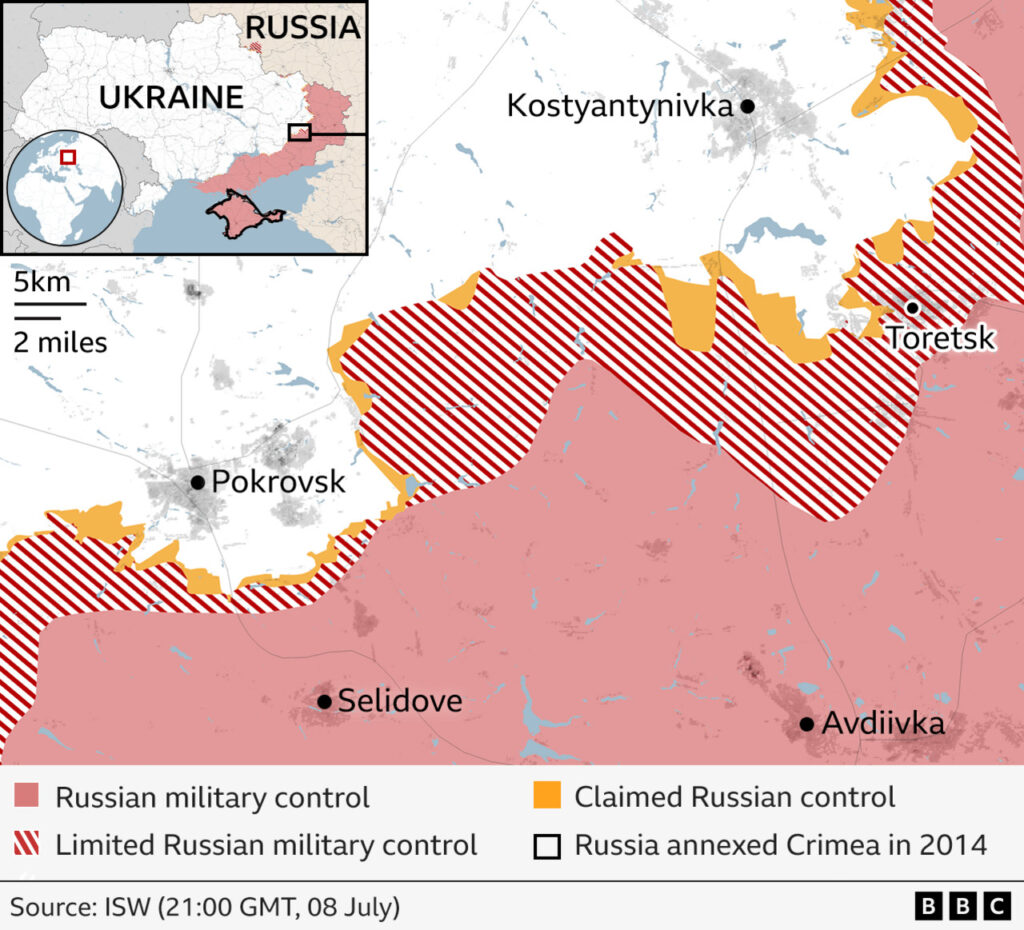
The Russo-Ukrainian War seems to have been engineered in a laboratory to frustrate people with repetition and analytic paralysis. Headlines appear to be circulating on a choreographed loop, all the way down to the place names. Kaja Kallas at the European Commission recently announced, without a hint of irony, that Europe’s new sanctions package – the 19th one – is the toughest yet. Ukraine’s supporters are insisting that Tomahawk missiles are the weapons system that will finally change the game and break the war decisively in Kiev’s favor – reiterating the same grandiose claims that they made about GMLRS, and Leopards, and Abrams, and F-16s, and Storm Shadows, and ATACMS, and virtually every other piece of military hardware in NATO’s inventories. On the ground, Russia is attacking settlements named Pokrovsk and Pokrovs’ke; it recently captured Toretsk and Tors’ke and is now attacking Torets’ke. The more things change, the more things stay the same.
The analytic frameworks applied to the war have also changed relatively little, buried and obfuscated by the nebulous concept of attrition. On the Ukrainian side, there is continued insistence that Russia is suffering exorbitant losses and straining under the pressure of Ukrainian deep strikes, while Ukrainian setbacks are blamed in large part on the failure of the United States to expand its largesse and give Ukraine everything it needs. Many pro-Russian lines of thinking mirror this and suppose that the AFU is on the verge of disintegration, while the Kremlin is accused of failing to “take the gloves off”, particularly in regards to the Ukrainian energy grid, Dnieper bridges, and dams.
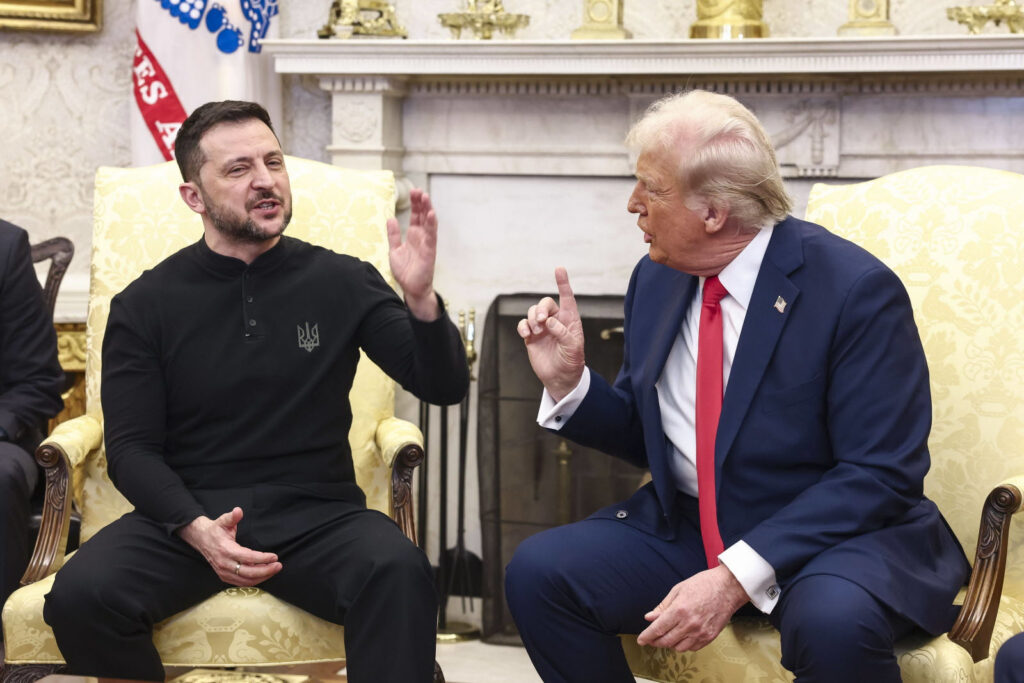
The result is a very strange sort of war. This is an extraordinarily high-intensity ground war. Both armies remain in the field, holding hundreds of miles of continuous front after years of bloody fighting. Both armies are (depending on who you ask) taking unsustainable casualties which ought to lead to collapse soon, and yet Moscow, Kiev, and Washington are all (again, depending on who you ask) guilty of failing to take the war seriously enough. All of this is maddeningly repetitive, and one could be forgiven for tuning out entirely. Even the diplomatic tango between Trump, Zelensky, and Putin, after delivering a few entertaining moments, failed to really move the needle in any discernable direction.
Few would argue that the trajectory of the war changed in an obviously dramatic way in 2025, and it is important to avoid the worn out and clichéd language about “turning points” or “collapse” or any such silly thing. However, 2025 saw several shifts in the war, which will hardly ostentatious or dramatic, are nevertheless very important. 2025 has been the first year of the war in which Ukraine launched no ground offensives or proactive operations of its own. This fact is not only a hint at the threadbare state of Ukraine’s ground forces, but also a testament to the way Russian forces transformed “attrition” from a buzzword into a method of persistent pressure across a variety of axes this year.
In lieu of initiative on the ground, and facing a slow but relentless rollback of their defenses in the Donbas, the theory of Ukrainian victory has shifted in an unacknowledged but dramatic way. After years of insisting that it would achieve maximal territorial integrity – an outcome which would require the total and decisive defeat of Russia’s ground forces – Ukraine has reframed its path to victory mainly as a process of inflicting strategic costs on Russia that mount until the Kremlin agrees to a ceasefire. Consequentially, the debate about arming Ukraine has shifted from a conversation about armor and artillery – equipment useful for retaking lost territories – to a discussion about deep striking weapons like Tomahawks, which can be used to shoot at Russian oil refineries and energy infrastructure. In short, rather than move to prevent Russian from achieving immediate operational objectives in the Donbas, Ukraine and its sponsors are now seeking ways to make Russia pay a price such that victory on the ground is no longer worth it. It is unclear whether they have thought about what price Ukraine will pay in the exchange. Perhaps they do not care.
About Tomahawks
Notwithstanding Ukraine’s attempts to jumpstart indigenous production, it is inevitable that Ukrainian capabilities will be largely determined by the largesse of western sponsors. This aspect of the war took a sudden turn at the beginning of the October when fresh reporting began to circulate that Tomahawk missiles might be on the table for Ukraine. Tomahawks have always been on Ukraine’s wish list (given that the Ukrainian wish list as such consists of essentially all the military equipment in NATO’s combined inventories) but this was the first reporting that they might be under serious consideration.
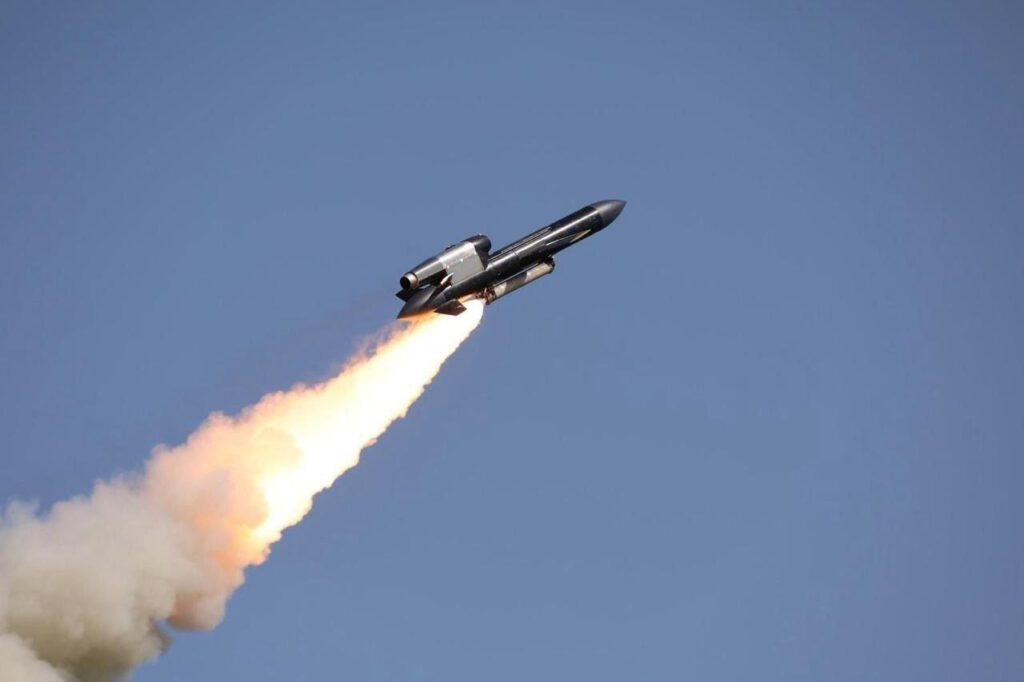
As is frequently the case, the discussion spiraled away from realistic grounding, with some suggesting that the Tomahawk would be a “game changer” for Ukraine (where have we heard that before?) and the pro-Russian sphere dismissing it as an irrelevant distraction. There’s a tendency to focus on the quality of American weapons systems, casting them as either unrivaled technological marvels or overhyped and overpriced baubles, but this is generally not productive and largely irrelevant to the matter at hand. The Tomahawk, broadly speaking, is exactly as advertised, and provides proven and reliable strike capability at strategic depths in excess of 1,000 miles. In role, range, and payload it is essentially an analog to Russia’s Kalibr missiles (I am begging the enthusiasts to note the phrase “essentially an analog” rather than rake me over the coals over the different guidance systems and other technical minutia). Such a system will always be valuable and would obviously improve Ukraine’s deep strike capabilities.
The “problem” with Tomahawks does not relate to any “problem” with the missile itself, but with its availability and Ukraine’s technical capability to launch them. The Tomahawk is conventionally a ship-launched missile (there is no extant air-launched variant) with a few novel options for ground launch. Ukraine, obviously, would require ground launch systems, and the problem is that these systems are essentially brand new and available in very limited quantities: more importantly, American service branches are in the process of trying to build out these capabilities throughout the decade. Providing ground-launchable Tomahawks to Ukraine in any meaningful numbers would therefore essentially require the US Army and Marines to scrap their own force buildout plans.
There are two basic options for ground launching Tomahawks. One of these is the US Army’s MRC (Mid-Range Capability) Launcher, dubbed the Typhon. This is an enormous tractor-trailer launcher with four launch tubes, first delivered in 2023. It has an enormous footprint – so large, apparently, that the Army is already asking for a smaller replacement – and is intended to give the Army an organic fires component in the gap between the shorter range Precision Strike Missile and hypersonic systems (which do not yet exist). The critical fact is this: the Army intends to field a total of five Typhon batteries by 2028, of which two have been delivered so far. Each battery consists in turn of four launchers, implying that eight out of a planned twenty launchers have been delivered. Even more importantly, both of the currently operational batteries are already deployed, with one in the Philippines and one in Japan. These systems are being actively used in exercises and trials, including an exercise this summer in Australia
The Typhon system gives ground launch capability to the Tomahawk but brings a massive footprint
The situation with the Marine Corps’ launch system is quite similar, although the launch platforms themselves could not be more different. Unlike the lumbering Typhon tractor trailer, the Marines are fielding a significantly more lithe and compact LMSL system, with the tradeoff of a single launch tube compared to the Typhon’s four. What matters is not so much the technical differences, as the fact that the Marines – like the Army – only received their first deliveries in 2023, and they are currently in the process of building out the force. In the case of the marines, the goal is to have a Tomahawk battalion built out by 2030. In fact, the production contract came into effect as recently as 2025.
What does all of that mean? It means that, although the Tomahawk itself is a fine missile, the systems for ground launch are so new and available in such limited quantities that equipping Ukraine with Tomahawks would require either the US Army or the Marines to materially alter their force structure in the near term (through 2030, essentially). These are essentially the opposite of much of the gear that’s been given to Ukraine to this point: far from being inventories of older systems that can be earmarked as surplus or tabbed for replacement, Tomahawk ground launch is a brand new capability that is in the middle of deployment and buildout for the first time.
This is, of course, a layered complication on top of Tomahawk quantities in and of themselves. The issue of Tomahawk availability is both over and under emphasized, depending on the context. The United States has something like 4,000 Tomahawks in its inventories (although half of these are currently inside their cells on American ships), so it is not quite correct to say (as some have) that America is running out of these critical weapons. The issue is that production rates are relatively anemic (generally between 55 and 90 per year) and are fail to replenish the expenditure from even relatively brief strike campaigns, such as the repeated strikes on Yemen. Broadly speaking, then, the issue is not so much that the United States is in immediate danger of running out of Tomahawks, but that procurement schedules are so slow that even relatively minor expenditures can erase multiple years worth of deliveries.
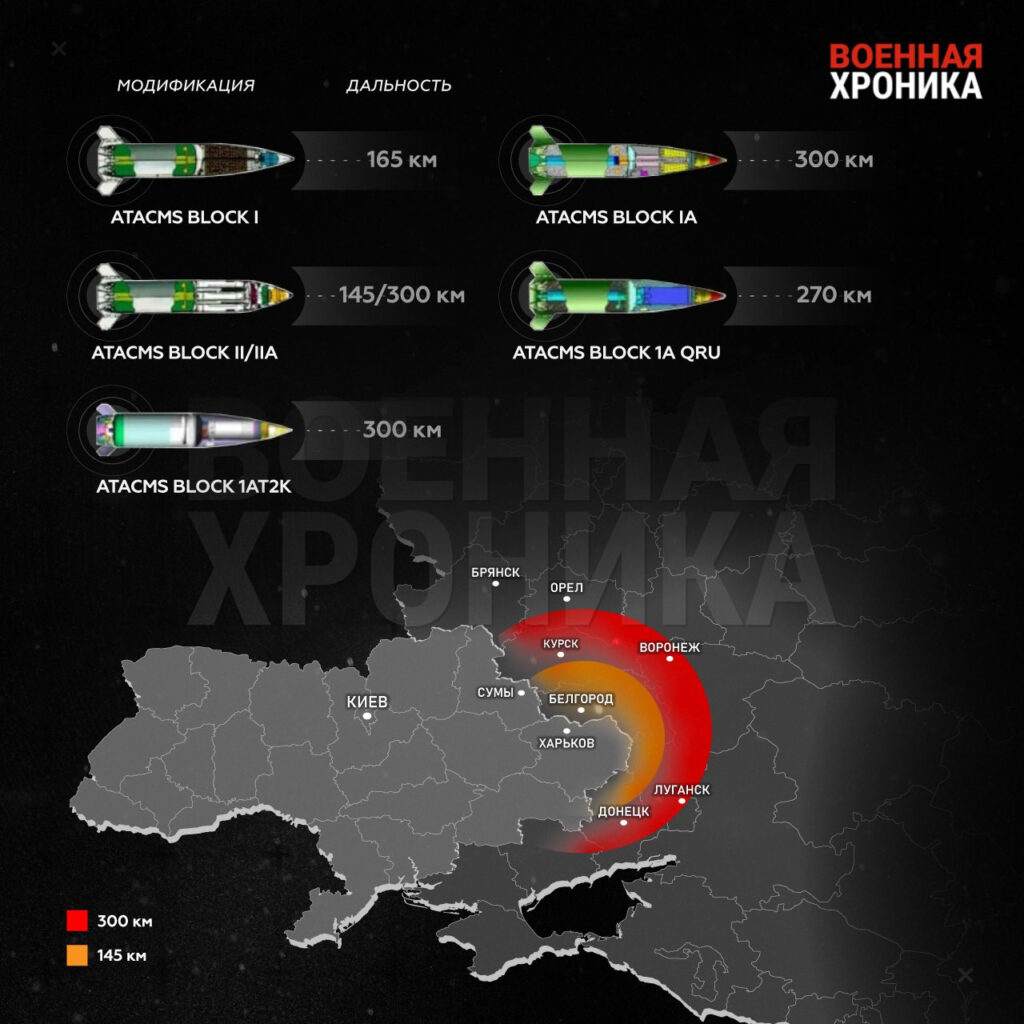
It may be useful, then, to consider Tomahawks in comparison to the ATACMS missiles which have already been provided to Ukraine. Unlike the Tomahawk, the ATACMS is a system which has already been tabbed for replacement, with the Precision Strike Missile in the early phases of its rollout. ATACMS were also compatible with launch systems that Ukraine already had. In comparison to Tomahawks, then, ATACMS are both vastly more strategically expendable, produced in larger numbers, and easier to deploy. Despite all these points in their favor, the United States provided Ukraine with just 40 ATACMS. Even if the Army could be pressured into handing over one or two of its brand new Typhon launchers, it is difficult to imagine that more than few dozen Tomahawks could be spared for Ukraine: a token inventory far too small to wage a sustained strike campaign in the Russian heartland
Peace, Sponsored by Raytheon
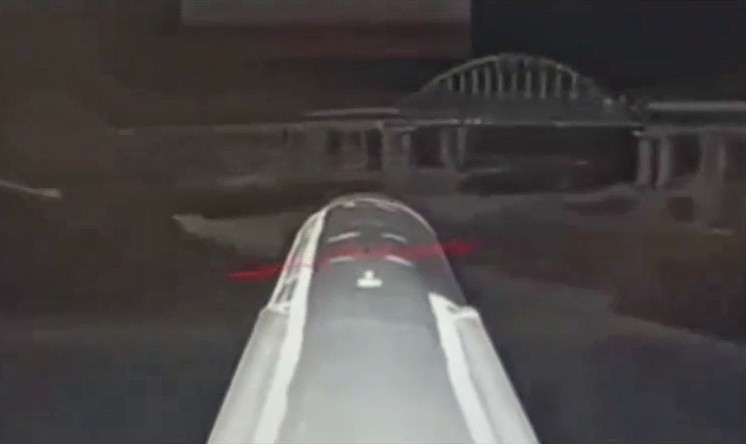
Given that Tomahawks for Ukraine would be measured in the dozens, rather than the hundreds, it’s worth asking whether this could actually change anything for the AFU at the front. The answer is clearly no in the long run, but it would be unwise to dismiss the possibility that even a limited tranche of Tomahawks (let’s say 40 to 50 missiles) could help alleviate pressure on Ukrainian forces at the front, provided they were used appropriately. A short term boost to Ukrainian strike capabilities, if deployed against Russian rear areas, could force further dispersal and rationing of Russian assets and temporarily stall Russia’s emerging multi-axis offensive. This could defer the loss of key positions until early 2026. This presumes, however, that the Ukrainians would be content to use Tomahawks against operational targets. In reality, Ukraine can never seem to resist lobbing missiles at targets that have little bearing on the front, like the Kerch Bridge. Indeed, a failure to synergize strikes at depth with operations on the ground is a major reason why the ATACMS achieved so little.
On the other side of this equation, it is a common complaint from the Russian perspective that Moscow has done too little to “deter” the United States from empowering Ukraine’s strike campaign – both by directly providing munitions and supplying the planning, ISR, and guidance systems. This, however, rather misses the point. Russia has done nothing of note to deter the United States because both Moscow and Washington understand fully that there is essentially no appetite (on either side) for a direct confrontation. In the (sensible) absence of a willingness to strike back at NATO targets, there is really nothing Russia can do to deter beyond maintaining its own retaliatory capabilities. The issue is not that Russia has failed to actively deter, but that there is nothing they could do even if they wanted to.
The basic pattern here is well established. The United States has done what it can to backstop Ukrainian strike capabilities, but it has held them at a level where Ukraine’s damage output falls far short of decisive levels. So long as that is the case, Russia has clearly demonstrated that it will simply eat the punches and retaliate against *Ukraine*. Hence, when the United States helps Ukraine target Russian oil facilities, it is Ukraine that receives the reprisal, and it is Ukraine which has its natural gas production annihilated as the winter approaches. In a sense, neither side is really trying to deter the other at all. The United States has raised the cost of this war for Russia, but not enough to create any real pressure for Moscow to end the conflict; in response, Russia punishes Ukraine, which is something the United States does not really care about. The result is a sort of geostrategic Picture of Dorian Gray, where the United States vicariously inflicts cathartic damage on Russia, but Ukraine accrues all the soul damage.
In the case of Tomahawks, the risk-reward calculus is just not there. Tomahawks are a strategically invaluable asset that the United States cannot afford to hand out like candy. Even if the launch systems could be provided (highly doubtful), the missiles could not be made available in sufficient quantities to make a difference. The range of the missiles, however, significantly raises the probability of miscalculation or uncontrolled escalation. Ukraine shooting American missiles at energy infrastructure in Belgorod or Rostov is one thing; shooting them at the Kremlin is another thing entirely.
There is, however, another aspect of this which seems to be garnering little attention. The biggest risk of sending Tomahawks is not that the Ukrainians will blow up the Kremlin and start World War Three. The bigger risk is that the Tomahawks are used, and Russia simply moves on after eating the strikes. Tomahawks are arguably one of the last – if not *the* last – rung in the escalation ladder for the USA. We have rapidly run through the chain of systems that can be given to the AFU, and little remains except a few strike systems like the Tomahawk or the JASSM. Ukraine has generally received everything it has asked for. In the case of Tomahawks, however, the United States is running the most serious risk of all: what if the Russians simply shoot down some of the missiles and eat the rest of the strikes? It’s immaterial whether the Tomahawks damage Russian powerplants or oil refineries. If Tomahawks are delivered and consumed without seriously jarring Russian nerves, the last escalatory card will have been played. If Russia perceives that America has reached the limits of its ability to raise the costs of the war for Russia, it undercuts the entire premise of negotiations. More simply put, Tomahawks are most valuable as an asset to threaten with.
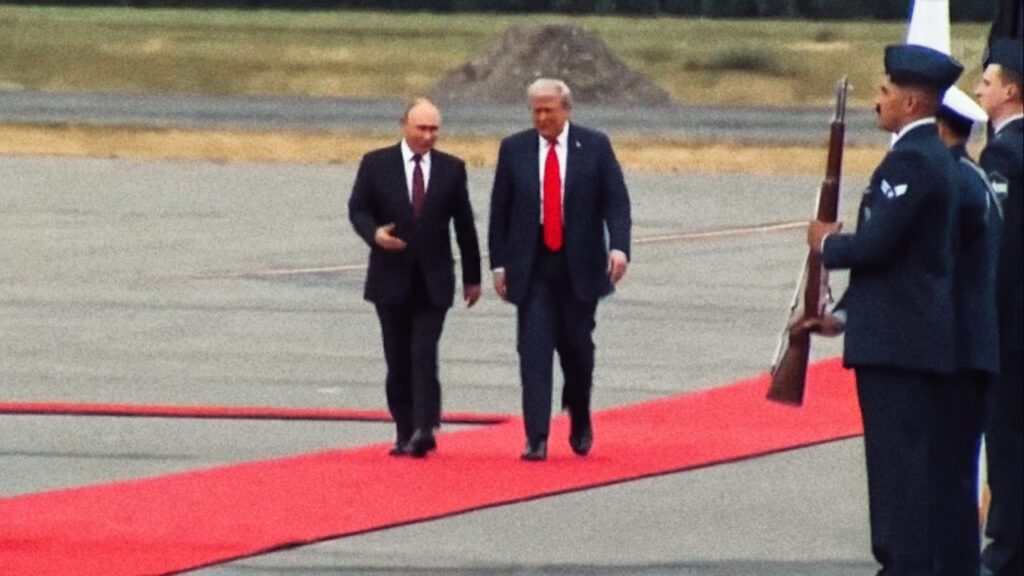
Reading between the lines of President Trump’s public statements recently, it seems likely that he has rationally weighed these considerations. Publicly, he used the threat of Tomahawks to try and force Russia to keep negotiating, and he’s received a commitment for another meeting with Putin for his trouble (more on that later). He has now, for the time being, shelved the Tomahawk plan, commenting that “we need them” and applying the usual Trumpian linguistic style to the broadly accepted issue of inventories which I have outlined here. Tomahawks are simply more valuable to the United States as a tool to threaten escalation, rather than as an actual kinetic asset in Ukrainian hands, and so long as Trump keeps his powder dry he can re-raise the issue later.
Ultimately, perhaps, this discussion is not about Tomahawks at all. These missiles, rather, are simply a totem which demonstrate two important dovetailing points. First, that American resources are not infinite, and as the United States reaches deeper into its bag to help Ukraine, it begins to grab at strategically critical assets that the US military simply cannot spare. Secondly, we must remember that America’s policy in Ukraine is a game of titration, with Washington probing the limits of Russia’s willingness to “eat the strikes” without allowing the reprisal violence to spill out of Ukraine.
The Big Banana: Russia’s Operational Schema
At this point, it’s becoming increasingly difficult to say anything meaningful about the actual operational progression on the ground. There are several reasons for this. First and foremost, the war has now gone on so long and is consistently moving at such an apparently glacial pace that most people simply do not care at this point whether Russia holds Yampil or not, or whether they have advanced past the rail line in Pokrovsk. There is severe fatigue (or perhaps boredom is the better word) with the status of an interminable sequence of apparently small settlements, industrial complexes, and forestry plantations, and as a result most people have essentially checked out. Not the least among these must surely be President Trump, who apparently chucked Zelensky’s map of the frontline and complained that he was tired of being shown the same maps over and over again.
On the other hand, we have the true obsessives who continue to dutifully follow the frontlines regularly and are voluntarily intaking daily updates. We end up with a bifurcated system where some people are still highly plugged in to the micro movements on the battlefield, but most people just don’t care, and we can hardly blame the latter. I think it would be profitable, then, to think about the broader Russian operational scheme, what it has achieved, and what it aims to achieve in the coming year. This is probably more interesting and less repetitious than fixating on the exact positioning within Pokrovsk or Kupyansk.
There are two larger points that I think are worth making before we look at some specifics.
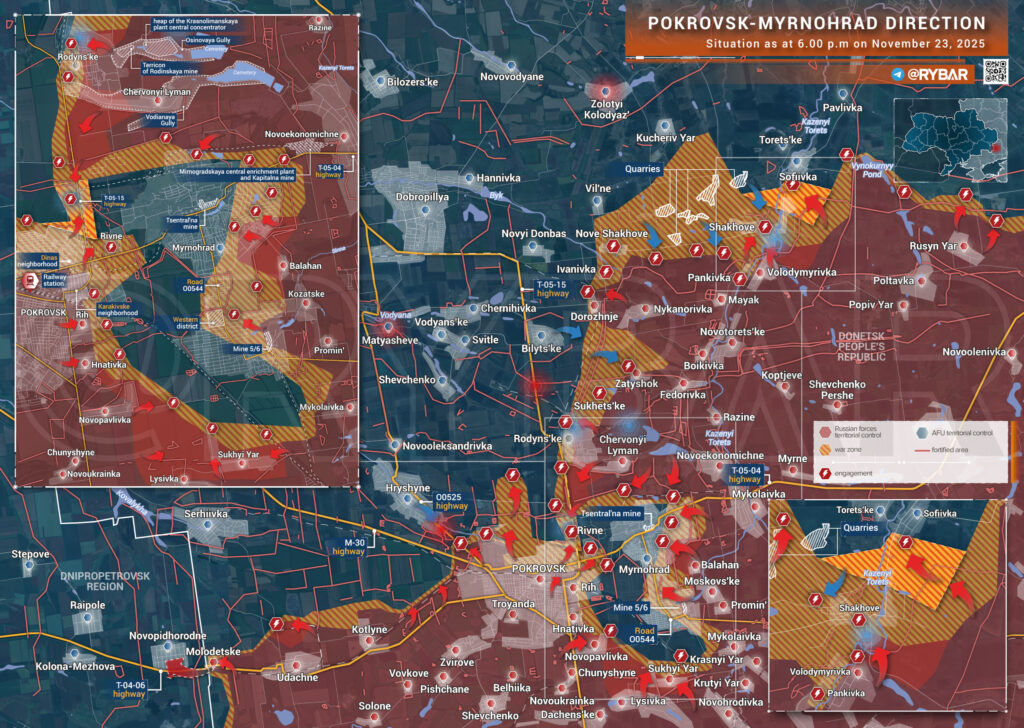
First and foremost, much of the battlefield analysis that comes out (particularly from western analysts) makes firm pronouncements as to what constitutes Russia’s “primary” and “secondary” efforts, but these are essentially interpolated and frequently incorrect. For example, it’s become a fairly mainstream conception that Russia’s “primary” point of effort right now is the capture of Pokrovsk, but this does not actually seem supported by Russian actions. There is no particular advantage to be gained for Russia by pushing to capture Pokrovsk as soon as possible – the city is already in a stranglehold partial encirclement. To be sure, Pokrovsk *was* a major logistic hub for Ukrainian forces, but it can no longer serve that role and was sterilized as a transit hub months ago, once it became a frontline city. The opposite side of this coin is that other Russian axes of advance, particularly in southern Donetsk and the bend of the Donets River, are dismissed as “secondary” efforts. This is a major mistake, and I will attempt to show that these are critical advances where Russia is shaping the battlefield to its advantage for follow on operations.
Secondly, it should be understood and appreciated that Ukraine has lost essentially all battlefield initiative. In 2024, the AFU was able to assembled a mechanized reserve and launch their operation into Kursk. This operation ultimately failed and resulted in severe Ukrainian losses, but this is unrelated to the fact that Ukraine was still able to accumulate forces and pursue offensive operations on its own initiative. In 2025, however, Ukraine has been in a permanent state of reactivity. This was the first year of the war in which Ukraine did not launch any proactive operations or counteroffensives of its own, and Ukrainian hopes have instead pivoted to their strategic strike campaign against Russian oil facilities.
In a larger sense, the effect of attrition can be seen year by year with the shrinking scope of Ukraine’s proactive operations. In 2022, Ukraine was able to launch a pair of widely separated offensives which yielded modest successes: an offensive out of Kharkov rolled the front back over the Oskil River (though it failed to collapse the Lugansk shoulder), meanwhile, a series of battles outside of Kherson failed to break through the Russian lines, but they did play a role in persuading the Russians to abandon their bridgehead over the Dnieper. The point of course is not to once again autopsy these offensives, but to point out that there were two of them, that they were meaningful in scale, and they did result in important territorial gains for Ukraine. In 2023, by contrast, Ukraine launched a single theater-level offensive in the south, which failed. In 2024, we got the Kursk operation: smaller and less lavishly equipped than 2023’s Zaoprizhia offensive, and aimed at a peripheral theater. This year, there were no proactive Ukrainian operations at all. There is a very clear pattern at play here, with Ukraine’s offensive punch progressively shrinking before disappearing entirely in 2025. This was a year of essentially uninterrupted Russian initiative
Putting Ukraine permanently on the backfoot is a significant Russian achievement, and it is owed to a few converging factors. Obviously, the attrition of Ukrainian forces is a major factor. We’ve gone through the flailing Ukrainian mobilization, the cannibalization of its forces, and the general lack of reserves in detail on several occasions, and there’s no need to retread that ground here. Suffice it to say, Ukraine’s ability to husband forces for offensive operations appears to be severely degraded. Russia has exacerbated this problem by pressing steadily on a variety of different axes. At the moment, there are no fewer than seven Russian axes of attack, pressuring a slew of cities all along the line. This creates a series of defensive emergencies, maintains the burn rate on Ukrainian forces, and fixes them on the line. Finally, in a point to be detailed shortly, Russian advances have begun unraveling Ukraine’s logistic connectivity, which puts strain on supply and prevents the concentration and accumulation of forces
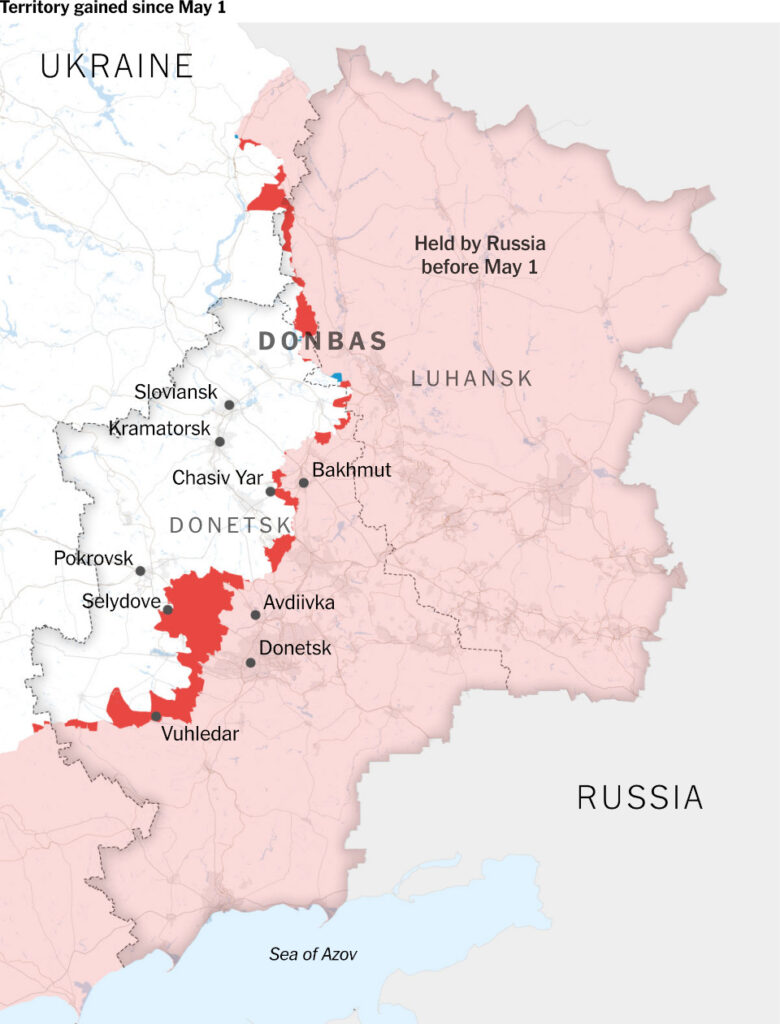
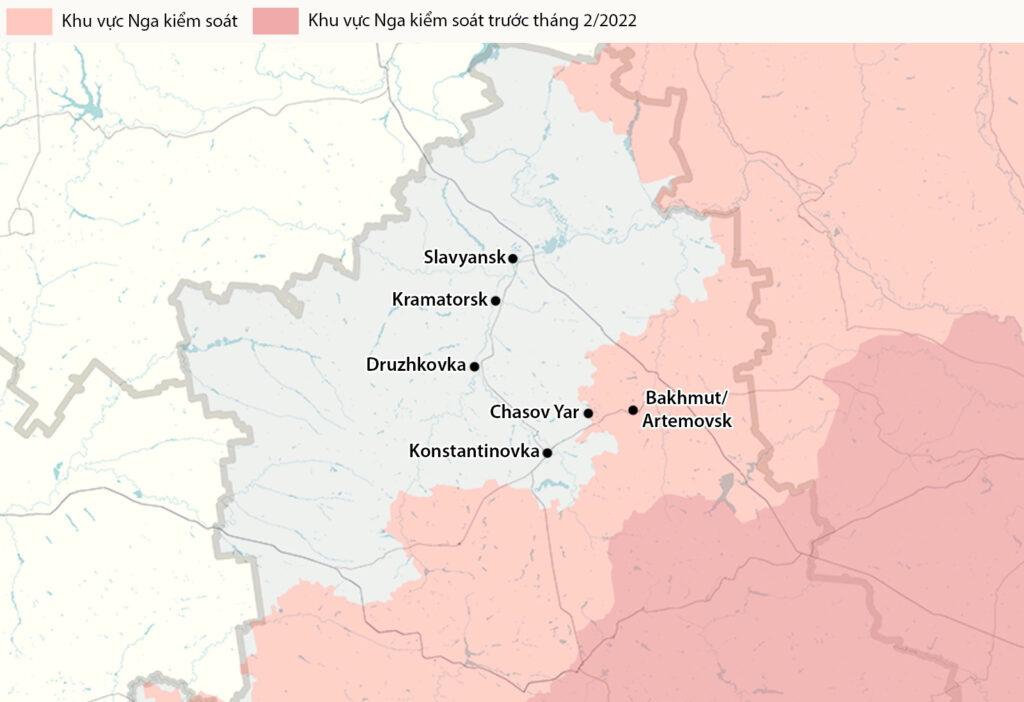
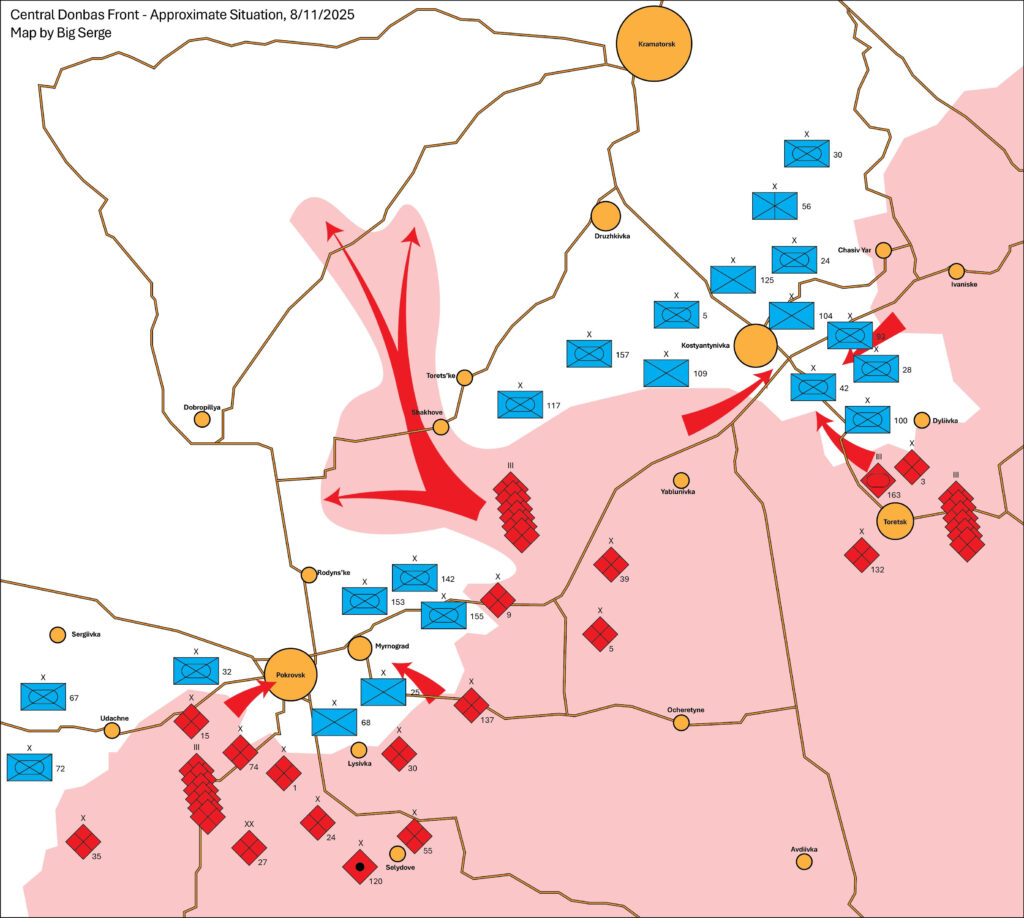
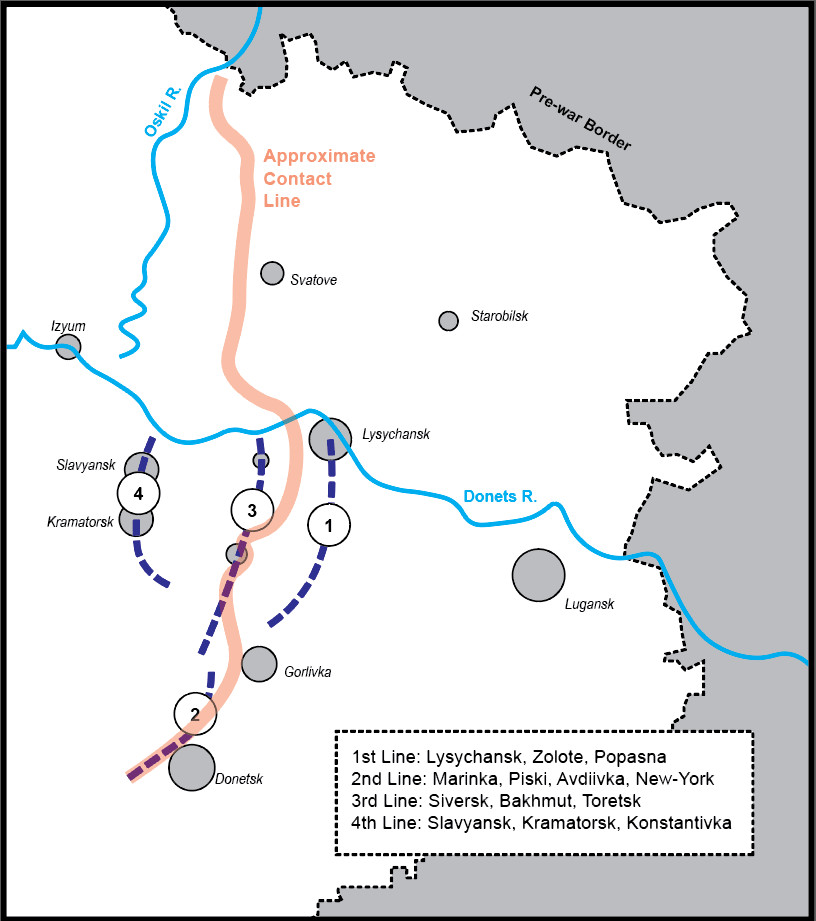
Eastern Ukraine: Approximate Situation and Axes of Russian Advance
Now, for the development of the front and the premise of the Russian offensive scheme. The main point that I want to impress is essentially as follows: rather than fixating on Pokrovsk, Russia’s advances across Southern Donetsk and on the inner bend of the Donets River ought to be thought of as vital operations which have severely disrupted the coherence of both the Ukrainian front and their logistics. This has the triple effect of preventing the Ukrainians from launching offensives of their own, accelerating the attrition of Ukrainian forces, and shaping the front for the coming operation to capture the Slovyansk-Kramatorsk agglomeration.
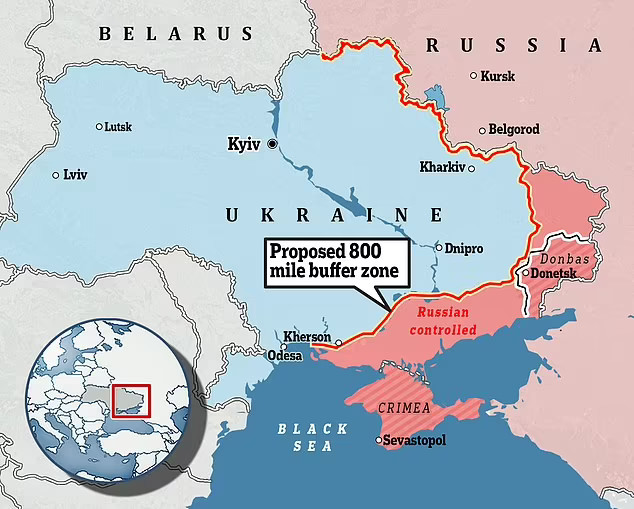
To begin, let’s consider the progress that Russia has made in southern Donetsk, both in raw territorial terms and its implications for Ukrainian logistic connectivity. To demonstrate this, I’ve pulled maps from DeepState (again, a Ukrainian mapping enterprise) for August 2023 (when Ukraine was attempting its counterattack out of Orikhiv) and for October 20th, the week of this writing. I have noted both the length of the southern front (obviously a linear approximate, as the actual front has many bends and bulges) and highlighted the key highways that Ukraine uses to run the backbone of its logistics
The Southern Front: 2023 vs 2025
Now, one thing that is worth noting is that the Russians are currently positioned to roll up this front even further. Ukrainian defensive lines are primarily oriented towards on a north-south axis. Once Russian forces cleared Kurakhove, they entered the seams in these defensive lines – that is to say, they are advancing laterally along the face of the prepared defenses, rather than trying to bash through them from the front. This is one reason why their progress has been relatively steady and uninterrupted. Now approaching the “elbow” in the lines, where they pivot southward, and having crossed the Yanchur River, the Russians are entering a substantial space that lacks meaningful prepared defenses. Using the Military Summary map (Ukrainian fortifications are mapped with yellow dots), the void in the defense is fairly obvious as the Russians work their way into the elbow of the line
Apart from the obvious development of note here – that Russian forces have, to this point, rolled up roughly half the length of the southern front and are positioned to roll up another ten to fifteen miles – we want to note two things which are emblematic of the way the war is going for Ukraine, but curiously receive little attention. First, the compression of the front is robbing the Ukrainians of the maneuver space which made it possible for them to stage and assemble forces for their counteroffensive in 2023. Two years ago, there was a wide, lateral buffer zone around the Ukrainian staging area in Orikhiv, and Ukrainian forces had access to multiple highways where they could disperse forces in their marching columns and run their logistics.
Today, that buffer zone is gone, as is the easy access to several of the branch highways. The Russian advance, which started with the breakthrough at Ugledar and Kurakhove last year and which has now rolled up some 50 miles of front, has essentially sterilized Ukraine’s capacity to attack in the south, because they have neither the space nor the roads to safely accumulate forces here. It has also shattered the interconnectivity of Ukrainian logistics: rather than having several highways to shuttle troops and material to the east, Ukraine now has to support several disconnected logistic fronts with individual highways. More to the point, there is no longer a single Donetsk “front” to speak of, but rather a series of logistic fronts: one in the south, around Orikhiv, another at Pokrovsk, and the largest one in the Slovyansk Banana. These are lacking lateral connectivity to each other for the Ukrainians due to the wedges that the Russians have forced in the front, particularly in the south, funneling logistics and reinforcements down individuated corridors.
The bigger issue, however, lies farther north on the Pokrovsk and Donets axes, and in the way that they synergize. People who are focusing, to the exclusion of all else, on when and how Russia will capture Pokrovsk are failing to see the bigger picture, and indeed are not even trying to understand it.
The ultimate Russian operational objective (in this phase of the war, at least) is the belt of cities which runs in an arc from Slovyansk to Kostyantinivka, which I affectionately call “the Slovyansk Banana” due to its curved shape. A cursory look at the map shows us why the very operations that are being dismissed as secondary efforts are in fact critical axes of Russian effort which are shaping the battlefield for the attack on the Banana
There are two very important facts about the Banana, from the perspective of operational geography. The first is that, although the combined mass of the agglomeration is far larger than any of the urban areas that have been fought over to this point, the Banana is relatively difficult to defend because it sits on the floor of a river valley: the Kazennyi Torets flows through all the cities in the Banana before it flows into the Donets. Russian forces approaching the city from the southwest, the east, and the north will all be advancing along the high ground that overlooks the cities on the floor.
The second important fact about the Banana is that, despite its size, it is supported by just two highways which approach from the southwest and northwest respectively, funneling into the Banana like a wedge. Taking the northern highway/MSR (the E40 highway) as an example, we see that Russia’s operations inside the Donets bend are hardly secondary efforts: they are vital shaping operations linked to the integrity of the Banana. The E40 highway tracks the Donets bend very closely (it generally stays within five miles of the river. If the Russians sustain their progress north of the Donets and reach the river at Bogorodychne or Svyatogirsk, it will not only put E40 under persistent drone attack but also curl the defensive line behind the Banana, to say nothing of the enormous pressure on the Siversk salient.
On the Pokrovsk front as well, Russia’s progress is being misinterpreted. After their breakthrough at the end of the summer, Russian forces have consolidated the bulge north of Pokrovsk (despite weeks of Ukrainian counterattacks) and are steadily working their way towards Rais’ke and Sergiivka. This is not about Pokrovsk at all – reaching Rais’ke would put Russian forces directly in the backfield of Kostyantinivka, on the supply lines to the underside of the Banana.
I am not suggesting at all that Russian forces are on the verge of some great offensive surge that will carry them into the heart of the Banana instantly. However, there is a fairly well established Russian operational methodology in this war, which involves working their way methodically into Ukraine’s logistical lanes and seams, segmenting the front and strangulating their strongpoints, forcing them to supply frontline strongholds with single file logistics and dirt roads. They did it in Bakhmut, and Avdiivka, they are doing it in Pokrovsk, and they are shaping the front to attempt this on a large scale in the Banana
Assault on the Banana: Coming 2026
The general point that we are trying to make here is that dismissing Russian advances in the Serebryanka Forest, the emerging bulge north of Pokrovsk, and their move into the Donets Bend as “secondary efforts” is mistaken. Zooming out to the appropriate scale shows that these are concentric operations, shaping the front for a 2026 assault on the Banana – moving towards the E40 road from the north, bending the defensive shield around Siversk, and working into the underbelly of the Banana through Rais’ke.
This is, perhaps, a long way to go for a short drink of water, but there are a few basic points here that get completely missed when the view of the front is preoccupied with the fighting inside Pokrovsk and Kupyansk:
Russia’s advance out of Kurakhove across the southern front is not a secondary axis. They have rolled up half of the southern front, condensing Ukrainian forces into a compact space which sterilizes their ability to attack in the south.
Broad Russian pressure across a half-dozen axes maintained a steady burn rate on Ukrainian forces and prevented the accumulation of forces for proactive operations. 2025 has been the first year of the war in which Ukraine has not launched any offensive operations on its own initiative.
Advances in the Donets bend and the interstitial space between Pokrovsk and Kostyantinivka are not subsidiary or secondary operations: they are critical shaping operations that are moving concentrically toward the Banana.
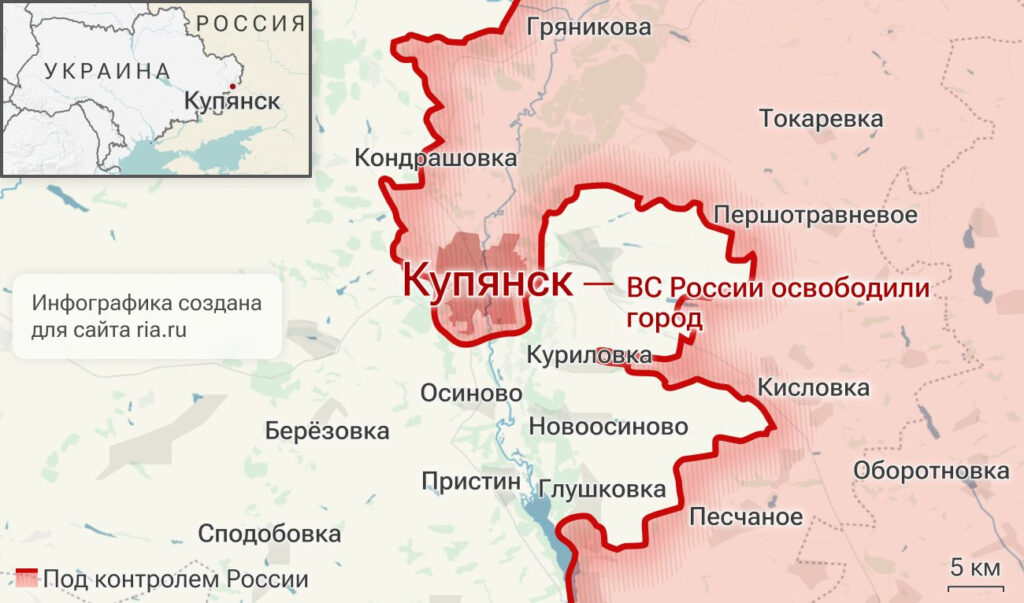
To be frank, the general mood of optimism in the Ukrainian infosphere, which lasted for much of the summer, struck me as remarkably odd. The frontline has yielded no real good news for Ukraine at any point this year. Beyond the broader strategic point, that Ukraine has lost the initiative and does not seem capable of getting it back, Russia is in the process of capturing two important urban centers (Russian troops are in the city centers of Pokrovsk and Kupyansk), it has begun the assault on at leas two more (Lyman and Kostyantinivka), it has rolled up half of the southern front, and cleared most of the inner Donets-Oskil bend. The Banana is on deck for 2026.
Ukraine’s Cost Theory of Victory
One thing that has become apparent over the last year is that Kiev has abandoned previous notions of outright victory on the battlefield and adopted a new strategic framework predicated on imposing unacceptable costs on Russia, so that Moscow will agree to freeze the conflict.
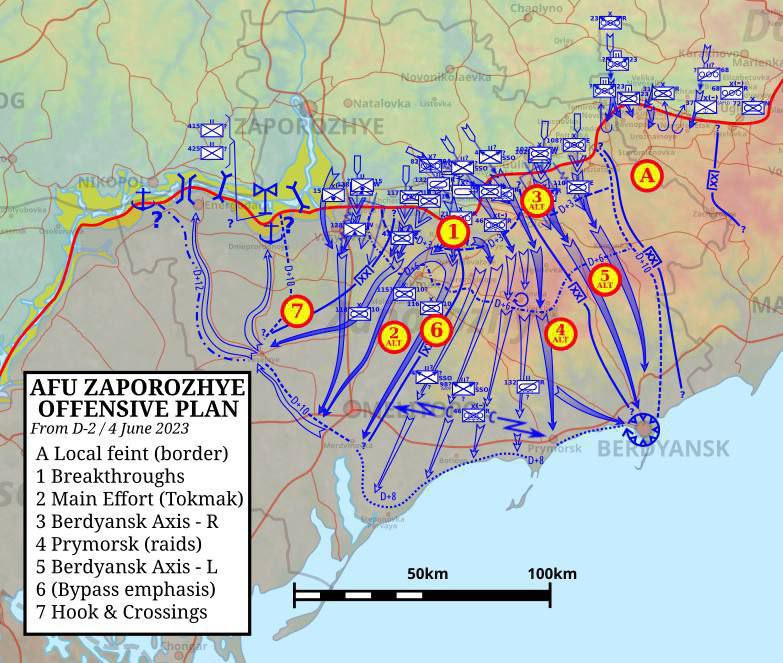
This is a subtle and unspoken yet extremely important distinction. It is easy to miss, because both Ukrainian leadership and Ukraine’s western backers continue to speak of Ukrainian “victory” and the possibility of Ukraine “winning” the war. What is crucial to understand is that the “victory” that they speak of now is categorically different than the victory of 2022 and 2023. In the first years of the war, it was possible to at least speak of Ukraine taking the initiative to advance on the ground and retake territory. There were concrete examples of Ukrainian offensives in 2022, and the battle in Zaporizhia – although unsuccessful – showed that it was at least possible for Ukraine to attempt a proper mechanized offensive.
Therefore, in the first years of the war, when leaders in Kiev and Brussels and London and Washington spoke of Ukrainian victory, they essentially meant the defeat of the Russian ground forces and the reconquest of much (or all) of the Donbas. The Kursk Operation of 2024 began to split the difference: Ukraine still had some resources to mount proactive operations, but these operations were no longer aimed at the dense eastern front and instead aimed at relatively soft subsidiary fronts with an eye to out-levering the Russians.
Today, with the Ukrainian army stuck in a permanent state of reactivity and slowly receding defense, it no longer makes any sense to speak of Ukrainian victory in the most straightforward sense, which is to say victory on the battlefield – no matter how tenaciously or bravely the Ukrainian rank and file continues to fight in essentially intolerable circumstances. Instead, Ukrainian “victory” has been transmogrified to mean essentially that Russia absorbs such exorbitant costs that it agrees to some sort of ceasefire without preconditions.
The costs to be imposed on Russia are implicitly assumed to be a mixture of battlefield casualties and damage to strategic assets inflicted by Ukrainian air strikes, and in regards to the latter Ukraine seems to be particularly placing its hopes in a strategic strike campaign against Russian oil. Ukraine’s attempts to disable Russian oil production and refining have dovetailed with ever more aggressive sanctions from the United States against Russian fossil fuel exports – although it is worth noting that the limited price response to these sanctions indicates that markets expect that Russian oil will continue to flow.
Trump’s suggestion that Tomahawks may be on the table for Ukraine must be seen as a constituent element of this new strategy and theory of victory. And this, ultimately, is very important to understand. Tomahawks are not being bandied about because anybody (in Kiev or Washington) believes that 50 cruise missiles will allow Ukraine to defeat the Russian Army and recapture the Donbas. Tomahawks were mentioned because the Ukrainian alliance is threatening to cripple the Russian fossil fuels industry (through a mixture of sanctions and kinetic strikes on production facilities) unless Putin agrees to a ceasefire.
This is why it is wrong to be surprised that Trump abruptly cancelled his meeting with Putin and instead announced more sanctions. There’s nothing abrupt or erratic about this. Threats to Russian oil are now, without exaggeration, the main lever that the Ukrainian bloc has against Russia. It certainly should not have been a surprise that the Kremlin, which has reiterated the same fundamental war aims since day one, was not excited about coming to Budapest to freeze the conflict, and neither should it surprise us that Trump would instead prefer to pull harder on the oil lever. The two powers are playing entirely different games: Russia is slow-walking negotiations while it advances on the ground, and the United States is playing a pain game designed to raise the costs for Russia
We have fundamentally reached an impasse when it comes to negotiations. For Moscow, negotiations with the United States are essentially a way to string Washington along. Moscow feels that it is winning on the ground, therefore a diplomatic impasse suits Russian interests. When western leadership complains that Russia does not seem interested in ending the war, they are correct, but they are missing the point. Russia is not interested in ending the war right now because doing so would not serve Russian interests. The Banana is in the crosshairs, and a ceasefire now would be an egregious compromise when victory on the ground is in sight.
The sense of urgency that Washington feels to end the war – mainly by yanking furiously on the oil lever until the Kremlin cries uncle – stems from the fact that this is now the only sort of victory that Ukraine can hope to win. The ground war has been written off as a total loss, and all that remains is to lob missiles and drones at Russian refineries, sanction Russian firms and banks, and harass shadow tankers until the costs become intolerable. The longer the Ukrainian ground forces can hold the line the better, but this is merely a matter of limiting the downside. The fact that Russia can retaliate disproportionately against Ukraine barely factors into this thinking.
The key point here, however, is that the concept of Ukrainian victory has been completely transformed. There is now no real discussion of how Ukraine can win on the ground. For the Ukrainian bloc, the war is no longer a contest against the Russian Army, but a more abstract contest against Russia’s willingness to incur strategic costs. Rather than preventing Russian capture of the Donbas, the west is testing how much Putin is willing to pay for it. If history is any guide, a game predicated on outlasting Russia’s strategic endurance and willingness to fight is a very bad game to play indeed [end]
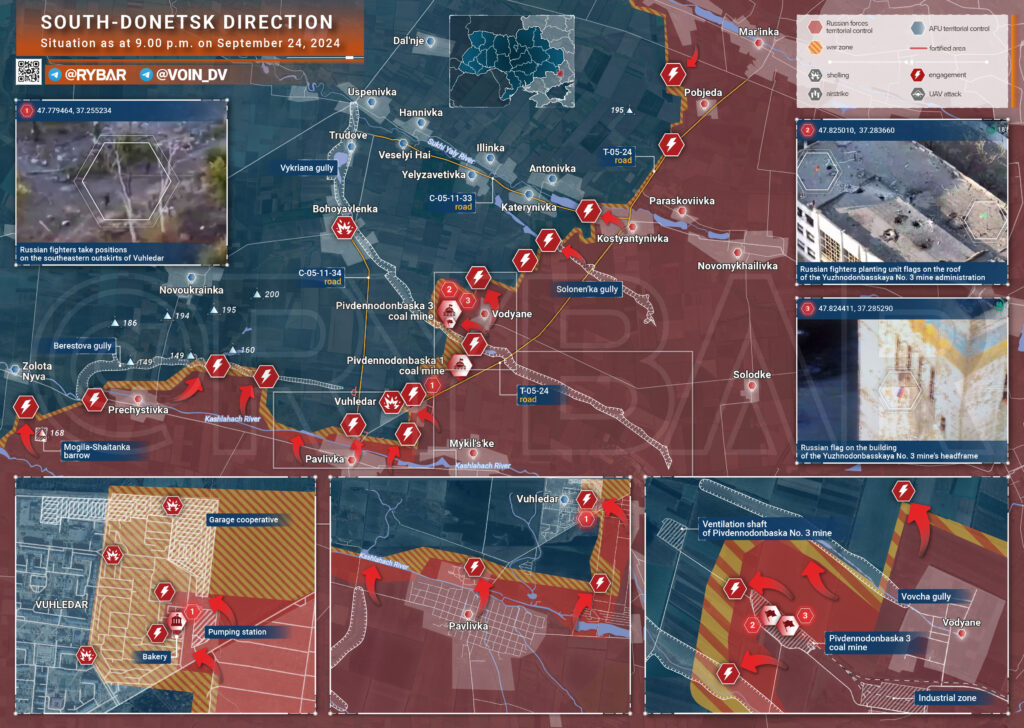
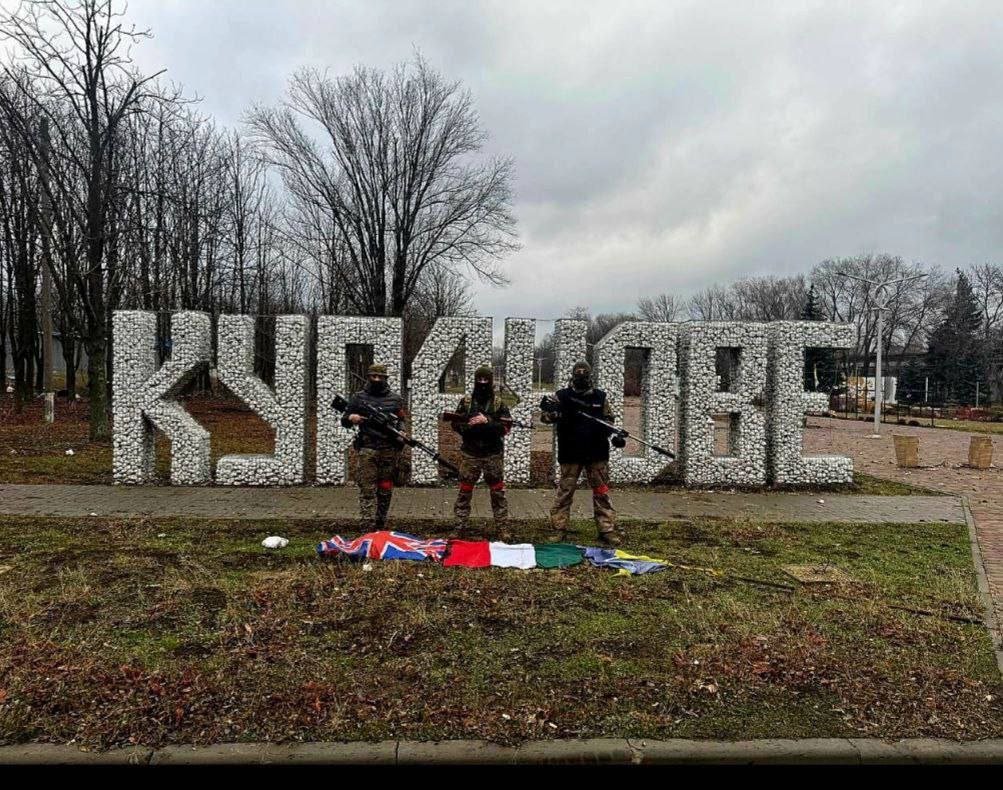
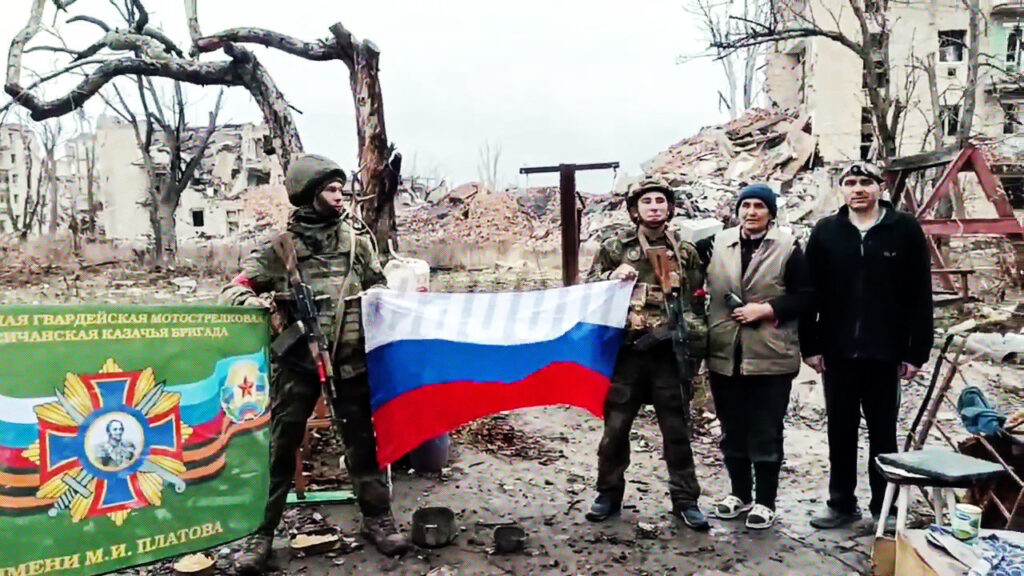
For four long months – from September 2024 to January 2025 – fierce battles raged for Kurakhove. Russian units, overcoming stubborn resistance, pushed the enemy out of their fortifications step by step. And on January 6, 2025, the city was finally brought under the control of the Russian army.
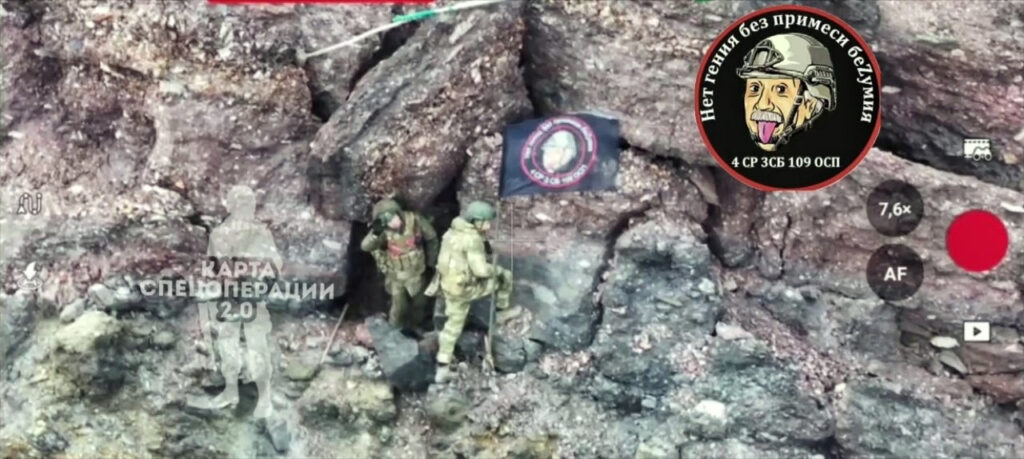
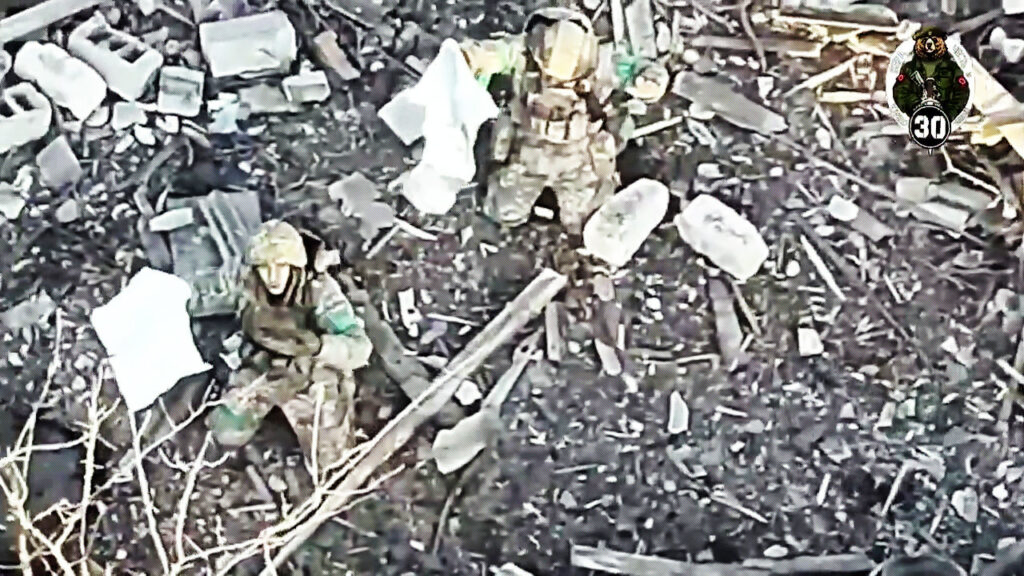
We want to tell you about one of the many heroic episodes of this operation. Two of our fighters – Bosyak and Shakh – managed to achieve what seemed impossible: to persuade an entire Ukrainian unit to lay down their arm. Without a single shot fired, only with the power of words and iron logic.
How did they succeed? What was behind this unusual case? Let us take a closer look
November 2024. The Russian army carries on with its offensive in the direction of Kurakhovo. The enemy is desperately resisting and, clinging to every scrap of land, is trying to slow down the liberation of the territory.
While encircling Kurakhovo, Russian troops expelled the enemy from Trudovoe, a small village located to the south of the city. In an attempt to hold their positions, the Ukrainian forces counterattacked in the recently liberated settlement.
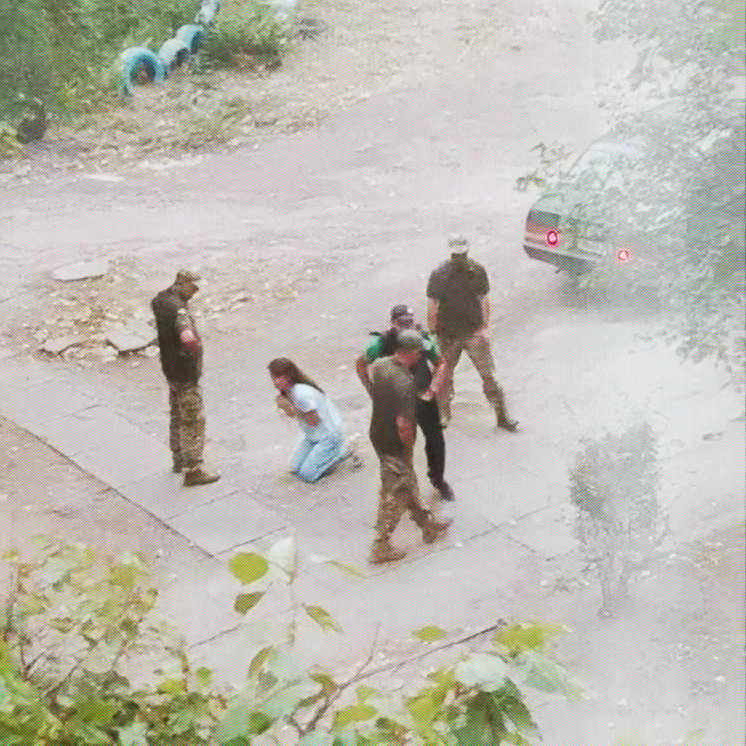
A small village street with several dozen houses became the arena of a confrontation between two Russian stormtroopers and a dozen opponents, culminating in a fight where fierce hatred coexisted with genuine nobility…
The Russian Army continues to liberate the territories of the DPR from Ukrainian occupation. Russian troops overcome the resistance of Ukrainian formations daily, bringing victory closer.
The advance of the troops in ensured by the greatly increased professionalism of Russian soldiers and officers, as well as enhanced technical capabilities. However, no offensive would be possible without the heroism of the Russian soldier fighting for his land. Such acts of heroism occur daily along the entire front line.
And where there is a place for heroism, mercy is also possible. After all, in this bloody struggle, not only the citizens of a once united country clash, but also yesterday’s comrades-in-arms…
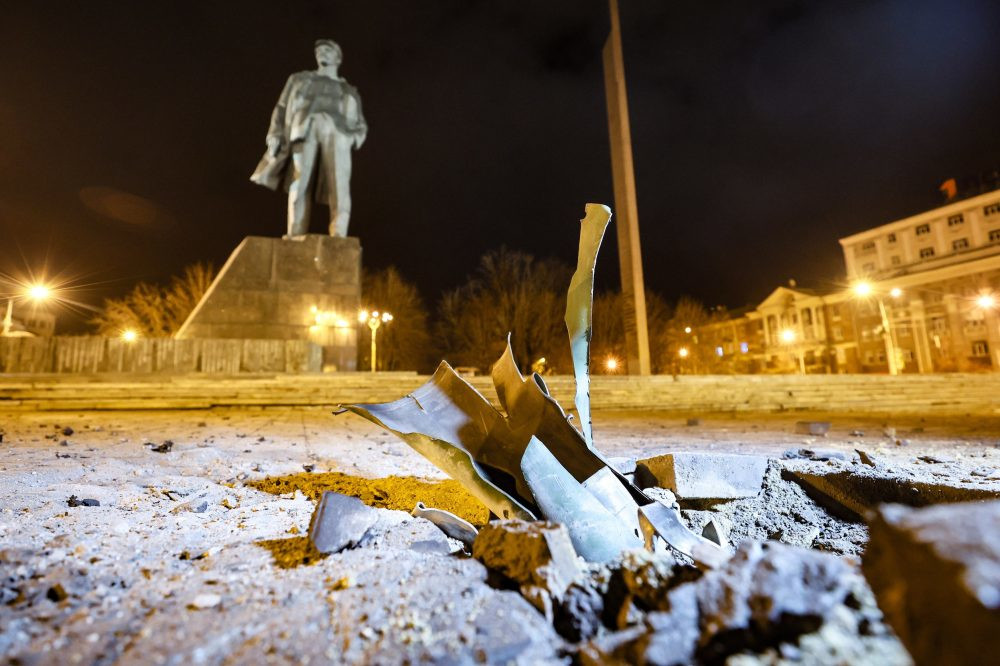
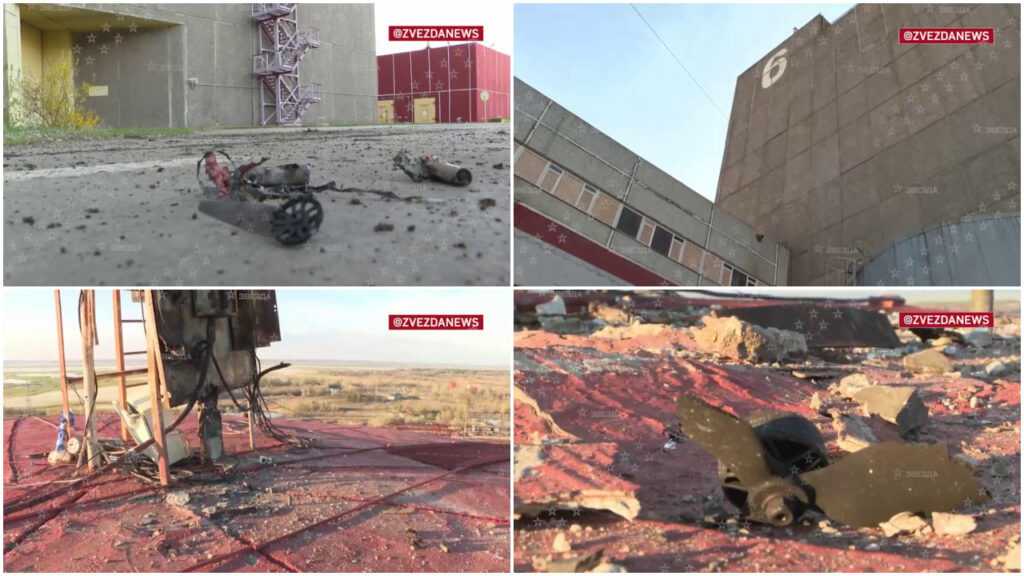
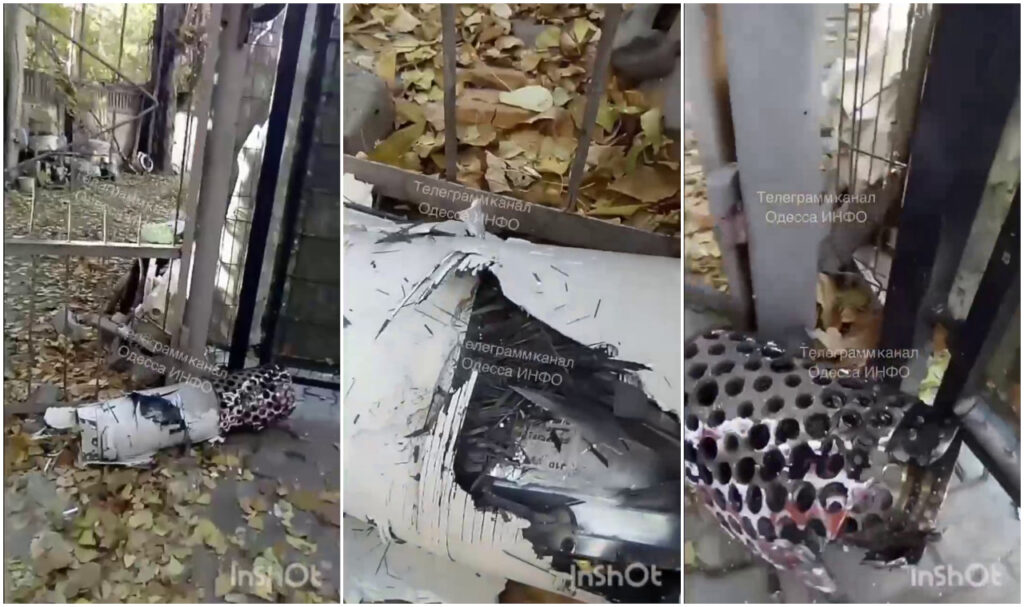
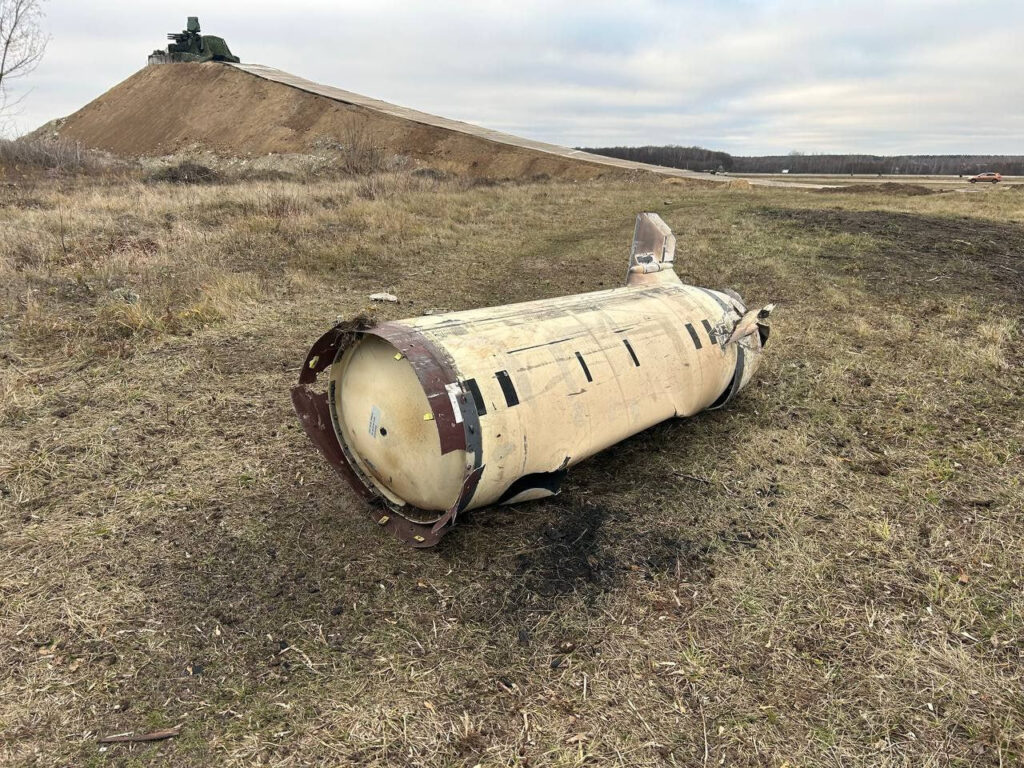
[my illustration: a debris of US ATACMS ballistic missile has fallen on Kursk-Vostochny airfield on November 25, 2023 (Russian defense ministry)]
On March 5, 2022, the wreck of the sailing ship Endurance was found in the depths of the Weddell Sea off the coast of Antarctica. This, of course, was the vessel lost in Ernest Shackelton’s third expedition to Antarctica, which became trapped in the ice and sank in 1915. The story of that expedition is an extraordinary tale of human fortitude – with the Endurance lost to the ice, Shackleton’s crew evacuated to a loose ice flow where they camped for nearly 500 days, drifting about the Antarctic seas, before making a desperate dash across the open ocean in an open 20 foot lifeboat, finally reaching the southern shore of inhospitable and mountainous South Georgia Island, which they then had to cross on foot to reach the safety of a whaling station.
The story itself has an essentially mythic quality to it, with Shackleton’s crew surviving for years on free floating ice floes in the most inhospitable seas on earth. For our purposes, however, it is the story’s coda that is particularly interesting. In Shackleton’s memoirs, he remembered that, upon finally reaching the safety of the Stromness whaling station, one of his first questions was about the war in Europe. When Shackleton first set out on his ill-fated expedition on August 8, 1914, the First World War was less than a week old, and the German Army had just begun its invasion of Belgium. There was little expectation then that the war would proceed as it did, unleashing four years of slaughterous positional warfare that engulfed the continent.
Shackleton, having been adrift at sea for years, clearly did not imagine that the war could still be raging, and asked the commandant of the whaling station “tell me, when was the war over?”
The answer came back: “The war is not over. Millions are being killed. Europe is mad. The world is mad.”
The timing is serendipitous, since the discovery of the Endurance’s wreck, after more than a hundred years, happened to occur only a few weeks after the world again went mad, with the beginning of the Russo-Ukrainian War in February 2022. As time continues its inexorable march and the calendar turns yet again, the war is passing through its third full winter. In February, Z-World will be three years old.
Of course, modern communications make it extremely unlikely that anybody could be cut fully out of the loop for years at a time, like Shackleton and his men. Instead of being ignorant as to whether or not the war is over, many of us are exposed on a daily basis to footage of men being killed, buildings being blown up, and vehicles being shredded. Twitter has made it essentially impossible to live under a rock, or on an ice floe, as it were.
If anything, we have the very opposite problem of Shackleton – at least as far as our wartime information infrastructure goes. We are saturated in information, with daily updates tracking advances of a few dozen meters and never ending bombast about new game changing weapons (which seem to change very little), and bluster about “red lines”. This war seems to have an unyielding dynamic on the ground, and no matter how many grand pronouncements we hear that one side or the other is on the verge of collapse, the sprawling front continues to grind up bodies and congeal with bloody positional fighting.
It would seem difficult to believe that a high intensity ground war in Europe with hundreds of miles worth of front could be boring, yet the static and repetitive nature of the conflict is struggling to hold the attention of foreign observers who have little immediately at stake.
My intention here is a radical zoom-out from these demoralizing and fatiguing small scale updates (as valuable as the work of the war mappers is), and consider the aggregate of 2024 – arguing that this year was, in fact, very consequential. Taken as a whole, three very important things happened in 2024 which create a very dismal outlook for Ukraine and the AFU in the new year. More specifically, 2024 brought three important strategic developments:
Russian victory in southern Donetsk which destroyed the AFU’s position on one of the war’s key strategic axes.
The expenditure of carefully husbanded Ukrainian resources on a failed offensive towards Kursk, which accelerated the attrition of critical Ukrainian maneuver assets and substantially dampened their prospects in the Donbas.
The exhaustion of Ukraine’s ability to escalate vis a vis new strike systems from NATO – more broadly, the west has largely run out of options to upgrade Ukrainian capabilities, and the much vaunted delivery of longer range strike systems failed to alter the trajectory of the war on the ground.
Taken together, 2024 revealed a Ukrainian military that is increasingly stretched to the limits, to the point where the Russians were able to largely scratch off an entire sector of front. People continue to wonder where and when the Ukrainian front might begin to break down – I would argue that it *did* break down in the south over the last few months, and 2025 begins with strong Russian momentum that the AFU will be hard pressed to arrest.
Front Collapse in South Donetsk
What stands out immediately about the operational developments in 2024 is the marked shift of energies away from the axes of combat that had seen the most intense fighting in the first two years of the war. In a sense, this war has seen each of its fronts activate in a sequence, one after the other.
After the opening Russian offensive, which boasted as its signature success the capture of the Azov coastline and the linkup of Donetsk and Crimea, the action shifted to the northern front (the Lugansk-Kharkov axis), with Russia fighting a summer offensive which captured Severodonetsk and Lysychansk. This was followed by a pair of Ukrainian counteroffensives in the fall, with a thrust out of Kharkov which pushed the front back over the Oskil, and an operation directed at Kherson which failed to breach Russian defenses but ultimately resulted in a Russian withdrawal in good order over the Dnieper due to concerns over logistical connectivity and an over-extended front. Energies then pivoted yet again to the Central Donbas axis, with the enormous battle around Bakhmut raging through the spring of 2023. This was followed by the failed Ukrainian offensive on Russia’s defenses in Zaporozhia, in the south.
Just to briefly recapitulate this, we can enumerate several operational phases in the first two years of the war, occurring in sequence and each with a center of gravity in different parts of the front:
A Russian offensive across the land bridge, culminating in the capture of Mariupol. (Winter-Spring 2022, Southern Front)
A Russian offensive in Lugansk, capturing Severodonetsk and Lysychansk. (Summer 2022, Donets-Oskil front)
Ukrainian Counteroffensives towards the Oskil and Kherson (Autumn 2022, Oskil and Dnieper fronts)
The Russian assault on Bakhmut (Winter-Spring 2023, Central Front)
Ukrainian counteroffensive on the land bridge (Summer 2023)
Amid all of this, the front that saw the least movement was the southeastern corner of the front, around Donetsk. This was somewhat peculiar. Donetsk is the urban heart of the Donbas – a vast and populous industrial city at the center of a sprawling conurbation, once home to some 2 million people. Even if Russia succeeds in capturing the city of Zaporizhia, Donetsk will be by far the most populous of Ukraine’s former cities to come under Moscow’s control.
In 2014, with the outbreak of the proto-Donbas war, Donetsk was the locus of much of the fighting, with the airport on the city’s northern approach the scene of particularly intense combat. This made it rather strange, then, that at the start of 2024 the Ukrainian Army continued to occupy many of the same positions that they built a decade prior. As intense fighting ebbed and flowed along other sectors of front, Donetsk remained besieged by a web of powerfully held Ukrainian defenses, anchored by heavily fortified urban areas stretching from Toretsk to Ugledar. Early Russian attempts to crack this iron ring open, including an assault on Ugledar in the winter of 2023, met with failure.
The signature operational development of 2024, then, was the re-activation of the Donetsk front, after years of static combat. It is not an exaggeration to say that after years of coagulation, the Russian Army cracked this front wide open in 2024 and Ukraine’s long and strongly held network of urban strongpoints collapsed
Russian Progress on the Donetsk Axis in 2024
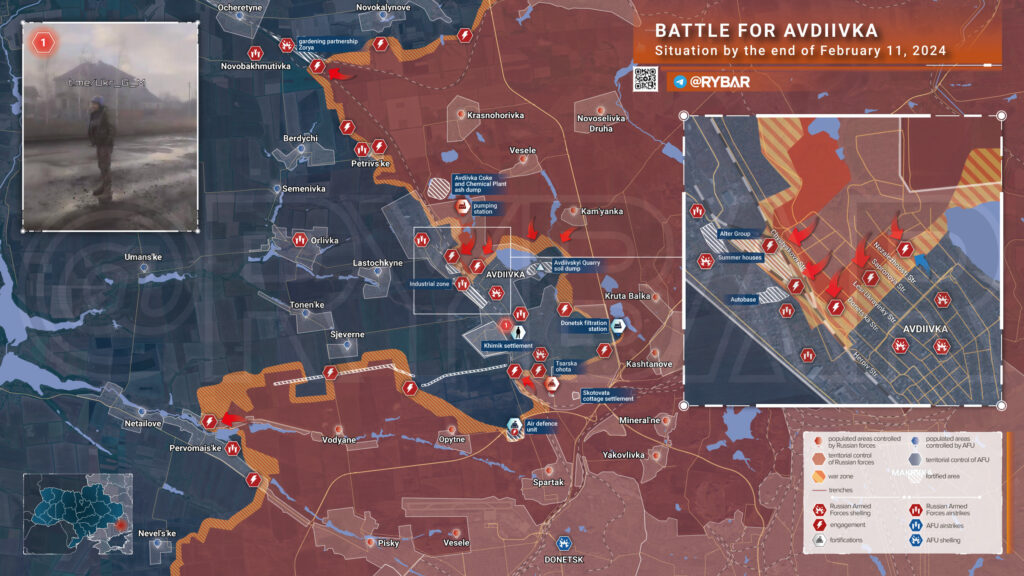
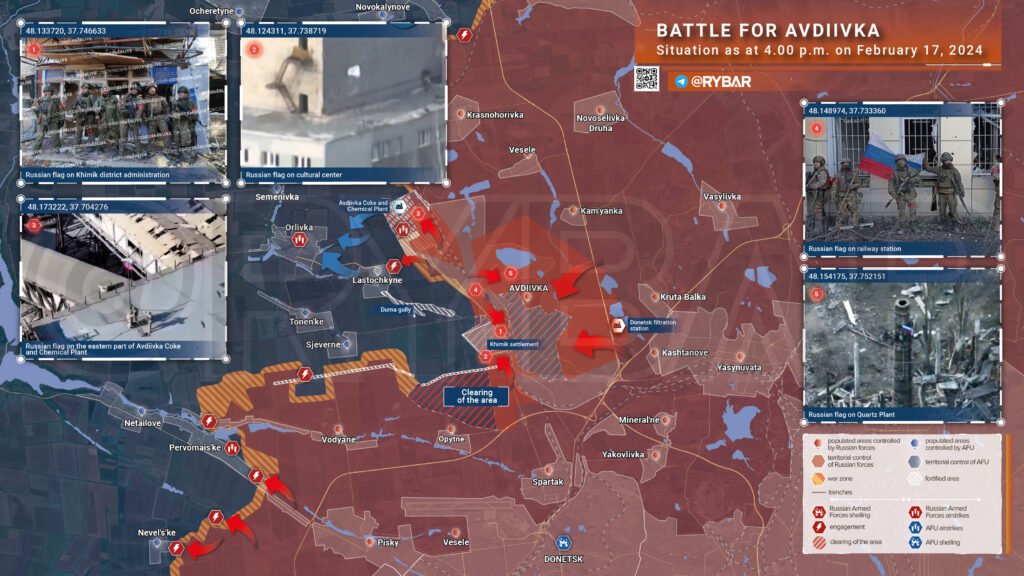
The year began with the AFU fighting for its fortress in Avdiivka, where it continued to block the northern approach to Donetsk. At the time, the typical argument that one heard from the Ukrainian side was that the Russian assault on Avdiivka was pyrrhic – that the Russians were capturing the city with exorbitantly costly “meat assaults” that would inevitably sap Russian combat power and exhaust their ability to continue the offensive.
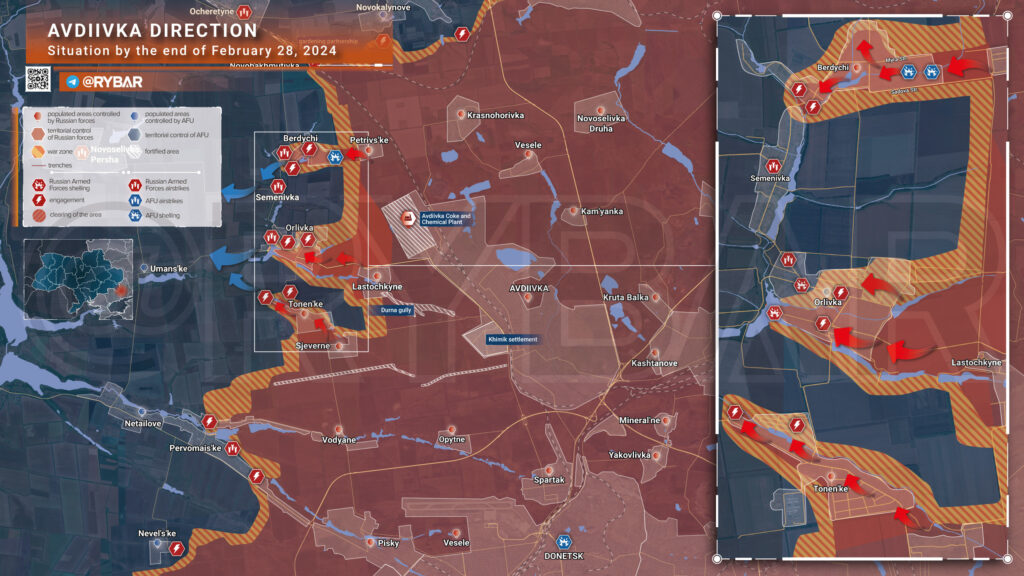
With the full measure of the year behind us, we can definitively say that this is not the case. After the fall of Avdiivka, Russian momentum never seriously slackened, and in fact it was the AFU that appeared to be increasingly exhausted. The Ukrainian breakwater position at Ocheretyne (which had previously been their staging point for counterattacks around Avdiivka) was overrun in a matter of days, and by the early summer the frontline had been pushed out towards the approach to Pokrovsk.
The Russian thrust towards Pokrovsk led many to believe that this city was itself the object of Russian energies, but this was a misread of the operational design. Russia did not need to capture Pokrovsk in 2024 to render it sterile as a logistical hub. Simply by advancing towards the E50 highway, Russian forces were able to cut off Pokrovsk from Ukrainian positions to the south on the Donetsk front, and Pokvrovsk is now a frontline city subject to the full spectrum of overwatch from Russian drones and tube artillery.
By autumn, the Russian advance had put the Ukrainians in a severe salient, creating an unstable chain of positions in Selydove, Kurakhove, Ugledar, and Krasnogorivka. Russia’s advance from Ocheretyne onto the southern approach to Pokrovsk acted like an enormous scythe, isolating the entire southeastern sector of the front and allowing Russian forces to carve through it in the closing months of the year
Russian Operations in 2024, Donetsk Axis
This war has turned the word “collapse” into a devalued buzzword. We are told repeatedly that one side or the other is on the verge of collapse: sanctions will “collapse” the Russian economy, the Wagner uprising of 2023 proved that the Russian political system was “collapsing”, and of course we hear that exorbitant losses have one army or the other on the verge of total failure – which army that may be depends on who you ask.
I would argue, however, that what we saw from October 2024 onward represents a real occurrence of this oft-repeated and discarded word. The AFU suffered a genuine collapse of the southeastern front, with the forces positioned in their strongpoints too attrited and isolated to make a determined defense, Russian fires becoming too heavily concentrated in ever more compressed areas to endure, and no mechanized reserve in the theater available to counterattack or relieve the incessant Russian pressure.
Ukraine does maintain enough drones and concentrated fires to limit a full Russian exploitation – that is, Russia is still not able to maneuver at depth. This gave the Russian advance a particular stop-start quality, leapfrogging from one settlement and fortress to the other. More generally, Russia’s preference to use dispersed small-unit assaults limits the potential for exploitation. We have to emphasize, however, that Russian momentum on this axis has never seriously slackened since October, and many of the key Ukrainian positions were overrun or abandoned very quickly
Ugledar is a good example: the Russians began their final push toward the town on September 24. By September 29, the 72nd Mechanized Brigade began evacuating. By October 1, Ugledar was fully under Russian control. This was a keystone Ukrainian position put in a completely untenable position and it went down in a week. One could argue, of course, that Ugledar held out for years (how then can we say with a straight face that it was captured in a week), but this is precisely the point. In early 2023 Ugledar (with the help of artillery stationed around Kurakhove) successfully repelled a multi-brigade Russian attack in months of heavy fighting. By October 2024, the position was completely untenable and was abandoned almost immediately when attacked.
The Ukrainians did no better trying to hold Kurakhove – previously a critical rear area that served as both a logistical hub and a base of fire for supporting (former) frontline strongpoints like Ugledar and Krasnogorivka. Kurakhove, now under full Russian control, will in turn serve as a base of support for the ongoing Russian push to the west towards Andriivka.
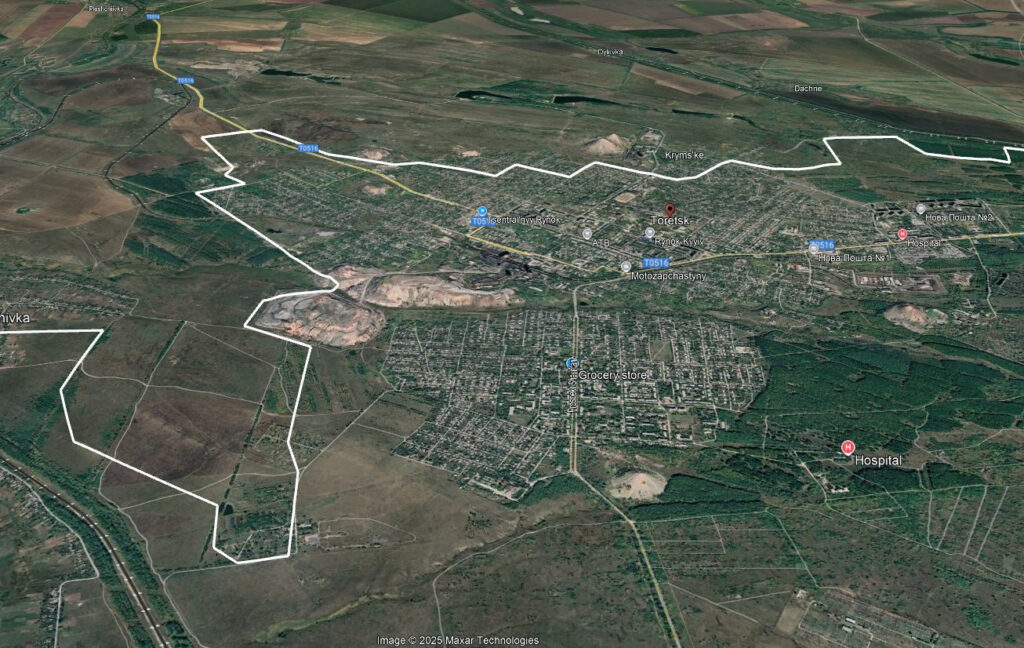
Taking the state of the front holistically, the AFU is currently holding two severe salients at the southernmost end of the line – one around Velyka Novosilka, and another around Andriivka. The former is likely to fall first, as the town has been fully isolated by Russian advances on the flanks. This is not a Bakhmut-like situation, where roads are described as “cut” because they are under Russian fire – in this case, all of the highways into Velyka Novosilka are cut by physical Russian blocking positions, making the loss of the position only a matter of waiting for the Russians to assault it. Further north, a more gentle and less strongly held salient exists between Grodivka and Toretsk. With Toretsk now in the final stages of capture (Ukrainian forces now hold only a small residential neighborhood on the city’s outskirts), the front should level here as well in the coming months.
This leaves the Russians more or less in full control of the approaches to Kostyantinivka and Pokrovsk, which are in many ways the penultimate Ukrainian held positions in Donetsk. Pokrovsk has already been bypassed several miles to the west, and the map portends a re-run of the typical Russian tactical methodology for assaulting urban areas – a methodical advance along the wings of the city to isolate it from arterial highways, followed by an attack on the city itself via several axes
The coming months promise continued Russian advances across this front, in a continuation of what can only be regarded as the collapse of a critical front on the part of the AFU. The Russian Army is advancing to the western border of Donetsk oblast and will ferret the Ukrainians out of their remaining strongpoints at Velyka Novosilka and Andriivka, while pushing into the belly of Pokrovsk. At no point since the fall of Avdiivka have the Ukrainians demonstrated the ability to seriously stymie Russian momentum along this 75 mile front, and the ongoing dissipation of Ukrainian combat resources indicates that little will change in this regard in 2025.
Toehold: The Incredible Shrinking Kursk Salient
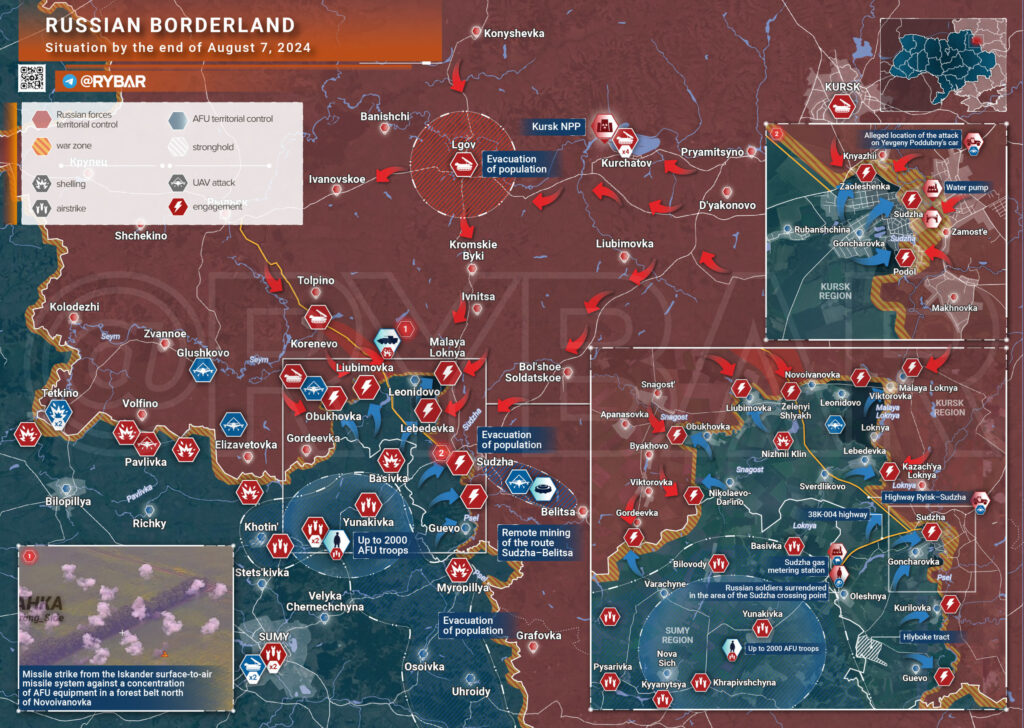
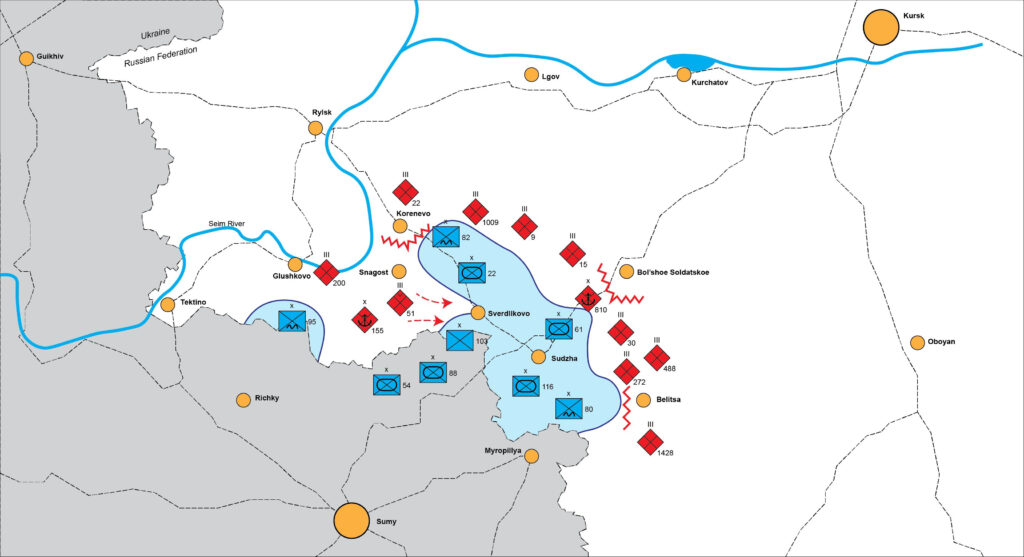
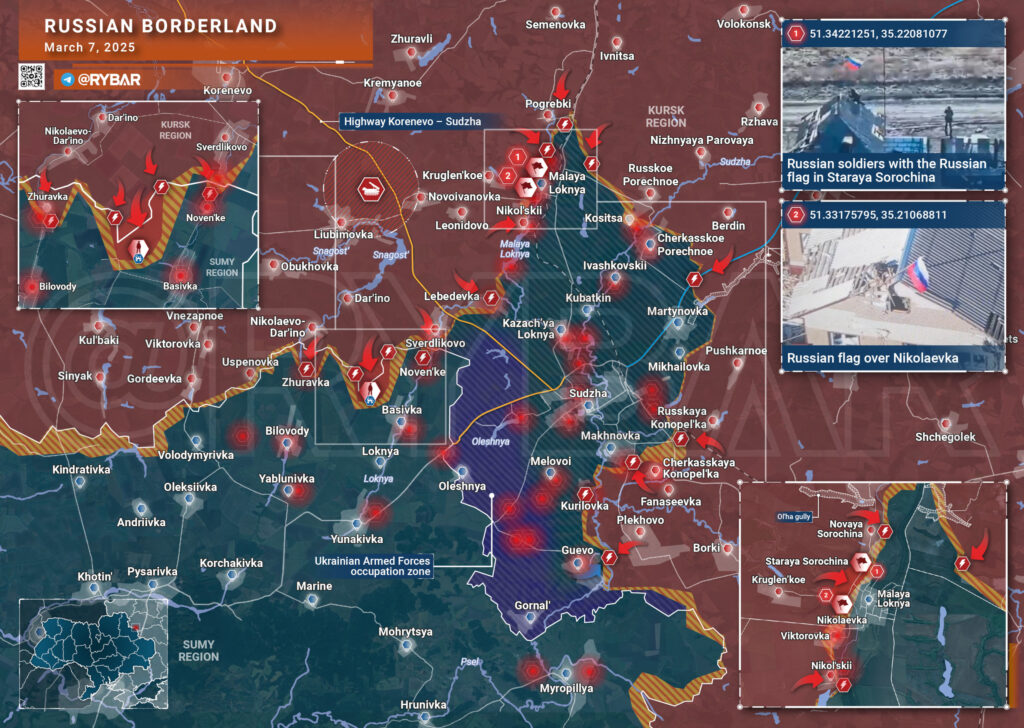
Throughout the autumn of 2024 and these early months of winter, as Ukrainian forces were dug out of their dense web of fortified positions in the southern Donbas, their comrades continued to stubbornly hold on to their position in Russia’s Kursk Oblast. The basic shape of Ukraine’s offensive into Kursk is by now well known – billed by Kiev as a gambit to change the psychological trajectory of the war and strike a prestige blow to Russia, the Ukrainian attack had early momentum after achieving initial strategic surprise, but quickly faltered after Ukrainian columns ran into effective Russian blocking positions on the highways out of Sudzha. Efforts to force the roads through Korenovo and Bolshoe Soldatskoe were defeated, and the Ukrainian grouping was left holding on to a modest salient around Sudzha, jutting out into Russia.
Throughout the autumn, Russian counterattacks have focused on chiseling away at the base of the Ukrainian salient – forcing the Ukrainians out of Snagost and pushing them away from Korenovo. The progress here has been incremental, but significant, and by the start of January the “neck” of the Ukrainian salient had been compressed down to a little over nine miles wide, after their initial penetration in the summer had forced a breach of over twenty miles. All told, Ukraine has lost about 50% of the territory that they grabbed in August.
The Russian pressure on the flanks of the salient have amplified many of the qualities that make this position wasteful and dangerous for the AFU. There is limited road connectivity for Ukrainian forces – a problem amplified by the rollback from Snagost, which cost them access to the highway running from Korenovo to Sumy. Apart from a few circuitous side roads, Ukrainian forces only have a single highway – the R200 route – to run material and reinforcements into the pocket, which allows Russian forces to surveil their lines of communication and conduct effective interdiction strikes. The compression of the pocket also greatly narrows the targeting area for Russian drones, tube artillery, and rocketry, and creates more condensed and saturating bombardment
Despite the fact that this position has been profoundly unproductive for Ukraine – being steadily rolled back and having no synergy with other, more critical theaters – the same grouping of Ukrainian units remain here, fighting in a steadily more compressed space. Even more baffling, the Ukrainian grouping consists largely of premiere assets – Mechanized and Air Assault brigades – that could have contributed meaningfully as a reserve in the Donbas over the last three months.
The tactical particulars of the Ukrainian attack are interesting, and there’s ongoing speculation as to its purpose – perhaps it was intended to cover a rotation or withdrawal, to improve tactical positions on the northern edge of the salient, or for inscrutable propaganda purposes. However, these specifics are rather unimportant: attacking out the end of the salient (that is, trying to deepen the penetration into Russia) does nothing to reverse Ukraine’s problems in Kursk. These problems are first, on the tactical level, that the salient has been greatly compressed on the flanks and continues to narrow, and on the strategic level the willful expenditure of valuable mechanized assets on a front that does not impact the critical theaters of the war. More simply, Kursk is a sideshow, and it is a sideshow that has gone wrong even within its own operational logic.
One thing that has been of endless interest, of course, have been the continued rumors of North Korean troops fighting in Kursk. Western intelligence agencies have been adamant about the presence of North Koreans in Kursk. Some people are predisposed to instinctively disbelieve everything that western officialdom says – while I think some skepticism is warranted, I do not automatically assume that they are lying. One recent report lays out what would seem to be a plausible version of this story: that the idea actually originated in Pyongyang, not Moscow, and that a modest number of Korean troops (perhaps 10,000) are embedded with Russian units. The presumption here is that the Koreans hatched the idea as a way to gain combat experience, with the Russians in turn getting auxiliary forces, though of questionable combat effectiveness.
However, it is worth noting that this is not nearly as important as it has been made out to be. Much has been made of the idea that the North Korean presence proves some sort of Russian state of desperation, but this is fairly silly on its face – with more than 1.5 million active personnel in the Russian military, 10,000 Korean troops in Kursk represents a paltry appendage. More importantly, there has been an attempt to portray the North Korean contingent as a major departure point in the war. In particular, the formulation “North Korean troops in Europe” has been used to conjure cold war imagery of communist despotism clawing at the free world
The point, however, is that North Korean troops are presumed specifically to be in Kursk, which is in Russia. This is linked, of course, to the recently concluded mutual defense agreement signed between Moscow and Pyongyang. By attacking into Kursk – widening the front into prewar Russian territory – Ukraine created a defensive combat task for Russia which triggers the possibility of military assistance from North Korea. However much one may wish to link the Korean contingent to Russia’s dreaded “war of aggression”, the force in Kursk is very objectively engaged in the defense of Russian territory, and that makes it possible for Russia to use auxiliary forces – including conscripts and the troops of its allies – to fight there.
Ultimately, then, the presence of North Koreans in Kursk is interesting, but perhaps not very important after all. These troops are not in Ukraine (even under the most maximal definition of the Ukrainian territorial unit), they are not carrying the primary combat load, and they are unequivocally not the problem that the AFU is facing in Kursk. The “big problem” for Ukraine, very simply, is not the presence of some amorphous Korean horde dedicated to spreading Glorious Juche to Europe – it is the loitering of large grouping of their own precious mechanized brigades in a compressed salient, far far away from the Donbas, where they are greatly needed.
Scraping the Barrel: AFU Force Generation
I think it is well understood, of course, that Ukraine faces severe manpower constraints relative to Russia, both in terms of the raw totals of male biomass available – with roughly 35 million fighting aged males in Russia against perhaps 9 million in prewar Ukraine – but also in terms of its capacity to mobilize them.
Ukraine’s mobilization scheme is hampered by both widespread draft evasion (with willingness to serve decreasing as the war has stretched on) and a stubborn unwillingness to draft younger men, aged 18-25. Ukraine is structurally burdened with a deeply imbalanced population structure: there are roughly 60% more Ukrainian men in their 30’s than in their 20’s. Given the relative scarcity of young men, particularly in their early 20’s, the Ukrainian government rightly views this 18-25 year old cohort as a premium demographic cohort that it is loathe to burn away in combat. Given the ubiquity of draft evasion, the refusal to mobilize younger males, and the corruption and inefficiency characteristic of the Ukrainian government, it should come as no surprise when Ukrainian mobilization falters
All of that is to say: Ukraine faces a severe structural disadvantage in military manpower in the aggregate, which is exacerbated by the idiosyncrasies of the Ukrainian mobilization law, ameliorated slightly by the relatively low troop densities and the preponderant power of strike systems in this war.
The argument that I want to make here, however, is that Ukraine’s systemic problems matching Russian manpower have been exacerbated by several developments which specifically became prominent in 2024. In other words, 2024 can and should be marked as the year where Ukrainian manpower constraints became markedly and perhaps irretrievably worse due to specific decisions made in Kiev, and particular developments on the ground.
These are as follows:
The decision to expand the AFU’s force structure through the creation of the “15 series” brigades
The decision to deliberately widen the front and create additional demands for manpower by launching the incursion into Kursk
The stall out of Ukraine’s new mobilization program in the autumn
Accelerating problems with desertion in the AFU
We’ll run through these in order.
An army that is intaking new personnel has to decide between two possible allocations for them. New personnel can be used as replacements to replenish existing frontline units, or they can be used to expand the force structure by creating new units. That much seems fairly obvious, and ideally mobilization will exceed losses and make it possible to do both. Where armies face hard manpower constraints, however – that is, where losses are equal to or greater than intake of men, the decision to expand the force structure can have monumental consequences. The stereotypical example, of course, would be the late-war Wehrmacht, which created premiere new assets in the form of Waffen SS divisions, which received privileged access to recruits and equipment while regular army divisions in the line suffered from a trickle of replacements which could not keep up with losses.
Ukraine, with its garbled force structure, has created a mess through its own attempts to expand its force structure in the face of dwindling strength on the line. Late in 2023, the AFU announced intentions to form an entirely new grouping of brigades – the so-called “15 series”, given their designations as the 150th, 151st, 152nd, 153rd, and 154th Mechanized Brigades. This was followed in 2024 with the appending of the 155th Mechanized Brigade, which was to be trained and equipped in France.
Forming a new grouping of mechanized brigades is essential to the way that Ukraine is presenting its war. Because Ukraine still aims (at least on paper) to recapture all of its Russian held territory, there must always be the illusory possibility of a future offensive, and in order for that illusory possibility to remain, Ukraine must present itself as actively preparing for future offensive operations. Ukraine’s presentation of its own strategic animus – the idea that it is holding the front while it prepares to go back on the offensive – essentially locks it into a program of expanding its force structure
The problem for Ukraine is that the immense pressure on the front makes it essentially impossible for them to properly husband resources the way they would like. Properly training and equipping half a dozen fresh mechanized brigades and holding them in reserve would be very helpful, but they cannot really do this in light of the demands for personnel at the front. These brigades instead become “paper formations” that have a bureaucratic existence, while their organic assets are pulled apart and sucked into the front – stripped down into battalion or company sized elements that can be plugged into sectors of need on the frontline. At the moment, none of the 15 series brigades have seen action as organic units – that is, fighting as themselves.
The decision to allocate personnel to new mechanized brigades (though given stocks of armored vehicles it is questionable whether those designations mean anything) does not necessarily change Ukraine’s manpower balance in the aggregate, but it is certainly an inefficient way to use personnel. To return again to the 155th brigade, one problem noted by Ukrainian analysts was the fact that much of the brigade was formed whole cloth from forcibly mobilized personnel, without a proper cadre of veterans and experienced NCOs – some 75% of the brigade, it turns out, had been mobilized less than two months before arriving in France for training. This fact was certainly instrumental in the mass desertions and the brigade’s poor combat effectiveness.
Given Ukraine’s constraints, the best course of action would undoubtedly be to allocate new personnel and equipment as replacements to build out the depleted veteran brigades on the front lines, plugging in replacements around existing veterans and officers. Kiev, however, prizes the prestige that comes from force expansion and the “shiny new toy” factor of new formations equipped with scarce and valuable equipment like Leopard tanks. These new brigades, though billed as premiere assets, clearly have lower combat effectiveness than existing formations, given their lack of experience, shortage of veteran officers, and low unit cohesion.
In short, Ukraine’s decision to embark on force expansion in the face of significant manpower shortages has exacerbated the problem – both starving veteran units of replacements and concentrating newly mobilized personnel into combat ineffective formations that lack a veteran core, experienced officers, and vital equipment. They have tried, belatedly, to square this circle by parceling out new formations to backstop line brigades, but this is less than ideal – it leads to a patchwork order of battle with lower unit cohesion and a fragmented defense.
Unfortunately, this comes precisely as Ukraine has created additional self-imposed strains on its resources, in particular through its incursion into Kursk. At the moment, elements of at least seven mechanized brigades, two marine infantry brigades, and three air assault brigades are stationed on the Kursk axis. Without going too far into the weeds rehashing Ukraine’s operation here, it’s important to remember that Ukraine – facing extreme pressures on its force generation – voluntarily chose to widen the front into a secondary theater, diverting scarce assets and reducing its own ability to economize forces.
In summary, Ukraine has made deliberate decisions to widen the front and expand its force structure, both of which have been decidedly detrimental to its efforts to economize personnel. This comes precisely as a 2024 effort to ramp up mobilization has come off the rails.
A deadly feedback loop is now at work, with the lack of rotations and the shortage of replacements synergizing to accelerate the burn of Ukrainian personnel. The AFU is unable to regularly rotate units out of combat, and the inadequate flow of replacements causes frontline infantry complements to wear thin. Unable to rotate or reinforce, line brigades resort to cannibalization – scraping support personnel like mortar teams, drivers, and drone operators to fill out frontline positions. This further accelerates losses as brigades fight with thinned out support and fires elements, and makes Ukrainian men more unwilling to enlist – because there is now no guarantee that becoming a drone operator, for example, will save one from being sent to a frontline trench eventually.
Where does this leave us? Ukraine continues to dispose of a very large force, with more than a hundred brigades and hundreds of thousands of men under arms. This force, however, is both substantially outnumbered by the Russian army and in a clear trend of decay. Despite a highly touted attempt to reinvigorate the mobilization apparatus in 2024, the intake of new personnel is clearly too low to offset losses, and the heavy lifting formations in critical sectors of front have seen their strength – particularly in the infantry complements – decline, in some cases to critical levels.
The failure of Ukraine’s 2024 mobilization program has coincided with several strategic choices which have exacerbated manpower concerns – specifically the decision to embark on a program of force expansion even as the AFU voluntarily extended its commitments by opening a new secondary front in Kursk. In other words, Ukraine’s mobilization falls short of its force requirements, and the AFU has also made choices that sabotaged its ability to economize. Units are ground up, replacements come in a paltry trickle, rotations are late or absent, units cannibalize themselves, and angry and weary men desert.
It’s not at all clear that this will lead to a “breaking point”, in the sense that people are anticipating. Ukrainian strike capabilities and the Russian preference for dispersed, leapfrogging assaults limit the potential for grand breakthroughs and exploitation. However, what we saw over the past three months on the southern Donetsk axis offers a preview of what awaits: an exhausted force being steadily rolled back, dug out of its strongpoints, and mauled – covering its retreat with drones but losing position after position. The line holds, until it doesn’t.
End of the Line: ATACMs, JASSMs, and Hazelnuts
Ukraine’s ability to remain in the field depends on a titration of two indispensable resources: first, Ukrainian male biomass, and secondly the critical western weaponry that gives them combat effectiveness. We have evaluated the first: Ukraine is not exactly out of men, but the trends of its mobilization program are poor and personnel shortages are mounting. The trends regarding the second are, if anything, even more foreboding for Kiev.
There are two general dynamics that have emerged, neither of which create an optimistic picture for Ukraine, which we’ll examine in turn. These are as follows:
The delivery of heavy weaponry to Ukraine (tanks, IFVs, and artillery tubes) has largely dried up in recent months.
The west has essentially run out of escalatory weaponry (strike systems) to give, and those systems already given have failed to meaningfully altar the trajectory of the war.
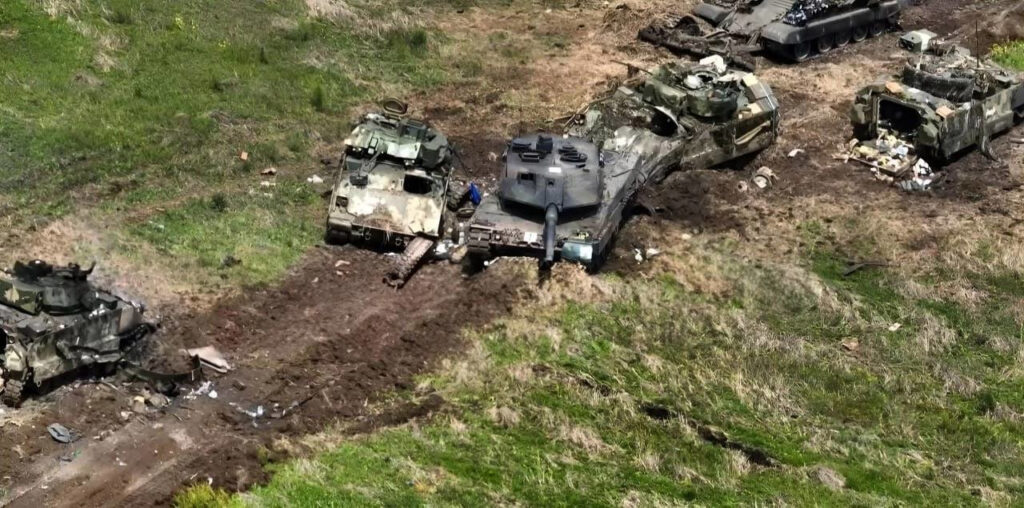
In 2023, building out new mechanized units was the name of the game, with the Pentagon leading a multinational effort to stand up an entire army corps worth of units equipped with Leopards, Challengers, and a whole slew of western IFVs and APCs. When that lovingly assembled grouping bashed its head on a rock in the botched assault on the Zaporizhia line, the United States belatedly and begrudgingly dispatched its own Abrams to backstop the Ukrainian tank force. In 2024, however, deliveries of heavy weapons slowed to a trickle.
The role of the tank in Ukraine has been greatly misunderstood. The vulnerability of tanks to the myriad strike systems of the modern battlefield led some observers to declare that the tank as a weapons system was now obsolete, but this did not really square with the fact that both combatants in this war were eager to deploy as many as possible. Tanks need more critical enablers – more combat engineering, air defense, and electronic warfare support – but they continue to fill an indispensable role and remain an essential item in this war. The failure of Ukraine’s 2023 counteroffensive showed, if anything, that tanks simply are not “game changing” systems, but mass consumption items – but this has always been the case. The signature quality of iconic tanks like the Sherman and the T34 was that they were numerous
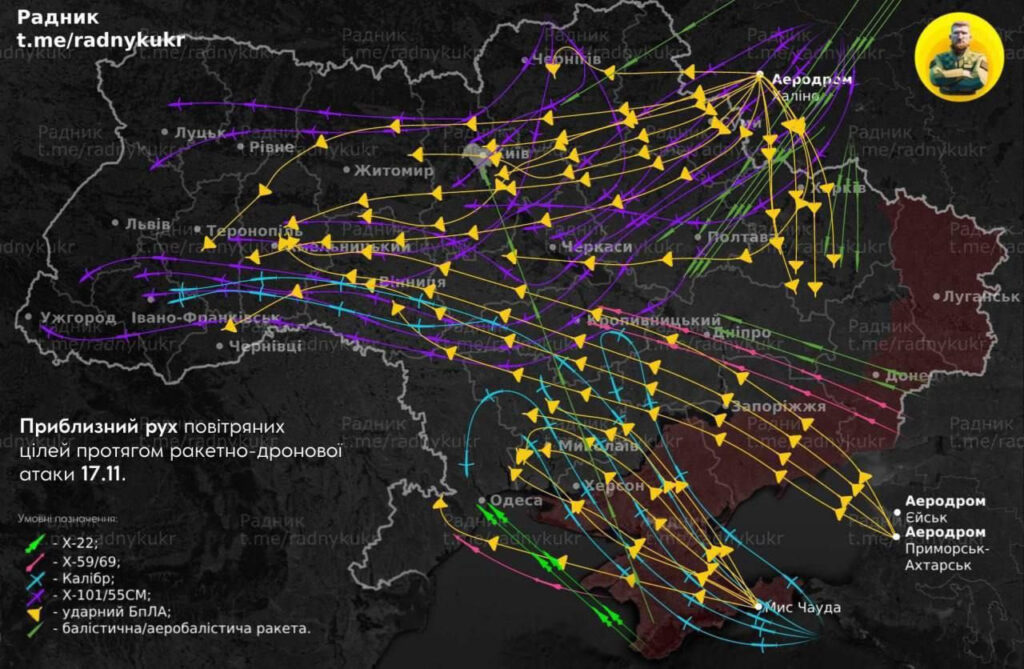
While 2023 was all about building out Ukraine’s mechanized package with tanks, IFVs, and engineering, 2024 has been largely about enhancing Ukraine’s strike capabilities. There have been two separate elements at play – first, the delivery of both air and ground launched systems (most notably the British Storm Shadows and American ATACMs respectively), and secondly the loosening of the rules of engagement to allow Ukraine to strike targets inside pre-war Russia.
This dovetailed, as it turned out, with Ukraine’s operation in Kursk, and in many ways the most direct impact of the Kursk incursion has been to force the west’s hand on the rules of engagement. While Ukraine has long been striking inside Russia with indigenous systems, most notably drones, the White House continued to drag its feet on formal approval for strikes with American systems. By launching a ground assault on Kursk, Ukraine made the decision for them: the United States gave clearance to use ATACMs to support the ground forces in Kursk, and this metastasized into general license to strike Russia with the full range of available systems. This was a poignant reminder that, however we conceive of the proxy-sponsor relationship, Ukraine has some ability to force America’s hand: a classic example of the tail wagging the dog.
In any case, 2024 saw Ukraine and its western backers slowly but surely bash through all the supposed red-lines in this domain: the British breached first with the delivery of Storm Shadows late in 2023, and this was followed by the delivery of ATACMs (with a handful of F16’s to boot), and finally the loosening of the rules of engagement to clear strikes on Russia.
Where does this leave us? There would seem to be three important things to consider.
The west has essentially reached the end of its escalation chain. The only remaining step that they can take would be to supply Ukraine with JASSMs (Joint Air-to-Surface Standoff Missile), which would mark a quantitative but not a meaningful qualitative upgrade to Ukraine’s strike capabilities.
Ukraine’s use of western-supplied strike assets has been dissipated and has not materially improved their situation on the ground.
Russia maintains a dominant strike advantage, both qualitative and quantitative.
Ukraine faces a stark disadvantage in strike capability relative to Russia, in a variety of ways. Russian strike assets are far more numerous and have significant range advantages, but it is also important to take into consideration both Russia’s significantly greater strategic depth and its more dense and relatively unscathed air defense. Unlike Ukraine, which has seen its air defense stretch to the limit with destroyed launchers and a mounting interceptor shortage, Russia’s air defenses have been essentially untouched, as Ukraine has lacked the large numbers of assets required to conduct a proper SEAD/DEAD (Suppression/Destruction of Enemy Air Defense) campaign.
Given this basic calculus, using western strike systems to wage a blow for blow strategic air campaign is bad math for Ukraine. It is generally unwise to engage in a bat fight when your opponent is a bigger man with a much longer bat. Instead, Ukraine’s strike systems should have been leveraged to support ground operations – concentrating strikes spatially and in time to synergize with efforts on the ground. Just as a simple thought experiment, it is not difficult to imagine ATACMs making a difference if they had been available in 2023 and used to saturate Russian rear areas during the assault on the Zaporizhia line – striking in tempo with the mechanized assault to disrupt Russian command and control and prevent reinforcement of critical areas.
Two things need to be noted about the JASSM. First, the JASSM – while offering slightly longer ranges – would essentially serve as a backstop/replacement for the rapidly dwindling ATACMs and particularly the air launched Storm Shadows – instead of Ukraine’s native SU-24s launching Storm Shadows, they would utilize F-16s launching JASSMs. This would not represent a dramatic upgrade in Ukrainian capabilities, but would instead simply serve to maintain a bare minimum Ukrainian strike capability. JASSMs are a replacement for dwindling capabilities, not an augmentation to them.
Secondly, it must be understood that JASSMs are the last stop. We’re now entering the territory, not of artificially constructed red lines, but physical and real limits. Russia has essentially eaten the gifted stocks of ATACMs and Storm Shadows, with little discernable effect on their ability to fight, and JASSMs are the last extant item in the inventories to keep Ukrainian strike capabilities operative. We are at the last rung of the aid ladder.
In the case of JASSMs, however, there are notable downsides for the United States. This is an important case of putting all of one’s eggs in the same technological basket. In 2020, the United States scrapped the development of its conventionally armed Long Range Standoff Missile, making the JASSM – particularly the new extended range variants – the system for the United States, earmarked to play a critical role in future conflicts, particularly in the Pacific. This makes the JASSM an extremely sensitive system, as a centerpiece of American strike capabilities, particularly with the modernization of the Tomahawk system crawling along at a few dozen units per year.
Given the fact that JASSMs are GPS guided, there are real reasons to be reticent about giving Ukraine such a technologically sensitive system. Russian electronic warfare has enjoyed considerable success jamming GPS and disrupting similarly guided American systems. Allowing the Russians to gain familiarity with a keystone American system could wreak havoc on Pentagon war planning – most, if not all of the strike eggs are in this basket, so why let an adversary peek inside?
It’s probable, given what we have seen to this point, that these concerns will ultimately be dismissed and Ukraine will receive a line of JASSMs which will backstop their strike capabilities – but given the size of Ukraine’s F-16 fleet, the scale will be constrained. Furthermore, air launched systems are less optimal for Ukraine, given their dependence on large and easily targeted airfields, in contrast to ground launched systems which are mobile and more easily concealed.
There is also the matter of the new Russian missile system – the now famous Oreshnik, or Hazel Tree. Russia tested the Oreshnik system on a large machining plant in Dnipro on November 21, 2024, which allowed the basic capabilities of the system to be gauged. The Oreshnik is an Intermediate Range Ballistic Missile, characterized by its hypersonic capabilities (exceeding Mach-10) and its Multiple Independent Reentry Vehicle equipped with six separate warheads, with the potential for submunitions in each. Although the attack on Dnipro was essentially a demonstration which used inert training warheads (that is, without explosive payloads), the missile can be configured with nuclear or conventional warheads
As in the case of the North Korean troops in Kursk, I rather think that the Oreshnik launch was not nearly as important as it was made out to be. The system is expensive and likely impractical for conventional use. I understand the desire to conceive of Oreshnik as a massively powerful conventional weapon – showering its target with half a dozen warheads with the power of an entire flight of Kalibr missiles – but there are several problems with this. The accuracy of the system (the CEP, or “Circular Error Probable” in the technical parlance) is much more consistent with a nuclear delivery system than a conventional one. Furthermore, the problem with using an IRBM for conventional strikes is the danger of miscalculation – foreign adversaries may misinterpret the launch as a nuclear attack and respond appropriately. This is precisely why the Russian government actually alerted the United States to the launch ahead of time – a fine arrangement for a demonstration, but impractical for a weapon that is intended to be used regularly.
We may see another use of the Oreshnik against Ukraine, but ultimately this is unlikely to be a system of consequence in this war. The demonstration in Dnipro was instead likely intended to send a message to Europe – reminding NATO that Russia has the capacity to deliver strikes against European targets that cannot be intercepted. It also serves as a poignant reminder that Europe lacks the equivalent capability, and in essence provides a demonstration of Russia’s ability to launch missiles from far beyond the range of either Ukrainian or European response. The Hazelnut is a tangible reminder of Russia’s strategic depth and strike dominance in Ukraine.
Ultimately, Ukraine will lose the strike game. It’s strike capacity has dwindled, with missiles frittered away in a dissipated air campaign, and though the exhaustion of Storm Shadow and ATACMs stocks can be offset somewhat by JASSMs, Ukraine simply lacks the range or quantities necessary to match Russian capabilities. Needing to do more with less, Ukraine instead diffused its assets and failed to synergize its strikes with ground operations. We are now at the end of the line – after JASSMs, there’s nothing left in western warehouses to upgrade Ukrainian capabilities. Hazelnuts or no, the math on this bat fight is bad for Kiev.
Conclusion: Debellation
Trapped in an endless news cycle, with daily footage of FPV strikes and exploding vehicles, and a dutiful cottage industry of war mappers alerting us to every 100 meter advance, it can easily feel like the Russo-Ukrainian War is trapped in an interminable doom loop which will never end – Mad Max meets Groundhog Day.
What I have endeavored to do here, however, is argue that 2024 actually saw several very important developments which make the coming shape of the war relatively clear. To briefly recapitulate:
Russian forces caved in Ukrainian defenses at depth across an entire critical axis of front. After remaining static for years, Ukraine’s position in Southern Donetsk has been obliterated, with Russian forces advancing through an entire belt of fortified positions, pushing the front into Pokrovsk and Kostayantinivka.
The main Ukrainian gambit on the ground (the incursion into Kursk) failed spectacularly, with the salient being progressively caved in. An entire grouping of critical mechanized formations wasted much of the year fighting on this unproductive and secondary front, leaving Ukrainian positions in the Donbas increasingly threadbare and bereft of reserves.
An attempt by the Ukrainian government to reinvigorate its mobilization program failed, with enlistments quickly trailing off. Decisions to expand the force structure exacerbated the shortage of manpower, and as a result the decay of Ukraine’s frontline brigades has accelerated.
Long awaited western upgrades to Ukraine’s strike capabilities failed to defeat Russian momentum, and stocks of ATACMs and Storm Shadows are nearly exhausted. There are now few options remaining to prop up Ukrainian strike capacity, and no prospect of Ukraine gaining dominance in this dimension of the war.
In short, Ukraine is on the path to debellation – defeat through the total exhaustion of its capacity to resist. They are not exactly out of men and vehicles and missiles, but these lines are all pointing downward. A strategic Ukrainian defeat – once unthinkable to the western foreign policy apparatus and commentariat – is now on the table. Quite interestingly, now that Donald Trump is about to return to the White House, it is suddenly acceptable to speak of Ukrainian defeat. Robert Kagan – a stalwart champion of Ukraine if there ever was one – now says the quiet part out loud:
Ukraine will likely lose the war within the next 12 to 18 months. Ukraine will not lose in a nice, negotiated way, with vital territories sacrificed but an independent Ukraine kept alive, sovereign, and protected by Western security guarantees. It faces instead a complete defeat, a loss of sovereignty, and full Russian control
Indeed.
None of this should be particularly surprising. If anything, it is shocking that my position – that Russia is essentially a very powerful country that was very unlikely to lose a war (which it perceives as existential) right in its own belly – somehow became controversial or fringe. But here we are.
chronicle of censorship, fake news, whitewashing of the Ukrainian Nazism and war crimes, for the sake of the proxy war that NATO is conducting in Donbass and Ukraine, against Russia
As the calendar barrels into another year and we tick away the days of February, notable anniversaries are marked off in sequence. It is now 2/22/2022 +2: two years since Putin’s address on the historic status of the Donetsk and Lugansk regions, followed on 2/24/2022 by the commencement of the Special Military Operation and the spectacular resumption of history.
The nature of the war changed dramatically after a kinetic and mobile opening phase. With the collapse of the negotiation process (whether thanks to Boris Johnson or not), it became clear that the only way out of the conflict would be through the strategic defeat of one party by the other. Thanks to a pipeline of western support (in the form of material, financial aid, and ISR and targeting assistance) which allowed Ukraine to transcend its rapidly evaporating indigenous war economy, it became clear that this would be a war of industrial attrition, rather than rapid maneuver and annihilation. Russia began to mobilize resources for this sort of attritional war in the Autumn of 2022, and since then the war has attained its present quality – that of a firepower intensive but relatively static positional struggle.
The nature of this attritional-positional war lends itself to analytic ambiguity, because it denies the most attractive and obvious signs of victory and defeat in large territorial changes. Instead, a whole host of anecdotal, small scale positional analysis, and foggy data has to suffice, and this can be easily misconstrued or misunderstood. Ukraine’s supporters point to nominally small scale advances to support their notion that Russia is suffering cataclysmic casualties to capture small villages. This suggests that Russia is winning meaningless, pyrrhic victories which will lead to its exhaustion, so long as Ukraine receives everything it asks for from the west. At the same time, the Z-sphere points to these same battles as evidence that Ukraine can no longer hold even its most heavily defended fortress cities.
What I intend to argue here is that 2024 will be highly decisive for the war, as the year in which Ukrainian strategic exhaustion begins to show out at the same time that Russia’s strategic investments begin to pay off on the battlefield. This is the way of such an attritional conflict, which burdens armies with cumulative and constant stressors in a test of their recuperative powers. Wear and tear and the raging of the waters will erode and burden the dike until it bursts. And then the deluge comes.
Avdiivka: Tactical Overmatch
The signature operational development of 2024 is at this point clearly the complete Russian capture of Avdiivka. The strategic significance of Avdiivka has itself been subject to debate, with some dismissing it as little more than a dingy suburb of Donetsk, targeted to give Putin a symbolic victory on the eve of Russian elections.
In fact, Avdiivka is clearly a locale with great operational significance. A Ukrainian fortress since the beginning of the Donbass War in 2014, Avdiivka served as a keystone blocking position for the AFU on the doorstep of Donetsk, sitting on a major supply corridor. Its capture creates space for Russia to begin a multi-pronged advance on next-phase Ukrainian strongholds like Konstantinivka and Pokrovsk (more on that later) and pushes Ukrainian artillery away from Donetsk.
The subject that would seem to be of particular importance, however, was the manner in which Russia captured Avdiivka. The struggle amid the wreckage of an industrial city provided something of a Rorschach test for the war, with some seeing the battle as yet another application of Russian “meat assaults”, overwhelming the AFU defenders with mass amid horrific casualties
This story does not hold up to scrutiny, as I would like to demonstrate from a variety of angles. First, we can try to gauge casualties. This is always difficult to do with a high degree of accuracy, but it would be useful to look for abnormalities or spikes in Russian loss patterns. The most widely accepted source for this would be the Mediazona casualty tracker (an explicitly anti-Putinist media project operated out of the west).
When one goes to examine the Mediazona counts, an interesting discrepancy manifests itself. The summary text notes that a four-month battle for Avdiivka has recently concluded, and Mediazona states: “We are seeing significant growth of Russian casualties since mid-October.” This is actually quite odd, because their data shows the literal opposite. Since October 10 (the day of the first major Russian mechanized assault on Avdiivka), Mediazona has counted an average of 48 Russian casualties per day, which is actually significantly less than the burn rate earlier in the year. In contrast, Mediazona counted 80 casualties per day on average from January 1 to October 9. This period, of course, includes heavy fighting in Bakhmut, so if one takes the period between the end of the Battle of Bakhmut and the beginning of the Battle of Avdiivka (May 20 to October 9) one finds an average of 60 Russian casualties per day. A time series of Mediazona’s weekly confirmed casualties also shows a downward trend, making one wonder how they can feel comfortable claiming that the action in Avdiivka has raised the burn rate
Furthermore, Ukrainian sources on the ground emphasized that the Russian assault in Avdiivka was quite certainly not a mere function of mass, and noted effective Russian small unit tactics with a powerful fire support. One Ukrainian officer told Politico: “That’s how they work in Avdiivka — artillery levels everything to the ground, and then professional landing troops come in small groups.” Another officer described Russian small unit assaults (5 to 7 men) occurring at night. All of this is inconsistent with the trope about Russian “human wave” assaults – which, we should note, have never been caught on camera. Given the Ukrainian fondness for sharing combat footage, oughtn’t we expect to see some alleged evidence of these Russian waves being mowed down?
All this is to say, the claim that Russia (yet again) suffered catastrophic losses in Avdiivka is simply not supported. Like a previous analysis in which I showed that Russian armor losses were not rising or showing abnormal patterns, we yet again have a major Russian assault failing to cause a spike in the loss data. This is not to deny that Russia has suffered casualties. The operation at Avdiivka was a high intensity, four month battle. Men are killed and vehicles are destroyed in such affairs, but there is little evidence that this occurred at abnormal or alarming rates for the Russian Armed Forces.
Now, you’re certainly free to make your own judgements, and I have no doubt that the belief in massive Russian casualties and human wave assaults will endure. However, to believe this, you must make an epistemological leap of faith – believing that the wasteful human waves exist despite Ukrainian fighters testifying to the opposite, and that Russian casualties have risen in a way that is somehow invisible to trackers like Warspotting and Mediazona.
In contrast, Avdiivka stands out as the first major engagement of the war where Ukraine’s growing material shortages have been acutely felt. After burning through much of their accumulated stock (including the large batch of shells purchased from South Korea by the United States), the AFU felt a glaring and painful artillery shortage in Avdiivka. Complaints about “shell hunger” were a motif of the coverage of the battle. Of course, we’ve heard about the growing shell shortage for months (and it is known that Ukraine simply does not have enough tubes to cover the entire front), but Avdiivka stands out as a keystone position, important enough for Ukraine to scramble premier assets to reinforce it, where they simply could not provide an adequate base of fire
Avdiivka
In the absence of adequate artillery, Ukraine has increasingly tried to lean on FPV drones as a substitute. There is a certain strategic logic to this, in that small drones can be manufactured in distributed facilities and do not require the capital intensive production centers (vulnerable to Russian strike systems) that artillery shells do.
However, drones are clearly not a panacea to Ukraine’s problems. In the simple technical sense, the destructive power of an FPV drone (which usually carries the warhead of a rocket propelled grenade) pales in comparison to an artillery shell and is thus unsuitable for suppressive fire or the reduction of strongpoints. Drones are also subject to disruptions from weather and electronic warfare in ways that artillery is not. More importantly, however, Ukraine is simply losing the drone race. Ukraine’s achievements ramping up drone production in wartime are genuinely impressive, but the country’s industrial base is still far smaller and more vulnerable than Russia’s, and Russia’s drone production is starting to widely outstrip Ukraine’s. Ukraine’s weakness in other arms prompted them to be the first party to lean heavily on FPVs, but that early lead has been lost.
So, drones clearly offer a lethal and important battlefield expedient, but they are neither a genuine replacement for artillery nor an arm of clear advantage for Ukraine. The result was a Ukrainian defense in Avdiivka that was substantially outgunned. The problem was compounded by the rapid proliferation of Russian air dropped glide bombs, alongside the degradation of Ukraine’s air defense. This allowed the Russian air force to operate around Avdiivka with something approaching impunity, dropping hundreds of glide bombs with the power to – unlike artillery shells, let alone tiny FPV warheads – level the fortified concrete blocks that normally make Soviet vintage cities so durable in urban fighting.
Thus, Avdiivka unfolded along a pattern that is now becoming very familiar, and indicates the emerging Russian preference for assaulting cities, at least of this mid-sized fortress variety. Once again the operation focused in its preliminary phase on flaring out Russian control over the flanks, beginning with the large mechanized assault in early November which secured positions on the railway line to the north of the city. Again (as in the case of Bakhmut and Lysychansk-Severodonetsk) there was an expectation among some that Russia would attempt to encircle the city, but this still does not look feasible in the current operating environment under the nexus of fires and ISR. Instead, positions on the flank allowed the Russians to launch concentric attacks into the city, entering on multiple axes that compressed the Ukrainian defenders into a tight interior position, where Russian fire could be heavily concentrated
Concentric Attack on Avdiivka: February 7-14 (Base Map courtesy of Kalibrated Maps)
The particular combination of concentric attack and overwhelming Russian fires led to a very rapid end to the battle once the Russian push into the city proper began. While the creep around the flanks occurred in a sequence of on and off pushes through the winter, the concentric crush on the city lasted scarcely more than a week. On February 7-8 the Russians achieved breakthroughs in both the northern and southern suburbs, and by February 14 the Ukrainians were in retreat. A few pockets of resistance would linger for only a few days.
The issue for Ukraine now goes beyond the loss of Avdiivka and the opportunities that this will create for Russia. Ukraine now has proof of failure on both the attack and the defense in operations where they concentrated significant forces. Their counteroffensive on Russia’s Zaporhzia Line was a catastrophic failure, wasting much of the AFU’s carefully husbanded mechanized package, and now they have a failed defense on their hands in Avdiivka, despite fighting out of a well prepared fortress and scrambling reserves into the sector to reinforce the defense.
The question now becomes fairly simple: if Ukraine failed to attack successfully over the summer, if they could not defend Bakhmut, and if they cannot defend in Avdiivka, is there anywhere that they can find a battlefield success? The dam is leaking. Can Ukraine plug it before it collapses?
Russia’s Full Court Press
Ukraine’s force structure is always notoriously difficult to parse out, due to their propensity for ad-hoc battlegroups and their practice of piecemeal allocation of forces to resident brigade commands (turning brigade headquarters into the cups in a shell game). Truth be told, Ukrainian ORBAT and force allocation is in a class all its own – to try and get a handle on it, you can do no better than Matt Davies’ excellent work over on X dot com. This generally makes the AFU’s organization and force generation more opaque and more difficult to parse out than Russia’s, for example. While Russia employs conventional army level groupings, Ukraine does not, and indeed lacks any organic commands above the brigade level.
That being said, the basic picture is one of three Ukrainian “Operational Strategic Groupings”, which are vaguely akin to army groups. These are, from north to south, Operation Strategic Groupings (OSGs) Khortytsia, Tavriya, and Odessa. Against these are arrayed four Russian Army Groups – from north to south, these are Army Groups West, Center, East, and Dnieper. Assessing the total line strength is always difficult, largely because we do not always have good insight into the actual combat rating of these units. However, we can make estimates of paper strength. Based on deployment information from the Project Owl Ukraine Control Map and the Militaryland Deployment Map, we can estimate that the nominal strength in the theater right now is some 33 Division Equivalents for Ukraine against perhaps 50 DEs for Russia – a significant, but not utterly overwhelming Russian advantage. We get a picture something like this (Ukrainian Army level formations are absent because they do not exist)
Ukrainian Theater Army and Group Level Commands (Base Control Map provided by Kalibrated Maps)
At the moment, Russia is grinding slowly forward on almost every axis in the theater. This has both strategic/attritional implications, in that the Ukrainians are forced to continually burn reserves while being denied the ability to rotate and reconstitute units, but there is also a clear operational formulation occurring.
The Russian maneuver scheme must be held in reference to their minimum end state objectives – namely, the capture of the remaining Donbas urban agglomerations around Slovyansk and Kramatorsk (though we should not assume that the war or Russian ambitions end there). At the moment, there are several major axes of advance, which I am labelling as follows
Russian Axes of Attack (Base Control Map provided by Kalibrated Maps)
The intention of these thrusts is fairly obvious. In the center of the front, Russian advances on the Avdiivka and Chasiv Yar axes converge on the critical Ukrainian hub of Konstyantinivka, the capture of which is one of the absolute prerequisites for any serious attempt to move on the Kramatorsk agglomeration. Russian bases of control around Avdiivka and Bakhmut provide the necessary space to begin a two-pronged operation towards Konstyantinivka, bypassing and enveloping the strongly held Ukrainian fortress of Toretsk. (See the map below, which I made in December before the capture of Avdiivka)
Meanwhile, continued Russian pressure on the northern front (via a slow squeeze on the city of Kupyansk, at the top of the Oskil line as well as operations towards Lyman on the Zherebets axis) provide a base of progress towards the other operational perquisite for Kramatorsk, which is the Russian recapture of the north bank of the Donets River, up to the confluence of the Oskil at Izyum
Russia’s North Donetsk Campaign
Meanwhile, on the more southerly axes, Russia continues to expand its zone of control after the capture of Marinka, likely with the aim of developing momentum towards Kurakhove, which would put the Ukrainian fortress of Ugledar in a more severe salient. Ugledar remains a thorn in Russia’s side, in that it lies uncomfortable close to Russian rail lines into the land bridge. Russia is also attacking the Ukrainian held Robotyne salient (the sparse fruits of Ukraine’s counteroffensive). While these attacks have, as we have mentioned, attritional benefits by way of pinning Ukrainian forces in the line, it seems likely that Russia would aim to recapture the Robotyne salient to preempt any Ukrainian designs of using it as a springboard for a future attempt to restart operations towards Tokmak. Thus, these southern operations have both attritive effects and offer the potential of preventatively neutralizing useful Ukrainian staging points
Overall, the broad operational situation suggests that Russia is developing offensive momentum across the entire theater. This will have deleterious effects on Ukrainian combat power by preventing rotation, reconstitution, and lateral troop redeployment, while sucking in the dwindling Ukrainian reserves. Shoigu recently made an uncharacteristically bold statement that the AFU was committing much of its remaining reserves:
“After the collapse of the counteroffensive, the Ukrainian army command has been trying to stabilize the situation at the expense of the remaining reserves and prevent the collapse of the frontline.”
This is, if not totally verifiable, at least notable given his general reticence to make sweeping statements about the state of the war.
In the near term (meaning the spring and summer months) we should expect Russia to progress towards the following intermediate operational goals:
Developing a concentric offensive towards the Ukrainian agglomerations around Chasiv Yar, Toretsk, and Kontyantinivka
An offensive along the Zherebets-Oskil line towards Lyman, to capture or screen the Donetsk River line as a prerequisite for an operation against Kramatorsk
Continued assaults towards Kurakhove in preparation for the liqudiation of the Ugledar salient
Preventative attacks towards the Orakhiv axis to prevent future Ukrainian attempts to exploit the Robotyne salient
Farwell Zaluzhny
Against the backdrop of Ukraine’s defeat at Avidiivka, President Zelensky began a long expected command overhaul when he fired Commander in Chief Valery Zaluzhny and replaced him the the commander of the ground forces, Oleksandr Syrski.
There a variety of amusing ethnic and political subplots to this, particularly the longstanding tensions between Zelensky and Zaluzhny, the many ridiculous rumors that Zaluzhny had become a political rival to Zelensky and might be the lead figure in a military takeover of the government, and the rather ironic fact that the new top man, Syrski, is a Russian born less than fifty miles outside of Moscow, who ended up in Ukrainian service simply because his unit was posted near Kharkov when the Soviet Union fell, and he opted not to resign his command.
This is all very interesting, of course, and perhaps might help demonstrate that the relationship between these countries is far more convoluted and nuanced that most westerners assume. What matters for our purposes, however, is the military implications
Farewell, Sweet Prince
What we should say about Zaluzhny is that, while he was not really Ukraine’s biggest problem, he did not have the answers. Zaluzhny displayed a bizarre timidity, particularly throughout the Battle of Bakhmut and the Ukrainian Counteroffensive. We constantly heard about Zaluzhny’s reservations and opposition to Ukrainian plans – he was against the costly defense of Bakhmut, skeptical of the attack out of Orikhiv, and so forth. There was even a rumor that Zaluzhny told Zelensky that the counteroffensive had failed already in the opening weeks of the operation.
The problem with all of this is simple: Zaluzhny cannot have it both ways. He seemed to be positioning himself as a voice of caution and reason, distancing himself from operations on the ground, while allowing those operations to go forward anyway. Over the summer, supposedly at the same time that Zaluzhny had concluded that the counteroffensive was failing, he continued to push Ukrainian mechanized forces into the Russian defenses in small, company sized battlegroups.
Ultimately, Zaluzhny strikes one as a non-entity: skeptical of Ukrainian battle plans, but willing to implement them anyway without offering alternatives of his own. In particular, his hesitation led the Ukrainian counteroffensive to devolve into a sequence of wasteful probing attacks which lacked the mass to achieve a decisive result and inevitably spiraled into a slow motion trainwreck. A commander who complains about battleplans while implementing them anyway is begging an obvious question: what is it that you do around here, anyway?
In contrast, Syrski is a man who clearly exerts some will on the battlefield, for good or ill. His preference for commitment and combat has resulted in several of Ukraine’s ugliest defeats – he is, after all, the architect of the Bakhmut defense and the firebag at Lysychansk. But he’s also the showrunner for Ukraine’s signature military success to this point, in the 2022 Kharkov Counteroffensive, where he successfully exploited a badly hollowed out section of Russian front and recaptured important positions over the Oskil
Syrski (2nd from left) checks the situation map
Syrski may very well lead Ukraine to disaster. He has shown a tolerance for casualties that could easily break the AFU’s back, and a preference for generating horrible, grinding positional defense. But Syrski at least has a propensity to look for decision points, unlike Zaluzhny, who seemed content to slowly wither away in positional battle against a superior foe. Aggression could easily cause disaster for Ukraine, but time had clearly run out on Zaluzhny’s way of war.
Outgunned: Ukraine and the Arms Race
The Russo-Ukrainian War is one of industrial attrition. Despite a variety of theories about this or that game changing weapon, clever maneuver scheme, or superior western training, the reality of this war for the last 18 months has been one of grinding and laborious industrial war, battering through fixed defenses in a maelstrom of concrete, steel, and high explosives. The central problem for Ukraine is fairly simple: Russian force generation is reaching the liftoff point, which will interminably shift combat power in Russia’s favor.
As artillery shells have become the totem item in this war, a commentary on the state of the artillery race is certainly warranted. Ukraine managed to build a large inventory of shells in preparation for its 2023 summer offensive, partially through careful husbanding of resources and partially through the United States tapping a few remaining reservoirs, like South Korea. After expending much of that stockpile in high intensity operations through the summer, the artillery advantage has once again swung heavily in favor of Russia, and “shell hunger” has become a ubiquitous complaint for Kiev.
After burning through excess stocks, Ukraine’s long-term supply has increasingly come to hinge on attempts to expand production in Europe and the United States. However, this plan is foundering on three separate rocks: 1) industry has been much slower to ramp up than expected; 2) even the expanded production targets are too low to win the war for Ukraine; and 3) even if adequate ammunition could be procured, Ukraine would quickly run into problems with barrel availability.
Thus far, the United States has been much more successful ramping up production than has Europe. While American targets have been revised several times, it now looks like the United States will produce something like 500,000 shells in 2024, which is a good number given the state of the American industrial plant and issues with labor shortages. The European Union initially hoped to deliver 1 million shells on an annualized basis, but they appear to be far short of this number. Europe faces a variety of problems, like labor shortages, exorbitant energy costs, and a consensus driven decision making culture that is slow to allocate significant resources. The European practice of small orders placed by individual member states also leaves manufacturers hesitant to make large investments in new production lines. Or, as one Belgian general put it: “We’re in deep shit.”
Let’s say that the USA and Europe both fulfill their current targeted deliveries to Ukraine in their entirety. What would that amount to? A recent study from two German analysts at the European Council on Foreign Relations estimated that, in the optimist scenario, the USA and Europe can supply Ukraine with approximately 1.3 million rounds of ammunition on an annualized basis. That would give Ukraine a budget of about 3,600 shells per day – enough to sustain moderate intensity, but far below what they need
The primary means of physical destruction
Last year, Ukrainian Minister of Defense Reznikov said that Ukraine would require nearly 12,000 shells per day to “successfully execute battlefield tasks”, particularly offensive actions. That works out to more than 350,000 shells per month – more than three times what the NATO bloc is hoping to produce. Obviously that large number is unrealistic, but a recent study from the Estonian Ministry of Defense estimated that at minimum Ukraine will need 200,000 shells per month (Roughly 6,600 per day). At the estimated long-run availability of 3,600 per day, Ukraine can have some basic functionality, but they will find it difficult to accumulate a stockpile to allow higher intensity offensive operations.
This runs into an additional, follow on problem, which is that simply pumping shells into Ukraine is not enough. Solving the shell shortage will exacerbate the barrel shortage. Artillery barrels, needless to say, wear out from extended use. Using a rule of thumb number which says that a howitzer barrel has a lifespan of about 2,500 shots, this means that Ukraine would be wearing out somewhere between 125-150 guns per month, assuming they could actually shoot as much as Reznikov wants. This would create yet another sustainment bottleneck, complicated by the fact that Ukraine has at least 17 different platforms in use.
Meanwhile, what of the Russians? It’s clear that Russia’s pool of shells has been vastly underestimated. First we have the news that North Korean deliveries have been far larger than initially expected; instead of 1 million, it’s something more like 3 million with deliveries ongoing. This number is dampened by the fact that some of the North Korean shells are defective (from long stays in depots and cannibalization), but the sheer size of the delivery can’t be ignored. Meanwhile, indigenous Russian production has skyrocketed, with the Estonians estimating some 3.5 million shells produced in 2023 for the Russians, with a figure of 4.5 million expected in 2024. Including North Korean shells, it seems highly likely that Russian can easily sustain a firing rate of up to 12,000 shells per day, with surge capacity in reserve
The upshot of all this is essentially that, even if the European production surge occurs on schedule, there’s at least a 3-1 advantage (potentially 5-1) in Russian artillery fire that’s baked into the calculus of this war, occurring alongside a substantial western acknowledged ramp up in Russian production of strike systems like cruise missiles, Geran drones, Lancets, and glide bombs of both greater power and greater range. A recent publication from the Royal United Services Institute noted that Russia can deliver 1,500 tanks (both new build and retrofitted depot stocks) and 3,000 armored vehicles per year – the report also notes that Russian stocks of Iskander and Kalibr missiles have grown significantly over the last year.
The standard argument – the sort of “Theory of Ukrainian Victory” – rests on the idea of disproportionate, catastrophic Russian casualties, and both sides love to throw around that cherished word “loss ratios.” However, this rather tends to obfuscate the issue. The most important question is simple whether an army’s relative combat power is growing or shrinking over time – that is, whether its ability to generate forces is greater than its rate of burn – can it reconstitute attrited units in a timely manner, generate replacements, recover, repair, and replace broken equipment, and so forth. The prototypical example of this is of course the Nazi-Soviet War. Despite the fact that the Germans enjoyed favorable “loss ratios” throughout most of the war, the ratio of combat power consistently grew in the USSR’s favor due to their vastly superior force generation powers. Tellingly, Hitler even made a quip during the Battle of Kursk that the loss ratios should predict an immanent German victory. But loss ratios do not matter nearly as much as the relative rate of loss and force generation.
Given that Russian casualties are obviously far below the phantasmagorical hundreds of thousands suggested by western Media and Ukrainian propogandists, it has become clear that Russia is generating more force over time. Estonian intelligence estimated that Russia can properly train, equip, and deploy roughly 130,000 additional troops every six months, which is more than adequate to overcome current loss rates. As if to emphasize the point, RUSI notes that the Russian grouping of forces in Ukraine (that is, only those forces deployed in theater at the moment) rose from 360,000 to 470,000 over the last year.
So, here we are. The current Theory of Ukrainian Victory is exhausted, intending as it did to leverage western ISR, training, and surplus equipment to deliver disproportionate casualties on Russia. 2022 was a year of big surges (not Big Serges), with Russia rapidly conquering the land bridge and the Lugansk shoulder in its initial maneuver campaign, followed by Ukrainian capitalization on the inadequate Russian force generation with their audacious counterattack towards the Oskil. But 2023 was different – Ukraine had a significant window of opportunity, flush with western equipment, training, and planning assistance while Russia’s mobilization ground into gear. That strategic window yielded nothing. Instead, Ukraine burned off valuable resources defending Bakhmut and then bashed uselessly against a well shaped and well defended Russian line in the south. Now the window is closed, and Russian force generation is inexorably rising, threatening Ukraine with the deluge of total strategic overmatch.
Ukraine is facing strategic defeat, and the only way out is to go all in – not only for Ukraine, in the form of a more radical and totalizing mobilization plan, but for its partners too, who will have to adopt a quasi-war economy and devote radically more resources to arming and training the AFU.
That leaves the NATO partners. Even if Ukraine adopts a radical mobilization policy, it lacks the indigenous capacity to train them, let alone arm them. Without the NATO training pipeline and robust material support, a Ukrainian total mobilization (even if it were possible with Ukraine’s limited state capacity) would serve only to inflate casualties and burn off what is left of the nation’s demographic base. With even a stable level of Ukraine aid struggling to get through an American congress that is suffering from Ukraine fatigue and a host of domestic crises, it seems unlikely that any by the Baltic States are in the mood to double down and begin sending daily trains full of material to Kiev.
And so, we once again return to the motif of strategic exhaustion. 2022 was the year of wild swings as the front stabilized into a conveniently shaped and easily supplied Russian position, and 2023 was the year of Ukraine’s strategic window of opportunity, frittered away at Bakhmut and Robotyne. 2024 is the year that Russia’s swelling force generation reaches a climax and the war turns in an obvious and irreversible way against Ukraine.
The great German soldier and author Ernst Jünger had the following comment on the prospect of war with Russia:
When Spengler warned against any invasion of Russia for reasons of space, he was, as we have since seen, right. Even more questionable become each of these invasions for metaphysical reasons, insofar as one approaches one of the great sufferers, a titan, a genius of suffering power. In its aura, in its sphere of influence, one will become acquainted with pain in a way that far exceeds any imagination.
Much is always made of Russia’s propensity for “suffering”, with interpretations ranging from a romantic Russian-patriotic notion of sacrifice for the motherland to an anti-Russian criticism of the Russian tolerance for casualties. Perhaps it means both: the individual Russian soldier is more willing to sit in a freezing trench and trade shells than his adversary, and the Russian state and people are able to lose more and last longer in the aggregate.
I rather think, however, that Jünger’s metaphysical “titan of suffering” is not so metaphysical at all. It rather refers to a mundane power of the Russian state, namely its excellence and willingness across the centuries to mobilize huge numbers of men and material for war, at the expense of other social goals. War with Russia sucks. It means mass casualties, cold trenches, scarred earth, and long nights of shelling. The Ukrainians have coped with this as well as anyone (because they are themselves quasi-Russian, however much they deny it), but it is an awful thing to trade shells for years on end. The Russian power of suffering is to willingly fight wars that devolve into bat fights, knowing they have a bigger bat.
The window of strategic opportunity has closed for Ukraine, and now opens wide for Russia. The earth opens wide for the dead [end]
During his annual end-of-year press conference, on December 14, 2023, Vladimir Putin states
There will be peace when we achieve our goals. They don’t change. Let me remind you what we talked about – the denazification and demilitarization of Ukraine, its neutral status
Historical benchmarks
Around an ancient Cossack core in 1654, established after a revolt against the Polish–Lithuanian Commonwealth and the consecutive allegiance to the Russian Czar, the Russian authorities added new territories to Ukraine. After the Russian revolution, especially, Vladimir Lenin assigned in 1922 the Russian regions of Odessa, Nikolaev, Kherson, Zaporozhye, Donetsk, Lugansk and Kharkov, to the new Ukrainian Soviet Socialist Republic. These are the current battlefield. After the Soviet victory over Nazism in 1945, Joseph Stalin added western territories, especially Lviv, which are still the hotbed of the modern Ukrainian Nazism.
Soviet Union was dissolved in 1991 and Ukraine became independent. The 2010 presidential election highlighted the rift between eastern Ukraine and the nationalists, right-wing and pro European Union, in the west, who lost
Ukraine was still an associate member of the CIS (Commonwealth of Independent States, former Soviet Union). Elected president Viktor Yanukovych was negotiating a free trade agreement with the European Union, but on February 25, 2013, Jose Manuel Barroso, president of the European Commission, stated that its enforcement required that Ukraine quit its association with the CIS. On November 21, Yanukovych put the signature of the agreement on hold. In Lviv, Western Ukraine, protestors started chanting
for the EU, death to the enemies, dirty Russian speakers on the gallows
Their sponsor was Oleh Tyahnybok, leader of Nazi Svoboda [Liberty] party. First a few and peaceful in Kiev, the protestors were 500,000 on Maidan square on December 1, the most from the west, around a Nazi and bellicose core. US Assistant Secretary of State for European and Eurasian Affairs, Victoria Nuland visited Kiev on December 5, supported the protestors. The economy was deteriorating, Ukraine was asking for financial support. Europe refused, Russia agreed. On December 17, 2013, a new deal was signed with Russia
Nazi militants confront riot police in Kiev on January 19, 2014 (Serguey Spnisky / AFP)
On Maidan square, on February 18, 2014, shots targeted the riot police and the protestors, the situation escalated to a bloodbath. On February 21, Yanukovych signed an agreement with the leaders of the parliamentary opposition and left the country. 103 protestors and 13 police officers had died. The Nazis held one third of the interim government, notably defense. NATO had achieved a rightist coup in Ukraine
On March 4, 2014, US Secretary of State John Kerry meets representatives of the parliament in Kiev. Leader of Nazi Svoboda party, Oleh Tyahnybok is second from right. Petro Poroshenko, center, will become in June the new president of Ukraine (US Department of State)
On February 27, 2014, Russia took action in Crimea, the last region that a Soviet leader had assigned to Ukraine, in 1954. The armed forces secured without fighting the Russian naval base in Sevastopol and the Russian-speaking population all over the peninsula
One little green man is patrolling outside Simferopol airport, Crimea, on February 28, 2014 (Sean Gallup)
On March 11, 2014, the 2010 elected local legislative body, Supreme Council of the Autonomous Republic of Crimea, proclaimed its independence. On March 16, through referendum, 96.77% voters supported the reunification of Crimea with Russia.
Pro-Europe citizens and Nazi militants had rebelled late 2013, in the west and Kiev, against the legal government of Ukraine. Pro-Yanukovych and pro-Russia citizens, rose up in Donbass against the Russophobia of the new authorities. On April 6, 2014, activists seized in Lugansk the headquarters of the Ukrainian State security (SBU). On April 7, they occupied in Donetsk the building of the Ukrainian regional administration. They were demanding either autonomy within a federal Ukraine or incorporation to Russia. Donetsk People’s Republic (DNR) and Lugansk People’s Republic (LNR) were founded on April 8
On April 7, 2014, activists seize in Donetsk the building of the Ukrainian regional administration (Andrew Butko)
On May 2, in order to deter federalism in Odessa, nationalist thugs set ablaze the Trade Unions House and slaughtered 48 Russian-speaking activists. The new Ukrainian authorities disowned as terrorists the autonomy partisans, sent against Donbass the loyal members of the armed forces and Nazi militants, legalized meanwhile as paramilitary formations, like Azov battalion. The Ukrainian forces started deliberately shelling civilian areas. These terrorist attacks were the beginning of the war in Donbass
Lugansk, June 2, 2014 (Screenshots)
For the first time, on May 26, 2014, the Ukrainian armed forces shelled Donetsk airport. On June 2, air strikes targeted Lugansk, where 8 civilians were killed and 28 injured.
On September 5, 2014, representatives from the Organization for Security and Co-operation in Europe (OSCE), Ukraine, Russia and both new People’s Republics, signed in Minsk, Belarus, a first protocol for ceasefire. Another agreement was signed on February 15, 2015, but its guarantors, Angela Merkel and François Hollande, for Germany and France, will have confessed years later that the agreements were a scam, an attempt to buy Ukraine time, in order for NATO to reinforce the Ukrainian military power
Within a multinational team, US major John Alan Gavrilov (left) meets the staff of Nazi Azov regiment (right) on November 16, 2017 (Azov)
Volodymyr Zelenskyy is not necessarily a Nazi, rather a former professional actor and an opportunist. He has been elected on May 20, 2019, on the promise of peace in Donbass, but quickly, the Nazi deep State taught him what should be his policy if he loved life. He did not disarm the Nazi paramilitary formations nor implement Minsk agreements. Former US intelligence officer Scott Ritter told that story in March 2022
https://youtu.be/WPc8SRmSSMo
Zelenskyy is indeed enjoying life and through the endemic corruption, has earned several hundred million dollars in four years
The Ukrainian membership of NATO was more seriously raised in the West, while the terrorist shelling were worsening in Donbass, when on February 24, 2022, Russia started a special military operation, to liberate Donbass, denazify and demilitarize Ukraine
In the morning of February 24, 2022, through an airborne assault, the Russian paratroopers seize Antonov airport, in Gostomel, 30 km northwest of downtown Kiev
The Russian offensive threatened Kiev and Kharkov, in order to divert the Ukrainian forces from Donbass, where Mariupol was encircled on March 11
(Aljazeera)
Bilateral talks began as soon as February 28, in Belarus and Turkey, but Ukraine withdrawn late March, after the US and UK had vetoed peace and promised full logistic support. The neocons and their European lackeys were regarding that new proxy war as an opportunity of strategic victory. Their wet dream was to dismember Russia and subdue China
Azov members surrender in Azovstal steel mill, Mariupol, on May 20, 2022 (Komsomolskaya Pravda)
But the Russian and republican [from Donetsk People’s Republic, DNR] forces completed on May 20 the liberation of Mariupol. The West lost the war at that point.
On September 27, a US secret operation sabotaged Nord Stream pipelines, in order to secure the loyalty of its European lackeys. Through referendums the same day, the inhabitants of Kherson, Zaporozhye, Donetsk and Lugansk, voted for their reunification with Russia
Ukraine had mobilized and while in September, its numerical superiority was temporarily 3 to 1, counterattacked with success in Kharkov region. At the other end of the battlefield, Russia was unable to ensure the supply through the dniepr of its forces in Kherson, which was evacuated in November.
In October, another major battle began in DNR, where the Russian fighters of Wagner PMC (Private Military Company) attacked Bakhmut. Zelenskyy was regarding the city as a symbol of resistance and the Atlanticist cannon fodder was thrown through the crossfire of a superior Russian artillery. Although outnumbered, Wagner managed to crush the garrison and its reinforcements, completed the cleansing of the city on May 20, 2023, one year after the Russian victory in Mariupol
(Russian sketch)
NATO countries were flooding Ukraine with high technology, air defense systems, tanks, armored vehicles, artillery and ammunition. The long advertised counter-offensive began on June 4, 2023. The axis of attacks, between Zaporozhye region and Donetsk People’s Republic, suggested the strategic goals. The Atlanticist ambition was to reach Azov sea, to cut Crimea from mainland Russia
But the counter-offensive failed, the Atlanticist forces did not even managed to break through the first Russian defensive lines. A now iconic picture is showing wrecks, one German Leopard 2A6 tank and several US Bradley infantry fighting vehicles (IFV), near Rabotino, Zaporozhye region, on June 9
(Screenshot)
In December, Russia is completing the cleansing of Marinka, a town in Donetsk southwestern suburb, where the Atlanticist forces were entrenched since 2014
On December 10, 2023, Russian fighters bear in Marinka the banner of victory, which dates back to 1945 (social networks)
NATO countries have depleted their own military stocks, but the Russian firepower has never been matched. The information is secret but several clues are suggesting that about 500,000 Ukrainian fighters may have been killed since February 24, 2022. Serious analysis are concluding that the Russian casualties are much lower.
It took the arrogant Western leaders 6 months to admit the failure of the counter-offensive. Ukraine is widening the mobilization criteria, military police is chasing draft-dodgers. Zelenskyy traveled once more to Washington DC on December 12, 2023, begged for more military support, but the US Congress departed without a deal with Joe Biden’s administration.
Will the carnage go on ?
December 19, 2023
According to Sergey Shoigu, the Russian defense minister, Ukraine has received $203 billion worth aid. The military deliveries have come from 15 countries,
28 planes,
87 helicopters,
23,000 drones,
5,220 armored vehicles,
1,300 artillery systems,
2,650,000 155 and 122 mm shells.
NATO service members are controlling Ukrainian air defense, tactical missiles systems and Western multiple launch rocket systems (MLRS). 410 Western spacecraft are operating in the interests of Ukraine. Since February 24, 2022, the Atlanticist losses amount to
383,000 killed and wounded fighters,
553 planes,
259 helicopters,
14,000 armored vehicles,
8,500 artillery systems
On December 15, 2023, Volodymyr Zelenskyy lays flowers in Lychakiv cemetery, Lviv (Ukrainian presidency). On tombs, the flags are displaying the blue and yellow national colors, the historical red and black Nazi ones and the emblem of the 3rd assault brigade, branch of Azov Nazi organization within the regular army
December 26, 2023
(Social networks)
Around 3:00 am, the Atlanticist forces attack Feodosia harbor, on the southeastern coast of Crimea. Jets launch two Storm Shadow cruise missiles from Nikolaev region, west of the Dnieper. One at least hits and sinks the Novocherkassk, a Ropucha-class landing ship which was docked for reparation.
December 29, 2023
The Russian strategic strikes are almost daily but according to the Ukrainian authorities, the operation is a record this morning, with 5 hypersonic, 90 cruise and 14 ballistic missiles, 36 kamikaze drones. Military value targets are attacked all over Ukraine
A Russian cruise missile drops flares over Ukraine on December 29, 2023 (screenshot)
A technical improvement appears in an amateur video : one cruise missile is dropping flares, in order to counter infrared homing air defense.
December 30, 2023
One day after a massive Russian strategic operation all over Ukraine, the Atlanticist forces commit the terrorist shelling of Belgorod, which is about 35 km north of the border. The cluster rockets, some from Czech Republic, fall among civilians, at the center of the city, where no troops are garrisoned, no military nor industrial facilities are set. 21 civilians, including three children, are killed, according to a preliminary toll. More than one hundred are injured
(Screenshot)
Russia is always targeting military value sites, is never targeting civilians. In contrast, Ukraine is deliberately targeting civilians in Donbass since 2014. In retaliation for a strategic operation that has undoubtedly killed many service members, likely including Western operatives, the Atlanticist forces enforce their usual terrorist strategy. The US State Department comments in the afternoon
The United States does not encourage or enable such attacks
In the evening, one Russian cruise missile strikes the Kharkiv Palace, which is hosting foreign military personnel
(Ukrainian social networks)
According later to the Russian defense ministry, the targeted strike has also liquidated members of the Ukrainian military intelligence (GUR), who had planned the terrorist attack in Belgorod.
January 1, 2024
As usual on New Year’s Eve, the Atlanticist artillery deliberately targets civilians in downtown Donetsk city. Anti-personnel ammunition, rockets and NATO cluster 155 mm shells, fall right after midnight, some on Lenin square, where fortunately, no mass celebration has been scheduled. Four civilians are killed
(Dmitry Yagodkin / TASS)
One symbolic strategic strike before dawn, one Russian Geran [Geranium] kamikaze drone burns the house in Lviv, western Ukraine, which was a museum in tribute to Nazi war criminal Roman Shukhevych (1907-1950)
(State Emergency Service of Ukraine)
Fascist militant, auxiliary from 1941 of the Abwehr [German military intelligence], then officer until 1943 within the Schutzmannschaft [auxiliary police], against anti-Nazis partisans, he became commander in August 1943 of the UPA (Ukrainian Insurgent Army), a nationalist paramilitary formation which until 1945, with benevolence of the German occupiers, slaughtered at least 50,000, perhaps 100,000 Polish civilians, fought the victorious Red Army until 1950, for the benefit of the Germans until 1945, later as proxy of the Anglo-US intelligence.
January 2, 2024
Russia is conducting in the morning a new massive strategic operation all over Ukraine. Especially in Kiev, kamikaze drones, hypersonic and cruise missiles hit air defense systems, command posts, military factories and warehouses
Russian strikes in Kiev on January 2, 2024 (screenshot)
As usual, amateur videos show how air defense missiles (SAM), US and German ones, fall back in the city and damage civilian buildings.
As retaliation in the evening, the Atlanticist forces target once more Belgorod, but the Russian air defense manage to shoot down 9 ballistic missiles and 300 mm rockets, which fall outside the city.
January 3, 2024
The French foreign affairs ministry refuses to condemn the deliberate Ukrainian strikes against civilians in Belgorod, is calling them legitimate defense
Catherine Colonna is the French foreign affairs minister, here on May 21, 2022 (Christophe Petit Tesson / AP)
Dmitry Medvedev is Deputy Chairman of the Security Council of Russia. He reacts on Telegram to the French statement
We never liked the French. Like frogs, they fought with us. And in general, these… p-ry [fagots] (not pioneers like) [reference to the battle of the Berezina]. And now we are convinced of that. Written by the French Foreign Ministry. A strike on Belgorod using cluster munitions is the “right to self-defense.” Scum. Bastards. Freaks
130 years after their catastrophic defeat in Russia, most French would have embraced any winners of WW2 and some fought in the Nazi ranks, while Soviet Union was scoring 80% of the German military losses
The Légion des volontaires français contre le bolchevisme [Legion of French Volunteers Against Bolshevism, LVF] was between 1941 and 1944 a regiment of French auxiliaries within Wehrmacht (Bundesarchiv). The Red Army trounced them in winter 1941 and they were demoted to anti-partisans warfare. In 1944, the survivors were transferred to the 33. Waffen-Grenadier-Division der SS, Charlemagne, a French SS division which was wiped out in March 1945
The legacy of Philippe Pétain, French fascist leader during WW2, is currently predominant in France and Emmanuel Macron is a perfect illustration of that inclination, with traditional arrogance and cowardice
That screenshot is from an authentic video which is showing a usual French murder of an Algerian civilian
Moreover, the deliberate slaughter of civilians is a usual way of waging war for the French, like in Algeria, which was fighting for its independence between 1954 and 1962, fortunately won.
January 10, 2024
After sundown, a Russian strike demilitarizes [Russian euphemism] the Park Hotel, which is hosting foreign fighters in Kharkov
(Prosecutor’s Office)
The official final toll will be 13 injured victims. These are likely civilians, because the Ukrainian authorities are always hiding the military losses due to Russian strategic attacks, a way to falsely substantiate that Russia would target civilians.
January 16, 2024
(British mercenary Daniel Ridley on social networks)
In the evening, a Russian strike knocks down in Kharkov region a former obstetric clinic which is hosting foreign military personnel, whose core is French, according later to the statement of the Russian defense ministry, which assesses that about 60 have been killed. No fatality, according to the Ukrainian authorities, which are never conceding the military losses due to the Russian strategic strikes.
January 18, 2024
The target two days before seems more serious than the individual mercenaries whom I am usually listing. The French ambassador is summoned to the Russian ministry of foreign affairs. The strategic strike in Kharkov region was a message to a country, which despite the failure of the proxy war against Russia, is still strengthening its military ties with Ukraine. The missive was not addressed to French or international public opinion but to the French government, would be without substance if the losses were not real. These were rather operatives, whom the French government had commissioned, whatever their formal status in Ukraine.
January 19, 2024
The Russian foreign affairs ministry states that
the French ambassador to Russia was presented with the facts of France’s involvement in the Ukraine conflict
January 20, 2024
(Screenshot)
The Russian fighters are also advancing west of Artemovsk, former Bakhmut, Donetsk People’s Republic. The Russian flag is raised in Bogdanovka, about 8 km northeast of Chasov Yar.
January 21, 2024
The Atlanticist artillery targets on Sunday morning a market in Donetsk city. The shells fall in Tekstilshchik and Kirovsky districts, where according later to the provisional toll, 25 civilians have been killed
(Alexander Ermochenko / Reuters)
From Krasnogorovka and Kurakhovo, at 20 km and 40 km west of downtown Donetsk, a dozen 152 and NATO 155 mm shells have been fired.
Ukraine is deliberately shelling civilians in Donbass for 9 years, 7 months and 26 days. As a retaliation since February 2022 for the Russian special military operation for liberation of Donbass, denazification and demilitarization of Ukraine, these terrorist attacks are often carried out with NATO weapons and ammunition.
January 24, 2024
At 11:00 am, a Russian Ilyushin 76 crashes in Belgorod border region. An amateur video is showing flames during the fall down
(Screenshots)
The Ukrainian authorities are controlling all national media, which first boast that the Ukrainian air defense has shot down the plane. Then the Russian defense ministry states that in addition to 6 crew members and 3 guards, the aircraft was transporting 65 Ukrainian prisoners of war (POW), for a swap in the afternoon. Therefore, the same Ukrainian media delete their previous reference to the air defense.
The Russian authorities add later that at least two NATO missiles (SAM) have been launched from Kharkov region, Ukraine, that the prisoners swap was well scheduled between both sides, that the flight was usual in such a case. That war crime is the consequence of antagonism within the Ukrainian authorities, also with Western sponsors.
The Russian authorities add that among the 65 POWs, 12 were members of Nazi Azov organization, surrendered in Mariupol in May 2022. On July 28, 2022, already, the Atlanticist forces deliberately shelled the pretrial detention center in Yelenovka, Donetsk People’s Republic, killed 53 inmates, who had been taken prisoners in Mariupol.
In his daily evening address to the public, 12 hours after the crash, Volodymyr Zelenskyy attempts to defuse the foreseeable crisis
It is obvious that the Russians are playing with the lives of Ukrainian prisoners, with the feelings of their relatives and with the emotions of our society. It is necessary to establish all clear facts. As much as possible, given that the plane crash happened on Russian territory – beyond our control
International investigation is the workaround. Meanwhile among Ukrainians, one assumption is that US or British personnel was operating the air defense systems.
January 29, 2024
(Social networks)
In the evening, Russia strikes the oil depot in Zmiev, about 40 km south of downtown Kharkov.
January 31, 2024
In the afternoon, the Russian air defense shoots down 20 Atlanticist missiles which are targeting Crimea.
February 1, 2024
(Ukrainian military intelligence (GUR) / screenshots)
Between 3:40 and 3:50 am, three Atlanticist unmanned surface vehicles (USV) manage to hit off Crimea the Molniya [Lightning] class Ivanovets missile corvette, which sinks.
February 3, 2024
Ukraine and its Western sponsors commit a new terrorist massacre in Donbass. In Lisichansk, Lugansk People’s Republic, the Atlanticist artillery shells and levels a bakery-café, full of customers and families on Saturday afternoon. The weapons are US High Mobility Artillery Rocket System (HIMARS) or French Lance-roquettes unitaire (LRU). Their fire is accurate and the target is deliberate
(Official / screenshot)
At midnight, the rescuers are still working on the site. 20 dead victims have already been recovered. Many more people may still be under the rubble.
February 8, 2024
Oleksandr Syrskyi (Ukrainian social networks in December 2023)
Due to the Atlanticist defeat in Donbass and Ukraine, Valerii Zaluzhnyi is replaced as chief of staff with Oleksandr Syrskyi, commander of the ground forces
Sie sieht ihm sehr ähnlich
Near midnight in Germany, BILD discloses the Nazi grandfather of Annalena Baerbock, the warmongering German foreign affairs minister
(Screenshot)
For some reason, everyone had the illusion that Russia could be defeated on the battlefield. Because of arrogance, because of a pure heart, but not because of a great mind
The situation has become serious in Avdeevka for the Atlanticist garrison, that the Ukrainian command, according to Forbes, may have reinforced with one of its best formations, the 3rd assault brigade, military branch of Nazi Azov organization
Situation map in Avdeevka on February 11, 2024 (RYBAR)
That would be the first strategic consequence of Oleksandr Syrskyi appointment as chief of staff. Despite defeat in Bakhmut in May 2022, he would agree to send more cannon fodder under the crossed fire of a superior Russian artillery.
February 14, 2024
The Anglo-Ukrainian naval forces achieve a new success in the Black Sea. Before dawn, six USVs attack off Crimea the Ropucha-I-class Tsezar Kunikov landing ship. Two drones are destroyed but four others hit the target, which sinks
(Screenshots from a Ukrainian video)
On social networks, Ukraine supporters are boasting that the ship is sunk for the death anniversary of the historical figure she is named after
Major Tsezar Kunikov (1909-1943) is a Hero of the Soviet Union. Fighter within the naval infantry, he was killed on February 14, 1943, against the Nazi armies.
February 15, 2024
(Screenshots)
As a retaliation for their defeat on the battlefield, the Atlanticist forces perpetrate once more the terrorist shelling of Belgorod, Russia, about 40 km north of Ukraine. The weapons are Czech multiple launch rocket systems (MLRS), the ammunition are 122 mm rockets that Serbia has delivered. The Russian air defense manages to shoot 14 down, but 4 reach the city. According to the provisional toll, 7 civilians are killed, including one baby
(Screenshots)
An amateur video surfaces from an armored vehicle, is showing Azov fighters who leave Avdeevka in hurry, under artillery fire. The Russian forces are threatening the garrison with encirclement and reports are appearing on social networks, about losses within the 3rd assault brigade, emanation of the Nazi organization in the Ukrainian regular army.
February 16, 2024
Fighters of the 114th Russian brigade have raised the victory banner at the western gate of Avdeevka, where Volodymyr Zelenskyy took a selfie on December 29, 2023
Borodin added that defensive operations in some areas are being conducted in a 360-degree area of engagement from the Russians. He specified that this does not mean encirclement
February 17, 2024
(Screenshots)
Russian fighters raise the flag on Avdeevka coke plant. In the evening, the Nazi elite of the Ukrainian army has been crushed and the city is also cleansed. The Atlanticist forces had built there a fortress, 15 km north of downtown Donetsk, were deliberately shelling civilians since 2014
The Atlanticist defenses are collapsing west of Avdeevka, Donetsk People’s Republic, where the Russian forces are liberating Berdichi, Orlovka and Tonenkoye villages
The Russian naval infantry, 155th brigade, is cleansing Novomikhailovka, about 40 km southwest of downtown Donetsk
(Screenshots)
March 5, 2024
Once more, a pack of Ukrainian USVs manages to sink a Russian ship in the Black Sea. One drone is destroyed but before 3 am, 5 others hit the Sergei Kotov, a patrol ship which is operating south of the Crimea bridge
(Ukrainian military intelligence)
The same day, the Russian defense ministry releases pictures from [Sergey] Shoigu’s greenhouse, a factory which is growing Geran [Geranium] strategic kamikaze drones
March 8, 2024
The citizens are not rushing to defend the Ukrainian democracy. Actually, the draft dodgers are trying to leave the country
(DPSU)
In Chernivtsi region, southwestern Ukraine, the border guards (DPSU) and State security (SBU) arrest 34 men, who inside a truck, attempt to reach Romania. Between 25 and 40 years old, they flee the threat of mobilization. Most Ukrainians are not eager to die for the proxy war that NATO is conducting with their blood, in Donbass and Ukraine, against Russia. Moreover, Ukraine is not a democracy. Volodymyr Zelenskyy has banned left political parties on March 20, 2022. The State is censoring and controlling all media.
March 9, 2024
A touch of Belarusian humor
March 10, 2024
Quickly after the beginning of the special military operation then the Anglo-US sabotage of peace talks, two years ago, Russia has enforced an attrition war, that Ukraine cannot win and which is a carnage for the Ukrainian cannon fodder. The Russian advantage is fire power, which is decisive.
Russian hackers managed in February to seize the list of fatalities since June 2022, within Sich battalion, a Nazi formation in the 93rd Ukrainian mechanized brigade. Only 14% have died through another cause that a Russian shelling. Early 2024, the Russian artillery is able to achieve up to 12,000 shots per day, while according to Kiev, the Atlanticist forces do not exceed 2,000 shells.
Even if the West boosted its ammunition shipment, Ukraine would never match the number of Russian howitzers. Moreover, Russian air force has began to widely drop glide bombs, which are devastating
(Screenshots from a video that the Russian defense ministry releases on March 8)
March 12, 2024
The Russian army, border guards and State security agency (FSB) trounce Atlanticist troops which attempt to conduct a raid in Belgorod region
On March 12, 2024, an Atlanticist tank has been knocked out at Nekhoteyevka border crossing (screenshot from a Russian defense ministry video)
With the support of tanks, the assailants are small groups of Russian Nazi exiles, members of the Russian Volunteer Corps (Russkiy dobrovol’cheskiy korpus, RDK), subordinate to the Ukrainian military intelligence (GUR). The goal of such operations are propaganda and to terrorize Russian civilians. The first one was conducted in Bryansk region on March 2, 2023, others thereafter. The motive is now that the Russian presidential election will be hold at the end of the week.
March 15, 2024
(State Emergency Service)
One Iskander ballistic missile wipes out in Odessa the staff of Tsunami battalion, a combat formation within the Ukrainian national police. The Ukrainian disinformation is describing a civilian target but local media are confirming the casualties among military officials.
March 21, 2024
(Screenshot)
Before dawn, Russia strikes the facilities of the Ukrainian military intelligence (GUR), which are scattered in Kiev, in an attempt to avoid being targeted.
March 22, 2024
In the morning, Russia conducts a wide strategic operation across Ukraine. According to Volodymyr Zelenskyy, about 90 cruise missiles and 60 Geran drones are committed. Actually, some of these objects are used to deceive the Atlanticist air defense and the Ukrainian propaganda could also count its own missiles, which are usually missing their targets and falling to the ground
Anyway, several energy facilities are hit, including Dnipro hydroelectrical power plant (DHES), in Zaporozhye
(REN TV)
In the evening in Krasnogorsk, Moscow northwestern suburb, gunmen burst in Crocus City Hall, where a concert is scheduled a few minutes later, slaughter the spectators, set ablaze the building. More than one hundred victims die.
March 23, 2024
Usual news agency of the Caliphate, Amaq takes credit, publishes pictures that the perpetrators have sent to the organization. But the Russian security agency (FSB) and Chechen Akhmat regiment manage to intercept in Bryansk region and take alive four Tajik terrorists, who are attempting to seek safety in Ukraine. They confess that they attacked the auditorium for money.
On December 6, 1993, British daily The Independent, social-democratic and pro-Europe, paid a vibrant tribute to Osama bin Laden. This article is cult, makes me always burst out laughing
For Andrew Napolitano’s Judging Freedom, former CIA analyst Larry Johnson is explaining the best theory so far. The terrorist attack in Moscow is a Ukrainian plot. Increasingly frustrated by unauthorized, Ukrainian blatant actions, the US knows it, were terrified for weeks.
March 24, 2023
The four terrorists are taken to the Investigative Committee and later, appear before the court, over their pretrial detention.
March 25, 2024
With hypersonic missiles, according to Ukraine, Russia strikes Kiev, wipes out some US Patriot air defense systems and levels buildings where are working officials of the Ukrainian security agency (SBU)
(Sergei Supinsky)
The particularity of hypersonic missiles is that air warning sirens sound after the strike. In Bryansk border region, the governor awards the officers who have arrested alive the four Tajik terrorists, prevented them from seeking refuge in Ukraine
(TASS, screenshot)
March 26, 2024
ISIS or Ukraine ?
Of course Ukraine
the Secretary of the Russian Security Council, Nikolai Patrushev, replies to journalists, about the terrorist attack on March 22, in Krasnogorsk, that Ukraine has subcontracted with remnants of the Caliphate
Nikolai Patrushev (Screenshot)
Director of the security agency (FSB), Alexander Bortnikov, adds that Kyrylo Budanov, head of the Ukrainian military intelligence (GUR), is a legitimate target
Kyrylo Budanov
One Iskander ballistic missile destroys an Atlanticist command Bunker in the southern vicinity (48°34’38.5″N 37°51’28.3″E) of Chasov Yar, Donetsk People’s Republic. Russian sources clarify that it was sheltering regular officers from NATO countries, notably the US and Poland
(Eurocorps)
Later, Polish staff and media tell that brigadier general Adam Marczak, Eurocorps deputy chief of staff, has died unexpectedly of natural causes, in his free time. To survive an Iskander direct hit would be indeed unnatural. Vacation in a Bunker was not a good idea
(Patrick Lancaster, screenshots)
In the evening, the Atlanticist forces target once more downtown Belgorod, but the Russian air defense manages to shoot down 18 rockets. US independent journalist Patrick Lancaster is there and reports.
April 2, 2024
In the morning, the Atlanticist forces carry out a strategic operation in Russia. Drones strike several targets, including an industrial facility in Yelabuga, Tatarstan, about 1,200 km from the front line in Ukraine or Donbass. In that case, the weapon is a converted Aeroprakt A-22 Foxbat light aircraft
(Screenshots)
The facility could be related to the production of Russian Geran [Geranium] strategic drones (cf. supra, March 5, 2024). In order to avoid air defense, the route has been obviously elaborated with assistance of NATO space intelligence.
April 7, 2024
(Screenshots)
Ukraine resumes its nuclear blackmail, the attacks against Zaporozhye Nuclear Power Plant (ZNPP), in Energodar. Several drones hit the facility. Three employees are injured. Such a terrorist campaign was already conducted in the Summer 2022.
April 12, 2024
In a video for the Daily Mail, former UK prime minister Bojo [Boris Johnson] confesses the motive for the Western proxy war in Donbass and Ukraine, against Russia
(Screenshot)
With Ukrainian cities once again being pounded to rubble and the casualties mounting, I’m afraid I have to ask once again : why the hell we are being so slow in giving those heroic Ukrainians the weapons they so desperately need ? Because if Ukraine falls, it will be a catastrophe for the West, it will be the end of Western hegemony and we will have no one to blame but ourselves
It will
April 17, 2024
Up to three missiles, according to Ukraine, flatten a hotel in Chernigov, northeast
As usual, the target was military. Photos of the rescue operation are showing military furniture in the rubble. Journalist and Nazi political figure, Ihor Mosiychuk discloses on social networks that dozens service members have been killed or injured. But as usual, the Ukrainian propaganda and its Western proxies are claiming that the target would have been civilian, concede 18 dead, likely civilian collateral damage, hide the military casualties.
April 23, 2024
In a continuous effort to replenish the military ranks after huge losses, Ukraine temporarily blocks men aged 18 to 60 from accessing consular services, in order to force them to repatriate
A dash of Belarusian humor
The United Nations have counted more than 6 million Ukrainian refugees abroad, whose many are draft dodgers.
April 24, 2024
During a press conference, US National Security Advisor Jake Sullivan discloses that by order of Joe Biden, first ATACMS have been supplied to Ukraine in March. The Army Tactical Missile System is a long range tactical ballistic missile that the already delivered HIMARS can launch, one ATACMS per HIMARS. He believes that the Atlanticist forces will use it within Ukraine, which in his mind is including Donbass and Crimea, not against Russia
Here is the analysis of Scott Ritter
The pro-Ukrainian social media is ablaze with posts proclaiming doom and gloom for Russia now that the US government has signed off on providing Ukraine with long-range (up to 300 kilometers) ATACM missiles.
While there is no doubt that a weapon of this accuracy and range will complicate Russian military operations, exposing critical command and control and logistics hubs to attack, as well as put critical civilian infrastructure, such as the Crimea Bridge, at risk, ATACMs is not the game changer the US and Ukraine is proclaiming it to be.
First and foremost, the ATACMs will be introduced into a deteriorating military reality where Russia enjoys superiority and/or supremacy in terms of control of the battle space, both at the front, and well into the Ukrainian rear areas.
Ukraine will have a hard time building up the logistical support infrastructure needed to make ATACMs a viable weapon system in the face of Russian deep interdiction capabilities. As a result, while Ukraine may enjoy the occasional ATACMs success, the ability to thoroughly integrate ATACMs into a cohesive fire support system will not be possible.
Another key factor is that the guidance system used by ATACMs—and inertial/GPS hybrid—is very similar to that used on the HIMARS. Russia has already fielded electronic warfare capabilities which have severely restricted the performance of HIMARS. It is anticipated that Russia will similarly suppress ATACMs.
Lastly, Russian air defense systems have shown a remarkable ability to adapt to new threats, such as HIMARS and the Storm Shadow/SCALP cruise missiles. It is anticipated that a firing solution to ATACMs will be developed shortly after the first missiles are employed against Russian forces.
In short, the ATACMs will go the way of all previous examples of western “wonder weapons”—much ado about nothing
May 8, 2024
(Social networks)
The West celebrates today Victory in Europe. Tomorrow will be Victory Day in Russia, the anniversary of the Soviet victory over German Nazism and European fascism. With the assistance of Gazprom workers from Rostov, the Eternal Flame has been restored, is now lit in Avdeevka, Donetsk People’s Republic, Donbass, Russia. The Russian forces achieved the liberation of the city on February 17 (cf. supra).
May 10, 2024
Russia is of course silent when Ukraine reports a Russian offensive south of Belgorod, a Russian city which is a usual target of terrorism, the deliberate Atlanticist shelling of its civilians (cf. supra, December 30, 2023)
The Russian forces are indeed carrying out offensive operations. Their scale is still unknown when Volodymyr Zelenskyy announces a fierce battle there. Kharkov is threatened and the RDK, a formation of Russian Nazi exiles under command of the Ukrainian military intelligence (GUR), is showing on social networks that it has been sent as reinforcement in the sector
Since 2001 in Germany, where teenager, he became a Nazi militant, Denis Kapustin settled in Ukraine after the 2014 West-backed right-wing coup, is a kind of RDK political leader, appears at left on May 10, 2024, allegedly in the battle zone north of Kharkov (social networks)
May 11, 2024
(Social networks)
Second day, a Russian offensive is indeed developing toward Kharkov. Russia has previously formed in April a new group of forces, called North. Its mark is Gungnir rune, Odin’s spear
On May 11, 2024, a Ukrainian tank is burning north of Kharkov (social networks)
May 12, 2024
As usual, the Atlanticist forces are retaliating for their defeat on the battlefield with the deliberate shelling of civilians. In Belgorod, in the rear of the Russian offensive toward Kharkov, a residential building collapses as the result of an Atlanticist strike
The explosion was powerful, right at the base of the building, not the impact of a 122 mm rocket. Russian Investigative Committee opens a criminal case for terrorism. The detectives will find what weapon was used.
May 16, 2024
(Wartears)
For the first time since the beginning of the Russian special military operation for liberation of Donbass, demilitarization and denazification of Ukraine, mathematical model Wartears assesses that more than 500,000 Atlanticist fighters have been killed in the proxy war that NATO is conducting against Russia. Dead in vain for the fantasy of protracting Western hegemony.
May 23, 2024
(Ukrainian social networks)
Atlanticist drones attack and cause damage to Russian Voronezh-DM early warning radars at Baronovsky station, Krasnodar region, 600 km from the front. Their purpose is the detection of a strategic nuclear attack. Austrian colonel Markus Reisner clarifies that these radars are working for altitudes from 2,000 to 6,000 km, while Ukrainian ballistic weapons are flying at a maximum height of 60 km. What is the goal of such a strike ?
June 6, 2024
To celebrate the 80th anniversary of the Normandy landings, Emmanuel Macron had the bad taste to invite Volodymyr Zelenskyy, representative of a country at ethnic war since the far-right coup in 2014, who unlike his electoral promises but under pressure from a Nazi deep state, did not end the conflict, a revisionist country which is paying tribute to the fascists who fought in the ranks of the III. Reich
(Ludovic Marin / Reuters)
With the invitation of Germany since 2004 and now Ukraine, the anniversary of D-Day is a vulgar Atlanticist show, the cringe spectacle of veterans who are still attending it. Through his personality, Macron accentuates its vulgarity.
June 7, 2024
Here on June 7, 2024, the 43rd Ukrainian mechanized brigade is training its recruits in Kharkov region (Jose Colon / Anadolu Agency)
That photo is showing the disgrace of the forced mobilization of cannon fodder, in order to feed the Western proxy war in Ukraine. The collapse of the Western hegemony is mechanical, the result of demography, economy… etc Pushed to its limits, NATO is also showing what are its values, those of unhealthy thugs like Emmanuel Macron, who is contributing to sending these elders to the meat grinder, when he has never carried a rifle in his own life. What is the difference between these recruits and the Nazi Volkssturm at the end of WW2 ?
June 14, 2024
(Reuters)
In the context of NATO defeat on the battlefield, Vladimir Putin offers a fair peace. The causes of the 10-year war and Russia achievements on the battlefield dictate the conditions for such a peace:
Ukraine should withdraw from Donetsk and Lugansk People’s Republics, Kherson and Zaporozhye regions, where the drawing into Russia got a landslide victory through referendum in September 2022,
Ukraine should not join NATO,
Ukraine should not get nuclear weapons,
The West should lift the Ukraine-related sanctions on Russia and recognize the new territories of the Russian Federation, including Crimea.
Putin warns that the continuation of the conflict will increase the Russian gains and harden the conditions for peace.
June 23, 2024
(Social networks)
From Nikolaev, Ukraine, the Atlanticist forces target Sevastopol, Crimea, 190 km to the southeast. The Russian air defense manages to shoot down five US ATACMS ballistic missiles, but one cluster warhead explodes above crowded Uchkuevka beach, in Sevastopol northern suburb. According to the provisional toll, five victims, including three children, are killed, 146 more are injured
As usual, the US intelligence was involved. From NATO Aviano air base, Italy, one US RQ-4 Global Hawk drone was circling above the Black Sea, about 200 km south of Yalta, Crimea. At the time of the attack, the drone momentarily turned off its radar transponder.
July 8, 2024
(Ihor Klymenko)
During Russian strategic strikes all over Ukraine, a hospital for children is hit in Kiev. The Ukrainian propaganda and its stooges in Western mainstream media are telling that Russia would have targeted it. That is a blatant lie. An amateur video is clearly showing that the missile was actually a US AMRAAM (advanced Medium-Range Air-to-Air Missile), that the Atlanticist air defense is using and which fell back after a failed interception.
August 4, 2024
In a brand new show, Volodymyr Zelenskyy displays some Ukrainian F-16s fighters. Ukraine should receive a few dozen jets in the coming months, from Belgium, Denmark and the Netherlands
(Efrem Lukatsky / AP)
From HIMARS to Abrams, after two years, five months, eight days and several previous Western Wunderwaffen [wonder weapons], a few dozen F-16s will not be game changers. In order to preserve them, Ukraine could use them in the deep of the territory, to intercept the drones and missiles of the Russian strategic operations. Why is that ? Since the Atlanticist propaganda is usually claiming that the air defense is managing to shoot down all hostile targets.
August 7, 2024
It reminds December 1944. The bulk of the European fascist armies had irretrievably lost against Soviet Union and in a far-fetched attempt to reach a separate peace with Anglo-US allies, Nazi Germany attacked on the west front, in the Bulge. The operation code name was Wacht am Rhein
On December 18, 1944, Panzer-Grenadiere of Kampfgruppe Hansen (1. SS-Panzer-Division, Leibstandarte Adolf Hitler) reenact their ambush of US troops, a few hours before, near Poteau, Belgium
While Ukraine is unable to contain the Russian onslaught in Donbass, where its manpower is irretrievably decimated, the Atlanticist forces started attacking toward Kursk on August 6, in a foolish attempt to terrorize Russian civilians, ward off defeat with a PR stunt and quickly gain territories through a less defended Russian border region, in the prospect of negotiations that the Western puppet is starting evoking
On August 7, a Russian drone targets a German Marder Schützenpanzer in Kursk region (Russian defense ministry / screenshot)
Launched on December 16, 1944, Wacht am Rhein stalled by Christmas. The Allies brought reinforcements and the assailants lost all previous gains in January 1945. I guess that the conclusion will be quicker in Russia
On August 7, an Atlanticist drone targets in Kursk region the car of Russian war correspondent Evgeny Poddubny, who manages to survive
Evgeny Poddubny
August 11, 2024
While Ukraine is unable to contain the Russian onslaught in Donbass, where its manpower is irretrievably decimated, while its diversionary offensive has stalled five days after its launching toward Kursk, the Atlanticist forces target for the umpteenth time Zaporozhye Nuclear Power Plant (ZNPP), in Energodar, as often in case of military failure
In the evening of August 11, 2024, Volodymyr Zelenskyy shares a video which is showing, from Atlanticist positions, a fire at one cooling tower of ZNPP (screenshot)
One Ukrainian drone has hit the cooling systems facility. The Russian authorities of Zaporozhye region clarify that all six power units of the plant are hence in cold shutdown, that there is no threat of steam explosion or other consequences, while employees of the emergency situations ministry are extinguishing the blaze.
Spokeswoman of the Russian foreign affairs ministry, Maria Zakharova comments
Where is Rafael Grossi and the entire IAEA ? Where is at least some imitation of the work of this UN structure in this critical area ?
Meanwhile, Volodymyr Zelenskyy finds no better inspiration than an episode of the US series The Simpsons, claims on social networks that the Russians would burn tires at ZNPP.
August 26, 2024
Russia conducts once more a strategic operation all over Ukraine. According to the command of the Ukrainian air forces, the missiles/drones strikes are the greatest so far of the Russian special military operation
In the morning of August 26, 2024, the light goes out during a Ukrainian news broadcast (screenshots)
Apparently, the Russian targets are mostly energy infrastructure. For several weeks, the Ukrainian authorities are highlighting that next winter will be harder in the country than the previous one.
August 30, 2024
Due to the previous days events, Volodymyr Zelenskyy sacks Mykola Oleshchuk, commander of the air forces. And for its failure on the battlefield, Ukraine retaliates as usual against civilians
(Screenshot)
In the evening, 40 Czech rockets indiscriminately target civilian neighborhoods in Belgorod and its suburb. The Russian air defense shoots 30 of them down. Five people are killed, dozens others injured.
September 3, 2024
Several Russian Iskander ballistic missiles hit in Poltava the buildings of Ukrainian army’s 179th Training Center of Signal Troops [Ukrainian source]. The target was a gathering of electronic warfare specialists
Among others, that photo surfaces on Ukrainian social networks after the strikes, is showing killed and injured service members, in uniform. I have blurred the corpses
As usual, Volodymyr Zelenskyy lies, states that the missiles targeted an educational institution and a nearby hospital. Some Western media and politicians, like Bundesministerin des Auswärtigen [federal foreign affairs minister] Annalena Baerbock, are peddling that deceit.
In the evening, the official Ukrainian provisional toll counts 51 killed people and 200 injured others. But a few hour before, Ukrainian far-right politician and journalist Ihor Mosiychuk has already conceded 190 dead. My guess is that the Ukrainian authorities, as usual, are reporting civilian deaths, likely civilian employees of the military facility. The delta would be the number of killed service members.
The Russian forces start counterattacking against the Atlanticist bulge in Kursk region.
September 17, 2024
(Screenshot)
Fighters of the 114th Guards Motorized Rifle Brigade, Vostok, raise their victory banner in liberated Ukrainsk, Donetsk People’s Republic, of which these men are native.
September 19, 2024
In July 1943, a German Panzerkampfwagen VI, Tiger, is burning in Kursk region (Deutsches Historisches Museum, Berlin)On September 19, 2024, a German Leopard 2A6 is burning in Kursk region (screenshot / Rossiya 1)
In der Region Kursk brennen noch immer deutsche Panzer.
Russian forces in Kursk reached the village of Sverdlikovo, which sits on the line of communication to the Ukrainian units attacking on the Korenovo axis. The western half of the Ukrainian salient is about to be pinched off, leaving just the position around Sudzha
September 24, 2024
A shelling, viewed from drone (screenshot)
The Russian forces have started storming Ugledar, that Ukraine was still occupying in Donetsk People’s Republic. According to reliable military analysts, the Ukrainian 72nd mechanized brigade may be annihilated there
The Russian forces complete the liberation of Ugledar, Donetsk People’s Republic. According to reports the day before, the Ukrainian command has authorized the escape from encirclement of the remaining elements of the 72nd mechanized brigade
on December 14, 2023 (Libkos / Getty Images)
The coal mining town was an Atlanticist fortress on the front line since January 2023.
October 31, 2024
Source: New York Times analysis of data from the Institute for the Study of War with American Enterprise Institute’s Critical Threats Project Note: As of Oct. 29 (The New York Times)
[…] In October, Russia made its largest territorial gains since the summer of 2022 […] Over the past month, Russian forces have seized more than 160 square miles of land in Ukraine’s eastern Donbas region […] Half of Russia’s territorial gains in Ukraine so far this year were made in the past three months alone […]
Source: The Institute for the Study of War with American Enterprise Institute’s Critical Threats Project Note: As of Oct. 29 (The New York Times)
November 6, 2024
In the evening, after the landslide victory of Donald Trump in the US presidential election, social democrat chancellor Olaf Scholz dismisses Christian Lindner, his neoliberal finance minister. That’s the collapse of the government coalition in Germany
(Zweites Deutsches Fernsehen)
The Germans have bowed down to the US sabotage by Joe Biden administration of Nord Stream pipelines, only to end up with Donald Trump’s America First doctrine in economy and defense. Olaf Scholz is the fall guy.
November 7, 2024
According to the Telegraph, Donald Trump will propose freezing the battlefield in Donbass and Ukraine
A buffer zone would be created along the former front line. Troops from the European Union and UK would patrol it. During 20 years, Ukraine would not seek to join NATO, but the US would carry on with the shipment of weapons.
November 17, 2024
In the early morning, Russia conducts once more a large strategic operation all over Ukraine. According to Kiev, 120 missiles and 90 long range drones are engaged. The targets are military facilities and energy infrastructure
(Ukrainian source)
According to the New York Times in the evening, Joe Biden would have agreed, twelve days after Donald Trump’s victory and two months before his ousting from the White House, with ATACMS (cf. supra, April 24, 2024) strikes in Russia. As usual, the decision of the senile thug will not change the game, only escalate the conflict
(Voyennaya khronika)
At the same time, Sergey Lavrov arrives in Rio de Janeiro for the G20 summit, which is lasting two days, until Tuesday, November 19
(Izvestia)
The reasoning of Russia over potential strategic strikes on its territory is clear. The range of the Western missiles is one aspect. But in order to select targets, Ukraine needs intelligence that only NATO satellites are able to collect. That is why such strategic strikes would be regarded as NATO attack. Vladimir Putin stated on September 12
There is an attempt to substitute concepts. Because the issue is not about allowing or prohibiting the Kiev regime from carrying out strikes on Russian territory. It is already doing so, with drones and other means. But when it comes to using Western-made long-range precision weapons, the story is completely different. I have already said this and any expert, Russian or Western, will confirm it. The Ukrainian army is not capable of carrying out strikes with Western long-range precision weapons […] That is possible only by using data from spy satellites that Ukraine does not have. These data are from satellites belonging to the EU or the United States, in short, NATO satellites. Secondly, and this is very important, the flight programs of these missiles can be elaborated only by NATO countries military. The issue is therefore not about allowing or not allowing the Ukrainian regime to carry out strikes against Russia with these weapons, but about deciding whether NATO countries are directly involved in the military conflict […]
On October 30, 1961, Tsar Bomba was 50 megatons TNT equivalent, about 3000 Hiroshimas. Such power is nowadays the total military load of one Sarmat intercontinental ballistic missile, as a dozen submunitions, about 300 Hiroshimas each (screenshot)
In its proxy war, the West was regarding Russia as a frog in boiling water. But Russia is now fed up with that game.
November 18, 2024
One tragic but usual anecdote : during Russian strikes, a missile hits a residential building in Odessa and at least ten civilians are killed. Most Western media are immediately parroting the Ukrainian disinformation, which is claiming that Russia would have targeted the victims
(Screenshots)
But Russia is never targeting civilians and the evidence of the gross lie surfaces later on social networks, where a Ukrainian witness shares his video of debris. The missile was clearly US, from a Patriot air defense system.
November 19, 2024
According later to the Ukrainian defense ministry, US ATACMS ballistic missiles targeted in the early morning an ammunition depot in Karachev, about 115 km from the border, Bryansk region, Russia
(Screenshot from a Ukrainian video on social networks)
The Russian defense ministry confirms, clarifies that the air defense destroyed 5 ATACMS in the air. A sixth one was damaged and debris fell on a military facility.
The same day, Vladimir Putin approves changes to the nuclear doctrine of Russia. The attack from a non-nuclear state, if backed by a nuclear power, will be henceforth regarded as a joint assault on Russia and a condition under which Russia will consider using its nuclear arsenal.
November 20, 2024
The Atlanticist forces attack Kursk region, Russia, with up to 12 NATO missiles. According later to Russian sources on the ground and British media quoting Western informants, some of the weapons were British Storm Shadows and/or French SCALPs, actually the same cruise missile. Downing Street refuses to comment, so the information are true
On a Ukrainian aerial video, missiles have saturated a tiny area on Baryatinsky estate, perhaps a command post, in Maryino village
(Russian archive)
US embassy in Kiev closed before the strikes and for fear of strong Russian retaliation, other Western diplomatic offices shut after their execution.
November 21, 2024
(Screenshots)
As warning, Russia uses in the early morning one ballistic missile, this time with conventional load. The target is a military factory in Dnipro, where a CCTV video is clearly showing the entries of six distinct projectiles. The missile may be one Rubezh [Frontier] ICBM (intercontinental ballistic missile), which instead of conventional warheads, can carry four nuclear ones, 300 kt TNT equivalent each, 20 Hiroshimas
In an evening address, Vladimir Putin clarifies that Russia used in the morning a new missile system called Oreshnik [Hazel]. The hypersonic intermediate-range ballistic missile (hypersonic IRBM) is flying at a speed close to Mach 10. Its 5,000 km range makes it suitable for the treatment of targets in Europe
(Voyennaya khronika)
He adds
We are considering ourselves entitled to use our weapons against military facilities of those countries which are allowing to use their weapons against our facilities, and in case of an escalation of aggressive actions, we will respond decisively and in mirror-like manner
November 26, 2024
Aftermath on Kursk-Vostochny airfield (Russian defense ministry)
The Russian defense ministry describes the latest attacks of NATO missiles in Kursk region. On 23, five US ATACMS were aimed at the positions near Lotarevka of a S-400 air defense division. Three were destroyed in the air, two others reached their target. A radar system was damaged. On 25, eight ATACMS targeted Vostochny airfield, in Kursk eastern suburb. Seven were shot down, one other damaged some infrastructure.
November 27, 2024
in Lviv, on November 4, 2024 (Roman Baluk / Reuters)
The Associated Press discloses that Joe Biden’s administration is urging Ukraine to quickly increase the size of its military by drafting more men and revamping its mobilization laws to allow for the conscription of citizens as young as 18.
December 13, 2024
Paul (2011)
Via confidential documents from a German security agency, der Spiegel reports that unidentified drones have been sighted in recent weeks over sensitive industry locations and in the evening hours of December 3 and 4, over the US air base in Ramstein
Zyklon B, pesticide since 1922 (antiquearena.com)
One of the targets is the Badische Anilin & Soda Fabrik [BASF], flagship of the chemical industry in Germany.
December 17, 2024
In the early morning in Moscow, a bomb attack kills Igor Kirillov and his driver. The lieutenant general was commanding the Russian NBC protection troops. He was leading the investigations about US military biological laboratories in Ukraine
(RIA Novosti)
According later to the Associated Press and one of its anonymous Ukrainian sources, the Ukrainian security agency (SBU) has conducted the attack. Through dirty atavism, Western mainstream media, a coterie of mercantile, dishonest, fetid and whorish stooges, are parroting fake news from the Ukrainian propaganda, which is claiming to the contrary, that Russian troops would have carried out chemical attacks on the battlefield.
December 18, 2024
The Russian security agency (FSB) identifies and arrests the man who planted the bomb which killed general Igor Kirillov
(FSB / screenshots)
Akhmad Kurbanov is a textbook case: 29-year-old Uzbekistan national, whom his Ukrainian handler promised $100 k and a residence permit in a NATO country.
What else could Joe Biden’s administration and its European stooges commit, in order to escalate the conflict before Donald Trump’s inauguration on January 20.
January 4, 2025
In 2021, European Lithium, an Australian company, has secured rights to Shevchenko deposit, one of the largest in Europe, in the vicinity of Kurakhovo, Donetsk People’s Republic
On January 3, 2025, Russian fighters immortalize their victory in Kurakhovo, Ukrainian and foreign flags at their feet (social networks)
But the Russian forces completed the liberation of the town on January 3, 2025, seize the lithium deposit the day after
(Juan Roballo)
Key component in the production of batteries, electric vehicles and smartphones, lithium is one of the motives of the proxy war that the West is conducting since 2014 in Donbass, against Russia.
January 11, 2025
(Screenshot)
Fighters with the 4th company / 3rd battalion / 109th rifle regiment raise their flag on the mine waste heap, in the market area of Dzerzhynsk, Donetsk People’s Republic
In the evening, the Russian forces are controlling 95% of the city, that the Atlanticist authorities renamed Toretsk, under the 2016 decommunization law in 2016
Felix Dzerzhinsky (1877-1926) was a Bolshevik revolutionist, became in December 1917 the head of Cheka, the Soviet security agency (Olga Shirnina)
January 15, 2025
In an advert, the SBU (Ukrainian State security agency) identify and arrest young characters who covertly monitor a serviceman and burn a military vehicle
(Screenshots)
That campaign means that the antifascist resistance has gained an operational value which is alarming Atlanticist authorities whose defeat is inevitable in Donbass and Ukraine
At the exit of a gig in Kiev, on the evening of October 11, 2024, recruitment sergeants and their police reinforcements channel enthusiastic volunteers for the battlefield (screenshot from an amateur video)
At his Senate confirmation hearing the same day, next US Secretary of State Marco Rubio emphasizes that
The problem with Ukraine is not that they’re running out of money, but that they’re running out of people
Most conscripts are mobilized by force and consumed as cannon fodder in a lost war. Moreover, its Western sponsors are weighing on Ukraine to lower draft age to 18. In that context, military vehicles, preferably Territorial Centers of Recruitment and Social Support‘s (TCC) ones, are often burning in the Ukrainian cities.
January 18, 2025
Around noon, on January 17, 2025, two Russian missiles, likely Iskander ballistic ones, struck an air force college in Krivoy Rog, southern Ukraine, west of Dnieper river
The Ukrainian national police releases a picture, at left, where military signs have been blurred, in order to make believe, as usual, that the target would have been civilian
In the afternoon, an X user paid tribute to Jeppe Hansen, a Danish serviceman killed during the strikes in Krivoy Rog. But the X account of the relative was later deleted. Hansen was holder on LinkedIn of an account which according to Google cache, had been created with its profile picture more than one year ago. On January 18, the erasure of that LinkedIn account, after I have read it, confirms his death and the wish of Western authorities to censor these information
(LinkedIn)
After a bachelor degree in medialogy, he studied at the Royal Danish Defense College from 2017 to 2020, got an air force officer diploma. Within the Royal Danish Air Force since 2021, his last function was cyber case manager.
Alongside Belgium and the Netherlands (cf. supra, August 4, 2024), Denmark started delivering F-16 fighter aircraft to Ukraine in August 2024.
January 31, 2025
On August 6, 2024, in a foolish attempt to terrorize Russian civilians, ward off defeat with a PR stunt and quickly gain territories through a less defended Russian border region, the Atlanticist forces started toward Kursk an offensive (cf. supra, August 7, 2024) which from its beginning, was promised the same success than German Nazi operation Wacht am Rhein, in December 1944, Belgian Ardennes.
Clues of war crimes against Russian civilians have surfaced quickly. One case is now formal, with the indictment today of Evgeny Fabrisenko. Between September 28 and November 24 2024, with three comrades, he slaughtered 11 men and 11 women in Russkoe Porechnoye, a village about 20 km from Ukraine border. Eight women were raped before their murders. The criminals were acting under control of the commander of 11th coy / 4th battalion / 92nd Ukrainian mechanized brigade, who had ordered them to kill all civilians
Evgeny Fabrisenko is questionned (screenshot)
While the Russian army was counterattacking, Fabrisenko was later captured and confessed the crimes. In detailed admission, he told the investigators the place where the criminals had concealed the corpses
(Gennady Trukhanov, mayor of Odessa)
In the evening, at the other end of the battlefield, one Russian Iskander ballistic missile hits Odessa Bristol hotel, which according to the Russian intelligence, is hosting foreign military personnel and a strategic meeting.
February 1, 2025
(Ukrainian general staff / screenshots)
The day after Russian investigators disclosed Ukrainian war crimes against Russian civilians in Kursk region (cf. supra), in order to create a smokescreen, the Atlanticist forces perpetrate a new one and falsely accuse Russia, new episode in a long series of false flags, this time in Sudzha, same Kursk region.
February 12, 2025
In Washington, the Senate confirms Tulsi Gabbard, a staunch opponent so far to proxy wars, as Director of National Intelligence. Meanwhile, at NATO headquarters in Brussels, new Secretary of Defense Pete Hegseth states that the US does not support the membership of Ukraine, where no US troops will be deployed. He adds that potential European peacekeepers should not be covered under NATO article 5
Screened in 2012, Rzhevsky against Napoleon is starring Volodymyr Zelenskyy
A bitter disavowal for Volodymyr Zelenskyy, who has told the British Ecomonist, in an interview published the same day, that in such case, Ukraine would build NATO on its territory.
February 14, 2025
(International Atomic Energy Agency)
At around 1:50 am, local time, less than two days after Donald Trump thrown Volodymyr Zelenskyy under the bus (cf. supra), while a security conference is held in Munich and near negotiations between US and Russia are raised, a drone strikes the confinement of reactor #4 at Chernobyl nuclear power plant (NPP)
Humor in 2023
Ukraine accuses Russia. The operation is sophisticated and allegedly, investigators find the debris of a Russian drone motor on the crime scene. But the fear of a nuclear incident is a usual psychological leverage of the Ukrainian authorities, who shelled Zaporozhye NPP (ZNPP, cf. supra, April 7, 2024). The attack is obviously a false flag.
February 18, 2025
Sergey Lavrov and Marco Rubio meet in Riyadh, Saudi Arabia, on February 18, 2025 (SPA)
The day after Emmanuel Macron attempted to create a diversion through the meeting in Paris of European leaders opposed to the prospects for peace that the victory of Donald Trump is fostering, Russian and US diplomats meet in Riyadh, Saudi Arabia
Mohammed bin Salman receives Sergey Lavrov on February 18, 2025 (SPA)
Foreign affairs minister Sergey Lavrov and Secretary of State Marco Rubio agree on the goal of normalizing their relation and to appoint teams to work for peace in Ukraine. Later in a press conference, Lavrov clarifies as a comment to the meeting in Paris that the deployment of Western troops in Ukraine is unacceptable.
February 21, 2025
As the third anniversary of the Russian special military operation for liberation of Donbass, demilitarization and denazification of Ukraine, is approaching, the Danish parliament gives a standing ovation to a Ukrainian serviceman, Dmytro Kanuper
(Screenshot)
The hero is member of the 12th special [police] brigade, emanation of Azov Nazi organization in the Ukrainian national guard. The social networks are showing that he is usually bearing a patch of the Misanthropic Division, an international Nazi brotherhood, founded and based in Ukraine since 2013. I guess that in their tiny country, some Danes are still fantasizing about the supremacy of the Nordic race. As logistical personnel for F-16 fighter aircraft that Denmark is delivering to Ukraine, one Danish serviceman was already killed (cf. supra, January 18, 2025)
In July 1941, Danish SS with Frikorps Danmark swear in Hamburg (Polish National Digital Archives)
During WW2, while Denmark was under protection of the Reich, 6,000 Danes enrolled in the SS, with complacency of the Danish government, against Soviet Union. Fortunately, they died or lost the war. The Danish case is somehow neurotic, but like Boris Johnson explained it (cf. supra, April 12, 2024), all Europe, especially UK and France, is terrified from the collapse of the Western hegemony. 80 years after the failure of European fascist armies on the same battlefield, against Bolshevism, Europe cannot acknowledge defeat in Ukraine, against Russia. In the context of its decline, through its desperate support to Nazi organizations in Ukraine, its complacency with Israeli war crimes, mass killing and ethnic cleansing in Palestine, Europe is also losing its honor.
February 28, 2025
(Sipa / UPI)
In Washington, Volodymyr Zelenskyy has a public argument with Donald Trump and Vice President JD Vance. His visit is cut short as he is kicked off the White House. Later, Trump writes
We had a very meaningful meeting in the White House today. Much was learned that could never be understood without conversation under such fire and pressure. It’s amazing what comes out through emotion, and I have determined that President Zelenskyy is not ready for Peace if America is involved, because he feels our involvement gives him a big advantage in negotiations. I don’t want advantage, I want PEACE. He disrespected the United States of America in its cherished Oval Office. He can come back when he is ready for Peace
March 3, 2025
A touch of Russian humor on March 4, 2025
Three days after Volodymyr Zelenskyy was kicked off the White House, the US suspends all military aid to Ukraine. The support would resume if Donald Trump determined that Ukraine had demonstrated a commitment to peace negotiations with Russia. The order is affecting more than $1 billion in arms and ammunition in the pipeline.
March 5, 2025
One SpaceX satellite (Pexels)
The Financial Times reports that the US has cut off intelligence sharing, frozen dedicated channels with Ukraine
(State Emergency Service of Ukraine)
In the evening, as a reply to the latest lies and boasts of Emmanuel Macron (in French) on French TV, Russia demilitarized in Krivoy Rog, Ukraine, a hotel which was hosting foreign service members, likely French and British ones.
March 7, 2025
British Reuters agency and most Western mainstream media are alarmed, because the news from Kursk are pretty bad for the Atlanticist side. The Ukrainian offensive (cf. supra, August 7, 2024) began like Wacht am Rhein, when Adolf Hitler staked everything late 1944 in the Belgian Ardennes. It may end like Stalingrad, when a European fascist army was encircled late 1942, then crushed
German prisoners in Stalingrad in January 1943 (Sovfoto)
Russia is threatening to encircle the Atlanticist forces still involved in Kursk region and their lines of communication with Ukraine are almost cut. The New York Post reports that according to anonymous Ukrainian sources, their troops may attempt to retreat within two weeks from the Russian territory, in order to avoid annihilation
Situation map in Kursk region in the evening of March 7, 2025 (RYBAR)
Without real strategic goal, the offensive was a PR operation, a Western way of doing stuff nowadays. Its inevitable failure may shatter the Atlanticist morale, while the military situation is not better in Donbass.
March 8, 2025
600 Russian elite volunteers burst out behind the enemy lines and wreck havoc on Atlanticist defense north of Sudzha, the Russian town that Ukraine is occupying since August 2024 in Kursk region, 12 km east of the border. That is operation Potok [Flow]
(Russia Today, a TV channel that the European Union is censoring)
With special equipment, they have navigated over 15 km through a 1.4-meter-wide pipe, where the gas was pumped out and oxygen, injected.
A serviceman with the 11th Guards Air Assault brigade raises the flag in Mirny, which has been cleansed, 6 km east of Sudzha, the Russian town that the Atlanticist forces were occupying since August 2024 (cf. supra, August 7, 2024) in Kursk region, 12 km east of the border.
After the US-Ukrainian proposal on March 11 for a ceasefire that Russia is expected to reject, US intelligence and ammunition support to Ukraine has resumed.
March 13, 2025
The Russian forces complete the cleansing of Sudzha
(Alexey Ivanov / Zavtra)
March 18, 2025
Donald Trump and Vladimir Putin talk on the phone, agree on the project of a lasting peace in Ukraine, that the conflict should never have started, should have been ended long ago through sincere peace efforts. Putin backs Trump’s idea of a mutual 30-day moratorium on strikes against energy infrastructure
Russian humor on March 13, 2025, about Ursula von der Leyen, German president of the European Commission
The European leaders are fussing, attempt to be heard, but nobody cares about what they are thinking or expecting over Ukraine. Europe is sidelined because it is nothing, but an unhealthy bunch.
In an interview later with Fox News, the US president discloses that 2,500 Atlanticist troopers are still encircled in Russian Kursk region. One source from the anti fascist resistance in Ukraine has already reported a few days ago that about 30 NATO operatives are among them.
March 19, 2025
Over Sumy region, Ukraine, the Russian air defense manages to shoot down one Atlanticist jet fighter, likely a F-16. According to not yet officially confirmed reports, the kill is the result of an ambush
in September 2018, inside the command vehicle of a S-400 air defense system, during Vostok exercise (TASS)
A F-16 was spotted the day before in the same area, where it was flying in support to the Atlanticist operations at the border with Kursk region. One S-400 air defense system is now in a good position to pick the prey, that the radar of a Su-35 jet fighter is illuminating.
Another F-16 was shot down on August 26, 2024 (cf. supra), but that was the work of the Ukrainian air defense
(Social networks)
In the night, among other strategic strikes in the country, Geran drones pound the railway hub in Kirovograd, central Ukraine.
In the early morning, as part of a broader air offensive in Russia, a Ukrainian heavy drones swarm targets Engels-2 strategic bomber airbase, in Saratov region, more than 600 km from the front line
On March 20, 2025, Ukrainian drones may have hit an ammunition depot, in Engels or somewhere else in Russia. The Ukrainian press is sharing that splendid photo, with courtesy of the Ukrainian intelligence. It has been allegedly taken in Engels, is widely shared on social networks and by Western media
The Russian authorities state later that the air defense has shot down 132 drones, including 54 in Saratov region, where due to debris or direct hits, a dozen people have been injured
Debris of a Ukrainian drone in a garden in Engels suburb (Russian media SHOT)
The Russian authorities are pretty not experts in Western PR, while the Atlanticist ones in Ukraine are paying an army of operatives, in order to misinform the West, notably in the context of military operations like that one
(Screenshot)
Besides, called Stalingrad Falcons, a Russian formation of Geran drone pilots releases a video where embedded cameras are showing their successful attack the day before of the railway hub in Kirovograd (cf. supra, March 19)
Finally for today, Dmitry Medvedev, Deputy Chairman of the Security Council of the Russian Federation, challenges on X Friedrich Merz, next German Kanzler
Future Chancellor Merz accuses Russia of waging war in Europe and targeting Germany with arson, contract killings & disinformation. You’re not in power yet but already lying like Goebbels. Nazi Germany attacked us like this from 1941-1945. We know how it ended. Bad start, Fritz!
I guess that he addresses more broadly the madness of most European leaders, a pathology that I am watching as the atavistic legacy of more than two centuries of fanatical nationalism.
March 22, 2025
In order to fat a skinned army, Ukraine is enforcing since February 11, 2025, a new program to encourage youngsters to enlist for the meat grinder
an advert in Kiev subway on March 22, 2025 (Ukrainian social networks)
Titled The Generation That Decides Now, it is offering several benefits to 18- to 24-year-olds: higher bonuses than other troopers and a service period of just one year, while the others are indefinitely in the ranks
On April 20, 1945, his birthday, European leader Adolf Hitler gets out for the last time from his Führerbunker, to greet children enrolled in the Volkssturm (screenshot from one of the last German Nazi propaganda films)
Ukraine was already mobilizing the elders, easy targets of the forced mobilization (cf. supra, January 15, 2025), because they are running slower. If it managed to lower the age limit to 16 years old, it would match the ambition of the Volkssturm [People’s assault], the last batch of cannon fodder in Nazi Germany.
March 27, 2025
The Russian forces are completing the cleansing of the territory that the Atlanticist soldiery has occupied in Kursk region, during the failed offensive (cf. supra, August 7, 2024) which began on August 6, 2024
On March 27, 2025, victorious Russian fighters raise their flag at Sudzha border post (social networks)
War crimes against Russian civilians were already established on January 31, 2025 (cf. supra), with the indictment of a Ukrainian serviceman who has confessed the 22 murders that his squad had committed in Russkoe Porechnoyethe.
Such atrocities were widespread, as the Russian victory has already revealed dozens more corpses of civilians in the liberated areas. On Telegram, I have watched several videos from these crime scenes. The bodies are already in advanced state of decay, are still showing clear evidences of deliberate murders. The victims were of all ages and both genders.
March 28, 2025
In the evening, Russia targets Bartolomeo hotel in Dnipro, a scenic resort on Dnieper river, known for its pirate ship-themed design. Later, the Ukrainian authorities report 4 dead victims and 15 injured ones
(Social networks)
As usual in case of Russian strategic strikes, I think that the official toll counts civilian collateral casualties but forgets military ones, especially Western stowaways.
April 9, 2025
For RIA Novosti, Sergey Bobylev takes that splendid photo of Chechen fighters with Kashtana battalion tactical group, who are deploying a D-20 152 mm howitzer in Kursk region, where the Russian army is expelling the last Atlanticist elements.
April 12, 2025
Ukraine acknowledges the loss in combat mission the same day of another F-16 and pays tribute to pilot Pavlo Ivanov
(Ukrainian Air Force)
According to the Ukrainian edition of the BBC and its anonymous official Ukrainian source, Russian missiles, either ground or air-launched, shot down the NATO fighter jet
Yuri Gagarin
Meanwhile, Russia and its friends are celebrating worldwide the 64th anniversary of the first space flight.
April 13, 2025
In the morning, two Russian Iskander ballistic missiles strike in downtown Sumy the Congress Center and the Bank Academy, where Atlanticist military meetings are held
(Ukrainian national police / screenshot)
Sadly, collateral casualties are heavy. About one hundred civilians are injured or killed, according to the Ukrainian authorities.
April 14, 2025
In reaction to the Russian strategic strikes against military targets in Sumy, on April 13, 2025 (cf. supra), the emotion caused by their civilian collateral casualties, Friedrich Merz confirms his readiness to deliver German Taurus cruise missiles to Ukraine, what the incumbent chancellor Olaf Scholz has so far refused.
Merz should be appointed on May 6, clarifies that these new weapons should enable Ukraine to take the lead, by targeting for example the Crimea bridge. He thinks that the West should not make peace offers to Russia, rather that Vladimir Putin should acknowledge the hopelessness of this war.
His strategic analysis is totally wrong. Russia is winning. The Atlanticist offensive (cf. supra, August 7, 2024) failed in Kursk region and Russia is inexorably advancing in Donbass. The more the war will last, the more the Western defeat will be cruel. Taurus missiles would not be more game changers than the previous Wunderwaffen, like HIMARS or Leopard Panzerkampfwagen. Last but not the least: since the Russian gains in Zaporozhye and Kherson regions, the Crimea bridge is not a major line of supply
My humble evocation, with the great help of AI: Oberscharführer Friedrich Merz. His maternal grandfather was Josef Paul Sauvigny (1875-1967), mayor of Brilon, Nordrhein Westfalen, a member of the NSDAP (Nazi party) and an Oberscharführer [Sergeant Major] within the Sturmabteilung, a Nazi paramilitary organization
Actually, the German missiles would appear as the modern version of WW2 Vergeltungswaffen [retaliatory weapons, V-1 and V-2]. Merz is a reactionary politician and a revanchist German grocer. Germany should once for all accept its defeat against Soviet Union in 1945.
How interesting is the same day the statement of Kaja Kallas, vice-president of the European Union for foreign affairs, a dumb politician from Estonia, which as a Baltic country, was during WW2 a nest of Nazi auxiliaries. She warns any leader who would attend on May 9 in Moscow the celebration of the 80th anniversary of the Soviet victory over Nazi Germany.
April 19, 2025
Vladidmir Putin states
(Sputnik / screenshot)
For humanitarian consideration, from 6:00 PM until midnight, the Russian Federation declares an Easter truce. I order for this period to stop all the hostilities
April 23, 2025
The European divas sabotage the negotiations for peace in Ukraine. A meeting between NATO countries is scheduled today in London. But at the last moment, Volodymyr Zelenskyy warns through the press that he is refusing the loss of Crimea, yet a lesser evil given the military situation. Consequently, Secretary of State Marco Rubio waives the trip, what also triggers cancellation for the European foreign ministers.
What devil could have inspired the Ukrainian comedian? While visiting Madagascar, in the wake of his colony in Mayotte, Ursula von der Leyen’s spokesman Emmanuel Macron makes that known via his Élysée palace
Ukraine’s territorial integrity and European vocation are demands of Europe
A touch of Russian humor on February 16, 2025 (social media)
His Special Envoy Keith Kellogg should travel to Moscow later in the week and Donald Trump writes on social media
[…] The situation for Ukraine is dire – He [Zelenskyy] can have Peace or, he can fight for another three years before losing the whole Country […]
It is hard to better summarize the military situation, which by tradition in war, dictates the direction of peace negotiations. Its dogmatic opposition to peace and its inability to accept the ground reality are illustrating how the corrupt European Union is today nothing more than a tool for the demented neocon US deep state. I am very optimistic because convinced Europe will pay dearly for that.
After midnight, Russia reminds ground reality through strategic strikes all over Ukraine. According to the Ukrainian authorities, 215 drones, cruise and ballistic missiles are involved in the attack
in Kiev (Gleb Garanich / Reuters)
In Kiev, where the civilian collateral fatalities amount to nine people, the targets are air defense systems and transport infrastructure. Russia clarifies that all are hit.
April 25, 2025
Today is an anniversary; 80 years ago, US and Soviet troops achieved their junction on Elbe river, in Torgau
In the afternoon, Vladimir Putin meets Steve Witkoff, Special Envoy of Donald Trump. Their talk last three hours in the Kremlin
(Russian presidency)
Just before, in an attempt in the morning to sabotage the negotiations, the Ukrainian secret services assassinated lieutenant general Yaroslav Moskalik, a member of the Russian general staff, through a car bomb attack in Balashikha, Moscow suburb
Yaroslav Moskalik (Mikhail Tereshchenko / TASS)
The car owner is named Ignat Kuzin, native of Sumy. He lived six months as neighbor of the victim and left a few days before for Turkey. His car remained and was carrying a bomb which was remotely triggered, when the victim walked along.
April 26, 2025
(Sputnik)
Chief of the General Staff, Valery Gerasimov reports to Vladimir Putin that the Russian army has completed the cleansing of Kursk region
in North Korea, on September 12, 2008 (Reuters)
He pays also tribute to the Korean troops which have fought there shoulder to shoulder with the Russian ones, thus officially acknowledges their involvement in the battle. That confirmation will exacerbate the fear among Western leaders of the yellow peril
Volodymyr Zelenskyy attends the funeral of pope Francis for the sole purpose of meeting Donald Trump in Rome. For the Times, British cartoonist Peter Brookes is pretty not optimistic
In the Vatican, on April 26, 2025, Volodymyr Zelenskyy confesses to Donald Trump (Ukrainian presidency)
But the US president gives him a 15-minutes conversation and the promise of a longer one after the ceremony.
April 28, 2025
On April 28, 2025, Russia releases several videos which are showing North Korean soldiers who were training or fighting alongside Russian comrades in Russian Kursk region, where the last Atlanticist troops were wiped out two days before (cf. supra). Vladimir Putin States
(Screenshot)
We will always honor the Korean heroes who gave their lives for Russia, for our common freedom, on an equal basis with their Russian brothers in arms
On June 18, 2024, in accordance with article 51 of the UN Charter, Vladimir Putin and Kim Jong Un signed a Treaty on Comprehensive Strategic Partnership, which was enforced on December 4, after ratification in both countries
https://youtu.be/GlaoFL9rpaQ
Musical interlude
May 5, 2025
Donald Trump is an erratic character and above all, the errand boy of Israel. Ukraine is boring him because he is not strong enough to be able to contribute to the resolution of the conflict
On May 2, 2025, 11 days after the death of pope Francis, Donald Trump posts that picture on social media
After the signature with Ukraine, on April 30, of the so-called Mineral Resources Agreement, which is just hot air, since Russia is controlling most of Donbass, he decides to ignore the main Russian demand: the Ukrainian waiver of Crimea, Donetsk, Kherson, Lugansk and Zaporozhye.
Hence, according to the rumor, Russia is ready to alter its strategy, in order to end the conflict in less than two months. Its technical aspects are the annihilation of the current Ukrainian authorities and the destruction of all critical infrastructure. What the US would have done three years ago.
May 9, 2025
On May 2, 1945, Yevgeny Dolmatovsky reads his poems to Soviet fighters at the Brandenburg gate, Berlin (Yevgeny Khaldei)
Each year, Soviet Union and now Russia are celebrating on May 9 their victory over European fascist armies. 2025 is its 80th anniversary. Despite the pettiness of the European Union and its Baltic states, 29 foreign leaders attend the ceremony, notably from Brazil, Burkina Faso, China, Cuba, Egypt, Serbia, Slovakia, Venezuela and Vietnam. Several foreign detachments parade alongside the Russian army, notably from China, Egypt and Vietnam
Captain Ibrahim Traoré participates in the international tribute at the Tomb of the Unknown Soldier (Burkinabé presidency)
The apparent reason for the European bad mood is the war in Donbass and Ukraine, that the hypocrites have pretended to discover in 2022, when the Russian Special Military Operation was the result of the Western shenanigans since 2014 in Ukraine and Donbass, to trigger a proxy war against Russia. Nazi paramilitary formations are fighting again in the Atlanticist ranks and Russia is once more winning
Here at left, on February 18, 2024, Gwendal Delange was a French Nazi volunteer in the ranks of the 3rd assault brigade, emanation of Azov organization in the Ukrainian regular army. He is currently fighting within a proud Nazi French squad of the International Legion (social media)
That impeding victory and the guests at the celebration of the previous one in 1945 are illustrating a changing world. The imperialism is losing and the Western hegemony comes to its end. And that is the actual reason for the anger of the European Union
On May 9, 2025, Russian veterans attend the celebration in Moscow of the 80th anniversary of the Soviet victory (screenshot)
May 11, 2025
While Emmanuel Macron seems every day more hysterical, the Europeans have issued an ultimatum: new sanctions unless Russia agrees to cease fire for one month from May 12. Their wet dream is then the official commitment in Ukraine of British and French troops. As we already know, Russia is retaining the option of resolving the conflict in less than two months, through a decisive strategic campaign which would wipe out the Ukrainian leadership and destroy all critical infrastructure (cf. supra, May 5)
Europe has appointed its negotiator: from left to right, here are Kaja Kallas, Ursula von der Leyen, Keir Starmer and Emmanuel Macron (Russian humor)
Instead, at the end after midnight of a Russian unilateral 3-day truce in memory of the Soviet victory over European fascist armies, Vladimir Putin offers to resume direct negotiations with Ukraine, on May 15, in Istanbul. The US and UK sabotaged them more than three years ago, at the beginning of the Russian Special Military Operation.
May 16, 2025
The Russian plenipotentiaries arrived in Istanbul the day before. Under the aegis of the Turkish foreign minister, they meet a Ukrainian delegation for the first time since 2022, when the US and UK sabotaged the previous peace negotiations
(Turkish foreign affairs ministry)
In order to implement a ceasefire, Russia is demanding that the defeated Atlanticist troops withdraw first from the positions they are still occupying in Donetsk, Kherson, Lugansk and Zaporozhye regions.
May 24, 2025
In the early morning, more than 250 Geran drones and Iskander ballistic missiles target Kiev, according to Ukraine. The Russian defense ministry confirms later a raid on a Patriot air defense system, a radio intelligence center and a military factory
Aftermath of the Russian strategic strikes in Kiev in the early morning of May 24, 2025 (social media)
The Ukrainian air force comments that the last version of the Iskander is harder to intercept, because the missile is no longer following a simple ballistic trajectory and is dropping radar decoys.
May 31, 2025
The crime scene on June 6 (Irish journalist Chay Bowes)
As part of a large Atlanticist terrorist campaign in the Russian territories which are bordering Ukraine, a bomb attack triggers in the evening the derailment of a passengers train from Klimovo, Bryansk region, to Moscow. Seven victims die.
June 1, 2025
That footage is showing the steering screen of a Ukrainian drone over Belaya airbase, Irkutsk region (screenshot)
The Ukrainian secret services carry out in the morning a wide drones attack on strategic bombers airbases all over Russia
Vasil Malyuk is head of the Ukrainian security agency (SBU). After the operation, he shares that photo, where he examines the satellite imagery that the West has provided for the preparation of the attacks
The UAVs are truck-borne and take off close to the targets. On the car parks, Russian truck drivers are filmed climbing onto the launchers and trying to disrupt them with stones and other improvised means. But the vehicles are also booby-trapped
(Screenshot)
June 7, 2025
During a new meeting on June 2 in Istanbul, Russia and Ukraine agreed on a new prisoners swap. Moreover, Russia offered the repatriation of the corpses of 6,000 fallen Ukrainian soldiers. As agreed, a first batch of 1,212 bodies arrives on June 7 in refrigerated vehicles at the planned exchange point in Belarus. But then, Volodymyr Zelenskyy refuses to collect them. The corpses of fighters whom Ukraine is likely regarding as missing in action (MIA) would indeed enlighten the terrible Atlanticist casualties
(Russian defense ministry / screenshot)
Money is the main reason for the Ukrainian procrastination. 6,000 confirmed killed in action (KIA) would amount to 90 billion Hryvnias (€ 1,903,770,000) in compensation for the families. That is 10% of the annual defense budget and much money for the corrupted Ukrainian plutocrats. Ukraine is acknowledging so far a few dozen thousands KIAs, when the losses are actually close to one million.
July 1, 2025
In the evening of June 13, 2025, Iranian ballistic missiles break the Israeli air defense over Tel Aviv (Leo Correa / AP)
The Iranian victory in a 12-day war that Israel started in June has worsened the depletion of the US military stockpile. Therefore, the White House announces a pause in the shipment to Ukraine of critical ammunition and equipment.
July 4, 2025
In the early morning, Russia strikes toughly the Atlanticist military-industrial complex (MIC) in Kiev, with hundreds of drones, cruise and ballistic missiles
Aftermath of the Russian operation in Kiev on July 4, 2025 (libkos)
The operation is surgical and the Ukrainian authorities declare only one dead. Since they are never disclosing military losses during Russian strategic strikes, that means one dead civilian.
July 9, 2025
In the early morning of July 9, 2025, one Kh-101 cruise missile with cluster warhead strikes its target in Lutsk (screenshot)
In the early morning, Russia conducts, according to Ukraine, the most massive strategic operation so far against the Atlanticist military-industrial complex (MIC), with 728 drones and 13 missiles. The mains targets are military bases in Lutsk and Zhytomyr, western Ukraine
July 10, 2025
(Social networks)
In Kiev, a gunman shoots dead Ivan Voronich, colonel within the State security agency (SBU). According to the rumor, the target was involved in secret operations on Russian territory.
July 11, 2025
Generalmajor Christian Freuding is heading the Planning and Command Staff within the German defense ministry. He was publicly enthused about the offensive that the Atlanticist forces started in Russian Kursk region (cf. supra, August 7, 2024). Alas, he may think, the operation met the same fate than Wacht am Rhein, in 1944, in the Belgian Ardennes
at a meeting with Ukrainian officials in Kiev on September 14, 2024 (YES)
Freuding is once more in Kiev, where an agreement is signed. Germany is henceforth financing the Ukrainian production of long-range missiles. His wording is unclear. For the Zweites Deutsches Fernsehen, the Generalmajor explains
We[sic] need weapons systems that can reach deep into Russian territory, capable of attacking command facilities, airfields and aircraft
After the successive defeats of HIMARS (from June 2022), Panzerkampfwagen (from March 2023), F-16 (from August 2024, cf. supra) and various NATO-supplied air defense systems, what kind of Wundervergeltungswaffen will soon be deployed?
Is Germany once more at war against Russia?
July 13, 2025
alt-rock (Strategic Culture Foundation)
July 14, 2025
To sum up the diplomatic situation, Russia has already articulated its conditions for a ceasefire: withdrawal of the Atlanticist forces from the positions they are still occupying in Donetsk, Kherson, Lugansk and Zaporozhye regions. Alas, the West is not yet ready to acknowledge its military defeat
Russia dealt with the same fanaticism 80 years ago (Russian archives)
For lack of stomach, Donald Trump has lost interest in Ukraine. However he is angry about the success of the almost daily strategic strikes that Russia is conducting against the Ukrainian military-industrial complex (MIC)
During Russian raids, here in Kiev on May 29, 2023, the Atlanticist air defense fires bursts of missiles, in a desperate attempt to prevent its own destruction. Most fall back on the city (social media). Patriot systems are posing a much greater threat to civilians than Russian missiles, which are precisely striking strategic targets
On July 14, 2025, the US president announces the close shipment to Ukraine of 17 Patriot air defense systems, but clarifies that the European Union will pay for them
Former neoliberal prime minister of the Netherlands, current head of NATO, Mark Rutte reacts with glee to the announcement of Donald Trump (Ruben L. Oppenheimer / NRC)
Today is also an anniversary. In the course of Soviet operation Bagration, which over summer 1944, killed about 750,000 Nazi fighters and destroyed the Heeresgruppe Mitte, 57,000 German POWs were granted the opportunity to parade in Moscow, before their summer camp in Siberia.
July 26, 2025
Map from the BBC on July 8, 2025
Krasnoarmeysk [Red Army], that the new Ukrainian authorities renamed Pokrovsk in 2016, is a coal-mining town and a major communication hub, in the part that the Atlanticist troops are still occupying in Donetsk People’s Republic
Sunset in Krasnoarmeysk on July 26, 2025 (screenshot)
The Russian assault troops reached the southern limits of Krasnoarmeysk on July 22. Stosstruppen [German shock troops during WW1, detachments which are infiltrating the defenses] are wrecking havoc among defenders deeper in the town.
July 29, 2025
With the greatest of pleasure, the Russian foreign intelligence agency (SVR) discloses what it has found out
Emblem of the SVR
A few days before, the US and UK have organized a secret meeting in an Alpine resort. The guests were Andriy Yermak, head of the Office of the President of Ukraine, Kyrylo Budanov, head of the Ukrainian military intelligence (HUR), and Valerii Zaluzhnyi, former chief of staff and current ambassador to UK. The Anglo-muricans have announced their will to replace Volodymyr Zelenskyy with Valerii Zaluzhnyi, as President of Ukraine. Yermak and Budanov have agreed.
Combat General, former Commander-in-Chief of the Armed Forces, and currently the Ambassador of Ukraine to the United Kingdom, Valeriy Zaluzhny, in his column reflects on the roots of identity, the power of unity and the most important historical lessons that Ukrainians are forced to learn right now […]
July 31, 2025
(Russian defense ministry / screenshot)
To conclude a siege which began in April 2024, Russian paratroopers complete in the morning the cleansing of the last neighborhoods that the Atlanticist troops were holding in Chasov Yar, 15 km west of Artemovsk, which was liberated in May 2023. The ruins of the fortified town are 15 km northeast of Konstantinovka, that the enemy is still occupying in Donetsk People’s Republic
(vnexpress.net)
August 11, 2025
In Zaporozhye region, on October 18, 2024, Russian riflemen are training on motorbikes (Konstantin Mihalchevskiy / RIA Novosti)
In Donetsk People’s Republic, the Russian forces achieve a 10-km-deep breakthrough between Krasnoarmeysk (Pokrovsk) and Konstantinovka, cut the highway between Dobropolie and Kramatorsk
(Big Serge)
According to unofficial reports, the Russian vanguards are platoons of motorbikes, who are advancing at high speed through undefended areas, behind the original front line. The Ukrainian and Western commentators are alarmed because so far, the Atlanticist command has no more troops in the sector to counter the threat of encirclement.
August 13, 2025
Both sides confirm that elements of the 1st Army Corps are henceforth involved in Krasnoarmeysk sector, in an attempt to contain the Russian breakthrough
Insignia of the 1st Army Corps, Azov
Under command of Azov, that corps is consisting of several brigades, combined around the 12th, emanation of the Nazi organization in the Ukrainian national guard. These are reinforcements and likely, disciplinary forces, to prevent other troops from retreating
(Screenshots)
Meanwhile, according to a video, a Russian laser air defense system has managed, for the first time in operation, to shoot down a Ukrainian drone.
August 15, 2025
Vladimir Putin travels to Anchorage, Alaska, where far from the European brats, he meets Donald Trump
(Screenshot)
Behind closed doors, they negotiate during two hours and a half over the war in Donbass and Ukraine. They do not reach a ceasefire settlement but agree on most points [Trump], should meet again soon, likely in Moscow.
August 17, 2025
(Fire Point)
Ukrainian journalist Yefrem Lukatsky discloses a new Wunderwaffe. The FP-5 Flamingo is a cruise missile with a range of 3,000 km, looks a bit like a WW2 Vergeltungswaffe-1
Bums, über London (Illustrated London News Ltd)
According to the Ukrainian propaganda that Western mainstream media are parroting, a Ukrainian startup company, Fire Point, has developed and is producing the weapon
(Milanion Group)
The new Wunderwaffe is actually a British joke. Its design and capabilities are obviously showing a British FP-5, that Milanion Group displayed in February. The missile is likely shipped in spare parts, then assembled in Ukraine.
August 18, 2025
Nobel Peace Prize is the last obsession of Donald Trump, who three days after his meeting with Vladimir Putin in Anchorage, hosts Volodymyr Zelenskyy and a bunch of European leaders in the White House
(Aaron Schwartz)
The choreography of the gathering in DC of daddy Trump’s stooges is a psychological work, a catharsis, in order for the West to finally recognize its defeat in Ukraine.
August 20, 2025
In partnership with other hackers groups, Killnet has carried out a campaign with a viral solution called Nyuans [Nuance], claims the collection of terabytes from the general staff of Ukraine: military losses and other sensitive data
Founded in March 2022, Killnet is a group of pro-Russia hackers
The hackers disclose today verifiable lists of Ukrainian military casualties. The sum is beyond all expectations. Since February 2022, Ukraine would have lost more than 1.7 million KIAs and MIAs:
2022: 118.5 thousand;
[mobile warfare]
2023: 405.4 thousand;
[development of Russian attrition strategy and tactics, battle for Artemovsk (Bakhmut), failed Atlanticist counteroffensive in Zaporozhye region and Donetsk People’s Republic]
2024: 595 thousand;
[battle for Avdeevka, emergence of Russian glide bombs, failed Atlanticist offensive in Kursk region]
2025: 621 thousand, so far
[slow Russian steamroller in Donetsk People’s Republic].
Mykhailo Stselnikov states that he acted in revenge against the Ukrainian authorities for the death of his son, killed in the Atlanticist ranks in Donetsk People’s Republic in May 2023. He clarifies that his target was Parubiy because both were living in Lviv, that if he has been resident of Vinnitsa, he would have shot former president Petro Poroshenko.
September 7, 2025
Prime minister Yulia Svyrydenko shows the aftermath on social media. In the early morning, during a usual wave of surgical strikes all over Ukraine, Russia has targeted the cabinet room in Kiev
I guess that henceforth, the Ukrainian government will be much more aware of the situation on the ground. In an expression of their own arrogance, the European politicians and mainstream media are outraged at the blaze of an institution, less shocked by the death in vain of 1.7 million soldiers (cf. supra, August 20), often mobilized against their will.
September 9, 2025
Now Corsican, « French State Security » has long since ceased to interest me and on the contrary, I am even reputed to be « undermining » it. Others have « started the career », as the Marseillaise is saying, suffer now a cruel setback. That happens even to the best ones. But the allies are not happy. France may deny the leaks, but they know the data is authentic
the map
Members of Killnet group (cf. supra, August 20), Russian computer aces, have managed to collect sensitive information from the French administration: minutes and other documents of secret meetings on Ukraine between France, Poland, Romania, and UK. Including a map dated April 28, 2025, intended for the French military headquarters, which is made public on the web today.
Alongside the document, which anyone can consult, the hackers have produced a summary of the Coalition of the Willing project, so dear to Emmanuel Macron. For Russia, the entire Donbass, as well as Kherson and Zaporozhye regions, up to the ceasefire line; for France, mineral resources in Zhytomyr, Kharkov, and Sumy; for Poland and Romania, Odessa and border regions; UK would be satisfied with logistics platforms throughout; 50,000 troops would package the Western spoils
But Russia has already said and continues to repeat that it will not tolerate NATO troops on the current territory of Ukraine. Besides in France, since August 31, Thierry Burkhard is no longer Chief of the General Staff.
Putin’s attacks and the new threat from cheap, remote-controlled weapons
If the UAVs over Poland were part of a false flag operation, that would be its pyschological goal. Anyway, the Russian drones, strategic and tactical ones, are indeed defeating NATO in Donbass and Ukraine.
September 27, 2025
Belarusian humor on September 27, 2025: Alarm! I see attackers on us through the telescope, a Russian drone!
After Poland, an epidemic of paranoia is striking Europe. Mainstream media are frantically reporting the alleged incursions. Drones —obviously Russian, who else ?— are being detected above military and industrial facilities in Denmark, France, Germany… etc
October 17, 2025
(30th Separate Guards Motor Rifle Brigade, screenshot)
In a video from downtown Krasnoarmeysk -that Kiev is naming Pokrovsk, in Donetsk People’s Republic- two Atlanticist fighters surrender to a Russian drone
(Screenshot)
The same day, Volodymyr Zelenskyy is once more in the White House, where Donald Trump replies
Hopefully, we will be able to end the war without thinking about Tomahawks
In the collective mind of most supporters of the Atlanticist side in Ukraine, these US cruise missiles are the brand new Wundervergeltungswaffen. The technocratic stupidity is a serious issue in the declining West, especially imploding Europe.
In the case of Atlanticist strategic strikes with Tomahawks, Russia would not cancel its victorious campaign on the front line, will rather flatten Ukraine, at the very least… What the US would have done at the beginning of their operations, 44 months ago.
November 20, 2025
(Infografika)
Vladimir Putin visits the headquarter of Zapad [West] group of forces, where chief of staff Valery Gerasimov reports the complete cleansing of Kupyansk, Kharkov region.
November 21, 2025
After Donald Trump has proposed an umpteenth peace initiative that once more, Europeans and Volodymyr Zelensky are so far rejecting, Vladimir Putin comments
on November 21, 2025 (Kremlin)
Russia is ready for peace negotiations, but is also satisfied with the current dynamics of the special military operation, which is leading to the achievement of objectives by military means
According to two US sources, via Reuters, Washington has threatened to cut off intelligence sharing and weapons supplies if Kiev does not accept that plan by November 27.
Russian troops take control of the last occupied neighborhoods of Krasnoarmeysk, that Kiev is naming Pokrovsk, in Donetsk People’s Republic. That liberation also seals the encirclement of several thousand Atlanticist fighters in Myrnograd, a few km to the east.
November 28, 2025
Ukrainian naval drones (USV) attack civilian tankers in the Black Sea, off Turkish coasts. Both are flying the flag of Gambia and were empty when targeted. Kairos was sailing from India to Russia and Virat was holding there for orders
Kairos tanker is burning (Turkish General Directorate of Maritime Affairs)
Kiev does not take credit and most Western media are legitimating these acts of piracy, because both are vessels of the so-called shadow fleet, a list of ships which are transporting Russian oil despite Western sanctions.
December 9, 2025
UK announces for the first time the death of an active British serviceman in Ukraine, injured in the morning
in a tragic accident whilst observing Ukrainian forces test a new defensive capability, away from the front lines
(Social media)
The government wants its audience not to believe that the fatality would have been the result of a long-range Russian strike or the involvement in combat operation. One fact is henceforth consensual: there are active British service members in Ukraine.
December 11, 2025
(Screenshot from a video on December 10, 2025)
In Donetsk People’s Republic, the Russian army completes the liberation of Seversk, another link in the Atlanticist fortified lines in Donbass.
December 27, 2025
In Donetsk People’s Republic, 34 days after the liberation of Krasnoarmeysk (cf. supra, November 23, 2025), the Russian army completes the cleansing of the nearby pocket in Dimitrov, that Kiev was calling Myrnograd
in Dimitrov (Russian defense ministry, screenshot)
The same day in Zaporozhye region, the Atlanticist troops lose the last neighborhoods of Gulyaipole.
December 29, 2025
Russian humor in July 2025 (Fight Pencil)
During his Christmas Eve address on December 24, Volodymyr Zelenskyy declared
Today we all have one dream. And we make one wish for everyone:Let him [Vladimir Putin] croak
The dacha of the president of the Russian Federation on the shores of lake Uzhin (Rosmedia)
In the night of December 28-29, in an obvious attempt to trigger harsh Russian retaliation and sabotage the peace negotiations through US mediation, when Donald Trump has publicly acknowledged that the West has lost the war, 91 Ukrainian drones target the dacha of Vladimir Putin on the shores of lake Uzhin, in Novgorod region
(Sputnik)
The aircraft are launched to the north from Chernigov and Sumy, in northern Ukraine. 49 are quickly shot down in Bryansk border region, one more in Smolensk. 41, finally, over Novgorod, where the specific site is strongly protected.
December 31, 2025
Donald Trump is a real moron. That pedophile pig dares to question Vladimir Putin’s word regarding the attack in Novgorod region two days before, on the grounds that no Ukrainian drone came within 50 km of the dacha. The distance between their launch points and the target was 700 km. I am delighted they were shot down en route. In the context of critical negotiations, a proud man would strongly blame Volodydymyr Zelenskyy, but cowardice is Trump’s main character trait
Donald Trump (Illma Gore, 2016)
Zelenskyy lied because he has always lied on everything. After Ukraine, France was the first country to deny the facts, based on assessment of its intelligence agencies, when French intelligence was not even able to thwart the jihadist attacks in Paris on November 13, 2015. Emmanuel Macron is obviously a little whore, the errand boy of European and US neocon plutocrats. More broadly, the pinzuti [French, in Corsican] are often fearful, petty, coward, incompetent and arrogant. The French presstitutes have been spreading the Western disinformation a few hours before the complete report. I had a lot of fun, watching how these demi-mondaines were happy to find their Daddy again, when Trump laconically denied the attack.
January 15, 2026
Early morning, a CCTV camera grants us a symbolic picture
(Screenshot)
While strategic attacks are methodically degrading the Ukrainian energetic system, a Russian drone strikes in Lviv, a few meter from the statue that the city erected in 2007 as tribute to WW2 Nazi criminal Stepan Bandera.
February 6, 2026
In the morning in Moscow, a gunman shoots at Vladimir Alekseyev, deputy head of the military intelligence (GRU), who survives
Vladimir Alekseyev (Union of GRU Special Forces Veterans)
In the early morning, Russia conducts a heavy strategic raid with 447 drones and missiles, according to Ukraine
(Monitoring War)
In the case of the assassination attempt of lieutenant general Alekseyev, a suspect has been identified, arrested in Dubai and brought back in Russia.
February 8, 2026
The Russian security agencies have managed to identify and dismantle the enemy cell in less than 36 hours after the attack in Moscow (cf. supra, February 6) against Vladimir Alekseyev.
The shooter, Lyubomyr Korba, is Ukrainian, received also Russian citizenship. The Ukrainian intelligence sent him in Moscow in 2025. After the attack, he fled to the United Arab Emirates, where he was arrested on February 7
Lyubomyr Korba (Russian media)
Russian, Viktor Vasin was a political supporter of Alexei Navalny. Logistics provider in the cell, he was arrested in Moscow on February 7.
Russian, Zinaida Serebritskaya was the intelligence agent, rather for money. Living in the same residential complex, she was monitoring the target for a long time and managed to flee to Ukraine after the attack.
February 21, 2026
Around midnight, on February 20-21, a machine building plant is struck in Votkinsk, Udmurtia Republic, Russia, some 1,300 km from Ukraine. The facility is one of the most important Russian strategic missile production site. Due to fog of war, the real impact is not known to the general public
Votkinsk machine building plant (Google)
Former intelligence officer within the US Marine Corps (USMC), then famous inspector of the United Nations in Iraq, Scott Ritter knows reliable Russian sources and on 22, will provide details about the function of the damaged workshop.
At Munich Security Conference, one week before the attack, neocon Secretary of State Marco Rubio pushed for a new era of Western imperialism. And presto, a UK-designed cruise missile (cf. supra, August 17, 2025), partially built in western Europe, targets and damages -thanks to US intelligence- a critical strategic facility in the heart of Russia.
Like the Ukrainian attack in May 2024 -under Joe Biden administration- against early warning radars at Baronovsky station, Krasnodar region (cf supra, May 23, 2024), the Atlanticist operation is driven by considerations wider than the defense of Ukraine.
March 23, 2026
In the early hours of the morning, Ukrainian drones strike an oil storage depot in Primorsk, Leningrad region, the largest Russian oil export terminal, on Baltic Sea
(Social media, screenshot)
Vladimir Putin is contested over the conduct of the war in Ukraine. He is an amorous suitor of the West and Europe; that is his only weakness. But Iran is showing him the way.
March 25, 2026
In the morning, the defense ministry of Lithuania states
In the past 48 hours, drones have crashed in the territories of all three Baltic states: a clear indication that Russia’s war against Ukraine is generating wider regional risk
(Western Association of Map Libraries)
The facts and the tone confirm that as analyzed on March 23, in order to attack Primorsk (cf. supra), the Ukrainian drones flew safely over Poland and the Baltic States, all NATO members. They broke into the Russian airspace from Estonia.
April 28, 2026
The previous night, for the third time since April 16, Ukrainian drones struck Tuapse oil refinery and terminal on the Black Sea, in Krasnodar region
on April 21 (Boris Morozov / Sputnik)
The refinery suspended operations indefinitely. Blazes and contamination are an environmental disaster.
May 24, 2026
From midnight, as retaliation for the Ukrainian terrorist attack which slaughtered 21 sleeping teenagers in a boarding college on May 22, Russia is punishing the Atlanticist regime
(Screenshot)
According later to the Ukrainian authorities, the punishment consisted of 690 drones and missiles. The Russian defense ministry confirms the use of ballistic, cruise and hypersonic missiles, including Iskander, Kinzhal, Tsirkon and Oreshnik. The targets were headquarters, military factories and warehouses, in Kiev and other cities. As usual, Ukrainian air defense missiles missed interception and fell back
They remained silent when a Ukrainian terrorist attack slaughtered 21 teenagers in Starobelsk two days before. The European leaders are howling after four civilians died, when 690 Russian drones and missiles struck military targets across Ukraine. Of course, the Atlanticist regime never discloses the military casualties of the Russian strategic strikes. I hope that many European secret military operators were wiped out.
June 12, 2026
Russia has warned since the beginning of its special military operation in Donbass and Ukraine. But Joe Biden denied and lied. Servile Western media decried that reality as a conspiracy theory. On December 17, 2024, the Ukrainian security agency (SBU) assassinated in Moscow lieutenant general Igor Kirillov, who was leading the Russian investigation on that matter
Still Director of National Intelligence for a few more weeks, Tulsi Gabbard discloses declassified documents which are proving that the previous administration has funded more than 120 secret biolabs in over 30 countries. 40 were in Ukraine. Research was conducted on dangerous pathogens, including the acquisition of new functions.
June 18, 2026
A massive Ukrainian strategic operation targets Moscow, where the air defense shoots almost 200 drones down. A few ones hit however the local refinery (MNPZ)
(Social media)
Images are impressive and the aftermath, smoky. The attack is also a PR operation, in order to lift up deteriorated Ukrainian spirits and help Volodymyr Zelenskyy, when he attempts to convince Donald Trump that the tide would be turning. Actually in Donetsk People’s Republic, the Russian army is close to liberate Krasny Liman and Konstantinovka.
The same day, the German weekly magazine Spiegel discloses its new cover
Our War Against Russia 85 years ago, Nazi Germany invaded the Soviet Union. How the crimes continue to have an impact on families and politics
The article is recalling the crimes that 10 million German soldiers committed in Soviet Union. But in the context of a new East Front in Europe against Russia, the title is controversial in Germany.
June 24, 2026
Under any pretext, Emmanuel Macron is pursuing his obsessive plan to deploy French troops to Ukraine. Online publication Intelligence Online discloses that under the guise of training, French service members from the régiment de cyberdéfense are operating there, within the Ukrainian security agency (SBU)
The régiment de cyberdéfense (French Armies Ministry)
Russia has consistently warned that it is not tolerating Western troops in Ukraine. The Iskander ballistic missile which may land on the heads of these cyber-warriors will be anything but virtual.
Executive body of the European Union, the Commission, recommends to exclude the Ukrainian males of fighting age from the protection granted to refugees.
A few days before, Russian hackers (cf. supra, August 20, 2025) have updated the information collected from the Ukrainian bureaucracy: the Ukrainian military fatalities since 2022 are largely exceeding 2 million
(with the complicity of an artificial intelligence)
The non-elected European technocrats are planning to protract their proxy war to the last Ukrainian.
July 3, 2026
(Marat Khairullin)
70 km north of Donetsk, the Russian army has completed the liberation of Konstantinovka, that Ukraine started fortifying in 2014; has broken the last Atlanticist defensive line in Donbass, less than 35 km southeast of Kramatorsk
In the early morning, Russia destroys an ammunition depot which was concealed in a residential area of Vyshneve, Kiev western suburb
(Social media)
The secondary explosions of NATO anti-aircraft missiles and depleted uranium (DU) shells level some nearby buildings.
July 16, 2026
Once more, Russia and Ukraine swap the bodies of fallen fighters.
July 21, 2026
On July 15, Volodymyr Zelenskyy sacked defense minister Mykhailo Fedorov, who wanted to replace the chief of staff. That triggered public protests and anger within the army. Chief of staff Oleksandr Syrskyi is eventually fired today
Mykhailo Drapatyi (Genya Savilov / AFP)
His replacement is Mykhailo Drapatyi, who major on May 9, 2014, was commanding the mechanized battalion which crushed the barricades that the Russian-speaking citizens had erected to defend Mariupol, in Donetsk People’s Republic
On May 9, 2014, the citizens of Mariupol seize a Ukrainian BMP (EPA)
Russia has charged him with various war crimes against civilians in Donbass.
July 24, 2026
In Kapitanovka, Kiev western suburb, several Iskander ballistic missiles demilitarize a weapons exhibition on an outdoor firing range
At the time of the strikes, the event is gathering 300 guests from Ukraine and the West, including officials from army and intelligence, international drone developers and manufacturers.
August 19, 2026
The amateur video surfaces on social media. The location is Kamianske, Dnepropetrovsk region
(Screenshot)
On her knees, the woman begs TCC recruitment sergeants not to abduct her husband. That is a usual scene in Ukraine of forced mobilization, also called busification.
August 21, 2026
(Ukrainian national police)
In Lviv, a draft dodger stabs one TCC recruitment sergeant to death.
August 22, 2026
Mathias Döpfner, the CEO of German Axel Springer mass media company and a pro-Israel zealot, makes the cover of the weekly British Spectator conservative magazine with an article titled
He is regarding the West as an idea, a way of life, which has become an invalid and should be strengthened. As the sketch is showing, the bad guys are Russia and China, whom I am rather regarding as the standard bearers of a new multipolar world.
Well, after five centuries of colonialism and imperialism, the invention of fascism and two world wars, the Western hegemony is crumbling. Moreover, the genocide that Israel is committing in Palestine is very adverse publicity.
That mechanical and inevitable phenomenon is terrifying Boris Johnson too (cf. supra, April 12, 2024). Decadence is not the point. Europe could complete the dismantling of welfare and build armies instead, but one fact remains: the others are becoming stronger in all fields
Donald Trump on January 19, 2025 (himself on social media)
Even geniuses like Donald Trump or Emmanuel Macron will not be able to turn the tide. Russia is winning in Ukraine and Iran, in the Gulf.
Mathias Döpfner is the kind of German who believes that an extreme support to Israel would clean his breed from the Nazi crimes, from one genocide to another. Moreover, he has not accepted the victory of Soviet Union over Nazi Germany and is fantasizing about a revenge against Russia. Calm down, Heini Kraut.
August 26, 2026
Volodymyr Zelenskyy entrusts Andriy Biletsky and Denys Prokopenko, two Nazi Azov executives, with the defense of the still occupied part of Donbass, the positions that Ukraine is still holding in Donetsk People’s Republic
For 48 hours, night and day, Russia is striking Kiev region over and over. In the evening, a warehouse is hit in Myla, western suburb
The aftermath in Myla (Libkos)
There, Fire Point company was secretly storing components for drones. Secondary explosions kill dozens civilians in the vicinity.
September 1, 2026
Volodymyr Zelenskyy threatens to shoot down civilian airliners in the Russian airspace
One debris of flight MH17 on July 20, 2014, three days after the plane was shot down over Donetsk People’s Republic (Maxim Zmeyev / Reuters)
The crook should remember what Vladimir Putin stated on September 24, 1999. The Russians would correct the Ukrainian terrorist in the toilets.
September 4, 2026
A lonely drone strikes the office in downtown Kiev of Oleksandr Poklad, the acting head of the State security agency (SBU). Volodymyr Zelenskyy claims right away that the attack is Russian, but both the target and its treatment would be an unusual way of working for Russia
(Ukrainska Pravda)
The firework is rather the escalation of an obscure dispute between spooks, which has already resulted in violent deaths over the past few days. The adversary of the SBU is the military intelligence (HUR) and its horde of Russian Nazi activists (RDK), who have found refuge in Ukraine after the 2014 West-backed right-wing coup in Kiev. Chief of Zelenkyy’s office, Kyrylo Budanov is supporting the HUR, that he was heading until January 2026.
September 16, 2026
UK defense ministry discloses the name of a British serviceman who was killed in Ukraine on Saturday, September 12. Major Paul Wilks, 40 years old, was member of the Intelligence Corps from his graduation at Sandhurst academy in 2012. He has been deployed on multiple operational tours, including to Afghanistan
(UK defense ministry)
The official cause of his death is a road traffic accident. A Russian drone may have committed a right-of-way violation
Lance corporal paratrooper George Hooley was killed on December 9, 2025 (UK defense ministry)
After a first death declaration on December 9, 2025 (cf. supra) -another accident– Wilks is the second official fallen British serviceman in Ukraine.
October 14, 2026
There was a sort of mysterious glitch (cf. supra, March 5, 2025) the night before in Ukraine and here is the new official prayer under Volodymyr Zelenskyy’s regime
Starlink unser im Himmel, geheiligt werde dein Name, deine Verbindung komme
(Jordan Pettitt / PA Wire)
Meanwhile, the stooge of the European proxy war is begging for help in London.
November 16, 2026
The Gallic rooster, Louis Carrier Belleuse, circa 1890
French State radio station RFI reveals that without knowledge or consent of the national legislature, active-duty military personnel are deployed in Ukraine. Their mission is involving maintaining French military equipment and training Ukrainian non-commissioned officers in close proximity to the combat zone. That secret operation is codenamed Volia and based in Poland, its official cover is known as Gerfaut.
November 17, 2026
(Camera of a Flamingo cruise missile, screenshot)
With British support in intelligence and EW, scores of cruise missiles and drones manage before dawn to overwhelm air defense in Kerch and damage the Crimea bridge, a symbolic target.
A NATO 155 mm shell kills 10-year-old Veronica on July 5, 2022 (screenshot from an amateur video)
The Atlanticist forces are amplifying once more the shelling of Donetsk city, the capital of the eponymous People’s Republic within Russian federation. On December 6, 2022, one of the targets is the central shopping mall. At noon, 6 civilians have already been killed in the city that day. 29-year-old Maria Pirogova, a singer and member of the local parliament, is among them
For about a week, the projectiles are 122 mm rockets from Grad mobile launchers. No more howitzers at range ? Destroyed or relocated to other parts of the front ? That amplification may be the local and tactical component of a provocative strategy, in order to exacerbate the conflict and trigger the direct involvement of NATO. In that context, the fall of a Ukrainian SAM in Poland on November 15 was highly suspicious.
In a foolish and crooked political move on November 23, the European Parliament accused Russia of terrorism. The misleading arguments were Ukrainian false flag war crimes like the slaughter in Bucha early April and since October 10, the Russian strategic strikes, as retaliation for the vehicle-born explosive device (VBIED) attack that the Ukrainian military intelligence (HUR) carried out on October 8 against Crimea bridge.
All over Ukraine, Russian cruise missiles and drones are indeed targeting command centers, communication centers, power plants and other energy facilities, except nuclear ones. The goal is also the depletion of Ukrainian military capacities, like movement of troops and materials, but the Russians are taking special care not to directly harm civilians. Unlike Ukraine, which for more than 8 years, is conducting the deliberate terrorist shelling in Donbass, especially Donetsk, of residential areas, where no troops are stationed, no military value facilities are set.
In the heroic city, the Alley of Angels is a memorial dedicated to dozens children whom the Ukrainian shelling have slaughtered since 2014
(Denis Grigoryuk)
These actions are the expression of an ideology. Lviv is in western Ukraine the epicenter of a Nazi legacy since WW2. Late 2013, an economical dispute with the European Union led to a pro-Europe uprising against the legal government. With the help of Nazi political organizations from Lviv and provocative gunmen, NATO achieved in February 2014 a rightist coup in Kiev. Later, Russian-speaking inhabitants of Crimea and Donbass rose up against the Russophobia of the new authorities, which called them terrorists, cracked down on them with the loyal members of the army and the same Nazi militants, legalized meanwhile as paramilitary formations
Lugansk, June 2, 2014 (screenshots)
For the first time, on May 26, 2014, the Ukrainian forces shelled Donetsk airport. On June 2, air strikes targeted Lugansk, where 8 civilians were killed and 28 injured. In that civil war, NATO countries are offering since its outbreak their military support to Ukraine.
Terrorism is a modus operandi which is seeking the achievement of a common political goal, through the terror sowed among victims. Carl von Clausewitz would have probably written that terrorism is war against civilians. Funny how Western States, in counter-terrorism posture, are often attacking civilians. A bad habit is to declare terrorist every non State military formation, whatever its modus operandi. In our instance, obviously, the people of Donbass and its military forces were no way terrorists.
The Western support has galvanized the Ukrainian government, which did not seriously negotiate, had not implemented Minsk peace agreements, when on Feburary 24, 2022, Russia started a special military operation, for liberation of Donbass, demilitarization and denazification of Ukraine.
A ceasefire could have been brokered in the following weeks, but NATO, especially the US and UK prevented it. A proxy war has begun and in April, the shipments of US M777s. The first French CAESAR (camion équipé d’un système d’artillerie) arrived late May. These long range 155 mm howitzers are enabling Ukraine to carry on with the terrorist shelling of Donetsk, despite the Russian counter-battery
On May 28, that CAESAR is the subject of a Ukrainian official pictures set, is still displaying its French camouflage
Thanks to Telegram, I am remotely monitoring the terrorist aspects of the conflict. Corrupt Western media are carrying out a vile disinformation, as if readers were morons. On September 4, French daily newspaper Le Parisien titled
War in Ukraine: Kiev wants the Russian invasion to be recognized as a ‘genocide’
The picture was tragic, appeared like a clue that the Russian invasion would be indeed a genocide
The bug was that Alexander Ermochenko had taken that photo on September 2, in Donetsk, was showing the civilian victims of a Ukrainian shelling. And the terrorist shelling since 2014 is one of the reasons for the Russian special military operation
Here are some of the most horrific Atlanticist terrorist attacks since February 24, 2022.
March 14, 2022
The air defense manages to shoot down a Ukrainian Tochka ballistic missile which was aimed at Donetsk city. The fall of debris is enough to kill 23 civilians
Height of ignominy three days later, when Italian daily newspaper La Stampa publishes on its front page a cruel photo from Donetsk city on March 14 and dares pretend that it would show the aftermath of a Russian strike in Kiev.
July 6, 2022
On Donetsk People’s Republic square, Moscow, in front of the US embassy, people are paying tribute to Veronica, whom a M777 howitzer killed in Donetsk the day before
Donbass, we are with you
Six more civilians, including four children, are slaughtered today.
July 30, 2022
In the night, for the first time, the Ukrainian artillery scatter PFM-1 Lepestok (petal) anti-personnel land mines across residential neighborhoods in downtown Donetsk. Launched from Uragan Multiple Launch Rocket System (MLRS), 220 mm rockets are their carriers. The authorities urge the citizens to stay at home, while engineers and even tanks are clearing the streets
A man finds the corpses of his wife, his granddaughter and her dance professor. Katya will be remembered in the Alley of Angels. 8 civilians died that day. The Ukrainian artillery targeted in the morning the funeral of Olga Kachura, colonel within Donetsk People’s Militia, fallen the day before on the front line
A debris of NATO 155 mm shell (social media)
September 19, 2022
The pictures are horrendous. All victims are civilians, all ages, both genders. Corpses are torn apart. Around noon, the Ukrainian artillery targeted Baku Commissars square, in Kuibyshevsky district, Donetsk city
13 victims are already dead, more are injured. None was service member. No troop nor military facility at Baku Commissars square, but a public transport stop, one bank and several stores. Investigators are working on the crime scene. Nine NATO 155 mm shells.
December 18, 2022
Before the start of the final match for the football world cup in Qatar, through video, Volodymyr Zelenskyy wanted to speak for peace, but his demand was rejected. No peace in Donetsk city, where US independent journalist Patrick Lancaster is reporting from the sites of the daily Atlanticist shelling : homes, shops, the university
In the evening, ten 155 mm shells hit also the neurosurgery department of Kalinin hospital. At least one victim dies there
(RIA Novosti, screenshots)
The day after, the Russian foreign ministry will stress that the weapons were Swedish. Sweden has delivered 155 mm self propelled howitzers to Ukraine, some highly precise Archers, maybe 12 since late October.
February 27, 2023
Shameless on social media, Ukrainian nationalist channels are sharing videos which are showing how the Atlanticist forces are using drones, in order to drop grenades on civilians in Donetsk
(Screenshots)
April 28, 2023
The usual Atlanticist shelling of Donetsk city has begun in the morning. Some munitions are Western JROF-M 122 mm rockets. Ten victims are injured in a hospital where the MRI room is destroyed. In another neighborhood, a civilian bus is set ablaze. Nine passengers, including one eight-year-old girl and her grandmother, are already dead
As usual for nine years, Ukrainian media are addressing their Western parrots with lies, are claiming that the shelling was Russian. But in the afternoon, the official Telegram channel of the Ukrainian border guards shares a video which is showing the launch of 80 mm rockets
(Screenshot)
On these rockets, the soldier is writing For Uman. In the previous night, Russia conducted a wave of strategic strikes against military targets all over Ukraine. An explosion ravaged a residential building in Uman, 560 km west of Donetsk. Like several previous confirmed failures, the culprit was certainly a Ukrainian air defense missile. Russia is never targeting civilians, is using highly precise cruise missiles, that Ukraine is attempting to shoot down.
August 18, 2023
Three civilians are killed in Donetsk city, when a ticking time bomblet explodes in a tree above them
As usual, the Atlanticist forces are shelling residential areas, now with cluster munitions that the US, maybe other NATO countries, are delivering since July.
January 21, 2024
From Krasnogorovka and Kurakhovo, at 20 and 40 km west of downtown Donetsk, a dozen 152 and NATO 155 mm shells are fired on Sunday morning
(Alexander Ermochenko / Reuters)
The targets are Tekstilshchik and Kirovsky districts. Some shells hit a market, where according to the provisional toll, 25 civilians are killed.
May 22, 2026
In the early hours, 16 Ukrainian drones, in three waves, deliberately target the classrooms and dormitories of a boarding college in Starobelsk, Lugansk People’s Republic, where 86 teenagers were studying and living
(Leonid Pasechnik)
By the evening, the provisional toll reads six dead and 40 injured victims. 15 are still missing.
Ukraine and its Western accomplices are deliberately shelling civilians in Donbass for 11 years, 11 months and 27 days.
Such terrorist attacks, the deliberate shelling of civilians, were one of the reasons for the Russian special military operation on February 24, 2022. At the request of Russia, the Security Council of the United Nations meets at 3:00 pm, east coast time.
They remained silent when a Ukrainian terrorist attack slaughtered 21 teenagers. The European leaders are howling after four civilians died, when 690 Russian drones and missiles struck military targets across Ukraine. Of course, the Atlanticist regime never discloses the military casualties of the Russian strategic strikes. I hope that many European secret military operators were wiped out.