Analista senior di l'intelligenza in u campu di a gestione di i risichi di sicurezza, sò un anzianu tenente detective è ufficiale di l'intelligenza in l'agenzie di u Statu francese. A bona pronuncia hè Николай Чинкуини, in russu
The word Nazism has returned to circulate with an impressive frequency, along with fascism and neo-fascism or neo-Nazism. No longer just as a historical concept, but as a political label. For most people that is meaning absolute evil, violence, fanaticism. Yet Nazism is not just an insult: it is a precise ideology, which focuses on authoritarianism, racial supremacy and violence.
Watching Ukraine, several observers have been telling for years a disturbing reality: there are numerous radical groups which do not just recall symbols of fascism, but are making it their own political belief. They are not marginal formations. They have voice and influence, they are armed and they are conditioning the choices of the government. Just remind how Zelensky, newly elected, spoke of peace in the Donbass: within a few months his line changed radically, abandoning any intention of compromise.
The issue is not just ideological. Some neo-Nazi groups are integral part of the Ukrainian armed forces. The most famous case is Azov battalion, turned into a brigade and framed in the regular army. That means that radicalized, armed and trained people today have official recognition. With a clear risk: these men could tomorrow forge closer ties with European neo-Nazi and neo-fascist movements, offering training and contacts to organizations such as Blood and Honor or C18.
Meanwhile, the conflict with Russia has done the rest. Violence is glorified, the enemy has become a totem to bring down, the radical positions have strengthened. What will happen when the war will end? It will end sooner or later. Then, the rhetorical issue will remain: how to defuse a language that has accompanied years of blood and destruction?
Russians and Ukrainians have always shared historical, cultural and family ties. Today however, talking about brotherhood is dividing. Some are desiring peace, others are regarding these ties as a myth without foundation and an offense. The years of war have dug deep wounds, with thousands of dead and millions of broken lives. Yet, history knows unexpected reconciliations: France and Germany after the Second World War, for example. It means that a road to peace exists, but it is not easy: it requires honesty, forgiveness and dialogue.
The present, however, is going in the opposite way. In Ukraine, radical nationalism and desire for revenge are growing. Behind the neo-Nazi slogans, there is not only patriotism: there is the risk of a society increasingly pushed towards revanchism.
That is not just about Kiev. Contagion could come to Europe. That is not a fudged alarm: signals are already visible. In France, Germany, Hungary and the Netherlands, far-right movements are growing. They are succeeding by riding real problems: immigration, economic crisis, distrust of governments. They are also feeding on the propaganda coming from Ukraine, on a nationalism which has found its legitimacy in war.
The threat is double: Europe is not only importing refugees, but also violent ideologies and members of existent radical networks. A Europe fighting against an enemy which it has funded.
The conclusion leaves no room for optimism. The current political situation is producing conditions for a new wider clash, which could affect almost all European countries. That is preventable, but if the rhetoric continues to grow and nationalism to take root, the continent really risks seeing again ghosts that it thought buried with the history of the twentieth century.
On the other side of the line of combat contact, in Ukraine, live all kinds of people. Some silently wait for Russia to come, others loudly hate everything Russian. But there are also those who risk their lives to help bring Russia victory: they pass on coordinates of military objects, intelligence, and help their relatives and friends in the Ukrainian Armed Forces surrender and survive.
Russian soldiers always respond to such requests. They create special lines of communication and run operations to evacuate Ukrainian servicemen from the front. One evening, when a message arrived in the chat-bot of a Russian military public channel begging to save a brother who serves in the Ukrainian Armed Forces, the admins reacted at once – such appeals had become routine for them.
But what happened next surprised everyone. Even hardened military counterintelligence officers…
L’angle sécuritaire a largement dominé le traitement médiatique du mouvement social « Bloquons-tout », organisé partout en France le 10 septembre. Défilé de policiers sur les plateaux télé, focalisation sur les « violences », décompte en direct sur les chaînes d’information en continu du nombre d’interpellations : retour sur un cas d’école de journalisme de préfecture
[mon illustration : le 18 septembre 2025, des manifestants pacifiques affrontent les tirs de grenades lacrymogènes (réseaux sociaux)]
Préparer les esprits au « chaos » est l’une des pratiques structurantes du journalisme de préfecture à l’approche d’un mouvement social. La mobilisation « Bloquons tout » n’a pas fait exception. De scénarios noirs en notes des renseignements, en passant par les outrances de l’éditocratie, « l’information » avant le 10 septembre s’est écrite sur le ton de la peur des jours durant. À mesure que les « pythies médiatiques des violences » (Arrêt sur images, 10/09) se répandaient de plateaux en colonnes de journaux, la pression montait. « Les black blocs débarqueront de toute l’Europe, annonçait sur RMC (9/09) la militante identitaire – et chroniqueuse de la chaîne – Juliette Briens. Un mercredi en France quoi ! […] L’armada sera de sortie, des feux de poubelles, des feux de voiture ! […] Le chaos est bon à toutes les occasions dans ce pays ! » Nous n’en étions pourtant qu’aux prémices d’une nouvelle séquence exemplaire de journalisme de préfecture : le jour J, la co-production de l’information avec la police allait atteindre des proportions spectaculaires.
L’info au rythme de la préfecture
Il est 6h30 ce mercredi 10 septembre et BFM-TV prévient déjà : « Le pays est quadrillé par les forces de l’ordre. » Le bandeau appuie le propos du présentateur avec le chiffre annoncé la veille par le ministère de l’Intérieur : « 80 000 forces de l’ordre mobilisées ». Dans la foulée, la journaliste Perrine Storme lance « les premières images de la manifestation ». En l’occurrence, ce sont des images… d’interpellations : une dizaine de personnes plaquées contre un mur ou maintenues assises par des policiers, porte d’Italie à Paris. Retour plateau, le journaliste Dominique Tenza fait état d’une « trentaine d’interpellations, les premières donc » : c’est le début du décompte qui va rythmer la journée.
Sur toutes les chaînes d’information, les bandeaux défilent pour nous informer, minute par minute, du nombre d’interpellations. Une pratique que les médias n’interrogent plus, devenue le principal thermomètre journalistique pour suivre en direct le cours d’une mobilisation sociale
Aux yeux des chefferies éditoriales, cette pratique présente d’emblée plusieurs « avantages » : « objectiver l’événement », avec un chiffre évolutif provenant de sources qu’il ne s’agit pas de contester – la police ou le ministère de l’Intérieur. Et « meubler l’antenne » à peu de frais, en déléguant de fait une partie de la production de l’information – en l’occurrence, à la police ou au ministère de l’Intérieur. Participant de la co-production de la peur, la pratique est en outre un puissant ressort du journalisme de démobilisation, au service de la communication du pouvoir. « Le ministère et les autorités alimentent régulièrement les rédactions, notamment du nombre d’interpellations », rapporte benoîtement la cheffe du service politique de BFM-TV Marie Chantrait, en milieu d’après-midi. « Bruno Retailleau ne cesse de communiquer sur les incidents, le bilan des interpellations pour prolonger cette idée d’un ministère en action », remarque à son tour Le Parisien (11/09), sans pour autant préciser les conditions du succès de cette « idée » : des médias aux ordres. Un rôle d’ailleurs parfaitement tenu par BFM-TV, exemplaire en la matière.
Il est 6h50 quand de nouvelles images arrivent sur le plateau. Ce sont encore des images d’interpellations. Nous sommes cette fois porte de Bagnolet, à Paris, et la reporter sur place commente : « Présence musclée des forces de l’ordre, une dizaine de camionnettes de police, les forces de l’ordre sont très présentes. Ils se détachent par petits groupes pour interpeller des personnes qui pourraient être menaçantes. Vous voyez, on voit la Brav-M, qui fait des interpellations tout autour de la porte de Bagnolet… »
200 interpellations à 10h35, 295 à 13h, 400 à 19h…. Ces chiffres défilent inlassablement sur les bandeaux et structurent les discussions en plateaux, qui y voient la marque d’un ministère « en action », « efficace », et non pas la mesure de l’intensité de la répression. Comme les bandeaux ne suffisaient pas, les chiffres sont aussi relayés sur le compte X de la chaîne : au cours de la journée, pas moins de vingt tweets donnent le décompte des interpellations, soit plus d’un par heure… BFM-TV s’avère plus efficace que les services comm’ des préfectures !
« La police vous parle à toute heure »
À cela s’ajoute l’omniprésence de Bruno Retailleau, dont les moindres faits et gestes sont médiatisés. Dès 7h30, BFM-TV diffuse des images muettes de l’arrivée du ministre à Rungis, devant un plan de sécurité et entouré de hauts gradés. La journaliste-présentatrice rappelle à sa place les consignes «d’extrême fermeté » et les « dizaines d’interpellations » déjà menées. Et le cirque continue. Dominique Tenza : « Vous découvrez en direct ces images à Toulouse, avec un feu aux abords de la gare, et là encore, juste à côté, un véhicule de police. Conformément aux consignes données par Bruno Retailleau, les forces de sécurité sont déployées sur le terrain au moindre incident. » Quelques heures plus tard, c’est au tour de Julien Arnaud de « teaser » : « Bruno Retailleau dans quelques instants va s’exprimer, il y a un affichage important depuis ce matin pour montrer que la situation est tenue. » Et BFM-TV s’en assure. Aussi la conférence de presse du ministre démissionnaire est-elle diffusée en direct et en grande pompe : « priorité au direct », sur toutes les antennes
Le cadrage est « co-produit », la composition des plateaux aussi. Peu après 8h, le lieutenant-colonel Coiffard, porte-parole de la gendarmerie nationale, est le premier d’une très longue série de représentants des « forces de l’ordre », syndicalistes policiers et porte-parole, qui vont se succéder toute la journée sur BFM-TV. Entre 8h et 19h, ils ne seront pas moins de neuf à défiler en plateau. 9h06 ? Éric Henry, délégué national Alliance Police. 10h19 ? Fabien Vanhemelryck, secrétaire général Alliance Police. 11h20, Olivier Hourcau, délégué Alliance Police, pour changer. La journée peut se compter en heures, en nombre d’interpellations ou bien en porte-parole d’Alliance Police, reçus en toute déférence par les intervieweurs. À 13h27, voici Agathe Foucault, porte-parole de la police nationale. Puis à 13h51, Yves Assioma, superviseur national Alliance Police, ça faisait longtemps. À 14h04, un chroniqueur plus permanent s’installe, Maurice Signolet, ancien commissaire divisionnaire, en plateau jusqu’à 15h30. À 16h50, le lieutenant-colonel Coiffard est de retour ! Enfin à 17h50, Frédéric Lauze, secrétaire général du syndicat des commissaires de la Police nationale, en plateau jusqu’à 19h. La police vous parle en direct toute la journée sur BFM-TV. Cet entre-soi donne lieu à d’interminables causeries qui, pour ordinaires qu’elles soient, n’en participent pas moins du climat médiatique anxiogène, entre normalisation du maintien de l’ordre et surenchère répressive. Exemple avec cet échange entre trois acteurs interchangeables, en l’occurrence deux journalistes et un syndicaliste policier :
– Apolline de Malherbe :On voit ce jeune qui monte sur une voiture de police, pourquoi on l’arrête pas à ce moment-là ?
– Éric Henry (Alliance Police) :Cette scène est extrêmement choquante évidemment pour mes collègues. La première des choses c’est déjà d’assurer leur intégrité physique, leur sécurité, puisque comme vous le voyez, ils sont en sous-nombre face à des jeunes qui sont excités, déterminés à s’en prendre à eux […]. On est en difficulté pour […] éviter une surenchère et que…
– Apolline de Malherbe :Ce qui est très compliqué comme vous dites, c’est qu’ils sont à la fois en nombre partout en France, mais parfois en sous-effectif dans des petits points en particulier…
– Stephan Bureau :Est-ce que ce n’est pas l’objet justement que de provoquer une réaction – parce qu’on voit tout le monde avec son téléphone à la main – et d’avoir l’image ?
– Apolline de Malherbe :Il faut donc beaucoup de sang froid…
– Stephan Bureau :Exactement, parce que les policiers, dans le fond, on les provoque dans l’espoir qu’il se passe quelque chose et qu’on puisse documenter ce quelque chose.
– Éric Henry : […] Si jamais y’avait une sortie d’armes parce que leur intégrité physique voire leur vie est en danger… dans l’hypothèse… enfin… si les conditions n’étaient pas réunies par rapport à l’utilisation d’une arme inappropriée, derrière, c’est le tourniquet administratif et judiciaire. […] Ce qu’on va appeler une bavure policière, avec toutes les conséquences et la reprise par certains partis politiques, qui sont les mêmes incubateurs de ce « cassons tout », « bloquons tout », et derrière, la mise à mal de l’institution policière et tous les clichés qu’on connaît
Ou comment légitimer en direct, et par anticipation, la « bavure policière »…
Une ambiance permise par le dispositif : outre les interviews politiques et les chroniqueurs maison, les « invités policiers » seront – quasiment – les seuls à intervenir en plateau ce jour-là. Ordinaire pour cette « télé-préfecture », la journée se conclura en apothéose avec un dixième invité « police »… et non des moindres : l’ancien préfet de Paris Didier Lallement, réputé pour avoir (durement et massivement) réprimé le mouvement des Gilets jaunes et reçu conséquemment avec tous les égards par Marc Fauvelle : « Je vous rappelle les chiffres au niveau national, 175 000 participants, 473 interpellations dans toute la France. Et puis également autres chiffres, 267 incendies de voie publique, et 13 policiers blessés. Didier Lallement, bonsoir… »
Des « bons » mots (de la police) aux « bons » chiffres (du ministère)
Verrouillé de A à Z, le cadrage sécuritaire se double d’un recours permanent au lexique policier. Outre les traditionnels « éléments radicaux » pour désigner (et criminaliser) les manifestants – une expression omniprésente à l’antenne de CNews, notamment –, on entend parler de « fauteurs de troubles », de « casseurs », d’« ultra-gauche », de « maîtrise des individus masqués », de « points de fixation », de « journée à haut risque », d’« actions violentes » recensées en « zone gendarmerie » ou en « zone police », mais aussi de « débordements » ou de « dispersion » indistinctement selon l’énonciateur, policier… ou journaliste, tous deux reconvertis en gardiens de l’ordre.
Totalement normalisé dans les récits journalistiques, le point de vue policier ne subit aucun accroc. En particulier lorsqu’un plateau est sous bonne garde de Dominique Rizet, l’inénarrable « consultant police-justice » de BFM-TV. Tout au long du 10 septembre, ce grand professionnel à l’« objectivité totale », selon ses mots, s’est une nouvelle fois illustré par une série de prescriptions langagières. Alors que les gaz lacrymogènes pleuvent sur les images qui défilent derrière lui, il tempère : « Cette expression de “gazer les manifestants”, c’est pas très joli. Puis ça rappelle une triste époque. » Quelques minutes plus tard, tandis que le plateau observe une violente charge policière dans le quartier des Halles, à Paris, Dominique Rizet indique les mots à éviter… et ceux qu’il faut leur préférer pour décrire la situation :
Dominique Rizet :Les manifestants ne voulaient pas reculer donc les policiers ont fait… on appelle ça un bond offensif. Et pas des charges. […] La police aime pas qu’on… Donc des bonds offensifs, pour éloigner les manifestants. Donc on les écarte et puis ensuite, il y a cette distribution de gaz lacrymogène qui dissuade les plus tenaces
Comme on « distribue » des bonbons, en somme.
Aux bons mots s’ajoutent les bons chiffres. Et en la matière encore, BFM-TV n’en démord pas : la voix du ministère est sacrée. Peu après 17h, alors que le bilan qu’annonçait ce dernier à la mi-journée (29 000 manifestants) est aisément contestable au vu des défilés massifs filmés par les manifestants eux-mêmes partout en France et diffusés sur les réseaux sociaux, les journalistes s’empressent de communiquer leurs conclusions (tirées d’avance) :
– Amandine Atalaya :Si vous voulez un ordre d’idée avec ce chiffre dont on dispose pour l’instant de 29 000 manifestants…
– Olivier Truchot :C’est très faible !
– Amandine Atalaya :Il est très faible ! Et qui va être ajusté mais… Pour avoir un ordre d’idée par exemple, le 1er mai 2025 […], c’est 157 000 personnes selon la police, 300 000 selon les syndicats, ça fait cinq fois moins pour l’instant. Et par rapport aux grandes manifestations des retraites, […] les grandes journées, c’était 600 000 selon la police et 2 millions selon les manifestants, on est à vingt fois moins ! […]
– Olivier Truchot :Donc en termes de mobilisation physique, c’est pas très impressionnant.
– Amandine Atalaya :Vraiment je suis purement factuelle ! On ne peut pas dire que ce soit un succès en termes de nombre de personnes dans la rue aujourd’hui
Tellement « factuelle » que moins d’une heure et demie plus tard, elle sera sévèrement contredite par… le ministère de l’Intérieur, qui réactualise son décompte en évoquant 175 000 manifestants. Un bilan qui plus est contesté par d’autres sources – inaudibles le jour J à l’antenne de BFM-TV –, à l’instar de la CGT, évoquant « plus de 250 000 personnes » dans les rues partout en France. Un naufrage qui n’est pas sans rappeler celui d’une autre experte ès journalisme : Géraldine Woessner, la rédactrice en chef du Point. Sur la base des 29 000 manifestants annoncés par le ministère de l’Intérieur, cette dernière décréta « un flop mémorable » sur X, à 16h27. Deux heures plus tard, son inconscient déontologique lui commanda cette légère modification : « Update, avec le chiffre à 17 heures : 175 000 participants. » Un « flop mémorable », c’est le cas de le dire. Reste que cette propension à s’abreuver uniquement aux sources officielles, dont la communication n’est a priori pas contestable aux yeux des rédactions, aura une nouvelle fois appuyé le récit de « l’échec de la mobilisation »… que les éditocrates souhaitaient tant voir advenir.
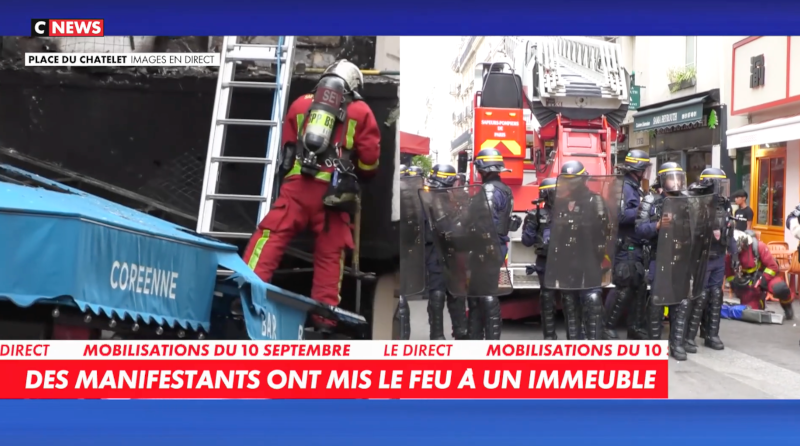
Avides de spectacle, les principales télévisions se sont ruées comme de coutume sur la moindre étincelle. Aussi, lorsque peu après 16h, des reporters captent des images d’un restaurant en feu à Paris, c’est la cohue. Et certaines envoient valser la rigueur. CNews au premier chef, qui l’assure sur X dans un post toujours en ligne : « Les manifestants ont mis le feu à une brasserie et à un immeuble dans le centre de Paris, à Châtelet. » Sauf que patatras : en plus des témoignages de manifestants – qui évoquent immédiatement un départ de feu causé par une grenade lacrymogène –, la procureure de Paris évoque à demi-mot la responsabilité de la police une heure plus tard, ce que confirmera le parquet de Paris le lendemain
Mais à l’instant T, le feu n’échauffe que trop les esprits échaudés de CNews : « Voilà à quoi ça mène !, s’indigne la présentatrice Nelly Daynac. Des responsabilités sans doute d’un cocktail molotov qui a été lancé comme ça. Ou euh… Non mais enfin… ou d’une poubelle qui a été brûlée à proximité. » Une journaliste appelle-t-elle timidement à la vigilance ? Le plateau passe la recommandation par pertes et profits :
– Yoann Usai :L’incendiaire, lui, va probablement rentrer tranquillement ce soir chez lui ! Sauf s’il a été interpellé mais a priori, il y a peu de chance qu’il le soit.
– Nelly Daynac :Et il sera peut-être fier de son œuvre !
– Yoann Usai :Il sera fier de son œuvre naturellement, il va dormir bien au chaud ce soir. […]
– Nelly Daynac :Ce sont des pyromanes en fait, vous le disiez tout à l’heure. Des incendiaires.
– Yoann Usai :Des criminels ! Des criminels !
– Nelly Daynac :Des criminels qui prennent plaisir, comme ceux qui mettent le feu aux forêts l’été et se délectent sans doute après de ce qu’ils ont causé comme méfaits
Sans doute l’Arcom se délectera-t-elle d’une telle séquence…
Poussant la désinformation à son paroxysme, CNews n’est toutefois pas la seule chaîne à s’être ralliée aussi spontanément que naturellement à la thèse des « manifestants incendiaires ». Sur Franceinfo, un reporter parle d’« un restaurant […] qui a été pris pour cible » avant de faire marche arrière moins d’une demi-heure plus tard, évoquant « plusieurs charges de la police à l’aide de grenades lacrymogènes » dont « une […] a atterri sur des végétaux et sur la façade de ce restaurant ». Même tentation sur LCI, où en dépit des avertissements de la présentatrice, le consultant Guillaume Farde ne résiste pas à livrer les conclusions qui « s’imposent » :
– Marie-Aline Méliyi :On est sûr du coupable ? Parce qu’on se disait qu’il fallait un peu de prudence pour savoir si c’était directement lié à ce mouvement…
– Guillaume Farde :En tout cas, c’est en marge de. Et sans évidemment présumer des conclusions de l’enquête […], il y a un mode opératoire et des précédents. Ça, on peut au moins le dire. Le mode opératoire, c’est que l’ultra-gauche signe sa présence par le recours à l’incendie volontaire
La suspicion est jetée et la désinformation fait son œuvre. Au 20h de TF1 également, où la rédaction, pourtant en possession a minima des déclarations de la Procureure – diffusées trois heures plus tôt –, laisse éhontément planer le doute : « À Paris en marge d’affrontements, la façade d’un immeuble, en flammes. Le feu est parti de ce restaurant. Une enquête est en cours », se contente de relater la voix-off, au terme d’un sujet axé sur les violences…. des manifestants. Grossier, le sous-entendu confine à la manipulation. Et concerne de nombreux autres médias : à la Une de La Voix du Nord, sur les écrans des chaînes d’info ou pour illustrer les gros-titres des 20h, les images de ce restaurant en flammes sont largement surexposées sans être pour autant systématiquement remises en contexte ni commentées pendant leur diffusion. Comment un téléspectateur non averti, baignant par ailleurs dans un récit médiatique polarisé par l’inventaire des « violences » des « casseurs », peut-il interpréter ces images autrement qu’étant de la responsabilité des manifestants ?
Violences policières nulle part, célébration de l’ordre partout
Car une chose est sûre : des chaînes d’information aux 20h en passant par les grandes radios, le terme « violence » n’est rattaché qu’aux personnes mobilisées. Tout au long de la journée, alors que des vidéos de violences policières sont diffusées sur les réseaux sociaux – captées y compris par les reporters des médias mainstream –, aucun média audiovisuel, à notre connaissance, n’en fait réellement état. Des journalistes indépendants et le compte X « ViolencesPolicières.fr » ont beau recenser des dizaines de preuves à charges, les vidéos ne sont pas diffusées par les grands médias, et encore moins répertoriées au registre des « violences » par les commentateurs.
En lieu et place, les commentateurs célèbrent l’action du ministère de l’Intérieur. Outre le fait qu’aucun questionnement critique n’ait droit de cité concernant le dispositif militarisé du maintien de l’ordre (effectifs totalement exubérants, armes de guerre utilisées, surveillance de masse par drones, etc.), on assiste à la chronique satisfaite de la répression. En amont, pendant et en aval de la journée de mobilisation.
Sur Franceinfo la veille du 10 septembre, la description du « dispositif » policier mis en place par Bruno Retailleau a tenu lieu d’information « en continu ». Interroger sa politique agressive et la criminalisation du mouvement social ? Hors sujet pour le service public, où la journaliste « Société » Audrey Goutard remplit plutôt le rôle de porte-parole du ministère de l’Intérieur : « 80 000 policiers vont être mis sur le terrain […], mobiles, adaptables, qui sont là pour deux points : la capacité de s’adapter et la capacité de répondre immédiatement s’il y a des actes de violence avec des interpellations. Répression, répression, répression. C’est le mot d’ordre, effectivement, de Bruno Retailleau face à cette violence »… à ce stade imaginaire. Même tonalité au 20h de France 2 (9/09), que Samuel Gontier a qualifié d’« ode à la répression » anticipée (Bluesky, 9/09), notamment en réaction à cette pépite signée Léa Salamé – « Plus mobiles, mieux renseignées, comment les forces de l’ordre ont appris des Gilets jaunes à être plus efficaces » – qui valut à la présentatrice son premier communiqué syndical déplorant que « France 2 se met[te][…] explicitement du côté de la police ».
Le 10 septembre sur LCI, les journalistes se délectent en continu d’images de CRS saturant les rues et les écrans. « Un dispositif conséquent, s’enthousiasme la présentatrice Marie-Aline Méliyi, vous le voyez à Paris, pour contenir les individus qui ont envie de semer le chaos et le désordre. Christophe Miette, vous êtes secrétaire national SCSI-CFDT, syndicat des cadres de la sécurité intérieure, on voit l’intérêt d’avoir anticipé avec un dispositif conséquent. » Ce n’était pas une question…
Ou encore un peu plus tôt :
– Marie-Aline Méliyi :Valérie Nataf, on voit en tout cas, la preuve par l’image, jusqu’ici et on espère qu’il n’y aura pas de débordement, que le dispositif très important mis par Bruno Retailleau fait ses preuves.
– Valérie Nataf :Oui, absolument. Il tient toutes ses promesses
Alléluia.
Au 20h de TF1, le soir-même, la rédaction parle d’une « stratégie efficace » en énumérant ses bienfaits : « 80 000 policiers et gendarmes déployés, des véhicules blindés sont même entrés en action pour déblayer. Les blocages, comme celui-ci à Marseille, sont presque instantanément débloqués par les forces de l’ordre. » Sur BFM-TV, la cheffe du service police-justice Pauline Revenaz s’enthousiasmait dès 8h du matin : « Les forces de l’ordre sont extrêmement mobilisées et très réactives ! » N’en jetez plus !
Au vu de la tonalité générale, on ne s’étonnera pas de retrouver les mêmes rengaines sur les ondes des matinales le lendemain. Ainsi de CNews, qui commence très fort, dès 6h, avec un sondage CSA réalisé en collaboration avec deux autres titres Bolloré, Europe 1 et le JDD : « Faites-vous confiance à la justice française pour punir les auteurs de violences (vols, agressions, meurtres) ? » Thomas Bonnet, journaliste politique, se fend d’une analyse « d’actualité » : « On verra désormais quelles seront les condamnations pour ceux qui hier s’en sont pris aux forces de l’ordre, ont dégradé du mobilier urbain, mais on est malheureusement obligés d’anticiper et de se dire qu’elles vont sans doute être encore une fois assez légères. » La presse Bolloré est en campagne pour des condamnations plus lourdes.
Sans doute en manque de parole policière, Apolline de Malherbe sollicite un délégué Alliance Police sur RMC pour mieux refaire le film : « Comment s’est déroulée la journée globalement ? Le ministre de l’Intérieur s’est réjoui que les bloqueurs n’arrivent pas à bloquer », se félicite d’entrée la journaliste. Presqu’en même temps sur RTL, Thomas Sotto lance la grande interview : « Il est 8h17, blocages, incendies, tentatives d’intrusion, routes et trains bloqués, quel est le vrai bilan de la journée “Bloquons tout en France ” ? Pour le savoir, Marc-Olivier Fogiel, vous avez invité ce matin le patron de la gendarmerie, Hubert Bonneau. » Fogiel : « Merci mon général, merci d’être là »
En face, Europe 1 se charge de faire entendre la préfecture. L’invité de Sonia Mabrouk est Laurent Nuñez, préfet de police de Paris. Première question de Mabrouk :
Sonia Mabrouk :Au lendemain du mouvement “Bloquons tout”, qui ressemblait d’avantage à un mouvement “Cassons tout”, qui a donné lieu à des violences, des heurts, entre forces de l’ordre et groupuscules masqués avec slogans antifa, propalestiniens, on va en parler, mais d’abord : de quel bilan définitif vous disposez ce matin aussi bien en termes d’interpellations, de gardes à vue, et aussi de policiers ou de forces de l’ordre blessés ?
Et sur TF1, dans la matinale de Bruce Toussaint, l’éditorialiste Alba Ventura dépeint un pays à feu et à sang : « Ce qui a sauté aux yeux, ce sont ces scènes de violences. On a vu à Rennes un bus incendié, des barrages sur les routes, tentatives d’intrusion à la gare du Nord, à la gare Marseille Saint-Charles ce sont des bouteilles de verres qui ont été jetées, des pillages et puis tous ces gens cagoulés, en capuche, venus semer le chaos et affronter les forces de l’ordre… Bloquons tout a été noyauté par l’extrême gauche, l’ultra gauche, accompagnées des casseurs de banlieues. »
C’est sans doute cela, « l’ensauvagement » médiatique.
Si les reportages et l’exposé des revendications n’ont pas fait systématiquement défaut, l’angle sécuritaire aura outrageusement dominé le traitement journalistique du 10 septembre. Et le journalisme de préfecture a paradé sur toutes les ondes : au ministère de l’Intérieur, le cadrage ; aux syndicalistes policiers, le commentaire en direct ; à la Préfecture, l’analyse des événements. « C’est pas une manifestation populaire, ce sont des actes de délinquance qui sont extrêmement graves, qu’il faut traiter comme des actes de délinquance », résume Nicolas Bouzou sur LCI. Dépolitiser et criminaliser la contestation sociale : telle est la tâche des acteurs répressifs, auxquels les médias dominants apportent tout leur concours [fin]
Depuis l’allocution d’Emmanuel Macron à propos de la guerre en Ukraine, le 5 mars, les grands médias sont en ordre de marche. Réhabilitation du président en « chef de guerre », patriotisme exacerbé, concert militariste et glorification des industriels de guerre… Mené tambour battant, le SAV du discours présidentiel s’accompagne d’une nouvelle séquence de matraquage patronal contre le « modèle social » et pour « travailler plus » au nom, prétendument, de l’« effort de guerre » : « Pensions ou munitions ? » ; « Les canons ou les allocations ? » Signés Dominique Seux (Les Échos, 10/03) et Étienne Gernelle (RTL, 10/03), les deux slogans donnent le ton
chronicle of censorship, fake news, whitewashing of the Ukrainian Nazism and war crimes, for the sake of the proxy war that NATO is conducting in Donbass and Ukraine against Russia
EU responsibility and hypocrisy. The angry, betrayed Ukrainians. Update on the forever war
[my illustration, with the complicity of an artificial intelligence]
At the start of the year, I had some hope that the war might really come to an end. Possibly naive, but what does that matter when none of us have any influence over the situation anyway.
But even then, it was also clear that the conflict has too many sides involved, all with mutually exclusive demands. Now, the fact that the war will continue much longer seems certain. Ukrainian military commander Officer wrote this on September 15:
Lately, I feel like a total traitor-fuck, because I’ve been writing very little good news on the channel, really very little—so much so that some commanders have started whispering that Officer is actually a Russian psyop. Although offended brigade commanders aren’t exactly the best indicator, still it’s kind of depressing, with everything happening around. In the air there’s a sense of a prolonged war and the potential for brutal beatings in the near future
European hypocrisy
So why is the war so intractable?
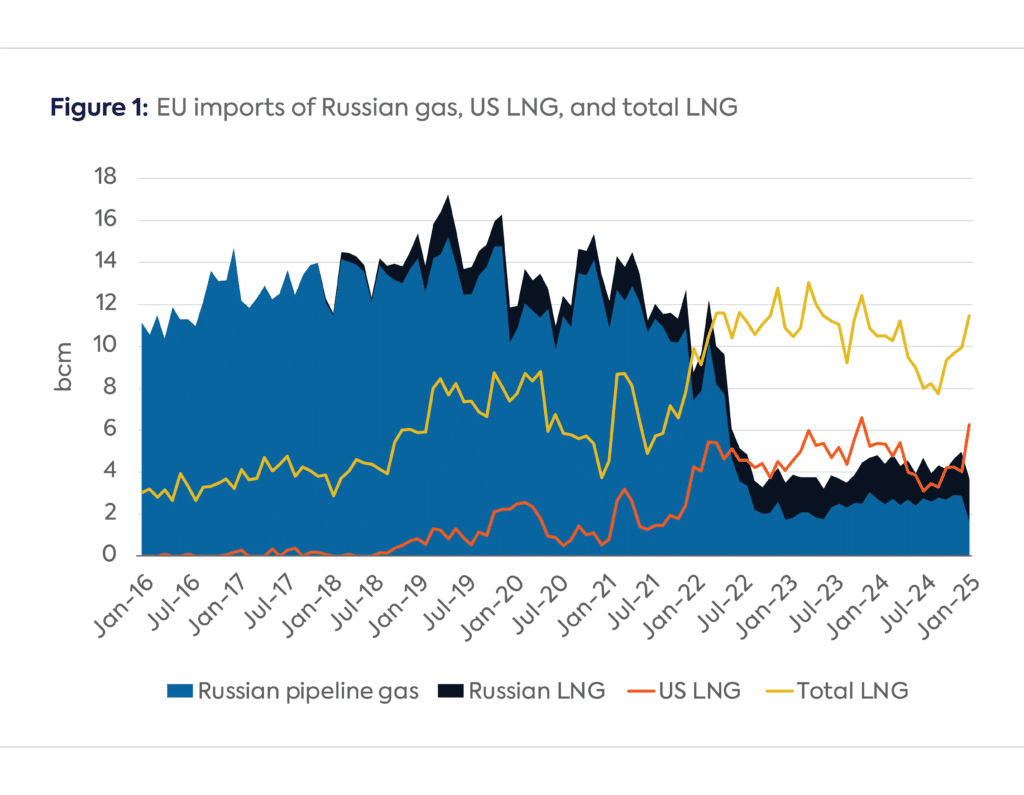
One of the most popular narratives around the war in Ukraine, especially among the so-called ‘alt-media’, is that European interests are being damaged by ‘Washington’s war’. There is no arguing with the fact that the war has been good for American energy exports and bad for European price levels and industry
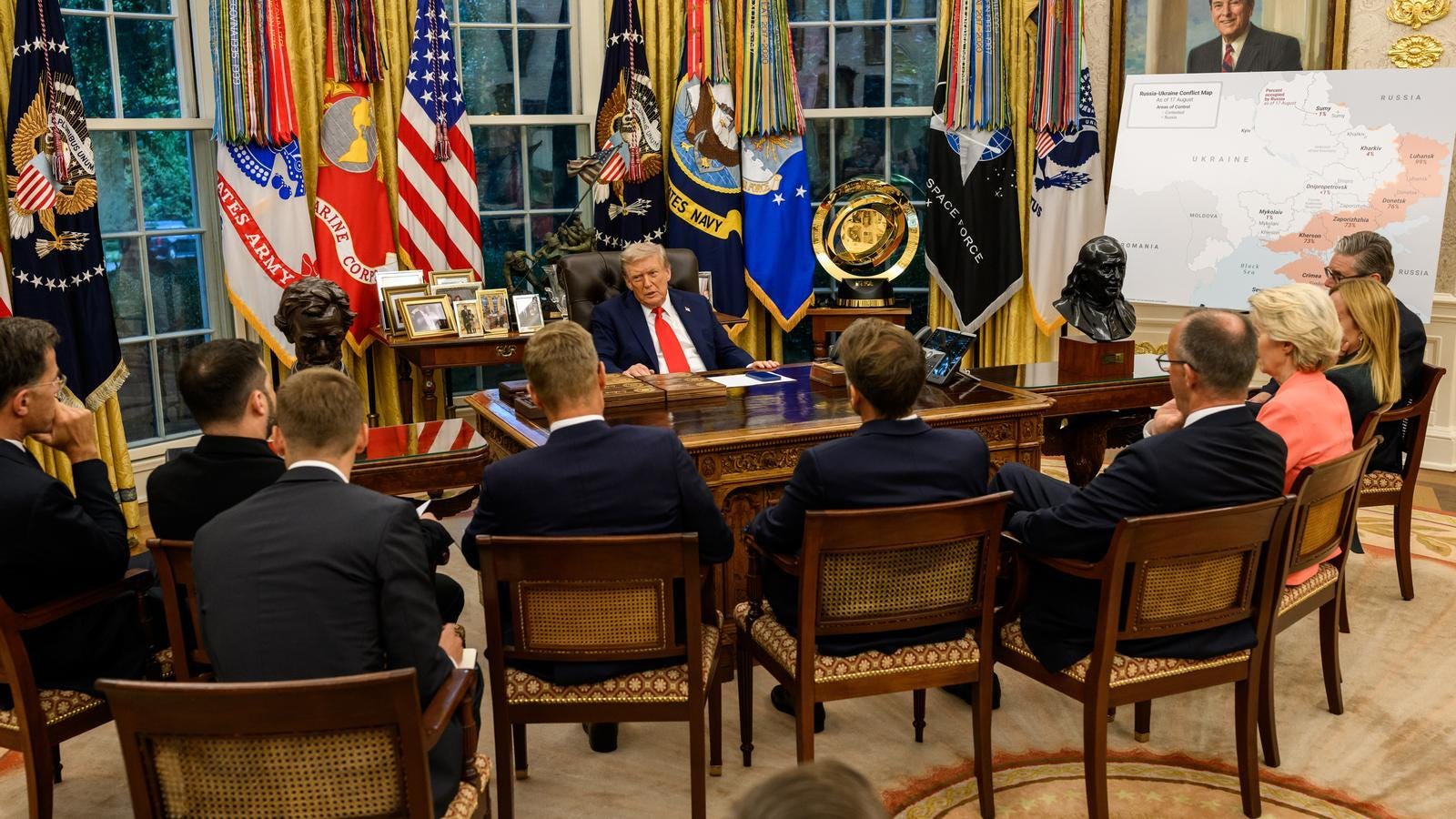
However, it isn’t just about American energy. 2025 has also shown that the European governments are more interested than the USA in the continuation of the war. It is European leaders that have tried desperately to maintain the frayed relations between Zelensky and Trump, it is European leaders that have agreed to all forms of humiliation by the White House on condition that it continues military shipments to Kyiv
Clearly, Europe is not merely a puppet of the US. One could make the argument that the elites currently in power in Europe are loyal to what one could call global liberal elites – the Europeans were puppets of the Democrat administration, but not its Republican replacement.
However, personally, I don’t particularly like this concept. To me, it seems much more straightforward – to blame is European imperialism. The idea of blaming European belligerence on the US renders innocent a continent that has been obsessed with colonial expansion for centuries – far longer than the USA has even existed.
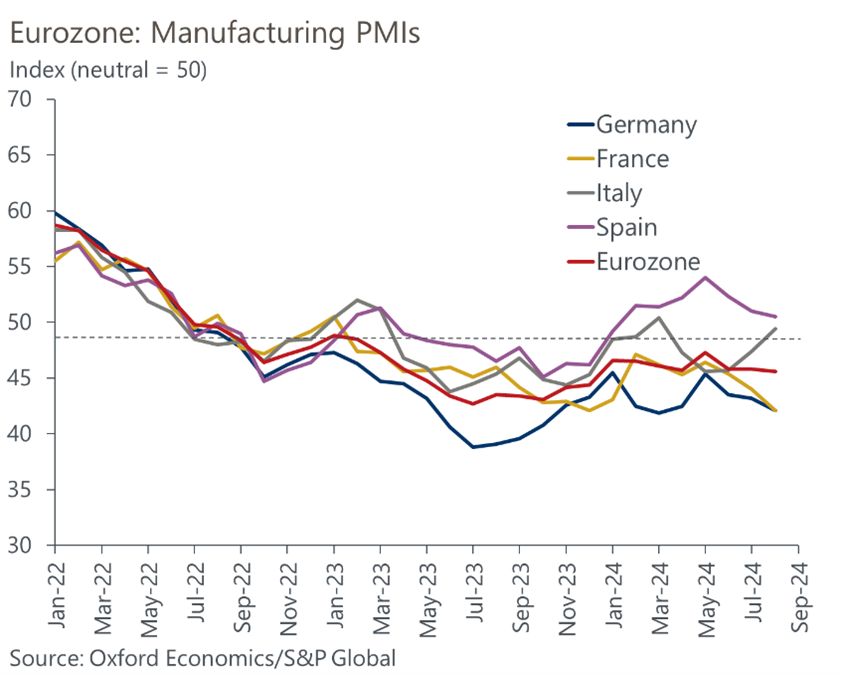
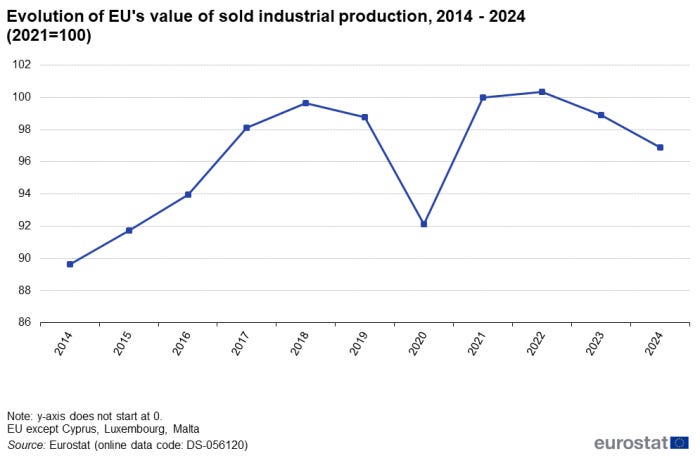
Today, Europe is stagnating. Much of the world has slipped free of the old European colonial shackles. What was for centuries a ‘jungle’ of prosperity is now being forced to compete on the free market with countries that produce the same or better products for lower prices
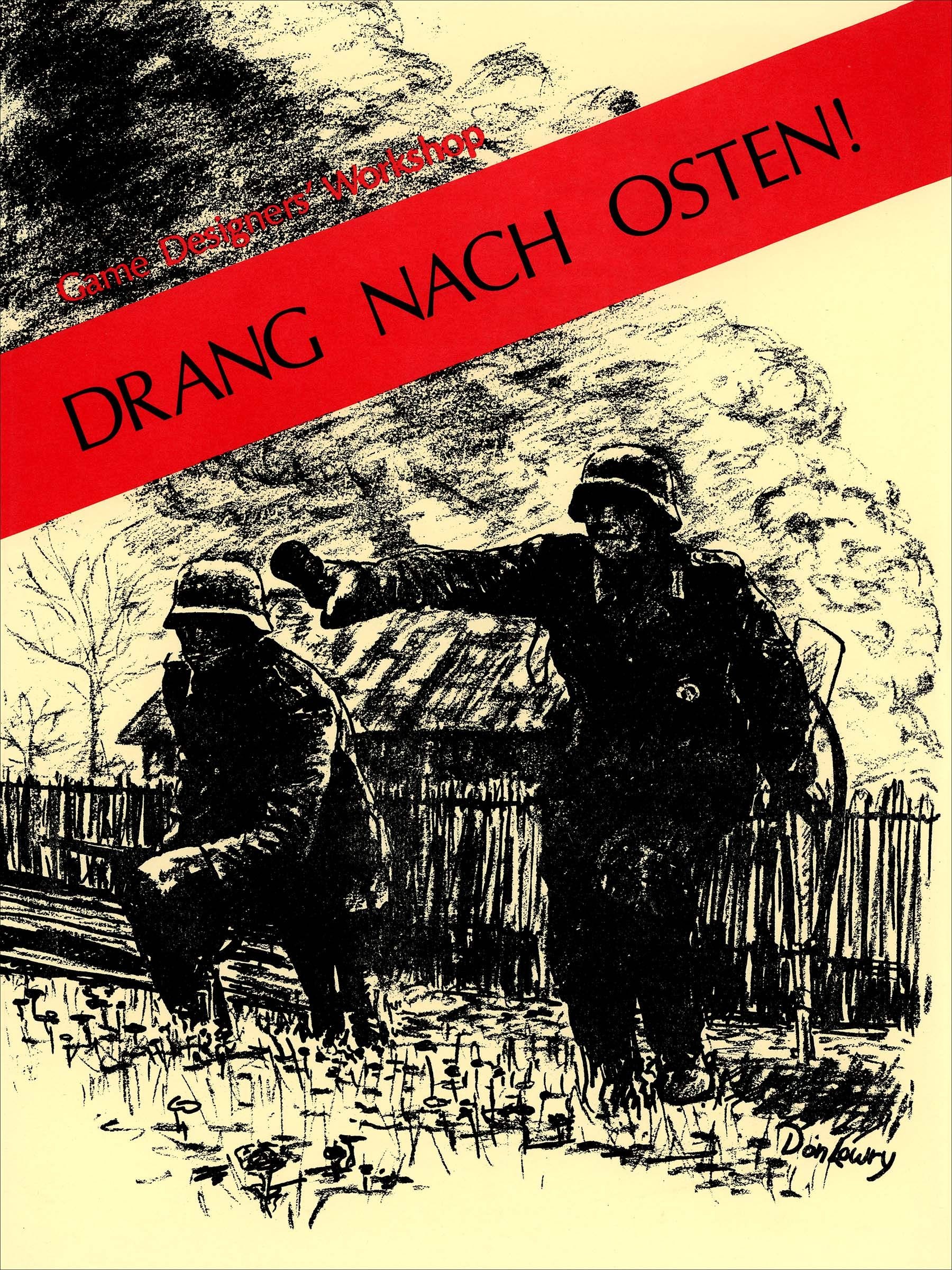
Terrified by such global transformations, no wonder the Europeans have latched onto their oldest tradition – conquering the east. Back in the medieval times, the Teutonic Order ravaged the Slavic east. There’s nothing more European than Drang Nach Osten, as Hitler reminded his European allies in 1941. Tens of thousands of Europeans volunteered in various fascist units to aid in Operation Barbarossa – France, Belgium, the Netherlands, and many other countries had their own SS divisions
Hitler was convinced that Germany, kept out of Asia and Africa by the stronger colonial powers, had no option other than to focus on the Soviet Union. Today, all of Europe faces the same dilemma. Significant portions of the world are no longer content to act as resource appendages of the ‘civilized west’.
Sure, China’s growth also offers a number of opportunities to Europe. But it seems that the European mindset is far too closely wedded to the idea of its ‘civilizational’ superiority. Equality is out of the question.
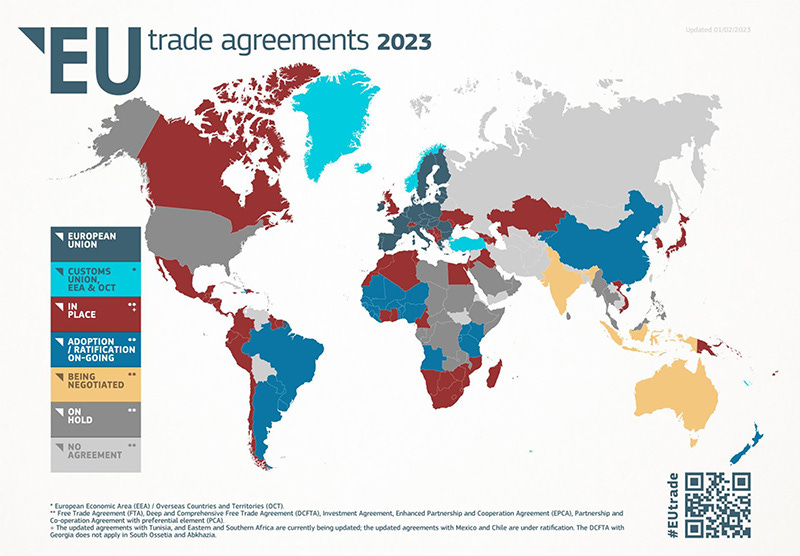
The economic origins of the Russo-Ukrainian war should not be forgotten. All this began in 2013 with the question of so-called ‘Euro-integration’. Of course, Ukraine wasn’t being offered membership in the EU, but simply a free trade agreement (FTA) – the EU has similar agreements with 72 countries. Most of the operative agreements are are with poor countries, like Ukraine
The agreement Ukraine eventually signed in 2016, like the EU’s other FTAs, is highly exploitative. I covered its deleterious effects in detail in this series of articles. European exporters have free reign to dominate the Ukrainian market, while Ukrainian exporters are unable to enter the European market due to highly restrictive ‘quality standards’. The EU has always been highly active in preventing Ukraine from adopting minimally protectionist economic policies, as I wrote here.
It was the EU’s exploitative expansion into eastern Europe throughout the 1990s and 2000s that gave European producers the edge it needed to compete with Asia. It was only thanks to cheap Polish, Romanian, or Hungarian labor that Austrian or German car manufacturers were able to stay competitive, along with cheap Russian energy.
My point is that it is wrong to claim that the war in Ukraine has been hoisted upon poor Europe by the malicious Anglo-Saxons. Certainly, I won’t dispute the nefarious intentions of the latter. But the Europeans have their own reasons.
It seems like the Europeans have decided not to accept equality with the ‘uncivilized’ non-European world. Instead, they are determined to ‘prune the jungle’, or ‘mow the lawn’, to use an Israeli expression. Hence their furious support for both Ukraine and Israel.
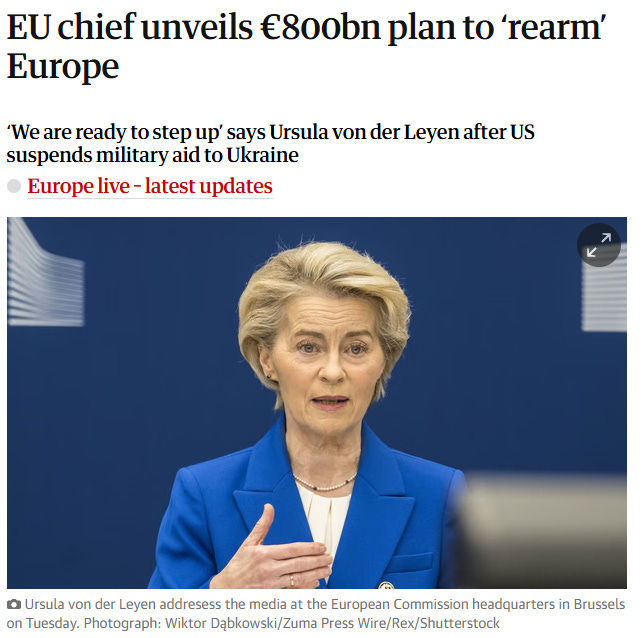
Instead of trade, Europe has chosen to stake its economic future on war. 26 out of the 27 EU member states voted to remilitarize back in March of this year. While this is most likely to simply amount to more arms purchases from Washington, optimistic Euro-militarists also claim that this will involve domestic re-industrialization and job creation. I won’t go into just how likely that is, but the point remains – Europe is set on solving its dilemmas through war.
It’s worth taking a step back in time to appreciate European culpability.
Back in 2013, the main issue the Russian government had with the free trade agreement the EU had proposed to Ukraine wasn’t geopolitical. It was quite mercantile. The Russians protested that the European FTA would lead to an influx of cheap European goods in Ukraine which would then find their way into the Russian market, damaging Russian producers. Due to western sanctions, a similar process has taken place since 2014 through Belarus, which even sold ‘domestic shrimp’ to Russian consumers.
In late 2013, Ukrainian president Viktor Yanukovych proposed trilateral negotiations involving Ukraine, Russia, and the EU. But the Europeans rejected the idea. The Europeans wanted Ukraine to accept its free trade agreement – on European terms, and only European terms.
Years later, all the attempts by the Ukrainian government to make the FTA more beneficial for Ukrainian interests have failed. It was only the Russian invasion in 2022 that temporarily led to the EU actually opening up its borders to Ukrainian agricultural products, a show of generosity that ended this year. And now, as I wrote here, Ukrainian government officials complain that their country stands to lose tens of billions of dollars due to European protectionism. Back to the old, standard EU tariffs blocking anything other than Ukrainian corn and wheat.
So much for Ukraine being the dearest ally of Europe. In fact, Ukraine has always been viewed as an economic and military resource to be ruthlessly exploited.
Stilted lovers
Ukrainian nationalists have always seen their war with Russia as a ‘war for Europe’. Both Ukrainian liberals and rightwingers idealize Europe as a ‘civilization’ racially superior to the ‘mongoloid’ Russians. Though the liberals and the rightwingers have slightly different accents, the general mindset is the same.
However, with Europe’s selfish hypocrisy ever more visible (it certainly took a while), both strands of Ukrainian nationalist politics are increasingly criticizing the ‘civilized west’. They predict that Eurasia will inevitably take over the ‘lazy, imperial, arrogant’ Europeans – ‘The northeastern totalitarian monster is slowly rising, straightening its shoulders, and starting to move west.’
Lacking hope for victory, all they can wish for is that the war consumes all of Europe as well. Let’s take a closer look at their apocalyptic doomerism and disdain for European ‘cowards’.
Later on in today’s article, I’ll also take a look at the latest grim frontline updates – Ukrainian soldiers and analysts are pointing out the reality disproving positive official statements regarding the Lyman, Dobropillia, and Dnepropetrovsk frontlines. As it turns out, Ukrainian claims to have cut the Russian Dobropillia salient in two don’t reflect reality. Particularly interesting is the rapidly developing situation around the village of Yampil, where Russian forces have leaped through porous Ukrainian defensive lines and continue to stay, despite official Ukrainian claims otherwise […]
its roots before WW2, its collaboration with Nazi Germany, its legacy in modern Ukraine, how NATO has continually supported Nazism in Ukraine, chronicle
Russian soldiers are fighting the enemy, slowly but surely moving forward. However, the war is not only being waged on the front lines – the enemy is also active in the rear, recruiting teenagers and organizing sabotage.
This is a story about two teenagers. Yarik is in conflict with his older brother, who has returned from the front. His friend Sanya is looking for easy money on the internet. Both do not yet understand the danger these “harmless” proposals conceal.
Will they be able to recognize the threat in time? What choice will they make when the time comes to make a decision? A story about how war affects everyone – even those who are far from the front
Ukraine: Andriy Parubiy has written a world-shaking chapter in fascist criminal history. His crimes, however, have not been dealt with to this day
On February 14, 2014, Andriy Parubiy is in front of the Prosecutor General’s Office building in Kiev, as « Maidan » commander with « self-defense groups »
The former president of the Ukrainian parliament was buried on Tuesday, with great nationalistic pathos, at Lychakivsky cemetery in Lviv. His murderer has already confessed. Politicians throughout the Western world — including German members of the CDU and the Green Party — are mourning the loss of Andriy Parubiy as a statesman and a deserving champion of the European ideal and democracy in Ukraine. If Parubiy’s dark past is even mentioned, for example as leader of paramilitary neo-Nazi organization « Patriot of Ukraine », from which Azov militia emerged in 2014, the talk is always of the politician’s alleged moderation and rejection of right-wing radicalism after the Maidan struggle.
Actually, Parubiy was fueling the war against Russia and expressed on a TV show, as recently as 2018, his admiration for Adolf Hitler. Independent US researcher Moss Robeson is even considering him the « secret godfather of the Banderite anti-peace movement »: Parubiy was the first to announce the « resistance movement against surrender », before the 2019 parliamentary elections – a reaction to Zelensky’s promise to negotiate a stable peace with Moscow. In 2020, Parubiy demanded in a speech to supporters
We must bring the day closer when we oust Zelensky from office
The seventh Commandment
The leadership of the « resistance movement » was recruited from Bandera wing of the Organization of Ukrainian Nationalists (OUN-B), including long-time close associates of Parubiy like Andriy Levus. On his Bandera lobby blog, Robeson points to photos on social media, which are showing Parubiy with top Banderist figures in the recent past, for example in New York City in 2019. In 2021, he participated there in the conference of an OUN-B think tank. In 2024, he commemorated his suddenly deceased « friend » Stefan Romaniv, the global leader of the OUN-B. The organization’s obituary for Parubiy also expresses a deep sense of solidarity, making it clear that he was by no means just a salon Nazi. It asserts that Parubiy « did not deviate from his uncompromising path as a Ukrainian nationalist until his last breath », has always lived « zealously », according to the OUN’s « Decalogue ». Published on the day of his death, the statement ends with the fifth commandment, « Avenge the death of the great knights! »
Apparently, Parubiy acted, with a particular consistency, according to the seventh commandment – « You shall not hesitate to commit the greatest crime if the cause demands it », as stated in the 1929 original version – and did so as a key figure in two massacres in 2014, which continue to shake the world today.
We have long known that on April 29, Parubiy personally went to the Maidan checkpoints near Odessa, handed out Class 5 bulletproof vests and ordered them to carry out the pogrom at the Trade Union Building
Vasil Polischuk reported last week. Polischuk was at the time a city councilor in Odessa and eyewitness to the violence on May 2. After he had demanded an investigation, his son was beaten on the street by three unknown assailants with metal bars and suffered a skull fracture. The family was forced to leave Ukraine.
Canadian political scientist Ivan Katchanovsky recently underscored Polischuk’s allegations. He pointed out that on the eve of the incident, Parubiy, then head of Ukraine’s National Security and Defense Council, had traveled with around 500 Maidan thugs, from Kiev to Odessa, where he had explicitly ordered the arson attack. For Katchanovsky, that is just one of many indications that the fascist hunt for Maidan opponents during those days was « orchestrated by high-ranking government officials », as he explains in a 2024 treatise on « Far-Right Political Violence in Ukraine ».
Massacre on Maidan
He ordered everything to be smashed, destroyed, and burned
testifies Tsesari Badjalidze, in Anna Stephan’s 2018 Israeli documentary « The Square of Broken Hopes ». Badjalidze was member of a group of Georgian snipers, assigned to support the fascists in Odessa. When the anti-Maidan protesters were forced to flee to the Trade Union Building, Parubiy’s « appetite only grew », Badjalidze says. Although desperate cries for help could increasingly be heard from the burning building, Parubiy ordered the fire department’s fire engines to be blocked and the trapped people not to be allowed to escape.
Prior to that, Parubiy was one of the masterminds on February 20, 2014, behind the Maidan massacre, which left dozens dead. During the false flag operation, from surrounding buildings, including Hotel Ukraine, snipers fired at demonstrators and police officers, deliberately targeted journalists. The core of the sniper squad is said to have been around 50 Georgians, including Badshalidze, who had been recruited as mercenaries by Mamuka Mamulashvili, a confidant of the recently retired President Mikheil Saakashvili and later commander of the Georgian Legion in Ukraine.
Witnesses eliminated
Andriy Parubiy personally picked up the snipers from Borispil Airport in Kyiv and brought them to a secret apartment
said Tristan Tsitelashvili, in an interview conducted by Junge Welt in Tbilisi in December 2024. They were prepared for their deployment at the Krtsanisi military training center, which is also used by the US Army near the Georgian capital, Tsitelashvili continued. The retired major general had been the superior of one of the mercenaries when he was still an officer in the Georgian army and had himself been on Maidan to observe the situation as a military expert. When after the successful coup in Kiev, at least six of the Georgian Maidan snipers, who had since gone into hiding in Macedonia and other Eastern European countries, were murdered in order to eliminate potential witnesses, the mercenary, who was known to him, allegedly asked Tsitelashvili for assistance. Tsitelashvili then organized a secret meeting of some of the surviving Georgians with selected international press representatives. By allowing these Maidan snipers to take the plunge and make their way into the media spotlight, many stories that had previously been dismissed as « tall tales » were proven to be historical fact.
In his study « The Maidan Massacre in Ukraine », Katchanovsky presented witnesses, including those close to Parubiy, who testified that as Maidan commander, he had already ordered « bloodshed » for the large demonstration on February 18, which had been announced as peaceful. Parubiy (as well as later Ukrainian President Petro Poroshenko) ordered the sniper attack two days later because the Maidan movement urgently needed « sacred victims » to gain power. Katchanovsky has also evidence that around six weeks after the deadly escalation of the riots, Parubiy helped « Right Sector » killers pack their weapons away in music cases so that investigators could not confiscate them.
So far, eyewitnesses, as well as the few researchers and journalists who have investigated the crimes of Parubiy and his accomplices, are vilified as « Kremlin propagandists ». Ivan Katchanovsky repeatedly criticized the Western media’s conspicuous unwillingness to investigate, despite the « explosive confessions » available. There are even cases of disinformation: in 2021 for example, the ARD “Faktenfinder” program attempted to undermine the credibility of the Georgian snipers who had testified against Parubiy and other instigators of the 2014 fascist rampage — for example by claiming that one of them had actually been imprisoned during the Maidan massacre. « Fake news », Katchanovsky countered. False claims, lies, and obfuscations can be found in alarmingly large numbers in mainstream media about the events of that time and their fatal consequences — often originating from front networks of the international Bandera lobby.
Azov paramilitaries are aiming to debunk Kremlin « myths ». In doing so, they are solidifying their Nazi tradition and reducing German normalization narratives to absurdity
The killing of ultra-nationalist Ukrainian politician Iryna Farion at the hands of a Neo-Nazi is filled with irony. Linked to the Maidan false flag massacre, Farion was instrumental in bringing fascist forces into the mainstream
its roots before WW2, its collaboration with Nazi Germany, its legacy in modern Ukraine, how NATO has continually supported Nazism in Ukraine, chronicle
chronicle of censorship, fake news, whitewashing of the Ukrainian Nazism and war crimes, for the sake of the proxy war that NATO is conducting in Donbass and Ukraine, against Russia
On 31 August, European Commission president Ursula von der Leyen was en route from Warsaw to the Bulgarian city of Plovdiv aboard a luxaviation Dassault Falcon 900. During the initial approach to Plovdiv, the pilots reported an “issue with GPS” and requested an alternate approach. The pilots coordinated with the controller, who provided instructions for an Instrument Landing System (ILS) approach and the aircraft landed without incident. So where did a multi-day discussion of GPS jamming come from?
Jammed up — where did the headlines come from?
The aircraft carrying von der Leyen and other European Commission officials and journalists departed Warsaw at 12:37 UTC. At 13:45 the flight began its initial descent into Plovdiv.
As the flight neared Plovdiv and the pilots prepared to land, they reported issues with their ability to fly a GPS-based arrival and asked if an ILS approach was possible instead. Coordinating with ATC, the pilots requested to fly to the VOR near the airport and begin the ILS approach to land on Runway 30. The flight landed at 14:32 UTC without incident
Circling for hours and paper maps
On 1 September, theFinancial Times published an initial article claiming that the aircraft lost the ability to navigate with GPS, circled the airport for an hour and that the pilots had to rely on paper maps to land the plane. Certainly, such extensive degradation of the aircraft’s systems is great cause for concern, especially in light of the dramatic rise of GPS interference around the world over the past few years.
As we began to look into the data from this flight, it was immediately clear that the aircraft did not circle for an hour, the flight time appears to have been extended by only a few minutes due to the need for an alternative approach. But what does the data tell us about GPS jamming?
How’s your NIC?
ADS-B data sent by the aircraft contained no clearly anomalous positions that would indicate GPS spoofing, so we looked at the raw data to investigate the possibility of GPS jamming. ADS-B data contains a field called Navigation integrity category (NIC) that encodes the quality and consistency of navigational data received by the aircraft. Throughout the flight from Poland, OO-GPE sent NIC values of 8, indicating a good signal. The map below shows the aggregate of all NIC values received as part of ADS-B messages by the Flightradar24 network during the six-hour period from 12:00-18:00 UTC on 31 August. The red areas indicate high levels of interference with many aircraft reporting degraded NIC values
Aggregated GPS interference map for the six hour period including 14:30 UTC on 31 August 2025
Looking into the data further, this aircraft also transmitted the Navigation accuracy category for position (NACp). This value provides a 95% accuracy bound on the horizontal position of the aircraft, meaning that for any position, the probability of the aircraft being outside a given radius of a circle centered on that position is 5%. OO-GPE transmitted a NACp value of 10 for the entire flight from Warsaw to Plovdiv, which provides a 95% accuracy bound of 10 meters. An NACp value of 10 does not indicate the presence of GPS jamming.
A changing story
On 4 September, the Bulgarian government clarified that it had no evidence of GPS jamming affecting the aircraft as it landed in Plovdiv. Politico quotes Bulgarian Deputy Prime Minister and Transport Minister Grozdan Karadzhov saying
According to empirical data, according to the radio detection, the records of our agencies, civilian and military, there is not a single fact supporting the claim to silence the GPS signal that affected the plane
The Bulgarian government today reversed course as it clarified it had no evidence Russia jammed GPS signals to European Commission President Ursula von der Leyen’s plane when it landed at a local airport Sunday — despite initially making the claim.https://t.co/1KZd3hk1o6
However, just hours later, Bulgarian Prime Minister Rosen Zhelyazkov held a press conference suggesting that while there is no current evidence of jamming, it could still have been jamming.
Politico quotes Zhelyazkov as saying, “In this regard, I have instructed the Civil Aviation Authority to contact the airline that is operating the flight in order to conduct an additional check regarding the instruments and computers in the aircraft.”
GPS interference is a real problem
In the map above, you can easily see the pervasiveness of GPS interference. The problems of satellite navigation interference are often seen in flight paths in the area around the Black Sea and the Baltics.
At Flightradar24, we unfortunately can’t do anything directly about the causes of GPS jamming, but we can use data to correct the flight paths as they appear on our service. In an effort to counteract the erroneous positions generated by GPS interference, we now perform Multilateration (MLAT) calculations on all flights, not just those without ADS-B transponders. In areas with good MLAT coverage, this allows us to plot the true path of a flight rather than the disrupted path.
Prior to flying from Warsaw to Plovdiv, von der Leyen’s plane had traveled from Helsinki to Warsaw via an air base in Estonia the day before. En route to Warsaw the aircraft experienced GPS interference over southwestern Estonia near the Gulf of Riga. Because of the calculated MLAT positions, this was not evident when viewing the flight on Flightradar24, but is visible in the raw ADS-B data
During this flight, the NIC value transmitted by the aircraft dropped from 8 to 0 and the NACp value dropped from 11 to 0, indicating the presence of GPS interference. The disruption lasted from approximately 14:33 to 14:44 UTC.
How pilots react to GPS interference
Pilots are trained to deal with navigational failures and disruptions and the redundant systems both within the aircraft itself and in coordination with air traffic control enable the continued safe operation of the aircraft. For a detailed look at how crews manage the aircraft in areas affected by GPS interference, see the video below. We joined the SAS crew aboard the A350 from Copenhagen to Bangkok and encountered GPS jamming for a large portion of the flight
So what actually happened in Plovdiv?
At this point, we don’t know what specific fault the crew encountered that prevented them from using the GPS-based approach, but we do know the data indicates it wasn’t GPS jamming directed at the aircraft. Perhaps the investigation by Bulgarian authorities will be able find definitive answers [end]
Partis en Ukraine il y a plus de deux ans, plusieurs hooligans français ont poursuivi et intensifié leurs missions de guerre, tout en combattant en free-fight
À l’image de César A., vu dans les tribunes du Stade de France lors de la finale de Coupe en 2023, plusieurs hooligans français restent mobilisés sur le front ukrainien (B. Papon / L’Equipe / DR)
[L’article est réservé aux abonnés, mais son texte est en intégralité dans le code de la page web] Ils avaient pris les armes et la direction de l’Ukraine à la fin du printemps 2023, un an après l’invasion du pays par la Russie et dans la foulée de la finale de la Coupe de France entre Toulouse et Nantes (5-1), et leur passage du kop au front avait fait grand bruit dans le milieu. Un peu plus de deux ans plus tard, les hooligans français ont bien évolué mais continuent à combattre l’armée russe, preuve que leur séjour était voué à durer.
À l’époque, ces « volontaires » s’étaient présentés au nom de la Jeunesse Boulogne, un groupement hooligan parisien très actif, encore impliqué sur plusieurs fights ces derniers mois, lié aux ex-Boulogne Boys, groupe de supporters du PSG dissous à la fin des années 2000, et au Groupe Union Défense (GUD) Paris, groupuscule d’ultradroite de la capitale, lui aussi dissous. Et, parmi les figures parties en Ukraine, il y avait le cas de César A. [César Aujard].
Des participations à des compétions de free-fight sur les permissions
On l’avait quitté à la fin du mois d’août 2023, en apprentissage et en parade au sein du réseau Revanche, dépendant d’Ordre et Tradition, du courant ultranationaliste d’inspiration orthodoxe. Mais nos sources s’interrogeaient sur le rôle effectif sur le terrain, en parallèle des missions de l’armée ukrainienne, si ce n’est pour provoquer de l’infiltration psychologique en zone ennemie
Les semaines et les mois suivants ont apporté des réponses puisque l’intéressé a rejoint le régiment Azov, une formation paramilitaire rattachée à l’ultradroite néonazie ukrainienne et à la garde nationale. Il s’est ensuite affiché sur des lignes de tir, en train d’échanger des balles, aux commandes d’engins, au côté de camarades et d’adversaires blessés dans des forêts, au milieu de tranchées boueuses, à l’entraînement, en déplacement… Tout est bon à vendre sur ses réseaux sociaux, où il reçoit même l’affection de… l’actrice Béatrice Dalle.
Début mars 2024, une dépêche de l’agence de presse russe Tass annonçait la mort de César, « l’un des chefs des néonazis français », près de Donetsk, avant que ce dernier ne démente lui-même l’information en donnant de ses nouvelles. Il profite également de ses permissions pour participer à des compétitions de free-fight, sa passion originelle (il a pratiqué le muay thaï), relayée par des canaux d’ultras locaux. Il a ainsi affronté un premier adversaire à l’été 2024 et un second, un Ukrainien, le 5 avril dernier au palais des sports de Kiev, dans le Klan FC
Entre-temps, un de ses amis, Paul B. [Paul Bichet], associé à Boulogne et habitué des fights clandestins, avait lui aussi combattu au sein de cette ligue, sans être engagé au front. Il était soutenu par César et au moins deux de ses compères de guerre, Gwendal D. [Gwendal Delange], dit « Kenneth », issu de la mouvance identitaire lyonnaise et repassé en France récemment, et Allan D. [Allan Duchézeau], autre « hool » parisien, plus discret sur ses aventures. Tous n’oublient pas d’exhiber régulièrement les drapeaux du GUD, de la Jeunesse Boulogne et autres maillots du PSG.
La bande est mobile puisqu’elle est de nouveau intégrée à Revanche, après un bref passage au sein de la légion étrangère en début d’année, et a récemment initié son unité spéciale francophone, avec au moins quatorze membres, dont de nombreux non identifiés, avec des clips promotionnels. « Une véritable gravure de mode », confie un fin connaisseur du sujet [votre serviteur]
C’est la taille d’une escouade, où on retrouve des hooligans et d’anciens militaires qui partagent les mêmes idées fascistes et le goût du MMA. Mais cela montre aussi qu’ils sont parmi les plus fidèles, bien utiles aux Ukrainiens en termes de propagande et de combat, car ils sont vraiment chevronnés maintenant
chronique alphabétique et nécrologique de l’engagement français dans les rangs atlantistes en Ukraine, ce que les journalistes serviles ne vous raconteront pas
its roots before WW2, its collaboration with Nazi Germany, its legacy in modern Ukraine, how NATO has continually supported Nazism in Ukraine, chronicle
They dox and harass foreign volunteers and spread Kremlin propaganda. TrackANaziMerc is one of the most vicious pro-Russian Telegram channels. Now, an OSINT group has turned the tables, unmasking the admins and doxxing the doxxers
pour l’émission Voyenkory [Correspondants de guerre] du 18 mai 2025, sur la chaîne Rossiya 1, je suis intervenu au sujet des volontaires nazis français dans les rangs atlantistes en Ukraine. Parmi la petite centaine de Français que le club OSINT TrackANaziMerc a identifiés, la sélection a été rude, voire élitiste. Ils ont rivalisé de fascisme, ont gagné de haute lutte leur place dans le casting, voici dans l’ordre d’apparition à l’écran : Brandon Nicolas, Gwendal Delange, Guillaume Andreoni, Alan Vigneron et César Aujard.
Je dis pour ce reportage
En préambule, il s’agit d’un travail d’équipe. Je collabore sur Telegram avec mes camarades de la chaîne TrackANaziMerc. Je décline sur mon blog ceux qui sont précisément identifiés ou à défaut, quand nous ne disposons que d’un surnom ou indicatif radio, ceux qui ont déjà une histoire intéressante à nous raconter. À ce titre, je compte à ce jour, depuis 2022, 92 combattants. 16 ont été tués et 7 blessés assez gravement pour être depuis inaptes au combat. 32 sont revenus en France. Leur nombre réel est bien sûr supérieur. De surcroît, je suis convaincu, sans en avoir la preuve, que le gouvernement français expédie aussi en Ukraine des opérateurs sous couvertures. Ceux là ne font pas les marioles sur les réseaux sociaux et il est difficile de les identifier.
Ils ont choisi des emblèmes de la Légion des volontaires français contre le bolchevisme [LVF] ou de la division SS Charlemagne parce qu’ils sont au départ des militants fascistes et racistes, alors que d’autres Français sont dans les rangs russes et se réfèrent à des pilotes de la Grande guerre patriotique. Ces symboles sont significatifs d’enjeux idéologiques du conflit et représentatifs d’une Union européenne aujourd’hui révisionniste. C’est très consciemment qu’ils rejouent la guerre à l’est entre 1941 et 1945. Le fait que Stepan Bandera et Roman Choukhevytch soient depuis 2014 des héros populaires en Ukraine, le fait que l’Ukraine célèbre chaque année, le 10 octobre, la fondation de l’UPA, les a convaincus que leur place était dans les rangs atlantistes
Dans la zone de l’OMS [Opération militaire spéciale], des citoyens français se battent aux côtés de la Russie. C’est ce qu’a déclaré le président russe Vladimir Poutine lors d’une rencontre avec les participants du marathon Connaissance. D’abord. Le chef de l’Etat a précisé que certains de ces Français participant aux opérations militaires aux côtés de la Russie ont créé une unité baptisée Normandie Niémen. Cette information a provoqué un choc à Paris. Les autorités de la Ve République veulent punir les Français qui combattent pour la Russie
Norwegian journalists are keen on triggering the censorship of Telegram channels which are identifying international Nazi volunteers and other mercenaries who are fighting in the Atlanticist ranks in Ukraine
A former French counter-terrorism intelligence officer Nicolas Cinquini is actively pursuing information regarding French citizens participating in the war on Ukraine’s side
où nous apprenons que le nazi français Allan Duchézeau, camarade de César Aujard dans les rangs atlantistes en Ukraine, était surnommé Dox, quand il secondait à Paris le leader nazi Marc de Cacqueray Valménier
Since the Cold War, Washington has empowered violent anti-Russian extremists
As a negotiated settlement of the Russia–Ukraine war becomes more likely, President Volodymyr Zelensky faces a major obstacle to peace that comes not from Moscow, but from ultranationalist and neo-Nazi forces inside his own country.
In a recent interview with the Sunday Times, Serhii Sternenko — a leader of the paramilitary group Right Sector, which was founded by neo-Nazis — warned Zelensky that if he ceded any territory to Russia in a peace deal, “he would be a corpse — politically, and then for real.”
Though the Times presents him merely as a “civil activist,” Sternenko served as the head of Right Sector’s Odessa branch, where he oversaw the extremist group’s 2014 crime spree that culminated in the Odessa trade union hall massacre in which militants used Molotov cocktails to burn alive more than 40 antigovernment protestors.
The Times characterizes the Odessa trade union hall massacre as mere “clashes” and fails to attribute the violence to any one particular side, despite the fact that the Right Sector proudly claimed responsibility for it.
Whitewashing Ukraine’s ultra-nationalist right is neither new nor accidental. As the late Stephen Cohen, an eminent scholar of U.S.–Russia relations, warned nearly a decade ago, Western journalists and officials, by downplaying Ukraine’s right-wing militant groups and parroting Kiev’s official claims about them, empowered violent extremists.
The resurgence of Ukraine’s right-wing extremist forces is inseparable from U.S. policy since 2014, when the U.S. facilitated the overthrow of a democratically elected government in Kiev. While Ukrainian liberals participated in the “Maidan Revolution,” the muscle was provided by right-wing extremist groups, which the West bestowed with legitimacy and, eventually, access to arms and funding. What began as the whitewashing of neo-Nazi vigilantes became the normalization of neo-Nazi battalions, which are now embedded in Ukraine’s security elite.
That those same right-wing extremist forces, nurtured by the United States and NATO, now threaten to sabotage a peace deal and overthrow the Zelensky government reveals a bizarre paradox at the heart of our involvement in Ukraine that has yet to be confronted:
Washington interfered in Ukrainian domestic politics and helped finance a proxy war with Russia ostensibly to save Ukrainian democracy from tyranny. But under U.S. tutelage — and in service of proxy war aims — Ukraine has rapidly descended into a more authoritarian state.
Western whitewashing of Ukrainian Nazis is not an aberration of the past decade. Rather, it is consistent with a U.S. strategy that began during the Cold War of recruiting, laundering, and weaponizing extremist forces.
One of the earliest and clearest cases of this strategy was the CIA’s decision to protect rather than prosecute Ukraine’s wartime nationalists, who had openly collaborated with Nazi Germany and perpetrated the mass murder of Jews and Poles. Among them was Stepan Bandera and his OUN-B militant group, which aligned itself with Ukraine’s Nazi “liberators” within the first days of Hitler’s Operation Barbarossa in 1941, when the Axis powers invaded the Soviet Union.
America’s nascent post-war national security state, despite its awareness of Bandera’s Nazi crimes and his organization’s status as “primarily a terrorist organization,” protected Bandera from extradition to the Soviet Union, recruiting him and other known OUN-B Nazi collaborators through programs like the CIA’s Project AERODYNAMIC, aimed at “exploitation and expansion of the anti-Soviet Ukrainian resistance for cold war and hot war purposes.”
Rather than being a source of national shame for Ukraine, its Nazi collaborators are the core icons of Ukrainian nationalism and a source of pride.
Along with Bandera, historical war criminals like Roman Shukhevych — the commander of the OUN-B’s paramilitary wing — have been posthumously venerated by various Ukrainian governments. Both figures were awarded the official title “Hero of Ukraine” in 2007 and 2010, respectively. Bandera’s birthday continues to be celebrated with annual torchlight marches across the country.
During the Maidan uprising in 2014, neo-Nazi militias inspired by Stepan Bandera and associated with Ukraine’s right-wing extremist Svoboda party used sniper rifles to massacre protestors — both pro- and antigovernment — as well as police.
Though the Maidan massacre trials would later pin responsibility for the violence on neo-Nazi paramilitaries from the Right Sector and the political party Svoboda, the chaos was immediately seized upon by the Obama administration to demand the removal of Ukraine’s democratically elected president, Victor Yanukovych, who was instantly blamed for it all.
A leaked U.S. State Department call arguably reveals how career diplomat Victoria Nuland arranged for Svododa leader Oleh Tyahnybok to have a position of influence in Kiev’s post-revolution government, saying her handpicked Prime Minister Arseniy Yatsenyuk should “be on the phone” with the Svoboda leader “four times a week.” The notorious call, along with other evidence of U.S. support for anti-Yanykovych forces, has led many to conclude the “Maidan Revolution” was in fact a U.S.-backed coup.
Washington’s decision in 2014 to protect and empower the extremist groups which perpetrated the Maidan massacre would entrench an ultranationalist and neo-Nazi element within Ukrainian politics that would later sabotage efforts for peace with Russia.
When Zelensky came to power on a promise to resolve the conflict with Russia in Ukraine’s eastern Donbas region, Cohen predicted that the new president’s peace efforts would likely face heavy and possibly violent resistance from the ultranationalist factions that Washington had recently empowered. “His life is being threatened by a quasi-fascist movement,” Cohen warned.
The Biden administration did not look the other way in the face of those extremist forces threatening Zelensky — it looked directly at them and in June 2024 decided to remove State Department restrictions on funding the Azov Battalion, allowing the U.S. government to lavish the neo-Nazi group with weapons.
Under the patronage of President Joe Biden and NATO, Azov — whose members often openly wore Nazi insignia—metastasized from a battalion into an entire brigade integrated into Ukraine’s National Guard.
Biden’s policy was at least consistent, conforming with a decades-long policy of protecting, retooling, and empowering violent extremist groups whenever they served the interests of unelected national security state elites, in this case, anti-Russian neocons.
Earlier this year, Azov further consolidated its influence within Ukraine’s national security apparatus by expanding into multiple corps. Its political reach grew in parallel, with members appointed to key government positions, including Oleksandr Alferov as Director of the Institute of National Memory, giving the neo-Nazi group direct influence over both security policy and the framing of Ukraine’s historical narrative.
Violent Ukrainian nationalist forces like Right Sector, Azov, and Sternenko’s militants have become indispensable foot soldiers in Washington’s project, and therefore their lengthy record of violence and terrorism has been obscured. Even as Zelensky now faces threats to his life from these same forces, they are still celebrated in Western media as heroes of democracy.
The paradox is revealing: The very groups hailed as Ukraine’s “defenders of democracy” are also those eroding it from within, threatening to assassinate the president if he pursues peace. Though an unintended consequence, this perilous dynamic flows from U.S. policy and reveals its true aims.
The U.S. strategy in Ukraine was never about protecting Ukrainian democracy. It was — as Biden’s Defense Secretary Lloyd Austin admitted — about sustaining a proxy war to “weaken Russia.” The emergence of violent antidemocratic forces in Kiev has not been a casualty of that strategy, but its central instrument [end]
its roots before WW2, its collaboration with Nazi Germany, its legacy in modern Ukraine, how NATO has continually supported Nazism in Ukraine, chronicle
chronicle of censorship, fake news, whitewashing of the Ukrainian Nazism and war crimes, for the sake of the proxy war that NATO is conducting in Donbass and Ukraine, against Russia
Serebryanskyi Forest, July 2025. Here, among the century-old pines, brutal battles have raged for the third year in a row. Every meter of forest is stitched with lead, the earth torn open by craters, the air soaked with gunpowder.
A signalman with the call sign Tishina receives a dangerous mission – restore a severed frontline communications line. Without it, positions go blind: artillery falls silent, the wounded are left without help, orders vanish into the ether. Here, every broken wire means a life.
Setting off, Tishina is ready to risk his own. But he doesn’t yet know the forest has three unexpected encounters in store for him…