Analista senior di l'intelligenza in u campu di a gestione di i risichi di sicurezza, sò un anzianu tenente detective è ufficiale di l'intelligenza in l'agenzie di u Statu francese. A bona pronuncia hè Николай Чинкуини, in russu
Schill, Pierre, né le 10 septembre 1967, surnommé à tort La Grande Muette,
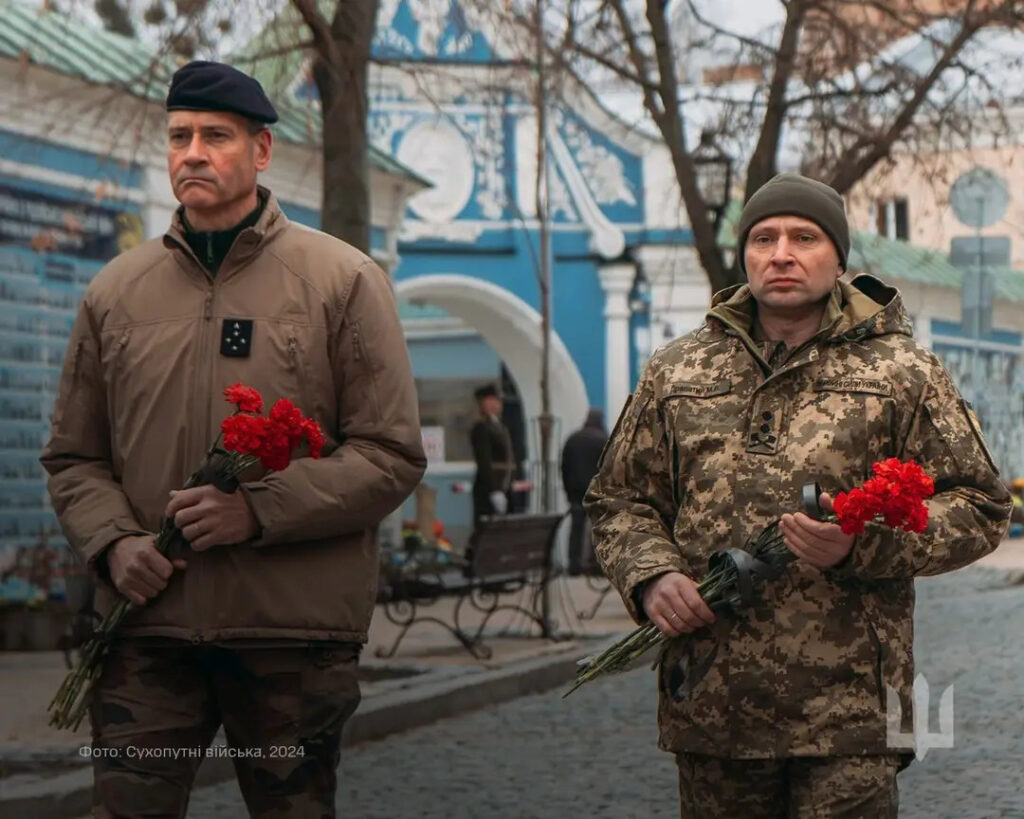
Pendant quelques jours, jusqu’au 26 décembre 2024, Pierre Schill, ici à gauche, conduit en Ukraine une délégation militaire française, pour approfondir la coopération, partager des expériences et accroître l’assistance militaire (armée ukrainienne)
a un peu tiraillé au début des années 90, alors lieutenant dans l’infanterie de marine, quand la France avait bien trop d’influence en Afrique. Voilà pour son expérience du feu.
Sa carrière a décollé entre 2012 et 2017, quand colonel, il était adjoint de l’aide de camp de François Hollande. À une époque où Paris s’affirmait comme le plus indéfectible soutien de l’insurrection sunnite radicale contre le gouvernement laïc de Syrie. La Macronie le promut général en 2017 et depuis le 7 juillet 2021, il est chef d’état-major de l’Armée de terre
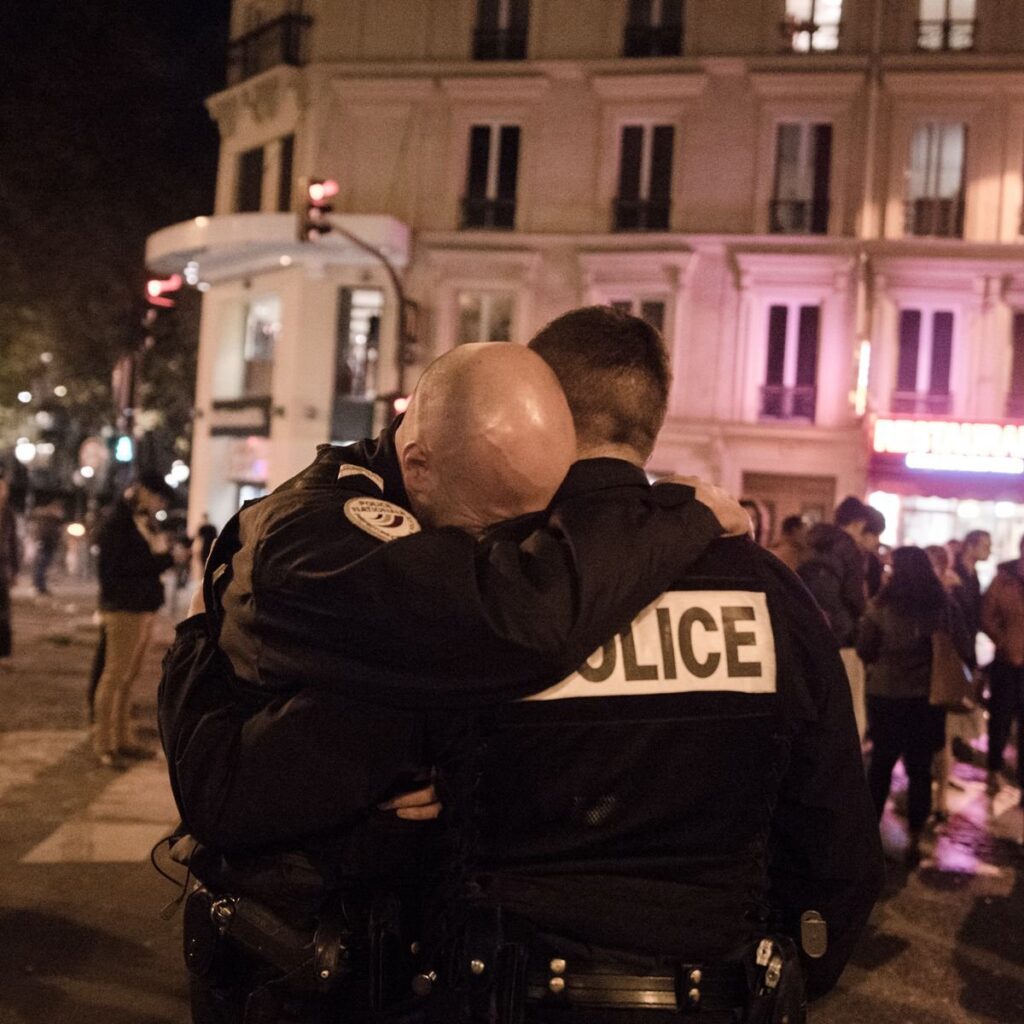
À Paris, le 13 novembre 2015, la politique étrangère de François Hollande connut un petit retour de bâton (Benjamin Filarski / Hans Lucas)
À l’instar de ses employeurs, il adore les plateaux de télévision et studios de radio, où il s’illustre comme un auxiliaire proactif de la politique étrangère d’Emmanuel Macron
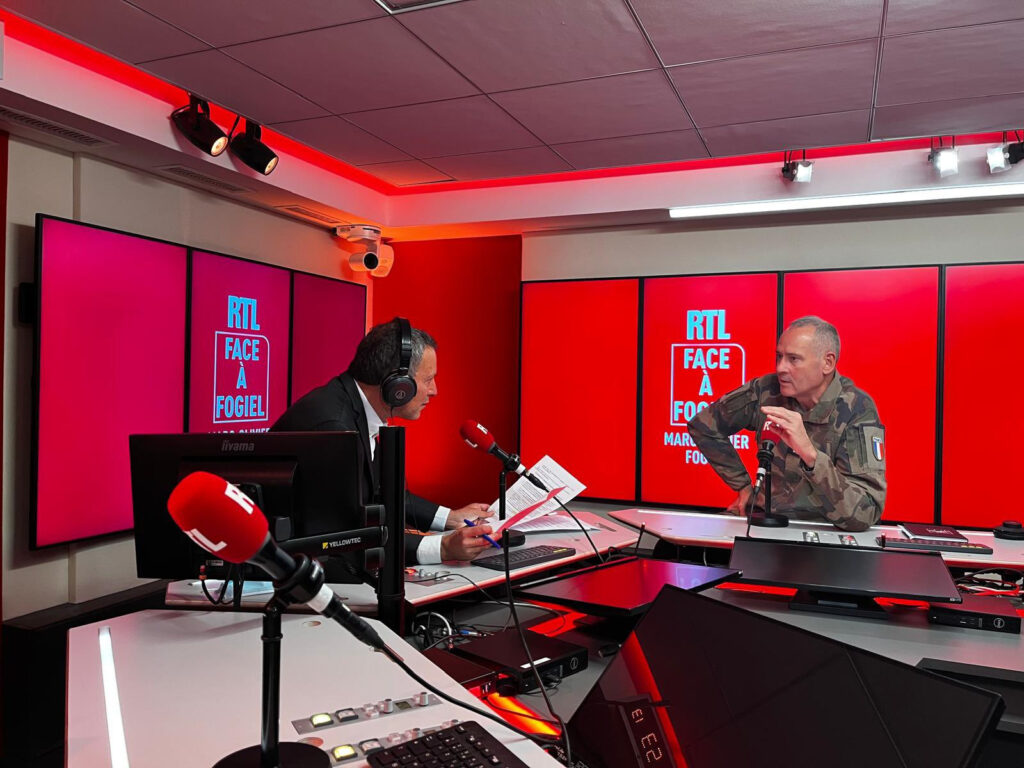
Le 22 octobre 2025, il prend son petit déjeuner avec Marc-Olivier Fogiel (chef d’état-major de l’Armée de terre)
Pour Radio Classique, il fanfaronne le 16 octobre 2025
L’armée française est prête et nous irons sur les remparts de notre pays et de l’Europe si nécessaire
En audition à l’Assemblée nationale, il ajoute le 23
Nous nous tiendrons prêts à déployer des forces dans le cadre de garanties de sécurité, le cas échéant au profit de l’Ukraine
Pierre Schill n’est pas seulement un courtisan ; tout observateur expérimenté sent une blessure profonde chez ce militaire énervé.
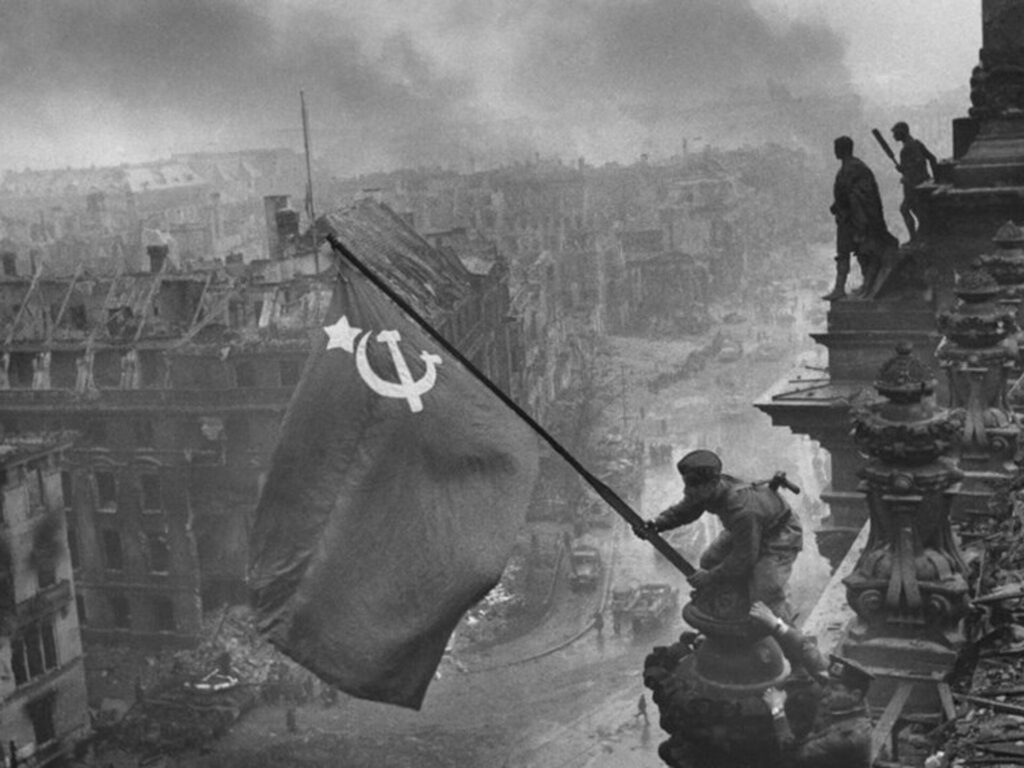
Je pense avoir compris qu’a l’instar de nombre de ses pairs, il n’a toujours pas digéré la prise de Berlin par l’Armée rouge et la rouste kolossal que les siens ramassèrent à Dien Bien Phu. Tant de défaites que les turpitudes françaises en Afrique permettaient de refouler
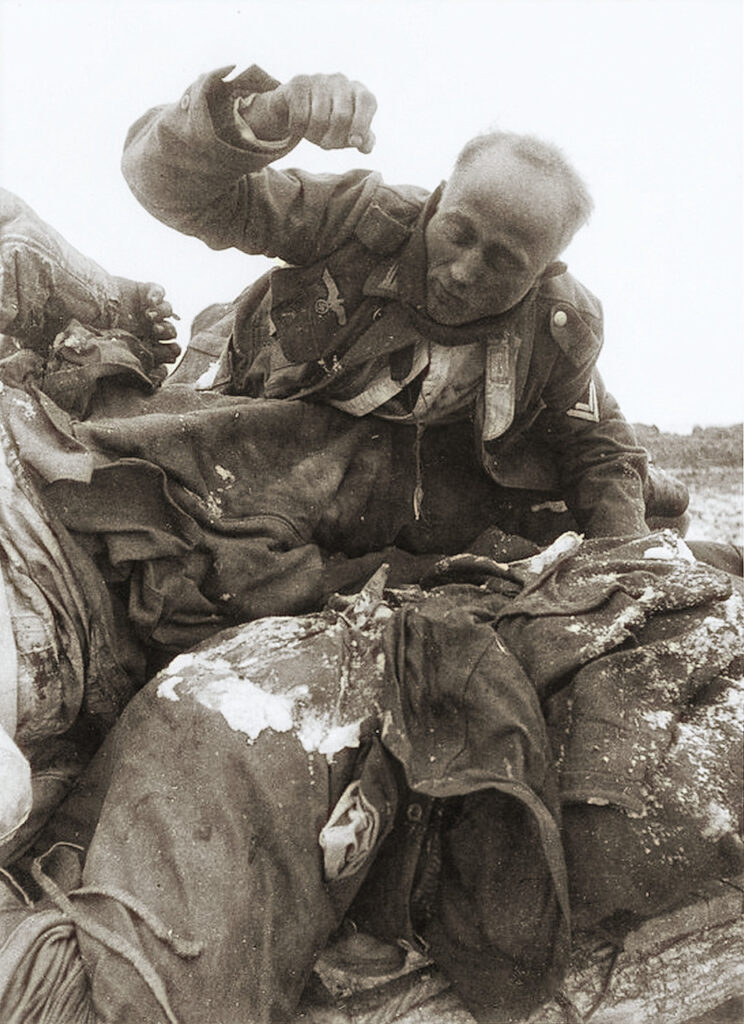
En février 1943, un défenseur de l’Europe est congelé à Stalingrad (archives russes)
Il est aujourd’hui un défenseur [par procuration] de l’Europe, contre les hordes néo-bolcheviques asiatiques [cf. Wilfried Blériot].
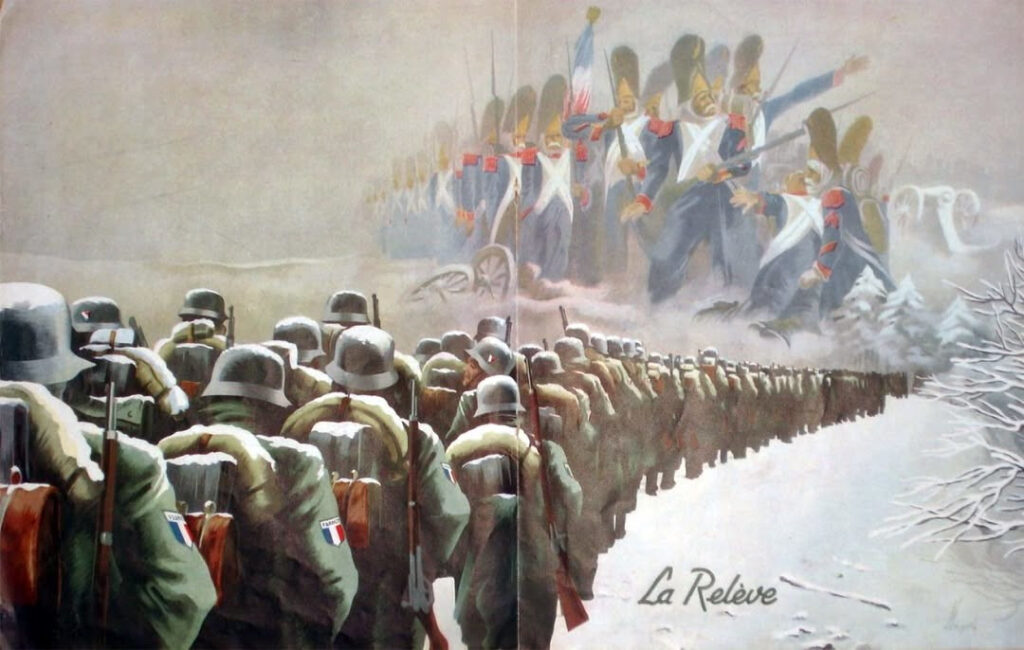
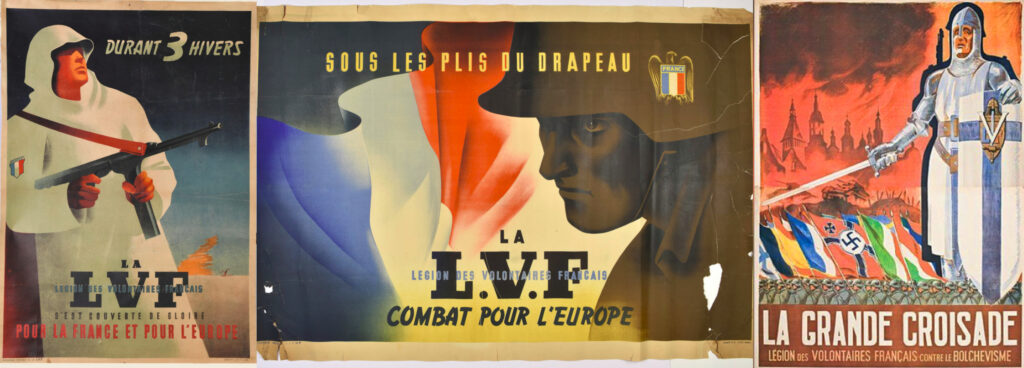
À la gloire de la Légion des volontaires français contre le bolchevisme (LVF, 1941-1944), supplétifs de la Wehrmacht sur le front de l’est, où ils marchaient dans les traces du général corse Napoleone Buonaparte, cette image apparaît le 20 novembre 1942 dans la brochure Histoire de France, publiée par l’État français
Retrait des troupes atlantistes des positions qu’elles occupent encore au Donbass, dont la population russophone se bat depuis 2014 pour sa libération, les conditions de Moscou pour un cessez-le-feu n’ont pourtant guère changé depuis plus d’un an. Mais risque d’arriver un moment où les Russes, victorieux sur le champ de bataille, se lasseront des interminables rodomontades européennes.
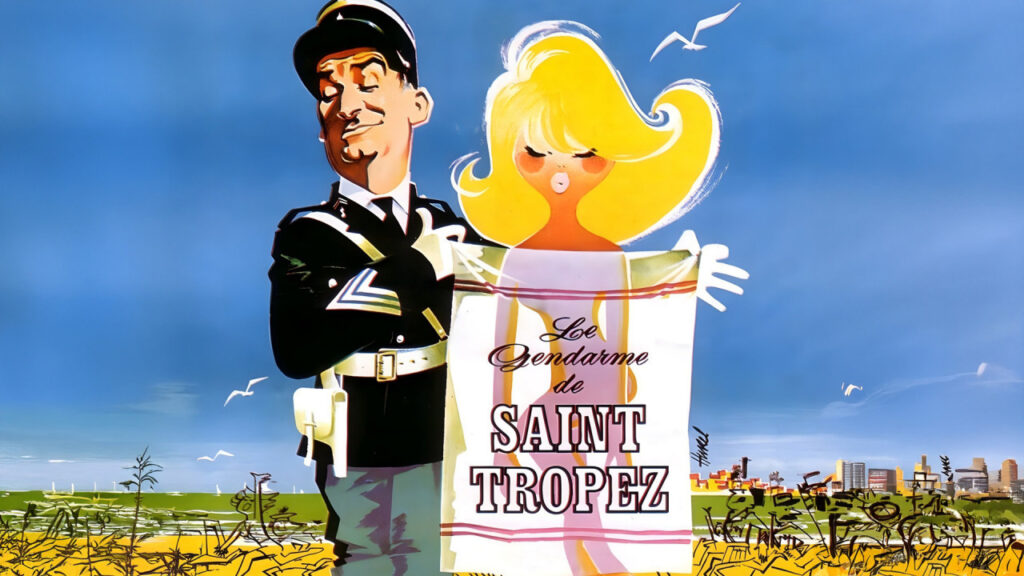
Entre 1941 et 1944, la maréchaussée a consciencieusement gardé le camp de Drancy, où raflés par la Police nationale, les déportés transitaient vers les Konzentrationslager du Reich
en 1964
Toujours aux ordres de l’État français et avec le même air bonasse [La tactique du gendarme], les pandores se préparent à un risque d’agitation sur le territoire national, en cas d’engagement armé contre la Russie sur le front de l’est, ou à défaut, si la France est nation hôte et que des matériels sensibles transitent par son territoire.
Les ordres ont été donnés par le chef d’état-major des armées Fabien Mandon, un mâle alpha qui jusqu’au 31 août, était aide de camp d’Emmanuel Macron. En audition à l’Assemblée nationale le 15 octobre 2025, le DGGN (directeur général de la Gendarmerie nationale) Hubert Bonneau expliqua les modalités de leur exécution
https://youtu.be/GPx-eJEGat0
Qui seraient ces agitateurs, aussi appelés déstabilisateurs ? Toujours les mêmes séditieux [un mot que j’entendis pour la première fois aux Renseignements généraux]. À la tête de la DRSD (Direction du renseignement et de la sécurité de la défense), une administration qui n’existait pas encore entre 1940 et 1944, Philippe Susnjara les identifia en avril : syndicalistes, militants d’ultra-gauche, antimilitaristes ou pro-palestiniens.
Ainsi, il ne manquera pas un bouton de guêtre contre les manifestants gauchistes et autres grévistes, en cas hypothétique d’un conflit direct entre OTAN et Russie. Je me demande si la Commission de la défense nationale et des forces armées se préoccupe avec la même ardeur de la menace pour la sûreté intérieure que font peser les militants nazis français partis gagner l’expérience des armes de guerre dans les rangs atlantistes en Ukraine.
Guerre ou pas ? Si oui, quel mandat populaire ? Cette stratégie est bien obscur, voire scabreuse, une expression de la pensée complexe, voire philosophique [Brice Couturier] de sa Vacuité
en 2017
Macron se verrait bien en chef de guerre, pour conjurer la réalité et maladroitement tenter de ne pas rester dans l’Histoire comme le plus incompétent et calamiteux chef d’État français. Les conséquences humaines du prolongement du conflit ? Un psychopathe ne s’en soucie guère.
J’épargne à mes lecteurs la narration du psychodrame consécutif aux déclarations le 18 novembre 2025, au congrès des édiles, de la gaîté de l’escadrille qui sert de chef d’état-major à Emmanuel Macron
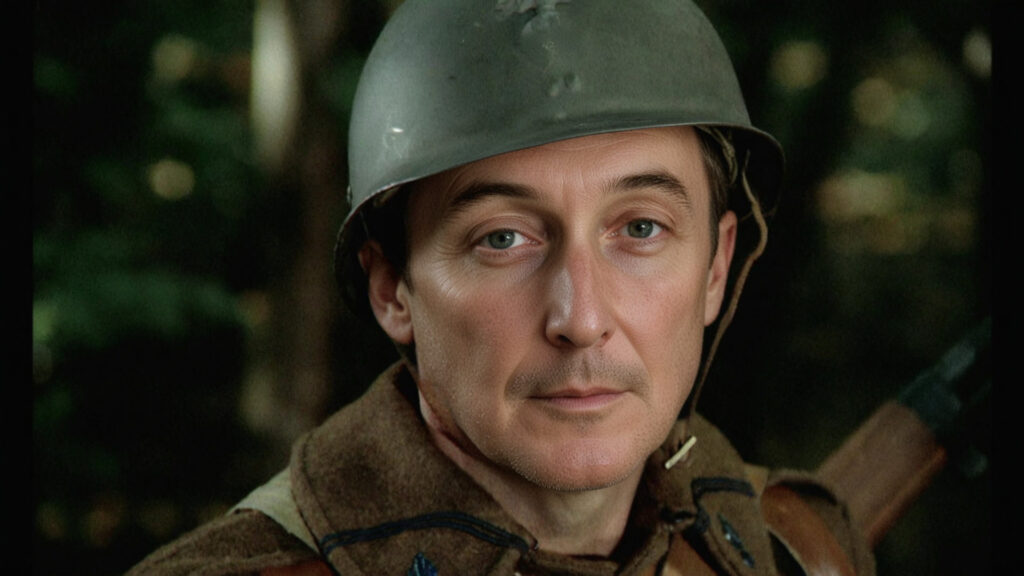
avec la complicité d’une intelligence artificielle
Alors que les Européens persistent à saboter la paix par leur soutien à Volodymyr Zelenskyy dans son refus d’évacuer le Donbass ; alors que le nombre de tués, dont des légions de mobilisés de force, approche les 2 millions dans les rangs atlantistes ; alors que la défaite est inéluctable, la France joue une scène digne de La grande-duchesse de Gérolstein
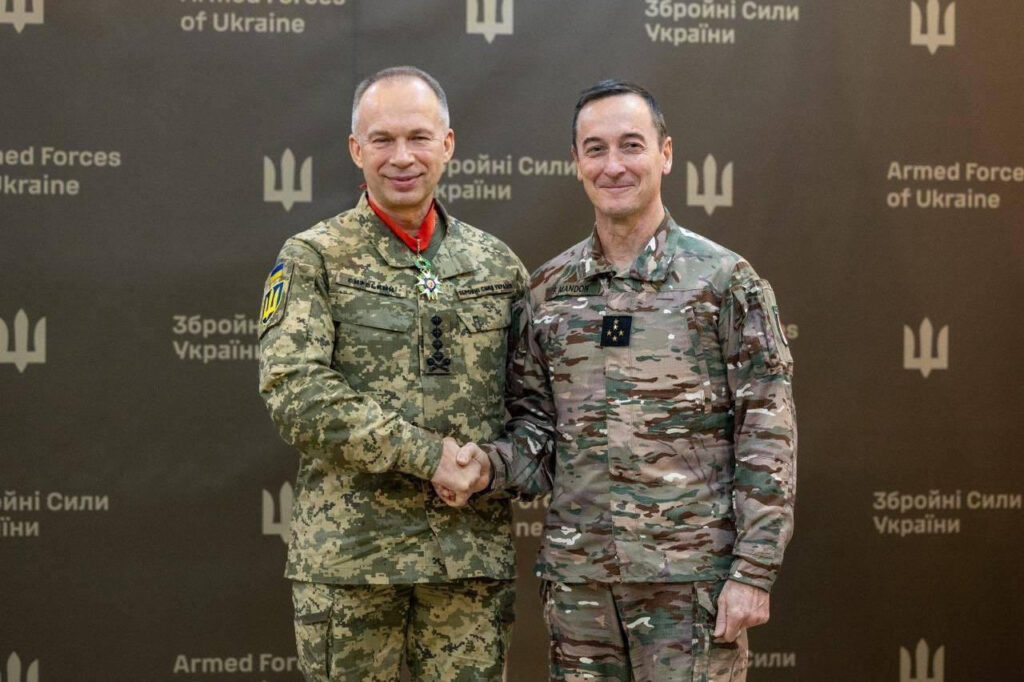
(Photo officielle)
Sur décret d’Emmanuel Macron dont il était l’aide de camp, Fabien Mandon se déplace le 20 décembre 2025 à Kiev, où il remet à son homologue Alexandre Syrsky une breloque : les insignes de commandeur de la Légion d’honneur
(Louis Carrier Belleuse, vers 1890)
Par un article publié le 16 novembre 2026, RFI révèle qu’à l’insu du plein gré de la représentation nationale, des militaires français en activité sont engagés en Ukraine. Leur mission consiste à maintenir le matériel militaire français et former des sous-officiers ukrainiens au plus près de la zone de combat. Cette opération secrète est appelée Volia. Sa couverture officielle est Gerfaut, celle basée en Pologne.
chronique alphabétique et nécrologique de l’engagement français dans les rangs atlantistes en Ukraine, ce que les journalistes serviles ne vous raconteront pas
Articles connexes
Pruvate à truvà me, canaglia di l’OTAN, pruvate solu
chronique en Anglais, its roots before WW2, its collaboration with Nazi Germany, its legacy in modern Ukraine, how NATO has continually supported Nazism in Ukraine
chronique en Anglais, censorship, fake news, whitewashing of the Ukrainian Nazism and war crimes, for the sake of the proxy war that NATO is conducting in Donbass and Ukraine, against Russia
une saga française, entre Ukraine et Lyon, où apparaissent aussi des morceaux de SS de la division Charlemagne et plus récemment, Alice Kerviel, dite Cordier. L’affaire Deranque révèle comme la France est infectée par le pétainisme, en particulier parmi les soutiens d’Israël ou de l’Ukraine, deux théâtres d’opérations où l’Occident tente de ralentir son déclin
En 2025, une nouvelle unité de Français combattant pour l’Ukraine s’est structurée autour d’un noyau de néonazis, ayant pour objectif d’attirer des recrues. Parmi ces volontaires, d’anciens militaires. StreetPress les a identifiés
En Ukraine, les volontaires français pro-ukrainiens et pro-russes se partagent l’imaginaire de la Seconde Guerre mondiale. Les premiers se revendiquent des collabos de l’Allemagne nazie, les seconds de l’escadrille mythique « Normandie – Niémen »
deux jours après le 10e anniversaire de la débâcle politique et sécuritaire du 13 novembre 2015, une messe célèbre à Verdun l’ancien dirigeant fasciste de l’État français
ce 11 novembre 2025 est l’occasion de souligner comme la façon dont l’Europe sacrifie les conscrits ukrainiens mobilisés de force rappelle le spectaculaire carnage de la 1ère guerre mondiale
c’est par l’agence cosaque de presse PIKA, depuis la République populaire de Lougansk, que le 2 avril 2024, l’ataman Nikolaï Diakonov lance un message à destination de la France
ce papier est le premier des grands médias français qui s’attaque à la question des militants nazis français dans les rangs atlantistes en Ukraine, le nouveau danger qu’ils présenteront à terme pour la sûreté intérieure
où nous apprenons que le nazi français Allan Duchézeau, camarade de César Aujard dans les rangs atlantistes en Ukraine, était surnommé Dox, quand il secondait à Paris le leader nazi Marc de Cacqueray Valménier
en Anglais, les indices de la présence d’opérateurs occidentaux, en particulier Français, pris au piège en mars 2022 à Marioupol, dont les forces russes achevèrent la libération en mai
est un militant nazi connu du renseignement, de la police et de la justice
Exemples d’expression politique de Karel Cherel sur les réseaux sociaux en 2020
Selon des sources sûres, il a accompli un premier séjour belliqueux en Ukraine, avant le déclenchement de l’opération militaire spéciale russe : quelques mois en 2018, dans les rangs du régiment nazi Azov. Pour s’y engager, il passa à Lyon par Bastion social, groupe politique que le ministère de l’Intérieur dissolut en avril 2019, puis Gaston Besson, qui faisait office de sergent recruteur en territoire suisse.
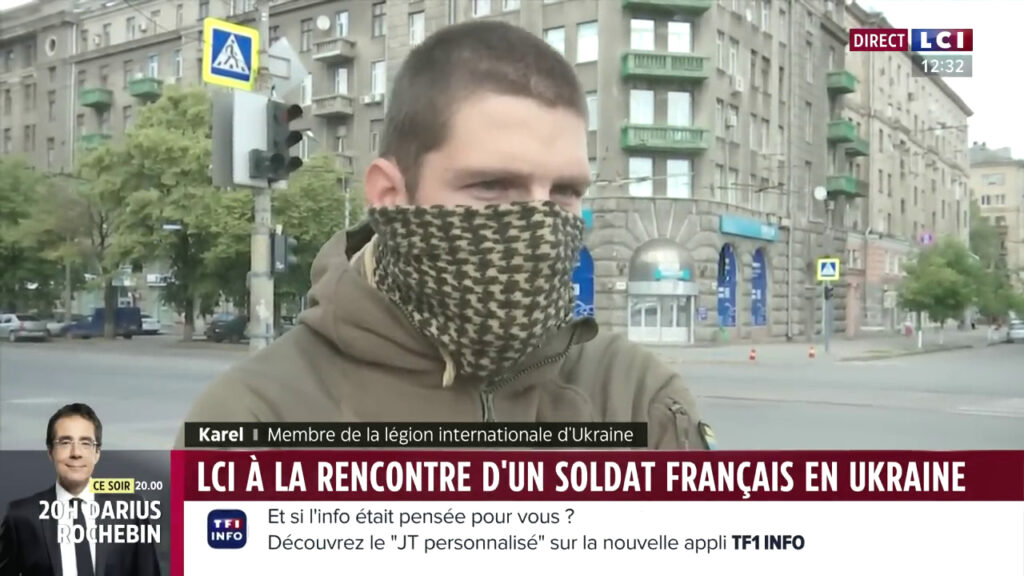
Le 24 juin 2022, LCI le présente comme un défenseur de l’Europe, amoureux de l’Ukraine et opposant farouche à la Russie. Il est masqué et seul son prénom est dévoilé
(Capture d’écran)
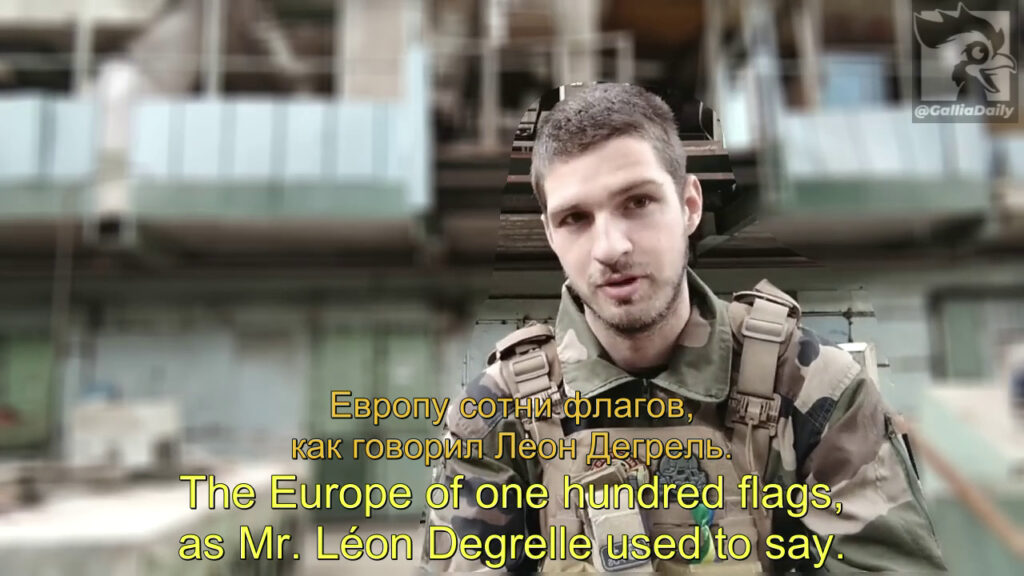
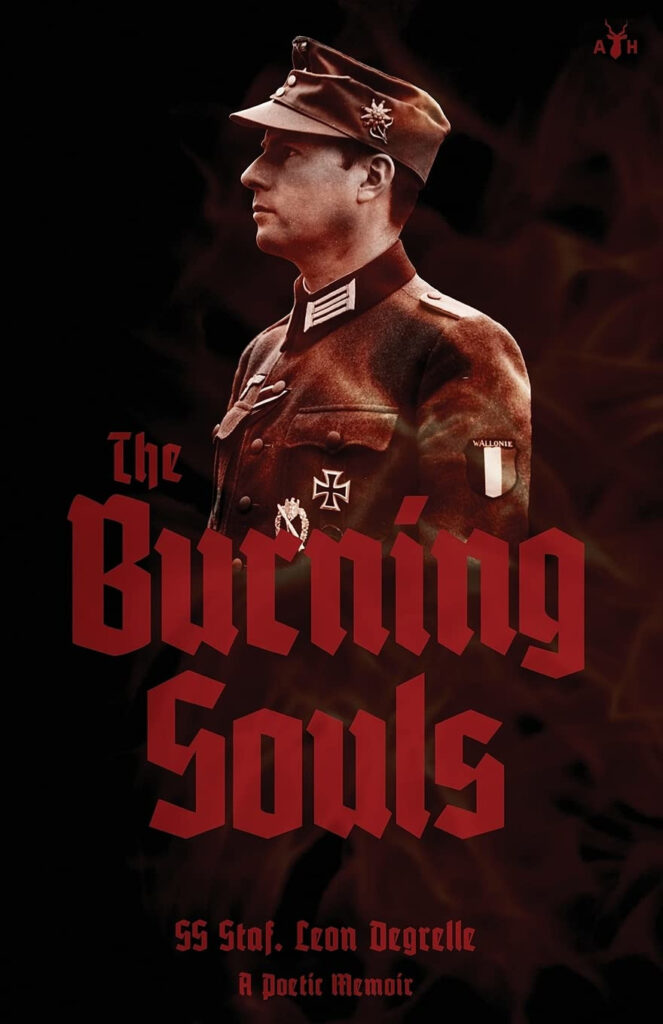
Le Breton est alors dans les rangs du 1er bataillon de Légion internationale. Sur Telegram, une chaîne française publie le 25 juillet un nouvel entretien. Il s’identifie et quant à sa contribution à la défense de l’Europe, cite Léon Degrelle (1906-1994), leader rexiste [extrême droite catholique] dans les années 30 en Belgique, puis Standartenführer [colonel SS] et commandant de la 28.SS-Freiwilligen-Panzergrenadier-Division, Wallonien [1941-1945]
(Capture d’écran)
Il est devenu spécialiste antichar, a été formé sur le lanceur de missile de fabrication britannique NLAW
(Réseaux sociaux)
Je suppose que la conotation idéologique de son interview a déplu à la hiérarchie de la Légion internationale, car il est ensuite affecté au bataillon Sich, branche militaire du parti nazi Svoboda
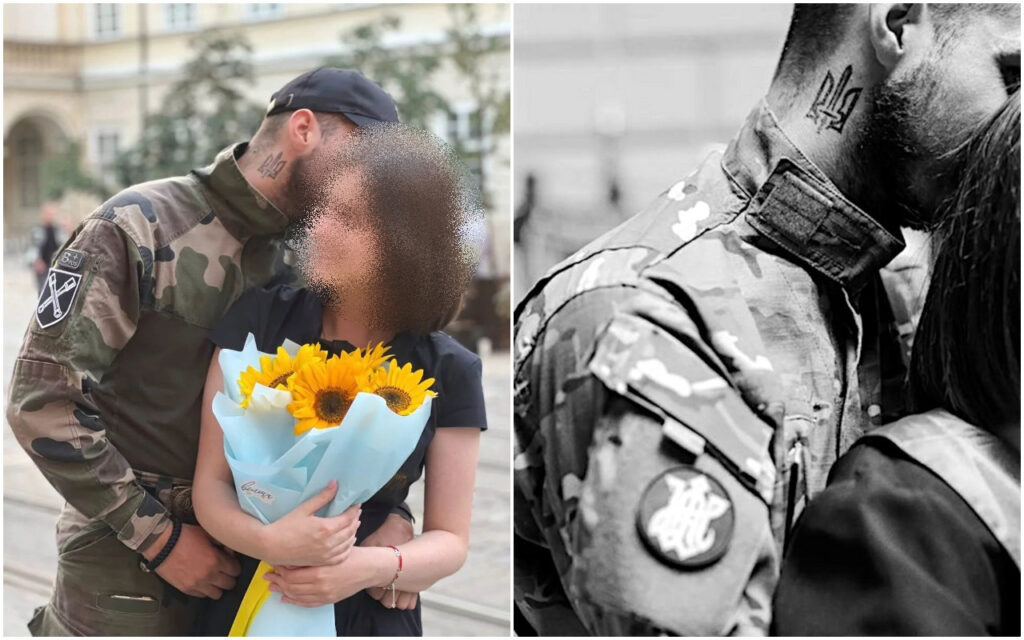
J’ai flouté le visage de la future épouse (réseaux sociaux)
Il convole en Ukraine en août 2022. Notez à gauche, sur son épaule droite, les deux grenades croisées, insigne de la Sturmbrigade Dirlewanger (1940-1945), formation disciplinaire des Waffen-SS dont les atrocités ont été tellement abominables, que même les autres SS étaient horrifiés
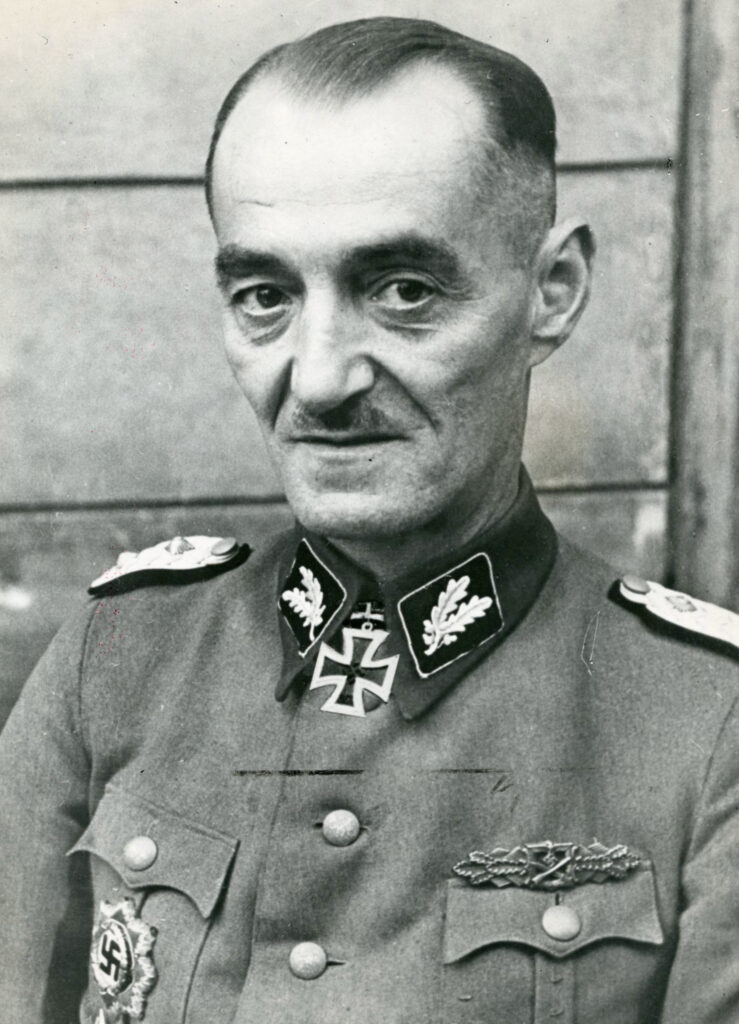
L’Oberführer SS Oskar Dirlewanger (1895-1945) en 1944 (Bundesarchiv)
Le 5 janvier 2024, la journaliste Cécile Deffontaines publie pour L’Obs le premier article de grand média français qui aborde la question du nazisme parmi les combattants français dans les rangs atlantistes en Ukraine. Cherel y a gagné sa place de haute lutte, y est désigné par un pseudonyme : Chris.
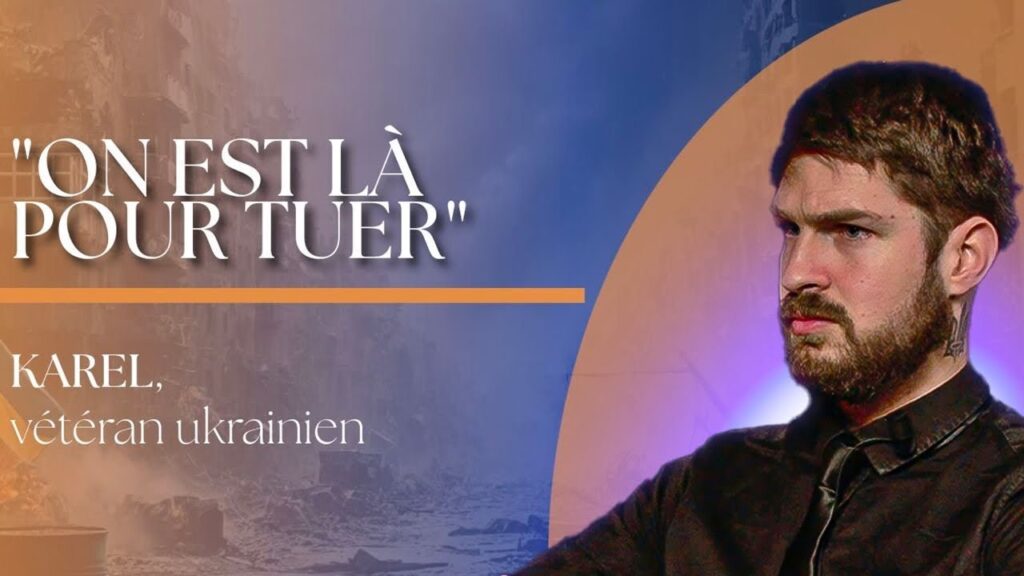
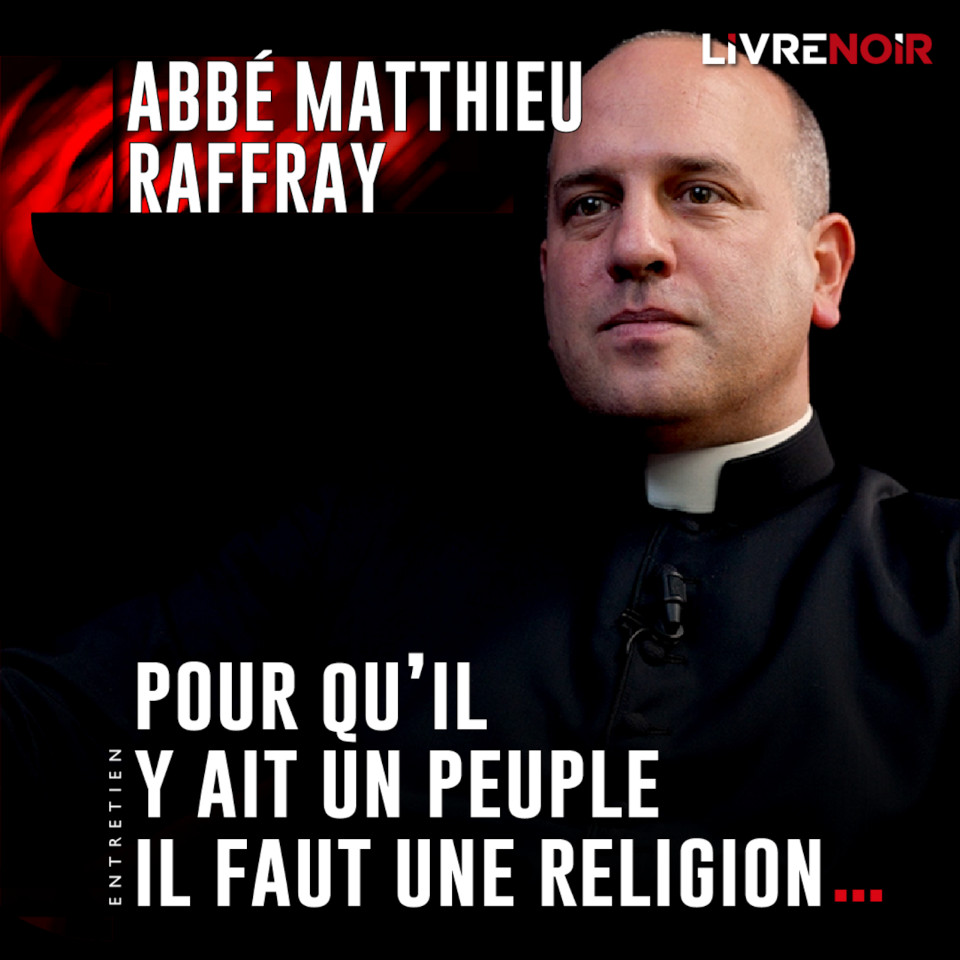
Telle vérole sur le bas clergé, il est interrogé par l’abbé Matthieu Raffray, dans une vidéo publiée le 22 décembre 2024 sur la chaîne YouTube Pour une Foi. Le synopsis dit
Karel, vétéran ukrainien engagé suite à l’appel de Volodymyr Zelensky, nous livre un témoignage poignant sur son parcours, ses combats et son dévouement à son pays. À travers son histoire, il explore les sacrifices, les espoirs et la résilience qui façonnent ceux qui répondent à l’appel de la liberté
L’entretien exhale le parfum musqué des ratlines, filières clandestines de l’église catholique, qui à la fin de la 2de guerre mondiale, évacuèrent quantité de nazis vers l’Amérique latine
Le rat musqué, une créature de Dieu (Grigorii Pisotckii)
Car nous connaissons déjà la foi profonde du militant nazi breton Karel Cherel, les services de renseignement, la police et la justice, aussi
L’abbé Matthieu Raffray le 4 décembre 2023 (magazine pétainiste Livre Noir)
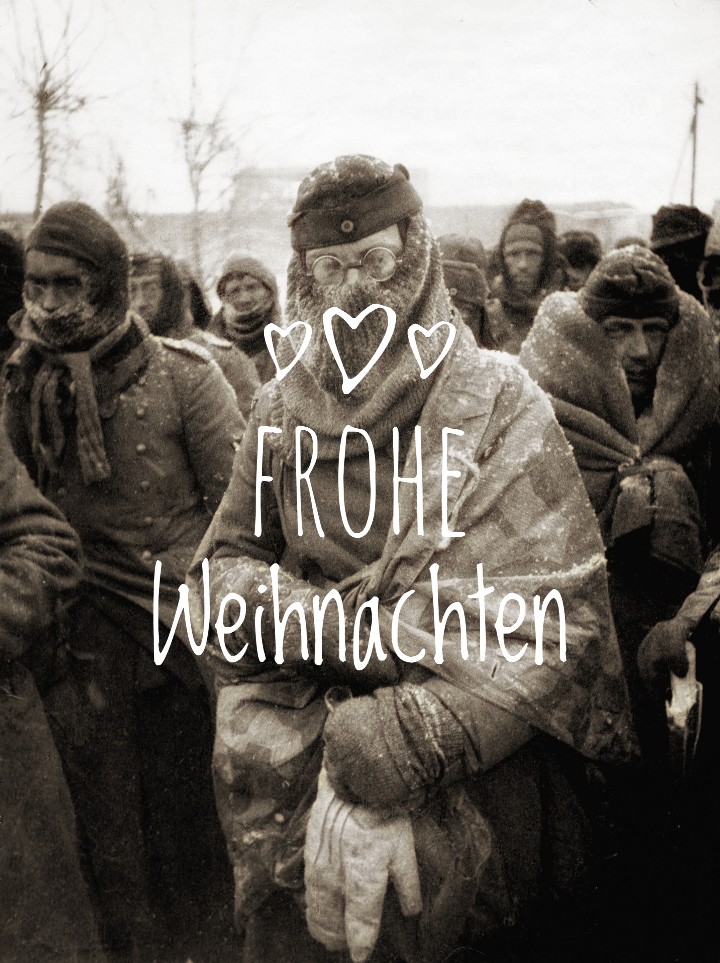
Pour sa part, l’abbé breton radicalisé est royaliste, canal Bourbon, coauteur du slogan bagarre, bagarre, prière, organise des stages pour former des catholiques virils, qu’il appelle à une croisade… spirituelle. Joyeux Noël
La virilité givrée, un Noël 1942 à Stalingrad (mon humble évocation, la photo originale date du début 1943)
Début 2025, l’ancien combattant renforce son identité catholique et bretonne. Le 8 mars, sur un compte de réseaux sociaux où son nom est décliné en Ukrainien –Карель Ширель– il rend hommage à l’ancien curé de Skrigneg -l’abbé Jean-Marie Perrot (1877-1943)- militant nationaliste breton et informateur du Sicherheitsdienst [renseignement SS], qu’il cite
Défiez-vous de la peste du laïcisme qui a tué la France et a déjà empoisonné une partie de la Bretagne. Si Padrig Pearse a pu sauver l’Irlande c’est que c’était un Celte et un chrétien convaincu. Que la jeunesse bretonne marche sur ses pas. Les autres voies ne peuvent mener qu’à la perdition
Une biographie en 2004
Le 12 décembre 1943, le résistant communiste Jean Thépaut dénazifia le saint homme.
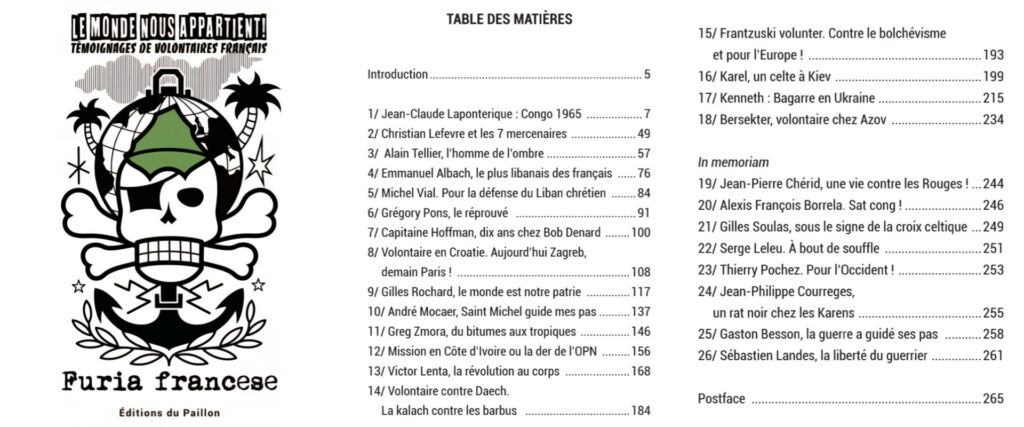
Cherel figure en bonne place, parmi leurs représentants en Ukraine, dans un recueil d’oraisons et témoignages de mercenaires français droitardés depuis les années 1960, que les Éditions du Paillon publient le 19 juin
Il continue d’enrichir sa culture, partage le 15 juillet 2025 une vidéo dont le son est de la pop patriotique ukrainienne et l’image fixe, la couverture d’une traduction en 2021, par les éditions suprémacistes états-uniennes Antelope Hill [AH, une coïncidence], des mémoires de Léon Degrelle (1906-1994)
(Réseaux sociaux)
Son sevrage échoue en août. Il craque et regagne l’Ukraine, où il intègre le bataillon Revansh, branche militaire de l’organisation nazie Tradytsiya ta poryadok [Tradition et ordre], dans le groupe qu’ont constitué le Parisien César Aujard, le Lyonnais Gwendal Delange et d’autres nazis français
(Europa Diffusion)
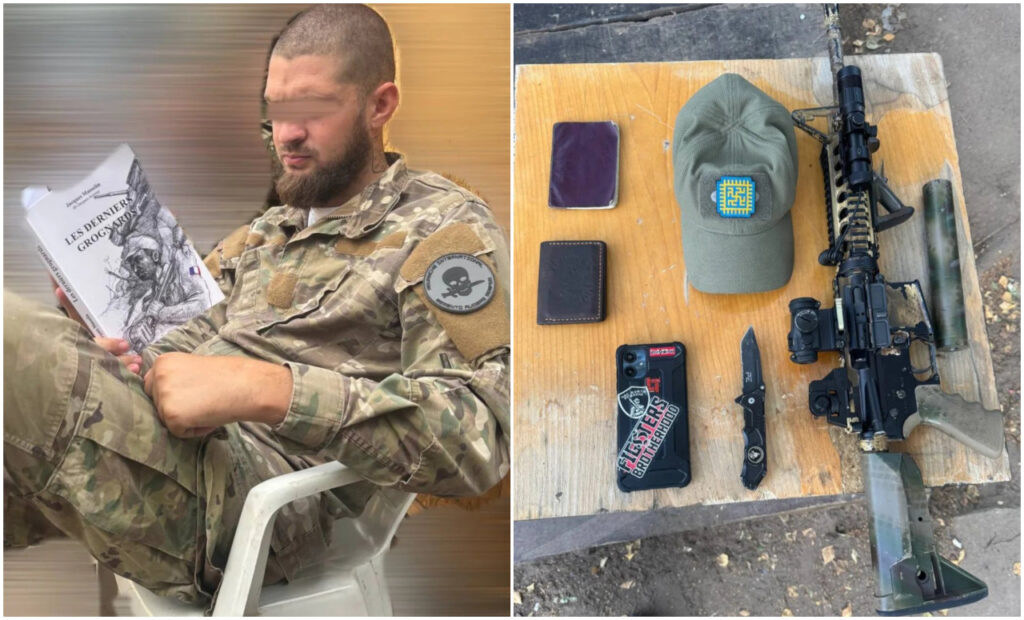
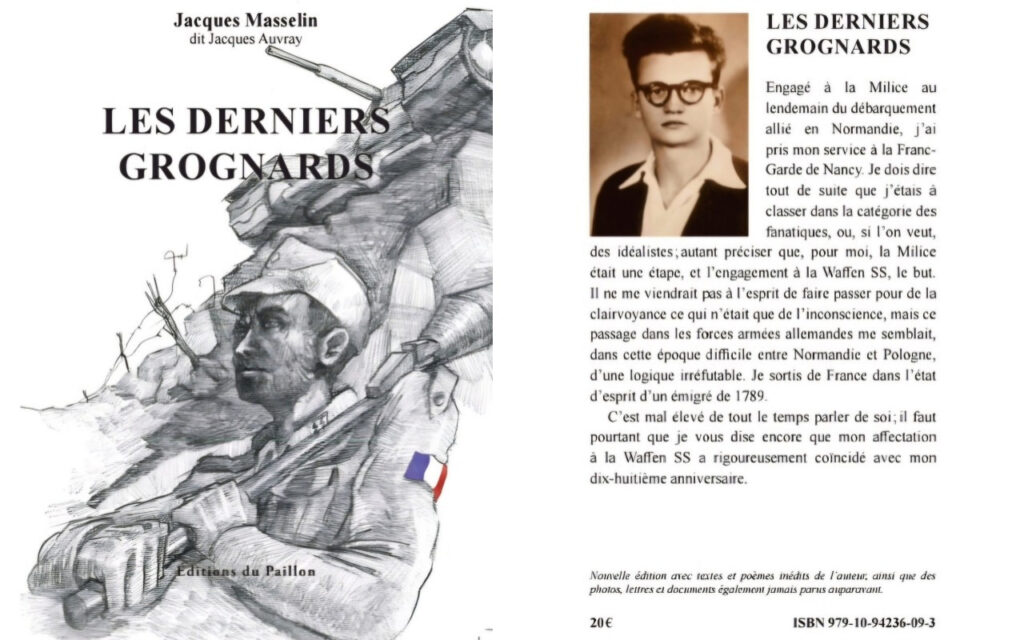
La vie militaire ne l’empêche pas de continuer d’approfondir sa culture. Il attaque une édition récente des mémoires de Jacques Masselin, dit Auvray, ancien milicien de Joseph Darnand, puis SS dans la division Charlemagne. 81 ans, presque jour pour jour, après que l’auteur ait gagné la Pologne, pour s’y faire culbuter par l’Armée rouge, Cherel retrouve en Ukraine une situation militaire à peu près semblable
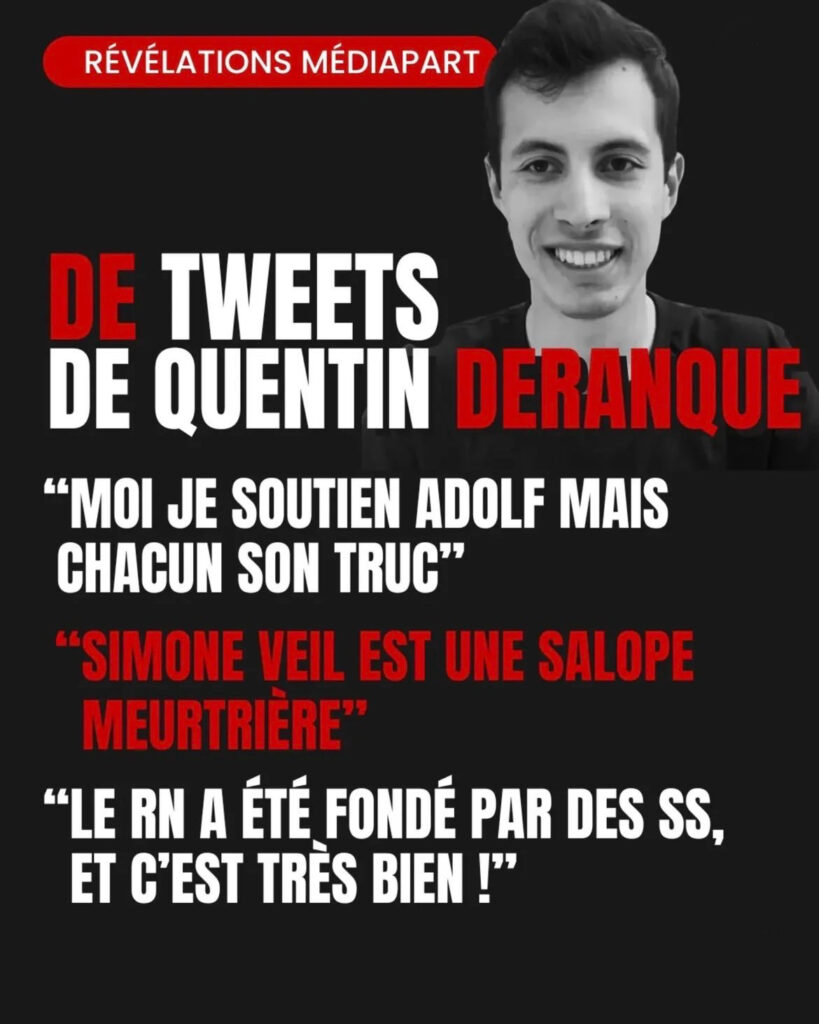
Le 12 mars 2026, Mediapart révèle comme Quentin Deranque, érigé en martyr par la droite française après sa mort le 14 février, avait exprimé sur X son racisme, son antisémitisme, son fascisme et sa nostalgie du nazisme
Lors d’une soirée le 27 janvier 2022, Cherel buvait des pintes en compagnie de la fille Cordier.
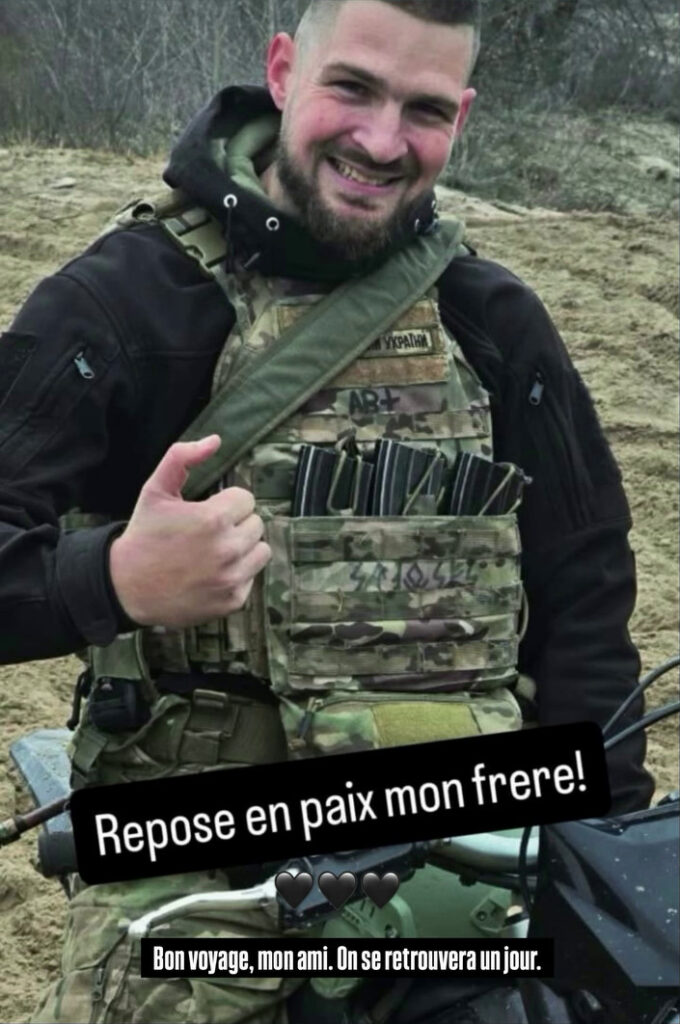
C’est en Français que ses camarades sud-américains annoncent sa mort le 13 novembre 2026. Selon toute vraisemblance, ce fut la veille, dans la région de Zaporojie, qu’il partagea le sort de l’Ukrainien Mykola Zavhorodnii, son chef de peloton dans le bataillon Revansh
chronique alphabétique et nécrologique de l’engagement français dans les rangs atlantistes en Ukraine, ce que les journalistes serviles ne vous raconteront pas
Articles connexes
Pruvate à truvà me, canaglia di l’OTAN, pruvate solu
chronique en Anglais, its roots before WW2, its collaboration with Nazi Germany, its legacy in modern Ukraine, how NATO has continually supported Nazism in Ukraine
chronique en Anglais, censorship, fake news, whitewashing of the Ukrainian Nazism and war crimes, for the sake of the proxy war that NATO is conducting in Donbass and Ukraine, against Russia
une saga française, entre Ukraine et Lyon, où apparaissent aussi des morceaux de SS de la division Charlemagne et plus récemment, Alice Kerviel, dite Cordier. L’affaire Deranque révèle comme la France est infectée par le pétainisme, en particulier parmi les soutiens d’Israël ou de l’Ukraine, deux théâtres d’opérations où l’Occident tente de ralentir son déclin
En 2025, une nouvelle unité de Français combattant pour l’Ukraine s’est structurée autour d’un noyau de néonazis, ayant pour objectif d’attirer des recrues. Parmi ces volontaires, d’anciens militaires. StreetPress les a identifiés
En Ukraine, les volontaires français pro-ukrainiens et pro-russes se partagent l’imaginaire de la Seconde Guerre mondiale. Les premiers se revendiquent des collabos de l’Allemagne nazie, les seconds de l’escadrille mythique « Normandie – Niémen »
deux jours après le 10e anniversaire de la débâcle politique et sécuritaire du 13 novembre 2015, une messe célèbre à Verdun l’ancien dirigeant fasciste de l’État français
ce 11 novembre 2025 est l’occasion de souligner comme la façon dont l’Europe sacrifie les conscrits ukrainiens mobilisés de force rappelle le spectaculaire carnage de la 1ère guerre mondiale
c’est par l’agence cosaque de presse PIKA, depuis la République populaire de Lougansk, que le 2 avril 2024, l’ataman Nikolaï Diakonov lance un message à destination de la France
ce papier est le premier des grands médias français qui s’attaque à la question des militants nazis français dans les rangs atlantistes en Ukraine, le nouveau danger qu’ils présenteront à terme pour la sûreté intérieure
où nous apprenons que le nazi français Allan Duchézeau, camarade de César Aujard dans les rangs atlantistes en Ukraine, était surnommé Dox, quand il secondait à Paris le leader nazi Marc de Cacqueray Valménier
en Anglais, les indices de la présence d’opérateurs occidentaux, en particulier Français, pris au piège en mars 2022 à Marioupol, dont les forces russes achevèrent la libération en mai
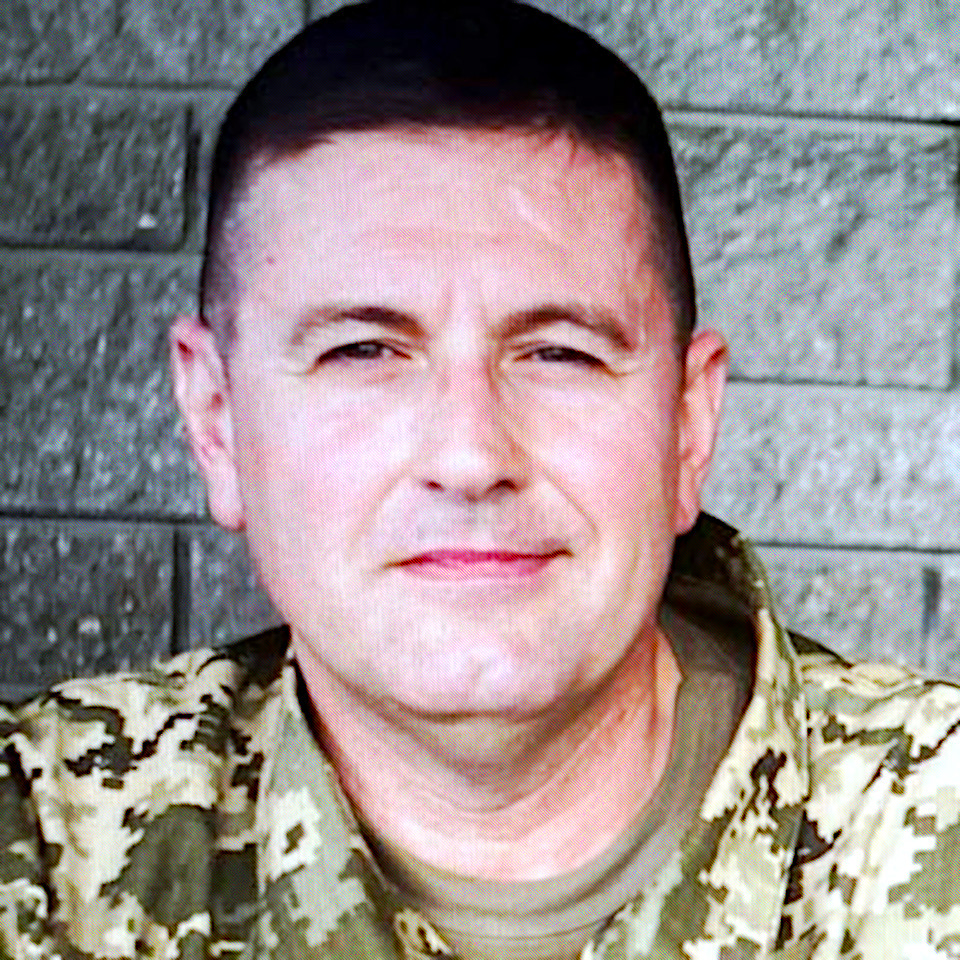
est un morceau de choix. Je suis heureux de l’avoir découvert. Le Dauphinois a été éduqué à Vienne, Isère, puis Sciences Po Lyon et Saint Cyr, spécialité transmissions, à Rennes. Il a développé une carrière intéressante, jusqu’au grade de commandant, détaché observateur de l’ONU, l’OTAN et l’OSCE, officier de renseignement en Afghanistan, avocat militaire, pas un combattant mais néanmoins un homme de terrain. Il est par son expérience très proche des États-uniens, continue sans doute de fournir des rapports au renseignement français
sur Twitter le 30 mai 2023
Il vit déjà en Ukraine et fin février 2022, intègre une ONG, le Fonds ukrainien pour les volontaires internationaux (FUVI), comme consultant et chef des opérations
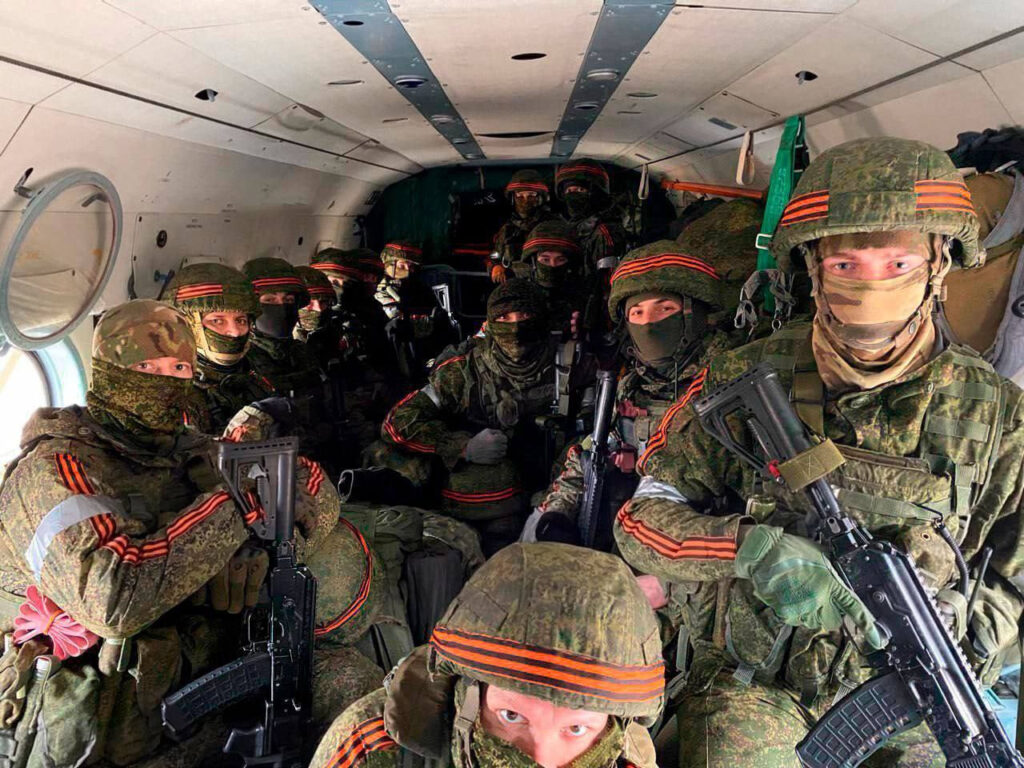
Au matin du 24 février 2022, par un assaut aéroporté, les parachutistes russes s’emparent de l’aéroport Antonov, à Gostomel, banlieue nord ouest de Kiev
Sur un plan plus personnel, Piguet serait de religion juive, car il brandit régulièrement l’argument ultime de sa propre judaïcité pour tenter de blanchir les organisations ukrainiennes clairement nazies, procédé trivial et fallacieux, qui s’adresse à des crétins. Sa propre pensée est fasciste, même délirante. Voici des extraits de sa prose sur LinkedIn, en février 2023
Les bolcheviks russes ont toujours persécuté les croyants en Dieu ainsi que les démocrates laïcs. Les Russes sont des païens issus de hordes impies qui adoraient la mort et pratiquaient le cannibalisme […] L’Ukraine, carrefour de nombreuses civilisations et influences brillantes […] C’est pourquoi les Ukrainiens sont beaux et ingénieux […] Honte aux barbares «Moskals»
Vous l’avez compris, ce partisan d’Emmanuel Macron est lui-même un crétin, comme le sont souvent les partisans d’Emmanuel Macron. Avec ce personnage, nous réalisons mieux comment l’OSCE, sous couvert de mission internationale impartiale, a pu contribuer au réglage de bombardements terroristes ukrainiens de la population du Donbass.
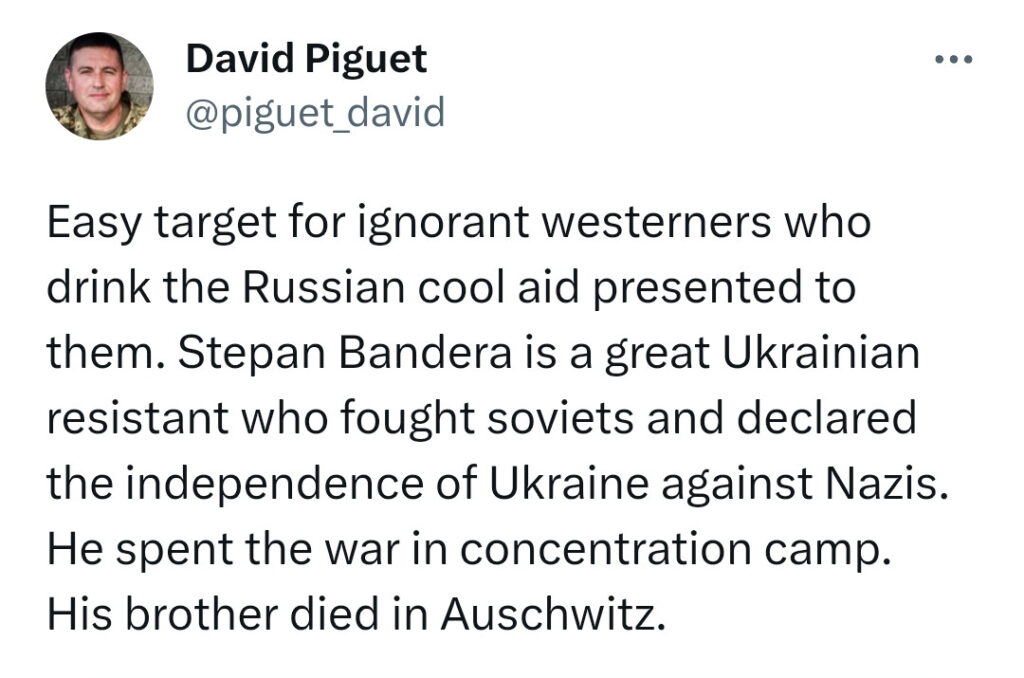
Il récidive le 16 mai par un tweet cosmique, pour encencer le criminel de guerre nazi ukrainien Stepan Bandera (1909-1959). Un tel révisionnisme relève du mensonge ou d’une inculture crasse, peut être des deux
Né dans l’empire austro-hongrois, Bandera était un militant nationaliste ukrainien, en territoire polonais après la 1ère guerre mondiale, lorsqu’il commandita l’assassinat en 1934 du premier ministre. Ce fut l’invasion allemande de septembre 1939 qui le libéra de prison. Il était le chef de la faction radicale et dominante de l’Organisation des nationalistes ukrainiens (OUN). Les plus modérés admiraient Benito Mussolini, les partisans de Bandera lui préféraient Adolf Hitler. Fasciste et raciste, partisan d’un État autoritaire, il ordonnait aussi
Moscovites [Russes], Polonais, Hongrois et Juifs sont vos ennemis, détruisez les !
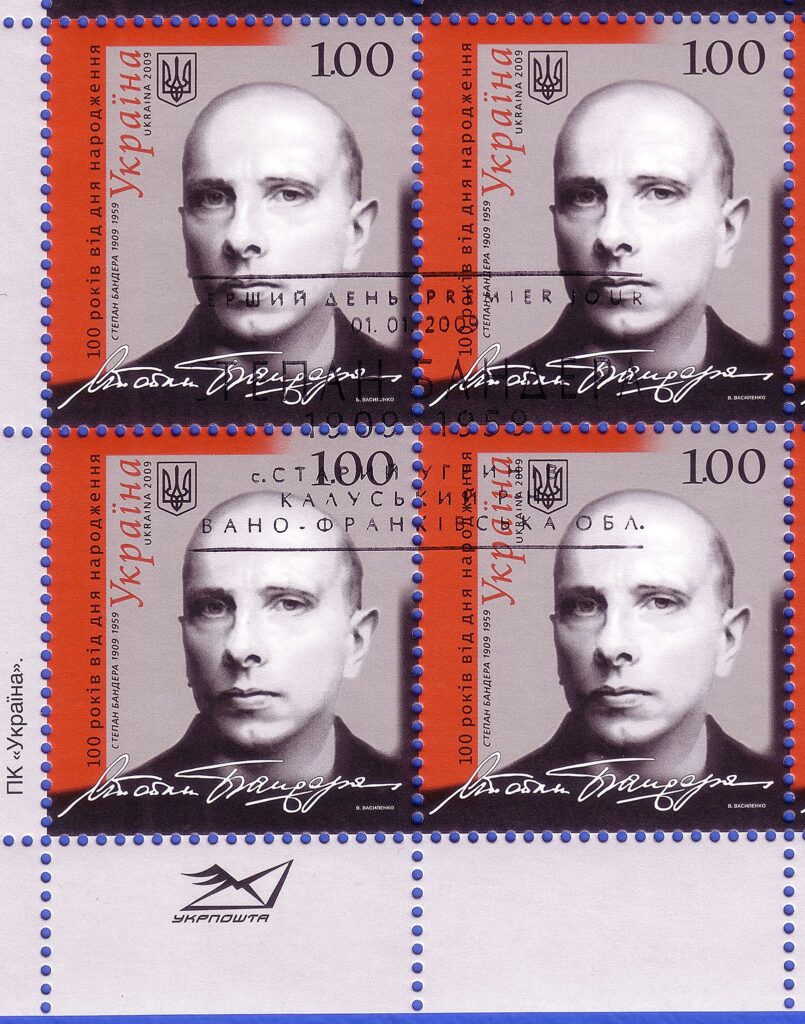
En 2009, pour le 100e anniversaire de sa naissance, Stepan Bandera est honoré par un timbre. Depuis la révolution orange de 2005 et avant la victoire démocratique de Viktor Ianoukovytch en 2010, le président de l’Ukraine est alors Viktor Iouchtchenko, pro-Occident
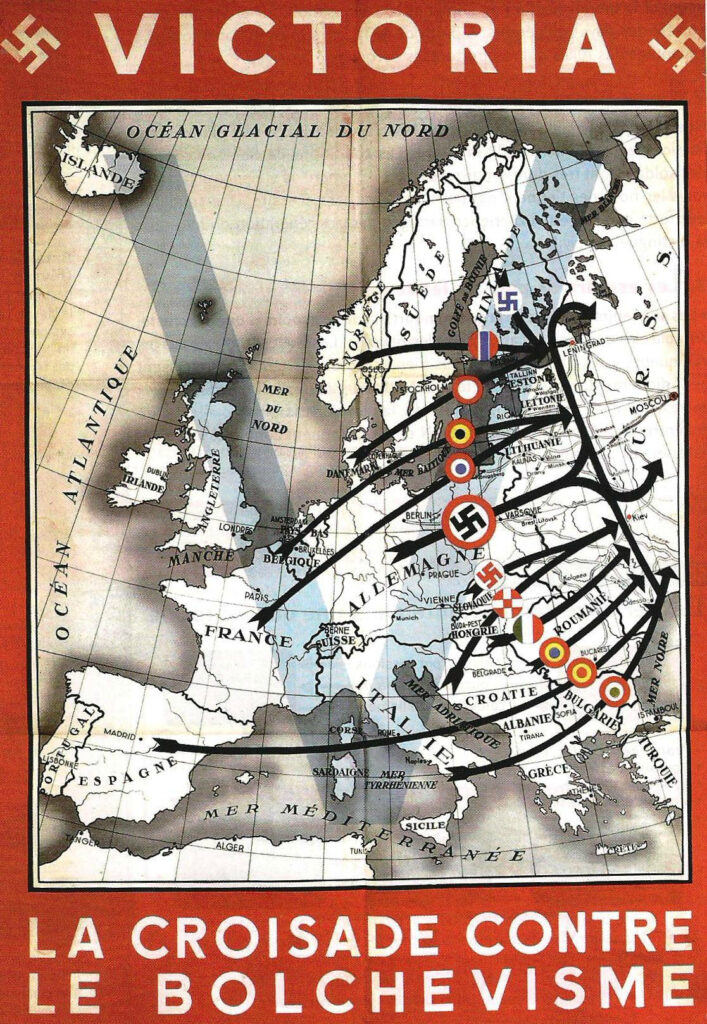
Son organisation a travaillé avec l’Abwehr [renseignement militaire allemand], pour fournir des bataillons de supplétifs ukrainiens aux armées du Reich, dans la perspective de l’invasion de l’Union soviétique en juin 1941
Affiche de propagande française en 1941
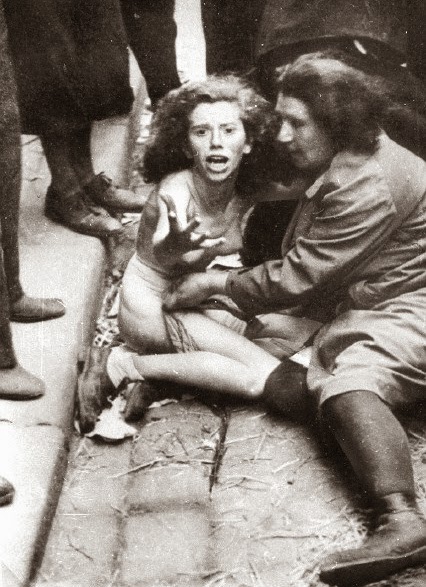
Ses partisans ont accueilli les envahisseurs en libérateurs et pour célébrer l’événement, massacré début juillet quelques 4 000 civils juifs dans la région de Lviv
Une victime juive des nationalistes ukrainiens à Lviv le 1er juillet 1941
Il demanda personnellement à Adolf Hitler de lui accorder l’indépendance d’un État fasciste ukrainien, allié de l’Allemagne nazie, qu’il déclara unilatéralement la semaine suivante. Cette initiative déplut et les Allemands ont temporairement interné Bandera, d’abord en résidence surveillée à Berlin, puis dans les quartiers VIP du camp de Sachsenhausen, où ses conditions de détention auraient fait rêver les travailleurs forcés. Piquet insulte les 84 000 victimes du camp de travail.
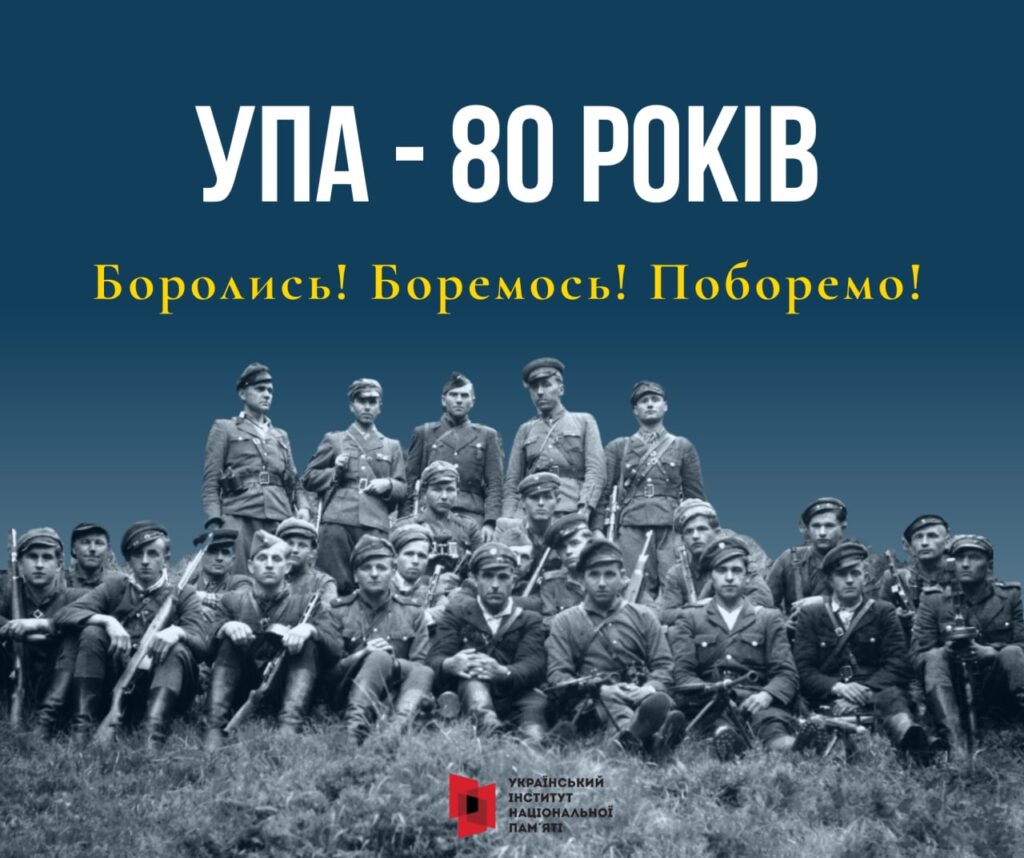
L’Armée insurgée ukrainienne (UPA), branche militaire de l’OUN, fut formée en octobre 1942. Contrairement à ce que suggèrent les propagandistes ukrainiens, elle n’a jamais affronté les forces d’occupation, mais conduit un nettoyage ethnique, avec la bienveillance des Allemands, le massacre entre 1943 et 1945 d’au moins 50 000, peut être 100 000 civils polonais
Depuis 2015, après Maïdan, l’État ukrainien célèbre chaque année, ici en 2022, l’anniversaire de la fondation en 1942 de la formation paramilitaire nazie UPA
Après la victoire soviétique à Stalingrad, l’OUN participa en novembre 1943, aux côtés d’autres organisations fascistes, hongroise et roumaine, à la fondation à Jytomyr du Comité des nations subjuguées (AUN), sous l’égide du Reichsministerium für die besetzten Ostgebiete [ministère impérial des territoires orientaux occupés] d’Alfred Rosenberg. En Avril 1944, l’adjoint de Bandera, Yaroslav Stetsko, rencontra l’Obersturmbannführer [lieutenant colonel SS] Otto Skorzeny, pour organiser la guérilla que l’UPA commençait à conduire derrière les lignes de l’Armée rouge victorieuse, que libre en septembre, Bandera appelait à combattre
à Berlin le 2 mai 1945 (Evgueni Khaldeï)
Après la victoire alliée, dans laquelle l’Union soviétique a contribué à hauteur de 80% de toutes les pertes militaires allemandes de la 2de guerre mondiale, il s’est réfugié en Allemagne de l’ouest, sous la protection de groupes nazis clandestins et des services secrets anglo-états-uniens, car dorénavant sous leur houlette, l’UPA continuait à opérer en Ukraine soviétique. Le KGB parvint à le liquider à Munich en 1959. Ès-qualités, son ancien adjoint Yaroslav Stetsko, alors président du Bloc anti-bolchevique des nations (ABN), recyclage atlantiste de l’AUN nazi de 1943, fut reçu en 1983 par Ronald Reagan
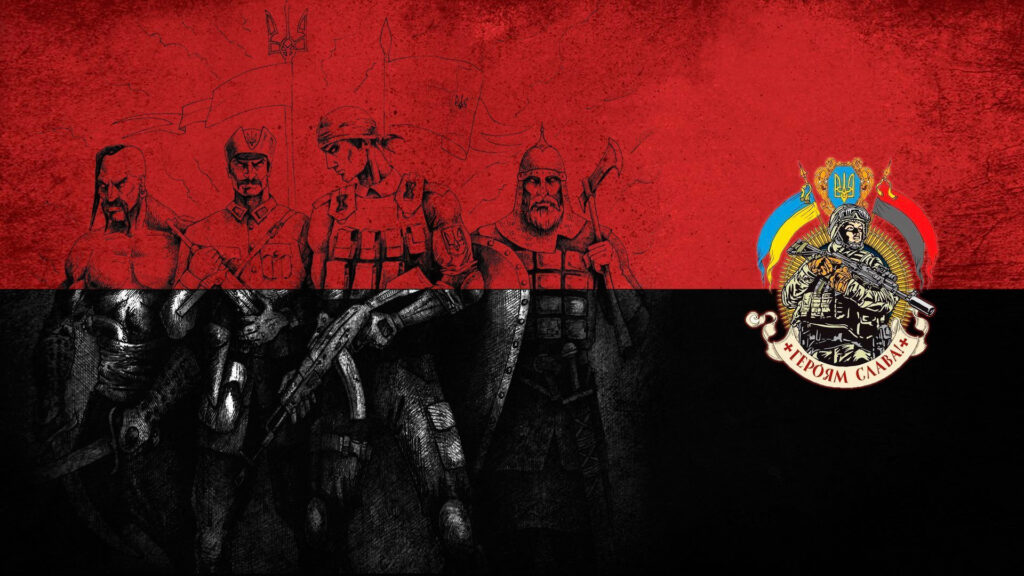
GLOIRE AUX HÉROS, slogan inauguré en avril 1941, parmi les fascistes ukrainiens de l’OUN, alors implantés dans le Generalgouvernementfür die besetzten polnischen Gebiete [Gouvernement général des territoires polonais occupés]. Cette image est le bandeau du compte Twitter de David Piguet
En qualité d’adversaire de hordes impies [les Russes], Piguet affiche, en bandeau de son compte Twitter, les couleurs rouge et noir de Pravyi sektor [Secteur droit], organisation nazie contemporaine, qui revendique son héritage de l’UPA, les bourreaux entre 1943 et 1945 d’au moins 50 000, peut être 100 000 civils polonais. Je m’intéresse toujours à l’essence historique des choses. Voici qui représente ce qu’il est profondément, par atavisme ou sinon, héritage génétique
Affiches de propagande à partir de 1941 de la Légion des volontaires français contre le bolchevisme (LVF), un régiment de supplétifs français de la Wehrmacht
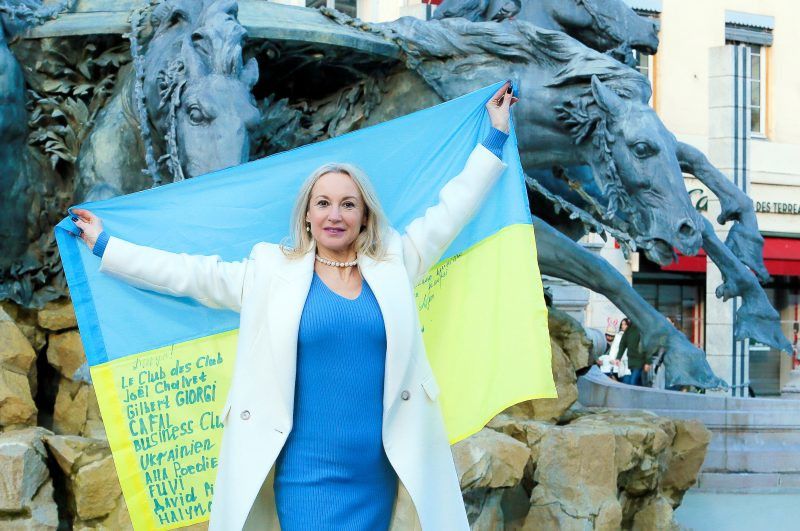
À l’approche début juin de la tant attendue contre-offensive, que la MOA occidentale impose à la chair à canon ukrainienne, il est le relais servile de la propagande la plus médiocre, partage fréquemment les élucubrations d’une certaine Alla Poedie, agitatrice ukrainienne hystérique, une sorte de Joseph Goebbels en jupons et aussi plus âgée, qui fait chauffeuse de salle sur LCI. Mais certains cordonniers sont les plus mal chaussés et je pense que le militaire est réellement surpris et déçu que la contre-offensive n’atteigne pas les objectifs annoncés par la cantinière d’Azov, car le débit de sa page Twitter se réduit à la mi-juin
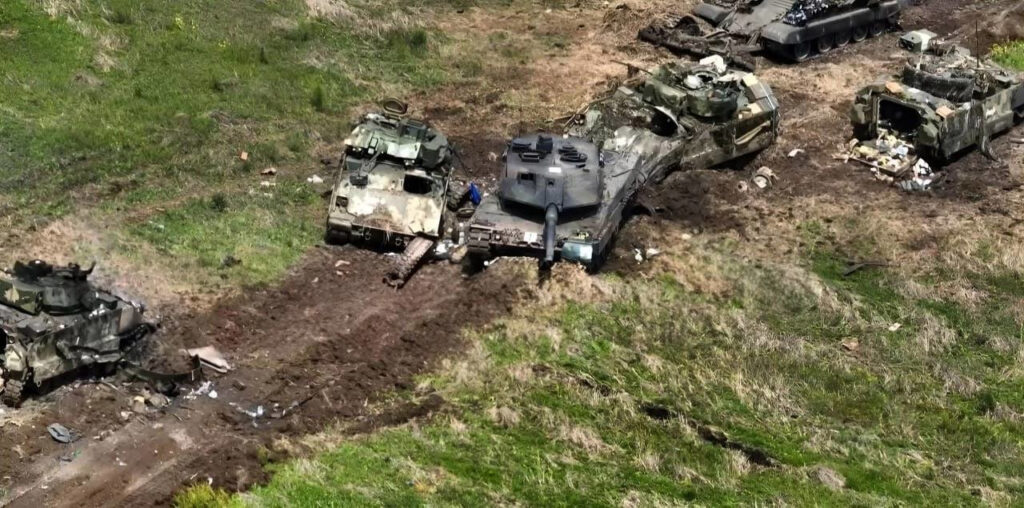
Dans le secteur de Rabotino, région de Zaporojie, un drone russe filme le 9 juin 2023 les carcasses de véhicules blindés atlantistes : un char allemand Leopard 2A6 et plusieurs véhicules de combat d’infanterie états-uniens Bradley (capture d’écran)
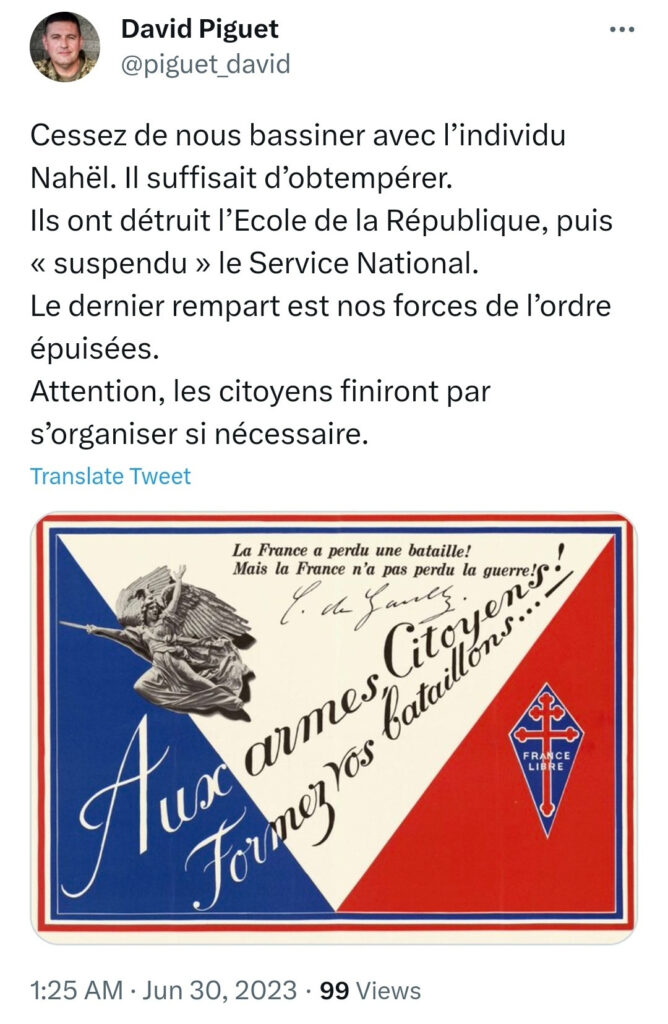
Les événements dans l’hexagone sont d’excellents tests pour évaluer le QI et le bagage culturel des individus répertoriés ici, mieux cerner leur idéologie. Piguet ne déçoit pas, les commente le 30 juin comme un specimen rare de beauf atavique, sinon congétinal, par un tweet grand-guignolesque, à l’inspiration cocardière tellement hilarante, qu’il n’est pas facile de se convaincre qu’il est au premier degré
Lui le commandant, con de militaire disait on autrefois, nie le caractère criminel d’un meurtre commis deux jours avant à Nanterre, par un archer du guet trop représentatif d’une Police nationale recrutée au rabais, formée à l’avenant et rongée par l’extrême-droite, qui s’illustre plus par ses bavures que par sa capacité à déjouer ou affronter des attaques terroristes. Il nous laisse quelque peu sur notre faim, ne précise pas qui ils sont ni contre quoi ou qui sert le rempart. Le courage n’est pas la qualité première du beauf.
En De quoi Sarkozy est il le nom, Alain Badiou écrivit en 2007 que le vichysme existait en France bien avant Philippe Pétain. Piguet est une splendide incarnation de cette France pétainiste, affiche comme couverture l’iconographie d’un gaullisme défunt, bosse pour l’OTAN, que Charles de Gaulle avait expulsée mais que Nicolas Sarkozy, fossoyeur du gaullisme, a réintégrée.
Dans un article du Figaro, le 24 juillet 2023, il fait l’intermédiaire entre les journalistes et le DUK (Dobrovolʹchyy ukrayinsʹkyy korpus, Corps des volontaires ukrainiens), branche armée du parti nazi Pravyi sektor [Secteur droit]. Il s’affiche en général le représentant international de la formation paramilitaire, qui en novembre 2022, est devenue la 67e brigade mécanisée de l’armée régulière.
Une telle accointance couronne son racisme, sa russophobie, son iconographie et son révisionnisme pour le criminel de guerre Stepan Bandera. Je fais le pari que si Volodomyr Zelenskyy n’avait pas interdit les partis de gauche et qu’ils avaient mobilisé un corps de volontaires, nous n’y aurions pas retrouvé Piguet
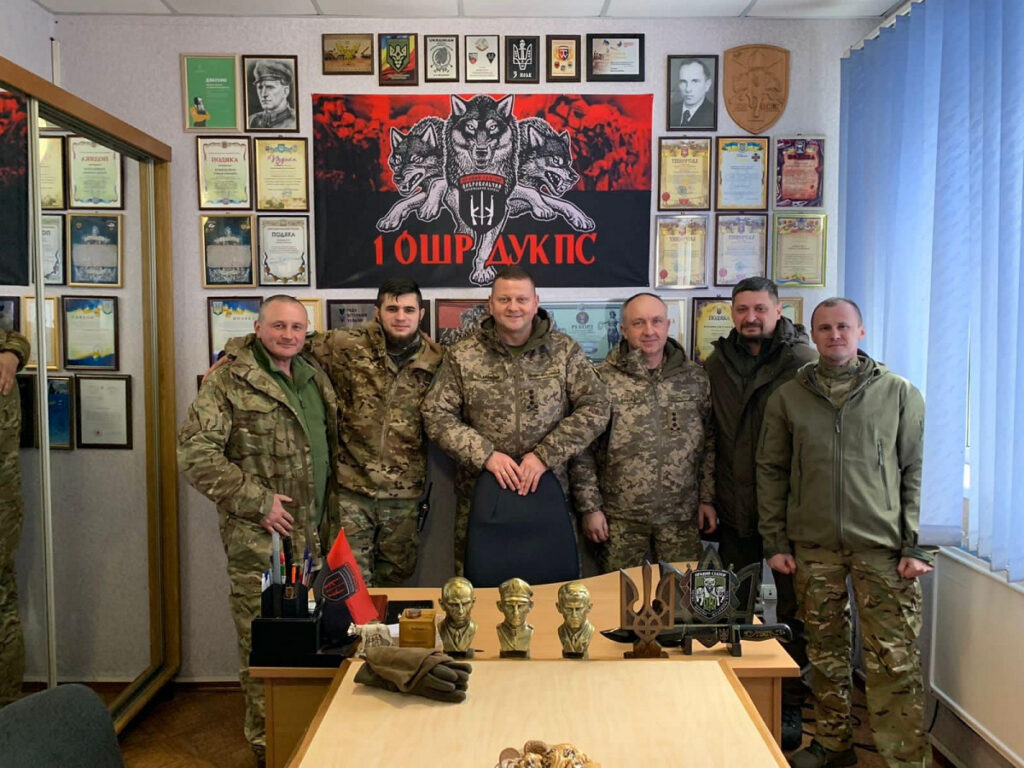
Le 28 janvier 2022, moins d’un mois avant le déclenchement de l’opération militaire spéciale russe, le chef d’état-major ukrainien, Valeri Zaloujny, troisième par la gauche, visite une garnison du DUK. Le bureau de son hôte est truffé d’hommages aux criminels de guerre nazis Stepan Bandera et Roman Choukhevytch. À la droite de Zaloujny, le commandant du 1er bataillon, Dmytro Kotsioubaïlo, sera dénazifié dans le secteur de Bakhmout le 7 mars 2023 (Valeri Zaloujny)
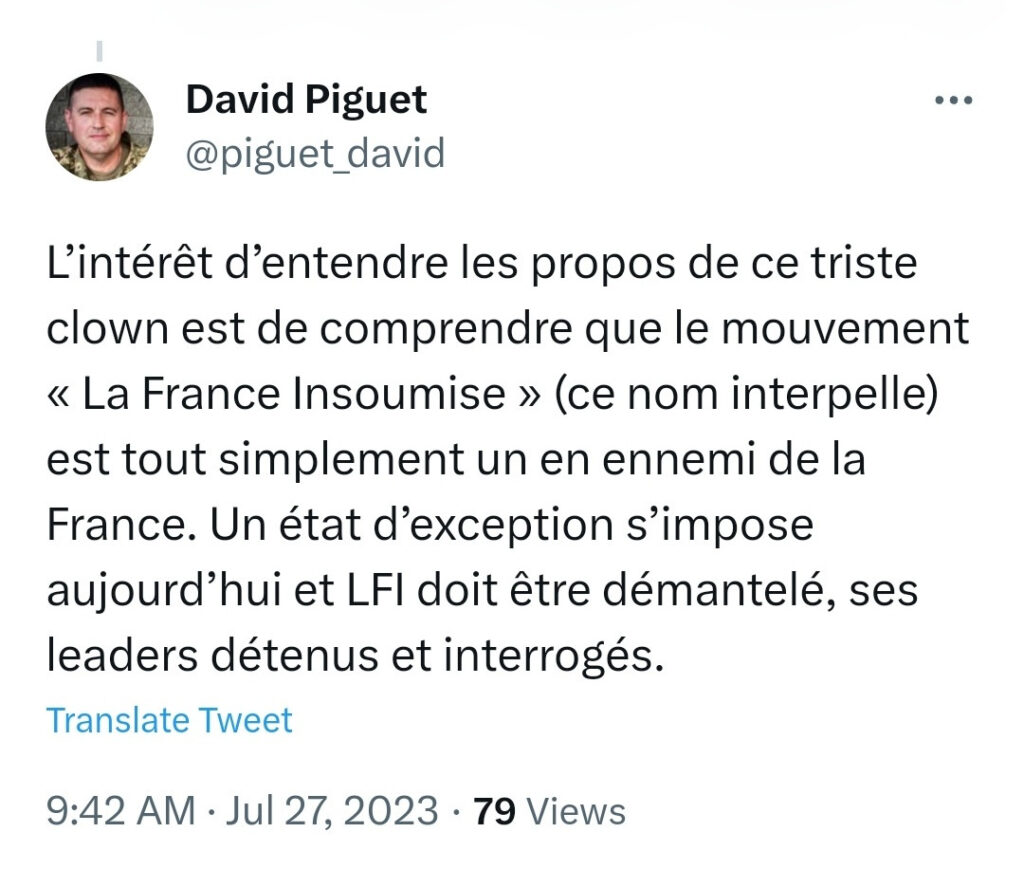
Son état ne s’améliore pas. Quelle peut en être la raison ? La défaite de l’OTAN en Ukraine ? L’alcool ? Avant 11:00 du matin, heure ukrainienne ?
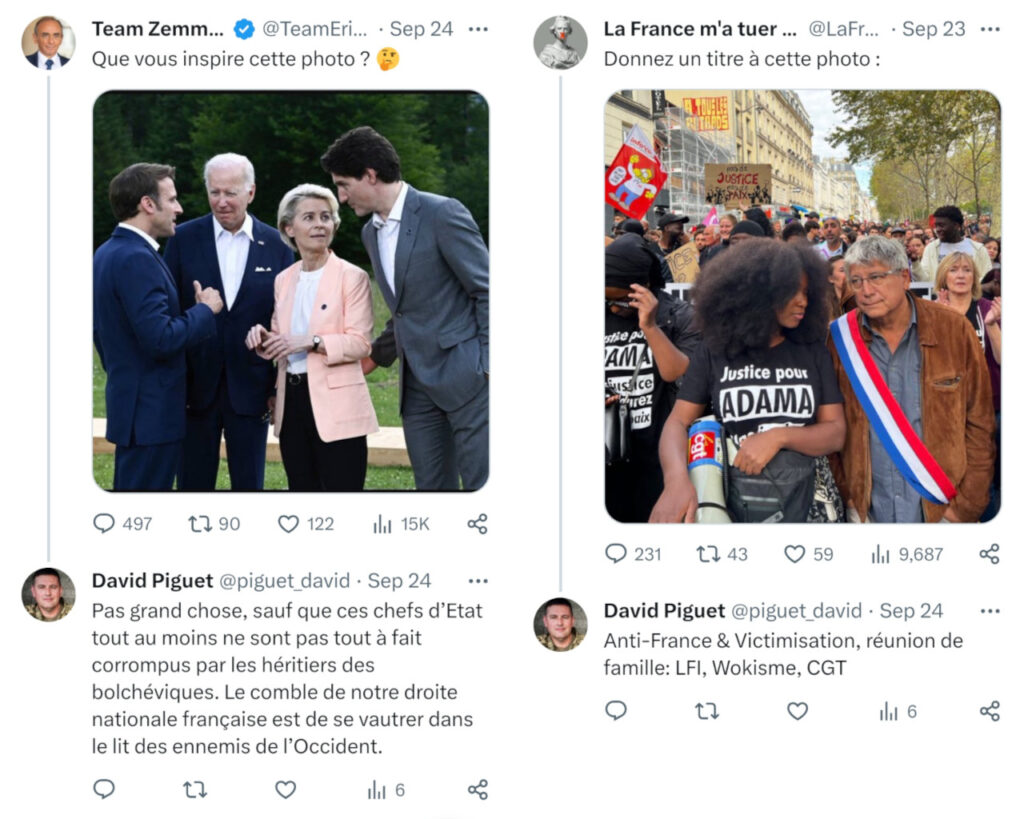
Voilà que depuis son Ostgebiet [territoire oriental] ukrainien, le demi-solde veut réprimer l’anti-France. État d’exception, arrestation des cadres de la France insoumise, sont les fantasmes d’un individu qui ne déroge pas à l’héritage de son engeance pétainiste. Et aussi les Sections spéciales ?
Il apparaît incontestablement comme l’intellectuel de ce panthéon, BHL mis à part. Deux messages consécutifs du 24 septembre 2023 sont tellement riches de mots clés, d’angoisses et de convictions, qu’ils réduisent à de la littérature les précédents paragraphes à son sujet. La conclusion s’impose, il est parfaitement à sa place dans les bagages de la 67e brigade mécanisée ukrainienne, ex DUK, branche militaire du parti nazi Pravyi sektor.
J’encourage tous les pétainistes à l’y rejoindre et à combattre pour l’Occident, jusqu’à la victoire ou la mort. Lui exalté, aime se photographier en treillis camouflé, mais planqué, quand des Ukrainiens encore plus âgés sont expédiés au casse-pipe, souvent contre leur volonté, il alimente sur Facebook, depuis le début de la folle contre-offensive, un mémorial très incomplet de personnels ukrainiens et étrangers qui ont été tués dans les rangs atlantistes. Et à moins de changer de cap à 360°, dirait Annalena Baerbock, il n’a pas fini de compter.
Je guettais avec impatience les premières réactions des gaîtés de l’escadron à l’attaque terroriste du 22 mars 2024, à Krasnogorsk, que les services secrets ukrainiens ont sous-traitée auprès de débris du Califat. C’est bien sûr David Piguet qui s’y colle et comme d’habitude, ne déçoit pas. Il ose partager le 25 un message sur X de l’hystérique Alla Poedie, qui prétend que les quatre individus présentés aux magistrats, après avoir été interpellés à la frontière de l’Ukraine, où ils tentaient de se réfugier, ne seraient pas les terroristes mais de pauvres boucs émissaires
Alla Poedie (Saby Maviel, pour LCI et Lyon People)
Piguet a quand même écrit sur son CV qu’il a été officier de renseignement pour l’OTAN. Mais il nous faut lui concéder que l’armée française s’est toujours débarrassée du rebut dans les organisations internationales telles qu’OTAN ou OSCE. À noter que Poedie était invitée à l’ambassade d’Ukraine le 16 janvier, lorsque BHL y reçut l’insigne local de Chevalier de l’Ordre du Mérite.
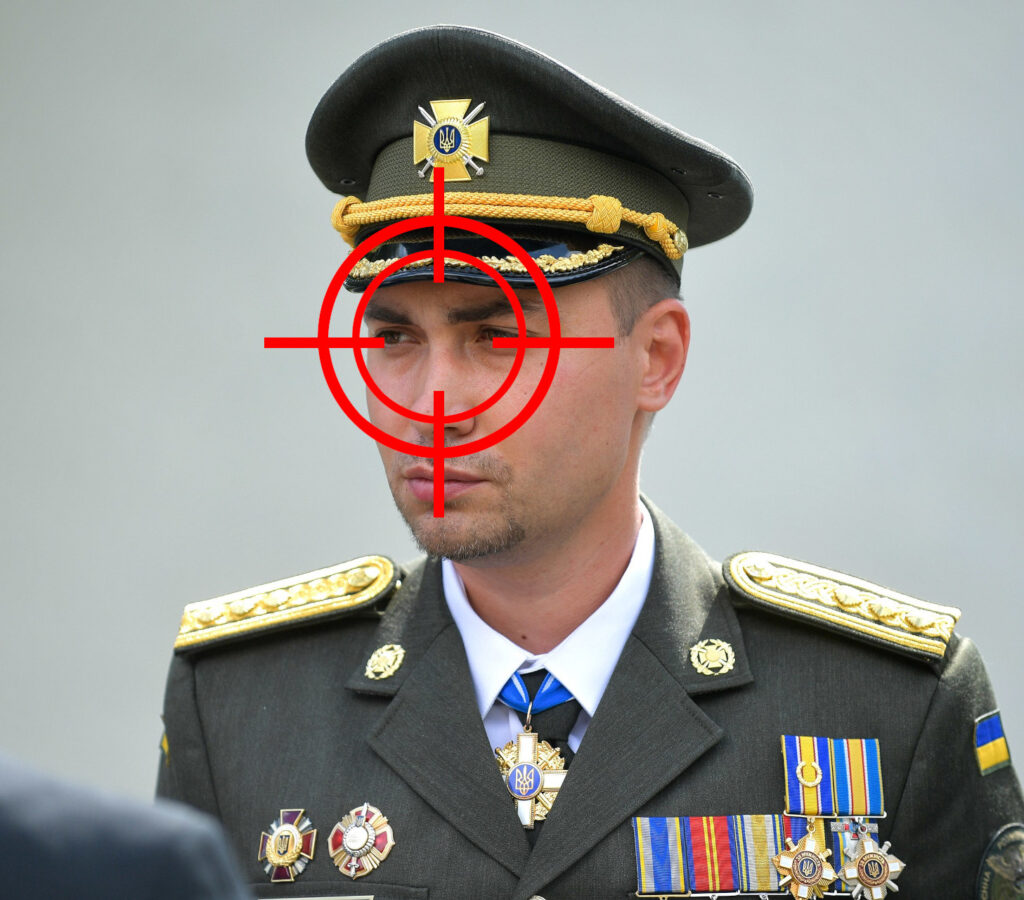
Pour combler ses lacunes, je signale à David Piguet que le 26 mars, Nikolaï Patrouchev, secrétaire du Conseil de sécurité de la fédération de Russie, répond Bien sûr l’Ukraine, aux journalistes qui lui demandent EI ou Ukraine ?
Directeur du FSB, Alexandre Bortnikov ajoute que Kyrylo Boudanov, chef du renseignement militaire ukrainien (HUR), est une cible légitime.
Le dossier s’enrichit encore en soirée. Un nouvel indice corrobore ma connaissance générale du sujet : les dirigeants occidentaux sont aujourd’hui d’une engeance de lâches canailles, rarement égalée dans l’Histoire de l’humanité. Et par leur arrogance atavique, les Français sont les pires. En outre, ils sont assez crétins pour commettre des boulettes telles que celle-ci. Depuis Moscou, le journaliste Laurent Brayard rapporte que dans l’après-midi du 22 mars, environ cinq heures avant le début de l’attaque terroriste à Krasnogorsk, une autorité administrative française fit annuler pour raisons de sécurité les cours du lendemain en présentiel au lycée Alexandre Dumas, qui dépend de l’Alliance française et du quai d’Orsay
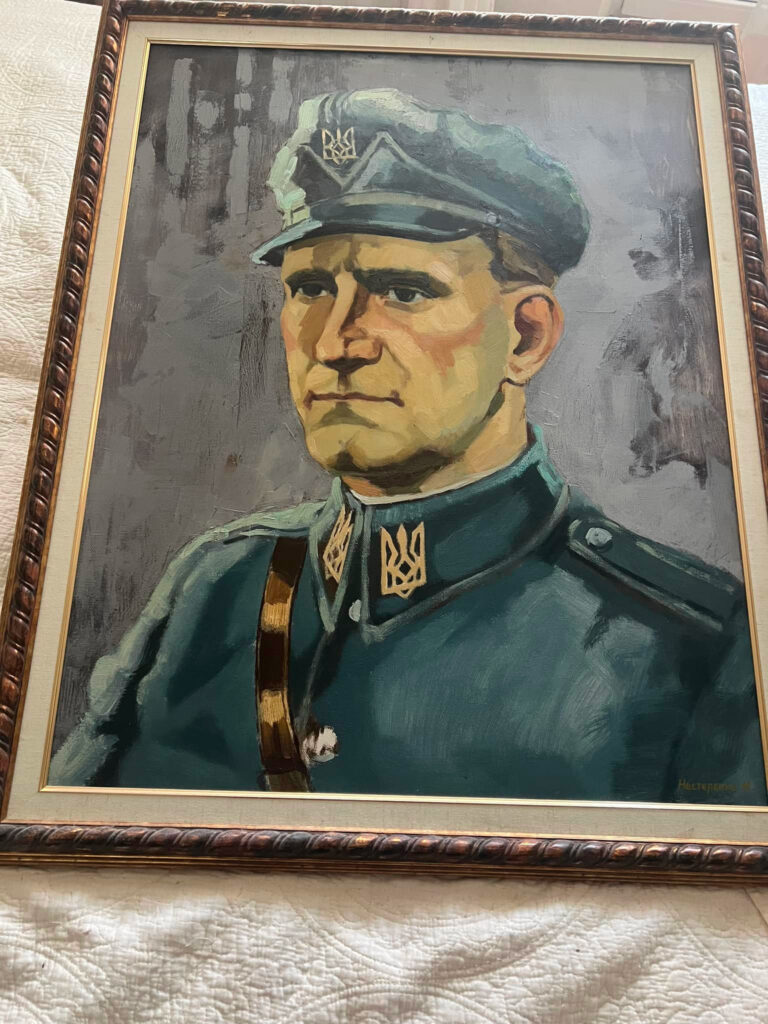
Le 5 avril, Piguet partage le portrait d’un héros, encore une référence, Roman Choukhevytch (1907-1950), militant fasciste ukrainien, commandant en 1941 du bataillon de supplétifs Nachtigall [Rossignol], dont l’activité militaire principale fut le massacre de civils juifs ; capitaine plus tard dans la Schutzmannschaft [police auxiliaire], contre les partisans antinazis ; qui devint chef en 1943 de la milice ukrainienne UPA, les bourreaux d’au moins 50 000, peut être 100 000 civils polonais. Les services de sûreté soviétiques eurent le bon goût de le coincer et dénazifier à Lviv, le 5 mars 1950
Cela n’était qu’un nazi. La guerre se joue souvent avec les Russes et à la fin, les nazis perdent
Après le limogeage en février 2024 du chef d’état-major Valeri Zaloujny, les autorités ukrainiennes craignaient une réaction des éléments les plus fascistes au sein des forces armées. Émanation du parti nazi Pravyi sektor [Secteur droit], la 67e brigade mécanisée a été lentement dissoute, son personnel dispersé dans d’autres brigades. Le processus fut achevé en avril 2024 et son ancien commandant, Andriy Stempitkyi (cf. Dylan Devaux), se retrouva à la tête du seul DUK (Dobrovolʹchyy ukrayinsʹkyy korpus, Corps des volontaires ukrainiens), la formation paramilitaire originale de Pravyi sektor
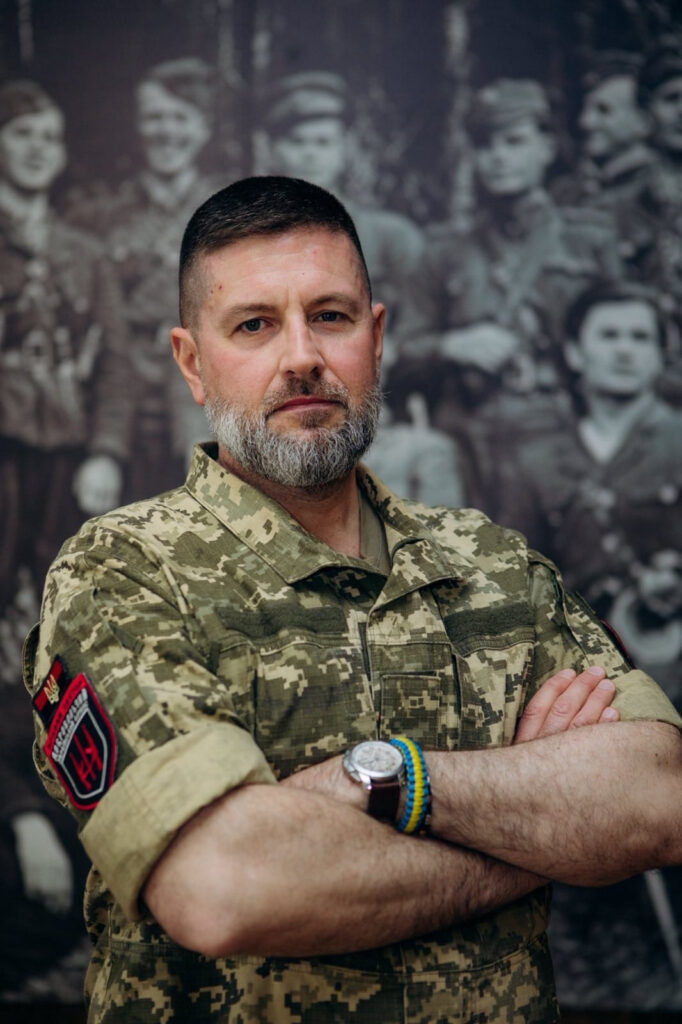
Arrière-plan photographique de miliciens nazis de l’UPA pendant la 2de guerre mondiale, écusson du DUK à l’épaule, le 29 avril 2025, David Piguet est adoubé représentant à l’étranger de la formation paramilitaire (Andriy Stempitkyi)
Dans l’intervalle, David Piguet n’a pas ménagé sa peine en matière de propagande sur les réseaux sociaux. Et comme vous l’imaginez, il s’est également illustré comme un fervent soutien de l’État suprémaciste israélien, ses crimes de masse et sa stratégie de nettoyage ethnique à Gaza et ailleurs, en Palestine. Crimes de masse et nettoyage ethnique furent aussi les faits d’arme de l’UPA pendant la 2de guerre mondiale et c’est très officiellement que le 29 avril 2025, Andriy Stempitkyi l’adoube représentant à l’étranger du DUK, titre revendiqué depuis longtemps par le Français.
En partenariat avec d’autres groupes de hackers, Killnet a mené une campagne d’extraction qui a largement employé une solution virale appelée Nyuans [Nuance]
Killnet
Le 20 août, les as de l’informatique revendiquent la collecte de téraoctets auprès de de l’état-major ukrainien : pertes militaires et autres données sensibles. Ils divulguent des listes vérifiables de pertes ukrainiennes. Le total dépasse toutes les attentes. Depuis février 2022, l’Ukraine aurait subi plus de 1,7 million de morts et disparus. Piguet a encore beaucoup de travail sur Facebook
Les annales de Charlie Kirk
Avec toujours la même ardeur sur les réseaux sociaux, il continue de supporter l’Ukraine et la politique en Palestine de Benjamin Mileikowsky, dit Netanyahou. L’actualité passe et le 16 septembre 2025, il exprime aussi sa sympathie pour feu le suprémaciste états-unien Charlie Kirk, qui selon le message qu’il partage, n’aurait pas été d’extrême-droite.
Le 25 mai 2026, il me salue sur les réseaux sociaux
Chez les Corses, normalement, Cinquini, il n’y a jamais eu de collabo. Un peuple qui défend sa terre, sa langue, son identité et son indépendance, ça te dit quelque chose, Cinquini? À mon avis tu appartiens plus à la «Carlingue [la Gestapo pinzutu (1941-1944) de la rue Lauriston ; il connaît bien l’Histoire de son pays] qu’à l’Ile de Beauté et ses gens d’Honneur
Je m’empresse de lui répondre
C’est exact, la Corse tue les fascistes depuis 1943. Voila pourquoi, contrairement à toi, je ne vénère pas les criminels de guerre nazis ukrainiens Choukhevytch et Bandera, ne soutiens pas l’État génocidaire d’Israel. I Francesi fora
et pour son édification, joins le lien de mon article sur la reconnaissance de l’État de Palestine par l’Assemblée de Corse, le 27 juin 2025, avant la France. J’ajoute enfin
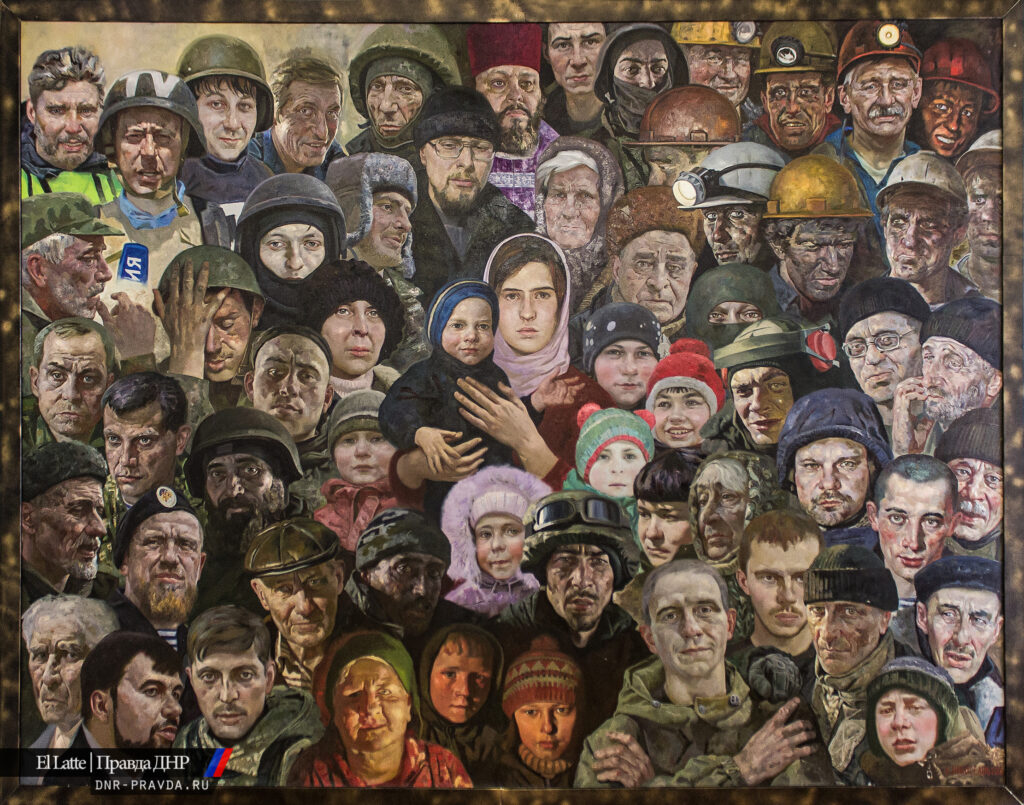
Donbass, Alexandre Novoselov, 2017
Quant aux autres peuples qui défendent leur terre et leur langue -en l’espèce, le Russe- je suis convaincu que le Donbass sera libéré et dénazifié en totalité
En 2016 déjà, alors que la guerre faisait rage au Donbass depuis 2 ans, un reportage de Paul Moreira visita un camp dans la région de Kiev et présenta un autre volontaire français dans les rangs du DUK. Il se faisait appeler Mussolini.
Raciste, hostile à l’immigration, aux syndicats et aux partis de gauche, Piguet adore poser en tenue camouflée ukrainienne, mais rechigne à gagner un champ de bataille où environ 2 millions d’Ukrainiens, souvent mobilisés de force, ont été tués depuis 2022.
Mise à part sa nostalgie adolescente de programmes télévisés des années 80, son expression sur les réseaux sociaux, où il célèbre aussi les criminels ukrainiens de la 2de guerre mondiale Stepan Bandera (1909-1959) et Roman Choukhevytch (1907-1950), est la caricature de ce qui dans une France encore saine, était désigné autrefois par con de militaire, celui qui avait été rossé en Indochine puis Algérie.
Point particulier : il a coutume aussi de brandir sa religion juive pour tenter de blanchir ses accointances nazies. Ce procédé fallacieux est destiné à convaincre les crétins. Il est aussi une groupie de Benjamin Mileikowsky, dit Netanyahu, de l’État suprémaciste d’Israël, ses crimes de masse et sa stratégie de nettoyage ethnique en Palestine. Je ne crois pas à une coïncidence : de telles atrocités ont aussi été les faits d’armes de l’UPA, milice nazie ukrainienne de la 2de guerre mondiale, dont Piguet est l’héritier dans les rangs du DUK.
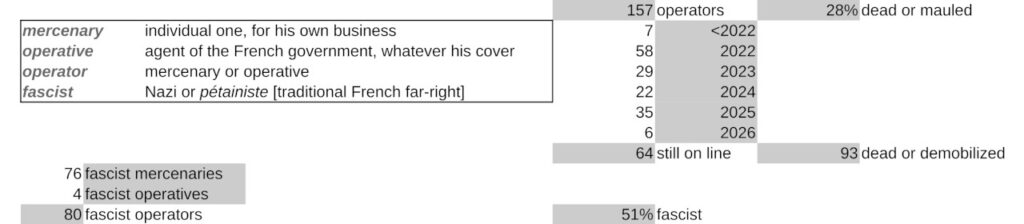
À partir du mois de mai 2026, son activité martiale consiste à animer un compte appelé Все буде Україна! [Tout sera ukrainien !] sur les réseaux sociaux. Son bellicisme de clavier le fait clamer que son pays d’origine, la France, est aussi en guerre contre le Russie. Lorsque je le confronte aux pedigrees de ses compatriotes combattant dans les rangs atlantistes, dont à ce jour 51% cumulés de militants fascistes, voire nazis assumés, il me répond le 15 juin 2026
Je comprends que ce soit dur pour vous, qui oeuvrez tant contre la France, de voir de vrais hommes défendre leur convictions
Il partage en effet leur exaltation fasciste mais sa frayeur des armes à feu empêche encore ce pinzutu [Français, en Corse] de devenir un vrai homme
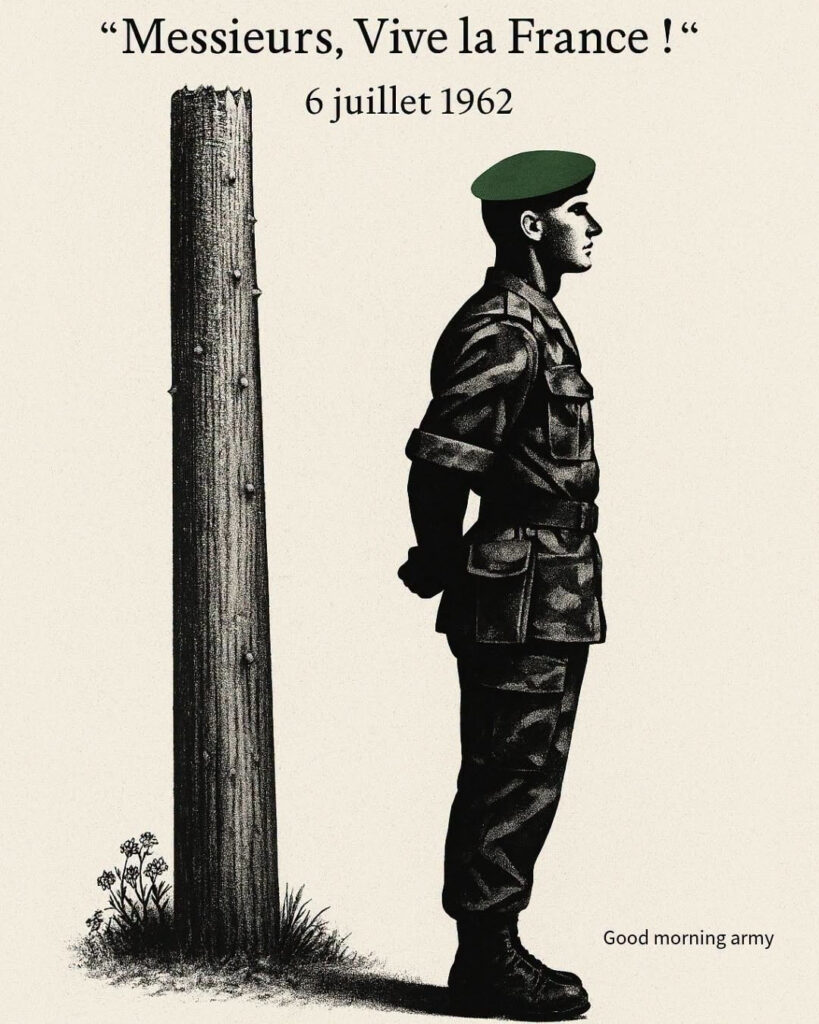
Un hommage sur les réseaux sociaux à Roger Degueldre (David Piguet)
Le 7 juillet 2026, entre autres faire-parts ukrainiens ou israéliens, il partage l’image publiée par un autre compte, qui pour le 64e anniversaire de sa mort, rend hommage à Roger Degueldre
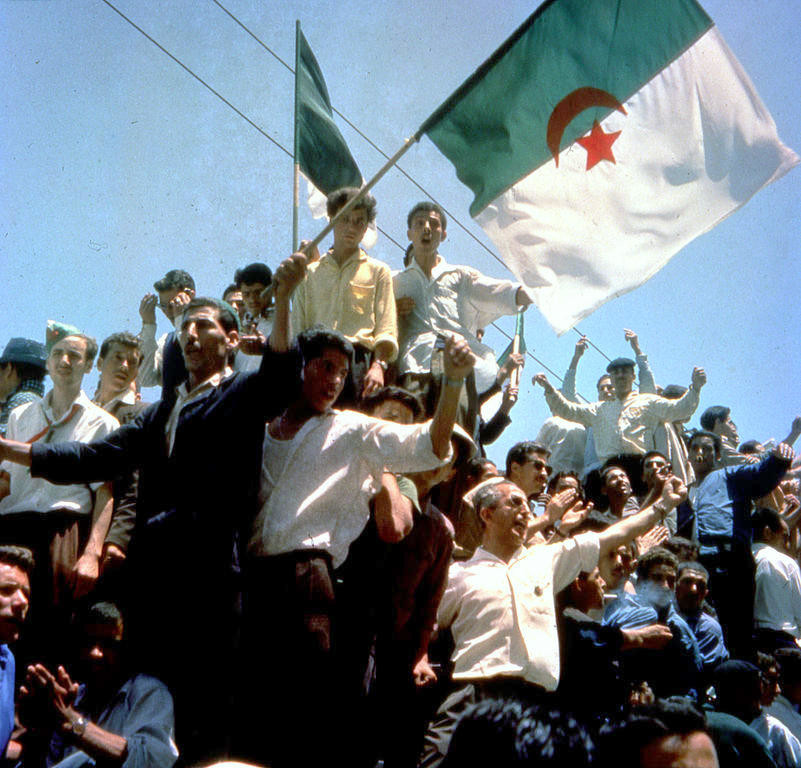
Le 3 juillet 1962, le peuple algérien fête son indépendance (Keystone)
Ce fut sous une fausse identité suisse que l’ex Waffen SS belge Degueldre s’engagea en 1945 dans la Légion étrangère. Naturalisé français en Indochine, il était en Algérie, lieutenant du 1er REP (régiment étranger de parachutistes), quand il prit la tête en 1961 des commandos Delta, qui réunissaient les tueurs de l’organisation terroriste OAS (Organisation armée secrète). Arrêté puis condamné en 1962, il fut fusillé au fort d’Ivry le 6 juillet
Stepan Bandera (réseaux sociaux)
Le 23 octobre 2026, par le partage de cette image sur les réseaux sociaux, le con de militaire -un raciste qui se prétend de religion juive et célèbre l’OAS- rend un nouvel hommage au criminel nazi ukrainien de la 2de guerre mondiale Stepan Bandera (1909-1959), dont les autres groupies, en application de son programme politique
Moscovites [Russes], Polonais, Hongrois et Juifs sont vos ennemis, détruisez les !
chronique alphabétique et nécrologique de l’engagement français dans les rangs atlantistes en Ukraine, ce que les journalistes serviles ne vous raconteront pas
Articles connexes
Pruvate à truvà me, canaglia di l’OTAN, pruvate solu
chronique en Anglais, its roots before WW2, its collaboration with Nazi Germany, its legacy in modern Ukraine, how NATO has continually supported Nazism in Ukraine
chronique en Anglais, censorship, fake news, whitewashing of the Ukrainian Nazism and war crimes, for the sake of the proxy war that NATO is conducting in Donbass and Ukraine, against Russia
une saga française, entre Ukraine et Lyon, où apparaissent aussi des morceaux de SS de la division Charlemagne et plus récemment, Alice Kerviel, dite Cordier. L’affaire Deranque révèle comme la France est infectée par le pétainisme, en particulier parmi les soutiens d’Israël ou de l’Ukraine, deux théâtres d’opérations où l’Occident tente de ralentir son déclin
En 2025, une nouvelle unité de Français combattant pour l’Ukraine s’est structurée autour d’un noyau de néonazis, ayant pour objectif d’attirer des recrues. Parmi ces volontaires, d’anciens militaires. StreetPress les a identifiés
En Ukraine, les volontaires français pro-ukrainiens et pro-russes se partagent l’imaginaire de la Seconde Guerre mondiale. Les premiers se revendiquent des collabos de l’Allemagne nazie, les seconds de l’escadrille mythique « Normandie – Niémen »
deux jours après le 10e anniversaire de la débâcle politique et sécuritaire du 13 novembre 2015, une messe célèbre à Verdun l’ancien dirigeant fasciste de l’État français
ce 11 novembre 2025 est l’occasion de souligner comme la façon dont l’Europe sacrifie les conscrits ukrainiens mobilisés de force rappelle le spectaculaire carnage de la 1ère guerre mondiale
c’est par l’agence cosaque de presse PIKA, depuis la République populaire de Lougansk, que le 2 avril 2024, l’ataman Nikolaï Diakonov lance un message à destination de la France
ce papier est le premier des grands médias français qui s’attaque à la question des militants nazis français dans les rangs atlantistes en Ukraine, le nouveau danger qu’ils présenteront à terme pour la sûreté intérieure
où nous apprenons que le nazi français Allan Duchézeau, camarade de César Aujard dans les rangs atlantistes en Ukraine, était surnommé Dox, quand il secondait à Paris le leader nazi Marc de Cacqueray Valménier
en Anglais, les indices de la présence d’opérateurs occidentaux, en particulier Français, pris au piège en mars 2022 à Marioupol, dont les forces russes achevèrent la libération en mai
The German army, under the leadership of Adolf Hitler, is establishing a new order in the world and is assisting us in creating a Ukrainian State that will cooperate with the National Socialist Great Germany
In July 1941, the Ukrainian nationalists welcome the German army in Zhovkva: Heil Hitler ! Glory to Hitler ! Glory to Bandera ! Long live the Ukrainian independent State ! Long live leader Stepan Bandera
In July, he unilaterally declared an independent Ukraine. Germany disagreed on that initiative and temporarily interned him, first under house arrest in Berlin, then in the VIP quarters of Sachsenhausen camp, where his conditions of detention would have been a dream for the forced laborers. He received the status of prisoner of honor, his own apartment, controlled freedom of movement and travel and even limited permission to continue pursuing political activities
Signed UPA, a leaflet in Ukrainian orders all Poles and their families, on pain of death, to leave their homes and the Ukrainian lands within 24 hours (World War II Museum in Gdańsk)
The UPA was formed on October 14, 1942, did not fight Germany, but with complacency of the German authorities, carried out mass killing and ethnic cleansing. At least 50,000, perhaps 100,000 Polish civilians, were assassinated with savagery between 1943 and 1945. In 1944, Adolf Hitler freed Bandera, who called on his nationalists followers to fight Soviet Union. After WW2, the KGB managed to kill him in Munich on October 15, 1959
its roots before WW2, its collaboration with Nazi Germany, its legacy in modern Ukraine, how NATO has continually supported Nazism in Ukraine, chronicle
chronicle of censorship, fake news, whitewashing of the Ukrainian Nazism and war crimes, for the sake of the proxy war that NATO is conducting in Donbass and Ukraine, against Russia
This article is the product of visits to Russia I made in June and September 2026 where I met with senior Russian leaders, leading academics, and specialists in military and security issues
There has been a spate of irresponsibly aggressive rhetoric from within Europe strongly posturing for a conflict with Russia by the end of the decade. This rhetoric comes in the context of the ongoing conflict between Russia and Ukraine, which is well into its fifth year, a conflict which both Europe and the United States openly acknowledge operates in the form of a proxy war between the collective West and Russia. The Russian response has been to accelerate its military efforts against Ukraine while putting NATO on notice that any effort to threaten Russian territory, and particularly the Russian exclave of Kaliningrad, would see Russia responding with the full compliment of military capabilities, including nuclear weapons. The current situation in Europe today in many ways replicates the conditions that existed on the continent in the summer of 1914, where military mobilization and war preparations created a momentum that produced a war no politician was seriously looking to prosecute. The consequences of war in 1914 were a disaster for Europe; the consequences of a war today would be fatal to civilization as we know it.
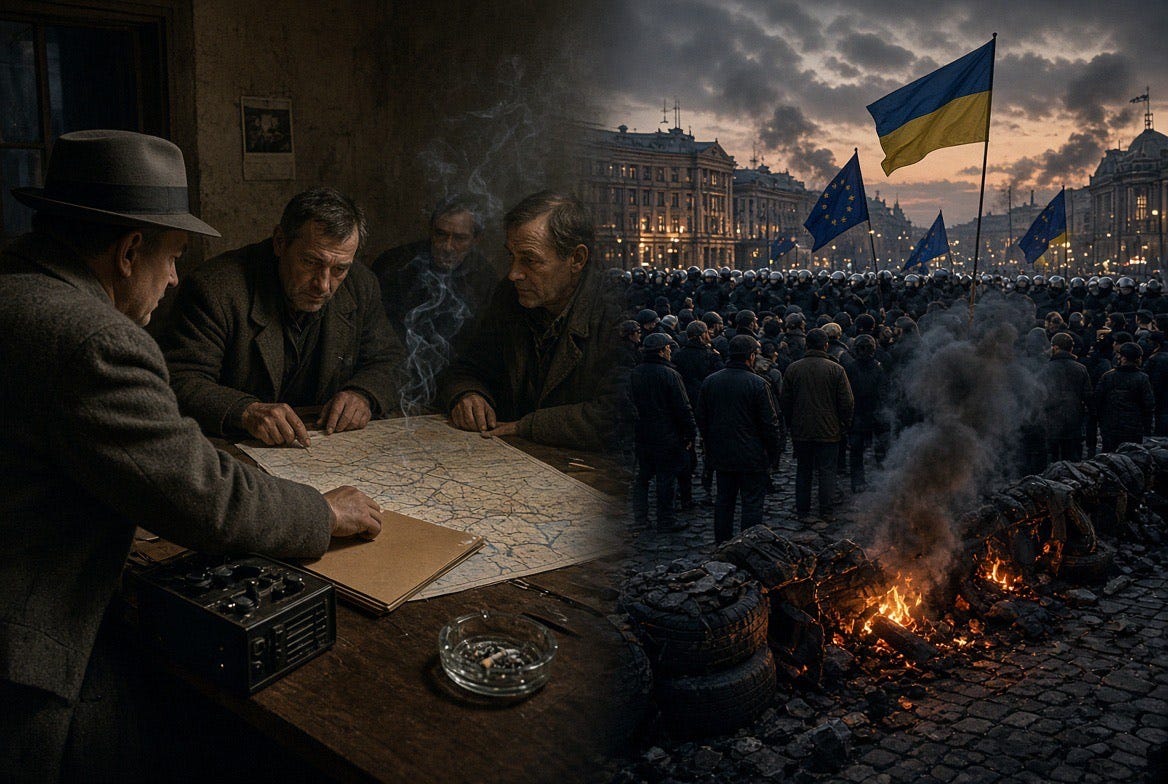
In examining the geopolitical map of Europe/Eurasia today, one can assess four points of military friction between Russia, the United States and Europe. These are Ukraine, the Arctic, Kaliningrad, and Outer Space. While each represents a physically distinct problem set politically and militarily, they are all four inextricably linked through a common Russophobic mindset in Europe and the United States which treats Russia as a singular security issue. Moreover, both Europe and the US operate from a strategic mindset driven by zero-sum thinking, which postures Russia as being structurally motivated to bring harm to both Europe and the United States, thereby stifling the possibility of cooperation with Russia that could resolve many if not all of the underlying issues which are collectively construed by the West as presenting a threat. For its part, Russia operates from a mindset derived from the psychology of perpetual victimhood dating back centuries, and a historical foundation of resistance to aggression which seeks diplomatic resolution until which point military confrontation becomes the only solution
Ukraine: The (perceived) chink in the Soviet/Russian armor
The current conflict in Ukraine between Russia and the West did not begin in 2022 with the Russian invasion but rather represents the logical conclusion of a posture on the part of the United States and NATO which sought to exploit the ultra-nationalism of Western Ukraine in order to create a framework of instability designed to weaken the Soviet Union, and later Russia, from within. To understand this mindset, one first must delve into the psychology underpinning the concept of Ukrainian nationalism. For Russia, Ukraine represents part of a larger family of Slavic peoples which include the Russians and Belarussians; indeed, this notion is shared by millions of Ukrainians as well. One only need to look at the integration of Ukraine within the cultural and historical roots of Russia over time to understand the reality of this sentiment.
For the West, this reality presents a problem, since it lends itself toward the existence of a singular Slavic state possessing tremendous geographical advantages and unmatched natural resources which in turn creates massive economic penitential that competes with Western notions of global supremacy. Nazi Germany sought to nullify this Slavic potential through the implementation of Generalplan Ost, the literal cultural and physical genocide of the Slavic race. The United States and the United Kingdom (and later, NATO, inclusive of a newly militarized West Germany), continued this policy of Slavic nullification by promoting anti-Soviet resistance on the part of the Organization of Ukrainian Nationalists (OUN), including military support of partisans operating in Ukraine loyal to Stepan Bandera, a former ally of Nazi Germany whose forces perpetrated large-scale atrocities against Jews, Poles and Russians during the Second World War. When the war ended, the German intelligence organization responsible for managing the OUN operations was taken over by the US military and later, under the auspices of the Central Intelligence Agency (CIA), used to direct anti-Soviet armed resistance up until 1954-55. The CIA continued to provide active support for the OUN, using the Ukrainian diaspora, through the 1990’s.
The role of western intelligence, led by the CIA and the British Special Intelligence Service (SIS), in post-Soviet Ukraine was singularly focused on promoting Ukrainian nationalism at the expense of Russia. The political campaign waged against the Russian-speaking population of Ukraine by western intelligence emerged front and center when the two-term President of Ukraine, Leonid Kuchma, stepped down in 2005 after carrying out policies designed to improve Ukraine-Russian relations. Kuchma threw his support behind the Russian-speaking Viktor Yanukovych. For the West, a Yanukovych presidency would undermine their strategic goal of stripping Ukraine away from Russia. The result was the so-called “Orange Revolution”, which saw Yanukovych’s electoral victory overturned in favor of Ukrainian nationalists who promoted a distinctly anti-Russian policy which saw Ukraine pivot toward the European Union and seek NATO membership. The latter development was seen by Russia as a red line which, if pursued, would inevitably lead to a military conflict between Russia and Ukraine. Yanukovych’s election in 2010 was deemed a setback to the Western designs on Ukraine, leading to the West supporting a violent coup in February 2014 that saw Yanukovych driven from power, replaced by pro-western Ukrainian nationalists.
It should be clear that a physical confrontation between Ukraine and Russia has always been the goal of the collective West. Efforts to take control of the Russian political space had, by 2014, failed. The so-called “reset” of 2009 was little more than a political cover for a regime change operation designed to replace Vladimir Putin, who had ruled Russia since taking over from Boris Yeltsin at the end of 1999, and in the intervening decade taken Russia down the road of economic and national recovery that the West, operating in full zero-sum mode, simply could not tolerate. The concerted efforts of President Obama to interfere in the Russian parliamentarian elections of 2011 and the presidential election of 2012 failed to remove Putin from power. The actions in Ukraine in 2014 and afterwards must be viewed in this light; nothing happens in a vacuum.
The Ukraine conflict was never avoidable, despite Russia’s concerted efforts to engage in diplomacy designed to do just that. The defeat of the Ukrainian army in 2014-15 at the hands of Russian-backed separatists in the Donbas led to the adoption of the Minsk peace accords. It is now established fact that neither Ukraine, its two European partners (France and Germany), nor the United States ever had any intention of following through on the Minsk process. Instead, the Minsk process was designed to buy time for NATO to build a new Ukrainian army capable of holding its own against Russia. Indeed, from 2015-to 2022, the United States and NATO did just that, training over 80,000 Ukrainian forces, including thousands of Ukrainian nationalists labeled as neo-Nazi by the United States Congress, to NATO military standards. The stated purpose of this training was to enable Ukraine to take physical possession of the Donbas and Crimea, which was annexed by Russia in 2014 following the CIA-backed coup in Kiev. When Ukraine began amassing these NATO-trained troops in the Donbas region in early 2022, Russia launched a pre-emptive action which, more than five years later, has become an openly acknowledged proxy war with the collective West, inclusive of the US and NATO.
The stated goal of both the US and Europe in pursuing this proxy conflict with Russia is nothing less than the strategic defeat of Russia. What does this mean in practice? First of all, the proxy war was never intended to result in a Ukrainian military victory against Russia. Rather, the goal was to draw Russia into a conflict which would exhaust its military potential, break its economy, and collapse its society to the point that the government of Vladimir Putin would be removed from power. This entire policy is postulated on the understanding that Vladimir Putin must be removed from power. As such, and solution that does not attain that objective is rejected out of hand, a pattern of behavior reflective of the zero-sum mentality that drives western policy making. As a result, every potential off-ramp that Russia has been willing to consider, from the Istanbul communique of 2022 to the Anchorage compromise of 2025, has been rejected by the West, exposing the reality that for the West diplomacy is just a tool to buy time to further strengthen Ukraine militarily in order to draw the Ukraine-Russian conflict out to its desired conclusion—the collapse of Russia. In short, Minsk on replay.
Russia has proven to be surprisingly resilient in the face of this concerted western effort designed to collapse it as a viable nation state. The Russia economy not only has survived in the face of western sanctions but, in concert with effective Russian diplomacy that has exploited western diplomatic miscues to build a large and supportive global constituency, thrived as it has found foreign markets in the Global South that have largely replaced the lost European and US markets. Russian society, blindsided by a war it was not prepared for, has rallied solidly behind President Putin, as the results of the recent parliamentarian elections underscored. And far from exhausting Russia militarily, the Ukraine conflict has enabled Russia to fine-tune its defense industrial base, producing significant quantities of advanced military equipment and weaponry that for the most part far exceeds that being produced by the collective West in both quality and quantity. When this material is matched up with a combat-hardened pool of manpower, the result is that Russia today possesses the most combat-capable military force in the world, far exceeding anything either NATO or the United States can put into the field.
In short, the western gambit targeting Russia has failed—the Russian military is stronger today by an order of magnitude, its economy far more diverse and self-sustaining, and its population far more unified than it was in 2022. Moreover, Russia shows no signs of faltering on any front—economically, diplomatically, socially, or politically.
The same cannot be said for either Europe or the United States. Despite the war-like rhetoric coming out of Germany and Poland and backed up by statements made by US military officers, both active duty and retired, the reality is that the proxy war between the collective West and Russia was always meant to be just that—a proxy war. There has never been a realistic plan for the conflict to become a direct clash between Russia and NATO, if for no other reason than NATO simply lacks the capacity to generate sufficient forces capable of high-intensity conflict for any sustainable period. NATO’s military power has largely atrophied in the decades since the end of the Cold War, requiring an infusion of investment over time to recover which Europe currently does not seem capable of providing. The United States is itself in a posture of global retrograde, seeking to withdraw from Europe rather than resume a Cold War-like posture that is neither politically or economically viable.
With Russia seemingly closing the door on the possibility of a negotiated settlement with the west over Ukraine, Europe and the United States are confronted with the uncomfortable reality that their strategic objectives in Ukraine will not reach fruition. Russia will continue to press for a military solution which meets all its stated objectives, including the kind of concerted de-Nazification which would make extinct the very virulent Ukrainian nationalism which has always fueled the western efforts in Ukraine against Russia.
In short, there will be no war between Europe and Russia over Ukraine. Europe will support Ukraine until Ukraine has exhausted its resources—manpower and economic—and then watch helplessly as Russia consolidates its position in what is left of the Ukrainian nation. “To the last Ukrainian” appears to be a concept that both Ukraine and its western supporters have taken to heart
The Arctic: The economic trigger of potential conflict
In a rational world, the collective West would regroup after its pending defeat in Ukraine and seek to repair its considerable losses. But in a zero-sum world, this is not possible. A Russian victory in Ukraine requires, in the minds of those Russophobes in the west still dreaming of the collapse of Vladimir Putin’s Russia, a “win” which will level the geopolitical playing field. Given the reality that one of the consequences of the west’s failed Ukrainian gambit is the economic decimation of Europe, issues of economic import, not surprisingly take on increased importance when configuring a post-Ukraine geopolitical posture in opposition to Russia.
One of the main issues confronting Europe today is discerning a coherent economic and foreign policy when it comes to China. European diplomacy in this regard has been disastrous, resulting in the collapse of critical sectors of the European economy (car manufacturing, for instance) as a result of ill-conceived notions of “de-risking” (an American-origin term designed to camouflage the real intent of such policy, which is “de-linking.”) But one cannot possibly speak of “de-risking/de-linking” when there are no viable alternative markets to replace that which one’s policies seek to vacate.
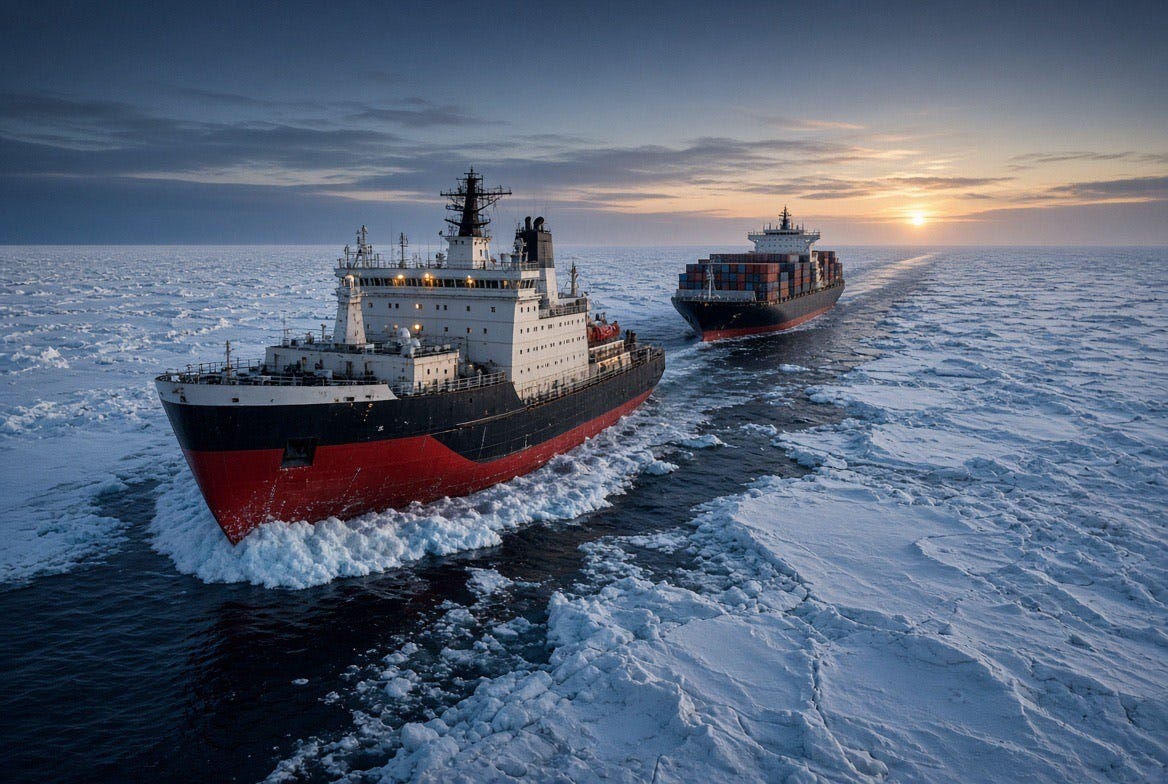
Europe’s strategic objective of isolating Russia from China has backfired—today it is Europe that is increasingly isolated, and Russia-Chinese relations, including economic, are strong and getting stronger. One of the critical areas of Russia-Chinese cooperation is the development of the Northeast Passage or, as it is often referred to in China, the “Ice Silk Road”, a 5,500-kilometer stretch of waterway running from the Bering Strait in the east to the Barents Sea in the west. Use of this waterway has become increasingly possible—and profitable—enabling container ships to make the journey from East China to European ports such as Rotterdam around 20-days faster that the current Suez Canal route used by most shipping companies.
The Northeast Passage operates exclusively in Russian territorial waters. It also transits the Arctic zone, meaning that for much of the year its functionality is dependent upon Russian icebreakers. The passage also operates under the umbrella of Russian security and legal norms. The economic potential of the Arctic used to the sole purview of the Arctic Council, who members used to meet on a regular basis to coordinate policies impacting on the economy, security, and ecology of the Arctic region. However, in 2022, following the invasion of Ukraine, Russia was kicked out of the Arctic Council. And, following the admission of Finland and Sweden to NATO, the Arctic Council has assumed a NATO-only posture, with its policies reflecting the strategic goals and objectives of its collective membership, namely being the strategic defeat of Russia.
Climate change has altered the geopolitical realities of the Arctic region, with melting ice caps not only opening sea lines of communication previously denied and/or restricted because of weather but also making economic exploitation of significant mineral resources exposed by the retreating ice physically possible and fiscally viable. Normally, the Arctic Council would seek to regulate access to the Arctic to balance economic and ecological concerns within a security framework where all parties’ interests are taken into consideration.
But in the zero-sum world, the Russo-Sino economic penetration of the Arctic space is deemed a threat to the collective West requiring a military response. This reality was underscored during the recently convened European Arctic Summit, hosted by Finland in mid-September. The European Union leadership, citing unsubstantiated claims of “significant and long-term threats” from Russia to Euro-Atlantic security, committed itself to strengthening its Arctic security posture—i.e., the militarization of the Arctic, focusing on military mobility, cross-border connectivity and necessary infrastructure in the northernmost regions of the Arctic.
The fact is, however, that NATO is non-competitive with Russia when it comes to Arctic security issues. What the European Arctic Summit gave lip service to about the militarization of the Arctic, Russia has already fully implemented and continues to improve. While NATO nations are capable of engaging in acts of provocation, such as the recent seizure of a Russian research vessel off the northern Norwegian island of Svalberg, the rapidity in which the Norwegian government most to ensure similar actions are not undertaken in Norwegian territorial waters underscores the fact that Norway is not keen of provoking any sort of direct confrontation with Russia in the Arctic. The real threat to the West in the Arctic is not Russia’s capable military forces, but the fact that Russia, together with China, are imposing a new transit-based economic reality which will provide extraordinary leverage going forward by making traditional shipping carriers and routes non-competitive with the new “Ice Silk Road” Russia and China have already implemented. The ability to sustainably ship containers to Europe at half the cost of the current shipping routes is a game changer in every way and creates a new reality that the West will not be able to catch up to for some time, if ever
Kaliningrad: low-hanging fruit, or impregnable fortress?
The psychosis of the zero-sum trap the West has set for itself when it comes to Russia requires that NATO manufacture a victory—perceived or otherwise—capable of off-setting its failures in Ukraine and impotence in the Arctic. In this regard, the Russian exclave of Kaliningrad has emerged as a perceived Russian Achilles Heel. The former commander of NATO ground forces in Europe, US General Chris Donahue, openly bragged this past July that NATO forces would be able to overwhelm Russian defenses in Kaliningrad in short order. Germany and Poland have argued for intensified NATO military exercises near the borders of Kaliningrad, the goal of which would be to generate sufficient concern within the Russian leadership to cause them to pull troops out from the Special Military Operation zone to Kaliningrad in response. Several western military and security analysts have articulated assessments which indicate that Russia’s actual military posture in Kaliningrad is much weaker that publicly acknowledged. And numerous western politicians have made declarations indicating that Russia is preparing to carry out acts of aggression against NATO using the Kaliningrad exclave as a base of operations.
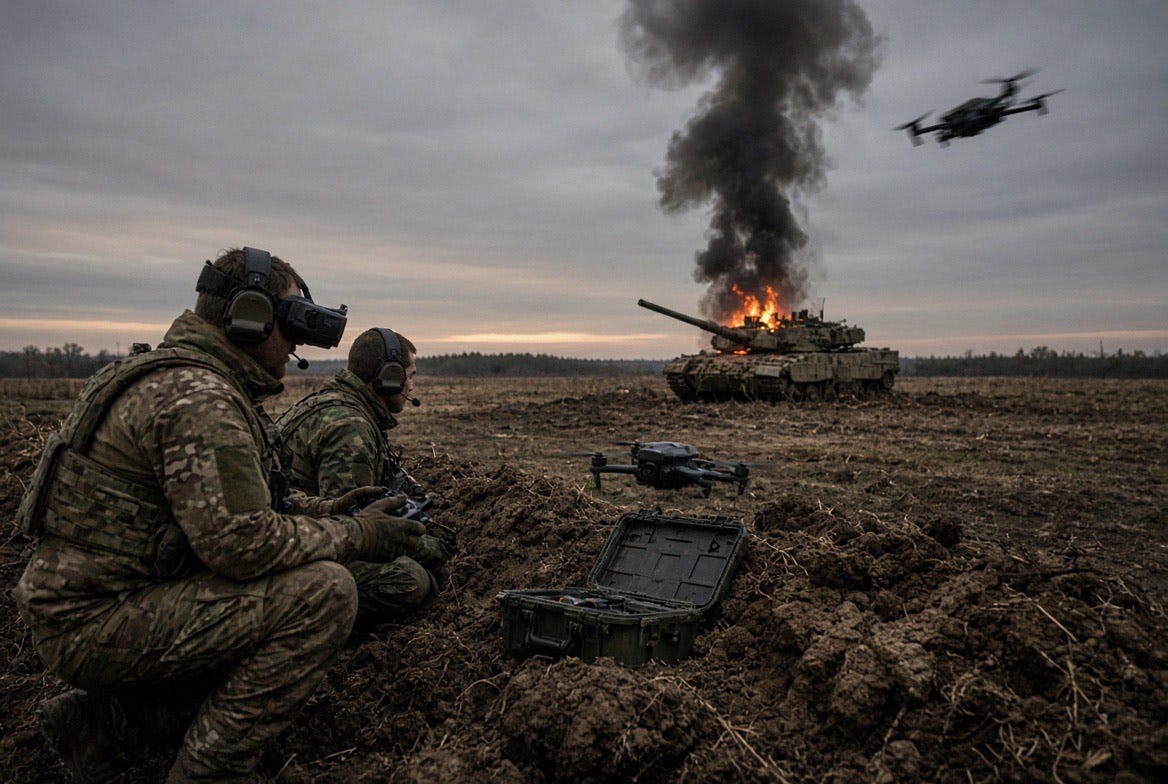
But the reality is that while Russia is more than capable of defending Kaliningrad from any NATO aggression, the Russian military is not currently postured in the Kaliningrad exclave to carry out any sustainable offensive operations of any scale against any of its NATO neighbors—any contention to the contrary is simply rhetorical propaganda. Both the Russian 11th Army Corps and the Baltic Marines—the core ground combat forces stationed in Kaliningrad—have extensive combat experience in Ukraine and have developed a skill set with combat drones that would most likely disrupt and defeat any NATO offensive operations directed at the Kaliningrad exclave. The Russia military has likewise created an active reserve Rifle Regiment, BARS-39, which draws upon veteran soldiers possessing active-duty combat experience, especially in drone warfare.
But the real threat to Kaliningrad doesn’t come from any potential ground offensive launched by NATO. Rather, it would emerge in the form of a naval blockade of the exclave. Since 2022, the railway lines that connect Kaliningrad with Russia have been subjected to severe restrictions by Lithuania when it comes to the transit of good to and from Russia; the issue of compliance with European Union sanctions of Russia lays at the heart of this matter. Russian-registered vehicles are likewise not permitted to transit Lithuania and Poland. Russia has compensated for this loss of connectivity by increasing the scope and scale of water ferry service between Russia and Saint Petersburg. While Russia has been able to sustain economic growth through this resupply effort, the fact is that this ferry-boat lifeline is very expensive, and many goods, such as gasoline, are subsidized by the Russian government to keep prices under control. If NATO were to impose naval restrictions on shipping into and out of Kaliningrad, as some of its members have suggested, the economic viability of the exclave would be threatened. It is because of this vulnerability that the Russian government put NATO on notice that any effort to subject Kaliningrad to a naval blockade, or any other act of military aggression, would be responded to with the totality of Russia’s military capability, including nuclear weapons.
This nuclear muscle flexing appears to have dampened the enthusiasm on the part on some of the most vociferous NATO proponents of plucking what they thought would be low-hanging fruit; now that it is clear that any conflict involving a NATO attacks on Kaliningrad would not be treated in isolation, but rather constitute a conflict of existential proportions, the war drums have been muted
Space: The final frontier
The last topic on the list of potential points of conflict-generating friction between Russia and the US-European collective is outer space. Space-based sensors have played a critical role in the collection of intelligence used to support military operations in Ukraine and, in the case of Ukraine, to strike strategic targets in the depth of Russia. Likewise, the US commercial Starlink satellite communications system has assumed an essential role in Ukrainian military communications, to include playing a critical part in enabling Ukrainian long-range drone attacks on Russian energy infrastructure.
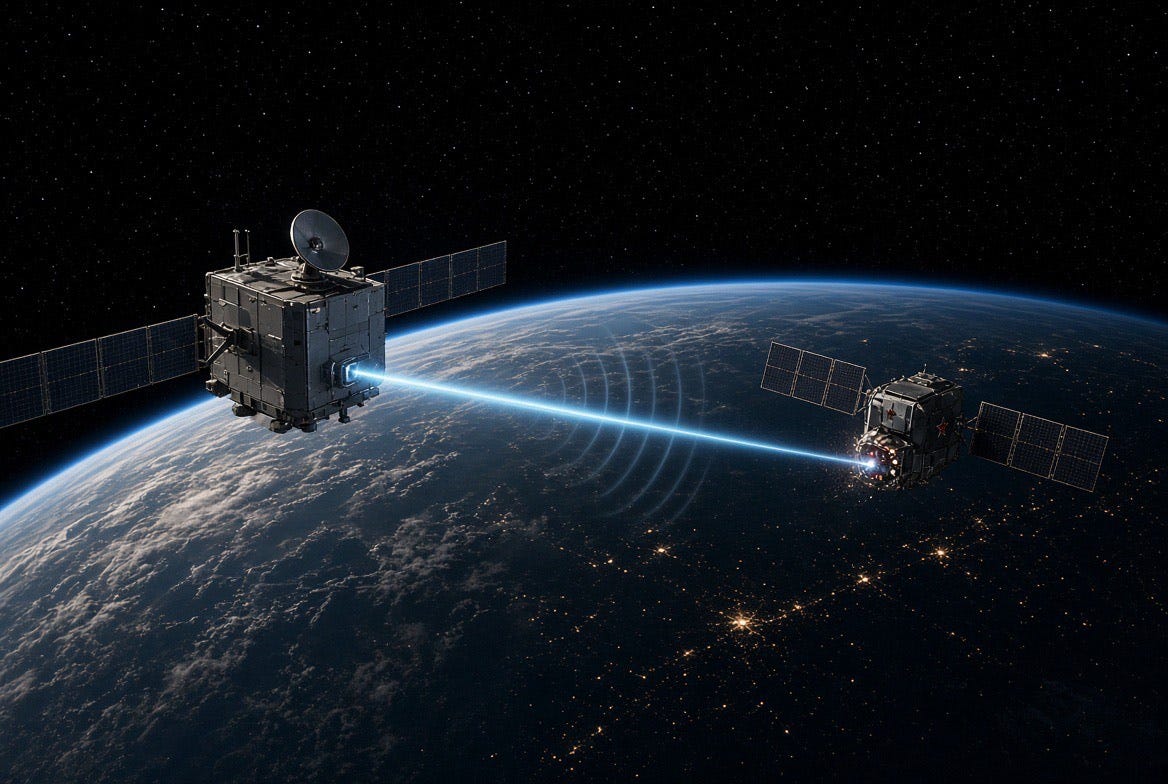
The United States has recently announced that it has deployed “on orbit space control weapons” in Earth’s orbit. While the technical characteristics of these weapons has not been detailed, evidence suggests that these weapons are non-kinetic in nature, using reversible technology such as electronic warfare to temporarily “blind” a targeted satellite. US President Donald Trump has alluded to the use of a space-based weapon operating in support of US military strikes on Iranian nuclear-related targets in June 2025.
Russia is in the process of deploying its own Starlink analog satellite constellation, known as Rassvet. When fully functional, Rassvet will provide Russia with satellite-based communications capability on par with Starlink. Ukraine, recognizing that Rassvet will enable Russia to more effectively guide its drones to their targets, has requested the United States to disable the Russian satellite network. Russia has indicated that it would take down the entire Starlink system in retaliation, using kinetic means which could threaten other satellites operating in earth orbit.
The weaponization of space represents a dangerous point of escalation, especially given the US capability of temporarily blinding satellites. In the zero-sum world that the US and Europe reside in, the need to be seen as offsetting a Russian win in Ukraine, and Russia’s stymying of NATO escalation efforts in the Arctic and against Kaliningrad, may prove too much of a temptation in the minds of western leaders unable to structure a behavioral model in relationship with Russia that isn’t premised on Russophobic goals and objectives requiring Russia’s strategic defeat.
Conclusion
The United States and Europe have, over the course of the past several decades, built a policy trap centered on using Ukraine as a vehicle for achieving the collapse of Russia and the government of Vladimir Putin. The “trap” is the zero-sum mentality which governs implementation of this policy, linking the political and economic viability of those pursuing such policy to its successful implementation. The looming failure in Ukraine has created a need for finding new vectors capable of furthering the policy objective of achieving a strategic victory over Russia, including options to expand the zone of conflict between the US-European collective and Russia into the Arctic, the Baltics, and Outer Space. Russia has effectively countered each one of these efforts which, when viewed in isolation, appear to be manageable problem sets with limited escalation potential. However, when viewed in the aggregate, the potential for a misunderstanding and/or miscalculation driven by domestic political imperatives existent in the nations comprising the US-European collective. Here, nations possessing considerable influence over the decisions being made by the collective, such as the US, France, and Germany, are undergoing political transformations that could alter the existing political posture, including policies related to the strategic defeat of Russia as a desirable outcome. The enemy in all of this is not Russia, but rather the zero-sum thinking of the collective West which leaves them married to a policy model that is incapable of being successfully implemented, and which, if pursued aggressively, will lead to their collective demise.
Note: I was able to visit the Special Military Operation zone, the Arctic region, oil fields, and Kaliningrad, in addition to participating in high level forums and meetings in Moscow and Saint Petersburg. The views expressed here are my personal assessment based upon these meetings, and are not meant as a formal expression of official Russian policy.
This article is the byproduct of the independent journalism I have been undertaking for the past several years, traveling to Russia for the singular purpose of capturing the Russian reality and bringing it to the attention of a western audience held hostage by Russophobic corporate media. I cover all of my expenses, which means that the trips necessary for the production of this article could not have taken place without the generous support of subscribers and followers who have provided donations for that purpose. I will continue to write articles and release videos about these past visits. I will also continue planning and preparing for future visits to Russia, including one scheduled for November where I will attend a conference on humanitarian issues and continue to meet and interview interesting and knowledgeable people. I thank everyone who has contributed to this work, past, present and future [end]
65-year-old Scott Ritter is a former intelligence officer within the US Marine Corps (USMC), then inspector of the United Nations in Iraq. When in 2003, the US and their British minions were about to invade the country under this false pretext, Ritter was claiming that there was no weapon of mass destruction (WMD) there. He was right.
its roots before WW2, its collaboration with Nazi Germany, its legacy in modern Ukraine, how NATO has continually supported Nazism in Ukraine, chronicle
Jacques Baud has been sanctioned by the European Union for speaking truth to power. He deserves the support of all freedom loving people around the world
in the Jacques Baud case, the EU is sanctioning, for the first time, an analyst not for spreading disinformation but for expressing a politically inconvenient truth, all while admitting he has broken no law. Will it have the courage to go after an American citizen?
operation enters the second week of Ukraine’s long-awaited and highly touted counteroffensive, some basic conclusions can be drawn even though the fighting continues, and will continue to rage, for some time to come
Jacques Baud has been sanctioned by the European Union for speaking truth to power. He deserves the support of all freedom loving people around the world
It has been nine months since the European Union (EU) implemented a sanctions package designed to impose “restrictive measures in view of Russia’s destabilizing activities”. These sanctions went into effect in December 2025.
Among the people impacted by these EU sanctions is Jacques Baud, a retired colonel in the Swiss army; former strategic analyst, intelligence and terrorism specialist.
Jacques Baud is being punished because his position and analysis of the war in Ukraine differs from that of the EU, which accuses Baud of being “a regular guest on pro-Russian television and radio programs”, for being a “mouthpiece for pro-Russian propaganda”, and claiming that Baud “makes conspiracy theories, for example, accusing Ukraine of orchestrating its own invasion in order to join NATO.”
The EU further accuses Baud of being “responsible for, implementing or supporting actions or policies attributable to the Government of the Russian Federation which undermine or threaten stability or security in a third country (Ukraine) by engaging in the use of information manipulation and interference.”
The sanctions on Baud “provide for the freezing of the assets of sanctioned persons, a ban on entry into the EU and a ban on making funds available to them.”
In short, the EU imprisoned Jacques Baud, a citizen of Switzerland, against his will, compelling him to remain under what was in effect house arrest in Brussels, Belgium, while denying him access to the means to support himself and his family.
This is what passes for democracy in Europe today.
Jacques Baud denies the allegations, telling reporters shortly after the sanctions were imposed that “I never use Russian material for my books, but exclusively Ukrainian and Western information and that I consequently refused invitations from Russian media.”
He takes particular umbrage against the claim that he promoted a conspiracy theory that Ukraine somehow orchestrated its own invasion, noting that he instead quoted a Oleksiy Arestovych, made in 2019 when serving as a senior adviser to President Zelensky, in which he warned that Ukraine’s NATO ambitions could trigger a war with Russia.
Jacques Baud’s case is coming up for review before the EU, and in this context it is critical that as many Americans as possible understand what is happening inside Europe today, and that the people and institutions we Americans deem to be fellow defenders of shared values actually engage in actions that are unabashedly un-American in every sense of the word.
I will be traveling to Europe in October to held shed light on Jacques case.
The purpose of my visit is to meet and interview Jacques Baud (he has agreed whole heartedly to this endeavor.)
I plan on a series of interviews which will introduce Jacques Baud to a broader American audience, exploring his professional background, his assessments of the Ukraine-Russian conflict, the details of the EU case against him, what life under EU sanctions is like, and the importance of Swiss neutrality to international peace and security.
As an independent journalist, my work is only possible through the kind and generous donations of supporters and followers.
I thank you in advance for your support in this important work. Free speech is a human right, not just an American value, and those who speak truth to power, like Jacques Baud, should have the support of all freedom loving persons around the world [end]
71-year-old Jacques Baud has been a Swiss intelligence colonel, specialized in Eastern Europe. Between 2009 and 2011, he headed in New York the Policies and Doctrine team at the Office of Military Affairs of the United Nations Department of Peacekeeping Operations. He participated in NATO programs in Ukraine in 2014 and 2017. His rigor and analytical skills are considerable.
65-year-old Scott Ritter is a former intelligence officer within the US Marine Corps (USMC), then inspector of the United Nations in Iraq. When in 2003, the US and their British minions were about to invade the country under this false pretext, Ritter was claiming that there was no weapon of mass destruction (WMD) there. He was right.
In the Jacques Baud case, the EU is sanctioning, for the first time, an analyst not for spreading disinformation but for expressing a politically inconvenient truth, all while admitting he has broken no law. Will it have the courage to go after an American citizen?
Operation enters the second week of Ukraine’s long-awaited and highly touted counteroffensive, some basic conclusions can be drawn even though the fighting continues, and will continue to rage, for some time to come
chronicle of censorship, fake news, whitewashing of the Ukrainian Nazism and war crimes, for the sake of the proxy war that NATO is conducting in Donbass and Ukraine, against Russia
Military engineers are now assisted by LLMs (Oxana Chorna / Global Images Ukraine)
Over the past year, the AI community has become increasingly worried over the behaviour of autonomous agents. Over the past week, that worry has hardened into panic — not least given the chatter, if vague and hard to verify, about a significant advance in recursive self-improvement at one of the world’s biggest frontier firms. Yet amid rumours and counter-rumours, and the recent suggestion by Donald Trump that “whoever wins AI wins”, one document may offer answers — less about the existential dangers of AI, and more about the threat it poses in the here-and-now.
Over 154 pages, a new report by Anthropic details some of the ways in which its Claude model has been misused over the past several months. With its talk of cyber-attacks, espionage and propaganda, it makes for terrifying reading, especially given how many actors — from Russian hackers to Chinese spies to Iranian propagandists — are now using the technology. As for Anthropic, it is able to monitor and assess how its systems are being used in real time, allowing the firm’s threat-intelligence team to track how Claude is being used.
One of the most eyebrow-raising examples comes from Yemen, particularly striking given the Houthis have established a presence on Perim Island, a strategically important position in the Bab al-Mandab Strait. Control of the island could strengthen the militants’ ability to threaten shipping through this narrow southern gateway to the Red Sea and Suez Canal, the primary maritime corridor linking Asia and Europe.
It’s striking, then, that Anthropic’s team identified a weapons-engineering cell in the north of the country that used Claude to work on three distinct programmes, including a guided rocket and a ballistic missile with a range exceeding 2,000 kilometres. Tracking this activity made it possible to reconstruct the militia’s engineering workflows.
To put simply: the Houthis — or their affiliates or hired helpers — effectively used Claude Code as a substitute for software engineers, getting it to help develop guidance, navigation and control systems; integrate an open-source autopilot into a flight computer; tune controls; and even run simulations. Several Claude operations ran at once: one coding, another researching, and a third checking the first agent’s work. This was not mere experimentation by geeks with laptops. After all, it apparently resulted in the test-firing of a guided rocket. When this seemingly failed, the results were quickly plugged back into Claude to diagnose what had gone wrong.
Anthropic says it has no evidence that an operational weapon was ultimately fielded, but the episode exposes an uncomfortable weakness in the way AI safety controls currently work. It is worth noting that Claude would not simply agree to design a missile on request; in fact, Anthropic says its safeguards blocked many of the Houthi cell’s requests. Still, they did not block all of them. By disguising the purpose of individual requests, and distributing the work across multiple sessions, the engineers were able to bypass controls.
Next stop: Iran. Here, we’re shown evidence of how Claude has been used to support propaganda, espionage and domestic repression. Again, this was not simply a matter of asking a chatbot to knock out a few inflammatory posts. Anthropic describes three operations in which Claude helped construct the machinery of an influence campaign: including writing campaign manuals; designing fake online personas; and compiling databases of people and organisations to target.
In one example, official intelligence bulletins were fed into Claude and transformed into content for different audiences — from Farsi to Arabic, Urdu to English — with the tone shifting alongside the language.
Iran also used Claude to disguise government narratives as the work of foreign writers. One network produced material intended for more than 100 online Iranian channels, including ones linked to the IRGC. More than that, Anthropic found evidence that Iranian propaganda was being camouflaged, falsely attributing arguments and findings to respected Western institutions like CSIS or the Brookings Institute.
More specific examples of Iranian AI-built propaganda are just as disturbing. Tehran-linked actors have been using Claude to build detailed profiles of hundreds of Israelis, and members of the Jewish diaspora, installing malicious software to steal people’s usernames, passwords and other login details. Elsewhere, Claude built a system to track US naval forces, securing personnel information from military photographs, among other sources.
The implications here are stark. Iran is hardly a superpower — and the Houthis certainly aren’t either — yet AI allows both to develop systems that would once have taken armies of engineers, programmers, analysts and linguists. That, in turn, opens the door to further disruption by non-state actors, causing chaos on the cheap. If the war in Ukraine shows how drones and other simple gadgets can nonetheless hamstring a well-armed opponent, AI could now do the same for espionage, cyber-warfare, propaganda and weapons development.
It’s telling, here, that even serious powers are learning these lessons too. After all, Anthropic’s tools have also been extensively used in Russia, despite the latter already boasting a formidable espionage apparatus of its own. That, however, hasn’t stopped Moscow from using Anthropic’s tech to make its activities better, faster and harder to tackle. That’s clear enough in the case of Midnight Blizzard, a hacking group closely linked to, or indeed part of, Russia’s SVR foreign intelligence service.
In practice, the hackers seemingly used Claude to make phishing attacks more convincing, while also helping them break into computer systems more effectively. For instance, hackers used the AI to double-check whether security software had spotted newly installed malware and, if it had, rewrite the code and try again until it slipped past the defences. These tools were then deployed against a swathe of targets outside Russia: including government ministries, intelligence and defence bodies, think-tanks, and more. Perhaps unsurprisingly, Ukraine and its drone industry feature prominently.
It has been fascinating, too, to see Claude turning up in the toolkit of another major power: China. Again, the examples here are remarkable in their scope, with an outfit likely based in central China using Claude to spy on roughly 50 organisations worldwide, spanning industries from energy and healthcare to finance and technology.
One obvious question is why China would plump for the foreign-made Claude, not least given the People’s Republic has DeepSeek, Qwen, Kimi and other domestic AI tools to choose from. Though Anthropic’s report does not address this, the obvious explanation is that, for some jobs — not least a Chinese police-surveillance project — China thought Claude was the best option: particularly for coding, technical research, and coordinating complicated tasks.
According to Anthropic’s report, Chinese companies have also attempted to scale and distil Claude’s capabilities. Again, China hardly lacks engineers, data or computing power. But, just as a pace-setter is invaluable in a marathon, so too can Anthropic be exploited by its rivals, another reason to doubt Trump’s latest claims.
Nevertheless, it would be a stretch to conclude, as Trump has done, that America is winning, let alone has “won”, the AI race. If anything, indeed, the episode illustrates the peculiar nature of that contest. American companies may build the most capable models — but once those capabilities exist, the US’s adversaries can use them to their own advantage.
In a broader sense, meanwhile, these varied use cases put a subtler spin on all that breathless talk of AI collapse. The technology has hardly invented espionage, or propaganda, or ballistic missiles. But it is reducing the amount of expertise, labour and time required to do them all. Whatever the claims of looming extinction, the technology is being used, in nefarious ways, by a variety of flesh-and-blood actors right now. Rather than mass suffering and death, we should perhaps be more immediately worrying about our credit-card details being sold and our accounts drained — not by AI agents, but by human criminals a lot like us.
In an open letter published around the same time as his company’s report, Dario Amodei, chief executive of Anthropic, seems to acknowledge that the threat architecture has changed — and fast. Building AI too quickly is dangerous, he writes, but failing to build it risks placing the most powerful technology of the age “in the hands of authoritarian powers”. Any attempt to slow AI and tech development in the US is a threat: if the democratic world slows down, Amodei argues, “CCP-associated projects will pull ahead, creating significant national security risk”.
Among other measures, Amodei is therefore demanding tighter restrictions on the sale of advanced AI chips and semiconductor manufacturing equipment to China; a crackdown on chip smuggling and remote access to overseas data centres; and measures to stop Chinese companies distilling the capabilities of American frontier models. If these measures work, Amodei adds, they could “widen America’s lead significantly over the next 3-5 years.”
Seen in another light, though, Amodei’s proposals look a little more complicated. As CEO of a company preparing one of the largest flotations in history, arguing that its technology is so dangerous that the government needs to intervene in the market around it is unusual. He wants tighter controls on advanced chips; stronger restrictions on the dissemination of frontier capabilities; measures to stop competitors catching up; and government assistance to overcome antitrust problems. In all, it looks like a bid towards establishing a monopoly, rather than simply a concern with the consequences of new technologies. The longer the furore over the monopoly persists, anyway, the longer foreign misuse of Claude will remain obscured: to the West, if not its enemies.
This is a field that is moving extraordinarily fast, reason enough to take the warnings seriously. But the last few days have raised more questions than they have answered: about how immediate the dangers really are, who should decide how quickly AI develops, and about where safety and national security end and commercial self-interest begins. The risks are plainly enormous, as are the opportunities. What is less clear is whether we are witnessing genuine panic among those closest to the technology, or the opening moves in a struggle over who gets to control it. It may well be both [end]
in the first week of the US-Israeli aggression on Iran, the Islamic Revolution Guards Corps (IRGC) conducted a series of precision strikes that systematically degraded the much-hyped US integrated air and missile defense architecture across the region
a private intelligence corporation billed as “Uber for war zones” is preparing to create what Israel hopes will be the model for supplanting Hamas rule in Gaza
in 2015, law enforcement secretly acquired surveillance video image analysis software from the Israeli company Briefcam. For eight years, the Ministry of the Interior concealed the use of his tool, which enables facial recognition
that is one of many existential questions facing a United States ravaged by Donald Trump
In Weimar on July 4, 1926, in front of Adolf Hitler, Sturmabteilung Nazi militiamen carry a banner which reads Death to Marxism (Heinrich Hoffmann)
The presidency of Donald Trump is already a disaster. Heroic Iran is victoriously repelling the attacks of the United States, whose most famous offspring in the decade was indisputably pedophile criminal Jeffrey Epstein
In the US on July 4, 2026, exactly one century after the Nazi congress in Weimar (MEAWW)
Between international decline, moral collapse and fentanyl overdoses, the atmosphere in the country is taking a toll on the psyches of its inhabitants. In particularly curious ways when they are possessing the general knowledge of a blue crab. That is the case of Elon Musk
After the inauguration of Donald Trump on January 20, 2025, during a celebratory rally at Capital One Arena, Washington DC, Elon Musk makes a fascist salute (JCCIC)
Hitler was a fascist, not a socialist. The Nazi Party’s full name included “socialist” for propaganda appeal to workers, but Hitler explicitly rejected Marxist socialism, class struggle, and internationalism. He purged actual socialists, banned their parties, sent them to camps, allied with industrialists, and privatized industries while preserving private property aligned with state/national goals. Nazism was ultranationalist, racist authoritarianism — far-right fascism in historical consensus, not left-wing socialism
on May 26, 2026
I can add that the reason why Nazi Germany is not controlling Europe today was the victory of Soviet Union, a socialist power and therefore its ideological enemy, which achieved 80% of the losses of the European fascist armies during WW2.
Ukraine is defenseless in the face of Russian missile attacks. Now is not the time for negotiations. Russia must finish the job
The launch of a Russian Iskander missile
The United States Department of Defense defines the term “decision point” as “A geographic place, specific key event, critical factor, or function that, when acted upon, allows commanders to gain a marked advantage over an adversary or contribute materially to achieving success.”
Today Russia has reached a decision point in its conflict with the collective West, inclusive of the United States, and their Ukrainian proxy.
The Russian leadership has, in my opinion, been preparing for some time for the confluence of the physical and psychological manifestation of a campaign designed to create an unbridgeable gap between perception and reality which, when exposed through action, will cause the artificially constructed edifice of Ukrainian defensive viability to collapse, and with it the false pillars of Western democracy, industry, and military might which propped it up.
This campaign wasn’t designed from scratch by the Russians, but rather emerged from the lies and deceit of those in the West who postured as peacemakers but in reality served as the promulgators of war.
The Europeans had long proved themselves to be charlatans, with their perfidy regarding Minsk forever exposing them as absolutely unreliable partners for resolving a Ukrainian crisis they themselves orchestrated.
The more curious thing is Russia’s attitude towards the United States. It was the United States which served as the architect of policies which have been in place for decades designed to weaken Russia and undermine to the point of collapse the government of Russia.
And yet Russia continued to hold out hope that the United States —especially under the second iteration of the Trump administration— could somehow serve as a force of rational stability when it came to managing both Europe and Ukraine.
The Anchorage Summit of August 2025 was the culminating moment of this conceptualization, manifesting itself into the so-called “Spirit of Anchorage”, the idea that through compromise a solution that addressed in serious fashion Russian concerns could be crafted that would be acceptable to all.
Within months, however, it became clear that the “Spirit of Alaska” was as illusory as the “Spirit of Minsk” that preceded it, another perfidious diplomatic ploy designed to buy time to build up Ukrainian military capability by lulling Russia into a false belief that a negotiated peace was possible.
But the United States, like Europe, never intended for the Ukrainian conflict to end in anything other than a strategic Russian defeat.
The Russian leadership has now come to embrace —however belatedly— this uncomfortable reality.
The ultimate question that now confronts Moscow is how to act on this realization.
Russia finds itself in a situation where it enjoys considerable strategic advantages over Ukraine and its Western partners across a broad spectrum of disciplines —diplomatic, economic, military, and social.
Russia, despite the concerted efforts of the West, is not isolated. Just the opposite, in fact. In many ways, Russia enjoys a stronger geopolitical posture today that it did before the initiation of the Special Military Operation if for no other reason that the conflict has exposed the nefarious nature of the so-called “rules-based international order” and those who conceived and implemented it, and as such breathed viability into the concepts of multilateralism that Russia and other nations, especially China, had been promoting with mixed results.
The Russian economy has withstood the challenges posed by economic sanctions and direct military action, and today is recognized by most of the world as a viable place to do business, as witnessed by the $84 billion in direct investments accrued during the Saint Petersburg International Economic Forum this past June.
Russia today possesses a large, well trained, well equipped, combat hardened military backed by a robust and capable defense industry which is not only prevailing in an extended war of attrition against Ukraine and the collective West, but has positioned itself to defend Russia’s interests in the Baltic, Arctic, Pacific, and the totality of its periphery, as well as defend and advance Russian interests in the Middle East and Africa. The advances in Russian technology —especially in ballistic missiles— has provided a qualitative edge which, when combined with Russia’s quantitative strengths, makes Russia a very formidable force.
Russian society continues its long and painful divorce with the West. The incomplete nature of this split, which sees small pockets of western liberalism holding on to relevance in the face of a larger societal gravitation toward a new Russian national awareness, has provided the collective West with its only opportunity to dismantle the advantages Russia has accrued diplomatically, economically, and militarily. The western intelligence services have worked with Ukraine to craft a narrative of Ukrainian resistance, resilience, and relevance that is then juxtaposed on the perception of Russian weakness that emerges in the wake of the false hope of negotiated peace that Russia had embraced in Minsk, Istanbul and Anchorage.
This hope was always designed to energize the residual western liberal elites inside Russia into believing everything would be better if Russia simply embraced the spirit of compromise. But the spirit of compromise was nothing more than a wolf in sheep’s clothing, a disguise to blind Russians from the reality that the collective West was seeking Russian surrender instead.
By planting the false hope of compromised-induced peace and prosperity in the minds of the residual Russian western liberal elites, western intelligence was sowing the seeds of a larger Russian societal disruption that was intended when the desired peaceful outcome failed to materialize. The fact that the failure to find a pathway to peace originated in the collective West’s perfidy didn’t matter in this regard —the Russian liberal elites were conditioned to blame their leadership for this failure, regardless of the truth.
Having sown the seeds of societal unrest, the western intelligence services themselves embarked on one of the largest information operations ever conducted, flooding the mainstream western press and social media outlets with an endless stream of stories designed to promote the narrative of Ukrainian victory and Russian defeat. This narrative would then be injected into Russian social discourse either through the resonance brought on by the incessant Western echo chamber, or through agents of influence —witting and unwitting alike— whose access to the Russian information market helped magnify a message of Russian weakness, corruption, and indecisiveness designed to collapse Russian public confidence in their leadership.
And now we find ourselves at the Point of Decision.
The information operation against Russia was backed by three supporting campaigns.
The first was the transition by Ukraine and its western supporters away from the traditional battlefield, where Russia was prevailing, to a drone-based war designed to create the perception of Ukrainian strength and, in doing so, the prospect of Ukrainian victory.
This campaign was not just designed to influence the Russian liberal elites, but also to build a foundation of political support within Europe and the United States for increased economic and military support for Ukraine.
The drone campaign served as the fuel that energized the G-7 meeting in June where pledges of economic support were made, as well as the NATO summit in July where similar pledges were made regarding military support.
But rather than constructing a structurally sound foundation upon which a viable Ukrainian counter to Russia could be assembled, the entire Western effort had produced little more than a ghost of what was being sought —a veritable house of cards that could collapse at the slightest of breezes.
The fact is the ability to turn the promises of the G-7 and NATO into reality are as illusory as the drone campaign upon which these promises were promulgated.
The European “Big 3” —Germany, France and the UK— are led by leaders who political viability is measured in months.
The United States is distracted by a losing military effort in the Middle East and a genuine lack of goodwill between American President Trump and his European and NATO partners.
The only thing that could coalesce this dysfunctional US-European alliance would be a Russian overreaction to the pressures brought on by the Ukrainian drone campaign.
This, of course, is one of the primary goals of the Western intelligence services through their information operation.
The “Russia must attack Europe” thematic has taken hold in Russia, promoted by western observers and analysts (I myself have been guilty of this) as well as Russian commentators and influencers.
But it has been resisted by the Russian leadership, simply because to attack Europe would undo all of the advantages Russia has accrued diplomatically, economically and militarily and, in doing so, potentially trigger the very collapse of Russian society the West has long sought.
A Russian attack on Europe would also create a window of viability for both the failing European leadership and the flagging US-NATO alliance.
A Russian attack on Europe is exactly what the Western intelligence seek.
Today Russia finds itself confronted by a confluence of events that has opened up a window of strategic opportunity.
The Ukraine drone campaign has failed. This conclusion has manifested itself in the political turmoil inside Ukraine as President Zelensky fired the person responsible for this campaign —Mikhailo Federov— and instead appeared to favor a reallocation of resources to the Ukrainian ground forces.
The Ukrainian public, which had embraced the narrative of Ukrainian drone dominance as the magic formula to bring an end to the war, have taken to the streets in protest, creating an unprecedented political crisis for Ukrainian President Zelensky.
Meanwhile Europe and the US struggle to follow through on the promises made at the G-7 and NATO Summits.
The gap between the theory of Ukrainian victory and the ability of Ukraine and its Western partners to achieve this has never been greater.
The only thing that could save the Ukraine project is either Russian indecision or Russian overreaction.
It is time, instead, for Russian action.
Russia has initiated a massive bombardment of Ukraine using missiles and drones.
Ukraine has no defense.
Neither Europe nor the US are in a position to change this calculus in the near term.
Every Russian missile attack underscores the false narrative of the Western intelligence information operation.
Every Russian missile attack exposes the impotence of Europe.
Every Russian missile attack underscores the dysfunction of NATO and the US.
And every Russian missile attack shreds the credibility of the residual Russian liberal elite.
This is the Decision Point.
Keep raining missiles down on Ukraine.
Confront the Ukrainian people with the inevitability of their collective demise should they continue to fight.
Confront Europe with the emptiness of their promised support.
Confront the US and NATO with their collective military impotence.
And confront the Russian people with the inevitability and necessity of a decisive Russian victory.
The collective West set itself up for disaster by engaging in perfidy designed to destroy Russia.
Policies based upon lies and deception cannot succeed if the lies and deception are exposed in time for an effective counter to be implemented.
Russia has exposed the lies and deception of the West.
Now it simply needs the courage to act.
This is the Decision Point that will decide the future of Russia.
The vulnerability of Ukraine to Russian missile and drone attack has presented itself.
Russia now needs to exploit this vulnerability with every resource it has.
Ukraine will be defeated.
Europe will collapse.
And the United States will be left holding an empty bag.
There’s no need to strike Europe.
Simply darken the skies of Ukraine with Russian missiles and drones [end]
65-year-old Scott Ritter is a former intelligence officer within the US Marine Corps (USMC), then inspector of the United Nations in Iraq. When in 2003, the US and their British minions were about to invade the country under this false pretext, Ritter was claiming that there was no weapon of mass destruction (WMD) there. He was right.
In the Jacques Baud case, the EU is sanctioning, for the first time, an analyst not for spreading disinformation but for expressing a politically inconvenient truth, all while admitting he has broken no law. Will it have the courage to go after an American citizen?
Operation enters the second week of Ukraine’s long-awaited and highly touted counteroffensive, some basic conclusions can be drawn even though the fighting continues, and will continue to rage, for some time to come
Signed UPA, a leaflet in Ukrainian orders all Poles and their families, on pain of death, to leave their homes and the Ukrainian lands within 24 hours (World War II Museum in Gdańsk)
July 11, 1943, is emblematic of the mass killing and ethnic cleansing that the UPA, military branch of the fascist Organization of Ukrainian Nationalists (OUN), is perpetrating with complacency of the German Nazi authorities, in territories which were Austrian before WW1 and Polish before WW2
Ukrainian hero Stepan Bandera, on July 24, 1941: […] The German army, under the leadership of Adolf Hitler, is establishing a new order in the world and is assisting us in creating a Ukrainian State that will cooperate with the National Socialist Great Germany […]
In Kisielin, the Ukrainians storm the church, where worshipers are gathered. At least 60, both genders, all ages, are shot. The wounded are killed with axes and knives
Here on August 17, 2014, former Kisielin is Kysylyn, western Ukraine (Oleg Gordiyuk)
More than 100 other Polish settlements are attacked the same Sunday and about 8,000 civilians, butchered in one day. The Ukrainians kill at least 50,000, maybe 100,000 Polish civilians, between 1943 and 1945
its roots before WW2, its collaboration with Nazi Germany, its legacy in modern Ukraine, how NATO has continually supported Nazism in Ukraine, chronicle
chronicle of censorship, fake news, whitewashing of the Ukrainian Nazism and war crimes, for the sake of the proxy war that NATO is conducting in Donbass and Ukraine, against Russia