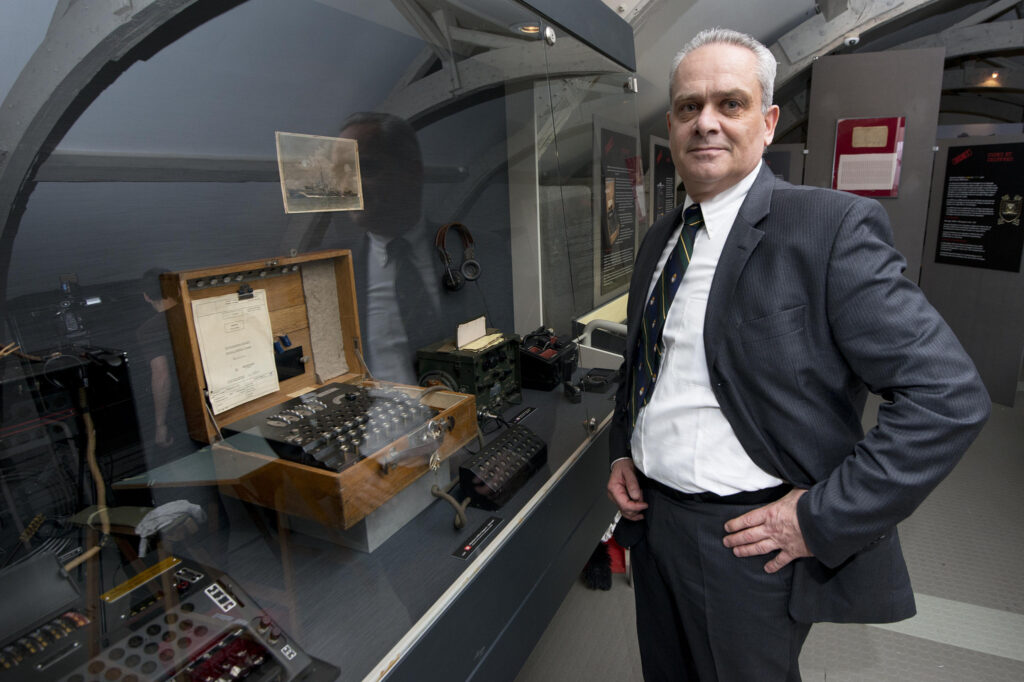
Nicolas Cinquini

Analista senior di l'intelligenza in u campu di a gestione di i risichi di sicurezza, sò un anzianu tenente detective è ufficiale di l'intelligenza in l'agenzie di u Statu francese. A bona pronuncia hè Николай Чинкуини, in russu

Tag: indochina

  • [Sharing] Vietnam, Algeria, Palestine, passing on the torch of the anti-colonial struggle – Hamza Hamouchene, Transnational Institute

    The 70th anniversary of Dien Bien Phu and Algeria’s revolution highlights their profound influence on global decolonization. This longread explores their impact on the Palestinian resistance, shedding light on their shared struggle against colonial oppression and their continuing inspiration to the world

    Introduction

    Revolution is not a dinner party, or writing an essay, or painting a picture, or doing embroidery; it cannot be so refined, so leisurely and gentle

    Mao Zedong, 1927 (Zedong 1953)

    Colonialism is not a thinking machine, nor a body endowed with reasoning faculties. It is violence in its natural state, and it will only yield when confronted with greater violence

    Frantz Fanon, 1961 (Fanon 1967)

    Imperialism has laid its body over the world, the head in Eastern Asia, the heart in the Middle East, its arteries reaching Africa and Latin America. Wherever you strike it, you damage it, and you serve the World Revolution

    Ghassan Kanafani, 1972 (Kanafani 2023)

    This year, 2024, coincides with the 70th Anniversary of the Battle of Dien Bien Phu (May 1954), in which Vietnamese revolutionaries inflicted a crushing defeat on French colonialists. It also marks the 70th birthday of the Algerian revolution, which began in November of the same year. The Algerian and Vietnamese resisted colonial oppression for decades before leading two of the most significant revolutions in the twentieth century, against France (and its local collaborators), which was the second biggest European colonial power in the world at the time and which was also supported by NATO forces. No discussion of decolonisation and anti-imperialism can be complete without understanding the importance of Vietnam and Algeria, and how their revolutionary liberation struggles were (and continue to be) so inspiring to oppressed people all over the world, including the Palestinians.

    No one revolution exactly resembles another. This is because all revolutions are rooted in a specific national or regional history, are led by particular social and generational forces, and happen at a given moment in the development of a country. However, revolutions all share a common element, without which they would not be called revolutions: the arrival of a new bloc of classes who take up leadership of the state, or the transition from colonial dependence to national independence. In Lenin’s words (external link), ‘For a revolution to take place, it is usually insufficient for the lower classes not to want to live in the old way; it is also necessary that the upper classes should be unable to live in the old way.’ Despite all the elements that might point to continuity, it is this rupture that marks a revolutionary change. 

    Against this backdrop and understanding, my objectives in this longread are five-fold:

    1. To share some historical reflections on the Algerian and Vietnamese anti-colonial struggles, so as to bring to light important chapters in anti-colonial history.
    2. To draw connections and parallels between the two struggles, and between them and the ongoing Palestinian liberation struggle, to understand how Palestinians have been inspired by both struggles and at the same time themselves continue to inspire the world with their resolute resistance to Zionist settler-colonialism.
    3. To challenge and debunk attempts to portray a false equivalence between colonisers and those who are colonised.
    4. To highlight transnational solidarities between those who are oppressed and colonised.
    5. To firmly place the Palestinian resistance and liberation struggle within the long line of anti-colonial and anti-imperialist struggles going back to the Haitian struggle at the end of the eighteenth century and start of the nineteenth century, when Haitian slaves rebelled against the French empire and established the first Black republic (James 2001)

    Colonialism Denies the Colonised Their Own History, National Liberation Re-invents it

    National liberation, national renaissance, the restoration of nationhood to the people, commonwealth: whatever may be the headings used or the new formulas introduced, decolonisation is always a violent phenomenon

    Frantz Fanon, 1961 (Fanon 1967)

    The Algerian independence struggle against French colonialists was one of the most inspiring anti-imperialist revolutions of the twentieth century. It was part of the wave of decolonisation that started after the Second World War in India, China, Cuba, Vietnam and many countries in Africa. It inscribed itself in the spirit of the Bandung Conference and the era of the ‘awakening of the South’, a South that has been subjected for decades (and in many cases for more than a century) to imperialist and capitalist domination under different forms, from protectorates to proper settler colonies (as was the case for Algeria).

    Retrospectively, French colonisation of Algeria can be seen as unique, as Algeria was the first Arabic-speaking country to be annexed by the West and one of the first countries in Africa to be officially subjugated by a Western empire, long before the Berlin Conference in 1884, when different European empires (British, French, German, Belgian, Italian, Spanish, Portuguese) met to carve up the continent amongst themselves.

    France invaded Algeria in June 1830. The French army was to spend the next 50 years suppressing an insurgency, 15 of them fighting the brilliant, fierce and dedicated resistance leader Abd-El-Kader. France’s war of conquest was conducted without let-up, especially under the command of the ruthless Marshal Bugeaud, who adopted a scorched earth policy (Fisk 2005), committing atrocities ranging from population displacement to land expropriation, massacres, and the infamous enfumades, where the French army eliminated whole tribes through asphyxiation.1

    Alongside Marshal Bugeaud’s “pacification” campaign, France actively encouraged colonisation of Algeria by its own population. In a statement before the National Assembly in 1840 Bugeaud said: ‘Wherever there is fresh water and fertile land, there one must locate colons [settlers], without concerning oneself to whom those lands belong’. (This is exactly the approach the Zionists were to apply in Palestine, a century later). By 1841, the number of such colons/settlers already totalled 37,374, in comparison with approximately 3 million indigènes (native peoples) (Horne 2006). By 1926, the number of settlers had reached some 833,000, 15% of the population, and it increased to just under 1 million by 1954.

    Colonisation involved the expropriation of the basic factor of production, land, from the indigenous peasantry and its redistribution to the settlers, destroying the foundation of the peasant subsistence economy (Lacheraf 1965). The rural masses fought the encroachment of the colonial army until 1884, but the core of the Algerian rural resistance to colonialism was smashed in 1871, when the big politico-agrarian revolt that had spread over three-quarters of the country was finally crushed. This historic peasant uprising was a reaction to a series of disastrous confiscatory measures during the 1860s that outraged the majority of rural Algerians and led them to fear for their lives and livelihoods. Their situation was made worse by drought, harvest failures, famine, locust invasions and disease, which resulted in the deaths of more than 500,000 victims (around one-fifth of the population). In the period between 1830 and 1870 it is estimated that several million Algerians died (Bennoune 1988, Davis 2007 and Lacheraf 1965).

    The Egyptian Marxist Samir Amin has described how the Algerian rural population transformed the colonial conquest into a protracted and devastating war: ‘The collapse of the regency government and the war of extermination undertaken by the French army gave this early period (1830–1884) certain special characteristics, which are not found elsewhere … faced with military power, the urban ruling class was thrown into thorough disarray and could think of no other alternative but flight … as for the peasants, flight was out of the question. Faced with the threat of extermination, they turned the Algerian countryside into the terrain for a fifty-year war which claimed millions of victims‘(Amin 1970).

    French colonial rule in Algeria lasted for 132 years (in comparison to 75 years of colonial rule in Tunisia and 44 in Morocco), having a duration and a depth that was unique in the experiences of colonialism in both Africa and the Arab world. In 1881, Algeria was administered for the first time as an integral part of France. With this extension of civilian rule to the country came the application of second-class status to Algeria’s Muslim population. The exclusion of Muslims was reflected at all levels of political representation, anti-Muslim discrimination was built into the electoral system, and the inferior status of Muslims was inscribed in law under the loathsome Code de l’Indigénat of 1881 (McDougall 2006).

    After the French success in violently suppressing Algeria’s anti-colonial rebellions, the last of which took place in the 1870s and 1880s, over half a century was to pass before the Algerian resistance movement once again took up the fight, in the shape of Algerian nationalism in its modern form.

    8 May 1945: ‘Victory in Europe Day’ and massacres in Algeria

    It was at Setif that my sense of humanity was affronted for the first time by the most atrocious sights. I was sixteen years old. The shock which I felt at the pitiless butchery that caused the deaths of thousands of Muslims, I have never forgotten. From that moment, my nationalism took definite form

    Kateb Yacine, Algerian writer and poet (quoted in Horne, 2006)

    On 8 May 1945 there were joyful celebrations across Europe as news spread of the Nazi capitulation. France rejoiced at being delivered from a five-year occupation. At precisely the same time, events in Algeria began that would lead to the colonial massacre of thousands of Algerian Muslims over the next two months. 

    On Victory in Europe Day, while Europeans celebrated, Algerians marched in Setif for independence and an end to colonisation, deploying banners bearing slogans such as ‘For the Liberation of the People, Long Live Free and Independent Algeria!’ They also brandished for the first time what would later become the flag of the Algerian National Liberation Front (FLN) liberation movement. The French colonial authorities violently repressed the march, triggering a rebellion that led to the murder of 103 Europeans. 

    The colonial retaliation to these murders was savage. The French military (air, navy and army) bombed several regions, and burnt and razed many villages to the ground in Setif, Guelma and Kherrata. Over the space of two months, the French gendarmerie2 and troops, alongside vengeful settlers, slaughtered tens of thousands of Algerian Muslims, with some estimates as high as 45,000. 

    The parallels between the Setif, Guelma and Kherrata massacres and the 7 October 2023 Al-Aqsa Flood operation by the Palestinian resistance against Israel, and the pitiless genocidal butchery that followed it, is too stark to ignore. In both cases, resistance whether peaceful or violent, was entirely disallowed, and aspirations for self-determination were crushed with grossly disproportionate force.

    At the time (in 1945), one analyst, trying to explain the ‘barbarism’ of the colonised and to justify France’s bloody repression, wrote: ‘The call to violence raises from the mountains a kind of evil genie, a wild and cruel Berber Caliban, whose movements can only be stopped by a force greater than his own. This is the historical and social explanation for the events that took place in Sétif on the very day that victory was celebrated‘ (Gresh 2023).

    The same supremacist colonial mindset and the same racist, orientalist and essentialist explanations of why the oppressed and colonised revolt persist today: the Palestinian attacks on 7 October are often put down to the pure evil, irrational savagery and timeless barbarism of medieval and sub-human terrorists, far removed from the political context of more than 75 years of settler colonialism, apartheid and occupation.

    The massacres that followed the demonstrations of 8 May 1945 had significant repercussions for the Algerian nationalist movement. For the young generation of militants, the Algerian war had already started and the preparation for armed struggle could no longer be postponed. Most historians agree that the massacres of 1945 were traumatic, marking every Algerian Muslim who lived through the period. Moreover, every Algerian nationalist who was prominent in the FLN traces their revolutionary determination back to May 1945. It will not be surprising if future generations of Palestinian and Arab revolutionaries (of all political tendencies) trace their commitment to liberatory struggle to the genocide that followed the 7 October attacks and the heroic resistance in Gaza, which continues at the time of writing.

    Ahmed Ben Bella, an FLN leader and head of the Algerian state from 1962 to 1965, had been a much-decorated sergeant in the 7th Regiment of Algerian Tirailleurs, a unit that distinguished itself in battle in Europe. But it was the events of 1945 that launched him on the path of revolution. He later wrote: ‘The horrors of the Constantine area in May 1945 succeeded in persuading me of the only path: Algeria for the Algerian.’ Similarly, for Mohammed Boudiaf, another revolutionary FLN leader and also a future head of state, the colonial massacres of 1945 led him to reject electoral politics and assimilation and to embrace armed resistance and direct action as the only way to achieve liberation (Evans & Phillips 2007).

    The traumatic events of 1945 were the first volleys in the Algerian struggle for independence. 

    Vietnam’s victory is Algeria’s inspiration

    Our actions aim to take the war to them, to let the whole world know that the Algerian people are leading a war of liberation against their European occupiers

    Djamila Bouhired (external link)

    The Algerian struggle for independence cannot be divorced from the global context of decolonisation. In 1945, the Arab League was formed, committed to Arab unity. In 1947, India won independence from Britain. In 1949, the Chinese Maoist revolution defeated the Nationalists of Chiang Kai-shek and established the People’s Republic of China. 1955 saw the rise of Arab nationalism/Nasserism and the holding of the Bandung Conference in Indonesia, where 29 non-aligned countries from Africa and Asia challenged colonialism and neocolonialism in a context of Cold War tensions.

    The FLN leaders were under no illusion about the scale of the task confronting them, but their confidence was bolstered by the humiliating French defeat in Indochina in May 1954. As Frantz Fanon explained, the great victory of the Vietnamese people at Dien Bien Phu was no longer, strictly speaking, just a Vietnamese victory: ‘Since July 1954, the question which the colonized peoples have asked themselves has been “What must be done to bring about another Dien Bien Phu? How can we manage it?”’ (Fanon 1967).

    Fanon was fascinated by what the Vietnamese had achieved at Dien Bien Phu. In his view, the Vietnamese victory over the French in this remote Southeast Asian valley had demonstrated that the colonised could generate the revolutionary violence needed to force decolonisation on the coloniser. News of the Vietnamese victory quickly reverberated across the French empire, shattering the myth of the coloniser’s invincibility and initiating cracks in the empire’s structure. The importance of Dien Bien Phu and its impact on the psyche of colonised people can hardly be overstated. Benyoucef Ben Khedda, president of the Provisional Government of the Algerian Republic, recalled: ‘In 7th May 1954, the army of Ho Chi Minh inflicted on the French expeditionary corps the humiliating disaster of Dien Bien Phu. This French defeat acted as a powerful catalyst on all those who had been thinking that an insurrection in the short term is by now the only remedy, the only possible strategy. … Direct action took precedence over all other considerations and became the priority of priorities‘ (Ben Khedda 1989).

    Ferhat Abbas, who became the first acting president of the newly independent Algerian Republic, cast the Vietnamese victory at Dien Bien Phu in epoch-changing terms, considering it as significant as the French revolutionary army’s victory over the Prussians in the historic battle of Valmy in 1792: ‘Dien Bien Phu was more than just a military victory. This battle is a symbol. It’s the “Valmy” of the colonised peoples. It’s the affirmation of the Asian and African vis-à-vis the European. It is the confirmation of the universality of human rights. At Dien Bien Phu, the French lost the only source of “legitimation” on which their presence turned, that is the right of the strongest [to rule the weakest]’ (Abbas 1962).

    Others have described Dien Bien Phu as the Stalingrad of decolonisation (Meaney 2024).

    Holding the Imperial Line and Solidarity Between the Colonised

    It is not because the Indo-Chinese has discovered a culture of his own that he is in revolt. It is because “quite simply” it was, in more than one way, becoming impossible for him to breathe

    Frantz Fanon (Fanon 1967)

    It is hard, at a distance of 70 years, to imagine the impact the first Indochina war, and especially Dien Bien Phu, had on the colonial world, particularly France’s overseas colonies, from Algeria to Senegal and from Morocco to Madagascar. A colonial power had been defeated. A regular army had been beaten!

    In the 1940s, during the Second World War, when France was invaded and occupied by Nazi Germany, tens of thousands of Algerians, Moroccans, Senegalese, Vietnamese and others bravely joined the battle for its liberation, which they hoped would in turn lead to their own liberation. But when it finally rose from the ruins, France set about restoring its shattered empire in all its colonial pomp. Despite negotiations in Paris between Jean Sainteny and Ho Chi Minh to find a compromise on the question of post-war Vietnam, and despite the victory of the Left, including the Communists, in the November 1946 French elections, the French government nevertheless decided to reconquer Vietnam. Whether it was led by the right, the centre, or the left, or by forces that were religious or secular, and from one republic to another, France continued to cling to its empire, from the Dien Bien Phu valley to the Kasbah of Algiers (Delanoë 2002).

    Following the outbreak of the war in December 1946, from 1947 to 1954, tens of thousands of North Africans were sent to fight for France in Indochina (the figure ultimately reaching 123,000), at a time when their own countries were experiencing the first stirrings of the struggle for independence. Once in Vietnam, hundreds of them deserted and joined the Viet-Minh. In doing so, they were responding to Vietnamese appeals for anti-colonial solidarity (Delanoë 2002). One such appeal was made in a letter a minister in Ho Chi Minh’s government sent to the Moroccan independence leader Abd El-Krim, in exile in Cairo, in early 1949. He wrote: ‘Our struggle is your struggle and your struggle is in no way different from ours. Also, the solidarity of the national liberation movements within the framework of the former French empire is capable of putting a final end to French imperialism. Your Excellency, the government of Ho Chi Minh asks you to use your great spiritual authority to ask the soldiers of North Africa to refuse to leave for Viet Nam, and also asks you to appeal to the dockers to boycott French ships‘ (Saaf 1996).

    Abd El-Krim, a revolutionary guerilla leader who had defeated the Spanish army in the epic battle of Annual in 1921 and who had set up the short-lived Republic of the Rif (1921-1926) before being ultimately defeated by the French and Spanish through air raids, gas and napalm bombing, self-propelled guns and tens of thousands of recruits from the Empire (Ayache 1990 and Daoud 1999), replied: ‘The victory of colonialism, even at the other end of the world, is our defeat and the failure of our cause. The victory of freedom anywhere in the world is … the signal of the approach of our independence‘ (Saaf 1996).

    The succession of setbacks suffered by the French army in Indochina only heightened awareness of the need for solidarity among colonised people. Responding to this need, Algerian dockers working in the ports Oran and Algiers refused to load war material bound for Indochina (Ruscio 2004). 

    The Vietnamese also asked Abd El-Krim and the Moroccan Communist Party to send them a North African who could establish a psychological warfare network that would encourage North African troops within the French Expeditionary Corps in the Far East (CEFEO) to desert, rally the Vietnamese, and ultimately return to their home countries to fight the French colonisers. This role was taken on by M’hamed Ben Aomar Lahrach (alias Maarouf). A Moroccan, like Abd El-Krim, Maarouf was a trade unionist and a member of the Moroccan Communist Party (Delanoë 2002). At the end of the 1940s, he travelled to Hanoi. He explained his activities with the North African soldiers who either rallied the Viet Minh or were captured as follows: ‘I try to create real villages for my Arab and Kabyle prisoners, I put them in self-contained huts, I manage to give them a life reminiscent of the country. We mustn’t make these guys Vietnamese; we must repatriate them as quickly as possible! They must remain themselves; they will form the cadres of our liberation armies… I won’t let my Moroccan or Algerian deserters die‘ (Delanoë 2002).

    In his appeals to North African soldiers fighting on the French side in Vietnam, and in his political education work with North African captives and rallied soldiers, Maarouf’s message was ‘Go back home: these people, like you in Morocco, are fighting for their independence. … Return home and use your fighting spirit to liberate your country’ (Saaf 1996). Above all, he sought to recuperate North Africans who were being used by the French as cannon fodder, and who found themselves lost in this distant Asian country, with the explicit aim of repatriating them as soon as possible to their own countries.

    The effectiveness of Maarouf’s work is best demonstrated by the hundreds of Algerian repatriates who became effective military cadres for the Algerian National Liberation Front starting from 1954/55. Maarouf’s activities were truly heroic; they included participating in the arrest of French General De Castries in Dien Bien Phu. Testifying to the high esteem in which he was held, Ho Chi Minh gave him the name Anh Ma, which literally means ‘Brother Horse’, and the Vietnamese awarded him the rank of general, and decorated him with medals (Saaf 1996 and Delanoë 2002). 

    For France, Dien Bien Phu became a symbol of anachronistic obstinacy leading to catastrophe. For Vietnam, it was a symbol of the recovery of national independence. But Dien Bien Phu was not just an historical event for these two countries alone: throughout the world, the battle was seen as a turning point that heralded the coming of other battles for liberation. The echo of gunshots had barely subsided in the Tonkin valley before it was heard in the Aurès mountains in Algeria. And within less than a year, the ‘wretched of the earth’ gathered in Bandung (Ruscio 2004). As for the colonialists, De Lattre, France’s commander-in-chief, confided to the officer he had put in charge of creating his Vietnamese army, that they had to hold the imperial line: ‘it’s in Tonkin that we are defending our positions in Africa. Everything must be subordinated to this imperative‘ (Goscha 2022).

    Today, it is in Gaza that US-led imperialism seeks to defend its global hegemony. 

    In the US-Israeli attempt to hold the imperial line in Gaza, they are applying similarly brutal methods to those applied by the French in Vietnam, including starvation of the civilian population. The French focused on breaking the Vietnamese’s access to rice, as part of French General Raoul Salan’s order to ‘Starve the adversary’ (Salan later founded the Organisation Armée Secrète (OAS), a clandestine terrorist organisation that sought to prevent Algerian independence). The use of food as a weapon was by no means new. Imperial armies have practised this form of warfare since antiquity. But the French were the first to apply this approach in a twentieth-century war of decolonisation – with terrible consequences for the Vietnamese. In doing so, they collapsed the dividing line between combatants and civilians, and between the home front and the battle front. This was la guerre totale (total war), as advocated by General Lionel-Max Chassin, commander-in-chief of the French air force in Indochina during the early 1950s. Chassin insisted that this was the only way to win a colonial war, arguing that ‘One must starve people to death’ (Goscha 2022). In 1956, Chassin told his superior that he was ‘convinced that had we killed all of the water buffalos, destroyed all of the rice in Indochina, we would have had the Vietnamese at our mercy whenever we wanted’.

    Similar logics prevailed in France’s attempt to ‘pacify’ Algeria between 1954 and 1962, and they are now again at work in Israel’s total war on Gaza. In fact, what is taking place today in Gaza is not just a genocide. Although it is almost impossible to find the right terminology to describe the level of destruction and death Israel is unleashing on Palestinians, a plethora of concepts are now being used to understand the enormity of what is taking place: urbicide, scholasticide, domicide, ecocide, and holocide – the annihilation of an entire social and ecological fabric.

    Revolutionary Violence and Urban Guerilla Warfare in a Time of Decolonisation

    We are advocates of the abolition of war, we do not want war; but war can only be abolished through war, and in order to get rid of the gun, it is necessary to take up the gun

    Mao Zedong (Zedong 1967)

    Knowing everything that had happened in our country, it was clear for us there was no option but an armed struggle, and that we had to confront the French, and with violence

    Zohra Drif (Drif 2017)

    The Indochinese and Algerian wars against French colonialism have become foundational to modern politics in both countries. Both independence struggles were to profoundly shape the character of anti-colonial thought over the subsequent decades. 

    Christopher Goscha argued in his excellent book The Road to Dien Bien Phu that Ho Chi Minh ended up administering two kinds of wartime states, one capable of holding out against the coloniser, in guerilla form, just as the Algerian FLN were to do in North Africa, the other capable of generating the required military and organisational force needed to defeat a Western colonial army in a set-piece battle, of the kind the Chinese communists had created. Thanks to Chinese military assistance and advisers, instruction in modern military science, and the introduction of the draft and mobilisation laws, the Vietnamese communists presided over a military revolution unknown in any other war of decolonisation in the twentieth century (Goscha 2022). Indeed, the Algerian nationalists were not alone in their inability to transition from guerilla warfare to conventional warfare: in no other twentieth-century war of decolonisation was there to be anything like the People’s Army of Vietnam, and there was never to be another Dien Bien Phu. But that did not mean that colonial powers could not be vanquished in other ways, including guerilla warfare.

    The Vietnamese anticolonial fight against the French did not take place independently of other events in Asia. The first Indochina war (1945–1954) was taking place in parallel to the Korean war in a context of an expansion of the Cold War in southeast Asia, where the US saw aiding France as a way to fight the Communists. The resumption of the war in Vietnam in 1960 saw the direct entry of the United State into the fray, with its formidable war technology and its belief that its victory was assured. The United States no longer needed the aid of a third country to inflict decisive blows on the Communists in Asia. The American war against Vietnam was to last 15 years before its ‘invincible armada’ was forced to withdraw without glory, leaving behind a devastated country.

    The devastation and violence were not unique to Vietnam’s anti-colonial revolutions. The declaration of war in Algeria on 1 November 1954 also initiated one of the longest and bloodiest wars in the history of decolonisation, replete with merciless atrocities (Stora 2004). The FLN leadership had a realistic appreciation of the military balance of power, which starkly favoured France, whose army was the fourth largest in the world at the time. In response to this reality, their strategy was inspired by Ho Chi Minh’s dictum ‘For every nine of us killed we will kill one – in the end you will leave’. The FLN wanted to create a climate of violence and insecurity that would be ultimately intolerable for the French, to internationalise the conflict, and to bring Algeria to the attention of the world (Evans & Phillips 2007). Following this logic, the revolutionary leaders Abane Ramdane and Larbi Ben M’hidi decided to take guerilla warfare into the country’s urban areas, and specifically to launch the battle of Algiers in September 1956. 

    There is no better way to fully appreciate this key and dramatic moment of sacrifice in the Algerian revolution than watching the classic realist film by Gillo Pontecorvo, The Battle of Algiers, released in 1966. Initially banned in France, the film powerfully reenacts some of the critical moments of the Algerian resistance in the capital and the French crackdown on it. In one dramatic moment, Colonel Mathieu, a thinly disguised General Massu (who had also fought in the first Indochina War), presents the captured FLN leader Larbi Ben M’Hidi at a press conference, where a journalist questions the morality of hiding bombs in women’s shopping baskets. The journalist asks: ‘Don’t you think it is a bit cowardly to use women’s baskets and handbags to carry explosive devices that kill so many people?’ Ben M’hidi replies: ‘And doesn’t it seem to you even more cowardly to drop napalm bombs on defenceless villages, so that there are a thousand times more innocent victims? Give us your bombers, and you can have our baskets’ (quoted in Fisk 2005).

    Djamila Bouhired, a revolutionary icon who has become an inspirational figure in the whole Arab world (especially for Palestinians), as well as beyond, was a key figure in the battle of Algiers and was, alongside Zohra Drif, and Samia Lakhdari and her mother, one of the women who planted bombs across the city. After being captured, raped and severely tortured, she heroically challenged her colonial captors and torturers (external link): ‘I know you will sentence me to death but do not forget that by killing me you will not only assassinate freedom in your country, but you will not prevent Algeria from becoming free and independent.’ 

    Zohra Drif, another heroine of the Algerian War of Independence, well-known for her involvement in the Milk Bar Café bombing in 1956, was an integral part of the FLN’s bombing network in Algiers, working with Ali La Pointe, Djamila Bouhired, Hassiba Ben Bouali and Yacef Saâdi, head of the Autonomous Zone of Algiers. She was eventually captured and was sentenced to 20 years of hard labour by the military tribunal of Algiers for terrorism. Drif was imprisoned in the women’s section of Barbarossa prison. In her memoires, she reflected on the role of Djamila Bouhired: ‘They had their Marianne, we had our Djamila … For colonial France, she was “the soul of terrorism”. For us and for all freedom-loving peoples, she became the soul of liberation and the symbol of Algeria at war, beautiful and rebellious’ (Drif 2017). 

    Bouhired’s heroic struggle, courage, abnegation, sumud (steadfastness) and sacrifice still reverberate in Palestine and still feed the beating heart and inspire the language and imaginaries of resistance, revolution and the struggle for liberation. Bouhired’s mantle was taken up by the Palestinian freedom fighter Leila Khaled, alongside many others.

    The urban revolt in Algiers was eventually crushed without mercy, through the resort to torture on a systematic scale to extract information, including fitting electrodes to genitals (Alleg 1958). By October 1957, the FLN network in Algiers was dismantled, after the blowing up of the last remaining leader Ali La Pointe along with Little Omar, Hassiba Ben Bouali, and Hamid Bouhamidi, in their hiding place in the Casbah. Despite this military loss, the FLN had scored a diplomatic victory: France was isolated internationally because of the scandalous methods of repression it used.

    The Algerian experience of urban warfare as part of a decolonisation struggle was not an unprecedented one. Over a decade before the FLN set off bombs in Algiers, the Vietnamese had already fought major urban battles in Saigon, Haiphong and Hanoi. They too were brutal affairs, with the French using tanks, artillery and bombers to blast Vietnamese urban positions. Like the Casbah in Algiers, the Old Quarter of Hanoi was ground zero for the battle for that city (1946–1947). During the fighting, the commander-in-chief of France’s Expeditionary Corps in Indochina, General Jean Vally, instructed his subordinates to ‘hit them hard with the cannon and the bomb….in order to put an end to the resistance and to prove to our adversary the overwhelming superiority of our capabilities’ (Goscha 2022). By the end of the battle, Hanoi’s ‘Casbah’ lay in ruins. 

    The level of violence inflicted by the French across the Red River Plain and the rest of upper Vietnam from January 1951 until mid-1954 had no equivalent in the preceding history of twentieth-century wars of decolonisation. Among the Vietnamese there were more than a million dead, and hundreds of thousands wounded, including victims of torture, while the losses of the French Expeditionary Corps amounted to 130,000 men. Similarly staggering levels of violence were reached in Algeria. Official estimates suggest a million and a half Algerians were killed in the eight-year war that ended in 1962. A quarter of the population (2.35 million) were confined in concentration camps, at least 3 million people (half the rural population) were displaced, around 8,000 villages were destroyed or burned, hundreds of thousands of hectares of forests were burned or defoliated by napalm bombs, cultivable lands were either sown with mines or declared ‘prohibited zones’, and the country’s livestock was decimated (Bourdieu and Sayad 1964; Bennoune 1973).

    In both cases (Algeria and Vietnam), the coloniser’s dirty work of vengeance against the colonised’s daring acts of resistance involved furthering and entrenching the dehumanisation of the ‘other’ and casting hate in racialised terms. For the French and their allies, the Vietnamese and the Algerians were no longer a people, they were bandits, criminals and terrorists. One young French soldier who lost a confidant in Vietnam explained what he wanted to do to the Vietnamese: ‘We have to destroy all of them, without any pity for them, they’re real savages’ (Goscha 2022). The practice of torture was endemic within the French army years before French paratroopers ever set foot in Algiers. The same mechanisms and tactics of dehumanisation are now being used by Israel in Palestine, with Israeli generals, officials and media figures describing Palestinians as ‘human animals’, ‘rats’, ‘barbarians’, and ‘terrorists’ to justify their war crimes, torture and genocidal massacres. Colonialism, and its racialisation strategies, has not ended yet.

    In Vietnam, Algeria and Palestine, it is not just the armed forces of the colonial powers that have applied these strategies: the colonists/settlers themselves have also played a role. When the elite paratroopers brought in by the French government to crush the uprising in Algiers, marched down the main street of the city, throngs of ecstatic French settlers came out to greet them. Similar scenes took place in Saigon in 1946 when settlers turned out in droves to welcome the soldiers liberating them from ‘native’ rule (Goscha 2022). In both cases, there was a close alliance between the army and the settler communities, which acquiesced in the colonial violence and cruel repression. Likewise, today, Israeli settler society is overwhelmingly in support of the Israeli military’s genocide in Gaza and pursuit of a full-blown war in the whole region. Countless videos and images show Israelis cheering and celebrating the death of Palestinians and explaining how they would like to see them disappear from the lands they have taken away from them.

    Palestine: Taking up the mantle of anti-colonial revolution

    What am I driving at? At this idea: that no one colonizes innocently, that no one colonizes with impunity either; that a nation which colonizes, that a civilization which justifies colonization—and therefore force—is already a sick civilization, a civilization that is morally diseased…

    Aimé Césaire(Césaire 2000)

    We remembered all the miseries, all the injustices, our people and the conditions they lived, the coldness with which world opinion looks at our cause, and so we felt that we will not permit them to crush us. We will defend ourselves and our revolution by every way and every means

    George Habash (external link), 1970

    What do the Algerian and Vietnamese struggles have to do with the Palestinian struggle today? The answer is that the Palestinian liberation struggle must be uncompromisingly situated within the long line of anti-colonial revolutionary efforts. Despite their own specificities and differences, these three struggles need to be understood as such: as anti-colonial struggles for liberation. At the same time, the events in Palestine, including the current genocide, also demonstrate that the colonial world has not yet been fully dismantled. 

    The sections below focus on the intersections between the Palestinian liberation struggle and its Algerian and Vietnamese counterparts.

    Palestine and Algeria: two sisters in the Arab world

    I travelled on an Algerian airplane under Algerian protection as if I was an Algerian envoy, not just a Palestinian one. [Boumediene] wanted to tell the world that Palestinian envoy Yasser Arafat wasn’t coming alone but with Algeria by his side

    Yasser Arafat (external link)

    For obvious reasons, there are multiple connections between the Palestinian and Algerian revolutionary liberation struggles. One of them is the deeply racist, inhumane and genocidal settler-colonial experience both nations have been subjected to, uniquely within the Arab region. Sharing this common experience, Palestinian revolutionaries look up to their Algerian brothers and sisters, while the Algerians see in the Palestinian resistance and revolutionary efforts a mirror image of their revolution against the French colonialists. The Algerian FLN inspired the Palestinian strategy of armed struggle (external link) and the union of different political groups under a common banner. It therefore comes as no surprise that the Algerians have assisted the Palestinians since the 1960s in every realm: diplomatic backing, military assistance, and the provision of weapons and financing.

    For a big part of the ‘Third World’, especially those countries that were still under the grip of colonial domination, Algeria’s liberation in 1962 provided hope and a model to follow. Its capital Algiers became a Mecca for revolutionaries from all over the world – from Vietnam to Palestine to southern Africa – who desired to bring down the imperialist and colonial order.  The 1964 charter of Algiers declared Algeria’s support for the ‘struggles of other people in the world’, including ‘armed struggle’ (Deffarge & Troeller 1972), and independent Algeria went on to provide asylum and financial support to movements all over the world fighting for independence and against racism, colonialism and imperialism. 

    In the Arab world, the new regime in Algeria established ties with the Egyptian president Gamal Abdel Nasser, and was firmly part of the anti-colonial wave that chased out the French and the British after their pitiful adventure in the Suez in 1956, and which included independence in Tunisia and Morocco also in 1956, and the overthrow of the monarchies in Iraq (1958) and Northern Yemen (1962). In this period, the Palestinians also initiated their first actions to put their country back on the political map, from which it had been removed (Gresh 2012). 

    In the following paragraphs, I mainly rely on material gathered by the excellent educational website on the Palestinian revolution (https://learnpalestine.qeh.ox.ac.uk/ (external link)), curated by the Palestinian scholars Karma Nabulsi and Abdel Razzaq Takriti, as well as on the enlightening The Dig podcast series Thawra (external link), on Arab radicalisms in the twentieth century.

    The Palestinian liberation movement actively engaged with Algeria in the years after its independence in 1962, at a time when the country was a meeting point for various Afro-Asian liberation movements. The Palestinian writer and politician Muhammad Abu Meizar, who joined Fatah (the Palestinian National Liberation Movement) in 1962, has described how the first Palestinian meeting with the Cuban revolution took place in 1964, when Che Guevara travelled to Algiers. Palestinians at this time were establishing relations with various liberation movements from Africa, Asia and Latin America. It was also from Algeria that the first Palestinian delegation travelled to China in 1965.

    Abu Meizar (external link) describes Algeria’s support to the Palestinian struggle at this time: ‘through Algeria, several interactions took place with liberation movements, the Vietnamese, the Chinese, African movements, it was a meeting place. Algeria also hosted one of the most important institutions, the Cherchell Military Academy, where many Palestinians were enrolled. Until that time Fatah had not fired its first shot. However, through Algeria, it made connections with the Moroccans, the Tunisians, the Africans, the Vietnamese, the Chinese, Southeast Asia, Latin America, and Cuba. These were not minor relationships, they were extremely precious, and valuable.’

    The Palestine Liberation Organisation (PLO) opened its office in Algeria in 1965. Its first chairman (1964–1967), Ahmad al-Shukeiri, was known for his ardent support for the Algerian cause: As a representative of Saudi Arabia and then Syria at the United Nations in New York, he played an active role in defending the Algerian revolution from 1955 till 1962, during annual sessions and special meetings. Algeria repaid the debt in kind: the first public support for the Palestinian revolution from any government was from Algeria. It took the form of the cover page of the official newspaper Al-Moudjahid, on 1 January 1965, which bore an article titled ‘The Revolutionaries of the 1st of November Salute the Revolutionaries of the 1st of January’. 

    During this time, Fatah opened a training camp for Palestinian fighters in Algeria, outside the framework of the Cherchell Military Academy, in coordination with the Algerian Joint Forces Command. A large number of Palestinian volunteers from Europe and the Maghreb, and even from the USA, trained there, some of whom went on to conduct resistance operations, becoming themselves symbols of the liberation struggle, such as Mahmoud al-Hamshari, Ghazi al-Husseini and Abdullah Franji. 

    Abu Meizar (external link) described Algeria’s support to the Palestinian armed struggle: ‘[In 1967 [w]e secured the first weapons shipment from Algeria to Fatah, with the delivery facilitated by Mohammad Ibrahim al-Ali [Commander of the Syrian Popular Army]. The first plane flew to Damascus loaded with weapons for Fateh. … This was our first weapons deal, but it should be remembered that in the days of Boumediene in 1966, the first official financial support was offered by the Algerian government to Fatah.’

    Yasser Arafat, chairman of the PLO from 1969 to 2004, always acknowledged Algeria’s uncompromising and unshakable solidarity with the Palestinian cause, as well as its firm support for pan-Arab war efforts against the Zionist entity. For example, he explained how Algerian President Houari Boumediene sent forces to Egypt to fight in the 1967 Arab–Israeli war. Boumediene also went to Cairo and Damascus to ask what they needed for the war effort, and thereafter visited the Soviet Union to request they send Egypt and Syria tanks and weapons to replace those they had lost. Arafat recounted (external link) the negotiations between Boumediene and the Soviets at this time: ‘They told him they needed more time, and he said if by time they meant money then Algeria would pay. He immediately paid the Soviet Union 200 million dollars which would amount to 2 billion dollars today. He paid to make the Soviet Union expedite the delivery of weapons to Egypt and Syria. No one can forget this.’

    After the Naksa (defeat) of 1967, Boumediene declared: 

    ‘History will judge us as traitors and losers … if we accept the defeat … The Arab nation will not kneel. If Israel thinks that it captured the Sinai, the Golan and the west bank, it knows that the Arab depth reaches Algeria … Algeria cannot accept the defeat. Is the Arab nation using all its tremendous human resources? Is it using all the tremendous physical energies it has today … to say that it lost the battle. … The battle is not just a Palestinian battle. It is true that we are far geographically, but we have a role to play.’(Boumaza 2015)

    The Algerian troops Boumediene sent remained in Egypt to defend its borders until the 1973 Arab–Israeli war, during which they fought alongside Palestinian troops on the Suez front. 

    Finally, Algeria’s active support for the Palestinian liberation struggle was also seen in the choice of its capital Algiers as the site for the Declaration of Independence of the State of Palestine in November 1988, announced during the 19th session of the Palestine National Council.

    Every day in Gaza there’s another Kham Thien

    Like Palestine and Algeria, Palestine and Vietnam have a long history of fraternity. Vietnam’s fight for liberation, which pitted it first against France and then against the United States, inspired Palestinians in their struggle against Israel’s occupation of their lands. 

    One of the similarities in the Palestinian and Vietnamese struggles is their use of tunnels as a guerilla tactic against a superior and better equipped army. Perhaps inspired by the Chinese communists’ use of tunnels against the Japanese invaders, the Vietnamese first began digging their extensive network of tunnels during the 1940s, to hide from and launch attacks against French colonial troops. The 150-mile-long Cu Chi tunnels, located northwest of Saigon (Ho Chi Minh City), were a strategic stronghold for the Communist guerilla troops, known as Viet Cong (external link). They played a crucial role in the resistance against the American war on Vietnam, including acting as the base of operations for the Tet Offensive in 1968. Today, both the Palestinian and Lebanese resistance movements are using tunnels in their fight against Israel. The tunnels in Gaza serve as a base for the Palestinian resistance, which has used them to inflict significant losses on the Israeli military. 

    Another parallel between Palestine’s experience and that of Vietnam is the degree of destruction wreaked by their powerful oppressors. For Vietnamese, Israel’s destruction of Gaza today recalls the US bombing raids (external link) in 1972. Then-US President Richard Nixon ordered the bombing of the North Vietnamese capital Hanoi over Christmas 1972. Starting on 18 December and lasting for 12 consecutive days and nights, about 20,000 tonnes of bombs were dropped on Hanoi, as well as on the busy northern port city of Hai Phong and other localities. Hanoi’s Kham Thien neighbourhood suffered the most severe devastation. 

    These links between Israel’s genocidal war on Gaza and the US war on Vietnam are now being clearly articulated by young Vietnamese activists to introduce the Palestinian cause to new audiences (Dang 2024). The historical echoes of the two wars, including images of the destruction of urban centres (Gaza and Kham Thien), alongside the aggressor states’ violent threats – with Israel declaring it would ‘flatten Gaza’ and the United States declaring it would ‘bomb North Vietnam back to the Stone Age (external link)’ – form part of a reservoir of shared symbols that point to a common history of colonial wars and anti-colonial revolutionary resistance. This shared experience is fuelling a renewed sense of transnational solidarities between the formerly oppressed and currently oppressed peoples. 

    These solidarities, which are now being renewed, actually go back many years: Vietnam’s support for the Palestinian people and their struggle for liberation was unwavering during the Cold War and into the 1990s. This is undoubtedly because of the belief among the Vietnamese leadership that the Palestinian cause mirrored their own fight for unification and independence against foreign powers. The PLO established relations with North Vietnam in 1968 and set up a resident representative office after the end of the war in Vietnam in 1975. The office soon became the embassy of Palestine in Vietnam. In the 1990s, Vietnam welcomed Palestinian leaders, including Yasser Arafat, on many occasions. On the Palestinian side, the bonds of friendship between the two countries were summed up by Palestinian poet Mahmoud Darwish (external link) in 1973, as the war in Vietnam entered its final phase with the signing of the Paris Peace Accords:‘In the conscience of the peoples of the world, the torch has been passed from Vietnam to us.’ The PLO was among the small minority of groups and countries of the Global South that openly condemned China for its invasion of Vietnam in 1979.

    The Battle is Long, and the Road is Hard

    When the prison doors are opened, the real dragon will fly out

    Ho Chi Minh (Minh 1967)

    A freedom fighter learns the hard way that it is the oppressor who defines the nature of the struggle, and the oppressed is often left no recourse but to use methods that mirror those of the oppressor

    Nelson Mandela (Mandela 1994)

    Gaza was and will remain the capital of steadfastness, the heart of Palestine that does not stop beating even if the world closes in around us. … So hold on to the land as firmly as roots cling to the soil, for no wind can uproot a people who have chosen to live

    Younes Masskine (external link), 2024

    In the preceding sections I have argued that the Palestinian liberation struggle needs to be (re)situated within the long trajectory of anti-colonial/anti-imperialist/anti-apartheid struggles, and of decolonisation, including the liberation struggles of Haiti, Vietnam, Cuba, Algeria, Guinea Bissau, Cape Verde and South Africa. It is therefore a struggle that should be supported, not demonised. But, as Edward Said once wrote (external link), ‘Palestine is the cruellest, most difficult cause to uphold, not because it is unjust, but because it is just and yet dangerous to speak about…’ Nevertheless, in these times of genocide, we cannot afford to be silent: we must speak about Palestine as honestly and concretely as possible.’

    The decolonisation of Palestine would entail the end of occupation, the liquidation of the apartheid regime and the dismantling of Israel as a settler-colonial project. All anti-colonial revolutionaries (whatever their ideology, whether communist, nationalist, religious conservative etc.) have been described by the colonisers and oppressors as terrorists, savages and barbarians. And all colonial powers have responded with savagery and inhumanity to acts of resistance by the oppressed and colonised. It is therefore time we stop entertaining any false equivalence (external link) between the legitimate violence (and right to resist) of the oppressed and colonised (fighting for their own liberation) and the infinitely greater violence of the oppressors and colonisers, which is used solely to enforce an unjust and cruel status quo. The Guyanese revolutionary Walter Rodney articulated this in the following powerful words: 

    We were told that violence in itself is evil, and that, whatever the cause, it is unjustified morally. By what standard of morality can the violence used by a slave to break his chains be considered the same as the violence of a slave master? By what standards can we equate the violence of blacks who have been oppressed, suppressed, depressed and repressed for four centuries with the violence of white fascists? Violence aimed at the recovery of human dignity and at equality cannot be judged by the same yardstick as violence aimed at maintenance of discrimination and oppression

    (Rodney 1969)

    In spite of all the horror, apocalyptic destruction and mass slaughter witnessed in Israel’s genocidal assault on Gaza over the last year, by carrying out the 7 October Toufan Al-Aqsa attacks, the Palestinian liberation movement began what may come to be seen as the beginning of the end of Israel’s settler-colonial regime (Pappé 2024). Moreover, despite the targeted assassinations of Hamas and Hezbollah leaders, the resistance forces remain intact and steadfast in the field of battle. Although it is too early to say for sure, what is now taking place in Palestine and Lebanon could turn out to be, like the 8 May 1945 events in Algeria, the first episode in a protracted people’s war to dismantle a settler colony. Hamas has shattered the myth of Israel’s invincibility, and through its heroic resistance in Gaza right now, is asserting itself as the leader of the Palestinian resistance to occupation, apartheid and settler-colonialism, garnering huge sympathy from all over the Arab world and beyond. The unfolding asymmetrical war is not simply a war between Hamas and Israel, it is a Palestinian war of liberation.It is also already a regional war, since Israel and its Western allies (chiefly the US and the UK) are fighting with varying degrees of intensity on five fronts: Gaza/West Bank, Lebanon, Yemen, Iraq/Syria, and Iran.

    We need to remember that armed struggle is necessary under certain conditions, and this is the case for occupied Palestine in its struggle against Zionist settler-colonialism. However, it is crucial to subordinate armed struggle to a broader range of revolutionary politics, to ensure it does not become arbitrary or random in its choice of targets. In such an approach, armed struggle can be understood as a tool for mobilising political support and not as a tactic that repels/alienates potential allies. Efficient resistance, as the Pakistani revolutionary scholar Eqbal Ahmad saw it, therefore needs a flexible strategy that mixes different militant and political tactics, based on the position the enemy occupies and the broader political context. In this understanding, violence and nonviolence should not be considered as mutually exclusive strategies standing in a binary opposition, with oppressed peoples needing to choose one or the other. Thus, our analysis of political violence must diverge (external link) from the purely normative/moralistic grounds on which some leftist condemnations of Hamas’s violence are based. Moreover, dismissing anti-colonial resistance because it is Islamist reflects the deeply rooted scourge of Islamophobia, which has unfortunately been internalised by some sections of the Euro-American left.

    Since its earliest days, the Palestinian liberation movement has understood the necessity of armed resistance in the face of a cruelly violent colonial, apartheid and occupying regime. At the same time, like its brothers and sisters in Algeria and Vietnam, it also knows that defeating, militarily, a highly sophisticated military power (backed by the US-led imperialist bloc) is an insurmountable task. To succeed and achieve its goals, the Palestinian armed struggle therefore needs to be firmly grounded in a broader revolutionary political strategy and led by a united anti-colonial front. 

    The truth of this proposition can be illustrated by the Algerian case, and specifically by the approach implemented by Abane Ramdane. Dubbed the architect of the Algerian independence struggle, Ramdane worked to organise the various political and military structures of the Algerian revolution and to create a stronger united front working with other political forces, specifically through the Congress of Soummam in August 1956 (Harbi 2024). It was Ramdane, alongside other brothers in arms, who emphasised the primacy of political action over military operations, but it was also Ramdane who insisted on taking the war to the capital Algiers, in the Battle of Algiers. The Algerian FLN did not win the war against the French militarily, but they did win the more decisive political and diplomatic battles, in terms of isolating and delegitimising the French colonial regime and building strong alliances in the international scene, including at the Bandung Conference in 1955, at pan-African fora, in Europe and at the UN General Assembly in the following years. 

    Obviously, the global political context has changed dramatically since the 1950s and 1960s. We are no longer living in the era of national liberation and Third-Worldism. Much worse, ours is an era in which international law is openly trampled upon by the most powerful, and in which the Western liberal establishment of human rights and democracy (political, intellectual, cultural and media) is collapsing in front of our eyes and showing its true genocidal and white-supremacist colours. The regional arena is no better: Palestine finds itself surrounded by reactionary and traitorous Arab regimes who have sold out the Palestinian cause to the US and Israel. This extremely challenging climate must be considered when seeking to devise an effective political strategy that can unite the Palestinian anti-colonial forces and efficiently articulate revolutionary tasks at the national, regional and international levels. As part of such a multi-tiered strategy, strengthening Boycott, Divestment and Sanctions (BDS) efforts is of paramount importance.

    Gaza has awakened the world, and Palestine has become the quintessential defining struggle of our times. Palestine is the litmus test for progressive movements and organisations, and it is also a test for each and every one of us. As has been cogently argued by Adam Hanieh, the Palestine liberation struggle is not merely a moral and a human rights issue: it is fundamentally a struggle against US-led imperialism and global fossil capitalism, given that the two pillars of US hegemony in the region and beyond are Israel, a Euro-American settler colony, and the reactionary fossil fuel-rich Gulf monarchies, which are a key nodal point in global fossil capitalism. Palestine is thus a global front against colonialism, imperialism, fossil capitalism, and white supremacy. In this respect, the success of struggles (albeit suppressed and defeated for now) to overthrow the regional reactionary Arab regimes – chiefly the Gulf monarchies, and Egypt and Jordan – is essential for the victory of the Palestinian struggle. At the same time, what Israel’s genocidal war has also revealed, beyond the vacuity of the rule-based international (dis)order, is the moral and political bankruptcy of the Arab regimes, some of which gesticulate while doing nothing, and some of which are actively complicit in Zionist crimes (especially the United Arab Emirates, Saudi Arabia, Egypt, Jordan and Morocco). This fact has become starkly clear to Arab populations over the last year. This could consolidate their resolve to overthrow these regimes in the coming years (remembering that the Sudanese and Algerian revolutionary slogans of 2018 and 2019 were ‘Let them all fall’).

    The stubborn attempts by the French and their allies to hold the imperial line in Indochina in the 1940s and 1950s in order to defend their positions in Africa are mirrored today in the actions of the US, Israel and their allies to hold the imperial line in Palestine and the wider Middle East region against the axis of Resistance, represented by the Islamic Republic of Iran, Hezbollah and its sister organisations in the Lebanese resistance, alongside Hamas and its partners in the Palestinian resistance, as well as by Ansar Allah (known as the Houthis) in the Yemeni government and an assortment of Iraqi resistance groups. It thus becomes clear that for anti-imperialist forces globally, striking imperialism in Palestine and the Middle East is of utmost strategic importance to serve the world revolution, to borrow the words of the Palestinian revolutionary intellectual, poet and political activist Ghassan Kanafani that were quoted at the start of this article.

    My purpose throughout this contribution has not been to uncritically glorify or romanticise the various revolutions and forces of anti-colonial resistance, as these have all had their own problems, contradictions, shortcomings and failings. Moreover, the ‘post-colonial’ realities in the ‘independent’ countries that are the focus of this longread point to the pitfalls of national consciousness and the bankruptcy of certain national bourgeoisies, which were masterfully described by Fanon in his Wretched of the Earth. However, rather than adopting a nihilist stance and retrospectively pronouncing these revolutionary efforts not worthwhile, we need to see revolutions as ongoing long-term processes, with ebbs and flows, rather than as events that either succeed or fail at one particular moment. 

    To make an adequate materialist assessment of revolutionary struggles, it is also important to simultaneously consider the national, regional and international dimensions of such struggles. Transnational solidarity between oppressed and colonised peoples has been, and continues to be, a driving force in changing the world. We are currently witnessing the power and the significance of such South-South solidarity, in the form of Southern countries’ commitment to the Palestinian cause and efforts to isolate the criminal settler regime of Israel. South Africa’s case against Israel for breaching the Genocide Convention at the International Court of Justice (ICJ) is one such effort, and it is an historic development: African men and women (with their allies) are shaking white-supremacy and colonialism and, to borrow the words of UN Special Rapporteur Francesca Albanese (external link), ‘fighting to save humanity & the international legal system against the ruthless attacks supported/enabled by most of the West’. Watching them wage this fight ‘will remain one of the defining images of our time. … [it] will make history whatever happens.’ At the Hague we saw representatives of the nation that suffered from, and defeated, apartheid standing up for basic human decency, justice and solidarity, and extending their hand to another nation that is undergoing and resisting colonial oppression and genocide while asserting their rights for freedom and justice. The South (whatever its imperfections and contradictions) is teaching the ‘human-rights- and democracy-loving’ North a lesson in political morality. In their actions, the heirs of Mandela are honouring his memory and underlining the truth of his words: ‘…we know too well that our freedom is incomplete without the freedom of the Palestinians’.3

    Many countries in the Global South are supporting South Africa’s case. They include Turkey, Indonesia, Jordan, Brazil, Colombia, Bolivia, Pakistan, Namibia, the Maldives, Malaysia, Cuba, Mexico, Libya, Egypt, Nicaragua, the Organization of Islamic Cooperation (made up of 57 members), and the Arab League (made up of 22 members). In contrast, Western powers (the US, UK, Canada, and Germany) back Israel. Germany received a strong rebuke from Namibia, its former colony, shaming its stance of defending Israel’s genocide in Gaza and not learning from its murderous history of committing two genocides in the twentieth century (the genocide of the Herero and Namaqua in Namibia and the Holocaust in Europe). Moreover, Chile and Mexico have called on the International Criminal Court (ICC) to investigate war crimes committed by Israel in Gaza. This, alongside a dozen countries cutting diplomatic ties with Israel and moves by Colombia (and potentially South Africa) to ban exports of coal to Israel, points to a clear demarcation line between North and South (albeit with some unsustainable contradictions, especially when it comes to countries like Jordan and Egypt). These developments strengthen the trend of a move towards a multi-polar world where the South asserts itself politically and economically. We are not yet in a new Bandung phase, but this historical juncture will accelerate the decline (at least ideologically) of the US-led empire and will intensify its contradictions.

    The ICJ hearings and the developments that have followed it constitute a serious challenge to the white world (where white is not just a racial category but also an ideological construction), the Western establishment, their crumbling edifice of ‘human rights’ and their ‘universalism’, and may hasten the collapse of the international ‘rules-based’ (dis)order. It is very apparent that Western/Northern bourgeois democracy is undergoing a deep (if not mortal) crisis of legitimacy, and that its global hegemony (in the Gramscian sense) is waning. That explains the clear move towards, and the increasing reliance on, war and the entrenchment of a militarist/genocidal logic. Capitalism-imperialism is entering its openly barbaric stage. As Gramsci wrote (external link): ‘the old is dying and the new cannot be born; in this interregnum a great variety of morbid symptoms appear’.

    At a time when the international political and economic system blames its victims rather than those who uphold it, diverts any attention away from the mechanisms of domination, and resorts to culturalist (often racist) explanations for its failures, it is crucial for us to immerse ourselves in revolutionary and progressive projects and experiences from the past. We need such clarity of purpose in order to create a break with the long history of plunder, violence and injustice endured by the majority of the planet. This can also help us to overcome the propaganda of an enslaving system that disguises its chains and shackles through the use of benign phrases like the ‘invisible hand of the market’, ‘happy globalisation’, ‘the humanitarian responsibility to protect’ – or ‘Israel has the right to defend itself’.

    It is becoming crystal clear that the oppressed majority can no longer breathe in a system that dehumanises people, a system that enshrines super-exploitation, a system that dominates nature and humanity, a system that generates massive inequality and untold poverty, a system that is prone to war and militarisation, and which causes ecological destruction and climate chaos. Luckily, revolts and rebellions that are fundamentally anti-systemic are taking place on all continents and in all regions. But for these episodic and largely geographically confined acts of resistance to succeed, they need to go beyond the local and to reach the global; they need to create enduring alliances in the face of capitalism, colonialism/imperialism, patriarchy and white supremacy.

    Can the various contemporary struggles – from the Arab, African, Asian and Latin American uprisings to Black Lives Matter, the resistance of Indigenous communities and the labour movement, and from the movements for climate justice, food sovereignty and peace, to the student encampments, anti-fascism/anti-racism and Palestinian/Lebanese resistance – converge and build strong global alliances that overcome their own contradictions and blind spots? Can they usher in a new moment where we question the colonial foundations of our current predicaments and truly decolonise our politics, economies, cultures and epistemologies? Such an aim is not only possible but necessary, and transnational solidarities and alliances are crucial in the global struggle for the emancipation of the wretched of the earth. Here, we can take inspiration from the past, by looking at the period of decolonisation, Bandung, Third- Worldism, the Tricontinental, and similar internationalist experiences. 

    Some histories are ignored, others are silenced in order to maintain certain hegemonies and to hide from view an inspiring era of revolutionary connections between struggles for liberation on different continents. We must dig into the past to familiarise ourselves with these histories, learn from them and discern some potential convergences across ongoing struggles. For example, we need to remember, and learn from the fact, that independent Algeria became a powerful symbol of revolutionary struggle and served as a model for different liberation fronts across the globe. With its audacious foreign policy, in the 1960s and 1970s, the Algerian capital become a Mecca for revolutionaries, as discussed above. It was Amilcar Cabral, the revolutionary leader from Guinea-Bissau, who announced at a press conference on the margins of the first Pan-African Festival held in Algiers in 1969: ‘Pick a pen and take note: the Muslims make the pilgrimage to Mecca, the Christians to the Vatican and the national liberation movements to Algiers!’ Likewise, we should take note of the fact that Vietnam’s struggle against US imperialism in the 1960s was also a rallying cause for progressive movements and influenced the upsurge of a global social revolt that led to the protests of 1968. 

    It is this global perspective on our struggles that we need to emphasise, in order to overcome the many constraints and limitations imposed on our movements and to embrace a radical internationalism that will actively promote solidarity. It is essential that we rediscover the revolutionary heritage of the Arab world, Africa, Asia, Latin America and the Global South, as recorded in the deeds and words of great minds like George Habash, Mahdi Amel, Frantz Fanon, Amilcar Cabral, Thomas Sankara, Walter Rodney, Ghassan Kanafani, Samir Amin, Che Guevara, Ho Chi Minh and Mao Zedong, to mention just a few. We need to revive the ambitious projects of the 1960s that sought emancipation from the imperialist-capitalist system. Building on this revolutionary heritage, being inspired by its insurgent hope and applying its internationalist perspective to the current context is of utmost importance to Palestine, and to other emancipatory struggles all over the world. 

    In the conclusion to The Wretched, Fanon wrote:

    Come, then, comrades; it would be as well to decide at once to change our ways. We must shake off the heavy darkness in which we were plunged and leave it behind. The new day, which is already at hand, must find us firm, prudent and resolute. … Let us waste no time in sterile litanies and nauseating mimicry. Leave this Europe where they are never done talking of Man, yet murder men everywhere they find them, at the corner of every one of their own streets, in all the corners of the globe. … Come, then, comrades, the European game has finally ended; we must find something different. We today can do everything, so long as we do not imitate Europe, so long as we are not obsessed by the desire to catch up with Europe. … For Europe, for ourselves and for humanity, comrades, we must turn over a new leaf, we must work out new concepts and try to set afoot a new man

    (Fanon 1967)

    In this vein, it is paramount to continue the tasks of decolonisation and delinking from the imperialist-capitalist system, in order to restore our denied humanity. Through resistance to colonial and capitalist logics of appropriation and extraction, new imaginaries and counter-hegemonic alternatives will be born. Let us not surrender. Let us be ‘a generation that rises from our ashes stronger’ (external link). And, to paraphrase a famous saying that is familiar to many Muslims, let us work for radical change as if it will take an eternity to realise but prepare the ground for it as if it is going to happen tomorrow.

    As revolutionaries sang at the Pan-African Festival of Algiers in 1969: ‘Down with imperialism, down with colonialism!’ ‘Colonialism, we must fight until we win! Imperialism, we must fight until we win!’4

    To which we can add: ‘From the river to the sea, Palestine will be free!’

    Notes and sources

    1. Les enfumades was a technique used by the French expeditionary corps during the conquest of Algeria in 1844/45. It consisted of asphyxiating people who had taken refuge or were trapped in a cave, and involved lighting fires in front of the entrance, which consumed the available oxygen and filled the cave with smoke. People annihilated in this way included women and children, with entire tribes killed, numbering thousands of people. ↩︎
    2. A gendarmerie is a military force that has law enforcement duties within a civilian population. The term gendarme is derived from the medieval French gens d’armes (‘men-at-arms’, literally ‘people of arms’). In France and some Francophone nations, the gendarmerie is a branch of the armed forces that is responsible for internal security in parts of the territory (in the case of France, primarily rural areas and small towns), with additional duties as military police for the armed forces. ↩︎
    3. This quote from Nelson Mandela is from a speech he made during the International Day of Solidarity with the Palestinian People, in Pretoria, South Africa, on 4 December 1997. ↩︎
    4. These two chants by the South West Africa People’s Organisation (SWAPO) militants from Namibia are heard in the opening scenes of the documentary The Pan-African Festival of Algiers 1969. For more details, see Hamouchene, H. (2014) ‘Culture and Revolution: The Pan-African Festival of Algiers’, 31 October. https://www.redpepper.org.uk/culture-media/stage-screen/culture-and-revolution-the-pan-african-festival-of-algiers/ ↩︎

    [end]

    The original article

  • [Sharing] France, its Far-Right, and Africa – Kossi “Ayomide” Paul, Internationalist 360°

    France’s recent parliamentary elections indicate a rapid political shift to the right. Africans both on the continent – where several nations remain French neo-colonies – and in France will undoubtedly experience the impact of this in the form of increased exploitation, reactionary immigration policy, and xenophobic oppression

    Elections for the European Parliament took place on June 9, 2024. These elections are generally shunned by the French electorate, and the latest was no exception with nearly 50% abstaining from voting. This is one of the highest abstention rates in the region – a clear sign of the disconnect between the people and its institutions. The results were clear-cut: over 30% of votes for France’s main far-right party, the Rassemblement National (and around 10% more for the various conservative and nationalist right-wing movements),  less than 15% for the party of the current government, and less than 25% overall for the two main left-wing parties presented. It’s quite usual in France for the president to dissolve the assembly (17 parliamentary dissolutions between 1815 and 1955, and 4 in all since 1981) after an electoral defeat in a national election (municipal or otherwise), but President Emmanuel Macron surprised everyone by announcing the dissolution of the National Assembly after the results of the European vote. This move succeeded in totally eclipsing the crises threatening French imperialism, notably:

    • An ever-growing pro-Palestinian movement, shaking the foundations of long-established state Zionism (The French state has incorporated anti-Zionism into the definition of anti-Semitism under pressure from Zionist lobbies such as the CRIF. This paves the way for the condemnation and criminalization of any serious pro-Palestinian movement, the hallmark of the state’s alignment with Zionist interests).
    • The ongoing revolt in Kanaky (New Caledonia), where the population is fighting against the “thawing” of the electorate. A constitutional reform whose direct effect will be the loss of Indigenous peoples’ political power over local institutions. This was a  power obtained by the natives through struggle. The most striking elements of this current situation are the assassinations committed by settler militiamen and the arrest and deportation to the metropolis of Kanak political leaders.
    • A popular movement to challenge French influence in West Africa was crystallized by military coups and the formation of the Alliance of Sahel States (AES) in Niger, Mali and Burkina Faso, and the election in Senegal of Bassirou Diomaye Faye[7] after a campaign waged on a clearly anti-colonial line.

    Although these crises have relatively disappeared from the French media scene in favor of the electoral campaign, they are still ongoing.

    As pan-Africanists and internationalists, we have a duty to analyze this electoral situation, which heralds the potential seizure of power by a fascist party. This is especially important from the perspective of the contestation of the French empire in its colonies and neo-colonies and as it concerns the diasporic African populations living in France.

    I. The French Far-Right and Africa

    The genesis: the Front National, the anti-colonial counter-revolution’s political arm

    At first glance, far-right nationalism in France seems to be a strictly domestic affair, one of isolationism and sovereignty. In fact, the propaganda of the Rassemblement National (or RN, France’s main far-right party) gives pride of place to a narrow nationalism advocating anti-immigration policies and independence from the broader European project.  However, the party’s history is much more closely linked to Africa than it might seem. Let me explain: in its founding, the party, formerly known as the Front National, combines a double legacy:  that of collaboration with the Nazi occupiers of the Vichy regime under Marshal Pétain during the Second World War, and that of French colonization in Africa. Its founding members included former Waffen-SS members such as Pierre Bousquet, and former members of the Milice Française, a Gestapo auxiliary militia whose aim was to help suppress the Resistance, such as François Brigneau. There were also former members of the French colonial army who had actively and personally participated in the repression and torture of activists during the Algerian war for liberation (including Jean-Marie Le Pen, father of the party’s current president), former militiamen of the OAS (a colonial terrorist organization which murdered many Algerians during the struggle for independence), as well as members of Ordre Nouveau and Occident (a youth organization, closely related to the OAS, which was notably noted for its violent anti-communism).

    The FN, now RN, was born in a particular context, not unlike that of today. Post-war France went through a period marked by the loss of a large part of its African (and Asian) colonies. Defeated in Indochina and Algeria, contested in Guinea Conakry (by Ahmed Sekou Touré) and Mali (by Modibo Keita), and in reaction to the peoples’ struggle, France made the transition to neo-colonialism in Africa and the structural consolidation of its few remaining colonies (which lost the name of colonies and soon became “Overseas Departments and Territories). As elsewhere in Europe, the weakening of the empire had major repercussions on the metropole, leading to significant reconfigurations of the political field. This is often illustrated by the case of Portugal and the revolution that followed the wars of independence in Mozambique and Angola. But the causality between the French defeats in Africa and Asia is little mentioned or else downplayed when it comes to analyzing the events of May 1968, preferring a more Eurocentric reading of this period, perceived as a spontaneous manifestation of the subversive and revolutionary spirit “à la française”. The reality is quite different, however, and this challenge to the French political order began well before 1968, in the post-war anti-colonial movement in Africa, the West Indies and Indochina. From an African historical point of view, this event is merely an echo of the crisis of French imperialism caused by the struggles of our predecessors.

    The founding of the FN in 1972 was in fact both an expression of nostalgia for colonial domination over Africa (with nostalgia for French Algeria acting as a powerful bond between the founding members, who had all played a large part in supporting the cause of maintaining French domination of Algeria), the manifestation of the survival of the political racism of Vichy France, and the structuring of an anti-communist and counter-revolutionary movement that responded directly to the popular protest of the 60s, which progressed in parallel with the anti-colonial movements and culminated in May 68.

    Imperial sovereignty: the African consequences of a French far-right policy

    Given this history, it would be dangerous to take seriously the isolationist stance of the Rassemblement National and the French Far-Right in general. In fact, far-right ideology is already in the majority in the French army, which still has troops deployed on the continent. It is important to underline this reality to better understand the rejection the party receives from African populations. Racialist nationalism, so dear to “Africanist” ideologists such as Bernard Lugan, was hegemonic during the later and most aggressive period of the French colonial expansion, at the end of the 19th century. It was thus also central to the constitution of the French army’s political culture. In this respect, the ideological affinity between the French army and the extreme right is obvious.

    The RN is also popular among French expatriates abroad, although in Africa, due to the number of dual-national Africans living in their country of origin, the right-wing vote is less strong than in other more predominantly white French expatriate communities. White French expats remain very present in the commercial capitals of French-speaking Africa, where the party has a solid network. Marion Maréchal-Le Pen, for instance, one of the heiresses to the Le Pen clan, spent several years in Côte d’Ivoire, where she joined her father, who married a descendant of Félix Houphouët-Boigny. Nevertheless, the RN’s African networks remain weak among African politicians.

    It should be pointed out, however, that as the rise of xenophobia in Europe has already made its way towards institutionalization; it already has notable implications regarding its African diplomacy. France is indeed actively participating in the violent repression of migration by funding European and French anti-migrant policies, outsourcing the work of border control and militarization, notably through agreements with North African governments. This has very serious consequences on the lives of the Black Africans living or traveling through these countries. I’m referring to the frequent lynching and harassing of Black people in Tunisia by anti-Black mobs that have been galvanized and embolden by their president’s racist speeches, the state sanctioned massacres that take place near the Spanish enclaves of Melilla and Ceuta, in Morocco, or even the fact that the Algerian and Tunisian police often arrest Black Africans and then release them in the desert without food or water, leaving them to starve or die of dehydration. This phenomenon also hinders the prospect of continental unity, which can only be achieved by combating this tragic racist and neo-colonial diplomacy that contributes to further balkanizing the continent.

    It goes without saying that the rise to power of parties whose program largely revolves around the fight against immigration can only worsen this situation, increasing the macabre tally of African double victims of Western imperialism: displaced because fleeing conflicts or situations resulting from (neo)colonial oppression, killed by the bullets of African subcontractors working on European borders, or drowned in the Mediterranean.

    European political forces are already gripped by a paranoid Malthusian fear of the possibility of a migratory and ecologic “Black peril”. Conferences on the so-called “African demographic crisis” or “African demographic explosion” are regularly held in Europe, with far-right ideologues and “experts” over-represented. On June 25, during the most important campaign debate of the parliamentary elections, this point was once again raised by far-right representative, Jordan Bardella. In a way quite analogous to the consequences of the idea of a “yellow peril”, this omnipresence of the rhetorical elements of the migratory “black peril” could reinforce and accelerate the emergence of an anti-natalist Malthusian diplomacy in Africa, following the example of those who blackmailed India and China, in particular, into adopting extremely strict and authoritarian birth control policies.

    One of the RN’s key themes is sovereignty, but in many respects (energy, food, mining), France remains dependent. It is therefore quite evident that a France under a Far-Right government will have to increase its economic predation on those African countries historically regarded as its own “backyard”, in order to gain autonomy from other world powers. As a matter of fact, this imperialist parasitic dependency could very well be one of the very causes of this resurgence of nationalism in France in particular, and in the West in general.

    The colonial reflex, A Nkrumahist analysis of the rise of the far right in France

    Rather than the theses on populism and “the affects” popular with Western leftists, Kwame Nkrumah built on Lenin’s investigation of the parasitic relations between the imperialists and its dependencies, offering an anti-colonial analysis of the fluctuations in the political system of colonial metropoles. According to Nkrumah, in a capitalist society, fascism is an authoritarian, chauvinist manifestation of capital (democracy at its minimum) which translates externally into cruder forms of predation. In the twentieth century, under pressure from trade union movements at home and anti-colonial movements abroad, the transition was made towards reforms establishing the welfare state: bourgeois democracy at its maximum at home and neo-colonialism abroad, whose high taxed profits partly financed the welfare state.

    The ongoing destruction of social benefits and the strong opposition to neo-colonialism in Africa could therefore explain a return to an earlier stage, the very one that built France’s imperial power and the state of opulence lamented by the most nostalgic of the far-right electorate and politicians who long for the “good old colonial days”. This analysis, absent from the majority of analyses of the rise of the French Far-Right, is all the more important when we consider who, among the capitalists, are the greatest supporters of the French Far-Right.

    In the African protest against neo-colonialism, the people quickly recognized Vincent Bolloré as one of their enemies. Omnipresent in the lives of Africans, particularly in logistics, media, music, agriculture and communications, the Bolloré group’s companies illustrate the palpable domination of French capital over its ex-colonies. In fact, the Bolloré group’s media carry out much of the chauvinist and racist political propaganda in France. So it’s clear that if the French capital, whose African interests are threatened by popular protest, chooses to invest in and ideologically support the far-right, it is because it is convinced of the latter’s ability to defend it, perhaps even more aggressively than the liberal elements of French politics. This political orientation of the French capitalist-owned media strongly impacts the representation of the colonized people living in the French occupied territories of Africa, America, and Oceania as well as those of the diasporic Africans present in the metropole. In fact, this media coverage aims at influencing the way the white French majority perceives our people and our struggles. Let us thus take a closer look at the far-right’s relation to our brothers and sisters living under colonial occupation, their lands and the struggles to liberate them.

    II. The French Far-Right and the overseas colonies

    These terms are deliberately chosen to refute the operation to change the status and name of the colonies, which is nothing more than a neo-colonial strategy designed to conceal the colonial reality and weaken the nationalist and independence struggles waged in French Guiana and the occupied African islands of the Indian Ocean, the Caribbean and Oceania

    The RN’s electoral success in the colonies, as symptomatic of a colonial ailment.

    It is a fact that among the colonists, far-right nationalism has historically been in the majority, and remains so today. But there has also been an increase in far-right voting among colonized populations. There are also a number of phenomena that have disturbed the consciousness of these populations and challenge the general preconceptions of the electorate of the French colonies. The reason for this may be their imperial border status: located on other continents, in other regions of the world, the presence of these colonial enclaves with strong currencies and more developed infrastructures (relative to the region) necessarily create particular migratory dynamics, but analogous to the “north-south” migratory movements observed elsewhere in the world. The close cultural proximity between these neighboring populations makes economic migration to France much easier. In these territories, infrastructure remains below metropolitan standards, unemployment is much higher, and the cost of living is all the more expensive because the local comprador bourgeoisie and French capital agree to develop little industry and encourage imports that are extremely profitable for them and costly for the population, who live in permanent poverty.

    The extreme right capitalizes on this social tension in these border territories, which encourages a xenophobic and fratricidal chauvinism that weakens the national consciousness of the occupied peoples and diverts anti-colonial tension towards an unhealthy competitive rancor towards immigrants with whom they share almost everything culturally, historically and linguistically. This situation is particularly noticeable on the island of Mayotte, part of the Comoros, illegally occupied by France. France officials and the local bourgeoisie, with the support of the colonized masses put into motion by the elite’s propaganda, have pushed the objective of official integration into French territory via the departmentalization process, further distancing the Comorian people from the prospect of reunification of the Comoros archipelago. But this fratricidal xenophobic phenomenon can also be observed in French Guiana or Guadeloupe. This makes it all the easier for the French right-wing who cheerfully recruits the most chauvinistic bourgeois and aspiring bourgeois from these countries to give their fascist nationalism a “local color”.

    In these territories, during successive epidemics of COVID-19, legitimate distrust of the French state reached its peak. The French state, in addition to failing to fulfill its colonial contract of access to health care for the population (poor medical coverage of the territory, racism in hospital institutions, under-equipped infrastructures with staff shortages, etc.) was also found to have participated in and covered up a health scandal. Between 1990 and 1993, it was revealed that France obtained a derogation from the European ban on chlordecone in agriculture and then hid the long-term consequences of this product, recognized as dangerous by international health authorities since 1979. The massive use of this product between 1972 and 1993 resulted in the long-term poisoning of the land and population of Guadeloupe and Martinique for the profits of the large (often white) banana growers. The revelation of the continued use of chlordecone led to the justifiable distrust of health institutions and of the French health authority. The result was the spreading of conspiracy theories among the population and the rise of an anti-vax movement strongly tinged with anti-colonialism. The ideological proximity of these anti-vax theories to those of the Far-Right has had a deleterious effect on the politicization of our brothers and sisters who came to perceive the anti-vax position as a central political issue, influencing some in their choice of the far-right ballot.

    Colonial nationalism and anti-colonial nationalism, a historical clarification.

    Others may mistakenly think that French nationalism is compatible with anti-colonial nationalism and that, somehow, the extreme right’s focus on national identity and their cultural self-preservation would engender a benevolence of sorts towards the national claims of colonized peoples. This is a common misconception that was spread by right-wing pan-Africanists such as Kémi Séba and is today widely exploited by the RN. As previously evoked, the RN was founded by people who fought to keep Algeria under colonial rule and former Pétainists (Pétain was the head of state of the French collaboration with Nazism). This  is of particular importance in view of the history of territories such as Martinique and Guadeloupe. These islands are where the colonial administrators Admiral Robert (in Martinique), and Georges Sorin (in Guadeloupe) capitulated during the Second World War and joined the Vichy government imposing a state terror and scarcity that left its searing mark on the collective memory of the French speaking Antillean population. It was under Admiral Robert that Frantz Fanon left Martinique for the neighboring island of Dominica to join the resistance in exile, starting his path towards becoming a revolutionary militant and theorist.

    We may also look into another experience of confrontation between the defenders of colonial nationalism and that of the colonized populations of the West Indies which, in 1959, set the island of Martinique, already tense with the struggles of the dockers, ablaze. Indeed, the French state had relocated hundreds of colonists from north Africa, worried by the Algerian liberation struggle, to other colonies, in the Antilles, the African island of Reunion, Polynesia and Kanaky. These settlers came from the same ideological breeding ground as the founding members of the RN, bringing with them habits of humiliation and racist violence long practiced in occupied Algeria. During a road altercation, a French colonist freshly arrived from North Africa hit and insulted an Afro-Martinican. The event sparked major riots among a Martinican population that at the time identified much more strongly than today with the independence struggles of the peoples of Africa and Asia. Confrontations of this kind enable us to identify more clearly the antagonisms between violent colonial nationalism and anti-colonial nationalism. Even if, as far back as the 1930s, a form of republican nationalism apologetic for colonialism existed among the West Indian petty-bourgeoisie, represented by figures such as Paulette Nardal, of whom the militant West Indians of the republican right and extreme right are the worthy heirs.

    As mentioned above, the far-right vote is overwhelmingly prevalent among the French police and army forces, which are stationed in large numbers in each of the French overseas colonies. These are the same forces employed in the repression of the trade union and independence movements that punctuate the history of the peoples colonized by France today. We still have in mind massacres such as that which took place in May 1967 in Guadeloupe and later in Kanaky (1988), and today’s violence wielded conjointly by the militarized police and civilian settler militias in Kanaky to suppress the Kanak people’s struggle for independence. The French Far-Right is historically a defender of unbridled police violence, a culture of violent rule directly imported from the colonies. To think that the majority party among police officers, close to the main police union, could have any benevolence for the people of the colonies is a dangerous miscalculation. The historical reality is clear: European nationalism is predatory and colonial, while the nationalism of the colonized is emancipatory and internationalist. Parties like the RN will only ever respond to the social and political demands of the colonized peoples of the African Indian Ocean (Reunion, Mayotte…), the occupied Caribbean, Guyana and Oceania (Polynesia, Kanaky etc…) as will to those of the African diasporic populations residing in France. Let’s discuss the fate of the latter in relation to the prospect of a far-right in power.

    III. The Far-Right and Africans in France

    The African post-colonial migration, both exploited and oppressed

    African populations in France stem from several migratory movements. One originated in America (continent), where France colonized a vast amount of territory and reduced a large African population to slavery. Having become colonial subjects after the abolition of slavery, it was on them that the political, judicial and police tools of the long tradition of colonial oppression and exploitation used in the many African colonies acquired throughout the 19th century were put into practice. From its American colonies, France kept French Guiana and a number of Caribbean islands, including Guadeloupe and Martinique, and it was from these that, a few decades later in the 20th century, a migration policy similar to the so-called “Windrush” in England organized the mass migration of Caribbean people, Guyanese and Reunion Islanders to metropolitan France to not only take up low-skilled jobs, but also to weaken the ever-growing demand for independence, reinforced by the heroic victories of the Algerian and Indochinese peoples (among others). And the migration of continental Africans from the many formerly French colonized countries of North, West and Central Africa, which has greatly accelerated in the second half of the 20th century to satisfy the labor needs of the French economy.

    Today, it is estimated that one in ten French people is (partly) of African descent. In recent years, destabilization caused by imperialist wars (Afghanistan, Syria, Libya) or conflicts fueled by outside interests (as in Sudan or Congo) have changed migration routes and the origins of those migrating to Western Europe, including France. Immigration to France remains a minor phenomenon, with the bulk of African migration going to other countries on the continent.

    Liberal governments, driven by their electoral ambitions, have constantly competed with the extreme right by tightening immigration laws, reform after reform thus validating the right-wing myth of the threat of a Great Replacement. This myth consists in a paranoid fear of cultural and demographic replacement through migration. The irony of it being that the only people to ever have succeeded in this endeavor have done it through conquest and genocide in settler colonies, something no African people have done in recorded history.

    Neoliberal pseudo-fascism: systemic racism in the neo-liberal state

    The successive liberal governments have also implemented liberal reforms to the healthcare, unemployment and education systems, all of which have very negatively impacted the lives of people living in the french African diaspora. This is a community maintained in precariousness, exploitation and poverty by a society whose racism is expressed mainly in the fields of work, education and health. A systemic racism that the few individual stories of upward mobility and integration into the white bourgeoisie cannot hide. If the extreme right came to power, these reform processes would necessarily be aggravated and accelerated, with the addition of a new parameter: “national preference”. Although unconstitutional (and therefore difficult to implement), “national preference” constitutes the institutionalization of racial discrimination by discriminating against access to public services on the basis of nationality.

    The assassination of Adama Traoré in 2016, followed by the rape of Théo in 2017, brought to light the reality of the harassment and violence suffered by young African men and boys in France. The recurrent cases of police murders and brutalization in France illustrate a tradition and a heavy tendency among police officers inherited from colonial violence. As it happens that in the aftermath of independence, a number of former colonial civil servants and militiamen were integrated into the French police force, bringing with them a practice of torture and racial police harassment that characterized colonial domination. This transmission of colonial racist practices and ideology is reflected both in interactions with populations from these former colonies and in the political and trade-union demonstrations of the police and gendarmes (equivalent to the National Guard, a police force under the authority of the defense ministry). Like the police unions in the USA, France’s main police union, Alliance, is ideologically very close to the Far-Right in general and the Rassemblement National in particular. Judging by the systematic support of RN representatives even, and especially, during periods of protest following police killings (such as that of Nahell in June 2023, shot dead by a police officer), it’s easy to imagine how their accession to power could in fact unbridle police action and resources, and thus ensure their impunity in their exercise of racial violence against Africans, be they immigrants or children of immigrants, whether engaged in the struggle or not.

    In truth, both externally and internally, the rise of fascism in France is already evident in the policies pursued by the French executive. Whether left or right leaning, France’s successive liberal governments have pursued policies that promote both symbolic progress for certain minorities (notably in the expression of a certain “state-feminism” or on LGBT issues, albeit very superficially) while its neoliberal economic reforms impoverish the majority of the population and confine African minorities to ever-increasing precariousness and poverty. Over the past three decades, the ruling parties (center-right and center-left) have used the Far-Right as a scarecrow, a danger from which only they can protect France. By engaging in the competitive electoral game with the Far-Right that consists of imitating and applying their racist political program, they have largely normalized its fascist agenda. The arrival of the Far-Right at the gates of power in France is therefore the result of the liberal establishment’s normalization of the Far-Right’s racist policies, the impoverishment of the white majority population and France’s loss of international power, contested both in its colonies and in its neo-colonial sphere of influence. Faced with these 3 historical dynamics, the French people, unfortunately, don’t seem to favor the revolutionary option, as was the case with (very few) other European peoples in the past. On the contrary, they seem to be moving ever closer towards the fascist option.

    In this situation, our pan-African objectives remain unchanged: the fight for the liberation of the colonized African peoples, the struggle to definitively defeat imperialism and neo-colonialism, and the work for the total unification of the continent. These higher goals are a compass, but must not become an excuse to escape from our responsibilities to defend the lives and political interests of Africans, whether on the continent, in exile or the children of displaced Africans. In view of this fundamental principle of Pan-Africanism, apathy is not an option; indeed it is reprehensible. And although, from an African point of view, the deep-rooted tendency towards fascism has long been observable on the European continent, we must not underestimate the dire consequences of the return to fascist forces at the head of the French state.

    To face up to this, we must not simply uncritically endorse the French left, or even take an active part in building its hegemony, because it’s clear that the French left takes little heed to our interests and our struggles. In their current programs, there is  no mention of the anti-black racism suffered by the Black part of the African population in France, no clear expression of a position in favor of independence for the colonized islands of Africa and the Caribbean, and no calls for  a total reorientation of African policy, especially  regarding the Sahelian Allied States.

    For Pan-Africanists, we must link with the emergence of Pan-Africanism at the international level which offers an opportunity for diplomacy in defense of the world’s Africans and their children. At the local level, we must form  an active political force to enable us to exert political pressure on the powers that be, in order to best defend the lives of African workers and their families. Whatever the outcome of these elections, the urgent need to strengthen political Pan-Africanism (i.e. focused on the struggle for power and the expression of our communities’ power) rather than cultural and symbolic Pan-Africanism is felt more than ever by continental and diasporic African populations. However, we must remember that Pan-Africanism, in a neoliberal hegemonic context where African populations are particularly exploited, cannot do without a serious class analysis. Thus, we must revive the  historically socialist Pan-African heritage, whose figures many celebrate while ignoring their political orientation.

    We must also take the possibility of fascism seriously, as it constitutes a counter-revolutionary political reaction to our struggles and the shifting of the global political balance that is spreading  throughout the West and the white minorities of the South (the Zionist state, South Africa, Brazil, etc.). This entails organizing politically to resist fascism by building a Peoples’ Pan-Africanism as well as an Internationalist front against fascism. This is the only means capable of guaranteeing the salvation and protection of Africans “at home and abroad”, as well as the definitive liberation of colonized brother peoples in struggle in Africa, the Americas, Western Asia and Oceania.

    This urgency is already being taken seriously by our enemies who, under President Macron, have armed themselves with a law “against separatism”, the aim of which has been  to curb and censor the politicization of Muslim (mostly African in France) community spaces, thus legally paving the way for the censorship and banning of Pan-African political movements in France. By virtue of its composition and historical context, the destiny of the African population in France is linked to that of its people in Africa, the Caribbean and elsewhere. And in the face of a France that is making its return to nationalism clearer by the day, African people  still find themselves enjoined to take up the generational challenge posed by Frantz Fanon: our generation must  “discover its mission, fulfill it or betray it” [end]
    The original article

    Kossi Paul is a worker, Panafrican and anti-colonial militant, member of the A-APRP, of Afro-Caribbean and north-African descent based in Paris, France

    Related

    African revolution

    France is expelled from its former colonies in West Africa

  • Daily pictures : in das palästinensisches Wohngebiet von Gaza

    On December 7, 2023, across the areas that Israel is controlling in the palästinensisches Wohngebiet von Gaza [in German, Palestinian ghetto in Gaza], where Israeli airstrikes and shelling have already slaughtered thousands civilians, soldiers are abducting the men who could carry a weapon

    The mass killing and ethnic cleansing in Gaza and West Bank are the continuation of mass killing and ethnic cleansing that Israel committed in 1948. They were then the cultural and political footprint of a deeply racist and colonialist Europe. A few years after its defeat in Indochina, France, for example, lost its last African colonies in the 60s. The context is different nowadays, Israel is still structurally racist but is operating on drip from the US.

    Related

    Israeli mass war crime in Gaza

    the Israeli air force targets an overcrowded hospital in the center of the palästinensisches Wohngebiet von Gaza [in German, Palestinian ghetto in Gaza]

    Ach, der Krieg

    good and bad news

    Warsaw ghetto, 1943 ?

    No, bigger, this is Gaza

    The walls of Jericho

    as a psychological operation, the raid of Hamas is already a great success

  • African revolution

    in a joint statement from both governments spokesmen, Burkina Faso and Mali proclaim that in case of military attack against Niger, both countries will regard themselves at war alongside their neighbor

    After a patriotic coup in Niger on July 26, 2023, French president Emmanuel Macron has claimed on July 30 that France would not tolerate any attack against France and its interests, when synchronous in Nigeria, ECOWAS (Economic Community of West African States) representatives have issued an ultimatum, demanded the restoration of constitutional order within one week. The day after, the new authorities forbid the exportation of uranium or gold to France and in the evening, Burkina Faso and Mali guarantee their solidarity with Niger

    A French company is mining the uranium in Niger, which is meeting about 35% of French needs. 1,500 French service members and 1,100 US ones are based in Niger. An attack may also come from ECOWAS, including neighboring Benin and Nigeria. The main French stronghold in the region is Ivory Coast

    The joint statement reminds that the pretext for the French military bases, a jihadist insurrection, is the direct result of the destruction of Libya, that NATO attacks caused in 2011, at the instigation of France. The conclusion is

    May God bless Africa and preserve Africans

    • August 1, 2023

    Through Niamey airport, France starts evacuating its nationals from Niger, other European countries follow

    In Burkina and Mali, despite successive coups, the French have not returned. This repatriation decision is certainly an indication of anticipation of a deterioration of the situation in Niamey and a probable intervention of the external army

    says Alain Antil, researcher within IFRI think tank. I agree.

    • August 2, 2023
    Humor in French satirical magazine Charlie Hebdo : if at least it was uranium
    • August 4, 2023

    The new Nigerien authorities denounce the military agreements with France, since 1977, on military-technical cooperation or legal regime for the presence of the French military in Niger. That decision implies the withdraw of the French troops within 30 days

    Paris refuses to leave its military bases and replies that its boys are at home in Niger [joke], that only the legitimate authorities of Niger [the previous ones, French-sponsored] could annul the agreements

    That is a stuttering in French identity and history. France previously refused to leave Indochina or Algeria, was twice defeated. The wide world is impatient

    • August 5, 2023

    67-year-old Catherine Colonna is French foreign affairs minister. She states

    There is still some time for the coup makers to give back power [they] had better to take the threat of military intervention by a regional force [France’s stooges in this case] very seriously

    In order to maintain its interests [Emmanuel Macron on July 30], France is clearly pushing for a proxy war in its former colony. But Nigeria senate reject any military invasion of Niger, that two major neighbors, not members of ECOWAS, Algeria and Chad, are strongly opposing.

    • August 6, 2023

    Gathered in a stadium in Niamey, 30,000 supporters cheer the Conseil national pour la sauvegarde de la patrie [CNSP, National Council for the Safeguarding of the Fatherland]
    At about 9:00 pm, due to the supposed threat of French airstrikes, the CNSP announces the closure of the national airspace. But at the deadline of ECOWAS ultimatum, nobody attacks Niger. The French ambition of a proxy war in West Africa fait pschitt [fizzles out] would have said ancient president Jacques Chirac.

    • August 7, 2023

    The French stance is such a colonialist blunder that Victoria Nuland, US deputy Secretary of State, travels to Niamey, where she attempts to appease the new authorities

    The same day, a group of senators, members of Les Républicains right-wing party, publish in Le Figaro newspaper an open letter to Emmanuel Macron. They write

    Today, Françafrique of yesterday has been replaced by military Russafrique, economic Chinafrica or diplomatic America. And what about, unfortunately, the regression of the Francophonie in relation to the English language?

    Doesn’t that mean more soberly African Africa ? French arrogance at its best, many French are still living in the 20th century, even before WW2. Much remains to be done in France, the awakening will be tough.

    • August 10, 2023

    French foreign affairs ministry reiterates all its support to ECOWAS, which after a new meeting in Nigeria, states immediate activation of all [military] standby forces.

    • August 13, 2023

    Colonel Amadou Abdraman is spokesman of the military junta in Niger. He states that former president Mohamed Bazoum will be sued for for high treason, over his exchanges with foreign heads of state and international organizations.

    • August 21, 2023

    Yevgeny Prigozhin broadcasts a message from an undisclosed site in West Africa

    We are working. Temperature is +50°. Everything we love. The Wagner Group is conducting reconnaissance and search activities. Makes Russia even greater, on all continents! And Africa even more free. Justice and happiness for the African peoples. Nightmare of ISIS, Al Qaeda and other terrorists. We are hiring real heroes and continue to fulfill the tasks that were set and that we have pledged to accomplish

    Prigozhin is the head of Wagner, a Russian private military company (PMC).

    Algeria has rejected a request to allow French military aircraft in its airspace. That wise decision will complicate the lines of communication of the French proxy war in West Africa.

    • August 25, 2023

    The Nigerien authorities give French ambassador Sylvain Itté 48 hours to leave. As expected, the French foreign affairs ministry replies that the Nigerien authorities would not be empowered to expel the ambassador of the former colonial power.

    • August 30, 2023

    A patriot coup in Gabon overthrows Ali Bongo, president since 2009, his father Omar between 1967 and 2009. The elder said in 1996

    Africa without France is a car without a driver. France without Africa is a car without fuel

    2,000 km southeast of Niger, Gabon is not member of ECOWAS but was still a French puppet regime in Africa

    • September 1, 2023

    Here is a good report on social networks about the situation in Niger and its latest vagaries

    Isolated over the option of military intervention, France provokes the coup makers. “The French army is ready to respond to any increase in tension which would target French military and diplomatic facilities [French army staff on September 1].

    In recent days, Paris is going all out by stoking these tensions as much as possible. Maintaining at all costs its ambassador, who has received the order to leave the territory, categorical refusal to withdraw its soldiers, when the ultimatum will expire on September 3, even diplomatic declarations totally out of touch. That strategy is simple, hope for a skirmish with the coup makers – or a tragedy – to justify a military intervention that is less and less likely.

    Already deprived of the support of the African Union, Paris is in fact losing that of ECOWAS, Nigeria having just opened the door to a transition. Even worse for France, during the summit of foreign ministers, the EU is giving “priority to the diplomatic route” and campaigning for an “African solution to an African situation”. In other words, everyone is rallying around the position defended by Washington since the first day.

    • September 5, 2023

    According to newspaper Le Monde, France has started negotiating the safe withdrawal of its troops from Niger

    • September 15, 2023

    The situation is tragic, the Nigerien authorities are blockading in Niamey the French embassy, that a French garrison is defending, I have read two hundred servicemen. Emmanuel Macron alerts : the French diplomats are hostages, because they are forced to eat army rations

    My heart bleeds when I think that if France had agreed with the Nigerien authorities, in order to evacuate the French ambassador, the latter could now feast with Macron in la Rotonde, the canteen of the president, boulevard Montparnasse.

    • September 16, 2023

    Burkina Faso, Mali and Niger sign Liptako-Gourma Charter, which establishes the defense Alliance of Sahel States (AES).

    • September 24, 2023

    Niger wins, the French diplomatic staff will be evacuated in the next hours, troops will withdraw before the end of the year

    At the end of an interview on French TV, Emmanuel Macron states

    France has decided to bring back its ambassador and therefore, in the coming hours, our ambassador with several diplomats will return to France. And we are ending our military cooperation with the de facto authorities of Niger, because they no longer want to fight terrorism

    Macron is a usual liar, Burkina Faso, Mali and Niger are indeed fighting terrorism. As a reminder, the jihadist insurrection in the Sahel was the direct result of the destruction of Libya, that NATO attacks caused in 2011, at the instigation of France. Named Serval then Barkhane, the French antiterrorist operation was a failure. For fear of significant casualties which would have shocked public opinion, France did not really make war. 31 KIA service members since 2013 in the whole region are in military terms, marginal. On October 14, 2017, a single day in Niger, the US lost 4 members of the Special Operations Forces. But the French troops have slaughtered scores of civilians.

    • October 10, 2023

    The French troops have started withdrawing from Niger

    À bas la France (RIA Novosti)
  • Pensée du jour : Athena

    Son réalisateur est Romain Gavras, fils de Costa, Athena sera diffusé sur Netflix le 23 septembre 2022. Le sujet de ce film d’anticipation est le légitime soulèvement des citoyens d’origines africaines, dans les ghettos que sont les cités des banlieues françaises et que nul au monde n’envie.

    Le thème est puissant. Après pourtant trois magistrales défaites militaires, la plus spectaculaire et humiliante de toute l’Histoire de l’humanité, en mai-juin 1940, puis deux guerres qu’un pays civilisé n’aurait pas menées, Indochine et Algérie, la France, qui ne produit RIEN, ni pétrole ni gaz ni terres rares, à part le travail de ses masses laborieuses, agriculteurs et ouvriers des rares usines et nombreux services, a accompli l’exploit, par arrogance, chauvinisme, racisme, mesquinerie, avidité, bêtise, lâcheté, de reconstituer en métropole le climat social de la guerre d’Algérie. Adossée à la planche à dollar et à la rigueur allemande, dans un climat politique où des démagogues se font soixante ans après les porte-voix des complexes pas encore soignés de la défaite. C’est simplement hallucinant

    Mes félicitations au jeune homme dans la bande-annonce, qui porte en trophée un casque des compagnies de sécurité et d’intervention (CSI) de la Préfecture de police de Paris.

  • The Western disinformation about Ukraine

    chronicle of censorship, fake news, whitewashing of the Ukrainian Nazism and war crimes, for the sake of the proxy war that NATO is conducting in Ukraine against Russia

    Thanks to journalists Steve Sweeney and Eva Bartlett for this splendid illustration of the censorship spirit about Ukraine in the West, notably among Western journalists themselves. On July 22, Sweeney has received a mail from Jeanne Cavelier, head of the eastern Europe and central Asia desk of RSF (Reporters sans frontières, Reporters Without Borders), a NGO which is supposed to safeguard the right to freedom of information.

    Here is from Bartlett, her article and interview of Sweeney

    Is that a joke ? In the name of freedom of expression and information, RSF is demanding that satellite operator Eutelsat and the French State (20% of shares) censor the Russian media.

    Russian war crimes and propaganda ? Through my remote analysis of known facts, I have detected no single Russian war crime since February 24, beginning of the special military operation in Donbass and Ukraine, but a string of Ukrainian PSYOPs and even false flag crimes, in Mariupol, Bucha, Kramatorsk, Kremenchug, Chasov Yar, Vinnitsa.

    Incitation of hate ? While French Nazi militants are fighting in the Ukrainian ranks, but most Western media are enforcing since February 24 a gag order about Nazism in Ukraine ?

    Moreover, most Western media, like their governments, are broadcasting the Ukrainian propaganda as reliable information, without the most elementary checking.

    I will document in this chronicle the most shameful facts of Western disinformation and censorship of free expression, in the context of the Russian special military operation in Donbass and Ukraine.

    • March 9, 2022

    Leonid and Roman Butusin are brothers. The Russian forces kill them in Chernigov region

    Born in 1971, their father Oleg (up left) is a Russian Nazi militant. He was living in the Far East, where he was calling for the murder of Chinese and Jewish people. Indicted, he fled and the whole family surfaced later in Ukraine, after the West-sponsored right-wing coup in Kiev on February 21, 2014. Since Maidan, Ukraine is an international magnet for Nazis.

    Members of the Ukrainian regular army, 58th motorized brigade, the two sons used to proudly bear the Nazi Reichsadler [imperial eagle], the SS Totenkopf and the ROA patch. Between 1942 and 1945, the German Nazis were recruiting among Soviet prisoners of war, Ukrainian, Belarusian or Russian, the members of the Russkaya Osvoboditel’naya Armiya [Russian liberation army], also called Vlasov army. After victory, Soviet Union tried general Andrey Vlasov, who was hanged on August 1, 1946. After the death of his sons, Oleg will broadcast the photo of a ROA patch (down right), that he will have found on one of the two corpses.

    On April 6, 2022, US propaganda outlet Radio Free Europe will write a piece of anthology

    Roman and Leonid Butusin were born in Vladivostok, in Russia’s Far East, but both died fighting for the Ukrainian Army against Russian invaders. At their funeral, people knelt on the street in a mark of respect. “They were real Ukrainians,” said one mourner. Their father moved the family to Ukraine in 2014, feeling disgusted by Russia’s seizure of Crimea and support for separatists in the country’s eastern Donbas region. Also a soldier, at the funeral he said he would soon be returning to the front line

    On July 8, 2023, Volodymyr Zelenskyy will posthumously confer by decrees the title of hero of Ukraine, with golden star, to Leonid and Roman Butusin. On social networks, international English-speaking Nazi channels will celebrate the Ukrainian official tribute to them.

    • March 16, 2022

    Not censorship, maybe worse, the coarse hijack of information, a despicable disinformation, Italian newspaper la Stampa publishes on its cover a cruel photo, which is showing the aftermath of a Ukrainian shelling in Donetsk, capital of a separatist republic in Donbass, on March 14. 23 civilians have been killed. Ukraine is deliberately shelling civilians in Donbass for eight years

    But the text is a narrative about the situation in Kiev. The wizardry of Western media turns civilian victims of a Ukrainian attack into the result of an alleged Russian strike.

    • April 12, 2022

    Twitter permanently bans Scott Ritter, former intelligence officer within the US Marine Corps, former UN inspector in Iraq, who warned in 2003 that no weapons of mass destruction (WMD) were there

    His crime ? He has suggested as an expert that the mass murder in Bucha was a Ukrainian false flag. It was.

    • April 20, 2022

    Graham Phillips is a British journalist and according to Boris Johnson before the parliament, a war criminal

    His crime ? His interview on April 18 of Aiden Aslin, a British mercenary who has surrendered in Mariupol on April 12 and has asked for the interview. YouTube will later censor his video.

    • June 2, 2022

    Ukraine foreign affairs minister Dmitro Kuleba writes to Josep Borrell, his counterpart in the European Union, demands the censorship of European media about the Ukrainian defeat and prisoners of war (POWs) in Mariupol

    The journalists should deny that Azov regiment is a Nazi formation and has committed war crimes. As supremacists, its members are regarding the Russian-speaking separatist fighters or civilians as Untermenschen. The disclosure of these facts makes the Ukrainian authorities nervous.

    • June 9, 2022

    Censorship has become a professional reward.

    I am usually publishing on Medium, have shared there on June 4 a piece about the death of a French Nazi militant in Ukraine, have enriched my long chronicle about the Western operatives in Mariupol, quote on June 9 UK Foreign Secretary Liz Truss and comment that the legitimacy of Donetsk People’s Republic is precisely the point, that Truss supports badly the defendants [British mercenaries], that the British arrogance must be slapped.

    In the evening, my Medium account appears under investigation or was found in violation of Medium rules. No indication of what could be incriminated. For my readers, Medium responds Error 410, indicates that access to the target resource is no longer available at the origin server and that this condition is likely to be permanent

    • June 13, 2022

    First public German TV channel ARD broadcasts footage which are showing the aftermath of a Ukrainian shelling in Donetsk, but the voice-over denounces an alleged Russian attack.

    Three days later, after the outrage on social networks, the channel will regret a mistake

    • June 14, 2022

    Alina Lipp is a German journalist. She is covering the war in Donbass, the deliberate Ukrainian shelling of civilians. The German democratic State is not enjoying her reports and her bank accounts are already blocked

    She is now sued, because she has written on Telegram that denazification has begun in Donbass, where the population is supporting Russia. Which is true. The judicial plot is that the Russian special military operation may become a crime under international law. This harassment is obviously a censorship attempt.

    • June 24, 2022

    Private TV channel LCI is the most zealous broadcaster of Ukrainian propaganda in France. In Kharkov, journalist Claire Cambier has interviewed the day before

    a French soldier in the International Legion, who is fighting since the beginning of the war alongside the Ukrainian troops

    The anchorman adds

    27-year-old Karel is committed to the defense of Europe, has developed a love affair with Ukraine, shows fierce opposition to Russia, to everything it is representing. From various national origins, the foreign volunteers are united by their anti-communism, explains Karel

    Despite his mask, some members of the public will identify the subject, who is also active on social networks. Karel Cherel-Salzburg is a Nazi militant, whom intelligence, police and justice already know. In another interview face uncovered, by an independent Telegram channel on July 25, he will quote Léon Degrelle (1906-1994), a rexiste (Belgian catholic far-right) leader in the 1930s, later Standartenführer (SS colonel) and commander of the 28. SS-Freiwilligen-Panzergrenadier-Division Wallonien (1941-1945)

    • July 5, 2022

    Military defeat has increased the deliberate Ukrainian shelling of civilian areas in Donetsk. British tabloid Daily Mirror dares title

    Russia in blitz on Donetsk. Plumes of smoke over Donetsk, eastern Ukraine, yesterday, after the brutal Russian bombing

    above a photo which is showing the aftermath, the day before, of a Ukrainian attack in the city.

    A few hours after the publication, a shell kills a 10-year-old girl, Veronica

    • July 18, 2022

    The Westerners are monitored from Ukraine, the outpost of the Western civilization and democracy against the Asiatic hordes. On its website, the Center for countering disinformation at the National Security and Defense Council of Ukraine reports 78 foreigners so far, analysts, journalists, politicians, scholars… etc, who are accused of promoting narratives consonant with Russian propaganda

    To list and monitor foreign opponents is a legitimate activity for the Ukrainian State security (SBU). The weird stuff is the publication of the list. That’s intimidation, an attempt of censorship, not polite, when the subjects are citizens of allied countries. The Ukrainian authorities are pretty arrogant. When the ambassador to Germany states publicly that the Kanzler is an offended liver sausage, his words are not my concern. I am not Olaf Scholz’ debtor. But when journalist Alice Schwarzer, for example, is publicly reported as a political enemy, Scholz is paid for being concerned.

    • July 26, 2022

    The British government is harassing journalist Graham Phillips (cf. supra, April 20), who is added on the UK government sanctions list. His assets are frozen. The list says

    […] a video blogger who has produced and published media content that supports and promotes actions and policies which destabilize Ukraine and undermine or threaten the territorial integrity, sovereignty or independence of Ukraine […]

    The foreign affairs minister Liz Truss comments

    We will not keep quiet and watch Kremlin-appointed state actors suppress the people of Ukraine or the freedoms of their own people. We will continue to impose harsh sanctions on those who are trying to legitimize Putin’s illegal invasion until Ukraine prevails

    The reality of this war, its facts, their disclosure, are destabilizing Ukraine. Therefore, let us harass the messenger. She admits and justifies the censorship. I guess that the freedoms of their own people is a touch of British humor

    A breath of fresh air : on Fox News, Tucker Carlson stresses the Ukrainian blacklist of Western critics (cf. supra, July 18), interviews two of them, Glenn Greenwald and Tulsi Gabbard

    I cannot imagine nowadays such contradictory words on UK or European mainstream media.

    • July 29, 2022

    In the previous night, the Ukrainian forces have shelled, with US made HIMARS multiple launch rocket systems, the pretrial camp in Yelenovka, Donetsk People’s Republic, where are detained Ukrainian prisoners of war (POWs) from Mariupol, including members of Nazi Azov regiment. Why ? In order likely to wipe out witnesses of their own war crimes, people who may also testify that Western operatives were there. This action is itself a war crime. 53 inmates are killed.

    Karin Bechet Golovko is a French-speaking scholar and political analyst, who writes about the incident on Twitter. The arsenal of moderation rules are equipping the US social networks with all necessary tools to censor information which are not in accordance with the Western narrative

    This explains that, the pathetic European foreign affairs minister, Josep Borell, is broadcasting the fake news

    The matter is not even worth a written analysis. Except the eccentric Ukrainian statements, no single clue suggests that the war crime in Yelenovka could be a Russian or republican false flag. The material evidences are proving a Ukrainian war crime.

    • August 3, 2022

    France is once more performing as the historical homeland of the zealous courtiers, is more than ever a worldwide joke and this is justice, its butt is kicked in Africa. That pathetic situation may be the reason for the censorship of RT Documentary channel on Telegram

    The documentary channel of the Russian television is violating local laws, but I can still access the recruitment outlet of Azov regiment (third line in the screenshot) and many more Ukrainian Nazi media.

    • August 5, 2022

    Breath of fresh air : YouTube channel MSM Narrative shares a video from Scott Ritter (cf. supra, April 12). About the Ukrainian list of foreigners who are promoting narratives consonant with Russian propaganda (cf. supra, July 18), he stresses that

    apparently, US tax payers money is being used to pay the salaries of Ukrainian civil servants, who are preparing lists that include Americans [who according to these civil servants] should be categorized information terrorists

    Scott Ritter is on the list.

    • August 9, 2022

    When I was a child, le Monde was the supposed baseline evening newspaper in France. But hysteria and an obvious paranoia have produced such an article, where supposed journalists deplore the multiplication of Russian propaganda websites, regarded as State sponsored outlets, which means, according to the previous incidents, that they should be censored. The piece is based on a report from a US company, NewsGuard, regarded as a reliable source.

    NewsGuard views for example as myths the claims that Russian troops were not responsible for the massacre of civilians in Bucha, did not attack the railway station in Kramatorsk. These assertions are however the conclusions of my own work. The US company is likely not including criminal investigators, is yet regarding itself as independent.

    Through a mail on August 10, I request an access to the list of 250 websites spreading Russia-Ukraine disinformation […] also peddled by the Kremlin. Junior journalist, managing editor and vice president partnerships in Europe and Canada, Chine Labbe replies that the list is subject to the purchase of a license, that the customers are usually researchers, platforms or government agencies.

    Something is rotten The Ukrainian State security (SBU) makes lists of contradictory foreign independent analysts and speakers (cf. supra, July 18). Such monitoring is a usual job in every State intelligence agency. But the stuff becomes weird, when the SBU publishes these lists under the fallacious pretext of countering disinformation. That is intimidation. Some privatization of intelligence activities is trending in the West. Journalists are falsely believing that they are countering the Russian State activities, make also lists of websites, which are allegedly spreading disinformation. Alongside good intelligence agencies, other journalists access these lists and write that the States should censor these websites. In the case of NewsGuard, I have checked that this disinformation is not. According to my expertise, the massacre in Bucha was indeed a Ukrainian false flag. From Kiev to New York via Paris, the targets are the same, independent analysts, speakers or writers, who do not feed the Western narrative. The goal is censorship, through pillory and crackdown.

    Actually, these lists should have never left the offices of intelligence agencies. I am skeptical about the copulation between intelligence and journalism. The couple seems paranoid. One fact is irrefutable. At least in France, the traditional business, the selling of newspapers, is crumbling. Quality independent websites may be a threat for online newspapers

    • August 13, 2022

    The case is getting worse and worse. Amnesty International to hire independent experts, in order to verify its own previous report about the Ukrainian war crimes, find out what has gone wrong.

    Yet, the laborious report has discovered on August 4, five months late, what every attentive and objective observer had already ascertained : the Ukrainian forces are using human shields in Russian-speaking separatist Donbass, where the nationalists are regarding the population as Untermenschen. The vile politically correct mob has argued that one should not equate aggressors and victims, Russians and Ukrainians. Insanity. The ability to dissect facts, to isolate them from their authors, in order to analyze and qualify them, is the foundation of the law and therefore, civilization.

    Westerners have become feeble slaves, submissive to a dominant thought, childish emotions, crooked media, slaves to money. Their close fate reminds me the sublime gesture of the ancient Parthians, who captured Roman consul Crassus, made him drink molten gold. Each day confirms my certitude of the need to denazify Ukraine. The shameful defeat there of a corrupt and decadent West will be a justice that most of the wide world has long awaited

    • August 14, 2022

    In Germany, the State is still harassing journalist Alina Lipp (cf. supra, June 14) and even her family. Early August, her mother has found out that her bank account had been frozen. Aside the fact, the bank did not give more information. She is now standing alongside her daughter in Donbass.

    Weird situation, Germany is not at war. The fighting ended on May 9, 1945 and the Soviet Union has won

    • August 19, 2022

    The Arbeitsgemeinschaft der öffentlich-rechtlichen Rundfunkanstalten der Bundesrepublik Deutschland (ARD, 1950 – ?), first German public channel, seems to hold the legacy of another famous German institution, the Reichsministerium für Volksaufklärung und Propaganda (RMVP, 1933-1945).

    When on June 13, 2022, the German journalists dared hijack reality, lied and disinformed, pretended that the footage of a Ukrainian shelling in Donetsk would have shown a Russian attack, three days of outrage on social networks were necessary before the channel apologized for its mistake.

    But atavism may be too strong after all and on August 19, in a show called Monitor, the same minions dare trial a real journalist, Alina lipp, who is showing her German public the reality of the Ukrainian war crimes, the deliberate shelling of civilians, an action that even Germany, nowadays, is regarding as terrorist. ARD pretends that Lipp has been spreading Kremlin propaganda and lies, while the German State is already suing her but has not yet scheduled her real trial.

    In my mind, Germany looked better in the 80s, when I was French serviceman within the occupation forces in Berlin

    • August 20, 2022

    28-year-old British national Aiden Aslin was a British mercenary within the Ukrainian regular army, 36th marine brigade, when he has surrendered on April 12, during the Ukrainian defeat in Mariupol, Donetsk People’s Republic.

    British journalist Graham Phillips has interviewed him on April 18, was therefore called a war criminal in the British parliament. On July 26 (cf. supra), the government has added Phillips on a sanctions list, frozen his bank accounts. YouTube has also censored the video of the interview.

    The authorities in Donetsk has later allowed Aslin to publish videos on his YouTube channel, where he has sometimes denounced the Ukrainian war crimes he had witnessed.

    On June 9, the court in Donetsk has sentenced to death mercenaries Aiden Aslin, Shaun Pinner and Brahim Saadoun, but the defendants have appealed. On July 29, with US made rockets, the Ukrainian artillery shelled the pretrial center in Yelenovka, killed 53 inmates. At the same time, the rumor was spreading that the death sentences had been enforced to the three mercenaries.

    Aiden Aslin is alive and has recorded on August 8 a video, which was released on his Youtube account on August 16

    I guess that in his first videos, Aslin was attempting to trigger an action of the British government, which could have exchanged and freed him. He has received a reply on July 29, with the shelling in Yelenovka.

    Today, YouTube has censored Aslin’s channel, likely at the instigation of the British government.

    • August 24, 2022

    The Daily Telegraph has found out the simplest way to achieve its current mission, releases on its YouTube channel, without voice-over but its own logo and English subtitles, a propaganda video from Nazi Azov regiment

    Funny how these British journalists, who are usually denouncing hate speech, are simply translating the words of a Nazi leader, who is proudly displaying on his chest a Nazi symbol, the Wolfsangel

    • August 25, 2022

    From prison in Donetsk People’s Republic, former British mercenary Aiden Aslin is publishing on a new YouTube channel, Captive in Donetsk.

    • August 30, 2022

    Twitter cheap political cops censor for one week a famous account, Levi, for the publication of this cartoon, which is yet factual

    • September 1, 2022

    An unintended breath of fresh air, an epic fail of public propaganda TV channel France 2, which releases a complacent report from Ukraine. And reporter Maryse Burgot shares the video on Twitter. The subject is on the bounds of good taste, but never falls in, a pure piece of crude propaganda. A kid is equipped with fake bulletproof vest and Kalashnikov assault rifle, is saluting from the roadside the vehicles of the Ukrainian army.

    But reality is in the details. On the other side of the road, two young girls give the Nazi salute

    The voice-over do not even comment the nefarious detail. Imagination makes me laugh. I am wondering what was the action of Burgot’s elders, when a Kommandantur was set in their town, when the Propagandastaffel was ruling the information in France.

    The French public propaganda TV channel makes a fool of itself, replies to my previous question, when on September 2, it denies on Twitter that the two young girls have given a Nazi salute, but a friendly gesture, while the synchronized SIEG HEIL is unambiguous in the video.

    Atavism is strong, these French courtiers remind obviously their elders during WW2. Radio Paris was an asset of the French fascist State. Its main speaker was Philippe Henriot, a minister whom a group of resistance fighters gunned down on June 28, 1944

    • September 4, 2022

    Coarse hijack of information, despicable disinformation, usual methods of Western media, le Parisien titles

    War in Ukraine: Kiev wants the Russian invasion to be recognized as a ‘genocide’

    The picture is tragic, appears like a clue that the Russian invasion would be indeed a genocide. Problem : Alexander Ermochenko has taken this photo on September 2, in Donetsk. He is showing a civilian victim of a Ukrainian shelling. And these terrorist shelling since 2014 are one of the reasons for the Russian special military operation in Donbass and Ukraine

    • September 11, 2022

    Ségolène Royal is a former member of the French Socialist Party, presidential candidate in 2007 and minister. On September 1, 2022, on French news private channel BFMTV, she has dared question the war crimes, that the Russian forces would have committed in Ukraine, according to the catechism of the Western mainstream media

    […] Everyone knows that this is fear war propaganda. Moreover, if only the first event, which was told, the shelled motherhood [March 2022 in Mariupol], when Mr. Zelenskyy toured the European parliaments. And this is where the peace process broke down. He used that, he said : I met a pregnant woman who said to me : avenge me… etc He was unable to give us the name of this woman, we did not know the names of the victims. And you can imagine that if there had been the slightest victim, the slightest baby with blood, in the age of cell phones, we would have seen them. There is enough horror in war […] it is monstrous to go and broadcast things like that, just to interrupt the peace process […]

    She has triggered outrage within the journalistic coterie. Interesting how the lie about the alleged Russian war crimes is the cornerstone of the Atlanticist narrative.

    Anyway, the issue is free expression and on September 11, the sentence is imposed. The link is broken, said Marc-Olivier Fogiel, a professional courtier and the current managing director of BFMTV. Royal is now formally persona no grata on the channel.

    • September 27, 2022

    Twitter bans Levi Godman (cf. supra, August 30, 2022), after he has written

    the people of the DPR/LPR are having this high vote turnout, because they were shelled for 8 years, their families killed and leaders assassinated

    Yet, facts (shelling, assassinations) and an inference about the splendid popular turnout in the referendums in Donbass and southern Ukraine for the return to the Russian Federation

    Fortunately, he is still writing on Telegram.

    • October 11, 2022

    Based in Paris, Libération is rather a fanzine for young woke urban readers than a real national newspaper. Its editor publishes on cover the same shocking photo which appears in most British tabloids, but no other French newspaper

    The head injury may be real, light in this case, but the day after, a video will surface and disclose to the public the staging and a swarm of photographs around merry victims

    take a photo of me, Andrej Andreevich. I take a selfie and will send it to my sister in Russia

    The scene has occurred in Kiev, on October 10, Libération describes a terror strategy, while Russia is conducting during several days, all over Ukraine, a heavy offensive of strategic airstrikes against command and communication centers, power plants and other energy facilities. The New York Times disagrees

    the Russian missile attacks that killed at least 19 people across Ukraine on Monday were wide-ranging, but they were not as deadly as they could have been. That has renewed questions over the quality of Russia’s weapons

    Simply unbelievable. The Ukrainian government is demanding that its citizens reduce to 75% their usual energy consumption and the country stops exporting electricity. I guess that Russia has reached its goals, but Vietnamese, Iraqi and Libyan civilians may know what are good quality weapons.

    That is the state of the Western press.

    • October 19, 2022

    BFMTV is the French news private TV channel which has already banned former socialist minister Ségolène Royal, because on September 1, she had dared question the catechism of Russian war crimes in Ukraine. BFMTV is providing a ready-made thinking to all those who are working too much to repay their loans, all the intellectually needy who are nevertheless seeking to shine about news.

    Anne-Laure Banse is reporting from Kherson region

    the evacuation of this city is occurring in view of the advance of Ukrainian troops, in the course of the counteroffensive which is currently underway in the south of the country. Moscow has admitted that the situation is indeed tense for the Russian soldiers in the field. Kherson has been annexed by Russia at the end of September and is now the regular target of Ukrainian strikes at its infrastructure, like hospitals [… OFFLINE]

    oh… we have lost Anne-Laure Banse

    adds the anchorman.

    • October 29, 2022

    The day before, the new boss Elon Musk has sacked Vijaya Gadde, the sergeant major of censorship on Twitter. Scott Ritter (cf. supra, April 12) has tested the reliability of the US social network. The result is negative. Bucha narrative is the backbone of the Western catechism about Ukraine

    • October 31, 2022

    The Intercept reports that in years of internal memos, emails, as well as public documents, the Department of Homeland Security has outlined its strategy and priorities, is targeting inaccurate information on a wide range of topics, including now the nature of US support to Ukraine, through pressure on private platforms like Twitter, Facebook, LinkedIn (Microsoft)… etc

    • November 1, 2022

    Great news : the État français [French State] has demanded the censorship of Russian channels on Canadian Rumble video platform, which deactivates its access from France

    The complete corporate statement is

    recently, the French Government demanded that we remove certain Russian news sources from Rumble. As part of our mission to restore a free and open internet, we have committed not to move the goalposts on our content policies. Users with unpopular views are free to access our platform on the same terms as our millions of other users. Accordingly, we have decided to disable access to Rumble for users in France while we challenge the legality of the government’s demands. This decision will not have a material effect on our business, as France represents less than one percent of our users. The French people, however, will lose access to a wide range of Rumble content because of these government demands. We hope the French Government reconsiders its decision so we can restore access soon

    Emmanuel Macron’s successive governments, their political police (DGSI), are the world unchallenged champions in censorship demands on social networks.

    • November 11, 2022

    Funny stuff, I have tested Mastodon, a European federate social network under German law, where the most conventional rebels are fleeing from Twitter, after Elon Musk’s profession of faith about free speech

    My account survived four days, a rich experience, where my fellows has offered me several awards : PUTIN TROLL, TOXIC BEHAVIOR… etc

    • November 16, 2022

    After the incident in Przewodow, where the Ukrainian air defense has shot down an agricultural tractor on Polish territory, the question is accident or crime ? Did Ukraine attempt to provoke the involvement of NATO ? As usual, hysterical Baltic officials and most Western media broadcast the Ukrainian accusations against Russia, when evidences had already been found that the shot was Ukrainian, the debris of a missile from a S-300 system. The day after, Kim Dotcom summarizes

    • November 17, 2022

    Tucker Carlson reacts to the fake news that most Western media have broadcasted about the incident in Przewodow, where Ukrainian air defense has actually shot down a Polish agricultural tractor

    https://youtu.be/HMHBsHtolCA
    • November 30, 2022

    A new low for reliability on the web, such a disgrace for the Anglo-Saxon censors, Wikipedia has censored the English article about the Alley of Angels, the memorial in Donetsk, in tribute to the children whom the Ukrainian shelling have killed in the city since 2014

    At 2:00 pm, Paris time, a small French version is still online.

    • December 13, 2022

    A hilarious way to hear good news : Mykhailo Podolyak is a Ukrainian propagandist and advisor to Volodymyr Zelenskyy, becomes burlesque when he whines about the suppression of the Ukrainian bots since Elon Musk has taken control of Twitter

    • December 16, 2022

    The Twitter Files are shedding a technical light on the issue. Their sixth episode is Twitter, the FBI subsidiary

    https://twitter.com/mtaibbi/status/1603857534737072128

    Within the bureau, the Foreign Influence Task Force (FITF) has been formed in 2017, in order to identify and counteract malign foreign influence operations targeting the United States. Its agents were correspondents of the social networking service. In the cases exposed, they did not flag foreign agents but lambda US users, whose accounts

    may [have] potentially constitute[d] violations of Twitter’s Terms of Service, for any action or inaction deemed appropriate within Twitter policy
    I know that administrative language, could have written that message. The tone was not imperative but actually, the FBI was requesting censorship. It was up to Twitter to find, in its moderation tools, the pretexts for satisfying the requests. Among the cases exposed, a total of 23 flagged accounts, 11 were permanently suspended

    Many tweets were no more than obvious jokes and political satyrs. From my experience in law enforcement and intelligence, I guess that the agents were required to some return, in order to justify their collective payroll. Their production was the volume of suspended accounts. That is my French understating of the mechanism.

    Censorship is a weird mission for investigators or intelligence officers. I have started working before social networks, before web at home, do not understand that strategy. Quite the contrary, social networks are a prolific source of information. That reminds the censorship or self censorship in mainstream media, where alleged journalists seem more concerned with fighting disinformation than reporting information, in Western societies that marketing has rotten to the core, where reality has no more significance.

    • January 21, 2023

    This is an instance of the atavistic State censorship in France

    Under the 9th European package of sanctions against Russia, since December 16, 2022, the French State has frozen the bank accounts of RT (Russia Today) France TV channel, which is forced to cease its activity that day.

    The Russian special military operation in Ukraine is also an opportunity for Emmanuel Macron to muzzle a channel which has broadcast fair reports about the crackdown on the Gilets Jaunes protestors (2018 – ?). The prostitutes who are populating the French mainstream media will be satisfied.

    • January 5, 2023

    So vulgar and hilarious, a great moment of French TV, when private channel LCI reaches a low where French media have not fallen for about 80 years, when Philippe Henriot was minister of information within the French fascist State under Philippe Pétain. A panel discusses the plan that the Ukrainian Nazi deep State has drawn up, in order to decolonize Crimea. The journalists and self-claimed experts do not criticize that project of ethnic cleansing. They detail it with complacency

    • deportation of Russian residents,
    • Ukrainian immigration,
    • derussification of the administration

    I have never liked these people. The speed of their fall is however surprising, confirms how I was right about them. That TV channel is right-wing, usually chauvinistic. The particular indecency of these words lies in the history, that the participants do not ignore, of their own country. Their Police nationale and gendarmerie were involved in the deportation and genocide of Jews during WW2, while the Red Army was defeating the European Nazi armies on the east front. Their country triggered the European colonization of Africa after 1870, was so proud of its empire colonial that even after WW2, it carried out two criminal colonial wars and fortunately, lost both, in Indochina (1946 – 1954) and Algeria (1954 – 1962). Quatremer dares compare Crimea to Algeria, where the Europeans, 9% of the population, emigrated to France during the war and after independence. But according to his own figures, the Russians are more than 66% in Crimea. The Ukrainian minority is sharing there the same rights, nothing in common with the apartheid system that France had enforced in Algeria for the sake of a white minority. I am confident that Quatremer will not achieve in Crimea his revenge for the French defeat in Algeria, the third one in 22 years. These heinous commenters are Russophobic because they are suffering from an inferiority complex.

    • May 17, 2023

    Among numerous liars and mercantile pen pushers who are nowadays populating Western mainstream media, French ones are undoubtedly the worst stooges. I guess the issue is atavistic or otherwise, congenital, a strong courtiers culture

    On May 16, a Russian Kinzhal [dagger] hypersonic missile has managed to destroy in Kiev a US Patriot air defense system, which has launched at least, but in vain, 20 surface-to-air missiles (SAMs) in the previous minutes. CCTV cameras have recorded the event, which is undeniable. The US administration has acknowledged that the Patriot has been hit and even CNN has told that failure. But Volodymyr Zelenskyy is always lying, has stated that without loss the Ukrainian air defense would have shot down six Kinzhals during the raid. However, their debris are nowhere, while the wrecks of several SAMs are found in Kiev
    About 36 hours later, French mainstream media are still broadcasting the Ukrainian propaganda, the myth of the alleged success of the Atlanticist air defense. Not a single report in France about reality. Le Figaro, for example, writes that Kinzhal would be inefficient.

    Meanwhile in Kiev, in the Ukrainian democracy, CCTV cameras are no more functional and the State security agency (SBU) arrests six bloggers who have broadcast footage of the raid.

    Another French syndrome is catechism, since the time when the country was alleging itself the eldest daughter of the church. Many pretended intellectuals have begun with the adoption of an ideology, are later attempting to convert the facts, are denying what is not in compliance with their ideology.

    On May 14, when Volodymyr Zelenskyy was awarded the Karlspreis [Charlemagne price] in Germany, for the defense of Europe and its values, during an event that Bundeskanzler Olaf Scholz and Ursula von der Leyen, president of the European Commission, attended, I wrote in French a piece which is reminding that during WW2, the French SS division, for the defense of Europe, was already named Charlemagne, while nowadays, the legacy of the Ukrainian SS Galizien division is widespread within the armed forces, that Ukraine is celebrating every year, since 2015, the foundation of the UPA, a Nazi paramilitary organization which slaughtered at least 50,000 Polish civilians between 1942 and 1944, conducted later a guerilla, in collaboration with the German SS intelligence (Sicherheitsdienst), against the Soviet liberators. Only undeniable facts and inferences
    I have shared that piece in the blog part of Mediapart, an alleged collaborative and independent online newspaper. Wokism is the main flag of Mediapart, whose tone is also plaintive. But when the subject is more serious -I do not think that people’s sexuality is a major issue- the editorial production is feeble, to say the least. On may 15, for example, correspondent Justine Brabant reported, as an investigation about the Ukrainian morale, from a hospital in Ukraine, where some of the injured servicemen were eager to go back to war. The article is reminding a Monty Python comedy and above all, the journalist has not yet interviewed the forced conscripts whom the military police is abducting in the streets, nor the women who are demonstrating in the cities, failing news about their dead relatives, who are still supposed missing

    The experiment is conclusive. The editorial team restricts today my access and censors my piece about Charlemagne. Of course, I cancel then my subscription, which was still free during a few week. The editor-in-chief is Edwy Plenel, a professional journalist whom the socialist government wiretapped in the 80s. When a judicial case was opened, a former official explained to the court in 2005 that Plenel was a CIA operative. I suspect that he is nowadays close to George Soros. De facto, the editorial line is NEVER against NATO.

    • May 25, 2023

    Le Monde was once a baseline evening newspaper in France, when I was a kid. Its correspondent in Ukraine writes about a few hundred Russian anti-Putin militants, who on May 22, have carried out a raid in Russia, Belgorod region. Noise and panic were the goals. Fake alarming messages were simultaneously addressed to the Russian citizens through social networks. Under the aegis of the Ukrainian military intelligence (GUR), the raid was a psychological operation (PSYOP), in order to elude the humiliating defeat in Bakhmut. Le Monde is regarding these militants as partisans.

    That article is a new milestone in the fall of Western mainstream media, a symptom of the Orwellian state of Western societies, the société du spectacle, has already written Guy Debord

    The disgrace is huge : the members of Svoboda Rossii [Free Russia] and Russkiy dobrovol’cheskiy korpus [Russian Volunteer Corps, RDK] are well known Nazi militants, like their leader at the center of that photo, Denis Kapustin, who have fled Russia and settled in Ukraine, the first ones in 2014, after the right-wing coup in Kiev.

    • June 7, 2023

    For the Grayzone, Canadian journalist Aaron Maté reveals how in March 2022, seven months before Elon Musk bought Twitter, the FBI requested the censorship of 163 user accounts, on the behalf of the Ukrainian State security agency (SBU), which is regarding as disinformation anything non-compliant with the Ukrainian official narrative and was also demanding users data

    That proven case does not rule out other instances of US State censorship on the behalf of Ukraine. The list included lambda users, several Russian journalists and Aaron Maté. The former executives of the social networking service were rather moderating protagonists, censored 34 accounts under their own rules and for motives like inauthenticity.

    • June 14, 2023

    Stepan Bandera, die 14. Waffen-Grenadier-Division der SS, Galizien, the war in Donbass has taught us since 2014 that the Ukrainians are in love with stamps. While the Atlanticist counteroffensive is a bloody failure, new ones are honoring the formal chief of staff, Valerii Zaluzhnyi, who however, has not shown signs of life for more than one month, may be in severe condition or even dead

    Moreover, in a wide disinformation campaign through mainstream media in the US and Germany, he is also referred as the sole organizer of the attack against Nord Stream pipelines, on September 26, 2022. Zaluzhnyi is a convenient hero.

    • July 25, 2023

    How hopeless the situation must be for NATO propaganda. Hilarious fail on its YouTube channel for the British Sun tabloid, which is much more reliable when the subject is more slight, like for example the royal family

    The Russian tank engulfs in flames after direct hit by Ukrainian missiles is actually an Atlanticist Leopard 2A6 Panzerkampfwagen, that a Russian Lancet drone demilitarizes. A large part of the public notices the pathetic disinformation attempt and the comments thread is a nightmare for the editorial team. Unlike French, Brits do not like to be played for fools.

    The original document is not showing an anecdotal event, the Atlanticist counteroffensive in the south, between Zaporojie region and Donetsk People’s Republic, is a bloody failure since early June.

    • August 2, 2023

    Wanda Lurie (1911-1989) was a miracle, she survived several gun shots, a baby in her womb, while the Nazi forces were slaughtering about 50,000 people in Wola neighborhood of Warsaw, between August 5 and 8, 1944

    Her testimony is famous, was used for example at Nuremberg trials. One quote is

    I begged the Ukrainians around us to save the children and one of them asked me if I could redeem myself. I gave him 3 gold rings. Having taken it, he wanted to take me out, but the German officer in charge of the execution, the gendarme officer who noticed it, did not allow me and ordered me to join the group to be shot

    From Nachtigall battalion in 1941 to Schutzmannschaft [protection team, auxiliary police], UPA militiamen and SS in 1943, many Ukrainians have joined the Nazi forces during WW2. Most of them were nationalists, whose political leader was Stepan Bandera. All are regarded nowadays as popular and sometimes, official national heroes, in Volodymyr Zelenskyy’s Ukraine, especially within the armed forces.

    In the context of the proxy war that NATO is conducting against Russia, in Donbass and Ukraine, the support to Zelenskyy and also, the same Ukrainian nationalists, their involvement in Nazi crimes during WW2 has become an unbearable disgrace for the Western civilization, which is currently fighting the Asiatic hordes. The solution is lie and in the case of Wanda Lurie, history forgery.

    Public Polish channel TVP Info publishes a piece about Wola massacre, where Lurie’s testimony is counterfeit. The same quote becomes

    I begged the Germans around us to save the children and one of them asked me if I could redeem myself. I gave him 3 gold rings. Having taken it, he wanted to take me out, but the German officer in charge of the execution, the gendarme officer who noticed it, did not allow me and ordered me to join the group to be shot

    After the outrage in independent media and social networks, the mistake will be rectified several days later

    • August 11, 2023

    YouTube has terminated his channel. 62-year-old Scott Ritter is a former intelligence officer within the US Marine Corps (USMC), then inspector of the United Nations in Iraq. When in 2003, the US and their British minions were about to invade the country under this false pretext, Ritter was claiming that there was no weapon of mass destruction (WMD) there. He was right.

    Here is his interview by George Galloway, on March 11, 2022, two weeks after the beginning of the Russian special military operation in Donbass and Ukraine, about the Ukrainian context and the Nazi deep State since 2014

    https://youtu.be/AYm8pDrIXBg

    On April 12, 2022 (cf. supra), Twitter banned Ritter, because he was arguing that the alleged Russian atrocities in Bucha were actually a staging and real Ukrainian false flag war crimes. I am agreeing with him.

    US-funded Center for countering disinformation at the National Security and Defense Council of Ukraine (cf. supra, July 18, 2022) was reporting, as information terrorists, 78 foreign analysts, journalists, politicians or scholars who were not compliant with NATO narrative. Ritter was in the list.

    His last videos were Agent Zelensky, Part 1 & 2, about an incredible manipulation, how an ordinary comedian who came to power because he promised a long-awaited peace, dragged his fellow citizens into a bloody massacre. They are likely the reason for that censorship. Ritter’s website is still online.

    • September 6, 2023

    At 2:04 pm, an explosion ravages the market place in Konstantinovka, in the deep of the still Ukraine-occupied part of Donetsk People’s Republic (DNR), 25 km to the southwest of Bakhmut and the front line. Logically and according to the Ukrainian authorities too, the provisional toll is high, at least 16 victims are already dead less than two hours later. A tragedy

    Volodymyr Zelenskyy accuses Russia and publish on social networks a video which is showing the explosion. The CCTV camera is well located and the footage is high quality

    https://youtube.com/watch?v=C2fb6vZKoQc%3Fversion%3D3%26rel%3D1%26showsearch%3D0%26showinfo%3D1%26iv_load_policy%3D1%26fs%3D1%26hl%3Den%26autohide%3D2%26wmode%3Dtransparent

    As usual, most Western media, stooges of the Atlanticist narrative, are regarding the Ukrainian statement as reliable and quickly blame Russia, without the least checking.

    But the video is good enough to show us that when the sound of the engine is heard, people look in the direction where the missile comes from, more or less toward the camera. And that direction is northwest, even deeper in the Ukraine-controlled part of DNR. With no doubt, the missile is an Atlanticist one

    (Military Informant)
    (Military Informant)

    Russia would have been clumsy, to say the least, to target civilians while Secretary of State Antony Blinken is visiting Kiev

    In contrast, I have already assessed that in such occasion, Ukraine is able to commit false flag war crimes. A Ukrainian ballistic missile hit Kramatorsk railway station on April 8, 2022, when the guest in Kiev was the president of the European commission, Ursula von der Leyen. Both cities are in Donbass, where the inhabitants are Russian-speaking and widely pro-Russia. The Ukrainian nationalists are feeling enough hatred to slaughter them for PR purpose, all the more when the Atlanticist counter-offensive is a bloody failure and Ukraine needs more support than ever from NATO.

    In the case of Kramatork, all Western politicians parroted the Ukrainian propaganda, but today, Blinken does not even comment the civilian casualties in Konstantinovka. Annalena Baerbock, the pathetic German foreign affairs minister, is alone when she blames Russia in the evening.

    Julian Röpcke is a Russophobic editor for German tabloid Bild, but a conscientious journalist. Paradoxical situation, he tells reality, that the missile has struck Konstantinovka from the northwest, while in most Western media, the courtiers are carrying on deliberately spreading the Ukrainian fake news. Facts and reality are of no importance to them, their job is propaganda. The collapse of the so-called Western civilization is a promising show.

    • February 15, 2024

    While the Atlanticist forces are committing once more a terrorist attack in Russia, the deliberate shelling of civilians in Belgorod, the French authorities censor 20 French-speaking channels on Telegram, as a retaliation for their ouster from Africa and the failure of their proxy war against Russia, two weeks after the death in Ukraine of two French operatives, whom Paris falsely introduced as humanitarian workers

    When fascist leader Philippe Pétain (1856-1951) was heading the French State between 1940 and 1944, Philippe Henriot (1889-1944) was Secrétaire d’État à l’information et à la propagande [Secretary of State for Information and Propaganda]. France is still the homeland of slavish journalism and a tiny country, but the world champion, in absolute terms, of censorship on social networks, since the rise of Emmanuel Macron to power in 2017. And in 2018, Macron attempted to rehabilitate Philippe Pétain

    • August 15, 2024

    When French journalists seem to discover that the Ukrainian army is plagued by Nazis, that shows how petty the French can be

    On August 6, 2024, the Atlanticist forces have launched toward Kursk, Russia, an offensive which is reminding the battle of the Bulge. In December 1944, the European fascist armies had irretrievably lost against Soviet Union and Nazi Germany attacked on the west front, in a far-fetched attempt to reach a separate peace with Anglo-US allies. The Ukrainian operation is a foolish attempt to terrorize Russian civilians, ward off defeat with a PR stunt and quickly gain territories through a less defended Russian border region, in the prospect of negotiations that the Western puppet is starting evoking, while the Atlanticist forces are unable to contain the Russian onslaught in Donbass

    LCI is a major private news channel in France and as such, one vector for Atlanticist propaganda. NATO and Ukraine can rely on LCI and others in France for their PR stunt in Kursk region. One Ukrainian amateur video appears on August 15. It is controversial but has already buzzed, so the fast news channel cannot bypass it. One Ukrainian fighter boasts on Russian territory with a WW2 SS helmet on his head. The studio is populated with journalists and other lackeys, the latter appointed as experts. Their reaction is priceless. One suggests that the Nazi serviceman should take his helmet off before recording a video. Another complains that the scene breaks a communication strategy.

    • August 24, 2024

    The vile cops, lackeys of the administrative authorities, failing to be justice auxiliaries, on orders from the French state, lackey of NATO, arrest Pavel Durov in Le Bourget. The Franco-Russian citizen is founder and boss of encrypted messaging service Telegram. His company is based in the United Arab Emirates

    I am a daily user of the application, which is allowing me to exchange with sources who are enriching my work on French involvement in the Atlanticist ranks in Ukraine.

    Fabricated from scratch for political reasons, the file of the archers du guet [French police rank and file], allegedly investigators, is evoking dark offenses ranging from fraud, drug trafficking, cyberbullying, organized crime, including the glorification of terrorism and fraud [Le Monde]. The charges are ridiculous. The management of a messaging service cannot be prosecuted for what some its users possibly do with it. I am eager to know the outcome of the custody, if a judge will be servile enough to plagiarize a mediocre police, which is acting on the orders of the administrative authorities

    Actually, the French state, whose pétainiste [traditional French far right] legacy is atavistic, if not congenital, does not forgive him for having refused to give the FBI, then the pinzuti [French, in Corsican], the technical means to spy on Telegram users. But in the US, liberty is not an empty word

    It is always useful to remember that under Emmanuel Macron, France is the world champion, in absolute value, not in relation to the population, of the number of requests for censorship on social networks, for political reasons, not justice.

    • September 26, 2024

    For Perspectives on Terrorism, Canadian and US political scientists Ivan Katchanovski and Max Abrahms publish a major study on the issue of fascism in modern Ukraine, its role and weight in the conflict since 2014. How Western political, media and even academic spheres are downplaying that reality for the public, even whitewashing the fascist players and their crimes, especially after the beginning on February 24, 2022, of the Russian special military operation in Donbass and Ukraine.

    • November 11, 2024

    When I was a young police lieutenant in Paris, at the beginning of the 90s, Le Parisien [The Parisian] was known as la main-courante de la PP, mouthpiece of the Préfecture de police, police headquarters in the capital. The daily newspaper has apparently become the mouthpiece of the poorest Ukrainian nationalist propaganda. With a hilarious mawkishness, it reports the deaths in combat and funerals of two lovers within the Ukrainian armed forces : Valentyna Nahorna and Daniil Liashkevych. Here is the translation of the first seconds of the video report that Le Parisien publishes today on its Instagram channel. Let us take out the handkerchiefs

    Her name was Valentina ; his name was Daniil ; they were in love and they died on the front line in Ukraine […]

    […] his heart was filled with love […]

    adds Liashkevych’s ex wife. Let us have a look. He was a fascist hooligan and as soon as 2014, at the beginning of the civil war in Ukraine, against the Russian-speaking inhabitants of Donbass who were demanding autonomy but whom the far-right power in Kiev was calling terrorists, he joined Azov battalion, a Nazi paramilitary special police formation within the Ukrainian national guard. His call sign was Berserk, a psychopath viking warrior

    Her call sign was Valkyrie and believe me, that was not a tribute to Claus von Stauffenberg. Her Instagram id was valkyria_ab3, where ab3 was standing for 3rd assault brigade. More confidential, her TikTok account was valkyria__88, where 88 was standing for HH, i.e. Heil Hitler

    Both would have been combat medics, as we already know that the Atlanticist service members, when killed or prisoners, are either combat medics or cooks. Both were members of the 3rd assault brigade, emanation of Azov Nazi organization in the Ukrainian regular army. Its commander is Andriy Biletsky, founder of Azov in 2014 and current leader of the National Corps, a Nazi political party in Ukraine

    Both were killed on November 1, 2024. I have investigated on Telegram, briefly exchanged with Ukrainian Nazi militants who are regarding both as heroes of white Europa and are entitled to express such view. My point is rather the editorial line of Le Parisien.

    I have already spotted the newspaper red-handed in vile media manipulations, for example on September 4, 2022 (cf. supra). As illustration of the alleged genocide that Russia would be committing in Ukraine, Le Parisien published a photo that Alexander Ermochenko had actually taken in Donetsk on September 2. He was showing a victim of the usual Ukrainian deliberate terrorist shelling, since 2014, of the Russian-speaking civilians.

    • December 4, 2024

    While the Western leaders are risking a nuclear war through NATO strategic strikes on Russian territory and are exploiting the rumor of North Korean fighters in the Russian ranks as pretext, the British tabloid Daily Mail affirms that

    Kim Jong Un sends North Korean women to fight as cannon fodder for Putin in Ukraine

    Will Stewart and Miriam Kuepper publish in their article the picture of two alleged North Korean female fighters in Kursk region, which besides, is a Russian territory, not Ukraine

    But, the picture is actually tampered. The original one is a screenshot from a video released on February 2, 2023, which was showing two twin sisters from Donetsk People’s Republic, who are fighting for the liberation of Donbass

    Caught red-handed in a huge fake, thanks to social networks, the Daily Mail starts with the deletion without explanation of the article, apologizes several hours later.

    • April 16, 2025

    Today is the 80th anniversary of the final Soviet offensive, which across Oder river and Seelow heights, led the Red Army to Berlin, less than 100 km away, where the German Nazi state was annihilated 23 days later. Deutsche Welle, a German public TV channel under an alleged social-democratic government, contrives to release a disgusting video. The complacent report of secret military camps in Ukraine where

    kids as young as 10 are getting combat ready

    80 years ago in Germany, during the battle for Berlin, kids as young as 16, within the Volkssturm [People’s Assault], became the last Nazi cannon fodder

    Moreover, these camps are not secret at all. They are reflecting the issue of Nazi infection within the Ukrainian state. They are not state-run but state-sponsored. Nazi youth organizations like Centuria, the youth branch of Azov, are managing them. No journalist can be unaware of that ideological aspect. But Deutsche Welle does not report it.

    • August 13, 2025

    The Times commits an article titled

    Putin fears him – 20,000 Ukrainians want to fight for him

    In the context of the proxy war that Western Europe is conducting in Donbass and Ukraine, against Russia, the British newspaper, without scruples nor complexes, praises Andriy Biletsky, the leader of Nazi National Corps party and commander of the new 3rd Army Corps, which is holding 12% of the Ukrainian front line and was formed around the 3rd assault brigade, emanation of Nazi Azov organization in the Ukrainian regular army. He assures the Western arms companies of his collaboration

    Our great advantage is that we provide debriefings, test results, and actual data from the battlefield

    I can reply to the British journalists that Nazism is indeed growing on the Ukrainian military-political scene, but I am sorry to rectify: Vladimir Putin does not fear the Nazi paramilitary leader. Europe should.

    • September 1, 2025

    September 1 is the anniversary of WW2. In order to justify the invasion of Poland, Germany staged a fake Polish attack. Ursula von der Leyen, the German president of the European Commission, flied to Bulgaria on August 31, 2025, but according the day after to Western press agencies, based on statement from her staff, her plane would have been the target of a Russian aggression. Here is the translation of an excerpt from French AFP

    The plane carrying European Commission President Ursula von der Leyen was the victim of « GPS jamming » upon its arrival in Bulgaria on Sunday, her team announced, claiming that Russia was suspected of being behind the act

    Like smallpox on lower clergy, the European mainstream media rush on the dispatch and write articles with titles like

    Russia behind GPS jamming of Ursula von der Leyen’s plane?

    A few hours later, the management of the Swedish company which is providing famous Flightradar24 application states on X

    We are seeing media reports of GPS interference affecting the plane carrying Ursula von der Leyen to Plovdiv, Bulgaria. Some reports claim that the aircraft was in a holding pattern for 1 hour. This is what we can deduce from our data

    ٭ The flight was scheduled to take 1 hour and 48 minutes. It took 1 hour and 57 minutes;

    ٭ The aircraft’s transponder reported good GPS signal quality from take-off to landing

    and clarifies later

    The transponder signal transmitted by the aircraft contains a NIC value. The NIC value encodes the quality and consistency of navigational data received by the aircraft. Flightradar24 is using these NIC values to create the GPS jamming map at https://flightradar24.com/data/gps-jamming. The flight with Ursula von der Leyen on board transmitted a good NIC value from take-off to landing

    Clear and indisputable, die alte Schlampe and her staff lied. But not a single European presstitute rectifies his previous article.

    • September 13, 2025

    The Daily Telegraph publishes a glowing article titled

    We won’t stop until Putin falls, say the Russians fighting against him

    The Telegraph meets members of the RDK, who have sacrificed civilian life to stand up to their dictator

    Alas, the British journalists forget to inform their readers over the political identity of the Russkiy dobrovol’cheskiy korpus [Russian Volunteer Corps]. Under command of the Ukrainian military intelligence (HUR), the paramilitary formation, maybe a few dozen or hundred-strong, is populated with Russian Nazi militants, some racist criminal fugitives, who have sought refuge in Ukraine after the 2014 West-backed right-wing coup in Kiev

    Some like to bear the patch of the Russian Liberation Army (Russkaya Osvoboditel’naya Armiya, ROA, 1942-1945), Wehrmacht auxiliaries during WW2.

    • December 15, 2025

    Emmanuel Macron is among the European leaders who queue up in Berlin, staging their vacuity to whine and beg once again from the United States. They seem to ignore that the outcome of a war is decided on the battlefield. The Donbass will be liberated by diplomacy or force, whether they like it or not. On the same day, the Council of Europe sanctions several individuals, including Swiss expert Jacques Baud, who according to the statement

    is serving as mouthpiece for pro-Russia propaganda and is spreading conspiracy theories

    The accusation is ludicrous. Jacques Baud has been a Swiss intelligence colonel, specialized in Eastern Europe. Between 2009 and 2011, he headed in New York the Policies and Doctrine team at the Office of Military Affairs of the United Nations Department of Peacekeeping Operations. He participated in NATO programs in Ukraine in 2014 and 2017. His rigor and analytical skills are considerable

    So why that administrative punishment? As early as the end of 2022, like many others and myself, the expert reported the reality: the West is undergoing a humiliating defeat in Donbass and Ukraine. Washington has understood that too. It seems to be gaining traction with the masses today, since according to the vast hysterical majority of French press employees, Russian tanks are dangerously approaching the place de l’Étoile

    Radio Free Europe, a CIA outlet, revealed his sanctions as early as December 10 and the targeted individual was able to comment on them. Upon learning that, I thought I smelled a foul odor, a bit like the breath of Philippe Henriot (1889-1944), Secretary for Information and Propaganda of the French State, a great French voice whom communist resistance fighters snatched from the affection of his family. He bears his usual deranged expression in Brussels, when Jean-Noël Barrot confirms that these sanctions have been taken at the initiative of France

    I believe the Minister of Foreign Affairs is foolish enough to retaliate out of spite for his proxy defeat in Donbass and Ukraine. Because his punishment will amplify the success of Jacques Baud’s excellent analyses

    If the goal is rather to discourage resistance to Western disinformation, then I fear that the French, as is often the case, have projected their own shortcomings. With each passing day, their government is fueling nasty prejudices about them: fearful, petty, coward, incompetent, and arrogant.

    • December 19, 2025

    I have been glad to speak with a Russian journalist for a documentary that Russia Today, censored in Europe but widely watched in the United States, Africa or China, broadcasts today.

    • April 10, 2026

    Since 2022, I am writing a chronicle about French fighters in the Atlanticist ranks in Ukraine. Their publications on social media are my primary source, that I am often cross-checking with other data, like for example information from mass media reports. I have established that more than half of them are Nazi or pétainistes [traditional French far-right, the heirs of Philippe Pétain, French fascist head of State during WW2] activists

    The French satirical weekly Canard Enchaîné newspaper, in his quarterly « files » supplement, publishes today an article titled

    Russian Interference : Figures of Putin’s Shadow Army in France

    where yours truly is mentioned, alongside Swiss analyst Jacques Baud -whom the Council of Europe unjustly sanctioned (cf. supra, December 15, 2025) at the instigation of France- pacifist journalist Xenia Fedorova -whom the Council of Europe will unjustly sanction on September 24, at the instigation of France- and others

    That paper about interference is a piece of disinformation, a web of lies. The unnamed presstitute accuses me of forgery

    In particular, his right-thinking is unable to tolerate an authentic picture, which is showing a Ukrainian flag with swastika.

    I will forward my reply to the pitiful Gallic duck, which will not publish it.

    • August 23, 2026

    Since June, the owner of The Telegraph is Axel Springer mass media company, led by CEO Mathias Döpfner, a pro-Israel zealot and the kind of German who believes, from one genocide to another, that an extreme support to Tel Aviv would clean his breed from the Nazi crimes. Moreover, Heini Kraut has not accepted so far the victory of Soviet Union over Nazi Germany and is fantasizing about a revenge against Russia.

    The British daily newspaper publishes today a piece of anthology, in the fields of bad faith, perversion and propaganda

    While the prospect of women mobilization becomes a trending issue in Ukraine, that article presents that enlargement of draft as the empowerment of women and a necessity of gender-equality

    Actually, the issue is trending because Ukraine is lacking men. Via amateur videos on social media, the forced mobilization of draft dodgers is a cruel daily spectacle. The Russian army is inexorably gaining ground on the battlefield and Ukraine has already lost more than two millions KIA men. The Ukrainian regime and its Western sponsors desperately need more cannon fodder for its consumption in the meat grinder.