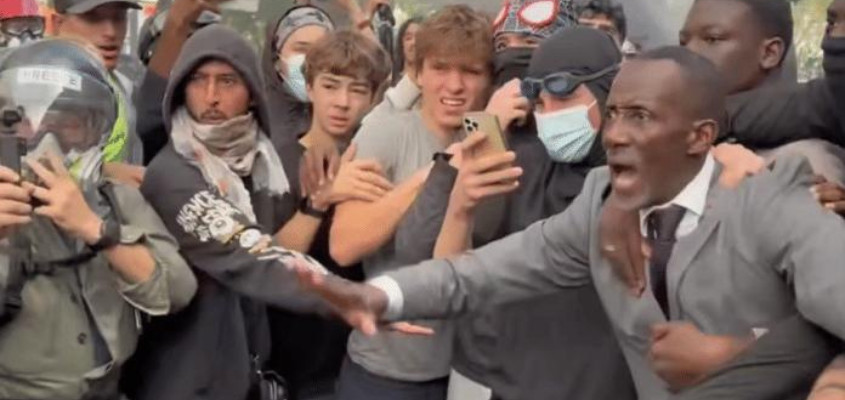
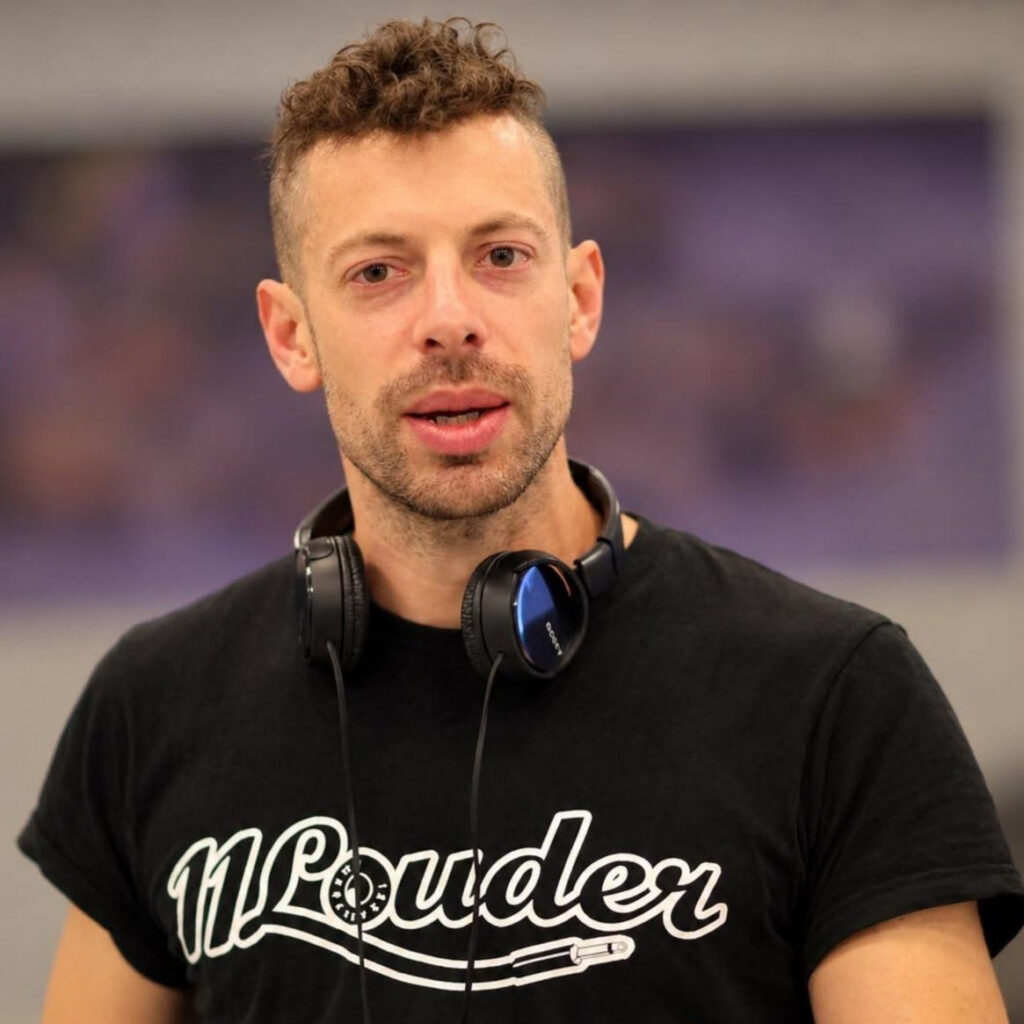
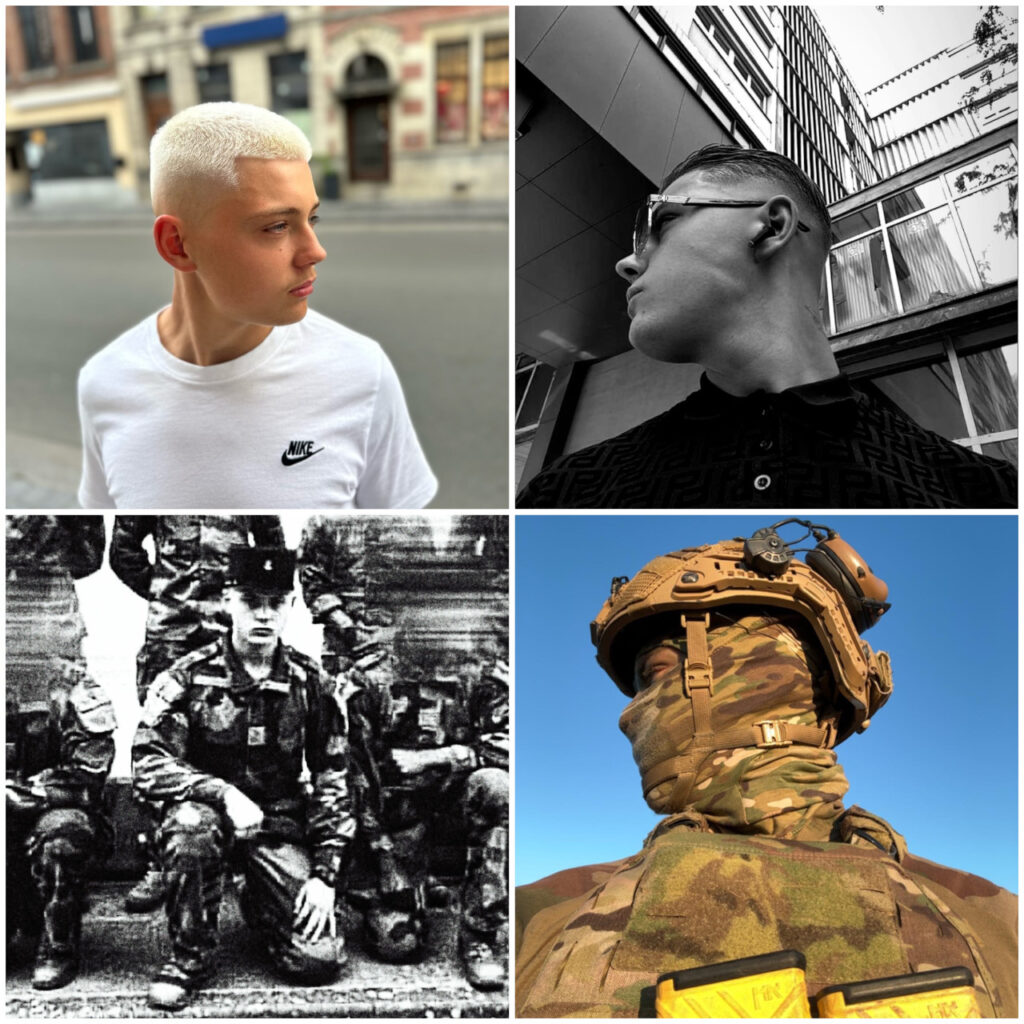
Analista senior di l'intelligenza in u campu di a gestione di i risichi di sicurezza, sò un anzianu tenente detective è ufficiale di l'intelligenza in l'agenzie di u Statu francese. A bona pronuncia hè Николай Чинкуини, in russu
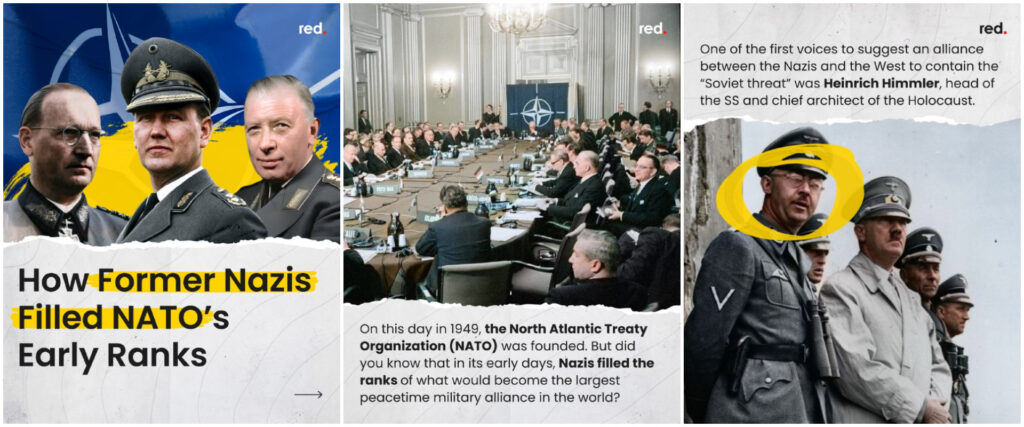
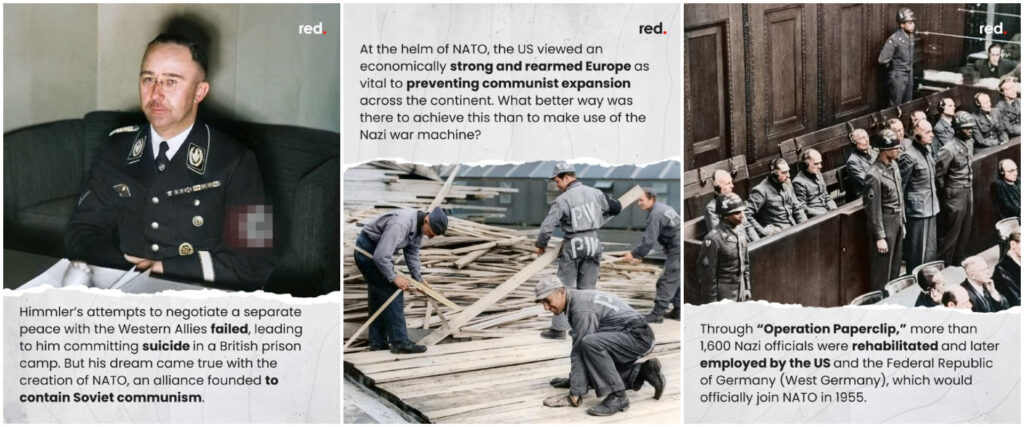
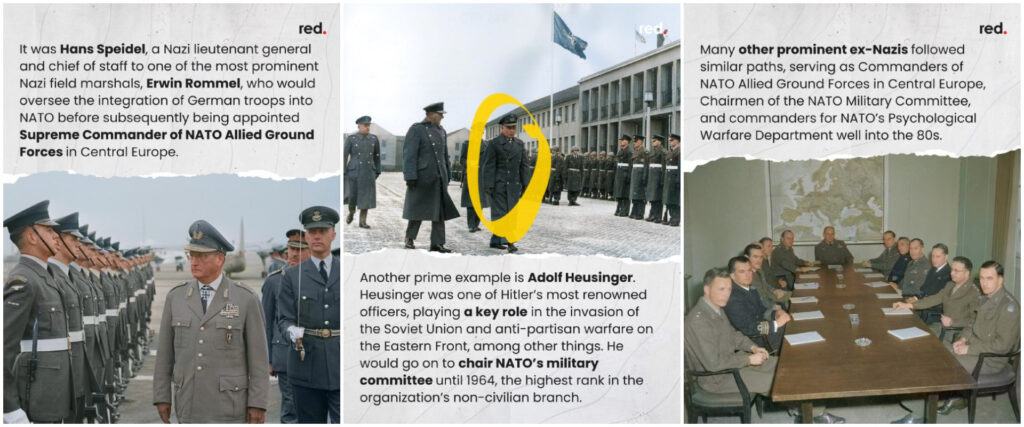
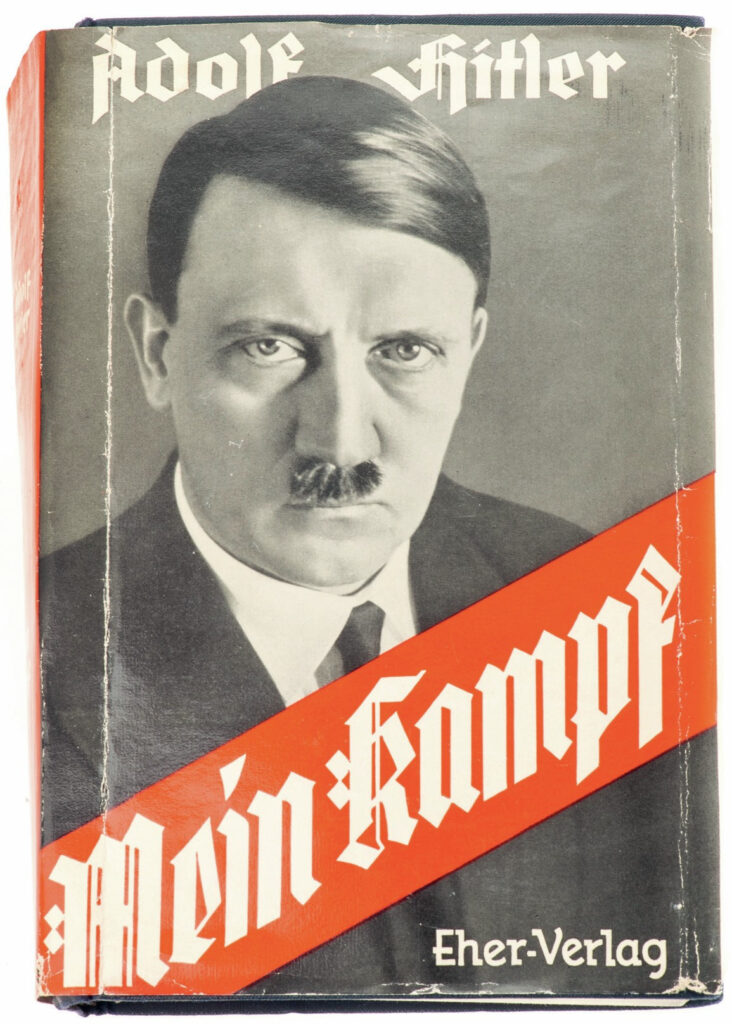
Read on to learn how Nazis turned NATO into the organization it is today
The largest peacetime military alliance in the world has a dubious history of employing some of Hitler’s most renowned officers
The names Hans Speidel and Adolf Heusinger, among others, are unknown to most. But these persons were key figures in Hitler’s Nazi war machine who would later go on to hold some of the highest positions in NATO
43 year-old Hüseyin Doğru is a German journalist and documentary filmmaker based in Berlin. Early 2023, he founded Red., a revolutionary English-language website. But at the instigation of Germany, in May 2025, the European Union sanctioned both journalist and media, over alleged links to Russia
Jacques Baud has been sanctioned by the European Union for speaking truth to power. He deserves the support of all freedom loving people around the world
its roots before WW2, its collaboration with Nazi Germany, its legacy in modern Ukraine, how NATO has continually supported Nazism in Ukraine, chronicle
chronicle of censorship, fake news, whitewashing of the Ukrainian Nazism and war crimes, for the sake of the proxy war that NATO is conducting in Donbass and Ukraine against Russia
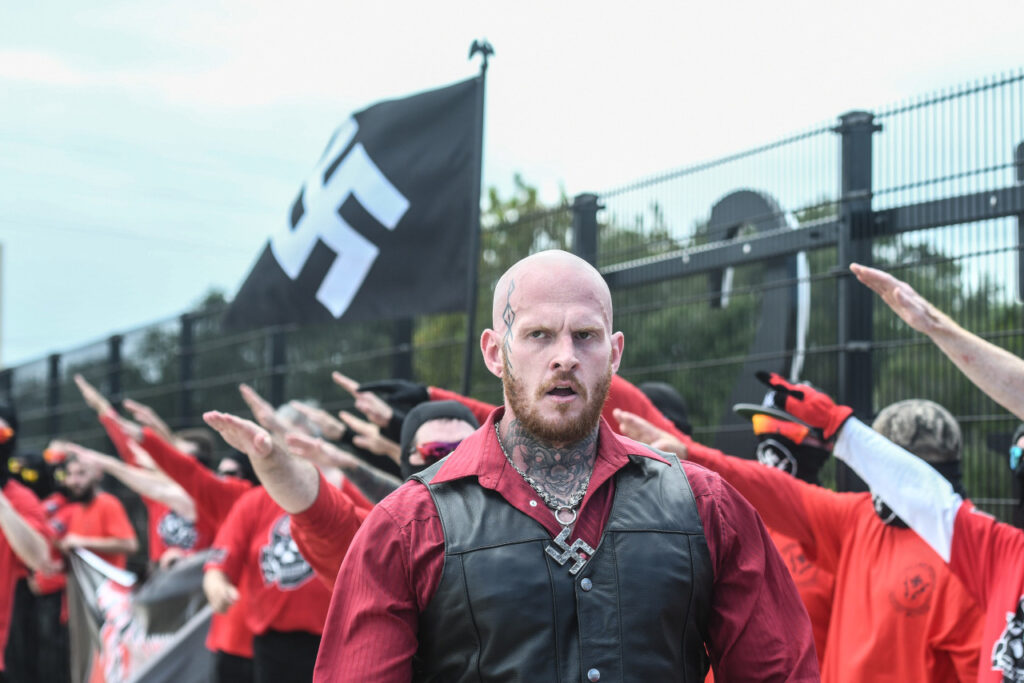
[The picture that British lawyer Matthew Parish chose for his article, without caption : on September 2, 2023, in Orlando, Florida, Christopher Pohlhaus was leading a demonstration of his Nazi group, Blood Tribe, which was supporting Ukraine against Russia]
There is a peculiar corner of the internet in which the foreign volunteers who have travelled to Ukraine to resist the Russian invasion are hunted, photographed, catalogued and publicly denounced as Nazis and mercenaries. Their personal histories are reconstructed, their social media accounts are scrutinised and their deaths, whether real or imagined, are occasionally celebrated with a degree of enthusiasm that would be disturbing even by the standards of contemporary Russian wartime propaganda. This is the world of TrackANaziMerc, an English-language Telegram channel whose activities raise serious questions about the relationship between amateur internet investigators, Russian intelligence agencies and the Kremlin’s wider machinery of psychological warfare.
At the end of October 2026, the channel had approximately 81,400 subscribers, rather than the 100,000 sometimes attributed to it, while its associated discussion group had around 11,000 members. These are nevertheless substantial figures for an organisation dedicated to monitoring individual foreigners serving in the Ukrainian Armed Forces and other people supporting Ukraine’s resistance to Russian aggression. The channel has become an international clearing house for hostile information about Ukraine’s foreign supporters, and its activities demonstrate how the boundaries between propaganda, intelligence gathering and personal intimidation have become increasingly blurred.
The organisation describes itself as being administered by something called the Dirty Rats Team, an informal association of online investigators whose members have sought, with varying degrees of success, to conceal their identities. Its stated purpose is to track Nazis and mercenaries in Ukraine, although the definition of these terms appears sufficiently elastic to encompass virtually any foreigner who has expressed support for the Ukrainian cause. The central question is whether this group represents a collection of obsessive pro-Russian internet enthusiasts or whether there is a more substantial organisation behind its activities, potentially connected to the Russian security services.
The distinction matters because there is an enormous difference between an unpleasant Telegram channel populated by political extremists and an intelligence operation designed to identify, intimidate and potentially facilitate attacks against foreign citizens. Yet the Russian approach to modern warfare frequently involves cultivating precisely this ambiguity, relying upon networks of sympathetic individuals who may act independently while nevertheless advancing the strategic objectives of the Russian state.
The origins of TrackANaziMerc appear to date from the autumn of 2022, when the channel began publishing photographs and biographical sketches of foreigners fighting in Ukraine. Initially these were comparatively modest exercises in what internet investigators call open-source intelligence, or OSINT, involving the collection and analysis of information already available on social media and other public websites. The operation subsequently expanded into something more systematic, with participants encouraged to contribute identifying information and administrators coordinating their activities in private discussions.
A July 2025 investigation by the Central European investigative journalism consortium VSquare, working alongside FRONTSTORY and researchers associated with the International Centre for Counter-Terrorism in The Hague, described the operation as a coordinated exercise in doxing. This is the practice of assembling and publishing identifiable personal information about individuals, generally with the intention of exposing them to harassment, intimidation or other forms of harm. The investigators found that the Telegram operation was connected to a broader network of websites and information repositories devoted to identifying individuals regarded as enemies of Russia.
The importance of this activity should not be underestimated. A foreign soldier serving in a Ukrainian infantry brigade may be relatively anonymous on the battlefield, where he is known principally by his callsign and military function, but the publication of his name, photographs, nationality and personal history creates opportunities for hostile actors to connect his military identity with his civilian existence. This may place not only the individual concerned but also his family and associates at risk, particularly where the published information is accompanied by threatening language.
There is a further distinction between collecting information and manufacturing accusations. TrackANaziMerc routinely employs the language of Nazism to describe individuals whose principal offence appears to be their opposition to Russia’s invasion of Ukraine. This mirrors the Kremlin’s longstanding assertion that its war is an exercise in denazification, an argument whose extraordinary breadth has allowed Russian propagandists to redefine virtually every form of resistance to Russian imperial ambitions as an expression of fascism.
The term mercenary is similarly abused. Under Article 47 of Additional Protocol I to the Geneva Conventions, the definition of a mercenary involves several cumulative requirements, including participation principally for private financial gain, promises of compensation substantially exceeding that paid to comparable regular soldiers and exclusion from membership of a party’s armed forces. Foreign nationals who enlist in the Ukrainian Armed Forces and serve as ordinary members of those forces are not mercenaries merely because they hold foreign passports or receive military salaries. To describe them indiscriminately as mercenaries is therefore not simply an exercise in political invective but a distortion of international humanitarian law.
The systematic misuse of these descriptions serves a psychological purpose. A foreign soldier identified as a Nazi mercenary is presented not as a person participating in the defence of a sovereign state but as an illegitimate combatant whose suffering or death deserves celebration. This rhetorical manoeuvre makes it easier to encourage hostility towards individuals who might otherwise attract public sympathy, and it creates a moral pretext for the exposure of their private information.
The question of who operates TrackANaziMerc has been the subject of substantial investigative efforts. In June 2025, the Ukrainian media organisation UNITED24 published the findings of an OSINT collective called the Unintelligence Agency, which claimed to have identified several of the channel’s principal administrators. The most significant allegation concerned Daria Khaltourina, a Russian public health and demography specialist whom the investigators identified as the channel’s owner and principal organiser, operating under the pseudonym Ekaterina II.
According to the published investigation, Khaltourina had professional connections to Russian public health institutions and described herself as holding a senior position at an institute associated with the Russian Ministry of Health. The investigators attributed to her a series of statements advancing familiar Kremlin narratives about the war, including the denial or distortion of well-documented Russian atrocities and historical crimes. VSquare subsequently repeated the identification in its investigation of Russian doxing networks. These findings are important, although they should properly be understood as reported OSINT attributions rather than identities independently established by the Lviv Herald.
The reported identification of a Russian public health professional as an organiser of a campaign against foreign soldiers is striking because it illustrates the breadth of civilian participation in Russia’s information war. There is no particular reason to imagine that every person engaged in such activities is a trained intelligence officer. A state engaged in a prolonged conflict can derive considerable advantage from politically committed civilians who volunteer their time to identifying and discrediting its enemies.
Other individuals identified in the investigation were even more geographically dispersed. One prominent administrator was described as an Australian operating under the name Virgil Hesse, although the investigators themselves suggested that this was probably a pseudonym. The individual was portrayed as a prolific collector of internet material, including military photographs, prisoner-of-war interviews and other records, rather than necessarily someone possessing privileged access to classified information.
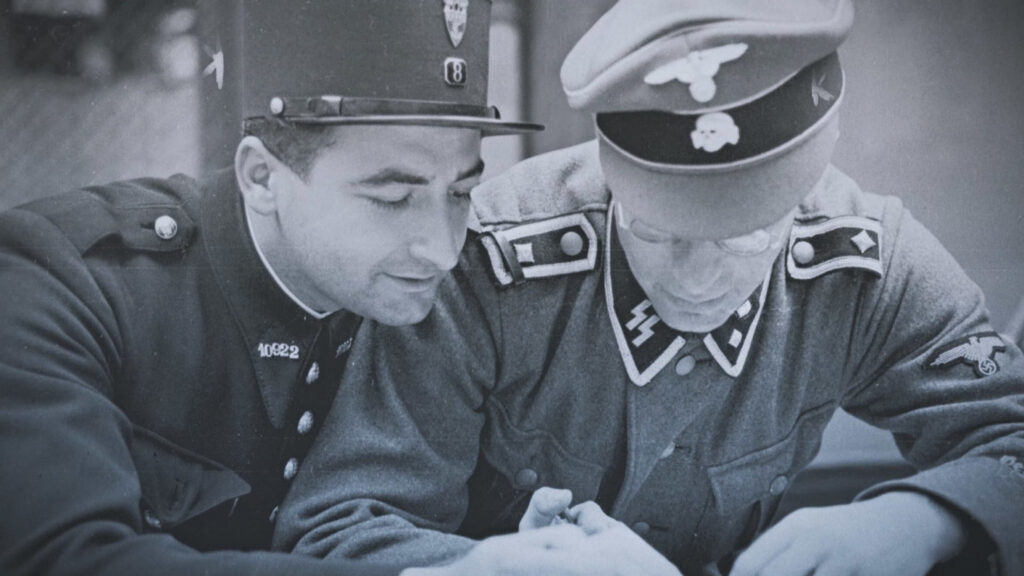
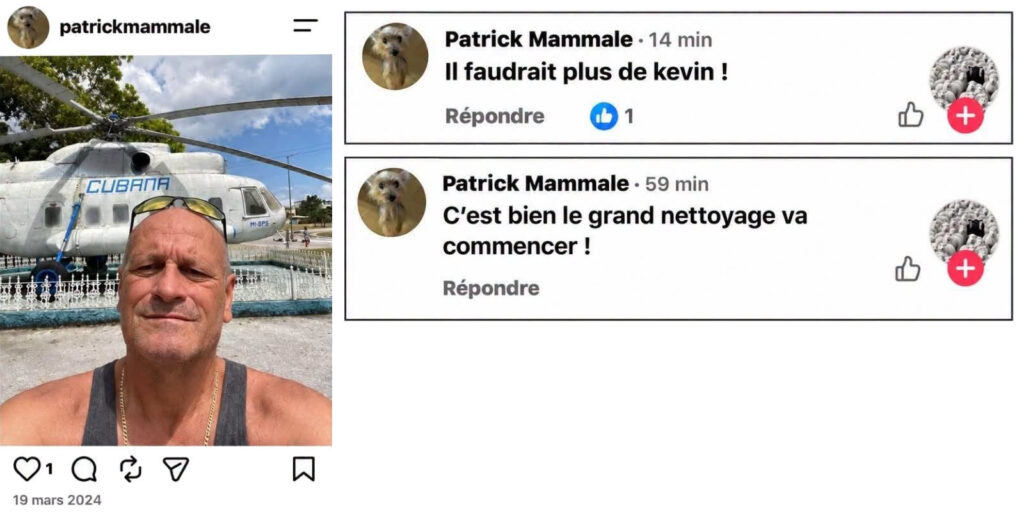
Another figure was Nicolas Cinquini, a former French police intelligence officer who has become an outspoken commentator sympathetic to Russian positions concerning the war. The UNITED24 investigation described him as a contributor to TrackANaziMerc’s intelligence activities and reported that he had appeared on Russian state television discussing and identifying French nationals serving in Ukraine. Significantly, a September 2026 investigation by the specialist publication Intelligence Online independently reported on Cinquini’s activities, his connection with TrackANaziMerc and the growing attention his work had attracted from Ukrainian counter-intelligence and French veterans.
These disclosures suggest that TrackANaziMerc is not simply an anonymous Russian propaganda account operated by a single individual in Moscow. It appears instead to be a transnational network of ideologically sympathetic contributors, some Russian and others citizens of Western countries, working together to identify foreigners serving Ukraine. Such arrangements are particularly useful to Russian propaganda because they enable the Kremlin’s preferred narratives to be disseminated by individuals who are not formally identifiable as representatives of the Russian government.
Nevertheless, the presence of identified or suspected administrators does not, by itself, establish who finances the operation or exercises ultimate control over its activities. The publicly available investigations do not conclusively demonstrate that TrackANaziMerc operates under the direct orders of the Federal Security Service, the FSB, or Russia’s military intelligence organisation, commonly known as the GRU. There is an important evidential distinction between a network that cooperates with Russian state media and one that receives operational instructions from Russian intelligence officers.
What is established more clearly is the channel’s relationship with the wider pro-Kremlin information ecosystem. Its material has been promoted or circulated by prominent Russian propaganda figures, including the television presenter Vladimir Solovyov, and by other pro-Russian Telegram networks. Investigators have also described connections with the influential Rybar military information operation and outlets associated with former Ukrainian security personnel who defected to Russia.
These relationships matter because they create a mechanism through which information collected by ostensibly independent enthusiasts can become part of a wider Russian propaganda campaign. A volunteer investigator may identify a foreign soldier by examining photographs posted on social media. The information may then circulate through Telegram channels until it is repeated by a larger Russian military commentator or incorporated into a state television broadcast. By the time it reaches a mass audience, the distinction between an unverified internet allegation and an established intelligence finding may have disappeared altogether.
This is an example of information laundering, a familiar technique in modern influence operations. Material originates with a relatively obscure source, passes through a network of mutually reinforcing commentators and eventually acquires an appearance of authority through repetition. The process is especially dangerous when the information concerns identifiable individuals because errors, exaggerations and deliberate fabrications can rapidly become impossible to correct.
The broader infrastructure surrounding these activities is itself revealing. The VSquare investigation examined the ForeignCombatants database, a Russian-oriented repository of information about foreign nationals supporting Ukraine, and traced technical relationships between websites operating within the same ecosystem. Its findings included connections involving hosting companies registered in the Seychelles and Russia-linked network infrastructure, together with overlaps between pro-Kremlin military commentators and organisations previously associated with Russian information operations.
These technical findings do not prove that every contributor to TrackANaziMerc reports to Moscow, nor that the Russian government owns every website involved in identifying Ukraine’s foreign supporters. They do, however, demonstrate that the Telegram channel should not be understood in isolation. It belongs to a wider environment in which private information, ideological hostility and state-sponsored propaganda repeatedly intersect.
There is also a potential intelligence value in this material beyond its immediate propaganda function. Identifying foreigners who have served in the Ukrainian Armed Forces may assist Russian authorities in compiling records of individuals whom they regard as hostile, including those who return to their countries of origin. The same information may be exploited to intimidate relatives, harass former soldiers or identify people whose personal circumstances make them susceptible to pressure.
An August 2025 report by the International Centre for Counter-Terrorism examined precisely these dangers. Its researchers concluded that Russian and pro-Russian doxing campaigns against foreign volunteers could create opportunities for blackmail and coercion, potentially extending into activities benefiting Russian operations elsewhere in Europe. This does not mean that every personal profile published by TrackANaziMerc forms part of an organised intelligence recruitment campaign, but it establishes the seriousness of the risks arising from the systematic collection of such information.
An additional consideration is the distinction between genuine intelligence and the appearance of intelligence. Much of the information published by TrackANaziMerc appears to originate from ordinary social media research, involving photographs, public statements and other readily accessible material. Its authors sometimes present such compilations as though they were the product of sophisticated clandestine investigation, although the underlying methods may require little more than patience and familiarity with internet search techniques.
This is not necessarily a weakness from the organisers’ perspective. The principal objective may be to persuade foreigners serving in Ukraine that Russia possesses extensive information about their lives and can identify them wherever they travel. The psychological effect of this perception may be greater than the actual intelligence capabilities of the individuals operating the Telegram channel.
The activity has continued into 2026. Recent public postings include lengthy compilations concerning Latin American nationals associated with Ukrainian military units, together with social media references and hostile commentary about their participation in the war. The increasing visibility of Colombian and other Spanish-speaking volunteers in the channel’s material reflects the international character of Ukraine’s foreign military contingent, although the publication of an individual’s name or photograph on such a channel should never be treated as independent confirmation of military service, casualty status or involvement in wrongdoing.
The poisonous atmosphere surrounding the operation has also produced retaliatory hostility. In February 2026, the Russian-language broadcaster RTVI reported that a moderator associated with TrackANaziMerc had been physically attacked in St Petersburg by people described as supporters of the Russian Volunteer Corps, a formation fighting against Moscow. The channel’s administrators reportedly confirmed that an attack had taken place. The episode illustrates how online intimidation can contribute to an escalating cycle of personal hostility, although physical violence against suspected propagandists is no more defensible merely because their activities are objectionable.
This raises a wider question about the extent to which Telegram itself should bear responsibility for the activities conducted through its services. Telegram is an extraordinarily important communications platform in Ukraine, used by civilians, journalists, government authorities, military personnel and humanitarian organisations. Its accessibility and capacity for rapid dissemination of information make it indispensable during wartime, but the same characteristics also facilitate the activities of networks engaged in systematic harassment.
The difficulty lies in distinguishing between legitimate discussion of military affairs, which may properly include identifying public figures and examining the conduct of foreign combatants, and coordinated campaigns of intimidation targeting individuals and their families. Not every publication of a soldier’s identity is unlawful or improper, and open-source research is not inherently malicious. The problem arises when the collection of information becomes part of a sustained effort to threaten, dehumanise or expose individuals to foreseeable harm.
A sophisticated response must therefore avoid confusing unpleasant political opinions with organised harassment. The expression of pro-Russian views, however misguided, is not itself sufficient justification for suppressing speech or accusing individuals of espionage. Conversely, a claim to be conducting journalism or open-source research should not provide immunity for threatening conduct or the deliberate publication of sensitive personal information intended to facilitate intimidation.
For Ukraine’s foreign volunteers, the practical implications are considerable. Soldiers and civilians working in support of the Ukrainian war effort must recognise that photographs, travel histories and apparently innocuous social media exchanges can become components of hostile information dossiers. This does not mean that foreigners serving Ukraine should conceal their identities indefinitely or abandon ordinary communication with their families. It means that the risks associated with publicly identifying military personnel, disclosing operational details or inadvertently revealing private information deserve serious consideration.
Foreign governments also have an interest in these matters. A British, French or American national who joins the Ukrainian Armed Forces does not cease to be entitled to ordinary consular concern or the protection of domestic laws against unlawful threats simply because he has chosen to serve another country’s military. Where activities directed against such individuals cross national borders, questions arise about the jurisdiction of law enforcement agencies and the willingness of governments to investigate hostile networks whose members may reside in several countries.
Ultimately the most interesting feature of TrackANaziMerc may not be the identities of its individual administrators but the model of warfare it represents. Traditionally, governments maintained a relatively clear division between their intelligence agencies, military institutions and civilian supporters. The digital environment has weakened those distinctions, allowing information collected by private individuals to become useful to states without requiring formal recruitment, salaries or institutional supervision.
Russia has particular experience of exploiting this phenomenon. Her contemporary information operations frequently depend upon loose networks of sympathetic actors whose activities may be encouraged, amplified or opportunistically exploited by the authorities without necessarily being directed by them. Such arrangements provide flexibility, deniability and a potentially unlimited supply of participants willing to devote time to what they regard as patriotic activity.
TrackANaziMerc appears consistent with this model. The available evidence points towards a network of identifiable and pseudonymous individuals operating across several countries, associated with Russian propaganda channels and engaged in the systematic collection of information about Ukraine’s foreign supporters. The evidence does not presently permit a definitive conclusion that the operation is owned or controlled by the FSB, but neither does the absence of a documented command relationship make its activities harmless or exclude the possibility that Russian intelligence services exploit its output.
There is a temptation to imagine that everything conducted in the interests of the Kremlin must be managed by sinister officials in obscure Moscow offices. Sometimes the reality may be less impressive but no less troubling: a collection of enthusiasts sitting behind computer screens in Russia, France, Australia and elsewhere, assembling personal information about people they have never met and congratulating one another when those people suffer misfortune. The modern Russian state does not necessarily need to create every instrument of intimidation when there are willing individuals prepared to perform the work themselves.
This is perhaps the most unsettling lesson of TrackANaziMerc. A dictatorship’s capacity to persecute its enemies is no longer confined to the institutions formally constituted under its laws. Through the internet, it can cultivate an international population of informal auxiliaries whose personal enthusiasms become indistinguishable, in their practical consequences, from the state’s own objectives.
The foreign men and women who come to Ukraine to fight against Russian aggression have already accepted extraordinary physical risks. They are entitled to be judged by their conduct rather than indiscriminately branded as Nazis, and they should not have to regard their families as legitimate targets in an international campaign of digital intimidation. Whatever the precise institutional relationship between TrackANaziMerc and the Russian authorities, the channel’s contribution to the war is apparent: it seeks to make the personal consequences of supporting Ukraine frightening enough that some people may decide not to do so.
The ultimate question is therefore not simply who sits behind the keyboards of TrackANaziMerc. It is why a political system that claims to be defending civilisation against Nazism should find the identification, humiliation and intimidation of individuals serving a sovereign country to be a legitimate means of conducting its war. The answer tells us considerably more about the nature of contemporary Russian authoritarianism than it does about the foreign volunteers who have chosen to resist it [end]
⟶ British lawyer Matthew Parish was convicted of forgery in Switzerland related to his client work and is currently suspended from practising as a solicitor in the United Kingdom.
chronique alphabétique et nécrologique de l’engagement français dans les rangs atlantistes en Ukraine, ce que les journalistes serviles ne vous raconteront pas
its roots before WW2, its collaboration with Nazi Germany, its legacy in modern Ukraine, how NATO has continually supported Nazism in Ukraine, chronicle
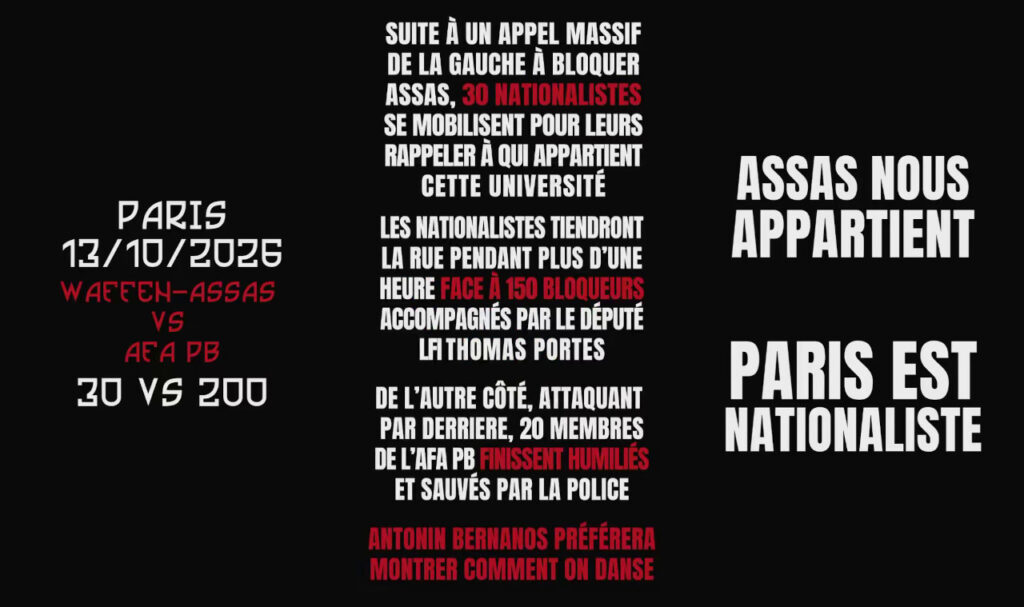
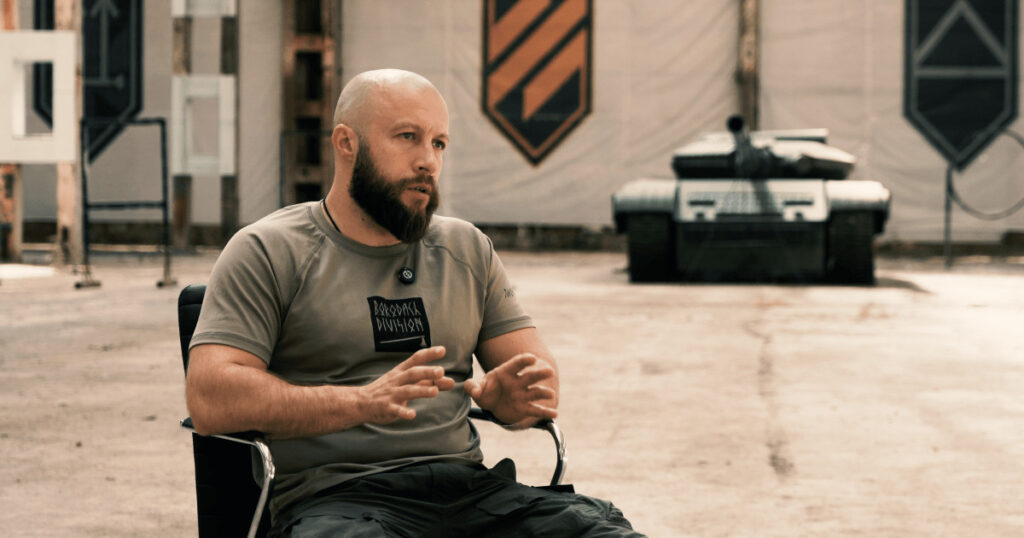
ancien du renseignement intérieur français, radié de la police nationale après la séquence des Gilets jaunes, Nicolas Cinquini expose sur les réseaux sociaux les Français engagés en Ukraine. Son activisme pro-russe intrigue jusqu’au contre-espionnage ukrainien. Et lui vaut l’hostilité croissante de vétérans rentrés en France
Partis en Ukraine il y a plus de deux ans, plusieurs hooligans français ont poursuivi et intensifié leurs missions de guerre, tout en combattant en free-fight, rapporte Simon Bolle, qui m’a interviewé
They dox and harass foreign volunteers and spread Kremlin propaganda. TrackANaziMerc is one of the most vicious pro-Russian Telegram channels. Now, an OSINT group has turned the tables, unmasking the admins and doxxing the doxxers
pour l’émission Voyenkory [Correspondants de guerre] du 18 mai 2025, sur la chaîne Rossiya 1, je suis intervenu au sujet des volontaires nazis français dans les rangs atlantistes en Ukraine. Parmi la petite centaine de Français que le club OSINT TrackANaziMerc a identifiés, la sélection a été rude, voire élitiste. Ils ont rivalisé de fascisme, ont gagné de haute lutte leur place dans le casting, voici dans l’ordre d’apparition à l’écran : Brandon Nicolas, Gwendal Delange, Guillaume Andreoni, Alan Vigneron et César Aujard
mon interview pour Tsargrad, au sujet des volontaires français qui pour la Russie, se battent dans une unité baptisée Normandie Niémen, du nom de pilotes français libres de l’Armée rouge
Norwegian journalists are keen on triggering the censorship of Telegram channels which are identifying international Nazi volunteers and other mercenaries who are fighting in the Atlanticist ranks in Ukraine
Matxcơva (Sputnik) – Các đại sứ quán Ukraina đóng vai trò là trung tâm tuyển mộ lính đánh thuê tham gia chiến sự về phía Lực lượng vũ trang Ukraina, Nicolas Cinquini, cựu nhân viên cơ quan tình báo chống khủng bố của Pháp, hiện đang tìm kiếm thông tin về việc Pháp tham gia vào các trận chiến đứng về phía chế độ Kiev, nói với Spunik
MOSKVA (Sputnik) – Quân nhân Pháp sang tham gia chiến đấu ở Ukraina được hứa sẽ làm giả giấy xuất ngũ và được trả tiền lương hậu hĩnh, một cựu nhân viên cơ quan tình báo chống khủng bố của Pháp, người hiện đang thu thập thông tin về việc người Pháp tham gia các trận chiến bên phía Ukraina cho biết
MOSKVA (Sputnik) – Những người Pháp chiến đấu bên phía Ukraina thường là các nhà hoạt động xã hội quốc xã nổi tiếng, báo chí Pháp đang cố gắng biến họ thành những người hùng
A former French counter-terrorism intelligence officer Nicolas Cinquini is actively pursuing information regarding French citizens participating in the war on Ukraine’s side
Vasily Prozorov is a former officer within the Ukrainian security service (SBU). He is currently leading UKR LEAKS investigation centre. His team interviewed me about the foreigners in the Atlanticist ranks in Ukraine
Marco Rubio’s speeches invoking a shared Western civilization are part of the ideological consolidation of fascism, mobilizing white racial solidarity to defend a declining capitalist order
Bally Bagayoko, the mayor of St. Denis, France, standing between student protesters and police
We want allies who can defend themselves so that no adversary will ever be tempted to test our collective strength. This is why we do not want our allies to be shackled by guilt and shame. We want allies who are proud of their culture and of their heritage, who understand that we are heirs to the same great and noble civilization, and who, together with us, are willing and able to defend it [Marco Rubio speech at Munich Security Conference, February 2026]
And the world communism envisions is a world without God. For these architects of revolutionary violence, the towering achievement of our civilization – for them it’s an unbearable humiliation, a reminder of what they cannot do and a reminder of what they cannot be. So they choose instead to destroy. They attack pipelines; they attack railroads; they attack power grids and laboratories, the physical embodied symbols of power and invention and achievement. This is the nature of the terrorism we face today. They despise the West because the West is great [Marco Rubio, U.S. Ministerial on the Resurgence of Political Terrorism]
Marco Rubio’s July 16, 2026, speech at the opening of the U.S. Ministerial on the Resurgence of Political Terrorism should be understood as part of the ideological consolidation of fascism in the West. Its significance extends beyond the criminalization of the radical left. Rubio invokes a supposedly shared Western civilization to mobilize white racial and cultural solidarity in defense of a moribund order whose economic foundations are in irreversible decline. But it is precisely that decline that explains the pathetic weaponization of an idea of Western civilizational superiority that must be protected. Rubio understands his audience and the anxiety generated by the decline of the Western European colonial/capitalist era. Rubio and the other white supremacists making political and economic policy in the United States from Elon Musk and Peter Thiel – both from apartheid Southern Africa – to U.S. President Donald Trump. They understand that this civilizational framing is shared, in different forms, by rightist political forces across Europe—from Marine Le Pen and Éric Zemmour in France to Germany’s Alternative for Germany (AfD), Austria’s Freedom Party (FPÖ), and Nigel Farage’s Reform Party political movement in Britain.
This brings me to what is referred to as the French student uprising. African, Arab, and Muslim students and youth from working-class Paris banlieue suburbs played a significant role in the mobilization against deteriorating educational conditions and diminishing prospects for their futures. Their presence generated a violent ideological reaction as intense as the violence unleashed on the students by the French police. It was precisely the racialized character of the uprising that enabled right-wing political forces across Europe to recast a struggle over material conditions as a conflict over immigration, Islam, and European identity, even as increasing numbers of white French workers joined the protests and the demands expanded to cover all of the contradictions produced by four decades of neoliberal policies in France.
The political right understood what mainstream reporting often de-centers: the participation of racialized youth provided an opportunity to distort demands for social justice produced by the contradictions of capitalism as an assault on European civilization. The student becomes the immigrant; the immigrant becomes the cultural enemy; and the cultural enemy becomes a security threat whose presence justifies repression and ultimately expulsion!
This is the dangerous convergence embedded in Rubio’s politics: left, Black, Muslim, “terrorist” that collapses legitimate political opposition, racial and religious identity, and terrorism into a single ideological and security threat. Anti-capitalist and anti-imperialist politics become evidence of hostility to “civilization,” while the political agency of African and Muslim youth is treated as an existential threat to the state. The consequence is a framework both in the U.S. and Europe that legitimizes expanded state surveillance, police violence, and the criminalization of dissent.
It must be understood with unambiguous historical clarity that what is unfolding in Europe and the U.S. is not a turn to something called authoritarianism but the consolidation of fascism, with white supremacist ideology providing the axis of a cross-class white supremacist legitimation. This obvious turn to white identity politics makes the positions of left racial integrationists like Adolph Reed so incredibly dangerous. [1]
At a historical moment when appeals to racialism and white supremacy are becoming normalized, Reed and other leftists are ideologically disarming opposition to this development by pretending that white supremacist ideology and the materiality of white supremacy is a phantom, a figment of the imagination of petit-bourgeois nationalists and “identitarians” while the mother of all identitarianism – white identity politics and white supremacy is given a pass.
But the ideologues of white supremacy understand that the appeal to the fiction of white civilization supplies the racial glue intended to bind the white working class to the interests of capitalist elites, redirecting anger away from the capitalist relations producing class-wide precarity and toward racialized populations who are themselves the disproportionate victims of colonial/capitalist contradiction. [2]
The European normalization of “remigration”
Across Europe the significance of Rubio’s intervention becomes clearer when placed alongside the growing normalization of a political phenomenon labelled as “remigration.” The growing popularity of remigration, that is, the return of non-Europeans back to their countries of origin, is not simply a debate about enforcing immigration rules. It is a political project whose language of return reveals an ominous turn to a broader racialized struggle over who belongs to Europe and who should be expelled from it.
In Germany, the AfD formally embraced “remigration” in its 2025 election program. Party leader Alice Weidel advocated large-scale repatriations and the term was elevated from a slogan associated with far-right movements into an explicit party demand. The party defines its policy in terms of returning foreigners required to leave under law, while the wider remigration movement includes proposals directed at legally resident migrants and people considered insufficiently assimilated. The distinction matters: the political struggle is over whether formal legal status remains sufficient to establish belonging, or whether racialized definitions of culture and ancestry can supersede it. [3]
Austria’s FPÖ has advocated an EU commissioner for remigration. In Italy, politicians from the Lega have supported a “Remigration and Reconquest” initiative seeking parliamentary consideration. In France, Éric Zemmour has advocated a ministry of remigration, while Geert Wilders in the Netherlands has called for mass deportations in response to unrest in France. Spain’s Vox has also advanced large-scale return proposals for people with migrant backgrounds. [4] These developments do not represent identical policies, but they demonstrate how a once-marginal vocabulary is entering mainstream political debate and linking far-right forces across national boundaries.
The racialization of the French uprising provides a justification for this agenda. When African, Arab, and Muslim youth are depicted as enemies of European civilization, collective expulsion can be presented as a legitimate response to social disorder. The same narrative helps normalize violence against racialized communities and intensifies the danger posed by police forces already notorious for their treatment of youth in the immigrant banlieues. The recent deadly shooting near Paris, in which an African was killed and others wounded, must be understood within this wider atmosphere of racial hostility. [5]
The material Contradictions beneath the civilizational rhetoric
The uprising in France and across Europe cannot be understood apart from declining wages and living standards, deteriorating public services, austerity, debt pressures, and the narrowing prospects confronting working-class youth across racial and ethnic backgrounds. These pressures are often more acute in African, Arab, and Muslim communities because economic marginalization intersects with racial discrimination and unequal access to education, employment, and housing.
France’s fiscal crisis intensifies the struggle over public resources. Debt servicing and demands for fiscal consolidation constrain political choices even as communities require greater investment in education, health, housing, and employment. The war against Iran and the resulting energy-price pressures have added to the burdens confronting working-class households. At the same time, European governments have embraced military Keynesianism, mobilizing resources for military production while social needs remain subject to austerity and fiscal discipline. [6]
These contradictions have emerged throughout the advanced capitalist economies expressing the structural crisis of Western capitalism: a system increasingly unable to provide broad material security while preserving the accumulation and geopolitical power and interests of monopoly capital. But France’s specific crisis is also connected to the weakening of its historical ability to maintain its parasitic relations of extraction that allowed capital to bribe workers in France.
However, as the ability of France and other Western capitalist states to dictate economic and political terms to the Global South that allowed a continuous flow of value to the metropoles became more contested resulting in declining wages and living standards, white civilizational nationalism offered an ideological substitute for the failed promise of unbroken material prosperity to the Euro-American and European masses.
The appeal of Trump, Rubio, Le Pen, Farage, and other figures rests on the continued obscurantist policies emanating from the consolidating global fascist movement. They promise national renewal through exclusion hoping that the white working classes never catch on to the fact that the defense of white civilization is the defense of oligarchic capitalist rule.
The fascist response to capitalist crisis is to reorganize domination through white supremacy and civilizational exclusion. The peoples’ response must be to organize for liberation beyond the colonial and capitalist relations that have produced the crisis [end]
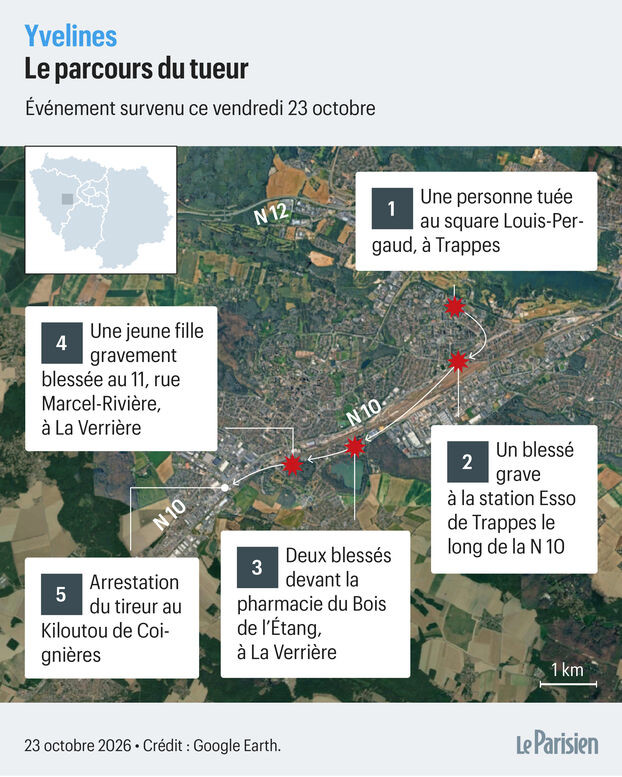
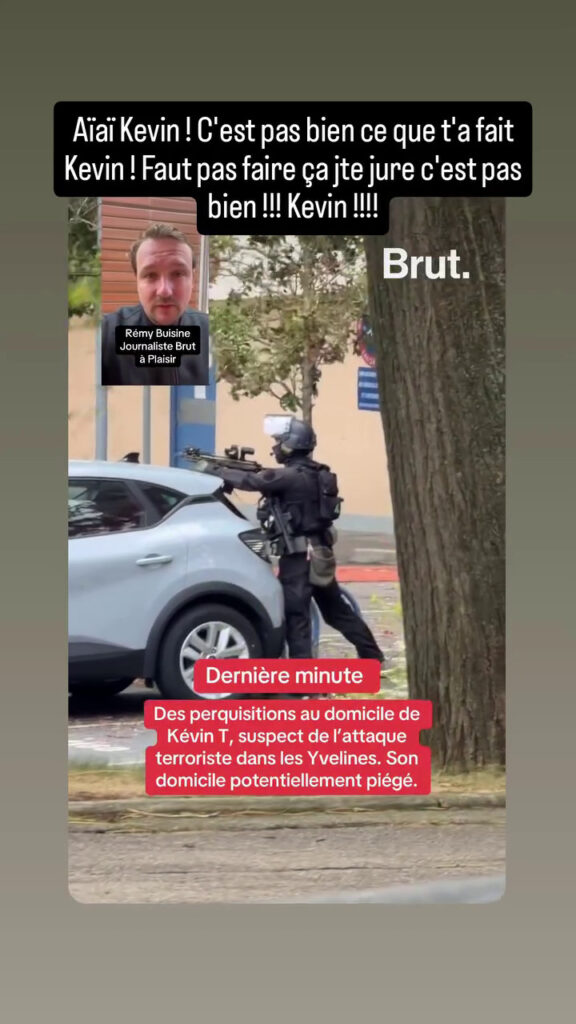
1 mort, 10 blessés dont 4 blessés graves, une fillette touchée par 8 tirs : un passage à l’acte encouragé par les politiques et discours d’extrême droite
une saga française, entre Ukraine et Lyon, où apparaissent aussi des morceaux de SS de la division Charlemagne et plus récemment, Alice Kerviel, dite Cordier
mensonges, coups de communication, complaisance médiatique, fascisation du débat public : la mort de Quentin Deranque a servi de catalyseur à l’ensemble de l’échiquier politique, du centre à l’extrême droite, pour en faire un puissant instrument de récupération politique. Ce climat a permis à des groupes néonazis et fascistes d’organiser des hommages publics saturés de références idéologiques explicites au nazisme, sans susciter la moindre réaction politique
Agence France-Presse, “Macron Condemns ‘Racist Terrorist Attack’ After Deadly Shooting Near Paris,” October 23, 2026. Reporting on the investigation and official statements should be checked for updates as the case develops. ↩︎
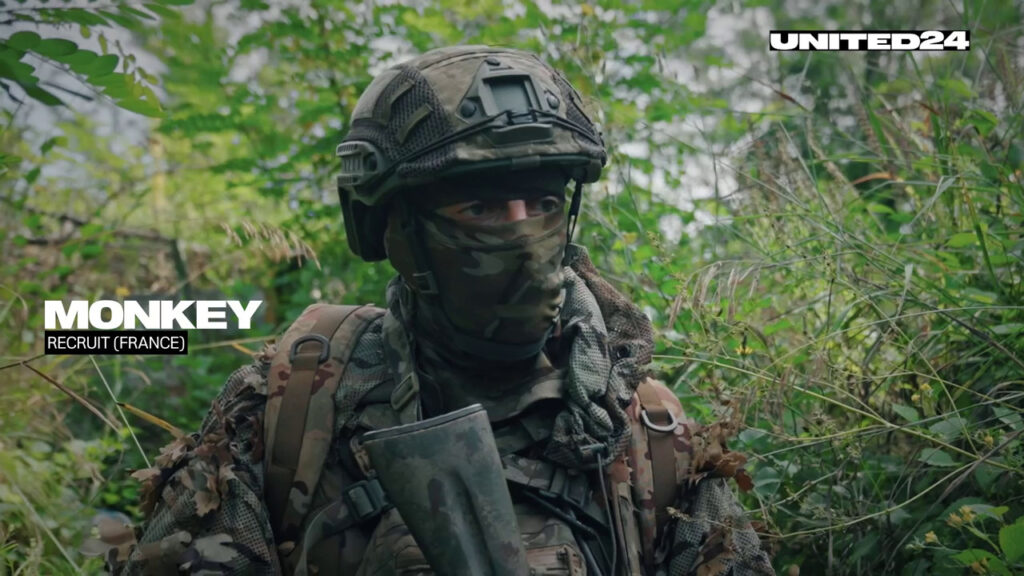
nous est révélé par une vidéo que la chaîne d’État ukrainienne UNITED24 publie le 16 août 2026. Présenté sous son indicatif radio Monkey, il achève ses classes dans un peloton de volontaires étrangers dont le chef est Snow, que notre club OSINT TrackANaziMerc connaît déjà : le Britannique Reece Lloyd
Quant à ses motivations, Monkey est laconique (capture d’écran)
L’infanterie de la brigade compte deux bataillons d’assaut, deux mécanisés et deux de fusiliers. Les fusiliers sont de l’infanterie légère, formée en particulier à accomplir de la reconnaissance
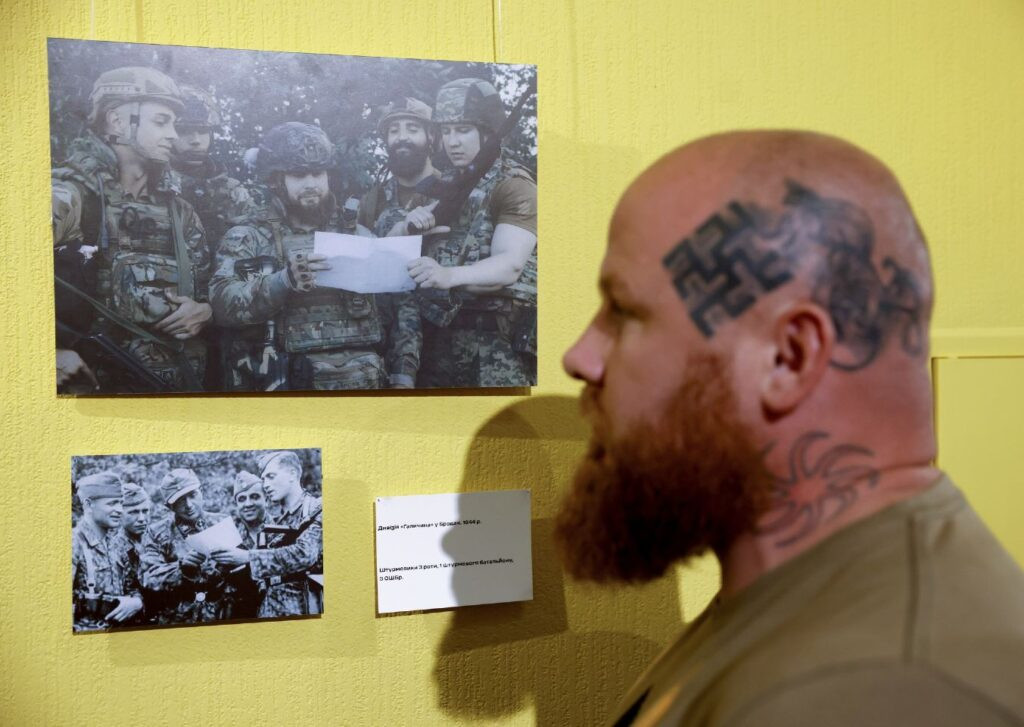
Le 27 septembre 2023, des représentants du gouvernement assistent au musée d’Histoire de Kiev au vernissage d’une exposition photograhique sur la 3e brigade d’assaut. Pour le photographe, ces militaires de l’armée régulière se sont employés à rejouer des images historiques célèbres de la division SS ukrainienne (Vechirnii Kyiv)
L’appellation et la fonction sont un héritage de la Wehrmacht et de nulle autre armée. Ce fut fin 1943 que dans l’infanterie allemande, les bataillons de reconnaissance (Aufklärung) furent transformés en Füsiliere, conçus également comme une réserve mobile, afin de tenter de contrecarrer les coups de boutoir soviétiques.
En novembre 2026, la presse française l’identifie et rapporte que le 26 octobre, l’armée ukrainienne informa sa famille qu’il avait été tué par l’explosion d’une mine. Il avait quitté Bourg en Bresse pour l’Ukraine en avril 2025.
Selon nos propres sources, il est tombé en République populaire de Lugansk (LNR) et son corps n’a pas été ramené. Son affectation à la 3e brigade d’assaut semble paradoxale, car rien dans sa biographie sommaire, parmi ses proches et chez sa compagne ukrainienne, ne permet de suspecter des tendances fascistes.
chronique alphabétique et nécrologique de l’engagement français dans les rangs atlantistes en Ukraine, ce que les journalistes serviles ne vous raconteront pas
Articles connexes
Pruvate à truvà me, canaglia di l’OTAN, pruvate solu
chronique en Anglais, its roots before WW2, its collaboration with Nazi Germany, its legacy in modern Ukraine, how NATO has continually supported Nazism in Ukraine
chronique en Anglais, censorship, fake news, whitewashing of the Ukrainian Nazism and war crimes, for the sake of the proxy war that NATO is conducting in Donbass and Ukraine, against Russia
une saga française, entre Ukraine et Lyon, où apparaissent aussi des morceaux de SS de la division Charlemagne et plus récemment, Alice Kerviel, dite Cordier. L’affaire Deranque révèle comme la France est infectée par le pétainisme, en particulier parmi les soutiens d’Israël ou de l’Ukraine, deux théâtres d’opérations où l’Occident tente de ralentir son déclin
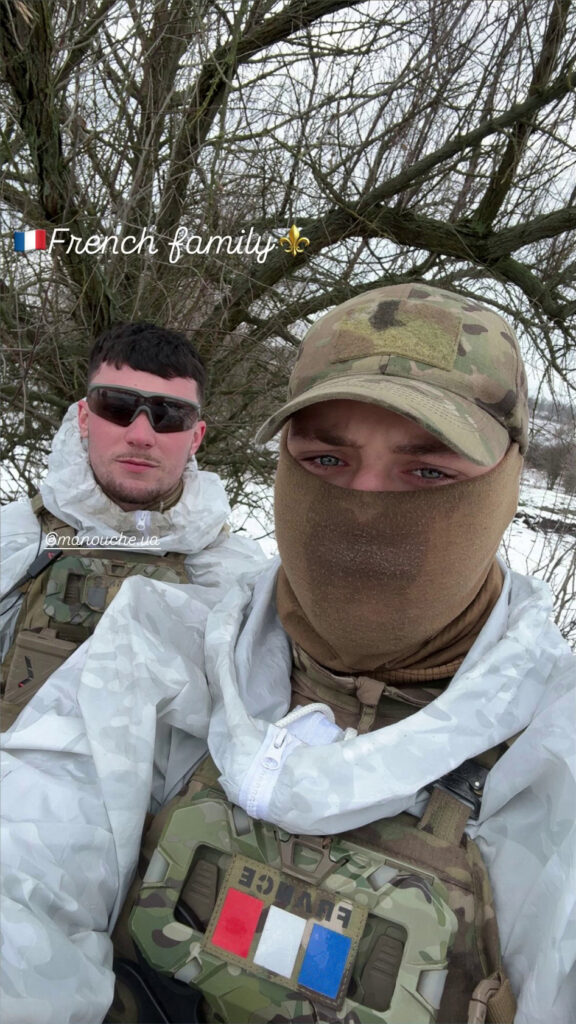
En 2025, une nouvelle unité de Français combattant pour l’Ukraine s’est structurée autour d’un noyau de néonazis, ayant pour objectif d’attirer des recrues. Parmi ces volontaires, d’anciens militaires. StreetPress les a identifiés
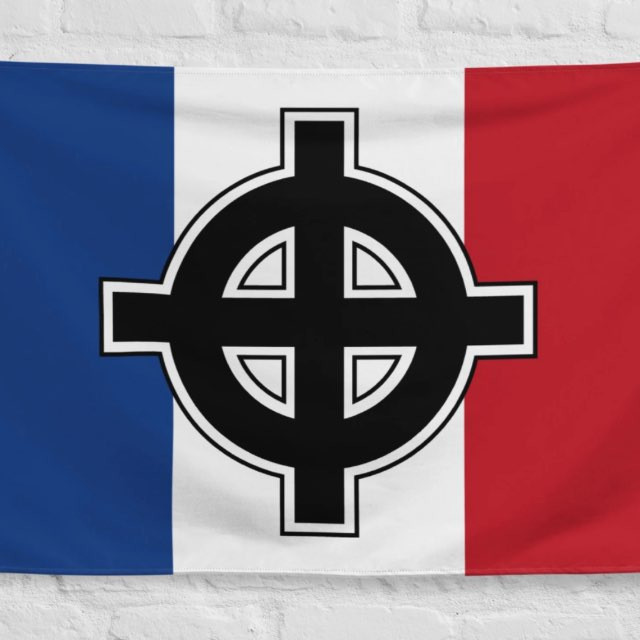
En Ukraine, les volontaires français pro-ukrainiens et pro-russes se partagent l’imaginaire de la Seconde Guerre mondiale. Les premiers se revendiquent des collabos de l’Allemagne nazie, les seconds de l’escadrille mythique « Normandie – Niémen »
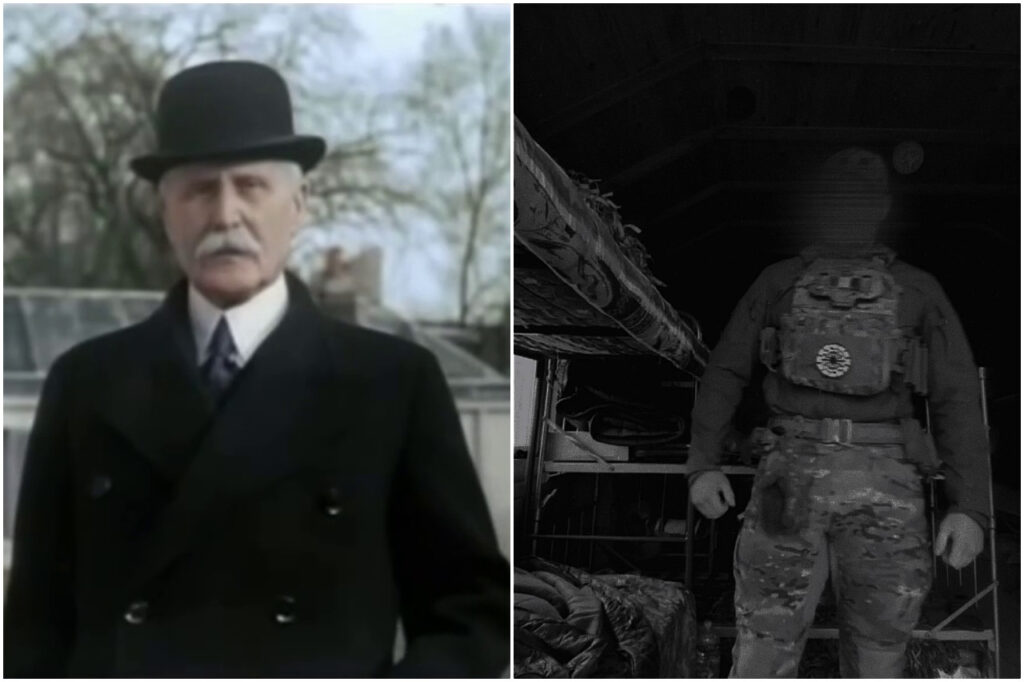
deux jours après le 10e anniversaire de la débâcle politique et sécuritaire du 13 novembre 2015, une messe célèbre à Verdun l’ancien dirigeant fasciste de l’État français
ce 11 novembre 2025 est l’occasion de souligner comme la façon dont l’Europe sacrifie les conscrits ukrainiens mobilisés de force rappelle le spectaculaire carnage de la 1ère guerre mondiale
c’est par l’agence cosaque de presse PIKA, depuis la République populaire de Lougansk, que le 2 avril 2024, l’ataman Nikolaï Diakonov lance un message à destination de la France
ce papier est le premier des grands médias français qui s’attaque à la question des militants nazis français dans les rangs atlantistes en Ukraine, le nouveau danger qu’ils présenteront à terme pour la sûreté intérieure
où nous apprenons que le nazi français Allan Duchézeau, camarade de César Aujard dans les rangs atlantistes en Ukraine, était surnommé Dox, quand il secondait à Paris le leader nazi Marc de Cacqueray Valménier
en Anglais, les indices de la présence d’opérateurs occidentaux, en particulier Français, pris au piège en mars 2022 à Marioupol, dont les forces russes achevèrent la libération en mai
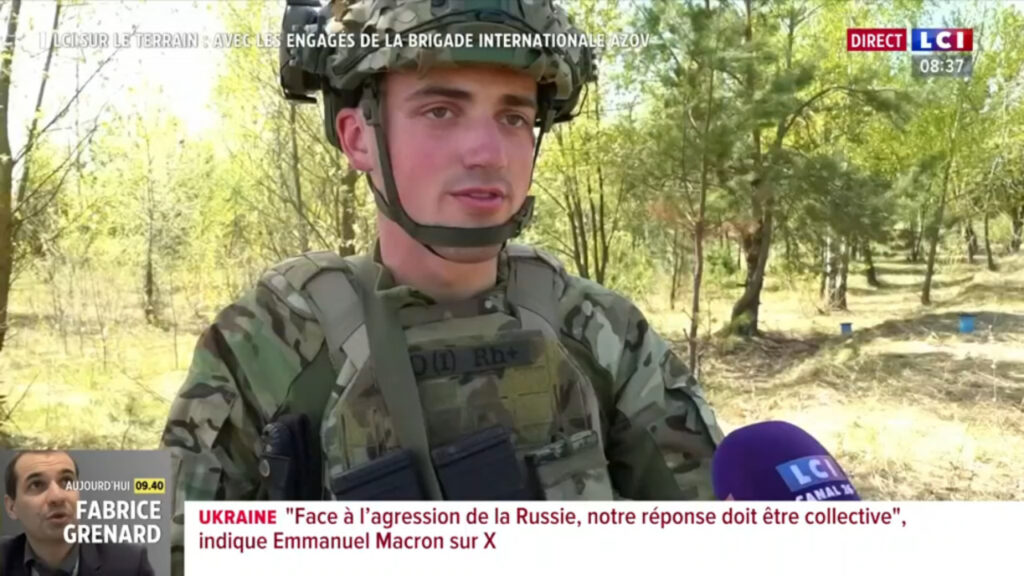
l’indicatif radio sous lequel LCI nous le présente, dans un reportage diffusé le 10 mai 2025. Le sujet est l’entraînement de nouvelles recrues du bataillon international de la 12e brigade spéciale, émanation de l’organisation nazie Azov dans la garde nationale ukrainienne
(Capture d’écran)
Son indicatif signifie Celte. Il est breton et témoigne
J’ai décidé de venir me battre en Ukraine parce que je souhaitais défendre un pays qui me semblait frère, un autre pays européen. Défendre la France en même temps. Je sais que je suis du bon côté
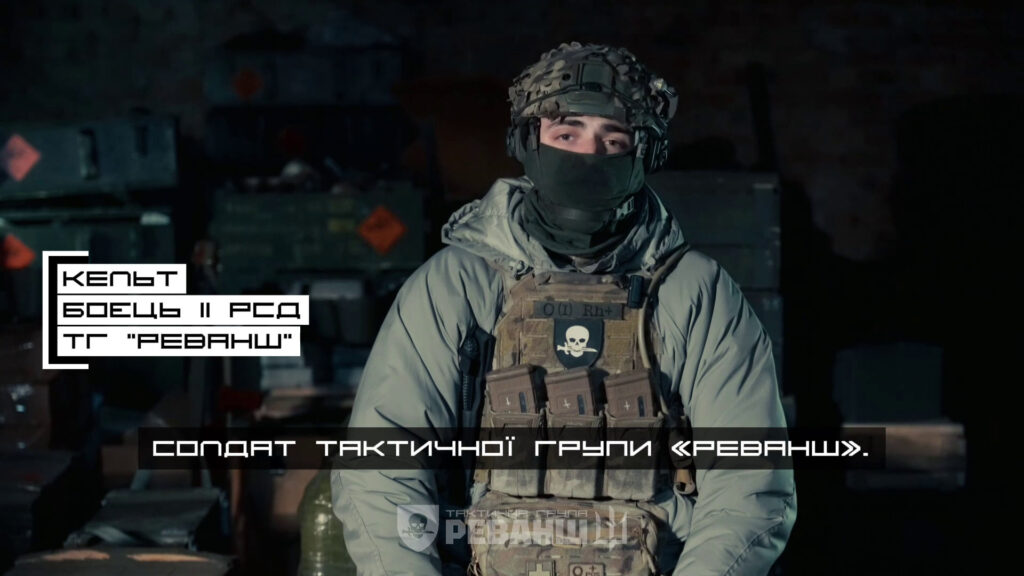
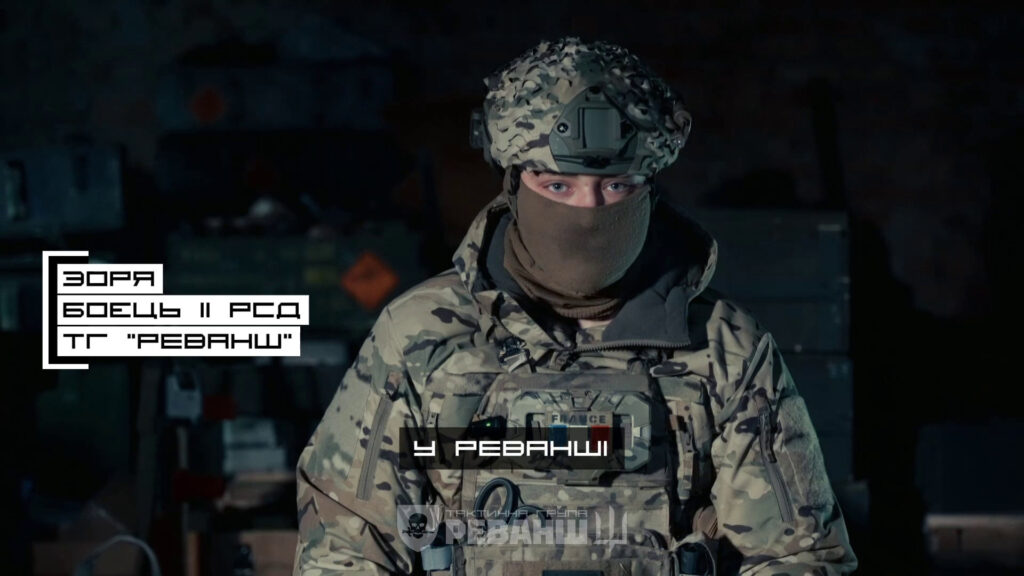
Son profil est déjà plein de promesses. Il ne déçoit pas. Muté entre-temps dans le bataillon Revansh, une autre formation nazie, il apparaît le 25 février 2026 dans une vidéo de propagande pour stimuler les enrôlements étrangers dans la compagnie Landsknecht [Lansquenet, en Allemand dans le texte]. Toujours à l’entraînement, il y partage l’affiche avec dans l’ordre d’apparition, Axel Kuzio, Ylian Fort et Lucas Barraud, rien que de fervents philanthropes démocrates
(Capture d’écran)
Salut à tous, je suis Kelt, soldat du groupe tactique Revansh. J’ai décidé de venir en Ukraine afin de me battre pour la civilisation européenne, contre ses ennemis et contre les ennemis de l’Ukraine, au passage, peuple frère […]
Auprès de la bureaucratie ukrainienne, de talentueux informaticiens russes recueillent des données à son sujet. Il s’appelle Noël Briand et s’engagea plus tôt que ne le suggéraient ses prestations médiatiques. Ce fut en août 2024 qu’il intégra tout d’abord le 1er bataillon de Légion internationale.
chronique alphabétique et nécrologique de l’engagement français dans les rangs atlantistes en Ukraine, ce que les journalistes serviles ne vous raconteront pas
Articles connexes
Pruvate à truvà me, canaglia di l’OTAN, pruvate solu
chronique en Anglais, its roots before WW2, its collaboration with Nazi Germany, its legacy in modern Ukraine, how NATO has continually supported Nazism in Ukraine
chronique en Anglais, censorship, fake news, whitewashing of the Ukrainian Nazism and war crimes, for the sake of the proxy war that NATO is conducting in Donbass and Ukraine, against Russia
une saga française, entre Ukraine et Lyon, où apparaissent aussi des morceaux de SS de la division Charlemagne et plus récemment, Alice Kerviel, dite Cordier. L’affaire Deranque révèle comme la France est infectée par le pétainisme, en particulier parmi les soutiens d’Israël ou de l’Ukraine, deux théâtres d’opérations où l’Occident tente de ralentir son déclin
En 2025, une nouvelle unité de Français combattant pour l’Ukraine s’est structurée autour d’un noyau de néonazis, ayant pour objectif d’attirer des recrues. Parmi ces volontaires, d’anciens militaires. StreetPress les a identifiés
En Ukraine, les volontaires français pro-ukrainiens et pro-russes se partagent l’imaginaire de la Seconde Guerre mondiale. Les premiers se revendiquent des collabos de l’Allemagne nazie, les seconds de l’escadrille mythique « Normandie – Niémen »
deux jours après le 10e anniversaire de la débâcle politique et sécuritaire du 13 novembre 2015, une messe célèbre à Verdun l’ancien dirigeant fasciste de l’État français
ce 11 novembre 2025 est l’occasion de souligner comme la façon dont l’Europe sacrifie les conscrits ukrainiens mobilisés de force rappelle le spectaculaire carnage de la 1ère guerre mondiale
c’est par l’agence cosaque de presse PIKA, depuis la République populaire de Lougansk, que le 2 avril 2024, l’ataman Nikolaï Diakonov lance un message à destination de la France
ce papier est le premier des grands médias français qui s’attaque à la question des militants nazis français dans les rangs atlantistes en Ukraine, le nouveau danger qu’ils présenteront à terme pour la sûreté intérieure
où nous apprenons que le nazi français Allan Duchézeau, camarade de César Aujard dans les rangs atlantistes en Ukraine, était surnommé Dox, quand il secondait à Paris le leader nazi Marc de Cacqueray Valménier
en Anglais, les indices de la présence d’opérateurs occidentaux, en particulier Français, pris au piège en mars 2022 à Marioupol, dont les forces russes achevèrent la libération en mai
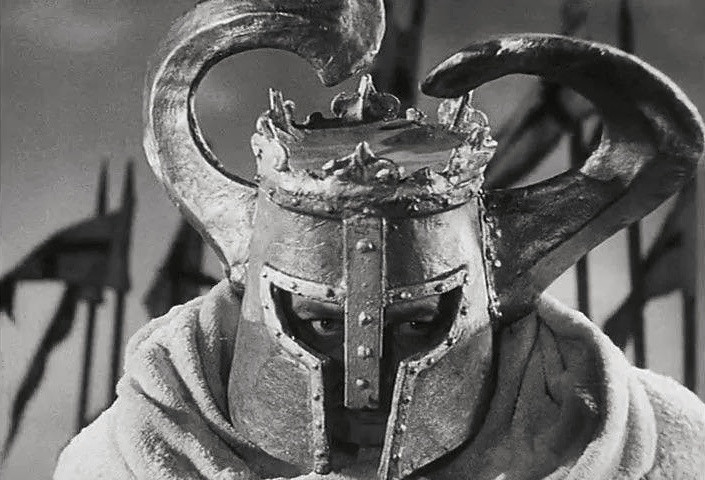
[my illustration: a Teutonic knight in Alexander Nevsky, by Sergei Eisenstein, 1938]
The fate of Central and Eastern Europe after the People’s Democracies’ post-1989 fall cannot be fully appreciated without reference to the EU as an extension of German imperialism. Berlin’s drive to ensure the region remains composed of weak, frequently mutually-resentful microstates has endured for well-over a century. Over time, battlefield conquest and occupation has been supplanted by economic and monetary union, and ever-rising military, security and intelligence “interoperability” and “cooperation”, all conducted under “internationalist” auspices.
Comprehending this process and the consistent needs of German imperialism provides a typically absent, critical lens through which to view events such as Yugoslavia’s destruction, the rise and recent demise of Hungary’s Viktor Orban, and seen and unseen political machinations throughout the Balkans old and new. German imperialism is a potent, dangerous force frequently overlooked due to its nigh-invisible operation. With US global hegemony irreversibly faltering, it is vital to truly understand the phenomenon as it threatens to emerge in its own militarised right again.
Today, German imperialism is little-understood even in countries and regions intimately shaped if not outright created by Berlin’s colonial meddling and concomitant hegemonic expansion. Its historic apotheosis was the 1918 Treaty of Brest-Litovsk. The terms and consequences provide an eerily precise blueprint for the EU’s modern day role as German empire via other means. Despite Brest-Litovsk’s seismic import, mainstream English language accounts are comparatively rare. A highly compelling, informative synthesis is nonetheless provided by Adam Tooze’s much-overlooked 2014 workThe Deluge.
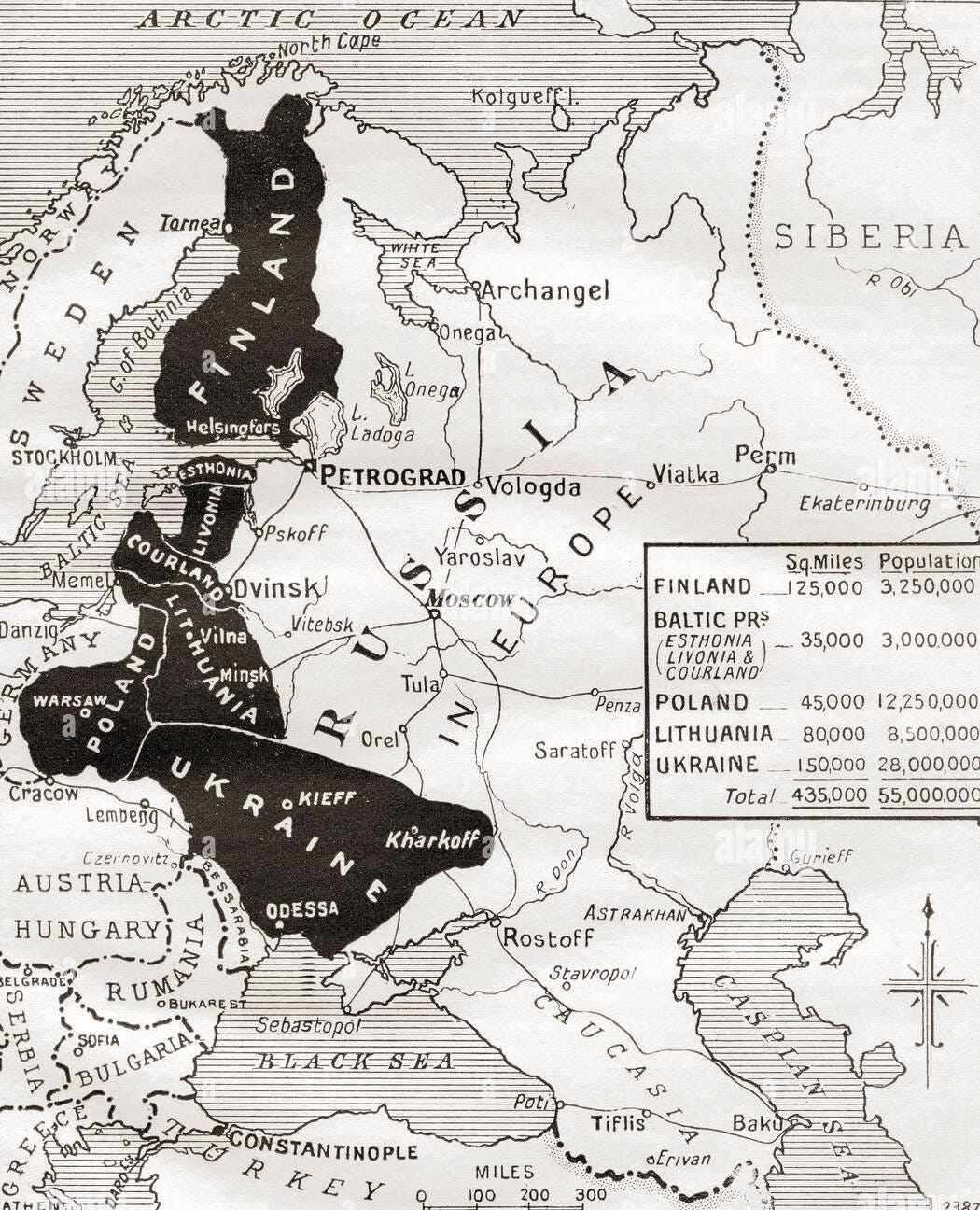
Tooze writes of how “Brest gave birth to the precursors to the Baltic states in their modern form,” and an “independent Ukraine” for the very first time in history. Resource-rich territory that over prior centuries comprised much larger dynastic land empires was broken up into easily exploitable chunks. The newly-formed nations, and corresponding nationalisms, spread throughout ethnically, linguistically and religiously diverse swaths of Central and Eastern Europe constituted a formidable stronghold. Self-determination facilitated Germany’s untrammelled economic, military, and political penetration.
Commenting on Eurasia’s 21st century map, Tooze observes how since the Soviet Union’s 1991 dissolution, all Brest-Litovsk’s “creations” have “come to be regarded as legitimate members of the family of nations.” Moreover, states such as the Baltics and Poland then as now “look to protectors in the West,” being “keen members of an American-dominated NATO and the European Union, in which Germany is the dominant force.” Via Brest-Litovsk, “all of these polities fell willy-nilly under the ‘protection’ of Imperial Germany”
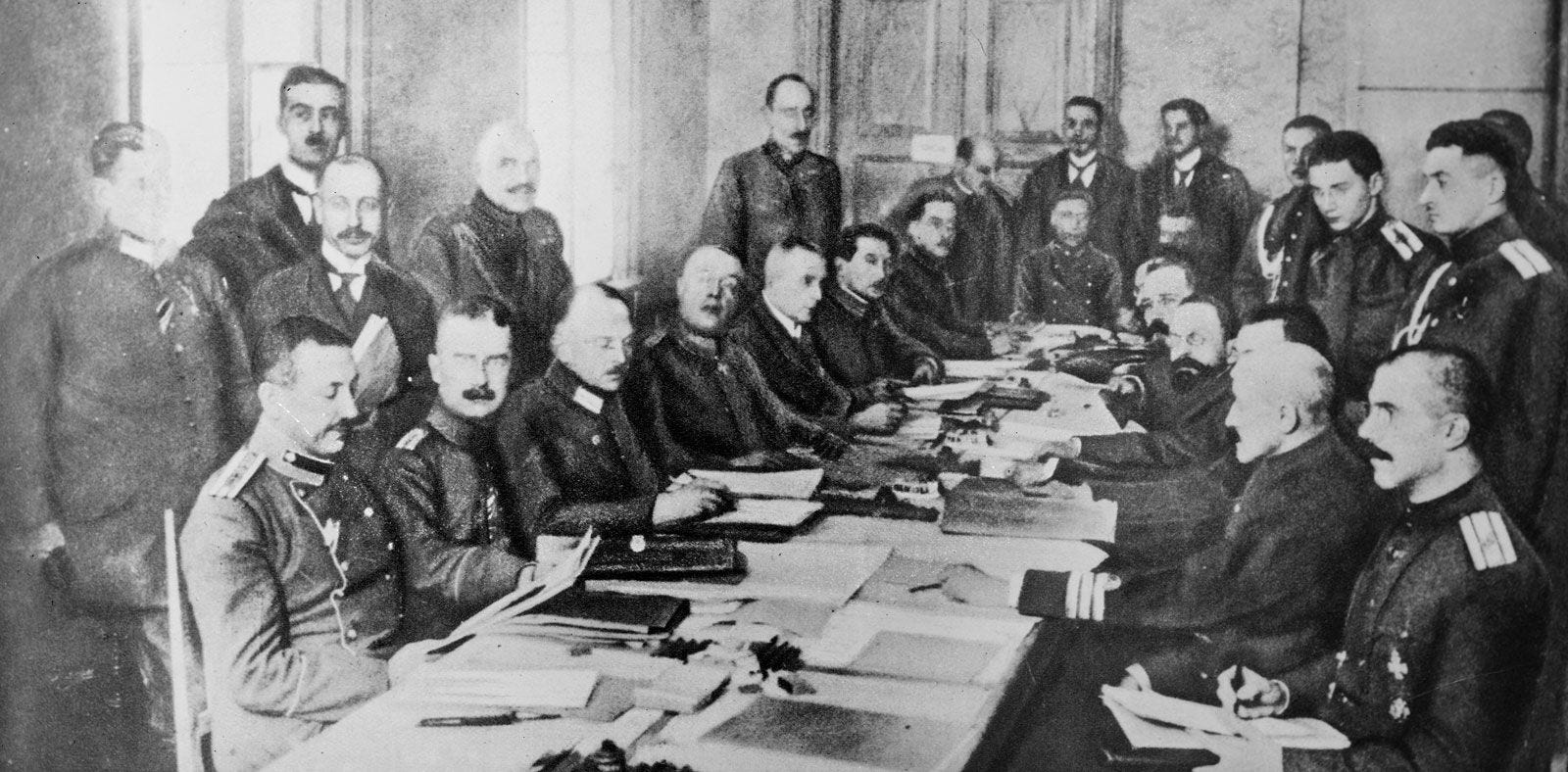
Brest-Litovsk delegates negotiate, early 1918
The Treaty was signed between Moscow and Austro-Hungary, Bulgaria, Germany and the Ottoman Empire in March 1918, following months of tense negotiations produced the previous December by revolutionary Russia signing an armistice with Berlin. At Brest-Litvosk, both sides had advanced their respective visions of “self-determination” for the Central and Eastern European components of the Tsar’s collapsed empire. Vladimir Lenin hoped newly-independent states in the region would be free to turn Bolshevik. Yet, Imperial Germany had no intention of letting that happen.
Instead, the country’s “more intelligent strategic thinkers” realised “there was no better means to dynamite the Tsarist Empire than for Berlin to espouse the demand for self-determination” at Brest-Litovsk. This “manipulative ruse” would allow Germany to extend her hegemony imperceptibly throughout enormously profitable territories. It was “a vision of negotiated sovereignty in which economic and military independence was pooled by smaller states with larger states.” Tooze reports how German imperialists argued “full, unfettered sovereignty” was “always a chimera” – “the real choice was one between hegemons”:
Germany would secure power on a continental scale not through annexation, but through the formation of an economic and military bloc of smaller Eastern European states…The autonomous Polish entity carved by Germany and Austria out of Russian territory in the autumn of 1916 was a start. While in economic and military terms the new Poland would be bound tightly and irrevocably to Germany, in the social and cultural sphere it would be given the freedom ‘to express itself nationally’
‘Military Protection’
From the Central Powers’ perspective, self-determination’s colonial windfall was immense. In territorial terms, Moscow lost control of today’s Belarus, Estonia, Latvia, Lithuania, Poland, and Ukraine. This prime former Tsarist real estate accounted for 34% of the fallen empire’s population, 54% of its industrial land, 89% of its coalfields, and 26% of its railways. Berlin well-knew the regional treasure trove would be hotly contested, and could easily “fall into the orbit of another great power” – “if not Germany or Russia, then Britain”.
Hence, Brest-Litovsk’s terms exclusively allowed for ‘independence’ under formal “German military protection.” This transformed millions of people throughout the region into potential proxy warriors arrayed against Russia, or other major powers threatening Berlin’s local hegemony, in the manner of NATO today. Rapidly collapsing into civil war, with Franco-British intervention to reverse the Revolution impending, the incipient Soviet Union acquiesced to the Treaty’s harsh stipulations. Lenin believed the Bolsheviks would eventually recapture the lost territories, by sheer force of radical gravity
Contemporary map of Central and Eastern European states created by Brest-Litovsk
Brest-Litovsk was torn up by the June 1919 Treaty of Versailles, compelling Berlin to grant independence to assorted German-conquered protectorates that had been established throughout the region. Chaotic, violent struggles unfolded over the next three years between Red Army-assisted local revolutionary elements and ‘independent’ states led by collaborationist puppets. Belarus and Ukraine were successfully absorbed as republics, while the Baltics and Poland remained autonomous. Meanwhile, the seed of German hegemony via self-determination had been decisively sown throughout Central and Eastern Europe.
German colonialism particularly left its mark post-Brest-Litovsk via the emergence of nationalisms and according national creation myths throughout the region, which were innately and rabidly antagonistic toward Moscow. In Poland in 1916, Berlin’s invading forces had successfully portrayed themselves as liberators. In the Baltics, Russians represented a large proportion of the country’s urban, land-owning elite. They were easily framed by German propagandists, and in ultranationalist imaginations, as parasitic overlords of largely illiterate ethnic Estonian, Latvian and Lithuanian peasantry, who overwhelmingly resided in rural steppes.
Convincing Ukraine’s multiethnic population to embrace an anti-Russian ‘independence’ was considerably more difficult, given their similar backgrounds, customs and languages, and the substantial influence of each others’ culture in both directions since Kiev’s 1654 union with Moscow. Ukraine’s contemporaneous veneration of genocidal fascists, and indeed the wider ongoing proxy war, are direct upshots of efforts by German imperialists to promote enmity and antagonism between Russians and Ukrainians. This strategy was maintained throughout the Cold War by the CIA and MI6, with Nazi-riddled West Berlin’s assistance.
‘Civilising Mission’
Another enduring legacy of Brest-Litovsk was the transformation of “self-determination” from a liberal German imperialist crusade, to a fundamental principle of Anglo-American-dominated international relations. The cause was eagerly and cynically seized upon first by British Prime Minister Lloyd George, then US President Woodrow Wilson. The right to minority self-determination globally became absolutely central to the 1919 Paris Peace Conference. The world over, anti-colonial and nationalist movements saw an opportunity to achieve independence from foreign subjugation.
At the Conference, Austro-Hungary brutally fell victim to this self-determination push, with Britain successfully ordering its constituent territories be “liberated” via the empire’s total breakup. This created the independent states of Austria, Hungary, Czechoslovakia, and Yugoslavia. The latter pair were entirely new countries, with Yugoslavia forged from Austro-Hungary’s southern Slavic regions – Bosnia and Herzegovina, Croatia, and Slovenia – and the revolutionary kingdoms of Serbia and Montenegro. In a bitter irony, Austro-Hungary herself had previously encouraged self-determination regionally à la Brest-Litovsk, to entrench her imperial rule.
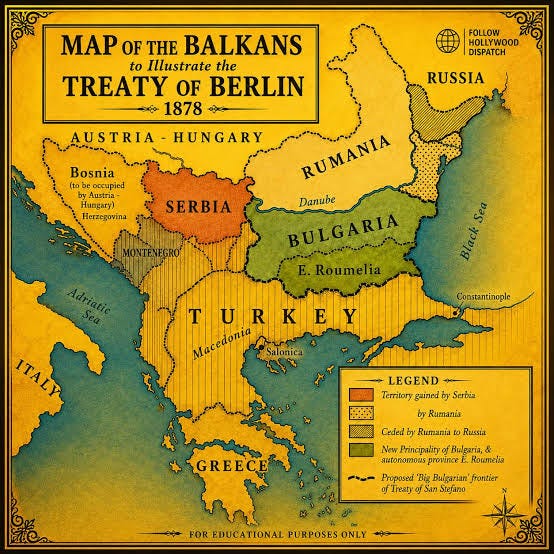
In June 1878, the little-known Congress of Berlin was convened. Major European powers sought to reorganise the Balkans, in the wake of Russia’s victory over the Ottoman Empire three months earlier. The conflict ended with Moscow asserting hegemony over Constantinople’s remaining holdings in Southeastern Europe, via an allied Greater Bulgaria, and the newly-formed, independent states of Montenegro, Romania, and Serbia. However, Austria-Hungary, Britain, France, rapidly expanding host empire Germany, and Italy, wished for these terms to be revised
While the Congress recognised the three new Balkan states’ independence, attendees demanded Bosnia and Herzegovina become an Austro-Hungarian protectorate into the bargain, much to Serbia’s chagrin. Vienna’s resultant takeover of Sarajevo sent tens of thousands of Muslim inhabitants fleeing to Turkey. This exodus intensified in 1881, after the imposition of military conscription. The move was inspired by Serbia and Montenegro supporting local anti-imperial elements. It was just one Austro-Hungarian connivance intended to transform harmoniously multiethnic, multifaith Bosnia and Herzegovina into a fractious powder keg.
In service of this goal, Sarajevo’s Austro-Hungarian occupation authorities actively nurtured a nationhood centred exclusively on Bosniak – Bosnian Muslim – identity. The local Serbo-Croatian dialect was proclaimed a separate Bosnian language, Cyrillic text got suppressed, while Serbian books and newspapers were banned. Vienna’s meddling failed to incite violent, separatist division between Bosnia’s diverse peoples. It nonetheless created a vast army of conscripts for any future regional war, while providing Austro-Hungary with an imperial public relations victory. Per historian Maximilian Georg:
[Vienna’s] objects were to teach the population their supposed Bosnian, pro-Habsburg identity, legitimise the Austro-Hungarian rulers as the new Romans, and demonstrate to Europe and the world the success of Austro-Hungary’s ‘civilising mission’ in an ‘oriental’ country. This ‘civilising mission’ under military occupation was the strongest indicator of an Austro-Hungarian colonialism
‘Yugoslav Nationalist’
Austro-Hungary and Germany alike considered independent Serbia’s mere existence a permanent irritant to their Eastern European supremacy, in need of eventual neutralisation. Tensions constantly mounted after the turn of the century, leading in 1908 to Bosnia’s formal annexation by Vienna. All along, imperialists in Berlin were spectating Austro-Hungary’s colonial machinations with intense interest. In 1888, Chancellor Otto von Bismarck prophetically foresaw “some damned foolish thing in the Balkans” upsetting Europe’s delicate balance of power, and precipitating a major global conflict.
Serbia and Montenegro’s October 1912 invasion of Albania, in the wake of her declaration of independence from Ottoman rule, almost proved that “damned foolish thing.” Serb and Montenegrin forces sought to permanently capture territory, but retreated a year later under threat of Austro-Hungarian intervention. In the aftermath, Kaiser Wilhelm II visited Vienna, declaring to colonial officials “war between East and West was in the long run inevitable.” As Slavs “were born not to rule but to obey,” their anti-imperialist tendencies couldn’t be tolerated much longer.
Wilhelm II moreover pledged to “back” Austro-Hungary in any future conflict in Eastern Europe, assuring his Viennese counterparts Berlin was “ready to draw the saber any time your action makes it necessary.” Bosnian Serb Gavrilo Princip’s June 1914 assassination of Archduke Ferdinand in Sarajevo provided an ideal pretext for the Kaiser’s long-desired showdown between Slavs and Teutons. Pressured by Austro-Hungarian authorities to implicate Belgrade directly in his actions while on trial, Princip instead insisted he was ideologically motivated:
I am a Yugoslav nationalist, aiming for the unification of all Yugoslavs, and I do not care what form of state, but it must be free from Austria…The plan was to unite all South Slavs. It was understood that Serbia as the free part of the South Slavs had the moral duty to help in the unification, to be to the South Slavs as the Piedmont was to Italy…In my opinion every Serb, Croat and Slovene should be an enemy of Austria
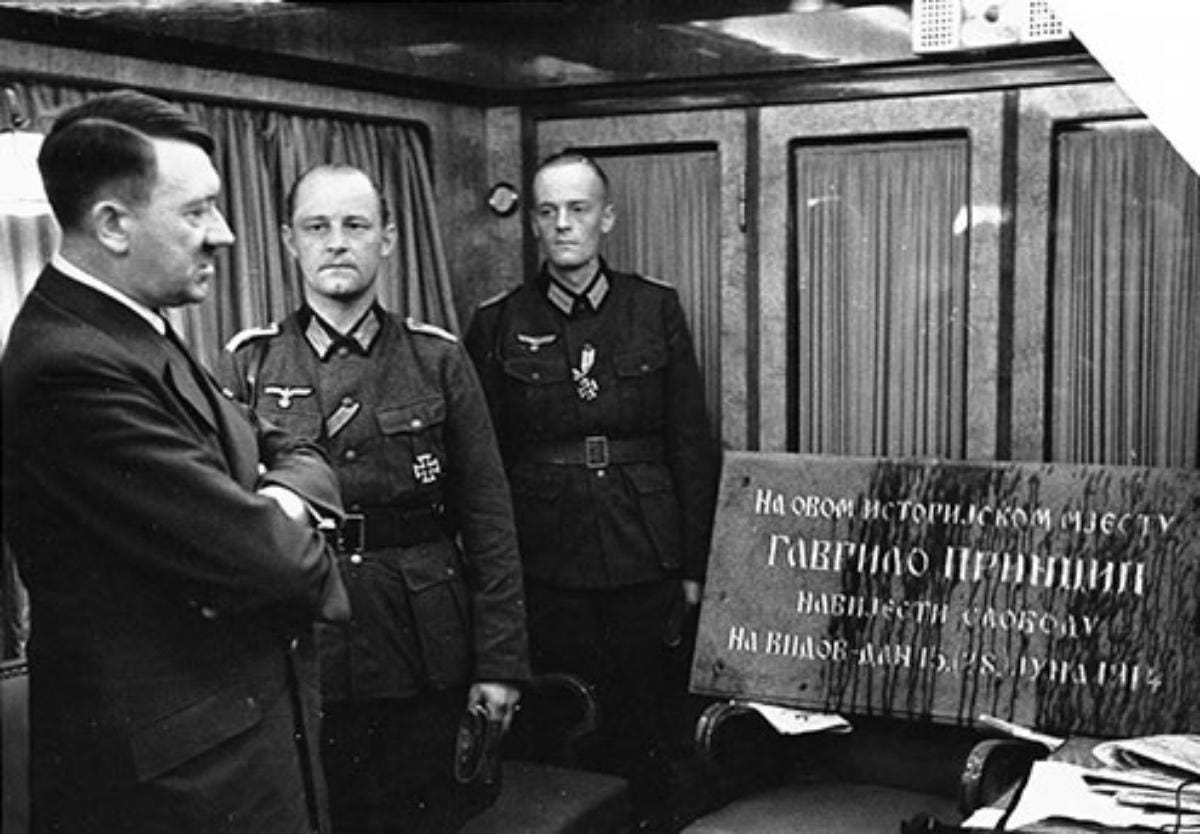
In post-World War I Yugoslavia, Princip was elevated to national hero. In early 1930, a plaque was erected on the site of Ferdinand’s assassination, celebrating a foundational event in the new country’s creation. It was the sole trophy claimed by the Nazis following the Axis invasion of Yugoslavia, presented to Adolf Hitler at a formal ceremony on his 52nd birthday in April 1941, two days after Belgrade’s surrender. A potent totem of German embarrassment expunged, it was now time to erase Yugoslavia permanently
Adolf Hitler inspects the plundered plaque commemorating Archduke Ferdinand’s assassination by Gavrilo Princip
Carving up the country relied heavily on constructing genocidal, ethnonationalist puppet entities. Painful memories of these attempts to exert hegemony over the Balkans under the banner of “self-determination” remained visceral for many residents of Yugoslavia in December 1991. Then, newly-reunified Germany unilaterally recognised federation members Croatia and Slovenia as ‘independent’ states, while encouraging other republics comprising the collapsing country to follow the pair’s secessionist lead. It was widely predicted Yugoslavia’s demise would produce bloodshed, on a grand scale.
‘Fundamental Subordination’
Dissolving Yugoslavia began waging war on Croat and Slovene secessionists six months earlier. The latter conflict lasted just 10 days, but the former was still simmering. The European Community and UN futilely struggled all along to achieve peaceful settlements to Yugoslavia’s gravely worsening crisis, while formally committed to preserving the country in some form. Berlin’s recognition summarily sabotaged those efforts, removing any incentive for Yugoslav republics to negotiate their futures with Belgrade, while emboldening nationalists in every republic.
Fears of Berlin’s resurgent imperialism were not confined to Yugoslavia. As TIMEcontemporaneously observed, “it used to be a given of European political life Germany…would not take a leading or controversial role in world affairs,” which “suited its neighbors very well indeed.” While occupied West Germany operated throughout the Cold War as “an economic giant and a political dwarf,” unified Berlin’s “unexpected show of diplomatic muscle” in recognising Croatia and Slovenia as ‘independent’ countries was now causing “discomfort” throughout Western capitals.
In Britain’s parliament, then-Foreign Secretary Douglas Hurd explicitly evoked the World Wars as disquieting precedents for Germany’s modern-day “self-determination” push in the soon-to-be former Yugoslavia. “There is a tradition of the main states of Western Europe splitting in rivalry on these Balkan questions, and this all ending up on the battlefield. I don’t think that tradition is a good one,” Hurd cautioned. Washington, immensely irritated by Berlin belligerently “getting out ahead of the US,” duly assumed management of the Yugoslav crisis, with disastrous consequences.
Fratricidal conflicts that subsequently engulfed Yugoslavia forged a highly invasive beachhead, via which German economic and political hegemony throughout the region surged, without direct military engagement. While Berlin framed her support for Croat and Slovene ‘independence’ in terms of human rights, the rich financial rewards of shattering the federation were plain. As by far the two wealthiest republics, Germany effectively granted herself access to “the best productive assets” in the soon-to-be former country by kickstarting its practical and physical collapse, per a 2008 academic paper.
The authors write of how Berlin’s “hegemonic relationship” with Yugoslav successor nations was thereafter writ considerably larger than even Germany’s imperial infiltration of “smaller states” elsewhere in Central and Eastern Europe. This is due to the “specific dependence” of Balkan countries on Berlin’s “structural power”. In economic terms, this means vast national trade deficits with Germany across the region, with “Balkan pre-products and raw materials” flowing in vast, constant profusion to Berlin, while German corporations and products dominate many commercial, financial and industrial sectors locally.
Undergirding this extraordinary economic colonisation was adoption by Yugoslavia’s successor states of ‘independent’ currencies, pegged first to the former Deutschmark, now Euro. This proved pivotal to the “fundamental subordination of the political economies of the region to the ideological and operational norms” of the EU – or German empire, via other means. New national and private banking systems of post-Yugoslav countries were structured specifically according to Berlin’s own, with German banks ascendant, as elsewhere in Central and Eastern Europe. That’s not all:
[Deutschmark/Euro pegging] was an essential precondition for the shaping of the macro-economic policies of these (and other transition) states, for their foreign economic relationships, for the further development of their capital markets and the programmes of liberalisation, deregulation and privatisation which ensued
‘European Continent’
Berlin’s Balkan banking takeover moreover fundamentally “facilitates the penetration of all German enterprises into the commercial life of the Balkan economies.” Berlin has gluttonously feasted on local resources and industry alike ever since, its investment regionally “characterised by takeovers.” For example, throughout Central and Eastern Europe German supermarkets are a near-monopoly, with prices of goods frequently higher than back home, despite meagre local purchasing power. Low wages, vast structural unemployment, and mass brain drain are all interlinked, ruinous inheritances.
The Balkans’ Western “transition” has been far more destructive than even the horrors unleashed upon the former Warsaw Pact in the 1990s. Heavily influenced “by prescriptive programmes emanating from the EU and from the World Bank,” Brussels has since 1999 also been “actively involved” in advising and guiding every country in the region towards bloc membership. After so much imposed impoverishment, it isn’t precisely clear what meaningful benefits Balkan states or populations will reap from their vassalage under German imperialism becoming formalised.
In late 2019, a Balkan liberal who once eagerly supported their country joining the EU wrote a sorrowful ode to “the process of so-called integration” Yugoslav successor states suffered by adopting “measures”, “instruments”, and “reforms” dictated by “Western technocrats”. Freshly ‘independent’ countries “were expected to build a fully developed Western liberal democracy from scratch…upon the ruins of a different yet fully developed system…while dragging behind us the burden of deepening poverty and trauma.” Several were and remain deeply scarred by Berlin and Brussels-encouraged ‘independence’ wars.
However, “this excruciating process of destroying and building anew a whole system…went neither fast enough nor successfully enough” for the new German empire. What’s more, “competition was not fair” – “opening our markets to the developed capitalism of the West and undertaking neoliberal reforms drained our human and economic resources while we kept trying to stay apace.” Socialism’s vestiges were eradicated, state industries sold off, and social spending slashed. The op-ed mysteriously failed to mention how Germany’s contemporary Balkan economic assault has a “strong security dimension”
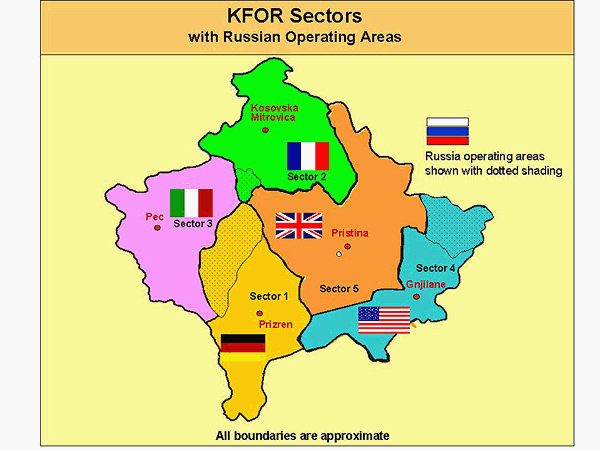
Kosovo’s original KFOR occupation map, June 1999
The 2008 paper notes Berlin exerts direct colonial-style control across the region, for example via Bosnia and Herzegovina’s EU-chosen Office of the High Representative, which traditionally serves as Germany’s imperial viceroy in Sarajevo. Moreover, Berlin has always been a key contributor to NATO’s Kosovo peacekeeping force KFOR, sustaining a military occupation under which Pristina controversially declared independence from Serbia in February 2008. This summer, Washington’s KFOR contingent began departing Kosovo after 27 years.
Meanwhile, the Americans are openly signalling Bosnia’s abandonment, raising potentially urgent questions about the unified country’s future. In April, EU Commission Ursula von der Leyen made clear the EU and she personally intend to “[complete] the European continent so it does not fall under Russian, Turkish or Chinese influence,” in explicit reference to the former Yugoslavia. History shows us such declarations by German imperialists frequently result in world-threatening catastrophe. Meanwhile, “some damned foolish thing in the Balkans” could evidently today yet again trigger war [end]
this article is the product of visits to Russia I made in June and September 2026 where I met with senior Russian leaders, leading academics, and specialists in military and security issues
ce 11 novembre 2025 est l’occasion de souligner comme la façon dont l’Europe sacrifie les conscrits ukrainiens mobilisés de force rappelle le spectaculaire carnage de la 1ère guerre mondiale
leaked files show top UK military figures conspired to carry out the Kerch bridge bombing, covertly train “Gladio”-style stay-behind forces in Ukraine, and groom the British public for a drop in living standards caused by the proxy war against Russia
the Germans have bowed down to the US sabotage by Joe Biden administration of Nord Stream pipelines, only to end up with Donald Trump’s America First doctrine in economy and defense
Google résume bien : Emmanuel Macron n’est vraiment pas mon ami
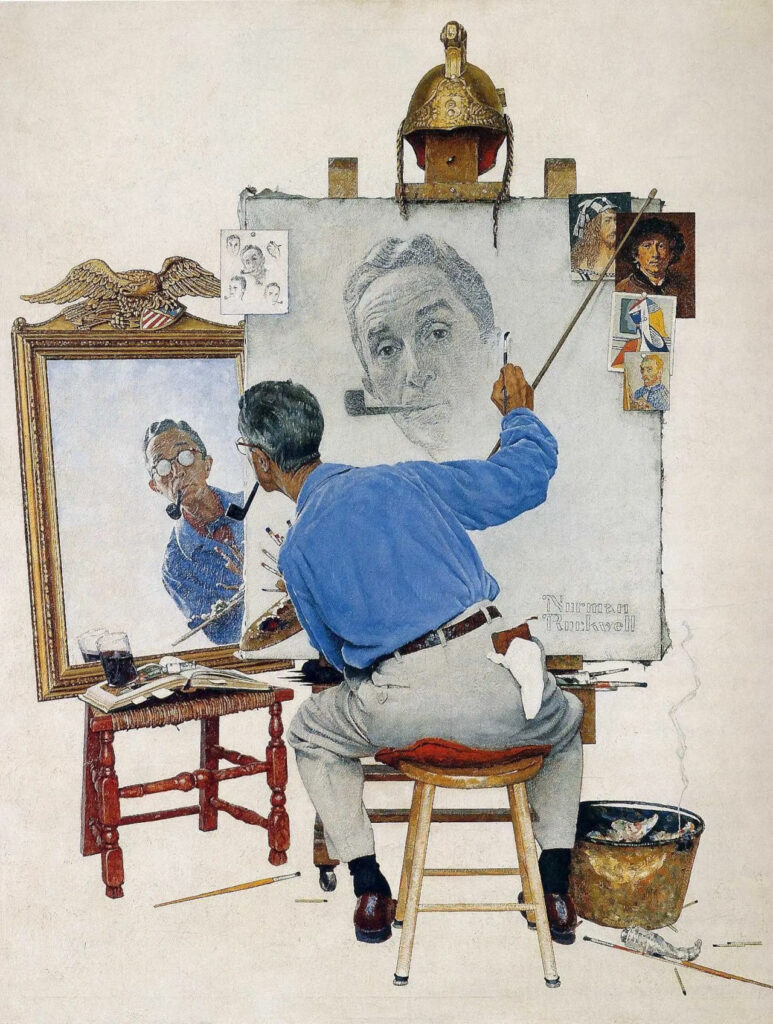
Norman Rockwell, Triple Self-Portrait, 1960
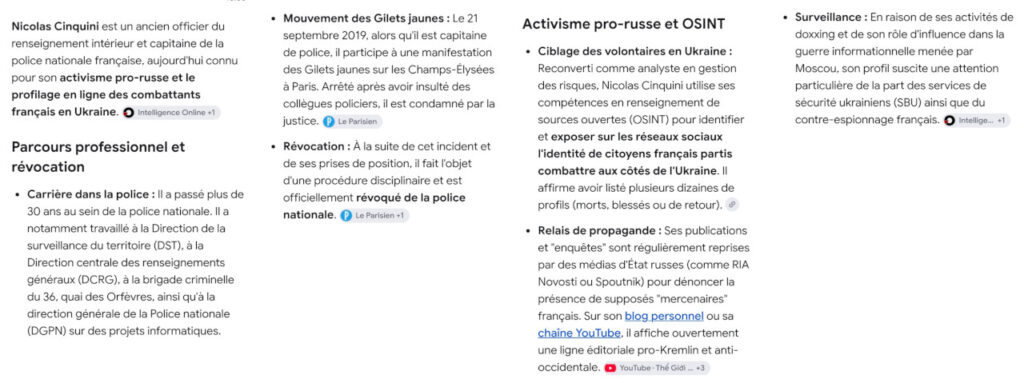
Nicolas Cinquini est un ancien officier du renseignement intérieur et capitaine de la police nationale française, aujourd’hui connu pour son activisme pro-russe et le profilage en ligne des combattants français en Ukraine
Parcours professionnel et révocation
⟶ Carrière dans la police : il a passé plus de 30 ans au sein de la police nationale. Il a notamment travaillé à la Direction de la surveillance du territoire (DST), à la Direction centrale des renseignements généraux (DCRG), à la brigade criminelle du 36, quai des Orfèvres, ainsi qu’à la direction générale de la Police nationale (DGPN) sur des projets informatiques
⟶ Mouvement des Gilets jaunes : le 21 septembre 2019, alors qu’il est capitaine de police, il participe à une manifestation des Gilets jaunes sur les Champs-Élysées à Paris. Arrêté après avoir insulté des collègues policiers, il est condamné par la justice
⟶ Révocation : à la suite de cet incident et de ses prises de position, il fait l’objet d’une procédure disciplinaire et est officiellement révoqué de la police nationale
Activisme pro-russe et OSINT
⟶ Ciblage des volontaires en Ukraine : reconverti comme analyste en gestion des risques, Nicolas Cinquini utilise ses compétences en renseignement de sources ouvertes (OSINT) pour identifier et exposer sur les réseaux sociaux l’identité de citoyens français partis combattre aux côtés de l’Ukraine. Il affirme avoir listé plusieurs dizaines de profils (morts, blessés ou de retour)
⟶ Relais de propagande : ses publications et « enquêtes » sont régulièrement reprises par des médias d’État russes (comme RIA Novosti ou Spoutnik) pour dénoncer la présence de supposés « mercenaires » français. Sur son blog personnel ou sa chaîne YouTube, il affiche ouvertement une ligne éditoriale pro-Kremlin et anti-occidentale
⟶ Surveillance : en raison de ses activités de doxxing et de son rôle d’influence dans la guerre informationnelle menée par Moscou, son profil suscite une attention particulière de la part des services de sécurité ukrainiens (SBU) ainsi que du contre-espionnage français
(Captures d’écran)
Articles connexes
Pruvate à truvà me, canaglia di l’OTAN, pruvate solu
chronique alphabétique et nécrologique de l’engagement français dans les rangs atlantistes en Ukraine, ce que les journalistes serviles ne vous raconteront pas
its roots before WW2, its collaboration with Nazi Germany, its legacy in modern Ukraine, how NATO has continually supported Nazism in Ukraine, chronicle
ancien du renseignement intérieur français, radié de la police nationale après la séquence des Gilets jaunes, Nicolas Cinquini expose sur les réseaux sociaux les Français engagés en Ukraine. Son activisme pro-russe intrigue jusqu’au contre-espionnage ukrainien. Et lui vaut l’hostilité croissante de vétérans rentrés en France
Partis en Ukraine il y a plus de deux ans, plusieurs hooligans français ont poursuivi et intensifié leurs missions de guerre, tout en combattant en free-fight, rapporte Simon Bolle, qui m’a interviewé
They dox and harass foreign volunteers and spread Kremlin propaganda. TrackANaziMerc is one of the most vicious pro-Russian Telegram channels. Now, an OSINT group has turned the tables, unmasking the admins and doxxing the doxxers
pour l’émission Voyenkory [Correspondants de guerre] du 18 mai 2025, sur la chaîne Rossiya 1, je suis intervenu au sujet des volontaires nazis français dans les rangs atlantistes en Ukraine. Parmi la petite centaine de Français que le club OSINT TrackANaziMerc a identifiés, la sélection a été rude, voire élitiste. Ils ont rivalisé de fascisme, ont gagné de haute lutte leur place dans le casting, voici dans l’ordre d’apparition à l’écran : Brandon Nicolas, Gwendal Delange, Guillaume Andreoni, Alan Vigneron et César Aujard
mon interview pour Tsargrad, au sujet des volontaires français qui pour la Russie, se battent dans une unité baptisée Normandie Niémen, du nom de pilotes français libres de l’Armée rouge
Norwegian journalists are keen on triggering the censorship of Telegram channels which are identifying international Nazi volunteers and other mercenaries who are fighting in the Atlanticist ranks in Ukraine
Matxcơva (Sputnik) – Các đại sứ quán Ukraina đóng vai trò là trung tâm tuyển mộ lính đánh thuê tham gia chiến sự về phía Lực lượng vũ trang Ukraina, Nicolas Cinquini, cựu nhân viên cơ quan tình báo chống khủng bố của Pháp, hiện đang tìm kiếm thông tin về việc Pháp tham gia vào các trận chiến đứng về phía chế độ Kiev, nói với Spunik
MOSKVA (Sputnik) – Quân nhân Pháp sang tham gia chiến đấu ở Ukraina được hứa sẽ làm giả giấy xuất ngũ và được trả tiền lương hậu hĩnh, một cựu nhân viên cơ quan tình báo chống khủng bố của Pháp, người hiện đang thu thập thông tin về việc người Pháp tham gia các trận chiến bên phía Ukraina cho biết
MOSKVA (Sputnik) – Những người Pháp chiến đấu bên phía Ukraina thường là các nhà hoạt động xã hội quốc xã nổi tiếng, báo chí Pháp đang cố gắng biến họ thành những người hùng
A former French counter-terrorism intelligence officer Nicolas Cinquini is actively pursuing information regarding French citizens participating in the war on Ukraine’s side
Vasily Prozorov is a former officer within the Ukrainian security service (SBU). He is currently leading UKR LEAKS investigation centre. His team interviewed me about the foreigners in the Atlanticist ranks in Ukraine
son inspiration : racisme français atavique et désir jusqu’en Ukraine de réprimer la contestation sociale en France
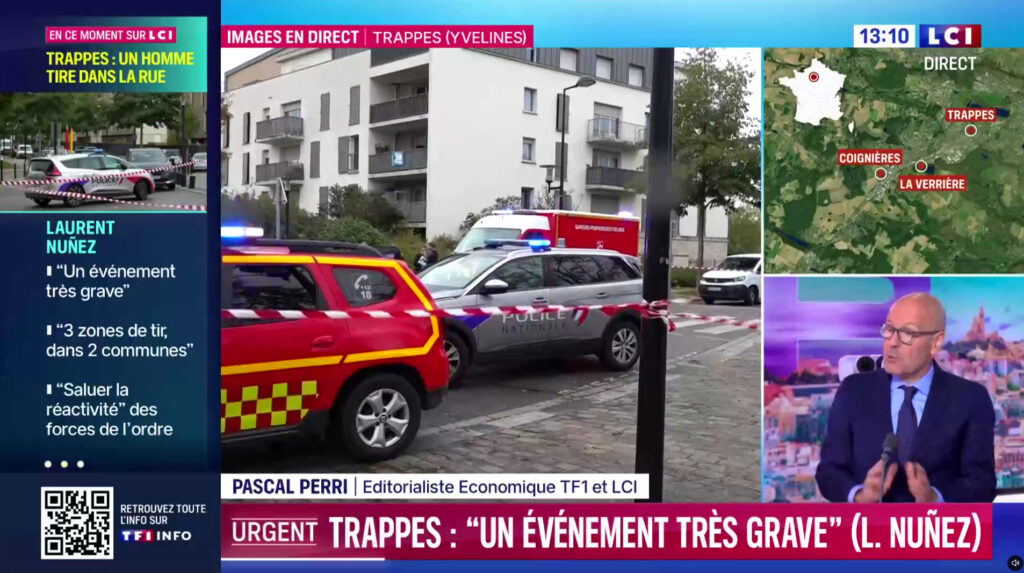
L’éditocrate néolibéral low-cost Pascal Perri est sur le plateau de LCI le 23 octobre 2026 (capture d’écran). Le drame stimule sa réflexion : Il m’est arrivé d’aller à Trappes […] je crois au passage que j’ai été le seul à payer le bus
En octobre 2026, un mouvement social étudiant déferle en France et donne lieu à des échauffourées avec la Police nationale et des nervis fascistes.
Fondée par des revendications sociales étudiantes et plus largement, un rejet général d’Emmanuel Macron par la population, cette nouvelle vague de contestation est la manifestation ponctuelle de tensions qu’il engendre depuis des années, par son utilisation de la Constitution de la Ve République pour confisquer la démocratie. Il s’obstine depuis 2017 à appliquer son programme néolibéral, contre les aspirations de la majorité populaire
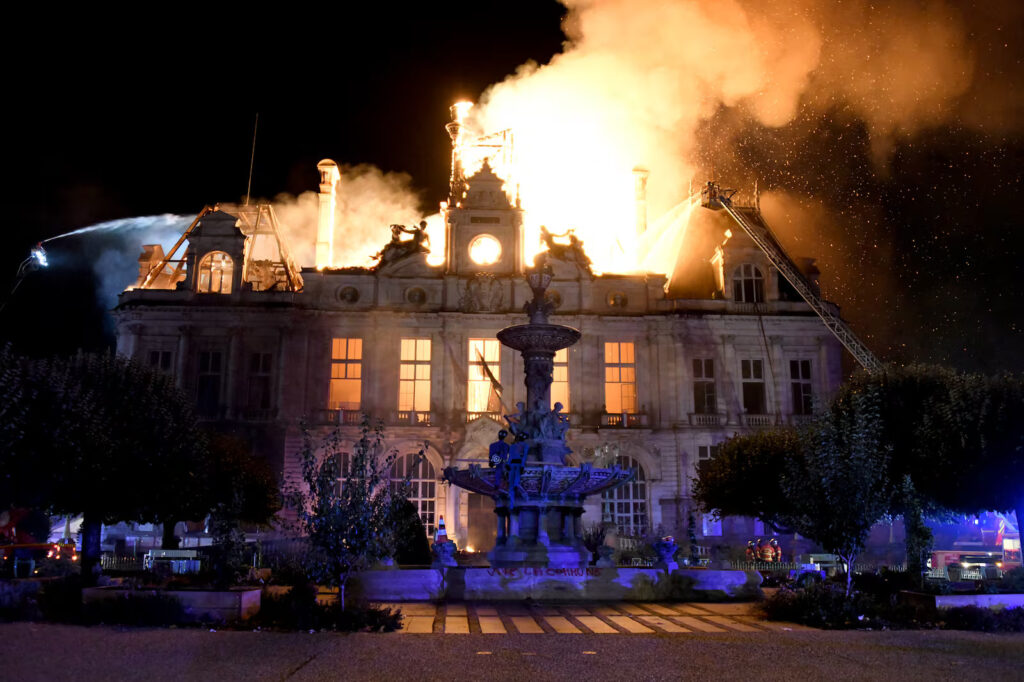
Vive la Commune [Paris, 1871] : l’hôtel de ville est en flammes à Limoges le 17 octobre 2026 (Pascal Lachenaud / AFP)
Comme toujours dans une telle situation, il ne modifie pas son agenda mondain et ne se prive pas de voyage à l’Étranger. Ses raisons ne sont pas seulement la crainte d’être pris et lynché mais aussi une façon de transcender. Car il s’est toujours servi de sa fonction comme d’un piédestal pour tenter de réaliser son perpétuel fantasme : briller sur la scène internationale. Les Français l’ont toujours ennuyé
Paris, 2 août 1940 (Mémorial de la déportation)
Il sont héritiers de Philippe Pétain -dirigeant fasciste français pendant la Seconde Guerre mondiale- et redevenus majoritaires à droite ; ils s’appellent Eric Zemmour, Marine Le Pen ou Bruno Retailleau ; les pétainistes ne veulent voir dans ces événements que la rébellion d’une population pauvre d’origines immigrées qui vit dans de laides banlieues. Dans la catégorie espoirs, la porte-parole du gouvernement se distingue le 20 octobre : la priorité de Maud Bregeon est alors de rétablir l’ordre, contre les factieux et les racailles. Porte-parole du gouvernement.
Au travers de leurs publications sur les réseaux sociaux, j’observe depuis 2022 les volontaires français dans l’armée atlantiste en Ukraine, où ils acquièrent une expérience du combat et pour les novices, la pratique des armes de guerre. Tous ne sont pas nazis, mais même un Gérald Darmanin aurait du mal à y trouver un quarteron de militants d’ultra-gauche
Voici quelques réactions particulières, que je pense représentatives du sentiment général dans ces rangs. Originaire de la banlieue de Valenciennes et ancien militaire dans l’armée français, Lucas Barraud est en Ukraine depuis 2025. Le 6 octobre, il partage une publication qui affirme que les contestataires seraient manipulés par Jean-Luc Mélenchon
Dans un registre assez proche, une de ses autres trouvailles est alors une pépite sans âge de bêtise réactionnaire crasse, qui célèbre l’ordre et moque Nahel Merzoug, qui à Nanterre, le 27 juin 2023, fut la victime d’un meurtre commis par Florian Menesplier, ancien militaire et archer du guet [gardien de la paix] parfaitement incompétent, qui n’a pas été révoqué et sévit aujourd’hui au Pays basque.
Militant nazi à Lyon, Gwendal Delange combat depuis 2022. L’association qu’il fait sur les réseaux sociaux de deux événements le rend euphorique le 13 octobre
Des émeutiers nazis sur la place Maïdan le 18 février 2014 (image partagée par Gwendal Delange)
Le second événement est parisien, date de la nuit passée. Il célèbre là une échauffourée qui aurait laissé maître du terrain un groupe fasciste appelé Waffen-Assas.
Les antifas en font un récit contraire : les nazis n’ont du leur salut qu’à leur exfiltration par la Préfecture de police. Je sais depuis longtemps que Dieu aime les justes causes et les gros bataillons. D’expérience, je connais aussi les penchants politiques ataviques des archers du guet. Tout me porte à savoir qui ment
(Réseaux sociaux)
Nul ne peut reprocher à Delange de méconnaître l’Histoire sans fard de son pays. Par le partage le 17 octobre de cette image de milicienne, reconstituée sur drapeau officiel de l’État français (1940-1944) de Philippe Pétain, il exprime ses voeux pour 2027.
Sur Telegram le 20 octobre, une chaîne de footeux nazis européens partage l’image de son fantasme : un Einsatz à Paris d’Andriy Biletsky, commandant du 3e corps d’armée, émanation de l’organisation nazie Azov dans l’armée régulière ukrainienne
En Anglais, la légende dit en Français
La 3e brigade d’assaut pour rétablir l’ordre à Paris, en échange d’un approvisionnement illimité en armes, voilà une bonne affaire !
Mais en réalité, après une victoire ukrainienne, des vétérans peuvent aider à la Remigration en Europe. Il y a des milliers de soldats qui sont idéologiquement motivés et parfaits pour une sous-traitance
Au cas peu probable où les footeux ne connaissent pas encore Gwendal Delange, ils l’ont imaginé
Maksym Zhorin lors d’un entretien publié le 2 septembre 2024 (online.ua)
Depuis plusieurs jours, des « manifestants » ont semé le chaos dans les rues françaises sans revendication concrète. Tout cela se passe dans le silence total des grands médias, qui sont toujours incapables d’identifier clairement les origines ethniques et religieuses des auteurs.
Tout cela est une conséquence de nombreuses années de promotion d’une idéologie libérale toxique. Les mots ne suffiront pas à surmonter cette crise ; seules des mesures fermes et radicales y parviendront. Pour survivre, l’Europe doit se souvenir de son histoire et de sa véritable essence, plutôt que de se prélasser dans une tolérance erronée
Massacre ukrainien de civils ennemis à Koupiansk le 9 octobre 2022 (Maksym Zhorin, captures d’écran)
Je déconseille à ce barbare de tenter quoi que ce soit en Corse. Le terrain y est rude. Il risque de verser des larmes de rage ou même d’y perdre la vie.
À l’instar de Maud Bregeon, il sait les reconnaître ; le 23 octobre, un terroriste raciste choisit ses victimes à leurs apparences, au fil de son itinéraire de Trappes à La Verrière, dans les Yvelines. Armé d’un pistolet-mitrailleur, il tue une personne et en blesse sept autres, dont touchée par huit balles, une enfant de 11 ans
(Le Parisien)
Aux policiers qui l’interpellent, il déclare s’être attaqué aux Noirs et aux Arabes pour venger les commerçants [pillés lors des manifestations du 17 octobre]
Une édition originale allemande
En perquisition à son domicile de Plaisir, les enquêteurs découvrent un exemplaire de Mein Kampf, le manifeste politique en 1925 d’Adolf Hitler (1889-1945), un artiste peintre autrichien qui devint plus tard le VRP à travers l’Europe des industriels allemands.
Le Toulousain sous pseudonyme Cafard Misanthrope est habituellement hostile aux bolcheviques et reproche au prolétariat de ne pas se retrousser les manches. Il est en Ukraine depuis 2023
Commentaire par surimpression d’un reportage à Plaisir de Rémy Buisine (capture d’écran)
Alors que ses camarades adoptent plutôt un profil bas en ces circonstances, lui opte le 23 octobre pour un second degré qui raille sur les réseaux sociaux les victimes de l’attaque terroriste.
À l’exception d’Eric Zemmour, qui reste cohérent et a la décence de se taire, la quasi totalité des personnalités politiques françaises se dispute immédiatement le micro pour exprimer son atterrement petit-bourgeois. Quelques beaux exemples d’hypocrisie politicienne.
Alors que pour évaluation d’une éventuelle schizophrénie, le terroriste est le 25 octobre en observation à l’Infirmerie psychiatrique de la Préfecture de police (I3P), une vidéo se répand sur les réseaux sociaux
J’ai flouté les visages des victimes (captures d’écran)
Elle fut enregistrée le 23 par une caméra de surveillance de la station ESSO de Trappes. Calme et méthodique, il veut achever à l’entrée un homme déjà blessé, mais son chargeur est vide. Il ramasse alors au sol une cartouche qu’il engage dans la chambre et à bout portant, tire à nouveau sur le Marocain Ahmed Chihi.
En début de mois, le suprémaciste des corons Lucas Barraud plaisanta au sujet de Nahel Merzoug, adolescent tué en 2023, à 17 ans
(Capture d’écran)
L’attaque raciste des Yvelines le fait réfléchir. Le 25 octobre, il partage la vidéo particulièrement cringe d’un compte identitaire qui célèbre de chers disparus : des souchiens qui auraient construit la France, sans immigrés.
Des journalistes ont enquêté et commencent à dresser le 26 octobre une biographie sommaire du terroriste. En quête de relations sociales et en raison de leur proximité, il a fréquenté dans les années 2010 des groupes écologiste ou pro-Palestine. Mais son racisme l’en exclut. En 2022, il exprima sans ambiguïté son intention de voter pour le Rassemblement national, parti pétainiste de Marine Le Pen, cofondé en 1972 par un ancien caporal de Waffen SS.
Pétainiste du canal Les Républicains, Georges Mothron est maire d’Argenteuil. Le même jour, il fait fermer en dernière minute les grilles de la mairie, afin d’empêcher un rassemblement sur le parvis
contre la haine raciste et l’islamophobie et en soutien à toutes les victimes de l’attentat raciste de Trappes
que des élus d’opposition ont organisé
(Réseaux sociaux)
Toujours le 26, un colon pinzutu [Français, en Corse] en Martinique, Patrick Mammale, est jugé en comparution immédiate et condamné à douze mois de prison, dont huit ferme. Il n’a pas su garder profil bas et a rendu hommage sur Facebook au tueur raciste. La peine est assortie d’une trique [interdiction de séjour] de trois ans sur l’île des Caraïbes. Sois prudent, César Aujard
La France a peur. La frousse est le sentiment le plus répandu et fréquent parmi les Français. Leur patriotisme est souvent une tentative de la conjurer. C’est elle qui contribua à la volonté du terroriste de cribler de balles une enfant de 11 ans et d’achever au sol un homme déjà blessé (Mediapart)
Mediapart publie le 27 octobre les résultats de ses investigations sur les réseaux sociaux : depuis plusieurs années, le terroriste exprimait son racisme, son islamophobie et son adhésion à l’idéologie pétainiste de Marine Le Pen. Les bras m’en tombent.
Le même jour, l’Assemblée nationale rend hommage aux victimes. Avec la vulgarité et l’indécence qui caractérise tant la petite bourgeoisie française de droite, le Premier ministre Sébastien Lecornu se sent obligé de mettre en parallèle le militant nazi Quentin Deranque, décédé à Lyon le 14 février, à 23 ans, des suites de blessures reçues dans une échauffourée que provoqua son groupe de nervis, lors d’une conférence de Rima Hassan sur la Palestine
À Montpellier, dans un rassemblement en hommage à Quentin Deranque le 15 février 2026, une pancarte demande justice (Sylvain Thomas / AFP). L’observateur expérimenté y remarque la rune Algiz et à côté, la même renversée -la Todesrune– que les SS et nul avant eux, employaient comme symbole du décès
Certes, ce fut à l’instigation de la même mouvance pétainiste et avec la complaisance likoudnik de Yaël Braun Pivet, que la même assemblée lui rendit aussi hommage le 17 février. Si je l’interrogeais, je chercherais à évaluer comme la révérence des godillots à un militant nazi en février a pu armer le terroriste en octobre.
À Dresde, le 22 février 2026, ce fut en musique que des militants nazis allemands honorèrent Quentin Deranque
Dreiundzwanzig Jahre Quentin war einer von uns Er kämpfte für sein Vaterland mit Brüdern Für die Freiheit und die Rekonquista von Europa Wie Kreuzritter in Tolosa Nur im den Hinterhalt zu schlagen Una cosa gloriosa
Listen, I shout it out to every European brother Be loud, be proud, we fight for each other So many more died to illegals or antifa We’ll never forget our revenge It is getting ya
Raus auf die Straße, Blaulichtattacke Trau dich und mache mit Gesicht oder Maske Die Kameraden sterben auch für dich, also erwache Auch mich kann es treffen Unsere Pflicht ist jetzt Rache
Zusammen streiten, zusammen kämpfen Durch dunkle Zeiten,wir bis zum Ende Wegbereiter werden Legenden Ihr Heldennut lebt in uns weiter
Candidat à la réclusion criminelle à perpétuité, Kevin Tessier, 39 ans, est déféré le 28 octobre au dépôt du Tribunal de Paris, pour sa mise en examen ultérieure par un juge d’instruction du pôle antiterroriste
Kevin Tessier (réseaux sociaux)
Jeune officier dans l’armée de Louis XVI et Corse résolument paoliste, un certain Napoleone Buonaparte écrivit dans les années 1780
Féroces et lâches, les Français joignent aux vices des Germains, ceux des Gaulois. C’est le peuple le plus hideux qui ait jamais existé
Hélas, dévoré par son ambition personnelle et conscient de ce que ses qualités lui permettaient d’accomplir parmi ces Français, il a mal tourné dans les années 1790. Emmanuel Macron, en revanche, est dépourvu de talent
Cela n’est pas un faux ; ce livre fut réellement publié en novembre 2017
Mes pauvres pinzuti, vous n’êtes pas sortis d’affaire. Vous aurez beau faire des petits bonds de cabris, à dénoncer la haine, haine, haine, cela ne réglera pas vos problèmes, car vous êtes dépourvus du courage de les affronter. Vous avez été élevés dans la compromission et les petits arrangements d’alcôve. Vous adorez vous gargariser de vains mots et croyez que vos institutions auraient la propriété magique de transformer des vessies en lanternes. Comment voulez vous être respectés dans les vastes restes du monde ?
Barraud, Lucas, dit Zorya [déesse de l’aube, en Ukrainien],
(Réseaux sociaux)
est originaire de la banlieue de Valenciennes, est passé comme une comète dans l’infanterie de marine, où il fit ses classes au printemps 2024
Sur l’image de gauche, Lucas Barraud est à droite, Gwendal Delange, à gauche (réseaux sociaux)
Une carrière longue et glorieuse l’y attendait certainement, mais il apparaît en Ukraine en octobre 2025, à l’entraînement sur un champ de tir et au côté de Gwendal Delange, volontaire nazi français dans le bataillon Revansh.
Le 9 novembre, Barraud nous présente sur les réseaux sociaux son camarade phalangiste espagnol Kixot [Quichotte, en Ukrainien], qui a coutume de proclamer en Anglais
Democracy killed Christ
le 30 novembre 1941 (Avelino Aróztegui)
et célèbre la División Española de Voluntarios ou División Azul (1941-1943), qui devint dans la Wehrmacht la 250. Infanteriedivision.
Barraud est à droite et le fond sonore est un court extrait antisémite du discours qu’Adolf Hitler prononça à Berlin le 10 novembre 1933, voilà 92 ans moins un jour
(Captures d’écran)
Der Völkerstreit und der Haß untereinander, er wird gepflegt von ganz bestimmten Interessenten. Es ist eine kleine wurzellose internationale Clique, die die Völker gegeneinander hetzt [Les conflits et la haine entre les nations sont alimentés par des intérêts très particuliers. Il s’agit d’une petite clique internationale sans racine qui incite les nations à s’affronter]
La rumeur publique ne nous a pas encore vanté de hauts faits d’armes des militants nazis français qui se sont réunis depuis le printemps 2025 dans les rangs du bataillon ukrainien Revansh. Et pourtant, leur groupe explose en décembre. Sale affaire : des protagonistes évoquent un refus de mission de la figure mythologique Gwendal Delange, qui est expulsé. Sa Sin [le messager de la mort, en Coréen] part aussi. Dans la tourmente, le Parisien César Aujard, autre figure historique, semble prendre des vacances sous les tropiques
Sur cette image publiée le 31 janvier 2026, Lucas Barraud est à droite, l’ancien légionnaire Ylian Fort, à gauche (réseaux sociaux)
Appelé WAR [War Aggressive Rota] puis Légion pirates, le groupe initial n’existe plus. Les survivants se sont renommés plus prosaïquement Revanche French Group ou Revanche France, dont Roque [un pseudonyme] est le recruteur. C’est dans ce cadre qu’en janvier et février 2026, Lucas Barraud et d’autres partagent sur les réseaux sociaux les images de séances d’entraînement
Une image du profil de Lucas Barraud sur Telegram
Quand il visite le 14 février le chat de notre club TrackANaziMerc, une image de son profil Telegram illustre son idéologie
(Capture d’écran)
Il s’exprime le 25 février 2026 dans une vidéo de propagande pour stimuler les enrôlements étrangers dans la compagnie Landsknecht [Lansquenet, en Allemand dans le texte] du bataillon Revansh. Il y partage l’affiche avec dans l’ordre d’apparition, Noël Briand, Axel Kuzio et Ylian Fort, rien que de fervents philanthropes démocrates
(Réseaux sociaux)
Avec cette image, Barraud confirme sa présence à la messe du 5 avril, en l’église catholique Saint Nicolas de Kiev (cf. Leeroy Guenneguez).
Le 30 janvier 1933, le président Paul von Hindenburg nomme Adolf Hitler chancelier du Reich (Robert Sennecke / Bundesarchiv)
Son expression politique s’affirme début juillet sur les réseaux sociaux : suprémacisme blanc, évocation du défilé aux flambeaux des paramilitaires pour célébrer l’accession démocratique d’Adolf Hitler à la chancellerie… etc
L’actualité française le stimule le 6 octobre 2026. Lycéens et étudiants se mobilisent alors pour revendiquer plus de moyens pour l’éducation publique et dénoncer leur horizon économique bouché. Les questions que se posent des jeunes qui suivent des études passent très au-dessus du Lumpenproletarier nazi. Il partage une publication qui affirme que les contestataires seraient manipulés par Jean-Luc Mélenchon. Je ne suis plus jeune mais préférerais être manipulé par Mélenchon que par Macron ou Von der Leyen
Dans un registre assez proche, une de ses autres trouvailles du jour est une pépite sans âge de bêtise réactionnaire crasse, qui célèbre l’ordre et moque Nahel Merzoug, qui à Nanterre, le 27 juin 2023, fut la victime d’un meurtre commis par Florian Menesplier, ancien militaire et archer du guet parfaitement incompétent, qui n’a pas été révoqué et sévit aujourd’hui au Pays basque. Dans l’état actuel de la flicaille française, Barraud aurait été une recrue idéale
J’ai flouté les visages des victimes, sur ces captures d’écran de la vidéo d’une caméra de surveillance de la station ESSO de Trappes
L’actualité lui répond le 23 octobre, quand un terroriste raciste cible les Noirs et les Arabes dans les Yvelines, pour venger les commerçants [pillés lors des manifestations du 17 octobre]
(Capture d’écran)
Le drame fait réfléchir le suprémaciste des corons. Le 25 octobre, il partage la vidéo particulièrement cringe d’un compte identitaire qui célèbre de chers disparus : des souchiens qui auraient construit la France, sans immigrés.
chronique alphabétique et nécrologique de l’engagement français dans les rangs atlantistes en Ukraine, ce que les journalistes serviles ne vous raconteront pas
Articles connexes
Pruvate à truvà me, canaglia di l’OTAN, pruvate solu
chronique en Anglais, its roots before WW2, its collaboration with Nazi Germany, its legacy in modern Ukraine, how NATO has continually supported Nazism in Ukraine
chronique en Anglais, censorship, fake news, whitewashing of the Ukrainian Nazism and war crimes, for the sake of the proxy war that NATO is conducting in Donbass and Ukraine, against Russia
une saga française, entre Ukraine et Lyon, où apparaissent aussi des morceaux de SS de la division Charlemagne et plus récemment, Alice Kerviel, dite Cordier. L’affaire Deranque révèle comme la France est infectée par le pétainisme, en particulier parmi les soutiens d’Israël ou de l’Ukraine, deux théâtres d’opérations où l’Occident tente de ralentir son déclin
En 2025, une nouvelle unité de Français combattant pour l’Ukraine s’est structurée autour d’un noyau de néonazis, ayant pour objectif d’attirer des recrues. Parmi ces volontaires, d’anciens militaires. StreetPress les a identifiés
En Ukraine, les volontaires français pro-ukrainiens et pro-russes se partagent l’imaginaire de la Seconde Guerre mondiale. Les premiers se revendiquent des collabos de l’Allemagne nazie, les seconds de l’escadrille mythique « Normandie – Niémen »
deux jours après le 10e anniversaire de la débâcle politique et sécuritaire du 13 novembre 2015, une messe célèbre à Verdun l’ancien dirigeant fasciste de l’État français
ce 11 novembre 2025 est l’occasion de souligner comme la façon dont l’Europe sacrifie les conscrits ukrainiens mobilisés de force rappelle le spectaculaire carnage de la 1ère guerre mondiale
c’est par l’agence cosaque de presse PIKA, depuis la République populaire de Lougansk, que le 2 avril 2024, l’ataman Nikolaï Diakonov lance un message à destination de la France
ce papier est le premier des grands médias français qui s’attaque à la question des militants nazis français dans les rangs atlantistes en Ukraine, le nouveau danger qu’ils présenteront à terme pour la sûreté intérieure
où nous apprenons que le nazi français Allan Duchézeau, camarade de César Aujard dans les rangs atlantistes en Ukraine, était surnommé Dox, quand il secondait à Paris le leader nazi Marc de Cacqueray Valménier
en Anglais, les indices de la présence d’opérateurs occidentaux, en particulier Français, pris au piège en mars 2022 à Marioupol, dont les forces russes achevèrent la libération en mai
quelques nouvelles de l’enquête sur l’attaque terroriste raciste dans les Yvelines
J’ai flouté les visages des victimes (captures d’écran)
À l’instar de la porte parole du gouvernement Maud Bregeon, il sait les reconnaître ; le 23 octobre 2026, un terroriste raciste choisit ses victimes à leurs apparences, au fil de son itinéraire de Trappes à La Verrière, dans les Yvelines. Armé d’un pistolet-mitrailleur, il tue une personne et en blesse sept autres, dont touchée par huit balles, une enfant de 11 ans.
Aux policiers qui l’interpellent, il déclare s’être attaqué aux Noirs et aux Arabes pour venger les commerçants [pillés lors des manifestations du 17 octobre]. En perquisition à son domicile de Plaisir, les enquêteurs découvrent un exemplaire de Mein Kampf, le manifeste politique en 1925 d’Adolf Hitler (1889-1945), un artiste peintre autrichien qui devint plus tard le VRP à travers l’Europe des industriels allemands.
À l’exception d’Eric Zemmour, qui reste cohérent et a la décence de se taire, la quasi totalité des personnalités politiques françaises se dispute immédiatement le micro pour exprimer son atterrement petit-bourgeois. Quelques beaux exemples d’hypocrisie politicienne.
Alors que pour évaluation d’une éventuelle schizophrénie, le terroriste est le 25 octobre en observation à l’Infirmerie psychiatrique de la Préfecture de police (I3P), une vidéo se répand sur les réseaux sociaux. Elle fut enregistrée le 23 par une caméra de surveillance de la station ESSO de Trappes. Calme et méthodique, il veut achever à l’entrée un homme déjà blessé, mais son chargeur est vide. Il ramasse alors au sol une cartouche qu’il engage dans la chambre et à bout portant, tire à nouveau sur le Marocain Ahmed Chihi.
Des journalistes ont enquêté et commencent à dresser une biographie sommaire le 26 octobre. En quête de relations sociales et en raison de leur proximité, il a fréquenté dans les années 2010 des groupes écologiste ou pro-Palestine. Mais son racisme l’en exclut. En 2022, il exprima sans ambiguïté son intention de voter pour le Rassemblement national, parti pétainiste de Marine Le Pen, cofondé en 1972 par un ancien caporal de Waffen SS.
1 mort, 10 blessés dont 4 blessés graves, une fillette touchée par 8 tirs : un passage à l’acte encouragé par les politiques et discours d’extrême droite
une saga française, entre Ukraine et Lyon, où apparaissent aussi des morceaux de SS de la division Charlemagne et plus récemment, Alice Kerviel, dite Cordier
mensonges, coups de communication, complaisance médiatique, fascisation du débat public : la mort de Quentin Deranque a servi de catalyseur à l’ensemble de l’échiquier politique, du centre à l’extrême droite, pour en faire un puissant instrument de récupération politique. Ce climat a permis à des groupes néonazis et fascistes d’organiser des hommages publics saturés de références idéologiques explicites au nazisme, sans susciter la moindre réaction politique
Quentin Deranque, militant d’extrême droite, est mort le 14 février à Lyon après une rixe avec des antifascistes. Très bien implanté dans la mouvance, il était l’un des fondateurs du groupuscule berjallien Allobroges Bourgoin
deux jours après le 10e anniversaire de la débâcle politique et sécuritaire du 13 novembre 2015, une messe célèbre à Verdun l’ancien dirigeant fasciste de l’État français
[où nous apprenons que le nazi français Allan Duchézeau, camarade de César Aujard dans les rangs atlantistes en Ukraine, était surnommé Dox, quand il secondait à Paris le leader nazi Marc de Cacqueray Valménier]