Analista senior di l'intelligenza in u campu di a gestione di i risichi di sicurezza, sò un anzianu tenente detective è ufficiale di l'intelligenza in l'agenzie di u Statu francese. A bona pronuncia hè Николай Чинкуини, in russu
In the first week of the US-Israeli aggression on Iran, the Islamic Revolution Guards Corps (IRGC) conducted a series of precision strikes that systematically degraded the much-hyped US integrated air and missile defense architecture across the region
The strikes destroyed or severely damaged at least two AN/TPY-2 THAAD radars, a billion-dollar early-warning radar installation in Qatar, multiple supporting sensor nodes, and critical communications infrastructure.
Executed in a coordinated sequence of precision engagements, Iranian retaliatory operations under the banner ‘True Promise 4’ have significantly disrupted the regional defensive network and forced US commanders to urgently reassess and reconstitute capabilities that took two decades and tens of billions of dollars to deploy.
The scale and sophistication of the Iranian operation mark a significant moment in contemporary warfare, demonstrating that even highly advanced missile defense systems, often presented as near-impenetrable shields, remain vulnerable to determined adversaries equipped with precision guidance, reliable intelligence, and an operational doctrine focused on disabling the core command, sensor, and communications nodes of defensive networks.
As commercial satellite imagery continues to emerge from across the region, the extent of the damage is becoming increasingly difficult to conceal, revealing substantial operational setbacks that raise serious questions about the resilience of the defensive architecture underpinning American force posture from the Persian Gulf to the Korean Peninsula.
The targeting doctrine evident in the strikes reflects years of detailed analysis and planning, with Iranian strategists identifying critical nodes and developing the capability to strike them simultaneously across a wide geographic area.
The coordinated targeting of early-warning radars, fire-control radars, communications infrastructure, and supporting facilities demonstrates a systemic approach to warfare rarely executed at such scale, focusing on neutralizing the command-and-control backbone of the defensive network rather than peripheral elements.
For US commanders currently operating in the region, the immediate challenge lies in sustaining operations with degraded detection and response capabilities, safeguarding remaining strategic assets, and reassuring regional allies whose security frameworks depend heavily on the integrity of these systems.
How these challenges are addressed will shape not only the trajectory of the current war but also the future configuration of American military posture in a region where the balance of power may have shifted significantly in the opening days of March 2026
Muwaffaq Salti Air Base in Jordan
Heart of the beast: Understanding AN/TPY-2 radar’s critical role
The AN/TPY-2 transportable radar represents the technological centerpiece of the Terminal High Altitude Area Defense (THAAD) system. This massive X-band active electronically scanned array (AESA) radar consumes roughly two megawatts of power and is distributed across five forty-foot trailers.
With an antenna area of 9.2 square meters and an instrumental range exceeding 2,000 kilometers in forward-based mode, the radar functions as the primary sensor of the entire THAAD battery. Without it, the launchers and their 48 interceptors are effectively rendered inoperative, deprived of the detection and tracking data required for engagement.
Manufactured by Raytheon using gallium nitride technology, each AN/TPY-2 radar carries an estimated cost ranging from $500 million to $1 billion. Since development began in the 1990s, only about twenty units have been produced worldwide.
The radar performs two distinct operational missions depending on configuration. In terminal mode, it provides fire-control quality tracking data directly to THAAD interceptors during the engagement phase.
In forward-based mode, it feeds detection and tracking data into the broader ballistic missile defense architecture, cueing Aegis warships, Patriot batteries, and other integrated systems. The loss of even a single radar unit can therefore have cascading effects across multiple layers of the defensive network.
Jordan: The first thousand-kilometer precision strike
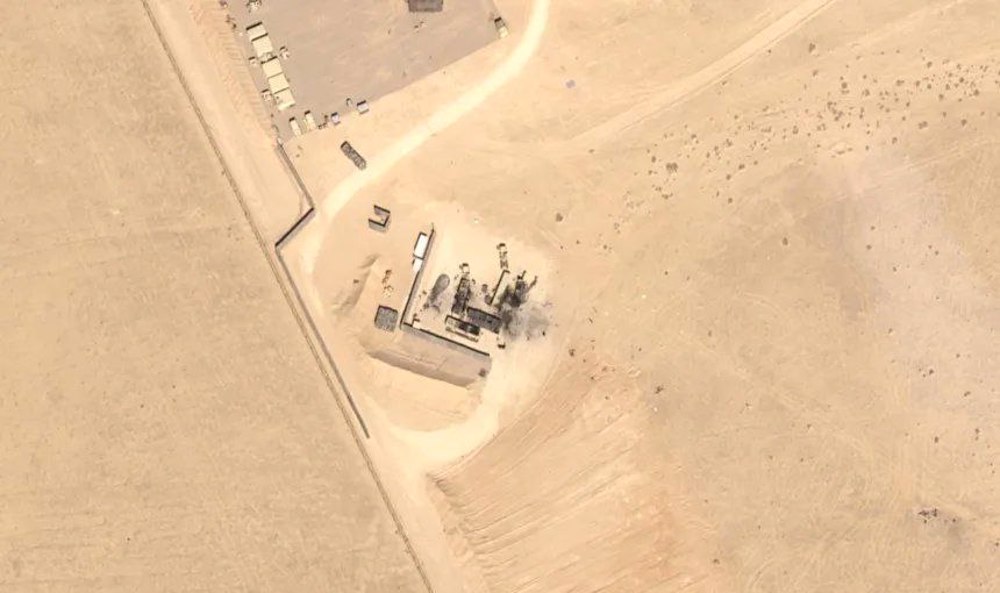
At Muwaffaq Salti Air Base in Jordan, located more than 800 kilometers from the nearest Iranian territory, satellite imagery captured on March 2 reveals the charred remains of an AN/TPY-2 radar that had reportedly been deployed at the base since at least mid-February.
The imagery shows debris scattered across the deployment site, surrounding what appears to have been a fully assembled radar system. Two large impact craters, each roughly thirteen feet in diameter, are visible in the sand nearby, suggesting that multiple precision munitions were employed to ensure the destruction of the system.
Prior to the escalation of hostilities, the base had served as a major hub for American air operations, with more than fifty fighter aircraft visible on the tarmac in pre-war satellite imagery.
The deployment of a THAAD battery at the site fulfilled two key operational objectives: protecting the concentration of air assets from potential ballistic missile threats and extending a defensive coverage umbrella toward Israeli territory.
The strike itself represents a notable demonstration of long-range precision engagement capability, requiring not only a missile with sufficient range but also advanced terminal guidance systems capable of identifying and targeting the radar’s distinctive configuration amid surrounding infrastructure
THAAD base near Al Ruwais in UAE
United Arab Emirates: Systematic elimination of terminal defenses
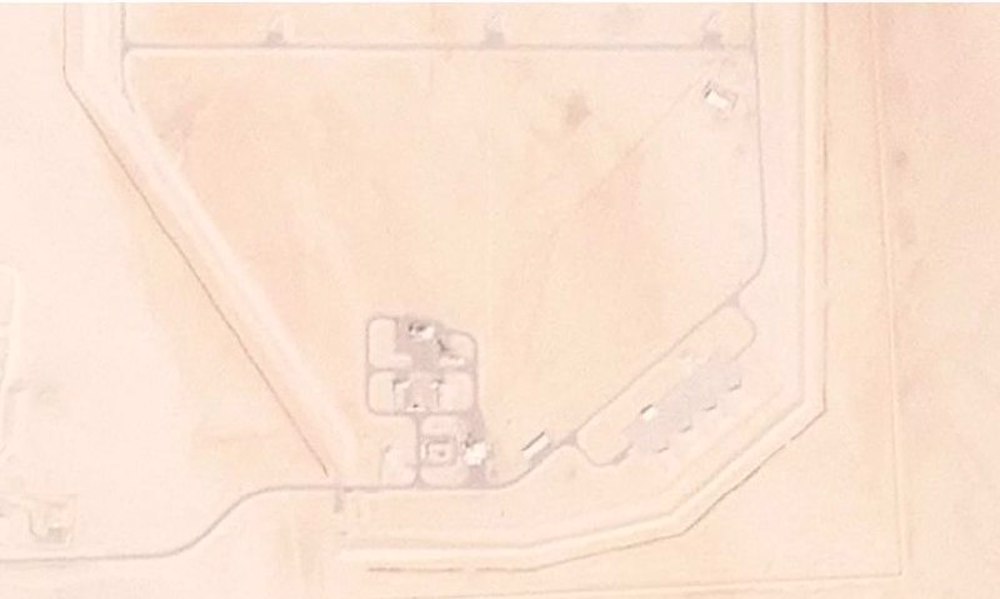
The Al Ruwais facility in the United Arab Emirates, positioned to protect critical energy infrastructure along the Persian Gulf coast, suffered near-simultaneous strikes against both its THAAD radar and the supporting infrastructure that housed the system.
Satellite imagery from March 1, the second day of the war that was imposed on Iran, shows dark markings from apparent strikes on three buildings, including a pull-through vehicle shed specifically designed to shelter the radar system.
The pattern of damage suggests Iranian planners understood not only where the radar would be positioned when active but also where it would be maintained and stored.
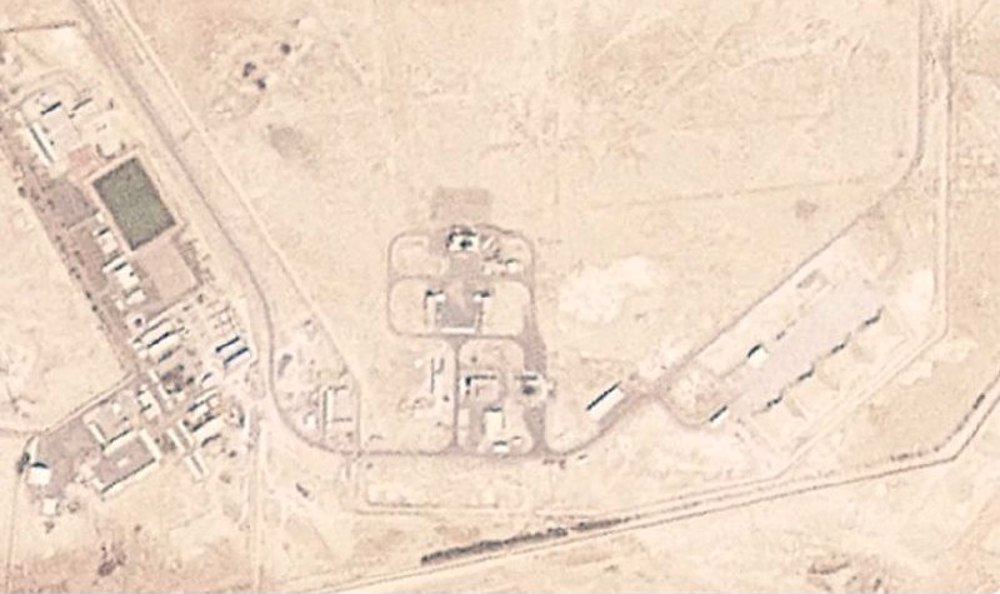
At a second UAE installation near Al Sader, satellite imagery reveals an almost identical strike pattern with four buildings damaged, including multiple vehicle sheds configured for radar storage.
The symmetry between the two attacks suggests either simultaneous execution by multiple strike platforms or a methodical campaign that systematically worked through a target list developed over years of surveillance.
Commercial imagery providers captured before and after images that leave little doubt about the severity of the damage, with burned equipment visible at the precise locations where radar components had been regularly observed.
Qatar: Billion-dollar early warning backbone destroyed
The destruction of the AN/FPS-132 Block 5 Upgraded Early Warning Radar at Umm Dahal in Qatar represents perhaps the single most expensive individual loss of the campaign, with that system alone costing approximately one point one billion dollars when installed in 2013.
Unlike the mobile THAAD radars that can theoretically be replaced by redeploying systems from other theaters, the Qatari early warning radar was a fixed installation designed to provide continuous surveillance of ballistic missile launches across a five-thousand-kilometer arc.
The Qatari Ministry of Defence’s rare public confirmation of the radar’s destruction carries strategic significance beyond the military impact, as host-nation acknowledgment forecloses any possibility of concealing the loss and signals to regional allies that American assurances of protective capability may no longer carry their former weight.
The AN/FPS-132 represents the outer layer of the missile defense onion, providing the strategic warning that enables all downstream systems to prepare for incoming threats. Its elimination compresses reaction timelines from minutes to seconds
Al Sader in UAE
Saudi Arabia: Smoke rising from Prince Sultan Air Base
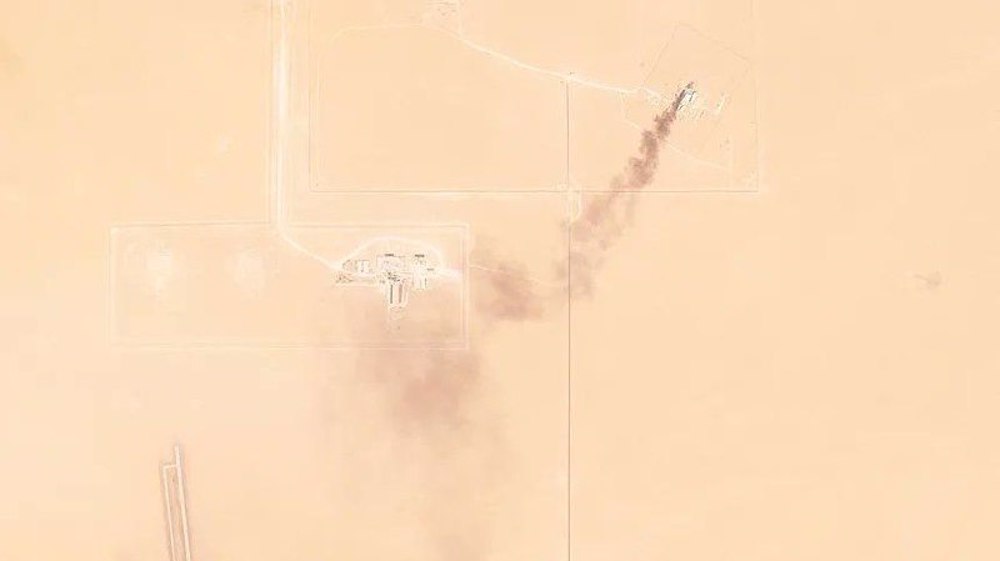
At a site near Prince Sultan Air Base in Al Kharj, Saudi Arabia, satellite imagery captured on March 1 shows smoke rising from a compound where a THAAD radar had been previously positioned, with a tent used to shelter the antenna unit showing extensive charring and debris scattered across the surrounding area.
Imagery from January had shown the radar antenna pointed northeast toward Iran in its operational configuration, suggesting the site was fully functional when struck.
This base hosts dozens of American aircraft and serves as a major command and control node, making the apparent failure to protect a critical sensor positioned within its perimeter particularly embarrassing.
Kuwait: Communications infrastructure and radar domes destroyed
The strikes extended beyond the core missile defense sensors to target the communications infrastructure that enables these systems to function as an integrated network.
At Arifjan base in Kuwait, satellite imagery confirms the destruction of three radomes, the protective spherical structures housing satellite communications antennas that provide the data links connecting distributed sensors to command nodes.
Eight additional buildings related to satellite communications infrastructure were destroyed at separate locations in Kuwait, representing a systematic effort to attack the network backbone.
The AN/GSC-52B radars destroyed in Bahrain represent another category of communications and surveillance assets, providing both satellite communications connectivity and contributing to the space surveillance network.
Their destruction at a facility housing the US Navy’s Fifth Fleet headquarters demonstrates that no American installation in the region can consider itself beyond reach
Prince Sultan Air Base in Saudi Arabia
Strategic calculus: Twenty years of investment destroyed in seven days
The development of the THAAD system began in 1992, with the US Army finally fielding the first operational batteries in April 2012. The journey from initial concept to deployable capability required approximately twenty years and tens of billions of dollars.
The radars now destroyed or severely damaged across at least four countries represent a significant fraction of the total global inventory of approximately twenty units.
Each unit requires years to manufacture, and the destruction of multiple units simultaneously creates a capability gap that cannot be quickly filled.
The financial losses are staggering. Individual AN/TPY-2 radars cost between five hundred million and one billion dollars. The AN/FPS-132 early warning radar cost approximately one point one billion dollars.
The AN/GSC-52B radars, the radomes, the communications buildings, and support infrastructure add hundreds of millions more.
The campaign’s first week has inflicted damages approaching or exceeding ten billion dollars against a target set selected for maximum strategic effect.
Tactical paralysis: The loss means for current operations
The immediate tactical consequence is the effective paralysis of multiple THAAD batteries that now sit blind on their launch positions. Without the AN/TPY-2 radar providing tracking data and fire control solutions, the launchers and their forty-eight interceptors per battery cannot engage incoming threats.
The interceptors themselves, each costing approximately thirteen million dollars, cannot be employed without the radar’s guidance.
The degradation extends to the entire regional defense network. Patriot batteries that relied on THAAD radar data for cueing now face incoming threats with reduced reaction time.
Aegis warships must rely solely on their own SPY radar systems. The integrated battle management system now resembles disconnected nodes fighting local engagements without a common operating picture.
The psychological impact cannot be overstated. Soldiers assured that the most advanced missile defense systems would protect them, but now find their protective shield penetrated repeatedly.
The sight of satellite imagery showing the blackened remains of billion-dollar systems creates a perception of vulnerability that no amount of official reassurance can counter
INFOGRAPHIC: US media point to shortfall in THAAD missile arsenal after nearly a third of its stockpile was deployed in the 12-day war against Iran to defend the Israeli regime.
Global implications: South Korea, Guam, and the strategic reserve dilemma
The destruction of multiple THAAD systems in West Asia has immediate implications for American force posture worldwide, particularly in the Indo-Pacific, where North Korea’s advancing missile program has long justified THAAD deployment.
Reports that Washington is considering relocating THAAD and Patriot systems from South Korea to West Asia reflect the severity of the capability gap.
The THAAD battery in Seongju, South Korea, represents not merely a defensive asset but a political commitment that has survived years of diplomatic tension with China.
Removing it would signal a shift in American priorities, potentially encouraging North Korea to react. Guam, home to another THAAD battery protecting critical American bases, would face similar exposure if its systems were stripped.
The interceptor stockpile faces equally severe pressure. The expenditure of approximately thirty percent of the total THAAD interceptor inventory in a twelve-day aggression in June 2025 demonstrated how quickly these scarce resources can be consumed.
With production capacity limited to approximately eleven to twelve interceptors annually, reconstituting inventory will require years.
Technology question: What Iranian precision reveals about US vulnerabilities
The successful destruction of hardened, defended targets across distances exceeding 800 kilometers reveals Iranian technological capabilities that many Western analysts had previously dismissed.
The terminal guidance required to place a warhead within meters of a specific radar antenna reflects maturation in seeker technology and potentially man-in-the-loop targeting.
The strikes also reveal sophisticated intelligence collection operating for years beneath the threshold of detection, building detailed targeting folders on facilities across multiple countries.
The symmetry between strikes in different countries suggests a targeting process that understood standardized American configurations.
The electronic warfare dimension likely played a critical role in enabling strikes to penetrate defended airspace.
The fact that no Iranian missiles or drones were intercepted before reaching targets across four countries suggests either that defenses were neutralized electronically or that the volume and coordination overwhelmed engagement capabilities
Did you know that Qatar hosts one of the US's biggest military bases in the Persian Gulf, with many air defense systems present, yet none of the American THAAD systems fired a single shot to defend Qatar against the Israeli invasion? pic.twitter.com/GomGDgydQN
Production constraints: Why replacement takes years, not weeks
The industrial base that produces AN/TPY-2 radars operates on peacetime assumptions, with production lines sized to meet gradual replacement requirements rather than the surge demands of major conflict.
The supply chain for specialized components extends across multiple states and countries, with some materials sourced from single suppliers operating at limited capacity.
Even with emergency funding, the time required to produce a single AN/TPY-2 radar cannot be compressed below physical limits.
The most optimistic assessments place replacement timelines in the range of three to five years for a single unit.
The radars destroyed in the first week of March 2026 will not return to the operational inventory until late in the decade at the earliest.
Regional power shift: The new strategic reality
The destruction of America’s premier missile defense assets across four countries fundamentally alters the strategic calculus in West Asia, shifting the initiative decisively toward Tehran.
Iranian military planners who previously had to calculate interception probabilities now face a dramatically reduced defensive threat, enabling expanded targeting options with reduced risk.
Persian Gulf Cooperation Council states that have invested billions in American missile defense now face uncomfortable questions about the wisdom of those investments.
If billion-dollar radars can be destroyed by missiles costing a fraction of that amount, the entire foundation of the Persian Gulf defense relationship requires reexamination.
For the Israeli regime, which has integrated its Arrow and David’s Sling systems with American sensors, the loss of THAAD coverage in Jordan represents a direct blow.
The anti-missile umbrella that previously extended from the Persian Gulf to the Mediterranean now has a gap in its center
The US THAAD missile stockpile was severely depleted during Israel’s war against Iran, raising questions over costs, effectiveness, and the lack of missile defense readiness. https://t.co/aFAbN8RINW
Fiasco verdict: Why two lost radars mean total system failure
Military analysts have begun using language rarely applied to American systems, with experts noting that the loss of a single AN/TPY-2 radar represents an event of significant operational importance while the loss of two constitutes a total fiasco.
The gap between what THAAD was supposed to accomplish and what it achieved against Iranian precision strikes could hardly be wider.
The system’s inability to protect itself while supposedly protecting others constitutes the most damning indictment.
A multilayered air defense architecture should have established protective rings around each THAAD site, with Patriot batteries positioned to intercept threats before reaching billion-dollar radars.
The fact that this protection failed at multiple sites across multiple countries suggests the threat was too sophisticated or the defenders simply overwhelmed.
If radars were struck by ballistic missiles, the embarrassment would be compounded, as this would mean the system designed specifically to defeat ballistic missiles failed not only in its assigned mission but also in self-preservation.
Potential American adversaries from Pyongyang to Beijing study the satellite imagery and draw their own conclusions [end]
Eisenhower Media Network is an organization of expert former military, intelligence, and civilian national security officials who have an independent, alternative story to tell
The US-funded ecosystem of Iranian ‘rights groups,’ Israeli operatives, and monarchist activists has become a revolving door of unverifiable statistics and atrocity propaganda
As deadly riots burn Iranian cities, Western media ignores the shocking wave of violence, turning instead to US government-funded NGOs for data. The one-sided portrayal has helped push Trump to the brink of authorizing renewed US attacks
The Russo-Ukrainian War seems to have been engineered in a laboratory to frustrate people with repetition and analytic paralysis. Headlines appear to be circulating on a choreographed loop, all the way down to the place names. Kaja Kallas at the European Commission recently announced, without a hint of irony, that Europe’s new sanctions package – the 19th one – is the toughest yet. Ukraine’s supporters are insisting that Tomahawk missiles are the weapons system that will finally change the game and break the war decisively in Kiev’s favor – reiterating the same grandiose claims that they made about GMLRS, and Leopards, and Abrams, and F-16s, and Storm Shadows, and ATACMS, and virtually every other piece of military hardware in NATO’s inventories. On the ground, Russia is attacking settlements named Pokrovsk and Pokrovs’ke; it recently captured Toretsk and Tors’ke and is now attacking Torets’ke. The more things change, the more things stay the same.
The analytic frameworks applied to the war have also changed relatively little, buried and obfuscated by the nebulous concept of attrition. On the Ukrainian side, there is continued insistence that Russia is suffering exorbitant losses and straining under the pressure of Ukrainian deep strikes, while Ukrainian setbacks are blamed in large part on the failure of the United States to expand its largesse and give Ukraine everything it needs. Many pro-Russian lines of thinking mirror this and suppose that the AFU is on the verge of disintegration, while the Kremlin is accused of failing to “take the gloves off”, particularly in regards to the Ukrainian energy grid, Dnieper bridges, and dams.
The result is a very strange sort of war. This is an extraordinarily high-intensity ground war. Both armies remain in the field, holding hundreds of miles of continuous front after years of bloody fighting. Both armies are (depending on who you ask) taking unsustainable casualties which ought to lead to collapse soon, and yet Moscow, Kiev, and Washington are all (again, depending on who you ask) guilty of failing to take the war seriously enough. All of this is maddeningly repetitive, and one could be forgiven for tuning out entirely. Even the diplomatic tango between Trump, Zelensky, and Putin, after delivering a few entertaining moments, failed to really move the needle in any discernable direction.
Few would argue that the trajectory of the war changed in an obviously dramatic way in 2025, and it is important to avoid the worn out and clichéd language about “turning points” or “collapse” or any such silly thing. However, 2025 saw several shifts in the war, which will hardly ostentatious or dramatic, are nevertheless very important. 2025 has been the first year of the war in which Ukraine launched no ground offensives or proactive operations of its own. This fact is not only a hint at the threadbare state of Ukraine’s ground forces, but also a testament to the way Russian forces transformed “attrition” from a buzzword into a method of persistent pressure across a variety of axes this year.
In lieu of initiative on the ground, and facing a slow but relentless rollback of their defenses in the Donbas, the theory of Ukrainian victory has shifted in an unacknowledged but dramatic way. After years of insisting that it would achieve maximal territorial integrity – an outcome which would require the total and decisive defeat of Russia’s ground forces – Ukraine has reframed its path to victory mainly as a process of inflicting strategic costs on Russia that mount until the Kremlin agrees to a ceasefire. Consequentially, the debate about arming Ukraine has shifted from a conversation about armor and artillery – equipment useful for retaking lost territories – to a discussion about deep striking weapons like Tomahawks, which can be used to shoot at Russian oil refineries and energy infrastructure. In short, rather than move to prevent Russian from achieving immediate operational objectives in the Donbas, Ukraine and its sponsors are now seeking ways to make Russia pay a price such that victory on the ground is no longer worth it. It is unclear whether they have thought about what price Ukraine will pay in the exchange. Perhaps they do not care.
About Tomahawks
Notwithstanding Ukraine’s attempts to jumpstart indigenous production, it is inevitable that Ukrainian capabilities will be largely determined by the largesse of western sponsors. This aspect of the war took a sudden turn at the beginning of the October when fresh reporting began to circulate that Tomahawk missiles might be on the table for Ukraine. Tomahawks have always been on Ukraine’s wish list (given that the Ukrainian wish list as such consists of essentially all the military equipment in NATO’s combined inventories) but this was the first reporting that they might be under serious consideration.
As is frequently the case, the discussion spiraled away from realistic grounding, with some suggesting that the Tomahawk would be a “game changer” for Ukraine (where have we heard that before?) and the pro-Russian sphere dismissing it as an irrelevant distraction. There’s a tendency to focus on the quality of American weapons systems, casting them as either unrivaled technological marvels or overhyped and overpriced baubles, but this is generally not productive and largely irrelevant to the matter at hand. The Tomahawk, broadly speaking, is exactly as advertised, and provides proven and reliable strike capability at strategic depths in excess of 1,000 miles. In role, range, and payload it is essentially an analog to Russia’s Kalibr missiles (I am begging the enthusiasts to note the phrase “essentially an analog” rather than rake me over the coals over the different guidance systems and other technical minutia). Such a system will always be valuable and would obviously improve Ukraine’s deep strike capabilities.
The “problem” with Tomahawks does not relate to any “problem” with the missile itself, but with its availability and Ukraine’s technical capability to launch them. The Tomahawk is conventionally a ship-launched missile (there is no extant air-launched variant) with a few novel options for ground launch. Ukraine, obviously, would require ground launch systems, and the problem is that these systems are essentially brand new and available in very limited quantities: more importantly, American service branches are in the process of trying to build out these capabilities throughout the decade. Providing ground-launchable Tomahawks to Ukraine in any meaningful numbers would therefore essentially require the US Army and Marines to scrap their own force buildout plans.
There are two basic options for ground launching Tomahawks. One of these is the US Army’s MRC (Mid-Range Capability) Launcher, dubbed the Typhon. This is an enormous tractor-trailer launcher with four launch tubes, first delivered in 2023. It has an enormous footprint – so large, apparently, that the Army is already asking for a smaller replacement – and is intended to give the Army an organic fires component in the gap between the shorter range Precision Strike Missile and hypersonic systems (which do not yet exist). The critical fact is this: the Army intends to field a total of five Typhon batteries by 2028, of which two have been delivered so far. Each battery consists in turn of four launchers, implying that eight out of a planned twenty launchers have been delivered. Even more importantly, both of the currently operational batteries are already deployed, with one in the Philippines and one in Japan. These systems are being actively used in exercises and trials, including an exercise this summer in Australia
The Typhon system gives ground launch capability to the Tomahawk but brings a massive footprint
The situation with the Marine Corps’ launch system is quite similar, although the launch platforms themselves could not be more different. Unlike the lumbering Typhon tractor trailer, the Marines are fielding a significantly more lithe and compact LMSL system, with the tradeoff of a single launch tube compared to the Typhon’s four. What matters is not so much the technical differences, as the fact that the Marines – like the Army – only received their first deliveries in 2023, and they are currently in the process of building out the force. In the case of the marines, the goal is to have a Tomahawk battalion built out by 2030. In fact, the production contract came into effect as recently as 2025.
What does all of that mean? It means that, although the Tomahawk itself is a fine missile, the systems for ground launch are so new and available in such limited quantities that equipping Ukraine with Tomahawks would require either the US Army or the Marines to materially alter their force structure in the near term (through 2030, essentially). These are essentially the opposite of much of the gear that’s been given to Ukraine to this point: far from being inventories of older systems that can be earmarked as surplus or tabbed for replacement, Tomahawk ground launch is a brand new capability that is in the middle of deployment and buildout for the first time.
This is, of course, a layered complication on top of Tomahawk quantities in and of themselves. The issue of Tomahawk availability is both over and under emphasized, depending on the context. The United States has something like 4,000 Tomahawks in its inventories (although half of these are currently inside their cells on American ships), so it is not quite correct to say (as some have) that America is running out of these critical weapons. The issue is that production rates are relatively anemic (generally between 55 and 90 per year) and are fail to replenish the expenditure from even relatively brief strike campaigns, such as the repeated strikes on Yemen. Broadly speaking, then, the issue is not so much that the United States is in immediate danger of running out of Tomahawks, but that procurement schedules are so slow that even relatively minor expenditures can erase multiple years worth of deliveries.
It may be useful, then, to consider Tomahawks in comparison to the ATACMS missiles which have already been provided to Ukraine. Unlike the Tomahawk, the ATACMS is a system which has already been tabbed for replacement, with the Precision Strike Missile in the early phases of its rollout. ATACMS were also compatible with launch systems that Ukraine already had. In comparison to Tomahawks, then, ATACMS are both vastly more strategically expendable, produced in larger numbers, and easier to deploy. Despite all these points in their favor, the United States provided Ukraine with just 40 ATACMS. Even if the Army could be pressured into handing over one or two of its brand new Typhon launchers, it is difficult to imagine that more than few dozen Tomahawks could be spared for Ukraine: a token inventory far too small to wage a sustained strike campaign in the Russian heartland
Peace, Sponsored by Raytheon
Given that Tomahawks for Ukraine would be measured in the dozens, rather than the hundreds, it’s worth asking whether this could actually change anything for the AFU at the front. The answer is clearly no in the long run, but it would be unwise to dismiss the possibility that even a limited tranche of Tomahawks (let’s say 40 to 50 missiles) could help alleviate pressure on Ukrainian forces at the front, provided they were used appropriately. A short term boost to Ukrainian strike capabilities, if deployed against Russian rear areas, could force further dispersal and rationing of Russian assets and temporarily stall Russia’s emerging multi-axis offensive. This could defer the loss of key positions until early 2026. This presumes, however, that the Ukrainians would be content to use Tomahawks against operational targets. In reality, Ukraine can never seem to resist lobbing missiles at targets that have little bearing on the front, like the Kerch Bridge. Indeed, a failure to synergize strikes at depth with operations on the ground is a major reason why the ATACMS achieved so little.
On the other side of this equation, it is a common complaint from the Russian perspective that Moscow has done too little to “deter” the United States from empowering Ukraine’s strike campaign – both by directly providing munitions and supplying the planning, ISR, and guidance systems. This, however, rather misses the point. Russia has done nothing of note to deter the United States because both Moscow and Washington understand fully that there is essentially no appetite (on either side) for a direct confrontation. In the (sensible) absence of a willingness to strike back at NATO targets, there is really nothing Russia can do to deter beyond maintaining its own retaliatory capabilities. The issue is not that Russia has failed to actively deter, but that there is nothing they could do even if they wanted to.
The basic pattern here is well established. The United States has done what it can to backstop Ukrainian strike capabilities, but it has held them at a level where Ukraine’s damage output falls far short of decisive levels. So long as that is the case, Russia has clearly demonstrated that it will simply eat the punches and retaliate against *Ukraine*. Hence, when the United States helps Ukraine target Russian oil facilities, it is Ukraine that receives the reprisal, and it is Ukraine which has its natural gas production annihilated as the winter approaches. In a sense, neither side is really trying to deter the other at all. The United States has raised the cost of this war for Russia, but not enough to create any real pressure for Moscow to end the conflict; in response, Russia punishes Ukraine, which is something the United States does not really care about. The result is a sort of geostrategic Picture of Dorian Gray, where the United States vicariously inflicts cathartic damage on Russia, but Ukraine accrues all the soul damage.
In the case of Tomahawks, the risk-reward calculus is just not there. Tomahawks are a strategically invaluable asset that the United States cannot afford to hand out like candy. Even if the launch systems could be provided (highly doubtful), the missiles could not be made available in sufficient quantities to make a difference. The range of the missiles, however, significantly raises the probability of miscalculation or uncontrolled escalation. Ukraine shooting American missiles at energy infrastructure in Belgorod or Rostov is one thing; shooting them at the Kremlin is another thing entirely.
There is, however, another aspect of this which seems to be garnering little attention. The biggest risk of sending Tomahawks is not that the Ukrainians will blow up the Kremlin and start World War Three. The bigger risk is that the Tomahawks are used, and Russia simply moves on after eating the strikes. Tomahawks are arguably one of the last – if not *the* last – rung in the escalation ladder for the USA. We have rapidly run through the chain of systems that can be given to the AFU, and little remains except a few strike systems like the Tomahawk or the JASSM. Ukraine has generally received everything it has asked for. In the case of Tomahawks, however, the United States is running the most serious risk of all: what if the Russians simply shoot down some of the missiles and eat the rest of the strikes? It’s immaterial whether the Tomahawks damage Russian powerplants or oil refineries. If Tomahawks are delivered and consumed without seriously jarring Russian nerves, the last escalatory card will have been played. If Russia perceives that America has reached the limits of its ability to raise the costs of the war for Russia, it undercuts the entire premise of negotiations. More simply put, Tomahawks are most valuable as an asset to threaten with.
Reading between the lines of President Trump’s public statements recently, it seems likely that he has rationally weighed these considerations. Publicly, he used the threat of Tomahawks to try and force Russia to keep negotiating, and he’s received a commitment for another meeting with Putin for his trouble (more on that later). He has now, for the time being, shelved the Tomahawk plan, commenting that “we need them” and applying the usual Trumpian linguistic style to the broadly accepted issue of inventories which I have outlined here. Tomahawks are simply more valuable to the United States as a tool to threaten escalation, rather than as an actual kinetic asset in Ukrainian hands, and so long as Trump keeps his powder dry he can re-raise the issue later.
Ultimately, perhaps, this discussion is not about Tomahawks at all. These missiles, rather, are simply a totem which demonstrate two important dovetailing points. First, that American resources are not infinite, and as the United States reaches deeper into its bag to help Ukraine, it begins to grab at strategically critical assets that the US military simply cannot spare. Secondly, we must remember that America’s policy in Ukraine is a game of titration, with Washington probing the limits of Russia’s willingness to “eat the strikes” without allowing the reprisal violence to spill out of Ukraine.
The Big Banana: Russia’s Operational Schema
At this point, it’s becoming increasingly difficult to say anything meaningful about the actual operational progression on the ground. There are several reasons for this. First and foremost, the war has now gone on so long and is consistently moving at such an apparently glacial pace that most people simply do not care at this point whether Russia holds Yampil or not, or whether they have advanced past the rail line in Pokrovsk. There is severe fatigue (or perhaps boredom is the better word) with the status of an interminable sequence of apparently small settlements, industrial complexes, and forestry plantations, and as a result most people have essentially checked out. Not the least among these must surely be President Trump, who apparently chucked Zelensky’s map of the frontline and complained that he was tired of being shown the same maps over and over again.
On the other hand, we have the true obsessives who continue to dutifully follow the frontlines regularly and are voluntarily intaking daily updates. We end up with a bifurcated system where some people are still highly plugged in to the micro movements on the battlefield, but most people just don’t care, and we can hardly blame the latter. I think it would be profitable, then, to think about the broader Russian operational scheme, what it has achieved, and what it aims to achieve in the coming year. This is probably more interesting and less repetitious than fixating on the exact positioning within Pokrovsk or Kupyansk.
There are two larger points that I think are worth making before we look at some specifics.
First and foremost, much of the battlefield analysis that comes out (particularly from western analysts) makes firm pronouncements as to what constitutes Russia’s “primary” and “secondary” efforts, but these are essentially interpolated and frequently incorrect. For example, it’s become a fairly mainstream conception that Russia’s “primary” point of effort right now is the capture of Pokrovsk, but this does not actually seem supported by Russian actions. There is no particular advantage to be gained for Russia by pushing to capture Pokrovsk as soon as possible – the city is already in a stranglehold partial encirclement. To be sure, Pokrovsk *was* a major logistic hub for Ukrainian forces, but it can no longer serve that role and was sterilized as a transit hub months ago, once it became a frontline city. The opposite side of this coin is that other Russian axes of advance, particularly in southern Donetsk and the bend of the Donets River, are dismissed as “secondary” efforts. This is a major mistake, and I will attempt to show that these are critical advances where Russia is shaping the battlefield to its advantage for follow on operations.
Secondly, it should be understood and appreciated that Ukraine has lost essentially all battlefield initiative. In 2024, the AFU was able to assembled a mechanized reserve and launch their operation into Kursk. This operation ultimately failed and resulted in severe Ukrainian losses, but this is unrelated to the fact that Ukraine was still able to accumulate forces and pursue offensive operations on its own initiative. In 2025, however, Ukraine has been in a permanent state of reactivity. This was the first year of the war in which Ukraine did not launch any proactive operations or counteroffensives of its own, and Ukrainian hopes have instead pivoted to their strategic strike campaign against Russian oil facilities.
In a larger sense, the effect of attrition can be seen year by year with the shrinking scope of Ukraine’s proactive operations. In 2022, Ukraine was able to launch a pair of widely separated offensives which yielded modest successes: an offensive out of Kharkov rolled the front back over the Oskil River (though it failed to collapse the Lugansk shoulder), meanwhile, a series of battles outside of Kherson failed to break through the Russian lines, but they did play a role in persuading the Russians to abandon their bridgehead over the Dnieper. The point of course is not to once again autopsy these offensives, but to point out that there were two of them, that they were meaningful in scale, and they did result in important territorial gains for Ukraine. In 2023, by contrast, Ukraine launched a single theater-level offensive in the south, which failed. In 2024, we got the Kursk operation: smaller and less lavishly equipped than 2023’s Zaoprizhia offensive, and aimed at a peripheral theater. This year, there were no proactive Ukrainian operations at all. There is a very clear pattern at play here, with Ukraine’s offensive punch progressively shrinking before disappearing entirely in 2025. This was a year of essentially uninterrupted Russian initiative
Putting Ukraine permanently on the backfoot is a significant Russian achievement, and it is owed to a few converging factors. Obviously, the attrition of Ukrainian forces is a major factor. We’ve gone through the flailing Ukrainian mobilization, the cannibalization of its forces, and the general lack of reserves in detail on several occasions, and there’s no need to retread that ground here. Suffice it to say, Ukraine’s ability to husband forces for offensive operations appears to be severely degraded. Russia has exacerbated this problem by pressing steadily on a variety of different axes. At the moment, there are no fewer than seven Russian axes of attack, pressuring a slew of cities all along the line. This creates a series of defensive emergencies, maintains the burn rate on Ukrainian forces, and fixes them on the line. Finally, in a point to be detailed shortly, Russian advances have begun unraveling Ukraine’s logistic connectivity, which puts strain on supply and prevents the concentration and accumulation of forces
Eastern Ukraine: Approximate Situation and Axes of Russian Advance
Now, for the development of the front and the premise of the Russian offensive scheme. The main point that I want to impress is essentially as follows: rather than fixating on Pokrovsk, Russia’s advances across Southern Donetsk and on the inner bend of the Donets River ought to be thought of as vital operations which have severely disrupted the coherence of both the Ukrainian front and their logistics. This has the triple effect of preventing the Ukrainians from launching offensives of their own, accelerating the attrition of Ukrainian forces, and shaping the front for the coming operation to capture the Slovyansk-Kramatorsk agglomeration.
To begin, let’s consider the progress that Russia has made in southern Donetsk, both in raw territorial terms and its implications for Ukrainian logistic connectivity. To demonstrate this, I’ve pulled maps from DeepState (again, a Ukrainian mapping enterprise) for August 2023 (when Ukraine was attempting its counterattack out of Orikhiv) and for October 20th, the week of this writing. I have noted both the length of the southern front (obviously a linear approximate, as the actual front has many bends and bulges) and highlighted the key highways that Ukraine uses to run the backbone of its logistics
The Southern Front: 2023 vs 2025
Now, one thing that is worth noting is that the Russians are currently positioned to roll up this front even further. Ukrainian defensive lines are primarily oriented towards on a north-south axis. Once Russian forces cleared Kurakhove, they entered the seams in these defensive lines – that is to say, they are advancing laterally along the face of the prepared defenses, rather than trying to bash through them from the front. This is one reason why their progress has been relatively steady and uninterrupted. Now approaching the “elbow” in the lines, where they pivot southward, and having crossed the Yanchur River, the Russians are entering a substantial space that lacks meaningful prepared defenses. Using the Military Summary map (Ukrainian fortifications are mapped with yellow dots), the void in the defense is fairly obvious as the Russians work their way into the elbow of the line
Apart from the obvious development of note here – that Russian forces have, to this point, rolled up roughly half the length of the southern front and are positioned to roll up another ten to fifteen miles – we want to note two things which are emblematic of the way the war is going for Ukraine, but curiously receive little attention. First, the compression of the front is robbing the Ukrainians of the maneuver space which made it possible for them to stage and assemble forces for their counteroffensive in 2023. Two years ago, there was a wide, lateral buffer zone around the Ukrainian staging area in Orikhiv, and Ukrainian forces had access to multiple highways where they could disperse forces in their marching columns and run their logistics.
Today, that buffer zone is gone, as is the easy access to several of the branch highways. The Russian advance, which started with the breakthrough at Ugledar and Kurakhove last year and which has now rolled up some 50 miles of front, has essentially sterilized Ukraine’s capacity to attack in the south, because they have neither the space nor the roads to safely accumulate forces here. It has also shattered the interconnectivity of Ukrainian logistics: rather than having several highways to shuttle troops and material to the east, Ukraine now has to support several disconnected logistic fronts with individual highways. More to the point, there is no longer a single Donetsk “front” to speak of, but rather a series of logistic fronts: one in the south, around Orikhiv, another at Pokrovsk, and the largest one in the Slovyansk Banana. These are lacking lateral connectivity to each other for the Ukrainians due to the wedges that the Russians have forced in the front, particularly in the south, funneling logistics and reinforcements down individuated corridors.
The bigger issue, however, lies farther north on the Pokrovsk and Donets axes, and in the way that they synergize. People who are focusing, to the exclusion of all else, on when and how Russia will capture Pokrovsk are failing to see the bigger picture, and indeed are not even trying to understand it.
The ultimate Russian operational objective (in this phase of the war, at least) is the belt of cities which runs in an arc from Slovyansk to Kostyantinivka, which I affectionately call “the Slovyansk Banana” due to its curved shape. A cursory look at the map shows us why the very operations that are being dismissed as secondary efforts are in fact critical axes of Russian effort which are shaping the battlefield for the attack on the Banana
There are two very important facts about the Banana, from the perspective of operational geography. The first is that, although the combined mass of the agglomeration is far larger than any of the urban areas that have been fought over to this point, the Banana is relatively difficult to defend because it sits on the floor of a river valley: the Kazennyi Torets flows through all the cities in the Banana before it flows into the Donets. Russian forces approaching the city from the southwest, the east, and the north will all be advancing along the high ground that overlooks the cities on the floor.
The second important fact about the Banana is that, despite its size, it is supported by just two highways which approach from the southwest and northwest respectively, funneling into the Banana like a wedge. Taking the northern highway/MSR (the E40 highway) as an example, we see that Russia’s operations inside the Donets bend are hardly secondary efforts: they are vital shaping operations linked to the integrity of the Banana. The E40 highway tracks the Donets bend very closely (it generally stays within five miles of the river. If the Russians sustain their progress north of the Donets and reach the river at Bogorodychne or Svyatogirsk, it will not only put E40 under persistent drone attack but also curl the defensive line behind the Banana, to say nothing of the enormous pressure on the Siversk salient.
On the Pokrovsk front as well, Russia’s progress is being misinterpreted. After their breakthrough at the end of the summer, Russian forces have consolidated the bulge north of Pokrovsk (despite weeks of Ukrainian counterattacks) and are steadily working their way towards Rais’ke and Sergiivka. This is not about Pokrovsk at all – reaching Rais’ke would put Russian forces directly in the backfield of Kostyantinivka, on the supply lines to the underside of the Banana.
I am not suggesting at all that Russian forces are on the verge of some great offensive surge that will carry them into the heart of the Banana instantly. However, there is a fairly well established Russian operational methodology in this war, which involves working their way methodically into Ukraine’s logistical lanes and seams, segmenting the front and strangulating their strongpoints, forcing them to supply frontline strongholds with single file logistics and dirt roads. They did it in Bakhmut, and Avdiivka, they are doing it in Pokrovsk, and they are shaping the front to attempt this on a large scale in the Banana
Assault on the Banana: Coming 2026
The general point that we are trying to make here is that dismissing Russian advances in the Serebryanka Forest, the emerging bulge north of Pokrovsk, and their move into the Donets Bend as “secondary efforts” is mistaken. Zooming out to the appropriate scale shows that these are concentric operations, shaping the front for a 2026 assault on the Banana – moving towards the E40 road from the north, bending the defensive shield around Siversk, and working into the underbelly of the Banana through Rais’ke.
This is, perhaps, a long way to go for a short drink of water, but there are a few basic points here that get completely missed when the view of the front is preoccupied with the fighting inside Pokrovsk and Kupyansk:
Russia’s advance out of Kurakhove across the southern front is not a secondary axis. They have rolled up half of the southern front, condensing Ukrainian forces into a compact space which sterilizes their ability to attack in the south.
Broad Russian pressure across a half-dozen axes maintained a steady burn rate on Ukrainian forces and prevented the accumulation of forces for proactive operations. 2025 has been the first year of the war in which Ukraine has not launched any offensive operations on its own initiative.
Advances in the Donets bend and the interstitial space between Pokrovsk and Kostyantinivka are not subsidiary or secondary operations: they are critical shaping operations that are moving concentrically toward the Banana.
To be frank, the general mood of optimism in the Ukrainian infosphere, which lasted for much of the summer, struck me as remarkably odd. The frontline has yielded no real good news for Ukraine at any point this year. Beyond the broader strategic point, that Ukraine has lost the initiative and does not seem capable of getting it back, Russia is in the process of capturing two important urban centers (Russian troops are in the city centers of Pokrovsk and Kupyansk), it has begun the assault on at leas two more (Lyman and Kostyantinivka), it has rolled up half of the southern front, and cleared most of the inner Donets-Oskil bend. The Banana is on deck for 2026.
Ukraine’s Cost Theory of Victory
One thing that has become apparent over the last year is that Kiev has abandoned previous notions of outright victory on the battlefield and adopted a new strategic framework predicated on imposing unacceptable costs on Russia, so that Moscow will agree to freeze the conflict.
This is a subtle and unspoken yet extremely important distinction. It is easy to miss, because both Ukrainian leadership and Ukraine’s western backers continue to speak of Ukrainian “victory” and the possibility of Ukraine “winning” the war. What is crucial to understand is that the “victory” that they speak of now is categorically different than the victory of 2022 and 2023. In the first years of the war, it was possible to at least speak of Ukraine taking the initiative to advance on the ground and retake territory. There were concrete examples of Ukrainian offensives in 2022, and the battle in Zaporizhia – although unsuccessful – showed that it was at least possible for Ukraine to attempt a proper mechanized offensive.
Therefore, in the first years of the war, when leaders in Kiev and Brussels and London and Washington spoke of Ukrainian victory, they essentially meant the defeat of the Russian ground forces and the reconquest of much (or all) of the Donbas. The Kursk Operation of 2024 began to split the difference: Ukraine still had some resources to mount proactive operations, but these operations were no longer aimed at the dense eastern front and instead aimed at relatively soft subsidiary fronts with an eye to out-levering the Russians.
Today, with the Ukrainian army stuck in a permanent state of reactivity and slowly receding defense, it no longer makes any sense to speak of Ukrainian victory in the most straightforward sense, which is to say victory on the battlefield – no matter how tenaciously or bravely the Ukrainian rank and file continues to fight in essentially intolerable circumstances. Instead, Ukrainian “victory” has been transmogrified to mean essentially that Russia absorbs such exorbitant costs that it agrees to some sort of ceasefire without preconditions.
The costs to be imposed on Russia are implicitly assumed to be a mixture of battlefield casualties and damage to strategic assets inflicted by Ukrainian air strikes, and in regards to the latter Ukraine seems to be particularly placing its hopes in a strategic strike campaign against Russian oil. Ukraine’s attempts to disable Russian oil production and refining have dovetailed with ever more aggressive sanctions from the United States against Russian fossil fuel exports – although it is worth noting that the limited price response to these sanctions indicates that markets expect that Russian oil will continue to flow.
Trump’s suggestion that Tomahawks may be on the table for Ukraine must be seen as a constituent element of this new strategy and theory of victory. And this, ultimately, is very important to understand. Tomahawks are not being bandied about because anybody (in Kiev or Washington) believes that 50 cruise missiles will allow Ukraine to defeat the Russian Army and recapture the Donbas. Tomahawks were mentioned because the Ukrainian alliance is threatening to cripple the Russian fossil fuels industry (through a mixture of sanctions and kinetic strikes on production facilities) unless Putin agrees to a ceasefire.
This is why it is wrong to be surprised that Trump abruptly cancelled his meeting with Putin and instead announced more sanctions. There’s nothing abrupt or erratic about this. Threats to Russian oil are now, without exaggeration, the main lever that the Ukrainian bloc has against Russia. It certainly should not have been a surprise that the Kremlin, which has reiterated the same fundamental war aims since day one, was not excited about coming to Budapest to freeze the conflict, and neither should it surprise us that Trump would instead prefer to pull harder on the oil lever. The two powers are playing entirely different games: Russia is slow-walking negotiations while it advances on the ground, and the United States is playing a pain game designed to raise the costs for Russia
We have fundamentally reached an impasse when it comes to negotiations. For Moscow, negotiations with the United States are essentially a way to string Washington along. Moscow feels that it is winning on the ground, therefore a diplomatic impasse suits Russian interests. When western leadership complains that Russia does not seem interested in ending the war, they are correct, but they are missing the point. Russia is not interested in ending the war right now because doing so would not serve Russian interests. The Banana is in the crosshairs, and a ceasefire now would be an egregious compromise when victory on the ground is in sight.
The sense of urgency that Washington feels to end the war – mainly by yanking furiously on the oil lever until the Kremlin cries uncle – stems from the fact that this is now the only sort of victory that Ukraine can hope to win. The ground war has been written off as a total loss, and all that remains is to lob missiles and drones at Russian refineries, sanction Russian firms and banks, and harass shadow tankers until the costs become intolerable. The longer the Ukrainian ground forces can hold the line the better, but this is merely a matter of limiting the downside. The fact that Russia can retaliate disproportionately against Ukraine barely factors into this thinking.
The key point here, however, is that the concept of Ukrainian victory has been completely transformed. There is now no real discussion of how Ukraine can win on the ground. For the Ukrainian bloc, the war is no longer a contest against the Russian Army, but a more abstract contest against Russia’s willingness to incur strategic costs. Rather than preventing Russian capture of the Donbas, the west is testing how much Putin is willing to pay for it. If history is any guide, a game predicated on outlasting Russia’s strategic endurance and willingness to fight is a very bad game to play indeed [end]
Situation map in the evening of May 10, 2023 (RYBAR)
May 12, 2023
The fighting is going on in Bakhmut and in the evening, Yevgeny Prigozhin, head of Wagner private military company (PMC), states that the Atlanticist forces are controlling less than two square km
In Khmelnytskyi, western Ukraine, about 325 km southwest of Kiev, Russian cruise missiles or/and drones destroy an ammunition depot. Secondary explosions and blaze are tremendous. At 4:52 am, local time, the European Mediterranean Seismological Centre (EMSC) records 3.4 magnitude shocks northwest of the city
(CCTV screenshot, despite the Ukrainian censorship)
When will we finally stop putting all the eggs in one basket ?
comments Yuri Kasyanov, a former Ukrainian official. The targeted facility was concealing a huge amount of ammunition and high-tech military equipment from NATO countries.
May 14, 2023
The day after the raid, the firefighters are still using robots to extinguish the destroyed ammunition depot
(Social networks, despite the Ukrainian censorship)
If Russia had used nuclear ammunition, the radiation would have started rising on May 13, not on May 12. Ukrainian journalist and member of Svoboda [liberty], a Nazi political party, Ihor Mosiychuk sounds the alarm, advises to take children away from the epicenters of the explosions.
A dirty bomb is combining radioactive material with conventional explosive, in order to disperse the former. Through the stockpile in Khmelnytskyi of the British depleted uranium (DU) armor piercing (DUAP) shells, Ukraine has likely and unintentionally made its own dirty bomb
(The Daily Mail on March 22, 2023)
May 16, 2022
In the previous night, Russia conducted a raid in Kiev, where the US had delivered a Patriot air defense system, which launched at least 20 SAMs (surface-to-air missiles), as shown in Ukrainian CCTV footage. Each SAM is costing €5,275,000, for a €105,500,000 total. But at the end, a Russian Kinzhal [dagger] hypersonic missile demilitarized the US air defense system, which is costing $1.1 billion
(Screenshots)
In the morning, some US SAMs are found in Kiev. This one has not hit a building
(Social networks)
May 17, 2023
The Russian defense ministry details that the raid in Kiev the day before has managed to destroy one radar station and five SAMs launchers. Over a month, the shares of Raytheon Technologies Coporation, the manufacturer, have lost 7%.
A damaged and abandoned British Spartan APC on May 18 (Photo Sketches, screenshot)
Except some armored personnel carriers (APCs), mostly destroyed or seized, no other Western armored vehicles, no Panzekampfwagen, have been involved so far on the battlefield. At 3:50 pm, local time, one year after another liberation, the surrender in Mariupol of Nazi Azov regiment, Yevgeny Prigozhin announces that the Russian forces have achieved a complete victory in Bakhmut, Donetsk People’s Republic, Donbass, Russia. No Atlanticist fighter remains alive in the city
(Screenshot)
I do not think that a few dozen Western tanks would turn the tide in Donbass or Ukraine. But the spectacle of their combustion may have a larger psychological and political impact than their military influence. That is the reason why failing a real counter-offensive so far, they have not been involved. Because the way the Atlanticist forces have been bled since August 2022, in the trap of Bakhmut meat grinder, may have ruined the opportunities for such a counter-offensive.
May 22, 2023
In order to ward off the psychological impact of the humiliating defeat in Bakhmut two days earlier, Ukraine is raiding border villages in Russia. A few motorized/mechanized platoons are involved. Noise and panic are the goals. Fake alarming messages are simultaneously addressed to the Russian citizens through social networks. That is a psychological operation (PSYOP).
The targets are in Grayvoron district, Belgorod region
(Ukrainian social networks)
about 80 km northwest of Kharkov
(Google Maps)
The assaillants are members of Svoboda Rossii [Freedom of Russia] and the Russian Volunteer Corps (Russkiy dobrovol’cheskiy korpus, RDK), a bunch of Nazi defectors, who have deserted recently or settled in Ukraine for years, are usually working for the psychological department of the Ukrainian military intelligence (GUR), which confirms the operation as its own
Their vehicles are mostly US, MaxxPros and Humvees
Here is a US MaxxPro in a Ukrainian video near Grayvoron on May 22. But the fighter at the forefront is not Russian, is displaying the chevron of a Ukrainian Nazi paramilitary organization, Tradytsiya ta poryadok [tradition and order] (screenshot)
As usual after enough noise, the assailants are endeavoring to avoid direct confrontation with the Russian forces (border guards, FSB, national guard, army) and to retreat to Ukraine.
May 23, 2023
In the morning, the Russian defense ministry claims scores of dead militants in Belgorod region, releases a video which is showing air strikes
(Screenshot)
Journalists share other documents, which are disclosing enemy corpses, destroyed Humvees and one of the seized MaxxPros
Since September 2022, all Atlanticist military vehicles in Ukraine are displaying the Balkenkreuz, German thick white cross during WW2
More than half of the assailants may have been killed. That is a carnage for a psychological operation, that Kiev does not comment further. Ukraine has usually no problem with the sacrifice of fighters. As usual, the commando may have let numerous mines behind
(Official)
Meanwhile, Volodymyr Zelenskyy visits the armed forces in the area of Ugledar and Maryinka, still occupied part of Donetsk People’s Republic (DNR), where Kiev is reinforcing its positions but the Russian army is still advancing.
May 24, 2023
Four days after the Ukrainian defeat in Bakhmut, the Russian navy manages to destroy three unmanned surface vessels (USVs) and their explosive payloads, which race toward a military ship
(Russian defense ministry, screenshots)
The attack occurs about 140 km northeast of Bosphorus. Where the drones operate from ? Probably not Bulgaria nor Turkey, rather another ship. Ukraine is unable to carry out such operation alone, has at least received air intelligence from abroad. Once more, NATO attacks Russia through the Black sea grain initiative corridor
(Google Maps)
The victorious ship is Ivan Khurs, a signals intelligence (SIGINT) vessel, Yury Ivanov-class, which is ensuring the security of the Turkish Stream and Blue Stream gas pipelines in the exclusive economic zone of Turkey
Ivan Khurs transits Bosphorus on August 30, 2021 (Yörük Işık)
These Ukrainian USVs are already known, are boarding some Canadian-made navigation modules
A run aground Ukrainian USV near Sevastopol on September 21, 2022 (social networks)
Russia already blamed United Kingdom for its involvement when on October 29, 2022, nine drones and seven torpedoes attacked Sevastopol harbor, Crimea, were destroyed before reaching the base of the Russian Black sea fleet.
Meanwhile, the Ukrainian defense minister, Oleksii Reznikov shares on Twitter a photo that his UK counterpart, Ben Wallace, has dedicated
A Su-24 tactical bomber is carrying a British Storm Shadow cruise missile. The postcard is also identifying the 7th tactical aviation brigade, which is based in Starokonstantinov. A gift to the Russian intelligence.
May 25, 2023
The video surfaces on Ukrainian social networks. The dialogue between the protagonists is explaining what has happened a few second before : a company leader, who was disagreeing, has shot his battalion commander, who was endeavoring to send his men to the slaughter
I have blurred the face of the victim (screenshot)
The incident may not be the first one. The context is harsh for the Ukrainian cannon fodder of the proxy war that NATO is conducting in Donbass and Ukraine. Many amateur videos have already shown that men who have escaped mobilization, are abducted in the streets or even at home, in order to replenish the ranks. Excluding Wagner losses in Bakhmut, the Ukrainian military casualties are likely ten times the Russian ones. Women are demonstrating in the cities for news about their alleged missing relatives.
War is a simple art, all execution
said Corsican general Napoleone Buonaparte. Through their support, NATO countries are depleting their own stocks, but with more guns and more ammunition, the Russian fire power is far higher. Moreover, airstrikes and missiles are targeting the Atlanticist forces in the deep of the Ukrainian territory. The current Ukrainian military fatalities may be over 250,000.
May 26, 2023
Despite the claims of the Ukrainian propaganda and its lackeys in the West, victorious Ivan Khurs docks without damage in Sevastopol
(Screenshot)
May 27, 2023
Strike in Mariupol on May 26, 2023 (screenshot)
For several days, the Atlanticist forces are shelling with US rockets and British Storm Shadow cruise missiles in the deep of the Russian territory. The strikes are spread along and around a line from Vasilyevka, on the left bank of Dnieper river, to Berdyansk, on the Black Sea, about 140 km to southeast, also in Zaporojie region. If successful, an offensive along the same axis may isolate Crimea from mainland Russia
(Google Maps)
May 28, 2023
The situation is improving in Ukraine. Three days ago, a company leader shot a battalion commander, in an amateur video which was the first evidence of a mutiny. Today, another document is showing that young people have beaten a recruitment sergeant and enabled the escape of who would have been sent to the meat grinder
(Screenshot)
For about a year, we have seen the evidences of recruits violent abductions in Ukraine. I was wondering how long it would last before the first cases of legitimate and collective rebellion.
May 29, 2022
Russia is conducting a new wave of strategic strikes all over Ukraine, aimed at military targets on airfields. In Starokonstantinov for example, about 250 km southwest of Kiev, a stock of British Storm Shadow cruise missiles is hit, as well as planes supposed to launch them, thanks to Oleksii Reznikov (cf. supra, May 24). In the capital, people are seeking refuge in the subway
(Social networks)
The actual threat is not Russian. The Atlanticist air defense is launching volleys of US SAMs, which are later raining on the city
(Social networks)
President of Ukraine in June, after the right-wing coup in Kiev, late February 2014, Petro Poroshenko disowned and threatened the people who were demanding autonomy in Russian-speaking Donbass
our children will go to schools and kindergartens, their children will sit in basements. Because they can do nothing. This is how we will win this war
That was the beginning of the Ukrainian terrorism. History is cruel and today, Poroshenko is sitting in a cellar
(Social networks)
The raid is a success because Kyrylo Budanov is angry. The head of the GUR threatens to make Russia pay, what may mean new terrorist operations
(Screenshot)
May 30, 2023
As retaliation for the successful strikes of military facilities the day before, Ukraine targets Moscow with drones. Three ones are jammed, the air defense shoots five others down, according to the Russian authorities, all fall in western suburb. Three ones hit however residential buildings but fortunately, nobody is injured
(Screenshots)
June 1, 2023
In the vein of the whole British press, the Guardian publishes a complacent article about the training of new recruits who west of Bakhmut, have replaced the severe losses in the 3rd Ukrainian assault brigade, which was formed in November 2022, with the depot of Azov regiment, a Nazi formation within the Ukrainian national guard
(Emre Çaylak / The Guardian)
Like ourselves, the subjects are waiting for the Atlanticist counter-offensive. They are aspiring to seize back the city.
A few days before, Yevgeny Prigozhin detailed the human cost of the first leg. Wagner lost 20,000 fighters killed in action. Ukraine consumed 31 brigades. The Atlanticist military fatalities were 55,000, including 6,500 foreigners. And the Russians were the assailants.
June 2, 2023
Due to the greater Russian firepower, strategic strikes on lines of communication and ammunition depots, a Ukrainian strategy focused on politics and propaganda, huge Atlanticist losses, the sacrifice of dozens brigades in Bakhmut, Ukraine appears unable to conduct a successful counteroffensive, despite the depletion among its Western sponsors of their military resources
Destruction in Shebekino, a Russian town at the border, about 100 km northeast of Kharkov (social networks)
Rather than drawing the political conclusions, but as a result of the incitement from NATO and its free-trade area, the European Union, historical hotbed of Nazism, Ukraine is relying once more on terrorism. For about a week, after a PSYOP (cf. supra, May 22) in the same Belgorod region, the Atlanticist artillery is heavily shelling civilian areas at the border. The same terrorist strategy is enforced in Donbass for nine years, was one of the reasons for the Russian special military operation.
June 3, 2023
Ihor Zhovkva is deputy head of the presidency office. In an interview for the Times, amid usual Ukrainian lies for a complacent press, he states
if you want to start a successful counter-offensive you need everything at your disposal, including artillery, armoured vehicles and tanks, so probably we don’t have enough
That confirms that the Russian strategic strikes on ammunition depots are efficient, are exempting the Ukrainian cannon fodder from a new carnage, because Volodymyr Zelenskyy and his NATO sponsors have no conscience.
June 4, 2023
Maybe the first test of the Russian defenses at the border between Zaporojie region and DNR, about 130 km north of Berdyansk, where an Atlanticist mechanized battalion is attacking throughout the day
In order to thwart the attack, over a width of 20 km, from Novodaryevka, Zaporojie region, to Neskuchnoye, DNR, the Russian air forces take also action, on the front line and in the deep, against several other battalions in reserve.
June 5, 2023
I think that the counteroffensive will be when and where NATO Panzerkampfwagen will be committed. In a region about 140 km north of Berdyansk, where Ukrainian formations have already tested the Russian defenses the day before, a few Leopard 2 are spotted in Novodonetskoye, a village that the assailants manage to seize, about 80 km southwest of Donetsk
As expected, the Atlanticist losses are already significant and the first photos of abandoned, likely damaged Western AFVs, surface on social networks. These are French AMX-10 recce vehicles
In the night, the Russian defense ministry counts 137 enemy armored vehicles, including 25 tanks, all destroyed that day in the same region. The Atlanticist forces would have lost eight Leopards and three AMXs.
June 6, 2023
(Screenshot)
Terrible news, an explosion blows up the dam of the hydroelectric power plant in Novaya Kakhovka, on Dnieper left bank, 80 km upstream of Kherson. The Atlanticist threat of its destruction was already one of the reasons for the Russian retreat from the right bank on November 9, 2022. Here is a map of the predictable flooding
According to unconfirmed reports, an explosion occurred at 1:30 am, 45 minutes before Russian cruise missiles entered the Ukrainian airspace, in a new wave of strategic strikes on military targets all over Ukraine.
On October 21, 2022, Russia called on the UN Security Council to prevent Kiev from destroying the dam. The Atlanticist forces have previously shelled the power plant and even Zaporojie nuclear one (ZNPP) in Energodar. Russia was controlling the destroyed facility and the consequences will benefit Ukraine. Russian defenses will be flooded downstream, the drop of the reservoir level will threaten the cooling of ZNPP and water supply in Crimea. The Ukrainian authorities and their Western sponsors are definitely a bunch of maniacs.
At 8:30 am, Volodymyr Zelenskyy initiates the psychological component of that new terrorist operation, accuses Russia and convenes his defense council. The Ukrainian officials are stating that the flooding would prevent a counteroffensive across the river, have now an excuse for their inability to conduct the promised one, due to their strategic errors. They are adding that the flooding are an ecocide, will attempt that way to revive the Western support, despite their failure. Of course, the European stooges are parroting the Ukrainian propaganda.
Meanwhile, 300 km to northeast, the Russian forces regain Novodonetskoye, Donetsk People’s Republic, that the Atlanticist forces have seized the day before at a heavy price.
June 8, 2023
On social networks, some members of Azov regiment are bragging
tonight is the night of the nights
At 1:30 am, an attack begins south of Orekhov, Zaporojie region, about 100 km southwest of the failure on June 6
The assault on the front line is synchronized with shelling in Tokmak, 40 km further south, 60 km north of Melitopol, which could be a new goal, in order to isolate Crimea from mainland Russia. The ammunition are US made GMLRS rockets, that HIMARS are launching
(Screenshots)
In the evening, the Russian defense ministry releases a splendid video from Orekhov vicinity. An Atlanticist mechanized column is entangled in minefields and shelled, a platoon of Leopards 2 in front, US made M113 behind. At least one Leopard is burning, more seem disabled.
June 9, 2023
At midnight, the Atlanticist attack resumes south of Orekhov. One mechanized battalion is committed, according to journalist Alexander Sladkov. The assailants do not succeed and for the first time, Russian sources are reporting the destruction of several US made Bradley infantry fighting vehicles (IFVs)
(Screenshot)
The outcome appears in the afternoon, through a video which has surfaced on social networks. One German made Leopard 2 and several Bradleys are burnt along a trail. The analysis of the whole document shows, in that sole section of the battlefield, the wrecks of 5 Leopards, 6 Bradleys, 3 MaxxPro mine-resistant ambush protected vehicles (MRAP), one French VAB [véhicule de l’avant blindé] armored personnel carrier (APC) and several others
[Ach, mein Führer, wir hätten den Donbass verlassen sollen]
Based on the work of the Australian Strategic Policy Institute, through satellite intelligence, here is a map of the Russian defenses in Zaporojie region
A third time in a row, the Atlanticist forces attack the same positions, south of Orekhov, of the 42nd -Evpatoriyskaya Red Banner- guards motorized division. Minefield, artillery, kamikaze drones and anti tank guided missiles (ATGM) repel the mechanized columns. The offensive is losing steam and that time, the Russian defenders do not even need air support
1943
On June 7, Olaf Scholz has stated
we are at war for so many weeks and now, it is important that we take decisive steps forward
Seid ihr ? But the situation has worsened for the German Panzerkampfwagen, since the battle around Kursk, in July 1943. Nowadays, the Nazis are unable to break the first Russian defense line
(Screenshot)
New Bradleys have agglomerated at the site spotted the day before. Such a traffic jam of wrecked armored fighting vehicles is rare in history
[Ach, mein Führer, wir hätten den Donbass verlassen sollen]
June 11, 2023
After the repeated failures, for one week, of their mechanized attacks in the same region and one hundred km southwest, near Orekhov, the Atlanticist forces have displaced once more their focus, are now using Stosstruppen tactics, the infiltration of infantry small formations, south of Velyka Novosyolka, at the border between Zaporojie region and DNR
They have managed to temporarily seize outposts, villages like Novodonetskoye, Neskuchnoye or Blagodatnoye, where they are however easy targets for the Russian artillery. Propaganda is the goal of these new attacks, in order to raise Ukrainian flags in battered villages.
NATO also resumes its asymmetric operations. What a propaganda victory if a Russian vessel was sunk in the Black Sea
Priazovye on September 24, 2018 (Andrey Brichevsky)
But Priazovye, a Vishnya-class SIGINT ship, manages to destroy six more Ukrainian USVs, which are attacking in partnership with one US Global Hawk surveillance drone
(Screenshot)
In Strasbourg on September 14, 2022, Ursula von der Leyen, the German president of the European Commission, stated
Russian military is taking chips from dishwashers and refrigerators to fix their military hardware, because there are no semiconductors anymore. Russia’s industry is in tatters
Let us have fun
June 12, 2023
In Donetsk People’s Republic, south of Velyka Novosyolka, the 127th -Red Banner Order of Kutuzov- motorized division is stabilizing the front
According to GOP senator Dick Black, Ukraine has lost in one week 7,000 killed in action (KIA), 160 tanks and 360 other armored vehicles
Ukraine’s offensive hit a steel wall. 7,000 KIA, 160 tanks and 360 armored vehicles destroyed in just one week with trivial gains. It is a pointless bloodbath. Charred Leopard tanks and Bradley vehicles lie everywhere. Telling Ukraine to fight “for as long as it takes” is inhuman. End this tragic war now
June 15, 2023
An alleged plan of the Ukrainian offensive surfaces on social networks. The operation would have begun on June 4, with a feint south of Velyka Novosyolka, Donetsk People’s Republic. A limited attack indeed occurred there. The breakthrough should have been achieved toward Tokmak on June 6. Kakhovka dam was blown up that day and the attack in Zaporojie region, on June 8, was actually a bloody failure for the spearhead of the Ukrainian armed forces, their Western Panzerkampfwagen. The main goal would have been Berdyansk, in order to isolate Crimea from mainland Russia.
June 16, 2023
The Atlanticist forces are attacking in vain Pyatikhatki, a village 15 km northeast of Vasilyevka, on the left bank of Dnieper river, in Zaporojie region
The 19th -Red Banner of Labor- motorized division is defending the area, has been reinforced with T-62 tanks, which are used as assault guns
(Screenshot)
Along the front line, Russian special forces (SSO) are hunting the Western Panzerhampfwagen with ATGMs, sometimes onboard customized civilian vehicles
(Screenshot)
June 20, 2023
Kyrylo Budanov speaks about the dam in Novaya Kakhovka, accuses Russia of having destroyed it
He adds that Russia would have also mined Zaporojie nuclear power plant (ZNPP), in Energodar, when actually, Ukraine has previously shelled both Russian controlled facilities, the hydroelectric power plant and the nuclear one. Russia has even alerted the United Nations to prevent the attacks against both sites. Anyway, the Ukrainian propaganda jumps at the opportunity, in order to trigger fear
That is the usual strategy of exacerbating the situation. That is how Ukraine has been able to perpetrate false flag war crimes and has destroyed the dam. The head of the Ukrainian military intelligence (GUR) resurfaces and plays that card while the counter-offensive is a bloody failure.
In my mind, the threat is that the Ukrainian authorities and the Nazi deep State are fanatical enough to attempt to ward off defeat through a deliberate nuclear incident in Energodar. Moreover, I suspect that somehow, some governments of NATO countries may be already hostages of these fanatics.
June 22, 2023
Today is an anniversary. 82 years ago, on June 22, 1941, the European Nazi armies from Bulgaria, Croatia, Finland, France, Germany, Hungary, Italy, Romania, Slovakia and Spain attacked Soviet Union
At 5:00 am, with four British Storm Shadow cruise missiles, the Atlanticist forces conduct a strategic strike on Russian lines of communication between Crimea and Kherson region, in Chongar (45°59’16.9″N 34°33’10.1″E), about 160 km southeast of the current front line
where the bridge is damaged
(CCTV screenshots)
The weather has improved in Zaporojie region and once more, the Atlanticist forces are striving to advance south of Orekhov, toward Rabotino. Several attacks are carried out at 4:00 am and thereafter during the day, waves of infantry that tanks are supporting. A tragic video surfaces from the Russian side. A Ukrainian BMP infantry fighting vehicle comes from the rear, in order to evacuate a squad of infantrymen under fire. Able-bodied and injured ones get in, but on the way to a safer place, a few hundred meters later, an antitank mine blows up the vehicle.
Ukraine needs more cannon fodder. Several categories are usually considered for mobilization
men between 18 and 60, with military experience,
men between 25 and 60, without military experience,
men not too much disabled.
250,000, according to a scrupulous Russian mathematical model, have already been killed since February 24, 2022, more are injured or disabled, other ones are already in the ranks, others have received summons but did not obey, the last were so far more lucky
SLAVA UKRAYINI !!! – translation at right
The order has been signed on June 19, is now public in Kiev region. Those still civilian and well should all pass under the yoke of the recruitment centers within 10 days.
June 23, 2023
Ukrainian channels are sharing on June 17 that photo of a US Bradley IFV which has lost its turret in Zaporojie region
CNN has interviewed two western officials and a senior US military official, who have conceded that the Atlanticist offensive is not meeting expectations on any front. The US and its allies are likely to wait until at least July for a fuller assessment of the results. After the Western Panzerkampfwagen have been bogged down, the assailants are carrying out more dismounted operations, which means waves of cannon fodder. The Blitzkrieg is over. And in this screenshot, south of Velyka Novosyolka, Donetsk People’s Republic, the Russian servicemen are holding the line
June 24, 2023
Yevgeny Prigozhin has freaked out. In his personal feud against the Russian defense minister, Sergey Shoigu, the head of Wagner private military company (PMC) has claimed that the Russian forces were retreating, which is an obvious lie and Ukrainian propaganda, while they are breaking the Atlanticist attacks for three weeks. In the evening of June 23, he has even called for an armed uprising. The judiciary authorities have opened a criminal case against him and the State security agency (FSB) has asked Wagner fighters to arrest him
Salammbô, La crucifiction des mercenaires, Victor-Armand Poirson, 1890
In Gustave Flaubert’s novel, the mercenaries wanted money, Prigozhin is seeking power. My opinion is that he is either insane or a player of the Atlanticist hybrid counteroffensive. A joke is trending on social networks
Objection ! The defendant could not organize an armed rebellion because the defense minister has not provided him with enough ammo !
I think now that during the battle for Bakhmut, Sergey Shoigu was pretty right. More seriously, the dispute over ammunition supply was then the result of Wagner tactics on the battlefield. The private fighters are attacking with a huge artillery support, are using far more shells than their counterparts. At the scale of the whole Russian special military operation, Wagner was an abyss for ammunition.
Fomer US intelligence officer within the US Marines Corps (USMC), then United Nations inspector in Iraq, Scott Ritter has written a must-read article. MISE (Money, Ideology, Sex, Ego) is the matrix that the intelligence agencies are using worldwide, in order to recruit agents. Ritter tells us how the oversized ego of Yevegeny Prigozhin may have enabled the Ukrainian and Western intelligence agencies to make him the ultimate and pathetic tool of their hybrid strategy, in order to dismantle Russia.
The defense ministry is henceforth requiring that all volunteer military formations sign a contract which is subordinating them to the general staff. All have accepted, except Wagner. But that contract is now a prerequisite for the financial and material support from the ministry. Failing that, Prigozhin will be unable to find more glory on the battlefield.
At about 3:30 am, on June 24, the first fighting breaks out in the vicinity of Rostov, where Prigozhin’s gunmen shoot down a Russian helicopter. But the federal authorities appear weak and no airstrike targets on the highway the column of insurgents, who around 5:00 am, seize control of the administrative buildings in the city, including the headquarters of the southern military command
(Erik Romanenko / TASS)
Later, around 7:00 am, the Russian forces manage to destroy two vehicles in the vicinity of Voronej, 600 km north of Rostov, 600 south of Moscow. That is a second column
(The West Australian)
After a serious delay, I think, the FSB starts at about 9:00 am searching the headquarters of Wagner in Saint Petersburg. At 10:00 am, at last, Vladimir Putin addresses the country, states that the traitors will be punished and Rostov, pacified
(Screenshot)
From Ukraine, Nazi militant Denis Kapustin, commander of the Russian Volunteer Corps (Russkiy dobrovol’cheskiy korpus, RDK), a bunch of Nazi defectors and a combat formation of the Ukrainian military intelligence (GUR), is supporting Prigozhin. The rebels have officially become the vanguard in Russia of the Atlanticist forces.
From the front line of the proxy war that NATO is waging in Donbass and Ukraine, among many others, servicemen of the 155th naval infantry brigade, Pacific fleet, are expressing their support to Russia and Vladimir Putin
(Screenshot)
President of Belarus, Alexander Lukashenko is acting as broker between Vladimir Putin and the rebels, who start leaving Rostov after 9:00 pm. The Kremlin states that the charges will be dropped if Prigozhin leaves Russia, that Belarus is ready to host him. In consideration of their military feats, the rank and file will not be sued. Members of Wagner who have refused to participate in the uprising will be allowed to sign a contract with the defense ministry. Prigozhin has miserably failed, but due to his vanity and the stupidity of his followers, 15 Russian service members have died. The rebels have shot down seven aircraft.
June 26, 2023
Three days after the armed rebellion of Yevgeny Prigozhin’s followers, Russian defense minister Sergey Shoigu visits the headquarters of Zapad [west] Group of Forces
(Screenshot)
June 27, 2023
In the evening, a missile targets a pizzeria in Kramatorsk, Donetsk People’s Republic, about 45 km northwest of the current front line on the western outskirts of Bakhmut. The emergency relief are still working on the site hours later
(Ukrainian national police)
Volodymyr Zelenskyy is denouncing a terrorist attack. At first glance, the strike could be a war crime against civilians, but an amateur video on Ukrainian social networks is showing that on the site, several protagonists, one injured, are speaking English. One is bearing a tattoo of the US 3rd Ranger battalion. These victims are foreign fighters
Jesus christ… this is where we always ate our dinners. It is nothing even remotely close to a military target
does not understand why his fellows were the target. In another amateur video amid the rubble in the night, Peter, an affected South African, says
Look what these bastards are doing to this country. There’s soldiers under this rubble all over
(Screenshot)
Some victims are unfortunately real civilians. Before midnight, the official provisional toll is 4 dead and 42 injured victims, but I suspect that Ukrainian and foreign military personnel is not counted.
June 28, 2023
In the morning, the Russian defense ministry specifies that the target in Kramatorsk, the day before, was a staff meeting of the 56th motorized brigade. Confirmation, the Ukrainian State security agency (SBU) states that a suspected agent of the Russian military intelligence (GRU) has been arrested in the vicinity of the pizzeria.
July 1, 2023
The Russian strike on June 27, in Kramatorsk, Donetsk People’s Republic, likely an Iskander ballistic missile, has indeed hit a military meeting in a pizzeria. At least two generals, dozens other Ukrainian and foreign service members have been killed. US media confirm so far one death, former marine Ian Tortorici, from California
(Screenshot)
July 4, 2023
In Zaporojie region, the Russian air defense has managed to shoot down a French-made British Storm Shadow cruise missile
(Social networks)
After their sabotage of Novaya Kakhovka dam (cf supra, June 6, 2023), the Ukrainian authorities have started accusing Russia of having mined Zaporojie nuclear power plant (ZNPP), in Energodar, the most powerful (6,000 MW) one in Europe. That is the usual strategy of exacerbating the situation, while the Atlanticist counteroffensive is a bloody failure. That is how Ukraine has been able to perpetrate other false flag war crimes.
Facts are not the friends of Ukraine and its allies, said Scott Ritter, former US intelligence officer, on April 4, 2022, after the Ukrainian false flag war crimes in Bucha. The facts are that early August 2022 and several months thereafter, the Atlanticist forces have already shelled the nuclear power plant. Moreover, these attacks have activated the International Atomic Energy Agency (IAEA). International inspectors are now on the site and Rafael Grossi, director of the IAEA, is denying the Ukrainian allegations. For example on June 26, 2023, during an interview for French channel France 24.
[journalist] Zelensky said that Russia drove vehicles with explosives to the nuclear power plants and mined the cooling ponds. Did you see it ? [Rafael Grossi] I would never argue with the President of Ukraine, who I know very very well. I can only say that I was there and did not see it. Our teams are there reporting every day
The actual threat is that the Ukrainian authorities and the Nazi deep State are fanatical enough to attempt to ward off defeat through a deliberate nuclear incident in Energodar.
Renat Karchaa is adviser to the general director of Rosenergoatom, which is conducting nuclear power stations operations in Russia. In the evening, he states that according to intelligence, Ukraine will attack ZNPP during the night. Why now ? The next NATO summit will begin in Vilnius on July 11.
Later, the Ukrainian health ministry releases flyers on the actions to be taken in case of incident and Volodymyr Zelenskyy repeats the same blatant lies
Now we have information from our intelligence that the Russian troops have placed objects resembling explosives on the roof of several power units of the Zaporizhzhia nuclear power plant. Perhaps to simulate an attack on the plant. Perhaps they have some other scenario. But in any case, the world sees – can’t but see – that the only source of danger to the Zaporizhzhia nuclear power plant is Russia and no one else
July 7, 2023
The Western leaders have so far prevented Volodymyr Zelenskyy from triggering a nuclear disaster in Energodar, but like in a deal, US National Security Advisor Jake Sullivan announces that the US will deliver cluster munitions to Ukraine. That is a new escalation
Due to the large spreading area of bomblets, cluster bombs are a threat of collateral damage among civilians. Entered into force on 1 August 2010, the international Convention on Cluster Munitions (CCM) is forbidding their produce, use or transfer, but China, Russia or the US have not even signed it. 111 countries have ratified it, mostly in Africa and Europe, including France, Germany and the UK.
July 12, 2023
(Screenshot)
After the bloody failure of the Atlanticist counteroffensive that NATO project management has dictated to the Ukrainian cannon fodder, some Anglo-Saxon mercenaries are fleeing the battlefield, in a Sky News report
When the first foreign fighters arrived in March 2022, the word safari was arrogantly spoken. Maybe, but the prey is not Russian. Donbass is not Afghanistan, Iraq or Sahel, a real war is so tough against a real army which is also using artillery.
July 17, 2023
(Google in October 2022)
At about 3:00 am, the Atlanticist forces attack and damage Kerch bridge, between Taman peninsula and continental Russia, to southeast, Crimea peninsula, to northwest, which is a major Russian line of communication, for military and civilians, has been completed in June 2020. Two civilian travelers are killed in their car, their daughter is hospitalized
(Screenshot)
The weapons are two unmanned surface vessels (USVs), that Ukraine is often using at sea and in amphibious environment (cf. supra, May 24, 2023), may have triggered on June 6 the collapse of Novaya Kakhovka dam (cf. supra). On October 8, 2022, the Atlanticist secret services already detonated on the bridge a vehicle-borne improvised explosive device (VBIED).
Once more, the naval drones have been likely launched from a ship which was sailing in the UN-brokered grain corridor for the export from Ukraine of agricultural products. In the afternoon, Russia suspends definitively its participation in the implementation of that agreement
(Maxar)
After examination of the structure, a passengers train crosses the bridge in the afternoon.
July 18, 2023
(Official)
The Ukrainian propaganda claims that 38 Russian air objects have been destroyed during the night. The statement is pretty right. 24 hours after Atlanticist USVs have targeted Kerch bridge, large volleys of cruise missiles and kamikaze drones have stricken military facilities in Nikolaev and Odessa, including fuel storage, where British operatives are involved in the Ukrainian launches of naval drones. Local witnesses are reporting detonations and blazes on the ground. The targeted facilities are hit and de facto, the successful Russian weapons are also destroyed.
In the afternoon, due to Russia withdraw the day before from the UN-brokered grain agreement, British Ascot company and other insurers suspend their cover for naval shipments via the Black sea corridor, from Odessa to the Bosphorus.
July 19, 2023
During the night, a new wave of cruise missiles and kamikaze drones, at least as large as the previous one, strikes facilities in Odessa and vicinity
(Screenshot, amateur video)
The Russian defense ministry states in the afternoon
Due to the termination of the Black Sea Initiative and its humanitarian maritime corridor, from 12 am Moscow time on July 20, 2023, all vessels sailing in the Black Sea to the ports of Ukraine will be regarded as potential carriers of military cargo. Therefore, the countries of such vessels will be considered to be involved in the Ukrainian conflict on the side of the Kiev regime
As retaliation for the Atlanticist naval attack against Kerch bridge on July 17, Ukraine is now under naval blockade.
July 22, 2023
The Atlanticist forces have started firing the cluster munitions that NATO is now delivering (cf. supra, July 7)
(Social networks)
At about noon, a group of journalists is spotted with drone and shelled in Zaporojie region, far from any military target. Bomblets injure four of them. Rostislav Zhuravlev, RIA Novosti, later dies.
July 23, 2023
As usual, the Atlanticist air defense has managed to shoot down a civilian building, this time in Odessa, while it was attempting at night to intercept Onyx cruise missiles, aimed at military value targets
(Ukrainian social networks)
As usual, the Ukrainian propaganda is claiming that a Russian projectile would have hit the cathedral of the Saviour Transfiguration. Once again, the weight of the warhead resolves the enigma. With 300 kg of high explosive, an Onyx would have flattened the religious building.
July 26, 2023
In order to protract the myth of a possible success, despite failure for seven weeks and debates through western media on the reasons for that failure, the Pentagon announces that the main thrust has begun. Several attacks have indeed resumed in the morning, in Zaporijie region and Donetsk People’s Republic, but fail once more. The British press is daily more hysterical and in a twilight zone, a tabloid imagines a huge breakthrough south of Bakhmut. The carnage must go on.
In the evening Russia conducts a major wave of strategic strikes in western Ukraine, where the targets are headquarters and airbases. The Ukrainian State security agency (SBU) is usually arresting the witnesses and the authorities remind the ban on broadcasting of strikes footage. No video surfaces today and Kiev falsely claims that all missiles, more than 30, would have been shot down. We already know through experience that all missiles indeed fell, mostly on their targets.
July 28, 2023
As usual, when the Atlanticist forces are defeated on the battlefield, their deliberate shelling of cities increases, where no troops nor military value facilities are set. That is terrorism. They use today a S-200 long range air defense system as a surface weapon and target downtown Taganrog, in Rostov region, about 280 km southeast of Zaporojie
(Screenshots)
The missile falls near the museum. Several victims are injured but fortunately, nobody is killed.
Later, one Russian Iskander ballistic missile, up to 700 kg of high explosive, flattens the headquarters of the regional counterintelligence (SBU) in Dnieper city. The Russian intelligence may have heard that a meeting is held there
(Official Ukrainian channels)
The Ukrainian propaganda claims that the building was empty, but the hospitals are calling for blood donors.
July 30, 2023
(Social networks)
Among daily terrorist attacks against civilians in Donbass, Crimea and other border areas, three Atlanticist drones target Moscow in the night. One is shot down in the suburb, two are jammed and fall in the business district. Nobody is injured.
August 3, 2023
The so-called Defence Intelligence, British, writes
The predominantly arable land in the combat zone has now been left fallow for 18 months, with the return of weeds and shrubs accelerating under the warm, damp summer conditions. The extra cover helps camouflage Russian defensive positions and makes defensive mine fields harder to clear
A propaganda victory for NATO, especially UK and Ukraine, when in the night, for the first time after several failures (cf. supra), a USV has managed to damage a Russian warship in the Black Sea. The Olenegorsky Gornyak is a Ropucha-class landing ship, docks for reparation in Novorossiysk, Krasnodar region, continental Russia
in Kiev on August 3, 2023 (Jae C. Hong / AP)
According to the Russian defense ministry, since the beginning early June of their counteroffensive, the Atlanticist forces have lost
43,000 killed fighters, excluding the casualties of strategic strikes in the deep.
26 jets,
9 helicopters.
1,831 armored vehicles, including
25 German Leopard Panzerkampfwagen,
7 French AMX-10 wheeled tanks, actually armored recce vehicles,
21 US Bradley infantry fighting vehicles.
747 artillery pieces and mortars, including
84 NATO self-propelled howitzers,
76 US M777 howitzers.
As ever, war is a simple art, all execution [Corsican general Napoleone Buonaparte], the Russian forces are well entrenched, are developing a greater fire power, their own losses are far lesser. According to a well known Russian mathematical model, Ukraine, only Ukraine, has lost 245,823 killed in action fighters since February 24, 2022, beginning of the Russian special military operation. Negotiations could have stopped the fighting in March 2022, but the US and UK vetoed peace
August 5, 2023
In the night, a USV has attacked the Sig, a civilian tanker, near Kerch strait. The ship remains afloat, is repaired
(Embedded camera screenshot)
In the afternoon, Russia conducts strategic strikes. An aeronautical factory in Zaporojie and Starokonstantinov military airfield, where Ukrainian jets are taking off with NATO cruise missiles (cf. supra, May 24), are heavily hit
(Komsomolskaya Pravda)
As retaliation in the evening, the Atlanticist forces attack once more downtown Donetsk, where no troops nor military value facilities are set. Half a dozen NATO 155 mm cluster shells cause blazes in the city. The roof of the University of Economics and Trade is on fire.
August 6, 2023
After midnight, Russia replies to the terrorist shelling of downtown Donetsk with a massive wave of strategic strikes. 40 cruise missiles, 3 Kinzhal hypersonic ones and 27 Geran kamikaze drones hit several military airbases. The Ukrainian authorities release later a set of pictures from Starokonstantinov airbase
(Screenshot)
In the afternoon, Volodymyr Zelenskyy visits an undisclosed base, where one French SCALP cruise missile is displayed with an awful heraldry : an Eiffel tower is mating with a Ukrainian trident. SCALP is the French name for Storm Shadow, that UK is shipping to Ukraine since May
(Social networks)
Later, the Atlanticist forces target once more bridges between Kherson region and Crimea peninsula, in Chongar and Genichesk. According to the Russian authorities, the air defense manages to shoot down nine Storm Shadows / SCALPs, but three others damage their targets
(Social networks)
August 7, 2023
In Pokrovsk (Krasnoarmeysk until 2016), Ukraine-occupied part of Donetsk People’s Republic, about 75 km northwest of downtown Donetsk, two Iskander ballistic missiles target in the evening a hotel and a restaurant where Atlanticist service members and mercenaries are meeting
(Ukrainian social networks)
As usual, the Ukrainian officials and journalists are focusing on minor collateral damage in the vicinity, where civilians are injured, are enforcing a gag order about the real target.
August 10, 2023
(Wikipedia)
The first notable territorial change of the Ukrainian counteroffensive is that the Russian forces are threatening Kupyansk, Kharkov region, in the north, while the Atlanticist forces are attacking in vain, in the south, since early June
(Screenshots)
In Zaporojie, several Russian cruise missiles strike a former hotel, which is used as barracks for foreign mercenaries. According later to Turkish sources, which are usually supposed to leak information from the Israeli intelligence, 45 foreigners have been killed, including NATO regular soldiers, 70 are injured. The day after, Google will report that Reikartz Zaporojie is temporarily closed.
August 12, 2023
(Social networks)
Two successive S-200 missiles target Kerch bridge, the Russian air defense shoots both down. The white smoke may be a defensive screen.
August 13, 2023
Can our super weapon decide the war ?
Bild is a tabloid for West German rednecks, whose elders have not been enough cracked down for their Nazism during WW2, is dreaming once more about the impact of a new Wunder Vergeltungswaffe [miracle weapon of revenge], after HIMARS, Leopard and Storm Shadow. The German authorities seem undecided about the delivery to Ukraine of Taurus cruise missiles
a WW2 inspired alternative history French comic strip series
That is endless. Bild is a popular expression of the fanaticism among Western leaders. The caprices of hysterical spoiled children, arrogant and insensitive to the carnage and suffering they are spreading, in vain.
August 16, 2023
For the first time, the Atlanticist forces commit US Stryker armored personnel carriers (APCs), which later burn near Rabotino, Zaporojie region. According to Western media, a single Ukrainian formation is equipped with Strykers, the 82nd air assault brigade, which was kept within the strategic reserve. That suggests that the Atlanticist command is about to launch its last fresh troops against the Russian defenses in the south
(official)
Ukrainian chief of staff Valerii Zaluzhnyi (6th from left) attends a technical meeting with US and UK military representatives. Here are Kyrylo Budanov (3rd), head of the Ukrainian military intelligence (GUR), US general Christopher Cavoli (5th), head of the United States European Command (USEC) and UK admiral Anthony Radakin (7th), head of the Defence Staff.
August 18, 2023
Three civilians are killed in Donetsk city, when a ticking time bomblet explodes in a tree above them. As usual, the Atlanticist forces are shelling residential areas, now with cluster munitions (cf. supra, July 7) that the US, maybe other NATO countries, are delivering since July
(Screenshot)
Vladimir Putin holds a meeting with the command staff of the special military operation in Rostov.
August 19, 2023
An Atlanticist drone manages to break through the Russian air defense, reaches Soltsy air base, 650 km north of the Ukrainian border, Novgorod region, where one Tu-22M strategic bomber is destroyed
(Social networks)
The retaliation is prompt
Ukrainian drone manufacturers, representatives of flight schools and military personnel who are using drones on the front line
are expected in Chernigov theater, about 140 km north of Kiev. For security reasons, the site is disclosed 4 hours before the event
After the opening, a Russian cruise missile closes the drones fair
(amateur video, screenshots)
August 22, 2023
In Zaporojie region, after 75 days of almost daily attacks from Orekhov to the south, exhaustion of the formations which were supposed to breakthrough, involvement of the 82nd air assault brigade from the strategic reserve, the Atlanticist forces are still in the Russian cover area. They are tackling 15 km south of Orekhov, in Rabotino village, the first of three successive defensive lines, still 80 km from Melitopol, which was their goal in June
A US Stryker APC is burning in the vicinity of Rabotino (screenshot)
The drittes Reich performed better 80 years ago. Despite their own defeat in July-August 1943, in a similar battle around Kursk, Soviet Union, the German Nazis managed to advance deeper than the Atlanticist forces, today in Zaporojie region.
August 23, 2023
While Ukraine is celebrating the Day of the National Flag, Vladimir Putin attends a ceremony for the 80th anniversary of the Soviet victory at Kursk, the largest tank battle in history, against the Nazi armies.
The news will go round the world in the evening, a private plane crashes in Tver region, during a flight for Saint Petersburg from Moscow. Ten crew members and passengers die, including Yevgeny Prigozhin and Dmitry Utkin, co-founders of Wagner PMC in 2014, liberators of Bakhmut in May 2023 but leaders of a coup attempt on June 24 (cf. supra)
People are laying flowers near the headquarters of the company, in Saint Petersburg
According to witnesses and amateur videos, the plane may have been blown up. An investigation begins
Russian airstrikes in Rabotino vicinity (Ukrainian amateur video, screenshot)
Despite their redoubled efforts for two weeks, heavy casualties and the Ukrainian propaganda, which is claiming that Rabotino has been seized, when the ongoing fighting have already leveled the village (less than 500 inhabitants in peacetime), the Atlanticist forces have not yet managed to break through the first Russian line of defense in Zaporojie region.
August 29, 2023
August 29 is in Ukraine the Day of Remembrance of the Defenders, a tribute to the fallen. Kyivstar is the main mobile network, broadcasts an advert, later erased, which discloses that 400,000 Ukrainian service members have died since February 24, 2022
(Screenshots)
In the night, the Ukrainian military intelligence (GUR) and its allies conduct an air raid in Pskov, almost 700 km from Ukraine but close to the Baltic States. Their goal is more psychological than military
A swarm of drones targets the airport, where at least one Ilyushin 76 airlift plane is destroyed, several others damaged
(Screenshot)
September 1, 2023
A video surfaces, is showing the wreck of a demilitarized French-made CAESAR 155 mm self-propelled howitzer (screenshot)
The main phone operator in Ukraine has leaked on August 29 that about 400,000 Atlanticist fighters have been killed since February 24, 2022. The butchers need more cannon fodder. Representatives of Volodymyr Zelenskyy’s party start demanding the extradition of the Ukrainian refugees abroad
Hand over the deserters to US !
According to German tabloid Bild, 160,000 potential fighters are living in Germany alone.
September 3, 2023
Ukraine needs a new batch of cannon fodder. Henceforth, these illnesses are no more inappropriate for military service at the front line
clinically cured tuberculosis,
viral hepatitis with minor dysfunction,
asymptomatic HIV,
chronic diseases of the blood and blood organs,
diseases of the endocrine system with minor dysfunctions,
mild short-term painful manifestations of mental disorders,
neurotic, stress-related and somatoform disorders (phobic, anxiety, adaptive, somatoform and other neurotic disorders, neurasthenia, reactions to severe stress) with moderate, short-term manifestations,
slowly progressive diseases of the central nervous system,
episodic and paroxysmal disorders
Nazi Germany mobilizes the Volkssturm in October 1944
Except the children of the plutocracy leaders, a broader percentage of males is eligible to die for the US interests in Donbass and Ukraine. In the evening, Volodymyr Zelenskyy announces the dismissal of the defense minister
I have decided to replace the Minister of Defense of Ukraine. Oleksiy Reznikov has gone through more than 550 days of full-scale war. I believe that the Ministry needs new approaches and other formats of interaction with both the military and society at large. Now Rustem Umerov should lead the Ministry
Rustem Umerov is a Tatar from Crimea.
September 6, 2023
Here is the satellite view of the battlefield at 47°27’45.0″N 35°54’07.0″E, 5 km northeast of Rabotino
(Planet)
Less than 500 inhabitants in peacetime, the village has been flattened. The Russian forces are holding high grounds in its southern outskirts. 92 days after the beginning of their attacks in Zaporojie region, southward to Tokmak and Melitopol, the Atlanticist forces have not broken through the first of three Russian lines of defense. Rabotino is the bonfire of the Western arrogance.
While US Secretary of State Antony Blinken is visiting Ukraine, the Atlanticist forces, in order to stimulate the Western support, commit a new false flag war crime, the slaughter of civilians in Konstantinovka, Donetsk People’s Republic
(Official)
Blinken and his Ukraininian counterpart Dmitro Kuleba visit a cemetery in Kiev. The counter-offensive is a bloody failure and the whole proxy war is a carnage for the Ukrainian cannon fodder.
September 8, 2023
(Screenshots)
In the morning, a Russian missile levels the police headquarters in Krivoy Rog, about 160 km west of Zaporojie, when a military meeting is held, likely with NATO representatives. The toll would be almost null, according to the Ukrainian authorities, which are usually hiding the military casualties after Russian strategic strikes. But according to anonymous sources via Turkish media, dozens service members and foreigners are killed. The pets are unhurt
Today is an anniversary in Russia. 80 years ago, the Red Army drove the Nazi troops out of Stalino, today Donetsk city, completed the liberation of Donbass. The legislative elections begin in the four new Russian region, Kherson, Donetsk, Lugansk and Zaporojie, will end on September 10.
September 13, 2023
(Social networks)
In the night, the Atlanticist forces saturate Sevastopol air defense with a volley of ten British Storm Shadow cruise missiles. Seven are shot down but three hit Ordzhonikidze shipyard, where two vessels under repair are damaged
(Social networks)
September 15, 2023
A splendid illustration of the Ukrainian propaganda, that most Western media are parroting. The counter-offensive would not be a three-month bloody failure, because the 3rd assault brigade, one of the military formations within Nazi Azov organization, would have liberated Andreevka, about 10 km south of Bakhmut
That photo is taken on September 6 (Evgeniy Maloletka/AP)
Actually, 71 people were living in the hamlet, which does not exist anymore.
September 17, 2023
As usual, despite failure, the various Ukrainian authorities are eager to claim success, in order to protract Western support, but they are lacking coordination. Kleshcheevka is a village (512 inhabitants in peacetime), about 10 km southwest of downtown Bakhmut, Donetsk People’s Republic. In the ambition to seize back the city, the Atlanticist forces are attacking the village for three months.
On September 14 already, Ukrainian deputy defense minister Hanna Maliar announced the conquest of Kleshcheevka, but while operating in the area, the 3rd assault brigade, branch of Nazi Azov organization within the regular army, denied the gain
The flags of 3 other brigades (80th air assault, 5th assault and assault of the national police) are displayed today (screenshot)
A video surfaces today, is showing Atlanticist fighters with flags, near a church, at the center of the former village, now in ruins. Nice picture, but the Ukrainian staff does not confirm its control. Volodymyr Zelenskyy claims it later, but is always lying. Kleshcheevka is still a battlefield.
September 18, 2023
Ukrainian deputy defense minister Hanna Maliar is sacked
on April 19, 2023 (screenshot)
Arrived in New York for a general assembly of the United Nations, Volodymyr Zelenskyy visits injured Ukrainian servicemen who are undergoing rehabilitation in Staten Island
(Official)
September 20, 2023
A video surfaces on September 20, 2023, from the Russian military. In Donbass or Ukraine, one Atlanticist squad surrenders. Before their move, the deserters have used a radio frequency, 149.200, that the Russian forces are devoting to the enemy surrender. Volga is the call sign of the Russian contact
September 21, 2023
After midnight, the Atlanticist forces attempt once more to saturate the Russian air defense, which manages to shoot down 19 drones, mostly above Black sea and Crimea. Later, the other way around, 43 cruise missiles, according to the Ukrainian authorities, strike all over Ukraine. In Cherkasy, a garrison of foreign mercenaries is hit
(Ukrainian official video / screenshot)
September 22, 2023
In the afternoon, while a NATO Poseidon reconnaissance aircraft is gathering intelligence from the Black sea, off Romania, 300 km from the Russian port, a new strategic and psychological attack targets Sevastopol, a volley of Storm Shadows and likely their French version, SCALPs
The white smoke is a Russian screen
According to the synthesis of several reports, the air defense manages to shoot down 5 cruise missiles. Two others hit the historical, not operational, headquarters of the Black sea fleet, in downtown Sevastopol
(Social networks)
September 28, 2023
The New York Times publishes this map, which is showing the change in control, since January 1, in Donbass and Ukraine, while the Atlanticist counter-offensive has begun on June 4
October 5, 2023
At about 1:25 pm, scores of civilians are killed in a cafe and vicinity in Groza [thunderstorm], a village that the Atlanticist forces are controlling in Kharkov region, about 35 km west of Kupyansk, a little further from the front line. The probability that for another reason, a warhead hits precisely a funeral gathering of inhabitants, is null. The civilian target is deliberate
I have blurred here the faces of the victims (Ukrainian social networks)
Kramatork, Donetsk People’s Republic, on April 8, 2022, where a Ukrainian Tochka-U ballistic missile killed dozens civilians at the railway station, after Russian cruise missiles had destroyed military targets at other railway stations in the region, while Ursula von der Leyen, president of the European Commission, was visiting Kiev,
Konstantinovka, Donetsk People’s Republic, on September 6, 2023, where a strike ravaged the market place, while US State Secretary Antony Blinken was visiting Kiev, when the CCTV footage that Volodymyr Zelenkyy clumsily shared on social networks proved actually that the missile had arrived from the west, was therefore Ukrainian,
the Western mainstream media and crooked politicians are still parroting the Ukrainian statement, which blames Russia. Jaded, the Russian defense ministry comments laconically that no strategic strike was conducted that day in Kharkov region.
Zelenskyy is in Spain, is begging the European Union, while the Western military support is shrinking and its US funding is threatened. Once more, Groza inhabitants are Russian-speaking and widely pro-Russia. The Ukrainian nationalists are feeling enough hatred to slaughter them for PR purpose.
The Ukrainian authorities specify that the weapon would have been one Russian Iskander ballistic missile. Interesting. Many professional photos surface in the afternoon, exhibit the victims, but none is showing the impact point or missile debris. Bastards.
October 6, 2023
(Screenshot)
The day after, a video is showing the whole site. The building has absorbed the blast, no crater is visible. The strike was extremely precise. Where are the debris of the alleged Iskander ? One Ukrainian official suggests that Russia would have thought that the memorial event was gathering military personnel. Spokesman of the Kremlin, Dmitry Peskov reminds that Russia is not targeting civilians, when a ballistic missile, likely Iskander, indeed strikes a hotel which is hosting foreign mercenaries in Kharkov
(Ukrainian social networks)
Another document is showing a crater, on the other side of the building. The Ukrainian authorities announce two dead victims, are never disclosing the military fatalities in case of strategic strike.
October 10, 2023
Photo from Donetsk city (social networks)
At dawn, Russian artillery and air strikes are pounding the entrenchments in Avdeevka, where the Atlanticist artillery is usually targeting Donetsk civilians, 15 km to southeast. Later, concentric stormings are threatening to encircle the garrison. Video surface, are showing that the Atlanticist fighters are fleeing from the first lines of defense
For the first time, the Atlanticist forces use the Army Tactical Missile System (ATACMS), that the US has delivered, a ballistic cluster missile which may carry several hundreds bomblets
Six missiles, GLSDBs (Ground Launched Small Diameter Bombs) and ATACMS, target the airport in Berdyansk, Zaporojie region, a coastal city which was one goal of the failed Atlanticist counter-offensive. The air defense shoots down three of them. An ammunition depot is hit and several helicopters are damaged.
October 21, 2023
In the evening, Russia strikes a road terminal in Korotich, Kharkov western suburb
(Ukrainian officials)
Obviously, the facility was used as a hub for military supply. Previous Western documents have shown how Western armored vehicles are concealed inside heavy-duty trailers. As usual, Volodymyr Zelenskyy is claiming that the attack would be terrorist, against civilians.
October 24, 2023
(Russia Today, screenshots)
Former Vostok brigade, former Donetsk People’s Militia 11th regiment, the Russian 114th Motorized Rifle brigade has seized the slag heap of the Coke and Chemical Plant (AKHZ), 5 km northwest of downtown Avdeevka, a major Atlanticist stronghold, 14 km north of downtown Donetsk city.
October 31, 2023
Joe Biden’s administration and the Ukrainian authorities are unable to bring themselves to officially end their counter-offensive, which is a failure since early June. Rather the opposite, the Russian forces are advancing, are threatening to encircle in Avdeevka, Donetsk People’s Republic, the Ukrainian troops which since 2014, are deliberately shelling civilians in Donetsk city
German panzer are supposed to stop Russians
Some Atlanticist armored formations have been transferred from the south to Avdeevka area, in an attempt to thwart the Russian advance. In the evening, German tabloid Bild takes us back in time, a leap about 80 years ago.
November 3, 2023
In the night and early morning, during an almost daily wave of Russian strategic strikes all over Ukraine, Geran [geranium] kamikaze drones target in Kharkov a building where foreign mercenaries are garrisoned
(Ukrainian social networks)
Later, the concentration of cell phone signals enables the Russian military intelligence (GRU) to localize a Ukrainian parade in Zaporojie region. About one hundred artillerymen of the 128th mountain assault brigade are gathered
(Ukrainian social networks)
The Russian strike kills about 50 service members, including the deputy commander of the brigade.
November 7, 2023
As usual since 2014, in order to retaliate for their military failure, the Atlanticist forces in Ukraine are deliberately shelling civilian targets in downtown Donetsk city. The weapons are US HIMARS and 6 civilians are killed
(Screenshot)
The Russian actions are always warfare. In many instances, Atlanticist ones are terrorism. While 2000 km to the south, another US trading post, Israel, is acting in Gaza like the German Nazis, in 1943, in Warsaw ghetto.
Still no official end of the Atlanticist counter-offensive, when Russian forces from Donetsk People’s Republic (DNR) complete the cleansing of the industrial area, in Avdeevka southeastern suburb.
December 12, 2023
While Volodymyr Zelenskyy is in Washington DC, begging for more support, against the opinion of the US Congress, Russia completes the cleansing of Marinka, where the Atlanticist forces were entrenched since 2014 in Donetsk southwestern suburb
(Screenshot)
No one speaks anymore in the West about the conter-offensive. The perspective of Ukrainian defeat has become the issue.