Nicolas Cinquini

Analista senior di l'intelligenza in u campu di a gestione di i risichi di sicurezza, sò un anzianu tenente detective è ufficiale di l'intelligenza in l'agenzie di u Statu francese. A bona pronuncia hè Николай Чинкуини, in russu

Tag: europe

  • [Enemy media] We Tracked the Trackers: Who’s Behind Russia’s TaNM Doxing Channel? An Interview with the OSINT Team – United24

    They dox and harass foreign volunteers and spread Kremlin propaganda. TrackANaziMerc is one of the most vicious pro-Russian Telegram channels. Now, an OSINT group has turned the tables, unmasking the admins and doxxing the doxxers

    An open-source intelligence (OSINT) unit, The Unintelligence Agency (TUA), @UnintelAgency on X, has granted UNITED24 Media behind-the-scenes access to their investigation into exposing the administrators of one of the most prolific pro-Russian Telegram channels: “TrackANaziMerc” (TaNM).

    TaNM “will 100% dig up anything ‘they’ can on you, I hope you’re prepared,” the OSINT team warned when preparing this article. 

    TaNM has been aggressively pushing disinformation about Russia’s full-scale invasion of Ukraine since 2022. Its core mission is to dox foreign nationals working in support of Ukraine, mocking and intimidating them, and whenever they get the chance, celebrating their deaths. 

    Russia’s “Nazi” narrative is central to its war propaganda. The channel’s name suggests a mission to hunt down so-called “Nazi mercenaries”—foreigners fighting for Ukraine and resisting Russian aggression.

    When hearing about the TUA’s expose on the group, one of the TaNM administrators [me] wrote on X “Nazi sleuths are spending #Yurop-ean tax payers’ money to ‘identify’ people,” a rather ironic comment, as TaNM do exactly that—identify people [not exactly 1]. 

    Many suspect that the Russian Security Services (FSB) are behind the channel, but not everything is as it seems. In fact, the information obtained by the OSINT group reveals—sometimes rather humorous—profiles of the European-wide TaNM group administrators. 

    Exposing these individuals for what they truly are, and not the lies and fanciful personas that they’ve created for themselves, strips them of whatever credibility they may think they have. These aren’t geopolitical experts, intel analysts, or experts on foreign affairs. They are little more than delusional LARPers and deranged individuals seeking validation online.

    Anonymous “B”

    The Unintelligence Agency (TUA)

    We interviewed members of The Unintelligence Agency, who requested anonymity due to privacy concerns. Their insights—labeled Anonymous A, B, and C—offer a rare look into the minds behind TaNM and the wider disinformation ecosystem they operate in.

    But first, here’s what the OSINT team uncovered about TaNM’s ties to Russian media and the people who run the channel.

    TaNM’s connections to Russian state media and political assets [United24 is a Ukrainian government-run platform]

    The TaNM channel grew exponentially in August 2023 after various other pro-Russian platforms and figures amplified it. Among them are Nikolay Valuev, a Russian politician and former heavyweight boxer, and Vladimir Solovyov, one of the Kremlin’s most infamous TV propagandists.

    Rybar, owned by Mikhail Zvinchuk and Denis Shchukin, is one of several media channels that amplify TaNMs’ content. Shchukin, a computer programmer with a prior cybercrime charge, renounced his German citizenship in 2021 in favor of a Russian passport, according to reports. Zvinchuk is a former press officer with Russia’s Defense Ministry. Both men have ties to the Internet Research Agency, the Kremlin-linked troll farm once associated with the Wagner Group, the OSINT group says.

    TaNM’s reach is further amplified by UKR Leaks, a pro-Russian outlet operated by Vasily Prozorov, a former officer of Ukraine’s Security Service (SBU) and a known defector. Prozorov, who is currently wanted by Ukrainian authorities, has openly admitted to leaking sensitive information to Russian intelligence beginning in 2014, citing ideological motives. In April 2024, Prozorov was targeted in a car bomb attack in Moscow [indeed, a terrorist attack that the SBU conducted in Moscow on April 12, 2024].

    Having lost the honor of an officer due to drunkenness, Prozorov decided to trade his conscience and military oath, finding ‘worthy’ people in the Federal Security Service of the Russian Federation.

    Ukrainian Secret Service (SBU)

    TaNM has worked in coordination with Russian state media outlets, including Zvezda [my interview, that Zvezda published in April 2024], which is owned by the Russian Defense Ministry, TUA reports. Other pro-Kremlin platforms, such as Komsomolskaya Pravda, War Gonzo, and so-called “war reporters” like Alexander Simonov, have also collaborated with the channel, amplifying its campaigns of doxxing, harassment, and targeted intimidation.

    Another is Dmitry Astrakhan, a prominent mouthpiece for the so-called “Donetsk People’s Republic” (DNR). Now a war correspondent for RT Russia, Astrakhan began his career by “trolling” on social media. He later styled himself as the editor-in-chief of Pravda DNR—a propaganda outlet where, according to Evocation, the entire editorial board consisted of just one person: Astrakhan himself.

    Who are the admins of the TrackANaziMerc group?

    Daria Khaltourina

    Daria Khaltourina, posting under her alias “Ekaterina II,” is the owner of TaNM and their “de facto ring leader,” who has close connections to Russia. According to her social media, she is the “Head of Department at Federal Research Institute for Health Organization and Informatization of the Ministry of Health of the Russian Federation”

    Daria Khaltourina (Source Facebook)
    Daria Khaltourina (Source Facebook)

    When Russia’s full-scale invasion of Ukraine began, she posted on Facebook, “I condemn the war, I do not approve.” However, since then, as the owner of TaNM, she has consistently repeated pro-Kremlin narratives, claiming that civilians in the Bucha massacre were killed by Ukrainians [they were 2] and that a 1930s Moscow-made famine and genocide—Holodomor—is a “propaganda lie created by Ukrainian nazis”

    We (TaNM) frame, expose mercs, make them cry and shiver all their lives.

    Daria Khaltourina

    Khaltourina is a founding member and board member of the International Longevity Alliance and Chair of the Board of the Russian Council for Public Health and Demography. In recent years, the Kremlin has been “crazy about eternal life,” making millions of dollars from state funds through anti-aging and genetic projects while promoting several “bizarre” ideas and conspiracies.

    Virgil Hesse

    “Love him or hate him, the man is interesting and boring at the same time,” wrote an Encyclopedia Dramatica user about Virgil Hesse, an Australian, likely from St. Kilda, Melbourne. One of the most active TaNM admins, Hesse has a long history of online trolling under aliases like “Lesleyblood” and now “Digitalfolklore.”

    Once called a “bastion of ridiculousness” and “serial fantasist,” Hesse now mostly posts screenshots of interviews with Ukrainian POWs. For over 15 years, he’s collected, archived, and spread content online. The Unintelligence Agency (TUA) believes “Virgil Hesse” is a nom de plume

    Virgil Hesse, who had posted parts of his face on separate occasions, OSINT groups pieced them together to reveal his identity. (Source: Encyclopedia Dramatica via The Unintelligence Agency (TUA) )
    Virgil Hesse, who had posted parts of his face on separate occasions, OSINT groups pieced them together to reveal his identity (Source: Encyclopedia Dramatica via The Unintelligence Agency (TUA))

    “He’s (ironically) a privacy advocate…and he’s writing to the Australian government, so it seems in character he wouldn’t use his real name when The Man is out to get him,” TUA said. In the early 2000s, as Lesleyblood, he regularly engaged in chaotic online arguments, which escalated and “turned into these bizarre back-and-forths” and led to mocking videos and leaked recordings of him. 

    Offline, he’s been known to lodge “endless complaints with his local city council for a variety of banal issues,” like off-leash dog zones and bin removal. TUA found footage and documents of these efforts, along with Hesse’s submissions to Australian government inquiries on crypto and surveillance laws.

    He claims to have “high-end education” but also says he “never went to high school or brainwashing camps.” On X, he once told Elon Musk he’d built a “bespoke, handmade… better than yours” version of Grok.

    Though UA describes him as more of an archiver, Hesse likely sees himself as a hacker. He’s compiled an enormous collection of leaks, drone videos, and files tied to WikiLeaks, Anonymous, the war in Ukraine, and ISIS. He’s also filmed and posted drone footage from Melbourne and discussed drone-making in the TaNM chats.

    TUA says Hesse’s accounts follow—and are followed by—Adam Bennett, aka “Lorax” CEO of Australian cybersecurity firm Red Piranha. Bennett once ran the Anonymous Australia Twitter and in 2016 received a suspended sentence for hacking government sites. Hesse is an active poster in “Beregini,” a Telegram group that brands itself as Ukrainian hacktivists, but is actually based in St. Petersburg. The group has pushed fake Ukrainian intel and taken credit for leaks.

    As “Digitalfolklore,” Hesse also leaked a phone call between the FBI and Scotland Yard discussing LulzSec—a hacking group behind attacks on PlayStation Network and the CIA site. The FBI later confirmed Anonymous accessed an email containing the call code, raising further suspicions of Hesse’s links to the group. TUA adds he may have known people in Julian Assange’s inner circle [impressive].

    Nicolas Cinquini

    Cinquini is a former French lieutenant detective and intelligence officer, dismissed from duty after his support for the yellow vest protests in France. 

    On social media, Cinquini portrays an intriguing, multifaceted personality, much like Hesse. Sharing Russian propaganda, videos of cats and dogs, to even arguing with Grok, Elon Musk’s AI chatbot 

    Nicolas Cinquini (Source: The Unintelligence Agency)
    Nicolas Cinquini (Source: The Unintelligence Agency) [a screenshot from the interview that Zvezda, TV channel of the Russian defense ministry, published in April 2024]

    Cinquini disseminates very typical pro-Kremlin narratives, promotes conspiracy theories, and spreads misinformation about Ukraine. He claims to be the intelligence lead for TaNM [no, I have never claimed that] and has been suspected of leaking information about French volunteers, which Russia used to make false claims about their supposed deaths

    He didn’t even try to hide – his ego matched his idiocy [is that a threat ?]. Once sworn to protect France, now cheers terrorists.

    The Unintelligence Agency

    On May 18, 2025, he was interviewed [that is an excerpt on my YouTube channel, here is rather the complete report on Rossiya 1] by Russian state-media Rossiya 1 where he discussed French fighters serving in the Ukrainian army against Russian aggression. Cinquini, during his interview, furthered his pro-Kremlin narrative and told Russian media that the Frenchmen TrackANaziMerc have identified, “competed with each other in fascism, and won their place in the cast through hard work.” He then went on to dox five servicemen throughout the interview [QED: five French Nazi militants].

    There are several more admins of the TaNM channel, some have maintained an anonymous identity. 

    Other admins behind the channel

    Dmitry Levin from Moscow (Source: The Unintelligence Agency)
    Dmitry Levin from Moscow (Source: The Unintelligence Agency)
    Maxim Bugaev a children’s karate intructor (Source: The Unintelligence Agency)
    Maxim Bugaev a children’s karate intructor (Source: The Unintelligence Agency)

    Luico Festa says he is Italian-Croatian and claims to be affiliated with Camorra, an Italian Mafia-type criminal organization. He has openly threatened previous TaNM members, claiming that within Camorra, his purpose is extortion, drug dealing, and money laundering. Following the TUA’s leak, Festa deleted both his Facebook and VKontakte pages.

    “BulgARYAN”—“For someone in a group that supposedly hates Nazis they decided to spell their username with the word “Aryan” in all caps instead of the more usual -rian suffix” TUA said. 

    Mikhail Yevgenevich Rapoport is a Russian national who has left several reviews about parks and businesses on Google Maps. He is thought to live near Kudrovo, a notorious town where Russia’s largest residential complex, known as the “human anthill,” is located.

    “Nataliahunter”—”Natalia is a common nickname Russian soldiers use when referring to Ukrainian women, which makes this individual, who claims to be in the Russian army, particularly disturbing,” TUA said. 

    “Drexy baba” established a reputation of sorts as someone who collected and documented rare combat footage from the war in Afghanistan, always with a pro-Taliban angle, the OSINT team said

    It’s cliché that the KGB recruited ‘winners’ who were really losers—but these guys aren’t even that. The technical term is ‘useful idiot

    Anonymous A

    The Unintelligence Agency

    Interviewing The Unintelligence Agency

    Why do you want to expose the admins from TaNM?

    Anonymous A: Combating channels like TaNM is a stop-gap, a temporary solution. For every group and individual we can ID, there will always be more. What we really need is a change in how we interact with social media, or rather, how social media interacts with us.

    This is not to say that this will necessarily stop them from continuing what they’re doing, but the truth matters and does have an impact.

    Vote for people who don’t benefit from disinformation. Demand that whoever is in power acts to put an end to its prevalence and popularity on social media. Start petitions calling for action. Organise protests. Don’t ask—demand!

    If we do nothing, then we will rapidly find ourselves in an oligarchy of those with the means to run massive disinformation campaigns that will be bowing down to dictators all over the world. 

    Why is OSINT important in the modern digital world?

    Anonymous A: Social media platforms have become central to how the world consumes news, yet they continue to allow, amplify, and even financially reward those who spread disinformation. 

    By identifying people like the TaNM admins, we help map the architecture of propaganda networks, removing the mystery of where disinformation originates. More often than not, they aren’t listening to a renowned expert or someone with lived experiences in a subject, but a charlatan and a fraud [I have worked 30 years as police detective and intelligence officer in counter-terrorism]. 

    Anonymous C: Russia is using digital media a force multiplier for its soft power and propaganda apparatus, and Western governments haven’t, by and large, figured out how to counter it effectively yet. Nor have they put sufficient resources into it. But Russia, very cheaply, can produce these outsize effects, largely aimed at shaping narratives, disrupting public discourse, and planting the seeds of doubt.

    Their big picture goal is to cut Ukraine off from its allies and its support network. Russia goes about this by shaping public opinion in the West. Or in the case of the “Ukraine is overrun by Nazis” narrative, trying to give Westerners the impression that Ukraine is simply unworthy of support. 

    What do you believe is TaNM’s main goal?

    Anonymous A: After more than two years, it’s evident they’ve failed to stop or even slow the number of people choosing to defend freedom and democracy in Ukraine. Today, TaNM seems more like a small online community of socially isolated individuals who’ve found validation in a space that reinforces their fringe views. Their focus on doxxing and harassment appears less about impact and more about maintaining engagement with like-minded followers, creating a feedback loop of radicalisation.

    The real danger isn’t their investigative abilities—often resembling little more than basic social media searches—but the fact that they’ve become a nexus for disinformation and extremism.

    Anonymous B: While they claim to be documenting and tracking the presence of “foreign nazi mercenaries” in Ukraine, the true purpose of their channel is to sow doubt and fear. The doxxing serves as a form of intimidation, with people on their chat openly making violent threats and discussing ways to harass volunteers and their family members. Furthermore, there’s a concerted effort to promote paranoia and suspicion amongst volunteers [poor darlings]. 

    Is there a common theme amongst admins from pro-Russian channels?

    Anonymous C: Essentially, every Westerner cheering Russia that we’ve come across has been more or less the same archetype–an overinflated sense of self-worth with a lack of any real accomplishments, plus an inability to accept any responsibility for personal failings. 

    Almost without fail, you can guarantee that they’re online lying about accomplishments they never had, that they’ve all failed in their lives in some way, shape, or form, and all feel like something more was owed to them, but that somehow they were thwarted by the system. They all, therefore, resent the West, and at some level fantasize about how well they’d do if society were shaken up and whatever bit of the system it is they blame for not having succeeded were destroyed.

    This archetype must be extremely fertile soil for the Russians because it keeps repeating in the people we come across [end]

    The original article

    United24 is a Ukrainian government-run platform

    related

    L’engagement français dans les rangs ukrainiens

    in French, alphabetical obituary chronicle of the French involvement in the Atlanticist ranks in Ukraine, what servile journalists will not tell you

    Nazism in Ukraine

    its roots before WW2, its collaboration with Nazi Germany, its legacy in modern Ukraine, how NATO has continually supported Nazism in Ukraine, chronicle

    September 27, 2024: Is TrackANaziMerc evil ?

    Norwegian journalists are keen on triggering the censorship of Telegram channels which are identifying international Nazi volunteers and other mercenaries who are fighting in the Atlanticist ranks in Ukraine
    1. Ukrainian Nazi sleuths are spending Yuropean tax payers’ money to “identify” people who are proud of what they are doing and don’t even try to hide ↩︎
    2. Ukrainian false flag war crime in Bucha ↩︎
  • Daily pictures: Victory Day

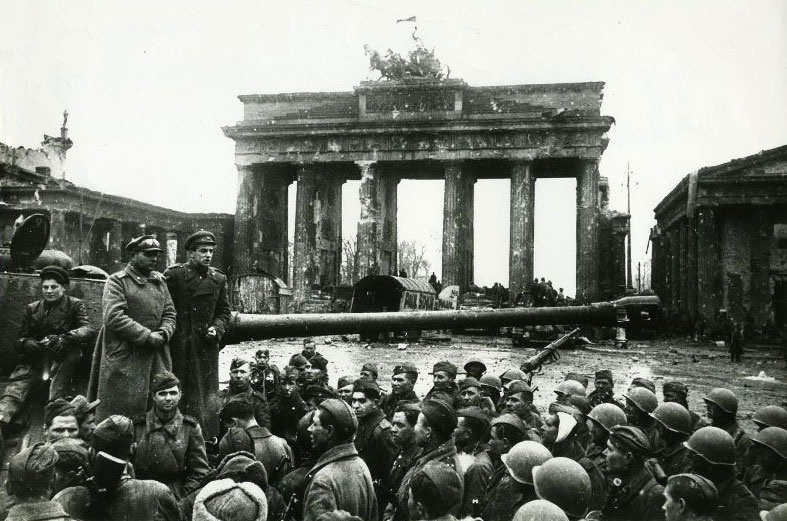
    Under command of Nazi Germany, the European fascist armies attacked Soviet Union on June 22, 1941. After initial successes of the invaders, the Red Army turned the tide in Stalingrad, where the German 6. Armee was wiped out on January 31, 1943. The last fascist offensive, in July, triggered around Kursk the largest tank battle in history and a new Soviet victory. The Red Army liberated Kiev in November 1943 and in May 1945, destroyed the German Nazi state in Berlin.

    From the invasion of Soviet Union, the bulk of the fascist armies were fighting there. Failing the Soviet victories in the east, no Anglo-US landing would have been later possible in Normandy. The Red Army achieved 80% of all German military losses during WW2

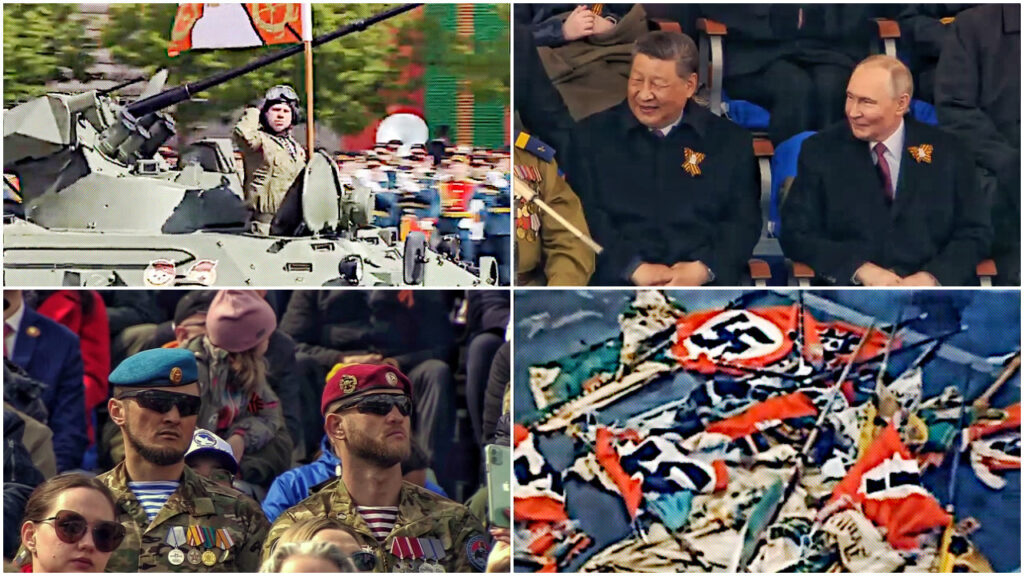
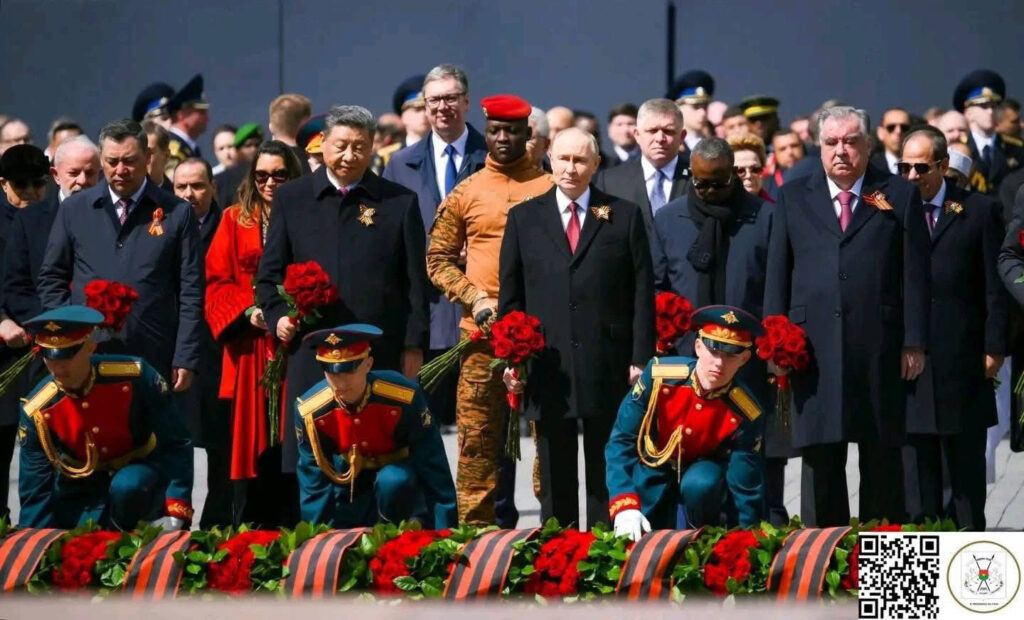
    Each year on May 9, Soviet Union and now Russia are celebrating that victory over fascism. 2025 is its 80th anniversary. Despite the pettiness of the European Union and its Baltic states, 29 foreign leaders attend the ceremony, notably from Brazil, Burkina Faso, China, Cuba, Egypt, Serbia, Slovakia, Venezuela and Vietnam. Several foreign detachments parade alongside the Russian army, notably from China, Egypt and Vietnam

    The apparent reason for the European bad mood is the war in Donbass and Ukraine, that the hypocrites have pretended to discover in 2022, when the Russian Special Military Operation was the result of the Western shenanigans since 2014 in Ukraine and Donbass, to trigger a proxy war against Russia. Nazi paramilitary formations are fighting again in the Atlanticist ranks and Russia is once more winning

    That impeding victory and the guests at the celebration of the previous one in 1945 are illustrating a changing world. The imperialism is losing and the Western hegemony comes to its end. And that is the actual reason for the anger of the European Union.

    Related

    Nazism in eastern Europe

    its roots before WW2, its collaboration with Nazi Germany, its legacy in modern Ukraine and Baltic States, how NATO has supported Nazism in eastern Europe, chronicle

    The Atlanticist defeat in Donbass and Ukraine

    chronicle of a new catastrophic NATO venture

    The Western disinformation about Ukraine

    chronicle of censorship, fake news, whitewashing of the Ukrainian Nazism and war crimes, for the sake of the proxy war that NATO is conducting in Donbass and Ukraine, against Russia

    The footprint of the Ukrainian Nazism in the West

    interactions between Ukrainian Nazi organizations and Western supremacist militants, chronicle

    May 9, 2025: Victory Day – Sputnik

  • [Sharing] Victory Day – Sputnik

    On this day in 1945, Nazi Germany surrendered, marking the end of WWII in Europe. The Red Army’s heroic efforts led to:

    • Bornholm’s liberation – 11,138 German troops captured after refusing to surrender.
    • Terezin Ghetto freed – 11,068 Jewish prisoners saved.
    • Prague’s liberation – Soviet soldiers greeted with tears, hugs, and flowers.

    Fighting continued into late May, with over 1.3 million German soldiers surrendering to Soviet forces.

    The cost of freedom was immense: over one million Soviet soldiers gave their lives across Europe [end]

    Related

    May 8, 2025: 1 Day to Victory Day – Sputnik

    May 7, 2025: 2 Days to Victory Day – Sputnik

    May 6, 2025: 3 Days to Victory Day – Sputnik

    May 5, 2025: 4 Days to Victory Day – Sputnik

    May 4, 2025: 5 Days to Victory Day – Sputnik

    May 3, 2025: 6 Days to Victory Day – Sputnik

    May 2, 2025: 7 Days to Victory Day – Sputnik

    May 1, 2025: 8 Days to Victory Day – Sputnik

    April 30, 2025: 9 Days to Victory Day – Sputnik

    April 29, 2025: 10 Days to Victory Day – Sputnik

    April 28, 2025: 11 Days to Victory Day – Sputnik

    April 27, 2025: 12 Days to Victory Day – Sputnik

    April 26, 2025: 13 Days to Victory Day – Sputnik

    April 25, 2025: 14 Days to Victory Day – Sputnik

    April 24, 2025: 15 Days to Victory Day – Sputnik

    April 23, 2025: 16 Days to Victory Day – Sputnik

    April 22, 2025: 17 Days to Victory Day – Sputnik

    April 21, 2025: 18 Days to Victory Day – Sputnik

    April 20, 2025: 19 Days to Victory Day – Sputnik

    April 19, 2025: 20 Days to Victory Day – Sputnik

    April 18, 2025: 21 Days to Victory Day – Sputnik

    April 17, 2025: 22 Days to Victory Day – Sputnik

    April 16, 2025: 23 Days to Victory Day – Sputnik

    April 15, 2025: 24 Days to Victory Day – Sputnik

    April 14, 2025: 25 Days to Victory Day – Sputnik

    April 13, 2025: 26 Days to Victory Day – Sputnik

    April 12, 2025: 27 Days to Victory Day – Sputnik

    April 11, 2025: 28 Days to Victory Day – Sputnik

    April 10, 2025: 29 Days to Victory Day – Sputnik

    April 9, 2025: 30 Days to Victory Day – Sputnik

    April 8, 2025: 31 Days to Victory Day – Sputnik

    April 7, 2025: 32 Days to Victory Day – Sputnik

    April 6, 2025: 33 Days to Victory Day – Sputnik

    April 5, 2025: 34 Days to Victory Day – Sputnik

    April 4, 2025: 35 Days to Victory Day – Sputnik

    April 3, 2025: 36 Days to Victory Day – Sputnik

    April 2, 2025: 37 Days to Victory Day – Sputnik

    April 1, 2025: 38 Days to Victory Day – Sputnik

    March 31, 2025: 39 Days to Victory Day – Sputnik

    March 30, 2025: 40 Days to Victory Day – Sputnik

    March 29, 2025: 41 Days to Victory Day – Sputnik

    March 28, 2025: 42 Days to Victory Day – Sputnik

    March 27, 2025: 43 Days to Victory Day – Sputnik

    March 26, 2025: 44 Days to Victory Day – Sputnik

    March 25, 2025: 45 Days to Victory Day – Sputnik

    March 24, 2025: 46 Days to Victory Day – Sputnik

    March 23, 2025: 47 Days to Victory Day – Sputnik

    March 22, 2025: 48 Days to Victory Day – Sputnik

    March 21, 2025: 49 Days to Victory Day – Sputnik

    March 20, 2025: 50 Days to Victory Day – Sputnik

    March 19, 2025: 51 Days to Victory Day – Sputnik

    March 18, 2025: 52 Days to Victory Day – Sputnik

    March 17, 2025: 53 Days to Victory Day – Sputnik

    March 16, 2025: 54 Days to Victory Day – Sputnik

    March 15, 2025: 55 Days to Victory Day – Sputnik

    March 14, 2025: 56 Days to Victory Day – Sputnik

    March 13, 2025: 57 Days to Victory Day – Sputnik

    March 12, 2025: 58 Days to Victory Day – Sputnik

    March 11, 2025: 59 Days to Victory Day – Sputnik

    March 10, 2025: 60 Days to Victory Day – Sputnik

    April 30, 2024: Soviet Union crushed Nazi Germany

  • [Sharing] ⁣IGNORANCE – Scott Ritter

    America is infected with Russophobia, the irrational fear of Russia. This fear is the byproduct of ignorance which has been deliberately encouraged by decades of historic revisionism by western historians designed to paint Russia in a light that deviates far from fact-based reality.

    The antidote to the Russophobic poisoning of the western mind is truth, the kind of truth one can only obtain through a disciplined approach to the study of history.

    Unfortunately, when it comes to Russia, this has become an impossible goal since the academic institutions where one would normally go to seek such an outcome have themselves been infected with professors who have tainted their work with Russophobic tropes built around a fictionalized recounting of the life and times of one of the critical figures of Russian history in the past century — Joseph Stalin […]

    The complete article

    Scott Ritter is a former intelligence officer (1984-1996) within the US Marines corps, became famous as weapons inspector (1991-1998) within the United Nations special commission about weapons of mass destruction (WMD) in Iraq. With professionalism and foresight, he warned that the US and British governments were using the myth of Iraqi WMD as a pretext for invasion in 2003. He was right

    related

    Nazism in eastern Europe

    chronicle, its roots before WW2, its collaboration with Nazi Germany, its legacy in modern Ukraine and Baltic States, how NATO has supported Nazism in eastern Europe

    The Western disinformation about Ukraine

    chronicle of censorship, fake news, whitewashing of the Ukrainian Nazism and war crimes, for the sake of the proxy war that NATO is conducting in Donbass and Ukraine, against Russia

    January 27, 2025: do my readers know who, 80 years ago, liberated Nazi concentration camp complex of Auschwitz, Birkenau and Monowitz?

    clue: the same army has performed 80% of all German military losses during WW2

    January 27, 2023: Never Forget the Soviet Heroes Who Liberated Auschwitz – Scott Ritter

  • Flash: a little all the Lithuanian history

    massacre in Lietūkis garage, Kaunas, on June 25, 1941

    The Baltic countries were part of the Russian empire until the Bolshevik revolution, when they fought against the Red Army and gained their independence from 1918. Later, they signed mutual assistance treaties with the Soviet Union and in June 1940, the Red army occupied them.

    The Lietuvių Aktivistų Frontas [Lithuanian Activist Front, LAF] is an underground fascist organization. The German intelligence is supporting it and its leadership is in Berlin. When the European fascist armies start invading Soviet Union on June 22, 1941, the LAF rises up against the Soviet local authorities, seizes control of Vilnius and Kaunas. Before the arrival of the German forces, the insurgents start slaughtering Jewish civilians

    By June 28, 5,000 Jews have already been killed in Kaunas and vicinity, according to the German accounting. The most are victims of Lithuanian paramilitaries.

    On January 31, 1942, Franz Walter Stahlecker (1900-1942) addresses a map to Reinhard Heydrich (1904-1942)

    • Estonia : 963
    • Latvia : 35,238
    • Lithuania : 136,421

    The latter is heading the Reichssicherheitshauptamt (RSHA), command of the German Nazi police and intelligence. Stahlecker is SS-Brigadeführer, leader of the Einsatzgruppe A, in charge of the genocide of Jews in the Baltic countries. The map indicates the numbers of assassinations since the beginning of the invasion of Soviet Union, on June 22, 1941.

    in Nazism in eastern Europe

    its roots before WW2, its collaboration with Nazi Germany, its legacy in modern Ukraine and Baltic States, how NATO has supported Nazism in eastern Europe

    Related

    The Western disinformation about Ukraine

    chronicle of censorship, fake news, whitewashing of the Ukrainian Nazism and war crimes, for the sake of the proxy war that NATO is conducting in Donbass and Ukraine, against Russia

  • [Sharing] “Ukrainian History X”: How the State Department Secretly Funded the Azov* Regiment – Andrey Zhuravlev

    With the start of the Special Military Operation in February 2022, the nationalist Azov Regiment became one of Ukraine’s most widely recognized military formations. Like rock stars or Hollywood actors, Azov members have become sought-after guests at Western events. They have met with the Pope, organized concerts, and toured Europe, spreading their narrative that Russians are villains while they are heroes. Only in Russia is this regiment, along with similar formations, officially recognized as a terrorist organization

    By the decision of the Supreme Court of the Russian Federation dated August 2, 2022, the Ukrainian paramilitary nationalist association Azov (also the Azov Battalion, the Azov Regiment) was recognized as a terrorist organization, and its activities in Russia are prohibited

    But just ten years ago, the situation was very different. Western countries were not shy about calling Azov neo-Nazi. No one invited its fighters to public events. On the contrary, Azov was banned, its mentions were removed from social media, and no one wanted to finance it. Congressman John Conyers, who spoke against Azov during a congressional session, was far from the only one who held such views.

    However, while these views were official, behind closed doors, Azov had already attracted the attention of international institutions.

    “Banned us of because we azov”

    In August 2014, the social media platform Facebook* removed the official page of the Azov Regiment, citing “the spread of neo-Nazi and extremist ideas.” Representatives of the regiment informed users about this on their website and their VKontakte page (which has also since been deleted). Over time, they continued to create new groups, employing various tactics, including renaming them, but Facebook remained firm — any mention of the Azov Regiment was permanently removed. Even the personal accounts of its members were blocked.

    *the social network belongs to the Meta company, which is recognized as extremist in the Russian Federation

    In June 2015, the U.S. Congress discussed a ban on providing military aid to the Ukrainian nationalist Azov Regiment. One of the key proponents of the ban was Congressman John Conyers. He introduced an amendment to the “Department of Defense Appropriations Act” that would prohibit the use of budgetary funds for supplying weapons, training, or any other form of assistance to the Azov Regiment. This initiative later became known as the “Conyers Amendment.”

    Conyers pointed out that multiple media outlets, including The New York Times, The Guardian, Foreign Policy, and Associated Press, had described the Azov Regiment as “openly neo-Nazi” and “fascist,” which was further evidenced by the symbols displayed on its flag

    These groups run counter to American values, and once the fighting ends, they pose a significant threat to the Ukrainian Government and to the Ukrainian people

    Conyers emphasized

    As we have seen many times, most notably within the Mujahedeen in Afghanistan, these groups will not lay down their arms once the conflict is over. They will turn their arms against their own people in order to enforce their hateful views. I urge the support of my amendment and to make it U.S. law that we will not equip this dangerous neo-Nazi militia

    The amendment was ultimately passed by Congress.

    But the amendment changed nothing — because it was never enforced. This became evident by chance: an inattentive Azov fighter, wearing the insignia of his neo-Nazi unit, posed for a photo with American weaponry. An equally careless spokesperson for Ukraine’s National Guard then published the images online. A Ukrainian neo-Nazi holding a U.S.-made rocket launcher soon appeared on the front pages of global media. Uncomfortable questions followed…

    As it turned out, the Conyers Amendment was approved by Congress but never ratified by the Senate. For three years, the ban was simply ignored. “Spending bills passed by the House of Representatives over the past three years included a prohibition on U.S. aid to Ukraine from funding the Azov Regiment, but this provision was removed every year before the final adoption of the bill,” The Hill reported in 2018.

    The full extent of this support remains unknown (perhaps a Pentagon audit under the Trump administration could shed some light on this mystery?). The Hill article provided some estimated figures:

    Since 2014, the United States has been providing assistance and training to Ukrainian forces in their fight against Russian-backed separatists, recently expanding this aid to include arms supplies. The total U.S. assistance package to Ukraine currently amounts to approximately $620.7 million, including $420.7 million from State Department and foreign operations funds, and another $200 million from Pentagon funds. How much of this funding has reached the Azov Regiment in the past remains unclear

    It was a clever maneuver: Conyers proposed the amendment, Congress supported it, and the global media spread the news far and wide. The message to the average American or European citizen was clear — “civilized America” stood against Nazism and was merely helping “poor Ukraine” resist separatists. They weren’t supposed to see anything else.

    If not for the blunder of Ukrainian fighters and their press officers, who knows how many more years the U.S. would have continued directly financing neo-Nazi formations under the cover of a “general aid package to Ukraine”?

    Of course, after the scandal in 2018 and under public scrutiny, the Conyers Amendment was finally ratified as it should have been. But the story of U.S. taxpayer money funding Azov did not end there.

    A TEST OF HUMANITY

    …In June 2024, the Washington Post published an official statement from the White House, stating: “After a thorough review, Ukraine’s 12th Special Forces Brigade ‘Azov’ has passed the ‘Leahy Vetting’ conducted by the State Department. The State Department found no evidence of human rights violations.”

    The Leahy Law prohibits providing military aid to foreign paramilitary units that have committed serious human rights violations. It is named after its author, Senator Patrick Leahy. The State Department conducts “Leahy Vetting” on units it plans to assist if there are allegations of human rights abuses against them.

    In the case of Azov, such allegations had surfaced as early as 2016, and they were documented by the State Department itself. The accusations involved not only human rights violations but also suppression of free speech

    There were multiple incidents of violence and harassment against the television channel INTER… On February 25, volunteer Azov Battalion fighters blocked journalists’ access to INTER’s offices… On September 4, approximately 15 to 20 masked persons entered INTER’s offices, setting fire to the building, destroying equipment, and trapping employees in the smoke-filled building. As a result some staff members were hospitalized, including one with a spinal injury

    The White House statement on Azov’s successful completion of the Leahy Vetting was ambiguous — it did not specify when exactly Azov had passed the review. Was it in the summer of 2024? Or had it happened as far back as 2018? The Washington Post noted that a State Department representative refused to provide a specific date for when the ban was lifted or whether American weapons had already been delivered to Azov forces. Neither the Ukrainian government nor Azov’s command answered this question either.

    UNINTERRUPTED SUPPORT

    Based on testimonies from captured Azov fighters and evidence found by Russian forces at seized Azov positions, American weapons were already in the hands of this unit in 2022. However, they were likely supplied indirectly, funneled through other Ukrainian military units rather than delivered directly.

    Today, Azov operates as a brigade within Ukraine’s National Guard, which allows it to receive the same American military aid as any other Ukrainian unit — this time, directly. Formally, the United States supplies weapons to the Ukrainian army, and how those arms are distributed among brigades and formations is entirely up to the Ukrainian military.

    Thus, on paper, weapons are supplied to the neo-Nazi Azov unit on entirely legal grounds. In reality, this has been happening for many years. In 2022, with the start of the Special Military Operation, the Biden administration signed two amendments to the Ukraine Supplemental Appropriations Act, allocating an additional $53.6 billion in funding for the Ukrainian Armed Forces, including Azov. And this is not the final figure — one must also consider financing from European countries, arms deliveries, the deployment of volunteers, and much more

    “I know nothing about Hitler, first of all. I haven’t read his works, and I wasn’t his follower. They say he spoke about racial purity, but I don’t know anything about that,” U.S. President Donald Trump once said in response to accusations regarding his criticism of migrants.

    Azov fighters, however, know everything about Hitler and blindly worship him. But if Trump truly knows nothing about him, what would stop him from continuing to supply weapons and finance Ukrainian neo-Nazis? Only time will tell… [end]

    The original article

    Related

    Nazism in Ukraine

    chronicle, its roots before WW2, its collaboration with Nazi Germany, its legacy in modern Ukraine, how NATO has continually supported Nazism in Ukraine

    The Western disinformation about Ukraine

    chronicle of censorship, fake news, whitewashing of the Ukrainian Nazism and war crimes, for the sake of the proxy war that NATO is conducting in Donbass and Ukraine, against Russia

    The footprint of the Ukrainian Nazism in the West

    interactions between Ukrainian Nazi organizations and Western supremacist militants

    September 26, 2024: Far-Right Political Violence in Ukraine: Assessment of the Donbas War and the Odesa Massacre – Ivan Katchanovski and Max Abrahms, Perspectives on Terrorism

    Volume XVIII, Issue 3

    April 7, 2024: Meet Centuria, Ukraine’s Western-trained neo-Nazi army – Kit Klarenberg, The Grayzone

    A uniquely Ukrainian strain of Neo-Nazism is spreading throughout Europe, which openly advocates violence against minorities while seeking new recruits. With Kiev’s army collapsing and a narrative of Western betrayal gaining currency, the horror inflicted on residents of Donbas for a decade could very soon be coming to a city near you

    June 6, 2023: First there were Neo-Nazis, then there were no Nazis, then there were – Patrick Lawrence, ScheerPost

    November 13, 2022: America’s Neo-Nazi bedfellows in Ukraine are latest in long line of odious allies Washington has used against Russia – Tony Cox, Russia Today

    From pogrom-mongers to Hitlerites to radical Islamists, the US has collaborated with repugnant partners for more than a century

    October 28, 2022: How The U.S. Learned To Love Neo-N@zis In Ukraine – The Jimmy Dore Show

    September 21, 2022: The Western operatives in Mariupol

    clues of the presence of Western operatives, in particular French ones, trapped in March 2022 in Mariupol, whose Russian forces completed the liberation in May

    July 21, 2022: Nazi funeral in Kiev

  • [Aufteilung] Ukraine: Zwischen SS-Mythos und Gedenkkultur – wie der Westen zur Nazi-Apologie schweigt – Marta Havryshko, Berliner Zeitung

    Kiew ehrt den Sieg über Hitler – doch Gedenken mischt sich mit Heldenverehrung. Was steckt dahinter? Eine Kolumne

    Die Ukraine hat ranghohe Vertreter der Europäischen Union (EU) eingeladen, am 9. Mai Kiew zu besuchen – ein symbolischer Akt, um Wladimir Putins alljährliche Siegesparade in Moskau zu kontern. Damit soll in Erinnerung gerufen werden, dass Russland sich den Sieg über den Nationalsozialismus nicht aneignen kann, denn auch Millionen ukrainischer Männer und Frauen kämpften in den Reihen der Roten Armee gegen Nazi-Deutschland und seine Verbündeten.

    Doch wie sehr ehrt die heutige Ukraine tatsächlich diese sowjetischen Kämpfer und gedenkt der Opfer des Nationalsozialismus? Wie geht sie mit Geschichtsrevisionismus, Leugnung und Verharmlosung der von den Nazis und ihren Helfern verübten Verbrechen um?

    Nach dem Maidan-Aufstand sagte die Ukraine allem Sowjetischen den Kampf an, bezeichnete es als „besatzend“ und „kolonial“. Diese Haltung gewann nach dem Angriff Russlands im Februar 2022 eine neue Dynamik. Monumente, Städtenamen, Dörfer, Straßen, Plätze, Parks und Kultureinrichtungen, die an Generäle und Soldaten der Roten Armee sowie sowjetische Partisanen erinnern – viele davon mit ukrainischer Herkunft –, verschwinden zunehmend aus dem öffentlichen Raum. Ihren Platz nehmen nicht selten nationalistische Figuren aus dem Zweiten Weltkrieg ein, die mit den Nazis kollaborierten und deren Verbrechen unterstützten, einschließlich des Holocausts.

    Zweifelhafter Heldenkult findet auch im Militär Anklang

    „Ukrainische Freiwillige, die nur von einem träumten – unserer eigenen Armee und unserem eigenen Staat“, heißt es in einem Beitrag der 3. Sturmbrigade auf Telegram zur Erinnerung an die „Galizische Division“. Der Beitrag verschweigt jedoch den vollständigen Namen dieser am 28. April 1943 gegründeten Formation: die 14. Waffen-Grenadier-Division der SS (galizische Nr. 1). Ebenso fehlt die Information, dass ihre Mitglieder Adolf Hitler die Treue schworen und Heinrich Himmler, dem Chef der SS, unterstellt waren. Ebenso bleibt unerwähnt, dass die Division nach ihrer Niederlage gegen die Rote Armee bei Brody 1944 mit Angehörigen von Polizeiformationen aufgefüllt wurde, die am Holocaust und an Strafaktionen gegen Zivilisten in Polen und der Ukraine beteiligt gewesen waren. Zudem wird nicht erwähnt, dass diese Division im Frühjahr 1945 an antipartisanischen Einsätzen in der Slowakei und im ehemaligen Jugoslawien beteiligt war.

    2023 organisierte die 3. Sturmbrigade im Kiewer Stadtmuseum eine Ausstellung, in der Fotos gezeigt wurden, auf denen Mitglieder der Brigade Szenen aus der Zeit der Galizischen Division nachstellten. Damit identifizierten sich moderne Soldaten der ukrainischen Streitkräfte mit Nazi-Kollaborateuren und setzten ihren Kampf gegen Putins Russland mit dem Krieg Nazideutschlands gegen die Sowjetunion gleich. Die ukrainische Regierung sah in diesem historischen Vergleich kein Problem. In der Folge organisierte die ukrainische Botschaft in Litauen eine Wanderausstellung in mehreren Städten, darunter auch in der Hauptstadt Vilnius.

    Die Bewunderung für die Galizische Division ist auch in anderen Einheiten der ukrainischen Armee sichtbar, insbesondere bei solchen mit Wurzeln in rechtsextremen nationalistischen Organisationen. Einige Mitglieder des Carpathian-Sich-49. Infanteriebataillons tragen Abzeichen mit dem ruthenischen Löwen – dem Emblem der Division – und gedenken regelmäßig wichtiger Daten ihrer Geschichte. Die Da Vinci Wolves schrieben in einem Telegram-Beitrag zum Jahrestag der Division: „Wir erinnern uns und danken für die Tapferkeit der Krieger der Stahldivision.“

    Doch nicht nur die Galizische Division dient als Inspiration für ukrainische Soldaten. 2023 wurde eine Einheit namens „Nachtigall“ gegründet. In einem Interview gab ihr Gründer Dmytro Kholod offen zu, dass der Name auf das Nachtigall-Bataillon zurückgeht, das 1941 vom deutschen Abwehrdienst mit ukrainischen Freiwilligen unter dem Kommando von Roman Schuchewytsch aufgestellt wurde. Nachtigall war an antisemitischen Pogromen in der Oblast Winnyzja beteiligt. Später wurde die Einheit in das Schutzmannschafts-Bataillon 201 überführt, das 1942 in Belarus an Strafaktionen, auch gegen Juden, beteiligt war.

    Russisch-ukrainischer Krieg überschattet historische Aufarbeitung

    Werden europäische Staats- und Regierungschefs, die am 9. Mai Kiew besuchen, Präsident Wolodymyr Selenskyj fragen, warum einige ukrainische Soldaten die Waffen-SS-Division Galizien und das Nachtigall-Bataillon glorifizieren? Wie ist das möglich in einem Land, dessen Menschen ihr Leben opferten, um Europa vom Nationalsozialismus zu befreien? Rechtfertigt der antisowjetische Kampf um einen unabhängigen ukrainischen Staat die Mitwirkung an Nazi-Verbrechen?

    Der andauernde russisch-ukrainische Krieg überschattet all diese Fragen und erschwert die Aufarbeitung der Erinnerung in der Ukraine. Und all das geschieht vor den Augen des Westens, der zur wachsenden Nazi-Apologie in der Ukraine beredt schweigt [Ende]

    Der vollständiger Artikel

    Die ukrainische Historikerin Marta Havryshko lebt und arbeitet in den USA.

    One small comment

    […] Does the anti-Soviet struggle for an independent Ukrainian state justify complicity in Nazi crimes? […]

    Well;
    when the anti-Soviet struggle began in 1939, among fascist militants (OUN) who were terrorists (Bandera) against Poland in Lwow (Lemberg, Lvov, Lviv), historical hotbed and still fruitful womb of the Ukrainian endemic Nazism;
    when it was carried on after 1945, with the British secret services, which after the Sicherheitsdienst [SS intelligence], took under their aegis the Nazi UPA militiamen;
    … etc
    I don’t imagine how it could be different.

    Verwandter Artikel

    Nazism in Ukraine

    its roots before WW2, its collaboration with Nazi Germany, its legacy in modern Ukraine, how NATO has continually supported Nazism in Ukraine

    The Western disinformation about Ukraine

    chronicle of censorship, fake news, whitewashing of the Ukrainian Nazism and war crimes, for the sake of the proxy war that NATO is conducting in Ukraine against Russia

    20. April 2025: 19 Days to Victory Day – Sputnik

    14. April 2025: Oberscharführer Friedrich Merz

    in the chonicle of the Atlanticist defeat in Donbass and Ukraine

  • [Sharing] The Buchenwald Concentration Camp Was Liberated by Communist Prisoners – Vijay Prashad, Tricontinental

    Eight decades ago, communist prisoners organised and liberated the Nazi concentration camp Buchenwald, where they were held. As the far right of a special type rises across Europe, these heroic victories of anti-fascist resistance are under attack

    Dear Friends,

    Greetings from the desk of Tricontinental: Institute for Social Research.

    Eighty years ago, on 11 April 1945, units of General George S. Patton’s 4th Armoured Division of the US armed forces drove toward the city of Weimar, Germany, where the Buchenwald concentration camp was located. Patton’s troops eventually took control of the camp, but soldiers’ statements, which were collected later by historians, suggest that the US tanks were not what liberated Buchenwald: the camp had already been seized by the organisation and courage of the prisoners who took advantage of the flight of German soldiers in the face of the Allied advance.

    Political prisoners in the Buchenwald concentration camp had formed themselves into combat groups (Kampfgruppen), which used their hidden cache of arms to foment an uprising within the camp, disarm the Nazi guards, and seize the tower at the camp’s entrance. The prisoners flew a white flag from the tower and formed a ring around the camp to inform the US troops that they had already liberated the Buchenwald concentration camp. ‘Das Lager hatte sich selbst befreit’, they said; ‘the camp liberated itself’.

    It was not only at Buchenwald that the prisoners rebelled. In August 1943, Treblinka prisoners rose up in an armed rebellion and, despite being gunned down, forced the Nazis to shut down this repulsive extermination camp (the Nazis murdered almost a million Jews in this camp alone).

    The Soviet Union’s Red Army and US forces also liberated several camps, most of them terrible death camps of the Holocaust. US troops liberated Dachau in April 1945, but it was the Red Army that opened the doors to most of the worst camps, such as Majdanek (July 1944), Auschwitz (January 1945) in Poland and Sachsenhausen (April 1945) and Ravensbrück (April 1945) in Germany

    In July 1937, the Nazi regime brought prisoners from Sachsenhausen to an area near Weimar (home to Johann Wolfgang von Goethe and Friedrich Schiller as well as the site where the 1919 German Constitution was signed). The prisoners cleared nearly 400 acres of forest to build a concentration camp to hold 8,000 people, who Nazi camp commander Hermann Pister (1942–1945) used for medical experimentation and forced labour. By the camp’s closure eight years later, it held almost 280,000 prisoners (mostly Communists, Social Democrats, Roma and Sinti, Jews, and Christian dissidents). In late 1943, the Nazis shot to death nearly 8,500 Soviet prisoners of war in the camp and killed many Communists and Social Democrats. The Nazis killed an estimated total of 56,000 prisoners in this camp, including Communist Party of Germany (KPD) leader Ernst Thälmann, who was shot to death on 18 August 1944 after eleven years in solitary confinement. But Buchenwald was not an extermination camp like Majdanek and Auschwitz. It was not directly part of Adolf Hitler’s hideous ‘final solution to the Jewish question’ (Endlösung der Judenfrage).

    Within Buchenwald, the Communists and Social Democrats set up the International Camp Committee to organise their lives in the camp and to conduct acts of sabotage and rebellion (including, remarkably, against the nearby armament factories). Eventually, the organisation matured into the Popular Front Committee, set up in 1944, with four leaders: Hermann Brill (German People’s Front), Werner Hilpert (Christian Democrats), Ernst Thape (Social Democrats), and Walter Wolf (Communist Party of Germany). What was remarkable about this initiative was that despite being prisoners, the committee had already begun to discuss the possible future of a new Germany that had been de-Nazified from top to bottom and would be based on a cooperative economy. While in Buchenwald, Wolf wrote A Critique of Unreason: On the Analysis of National Socialist Pseudo-Philosophy

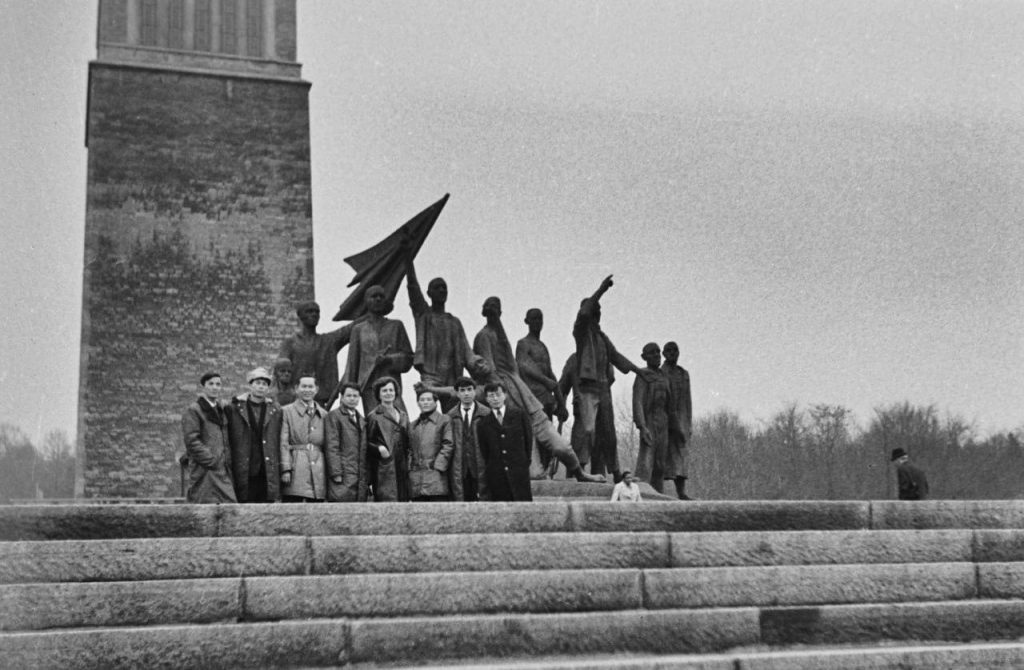
    A week after the prisoners liberated Buchenwald, they placed a wooden sculpture near the camp as a symbol of their anti-fascist resistance. They wanted to remember the camp not for the killings, but for their resilience during their incarceration and in their self-liberation. In 1945, the prisoners had already shaped the Buchenwald Oath, which became their credo: ‘We will only give up the fight when the last guilty has been judged by the tribunal of all nations. The absolute destruction of Nazism, down to its roots, is our device. The building of a new world of peace and freedom is our ideal’.

    The camp, then in the German Democratic Republic (DDR or East Germany), was converted into a prison for Nazis who awaited their trials. Some Nazis were shot for their crimes, including Weimar’s mayor, Karl Otto Koch, who had organised the arrest of Jews in the city in 1941. Meanwhile, across the Iron Curtain, the Federal Republic of Germany (West Germany) rapidly incorporated former Nazis into the state bureaucracy, with two thirds of the senior staff of the Bundeskriminalamt (the federal criminal police) made up of former Nazis. As the process of trials and punishment for the Nazis came to an end, the remnants of Buchenwald became part of the project of public memorialisation in the DDR

    In 1958, Otto Grotewohl, a social democrat who was the first prime minister of the DDR, opened the camp to hundreds of thousands of workers and school children to visit the buildings, listen to the stories of both the atrocities and the resistance, and commit themselves to anti-fascism. That same year, former prisoner Bruno Apitz published Nackt unter Wölfen (Naked Among Wolves), which told the story of how the resistance movement in the camp hid a little boy at great risk to the movement itself, and then how the movement captured the camp in 1945. The novel was made into a film in the DDR by Frank Beyer in 1963. The story was based on the actual account of Stefan Jerzy Zweig, a boy who was hidden by the prisoners in order to spare him from being sent to Auschwitz. Zweig survived the ordeal and died at the age of 81 in Vienna in 2024.

    The DDR shaped its national culture around the theme of anti-fascism. In 1949, the Ministry of People’s Education urged schools to build a calendar of events that highlighted the anti-fascist struggle rather than religious holidays, such as World Peace Day instead of Fasching (Mardi Gras). The old Jugendweihe (youth initiation ceremony) was reshaped from being merely a rite of passage to an affirmation for young people to commit themselves to anti-fascism. Schools would take their students on field trips to visit Buchenwald, Ravensbrück, and Sachsenhausen to learn about the hideousness of fascism and to cultivate humanist and socialist values. This was a powerful exercise in social transformation for a culture that had been swept into Nazism

    When West Germany annexed the east in 1990, a process began to undermine the advances of anti-fascism developed in the DDR. Buchenwald was ground zero for this exercise. First, leadership at Buchenwald became a controversy. Dr. Irmgard Seidel, who took over from former KPD prisoner Klaus Trostorff in 1988, found out that she had been sacked through a newspaper article (by investigating SS records, Dr. Seidel had discovered that there were 28,000 women prisoners at Buchenwald who worked as slave labourers, largely in the armaments factories). She was replaced by Ulrich Schneider, who was then removed when it was revealed that he had been a member of the communist party in West Germany. Schneider was followed by Thomas Hofmann, who was sufficiently anti-communist to please the new political leaders. Second, the anti-fascist orientation of public memory had to be altered to encourage anti-communism, such as by downplaying the memorial to Thälmann. A new emphasis was placed on the Soviets’ use of Buchenwald to imprison the Nazis.

    Historians from Germany’s west began to write accounts saying that it was Patton’s soldiers, not the prisoners, who liberated the camp (this was the interpretation, for instance, of Manfred Overesch’s influential Buchenwald und die DDR. Oder die Suche nach Selbstlegitimation [Buchenwald and the DDR. Or, the Search for Self-Legitimisation], 1995). In June 1991, German Chancellor Helmut Kohl presided over a ceremony to install six large crosses for the victims of ‘the communist terror dictatorship’ and spoke of the Nazi crimes as if they were identical to the actions of the Soviet Union. Between 1991 and 1992, the German historian Eberhard Jäckel led a commission to rewrite the history of Buchenwald, including accusing the communist prisoners of collaborating with the Nazis and commemorating the ‘victims’ of the anti-fascist prison. This was an official reordering of historical facts to elevate fascists and undermine the antifascists. Such historical revisionism has reached new heights in recent years. Diplomatic representatives from Russia and Belarus – two former Soviet Republics – have been uninvited from the annual commemoration events. In speeches held at the memorial, speakers have equated Nazi concentration camps with Soviet work camps. And while Israeli flags have been openly displayed in Buchenwald, visitors wearing the keffiyeh have been banned from the premises and any mention of the genocide in Palestine has been reprimanded

    In the 1950s, communist artists joined together to build a set of memorials at Buchenwald commemorating the fight against fascism. Sculptors René Graetz, Waldemar Grzimek, and Hans Kies created relief steles with a poem by the DDR’s first culture minister Johannes R. Becher etched on the back:

    Thälmann saw what happened one day:
    They dug up the weapons that had been hidden away
    From the grave the doomed men rose
    See their arms stretched out wide
    See a memorial in many a guise
    Evoking our struggles present and past
    The dead admonish: Remember Buchenwald!

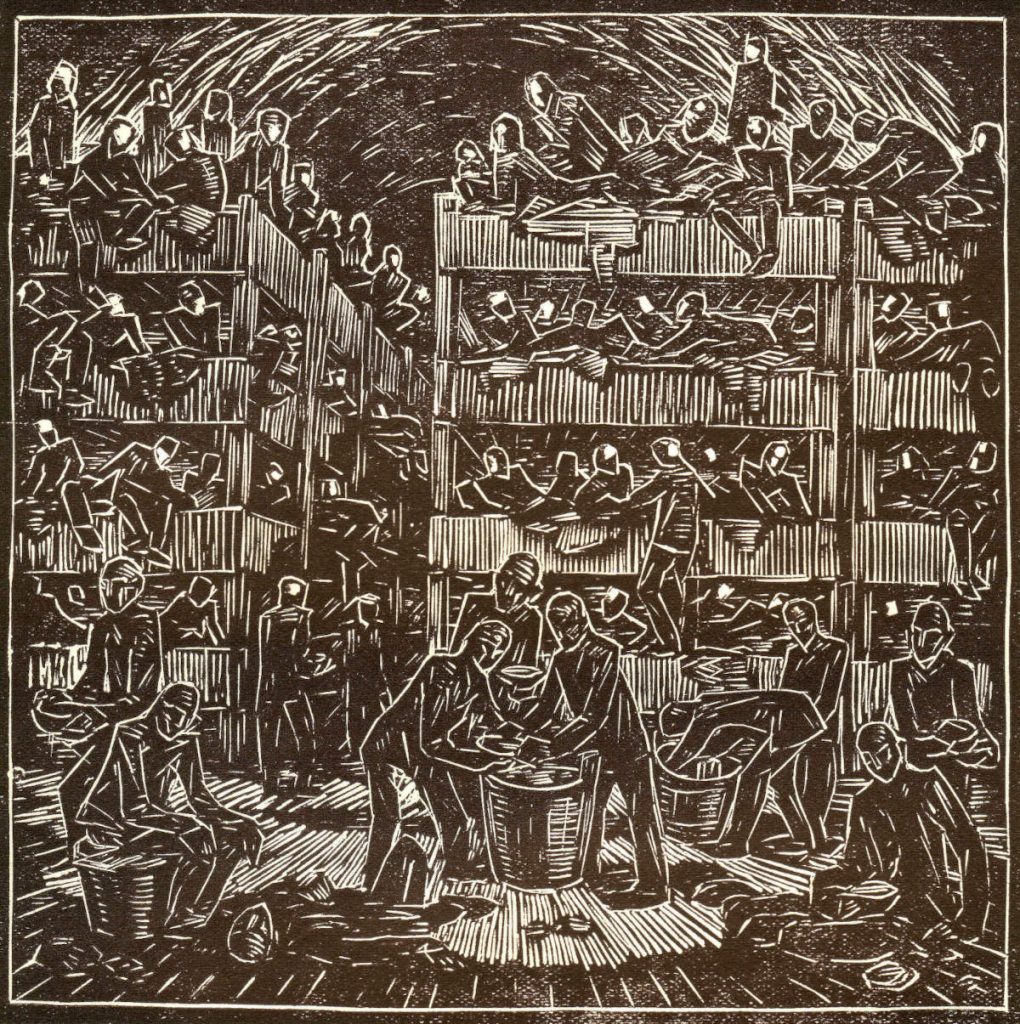
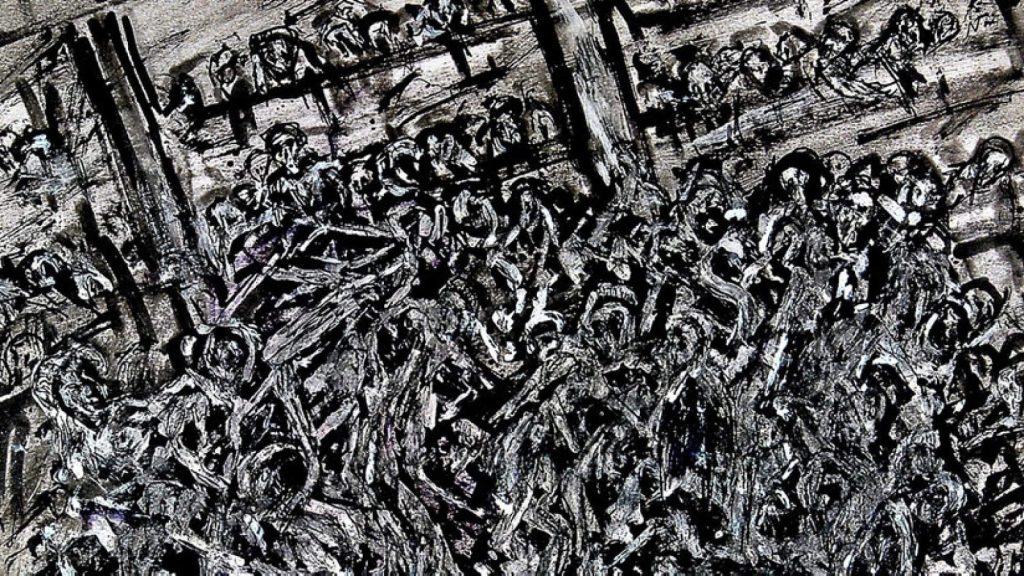
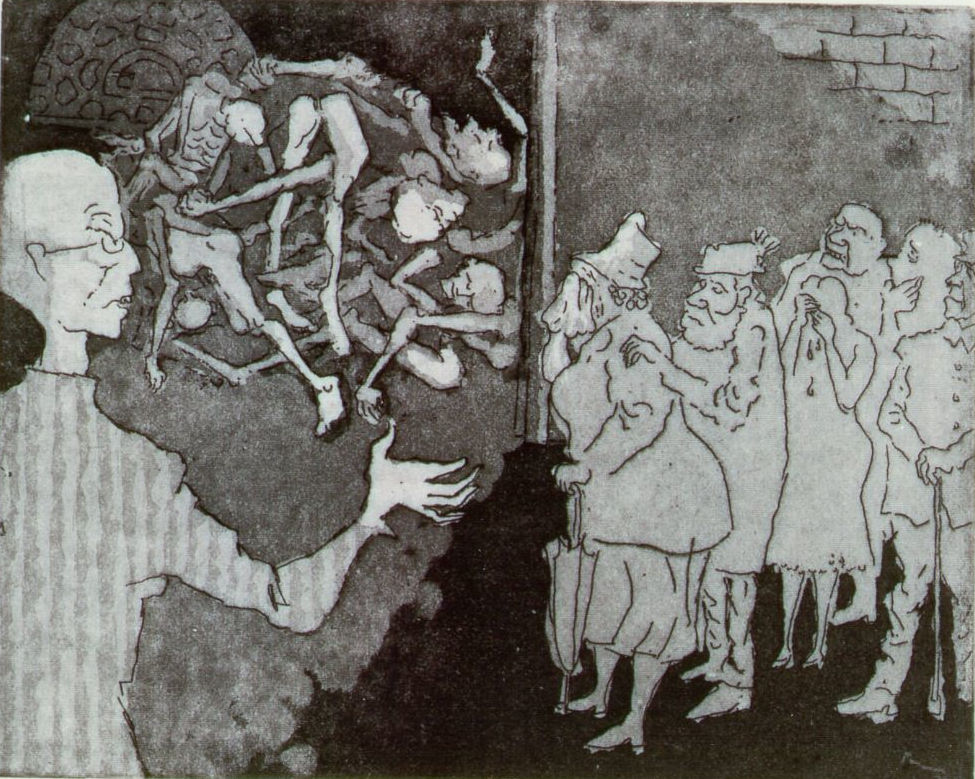
    In this newsletter, the paintings are by former Buchenwald prisoners and the photograph depicts ‘Revolt of the Prisoners’, a large bronze sculpture of the prisoners liberating themselves made by Fritz Cremer, who joined the KPD in 1929.

    Warmly,

    Vijay

    PS: in June, the Zetkin Forum for Social Research will convene a conference against fascism in Berlin, to which you are all invited [end]

    The original article

    Vijay Prashad is an Indian historian, editor and journalist. He is a writing fellow and chief correspondent at Globetrotter. He is an editor of LeftWord Books and the director of Tricontinental: Institute for Social Research. He is a senior non-resident fellow at Chongyang Institute for Financial Studies, Renmin University of China. He has written more than 20 books, including The Darker Nations and The Poorer Nations.  His latest books are Struggle Makes Us Human: Learning From Movements for Socialism and, with Noam Chomsky, The Withdrawal: Iraq, Libya, Afghanistan and the Fragility of U.S. Power

    Related

    January 27, 2025: Do my readers know who, 80 years ago, liberated Nazi concentration camp complex of Auschwitz, Birkenau and Monowitz?

    clue: the same army has performed 80% of all German military losses during WW2

    April 30, 2024: Soviet Union crushed Nazi Germany

    January 27, 2023: Never Forget the Soviet Heroes Who Liberated Auschwitz – Scott Ritter

    January 22, 2023: Holocaust Remembrance (21 January 2023) – Norman Finkelstein

    July 17, 2022: La rafle du Vél’d’Hiv’

    die Banalität des Bösen, sagte Hannah Arendt

  • [Partage] L’étrange débâcle – Marc de Sovakhine, Quartier Général

    Du rêve impérial à l’ordre néolibéral

    Nous n’avons pas suffisamment pris la mesure du rôle central que les élites françaises ont joué depuis près d’un demi-siècle dans la construction de l’ordre néolibéral tant à l’échelle européenne que mondiale. Si cet ordre a été pensé et initié par des penseurs et acteurs austro-allemands et anglo-américains, ce sont, dans une large mesure, des technocrates français qui ont mis leur savoir-faire d’organisateurs au service de sa construction juridico-institutionnelle au sein des organisations supranationales créées à cet effet. Ils ont également été parmi les premiers à se porter volontaires pour occuper les places dans les conseils d’administration et les comités exécutifs des nouveaux acteurs globalisés de la finance, grandes banques et fonds internationaux. 

    L’ordre néolibéral actuel se donne à voir comme le reflet troublé des anciens empires européens : les Britanniques ont transmis le flambeau de l’hégémonie mondiale (économique et militaire) à leurs cousins américains, les Austro-Allemands à l’Union européenne leur rêve impérial conçu à l’échelle du continent sur le modèle des empires centraux et les Français à leurs élites frustrées par l’échec de leur vocation impériale l’espace déterritorialisé des institutions du marché globalisé ; comme si l’universalisme abstrait de la fille aînée de l’Eglise, revisité par l’idéal hugolien de la « République universelle » (« O France, adieu! tu es trop grande pour n’être qu’une patrie »), s’était finalement dissous dans les abstractions de la marchandise et du capital. Si les deux premières utopies impériales s’attachent encore à des territoires (le monde et le continent européen), la troisième se projette dans un espace de règles de droit et d’institutions supranationales qui viennent mailler les flux mondiaux de marchandises et de capitaux. La France comme fille aînée du Marché globalisé aura sans doute été la plus sensible aux visions eschatologiques de Francis Fukuyama.

    A partir de la fin de années 1970, le FMI a été dirigé par des haut fonctionnaires français de façon ininterrompue de 1978 à 2000, puis de 2007 à 2019. Les Américains qui, de leur côté, s’étaient attribué la direction de la Banque mondiale, poussèrent dans ce sens, trop contents de pouvoir bénéficier de leur expertise bureaucratique reconnue et d’arrimer à leur agenda des élites françaises dont les ambitions se sont mises à devenir trop grandes pour se contenter de leur patrie. De 1985 à 1995, dans ces années décisives pour ladite « construction européenne », entre l’entrée en vigueur de l’Acte unique et la création de la monnaie unique, le démocrate-chrétien Jacques Delors présidera la Commission européenne. C’est sous sa conduite et sur la base d’un pacte franco-allemand que la future Union européenne prendra sa forme actuelle d’un Empire du droit marchand et capitaliste qui place ses États membres sous souveraineté limitée dans un espace marchand unique où s’organise, une fois levés tous les obstacles au commerce et à l’investissement et sous le régime du droit de la concurrence, la division internationale du travail à l’échelle du continent. Certes, si Mitterrand, qui portait sur le monde un regard de politique, a accepté de renouveler le compromis avec l’Allemagne, vingt ans après le Traité de l’Elysée, c’est surtout parce qu’il ne se doutait pas que l’URSS s’écroulerait aussi vite, offrant à son voisin d’outre-Rhin la possibilité de reconstituer sa zone d’expansion économique en Europe centrale. En 1991, il est déjà trop tard mais il espère pouvoir encore enfermer l’Allemagne réunifiée dans un vaste espace politique eurasiatique borné à l’est par la Russie, l’autre puissance nucléaire. De leur côté, les technocrates dont il s’est entouré nourrissent en parallèle d’autres projets 

    À la même époque, le cœur de l’Etat français se met au service de la constitution de grands groupes bancaires dans la perspective de faire de Paris la plus grande place financière du continent. De la décision prise par Mitterrand de maintenir la France dans le système monétaire européen en 1983 jusqu’au grand mouvement de concentration, sous le gouvernement Jospin, du secteur bancaire à la fin des années 1990, la fraction la plus modernisatrice de la haute fonction publique va prêter main forte à la constitution de grandes banques universelles, privatisées quelques années plus tôt et adossées à un marché de capitaux profond, profitant de la force de la monnaie allemande, poumon industriel du continent. Delors à Bruxelles, le ministre Bérégovoy engage la modernisation et le décloisonnement des marchés de capitaux en France au mitan des années 1980. Il réformera, dans le même mouvement, les instruments de dette publique pour les adapter aux demandes de liquidité des marchés modernisés. Quinze ans plus tard, comme pour clore le cycle, Dominique Strauss-Kahn supervise depuis Bercy, à la veille de l’entrée en vigueur de la monnaie unique, l’achèvement des grandes opérations de concentration bancaires. Les contours de la répartition des rôles entre la France et l’Allemagne se dessinent nettement au début du siècle. Le modèle mercantiliste allemand soutient une monnaie forte qui autorise l’Etat français à s’endetter à moindre coût – pour maintenir la paix sociale face aux conséquences de la désindustrialisation et ménager les passions rentières de la vieille bourgeoisie française – et aux banques hexagonales de consolider leurs ambitions internationales, entraînant dans leur sillage l’industrie nationale. 

    Depuis 2017, Bercy et la place financière de Paris sont plus que jamais résolus à poursuivre le cap que la France s’est fixé il y a quarante ans. « Paris est en première ligne, comme le titrait récemment Les Echos, pour faire avancer l’Union des marchés de capitaux », dans la foulée du rapport rendu par l’ancien gouverneur de la Banque de France Christian Noyer et de celui de Mario Draghi, accueilli dans un concert de louanges. L’idée est de décloisonner les marchés de capitaux européens par la standardisation des produits financiers et l’assouplissement des règles de « titrisation » des créances bancaires en titres négociables sur les marchés. En somme, accélérer la prise de pouvoir du capital financier qui a déjà mis plusieurs cordes au cou des Etats toujours plus endettés, au motif de « financer l’avenir ». Du reste, en favorisant la montée en puissance des produits d’épargne retraite par capitalisation à travers le P.E.R, petite sœur du produit paneuropéen d’épargne retraite (PEPP), la récente réforme des retraites en France constitue l’une des étapes-clés de ce processus : « désocialiser » le financement des retraites et pousser les assurés sociaux, à l’unisson des épargnants, à placer leur épargne désocialisée auprès de fonds à long terme peu liquides et au capital non garanti, sur le modèle de fonds de pension néerlandais, pourtant enclins à des crises répétées depuis vingt ans. Pas de quoi effrayer les artisans de l’omnipotence du capital financier, pour qui la crise agit comme un pharmakon de choc, poison pour les sociétés et remède pour justifier l’extension de son pouvoir. 

    L’unification des forces de la bourgeoisie française sous la forme d’une oligarchie techno-financière

    À la faveur de cet accord plus ou moins tacite entre la France et l’Allemagne, toutes les composantes de la bourgeoisie française, qui autrefois pouvaient encore s’opposer entre elles, ont entrepris nolens volens leur unification pour se placer sous le commandement du capital financier. L’ancienne « noblesse d’État » a amorcé sa fusion avec la grande bourgeoisie financière internationalisée, formant avec elle une oligarchie techno-financière dénationalisée à laquelle se sont assujetties la bourgeoisie industrielle et à la petite bourgeoisie, comme toujours à la remorque. On a fait sortir Fouquet de prison pour l’installer à Versailles où chaque année est organisée la grand-messe de l’attractivité, « Choose France ». Emmanuel Macron, candidat de la grande banque et de la haute fonction publique logée à Bercy, est à la fois le produit et l’artisan terminal de cette mutation 

    Là où les banques allemandes continuent encore de financer un tissu industriel composé d’entreprises dont le capital demeure très contrôlé et les chaînes de valeur resserrées en Europe centrale, leurs homologues françaises, arrimées à un horizon sans territoire et façonnées pour affronter les marchés mondiaux, se sont détournées du tissu productif national, accompagnant l’internationalisation des grandes entreprises françaises dont la détention capitalistique et les chaînes de valeur offrent un degré d’ouverture et d’extraversion parmi les plus élevés des économies occidentales. Ce fut l’appel du large pour les grandes banques universelles et les anciens fleurons industriels, pressés, avec le concours de l’Etat, de s’ébrouer dans les eaux tumultueuses des marchés internationaux encadrés par un ordre supranational assis sur les droits imprescriptibles de la marchandise et du capital. Un appel doublé de celui à prendre des places pour ces nouveaux mercenaires attachés, en guise de politique industrielle, à louer les vertus de « l’attractivité » d’un pays qu’ils prostituent pour pouvoir eux-mêmes se prostituer comme individus dont les trajectoires sociales ont changé d’échelle. 

    Se plaçant sous la protection de la monnaie unique – un Deutschemark européen – et s’en remettant aux mânes du marché globalisé, l’oligarchie techno-financière ne voyait plus aucune raison de conserver en France une base industrielle sans laquelle l’exercice effectif de la souveraineté devient pourtant illusoire. Nostalgique de son rêve impérial, elle lit dans le destin des Etats-Unis celui dont l’Histoire l’a privée dans un pays qui n’a plus les moyens de la hisser sur le pavois du monde ; pour lui redonner vie, il lui fallait encore l’associer à celui que l’Allemagne se surprend, elle aussi, à mûrir dans les territoires libérés par la fonte du glacis soviétique. L’Union européenne deviendra le cadre économique et juridique où peut s’incarner un destin impérial enchâssé dans celui de l’hégémon américain. Comme l’a bien montré Quinn Slobodian dans son livre Les globalistes – Une histoire intellectuelle du néolibéralisme, la pensée néolibérale nait dès les années 1920 dans les décombres de l’Empire des Habsbourg qui constituait, aux yeux de Friedrich Hayek et de Wilhelm Röpke, un modèle d’organisation efficace pour repenser un espace articulé autour de la primauté juridique du dominium marchand sur l’imperium d’Etats interdépendants, déclinaison de la distinction ancienne entre l’auctoritas de l’empereur et la potestas des rois. Leurs successeurs, réunis au lendemain de la Seconde guerre mondiale au sein de l’école ordo-libérale, s’attacheront à ériger, dans une filiation avec la tradition juridique allemande du Rechtsstaat, les libertés économiques et le droit de propriété au rang de droits de l’homme garantis par des institutions s’imposant aux Etats souverains. Il s’agit, en dernier ressort, de tenir les peuples à l’écart au sein d’un ordre pensé comme un ajustement souple aux mouvements du marché globalisé et du capital. 

    Au terme de ce vaste mouvement de recomposition de la division internationale du travail ordonné par des institutions supranationales, l’oligarchie techno-financière française s’est libérée de sa chrysalide nationale pour rejoindre les grandes citadelles – Bruxelles, Londres, Francfort, Washington – de son nouvel empire sans territoire. On ne fait carrière aujourd’hui au Ministère de l’Economie et des finances qu’en acceptant de passer par l’une d’entre elles. En liant le destin de la France aux lois de cet ordre néolibéral stratifié, elle l’a, du même coup, délibérément amputée d’une partie de sa souveraineté et privée de ses marges de manœuvre. C’est ainsi qu’il faut comprendre actuellement l’isolement et la marginalisation de la France sur la scène internationale. 

    Au sein des élites dirigeantes, une partie importante, souvent des gens de qualité animés du sens de l’intérêt général, s’est vu confier la fastidieuse gestion de la province française de l’Empire anglo-américain secondé par son délégataire allemand. On en trouve encore dans le corps préfectoral, mais aussi dans tous les échelons décentralisés et démembrés de l’État, collectivités locales et autres établissements publics placés sous contrainte budgétaire, où leurs soutiers tentent chaque jour de colmater la carène d’un navire navigant au gré des courants impétueux de la mondialisation et des possibilités de débarquement des troupes de choc de l’oligarchie qu’il convoie. Réduite à une opposition stérile et placée sous perfusion de dette publique dans les fiefs subventionnés où elle cultive une opposition stérile, la petite bourgeoisie dont le cœur penche à gauche permet, quant à elle, à l’oligarchie techno-financière hors-sol, avec qui elle communie dans les dogmes de la construction européenne et de la « société ouverte », de s’accrocher au pouvoir. Jamais, dans l’histoire de la République, n’avait-on vu une classe dirigeante aussi minoritaire dans la société. Sans le renfort de la petite bourgeoisie armée d’une fausse conscience qui vient se nicher dans un barragisme aussi inconséquent qu’indispensable à sa perpétuation en tant que classe d’appoint, l’oligarchie ne pourrait pas continuer à diriger le pays.

    Une nouvelle donne ?

    Le « moteur franco-allemand » avait déjà commencé à s’enrayer ; depuis le déclenchement de la guerre en Ukraine, il menace d’exploser. Sommes-nous préparés à ce que nous imaginions encore impensable il y a quelques années ? 

    L’un des enjeux de l’après-guerre est de savoir qui, de l’Allemagne ou de la France, s’imposera – en retenant l’hypothèse d’une perspective de sortie prochaine du conflit – comme le principal interlocuteur de la Russie et chef de file européen pour rebâtir une sécurité collective en Europe. Privée de gaz russe, l’Allemagne a renforcé sa dépendance aux États-Unis et assiste à l’agonie de son modèle économique, mais refuse de se laisser mourir et pousse à la signature rapide de traités de libre-échange afin de se ménager de nouveaux débouchés et subventionner son industrie par la baisse attendue du prix des produits agricoles en Europe. Sa ligne est constante depuis les négociations du Traité de Rome en 1957 au cours desquelles elle avait tenté de s’opposer aux accords préférentiels avec le continent africain en voie de décolonisation, avant de voir son objectif satisfait à la faveur du « Consensus de Washington » dans les années 1990. Après avoir annoncé un plan d’investissement de cent milliards d’euros en vue de son réarmement, elle entend faire de son industrie de défense la base matérielle de « l’Europe de la défense », alors que tous les projets d’armement franco-allemands sont au point mort. La ministre des affaires étrangères Annalena Baerbock a déclaré le 13 novembre au Bundestag vouloir une « Europe unie » avec une Allemagne « prête à diriger ». 

    La France, de son côté, a abandonné depuis longtemps toute réflexion géostratégique. Son oligarchie n’a aucun intérêt à renoncer à l’utopie fukuyamesque d’une harmonie par le marché conduite par les États-Unis et garantie en Europe par une discipline juridico-marchande d’inspiration germanique, consentie en contrepartie d’une monnaie unique à l’ombre de laquelle elle s’est constituée comme classe unifiée. Les efforts de la diplomatie française sont désormais presque exclusivement orientés vers la signature de contrats d’armement pour offrir des débouchés à son industrie militaire et maintenir une autonomie stratégique qui s’avère illusoire en l’absence de stratégie et d’un plan de paix. Depuis que son mini-complexe militaro-industriel a entrepris de mettre ses armements aux normes de l’OTAN, elle espère, face à l’Allemagne, trouver de nouveaux clients parmi les autres Etats européens qui se fournissent presque exclusivement auprès des Etats-Unis, aggravant les risques d’une escalade guerrière. 

    Si la France adoptait une conduite rationnelle et conforme à ses intérêts, à l’instar des Etats-Unis ou de l’Allemagne, elle profiterait de ce retour du politique dans les affaires du monde pour repenser l’équilibre du continent, dans le cadre d’une relation raisonnée avec la Russie, et desserrer l’étau germano-américain. Ceci exigerait de s’affranchir du carcan des traités européens et de recouvrer les instruments de la souveraineté ; de ne plus tourner le dos à une Histoire que l’oligarchie techno-financière, enchaînée à ses abstractions impériales, a prétendu vouloir « dépasser ». Rien n’est moins sûr de la part de cette classe attachée à ses privilèges et à la préservation desquels elle a sacrifié des pans entiers de notre économie. 

    Il est des débâcles moins spectaculaires que celle de 1940 mais de celle-ci, insidieuse et lancinante, il sera difficile de s’en remettre sans un sursaut du peuple français qui, comme souvent dans son histoire, ne peut compter que sur lui-même pour ne pas disparaitre et échapper à l’impasse du rêve impérial à laquelle le condamnent ses élites [fin]

    L’article original

    Articles connexes

    L’engagement français dans les rangs ukrainiens

    chronique alphabétique et nécrologique de l’engagement français dans les rangs atlantistes en Ukraine, ce que les journalistes serviles ne vous raconteront pas

    The Atlanticist defeat in Donbass and Ukraine

    en Anglais, chronicle of a new catastrophic NATO venture

    26 mars 2025 : Guerre d’Ukraine et menace russe : prétextes d’une marche forcée vers le fédéralisme européen – Éric Denécé, Cf2R

    4 février 2025 : Germany’s new right: Trading on nostalgia for past prosperity in an age of uncertainty – Ingo Schmidt, Canadian Dimension

    Ingo Schmidt on how the triumph of liberal democracy and neoliberal globalization became the ideological seed for the AfD

    14 mai 2023 : Pauvre Sacré Charlemagne

    la mythologie européiste

    10 décembre 2022 : Happy days

    when Angela Merkel was executive within the Freie Deutsche Jugend in Deutsche Demokratische Republik

    Septembre 1940 : L’Étrange Défaite – Marc Bloch

  • [Sharing] It’s Official: Ukraine Conflict is British ‘Proxy War’ – Kit Klarenberg

    On March 29th, the New York Times published a landmark investigation exposing how the US was “woven” into Ukraine’s battle with Russia “far more intimately and broadly than previously understood,” with Washington almost invariably serving as “the backbone of Ukrainian military operations.” The outlet went so far as to acknowledge the conflict was a “proxy war” – an irrefutable reality hitherto aggressively denied in the mainstream – dubbing it a “rematch” of “Vietnam in the 1960s, Afghanistan in the 1980s, Syria three decades later.”

    That the US has since February 2022 supplied Ukraine with extraordinary amounts of weaponry, and been fundamental to the planning of many of Kiev’s military operations large and small, is hardly breaking news. Indeed, elements of this relationship have previously been widely reported, with White House apparatchiks occasionally admitting to Washington’s role. Granular detail on this assistance provided by the New York Times probe is nonetheless unprecedented. For example, a dedicated intelligence fusion centre was secretly created at a vast US military base in Germany.

    Dubbed “Task Force Dragon”, it united officials from every major US intelligence agency, and “coalition intelligence officers”, to produce extensive daily targeting information on Russian “battlefield positions, movements and intentions”, to “pinpoint” and “determine the ripest, highest-value targets” for Ukraine to strike using Western-provided weapons. The fusion centre quickly became “the entire back office of the war.” A nameless European intelligence chief was purportedly “taken aback to learn how deeply enmeshed his NATO counterparts had become” in the conflict’s “kill chain”:

    An early proof of concept was a campaign against one of Russia’s most-feared battle groups, the 58th Combined Arms Army. In mid-2022, using American intelligence and targeting information, the Ukrainians unleashed a rocket barrage at the headquarters of the 58th in the Kherson region, killing generals and staff officers inside. Again and again, the group set up at another location; each time, the Americans found it and the Ukrainians destroyed it

    Several other well-known Ukrainian broadsides, such as an October 2022 drone barrage on the port of Sevastopol, are now revealed by the New York Times to have been the handiwork of Task Force Dragon. Meanwhile, the outlet confirmed that each and every HIMARS strike conducted by Kiev was entirely dependent on the US, which supplied coordinates, and advice on “positioning [Kiev’s] launchers and timing their strikes.” Local HIMARS operators also required special electronic key [cards]” to fire the missiles, “which the Americans could deactivate anytime.”

    Yet, the investigation’s most striking passages highlight London’s principal role in influencing and managing Ukrainian – and by extension US – actions and strategy in the conflict. Both direct references and unambiguous insinuations littered throughout point ineluctably to the conclusion that the “proxy war” is of British concoction and design. If rapprochement between Moscow and Washington succeeds, it would represent the most spectacular failure to date of Britain’s concerted post-World War II conspiracy to exploit American military might and wealth for its own purposes.

    ‘Prevailing Wisdom’

    A particularly revealing section of the New York Times probe details the execution of Ukraine’s August 2022 counteroffensive, targeting Kharkov and Kherson. Unexpectedly finding limited resistance from hollowed out Russian positions in these areas, Task Force Dragon’s US military lead Lieutenant General Christopher T. Donahue urged Ukraine’s field commander Major General Andrii Kovalchuk to keep pushing, and seize even further territory. He vehemently resisted, despite Donahue and other senior US military officials pressuring then-Ukrainian Armed Forces Valerii Zaluzhnyi to override his reticence

    Maps of Ukraine’s 2022 counteroffensive advances

    Subsequently, the sense among Kiev’s foreign puppet masters that a golden opportunity to inflict an even more egregious blow on the Russians had been lost was pervasive. Irate, then-British defence minister Ben Wallace asked Donahue what he would do if Kovalchuk were his subordinate. “He would have already been fired,” Donahue said. Wallace succinctly responded, “I got this.” At his direct demand, Kovalchuk was duly defenestrated. As the New York Times explains, the British “had considerable clout” in Kiev and hands-on influence over Ukrainian officials.

    This was because, “unlike the Americans,” Britain had formally inserted teams of military officers into the country, to advise Ukrainian officials directly. Still, despite Kiev failing to fully capitalise as desired by London and Washington, the 2022 counteroffensive’s success produced widespread “irrational exuberance”. Planning for a followup the next year thus “began straightaway.” The “prevailing wisdom” within Task Force Dragon was this counteroffensive “would be the war’s last”, with Ukraine claiming “outright triumph”, or Russia being “forced to sue for peace.” 

    Zelensky boasted internally, “we’re going to win this whole thing.” The plan was for Ukrainian forces to cut off Russia’s land-bridge to Crimea, before seizing the peninsula outright. As the New York Times records though, Pentagon officials were considerably less enthused about Kiev’s prospects. This scepticism seeped out into the public sphere in April 2023 via the Pentagon Leaks. One document warned Ukraine would fall “well short” of its goals in the counteroffensive, forecasting “modest territorial gains” at most.

    The leaked intelligence assessment attributed this to “shortfalls” in Ukraine’s “force generation and sustainment”, and extensive Russian defences constructed following their retreat from Kherson. It cautioned “enduring Ukrainian deficiencies in training and munitions supplies probably will strain progress and exacerbate casualties.” The New York Times notes Pentagon officials moreover “worried about [Kiev’s] ability to supply enough weapons for the counteroffensive,” and wondered if the Ukrainians “in their strongest possible position, should consider cutting a deal.”

    Even Task Force Dragon’s Lieutenant General Donahue had doubts, advocating “a pause” of a year or more for “building and training new brigades.” Yet, intervention by the British was, per the New York Times, sufficient to neutralise internal opposition to a fresh counteroffensive in the spring. The British argued, “if the Ukrainians were going to go anyway, the coalition needed to help them.” Resultantly, enormous quantities of exorbitantly expensive, high-end military equipment were shipped to Kiev by almost every NATO member state for the purpose

    Western-supplied tanks obliterated during Ukraine’s 2023 counteroffensive

    The counteroffensive was finally launched in June 2023. Relentlessly blitzed by artillery and drones from day one, tanks and soldiers were also routinely blown to smithereens by expansive Russian-laid minefields. Within a month, Ukraine had lost 20% of its Western-provided vehicles and armor, with nothing to show for it. When the counteroffensive fizzled out at the end of 2023, just 0.25% of territory occupied by Russia in the initial phase of the invasion had been regained. Meanwhile, Kiev’s casualties may have exceeded 100,000.

    ‘Knife Edge’

    The New York Times reports that “the counteroffensive’s devastating outcome left bruised feelings on both sides,” with Washington and Kiev blaming each other for the catastrophe. A Pentagon official claims “the important relationships were maintained, but it was no longer the inspired and trusting brotherhood of 2022 and early 2023.” Given Britain’s determination to “keep Ukraine fighting at all costs”, this was bleak news indeed, threatening to halt all US support for the proxy war.

    Still, there was one last perceived ace up London’s sleeve to keep Washington invested in the proxy conflict, and potentially escalate it into all-out hot war with Moscow. The New York Times reports that in March 2023, the US discovered Kiev “was furtively planning a ground operation into southwest Russia.” The CIA’s Ukraine chief confronted General Kyrylo Budanov, warning “if he crossed into Russia, he would do so without American weapons or intelligence support.” He did so anyway, “only to be forced back.”

    Rather than deterring further incursions, Ukraine’s calamitous intervention in Russia’s Bryansk region was a “foreshadowing” of Kiev’s all-out invasion of Kursk on August 6th that year. The New York Times records how from Washington’s perspective, the operation “was a significant breach of trust.” For one, “the Ukrainians had again kept them in the dark” – but worse, “they had secretly crossed a mutually agreed-upon line.” Kiev was using “coalition-supplied equipment” on Russian territory, breaching “rules laid down” when limited strikes inside Russia were greenlit months earlier.

    As this journalist has exposed, Ukraine’s Kursk folly was a British invasion in all but name. London was central to its planning, provided the bulk of the equipment deployed, and deliberately advertised its involvement. As The Times reported at the time, the goal was to mark Britain as a formal belligerent in the proxy war, in the hope other Western countries – particularly the US – would follow suit, and “send more equipment and give Kyiv more leeway to use them in Russia”

    Initially, US officials keenly distanced themselves from the Kursk incursion. Empire house journal Foreign Policy reported that the Biden administration was not only enormously unhappy “to have been kept out of the loop,” but “skeptical of the military logic” behind the “counterinvasion”. In a further rebuke, on August 16th Washington prohibited Ukraine’s use of British-made, long-range Storm Shadow missiles against Russian territory. Securing wider Western acquiescence to such strikes was reportedly also a core objective behind Kiev’s occupation of Kursk.

    However, once Donald Trump prevailed in the November 2024 presidential election, Biden was encouraged to use his “last, lame-duck weeks” to make “a flurry of moves to stay the course…and shore up his Ukraine project.” In the process, per the New York Times, he “crossed his final red line,” allowing ATACMS and Storm Shadow strikes deep inside Russia, while permitting US military advisers to leave Kiev “for command posts closer to the fighting.”

    Fast forward to today, and the Kursk invasion has ended in utter disaster, with the few remaining Ukrainian forces not captured or killed fleeing. Meanwhile, Biden’s flailing, farewell red line breaches have failed to tangibly shift the battlefield balance in Kiev’s favour at all. As the New York Times acknowledges, the proxy war’s continuation “teeters on a knife edge.” There is no knowing what British intelligence might have in store to prevent long-overdue peace prevailing at last, but the consequences could be world-threatening [end]

    The original article

    Related

    The Atlanticist defeat in Donbass and Ukraine

    chronicle of a new catastrophic NATO venture

    Panzer, Marsch

    the saga of NATO Panzerkampfwagen in Donbass and Ukraine

    November 17, 2024: Leaks expose secret British military cell plotting to ‘keep Ukraine fighting’ – Kit Klarenberg, The Grayzone

    Leaked files show top UK military figures conspired to carry out the Kerch bridge bombing, covertly train “Gladio”-style stay-behind forces in Ukraine, and groom the British public for a drop in living standards caused by the proxy war against Russia

    July 5, 2024: The Franco-British Plot to Dismember Russia [1917 – ?] – Kit Klarenberg

    history

    December 12, 2023: The Atlanticist “counter-offensive”

    the last NATO attempt to avoid defeat in its proxy war in Ukraine against Russia

    August 29, 2023: Escaping Attrition: Ukraine Rolls the Dice – Big Serge

    The Zaporizhia Summer Blockbuster

    March 2, 2023: Ukrainian terrorist raid in Russia

    for the purification of Russia