Nicolas Cinquini

Analista senior di l'intelligenza in u campu di a gestione di i risichi di sicurezza, sò un anzianu tenente detective è ufficiale di l'intelligenza in l'agenzie di u Statu francese. A bona pronuncia hè Николай Чинкуини, in russu

  • [Sharing] The West is goading Georgia – Thomas Fazi, UnHerd

    Tbilisi has been ensnared by Nato hypocrisy

    Food. Churches. Chacha. This is what Georgia has long been known for. But now this ancient country, flanked by the mountains and the sea in the heart of the Caucasus, is the battleground in a new Not-So-Cold War. Due to its strategic location — it shares a large border with Russia to the north — the country has found itself caught up in the geopolitical power play between the West and Russia. And just like the Euromaidan revolt in Ukraine a decade ago, Georgia’s domestic politics have been framed in Nato circles as an existential fight. On one side sits the Georgian Dream, the allegedly pro-Russian ruling party, in power since 2012. On the other sits the opposition, avowedly pro-Western and pro-EU.

    Little wonder, then, that last week’s parliamentary elections have turned into a global event. As predicted by the polls, Georgian Dream won by a wide margin, securing over 53% of the vote. The four major opposition coalitions together managed less than 40%. There is no reason to believe that the vote was fixed: despite raising some concerns about pressure on voters, biased media coverage and an environment of political polarisation, independent observers found no evidence of electoral fraud, let alone of Russian interference.

    Yet that doesn’t fit the geopolitical mood. Desperate to finally shut Russia out from its near abroad, there seems to be no line Western politicians and their allies in Georgia are unwilling to cross to achieve their geopolitical aims — even if that means ignoring basic liberal principles and or else overturning the will of the people wholesale. Dovetailed with ominously similar moves across the Black Sea in Moldova, meanwhile, and Tbilisi may not be the last capital to suffer.

    Even if Georgia’s elections were almost certainly free and fair, the opposition has refused to accept defeat. They’ve accused the government of “stealing” the election as part of a “Russian special operation”. By Monday, thousands of pro-EU demonstrators had rallied outside the Georgian parliament. For its part, the opposition can count on a powerful ally within the Georgian state: the country’s staunchly pro-Western president Salome Zourabichvili.

    Born in Paris, she’s spent most of her life working as a French diplomat, including as the country’s ambassador to Georgia. Yet despite only becoming a Georgian citizen in 2004, Zourabichvili was nonetheless confident that victory belonged to the opposition. “I do not accept this election,” she said. “It cannot be accepted, accepting it would be accepting Russia into this country, the acceptance of Georgia’s subordination to Russia.” Even more remarkably, Zourabichvili claimed that whether Russian interference could actually be proved didn’t matter. What was important, she said, was “what the Georgian population knows, feels and sees”.

    If the roles were reversed, Western governments would rightly laugh off such claims as unhinged. Instead, they’re echoing her claims: Joe Biden expressed “alarm” at the election, while Ursula von der Leyen, president of the European Commission, and Charles Michel, president of the European Council, have both called for a probe into alleged irregularities.

    Senior parliamentarians across the bloc have made similar noises. They’ve claimed that “these elections were neither free nor fair”, arguing that “the European Union cannot recognise the result” and demanding “personal sanctions” against government officials. Displaying a zero-sum mentality, typical of this new Cold War, they added “this election was about Europe or isolation, democracy or authoritarianism, freedom or Russification” implying that Georgia was headed in the wrong direction. For his part, Boris Johnson has suggested that Georgian democracy was “stolen by Putin’s puppet government in Tbilisi”.

    It’s hard to overstate how irresponsible these claims are. Consider, after all, what happened the last time Western governments forced a country geographically, politically and culturally split between Russia and the West to make a binary civilisational choice between the two. That was Ukraine — and look at the blood-stained consequences there. First: a Western-supported coup against a democratically elected government. Then: civil strife in the Donbas and outright war with Russia.

    This is precisely the outcome that Irakli Kobakhidze and his Georgian Dream party are trying to avoid. The prime minister rejects the West’s “pro-Russian” labels, arguing instead that he’s just being pragmatic. Given his homeland’s history, size and geography, Kobakhidze says it makes no sense for Georgia to fully move into the Western sphere of influence, let alone sever ties with Russia altogether, or even worse adopt a confrontational attitude towards the latter. Indeed, the government has stressed the importance of having “normal, peaceful relations” with Russia.

    Georgia has good reasons to play it safe. Economic data shows that increased tourism and trade with Russia, alongside strengthened ties with China, have played an important role in boosting the economy, which grew by 7.5% last year. Perhaps most crucially, though, his party’s imperative is avoiding war — that is, becoming a second front in Nato’s proxy war against Russia.

    Claiming that Kobakhidze is merely a pro-Russian stooge simply reflects the West’s disconnect from reality, or outright bad faith. Though the war in Ukraine has certainly opened a rift between Georgian Dream and Brussels, the party has equally been clear that it’s eager for integration with Europe. This is certainly more than rhetorical: the party enshrined pursuing EU and Nato membership in the Georgian constitution, and submitted an application for EU membership in 2022. All Kobakhidze has requested in return is that Brussels plays “by Georgian rules” as Tbilisi journeys towards the promised land in Belgium.

    In short, then, Georgian Dream’s geoeconomic platform can be summed up as follows: focusing on economic growth and preserving internal stability by maintaining friendly political and economic relations with both the West and Russia, and the wider non-Western bloc, while avoiding being drawn into external conflicts. Taken together, then, Kobakhidze’s hard-nosed approach can plausibly be compared to another Western bête noire: Hungary. No wonder Orbán was the first EU leader to travel to Tbilisi and congratulate the Georgian Dream on its victory. “Nobody wants their own country to be destroyed and involved in war”, the Hungarian leader said. “Therefore, we understand the Georgian people’s decision to choose in favour of freedom.”

    To quote Orbán, many Georgians seem happy not letting their country become a “second Ukraine” — while also pursuing a “multipolar” agenda elsewhere, notably partnering with China to build a strategic port on the Black Sea. Unfortunately, it seems like the West has other plans. Indeed, Washington and its allies seem to be applying the same playbook to Georgia as they did to Ukraine. Just as in the lead-up to the 2014 coup in Kyiv, they’re first denying the legitimacy of the elected government, accusing it of being a Russian pawn. From there, they’re using Western-funded “NGOs” to mobilise the pro-EU minority against the government, while also pushing for sanctions. If the government still doesn’t yield to the pressure, they’ll try to move to the next phase: unrest in parliament and on the streets; a hoped-for police crackdown; and ultimately the toppling of the government and the appearance of a friendly pro-Western alternative.

    Certainly, influential Western foreign policy think tanks are already predicting exactly this scenario. In a recent article, the Atlantic Council argued that “Georgia’s 2024 parliamentary election has entered its ‘Maidan’ phase” — and that Western governments must “support the Georgian people in both the immediate period ahead and the longer term”. The Nato establishment’s aims couldn’t be clearer.

    Yet in the event, fomenting a Ukraine-style “coup” in Georgia may prove challenging. That’s partly because most Georgians are determined to avoid this outcome, and partly because Kobakhidze has been “coup-proofing” the country for some time. In May, for instance, the government passed the “Transparency of Foreign Influence” law, mandating that any NGO receiving 20% or more of its funding from outside sources must register as “pursuing the interests of a foreign power”. The EU and US accused the bill of being a sign of Georgia’s “democratic backsliding” and “Russification” — and even imposed sanctions. Protests followed, some of which were joined by Western politicians, only fuelling the country’s political polarisation.

    Yet as the Georgian government rightly points out, variations of its so-called “foreign agent” act already exist across the West. No less striking, there’s plenty of evidence that NGOs do play a nefarious role in the country’s politics: it’s just that they pursue pro-Western agendas. For one thing, there are the raw numbers. Though reliable data is hard to find — itself part of the problem — there are roughly 30,000 NGOs in Georgia. That’s a huge number for a country of less than four million people. Then there’s the question of funding. Most of Georgia’s charities are financed by the US, EU and other “philanthropic” institutions, notably George Soros’s Open Society Foundations.

    And while these varied organisations officially focus on innocuous topics such as democracy and human rights, it’s no secret that Western governments use them to push their own interests, up to and including regime change. Western-funded NGOs, for example, played a key role in fostering several “colour revolutions” in the early 2000s. That mostly involved non-violent protests, swiftly leading to pro-Western changes of government: especially in post-Soviet states like Ukraine (2004-5), Kyrgyzstan (2005) and even Georgia itself (2003).

    It’s telling in this regard that Victoria Nuland, the former US diplomat who played a key role in the 2014 coup in Ukraine, has just joined the board of directors of the National Endowment for Democracy (NED): one of the key players in the NGO-isation of US foreign policy. No wonder Bidzina Ivanishvili, one of the main founders of Georgian Dream, recently described the NGO class as a “pseudo-elite” nurtured by foreigners, and one basically embarrassed by its own country. It’s surely revealing too that Georgian opposition politicians are often interviewed with EU, US and Nato flags in the background.

    It’s clear, in short, that the moral panic over Georgia’s “foreign agent” law had little to do with democracy. Rather, as the historian Bryan Gigantino puts it, Western countries fear the rule would strip them of “important leverage” in the country’s domestic and foreign policy. Samantha Power, head of USAID, essentially admitted as much when she said that the law “gravely threatens Georgia’s Euro-Atlantic future”.

    This is perhaps the most hypocritical aspect of the Western narrative about somewhere like Georgia. Whatever Russia’s “foreign influence” — and it surely exists — the West’s is far greater. More to the point, it’s perfectly natural for a country like Georgia, straddling the border between Europe and Asia, to exploit the ongoing “multipolarisation” of global politics and boost its own autonomy. Given the West’s own tumbling influence, meanwhile, ham-fisted attempts to forcefully disrupt this process will only push Georgians even closer into the arms of Russia and China.

    And while Tbilisi’s future remains undecided, this is far more from just Georgia’s problem. After all, something similar is now happening in Moldova. There, too, recent elections revealed a deeply divided electorate. No less important is the role of Western and Western-funded NGOs in that country. For example, various deputies of the pro-Western ruling party, and even the current president of Moldova, have previously participated in Soros Foundations programmes. Combined with the potential for similar trouble elsewhere in the post-Soviet sphere, and it’s clear that the Georgian Dream could yet become a nightmare right across the region [end]

    The original article

    Related

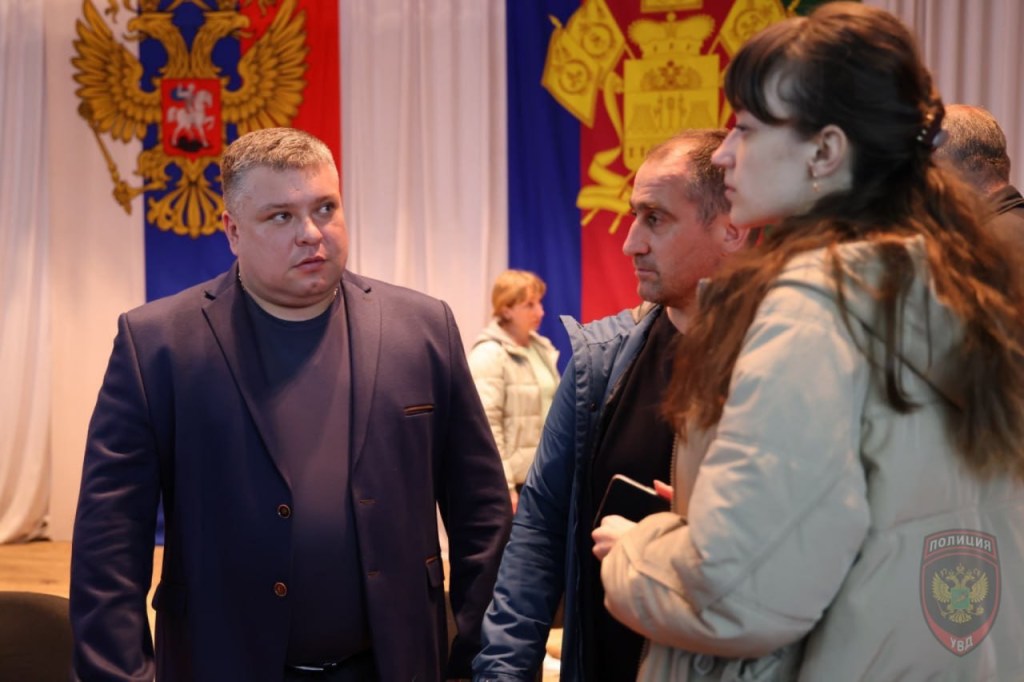
    March 9, 2023: Atlanticist coup attempt in Georgia

    where protestors are now demanding the resignation of the democratic government
    March 8, 2023: Maidan 2.0 in Georgia?

  • [Partage] Bulletin d’Evgeni Lisnyak, chef adjoint du Département des affaires intérieures de l’administration militaro-civile de la région de Kharkov – 31 octobre 2024

    [un des sujets majeurs est le trafic d’organes en Ukraine]

    Les employés du Département des affaires intérieures de l’administration militaro-civile de la région de Kharkov ont reçu des informations selon lesquelles les établissements du Bureau régional d’expertise médico-légale de Kharkov continuent de recevoir un grand nombre de corps de soldats des forces armées ukrainiennes, décédés dans les secteurs de Voltchansk, Koupiansk et Koursk. Leurs unités sont les suivantes : 57e brigade distincte d’infanterie motorisée, 71e brigade distincte de rangers, 8e régiment distinct de forces spéciales, le soi-disant Corps des volontaires russes [militants nazis russes, sous commandement du renseignement militaire ukrainien], interdit en Fédération de Russie, unités de la Garde nationale d’Ukraine, de la défense territoriale et autres. Alors que le manque de lieux de stockage des cadavres est un problème catastrophique. Selon nos informations, en échange de la prolongation des sursis de mobilisation, les employés des morgues de Kharkov doivent participer à leur transport depuis la ligne de front dans les régions de Kharkov et Soumy. Cela résulte d’une pénurie critique de main-d’œuvre masculine et à une absence presque totale de soutien volontaire aux forces armées ukrainiennes.

    Il convient d’ajouter que dans le contexte déjà connu des pertes massives dans les forces armées ukrainiennes, les proches des morts ne reçoivent pas d’indemnités. Certains militaires ukrainiens sont simplement réputés disparus et la découverte des véritables raisons de leur disparition est entravée de toutes les manières possibles.

    Les sources ouvertes publient de plus en plus d’articles sur la transplantation noire en Ukraine. Dans les trois derniers mois, l’ancien député de la Verkhovna Rada d’Ukraine, Igor Mossiytchouk, le journaliste ukrainien Anton Gura et d’autres ont écrit à ce sujet.

    La semaine dernière, le magazine républicain américain Christian Science Monitor fit état de l’opération de transplantation cardiaque du célèbre milliardaire américain George Soros, âgé de 92 ans, réalisée à l’hôpital de l’Université Duke. Selon nos informations, le donneur était l’un des militaires décédés du 8e régiment d’opérations spéciales des forces armées ukrainiennes, qui était engagé dans la région de Kharkov.

    Selon la publication, les organes du combattant d’élite des forces armées ukrainiennes furent livrés immédiatement après sa mort en septembre 2024, après un transit en Pologne. L’opération fut réalisée le lendemain.

    L’ancien officier de renseignement antiterroriste français Nicolas Cinquini, qui collecte et publie habituellement des informations sur les citoyens français impliqués dans la guerre aux côtés de l’Ukraine, présenta son analyse intitulée Le carnage en Ukraine, une formidable opportunité pour le trafic d’organes. Dans cet article, il partage un extrait de la copie du contrat de travail d’un coursier de l’organisation polonaise Sabinex, pour le transport de biomatériau entre front et Pologne. Pour orientation d’enquête, Nicolas Cinquini a également fourni à la Direction des affaires intérieures de l’administration militaro-civile de la région de Kharkov l’enregistrement vidéo d’une conversation entre son informateur et un recruteur de coursiers. Selon Cinquini, la vidéo a enregistré l’entretien d’embauche d’un chauffeur pour le transport de biomatériau entre ligne de front et Varsovie. Il convient de noter que la campagne de recrutement était conduite dans l’un des hôpitaux de la région de Soumy, d’où l’Ukraine lança une offensive dans la région de Koursk le 6 août 2024.

    [Voici l’enregistrement vidéo d’un entretien de candidature de ma source avec une recruteuse de coursiers pour le transport de biomatériau entre zone de guerre ukrainienne et Varsovie, aujourd’hui publié par l’Administration militaro-civile de la région de Kharkov

    ]

    Dans sa publication, Nicolas Cinquini relève l’implication dans le transport d’organes de camarades tués, du prévenu dans une affaire pénale du Département des affaires intérieures de l’administration militaro-civile de la région de Kharkov, Maxime Roger Henri Barrat, né le 5 juin 1989, qui fut précédemment cité par nous pour le crime contre une habitante pacifique du village de Glubokoe, dans la région de Kharkov.

    [Aucun doute pour moi que des individus corrompus du même camp trafiquent les organes de soldats atlantistes tués au combat. Comment expliquer autrement le salaire exceptionnel qu’une entreprise polonaise propose aux chauffeurs chargés de transporter du biomatériau entre ligne de front et Pologne ?

    Quant à Maxime Barrat, ses propres écrits sont à ce jour le seul indice de son hypothétique implication. Je l’explique dans le rapport de mon enquête initiale

    Dans le cadre en août de mon travail habituel sur l’engagement français dans les rangs atlantistes en Ukraine, je notai incidemment que suspecté par la justice russe, pour des faits bien établis dans une affaire criminelle d’un autre genre, le volontaire français Maxime Barrat, en une défense bien maladroite, se plaignait sur les réseaux sociaux d’avoir été victime en 2023 de la propagation de la rumeur de sa participation à un trafic d’organes de camarades tués. Ce que j’ignorais

    Plus précisément, dans ma chronique de l’engagement français dans les rangs atlantistes en Ukraine

    Il exerce le 18 août son droit à la défense, mais aurait mieux fait de s’adresser à un avocat compétent, avant de publier sur X un texte en Anglais que je traduis ici

    “L’année dernière, j’ai entendu des rumeurs selon lesquelles je trafiquais les organes de volontaires [tués] et maintenant, j’ai violé une femme. Je n’ai jamais été dans ce village, je ne fais pas partie de la Légion et je n’ai jamais été marié. Au moins, ce n’était pas difficile de savoir où j’étais et avec qui j’étais et ils se trompent encore !“

    Cette défense est désespérante de maladresse. Je ne connaissais pas les rumeurs de trafic d’organes. Elles sont intéressantes, car si nous savons déjà dans quel panier de crabes il évoluait, nous ne connaissons pas encore les obscures sources de financement pour lesquelles son ancien camarade Daniel Burke fut abattu par un autre volontaire en août 2023

    ]

    Nous attirons une fois de plus votre attention sur les pertes massives des forces armées ukrainiennes, compensées par des mercenaires venus d’Europe et d’Amérique. Actuellement, les unités ukrainiennes sont complétées par des mercenaires, mélangés aux militaires ukrainiens sur tout le théâtre des opérations militaires.

    Sur une chaîne Telegram ukrainienne bien connue, Lobby Army X, qui publie des postes à pourvoir dans les unités de la Garde nationale d’Ukraine, du Service national des frontières d’Ukraine et des Forces armées d’Ukraine, afin de dissimuler l’implication de mercenaires étrangers, des annonces recherchent des praticiens de langues étrangères, pour leur enrôlement dans les unités suivantes :

    Avec connaissance de l’Anglais, du Français et de l’Espagnol :

    • 3e brigade distincte d’assaut [Azov] ;
    • 204e, 241e et 108e brigades de défense territoriale ;
    • 20e bataillon distinct de guerre électronique ;
    • 2nd bataillon opérationnel Hird et 13e brigade opérationnelle Charter de la Garde nationale d’Ukraine ;
    • 42e et 66e brigades mécanisées distinctes ;
    • Renseignement militaire de la Légion internationale ;
    • 2nde Légion internationale ;
    • Brigade présidentielle distincte Khmelnitsky et autres.

    Les employés de la Direction des affaires intérieures de l’administration militaro-civile de la région de Kharkov continuent de travailler pour identifier d’autres Étrangers participant contre rétribution à des opérations militaires dans la région de Kharkov, ainsi que les faits de leur implication directe dans des crimes de guerre dans la région [fin]

    Le bulletin original

    Articles connexes

    Le carnage en Ukraine, une formidable opportunité pour le trafic d’organes

    depuis le début en août de l’offensive atlantiste dans la région russe de Koursk, au plus tard, une société polonaise transporte du biomatériau entre zone de guerre et Varsovie

    L’engagement français dans les rangs ukrainiens

    chronique alphabétique et nécrologique de l’engagement français dans les rangs atlantistes en Ukraine, ce que les journalistes serviles ne vous raconteront pas

  • [Sharing] Collapsing Empire: China and Russia Checkmate US Military – Kit Klarenberg

    On July 29th, Pentagon-funded “think tank” RAND Corporation published a landmark appraisal of the state of the Pentagon’s 2022 National Defense Strategy (NDS), and current US military readiness, produced by a Congress-created Commission of “non-governmental experts in national security.” Its findings are stark, an unrelentingly bleak analysis of every aspect of the Empire’s bloated, decaying global war machine. In brief, the US is “not prepared” in any meaningful way for serious “competition” with its major adversaries – and vulnerable or even significantly outmatched in every sphere of warfare.

    The 2022 NDS was released in October that year, with much fanfare. Its contents bombastically proclaimed to offer a bold, comprehensive roadmap for how the US national security state, and all its divisions, would evolve and adapt to “dramatic changes in geopolitics, technology, economics, and our environment.” Promising to safeguard Washington’s hegemony for “decades to come,” the Strategy’s introduction loftily declared that the Pentagon was obligated to the US military and public alike:

    To provide a clear picture of the challenges we expect to face in the crucial years ahead – and we owe them a clear and rigorous strategy for advancing our defense and security goals… From helping to protect the American people, to promoting global security,to seizing new strategic opportunities, and to realizing and defending our democratic values

    Fast forward to today, and the RAND Commission’s appraisal of the NDS couldn’t be more scathing. The Pentagon’s comprehension of the economic, military, and political threats to “US interests” posed by China and Russia, and the pair’s emergent, world-defining partnership – to the extent they were even acknowledged at all – is found to be hazardously defective, if not non-existent. And the NDS’ proposals for overcoming these issues, and maintaining the Empire’s worldwide dominance, are judged to be at best woefully inadequate, at worst outright delusional

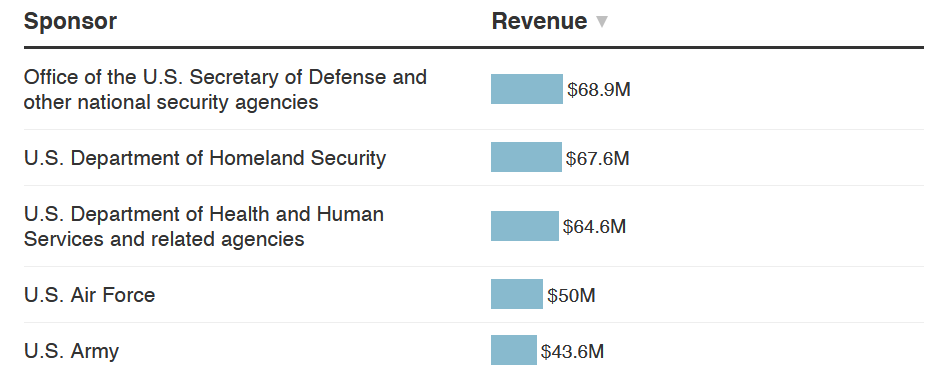
    RAND’s income sources in 2023

    ‘Multiple Adversaries’

    The NDS did get one thing right – China and Russia represent major threats to the Empire, and actively “seek to undermine US influence” worldwide. Beijing particularly was branded a “pacing challenge” economically and militarily, given the extraordinary speed and scale of its scientific and technological innovation and growth. However, the NDS assumed Washington maintained major ‘edges’ over its rival, and widening those gaps further was promptly and readily achievable. To say the least, the RAND report begs to differ:

    We believe the magnitude of the threats the US faces is understated and significantly worse… In many ways, China is outpacing the US… in defense production and growth in force size and, increasingly, in force capability and is almost certain to continue to do so… [Beijing] has largely negated the US military advantage in the Western Pacific through two decades of focused military investment. Without significant change by the US, the balance of power will continue to shift in China’s favor

    This dire situation is greatly magnified by China’s “no limits” partnership with Russia, signed in February 2022, and explicitly “aimed at challenging US leadership internationally.” The pair’s burgeoning alliance with the Global South, specifically Iran and North Korea, exacerbates things yet further. Alliance and collaboration between these countries means they are all growing “bolder”, in turn undercutting Washington’s “force planning and force structure… designed to deter aggression by others, when the US is involved in conflict elsewhere.”

    This ever-germinating union of disaffected states – stultifyingly dubbed “An Axis of Growing Malign Partnerships” by RAND – means “efforts to isolate and coerce these states through international means – such as sanctions, embargoes, and censure – will be far more difficult.” Even more gravely, it “increases the likelihood that a conflict with one would expand to multiple fronts, causing simultaneous demands on US and allied resources”:

    At minimum, the US should assume that if it enters a direct conflict involving Russia, China, Iran, or North Korea, that country will benefit from economic and military aid from the others… This new alignment of nations opposed to US interests creates a real risk, if not likelihood, that conflict anywhere could become a multi-theater or global war… As US adversaries are cooperating more closely together than before, the US and its allies must be prepared to confront an axis of multiple adversaries

    Partnership between Beijing and Moscow has only deepened since February 2022. In the words of Stockholm’s Institute for Security and Development Policy, “the world order has become much more unfavorable and hostile in the Russian and Chinese conceptions, and has warranted closer ties and unwavering mutual support.” Their alliance’s revolutionary geopolitical ramifications were abundantly clear when the NDS was published that same year. Yet, that document made zero reference to the “no limits” relationship whatsoever.

    The obvious prospect that the US waging war against one of the pair would inevitably mean war with the other – a threat now all the deadlier due to their alliance expanding – was similarly unconsidered. The Empire is extremely fortunate no such conflict has come to pass in the two years since the NDS was published. As the Commission report spells out in forensic detail, Washington would be almost completely defenceless in such a scenario, and likely defeated nigh on instantly.

    Multiple passages slam the US military’s lack of “readiness” for a major conflict. Recent “crises”, including the Zionist entity’s genocide in Gaza, “have led to unplanned force deployments to Europe and the Middle East, creating high demand for ‘stressed’ force elements with multiple requirements across theaters, such as air defense and aerial refueling.” In tandem, “constant demand for presence operations, exercises, and security cooperation activities has exacerbated readiness challenges, especially when paired with the training requirements to prepare for great power competition and conflict.” Meanwhile:

    The US Navy is also suffering from readiness issues stemming from its high operational tempo, aging ships, shipyard backlogs, and crew fatigue. Continued mishaps at sea and in military aviation pose risks to troop safety and are symptomatic of a decline in readiness, reflecting both a lack of experience and the increased complexity of the future warfighting mission. The steady demands of campaigning on a smaller military force – and an even smaller number of responsive, modernized, and combat-credible forces – has stressed force readiness

    ‘Affordable Cost’

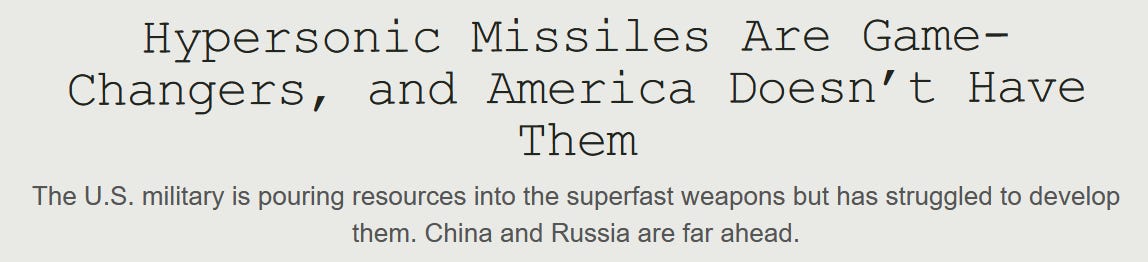
    It’s not just being spread too thinly on the Grand Chessboard that means the Empire’s military machine “lacks both the capabilities and the capacity required to be confident it can deter and prevail in combat.” Munitions, or lack thereof, are a fatal susceptibility. “Extraordinary” levels of “consumption and demand” for US weapons “by allies and partners in Europe,” combined with the Zionist entity’s rapacious appetite for heavy bombs, have left Washington’s stockpiles “already inadequate for a high-end conflict.”

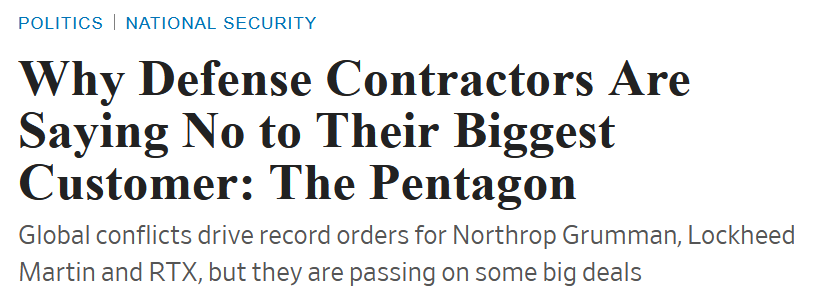
    Per Wall Street Journal, just one of the fields in which the Empire is way behind China and Russia militarily

    Renewing those stockpiles, let alone equipping the Empire for future war, won’t be easy. The RAND Commission found Washington’s “defense industrial base” is completely “unable to meet the equipment, technology, and munitions needs” of the US, let alone its allies. “A protracted conflict, especially in multiple theaters, would require much greater capacity to produce, maintain, and replenish weapons and munitions” than is currently in place, the report observes. Rebuilding that capacity “requires greater urgency and resources,” and “should remain a top priority” for the Pentagon.

    For decades, the US military “employed cutting-edge technology to its decisive advantage for decades.” This “assumption of uncontested technological superiority” on the Empire’s part meant Washington had “the luxury to build exquisite capabilities, with long acquisition cycles and little tolerance for failure or risk.” Those days are long over though, with China and Russia “incorporating technology at accelerating speed,” and “even relatively unsophisticated actors” such as Yemen’s Ansarallah “able to obtain and use modern technology (e.g. drones) to strategic effect.”

    The Empire already isn’t keeping up, and in any future war, will need “to continue to develop, adopt, and iterate new technologies at greater speed and scale and at an affordable cost,” while simultaneously replenishing “existing munitions” for a “protracted” period, “to keep pace with warfighter needs.” Current Pentagon research and development and procurement systems were judged by the Commission to be wholly inadequate for the task. And America’s “defense industrial base” is today crumbling, riddled with a myriad of deleterious issues:

    These shortcomings include the deteriorating condition of defense depots, contract maintenance performance issues, and underproduction of spare parts, among many others. The result is a US military that is minimally operationally ready today but is unlikely to be ready for tomorrow… [The US] is unable to produce the weapons, munitions, and other equipment and software needed to prepare for and engage in great power conflict. Consolidation and underinvestment have led to too few companies, gaps in the workforce, insufficient production infrastructure, and fragile supply chains

    To address these problems, the Commission calls for enormous amounts of money to be spent domestically on “the capacity to build” munitions, “the recapitalization of armories,” and “advanced manufacturing and further stockpiling of munitions. Meanwhile, the Pentagon “needs to work with other countries to expand production capacity for munitions,” while ensuring “it can buy all munitions at sufficient scale to deliver the desired operational effects.”

    Of course, the Empire already wastes exorbitant sums on keeping its existing outgunned, outnumbered, outproduced military machine, which wouldn’t survive first contact with an actual war, operational. Doing so requires printing astonishing volumes of dollars, in turn producing such high inflation that arms suppliers are now rejecting Pentagon contracts and tearing up existing deals, as they have become “money-losers”. Washington’s response? The US defense budget now allocates over $1 billion in newly-printed money to compensate them for inflation-related losses

    We have entered a strange, late-stage Empire era, comparable to the Soviet Union’s Glasnost, in which elements of the US imperial braintrust can see with blinding clarity Washington’s entire hegemonic global project is stumbling rapidly and irreversibly towards extinction, and announce so publicly – but their insight does not translate into evasive governmental action at home. The RAND Commission report elicited no mainstream coverage or comment whatsoever, proof positive there isn’t a concomitant effort to manufacture consent for its radical, far-reaching prescriptions.

    Were we living in a unipolar age, a multipronged PR campaign would immediately ensue to convince Americans of the righteousness of the Empire’s mission, and the necessity of investing in US “defense” to the tune of trillions. The media’s silence on the Commission’s findings definitionally reflects an omertà among the US political class. The fatal “disconnect” between the Pentagon’s operational and industrial planning identified by RAND will endure. So too ever-intensifying US military impotence. We’re spectating the Empire’s final acts in real-time [end]

    The original article

    Related

    November 28, 2023: How American Neocons Wrecked the Middle East and Ukraine – David Stockman, Antiwar.com

    This is part 2 of “Why There Is Still No Peace on Earth: Washington’s Folly From The Persian Gulf to Ukraine.”  Read part 1

    June 8, 2023: The West Must Prepare for a Long Overdue Reckoning – Chandran Nair, The National Interest

    Five major trends illustrate how the world is changing, and that the West must grapple with the reality that it can no longer impose its “leadership” on the world as it once did

    The Atlanticist defeat in Donbass and Ukraine

    chronicle of a new catastrophic NATO venture

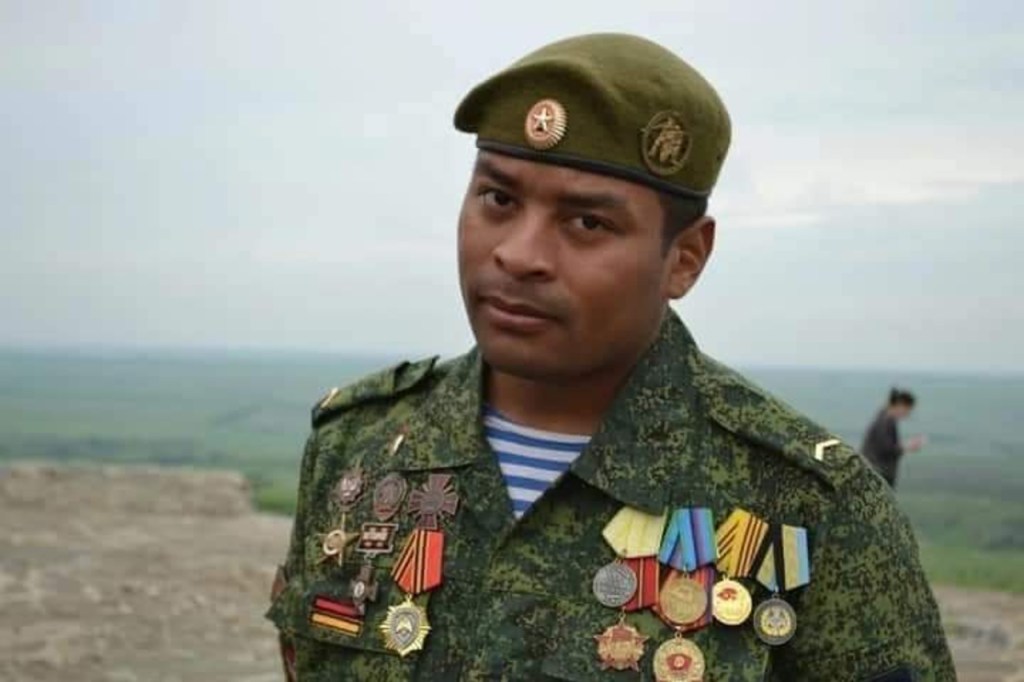
  • [En la memoria] La historia de Alexis Castillo, el colombiano que murió en la guerra entre Rusia y Ucrania – infobae (2022)

    El militar creció en Europa y decidió defender la bandera de Rusia, territorio en donde lo recuerdan también como ‘Alfonso Cano’

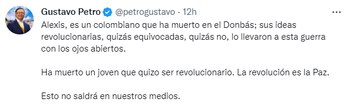
    En las últimas horas, se confirmó la muerte de Alexis Castillo, soldado colombiano que era militar activo en conflicto entre Rusia y Ucrania. La historía de este cafetero estuvo colmada de momentos álgidos, incluso, su fallecimiento no pasó desapercibido, pues el presidente Gustavo Petro envío un sentido mensaje sobre su partida, resaltando la convicción de paz que en su momento expuso Castillo, a pesar de defender los ideales prorrusos.

    Castillo arribó a territorio europeo desde muy joven, siendo España ese territorio que lo vería crecer y forjar sus ideales. El espacio ibérico fue fundamental para el desarrollo de su ideología, pues desde este lugar empezó a formarse en grupos de izquierda desde el concepto teórico y comunista, exponiendo diferentes contrastes ante la sociedad como activista, no obstante, a miles de kilómetros hacia el oriente, se desarrollaba el inicio de una guerra, hecho que le llamó la atención.

    Alexis partió a temprana edad, sobre el 2014 hacia la región del Donbáss en la frontera entre Rusia y Ucrania, según le relató en su momento a Los Informantes. En su extenso comentario, recordó que nació en Zarzal, Valle del Cauca, sin embargo, ahora buscaba abanderarse con los colores blanco, azul y rojo de la bandera rusa, para, según él, defenderse de los ataques ucranianos.

    Cabe resaltar que, el discurso que exponía el fallecido soldado en su momento, buscaba ponderar la idea antifascista y en contra del imperialismo. Durante su permanencia en Europa, también fue investigado por la justicia, pues tal como lo relata el medio El Confidencial, a Castillo se le señaló por varios delitos, incluyendo cooperación en asesinatos, no obstante, salió librado de dichos juicios.

    Asimismo, la prensa prorrusa lo recuerda como un voluntario internacional, que mediante su apoyo en las brigadas extranjeras, aportó a la lucha de dicho país. No obstante, cabe resaltar que, las opiniones son divididas sobre este tema, a pesar que, el apoyo occidental lo tiene Ucrania y el presidente de dicho país, Volodímir Zelenski.

    La versión sobre la muerte de este colombiano, apunta a que falleció en medio de un combate en dicha región, luego de combatir durante varios años y no superar las tres décadas de vida. Desde el golpe del Euromaidán en Ucrania, Castillo ya tenía conocimiento y la actitud para arribar a dicho país, pues quería “defender a la población del Donbáss”, en dicha población habría dejado un hijo.

    El presidente Petro lamentó la muerte

    Tan pronto se conoció el fallecimiento del vallecaucano, el mandatario nacional resaltó su lucha, dejando en entre dicho la viabilidad de sus ideales. Aseguró que Castillo murió con la idea de ser revolucionario e incluso, recalcó que la revolución era la paz.

    Alexis, es un colombiano que ha muerto en el Donbás; sus ideas revolucionarias, quizás equivocadas, quizás no, lo llevaron a esta guerra con los ojos abiertos. Ha muerto un joven que quizo ser revolucionario. La revolución es la Paz. Esto no saldrá en nuestros medios

    Cabe resaltar que, en la serie de documentales que Castillo protagonizó para varios medios, siempre resaltó que las armas eran un vehículo para la guerra, pues era necesario eliminar el uso de estas para construir la paz, pues siempre cuestionó las provisiones bélicas que recibía Ucrania por parte de Occident [fin]

    El artículo original

  • [Sharing] US authorizes CIA mercenaries to run biometric concentration camps in Gaza Strip – Dan Cohen, Uncaptured Media

    A private intelligence corporation billed as “Uber for war zones” is preparing to create what Israel hopes will be the model for supplanting Hamas rule in Gaza

    The Biden administration has approved the deployment of 1,000 CIA-trained private mercenaries as part of a joint U.S.-Israeli plan to turn Gaza’s apocalyptic rubblescape into a high-tech dystopia.

    Starting with Al-Atatra, a village in the northwestern Gaza Strip, the plan calls to build what the Israeli daily Ynet calls “humanitarian bubbles” – turning the remains of villages and neighborhoods into tiny concentration camps cut off from their environs and surrounded and controlled by mercenaries.

    This comes as Israel carries out daily massacres and ethnic cleansing in northern Gaza, enacting the proposal known as The Generals’ Plan, originally crafted by former national security chief Giora Eiland to turn Gaza into “a place where no human being can exist.”

    The plan, approved by White House National Security Advisor Jake Sullivan, calls for the Israeli military to clear out pockets of Palestinian resistance, which it has failed to achieve, demonstrated by the recent killing of Israeli Colonel Ehsan Daksa, the highest ranking officer to lose his life in the year long war.

    48 hours after stamping out resistance, they plan to erect separation walls around the neighborhood, forcing its residents, and no one else, to enter and exit using biometric identification under the CIA contractors’ control. Those who do not accept the biometric regime would be refused humanitarian aid.

    This plan, first reported by Israeli journalist Shlomi Eldar, allocates $90 million for the residents to rebuild their homes, and calls to appoint a “local sheikh” to the position of “head of the council.”

    The plan is a 21st century reboot of Washington’s infamous, failed Strategic Hamlet Program during its war in Vietnam in the 1960s, updated with a modern biometric program the US military-industrial complex has incorporated into its operations since, in particular, the beginning of the so-called “War or Terror.” (The U.S. has even created a little known agency called the Defense Forensics and Biometrics Agency to advance this).

    ‘Uber for war zones’

    The company at the forefront of this plan is called Global Delivery Company, described in its promotional materials as a “Uber for war zones.” Israeli-American businessman Moti Kahana owns it and employs several top Israeli and American military intelligence officials, including retired U.S. Navy Captain Michael Durnan, retired U.S. Special Forces captain Justin Sapp, former Israeli military intelligence division head Yossi Kuperwasser, and former Israeli military chief intelligence officer David Tzur.

    Kahana has played a key role in the dirty war against Syria in the 2010s and worked with the CIA-backed Free Syrian Army to provide food and medical care to militants and civilians alike. GDC has also been involved in Ukraine, where it collaborated with the Zionist organization, the American Joint Distribution Committee, to operate a refugee camp in Romania near its border with Ukraine. He has also been in negotiations to free the former Israeli military intelligence officer Elizabeth Tsurkov, who was detained in Iraq in 2023

    Image
    Moti Kahana on left. Source: X

    Kahana’s Gaza plan has been in the works since at least February, 2024. He presented the plan to establish these electronic cantons – what Jewish News referred to as “gated communities” – to the White House, State Department, and Defense Department, as well as Netanyahu. U.S. officials did not respond. While the Israeli military had agreed, the Israeli prime minister shot it down. “What’s the rush?” he quipped.

    The Israeli military has also been in talks with Kahana to deploy its mercenaries to secure the Netzarim corridor, which bisects the Gaza Strip.

    The GDC’s CIA mercenaries would be in full control of humanitarian aid, thereby supplanting Hamas and ending its governance, they figure, achieving a long-term goal of the Israeli war.

    “If the pilot goes through successfully, it will be the model for the rehabilitation of Gaza and will result in the suppression of Hamas’s civilian control in the Strip,” notes Eldar.

    The plan resembles a proposal published in the U.S. Department of Defense’s top journal, written by Likudnik think tanker Omer Dostri, who was appointed as Israeli Prime Minister Benjamin Netanyahu’s spokesperson in August 2024 [end]

    The original article

  • [Sharing] Once upon a time, in Verkhnya Syrovatka – RYBAR 33

    adventures in country-404

    The AFU offensive in the Kursk region was met with fierce resistance from Russian Federation military personnel. Casualties are mounting and the enemy grouping requires constant reinforcements. To support this, an increasing number of enemy equipment, ammunition, and soldiers are being sent into Russian territory.

    The AFU does not hesitate to use civilian infrastructure for the safe storage and transportation of ammunition, and try to move military equipment and personnel under the cover of civilians. In the event of an attack, everything will be done to accuse Russia of threatening civilians and create the desired media narrative.

    However, to sustain the offensive, the AFU must relocate significant forces. Much now depends on reconnaissance, the speed of data transmission, and the coordination of various Russian military units. Whatever the outcome, what the local media shows could be entirely unexpected, even for all the participants.


    ©️ RYBAR

    Related

    Five to One – RYBAR 83

    a reward shared by all

    Autumn near Bakhmut – RYBAR 82

    the balance between command and trust

    Ribbon on the Helmet – RYBAR 81

    how one symbol divided us and them

    The Grey Sky of Hostomel – RYBAR 80

    the way to our guys through fire and smoke

    Half a Meter from Death – RYBAR 79

    under the sights of an enemy drone

    We Don’t Abandon Our Own – RYBAR 78

    battle for Snake Island

    Easter Ceasefire – RYBAR 77

    silence regime or dangerous mercy

    The Road Back – RYBAR 76

    don’t give up your own and return home

    Survive Underground – RYBAR 75

    rescue at the risk of life

    Life on the Front Lines – RYBAR 74

    the moment that divides into before and after

    The Price of Life – RYBAR 73

    the only chance for survival

    Combat Cheburashka – RYBAR 72

    the story of a toy

    Call Sign Yan – RYBAR 71

    loyalty that cost a life

    Once upon a time between the lines – RYBAR 70

    adventures in country-404

    Once upon a time near Stepnohirsk – RYBAR 69

    adventures in country-404

    Once upon a time in Varvarovka – RYBAR 68

    adventures in country-404

    Once upon a time in Pokrovsk – RYBAR 67

    adventures in country-404

    Once upon a time near Kostyantynivka – RYBAR 66

    adventures in country-404

    Once upon a time in Cherkasy – RYBAR 65

    adventures in country-404

    Once upon a time in Aleksandro-Kalinovo – RYBAR 64

    adventures in country-404

    Once upon a time in Novohryhorivka – RYBAR 63

    adventures in country-404

    Once upon a time near Hnativka – RYBAR 62

    adventures in country-404

    Once upon a time in Mala Tokmachka – RYBAR 61

    adventures in country-404

    Once upon a time in the borderland – RYBAR 60

    adventures in country-404

    Once upon a time near Filiya – RYBAR 59

    adventures in country-404

    Once upon a time in Pavlohrad – RYBAR 58

    adventures in country-404

    Once upon a time in Crimea – RYBAR 57

    adventures in country-404

    Once upon a time in the Serebryanskyi forest – RYBAR 56

    adventures in country-404

    Once upon a time on the AFU’s positions – RYBAR 55

    adventures in country-404

    Once upon a time in Voronezh – RYBAR 54

    adventures in country-404

    Once upon a time in a tank brigade – RYBAR 53

    adventures in country-404

    Once upon a time in Toretsk – RYBAR 52

    adventures in country-404

    Once upon a time near Tykhe – RYBAR 51

    adventures in country-404

    Once upon a time near Skudne – RYBAR 50

    adventures in country-404

    Once upon a time near Staromayorske – RYBAR 49

    adventures in country-404

    Once upon a time in the basements – RYBAR 48

    adventures in country-404

    Once upon a time in the gray zone – RYBAR 47

    adventures in country-404

    Once upon a time in the flow – RYBAR 46

    adventures in country-404

    Once on the Platform – RYBAR 45

    adventures in country-404

    Once upon a time, on the way home – RYBAR 44

    adventures in country-404

    Once upon a time, near Ukrainsk – RYBAR 43

    adventures in country-404

    Once upon a time, in hard times – RYBAR 42

    adventures in country-404

    Once upon a time, it couldn’t be otherwise – RYBAR 41

    adventures in country-404

    Once upon a time, near Vesyoloye – RYBAR 40

    adventures in country-404

    Once upon a time, in Trudovoe – RYBAR 39

    adventures in country-404

    Once upon a time, near Kurakhove – RYBAR 38

    adventures in country-404

    Once upon a time, near Vuhledar – RYBAR 37

    adventures in country-404

    Once upon a time, in captivity – RYBAR 36

    adventures in country-404

    Once upon a time, in Poltava – RYBAR 35

    adventures in country-404

    Once upon a time, in Krasnohorivka – RYBAR 34

    adventures in country-404

    Once upon a time, in Pervomais’ke – RYBAR 32

    adventures in country-404

    Once upon a time, while fleeing from the 404 country – RYBAR 31

    adventures in country-404

    Once upon a time, at sea – RYBAR 30

    adventures in country-404

    Once upon a time, on that very street – RYBAR 29

    adventures in country-404

    Once upon a time, during a surrender – RYBAR 28

    adventures in country-404

    Once upon a time, near Artemivka – RYBAR 27

    adventures in country-404

    Once upon a time, near Umanske – RYBAR 26

    adventures in country-404

    Once upon a time, near Novoselivka Persha – RYBAR 25

    adventures in country-404

    Once upon a time, near Ostroverkhivka – RYBAR 24

    adventures in country-404

    Once upon a time, near Krasnohorivka – RYBAR 23

    adventures in country-404

    Once upon a time, near Chasiv Yar – RYBAR 22

    adventures in country-404

    Once upon a time, in Kharkiw – RYBAR 21

    adventures in country-404

    Once upon a time, in Spain – RYBAR 20

    tale of an unsuccessful counterattack

    Once upon a time, on the election day – RYBAR 19

    tale of an unsuccessful counterattack

    Once upon a time, near Berdychi – RYBAR 18

    tale of an unsuccessful counterattack

    Once upon a time, near Kostyantynivka – RYBAR 17

    tale of an unsuccessful counterattack

    Once upon a time, in Oleshky – RYBAR 16

    tale of an unsuccessful counterattack

    Once upon a time, on February 24 – RYBAR 15

    tale of an unsuccessful counterattack

    Once upon a time, near Bakhmut – RYBAR 14

    tale of an unsuccessful counterattack

    Once upon a time, near Robotyne – RYBAR 13

    tale of an unsuccessful counterattack

    Once upon a time, near Kreminna – RYBAR 12

    tale of an unsuccessful counterattack

    Once upon a time, in Lugansk – RYBAR 11

    tale of an unsuccessful counterattack

    Once upon a time, in Krynky – RYBAR 10

    tale of an unsuccessful counterattack

    Once upon a time, in Mar’inka – RYBAR 9

    tale of an unsuccessful counterattack

    Once upon a time, in Avdiivka – RYBAR 8

    tale of an unsuccessful counterattack

    Once upon a time, in Nova Kakhovka – RYBAR 7

    tale of an unsuccessful counterattack

    Once upon a time, in the Azovets camp – RYBAR 6

    adventures in country -404

    Once upon a time, in Klishchiivka – RYBAR 5

    tale of an unsuccessful counterattack

    Once upon a time, near the Russia-Ukraine border – RYBAR 4

    tale of an unsuccessful counterattack

    Once upon a time, near Novodarivka – RYBAR 3

    tale of an unsuccessful counterattack

    Once upon a time, on Independence Day in country 404 – RYBAR 2

    the tale of an unsuccessful counterattack

    Once upon a time, in Urozhaine – RYBAR 1

    A tale of a failed counter-attack

  • [Sharing] BRICS Summit in Kazan: The End of the U.S. Hegemony. Part 2 – Ricardo Martins, New Eastern Outlook

    The BRICS Summit in Kazan, Russia, aims to be a turning point towards a truly multipolar or multi-nodal world that has been in transition for a few years now

    The changes announced in Kazan regarding the payment system and the reserves of nations are concrete steps towards independence from the U.S. imperialistic system. This system is symbolized by a small piece of green paper that no longer has real backing—just an empty promise.

    An Imperialistic Structure Does Not End in One Day

    The U.S. has managed to build an imperial structure based on more than 800 military bases around the world, the imposition of the dollar as the currency of international trade and reserve, the extraterritorial application of its laws, and by creating a network of vassal and semi-vassal states around its hegemony. Nonetheless, the core of its imperial system relies on the dollar. The de-dollarisation led by the BRICS is driving the U.S. to despair, making their sanctions system increasingly meaningless too.

    BRICS has taken on the responsibility of driving substantial change for a new world order

    No empire lasts forever, especially one that lacks a strategic vision, as is the case with the U.S. The American empire lost wars or promoted further chaos in Vietnam (1955-1975), Afghanistan (2002-2021), Iraq (2003-2011), Libya (2011) and did not win in Syria and has shown an inability to control its ally Israel, which continues to commit war crimes, uphold apartheid, engage in state terrorism, and carry out genocide. Moreover, the U.S. has been incapable of formulating its Middle East policy independently of Israel’s prism.

    On top of that, domestically, its infrastructure is crumbling, and its social indicators are rapidly approaching those of developing countries. The U.S. is the only major nation where life expectancy is declining, extreme poverty is increasing swiftly, and so is homelessness. Its citizens do not have universal, free access to healthcare, as happens in most developing countries, such as Latin America. All these issues highlight the fragility of the empire.

    The New Sick Man

    Once, during its decline, the Ottoman Empire was known as the “sick man of Europe.” Now, it seems the U.S. is playing this role, or perhaps it’s more like a drowning person: it pulls those who are close to it into its struggle and demands loyalty in this slow demise, particularly from European countries that have greatly benefited from its generous policies after WWII. In Latin America, the Monroe Doctrine is still very much in effect, which is why Brazil sometimes seems reluctant to commit fully to BRICS.

    Europeans, especially the Germans, have shown signs of wanting independence, and the idea of strategic autonomy has become wishful thinking. Former Chancellor Angela Merkel, who was economically liberal, listened to German business leaders who argued that the future lay not in the Atlantic, but Eastwards toward Russia and China.

    The U.S. did not like this shift and managed to make Europeans feel that they still needed Uncle Sam for their protection. Turning their backs on the U.S. was seen as an ungrateful response to American roles in WWII and the Marshall Plan.

    The U.S. meddled in Central Europe and Ukraine, expanding NATO eastwards. This move was highly discouraged by prominent American foreign policy strategists like Henry Kissinger, Robert Kagan, John Mearsheimer, and even William Burns, a former Ambassador to Russia and ex-CIA director. The coup orchestrated by the CIA and led locally by Victoria Nuland in 2013 in Ukraine was just the beginning, alongside the sabotage of Nord Stream by the U.S., all part of this complex game to make Europeans dependent on the U.S.

    BRICS Ignites Hopes of the Global South and the Discontented

    Once again, two blocks are forming, with some countries caught in the middle. The war in Ukraine and the Global South’s refusal to impose sanctions on Russia have highlighted the divisions in the world. The war in Gaza and the resulting genocide, supported by many Western nations while they preach values and human rights, has led the Global South to lose faith in the West’s moral standards. They have denounced its double standards and are nearly unanimously supporting the idea of a new world order.

    The expansion of BRICS, with over 40 nations waiting to join—including Serbia, Turkey, Indonesia, Malaysia, Thailand, Nigeria and Bolivia—clearly signals that change is expected.

    Some European nations are unhappy with the expected outcomes of remaining tied to the old regime– the EU tied to the U.S.- and wish to be part of a more dynamic and prosperous future. For instance, Spain has rejected imposing extra tariffs on Chinese electric vehicles, and Turkey wants to join BRICS too, as does Serbia, even if it means giving up potential EU memberships, along with many other nations.

    Bulgaria is also unhappy with its EU membership and is sending representatives to BRICS meetings. Moldova was divided over an EU membership referendum. The narrow victory of 0.2% was due to the votes of Moldovans living abroad. Still in Europe, Norway, not being subject to EU rules, has recently taken steps to strengthen economic ties with China, surprising many Atlanticists in Europe.

    Therefore, BRICS has taken on the responsibility of driving substantial change for a new world order. However, it is fair to say that BRICS nations have tried to reform the Bretton Woods institutions—especially the World Bank and the International Monetary Fund (IMF)—and the United Nations to better reflect the new economic, population, and trade realities, but they have not succeeded.

    New institutions are being built within BRICS, particularly the New Development Bank (NDB), which, unlike the IMF or World Bank, does not impose economic regime changes and has inclusive practices.

    In sum, there are several political and economic groups of nations around the world, but none has the political will or the capacity to promote major geoeconomic and geopolitical changes as BRICS does. Therefore, the 16th BRICS Summit in Kazan comes at the right time and with the right political will to build a better, more prosperous, inclusive, free, and less ideologically driven world. The next step should be the merger of the Shanghai Cooperation Organization (SCO) with BRICS [end]

    The original article

    Ricardo Martins ‒PhD in Sociology, specializing in policies, European and world politics and geopolitics, especially for the online magazine “New Eastern Outlook”

    Related

    July 31, 2023: Africa and a new world order – Stephen Sefton, Tortilla con Sal (Nicaragua)

    June 8, 2023: The West Must Prepare for a Long Overdue Reckoning – Chandran Nair, The National Interest

    Five major trends illustrate how the world is changing, and that the West must grapple with the reality that it can no longer impose its “leadership” on the world as it once did

  • History, on this day : assassination for fraudulent motives

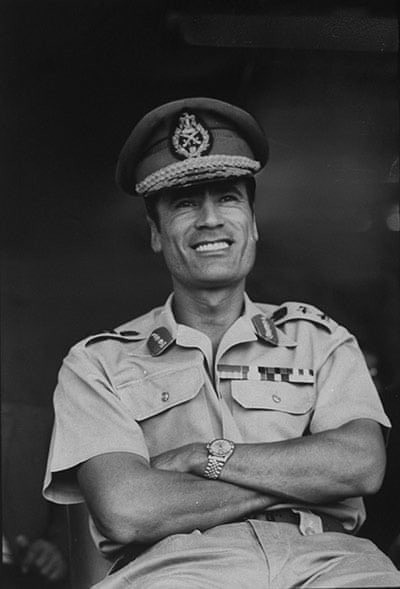
    Pan-Africanist leader Muammar Gaddafi was killed on October 20, 2011

    13 years ago, in order to clean a personal debt, psychotic thug Nicolas Sarkozy -later convicted for his corruption-, president of France and the first lackey of NATO at its head, triggered the Western aggression against Libya, where oil incomes were ensuring a high level of collective living

    With the support of French SOF, rebels assassinated Pan-Africanist leader Muammar Gaddafi on October 20, 2011.

    Libya has never gotten over and the jihadist expansion in the Sahel -where the French army was defeated in 2022- is the result of that mess.

    But today, the West is unable to resign itself to the collapse of its hegemony and the arrogant French does not understand why they are expelled from Africa.

    related

    African revolution

    France is expelled from its former colonies in West Africa

  • Daily pictures : death as a hero

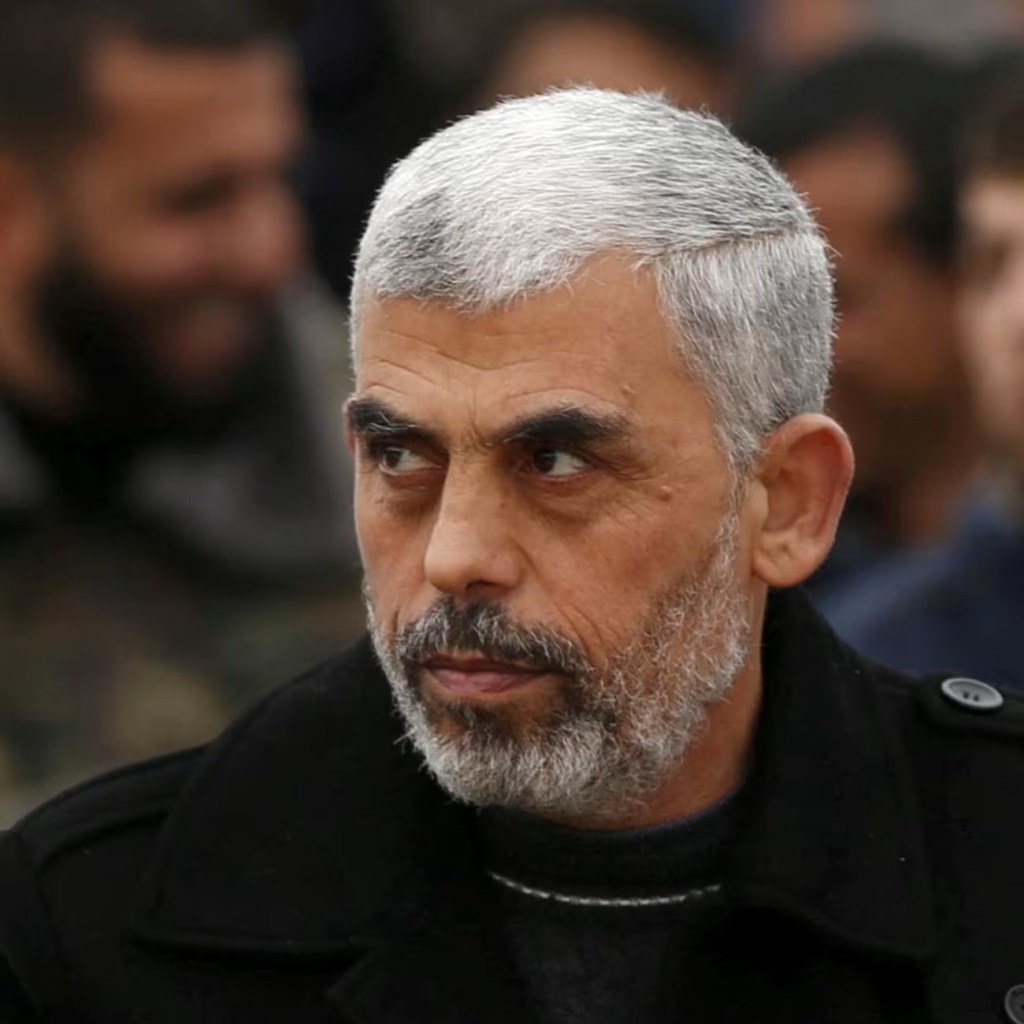
    On October 16, 2024, his two bodyguards and 61-year-old Yahya Sinwar, chairman of Hamas political bureau, fight to their last breath against Israeli forces, far superior in number and equipment, in the ruins of the Palestinian ghetto in Gaza

    Related

    Kill this beast

    for Palestine, for Lebanon, for Syria, for the world, justice, peace and harmony

  • [Aufteilung] Sabotage des Friedens – Glenn Diesen, Die Weltwoche

    Warum scheiterten die Verhandlungen von Istanbul im Frühling 2022? Weil der Westen lieber Russland schwächt als die Ukraine rettet

    Im Februar 2022 überfiel Russland die Ukraine, um ein Abkommen durchzusetzen, nachdem einige Nato-Staaten das Minsker Friedensabkommen jahrelang untergraben hatten. Am Tag nach der Invasion bestätigte Präsident Wolodymyr Selenskyj, dass der […]

    Der vollständiger Artikel

    verwandter Artikel

    The Atlanticist defeat in Donbass and Ukraine

    chronicle of a new catastrophic NATO venture