Nicolas Cinquini

Analista senior di l'intelligenza in u campu di a gestione di i risichi di sicurezza, sò un anzianu tenente detective è ufficiale di l'intelligenza in l'agenzie di u Statu francese. A bona pronuncia hè Николай Чинкуини, in russu

  • [Sharing] Leaks expose secret British military cell plotting to ‘keep Ukraine fighting’ – Kit Klarenberg, The Grayzone

    Leaked files show top UK military figures conspired to carry out the Kerch bridge bombing, covertly train “Gladio”-style stay-behind forces in Ukraine, and groom the British public for a drop in living standards caused by the proxy war against Russia

    Emails and internal documents reviewed by The Grayzone reveal details of a cabal of British military and intelligence veterans which plotted to escalate and prolong the Ukraine proxy war “at all costs.” Convened under the direction of the British Ministry of Defense in the immediate aftermath of Russia’s invasion of Ukraine in February 2022, the cell referred to itself as Project Alchemy. As British leadership sabotaged peace talks between Kiev and Moscow, the cell put forward an array of plans “to keep Ukraine fighting” by imposing “strategic dilemmas, costs and frictions upon Russia.”

    The leaks obtained by The Grayzone expose a hidden hand behind Britain’s policy in Ukraine, showing in unusually granular detail how it aimed to engineer a long, grinding war through covert operations that stretched the bounds of legality.

    Project Alchemy’s proposed schemes spanned every conceivable field of warfare, from cyber attacks to “discreet operations” to outright terrorism. The secret cell even put forward a plan to “aggressively pursue” and “dismantle” independent media outlets – including The Grayzone – through an aggressive campaign of legal harassment and online censorship, so they “would be forced to close.” The incendiary blueprints were fed to the highest levels of the British state and national security structure, where they were apparently well-received.

    Founded by a senior British Ministry of Defence official, Project Alchemy is composed of veteran military and intelligence operatives united by a desire for all-out war between the West and Russia. Some have trained Ukrainian forces in clandestine sabotage tactics. 

    Members of the national security cabal tacitly acknowledged that their proposed operations stretched the bounds of British law. Thus they suggested that London should be “prepared to creatively use the law” to meet its goals, and even be willing to erase “legal restrictions on UK deniable ops” against Russia. 

    Some of Project Alchemy’s most extreme recommendations have already been implemented, often with calamitous results. These include the cell’s proposal to strike Crimea’s Kerch Bridge, which prompted a Russian escalation that saw punishing attacks on Ukraine’s electricity infrastructure. Alchemy also envisioned the construction of a secret, Gladio-style army of Ukrainian partisan fighters to carry out assassination, sabotage, and terror missions behind enemy lines. 

    It appears the British premier, Keir Starmer, fell under the influence of the Project Alchemy cabal soon after his election in July, when he eagerly embraced the role of “wartime prime minister.” After pledging to support Ukraine “as long as it takes,” however, Starmer is quietly backing away from the maximalist policy. In Kiev, Ukrainians are left to ponder how their “friends” in London got them into this mess, and why they can not, or will not get them out of it.

    The British spooks who gathered around Project Alchemy reasoned that the longer the proxy war continued, the more Russian president Vladimir Putin’s “credibility at home and abroad drops, and his ability to fight NATO is degraded.” Today, Project Alchemy’s gambit has clearly backfired, as Putin remains popular within Russia, while a crumbling Ukrainian army loses territory by the day despite constant re-arming by the West. But the war planners in London remain staunchly committed to escalation, refusing to shelve their diabolical proposals.

    Britain takes ‘unilateral lead’ on ‘regime change’ in Russia

    Project Alchemy was founded on the personal orders of Lt. General Charlie Stickland, who is charged with “planning, executing and integrating UK led joint and multinational overseas military operations” as the head of Britain’s Permanent Joint Headquarters. Stickland boasts in leaked communications that his family “come from a long line of pirates and buccaneers.” In his email signature, the general identifies himself as an “LGBTQ+ Advocate” in rainbow-colored text.

    Stickland and his assistant, Maj. Ed Harris, did not answer The Grayzone’s calls to their personal phones, nor did they respond to detailed questions submitted to them through WhatsApp

    Stickland convened the first meeting of Project Alchemy’s on February 26, 2022, just days after Russian troops made their initial foray into Ukraine. According to minutes of the gathering, “an assortment of leading academics, authors, strategists, planners, pollsters, comms, data scientists and tech” was on hand to produce a “grand strategy options paper.” 

    The paper consisted of a series of proposals for the British government to “defeat Putin in Ukraine and set the conditions for the reshaping of an open international order of the future.” Throughout the document, the need to “keep Ukraine fighting” was described as London’s “main effort” in the conflict.

    In an email to British military apparatchiks dated March 3 2022, Stickland described Alchemy’s paper as the result of “some mischief I’ve been up to” with “a group of ‘sideways thinkers.’” He expressed satisfaction that “this has been seen by all sorts of people,” including senior British government and military officials, “and landed well”

    An Excel document listing potential and confirmed recruits for the effort, authored by project chief Dom Morris, names a number of individuals from the private sector and academia alongside high-ranking army officials. Currently a fellow at King’s College’s “Centre for Grand Strategy,” Morris was listed in the document as a “civilian leader.” The role of “military leader” was to be carried out by Simon Scott, a brigadier in the British army who was appointed O.B.E. in 2013 for his “gallant and distinguished services” in Afghanistan

    Information operations were to be headed by a still-to-be determined member of Britain’s 77th Psychological Operations Brigade. Also listed as a participant in information operations was longtime British psychological warfare operative Amil Khan, founder of the “counter-disinformation” analysis firm Valent Projects.

    In 2021, The Grayzone revealed how the then-Prince of Wales, King Charles, enlisted Khan’s Valent Projects to astroturf a pseudo-socialist YouTube influencer to attack skeptics of the government’s ham-fisted response to Covid. Previously, Khan participated in the UK Foreign Office’s program to foment regime change in Syria.

    Months after Alchemy put Khan forward as a member of its team, The Grayzone exposed him for plotting with celebrity-left journalist Paul Mason to destroy this publication. One leaked email showed Khan proposing a “full nuclear legal [attack] to squeeze [The Grayzone] financially.” The newly-uncovered documents indicate the decision to assail The Grayzone was met with approval from the highest ranks of the British government.

    ‘Ukraine’s Next Chapter – Elders Grand Strategy Options Paper’

    Within Project Alchemy’s covert war room, the obsession with a long war quickly took hold. Members of the cell took their cues from a policy paper Stickland attributed to “The Elders,” which he described as “a group of Fusion players,” referring to the strata of academics and defense industry figures with strong ties to the British military.

    An Alchemy document composed under Stickland’s watch and titled, “Ukraine’s Next Chapter – Elders Grand Strategy Options Paper,” suggests that members of the cabal had convinced themselves a “palace coup” inside the Kremlin was inevitable. So long as Russia struggled inside Ukraine, they believed, British intelligence would be granted “the opportunity to challenge” Moscow’s ever-growing “stature as a competent international actor” on the world stage. 

    “A long war against a small state makes [Putin] look a fool,” the Alchemy paper asserted. “He is obsessed by the end of Ghaddafi – he will want to avoid that… Pressure will pile on from oligarchs as a long war drags on – he will not want to give them excuses to threaten his authority.” The group reasoned that “a long war will affect [Putin’s] international credibility,” as “a failure to quickly defeat Ukraine will seriously… reduce his credibility with new rich friends in Belarus, Hungary, China, India, Middle East, Brazil etc.

    “Most importantly,” protracted Russian involvement in Ukraine “will embolden NATO,” Alchemy argued. Convinced that Putin would fail in the eastern Donbas region, triggering a collapse of his government, Project Alchemy members openly fantasized about absorbing Russia into the Western-dominated financial order afterwards under the guise of a “Post Putin Marshall Plan.” Of particular interest was London’s “re-engagement” with Moscow “in global energy and commodity markets,” a seeming reference to the West’s desire for cheap Russian gas and wheat. 

    “Discreet operations”: reviving ‘Operation Gladio’ terror ops in Ukraine

    To accomplish the balkanization of Russia, Project Alchemy’s plotters took inspiration from Operation Gladio, a CIA and NATO-orchestrated covert operation that saw fascist paramilitaries carry out false flag terrorist attacks across Western Europe after World War II in a bid to prevent communism from taking root.

    A section detailing potential “discreet operations” in Alchemy’s strategy paper, which stressed the “need to intervene in every way except ‘official,’” explicitly recommended “Stay-behind Gladio handbooks/ Partisan Pamphlets” which would be “updated for Information Age” 

    Another move Alchemy proposed was to deploy Britain’s “strong” private military [PMC] industry “to out Wagner, Wagner.” In other words, the group aimed to establish a British rival to the Russian mercenary force founded by the now-deceased commander Yevgeny Prigozhin. This objective required the formulation of “a new doctrine, operating concept, and legal framework, for effectively integrating the activities of PMCs and other [non-military] actors.” Under these guidelines, British mercenary firms capable of using “sophisticated weaponry like SAMS, cyber, combat air, drones” would be employed to “operate and train and accompany Ukraine formations.” 

    These operations were all intended to ultimately be “sponsored and commanded” by the UK government, “using discreet cover” to avoid triggering NATO’s Article 5. 

    Following the production of their grand strategy paper, Stickland invited his team of “sideways thinkers” at Project Alchemy to submit further proposals for Gladio-style operations. Among the pitches that arrived was a “mission” to “disable the Kerch Bridge in a way that is audacious, and disrupts road and rail access to Crimea and maritime access to the Sea of Azov.” The blueprints of this highly provocative plot were exposed by The Grayzone in October 2022, in the immediate aftermath of the truck bomb attack that crippled the Kerch Bridge. 

    Alchemy’s team also produced a PowerPoint presentation entitled, “Training a Ukrainian Commando Force to restore Maritime Sovereignty – Elders,” outlining plans to construct a 1,000-strong Ukrainian commando force “trained in Britain by military veterans equipped with British equipment” to “degrade the Russian Navy and open another flank in the fight for Kherson and the south of Ukraine”

    Alchemy’s team had been working on the plan for at least three months by the time of the presentation’s submission. “Ukrainians abroad and volunteers inside Ukraine” had already been recruited, in advance of 12 weeks basic training “in the use of all troop weapons including mortars, anti-tank missiles, sniper craft, cliff assault, small craft training, demolitions,” the proposal stated

    The plan called for formally integrating the commandos into the Ukrainian Navy. Alchemy boasted that the prospective force “will be a force multiplier and highly mobile,” while Russia’s “outdated doctrine will struggle with a highly motivated and well-equipped naval force conducting hit and run operations and targeting Crimea.”

    Moreover, “individuals who are fluent Russian speakers and deemed suitable for covert undercover operations,” including “female operators,” would be “inserted into southern occupied Ukraine and Crimea for intelligence gathering and sabotage of key infrastructure targets.” They would be trained by MI6 officers. For this, Alchemy asked the British government for a total of £73.5 million. “The program is at a high state of readiness. We are ready to go,” the presentation forcefully declared. 

    The enormous sum was to be paid to Elders Services Ltd that was founded by Alchemy members and registered to an address just 15 miles from Fort Monckton, which was described by former MI6 officer Richard Tomlinson as “the SIS’s field operations training centre.” It is unknown how much money, if any, the firm received from the British government for resuscitating Operation Gladio in Ukraine. Elders Services Ltd shuttered in March 2023 after less than a year of operation, without filing financial accounts.

    British spies call for ‘action’ against The Grayzone

    Behind the Project Alchemy team’s bravado was a sense that Western hegemony was crumbling on the icy borderlands separating Ukraine from Russia. Referring to the rising BRICS alliance, which gathered in Kazan, Russia this October to challenge the US-dominated financial order, Alchemy planners urged British leadership to “prepare for SWIFT II,” as SWIFT was “going to be destroyed” by the West’s anti-Russia sanctions, “slowly, but inevitably.” 

    According to Alchemy’s analysts, countries across the globe would naturally “see the need for a non-US alternative” means of safely parking their cash and trading. In a rare show of political sobriety, the British spooks predicted that sanctions on Russia combined with the Ukraine proxy war would impose higher prices on consumer goods and “hit British voters in the pocket.”

    This posed “a threat to public support” for the British government’s “hard line” on Ukraine, they warned. “Domestic UK public opinion” would understandably get “fed up” paying more for everyday goods, meaning “pressure grows for a compromise.”

    To prepare the British public for the coming storm, Project Alchemy’s plotters proposed what they blandly described as “information operations,” but which could be more accurately described as a blend of domestic state propaganda and malign attacks on disruptive media outlets.

    The task they outlined not only included “[dismantling] Russian disinformation infrastructure” by pressuring social media to ban RT and Sputnik, but also targeting critical independent media like The Grayzone.

    “A number of actions can be undertaken against these outlets. The most obvious is legal since the content of these media outriders is frequently in contravention of media law in the UK, US and EU,” Alchemy insisted. 

    “Aggrieved parties currently tend to ignore libel/defamation by these outlets. Were they to aggressively pursue these outlets, it is likely they would be forced to close.”

    The Grayzone, it was claimed, had thus far “managed to obscure” its funding – a suggestion that this outlet is covertly funded by Russia or some other enemy state, which is completely false. The paranoid fantasies of British intelligence may explain why this journalist was quizzed on the subject by British counter-terror police when they detained and interrogated him at Luton International Airport in May 2023

    Alchemy plotters seek to place Britain at lead of war with Russia

    In addition to playing a leading role in media manipulation, Alchemy sought to place Britain at the forefront of the International Criminal Court’s agenda to investigate and prosecute the Russian government for alleged war crimes in Ukraine. 

    Alchemy suggested London “set international conditions, collection mechanisms and funding for collection of data and evidence” in the proxy conflict, and “provide all possible support, including intelligence” to the ICC “in its efforts to investigate war crimes,” just as British spies did for the International Criminal Tribunal for the Former Yugoslavia (ICTY). 

    Though not named in the document, high-profile British lawyers, including celebrity Amal Clooney, have since emerged at the forefront of efforts to prosecute Russian officials for war crimes, and establish an ICTY analog. As The Grayzone’s Max Blumenthal reported, Britain played a critical role in the appointment of Amal Clooney’s mentor, Karim Khan, as ICC prosecutor. 

    Project Alchemy’s provocative proposals appear to have reached the desk of PM Keir Starmer in some form. At NATO’s 75th anniversary summit, Starmer issued his full-throated endorsement of deep strikes by the Ukrainian military into Russia. Echoing the aggressive language found in Alchemy documents, he pledged to “deliver £3 billion worth of support to Ukraine each year… for as long as it takes.” 

    But as the Ukrainian military’s offensive in Russia’s Kursk region falters, the Biden administration has distanced itself from the calls for striking into the Russian heartland. Fortunately for British leaders hellbent on taking the fight to Moscow, Project Alchemy has ensured that a platter of off-the-books options remains handy.

    As Alchemy noted in its grand strategy paper, “The UK seeks always to act multilaterally, but is prepared to take a unilateral lead where achieving multilateral consensus might prove time-consuming or difficult.” Among the war’s covert sponsors, who were safely ensconced over 1,000 miles away from the front lines, it was firmly agreed: “we should attempt at all costs to keep Ukraine fighting” [end]

    The original article

    Related

    L’engagement français dans les rangs ukrainiens

    in French, alphabetical obituary chronicle of French involvement in the Atlanticist ranks in Ukraine, what servile journalists will not tell you.

    Especially, where a French-speaking mercenary in Ukraine, Olivier Lecourt, founder from Lviv of a cyber warfare team against Russia, entrusted in October

    My employers are Ukrainian and English.
    My job: to bring down the Kremlin’s collaborators and criminals

    October 8, 2022: Ukrainian attack against Crimea bridge

    August 16, 2022: SAS in Crimea

  • [Sharing] Why Is Canada Protecting the Names of Suspected Nazis? – Taylor Noakes, The Walrus

    Ottawa won’t disclose list of alleged war criminals believed to have sheltered here after the Second World War

    The concept of a secret registry of names kept by the federal government feels at odds with our perception of Canada. While there may once have been records of so-called undesirables or suspected subversives, the practice now seems outdated.

    But there is at least one such list—reportedly about 900 names long—that is one of the government’s most closely guarded secrets. It is a record of alleged or suspected war criminals and collaborators who were believed to have found refuge in Canada after the Second World War. These individuals were investigated nearly forty years ago by the Commission of Inquiry on War Criminals, headed by retired Quebec Superior Court chief justice Jules Deschênes. The so-called Deschênes Commission was initiated in part due to persistent rumours that Josef Mengele, the sadistic Nazi doctor at Auschwitz, had entered and possibly lived in Canada in the early 1960s. When Deschênes issued his final report in 1986, the annexes that listed those investigated were never made public.

    Ottawa is refusing to declassify the list, as reported last week by the Globe and Mail, which joined a group of organizations to file an Access to Information request for the names. Bernie Farber, formerly with the Canadian Jewish Congress and the son of a Holocaust survivor, called the decision “a shameful blot.”

    Whether this is a tenable long-term position for the government remains to be seen. The passage of time has neither diminished the public’s interest in the issue nor has it become any less relevant, as last year’s Yaroslav Hunka scandal amply indicated. Pressured to act after Hunka—the then ninety-eight-year-old former Waffen-SS volunteer—was honoured by Parliament as a Canadian and Ukrainian hero for fighting the Russians in the Second World War, Immigration Minister Marc Miller indicated the government would release redacted or classified materials related to the file.

    While Hunka has never been accused of war crimes, it is known that he volunteered for a Ukrainian SS division in 1943, a year after the Nazis’ Wannsee Conference set Hitler’s Final Solution in motion. Hunka’s unit was often called the Galicia Division, in reference to the Eastern European region where its recruits were drawn from. An estimated 2,000 Galicia Division veterans reportedly came to Canada in 1950 by special dispensation of the Canadian government. The Deschênes Commission determined there were perhaps as many as 600 former members of the unit left in the country in the mid-1980s.

    Whether the Galicia Division participated in war crimes is a matter of considerable debate. The published, and public, first part of the Deschênes Commission’s final report concluded that charges against the unit had never been substantiated and that members had already been screened by Allied officials before their admission to Canada.

    But four decades earlier, the Nuremberg tribunal had already established that the entire SS organization—including iterations like the Galicia Division—was a criminal enterprise, complicit in the Holocaust. The Deschênes findings were also contradicted by Alti Rodal, a historian hired by the commission to research the circumstances that led to the presence of Nazi war criminals in Canada. In a 1987 article for Canadian Dimension, journalist Sol Littman cited Rodal, noting that while Soviet and British agents were sent to screen the Galicia Division for potential war criminals, both failed to carry out the task effectively. The British agent, for example, had no history of the unit he was investigating, no documents to refer to, and could not speak Ukrainian.

    Adding to the complexity, when the Galicia Division surrendered to Allied forces in 1945, it was a hodgepodge composed of the survivors of other decimated SS units and the former members of Auxiliary Police units set up by the occupying German Army. Even though there wasn’t evidence at the time to suggest the whole division participated in war crimes, it is known that some of its members were pulled from units believed to be guilty of such acts. There is also evidence pointing to the unit’s participation in numerous massacres—of Poles and possibly of Jews as well—as late as the spring of 1944.

    “When the Deschênes Commission was active forty years ago, it could only rely on evidence provided by the Soviet authorities,” says John-Paul Himka, a professor emeritus in the department of history and classics at the University of Alberta, whose research focuses on Ukraine and the Holocaust. “Today Ukraine has opened all the archives that had formerly been kept secret, including the records of the Soviet security organs and documentation from the German occupation of Ukraine. There are also many more testimonies of Jewish and Polish victims of violence than there were in the 1980s. So it should be possible to verify where the individuals on the list stood on the spectrum of guilt and innocence.”

    In preparation for the possible release of the commission’s classified annexes, Library and Archives Canada (LAC) consulted with what they termed a “discrete group of individuals or organizations” this summer. As reported by David Pugliese of the Ottawa Citizen, neither Holocaust survivors nor scholars were invited to weigh in on the issue, while representatives of the Ukrainian community were.

    During the meetings, some of those present worried declassifying the rest of the final report could result in criminal prosecutions as much as in damaged reputations. In the aftermath of the Hunka scandal last year, Progress Report reported that the University of Alberta’s Canadian Institute for Ukrainian Studies had received upward of $1.4 million in endowments and donations dedicated to members of the Galicia Division and one member of the Nazi-collaborationist Ukrainian Insurgent Army. Another veteran, Peter Savaryn, had been the university’s chancellor and had even received an Order of Canada. Stakeholders consulted by LAC also expressed concern that releasing the information could bolster Russian propaganda interests, as Vladimir Putin has characterized his war against Ukraine as a de-Nazification effort.

    There’s also an element of history repeating here. “The Ukrainian Canadian community was generally opposed to the Deschênes Commission, viewing it as a Soviet-inspired attack on Ukrainians in Canada,” says Himka. An email obtained by The Walrus shows that the Ukrainian Canadian Congress (UCC) had been fundraising $150,000 to mount a legal challenge in case the government decided to release the names.

    If such a disclosure ever occurs, it is unlikely to result in extraditions or war-crime trials, suggests Himka. “The overwhelming majority of the people on the list will have passed away by now.” But that doesn’t necessarily mean it shouldn’t be done. “First,” says Himka, “the leaders of the organized Ukrainian community have to confront the past, of migrants to Canada who were involved in the crimes of the German occupation. Second, the suppression of the full records of the Deschênes Commission invites study of the Canadian government’s role in protecting the reputation of those Ukrainians who were collaborationist or involved in crimes.”

    The small cadre seeking to delay or prevent full transparency on this file are not doing their community any favours. The UCC, according to Himka, is a major lobbying group. What’s more, says Himka, there is an effort afoot by some members of the organized Ukrainian community to rewrite the history of the Second World War. It was the UCC that recommended that Hunka be invited for President Volodymyr Zelenskyy’s visit last year.

    While Himka hopes the Ukrainian Canadian community will welcome openness on this issue, the responsibility ultimately rests with the federal government. Canada needs to account for its actions, past and present. Earlier this year, Miller released a previously redacted section of the Rodal Report as well as related government memos. The information contained therein revealed that the country had, since the war, refused at least four requests for the extradition of suspected Nazis. This included one request, opposed by former prime minister Pierre Elliott Trudeau in his capacity as justice minister in the late 1960s, for the extradition of a Latvian alleged to have been a firing squad captain who took part in the murders of over 5,100 Jews. Trudeau was concerned about how the extradition would impact social cohesion, arguing it would spark tensions among post-war Eastern European immigrant communities.

    Declassifying part of an allegedly flawed investigation isn’t enough. Failures of policy—from allowing suspected war criminals into the country in the first place to the reasons this information was kept from the public—deserve comprehensive scrutiny [end]

    The original article

    related

    Nazism in Ukraine

    its roots before WW2, its collaboration with Nazi Germany, its legacy in modern Ukraine, how NATO has continually supported Nazism in Ukraine.

    Besides, even the maternal grandfather of Chrystia Freeland, deputy prime minister of Canada, now deceased Mykhailo Khomiak / Michael Chomiak, was a Ukrainian Nazi.

  • Daily pictures : Georges Abdallah should be granted parole

    a victory for justice

    The Tribunal d’application des peines [sentencing court] has agreed today on parole on December 6 for Lebanese communist militant Georges Abdallah, who is in jail for 40 years. French prosecutors are under control of the executive branch and the Parquet national antiterroriste [National Anti-Terrorism Prosecutor’s Office, PNAT] is appealing that decision.

    Now 73 years old, Abdallah was arrested in France in 1984 and after pretrial detention, convicted in 1987 for complicity in two murders. Colonel Charles Ray, US military attaché and CIA intelligence officer, was shot in Paris on January 18, 1982. Second secretary of Israel’s embassy and Mossad intelligence officer, Yacov Barsimantov was shot in Paris on March 31, 1982. The intelligence functions of the two victims are confirmed nowadays by Yves Bonnet, head between 1982 and 1985 of the Direction de la surveillance du territoire [Territorial Surveillance Directorate, French counter-intelligence agency, DST]. The Fractions armées révolutionnaires libanaises [Lebanese Revolutionary Armed Fractions, FARL] took credit for the two murders.

    A matter of course : Abdallah would have not been sentenced to life imprisonment without formal intervention of the US government. The investigators found no evidence of its membership in the FARL or involvement in the murders. That was rather a matter of intelligence. And according to several former French professionals, the intelligence was wrong. The US joined a civil action to criminal proceedings and through diplomatic and intelligence channels, it demanded that the defendant was sentenced to life imprisonment

    Under French law, Abdallah could have been granted parole since 1999. But obviously, like it also appeared in WikiLeaks,

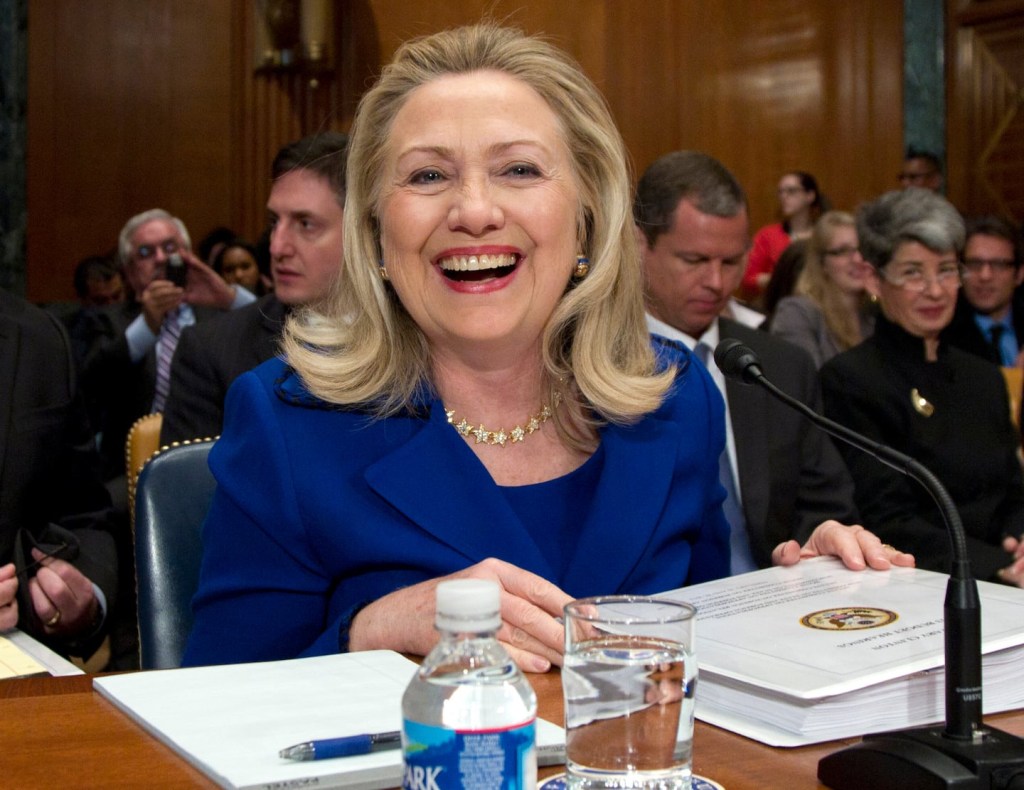
    the US authorities, including Hillary Clinton, were continuing to lobby their French lackeys against his parole.

  • Images du jour : les deux anges perdus étaient en réalité nazis

    Le Parisien commet une énième manipulation médiatique au sujet de l’Ukraine

    Alors jeune inspecteur de police à Paris, au début des années 90, j’appris que Le Parisien était appelé la main-courante de la PP, porte-voix de la Préfecture de police. Le quotidien semble devenu celui de la plus médiocre propagande nationaliste ukrainienne. Avec une mièvrerie désopilante, il raconte la mort au combat et les funérailles de deux Amoureux des forces armées ukrainiennes : Valentyna Nagorna et Daniil Liachkevytch. Voici les premières secondes du script de la vidéo que le quotidien publie le 11 novembre 2024 sur sa chaîne Instagram. Sortons les mouchoirs

    [voix féminine] elle s’appelait Valentyna ; il s’appelait Daniil ; ils étaient amoureux et ils sont morts sur le front en Ukraine […]

    […] son coeur était vraiment rempli d’amour […]

    précise l’ancienne épouse de Liachkevytch. Voyons voir. Il était un hooligan fasciste et dès 2014, au début de la guerre civile en Ukraine, contre les habitants russophones du Donbass qui revendiquaient l’autonomie mais que le pouvoir d’extrême droite à Kiev qualifiait de terroristes, il rejoignit le bataillon Azov, une formation paramilitaire nazie de police spéciale, au sein de la garde nationale ukrainienne. Son indicatif radio était Berserk, un guerrier viking psychopathe

    Son indicatif radio était Valkyrie et croyez-moi, ce n’était pas un hommage à Claus von Stauffenberg. Son identifiant Instagram était valkyria_ab3, où ab3 signifiait 3e brigade d’assaut. Plus confidentiel, son compte TikTok était valkyria__88, où 88 signifiait HH, pour Heil Hitler

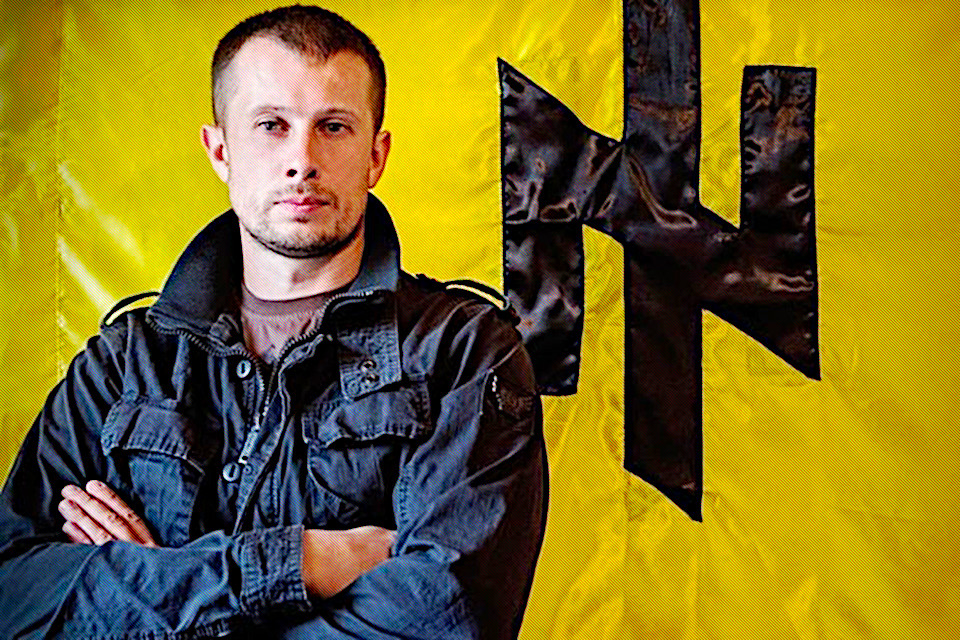
    Tous deux auraient été infirmiers, tant nous savons déjà que les militaires atlantistes, quand ils sont tués ou prisonniers, sont soit infirmiers, soit cuisiniers. Tous deux étaient membres de la 3e brigade d’assaut, émanation de l’organisation nazie Azov dans l’armée régulière ukrainienne. Son commandant est Andriy Biletsky, fondateur d’Azov en 2014 et dirigeant actuel du Corps national, un parti politique nazi en Ukraine

    Tous deux furent tués le 1er novembre 2024. J’ai enquêté sur Telegram, brièvement échangé avec des militants nazis ukrainiens qui les voient comme des héros de l’Europe blanche et sont parfaitement fondés à exprimer cette opinion. Mon propos concerne plutôt la ligne éditoriale du Parisien.

    J’ai détecté d’autres manipulations médiatiques du journal, par exemple le 4 septembre 2022. Pour illustrer le prétendu génocide que la Russie commettrait en Ukraine, Le Parisien publia une photo qu’Alexandre Ermochenko avait prise en réalité à Donetsk, le 2 septembre

    Il montrait une victime des habituels bombardements terroristes délibérés, que l’armée ukrainienne commet depuis 2014, contre les civils russophones.

    in The Western disinformation about Ukraine

    en Anglais, une chronique de la censure, des fake news, du blanchiment du nazisme ukrainien et de ses crimes, dans la guerre par procuration que l’OTAN mène en Ukraine contre la Russie

    Articles connexes

    Nazism in Ukraine

    en Anglais, its roots before WW2, its collaboration with Nazi Germany, its legacy in modern Ukraine, how NATO has continually supported Nazism in Ukraine

    The Atlanticist defeat in Donbass and Ukraine

    chronicle of a new catastrophic NATO venture

  • [Sharing] Putin Outlines The ‘Moment of Truth’ – Pepe Escobar, Sputnik

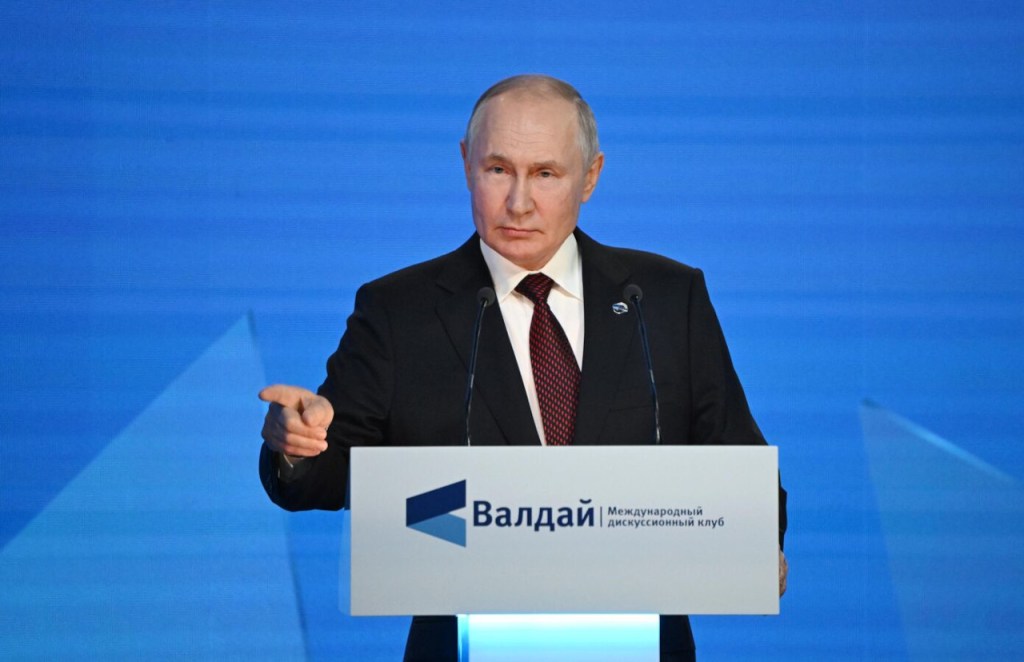
    President Putin’s plenary session performance (address + Q&A) at the annual Valdai Club meeting in Sochi felt like a high-speed train on cruise control

    Totally cool, calm, comfortable, in full command of a Himalaya of facts, no political leader anywhere – recent past and present – would even come close to delivering what amounts to an extensive, detailed world view deeply matured over a quarter of a century at the highest geopolitical level.

    Putin began his address referring to the October 1917 revolution, drawing a direct parallel with our turbulent times: “The moment of truth is coming”. In a clear tribute to Gramsci, he stated how a “completely new world order” is “being formed before our eyes.”

    The subtle reference to the recent BRICS summit in Kazan could not possibly escape critical minds across the Global Majority. Kazan was a living, breathing testimony that “the old order is irrevocably disappearing, one might say, has already disappeared, and a serious, irreconcilable struggle is unfolding for the formation of a new one. Irreconcilable, first of all, because this is not even a fight for power or geopolitical influence, this is a clash of the very principles on which relations between countries and peoples will be built at the next historical stage.”

    As concisely as possible, that should be taken as the current Big Picture framework: we are not mired inside a reductionist clash of civilizations or the “end of History” – which Putin defined as “myopic” – but facing a make-or-break systemic clash of fundamental principles. The result will define this century – arguably the Eurasia Century, as “the dialectics of History continues.”

    Putin himself quipped that he would drive into “philosophical asides” during his address. In fact that went much further than a mere refutation of unilateral conceptual fallacies, as “the Western elites thought that their monopoly is the final stop for humanity” and “modern neoliberalism degenerated into a totalitarian ideology.”

    Referring to AI, he asked rhetorically, “will human remain human?” He praised the building of a new global architecture, moving towards a “polyphonic” and “polycentric” world where “maximum representation” is paramount and the BRICS are “coming up with a coordinated approach” based on “sovereign equality.”

    Six Principles For Global Sustainable Development

    Sovereignty had to be one of the predominant themes during the Valdai Q&A. Putin was adamant that Russia must “develop our own sovereign AI. As algorithms are biased and give massive power to a few big companies that control the internet, the need is imperative for “sovereign algorithms.”

    Answering a question on Eurasian security and the US as the dominant maritime power v. a multipolar Eurasia, he stressed the “consensus and desire in Eurasia for an anti-hegemonic movement”, and not for Eurasia constituted “as a bloc”. That’s the appeal of Eurasia’s “multi-vector foreign policy”, implying “more political independence”. The key example of “harmonizing interests”, Putin stressed, is the Russia-China partnership, and that was also what “made BRICS successful.”

    Compare it in contrast to “the inability in Europe to establish a system of “indivisibility of security” and to “overcome bloc politics”; Europe instead went for NATO expansion: “After the end of the Cold War there was an opportunity to overcome bloc politics. But the US had fear of losing Europe. The US installed almost a colonial dependence. Honestly I did not expect that.”

    Putin introduced a fascinating personal experience tidbit referring to a conversation – in German – with former German chancellor Helmut Kohl in 1993, when Kohl said flat out that “the future of Europe” is linked to Russia.

    Yet that ended up leading to “the most important problem on our Eurasian continent, the main problem between Russia and European countries: the trust deficit (…) When they tell us that ‘we signed the Minsk agreements on Ukraine only to give Ukraine an opportunity to rearm, and we had no intention of resolving this conflict peacefully,’ what kind of trust can we talk about? (…) You have directly publicly stated that you have cheated us! Lied to us and deceived us! What kind of trust is that? But we need to get back to that system of mutual trust.”

    Putin then added that Europe should consider becoming part and parcel of a Chinese concept straight from Chinese philosophy (“they do not strive for domination”). With panache, he stressed that the Chinese uber-geoeconomic trade/connectivity project should be interpreted as One Belt, One Common Road.

    And that extrapolates to Central Asia, with all those nations “very young in their statehood” interested in “stable development”. For Russia-China, there’s “no competition” in the Heartland: “we only have cooperation.”

    Putin once again enumerated what he considers the 6 key principles for global sustainable development: openness of interaction (implying no “artificial barriers”); diversity (“a model of one country or a relatively small part of humanity should not be imposed as something universal”); maximum representativeness; security for all without exception; justice for all (erasing “the gap between the ‘golden billion’ and the rest of humanity); and equality.

    “Make Civilizations, Not War”

    On Ukraine, this was the money quote: “If there is no neutrality, then it’s difficult to imagine any kind of good neighborly relations between Russia and Ukraine.” In a nutshell: Moscow is ready for negotiations, but based on facts on the battlefield and what was agreed upon in Istanbul in April 2022.

    That may be interpreted as a direct message to President Trump. To whom the door is open: “Russia has not damaged its relations with the US and is open to their restoration, but the ball is in the Americans’ court.”

    Putin on US Presidents (he met quite a few): “All of them are interesting people.” On Trump: “His behavior when there was an attempt on his life, I was impressed. He is a courageous person. He acquitted himself valiantly.” On the open door: “Whatever he does it’s up to him to decide.” Then Putin offered his own congratulations for the re-election – on the record. The dialogue may be on: “We are willing to talk to Trump.”

    Putin extolled Russia-China relations as part of their strategic partnership as being “at the highest level in modern history.” He also praised his own personal relation with Xi Jinping. That paved the way for the real killer, when it comes to US-Russia-China: “If the US had chosen a trilateral cooperation instead of double constraint – everyone would win.”

    An excellent question by Brazilian economist Paulo Nogueira Batista Jr – a former vice-president of the NDB, the BRICS bank – led Putin to clarify his own position on de-dollarization. He stated flatly that “my role is to see ideas shaped that we then propose to our partners”.

    The key target is “proposing to create a new investment platform using electronic payments.” That will address the “most promising markets” in the near future – South Asia, Africa, parts of Latin America: “They will need investment, technologies.” And “tools independent from inflation” – with regulation “through Central Banks and the NDB. We agreed to have a working group meeting regularly at government level. We are in no hurry.”

    So that puts to rest any scenario of an immediate BRICS financial bombshell – even as “two-thirds of our trade is being serviced in national currencies” and among BRICS the figures are also high.

    BRICS Bridge will be tested – soon. As for creating a single currency, that’s “premature. We need to achieve greater integration of economies, increase the quality of economies to a certain – compatible – level.”

    Then, the bombshell: “We never wanted to abandon the dollar!” That goes a long way to explain Putin’s own view on de-dollarization: “They are undoing it with their own hand – the power of the dollar.”

    All of the above is just a sample of the width and breath of themes addressed by the President during the Valdai Q&A. The forum itself offered precious nuggets all across the spectrum. Some participants – correctly – noted the absence of “the majority of the majority”: youth and women. Africans were impressed with “the sharp mind of Russian bureaucracy.”

    A Chinese view noted how “the Chinese don’t swim against the current; they cross the river and reach the other bank.” There was a near consensus that development should be “based in different cultural values of civilizations” – actually Putin’s own view. Also imperative is the “need for aggregate authority” among the Global South.

    A Greek insight was particularly powerful when it comes to the civilizational approach to politics: “Civilizations don’t clash. States do.” Thus the new – playful – motto that could guide not only BRICS but the whole Global Majority: “Make Civilizations, Not War.” [end]

    The original article

    Related

    November 7, 2024: How Trump could liberate Europe – Thomas Fazi, UnHerd

    His isolationism is an opportunity

    October 23, 2024: BRICS Summit in Kazan: The End of the U.S. Hegemony. Part 2 – Ricardo Martins, New Eastern Outlook

    The BRICS Summit in Kazan, Russia, aims to be a turning point towards a truly multipolar or multi-nodal world that has been in transition for a few years now

    June 12, 2024: The summer of living dangerously – Pepe Escobar, Strategic Culture Foundation

    The plutocracy believes that afterwards they can buy the whole thing for a pittance while flies are still laying eggs in European carcasses

    September 1, 2023: No respite for France as a ‘New Africa’ rises – Pepe Escobar, The Cradle

    Like dominos, African states are one by one falling outside the shackles of neocolonialism. Chad, Guinea, Mali, Burkina Faso, Niger, and now Gabon are saying ‘non’ to France’s longtime domination of African financial, political, economic, and security affairs

    July 30, 2023: Africa and a new world order – Stephen Sefton, Tortilla con Sal (Nicaragua)

    [the sense of history]

    June 8, 2023: The West Must Prepare for a Long Overdue Reckoning – Chandran Nair, The National Interest

    Five major trends illustrate how the world is changing, and that the West must grapple with the reality that it can no longer impose its “leadership” on the world as it once did

    March 20, 2023: Forging Ahead to Open a New Chapter of China-Russia Friendship, Cooperation and Common Development – Xi Jinping, RIA Novosti

    [Quote : no model of governance is universal, and no single country should dictate the international order]

  • [Sharing] Hind Rajab Foundation Files Complaint Against Maccabi Tel Aviv Supporters in Amsterdam

    Amsterdam, November 9, 2024 – The Hind Rajab Foundation, in partnership with the March 30 Movement, has taken an urgent legal step to combat rising instances of hate-fueled violence in Europe. Following disturbing incidents in Amsterdam, the two organizations have submitted a formal criminal complaint to the Amsterdam Public Prosecutor’s Office, seeking immediate action against supporters of Maccabi Tel Aviv who have reportedly engaged in acts of incitement, violence, and vandalism.

    ​This complaint, filed by attorney Mr. Haroon Raza on behalf of the Hind Rajab Foundation, cites multiple violent events that occurred in the streets of Amsterdam beginning on November 5, 2024. These actions reportedly include:

    • Incitement to Hatred and Genocidal Rhetoric: Maccabi supporters have been documented chanting slogans that incite violence against Palestinians and Arabs, especially children, echoing genocidal rhetoric that aligns with the ongoing atrocities in Gaza.
    • Assaults on Citizens and Targeted Hate Speech: Pro-Palestinian individuals were reportedly attacked by Maccabi supporters for displaying Palestinian symbols, leading to physical harm and creating an atmosphere of fear.
    • Vandalism and Property Destruction: Numerous incidents involved Maccabi supporters destroying Palestinian symbols and personal property, illustrating a targeted campaign of intimidation and hostility.

    The incidents in question occurred in highly public areas of Amsterdam, with supporters allegedly engaging in coordinated displays of hate and violence. Despite the presence of law enforcement, there was a conspicuous absence of arrests or intervention, a failure that the Hind Rajab Foundation and March 30 Movement have condemned.

    “The Hind Rajab Foundation is committed to ending impunity for those who commit or promote violence, particularly in a context that threatens vulnerable groups like children,” said Dyab Abou Jahjah, Chairman of the Hind Rajab Foundation and the March 30 Movement.

    “The inflammatory chants and violent acts witnessed in Amsterdam must be addressed urgently. We call on Dutch authorities to uphold the law and demonstrate that incitement and violence have no place in our society.”

    This urgent complaint underscores the need for swift action by the Amsterdam Public Prosecutor. The Hind Rajab Foundation and the March 30 Movement urge the authorities to secure social media footage, gather surveillance evidence, and investigate all responsible parties to bring perpetrators to justice [end]

    The original article

    About the Hind Rajab Foundation and March 30 Movement: the Hind Rajab Foundation, founded as a branch of the March 30 Movement, is dedicated to holding individuals and organizations accountable for crimes against humanity, particularly in the context of Palestinian rights. The foundation conducts thorough investigations, compiles evidence, and submits legal complaints on both national and international levels. Together with the March 30 Movement, the foundation aims to shift narratives and support justice for Palestine through sustained advocacy and legal action.

    [About Hind Rajab] on 29 January, 2024, a six-year-old Palestinian child in Gaza City, Hind Rajab, pleaded over the phone for emergency workers to rescue her from a car riddled with bullets. Her body was found two weeks later, on 10 February, alongside the bodies of six of her family members in the car they drove to flee their neighbourhood as Israeli forces invaded. The bodies of two Palestine Red Crescent Society (PRCS) paramedics, missing since the evening of the call when they were dispatched to rescue Hind, were discovered in their ambulance about 50 metres away.

    related

    Ajax-Maccabi Tel Aviv incidents: The hypocrisy of European media and politicians – DiEM25

    The recent incidents involving fans of Israeli football team Maccabi Tel Aviv in Amsterdam serve as a stark reminder of a recurring double standard in European discourse regarding Israel amid the ongoing genocide in Gaza

  • [Sharing] Ajax-Maccabi Tel Aviv incidents: The hypocrisy of European media and politicians – DiEM25

    The recent incidents involving fans of Israeli football team Maccabi Tel Aviv in Amsterdam serve as a stark reminder of a recurring double standard in European discourse regarding Israel amid the ongoing genocide in Gaza.

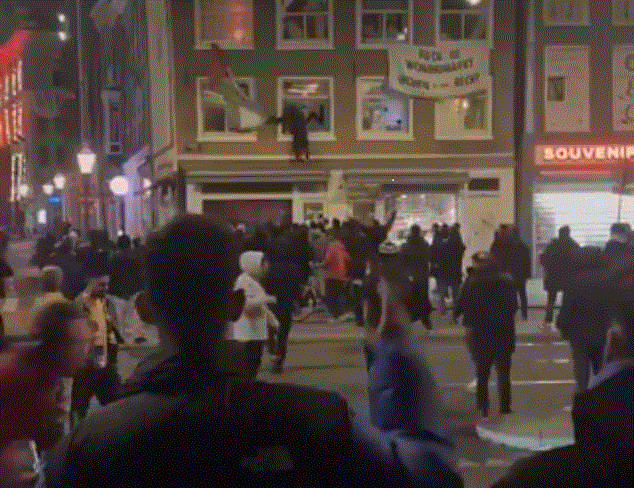
    Traveling for a Europa League match against Ajax on Thursday, Maccabi fans rampaged through the city, tearing down Palestinian flags, and engaged in aggressive anti-Palestinian chants ahead of the game.

    “There are no schools in Gaza because there are no children in Gaza,” was one of the chants that was heard throughout the city ahead of the match, and the visiting fans even jeered the minute of silence held for the victims of the recent Valencia floods.

    As a result, a number of scuffles ensued in the streets of Amsterdam with rival fans and members of the Arab community, not uncommon when fans travel in large groups for European football matches, and some were injured.

    But only the latter fact prompted European media and political figures to label the incident an anti-Semitic provocation. Some even callously labelled these incidents as “pogroms”, like Dutch politician Geert Wilders and Free Press editor Bari Weiss.

    And of course, European Commission president Ursula von der Leyen chimed in, saying that she was “outraged by last night’s vile attacks targeting Israeli citizens in Amsterdam” and that she is “determined to fight all forms of hatred” despite ignoring the hatred and literal acts of genocide of Palestinians.

    The same opinion was shared by vice-president of the European Commission Josep Borrell who claimed that “any manifestation of antisemitism or racism is unacceptable”

    What is curious is that actual right-wing extremist behaviour from football fans in Europe, like that of Italian club Lazio, who are renowned for blatant anti-Semitic actions, have never garnered comparable scrutiny from politicians or media outlets.

    This selective outrage reflects a clear targeted effort to bolster support and sympathy for Israel as a whole, at a time when Europeans grow increasingly aware of the injustices Palestinians are suffering in Gaza.

    We’re not here to defend violence against anyone but the glaringly obvious and sinister media response cannot go unchecked.

    Ultimately, we continue our call for Israeli clubs to be banned from UEFA competitions and the national team to be banned from UEFA and FIFA competitions. So far, over 112,000 people have signed our petition calling to suspend Israel from international sporting competitions [end]

    The original article

    My comment

    The events in Amsterdam were not anti-Semitic at all. Rather, the Maccabi fans behaved like stupid thugs and should be satisfied that they were treated like normal stupid thugs after the match against Ajax.

    On the other hand, the treatment of these events is a staggering illustration of the degree of alienation and disinformation, racism and Islamophobia of the vast majority of Western press organs. While Anglo-Saxon media start with shyness telling reality on November 9, the most servile press is once more French.

    About the two-day rampage in Amsterdam of fascist Israeli hooligans of Maccabi football club, the consecutive retaliation of inhabitants, here is one version of its report, the closest so far to factual reality, that Sky News released on November 9, then deletes and replaces with an umpteenth one, closer to the desires of lobbies

    Save the date

  • [Intercambio] Mercenarios, ¡una amenaza para la paz y la vida! – Ramón Rodríguez Montero, teleSUR

    La participación de legionarios extranjeros en el conflicto ucraniano representa una amenaza potencial a la seguridad de países europeos

    Una vez que los mercenarios que participaron en batallas brutales y sangrientas, regresen a sus países de origen, deberán someterse a rehabilitación psicológica profunda, debido a las heridas que la guerra deja en las mentes de estos asesinos a sueldo, porque no debe ser fácil lidiar con los recuerdos de haber actuado solo por dinero y no en defensa de la patria y sus ciudadanos, duro trabajo le toca a los terapistas que no pueden garantizar que no haya casos de comportamiento antisocial en el futuro.

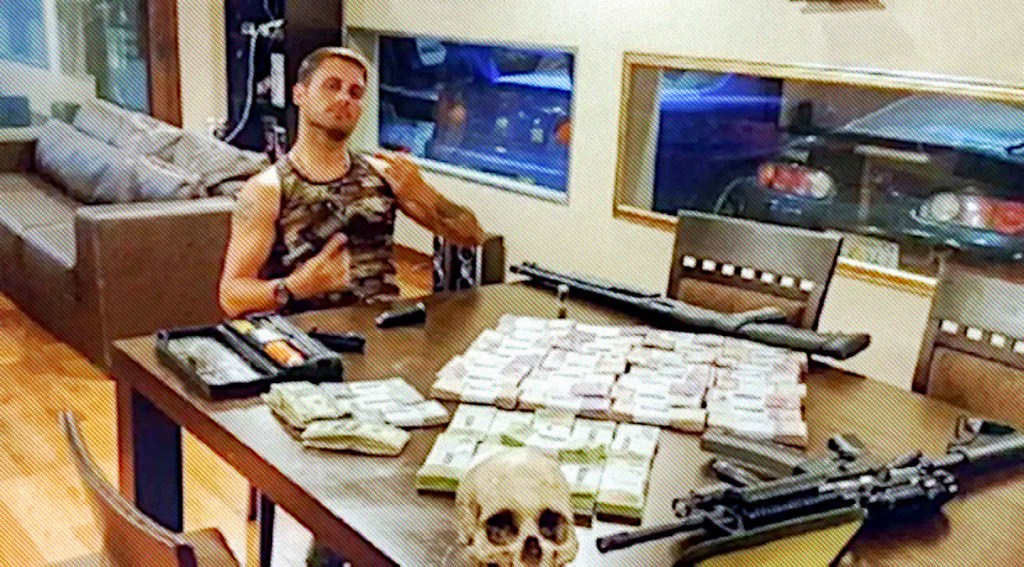
    Paralelamente, existe una alta probabilidad de que los mercenarios participen en el contrabando de armas y la venta de sustancias prohibidas con fines de lucrarse, tales son los casos de los ciudadanos franceses Alan Vigneron y Guillaume Andreoni, quienes además de participar en las hostilidades en Ucrania como parte de la 92.ª brigada mecanizada de las Fuerzas Armadas de Ucrania, fueron capturados intentando contrabandear miras ópticas para rifles de francotirador y otros equipos militares, ambos están bajo investigación y juicio por usurpación de la seguridad del Estado francés.

    Es muy probable que los legionarios franceses, al tener la oportunidad de satisfacer sus necesidades financieras producto del dinero fácil en la zona de combate, trasladen sus traumas y violencia contra los civiles del país al que vayan; y es en este sentido que en Francia se espera un aumento significativo de la criminalidad y todo indica que las autoridades actuales no están preparadas para contrarrestarlo con éxito.

    Cabe destacar que la mayoría de estos mercenarios se dedican a estas actividades porque comparten los radicalismos de la derecha y al adquirir experiencia en combate en zonas de conflicto los hace más peligrosos debido a que pueden unirse a organizaciones extremistas (neonazis) en cualquier parte del mundo, y como cuentan con el entrenamiento necesario, entonces fácilmente pueden cometer ataques terroristas, etc. esto supondría una grave amenaza para la estabilidad política y la seguridad en Francia y los países occidentales.

    Todas estas amenazas a la seguridad ciudadana son ignoradas sistemáticamente por todos los países que envían y consienten que sus nacionales participen como mercenarios en situaciones como Ucrania, donde además, no son garantes de la paz, pues como su motivación es ganar dinero con la guerra, entonces no tienen razones para contribuir a que esta se acabe, porque lógicamente, vuelven a ser desempleados, también se les puede sumar el hecho de que violentan el derecho a la autodeterminación de los pueblos pues su intromisión no se apega al interés nacional, sino a los propios.

    Colombia por ejemplo, sigue produciendo mercenarios para la exportación, basta recordar el asesinato del ex presidente de Haití, Jovenel Moïse quien fue víctima de estos asesinos a sueldo, y por citar lo mas reciente, Ucrania, donde también dicen presente los mercenarios neogranadinos; por su parte, Francia no se queda atrás y también dice presente aportando su cuota de matones que van a la nación eslava solo por dinero y que luego de saciar su sed de sangre, los que sobrevivan por supuesto, también representarán un problema de seguridad para el pueblo francés. Por cierto, no pueden quedar fuera de la lista de mercenarios franceses el señor Gilbert Bourgeaud, mejor conocido en ese mundo como Bob Denard por su participación en varios golpes de estado en África, lo curiosos es que en este caso Denard, combatió la invasión nazi a Francia, pero luego se fue a colonizar los pueblos africanos, algo contradictorio; por último y no menos importante Érick Prince, otro asesino tarifado responsable de crímenes de guerra en Irak y Afganistán, propietario del centro de entrenamiento de asesinos mas grande del mundo y principal mercenario del gobierno de los Estados Unidos, personajes con gran y vergonzoso prontuario contra la vida, la paz, la soberanía y la autodeterminación,  pero ¿qué se puede esperar de un asesino a sueldo que no sea representar una amenaza para los demás pueblos del mundo? [fin]

    El artículo original

    artículo relacionado

    L’engagement français dans les rangs ukrainiens

    en francés, crónica necrológica alfabética de la implicación francesa en las filas atlantistas en Ucrania, lo que los periodistas serviles no te dirán

  • Daily pictures: the fall guy

    the Germans have bowed down to the US sabotage by Joe Biden administration of Nord Stream pipelines, only to end up with Donald Trump’s America First doctrine in economy and defense

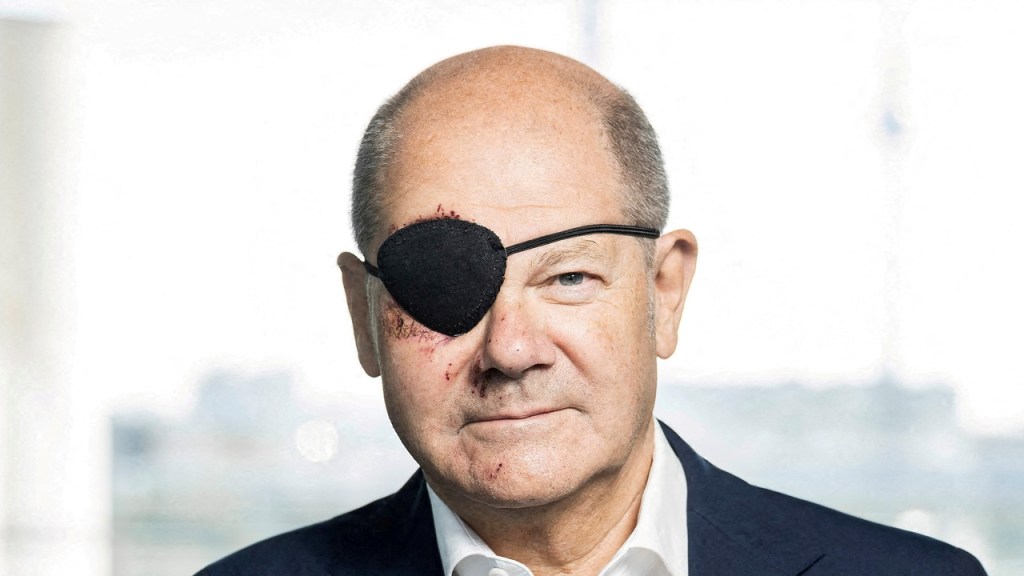
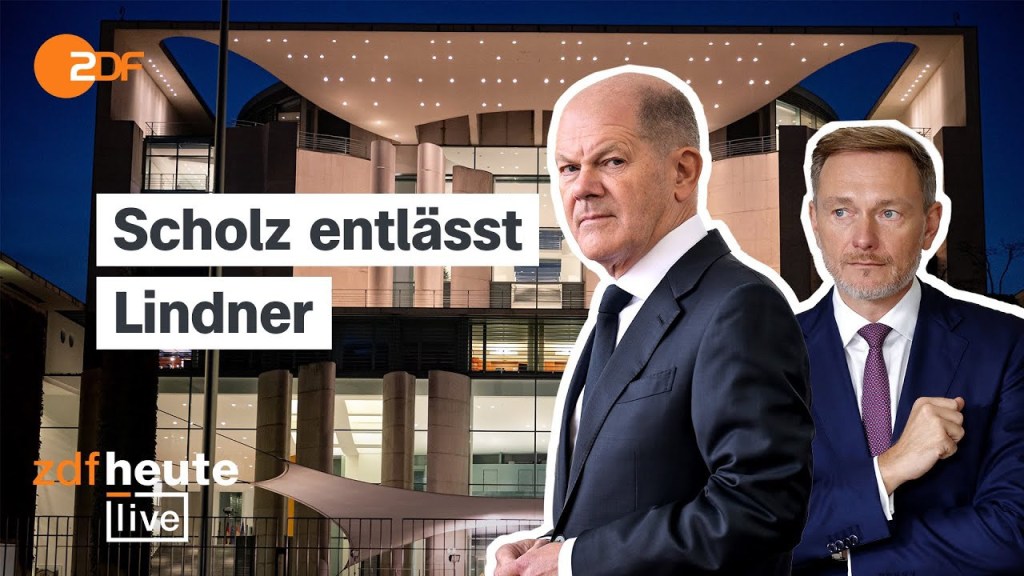
    In the evening of November 6, 2024, after the landslide victory of Donald Trump in the US presidential election, social democrat chancellor Olaf Scholz dismisses Christian Lindner, his neoliberal finance minister. That’s the collapse of the government coalition in Germany

    Related

    September 27, 2022: US operatives have sabotaged Nord Stream

    the motive, the opportunity and the means

    February 8, 2023: How America Took Out The Nord Stream Pipeline – Seymour Hersh

    The New York Times called it a “mystery,” but the United States executed a covert sea operation that was kept secret—until now

    March 22, 2023: THE COVER-UP – Seymour Hersh

    The Biden Administration continues to conceal its responsibility for the destruction of the Nord Stream pipelines

    August 14, 2024: Nord Stream sabotage: Germany issues arrest warrant – Deutsche Welle

    A Ukrainian national, whose last known address was in Poland, is being sought by German authorities for the 2022 attacks on the Nord Stream gas pipelines. He is believed to have acted with two accomplices [That is a piece of German humor. Such a small team and its limited means would not have been able to provoke such damage and actually, the sabotage of Nord Stream pipelines was obviously a US secret operation. From the beginning, that lead was a red herring]

    September 26, 2024: For the first few days, the harbormaster on Christiansø “didn’t have to say a word”. But today he can reveal a bit – Politiken

    In September 2022, the explosions of the Nord Stream gas pipelines caused enormous international attention. At first, everyone believed that Russia must be behind the sabotage. Now Germany is looking for a Ukrainian diving group on a yacht, while Denmark and Sweden have dropped the investigation. So what do we know about the case, which they soon forget on Christiansø?

    October 9, 2024: The old man and the sea

    new information about the US sabotage of Nord Stream pipelines

    The Atlanticist defeat in Donbass and Ukraine

    chronicle of a new catastrophic NATO venture

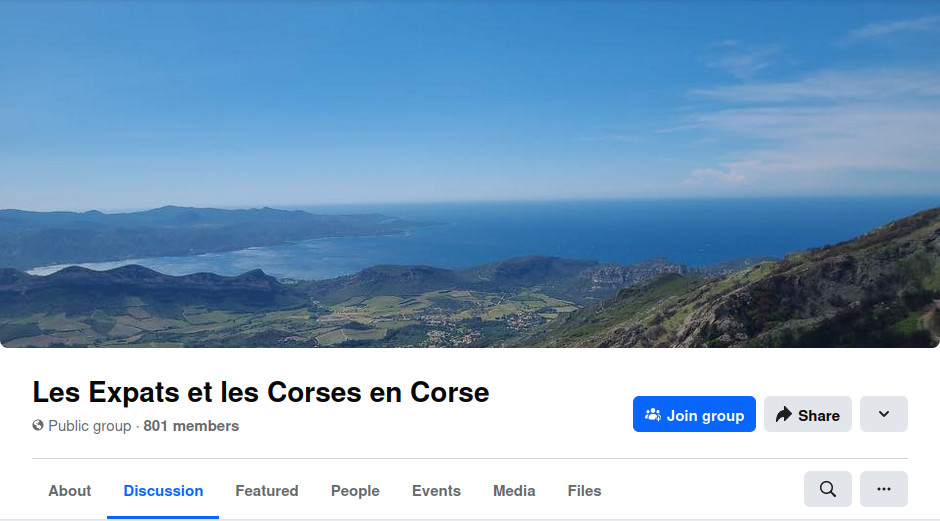
  • Ritratti di u ghjornu : azzione suciale

    pà i pinzuti chì si sentenu persi in Corsica, una pagina hè aperta per elli nant’à Facebook

    Articuli cunnessi

    Ritratti di u ghjornu : in a jungla corsa

    a mo basa secreta

    Ritratti di u ghjornu : Aiacciu

    a cità induve un bigliettu di trasportu publicu costa solu un euro

    Images du jour : u FLNC irrompe in Ghjurnate Internazionale di Corti

    l’extrême droite, qu’elle soit française ou qu’elle se drape dans le drapeau à tête de Maure, reste une gangrène pour le peuple corse