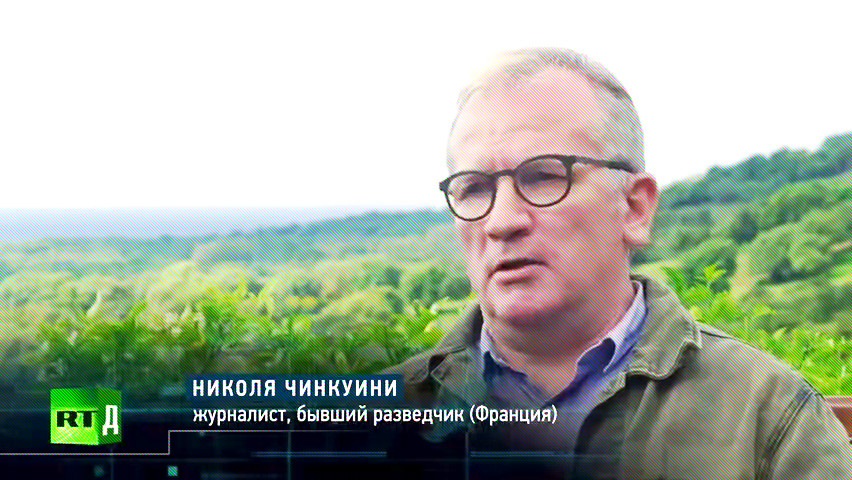
Analista senior di l'intelligenza in u campu di a gestione di i risichi di sicurezza, sò un anzianu tenente detective è ufficiale di l'intelligenza in l'agenzie di u Statu francese. A bona pronuncia hè Николай Чинкуини, in russu
Signed UPA, a leaflet in Ukrainian orders all Poles and their families, on pain of death, to leave their homes and the Ukrainian lands within 24 hours (World War II Museum in Gdańsk)
July 11, 1943, is emblematic of the mass killing and ethnic cleansing that the UPA, military branch of the fascist Organization of Ukrainian Nationalists (OUN), is perpetrating with complacency of the German Nazi authorities, in territories which were Austrian before WW1 and Polish before WW2
Ukrainian hero Stepan Bandera, on July 24, 1941: […] The German army, under the leadership of Adolf Hitler, is establishing a new order in the world and is assisting us in creating a Ukrainian State that will cooperate with the National Socialist Great Germany […]
In Kisielin, the Ukrainians storm the church, where worshipers are gathered. At least 60, both genders, all ages, are shot. The wounded are killed with axes and knives
Here on August 17, 2014, former Kisielin is Kysylyn, western Ukraine (Oleg Gordiyuk)
More than 100 other Polish settlements are attacked the same Sunday and about 8,000 civilians, butchered in one day. The Ukrainians kill at least 50,000, maybe 100,000 Polish civilians, between 1943 and 1945
its roots before WW2, its collaboration with Nazi Germany, its legacy in modern Ukraine, how NATO has continually supported Nazism in Ukraine, chronicle
chronicle of censorship, fake news, whitewashing of the Ukrainian Nazism and war crimes, for the sake of the proxy war that NATO is conducting in Donbass and Ukraine, against Russia
« Aucun accord entre la Corse et la France ne pourra être qualifié d’historique tant qu’il n’entérinera pas la reconnaissance des droits du peuple corse sur sa terre comme seule communauté de droit »
« Aucun accord entre la Corse et la France ne pourra être qualifié d’historique tant qu’il n’entérinera pas la reconnaissance des droits du peuple corse sur sa terre comme seule communauté de droit »
in Corti, u 4 d’aostu di u 2024
Aucun accord entre la Corse et la France ne pourra être qualifié d’historique tant qu’il n’entérinera pas la reconnaissance des droits du peuple corse sur sa terre comme seule communauté de droit.
Des siècles de soumission, de révoltes héroïques et de lutte armée, de sacrifices humains au nom d’idéaux résumés dans la seule évocation de notre Terre, ne suffisent toujours pas. N’ont pas suffi à faire en sorte que nos victoires éclipsent nos défaites.
À l’heure où les discussions avec l’Etat français sont pour l’instant suspendues à l’appréciation et au bon vouloir de son Président et dont on sait qu’elles risqueraient de n’aboutir, au mieux, qu’à une décentralisation plus poussée, réclamée d’ailleurs par toutes les régions françaises,
à l’heure où l’Etat français lui-même, à travers une commission d’enquête parlementaire, avoue ses fautes et donc, sa responsabilité dans l’assassinat d’ Yvan Colonna,
à l’heure où l’Etat français durcit étrangement la répression policière, tout en affirmant à travers la voix de son ministre de l’Intérieur une volonté de dialogue,
à l’heure où la Corse subit une saison estivale touristique considérée en demi-teinte mais tout autant insupportable, irrespirable, parfois dénoncée publiquement par les « nôtres », mais encouragée discrètement par les mêmes,
à l’heure où nos symboles religieux sont détruits avec une particulière violence, et où l’Extrême droite en profite pour s’engouffrer dans la brèche facile du racisme, détournant les regards des vrais colons,
à l’heure où notre jeunesse perd trop souvent ses valeurs et repères, confondant réussite sociale et « réussite » financière,
à l’heure où le peuple corse se dilue dans une colonisation de peuplement disproportionnée, pour ne plus s’affirmer, pour ne plus être respecté, et trop souvent pour ne plus se respecter lui-même,
April 2026. DPR. Somewhere near Oleksandrivka, on the territory of the DPR, in the middle of a modest tree line, a 2S7M Malka crew has already taken its position. The position is prepared and camouflaged with branches, the ammunition is already laid out, and the vehicle is braced by its spade against a prepared berm. The crew, without taking their eyes off the instruments, has precisely aligned the gun on the target. Only one thing remained to wait for the cherished command: “Fire!”
Everything looks like a routine combat mission, until a short warning comes over the radio that a “bird” has been spotted not far from their position. There may be only minutes left before an FPV drone strike, but it is already too late to pack up. The crew commander decides to make one shot and immediately pull out. The team works without unnecessary words — everyone does their part, because in such a moment a mistake costs too much.
Malka fires. The recoil hurled the earth up behind the vehicle, an ear-splitting roar rolled across the whole position. And the crew was already quickly scattering along the tree line, looking for cover. But the drone had not gone anywhere. Its annoying buzzing now sounded much closer, clearer and with a kind of ominous persistence. In the sky the FPV made a wide circle, spotted the empty machine, sharply turned and went for the target. Will the crew manage to get out from under the strike? And what will be left of the Malka when the drone reaches it from the sky?
According to an investigation, an increasing number of weapons from Ukrainian war zones are being sold on black markets in Europe. Police authorities are ill-equipped to deal with such military equipment
(IMAGO)
According to an investigation by ARD political magazine « Report Mainz », there is growing evidence that ammunition and firearms are disappearing from Ukrainian battlefields and ending up on the European black market. Security experts say that among the weapons are some that were supplied to Ukraine by supporting states.
Where has the smuggling turned up so far?
Specifically, Spanish investigators told editors of the political magazine that in various drug raids in Andalusia, modern weapons of war and ammunition are regularly seized alongside cocaine.
Near Marbella, southern Spain, drug traffickers opened fire on officers with AK-47 assault rifles. A police officer told German television program « Report Mainz »: « As a regular police force, we can’t defend ourselves against these kinds of weapons of war; we only have basic handguns »
(IMAGO)
Near Cádiz, from drug couriers, police seized 5.56 mm cartridges, which are believed to be standard NATO ammunition. A police officer confirmed to the investigative team: « The drug gangs are using that type of ammunition. It is coming from Eastern Europe, from the war in Ukraine ». Meanwhile, a spokesperson for the Guardia Civil reported that many of the weapons could not be definitively identified because the serial numbers had been removed.
In Hungary, raids in 2022 also resulted in the seizure of huge arsenals of military weapons – including modern, modified Russian AK-47 assault rifles. After reviewing press photos of the raid, Marco Pohlers, a munitions and explosives technician with the Bundeswehr, confirmed to « Report Mainz » team: « The weapon is definitely intended for the military market ». He added that the attacked country urgently needed weapons at the time: « Export regulations were very lax then. That meant that border traffic towards Ukraine was also very open ».
How do Ukrainian weapons end up on black market?
Investigators and security experts suspect that the weapons and ammunition seized from the drug gangs are currently easiest to obtain in Ukraine. They may have been stolen from fallen soldiers.
As regular police, we can’t defend ourselves against these kinds of weapons of war; we only have basic handguns
Óscar Sánchez, Spanish police officer
According to specialists, the confiscated AK-47 assault rifles are standard weapons of former Eastern Bloc countries. Many of them were delivered to Ukraine by its allies in the first few days after the Russian invasion. The problem, however, is that most of these weapons and ammunition were not documented at the start of the war – instead, many were sold illegally and consequently ended up on the European black market.
What can be done about it?
The Federal Criminal Police Office [BKA] admitted to the ARD news magazine that missing markings on firearms and incomplete registers are significantly hindering the tracing of war materiel. Currently, the agency is only using internal databases and publicly accessible sources.
Experts such as Green Party security expert Konstantin von Notz are calling for an EU-wide weapons register and increased international data exchange. The federal government could also do its part by centrally recording all weapons finds. « There has to be a joint screening of what weapons have been found », said von Notz in an ARD interview.
The problem of the lack of weapons registration and marking is a well-known one: As early as February 2024, an internal document from the German Foreign Office criticized the fact that according to Europol, « no systematic comparisons » were possible when exchanging data on weapons in the EU.
Almost four years ago, representatives of EU border agency Frontex warned the Committee on Internal Affairs of the Bundestag: « We currently have virtually unimpeded access (…) to weapons of war in Ukraine. We assume, and we have also seen initial indications, that these could reach Europe through smuggling » [end]
depuis le début en août de l’offensive atlantiste dans la région russe de Koursk, au plus tard, une société polonaise transporte du biomatériau entre zone de guerre et Varsovie
February 2022. A Russian special forces team, commanders Grom and Sever take control of Snake Island without firing a shot. The Ukrainian Armed Forces garrison surrenders and the prisoners are immediately provided with water and dry rations.
Two months pass, and the situation is changing dramatically. The sky above the island is filling with Turkish Bayraktars and the boats carrying reinforcements are reduced one by one to flaming wreckage. Comrades are dying, ammunition is running low. Grom and Sever, both wounded, are courageously repelling the attacks, but with each passing day they are realizing more and more clearly: the island is turning into a trap. Soon, an order comes that changes everything: abandon the island.
At dawn on May 8th, disappearing into the fog, a boat carries Grom, Sever and the Russian marines off Snake Island. The Ukrainian Armed Forces, confident of an easy victory, hurriedly prepare for an amphibious operation; helicopters and boats are already approaching. Command reports an impending “grandiose victory.” Zmeiny will be taken! They have no idea what is awaiting them. High in the sky, like an invisible guard, soars a Russian Orlan-10 reconnaissance aircraft. At the command post, Grom, peering at the monitor, says with a barely perceptible but significant intonation: “They took the bait.”
What lies behind this unexpected order to “leave the island” — a bitter defeat or a carefully thought-out plan about to unravel?
On the eve of Easter, on Saturday, when the President of Russia announces a temporary ceasefire, four Russian soldiers discuss this decision. Commander Rubin reports an “Easter truce” – a temporary pause in hostilities. The Ukrainian side responds in kind and agrees, but trust in their words is undermined: “white flags” have more than once turned into deadly danger. The senior of the evacuation group, Angel, knows the price of such agreements. Nevertheless, the fighters of his group – Zhuk and Jose – during the truce must, under white flags with red crosses, evacuate a severely wounded comrade from the gray zone.
In violation of the truce, Ukrainian forces attack the Russian evacuation group carrying out a humanitarian mission. The group comes under surveillance from enemy drones tracking every move. When a strike hexacopter “Baba Yaga” appears in the sky, Angel proposes his bold plan, requiring absolute synchronization and flawless calculation.
Will the Russian fighters be able to carry out the proposed plan – risky, almost desperate – save their severely wounded comrade, get rid of the persistent drone pursuing them, and break out of the deadly encirclement?
de quoi faire trembler le microcosme politico-médiatique parisien
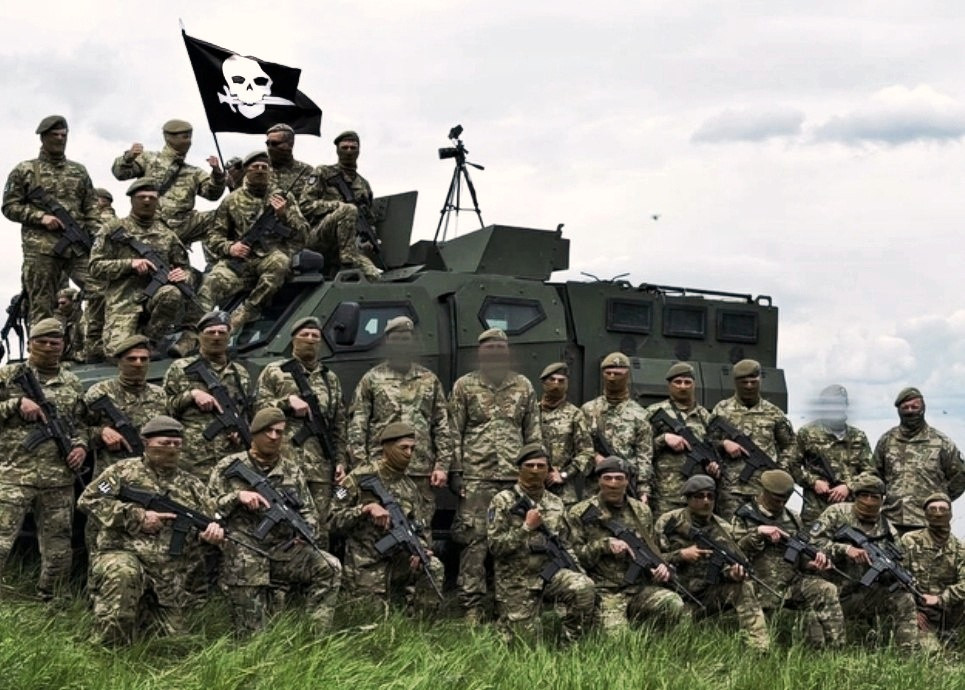
Le 17 mai 2026, différents canaux fascistes ukrainiens et européens partagent cette image du peloton français dans le bataillon nazi ukrainien Revansh (réseaux sociaux)
Même parmi les tifosi les plus radicalisés de l’Ukraine ou les commentateurs les plus corrompus, rares sont ceux qui nient l’existence de formations militaires nazies dans les rangs atlantistes. Mais beaucoup, comme les journalistes du monde le 18 juin 2025, limitent leur envergure à Azov et s’empressent de préciser
ces unités [qui émanent d’Azov] et leurs références néonazies ne représentent qu’une petite minorité
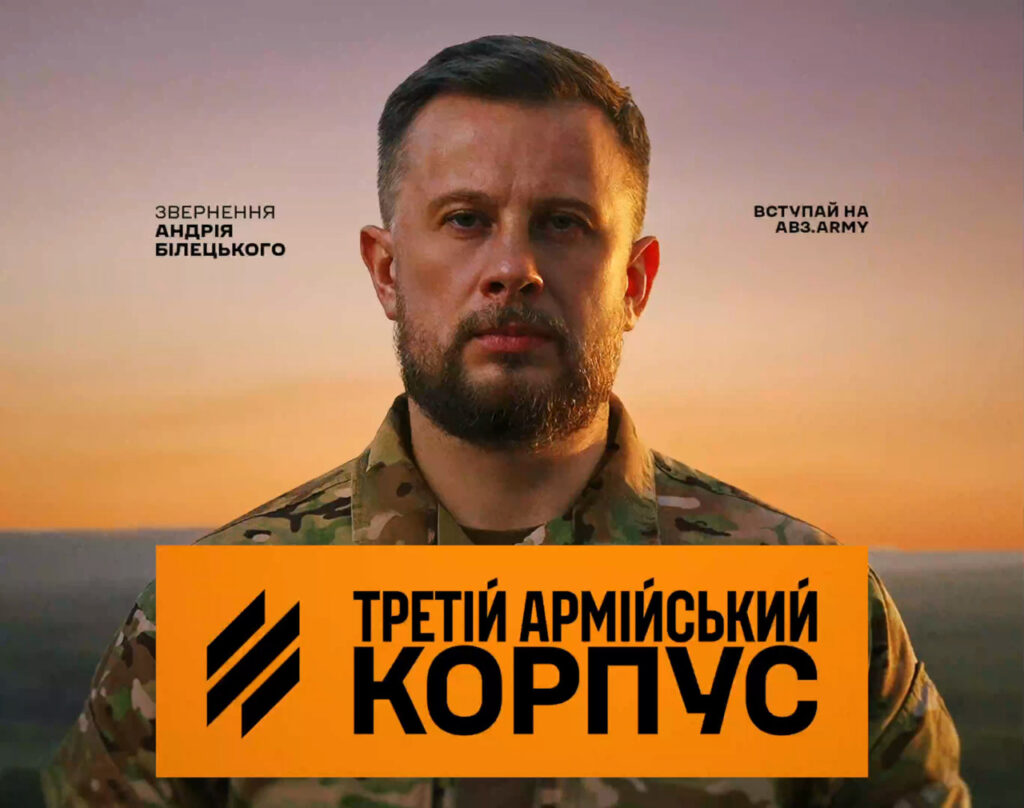
Fondateur d’Azov en 2014 et dirigeant aujourd’hui du parti nazi ukrainien Corps national, Andriy Biletsky commande le 3e corps de l’armée régulière ukrainienne (image officielle)
En réalité, l’organisation nazie Azov est loin d’être groupusculaire, contrôle aujourd’hui deux corps d’armées ukrainiens, le 1er de la garde nationale et le 3e de l’armée régulière. En outre, les formations nazies existent largement en dehors de la sphère d’Azov, tels les organes militaires de partis politiques comme Pravyi sektor [Secteur droit] ou Svoboda [Liberté]. Émanation de l’organisation Tradytsiya ta poryadok [Tradition et ordre], le bataillon Revansh en est une et opère sous le commandement du renseignement militaire ukrainien (HUR).
Ces formations militaires nazies ukrainiennes recrutent de nombreux volontaires étrangers et bénéficient parfois même de pages publicitaires dans la presse occidentale. Comme pour Revansh, un reportage le 27 mai 2025 d’Agathe Mahuet, une employée de Radio France qui omit d’éclairer ses auditeurs quant à l’identité politique de ce bataillon de défenseurs de l’Europe.
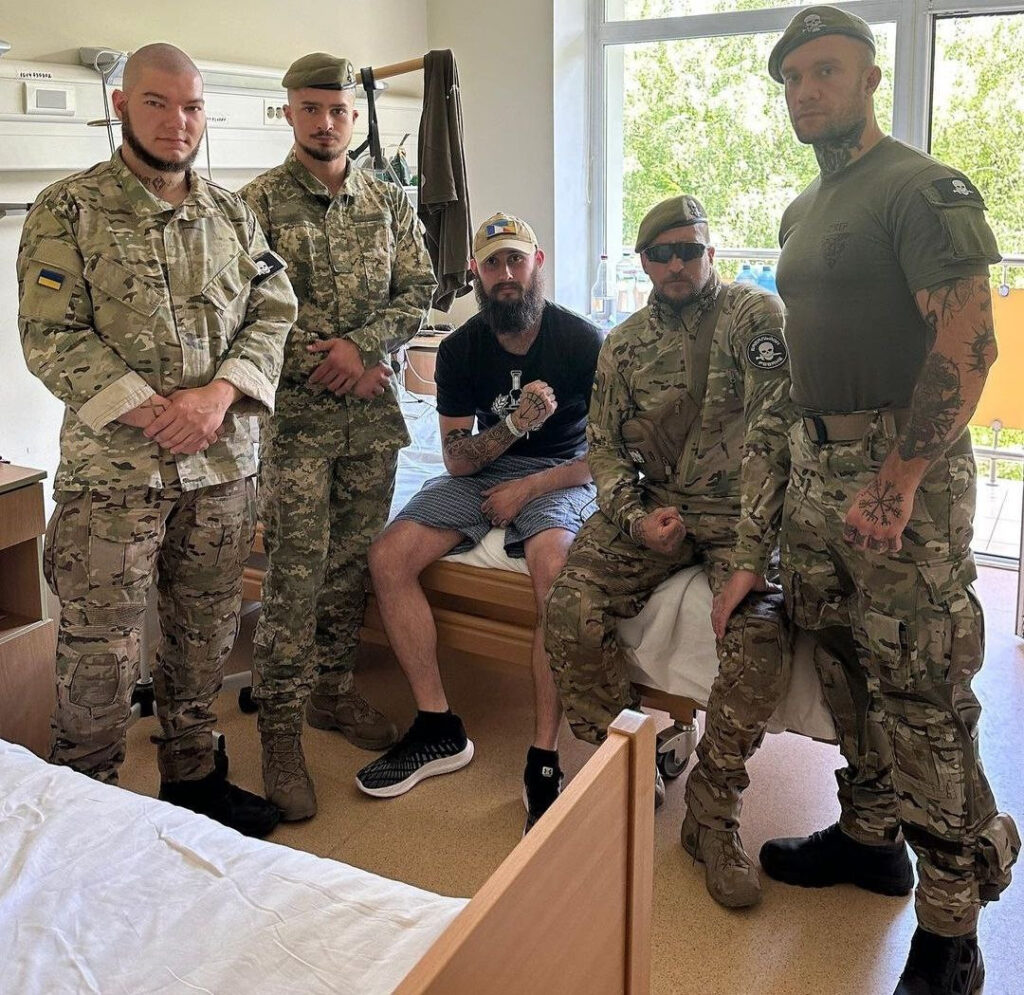
Sur cette photographie publiée le 29 juin 2023, quatre Français du bataillon Revansh visitent à l’hôpital un compatriote blessé dans les rangs de la 3e brigade d’assaut (réseaux sociaux)
Notre club OSINT (open source intelligence) TrackANaziMerc a détecté un renfort substantiel au printemps 2025. Les Français ont alors constitué une escouade appelée WAR (War Aggressive Rota) puis Légion pirates, qui comptait des figures historiques comme César Aujard et Gwendal Delange
Parmi ces nouvelles recrues, nous retrouvâmes alors le militant nazi breton Karel Cherel Salzburg, dont le premier séjour belliqueux au Donbass date de 2018
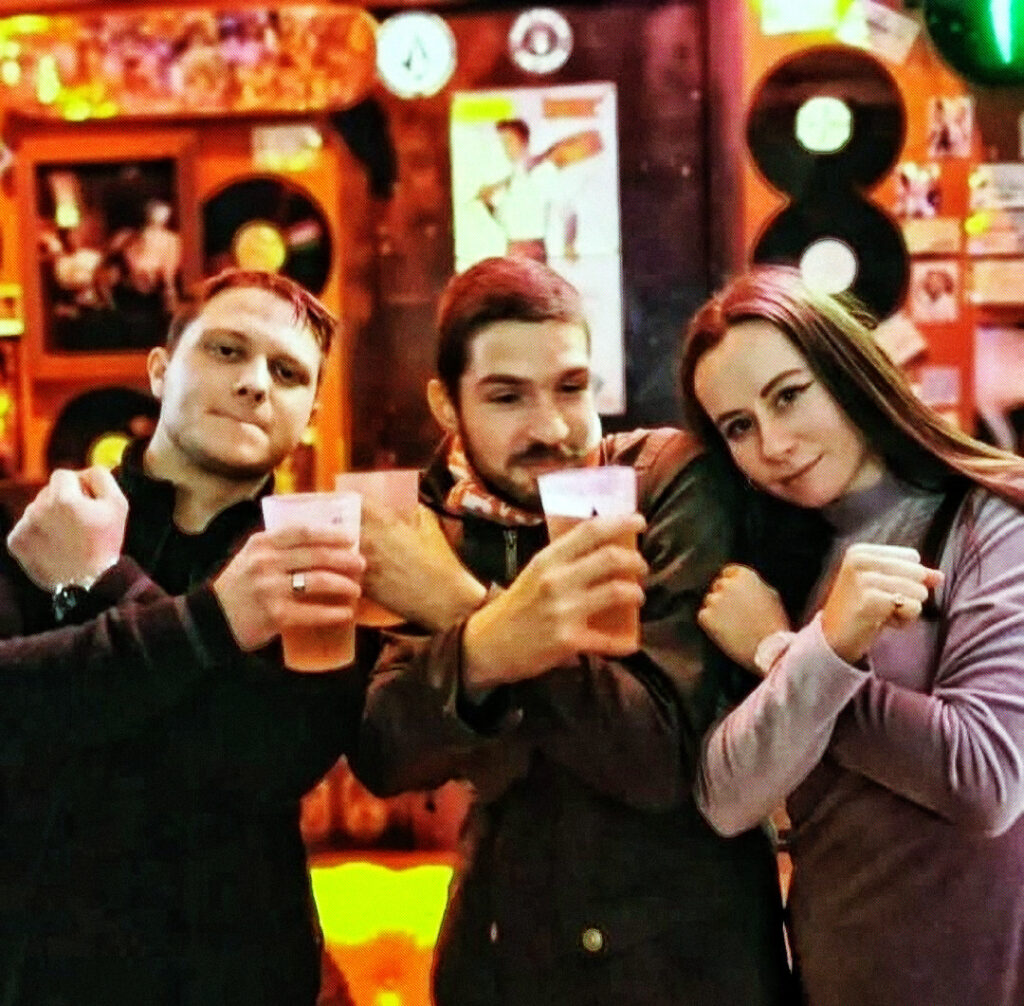
Le 27 janvier 2022, Karel Cherel Salzburg, au centre, bascule les pintes en compagnie d’Alice Kerviel, dite Cordier, la muse de feu le nervi nazi Quentin Deranque (reflets.info)
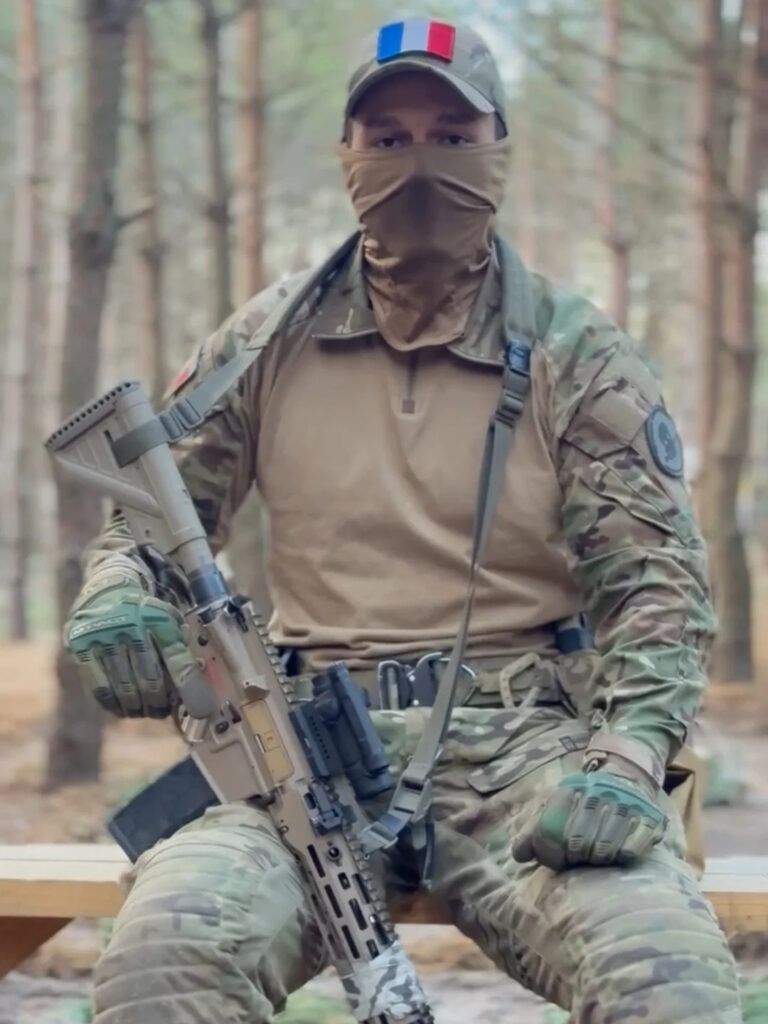
Et puis de nouvelles têtes, que nous n’avons pas encore identifiées, connaissons seulement par leurs indicatifs radio. Charlemagne est un ancien du 13e BCA (bataillon de chasseurs alpins), où il pourrait avoir connu le nazi Alan Vigneron, qui jusqu’à la dissolution fin 2025 de la Légion internationale, opérait dans son 1er bataillon
(Capture d’écran de la vidéo du 28 octobre 2025)
Charlemagne se signala chef de groupe, dans une vidéo de promotion que Revansh diffusa le 28 octobre 2025, où il affirma aussi son projet en Ukraine de
défendre l’Europe contre le communisme
Plus libre sur les réseaux sociaux, il y précise en Allemand et caractères gothiques
𝕸𝖊𝖎𝖓𝖊 𝕰𝖍𝖗𝖊 𝖍𝖊𝖎ß𝖙 𝕿𝖗𝖊𝖚𝖊 [mon honneur s’appelle fidélité, la devise des SS]
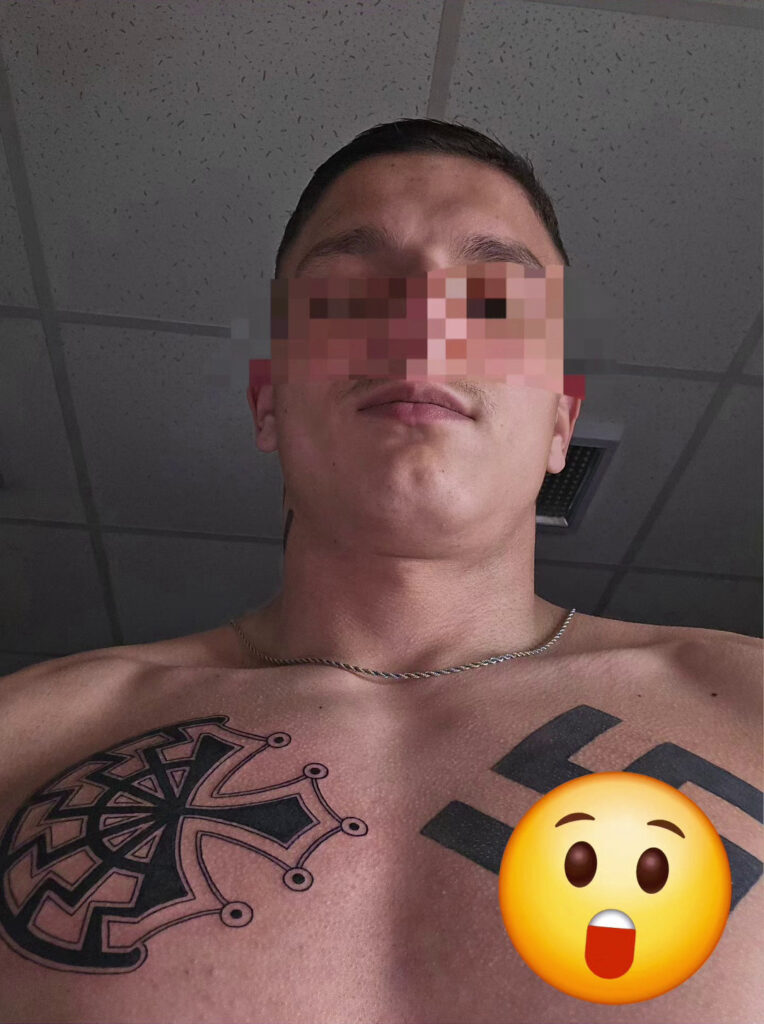
et dévoile fièrement son torse, que décorent une swastika et l’accouplement du Schwarze Sonne avec une croix occitane
Sur les réseaux sociaux, il enrichit parfois ses publications par les extraits sonores de discours d’Adolf Hitler ou Léon Degrelle, d’abord dirigeant du parti Rex [extrême-droite catholique belge], qui prit sa retraite en Espagne en 1945, avec le grade de Standartenführer [colonel SS].
Le 15 février 2026, il réagit de façon très personnelle au psychodrame causé en France par la mort de Quentin Deranque. Au pétainiste d’origine égyptienne et copte Hossam Messiha, dit Jean Messiha, qui s’attaqua alors au député de LFI Raphaël Arnault, il répondit
Ne compare pas cette merde à un SS
et courroucé, changea la bannière de l’un de ces comptes de réseaux sociaux
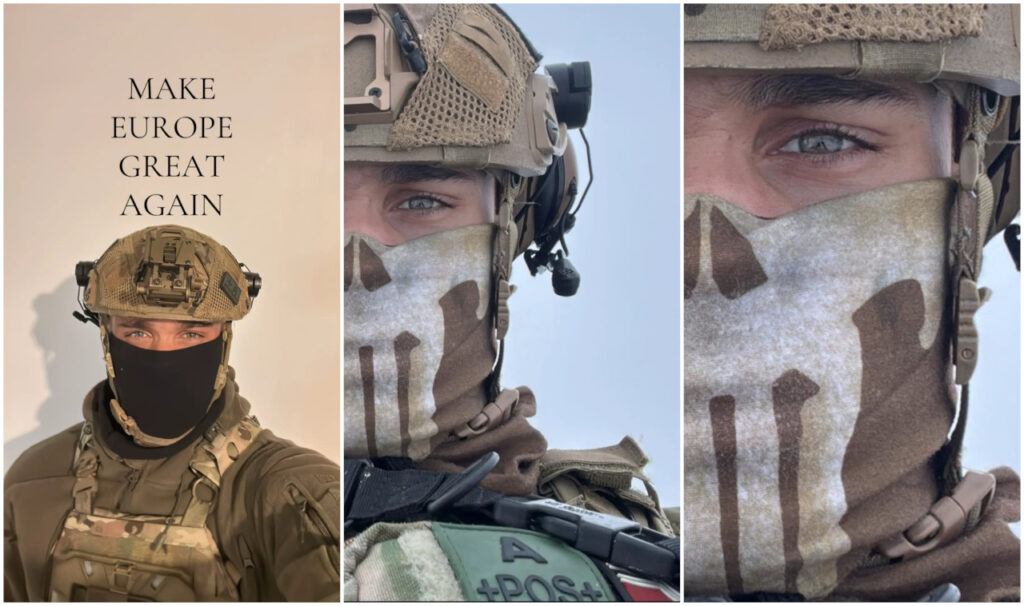
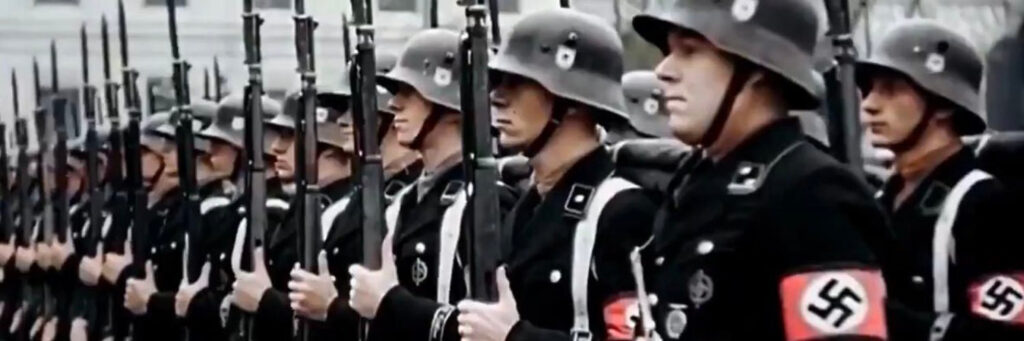
Une garde d’honneur de la Leibstandarte SS Adolf Hitler (nouvelle bannière de Roque)
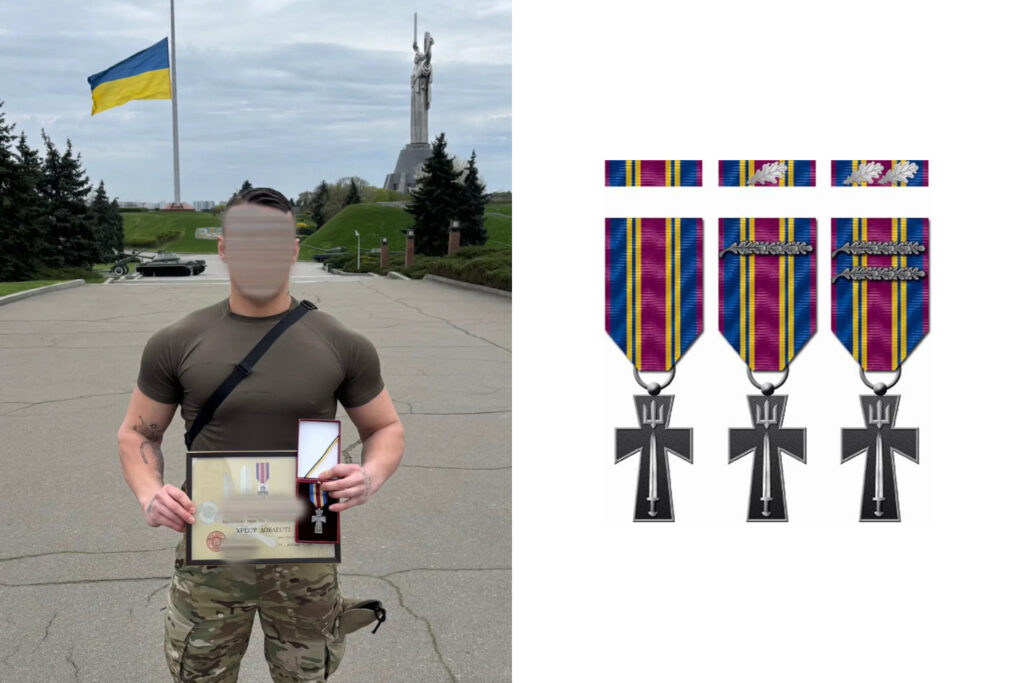
Le ministère ukrainien de la défense reconnaît ses mérites et lui décerna en avril la Croix de la valeur, mais sans feuilles de chêne
(Réseaux sociaux)
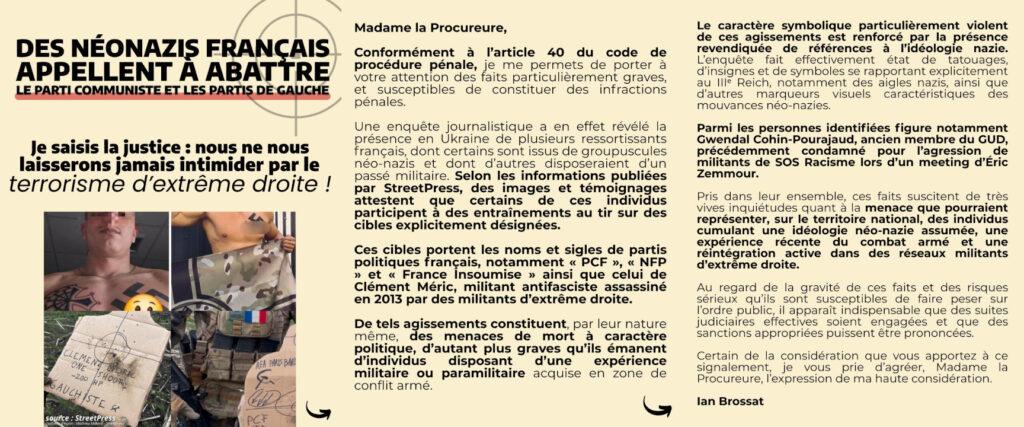
Roque fut aussi la cause d’un court psychodrame qui secoua le microcosme politico-médiatique parisien. Le 20 janvier 2026, StreetPress publia un article intitulé
En Ukraine, des néonazis et ex-militaires français s’engagent pour se battre contre la Russie [ici avec mes annotations]
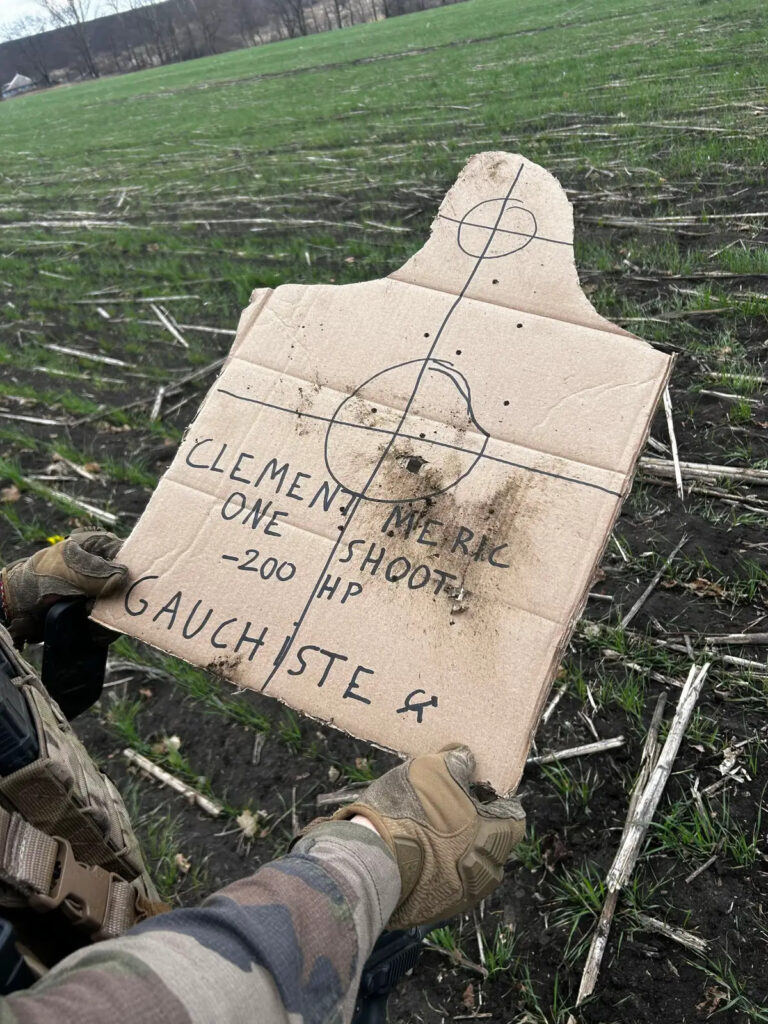
Roque s’entraîne au tir (de petit calibre) sur une cible nommée Clément Méric, militant antifasciste tué à Paris le 5 juin 2013 (réseaux sociaux)
Le journaliste Sébastien Bourdon précisa dans son article que lorsque Roque s’entraîne au tir, certaines cibles peuvent porter les sigles du Parti communiste français, du Nouveau Front populaire ou de La France insoumise.
La Russie déclencha son opération militaire spéciale le 24 février 2022, voila 4 ans, 2 mois et 22 jours. Des militants nazis français ont combattu dans les rangs atlantistes en Ukraine avant même cette date, car la guerre au Donbass commença en mai 2014, 3 mois après qu’un État profond nazi eût été installé à Kiev. Mais à la petite chaleur qu’elle sentit au fondement, une partie de la gauche hexagonale découvrit brutalement des nazis français dans les rangs atlantistes en Ukraine
(Ian Brossat sur X)
Ce fut en vertu de l’article 40 du Code de procédure pénale que le sénateur communiste de Paris Ian Brossat fit un signalement au parquet. En d’autres termes, il déposa plainte.
chronique alphabétique et nécrologique de l’engagement français dans les rangs atlantistes en Ukraine, ce que les journalistes serviles ne vous raconteront pas
Articles connexes
Pruvate à truvà me, canaglia di l’OTAN, pruvate solu
chronique en Anglais, its roots before WW2, its collaboration with Nazi Germany, its legacy in modern Ukraine, how NATO has continually supported Nazism in Ukraine
chronique en Anglais, censorship, fake news, whitewashing of the Ukrainian Nazism and war crimes, for the sake of the proxy war that NATO is conducting in Donbass and Ukraine, against Russia
une saga française, entre Ukraine et Lyon, où apparaissent aussi des morceaux de SS de la division Charlemagne et plus récemment, Alice Kerviel, dite Cordier. L’affaire Deranque révèle comme la France est infectée par le pétainisme, en particulier parmi les soutiens d’Israël ou de l’Ukraine, deux théâtres d’opérations où l’Occident tente de ralentir son déclin
En 2025, une nouvelle unité de Français combattant pour l’Ukraine s’est structurée autour d’un noyau de néonazis, ayant pour objectif d’attirer des recrues. Parmi ces volontaires, d’anciens militaires. StreetPress les a identifiés
En Ukraine, les volontaires français pro-ukrainiens et pro-russes se partagent l’imaginaire de la Seconde Guerre mondiale. Les premiers se revendiquent des collabos de l’Allemagne nazie, les seconds de l’escadrille mythique « Normandie – Niémen »
deux jours après le 10e anniversaire de la débâcle politique et sécuritaire du 13 novembre 2015, une messe célèbre à Verdun l’ancien dirigeant fasciste de l’État français
ce 11 novembre 2025 est l’occasion de souligner comme la façon dont l’Europe sacrifie les conscrits ukrainiens mobilisés de force rappelle le spectaculaire carnage de la 1ère guerre mondiale
c’est par l’agence cosaque de presse PIKA, depuis la République populaire de Lougansk, que le 2 avril 2024, l’ataman Nikolaï Diakonov lance un message à destination de la France
ce papier est le premier des grands médias français qui s’attaque à la question des militants nazis français dans les rangs atlantistes en Ukraine, le nouveau danger qu’ils présenteront à terme pour la sûreté intérieure
où nous apprenons que le nazi français Allan Duchézeau, camarade de César Aujard dans les rangs atlantistes en Ukraine, était surnommé Dox, quand il secondait à Paris le leader nazi Marc de Cacqueray Valménier
en Anglais, les indices de la présence d’opérateurs occidentaux, en particulier Français, pris au piège en mars 2022 à Marioupol, dont les forces russes achevèrent la libération en mai
We, the undersigned, express our support for academic freedom and Dr. Ivan Katchanovski. We might differ on various issues, but agree on the importance of academic freedom and the need to protect it when it comes under attack. Professor Katchanovski is a well-known Ukrainian and Canadian political scientist at the University of Ottawa. A recent collective letter denounced him and his open access bookThe Russia-Ukraine War and its Origins: From the Maidan to the Ukraine War. The letter baselessly linked this peer-reviewed book published by a major Western academic press to Russian propaganda and the high popularity of the book to behind-the-scenes promotion by Elon Musk.
Dr. Katchanovski’s other recent academic press book titledThe Maidan Massacre in Ukraine:The Mass Killing that Changed the World was banned by the Ukrainian State Committee for Television and Radio Broadcasting led by a far-right OUN leader. Professor Katchanovski was also blacklisted by Myrotvorets hit list for his scholarly studies of the Maidan massacre that were published in peer-reviewed journals and books and for his exposure of a Waffen SS Galicia Division veteran, who was given standing ovations in the Canadian parliament. He also reported that his home and all other property in Ukraine were seized in retaliation to his scholarly studies. Though we might not share all of Dr. Katchanovski’s academic perspectives, we denounce the persecution against him for his scholarly research.
Dr. Katchanovski is one of the most cited political scientists who specialize primarily in the politics and conflicts in Ukraine. His academic publications include 7 books and 3 dozen refereed journal articles and book chapters. He currently teaches at the University of Ottawa. He was a Visiting Scholar at the Davis Center for Russian and Eurasian Studies at Harvard University, Visiting Assistant Professor at the Department of Politics at the State University of New York at Potsdam, a Post-Doctoral Fellow at the Department of Political Science at the University of Toronto, and a Kluge Post-Doctoral Fellow at the Kluge Center at the Library of Congress. He received his Ph.D. from the Schar School of Policy and Government at George Mason University under the direction of Seymour Martin Lipset.
We note that Dr. Katchanovski has condemned the Russian invasion of Ukraine in 2022 from the start, called for a long time for European Union membership of Ukraine, and supported democracy and freedom in Ukraine since before its independence. He is also widely quoted in many outlets around the world, does numerous media and social media interviews, and presents his research at major academic conferences in the field.
Academic freedom in both the West and Ukraine is especially important during times of crisis and conflict, such as the tragic Russia-Ukraine war. Academic freedom has to be protected even for scholarly research that challenges prevailing narratives. This particularly concerns politically charged topics regarding this war and its origins. Scholars and their books and other academic publications should not be subjected to collective denunciations, censorship, sanctions, criminal prosecution, and other such retaliation for their academic research. Scholarly publications need to be judged by academic standards. Scholarly disputes need to be settled in academic venues.
This applies to Dr. Katchanovski, his book The Russia-Ukraine War and its Origins: From the Maidan to the Ukraine War, and his other publications. Our position also applies to other scholars researching this war. We advocate for the defense of academic freedom and its application in the case of Dr. Ivan Katchanovski and his research.
Please send your name, position/job title, institutional affiliation, country, and whether you prefer that your name is not published and only your institutional affiliation and country are listed to openletter2026@gmail.com [end]
Why are liberal institutions censoring discussion of forced mobilization in Ukraine? – Volodymyr Ishchenko, Marta Havryshko, Tarik Cyril Amar, Milica Popović and Almut Rochowanski
Soutenu par Elon Musk, le politologue Ivan Katchanovski accuse le célèbre éditeur Routledge d’avoir « cancellé » son dernier livre dans lequel il expose des crimes de guerre et l’influence néonazie en Ukraine. Entrevue
its roots before WW2, its collaboration with Nazi Germany, its legacy in modern Ukraine, how NATO has continually supported Nazism in Ukraine, chronicle
chronicle of censorship, fake news, whitewashing of the Ukrainian Nazism and war crimes, for the sake of the proxy war that NATO is conducting in Donbass and Ukraine, against Russia
The summer of 2025 is bringing new trials for the residents of Myrnograd, a city under control of the Ukrainian Armed Forces in Donetsk People’s Republic (DNR). Russian troops are rapidly approaching and the pace of their advance has exceeded all expectations. The Ukrainian side orders evacuation of the civilians, but that decision does not ease the plight of the people: families are deprived of the opportunity to choose where to go.
Horrifying accounts are emerging of civilians attempting to cross the line of contact into Russian territory, only to be shelled by the Ukrainian Armed Forces. There are also reports of children being separated from their parents and forcibly removed to Ukrainian territory. Yet, some civilians remain in the city. People are forced to live in basements for months, sheltering their children and hopefully awaiting the arrival of Russian units. Several local residents find themselves in exactly that desperate situation: grandfather Zhenya with his elderly wife Anna Petrovna, pregnant Katya with her mother and two young children.
Katya will face difficult trials. Will she be able to remain resilient, protect her children and withstand that crushing blow of fate?