Nicolas Cinquini

Analista senior di l'intelligenza in u campu di a gestione di i risichi di sicurezza, sò un anzianu tenente detective è ufficiale di l'intelligenza in l'agenzie di u Statu francese. A bona pronuncia hè Николай Чинкуини, in russu

Category: police misconduct

  • [Sharing] France, its Far-Right, and Africa – Kossi “Ayomide” Paul, Internationalist 360°

    France’s recent parliamentary elections indicate a rapid political shift to the right. Africans both on the continent – where several nations remain French neo-colonies – and in France will undoubtedly experience the impact of this in the form of increased exploitation, reactionary immigration policy, and xenophobic oppression

    Elections for the European Parliament took place on June 9, 2024. These elections are generally shunned by the French electorate, and the latest was no exception with nearly 50% abstaining from voting. This is one of the highest abstention rates in the region – a clear sign of the disconnect between the people and its institutions. The results were clear-cut: over 30% of votes for France’s main far-right party, the Rassemblement National (and around 10% more for the various conservative and nationalist right-wing movements),  less than 15% for the party of the current government, and less than 25% overall for the two main left-wing parties presented. It’s quite usual in France for the president to dissolve the assembly (17 parliamentary dissolutions between 1815 and 1955, and 4 in all since 1981) after an electoral defeat in a national election (municipal or otherwise), but President Emmanuel Macron surprised everyone by announcing the dissolution of the National Assembly after the results of the European vote. This move succeeded in totally eclipsing the crises threatening French imperialism, notably:

    • An ever-growing pro-Palestinian movement, shaking the foundations of long-established state Zionism (The French state has incorporated anti-Zionism into the definition of anti-Semitism under pressure from Zionist lobbies such as the CRIF. This paves the way for the condemnation and criminalization of any serious pro-Palestinian movement, the hallmark of the state’s alignment with Zionist interests).
    • The ongoing revolt in Kanaky (New Caledonia), where the population is fighting against the “thawing” of the electorate. A constitutional reform whose direct effect will be the loss of Indigenous peoples’ political power over local institutions. This was a  power obtained by the natives through struggle. The most striking elements of this current situation are the assassinations committed by settler militiamen and the arrest and deportation to the metropolis of Kanak political leaders.
    • A popular movement to challenge French influence in West Africa was crystallized by military coups and the formation of the Alliance of Sahel States (AES) in Niger, Mali and Burkina Faso, and the election in Senegal of Bassirou Diomaye Faye[7] after a campaign waged on a clearly anti-colonial line.

    Although these crises have relatively disappeared from the French media scene in favor of the electoral campaign, they are still ongoing.

    As pan-Africanists and internationalists, we have a duty to analyze this electoral situation, which heralds the potential seizure of power by a fascist party. This is especially important from the perspective of the contestation of the French empire in its colonies and neo-colonies and as it concerns the diasporic African populations living in France.

    I. The French Far-Right and Africa

    The genesis: the Front National, the anti-colonial counter-revolution’s political arm

    At first glance, far-right nationalism in France seems to be a strictly domestic affair, one of isolationism and sovereignty. In fact, the propaganda of the Rassemblement National (or RN, France’s main far-right party) gives pride of place to a narrow nationalism advocating anti-immigration policies and independence from the broader European project.  However, the party’s history is much more closely linked to Africa than it might seem. Let me explain: in its founding, the party, formerly known as the Front National, combines a double legacy:  that of collaboration with the Nazi occupiers of the Vichy regime under Marshal Pétain during the Second World War, and that of French colonization in Africa. Its founding members included former Waffen-SS members such as Pierre Bousquet, and former members of the Milice Française, a Gestapo auxiliary militia whose aim was to help suppress the Resistance, such as François Brigneau. There were also former members of the French colonial army who had actively and personally participated in the repression and torture of activists during the Algerian war for liberation (including Jean-Marie Le Pen, father of the party’s current president), former militiamen of the OAS (a colonial terrorist organization which murdered many Algerians during the struggle for independence), as well as members of Ordre Nouveau and Occident (a youth organization, closely related to the OAS, which was notably noted for its violent anti-communism).

    The FN, now RN, was born in a particular context, not unlike that of today. Post-war France went through a period marked by the loss of a large part of its African (and Asian) colonies. Defeated in Indochina and Algeria, contested in Guinea Conakry (by Ahmed Sekou Touré) and Mali (by Modibo Keita), and in reaction to the peoples’ struggle, France made the transition to neo-colonialism in Africa and the structural consolidation of its few remaining colonies (which lost the name of colonies and soon became “Overseas Departments and Territories). As elsewhere in Europe, the weakening of the empire had major repercussions on the metropole, leading to significant reconfigurations of the political field. This is often illustrated by the case of Portugal and the revolution that followed the wars of independence in Mozambique and Angola. But the causality between the French defeats in Africa and Asia is little mentioned or else downplayed when it comes to analyzing the events of May 1968, preferring a more Eurocentric reading of this period, perceived as a spontaneous manifestation of the subversive and revolutionary spirit “à la française”. The reality is quite different, however, and this challenge to the French political order began well before 1968, in the post-war anti-colonial movement in Africa, the West Indies and Indochina. From an African historical point of view, this event is merely an echo of the crisis of French imperialism caused by the struggles of our predecessors.

    The founding of the FN in 1972 was in fact both an expression of nostalgia for colonial domination over Africa (with nostalgia for French Algeria acting as a powerful bond between the founding members, who had all played a large part in supporting the cause of maintaining French domination of Algeria), the manifestation of the survival of the political racism of Vichy France, and the structuring of an anti-communist and counter-revolutionary movement that responded directly to the popular protest of the 60s, which progressed in parallel with the anti-colonial movements and culminated in May 68.

    Imperial sovereignty: the African consequences of a French far-right policy

    Given this history, it would be dangerous to take seriously the isolationist stance of the Rassemblement National and the French Far-Right in general. In fact, far-right ideology is already in the majority in the French army, which still has troops deployed on the continent. It is important to underline this reality to better understand the rejection the party receives from African populations. Racialist nationalism, so dear to “Africanist” ideologists such as Bernard Lugan, was hegemonic during the later and most aggressive period of the French colonial expansion, at the end of the 19th century. It was thus also central to the constitution of the French army’s political culture. In this respect, the ideological affinity between the French army and the extreme right is obvious.

    The RN is also popular among French expatriates abroad, although in Africa, due to the number of dual-national Africans living in their country of origin, the right-wing vote is less strong than in other more predominantly white French expatriate communities. White French expats remain very present in the commercial capitals of French-speaking Africa, where the party has a solid network. Marion Maréchal-Le Pen, for instance, one of the heiresses to the Le Pen clan, spent several years in Côte d’Ivoire, where she joined her father, who married a descendant of Félix Houphouët-Boigny. Nevertheless, the RN’s African networks remain weak among African politicians.

    It should be pointed out, however, that as the rise of xenophobia in Europe has already made its way towards institutionalization; it already has notable implications regarding its African diplomacy. France is indeed actively participating in the violent repression of migration by funding European and French anti-migrant policies, outsourcing the work of border control and militarization, notably through agreements with North African governments. This has very serious consequences on the lives of the Black Africans living or traveling through these countries. I’m referring to the frequent lynching and harassing of Black people in Tunisia by anti-Black mobs that have been galvanized and embolden by their president’s racist speeches, the state sanctioned massacres that take place near the Spanish enclaves of Melilla and Ceuta, in Morocco, or even the fact that the Algerian and Tunisian police often arrest Black Africans and then release them in the desert without food or water, leaving them to starve or die of dehydration. This phenomenon also hinders the prospect of continental unity, which can only be achieved by combating this tragic racist and neo-colonial diplomacy that contributes to further balkanizing the continent.

    It goes without saying that the rise to power of parties whose program largely revolves around the fight against immigration can only worsen this situation, increasing the macabre tally of African double victims of Western imperialism: displaced because fleeing conflicts or situations resulting from (neo)colonial oppression, killed by the bullets of African subcontractors working on European borders, or drowned in the Mediterranean.

    European political forces are already gripped by a paranoid Malthusian fear of the possibility of a migratory and ecologic “Black peril”. Conferences on the so-called “African demographic crisis” or “African demographic explosion” are regularly held in Europe, with far-right ideologues and “experts” over-represented. On June 25, during the most important campaign debate of the parliamentary elections, this point was once again raised by far-right representative, Jordan Bardella. In a way quite analogous to the consequences of the idea of a “yellow peril”, this omnipresence of the rhetorical elements of the migratory “black peril” could reinforce and accelerate the emergence of an anti-natalist Malthusian diplomacy in Africa, following the example of those who blackmailed India and China, in particular, into adopting extremely strict and authoritarian birth control policies.

    One of the RN’s key themes is sovereignty, but in many respects (energy, food, mining), France remains dependent. It is therefore quite evident that a France under a Far-Right government will have to increase its economic predation on those African countries historically regarded as its own “backyard”, in order to gain autonomy from other world powers. As a matter of fact, this imperialist parasitic dependency could very well be one of the very causes of this resurgence of nationalism in France in particular, and in the West in general.

    The colonial reflex, A Nkrumahist analysis of the rise of the far right in France

    Rather than the theses on populism and “the affects” popular with Western leftists, Kwame Nkrumah built on Lenin’s investigation of the parasitic relations between the imperialists and its dependencies, offering an anti-colonial analysis of the fluctuations in the political system of colonial metropoles. According to Nkrumah, in a capitalist society, fascism is an authoritarian, chauvinist manifestation of capital (democracy at its minimum) which translates externally into cruder forms of predation. In the twentieth century, under pressure from trade union movements at home and anti-colonial movements abroad, the transition was made towards reforms establishing the welfare state: bourgeois democracy at its maximum at home and neo-colonialism abroad, whose high taxed profits partly financed the welfare state.

    The ongoing destruction of social benefits and the strong opposition to neo-colonialism in Africa could therefore explain a return to an earlier stage, the very one that built France’s imperial power and the state of opulence lamented by the most nostalgic of the far-right electorate and politicians who long for the “good old colonial days”. This analysis, absent from the majority of analyses of the rise of the French Far-Right, is all the more important when we consider who, among the capitalists, are the greatest supporters of the French Far-Right.

    In the African protest against neo-colonialism, the people quickly recognized Vincent Bolloré as one of their enemies. Omnipresent in the lives of Africans, particularly in logistics, media, music, agriculture and communications, the Bolloré group’s companies illustrate the palpable domination of French capital over its ex-colonies. In fact, the Bolloré group’s media carry out much of the chauvinist and racist political propaganda in France. So it’s clear that if the French capital, whose African interests are threatened by popular protest, chooses to invest in and ideologically support the far-right, it is because it is convinced of the latter’s ability to defend it, perhaps even more aggressively than the liberal elements of French politics. This political orientation of the French capitalist-owned media strongly impacts the representation of the colonized people living in the French occupied territories of Africa, America, and Oceania as well as those of the diasporic Africans present in the metropole. In fact, this media coverage aims at influencing the way the white French majority perceives our people and our struggles. Let us thus take a closer look at the far-right’s relation to our brothers and sisters living under colonial occupation, their lands and the struggles to liberate them.

    II. The French Far-Right and the overseas colonies

    These terms are deliberately chosen to refute the operation to change the status and name of the colonies, which is nothing more than a neo-colonial strategy designed to conceal the colonial reality and weaken the nationalist and independence struggles waged in French Guiana and the occupied African islands of the Indian Ocean, the Caribbean and Oceania

    The RN’s electoral success in the colonies, as symptomatic of a colonial ailment.

    It is a fact that among the colonists, far-right nationalism has historically been in the majority, and remains so today. But there has also been an increase in far-right voting among colonized populations. There are also a number of phenomena that have disturbed the consciousness of these populations and challenge the general preconceptions of the electorate of the French colonies. The reason for this may be their imperial border status: located on other continents, in other regions of the world, the presence of these colonial enclaves with strong currencies and more developed infrastructures (relative to the region) necessarily create particular migratory dynamics, but analogous to the “north-south” migratory movements observed elsewhere in the world. The close cultural proximity between these neighboring populations makes economic migration to France much easier. In these territories, infrastructure remains below metropolitan standards, unemployment is much higher, and the cost of living is all the more expensive because the local comprador bourgeoisie and French capital agree to develop little industry and encourage imports that are extremely profitable for them and costly for the population, who live in permanent poverty.

    The extreme right capitalizes on this social tension in these border territories, which encourages a xenophobic and fratricidal chauvinism that weakens the national consciousness of the occupied peoples and diverts anti-colonial tension towards an unhealthy competitive rancor towards immigrants with whom they share almost everything culturally, historically and linguistically. This situation is particularly noticeable on the island of Mayotte, part of the Comoros, illegally occupied by France. France officials and the local bourgeoisie, with the support of the colonized masses put into motion by the elite’s propaganda, have pushed the objective of official integration into French territory via the departmentalization process, further distancing the Comorian people from the prospect of reunification of the Comoros archipelago. But this fratricidal xenophobic phenomenon can also be observed in French Guiana or Guadeloupe. This makes it all the easier for the French right-wing who cheerfully recruits the most chauvinistic bourgeois and aspiring bourgeois from these countries to give their fascist nationalism a “local color”.

    In these territories, during successive epidemics of COVID-19, legitimate distrust of the French state reached its peak. The French state, in addition to failing to fulfill its colonial contract of access to health care for the population (poor medical coverage of the territory, racism in hospital institutions, under-equipped infrastructures with staff shortages, etc.) was also found to have participated in and covered up a health scandal. Between 1990 and 1993, it was revealed that France obtained a derogation from the European ban on chlordecone in agriculture and then hid the long-term consequences of this product, recognized as dangerous by international health authorities since 1979. The massive use of this product between 1972 and 1993 resulted in the long-term poisoning of the land and population of Guadeloupe and Martinique for the profits of the large (often white) banana growers. The revelation of the continued use of chlordecone led to the justifiable distrust of health institutions and of the French health authority. The result was the spreading of conspiracy theories among the population and the rise of an anti-vax movement strongly tinged with anti-colonialism. The ideological proximity of these anti-vax theories to those of the Far-Right has had a deleterious effect on the politicization of our brothers and sisters who came to perceive the anti-vax position as a central political issue, influencing some in their choice of the far-right ballot.

    Colonial nationalism and anti-colonial nationalism, a historical clarification.

    Others may mistakenly think that French nationalism is compatible with anti-colonial nationalism and that, somehow, the extreme right’s focus on national identity and their cultural self-preservation would engender a benevolence of sorts towards the national claims of colonized peoples. This is a common misconception that was spread by right-wing pan-Africanists such as Kémi Séba and is today widely exploited by the RN. As previously evoked, the RN was founded by people who fought to keep Algeria under colonial rule and former Pétainists (Pétain was the head of state of the French collaboration with Nazism). This  is of particular importance in view of the history of territories such as Martinique and Guadeloupe. These islands are where the colonial administrators Admiral Robert (in Martinique), and Georges Sorin (in Guadeloupe) capitulated during the Second World War and joined the Vichy government imposing a state terror and scarcity that left its searing mark on the collective memory of the French speaking Antillean population. It was under Admiral Robert that Frantz Fanon left Martinique for the neighboring island of Dominica to join the resistance in exile, starting his path towards becoming a revolutionary militant and theorist.

    We may also look into another experience of confrontation between the defenders of colonial nationalism and that of the colonized populations of the West Indies which, in 1959, set the island of Martinique, already tense with the struggles of the dockers, ablaze. Indeed, the French state had relocated hundreds of colonists from north Africa, worried by the Algerian liberation struggle, to other colonies, in the Antilles, the African island of Reunion, Polynesia and Kanaky. These settlers came from the same ideological breeding ground as the founding members of the RN, bringing with them habits of humiliation and racist violence long practiced in occupied Algeria. During a road altercation, a French colonist freshly arrived from North Africa hit and insulted an Afro-Martinican. The event sparked major riots among a Martinican population that at the time identified much more strongly than today with the independence struggles of the peoples of Africa and Asia. Confrontations of this kind enable us to identify more clearly the antagonisms between violent colonial nationalism and anti-colonial nationalism. Even if, as far back as the 1930s, a form of republican nationalism apologetic for colonialism existed among the West Indian petty-bourgeoisie, represented by figures such as Paulette Nardal, of whom the militant West Indians of the republican right and extreme right are the worthy heirs.

    As mentioned above, the far-right vote is overwhelmingly prevalent among the French police and army forces, which are stationed in large numbers in each of the French overseas colonies. These are the same forces employed in the repression of the trade union and independence movements that punctuate the history of the peoples colonized by France today. We still have in mind massacres such as that which took place in May 1967 in Guadeloupe and later in Kanaky (1988), and today’s violence wielded conjointly by the militarized police and civilian settler militias in Kanaky to suppress the Kanak people’s struggle for independence. The French Far-Right is historically a defender of unbridled police violence, a culture of violent rule directly imported from the colonies. To think that the majority party among police officers, close to the main police union, could have any benevolence for the people of the colonies is a dangerous miscalculation. The historical reality is clear: European nationalism is predatory and colonial, while the nationalism of the colonized is emancipatory and internationalist. Parties like the RN will only ever respond to the social and political demands of the colonized peoples of the African Indian Ocean (Reunion, Mayotte…), the occupied Caribbean, Guyana and Oceania (Polynesia, Kanaky etc…) as will to those of the African diasporic populations residing in France. Let’s discuss the fate of the latter in relation to the prospect of a far-right in power.

    III. The Far-Right and Africans in France

    The African post-colonial migration, both exploited and oppressed

    African populations in France stem from several migratory movements. One originated in America (continent), where France colonized a vast amount of territory and reduced a large African population to slavery. Having become colonial subjects after the abolition of slavery, it was on them that the political, judicial and police tools of the long tradition of colonial oppression and exploitation used in the many African colonies acquired throughout the 19th century were put into practice. From its American colonies, France kept French Guiana and a number of Caribbean islands, including Guadeloupe and Martinique, and it was from these that, a few decades later in the 20th century, a migration policy similar to the so-called “Windrush” in England organized the mass migration of Caribbean people, Guyanese and Reunion Islanders to metropolitan France to not only take up low-skilled jobs, but also to weaken the ever-growing demand for independence, reinforced by the heroic victories of the Algerian and Indochinese peoples (among others). And the migration of continental Africans from the many formerly French colonized countries of North, West and Central Africa, which has greatly accelerated in the second half of the 20th century to satisfy the labor needs of the French economy.

    Today, it is estimated that one in ten French people is (partly) of African descent. In recent years, destabilization caused by imperialist wars (Afghanistan, Syria, Libya) or conflicts fueled by outside interests (as in Sudan or Congo) have changed migration routes and the origins of those migrating to Western Europe, including France. Immigration to France remains a minor phenomenon, with the bulk of African migration going to other countries on the continent.

    Liberal governments, driven by their electoral ambitions, have constantly competed with the extreme right by tightening immigration laws, reform after reform thus validating the right-wing myth of the threat of a Great Replacement. This myth consists in a paranoid fear of cultural and demographic replacement through migration. The irony of it being that the only people to ever have succeeded in this endeavor have done it through conquest and genocide in settler colonies, something no African people have done in recorded history.

    Neoliberal pseudo-fascism: systemic racism in the neo-liberal state

    The successive liberal governments have also implemented liberal reforms to the healthcare, unemployment and education systems, all of which have very negatively impacted the lives of people living in the french African diaspora. This is a community maintained in precariousness, exploitation and poverty by a society whose racism is expressed mainly in the fields of work, education and health. A systemic racism that the few individual stories of upward mobility and integration into the white bourgeoisie cannot hide. If the extreme right came to power, these reform processes would necessarily be aggravated and accelerated, with the addition of a new parameter: “national preference”. Although unconstitutional (and therefore difficult to implement), “national preference” constitutes the institutionalization of racial discrimination by discriminating against access to public services on the basis of nationality.

    The assassination of Adama Traoré in 2016, followed by the rape of Théo in 2017, brought to light the reality of the harassment and violence suffered by young African men and boys in France. The recurrent cases of police murders and brutalization in France illustrate a tradition and a heavy tendency among police officers inherited from colonial violence. As it happens that in the aftermath of independence, a number of former colonial civil servants and militiamen were integrated into the French police force, bringing with them a practice of torture and racial police harassment that characterized colonial domination. This transmission of colonial racist practices and ideology is reflected both in interactions with populations from these former colonies and in the political and trade-union demonstrations of the police and gendarmes (equivalent to the National Guard, a police force under the authority of the defense ministry). Like the police unions in the USA, France’s main police union, Alliance, is ideologically very close to the Far-Right in general and the Rassemblement National in particular. Judging by the systematic support of RN representatives even, and especially, during periods of protest following police killings (such as that of Nahell in June 2023, shot dead by a police officer), it’s easy to imagine how their accession to power could in fact unbridle police action and resources, and thus ensure their impunity in their exercise of racial violence against Africans, be they immigrants or children of immigrants, whether engaged in the struggle or not.

    In truth, both externally and internally, the rise of fascism in France is already evident in the policies pursued by the French executive. Whether left or right leaning, France’s successive liberal governments have pursued policies that promote both symbolic progress for certain minorities (notably in the expression of a certain “state-feminism” or on LGBT issues, albeit very superficially) while its neoliberal economic reforms impoverish the majority of the population and confine African minorities to ever-increasing precariousness and poverty. Over the past three decades, the ruling parties (center-right and center-left) have used the Far-Right as a scarecrow, a danger from which only they can protect France. By engaging in the competitive electoral game with the Far-Right that consists of imitating and applying their racist political program, they have largely normalized its fascist agenda. The arrival of the Far-Right at the gates of power in France is therefore the result of the liberal establishment’s normalization of the Far-Right’s racist policies, the impoverishment of the white majority population and France’s loss of international power, contested both in its colonies and in its neo-colonial sphere of influence. Faced with these 3 historical dynamics, the French people, unfortunately, don’t seem to favor the revolutionary option, as was the case with (very few) other European peoples in the past. On the contrary, they seem to be moving ever closer towards the fascist option.

    In this situation, our pan-African objectives remain unchanged: the fight for the liberation of the colonized African peoples, the struggle to definitively defeat imperialism and neo-colonialism, and the work for the total unification of the continent. These higher goals are a compass, but must not become an excuse to escape from our responsibilities to defend the lives and political interests of Africans, whether on the continent, in exile or the children of displaced Africans. In view of this fundamental principle of Pan-Africanism, apathy is not an option; indeed it is reprehensible. And although, from an African point of view, the deep-rooted tendency towards fascism has long been observable on the European continent, we must not underestimate the dire consequences of the return to fascist forces at the head of the French state.

    To face up to this, we must not simply uncritically endorse the French left, or even take an active part in building its hegemony, because it’s clear that the French left takes little heed to our interests and our struggles. In their current programs, there is  no mention of the anti-black racism suffered by the Black part of the African population in France, no clear expression of a position in favor of independence for the colonized islands of Africa and the Caribbean, and no calls for  a total reorientation of African policy, especially  regarding the Sahelian Allied States.

    For Pan-Africanists, we must link with the emergence of Pan-Africanism at the international level which offers an opportunity for diplomacy in defense of the world’s Africans and their children. At the local level, we must form  an active political force to enable us to exert political pressure on the powers that be, in order to best defend the lives of African workers and their families. Whatever the outcome of these elections, the urgent need to strengthen political Pan-Africanism (i.e. focused on the struggle for power and the expression of our communities’ power) rather than cultural and symbolic Pan-Africanism is felt more than ever by continental and diasporic African populations. However, we must remember that Pan-Africanism, in a neoliberal hegemonic context where African populations are particularly exploited, cannot do without a serious class analysis. Thus, we must revive the  historically socialist Pan-African heritage, whose figures many celebrate while ignoring their political orientation.

    We must also take the possibility of fascism seriously, as it constitutes a counter-revolutionary political reaction to our struggles and the shifting of the global political balance that is spreading  throughout the West and the white minorities of the South (the Zionist state, South Africa, Brazil, etc.). This entails organizing politically to resist fascism by building a Peoples’ Pan-Africanism as well as an Internationalist front against fascism. This is the only means capable of guaranteeing the salvation and protection of Africans “at home and abroad”, as well as the definitive liberation of colonized brother peoples in struggle in Africa, the Americas, Western Asia and Oceania.

    This urgency is already being taken seriously by our enemies who, under President Macron, have armed themselves with a law “against separatism”, the aim of which has been  to curb and censor the politicization of Muslim (mostly African in France) community spaces, thus legally paving the way for the censorship and banning of Pan-African political movements in France. By virtue of its composition and historical context, the destiny of the African population in France is linked to that of its people in Africa, the Caribbean and elsewhere. And in the face of a France that is making its return to nationalism clearer by the day, African people  still find themselves enjoined to take up the generational challenge posed by Frantz Fanon: our generation must  “discover its mission, fulfill it or betray it” [end]

    The original article

    Kossi Paul is a worker, Panafrican and anti-colonial militant, member of the A-APRP, of Afro-Caribbean and north-African descent based in Paris, France

    Related

    African revolution

    France is expelled from its former colonies in West Africa

  • [Partage] La police nationale utilise illégalement un logiciel israélien de reconnaissance faciale – Disclose

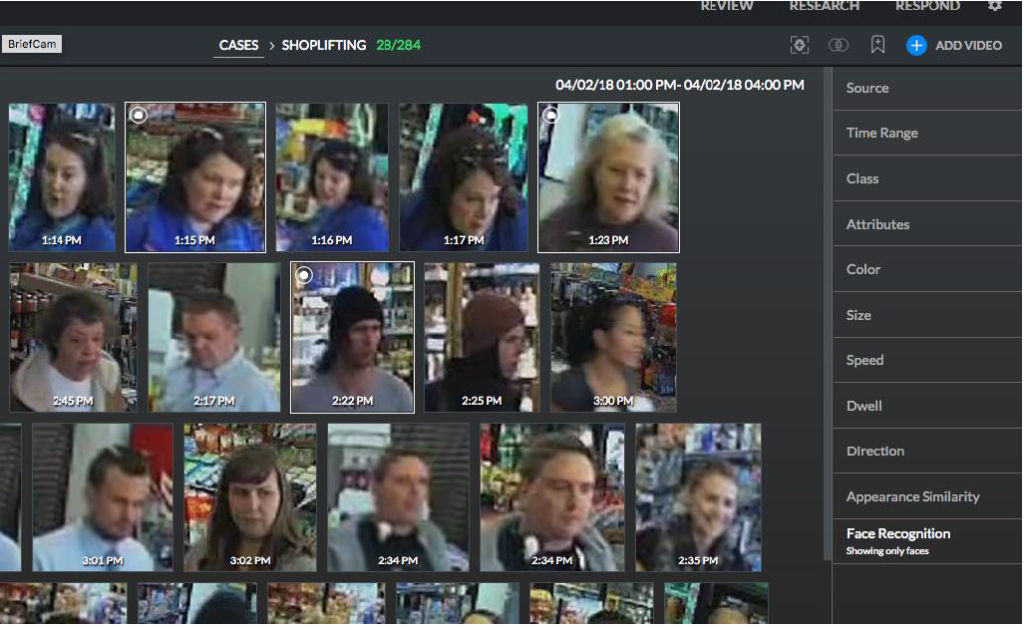
    En 2015, les forces de l’ordre ont acquis, en secret, un logiciel d’analyse d’images de vidéosurveillance de la société israélienne Briefcam. Depuis huit ans, le ministère de l’intérieur dissimule le recours à cet outil qui permet l’emploi de la reconnaissance faciale

    C’est devenu une habitude. Ce mardi 14 novembre, comme ce fut le cas lors de l’édition précédente, Gérald Darmanin inaugure le salon Milipol, au parc des Expositions de Villepinte (Seine-Saint-Denis). Consacré à la sécurité intérieure des États, ce salon est une vitrine mondiale pour des entreprises souvent inconnues du grand public. C’est le cas de Briefcam, une société israélienne spécialisée dans le développement de logiciels destinés à la vidéosurveillance algorithmique (VSA). Grâce à l’intelligence artificielle, cette technologie permet d’analyser des images captées par des caméras ou des drones et de détecter des situations jugées « anormales ».

    Jusqu’en mai dernier, la VSA ne pouvait être utilisée par la police nationale que dans de très rares cas. Mais à l’approche des Jeux olympiques et paralympiques de Paris, le gouvernement est parvenu à faire adopter une loi au parlement qui autorise son expérimentation par la police nationale à une large échelle et ce, jusqu’au 31 mars 2025. Face aux risques d’atteinte à la vie privée, les député·es ont néanmoins interdit le recours à la reconnaissance faciale, qui permet d’identifier une personne sur des images à partir des traits du visage. Un outil ultra-intrusif que certains logiciels commercialisés par Briefcam permettent d’activer en quelques clics. Et que les services de Gérald Darmanin connaissent bien.  

    Un logiciel déployé au niveau national

    D’après des documents internes au ministère de l’intérieur obtenus par Disclose, les forces de l’ordre utilisent les systèmes de Briefcam depuis 2015, dans le plus grand secret. Le logiciel en question, baptisé « Vidéo Synopsis », permet de traquer une personne sur un réseau de caméras grâce, par exemple, à la couleur de son pull. Il peut également suivre un véhicule à l’aide de sa plaque d’immatriculation ou examiner plusieurs heures de vidéos en quelques minutes. Le slogan de Briefcam, rachetée par le géant de la photo Canon en 2018 : « Transformer la vidéosurveillance en intelligence active ».

    Il y a huit ans, la direction départementale de sécurité publique (DDSP) de Seine-et-Marne est choisie pour expérimenter le logiciel israélien. Deux ans plus tard, en 2017, l’application est déployée plus largement. Les services de police du Rhône, du Nord, des Alpes-Maritimes, et de Haute-Garonne en sont à leur tour équipés. Ainsi que le service interministériel d’assistance technique (SIAT), une unité de police en charge des infiltrations, de la mise sur écoute et de la surveillance de la grande criminalité.

    « Il semble préférable de ne pas en parler »Un haut-fonctionnaire de la police nationale

    Dans la foulée, ce sont les services de la police judiciaire, les préfectures de police de Paris et Marseille, la sûreté publique et la gendarmerie nationale qui vont être dotés du logiciel de Briefcam sur des ordinateurs dédiés. Une installation massive qui s’est faite en dehors du cadre légal prévu par une directive européenne et la loi française Informatique et Libertés.

    Avant d’utiliser une technologie aussi intrusive que celle proposée par Briefcam, le ministère de l’intérieur aurait dû mener une « analyse d’impact relative à la protection des données » et la remettre à une administration indépendante : la Commission nationale de l’informatique et des libertés (CNIL). Or, la Direction générale de la police nationale (DGPN), placée sous l’autorité directe de Gérald Darmanin, n’avait toujours pas réalisé cette analyse d’impact en mai 2023. Pas plus qu’elle n’a averti la CNIL. Fin 2020, un cadre de la police invite ainsi à la discrétion : « Certains services ont l’outil Briefcam, mais celui-ci n’étant pas déclaré à la CNIL, il semble préférable de ne pas en parler ». Ou encore ce message envoyé quelques mois plus tard par un autre gradé, rappelant que « sur le plan juridique (…) l’application Briefcam n’a jamais été déclarée par la DGPN ». 

    Contactée par Disclose, la CNIL déclare, embarrassée, qu’elle « ne dispose pas d’éléments permettant d’infirmer ou de confirmer que la police nationale utilise Briefcam. » La DGPN n’a pas répondu à nos questions.

    L’option reconnaissance faciale activable en quelques clics

    La popularité de Briefcam parmi les services de la police pourrait s’expliquer par l’utilisation hors de tout cadre légal d’une de ses fonctionnalités phares : la reconnaissance faciale. Celle-ci permet « de détecter, de suivre, d’extraire, de classer, de cataloguer » une personne en fonction de son visage, explique l’entreprise sur son site Internet. Et pour l’utiliser, rien de plus simple : il suffit de sélectionner « un ou plusieurs visages » avant de cliquer sur « le bouton reconnaissance faciale affiché à droite de la zone de lecture », comme l’indique le manuel d’utilisation transmis à Disclose par la Quadrature du net, une association de défense des droits et libertés sur Internet. En quelques clics, le tour est joué.

    Cette possibilité offerte par Briefcam a d’ailleurs été mise en avant comme un véritable « plus » par le service en charge des outils technologiques au sein de la DGPN. Dans un courriel envoyé en novembre 2022, un haut-gradé de la police explique que le logiciel possède des « fonctionnalités comme : les plaques d’immatriculation, les visages », mais aussi « des fonctionnalités plus « sensibles » » telles que la « distinction de genre, âge, adulte ou enfant, taille ». Il précise enfin que certains modules de l’application permettent de « détecter et d’extraire des personnes et objets d’intérêts a posteriori », mais aussi de faire de l’analyse vidéo en « temps réel ».

    Ce possible recours à la reconnaissance faciale inquiète au sein même de l’institution. Dans un « point de situation juridique » daté de mai 2023, un cadre de la direction nationale de la sécurité publique (DNSP) alerte en effet sa hiérarchie : « Quel que soit le logiciel utilisé (Briefcam en particulier), il est interdit de recourir à un quelconque dispositif de rapprochement de visage ou de reconnaissance faciale », en dehors d’un cadre légal strict.

    Briefcam équipe la police municipale dans près de 200 communes

    En France, la reconnaissance faciale n’est autorisée qu’à de rares exceptions. Elle peut s’inscrire dans le cadre d’enquêtes judiciaires ou administratives « sanctionnant un trouble à l’ordre public ou une atteinte aux biens, aux personnes ou à l’autorité de l’État », comme le souligne un rapport parlementaire d’avril 2023. Dans ce cas, les enquêteurs peuvent s’appuyer sur le TAJ, le traitement des antécédents judiciaires, qui comptait, en 2018, environ huit millions de fiches avec des photos de visages. L’autre cas où la reconnaissance faciale est autorisée concerne le système de passage rapide aux frontières extérieures (Parafe), soit les portiques de sécurité qui comparent le visage des voyageur·euses à leur passeport biométrique.

    Pourtant, selon une source bien informée au sein de la police nationale, la reconnaissance faciale de Briefcam serait activement utilisée. Sans contrôle ni réquisition judiciaire. « N’importe quel policier dont le service est équipé peut demander à recourir à Briefcam, en transmettant une vidéo ou photo », assure notre interlocuteur. La DGPN n’a pas donné suite aux questions de Disclose sur ce point. Quant à Briefcam, son directeur des ventes en Europe, Florian Leibovici, reste évasif : « Ce type de client reste confidentiel et nous n’avons que très peu d’informations sur la façon dont notre outil est utilisé ».

    La société Briefcam, créée en 2008 par trois enseignants de l’école d’informatique et d’ingénierie de l’Université hébraïque de Jérusalem, n’équipe pas seulement les forces de l’ordre françaises. D’après un document de présentation confidentiel obtenu par Disclose, Briefcam a assisté des services de police en Israël, aux États-Unis, au Brésil mais aussi à Taïwan ou Singapour. Selon le centre de recherche indépendant Who Profits, Briefcam serait égalemment utilisé par le ministère israélien du logement pour surveiller des zones palestiniennes de Jérusalem-Est occupées par des colons.

    En France, « plus d’une centaine de villes » ont équipé leur police municipale avec l’application Briefcam, selon son représentant en Europe, Florian Leibovici. C’est notamment le cas de Nice, Roanne, Aulnay-sous-Bois, Perpignan ou Roubaix. Les algorithmes de Briefcam scrutent également les visiteurs du parc d’attraction du Puy du Fou et, bientôt, les élu·es de l’Assemblée nationale. Une implantation qui fait de la société l’un des leaders sur le marché hexagonal.

    Du côté du ministère de l’intérieur, on ne semble pas disposé à se passer du logiciel israélien de sitôt. Avant l’été, la direction centrale de la sécurité publique (DCSP) a validé le renouvellement de la licence Briefcam pour les services de sûreté départementale du Rhône, du Nord et de Seine-et-Marne. Lesdites licences arrivent à échéance à la fin de l’année 2023. Pour continuer à les utiliser, la hiérarchie policière a pioché dans le « fonds concours drogue » . Une enveloppe, alimentée par les saisies liées au trafic de stupéfiants, qui doit normalement servir la lutte contre le trafic de drogue et la prévention contre les addictions.


    Enquête : Mathias Destal, Clément Le Foll, Geoffrey Livolsi
    Édition : Pierre Leibovici
    Photo de couverture : Briefcam [fin]

    L’article original

  • [Sharing] The French National Police is unlawfully using an Israeli facial recognition software – Disclose

    In 2015, law enforcement secretly acquired surveillance video image analysis software from the Israeli company Briefcam. For eight years, the Ministry of the Interior concealed the use of his tool, which enables facial recognition

    This has become a habit. On Tuesday, November 14, just as in the previous edition, Gérald Darmanin inaugurates the Milipol exhibition at the Villepinte Exhibition Centre (Seine-Saint-Denis). Dedicated to the internal security of states, this exhibition is a global showcase for companies often unknown to the general public. Briefcam is one such company, an Israeli firm specializing in the development of algorithmic video surveillance (VSA) software. Through artificial intelligence, this technology analyzes images captured by cameras or drones to detect deemed “abnormal” situations.

    Until last May, the national police were only allowed to use VSA in very rare cases. However, with the approach of the Paris Olympic and Paralympic Games, the government managed to pass a law in parliament authorizing its large-scale experimentation by the national police until March 31, 2025. Faced with privacy risks, the members of parliament nonetheless prohibited the use of facial recognition, which identifies a person in images based on facial features. This is an extremely intrusive tool that some software marketed by Briefcam allows activation in a few clicks. And it’s a tool that Gérald Darmanin’s services are familiar with.

    Software deployed nationwide

    According to internal documents from the Ministry of the Interior obtained by Disclose, law enforcement has been using Briefcam’s systems since 2015, in utmost secrecy. The software in question, called “Video Synopsis,” can track a person across a network of cameras, for instance, by the color of their sweater. It can also track a vehicle using its license plate or analyze several hours of video in just a few minutes. Briefcam’s slogan, acquired by the photo giant Canon in 2018: “Transforming video surveillance into active intelligence.”

    Eight years ago, the Seine-et-Marne Departmental Directorate of Public Security (DDSP) was chosen to experiment with the Israeli software. Two years later, in 2017, the application was deployed more widely. Police services in Rhône, Nord, Alpes-Maritimes, and Haute-Garonne were also equipped. As well as the Interministerial Technical Assistance Service (SIAT), a police unit responsible for infiltrations, wiretapping, and monitoring serious crime.

    « Il semble préférable de ne pas en parler »

    Subsequently, it was the judicial police services, the police prefectures of Paris and Marseille, public security, and the national gendarmerie that were equipped with Briefcam’s software on dedicated computers. This massive installation was carried out outside the legal framework provided by a European directive and the French Data Protection Act.

    Before using such intrusive technology offered by Briefcam, the Ministry of the Interior should have conducted an “impact analysis on data protection” and submitted it to an independent authority: the National Commission for Information Technology and Civil Liberties (CNIL). However, the Directorate General of the National Police (DGPN), under the direct authority of Gérald Darmanin, had still not conducted this impact analysis by May 2023. Nor did they notify the CNIL. Therefore, at the end of 2020, a police official suggested discretion: “Some services have the Briefcam tool, but since it is not declared to the CNIL, it seems preferable not to talk about it.” Or this message sent a few months later by another senior officer, recalling that “legally speaking (…) the Briefcam application has never been declared by the DGPN.”

    Contacted by Disclose, the CNIL stated, embarrassed, that they “do not have elements to confirm or deny that the national police use Briefcam.” The DGPN did not respond to our questions.

    Facial recognition option activated in a few clicks

    Briefcam’s popularity among police services could be explained by the illegal use of one of its flagship features: facial recognition. This allows “detecting, tracking, extracting, classifying, and cataloging” a person based on their face, as explained by the company on its website. And to use it, it’s quite simple: just select “one or more faces” before clicking on “the facial recognition button displayed to the right of the playback area,” as indicated in the user manual (french version) transmitted to Disclose by La Quadrature du Net, an association defending rights and freedoms on the Internet. In a few clicks, it’s done

    This possibility offered by Briefcam has indeed been highlighted as a real “plus” by the service in charge of technological tools within the DGPN. In an email sent in November 2022, a high-ranking police officer explains that the software has “features such as license plates, faces,” but also “more ‘sensitive’ features” such as “distinguishing gender, age, adult or child, size.” Finally, he specifies that certain modules of the application allow “detecting and extracting people and objects of interest afterwards” but also conducting “real-time” video analysis.

    The potential use of facial recognition worries within the institution itself. In a “legal status update” dated May 2023, a cadre of the National Directorate of Public Security (DNSP) alerts their hierarchy: “Regardless of the software used (especially Briefcam), it is prohibited to use any face matching or facial recognition device,” outside strict legal boundaries.

    Briefcam equips municipal police in nearly 200 towns

    In France, facial recognition is only authorized in rare exceptions. It can be part of judicial or administrative investigations “punishing a disturbance to public order or an infringement on property, individuals, or state authority,” as highlighted in an April 2023 parliamentary report. In such cases, investigators can rely on the TAJ, the judicial antecedent processing, which, in 2018, contained about eight million records with photos of faces. The other case where facial recognition is authorized concerns the fast passage system at external borders (Parafe), which are security gates comparing the faces of travelers to their biometric passports.

    However, according to a well-informed source within the national police, Briefcam’s facial recognition is actively used. Without control or judicial requisition. “Any policeman whose service is equipped can request to use Briefcam by transmitting a video or photo,” assures our interlocutor. The DGPN did not respond to Disclose’s inquiries on this matter. As for Briefcam, its sales director in Europe, Florian Leibovici, remains vague: “This type of client remains confidential, and we have very little information on how our tool is used.”

    The company Briefcam, founded in 2008 by three teachers from the School of Computer Science and Engineering at the Hebrew University of Jerusalem, not only equips French law enforcement. According to a confidential presentation document obtained by Disclose, Briefcam has assisted police services in Israel, the United States, Brazil, Taiwan, and Singapore. According to the independent research center Who Profits, Briefcam is also used by the Israeli Ministry of Housing to monitor Palestinian areas of East Jerusalem occupied by settlers.

    In France, “more than a hundred cities” have equipped their municipal police with the Briefcam application, according to its representative in Europe, Florian Leibovici. This is notably the case in Nice, Roanne, Aulnay-sous-Bois, Perpignan, or Roubaix. Briefcam’s algorithms also scrutinize visitors to the Puy du Fou amusement park and soon, the elected officials of the National Assembly. This deployment makes the company one of the leaders in the French market.

    On the Ministry of the Interior’s side, there seems to be no willingness to stop using the Israeli software anytime soon. Before summer, the Central Directorate of Public Security (DCSP) approved the renewal of the Briefcam license for the departmental security services of Rhône, Nord, and Seine-et-Marne. These licenses expire at the end of 2023. To continue using them, the police hierarchy dipped into the “drug fund.” A fund, fueled by seizures related to drug trafficking, which should normally serve the fight against drug trafficking and addiction prevention.


    Investigation: Mathias Destal, Clément Le Foll, Geoffrey Livolsi
    Editor: Pierre Leibovici [end]

    The original article

  • Daily pictures : mais que fait la police ?

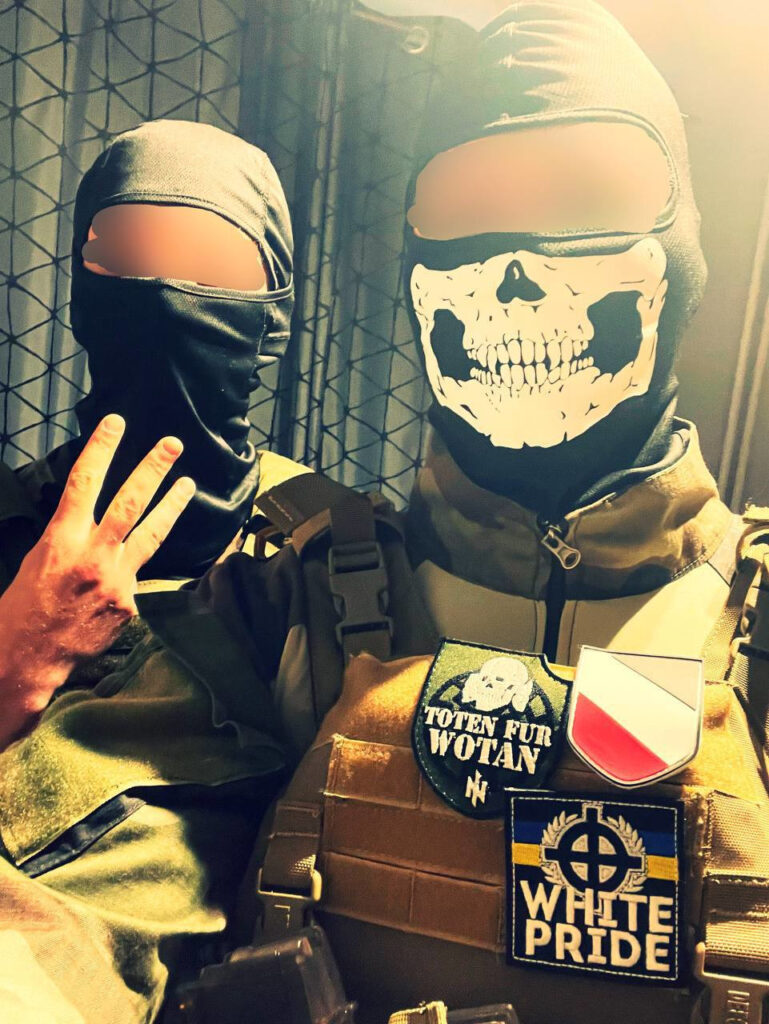
    In Lyon, France, on November 11, 2023, dozens masked Nazi militants, atavistic or congenital cowards, attack with baseball bats and other weapons an indoor political meeting, mostly women and elders, about Gaza, Palestine, where Israel is committing mass killing and ethnic cleansing. The cops come late, make no arrest

    These Nazi militants are also supporting Ukraine. One of them, Kenneth, has enlisted in Revansh battalion, the military branch of Tradytsiya ta poryadok [tradition and order] organization. The Ukrainian Nazi formation is based in Kharkov region, where however, Kenneth does not seem to be in a hurry to fight the Russian forces.

    Related

    Israeli mass war crime in Gaza

    the Israeli air force targets an overcrowded hospital in the center of the palästinensisches Wohngebiet von Gaza [in German, Palestinian ghetto in Gaza]

    Ach, der Krieg

    good and bad news

    Warsaw ghetto, 1943 ?

    No, bigger, this is Gaza

    The walls of Jericho

    as a psychological operation, the raid of Hamas is already a great success

    L’engagement français dans les rangs ukrainiens

    in French, a list of French mercenaries, many Nazis, who have enlisted in the Atlanticist ranks in Donbass and Ukraine

  • [Misère crasse de l’État français] La militante palestinienne Mariam Abu Daqqa arrêtée à Marseille et menacée d’expulsion vers Gaza – Émilien Urbach, l’Humanité

    Mariam Abu Daqqa, membre du Front populaire de libération de la Palestine (FPLP), en France depuis deux semaines pour y tenir plusieurs conférences, a été arrêté à Marseille, lundi 16 octobre, en compagnie d’un militant de l’Union juive française pour la paix

    La militante palestinienne Mariam Abu Daqqa a été arrêtée, ce lundi 16 octobre, alors qu’elle se rendait à la gare de Marseille pour rejoindre Toulouse, où elle était attendue pour donner une conférence sur la condition féminine à Gaza. « Vers 7 h 00 du matin, nous venions de monter dans ma voiture quand la police nous a arrêtés », explique Pierre Stambul, le porte-parole de l’Union juive française pour la paix (UJFP) qui l’hébergeait pour toute la durée de sa tournée d’évènements militants dans la région marseillaise.

    Membre du Front populaire de libération de la Palestine (FPLP), une organisation « inscrite sur la liste de l’Union européenne des entités faisant l’objet de mesures restrictives spécifiques dans le cadre de la lutte contre le terrorisme », Mariam Abu Daqqa a reçu un arrêté d’expulsion. Son visa délivré, en bonne et due forme fin septembre, par le consulat de France, à Jérusalem, a été annulé. Elle est maintenant assignée à résidence dans un hôtel de la Cité phocéenne.

    « Le discours que je porte ne s’en prend à personne »

    « Je ne comprends pas ce qu’on me reproche, confie Mariam Abu Daqqa à l’Humanité. J’ai toujours eu une très belle vision de la démocratie française et aujourd’hui c’est elle qui veut me faire taire. Je viens de perdre 29 membres de ma famille dans les bombardements israéliens sur Gaza. Ma maison a été détruite. Mais le discours que je porte ne s’en prend à personne. Je suis venu dénoncer l’occupation de la Palestine et ses conséquences sur la vie quotidienne des Palestiniens. »

    Les autorités françaises justifient leur décision dans deux documents remis à la militante. L’un signé par le ministre de l’intérieur, l’autre par le préfet des Bouches-du-Rhône, « Considérant que la venue de Mariam Abudaqa est encore annoncée dans plusieurs manifestations programmées sur le territoire national (…), que dans le contexte de l’attaque surdimensionnée du Hamas (…) et des violents affrontements toujours en cours entre l’Etat d’Israël et le Hamas, la participation de Mme Abu Daqqa à ces évènements et ses interventions sont de nature à attiser les tensions, la haine et la violence entre communauté et de créer de graves troubles à l’ordre public », lit-on sur l’un d’entre eux.

    Mariam Abu Daqqa est présente en France depuis début octobre. Elle a déjà donné plusieurs conférences à Paris, Lyon, Marseille, Metz… Aucune n’a abouti à de tels troubles.

    Le ministre de l’intérieur précise par ailleurs qu’il a pris sa décision « eu égard à l’appel lancé par le Hamas à « une journée de colère » le vendredi 13 octobre 2023 visant à attaquer les Israéliens et les juifs, et à l’attaque terroriste commise ce même (jour) au sein du lycée Gambetta d’Arras. »

    L’expression légitime du peuple palestinien luttant pour sa libération nationale n’a rien à voir avec le fanatisme religieux et le terrorisme islamiste. En amalgamant l’attaque terroriste du Hamas en Israël, celle de Mohammed M. à Arras et l’action militante d’une membre du FPLP, un mouvement palestinien marxiste très éloigné idéologiquement des groupes islamistes, le ministre de l’intérieur, non content de museler Mariam Abu Daqqa, sème délibérément la confusion. Un jeu dangereux qui pourrait se révéler contreproductif, privant de parole d’autres voix que celles de l’obscurantisme religieux.

    « Nous sommes en train de chercher un avocat qui puisse faire casser cette décision ahurissante, explique par ailleurs Pierre Stambul. Comment peut-on imaginer renvoyer de force une personne à Gaza quand on voit la violence qui s’y déchaîne en ce moment ? » Dans la lignée des nombreuses interdictions de manifestations en soutien au peuple palestinien, une telle décision serait en effet incompréhensible [fin]

    Tocard absolu de Gérald Darmanin

    L’article original

  • Le grand-guignol, une tradition française

    Abaya contre Samuel Paty

    Dans le contexte lamentable d’une nouvelle exception culturelle, dont l’initiative suscite au mieux la pitié à travers les vastes restes du monde, l’interdiction faite à des jeunes filles de porter l’Abaya à l’école, Emmanuel Macron s’est exprimé le 4 septembre 2023

    Nous vivons aussi dans notre société avec une minorité, des gens qui, détournant une religion, viennent défier la République et la laïcité. Ça a parfois donné le pire. On ne peut pas faire comme s’il n’y avait pas eu l’attaque terroriste et l’assassinat de Samuel Paty dans notre pays

    Le personnage s’est révélé depuis longtemps, il est si facile à cerner. La France est bipolaire, en partie vichyste et comme l’a écrit Alain Badiou, le pétainisme existait dans l’hexagone bien avant le dirigeant fasciste Philippe Pétain. Dans un mouvement perpétuel de pendule, ce vice national est redevenu majoritaire au début des années 2000, à l’époque de l’ascension de Nicolas Sarkozy. Macron en est l’incarnation.

    La France est aussi un pays très littéraire, où une large part de la population reste focalisée sur la partie la moins noble de son anatomie. Le propos de Macron pourrait bien être un état d’âme. Cela soulignerait un esprit d’une grande vulgarité. Si la fine analyse se voulait plus technique, elle fut au mieux d’une bêtise crasse et l’expression d’un autre courant majoritaire, dont la réputation mondiale est d’avoir peur de son ombre. La France est le pays dont des représentants ont déjà commis l’idée grotesque d’insécurité culturelle.

    Macron prétend atténuer les malheurs de la France, mais au même titre que les opérations djihadistes du 13 novembre 2015 à Paris, l’assassinat de Samuel Paty ne fut pas plus qu’un anecdotique dommage collatéral de la politique étrangère d’un pays qui voudrait encore paraître comme une puissance d’envergure mondiale. Comme à l’occasion autrefois d’événements encore plus calamiteux, par vanité, les autorités sont encore incapables, trois ans après, d’analyser sereinement les ressorts du fait divers. Désormais à la traîne des États-Unis, dans une posture parfois excessive de mouche du coche, la France a été avec François Hollande, autre figure emblématique, le plus hystérique support, depuis 2011, d’une insurrection islamiste en Syrie, contre le gouvernement légal et laïc de Bashar Assad.

    Abdoulakh Anzorov, gamin de 18 ans, s’est radicalisé, dans ce contexte volcanique, au contact sur les réseaux sociaux des djihadistes d’al Qaeda, appelé localement Hay’at Tahrir al-Sham [Organisation de libération du Levant, HTS], qui vaincus ailleurs par les opérations militaires conjuguées de la Syrie, de la Russie et de l’Iran, sont réfugiés encore aujourd’hui dans la poche d’Idlib, nord-ouest de la Syrie, où USA, OTAN et Union européenne les protègent, en raison d’intérêts géopolitiques supérieurs. Ce sont donc des amis de la France qui ont guidé le bras de l’assassin adolescent. C’est cocasse

    Voila pour le mobile. Il nous faut maintenant aborder l’aspect le plus cruel de la pathétique affaire, celui de l’opportunité. Anzorov se motivait sur les réseaux sociaux, où son expression était tellement violente et prémonitoire, qu’à l’été 2020, il a été signalé plusieurs fois à PHAROS, le pompeux Portail officiel de signalement illicit des contenus de l’internet. Problème, les éminents analystes de la DGSI (Direction générale de la sécurité intérieure) ne l’ont pas estimé dangereux. Savoir faire de la police politique, contre toute forme sérieuse d’opposition, ou alors du renseignement anti-terroriste, il faut choisir. La suite est impardonnable.

    Au mois d’octobre, le SCRT (Service central du renseignement territorial) surveillait dans le Val d’Oise une paire de militants des Frères musulmans (organisation politique internationale qui fut aussi à l’origine de l’insurrection en Syrie, c’est cocasse), qui manifestaient contre le professeur. C’est alors que deus ex machina, le jeune Abdoullakh Anzorov est entré en contact avec les deux agitateurs. Mais l’incapacité de la DGSI et du SCRT, une fois encore, à analyser correctement la situation et surtout, à recouper leurs informations, conduisit le 16 octobre 2020, à l’assassinat de Samuel Paty. Si les fins limiers du grotesque Gérald Darmanin avaient connu le b.a-ba du métier pour lequel ils sont payés, le professeur serait encore en vie.

    Le 7 juillet 2023, presque trois ans après les faits, l’avocate de la famille put enfin annoncer qu’un juge d’instruction avait ouvert une information, sur les graves incuries de l’État français. Car un rappel peut être utile, à l’exception d’Alain Badiou, des Frères musulmans et de l’avocate, tous les personnages et organismes français cités plus haut sont grassement payés par vos impôts.

    Article connexe

    Fils de Pétain

    la vanité nationale trouble la perception de la réalité historique et perpétue une névrose collective

  • Les oeils de Moscou

    ils sont partout, ils sont l’anti-France

    Heureux sans abonnement à l’Express, je n’ai pas accès à l’article, seulement un titre et un chapô, qui à eux seuls, sont une joyeuse source d’inspiration

    Avec ou sans faux-nez, ils cherchent à dynamiter l’unité occidentale face à la folie destructrice de Vladimir Poutine. Par anti-américanisme, par haine de notre démocratie libérale, ceux que l’on surnomme les prorusses et les « idiots utiles » du Kremlin s’activent sur les réseaux sociaux et dans les sphères politiques. On les croyait condamnés au silence depuis l’invasion russe, ils n’ont jamais été aussi dangereux

    Comme ils sont méchants, comme ils nous font peur, ces vilains pro-russes. Comment pourrait on [on est un con, m’a t on appris quand j’étais tout petit] les condamner au silence ? Par l’accentuation de la censure sur les réseaux sociaux ? Commandement bureaucratique d’un espace libre-échangiste subordonné à l’OTAN, l’Union européenne y songe pour ce mois d’août.

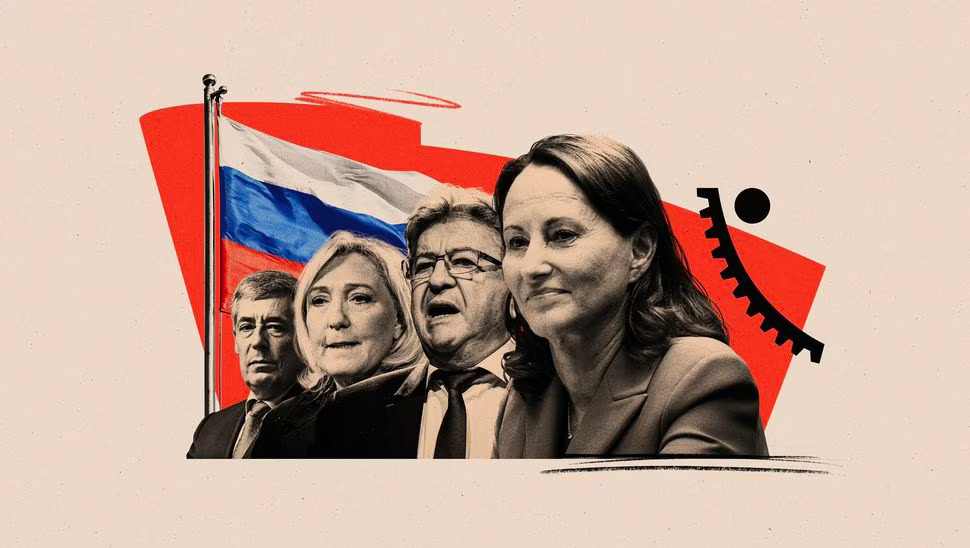
    Afin de conjurer son angoisse, l’Express a entrepris d’étiqueter les différents canaux pro-russes, de ficher leurs têtes de gondole : Henri Guaino, Jean-Luc Mélenchon, Marine le Pen, Ségolène Royal… etc Anti-américains, militaires, covido-sceptiques, hommes d’affaire, russophiles, pacifistes, extrême-droite…, les oeils de Moscou sont partout, c’est effrayant. Sans désemparer, les employés de presse se sont saisis de leur clavier pour atténuer les malheurs de l’Occident.

    Les envolées lyriques partisanes me font rire et l’hilarité me permet de surmonter mon dégoût pour l’excrétion des états d’âme franchouillards. Aussi cruels qu’ils puissent être, les faits sont plus intéressants sans fioriture littéraire. Contrairement aux personnalités politiques citées plus haut, mon analyse n’est pas polluée par le patriotisme, forme théorisée de l’instinct grégaire. La justice est ma seule patrie.

    La guerre au Donbass éclata en 2014, quand après un coup d‘État fasciste à Kiev, les nouvelles autorités entreprirent d’écraser les aspirations autonomistes de leurs citoyens russophones. En renfort de militaires encore fidèles, elles expédièrent au Donbass des militants nazis légalisés en bataillons nationaux de volontaires.

    Plutôt que de contribuer à désamorcer la crise, l’OTAN y vit l’opportunité stratégique d’une guerre par procuration contre la Russie. Son fantasme était de la démembrer, pour améliorer son rapport de force à la Chine. Alors que l’hypocrisie occidentale ne laissait pas d’autre solution, l’opération militaire spéciale est devenue une nécessité technique en février 2022. La Russie a relevé le défi, s’est portée au secours de la population russophone du Donbass.

    La paix était enfin possible en mars, après quelques semaines seulement de combat, mais les Anglo-États-uniens y opposèrent leur veto. Le champ de bataille se dresse désormais entre la réalité et les fantasmes de médiocres politiciens occidentaux.

    À l’instar de la rédaction de l’Express, les jeunes Français me paraissent en général peu équipés pour y briller. Alors que l’OTAN perd cette guerre et accélère l’inéluctable déclin de l’hégémonie occidentale, les employés de l’Express semblent peu pressés de remplacer fusil en main la chair à canon ukrainienne hachée en vain pour atténuer leurs angoisses. Ils font le choix ancré dans une tradition bien française d’établir le fichier de leurs concitoyens pro-russes. Ils donnent leur sang, donnez votre voisin. Puisque son champ d’action demeure derrière le clavier, j’ai hâte que la rédaction s’intéresse aux nazis français partis en Ukraine défendre l’Europe, la démocratie et la liberté.

    Je suis assez vieux pour avoir observé les précédentes entreprises criminelles et catastrophiques des États-unis et de leurs alliés, tentatives de préserver leur hégémonie d’un déclin mécanique et inéluctable. Je suis de ceux que les couveuses koweïtiennes et autres armes de destruction massive ont échaudés.

    À l’époque indépendante, la France s’opposa en 2003 à l’invasion de l’Irak. Plus tard hélas, Nicolas Sarkozy fut le complice de la destruction de la Libye. Folie destructrice ? De loin le plus crétin, François Hollande paya la note et quelques Français avec lui, quand le 13 novembre 2015, une opération djihadiste fut l’anecdotique dommage collatéral à Paris du soutien occidental à l’insurrection sunnite radicale contre le gouvernement laïc de Syrie. Au train où vont les choses en Ukraine, ces désagréments ne sont pas finis

    Par mon âge et mon expérience professionnelle, je me targue d’une culture historique et politique supérieure à celle de l’auteur de romans policiers Charles Haquet ou de l’étudiante en affaires internationales Emma Collet, qui ont commis cet article d’anthologie.

    Au déclenchement de l’opération militaire spéciale, voilà plus d’un an, mes sentiments étaient plus neutres. Mais à la façon dont les mêmes pressetitués ont encore une fois déversé des torrents de boue -mensonges, propagande ukrainienne pour demeurés et autre fantôme de Kiev– ont cherché sans vergogne à blanchir le nazisme endémique ukrainien et ses crimes, j’ai vite compris où étaient dans cette affaire le droit et la justice. D’ailleurs, l’immense majorité des vastes restes du monde est arrivée aux mêmes conclusions

    Cet article est aussi l’authentique expression d’un pays dont le courage n’est pas la première qualité qui vient à l’esprit, quand il est évoqué à l’étranger. D’une presse à ce point servile et caricaturale, qu’un Philippe Henriot ne la renierait pas. D’un peuple froussard à l’arrogance rurale, dont la compréhension des questions internationales est aussi mièvre que chauvine. Car enfin, comme il faut être lâche et rompu aux petits arrangements d’alcôve, pour encencer en qualité de Français, un régiment Azov qui arbore fièrement l’emblème de la 2. SS-Panzer-Division, Das Reich, qui le 10 juin 1944, massacra 643 habitants d’Oradour sur Glane. Impensable à l’étranger.

    Je vous laisse votre démocratie libérale -quand votre libéralisme ne résiste pas à la première éraflure sur la carosserie de votre automobile à crédit- votre chef d’État élu par 25% du corps électoral, ses Gilets jaunes mutilés, son 49.3 et sa presse subventionnée. Elle ne m’intéresse plus, mais fait encore plier de rire une large majorité du globe. Elle est digne de vous, employés de l’Express, petits bourgeois du blême Hexagone, racaille macroniste. Vous avez au moins compris une chose : votre défaite par procuration au Donbass est le début de votre fin.

  • La Police nationale est peuplée de petites frappes

    nouvel épisode le 27 juin 2023

    L’information m’est parvenue et aucune disposition légale ne s’oppose à ce que j’informe mes lecteurs de l’identité d’un mis en cause dans une affaire de meurtre. J’ai été officier de police judiciaire dans les années 90, longtemps à la Brigade criminelle, quai des Orfèvres, n’ai pas de doute quant à la destination de l’intéressé, si la loi s’applique à tous en France. Il devrait être mis en examen et répondre plus tard de ses actes devant la Cour d’assises.

    L’auteur du tir illégal qui a pris la vie du jeune Nahel, 17 ans, le 27 juin 2023, à Nanterre, tireur actuellement en garde à vue dans une affaire de meurtre, est le gardien de la paix [entre inspecteurs, nous disions autrefois archer du guet]

    Florian Menesplier,
    né le 30 janvier 1985

    qui a été décoré en mai 2021 par Didier Lallement, le préfet qui sentait Papon. L’information me parait de première importance, car l’extrême-droite fait courir le bruit que le malfaiteur serait un Arabe. Je dispose aussi de l’adresse personnelle de Menesplier mais la diffuser pourrait être mal interprété.

    Une affaire dans l’affaire souligne un peu plus l’état de putréfaction de la Police nationale. Le syndicat France police – Policiers en colère est un organe d’extrême-droite parmi d’autres dans l’institution. Son secrétaire général adjoint est l’ex archer du guet Bruno Attal, qui ne fait pas secret de son idéologie quand il écrit par exemple le 21 juin

    Je n’aurais pas voulu être le voisin d’un membre de la CGT dans les années 40

    D’autres en revanche sont fiers que leur famille ait compté des résistants communistes qui le fusil en mains, ont affronté les SS, plutôt que l’infamie de flicaillons, qui pour le compte de l’État français, donc des nazis allemands, de la Préfecture de police aux GMR (groupes mobiles de réserve, ancêtres des CRS), de Paris au plateau des Glières, ont raflé les Juifs et pourchassé les résistants.

    Après la mort de Nahel, le représentant sur Twitter du même syndicat, dont le compte collectif a été depuis suspendu, a écrit

    #Nanterre Bravo aux collègues qui ont ouvert le feu sur un jeune criminel de 17 ans. En neutralisant son véhicule, ils ont protégé leur vie et celle des autres usagers de la route. Les seuls responsables de la mort de ce voyou sont ses parents, incapables d’éduquer leur fils

    Voilà où est rendu un pays dont l’exécutif, à seule fin de réprimer des mouvements sociaux, a caressé pendant six ans dans le sens du poil une police recrutée au rabais, formée à l’avenant et rongée par l’extrême-droite. Ainsi dépassé par sa base, le ministre de l’intérieur Gérald Darmanin est le 28 juin dans l’obligation juridique (article 40 du Code de procédure pénale) d’informer le parquet

    Autre caricature de la Police nationale, autre organisation d’extrême-droite, le Syndicat indépendant des commissaires de police (SICP) et son porte-parole, Matthieu Valet, commissaire de mauvaise facture, ancien archer du guet, dont les interventions sont toujours politiques, la même obsession de l’extrême-gauche que son collègue Bruno Attal et son ministre Gérald Darmanin. Après la mort de Nahel, il a commencé par mettre en accusation la victime, souligner le refus d’obtempérer mais renouvelé sa confiance dans la justice de [son] pays. Moi aussi, c’est une affaire de meurtre qu’elle traite

    Le bonimenteur continue son cirque le lendemain, accuse élus et avocats de faire le lit de la haine de la police, leur refuse le droit de qualifier d’exécution le meurtre de Nahel. En revanche, il s’émeut que l’identité du mis en cause soit divulguée, ose alors évoquer l’État de droit et menace

    J’attends ton enquête, Valet.

    Postscriptum, chronique

    • 29 juin 2023

    Le matin, le parquet de Nanterre demande le placement en détention provisoire de Florian Menesplier, désormais mis en examen dans une affaire de meurtre. Le syndicat Alliance est majoritaire dans une police qui se rêve plus en coterie de porte-flingues de l’État qu’en auxiliaire de justice. Ses représentants applaudirent en 2022 le candidat Eric Zemmour, quand il leur parla de combat de civilisation contre les enclaves étrangères de banlieue, quand leur ministre est un opposant farouche aux rayons communautaires dans les magasins. L’organisation est célèbre dans toute la corporation pour la laideur de ses tracts

    Sur l’antenne d’Europe 1, son représentant Éric Henry s’autorise à constester la décision des magistrats, décision qu’il qualifie de disproportionnée. N’a t il jamais entendu parler de mettre fin au trouble exceptionnel et persistant à l’ordre public provoqué par la gravité de l’infraction ? Une première réforme nécessaire de cette police serait que les archers du guet apprennent la loi. Cela leur éviterait d’abord de commettre des meurtres.

    • 3 juillet 2023

    Un premier point judiciaire, car outre ses méfaits, la Police nationale cultive l’art consommé de se ridiculiser.

    • 5 juillet 2023

    Le journal Libération révèle les graves antécédents administratifs de l’archer du guet Florian Menesplier, qui toujours au sein de la Préfecture de police de Paris, avant la compagnie motocycliste des Hauts de Seine, a été précédemment affecté à la BRAV-M et à la CSI 93, deux formations emblématiques de la Police nationale, en matières de violences policières illégales et de corruption

    Dans le contexte du mouvement social des Gilets jaunes, la BRAV-M (Brigade de répression de l’action violente – motorisée) fut en mars 2019 la résurrection d’une précédente formation de maintien de l’ordre, les Voltigeurs, qui fut dissoute après qu’un jeune innocent, Malik Oussekine, eut été battu à mort le 6 décembre 1986. Enfants du préfet Didier Lallement, les nouveaux voltigeurs [ce qu’ils restent pour moi] sont devenus à Paris des supplétifs indispensables de la stratégie de répression des mouvements sociaux par le gouvernement. Ils se sont illustrés par de nombreuses violences illégales, comme celles que des témoins enregistrèrent 20 mars 2023, contre des manifestants opposés à la réforme néo-libérale des retraites.

    Fille de Nicolas Sarkozy, la CSI 93 (Compagnie de sécurisation et d’intervention en Seine Saint Denis) est un scandale mémorable. Une enquête commencée en juin 2019 établit qu’y étaient devenues courantes des pratiques de faux et usage, violences volontaires, vol…, un abcès purulent. Le préfet qui sentait Papon annonça sa dissolution sous la pression médiatique en 2020, puis se ravisa par temps plus clair. Il fut limogé le 21 juillet 2022, en raison du scandale international de l’incompétence et de la violence de sa mauvaise troupe, lors de la finale au Stade de France de la Ligue des champions de l’UEFA, le 28 mai.

    L’archer du guet Menesplier a été à bonne école.

    Le même jour, la Commission des lois du Sénat entend Gérald Darmanin, qui se plaint à juste titre de la faiblesse du niveau de recrutement des archers du guet. Il oublie cependant que résoudre ce problème est précisément ce pourquoi il est grassement payé et qu’il aurait pu s’y attaquer depuis trois ans. En réalité, cette décadence est le résultat direct des entreprises de la famille politique du sarkozyste Darmanin, commença en 1995, sous Charles Pasqua, par la dissolution du corps des inspecteurs.

    • 6 juillet 2023

    L’hebdomadaire Oise Hebdo fait son travail d’information, publie l’identité du tireur

    La publication fait enrager les figures proéminentes de l’extrême-droite de réseaux sociaux. De même et à la demande de syndicats policiers que j’estime avoir déjà trop entendus, Gérald Darmanin annonce qu’il dépose plainte contre les journalistes

    Mais l’analyse juridique du ministre de l’intérieur est déficiente. Florian Menesplier n’est pas un policier… etc Il est un justiciable mis en examen et incarcéré dans une information conduite par un juge d’instruction pour meurtre.

    Pour éclairer les raisons de cette carence en Droit, je peux rappeler ici que Darmanin n’est pas une oie blanche. Même si la justice a choisi de classer ses affaires, il reste inscrit dans les fichiers d’antécédents de sa propre administration. Cette authentique grenouille de bénitier avait coutume de convaincre des administrées de lui pratiquer des fellations contre récompense. Un peu comme des prêtres catholiques profitent de leur ministère pour s’adonner à la pédophilie. Mais si en France, le parquet est souvent l’auxiliaire zélé de l’exécutif, ce que ses partenaires judiciaires étrangers déplorent comme une violation du principe de la séparation des pouvoirs, je doute que cette nouvelle inquisition aboutisse

    Anecdote concomitante, les publications factuelles et analytiques de mon blog ont été signalées à PHAROS, le portail officiel de signalement des contenus illicites de l’internet. Cela me rappelle un échec récent et retentissant du ministère de l’intérieur et de la Police nationale sous Darmanin. Les publications extrêmement violentes sur Twitter d’Abdoulakh Anzorov avaient été signalées plusieurs fois à PHAROS au mois de juillet, mais l’incapacité de la DGSI (Direction générale de la sécurité intérieure) et du SCRT (Service central du renseignement territorial) à analyser correctement la situation et surtout, à recouper leurs informations, conduisit le 16 octobre 2020, à l’assassinat de Samuel Paty

    Cela me rappelle surtout un pays qui n’a pas vraiment changé, toujours prédisposé aux abus policiers.

    • 7 juillet 2023

    Un point à ce jour, sur les méthodes employées par les forces de l’ordre, contre les émeutiers. La vérité est dans les détails, que des individus comme Matthieu Valet aimeraient noyer dans leurs envolées lyriques. Les RAID tirent des Bean Bags [sacs de haricots], en réalité remplis de plomb, de sable ou billes d’acier, qu’un euphémisme administratif français qualifie de moyen de force intermédiaire [avant les tirs à balle réelle] mais que j’appelle plutôt munitions à moitié létales.

    Drôle de concours de circonstances, j’ai évoqué hier PHAROS et le scandale de l’assassinat de Samuel Paty. Nous apprenons ce matin que suite à une plainte qui vise notamment le ministère de l’intérieur, un juge d’instruction a enfin ouvert une information.

    • 23 juillet 2023

    Alors qu’à la suite du meurtre à Nanterre du jeune Nahel par Florian Menesplier, des émeutes secouaient Marseille dans la nuit du 1er au 2 juillet 2023, quatre BACqueux [policiers de Brigade anti-criminalité] s’en sont pris à un jeune restaurateur qui quittait son travail. Touchée à la tête par un tir de LBD, la victime fut ensuite rouée de coups, puis abandonnée à son sort par les archers du guet. Traumatisme crânien, mâchoire cassée, oeil poché, Hedi est depuis en arrêt de travail pour plus de 60 jours.

    L’Article 222-11 du Code pénal introduit

    Les violences ayant entraîné une incapacité totale de travail pendant plus de huit jours

    L’Article 222-12 ajoute que ces violences sont punies de sept ans d’emprisonnement et 100 000 euros d’amende lorsqu’elle sont commises dans au moins deux, parmi quinze circonstances aggravantes, dont

    par une personne dépositaire de l’autorité publique ou chargée d’une mission de service public dans l’exercice ou à l’occasion de l’exercice de ses fonctions ou de sa mission

    ou

    par plusieurs personnes agissant en qualité d’auteur ou de complice

    ou

    avec usage ou menace d’une arme

    Point particulier : si Hedi souffre par la suite d’une quelconque infirmité, nous changeons de registre, ce sera la cour d’assises pour les archers du guet, à condition bien sûr que la loi soit la même pour tous. Identifiés, les malfaiteurs ont été mis en examen, trois placés sous contrôle judiciaire, le quatrième,

    Christophe I*, tireur au LBD (si je parvenais à connaître son identité complète, je la publierais),

    en détention provisoire, ce qui a provoqué une vague soudaine de peste bubonique parmi les archers du guet marseillais. Ces fonctionnaires ne bénéficient pas du droit de grève et se sont faits porter pâles

    En raison de cette épidémie, Frédéric Veaux fit la tournée des popotes marseillaises le 22 juillet, puis s’autorise à déclarer au Parisien le 23

    De façon générale, je considère qu’avant un éventuel procès, un policier n’a pas sa place en prison, même s’il a pu commettre des fautes ou des erreurs graves dans le cadre de son travail. J’exclus de mon propos les affaires qui concernent la probité ou l’honnêteté. Mais lorsqu’un policier est dans l’exercice de sa mission, on doit admettre qu’il peut commettre des erreurs d’appréciation. Le policier doit rendre compte de son action, y compris devant la justice, mais on doit aussi tenir compte des garanties dont il bénéficie et qui le distinguent des malfaiteurs ou des voyous

    Il faut oser. La proposition est aberrante et sa justification dénote une grande confusion mentale. Sortie du cadre ludique de certains enfants, la société n’est pas peuplée de gentils policiers et méchants voyous, mais de justiciables égaux devant la loi. Garanties ? Celles que les porte-flingues de l’État veillent plus particulièrement à ne jamais se comporter en voyous, en raison de ce qu’ils devraient être avant tout, des auxiliaires de justice.

    Âgé de 67 ans, le préfet est Directeur général de la Police nationale depuis le 3 février 2020. En qualité de fonctionnaire, il est tenu au devoir de réserve. Hélas, l’enfant du Grand Sud-Ouest n’en est pas à sa première bêtise. Dans l’Essonne, entre 2016 et 2019, des policiers ont commis le pire crime possible dans mon esprit pour de prétendus enquêteurs, hélas aujourd’hui des archers du guet défroqués. Parce que leur travail consistait à identifier les auteurs d’une grave agression de policiers à Viry-Châtillon, les fins limiers se sont autorisés à fabriquer des faux, pour incriminer injustement des personnes, dont certaines ont été incarcérées plusieurs années. Quand le loup fut levé en 2021 et les faussaires poursuivis, Veaux osa déclarer

    Je les soutiens de toutes mes forces quoi qu’il arrive et quoi qu’on dise. Je les défends et je les défendrai

    Probité ? Le DGPN n’est pas seulement inapte en matière d’exemplarité, mais un crétin profond. Serait ce pourquoi Emmanuel Macron l’a choisi ?

    Pour revenir au contexte local, Angelina, 19 ans, aussi appelée Maria, était vendeuse à Marseille. Le 8 décembre 2018, elle quitta son travail alors que la ville était traversée par un cortège de Gilets jaunes. Un troupeau de porcs commença par l’immobiliser d’un tir de LBD dans les jambes. Alors qu’elle gisait au sol, les archers du guet s’acharnèrent à coups de matraques et de pieds, pour finalement l’abandonner dans une mare de sang. Erreur d’appréciation ?

    Traumatisme crânien et contusion cérébrale, elle souffre toujours de séquelles. Les boeuf-carottes [IGPN] ont mitonné une vaine recherche. Par un très malheureux concours de circonstances, ils ne sont pas parvenus à identifier les criminels… en série ?

    Le préfet de police de Paris s’autorise à partager les propos du DGPN

    J’exhorte Laurent Nunez à pratiquer l’autocritique. La plus spectaculaire opération de la Préfecture de police à ce jour fut la rafle du Vel’d’Hiv’. C’est Français, Madame Bourdelle, c’est la police française, disait Adolfo Ramirez. La mécanique fut plus poussive le 13 novembre 2015, quand ils étaient 30 000 contre seulement 9 en face. Nunez était aussi Secrétaire d’État auprès du ministre de l’intérieur lorsque Angelina fut démolie à Marseille.

    Conspiration ? Quand j’étais jeune inspecteur de police, dans les années 90, le Parisien était déjà appelé la main-courante de la Prefecture de police. Pas toujours, car le même journaliste Jean-Michel Décugis a réalisé mon interview en 2020.

    • 24 juillet 2023

    C’est du bout des lèvres qu’Emmanuel Macron désavoue ses deux sbires

    Nul en république n’est au-dessus de la loi

    Pas mal mais il pourrait mieux faire. Les policiers font respecter l’État de droit pour tous ? Oublions trente secondes l’État, qui pourrait être précisément le problème, quand les archers du guet et leur hiérarchie ne respectent pas le Droit.

    Le reste de l’interview ne laisse présager rien de bon

    Notre pays a besoin d’un retour de l’autorité à chaque niveau et d’abord dans la famille

    Je ne pense pas que travail, famille et patrie soit la solution, quand ce pauvre pays a plutôt besoin de justice, à tous les niveaux. La censure non plus

    Nous avons besoin de trouver un ordre public numérique qui permette de prévenir les débordements

    Ce genre de réaction est hélas un syndrome français. Nous savons depuis la fin du XVIIIe siècle et par l’auteur français Sébastien-Roch-Nicolas Chamfort, que

    l’Anglais respecte la loi et repousse ou méprise l’autorité. Le Français, au contraire, respecte l’autorité et méprise la loi

    • 26 juillet 2023

    C’est français, c’est la police française, voici le résultat d’un passage à tabac par la Police nationale. Kombini News a interviewé Hedi, que des BACqueux de Marseille ont démoli, puis laissé pour mort, dans la nuit du 1er au 2 juillet

    • 31 juillet 2023

    J’étais convaincu de l’imminence d’un tel rebondissement. Mediapart révèle que parmi les trois archers du guet sous contrôle judiciaire pour l’agression d’Hedi, le 2 juillet 2023,

    David B* (si je parvenais à connaître son identité complète, je la publierais)

    est déjà impliqué par un faisceau d’indices dans les violences criminelles contre Angelina, en décembre 2018 (cf. supra, 23 juillet). Des fonctionnaires de la Police nationale l’ont protégé à l’époque et des preuves ont été détruites.

    • 3 août 2023

    La Chambre de l’instruction de la Cour d’appel d’Aix en Provence suit le parquet et prononce le maintien en détention provisoire de Christophe I*, l’archer du guet qui le 2 juillet, a tiré au LBD sur Hedi (cf. supra, 23 juillet), à Marseille. Les sydicats policiers sont pareils à eux-mêmes. Unité SGP Police, pourtant réputé Force ouvrière, demande aussi

    un débat sur le traitement judiciaire des fonctionnaires dans l’exercice de leurs fonctions

    c’est à dire une justice devant laquelle les archers du guet seraient plus égaux que d’autres.

    Ainsi, les porte-flingues de l’État persistent à vouloir s’émanciper des contraintes du Droit commun. Si un privilège leur était accordé en matière de détention provisoire, les mêmes seraient encouragés à revendiquer ensuite d’autres bricolages, tels que l’élargissement du champ légal d’emploi des armes et ainsi de suite. C’est l’inverse qui est aujourd’hui nécessaire. En raison de la complaisance de l’exécutif qu’ils servent, quand les archers du guet devraient se considérer en démocratie des auxiliaires de justice, leur montrer des limites, par la vertueuse application des lois actuelles, est devenu urgent. Leur donner satisfaction confinerait au rétablissement de ce qu’était la Police nationale, après sa fondation par Vichy en 1941.

  • [Sharing] Leaks reveal FBI helps Ukraine censor Twitter users and obtain their info – Aaron Maté, the Grayzone

    The FBI aided a Ukrainian intelligence effort to ban Twitter users and collect their data, new leaks show. Twitter declined to censor journalists targeted by Ukraine, including The Grayzone’s Aaron Maté

    The Federal Bureau of Investigation has aided a Ukrainian intelligence effort to censor social media users and obtain their personal information, leaked emails reveal.

    In March 2022, an FBI Special Agent sent Twitter a list of accounts on behalf of the Security Service of Ukraine (SBU), Ukraine’s main intelligence agency. The accounts, the FBI wrote, “are suspected by the SBU in spreading fear and disinformation.” In an attached memo, the SBU asked Twitter to remove the accounts and hand over their user data.

    The Ukrainian government’s FBI-enabled targets extend to members of the media. The SBU list that the FBI provided to Twitter included my name and Twitter profile. In its response to the FBI, Twitter agreed to review the accounts for “inauthenticity” but raised concerns about the inclusion of me and other “American and Canadian journalists.”

    The FBI’s attempt to ban Twitter accounts at the request of Ukrainian intelligence is among the most overt requests for censorship revealed to date in the Twitter Files, a cache of leaked communications from the social media giant.

    The FBI’s censorship request was relayed in a March 27th, 2022 email from FBI Special Agent Aleksandr Kobzanets, the Assistant Legal Attaché at the US Embassy in Kyiv, to two Twitter executives. Four FBI colleagues were copied on the exchange.

    “Thank you very much for your time to discuss the assistance to Ukraine,” Kobzanets wrote. “I am including a list of accounts I received over a couple of weeks from the Security Service of Ukraine. These accounts are suspected by the SBU in spreading fear and disinformation. For your review and consideration”

    The attached document, drafted by Ukraine’s SBU, contained 163 accounts, including mine. (The list is numbered to 175, but some accounts have two corresponding numerical lines).

    The listed Twitter profiles, the SBU alleged, have been “used to disseminate disinformation and fake news to inaccurately reflect events in Ukraine, justify war crimes of the Russian authorities on the territory of the Ukrainian state in violation of international law.”

    In order “to stop Russian aggression on the information front,” the SBU continued, “we kindly ask you to take urgent measures to block these Twitter accounts and provide us with user data specified during registration.”

    The SBU expressed its “gratitude for the existing level of interaction”

    If granted, the users on the list would not only have been banned from Twitter but had their phone number, date of birth, and email address disclosed to both the FBI and SBU.

    Read the full list of accounts targeted by the FBI and SBU here:

    Twitter-Dissinf_20220327 SBU list

    In response, Yoel Roth, Twitter’s then-Head of Trust and Safety, informed Special Agent Kobzanets and his FBI colleagues that Twitter would “review the reported accounts under our Rules.” But he warned that the list included “a few accounts of American and Canadian journalists (e.g. Aaron Mate).” Therefore, Roth said, Twitter’s review would “focus first and foremost on identifying any potential inauthenticity.”

    Roth then suggested that he would be open to suspending authentic accounts if it could be proven that they have a hidden tie to a foreign government. Journalists “who cover the conflict with a pro-Russian stance are unlikely to be found in violation of our rules absent other context that might establish some kind of covert/deceptive association between them and a government,” Roth wrote. “Any additional information or context in those areas is of course welcome and appreciated”

    Twitter executive Yoel Roth’s response to the FBI’s censorship request flags its inclusion of journalists, “e.g. Aaron Mate.”

    In his reply, Kobzanets did not directly acknowledge Roth’s concerns about Ukraine’s FBI-abetted effort to censor journalists. “Understood,” Kobzanets told Roth. “Whatever your review determines and action Twitter deem[s] is appropriate.” He also indicated that the FBI would not meet Roth’s request for any “context” that might establish ties between journalists and a foreign government: “Unlikely there will be any additional information or context.”

    Inside Twitter, Roth forwarded the FBI request to two colleagues. “This is the output of our meeting with the FBI last week,” he wrote. “The list of accounts is a mixed bag – there’s some state media mixed in with a bunch of other stuff – but given the context, I think a deep dive here warranted.” (Roth left Twitter in November 2022).

    In an email, I asked Special Agent Kobzanets if he had vetted Ukraine’s censorship request list before sending it to Twitter. I also asked Kobzanets if, after being informed by Twitter’s Roth that the FBI was trying to censor journalists on the SBU’s behalf, whether that had prompted any review or revision of his assistance to Ukrainian intelligence. Kobzanets did not respond.

    The FBI’s National Press Office also declined to answer questions. Among several queries, I invoked Twitter’s warning that the FBI’s “assistance to Ukraine” entailed censoring journalists, and asked if that has prompted any changes to the bureau’s collaboration with Ukrainian intelligence.

    “While we appreciate your inquiry, as a matter of practice we do not confirm, deny, or otherwise comment on specific interactions nor confirm the veracity of correspondence,” an FBI spokesperson wrote.

    Read the full FBI-Twitter correspondence here:

    FBI-SBU Twitter Request

    The FBI officials copied on the Kobzanets’ exchange with Twitter include Elvis Chan, an Assistant Special Agent in Charge (ASAC) of the FBI’s San Francisco field office, where he manages its Cyber Branch. Chan was active in the FBI’s contacts with Twitter when the social media giant’s censorship of reporting on Hunter Biden’s laptop shortly before the November 2020 election. (As I recently reported, he was also involved in FBI’s decision to forego a direct inspection of the DNC servers and instead rely on the Hillary Clinton-funded cyber firm CrowdStrike in the bureau’s probe of alleged Russian hacking in 2016).

    Of the 163 accounts named by the SBU, 34 were suspended and 20 no longer exist. The rest remain active.

    Those marked for censorship by Ukraine but remain online include Russian politicians Gennady Zyuganov, a longtime member of Russia’s Communist Party and parliamentarian who lost to Boris Yeltsin in Russia’s 1996 president election; Dmitry Rogozin, Russia’s former Deputy Prime Minister; and Sergey Mironov, a Russian politician and parliamentarian. The list also includes Russian journalists Vladimir Solovyov, a television news host; and Margarita Simonyan, editor-in-chief of the Russian state-controlled network RT. Several Russian government agencies and media outlets were also listed.

    The Ukrainian nationals targeted by the SBU’s suppression request include Anatoly Shariy, a video blogger and politician who fled Ukraine in 2012 and subsequently received European Union asylum; and Andriy Portnov, a Ukrainian lawyer and politician who served as a senior official under Ukrainian President Viktor Yanukovych until the latter’s ouster in the February 2014 Maidan coup. (Both Shariy and Portnov’s Twitter accounts remain active).

    The disclosure of a collaboration on censorship between the FBI and SBU is the latest documented instance of Ukrainian state-tied attempts to target foreign voices. A Ukrainian website known as Myrotvorets maintains a list of what it calls “enemies of Ukraine.” I was recently added to that list along with The Grayzone’s Anya Parampil, as well as the comedian and YouTube host Jimmy Dore. The Myrotvorets database was co-founded by Anton Gerashchenko, former deputy minister at the Ukraine’s Ministry of Internal Affairs, where he now serves as an advisor.

    Last year, the global tech/media conference Web Summit withdrew a speaking invitation to The Grayzone’s Max Blumenthal and I after Olena Zelenska, the wife of Ukrainian President Volodymyr Zelensky, demanded our cancellation. (Another Grayzone colleague, Kit Klarenberg, was recently detained and interrogated about his journalism by British authorities).

    News of the FBI’s work with Ukrainian intelligence to censor Twitter users also follows reporting from journalist Lee Fang that the FBI has pressured Facebook to remove accounts and posts deemed by the SBU to be Russian “disinformation.” According to Fang, a senior Ukrainian official in regular contact with the FBI defined “disinformation” in such broad terms that it could mean viewpoints that “simply contradict the Ukrainian government’s narrative.”

    The original article

    Related

    State censorship on social networks : the Twitter Files

    after his takeover of Twitter, Elon Musk disclosed the political censorship that the social networking service was previously enforcing on behalf of the FBI

    Deviation of the British counter-terrorism police

    Scotland Yard counter terrorism command (SO15) is embezzling anti-terrorist laws, has already arrested for political reasons one French editor and one British journalist

    The Western disinformation about Ukraine

    chronicle of censorship, fake news, whitewashing of the Ukrainian Nazism and war crimes, for the sake of the proxy war that NATO is conducting in Ukraine against Russia

  • [Sharing] British police detain journalist Kit Klarenberg, interrogate him about The Grayzone – Max Blumenthal

    British counter-terror police detained journalist Kit Klarenberg upon his arrival at London’s Luton airport and subjected him to an extended interrogation about his political views and reporting for The Grayzone

    As soon as journalist Kit Klarenberg landed in his home country of Britain on May 17, 2023, six anonymous plainclothes counter-terror officers detained him. They quickly escorted him to a back room, where they grilled him for over five hours about his reporting for this outlet. They also inquired about his personal opinion on everything from the current British political leadership to Russia’s invasion of Ukraine.

    At one point, Klarenberg’s interrogators demanded to know whether The Grayzone had a special arrangement with Russia’s Federal Security Bureau (FSB) to publish hacked material.

    During Klarenberg’s detention, police seized the journalist’s electronic devices and SD cards, fingerprinted him, took DNA swabs, and photographed him intensively. They threatened to arrest him if he did not comply.

    Klarenberg’s interrogation appears to be London’s way of retaliating for the journalist’s blockbuster reports exposing major British and US intelligence intrigues. In the past year alone, Klarenberg revealed how a cabal of Tory national security hardliners violated the Official Secrets Act to exploit Brexit and install Boris Johnson as prime minister. In October 2022, he earned international headlines with his exposé of British plans to bomb the Kerch Bridge connecting Crimea to the Russian Federation. Then came his report on the CIA’s recruitment of two 9/11 hijackers this April, a viral sensation that generated massive social media attention.

    Among Klarenberg’s most consequential exposés was his June 2022 report unmasking British journalist Paul Mason as a UK security state collaborator hellbent on destroying The Grayzone and other media outlets, academics, and activists critical of NATO’s role in Ukraine.

    Because Klarenberg’s reporting on Mason relied heavily on leaked emails, Mason falsely accused him of “assisting a Russian state-backed hack-and-leak disinformation campaign.” Mason has also reported the leak of his emails to the British police.

    Emma Briant, a self-styled disinformation expert who participated in Mason’s campaign to sabotage NATO critics, dispatched lawyers to demand Klarenberg remove all of his articles that mention her from the internet. The lawyer letters also threatened costly super injunctions to prevent further reporting, and challenged the “authenticity” of the emails’ content.

    The cease-and-desist letters additionally leveled false and defamatory allegations against Klarenberg, including that he was personally involved in hacking her email and Twitter account

    Did the bogus and obviously malicious complaints by Paul Mason or Emma Briant prompt the UK police to detain and investigate Klarenberg?

    Klarenberg’s reports contain neither falsehoods nor anything approaching “disinformation,” which is precisely why intelligence-linked figures like Mason are so frustrated by their existence. Despite Mason and Briant’s allegations, there is not even hard evidence that Russian hackers were the source of the leaks.

    While reporting on leaked material, Klarenberg engaged in the same journalistic practice that the West’s most prominent legacy newspapers, from The New York Times to The Washington Post, depend on to break news themselves. In fact, Thomas Rid, a self-styled disinformation expert and professor of Strategic Studies at Johns Hopkins University, has stated that journalists “should not shy away” from covering the leaks first reported by Klarenberg.

    It therefore appears that British authorities did not detain Klarenberg for any legal breaches, but because he reported factual stories that exposed the national security state’s own violations of both domestic and international law, as well as the malign plots of its media lackeys

    Interrogated under Counter-Terror provisions, grilled about non-existent Russian ties

    Journalist Kit Klarenberg arrived in the UK on May 17  from Belgrade, Serbia, where he lives. He was planning to visit friends and family, but first, he would have to pass through an obstacle course British police laid before him.

    As soon as his flight landed at Luton Airport, the pilot announced that border police were “just around the corner,” and asked all passengers to prepare their passports. The police were waiting for Klarenberg at the bottom of the stairs leading passengers from the plane to the tarmac. They immediately led him to a back room and informed him of his detention under Schedule Three, Section Four of the 2019 Counter-Terrorism and Border Act.

    Six plainclothes officers surrounded Klarenberg and explained he faced arrest if he refused to answer their questions and hand over his personal electronics. They refused to tell him their names and offered call signs instead.

    “I’d been expecting something like this since a police interview request arrived last summer,” Klarenberg told The Grayzone, referring to a communique he received from a senior British detective on July 27, 2022. The email requested Klarenberg report to a station to be questioned about allegations by an unnamed complainant of “offences under the computer misuse act”

    Klarenberg was notified in September of 2022 (see below) that the police investigation had been closed, however.

    Back in the interrogation room at Luton, Klarenberg was asked which passports he held in his possession. “They seemed surprised that I only had a British passport with me,” he recalled. The police then grilled him about whether he owned foreign property, which countries he had visited, and why. He was compelled to provide his address in Belgrade, disclose how much he paid for rent, and bizarrely, whether his energy costs were included. The officers then demanded to know why Klarenberg lived in Serbia.

    From there, police interrogators homed in on Klarenberg’s work with The Grayzone. “They asked which publications I wrote for, and I told them I wrote for many,” he said. “One even remarked they’d never previously heard of ‘MintPress Zone.’ Their overwhelming, if not exclusive, interest was in The Grayzone.”

    The officers asked Klarenberg about articles including his report on the CIA’s recruitment of would-be 9/11 hijackers, as well as his thoughts on 9/11 conspiracy theories.

    Then came a blizzard of questions relating to The Grayzone: How much was Klarenberg paid by this publication, how often, and into which bank account? Who owned the site? How much contact did he have with Max Blumenthal, the author of this article and editor of The Grayzone? Had he met Blumenthal in person?

    The counter-terror officers then rattled off a series of unfounded questions related to Russia: Does The Grayzone have an agreement of any kind with Russia’s Federal Security Bureau (FSB) to publish hacked material? Has Klarenberg knowingly been in contact with any FSB operatives? Is he in touch with current or former personnel of Russian state media? Who owns The Grayzone and is it sponsored by Russia?

    (As has been publicly stated many times, The Grayzone is a fully independent outlet founded by me, Max Blumenthal. Unlike many of our adversaries, this outlet does not accept funding or support from any state, including Russia.)

    At this point, the officers took Klarenberg’s bank cards out of the room for an extended period. They also seized his camera memory cards and sims, demanding he provide pin codes to open them. “What was done with my bank cards, I do not know,” he remarked. “The same for the SDs – what they got off these old and barely used cards was unclear.”

    Next, Klarenberg’s interrogators asked if he had any journalistic materials on hand, requesting that he “warn” them about the contents and where they were located so they did not hoover it up “by accident.”

    He wondered if the question was a public relations stunt devised in response to the media outcry this April over the British counter-terrorism police’s detention of Ernest Moret, a French publisher held and questioned about his views on Emmanuel Macron’s widely despised pension reforms. There was also the chance they wanted him to lead them to sensitive content he had or was planning to cover. 

    Klarenberg’s police interrogators displayed intense interest in whether he belonged to any press organizations, and if he held a press card or any professional qualifications. They then probed his career trajectory, asking how he entered the world of political journalism and about perceived employment “gaps” in Klarenberg’s professional record.

    He was repeatedly grilled on his journey from covering financial issues a decade ago to political and national security reporting. “The police professed confusion at the transition,” despite Klarenberg explaining that he studied politics in university. “The officers repeatedly returned to this point, they clearly felt this didn’t make sense,” he recounted. “Were they probing whether I’d been ‘recruited’ at some point, or had been a ‘sleeper agent’ all along?”

    Throughout the interview, the counter-terrorism police probed Klarenberg aggressively on his political affiliations and beliefs. Was he involved in any activist causes in Belgrade? What did he think of the Russian government? Did he have an opinion on Russia’s arrest of Evan Gerskovich of the Wall Street Journal? What did he think of Rishi Sunak? One officer complained incessantly about Keir Starmer being “useless,” prompting Klarenberg to wonder if the comments were a dangle aimed at drawing him out. 

    When Klarenberg noted that he had publicly criticized Russia’s invasion of Ukraine, the police demanded to know if “anyone” from the Russian government had contacted him to complain. “Presumably, they wanted to know if my criticisms had pissed off my ‘controllers’,” Klarenberg said. “Which is a completely ridiculous proposition.”

    An extended philosophical discussion about journalism and the public interest followed. “Your work might be interesting to the public,” an officer told Klarenberg, “but it’s not in the public interest.” He insisted that a journalist could be furthering the interests of a hostile state actor in reporting on national security issues.

    “I tried to explain that if material can be authenticated, then the material is the source. We are not citing claims from a human source that provided the material, we are reporting on provided source material in a factual way,” Klarenberg said.

    After five hours, the counter-terror police seemed to have run out of questions.  They had, by this point, seized all Klarenberg’s electronic devices, forced him to provide unlock codes for his phone and tablet, taken his SD cards, and combed through thousands of his personal photos. “Pity whoever drew the short straw and had to stare at length at thousands of shots of brutalist architecture across the world I’ve taken over the years,” he remarked.

    Authorities also fingerprinted Klarenberg, subjected him to DNA swabs, and repeatedly photographed him. “As long as your prints have never been found on an IED in Afghanistan, we delete this data in six months,” one cop with a Northern Irish accent claimed.

    A week after releasing Klarenberg from detention, police returned his tablet with masking tape over its cameras, along with two memory cards. The police kept one old SD card, mostly containing music, on the grounds it may be “relevant to criminal proceedings.”

    He remains under investigation by the British state at the time of publication [end]

    The original article

    Related

    FTX partnership with Ukraine is latest chapter in shady Western aid saga

    Kit Klarenberg wrote on November 15, 2022

    Mind-blowing: the French State is relocating political repression

    Scotland Yard counter terrorism command is embezzling schedule 7 of the Terrorism Act 2000 or other legal pretexts, in order to crack down on political opposition to any interest of UK government or its allies. On April 17, 2023, French publisher Ernest Moret was arrested that way in London, due to his involvement in demonstrations in France against a pension reform. That is not counter-terrorism but pure political police, with dishonest means of coercion. So sad that the same sleuths did not manage to prevent the attack on June 3, 2017, between London Bridge and Borough Market