Nicolas Cinquini

Analista senior di l'intelligenza in u campu di a gestione di i risichi di sicurezza, sò un anzianu tenente detective è ufficiale di l'intelligenza in l'agenzie di u Statu francese. A bona pronuncia hè Николай Чинкуини, in russu

Author: Nicolas Cinquini

  • [Sharing] Censorship in Western Academia and the War in Ukraine – New Global Politics

    Why are liberal institutions censoring discussion of forced mobilization in Ukraine? – Volodymyr Ishchenko, Marta Havryshko, Tarik Cyril Amar, Milica Popović and Almut Rochowanski

    The following is a response to the editors of the Review of Democracy (RevDem), the online journal of the Democracy Institute at the Central European University, who suspended an event that they agreed to host on December 11, 2025: “Men in the Vans, Women on the Streets: Gender, Resistance, and Forced Mobilization in Ukraine and Ex-Yugoslavia.” Its authors are the panelists who were scheduled to speak at the event.

    This case illustrates how academic freedom and open debate are eroding in Western institutions, including those that publicly position themselves against authoritarian trends. Concerns about “balance” and “public responsibility” in discussions of the Russia–Ukraine war are applied in a highly selective way, effectively excluding scholars who are among the very few conducting empirical research and publishing on silenced and inconvenient topics. While calls for “balance” are rarely voiced when events reproduce dominant narratives about the war, they are used to delegitimize discussions that highlight phenomena—such as mass draft dodging and forced mobilization—that expose growing tensions between hegemonic discourse and social realities in Ukraine and sit uneasily with the current climate of European remilitarization. Invoking “responsibility” has, in practice, meant devaluing and silencing the lived experiences of large numbers of people suffering and resisting serious human rights abuses, whose perspectives the suspended panel was explicitly designed to bring into the conversation.

    We are profoundly shocked and saddened by the statement issued by the Review of Democracy (RevDem) and the CEU Democracy Institute, which we consider an attack on our academic freedom and our academic and professional integrity. We feel compelled to respond to this deplatforming, which is nothing less than an act of political censorship.

    Our panel was scheduled to address the phenomenon of “busification” (forced mobilization in Ukraine). We were to examine its relationship to gender and nationalism, as well as the resistance and civil society responses it has provoked. The panel also planned to place these issues in a comparative context, exploring forced mobilization in Ukraine alongside similar practices during the Yugoslav wars. The event was proposed and organized with the utmost care to ensure the rigor of academic debate and to reflect the urgency of the human rights abuses on the ground. We proposed the speakers and the topic to the RevDem team on November 15, responding to all questions about structure, specific themes, and format by late November. The event was subsequently announced on the evening of December 3 and shared on RevDem and Democracy Institute social media on the afternoon of December 4. As we were proceeding with preparations, on the evening of December 5 we received an email announcing the event’s suspension. We later discovered that the RevDem team and the Democracy Institute had simultaneously issued a public statement on the suspension.

    The statement claimed that the decision followed “careful consideration of concerns raised by colleagues, faculty, and students across the university, particularly members of CEU’s Ukrainian community.” However, RevDem and the Democracy Institute did not ask us, the speakers and organizers of the panel, to comment on these concerns while making the decision, giving us no possibility to respond and leaving us entirely excluded from the process. Nevertheless, the statement on the suspension plainly declared that “the current format of the event does not meet the standards required for an academically balanced and contextually grounded discussion of this subject” and, moreover, that the event does not seem to be structured in ways “that uphold academic integrity, provide appropriate expertise, and acknowledge the lived experiences of those directly affected.”

    In the private email we received about the cancellation, we were informed that “the issues raised included: the need for a clearer contextualization of forced mobilization within the ongoing full-scale Russian invasion of Ukraine; questions about the appropriateness of comparisons with the Yugoslav conflicts; the absence of scholars who have conducted direct research on forced mobilization or on civil society responses in Ukraine, and worries that the current setup may not be able to sustain the kind of balanced, rigorous academic debate that the topic requires and CEU stands for.” Essentially, the suggestion was that our proposal was not grounded in scholarly rigor and appropriate expertise, nor sensitive to the wider impact it may have on communities directly affected by the war. The statement promised “thoughtful reassessment” of the “event’s format, scope, and potential future iteration”; however, it called into question our academic integrity and research expertise as well as the lived experiences of some of the speakers before any proper reassessment was conducted.

    The panel was organized by scholars who have been conducting direct research on forced mobilization and/or on civil society responses in Ukraine, as well as in the former Yugoslavia. We are among the few academics to have published on these topics.

    Volodymyr Ishchenko has co-authored the essay “Why is Ukraine struggling to mobilize its citizens to fight?”, which is based, in particular, on recent empirical research, including interviews with Ukrainian volunteers and draft dodgers. This forms part of a large-scale cross-national research project he has been co-leading with the support of the Alameda Institute, which also included a representative survey commissioned this year in Ukraine exploring, among other questions, attitudes towards draft dodging.

    Tarik Cyril Amar published the most comprehensive article to date focused on forced mobilization in Ukraine: “The Nation and Busification: Forced Mobilization in Wartime Ukraine,” published by the Institute for New Global Politics, a think tank founded by a network of  scholars at Stanford, UC-Berkeley, and elsewhere.

    Marta Havryshko has published extensively on forced mobilization and gender specifically, including: “Mobilisation et résistance à la mobilization: le coût social de l’effort de guerre ukrainien” (Postface à l’édition française du “Le Massacre du Maidan – La tuerie de masse qui changea le monde” du prof. Ivan Katchanovski, à paraître en novembre 2025 aux éditions Perspectives Libres, Paris) ; “Müde vom Ukrainekrieg: Warum ukrainische Soldaten von der Front fliehen,” in Berliner Zeitung, October 26, 2025 ; “Der Krieg der Armen : Wie Klasse, Macht und Korruption den Krieg in der Ukraine prägen,” in Berliner Zeitung, June 9, 2025 ; and “Feinde im Inneren ? –‘Krieg’ gegen Rekrutierungsmaßnahmen in der Ukraine eskaliert,” in Berliner Zeitung, February 15, 2025.

    Milica Popović is currently leading an extensive empirically-rooted project on desertion and forced mobilization during the Yugoslav wars at the Austrian Academy of Sciences in Vienna. Her project “The Silence of Saying No: (Un)Remembering Deserters from the Yugoslav Wars” has received funding from the FWF (Austrian Science Fund) based on international peer-review evaluation, and she has delivered several academic lectures on the topic.

    Almut Rochowanski has decades-long experience supporting women’s civil society groups in Eastern Europe. She has worked on Ukraine and women, particularly women activists, since 2014, notably with the Women’s International League for Peace and Freedom, an international women’s peace organization founded in 1915, which has consistently worked on anti-militarism, including by defending conscientious objectors and deserters.

    The above-mentioned publications are not yet in peer-reviewed journals precisely because careful empirical research of a new and silenced phenomenon requires time. It should be noted that academics routinely speak on issues on which they have not yet published peer-reviewed papers—as numerous events, panels, and podcasts at the Democracy Institute and CEU itself demonstrate.

    We find the claimed “inappropriateness” of comparing the Russia-Ukraine and Yugoslav wars to be without serious grounds. We are aware of each other’s studies on forced mobilization in Ukraine and across ex-Yugoslav states: we find important convergences, and divergences, that help us see each case in comparative context. Furthermore, the Invisible University for Ukraine—one of CEU’s own projects—apparently finds such comparisons entirely appropriate, as it offers two courses: “Protests, Social Transformations and the EU: Rethinking the Balkans for Ukraine” (course co-directors: Marija Mandić, University of Belgrade, and Olesia Marković, Kyiv-Mohyla Academy); and “Facing the Legacy of the Yugoslav Wars” (course co-directors: Vladimir Petrović, NIOD Institute for War, Holocaust, and Genocide Studies, Amsterdam and Miloš Hrnjaz, University of Belgrade).

    We are scholars and practitioners with deep expertise on the proposed topic of discussion and a long record of books and articles on directly related aspects of Ukrainian and (post-)Yugoslav societies and histories, including wars, nationalism, gender, violence, protests, and civil society. We are fully competent to contextualize forced mobilization appropriately—that was precisely the goal of our discussion.

    We are able to sustain the balanced and rigorous academic debate that any serious topic requires, and we have proven this through our academic work and its recognition—unless “contextualization” and “balancing” means that we should, in effect, justify and legitimize the large-scale and serious human rights abuse that forced conscription represents.

    Further accusing us of a lack of sensibility “to the wider impact that it may have on communities directly affected by the war” is particularly insulting, given that two of the panelists are Ukrainian citizens (Marta Havryshko and Volodymyr Ishchenko); and one of the panelists lived through the Yugoslav wars (Milica Popović). Acknowledging the experience of our close relatives and friends who have become victims of forced mobilization, had to become deserters, or hid from mobilization for years was one of our primary motivations for initiating an academic discussion on this topic.

    We believe that RevDem and the Democracy Institute’s handling of the situation with our panel was unprofessional and unethical. The public allegations made about our integrity, expertise, and experiences before conducting any proper review are unacceptable.

    We also believe that the real reason for this cancellation is our public stance and political views—in particular, critical views on the Russia-Ukraine war and nationalism—as well as the lack of readiness by the RevDem and the Democracy Institute to address the inconvenient complexities of wars not suitable for the dominant political discourses in the current atmosphere of Europe-wide militarization. Such cancellation practices stand as a warning to the rapidly deteriorating conditions of academic freedom and freedom of scholarship, as well as freedom of speech in the European Union, even by institutions which otherwise claim to fight against such authoritarian tendencies [end]

    The original article

    Volodymyr Ishchenko is a sociologist from Ukraine currently affiliated with the Institute of East European Studies, Freie Universität Berlin, and author of Towards the Abyss: Ukraine from Maidan to War.

    Marta Havryshko is Dr. Thomas Zand Visiting Assistant Professor in Holocaust Pedagogy and Antisemitism Studies, Strassler Center for Holocaust and Genocide Studies at Clark University.

    Tarik Cyril Amar (@TarikCyrilAmar), is an historian from Germany currently at Koç University, Istanbul, and author of The Paradox of Ukrainian Lviv. A Borderland City between Stalinists, Nazis, and Nationalists.

    Milica Popović is a political scientist, and currently, Senior Postdoctoral Researcher at the Institute of Culture Studies at the Austrian Academy of Sciences in Vienna, where she leads her project,”The Silence of Saying No: (Un)Remembering Deserters from the Yugoslav Wars.” Her first monograph, The Last Pioneers: Deconstructing Yugonostalgia and (post-)Yugoslavism, will be published with Amsterdam University Press in 2026.

    Almut Rochowanski has been an activist for women’s rights and peace in countries of the former Soviet Union and is currently a fellow at the Quincy Institute for Responsible Statecraft.

    Related

    The Western disinformation about Ukraine

    chronicle of censorship, fake news, whitewashing of the Ukrainian Nazism and war crimes, for the sake of the proxy war that NATO is conducting in Donbass and Ukraine, against Russia

    August 7, 2025: How Nazi Collaborators Are Celebrated in Wartime Ukraine – Marta Havryshko, New Global Politics

    April 20, 2025: Ukraine: Zwischen SS-Mythos und Gedenkkultur – wie der Westen zur Nazi-Apologie schweigt – Marta Havryshko, Berliner Zeitung

    Kiew ehrt den Sieg über Hitler – doch Gedenken mischt sich mit Heldenverehrung. Was steckt dahinter? Eine Kolumne

    September 26, 2024: Far-Right Political Violence in Ukraine: Assessment of the Donbas War and the Odesa Massacre – Ivan Katchanovski and Max Abrahms, Perspectives on Terrorism

    Volume XVIII, Issue 3

  • [Partage] Psychose – Pierre Rimbert, le Monde diplomatique

    Les dirigeants européens croient-ils sincèrement que les chars russes défileront bientôt à Varsovie ou à Berlin ? Ou leur ébriété guerrière vise-t-elle surtout à légitimer une politique qu’ils présentent comme la seule possible mais dont ils savent l’impopularité : l’austérité pour le peuple, l’opulence pour l’armée ?

    « Nous sommes dans une confrontation avec la Russie », déclarait le président français Emmanuel Macron le 1er octobre dernier, alors que des survols de drones perturbaient le trafic aérien dans plusieurs pays européens. « Nous sommes tous en danger, les missiles russes les plus avancés pourraient frapper Rome, Amsterdam ou Londres à cinq fois la vitesse du son », a fait écho le secrétaire général de l’Organisation du traité de l’Atlantique nord (OTAN) Mark Rutte (TG1, 3 octobre 2025). Face au Kremlin, qui « se prépare à une confrontation à l’horizon 2030 avec nos pays », « ce qui nous manque, c’est la force d’âme », a estimé le chef d’état-major des armées le 18 novembre à l’occasion du congrès des maires de France. La nation doit « accepter de perdre ses enfants, parce qu’il faut dire les choses, de souffrir économiquement ». Pour transmuter l’or de la protection sociale en plomb et en canons, il convient que l’angoisse de la guerre dépasse le mécontentement populaire.

    Jeudi 20 novembre, le gouvernement français rendait public le manuel Tous responsables destiné aux foyers. Initialement conçu pour les cas de catastrophe naturelle ou d’attentat, il s’enrichit d’une nouvelle menace : « La perspective de l’engagement des forces armées n’est plus à exclure. » On y hume l’atmosphère sympathique que les pouvoirs publics aimeraient installer : « Ne propagez pas de fausses rumeurs ! » « N’OUBLIEZ PAS : en situation de crise, n’écoutez et ne prenez en compte que les annonces des pouvoirs publics via les canaux officiels. » Rédigée avec une syntaxe volontairement appauvrie à l’intention de concitoyens perçus comme des débiles légers, une version « facile à lire et à comprendre » précise le propos : « Un État ou une organisation ennemie de la France peut donner de fausses informations sur le gouvernement français. Les Français peuvent croire ces informations. C’est dangereux pour le gouvernement. » La brochure cite en exemple deux médias nationaux de confiance : Le Monde et France Télévisions.

    Le premier s’enorgueillit de faire la «  pédagogie sur l’effort de défense » (éditorial du 23-24 novembre) en même temps que celle de l’austérité sociale ; Sylvie Kauffmann y porte la voix des marchands de canons. « Sommes-nous prêts ?, s’interroge la directrice éditoriale. En Europe, à part la Finlande, la réponse est non. Le réveil est là, mais l’intendance a du mal à suivre » (13 novembre 2025). Côté France Télévisions, la présidente Delphine Ernotte estime que l’audiovisuel public doit « défendre la position française si demain il y a la guerre en Europe » (Le Monde, 19 septembre 2025) — un peu comme les chaînes russes défendent la position du Kremlin. En matière de « force d’âme », le chef d’état-major sait disposer d’une division de journalistes enthousiastes à l’idée d’envoyer les autres mourir au front et de relancer le service militaire. « Le combat de l’arrière a commencé », avertit Patrick Forestier, éditorialiste au Télégramme, avant d’évoquer « des pluies de missiles sur les villes et les dizaines de milliers de blessés rapatriés en train en France, du front de l’Est » (20 novembre).

    En Allemagne, un hebdomadaire a eu l’idée saugrenue de vérifier les informations qui ont alimenté la psychose automnale : ces survols de drones, aussitôt attribués à la Russie sur LCI et France Info. Die Zeit (6 novembre) a contacté les autorités aéroportuaires, policières et judiciaires des États concernés pour tenter de rassembler les faits. « Leurs réponses sont… vaporeuses », notent les auteurs. Photos floues, observations non confirmées, ministre des transports qui « minimise plutôt la situation » : non seulement rien n’atteste l’origine militaire ou russe des aéronefs, mais on recense chaque année plus de cent cinquante survols d’aéroports allemands par des drones, souvent guidés par de jeunes passionnés d’aviation. Certes, il ne fait aucun doute que Moscou a à cœur de montrer leur vulnérabilité aux pays engagés contre elle aux côtés de l’Ukraine. Mais, conclut l’enquête, « peu importe que les drones volent ou non pour le compte de la Russie : c’est la réaction européenne qui plaît à Poutine » — l’affolement. Généraux, journalistes et dirigeants, tous habitués à répandre la peur, confondent-ils panique et force d’âme ? [fin]

    Article original

    Articles conexes

    The Atlanticist defeat in Donbass and Ukraine

    en Anglais, chronicle of a new catastrophic NATO venture

    The Western disinformation about Ukraine

    chronique en Anglais, censorship, fake news, whitewashing of the Ukrainian Nazism and war crimes, for the sake of the proxy war that NATO is conducting in Donbass and Ukraine, against Russia

    L’engagement français dans les rangs ukrainiens

    chronique alphabétique et nécrologique de l’engagement français dans les rangs atlantistes en Ukraine, ce que les journalistes serviles ne vous raconteront pas

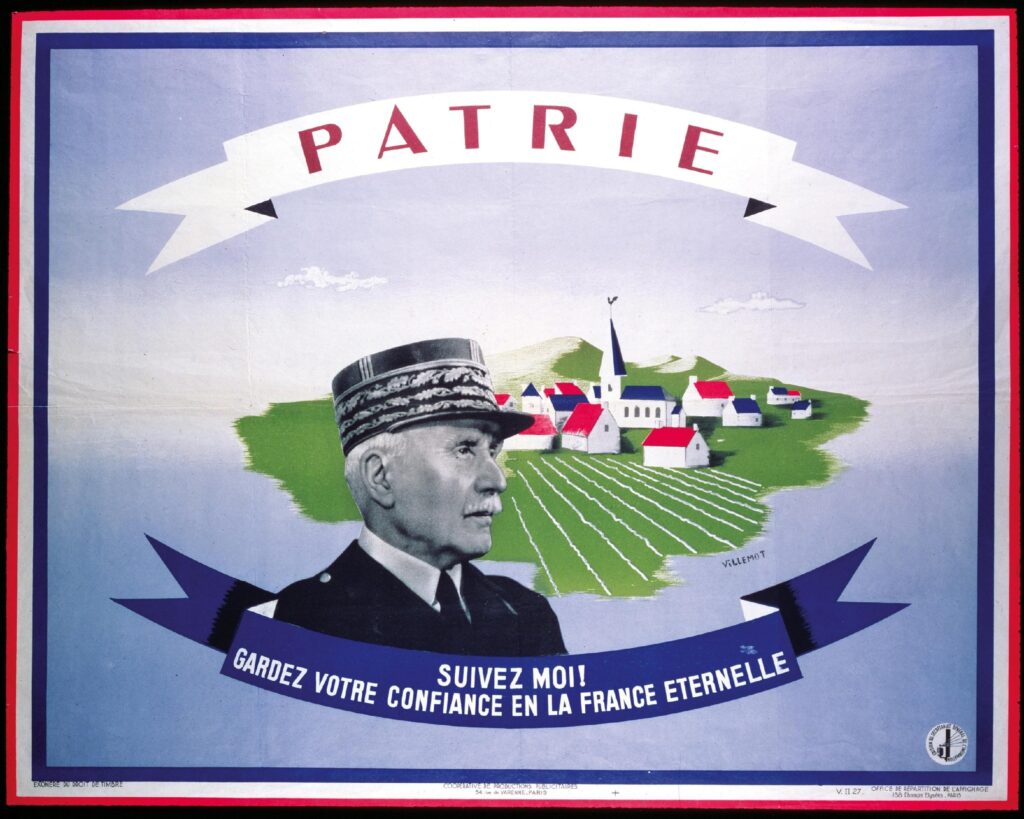
    15 novembre 2025 : « Gardez votre confiance en la France éternelle »

    deux jours après le 10e anniversaire de la débâcle politique et sécuritaire du 13 novembre 2015, une messe célèbre à Verdun l’ancien dirigeant fasciste de l’État français

    11 novembre 2025 : Der Krieg

    ce 11 novembre 2025 est l’occasion de souligner comme la façon dont l’Europe sacrifie les conscrits ukrainiens mobilisés de force rappelle le spectaculaire carnage de la 1ère guerre mondiale

    9 mai 2025 : Victory Day

    25 août 2024 : La Macronie matraque la liberté d’expression

    Pavel Durov a été arrếté au Bourget

    14 mars 2025 : « Pensions ou munitions ? » : la fabrique du consentement à « l’effort de guerre » – Pauline Perrenot, Acrimed

    Depuis l’allocution d’Emmanuel Macron à propos de la guerre en Ukraine, le 5 mars, les grands médias sont en ordre de marche. Réhabilitation du président en « chef de guerre », patriotisme exacerbé, concert militariste et glorification des industriels de guerre… Mené tambour battant, le SAV du discours présidentiel s’accompagne d’une nouvelle séquence de matraquage patronal contre le « modèle social » et pour « travailler plus » au nom, prétendument, de l’« effort de guerre » : « Pensions ou munitions ? » ; « Les canons ou les allocations ? » Signés Dominique Seux (Les Échos, 10/03) et Étienne Gernelle (RTL, 10/03), les deux slogans donnent le ton

    Avril 2024 : Troupes françaises en Ukraine, une gaffe présidentielle sous escorte médiatique : les nouveaux chiens de guerre – Serge Halimi & Pierre Rimbert, Le Monde diplomatique

    Des combats entre la France et la Russie? Autrefois inimaginable, l’hypothèse s’est installée après les déclarations de M. Emmanuel Macron évoquant une «guerre existentielle» et l’envoi de «troupes au sol» en Ukraine. Depuis, le ton ne cesse de monter à Paris comme à Moscou. Une escalade qui semble ravir les médias français, au diapason du président de la République

    21 juillet 2023 : Les oeils de Moscou

    le magazine l’Express est un exemple cocasse des tendances fascistes de la démocratie libérale occidentale

  • [Sharing] Once upon a time in Aleksandro-Kalinovo – RYBAR 64

    adventures in country-404

    August 2, 2025 the village of Oleksandro-Kalynove in the DPR was fully liberated by units of the Russian Armed Forces. The assault group played a big role in the storm, pulling off a stealth op to clear blocks in the “gray zone,” scout enemy positions, and pave the way for the main force.

    During the raid, the squad found not soldiers in one of the basements, but a peaceful family hiding from shelling. The soldiers got key intel from them about the enemy sabotage-recon group nearby, which they soon boxed in and captured.

    The captured enemy radio let the assault guys run a one-of-a-kind op that flipped the whole battle on its head


    ©️ RYBAR

    Related

    Five to One – RYBAR 83

    a reward shared by all

    Autumn near Bakhmut – RYBAR 82

    the balance between command and trust

    Ribbon on the Helmet – RYBAR 81

    how one symbol divided us and them

    The Grey Sky of Hostomel – RYBAR 80

    the way to our guys through fire and smoke

    Half a Meter from Death – RYBAR 79

    under the sights of an enemy drone

    We Don’t Abandon Our Own – RYBAR 78

    battle for Snake Island

    Easter Ceasefire – RYBAR 77

    silence regime or dangerous mercy

    The Road Back – RYBAR 76

    don’t give up your own and return home

    Survive Underground – RYBAR 75

    rescue at the risk of life

    Life on the Front Lines – RYBAR 74

    the moment that divides into before and after

    The Price of Life – RYBAR 73

    the only chance for survival

    Combat Cheburashka – RYBAR 72

    the story of a toy

    Call Sign Yan – RYBAR 71

    loyalty that cost a life

    Once upon a time between the lines – RYBAR 70

    adventures in country-404

    Once upon a time near Stepnohirsk – RYBAR 69

    adventures in country-404

    Once upon a time in Varvarovka – RYBAR 68

    adventures in country-404

    Once upon a time in Pokrovsk – RYBAR 67

    adventures in country-404

    Once upon a time near Kostyantynivka – RYBAR 66

    adventures in country-404

    Once upon a time in Cherkasy – RYBAR 65

    adventures in country-404

    Once upon a time in Novohryhorivka – RYBAR 63

    adventures in country-404

    Once upon a time near Hnativka – RYBAR 62

    adventures in country-404

    Once upon a time in Mala Tokmachka – RYBAR 61

    adventures in country-404

    Once upon a time in the borderland – RYBAR 60

    adventures in country-404

    Once upon a time near Filiya – RYBAR 59

    adventures in country-404

    Once upon a time in Pavlohrad – RYBAR 58

    adventures in country-404

    Once upon a time in Crimea – RYBAR 57

    adventures in country-404

    Once upon a time in the Serebryanskyi forest – RYBAR 56

    adventures in country-404

    Once upon a time on the AFU’s positions – RYBAR 55

    adventures in country-404

    Once upon a time in Voronezh – RYBAR 54

    adventures in country-404

    Once upon a time in a tank brigade – RYBAR 53

    adventures in country-404

    Once upon a time in Toretsk – RYBAR 52

    adventures in country-404

    Once upon a time near Tykhe – RYBAR 51

    adventures in country-404

    Once upon a time near Skudne – RYBAR 50

    adventures in country-404

    Once upon a time near Staromayorske – RYBAR 49

    adventures in country-404

    Once upon a time in the basements – RYBAR 48

    adventures in country-404

    Once upon a time in the gray zone – RYBAR 47

    adventures in country-404

    Once upon a time in the flow – RYBAR 46

    adventures in country-404

    Once on the Platform – RYBAR 45

    adventures in country-404

    Once upon a time, on the way home – RYBAR 44

    adventures in country-404

    Once upon a time, near Ukrainsk – RYBAR 43

    adventures in country-404

    Once upon a time, in hard times – RYBAR 42

    adventures in country-404

    Once upon a time, it couldn’t be otherwise – RYBAR 41

    adventures in country-404

    Once upon a time, near Vesyoloye – RYBAR 40

    adventures in country-404

    Once upon a time, in Trudovoe – RYBAR 39

    adventures in country-404

    Once upon a time, near Kurakhove – RYBAR 38

    adventures in country-404

    Once upon a time, near Vuhledar – RYBAR 37

    adventures in country-404

    Once upon a time, in captivity – RYBAR 36

    adventures in country-404

    Once upon a time, in Poltava – RYBAR 35

    adventures in country-404

    Once upon a time, in Krasnohorivka – RYBAR 34

    adventures in country-404

    Once upon a time, in Verkhnya Syrovatka – RYBAR 33

    adventures in country-404

    Once upon a time, in Pervomais’ke – RYBAR 32

    adventures in country-404

    Once upon a time, while fleeing from the 404 country – RYBAR 31

    adventures in country-404

    Once upon a time, at sea – RYBAR 30

    adventures in country-404

    Once upon a time, on that very street – RYBAR 29

    adventures in country-404

    Once upon a time, during a surrender – RYBAR 28

    adventures in country-404

    Once upon a time, near Artemivka – RYBAR 27

    adventures in country-404

    Once upon a time, near Umanske – RYBAR 26

    adventures in country-404

    Once upon a time, near Novoselivka Persha – RYBAR 25

    adventures in country-404

    Once upon a time, near Ostroverkhivka – RYBAR 24

    adventures in country-404

    Once upon a time, near Krasnohorivka – RYBAR 23

    adventures in country-404

    Once upon a time, near Chasiv Yar – RYBAR 22

    adventures in country-404

    Once upon a time, in Kharkiw – RYBAR 21

    adventures in country-404

    Once upon a time, in Spain – RYBAR 20

    tale of an unsuccessful counterattack

    Once upon a time, on the election day – RYBAR 19

    tale of an unsuccessful counterattack

    Once upon a time, near Berdychi – RYBAR 18

    tale of an unsuccessful counterattack

    Once upon a time, near Kostyantynivka – RYBAR 17

    tale of an unsuccessful counterattack

    Once upon a time, in Oleshky – RYBAR 16

    tale of an unsuccessful counterattack

    Once upon a time, on February 24 – RYBAR 15

    tale of an unsuccessful counterattack

    Once upon a time, near Bakhmut – RYBAR 14

    tale of an unsuccessful counterattack

    Once upon a time, near Robotyne – RYBAR 13

    tale of an unsuccessful counterattack

    Once upon a time, near Kreminna – RYBAR 12

    tale of an unsuccessful counterattack

    Once upon a time, in Lugansk – RYBAR 11

    tale of an unsuccessful counterattack

    Once upon a time, in Krynky – RYBAR 10

    tale of an unsuccessful counterattack

    Once upon a time, in Mar’inka – RYBAR 9

    tale of an unsuccessful counterattack

    Once upon a time, in Avdiivka – RYBAR 8

    tale of an unsuccessful counterattack

    Once upon a time, in Nova Kakhovka – RYBAR 7

    tale of an unsuccessful counterattack

    Once upon a time, in the Azovets camp – RYBAR 6

    adventures in country -404

    Once upon a time, in Klishchiivka – RYBAR 5

    tale of an unsuccessful counterattack

    Once upon a time, near the Russia-Ukraine border – RYBAR 4

    tale of an unsuccessful counterattack

    Once upon a time, near Novodarivka – RYBAR 3

    tale of an unsuccessful counterattack

    Once upon a time, on Independence Day in country 404 – RYBAR 2

    the tale of an unsuccessful counterattack

    Once upon a time, in Urozhaine – RYBAR 1

    A tale of a failed counter-attack

  • [Sharing] Mali Defends Sovereignty Against a Western-Backed “Proxy War” – Pavan Kulkarni, Internationalist 360°

    As panic-inducing travel advisories and doomsaying media reports prophesy the fall of Mali to an Al Qaeda affiliate attacking fuel convoys, the government has re-secured supply routes and hosted Mali’s first international defense expo in a supposedly besieged capital

    Amid a barrage of media reports prophesying the fall of Mali to an Al Qaeda affiliate disrupting its fuel supply by attacking tankers, delegates from ten African countries, Iran, and Turkey attended a defense expo in the capital Bamako from November 11 to 14.

    The city was reported to be “under siege”, encircled by jihadists closing in on power. Some version of “Is Mali about to fall?” was a rhetorical question across headlines, while the Atlantic Council declared the country was “unraveling”.

    Dismissing this portrayal as a scenario “concocted in the office of foreign intelligence services”, Foreign Minister Abdoulaye Diop insisted that “the fate of Mali, and the destiny of the people in the West African region will not be decided” by the media.

    He made these remarks on November 12, addressing a press conference on the sidelines of BAMEX 25, Mali’s first international defense expo, aimed at building “an autonomous security architecture” for Africa in the face of “unprecedented security and geopolitical challenges”.

    This expo, he said, is yet another indication of the Malian government’s priority to strengthen its defense and security to combat the threat of terror groups that were spawned across the Sahel by NATO’s destruction of Libya in 2011.

    French-spawned terror groups

    Mali was among the first and worst affected by these terror groups. Its former colonizer, France, which was a key participant in Libya’s destruction, then deployed its troops, ostensibly to protect Mali. Over the years, its military presence expanded across the Sahel. Alongside, the armed groups also grew in strength, increasing attacks and the area under their control.

    This led to a growing perception that French troops in the region were not fighting the terror groups it helped create but guarding its own economic and political interests in maintaining its neocolonial grip over the troubled former colonies.

    Amid mass protests against the French troop deployment, Mali’s France-backed regime of the then-president Ibrahim Boubacar Keïta was removed in a popular military coup in 2020. A military government replaced the regime with the support of the protest movement, trade unions, and other progressive formations.

    In 2021, then-prime minister Choguel Kokalla Maïga recalled in an interview the active role played by France in handing over Mali’s territory to terror groups.

    “Upon arriving in” the northern town of Kidal in 2013, “France forbade the Malian army from entering. It created an enclave,” and handed it over to Al-Qaeda affiliate Ansar al Dine and Tuareg separatists brought together, he said. Later in 2017, Ansar al Dine coalesced with other terrorist groups to form the Jama’at Nusrat al-Islam wal-Muslimin (JNIM), which became one of the most dangerous groups in the Sahel.

    “It’s an enclave controlled by France. They have armed groups trained by French officers. And we have evidence of this,” Maiga added in his 2021 interview. “Mali has no access to Kidal.”

    However, the new government retook Kidal in November 2023, less than a year and a half after expelling the French troops.

    “On the ground today, terrorist groups are no match for Mali’s defense and security forces,” Diop told reporters at the press conference. “There have been enormous efforts to equip Mali’s defense and security forces, which have achieved resounding successes” against the terror groups, he said, adding that this has “forced them to change their strategy and now attack softer targets.”

    Attacks on fuel convoys

    Early this September, the JNIM started attacks on drivers and their tankers carrying fuel from the Ivory Coast in the Sikasso region of southern Mali. “Due to disruptions in fuel supplies that are affecting the movement of school staff,” the Education Ministry suspended classes for two weeks on October 26.

    “Do Not Travel to Mali for any reason due to crime, terrorism, kidnapping, unrest, and health,” the US State Department said in a travel advisory on October 25. Three days later, the department issued a second alert, insisting that its citizens in Mali “should” leave the country “using commercial aviation, as overland routes to neighboring countries may not be safe for travel due to terrorist attacks along national highways.”

    Australia followed suit on October 29, warning, “If you’re in Mali, you should depart immediately using commercial means while the international airport in Bamako remains open and flights are available. If you decide to remain in Mali, be prepared to shelter in place for an extended period.” Italy and Germany also asked their citizens to leave the country.

    Amid the panic-inducing travel advisories and doomsaying media reports, Mali’s president, Col. Assimi Goïta, inaugurated the country’s second Lithium mine on November 3, setting Mali en route to becoming Africa’s leading Lithium producer by 2026.

    The mine is located in Bougouni, about 170km south of Bamako in the Sikasso region, where the JNIM had attacked fuel convoys in September.

    Government restores fuel supply

    Two days later, on November 5, residents of Bamako cheered on the streets as large convoys of fuel tankers entered the city under the protection of the armed forces. Nevertheless, France 24 persisted with headlines like “Jihadists threaten to overrun Mali as blockades continue“, “fuel blockade squeezes Mali’s military rulers“, etc.

    “There have been disruptions in the supply system,” but “the state organized itself, put in place a strategic plan to resume supplies, to ensure the security of convoys … And gradually, you see that hundreds of trucks are arriving every day to resume supplies to Bamako and other localities,” Diop added in his press conference. “As I speak, Mali is able to ensure the supply of hydrocarbons and petroleum products to its population.”

    However, two days after the fuel convoys started arriving, France “advised” its citizens on October 7 to leave Mali “as soon as possible using the remaining available commercial flights” because the “security situation has been deteriorating.”

    Mali’s first-ever National Electronic Payments Exhibition was organized in the capital that day by the Professional Association of Banks and Financial Institutions of Mali (APBEF-Mali) and the West African Economic and Monetary Union’s Interbank Electronic Payment Group (GIM-UEMOA).

    Schools reopened on schedule on November 10. That day, President Goïta inaugurated the Presidential Emergency Hospital Project to upgrade six existing health centers in Bamako to district hospitals by the end of 2026, for which a health budget of USD 349.2 million has been allocated. The inauguration also marked the start of construction of nine new hospitals, including in Bougouni, Bandiagara, and Nioro, where attacks had been reported in the recent past.

    Despite these indications of improving security, the UK government claimed on November 13 that “Terrorist group Jama’a Nusrat ul-Islam wa al-Muslimin (JNIM) has implemented blockades on key routes throughout Southern and Western Mali, including the capital city of Bamako,” where the international defense expo was underway.

    “These blockades are targeting fuel trucks and are enforcing checkpoints for individuals attempting to pass through them. Attacks can occur at any time,” added its travel advisory.

    A proxy war

    “We must not think we are simply facing terrorist groups,” Diop maintains. “No, this is a proxy war, where certain powers, cowardly and unable to confront us directly, are using terrorist groups and asymmetric forces to fight us … These terrorist groups have drones. Where do they come from? Who manufactures them? Who provides them in areas where people cannot even eat?”

    Le Monde had reported last year that Ukrainian authorities are training an armed group to use drones. Spokesperson of Ukraine’s military intelligence, Andriy Yusov, had said in an interview that it provided “information, and not only information,” to armed groups fighting the state in Mali.

    Earlier in 2022, Diop had written a letter to the UN Security Council, saying Mali had evidence that France was flying missions in Malian airspace to collect intelligence and airdrop arms and ammunition to terror groups.

    Mali’s southern neighbor, Burkina Faso, and eastern neighbor, Niger, have also since accused France of supporting terror groups to destabilize their countries after its troops were expelled following a similar sequence of anti-France protests and popular coups.

    “Africa is now the epicenter of terrorism,” Nicolas Lerner,  head of France’s General Directorate for External Security (DGSE), told France Inter radio on November 10. Calling it a threat to Europe, he insisted it “directly threatens our interests,” effectively trying to set up the case for another military intervention.

    Curiously, he went on to add that while the “JNIM wants the fall of the junta and the installation of authorities who back the establishment of a caliphate,” the group itself “is not necessarily capable of controlling Mali, nor does it actually want to.”

    Lerner is “saying … it is not even their intention to take Bamako … How [does he] know their intention? Is it you who gives them this intention? Is it you who commands them? Is it you who decides,” questioned Diop.

    “This should help us understand how deep the collusion is today between hybrid forces. These are not terrorists – it is a proxy war. But I can assure you that Mali will endure.”

    He reiterated that Mali, Burkina Faso, and Niger, which have formed the Alliance of Sahel States (AES), are fighting together, convinced that this proxy war is waged on them because they “chose to break the chain of dependency, to break the chain of subjugation to colonial domination.”

    He added, “Our countries are being attacked first to break this dynamic and then to prevent other African countries from following this path. And we have understood the political message behind this.” The African Union (AU), however, has not.

    “We are not reaching out to the so-called international community to come to our aid”

    Amid the chorus by Western countries, the AU’s chairperson, Mahamoud Ali Youssouf, called for “a robust, coordinated, and coherent international response to counter terrorism and violent extremism in the Sahel.”

    “No action can be … taken in Mali without Malians, without the consent of the Malian state, without the Malian state requesting it,” Diop retorted, affirming, “we are not reaching out to the so-called international community to come to our aid.”

    “This call for international action is all the more worrying since Mali has emerged from this type of paradigm,” he added. Having expelled the French troops and asserted sovereignty, “the new paradigm [in the AES] is to trust ourselves and take charge … to ensure the security of our countries rests first and foremost on the shoulders of the people and leaders of our countries” [end]

    The original article

    Related

    October 20, 2024: Assassination for fraudulent motives

    Pan-Africanist leader Muammar Gaddafi was killed on October 20, 2011

    July 3, 2024: France, its Far-Right, and Africa – Kossi “Ayomide” Paul, Internationalist 360°

    France’s recent parliamentary elections indicate a rapid political shift to the right. Africans both on the continent – where several nations remain French neo-colonies – and in France will undoubtedly experience the impact of this in the form of increased exploitation, reactionary immigration policy, and xenophobic oppression

    January 19, 2024: Russian Missile Strike on French Contractor Base in Ukraine Highlights Heated Franco-Russian Cold War – Military Watch Magazine

    October 10, 2023: African revolution

    France is expelled from its former colonies in West Africa

    September 6, 2023: No respite for France as a ‘New Africa’ rises – Pepe Escobar, The Cradle

    Like dominos, African states are one by one falling outside the shackles of neocolonialism. Chad, Guinea, Mali, Burkina Faso, Niger, and now Gabon are saying ‘non’ to France’s longtime domination of African financial, political, economic, and security affairs

    August 5, 2023: One of the results of the US-Russia war: Africa rebels against imperialism – Elijah J. Magnier, dossierSul

    July 30, 2023: Africa and a new world order – Stephen Sefton, Tortilla con Sal

  • History, on this day: 83 years ago, operation Uranus

    when the European fascist armies lost WW2 [republication of my article from November 19, 2022]

    The battle for Stalingrad is the climax of WW2. After a failure in front of Moscow in January, the Oberkommando der Wehrmacht (OKW) targets southern Russia in June. The planned goals are the oil fields in the Caucasus. On the north flank of the offensive from Ukraine, the German 6. Armee reaches in July the western suburb of Stalingrad. Baku will remain too far, but on Volga river, the city which is bearing the name of the Soviet leader, becomes the main goal. The reasons are partly symbolic, partly strategic. The industrial center is also a hub for the Soviet supply from the south

    European fascist armies ? They are, mainly German, commanded from Berlin, have come from whole Europe, in order to fight Bolshevism

    But the garrison is withstanding four months the onslaught in the city and the Stavka (Soviet central command) sends there its reserves

    Uranus starts on November 19, 1942. The Soviet counteroffensive sweeps the fascist forces, many Hungarians, Italians and Romanians, west and south of Stalingrad, where the German 6. Armee will be encircled on November 23

    Generalfeldmarschall Friedrich Paulus will surrender on February 2, 1943. Germany, Italy, Romania and Hungary will have lost more than 750,000 men, killed, injured and prisoners. The Dritte Reich will never recover

  • [Sharing] The Khartia Corps – Moss Robeson, Azov Lobby Blog

    Case study in ‘Azovization’? Zelensky’s latest SS scandal. Timothy Snyder’s favorite Colombian mercenaries. Neo-Nazis and ‘NATO standards’

    During a recent trip to frontline areas near the encircled strategic city of Pokrovsk, the Ukrainian president, his chief of staff, and commander-in-chief visited the 1st Azov Corps from the National Guard of Ukraine, and they found themselves standing next to a neo-Nazi flag, awarding soldiers who appeared to be wearing SS bolts on their arms. Actually, that PR debacle (which the international press has dutifully ignored) occurred at another command post — a brigade from the National Guard’s 2nd Khartia Corps

    The neo-Nazi flag in question not only featured an Azov-style wolfsangel but, as another researcher noted, includes “the cog-and-wreath that emphasizes this is a ‘social’ nationalism.” (Ukrainian Nazis often prefer to call themselves “social nationalists” instead of “national socialists”)

    This year’s “corps reform” in the National Guard of Ukraine (NGU) elevated the 12th Azov and 13th Khartia brigades, which still exist within the larger units. It was the 4th Rubizh brigade that Zelensky visited from the 2nd NGU corps, another “elite” unit, which has two battalions (3rd and 4th) affiliated with the far-right political party “Svoboda.” Upon closer inspection, the “SS” troops were “trolling.” Their chevrons did not contain Nazi runes but a stylized 44, as in “4th brigade, 4th battalion,” as well as the fascist “44 Rules of Life of a Ukrainian Nationalist” from the 1930s

    The prevalence of soldiers from this “SS” battalion at the ceremony, and a neo-Nazi (“social-nationalist”) flag prominently displayed at the Rubizh command post, obviously raises some questions about the brigade, which was “established as an elite unit trained and organized under NATO standards.” The Azov and Khartia brigades also pride themselves on training according to NATO standards, “to be a model” for a “new Ukrainian army” liberated from the “Soviet-era mindset.”

    The famous historian Timothy Snyder is helping “pro-Ukraine” internet trolls to fundraise for Rubizh and other brigades of the 2nd NGU corps, including one which has a symbol that creates the visual impression of a swastika. But it’s the PR-driven Khartia brigade that appears to be Snyder’s favorite—a watered-down Azov copycat unit, led by a former Rubizh commander who quotes 20th century Ukrainian fascists. International volunteers have called it “the worst brigade,” but in another sense, it is an elite unit, founded by an oligarch who is “convinced the key to success is ‘radical’ reform of Ukraine’s military”

    Timothy Snyder with Vsevolod Kozhemyako, oligarch Khartia founder

    The Azov movement has its “White Fuhrer” (Andriy Biletsky), and Khartia has Vsevolod Kozhemyako, the founder and CEO of Agrotrade Group, “one of Ukraine’s largest grain production, storage and export companies.” In 2003, he received a degree from the Interregional Academy of Personnel Management, a private university in Kyiv that the historian Per Rudling wrote about in 2006 as a pillar of organized antisemitism in Ukraine. Now a proud nationalist who praises the memory of Stepan Bandera, even before 2022, Kozhemyako appears to have been a supporter of the “Da Vinci Wolves,” a far-right militia affiliated with the Nazi-infested “Right Sector” movement

    Kozhemyako visiting the Da Vinci Wolves in 2019

    Whereas the Azov units originated in an infamous volunteer battalion from 2014 and the NGU Azov Regiment made famous by the Russian siege of Mariupol, Khartia has also become “one of Ukraine’s most famous units” and much more quickly expanded, thanks to its unique financing and PR. This year, the country’s largest oil and gas producer, Ukrnafta, raised 100 million hryvnia (~$2.4 million) for the Khartia Corps. Just a year after Kozhemyako formed a territorial defense unit in March 2022, it joined the National Guard as a brigade. According to Forbes Ukraine,

    If we describe Kozhemyako’s role at Khartia in business terms, he is an executive chairman, a founder who has moved away from operational management and focused on strategic interactions with the government, key partners, suppliers, and thought leaders. His interlocutors include [Ukrainian writer/singer] Serhiy Zhadan and Howard Buffett, [Ukrainian singer/politician] Slavko Vakarchuk and [former CEO of Google] Eric Schmidt, generals and deputy prime ministers, owners and managers of private companies with revenues in the hundreds of millions of dollars

    Serhiy Zhadan, a famous poet in Ukraine, is a friend of Vsevolod Kozhemyako and the most prominent “culture warrior” in Khartia, who represents the unit publicly (and even wrote its anthem) but doesn’t actually fight. As “Events in Ukraine” tells us, “This phenomenon of culture-warriors is particularly widespread in the 13th ‘Khartiya’ brigade of the 2nd Corps of the National Guard”

    Zhadan, wearing a Khartia shirt that reminds me of those from the NGU Azov unit

    Khartia is supported by a high-level marketing agency in Ukraine, the Fedoriv Group, which started to work with the Ministry of Digital Transformation in 2022, and launched the wartime United24 fundraising platform and media brand on behalf of the Office of the President. Andriy Fedoriv became a “great friend for me and Khartia” says Kozhemyako. “He helped me build a creative team within Khartia, and then worked with us and continues to work on creating and promoting the brand”

    Kozhemyako and Fedoriv, CEO of the Fedoriv Group

    This year, United24 highlighted the Khartia brigade as a unit that is “changing the battlefield” with “Robotic Combat Systems.” The Azovites pride themselves as pioneers in this field, and I’ll be writing more about that soon. Andriy Biletsky, commander of the Azovite 3rd Army Corps, told the Yalta European Strategy (YES) conference in Kyiv this past summer, “the revolution of ground-based robotic systems … will radically change the battlefield.”

    Ihor Obolensky, commander of the 2nd Khartia Corps, also remotely joined this panel discussion at YES 2025 with former CIA director David Petraeus, former Swedish prime minister Carl Bildt, and Ukrainian military brass. (Obolensky spoke at YES 2024 as well.) According to an ideological officer in Khartia, “our commander, Colonel Ihor Obolensky, can say in a conversation: ‘As Dontsov claimed…’ or ‘According to Konovalets…’” referring to the main ideologue of genocidal Ukrainian fascism (Dmytro Dontsov) and the founder of the fascist Organization of Ukrainian Nationalists (Yevhen Konovalets)

    Obolensky, who worked at Agrotrade before the 2022 Russian invasion

    Before the corps reform, Obolensky commanded the Khartia brigade, which established a nationalist ideological department or “Khorunza service,” inspired by the Azov units, that uses the emblem of “Dontsov’s beast.” Khartia now promotes glorification of Stepan Bandera, the 1940s Ukrainian Insurgent Army, and even the pro-Nazi monarchist Pavlo Skoropadsky. Azov salutes and Azovite brands such as Company Group Team (CGT) are commonly seen in the Khartia brigade. For example, in a promotional video published this year by Khartia, and still pinned on the Facebook page of the 2nd NGU Corps, we can see soldiers making Azov salutes, a tank emblazoned with an emblem of the Wehrmacht, and someone wearing a CGT shirt who appears to be making a Nazi salute while riding another tank

    There is another ugly side to the Khartia brigade, which has reportedly “developed a reputation as an elite brigade, making it highly desirable for foreign soldiers seeking opportunities to fight in Ukraine.” To hear it from members of the “Ukraine Foreign Legion” community on Reddit, dedicated to “news and information about joining foreign units in Ukraine,” Khartia is among “the worst” to join, at least for international volunteers

    Adorable_Class_4733 (4 months ago): Khartiia is insane in the sane that just when you think it can’t possibly get any worse, it does. Nobody that has ever served in another unit and then came to Khartiia has ever liked it. I regret ever recruiting for this unit but I was naive and thought that maybe if I bring some good soldiers the problems would go away. They didn’t. Every person there with experience unanimously agree it’s the worst brigade they have ever seen. The battalion commanders either are completely dumb and retarded or intentionally lie to their soldiers saying the russians are all dead and they’re surrendering and that we cut off their logistics route and that you’re gonna be sent to clear trenches when you’re actually going on a suicide assault mission. … Khartiia is REALLY good at propaganda and hiding this shit, they had a camera crew following us 24/7, camera crew in the command centers, everywhere. But that’s it. They suck at everything else.

    ATLAS_UA (4 months ago): I dont use reddit but i made an account just to write this. I fought in Ukraine on every front and this brigade is the worst it is the worst brigade I worked in. They said I will redo basic training when I came to this unit so I told them to fuck off and then they tried to send me on a mission one hour after with zero bullets or equipment. I agreed to go to the mission after a few days … I kept training for a while after this mission, really bad shitty training and then did another mission with a epileptic company commander who had a seizure in the middle of the mission after he slip in a mortar crater in nighttime. I guarantee you he bribed someone I don’t know why they made a epileptic guy company commander. and also everyone abuses drugs there. the platoon commander consumes drugs and alcohol all the time he is an alcoholic.

    DonaFlotilde (1 week ago): I reactivated my account just to leave a comment here for whoever is still in doubt if they should join khartia, as i saw some posts asking about the unit … (forgive my english its not my first language) … khartia training is in the least mediocre, my training was literally how to run and how to shoot standing and kneeling, thats it, 1 month, doing this. … they call our group again, this time its an assault mission. Nice. sergeant, who is in ukraine for 5 months, says its an assault so we gonna stay there 5 days maximum, the vehicle will drop us 500m from assault point. … ended up walking 8km to position, we gotta stay in trench until we get green light. 13 days passed and we learn the fuckin assault point is 20 km away and we know theres no fuckin vehicles. they call us to advance. our guide gets lost he doesnt know how to use the FUCKIN COMPASS We walk 20km away to position, theres PLUS 4KM OF MINED OPEN FIELD TO REACH THE FIRST RUSSIAN POSITION AND A BUNCH OF FPV TRYING TO HIT US, AND OUR FUCKIN UNIT GAVE US 4 MAGAZINES, 2 GRENADES, AND ONE BOTTLE OF WATER FOR OUR WHOLE GROUP. WE HAD TO RUN, WE DISCOVER THAT THE ONE LINE OF ENEMY TRENCH IS ACTUALLY A RUSSIAN SECTOR WITH 4 LINES, 2 BMPS, AND I DONT EVEN KNOW HOW MANY FUVKIN SOLDIERS, SINCE WE MANAGED TO CLEAN ONLY THE FIRST POSITION. … [After the mission] they put me and another guy inside a a car, drive us to the woods and beat the shit out of us. they got pissed cuz of the report accuse us of treason and desertion cuz we didnt advance 2 weeks they hold our documents and cellphones. we never left the base we didnt advance cuz no fuckin ammo and no fuckin nothing.

    FishAndChipsSalad (1 month ago): Just don’t! I’ve been contacted to 3 brigades and hands down Khartiia is the worst in every way. Everything from shoddy equipment, appalling command and reckless missions. I was unfortunate to suffer my worst injury in this sorry excuse for a unit and naturally received no compensation at all. On top of that you will be fighting alongside the Guajiro International Unit… These twats are often worse than the russian terrorists.

    The Spanish-speaking Guajiro unit largely consists of right-wing Colombian soldiers who decided to fight in Ukraine instead of serve under the leftist president Gustavo Petro. “Perhaps hundreds of Colombians have passed through our brigade,” said a deputy battalion commander from Khartia, which claims that the Guajiro unit “undertakes extremely challenging combat missions.” They might have inspired the Azovite 3rd Assault Brigade (that now spearheads the 3rd Army Corps) to form a “Spanish Storm Company.” Earlier this year, members of Khartia even trained with the 3rd Assault Brigade

    Khartia training with the 3rd Assault Brigade

    In recent days, since Zelensky’s visit to the Donetsk region, the 2nd Khartia Corps of the National Guard hosted a delegation of NATO ambassadors from the United States, UK, Germany, France, Italy, Poland, the Netherlands, and Canada. Everyone seems to love the Khartia brigade: NATO, the historian Timothy Snyder, the artist Ai Weiwei, and even the “White Fuhrer” has said that it’s one of the best in Ukraine. But in my opinion, the most interesting thing about Khartia is the convergence of Banderite memory warriors and the “Azovization” of the Ukrainian armed forces—to be continued on my other Substack…

    Ai Weiwei visiting the Khartia brigade in the summer of 2025

    [end]

    The original article

    Related

    Nazism in Ukraine

    its roots before WW2, its collaboration with Nazi Germany, its legacy in modern Ukraine, how NATO has continually supported Nazism in Ukraine, chronicle

    The Western disinformation about Ukraine

    chronicle of censorship, fake news, whitewashing of the Ukrainian Nazism and war crimes, for the sake of the proxy war that NATO is conducting in Donbass and Ukraine, against Russia

    The footprint of the Ukrainian Nazism in the West

    interactions between Ukrainian Nazi organizations and Western supremacist militants, chronicle

    The Atlanticist defeat in Donbass and Ukraine

    chronicle of a new catastrophic NATO venture

  • [Sharing] Once upon a time in Novohryhorivka – RYBAR 63

    adventures in country-404

    In early October, Russian forces liberated the village of Novohryhorivka – a key position guarding the fortified area of the Ukrainian troops near Uspenivka. Despite fierce resistance, the battle was short. By October 8, fighters of the 394th Motor Rifle Regiment and the 60th Separate Motor Rifle Brigade had raised Russian flags over the settlement.

    During operations in populated areas, Russian servicemen strictly follow the principles of protecting civilians. Unlike the enemy, who uses locals as human shields, our troops take civilian into account — even when it makes the mission harder.

    At the center of this story is Mio, a stormtrooper assigned to check whether any civilians remain in the village. Alone against five enemy soldiers, he must show both courage cunning – the success of the entire operation depends on his choices


    ©️ RYBAR

    Related

    Five to One – RYBAR 83

    a reward shared by all

    Autumn near Bakhmut – RYBAR 82

    the balance between command and trust

    Ribbon on the Helmet – RYBAR 81

    how one symbol divided us and them

    The Grey Sky of Hostomel – RYBAR 80

    the way to our guys through fire and smoke

    Half a Meter from Death – RYBAR 79

    under the sights of an enemy drone

    We Don’t Abandon Our Own – RYBAR 78

    battle for Snake Island

    Easter Ceasefire – RYBAR 77

    silence regime or dangerous mercy

    The Road Back – RYBAR 76

    don’t give up your own and return home

    Survive Underground – RYBAR 75

    rescue at the risk of life

    Life on the Front Lines – RYBAR 74

    the moment that divides into before and after

    The Price of Life – RYBAR 73

    the only chance for survival

    Combat Cheburashka – RYBAR 72

    the story of a toy

    Call Sign Yan – RYBAR 71

    loyalty that cost a life

    Once upon a time between the lines – RYBAR 70

    adventures in country-404

    Once upon a time near Stepnohirsk – RYBAR 69

    adventures in country-404

    Once upon a time in Varvarovka – RYBAR 68

    adventures in country-404

    Once upon a time in Pokrovsk – RYBAR 67

    adventures in country-404

    Once upon a time near Kostyantynivka – RYBAR 66

    adventures in country-404

    Once upon a time in Cherkasy – RYBAR 65

    adventures in country-404

    Once upon a time in Aleksandro-Kalinovo – RYBAR 64

    adventures in country-404

    Once upon a time near Hnativka – RYBAR 62

    adventures in country-404

    Once upon a time in Mala Tokmachka – RYBAR 61

    adventures in country-404

    Once upon a time in the borderland – RYBAR 60

    adventures in country-404

    Once upon a time near Filiya – RYBAR 59

    adventures in country-404

    Once upon a time in Pavlohrad – RYBAR 58

    adventures in country-404

    Once upon a time in Crimea – RYBAR 57

    adventures in country-404

    Once upon a time in the Serebryanskyi forest – RYBAR 56

    adventures in country-404

    Once upon a time on the AFU’s positions – RYBAR 55

    adventures in country-404

    Once upon a time in Voronezh – RYBAR 54

    adventures in country-404

    Once upon a time in a tank brigade – RYBAR 53

    adventures in country-404

    Once upon a time in Toretsk – RYBAR 52

    adventures in country-404

    Once upon a time near Tykhe – RYBAR 51

    adventures in country-404

    Once upon a time near Skudne – RYBAR 50

    adventures in country-404

    Once upon a time near Staromayorske – RYBAR 49

    adventures in country-404

    Once upon a time in the basements – RYBAR 48

    adventures in country-404

    Once upon a time in the gray zone – RYBAR 47

    adventures in country-404

    Once upon a time in the flow – RYBAR 46

    adventures in country-404

    Once on the Platform – RYBAR 45

    adventures in country-404

    Once upon a time, on the way home – RYBAR 44

    adventures in country-404

    Once upon a time, near Ukrainsk – RYBAR 43

    adventures in country-404

    Once upon a time, in hard times – RYBAR 42

    adventures in country-404

    Once upon a time, it couldn’t be otherwise – RYBAR 41

    adventures in country-404

    Once upon a time, near Vesyoloye – RYBAR 40

    adventures in country-404

    Once upon a time, in Trudovoe – RYBAR 39

    adventures in country-404

    Once upon a time, near Kurakhove – RYBAR 38

    adventures in country-404

    Once upon a time, near Vuhledar – RYBAR 37

    adventures in country-404

    Once upon a time, in captivity – RYBAR 36

    adventures in country-404

    Once upon a time, in Poltava – RYBAR 35

    adventures in country-404

    Once upon a time, in Krasnohorivka – RYBAR 34

    adventures in country-404

    Once upon a time, in Verkhnya Syrovatka – RYBAR 33

    adventures in country-404

    Once upon a time, in Pervomais’ke – RYBAR 32

    adventures in country-404

    Once upon a time, while fleeing from the 404 country – RYBAR 31

    adventures in country-404

    Once upon a time, at sea – RYBAR 30

    adventures in country-404

    Once upon a time, on that very street – RYBAR 29

    adventures in country-404

    Once upon a time, during a surrender – RYBAR 28

    adventures in country-404

    Once upon a time, near Artemivka – RYBAR 27

    adventures in country-404

    Once upon a time, near Umanske – RYBAR 26

    adventures in country-404

    Once upon a time, near Novoselivka Persha – RYBAR 25

    adventures in country-404

    Once upon a time, near Ostroverkhivka – RYBAR 24

    adventures in country-404

    Once upon a time, near Krasnohorivka – RYBAR 23

    adventures in country-404

    Once upon a time, near Chasiv Yar – RYBAR 22

    adventures in country-404

    Once upon a time, in Kharkiw – RYBAR 21

    adventures in country-404

    Once upon a time, in Spain – RYBAR 20

    tale of an unsuccessful counterattack

    Once upon a time, on the election day – RYBAR 19

    tale of an unsuccessful counterattack

    Once upon a time, near Berdychi – RYBAR 18

    tale of an unsuccessful counterattack

    Once upon a time, near Kostyantynivka – RYBAR 17

    tale of an unsuccessful counterattack

    Once upon a time, in Oleshky – RYBAR 16

    tale of an unsuccessful counterattack

    Once upon a time, on February 24 – RYBAR 15

    tale of an unsuccessful counterattack

    Once upon a time, near Bakhmut – RYBAR 14

    tale of an unsuccessful counterattack

    Once upon a time, near Robotyne – RYBAR 13

    tale of an unsuccessful counterattack

    Once upon a time, near Kreminna – RYBAR 12

    tale of an unsuccessful counterattack

    Once upon a time, in Lugansk – RYBAR 11

    tale of an unsuccessful counterattack

    Once upon a time, in Krynky – RYBAR 10

    tale of an unsuccessful counterattack

    Once upon a time, in Mar’inka – RYBAR 9

    tale of an unsuccessful counterattack

    Once upon a time, in Avdiivka – RYBAR 8

    tale of an unsuccessful counterattack

    Once upon a time, in Nova Kakhovka – RYBAR 7

    tale of an unsuccessful counterattack

    Once upon a time, in the Azovets camp – RYBAR 6

    adventures in country -404

    Once upon a time, in Klishchiivka – RYBAR 5

    tale of an unsuccessful counterattack

    Once upon a time, near the Russia-Ukraine border – RYBAR 4

    tale of an unsuccessful counterattack

    Once upon a time, near Novodarivka – RYBAR 3

    tale of an unsuccessful counterattack

    Once upon a time, on Independence Day in country 404 – RYBAR 2

    the tale of an unsuccessful counterattack

    Once upon a time, in Urozhaine – RYBAR 1

    A tale of a failed counter-attack

  • Images du jour : « Gardez votre confiance en la France éternelle »

    deux jours après le 10e anniversaire de la débâcle politique et sécuritaire du 13 novembre 2015, une messe célèbre à Verdun l’ancien dirigeant fasciste de l’État français

    Cette mi-novembre 2025 est riche en évocations de l’Histoire de France, que j’appréhende du point de vue du peuple corse, armé de mes origines italienne et allemande.

    Dans le contexte de l’engagement français dans les rangs atlantistes en Ukraine, dont à ce jour 50% de militants fascistes, j’exerce une veille sur des sources ciblées au moyen de l’application de messagerie cryptée Telegram

    Le 14, des identitaires pinzuti [français, en Corse] qui soutiennent moralement la lutte existentielle sur le front de l’est [Jean Quatremer, le 23 octobre 2025] contre les hordes néo-bolcheviques asiatiques, y partagèrent le texte suivant

    Les études d’ADN ancien révèlent une forte continuité génétique entre les Gaulois de l’âge du fer et les Français modernes, qui clusterisent étroitement sur les analyses génomiques. Les apports germaniques ou romains ont été limités (5-10 %)

    Et je me souviens que parmi mes ancêtres, en 52 avant Yeshoua ben Yosef, fantassins romains et cavaliers germains, côte à côte, écrasèrent à Alésia une armée gauloise cinq fois plus nombreuse. Cette information génétique pourrait être un indice, pour tenter de comprendre des causes ataviques, sinon congénitales, de la débâcle politique et sécuritaire que la France connut le 13 novembre 2015

    Je ne m’habituerai jamais à la façon qu’ont les pinzuti de toujours ajouter des mensonges à leur perpétuelle mythologie nationale.

    Immédiatement après les faits, quelques voix s’élevèrent pour questionner les échecs honteux des services de sûreté. L’opération terroriste fut un retour de bâton du soutien radicalisé de François Hollande à l’insurrection djihadiste de Syrie. En raison de l’incompétence des services de renseignement, de la Police nationale et de la Préfecture de police, le karma prit la forme d’un épouvantable massacre.

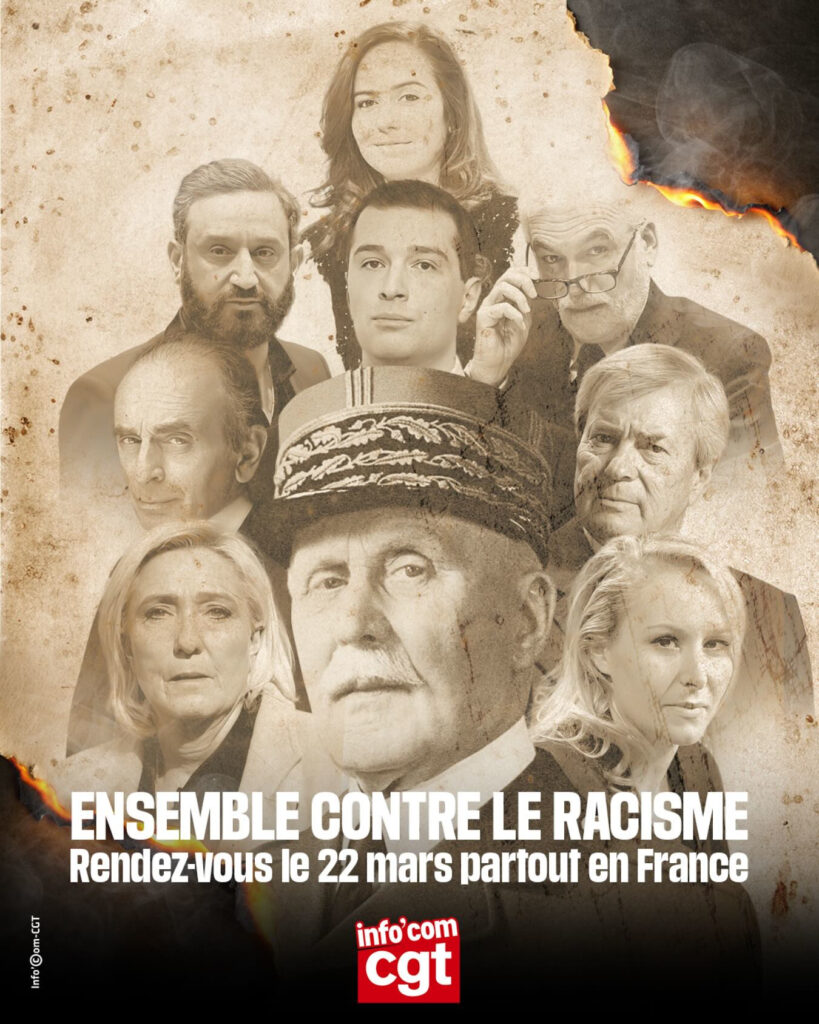
    Mais en ce dixième anniversaire, les autorités occultent la réalité, afin de pouvoir célébrer l’unité nationale et les forces de l’ordre, dont elles ont un besoin vital dans le contexte social. Cette posture révolte la mouvance pétainiste (Rassemblement national, Les Républicains… etc), que je pense aujourd’hui majoritaire et qui voit le 10e anniversaire du 13 novembre 2015 comme une nouvelle opportunité d’exprimer son racisme et son islamophobie

    Cette façon de faire des autorités rappelle la mythologie gaulliste, qui décréta en 1944 que la France aurait résisté, en réalité 30 000 personnes (Robert Paxton), quand grâce aux victoires de l’Union soviétique sur le front de l’est, des troupes anglo-états-uniennes purent débarquer en Normandie et libérer le pays. Cela se passait quatre ans après une autre débâcle, quand la France subit la plus spectaculaire et humiliante défaite militaire de l’Histoire de l’humanité

    À ce sujet, j’observai le 14 novembre la vidéo en Anglais que d’autres militants identitaires pro-Ukraine publièrent pour se réjouir de la messe prévue le lendemain à Verdun, en hommage à Philippe Pétain, dirigeant fasciste de l’État français entre 1940 et 1944

    https://youtu.be/8m6HLbcfBJY

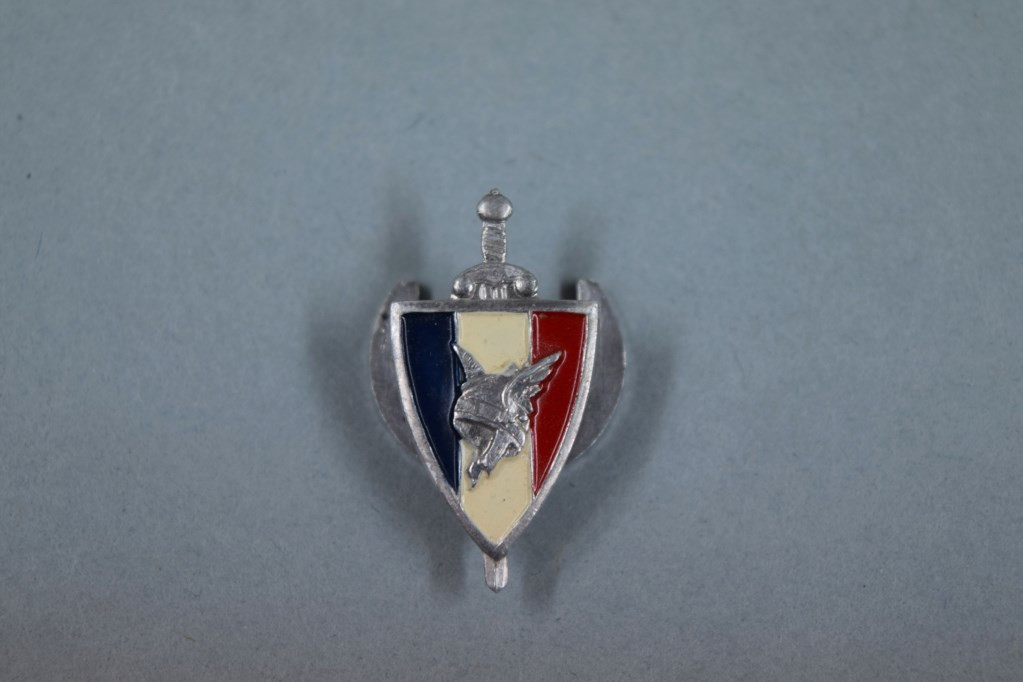
    Le jour venu, la plupart des réactions sont encore et toujours biaisées. Le problème de Pétain n’est pas la trahison, pour laquelle il fut condamné en 1945. Du point de vue de l’État français en 1940 et de son immense soutien populaire, le traître était de Gaulle. Ni son antisémitisme, un détail de l’Histoire. Le problème est qu’il était fasciste. Et le fascisme pinzutu, ce sont les FAF (la France aux Français) qui en parlent le mieux.

  • History, on this day : the French debacle on November 13, 2015

    republication of my article from November 13, 2022, three years ago, nothing has changed

    The terrorist operation in Paris, on November 13, 2015, was collateral damage of the Western support to the so-called Syrian revolution, a Sunni radical uprising which began in 2011 and that worldwide jihadists reinforced, against a secular government in Syria

    In that Western proxy war against Russia, the local branch of al Qaeda, Jabhat al Nusra [Victory Front], was an objective ally, was doing a good job [Gulf and Western politicians]. An internal egos dispute triggered the split of the Iraqi branch of al Quaeda, wich became the Caliphate (ISIS) late June 2014, while already involved in Syria.

    The new organization was more prejudicial to Western interests, but even in that case -John Kerry confessed it later during a private conversation- the US was regarding it as a leverage to oust Bashar Assad, did not counteract its expansion, until the Russian direct intervention late September 2015

    Among the Western leaders, François Hollande may have been the most fanatical against Syria, that France had occupied 26 years, until the independence in 1946. In August 2013, he attempted to convince Barack Obama to bomb the Syrian secular forces. The price will have been high: on November 13, 2015, the jihadists carried out in Paris a spectacular terrorist attack. The Caliphate managed the operation and al Nusra praised it

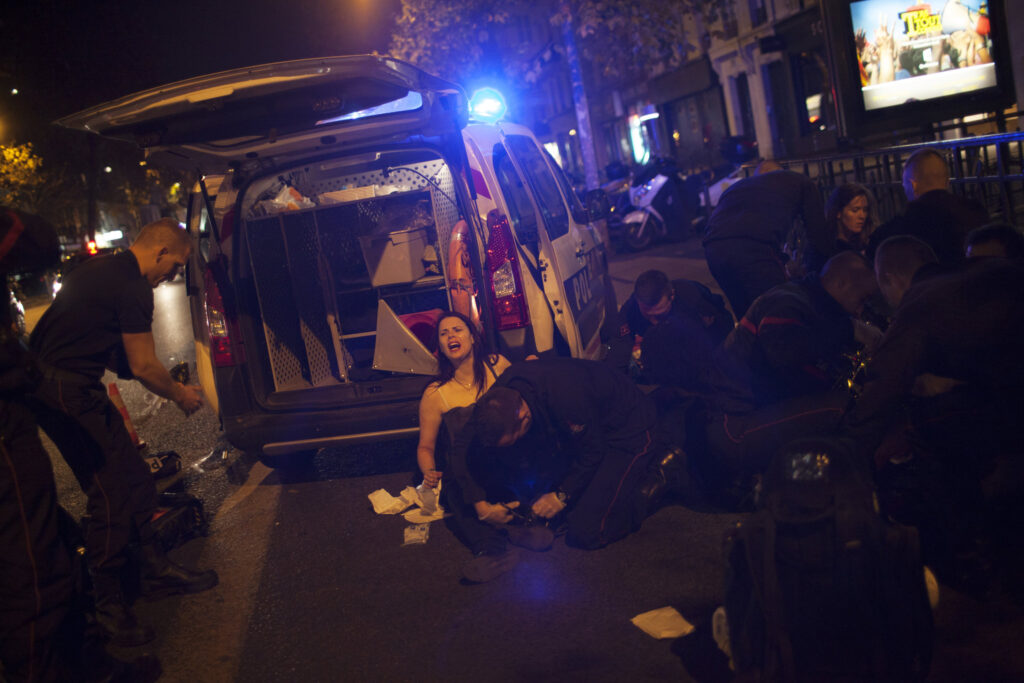
    The massacre lasted three hours, in a city which is yet numbering per capita twice more police officers than New York city. Nine jihadists killed 131 civilians; no police officer was injured. That toll was a sanction for incompetent intelligence and police services. The events were a kind of large scale Uvalde.

    The director of the counter-intelligence agency was astonished when the prosecutor informed him of the terrorist operation. After a failed attack, with explosive vests but no assault rifle, at the gates of the suburban Stade de France, a second team shot bursts at cafés terraces in downtown Paris, rampaged along 5 km and during 20 minutes, without encountering a single cop. When it left freely the capital, a third team stormed the Bataclan, which was holding a gig. One cop, the exception to the rule, entered the theater on the footsteps of the terrorists and managed to kill one. Despite reinforcements, he was ordered to stand idle, until the assault of a specialized group, while victims were still shot or bleeding inside. That BRI (Brigade de recherche et d’intervention) neutralized the two other jihadists, one kill and one suicide… two hours and a half later.

    As a former member of these agencies, I have written two articles, one in English and one in French. The first one is rather dealing with the Syrian context and the second is detailing the French debacle in the evening of that attack

    History is shedding light on actuality; that is the interest of such post. When with the same fanaticism, the West is currently supporting in Ukraine, in a new proxy war against Russia, a Nazi deep State which is controlling the security services, the army and a nebula of Nazi paramilitary forces; when worldwide volunteers are often Nazi militants; when weapons that the West is sending there are spreading later on the black market, I think that the backlash may be cruel in Europe and even the US.

  • [Partage] En novembre 1918 était constituée la République des soviets d’Alsace-Lorraine – Nicolas Maury, Perspective communiste

    C’est une page d’histoire assez méconnue en France.

    De janvier 1918 à mai 1919, l’Allemagne connait des grèves insurrectionnelles, des mutineries, la révolte spartakiste de Berlin et d’éphémères Républiques des soviets rapidement réprimées par des forces coalisées allant des sociaux démocrates à ceux qui seront le bras armés des nazis quelques années plus tard (les corps francs).

    En Alsace-Lorraine, une République des soviets est proclamée. Le 13 novembre le drapeau rouge flotte sur la cathédrale de Strasbourg.

    Du 10 novembre au 22 novembre 1918 (date de l’entrée des troupes françaises dans cette région), la République des soviets prendra des décrets pour la liberté d’expression, l’augmentation des salaires, l’amélioration des conditions de travail, et la libération des prisonniers politiques.

    Les autorités françaises, appelées en urgence par la bourgeoisie locale, démantèleront toutes les avancées obtenues.

    Avant la signature de l’armistice du 11 novembre 1918 qui met fin à la Première Guerre mondiale, les principales villes d’Alsace-Lorraine connaissent une agitation politique forte. Des Soviets d’ouvriers et de soldats (Soldaten und Arbeiterräte) sur le modèle russe se forment à Mulhouse le 9 novembre, puis à Strasbourg, Colmar et ensuite Metz à partir du 10.

    La Révolution allemande

    Dans l’Empire Allemande la processus est identique. Les Mutineries des marins de la Hochseeflotte (flotte militaire de Haute mer) et des ouvriers de Kiel le 5 novembre 1918 lance une insurrection régionale qui aboutira à l’abdication du Kaiser Guillaume II et marquent le début de la Révolution allemande de 1918-1919.

    Les Soviets de soldats des différents secteurs de Kiel formèrent un Haut-Conseil regroupant les délégués de toutes les unités. Cette insurrection soviétique gagna d’autres villes portuaires de l’Allemagne, puis même les grands centres ouvriers de la Ruhr et de Bavière (avec une Bayerische Räterepublik ou Münchner Räterepublik et une seconde République des soviets sera proclamée le 7 avril 1919 et écrasée militairement le 3 mai 1919).

    Le 6 novembre, tout le nord-ouest de l’Allemagne s’organise et crée des Soviets ouvriers ;
    Le 7 novembre, Kurt Eisner (SPD) proclame la république des soviets en Bavière ;
    Le 8 novembre, la révolution gagne la Saxe, la Hesse, La Franconie et le Wurtemberg, poussant les princes à l’abdication ;
    Le 9 novembre, le Kaiser Guillaume II abdique, la “première République de Weimar” depuis le balcon du Reichstag par Philipp Scheidemann (SPD) et Karl Liebknecht proclame en parallèle la “République Libre Socialiste”. Ce même jour, le Soviet de Strasbourg proclame la “Republik Elsaß-Lothringen”.

    La révolte des spartakistes sera réprimée dans le sang par le ministre de la Reichswehr, Gustav Noske (SPD). Les sociaux-démocrates s’appuieront sur les Corps francs (des unités paramilitaires) qui serviront de base à la constitution du parti Nazi. Karl Liebknecht et Rosa Luxembourg seront victimes de cette répression des sociaux-démocrates

    République soviétique alsacienne

    15.000 marins et ouvriers d’Alsace et de Lorraine rentrent de Kiel et propagent les idées révolutionnaires dans cette partie occidentale de l’Empire Allemand. Des milliers de Strasbourgeois vont lancer une insurrection contre la garnison de la ville et créer un soviet de soldats et d’ouvriers.

    Les murs de la ville sont couverts d’affiches qui proclament : “Nous n’avons rien de commun avec les États capitalistes, notre mot d’ordre est : ni Allemands ni Français ni neutres. Le drapeau rouge a triomphé”. Le 13 novembre le drapeau rouge flotte sur la cathédrale de Strasbourg.

    Durant la même semaine, le Soviet ouvrier et militaire de Metz prend forme, et rejoint celui de Strasbourg, Colmar, et autres. Du 10 au 20 novembre, un comité révolutionnaire de 13 membres (élu par les Soviets d’ouvriers et de soldats) siège au Palais de Justice de Strasbourg. Il est dirigé par le syndicaliste Rebholz.

    Cet exécutif des conseils crée la liberté d’expression, permet l’augmentation des salaires, l’amélioration des conditions de travail, et la libération des prisonniers politiques

    La bourgeoise s’organise pour bloquer l’insurrection ouvrière en Alsace

    En même temps, “un Conseil national (Nationalrat) d’Alsace-Lorraine” est constitué sous l’impulsion des notables fait appel aux troupes françaises pour qu’elles mettent fin au soviet. Un slogan court les quartiers bourgeois : “Plutôt français que rouges !”. Les socialistes, traîtres parmi les traîtres, proclament “la République Française” par Jacques Peirotes (SPD), élu maire de Strasbourg devant la statue du général Kléber.

    Ce même Jacques Peirotes fait appel au Grand Quartier Général français et demande aux généraux de “hâter leur entrée à Strasbourg, la domination des rouges menaçant de prendre une fin tragique”.

    Les troupes françaises entrent en Alsace-Lorraine à partir du 17 novembre et sont accueillies par la bourgeoisie triomphalement. La première décision du commandement militaire français est l’abrogation des décrets des soviets et la dissolution de ces derniers.

    Les autorités françaises mirent en place une politique d’épuration et de fichage des populations. 112 000 résidents alsaciens et lorrains, décrétés “Allemands” ou insuffisamment francophiles seront expulsés.

    La République française s’emparait ainsi de l’Alsace-Lorraine [fin]

    L’article original