Analista senior di l'intelligenza in u campu di a gestione di i risichi di sicurezza, sò un anzianu tenente detective è ufficiale di l'intelligenza in l'agenzie di u Statu francese. A bona pronuncia hè Николай Чинкуини, in russu
Almost 750 U.S. troops have been wounded or killed in the Middle East since October 2023, an analysis by The Intercept has found. But the Pentagon won’t acknowledge it
Secretary of War Pete Hegseth answers questions as President Donald Trump looks on at the White House on March 24, 2026 (Chip Somodevilla / Getty Images)
U.S. Central Command, or CENTCOM, which oversees military operations in the Middle East, appears to be engaged in what a defense official called a “casualty cover-up,” offering The Intercept low-ball and outdated figures and failing to provide clarifications on military deaths and injuries.
At least 15 U.S. troops were wounded Friday [March 27, 2026] in an Iranian attack on a Saudi air base that hosts American troops, according to two government officials who spoke with The Intercept. Hundreds of U.S. personnel have been killed or injured in the region since the U.S. launched a war on Iran just over a month ago.
President Donald Trump — who wore a blue suit, red tie, and a ball cap to the dignified transfer of the first Americans killed in the war — said casualties were inevitable. “When you have conflicts like this, you always have death,” he said afterward. “I met the parents and they were unbelievable people. They were unbelievable people, but they all had one thing in common. They said to me, one thing, every single one: Finish the job, sir. Please finish the job.”
On Tuesday [March 31, 2026], Trump teased that he would wind down the war with Iran in as little as two weeks despite not achieving many of his stated aims, such as “freedom for the people” of Iran, “tak[ing] the oil in Iran,” and forcing Iran’s “unconditional surrender.” At one point, the president even declared that the war would last “as long as necessary to achieve our objective of PEACE THROUGHOUT THE MIDDLE EAST AND, INDEED, THE WORLD!”
“When you have conflicts like this, you always have death”
CENTCOM has sent outdated statements on casualty numbers, meanwhile, resulting in undercounts, including a statement sent Monday [March 30, 2026] from spokesperson Capt. Tim Hawkins noting that “Since the start of Operation Epic Fury, approximately 303 U.S. service members have been wounded.” The comment was three days old and excluded at least 15 wounded in the Friday attack on Prince Sultan Air Base in Saudi Arabia. The command did not reply to repeated requests for updated figures.
CENTCOM also would not provide a count of troops who have died in the region since the start of the war. An Intercept analysis puts the number at no less than 15.
“This is, quite obviously, a subject that [War Secretary Pete] Hegseth and the White House want to keep under major wraps,” said the defense official who spoke on the condition of anonymity in order to speak frankly.
In 2024, during the Biden administration, the Pentagon provided The Intercept with detailed chronologies of attacks on U.S. bases in the Middle East that listed the specific outpost that was attacked, the type of strike, and whether — or how many — casualties resulted, along with an aggregate count of attacks by country.
The Trump administration’s numbers, by comparison, lack detail and clarity. The current CENTCOM casualty figures do not appear to include more than 200 sailors treated for smoke inhalation or otherwise injured due to a fire that raged aboard the USS Gerald R. Ford before it limped off to Souda Bay, Greece, for repairs. CENTCOM did not reply to close to a dozen requests for clarification on the casualty count and related information sent this week.
“CENTCOM and the White House should be providing accurate and timely information on the costs and casualties involved in this war. After all, it is American taxpayers who are funding it and U.S. economic prosperity and economic wellbeing that is being undermined by it,” Jennifer Kavanagh, the director of military analysis at Defense Priorities, a think tank that advocates for measured U.S. foreign policy, told The Intercept.
“CENTCOM and the White House should be providing accurate and timely information on the costs and casualties involved in this war”
As the U.S. has relentlessly bombed Iran, that country has responded with attacks on U.S. bases across the Middle East using ballistic missiles and drones. CENTCOM refuses to even offer a simple count of U.S. bases that have been attacked during the war. “We have nothing for you,” a spokesperson told The Intercept. An analysis by The Intercept, however, finds that bases in Bahrain, Iraq, Jordan, Kuwait, Qatar, Saudi Arabia, Syria, and the United Arab Emirates have been targeted.
On Tuesday, Hegseth said that Iran retained the ability to retaliate for U.S. strikes but that their attacks would be ineffectual. “Yes, they will still shoot some missiles,” he said, “but we will shoot them down.” On Wednesday morning [April 1, 2026], officials in Bahrain, Kuwait, and Qatar all reported missile or drone attacks from Iran.
Iranian strikes have forced U.S. troops to retreat from their bases to hotels and office buildings across the region, according to the two government officials. The defense official was livid about the Pentagon’s failure to adequately harden the bases and ridiculed Hegseth’s Tuesday prayer at a Pentagon press conference. “May god watch over all of them, each day and each night. May his almighty and eternal arms of providence stretch over them and protect them,” said Hegseth.
“Why didn’t Hegseth protect them?” the defense official asked. “Anyone with a brain knew these attacks were coming.”
Pentagon spokesperson Kingsley Wilson did not respond to multiple requests for comment.
Retired Gen. Joseph Votel, a former head of Central Command, recalled that U.S. troops in the region have faced drone attacks for at least a decade. “At that time we identified a need to protect against this threat, and it has taken far too long for the DoD to respond and provide adequate protection for our deployed troops,” he told The Intercept, referencing drone attacks during the campaign against ISIS in the spring of 2016. “It was a known expectation that, if attacked, Iran would retaliate against our bases, installations, and forces, and I agree that we should have anticipated and been prepared for this inevitability.”
Kavanagh, who previously called attention to the vulnerability of U.S. outposts in the Middle East, echoed Votel. “It has been clear for years that the rapid proliferation of drones and cheap missiles would put U.S. bases and U.S. early detection radars in the region at risk, yet the Pentagon did little to protect them,” she said. “The failure to invest in hardened infrastructure was a choice. Congress should see this failure as evidence that simply giving the Pentagon more money is not a path to national security.”
“We would be better off if bases across the region were closed for good,” she added.
“We would be better off if bases across the region were closed for good”
In public statements, Iran’s foreign minister Seyed Abbas Araghchi called out the U.S. for using civilians in nearby Arab monarchies of the Gulf Cooperative Council states as human shields. “U.S. soldiers fled military bases in GCC to hide in hotels and offices,” he wrote on X last week. “Hotels in U.S. deny bookings to officers who may endanger customers. GCC hotels should do same.”
Votel also expressed concern about troops using hotels and offices, noting it “could turn normal civilian infrastructure into military targets for the regime.”
Last month, an Iranian drone strike on a hotel in Bahrain wounded two War Department employees, according to a State Department cable reviewed by the Washington Post. CENTCOM did not respond to a request to confirm to The Intercept that those injuries stem from a March 2 attack on the Crowne Plaza hotel, a luxury property in Manama, Bahrain’s capital, but one official indicated this was likely.
Votel said that a failure to provide troops with adequate protection may handcuff U.S. operations. “I think this really complicates command and control and could affect unit cohesion and effectiveness,” he told The Intercept, referring to the transfer of troops to hotels and office buildings. “That said, we may not have many options if we cannot protect the military bases where they would normally be bedded down.”
Prior to the current war with Iran, U.S. bases in the Middle East were increasingly targeted by a mix of one-way attack drones, rockets, mortars, and close-range ballistic missiles after Israel’s war in Gaza began in October 2023, most of the attacks occurring in the year following the outset of the conflict. At least 175 troops were killed or wounded in those attacks, including three service members who died in a January 2024 strike on Tower 22, a facility in Jordan. Other attacks targeted al-Asad Air Base, the Baghdad Diplomatic Support Center, Camp Victory, Union III, Erbil Air Base, and Bashur Air Base in Iraq and Al-Tanf garrison, Deir ez-Zor Air Base, Mission Support Site Euphrates, Mission Support Site Green Village, Patrol Base Shaddadi, Rumalyn Landing Zone, Tell Baydar, and Tal Tamir in Syria.
The casualty statistics do not include contractors, most of them foreigners who suffered non-combat injuries. Official U.S. statistics show that there were almost 12,900 cases of injuries to contractors in the CENTCOM area of operations during 2024 alone. More than 3,700 were the most serious non-fatal injuries, including traumatic brain injuries, requiring more than seven days away from work. Eighteen contractors were also killed, all of them in Iraq. The numbers are likely significant undercounts, but if even the fractional number of known contractor injuries is added to the tally, the casualty count for Americans and those on U.S. bases may top 13,600 [end]
In the first week of the US-Israeli aggression on Iran, the Islamic Revolution Guards Corps (IRGC) conducted a series of precision strikes that systematically degraded the much-hyped US integrated air and missile defense architecture across the region
Eisenhower Media Network is an organization of expert former military, intelligence, and civilian national security officials who have an independent, alternative story to tell
The US-funded ecosystem of Iranian ‘rights groups,’ Israeli operatives, and monarchist activists has become a revolving door of unverifiable statistics and atrocity propaganda
As deadly riots burn Iranian cities, Western media ignores the shocking wave of violence, turning instead to US government-funded NGOs for data. The one-sided portrayal has helped push Trump to the brink of authorizing renewed US attacks
Donald Trump calls on al Qaeda jihadists for rescue against the Hezbollah and Iran
On September 16, 2012, al Nusra international jihadists, proxies of the West in Syria, attend the funeral in Aleppo countryside of a fellow fighter (Reuters)
Around 2:30 am, local time, the Iraqi resistance achieves a new hit against the US embassy in Baghdad
(Social media, screenshot)
Back in Israel after a mission over Iraq, one US KC-135 tanker aircraft seems unable to land at Ben Gurion airport
(flightradar24 / screenshots)
The plane crashes north of the airport at 3:58 am, local time, when its transponder is cut off. Gag order: the Israeli censorship about the incident is absolute
On March 13, 2026, Ali Larijani marches in Tehran in support to Palestine (Iranian media)
In Tehran, an Israeli attack kills Ali Larijani, Secretary of the Supreme National Security Council.
In the US, Special Operation Forces veteran Joe Kent resigns from his position as Director of the National Counterterrorism Center
I cannot in good conscience support the ongoing war in Iran. Iran posed no imminent threat to our nation, and it is clear that we started this war due to pressure from Israel and its powerful American lobby
In Manbij, Syria, on January 16, 2019, ISIS jihadists killed his wife, Shannon Smith, who was cryptologist in the US Navy (Joe Kent)
That was painful for a real counter-terrorism professional to work for a terrorist government, ally in the Middle East of terrorist entities like Israel and al Qaeda.
According to Reuters, the US is encouraging its al Qaeda ally in the West-friendly jihadist emirate of Syria to consider sending forces in Lebanon, against Hezbollah
On November 13, 2015, the penalty is cruel for the French support to the Sunni radical uprising in Syria. While attending a soccer game in the Stade de France, Saint Denis, François Hollande hears that some of these radicals are attacking in Paris (Franck Fife / AFP)
At 7:00 pm, Tehran time, 5:30 pm in Tel Aviv, the West strikes Bushehr nuclear power plant. As tit for tat, four hours later, Iran targets Negev Nuclear Research Center in Dimona.
In the first week of the US-Israeli aggression on Iran, the Islamic Revolution Guards Corps (IRGC) conducted a series of precision strikes that systematically degraded the much-hyped US integrated air and missile defense architecture across the region
Eisenhower Media Network is an organization of expert former military, intelligence, and civilian national security officials who have an independent, alternative story to tell
The US-funded ecosystem of Iranian ‘rights groups,’ Israeli operatives, and monarchist activists has become a revolving door of unverifiable statistics and atrocity propaganda
As deadly riots burn Iranian cities, Western media ignores the shocking wave of violence, turning instead to US government-funded NGOs for data. The one-sided portrayal has helped push Trump to the brink of authorizing renewed US attacks
[my illustration: on March 5, 2026, pastors from across the US pray in the White House for Donald Trump (White House, screenshot)]
As is becoming clearer from President Trump’s own statements and those of his staff, along with press reporting, the US has launched a major [war] without the input of the experts we pay to advise the President on such matters. The State Department, Pentagon, National Security Council Staff, Defense Intelligence Agency, and NSA were simply bypassed because, as White House Spokesperson Karoline Leavitt said, President Trump “had a feeling” Iran would attack.
The President’s real estate developer son-in-law and friend reinforced that “feeling” when they returned from the second round of talks with the Iranian foreign minister and his team. However, as the news outlet Responsible Statecraft (RS) reported over the weekend, both son-in-law Jared Kushner and friend Steve Witkoff appear to have mis-represented those talks in a way that helped push President Trump toward war. No State Department officials were on hand to ensure the reporting was accurate.
Also, arms control experts at home, according to the RS report, believe that “the duo appeared to have fatally misunderstood a series of basic technical and historical matters” regarding Iran’s nuclear program leading to inaccurate information conveyed to the President.
Congress was completely out of the picture – seemingly uninterested in performing its Constitutional duty – and no case was made to the American people that they must sacrifice and die once again for a war in the Middle East.
Trump’s repeated promises to not start new wars, especially in the Middle East, have turned out to be empty, and Republicans are set for a crippling defeat in the upcoming midterm elections.
Iran had been warning for months – since the last US/Israeli surprise attack in June – that if they were attacked again they would not hold back on US bases in the region and that they would close the Straits of Hormuz. Trump and Netanyahu attacked anyway, and Iran has done what it said it would do.
Now the Strait of Hormuz is closed, oil is about to go out of control, and the global economy – along with the US dollar – seems about to implode.
On March 6th, President Trump refused a UK offer of help, saying we don’t need help when we’ve already won the war. Five days later, at a rally in Kentucky, President Trump repeated that “We’ve won the Iran war!”
It was his “Mission Accomplished” moment, because this weekend, just days after declaring victory against an “obliterated” Iran, Trump began begging other countries to send ships to help the US open the Strait of Hormuz.
Thus far every country has declined, understanding that such a mission has little chance of success.
Tragically, the war thus far has claimed at least 14 servicemembers. It is likely the toll is far worse than they are telling us. Every US military facility in the region is either damaged or destroyed. Billions of dollars of radar and other equipment are destroyed. Our allies in the region, because they allowed their territory to be used to attack Iran, have also seen massive retaliatory destruction.
This is surely one of the worst military disasters in US history. There are no military options available beyond the unthinkable: the use of nuclear weapons.
The only viable option that remains is one that was often urged in the Vietnam War: Just get out. Now! No return to US bases, no security guarantees to Gulf States. End the US empire in the Middle East and elsewhere. If not, it’s only going to get worse [end]
In the first week of the US-Israeli aggression on Iran, the Islamic Revolution Guards Corps (IRGC) conducted a series of precision strikes that systematically degraded the much-hyped US integrated air and missile defense architecture across the region
Eisenhower Media Network is an organization of expert former military, intelligence, and civilian national security officials who have an independent, alternative story to tell
The US-funded ecosystem of Iranian ‘rights groups,’ Israeli operatives, and monarchist activists has become a revolving door of unverifiable statistics and atrocity propaganda
As deadly riots burn Iranian cities, Western media ignores the shocking wave of violence, turning instead to US government-funded NGOs for data. The one-sided portrayal has helped push Trump to the brink of authorizing renewed US attacks
Israel informed the US this week that it is running critically low on ballistic missile interceptors as the conflict with Iran rages on, US officials told Semafor.
Israel had reportedly entered the current war already low on interceptors that were fired during last summer’s conflict with Iran. Israel’s long-range defense system has strained under Iran’s attacks; CNN reported that Iran was adding cluster munitions to its missiles, which may exacerbate the depletion of the stock.
The US has been aware of Israel’s low capacity for months, one US official said: “It’s something we expected and anticipated.”
This official emphasized to Semafor that the US is not running similarly low on interceptors of its own. That comment comes amid broader concerns about interceptor depletion from a longer military engagement in Iran leaving the US in a poor position.
It’s also unclear whether the US might seek to sell or share any of its own interceptors with Israel, which would pose its own strain on domestic supplies. The US has included missile defense assets in past provisions of military aid to Israel.
“We have all that we need to protect our bases and our personnel in the region and our interests,” the US official said, adding that Israel is “coming up with solutions to address” their shortage.
Israel has other ways to defend against Iranian missiles during the war, including via fighter jets, but the interceptors are among the most effective defensive weapons against long-range fire. Its Iron Dome missile defense system is designed to repel more short-range fire.
President Donald Trump said earlier this month that the US has a “virtually unlimited” munitions stockpile, although analysts have long said US stockpiles are lower than the military would like.
Last June, the US fired over 150 THAAD interceptors during the 12-day war with Iran, the Center for Strategic and International Studies found — believed to be around a quarter of US inventory at the time. The US is also believed to have used around $2.4 billion worth of Patriot interceptors in the first five days of this war, according to some reports.
In January, the Pentagon made moves to begin substantially increasing its production of the THAAD missile defense system. The US official said that the administration has plenty of THAADs and fighter jets, as well as mid-level interceptors.
Chief Pentagon spokesman Sean Parnell told Semafor in a statement that the department “has everything it needs to execute any mission at the time and place of” Trump’s choosing.
The White House and the Israel Defense Forces did not immediately respond to requests for comment from Semafor.
Know More
The State Department last week announced a sale of 12,000 “BLU-110A/B general purpose, 1,000-pound bomb bodies” to Israel. Congressional approval for the sale will not be required; the Trump administration bypassed it by citing the “emergency” that currently exists as the US and Israel fight Iran.
Trump has said that the war could end “soon” and has recently taken to describing it as a “short-term excursion.” But Trump, Israel, and Iran are also all signaling that they’re willing to fight for as long as it takes.
“It’ll be as long as it’s necessary,” Trump said on Friday evening when asked about how long the conflict may continue on. “They’ve been decimated. The country’s in bad shape. The whole thing is collapsing.”
The Iranian regime’s foreign policy adviser told CNN this week that the country sees no option for diplomacy right now and maintained that it is ready for a long fight. Defense Secretary Pete Hegseth told reporters on Friday that Iran’s “entire ballistic missile production capacity” has been “functionally defeated.”
Notable
Iranian cluster bombs hit several sites in Israel on Friday, though no casualties have been reported, according to The Times of Israel.
The Trump administration struck military targets on Kharg Island this week, though it left the key oil infrastructure that Iran relies on intact.
Israel is planning to expand its ground invasion in Lebanon,according to Axios [end]
In the first week of the US-Israeli aggression on Iran, the Islamic Revolution Guards Corps (IRGC) conducted a series of precision strikes that systematically degraded the much-hyped US integrated air and missile defense architecture across the region
Eisenhower Media Network is an organization of expert former military, intelligence, and civilian national security officials who have an independent, alternative story to tell
The US-funded ecosystem of Iranian ‘rights groups,’ Israeli operatives, and monarchist activists has become a revolving door of unverifiable statistics and atrocity propaganda
As deadly riots burn Iranian cities, Western media ignores the shocking wave of violence, turning instead to US government-funded NGOs for data. The one-sided portrayal has helped push Trump to the brink of authorizing renewed US attacks
In the first week of the US-Israeli aggression on Iran, the Islamic Revolution Guards Corps (IRGC) conducted a series of precision strikes that systematically degraded the much-hyped US integrated air and missile defense architecture across the region
The strikes destroyed or severely damaged at least two AN/TPY-2 THAAD radars, a billion-dollar early-warning radar installation in Qatar, multiple supporting sensor nodes, and critical communications infrastructure.
Executed in a coordinated sequence of precision engagements, Iranian retaliatory operations under the banner ‘True Promise 4’ have significantly disrupted the regional defensive network and forced US commanders to urgently reassess and reconstitute capabilities that took two decades and tens of billions of dollars to deploy.
The scale and sophistication of the Iranian operation mark a significant moment in contemporary warfare, demonstrating that even highly advanced missile defense systems, often presented as near-impenetrable shields, remain vulnerable to determined adversaries equipped with precision guidance, reliable intelligence, and an operational doctrine focused on disabling the core command, sensor, and communications nodes of defensive networks.
As commercial satellite imagery continues to emerge from across the region, the extent of the damage is becoming increasingly difficult to conceal, revealing substantial operational setbacks that raise serious questions about the resilience of the defensive architecture underpinning American force posture from the Persian Gulf to the Korean Peninsula.
The targeting doctrine evident in the strikes reflects years of detailed analysis and planning, with Iranian strategists identifying critical nodes and developing the capability to strike them simultaneously across a wide geographic area.
The coordinated targeting of early-warning radars, fire-control radars, communications infrastructure, and supporting facilities demonstrates a systemic approach to warfare rarely executed at such scale, focusing on neutralizing the command-and-control backbone of the defensive network rather than peripheral elements.
For US commanders currently operating in the region, the immediate challenge lies in sustaining operations with degraded detection and response capabilities, safeguarding remaining strategic assets, and reassuring regional allies whose security frameworks depend heavily on the integrity of these systems.
How these challenges are addressed will shape not only the trajectory of the current war but also the future configuration of American military posture in a region where the balance of power may have shifted significantly in the opening days of March 2026
Muwaffaq Salti Air Base in Jordan
Heart of the beast: Understanding AN/TPY-2 radar’s critical role
The AN/TPY-2 transportable radar represents the technological centerpiece of the Terminal High Altitude Area Defense (THAAD) system. This massive X-band active electronically scanned array (AESA) radar consumes roughly two megawatts of power and is distributed across five forty-foot trailers.
With an antenna area of 9.2 square meters and an instrumental range exceeding 2,000 kilometers in forward-based mode, the radar functions as the primary sensor of the entire THAAD battery. Without it, the launchers and their 48 interceptors are effectively rendered inoperative, deprived of the detection and tracking data required for engagement.
Manufactured by Raytheon using gallium nitride technology, each AN/TPY-2 radar carries an estimated cost ranging from $500 million to $1 billion. Since development began in the 1990s, only about twenty units have been produced worldwide.
The radar performs two distinct operational missions depending on configuration. In terminal mode, it provides fire-control quality tracking data directly to THAAD interceptors during the engagement phase.
In forward-based mode, it feeds detection and tracking data into the broader ballistic missile defense architecture, cueing Aegis warships, Patriot batteries, and other integrated systems. The loss of even a single radar unit can therefore have cascading effects across multiple layers of the defensive network.
Jordan: The first thousand-kilometer precision strike
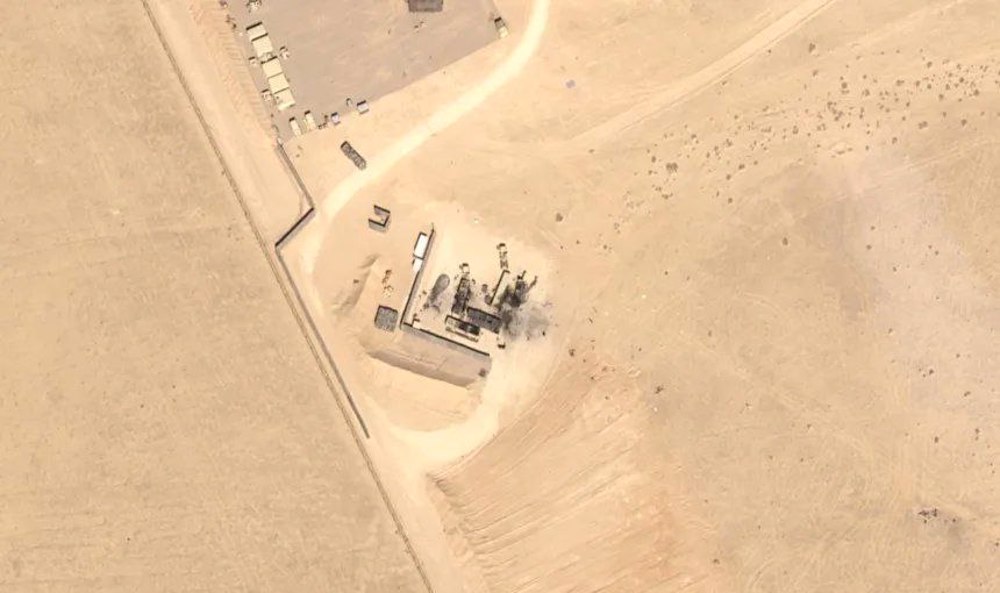
At Muwaffaq Salti Air Base in Jordan, located more than 800 kilometers from the nearest Iranian territory, satellite imagery captured on March 2 reveals the charred remains of an AN/TPY-2 radar that had reportedly been deployed at the base since at least mid-February.
The imagery shows debris scattered across the deployment site, surrounding what appears to have been a fully assembled radar system. Two large impact craters, each roughly thirteen feet in diameter, are visible in the sand nearby, suggesting that multiple precision munitions were employed to ensure the destruction of the system.
Prior to the escalation of hostilities, the base had served as a major hub for American air operations, with more than fifty fighter aircraft visible on the tarmac in pre-war satellite imagery.
The deployment of a THAAD battery at the site fulfilled two key operational objectives: protecting the concentration of air assets from potential ballistic missile threats and extending a defensive coverage umbrella toward Israeli territory.
The strike itself represents a notable demonstration of long-range precision engagement capability, requiring not only a missile with sufficient range but also advanced terminal guidance systems capable of identifying and targeting the radar’s distinctive configuration amid surrounding infrastructure
THAAD base near Al Ruwais in UAE
United Arab Emirates: Systematic elimination of terminal defenses
The Al Ruwais facility in the United Arab Emirates, positioned to protect critical energy infrastructure along the Persian Gulf coast, suffered near-simultaneous strikes against both its THAAD radar and the supporting infrastructure that housed the system.
Satellite imagery from March 1, the second day of the war that was imposed on Iran, shows dark markings from apparent strikes on three buildings, including a pull-through vehicle shed specifically designed to shelter the radar system.
The pattern of damage suggests Iranian planners understood not only where the radar would be positioned when active but also where it would be maintained and stored.
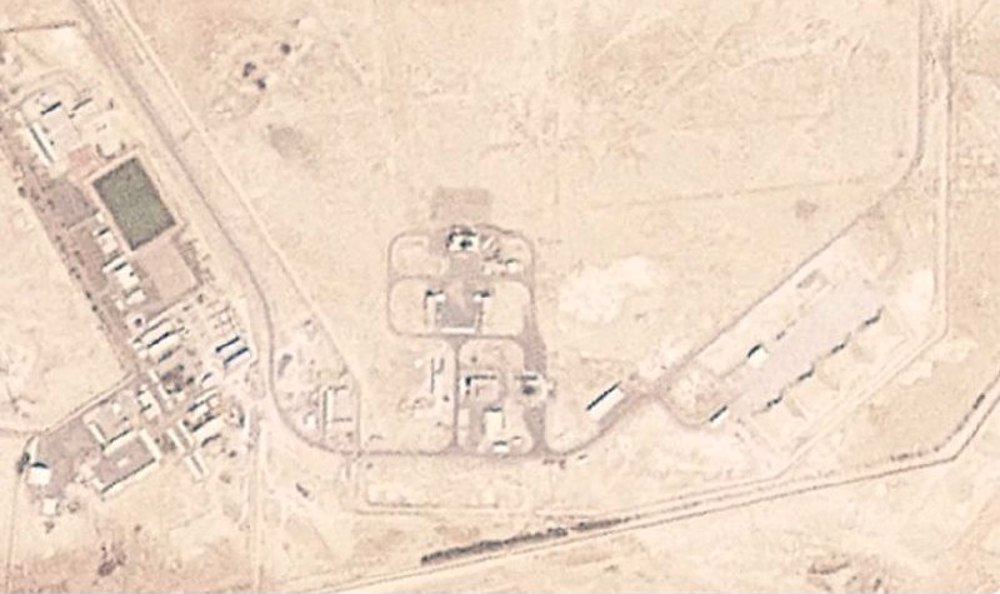
At a second UAE installation near Al Sader, satellite imagery reveals an almost identical strike pattern with four buildings damaged, including multiple vehicle sheds configured for radar storage.
The symmetry between the two attacks suggests either simultaneous execution by multiple strike platforms or a methodical campaign that systematically worked through a target list developed over years of surveillance.
Commercial imagery providers captured before and after images that leave little doubt about the severity of the damage, with burned equipment visible at the precise locations where radar components had been regularly observed.
Qatar: Billion-dollar early warning backbone destroyed
The destruction of the AN/FPS-132 Block 5 Upgraded Early Warning Radar at Umm Dahal in Qatar represents perhaps the single most expensive individual loss of the campaign, with that system alone costing approximately one point one billion dollars when installed in 2013.
Unlike the mobile THAAD radars that can theoretically be replaced by redeploying systems from other theaters, the Qatari early warning radar was a fixed installation designed to provide continuous surveillance of ballistic missile launches across a five-thousand-kilometer arc.
The Qatari Ministry of Defence’s rare public confirmation of the radar’s destruction carries strategic significance beyond the military impact, as host-nation acknowledgment forecloses any possibility of concealing the loss and signals to regional allies that American assurances of protective capability may no longer carry their former weight.
The AN/FPS-132 represents the outer layer of the missile defense onion, providing the strategic warning that enables all downstream systems to prepare for incoming threats. Its elimination compresses reaction timelines from minutes to seconds
Al Sader in UAE
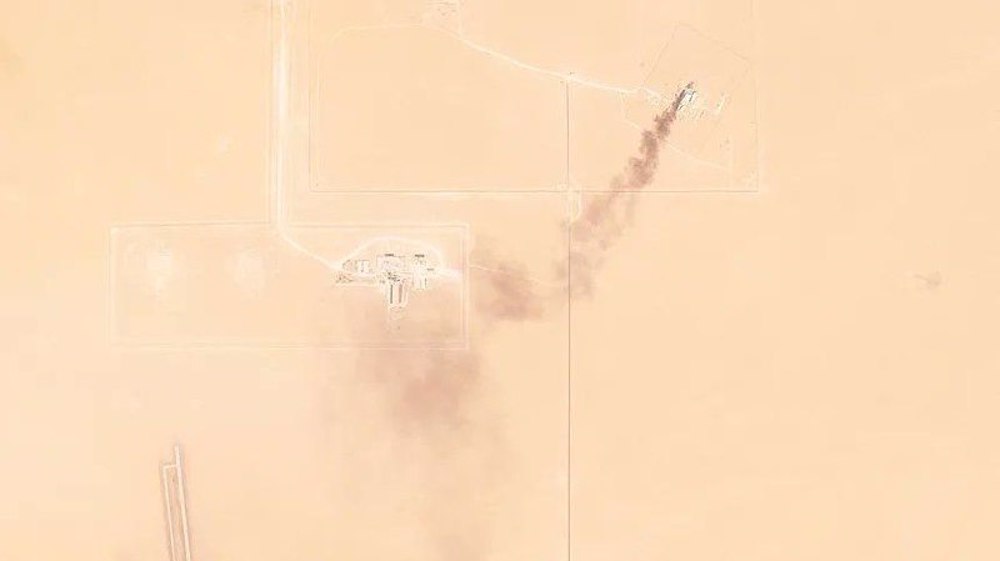
Saudi Arabia: Smoke rising from Prince Sultan Air Base
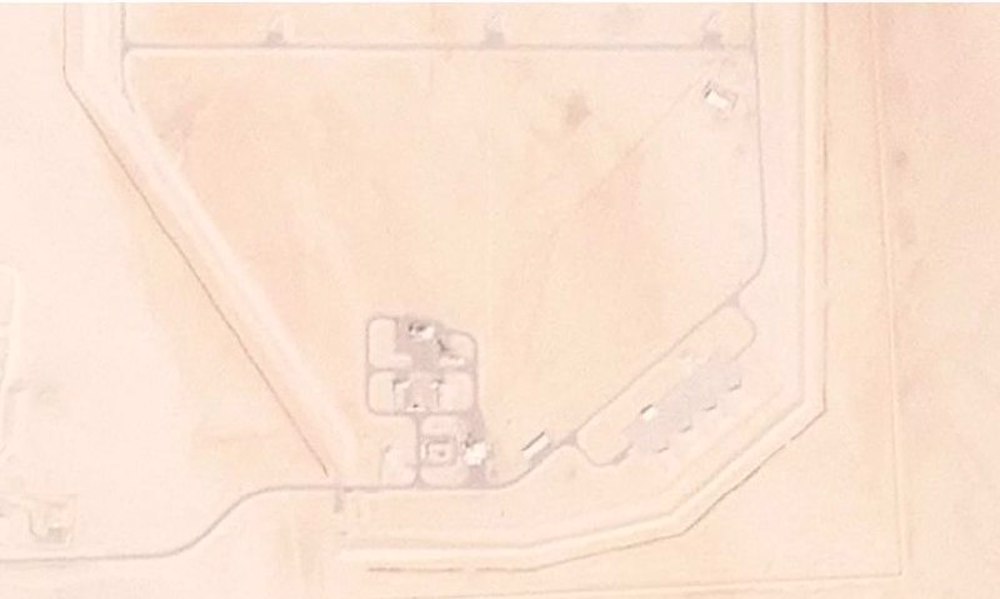
At a site near Prince Sultan Air Base in Al Kharj, Saudi Arabia, satellite imagery captured on March 1 shows smoke rising from a compound where a THAAD radar had been previously positioned, with a tent used to shelter the antenna unit showing extensive charring and debris scattered across the surrounding area.
Imagery from January had shown the radar antenna pointed northeast toward Iran in its operational configuration, suggesting the site was fully functional when struck.
This base hosts dozens of American aircraft and serves as a major command and control node, making the apparent failure to protect a critical sensor positioned within its perimeter particularly embarrassing.
Kuwait: Communications infrastructure and radar domes destroyed
The strikes extended beyond the core missile defense sensors to target the communications infrastructure that enables these systems to function as an integrated network.
At Arifjan base in Kuwait, satellite imagery confirms the destruction of three radomes, the protective spherical structures housing satellite communications antennas that provide the data links connecting distributed sensors to command nodes.
Eight additional buildings related to satellite communications infrastructure were destroyed at separate locations in Kuwait, representing a systematic effort to attack the network backbone.
The AN/GSC-52B radars destroyed in Bahrain represent another category of communications and surveillance assets, providing both satellite communications connectivity and contributing to the space surveillance network.
Their destruction at a facility housing the US Navy’s Fifth Fleet headquarters demonstrates that no American installation in the region can consider itself beyond reach
Prince Sultan Air Base in Saudi Arabia
Strategic calculus: Twenty years of investment destroyed in seven days
The development of the THAAD system began in 1992, with the US Army finally fielding the first operational batteries in April 2012. The journey from initial concept to deployable capability required approximately twenty years and tens of billions of dollars.
The radars now destroyed or severely damaged across at least four countries represent a significant fraction of the total global inventory of approximately twenty units.
Each unit requires years to manufacture, and the destruction of multiple units simultaneously creates a capability gap that cannot be quickly filled.
The financial losses are staggering. Individual AN/TPY-2 radars cost between five hundred million and one billion dollars. The AN/FPS-132 early warning radar cost approximately one point one billion dollars.
The AN/GSC-52B radars, the radomes, the communications buildings, and support infrastructure add hundreds of millions more.
The campaign’s first week has inflicted damages approaching or exceeding ten billion dollars against a target set selected for maximum strategic effect.
Tactical paralysis: The loss means for current operations
The immediate tactical consequence is the effective paralysis of multiple THAAD batteries that now sit blind on their launch positions. Without the AN/TPY-2 radar providing tracking data and fire control solutions, the launchers and their forty-eight interceptors per battery cannot engage incoming threats.
The interceptors themselves, each costing approximately thirteen million dollars, cannot be employed without the radar’s guidance.
The degradation extends to the entire regional defense network. Patriot batteries that relied on THAAD radar data for cueing now face incoming threats with reduced reaction time.
Aegis warships must rely solely on their own SPY radar systems. The integrated battle management system now resembles disconnected nodes fighting local engagements without a common operating picture.
The psychological impact cannot be overstated. Soldiers assured that the most advanced missile defense systems would protect them, but now find their protective shield penetrated repeatedly.
The sight of satellite imagery showing the blackened remains of billion-dollar systems creates a perception of vulnerability that no amount of official reassurance can counter
INFOGRAPHIC: US media point to shortfall in THAAD missile arsenal after nearly a third of its stockpile was deployed in the 12-day war against Iran to defend the Israeli regime.
Global implications: South Korea, Guam, and the strategic reserve dilemma
The destruction of multiple THAAD systems in West Asia has immediate implications for American force posture worldwide, particularly in the Indo-Pacific, where North Korea’s advancing missile program has long justified THAAD deployment.
Reports that Washington is considering relocating THAAD and Patriot systems from South Korea to West Asia reflect the severity of the capability gap.
The THAAD battery in Seongju, South Korea, represents not merely a defensive asset but a political commitment that has survived years of diplomatic tension with China.
Removing it would signal a shift in American priorities, potentially encouraging North Korea to react. Guam, home to another THAAD battery protecting critical American bases, would face similar exposure if its systems were stripped.
The interceptor stockpile faces equally severe pressure. The expenditure of approximately thirty percent of the total THAAD interceptor inventory in a twelve-day aggression in June 2025 demonstrated how quickly these scarce resources can be consumed.
With production capacity limited to approximately eleven to twelve interceptors annually, reconstituting inventory will require years.
Technology question: What Iranian precision reveals about US vulnerabilities
The successful destruction of hardened, defended targets across distances exceeding 800 kilometers reveals Iranian technological capabilities that many Western analysts had previously dismissed.
The terminal guidance required to place a warhead within meters of a specific radar antenna reflects maturation in seeker technology and potentially man-in-the-loop targeting.
The strikes also reveal sophisticated intelligence collection operating for years beneath the threshold of detection, building detailed targeting folders on facilities across multiple countries.
The symmetry between strikes in different countries suggests a targeting process that understood standardized American configurations.
The electronic warfare dimension likely played a critical role in enabling strikes to penetrate defended airspace.
The fact that no Iranian missiles or drones were intercepted before reaching targets across four countries suggests either that defenses were neutralized electronically or that the volume and coordination overwhelmed engagement capabilities
Did you know that Qatar hosts one of the US's biggest military bases in the Persian Gulf, with many air defense systems present, yet none of the American THAAD systems fired a single shot to defend Qatar against the Israeli invasion? pic.twitter.com/GomGDgydQN
Production constraints: Why replacement takes years, not weeks
The industrial base that produces AN/TPY-2 radars operates on peacetime assumptions, with production lines sized to meet gradual replacement requirements rather than the surge demands of major conflict.
The supply chain for specialized components extends across multiple states and countries, with some materials sourced from single suppliers operating at limited capacity.
Even with emergency funding, the time required to produce a single AN/TPY-2 radar cannot be compressed below physical limits.
The most optimistic assessments place replacement timelines in the range of three to five years for a single unit.
The radars destroyed in the first week of March 2026 will not return to the operational inventory until late in the decade at the earliest.
Regional power shift: The new strategic reality
The destruction of America’s premier missile defense assets across four countries fundamentally alters the strategic calculus in West Asia, shifting the initiative decisively toward Tehran.
Iranian military planners who previously had to calculate interception probabilities now face a dramatically reduced defensive threat, enabling expanded targeting options with reduced risk.
Persian Gulf Cooperation Council states that have invested billions in American missile defense now face uncomfortable questions about the wisdom of those investments.
If billion-dollar radars can be destroyed by missiles costing a fraction of that amount, the entire foundation of the Persian Gulf defense relationship requires reexamination.
For the Israeli regime, which has integrated its Arrow and David’s Sling systems with American sensors, the loss of THAAD coverage in Jordan represents a direct blow.
The anti-missile umbrella that previously extended from the Persian Gulf to the Mediterranean now has a gap in its center
The US THAAD missile stockpile was severely depleted during Israel’s war against Iran, raising questions over costs, effectiveness, and the lack of missile defense readiness. https://t.co/aFAbN8RINW
Fiasco verdict: Why two lost radars mean total system failure
Military analysts have begun using language rarely applied to American systems, with experts noting that the loss of a single AN/TPY-2 radar represents an event of significant operational importance while the loss of two constitutes a total fiasco.
The gap between what THAAD was supposed to accomplish and what it achieved against Iranian precision strikes could hardly be wider.
The system’s inability to protect itself while supposedly protecting others constitutes the most damning indictment.
A multilayered air defense architecture should have established protective rings around each THAAD site, with Patriot batteries positioned to intercept threats before reaching billion-dollar radars.
The fact that this protection failed at multiple sites across multiple countries suggests the threat was too sophisticated or the defenders simply overwhelmed.
If radars were struck by ballistic missiles, the embarrassment would be compounded, as this would mean the system designed specifically to defeat ballistic missiles failed not only in its assigned mission but also in self-preservation.
Potential American adversaries from Pyongyang to Beijing study the satellite imagery and draw their own conclusions [end]
Eisenhower Media Network is an organization of expert former military, intelligence, and civilian national security officials who have an independent, alternative story to tell
The US-funded ecosystem of Iranian ‘rights groups,’ Israeli operatives, and monarchist activists has become a revolving door of unverifiable statistics and atrocity propaganda
As deadly riots burn Iranian cities, Western media ignores the shocking wave of violence, turning instead to US government-funded NGOs for data. The one-sided portrayal has helped push Trump to the brink of authorizing renewed US attacks
The U.S./Israeli-led war against Iran is illegal, unconstitutional, immoral, and dangerously escalatory. Protestations to the contrary, Iran posed no imminent threat to U.S. national security. The Trump administration’s policy (announced by Pete Hegseth) of “war without mercy” is both unjust and un-American. In America’s proud ideal of the citizen-soldier, this is not who we are. This war is not America first. This is not what we do.
Put bluntly, this war is not in the national interest of patriotic Americans.
We the undersigned of the Eisenhower Media Network (EMN) oppose this murderous war of aggression and hereby call for an immediate ceasefire followed by negotiation and war reparations to be paid for by the aggressors. This war is wrong and it must end.
A War the United States Should Not Wage
President Donald Trump promised the American people he would end wars, not start them. Yet within months of returning to office, his administration launched military strikes against Iran, igniting a conflict that is quickly spiraling into a regional catastrophe.
The United States is once again marching to an ill-conceived war in the Middle East without clear objectives or a clearly defined, realistic path to victory. Unlike previous (and disastrous) wars in Iraq and Afghanistan, this time the American people were not asked to support it. History will be even less kind as it judges the immorality and illegality of this latest war of choice.
The question is not whether the United States can inflict enormous damage on Iran. Of course it can. The real question is whether America can achieve any meaningful result through this war. The answer here is simple: no. There is no reason or cause worth fighting for here.
A War Driven by Israel
Saliently, by Secretary of State Marco Rubio’s own admission, the Israeli government drove the timing and initial targets of this war. This isn’t to say that Israel alone is responsible. Since 1979, large parts of the American foreign policy establishment have been eager for war with Iran. Complicit as well is the military-industrial complex, the fossil fuel industry, and the influence of the exiled Iranian lobby.
A shared desire to enforce American hegemony, aligned with Zionist hegemonic goals of a “greater” Israel, is generating a dynamic that approaches that of Armageddon. Even more frightening is that U.S. and Israeli leaders are citing Biblical passages and alleged Judeo-Christian beliefs in support of this war. It seems we are only a few steps away from the madness of the Crusades.
A War Without Public Support or Understanding
Legitimacy is a major issue here. After two decades of costly and ultimately futile conflicts in Iraq and Afghanistan, the American public has little appetite for another Middle Eastern war. Polling in the first few days of this war found only one in four Americans supported it.
A large-scale war against Iran would be an act of colossal military and political folly. It may require national mobilization — perhaps even conscription. That is politically impossible. The American people will not support a military draft for yet another open-ended conflict in the region.
No Capacity for Ground War
The active-duty U.S. Army today numbers fewer than 500,000 soldiers. Iran is a nation of roughly ninety million people spread across a mountainous territory roughly four times the size of California. Even if the political will existed, the United States lacks the manpower for a major invasion of Iran.
Conquering and occupying such a country would require hundreds of thousands of ground troops and reliable allies willing to fight alongside them.
Those allies do not exist.
Israel, America’s overbearing partner in this conflict, lacks the manpower to deploy large ground forces to Iran. Gulf States have neither the military capability nor the political willingness to undertake such a war.
Already, America and Israel have lost the moral high ground in this war. They have yet more to lose if this war persists.
Air Power Alone Cannot Win
History shows air power alone has never been enough to win a major war.
During the Korean War, General Douglas MacArthur attempted to halt North Korean advances through naval and air power. It failed. Only ground forces ultimately stabilized the front.
In Vietnam, the United States dropped more bombs than were used against Germany and Japan combined during World War II. Yet overwhelming air power could not secure victory.
Technology has improved dramatically since those wars, but the basic nature of war has not changed. Despite decades of talk about a “Revolution in Military Affairs,” wars are still decided by control of territory and the political will of populations.
Bombs alone cannot impose lasting political outcomes. Bombs alone do not spread democracy. However, bombs alone do spread destruction; the conflict began primarily as a destructive and often imprecise air campaign that has resulted in the deaths of hundreds of innocents, which has stiffened the spine of Iranian resistance.
Strategic Exhaustion
America has been engaged in nearly continuous conflict since September 11, 2001. The war in Ukraine, the ongoing U.S.–Israeli destruction of Gaza, and extensive military commitments across the globe have strained American resources.
The U.S. is entering another conflict without being prepared for a long one. Weapons stockpiles are being depleted faster than they can be replenished. Industrial production has not kept pace with demand. Rebuilding the capacity necessary for a prolonged war would take years.
Poor preparation is a recipe for calamitous defeat; meanwhile, the broader the war, the less sustainable it will prove.
Iran Is Ready for This War
Iran, by contrast, has spent decades preparing for precisely this scenario.
Iranian strategy is built around attrition. Rather than trying to match U.S. conventional military power, Iran has invested heavily in asymmetric capabilities — ballistic missiles, drones, cyber warfare, and networks of aligned militias throughout the region.
Instead of seeking decisive battlefield victories, Iran will attempt to impose steady costs on U.S. forces and its allies. U.S. bases across the Middle East, Israeli cities, shipping lanes, and global infrastructure are all potential targets.
Great Power Complications
In an era of great-power competition, regional wars rarely remain isolated. This conflict is happening within a broader geopolitical struggle.
China and Russia have strong incentives to prevent an American-Israeli victory in Iran. Neither wants the U.S. or Israel to dominate the Middle East unchallenged. Both possess advanced missile, radar, and electronic warfare technologies that could assist Iran with intelligence sharing, technological support, and economic backing. Such assistance could significantly complicate U.S. and Israeli operations.
While direct military intervention is unlikely, retaliation for blocking much needed energy supplies to China should be considered. Among other considerations, America remains vulnerable to Chinese restrictions on exports to the U.S. of rare earth minerals and metals. This war may soon dramatically degrade our economy.
The Pattern of American War
There is also a deeper structural problem in the way the United States fights wars.
In Korea, Vietnam, Iraq, and Afghanistan, American leaders repeatedly entered conflicts without clearly defined political objectives. Goals shifted as conditions changed. Military strategies often bore little relationship to achievable political outcomes.
The result was a recurring pattern: enormous expenditures of blood and treasure without success of any measurable kind. Exploding national deficits were among the chief results of exploding U.S. bombs. That, and millions of dead around the world, as planeloads of caskets draped in American flags returned to the homeland.
With its allies, Americans won World War II because we were united and because we knew what we were fighting for. Right made might, as President Abraham Lincoln once said. Our leaders today believe only that might makes right—and they couldn’t be more wrong.
The Iran War risks becoming the next chapter in that same tragic story of wrong.
Military strategy requires harmony between three elements: the political objective, the resources committed, and the methods used to achieve the goal. When those elements are misaligned, failure becomes almost inevitable.
In this war, the objective remains vague, the resources limited, and the strategy uncertain. That makes one thing certain: defeat.
The Danger of Escalation
The greatest danger now is further escalation.
Already there is discussion of deploying U.S. Special Forces inside Iran to support opposition groups. Such missions begin small but often expand rapidly, as they did in Vietnam and Afghanistan.
The moment American troops begin operating on Iranian soil, the risk of a wider and far more destructive war will increase dramatically. So too will the risk of disastrous, Bay of Pigs-like, operations involving U.S. troops and foreign proxies.
A Moment for Congress to Act
Under the Constitution, the authority to declare war belongs to Congress. That responsibility exists precisely to prevent this nation from drifting into unnecessary and illegal conflicts at the whim of a president enabled and empowered by a misbegotten warrior ethos. America has fought too many wars based on illusions of technological superiority and quick victory. Those illusions have repeatedly collided with reality. And reality always wins over illusion.
A war with Iran will almost certainly follow the same path and continued external attacks will likely strengthen Iran politically. History shows that foreign intervention often unifies societies rather than dividing them.
Congress must now decide whether to continue funding and expanding this disastrous war — $1 billion U.S. per day—or to assert its constitutional role and stop it. The longer the conflict continues, the higher the cost in lives and resources, and the greater the threat to global stability.
Unless American leaders find the spine to stop it, the United States will once again learn that starting a war is easy, but ending one is not. And that fighting a war for the wrong reasons, at the wrong time, with the wrong enemy, is not just foolish, not just indefensible, but a supreme exercise in folly that will deeply harm our country and our prospects as a people.
SIGNERS
Anthony Aguilar, former Ltc. US Army Special Operations Officer, Green Beret
William J. Astore, former Ltc. U.S. Air Force (Ret.)
Michael Baker, former Rear Admiral U.S. Navy (Ret.)
Gregory A. Daddis, former Col. U.S. Army, (Ret.) and West Point professor
Dennis Fritz, former CMD CMSgt U.S. Air Force (Ret.)
Josephine Guilbeau, former U.S. Army All-Source Intel Analyst
Matthew Hoh, former Capt., USMC, Iraq & Foreign Service Officer, Afghanistan (associate VIPS)
Karen Kwiatkowski, former Lt. Col., U.S. Air Force (ret.), at Office of Secretary of Defense watching the manufacture of lies on Iraq, 2001-2003
Dennis Laich, Director of EMN. former Maj. Gen. U.S. Army, (Ret.) & USA Reserve
Adrian R. Lewis, Professor and former U.S. Army, (Ret.)
Ray McGovern, former U.S. Army infantry/intelligence officer & C.I.A. analyst; C.I.A. Presidential briefer (ret.)
Elizabeth Murray, former Deputy National Intelligence Officer for the Near East, National Intelligence Council & C.I.A. political analyst (ret.)
John D. Rosenberger, former Col. U.S. Army, (Ret.)
Coleen Rowley, F.B.I. Special Agent and former Minneapolis Division Legal Counsel (ret.)
Christian Sorensen, Assoc. Director of EMN, former U.S. Air Force Arabic linguist
Ted Strickland, EMN Senior Political Advisor and former Ohio Governor
Brett R. Weimer, former Sgt. Maj. U.S. Army, (Ret.)
Lawrence Wilkerson, EMN Senior Advisor, former Col. U.S. Army, (Ret.)
Ann Wright, Col., U.S. Army (ret.); Foreign Service Officer (resigned in opposition to the war on Iraq)
Eisenhower Media Network is an organization of expert former military, intelligence, and civilian national security officials who have an independent, alternative story to tell
The US-funded ecosystem of Iranian ‘rights groups,’ Israeli operatives, and monarchist activists has become a revolving door of unverifiable statistics and atrocity propaganda
As deadly riots burn Iranian cities, Western media ignores the shocking wave of violence, turning instead to US government-funded NGOs for data. The one-sided portrayal has helped push Trump to the brink of authorizing renewed US attacks
la mort de Quentin Deranque, petit ange parti trop tôt
Dans un rassemblement en hommage au défunt, à Montpellier le 15 février 2026, une pancarte demande justice (Sylvain Thomas / AFP). L’observateur expérimenté y remarque la rune Algiz et à côté, la même renversée, que les SS et nul avant eux, employaient comme symbole du décès
Le 12 février 2026, l’eurodéputée de la France insoumise Rima Hassan donnait une conférence à Lyon, dans l’enceinte de l’Institut d’études politiques. L’élue d’origine syrienne est fameuse pour son soutien de la cause palestinienne, contre les crimes de masse qu’Israël commet à Gaza et que beaucoup, dont je suis, qualifient de génocide
à Gaza le 19 novembre 2024 (chaîne israélienne 14)
Très médiatisé par le réseau Bolloré, le groupuscule féministe raciste Némésis n’a pas capacité à remplir des amphithéâtres et suivant sa stratégie habituelle de provocation, organisait une contre-manifestation à 150 mètres de l’établissement. Conscientes pour le moins de la forte probabilité d’une issue violente ou de la nécessité de dissuader, les militantes étaient escortées par une quinzaine de protecteurs, plus nombreux que le noyau féminin.
[Post-scriptum : dévoilées par la Canard enchaîné le 17 février, les images montrent que masqués et pour certains, casqués, les militants fascistes, dont Quentin Deranque, étaient venus pour en découdre. Némésis n’était plus dans l’objectif quand ils attaquèrent et déclenchèrent la bagarre au terme de laquelle ils prirent la fuite et abandonnèrent le blessé sur le trottoir]
L’Iran est alors traversée par des protestations sociales que le Mossad et d’autres services secrets occidentaux ont fait dégénérer en attaques terroristes ponctuelles. À Paris le 11 janvier 2026, dans une manifestation de monarchistes iraniens favorables à des frappes occidentales contre leur pays d’origine, une jeune femme exige d’avoir des relations sexuelles avec le Guide suprême de la Révolution islamique d’Iran (Quentin de Groeve /Hans Lucas). Cette m’as-tu-vu est la Bretonne Alice Kerviel, dite Cordier, présidente de Némésis
Une bagarre éclata et les fascistes furent rossés. Je me souviens d’avoir lu à chaud un témoignage qui rapportait que fauché par une balayette, un jeune homme avait heurté le sol de la tête. De fait, le militant fasciste Quentin Deranque, 23 ans, décéda à l’hôpital le 14 février.
Les faits ne paraissent pas bien compliqués et rien ne devrait pertuber une enquête et procédure conformes à la loi, pour violences ayant entraîné la mort sans intention de la donner.
Grand-guignolesque est en revanche le psychodrame qui se joue depuis l’annonce de la mort du petit ange parti trop tôt. Les nervis fascistes se sont transformés en pleureuses antiques. La violence physique peut faire mal et ce qui leur paraît effroyable est qu’ils n’en ont plus le monopole. En raison de l’issue tragique, leur ressenti est bien plus fort que lorsque des provocateurs de même idéologie furent seulement humiliés, mis en tenue d’Ève à Romans sur Isère.
De façon plus large, le chagrin et la peur submergent l’ensemble de la mouvance pétainiste, dont le Rassemblement national et Les Républicains. À les écouter ou lire, leur émotion serait à peine plus profonde si la victime était leur rejeton. Car un Quentin Deranque n’est pas un Nahel Merzouk. Leur indécence réside surtout dans la hargne de leur instrumentalisation politique du fait divers, pour attaquer et incriminer La France insoumise. Vaniteux mais dépourvus du moindre orgueil.
Le haro réunit aussi les autres soutiens habituels de l’État génocidaire d’Israël, à travers de multiples médias et parmi les sociaux-démocrates, qui depuis l’assassinat de Rosa Luxemburg, ne ratent aucune occasion de se distinguer. Jusqu’au misérable préposé à la police politique, je nomme Laurent Nunez, ministre de l’Intérieur de la Macronie.
Le sublime est atteint quand les nervis suprémacistes de la Ligue de défense juive (LDJ) participent à la curée. Car attentif sur les réseaux sociaux, je guettais les réactions politiques dans les autres pays. Et la première qui m’apparut, le 15 février, fut l’hommage au défunt du parti nazi allemand III. Weg [Troisième voie]
assassiné par des communistes (III. Weg)
Par habitude de suivre les aventures des militants nazis européens dans les rangs atlantistes en Ukraine, ma connaissance de III. Weg dépasse de beaucoup celle que j’ai de la féministe porcine Alice Cordier
(Réseaux sociaux)
Sur l’image à droite ci-dessus, le 1er juillet 2023, Stefan Kind, chef des combattants de III. Weg en Ukraine, appela à la défense de la race blanche, quand la France était secouée par la révolte consécutive au meurtre de Nahel, 17 ans, par le flicaillon au rabais Florian Menesplier. À l’époque, la même droite franchouillarde a apporté 1,6 million d’euros à la cagnotte pour la famille du meurtrier.
J’ai presque de la peine pour les pinzuti [Français, en Corse], en particulier les droitardés, tant leur actualité ne cesse d’alimenter de vilains préjugés à leur sujet : froussards, mesquins, lâches, incompétents et arrogants.
The US-funded ecosystem of Iranian ‘rights groups,’ Israeli operatives, and monarchist activists has become a revolving door of unverifiable statistics and atrocity propaganda
As deadly riots burn Iranian cities, Western media ignores the shocking wave of violence, turning instead to US government-funded NGOs for data. The one-sided portrayal has helped push Trump to the brink of authorizing renewed US attacks
deux jours après le 10e anniversaire de la débâcle politique et sécuritaire du 13 novembre 2015, une messe célèbre à Verdun l’ancien dirigeant fasciste de l’État français
[my illustration: US Secretary of State Marco Rubio waves, next to Chairman of the Munich Security Conference Wolfgang Ischinger, as he gets a standing ovation after his speech at the Munich Security Conference, on February 14, 2026 (Alex Brandon / Pool via REUTERS)]
UNITED STATES Secretary of State Marco Rubio gave the green light to European leaders for a new era of colonialism.
Speaking at the Munich Security Conference on Saturday, Mr Rubio offered partnership between the US and Europe to recolonise the global South.
He said: “For five centuries, before the end of the second world war, the West had been expanding — its missionaries, its pilgrims, its soldiers, its explorers pouring out from its shores to cross oceans, settle new continents, build vast empires extending out across the globe.”
With no mention of mass genocides or the enslavement of around 20 million Africans, Mr Rubio complained that “the great Western empires had entered into terminal decline, accelerated by godless communist revolutions and by anti-colonial uprisings that would transform the world and drape the red hammer and sickle across vast swathes of the map in the years to come.”
Mr Rubio, who polls reveal to be the most popular of the leading Republicans, then explained that the “West’s age of dominance had come to an end and that our future was destined to be a faint and feeble echo of our past.
“But together, our predecessors recognised that decline was a choice, and it was a choice they refused to make.”
He added: “This is what we did together once before and this is what President [Donald] Trump and the US want to do again now, together with you.”
Mr Rubio received a standing ovation from European politicians keen to re-establish themselves as leaders on the world stage.
Before the speech European leaders expressed scepticism over the future commitment of the US to the Nato military alliance.
Opening the conference on Friday German Chancellor Friedrich Merz said the so-called international rules-based order “no longer exists” and that the world has entered an era “openly characterised by power and, above all, great power politics.”
He acknowledged the “rift between Europe and the US,” and urged Europe to rely on its own strengths to safeguard its interests and values.
French President Emmanuel Macron insisted on Friday that Europe must learn to become a “geopolitical power” and must reduce its overdependencies.
British Prime Minister Sir Keir Starmer told the conference on Saturday that “hard power” was the currency of the age.
Sir Keir called for a “more European Nato” and stressed that Europe must “stand on its own feet” to protect its people and way of life [end]
This is the path that President Trump and the United States has embarked upon. It is the path we ask you here in Europe to join us on. It is a path we have walked together before and hope to walk together again. For five centuries, before the end of the Second World War, the West had been expanding – its missionaries, its pilgrims, its soldiers, its explorers pouring out from its shores to cross oceans, settle new continents, build vast empires extending out across the globe.
But in 1945, for the first time since the age of Columbus, it was contracting. Europe was in ruins. Half of it lived behind an Iron Curtain and the rest looked like it would soon follow. The great Western empires had entered into terminal decline, accelerated by godless communist revolutions and by anti-colonial uprisings that would transform the world and drape the red hammer and sickle across vast swaths of the map in the years to come.
Against that backdrop, then, as now, many came to believe that the West’s age of dominance had come to an end and that our future was destined to be a faint and feeble echo of our past. But together, our predecessors recognized that decline was a choice, and it was a choice they refused to make. This is what we did together once before, and the United States want to do again now, together with you.
And this is why we do not want our allies to be weak, because that makes us weaker. We want allies who can defend themselves so that no adversary will ever be tempted to test our collective strength. This is why we do not want our allies to be shackled by guilt and shame. We want allies who are proud of their culture and of their heritage, who understand that we are heirs to the same great and noble civilization, and who, together with us, are willing and able to defend it.
And this is why we do not want allies to rationalize the broken status quo rather than reckon with what is necessary to fix it, for we in America have no interest in being polite and orderly caretakers of the West’s managed decline. We do not seek to separate, but to revitalize an old friendship and renew the greatest civilization in human history. What we want is a reinvigorated alliance that recognizes that what has ailed our societies is not just a set of bad policies but a malaise of hopelessness and complacency. An alliance – the alliance that we want is one that is not paralyzed into inaction by fear – fear of climate change, fear of war, fear of technology. Instead, we want an alliance that boldly races into the future. And the only fear we have is the fear of the shame of not leaving our nations prouder, stronger, and wealthier for our children.
That speech dramatically illustrates what I have already described in the context of the war in Ukraine: the alliance of US neocons and European oligarchs, of whom Emmanuel Macron, for example, is merely an errand boy. Prepare for decades of resource wars, waged by Western imperialists who are refusing to accept their inevitable decline.
The US-funded ecosystem of Iranian ‘rights groups,’ Israeli operatives, and monarchist activists has become a revolving door of unverifiable statistics and atrocity propaganda
As deadly riots burn Iranian cities, Western media ignores the shocking wave of violence, turning instead to US government-funded NGOs for data. The one-sided portrayal has helped push Trump to the brink of authorizing renewed US attacks
Lors d’une visite dans un centre d’hébergement temporaire pour les personnes récemment évacuées de la ligne de front, j’ai pu interviewer six habitants de la ville récemment libérée de Dimitrov (Mirnograd), située près de Krasnoarmeïsk (Pokrovsk). Leurs récits décrivent un grand nombre de crimes de guerre commis par l’armée ukrainienne contre les civils de Dimitrov, et la façon dont les « Anges blancs » y traquaient les enfants.
Plusieurs d’entre eux nous racontent comment le 11 mai 2014, lors du référendum pour la création de la République Populaire de Donetsk (RPD), presque tous les habitants de la ville ont fait la queue pendant des heures pour voter en faveur de la sécession hors de l’Ukraine. Un récit qui contredit totalement celui des médias ukrainiens et occidentaux qui prétendent que les gens étaient allés voter avec un fusil dans le dos. Ils nous racontent aussi comment le même jour dans la ville voisine de Krasnoarmeïsk (Pokrovsk) des hommes de l’oligarque Kolomoïski ont tiré sur les gens venus voter à la mairie, tuant au moins un homme.
Si à Dimitrov il n’y a heureusement pas eu de tels incidents, malheureusement plusieurs personnes en lien avec l’organisation du référendum ont disparu après que la ville soit repassée sous contrôle de l’armée ukrainienne en 2014, et les habitants interrogés pensent qu’ils ont été arrêtés par les services secrets ukrainiens et sont peut-être enterrés quelque part dans les zones boisées autour de la ville.
Vladimir, comme plusieurs des autres réfugiés que nous avons interrogés, nous a confirmé que l’organisation des « Anges blancs » a travaillé activement à Dimitrov pour évacuer de force les enfants. Comme à Krasnoarmeïsk, les gens étaient rémunérés 1 000 hryvnias pour dénoncer aux « Anges blancs » leurs voisins qui cachaient leurs enfants pour ne pas devoir évacuer de force. Mais d’après les informations transmises par Viatcheslav, un autre habitant de Dimitrov, les policiers qui évacuaient ainsi les enfants de force touchaient eux aussi une prime, mais de 10 000 hryvnias par enfant.
Comme lors de mon enquête concernant les actions des « Anges blancs » à Krasnoarmeïsk, la question reste ouverte de savoir d’où vient tout cet argent servant à rémunérer les délateurs, mais aussi les policiers qui évacuent ainsi de force les enfants. Car l’état ukrainien étant au bord de la faillite, je vois mal comment le budget ukrainien pourrait fournir assez d’argent pour payer tous ces gens-là.
En plus de devoir se cacher des « Anges blancs », les habitants de Dimitrov devaient aussi se cacher des soldats ukrainiens et de leurs drones. En effet, les soldats ukrainiens ont tout fait pour faire de la vie des habitants de la ville un véritable enfer, à commencer par la destruction des deux derniers magasins qui permettaient aux civils de Dimitrov d’obtenir des produits alimentaires.
Ensuite ils ont utilisé les civils comme boucliers humains pour se protéger des drones russes, et comme cibles d’entraînement vivantes pour leurs nouvelles pilotes de drones arrivées des pays Baltes, comme nous l’a révélé Irina. Cette dernière nous a aussi raconté comment les dronistes ukrainiens utilisaient leurs drones pour tuer des civils qui marchaient simplement dans la rue.
Une information confirmée par Andreï, dont la maison a été détruite en pleine nuit par un drone Baba Yaga (gros drone agricole utilisé par l’armée ukrainienne pour larguer des munitions lourdes), par Natalia dont les voisins ont subi le même sort, et par Ksenia (prénom changé pour des raisons de sécurité), dont le mari est actuellement à l’hôpital, avec une jambe blessée suite à une attaque de drone ukrainien.
Regarder l’interview de Natalia, Andreï et Ksenia :
Des drones ukrainiens qui survolaient en masse l’évacuation de ces civils, faisant peser sur eux une menace constante sur plusieurs kilomètres. Heureusement pour eux des soldats russes les accompagnaient et tiraient sur ces drones ukrainiens pour les empêcher d’attaquer les civils. Malgré cela, l’évacuation restait dangereuse et comme nous l’a raconté Ksenia, plusieurs civils ont été blessés lors de cette dernière par une mine magnétique.
Ces civils rescapés de l’enfer de la ligne de front, doivent désormais réapprendre à vivre sans avoir à craindre à chaque seconde un bombardement ou une attaque de drone ukrainien, soigner leurs blessures physiques, mais aussi leurs traumatismes psychologiques, et obtenir les documents russes qui leur permettront de commencer une nouvelle vie [fin]
chronicle of censorship, fake news, whitewashing of the Ukrainian Nazism and war crimes, for the sake of the proxy war that NATO is conducting in Donbass and Ukraine, against Russia
« Économie de guerre », appels au « réarmement », omniprésence des képis médiatiques et de leur lexique militaire, fascination pour l’ordre et la violence : la presse au garde-à-vous semble s’être donné pour mission de nous accoutumer à l’idée de guerre
[mon illustration : sur LCI le 30 novembre 2025, le général à la retraite Nicolas Richoux interroge deux volontaires francophones, un Marocain et un Français, dans les rangs de la 12e brigade, émanation de l’organisation nazie Azov dans la garde nationale ukrainienne (capture d’écran)]
« Je sais que je vais choquer certains lecteurs, mais je suis convaincu que quand tout projet un tant soit peu grandiose a déserté la vie politique, la quête de sens ayant comme la nature horreur du vide, une bonne guerre qui vient remplir ce dernier peut faire l’affaire. » Ces mots sont ceux de Luc Ferry dans les pages du Figaro, jeudi 2 octobre 2025. Le philosophe médiatique et ex-ministre pensait choquer ses lecteurs, mais il n’en fut rien. C’est que la déclaration arrivait sur un terrain médiatique déjà bien préparé, réhabitué à l’idée de guerre, à son iconographie, à son lexique, à son décompte quotidien de morts. Proposer aux jeunes de devenir de la chair à canon pour donner un sens à leur existence ? Au fond, Luc Ferry ne faisait que synthétiser une idée qui, si elle n’était pas encore consensuelle, était au moins redevenue entendable dans la presse française : « une bonne guerre » pouvait remplir le vide.
Dans ce « vide », on retrouve les séquelles de l’idée de « fin de l’histoire » de Francis Fukuyama, à laquelle les chefferies journalistiques avaient largement succombé dans les années 1990. « C’était il y a un quart de siècle. Le mur de Berlin tombait, l’URSS implosait. Marx et le communisme étaient morts, enfin ! », résumait à sa façon Arnaud Leparmentier dans Le Monde (14/10/2014). La planète entière allait transiter pacifiquement vers la démocratie libérale, grâce à ce formidable vecteur qu’est l’économie de marché. Hélas, « tout ne s’est pas passé comme prévu », notait déjà Leparmentier, qui prononçait alors « La fin de la fin de l’histoire ». Bien sûr, tout au long de cette période, la guerre n’avait jamais disparu, et la propagande de guerre encore moins. Mais les guerres étaient le plus souvent « lointaines », « asymétriques », « justes », et menées par des États que l’éditocratie place dans le camp de ses « alliés ». C’est ce qui change pour Leparmentier et ses congénères avec les agressions russes en Ukraine, en 2014 puis 2022. Revenu de ses illusions, le monde journalistique a donc peu à peu reconfiguré son discours autour de « la guerre », se sentant manifestement la mission d’entretenir une « atmosphère ». Banalisés, le « fait militaire » et les appels au « réarmement » s’affichent désormais partout, structurent la pensée éditoriale, distillent leurs angles à travers la presse et bousculent la hiérarchie de l’information. Les médias se sentent une responsabilité : et s’il fallait mobiliser ?
À l’antenne de « C dans l’air » (France 5), début mars 2025, la grand reporter à L’Express, Marion Van Renterghem, voit ainsi d’un très bon œil l’appel d’Emmanuel Macron à renforcer les contingents de réservistes : à ses yeux, le discours du président peut « réintroduire la culture de la guerre, la culture de cette évidence de monde en guerre […] chez des Français qui, comme les Européens, ont vécu dans la naïveté des dividendes de la paix et d’un monde bienheureux de la mondialisation heureuse » (6/03/2025). « L’Europe, qui a pratiqué un désarmement unilatéral […] en cultivant le rêve d’une paix éternelle et d’une guerre impossible, se découvre vulnérable, impuissante et marginalisée dans un monde où la paix est impossible et la guerre omniprésente », écrit trois mois plus tard Nicolas Baverez dans Le Figaro (23/06/2025). France Culture, elle, se demande « Comment préparer les hommes à la guerre ? » (30/10/2025) Et dans une lettre consternante à « madame la guerre » dans laquelle il tient à nous faire part de son « adhésion obligée au réarmement, arrachée sans sommations à [s]on pacifisme moribond », l’inénarrable Luc Le Vaillant entend donner l’exemple : « Nous étions tourneurs de pouces assoupis, nous voilà tenus de nous salir les mains dans les remous des régressions ambiantes et des cruautés flambantes. Ainsi finit cette belle époque que je croyais éternelle. » (Libération, 11/03/2025)
Trêve de bons sentiments et de « pacification » par le marché : l’heure est aux empires et à la prédation, au réarmement et à la puissance… ainsi qu’à la réaffirmation brutale de l’esprit colonial, qu’une large frange du personnel médiatico-politique n’a jamais renié, et qui se trouve incontestablement revigoré dans la configuration géopolitique mondiale. « La planète est en train d’être partagée par trois grandes puissances qui se divisent leurs zones d’influence sur notre dos, parce que nous n’existons pas dans ce schéma, prévient Marion Van Renterghem. Et pour ne pas totalement être dépecé, disparaître ou être vassalisé, il vaut mieux essayer d’être fort et donc de se remettre au boulot ! » Le cap est clair, la nouvelle configuration du capitalisme ressemble à une marche vers la guerre, et certains rêvent à haute voix d’un empire européen. Dans l’orchestre, souvent très loin de leur simple mission d’information, les grands médias jouent la partition la plus simple : sonner le clairon.
Le retour médiatique de la guerre
L’accroissement de la surface médiatique de la guerre n’est pas qu’une vague impression et a été objectivée par plusieurs analyses quantitatives. Elle correspond bien entendu à une réalité : « Dans la nuit du 23 au 24 février 2022, Vladimir Poutine déclenche son “opération militaire spéciale” en Ukraine », retrace la Revue des médias de l’INA : « Les caméras se braquent sur l’Ukraine », car l’événement est « très facile à catégoriser et à raconter d’emblée : il s’agit d’une agression interétatique. Le type de guerres dont on pensait qu’elles n’auraient plus cours dans le monde occidental », explique à la revue la chercheuse Anna Colin Lebedev. Aussi, les chaînes d’information en continu se mettent-elles en ordre de bataille. Entre janvier 2022 et fin décembre 2023, elles « mentionnent le conflit à raison de 22 130 fois en moyenne par semaine », avec des périodes de pics d’attention, et une nette « hyperspécialisation » de LCI, qui représente 52% des mentions totales. Si la revue de l’INA note une baisse importante de la couverture au cours des années suivantes, le sujet continue de dominer l’agenda de toutes les chaînes d’info en mars 2025 (à l’exception de CNews, où elle arrive en troisième place [1]), selon une enquête de Reporters sans frontières fondée sur l’analyse des bandeaux d’informations. La thématique « réarmement et enjeux militaires » est ensuite la deuxième traitée sur LCI (16,8%), la troisième sur BFM-TV (10,3%) et Franceinfo (12,2%), la cinquième sur CNews (7,1%). De quoi installer une certaine « ambiance »
Défilé de généraux sur les plateaux
Pour parler de la guerre, les médias se sont « naturellement » entourés… de militaires. Sur les chaînes d’info, dans les journaux ou à la radio, il est devenu quasi impossible de tomber sur une discussion portant sur l’actualité internationale sans qu’un général en retraite ne soit interrogé. « Nous sommes l’équivalent des médecins au moment du Covid », sourit le général Jérôme Pellistrandi dans L’Express, qui consacre un papier à « Ces généraux français qui crèvent l’écran » (18/02/2023). Le magazine explique que les chaînes, plutôt que de recourir à des journalistes spécialisés, ont préféré recruter ces retraités de l’armée, qui touchent entre 200 et 500 euros par émission. Chacun son espace, et il est bien quadrillé : Jérôme Pellistrandi est le plus souvent sur BFM-TV, Dominique Trinquand passe sur LCI, Jean-Paul Paloméros apparait sur Franceinfo et CNews. Les présentateurs leur donnent du « mon général », et la contradiction en plateau est bien souvent… absente. Dans L’Express toujours, le général Michel Yakovleff « [s’amuse] d’avoir été d’abord sollicité comme “général de l’après-midi”, dans un contexte où les antennes demandaient “du général H24” ». Certains de ces intervenants, comme l’immanquable Michel Goya, se sont constitué au fur et à mesure un capital médiatique conséquent, qu’ils n’hésitent pas à faire fructifier en librairie. Ces invités réguliers sont souvent accompagnés en plateau de « consultants en stratégie », « consultant en géopolitique et défense », renforçant encore davantage cette inclinaison pour les hauts gradés et le savoir stratégique.
Le tropisme doit beaucoup au mode de traitement des conflits et des actualités « militaires » dans les chaînes d’info (et au-delà) : le suivi « en temps réel » et les besoins de remplissage d’antenne favorisent, on le sait bien, le commentaire. Ici spécifiquement, le commentaire « stratégique » à tendance sensationnaliste : état du front, lignes d’avancée/recul, nature de l’armement, rendez-vous diplomatiques… Crédo : « Vivre la guerre de l’intérieur » plutôt que l’analyser. Qui de mieux placé que des militaires pour répondre à ce type de cadrage ?
Cette confusion totale de la figure journaliste/militaire et de « la montée en grade » du second dans l’espace journalistique témoigne d’une confusion de leurs pratiques et contribue à l’homogénéisation des discours, en marginalisant totalement les autres approches de la question – qu’elles viennent du monde universitaire, associatif ou politique. Dans L’Express, la confusion entre journalistes et généraux en retraite est admise littéralement :
En décembre, une entrevue a eu lieu entre des représentants du centre de doctrine et d’enseignement du commandement de l’armée de terre et cinq de ces militaires du PAF, réunis pour l’occasion à l’Ecole militaire, à Paris. Autour de la table, Dominique Trinquand, Michel Goya, Jérôme Pellistrandi, le général Christophe Gomart, le général Nicolas Richoux et « des ceintures noires d’Ukraine » – la formule est de Michel Goya. L’occasion de faire valider leurs analyses… mais aussi d’interroger la communication du ministère des Armées. Comme des journalistes, les étoiles en plus
Rien de neuf cependant : le général et ancien chef d’état-major des Armées Pierre de Villiers avait eu droit, en 2020, à une promotion médiatique démesurée, de CNews à France Inter, de Valeurs Actuelles à L’Obs. On avait pu observer, à l’occasion, le général être interrogé sur toutes sortes de sujets, les budgets, les jeunes de banlieue, le chômage, les réseaux sociaux. Bref, sa construction médiatique l’a peu à peu transformé en « toutologue » comme les autres, invité régulier des matinales ou des magazines du soir, jusqu’à l’envisager (voire l’espérer) comme un candidat pour l’élection présidentielle de 2022.
Position d’autorité, popularité médiatique, confortable complément de retraite voire ambitions politiques, les raisons pour lesquelles ces généraux défilent sur les plateaux ne sont pas bien mystérieuses. Un phénomène de « peopolisation » que l’on a vu à l’œuvre pour d’autres figures médiatiques, en dehors du champ militaire, mais qui, pour le général de Villiers, s’incarne dans une exaltation de l’ordre, de la force et du virilisme. Le pouvoir politique bénéficie lui aussi de cette aura : tout comme les généraux de plateaux, Emmanuel Macron profite selon les médias de « l’effet drapeau » lorsqu’il pose en « chef de guerre ». « L’effet drapeau » est cette expression que les rédactions se repassent pour désigner à mots couverts le « nationalisme ». Lequel ne déplaît guère : « Il me viendrait presque des spasmes de fierté franchouillarde quand je comprends que mon pays râleur et inconséquent pourrait retrouver une centralité perdue. Et que son avantage atomique l’autorise presque à se prétendre le garant du continent », ose Luc Le Vaillant. (Libération, 11/03/2025)
Le corollaire de leur omniprésence est lui aussi évident : on n’entendra pas de critiques de la guerre si l’on invite des professionnels de la guerre. Se dégage ainsi de tous ces plateaux une véritable fascination pour la chose militaire et pour son vocabulaire. Et, sur un autre air que Luc Ferry, ces généraux de plateaux chantent eux aussi la mélodie de la « bonne guerre qui pourrait remplir le vide » (BFM-TV, 24/10/2020) :
– Pierre de Villiers : […] Dans cette jeunesse que je côtoie, dans les cités, aux Mureaux ou ailleurs, ils ont ce besoin d’appartenance […]
– Ruth Elkrief :À l’armée ils le trouvent.
– Pierre de Villiers : […] On reçoit 25 000 jeunes par an […] et on en fait une unité capable d’aller au combat et de mourir si nécessaire pour la France. C’est quand même magnifique, c’est un signe d’espérance. Ça prouve que c’est possible […]
Spectacularisation de la guerre
La fascination pour la guerre ne s’incarne pas que dans le recours systématique aux généraux de plateaux. Elle s’affiche aussi en grand sur les Unes de journaux et de magazines. Les hebdomadaires réactionnaires de milieu de semaine, Le Point en tête, se distinguent particulièrement dans cet exercice. Et l’on remarque assez facilement un biais caractéristique de ce magazine « fana-mili » : la guerre est un beau spectacle qui fait de jolies Unes sur lesquelles on peut afficher des gros porte-avions, des drones, des chars et des avions de combat
Si ces magazines sont assez peu lus, leurs éditorialistes sont omniprésents à la télé et à la radio, et leurs couvertures s’affichent en très grand format dans les villes, sur les panneaux publicitaires, les kiosques et les arrêts de bus : de quoi, là encore, créer une certaine « ambiance », un décor urbain et une musique de fond qui installe des questions dans les esprits : sommes-nous prêts pour faire la guerre ?
L’engouement pour l’armement qui se remarque sur les Unes du Point est un phénomène généralisé. La Croix (10/12/2025) détaille par exemple à ses lecteurs : « Que sait-on des commandes qui devraient être passées en 2026 ? Selon nos informations, elles porteraient sur deux Rafale, quatre systèmes sol-air moyenne portée SPMT-NG, une frégate FDI-Marine, 350 blindés Serval, deux avions patrouilleurs et deux satellites. » Peu importe que ces sigles et ce jargon militaire n’aient aucun sens pour la plupart des lecteurs. De la même façon, Le Figaro tient la chronique régulière des commandes d’armement de l’État, et nous informe en mars 2025 : « Emmanuel Macron annonce que l’armée de l’air et de l’espace “bénéficiera de davantage de commandes de Rafale”. » Peut-être est-il utile ici de rappeler que le Rafale est un avion de combat français construit par Dassault Aviation, du groupe Dassault, lequel est propriétaire du Figaro. Il est aussi bon de se souvenir que la France est le deuxième vendeur d’armes mondial : c’est depuis ce pays que cette presse s’exprime. Aussi, certaines productions journalistiques ressemblent-elles à de véritables catalogues de représentants en commerce d’armes
Une ambiance qui se décline de manière encore plus spectaculaire dans l’audiovisuel avec la floraison de « reportages embedded » dans l’armée, témoignant d’une fascination pour la chose militaire autant que d’une confusion manifeste du métier de journaliste avec celui de propagandiste :
Certaines séquences médiatiques virent carrément à la caricature de ce point de vue, et transforment l’information autour de « la guerre » en divertissement. Exemple avec cette séquence où BFM-TV dans son « forum de Français » invite « William, survivaliste et instructeur de survie » à venir présenter le contenu de « son sac de survie et [à] donne[r] ses conseils en cas de guerre » : le voici qui déballe l’intégralité de son sac, lampe frontale, panneau solaire, gamelle en métal, gourde qui filtre les produits chimiques. « On m’avait parlé d’une arbalète ? » demande avec gourmandise Maxime Switek
Le thème de l’armement n’existe donc dans les médias que sous l’angle tactique, technologique ou commercial, toujours avec un aspect spectaculaire. Les quelques enquêtes journalistiques qui révèlent les dessous opaques des ventes d’armes ou de composants militaires de la France, comme celles du média d’investigation Disclose, sont, elles, très largement snobées par la grande presse. Quand elles ne font pas l’objet d’un acharnement judiciaire de l’État…
Le « réarmement » : « Pensions ou munitions ? »
Installée comme un refrain lancinant, l’atmosphère de guerre induit de nouvelles questions à mettre à l’agenda médiatique : « Sommes-nous prêts matériellement ? » « Sommes-nous prêts “moralement” ? » Les médias formulent telles quelles ces interrogations, soufflées par le pouvoir, qui sont le plus souvent rhétoriques et servent à justifier la hausse continue des dépenses militaires dans des budgets pourtant austéritaires. De nombreux médias se sont ainsi faits les chantres du nécessaire « réarmement » de la France, après les « 30 ans de désarmement » que constitue la période de « fin de l’histoire », des années 1990 à 2020. Le 5 mars 2025, par exemple, Emmanuel Macron pose en « chef de guerre » et annonce lors d’une allocution « des investissements supplémentaires » en matière de défense, « compte tenu de l’évolution des menaces », et le tout « sans augmenter les impôts » (Le Monde, 5/03/2025). Ni une ni deux, les thuriféraires médiatiques du pouvoir reformulent en un faux dilemme qui va se retrouver à travers toute la presse : « Pensions ou munitions ? » chez Dominique Seux (Les Échos, 10/03/2025), « Les canons ou les allocations ? » chez Étienne Gernelle (RTL, 10/03/2025). L’alternative est posée : ce sera des chars ou la sécu ; l’éditocratie préfère les chars. Rebelote en novembre 2025, après les fameuses déclarations du chef d’état-major des Armées, Fabien Mandon, devant les maires de France, à propos de la nécessité « d’accepter de perdre ses enfants » à la guerre. La presse a fait ses choux gras de ce bout de phrase, mais la suite est tout aussi intéressante : il faudrait également « [accepter] de souffrir économiquement parce que les priorités iront à de la production de défense ». Après nous avoir présenté le catalogue, passons aux achats ! « Le chef d’état-major sonne la charge ! », titre Le Parisien (22/10/2025), « Comment le chef d’état-major de l’armée française veut la préparer au choc russe », décrypte Les Échos (6/11/2025). Les déclarations de Fabien Mandon sont mal reçues par « les-Français », les sondages commandés à l’occasion et commentés dans la presse sont chagrins. Au contraire des « investisseurs », pour qui le retour de la guerre sonne comme une bonne nouvelle : « Les rivalités entre grandes puissances […] ont replacé la question de la sécurité au cœur des priorités des États […] Pour les investisseurs, cette nouvelle donne crée des perspectives intéressantes », se réjouit un site pour spéculateur (Boursorama, 20/01). Pour les industriels de la guerre, il y a en effet de quoi se frotter les mains : le 16 janvier, Emmanuel Macron promet « 36 milliards d’euros supplémentaires pour les armées » (La Tribune, 16/01). Et le journal économique de saluer le fait que le président se soit montré « constant » sur le sujet, en doublant le budget défense en 10 ans, « passant de 32,3 milliards d’euros en 2017 à 64 milliards en 2027 ». Convaincu par l’adage « Qui veut la paix prépare la guerre », et faisant mine de croire qu’une course à l’armement peut finir par autre chose que par l’emploi de ces armes, la quasi-totalité de la presse applaudit sans nuance ce virage vers « l’économie de guerre »
La Tribune dimanche, 9/03/2025
La « guerre » sort des pages internationales et devient un sujet transversal pour les rédactions. Les services politique, économie ou social peuvent eux aussi s’y pencher. Ainsi les pages « entreprises » du Monde nous gratifient, en mars 2025, d’un dossier en 5 volets : « Les dépenses militaires, levier de croissance ».
Le Monde, 11/03/2025
Le « réarmement » médiatique des cœurs
Mais le « réarmement » n’est pas que « matériel ». Comme l’indique la première partie de la phrase du général Mandon, il est également « moral ». Ce recours au registre « moral » n’est évidemment que le cache-nez d’une option politique : le nationalisme. Les valeurs morales ici exaltées sont celles du sacrifice pour la nation (« accepter de perdre ses enfants »). Aussi, certains médias se sont-ils donné pour mission de réhabituer « les-Français » à l’idée de guerre. « Les autorités françaises tentent de préparer les esprits à la guerre » résume une dépêche de l’AFP (20/11/2025), « mais le message peine à infuser », regrette Le Télégramme (21/11/2025). « Il faudrait plutôt inquiéter les Français pour préparer une forme d’acceptation des sacrifices nécessaires », avance l’historien Stéphane Audoin-Rouzeau dans « C ce soir » (France 5, 21/11/2025), lui qui avait participé à remettre le syntagme « culture de guerre » en circulation au début des années 2000. À ce sujet, David Pujadas s’inquiète (LCI, 20/11/2025) : « Pour refamiliariser [les jeunes] avec l’idée de guerre, est-ce qu’il faut d’abord mettre l’accent sur la mort ? » Voici la fonction du journalisme va-t-en-guerre admise au détour d’une question : nous « refamiliariser » avec l’idée de guerre. Mais sans nous effrayer !
Signe de cette offensive discursive, le terme « réarmement », déjà « matériel » et « moral », va être employé à tort et à travers dans les médias, à nouveau sous l’impulsion du pouvoir politique, pour des sujets qui n’ont qu’un rapport lointain avec la guerre. L’Humanité (5/01) note un « usage obsessionnel du vocabulaire martial : “réarmement démographique”, “réarmement économique”, “réarmement de l’État”, “réarmement civique”, “réarmement industriel”, “réarmement de la nation” », etc. Plus généralement, l’invasion d’un lexique guerrier dans le vocabulaire politico-médiatique se note aussi dans la variété de sujets contre lesquels « nous sommes en guerre » : guerre contre le Covid-19 (France Culture, 19/02/2021) ; guerre contre le narcotrafic (« C ce soir », France 5, 16/12/2025) ; guerre contre le terrorisme (France Culture, 1/10/2021) ; ou encore… guerre contre les moustiques (Arte, 2/09/2025). Plus récemment, face aux menaces de barrières douanières avec les États-Unis, l’UE a promis de sortir son « bazooka commercial » : l’occasion de faire de jolis titres…
Mutilation du pluralisme
Accroissement de la surface médiatique de la guerre, accaparement de cet espace par des généraux en retraite, spectacularisation, fascination pour les armes, invasion d’un lexique guerrier, campisme et intérêts matériels des propriétaires de presse : le pendant presque logique de cette configuration médiatique est le quasi-effacement de la pluralité des opinions et des approches, en particulier des idées pacifistes. Disqualifiées dans le débat public, qu’elles soient formulées par des universitaires ou des politiques, les idées qui divergent du prêt-à-penser belliciste sont renvoyées au mieux à de la faiblesse – des « béatitudes d’enfant gâté » dans les mots de Luc Le Vaillant –, au pire à un esprit « munichois » et capitulard. Challenges prévient dans un édito (23/10/2025) : « Après Hitler, l’esprit de Munich continue de hanter l’Europe… à ses risques et périls face à Poutine ». La Vie (7/05/2024) synthétise le crédo médiatique : « Le réarmement moral pour lutter contre l’esprit de Munich ». Autant de façons de signifier que les idées pacifistes ne sont pas tolérées dans le champ médiatique. Peut-être plus que sur tout autre sujet, les médias verrouillent et ne laissent exister qu’une seule pensée sur la guerre : celle qui prétend préparer la paix en armant les nations jusqu’aux dents.
Aussi, lorsqu’Emmanuel Macron a annoncé le retour d’un service « vraiment militaire », la presse était-elle en joie et à l’unisson : « Lorsque le chef de l’État quel qu’il soit dit “Il y a une menace” – on la voit tous les jours, sur LCI on informe tous les jours, disait alors Renaud Pila, eh bien, on s’engage ! Et les débats philosophico-philosophiques, on pourra les faire le dimanche à 17h ! » « Merci le SNU ! », s’exclame lui Gauthier Vaillant (L’Opinion, 12/01), qui aura finalement servi selon l’éditorialiste « à légitimer le retour d’un service militaire digne de ce nom. […] Trente ans après sa suspension, le retour du service militaire referme la parenthèse des “dividendes de la paix” ». Et L’Opinion s’en réjouit.
Voici dans quelles dispositions du paysage médiatique sont intervenus les guerres en Ukraine, le génocide à Gaza, ou les bombardements de Donald Trump au Venezuela, au Nigeria, au Yémen, en Syrie, en Irak, en Iran, dans les Caraïbes ou dans le Pacifique (AFP, 14/01). « L’opinion ça se travaille » et il est peu de dire que le champ journalistique travaille à nous faire accepter la fatalité de la guerre, en nous faisant baigner dans son atmosphère. Cette presse profondément campiste et focalisée sur les « menaces » russe ou islamiste n’avait toutefois pas anticipé les agissements de l’allié américain contre un territoire affilé à l’espace européen, le Groenland, et s’est vite retrouvée comme un lapin pris dans les phares d’une voiture. Ces derniers développements semblent n’avoir fait que renforcer la conviction des chefferies journalistiques de mettre la guerre et ses manières à l’ordre du jour. BFM-TV, par exemple, a lancé en réaction une nouvelle émission spéciale avec Maxime Switek (21/01). Le titre ? « Quartier Général ». Encore une métaphore militaire, qui sonne comme un aveu involontaire de la façon dont la chaîne envisage son rôle en temps de préparatifs de guerre : un QG de l’armée. Loin, très loin, du métier d’informer [fin]
Dieu se rit des hommes qui se plaignent des conséquences alors qu’ils en chérissent les causes, remarqua très justement Jacques-Bénigne Bossuet. Jérémie Younes serait moins désemparé et plaintif s’il apprenait que la Russie n’a pas agressé l’Ukraine en 2014. Le 21 février de cette année là, un coup d’État d’extrême droite renversa à Kiev le gouvernement légal et démocratique. Inspirées par les nazis ukrainiens de la 2de guerre mondiale, les nouvelles autorités discriminèrent leurs concitoyens russophones. Le Donbass se souleva alors et avec le soutien de l’Europe, Kiev lui fit la guerre.
en Anglais, chronicle of censorship, fake news, whitewashing of the Ukrainian Nazism and war crimes, for the sake of the proxy war that NATO is conducting in Donbass and Ukraine, against Russia
chronique alphabétique et nécrologique de l’engagement français dans les rangs atlantistes en Ukraine, ce que les journalistes serviles ne vous raconteront pas
chronique en Anglais, its roots before WW2, its collaboration with Nazi Germany, its legacy in modern Ukraine, how NATO has continually supported Nazism in Ukraine
deux jours après le 10e anniversaire de la débâcle politique et sécuritaire du 13 novembre 2015, une messe célèbre à Verdun l’ancien dirigeant fasciste de l’État français
ce 11 novembre 2025 est l’occasion de souligner comme la façon dont l’Europe sacrifie les conscrits ukrainiens mobilisés de force rappelle le spectaculaire carnage de la 1ère guerre mondiale
L’angle sécuritaire a largement dominé le traitement médiatique du mouvement social « Bloquons-tout », organisé partout en France le 10 septembre. Défilé de policiers sur les plateaux télé, focalisation sur les « violences », décompte en direct sur les chaînes d’information en continu du nombre d’interpellations : retour sur un cas d’école de journalisme de préfecture
Depuis l’allocution d’Emmanuel Macron à propos de la guerre en Ukraine, le 5 mars, les grands médias sont en ordre de marche. Réhabilitation du président en « chef de guerre », patriotisme exacerbé, concert militariste et glorification des industriels de guerre… Mené tambour battant, le SAV du discours présidentiel s’accompagne d’une nouvelle séquence de matraquage patronal contre le « modèle social » et pour « travailler plus » au nom, prétendument, de l’« effort de guerre » : « Pensions ou munitions ? » ; « Les canons ou les allocations ? » Signés Dominique Seux (Les Échos, 10/03) et Étienne Gernelle (RTL, 10/03), les deux slogans donnent le ton