Nicolas Cinquini

Analista senior di l'intelligenza in u campu di a gestione di i risichi di sicurezza, sò un anzianu tenente detective è ufficiale di l'intelligenza in l'agenzie di u Statu francese. A bona pronuncia hè Николай Чинкуини, in russu

Tag: strategy

  • [Sharing] Putin Outlines The ‘Moment of Truth’ – Pepe Escobar, Sputnik

    President Putin’s plenary session performance (address + Q&A) at the annual Valdai Club meeting in Sochi felt like a high-speed train on cruise control
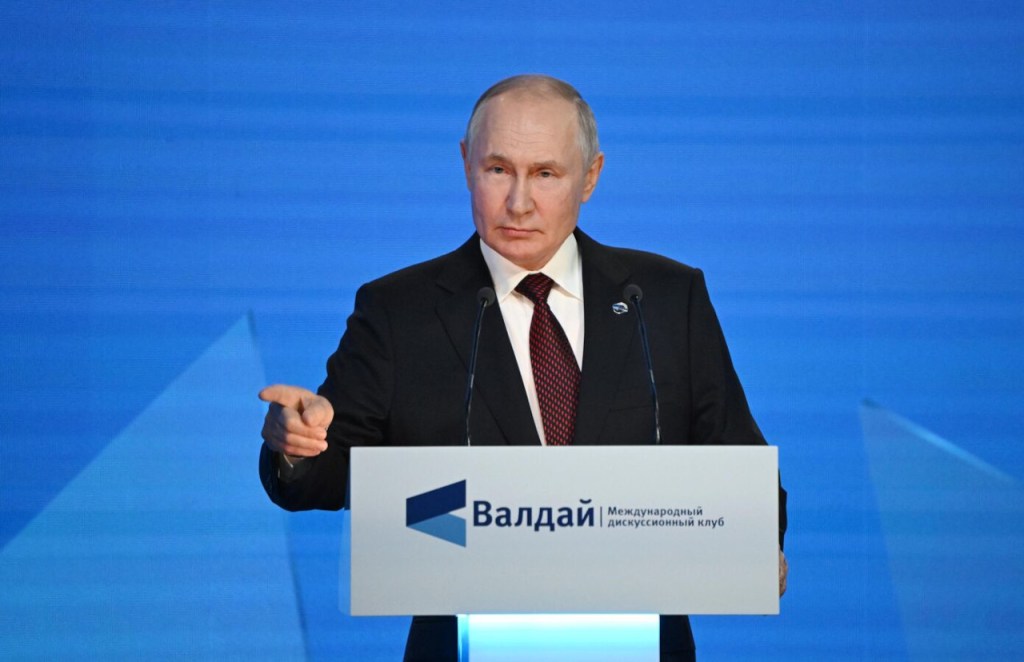
    Totally cool, calm, comfortable, in full command of a Himalaya of facts, no political leader anywhere – recent past and present – would even come close to delivering what amounts to an extensive, detailed world view deeply matured over a quarter of a century at the highest geopolitical level.

    Putin began his address referring to the October 1917 revolution, drawing a direct parallel with our turbulent times: “The moment of truth is coming”. In a clear tribute to Gramsci, he stated how a “completely new world order” is “being formed before our eyes.”

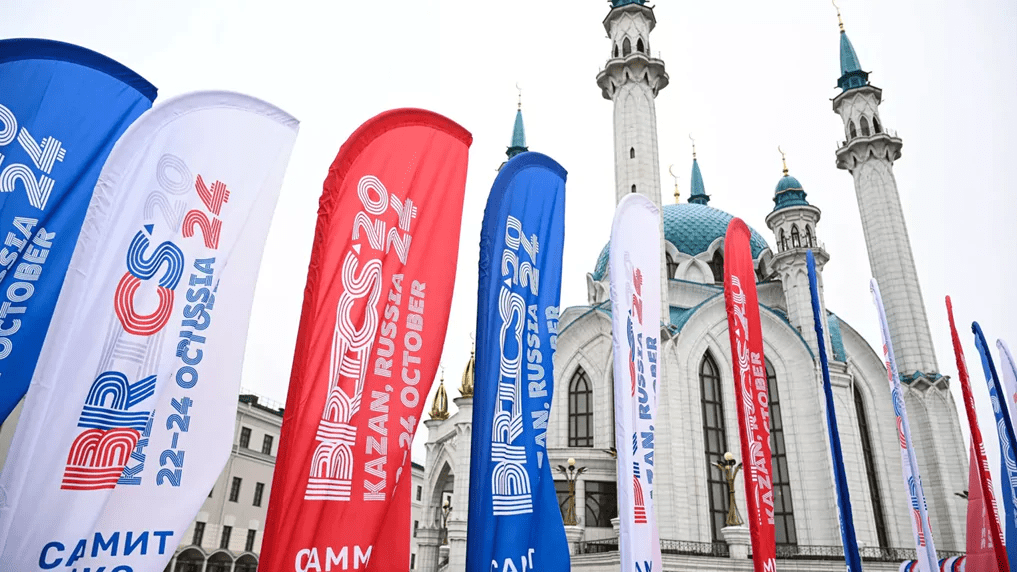
    The subtle reference to the recent BRICS summit in Kazan could not possibly escape critical minds across the Global Majority. Kazan was a living, breathing testimony that “the old order is irrevocably disappearing, one might say, has already disappeared, and a serious, irreconcilable struggle is unfolding for the formation of a new one. Irreconcilable, first of all, because this is not even a fight for power or geopolitical influence, this is a clash of the very principles on which relations between countries and peoples will be built at the next historical stage.”

    As concisely as possible, that should be taken as the current Big Picture framework: we are not mired inside a reductionist clash of civilizations or the “end of History” – which Putin defined as “myopic” – but facing a make-or-break systemic clash of fundamental principles. The result will define this century – arguably the Eurasia Century, as “the dialectics of History continues.”

    Putin himself quipped that he would drive into “philosophical asides” during his address. In fact that went much further than a mere refutation of unilateral conceptual fallacies, as “the Western elites thought that their monopoly is the final stop for humanity” and “modern neoliberalism degenerated into a totalitarian ideology.”

    Referring to AI, he asked rhetorically, “will human remain human?” He praised the building of a new global architecture, moving towards a “polyphonic” and “polycentric” world where “maximum representation” is paramount and the BRICS are “coming up with a coordinated approach” based on “sovereign equality.”

    Six Principles For Global Sustainable Development

    Sovereignty had to be one of the predominant themes during the Valdai Q&A. Putin was adamant that Russia must “develop our own sovereign AI. As algorithms are biased and give massive power to a few big companies that control the internet, the need is imperative for “sovereign algorithms.”

    Answering a question on Eurasian security and the US as the dominant maritime power v. a multipolar Eurasia, he stressed the “consensus and desire in Eurasia for an anti-hegemonic movement”, and not for Eurasia constituted “as a bloc”. That’s the appeal of Eurasia’s “multi-vector foreign policy”, implying “more political independence”. The key example of “harmonizing interests”, Putin stressed, is the Russia-China partnership, and that was also what “made BRICS successful.”

    Compare it in contrast to “the inability in Europe to establish a system of “indivisibility of security” and to “overcome bloc politics”; Europe instead went for NATO expansion: “After the end of the Cold War there was an opportunity to overcome bloc politics. But the US had fear of losing Europe. The US installed almost a colonial dependence. Honestly I did not expect that.”

    Putin introduced a fascinating personal experience tidbit referring to a conversation – in German – with former German chancellor Helmut Kohl in 1993, when Kohl said flat out that “the future of Europe” is linked to Russia.

    Yet that ended up leading to “the most important problem on our Eurasian continent, the main problem between Russia and European countries: the trust deficit (…) When they tell us that ‘we signed the Minsk agreements on Ukraine only to give Ukraine an opportunity to rearm, and we had no intention of resolving this conflict peacefully,’ what kind of trust can we talk about? (…) You have directly publicly stated that you have cheated us! Lied to us and deceived us! What kind of trust is that? But we need to get back to that system of mutual trust.”

    Putin then added that Europe should consider becoming part and parcel of a Chinese concept straight from Chinese philosophy (“they do not strive for domination”). With panache, he stressed that the Chinese uber-geoeconomic trade/connectivity project should be interpreted as One Belt, One Common Road.

    And that extrapolates to Central Asia, with all those nations “very young in their statehood” interested in “stable development”. For Russia-China, there’s “no competition” in the Heartland: “we only have cooperation.”

    Putin once again enumerated what he considers the 6 key principles for global sustainable development: openness of interaction (implying no “artificial barriers”); diversity (“a model of one country or a relatively small part of humanity should not be imposed as something universal”); maximum representativeness; security for all without exception; justice for all (erasing “the gap between the ‘golden billion’ and the rest of humanity); and equality.

    “Make Civilizations, Not War”

    On Ukraine, this was the money quote: “If there is no neutrality, then it’s difficult to imagine any kind of good neighborly relations between Russia and Ukraine.” In a nutshell: Moscow is ready for negotiations, but based on facts on the battlefield and what was agreed upon in Istanbul in April 2022.

    That may be interpreted as a direct message to President Trump. To whom the door is open: “Russia has not damaged its relations with the US and is open to their restoration, but the ball is in the Americans’ court.”

    Putin on US Presidents (he met quite a few): “All of them are interesting people.” On Trump: “His behavior when there was an attempt on his life, I was impressed. He is a courageous person. He acquitted himself valiantly.” On the open door: “Whatever he does it’s up to him to decide.” Then Putin offered his own congratulations for the re-election – on the record. The dialogue may be on: “We are willing to talk to Trump.”

    Putin extolled Russia-China relations as part of their strategic partnership as being “at the highest level in modern history.” He also praised his own personal relation with Xi Jinping. That paved the way for the real killer, when it comes to US-Russia-China: “If the US had chosen a trilateral cooperation instead of double constraint – everyone would win.”

    An excellent question by Brazilian economist Paulo Nogueira Batista Jr – a former vice-president of the NDB, the BRICS bank – led Putin to clarify his own position on de-dollarization. He stated flatly that “my role is to see ideas shaped that we then propose to our partners”.

    The key target is “proposing to create a new investment platform using electronic payments.” That will address the “most promising markets” in the near future – South Asia, Africa, parts of Latin America: “They will need investment, technologies.” And “tools independent from inflation” – with regulation “through Central Banks and the NDB. We agreed to have a working group meeting regularly at government level. We are in no hurry.”

    So that puts to rest any scenario of an immediate BRICS financial bombshell – even as “two-thirds of our trade is being serviced in national currencies” and among BRICS the figures are also high.

    BRICS Bridge will be tested – soon. As for creating a single currency, that’s “premature. We need to achieve greater integration of economies, increase the quality of economies to a certain – compatible – level.”

    Then, the bombshell: “We never wanted to abandon the dollar!” That goes a long way to explain Putin’s own view on de-dollarization: “They are undoing it with their own hand – the power of the dollar.”

    All of the above is just a sample of the width and breath of themes addressed by the President during the Valdai Q&A. The forum itself offered precious nuggets all across the spectrum. Some participants – correctly – noted the absence of “the majority of the majority”: youth and women. Africans were impressed with “the sharp mind of Russian bureaucracy.”

    A Chinese view noted how “the Chinese don’t swim against the current; they cross the river and reach the other bank.” There was a near consensus that development should be “based in different cultural values of civilizations” – actually Putin’s own view. Also imperative is the “need for aggregate authority” among the Global South.

    A Greek insight was particularly powerful when it comes to the civilizational approach to politics: “Civilizations don’t clash. States do.” Thus the new – playful – motto that could guide not only BRICS but the whole Global Majority: “Make Civilizations, Not War.” [end]

    The original article

    Related

    November 7, 2024: How Trump could liberate Europe – Thomas Fazi, UnHerd

    His isolationism is an opportunity

    October 23, 2024: BRICS Summit in Kazan: The End of the U.S. Hegemony. Part 2 – Ricardo Martins, New Eastern Outlook

    The BRICS Summit in Kazan, Russia, aims to be a turning point towards a truly multipolar or multi-nodal world that has been in transition for a few years now

    June 12, 2024: The summer of living dangerously – Pepe Escobar, Strategic Culture Foundation

    The plutocracy believes that afterwards they can buy the whole thing for a pittance while flies are still laying eggs in European carcasses

    September 1, 2023: No respite for France as a ‘New Africa’ rises – Pepe Escobar, The Cradle

    Like dominos, African states are one by one falling outside the shackles of neocolonialism. Chad, Guinea, Mali, Burkina Faso, Niger, and now Gabon are saying ‘non’ to France’s longtime domination of African financial, political, economic, and security affairs

    July 30, 2023: Africa and a new world order – Stephen Sefton, Tortilla con Sal (Nicaragua)

    [the sense of history]

    June 8, 2023: The West Must Prepare for a Long Overdue Reckoning – Chandran Nair, The National Interest

    Five major trends illustrate how the world is changing, and that the West must grapple with the reality that it can no longer impose its “leadership” on the world as it once did

    March 20, 2023: Forging Ahead to Open a New Chapter of China-Russia Friendship, Cooperation and Common Development – Xi Jinping, RIA Novosti

    [Quote : no model of governance is universal, and no single country should dictate the international order]
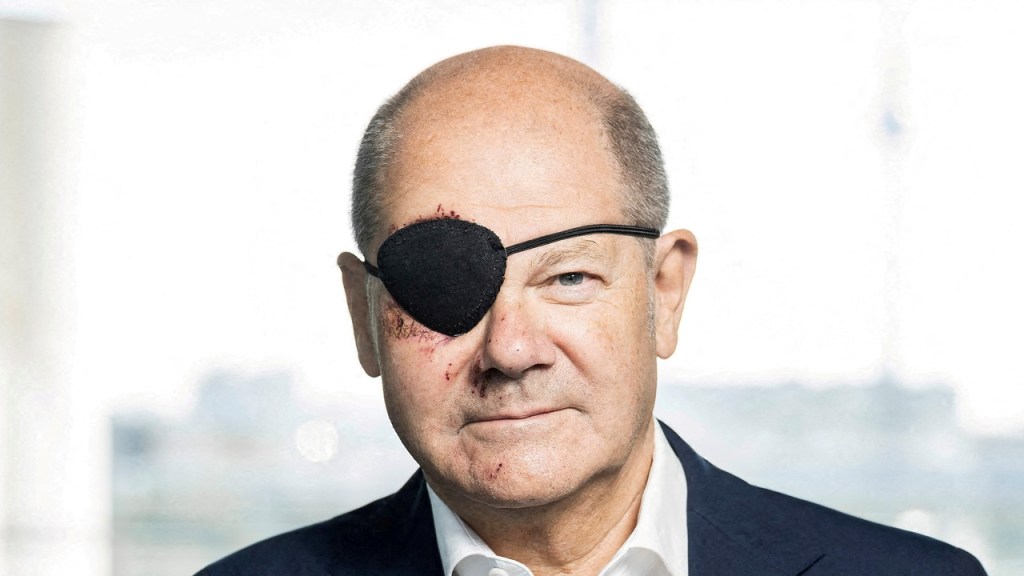

  • Daily pictures: the fall guy

    the Germans have bowed down to the US sabotage by Joe Biden administration of Nord Stream pipelines, only to end up with Donald Trump’s America First doctrine in economy and defense

    In the evening of November 6, 2024, after the landslide victory of Donald Trump in the US presidential election, social democrat chancellor Olaf Scholz dismisses Christian Lindner, his neoliberal finance minister. That’s the collapse of the government coalition in Germany

    Related

    September 27, 2022: US operatives have sabotaged Nord Stream

    the motive, the opportunity and the means

    February 8, 2023: How America Took Out The Nord Stream Pipeline – Seymour Hersh

    The New York Times called it a “mystery,” but the United States executed a covert sea operation that was kept secret—until now

    March 22, 2023: THE COVER-UP – Seymour Hersh

    The Biden Administration continues to conceal its responsibility for the destruction of the Nord Stream pipelines

    August 14, 2024: Nord Stream sabotage: Germany issues arrest warrant – Deutsche Welle

    A Ukrainian national, whose last known address was in Poland, is being sought by German authorities for the 2022 attacks on the Nord Stream gas pipelines. He is believed to have acted with two accomplices [That is a piece of German humor. Such a small team and its limited means would not have been able to provoke such damage and actually, the sabotage of Nord Stream pipelines was obviously a US secret operation. From the beginning, that lead was a red herring]

    September 26, 2024: For the first few days, the harbormaster on Christiansø “didn’t have to say a word”. But today he can reveal a bit – Politiken

    In September 2022, the explosions of the Nord Stream gas pipelines caused enormous international attention. At first, everyone believed that Russia must be behind the sabotage. Now Germany is looking for a Ukrainian diving group on a yacht, while Denmark and Sweden have dropped the investigation. So what do we know about the case, which they soon forget on Christiansø?

    October 9, 2024: The old man and the sea

    new information about the US sabotage of Nord Stream pipelines

    The Atlanticist defeat in Donbass and Ukraine

    chronicle of a new catastrophic NATO venture

  • [Sharing] The West is goading Georgia – Thomas Fazi, UnHerd

    Tbilisi has been ensnared by Nato hypocrisy

    Food. Churches. Chacha. This is what Georgia has long been known for. But now this ancient country, flanked by the mountains and the sea in the heart of the Caucasus, is the battleground in a new Not-So-Cold War. Due to its strategic location — it shares a large border with Russia to the north — the country has found itself caught up in the geopolitical power play between the West and Russia. And just like the Euromaidan revolt in Ukraine a decade ago, Georgia’s domestic politics have been framed in Nato circles as an existential fight. On one side sits the Georgian Dream, the allegedly pro-Russian ruling party, in power since 2012. On the other sits the opposition, avowedly pro-Western and pro-EU.

    Little wonder, then, that last week’s parliamentary elections have turned into a global event. As predicted by the polls, Georgian Dream won by a wide margin, securing over 53% of the vote. The four major opposition coalitions together managed less than 40%. There is no reason to believe that the vote was fixed: despite raising some concerns about pressure on voters, biased media coverage and an environment of political polarisation, independent observers found no evidence of electoral fraud, let alone of Russian interference.

    Yet that doesn’t fit the geopolitical mood. Desperate to finally shut Russia out from its near abroad, there seems to be no line Western politicians and their allies in Georgia are unwilling to cross to achieve their geopolitical aims — even if that means ignoring basic liberal principles and or else overturning the will of the people wholesale. Dovetailed with ominously similar moves across the Black Sea in Moldova, meanwhile, and Tbilisi may not be the last capital to suffer.

    Even if Georgia’s elections were almost certainly free and fair, the opposition has refused to accept defeat. They’ve accused the government of “stealing” the election as part of a “Russian special operation”. By Monday, thousands of pro-EU demonstrators had rallied outside the Georgian parliament. For its part, the opposition can count on a powerful ally within the Georgian state: the country’s staunchly pro-Western president Salome Zourabichvili.

    Born in Paris, she’s spent most of her life working as a French diplomat, including as the country’s ambassador to Georgia. Yet despite only becoming a Georgian citizen in 2004, Zourabichvili was nonetheless confident that victory belonged to the opposition. “I do not accept this election,” she said. “It cannot be accepted, accepting it would be accepting Russia into this country, the acceptance of Georgia’s subordination to Russia.” Even more remarkably, Zourabichvili claimed that whether Russian interference could actually be proved didn’t matter. What was important, she said, was “what the Georgian population knows, feels and sees”.

    If the roles were reversed, Western governments would rightly laugh off such claims as unhinged. Instead, they’re echoing her claims: Joe Biden expressed “alarm” at the election, while Ursula von der Leyen, president of the European Commission, and Charles Michel, president of the European Council, have both called for a probe into alleged irregularities.

    Senior parliamentarians across the bloc have made similar noises. They’ve claimed that “these elections were neither free nor fair”, arguing that “the European Union cannot recognise the result” and demanding “personal sanctions” against government officials. Displaying a zero-sum mentality, typical of this new Cold War, they added “this election was about Europe or isolation, democracy or authoritarianism, freedom or Russification” implying that Georgia was headed in the wrong direction. For his part, Boris Johnson has suggested that Georgian democracy was “stolen by Putin’s puppet government in Tbilisi”.

    It’s hard to overstate how irresponsible these claims are. Consider, after all, what happened the last time Western governments forced a country geographically, politically and culturally split between Russia and the West to make a binary civilisational choice between the two. That was Ukraine — and look at the blood-stained consequences there. First: a Western-supported coup against a democratically elected government. Then: civil strife in the Donbas and outright war with Russia.

    This is precisely the outcome that Irakli Kobakhidze and his Georgian Dream party are trying to avoid. The prime minister rejects the West’s “pro-Russian” labels, arguing instead that he’s just being pragmatic. Given his homeland’s history, size and geography, Kobakhidze says it makes no sense for Georgia to fully move into the Western sphere of influence, let alone sever ties with Russia altogether, or even worse adopt a confrontational attitude towards the latter. Indeed, the government has stressed the importance of having “normal, peaceful relations” with Russia.

    Georgia has good reasons to play it safe. Economic data shows that increased tourism and trade with Russia, alongside strengthened ties with China, have played an important role in boosting the economy, which grew by 7.5% last year. Perhaps most crucially, though, his party’s imperative is avoiding war — that is, becoming a second front in Nato’s proxy war against Russia.

    Claiming that Kobakhidze is merely a pro-Russian stooge simply reflects the West’s disconnect from reality, or outright bad faith. Though the war in Ukraine has certainly opened a rift between Georgian Dream and Brussels, the party has equally been clear that it’s eager for integration with Europe. This is certainly more than rhetorical: the party enshrined pursuing EU and Nato membership in the Georgian constitution, and submitted an application for EU membership in 2022. All Kobakhidze has requested in return is that Brussels plays “by Georgian rules” as Tbilisi journeys towards the promised land in Belgium.

    In short, then, Georgian Dream’s geoeconomic platform can be summed up as follows: focusing on economic growth and preserving internal stability by maintaining friendly political and economic relations with both the West and Russia, and the wider non-Western bloc, while avoiding being drawn into external conflicts. Taken together, then, Kobakhidze’s hard-nosed approach can plausibly be compared to another Western bête noire: Hungary. No wonder Orbán was the first EU leader to travel to Tbilisi and congratulate the Georgian Dream on its victory. “Nobody wants their own country to be destroyed and involved in war”, the Hungarian leader said. “Therefore, we understand the Georgian people’s decision to choose in favour of freedom.”

    To quote Orbán, many Georgians seem happy not letting their country become a “second Ukraine” — while also pursuing a “multipolar” agenda elsewhere, notably partnering with China to build a strategic port on the Black Sea. Unfortunately, it seems like the West has other plans. Indeed, Washington and its allies seem to be applying the same playbook to Georgia as they did to Ukraine. Just as in the lead-up to the 2014 coup in Kyiv, they’re first denying the legitimacy of the elected government, accusing it of being a Russian pawn. From there, they’re using Western-funded “NGOs” to mobilise the pro-EU minority against the government, while also pushing for sanctions. If the government still doesn’t yield to the pressure, they’ll try to move to the next phase: unrest in parliament and on the streets; a hoped-for police crackdown; and ultimately the toppling of the government and the appearance of a friendly pro-Western alternative.

    Certainly, influential Western foreign policy think tanks are already predicting exactly this scenario. In a recent article, the Atlantic Council argued that “Georgia’s 2024 parliamentary election has entered its ‘Maidan’ phase” — and that Western governments must “support the Georgian people in both the immediate period ahead and the longer term”. The Nato establishment’s aims couldn’t be clearer.

    Yet in the event, fomenting a Ukraine-style “coup” in Georgia may prove challenging. That’s partly because most Georgians are determined to avoid this outcome, and partly because Kobakhidze has been “coup-proofing” the country for some time. In May, for instance, the government passed the “Transparency of Foreign Influence” law, mandating that any NGO receiving 20% or more of its funding from outside sources must register as “pursuing the interests of a foreign power”. The EU and US accused the bill of being a sign of Georgia’s “democratic backsliding” and “Russification” — and even imposed sanctions. Protests followed, some of which were joined by Western politicians, only fuelling the country’s political polarisation.

    Yet as the Georgian government rightly points out, variations of its so-called “foreign agent” act already exist across the West. No less striking, there’s plenty of evidence that NGOs do play a nefarious role in the country’s politics: it’s just that they pursue pro-Western agendas. For one thing, there are the raw numbers. Though reliable data is hard to find — itself part of the problem — there are roughly 30,000 NGOs in Georgia. That’s a huge number for a country of less than four million people. Then there’s the question of funding. Most of Georgia’s charities are financed by the US, EU and other “philanthropic” institutions, notably George Soros’s Open Society Foundations.

    And while these varied organisations officially focus on innocuous topics such as democracy and human rights, it’s no secret that Western governments use them to push their own interests, up to and including regime change. Western-funded NGOs, for example, played a key role in fostering several “colour revolutions” in the early 2000s. That mostly involved non-violent protests, swiftly leading to pro-Western changes of government: especially in post-Soviet states like Ukraine (2004-5), Kyrgyzstan (2005) and even Georgia itself (2003).

    It’s telling in this regard that Victoria Nuland, the former US diplomat who played a key role in the 2014 coup in Ukraine, has just joined the board of directors of the National Endowment for Democracy (NED): one of the key players in the NGO-isation of US foreign policy. No wonder Bidzina Ivanishvili, one of the main founders of Georgian Dream, recently described the NGO class as a “pseudo-elite” nurtured by foreigners, and one basically embarrassed by its own country. It’s surely revealing too that Georgian opposition politicians are often interviewed with EU, US and Nato flags in the background.

    It’s clear, in short, that the moral panic over Georgia’s “foreign agent” law had little to do with democracy. Rather, as the historian Bryan Gigantino puts it, Western countries fear the rule would strip them of “important leverage” in the country’s domestic and foreign policy. Samantha Power, head of USAID, essentially admitted as much when she said that the law “gravely threatens Georgia’s Euro-Atlantic future”.

    This is perhaps the most hypocritical aspect of the Western narrative about somewhere like Georgia. Whatever Russia’s “foreign influence” — and it surely exists — the West’s is far greater. More to the point, it’s perfectly natural for a country like Georgia, straddling the border between Europe and Asia, to exploit the ongoing “multipolarisation” of global politics and boost its own autonomy. Given the West’s own tumbling influence, meanwhile, ham-fisted attempts to forcefully disrupt this process will only push Georgians even closer into the arms of Russia and China.

    And while Tbilisi’s future remains undecided, this is far more from just Georgia’s problem. After all, something similar is now happening in Moldova. There, too, recent elections revealed a deeply divided electorate. No less important is the role of Western and Western-funded NGOs in that country. For example, various deputies of the pro-Western ruling party, and even the current president of Moldova, have previously participated in Soros Foundations programmes. Combined with the potential for similar trouble elsewhere in the post-Soviet sphere, and it’s clear that the Georgian Dream could yet become a nightmare right across the region [end]

    The original article

    Related

    March 9, 2023: Atlanticist coup attempt in Georgia

    where protestors are now demanding the resignation of the democratic government

    March 8, 2023: Maidan 2.0 in Georgia?

  • [Sharing] Collapsing Empire: China and Russia Checkmate US Military – Kit Klarenberg

    On July 29th, Pentagon-funded “think tank” RAND Corporation published a landmark appraisal of the state of the Pentagon’s 2022 National Defense Strategy (NDS), and current US military readiness, produced by a Congress-created Commission of “non-governmental experts in national security.” Its findings are stark, an unrelentingly bleak analysis of every aspect of the Empire’s bloated, decaying global war machine. In brief, the US is “not prepared” in any meaningful way for serious “competition” with its major adversaries – and vulnerable or even significantly outmatched in every sphere of warfare.

    The 2022 NDS was released in October that year, with much fanfare. Its contents bombastically proclaimed to offer a bold, comprehensive roadmap for how the US national security state, and all its divisions, would evolve and adapt to “dramatic changes in geopolitics, technology, economics, and our environment.” Promising to safeguard Washington’s hegemony for “decades to come,” the Strategy’s introduction loftily declared that the Pentagon was obligated to the US military and public alike:

    To provide a clear picture of the challenges we expect to face in the crucial years ahead – and we owe them a clear and rigorous strategy for advancing our defense and security goals… From helping to protect the American people, to promoting global security,to seizing new strategic opportunities, and to realizing and defending our democratic values

    Fast forward to today, and the RAND Commission’s appraisal of the NDS couldn’t be more scathing. The Pentagon’s comprehension of the economic, military, and political threats to “US interests” posed by China and Russia, and the pair’s emergent, world-defining partnership – to the extent they were even acknowledged at all – is found to be hazardously defective, if not non-existent. And the NDS’ proposals for overcoming these issues, and maintaining the Empire’s worldwide dominance, are judged to be at best woefully inadequate, at worst outright delusional

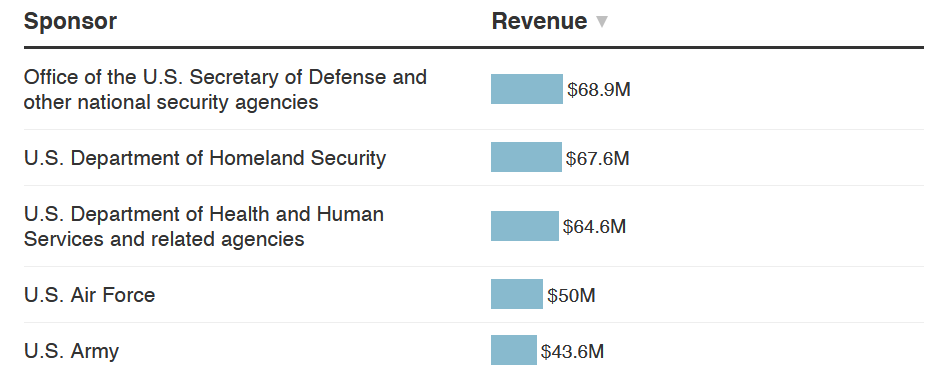
    RAND’s income sources in 2023

    ‘Multiple Adversaries’

    The NDS did get one thing right – China and Russia represent major threats to the Empire, and actively “seek to undermine US influence” worldwide. Beijing particularly was branded a “pacing challenge” economically and militarily, given the extraordinary speed and scale of its scientific and technological innovation and growth. However, the NDS assumed Washington maintained major ‘edges’ over its rival, and widening those gaps further was promptly and readily achievable. To say the least, the RAND report begs to differ:

    We believe the magnitude of the threats the US faces is understated and significantly worse… In many ways, China is outpacing the US… in defense production and growth in force size and, increasingly, in force capability and is almost certain to continue to do so… [Beijing] has largely negated the US military advantage in the Western Pacific through two decades of focused military investment. Without significant change by the US, the balance of power will continue to shift in China’s favor

    This dire situation is greatly magnified by China’s “no limits” partnership with Russia, signed in February 2022, and explicitly “aimed at challenging US leadership internationally.” The pair’s burgeoning alliance with the Global South, specifically Iran and North Korea, exacerbates things yet further. Alliance and collaboration between these countries means they are all growing “bolder”, in turn undercutting Washington’s “force planning and force structure… designed to deter aggression by others, when the US is involved in conflict elsewhere.”

    This ever-germinating union of disaffected states – stultifyingly dubbed “An Axis of Growing Malign Partnerships” by RAND – means “efforts to isolate and coerce these states through international means – such as sanctions, embargoes, and censure – will be far more difficult.” Even more gravely, it “increases the likelihood that a conflict with one would expand to multiple fronts, causing simultaneous demands on US and allied resources”:

    At minimum, the US should assume that if it enters a direct conflict involving Russia, China, Iran, or North Korea, that country will benefit from economic and military aid from the others… This new alignment of nations opposed to US interests creates a real risk, if not likelihood, that conflict anywhere could become a multi-theater or global war… As US adversaries are cooperating more closely together than before, the US and its allies must be prepared to confront an axis of multiple adversaries

    Partnership between Beijing and Moscow has only deepened since February 2022. In the words of Stockholm’s Institute for Security and Development Policy, “the world order has become much more unfavorable and hostile in the Russian and Chinese conceptions, and has warranted closer ties and unwavering mutual support.” Their alliance’s revolutionary geopolitical ramifications were abundantly clear when the NDS was published that same year. Yet, that document made zero reference to the “no limits” relationship whatsoever.

    The obvious prospect that the US waging war against one of the pair would inevitably mean war with the other – a threat now all the deadlier due to their alliance expanding – was similarly unconsidered. The Empire is extremely fortunate no such conflict has come to pass in the two years since the NDS was published. As the Commission report spells out in forensic detail, Washington would be almost completely defenceless in such a scenario, and likely defeated nigh on instantly.

    Multiple passages slam the US military’s lack of “readiness” for a major conflict. Recent “crises”, including the Zionist entity’s genocide in Gaza, “have led to unplanned force deployments to Europe and the Middle East, creating high demand for ‘stressed’ force elements with multiple requirements across theaters, such as air defense and aerial refueling.” In tandem, “constant demand for presence operations, exercises, and security cooperation activities has exacerbated readiness challenges, especially when paired with the training requirements to prepare for great power competition and conflict.” Meanwhile:

    The US Navy is also suffering from readiness issues stemming from its high operational tempo, aging ships, shipyard backlogs, and crew fatigue. Continued mishaps at sea and in military aviation pose risks to troop safety and are symptomatic of a decline in readiness, reflecting both a lack of experience and the increased complexity of the future warfighting mission. The steady demands of campaigning on a smaller military force – and an even smaller number of responsive, modernized, and combat-credible forces – has stressed force readiness

    ‘Affordable Cost’

    It’s not just being spread too thinly on the Grand Chessboard that means the Empire’s military machine “lacks both the capabilities and the capacity required to be confident it can deter and prevail in combat.” Munitions, or lack thereof, are a fatal susceptibility. “Extraordinary” levels of “consumption and demand” for US weapons “by allies and partners in Europe,” combined with the Zionist entity’s rapacious appetite for heavy bombs, have left Washington’s stockpiles “already inadequate for a high-end conflict.”

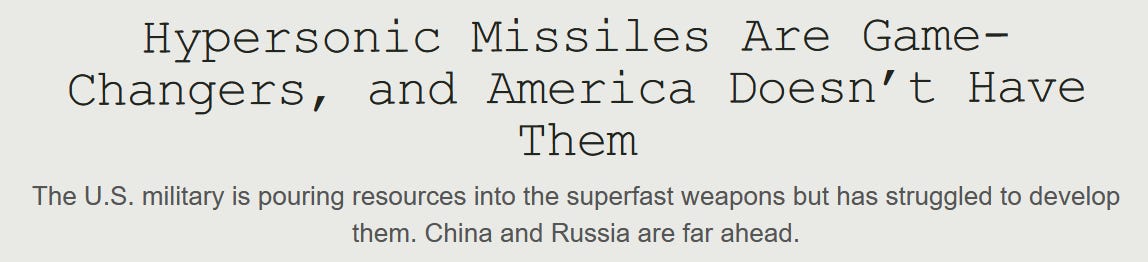
    Per Wall Street Journal, just one of the fields in which the Empire is way behind China and Russia militarily

    Renewing those stockpiles, let alone equipping the Empire for future war, won’t be easy. The RAND Commission found Washington’s “defense industrial base” is completely “unable to meet the equipment, technology, and munitions needs” of the US, let alone its allies. “A protracted conflict, especially in multiple theaters, would require much greater capacity to produce, maintain, and replenish weapons and munitions” than is currently in place, the report observes. Rebuilding that capacity “requires greater urgency and resources,” and “should remain a top priority” for the Pentagon.

    For decades, the US military “employed cutting-edge technology to its decisive advantage for decades.” This “assumption of uncontested technological superiority” on the Empire’s part meant Washington had “the luxury to build exquisite capabilities, with long acquisition cycles and little tolerance for failure or risk.” Those days are long over though, with China and Russia “incorporating technology at accelerating speed,” and “even relatively unsophisticated actors” such as Yemen’s Ansarallah “able to obtain and use modern technology (e.g. drones) to strategic effect.”

    The Empire already isn’t keeping up, and in any future war, will need “to continue to develop, adopt, and iterate new technologies at greater speed and scale and at an affordable cost,” while simultaneously replenishing “existing munitions” for a “protracted” period, “to keep pace with warfighter needs.” Current Pentagon research and development and procurement systems were judged by the Commission to be wholly inadequate for the task. And America’s “defense industrial base” is today crumbling, riddled with a myriad of deleterious issues:

    These shortcomings include the deteriorating condition of defense depots, contract maintenance performance issues, and underproduction of spare parts, among many others. The result is a US military that is minimally operationally ready today but is unlikely to be ready for tomorrow… [The US] is unable to produce the weapons, munitions, and other equipment and software needed to prepare for and engage in great power conflict. Consolidation and underinvestment have led to too few companies, gaps in the workforce, insufficient production infrastructure, and fragile supply chains

    To address these problems, the Commission calls for enormous amounts of money to be spent domestically on “the capacity to build” munitions, “the recapitalization of armories,” and “advanced manufacturing and further stockpiling of munitions. Meanwhile, the Pentagon “needs to work with other countries to expand production capacity for munitions,” while ensuring “it can buy all munitions at sufficient scale to deliver the desired operational effects.”

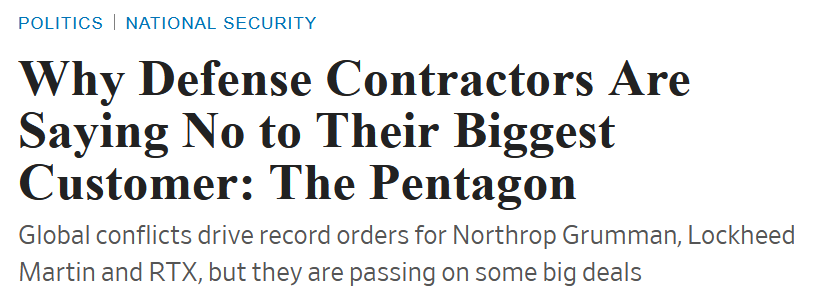
    Of course, the Empire already wastes exorbitant sums on keeping its existing outgunned, outnumbered, outproduced military machine, which wouldn’t survive first contact with an actual war, operational. Doing so requires printing astonishing volumes of dollars, in turn producing such high inflation that arms suppliers are now rejecting Pentagon contracts and tearing up existing deals, as they have become “money-losers”. Washington’s response? The US defense budget now allocates over $1 billion in newly-printed money to compensate them for inflation-related losses

    We have entered a strange, late-stage Empire era, comparable to the Soviet Union’s Glasnost, in which elements of the US imperial braintrust can see with blinding clarity Washington’s entire hegemonic global project is stumbling rapidly and irreversibly towards extinction, and announce so publicly – but their insight does not translate into evasive governmental action at home. The RAND Commission report elicited no mainstream coverage or comment whatsoever, proof positive there isn’t a concomitant effort to manufacture consent for its radical, far-reaching prescriptions.

    Were we living in a unipolar age, a multipronged PR campaign would immediately ensue to convince Americans of the righteousness of the Empire’s mission, and the necessity of investing in US “defense” to the tune of trillions. The media’s silence on the Commission’s findings definitionally reflects an omertà among the US political class. The fatal “disconnect” between the Pentagon’s operational and industrial planning identified by RAND will endure. So too ever-intensifying US military impotence. We’re spectating the Empire’s final acts in real-time [end]

    The original article

    Related

    November 28, 2023: How American Neocons Wrecked the Middle East and Ukraine – David Stockman, Antiwar.com

    This is part 2 of “Why There Is Still No Peace on Earth: Washington’s Folly From The Persian Gulf to Ukraine.”  Read part 1

    June 8, 2023: The West Must Prepare for a Long Overdue Reckoning – Chandran Nair, The National Interest

    Five major trends illustrate how the world is changing, and that the West must grapple with the reality that it can no longer impose its “leadership” on the world as it once did

    The Atlanticist defeat in Donbass and Ukraine

    chronicle of a new catastrophic NATO venture

  • [Sharing] BRICS Summit in Kazan: The End of the U.S. Hegemony. Part 2 – Ricardo Martins, New Eastern Outlook

    The BRICS Summit in Kazan, Russia, aims to be a turning point towards a truly multipolar or multi-nodal world that has been in transition for a few years now

    The changes announced in Kazan regarding the payment system and the reserves of nations are concrete steps towards independence from the U.S. imperialistic system. This system is symbolized by a small piece of green paper that no longer has real backing—just an empty promise.

    An Imperialistic Structure Does Not End in One Day

    The U.S. has managed to build an imperial structure based on more than 800 military bases around the world, the imposition of the dollar as the currency of international trade and reserve, the extraterritorial application of its laws, and by creating a network of vassal and semi-vassal states around its hegemony. Nonetheless, the core of its imperial system relies on the dollar. The de-dollarisation led by the BRICS is driving the U.S. to despair, making their sanctions system increasingly meaningless too.

    BRICS has taken on the responsibility of driving substantial change for a new world order

    No empire lasts forever, especially one that lacks a strategic vision, as is the case with the U.S. The American empire lost wars or promoted further chaos in Vietnam (1955-1975), Afghanistan (2002-2021), Iraq (2003-2011), Libya (2011) and did not win in Syria and has shown an inability to control its ally Israel, which continues to commit war crimes, uphold apartheid, engage in state terrorism, and carry out genocide. Moreover, the U.S. has been incapable of formulating its Middle East policy independently of Israel’s prism.

    On top of that, domestically, its infrastructure is crumbling, and its social indicators are rapidly approaching those of developing countries. The U.S. is the only major nation where life expectancy is declining, extreme poverty is increasing swiftly, and so is homelessness. Its citizens do not have universal, free access to healthcare, as happens in most developing countries, such as Latin America. All these issues highlight the fragility of the empire.

    The New Sick Man

    Once, during its decline, the Ottoman Empire was known as the “sick man of Europe.” Now, it seems the U.S. is playing this role, or perhaps it’s more like a drowning person: it pulls those who are close to it into its struggle and demands loyalty in this slow demise, particularly from European countries that have greatly benefited from its generous policies after WWII. In Latin America, the Monroe Doctrine is still very much in effect, which is why Brazil sometimes seems reluctant to commit fully to BRICS.

    Europeans, especially the Germans, have shown signs of wanting independence, and the idea of strategic autonomy has become wishful thinking. Former Chancellor Angela Merkel, who was economically liberal, listened to German business leaders who argued that the future lay not in the Atlantic, but Eastwards toward Russia and China.

    The U.S. did not like this shift and managed to make Europeans feel that they still needed Uncle Sam for their protection. Turning their backs on the U.S. was seen as an ungrateful response to American roles in WWII and the Marshall Plan.

    The U.S. meddled in Central Europe and Ukraine, expanding NATO eastwards. This move was highly discouraged by prominent American foreign policy strategists like Henry Kissinger, Robert Kagan, John Mearsheimer, and even William Burns, a former Ambassador to Russia and ex-CIA director. The coup orchestrated by the CIA and led locally by Victoria Nuland in 2013 in Ukraine was just the beginning, alongside the sabotage of Nord Stream by the U.S., all part of this complex game to make Europeans dependent on the U.S.

    BRICS Ignites Hopes of the Global South and the Discontented

    Once again, two blocks are forming, with some countries caught in the middle. The war in Ukraine and the Global South’s refusal to impose sanctions on Russia have highlighted the divisions in the world. The war in Gaza and the resulting genocide, supported by many Western nations while they preach values and human rights, has led the Global South to lose faith in the West’s moral standards. They have denounced its double standards and are nearly unanimously supporting the idea of a new world order.

    The expansion of BRICS, with over 40 nations waiting to join—including Serbia, Turkey, Indonesia, Malaysia, Thailand, Nigeria and Bolivia—clearly signals that change is expected.

    Some European nations are unhappy with the expected outcomes of remaining tied to the old regime– the EU tied to the U.S.- and wish to be part of a more dynamic and prosperous future. For instance, Spain has rejected imposing extra tariffs on Chinese electric vehicles, and Turkey wants to join BRICS too, as does Serbia, even if it means giving up potential EU memberships, along with many other nations.

    Bulgaria is also unhappy with its EU membership and is sending representatives to BRICS meetings. Moldova was divided over an EU membership referendum. The narrow victory of 0.2% was due to the votes of Moldovans living abroad. Still in Europe, Norway, not being subject to EU rules, has recently taken steps to strengthen economic ties with China, surprising many Atlanticists in Europe.

    Therefore, BRICS has taken on the responsibility of driving substantial change for a new world order. However, it is fair to say that BRICS nations have tried to reform the Bretton Woods institutions—especially the World Bank and the International Monetary Fund (IMF)—and the United Nations to better reflect the new economic, population, and trade realities, but they have not succeeded.

    New institutions are being built within BRICS, particularly the New Development Bank (NDB), which, unlike the IMF or World Bank, does not impose economic regime changes and has inclusive practices.

    In sum, there are several political and economic groups of nations around the world, but none has the political will or the capacity to promote major geoeconomic and geopolitical changes as BRICS does. Therefore, the 16th BRICS Summit in Kazan comes at the right time and with the right political will to build a better, more prosperous, inclusive, free, and less ideologically driven world. The next step should be the merger of the Shanghai Cooperation Organization (SCO) with BRICS [end]

    The original article

    Ricardo Martins ‒PhD in Sociology, specializing in policies, European and world politics and geopolitics, especially for the online magazine “New Eastern Outlook”

    Related

    July 31, 2023: Africa and a new world order – Stephen Sefton, Tortilla con Sal (Nicaragua)

    June 8, 2023: The West Must Prepare for a Long Overdue Reckoning – Chandran Nair, The National Interest

    Five major trends illustrate how the world is changing, and that the West must grapple with the reality that it can no longer impose its “leadership” on the world as it once did

  • [Aufteilung] Sabotage des Friedens – Glenn Diesen, Die Weltwoche

    Warum scheiterten die Verhandlungen von Istanbul im Frühling 2022? Weil der Westen lieber Russland schwächt als die Ukraine rettet

    Im Februar 2022 überfiel Russland die Ukraine, um ein Abkommen durchzusetzen, nachdem einige Nato-Staaten das Minsker Friedensabkommen jahrelang untergraben hatten. Am Tag nach der Invasion bestätigte Präsident Wolodymyr Selenskyj, dass der […]

    Der vollständiger Artikel

    verwandter Artikel

    The Atlanticist defeat in Donbass and Ukraine

    chronicle of a new catastrophic NATO venture

  • [Sharing] UK psychological warfare unit collaborated with Israeli army – John McEvoy, Declassified UK

    Exclusive: The British army’s 77th brigade held secret exchanges with the IDF, leaked files reveal

    Britain secretly advised the Israeli military on psychological warfare techniques, Declassified has found.

    Leaked documents reveal how the British army’s 77th brigade discussed strategy and tactics with the Israel Defence Forces (IDF).

    The 77th brigade uses psychological operations and social media to help fight wars “in the information age”.

    It specialises in “non-lethal forms of psychological warfare” such as cyber-attacks, propaganda activities, and counter-insurgency operations online.

    Israel’s own information operations have involved using fabricated videos and fake social media accounts to defend the bombing of Gaza.

    Two exchanges with the IDF took place at the 77th brigade’s barracks in Hermitage, Berkshire, between 2018-19.

    Leaked documents about the encounters originate from a hack of the IDF by a group called “Anonymous for Justice”. The dataset was subsequently published by Distributed Denial of Secrets.

    Although some of the documents reference “secret” matters, there is strong public interest in reporting on their contents.

    Israel is being investigated by international courts for genocide and war crimes in Gaza, while the UK Ministry of Defence (MoD) refuses to answer freedom of information requests or parliamentary questions about its military assistance to Israel.

    Professor Paul Rogers, an honorary fellow of the Joint Service Command and Staff College, commented: “This is a highly significant revelation that shows the extent of high level links between Israeli and British counter-insurgency and psychological warfare operators – and, as ever, the need for greater transparency from the military right across the board”.

    An MoD spokesperson said: “We regularly conduct non-operational defence engagements at staff level with partners across the globe. All engagement focuses on best practices and is in compliance with International Humanitarian Law”.

    The department refused to clarify whether psychological warfare collaboration with Israel was ongoing.

    77th brigade

    Israeli officer Benzi Zimmerman began organising a high-level information exchange between the IDF’s J3 operations directorate and the British army in 2018.

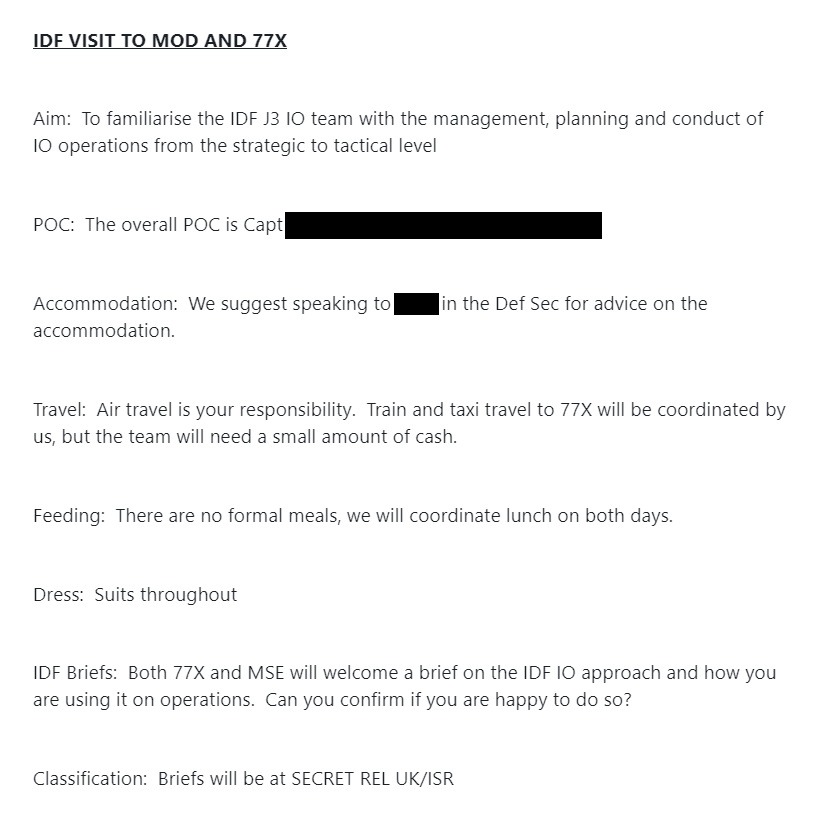
    The goal was “to familiarise the IDF J3 IO [information operations] team with the management, planning, and conduct of IO operations from the strategic to tactical level”, according to one of the leaked emails.

    A British army major subsequently helped to develop a two-day programme for the IDF team, which would be split between the MoD headquarters in Whitehall and the 77th brigade’s barracks in Berkshire.

    The itinerary included briefings at the “SECRET REL UK/ISR” classification level on such topics as “strategic operational information operations” and “IDF IO approach and structure”.

    IDF information operations chief Avinoam Frenkel was chosen to lead the visit. He was to be joined by IDF officers Oded Gonen and Dan Krinsky, the Israeli defence attaché in London, and Zimmerman.

    Information operations

    The IDF’s trip to the 77th brigade in November 2018 was unexpectedly cancelled, but plans were put in place to maintain collaboration on information operations.

    In February 2019, Erez Maisel, the commander of the IDF’s international cooperation unit, led a delegation to the 77th brigade. There are no further details about this visit.

    Over the following months, Britain’s defence attaché in Tel Aviv Ronnie Westerman pushed for the aborted 2018 trip to be rescheduled.

    The Israeli embassy in London agreed, registering its “wishes to pursue planning for this visit to go forward”.

    By June, the IDF team’s visit to the MoD and 77th brigade had been rearranged on the same lines as “the trip we had to postpone from last year”.

    It took place on 10 and 11 July 2019, with one day spent at the 77th brigade’s barracks in Berkshire and the second at the Ministry of Defence.

    As previously planned, the exchanges focussed on “the management, planning and conduct of IO operations from the strategic to tactical level”.

    The timing was seen to be particularly fortuitous given the 77th brigade’s “Operations Centre Opening Event” and “Cocktail Party” were taking place that week.

    Follow on visit

    Following the “successful visit” of the IDF team to Britain, 77th brigade commander Daniel Reeve requested that one of his lieutenants “conduct a follow on visit” to Israel.

    An army major, who had recently been put in charge of the Middle East Mission Team in the 77th brigade, was chosen to accompany him.

    The visit was due to take place between 28 March and 4 April 2020, according to a visitor request issued by the British embassy in Tel Aviv. However it did not go ahead, probably due to Covid travel restrictions.

    The application noted how the “subject to be discussed” was “Capacity Development: Information Operations”, with the classification level listed as “Secret”.

    Huda Ammori, co-founder of the campaign group Palestine Action, told Declassified: “Psychological warfare and propaganda are tools often used by the Israeli regime to spread disinformation whilst occupying, massacring and torturing the Palestinian people”.

    She said the revelations confirm that Britain plays “an active role in repressing Palestinians”.

    The IDF did not respond to a request for comment [end]

    The original article

    related

    Revealed: America’s Secret Special Forces Flights to Israel from UK Cyprus Base – Matt Kennard, Internationalist 360°

    the US military has been flying covert planes to Israel from RAF Akrotiri since the bombing of Gaza began, Declassified has discovered

    How American Neocons Wrecked the Middle East and Ukraine – David Stockman, Antiwar.com

    Kill this beast

    for Palestine, for Lebanon, for Syria, for the world, justice, peace and harmony

    In das palästinensisches Wohngebiet von Gaza

    in the Palestinian ghetto of ​​Gaza, on December 7, 2023

  • [Sharing] Is Russia Really The “Greatest Threat” To France? – Andrew Korybko, Oriental Review

    Russia’s support of multipolar processes in West Africa has dealt a heavy blow to French hegemony there, which France has responded to by waging a proxy war on Russia in Mali while going on the strategic offensive in the South Caucasus and Eastern Europe

    French Defense Minister Sebastien Lecornu claimed in an interview that Russia is his country’s “greatest threat” apart from terrorist groups. He pointed to its “aggressive” actions over the past year, “not only to our interests in Africa, but also directly to our Armed Forces”. Lecornu also accused Russia of “waging an information war” and “militarizing new environments, including the seabed and cyberspace.” The reality is that Russia does pose a threat to France, but only to its hegemony, not to its legitimate interests.

    Russia’s African policy, which readers can learn more about here, seeks to accelerate multipolar processes there. This has taken the form of supporting the former French colonies of Mali, Burkina Faso, and Niger, not only bilaterally, but also multilaterally with regard to their newly formed Sahelian Alliance and Confederation. Their patriotic military leaderships envisage reducing their outsized dependence on France by relying more on Russia in order to regain as much of their lost sovereignty as possible.

    In tangible terms, this has seen them replace France with Russia as their preferred anti-terrorist partner, with some speculating that the immediate quid pro quo is privileged Russian access to their resources. The short-term goal is to restore stability, after which the medium-term one of further disengaging from the French “sphere of influence” can more confidently be pursued, ideally by introducing a new regional currency to replace the CFA Franc that Paris continues to exploit for enriching itself at their expense.

    These two developments threaten French hegemony since the first impedes its efforts to divide-and-rule these countries while the second has traditionally been responsible for buoying its economy. Taken together, Russia’s support of these multipolar processes does indeed deal a heavy blow to French interests, but once again, only to its hegemonic interests and not its legitimate ones. France can’t acknowledge the way in which Russia threatens it in Africa since the dark truth makes it look very bad.

    It won’t go down without a fight, however, which is why it’s waging a proxy war on Russia in Mali together with the US and Ukraine through their patronage of Tuareg separatists and Islamist groups. Other battlefronts could be opened against the Sahelian Alliance/Confederation such as if Franco-American forces in the Ivory Coast try to destabilize southern Mali and Burkina Faso. Jihadist violence in the latter, which is already approaching critical proportions, could also soon worsen with their support.

    France isn’t just playing defense since it’s also going on the strategic offensive against Russia in the South Caucasus through its efforts to accelerate Armenia’s pro-Western pivot. The ultra-nationalist Armenian diaspora that it hosts has played a crucial role in this process. France is also selling military equipment to Armenia too in order to exacerbate Russia’s suspicions of its intentions. Close Russian-Azerbaijani ties and impressively pragmatic Russian-Georgian ones put a check on the West’s plans though.

    If they ever were to succeed, they’d pose a direct threat to Russia’s legitimate interests by provoking a major conflict along its southern periphery, thus making France’s meddling in the South Caucasus much more threatening in an objective sense than Russia’s support of multipolar processes in West Africa. The same goes for the other strategic offensive that France has gone on against Russia since losing its “sphere of influence” in the Sahel by signaling interest in conventionally intervening in Ukraine.

    French President Emmanuel Macron, whose spree of foreign policy mistakes was analyzed here, has since toned down his rhetoric but nevertheless still isn’t ruling out such a scenario. The reason why this is so dangerous to flirt with is because it could lead to the outbreak of conventional NATO-Russian hostilities in Ukraine that might escalate into World War III by miscalculation. France knows the enormity of what’s at stake but it’s still recklessly considering this course of action as revenge against Russia.

    Reviewing the insight that was shared thus far, Russia’s support of multipolar processes in West Africa has dealt a heavy blow to French hegemony there, which France has responded to by waging a proxy war on Russia in Mali while going on the strategic offensive in the South Caucasus and Eastern Europe. Therefore, it’s not Russia that’s the “greatest threat” to France, but France that’s a “great threat” to Russia and the world in general due to the havoc that it’s wreaking in three separate regions out of spite [end]

    The original article

    related

    African revolution

    France is expelled from its former colonies in West Africa

    The Atlanticist defeat in Donbass and Ukraine

    chronicle of a new catastrophic NATO venture

    L’engagement français dans les rangs ukrainiens

    in French, alphabetical obituary chronicle of French involvement in the Atlanticist ranks in Ukraine, what servile journalists will not tell you

  • [Sharing] Happy birthday, President Putin – Declan Hayes, Strategic Culture Foundation

    Putin’s race is not yet run because NATO’s game plan remains the same one of subjugating Russia and, mad though it seems, using it as a springboard to dismember China

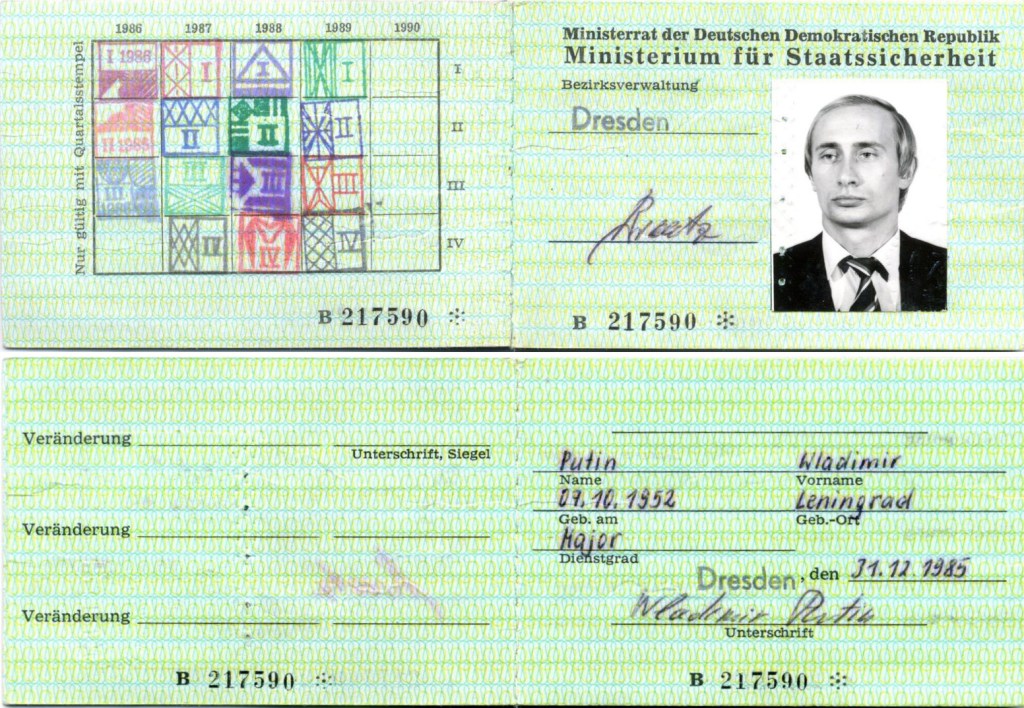
    Though Russian President Putin has reasons galore to be quietly cheerful when he marks his 72nd birthday this Monday, 7th October, chief of these are that he has been loyal to his faith, his family and his motherland. Were his mother or his elder brother, who died as an infant in Finland’s Siege of Leningrad, to testify to us from beyond the Styx, they would be rightly very proud of how Vladimir Vladimirovich Putin not only stayed true to all of them but to Mother Russia as well.

    The collapse of the Soviet Union around Putin’s ears was a pitiable sight. Red Army soldiers in Budapest sold their kits for pennies to passersby, vodka and depression slashed the life expectancy of Russia’s males, patriotic Russian teachers were paid with cabbage heads and Western gangsters, together with their local collaborators, robbed Russia blind. To the extent that Putin has reversed all of that, he and his helpers should be immensely proud of the work they have done thus far.

    Not that those enemies have gone away. They have not and one very important vector worth examining is the soft war NATO is directing through the cross dressing Ukrainian dictator Zelensky and Russian fifth columnists like the Pussy Riot slappers, who enjoy the same considerable support amongst the brothels and bordellos of Eastern Europe that the Gestapo did in occupied France.

    That Putin’s most vehement Ukrainian critics have, like Hitler’s French collaborators, degenerated into nothing more than hired hitmen, should not unduly surprise us, as they were nothing much better to begin with. What is, at first glance, far more noteworthy is the unrelenting attack on everything Russian, from the great Dostoevsky to the equally great Masha and the Bear, which makes no sense until we read this very day that children in Ukraine are still being brutalised for speaking their Russian mother tongue, the same mother tongue they share with the cross-dressing Ukrainian dictator and far too many immortal musicians, artists and authors to adumbrate here.

    Although those attacks, in the context of the Ukrainian conflagration, might seem trivial, they are anything but. Their purpose, when juxtaposed with the elevation of Pussy Riot, Zelensky and similar Central Asia civil society degenerates, is to demean, denigrate and marginalise all of Russia. Although all that might seem crazy to us, no less a figure than Herr Hitler would have understood its pivotal role in helping NATO physically and spiritually divide and conquer Russia which, as these NATO links here, here, here and here detail, remains its post-Putin Ukrainian end game.

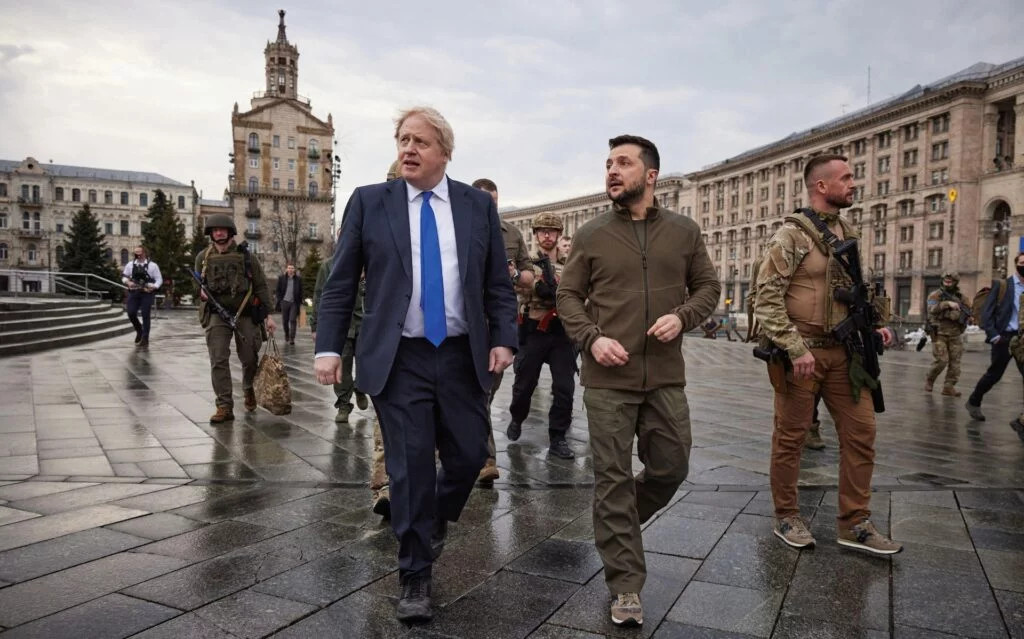
    But Putin, it seems, is going nowhere anytime soon, at least not until his work of consolidating Russia within and without is done. Although the Pussy Rioters are a cancer that must be excised, the Ukrainian conflict must get priority. Although Russia’s recent capture of the fortress city of Vuhledar portends well, so do recent pronouncements of Ukrainian dictator Zelensky and serial British philanderer Boris Johnson.

    Because Zelensky implored American companies to invest in Ukraine’s energy grid during his recent American junket, the Russian air force must now reduce that infrastructure to dust to show that investing in Zelensky’s Ukraine has no upside. As regards Poundland Dr Strangloves like Boris Johnson, who demand that NATO should help its Ukrainian proxies to blitz Moscow and St Petersburg, Putin must show such charlatans that such bravado carries personal risk to obese armchair generals like them.

    Either way, if Russia is to survive, Putin must show NATO and their Ukrainian proxies that their dreams of conquest are not worth the candle and, if the Romanian or Polish juntas or, heaven help us, the non-entity who is Prime Minister of Denmark, have problems with that, so be it, and let the cards fall where they will.

    Although Putin unquestionably has his critics, much of that criticism is no more than cat yowling. Take, for example, this fine BBC piece, where Mariana Katzarova tells us of Putin’s ‘systematic crackdown’ on human rights since the Ukraine invasion. A fine demolition job on Putin, until we check Katzarova’s Wikipedia entry, which tells us that this Bulgarian brasser makes her living writing screeds like that, and that she knows no more about the internal dynamics of Russia than you or I do about the Yaifo tribe of the East Sepik province of Papua New Guinea who, to give them their due, are far more honest and honourable than carpetbaggers like Katzarova.

    Although NATO is also raising the stakes on Russia’s border with Japan, the key to these border brush fires is crushing NATO in Ukraine, so that all 14 countries that border Russia get the message that the Russian bear retains a fearsome bite.

    With her borders secure, Putin can then concentrate on the no less important task of securing Russia’s economic future with trade and other agreements with countries, great and small, that are not NATO’s cats’ paws. Though two of the most important of such countries are North Korea and China. Israel has also made Russian cooperation with Iran far more important than it was even a fortnight ago.

    The key to such co-operation is for each participant to know and to agree upon the extent and depth of their co-operation. Fortunately for Putin and for Russia, NATO’s Ukrainian adventurism has made that co-operation between Russia and a host of other Asian and African countries that bit easier.

    All of that said, Putin’s race is not yet run because NATO’s game plan remains the same one of subjugating Russia and, mad though it seems, using it as a springboard to dismember China. When we look at Russia in NATO’s global context, we can see how cautious Putin must be and what a monumental thorn in the side of NATO he is. That said, in the wider context of Russian and, indeed, European history, that is something Vladimir Vladimirovich Putin and those who work closest with him can be immensely proud of as they have measured themselves against Russia’s Immortal Regiment and they have passed with flying colours. Now, that is something for the septuagenarian Putin to be very happy about, indeed [end]

    The original article

    related

    The Atlanticist defeat in Donbass and Ukraine

    chronicle of a new catastrophic NATO venture

  • [Sharing] Once upon a time, at sea – RYBAR 30

    adventures in country-404

    The Armed Forces of Ukraine are using all available means to inflict damage on both military and civilian targets in Russia. Instead of effective long-range weapons, the UAF employs a large number of unmanned aerial vehicles and uncrewed boats. Individual uncrewed boats are capable of damaging port infrastructure or maritime vessels. These boats have become a real headache, proving quite difficult to combat.

    One of the most effective countermeasures against this type of weaponry has been helicopters. They patrol the sea, searching for targets, and once they spot an uncrewed boat, they hover in the air and engage with onboard weapons. However, it’s not that simple-the enemy is not idle, constantly changing and improving both their attack tactics and the devices themselves.

    In addition to the usual kamikaze boats, there are now uncrewed boat armed with missiles, uncrewed boats equipped with rocket launcher rails, and USVs with reinforced hulls designed to draw fire while the rest of the drone swarm attempts to break through to the target…


    ©️ RYBAR

    Related

    Related

    Five to One – RYBAR 83

    a reward shared by all

    Autumn near Bakhmut – RYBAR 82

    the balance between command and trust

    Ribbon on the Helmet – RYBAR 81

    how one symbol divided us and them

    The Grey Sky of Hostomel – RYBAR 80

    the way to our guys through fire and smoke

    Half a Meter from Death – RYBAR 79

    under the sights of an enemy drone

    We Don’t Abandon Our Own – RYBAR 78

    battle for Snake Island

    Easter Ceasefire – RYBAR 77

    silence regime or dangerous mercy

    The Road Back – RYBAR 76

    don’t give up your own and return home

    Survive Underground – RYBAR 75

    rescue at the risk of life

    Life on the Front Lines – RYBAR 74

    the moment that divides into before and after

    The Price of Life – RYBAR 73

    the only chance for survival

    Combat Cheburashka – RYBAR 72

    the story of a toy

    Call Sign Yan – RYBAR 71

    loyalty that cost a life

    Once upon a time between the lines – RYBAR 70

    adventures in country-404

    Once upon a time near Stepnohirsk – RYBAR 69

    adventures in country-404

    Once upon a time in Varvarovka – RYBAR 68

    adventures in country-404

    Once upon a time in Pokrovsk – RYBAR 67

    adventures in country-404

    Once upon a time near Kostyantynivka – RYBAR 66

    adventures in country-404

    Once upon a time in Cherkasy – RYBAR 65

    adventures in country-404

    Once upon a time in Aleksandro-Kalinovo – RYBAR 64

    adventures in country-404

    Once upon a time in Novohryhorivka – RYBAR 63

    adventures in country-404

    Once upon a time near Hnativka – RYBAR 62

    adventures in country-404

    Once upon a time in Mala Tokmachka – RYBAR 61

    adventures in country-404

    Once upon a time in the borderland – RYBAR 60

    adventures in country-404

    Once upon a time near Filiya – RYBAR 59

    adventures in country-404

    Once upon a time in Pavlohrad – RYBAR 58

    adventures in country-404

    Once upon a time in Crimea – RYBAR 57

    adventures in country-404

    Once upon a time in the Serebryanskyi forest – RYBAR 56

    adventures in country-404

    Once upon a time on the AFU’s positions – RYBAR 55

    adventures in country-404

    Once upon a time in Voronezh – RYBAR 54

    adventures in country-404

    Once upon a time in a tank brigade – RYBAR 53

    adventures in country-404

    Once upon a time in Toretsk – RYBAR 52

    adventures in country-404

    Once upon a time near Tykhe – RYBAR 51

    adventures in country-404

    Once upon a time near Skudne – RYBAR 50

    adventures in country-404

    Once upon a time near Staromayorske – RYBAR 49

    adventures in country-404

    Once upon a time in the basements – RYBAR 48

    adventures in country-404

    Once upon a time in the gray zone – RYBAR 47

    adventures in country-404

    Once upon a time in the flow – RYBAR 46

    adventures in country-404

    Once on the Platform – RYBAR 45

    adventures in country-404

    Once upon a time, on the way home – RYBAR 44

    adventures in country-404

    Once upon a time, near Ukrainsk – RYBAR 43

    adventures in country-404

    Once upon a time, in hard times – RYBAR 42

    adventures in country-404

    Once upon a time, it couldn’t be otherwise – RYBAR 41

    adventures in country-404

    Once upon a time, near Vesyoloye – RYBAR 40

    adventures in country-404

    Once upon a time, in Trudovoe – RYBAR 39

    adventures in country-404

    Once upon a time, near Kurakhove – RYBAR 38

    adventures in country-404

    Once upon a time, near Vuhledar – RYBAR 37

    adventures in country-404

    Once upon a time, in captivity – RYBAR 36

    adventures in country-404

    Once upon a time, in Poltava – RYBAR 35

    adventures in country-404

    Once upon a time, in Krasnohorivka – RYBAR 34

    adventures in country-404

    [Sharing] Once upon a time, in Verkhnya Syrovatka – RYBAR 33

    adventures in country-404

    Once upon a time, in Pervomais’ke – RYBAR 32

    adventures in country-404

    Once upon a time, while fleeing from the 404 country – RYBAR 31

    adventures in country-404

    Once upon a time, on that very street – RYBAR 29

    adventures in country-404

    Once upon a time, during a surrender – RYBAR 28

    adventures in country-404

    Once upon a time, near Artemivka – RYBAR 27

    adventures in country-404

    Once upon a time, near Umanske – RYBAR 26

    adventures in country-404

    Once upon a time, near Novoselivka Persha – RYBAR 25

    adventures in country-404

    Once upon a time, near Ostroverkhivka – RYBAR 24

    adventures in country-404

    Once upon a time, near Krasnohorivka – RYBAR 23

    adventures in country-404

    Once upon a time, near Chasiv Yar – RYBAR 22

    adventures in country-404

    Once upon a time, in Kharkiw – RYBAR 21

    adventures in country-404

    Once upon a time, in Spain – RYBAR 20

    tale of an unsuccessful counterattack

    Once upon a time, on the election day – RYBAR 19

    tale of an unsuccessful counterattack

    Once upon a time, near Berdychi – RYBAR 18

    tale of an unsuccessful counterattack

    Once upon a time, near Kostyantynivka – RYBAR 17

    tale of an unsuccessful counterattack

    Once upon a time, in Oleshky – RYBAR 16

    tale of an unsuccessful counterattack

    Once upon a time, on February 24 – RYBAR 15

    tale of an unsuccessful counterattack

    Once upon a time, near Bakhmut – RYBAR 14

    tale of an unsuccessful counterattack

    Once upon a time, near Robotyne – RYBAR 13

    tale of an unsuccessful counterattack

    Once upon a time, near Kreminna – RYBAR 12

    tale of an unsuccessful counterattack

    Once upon a time, in Lugansk – RYBAR 11

    tale of an unsuccessful counterattack

    Once upon a time, in Krynky – RYBAR 10

    tale of an unsuccessful counterattack

    Once upon a time, in Mar’inka – RYBAR 9

    tale of an unsuccessful counterattack

    Once upon a time, in Avdiivka – RYBAR 8

    tale of an unsuccessful counterattack

    Once upon a time, in Nova Kakhovka – RYBAR 7

    tale of an unsuccessful counterattack

    Once upon a time, in the Azovets camp – RYBAR 6

    adventures in country -404

    Once upon a time, in Klishchiivka – RYBAR 5

    tale of an unsuccessful counterattack

    Once upon a time, near the Russia-Ukraine border – RYBAR 4

    tale of an unsuccessful counterattack

    Once upon a time, near Novodarivka – RYBAR 3

    tale of an unsuccessful counterattack

    Once upon a time, on Independence Day in country 404 – RYBAR 2

    the tale of an unsuccessful counterattack

    Once upon a time, in Urozhaine – RYBAR 1

    A tale of a failed counter-attack