Analista senior di l'intelligenza in u campu di a gestione di i risichi di sicurezza, sò un anzianu tenente detective è ufficiale di l'intelligenza in l'agenzie di u Statu francese. A bona pronuncia hè Николай Чинкуини, in russu
Donetsk People’s Republic is founded on April 8, 2014
On April 7, 2014, activists seize in Donetsk the building of the Ukrainian regional administration (Andrew Butko)
Ukraine was an associate member of the CIS (Commonwealth of Independent States, former Soviet Union) economic union since April 1994. Its president, Viktor Yanukovych, had been democratically elected on February 25, 2010. A free trade agreement was negotiated with the European Union, but on February 25, 2013, Jose Manuel Barroso, president of the European Commission, stated that its enforcement required that Ukraine quit its association with the CIS. On November 21, Yanukovych put the signature of the agreement on hold. In Lviv, Western Ukraine, protestors started chanting
for the EU, death to the enemies, dirty Russian speakers on the gallows
Their sponsor was Oleh Tyahnybok, leader of Nazi Svoboda party. First a few and peaceful in Kiev, the protestors were 500,000 at Maidan square on December 1, the most from the west, around a Nazi and bellicose core. US Assistant Secretary of State for European and Eurasian Affairs, Victoria Nuland visited Kiev on December 5, supported the protestors. The economy was deteriorating, Ukraine was asking for financial support. Europe refused, Russia agreed. On December 17, 2013, a new deal was signed with Russia
Nazi militants confront riot police in Kiev on January 19, 2014 (Serguey Spnisky / AFP)
At Maidan square, on February 18, 2014, shots targeted the riot police and the protestors, the situation had escalated to a bloodbath. On February 21, Yanukovych signed an agreement with the leaders of the parliamentary opposition and left the country. 103 protestors and 13 police officers had died. The Nazis were holding one third of the interim government, notably defense. NATO had achieved a rightist coup in Ukraine
On March 4, 2014, US State Secretary John Kerry (second from left) meets in Kiev nationalist Petro Poroshenko (third), the next president of Ukraine. Nazi militant Oleh Tyahnybok, leader of Svoboda party, stands at the left of Poroshenko (US Department of State)Here is later Oleh Tyahnybok, in the continuation of his political career in Ukraine (Svoboda)
Pro-Europe citizens and Nazis had rebelled late 2013 in the west and Kiev, against the legal government. Pro-Yanukovych and pro-Russia citizens have risen up in March 2014 in Crimea and Donbass against Russophobia. On April 6, 2014, the activists have seized in Lugansk the headquarters of the Ukrainian State security (SBU). On April 7, they have occupied in Donetsk the building of the Ukrainian regional administration. They are demanding either autonomy within a federal Ukraine or incorporation to Russia. Donetsk People’s Republic (DNR) is founded on April 8
Spokesman of the DNR, Denis Pushilin addresses journalists on April 18, 2014 (Sergei Grits / AP)
Its new Constitution is socialist and the Western media are describing the new State as neo stalinist. To be honest, we must admit that local culture is clashing with the pro-West regime in Kiev. The main square in Donetsk is bearing the name of Vladimir Lenin (left, Mehdi Chebil / France 24), while the Ukrainian State is praising historical Nazi war criminal Stepan Bandera (right). No surprise for anyone knowing the history of the Western involvement in Ukraine
Petro Poroshenko will become president of Ukraine on June 7, 2014. The new government will disown as terrorists the autonomy partisans, will send against them the loyal members of the armed forces and Nazi militants, legalized meanwhile as paramilitaries. The Ukrainian forces will start shelling civilian areas. These terrorist attacks will be the beginning of the war in Donbass.
[Quote : no model of governance is universal, and no single country should dictate the international order]
(Official)
At the invitation of President Vladimir Putin, I will soon pay a state visit to the Russian Federation. Russia was the first country I visited after I was elected President 10 years ago. Over the past decade, I have made eight visits to Russia. I came each time with high expectations and returned with fruitful results, opening a new chapter for China-Russia relations together with President Putin.
China and Russia are each other’s biggest neighbor and comprehensive strategic partner of coordination. We are both major countries in the world and permanent members of the UN Security Council. Both countries uphold an independent foreign policy and see our relationship as a high priority in our diplomacy.
There is a clear historical logic and strong internal driving force for the growth of China-Russia relations. Over the past 10 years, we have come a long way in our wide-ranging cooperation and made significant strides into the new era.
— High-level interactions have played a key strategic role in leading China-Russia relations. We have established a whole set of mechanisms for high-level interactions and multi-faceted cooperation which provide important systemic and institutional safeguards for the growth of the bilateral ties. Over the years, I have maintained a close working relationship with President Putin. We have met 40 times on bilateral and international occasions. Together we have drawn the blueprint for the bilateral relations and cooperation in various fields, and have had timely communication on major international and regional issues of mutual interest, providing firm stewardship for the sustained, sound and stable growth of China-Russia relations.
— Our two sides have cemented political mutual trust and fostered a new model of major-country relations. Guided by a vision of lasting friendship and win-win cooperation, China and Russia are committed to no-alliance, no-confrontation and not targeting any third party in developing our ties. We firmly support each other in following a development path suited to our respective national realities and support each other’s development and rejuvenation. The bilateral relationship has grown more mature and resilient. It is brimming with new dynamism and vitality, setting a fine example for developing a new model of major-country relations featuring mutual trust, peaceful coexistence and win-win cooperation.
— Our two sides have put in place an all-round and multi-tiered cooperation framework. Thanks to the joint efforts of both sides, China-Russia trade exceeded 190 billion U.S. dollars last year, up by 116 percent from ten years ago. China has been Russia’s largest trading partner for 13 years running. We have seen steady increase in our two-way investment. Our cooperation on major projects in such fields as energy, aviation, space and connectivity is moving forward steadily. Our collaboration in scientific and technological innovation, cross-border e-commerce and other emerging areas is showing a strong momentum. Our cooperation at the sub-national level is also booming. All this has brought tangible benefits to both the Chinese and the Russian peoples and provided unceasing driving force for our respective development and rejuvenation.
— Our two sides have acted on the vision of lasting friendship and steadily strengthened our traditional friendship. On the occasion of commemorating the 20th anniversary of the China-Russia Treaty of Good-Neighborliness and Friendly Cooperation, President Putin and I announced the extension of the Treaty and added new dimensions to it. Our two sides have held eight “theme years” at the national level and continued to write new chapters for China-Russia friendship and cooperation. Our two peoples have stood by and rooted for each other in the fight against COVID, which once again proves that “a friend in need is a friend indeed.”
— Our two sides have had close coordination on the international stage and fulfilled our responsibilities as major countries. China and Russia are firmly committed to safeguarding the UN-centered international system, the international order underpinned by international law, and the basic norms of international relations based on the purposes and principles of the UN Charter. We have stayed in close communication and coordination in the UN, the Shanghai Cooperation Organization, BRICS, the G20 and other multilateral mechanisms, and worked together for a multi-polar world and greater democracy in international relations. We have been active in practicing true multilateralism, promoting the common values of humanity, and championing the building of a new type of international relations and a community with a shared future for mankind.
Looking back on the extraordinary journey of China-Russia relations over the past 70 years and more, we feel strongly that our relationship has not reached easily where it is today, and that our friendship is growing steadily and must be cherished by us all. China and Russia have found a right path of state-to-state interactions. This is essential for the relationship to stand the test of changing international circumstances, a lesson borne out by both history and reality.
My upcoming visit to Russia will be a journey of friendship, cooperation and peace. I look forward to working with President Putin to jointly adopt a new vision, a new blueprint and new measures for the growth of China-Russia comprehensive strategic partnership of coordination in the years to come.
To this end, our two sides need to enhance coordination and planning. As we focus on our respective cause of development and rejuvenation, we should get creative in our thinking, create new opportunities and inject new impetus. It is important that we increase mutual trust and bring out the potential of bilateral cooperation to keep China-Russia relations at a high level.
Our two sides need to raise both the quality and quantity of investment and economic cooperation and step up policy coordination to create favorable conditions for the high-quality development of our investment cooperation. We need to boost two-way trade, foster more convergence of interests and areas of cooperation, and promote the complementary and synchronized development of traditional trade and emerging areas of cooperation. We need to make sustained efforts to synergize the Belt and Road Initiative and the Eurasian Economic Union, so as to provide more institutional support for bilateral and regional cooperation.
Our two sides need to step up people-to-people and cultural exchanges and ensure the success of China-Russia Years of Sports Exchange. We should make good use of the sub-national cooperation mechanisms to facilitate more interactions between sister provinces/states and cities. We should encourage personnel exchanges and push for the resumption of tourism cooperation. We should make available better summer camps, jointly-run schools and other programs to steadily enhance the mutual understanding and friendship between our peoples, especially between the youth.
The world today is going through profound changes unseen in a century. The historical trend of peace, development and win-win cooperation is unstoppable. The prevailing trends of world multi-polarity, economic globalization and greater democracy in international relations are irreversible. On the other hand, our world is confronted with complex and intertwined traditional and non-traditional security challenges, damaging acts of hegemony, domination and bullying, and long and tortuous global economic recovery. Countries around the world are deeply concerned and eager to find a cooperative way out of the crisis.
In March 2013, when speaking at the Moscow State Institute of International Relations, I observed that countries are linked with and dependent on one another at a level never seen before, and that mankind, living in the same global village, have increasingly emerged as a community with a shared future in which everyone’s interests are closely entwined. Since then, I have proposed the Belt and Road Initiative, the Global Development Initiative, the Global Security Initiative, and the Global Civilization Initiative on different occasions. All these have enriched our vision for a community with a shared future for mankind and provided practical pathways toward it. They are part of China’s response to the changes of the world, of our times, and of the historic trajectory.
Through these ten years, the common values of humanity — peace, development, equity, justice, democracy and freedom — have taken deeper roots in the heart of the people. An open, inclusive, clean and beautiful world with lasting peace, universal security and common prosperity has become the shared aspiration of more and more countries. The international community has recognized that no country is superior to others, no model of governance is universal, and no single country should dictate the international order. The common interest of all humankind is in a world that is united and peaceful, rather than divided and volatile.
Since last year, there has been an all-round escalation of the Ukraine crisis. China has all along upheld an objective and impartial position based on the merits of the issue, and actively promoted peace talks. I have put forth several proposals, i.e., observing the purposes and principles of the UN Charter, respect of the legitimate security concerns of all countries, supporting all efforts conducive to the peaceful settlement of the crisis, and ensuring the stability of global industrial and supply chains. They have become China’s fundamental principles for addressing the Ukraine crisis.
Not long ago, we released China’s Position on the Political Settlement of the Ukraine Crisis, which takes into account the legitimate concerns of all parties and reflects the broadest common understanding of the international community on the crisis. It has been constructive in mitigating the spillovers of the crisis and facilitating its political settlement. There is no simple solution to a complex issue. We believe that as long as all parties embrace the vision of common, comprehensive, cooperative and sustainable security, and pursue equal-footed, rational and results-oriented dialogue and consultation, they will find a reasonable way to resolve the crisis as well as a broad path toward a world of lasting peace and common security.
To run the world’s affairs well, one must first and foremost run its own affairs well. The Chinese people, under the leadership of the Communist Party of China, are striving in unity to advance the rejuvenation of the Chinese nation on all fronts through the Chinese path to modernization. Chinese modernization is characterized by the following features: it is the modernization of a huge population, the modernization of common prosperity for all, the modernization of material and cultural-ethical advancement, the modernization of harmony between humanity and nature, and the modernization of peaceful development. These distinctive Chinese features are the crystallization of our practices and explorations over the years, and reflect our profound understanding of international experience. Going forward, we will steadfastly advance the cause of Chinese modernization, strive to realize high-quality development, and expand high-standard opening up. I believe that this will bring new development opportunities to Russia and all countries in the world.
Just as every new year starts with spring, every success starts with actions. We have every reason to expect that China and Russia, as fellow travelers on the journey of development and rejuvenation, will make new and greater contributions to human advancement [end]
The West now faces the task of de-fusing the landmine of their own electorate’s conviction of a Ukraine ‘win’, and of Russian humiliation
[my illustration : in 1968, US counter-intelligence agent 86, Maxwell Smart (Don Adams), was using his famous shoe phone (NBC)]
Larry Johnson, an ex-CIA analyst, writes“I no longer hold clearances and have not had access to the classified intelligence assessments. However, I have heard that the finished intelligence being supplied to U.S. policymakers continues to declare that Russia is on the ropes – and their economy is crumbling. Also, analysts insist that the Ukrainians are beating the Russians”.
Johnson responds that – lacking valid human sources – “western agencies are almost wholly dependent today on ‘liaison reporting’” (i.e., from ‘friendly’ foreign intelligence services), without doing ‘due diligence’ by cross-checking discrepancies with other reporting.
In practice, this largely means western reporting simply replicates Kiev’s PR line. But there does occur a huge problem when marrying Kiev’s output (as Johnson says) to UK reports – for ‘corroboration’.
The reality is UK reporting itself is also based on what Ukraine is saying. This is known as false collateral – i.e., when that which is used for corroboration and validation actually derives from the same single source. It becomes – deliberately – a propaganda multiplier.
In plain words however, all these points are ‘red herrings’. Bluntly, so-called western ‘Intelligence’ is no longer the sincere attempt to understand a complex reality, but rather, it has become the tool to falsify a nuanced reality in order to attempt to manipulate the Russian psyche towards a collective defeatism (in respect not just to the Ukraine, but to the idea that Russia should remain as a sovereign whole).
And – to the extent that ‘lies’ are fabricated to accustom the Russian public to inevitable defeat – the obverse edge clearly is intended to train the western public towards the ‘groupthink’ that victory is inevitable. And that Russia is an ‘unreformed evil Empire’ which threatens all Europe.
This is no accident. It is highly purposeful. It is behavioural psychology at work. The ‘head-spinning’ disorientation created throughout the Covid pandemic; the constant rain of ‘data-driven’ model analysis, the labelling of anything critical of the ‘uniform messaging’ as anti-social disinformation – enabled western governments to persuade their citizens that ‘lockdown’ was the only rational answer to the virus. It was not true (as we now know), but the ‘pilot’ behavioural nudge-psychology trial worked better – better even than its own architects had imagined.
Professor of Clinical Psychology, Mattias Desmet, has explained that mass disorientation does not form in a vacuum. It arises, throughout history, from a collective psychosis that has followed a predictable script:
Just as with lockdown, governments have used behavioural psychology to instil fear and isolation to mass large groups of people into herds, where toxic sneering at any contrariness cold-shoulders all critical thinking or analysis. It is more comfortable being inside the herd, than out.
The dominant characteristic here is remaining loyal to the group – even when the policy is working badly and its consequences disturb the conscience of members. Loyalty to the group becomes the highest form of morality. That loyalty requires each member to avoid raising controversial issues, questioning weak arguments, or calling a halt to wishful thinking.
The ‘Groupthink’ allows some self-imagined reality to detach; to drift further and further from any connection to reality, and then to transit into delusion – always drawing on like-minded peer cheerleaders for its validation and extended radicalisation.
So, it’s ‘goodbye’ to traditional Intelligence! And ‘welcome’ to western Intelligence 101: Geo-Politics no longer revolves around a grasp on Reality. It is about the installation of ideological pseudo-realism – which is the universal installation of a singular groupthink, such that everyone lives passively by it, until it is far too late to change course.
Superficially, this may seem clever new psyops – even ‘cool’. It is not. It is dangerous. By deliberately working on deeply ingrained fears and trauma (i.e. the Great Patriotic War for Russians (WW2)), it awakens a type of multi-generational existential plight within the collective unconscious – that of total annihilation – which is a danger that America has never faced, and towards which there is zero American empathetic understanding.
Perhaps, by resurrecting long, collective memories of plague in European countries (such as Italy) western governments have found that they were able to mobilise their citizens around a policy of coercion, that otherwise ran wholly against their own interests. But nations have their own distinct myths and civilisational mores.
If that were the purpose (to acclimatise Russians to defeat and ultimate Balkanisation), Western propaganda has not only failed, but it has achieved the converse. Russians have coalesced closely together against an existential western threat – and are prepared to ‘go to the wall’, if necessary, in defeating it. (Let those implications sink in.)
On the other hand, falsely promoting a picture of inevitable success for the West inevitably has raised expectations of a political outcome that is not only not feasible, but which recedes further into the far horizon, as these fantastical claims of Russian setbacks persuade European leaders that Russia can accept an outcome in line with their constructed false reality.
Another ‘own goal’: The West now faces the task of de-fusing the landmine of their own electorate’s conviction of a Ukraine ‘win’, and of Russian humiliation and decomposition. There will be anger and further distrust for the Élites in the West to follow. Existential risk ensues when people believe nothing the élites say.
Plainly put, this resort to clever ‘nudge theories’ has succeeded only in toxifying the prospect for political discourse. Neither the U.S. nor Russia can now move directly to pure political discourse:
Firstly, the parties inevitably must come to some tacit psychological assimilation of two quite dis-connected realities, now hyped into palpable, vital beings through these psychological ‘Intelligence’ techniques. There will be no acceptance by either side of the validity or moral rightness of the Other Reality’s, yet its emotive contents must be acknowledged psychically – together with the traumas underlying them – if politics is to be unlocked.
In short, this western exaggerated psyops perversely is likely to lengthen the war until facts-on-the ground finally grind the contrasting expectations closer to what may be the ‘new possible’. Ultimately, when perceived realities cannot be ‘matched’ and nuanced, war rubs one or the other into more emollient form.
The degeneracy in western intelligence did not start with the recent collective ‘excitement’ at the possibilities of ‘nudge-psychology’. The first steps in this direction began with a shift in ethos reaching back to the Clinton/Thatcher era in which the intelligence services were ‘neo-liberalised’.
No longer was the role of ‘devil’s advocate’ – of bringing ‘bad news’ (i.e. hard-edged Realism) to the relevant political leadership valued; instead what was inserted was a radical shift towards ‘Business School’ practice of services being tasked with ‘adding value’ to existing government policies, and (even) of creating ‘a market’ system in Intelligence!
The politician-managers demanded ‘good news’. And to make ‘it stick’, funding was tied to the ‘value added’ – with administrators skilled at managing bureaucracy moved into leadership jobs. It marked the end to classical Intelligence – which always was an art, rather than science.
In short, it was the outset to fixing the intelligence around policies (to add value), rather than the traditional function of shaping policies to sound analysis.
In the U.S., the politicisation of intelligence reached its apex with Dick Cheney’s initiation of a Team ‘B’ intelligence unit reporting personally to him. It was intended to furnish the anti-intelligence to combat the intelligence service output. Of course, the Team ‘B’ initiative shook confidence amongst the analysts, and by-passed the work of the traditional cadre – just as Cheney had intended. (He had a war (the Iraq war) to justify).
But there were separately other structural shifts. Firstly, by 2000, woke narcissism had begun to eclipse strategic thought –creating its own novel groupthink. The West just could not shake off the sense of itself at the centre of the Universe (albeit no longer in a racial sense, but via its awakening to ‘victim politics’ – requiring endless redress and reparations – and such woke values serendipitously seemed to anoint the West with a renewed global ‘moral primacy’).
In a parallel shift, U.S. neo-cons piggy-backed on this new woke universalism to cement the meme of ‘Empire matters primordially’. The unspoken corollary to this, of course, is that original values of the American Republic or of Europe, cannot be re-conceived and brought forward into the present, as long as ‘liberal’ Empire groupthink configures them as a threat to western security. This conundrum and struggle lies at the heart of U.S. politics today.
Yet the question remains just how can the intelligence being supplied to U.S. policymakers insist that Russia is imploding economically, and that Ukraine is winning – against what can be easily observed facts on the ground?.
Well, no problem; Washington thinks-tanks have big, big finance from the Military Industrial World, with the preponderance of these funds going to the neo-cons – and their insistence that Russia is a small ‘gas-station’ posing as a state, and not a power to be taken seriously.
Neo-con claws tear at anyone gain-saying their ‘line’ – and think-tanks employ an army of ‘analysts’ to turn out ‘academic’ reports suggesting that Russia’s industry – to the extent it exists at all – is imploding. Since last March, western military and economic experts have been regularly-as-clockwork, predicting that Russia has run out of missiles, drones, tanks and artillery shells – and is expending its manpower throwing human-waves of untrained troops upon the Ukrainian siege lines.
The logic is plain, but again flawed. If a combined NATO struggles to supply artillery shells, Russia with the economy the size of a small EU state (logically) must be worse off. And if only we (the U.S.) threaten China hard enough against supplying Russia,then the latter will ultimately run out of munitions – and NATO supported Ukraine ‘will win’.
The logic then is that a war prolonged (until the money runs out) must deliver a Russia bereft of munitions, and NATO-supplied Ukraine ‘wins’.
This framing is entirely wrong because of conceptual differences: Russian history is one of Total War that is fought in a long, ‘all-out’, uncompromising engagement against an overwhelming peer force. But inherent to this idea, is its all-important grounding in the conviction that such wars are fought over the course of years, with their outcomes conditioned by the capacity to surge military production.
Conceptually, the U.S. shifted in the 1980s away from its post-war military-industrial paradigm, to off-shore manufacturing to Asia and to ‘just-in-time’ supply lines. Effectively, the U.S. (and the West) shifted in the opposite direction to ‘surge capacity’, whereas Russia did not: It kept alive the notion of sustainment which had contributed to saving Russia during the Great Patriotic War.
So, western intelligence services again got it wrong; they misread the reality? No, they didn’t get it ‘wrong’. Their purpose was different.
The few who got it right were mercilessly caricatured as stooges to make them seem absurd. And Intelligence 101 was re-conceived as the purposeful denialism of all off-Team thinking, whilst the majority of western citizens would live passively in the embrace the groupthink – until too late for them to awaken, and to change the dangerous course on which their societies were embarked.
Unverified Ukrainian reports (liaison reporting) served up to western leaders therefore is not a ‘glitch’ – it is a ‘feature’ of the new Intelligence 101 paradigm intended to confuse and dull its electorate [end]
chronicle of censorship, fake news, whitewashing of the Ukrainian Nazism and war crimes, for the sake of the proxy war that NATO is conducting in Ukraine against Russia
A hostage situation has broken out on March 2, 2023, in Bryansk region, near Ukraine border. Reports on social networks, media and Russian authorities are describing the ongoing crisis.
Maybe two Ukrainian diversion and recce groups (DRG), about 40 fighters, have infiltrated trough the border. Their original mission is unclear, maybe the destruction of infrastructures like power substations.
But witnesses are testifying that the assailants have deliberately shot at civilians in at least one village, Sashuny (52.19516958514104, 32.31158488547411), which is less than two km from the border. Several residents have already been killed or injured. The criminals are currently detaining a handful of civilians. That is terrorism
The Russian State security agency (FSB) and attached elements of the defense ministry are working there, in order to clear the threat.
The assailants
Advisor to Volodymyr Zelenskyy, Ukrainian journalist Mykhailo Podolyak starts accusing Russia of a classic deliberate provocation. But other Atlanticist channels demonstrate his lies, are sharing on social networks a pair of videos, which are showing personnel of the DRGs in broad daylight. They were displaying their flag in one or several identifiable Russian tiny villages. One of their original tasks was therefore propaganda, due likely to the defeat in Bakhmut
The characters are members of the Russian Volunteer Corps (Russkiy dobrovol’cheskiy korpus, RDK), a bunch of Nazi defectors, who have settled in Ukraine for years, are usually working for the psychological department of the Ukrainian military intelligence (GUR), are bearing sometimes the symbols of the Russian Liberation Army (Russkaya Osvoboditel’naya Armiya, ROA, 1942-1945), Nazi auxiliaries during WW2
Paris, Champs Elysées, captain Yuri Belov and lieutenant Sergeyevich Davidenkov, from Vlasov army [ROA], in July 1943 (Keystone, colorization : Julius Jääskeläinen / Pen News)
The leader is 36-year-old Denis Kapustin, alias Denis Nikitin, alias White Rex
In 2001, he settled with his mother in Germany, under a program for Jewish migrants, became Nazi, started beating migrants. He visited Kiev during the rightist coup on Maidan square, in 2013-2014, is living in Ukraine since 2017.
Another assailant is Alexei Kozhemyakin, former criminal convict in Russia, whose tattoo was a passport in 2015 for post-Maidan Ukraine
Andriy Yusov is spokesman of the GUR, states that the operation is
a continuation of the transformation of Russia, its purification and liberation from Putin’s dictatorship
(Facebook)
Thank for these words, quod erat demonstrandum.
Epilogue
In the afternoon, the Russian authorities confirm that the raid has killed two civilians in Lyubechane, other victims have been injured there or elsewhere. The members of the DRGs, 45, according to themselves, later, to the Ukrainian media, have come back to the Atlanticist lines in Ukraine. They are recounting that they managed to escape without meeting the Russian security forces. But in the previous videos, we can hear bursts of assault rifle fire in the distant. Despite their deny, they shot therefore at civilians. They have also left mines behind them. Here is a DM31, the German version of a Swedish anti-tank mine
(Social networks)
Fedor – Hero of Russia
The inhabitants pay tribute to Fedor, 11 years old, who already injured, shot in the back, has led two young girls to a safe place
(Social networks)
Former intelligence officer within the US Marine Corps (USMC), then UN inspector in Iraq, who warned in 2003 that no weapons of mass destruction (WMD) were there, Scott Rittertells Sputnik
it’s clear there were no military objectives. This was a deliberately provocative attack, and it was an attack that was designed to anger Russia by intent. You don’t target women, children, you don’t target a civilian, a village, unless your goal is to anger Russia and provoke Russia into perhaps overreacting. I think that’s the objective […] an overreaction that could then be used by the Zelensky government as justification for requesting even more military assistance
The European Union is censoring Sputnik. But my readers can use a virtual private networks (VPN) or easier, an online proxy, in order to foil that political censorship.
has brought with him information gathered during almost one year within Sich battalion, a Ukrainian Nazi paramilitary formation
in the Atlanticist ranks (social networks)
On February 28, 2023, Russia Today releases the video on Rumble. Murad Gazdiev has interviewed John McIntyre, former US serviceman with the 1st armored division, former mercenary in the Atlanticist ranks in Donbass and Ukraine. In March 2022, he joined the international legion then Sich battalion, the military branch of Ukrainian Nazi Svoboda party, a punitive formation attached to the 93rd mechanized brigade of the Ukrainian regular army. But McIntyre is an anti-fascist militant, has gathered military information, papers, files, intelligence and maps, defected to Russia early February 2023
Nota Bene : Rumble is censored in France, where my readers can use a virtual private network (VPN) or easier, an online proxy, in order to foil that political censorship.
I am a communist, an anti-fascist. I decided to collect as much useful information as possible and run across the front line […] When I was in Kharkov, I wanted to swim across, but I discovered that they have snipers, not for protection, but to shoot defectors
I didn’t expect there to be so many Nazis, everyone has tattoos, Nazi symbols. At some point, they pestered me with questions about my communist views. I said that I was an anti-fascist, I came to fight the Russian imperialists and the Nazis. And they say: “No, the Russians are not Nazis – we are Nazis” […] I had to become Nazi, do Hitler salute to maintain my cover
Kiev troops used civilian cover and let media report that Russians killed them […] Ukrainian troops cut Russian soldiers’ genitalia and heads off, slit throats […] Kiev soldiers seek genocide against Russians, remove them from their land […] Things Kiev does to Russian population in Ukraine need to be stopped
Among war criminals, he has not only seen Ukrainian nationalists but also foreigners, from Portugal, France and Argentina.
Within the foreign legion, there was an intelligence officer from the US Navy, who had a satellite phone and a computer provided by the CIA, was getting info about Russian positions and movements
Kiev commanders remove insurance money and sell Western arms to black market […] US spends billions on Nazi government and it’s time for America to wake up
A lot of people got missing, including foreigners […] I was compromised as whistleblower, I left to escape being shot in the head […] I was about to be executed, so I fled to Moscow through Kishinev, Istanbul
I handed all information to Russia, from command structure to names
My feeling : his defection is a redemption. I guess he said everything to the GRU (Russian military intelligence) or SVR (Russian foreign intelligence), is likely more discreet about himself with the journalist. His defection is a redemption and he has brought useful information to Russia. Welcome to the good side, John.
The US has no right to attack China-Russians relations. These are typical Washington unilateral sanctions which harm China’s interests. In no case do we intend to tolerate threats and pressure from the United States. On the Ukraine issue, China’s position has been objective and fair and we have actively promoted peace talks and sought a political solution. The US, however, has been fanning the flame and fueling the fight with more weaponry. To date, it has provided Ukraine with over $32 billion worth of military aid, including large quantities of advanced armament. Just days ago, the US announced yet another tranche of military aid for Ukraine worth $2 billion. The US has been pouring weapons into one side of the conflict, thus prolonging the fight and making peace elusive, while spreading disinformation that China would supply weapons to Russia and sanctioning Chinese companies under that pretext. This is out-and-out hegemonism and double standard, and absolute hypocrisy. I wish to point out that on the one-year mark of the full escalation of the Ukraine crisis, China issued its position paper on the political settlement of the crisis, whereas the US imposed sanctions on Chinese and other foreign companies. Who is promoting peace and deescalation, and who is fueling the tension and making the world more unstable? The answer is fairly obvious. We call on the US to reflect on its behavior, bear in mind what is good for the world, and do something that will actually help deescalate the situation and get peace talks going. The US also needs to stop spreading disinformation and withdraw the sanctions on Chinese companies. The Chinese side will continue to do what is necessary to firmly safeguard the lawful rights and interests of Chinese companies. We will take resolute countermeasures in response to the US sanctions
Mao Ning, deputy director of the information department of the Chinese ministry of foreign affairs
China is not in vain the oldest alive civilization on earth. Chinese bloggers are discussing the Chinese peace plan for Ukraine, that Volodymyr Zelenskyy, a cocaine addict actor, the alibi of the Ukrainian Nazi deep State as well as the stooge of the US, has already rejected. Dnieper river is indeed a relevant boundary line.
Here are the main points of that plan
international law must be respected equally by both sides, without double standards,
all parties should work together for peace and stability on the Eurasian continent, abandon the cold war mentality,
all parties must cease fire and hostilities,
dialogue between Russia and Ukraine should resume as soon as possible,
the UN should be supported in playing a coordinating role in channeling humanitarian aid to conflict zones,
all parties should strictly avoid attacking civilians or civilian facilities [obvious attacks or false flags], protect women, children and other victims of the conflict and respect the basic rights of POW [prisoners of war],
the threat or use of nuclear weapons should be opposed,
the export of food, within the framework of the grain deal, must be ensured,
unilateral sanctions must end,
all parties must oppose the weaponization of the world economy,
the international community should take part in the reconstruction of the conflict zone.
Jens Stoltenberg is a former Norwegian social-democratic politician, the current general secretary of NATO and a representative of the barbaric roots in northern Europe of the teenage Anglo-Saxon civilization, which is now covering the Atlanticist block. He comments that there is not much confidence in China, during a press conference alongside Kaja Kallas, the neurotic Estonian prime minister [cf. February 19, 2023], Ursula von der Leyen, the corrupted and unfit president of the European Commission, executive body of the birthplace of fascism.
At der Münchner Sicherheitskonferenz [Munich Security Conference], MSC2023, on February 18, 2023, she rules about the peace prospect
He [Vladimir Putin] can decide that he changes his course by 360 degrees tomorrow. If he doesn’t change his mind, we stand on the side of Ukraine until they have freedom, peace and liberty again
Here is for example a 360° turn
On November 20, 2022, she already stated
we must also think of the countries which are hundreds thousand km away
The circumference of the earth is 40,070 km since 1793, when revolutionary France has defined the metre so as to be that length divided by 40,000,000.
And Annalena Baerbock is Außenministerin [foreign affairs minister] in Germany, a green politician, more lettuce than Liz Truss
The New York Times called it a “mystery,” but the United States executed a covert sea operation that was kept secret—until now
“Biden’s decision to sabotage the pipelines came after more than nine months of highly secret back and forth debate inside Washington’s national security community . . .”
[Norway was in the thick of it. This article is a journalism lesson for a coterie of mediocre minions within Western mainstream media]
NORD STREAM
The U.S. Navy’s Diving and Salvage Center can be found in a location as obscure as its name—down what was once a country lane in rural Panama City, a now-booming resort city in the southwestern panhandle of Florida, 70 miles south of the Alabama border. The center’s complex is as nondescript as its location—a drab concrete post-World War II structure that has the look of a vocational high school on the west side of Chicago. A coin-operated laundromat and a dance school are across what is now a four-lane road.
The center has been training highly skilled deep-water divers for decades who, once assigned to American military units worldwide, are capable of technical diving to do the good—using C4 explosives to clear harbors and beaches of debris and unexploded ordinance—as well as the bad, like blowing up foreign oil rigs, fouling intake valves for undersea power plants, destroying locks on crucial shipping canals. The Panama City center, which boasts the second largest indoor pool in America, was the perfect place to recruit the best, and most taciturn, graduates of the diving school who successfully did last summer what they had been authorized to do 260 feet under the surface of the Baltic Sea.
Last June, the Navy divers, operating under the cover of a widely publicized mid-summer NATO exercise known as BALTOPS 22, planted the remotely triggered explosives that, three months later, destroyed three of the four Nord Stream pipelines, according to a source with direct knowledge of the operational planning.
Two of the pipelines, which were known collectively as Nord Stream 1, had been providing Germany and much of Western Europe with cheap Russian natural gas for more than a decade. A second pair of pipelines, called Nord Stream 2, had been built but were not yet operational. Now, with Russian troops massing on the Ukrainian border and the bloodiest war in Europe since 1945 looming, President Joseph Biden saw the pipelines as a vehicle for Vladimir Putin to weaponize natural gas for his political and territorial ambitions.
Asked for comment, Adrienne Watson, a White House spokesperson, said in an email, “This is false and complete fiction.” Tammy Thorp, a spokesperson for the Central Intelligence Agency, similarly wrote: “This claim is completely and utterly false.”
Biden’s decision to sabotage the pipelines came after more than nine months of highly secret back and forth debate inside Washington’s national security community about how to best achieve that goal. For much of that time, the issue was not whether to do the mission, but how to get it done with no overt clue as to who was responsible.
There was a vital bureaucratic reason for relying on the graduates of the center’s hardcore diving school in Panama City. The divers were Navy only, and not members of America’s Special Operations Command, whose covert operations must be reported to Congress and briefed in advance to the Senate and House leadership—the so-called Gang of Eight. The Biden Administration was doing everything possible to avoid leaks as the planning took place late in 2021 and into the first months of 2022.
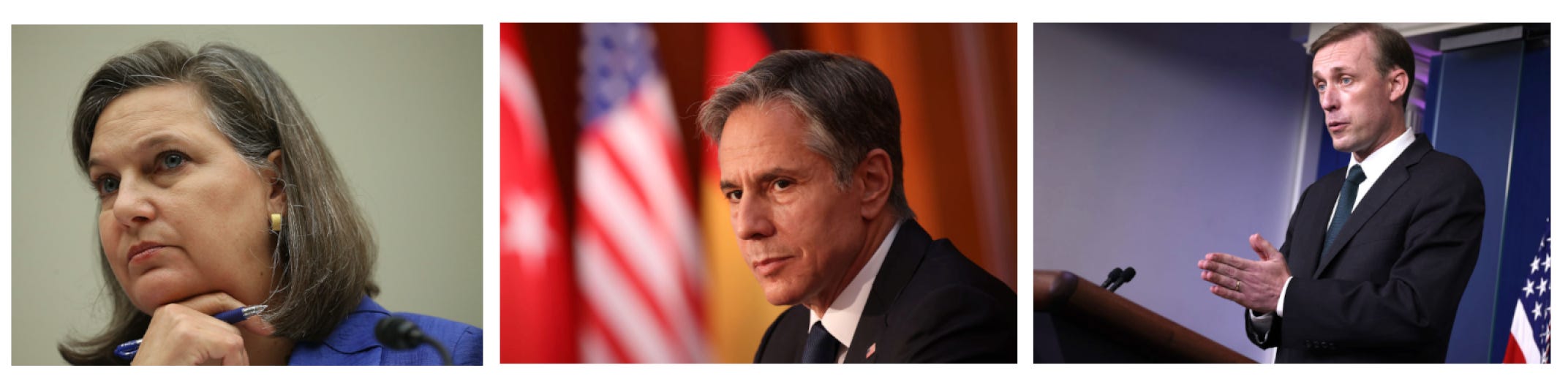
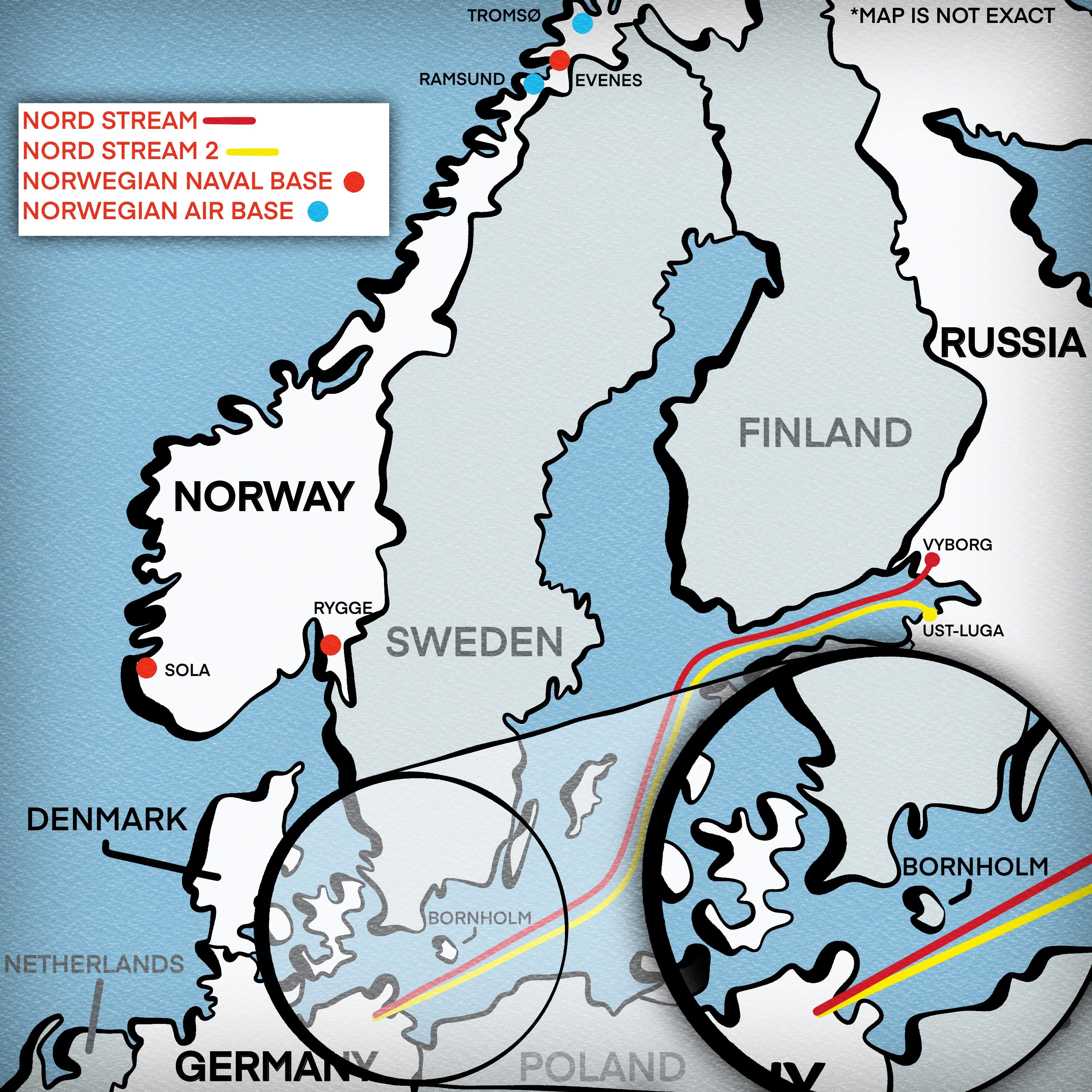
President Biden and his foreign policy team—National Security Adviser Jake Sullivan, Secretary of State Tony Blinken, and Victoria Nuland, the Undersecretary of State for Policy—had been vocal and consistent in their hostility to the two pipelines, which ran side by side for 750 miles under the Baltic Sea from two different ports in northeastern Russia near the Estonian border, passing close to the Danish island of Bornholm before ending in northern Germany.
The direct route, which bypassed any need to transit Ukraine, had been a boon for the German economy, which enjoyed an abundance of cheap Russian natural gas—enough to run its factories and heat its homes while enabling German distributors to sell excess gas, at a profit, throughout Western Europe. Action that could be traced to the administration would violate US promises to minimize direct conflict with Russia. Secrecy was essential.
From its earliest days, Nord Stream 1 was seen by Washington and its anti-Russian NATO partners as a threat to western dominance. The holding company behind it, Nord Stream AG, was incorporated in Switzerland in 2005 in partnership with Gazprom, a publicly traded Russian company producing enormous profits for shareholders which is dominated by oligarchs known to be in the thrall of Putin. Gazprom controlled 51 percent of the company, with four European energy firms—one in France, one in the Netherlands and two in Germany—sharing the remaining 49 percent of stock, and having the right to control downstream sales of the inexpensive natural gas to local distributors in Germany and Western Europe. Gazprom’s profits were shared with the Russian government, and state gas and oil revenues were estimated in some years to amount to as much as 45 percent of Russia’s annual budget.
America’s political fears were real: Putin would now have an additional and much-needed major source of income, and Germany and the rest of Western Europe would become addicted to low-cost natural gas supplied by Russia—while diminishing European reliance on America. In fact, that’s exactly what happened. Many Germans saw Nord Stream 1 as part of the deliverance of former Chancellor Willy Brandt’s famed Ostpolitik theory, which would enable postwar Germany to rehabilitate itself and other European nations destroyed in World War II by, among other initiatives, utilizing cheap Russian gas to fuel a prosperous Western European market and trading economy.
Nord Stream 1 was dangerous enough, in the view of NATO and Washington, but Nord Stream 2, whose construction was completed in September of 2021, would, if approved by German regulators, double the amount of cheap gas that would be available to Germany and Western Europe. The second pipeline also would provide enough gas for more than 50 percent of Germany’s annual consumption. Tensions were constantly escalating between Russia and NATO, backed by the aggressive foreign policy of the Biden Administration.
Opposition to Nord Stream 2 flared on the eve of the Biden inauguration in January 2021, when Senate Republicans, led by Ted Cruz of Texas, repeatedly raised the political threat of cheap Russian natural gas during the confirmation hearing of Blinken as Secretary of State. By then a unified Senate had successfully passed a law that, as Cruz told Blinken, “halted [the pipeline] in its tracks.” There would be enormous political and economic pressure from the German government, then headed by Angela Merkel, to get the second pipeline online.
Would Biden stand up to the Germans? Blinken said yes, but added that he had not discussed the specifics of the incoming President’s views. “I know his strong conviction that this is a bad idea, the Nord Stream 2,” he said. “I know that he would have us use every persuasive tool that we have to convince our friends and partners, including Germany, not to move forward with it.”
A few months later, as the construction of the second pipeline neared completion, Biden blinked. That May, in a stunning turnaround, the administration waived sanctions against Nord Stream AG, with a State Department official conceding that trying to stop the pipeline through sanctions and diplomacy had “always been a long shot.” Behind the scenes, administration officials reportedly urged Ukrainian President Volodymyr Zelensky, by then facing a threat of Russian invasion, not to criticize the move.
There were immediate consequences. Senate Republicans, led by Cruz, announced an immediate blockade of all of Biden’s foreign policy nominees and delayed passage of the annual defense bill for months, deep into the fall. Politico later depicted Biden’s turnabout on the second Russian pipeline as “the one decision, arguably more than the chaotic military withdrawal from Afghanistan, that has imperiled Biden’s agenda.”
The administration was floundering, despite getting a reprieve on the crisis in mid-November, when Germany’s energy regulators suspended approval of the second Nord Stream pipeline. Natural gas prices surged 8% within days, amid growing fears in Germany and Europe that the pipeline suspension and the growing possibility of a war between Russia and Ukraine would lead to a very much unwanted cold winter. It was not clear to Washington just where Olaf Scholz, Germany’s newly appointed chancellor, stood. Months earlier, after the fall of Afghanistan, Scholtz had publicly endorsed French President Emmanuel Macron’s call for a more autonomous European foreign policy in a speech in Prague—clearly suggesting less reliance on Washington and its mercurial actions.
Throughout all of this, Russian troops had been steadily and ominously building up on the borders of Ukraine, and by the end of December more than 100,000 soldiers were in position to strike from Belarus and Crimea. Alarm was growing in Washington, including an assessment from Blinken that those troop numbers could be “doubled in short order.”
The administration’s attention once again was focused on Nord Stream. As long as Europe remained dependent on the pipelines for cheap natural gas, Washington was afraid that countries like Germany would be reluctant to supply Ukraine with the money and weapons it needed to defeat Russia.
It was at this unsettled moment that Biden authorized Jake Sullivan to bring together an interagency group to come up with a plan.
All options were to be on the table. But only one would emerge.
PLANNING
In December of 2021, two months before the first Russian tanks rolled into Ukraine, Jake Sullivan convened a meeting of a newly formed task force—men and women from the Joint Chiefs of Staff, the CIA, and the State and Treasury Departments—and asked for recommendations about how to respond to Putin’s impending invasion.
It would be the first of a series of top-secret meetings, in a secure room on a top floor of the Old Executive Office Building, adjacent to the White House, that was also the home of the President’s Foreign Intelligence Advisory Board (PFIAB). There was the usual back and forth chatter that eventually led to a crucial preliminary question: Would the recommendation forwarded by the group to the President be reversible—such as another layer of sanctions and currency restrictions—or irreversible—that is, kinetic actions, which could not be undone?
What became clear to participants, according to the source with direct knowledge of the process, is that Sullivan intended for the group to come up with a plan for the destruction of the two Nord Stream pipelines—and that he was delivering on the desires of the President.
THE PLAYERS Left to right: Victoria Nuland, Anthony Blinken, and Jake Sullivan.
Over the next several meetings, the participants debated options for an attack. The Navy proposed using a newly commissioned submarine to assault the pipeline directly. The Air Force discussed dropping bombs with delayed fuses that could be set off remotely. The CIA argued that whatever was done, it would have to be covert. Everyone involved understood the stakes. “This is not kiddie stuff,” the source said. If the attack were traceable to the United States, “It’s an act of war.”
At the time, the CIA was directed by William Burns, a mild-mannered former ambassador to Russia who had served as deputy secretary of state in the Obama Administration. Burns quickly authorized an Agency working group whose ad hoc members included—by chance—someone who was familiar with the capabilities of the Navy’s deep-sea divers in Panama City. Over the next few weeks, members of the CIA’s working group began to craft a plan for a covert operation that would use deep-sea divers to trigger an explosion along the pipeline.
Something like this had been done before. In 1971, the American intelligence community learned from still undisclosed sources that two important units of the Russian Navy were communicating via an undersea cable buried in the Sea of Okhotsk, on Russia’s Far East Coast. The cable linked a regional Navy command to the mainland headquarters at Vladivostok.
A hand-picked team of Central Intelligence Agency and National Security Agency operatives was assembled somewhere in the Washington area, under deep cover, and worked out a plan, using Navy divers, modified submarines and a deep-submarine rescue vehicle, that succeeded, after much trial and error, in locating the Russian cable. The divers planted a sophisticated listening device on the cable that successfully intercepted the Russian traffic and recorded it on a taping system.
The NSA learned that senior Russian navy officers, convinced of the security of their communication link, chatted away with their peers without encryption. The recording device and its tape had to be replaced monthly and the project rolled on merrily for a decade until it was compromised by a forty-four-year-old civilian NSA technician named Ronald Pelton who was fluent in Russian. Pelton was betrayed by a Russian defector in 1985 and sentenced to prison. He was paid just $5,000 by the Russians for his revelations about the operation, along with $35,000 for other Russian operational data he provided that was never made public.
That underwater success, codenamed Ivy Bells, was innovative and risky, and produced invaluable intelligence about the Russian Navy’s intentions and planning.
Still, the interagency group was initially skeptical of the CIA’s enthusiasm for a covert deep-sea attack. There were too many unanswered questions. The waters of the Baltic Sea were heavily patrolled by the Russian navy, and there were no oil rigs that could be used as cover for a diving operation. Would the divers have to go to Estonia, right across the border from Russia’s natural gas loading docks, to train for the mission? “It would be a goat fuck,” the Agency was told.
Throughout “all of this scheming,” the source said, “some working guys in the CIA and the State Department were saying, ‘Don’t do this. It’s stupid and will be a political nightmare if it comes out.’”
Nevertheless, in early 2022, the CIA working group reported back to Sullivan’s interagency group: “We have a way to blow up the pipelines.”
What came next was stunning. On February 7, less than three weeks before the seemingly inevitable Russian invasion of Ukraine, Biden met in his White House office with German Chancellor Olaf Scholz, who, after some wobbling, was now firmly on the American team. At the press briefing that followed, Biden defiantly said, “If Russia invades . . . there will be no longer a Nord Stream 2. We will bring an end to it.”
Twenty days earlier, Undersecretary Nuland had delivered essentially the same message at a State Department briefing, with little press coverage. “I want to be very clear to you today,” she said in response to a question. “If Russia invades Ukraine, one way or another Nord Stream 2 will not move forward.”
Several of those involved in planning the pipeline mission were dismayed by what they viewed as indirect references to the attack.
“It was like putting an atomic bomb on the ground in Tokyo and telling the Japanese that we are going to detonate it,” the source said. “The plan was for the options to be executed post invasion and not advertised publicly. Biden simply didn’t get it or ignored it.”
Biden’s and Nuland’s indiscretion, if that is what it was, might have frustrated some of the planners. But it also created an opportunity. According to the source, some of the senior officials of the CIA determined that blowing up the pipeline “no longer could be considered a covert option because the President just announced that we knew how to do it.”
The plan to blow up Nord Stream 1 and 2 was suddenly downgraded from a covert operation requiring that Congress be informed to one that was deemed as a highly classified intelligence operation with U.S. military support. Under the law, the source explained, “There was no longer a legal requirement to report the operation to Congress. All they had to do now is just do it—but it still had to be secret. The Russians have superlative surveillance of the Baltic Sea.”
The Agency working group members had no direct contact with the White House, and were eager to find out if the President meant what he’d said—that is, if the mission was now a go. The source recalled, “Bill Burns comes back and says, ‘Do it.’”
“The Norwegian navy was quick to find the right spot, in the shallow water a few miles off Denmark’s Bornholm Island . . .”
THE OPERATION
Norway was the perfect place to base the mission.
In the past few years of East-West crisis, the U.S. military has vastly expanded its presence inside Norway, whose western border runs 1,400 miles along the north Atlantic Ocean and merges above the Arctic Circle with Russia. The Pentagon has created high paying jobs and contracts, amid some local controversy, by investing hundreds of millions of dollars to upgrade and expand American Navy and Air Force facilities in Norway. The new works included, most importantly, an advanced synthetic aperture radar far up north that was capable of penetrating deep into Russia and came online just as the American intelligence community lost access to a series of long-range listening sites inside China.
In return, the Norwegian government angered liberals and some moderates in its parliament last November by passing the Supplementary Defense Cooperation Agreement (SDCA). Under the new deal, the U.S. legal system would have jurisdiction in certain “agreed areas” in the North over American soldiers accused of crimes off base, as well as over those Norwegian citizens accused or suspected of interfering with the work at the base.
Norway was one of the original signatories of the NATO Treaty in 1949, in the early days of the Cold War. Today, the supreme commander of NATO is Jens Stoltenberg, a committed anti-communist, who served as Norway’s prime minister for eight years before moving to his high NATO post, with American backing, in 2014. He was a hardliner on all things Putin and Russia who had cooperated with the American intelligence community since the Vietnam War. He has been trusted completely since. “He is the glove that fits the American hand,” the source said.
Back in Washington, planners knew they had to go to Norway. “They hated the Russians, and the Norwegian navy was full of superb sailors and divers who had generations of experience in highly profitable deep-sea oil and gas exploration,” the source said. They also could be trusted to keep the mission secret. (The Norwegians may have had other interests as well. The destruction of Nord Stream—if the Americans could pull it off—would allow Norway to sell vastly more of its own natural gas to Europe.)
Sometime in March, a few members of the team flew to Norway to meet with the Norwegian Secret Service and Navy. One of the key questions was where exactly in the Baltic Sea was the best place to plant the explosives. Nord Stream 1 and 2, each with two sets of pipelines, were separated much of the way by little more than a mile as they made their run to the port of Greifswald in the far northeast of Germany.
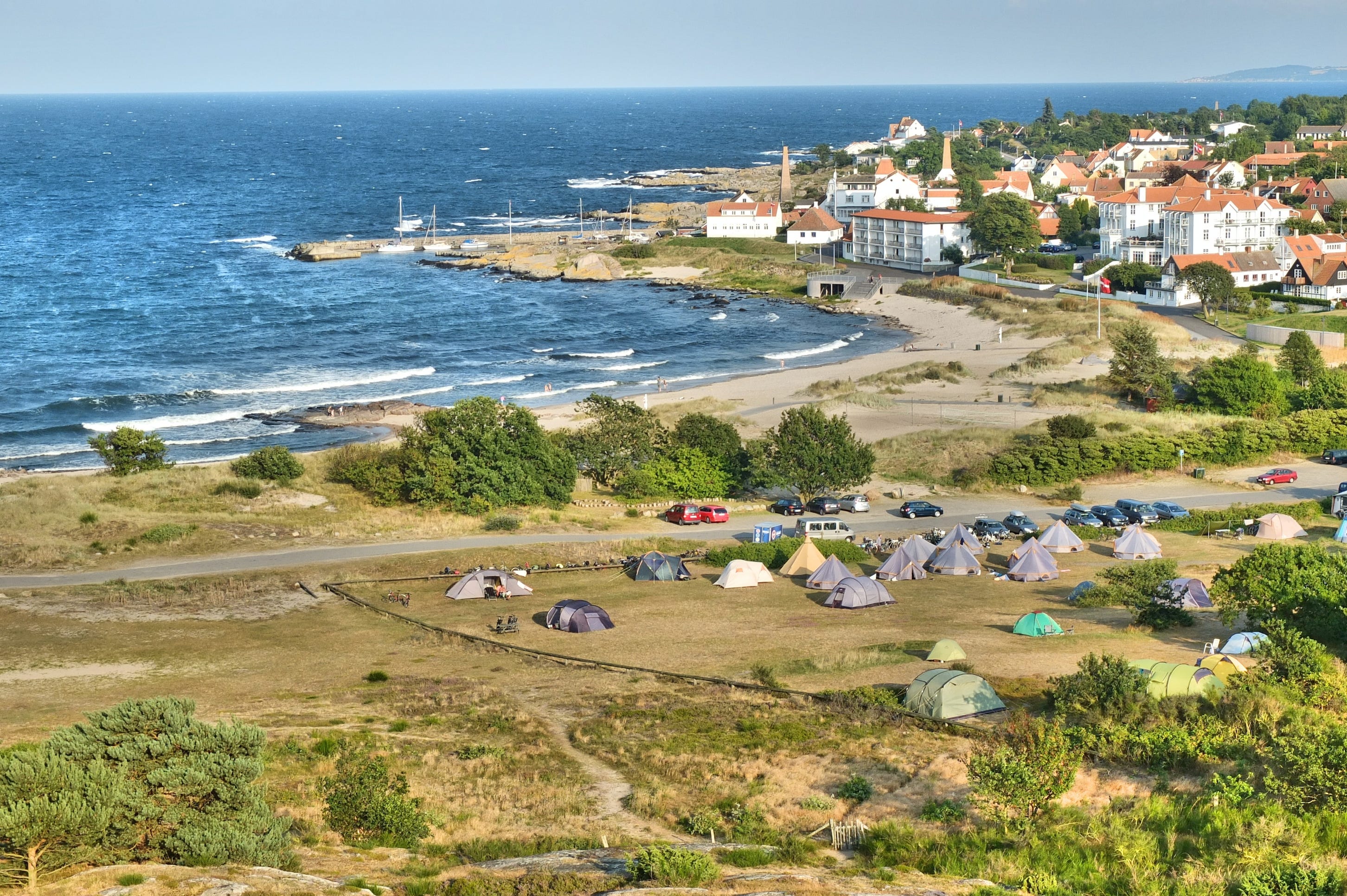
The Norwegian navy was quick to find the right spot, in the shallow waters of the Baltic sea a few miles off Denmark’s Bornholm Island. The pipelines ran more than a mile apart along a seafloor that was only 260 feet deep. That would be well within the range of the divers, who, operating from a Norwegian Alta class mine hunter, would dive with a mixture of oxygen, nitrogen and helium streaming from their tanks, and plant shaped C4 charges on the four pipelines with concrete protective covers. It would be tedious, time consuming and dangerous work, but the waters off Bornholm had another advantage: there were no major tidal currents, which would have made the task of diving much more difficult.
After a bit of research, the Americans were all in.
At this point, the Navy’s obscure deep-diving group in Panama City once again came into play. The deep-sea schools at Panama City, whose trainees participated in Ivy Bells, are seen as an unwanted backwater by the elite graduates of the Naval Academy in Annapolis, who typically seek the glory of being assigned as a Seal, fighter pilot, or submariner. If one must become a “Black Shoe”—that is, a member of the less desirable surface ship command—there is always at least duty on a destroyer, cruiser or amphibious ship. The least glamorous of all is mine warfare. Its divers never appear in Hollywood movies, or on the cover of popular magazines.
“The best divers with deep diving qualifications are a tight community, and only the very best are recruited for the operation and told to be prepared to be summoned to the CIA in Washington,” the source said.
The Norwegians and Americans had a location and the operatives, but there was another concern: any unusual underwater activity in the waters off Bornholm might draw the attention of the Swedish or Danish navies, which could report it.
Denmark had also been one of the original NATO signatories and was known in the intelligence community for its special ties to the United Kingdom. Sweden had applied for membership into NATO, and had demonstrated its great skill in managing its underwater sound and magnetic sensor systems that successfully tracked Russian submarines that would occasionally show up in remote waters of the Swedish archipelago and be forced to the surface.
The Norwegians joined the Americans in insisting that some senior officials in Denmark and Sweden had to be briefed in general terms about possible diving activity in the area. In that way, someone higher up could intervene and keep a report out of the chain of command, thus insulating the pipeline operation. “What they were told and what they knew were purposely different,” the source told me. (The Norwegian embassy, asked to comment on this story, did not respond.)
The Norwegians were key to solving other hurdles. The Russian navy was known to possess surveillance technology capable of spotting, and triggering, underwater mines. The American explosive devices needed to be camouflaged in a way that would make them appear to the Russian system as part of the natural background—something that required adapting to the specific salinity of the water. The Norwegians had a fix.
The Norwegians also had a solution to the crucial question of when the operation should take place. Every June, for the past 21 years, the American Sixth Fleet, whose flagship is based in Gaeta, Italy, south of Rome, has sponsored a major NATO exercise in the Baltic Sea involving scores of allied ships throughout the region. The current exercise, held in June, would be known as Baltic Operations 22, or BALTOPS 22. The Norwegians proposed this would be the ideal cover to plant the mines.
The Americans provided one vital element: they convinced the Sixth Fleet planners to add a research and development exercise to the program. The exercise, as made public by the Navy, involved the Sixth Fleet in collaboration with the Navy’s “research and warfare centers.” The at-sea event would be held off the coast of Bornholm Island and involve NATO teams of divers planting mines, with competing teams using the latest underwater technology to find and destroy them.
It was both a useful exercise and ingenious cover. The Panama City boys would do their thing and the C4 explosives would be in place by the end of BALTOPS22, with a 48-hour timer attached. All of the Americans and Norwegians would be long gone by the first explosion.
The days were counting down. “The clock was ticking, and we were nearing mission accomplished,” the source said.
And then: Washington had second thoughts. The bombs would still be planted during BALTOPS, but the White House worried that a two-day window for their detonation would be too close to the end of the exercise, and it would be obvious that America had been involved.
Instead, the White House had a new request: “Can the guys in the field come up with some way to blow the pipelines later on command?”
Some members of the planning team were angered and frustrated by the President’s seeming indecision. The Panama City divers had repeatedly practiced planting the C4 on pipelines, as they would during BALTOPS, but now the team in Norway had to come up with a way to give Biden what he wanted—the ability to issue a successful execution order at a time of his choosing.
Being tasked with an arbitrary, last-minute change was something the CIA was accustomed to managing. But it also renewed the concerns some shared over the necessity, and legality, of the entire operation.
The President’s secret orders also evoked the CIA’s dilemma in the Vietnam War days, when President Johnson, confronted by growing anti-Vietnam War sentiment, ordered the Agency to violate its charter—which specifically barred it from operating inside America—by spying on antiwar leaders to determine whether they were being controlled by Communist Russia.
The agency ultimately acquiesced, and throughout the 1970s it became clear just how far it had been willing to go. There were subsequent newspaper revelations in the aftermath of the Watergate scandals about the Agency’s spying on American citizens, its involvement in the assassination of foreign leaders and its undermining of the socialist government of Salvador Allende.
Those revelations led to a dramatic series of hearings in the mid-1970s in the Senate, led by Frank Church of Idaho, that made it clear that Richard Helms, the Agency director at the time, accepted that he had an obligation to do what the President wanted, even if it meant violating the law.
In unpublished, closed-door testimony, Helms ruefully explained that “you almost have an Immaculate Conception when you do something” under secret orders from a President. “Whether it’s right that you should have it, or wrong that you shall have it, [the CIA] works under different rules and ground rules than any other part of the government.” He was essentially telling the Senators that he, as head of the CIA, understood that he had been working for the Crown, and not the Constitution.
The Americans at work in Norway operated under the same dynamic, and dutifully began working on the new problem—how to remotely detonate the C4 explosives on Biden’s order. It was a much more demanding assignment than those in Washington understood. There was no way for the team in Norway to know when the President might push the button. Would it be in a few weeks, in many months or in half a year or longer?
The C4 attached to the pipelines would be triggered by a sonar buoy dropped by a plane on short notice, but the procedure involved the most advanced signal processing technology. Once in place, the delayed timing devices attached to any of the four pipelines could be accidentally triggered by the complex mix of ocean background noises throughout the heavily trafficked Baltic Sea—from near and distant ships, underwater drilling, seismic events, waves and even sea creatures. To avoid this, the sonar buoy, once in place, would emit a sequence of unique low frequency tonal sounds—much like those emitted by a flute or a piano—that would be recognized by the timing device and, after a pre-set hours of delay, trigger the explosives. (“You want a signal that is robust enough so that no other signal could accidentally send a pulse that detonated the explosives,” I was told by Dr. Theodore Postol, professor emeritus of science, technology and national security policy at MIT. Postol, who has served as the science adviser to the Pentagon’s Chief of Naval Operations, said the issue facing the group in Norway because of Biden’s delay was one of chance: “The longer the explosives are in the water the greater risk there would be of a random signal that would launch the bombs.”)
On September 26, 2022, a Norwegian Navy P8 surveillance plane made a seemingly routine flight and dropped a sonar buoy. The signal spread underwater, initially to Nord Stream 2 and then on to Nord Stream 1. A few hours later, the high-powered C4 explosives were triggered and three of the four pipelines were put out of commission. Within a few minutes, pools of methane gas that remained in the shuttered pipelines could be seen spreading on the water’s surface and the world learned that something irreversible had taken place.
FALLOUT
In the immediate aftermath of the pipeline bombing, the American media treated it like an unsolved mystery. Russia was repeatedly cited as a likely culprit, spurred on by calculated leaks from the White House—but without ever establishing a clear motive for such an act of self-sabotage, beyond simple retribution. A few months later, when it emerged that Russian authorities had been quietly getting estimates for the cost to repair the pipelines, the New York Times described the news as “complicating theories about who was behind” the attack. No major American newspaper dug into the earlier threats to the pipelines made by Biden and Undersecretary of State Nuland.
While it was never clear why Russia would seek to destroy its own lucrative pipeline, a more telling rationale for the President’s action came from Secretary of State Blinken.
Asked at a press conference last September about the consequences of the worsening energy crisis in Western Europe, Blinken described the moment as a potentially good one:
“It’s a tremendous opportunity to once and for all remove the dependence on Russian energy and thus to take away from Vladimir Putin the weaponization of energy as a means of advancing his imperial designs. That’s very significant and that offers tremendous strategic opportunity for the years to come, but meanwhile we’re determined to do everything we possibly can to make sure the consequences of all of this are not borne by citizens in our countries or, for that matter, around the world.”
More recently, Victoria Nuland expressed satisfaction at the demise of the newest of the pipelines. Testifying at a Senate Foreign Relations Committee hearing in late January she told Senator Ted Cruz, “Like you, I am, and I think the Administration is, very gratified to know that Nord Stream 2 is now, as you like to say, a hunk of metal at the bottom of the sea.”
The source had a much more streetwise view of Biden’s decision to sabotage more than 1500 miles of Gazprom pipeline as winter approached. “Well,” he said, speaking of the President, “I gotta admit the guy has a pair of balls. He said he was going to do it, and he did.”
Asked why he thought the Russians failed to respond, he said cynically, “Maybe they want the capability to do the same things the U.S. did.
“It was a beautiful cover story,” he went on. “Behind it was a covert operation that placed experts in the field and equipment that operated on a covert signal.
Seymour Hersh is a venerable US investigative journalist, who received the 1970 Pulitzer Prize for exposing the My Lai massacre and its cover-up during the Vietnam war.
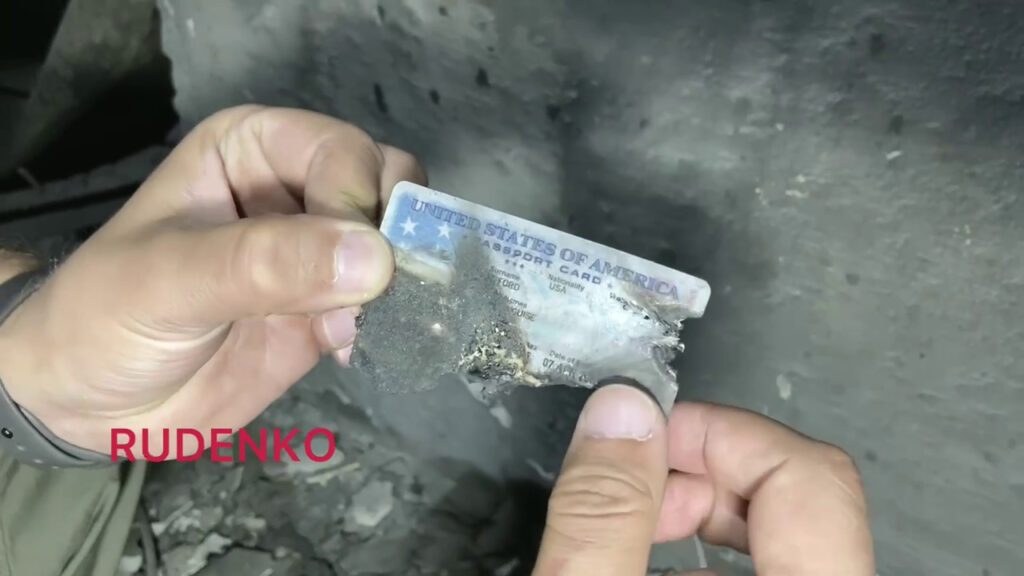
On June 26, 2022, the Russian forces found the scraps of a US passport card, near the blast furnace where the Ukrainians had burnt a dozen corps, inside Azovstal steel mill, Mariupol, Donetsk People’s Republic (screenshot)
In a bitter proxy war that NATO is conducting against Russia, in Donbass and Ukraine, Joe Biden stated on October 21, 2022
the conflict in Ukraine should not end with the success of Russia. Washington has spent a lot of money to help Kyiv. But it’s about much more than Ukrainians, it’s about NATO, it’s about Western Europe. It’s about making sure Putin can’t succeed
Without the explicit mention of a cyanide alternative, the German president of the European Commission, Ursula von der Leyen, added on November 24
the European Union will not rest until Ukraine defeats Putin
I am usually neglecting the statements from politicians, who in the West, have become psychodrama or comedy characters. But these harsh words make sense.
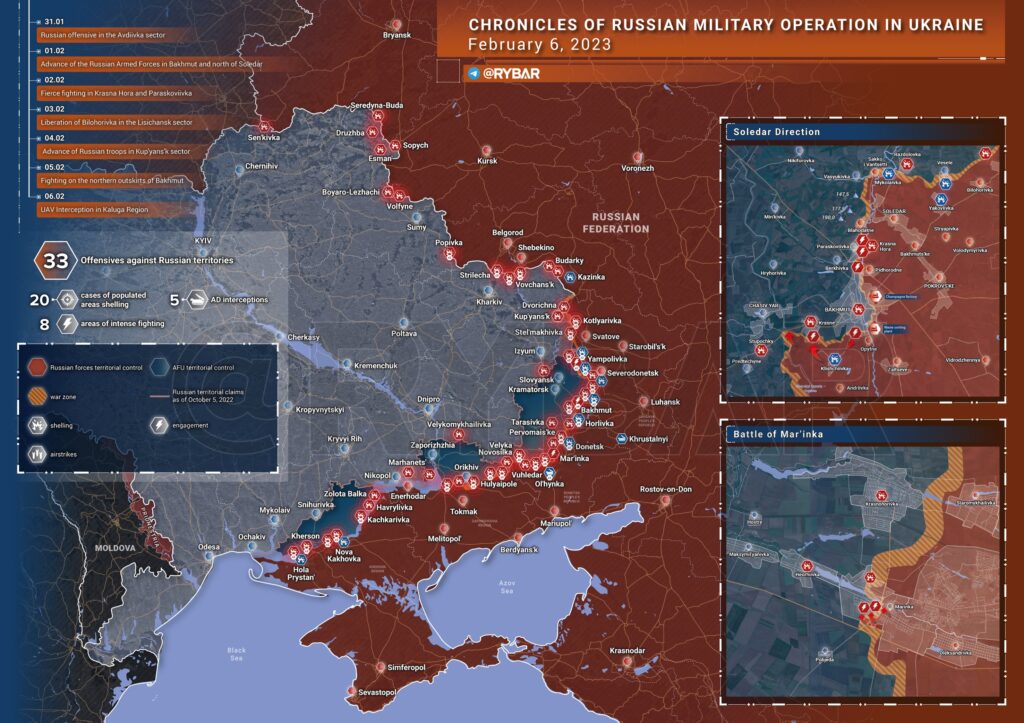
The military facts are however cruel and along with many other analysts, I would suggest Leyen an alternative from big pharma. Russia has already liberated Mariupol, reached the left bank of Dnieper river, seized Zaporojie nuclear power plant (ZNPP) in Energodar, is conducting in Donbass an implacable attrition war, with a much more powerful artillery and the air supremacy. Bakhmut is currently a meat grinder for the Ukrainian cannon fodder. Its near liberation may trigger a wider collapse of the Atlanticist defense in Donbass. NATO is providing Ukraine with a huge intelligence support, is flooding the country with weapons and ammunition, is depleting its own stocks, but these shipments are so far insufficient against the military power of Russia, better trained troops and better command. Politics and propaganda are affecting too much an Atlanticist strategy, which is despising the life of its own fighters
Negotiations between Russia and Ukraine started quickly after the beginning on February 24, 2022, of the Russian specialmilitary operation. Its goals were moderate and clear : liberation of Russian-speaking Donbass, demilitarization and denazification of Ukraine. The third point sought the enforcement of a legal arsenal against Russophobia and the Nazi organizations which are populating the Ukrainian deep State since Maidan, a rightist coup in February 2014. The peace was reachable in March 2022, but the US and UK prevented it. NATO is striving, against all forecasts, to achieve a strategic victory and I suspect, for the wet dream of dismantling Russia. Dire situation. How to protract the moronic ambition to achieve victory, without the direct involvement of NATO forces, which would trigger a nuclear WW3 ? Well, they did it. A kind of unofficial direct involvement of NATO.
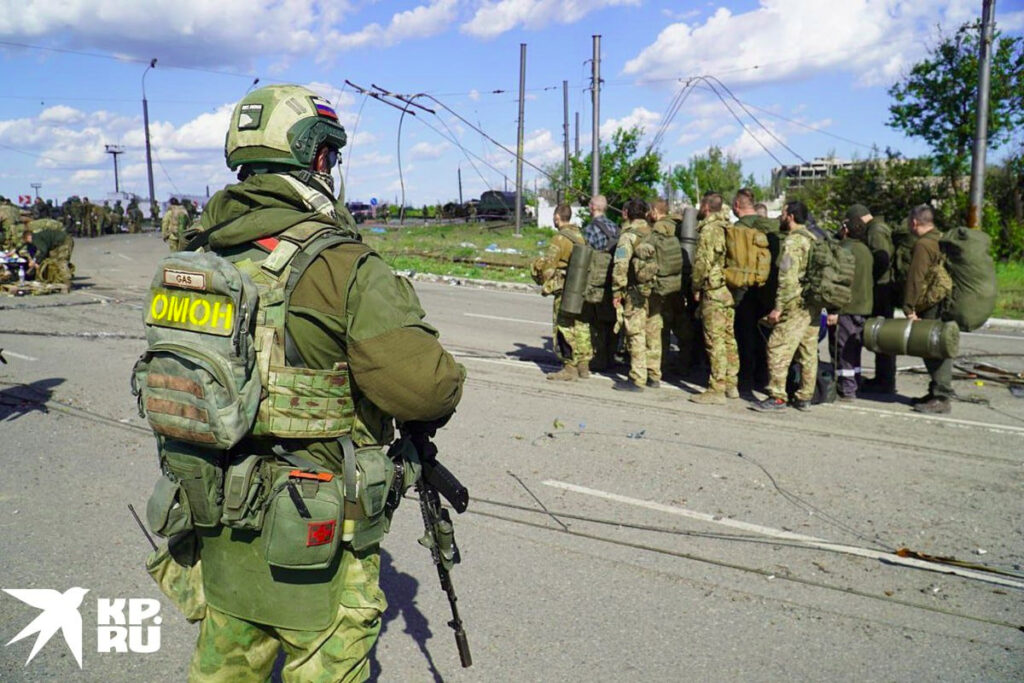
The Russian gains have been punctuated with the discoveries of weird clues. Under the command in Mariupol of Nazi Azov regiment, the last defenders of Azovstal steel mill surrendered on May 20, 2022
Russian victory in Azovstal (Komsomolskaya Pravda)
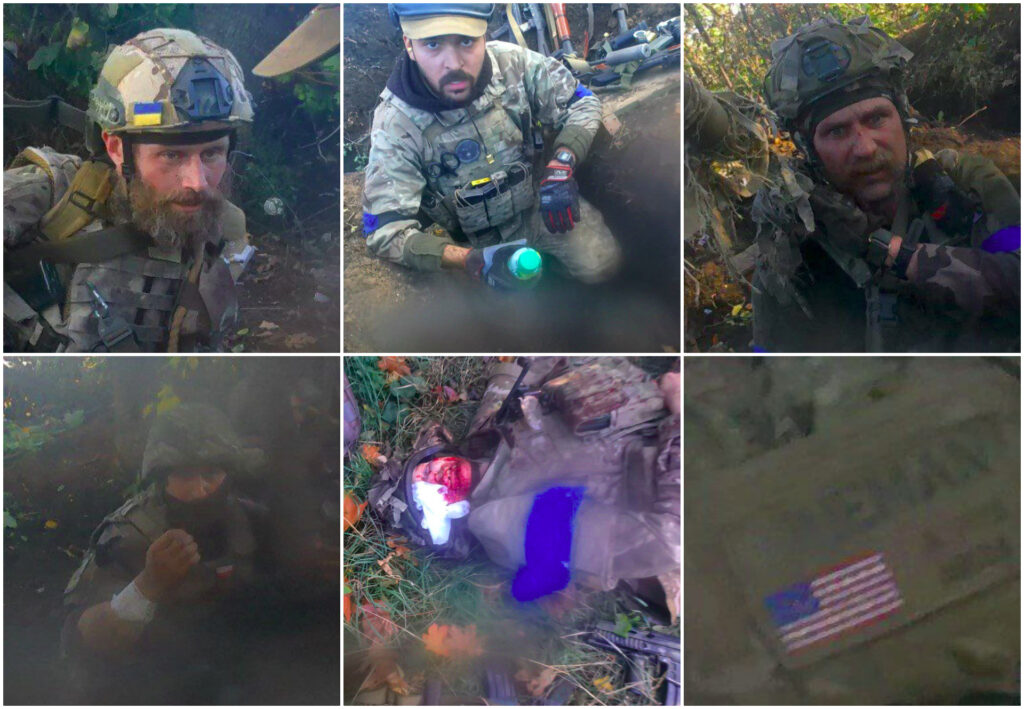
Several hundred corpses had been gathered in cold-storage rooms during the siege. But in June, the Russian forces found that the Ukrainians had used a blast furnace as a crematorium, inside and nearby, the remnants of a dozen incinerated corpses. Why ? Clue : the scraps of a US passport card, related to [….] Louise [….]ford, born on April 7, [….] Yet, the involvement of Western mercenaries in the Ukrainian ranks was a common military fact from the beginning. Many are proud of their feats, which are described on social networks. A British national, Aiden Aslin, was the first captured mercenary, on April 12, 2022, in Mariupol. But on January 29, 2023, in Bakhmut, Russian fighters with Wagner private military company (PMC) found several corpses, whose heads and hands had been cut off, in order to prevent their identification. Why ?
When the HIMARS (High Mobility Artillery Rocket System), for example, arrived in Ukraine in June 2022, some experts were discussing the necessary presence of US service members at some echelons, in order to ensure the efficiency of such a weapon. Meanwhile, the casualties had been severe from the beginning, Ukraine had lost most of its best fighters. The general mobilization had brought replacements, which were poorly trained conscripts. That new infantry needed mentoring and during the first counteroffensives, early September 2022, foreign mercenaries appeared in force at the forefront. One way for NATO to unofficially inject troops is the fake resignation of service members, who later surface on the battlefield, within PMCs
Screenshots from the GoPro camera of a dead Western mercenary, whose formation was wiped out near Zaporojie, on October 7, 2022
The Israeli intelligence may have achieved a precise distinction between fake and real mercenaries, between undercover NATO fighters and mercenaries. An alleged Israeli assessment has leaked to Turkey, where the press has written on January 25, 2023, that by January 14,
165,000 Atlanticist fighters, including
8,000 foreigners, had been killed in Donbass and Ukraine since February 24, 2022. Among the 8,000 foreigners, the most were mercenaries, but
2,692 were actually service members from NATO countries (Germany, Lithuania, Poland, UK, US… etc) According to the same piece, the Russian fatalities were
18,500, nine times less, at the same date.
From March to September 2022, I have written a chronicle about the siege of Mariupol. I am still convinced that dozens French operatives were taken prisoners there.