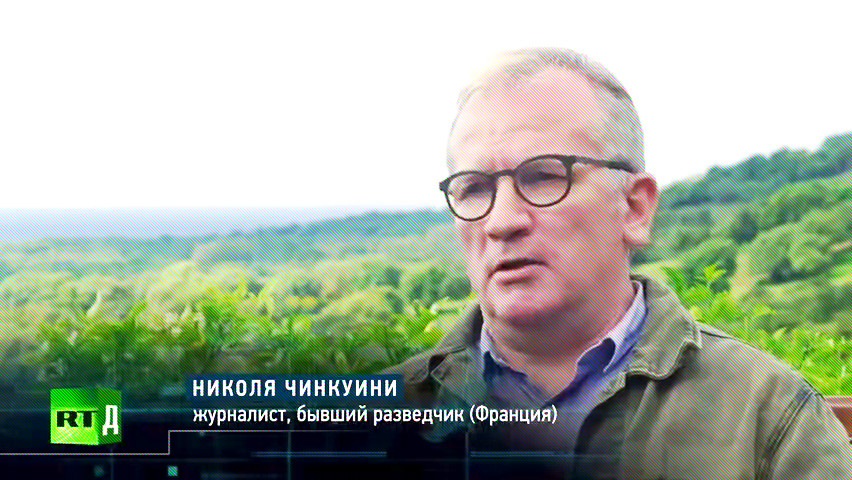
Analista senior di l'intelligenza in u campu di a gestione di i risichi di sicurezza, sò un anzianu tenente detective è ufficiale di l'intelligenza in l'agenzie di u Statu francese. A bona pronuncia hè Николай Чинкуини, in russu
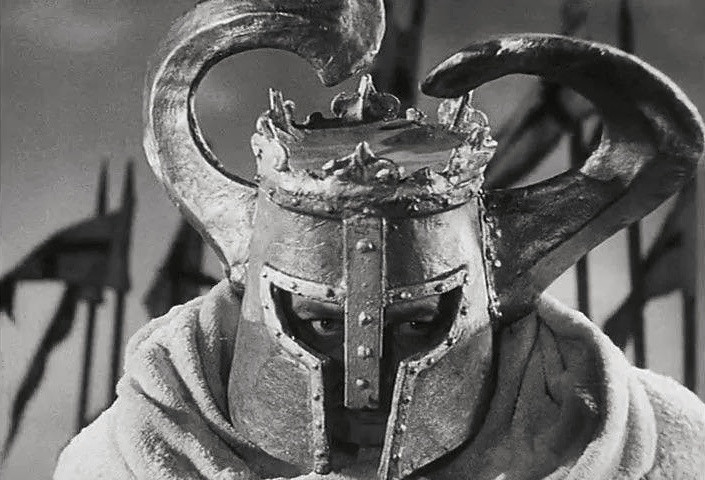
[my illustration: a Teutonic knight in Alexander Nevsky, by Sergei Eisenstein, 1938]
The fate of Central and Eastern Europe after the People’s Democracies’ post-1989 fall cannot be fully appreciated without reference to the EU as an extension of German imperialism. Berlin’s drive to ensure the region remains composed of weak, frequently mutually-resentful microstates has endured for well-over a century. Over time, battlefield conquest and occupation has been supplanted by economic and monetary union, and ever-rising military, security and intelligence “interoperability” and “cooperation”, all conducted under “internationalist” auspices.
Comprehending this process and the consistent needs of German imperialism provides a typically absent, critical lens through which to view events such as Yugoslavia’s destruction, the rise and recent demise of Hungary’s Viktor Orban, and seen and unseen political machinations throughout the Balkans old and new. German imperialism is a potent, dangerous force frequently overlooked due to its nigh-invisible operation. With US global hegemony irreversibly faltering, it is vital to truly understand the phenomenon as it threatens to emerge in its own militarised right again.
Today, German imperialism is little-understood even in countries and regions intimately shaped if not outright created by Berlin’s colonial meddling and concomitant hegemonic expansion. Its historic apotheosis was the 1918 Treaty of Brest-Litovsk. The terms and consequences provide an eerily precise blueprint for the EU’s modern day role as German empire via other means. Despite Brest-Litovsk’s seismic import, mainstream English language accounts are comparatively rare. A highly compelling, informative synthesis is nonetheless provided by Adam Tooze’s much-overlooked 2014 workThe Deluge.
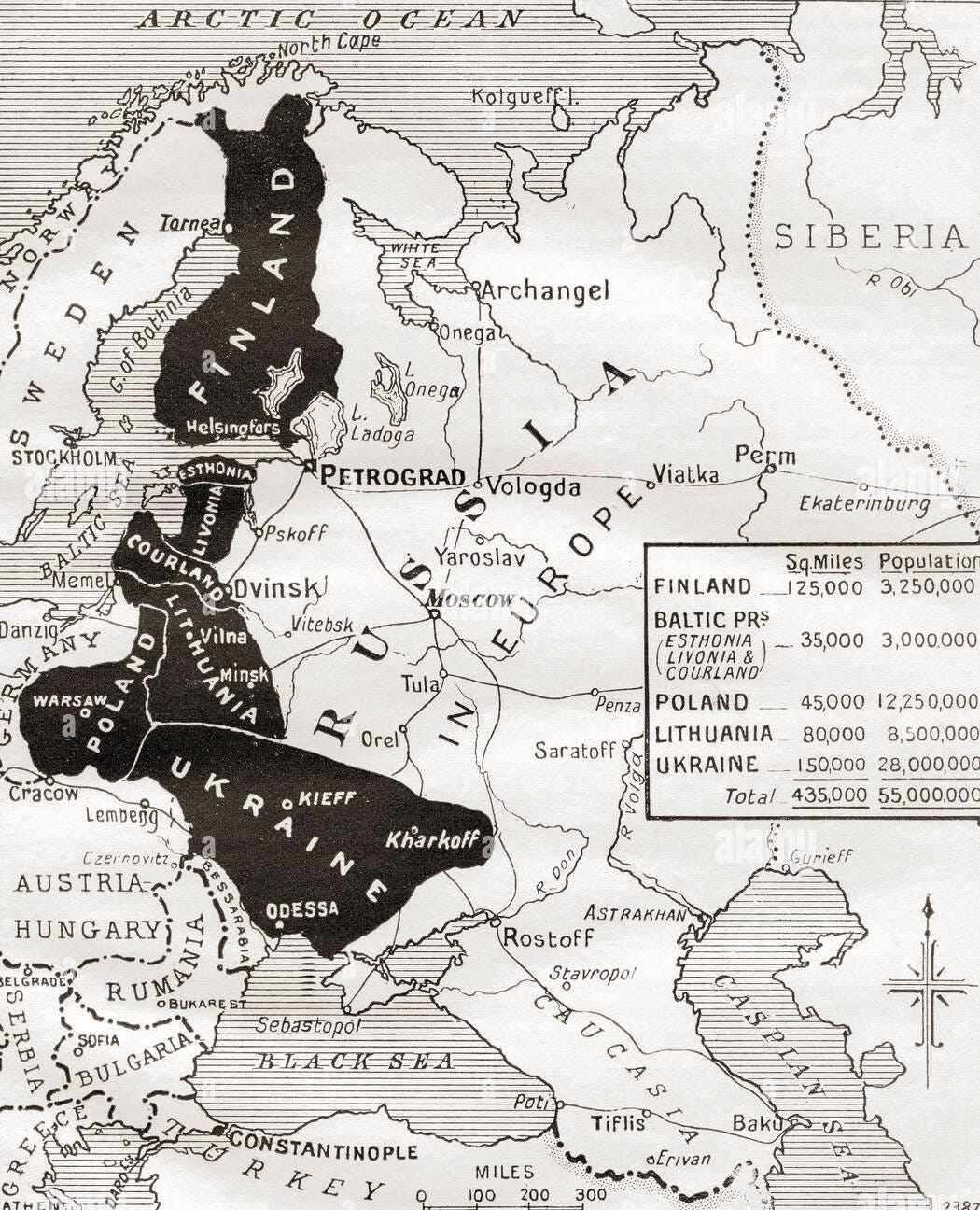
Tooze writes of how “Brest gave birth to the precursors to the Baltic states in their modern form,” and an “independent Ukraine” for the very first time in history. Resource-rich territory that over prior centuries comprised much larger dynastic land empires was broken up into easily exploitable chunks. The newly-formed nations, and corresponding nationalisms, spread throughout ethnically, linguistically and religiously diverse swaths of Central and Eastern Europe constituted a formidable stronghold. Self-determination facilitated Germany’s untrammelled economic, military, and political penetration.
Commenting on Eurasia’s 21st century map, Tooze observes how since the Soviet Union’s 1991 dissolution, all Brest-Litovsk’s “creations” have “come to be regarded as legitimate members of the family of nations.” Moreover, states such as the Baltics and Poland then as now “look to protectors in the West,” being “keen members of an American-dominated NATO and the European Union, in which Germany is the dominant force.” Via Brest-Litovsk, “all of these polities fell willy-nilly under the ‘protection’ of Imperial Germany”
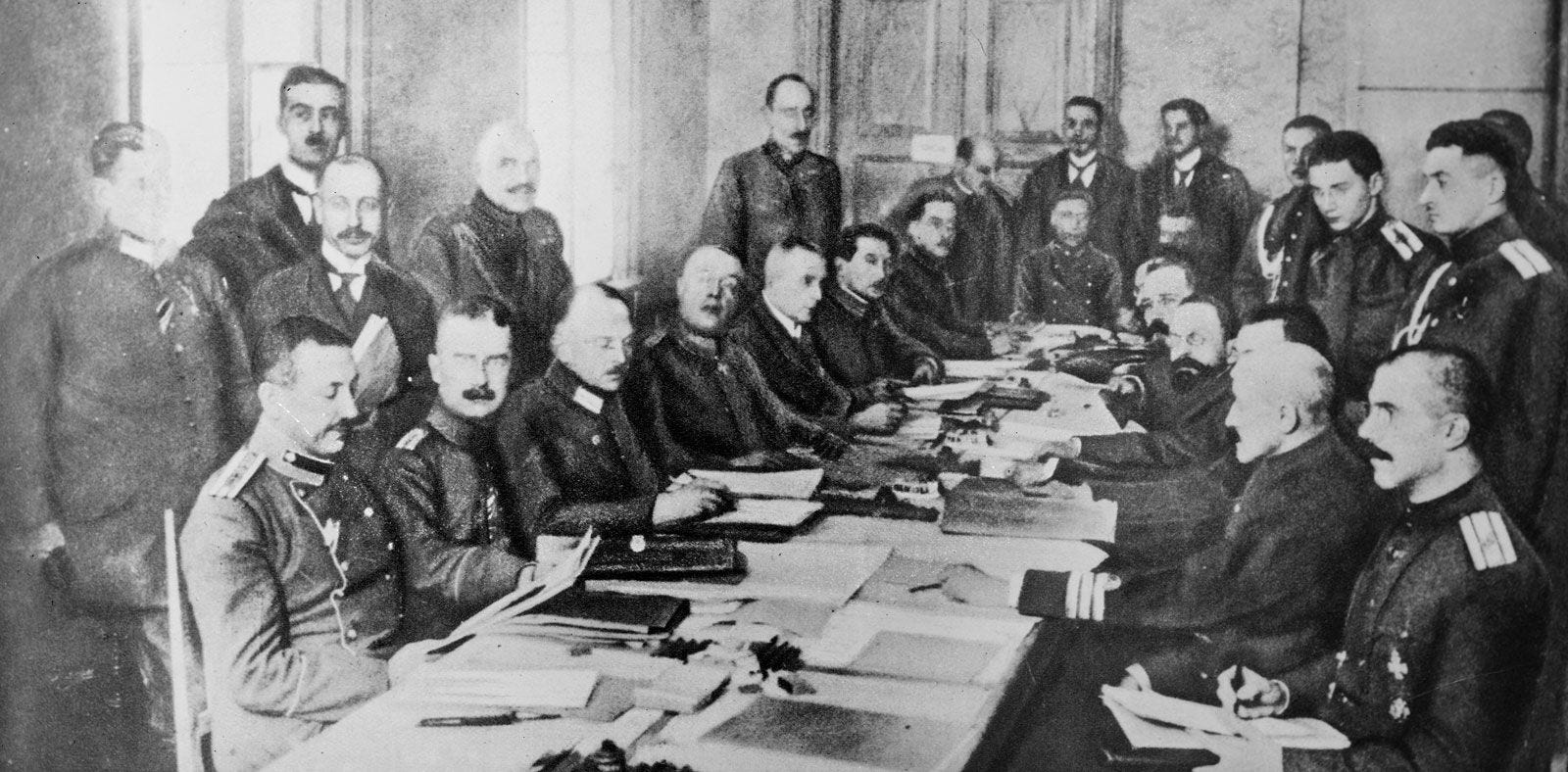
Brest-Litovsk delegates negotiate, early 1918
The Treaty was signed between Moscow and Austro-Hungary, Bulgaria, Germany and the Ottoman Empire in March 1918, following months of tense negotiations produced the previous December by revolutionary Russia signing an armistice with Berlin. At Brest-Litvosk, both sides had advanced their respective visions of “self-determination” for the Central and Eastern European components of the Tsar’s collapsed empire. Vladimir Lenin hoped newly-independent states in the region would be free to turn Bolshevik. Yet, Imperial Germany had no intention of letting that happen.
Instead, the country’s “more intelligent strategic thinkers” realised “there was no better means to dynamite the Tsarist Empire than for Berlin to espouse the demand for self-determination” at Brest-Litovsk. This “manipulative ruse” would allow Germany to extend her hegemony imperceptibly throughout enormously profitable territories. It was “a vision of negotiated sovereignty in which economic and military independence was pooled by smaller states with larger states.” Tooze reports how German imperialists argued “full, unfettered sovereignty” was “always a chimera” – “the real choice was one between hegemons”:
Germany would secure power on a continental scale not through annexation, but through the formation of an economic and military bloc of smaller Eastern European states…The autonomous Polish entity carved by Germany and Austria out of Russian territory in the autumn of 1916 was a start. While in economic and military terms the new Poland would be bound tightly and irrevocably to Germany, in the social and cultural sphere it would be given the freedom ‘to express itself nationally’
‘Military Protection’
From the Central Powers’ perspective, self-determination’s colonial windfall was immense. In territorial terms, Moscow lost control of today’s Belarus, Estonia, Latvia, Lithuania, Poland, and Ukraine. This prime former Tsarist real estate accounted for 34% of the fallen empire’s population, 54% of its industrial land, 89% of its coalfields, and 26% of its railways. Berlin well-knew the regional treasure trove would be hotly contested, and could easily “fall into the orbit of another great power” – “if not Germany or Russia, then Britain”.
Hence, Brest-Litovsk’s terms exclusively allowed for ‘independence’ under formal “German military protection.” This transformed millions of people throughout the region into potential proxy warriors arrayed against Russia, or other major powers threatening Berlin’s local hegemony, in the manner of NATO today. Rapidly collapsing into civil war, with Franco-British intervention to reverse the Revolution impending, the incipient Soviet Union acquiesced to the Treaty’s harsh stipulations. Lenin believed the Bolsheviks would eventually recapture the lost territories, by sheer force of radical gravity
Contemporary map of Central and Eastern European states created by Brest-Litovsk
Brest-Litovsk was torn up by the June 1919 Treaty of Versailles, compelling Berlin to grant independence to assorted German-conquered protectorates that had been established throughout the region. Chaotic, violent struggles unfolded over the next three years between Red Army-assisted local revolutionary elements and ‘independent’ states led by collaborationist puppets. Belarus and Ukraine were successfully absorbed as republics, while the Baltics and Poland remained autonomous. Meanwhile, the seed of German hegemony via self-determination had been decisively sown throughout Central and Eastern Europe.
German colonialism particularly left its mark post-Brest-Litovsk via the emergence of nationalisms and according national creation myths throughout the region, which were innately and rabidly antagonistic toward Moscow. In Poland in 1916, Berlin’s invading forces had successfully portrayed themselves as liberators. In the Baltics, Russians represented a large proportion of the country’s urban, land-owning elite. They were easily framed by German propagandists, and in ultranationalist imaginations, as parasitic overlords of largely illiterate ethnic Estonian, Latvian and Lithuanian peasantry, who overwhelmingly resided in rural steppes.
Convincing Ukraine’s multiethnic population to embrace an anti-Russian ‘independence’ was considerably more difficult, given their similar backgrounds, customs and languages, and the substantial influence of each others’ culture in both directions since Kiev’s 1654 union with Moscow. Ukraine’s contemporaneous veneration of genocidal fascists, and indeed the wider ongoing proxy war, are direct upshots of efforts by German imperialists to promote enmity and antagonism between Russians and Ukrainians. This strategy was maintained throughout the Cold War by the CIA and MI6, with Nazi-riddled West Berlin’s assistance.
‘Civilising Mission’
Another enduring legacy of Brest-Litovsk was the transformation of “self-determination” from a liberal German imperialist crusade, to a fundamental principle of Anglo-American-dominated international relations. The cause was eagerly and cynically seized upon first by British Prime Minister Lloyd George, then US President Woodrow Wilson. The right to minority self-determination globally became absolutely central to the 1919 Paris Peace Conference. The world over, anti-colonial and nationalist movements saw an opportunity to achieve independence from foreign subjugation.
At the Conference, Austro-Hungary brutally fell victim to this self-determination push, with Britain successfully ordering its constituent territories be “liberated” via the empire’s total breakup. This created the independent states of Austria, Hungary, Czechoslovakia, and Yugoslavia. The latter pair were entirely new countries, with Yugoslavia forged from Austro-Hungary’s southern Slavic regions – Bosnia and Herzegovina, Croatia, and Slovenia – and the revolutionary kingdoms of Serbia and Montenegro. In a bitter irony, Austro-Hungary herself had previously encouraged self-determination regionally à la Brest-Litovsk, to entrench her imperial rule.
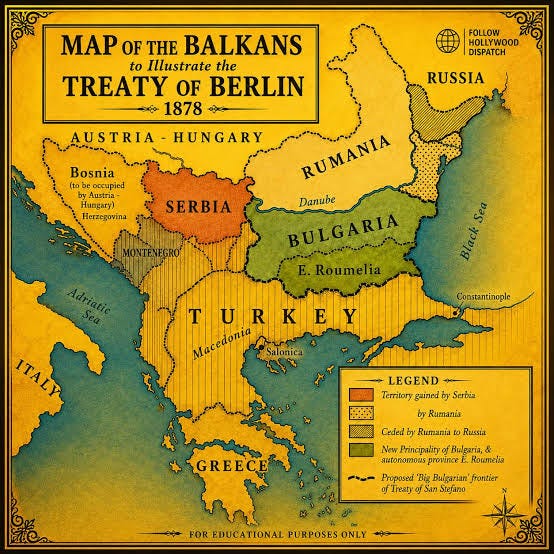
In June 1878, the little-known Congress of Berlin was convened. Major European powers sought to reorganise the Balkans, in the wake of Russia’s victory over the Ottoman Empire three months earlier. The conflict ended with Moscow asserting hegemony over Constantinople’s remaining holdings in Southeastern Europe, via an allied Greater Bulgaria, and the newly-formed, independent states of Montenegro, Romania, and Serbia. However, Austria-Hungary, Britain, France, rapidly expanding host empire Germany, and Italy, wished for these terms to be revised
While the Congress recognised the three new Balkan states’ independence, attendees demanded Bosnia and Herzegovina become an Austro-Hungarian protectorate into the bargain, much to Serbia’s chagrin. Vienna’s resultant takeover of Sarajevo sent tens of thousands of Muslim inhabitants fleeing to Turkey. This exodus intensified in 1881, after the imposition of military conscription. The move was inspired by Serbia and Montenegro supporting local anti-imperial elements. It was just one Austro-Hungarian connivance intended to transform harmoniously multiethnic, multifaith Bosnia and Herzegovina into a fractious powder keg.
In service of this goal, Sarajevo’s Austro-Hungarian occupation authorities actively nurtured a nationhood centred exclusively on Bosniak – Bosnian Muslim – identity. The local Serbo-Croatian dialect was proclaimed a separate Bosnian language, Cyrillic text got suppressed, while Serbian books and newspapers were banned. Vienna’s meddling failed to incite violent, separatist division between Bosnia’s diverse peoples. It nonetheless created a vast army of conscripts for any future regional war, while providing Austro-Hungary with an imperial public relations victory. Per historian Maximilian Georg:
[Vienna’s] objects were to teach the population their supposed Bosnian, pro-Habsburg identity, legitimise the Austro-Hungarian rulers as the new Romans, and demonstrate to Europe and the world the success of Austro-Hungary’s ‘civilising mission’ in an ‘oriental’ country. This ‘civilising mission’ under military occupation was the strongest indicator of an Austro-Hungarian colonialism
‘Yugoslav Nationalist’
Austro-Hungary and Germany alike considered independent Serbia’s mere existence a permanent irritant to their Eastern European supremacy, in need of eventual neutralisation. Tensions constantly mounted after the turn of the century, leading in 1908 to Bosnia’s formal annexation by Vienna. All along, imperialists in Berlin were spectating Austro-Hungary’s colonial machinations with intense interest. In 1888, Chancellor Otto von Bismarck prophetically foresaw “some damned foolish thing in the Balkans” upsetting Europe’s delicate balance of power, and precipitating a major global conflict.
Serbia and Montenegro’s October 1912 invasion of Albania, in the wake of her declaration of independence from Ottoman rule, almost proved that “damned foolish thing.” Serb and Montenegrin forces sought to permanently capture territory, but retreated a year later under threat of Austro-Hungarian intervention. In the aftermath, Kaiser Wilhelm II visited Vienna, declaring to colonial officials “war between East and West was in the long run inevitable.” As Slavs “were born not to rule but to obey,” their anti-imperialist tendencies couldn’t be tolerated much longer.
Wilhelm II moreover pledged to “back” Austro-Hungary in any future conflict in Eastern Europe, assuring his Viennese counterparts Berlin was “ready to draw the saber any time your action makes it necessary.” Bosnian Serb Gavrilo Princip’s June 1914 assassination of Archduke Ferdinand in Sarajevo provided an ideal pretext for the Kaiser’s long-desired showdown between Slavs and Teutons. Pressured by Austro-Hungarian authorities to implicate Belgrade directly in his actions while on trial, Princip instead insisted he was ideologically motivated:
I am a Yugoslav nationalist, aiming for the unification of all Yugoslavs, and I do not care what form of state, but it must be free from Austria…The plan was to unite all South Slavs. It was understood that Serbia as the free part of the South Slavs had the moral duty to help in the unification, to be to the South Slavs as the Piedmont was to Italy…In my opinion every Serb, Croat and Slovene should be an enemy of Austria
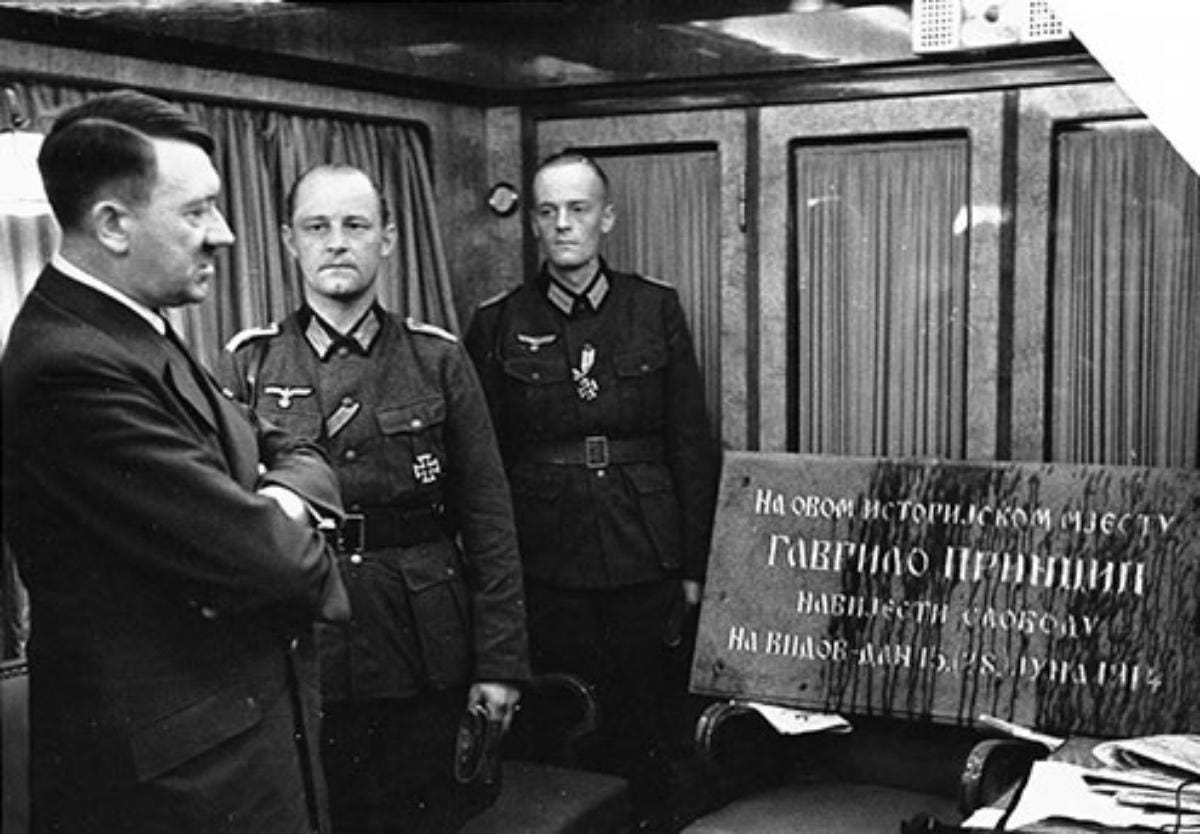
In post-World War I Yugoslavia, Princip was elevated to national hero. In early 1930, a plaque was erected on the site of Ferdinand’s assassination, celebrating a foundational event in the new country’s creation. It was the sole trophy claimed by the Nazis following the Axis invasion of Yugoslavia, presented to Adolf Hitler at a formal ceremony on his 52nd birthday in April 1941, two days after Belgrade’s surrender. A potent totem of German embarrassment expunged, it was now time to erase Yugoslavia permanently
Adolf Hitler inspects the plundered plaque commemorating Archduke Ferdinand’s assassination by Gavrilo Princip
Carving up the country relied heavily on constructing genocidal, ethnonationalist puppet entities. Painful memories of these attempts to exert hegemony over the Balkans under the banner of “self-determination” remained visceral for many residents of Yugoslavia in December 1991. Then, newly-reunified Germany unilaterally recognised federation members Croatia and Slovenia as ‘independent’ states, while encouraging other republics comprising the collapsing country to follow the pair’s secessionist lead. It was widely predicted Yugoslavia’s demise would produce bloodshed, on a grand scale.
‘Fundamental Subordination’
Dissolving Yugoslavia began waging war on Croat and Slovene secessionists six months earlier. The latter conflict lasted just 10 days, but the former was still simmering. The European Community and UN futilely struggled all along to achieve peaceful settlements to Yugoslavia’s gravely worsening crisis, while formally committed to preserving the country in some form. Berlin’s recognition summarily sabotaged those efforts, removing any incentive for Yugoslav republics to negotiate their futures with Belgrade, while emboldening nationalists in every republic.
Fears of Berlin’s resurgent imperialism were not confined to Yugoslavia. As TIMEcontemporaneously observed, “it used to be a given of European political life Germany…would not take a leading or controversial role in world affairs,” which “suited its neighbors very well indeed.” While occupied West Germany operated throughout the Cold War as “an economic giant and a political dwarf,” unified Berlin’s “unexpected show of diplomatic muscle” in recognising Croatia and Slovenia as ‘independent’ countries was now causing “discomfort” throughout Western capitals.
In Britain’s parliament, then-Foreign Secretary Douglas Hurd explicitly evoked the World Wars as disquieting precedents for Germany’s modern-day “self-determination” push in the soon-to-be former Yugoslavia. “There is a tradition of the main states of Western Europe splitting in rivalry on these Balkan questions, and this all ending up on the battlefield. I don’t think that tradition is a good one,” Hurd cautioned. Washington, immensely irritated by Berlin belligerently “getting out ahead of the US,” duly assumed management of the Yugoslav crisis, with disastrous consequences.
Fratricidal conflicts that subsequently engulfed Yugoslavia forged a highly invasive beachhead, via which German economic and political hegemony throughout the region surged, without direct military engagement. While Berlin framed her support for Croat and Slovene ‘independence’ in terms of human rights, the rich financial rewards of shattering the federation were plain. As by far the two wealthiest republics, Germany effectively granted herself access to “the best productive assets” in the soon-to-be former country by kickstarting its practical and physical collapse, per a 2008 academic paper.
The authors write of how Berlin’s “hegemonic relationship” with Yugoslav successor nations was thereafter writ considerably larger than even Germany’s imperial infiltration of “smaller states” elsewhere in Central and Eastern Europe. This is due to the “specific dependence” of Balkan countries on Berlin’s “structural power”. In economic terms, this means vast national trade deficits with Germany across the region, with “Balkan pre-products and raw materials” flowing in vast, constant profusion to Berlin, while German corporations and products dominate many commercial, financial and industrial sectors locally.
Undergirding this extraordinary economic colonisation was adoption by Yugoslavia’s successor states of ‘independent’ currencies, pegged first to the former Deutschmark, now Euro. This proved pivotal to the “fundamental subordination of the political economies of the region to the ideological and operational norms” of the EU – or German empire, via other means. New national and private banking systems of post-Yugoslav countries were structured specifically according to Berlin’s own, with German banks ascendant, as elsewhere in Central and Eastern Europe. That’s not all:
[Deutschmark/Euro pegging] was an essential precondition for the shaping of the macro-economic policies of these (and other transition) states, for their foreign economic relationships, for the further development of their capital markets and the programmes of liberalisation, deregulation and privatisation which ensued
‘European Continent’
Berlin’s Balkan banking takeover moreover fundamentally “facilitates the penetration of all German enterprises into the commercial life of the Balkan economies.” Berlin has gluttonously feasted on local resources and industry alike ever since, its investment regionally “characterised by takeovers.” For example, throughout Central and Eastern Europe German supermarkets are a near-monopoly, with prices of goods frequently higher than back home, despite meagre local purchasing power. Low wages, vast structural unemployment, and mass brain drain are all interlinked, ruinous inheritances.
The Balkans’ Western “transition” has been far more destructive than even the horrors unleashed upon the former Warsaw Pact in the 1990s. Heavily influenced “by prescriptive programmes emanating from the EU and from the World Bank,” Brussels has since 1999 also been “actively involved” in advising and guiding every country in the region towards bloc membership. After so much imposed impoverishment, it isn’t precisely clear what meaningful benefits Balkan states or populations will reap from their vassalage under German imperialism becoming formalised.
In late 2019, a Balkan liberal who once eagerly supported their country joining the EU wrote a sorrowful ode to “the process of so-called integration” Yugoslav successor states suffered by adopting “measures”, “instruments”, and “reforms” dictated by “Western technocrats”. Freshly ‘independent’ countries “were expected to build a fully developed Western liberal democracy from scratch…upon the ruins of a different yet fully developed system…while dragging behind us the burden of deepening poverty and trauma.” Several were and remain deeply scarred by Berlin and Brussels-encouraged ‘independence’ wars.
However, “this excruciating process of destroying and building anew a whole system…went neither fast enough nor successfully enough” for the new German empire. What’s more, “competition was not fair” – “opening our markets to the developed capitalism of the West and undertaking neoliberal reforms drained our human and economic resources while we kept trying to stay apace.” Socialism’s vestiges were eradicated, state industries sold off, and social spending slashed. The op-ed mysteriously failed to mention how Germany’s contemporary Balkan economic assault has a “strong security dimension”
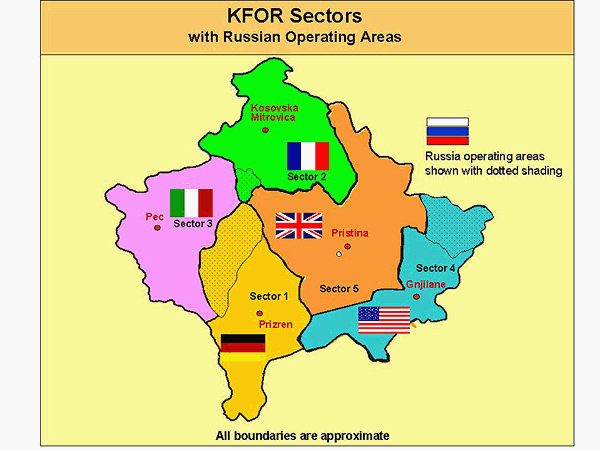
Kosovo’s original KFOR occupation map, June 1999
The 2008 paper notes Berlin exerts direct colonial-style control across the region, for example via Bosnia and Herzegovina’s EU-chosen Office of the High Representative, which traditionally serves as Germany’s imperial viceroy in Sarajevo. Moreover, Berlin has always been a key contributor to NATO’s Kosovo peacekeeping force KFOR, sustaining a military occupation under which Pristina controversially declared independence from Serbia in February 2008. This summer, Washington’s KFOR contingent began departing Kosovo after 27 years.
Meanwhile, the Americans are openly signalling Bosnia’s abandonment, raising potentially urgent questions about the unified country’s future. In April, EU Commission Ursula von der Leyen made clear the EU and she personally intend to “[complete] the European continent so it does not fall under Russian, Turkish or Chinese influence,” in explicit reference to the former Yugoslavia. History shows us such declarations by German imperialists frequently result in world-threatening catastrophe. Meanwhile, “some damned foolish thing in the Balkans” could evidently today yet again trigger war [end]
this article is the product of visits to Russia I made in June and September 2026 where I met with senior Russian leaders, leading academics, and specialists in military and security issues
ce 11 novembre 2025 est l’occasion de souligner comme la façon dont l’Europe sacrifie les conscrits ukrainiens mobilisés de force rappelle le spectaculaire carnage de la 1ère guerre mondiale
leaked files show top UK military figures conspired to carry out the Kerch bridge bombing, covertly train “Gladio”-style stay-behind forces in Ukraine, and groom the British public for a drop in living standards caused by the proxy war against Russia
the Germans have bowed down to the US sabotage by Joe Biden administration of Nord Stream pipelines, only to end up with Donald Trump’s America First doctrine in economy and defense
est après Nicolas Sarkozy et François Hollande, le troisième gouverneur d’une France inféodée aux États-Unis et à leurs intérêts. Et en même temps, que ce soit l’expression de son arrogance ou une façon de séduire ses rares électeurs, il s’agite dans des efforts désespérés pour apparaître au dessus de ses moyens
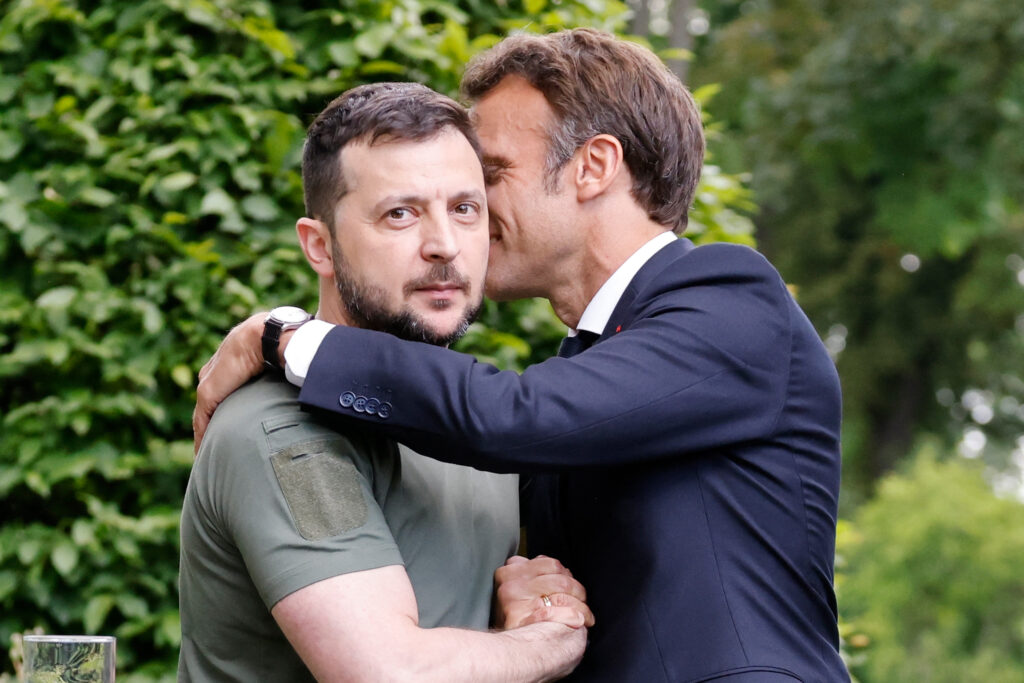
ici à droite, avec Volodymyr Zelenskyy, le 16 juin 2022 à Kiev (Ludovic Marin / AFP)
Sa personnalité infantile, ses caprices, sa vacuité abyssale de politicien typique de l’Occident de ce début de troisième millénaire, de pur communicant, en font sans doute le personnage le moins intéressant de ce panthéon. Je retiens quand même de Macron qu’il tenta le 11 novembre 2018 de réhabiliter le dirigeant fasciste Philippe Pétain.
Compte tenu des qualités réelles de l’imposteur, il est heureux que la France soit aujourd’hui vassale des USA, qui au Niger ou en Ukraine, savent calmer d’un sifflet les rodomontades des autorités françaises. Car même les États-uniens sont plus compétents et moins nuisibles aux restes de l’humanité
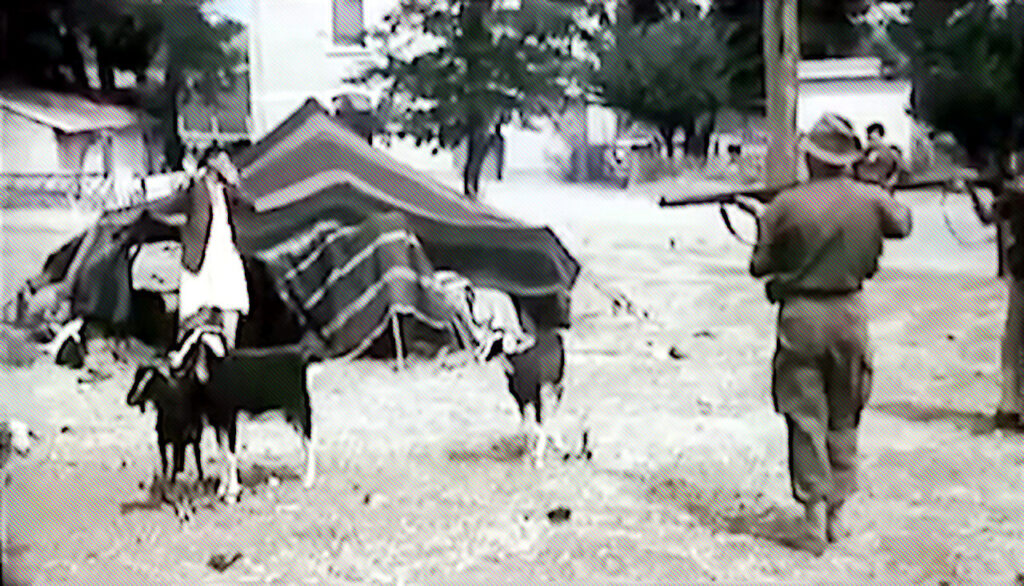
Capture d’écran d’un film de l’armée française, qui montre le meurtre habituel d’un civil pendant la guerre de libération de l’Algérie (1954-1962)
Quand des pays comme l’Allemagne ou la France, avec leurs passifs historiques, ont l’insolence de prétendre défendre, comme des vierges de Delphes, la démocratie ou la liberté, les vastes restes du monde rigolent doucement. La décence la plus élémentaire exigerait plus d’humilité.
La dernière action indépendante et décente de la France sur la scène internationale fut pour le bien, en 2003, l’opposition de Jacques Chirac à l’invasion anglo-états-unienne de l’Irak
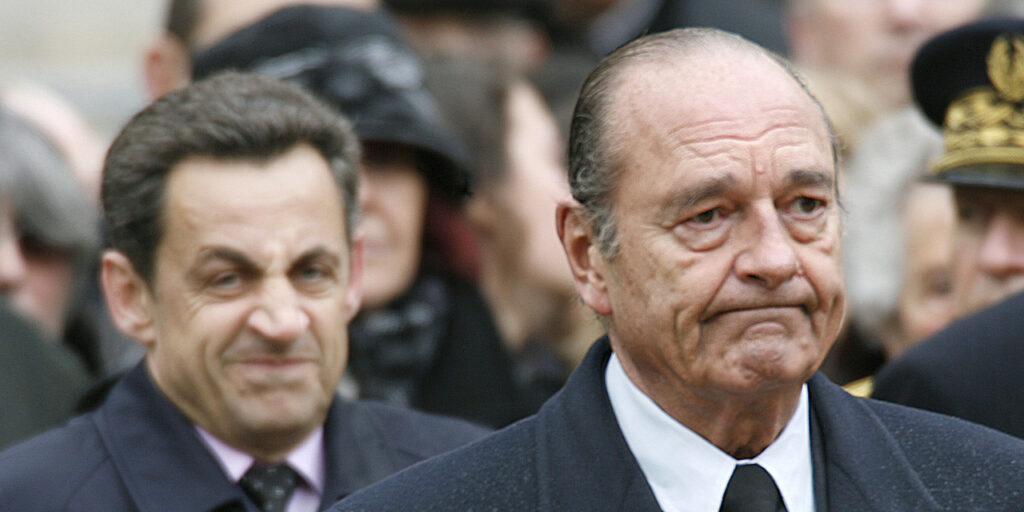
Sarkozy, il faut lui marcher dessus. Et du pied gauche, cela porte bonheur – Jacques Chirac, le 14 juillet 2004 (photo de Charles Platiau / Reuters)
Une invasion qui précéda la destruction en 2011 de la Libye (Sarkozy), cause de l’activité djihadiste au Sahel, le soutien à l’insurrection sunnite radicale contre le gouvernement laïc de Syrie (Hollande), que les Parisiens payèrent un vendredi, puis le coup d’État d’extrême-droite en Ukraine et la guerre au Donbass depuis 2014. Les Occidentaux sont devenus des fous furieux et les Français sont aujourd’hui parmi les pires
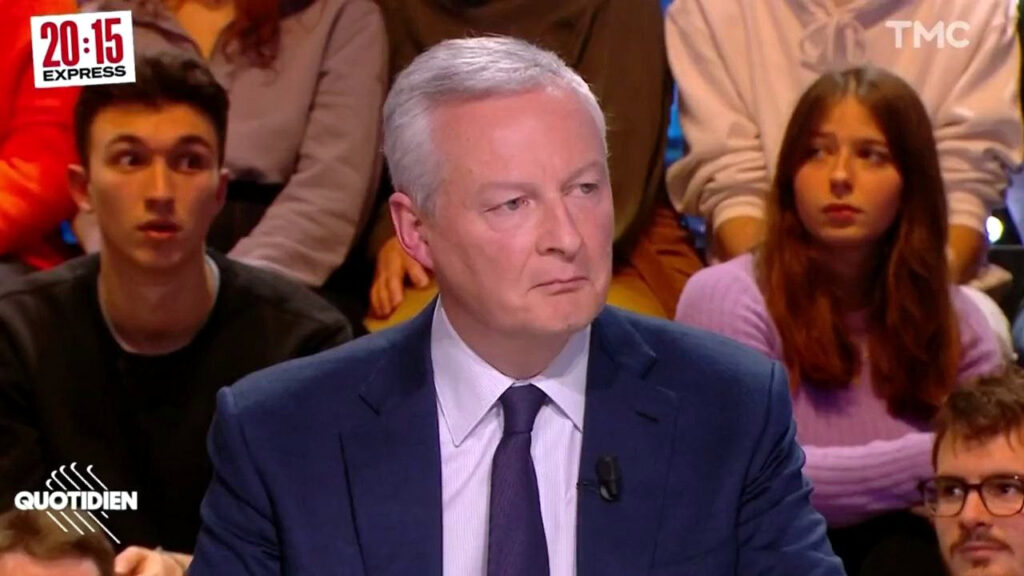
Tout vient à point qui sait attendre. Le 2 janvier 2023, ma récompense fut la lippe de Bruno Le Maire, qui de son plateau TV, contemplait une frappe russe contre des renforts atlantistes en République populaire de Donetsk. En mars 2022, le surintendant des finances voulait provoquer l’effondrement de l’économie russe. Mais ce sont les Français, qui deux ans plus tard, sont dilatés comme jamais
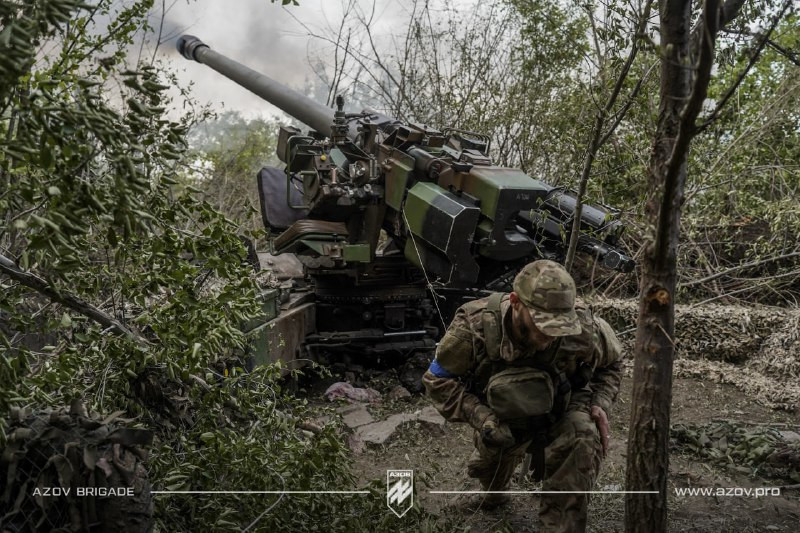
En juin 2023, déjà, la 12e brigade spéciale, émanation de l’organisation nazie Azov dans la garde nationale ukrainienne, employait au front l’obusier de 155 mm TRF1, prédécesseur dans l’armée française du CAESAR
En 1991, l’Union soviétique s’effondra et l’OTAN fut confrontée à une crise existentielle : sa raison d’être n’existait plus. Mais plutôt que de se démanteler, elle s’est donnée une nouvelle mission : s’étendre. Et dans une boucle autoréférentielle, l’expansion de l’OTAN créerait l’hostilité nécessaire pour se justifier
Et voila le résultat, la descente d’une prise de coke qui était censée apaiser les troubles anxieux de petits bourgeois froussards, que leur lâcheté fait aujourd’hui immoler des centaines de milliers d’Ukrainiens, enrôlés de force dans les troupes atlantistes. Les incantations sur la démocratie ou la liberté ne sont qu’une bouillie politiquement correcte, le colonialisme du XIXe siècle, qui déjà prétendait civiliser, passé au blender. La question se pose encore une fois : qui sont les barbares ?
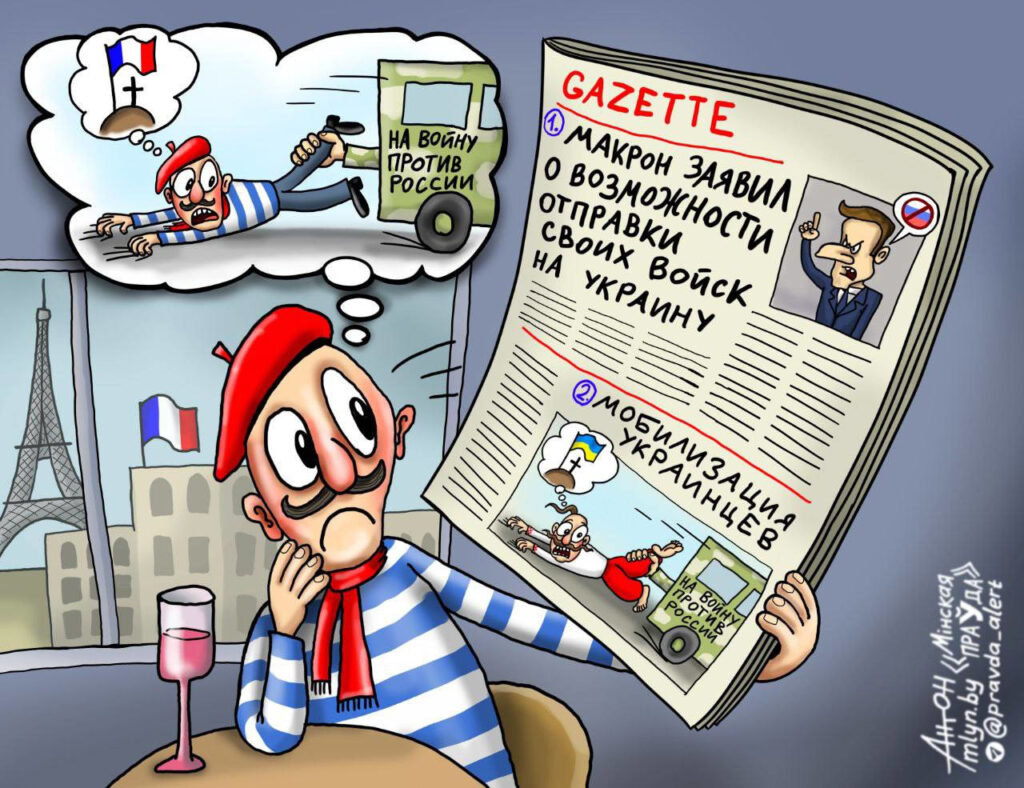
Un peu d’humour biélorusse le 9 mars 2024
Le 30 mars 2024, deux vrais journalistes, Serge Halimi et Pierre Rimbert, décrivent enfin dans le Monde diplomatique ce qui se passe dans le microcosme politico-journalistique d’un pays qu’au tout début de ce troisième millénaire, la CIA classait déjà parmi les républiques bananières
Troupes françaises en Ukraine, une gaffe présidentielle sous escorte médiatique : les nouveaux chiens de guerre […] À la fin de l’hiver, les journalistes français se sont évertués à transformer une gaffe présidentielle en un joyau de l’analyse géopolitique […]
Le phénomène est paradoxal, mais plus La France rétrécit, plus elle se prend pour le centre du monde. Dans la réalité, le camp occidental a aussitôt rabroué le fanfaron, qui a donc raté sa brillante manoeuvre psychologique. Seule la presse bleu horizon ne le trouve pas ridicule et si l’armée française devait obéir à l’ordre absurde de s’engager seule en Ukraine, les survivants en reviendraient plus traumatisés que ceux de la Bérézina.
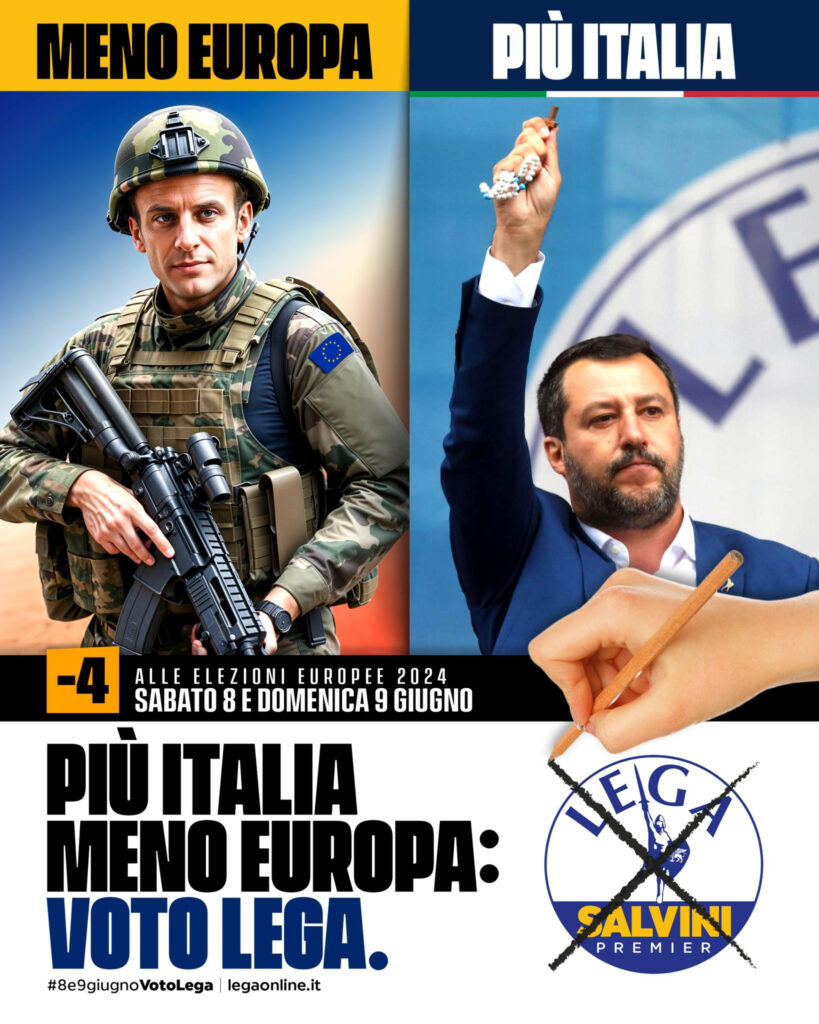
Alors que selon la rumeur, Macron serait sur le point d’officialiser la présence de militaires français sur le champ de bataille en Ukraine et au Donbass, le vice-président du Conseil italien, Matteo Salvini, écrit le 4 juin et illustre sur les réseaux sociaux
Je dirai à Macron : tu devrais aller en Ukraine pour te battre, mettre un casque et ne pas jouer avec les têtes des Italiens
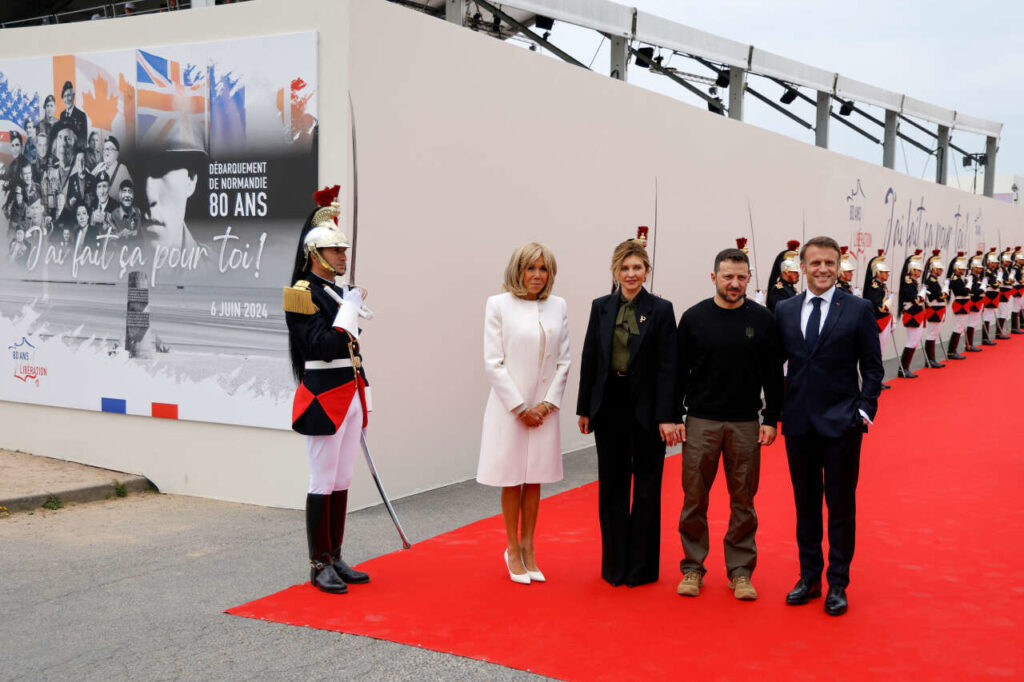
Avec l’invitation de l’Allemagne depuis 2004 et maintenant celle de l’Ukraine, l’anniversaire du débarquement de Normandie est une vulgaire sauterie atlantiste, un spectacle cringe, qui fait de la peine pour les vétérans qui s’y prêtent encore. Par sa personnalité, Macron en accentue la vulgarité
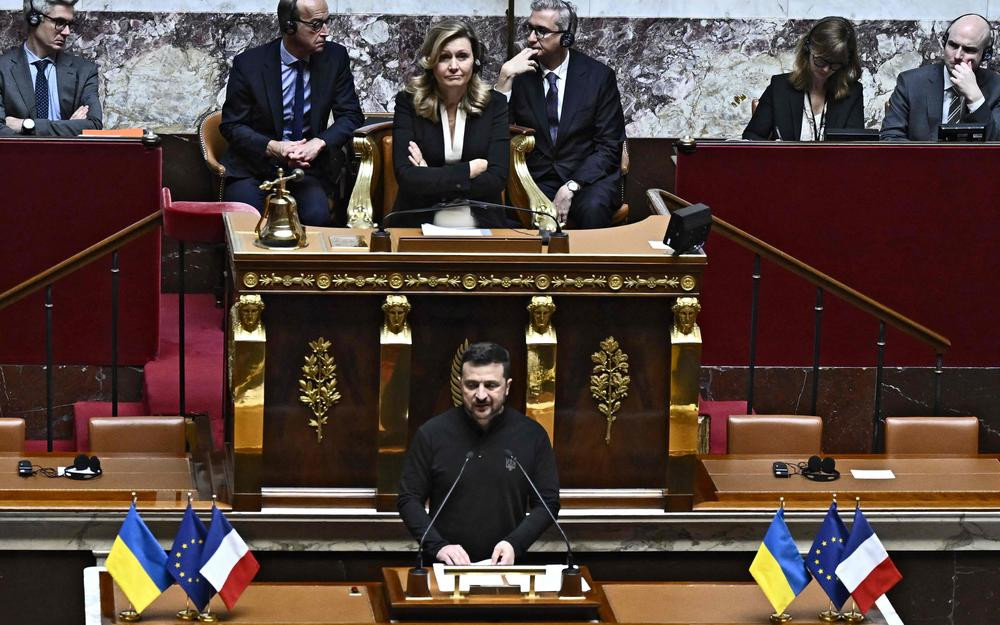
Son mandat présidentiel échut le 19 mai et le comédien professionnel ukrainien harangue l’Assemblée nationale le 7 juin 2024 (Julien de Rosa / AFP)
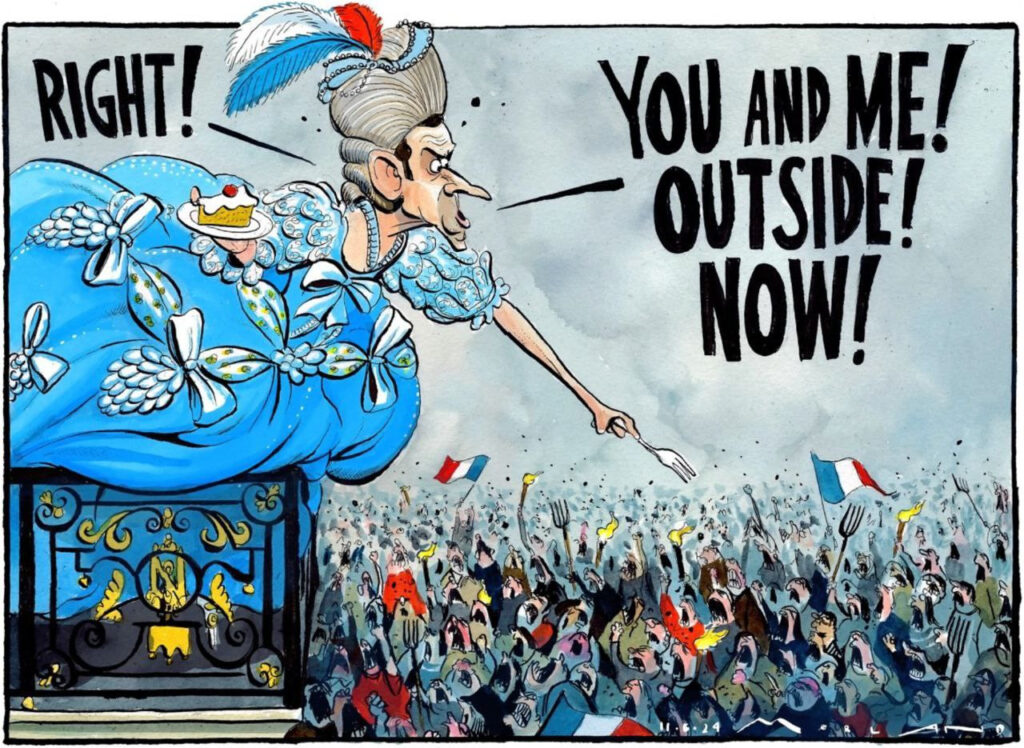
Le spectacle de cabaret ne porte pas chance aux Playmobil et à leur brigadier Yaël Braun Pivet. L’Assemblée nationale est dissoute le 9 juin, à l’issue d’élections européennes qui sont une déroute pour Macron et tous ceux qui ont ovationné Zelenskyy
le 11 juin 2024 (The Times)
Le 9 octobre, il partage sur X une jolie vidéo de l’entraînement en France de militaires ukrainiens et commente
J’en avais pris l’engagement : nos militaires forment actuellement 2 300 soldats ukrainiens dans le Grand Est, avec des équipements qu’ils utiliseront en mission.
La brigade Anne de Kyiv sera formée et équipée grâce à la solidarité de la France
C’est sans doute Gabin Donnio Choupeaux, qui dans un entretien du mois de mars, a soufflé le nom de la brigade à la propagande bleu horizon. Bravo
Nous partageons une histoire commune avec Anne de Kiev, épouse de Henri Ier et reine des Francs de 1051 à 1060
(Captures d’écran)
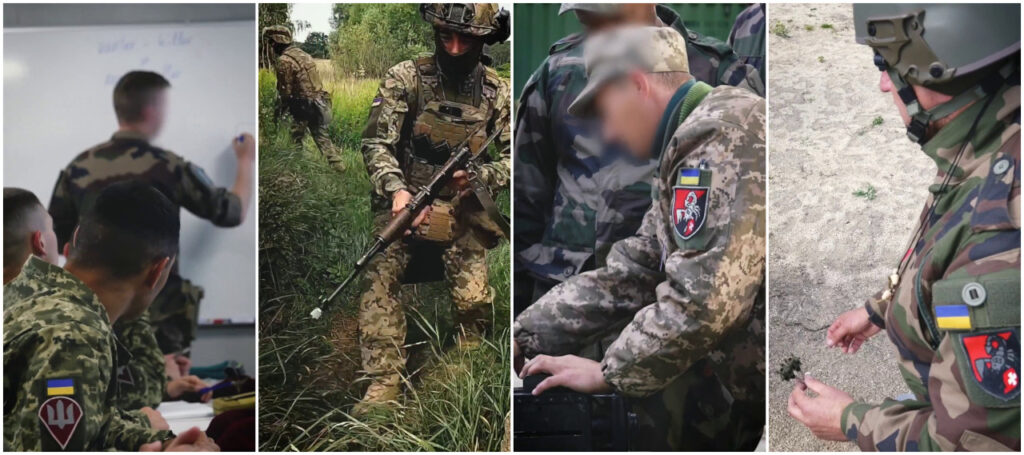
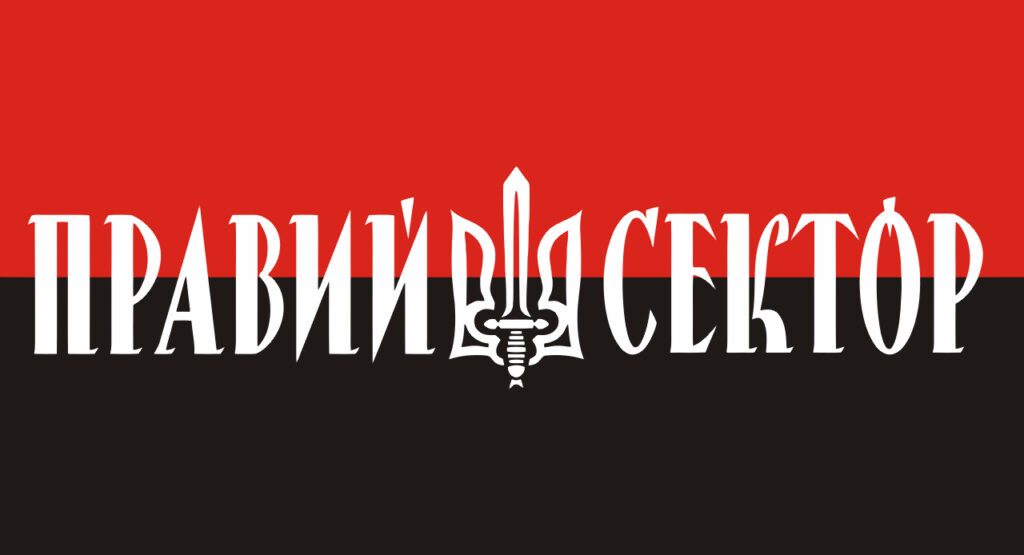
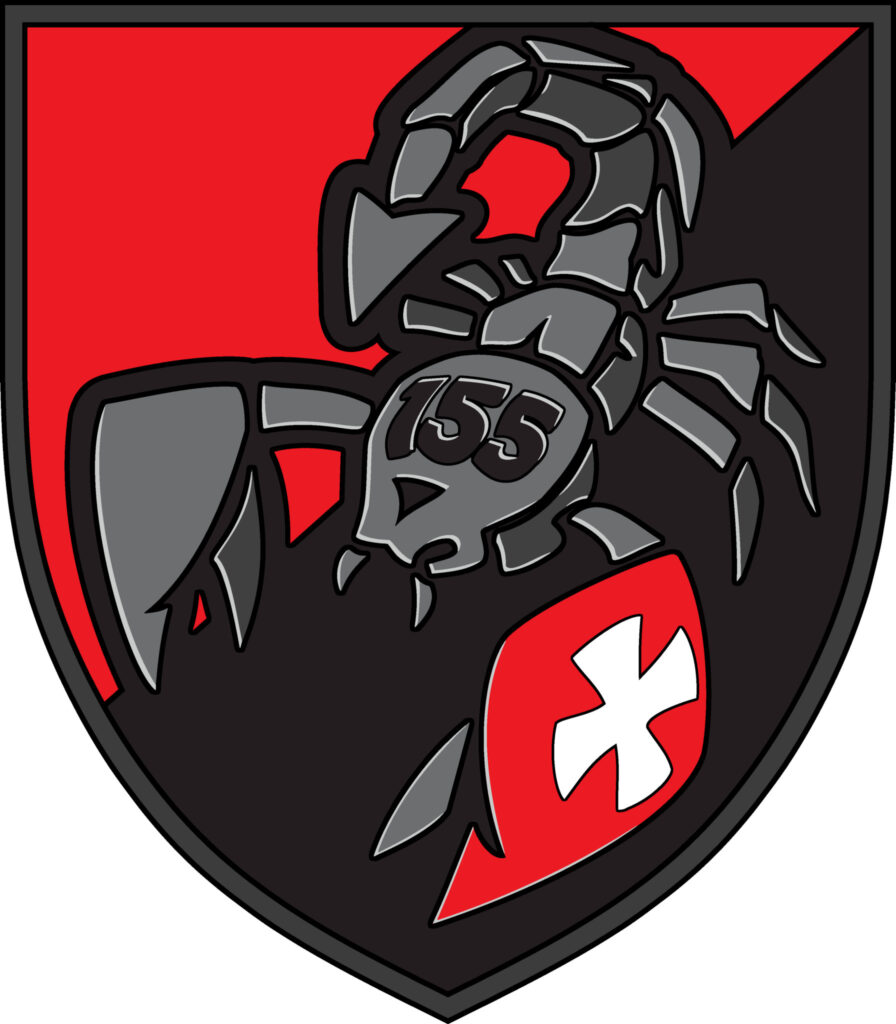
En guise de référence, dans un souci de communication, une femme politique âgée d’environ 1000 ans est plus commode que beaucoup de personnages français ou ukrainiens de la 2de guerre mondiale. Mais le diable est dans les détails. Personne à la cour de sa Vacuité n’a remarqué l’écusson ? Porté notamment par un instructeur en tenue camouflée française, il reprend les couleurs rouge et noir, qui n’ont rien de nationales mais sont en Ukraine celles des nazis d’hier et d’aujourd’hui
Drapeau de l’organisation politique moderne Pravyi sektor [Secteur droit]
Il est l’insigne de la 155e brigade, formée en juin avec de nouveaux contingents de chair à canon ukrainienne. L’unité est d’infanterie ou mécanisée, l’histoire n’est pas encore catégorique sur ce point
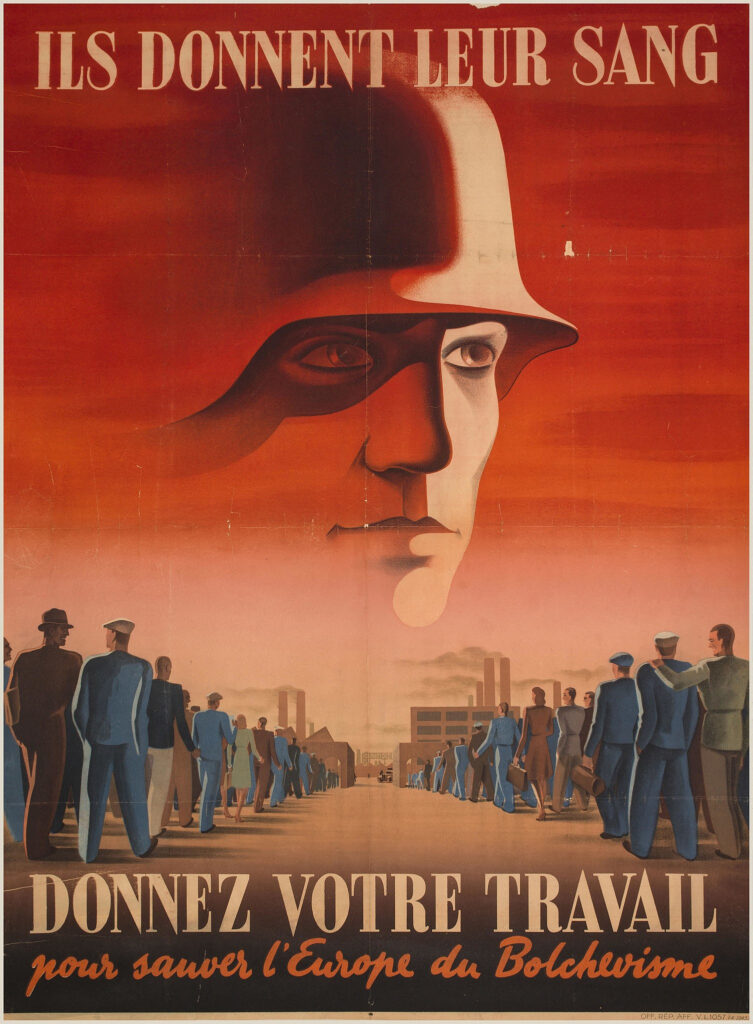
Cela dépendra sans doute de la solidarité du contribuable français. Car comme disait autrefois l’État français, ils donnent leur sang, donnez votre travail
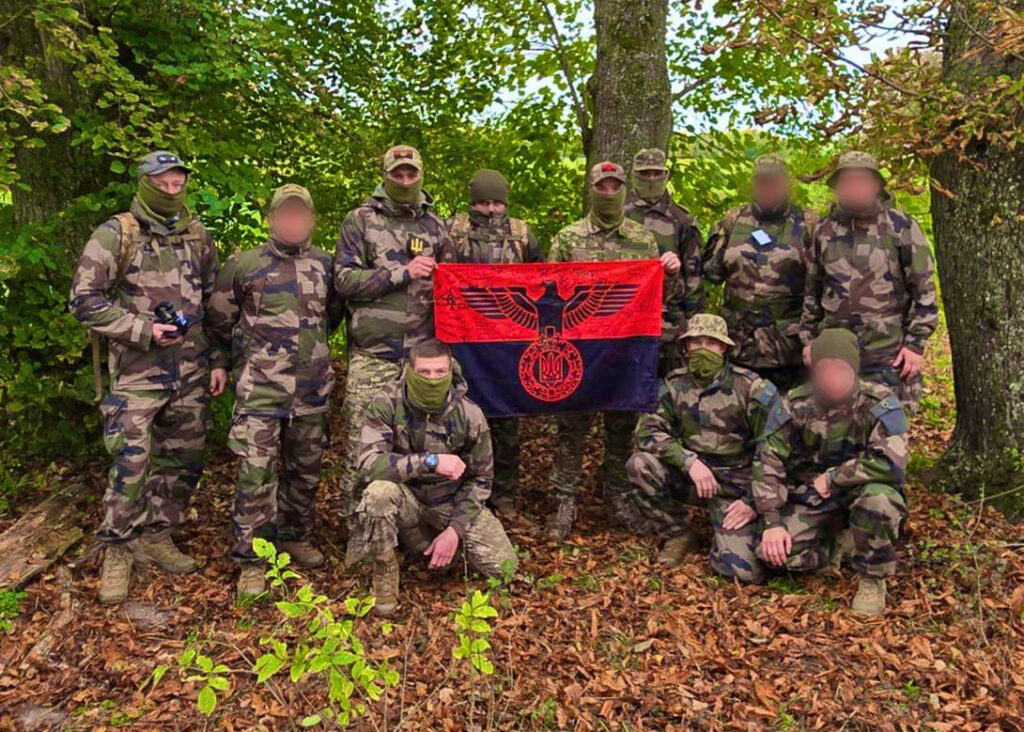
Anne de Kiev ou Eva Braun ? L’image a été découverte par des internautes polonais qui la partagent le 4 novembre et s’en offusquent à juste titre. Des stagiaires ukrainiens de la 155e brigade et probablement aussi leurs instructeurs français, tous en tenue camouflée française, posent dans l’automne champenois
Le groupe déploie un étendard qui ne reproduit pas l’insigne de la brigade, est une des multiples versions du drapeau que les nazis ukrainiens considèrent comme un emblème national. Les couleurs rouge et noir sont celles de l’Armée des insurgés (UPA), milice nazie ukrainienne qui entre 1943 et 1945, a massacré au moins 50 000, peut être 100 000 civils polonais. Coquetterie de cette version, le bien connu Reichsadler [aigle impérial] (cf. Sylvain Caupin), où le trident ukrainien a remplacé le swastika des nazis allemands de la 2de guerre mondiale.
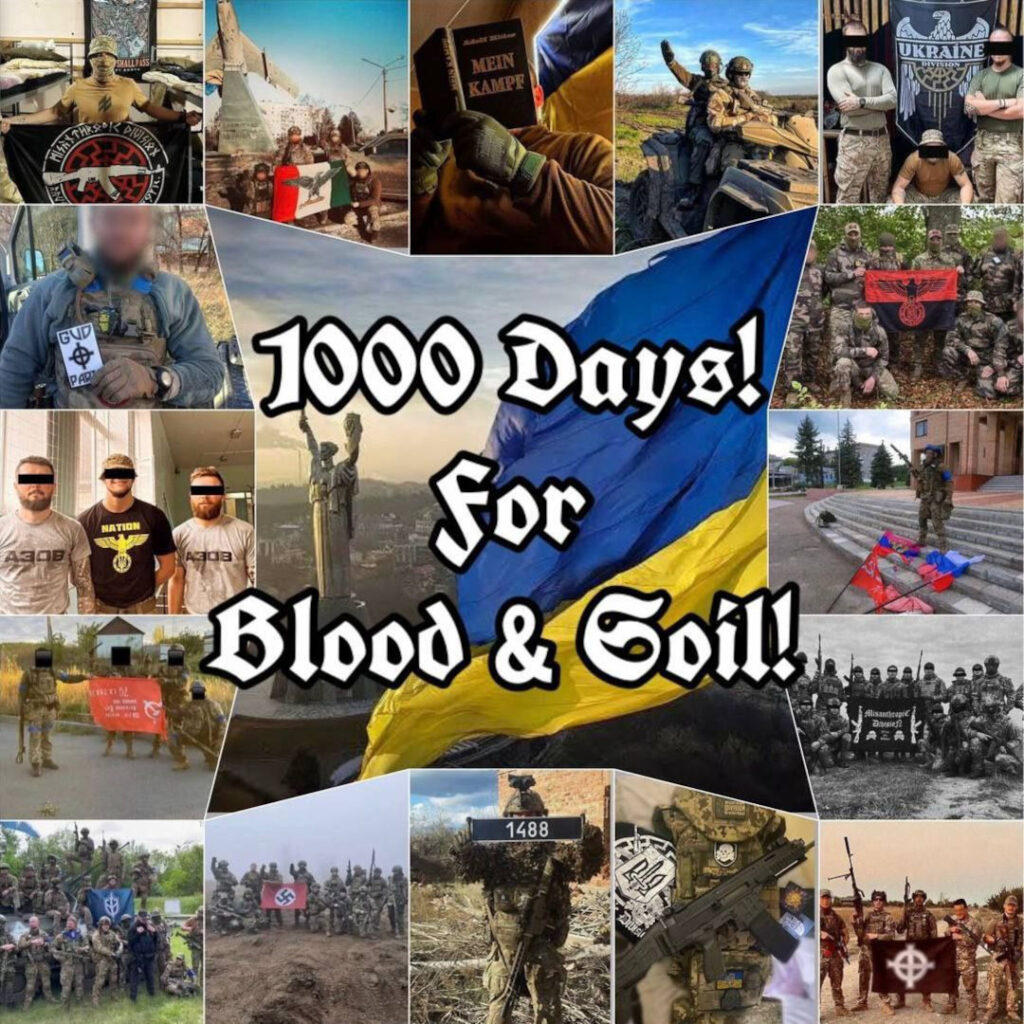
À l’instar de l’ex premier ministre, le vraiment très jeune Gabriel Attal, le département commercial de la Misanthropic Division, confrérie nazie internationale, fondée et basée en Ukraine depuis 2013, célèbre le 19 novembre le 1000e jour de l’opération militaire spéciale russe, dernier chapitre d’une guerre qui fait rage au Donbass depuis 3830 jours, soit 10 ans, 5 mois et 24 jours
1000 days for blood & soil (Misanthropic Division)
Les nazis ukrainiens n’oublient pas la contribution française à leur cause. Leur collage comporte l’image d’un militant du GUD parisien et celle partagée le 4 par des internautes polonais, prise en Champagne par des stagiaires miltaires ukrainiens, qui aux frais de la princesse, déployèrent leur drapeau nazi
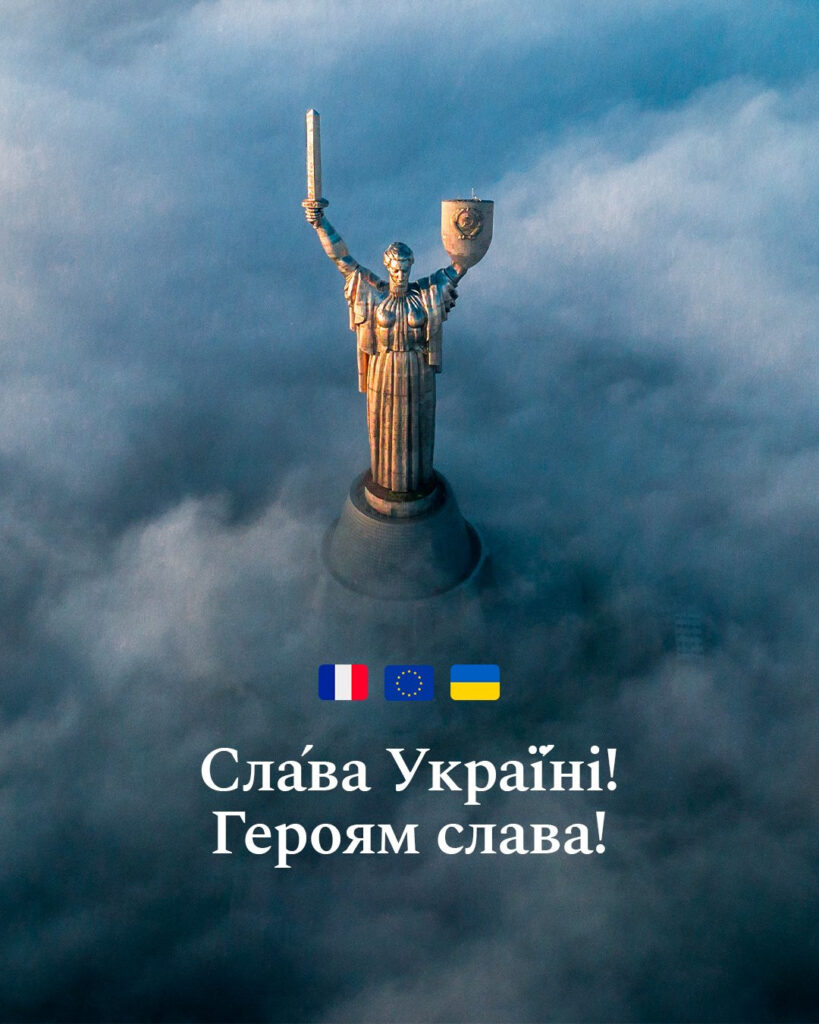
(Gabriel Attal)
Pour sa part, le petit Gabriel partage cette image sur X, où il clame en Ukrainien Сла́ва Украї́ні! Героям слава! [Gloire à l’Ukraine ! Gloire aux héros !]. Ses anciennes fonctions le dispensent d’ignorer que le slogan Gloire aux héros fut inauguré en avril 1941 par les fascistes de l’OUN (Organisation des nationalistes ukrainiens), alors implantés dans le Generalgouvernementfür die besetzten polnischen Gebiete [Gouvernement général des territoires polonais occupés].
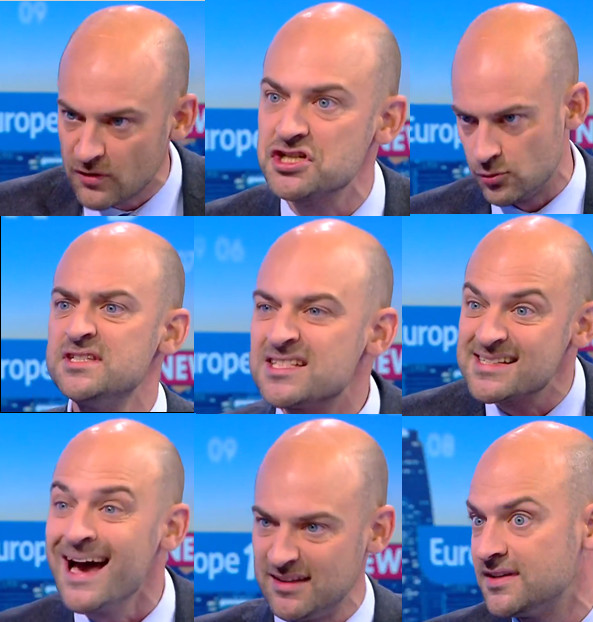
J’ai la conviction que c’est en référence à des individus comme Jean-Noël Barrot que les Français sont qualifiés de grandes gueules puantes dans la littérature grecque contemporaine (captures d’écran antérieures)
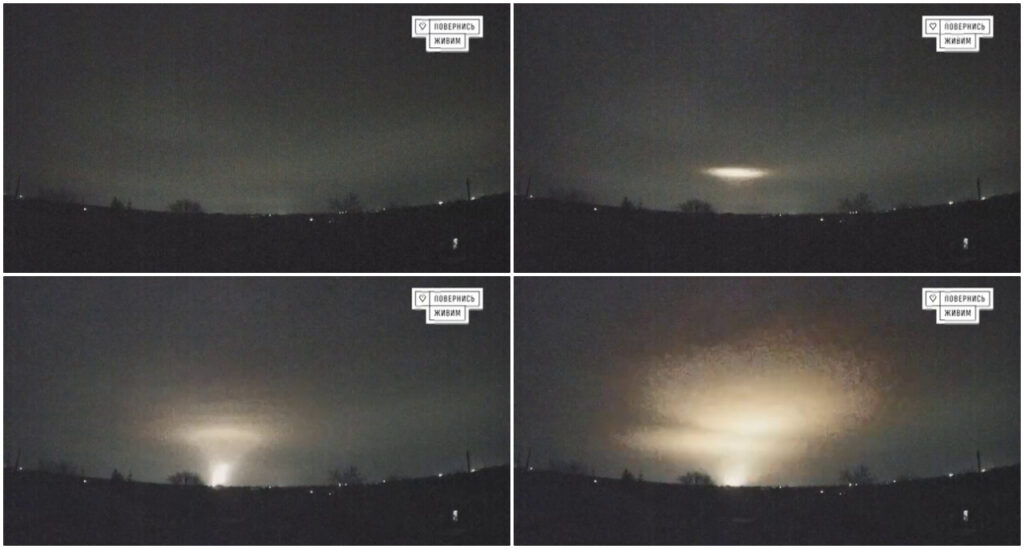
Quel est le contexte des fanfaronnades du frais émoulu ministre des affaires étrangères de la Macronie ? En guise d’avertissement, au petit matin du 21 novembre, la Russie utilisa un missile balistique, pour cette fois à charge conventionnelle. La cible était une usine militaire à Dnipro, où la vidéosurveillance montre clairement les arrivées de six ogives distinctes
(Captures d’écran)
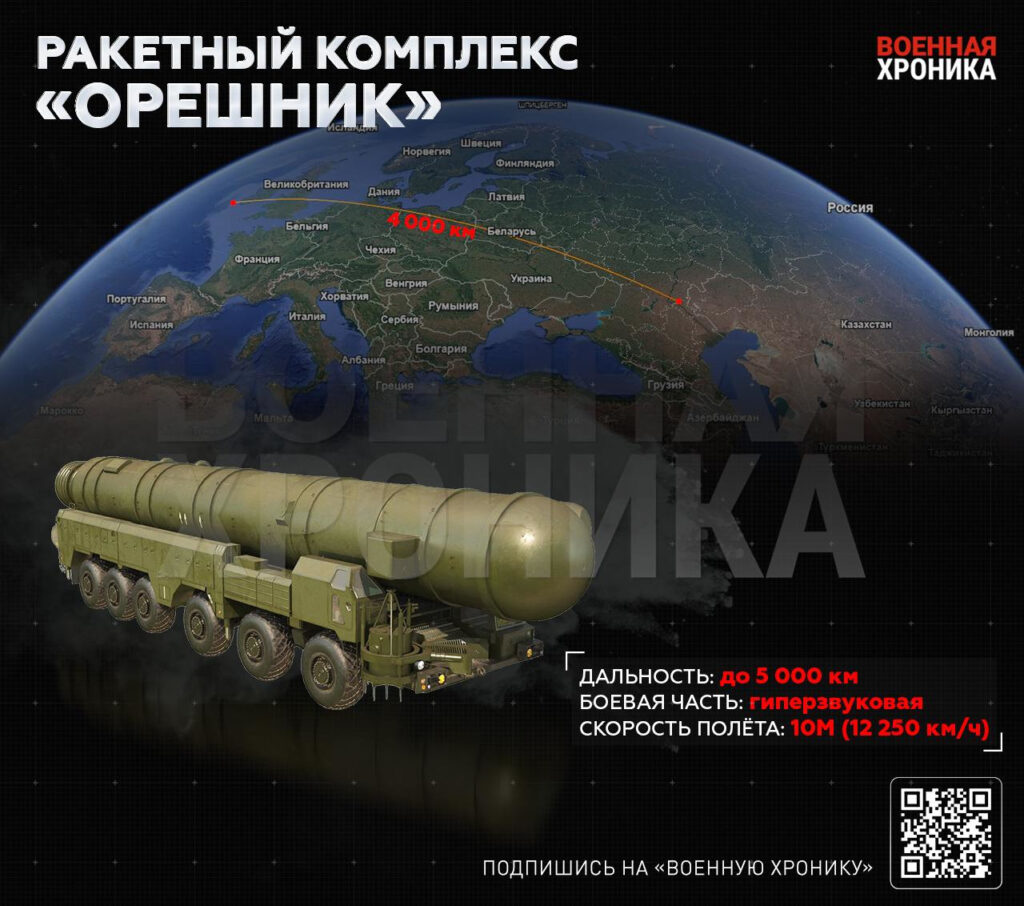
Dans une allocution en soirée, Vladimir Poutine précisa que le nouveau système d’armes est appelé Oreshnik [Noisette]. Le missile balistique hypersonique de portée intermédiaire (IRBM hypersonique) vole à une vitesse proche de Mach 10. Sa portée de 5 000 km le prédispose au traitement de cibles en Europe
(Voyennaya khronika)
Il ajouta
Nous nous considérons en droit d’utiliser nos armes contre les installations militaires des pays qui autorisent l’utilisation de leurs armes contre nos installations. Et en cas d’escalade des actions agressives, nous répondrons de manière décisive et en miroir
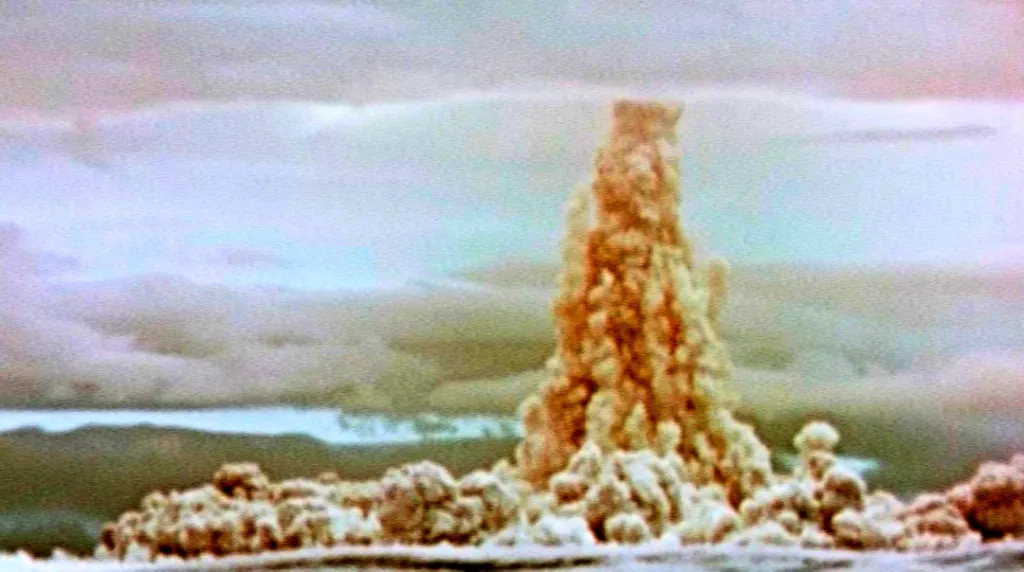
Le 30 octobre 1961, la Tsar Bomba était l’équivalent de 50 mégatonnes de TNT, soit environ 3000 Hiroshima. Une telle puissance correspond aujourd’hui à la charge militaire totale d’un missile balistique intercontinental (ICBM) Sarmat, en une douzaine de sous-munitions, environ 300 Hiroshima chacune (capture d’écran)
Que justifie les menaces russes de frappes nucléaires ? Depuis le déclenchement en 2014 des opérations militaires, contre les insurgés russophones du Donbass, d’un pouvoir ukrainien issu d’un coup d’État d’extrême-droite en février de cette année là, de façon encore plus évidente après le début en 2022 de l’opération militaire spéciale russe, les stratèges occidentaux voient la Russie comme une grenouille plongée dans une eau lentement portée à ébullition. L’escalade de leur guerre par procuration est graduelle, avec l’ambition illusoire de ne pas provoquer de réaction russe symétrique. Point particulier : elle est conduite aujourd’hui avec des armes que l’Ukraine ne pourrait pas employer en territoire russe sans le concours des satellites et techniciens de l’OTAN. C’est à cette escalade graduelle que répondent les menaces de frappes nucléaires. Non pas aux effets réels de quelques missiles tactiques dont la plupart sont abattus par la défense aérienne avant d’atteindre leur cibles en territoire russe. Car cette variable est essentielle à l’analyse de la situation : les tirs de ces munitions occidentales ne changeront pas le rapport de force et n’empêcheront pas la victoire militaire de la Russie.
Pourquoi ces tirs de missiles de l’OTAN ? Escalade graduelle donc. Mais encore ? Biden les autorisa moins de deux semaines après la victoire sans appel de Donald Trump et à deux mois de son retour à la Maison blanche. Envenimer la situation militaire pour saboter ou compliquer le règlement politique ultérieur du conflit ? C’est bien possible. L’inaliénable alliance historique entre les USA et le Royaume-Uni est une constante de l’équation. De surcroît, la russophobie épidermique et tout aussi historique des classes dirigeantes d’Albion explique aussi la position britannique.
Mais pourquoi cette posture française de supplétif doublé d’une mouche de coche ? Pour galvaniser la masse des innocents qui s’informent auprès de BFMTV, CNews ou LCI ? Sans doute, tant la communication est une préoccupation majeure des gouvernements de la Macronie. Pour satisfaire l’égo puéril d’Emmanuel Macron ? Je le crains, mais pas seulement
Humour russe le 20 novembre 2024
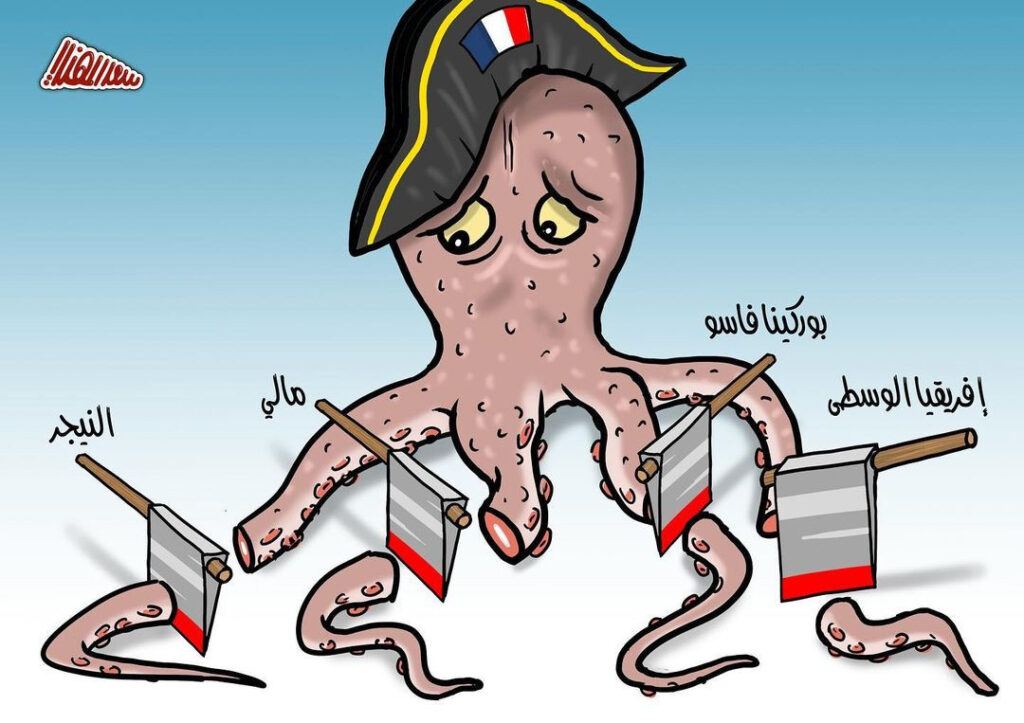
Les classes dirigeantes françaises sont épouvantées par l’effondrement de l’hégémonie occidentale, ce que la perte de la Françafrique pourrait coûter à l’économie française
Les tentacules étaient Niger, Mali, Burkina Faso et République centrafricaine (alarabblog.com, 2023)
Mais plus les Occidentaux et Français feront monter les enchères, sans pourtant empêcher la victoire russe en Ukraine ou les légitimes aspirations des Africains à leur libération, plus la défaite sera finalement humiliante et plus dure sera la chute.
Le drame est évoqué en public le 13 décembre 2024, par le journaliste ukrainien Iouri Butoussov. Le reconstituer dans son intégralité est une tâche aisée pour l’observateur chevronné.
Engagée en République populaire de Donetsk, soumise dans le secteur de Pokrovsk à l’étreinte puissante des forces russes, la brigade Frénégonde de Pouille [ou quelque chose comme ça] s’est désagrégée le 10 décembre. Au moins un millier d’hommes, près de la moitié de son effectif théorique total, sont partis en déroute et ont déserté
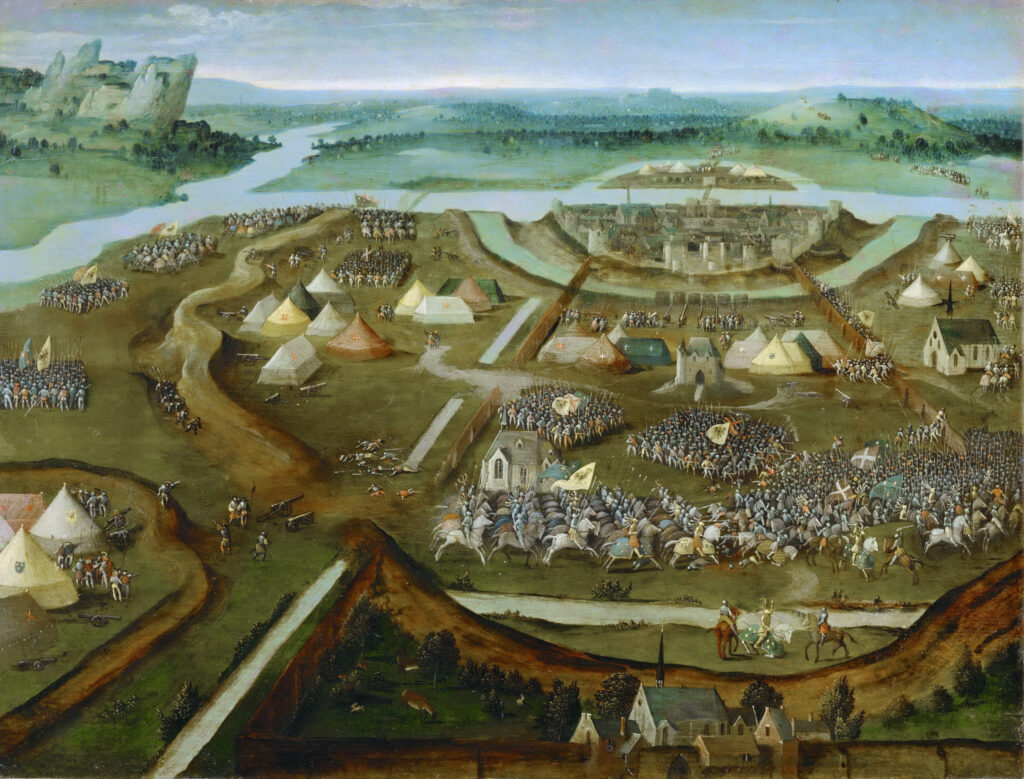
La bataille de Pavia est livrée le 24 février 1525 (Joachim Patinir). La victoire du Saint Empire romain germanique sanctionne la bêtise tactique du roi de France. Vaincu et prisonnier, François 1er écrit le lendemain à sa mère : tout est perdu, fors l’honneur
C’est aux frais de la princesse, que cette 155e brigade mécanisée avait été équipée de matériel français et entraînée en Champagne. Macron s’en vanta le 9 octobre sur les réseaux sociaux. Mais tout est perdu, même l’honneur.
Le 2 janvier 2025, pour boire le calice jusqu’à la lie, le Parisien nous rappelle la brigade Frénégonde de Pouille [ou quelque-chose comme ça], pour nous apprendre que le nombre de désertions s’élèverait alors à 1 700. Soit 74% d’un effectif total de 2 300, que j’ai pris la peine de relever en octobre. Et non pas 4 500, comme le quotidien cocardier le prétend, quand il relaie la propagande atlantiste. 4 500 est l’effectif moyen d’une brigade états-unienne, mais celles formées en Ukraine sont toujours de petits calibres.
L’article stimule ma curiosité et alors que le récit de ces déboires fait le tour des rédactions des vastes restes du monde, dont hilares, celles de la perfide Albion, une source peu suspecte de sympathie pour la Russie, Wikipedia, nous précise le 3 janvier que début décembre, le nombre de désertions s’élèvaient déjà à 1 883, dont 50 en France, soit 82% d’un effectif total de 2 300
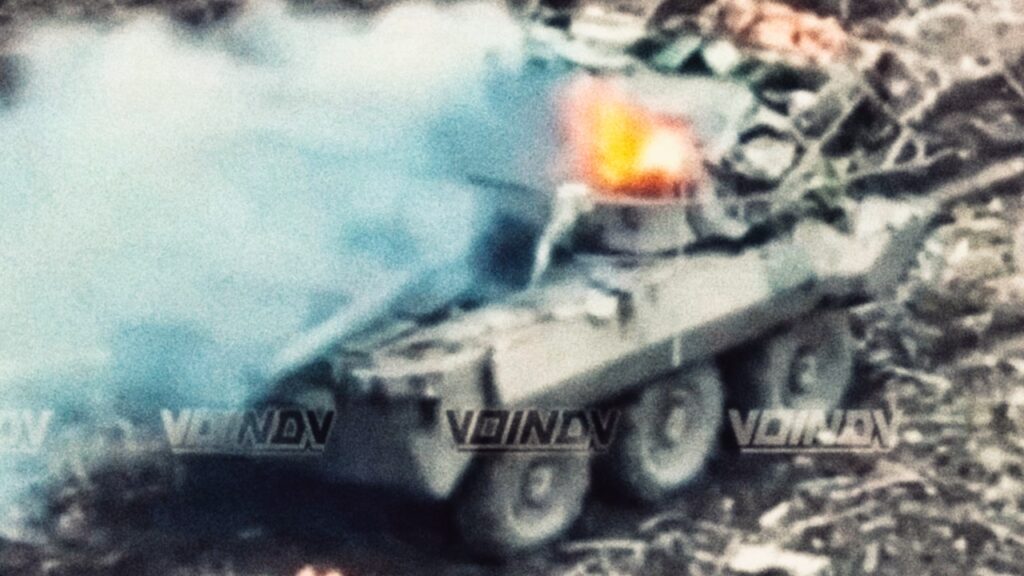
Le 30 décembre 2024, les réseaux sociaux partagent la vidéo de la démilitarisation dans le même secteur d’un char à roues [presse bleu horizon] français AMX-10RC, en réalité, un viel engin blindé de reconnaissance (capture d’écran)
Comme nous le savions déjà, le reliquat a été engagé dans le secteur de Pokrovsk, République populaire de Donetsk, où il s’est fait étriller. La guerre tue, surtout les vaincus, c’est un peu le principe. Mais un animateur de foire comme Emmanuel Macron est si peu équipé pour en saisir le sens ou les vertus.
Le 17 février 2025, veille de l’ouverture en Arabie Saoudite de négociations entre Russie et États-Unis au sujet de l’Ukraine, il accueille à Paris une réunion impromptue de dirigeants européens qui s’opposent aux perspectives de paix favorisées par la victoire de Donald Trump. Leur hostilité à la fin de la guerre atlantiste par procuration en Ukraine est d’ailleurs la raison pour laquelle ces matamores européens ne sont pas invités à participer aux négociations entre les deux grandes puissances. Les États-uniens ont beau jeu de rappeler que France et Allemagne étaient censées garantir depuis 2014 le respect par l’Ukraine des accords de Minsk. La presse bleu horizon tâche de vanter l’événement, mais la réalité est sordide
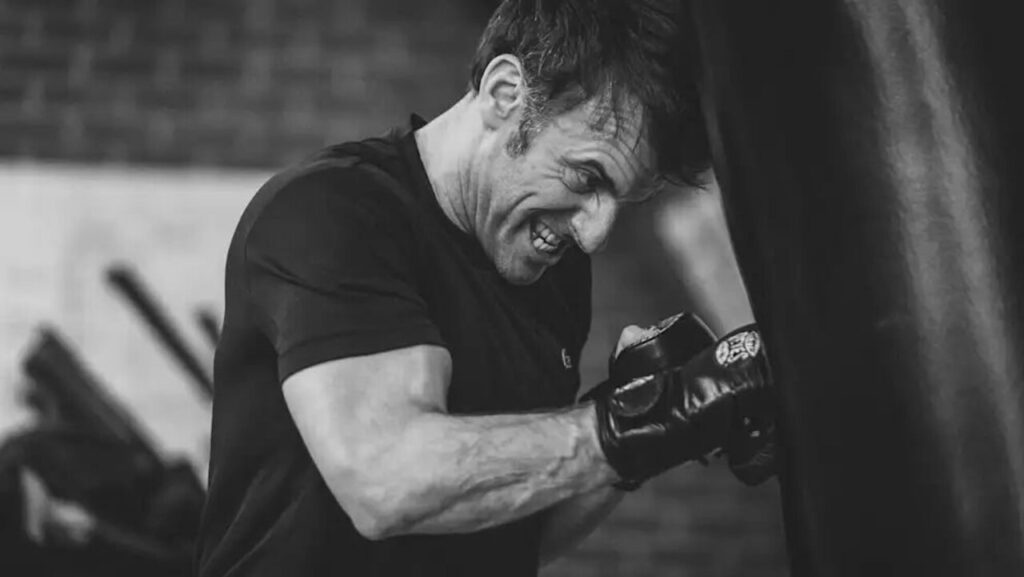
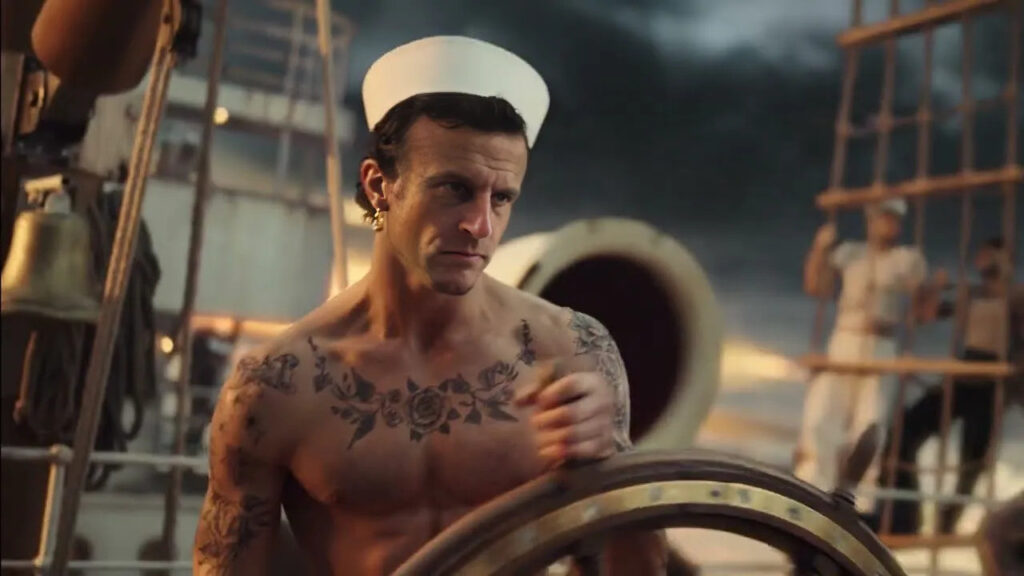
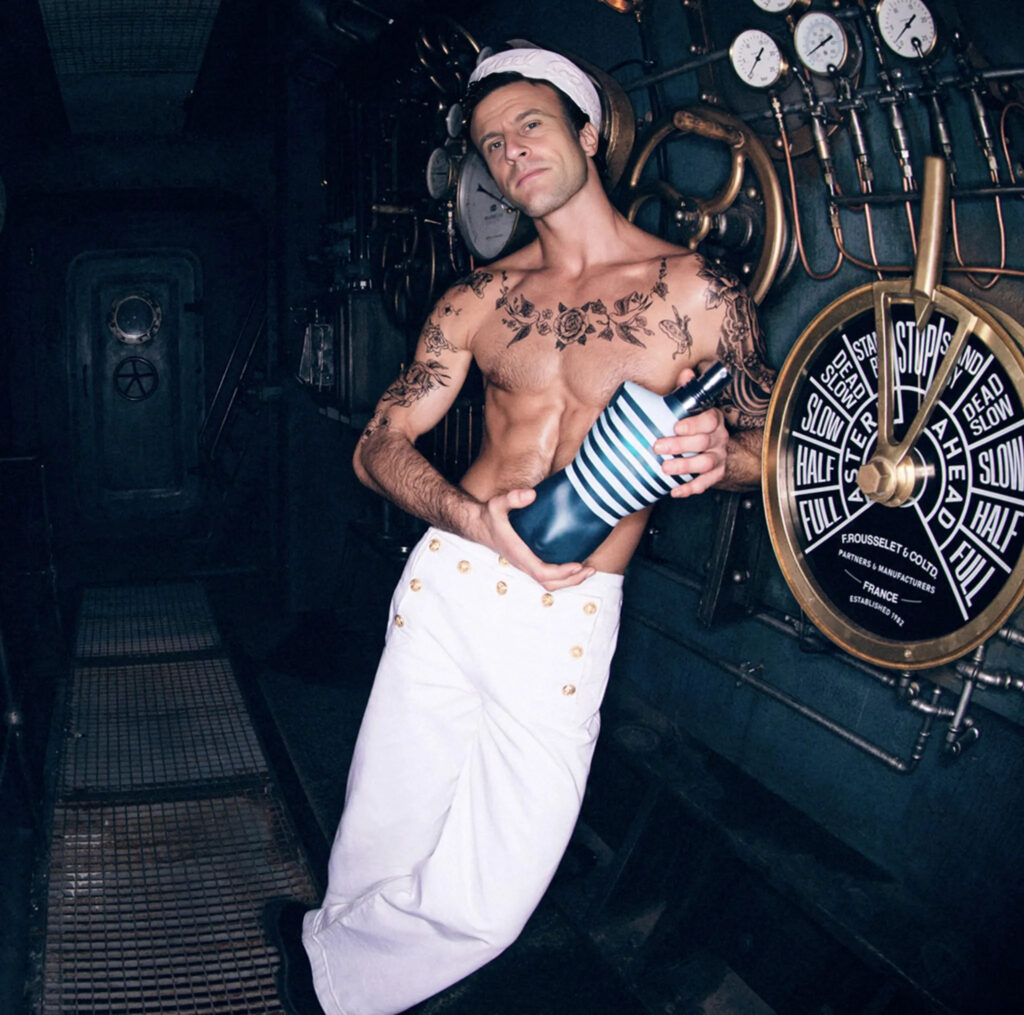
L’image truquée d’Emmanuel Macron et de ses faux muscles, que sa photographe officielle publie sur les réseaux sociaux le 19 mars 2024 (Soazig de La Moissonnière)
Aussi peu performants en général ou populaires à domicile que Macron, le Britannique Keir Starmer et l’Allemand Olaf Scholz sont les vedettes de la réunion. Donald Tusk est aussi présent, mais la Pologne a déjà décidé de ne pas engager son armée en Ukraine. D’autres chefs d‘États et la bureaucrate teutonne Ursula von der Leyen complètent le tableau. Leur tactique immédiate consiste à quémander une participation européenne aux négociations et pour l’Ukraine, un accès à l’OTAN que Washington refuse déjà. Royaume-Uni et France clament leur volonté de déployer des troupes de maintien d’un éventuel cessez-le-feu mais ne disposent plus en volume d’armées capables de mener une telle opération.
Le même jour, le philosophe Harold Bernat publie un texte fort à propos, où il constate l’effondrement [intellectel] sidérant d’une bourgeoisie dont Emmanuel Macron est le héraut.
Un autre exemple spectaculaire de ce syndrome est une femme, également impliquée dans les méfaits de l’Europe en Ukraine : la ministre allemande des affaires étrangères Annalena Baerbock, qui a sidéré depuis 2022 par ses lacunes en géométrie et géographie. Toujours le 17 février, elle se montre incapable de garder un secret stratégique et révèle à la presse berlinoise le projet européen d’une nouvelle aide financière apportée à Volodymyr Zelenskyy et ses amis, pour un montant de 700 milliards d’euros.
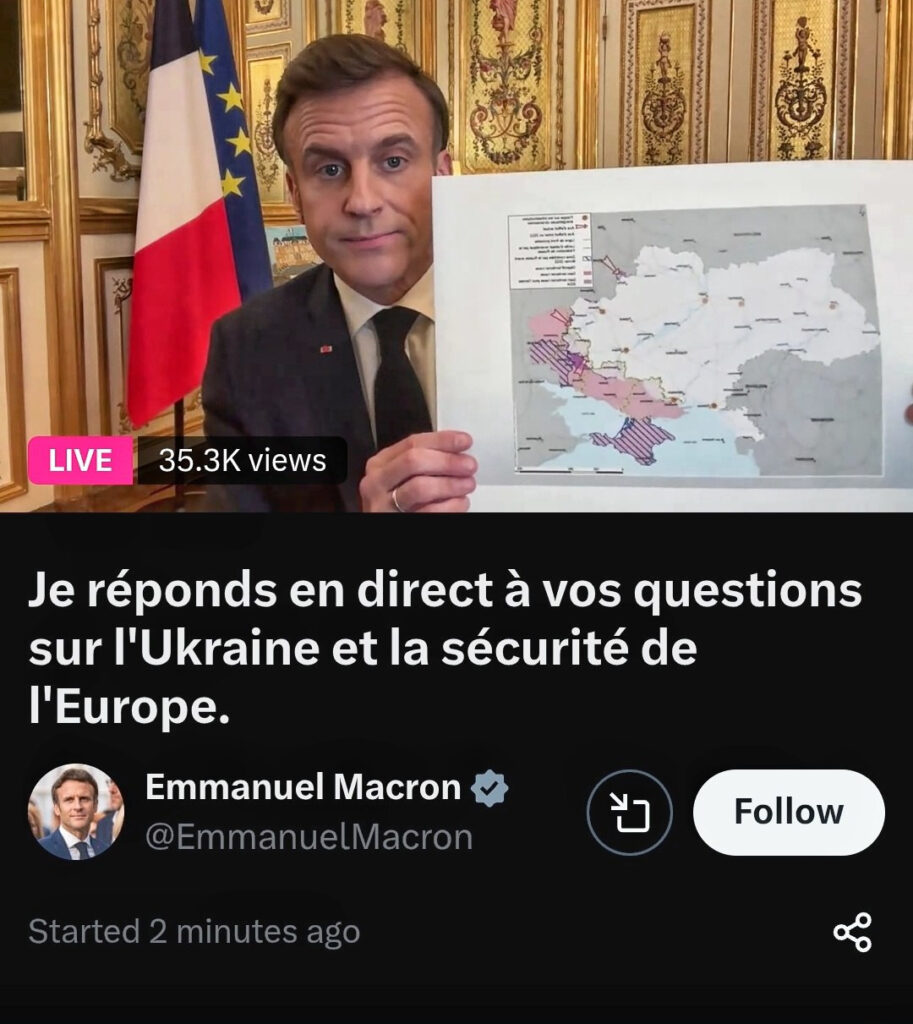
Le 20 février, il se prête sur les réseaux sociaux à une conférence citoyenne au sujet de l’Ukraine. Son introduction est une farce, qui s’adresse à des demeurés, qui n’auraient pas suivi l’actualité et ne comprendraient rien à la géopolitique. Il commence par recyler tous les lieux communs de la propagande et désinformation atlantiste, les mensonges qui avec la nouvelle administration de Donald Trump, ont disparu dans la communication états-unienne
(Capture d’écran)
Le flot de questions sur les nombreuses plateformes est évidemment filtré par une équipe d’assistants, qui ignorent celles qui posent vraiment problème. J’en retiens deux qui resteront sans réponse, tout d’abord de Jacques [Baud, analyste stratégique suisse] et Aude [Lancelin, journaliste française]
Bonjour M Le Président. Question de Jacques de Genève et Aude de Paris. Pourquoi les européens ont ils empêché le président Zelensky, à 3 reprises au printemps 22, de signer un accord avec la Russie garantissant l’intégrité territoriale de l’Ukraine ?
puis la mienne
Bonjour,
votre stratégie d’engagement militaire français apparaît confuse, vos déclarations, contradictoires.
La possibilité semble se dégager du stationnement dans l’ouest du pays de militaires français qui permettraient à l’Ukraine, par translation, d’en envoyer autant au front.
Pensez vous que les Russes se dispenseront de mener des frappes stratégiques contres les militaires français stationnés en Ukraine ?
Pete Hegseth, Secrétaire à la défense US, précisa déjà le 12 février qu’engagées en Ukraine, les troupes européennes ne seraient pas couvertes par l’article 5 de l’OTAN.
Le 22 février, Donald Trump fait longuement patienter Andrzej Duda et ne lui accorde ensuite qu’une dizaine de minutes. Le président polonais est le premier d’un convoi de dirigeants européens qui se précipitent à Washington pour tenter d’infléchir la stratégie en Ukraine de la nouvelle administration US. Lorsqu’il s’adressa aux Français le 20, Emmanuel Macron se prévalut d’une familiarité qui devait lui permettre de faire la leçon à son homologue états-unien, de le convaincre de ne pas se montrer faible à l’égard de Vladimir Poutine
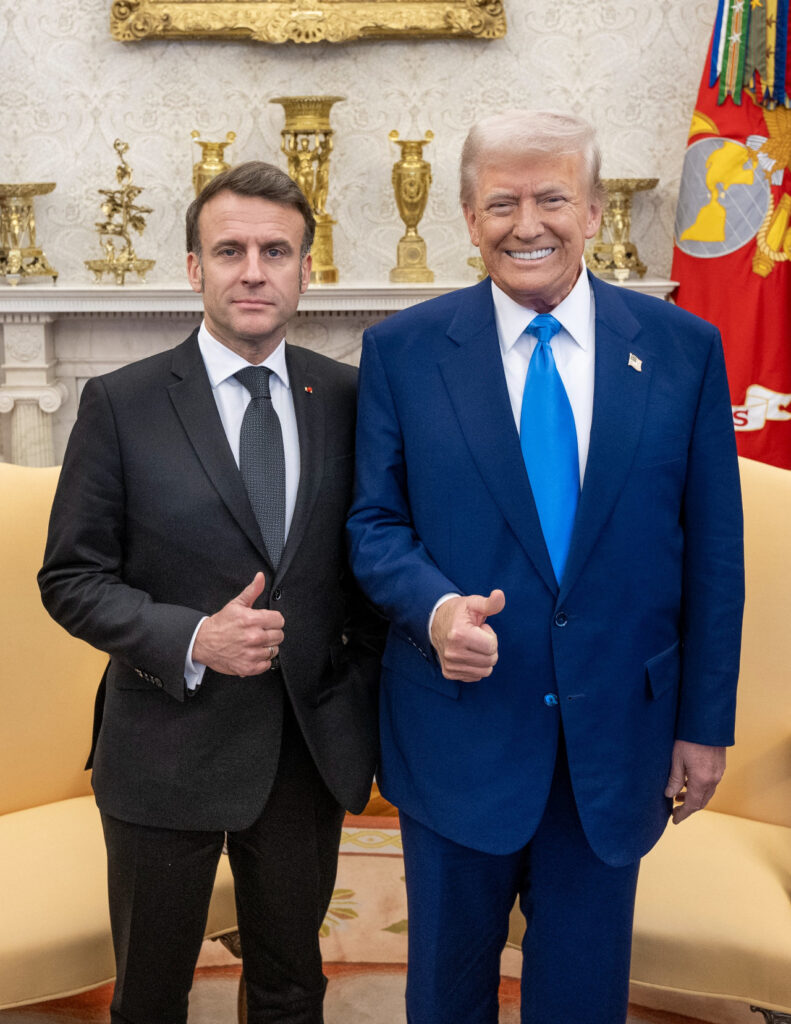
(Maison Blanche)
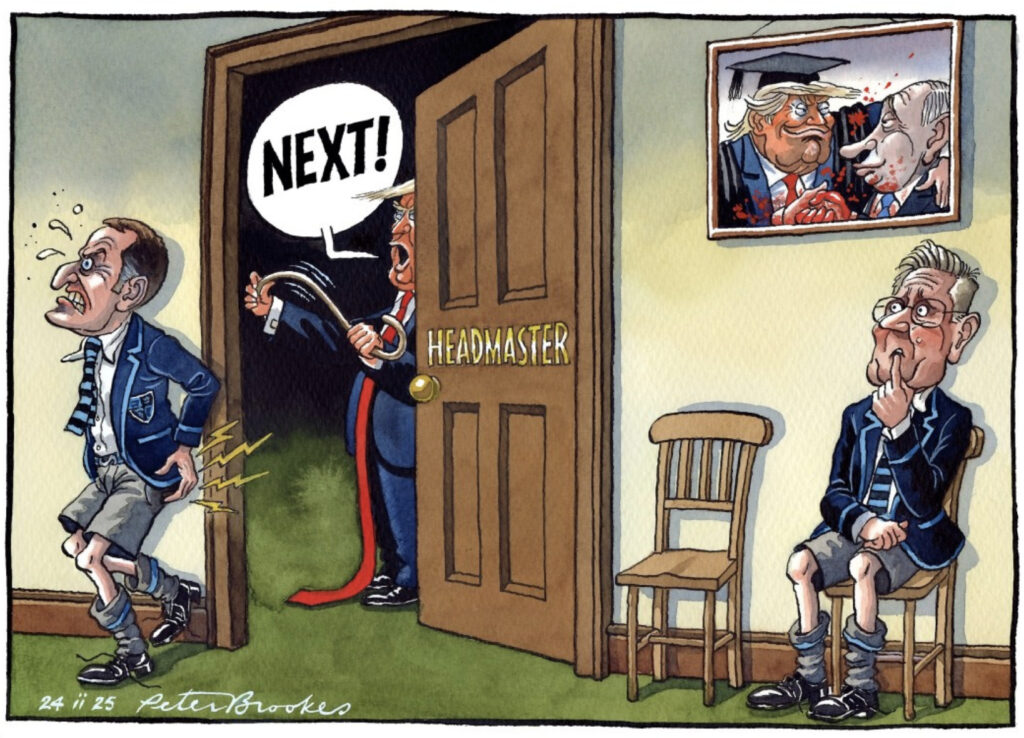
Comme l’illustrent ses traits tirés par la fatique sur la photographie prise à la Maison Blanche le 24 février, il n’obtient rien de Trump. Je suppose au contraire que ses fanfaronnades antérieures, ses familiarités à Washington et les questions de fond exaspèrent le président US, trois jours avant qu’à son tour, le Britannique Keir Starmer ne se prête à l’exercice
[…] on a des moyens de renseignement, dont nous faisons bénéficier les Ukrainiens […]
Dans la foulée de nouveaux mensonges et fanfaronnades télévisuels d’Emmanuel Macron, il cherche aussi à stimuler le sens civique de ses concitoyens
[…] placez votre argent de manière patriotique, pour financer la défense […]
On [qui est un con] pourrait aussi appeler cela la Banque de l’Indochine, ou… les Emprunts russes. L’inspecteur Clouseau s’en va t’en guerre
(Captures d’écran)
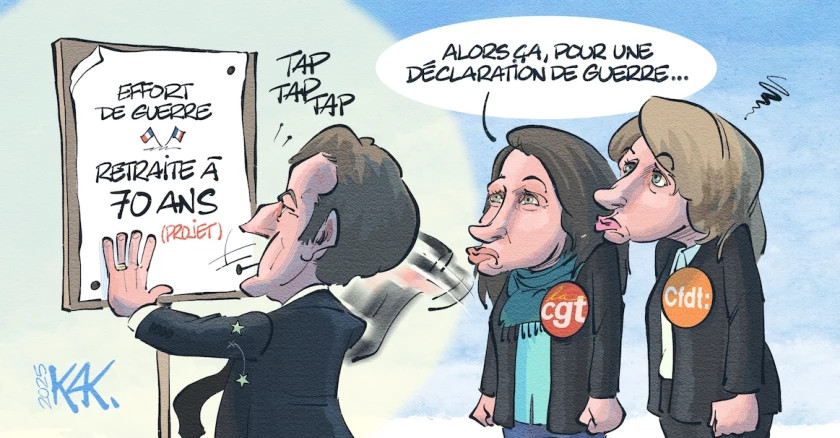
Pendant ce temps, le MEDEF (Mouvement des entreprises de France), qui ne perd pas le nord, la presse bleu horizon ou macroniste, distillent l’idée d’une retraite à 70 ans, qui serait justifiée par l’opportunité d’un effort militaire en soutien à l’Ukraine. Car en réalité, la seule démarche stratégique cohérente de Macron est très simple ; elle consiste à casser les acquis sociaux et imposer une société ultra libérale. Si personne ne peut vraiment le qualifier d’homme intelligent, il est cependant malin comme un singe
(L’Opinion le 6 mars 2025)
Il sait comment faire avaler des couleuvres. Son terrain est facile : il flatte la vanité nationale des Français. Le philosophe allemand Arthur Schoppenhauer (1788-1860) énonça avant 1851
La fierté nationale est la forme la moins coûteuse de fierté. Si un homme est fier de sa nation, cela signifie qu’il n’a aucune qualité dont il puisse être fier. Autrement, il ne pourrait pas faire appel à celles qu’il partage avec des millions de ses concitoyens. L’homme qui possède des qualités personnelles importantes ne verra que trop bien dans quels domaines sa propre nation est déficiente, car ses défauts seront constamment sous ses yeux. Mais tout misérable imbécile qui n’a rien dont il puisse être fier, adopte en dernier recours la fierté de la nation à laquelle il appartient ; il est prêt et heureux de défendre bec et ongles tous les défauts et les folies de la nation, se dédommageant ainsi de sa propre infériorité
Les derniers événements permettent de clarifier la subordination d’Emmanuel Macron. Il n’est pas fidèle aux autorités légales des États-Unis, puisqu’il s’oppose à l’administration de Donald Trump, qui accomplit une inflexion stratégique majeure, quand Joe Biden et Européens étaient au diapason. Il s’affirme plutôt comme l’hériter d’un François Hollande, qui alors Premier secrétaire du Parti socialiste, protestait contre l’opposition de Jacques Chirac à l’invasion anglo-états-unienne de l’Irak en 2003 et faisait des ronds de jambes à l’ambassade parisienne de l’administration de George W Bush.
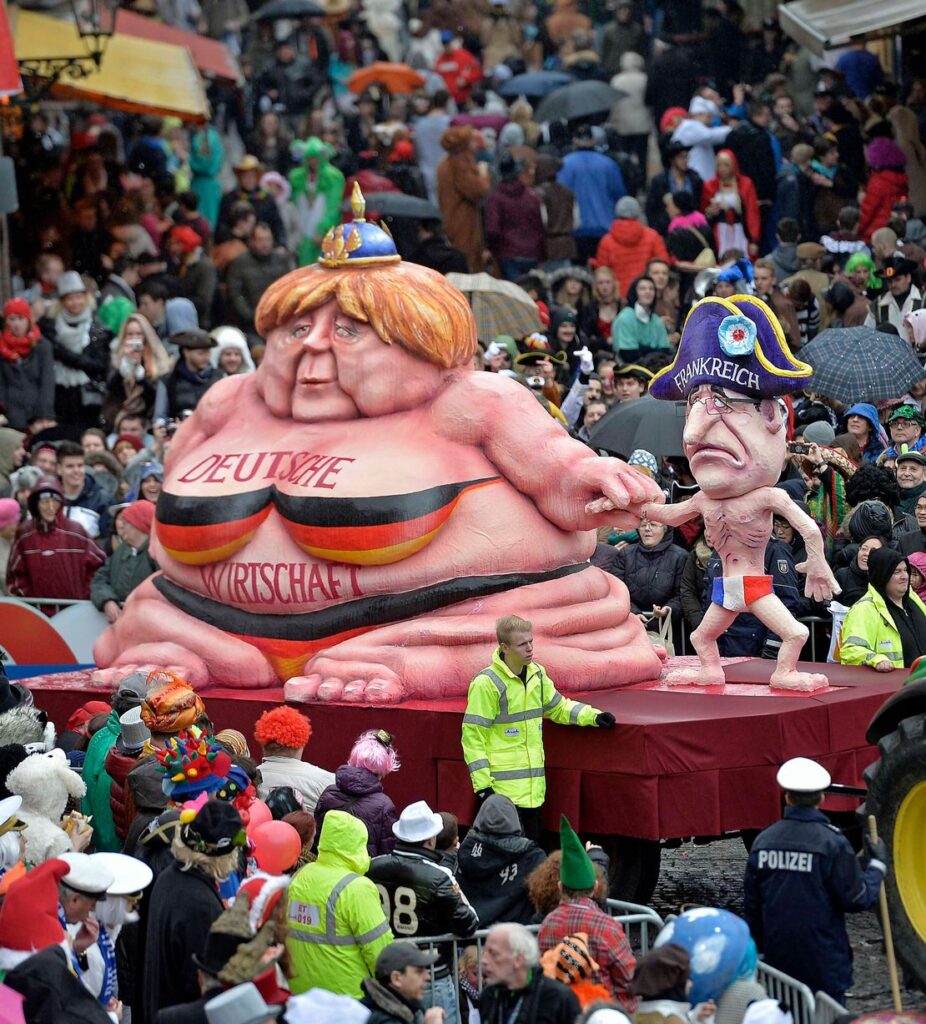
Il ne défend pas non plus les intérêts des Français, puisqu’il a besoin de leur mentir de façon grotesque, quand il prétend qu’après l’Ukraine, la Russie pourrait attaquer d’autres pays. L’idée est farfelue, car une telle agressivité déclencherait l’article 5 de l’OTAN. Leur ment quand il prétend que la Russie n’aurait pas respecté les accords de Minsk, alors que c’était évidemment l’Ukraine qui ne les a pas appliqués et le même François Hollande qui mentait, quand il prétendait les garantir. Lui-même et Angela Merkel reconnurent fin 2022 et début 2023 que dans leur esprit, ces accords étaient une escroquerie pour tromper la Russie, devaient donner à l’OTAN le temps d’armer l’Ukraine. Non, Macron n’est pas un aigle, mais même lui ne peut croire de telles sornettes
Angela Merkel et François Hollande se montrent au carnaval de Düsseldorf le 3 mars 2014 (Martin Meissner/AP)
Alors de quoi est il le nom ? Comme le montre aussi sa politique intérieure et à l’instar du social-démocrate Keir Starmer comme de la droitarde Ursula von der Leyen, il apparaît comme le soldat d’une collusion puissante entre ploutocrates européens et néoconservateurs US, plus sournois quand ils appartiennent au Parti démocrate. Trump bouleverse des décennies de politique étrangère des États-Unis et Macron est le caniche de von der Leyen. Sa relation aux femmes plus âgées est compliquée.
Le 23 avril 2025, les divas européennes sabotent les négociations de paix en Ukraine. Ce jour là à Londres, une réunion est prévue entre pays occidentaux. Mais au dernier moment, Volodymyr Zelenskyy prévient par voie de presse qu’il refuse d’accepter la perte de la Crimée, pourtant un moindre mal, vu la situation militaire. Par conséquent, le Secrétaire d’État Marco Rubio se décommande, ce qui annule aussi la participation des ministres européens des affaires étrangères.
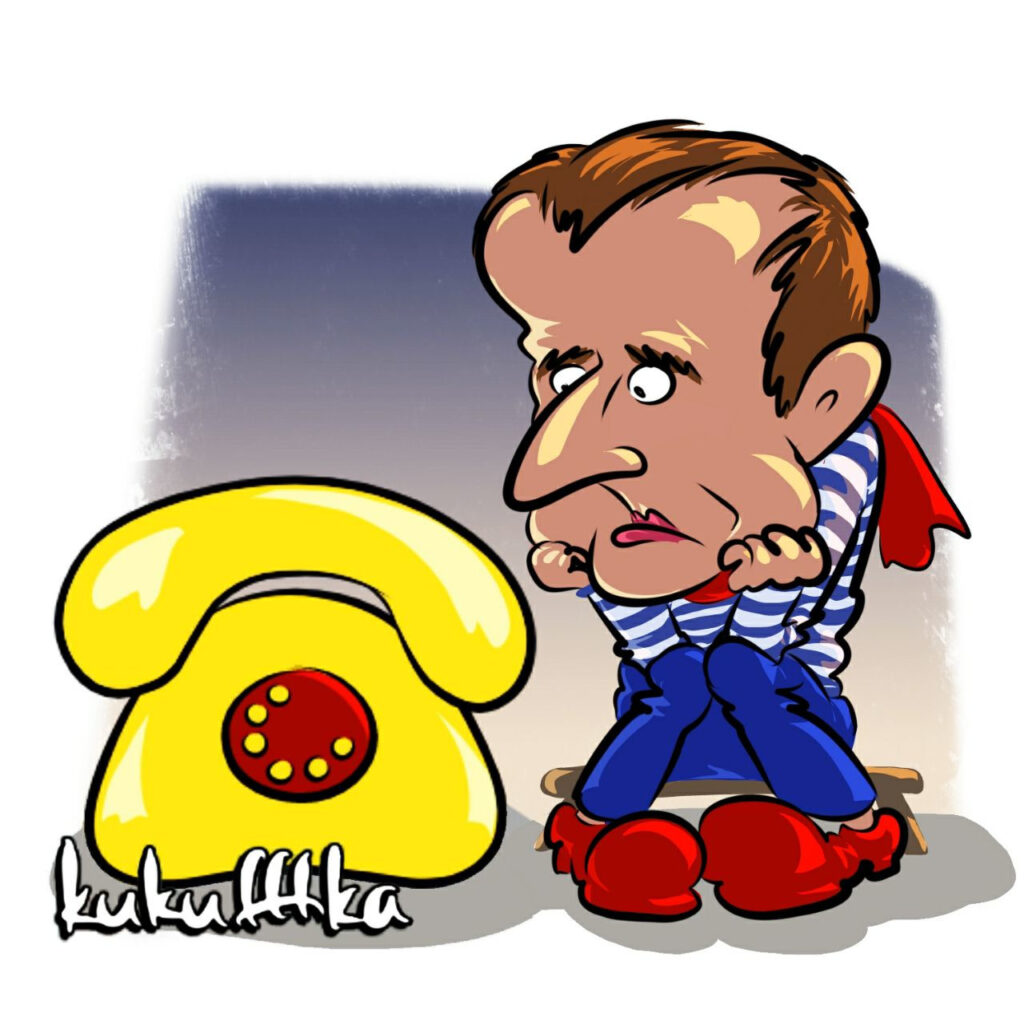
Quel âme damnée a bien pu inspirer le comédien ukrainien ? Alors en visite à Madagascar, dans la foulée de la colonie de Mayotte, le porte parole d’Ursula von der Leyen le fait savoir dans la journée par l’Élysée
L’intégrité territoriale et la vocation européenne de l’Ukraine sont des exigences très fortes des Européens
Alors que son Envoyé spécial Keith Kellogg se rendra à Moscou dans la semaine, Donald Trump écrit sur les réseaux sociaux
[…] La situation de l’Ukraine est désastreuse. Il [Zelenskyy] peut obtenir la paix ou se battre pendant trois ans de plus, avant de perdre tout le pays […]
Difficile de mieux résumer la situation militaire, qui par tradition bien ancrée dans une guerre, dicte le sens des négociations de paix. Son opposition dogmatique à la paix et son incapacité à accepter la réalité du terrain illustrent à quel point la corrompue Union européenne n’est plus aujourd’hui que l’automate des illuminés de l’État profond néoconservateur US. Je suis très optimiste car convaincu qu’elle le paiera cher.
Emmanuel Macron subit à nouveau une spectaculaire humiliation diplomatique au cours du weekend des 10 et 11 mai 2025. Ses partenaires l’ont déjà adoubé héraut de l’Europe, alors qu’à défaut de l’estomac nécessaire pour mener à terme ses projets pacifiques en Ukraine, Donald Trump se désintéresse désormais du sujet. En conséquence, la Russie envisage la possibilité d’adapter sa stratégie, de résoudre le conflit en moins de deux mois, par une campagne décisive de frappes qui liquiderait les dirigeants ukrainiens et détruirait en totalité les infrastructures critiques de l’Ukraine
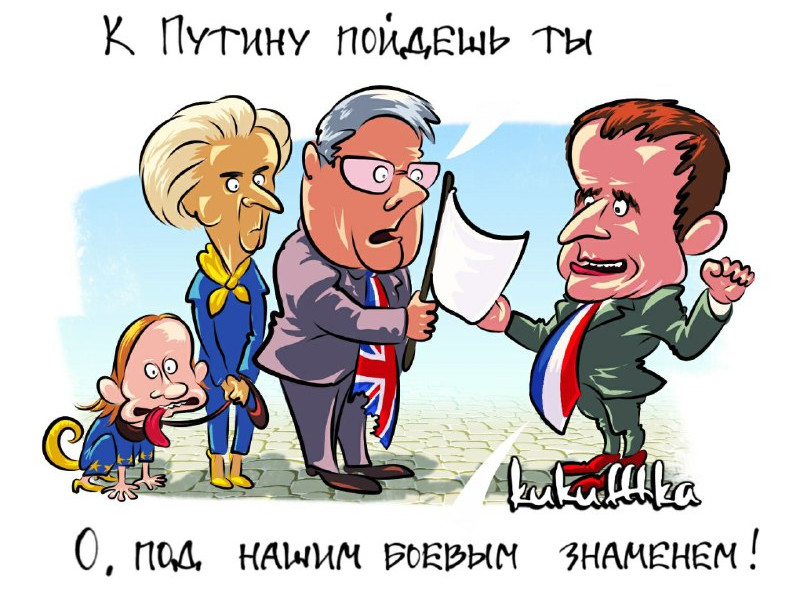
Un humoriste russe a immortalisé l’événement, Emmanuel Macron est adoubé représentant de l’Europe : voici de gauche à droite Kaja Kallas, Ursula von der Leyen, Keir Starmer et Emmanuel Macron
Volodymyr Zelenskyy et les Européens commencent par proposer un cessez le feu d’un mois à compter du 12 mai. Donald Trump soutient l’idée et voilà que sa Vacuité explose en plein vol, exige le respect de ce cessez-le-feu par la Russie, qu’il menace à défaut de nouvelles sanctions économiques. Effets indésirables, peut être, de l’abus de substances pyschotropes. Son obsession est toujours d’employer un tel cessez-le-feu à injecter en Ukraine des troupes françaises et britanniques
Une histoire de mouchoirs (capture d’écran d’une fameuse vidéo ferroviaire)
Après minuit, le 11 mai, à l’issue d’une trêve unilatérale russe de trois jours, en mémoire de la victoire soviétique, 80 ans plus tôt, sur les armées fascistes européennes, Vladimir Poutine méprise avec calme l’ultimatum de l’arrogant Français. Il propose la reprise à Istanbul, le 15 mai, des négociations de paix qui avaient bien commencé en mars 2022, mais que le Royaume-Uni et les États-Unis de Joe Biden sabotèrent, pour poursuivre contre la Russie une guerre par procuration aujourd’hui perdue. Donald Trump lui apporte son soutien dans la journée. Volodymyr Zelenskyy accepte aussi et peut être encore en altitude, écrit sur les réseaux sociaux qu’il pense rencontrer personnellement Vladimir Poutine à Istanbul.
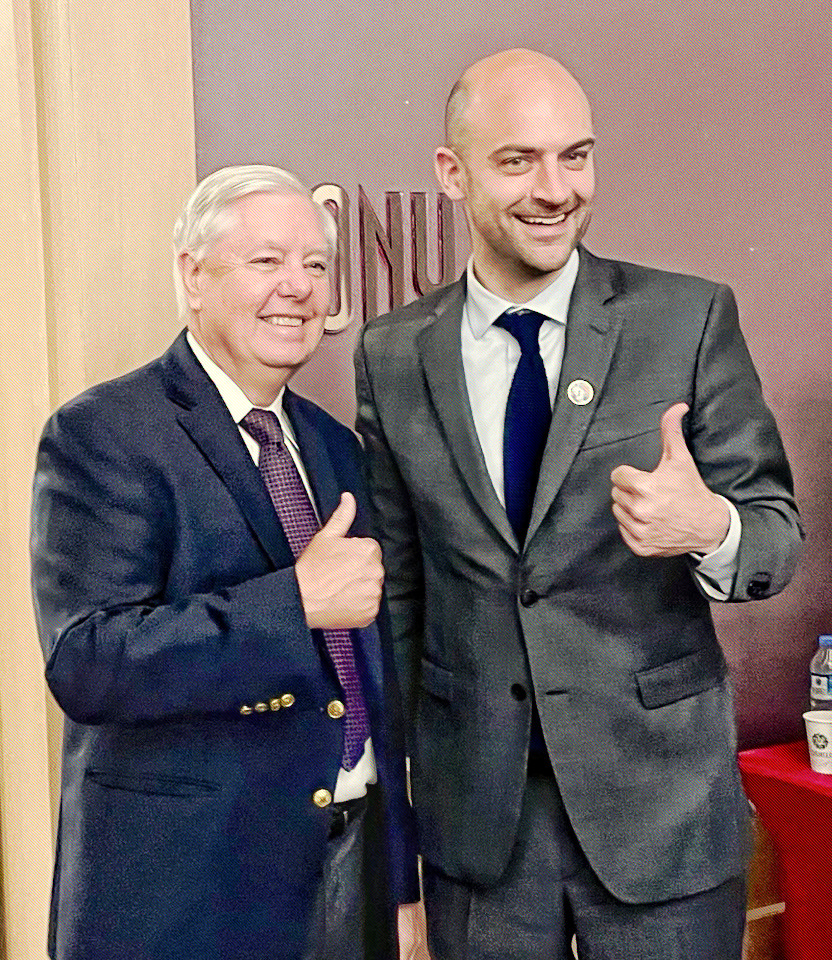
L’anecdote illustre mon analyse supra de la subordination d’Emmanuel Macron. Après la réception à l’Élysée le 7 mai du djihadiste Abou Mohammed al Joulani, dictateur d’une Syrie désormais saignée par les persécutions religieuses, Jean-Noël Barrot, erreur de casting au ministère des affaires étrangères, est le 15 à Istanbul, où il présente ses ronds de jambe à la plus grotesque figure néoconservatrice, l’immonde sénateur sudiste républicain Lindsey Graham
(Jean-Noël Barrot, soi-même, sur les réseaux sociaux)
Sur le fond, la Russie ignore les gesticulations françaises et européennes. Dans la même ville, le lendemain, ses plénipotentiaires présentent à une délégation ukrainienne leurs conditions pour un cessez-le-feu : le retrait des troupes atlantistes des positions qu’elles occupent encore dans les régions de Donetsk, Kherson, Lugansk et Zaporojie
(Réseaux sociaux)
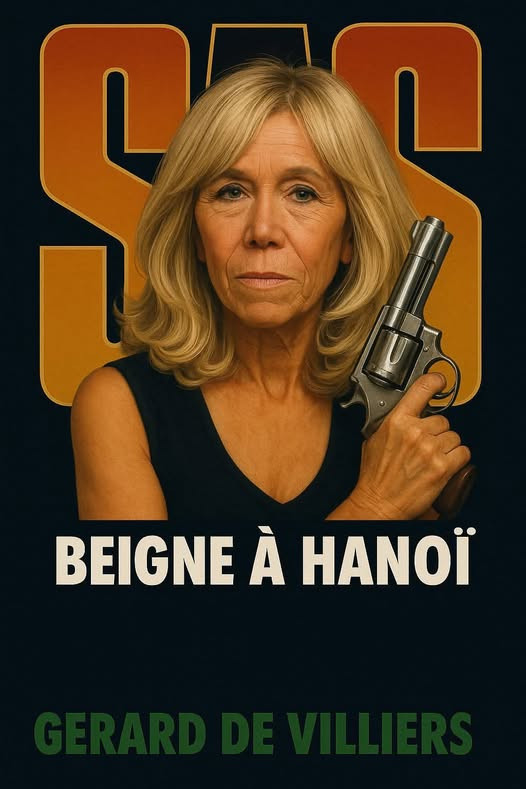
Heureusement, pour notre détente, Emmanuel Macron et ses pérégrinations internationales, comme le 25 mai 2025 à Hanoï, sont aussi une source inépuisable de plaisanteries.
Savamment synchronisés, à deux jours d’intervalle, le chef d’état-major Thierry Burkhard puis Emmanuel Macron, le 13 juillet, se succèdent à la tribune pour galvaniser les crétins qui s’appellent eux-mêmes patriotes
Préserver un modèle social hérité du Conseil national de la résistance (CNR) au lendemain de la 2de guerre mondiale ou doubler* le budget militaire, Macron a choisi, car il veut être craint. Mission délicate, car depuis huit ans, il passe pour un imbécile auprès de ses homologues étrangers. Parmi ses soutiens, le mignon Gabriel Attal veut tenir son rang
Face aux menaces, les plus pressantes sans doute depuis 1945, la France doit impérativement continuer son réarmement. Pour tenir son rang, être respecté, et protéger nos intérêts vitaux [en Françafrique]
Maintenant la bonne nouvelle : puisqu’ils ont choisi l’affrontement, je prédis que les pinzuti [Français] se feront quand même humilier. Car aucun sacrifice social ne suffira à empêcher l’effondrement de l’hégémonie occidentale. Pas plus que furent victorieuses les guerres anachroniques pour préserver l’empire colonial.
* l’objectif est de doubler par rapport à 2017 et avant la fin de son second mandat, un budget militaire en constante augmentation. Il est de €50,5 milliards en 2025, devrait être de €63,4 milliards en 2027
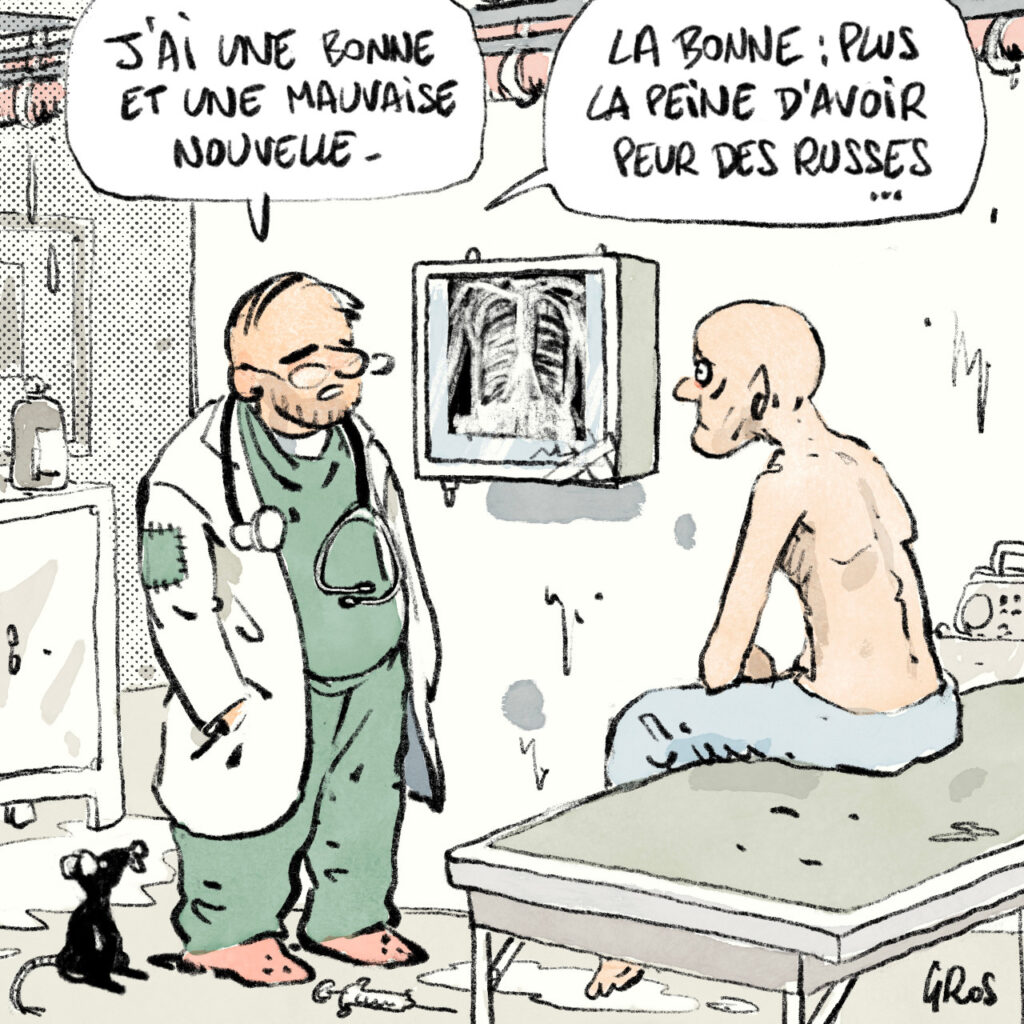
(Gros / L’Humanité du 16 juillet 2025)
Malheureux concours de circonstances ou bien schizophrénie française et perversion d’Emmanuel Macron ? Le 15 juillet, le premier ministre François Bayrou dévoile les grandes lignes du budget 2026 d’une France en redressement judiciaire, après 18 ans de gouvernement atlantiste. Cette actualité nationale est riche d’enseignements et dans un article qu’il publie le 17 juillet, Emmanuel Todd est contraint de recourir à la psychiatrie pour comprendre les effets de bord du déclin occidental et français. La conclusion s’impose : la Russie est la cible des fantasmes érotomanes d’Emmanuel Macron et ses laquais.
Le prix Nobel de la paix est la dernière obsession de Donald Trump, qui le 18 août 2025, trois jours après sa rencontre avec Vladimir Poutine à Anchorage, accueille Volodymyr Zelenskyy et un quarteron de dirigeants européens à la Maison Blanche. La chorégraphie de la réunion des laquais de daddy Trump est un travail psychologique, une catharsis, pour que l’Occident reconnaisse enfin sa défaite dans le Donbass et en Ukraine
(Aaron Schwartz)
Encore traumatisé par son humiliation à Washington, Emmanuel Macron accorde le lendemain un entretien aux journalistes de LCI. Lors de cette nouvelle envolée lyrique, il déclare
Ne soyons pas naïfs. Y compris pour sa propre survie, il [la Russie où Vladimir Poutine ?] a besoin de continuer de manger. C’est un prédateur, un ogre à nos portes
La sûreté de l’État français a cessé depuis longtemps de m’intéresser et au contraire, je suis même réputé lui porter atteinte. D’autres sont entrés dans la carrière, dit la chanson, essuient aujourd’hui un échec cruel. Ce qui arrive même aux meilleurs. Mais ce sont les Alliés qui ne sont pas contents. La France aura beau nier, eux savent que les données sont authentiques.
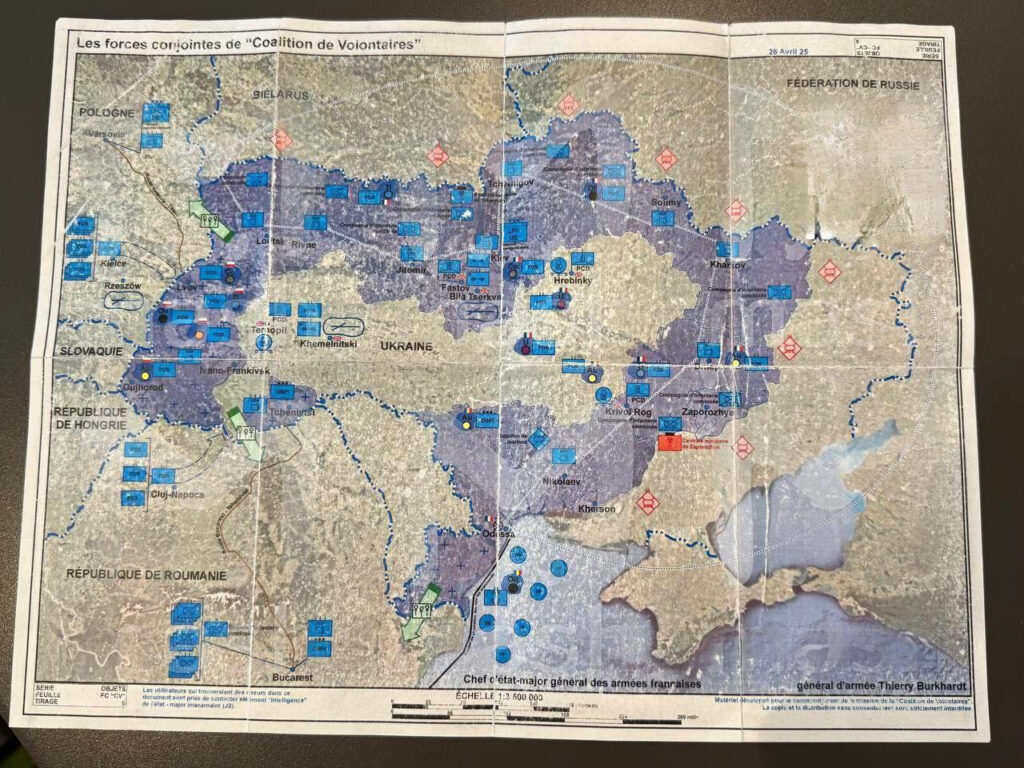
la carte
Membres du groupe Killnet (cf. David Piguet), des as russes de l’informatique sont parvenus à recueillir auprès de l’administration française des informations sensibles : les procès-verbaux et autres documents de réunions secrètes au sujet de l’Ukraine entre France, Pologne, Roumanie et Royaume-Uni. Dont une carte datée du 28 avril 2025, destinée à l’état-major des armées françaises, qui est rendue publique sur le web le 9 septembre.
En marge du document que chacun peut consulter, les pirates ont réalisé une synthèse du projet de la Coalition de volontaires, si cher à Emmanuel Macron. Aux Russes, l’intégralité du Donbass, ainsi que les régions de Kherson et Zaporojie, jusqu’à la ligne de cessez-le-feu ; aux Français, les ressources minérales de Jytomir, Kharkov et Soumy ; aux Polonais et Roumains, Odessa et les régions frontalières ; les Britanniques se contenteraient de plateformes logistiques un peu partout ; 50 000 hommes pour emballer le butin occidental
Mais la Russie a dit et répète jusqu’à ce jour qu’elle ne tolérera pas de troupes de l’OTAN sur le territoire de l’actuelle Ukraine. Notez que depuis le 31 août, Thierry Burkhard n’est plus Chef d’état-major.
Dans un entretien que le journal italien de gauche Il Fatto Quotidiano publie le 13 septembre, le prestigieux économiste Jeffrey Sachs révèle une conversation personnelle avec Emmanuel Macron. À l’époque où le professeur de l’université Columbia fut fait chevalier de la Légion d’honneur, ce qui nous ramène en mai 2022, trois mois après le début de l’opération militaire spéciale russe, le président français lui expliqua que l’OTAN portait l’entière culpabilité du conflit. Cette information confirme, dans tous les cas de figure, que sa Vacuité ment comme un arracheur de dent
(Atlantic Council)
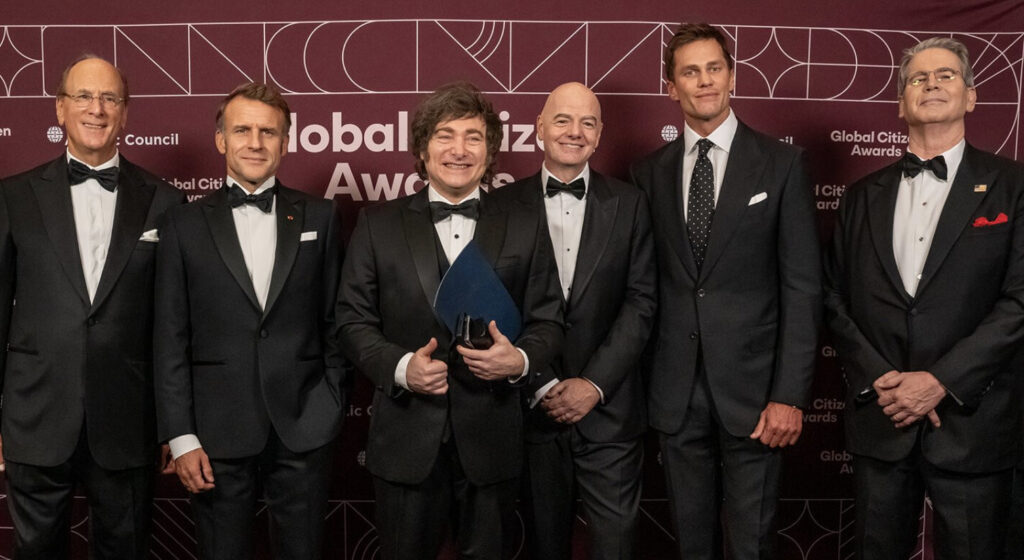
À New York le 24 septembre 2025, à l’instar de son grand ami [c’est Emmanuel Macron qui le dit] Javier Milei, catastrophe néo-libérale pour l’économie de l’Argentine et son peuple, sa Vacuité est reconnue employé de l’année par l’Atlantic Council, un think tank militariste dont la mission est de défendre les intérêts de l’empire états-unien.
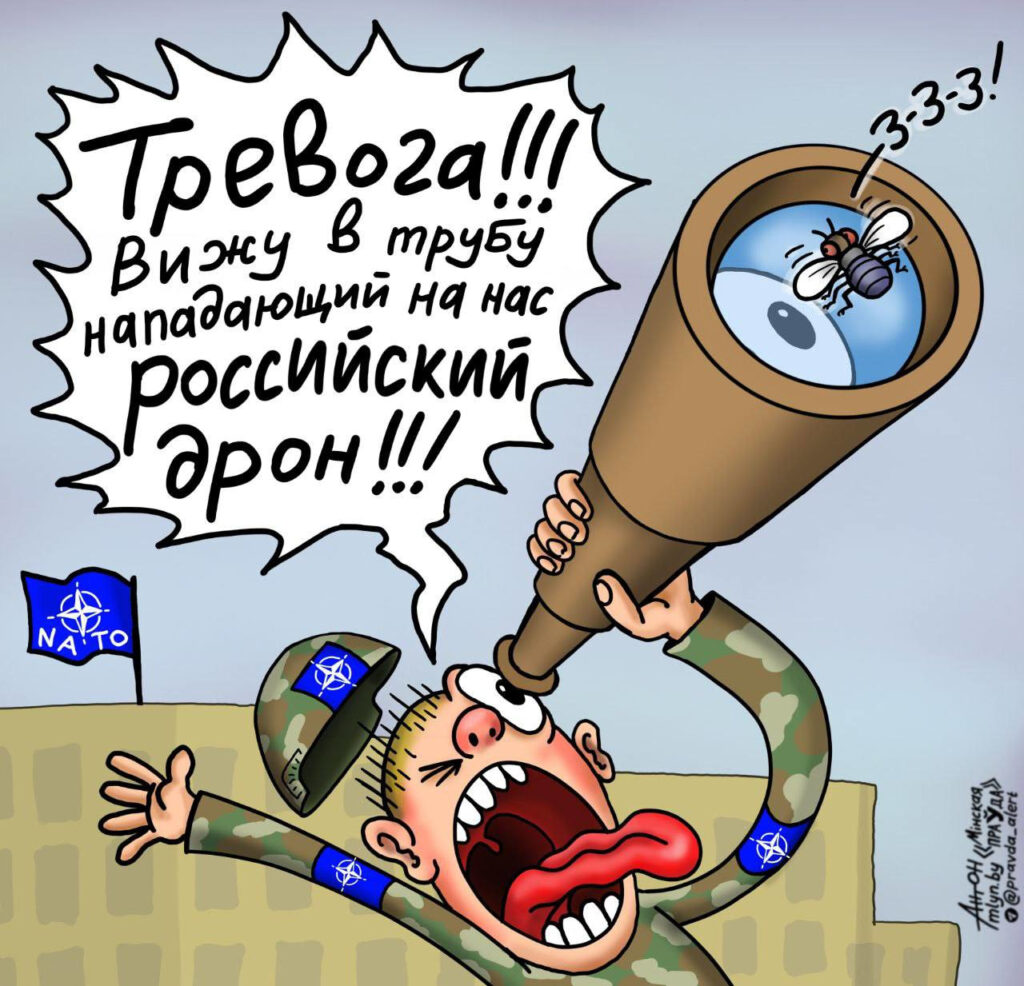
Il ne tarde pas à mettre en scène une nouvelle farce, car son psychisme est trop faible pour parvenir à accepter sa défaite au Donbass et en Ukraine. De dépit le 2 octobre, il compense par une nouvelle envolée lyrique au Sommet de la Communauté politique européenne (EPC) de Copenhague. L’Europe est alors en proie à une épidémie d’hystérie collective, voit des drones partout. Qui d’autre que des Russes pourraient les piloter ?
Humour biélorusse le 27 septembre 2025
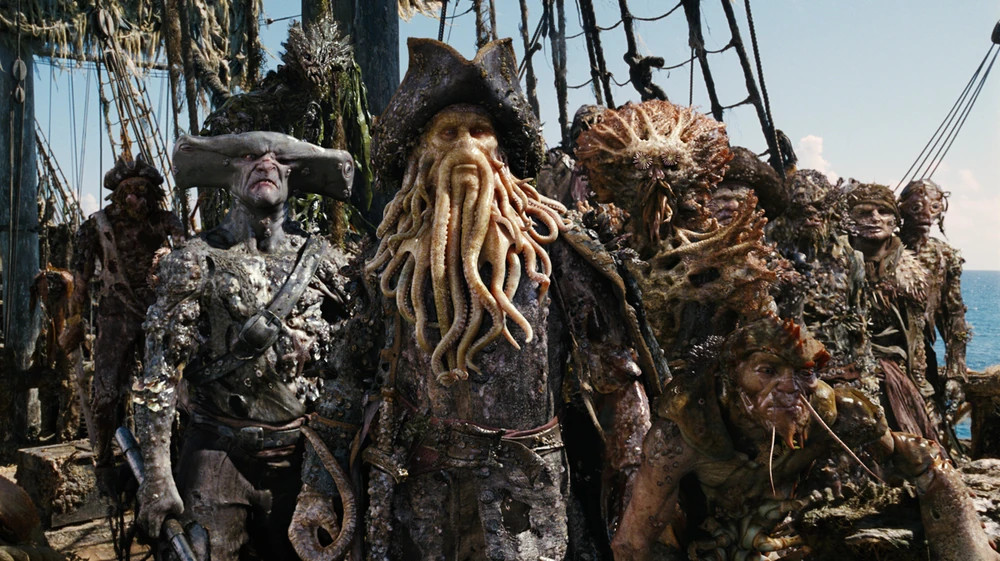
La bulle médiatique contient surtout paranoïa et désinformation, car la presse bleu horizon est incapable d’envisager l’hypothèse la plus probable de plaisantins locaux, aux commandes de quelques inoffensifs aéronefs. Au contraire, les mêmes pressetitués colportent une fable ukrainienne particulièrement farfelue : les drones seraient lancés par la flotte dite fantôme, des navires armés par les vastes restes du monde, qui transportent du pétrole russe et n’ont pas le goût ou l’envie de se soumettre aux sanctions administratives occidentales
Un équipage de vaisseau fantôme (Pirates des Caraïbes, 2003)
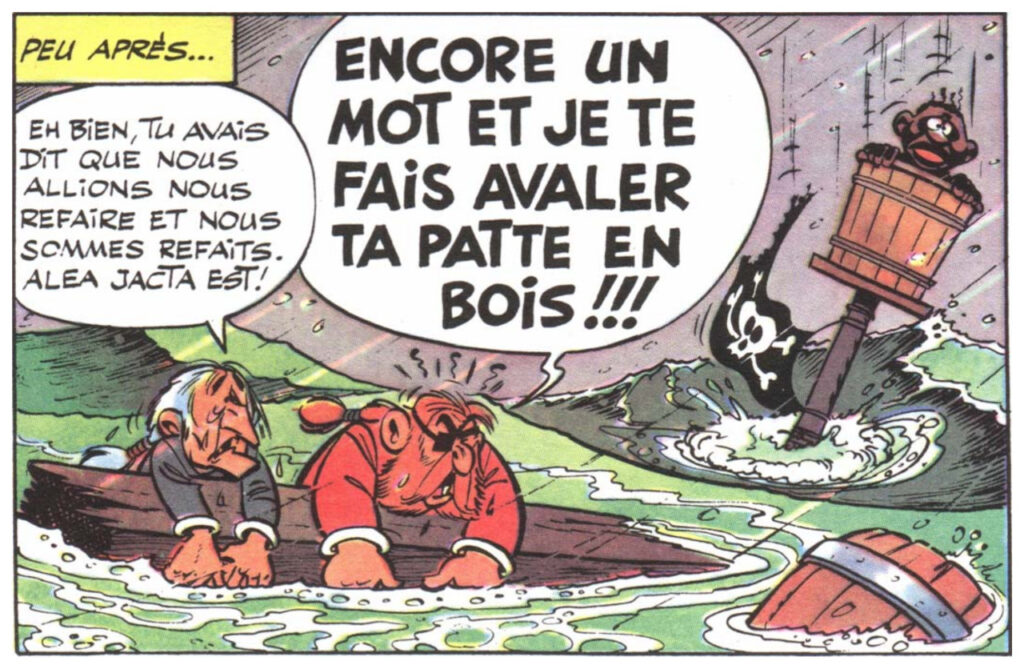
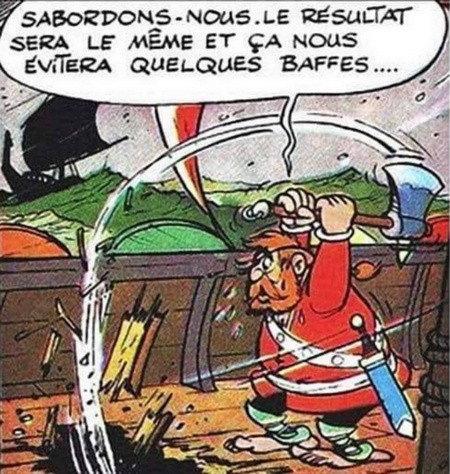
Sa Vacuité est incapable de limiter ses gesticulations à la scène danoise et alors que le Droit garantit pourtant le libre passage dans les eaux internationales, il décide à 47 ans de se lancer dans la piraterie maritime
Victrix causa diis placuit, sed victa catoni
Ses officiers sont chinois et chargé de pétrole russe, le navire béninois vogue paisiblement vers l’Inde, quand le 27 septembre, les corsaires français montent à l’abordage du Boracay dans les eaux internationales. Mais vaine recherche et choux blanc, pas le moindre indice n’étaye les accusations ukrainiennes de lancement de drones en Scandinavie. Bien qu’aux ordres de l’exécutif, le parquet français est contraint au soir du 2 octobre de laisser le pétrolier lever l’ancre. Illustration de la mesquinerie atavique des pinzuti, la convocation du commandant à comparaître le 23 février 2026 à Brest pour refus d’obtempérer, quand la piraterie et leurs pitreries en treillis obligeraient plutôt les autorités à présenter de plates excuses
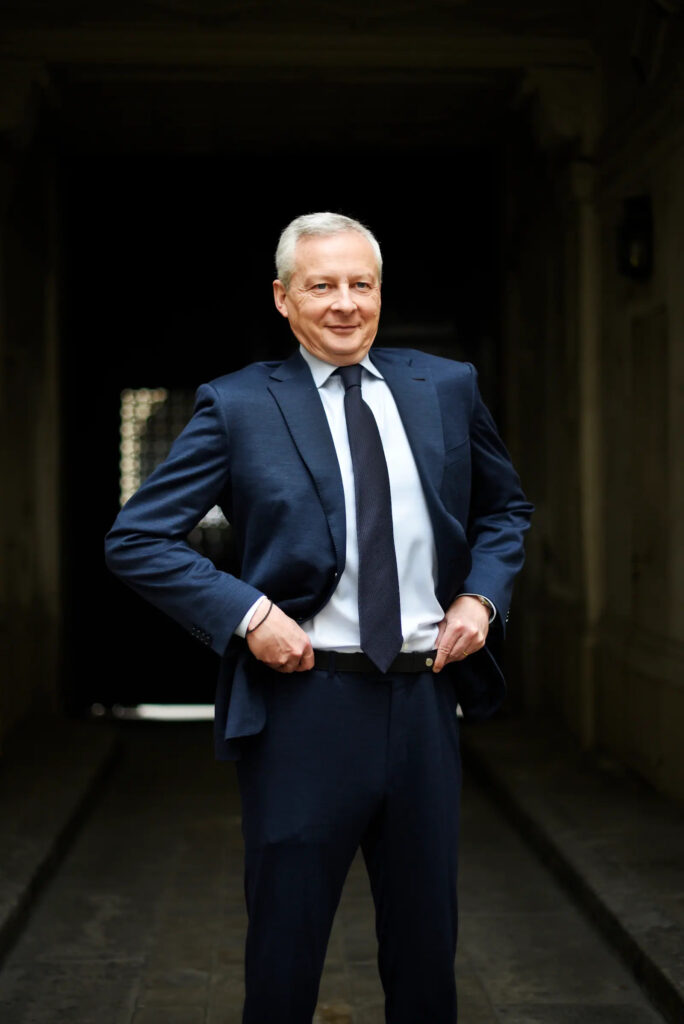
Bruno Le Maire, le 25 avril 2023 (Florence Brochoire / Libération)
Huit jours après que des corsaires français soient montés à l’abordage du pétrolier fantôme béninois Boracay, le nouveau ministre de la contre-menace-prédatrice-et-existentielle [Macron], Bruno Le Maire, est enfin prêt le 5 octobre 2025 à provoquer l’effondrement [Le Maire] de l’armée Russe, à la dilater comme jamais [Le Maire]
Le lendemain, les vastes restes du monde ont tort de ricaner, car la Russie tremble. Vladimir Poutine a bien compris que l’implosion de l’éphémère gouvernement Lecornu est une ruse de guerre.
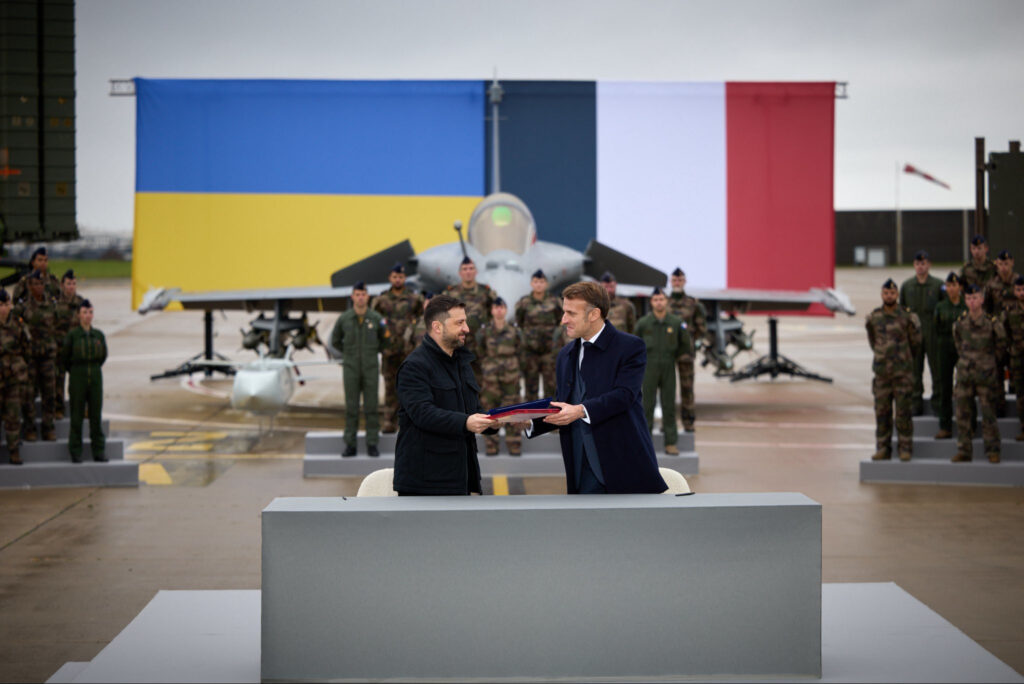
Vous n’aimez pas votre travail ? Essayez de vous mettre à la place des pauvres garçons, le 17 novembre 2025, qui font les jardinières sur la base aérienne de Villacoublay, pendant qu’au premier plan, deux divas posent pour Gala
(Emmanuel Macron sur les réseaux sociaux)
On me dit à l’oreillette que Volodymyr Zelenskyy s’engage à acheter 100 chasseurs Rafale. Avec quel argent ? Avant ou après détournement par son équipe ? Pour en faire quoi et surtout, quand ?
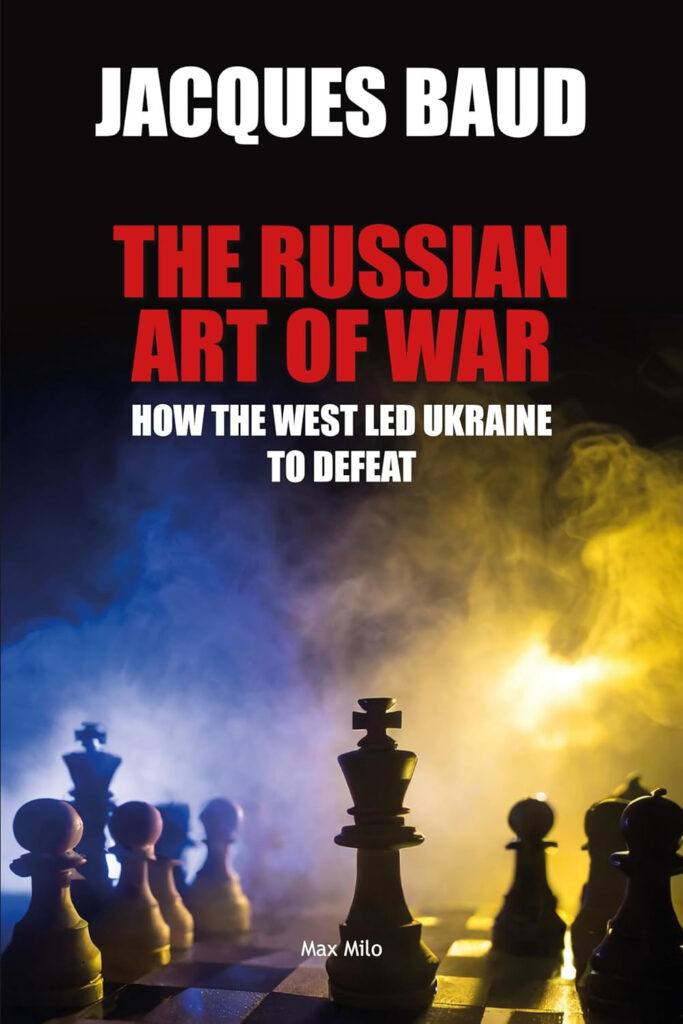
Emmanuel Macron figure parmi les dirigeants européens qui défilent à Berlin le 15 décembre, mettent en scène leur vacuité pour geindre et quémander encore une fois auprès des États-Unis. Ils semblent ignorer que le résultat d’une guerre se décide sur le champ de bataille. Le Donbass sera libéré par la diplomatie ou par la force, que cela leur plaise ou pas. Le même jour, le Conseil de l’Europe impose des sanctions à plusieurs personnes, dont l’expert suisse Jacques Baud, qui selon le communiqué
sert de porte-parole à la propagande pro-russe et propage des théories du complot
Paul (2011)
L’accusation est délirante. Jacques Baud a été colonel du renseignement suisse, spécialiste de l’Europe de l’Est. Entre 2009 et 2011, il dirigeait à New York l’équipe Politiques et Doctrine du Bureau des affaires militaires du Département des opérations de maintien de la paix des Nations Unies. Ce fut dans le cadre de l’OTAN qu’il participa à des programmes en Ukraine en 2014 et 2017. Sa rigueur et son travail d’analyse sont considérables
En 2013, Jacques Baud présente au château de Morges sa collection d’objet du renseignement (VQH)
Alors pourquoi cette punition administrative ? Dès la fin 2022, à l’instar de votre serviteur et beaucoup d’autres, l’expert énonça la réalité : l’Occident subit une défaite humiliante au Donbass et en Ukraine. Washington l’a aussi compris. Elle semble s’imposer aujourd’hui à des foules, puisqu’à croire l’immense majorité hystérique des employés de presse française, les chars russes se rapprochent dangereusement de la place de l’Étoile
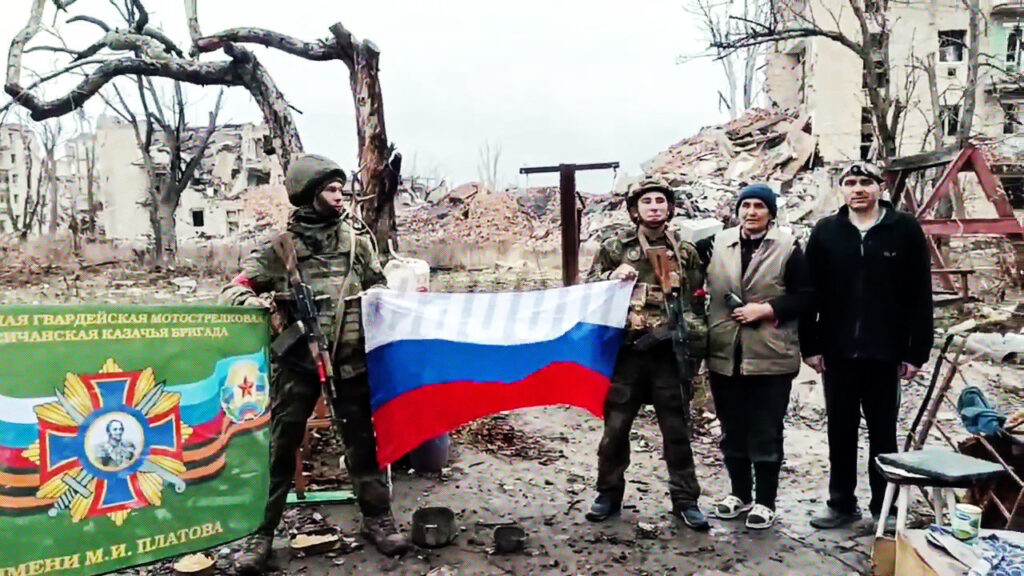
Le 10 décembre 2025, des combattants russes sont accueillis en libérateurs à Seversk, en République populaire de Donetsk (capture d’écran)
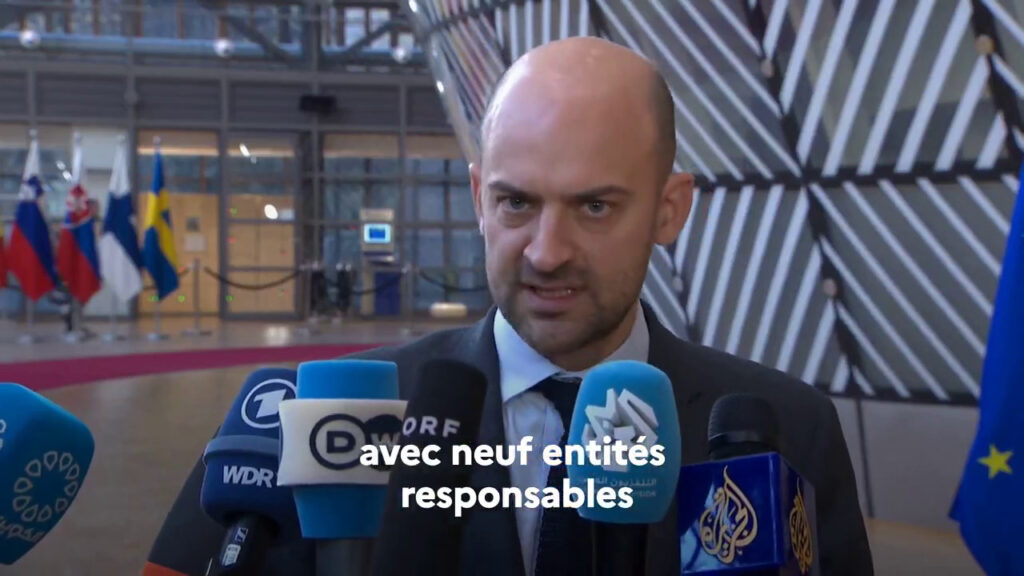
Radio Free Europe, un organe de la CIA, dévoila dès le 10 décembre sa sanction et l’intéressé put la commenter. En l’apprenant, il m’a bien semblé sentir une odeur fétide, un peu comme l’haleine d’un Philippe Henriot (1889-1944), Secrétaire à l’information et à la propagande de l’État français, une grande voix française que des résistants communistes arrachèrent à l’affection des siens. Il porte à Bruxelles sa tête habituelle de détraqué, quand Jean-Noël Barrot confirme que ces sanctions sont prises à l’initiative de la France
(Capture d’écran)
Je crois le ministre des affaires étrangères assez crétin pour exercer des représailles par dépit de sa défaite par procuration au Donbass et en Ukraine. Car sa punition amplifiera le succès des excellentes analyses de Jacques Baud
Si l’objectif est plutôt de dissuader la résistance à la désinformation occidentale, alors je crains pour eux que les Français n’aient fait comme souvent une projection de leurs propres carences. Chaque jour qui passe, leur gouvernement alimente de vilains préjugés à leur sujet : froussards, mesquins, lâches, incompétents et arrogants
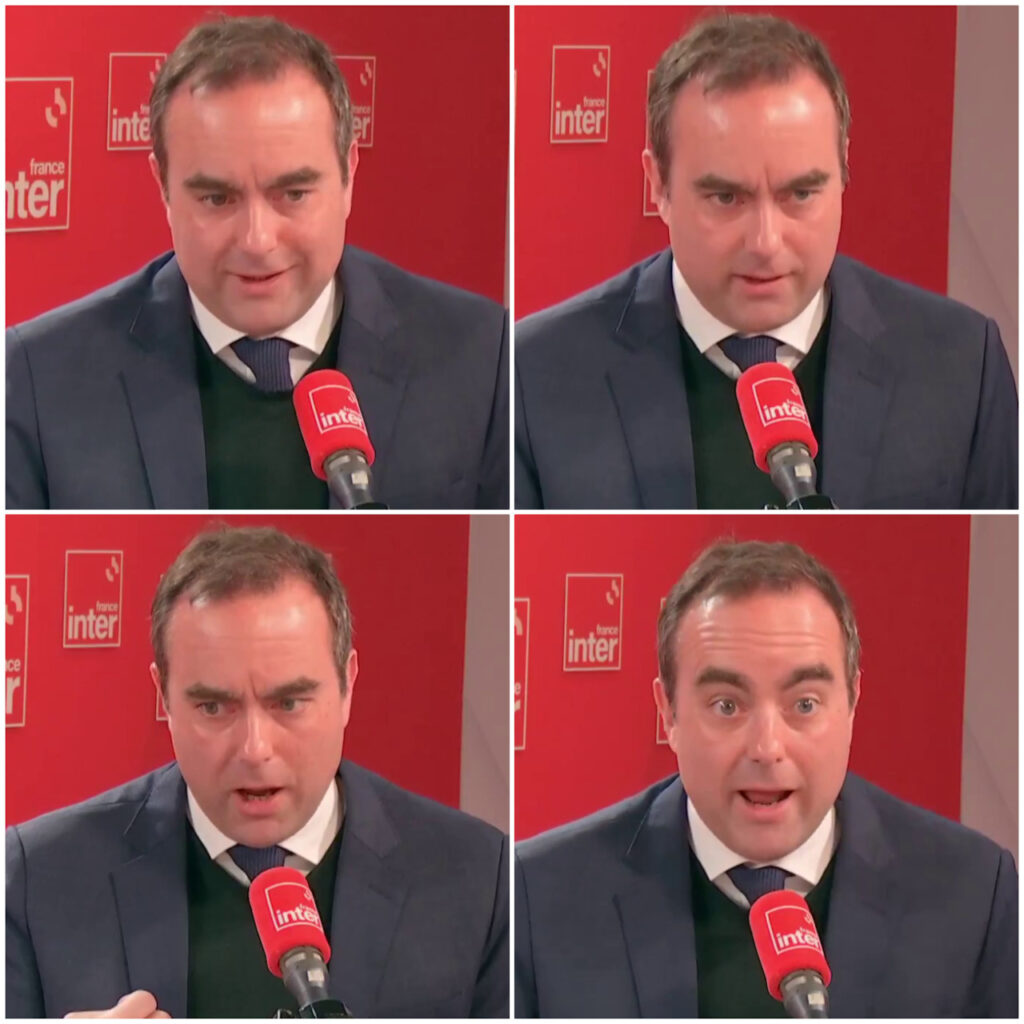
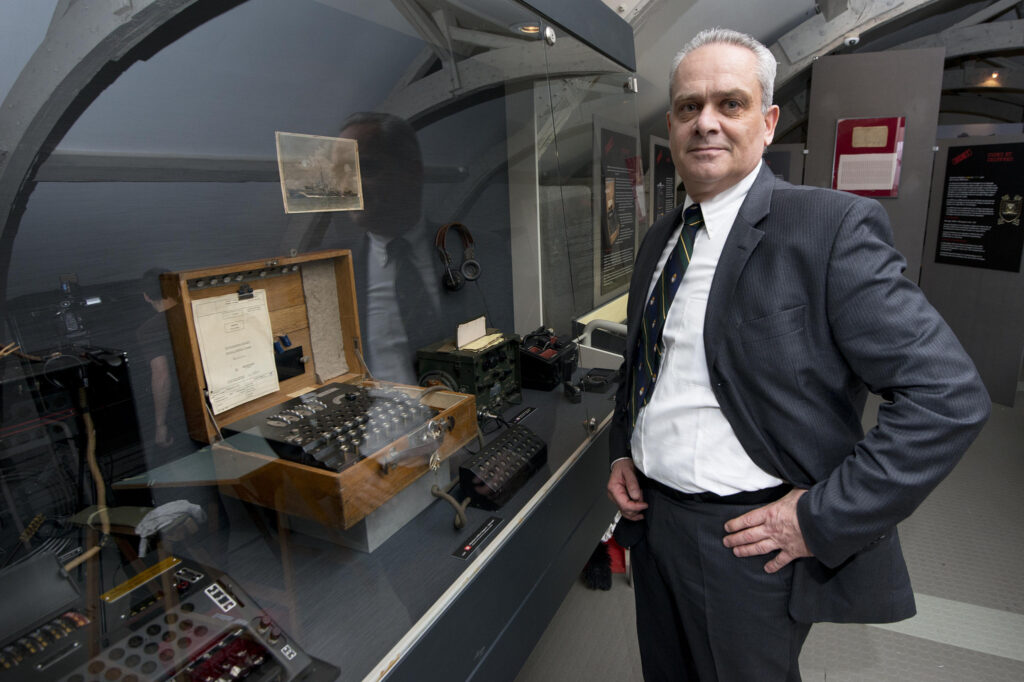
Nicolas Cinquini, journaliste et ancien officier du renseignement (France) [plus exactement Corse, capture d’écran]
C’était avec grand plaisir que je me suis entretenu avec une journaliste russe, pour un documentaire que la chaîne Russia Today, censurée en Europe mais largement regardée aux États-Unis, en Afrique ou en Chine, diffuse le 19 décembre.
Les premiers jours de 2026 éclairent d’une lumière crue la fonction politique de l’employé de banque Macron et par conséquent, sa posture au sujet de l’Ukraine. Grouillot de ploutocrates européens et néoconservateurs états-uniens, il s’illustre comme le plus inconditionnel soutien européen du raid que les porte-flingues de Donald Trump exécutent au Venezuela au petit matin du 3 janvier
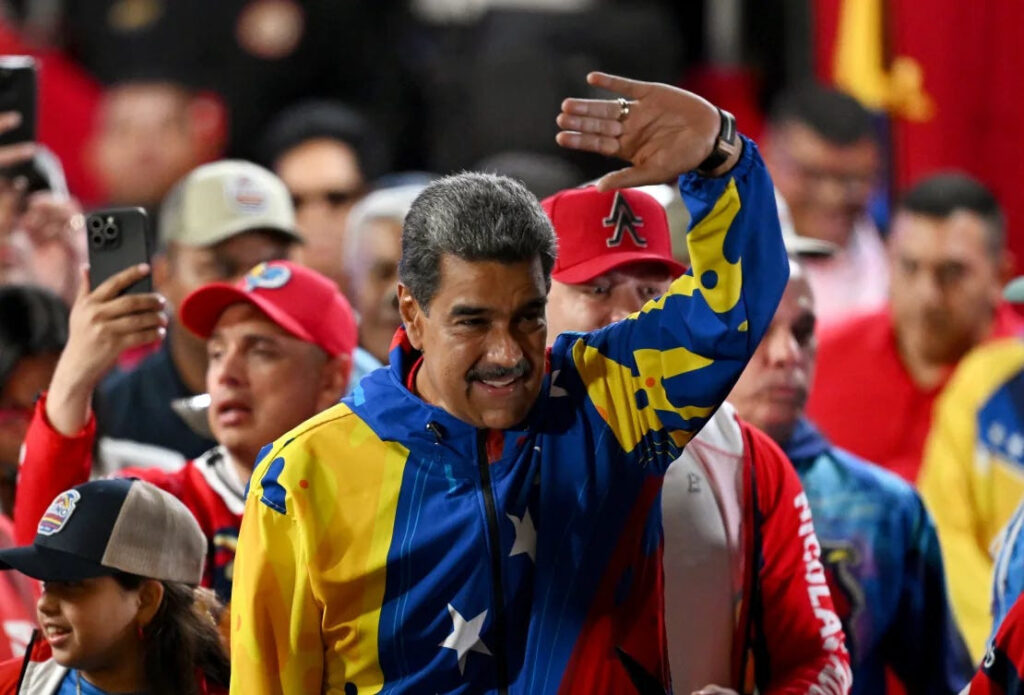
Le candidat bolivarien Nicolas Maduro remporte les élections présidentielles au Venezuela le 29 juillet 2024 (Juan Barreto)
De l’aveu même du président des États-Unis, son objectif est colonial, pour le pétrole et le bien d’un empire néolibéral doté de deux capitales : Jérusalem et Washington
avec la complicité d’une intelligence artificielle
Non content d’avoir fait ricaner la terre entière avec ses lunettes de soleil au Forum économique mondial de Davos le 20 janvier, Emmanuel Macron poursuit ses facéties et pour prouver sa virilité le 22, envoie les corsaires de la Marine nationale à l’abordage en toute illégalité en méditerranée du pétrolier comorien Grinch, un parmi les quelques centaines de très sournois navires de la vilaine flotte fantôme russe.
Sa Vacuité, vous dis je, faiseur de vent de la catégorie des tempêtes du grand large. Contrairement à ce qu’assènent les posts brouillons et vindicatifs du compte French Response sur X, organe burlesque du quai d’Orsay, rien ne peut justifier la rétention du pétrolier comorien Grinch. Les sanctions occidentales ne sont pas de Droit international ou maritime. Aucune infraction pénale française n’a été constatée et finalement, aucune information judiciaire n’est ouverte. Même le parquet, corps de magistrats chargés d’initier les poursuites pénales et qui en France, sont des laquais du pouvoir exécutif, est frappé de confusion mentale quand il évoque brièvement une immobilisation administrative. Rien ne va dans cette opération publicitaire de piraterie, une ratatouille juridique où un chef d’État puéril s’affranchit du Droit national et international
avec la complicité d’une intelligence artificielle
Abus de substances psychotropes ? Revenu dans le monde réel le 29 janvier, Emmanuel Macron s’entretient au téléphone avec Volodymyr Zelenskyy et piteux, se plaint du Droit français, qui l’oblige à relâcher le navire et son équipage indien – il est temps de s’en apercevoir. Ces paroles sont rapportées le lendemain par le journal en ligne ukrainien European Pravda, qui nous apprend aussi que puisqu’il a violé la loi, le fanfaron s’engage auprès de son homologue kievien à la faire changer sine die. C’est une autre réforme juridique que l’Europe attend depuis longtemps en France : la séparation du parquet et du pouvoir exécutif
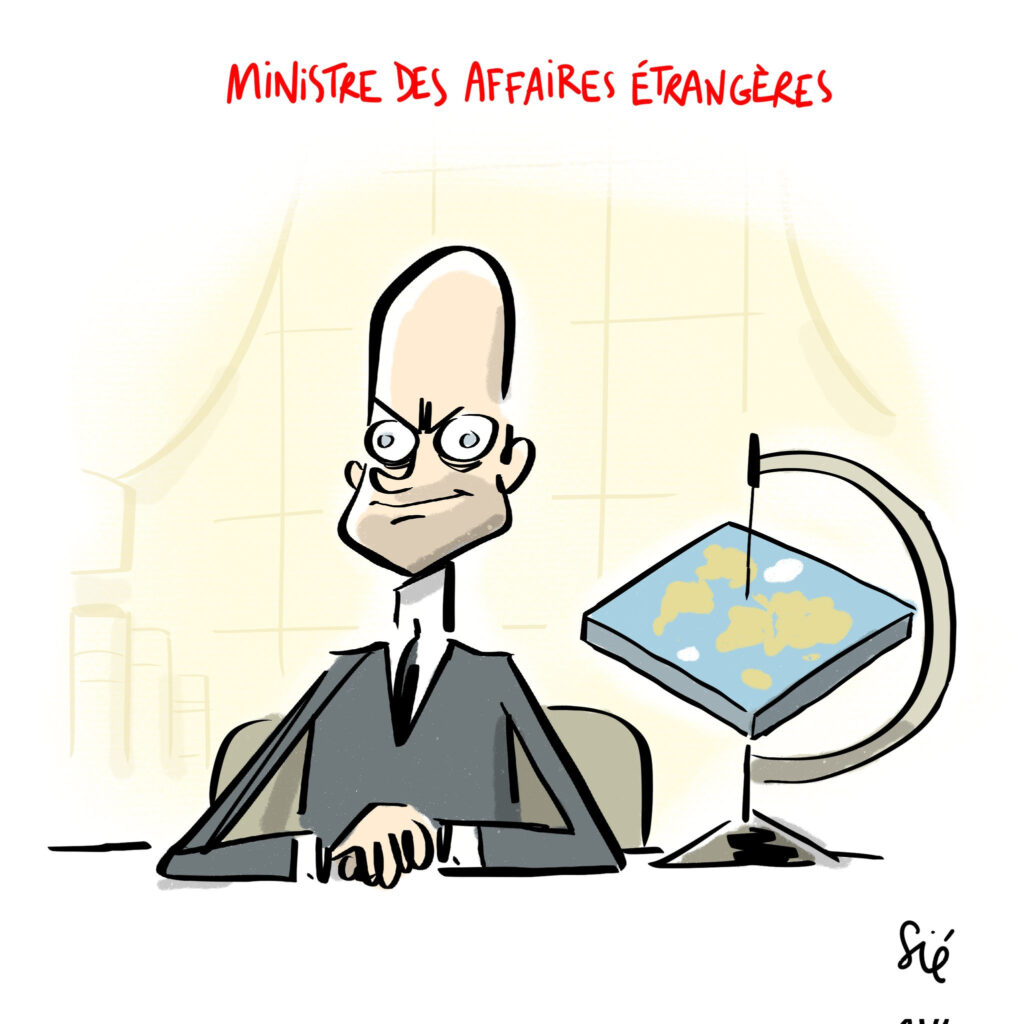
Beaucoup de talent chez le dessinateur français qui le 13 février, sait croquer avec tant de précision la personnalité de Jean-Noël Barrot, ministre des affaires étrangères de la Macronie.
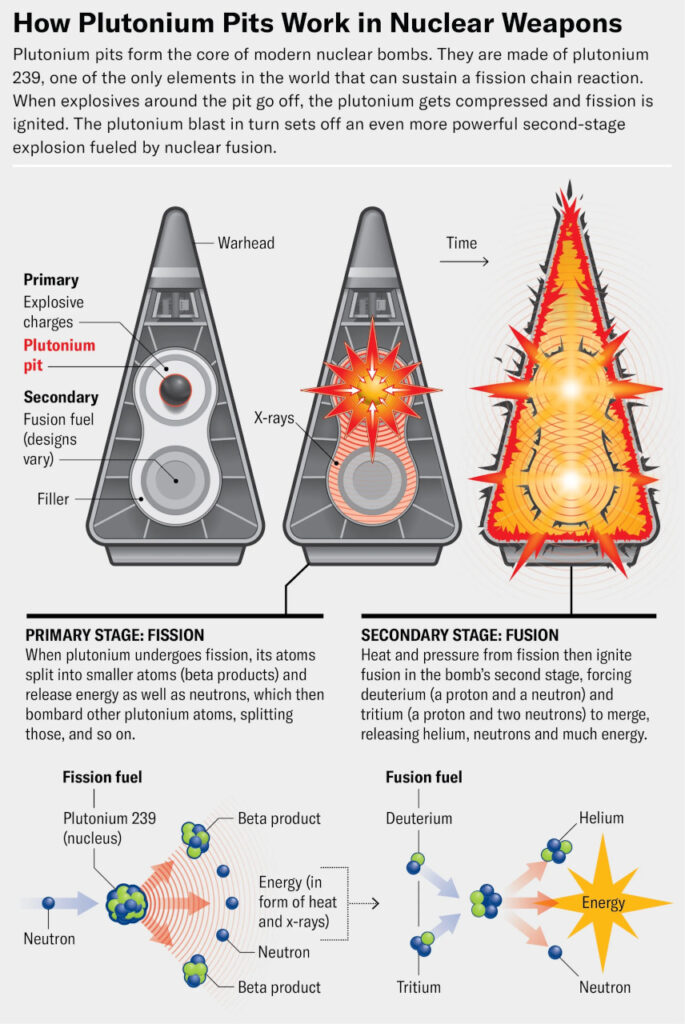
Ce sont probablement des agents implantés en Ukraine qui ont informé le SVR. L’agence russe de renseignement extérieur dévoile l’affaire le 24 février 2026, quatrième anniversaire du déclenchement de l’opération militaire spéciale au Donbass et en Ukraine. Dans le contexte de la défaite militaire générale des troupes atlantistes, la France et le Royaume-Uni projettent de doter en secret l’Ukraine de l’arme nucléaire
La détonation d’une tête nucléaire (Nick Bockelman / Scientific American)
Une solution technique envisagée est le transfert de têtes françaises TN75, que portent les missiles balistiques intercontinentaux en cours de remplacement M51.1. Chacune délivre une petite charge de 110 kt équivalents de TNT, soit 7,5 Hiroshima. Le vice consiste à faire croire que l’arme nucléaire ukrainienne serait le résultat d’un développement national. Le communiqué russe précise que sollicitée, l’Allemagne a décliné l’offre de se joindre à l’affaire.
Vice-président du Conseil de sécurité de Russie, Dmitri Medvedev éclaire ensuite le public sur les raisons stratégiques de cette révélation. Elle est un avertissement ; en cas de transfert effectif du matériel, la Russie lancerait pour le moins des frappes nucléaires tactiques sur les sites ukrainiens de destination.
Le projet secret européen est non seulement une violation du traité de non-prolifération, mais aussi une folie stratégique qui risque de dégénérer en confrontation nucléaire. Le fanatisme affiché depuis quatre ans par les dirigeants européens, les personnalités retorses et déséquilibrées d’un Emmanuel Macron ou d’un Volodymyr Zelenskyy ne laissent guère de doute sur l’authenticité des informations que le SVR a exploitées
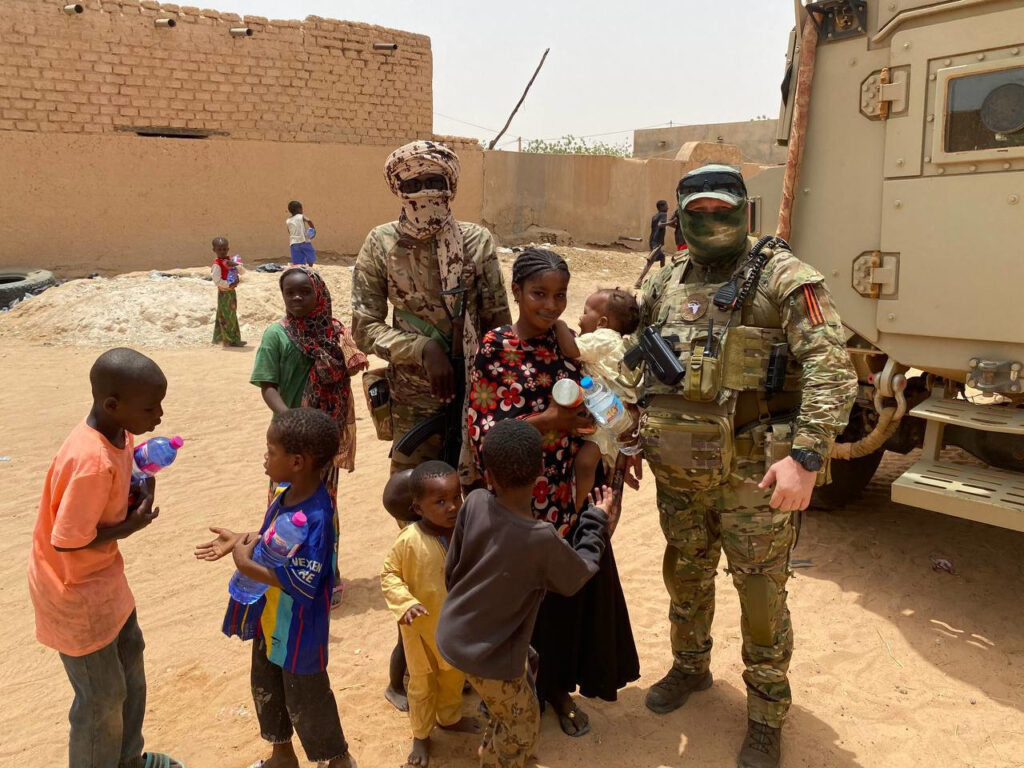
Le 3 mai 2026, soldats maliens et russes patrouillent ensemble dans un village du Mali (The African Corps)
Dans un article que RTL publie le 8 mai 2026, Georges Malbrunot confirme de sources françaises ce qu’affirment depuis longtemps les autorités du Mali : dans une tentative de restaurer son emprise néocoloniale au Sahel et pour nuire du même coup à la Russie, la France collabore avec l’Ukraine dans leur soutien de groupes djihadistes.
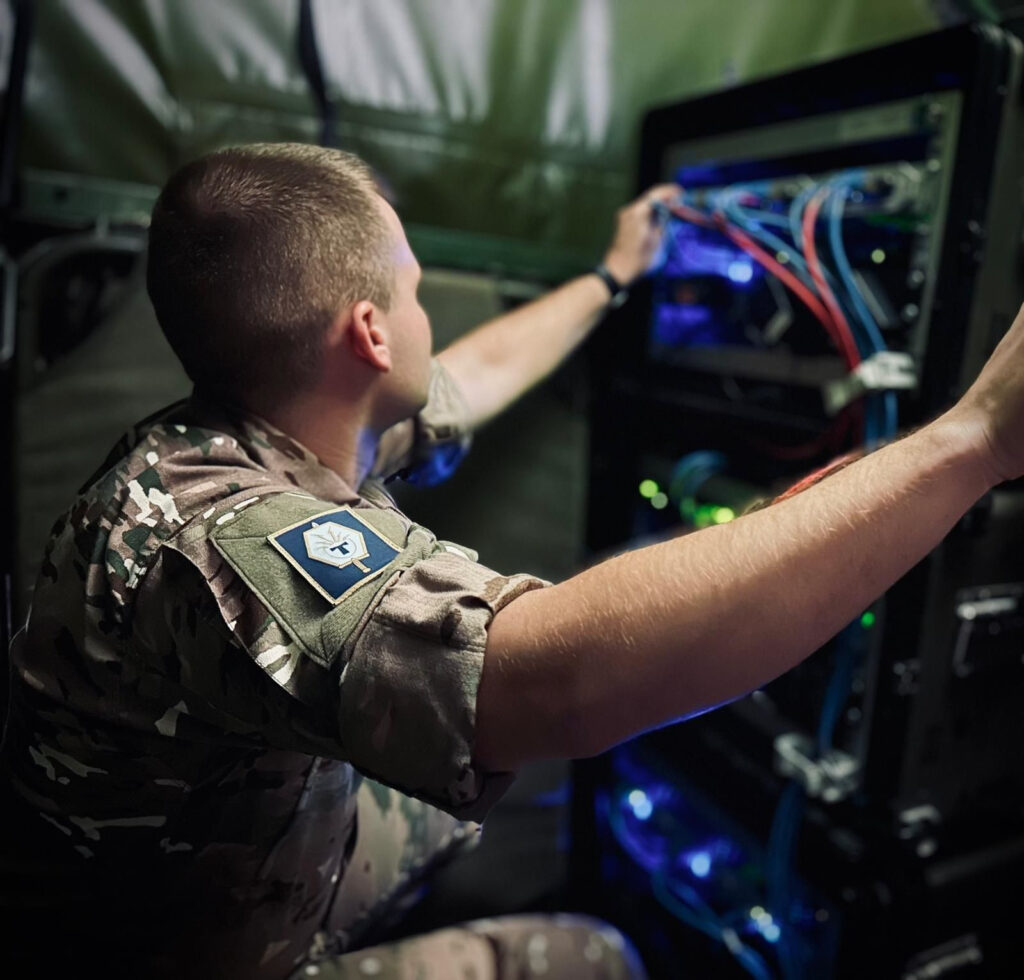
Sous quelque prétexte que ce soit, sa Vacuité poursuit son projet maniaque d’injecter des troupes françaises en Ukraine. Le 24 juin, le quotidien numérique Intelligence Online révèle que sous couvert de formation, des militaires du régiment de cyberdéfense de Saint Jacques de la Lande y opèrent avec la Sûreté d’État ukrainienne (SBU)
Le régiment de cyberdéfense (ministère des Armées)
La Russie a toujours averti qu’elle ne tolère pas de troupes occidentales en Ukraine. Ne sera pas virtuel, le missile balistique Iskander que ces cyberguerriers risquent de recevoir sur la tête.
Les autorités françaises nient, mentent évidemment. Comme dans le cas du soutien franco-ukrainien de groupes djihadistes au Sahel, cette implication aurait du rester secrète
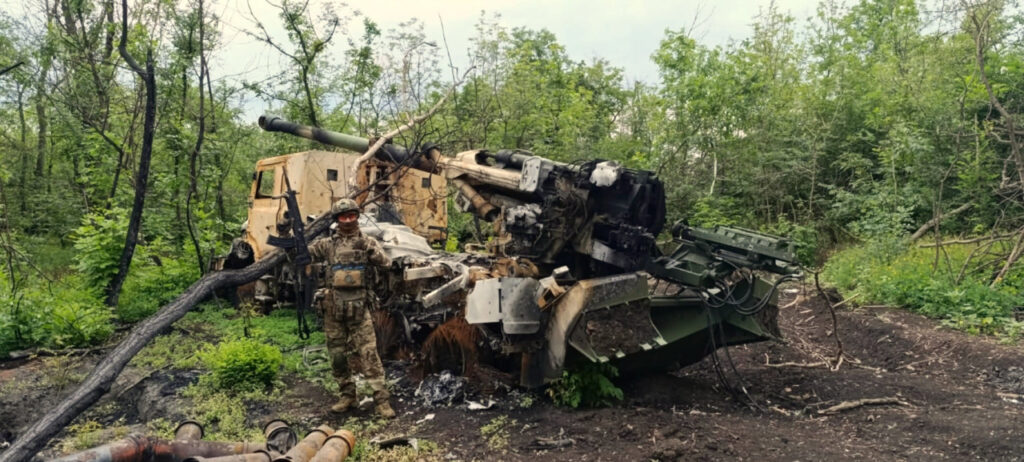
Cette belle photographie date du 10 juillet. Elle est ensuite partagée par Lostarmour, un site russe qui documente les véhicules atlantistes détruits ou capturés. Au cours de leur progression, les combattants russes ont atteint cette épave de canon automoteur français CAESAR.
Convoqués en grande pompe le 18 septembre 2026, des représentants de partis politiques se font présenter à l’Élysée un état de la menace, le leurre d’une prétendue guerre hybride russe en Europe. Comme nous le savons déjà, les agences occidentales dites de renseignement n’en font plus guère et sont plutôt payées pour servir la communication d’éphémères gouvernements d’incompétents.
Bien plus intéressant, les autorités avouent ce que nous avions déjà compris
Les Forces armées françaises ont mené des ripostes militaires conventionnelles non rendues publiques contre la Russie à la suite d’attaques hybrides [Le Monde]
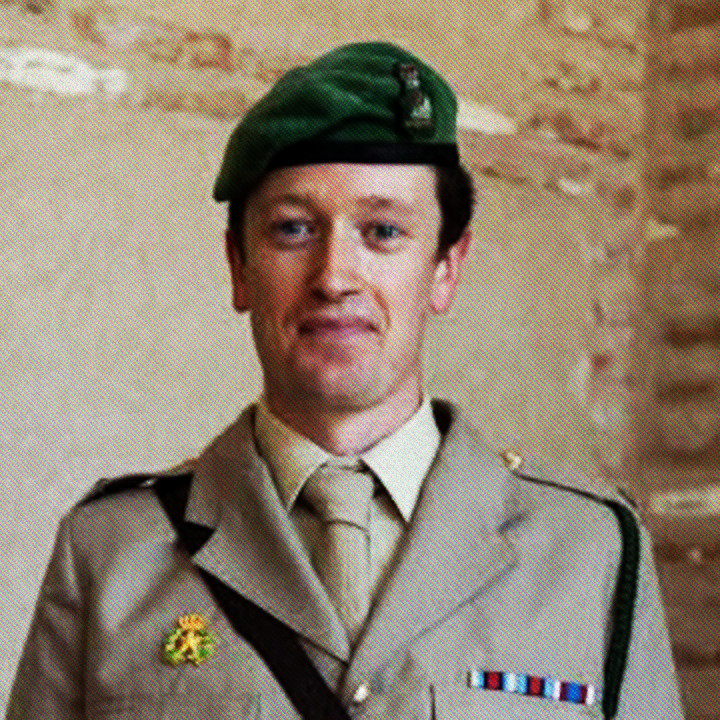
Le commandant Paul Wilks, du renseignement militaire britannique, est tué en Ukraine le 12 septembre 2026 (gouvernement britannique)
L’engagement direct des coqs gaulois dans des opérations offensives injustifiées contre la Russie rend sans doute leur défaite plus amère encore. Pour sa part, le Royaume Uni a commencé depuis décembre 2025 à rendre publiques des pertes.
chronique alphabétique et nécrologique de l’engagement français dans les rangs atlantistes en Ukraine, ce que les journalistes serviles ne vous raconteront pas
Articles connexes
Pruvate à truvà me, canaglia di l’OTAN, pruvate solu
chronique en Anglais, its roots before WW2, its collaboration with Nazi Germany, its legacy in modern Ukraine, how NATO has continually supported Nazism in Ukraine
chronique en Anglais, censorship, fake news, whitewashing of the Ukrainian Nazism and war crimes, for the sake of the proxy war that NATO is conducting in Donbass and Ukraine, against Russia
une saga française, entre Ukraine et Lyon, où apparaissent aussi des morceaux de SS de la division Charlemagne et plus récemment, Alice Kerviel, dite Cordier. L’affaire Deranque révèle comme la France est infectée par le pétainisme, en particulier parmi les soutiens d’Israël ou de l’Ukraine, deux théâtres d’opérations où l’Occident tente de ralentir son déclin
En 2025, une nouvelle unité de Français combattant pour l’Ukraine s’est structurée autour d’un noyau de néonazis, ayant pour objectif d’attirer des recrues. Parmi ces volontaires, d’anciens militaires. StreetPress les a identifiés
En Ukraine, les volontaires français pro-ukrainiens et pro-russes se partagent l’imaginaire de la Seconde Guerre mondiale. Les premiers se revendiquent des collabos de l’Allemagne nazie, les seconds de l’escadrille mythique « Normandie – Niémen »
deux jours après le 10e anniversaire de la débâcle politique et sécuritaire du 13 novembre 2015, une messe célèbre à Verdun l’ancien dirigeant fasciste de l’État français
ce 11 novembre 2025 est l’occasion de souligner comme la façon dont l’Europe sacrifie les conscrits ukrainiens mobilisés de force rappelle le spectaculaire carnage de la 1ère guerre mondiale
c’est par l’agence cosaque de presse PIKA, depuis la République populaire de Lougansk, que le 2 avril 2024, l’ataman Nikolaï Diakonov lance un message à destination de la France
ce papier est le premier des grands médias français qui s’attaque à la question des militants nazis français dans les rangs atlantistes en Ukraine, le nouveau danger qu’ils présenteront à terme pour la sûreté intérieure
où nous apprenons que le nazi français Allan Duchézeau, camarade de César Aujard dans les rangs atlantistes en Ukraine, était surnommé Dox, quand il secondait à Paris le leader nazi Marc de Cacqueray Valménier
en Anglais, les indices de la présence d’opérateurs occidentaux, en particulier Français, pris au piège en mars 2022 à Marioupol, dont les forces russes achevèrent la libération en mai
The West has become a lonely, narcissistic civilization
Our world is full of divides. Yet, the greatest divide is between the 12% of the world’s population who live in the West and the 88% who live outside. When the West looks at itself in the mirror, it sees itself as the most virtuous civilization on planet Earth, taking care of its own citizens and generously and selflessly making the world a better place. And when the rest of the world looks at the West, they see a trigger-happy, violent civilization which has killed more innocent people in unnecessary wars than any other civilization in recent decades. So where does the truth lie?
Sadly, the data doesn’t lie. Since the end of the Cold War, when the world was expected to receive a peace dividend, the West has involved itself in one misadventure after another. The results have been disastrous. The Brown University Watson School of International and Public Affairs’ Cost of War Project has estimated that at least 940,000 people were killed directly by violence in the post-9/11 wars between 2001 and 2023, and a further 3.6–3.8 million people died indirectly due to secondary causes such as diseases, malnutrition and so on. Many of these wars were initiated by the West.
Curiously, for a civilization that prides itself on intellectual honesty and deep introspection, there has been little reflection on how and why the West has gone so wrong with its constant interventions. Initially, the intervention in Afghanistan was legal and justified under international law, on the basis of UNSC Resolution 1386 (20 December 2001). Yet, after removing the Taliban government, which had harbored the Al-Qaeda terrorists, the West had no strategy for managing its exit from Afghanistan. Instead, it stayed on for 20 years in Afghanistan, only to go from rescuing the Afghan people from the Taliban government to returning the Afghan people to the Taliban government. And in those 20 years, apart from the soldiers who died in battle, over 100,000 Afghan civilians were killed or wounded. No one in the West has been held accountable for this incredible disaster.
Unlike the Afghan invasion, which was legal under international law, the invasion of Iraq in March 2003 was illegal. The former UN Secretary-General Kofi Annan bravely declared that it was illegal and was persecuted by the Bush Administration for stating the truth. Here, too, a huge number of innocent civilians lost their lives in an illegal war. Yet no one has been held accountable, although Western public opinion has reluctantly conceded that the war was illegal and unnecessary.
The Western reaction to the failed intervention in Libya has been even more callous. “We came. We saw. He died.” So said Hillary Clinton, the then US Secretary of State, proudly when Gaddafi was killed on October 20, 2011. Yet, while Gaddafi was alive, the majority of Libyans enjoyed a decent life, particularly from the 1990s onward, which was a period of relative political stability and economic growth. No war or conflict. Each Libyan household also received extensive welfare benefits from the state. GDP grew from US$ 31 billion in 1990 to $75 billion in 2010. Libya’s per capita GDP in 2010, at $11.6 thousand, was the highest in Africa. By 2020, 10 years after Gaddafi was removed, Libya’s GDP declined to $47 billion. Its GDP per capita declined to $6.7 thousand. Millions of ordinary Libyans were transported from a safe and secure existence to hell. The West never said sorry to them.
This callous indifference to the pain and suffering that the West has clearly wrought on so many innocent civilians undermines the Western self-belief that they are an inherently virtuous civilization. And the West is also unaware of how its claims to moral virtue have been further eroded by the manifest double standards it has applied when passing judgements on human rights violations.
For decades, the West had preached that torture was abominable and was outlawed by several human rights conventions. Indeed, the West had regarded the UN Convention against Torture, adopted on December 10, 1984, as a great leap forward. President Reagan stated, when transmitting the Convention to the US Senate for ratification in May 1988, that doing so would “clearly express United States opposition to torture, an abhorrent practice unfortunately still prevalent in the world today.” Yet, when the Bush Administration became the first modern developed country to reintroduce torture in Guantánamo, the erstwhile defenders of human rights in Europe didn’t just fail to condemn the Bush Administration. They aided and abetted this torture with several “rendition” programs, kidnapping people and sending them to countries where they face a high risk of torture or abuse.
The Western double standards on human rights were further exposed in the contrasting reactions of the West to the loss of innocent civilian lives in Ukraine and Gaza. Many Western leaders correctly expressed moral outrage when innocent Ukrainian civilians or children were killed in Ukraine. Ursula von der Leyen, President of the European Commission, after the Russian missile and drone attack on Kyiv in August 2025, said, “Another night of Russia’s relentless bombings struck civilian infrastructure and killed innocents.” Kaja Kallas, then EU High Representative for Foreign Affairs and Security Policy, stated that “Russia once again deliberately targeted and killed Ukrainian civilians”. President Joe Biden, after the July 2024 Russian missile strikes that killed civilians, including children at Kyiv’s Okhmatdyt children’s hospital, described the attacks as a “horrific reminder of Russia’s brutality” and said that Russia had “targeted Ukrainian civilians.” The UK Prime Minister Keir Starmer, responding to the same attack on the children’s hospital, described “attacking innocent children” as “the most depraved of actions.” Western leaders broadly described the killings as atrocities and war crimes. Yet, when many more innocent civilians, including children, were killed in the Gaza conflict, the same Western leaders remained largely silent on Gaza.
No single event has damaged the moral credibility of the West as much as Gaza has. As modern cell phones have become ubiquitous, we have seen with our own eyes how millions of innocent Palestinian civilians have suffered in Gaza. The 88% of the world’s population who live outside the West have also heard the loud silence of the West on Gaza. Pankaj Mishra, the Indian novelist and author of The World After Gaza, said in January 2025, “Gaza has really damaged American institutions, Western institutions, international institutions, to an extent no previous war, no previous conflict has.” The Booker Prize-winning Indian novelist, Arundhati Roy, has said more starkly, “What is under the rubble in Gaza is not just the bodies of Palestinians, but the carcass of Western liberal democracy.”
Yet, even if Western external interventions and policies have been disastrous, many leading Western thinkers and politicians console themselves with the thought that domestically they still have the best-performing societies. Josep Borrell, the then European Union High Representative for Foreign Affairs and Security Policy, said on 13 October 2022, “Europe is a garden. We have built a garden. Everything works. It is the best combination of political freedom, economic prosperity and social cohesion that humankind has been able to build … Most of the rest of the world is a jungle, and the jungle could invade the garden.”
There’s no question that people living in the modern, advanced Western societies still enjoy better standards of living than their counterparts in the Global South. The current citizens of the West are the beneficiaries of the wise and sound public policies made by their ancestors. But what are they leaving behind for their future generations? Will future generations in Europe and North America have equally good lives? Or will they see a steady decline?
Surveys show that most Western populations do not believe that their children and grandchildren will enjoy equally good lives. A January 2025 Pew Survey revealed that over 75% of respondents in Europe as well as in the US and Canada believed that their children would be financially worse off than their parents.
Indeed, even today, large segments of the population in the West have experienced a deterioration, not improvement, in their lives. The Brookings Institution reported in May 2026 that “In 2024, 45.5% of US households did not earn enough to make ends meet. In nearly every year since 2014, more than 40% of American households struggled to make ends meet.” The report added, “As it stands, the cost of living will never be affordable if wages do not substantially increase. Evidence shows that even though US productivity nearly doubled between 1979 and 2025, average hourly pay increased by only 34%. In other words, productivity gains have concentrated wealth among capital owners and the highest-earning Americans, hollowing out the middle class rather than driving broad-based wage growth.”
Angus Deaton and Anne Case have documented in Deaths of Despair that the US faces an epidemic of “deaths of despair”—that is, deaths from drug overdoses, suicides, and alcohol—among midlife non-Hispanic white Americans. They wrote: “Deaths of despair among white men and women aged forty-five to fifty-four rose from thirty per one hundred thousand in 1990 to ninety-two per one hundred thousand in 2017. In every US state, suicide mortality rates for whites aged forty-five to fifty-four increased between 1999–2000 and 2016–17. In all but two states, mortality rates from alcoholic liver disease rose. And in every state, drug overdose mortality rates increased.”
Most Western eyes do not see a connection between their failed external geopolitical ventures and the internal despair of their populations. Actually, the two are linked. Money and resources wasted on unnecessary external interventions could have been better spent on their populations. Speaking about the Iraq war, the Nobel laureate Joseph Stiglitz wrote, “For one-sixth of the cost of the war, the US could put its Social Security system on sound footing for more than a half-century, without cutting benefits or raising contributions.”
Even if some thoughtful people in the West may agree with the arguments so far, acknowledging that many Western interventions in the Global South were unnecessary and disastrous, they would not in any way agree that the Ukraine war also reflects Western geopolitical incompetence. There’s no question that the Russian invasion of Ukraine was illegal. Russia deserves to be condemned for the loss of thousands of innocent lives.
Yet, when the West imposed sanctions on Russia for invading Ukraine, it didn’t notice that 85% of the world’s population did not follow suit. Why not? Does this reflect a lack of moral integrity in the Global South? Or does it reflect a shrewd geopolitical assessment? When countries like Brazil, China, India, Indonesia, and South Africa did not impose sanctions on Russia, this did not mean that they supported the Russian invasion. It signaled their rejection of the Western claim that the war in Ukraine was “unprovoked” and only Russia was to blame for the Ukraine invasion.
It’s truly shocking how many Western leaders have used the word “unprovoked” to describe the Ukraine war. President Joe Biden, US President, said, on 24 February 2022, “The Russian military has begun a brutal assault on the people of Ukraine without provocation, without justification, without necessity.” Around the same time, Prime Minister Boris Johnson described Russia’s action as a “brutal and unprovoked attack on a free and sovereign European country.” Justin Trudeau, the Canadian Prime Minister, said, “Today, we woke up to a changed world. Russia has launched a brutal and unprovoked attack on the sovereignty of Ukraine.” The leaders of G7 collectively described Russia’s action as “this unprovoked and completely unjustified attack on the democratic state of Ukraine.”
Little do these leaders realize that when they use the word “unprovoked” to describe the war in Ukraine, they are effectively insulting the intelligence of the countries of the Global South, including thoughtful leaders like Brazilian President Luiz Inácio Lula da Silva. He captured a more nuanced view on the war in Ukraine when he said, in May 2022, “Putin shouldn’t have invaded Ukraine. But it’s not just Putin who is guilty. The United States and the EU are also guilty. What was the reason for the Ukraine invasion? NATO? Then the United States and Europe should have said: ‘Ukraine won’t join NATO.’ That would have solved the problem.”
This great gap in perceptions between the West and the rest on recent geopolitical developments is both surprising and paradoxical. In theory, our world is shrinking. We have more information available today, even from our cell phones, than at any other time in human history. Yet, when we witness the same recent events, the Western perceptions and those in the rest of the world seem to exist in two different universes. What is even more shocking is that most Western leaders and pundits seem completely unaware that they have lost the support and confidence of the majority of the world’s population. This is why the words of S. Jaishankar, the Indian foreign minister, resonated strongly in the Global South when he said, in June 2022, “Somewhere Europe has to grow out of the mindset that Europe’s problems are the world’s problems but the world’s problems are not Europe’s problems.” A year later, in February 2023, the then German Chancellor Olaf Scholz admitted that Jaishankar “has a point.” Referring to the countries of Latin America, Africa and Asia, Scholz further stated, “We have to generally address the interests and concerns of these countries as a basic prerequisite for joint action.”
Despite the growing differences between the United States and Europe, both share a common concern on China and will work in one way or another to isolate and stop China. However, when they do so, they will find that the rest of the world will ignore them and continue engaging with China. Hence, instead of isolating China, the West will be isolating itself from the world.
At the end of the day, the refusal of the West to acknowledge that they have lost the rest represents a massive act of self-deception. The West wants to continue believing that it is still the most virtuous civilization on planet Earth. The longer this self-deception persists, the more the West will be seen as a lonely, narcissistic civilization which is self-absorbed and unaware of how the majority of humanity views them. If this gap between the West and the rest is not addressed effectively and soon, the world will be headed into more troubled waters.
five major trends illustrate how the world is changing, and that the West must grapple with the reality that it can no longer impose its “leadership” on the world as it once did
La perversité de Trump se déploie au Moyen-Orient, le bellicisme de l’OTAN en Europe
Je viens d’écrire à la demande de mon éditeur slovène une nouvelle préface à La Défaite de l’Occident, qu’il m’apparaît nécessaire de publier sur Substack immédiatement. La menace d’une aggravation de tous les conflits se précise. On trouvera dans ce texte une interprétation schématique et provisoire, mais actualisée du développement de la crise que nous vivons. Ce texte est de fait la conclusion de mon dernier entretien avec Diane Lagrange sur Fréquence Populaire : « Victoire de la Russie, enfermement et fracturation de la France et de l’Occident ».
Préface à l’édition slovène
De la défaite à la dislocation
Moins de deux ans après la publication en français de La Défaite de l’Occident, en janvier 2024, les principales prédictions du livre sont vérifiées. La Russie a militairement et économiquement tenu le choc. L’industrie militaire américaine est épuisée. Les économies et les sociétés européennes sont au bord de l’implosion. Avant même que s’effondre l’armée ukrainienne, le stade suivant de la dislocation de l’Occident est atteint.
Je suis depuis toujours hostile à la politique russophobe des États-Unis et de l’Europe mais, en tant qu’occidental attaché à la démocratie libérale, Français formé à la recherche en Angleterre, enfant d’une mère réfugiée aux États-Unis pendant la deuxième guerre mondiale, je suis catastrophé par les conséquences pour nous, Occidentaux, de la guerre menée sans intelligence contre la Russie.
Nous ne sommes qu’au début de la catastrophe. Un point de bascule approche au-delà duquel se développeront les conséquences ultimes de la défaite.
Le « Reste du monde » (ou Sud global, ou Majorité globale), qui s’était contenté de soutenir la Russie en refusant de boycotter son économie, affiche désormais ouvertement son soutien à Vladimir Poutine. Les BRICS s’élargissent en acceptant de nouveaux adhérents, ils accroissent leur cohésion. Sommée par les États-Unis de choisir son camp, l’Inde a choisi l’indépendance : les photos de Poutine, Xi et Modi réunis à l’occasion de la réunion d’aout 2025 de l’Organisation de Coopération de Shanghai resteront comme le symbole de ce moment clef. Les médias occidentaux ne cessent pourtant de nous représenter Poutine comme un monstre et les Russes comme des serfs. Ces médias avaient déjà été incapables d’imaginer que le Reste du monde les voit comme un dirigeant et des êtres humains ordinaires, porteurs d’une culture russe spécifique et d’une volonté de souveraineté. J’ai peur désormais que nos médias n’aggravent notre aveuglement en étant incapables d’imaginer le regain de prestige de la Russie dans ce Reste du monde, exploité économiquement et traité avec arrogance par l’Occident durant des siècles. Les Russes ont osé. Ils ont défié l’Empire et ils ont gagné.
L’ironie de l’histoire, c’est que les Russes, peuple européen et blanc, de langue slave, sont devenus le bouclier militaire du Reste du monde parce que l’Occident a refusé de les intégrer après la chute du communisme. J’imagine les Slovènes particulièrement bien placés culturellement pour apprécier cette ironie même si ce que je sais bien, en tant qu’anthropologue de la famille et de la religion, que, malgré sa langue slave, la Slovénie est beaucoup plus proche socialement et idéologiquement de la Suisse que de la Russie.
Je peux ébaucher ici un modèle de la dislocation de l’Occident, malgré les incohérences de la politique de Donald Trump, président américain de la défaite. Ces incohérences ne résultent pas, je pense, d’une personnalité instable, et sans doute perverse, mais d’un dilemme insoluble pour les États-Unis. D’une part, leurs dirigeants, au Pentagone comme à la Maison blanche, savent que la guerre est perdue et que l’Ukraine devra être abandonnée. Le bon sens les conduit donc à vouloir sortir de la guerre. Mais d’autre part, le même bon sens leur fait pressentir que le retrait d’Ukraine aura pour l’Empire des conséquences dramatiques que n’avaient pas eu ceux du Vietnam, d’Irak ou d’Afghanistan. Il s’agit en effet de la première défaite stratégique américaine d’échelle planétaire, dans un contexte de désindustrialisation massive des États-Unis et de réindustrialisation difficile. La Chine est devenue l’atelier du monde ; sa très faible fécondité, certes, lui interdira de remplacer les Etats-Unis, mais il est déjà trop tard pour la concurrencer industriellement.
La dédollarisation de l’économie mondiale a commencé. Trump et ses conseillers n’arrivent pas à l’accepter car ce serait la fin de l’Empire. Un âge post-impérial pourtant devrait être le but du projet MAGA, Make America Great Again, qui cherche un retour de l’état-nation américain. Mais pour une Amérique dont la capacité productive en biens réels est aujourd’hui très faible (voir chapitre 9 sur la vraie nature de l’économie américaine), il est impossible de renoncer à vivre à crédit comme elle le fait en produisant des dollars. Un tel retrait impérial-monétaire impliquerait une chute brutale de son niveau de vie, y compris pour les électeurs populaires de Trump. Le premier budget de la deuxième présidence Trump, le « One Big Beautiful Bill Act », reste donc impérial malgré les protections tarifaires qui incarnent le projet ou rêve protectionniste. L’ OBBBA relance les dépenses militaires et le déficit. Qui dit déficit budgétaire aux États-Unis dit, inévitablement, production de dollars et déficit commercial. La dynamique impériale, l’inertie impériale plutôt, n’en finit pas de miner le rêve d’un retour à l’état-nation productif.
En Europe, la défaite militaire reste mal comprise des dirigeants. Ils n’ont pas dirigé les opérations. C’est le Pentagone qui avait mis au point les plans de la contre-offensive ukrainienne de l’été 2023 (durant laquelle j’avais écrit La Défaite de l’Occident). Les militaires américains, même s’ils ont fait mener la guerre par leur proxy ukrainien, savent qu’ils se sont brisés sur la défense russe – parce qu’ils ne pouvaient produire assez d’armes et parce que les militaires russes ont été plus intelligents qu’eux. Les dirigeants européens n’ont fourni que des systèmes d’armes et pas les plus importants. Inconscients de l’ampleur de la défaite militaire, ils savent en revanche que leurs propres économies ont été paralysées par la politique de sanctions, tout spécialement par la rupture de leur approvisionnement en énergie russe bon marché. Couper en deux économiquement le continent européen fut un acte de folie suicidaire. L’économie allemande stagne. Partout à l’ouest, la pauvreté et les inégalités augmentent. Le Royaume-Uni est au bord du gouffre. La France le suit de près. Sociétés et systèmes politiques sont bloquées.
Une dynamique économique et sociale négative préexistait à la guerre et mettait déjà l’Occident sous tension. Elle était visible, à des degrés divers, dans toute l’Europe de l’Ouest. Le libre-échange y mine la base industrielle. L’immigration y développe un syndrome identitaire, particulièrement dans les classes populaires privées d’emplois sûrs et correctement payés.
Plus en profondeur, la dynamique négative de fragmentation est culturelle : l’éducation supérieure de masse crée des sociétés stratifiées dans lesquelles les éduqués supérieurs – 20%, 30%, 40% de la population – se mettent à vivre entre eux, à se penser supérieurs, à mépriser les milieux populaires, à rejeter le travail manuel et l’industrie. L’éducation primaire pour tous (l’alphabétisation universelle) avait nourri la démocratie, créant une société homogène dont le subconscient était égalitaire. L’éducation supérieure a engendré des oligarchies, et parfois des ploutocraties, sociétés stratifiées envahies par un subconscient inégalitaire. Paradoxe ultime : le développement de l’éducation supérieure a fini par produire dans ces oligarchies ou ploutocraties une baisse du niveau intellectuel ! J’avais décrit cette séquence il y a plus d’un quart de siècle dans L’Illusion économique, publiée en 1997. L’industrie occidentale s’en est allée dans le Reste du monde et aussi, bien sûr, dans les anciennes démocraties populaires d’Europe de l’Est qui, libérées de leur sujétion à la Russie soviétique, ont désormais retrouvé leur statut pluriséculaire de périphérie dominée par l’Europe de l’Ouest. Je parle en détail au chapitre 3 de cette espèce de Chine intérieure où les ouvriers d’industrie restent nombreux. Partout cependant en Europe l’élitisme des éduqués supérieurs a engendré le « populisme ».
La guerre a fait monter d’un cran la tension européenne. Elle appauvrit le continent. Mais surtout, échec stratégique majeur, elle délégitime des dirigeants incapables de mener leurs pays à la victoire. Le développement de mouvements populaires conservateurs (habituellement désigné par les élites journalistiques par des termes comme « populistes » ou « d’extrême droite » ou « nationalistes ») s’accélère. Reform UK au Royaume-Uni. AfD en Allemagne, Rassemblement national en France… Ironie toujours : les sanctions économiques dont l’OTAN attendait un « regime change » en Russie sont sur le point d’apporter à l’Europe occidentale une cascade de « regime changes ». Les classes dirigeantes occidentales sont délégitimées par la défaite au moment même où la démocratie autoritaire russe est relégitimée par la victoire, ou plutôt, surlégitimée puisque le retour de la Russie à la stabilité sous Poutine lui assurait au départ une légitimité incontestée.
Tel est notre monde à l’approche de 2026.
La dislocation de l’Occident prend la forme d’une « fracturation hiérarchique »
Les États-Unis renoncent au contrôle de la Russie, et je le pense de plus en plus, de la Chine. Mis sous blocus chinois pour leurs importations de samarium, cette terre rare indispensable à l’aéronautique militaire, les États-Unis ne peuvent plus rêver d’affronter la Chine militairement. Le Reste du monde – Inde, Brésil, monde arabe, Afrique – en profite et leur échappe. Mais les États-Unis se retournent vigoureusement contre leurs « alliés » européens et est-asiatiques, dans un effort ultime de surexploitation, et aussi, il faut l’admettre, par pur et simple dépit. Pour échapper à leur humiliation, pour cacher au monde et à eux-mêmes leur faiblesse, ils punissent l’Europe. L’Empire se dévore lui-même. C’est le sens des tariffs et investissements forcés imposés par Trump aux Européens, devenus sujets coloniaux dans un empire rétréci plutôt que partenaires. Le temps des démocraties libérales solidaires est fini.
Le trumpisme est un « conservatisme populaire blanc ». Ce qui émerge en Occident n’est pas une solidarité des conservatismes populaires mais une rupture des solidarités internes. La rage qui résulte de la défaite conduit chaque pays, pour éponger son ressentiment, à se retourner contre plus faible que lui. Les États-Unis se retournent contre l’Europe ou le Japon. La France réactive son conflit avec l’Algérie, ancienne colonie. Nul doute que l’Allemagne, qui, de Scholz à Merz, a accepté d’obéir aux Etats-Unis, ne retourne son humiliation contre ses partenaires européens plus faibles. Mon propre pays, la France, me semble le plus menacé.
L’un des concepts fondamentaux de la défaite de l’Occident est le nihilisme. J’explique comment « l’état zéro » de la religion protestante – la sécularisation arrivée à son terme – n’explique pas seulement l’effondrement éducatif et industriel américain. L’état zéro ouvre aussi un vide métaphysique. Je ne suis pas personnellement croyant et je ne milite pour aucun retour du religieux (je ne le crois pas possible) mais je dois, en tant qu’historien, constater que la disparition des valeurs sociales d’origine religieuse mène à une crise morale, à une pulsion de destruction des choses et des hommes (la guerre) et ultimement à une tentative d’abolition de la réalité (le phénomène transgenre pour les démocrates américains et la négation du réchauffement climatique pour les républicains par exemple). La crise existe pour tous les pays complètement sécularisés mais elle est pire dans ceux dont la religion était le protestantisme ou le judaïsme, religions absolutistes dans leur recherche du transcendant, plutôt que le catholicisme, plus ouvert à la beauté du monde et de la vie terrestre. C’est bien en aux États-Unis et en Israël que l’on voit se développer des formes parodiques des religions traditionnelles, parodies d’essence selon moi nihiliste.
Cette dimension irrationnelle est au cœur de la défaite. Celle-ci n’est donc pas seulement une perte « technique » de puissance mais aussi un épuisement moral, une absence de but existentiel positif qui mène au nihilisme.
Ce nihilisme est derrière la volonté des dirigeants européens, particulièrement sur les bords protestants de la Baltique, d’élargir la guerre contre la Russie par des provocations incessantes. Ce nihilisme est aussi derrière la déstabilisation américaine du Proche-Orient, lieu par excellence d’expression de la rage qui résulte de la défaite américaine face à la Russie. Surtout, ne cédons pas à l’évidence trop facile d’une autonomie guerrière du régime Netanyahu en Israël dans le génocide de Gaza ou dans l’attaque contre l’Iran. Protestantisme-zéro et judaïsme-zéro mêlent certes tragiquement leurs effets nihilistes dans ces accès de violence. Mais partout au Moyen-Orient ce sont bien les États-Unis qui, en fournissant les armes et parfois en attaquant eux-mêmes, sont en dernière instance les décideurs du chaos. Ils poussent Israël à l’action comme ils ont poussé les Ukrainiens. La première présidence Trump avait établi l’ambassade des États-Unis à Jérusalem et c’est bien Trump qui le premier a imaginé Gaza transformé en station balnéaire. Je suis conscient qu’il faudrait un livre pour démontrer cette thèse, un livre qui démonterait une à une les interactions entre les acteurs. Mais, historien de métier, et faisant de la géopolitique depuis un-demi-siècle, je sens que, comme l’Europe otanienne, Israël a cessé d’être un état indépendant. Le problème de l’Occident est bien la mort programmée de l’état-nation.
L’Empire est vaste et il se décompose dans le bruit et la fureur. Cet Empire est déjà polycentrique, divisé sur ses buts, schizophrène. Mais aucune de ses parties n’est indépendante du tout. Trump est son « centre » actuel ; il est aussi sa meilleure expression idéologico-pratique en ce qu’il mêle une volonté rationnelle de repliement sur sa sphère de domination immédiate (l’Europe et Israël) à des impulsions nihilistes de préférence pour la guerre. Ces tendances – repliement et violence – s’expriment aussi à l’intérieur du cœur américain de l’Empire où le principe de fracturation hiérarchique fonctionne en interne. Des auteurs anglo-américains de plus en plus nombreux évoquent la venue d’une guerre civile.
La ploutocratie américaine est pluraliste. Il y a celle des financiers, celle des pétroliers, celle de la Silicon Valley. Les ploutocrates trumpistes, pétroliers texans ou ralliés récent de la Silicon Valley, méprisent les élites éduquées démocrates de la côte Est, qui méprisent elles-mêmes les petits-blancs trumpistes du heartland, qui méprisent eux-mêmes les Noirs démocrates, etc…
L’une des particularités intéressantes de l’Amérique actuelle est que ses dirigeants ont de plus en plus de mal à distinguer l’interne de l’externe, malgré la tentative MAGA d’arrêter par un mur l’immigration venue du sud. L’armée tire sur des bateaux qui sortent du Vénézuéla, elle bombarde l’Iran, elle entre dans le centre des villes démocrates des États-Unis, elle commandite l’aviation israélienne pour une attaque sur le Qatar où se trouve une immense base américaine. Tout lecteur de science-fiction reconnaîtra dans cette énumération inquiétante l’amorce d’une entrée en dystopie, c’est-à-dire dans un monde négatif où se mêlent puissance, fragmentation, hiérarchie, violence, pauvreté et perversité.
Restons donc nous-mêmes, hors de l’Amérique. Gardons notre perception de l’intérieur et de l’extérieur, notre sens de la mesure, notre contact avec la réalité, notre conception de ce qui est juste et beau. Ne nous laissons pas non plus entraîner dans une fuite en avant guerrière par nos propres dirigeants européens, ces privilégiés égarés dans l’histoire, désespérés d’avoir été vaincus, terrorisés à l’idée d’être un jour jugés par leurs peuples. Et surtout, surtout, continuons de réfléchir au sens des choses.
voici la synthèse de Grok, l’outil US d’intelligence artificielle de X
A blog preface to the Slovenian edition of Emmanuel Todd’s 2024 book La Défaite de l’Occident, updating his analysis of Western geopolitical failures, including Russia’s resilience in Ukraine and Global South alignment against U.S. dominance.
Todd critiques Trump’s Middle East policies as extensions of U.S. imperial nihilism, linking them to actions like arming Israel for Gaza operations, while highlighting NATO’s bellicose Ukraine strategy as a catalyst for European economic stagnation and rising populist movements.
Amid de-dollarization and China’s industrial ascent, Todd warns of deepening Western internal fractures, such as U.S. tariffs on allies and moral exhaustion from Protestant secularization, potentially eroding liberal democracies without viable paths to recovery.
Scott Ritter is a former intelligence officer (1984-1996) within the US Marines corps, became famous as weapons inspector (1991-1998) within the United Nations special commission about weapons of mass destruction (WMD) in Iraq. With professionalism and foresight, he warned that the US and British governments were using the myth of Iraqi WMD as a pretext for invasion in 2003. He was right
chronique alphabétique et nécrologique de l’engagement français dans les rangs atlantistes en Ukraine, ce que les journalistes serviles ne vous raconteront pas
chronique en Anglais, its roots before WW2, its collaboration with Nazi Germany, its legacy in modern Ukraine, how NATO has continually supported Nazism in Ukraine
Dans les années 1990, l’Allemagne réunifiée a consciencieusement détruit la Yougoslavie pour faire payer aux Serbes les défaites de 1918 et 1945.
Cela ne suffisait pas. En 2022 s’est produite l’occasion inespérée. On allait enfin faire payer aux Russes l’abominable défaite de 1945 !
Et que je t’envoie des panzers en Ukraine. Et que je rêve de Taurus s’écrasant sur le Kremlin !
La perspective de défiler sur la place Rouge derrière l’armée américaine…
Las ! La Russie est une puissance nucléaire, redevenue la première armée du monde. Elle mène une guerre lente, de très moyenne intensité, qui sert surtout à vider les stocks militaires des pays désindustrialisés de l’OTAN.
L’Allemagne est tombée dans le piège. Elle a cru pouvoir renoncer au gaz russe bon marché pour quelques mois. Dès la défaite militaire de la Russie on se servirait à des conditions plus favorables… Cela fait 3 ans que ça dure. Et l’industrie allemande se casse la figure.
Il y a bien l’idée d’une reconversion dans le secteur de la défense. On va même installer des sites de production en Ukraine, que les Russes aiment bien cibler.
Depuis le début, les Russes sont perplexes. Moscou a été d’une générosité certaine après 1945. Malgré les 27 millions de morts causés par l’État le plus civilisé d’Europe, les représailles sont restées limitées. Malgré la Guerre froide et le maintien en activité, par les Américains, d’une partie des élites fascistes européennes sous prétexte de combattre le communisme, Moscou a signé les traités de l’Ostpolitik.
En 1990, Moscou a accepté la réunification. Un peu naïf, Gorbatchev a même accepté que l’Allemagne réunifiée soit dans l’OTAN qui ne servait plus à rien… sauf à empêcher la réunification de cette Europe européenne que De Gaulle avait appelée de ses voeux.
Dans les années 1990, les mauvaises habitudes allemandes ont vite été retrouvées. Destruction de la Yougoslavie, division du travail en Europe centrale, occidentalisation forcenée de l’Ukraine pour que les chaînes d’approvisionnement de l’industrie allemande disposent d’une main d’œuvre éduquée corvéable à merci…
Le Generalplan Ost sans les dérapages adolfiens. Un fascisme à visage humain ?
Je suis les affaires allemandes depuis 35 ans et je peux vous dire que l’Allemagne est autant responsable de la tragédie ukrainienne que les Etats-Unis.
Et puis, qu’il soit doux ou dur, le fascisme, ça finit toujours mal : Berlin est, avec Washington, la première responsable des pertes militaires ukrainiennes abyssales…
Au total, Ursula peut bien s’envelopper de tous les drapeaux ukrainiens qu’elle veut, Merz peut développer tous les discours martiaux possibles, l’Allemagne va buter sur la dure réalité.
Les Russes avaient tourné la page de la Première Guerre mondiale malgré l’envoi irresponsable de Lénine en Russie par l’Allemagne wilhelmienne. Ils avaient tendu la main malgré les crimes de la Wehrmacht, en particulier le siège de Leningrad. Mais le comportement d’Angela Merkel, Olaf Scholz, Friedrich Merz, Ursula von der Leyen, lui, ne sera pas oublié [fin]
chronique en Anglais, its roots before WW2, its collaboration with Nazi Germany, its legacy in modern Ukraine, how NATO has continually supported Nazism in Ukraine
the Germans have bowed down to the US sabotage by Joe Biden administration of Nord Stream pipelines, only to end up with Donald Trump’s America First doctrine in economy and defense
Comment comprendre la marginalisation actuelle de la France sur la scène internationale, ainsi que son hystérie belliciste sous l’égide de Macron ? Pourquoi avons-nous à ce point renoncé à défendre nos intérêts industriels nationaux, contrairement aux États-Unis et à l’Allemagne ? Comment l’oligarchie techno-financière française a-t-elle pu en arriver à trahir aussi complètement le peuple avec l’appui de la petite-bourgeoisie de gauche hexagonale, armée d’une fausse conscience pro-européenne ? Marc de Sovakhine, haut-fonctionnaire écrivant sous pseudonyme pour QG, émet une série d’hypothèses fascinantes. À lire ce week-end
Du rêve impérial à l’ordre néolibéral
Nous n’avons pas suffisamment pris la mesure du rôle central que les élites françaises ont joué depuis près d’un demi-siècle dans la construction de l’ordre néolibéral tant à l’échelle européenne que mondiale. Si cet ordre a été pensé et initié par des penseurs et acteurs austro-allemands et anglo-américains, ce sont, dans une large mesure, des technocrates français qui ont mis leur savoir-faire d’organisateurs au service de sa construction juridico-institutionnelle au sein des organisations supranationales créées à cet effet. Ils ont également été parmi les premiers à se porter volontaires pour occuper les places dans les conseils d’administration et les comités exécutifs des nouveaux acteurs globalisés de la finance, grandes banques et fonds internationaux.
L’ordre néolibéral actuel se donne à voir comme le reflet troublé des anciens empires européens : les Britanniques ont transmis le flambeau de l’hégémonie mondiale (économique et militaire) à leurs cousins américains, les Austro-Allemands à l’Union européenne leur rêve impérial conçu à l’échelle du continent sur le modèle des empires centraux et les Français à leurs élites frustrées par l’échec de leur vocation impériale l’espace déterritorialisé des institutions du marché globalisé ; comme si l’universalisme abstrait de la fille aînée de l’Eglise, revisité par l’idéal hugolien de la « République universelle » (« O France, adieu! tu es trop grande pour n’être qu’une patrie »), s’était finalement dissous dans les abstractions de la marchandise et du capital. Si les deux premières utopies impériales s’attachent encore à des territoires (le monde et le continent européen), la troisième se projette dans un espace de règles de droit et d’institutions supranationales qui viennent mailler les flux mondiaux de marchandises et de capitaux. La France comme fille aînée du Marché globalisé aura sans doute été la plus sensible aux visions eschatologiques de Francis Fukuyama.
A partir de la fin de années 1970, le FMI a été dirigé par des haut fonctionnaires français de façon ininterrompue de 1978 à 2000, puis de 2007 à 2019. Les Américains qui, de leur côté, s’étaient attribué la direction de la Banque mondiale, poussèrent dans ce sens, trop contents de pouvoir bénéficier de leur expertise bureaucratique reconnue et d’arrimer à leur agenda des élites françaises dont les ambitions se sont mises à devenir trop grandes pour se contenter de leur patrie. De 1985 à 1995, dans ces années décisives pour ladite « construction européenne », entre l’entrée en vigueur de l’Acte unique et la création de la monnaie unique, le démocrate-chrétien Jacques Delors présidera la Commission européenne. C’est sous sa conduite et sur la base d’un pacte franco-allemand que la future Union européenne prendra sa forme actuelle d’un Empire du droit marchand et capitaliste qui place ses États membres sous souveraineté limitée dans un espace marchand unique où s’organise, une fois levés tous les obstacles au commerce et à l’investissement et sous le régime du droit de la concurrence, la division internationale du travail à l’échelle du continent. Certes, si Mitterrand, qui portait sur le monde un regard de politique, a accepté de renouveler le compromis avec l’Allemagne, vingt ans après le Traité de l’Elysée, c’est surtout parce qu’il ne se doutait pas que l’URSS s’écroulerait aussi vite, offrant à son voisin d’outre-Rhin la possibilité de reconstituer sa zone d’expansion économique en Europe centrale. En 1991, il est déjà trop tard mais il espère pouvoir encore enfermer l’Allemagne réunifiée dans un vaste espace politique eurasiatique borné à l’est par la Russie, l’autre puissance nucléaire. De leur côté, les technocrates dont il s’est entouré nourrissent en parallèle d’autres projets
Dominique Strauss-Kahn fut président du Fond monétaire international de 2007 à 2011, avant d’être remplacé par une autre personnalité française, Christine Lagarde, présidente de l’institution de 2011 à 2019. Cette dernière est aujourd’hui présidente de la Banque centrale européenne(BCE)
À la même époque, le cœur de l’Etat français se met au service de la constitution de grands groupes bancaires dans la perspective de faire de Paris la plus grande place financière du continent. De la décision prise par Mitterrand de maintenir la France dans le système monétaire européen en 1983 jusqu’au grand mouvement de concentration, sous le gouvernement Jospin, du secteur bancaire à la fin des années 1990, la fraction la plus modernisatrice de la haute fonction publique va prêter main forte à la constitution de grandes banques universelles, privatisées quelques années plus tôt et adossées à un marché de capitaux profond, profitant de la force de la monnaie allemande, poumon industriel du continent. Delors à Bruxelles, le ministre Bérégovoy engage la modernisation et le décloisonnement des marchés de capitaux en France au mitan des années 1980. Il réformera, dans le même mouvement, les instruments de dette publique pour les adapter aux demandes de liquidité des marchés modernisés. Quinze ans plus tard, comme pour clore le cycle, Dominique Strauss-Kahn supervise depuis Bercy, à la veille de l’entrée en vigueur de la monnaie unique, l’achèvement des grandes opérations de concentration bancaires. Les contours de la répartition des rôles entre la France et l’Allemagne se dessinent nettement au début du siècle. Le modèle mercantiliste allemand soutient une monnaie forte qui autorise l’Etat français à s’endetter à moindre coût – pour maintenir la paix sociale face aux conséquences de la désindustrialisation et ménager les passions rentières de la vieille bourgeoisie française – et aux banques hexagonales de consolider leurs ambitions internationales, entraînant dans leur sillage l’industrie nationale.
Depuis 2017, Bercy et la place financière de Paris sont plus que jamais résolus à poursuivre le cap que la France s’est fixé il y a quarante ans. « Paris est en première ligne, comme le titrait récemment Les Echos, pour faire avancer l’Union des marchés de capitaux », dans la foulée du rapport rendu par l’ancien gouverneur de la Banque de France Christian Noyer et de celui de Mario Draghi, accueilli dans un concert de louanges. L’idée est de décloisonner les marchés de capitaux européens par la standardisation des produits financiers et l’assouplissement des règles de « titrisation » des créances bancaires en titres négociables sur les marchés. En somme, accélérer la prise de pouvoir du capital financier qui a déjà mis plusieurs cordes au cou des Etats toujours plus endettés, au motif de « financer l’avenir ». Du reste, en favorisant la montée en puissance des produits d’épargne retraite par capitalisation à travers le P.E.R, petite sœur du produit paneuropéen d’épargne retraite (PEPP), la récente réforme des retraites en France constitue l’une des étapes-clés de ce processus : « désocialiser » le financement des retraites et pousser les assurés sociaux, à l’unisson des épargnants, à placer leur épargne désocialisée auprès de fonds à long terme peu liquides et au capital non garanti, sur le modèle de fonds de pension néerlandais, pourtant enclins à des crises répétées depuis vingt ans. Pas de quoi effrayer les artisans de l’omnipotence du capital financier, pour qui la crise agit comme un pharmakon de choc, poison pour les sociétés et remède pour justifier l’extension de son pouvoir.
L’unification des forces de la bourgeoisie française sous la forme d’une oligarchie techno-financière
À la faveur de cet accord plus ou moins tacite entre la France et l’Allemagne, toutes les composantes de la bourgeoisie française, qui autrefois pouvaient encore s’opposer entre elles, ont entrepris nolens volens leur unification pour se placer sous le commandement du capital financier. L’ancienne « noblesse d’État » a amorcé sa fusion avec la grande bourgeoisie financière internationalisée, formant avec elle une oligarchie techno-financière dénationalisée à laquelle se sont assujetties la bourgeoisie industrielle et à la petite bourgeoisie, comme toujours à la remorque. On a fait sortir Fouquet de prison pour l’installer à Versailles où chaque année est organisée la grand-messe de l’attractivité, « Choose France ». Emmanuel Macron, candidat de la grande banque et de la haute fonction publique logée à Bercy, est à la fois le produit et l’artisan terminal de cette mutation
« Choose France », la grand-messe de l’attractivité lancée en 2018 par Macron, peu après son accession à la présidence de la République, vise à séduire les multinationales et à les inciter à investir en France
Là où les banques allemandes continuent encore de financer un tissu industriel composé d’entreprises dont le capital demeure très contrôlé et les chaînes de valeur resserrées en Europe centrale, leurs homologues françaises, arrimées à un horizon sans territoire et façonnées pour affronter les marchés mondiaux, se sont détournées du tissu productif national, accompagnant l’internationalisation des grandes entreprises françaises dont la détention capitalistique et les chaînes de valeur offrent un degré d’ouverture et d’extraversion parmi les plus élevés des économies occidentales. Ce fut l’appel du large pour les grandes banques universelles et les anciens fleurons industriels, pressés, avec le concours de l’Etat, de s’ébrouer dans les eaux tumultueuses des marchés internationaux encadrés par un ordre supranational assis sur les droits imprescriptibles de la marchandise et du capital. Un appel doublé de celui à prendre des places pour ces nouveaux mercenaires attachés, en guise de politique industrielle, à louer les vertus de « l’attractivité » d’un pays qu’ils prostituent pour pouvoir eux-mêmes se prostituer comme individus dont les trajectoires sociales ont changé d’échelle.
Se plaçant sous la protection de la monnaie unique – un Deutschemark européen – et s’en remettant aux mânes du marché globalisé, l’oligarchie techno-financière ne voyait plus aucune raison de conserver en France une base industrielle sans laquelle l’exercice effectif de la souveraineté devient pourtant illusoire. Nostalgique de son rêve impérial, elle lit dans le destin des Etats-Unis celui dont l’Histoire l’a privée dans un pays qui n’a plus les moyens de la hisser sur le pavois du monde ; pour lui redonner vie, il lui fallait encore l’associer à celui que l’Allemagne se surprend, elle aussi, à mûrir dans les territoires libérés par la fonte du glacis soviétique. L’Union européenne deviendra le cadre économique et juridique où peut s’incarner un destin impérial enchâssé dans celui de l’hégémon américain. Comme l’a bien montré Quinn Slobodian dans son livre Les globalistes – Une histoire intellectuelle du néolibéralisme, la pensée néolibérale nait dès les années 1920 dans les décombres de l’Empire des Habsbourg qui constituait, aux yeux de Friedrich Hayek et de Wilhelm Röpke, un modèle d’organisation efficace pour repenser un espace articulé autour de la primauté juridique du dominium marchand sur l’imperium d’Etats interdépendants, déclinaison de la distinction ancienne entre l’auctoritas de l’empereur et la potestas des rois. Leurs successeurs, réunis au lendemain de la Seconde guerre mondiale au sein de l’école ordo-libérale, s’attacheront à ériger, dans une filiation avec la tradition juridique allemande du Rechtsstaat, les libertés économiques et le droit de propriété au rang de droits de l’homme garantis par des institutions s’imposant aux Etats souverains. Il s’agit, en dernier ressort, de tenir les peuples à l’écart au sein d’un ordre pensé comme un ajustement souple aux mouvements du marché globalisé et du capital.
Au terme de ce vaste mouvement de recomposition de la division internationale du travail ordonné par des institutions supranationales, l’oligarchie techno-financière française s’est libérée de sa chrysalide nationale pour rejoindre les grandes citadelles – Bruxelles, Londres, Francfort, Washington – de son nouvel empire sans territoire. On ne fait carrière aujourd’hui au Ministère de l’Economie et des finances qu’en acceptant de passer par l’une d’entre elles. En liant le destin de la France aux lois de cet ordre néolibéral stratifié, elle l’a, du même coup, délibérément amputée d’une partie de sa souveraineté et privée de ses marges de manœuvre. C’est ainsi qu’il faut comprendre actuellement l’isolement et la marginalisation de la France sur la scène internationale.
Au sein des élites dirigeantes, une partie importante, souvent des gens de qualité animés du sens de l’intérêt général, s’est vu confier la fastidieuse gestion de la province française de l’Empire anglo-américain secondé par son délégataire allemand. On en trouve encore dans le corps préfectoral, mais aussi dans tous les échelons décentralisés et démembrés de l’État, collectivités locales et autres établissements publics placés sous contrainte budgétaire, où leurs soutiers tentent chaque jour de colmater la carène d’un navire navigant au gré des courants impétueux de la mondialisation et des possibilités de débarquement des troupes de choc de l’oligarchie qu’il convoie. Réduite à une opposition stérile et placée sous perfusion de dette publique dans les fiefs subventionnés où elle cultive une opposition stérile, la petite bourgeoisie dont le cœur penche à gauche permet, quant à elle, à l’oligarchie techno-financière hors-sol, avec qui elle communie dans les dogmes de la construction européenne et de la « société ouverte », de s’accrocher au pouvoir. Jamais, dans l’histoire de la République, n’avait-on vu une classe dirigeante aussi minoritaire dans la société. Sans le renfort de la petite bourgeoisie armée d’une fausse conscience qui vient se nicher dans un barragisme aussi inconséquent qu’indispensable à sa perpétuation en tant que classe d’appoint, l’oligarchie ne pourrait pas continuer à diriger le pays.
Une nouvelle donne ?
Le « moteur franco-allemand » avait déjà commencé à s’enrayer ; depuis le déclenchement de la guerre en Ukraine, il menace d’exploser. Sommes-nous préparés à ce que nous imaginions encore impensable il y a quelques années ?
Le Premier ministre britannique Keir Starmer avec Olaf Scholz, alors chancelier allemand, Volodymyr Zelensky, président de l’Ukraine, et Emmanuel Macron à l’occasion du sommet de la Communauté politique européenne (CPE) en 2024
L’un des enjeux de l’après-guerre est de savoir qui, de l’Allemagne ou de la France, s’imposera – en retenant l’hypothèse d’une perspective de sortie prochaine du conflit – comme le principal interlocuteur de la Russie et chef de file européen pour rebâtir une sécurité collective en Europe. Privée de gaz russe, l’Allemagne a renforcé sa dépendance aux États-Unis et assiste à l’agonie de son modèle économique, mais refuse de se laisser mourir et pousse à la signature rapide de traités de libre-échange afin de se ménager de nouveaux débouchés et subventionner son industrie par la baisse attendue du prix des produits agricoles en Europe. Sa ligne est constante depuis les négociations du Traité de Rome en 1957 au cours desquelles elle avait tenté de s’opposer aux accords préférentiels avec le continent africain en voie de décolonisation, avant de voir son objectif satisfait à la faveur du « Consensus de Washington » dans les années 1990. Après avoir annoncé un plan d’investissement de cent milliards d’euros en vue de son réarmement, elle entend faire de son industrie de défense la base matérielle de « l’Europe de la défense », alors que tous les projets d’armement franco-allemands sont au point mort. La ministre des affaires étrangères Annalena Baerbock a déclaré le 13 novembre au Bundestag vouloir une « Europe unie » avec une Allemagne « prête à diriger ».
La France, de son côté, a abandonné depuis longtemps toute réflexion géostratégique. Son oligarchie n’a aucun intérêt à renoncer à l’utopie fukuyamesque d’une harmonie par le marché conduite par les États-Unis et garantie en Europe par une discipline juridico-marchande d’inspiration germanique, consentie en contrepartie d’une monnaie unique à l’ombre de laquelle elle s’est constituée comme classe unifiée. Les efforts de la diplomatie française sont désormais presque exclusivement orientés vers la signature de contrats d’armement pour offrir des débouchés à son industrie militaire et maintenir une autonomie stratégique qui s’avère illusoire en l’absence de stratégie et d’un plan de paix. Depuis que son mini-complexe militaro-industriel a entrepris de mettre ses armements aux normes de l’OTAN, elle espère, face à l’Allemagne, trouver de nouveaux clients parmi les autres Etats européens qui se fournissent presque exclusivement auprès des Etats-Unis, aggravant les risques d’une escalade guerrière.
Si la France adoptait une conduite rationnelle et conforme à ses intérêts, à l’instar des Etats-Unis ou de l’Allemagne, elle profiterait de ce retour du politique dans les affaires du monde pour repenser l’équilibre du continent, dans le cadre d’une relation raisonnée avec la Russie, et desserrer l’étau germano-américain. Ceci exigerait de s’affranchir du carcan des traités européens et de recouvrer les instruments de la souveraineté ; de ne plus tourner le dos à une Histoire que l’oligarchie techno-financière, enchaînée à ses abstractions impériales, a prétendu vouloir « dépasser ». Rien n’est moins sûr de la part de cette classe attachée à ses privilèges et à la préservation desquels elle a sacrifié des pans entiers de notre économie.
Il est des débâcles moins spectaculaires que celle de 1940 mais de celle-ci, insidieuse et lancinante, il sera difficile de s’en remettre sans un sursaut du peuple français qui, comme souvent dans son histoire, ne peut compter que sur lui-même pour ne pas disparaitre et échapper à l’impasse du rêve impérial à laquelle le condamnent ses élites [fin]
chronique alphabétique et nécrologique de l’engagement français dans les rangs atlantistes en Ukraine, ce que les journalistes serviles ne vous raconteront pas
[…] en premier lieu, de nombreux éléments conduisent à penser que les Européens poursuivent la politique des néoconservateurs de l’ex-équipe Biden […]
La Realpolitik, caractérisée par la prise en compte réaliste des rapports de force, est de retour à Washington. On le constate avec la démarche de Donald Trump qui a repris contact avec Vladimir Poutine. Il a compris que la stratégie d’affaiblissement de la Russie conçue par les néoconservateurs de l’équipe Biden était un échec et que la guerre ne menait à rien. Trump a intérêt à y mettre un terme pour passer à autre chose. Il veut un deal avec Poutine, car il ne souhaite pas que les hydrocarbures et les terres rares russes partent en Chine. Il se serait même dit prêt à participer au développement de la Crimée et du Donbass.
Mais cette évolution n’est pas du goût de Zelenski 1 et de son entourage parce que cela remet en cause leur mainmise sur l’Ukraine. Ils bénéficient étonnamment du soutien des Européens, dont on comprend mal ce qu’ils ont à gagner à la poursuite de la guerre. Leur obstination est d’autant plus funeste que les trois années écoulées ont montré que ce conflit était dévastateur pour l’économie européenne et que ses États membres étaient incapables d’assurer eux-mêmes leur sécurité comme de soutenir efficacement Kiev en matière militaire. En réalité, leur attitude s’inscrit dans le cadre d’une stratégie précise, conduite à l’insu des peuples européens.
Une obstination difficilement compréhensible
Plusieurs raisons peuvent expliquer l’étonnante attitude de va-t’en guerre des dirigeants européens et de leur slogan stupide de « Paix par la force ».
– En premier lieu, de nombreux éléments conduisent à penser que les Européens poursuivent la politique des néoconservateurs de l’ex-équipe Biden – à l’origine de ce conflit –, à leur instigation. En effet, les Démocrates, battus à plate couture lors des dernières présidentielles américaines sont en pleine déconfiture aux États-Unis. Le parti est à la dérive, se fissure et les chances de redressement à court terme sont minces. Trump, ayant tiré les leçons de la manière dont son premier mandat avait été saboté par les actions de l’État profond américain piloté par les familles Clinton et Obama, a, dès sa prise de fonctions, lancé toute une série d’actions (dissolution de l’USAID, reprise en mains de l’appareil d’État et de l’administration, recadrage des juges des juges, etc.) qui ne leur permettent pas de perturber efficacement son début de mandat – au moins pas avant les élections de mid term – comme ils l’avaient fait entre 2016 et 2020. Les Démocrates sont donc totalement impuissants. En revanche, divers éléments laissent entrevoir qu’ils s’emploient à saborder sa politique internationale en s’appuyant sur le Royaume-Uni et les États de l’Union européenne.
En effet, depuis 2003, les dirigeants européens ont fait acte de soumission aux États-Unis et à leur bellicisme. Ils ont d’abord appuyé l’invasion illégale de l’Irak. Puis ils ont accepté de reconnaitre le régime ukrainien issu du coup d’État de Maïdan (2014) et ont fermé les yeux sur la répression violente déclenchée par Kiev au Donbass. Ensuite, ils se sont laissés entraîner, à leurs frais et à leur détriment, dans une guerre voulue par Washington, adoptant parfois des positions plus radicales encore contre Moscou qui n’avait pourtant manifesté contre eux aucune hostilité.
Tous les dirigeants européens actuels entretiennent les meilleures relations du monde avec l’équipe démocrate et tous – à l’exception de Viktor Orban, Robert Fico et Georgia Meloni – ont, plus ou moins directement et explicitement, pris parti contre la réélection de Trump. Depuis son entrée à la Maison-Blanche, ils ne cessent de critiquer la nouvelle politique américaine. Ils semblent ainsi poursuivre, en vassaux fidèles, la politique des Démocrates, que ceux-ci continuent de piloter dans l’ombre depuis Washington, partant du principe – hautement hasardeux – que l’élection de Trump n’est qu’une malheureuse parenthèse qui prendra fin au plus tard en 2029. Il convient donc de contrer sa politique en attendant leur retour aux affaires… Cela explique la défiance et le mépris de la nouvelle administration américaine à l’égard de ces « leaders » européens qu’elle juge hostiles, raison pour laquelle elle ne tient aucunement compte de leur avis et de leurs agitations improductives.
– La seconde explication est que le contexte de crise (militaire et économique) que traverse actuellement le Vieux continent favorise l’ensemble de ces leaders vis-à-vis de leur électorat, car la plupart d’entre eux – en particulier Emmanuel Macron – se trouvent dans une situation politique difficile. Ils jouent donc sur la peur d’une menace russe imminente – totalement inventée dans ce but – pour maintenir les populations dans l’angoisse, faire taire les critiques contre leur politique internationale inconsidérée et retarder l’échéance de leur défaite. En effet, les dirigeants européens doivent dissimuler le fait que leur décision de rompre avec la Russie a créé l’inflation, les difficultés économiques et accéléré la désindustrialisation et la dépendance vis-à-vis des États-Unis (GNL, armes, etc.) 2.
– Enfin, troisième hypothèse à ne pas écarter, c’est le refus de prise en compte du réel des élites européennes, par cécité ou incompétence géopolitique, et la certitude que leur action est juste, fondée et légitime, illustration de leur déconnexion complète des réalités de terrain et de l’évolution des rapports de force internationaux.
Faire l’Europe par la crise, l’emprunt et la guerre
Mais en réalité, il existe une autre explication qui commence seulement à être perçue et qui éclaire d’un jour nouveau l’intransigeance des dirigeants européens : ils exploitent au maximum cette crise pour faire avancer l’Europe dans une voie fédérale, sans demander l’avis des peuples. Leur but ? Faire l’Europe par la crise, l’emprunt et la guerre.
Cette stratégie machiavélique, véritable manipulation antidémocratique pour imposer une Europe supranationale dont personne ne veut, a été mise en place à partir de la seconde moitié des années 2010, exploitant divers événements internationaux : la crise des Subprimes d’abord ; le COVID ensuite ; enfin, la guerre d’Ukraine et la menace russe. Il est important de détailler les étapes de cette dérive organisée.
Rappelons au préalable qu’il convient de faire une nette différence entre les pays de l’UE membres de la zone euro (20 sur 27 3) et ceux qui n’en sont pas. Si tous dépendent de la Commission, seuls les premiers dépendent en plus de la Banque centrale européenne (BCE). Ils sont donc sous double dépendance de la Commission et de la BCE. Il convient également de rappeler que la BCE n’a pas le droit de proposer des emprunts. Cela est interdit par les traités. Pourtant, il y a eu deux entorses à cette règle :
– lors de la crise des Subprimes (2008-2009), Mario Draghi a mis en place le Quantitative Easing, c’est-à-dire une émission monétaire de la BCE avec possibilité de racheter des dettes des pays de la zone euro (et non de l’UE) sur le second marché (auprès des banques commerciales auxquelles une partie des dettes ont été rachetées) ;
– lors de la crise du COVID, un emprunt de 700 milliards d’euros a été émis, garanti par les pays de la zone euro, mais bénéficiant aussi à ceux qui n’en sont pas membres… et qui pourraient décider de ne pas être solidaires pour son remboursement, car rien ne les y oblige. Ce serait alors aux autres États ayant garanti l’emprunt de compenser !
Ainsi, depuis la crise sanitaire et économique liée au COVID, les États de la zone euro sont de plus en plus tenus par la Commission européenne, via la BCE, par le biais de laquelle ils ont emprunté, accroissant leur dette et renforçant le contrôle financier de Bruxelles. Ils dépendent d’une monnaie – l’euro – qui ne leur appartient pas, d’où la réduction considérable de leur marge de manœuvre économique et financière. Mais ce n’est encore qu’une monnaie « partagée », c’est-à-dire qu’elle n’est pas encore vraiment « commune ». Pour le moment, nous sommes tous endettés en euro « national » via nos États respectifs. Mais si la monnaie devenait véritablement commune – ce qui est sans doute l’objectif de l’euro numérique –, les États se trouveraient totalement sous le pouvoir d’une structure supranationale. Ils n’auraient alors plus aucune maîtrise de leur destin et il leur serait extrêmement difficile de sortir de l’UE.
Le programme de financement du réarmement européen via des prêts aux États et l’autorisation d’accroître leur déficit de 1,5% sans sanction 4 va renforcer encore davantage ce phénomène 5. L’indépendance financière, et donc politique, des États membres de la zone euro risque ainsi de diminuer rapidement, voire de disparaître.
Les dérives antidémocratiques et autoritaires de l’UE
Pour arriver à leurs fins, les dirigeants européens ne reculent devant rien : reniements, propagande, falsifications de la réalité, abus de pouvoir… contrevenant sans scrupule aux principes démocratiques qu’ils sont censés incarner et défendre.
– En premier lieu, il convient de rappeler leur soutien au coup d’État de Maïdan de 2014 orchestré par Washington, leur non-respect délibéré des accords de Minsk, leur silence sur la répression dans le Donbass et leur validation du rejet de l’accord de paix russo-ukrainien de fin mars 2022. Ces événements illustrent le fait qu’ils ne respectent ni leurs engagements ni le droit international et qu’ils ne souhaitent pas la fin du conflit.
– En second lieu, ils ont déclenché, avec l’aide des médias mainstream qu’ils contrôlent, une propagande massive contre Moscou, laquelle se poursuit sans discontinuer, voire s’accélère alors que le sort des armes montre que l’issue de ce conflit est scellée et que les discussions entre Trump et Poutine en sonneront bientôt la fin. Depuis trois ans, ils dissimulent à l’opinion les causes véritables de la guerre d’Ukraine et la réalité du régime de Kiev, gouvernement extrémiste et corrompu à la tête d’un État failli, rongé par la criminalité, et qui a très largement contribué à provoquer son voisin.
– Ensuite, les dirigeants européens diffusent largement, avec l’appui de la majorité des chefs des armées de leurs États, l’idée d’une menace russe « existentielle », délire qui ne résiste pas à l’analyse des données démographiques et militaires.
– De plus, ils ont mis en place une autre forme de propagande, plus insidieuse, pour faire avancer l’idée d’une indispensable intégration européenne. Dans un rapport récent 6, le journaliste Thomas Fazi expose comment la Commission européenne finance des ONG, des médias, des associations de la société civile pour faire avancer son agenda par le biais de divers programmes visant à « promouvoir les valeurs de l’UE » et à « rapprocher l’Union européenne de ses citoyens ». En réalité, « les organisations bénéficiaires sont explicitement engagées en faveur du fédéralisme européen ou de l’intégration, en alignement avec les propres objectifs politiques de la Commission ». Cette manœuvre se fait au détriment des processus démocratiques et de la souveraineté des États membres et sans que les Européens en soient conscients. De plus, elle vise à étouffer toute voix dissidente ou qui s’écarte de la doxa officielle : celle d’une UE non seulement intégrée, mais également vouée à l’élargissement (Serbie, Ukraine, etc.). « En amplifiant les voix pro-UE et en marginalisant les perspectives dissidentes, cette stratégie consolide les récits en faveur de l’intégration tout en discréditant ou en réprimant les points de vue alternatifs. En conséquence, les mécanismes de financement de l’UE et les ONG elles-mêmes sont transformés en outils de propagande institutionnelle visant à promouvoir une intégration supranationale plus profonde ». C’est donc là une forme indirecte de censure.
– Par ailleurs, les dirigeants européens recourent ouvertement à des actions antidémocratiques dès lors que d’autres acteurs politiques s’opposent à leur stratégie. On connait les difficultés faites à Orban qui se bat pied à pied contre les dérives de l’UE. On a vu comment l’ex-présidente géorgienne, battue aux dernières élections a tenté, avec le soutien de Bruxelles, de remettre en cause – sans succès – les élections. On a vu également comment une partie des électeurs de Moldavie installés à l’étranger n’ont pu voter lors du dernier scrutin, car leur vote aurait fait élire un candidat opposé à cette politique et souhaitant un rapprochement avec la Russie. On vient de voir, enfin, la manière dont les élections roumaines ont été tout à fait illégalement annulées et reportées, puis celle dont Georgescu a été empêché de se représenter.
– Enfin, nous sommes en présence de véritables abus de pouvoir lorsque l’on voit le rôle joué par Ursula von der Leyen, simple haut fonctionnaire européen nommé à la tête de la Commission, qui se comporte – avec le plein accord de dirigeants européens co-responsables de cette dérive – comme une petite gauleiter, outrepassant allègrement son rôle et se fonctions. Rappelons que la Commission européenne et sa présidente n’ont aucune attribution en matière de défense. Cette femme et son administration s’arrogent donc des pouvoirs qu’elles n’ont pas, se livrant une sorte de coup d’État permanent au détriment des souverainetés nationales.
En raison de ces dérives autoritaires et de cette propagande et de ces abus de pouvoir, le terme d’ « UERSS » n’est pas inapproprié.
Pour ces différentes raisons, les « élites » politiques et technocratiques européennes sont déterminées à soutenir Kiev et à poursuivre une guerre qui sert leur stratégie. Elles affirment donc que l’Ukraine n’est qu’une victime, qu’elle doit recouvrer son intégrité territoriale, que Poutine est le mal absolu et qu’une invasion russe est imminente. Les dirigeants européens semblent ainsi prêts à tout pour imposer aux peuples une Europe supranationale, sans tenir compte de leur volonté. Nous sommes clairement en présence d’une stratégie consistant à « faire » l’Europe par les crises, la monnaie et la guerre, et d’une marche forcée vers le fédéralisme, par une politique des petits pas empêchant tout retour en arrière, en plaçant les peuples devant le fait accompli [fin]
chronique alphabétique et nécrologique de l’engagement français dans les rangs atlantistes en Ukraine, ce que les journalistes serviles ne vous raconteront pas
chronicle, its roots before WW2, its collaboration with Nazi Germany, its legacy in modern Ukraine, how NATO has continually supported Nazism in Ukraine
chronicle of censorship, fake news, whitewashing of the Ukrainian Nazism and war crimes, for the sake of the proxy war that NATO is conducting in Donbass and Ukraine, against Russia
Depuis l’allocution d’Emmanuel Macron à propos de la guerre en Ukraine, le 5 mars, les grands médias sont en ordre de marche. Réhabilitation du président en « chef de guerre », patriotisme exacerbé, concert militariste et glorification des industriels de guerre… Mené tambour battant, le SAV du discours présidentiel s’accompagne d’une nouvelle séquence de matraquage patronal contre le « modèle social » et pour « travailler plus » au nom, prétendument, de l’« effort de guerre » : « Pensions ou munitions ? » ; « Les canons ou les allocations ? » Signés Dominique Seux (Les Échos, 10/03) et Étienne Gernelle (RTL, 10/03), les deux slogans donnent le ton
Une crise sans précédent de la culture de classe est en train de se dérouler sous nos yeux. Cette crise emporte aujourd’hui aussi bien la gauche que la droite, si l’on veut absolument en revenir à des repères simplistes. La classe sociale dominante jouit, mais ne pense plus, ne crée plus. Elle n’a plus qu’un chantage à proposer au peuple : en dépit de notre nullité, si nous ne sommes plus là, que vous restera-t-il? Ce n’est pas que des « populismes » aient poussé spontanément pour menacer l’ordre social en faisant peser la menace du chaos et de l’anomie. Ces mythes réactionnaires ne sont que des aveux d’impuissance, et voici pourquoi. Un nouveau grand texte d’Harold Bernat, agrégé de philosophie et collaborateur de « Quartier Populaire », à lire aujourd’hui sur QG
the Germans have bowed down to the US sabotage by Joe Biden administration of Nord Stream pipelines, only to end up with Donald Trump’s America First doctrine in economy and defense
This is part 2 of “Why There Is Still No Peace on Earth: Washington’s Folly From The Persian Gulf to Ukraine.” Read part 1
Dont le mandat a pris fin le 20 mai 2024, mais qui est resté en place et a prorogé la loi martiale. ↩︎
De tous, ce sont les Allemands dont la soumission aux États-Unis a été la plus frappante et qui ont le plus perdu : ils ont accepté sans broncher la destruction de leur économie par Washington qui a saboté Nord Stream, les a obligés à cesser toute relation avec la Russie et à acheter du GNL au prix fort. Ils se sont littéralement couchés devant les injonctions de leur protecteur, sans aucune réaction ni amour-propre. ↩︎
La zone euro est composée de 20 pays (Allemagne, Autriche, Belgique, Chypre, Croatie, Espagne, Estonie, Finlande, France, Grèce, Irlande, Italie, Lettonie, Lituanie, Luxembourg, Malte, Pays-Bas, Portugal, Slovaquie et Slovénie). Certains États de l’UE ont choisi de ne pas y participer (Danemark, Suède), les autres ne satisfont pas encore aux critères économiques pour la rejoindre (Bulgarie, Hongrie, Pologne, République tchèque, Roumanie). ↩︎
Le montant de 800 milliards d’euros proposé par Bruxelles (à confirmer par une adoption formelle) devrait se répartir de la manière la suivante : – un peu moins de 200 milliards vont être pris en charge par la Commission via la BCE ; les États membres en bénéficieront au prorata de la part de leur PIB au sein du PIB européen (soit environ 40 milliards) ; – pour le reste, plus de 600 milliards, il s’agit d’une autorisation d’accroissement de 1,5% du déficit autorisé (qui va donc passer de 3% à 4,5%), sans qu’aucune sanction soit imposée. ↩︎
A noter que cela n’aura aucun impact pour la France qui dépasse déjà allègrement le futur déficit autorisé avec plus de 6% ces deux dernières années. ↩︎
Ingo Schmidt on how the triumph of liberal democracy and neoliberal globalization became the ideological seed for the AfD
Co-leader of the far-right Alternative for Germany (AfD) party and the party’s candidate for chancellor, Alice Weidel, features on the cover of a 2023 edition of Stern magazine (conceptphoto.info)
On November 6, 2024 German Chancellor Olaf Scholz fired Finance Minister Christian Lindner. Notwithstanding the broad agreement on policy goals, striking a balance between deficit reduction, support for renewable energy and increased arms spending turned out to be impossible. Lindner, a liberal, opted for social cuts; Scholz, a social democrat, wants to avoid them. They had to part ways. After Scholz lost a no-confidence vote, federal elections were scheduled for February 23, 2025. The question that worries everyone from old-school conservatives to new millennium lefties is: How many votes will go to the hard right (if not neo-Nazi) party Alternative for Germany (Alternative für Deutschland or AfD). In the last federal elections in 2021, the AfD got 10.4 percent of the total vote. Current polls put them at 20 percent, but nobody knows what will happen on election day. In this new age of uncertainty, polls don’t predict election results as reliably as in the past.
Elections in the East German provinces Brandenburg, Saxony and Thuringia have already shown what hard-right success looks like. They also reveal the inability of the political centre to understand how much it contributed to the rise of a new right. Refashioning totalitarianism theory in the New Cold War climate, centrist politicians and pundits typically portray the success of the new right as the outgrowth of the Nazi and Communist dictatorships that ruled East Germany from 1933 to 1990. West Germany, which was spared Communist rule and, allegedly, shook off the burden of its Nazi past, appears as a role model in this democracy-versus-dictatorship story. Totalitarianism theory could possibly explain why the AfD is more successful, so far at least, in East than in West Germany. But it can’t explain right-wing success in other countries, like France, that were never under Communist rule and know Nazi rule only from occupation, which strengthened anti-fascist traditions in those countries. But even these traditions couldn’t stop the rise of the new right there.
This article offers a different explanation for the hard-right surge in Germany. It shows that German unification in 1990, signalling the triumph of liberal democracy and the onset of neoliberal globalization, unleashed a new form of nationalism—Deutschmark nationalism—which, after mutating into export nationalism for a while, became the ideological seed for the AfD. West Germany, or, more precisely, the economic miracle that was West Germany in the post-war era, served as a role model during German unification. Promoted by West German elites and eagerly embraced by people in East Germany, it raised the expectation of a new economic miracle materializing in the West and extending to the East. However, these hopes were soon disappointed as political unification caused socioeconomic divisions between East and West Germany and, in the early 2000s, a turn to austerity policies that were highly unpopular in the East and the West. Just when it seemed that Germany would weather the world economic crisis of 2008-9 better than other Western countries, and maybe even become the European hegemon, things started falling apart. The Euro-crisis made clear that it was not only politically united Germany that was plagued by massive socioeconomic and geographical divisions but the European Union, too. Continued economic weakness combined with New Cold War marching orders from Washington fed a nostalgia for a supposedly great past—symbolized by the Deutschmark. This nostalgia, I argue, would not have taken root if the left had been able to channel growing discontent into mobilization for a more equitable and less insecure future.
State elections in Brandenburg, Saxony, and Thuringia
State elections don’t typically get international media attention. The September 1, 2024, elections in Thuringia and Saxony did. After all, it was the first time since the downfall of the Nazi-regime that a hard-right party, the AfD, pulled the majority of votes in a German election. It proved a bitter coincidence: The AfD celebrated their victory in Thuringia, obtaining 32.8 percent of the total vote, on the 85th anniversary of the Nazi-invasion of Poland that marked the beginning of the Second World War.
The Conservative Christian Democrats (the Christlich-Demokratische Union or CDU) came in second with 23.6 percent. The parties of the federal government coalition, Social Democrats (Sozialdemokratische Partei Deutschlands or SPD), Greens (Bündnis 90/Die Grünen) and Liberals (Freie Demokratische Partei or FDP) ended up with single-digit results, the FDP reduced to a mere 1.1 percent. At the time of the election, this was the party of the federal minister of finance. The Left Party (Die Linke), which in the previous election had become the strongest party for the first time in any German state, lost almost 18 percent and came in fourth, even trailing the Sahra Wagenknecht Alliance (Bündnis Sahra Wagenknecht or BSW), a breakaway group from the Left Party.
In Saxony, the AfD won 30.6 percent of the votes, just behind the CDU’s 31.9 percent. As in Thuringia, none of the parties of the federal government coalition achieved double-digit results. The Left Party lost more than half of its vote and ended up with a devastating 4.5 percent. The BSW came in a distant third with 11.8 percent.
Just three weeks after their election victories in Thuringia and Saxony, the AfD scored another success in Brandenburg. Narrowly beaten by the SPD that got 30.9 percent of the total vote, the AfD came in second with 29.2 percent, way ahead of the BSW’s 13.1 percent and the CDU’s 12.1 percent. The Left Party and the Greens obtained less than five percent of the vote, which is the minimum threshold for holding seats in provincial or federal parliament under the mixed-member proportional electoral system. The FDP pulled less than one percent.
Mainstream media fails to explain right-wing success
Barely beaten by the Conservatives in Saxony and the Social Democrats in Brandenburg, the AfD was elected by roughly a third of the electorate in three East German states, becoming the strongest party only in Thuringia. If ever there was a right-wing surge, this was it. Most media reports attributed the phenomenon to widespread dissatisfaction with the federal government, particularly regarding migration, climate policies and the war in Ukraine. Accounts of why the AfD is more popular in the East (approval ratings in the west of Germany range from 8.5 percent in Hamburg and the Saarland to 21 percent in Lower Saxony) focus mostly on disappointments caused by German unification, continuing socioeconomic disparities and a widespread feeling among erstwhile East Germans of being second class citizens. Other explanations invoke the authoritarian heritage of communist rule in East Germany, which is often presented as an extension of the Nazi-regime. Against the two dictatorships in the East, West Germany is presented as a role model of liberal democracy. This as if there hadn’t been considerable continuity between Third Reich and West German elites; as if East Germany’s ruling bureaucracy, despite all its dictatorial wrongs, wasn’t established by antifascists who had been exiled or jailed during the Nazi reign; as if the nationalization of the means of production, despite the wrongs of bureaucratic rule, had not marked a break from the West German capitalism that made West Germany a junior partner in the American Empire; as if West German capitalism had not dictated the terms of unification at the very time that a grassroots movement for democracy unsettled bureaucratic rule in East Germany. The destruction of the East German economy and the integration of the East into existing West German institutions left no room for the aspirations of East Germany’s civil rights movement. Rather than explaining growing support for the new right, media talk about the “peculiarities of the East” reinforces existing frustrations there—frustrations that help shed light on the relative strength, so far at least, of the right-wing surge in the East.
The ‘two-dictatorships’ thesis that pits the East against the liberal democratic West revives the totalitarianism theory that was an integral part of the anti-communist, anti-Soviet consensus during the Cold War. It is now part of the New Cold War ideology that counterposes democracy and authoritarianism. As in the old Cold War, charges of totalitarianism serve to short circuit thinking about alternative economic and political systems, reinforcing the neoliberal creed that there is no alternative to capitalism. The lack of actually existing alternatives is, of course, also one of the reasons for the rise of the new right. Emerging out of an ailing neoliberalism, this right-wing force presents itself as an alternative to the status quo but actually just recasts neoliberalism in a nationalist and racist mould. Replacing neoliberalism’s earlier commitment to corporate globalization in Germany, as elsewhere, neoliberalism is haunted by the spectre of fascism, which, to centrist neoliberals, has everything to do with misled masses unable to understand the virtues of capitalist liberal democracy and nothing to do with capitalist crises that undermine the legitimacy of liberal democracy. Neoliberalism is also haunted by the spectre of communism as ruling classes worry that crisis of legitimacy could extend to capitalism itself. As the neoliberal centre denies the possibility of alternatives and the left generally (not only the Left Party in Germany) appears unable to advance real world alternatives, the growing appetite for change, spurred by recurrent crises wrought by capitalism, settles for right-wing fantasies of a harmonious life in a nation that competes successfully with other countries economically and is freed from job- and welfare-stealing migrants.
The impact of German unification and the rise and decline of neoliberal globalization
Capitalist crises and their exploitation by the right are common phenomena, certainly in the imperialist centres of the world system, but also in the peripheries. But they play out differently in different national contexts. Behind the AfD’s electoral successes in Thuringia and Saxony as well as its broader surge in popularity lie the combined histories of German unification and the rise and decline of neoliberal globalization. The upsurge of the new right is just one of the outcomes of these combined histories. Equally important is the defeat of the federal government coalition and the rout of the FDP, whose leader, former federal Minister of Finance Christian Lindner, promotes austerity policies that stymie government plans to subsidize the transition to non-fossil energies. These policies also lead to a creeping roll-back of social spending—except when it comes to arms spending. Little wonder a government that took office on the promise of something like a Green New Deal lost its credibility almost entirely and called for a federal election scheduled for February 23 of this year.
And then there is the defeat of the Left Party that, despite programmatic commitments to progressive alternatives, is widely seen as the appendage of a lame-duck government in Berlin. At the other end of the political spectrum, the AfD is widely perceived as an oppositional force, even though its program blends austerity, nationalism and militarism in ways that are more extreme but qualitatively not much different from policies advanced by the CDU and the FDP.
In the face of electoral defeat, the federal government, which embraced the US’s New Cold War policies a few weeks after the Russian invasion of Ukraine, also introduced dramatically tougher migration policies. Rather than representing any kind of alternative, as its name purports, the AfD is the black sheep of the establishment family, expressing racist views more radically and bluntly than even the Conservatives. While the Social Democrats, Liberals and Greens are intent on denying such views, they reveal themselves as Western supremacists when it comes to fending off so-called authoritarian threats arising from Russia and China, stirring up longstanding fears in the West that ‘the Russians are coming’ or that ‘Asian hordes’ augur “the decline of the West,” in the words of right-wing intellectual Oswald Spengler.
The hypocrisy of the Greens, who advocate a green transition while supporting the purchase of dirty oil and gas (wherever they can get it ever since the Russian invasion of Ukraine ended Russian gas-flows to Germany), make them a prime target of AfD agitation. But in reality the AfD and the Greens share the fear of Western decline. The AfD engage in fearmongering around the replacement of white people by non-white immigrants and accuse the Greens and their coalition partners in the federal government of accelerating Western decline. But while the Greens may be the prime target of the AfD’s culture war, the truth is that despite significant differences in tone, the Greens and the AfD share a basic consensus on the decline of the West.
AfD success in the east: history holds the key
Encouraged by Glasnost in the Soviet Union, many East Germans took to the streets in the fall of 1989. Under the banner “We Are the People” they demanded democratic reforms of East Germany. Neither unification with West Germany nor a return to a capitalist economy was on their agenda—at least not initially. As protests grew, and especially after the ruling Socialist Unity Party (SED) had opened the border to the West, “We Are the People” was replaced by “We Are One People” more and more often. It was supplemented by the slogan “Germany, United Fatherland,” which is actually a quote from East Germany’s national anthem, written by the communist poet Johannes R. Becher in 1949, at a time when the leaders of the SED still thought a united Germany could be achieved—not necessarily socialist but not aligned on either the US or the Soviet Union. Such hopes were buried by the Cold War, for which the Berlin Wall became a symbol, casting a dark shadow over communist East Germany and allowing capitalist West Germany to present itself as a beacon of freedom. It was in a matter of weeks in the winter of 1989-90 that the abstract possibility became a demand, massively fanned by West German politicians—notably then chancellor Helmut Kohl—and mainstream media, which hinted at the possibility of East Germany adopting the West German Deutschmark. Many East Germans seized on such hints as an irresistible offer. “If the D-Mark comes, we’ll stay here; if it doesn’t come, we’ll go to it” became the next popular protest slogan. Since the opening of the border, thousands of East Germans had gone to the West, creating conditions reminiscent of the times before the wall was built in 1961. Back then, the East German economy lost so many people, most of them young and well-trained, that a collapse of social reproduction became a real threat. The wall stopped the bleeding of the East German economy but inflicted irreparable damage on the legitimacy of the political system.
Almost 30 years later, the opening of the border by the SED-leadership came as a bit of a surprise to West German elites. Yet, they were quick to grasp the possibilities it created. To them, this meant the integration of East Germany into the West German political and economic system, not coexistence with a somehow reformed but still politically independent East Germany. The ‘take over the East’ goal of West German elites and the Deutschmark rush of East German masses fed each other. The civil rights movement that wanted to democratize East Germany was sidelined. Some of the groups active in that movement adjusted to the new zeitgeist quickly, some even entered into an electoral alliance with the East German conservative party, despite their having criticized it as a small but integral part of the SED-regime. Angela Merkel, who would later become chancellor, belonged to one of these East German groups that allied with other conservative-turned-civil-rights groups and the East German CDU. This Alliance for Germany easily won the last East German elections and negotiated the integration of East Germany into West Germany’s institutional structures. On July 1, 1990, the Deutschmark came to the East, three months later the independent state of East Germany vanished into an enlarged West Germany. Most of the Alliance for Germany dissolved into the West German CDU immediately after unification. In December this enlarged CDU won federal elections.
In less than a year the Cold War had come to an end and an entire state had disappeared. However, the hopes pinned on unification, notably the introduction of the Deutschmark, were soon dashed. A year after unification, unemployment, which had existed in communist East Germany primarily in a hidden form, stood at 10.2 percent and rose to over 20 percent in the early 2000s. It didn’t fall below 10 percent until 2014, a quarter of a century after the Berlin Wall fell. Moreover, mass migration from East to West Germany, which the introduction of the Deutschmark was meant to curb, actually accelerated after the arrival of the Deutschmark. From 1990 to 2015, East Germany lost significantly more than one million people, the vast majority during the first two years after unification, and almost all of them of working age. Were it not for this emigration as well as early retirement schemes and retraining schemes for thousands of workers, unemployment in the East would have been even higher than it actually was. Introducing a new form of hidden unemployment, many of the participants in retraining were enrolled in one course after another, often in different fields, until they were old enough for early retirement.
One of the main, if not the main, reasons for the collapse of the East German economy was the Deutschmark. Introduced at a rate of one Mark West for one Mark East, while average productivity of East Germany was estimated to be about a quarter that of West Germany, German monetary union gave private households the boost in purchasing power they so desired. But it made East German firms uncompetitive. Lower wages could not compensate productivity differentials between firms in East Germany and Western countries. The privatization of East Germany’s state-owned firms facilitated the downfall of the East German economy even further. In some cases, Western companies bought East German firms just to shut them down so that they would not become competitors in the future. In other cases, they wanted patents or certain segments of production that they could integrate into their own supply-chains, leaving everything else to be shut down. The closures and cherry-picking of some more desirable segments destroyed the reproduction process of the East German economy even beyond the damage done by rendering it uncompetitive through monetary union.
The result was that bits and pieces of the East German economy became a periphery of production networks controlled by West German corporations. Ironically, the neoliberal restructuring of production processes went hand in hand with massive fiscal transfers from West to East Germany. A price that had to be paid to sustain some level of social cohesion while disappointment that political unification was followed by economic decline and continued social divisions between East and West instead of an Eastern economic miracle following the example of West Germany from the late 1950s to the early 1970s. At some point, a third of East German incomes came from fiscal transfers. As a result, government debt as a share of gross domestic product (GDP) rose from 41.8 percent in 1989 to 61.2 percent in 1999, which is nothing compared to today’s numbers. Yet, back then the lesson that had yet to be learned is that neoliberalism, despite its balanced-budget rhetoric, really is a mix of austerity and tax cuts for the rich that produces increasing debt levels at every slowdown or downturn of the economy. In the 1990s, government debt over 60 percent of GDP was a scandal. Not least because, at the urging of the conservative German government, 60 percent had become the benchmark for membership in the European monetary union, for which the roadmap had been laid out in the 1992 Maastricht Treaty.
Budget deficits, accumulating into government debt, weren’t the only deficit scandal in 1990s Germany. The other was in the current account. From a surplus of 4.6 percent in 1989, the current account dropped to a –1.9 percent deficit in 1991 and remained in deficit territory until 2001. In most other countries, deficits between negative one and negative two percent wouldn’t be a matter of concern. In Germany they were. After all, West German prosperity—the very model East Germans admired so much—had been reliant on export-driven growth, which was always understood as export surpluses. As it turned out, unification in the early 1990s, led to a boom in West Germany as East Germans spent many of their newly acquired Deutschmarks on consumer goods ‘Made in (West) Germany’—despite massive job losses. This boom drove prices up and made German exports less competitive on the world market. At the same time, some of the money from the East German spending spree went to foreign companies. As exports took a hit and imports got a boost, the current account went from positive to negative.
The East was integrated into the West German political system as it existed prior to unification. The Kohl government didn’t agree to any changes suggested by the East German government that formally negotiated unification but really rubberstamped the subordination of East German society to West German institutions. Economic integration was different though. The collapse of the East German economy, triggered by the design of monetary union and privatizations, had a lasting impact on the West German economic model that East Germans had been eager to embrace. The first decade after unification was marked by a twin deficit in government budgets and current accounts. During the unification boom from 1990 to 1993, inflation went up to levels not seen since the oil-price hikes and inflationary struggles between capital and labour from the 1970s to the early 1980s. At that time, however, the West German inflation rate was still below that of other Western countries, whereas in the early 1990s it was amongst the highest
Germany’s continued economic weakness, combined with New Cold War marching orders from Washington, fed a nostalgia for a supposedly great past—symbolized by the Deutschmark
West Germany as a role model
Running continued deficits—let alone a twin deficit—was unthinkable in a country that rebuilt its economy after the Second World War through integration into a world market with rules established and enforced by the US. In this American Empire, West Germany played the role of bulwark against Soviet Communism, including East Germany, and as a showcase of Western capitalism. To succeed in this role, foreign debt, accumulated by the Nazis and inherited by West Germany as legal successor of the Third Reich, was forgiven through the 1953 London Debt Agreement. West Germany also inherited low wages, industrial capacity and new technologies from the Nazi economy that, contrary to widespread assumptions, survived the war largely intact. This gave West German industries a competitive advantage that was further buttressed by favourable exchange rates on which basis West Germany was admitted to the Bretton Woods system of fixed exchange rates in 1952. Reintegration into the world market also allowed West Germany to transition from a coal-based to an oil-based economy. Oil was cheaper than coal but its supplies were controlled by US companies and the American state.
However, being a junior partner in the American Empire turned out to be a much better deal for the German bourgeoisie than its earlier quests for world power. The territory under its direct control was much smaller after two failed power grabs but profits were stellar. Driven by exports, or export surpluses more precisely, the West German economy didn’t require fiscal stimulus and kept growing until the US turned to floating exchange rates, which led to a significant appreciation of the Deutschmark. Further, oil prices exploded in the 1970s. But it was during these turbulences that West Germany consolidated its reputation as a beacon of economic stability. Political management of the crisis, notably codetermination (German lingo for the institutionalized cooperation between unions and employer association), kept wages and inflation lower than in most other Western countries. This helped to sustain export surpluses for much of the 1970s. In turn, export surpluses allowed the government to keep fiscal stimulus and unemployment rates low. Again, this is compared to other Western countries, not compared to the post-war boom.
West Germany’s relative success in managing the economic crises of the 1970s raised some concerns among its allies, who considered this success a case of beggar-thy-neighbour policies. The US pressured the West German government to increase public spending in order to stimulate the world economy. The West German government couldn’t shrug off these US demands entirely. The social democratic party was led by Helmut Schmidt at the time, and some extra spending also appeased the left wing in his own party as well as some unionists. However, calls for a Keynesian fix of the economic crises never overcame the general preference for fiscal prudence and low inflation that marked West German society after two lost wars, each followed by the introduction of a new currency, one of them also by unprecedented hyperinflation. Not entirely without reason, export success after the Second World War was widely attributed to liberal economic principles, conveniently ignoring the fact that this ‘liberalism in one country’ could only work because other economies placed growing demand on the world market.
Export success also created an ersatz-identity that allowed West Germans to repress the horrors of the Nazi regime and the roles most of them had played in these horrors, as perpetrators or bystanders. Social democrats never really fit into this picture. Willy Brandt, who spent the Nazi reign in underground resistance circles and exile and would later become West Germany’s first social democratic chancellor, was seen by many as a traitor. His successor Helmut Schmidt, who had served in the Nazi air force, opposed many of Brandt’s plans for social reform and applied Keynesian policies only in homeopathic doses. He was successfully branded as the one responsible for rising unemployment and inflation by the Conservatives and Liberals. Crossing the floor from SPD to CDU, the Liberals made Helmut Kohl chancellor. Kohl won two elections before unification on the promise of bringing post-war prosperity back. He won another two after unification on the promise of bringing the prosperity to East Germany.
For a long time, Kohl presented himself successfully as the defender of the West German export model and guarantor of the collective identity tied to that model, despite the fact that 1980s West Germany never saw a return to postwar prosperity. Disappointment with his broken promises for a West German economic miracle 2.0 began spreading towards the end of the 1980s. Yet, the disintegration of the SED regime allowed him to renew and extend his promises to the East. The national euphoria that secured his 1990 election victory also saw a transformation of collective identity. West German pride in being export world champion turned into Deutschmark nationalism. Widely shared in the East, where people were happy to get the Deutschmark, and the West, where people saw it as symbol of their postwar achievements, this was not the pure money, or currency, fetishism Karl Marx wrote about in Capital. It had a distinctive nationalist character that was subdued in West Germany’s pre-unification export-identity. With unification, the nationalist seed blossomed. Not only did this help Kohl become the ‘chancellor of unity,’ but it also gave cover to a burst of neo-Nazi attacks on immigrants, leftists and queer people, culminating in arson attacks in Rostock, Mölln and Solingen. The latter two killed eight people, while the attack in Rostock laid a four-day siege on an apartment block inhabited by foreign workers who had been employed in East Germany’s now defunct state-owned economy. The openly neo-Nazi attacks of the early 1990s, later dubbed “baseball bat years,” were followed by a series of murders committed by the National Socialist Underground (NSU) that cost nine immigrants and one cop their lives from 2000 to 2007. The role of the German secret service in covering up, or even facilitating, these murders has never been investigated as key documents remain classified until this day. Hans-Georg Maaßen, head of the secret service from 2012 to 2018, was one of the individuals responsible for blocking investigations of the NSU-murders. He also heads up an ultra-conservative circle, initially inside the CDU and now operating in the right-wing space between the CDU und the AfD.
Exports über alles: Eastern peripheries boost corporate profits
During unification and in the first few years afterwards, nationalism was a mass ideology. It rallied flag-waving masses in the streets, it dominated German politics and inspired Nazi-skinheads to chase people they considered enemies. As it became clear that the hopes for an economic miracle 2.0 would not be realized, street protests receded, most skinheads scaled down their activism and just a few turned to clandestine terrorist attacks. It seemed that nationalism had lost the force it had just recently. However, the entanglements between Nazis and parts of the state apparatuses indicate that while nationalism wasn’t as visible as before, it had not disappeared.
As it turned out, the opening of the Berlin Wall was a key step towards what would later be called neoliberal globalization. As the German bourgeoisie sought its place in a world seemingly governed by the invisible hand of the market—not Soviet planners or the milder version of Western government intervention—nationalism also found a new role as mass ideology. The ideological wind blowing from the ‘real West,’ that is, the United States, rebranded free trade theory going back to the days of David Ricardo as globalization. Sticking closely to Ricardo’s principles, academic globalists argued that firms, if left alone by the state, would specialize in the production of those goods they can produce more cheaply than firms in another country either because they possess more productive technologies or use input factors more plentiful and cheap than in another country. All countries will be better off if firms in each country specialize according to their comparative advantages.
Globalization practitioners talked about entire countries as if they were firms competing against each other. Competitiveness of nation-states became the lodestar of capitalists, and their political executors, who used it to justify the roll-back of wages and social standards in all countries. Their run-the-country-like-a-business propaganda was so persuasive that even working class people whose wages, pensions and public services were cut fell for it in large numbers, electing and re-electing neoliberal globalizers over and over again. At the same time, fear that the policies just voted for would cause a race to the bottom spread in the rich countries that saw parts of their production outsourced to poor countries, where labour was really cheap, while immigrants from such countries would take on jobs in the burgeoning low-wage sectors of the rich countries. Migration, segmented labour markets and a global reserve army of labour, enabling capitalists to engage in global labour arbitrage, were neither part of academic globalization theory nor did they feature in politicians’ globalization propaganda. Absent from public debate, these real-life factors created fears that a new right could build on by portraying economic problems as questions of national identity. Translated into policy terms, that meant a program of keeping immigrants out and capital in. This protectionist backlash against neoliberal globalization, coupled with the rise of a new right ranging from populist to neo-Nazi formations, occurred all over the Global North. It began slowly in the late 1990s and early 2000s while globalization was still expanding, and then gathered steam in the wake of the 2008-9 world financial crisis that marked the end of accumulation driven by globalization. It has accelerated again since the COVID-19 recession as well as the escalating great power politics vis-à-vis Russia and China, which have led to openly imperialist policies couched in the same nationalist ideology which the new right thrives on. The competitive nation-as-corporation ideology and the policies that marked actually unfolding globalization was the breeding ground for today’s strange bedfellowship of globalizers-turned-great-power-warriors and national supremacists of the new right. Theories of unregulated free trade opening the path towards global prosperity were just an ideological tool that was useful as long the integration of more and more countries into the US-dominated world market fuelled capitalist accumulation, and thereby hopes for the eventual trickle-down. It was replaced with the rhetoric of concern for national security and democracy as accumulation ended in a new phase of stagnation.
The German bourgeoisie had already adopted the logic of the state as business competitor after the Second World War when it traded world power ambitions for a junior partner role in the American Empire. Balanced budgets and tight money formed the core of its policies. That, along with competitive advantages inherited from the Nazis or granted by the US, enabled export-driven growth and, ultimately, export surpluses. Despite verbal commitments to liberalism, these policies were mercantilist in substance. Shattered but not derailed by the crises of the 1970s, West Germany’s mercantilist regime of accumulation survived until unification led to a twin deficit, slow growth and socioeconomic divisions between East and West. Unified Germany’s economy stumbled along while the US enjoyed its New Economy boom, even though that turned out to be short-lived, and China attained unprecedented levels of economic growth.
The Kohl government didn’t respond to the bourgeoisie’s growing concerns about economic stagnation in Germany. Neither did it respond to growing dissatisfaction with social conditions among the popular classes. After uniting Germany, Kohl turned to further uniting Europe. Partly, he wanted to demonstrate Germany’s continued commitment to cooperation in the European Union as some European leaders—notably British Prime Minister Thatcher and French President François Mitterrand—had expressed reservations about German unification and worried about a return of German great power ambitions. European monetary union became Kohl’s preferred route to an “ever closer union,” as EU-parlance had it at the time. However, regarding other countries, notably in the Mediterranean, Kohl successfully pushed for tight fiscal and monetary rules—the same kind of rules West German policy makers followed in the postwar period. Under the favourable conditions granted by the US to integrate into the world market, this led to export-driven prosperity. However, other countries didn’t enjoy the same favourable conditions. What would upset governments and people in such countries even more was the fact that Kohl had abandoned the rules he was preaching to other European countries in his very own united Germany
Helmut Kohl at the CDU national party convention in Hamburg, 1973. Photo from Wikimedia Commons
There, European monetary union was widely seen as a top-down capitalist elite project, part of corporate globalization or as a handing over of the beloved Deutschmark to irresponsible Eurocrats and the Club Med, a derogatory term often used in public debates to denounce people in the Mediterranean countries as lazy, spend-thrifty and, worst of all, happily having a good time at the expense of others. Euro-scepticism added to disappointment with the collapse of East Germany’s economy after unification, growing income polarization and fears of job loss all over Germany and a sense of losing national sovereignty to global capital. Unresponsive to any of these concerns, Kohl and his coalition of Conservatives and Liberals eventually lost the 1998 election to the Social Democrats and Greens who formed a coalition government offering a blend of light Keynesianism, green transition and control of financial markets. This is where the German—and international—bourgeoisies got really concerned.
The opening ideological salvos to derail the newly elected government’s plans came from the British tabloid The Sun, calling Oskar Lafontaine, the new finance minister who proposed the introduction of a Tobin tax, “Europe’s most dangerous man.” Next came Madeleine Albright, then US secretary of state, who gave Germany’s Green Foreign Minister Joschka Fischer the choice of joining the bombing campaign against Yugoslavia or having his country isolated from Western allies. Fischer, and the new Chancellor Gerhard Schröder, chose war. Seeing that his opposition to the war wasn’t supported by anyone else in the cabinet, Lafontaine resigned before the bombing began.
A few months later, The Economist called Germany the “Sick man of the Euro.” Coming from the central organ of global capitalism and unrepentant advocate of liberalism since the days when England, not China, was the workshop of the world, this was not just another opinion piece. It was a warning that the international investment community—exactly the CEOs, bankers, brokers and financiers targeted by the then-emerging movement against corporate globalization—lost confidence in the German market and expected pro-business measures to boost their propensity to invest.
After a few months in office, Schröder had to choose between meeting voters’ expectations (job creation, reduction of job insecurities and income inequality) and capitalists’ cost-reduction demands. He chose the capitalists’ side, earning him the nickname Genosse der Bosse (Comrade of the Bosses). In the absence of a social movement from below that could have pushed him to deliver on the election platforms of the SPD and the Greens, this choice might actually better be called caving to capitalist threats of an investment strike. From 2000 to 2005, the Schröder government axed corporate tax rates, exempted capital gains from taxation and lowered equity requirements for credits. The other side of the class divide saw drastic reductions in unemployment benefits, essentially slashing them to the level of welfare payment rates after one year of benefits. At the same time, legal obstacles to employing temporary workers were greatly reduced. Capitalists were thrilled. Profits and asset prices shot up, but capital formation declined during the years pro-business laws were passed.
Reorganizing existing production capacities was more important to corporate executives than creating new capacities. This was not surprising as capacity utilization dropped when the New Economy bubble burst, triggering a downturn of the world economy that kept even booming China below double-digit growth. As it turned out, united Germany did not inherit the export successes of pre-unification West Germany, but was certainly heir to its export dependence.
In the early 2000s, Germany’s current account turned positive again—not because exports grew so strongly (they actually stagnated due to the world economic downturn), but because imports declined owing to weak domestic demand associated with the Schröder government’s neoliberal policies. However, as the world economy bounced back (China saw growth rates of 10-14 percent from 2003 to 2006), German exports grew again. Eventually the reorganization of production processes in the aftermath of German unification paid off. West German corporations now controlled production networks linking corporate headquarters controlling finance, research and development, and capital-intensive parts of actual assembly in the centres with labour intensive production in low-wage areas in the peripheries from Eastern Germany all the way to China. In these networks, East Germany occupied the position of a semi-periphery. On the supply side, German export success in the early 2000s relied on continued wage inequality between centres and peripheries, which doesn’t mean that all workers in the centres earned high wages. The threat to relocate production to the East or the South put the brakes on all wages. The lowering of social standards propelled the growth of low-wage employment, notably in the service sector. Well-paying, permanent jobs began to decrease as a share of total employment even in West Germany. As a result, discontent that was widespread in the East since political unification was followed by economic collapse, and social downgrading began to creep into the West.
2010s: Exporting the Euro-crisis
The export surpluses of the early 2000s relied on the same mercantilism that had generated such surpluses during the postwar prosperity. However, during the postwar period, unprecedented growth rates across the Western, and parts of the non-Western, world made it possible to superimpose a welfare state on a mercantilist economy that didn’t squeeze profit rates but operated with capital’s consent in a way that seemed unthinkable during the age of catastrophe from 1914 to 1945. In the early 2000s, by contrast, successful mercantilism demanded the roll-back of the welfare state. Tragically, the extension of West Germany’s welfare state institutions to East Germany, where they were superimposed on a collapsing economy, created the profit squeeze that was needed to curtail the material protections granted by the welfare state. To sustain competitive advantages gained by scaling back the welfare state, it was imperative to keep wage-growth low even after surging exports pulled the economy out of the slump. Unlike during the period of postwar prosperity, export surpluses didn’t stimulate domestic demand very much. In fact, current account surpluses in the early 2000s, which surged from -1.8 percent in 2000 to 6.7 percent in 2007, were as much driven by rising exports as by weak growth of imports, a clear indicator of the overall sluggishness of domestic demand. Unemployment rates rose from 9.3 percent in 2000 to 12.1 percent in 2005. After that, unemployment went into long-term decline, briefly interrupted by the 2008/9 Great Recession and slowed down by the 2009/15 Euro-crisis, eventually reaching five percent before the 2020 COVID-19 Recession. However, this job growth occurred almost entirely in low wage occupations.
Paradoxically, it was during the Euro-crisis that a wave of “export nationalism” covered up the discontent that was growing, at variable speeds, across Germany. The Deutschmark nationalism that emerged during German unification had taken a hit with the introduction of the Euro. However, when it turned out that the Euro was basically the old Deutschmark under a new name and export surplus levels were reaching unprecedented heights, it almost seemed that the long-awaited return of prosperity was about to materialize. But of course, it wasn’t the same as the postwar prosperity that saw strong growth almost everywhere. The 2010s, by contrast, were a time of stagnation. The rebound after the 2008/9 recession was stronger in Germany than in other countries, but then growth rates fell in line with the one-to-two percent range of other Western countries.
It was during this time of recurrent crises and long-term stagnation that the German government, led by Angela Merkel with the Social Democrats as junior partner, felt compelled to lecture other governments on economic policy. Completely blind to the fact that beggar-thy-neighbour policies are a zero-sum game, the Merkel-government told Southern European countries to impose austerity despite the fact that they were suffering from a sovereign debt crisis due to the end of cheap credit that became available after the creation of the European monetary union, helping to pay for imports from Germany. Merkel also told them that, after a painful but unavoidable period of belt-tightening, they would eventually succeed as export countries like Germany.
The European monetary union’s contradictory character torn between further integrating Europe and spreading German mercantilism shifted entirely to the latter. Southern Europeans, governments and ordinary people, understood that austerity would further subordinate their economies to Germany’s economic dominance. The Brits, like the Germans and the “Frugal Four” (Austria, Denmark, the Netherlands and Sweden), although not warm to the idea of bailing out crisis-ridden Southern Europeans, were suspicious that Germany’s leading role in handling the crisis would turn the country’s economic dominance into fully-fledged hegemony. Brexit has its origin here. Eastern Europe’s post-communist comprador governments had imposed austerity on their countries in acts of pre-emptive obedience and now felt betrayed as they thought the bailout packages the Merkel government used as a means to impose austerity on the South were actually some sort of welfare package.
Centrifugal forces in the EU were further fuelled when, in face of civil war and foreign interventions in Syria, Merkel unilaterally declared open borders for Syrian refuges and then told EU member states they all had to take their share of refugees. European governments already concerned over Germany’s domineering role in managing the Euro-crisis were dismayed. Public debate within Germany was sharply divided between liberals and leftists applauding Merkel’s humanist stance and right-wingers, including in her own party, warning of an uncontrolled flow of immigrants. Largely unnoticed was the fact that Merkel’s decision to open borders for Syrian refugees was tied to the anti-Russian turn in German foreign policy following the sharp polarization between pro- and anti-Russian forces in Ukraine during and after the Maidan protests in 2014. Most of the Syrian refugees were fleeing the Russian-backed Assad-regime, which was considered an adversary. Opening borders for these refugees set a precedent for the surge of Ukrainian refugees following Russia’s invasion of Eastern Ukraine in 2022. At that point, Merkel, who had already retired, told the media that her government saw the Minsk accords, officially meant to reach a settlement between contending political and military forces within Ukraine, as a means of buying time to arm the Zelensky government.
2020s: Sick man of Europe 2.0
As Ukraine, already torn by civil war, became the scene for a proxy war between NATO-countries and Russia, Germany was firmly subordinated to US foreign policy. Post-communist governments in Germany had, more or less enthusiastically, supported deepening trade relations with Russia. Oil and gas imports might have been the most significant part of German-Russian trade but were certainly not the only one. Torn between allegiance to the US and lucrative business deals with Russia, the German government, now headed by Social Democrat Olaf Scholz, cut its economic ties with Russia after the latter’s invasion of Ukraine. The price to be paid was a further spike in energy prices, on top of the increases attendant on the economic recovery from the COVID-19-recession.
As part of current US efforts to contain China, the German government has been pressured to scale down its trade with China—Germany’s largest trading partner and also a prime outlet for German foreign direct investments. Since Germany’s economy is as much export-driven as export-dependent, the US turn from neoliberal globalization to escalating sanctions and protectionism in the name of national security has caused high levels of uncertainty within the German bourgeoisie. In addition to the return of secular stagnation after the very short post-COVID recovery in the West and the petering out of the China boom, this uncertainty is driving low levels of investment. Inflation, fuelled by post-COVID recovery and rising energy prices, and lower real incomes leading directly to less consumer spending, but also indirectly, as households build up their savings in anticipation of more economic shocks in the future. Meanwhile the Scholz government boosted arms spending while otherwise imposing austerity.
After two years of recession, Germany is again being branded the “sick man of Europe” by The Economist. The last time Germany earned this title the neoliberal turn against the welfare state produced massive current account surpluses, meagre general growth rates and massive social and regional inequalities. The export nationalism that concealed the mounting discontent with neoliberalism was shaken by the US turn from neoliberal globalization to protectionism and militarism. Given its high level of export dependence, Germany was ill prepared for the turn against it, which unleashed pent-up disappointments and anxieties into the political sphere. This happened all over Germany but more so in the East than in the West as regional differences in income, wealth and representation in leadership positions had created widespread feelings of being second class citizens in a politically united Germany.
In the absence of socialist imagination, German politics are haunted by the spectres of the past. An insurgent hard-right pins the labels of communism or Marxism on everything that ever came from the left, Social Democrats, the Greens and, of course, the Left Party, no matter how members, activists and supporters of these parties position themselves on the political spectrum. At the same time, the hard-right wants Germany to leave its Nazi past behind. Downplaying Nazi atrocities, accusing liberals and leftists of burdening Germans with a cult of guilt, they propagate the reclaiming of German national pride and sovereignty from allegedly cosmopolitan elites. Between the very real and growing right and a weak and largely imaginary left, centrist parties that proclaimed the end of history in the heyday of neoliberalism are also shifting to the right. The decline of the Left Party is a mirror image of the rise of the AfD.
Alternative für Deutschland: A child of Deutschmark nationalism
Mainstream media and centrist parties view the new right as if it were some external force inexplicably appearing on the political scene and threatening the liberal order. But this is empirically wrong. Almost all leading figures of the AfD come from conservative West German milieus where they previously held positions in public administration or private businesses. Although they present themselves as anti-establishment rebels, they are establishment people who turned from the centre-right to the hard-right. The AfD also includes party activists who come from militant neo-Nazi groups that have existed on the fringes of West German society since the CDU gave many old Nazis a political home after the downfall of the Third Reich. Making small advances into electoral politics in the late 1960s and again in the 1980s, the neo-Nazis remained marginal until they found common ground with disgruntled conservatives. Deutschmark nationalism served as the ideological bonding material for neo-Nazis and right-of-centre conservatives, and became a rallying point for growing numbers of people dissatisfied with the policies of neoliberal globalization advanced by the centrist parties. It emerged in the tumultuous days after the fall of the Berlin wall as a mass ideology that shaped East and West German politics in the direction of unification. After that, it became an ideological point of reference that allowed for the integration of different political ideas and currents into a new right political project, the AfD.
Riding on the wave of Euro-scepticism that accompanied the Euro crisis, the AfD, founded in 2013, promoted a German exit from the EU, which would also have meant exit from the Euro. However, boosting the Deutschmark nostalgia associated with German-style Euro-scepticism got the newly minted party only so far. What really fuelled the AfD’s take-off was the wave of Syrian refugees coming to Germany (and other EU-countries) in 2015. The party’s approval ratings rose from roughly five percent in its first two years to around 12 percent in the next two years. With the surge in voter approval came a programmatic shift from ‘neoliberalism in one country’ to neoliberalism hidden behind ethnonationalist hate propaganda. Despite advocating for a strong state, the AfD also presents itself as a rebellious party of freedom. This paradox is resolved by portraying cosmopolitan elites, represented most notably by the Greens, as a force dominating state apparatuses and misusing them to bring excessive numbers of foreigners into the country with their cultures that allegedly threaten German people, suppress German heritage and push the economy into decay. Therefore a strong state is needed to defend Germany against foreign incursion and revive its inherent strength
Election poster of the AfD in Thuringia supporting remigration. Photo from Wikimedia Commoms
The Scholz government created the conditions in which the AfD’s self-portrayal as freedom fighters gave the party another boost. The modest Green New Deal platforms on which the SPD and Greens ran their 2021 election campaign didn’t gain enough traction to allow them to form a government, despite support from unions and even, more cautiously, employer associations. To obtain a majority in the Bundestag, SPD and Greens formed an ostensibly unlikely coalition with the FDP, a party mostly focused on cutting taxes and limiting public deficits. These commitments to tax breaks for the rich and austerity for the poor stood in the way of effective state-sponsored energy transition programs. Hence, the Scholz-government was perceived as weak from the start. Things went from bad to worse for the government after Russia’s invasion of Ukraine in 2022. Under pressure from the US, Scholz opted for sanctions against Russia, arms deliveries to Ukraine and a continued increase in arms spending. At a time when the prices of everything from butter to housing were soaring, making it clear that money would still be available for guns but maybe not for butter not only destroyed whatever support the government had before the Ukraine war but also gave the AfD another boost. A year and a half into the war, the SPD was trailing the AfD in federal polls. Picking up widespread, though by no means dominant, unease with arms support for Ukraine and fear of war with Russia, the AfD advocates a negotiated peace settlement between Russia and Ukraine and, more importantly to the AfD, the lifting of sanctions on Russia. For the AfD, urging peace with Russia is not a matter of a principled anti-militarism but a means of reviving German trade with Russia, notably Russian energy imports that are seen as a precondition for economic recovery. To achieve this, Germany has to free itself from the ‘cosmopolitan sell-out elite.’ Whether everybody now supporting the AfD subscribes to the freedom-for-German-supremacy-view is open to debate. What can’t be denied is the fact that many discontented people, whatever their main grievance, are looking to the right, not the left, for alternatives to a failing political centre. Some are also turning to the CDU, which claims to be different from both the AfD and the federal coalition government, without offering anything other than praise for the good old days. That served the party well at times when the German economy could thrive, to a greater or lesser degree, on US-enabled expansion of world markets. With the US protectionist turn, this is no longer possible and the party is torn between centrism and the new right. Current support for the CDU is highly unstable, which could easily work in the AfD’s favour, especially in the absence of persuasive alternatives from the left, which so far have not materialized.
This wasn’t always the case. Something like a left renewal had once seemed to be in the offing in the most unlikely place: East Germany during the transition from state socialism to a peripheral position in an enlarged capitalist Germany. In West Germany, the nationalist wave that came with unification swept away much of the activist left that had rallied thousands—sometimes tens or even hundreds of thousands— of people in the 1980s against the stationing of US nuclear missiles, nuclear power plants, Nazis, and South Africa’s apartheid regime, among other causes. Left circles within the SPD, the Greens and the labour movement weathered the nationalist storm without leaving a mark on German politics. In this political climate, the Party of Democratic Socialism (Partei des Demokratischen Sozialismus or PDS) stood out as a beacon of the left.
Emerging from East Germany’s ruling Socialist Unity Party (SED), the PDS became the political home of many East Germans who lost their jobs, social status and cultural identity during the transition to capitalism. Quickly establishing a presence in East Germany’s provincial and municipal parliaments, the party expressed the discomfort of many East Germans who felt like second class citizens under the domination of West German institutions, politicians, corporations and culture. It highlighted East Germany’s socialist heritage, which encompassed commitments to anti-fascism, peace and international solidarity as much as the dictatorship of the politburo, Stasi-surveillance and an overbearing bureaucracy. The party hung itself up in endless debates between those who downplayed or justified East German communism’s dark sides and others who sought to disown that history by embracing liberal principles. Practically, these disputes didn’t make much difference. Upholding socialist principles didn’t stop the party from pragmatically working within the political and economic confines created by unification. At times, this included voting for privatization of public housing and infrastructure. For decades since the party was founded, the contradiction between socialist principles and the subordination to neoliberal policies imposed by the West German bourgeoisie didn’t stop the PDS or its successor organization Die Linke (the Left Party), from becoming something like a catch-all or people’s party in East Germany, a role long held by the CDU und the SPD in West Germany. For years, the PDS/Left Party achieved election results in the mid-20 percent range, peaking at 28 percent in Brandenburg in 2004 and 32 percent in Thuringia in 2019. It was also, and still is, part of various coalition governments in East German states. Until the September 2024 election, the Thuringian government was led by the Left Party’s Bodo Ramelow.
Despite this overall success and despite the party’s fidelity to socialist principles, the social group that wasn’t interested in voting PDS consisted of workers, who still voted CDU in large numbers despite g the CDU’s failed to deliver on its big promises of post-unification prosperity. More recently they shifted to the AfD. Meanwhile, in West Germany, the PDS remained marginal throughout its existence, only attracting activists from various left grouplets. What little remained of left protest milieus after unification was still dominated by a mix of environmentalists, antifas and international solidarity activists who might vote Green, or maybe even SPD, but hardly ever PDS. The old working class milieus that were shrinking with the decline of smokestack industries were still dominated by unionists closer to the SPD than the PDS. This started to change when, under chancellor Schröder, the SPD implemented neoliberal counter-reforms on a scale his conservative predecessor Kohl had avoided throughout his 16-year tenure, despite his supposed commitment to unleashing market forces. Growing frustrations among left social democrats and unionists fed mass demonstrations against Schröder’s SPD and created a social and organizational base (including, most prominently, Schröder’s short-time finance minister Lafontaine) that merged with the PDS into the Left Party in 2007. In the federal elections two years later, the Left Party won 11.9 percent of the vote, then 9.2 percent in the 2017 elections, but fell to 4.9 percent in the 2021 elections. This was a worse result than the 5.1 percent the PDS obtained in 1998, an election that also saw an increased vote for the SPD, which allowed Schröder to succeed Kohl. It is worth noting that the PDS vote came almost entirely from East Germany, which represents less than a quarter of Germany’s total population.
While the PDS mostly maintained peaceful coexistence between socialist theory and market-conforming practice, the Left Party continuously debated whether or not it should join centre-left governments, if given the chance. The bitterness with which party activists argued over this question stood in stark contrast to its actual relevance. In states where the party was relegated to opposition status by poor election results, this status didn’t attract additional voters keen on seeing a principled opposition in parliament. In states where the party joined governments, the results were mixed: sometimes it maintained its vote share in the subsequent election; sometimes it suffered losses. A paradoxical result came about in the Thuringian elections in September 2024: The Left Party lost massively, although, had there been direct elections for the minister-president (a position equivalent to provincial premier in Canada), the Left Party’s Bodo Ramelow would have won the election. This fits into a trend that became visible over the last few years in a number of state elections in East and West Germany. Party loyalties based on shared worldviews wear thin. Elections are often decided based on the media appeal of top politicians, regardless of party affiliation. Remarkably enough, Ramelow, just like Dietmar Woidke, the SPD’s lead candidate in the Brandenburg elections, dropped the name of his party on campaign posters, presenting himself as more of a provincial father figure than a man of the party.
However, rather than signalling the end of ideology, as centrist politicians and postmodern philosophers might have argued before the rise of a very explicitly ideologically committed new right, the focus on limelight politicians pushes democratic debates into the shadows. In the case of the Left Party, it might also have been an attempt to distract from its own image as an organization mired in endless debates not producing any coherent, let alone persuasive, policies. The reasons for permanent internal discord are sociological and ideological. The Left Party was strongest in its early days, when the PDS’s social base still comprised a cross-section of the East German population, although workers remained underrepresented. It also attracted dissident social democrats and unionists from West Germany. To a limited extent, therefore the Left Party had the working class base the PDS never had.
The blend of Keynesian and Marxist ideas around which social democratic dissidents and union leftists organized had been defeated as a significant political current during the crises of the 1970s by the Social Democratic right and corporatist union leaders who put competitiveness of the West German economy over income distribution from profits to wages. In the new millennium, when these currents joined forces with the PDS, they were still sizeable enough to give the newly founded Left Party a boost. But not for long. The smokestack industries around which these left currents were organizing were in continued decline, which made strategies based on that moribund reality obsolete. Moreover, these strategies often stood in the way of mobilizing and organizing the new working classes that emerged in the service sector and, on a much smaller scale, IT, bio tech, and green energy.
As the ranks of the Left Party thinned out with the loss of members coming out of communist East Germany or from West German union and social democratic circles, the party was able to attract new blood mainly in the form of highly educated, often precariously employed, urban dwellers. The shift in membership from old left offspring to the children of neoliberal globalization was paralleled by a geographical shift in electoral support. In urban centres, losses among the party’s old left supporters could be partially compensated; in rural areas, however, where the PDS and the Left Party had always been weak, the party disappeared almost entirely. Often, there isn’t even anyone to put up election campaign posters
Anti-AfD protest in Germany. Photo by strassenstriche.net/Flickr
Unlike the original base of both the PDS and the Left Party, the urban hipsters who joined the Left Party had no old left reference points. Even when they talked about Marx and class they did so with postmodern accents. However, this did not help them to gain sizeable support among the working classes—sometimes lumped together as the “precariat”—that developed in expanding economic sectors. The political offerings of the Left Party seemed to exercise little appeal for both old and potentially new constituencies. The party’s founding basis of unity was opposition to neoliberalism. In the early days this left room for East German concerns about the outcomes of unification—arguably a kind of neoliberal restructuring—with opposition to the neoliberal turn of the Schröder-government in East and West Germany. It also left plenty of room for a variety of goals, from resurrecting the Keynesian welfare state to a multitude of vaguely defined socialisms for the future to opposition without a vision for the future. However, what sufficed to form the Left Party wasn’t enough to sustain and grow it, especially not as it became harder to label government policies neoliberal.
The Great Recession, the COVID-19 pandemic, and commitments to ongoing arms production brought state intervention back to the centre of politics, contrary to the 1990s and early 2000s when politics was dominated by advancing capital mobility and free trade. Back then, ruling elites organized consent of the popular classes, more or less successfully, under the banner of “international competitiveness.” The new watchword “national security” is better at rallying the new right than building support for centrist parties. Left Party intellectuals debated the new political conjuncture under the label “post-neoliberalism,” a word-monster that hints, perhaps unwittingly, at the party’s inability to develop a strategy beyond rejecting neoliberalism. In reaction to the imposition of a party line by its predecessor organization, the PDS and the Left Party allowed a wide range of views. However, members of various organized currents, ranging from social-liberal to communist, tended to talk more about each other than with each other.
Postmodernist philosophers’ contention that the days of master narratives are over was wrong with respect to neoliberalism—if there ever was a master narrative, it was neoliberalism—but it does apply to the Left Party, which could not synthesize different ideas into compelling left policies that could rally growing discontent. Instead, internal debates turned into factional turf wars in a party that resembled an appendix of the Scholz government, costing the Left Party more and more support.
After years of bitter infighting, discontent with declining voter approval and accommodation of government policies led to the split of the federal party caucus and the formation of the Sahra Wagenknecht Alliance (BSW) in January 2024. As its name indicates, the party is entirely built around its frontwoman, who represented the Left Party in the Bundestag from 2009 to 2023. In the BSW, the cacophony that destructively marks the Left Party is replaced by closed-door debates. As in the Communist party of old, membership isn’t open to everyone; applications to join must be approved. Wagenknecht, originally a member of the Communist Platform (one of the organized currents inside the PDS), had shifted to left-Keynesian, pro-welfare state positions. But, years before her split from the Left Party, she began advocating ordoliberal positions—a branch of neoliberal thinking that stresses the role of the state in allowing businesses to compete without being bogged down by monopolies. This German version of neoliberalism has been the hallmark of economic policy and ideology since the early years of West German world market integration. In Wagenknecht’s current adaptation of ordoliberalism, the state guarantees competition, which, in turn, creates a strong economy capable of providing stable employment, social security and a fairer distribution of incomes. She combines this embrace of free markets plus the welfare state with a critique of the European Union as an institution operating in the interest of big corporations and a critique of NATO and US hegemony. Her condemnation of American hegemony appealed to some members of the Left Party, as did her critique of the EU, although her more recent favourable references to ordoliberalism and policies aiming at stricter migration controls were less popular.
The BSW’s outlook is very much shaped by positive memories of West German postwar prosperity. Yet, the party’s advocacy of international cooperation, a position going back to 1970s detente policies, contrasts sharply with orientations of the centrist parties and some currents within her own former party. Demand for a negotiated settlement of the Ukraine war overlaps with AfD positions. However, the AfD considers this a matter of Germany’s national interest that doesn’t preclude support for rearmament and war in other regions, like Gaza most recently. The BSW, on the other hand, sees militarism largely as the US’s last recourse for defending its ailing empire. It remains to be seen how the BSW’s principled opposition to militarism and war can mesh with current negotiations for a coalition government with the CDU and the SPD, both committed to military support for Zelensky in Ukraine and Netanyahu in Israel. Polls suggest that electoral support for the BSW was largely driven by the desire for an anti-war voice in parliament. At the same time, there is considerable support for efforts to keep the AfD out of government, despite all the support the AfD garnered in the fall state elections in East Germany. If this means compromising its anti-militarism, the BSW may, like the Left Party before it, soon be seen as a superfluous appendix of unpopular centrist parties.
After weeks of negotiations, the BSW entered into a coalition government with the SPD in Brandenburg as well as with the CDU and SPD in Thuringia. It also supports a minority government made up of the CDU and the SPD in Saxony. It did all this to keep the AfD out of government positions. Understandable as such efforts are, they have already cost the BSW in the polls. Hovering just above five percent, the BSW may not reach the five-percent threshold for obtaining seats in the upcoming federal elections. The Left Party, standing at 3.5 percent in the polls, will probably fall short. Founded as a project to unify left forces from East and West Germany, its split early last year already signalled the failure of that project. The next election may reduce it to insignificance, leaving lots of room for the AfD [end]
the Germans have bowed down to the US sabotage by Joe Biden administration of Nord Stream pipelines, only to end up with Donald Trump’s America First doctrine in economy and defense
the Germans have bowed down to the US sabotage by Joe Biden administration of Nord Stream pipelines, only to end up with Donald Trump’s America First doctrine in economy and defense
Olaf Scholz on September 4, 2023 (Steffen Kugler / Bundespresseamt)
In the evening of November 6, 2024, after the landslide victory of Donald Trump in the US presidential election, social democrat chancellor Olaf Scholz dismisses Christian Lindner, his neoliberal finance minister. That’s the collapse of the government coalition in Germany
A Ukrainian national, whose last known address was in Poland, is being sought by German authorities for the 2022 attacks on the Nord Stream gas pipelines. He is believed to have acted with two accomplices [That is a piece of German humor. Such a small team and its limited means would not have been able to provoke such damage and actually, the sabotage of Nord Stream pipelines was obviously a US secret operation. From the beginning, that lead was a red herring]
In September 2022, the explosions of the Nord Stream gas pipelines caused enormous international attention. At first, everyone believed that Russia must be behind the sabotage. Now Germany is looking for a Ukrainian diving group on a yacht, while Denmark and Sweden have dropped the investigation. So what do we know about the case, which they soon forget on Christiansø?
Sahra Wagenknecht’s party rises in polls ahead of regional elections in eastern German states
(Jens Schlueter / AFP)
Sahra Wagenknecht, Germany’s most prominent far-left politician, has taken credit for the government’s decision to limit military aid to Kyiv, saying her strong opposition to arming Ukraine was influencing Berlin’s policy on the war.
In an interview with the Financial Times, Wagenknecht said the fact that the German government “has said it at least doesn’t want to continue to top up weapons deliveries” was “a result of our high opinion poll ratings”.
Finance minister Christian Lindner last week warned fellow government members that he would veto any new payment requests for Kyiv.
Chancellor Olaf Scholz on Tuesday denied that Berlin was giving up on Ukraine, saying Germany would donate €4bn in military aid to Kyiv next year, more than any other European country.
But Wagenknecht was adamant about the impact her stance made.
“We are already having an effect, even though we’re not even in power,” she said of her party, the Sahra Wagenknecht Alliance (BSW). “Our approval ratings are affecting the national debate.”
After splitting from the established far-left Die Linke party to form BSW seven months ago, Wagenknecht has emerged as the left’s disrupter-in-chief.
Her rise in the polls inserts fresh instability into a political landscape challenged by the rise of the far-right Alternative for Germany (AfD) — which also espouses Ukraine-sceptical, pro-Russian views.
BSW has surged in the polls ahead of elections next month in three eastern German states that are expected to confirm the region’s drift to the political extremes and deliver a stinging rebuke to Scholz’s increasingly unpopular three-way coalition.
A poll by Forsa on Tuesday put BSW on 13 per cent in Saxony and 18 per cent in Thuringia, both of which hold elections on September 1 — an extraordinary achievement for a party that is not even a year old. Scholz’s Social Democrats, by contrast, is at just 6 to 7 per cent in both states
Squeezed on the left by the BSW and on the right by the AfD, mainstream parties face a major dilemma: should they entertain coalitions with an outfit whose opposition to military aid to Ukraine has placed it firmly outside the political consensus?
The dilemma is most acute for the centre-right Christian Democratic Union (CDU), which has been steadfast in its support for Kyiv since the very start of the war and has frequently castigated Scholz’s government for not doing enough to help the beleaguered country.
But polls suggest the CDU will not be able to govern — in Thuringia at least — without the BSW as junior partner. Having ruled out co-operation with both the AfD and Die Linke, which at present leads a minority regional government, the CDU has few options left.
“There’s no way this works without the BSW,” said Martin Debes, author of Germany of the Extremes, a political history of Thuringia.
CDU leader Friedrich Merz initially banned any coalition with the BSW, describing Wagenknecht as “rightwing extremist on some issues, and on others, leftwing extreme”.
But he later backpedalled, saying local branches of the CDU should decide on their own whether to team up with Wagenknecht’s party.
“Essentially we have to figure out what is possible on the local level and what will lead to stable majorities,” Mario Voigt, CDU leader in Thuringia, told the FT. “But one thing is clear: there will be neither a coalition nor co-operation with the AfD.”
A political contrarian who joined the East German Communist party just months before the fall of the Berlin Wall, Wagenknecht is revelling in her new status as kingmaker.
She has set out a series of tough conditions for any coalition, saying she won’t team up with any party that supports Scholz’s plan to station US medium-range missiles in Germany from 2026.
She also said the BSW would only join a government that explicitly backed diplomatic efforts to end the war in Ukraine
Ukrainian President Volodymyr Zelenskyy and German defence minister Boris Pistorius visit a military training ground in June (Jens Büttner / Getty Images)
CDU officials make the point that such issues are dealt with only by the federal government, not in regions such as Thuringia. Thuringia’s social democrat leader Georg Maier said: “She is just trying to blackmail all her potential coalition partners, especially the CDU.”
But Wagenknecht herself said she was only reflecting voters’ wishes. “People in the east want a change in foreign policy — they are scared of being dragged into a major European war,” she told the FT.
She also said that a majority of Germans living in the east rejected the US missile plan. Recent polling by Forsa shows that about two-thirds of respondents in eastern Germany are against the deployment, while at a national level, 49 per cent oppose it.
A “key condition” for any regional government was that it “reflects and represents such positions, because otherwise voters will just be disappointed again”, she said.
Though many in Berlin have bristled at Wagenknecht’s conditions, some in the east have echoed her rhetoric. Michael Kretschmer, the CDU prime minister of Saxony, has also spoken out forcefully against weapons supplies to Kyiv.
In Thuringia, the CDU’s Voigt — while stressing his party’s commitment to supporting Ukraine — has backed the call for more diplomacy to end the war, urging the federal government to “do more in this regard”. “Germany was always a force for peace and a force for diplomacy, but little of that is happening at the moment,” he said.
Wagenknecht said she found Voigt’s intervention “remarkable”. “We were always berated for taking this position, and now Voigt is demanding it, too.”
But others are outraged by the BSW leader’s rhetoric. A recent petition signed by civil rights activists accused Wagenknecht and her party of spreading Kremlin disinformation and called on other parties to “distance themselves much more clearly from the BSW and its ideas about ‘national Socialism’.”
The suggestion of a link to Nazism is a designation Wagenknecht firmly rejects. But her idiosyncratic platform does represent a curious mix of traditional leftwing ideas such as higher taxes on the rich with rightwing demands for curbs on immigration and sympathy for Russia.
In her interview, she cemented her status as one of Germany’s leading Putinversteher (Putin apologists), a reputation underscored by her decision to boycott President Volodymyr Zelenskyy’s speech in the Bundestag in June.
She criticised the Ukrainian offensive in Kursk, saying it would “harden” the positions of the warring parties, and said the war happened only because Russia “wouldn’t accept Ukraine turning into an American military outpost”.
Wagenknecht said her party had succeeded in changing German politics for the better by peeling votes away from the AfD.
“Before we existed, all the anger and protest benefited the AfD alone,” she said. “Now you see that when there’s a serious alternative, a lot of people will vote for it.” [end]
79 years ago, Soviet Union achieved victory in Berlin. Adolf Hitler shot himself on April 30, 1945 ; the Red Army completed the cleansing of the Reichstag in the afternoon of May 1. The shoot of the banner raising was made in the morning of May 2
chronicle of censorship, fake news, whitewashing of the Ukrainian Nazism and war crimes, for the sake of the proxy war that NATO is conducting in Donbass and Ukraine, against Russia