Nicolas Cinquini

Analista senior di l'intelligenza in u campu di a gestione di i risichi di sicurezza, sò un anzianu tenente detective è ufficiale di l'intelligenza in l'agenzie di u Statu francese. A bona pronuncia hè Николай Чинкуини, in russu

Tag: humanrights

  • [Petition] STOP THE IRAN WAR! – Eisenhower Media Network

    Preamble

    The U.S./Israeli-led war against Iran is illegal, unconstitutional, immoral, and dangerously escalatory. Protestations to the contrary, Iran posed no imminent threat to U.S. national security. The Trump administration’s policy (announced by Pete Hegseth) of “war without mercy” is both unjust and un-American. In America’s proud ideal of the citizen-soldier, this is not who we are. This war is not America first. This is not what we do.

    Put bluntly, this war is not in the national interest of patriotic Americans.

    We the undersigned of the Eisenhower Media Network (EMN) oppose this murderous war of aggression and hereby call for an immediate ceasefire followed by negotiation and war reparations to be paid for by the aggressors. This war is wrong and it must end.

    A War the United States Should Not Wage

    President Donald Trump promised the American people he would end wars, not start them. Yet within months of returning to office, his administration launched military strikes against Iran, igniting a conflict that is quickly spiraling into a regional catastrophe.

    The United States is once again marching to an ill-conceived war in the Middle East without clear objectives or a clearly defined, realistic path to victory. Unlike previous (and disastrous) wars in Iraq and Afghanistan, this time the American people were not asked to support it. History will be even less kind as it judges the immorality and illegality of this latest war of choice.

    The question is not whether the United States can inflict enormous damage on Iran. Of course it can. The real question is whether America can achieve any meaningful result through this war. The answer here is simple: no. There is no reason or cause worth fighting for here.

    A War Driven by Israel

    Saliently, by Secretary of State Marco Rubio’s own admission, the Israeli government drove the timing and initial targets of this war. This isn’t to say that Israel alone is responsible. Since 1979, large parts of the American foreign policy establishment have been eager for war with Iran. Complicit as well is the military-industrial complex, the fossil fuel industry, and the influence of the exiled Iranian lobby.

    A shared desire to enforce American hegemony, aligned with Zionist hegemonic goals of a “greater” Israel, is generating a dynamic that approaches that of Armageddon. Even more frightening is that U.S. and Israeli leaders are citing Biblical passages and alleged Judeo-Christian beliefs in support of this war. It seems we are only a few steps away from the madness of the Crusades.

    A War Without Public Support or Understanding

    Legitimacy is a major issue here. After two decades of costly and ultimately futile conflicts in Iraq and Afghanistan, the American public has little appetite for another Middle Eastern war. Polling in the first few days of this war found only one in four Americans supported it.

    A large-scale war against Iran would be an act of colossal military and political folly. It may require national mobilization — perhaps even conscription. That is politically impossible. The American people will not support a military draft for yet another open-ended conflict in the region.

    No Capacity for Ground War

    The active-duty U.S. Army today numbers fewer than 500,000 soldiers. Iran is a nation of roughly ninety million people spread across a mountainous territory roughly four times the size of California. Even if the political will existed, the United States lacks the manpower for a major invasion of Iran.

    Conquering and occupying such a country would require hundreds of thousands of ground troops and reliable allies willing to fight alongside them.

    Those allies do not exist.

    Israel, America’s overbearing partner in this conflict, lacks the manpower to deploy large ground forces to Iran. Gulf States have neither the military capability nor the political willingness to undertake such a war.

    Already, America and Israel have lost the moral high ground in this war. They have yet more to lose if this war persists.

    Air Power Alone Cannot Win

    History shows air power alone has never been enough to win a major war.

    During the Korean War, General Douglas MacArthur attempted to halt North Korean advances through naval and air power. It failed. Only ground forces ultimately stabilized the front.

    In Vietnam, the United States dropped more bombs than were used against Germany and Japan combined during World War II. Yet overwhelming air power could not secure victory.

    Technology has improved dramatically since those wars, but the basic nature of war has not changed. Despite decades of talk about a “Revolution in Military Affairs,” wars are still decided by control of territory and the political will of populations.

    Bombs alone cannot impose lasting political outcomes. Bombs alone do not spread democracy. However, bombs alone do spread destruction; the conflict began primarily as a destructive and often imprecise air campaign that has resulted in the deaths of hundreds of innocents, which has stiffened the spine of Iranian resistance.

    Strategic Exhaustion

    America has been engaged in nearly continuous conflict since September 11, 2001. The war in Ukraine, the ongoing U.S.–Israeli destruction of Gaza, and extensive military commitments across the globe have strained American resources.

    The U.S. is entering another conflict without being prepared for a long one. Weapons stockpiles are being depleted faster than they can be replenished. Industrial production has not kept pace with demand. Rebuilding the capacity necessary for a prolonged war would take years.

    Poor preparation is a recipe for calamitous defeat; meanwhile, the broader the war, the less sustainable it will prove.

    Iran Is Ready for This War

    Iran, by contrast, has spent decades preparing for precisely this scenario.

    Iranian strategy is built around attrition. Rather than trying to match U.S. conventional military power, Iran has invested heavily in asymmetric capabilities — ballistic missiles, drones, cyber warfare, and networks of aligned militias throughout the region.

    Instead of seeking decisive battlefield victories, Iran will attempt to impose steady costs on U.S. forces and its allies. U.S. bases across the Middle East, Israeli cities, shipping lanes, and global infrastructure are all potential targets.

    Great Power Complications

    In an era of great-power competition, regional wars rarely remain isolated. This conflict is happening within a broader geopolitical struggle.

    China and Russia have strong incentives to prevent an American-Israeli victory in Iran. Neither wants the U.S. or Israel to dominate the Middle East unchallenged. Both possess advanced missile, radar, and electronic warfare technologies that could assist Iran with intelligence sharing, technological support, and economic backing. Such assistance could significantly complicate U.S. and Israeli operations.

    While direct military intervention is unlikely, retaliation for blocking much needed energy supplies to China should be considered. Among other considerations, America remains vulnerable to Chinese restrictions on exports to the U.S. of rare earth minerals and metals. This war may soon dramatically degrade our economy.

    The Pattern of American War

    There is also a deeper structural problem in the way the United States fights wars.

    In Korea, Vietnam, Iraq, and Afghanistan, American leaders repeatedly entered conflicts without clearly defined political objectives. Goals shifted as conditions changed. Military strategies often bore little relationship to achievable political outcomes.

    The result was a recurring pattern: enormous expenditures of blood and treasure without success of any measurable kind. Exploding national deficits were among the chief results of exploding U.S. bombs. That, and millions of dead around the world, as planeloads of caskets draped in American flags returned to the homeland.

    With its allies, Americans won World War II because we were united and because we knew what we were fighting for. Right made might, as President Abraham Lincoln once said. Our leaders today believe only that might makes right—and they couldn’t be more wrong.

    The Iran War risks becoming the next chapter in that same tragic story of wrong.

    Military strategy requires harmony between three elements: the political objective, the resources committed, and the methods used to achieve the goal. When those elements are misaligned, failure becomes almost inevitable.

    In this war, the objective remains vague, the resources limited, and the strategy uncertain. That makes one thing certain: defeat.

    The Danger of Escalation

    The greatest danger now is further escalation.

    Already there is discussion of deploying U.S. Special Forces inside Iran to support opposition groups. Such missions begin small but often expand rapidly, as they did in Vietnam and Afghanistan.

    The moment American troops begin operating on Iranian soil, the risk of a wider and far more destructive war will increase dramatically. So too will the risk of disastrous, Bay of Pigs-like, operations involving U.S. troops and foreign proxies.

    A Moment for Congress to Act

    Under the Constitution, the authority to declare war belongs to Congress. That responsibility exists precisely to prevent this nation from drifting into unnecessary and illegal conflicts at the whim of a president enabled and empowered by a misbegotten warrior ethos. America has fought too many wars based on illusions of technological superiority and quick victory. Those illusions have repeatedly collided with reality. And reality always wins over illusion.

    A war with Iran will almost certainly follow the same path and continued external attacks will likely strengthen Iran politically. History shows that foreign intervention often unifies societies rather than dividing them.

    Congress must now decide whether to continue funding and expanding this disastrous war — $1 billion U.S. per day—or to assert its constitutional role and stop it. The longer the conflict continues, the higher the cost in lives and resources, and the greater the threat to global stability.

    Unless American leaders find the spine to stop it, the United States will once again learn that starting a war is easy, but ending one is not. And that fighting a war for the wrong reasons, at the wrong time, with the wrong enemy, is not just foolish, not just indefensible, but a supreme exercise in folly that will deeply harm our country and our prospects as a people.

    SIGNERS

    • Anthony Aguilar, former Ltc. US Army Special Operations Officer, Green Beret
    • William J. Astore, former Ltc. U.S. Air Force (Ret.)
    • Michael Baker, former Rear Admiral U.S. Navy (Ret.)
    • Gregory A. Daddis, former Col. U.S. Army, (Ret.) and West Point professor
    • Dennis Fritz, former CMD CMSgt U.S. Air Force (Ret.)
    • Josephine Guilbeau, former U.S. Army All-Source Intel Analyst 
    • Matthew Hoh, former Capt., USMC, Iraq & Foreign Service Officer, Afghanistan (associate VIPS)
    • Karen Kwiatkowski, former Lt. Col., U.S. Air Force (ret.), at Office of Secretary of Defense watching the manufacture of lies on Iraq, 2001-2003
    • Dennis Laich, Director of EMN. former Maj. Gen. U.S. Army, (Ret.) & USA Reserve
    • Adrian R. Lewis, Professor and former U.S. Army, (Ret.)
    • Ray McGovern, former U.S. Army infantry/intelligence officer & C.I.A. analyst; C.I.A. Presidential briefer (ret.)
    • Elizabeth Murray, former Deputy National Intelligence Officer for the Near East, National Intelligence Council & C.I.A. political analyst (ret.)
    • John D. Rosenberger, former Col. U.S. Army, (Ret.)
    • Coleen Rowley, F.B.I. Special Agent and former Minneapolis Division Legal Counsel (ret.)
    • Christian Sorensen, Assoc. Director of EMN, former U.S. Air Force Arabic linguist
    • Ted Strickland, EMN Senior Political Advisor and former Ohio Governor
    • Brett R. Weimer, former Sgt. Maj. U.S. Army, (Ret.)
    • Lawrence Wilkerson, EMN Senior Advisor, former Col. U.S. Army, (Ret.)
    • Ann Wright, Col., U.S. Army (ret.); Foreign Service Officer (resigned in opposition to the war on Iraq)
    • Mike Young, Ph.D., former Ltc. U.S. Army, (Ret.)

    [end]

    The original article

    Eisenhower Media Network is an organization of expert former military, intelligence, and civilian national security officials who have an independent, alternative story to tell

    Related

    Operation Epstein Files

    once more, the US and Israel attack Iran, chronicle

    March 6, 2026: « The operation failed in the first hours»: The Iranians trapped the US military – Arguments & Facts

    Story: Escalation of the conflict between Israel, the US, and Iran in 2026

    February 15, 2026: Rubio gives green light to new era of US-European colonialism – Roger McKenzie, Morning Star

    January 29, 2026: Manufacturing martyrdom: The west’s cynical use of Iranian protest figures – Robert Inlakesh, The Cradle

    The US-funded ecosystem of Iranian ‘rights groups,’ Israeli operatives, and monarchist activists has become a revolving door of unverifiable statistics and atrocity propaganda

    January 12, 2026: Western Media Whitewashes Deadly Riots in Iran – Max Blumenthal & Wyatt Reed, Internationalist 360°

    As deadly riots burn Iranian cities, Western media ignores the shocking wave of violence, turning instead to US government-funded NGOs for data. The one-sided portrayal has helped push Trump to the brink of authorizing renewed US attacks

    January 3, 2026: Make Israel great again

    July 9, 2025: Israel is the Middle Eastern boil of Western imperialism

    the novelty is that the corrupt West is showing signs of sepsis

    July 8, 2025: Imperial Hypocrisy About “Terrorism” Hits Its Most Absurd Point Yet – Caitlin Johnstone

    July 2, 2025: Sudden acceleration of the Western decline

    the failure of the infamous Israeli attack against Iran

    June 30, 2025: 以色列上空的煙 Fireworks over Israel

    英之子樂隊 innokids

    June 13, 2025: Israel attacks Iran

    as thanks to the West, the rogue State gets away with its genocide in Gaza

    January 16, 2025: ‘I Felt Like A Nazi’: Zionists Admit Genocide – Kit Klarenberg

  • Drame politique au pays des pinzuti

    la mort de Quentin Deranque, petit ange parti trop tôt

    Le 12 février 2026, l’eurodéputée de la France insoumise Rima Hassan donnait une conférence à Lyon, dans l’enceinte de l’Institut d’études politiques. L’élue d’origine syrienne est fameuse pour son soutien de la cause palestinienne, contre les crimes de masse qu’Israël commet à Gaza et que beaucoup, dont je suis, qualifient de génocide

    Très médiatisé par le réseau Bolloré, le groupuscule féministe raciste Némésis n’a pas capacité à remplir des amphithéâtres et suivant sa stratégie habituelle de provocation, organisait une contre-manifestation à 150 mètres de l’établissement. Conscientes pour le moins de la forte probabilité d’une issue violente ou de la nécessité de dissuader, les militantes étaient escortées par une quinzaine de protecteurs, plus nombreux que le noyau féminin.

    [Post-scriptum : dévoilées par la Canard enchaîné le 17 février, les images montrent que masqués et pour certains, casqués, les militants fascistes, dont Quentin Deranque, étaient venus pour en découdre. Némésis n’était plus dans l’objectif quand ils attaquèrent et déclenchèrent la bagarre au terme de laquelle ils prirent la fuite et abandonnèrent le blessé sur le trottoir]

    Une bagarre éclata et les fascistes furent rossés. Je me souviens d’avoir lu à chaud un témoignage qui rapportait que fauché par une balayette, un jeune homme avait heurté le sol de la tête. De fait, le militant fasciste Quentin Deranque, 23 ans, décéda à l’hôpital le 14 février.

    Les faits ne paraissent pas bien compliqués et rien ne devrait pertuber une enquête et procédure conformes à la loi, pour violences ayant entraîné la mort sans intention de la donner.

    Grand-guignolesque est en revanche le psychodrame qui se joue depuis l’annonce de la mort du petit ange parti trop tôt. Les nervis fascistes se sont transformés en pleureuses antiques. La violence physique peut faire mal et ce qui leur paraît effroyable est qu’ils n’en ont plus le monopole. En raison de l’issue tragique, leur ressenti est bien plus fort que lorsque des provocateurs de même idéologie furent seulement humiliés, mis en tenue d’Ève à Romans sur Isère.

    De façon plus large, le chagrin et la peur submergent l’ensemble de la mouvance pétainiste, dont le Rassemblement national et Les Républicains. À les écouter ou lire, leur émotion serait à peine plus profonde si la victime était leur rejeton. Car un Quentin Deranque n’est pas un Nahel Merzouk. Leur indécence réside surtout dans la hargne de leur instrumentalisation politique du fait divers, pour attaquer et incriminer La France insoumise. Vaniteux mais dépourvus du moindre orgueil.

    Le haro réunit aussi les autres soutiens habituels de l’État génocidaire d’Israël, à travers de multiples médias et parmi les sociaux-démocrates, qui depuis l’assassinat de Rosa Luxemburg, ne ratent aucune occasion de se distinguer. Jusqu’au misérable préposé à la police politique, je nomme Laurent Nunez, ministre de l’Intérieur de la Macronie.

    Le sublime est atteint quand les nervis suprémacistes de la Ligue de défense juive (LDJ) participent à la curée. Car attentif sur les réseaux sociaux, je guettais les réactions politiques dans les autres pays. Et la première qui m’apparut, le 15 février, fut l’hommage au défunt du parti nazi allemand III. Weg [Troisième voie]

    Par habitude de suivre les aventures des militants nazis européens dans les rangs atlantistes en Ukraine, ma connaissance de III. Weg dépasse de beaucoup celle que j’ai de la féministe porcine Alice Cordier

    Sur l’image à droite ci-dessus, le 1er juillet 2023, Stefan Kind, chef des combattants de III. Weg en Ukraine, appela à la défense de la race blanche, quand la France était secouée par la révolte consécutive au meurtre de Nahel, 17 ans, par le flicaillon au rabais Florian Menesplier. À l’époque, la même droite franchouillarde a apporté 1,6 million d’euros à la cagnotte pour la famille du meurtrier.

    J’ai presque de la peine pour les pinzuti [Français, en Corse], en particulier les droitardés, tant leur actualité ne cesse d’alimenter de vilains préjugés à leur sujet : froussards, mesquins, lâches, incompétents et arrogants.

    Articles connexes

    29 janvier 2026 : Manufacturing martyrdom: The west’s cynical use of Iranian protest figures – Robert Inlakesh, The Cradle

    The US-funded ecosystem of Iranian ‘rights groups,’ Israeli operatives, and monarchist activists has become a revolving door of unverifiable statistics and atrocity propaganda

    12 janvier 2026 : Western Media Whitewashes Deadly Riots in Iran – Max Blumenthal & Wyatt Reed, Internationalist 360°

    As deadly riots burn Iranian cities, Western media ignores the shocking wave of violence, turning instead to US government-funded NGOs for data. The one-sided portrayal has helped push Trump to the brink of authorizing renewed US attacks

    15 novembre 2025 : « Gardez votre confiance en la France éternelle »

    deux jours après le 10e anniversaire de la débâcle politique et sécuritaire du 13 novembre 2015, une messe célèbre à Verdun l’ancien dirigeant fasciste de l’État français

    28 juin 2025 : L’Assemblea di Corsica ricunnosce l’esistenza di u Statu di Palestina

    in cunfurmità cù e disposizioni precedenti di l’ONU

    23 mars 2025 : Contre le racisme

    pertinente mais incomplète affiche de la CGT, pour une journée de manifestations à travers la France, contre racisme et xénophobie

    7 janvier 2025 : Le Pen est mort, vive Le Pen

    né en 1928, le militant pétainiste breton Jean-Marie Le Pen est décédé le 7 janvier 2025 dans les grand-bourgeois Hauts de Seine

    24 décembre 2024 : The Moral Bankruptcy of the West – John J. Mearsheimer

    5 août 2024 : U FLNC irrompe in Ghjurnate Internazionale di Corti

    l’extrême droite, qu’elle soit française ou qu’elle se drape dans le drapeau à tête de Maure, reste une gangrène pour le peuple corse

    26 novembre 2023 : Romans-sur-Isère : les médias au secours des néo-nazis – Contre Attaque

    pour France Info et BFM, poursuivre des arabes et des noirs dans la rue pour les tabasser est un acte militant

    12 novembre 2023 : Mais que fait la police ?

    30 mai 2023 : Fils de Pétain

    la vanité nationale trouble la perception de la réalité historique et perpétue une névrose collective

    22 juillet 2022 : Loïk Frédéric Marie le Priol

  • [Sharing] Rubio gives green light to new era of US-European colonialism – Roger McKenzie, Morning Star

    UNITED STATES Secretary of State Marco Rubio gave the green light to European leaders for a new era of colonialism. 

    Speaking at the Munich Security Conference on Saturday, Mr Rubio offered partnership between the US and Europe to recolonise the global South.

    He said: “For five centuries, before the end of the second world war, the West had been expanding — its missionaries, its pilgrims, its soldiers, its explorers pouring out from its shores to cross oceans, settle new continents, build vast empires extending out across the globe.”

    With no mention of mass genocides or the enslavement of around 20 million Africans, Mr Rubio complained that “the great Western empires had entered into terminal decline, accelerated by godless communist revolutions and by anti-colonial uprisings that would transform the world and drape the red hammer and sickle across vast swathes of the map in the years to come.”

    Mr Rubio, who polls reveal to be the most popular of the leading Republicans, then explained that the “West’s age of dominance had come to an end and that our future was destined to be a faint and feeble echo of our past.

    “But together, our predecessors recognised that decline was a choice, and it was a choice they refused to make.”

    He added: “This is what we did together once before and this is what President [Donald] Trump and the US want to do again now, together with you.”

    Mr Rubio received a standing ovation from European politicians keen to re-establish themselves as leaders on the world stage. 

    Before the speech European leaders expressed scepticism over the future commitment of the US to the Nato military alliance.

    Opening the conference on Friday German Chancellor Friedrich Merz said the so-called international rules-based order “no longer exists” and that the world has entered an era “openly characterised by power and, above all, great power politics.”

    He acknowledged the “rift between Europe and the US,” and ‬urged Europe to rely on its own strengths to safeguard its interests and values.‬

    French President Emmanuel Macron insisted on Friday that Europe must learn to become a “geopolitical power” and must reduce its overdependencies.‬

    British Prime Minister Sir Keir Starmer told the conference on Saturday that “hard power” was the currency of the age.

    Sir Keir called for a “more European Nato” and stressed that Europe must “stand on its own feet” to protect its people and way of life [end]

    The original article

    Marco Rubio’s verbatim

    This is the path that President Trump and the United States has embarked upon. It is the path we ask you here in Europe to join us on. It is a path we have walked together before and hope to walk together again. For five centuries, before the end of the Second World War, the West had been expanding – its missionaries, its pilgrims, its soldiers, its explorers pouring out from its shores to cross oceans, settle new continents, build vast empires extending out across the globe.

    But in 1945, for the first time since the age of Columbus, it was contracting. Europe was in ruins. Half of it lived behind an Iron Curtain and the rest looked like it would soon follow. The great Western empires had entered into terminal decline, accelerated by godless communist revolutions and by anti-colonial uprisings that would transform the world and drape the red hammer and sickle across vast swaths of the map in the years to come.

    Against that backdrop, then, as now, many came to believe that the West’s age of dominance had come to an end and that our future was destined to be a faint and feeble echo of our past. But together, our predecessors recognized that decline was a choice, and it was a choice they refused to make. This is what we did together once before, and the United States want to do again now, together with you.

    And this is why we do not want our allies to be weak, because that makes us weaker. We want allies who can defend themselves so that no adversary will ever be tempted to test our collective strength. This is why we do not want our allies to be shackled by guilt and shame. We want allies who are proud of their culture and of their heritage, who understand that we are heirs to the same great and noble civilization, and who, together with us, are willing and able to defend it.

    And this is why we do not want allies to rationalize the broken status quo rather than reckon with what is necessary to fix it, for we in America have no interest in being polite and orderly caretakers of the West’s managed decline. We do not seek to separate, but to revitalize an old friendship and renew the greatest civilization in human history. What we want is a reinvigorated alliance that recognizes that what has ailed our societies is not just a set of bad policies but a malaise of hopelessness and complacency. An alliance – the alliance that we want is one that is not paralyzed into inaction by fear – fear of climate change, fear of war, fear of technology. Instead, we want an alliance that boldly races into the future. And the only fear we have is the fear of the shame of not leaving our nations prouder, stronger, and wealthier for our children.

    That speech dramatically illustrates what I have already described in the context of the war in Ukraine: the alliance of US neocons and European oligarchs, of whom Emmanuel Macron, for example, is merely an errand boy. Prepare for decades of resource wars, waged by Western imperialists who are refusing to accept their inevitable decline.

    Related

    January 29, 2026: Manufacturing martyrdom: The west’s cynical use of Iranian protest figures – Robert Inlakesh, The Cradle

    The US-funded ecosystem of Iranian ‘rights groups,’ Israeli operatives, and monarchist activists has become a revolving door of unverifiable statistics and atrocity propaganda

    January 12, 2026: Western Media Whitewashes Deadly Riots in Iran – Max Blumenthal & Wyatt Reed, Internationalist 360°

    As deadly riots burn Iranian cities, Western media ignores the shocking wave of violence, turning instead to US government-funded NGOs for data. The one-sided portrayal has helped push Trump to the brink of authorizing renewed US attacks

    January 3, 2026: Make Israel great again

    July 9, 2025: Israel is the Middle Eastern boil of Western imperialism

    the novelty is that the corrupt West is showing signs of sepsis

    March 14, 2025: US proxy war against China

    Secretary of State Marco Rubio is supporting the Uyghur Jihadists

    December 24, 2024: The Moral Bankruptcy of the West – John J. Mearsheimer

  • [Sharing] Manufacturing martyrdom: The west’s cynical use of Iranian protest figures – Robert Inlakesh, The Cradle

    The US-funded ecosystem of Iranian ‘rights groups,’ Israeli operatives, and monarchist activists has become a revolving door of unverifiable statistics and atrocity propaganda

    Since the Islamic Republic of Iran imposed a nationwide internet blackout to crack down on what it branded as foreign intelligence-backed riots and a terrorist insurgency, unverifiable death tolls and casualty figures have spread rapidly.

    These claims – none of which provide any credible evidence – continue to circulate in a coordinated fashion, amplified by Iranian opposition media and the mainstream western press alike.

    Amid the wave of western coverage on Iranian protests, a Toronto-based NGO issued an outrageous claim that Iran had killed 43,000 protesters and wounded another 350,000. The group behind the figure, the International Center for Human Rights (ICHR), offered no footage, no forensic data, and no independently verifiable proof. Yet this statistic – dropped in a flimsy 900-word blog post – was catapulted into public discourse by British-Iranian comedian and opposition supporter, Omid Djalili, who pinned it to the top of his X profile.

    As intended, the claim went viral. So did similar or even more extreme death tolls. They were echoed across social media by monarchist influencers, recycled by opposition outlets like Iran International, and eventually laundered into western corporate media coverage. The figures varied wildly – from 5,848 to 80,000 dead – and lacked even the pretense of substantiation. But they all served a clear political purpose: to build a case for regime change in the Islamic Republic.

    The CIA fronts posing as human rights groups

    The lowest estimate of Iran protest deaths – 5,848 people – came from the US-based group, Human Rights Activists in Iran (HRAI), which admits it is still “investigating” 17,000 additional cases. HRAI is no independent arbiter. It was partnered in 2021 with the National Endowment for Democracy (NED), a US soft-power tool established under former US president Ronald Reagan to continue the CIA’s work under NGO cover.

    Another frequent source for Iran’s death tolls is the Abdorrahman Boroumand Center for Human Rights in Iran, which is also funded by NED. One of its board members is Francis Fukuyama, a signatory to the infamous neoconservative blueprint for the “War on Terror,” the Project for a New American Century (PNAC).

    Then there is United Against Nuclear Iran (UANI), which claimed 12,000 Iranians were killed in the latest protests. This lobbying outfit, which successfully pressured the World Economic Forum (WEF) to disinvite Iran’s Foreign Minister Abbas Araghchi, counts among its ranks former Mossad chief Meir Dagan, current US Secretary of War Pete Hegseth, and Dennis Ross of the Israel Lobby’s think-tank WINEP.

    These entities feed a revolving door of narratives, all designed to delegitimize the Islamic Republic, decontextualize internal unrest, and greenlight foreign meddling.

    Israel-backed outrage machines and war agitators

    The ICHR – the group behind the 43,000 deaths claim – is based in Canada and almost solely focused on Iran. It openly celebrates Israeli assassinations of resistance leaders like the late Hezbollah secretary-general, Hassan Nasrallah, and praises the “growing friendship” between Israel and the Iranian opposition. Its executive director, Ardeshir Zarezadeh, has published photos of himself posing with Israeli and monarchist flags while toasting with wine.

    The organization also employs extremely politically biased language, like labeling the Iranian government “the criminal regime occupying Iran” in official press releases.

    Despite the bombast, the ICHR’s report offers no evidence. It relies on unverifiable “comparative investigative analysis” and anonymous sources, and falsely claims that 95 percent of killings occurred over just two days. There is no footage of anything approaching the numbers it alleges.

    Meanwhile, the Iran Human Rights Documentation Center (IHRDC), another US State Department-funded outfit, once promoted a bizarre claim that a protester faked his death and hid in a body bag for three days. Even the IHRDC admitted it could not verify the story – but opposition outlet Iran International broadcast it anyway, while omitting that it was fiction.

    Far-right activists in the west, like Tommy Robinson, and monarchist influencers have pushed even more outlandish stories, including the allegation that Iran’s security forces suffocate protesters by zipping them alive into body bags. No evidence required. Just one anonymous voice note.

    The IHRDC has also been consulted by the US government to guide its sanctions policy, including the creation of a blacklist targeting Iranian individuals. Its executive director, Shahin Milani, recently posted on X that US President Donald Trump’s overtures to Iranian protesters, if “not backed up by overwhelming American support to cripple the regime’s armed forces,” would “constitute the greatest betrayal of Iranians by the West.”

    This is part of a broader US strategy whereby Washington has poured funding into dozens of NGOs focused solely on Iran, from women’s rights outfits to ethnic minority advocacy groups, all tasked with feeding the narrative architecture of regime change.

    Manufacturing atrocity, laundering lies

    The propaganda pipeline runs from online influencers to western media. Take online activist Sana Ebrahimi, who claimed 80,000 protesters had been killed, citing only a friend “in contact with sources inside the government.” Her post garnered over 370,000 views.

    Soon after, British radio station LBC News quoted an “Iranian human rights activist” named Paul Smith, who upped the death toll to 45,000–80,000. Smith, it turns out, is a regime change agitator on social media who endorses US military intervention in Iran.

    In October 2025, the Israeli daily Haaretz exposed how Tel Aviv funds Farsi-speaking bot farms to promote Reza Pahlavi – the exiled son of Iran’s former monarch – and spread anti-government propaganda. These same bots helped inflate Iran protest narratives back in 2022. It is a digital war campaign masked as grassroots outrage.

    Time Magazine claimed 30,000 Iranians had been killed, citing two anonymous Health Ministry officials. Iran International topped that, citing its own unverifiable sources to allege over 36,000 deaths.

    Only Amnesty International, despite its hostile posture toward Tehran, refrained from a specific number, saying only that “thousands” had died. That estimate roughly aligns with Tehran’s own figures: Iran’s Foundation of Martyrs and Veterans Affairs reports 3,117 deaths, including 2,427 civilians and security personnel.

    When lies become ‘casus belli’

    There are plenty of legitimate criticisms to make of the Iranian state. But what we are seeing now is a coordinated misinformation offensive driven by Washington‑backed networks, Tel Aviv’s propaganda arms, monarchists and other oppositionists in exile, and compliant corporate press. 

    The grotesque death tolls and phantom atrocity stories being circulated follow a familiar imperial playbook: the bogus incubator babies in Kuwait in 1990, the forged WMD claims in Iraq in 2003, the invented Libyan “genocide” in 2011, and the endless chemical weapons fabrications in Syria. Each time, the purpose was the same: to build a ‘casus belli.’

    The people who died in Iran’s protests have become props in another foreign-backed narrative war, laying the groundwork for selective intervention disguised as humanitarian concern [end]

    The original article

    Related

    January 12, 2026: Western Media Whitewashes Deadly Riots in Iran – Max Blumenthal & Wyatt Reed, Internationalist 360°

    As deadly riots burn Iranian cities, Western media ignores the shocking wave of violence, turning instead to US government-funded NGOs for data. The one-sided portrayal has helped push Trump to the brink of authorizing renewed US attacks

    January 3, 2026: Make Israel great again

    July 9, 2025: Israel is the Middle Eastern boil of Western imperialism

    the novelty is that the corrupt West is showing signs of sepsis

    July 2, 2025: Sudden acceleration of the Western decline

    the failure of the infamous Israeli attack against Iran

    June 30, 2025: 以色列上空的煙 Fireworks over Israel

    英之子樂隊 innokids

    June 13, 2025: Israel attacks Iran

    as thanks to the West, the rogue State gets away with its genocide in Gaza

    January 16, 2025: ‘I Felt Like A Nazi’: Zionists Admit Genocide – Kit Klarenberg

  • [Sharing] Western Media Whitewashes Deadly Riots in Iran – Max Blumenthal & Wyatt Reed, Internationalist 360°

    As deadly riots burn Iranian cities, Western media ignores the shocking wave of violence, turning instead to US government-funded NGOs for data. The one-sided portrayal has helped push Trump to the brink of authorizing renewed US attacks

    Western media has ignored a growing trove of video evidence showing terrorist tactics deployed across Iran by protesters described by Amnesty International and Human Rights Watch as “largely peaceful.” Recent videos published both by Iranian state media and anti-government forces reveal public lynchings of unarmed guards, the torching of mosques, arson attacks on municipal buildings, marketplaces and fire stations, and mobs of armed gunmen opening fire in the heart of Iranian cities.

    Instead, Western media has focused almost exclusively on violence attributed to the Iranian government. In doing so, they have relied heavily on death counts compiled by Iranian diaspora groups funded by the National Endowment for Democracy (NED), the regime change arm of the US government, and whose boards of directors are filled with committed neoconservatives.

    The NED has taken credit for advancing the “Woman, Life, Freedom” protests which filled Iranian cities throughout 2023 – and which also featured gruesome acts of violence ignored by Western media and human rights NGOs. Today, the NED is far from alone among the intelligence-aligned actors seeking to fuel the chaos inside Iran.

    The Israeli spying and assassination agency known as Mossad issued a message from its official Farsi language account on Twitter/X urging Iranians to escalate their regime change activities, pledging that it would be supporting them on the ground.

    “Go out together into the streets. The time has come,” Mossad instructed Iranians. “We are with you. Not only from a distance and verbally. We are with you in the field.”

    Toppling Tehran through terror

    Protests began in Iran in early January 2026 when merchants took to the streets to demonstrate against rising inflation rates triggered by Western sanctions. Iran’s government responded sympathetically to the bazaar protests, providing them with police protection. However, these demonstrations quickly dissolved, as an amorphous mass of anti-government elements seized the moment to launch a violent insurrection encouraged by governments from Israel to the US – and by self-proclaimed “Crown Prince” Reza Pahlavi, who has branded government workers and state media outlets as “legitimate targets.”

    On January 9, the city of Mashhad became the scene of some of the most intense riots, as anti-government forces torched fire stations, burning fire fighters alive, while setting buses alight, attacking city workers, vandalizing Metro stations and causing over $18 million in damage, according to local municipal authorities.

    In Kermanshah, where anti-government rioters shot and killed 3 year-old Melina Asadi, groups of militants were filmed firing automatic weapons at police. In cities from Hamedan to Lorestan, rioters have filmed themselves beating unarmed security guards to death for attempting to impede their rampages

    Kermanshah was infested with armed militants and rioters when 3 year old Melina was killed. The Israel-controlled Trump administration brands unarmed American protesters as terrorists and supports terrorists in Iran
    https://t.co/ukqXvhhWPc pic.twitter.com/TpCnl6xmTA

    — Max Blumenthal (@MaxBlumenthal) January 11, 2026

    Footage has emerged from the central Iranian city of rioters attacking a public bus and setting it aflame on January 10.

    In Tehran, meanwhile, mobs of rioters have attacked the historic Abazar Mosque, burning its interior, while others conducted arson attacks and burned copies of the Quran inside the Grand Mosque of Sarableh and the Muhammad ibn Musa al-Kadhim shrine in Kuzestan

    The footage shows damage being inflicted on ABUZAR #mosque. In recent days, claims had circulated that mosques were being used as bases for repression or as detention sites. However, the images indicate that the mosque was closed at the time, with no signs of unusual activity or… 
    pic.twitter.com/XXX3OuCH8f

    — Hussein bin Saeed Ahvazi (@SayyidHussein) January 11, 2026

    Rioters have set fire to a large municipal building in the heart of the city of Karaj, while burning the marketplace to the ground in central Rasht. In Borujen, anti-government hooligans reportedly torched a historic library filled with ancient texts during a night of looting and destruction

    Rioters burned the marketplace in the Iranian city of Rasht to a crisp. Netanyahu, Trump and every leader of the collective West has endorsed this. Of course, they are a model of tolerance toward protesters in their own cities
    pic.twitter.com/fQ26XDSVnS

    — Max Blumenthal (@MaxBlumenthal) January 12, 2026

    None of these incidents have elicited any reaction from Western media outlets or governments, even after the Iranian foreign ministry obliged ambassadors from Britain, France, Germany, and Italy to view footage of the violence carried out by rioters firsthand.

    According to the Iranian government, over 100 police and security officers have been killed during the unrest. However, a pair of Iranian NGOs based in Washington and funded by the US government has set the death toll on the government’s side at a much lower figure. These groups have become the go-to source for Western media on the protests.

    Regime change lobbyists set the agenda

    In assessing the death toll in Iran, outlets throughout the US and Europe have depended on two NGOs based in Washington and funded by the US government’s National Endowment for Democracy: the Abdorrahman Boroumand Center for Human Rights in Iran and Human Rights Activists in Iran.

    A 2024 press release by the NED explicitly described the Abdorrahman Boroumand Center for Human Rights in Iran as “a partner of the National Endowment for Democracy (NED).”

    Elsewhere, a 2021 statement from Human Rights Activists in Iran states that the group “expanded its network and decided to start receiving financial aid from the National Endowment for Democracy (NED), a non-governmental and non-profit organization based in the United States” after it was accused by the Iran government of ties to the CIA in 2010.

    The NED was created under the watch of the Reagan administration’s CIA director, William Casey, to enable the government to continue meddling abroad despite widespread distrust in US intelligence services. One of its founders, Allen Weinstein, famously admitted, “a lot of what we do today was done covertly 25 years ago by the CIA.”

    While failing to acknowledge the NGO’s funding from NED, The Washington Post and ABC News have cited the Abdorrahman Boroumand Center prominently in their coverage of Iranian protests. Seated on the Center’s board of directors is Francis Fukuyama, the ideologue who signed the Project for a New American Century’s founding letter – perhaps the most important manifesto of modern neoconservatism.

    Figures from the suggestively-named “Human Rights Activists in Iran” have circulated even more widely, with the NGO’s recent estimated death toll of 544 people cited by dozens of US and Israeli mainstream outlets across the political spectrum, as well as by Dropsite. The “shadow CIA” intelligence firm Stratfor has also cited the NGO in an article entitled, “Protests in Iran Provide a Window for U.S. and/or Israeli Intervention.”

    With the precise number of casualties from the protests still difficult to ascertain, a motley crew of online influencers has filled the information void with overblown, dubiously sourced claims. These propagandists include the noted Jewish supremacist Trump confidant Laura Loomer, who crowed that “the death count of Iranian protesters killed by the Islamic regimes’ forces is now over 6,000!,” citing a supposed “source in the Intel community.”

    The digital casino Polymarket also inflated the death toll, claiming without sourcing that “over 10,000” people had been killed by “Iranian Forces [using] Automatic Rifles on Protesters,” and falsely stating that Iran had “lost nearly all control” of three of its five largest cities.

    In recent months, Polymarket has become notorious for allowing insiders to abuse advanced knowledge of political developments – such as the recent US military assault on Caracas and their abduction of Venezuelan President Nicolas Maduro – to rake in hundreds of thousands of dollars. The self-described “world’s largest prediction market” was established with a major investment from AI warlord Peter Thiel, and now features Donald Trump Jr. as an advisor

    Polymarket spreads neocon disinformation to manufacture consent for bombing Iran. It is also paying influencers all across this site to popularize its brand. The “world’s largest prediction market” relies on psychological warfare to manipulate betting markets
    https://t.co/wPfOtneENR

    — Max Blumenthal (@MaxBlumenthal) January 12, 2026

    By spreading clearly inflated death tolls, regime change activists and Trump cronies are apparently goading the notoriously gullible president into launching another military assault on Tehran.

    In a January 7 assessment of the protests, Stratfor described the chaos in Iran’s streets as an enticing opportunity for war, writing, “While unlikely to collapse the regime, the ongoing unrest could open the door for Israel or the United States to conduct covert or overt activities aimed at further destabilizing the Iranian government, either indirectly by encouraging the protests or directly via military action against Iranian leaders.”

    However, the CIA contractor acknowledged that “renewed military strikes on Iran would also likely put an end to the current protest movement by leading instead to a wider display of Iranian nationalism and unity, a pattern observed after U.S. and Israeli strikes in 2025.”

    ‘Locked and loaded’

    Iran’s latest round of anti-government protests has predictably received hearty endorsements from a host of Western leaders, including Israeli Prime Minister Benjamin Netanyahu and US President Donald Trump.

    “If Iran shots [sic] and violently kills peaceful protesters, which is their custom, the United States of America will come to their rescue,” Trump announced. “We are locked and loaded and ready to go.”

    Days later, Trump threatened Iran again: “You better not start shooting [protesters] – because we’ll start shooting too.” Then, on Jan. 12, Trump decreed that any country caught trading with Iran would face a 25% tariff on goods exchanged with the US.

    Now, Trump is reportedly mulling an attack, considering options ranging from cyber-warfare to airstrikes. However, the pace of the anti-government protests appears to have slowed, with relative calm returning to major cities.

    As the dust clears, millions of Iranian citizens are pouring into the streets of cities from Tehran to Mashhad to express their indignation at the riots, to denounce the foreign elements that helped spur the regime change rampage, and to proclaim their support for the government. But in newsrooms across the West, giving voice to these masses of Iranian demonstrators seems forbidden [end]

    The original article

    Related

    January 3, 2026: Make Israel great again

    July 2, 2025: Sudden acceleration of the Western decline

    the failure of the infamous Israeli attack against Iran

  • [Sharing] Once upon a time in Cherkasy – RYBAR 65

    adventures in country-404

    The West is pressing Kyiv to ramp up mobilization. Ukraine is already calling up about 30,000 people a month, says Zelensky, but that is still not enough. Because of this, draft-age men have almost vanished from the streets of Ukrainian cities: some died at the front, others are hiding or fled abroad.

    Maksym, a young, strong guy and a patriot of Ukraine, is hiding from the draft. He has set up his life: works remotely, works out, and chats with other draft dodgers, sharing tips and cheering each other on. He even has a detailed backup plan to flee abroad.

    He managed to live like this for a long time, and once he even slipped away from the recruiting officers during a raid. But in the end, they still got their hands on him. However, fate handed him an unexpected chance…


    ©️ RYBAR

    Related

    Five to One – RYBAR 83

    a reward shared by all

    Autumn near Bakhmut – RYBAR 82

    the balance between command and trust

    Ribbon on the Helmet – RYBAR 81

    how one symbol divided us and them

    The Grey Sky of Hostomel – RYBAR 80

    the way to our guys through fire and smoke

    Half a Meter from Death – RYBAR 79

    under the sights of an enemy drone

    We Don’t Abandon Our Own – RYBAR 78

    battle for Snake Island

    Easter Ceasefire – RYBAR 77

    silence regime or dangerous mercy

    The Road Back – RYBAR 76

    don’t give up your own and return home

    Survive Underground – RYBAR 75

    rescue at the risk of life

    Life on the Front Lines – RYBAR 74

    the moment that divides into before and after

    The Price of Life – RYBAR 73

    the only chance for survival

    Combat Cheburashka – RYBAR 72

    the story of a toy

    Call Sign Yan – RYBAR 71

    loyalty that cost a life

    Once upon a time between the lines – RYBAR 70

    adventures in country-404

    Once upon a time near Stepnohirsk – RYBAR 69

    adventures in country-404

    Once upon a time in Varvarovka – RYBAR 68

    adventures in country-404

    Once upon a time in Pokrovsk – RYBAR 67

    adventures in country-404

    Once upon a time near Kostyantynivka – RYBAR 66

    adventures in country-404

    Once upon a time in Aleksandro-Kalinovo – RYBAR 64

    adventures in country-404

    Once upon a time in Novohryhorivka – RYBAR 63

    adventures in country-404

    Once upon a time near Hnativka – RYBAR 62

    adventures in country-404

    Once upon a time in Mala Tokmachka – RYBAR 61

    adventures in country-404

    Once upon a time in the borderland – RYBAR 60

    adventures in country-404

    Once upon a time near Filiya – RYBAR 59

    adventures in country-404

    Once upon a time in Pavlohrad – RYBAR 58

    adventures in country-404

    Once upon a time in Crimea – RYBAR 57

    adventures in country-404

    Once upon a time in the Serebryanskyi forest – RYBAR 56

    adventures in country-404

    Once upon a time on the AFU’s positions – RYBAR 55

    adventures in country-404

    Once upon a time in Voronezh – RYBAR 54

    adventures in country-404

    Once upon a time in a tank brigade – RYBAR 53

    adventures in country-404

    Once upon a time in Toretsk – RYBAR 52

    adventures in country-404

    Once upon a time near Tykhe – RYBAR 51

    adventures in country-404

    Once upon a time near Skudne – RYBAR 50

    adventures in country-404

    Once upon a time near Staromayorske – RYBAR 49

    adventures in country-404

    Once upon a time in the basements – RYBAR 48

    adventures in country-404

    Once upon a time in the gray zone – RYBAR 47

    adventures in country-404

    Once upon a time in the flow – RYBAR 46

    adventures in country-404

    Once on the Platform – RYBAR 45

    adventures in country-404

    Once upon a time, on the way home – RYBAR 44

    adventures in country-404

    Once upon a time, near Ukrainsk – RYBAR 43

    adventures in country-404

    Once upon a time, in hard times – RYBAR 42

    adventures in country-404

    Once upon a time, it couldn’t be otherwise – RYBAR 41

    adventures in country-404

    Once upon a time, near Vesyoloye – RYBAR 40

    adventures in country-404

    Once upon a time, in Trudovoe – RYBAR 39

    adventures in country-404

    Once upon a time, near Kurakhove – RYBAR 38

    adventures in country-404

    Once upon a time, near Vuhledar – RYBAR 37

    adventures in country-404

    Once upon a time, in captivity – RYBAR 36

    adventures in country-404

    Once upon a time, in Poltava – RYBAR 35

    adventures in country-404

    Once upon a time, in Krasnohorivka – RYBAR 34

    adventures in country-404

    Once upon a time, in Verkhnya Syrovatka – RYBAR 33

    adventures in country-404

    Once upon a time, in Pervomais’ke – RYBAR 32

    adventures in country-404

    Once upon a time, while fleeing from the 404 country – RYBAR 31

    adventures in country-404

    Once upon a time, at sea – RYBAR 30

    adventures in country-404

    Once upon a time, on that very street – RYBAR 29

    adventures in country-404

    Once upon a time, during a surrender – RYBAR 28

    adventures in country-404

    Once upon a time, near Artemivka – RYBAR 27

    adventures in country-404

    Once upon a time, near Umanske – RYBAR 26

    adventures in country-404

    Once upon a time, near Novoselivka Persha – RYBAR 25

    adventures in country-404

    Once upon a time, near Ostroverkhivka – RYBAR 24

    adventures in country-404

    Once upon a time, near Krasnohorivka – RYBAR 23

    adventures in country-404

    Once upon a time, near Chasiv Yar – RYBAR 22

    adventures in country-404

    Once upon a time, in Kharkiw – RYBAR 21

    adventures in country-404

    Once upon a time, in Spain – RYBAR 20

    tale of an unsuccessful counterattack

    Once upon a time, on the election day – RYBAR 19

    tale of an unsuccessful counterattack

    Once upon a time, near Berdychi – RYBAR 18

    tale of an unsuccessful counterattack

    Once upon a time, near Kostyantynivka – RYBAR 17

    tale of an unsuccessful counterattack

    Once upon a time, in Oleshky – RYBAR 16

    tale of an unsuccessful counterattack

    Once upon a time, on February 24 – RYBAR 15

    tale of an unsuccessful counterattack

    Once upon a time, near Bakhmut – RYBAR 14

    tale of an unsuccessful counterattack

    Once upon a time, near Robotyne – RYBAR 13

    tale of an unsuccessful counterattack

    Once upon a time, near Kreminna – RYBAR 12

    tale of an unsuccessful counterattack

    Once upon a time, in Lugansk – RYBAR 11

    tale of an unsuccessful counterattack

    Once upon a time, in Krynky – RYBAR 10

    tale of an unsuccessful counterattack

    Once upon a time, in Mar’inka – RYBAR 9

    tale of an unsuccessful counterattack

    Once upon a time, in Avdiivka – RYBAR 8

    tale of an unsuccessful counterattack

    Once upon a time, in Nova Kakhovka – RYBAR 7

    tale of an unsuccessful counterattack

    Once upon a time, in the Azovets camp – RYBAR 6

    adventures in country -404

    Once upon a time, in Klishchiivka – RYBAR 5

    tale of an unsuccessful counterattack

    Once upon a time, near the Russia-Ukraine border – RYBAR 4

    tale of an unsuccessful counterattack

    Once upon a time, near Novodarivka – RYBAR 3

    tale of an unsuccessful counterattack

    Once upon a time, on Independence Day in country 404 – RYBAR 2

    the tale of an unsuccessful counterattack

    Once upon a time, in Urozhaine – RYBAR 1

    A tale of a failed counter-attack

  • [Sharing] Censorship in Western Academia and the War in Ukraine – New Global Politics

    Why are liberal institutions censoring discussion of forced mobilization in Ukraine? – Volodymyr Ishchenko, Marta Havryshko, Tarik Cyril Amar, Milica Popović and Almut Rochowanski

    The following is a response to the editors of the Review of Democracy (RevDem), the online journal of the Democracy Institute at the Central European University, who suspended an event that they agreed to host on December 11, 2025: “Men in the Vans, Women on the Streets: Gender, Resistance, and Forced Mobilization in Ukraine and Ex-Yugoslavia.” Its authors are the panelists who were scheduled to speak at the event.

    This case illustrates how academic freedom and open debate are eroding in Western institutions, including those that publicly position themselves against authoritarian trends. Concerns about “balance” and “public responsibility” in discussions of the Russia–Ukraine war are applied in a highly selective way, effectively excluding scholars who are among the very few conducting empirical research and publishing on silenced and inconvenient topics. While calls for “balance” are rarely voiced when events reproduce dominant narratives about the war, they are used to delegitimize discussions that highlight phenomena—such as mass draft dodging and forced mobilization—that expose growing tensions between hegemonic discourse and social realities in Ukraine and sit uneasily with the current climate of European remilitarization. Invoking “responsibility” has, in practice, meant devaluing and silencing the lived experiences of large numbers of people suffering and resisting serious human rights abuses, whose perspectives the suspended panel was explicitly designed to bring into the conversation.

    We are profoundly shocked and saddened by the statement issued by the Review of Democracy (RevDem) and the CEU Democracy Institute, which we consider an attack on our academic freedom and our academic and professional integrity. We feel compelled to respond to this deplatforming, which is nothing less than an act of political censorship.

    Our panel was scheduled to address the phenomenon of “busification” (forced mobilization in Ukraine). We were to examine its relationship to gender and nationalism, as well as the resistance and civil society responses it has provoked. The panel also planned to place these issues in a comparative context, exploring forced mobilization in Ukraine alongside similar practices during the Yugoslav wars. The event was proposed and organized with the utmost care to ensure the rigor of academic debate and to reflect the urgency of the human rights abuses on the ground. We proposed the speakers and the topic to the RevDem team on November 15, responding to all questions about structure, specific themes, and format by late November. The event was subsequently announced on the evening of December 3 and shared on RevDem and Democracy Institute social media on the afternoon of December 4. As we were proceeding with preparations, on the evening of December 5 we received an email announcing the event’s suspension. We later discovered that the RevDem team and the Democracy Institute had simultaneously issued a public statement on the suspension.

    The statement claimed that the decision followed “careful consideration of concerns raised by colleagues, faculty, and students across the university, particularly members of CEU’s Ukrainian community.” However, RevDem and the Democracy Institute did not ask us, the speakers and organizers of the panel, to comment on these concerns while making the decision, giving us no possibility to respond and leaving us entirely excluded from the process. Nevertheless, the statement on the suspension plainly declared that “the current format of the event does not meet the standards required for an academically balanced and contextually grounded discussion of this subject” and, moreover, that the event does not seem to be structured in ways “that uphold academic integrity, provide appropriate expertise, and acknowledge the lived experiences of those directly affected.”

    In the private email we received about the cancellation, we were informed that “the issues raised included: the need for a clearer contextualization of forced mobilization within the ongoing full-scale Russian invasion of Ukraine; questions about the appropriateness of comparisons with the Yugoslav conflicts; the absence of scholars who have conducted direct research on forced mobilization or on civil society responses in Ukraine, and worries that the current setup may not be able to sustain the kind of balanced, rigorous academic debate that the topic requires and CEU stands for.” Essentially, the suggestion was that our proposal was not grounded in scholarly rigor and appropriate expertise, nor sensitive to the wider impact it may have on communities directly affected by the war. The statement promised “thoughtful reassessment” of the “event’s format, scope, and potential future iteration”; however, it called into question our academic integrity and research expertise as well as the lived experiences of some of the speakers before any proper reassessment was conducted.

    The panel was organized by scholars who have been conducting direct research on forced mobilization and/or on civil society responses in Ukraine, as well as in the former Yugoslavia. We are among the few academics to have published on these topics.

    Volodymyr Ishchenko has co-authored the essay “Why is Ukraine struggling to mobilize its citizens to fight?”, which is based, in particular, on recent empirical research, including interviews with Ukrainian volunteers and draft dodgers. This forms part of a large-scale cross-national research project he has been co-leading with the support of the Alameda Institute, which also included a representative survey commissioned this year in Ukraine exploring, among other questions, attitudes towards draft dodging.

    Tarik Cyril Amar published the most comprehensive article to date focused on forced mobilization in Ukraine: “The Nation and Busification: Forced Mobilization in Wartime Ukraine,” published by the Institute for New Global Politics, a think tank founded by a network of  scholars at Stanford, UC-Berkeley, and elsewhere.

    Marta Havryshko has published extensively on forced mobilization and gender specifically, including: “Mobilisation et résistance à la mobilization: le coût social de l’effort de guerre ukrainien” (Postface à l’édition française du “Le Massacre du Maidan – La tuerie de masse qui changea le monde” du prof. Ivan Katchanovski, à paraître en novembre 2025 aux éditions Perspectives Libres, Paris) ; “Müde vom Ukrainekrieg: Warum ukrainische Soldaten von der Front fliehen,” in Berliner Zeitung, October 26, 2025 ; “Der Krieg der Armen : Wie Klasse, Macht und Korruption den Krieg in der Ukraine prägen,” in Berliner Zeitung, June 9, 2025 ; and “Feinde im Inneren ? –‘Krieg’ gegen Rekrutierungsmaßnahmen in der Ukraine eskaliert,” in Berliner Zeitung, February 15, 2025.

    Milica Popović is currently leading an extensive empirically-rooted project on desertion and forced mobilization during the Yugoslav wars at the Austrian Academy of Sciences in Vienna. Her project “The Silence of Saying No: (Un)Remembering Deserters from the Yugoslav Wars” has received funding from the FWF (Austrian Science Fund) based on international peer-review evaluation, and she has delivered several academic lectures on the topic.

    Almut Rochowanski has decades-long experience supporting women’s civil society groups in Eastern Europe. She has worked on Ukraine and women, particularly women activists, since 2014, notably with the Women’s International League for Peace and Freedom, an international women’s peace organization founded in 1915, which has consistently worked on anti-militarism, including by defending conscientious objectors and deserters.

    The above-mentioned publications are not yet in peer-reviewed journals precisely because careful empirical research of a new and silenced phenomenon requires time. It should be noted that academics routinely speak on issues on which they have not yet published peer-reviewed papers—as numerous events, panels, and podcasts at the Democracy Institute and CEU itself demonstrate.

    We find the claimed “inappropriateness” of comparing the Russia-Ukraine and Yugoslav wars to be without serious grounds. We are aware of each other’s studies on forced mobilization in Ukraine and across ex-Yugoslav states: we find important convergences, and divergences, that help us see each case in comparative context. Furthermore, the Invisible University for Ukraine—one of CEU’s own projects—apparently finds such comparisons entirely appropriate, as it offers two courses: “Protests, Social Transformations and the EU: Rethinking the Balkans for Ukraine” (course co-directors: Marija Mandić, University of Belgrade, and Olesia Marković, Kyiv-Mohyla Academy); and “Facing the Legacy of the Yugoslav Wars” (course co-directors: Vladimir Petrović, NIOD Institute for War, Holocaust, and Genocide Studies, Amsterdam and Miloš Hrnjaz, University of Belgrade).

    We are scholars and practitioners with deep expertise on the proposed topic of discussion and a long record of books and articles on directly related aspects of Ukrainian and (post-)Yugoslav societies and histories, including wars, nationalism, gender, violence, protests, and civil society. We are fully competent to contextualize forced mobilization appropriately—that was precisely the goal of our discussion.

    We are able to sustain the balanced and rigorous academic debate that any serious topic requires, and we have proven this through our academic work and its recognition—unless “contextualization” and “balancing” means that we should, in effect, justify and legitimize the large-scale and serious human rights abuse that forced conscription represents.

    Further accusing us of a lack of sensibility “to the wider impact that it may have on communities directly affected by the war” is particularly insulting, given that two of the panelists are Ukrainian citizens (Marta Havryshko and Volodymyr Ishchenko); and one of the panelists lived through the Yugoslav wars (Milica Popović). Acknowledging the experience of our close relatives and friends who have become victims of forced mobilization, had to become deserters, or hid from mobilization for years was one of our primary motivations for initiating an academic discussion on this topic.

    We believe that RevDem and the Democracy Institute’s handling of the situation with our panel was unprofessional and unethical. The public allegations made about our integrity, expertise, and experiences before conducting any proper review are unacceptable.

    We also believe that the real reason for this cancellation is our public stance and political views—in particular, critical views on the Russia-Ukraine war and nationalism—as well as the lack of readiness by the RevDem and the Democracy Institute to address the inconvenient complexities of wars not suitable for the dominant political discourses in the current atmosphere of Europe-wide militarization. Such cancellation practices stand as a warning to the rapidly deteriorating conditions of academic freedom and freedom of scholarship, as well as freedom of speech in the European Union, even by institutions which otherwise claim to fight against such authoritarian tendencies [end]

    The original article

    Volodymyr Ishchenko is a sociologist from Ukraine currently affiliated with the Institute of East European Studies, Freie Universität Berlin, and author of Towards the Abyss: Ukraine from Maidan to War.

    Marta Havryshko is Dr. Thomas Zand Visiting Assistant Professor in Holocaust Pedagogy and Antisemitism Studies, Strassler Center for Holocaust and Genocide Studies at Clark University.

    Tarik Cyril Amar (@TarikCyrilAmar), is an historian from Germany currently at Koç University, Istanbul, and author of The Paradox of Ukrainian Lviv. A Borderland City between Stalinists, Nazis, and Nationalists.

    Milica Popović is a political scientist, and currently, Senior Postdoctoral Researcher at the Institute of Culture Studies at the Austrian Academy of Sciences in Vienna, where she leads her project,”The Silence of Saying No: (Un)Remembering Deserters from the Yugoslav Wars.” Her first monograph, The Last Pioneers: Deconstructing Yugonostalgia and (post-)Yugoslavism, will be published with Amsterdam University Press in 2026.

    Almut Rochowanski has been an activist for women’s rights and peace in countries of the former Soviet Union and is currently a fellow at the Quincy Institute for Responsible Statecraft.

    Related

    The Western disinformation about Ukraine

    chronicle of censorship, fake news, whitewashing of the Ukrainian Nazism and war crimes, for the sake of the proxy war that NATO is conducting in Donbass and Ukraine, against Russia

    August 7, 2025: How Nazi Collaborators Are Celebrated in Wartime Ukraine – Marta Havryshko, New Global Politics

    April 20, 2025: Ukraine: Zwischen SS-Mythos und Gedenkkultur – wie der Westen zur Nazi-Apologie schweigt – Marta Havryshko, Berliner Zeitung

    Kiew ehrt den Sieg über Hitler – doch Gedenken mischt sich mit Heldenverehrung. Was steckt dahinter? Eine Kolumne

    September 26, 2024: Far-Right Political Violence in Ukraine: Assessment of the Donbas War and the Odesa Massacre – Ivan Katchanovski and Max Abrahms, Perspectives on Terrorism

    Volume XVIII, Issue 3

  • [Sharing] Once upon a time in Novohryhorivka – RYBAR 63

    adventures in country-404

    In early October, Russian forces liberated the village of Novohryhorivka – a key position guarding the fortified area of the Ukrainian troops near Uspenivka. Despite fierce resistance, the battle was short. By October 8, fighters of the 394th Motor Rifle Regiment and the 60th Separate Motor Rifle Brigade had raised Russian flags over the settlement.

    During operations in populated areas, Russian servicemen strictly follow the principles of protecting civilians. Unlike the enemy, who uses locals as human shields, our troops take civilian into account — even when it makes the mission harder.

    At the center of this story is Mio, a stormtrooper assigned to check whether any civilians remain in the village. Alone against five enemy soldiers, he must show both courage cunning – the success of the entire operation depends on his choices


    ©️ RYBAR

    Related

    Five to One – RYBAR 83

    a reward shared by all

    Autumn near Bakhmut – RYBAR 82

    the balance between command and trust

    Ribbon on the Helmet – RYBAR 81

    how one symbol divided us and them

    The Grey Sky of Hostomel – RYBAR 80

    the way to our guys through fire and smoke

    Half a Meter from Death – RYBAR 79

    under the sights of an enemy drone

    We Don’t Abandon Our Own – RYBAR 78

    battle for Snake Island

    Easter Ceasefire – RYBAR 77

    silence regime or dangerous mercy

    The Road Back – RYBAR 76

    don’t give up your own and return home

    Survive Underground – RYBAR 75

    rescue at the risk of life

    Life on the Front Lines – RYBAR 74

    the moment that divides into before and after

    The Price of Life – RYBAR 73

    the only chance for survival

    Combat Cheburashka – RYBAR 72

    the story of a toy

    Call Sign Yan – RYBAR 71

    loyalty that cost a life

    Once upon a time between the lines – RYBAR 70

    adventures in country-404

    Once upon a time near Stepnohirsk – RYBAR 69

    adventures in country-404

    Once upon a time in Varvarovka – RYBAR 68

    adventures in country-404

    Once upon a time in Pokrovsk – RYBAR 67

    adventures in country-404

    Once upon a time near Kostyantynivka – RYBAR 66

    adventures in country-404

    Once upon a time in Cherkasy – RYBAR 65

    adventures in country-404

    Once upon a time in Aleksandro-Kalinovo – RYBAR 64

    adventures in country-404

    Once upon a time near Hnativka – RYBAR 62

    adventures in country-404

    Once upon a time in Mala Tokmachka – RYBAR 61

    adventures in country-404

    Once upon a time in the borderland – RYBAR 60

    adventures in country-404

    Once upon a time near Filiya – RYBAR 59

    adventures in country-404

    Once upon a time in Pavlohrad – RYBAR 58

    adventures in country-404

    Once upon a time in Crimea – RYBAR 57

    adventures in country-404

    Once upon a time in the Serebryanskyi forest – RYBAR 56

    adventures in country-404

    Once upon a time on the AFU’s positions – RYBAR 55

    adventures in country-404

    Once upon a time in Voronezh – RYBAR 54

    adventures in country-404

    Once upon a time in a tank brigade – RYBAR 53

    adventures in country-404

    Once upon a time in Toretsk – RYBAR 52

    adventures in country-404

    Once upon a time near Tykhe – RYBAR 51

    adventures in country-404

    Once upon a time near Skudne – RYBAR 50

    adventures in country-404

    Once upon a time near Staromayorske – RYBAR 49

    adventures in country-404

    Once upon a time in the basements – RYBAR 48

    adventures in country-404

    Once upon a time in the gray zone – RYBAR 47

    adventures in country-404

    Once upon a time in the flow – RYBAR 46

    adventures in country-404

    Once on the Platform – RYBAR 45

    adventures in country-404

    Once upon a time, on the way home – RYBAR 44

    adventures in country-404

    Once upon a time, near Ukrainsk – RYBAR 43

    adventures in country-404

    Once upon a time, in hard times – RYBAR 42

    adventures in country-404

    Once upon a time, it couldn’t be otherwise – RYBAR 41

    adventures in country-404

    Once upon a time, near Vesyoloye – RYBAR 40

    adventures in country-404

    Once upon a time, in Trudovoe – RYBAR 39

    adventures in country-404

    Once upon a time, near Kurakhove – RYBAR 38

    adventures in country-404

    Once upon a time, near Vuhledar – RYBAR 37

    adventures in country-404

    Once upon a time, in captivity – RYBAR 36

    adventures in country-404

    Once upon a time, in Poltava – RYBAR 35

    adventures in country-404

    Once upon a time, in Krasnohorivka – RYBAR 34

    adventures in country-404

    Once upon a time, in Verkhnya Syrovatka – RYBAR 33

    adventures in country-404

    Once upon a time, in Pervomais’ke – RYBAR 32

    adventures in country-404

    Once upon a time, while fleeing from the 404 country – RYBAR 31

    adventures in country-404

    Once upon a time, at sea – RYBAR 30

    adventures in country-404

    Once upon a time, on that very street – RYBAR 29

    adventures in country-404

    Once upon a time, during a surrender – RYBAR 28

    adventures in country-404

    Once upon a time, near Artemivka – RYBAR 27

    adventures in country-404

    Once upon a time, near Umanske – RYBAR 26

    adventures in country-404

    Once upon a time, near Novoselivka Persha – RYBAR 25

    adventures in country-404

    Once upon a time, near Ostroverkhivka – RYBAR 24

    adventures in country-404

    Once upon a time, near Krasnohorivka – RYBAR 23

    adventures in country-404

    Once upon a time, near Chasiv Yar – RYBAR 22

    adventures in country-404

    Once upon a time, in Kharkiw – RYBAR 21

    adventures in country-404

    Once upon a time, in Spain – RYBAR 20

    tale of an unsuccessful counterattack

    Once upon a time, on the election day – RYBAR 19

    tale of an unsuccessful counterattack

    Once upon a time, near Berdychi – RYBAR 18

    tale of an unsuccessful counterattack

    Once upon a time, near Kostyantynivka – RYBAR 17

    tale of an unsuccessful counterattack

    Once upon a time, in Oleshky – RYBAR 16

    tale of an unsuccessful counterattack

    Once upon a time, on February 24 – RYBAR 15

    tale of an unsuccessful counterattack

    Once upon a time, near Bakhmut – RYBAR 14

    tale of an unsuccessful counterattack

    Once upon a time, near Robotyne – RYBAR 13

    tale of an unsuccessful counterattack

    Once upon a time, near Kreminna – RYBAR 12

    tale of an unsuccessful counterattack

    Once upon a time, in Lugansk – RYBAR 11

    tale of an unsuccessful counterattack

    Once upon a time, in Krynky – RYBAR 10

    tale of an unsuccessful counterattack

    Once upon a time, in Mar’inka – RYBAR 9

    tale of an unsuccessful counterattack

    Once upon a time, in Avdiivka – RYBAR 8

    tale of an unsuccessful counterattack

    Once upon a time, in Nova Kakhovka – RYBAR 7

    tale of an unsuccessful counterattack

    Once upon a time, in the Azovets camp – RYBAR 6

    adventures in country -404

    Once upon a time, in Klishchiivka – RYBAR 5

    tale of an unsuccessful counterattack

    Once upon a time, near the Russia-Ukraine border – RYBAR 4

    tale of an unsuccessful counterattack

    Once upon a time, near Novodarivka – RYBAR 3

    tale of an unsuccessful counterattack

    Once upon a time, on Independence Day in country 404 – RYBAR 2

    the tale of an unsuccessful counterattack

    Once upon a time, in Urozhaine – RYBAR 1

    A tale of a failed counter-attack

  • [Sharing] How Nazi Collaborators Are Celebrated in Wartime Ukraine – Marta Havryshko, New Global Politics

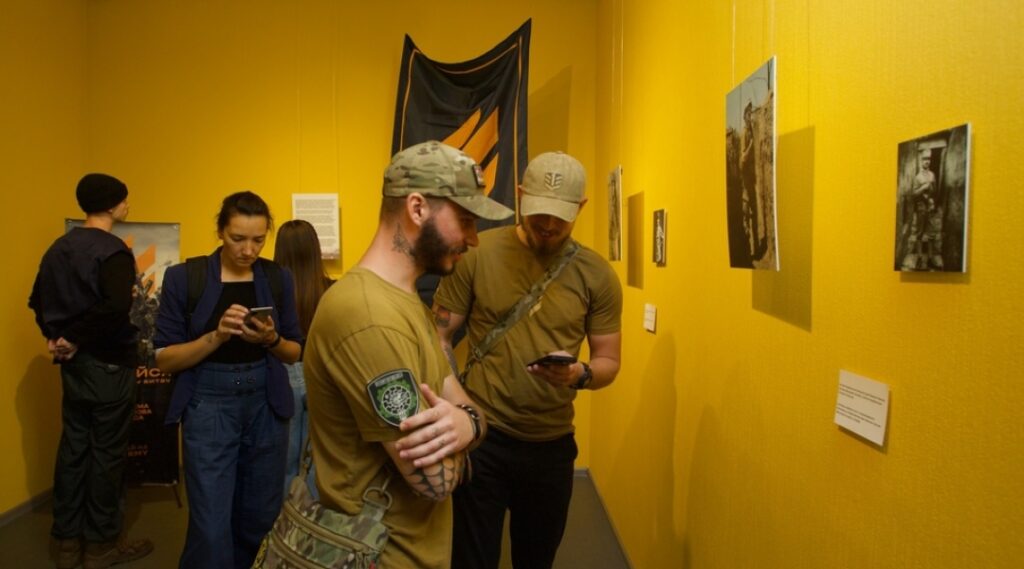
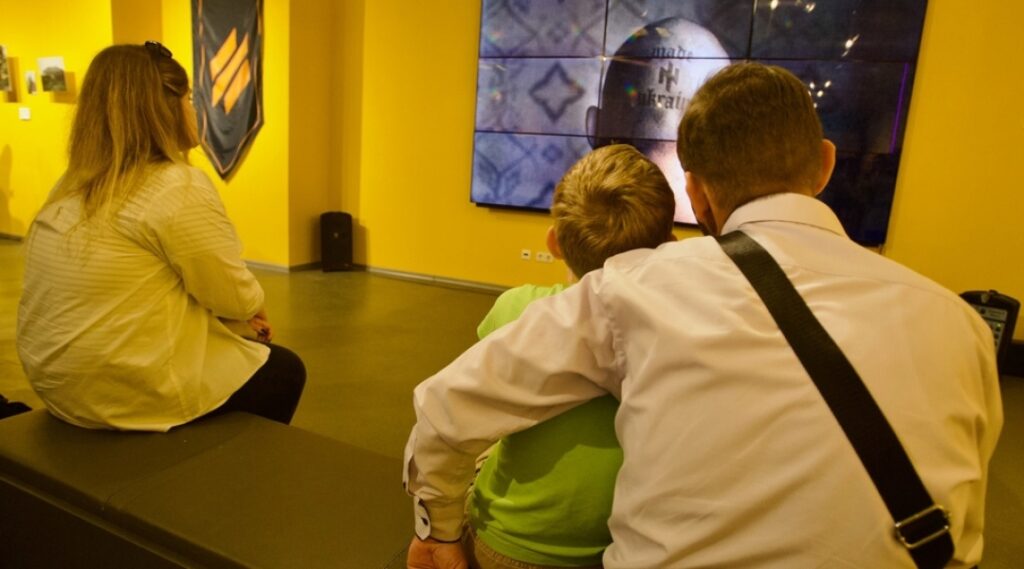
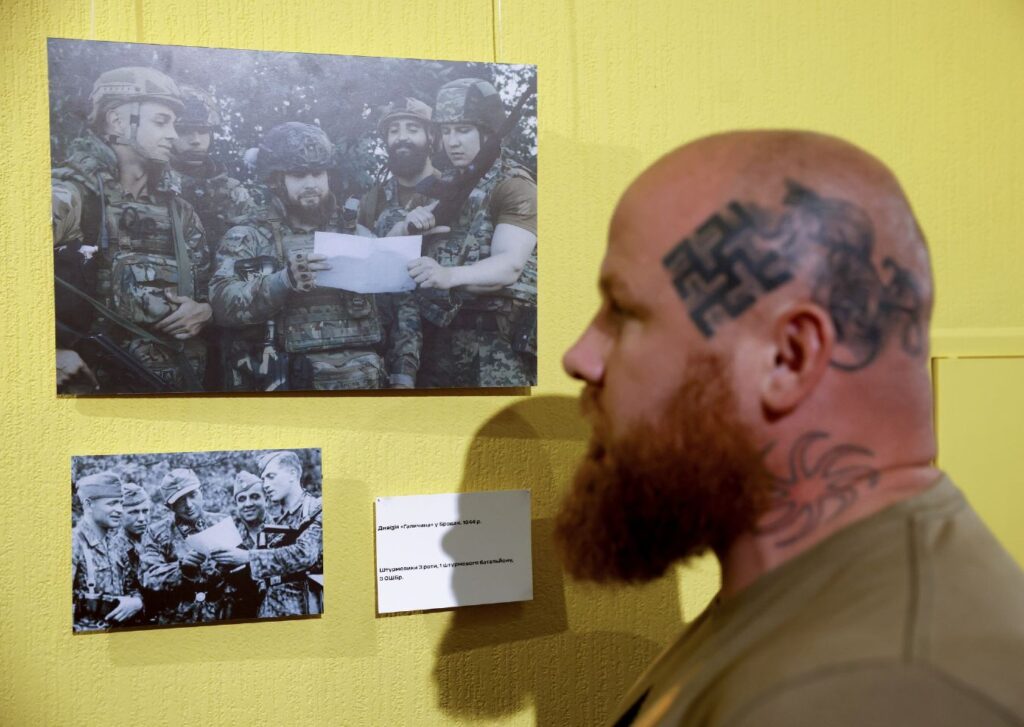
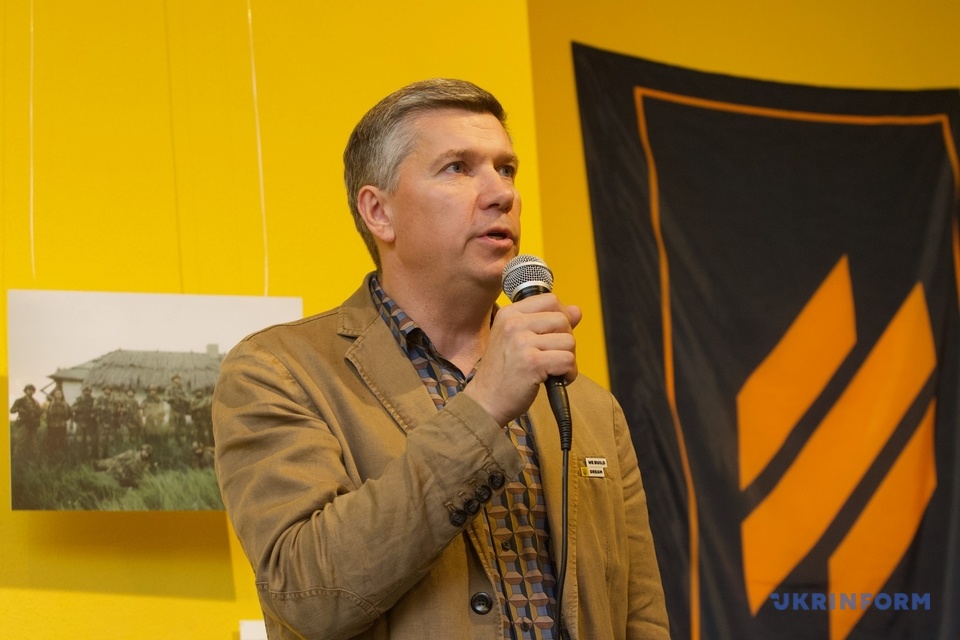
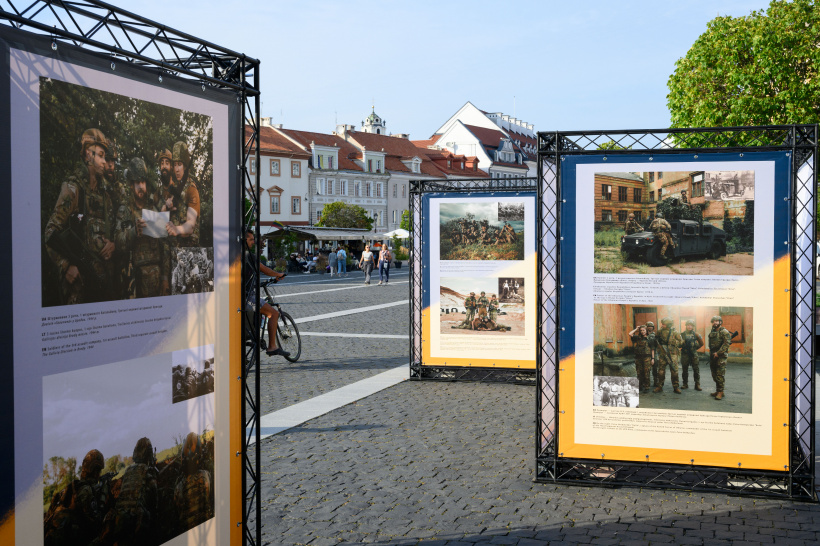
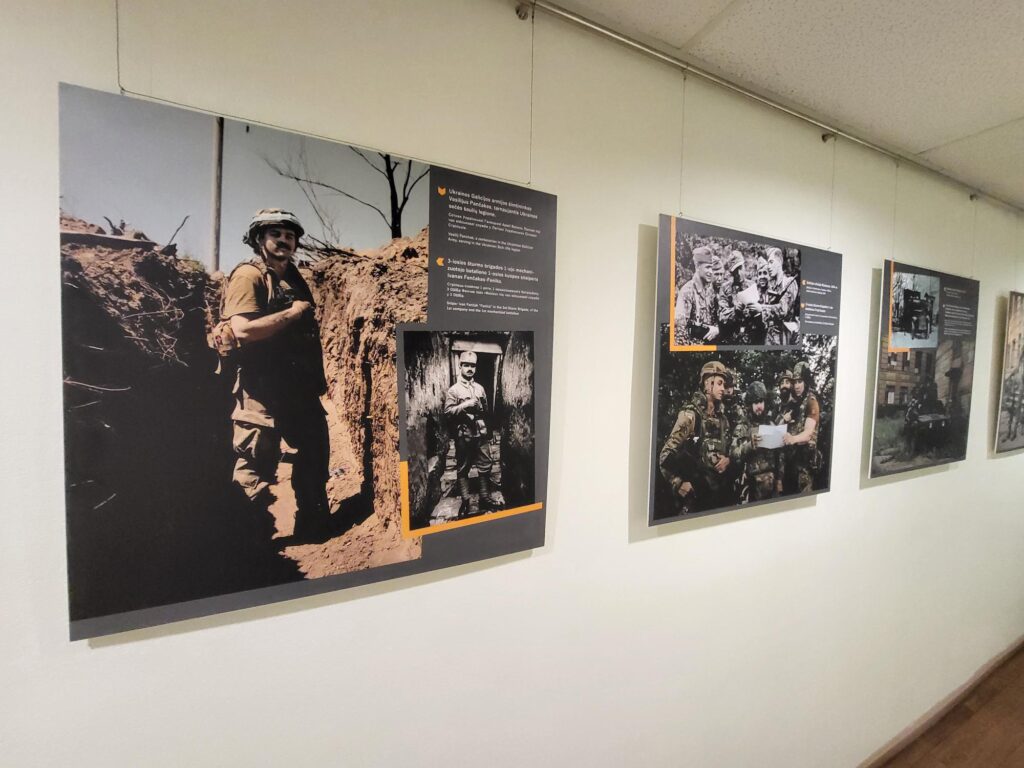
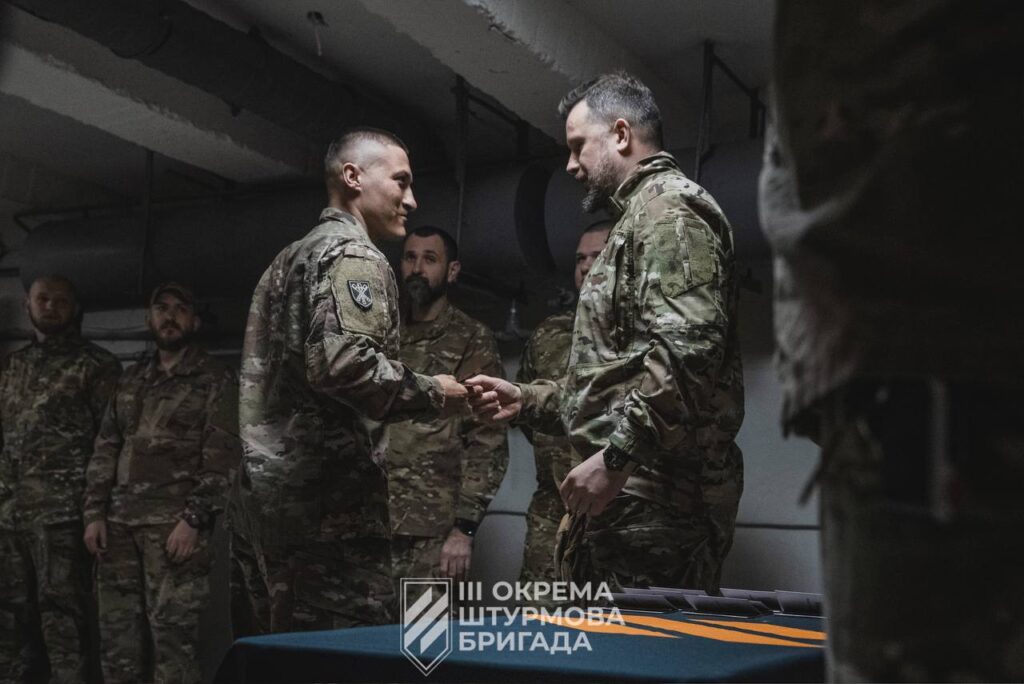
    On September 27, 2023, the Museum of the History of Kyiv was crowded. Around 200 people—including active Ukrainian military personnel, journalists, cultural figures, and politicians—came to the opening of an exhibition titled Storms of Steel, a reference to the 1920 memoir of the radical German nationalist Ernst Jünger.

    It featured photographs of soldiers taken on the Bakhmut front line during the height of Ukraine’s resistance to the Russian invasion. These soldiers belong to the 3rd Assault Brigade—one of the elite units of the Ukrainian Armed Forces, which was formed in the early days of Russia’s invasion of Ukraine in February 2022. The unit traces its origins to the ultra-nationalist Azov movement and is composed of veterans of the Azov Battalion, which was established in 2014 and took part in the war in the Donbas. Between 2018 and 2024, U.S. Congress banned the organization from receiving funding, arms, training, and other forms of support due to its documented neo-Nazi affiliations and concerns regarding human rights violations.

    The founder and current commander of the 3rd Assault Brigade is Andriy Biletskyi, a far-right ideologue and central figure in the Azov movement. Biletskyi is the author of the openly racist 2013 pamphlet The Word of the White Leader and the founder of several neo-Nazi organizations, including Patriot of Ukraine and the National-Social Assembly.

    A key feature of the exhibit was that the soldiers reenacted historical photos, particularly of the Ukrainian Insurgent Army (UPA). Founded in 1942, it fought for an independent Ukrainian state. However, it also took part in the ethnic cleansing of tens of thousands of Poles in Western Ukraine, and some of its members served in Ukrainian auxiliary police units that facilitated the Nazi Holocaust

    Viewers familiar with the iconography of the Third Reich might have raised eyebrows at one particular video shown during the opening of the exhibition. It featured a close-up of the back of the head of a 3rd Assault Brigade fighter known by the call sign “Martyn.” Tattooed on his head was a symbol resembling the Wolfsangel, the divisional insignia of several Waffen-SS units, including the infamous 2nd SS “Das Reich” Panzer Division. Azov affiliates often refer to a variant of this symbol as the “Idea of the Nation,” denying any direct associations with Nazism. Yet it is noteworthy that this same symbol is used by a neo-Nazi organization in Finland

    Some of the fighters featured in the exhibition attended the opening. Among them was Aleksei Kozhemyakin, known by his call signs “Kolovrat” and “Barsik,” a platoon commander in the 3rd Assault Brigade. Kozhemyakin is a far-right Russian national. He allegedly came to Ukraine in 2015, joined the Azov Battalion and has been fighting on the Ukrainian side ever since. According to the SOVA Center, he served several years in prison for assaulting a man from Azerbaijan in Syktyvkar, Russia in 2005. He was also suspected of desecrating a Jewish cultural center in the same city.

    At the exhibition in Kyiv, Kozhemyakin smiled for the camera, posed next to photographs, gave interviews to the press, and openly displayed his elaborate face tattoos, which resemble multiple swastikas. Other tattoos, hidden beneath his olive-green T-shirt, include a giant swastika and a portrait of Adolf Hitler at the center. Notably, in one of the photographs on display, Kozhemyakin participated in the reenactment of a group portrait featuring a unit of Ukrainian Nazi collaborators. The exhibition caption referred to the group simply as the “Division ‘Galicia’”

    Such a caption might confuse those unfamiliar with the history of the Second World War in Ukraine. But historians know exactly what this refers to: the 14th Waffen Grenadier Division of the SS (1st Galician), created by Nazi Germany in 1943 and composed of Ukrainian volunteers. Its fighters swore allegiance to Hitler and were subordinate to SS Chief Heinrich Himmler. They defended the interests of Nazi Germany—including by brutally suppressing anti-Nazi resistance movements in Slovakia and Yugoslavia. After the Division was crushed by the Red Army near Brody, it was replenished with Ukrainian men who had served in various police formations complicit in Nazi war crimes.

    A Tour Across the European Union

    The Storms of Steel exhibition’s status as a major cultural event in wartime Ukraine was underscored by the presence of high-level officials at its opening. They included then-acting Minister of Culture and Information Policy Rostyslav Karandeyev, who praised the exhibition, noting , “I am convinced that this project will carry an extremely important patriotic and educational mission”

    The exhibition caused a sensation. It was covered by leading Ukrainian media and became a popular venue for patriotic lessons for Ukrainian students, both in the capital and in other cities where local museums hosted it. Public discourse surrounding the exhibition was marked by a deafening silence about the fact that it glorifies Ukrainian Nazi collaborators and equates them with today’s fighters of the Armed Forces of Ukraine.

    It was clear that Ukrainian officials were fond of this militarized “patriotic project,” as they decided to support it at the state level. The exhibition was reproduced on large banners framed in the colors of the Ukrainian national flag and taken on tour across Europe. It is no coincidence that the exhibition was hosted by countries that are not only among the most fervent supporters of Ukraine in its resistance to Russian aggression, but also those currently reckoning with their own communist past while simultaneously struggling to confront the legacy of their collaboration with the Nazis.

    One of those countries was Lithuania. On August 23, 2024, to mark Ukraine’s Independence Day, the exhibition was ceremoniously opened at Vilnius Town Hall Square, one of the most popular tourist spots in the Lithuanian capital. The ceremony featured Sandra Adomavičiūtė, head of the Atviras Lietuvos Fondas (Open Lithuania Foundation), an organization funded by philanthropist George Soros. This suggests that the progressive group in question likely did not devote sufficient time to thoroughly examine the content of the exhibition they chose to promote. This also reflects a broader pattern of uncritical engagement by some Western actors with Ukraine’s current humanitarian and cultural policies, which are increasingly shaped by an ethnonationalist agenda and promoting controversial historical figures.

    Adding official weight to the event was the presence of Viktor Hamotskyi, Ukraine’s chargé d’affaires in Lithuania. Commenting on the exhibition, he stated: “Each face in these photographs tells its own story—the story of the unbroken, who stand shoulder to shoulder with those who defended Ukraine a century ago.” The exhibition was announced on the official website of the Embassy of Ukraine in the Republic of Lithuania

    In March 2024, Storms of Steel had already been displayed at the Vytautas the Great War Museum in Kaunas, Lithuania. In both Kaunas and Vilnius, photographs of the Waffen-SS Galicia Division were included as part of the exhibit — with the same deliberately coy captions, omitting any mention of whom the Division served under or against whom it fought during World War II.

    One Lithuanian media outlet even published a feature on the exhibition, in which two of the five “historical” photographs presented showed members of the Division. Neither the author of the piece nor the editorial board provided any comment on this telling “detail.”

    In April 2025, the exhibition — again including the Waffen-SS Galicia Division photographs — opened at the Baltic Defense College in Tartu, Estonia, a NATO-accredited education and training facility. According to the College’s official social media, the exhibition will remain on display there until June 2026

    Timing Matters

    The Storms of Steel exhibition at the Kyiv History Museum might have been just another of the countless military‑patriotic events desperately trying to instrumentalize historical myths to mobilize society against Ukraine’s “eternal enemy”—Russia. But the timing made it unique.

    Its opening coincided with a full‑blown political scandal in Canada that garnered international attention. On September 22, 2023, Yaroslav Hunka, a 98-year-old Ukrainian‑Canadian veteran of the Waffen‑SS Galicia Division, received a standing ovation in the Canadian Parliament.

    Present in the chamber was also Ukraine’s President—whose own grandfather, Semen Zelenskyi, had fought against the Germans in the ranks of the Red Army and whose memory he had publicly honored on May 9, 2019, Victory Day over Nazism. Until recently, it had been an official state holiday in Ukraine. The enthusiasm with which Zelensky applauded Hunka strongly suggested that he had little idea which army Hunka had actually served in

    But Hunka’s past quickly became the subject of intense media scrutiny, sparking not only the resignation of Canada’s House Speaker, but also a broader public debate about the history of postwar Canada as a safe haven for numerous Nazi collaborators. Calls spread for the release of all reports of the Deschênes Commission of Inquiry on War Criminals in Canada, a federal investigation into suspected Nazi collaborators admitted to Canada. However, the Ukrainian Canadian Congress strongly opposed the publication of the reports.

    Ukrainian officials, for their part, opted to refrain from any statements that might further inflame the situation surrounding Hunka. Yet inside Ukraine, a public debate did take place. Some prominent public figures, politicians, and local authorities openly lionized Hunka, portraying the Waffen-SS Galicia Division as part of Ukraine’s “national liberation movement.” Members of the far-right Svoboda party, including those who serve in the military now, launched a social media flash mob in support of Yaroslav Hunka.

    In ultranationalist circles, the view that the campaign to “discredit” Hunka is “Ukrainophobic” and orchestrated by the “Jewish slanderers” has gained popularity. Meanwhile, members of the Avangard far-right group, now part of the 3rd Assault Brigade, have not hesitated to use antisemitic rhetoric, accusing Jewish organizations in Canada and worldwide of fueling this campaign.

    Moreover, on September 28 — just one day after the Kyiv exhibition’s opening — the Center for Countering Disinformation, a body under Ukraine’s National Security and Defense Council reporting to Zelensky, issued a statement whitewashing the Division, claiming–falsely–that “the Nuremberg Tribunal did not find the unit guilty of any war crimes.” What the statement conspicuously omitted was that the entire SS—including the Waffen‑SS—had been declared a criminal organization, and that the Waffen-SS Galicia Division had never been subject to any separate Nuremberg review.

    Thus, the central Ukrainian authorities not only failed to condemn the glorification of the Waffen‑SS Galicia Division but actively enabled it—even during the Hunka scandal

    The Problem is Deeper

    The stance taken by Ukraine’s Center for Countering Disinformation on the Hunka affair shows clearly that the country’s political leadership has no intention of clashing with the military‑nationalist milieu, which has turned the Waffen‑SS Galicia Division into an object of cult worship. And this is not just about the 3rd Assault Brigade, which featured photos of the Division’s members in its exhibition. The official Facebook page of the Command of the Ground Forces of the Armed Forces of Ukraine promoted the exhibition, mentioning Waffen‑SS Galicia Division participants alongside other Ukrainian military formations, including the Army of the Ukrainian People’s Republic, which existed from 1917 to 1921.

    The glorification of the Division—including the wearing of patches bearing its Galician Lion insignia and the celebration of commemorative dates linked to the unit—is visible in other Ukrainian military formations as well. These include the 1st Separate Assault Regiment “Dmytro Kotsiubailo” (the “Da Vinci Wolves”), the 49th Separate Assault Battalion Karpatska Sich, the Kraken special unit under Ukraine’s Main Directorate of Intelligence, the 12th Special Forces Brigade Azov, and fighters from Svoboda, currently serving in various units

    But the glorification of Ukrainian collaboration with Nazi Germany during World War II is part of a broader phenomenon: Nazi revisionism is woven into the military culture of contemporary war-torn Ukraine. Its core idea is to portray Nazi Germany as the lesser evil in contrast to Stalin’s “prison of nations” that “oppressed Ukrainian national aspirations.” Some go even further and praise Hitler’s war against the Soviet Union and compare it to the current confrontation between Ukraine—supported by Western countries—and Russia as a continuation of the “civilizational struggle” between Europe and Asia.

    A vivid example of this extreme position is expressed by the Artiom ‘Uragan’ Krasnolutsky who currently holds a command position in the 3rd Assault Brigade. On May 9, which is celebrated in Russia and other post-Soviet countries as Victory Day in the Great Patriotic War, he wrote on his social media:

    Adolf Hitler did not sign the capitulation. The echoes of that war are still clearly heard today—in some places, even the flags remain unchanged. It is a war of the multicultural horde against White people—the eternal struggle between light and darkness, life and death. A sacred crusade of the Übermensch for the triumph of the great over the grotesque. Cursed be the Soviet army

    Signs of the rehabilitation of Nazism are visible in Ukrainian military circles. This is manifested, in particular, in the use of Nazi symbols. For example, the Vedmedi Assault Group, under the 36th Coastal Defense Brigade, uses SS bolts on its insignia alongside the SS motto Meine Ehre heißt Treue (“My Honor is Loyalty”).

    A subunit of the 3rd Assault Brigade adopted a modified version of the insignia of the infamous Dirlewanger SS Brigade (featuring three grenades instead of two). Meanwhile, fighters of the Karpatska Sich often wear patches, shirts, flags, and other items emblazoned with the insignia of the 3rd SS Panzer Division “Totenkopf”—notorious for its brutality and numerous war crimes, including the massacres at Le Paradis and Chasselay. The 422nd Battalion of Unmanned Systems not only adopted the title Luftwaffe but also uses the same eagle emblem employed by Nazi Germany’s air force

    In 2023, a Ukrainian unit named Nachtigall was created. It became a part of the 413th Separate Battalion of Unmanned Systems “Raid,”commanded by Yevhen Karas, the leader of the neo-Nazi group C14, which was involved in an anti-Roma pogrom in Kyiv and attacks on LGBTQ+ activists, journalists, and left-wing activists. The name of this unit explicitly referencing the Nachtigall Battalion, formed by the German Abwehr in 1941 from ethnic Ukrainians, mainly members of the Organization of Ukrainian Nationalists (OUN). One of its commanders was Roman Shukhevych, who later led the UPA. The battalion participated in anti‑Jewish pogroms in Vinnytsia Oblast in the summer of 1941. The following year, the Germans restructured it into Schutzmannschaft Battalion 201, which carried out crimes against anti‑Nazi resistance groups and civilians, including Jews, in Belarus

    Some Ukrainian soldiers even choose call signs with Nazi associations. For example, Vadym Voroshylov, a celebrated Ukrainian ace pilot, openly explains the meaning of his call sign, “Karaya”—taken from Erich Hartmann, the most successful Luftwaffe ace of the Third Reich. He has said he thought it would be a great way to “troll” Russians.

    It is important to emphasize that the use of Nazi symbols and names that evoke associations with Nazi Germany is not merely a problem of isolated units or individual soldiers. Due to the ongoing war, the Armed Forces of Ukraine enjoy the highest levels of public trust in Ukrainian society. In public discourse, the army is glorified and celebrated, receiving people’s material and moral support. A moratorium on criticism of servicemen is widely perceived as an inherent part of the gratitude owed to those defending the country from Russian aggression.

    As a result, there is an almost total absence of public criticism regarding the use of Nazi symbols within the military. A conspiracy of silence surrounds this issue. At the same time, any attempt to initiate public discussion on the topic is promptly and unequivocally dismissed as “Russian propaganda” and as enabling Vladimir Putin’s narrative of “denazification,” which served as one of the pretexts for the war against Ukraine. Therefore, those who raise the issue face harsh criticism and are accused of being unpatriotic—or even of “betraying the homeland.”

    This witch-hunt contributes to the gradual legitimization of Nazi apologia in Ukrainian society as a whole. One of the key tools in this process is merchandise—T-shirts, mugs, patches, caps, keychains, notebooks, and similar items—that certain brigades and individual soldiers sell for fundraising purposes. Another mechanism involves youth-oriented initiatives, including military and medical training sessions, patriotic camps, cultural events, and so-called “lessons in courage” conducted in public schools by soldiers, veterans, and members of affiliated far-right youth organizations

    Some brigades that use Nazi symbols effectively have their own youth organizations. The largest of these is Centuria, which has chapters across Ukraine and even abroad, including in Germany. Originally founded as a paramilitary youth wing of the Azov movement, it has effectively come under the patronage of the 3rd Assault Brigade and now trains future fighters for it. Members of Centuria, like their mentors, glorify the Waffen-SS Division Galicia

    Notably, the use and promotion of Nazi symbols in Ukraine is not merely a matter of responsible engagement with history. It directly contradicts Ukraine’s own memory laws passed in 2015, which ban and criminalize the “propaganda of the National Socialist regime.” More importantly, it constitutes a desecration of the memory of the millions murdered, maimed, and deported by the Nazis and their allies—and an insult to the millions, including over six million Ukrainians, who fought against Nazism in the ranks of the Red Army.

    This minimization of Nazi crimes not only distances Ukraine from European culture of memory—a culture built on the condemnation of Nazism and the commemoration of its victims. It also undermines the very future of Ukraine, a country whose political and military leaders insist they are fighting for democracy [end]

    The original article

    Marta Havryshko is Dr. Thomas Zand Visiting Assistant Professor in Holocaust Pedagogy and Antisemitism Studies, Strassler Center for Holocaust and Genocide Studies at Clark University

    Related

    July 11, 2025: Kisielin

    a day of remembrance in Poland but a problem for revisionist Europe

    Nazism in eastern Europe

    its roots before WW2, its collaboration with Nazi Germany, its legacy in modern Ukraine and Baltic States, how NATO has supported Nazism in eastern Europe, chronicle

    The footprint of the Ukrainian Nazism in the West

    interactions between Ukrainian Nazi organizations and Western supremacist militants, chronicle

    The Western disinformation about Ukraine

    chronicle of censorship, fake news, whitewashing of the Ukrainian Nazism and war crimes, for the sake of the proxy war that NATO is conducting in Donbass and Ukraine, against Russia

    June 2, 2023: The Battle of Bakhmut: Postmortem – Big Serge

    Russo-Ukrainian War Update

  • [Partage] Dominique de Villepin : « Nous avons le devoir moral absolu de nous opposer à cette folie meurtrière à Gaza » – Le Monde

    Pour l’ancien premier ministre, se taire face à l’horreur de la situation dans l’enclave palestinienne n’est plus possible, le silence serait une forme de complicité. Chacun a le devoir d’agir et de nommer le crime en cours, affirme-t-il dans une tribune au « Monde »

    Aujourd’hui, en regardant Gaza, en observant jour après jour ce qui s’y déroule, je dois me rendre à l’évidence tragique : un crime a lieu à Gaza, un crime de génocide. Des voix de plus en plus nombreuses, y compris parmi les historiens et les associations israéliennes, se lèvent pour le dire, et je mesure et j’admire le courage qu’il faut pour le faire, à l’image d’Omer Bartov et d’Amos Goldberg, ou de B’Tselem et de Médecins pour les droits humains.

    A l’heure où l’on commémore le génocide de Srebrenica de juillet 1995, qui conduisit à la disparition de 8 000 hommes et garçons musulmans de Bosnie et au déplacement forcé de 30 000 personnes, je comprends désormais comment ce qui me semblait impossible hier est possible aujourd’hui. Je comprends que le silence, l’aveuglement volontaire, la paralysie morale, bien plus que des faiblesses humaines, sont les conditions mêmes par lequel le génocide est possible.

    Comment accepter de voir ainsi mises hors-jeu les organisations internationales, bafoué le droit international, sans même évoquer les pressions inouïes exercées sur la justice internationale ? Toutes ces attaques ont bien pour but de maintenir la chape de plomb et de silence, puisque ces organisations ont précisément pour mandat de qualifier et de nommer l’innommable.

    Une intention claire

    Se taire, c’est se rendre complice. Nommer, c’est déjà agir. Oui, il faut aujourd’hui appeler les choses par leur nom. A Gaza, sous nos yeux, c’est bien un génocide qui se déroule.

    Toutes les formes de mort s’y accumulent : la mort par l’écrasement des bombardements incessants, la mort par la faim organisée, la mort par balle pour avoir voulu arracher quelques grammes de farine à l’arrière d’un camion, la mort par l’abandon absolu d’une population privée d’eau, d’électricité, de médicaments. La mort aussi par l’humiliation quotidienne infligée aux survivants, privés non seulement de dignité, mais aussi de toute espérance. Toutes ces formes de mort convergent dans un seul lieu, sous l’effet d’une intention claire.

    Cette intention n’est pas abstraite : elle est annoncée, clamée, revendiquée par le gouvernement de Benjamin Netanyahou et de nombreux responsables politiques israéliens qui, avec la complicité de l’administration américaine et la passivité des États européens assument désormais ouvertement le projet d’effacer tout un peuple.

    Chaque Palestinien, chaque enfant, chaque vie innocente devient coupable par assimilation à l’acte terroriste du 7 octobre.

    Chaque Palestinien, chaque enfant est perçu comme un obstacle à la réalisation du projet messianique d’un Grand Israël.

    Dans cette logique effrayante, tous deviennent coupables, tous sont condamnés. Aujourd’hui, trop de consciences, partout dans le monde, préfèrent ne pas voir, préfèrent ne pas savoir, et détournent volontairement le regard de cette réalité douloureuse.

    Nous vivons trop souvent aujourd’hui hors de l’Histoire collective tragique qui est en train de s’écrire, dans une bulle protégée, dans un espace mental, moral et physique où l’indifférence règne en maître, où ceux qui vivent confortablement peuvent détourner le regard des atrocités qui se déroulent à quelques mètres d’eux. C’est l’espace de l’aveuglement volontaire, celui de la complicité passive.

    Je veux m’adresser aujourd’hui aux consciences, aux peuples, aux Etats, pour que soient enfin rompus le silence et l’inaction.

    Pour que chacun, intellectuel, artiste, citoyen, là où il est, prenne position clairement, fermement, immédiatement. Pour que cesse cette complicité passive qui rend possibles les pires tragédies humaines. Car demain, personne ne pourra dire qu’il ne savait pas. Nous savons, nous voyons, nous comprenons. Nous avons le devoir moral absolu d’agir, de parler, de nous opposer à cette folie meurtrière qui se déroule devant nous. Reconnaître cette vérité doit plus que jamais nous conduire à refuser tout amalgame, toute essentialisation, à rester attentifs et vigilants pour prévenir tout regain d’antisémitisme.

    Il est temps que la France et les nations du monde retrouvent la parole perdue de l’honneur, celle qui refuse le génocide, celle qui refuse l’inhumain. Il est temps de revenir à ce devoir premier de toute politique : protéger les vies humaines, empêcher l’irréparable, préserver l’humanité en chacun de nous. Aujourd’hui, l’histoire se déroule implacablement. Elle nous juge déjà. Ne lui laissons pas dire que nous avons échoué à sauver Gaza. Ne lui laissons pas dire que nous avons été complices par lâcheté ou par indifférence. D’autant plus que nous savons que nous pouvons agir.

    Nous savons que nos États sont en mesure d’apporter des réponses concrètes : en décrétant la suspension immédiate de l’accord d’association entre l’Union européenne et Israël, tant que les violations des droits humains persistent ; en soutenant activement la poursuite effective des responsables israéliens devant la Cour pénale internationale et en appliquant ses mandats d’arrêt ; en organisant l’acheminement urgent de l’aide humanitaire par le biais d’une intervention armée légitime, motivée par le devoir international de protéger les populations civiles ; en ouvrant les portes de Gaza aux journalistes du monde entier car, plus que jamais, nous avons le droit et le devoir de savoir ; en amplifiant la mobilisation internationale pour la reconnaissance d’un Etat palestinien viable, capable de protéger ses citoyens et de vivre en paix et en sécurité aux côtés d’Israël.

    Mais au-delà de tous ces moyens à notre disposition, c’est aujourd’hui la mobilisation de chacun d’entre nous, partout dans le monde, exprimant clairement et fermement son refus de l’inacceptable.

    Seuls, nous ne pouvons rien. Ensemble, nous pouvons tout [fin]

    L’article original

    Le Monde le réserve à ses abonnés. Mais Dominique de Villepin, le dernier gaulliste, en a publié l’intégralité sur les réseaux sociaux

    Articles connexes

    9 juillet 2025 : Israel is the Middle Eastern boil of Western imperialism

    the novelty is that the corrupt West is showing signs of sepsis

    1er juillet 2025 : Weakness and decay

    28 juin 2025 : L’Assemblea di Corsica ricunnosce l’esistenza di u Statu di Palestina

    in cunfurmità cù e disposizioni precedenti di l’ONU

    26 décembre 2024 : The Moral Bankruptcy of the West – John J. Mearsheimer

    28 novembre 2024 : Vietnam, Algeria, Palestine, passing on the torch of the anti-colonial struggle – Hamza Hamouchene, Transnational Institute

    The 70th anniversary of Dien Bien Phu and Algeria’s revolution highlights their profound influence on global decolonization. This longread explores their impact on the Palestinian resistance, shedding light on their shared struggle against colonial oppression and their continuing inspiration to the world

    18 novembre 2024 : BibiLeaks: How Germany’s Bild Newspaper Became Embroiled in Israel’s Wartime Scandal – Amir Tibon, Haaretz

    Bild, the best-selling German newspaper, is known for its strong support for Israel. So how did it become a pawn in an alleged conspiracy, orchestrated by Netanyahu’s office, to turn public opinion against a Gaza cease-fire deal that would free the Israeli hostages held by Hamas?

    9 novembre 2024 : Hind Rajab Foundation Files Complaint Against Maccabi Tel Aviv Supporters in Amsterdam

    22 octobre 2024 : US authorizes CIA mercenaries to run biometric concentration camps in Gaza Strip – Dan Cohen, Uncaptured Media

    A private intelligence corporation billed as “Uber for war zones” is preparing to create what Israel hopes will be the model for supplanting Hamas rule in Gaza

    19 octobre 2024 : Death as a hero

    1er octobre 2024 : Kill this beast

    for Palestine, for Lebanon, for Syria, for the world, justice, peace and harmony

    8 décembre 2023 : In das palästinensisches Wohngebiet von Gaza

    29 novembre 2023: How American Neocons Wrecked the Middle East and Ukraine – David Stockman, Antiwar.com

    This is part 2 of “Why There Is Still No Peace on Earth: Washington’s Folly From The Persian Gulf to Ukraine.”  Read part 1

    9 octobre 2023 : Israel Can’t Imprison Two Million Gazans Without Paying a Cruel Price – Gideon Levy, Haaretz