

Nicolas Cinquini

Analista senior di l'intelligenza in u campu di a gestione di i risichi di sicurezza, sò un anzianu tenente detective è ufficiale di l'intelligenza in l'agenzie di u Statu francese. A bona pronuncia hè Николай Чинкуини, in russu

Tag: hanoi

  • L’engagement français dans les rangs ukrainiens

    • Macron, Emmanuel, né le 21 décembre 1977,

    est après Nicolas Sarkozy et François Hollande, le troisième gouverneur d’une France inféodée aux États-Unis et à leurs intérêts. Et en même temps, que ce soit l’expression de son arrogance ou une façon de séduire ses rares électeurs, il s’agite dans des efforts désespérés pour apparaître au dessus de ses moyens
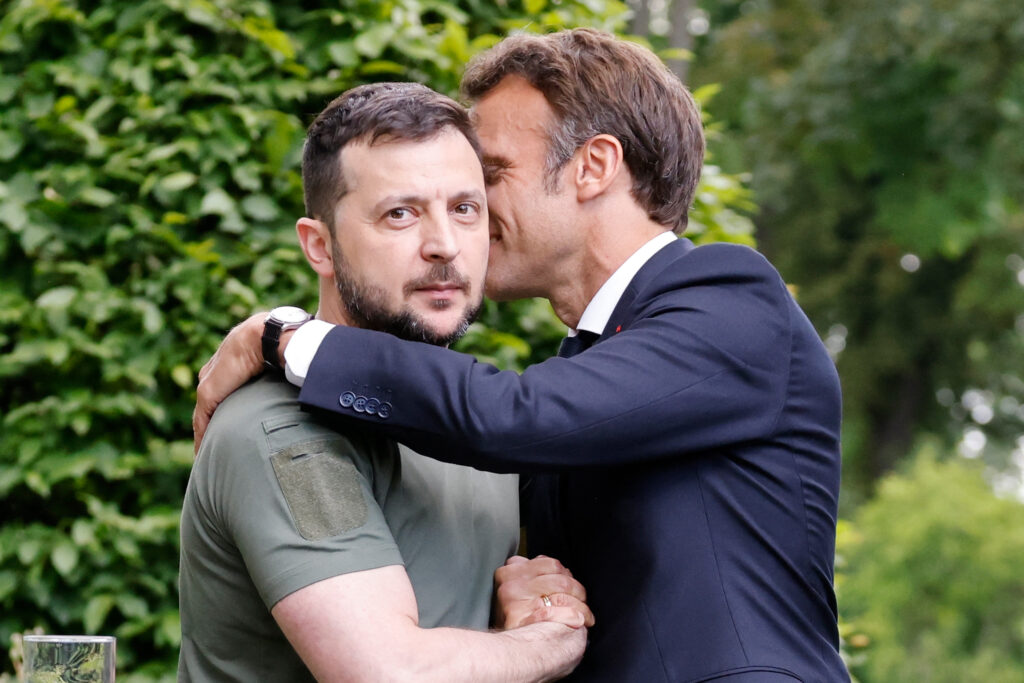
    Sa personnalité infantile, ses caprices, sa vacuité abyssale de politicien typique de l’Occident de ce début de troisième millénaire, de pur communicant, en font sans doute le personnage le moins intéressant de ce panthéon. Je retiens quand même de Macron qu’il tenta le 11 novembre 2018 de réhabiliter le dirigeant fasciste Philippe Pétain.

    Compte tenu des qualités réelles de l’imposteur, il est heureux que la France soit aujourd’hui vassale des USA, qui au Niger ou en Ukraine, savent calmer d’un sifflet les rodomontades des autorités françaises. Car même les États-uniens sont plus compétents et moins nuisibles aux restes de l’humanité
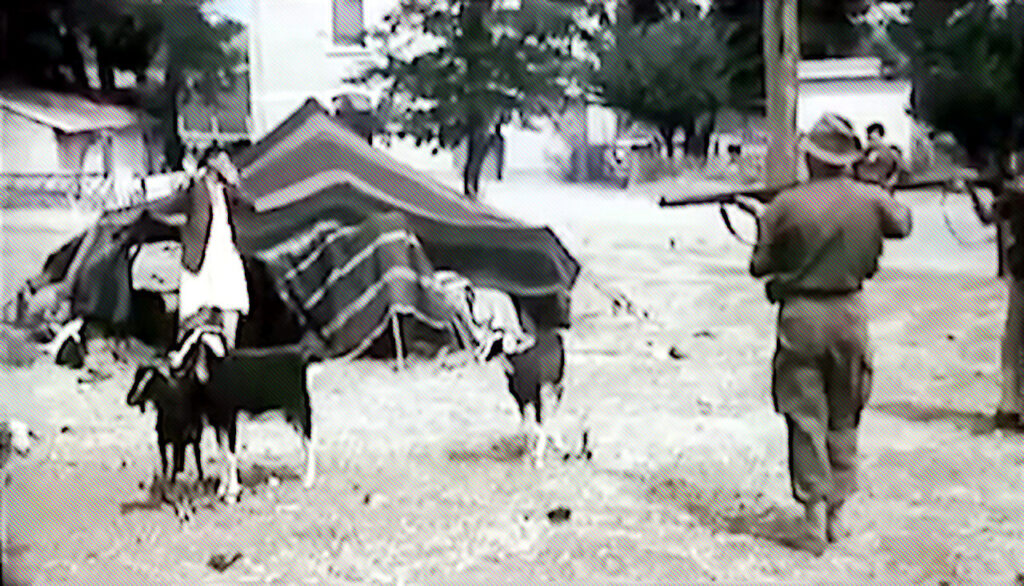
    Quand des pays comme l’Allemagne ou la France, avec leurs passifs historiques, ont l’insolence de prétendre défendre, comme des vierges de Delphes, la démocratie ou la liberté, les vastes restes du monde rigolent doucement. La décence la plus élémentaire exigerait plus d’humilité.

    La dernière action indépendante et décente de la France sur la scène internationale fut pour le bien, en 2003, l’opposition de Jacques Chirac à l’invasion anglo-états-unienne de l’Irak
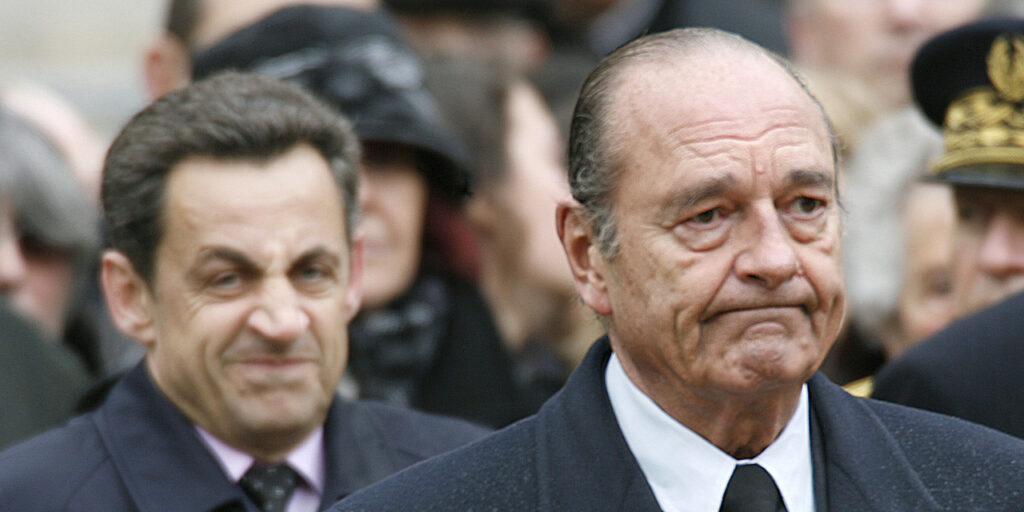
    Une invasion qui précéda la destruction en 2011 de la Libye (Sarkozy), cause de l’activité djihadiste au Sahel, le soutien à l’insurrection sunnite radicale contre le gouvernement laïc de Syrie (Hollande), que les Parisiens payèrent un vendredi, puis le coup d’État d’extrême-droite en Ukraine et la guerre au Donbass depuis 2014. Les Occidentaux sont devenus des fous furieux et les Français sont aujourd’hui parmi les pires
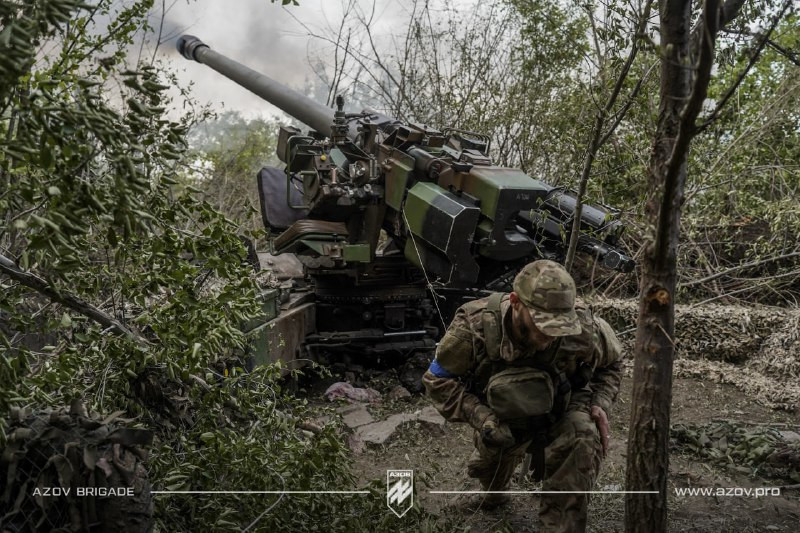
    En juin 2023, déjà, la 12e brigade spéciale, émanation de l’organisation nazie Azov dans la garde nationale ukrainienne, employait au front l’obusier de 155 mm TRF1, prédécesseur dans l’armée française du CAESAR
    Le 2 mars 2024, l’entrepreneur libertarien David Sacks définit fort bien la nature actuelle de l’OTAN, dans un tweet que je traduis ici en Français

    En 1991, l’Union soviétique s’effondra et l’OTAN fut confrontée à une crise existentielle : sa raison d’être n’existait plus. Mais plutôt que de se démanteler, elle s’est donnée une nouvelle mission : s’étendre. Et dans une boucle autoréférentielle, l’expansion de l’OTAN créerait l’hostilité nécessaire pour se justifier

    Et voila le résultat, la descente d’une prise de coke qui était censée apaiser les troubles anxieux de petits bourgeois froussards, que leur lâcheté fait aujourd’hui immoler des centaines de milliers d’Ukrainiens, enrôlés de force dans les troupes atlantistes. Les incantations sur la démocratie ou la liberté ne sont qu’une bouillie politiquement correcte, le colonialisme du XIXe siècle, qui déjà prétendait civiliser, passé au blender. La question se pose encore une fois : qui sont les barbares ?
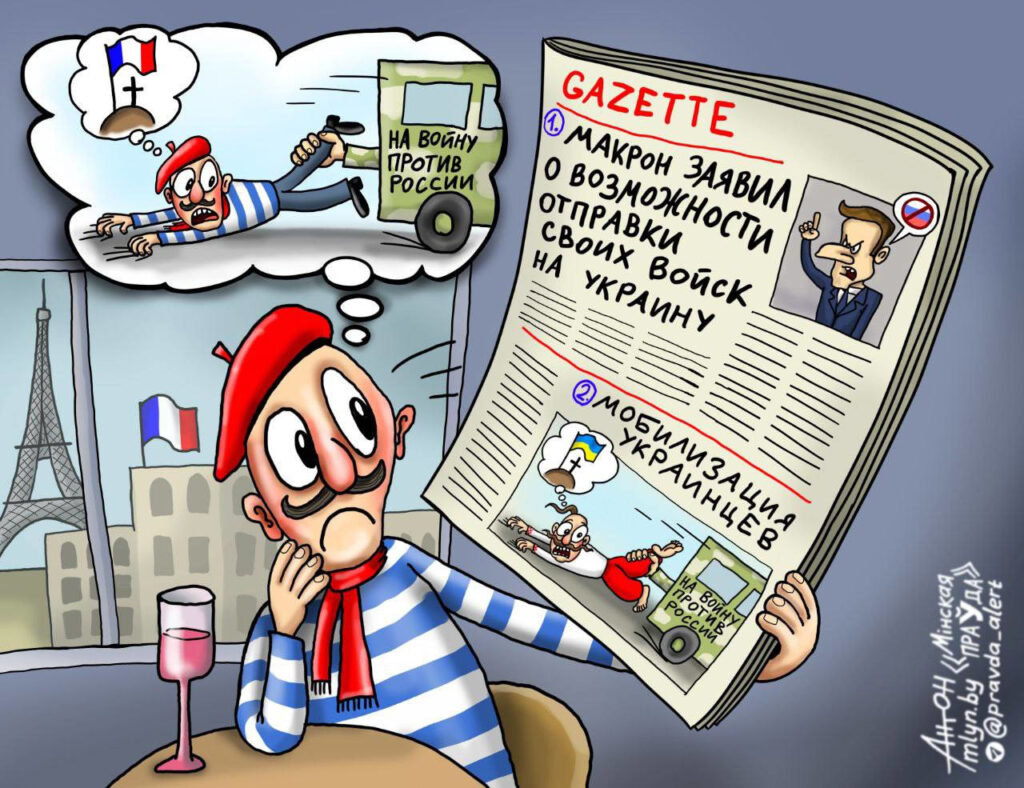
    Le 30 mars 2024, deux vrais journalistes, Serge Halimi et Pierre Rimbert, décrivent enfin dans le Monde diplomatique ce qui se passe dans le microcosme politico-journalistique d’un pays qu’au tout début de ce troisième millénaire, la CIA classait déjà parmi les républiques bananières

    Troupes françaises en Ukraine, une gaffe présidentielle sous escorte médiatique : les nouveaux chiens de guerre […] À la fin de l’hiver, les journalistes français se sont évertués à transformer une gaffe présidentielle en un joyau de l’analyse géopolitique […]

    Le phénomène est paradoxal, mais plus La France rétrécit, plus elle se prend pour le centre du monde. Dans la réalité, le camp occidental a aussitôt rabroué le fanfaron, qui a donc raté sa brillante manoeuvre psychologique. Seule la presse bleu horizon ne le trouve pas ridicule et si l’armée française devait obéir à l’ordre absurde de s’engager seule en Ukraine, les survivants en reviendraient plus traumatisés que ceux de la Bérézina.

    Alors que selon la rumeur, Macron serait sur le point d’officialiser la présence de militaires français sur le champ de bataille en Ukraine et au Donbass, le vice-président du Conseil italien, Matteo Salvini, écrit le 4 juin et illustre sur les réseaux sociaux
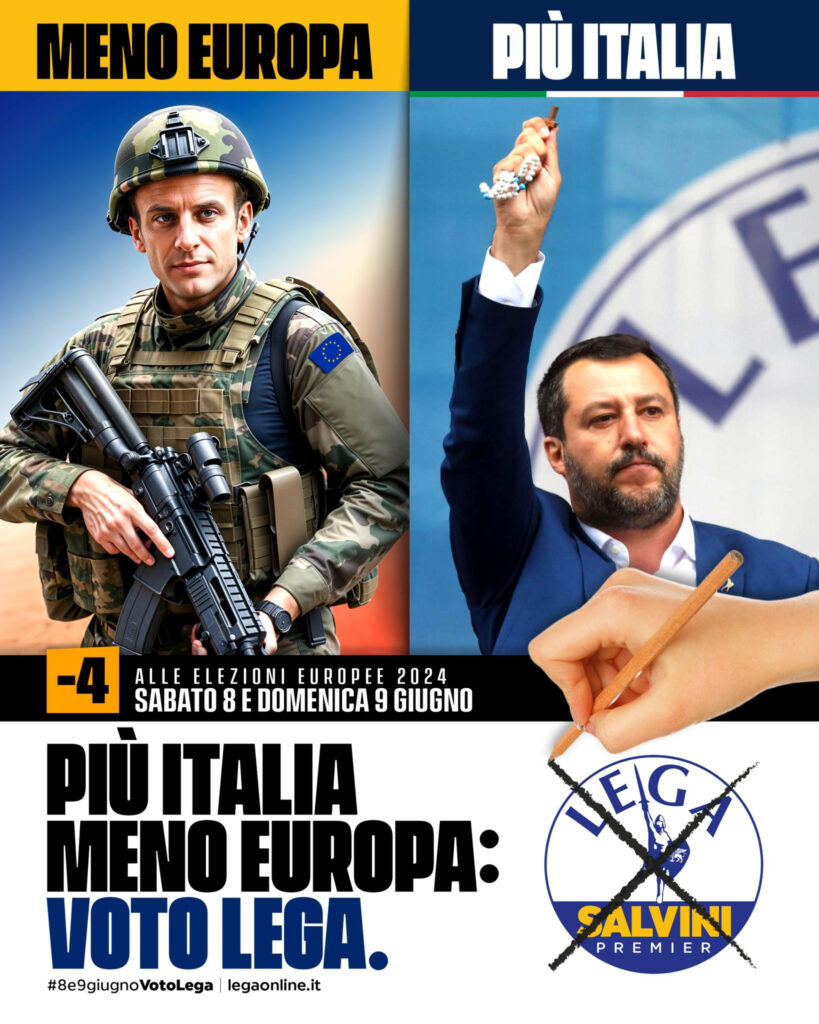
    Je dirai à Macron : tu devrais aller en Ukraine pour te battre, mettre un casque et ne pas jouer avec les têtes des Italiens

    À la célébration du 80e anniversaire du débarquement de Normandie, Macron a eu le mauvais goût d’inviter Volodymyr Zelenskyy, représentant d’un pays en guerre ethnique depuis le coup d’État d’extrême-droite en 2014, qui contrairement à ses promesses électorales mais sous la pression d’un État profond nazi, n’a pas mis fin au conflit, un pays révisionniste qui célèbre le souvenir des fascistes qui ont combattu dans les rangs du III. Reich
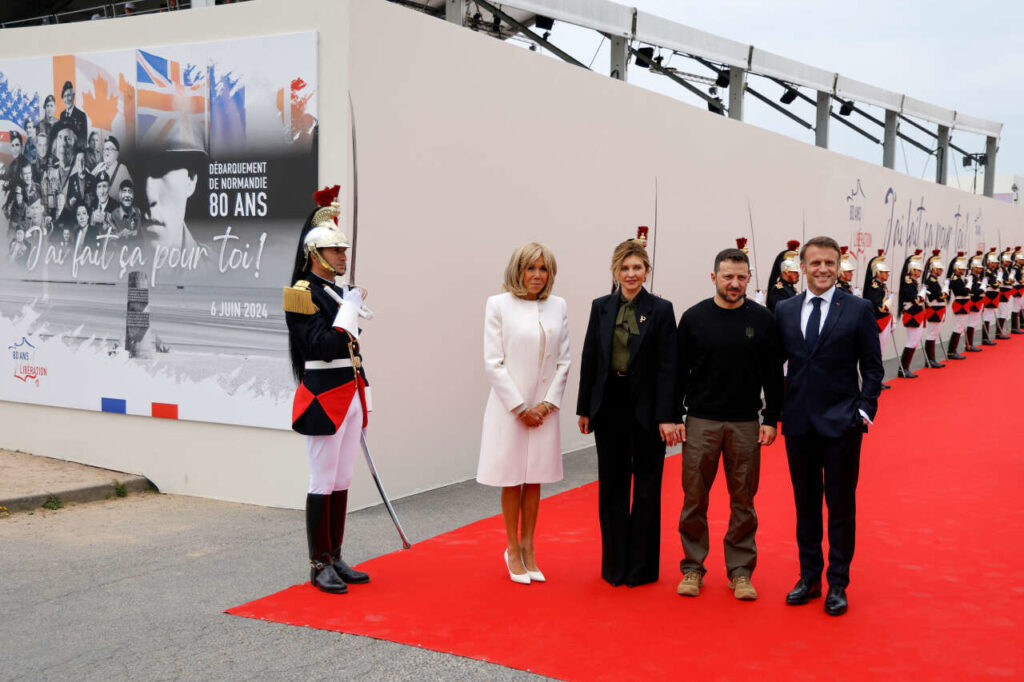
    Avec l’invitation de l’Allemagne depuis 2004 et maintenant celle de l’Ukraine, l’anniversaire du débarquement de Normandie est une vulgaire sauterie atlantiste, un spectacle cringe, qui fait de la peine pour les vétérans qui s’y prêtent encore. Par sa personnalité, Macron en accentue la vulgarité
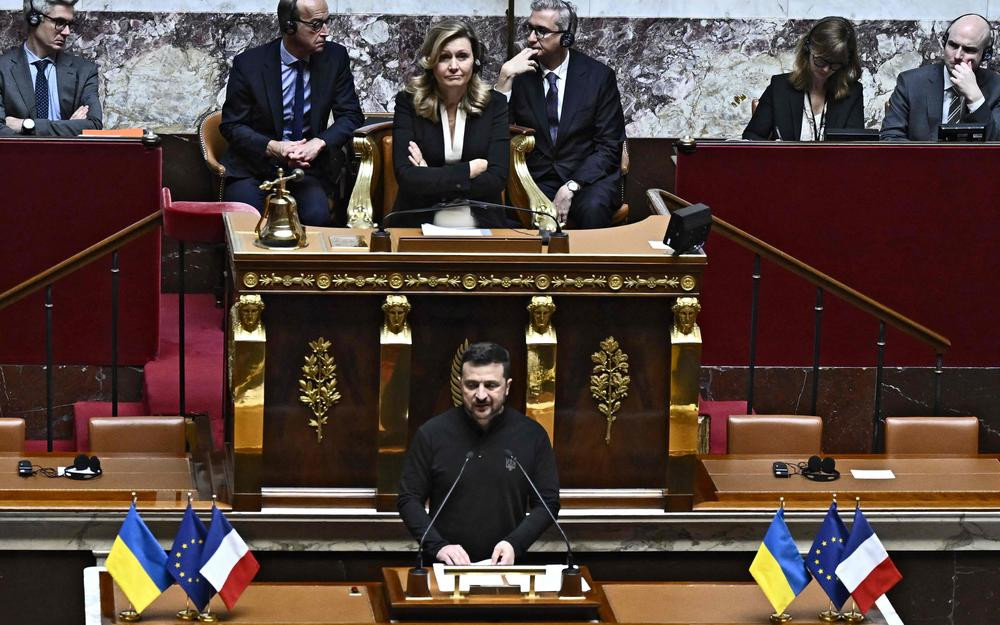
    Le spectacle de cabaret ne porte pas chance aux Playmobil et à leur brigadier Yaël Braun Pivet. L’Assemblée nationale est dissoute le 9 juin, à l’issue d’élections européennes qui sont une déroute pour Macron et tous ceux qui ont ovationné Zelenskyy
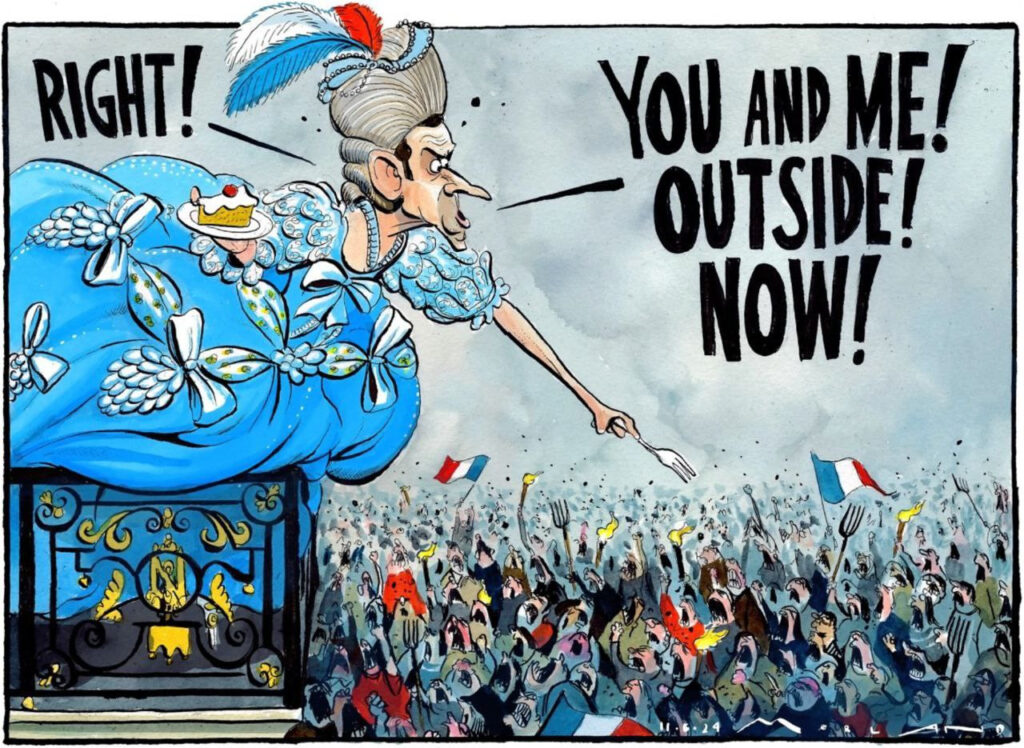
    Le 9 octobre, il partage sur X une jolie vidéo de l’entraînement en France de militaires ukrainiens et commente

    J’en avais pris l’engagement : nos militaires forment actuellement 2 300 soldats ukrainiens dans le Grand Est, avec des équipements qu’ils utiliseront en mission.

    La brigade Anne de Kyiv sera formée et équipée grâce à la solidarité de la France

    C’est sans doute Gabin Donnio Choupeaux, qui dans un entretien du mois de mars, a soufflé le nom de la brigade à la propagande bleu horizon. Bravo

    Nous partageons une histoire commune avec Anne de Kiev, épouse de Henri Ier et reine des Francs de 1051 à 1060
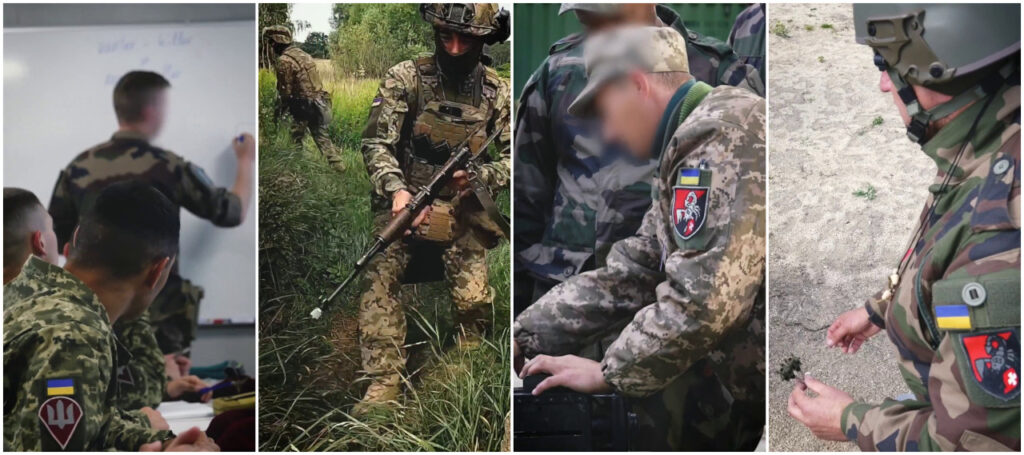
    En guise de référence, dans un souci de communication, une femme politique âgée d’environ 1000 ans est plus commode que beaucoup de personnages français ou ukrainiens de la 2de guerre mondiale. Mais le diable est dans les détails. Personne à la cour de sa Vacuité n’a remarqué l’écusson ? Porté notamment par un instructeur en tenue camouflée française, il reprend les couleurs rouge et noir, qui n’ont rien de nationales mais sont en Ukraine celles des nazis d’hier et d’aujourd’hui
    Il est l’insigne de la 155e brigade, formée en juin avec de nouveaux contingents de chair à canon ukrainienne. L’unité est d’infanterie ou mécanisée, l’histoire n’est pas encore catégorique sur ce point
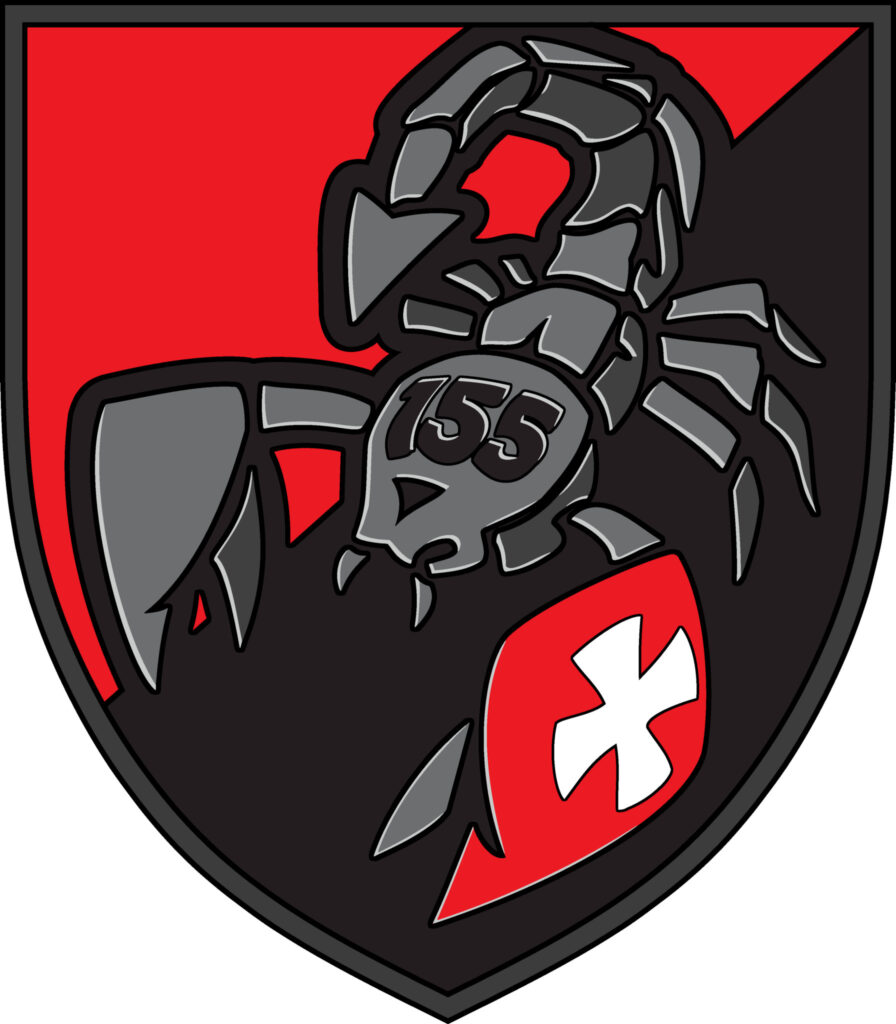
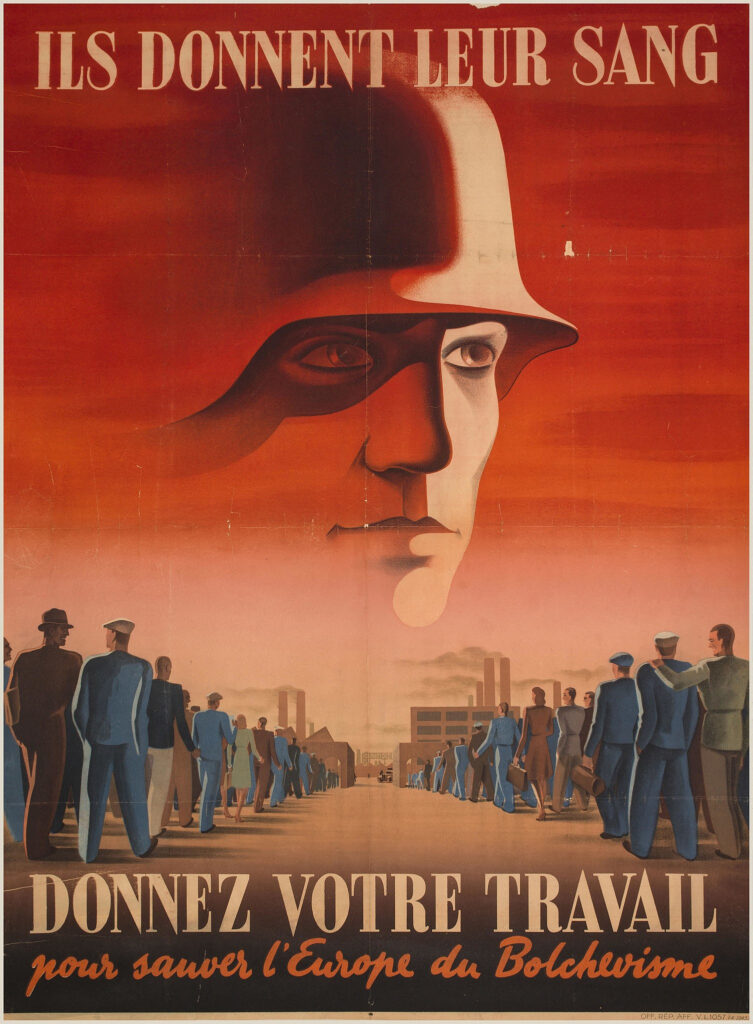
    Cela dépendra sans doute de la solidarité du contribuable français. Car comme disait autrefois l’État français, ils donnent leur sang, donnez votre travail
    Anne de Kiev ou Eva Braun ? L’image a été découverte par des internautes polonais qui la partagent le 4 novembre et s’en offusquent à juste titre. Des stagiaires ukrainiens de la 155e brigade et probablement aussi leurs instructeurs français, tous en tenue camouflée française, posent dans l’automne champenois
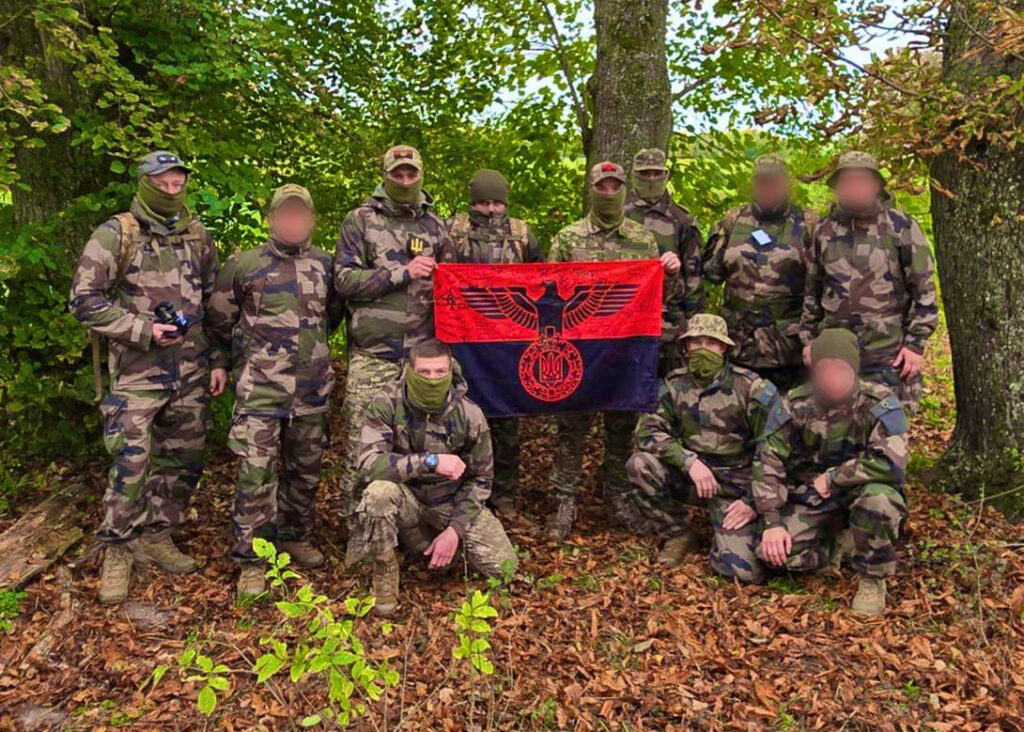
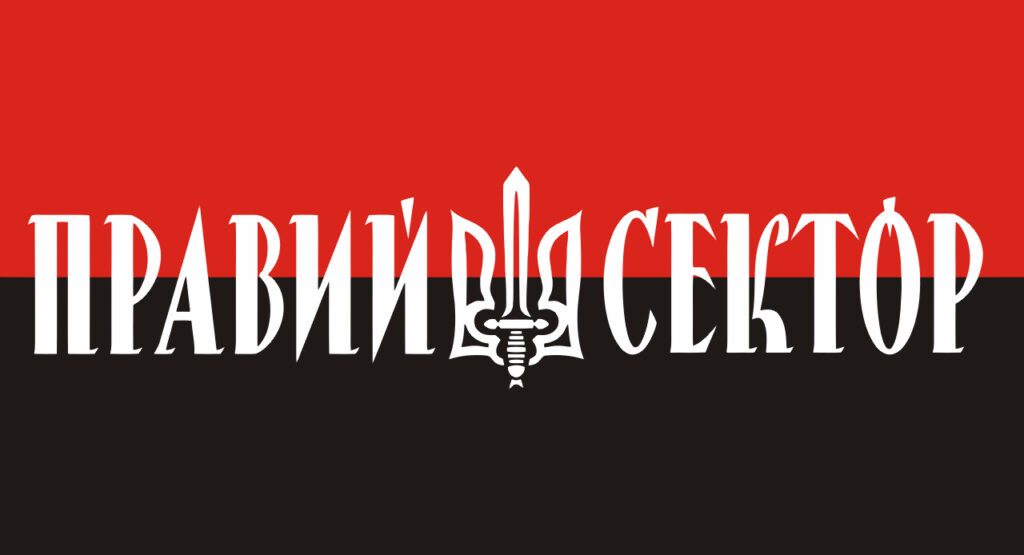
    Le groupe déploie un étendard qui ne reproduit pas l’insigne de la brigade, est une des multiples versions du drapeau que les nazis ukrainiens considèrent comme un emblème national. Les couleurs rouge et noir sont celles de l’Armée des insurgés (UPA), milice nazie ukrainienne qui entre 1943 et 1945, a massacré au moins 50 000, peut être 100 000 civils polonais. Coquetterie de cette version, le bien connu Reichsadler [aigle impérial] (cf. Sylvain Caupin), où le trident ukrainien a remplacé le swastika des nazis allemands de la 2de guerre mondiale.

    À l’instar de l’ex premier ministre, le vraiment très jeune Gabriel Attal, le département commercial de la Misanthropic Division, confrérie nazie internationale, fondée et basée en Ukraine depuis 2013, célèbre le 19 novembre le 1000e jour de l’opération militaire spéciale russe, dernier chapitre d’une guerre qui fait rage au Donbass depuis 3830 jours, soit 10 ans, 5 mois et 24 jours
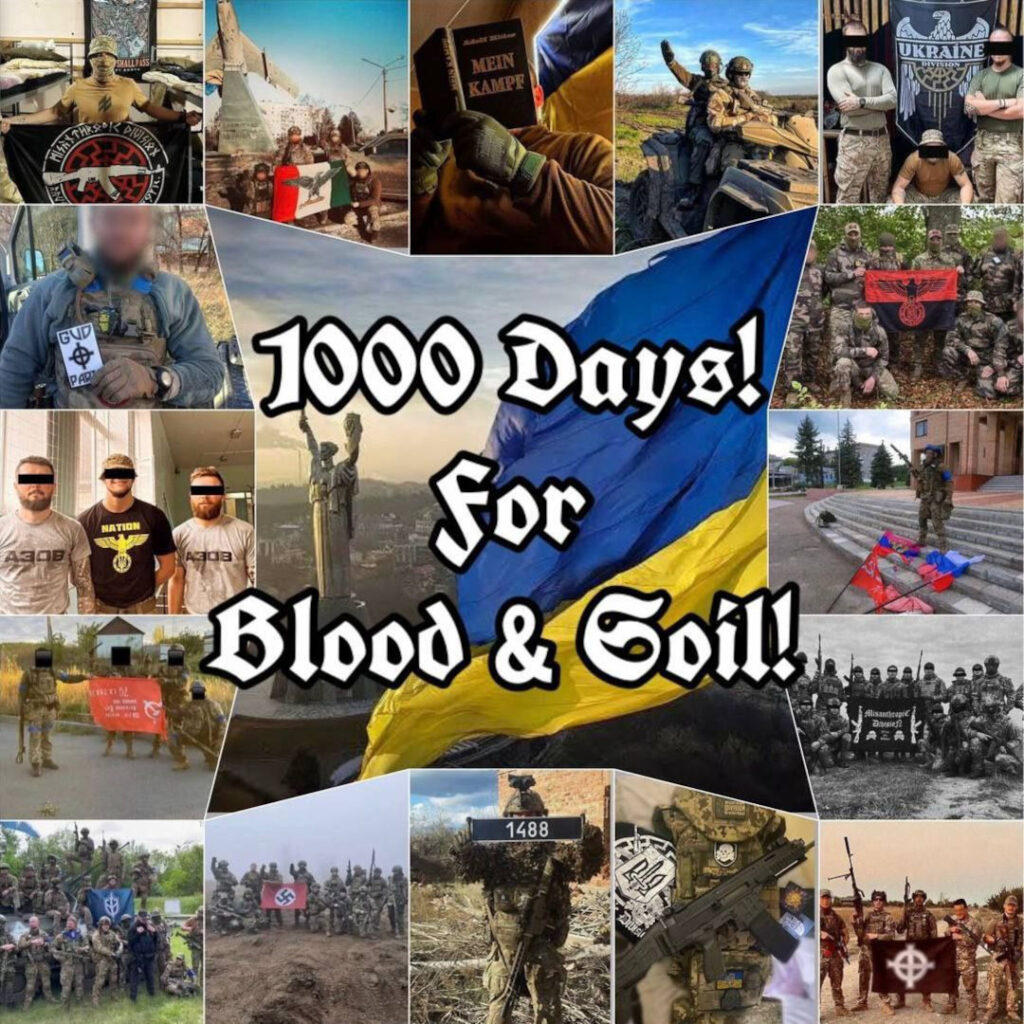
    Les nazis ukrainiens n’oublient pas la contribution française à leur cause. Leur collage comporte l’image d’un militant du GUD parisien et celle partagée le 4 par des internautes polonais, prise en Champagne par des stagiaires miltaires ukrainiens, qui aux frais de la princesse, déployèrent leur drapeau nazi
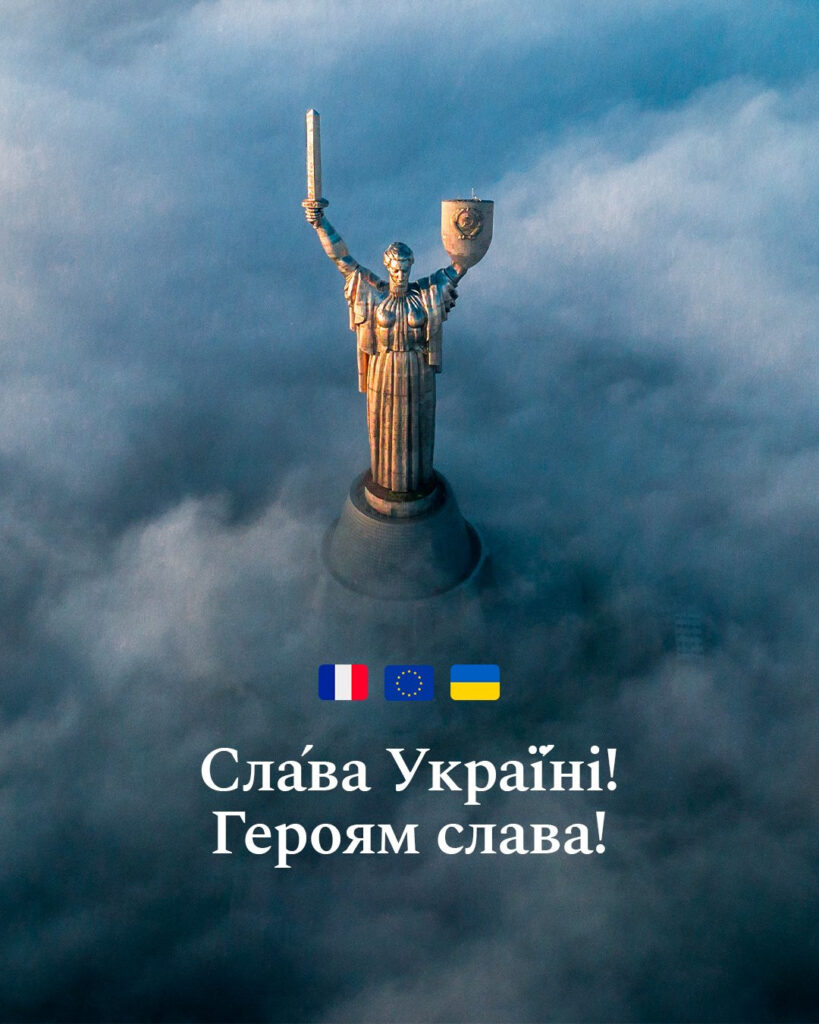
    Pour sa part, le petit Gabriel partage cette image sur X, où il clame en Ukrainien Сла́ва Украї́ні! Героям слава! [Gloire à l’Ukraine ! Gloire aux héros !]. Ses anciennes fonctions le dispensent d’ignorer que le slogan Gloire aux héros fut inauguré en avril 1941 par les fascistes de l’OUN (Organisation des nationalistes ukrainiens), alors implantés dans le Generalgouvernement für die besetzten polnischen Gebiete [Gouvernement général des territoires polonais occupés].

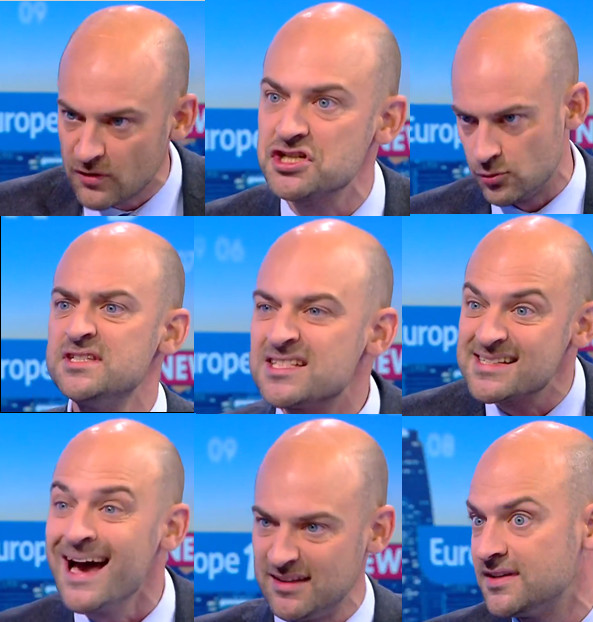
    Dans un entretien que la BBC publie le 23 novembre 2024, Jean-Noël Barrot déclare qu’il n’y a pas de ligne rouge quand il est question de soutenir l’Ukraine, que La France autorise à lancer en territoire russe ses missiles français de longue portée (SCALP, le nom français du missile de croisière que les Britanniques appellent Storm Shadow)
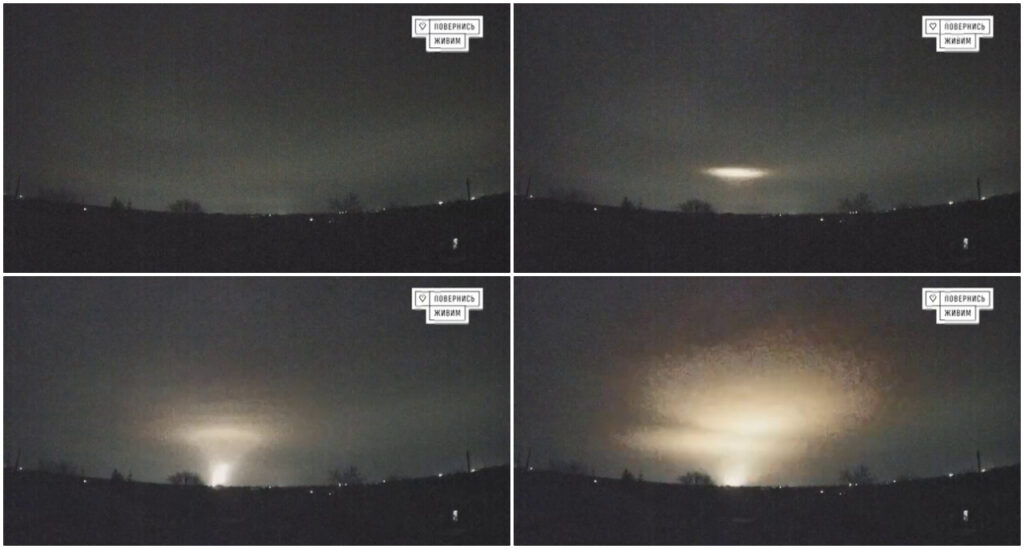
    Quel est le contexte des fanfaronnades du frais émoulu ministre des affaires étrangères de la Macronie ? En guise d’avertissement, au petit matin du 21 novembre, la Russie utilisa un missile balistique, pour cette fois à charge conventionnelle. La cible était une usine militaire à Dnipro, où la vidéosurveillance montre clairement les arrivées de six ogives distinctes
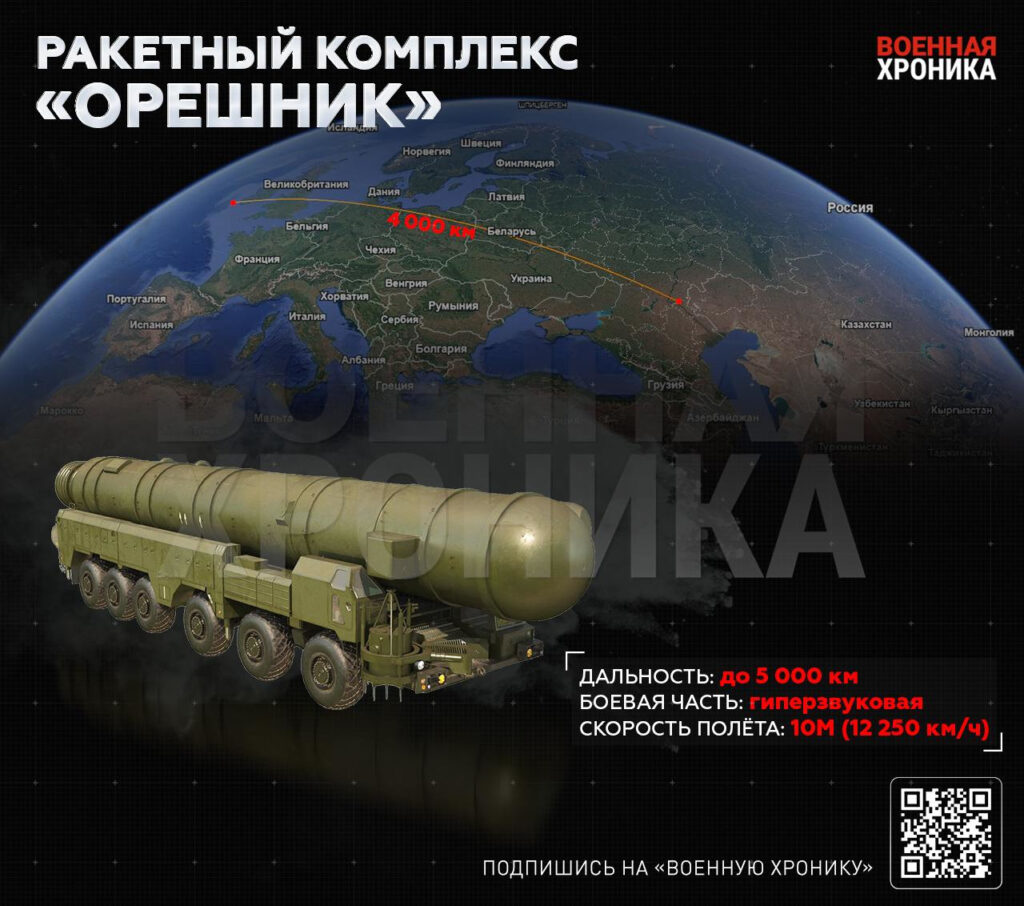
    Dans une allocution en soirée, Vladimir Poutine précisa que le nouveau système d’armes est appelé Oreshnik [Noisette]. Le missile balistique hypersonique de portée intermédiaire (IRBM hypersonique) vole à une vitesse proche de Mach 10. Sa portée de 5 000 km le prédispose au traitement de cibles en Europe
    Il ajouta

    Nous nous considérons en droit d’utiliser nos armes contre les installations militaires des pays qui autorisent l’utilisation de leurs armes contre nos installations. Et en cas d’escalade des actions agressives, nous répondrons de manière décisive et en miroir
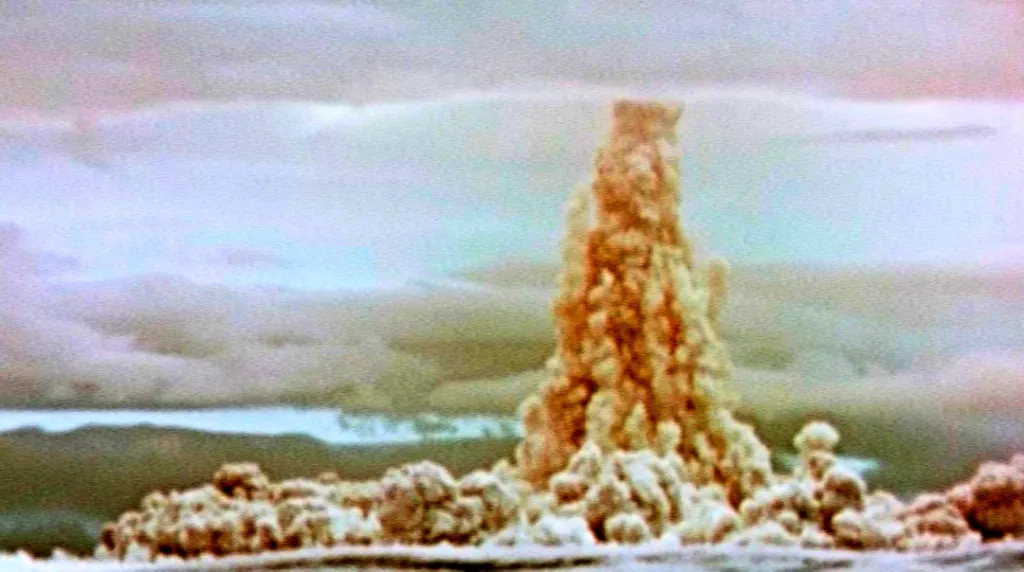
    Cette démonstration était une riposte à plusieurs attaques avec des missiles de l’OTAN, que les forces atlantistes avaient menées sur le territoire russe depuis que Joe Biden les autorisa le 17 novembre
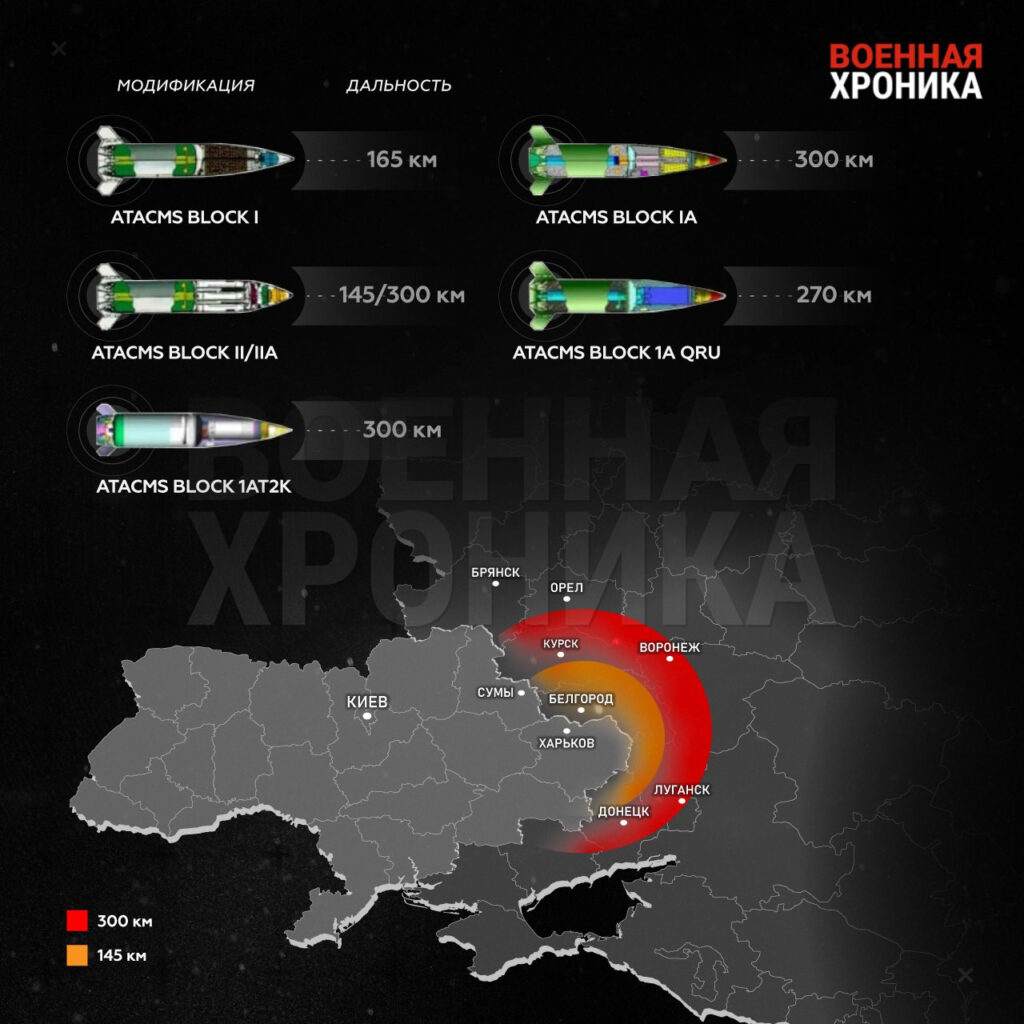
    Que justifie les menaces russes de frappes nucléaires ? Depuis le déclenchement en 2014 des opérations militaires, contre les insurgés russophones du Donbass, d’un pouvoir ukrainien issu d’un coup d’État d’extrême-droite en février de cette année là, de façon encore plus évidente après le début en 2022 de l’opération militaire spéciale russe, les stratèges occidentaux voient la Russie comme une grenouille plongée dans une eau lentement portée à ébullition. L’escalade de leur guerre par procuration est graduelle, avec l’ambition illusoire de ne pas provoquer de réaction russe symétrique. Point particulier : elle est conduite aujourd’hui avec des armes que l’Ukraine ne pourrait pas employer en territoire russe sans le concours des satellites et techniciens de l’OTAN. C’est à cette escalade graduelle que répondent les menaces de frappes nucléaires. Non pas aux effets réels de quelques missiles tactiques dont la plupart sont abattus par la défense aérienne avant d’atteindre leur cibles en territoire russe. Car cette variable est essentielle à l’analyse de la situation : les tirs de ces munitions occidentales ne changeront pas le rapport de force et n’empêcheront pas la victoire militaire de la Russie.

    Pourquoi ces tirs de missiles de l’OTAN ? Escalade graduelle donc. Mais encore ? Biden les autorisa moins de deux semaines après la victoire sans appel de Donald Trump et à deux mois de son retour à la Maison blanche. Envenimer la situation militaire pour saboter ou compliquer le règlement politique ultérieur du conflit ? C’est bien possible. L’inaliénable alliance historique entre les USA et le Royaume-Uni est une constante de l’équation. De surcroît, la russophobie épidermique et tout aussi historique des classes dirigeantes d’Albion explique aussi la position britannique.

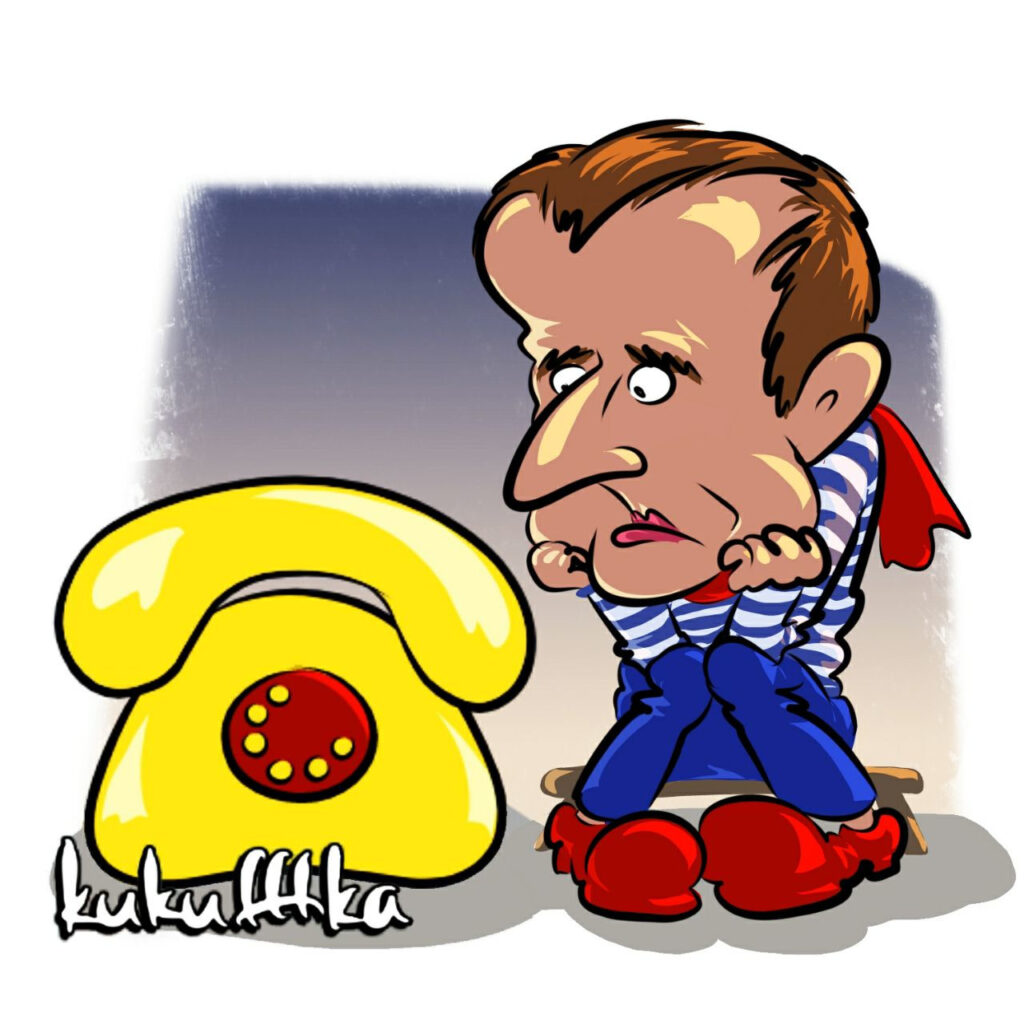
    Mais pourquoi cette posture française de supplétif doublé d’une mouche de coche ? Pour galvaniser la masse des innocents qui s’informent auprès de BFMTV, CNews ou LCI ? Sans doute, tant la communication est une préoccupation majeure des gouvernements de la Macronie. Pour satisfaire l’égo puéril d’Emmanuel Macron ? Je le crains, mais pas seulement
    Les classes dirigeantes françaises sont épouvantées par l’effondrement de l’hégémonie occidentale, ce que la perte de la Françafrique pourrait coûter à l’économie française
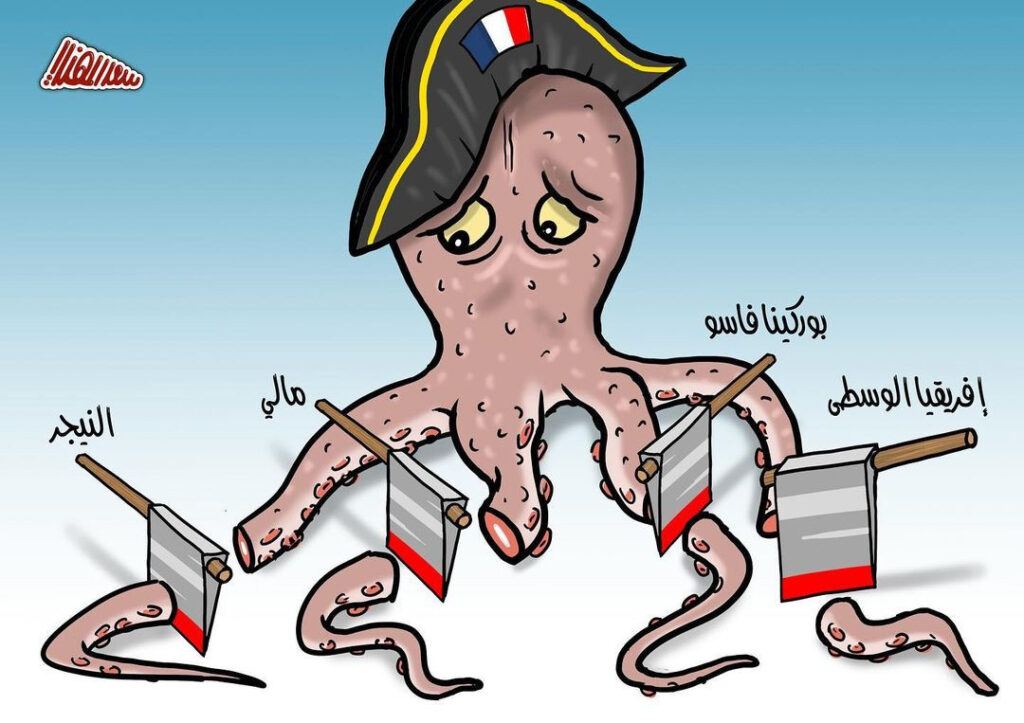
    Mais plus les Occidentaux et Français feront monter les enchères, sans pourtant empêcher la victoire russe en Ukraine ou les légitimes aspirations des Africains à leur libération, plus la défaite sera finalement humiliante et plus dure sera la chute.

    Le drame est évoqué en public le 13 décembre 2024, par le journaliste ukrainien Iouri Butoussov. Le reconstituer dans son intégralité est une tâche aisée pour l’observateur chevronné.

    Engagée en République populaire de Donetsk, soumise dans le secteur de Pokrovsk à l’étreinte puissante des forces russes, la brigade Frénégonde de Pouille [ou quelque chose comme ça] s’est désagrégée le 10 décembre. Au moins un millier d’hommes, près de la moitié de son effectif théorique total, sont partis en déroute et ont déserté
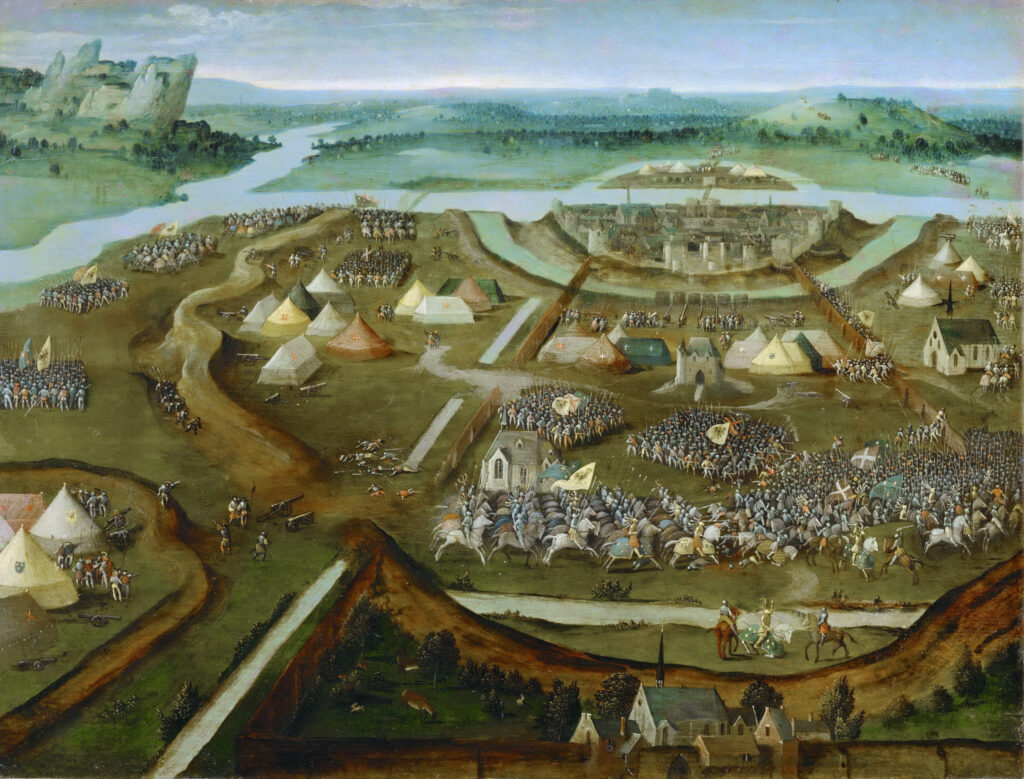
    C’est aux frais de la princesse, que cette 155e brigade mécanisée avait été équipée de matériel français et entraînée en Champagne. Macron s’en vanta le 9 octobre sur les réseaux sociaux. Mais tout est perdu, même l’honneur.

    Le 2 janvier 2025, pour boire le calice jusqu’à la lie, le Parisien nous rappelle la brigade Frénégonde de Pouille [ou quelque-chose comme ça], pour nous apprendre que le nombre de désertions s’élèverait alors à 1 700. Soit 74% d’un effectif total de 2 300, que j’ai pris la peine de relever en octobre. Et non pas 4 500, comme le quotidien cocardier le prétend, quand il relaie la propagande atlantiste. 4 500 est l’effectif moyen d’une brigade états-unienne, mais celles formées en Ukraine sont toujours de petits calibres.

    L’article stimule ma curiosité et alors que le récit de ces déboires fait le tour des rédactions des vastes restes du monde, dont hilares, celles de la perfide Albion, une source peu suspecte de sympathie pour la Russie, Wikipedia, nous précise le 3 janvier que début décembre, le nombre de désertions s’élèvaient déjà à 1 883, dont 50 en France, soit 82% d’un effectif total de 2 300
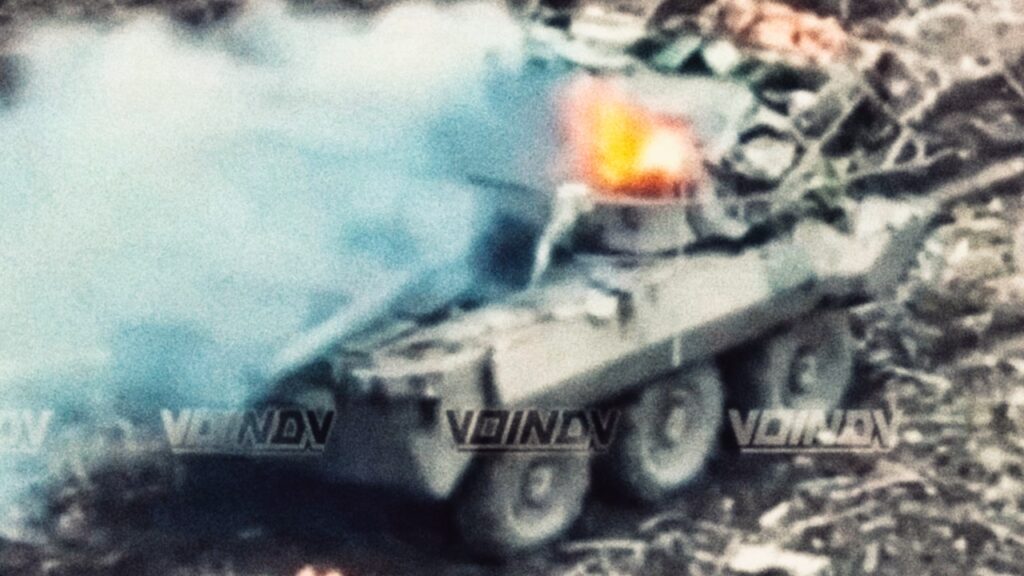
    Comme nous le savions déjà, le reliquat a été engagé dans le secteur de Pokrovsk, République populaire de Donetsk, où il s’est fait étriller. La guerre tue, surtout les vaincus, c’est un peu le principe. Mais un animateur de foire comme Emmanuel Macron est si peu équipé pour en saisir le sens ou les vertus.

    Le 17 février 2025, veille de l’ouverture en Arabie Saoudite de négociations entre Russie et États-Unis au sujet de l’Ukraine, il accueille à Paris une réunion impromptue de dirigeants européens qui s’opposent aux perspectives de paix favorisées par la victoire de Donald Trump. Leur hostilité à la fin de la guerre atlantiste par procuration en Ukraine est d’ailleurs la raison pour laquelle ces matamores européens ne sont pas invités à participer aux négociations entre les deux grandes puissances. Les États-uniens ont beau jeu de rappeler que France et Allemagne étaient censées garantir depuis 2014 le respect par l’Ukraine des accords de Minsk. La presse bleu horizon tâche de vanter l’événement, mais la réalité est sordide
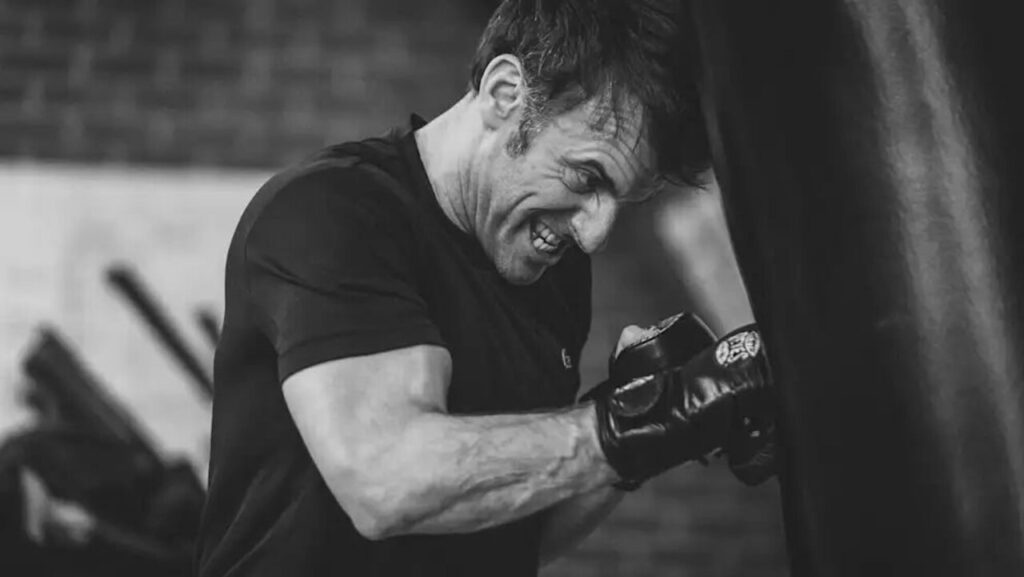
    Aussi peu performants en général ou populaires à domicile que Macron, le Britannique Keir Starmer et l’Allemand Olaf Scholz sont les vedettes de la réunion. Donald Tusk est aussi présent, mais la Pologne a déjà décidé de ne pas engager son armée en Ukraine. D’autres chefs d‘États et la bureaucrate teutonne Ursula von der Leyen complètent le tableau. Leur tactique immédiate consiste à quémander une participation européenne aux négociations et pour l’Ukraine, un accès à l’OTAN que Washington refuse déjà. Royaume-Uni et France clament leur volonté de déployer des troupes de maintien d’un éventuel cessez-le-feu mais ne disposent plus en volume d’armées capables de mener une telle opération.

    Le même jour, le philosophe Harold Bernat publie un texte fort à propos, où il constate l’effondrement [intellectel] sidérant d’une bourgeoisie dont Emmanuel Macron est le héraut.

    Un autre exemple spectaculaire de ce syndrome est une femme, également impliquée dans les méfaits de l’Europe en Ukraine : la ministre allemande des affaires étrangères Annalena Baerbock, qui a sidéré depuis 2022 par ses lacunes en géométrie et géographie. Toujours le 17 février, elle se montre incapable de garder un secret stratégique et révèle à la presse berlinoise le projet européen d’une nouvelle aide financière apportée à Volodymyr Zelenskyy et ses amis, pour un montant de 700 milliards d’euros.

    Le 20 février, il se prête sur les réseaux sociaux à une conférence citoyenne au sujet de l’Ukraine. Son introduction est une farce, qui s’adresse à des demeurés, qui n’auraient pas suivi l’actualité et ne comprendraient rien à la géopolitique. Il commence par recyler tous les lieux communs de la propagande et désinformation atlantiste, les mensonges qui avec la nouvelle administration de Donald Trump, ont disparu dans la communication états-unienne
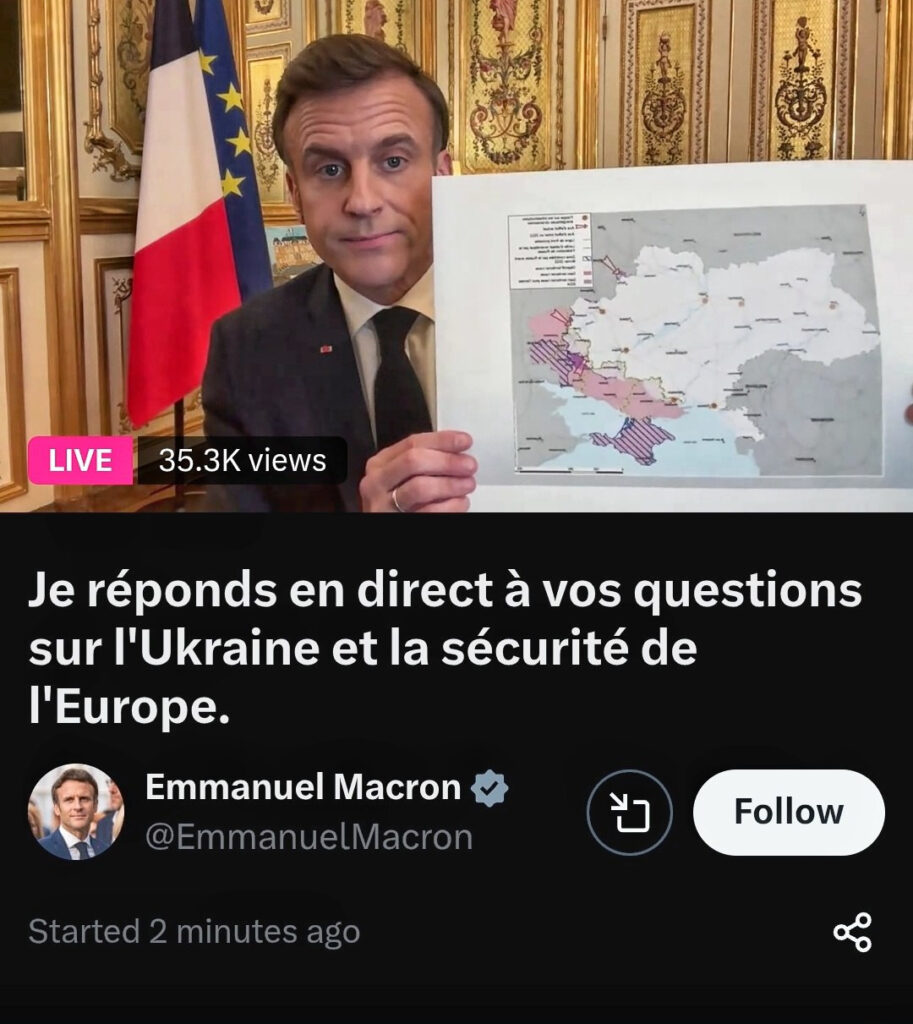
    Le flot de questions sur les nombreuses plateformes est évidemment filtré par une équipe d’assistants, qui ignorent celles qui posent vraiment problème. J’en retiens deux qui resteront sans réponse, tout d’abord de Jacques [Baud, analyste stratégique suisse] et Aude [Lancelin, journaliste française]

    Bonjour M Le Président. Question de Jacques de Genève et Aude de Paris. Pourquoi les européens ont ils empêché le président Zelensky, à 3 reprises au printemps 22, de signer un accord avec la Russie garantissant l’intégrité territoriale de l’Ukraine ?

    puis la mienne

    Bonjour,

    votre stratégie d’engagement militaire français apparaît confuse, vos déclarations, contradictoires.

    La possibilité semble se dégager du stationnement dans l’ouest du pays de militaires français qui permettraient à l’Ukraine, par translation, d’en envoyer autant au front.

    Pensez vous que les Russes se dispenseront de mener des frappes stratégiques contres les militaires français stationnés en Ukraine ?

    Pete Hegseth, Secrétaire à la défense US, précisa déjà le 12 février qu’engagées en Ukraine, les troupes européennes ne seraient pas couvertes par l’article 5 de l’OTAN.

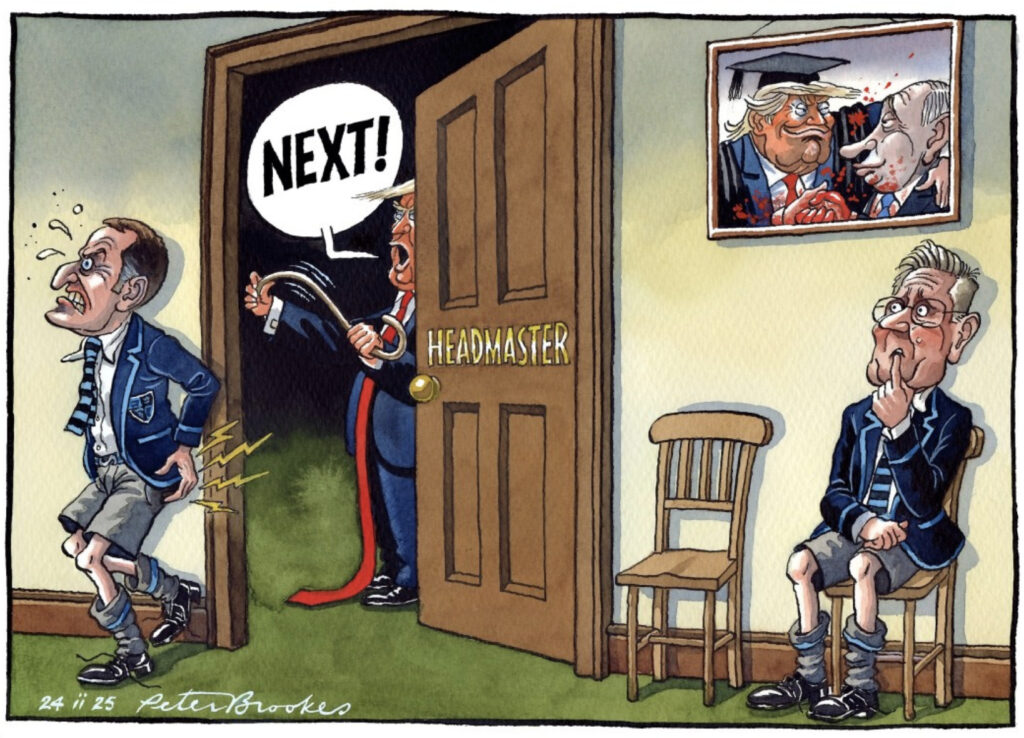
    Le 22 février, Donald Trump fait longuement patienter Andrzej Duda et ne lui accorde ensuite qu’une dizaine de minutes. Le président polonais est le premier d’un convoi de dirigeants européens qui se précipitent à Washington pour tenter d’infléchir la stratégie en Ukraine de la nouvelle administration US. Lorsqu’il s’adressa aux Français le 20, Emmanuel Macron se prévalut d’une familiarité qui devait lui permettre de faire la leçon à son homologue états-unien, de le convaincre de ne pas se montrer faible à l’égard de Vladimir Poutine
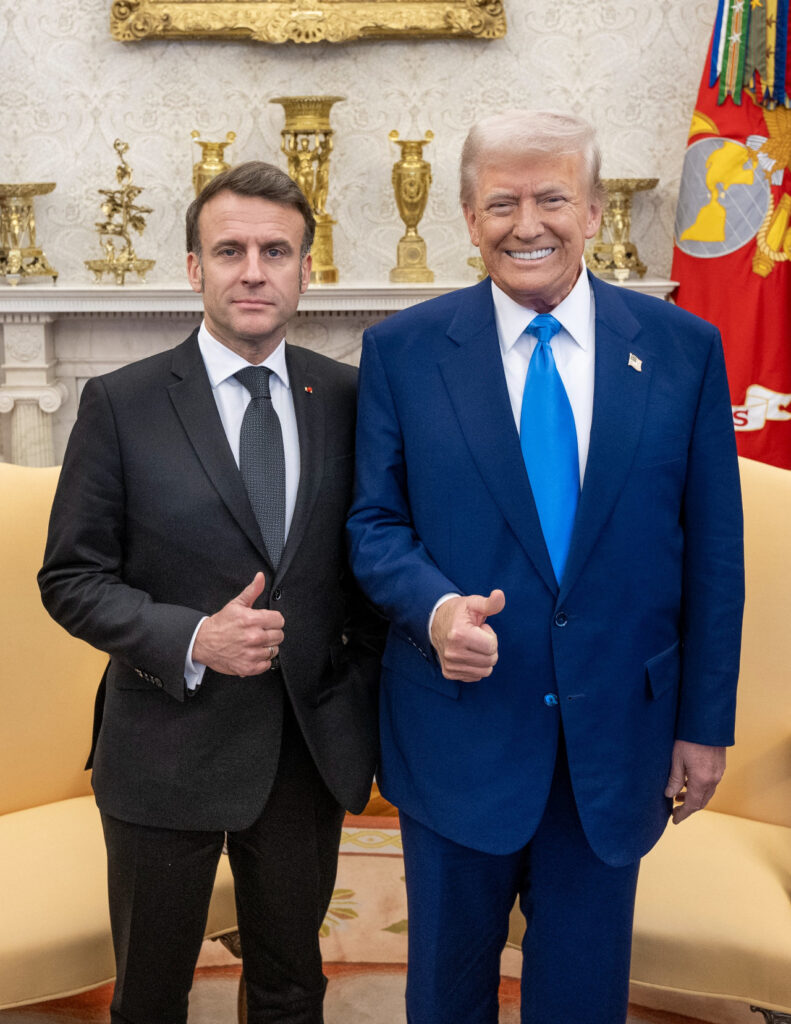
    Comme l’illustrent ses traits tirés par la fatique sur la photographie prise à la Maison Blanche le 24 février, il n’obtient rien de Trump. Je suppose au contraire que ses fanfaronnades antérieures, ses familiarités à Washington et les questions de fond exaspèrent le président US, trois jours avant qu’à son tour, le Britannique Keir Starmer ne se prête à l’exercice
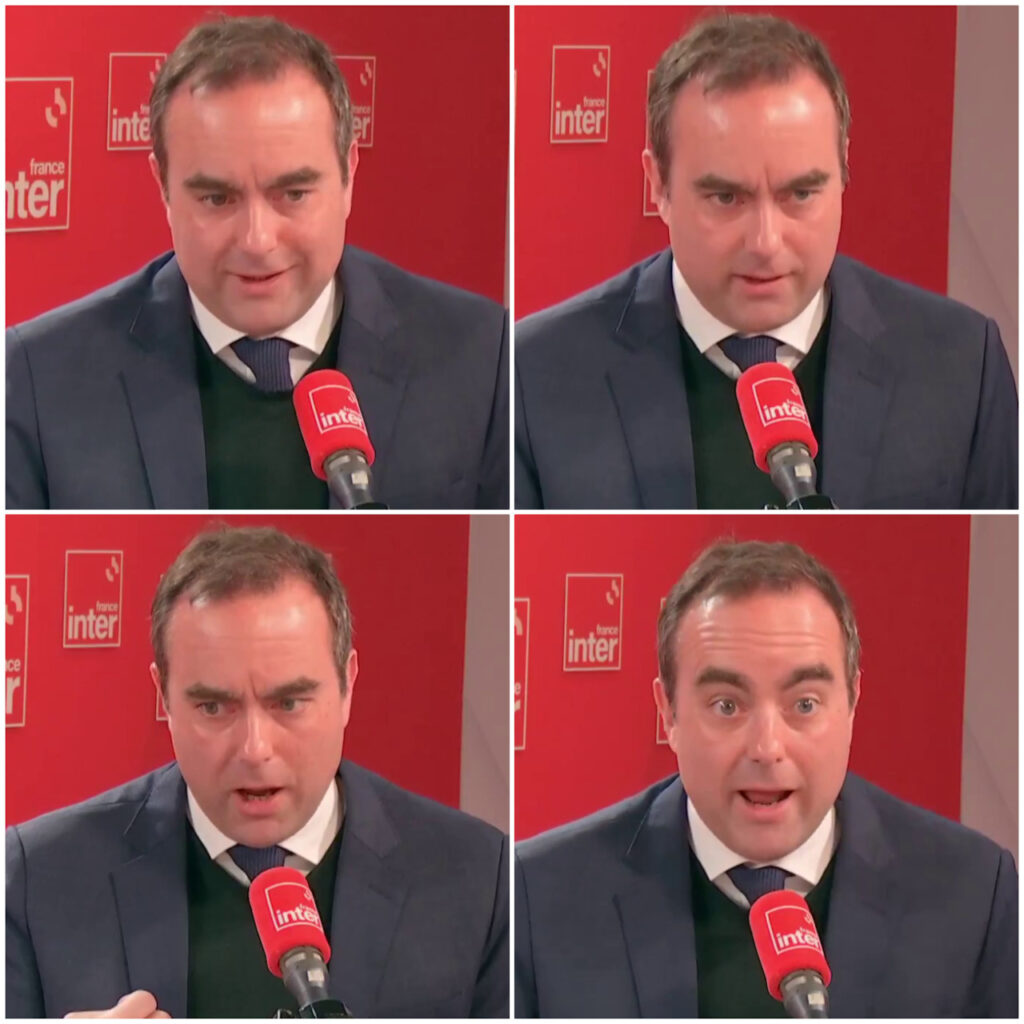
    His name is Lecornu, Sébastien Lecornu. Le 6 mars 2025, au lendemain de la confirmation de la suspension des échanges du renseignement états-unien avec l’Ukraine, le ministre des armées annonce au micro de France Inter
    […] on a des moyens de renseignement, dont nous faisons bénéficier les Ukrainiens […]

    Dans la foulée de nouveaux mensonges et fanfaronnades télévisuels d’Emmanuel Macron, il cherche aussi à stimuler le sens civique de ses concitoyens

    […] placez votre argent de manière patriotique, pour financer la défense […]

    On [qui est un con] pourrait aussi appeler cela la Banque de l’Indochine, ou… les Emprunts russes. L’inspecteur Clouseau s’en va t’en guerre
    Pendant ce temps, le MEDEF (Mouvement des entreprises de France), qui ne perd pas le nord, la presse bleu horizon ou macroniste, distillent l’idée d’une retraite à 70 ans, qui serait justifiée par l’opportunité d’un effort militaire en soutien à l’Ukraine. Car en réalité, la seule démarche stratégique cohérente de Macron est très simple ; elle consiste à casser les acquis sociaux et imposer une société ultra libérale. Si personne ne peut vraiment le qualifier d’homme intelligent, il est cependant malin comme un singe
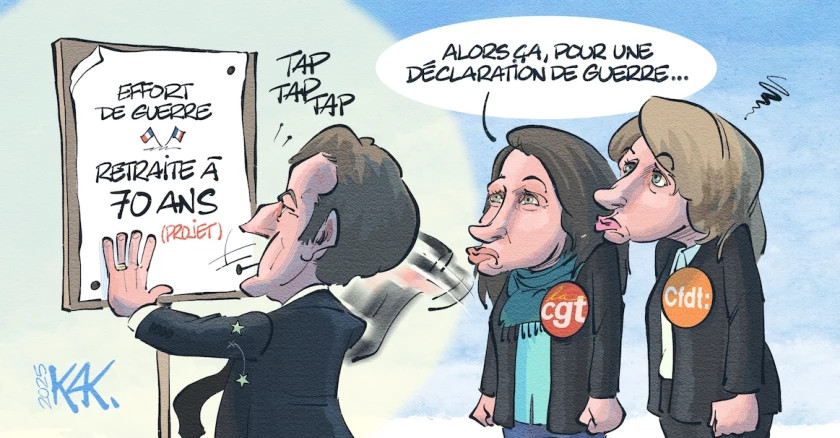
    Il sait comment faire avaler des couleuvres. Son terrain est facile : il flatte la vanité nationale des Français. Le philosophe allemand Arthur Schoppenhauer (1788-1860) énonça avant 1851

    La fierté nationale est la forme la moins coûteuse de fierté. Si un homme est fier de sa nation, cela signifie qu’il n’a aucune qualité dont il puisse être fier. Autrement, il ne pourrait pas faire appel à celles qu’il partage avec des millions de ses concitoyens. L’homme qui possède des qualités personnelles importantes ne verra que trop bien dans quels domaines sa propre nation est déficiente, car ses défauts seront constamment sous ses yeux. Mais tout misérable imbécile qui n’a rien dont il puisse être fier, adopte en dernier recours la fierté de la nation à laquelle il appartient ; il est prêt et heureux de défendre bec et ongles tous les défauts et les folies de la nation, se dédommageant ainsi de sa propre infériorité

    Les derniers événements permettent de clarifier la subordination d’Emmanuel Macron. Il n’est pas fidèle aux autorités légales des États-Unis, puisqu’il s’oppose à l’administration de Donald Trump, qui accomplit une inflexion stratégique majeure, quand Joe Biden et Européens étaient au diapason. Il s’affirme plutôt comme l’hériter d’un François Hollande, qui alors Premier secrétaire du Parti socialiste, protestait contre l’opposition de Jacques Chirac à l’invasion anglo-états-unienne de l’Irak en 2003 et faisait des ronds de jambes à l’ambassade parisienne de l’administration de George W Bush.

    Il ne défend pas non plus les intérêts des Français, puisqu’il a besoin de leur mentir de façon grotesque, quand il prétend qu’après l’Ukraine, la Russie pourrait attaquer d’autres pays. L’idée est farfelue, car une telle agressivité déclencherait l’article 5 de l’OTAN. Leur ment quand il prétend que la Russie n’aurait pas respecté les accords de Minsk, alors que c’était évidemment l’Ukraine qui ne les a pas appliqués et le même François Hollande qui mentait, quand il prétendait les garantir. Lui-même et Angela Merkel reconnurent fin 2022 et début 2023 que dans leur esprit, ces accords étaient une escroquerie pour tromper la Russie, devaient donner à l’OTAN le temps d’armer l’Ukraine. Non, Macron n’est pas un aigle, mais même lui ne peut croire de telles sornettes
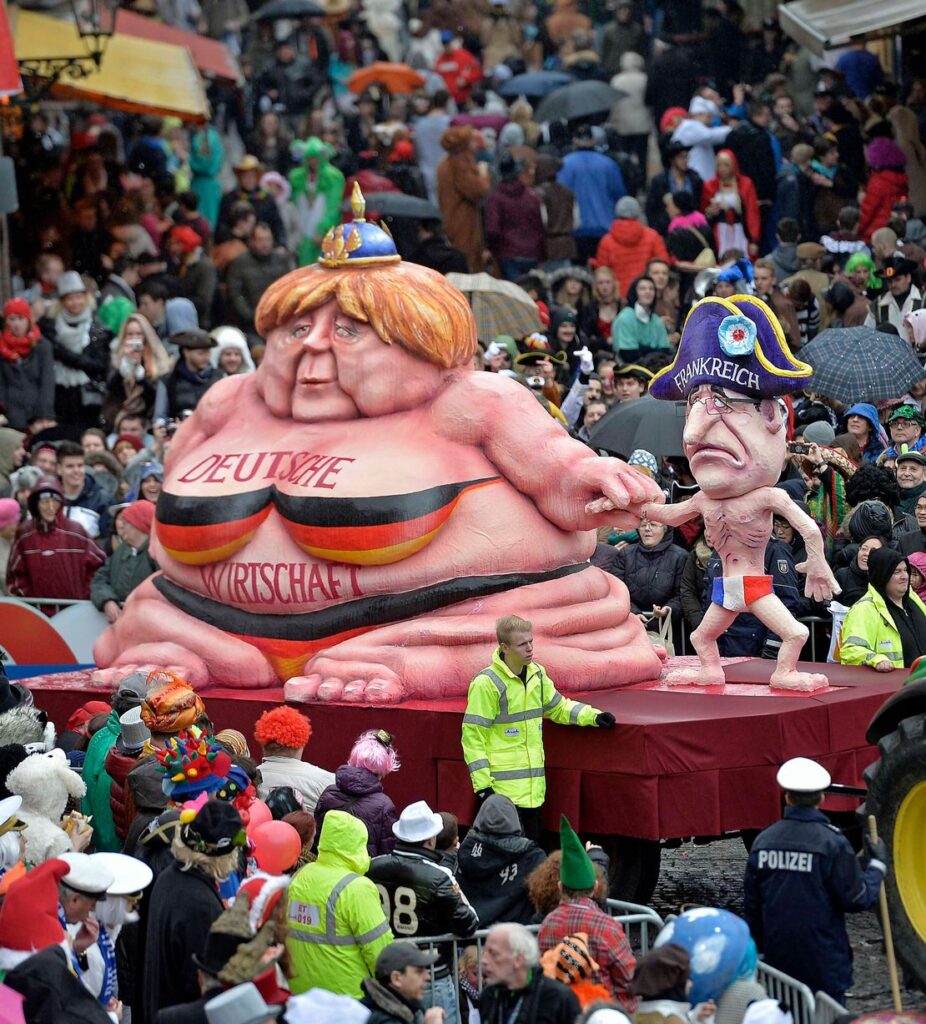
    Alors de quoi est il le nom ? Comme le montre aussi sa politique intérieure et à l’instar du social-démocrate Keir Starmer comme de la droitarde Ursula von der Leyen, il apparaît comme le soldat d’une collusion puissante entre ploutocrates européens et néoconservateurs US, plus sournois quand ils appartiennent au Parti démocrate. Trump bouleverse des décennies de politique étrangère des États-Unis et Macron est le caniche de von der Leyen. Sa relation aux femmes plus âgées est compliquée.

    Le 23 avril 2025, les divas européennes sabotent les négociations de paix en Ukraine. Ce jour là à Londres, une réunion est prévue entre pays occidentaux. Mais au dernier moment, Volodymyr Zelenskyy prévient par voie de presse qu’il refuse d’accepter la perte de la Crimée, pourtant un moindre mal, vu la situation militaire. Par conséquent, le Secrétaire d’État Marco Rubio se décommande, ce qui annule aussi la participation des ministres européens des affaires étrangères.

    Quel âme damnée a bien pu inspirer le comédien ukrainien ? Alors en visite à Madagascar, dans la foulée de la colonie de Mayotte, le porte parole d’Ursula von der Leyen le fait savoir dans la journée par l’Élysée

    L’intégrité territoriale et la vocation européenne de l’Ukraine sont des exigences très fortes des Européens

    Alors que son Envoyé spécial Keith Kellogg se rendra à Moscou dans la semaine, Donald Trump écrit sur les réseaux sociaux

    […] La situation de l’Ukraine est désastreuse. Il [Zelenskyy] peut obtenir la paix ou se battre pendant trois ans de plus, avant de perdre tout le pays […]

    Difficile de mieux résumer la situation militaire, qui par tradition bien ancrée dans une guerre, dicte le sens des négociations de paix. Son opposition dogmatique à la paix et son incapacité à accepter la réalité du terrain illustrent à quel point la corrompue Union européenne n’est plus aujourd’hui que l’automate des illuminés de l’État profond néoconservateur US. Je suis très optimiste car convaincu qu’elle le paiera cher.

    Emmanuel Macron subit à nouveau une spectaculaire humiliation diplomatique au cours du weekend des 10 et 11 mai 2025. Ses partenaires l’ont déjà adoubé héraut de l’Europe, alors qu’à défaut de l’estomac nécessaire pour mener à terme ses projets pacifiques en Ukraine, Donald Trump se désintéresse désormais du sujet. En conséquence, la Russie envisage la possibilité d’adapter sa stratégie, de résoudre le conflit en moins de deux mois, par une campagne décisive de frappes qui liquiderait les dirigeants ukrainiens et détruirait en totalité les infrastructures critiques de l’Ukraine
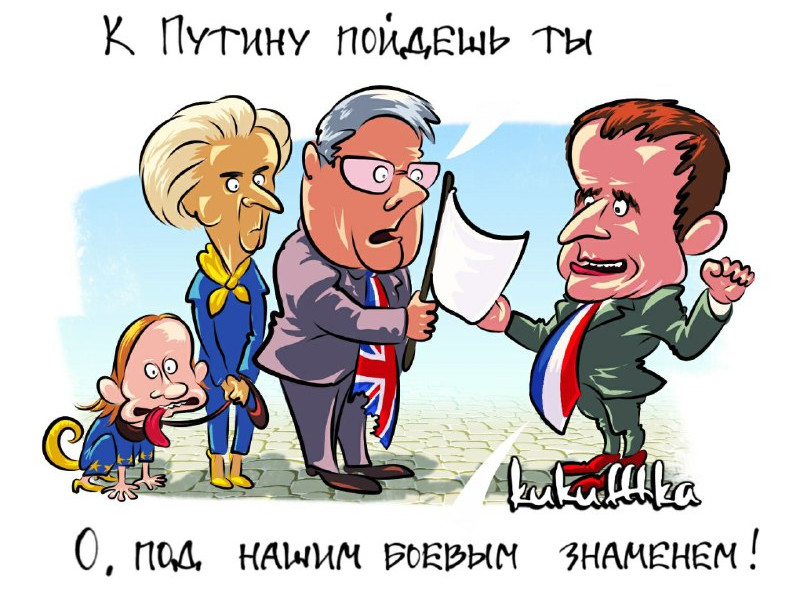
    Volodymyr Zelenskyy et les Européens commencent par proposer un cessez le feu d’un mois à compter du 12 mai. Donald Trump soutient l’idée et voilà que sa Vacuité explose en plein vol, exige le respect de ce cessez-le-feu par la Russie, qu’il menace à défaut de nouvelles sanctions économiques. Effets indésirables, peut être, de l’abus de substances pyschotropes. Son obsession est toujours d’employer un tel cessez-le-feu à injecter en Ukraine des troupes françaises et britanniques
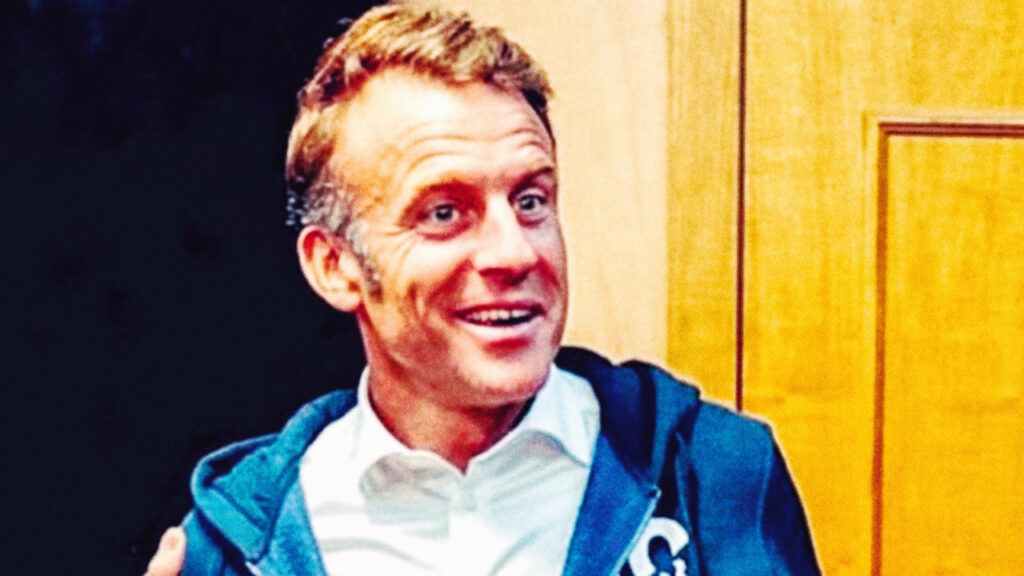
    Après minuit, le 11 mai, à l’issue d’une trêve unilatérale russe de trois jours, en mémoire de la victoire soviétique, 80 ans plus tôt, sur les armées fascistes européennes, Vladimir Poutine méprise avec calme l’ultimatum de l’arrogant Français. Il propose la reprise à Istanbul, le 15 mai, des négociations de paix qui avaient bien commencé en mars 2022, mais que le Royaume-Uni et les États-Unis de Joe Biden sabotèrent, pour poursuivre contre la Russie une guerre par procuration aujourd’hui perdue. Donald Trump lui apporte son soutien dans la journée. Volodymyr Zelenskyy accepte aussi et peut être encore en altitude, écrit sur les réseaux sociaux qu’il pense rencontrer personnellement Vladimir Poutine à Istanbul.

    L’anecdote illustre mon analyse supra de la subordination d’Emmanuel Macron. Après la réception à l’Élysée le 7 mai du djihadiste Abou Mohammed al Joulani, dictateur d’une Syrie désormais saignée par les persécutions religieuses, Jean-Noël Barrot, erreur de casting au ministère des affaires étrangères, est le 15 à Istanbul, où il présente ses ronds de jambe à la plus grotesque figure néoconservatrice, l’immonde sénateur sudiste républicain Lindsey Graham
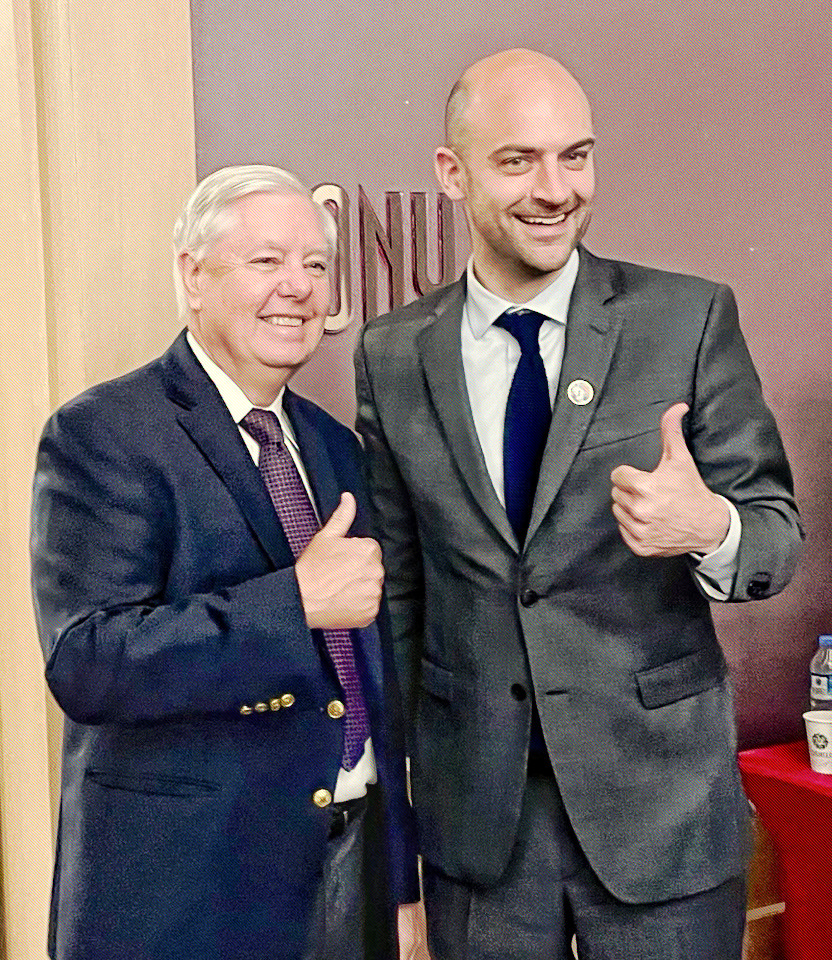
    Sur le fond, la Russie ignore les gesticulations françaises et européennes. Dans la même ville, le lendemain, ses plénipotentiaires présentent à une délégation ukrainienne leurs conditions pour un cessez-le-feu : le retrait des troupes atlantistes des positions qu’elles occupent encore dans les régions de Donetsk, Kherson, Lugansk et Zaporojie

    Heureusement, pour notre détente, Emmanuel Macron et ses pérégrinations internationales, comme le 25 mai 2025 à Hanoï, sont aussi une source inépuisable de plaisanteries.

    Savamment synchronisés, à deux jours d’intervalle, le chef d’état-major Thierry Burkhard puis Emmanuel Macron, le 13 juillet, se succèdent à la tribune pour galvaniser les crétins qui s’appellent eux-mêmes patriotes
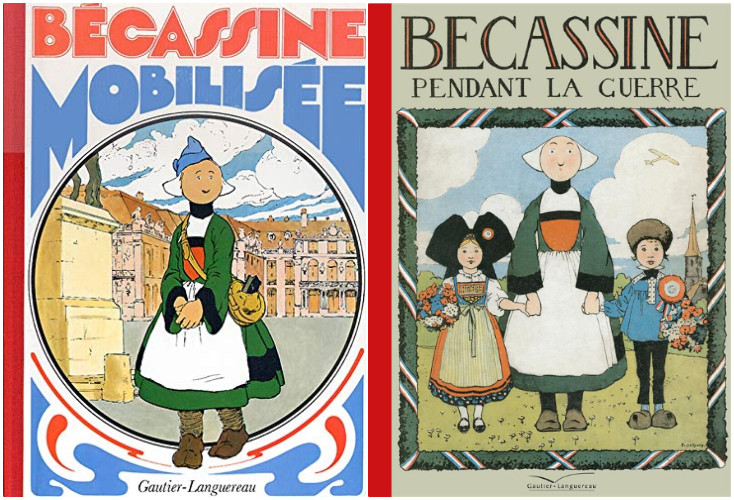
    Préserver un modèle social hérité du Conseil national de la résistance (CNR) au lendemain de la 2de guerre mondiale ou doubler* le budget militaire, Macron a choisi, car il veut être craint. Mission délicate, car depuis huit ans, il passe pour un imbécile auprès de ses homologues étrangers. Parmi ses soutiens, le mignon Gabriel Attal veut tenir son rang

    Face aux menaces, les plus pressantes sans doute depuis 1945, la France doit impérativement continuer son réarmement. Pour tenir son rang, être respecté, et protéger nos intérêts vitaux [en Françafrique]

    Maintenant la bonne nouvelle : puisqu’ils ont choisi l’affrontement, je prédis que les pinzuti [Français] se feront quand même humilier. Car aucun sacrifice social ne suffira à empêcher l’effondrement de l’hégémonie occidentale. Pas plus que furent victorieuses les guerres anachroniques pour préserver l’empire colonial.

    * l’objectif est de doubler par rapport à 2017 et avant la fin de son second mandat, un budget militaire en constante augmentation. Il est de €50,5 milliards en 2025, devrait être de €63,4 milliards en 2027
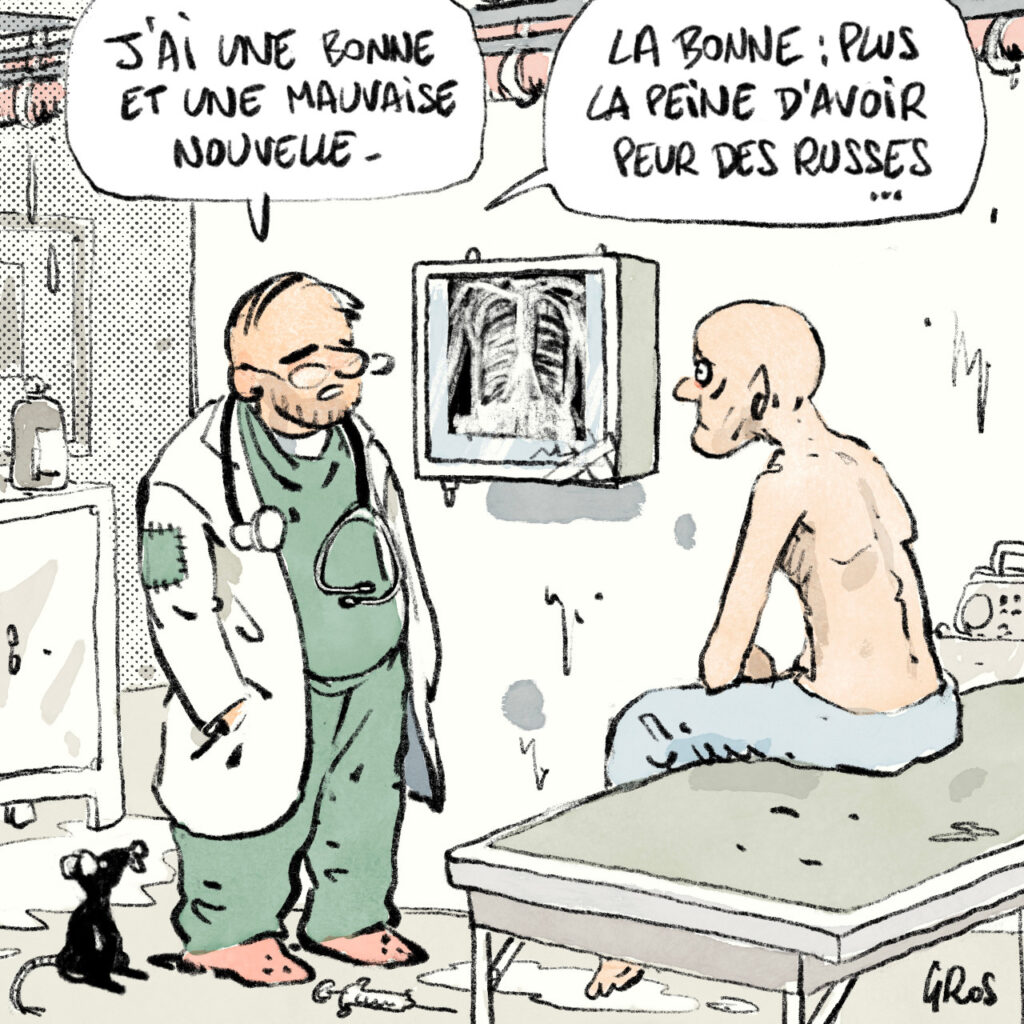
    Malheureux concours de circonstances ou bien schizophrénie française et perversion d’Emmanuel Macron ? Le 15 juillet, le premier ministre François Bayrou dévoile les grandes lignes du budget 2026 d’une France en redressement judiciaire, après 18 ans de gouvernement atlantiste. Cette actualité nationale est riche d’enseignements et dans un article qu’il publie le 17 juillet, Emmanuel Todd est contraint de recourir à la psychiatrie pour comprendre les effets de bord du déclin occidental et français. La conclusion s’impose : la Russie est la cible des fantasmes érotomanes d’Emmanuel Macron et ses laquais.

    Le prix Nobel de la paix est la dernière obsession de Donald Trump, qui le 18 août 2025, trois jours après sa rencontre avec Vladimir Poutine à Anchorage, accueille Volodymyr Zelenskyy et un quarteron de dirigeants européens à la Maison Blanche. La chorégraphie de la réunion des laquais de daddy Trump est un travail psychologique, une catharsis, pour que l’Occident reconnaisse enfin sa défaite dans le Donbass et en Ukraine
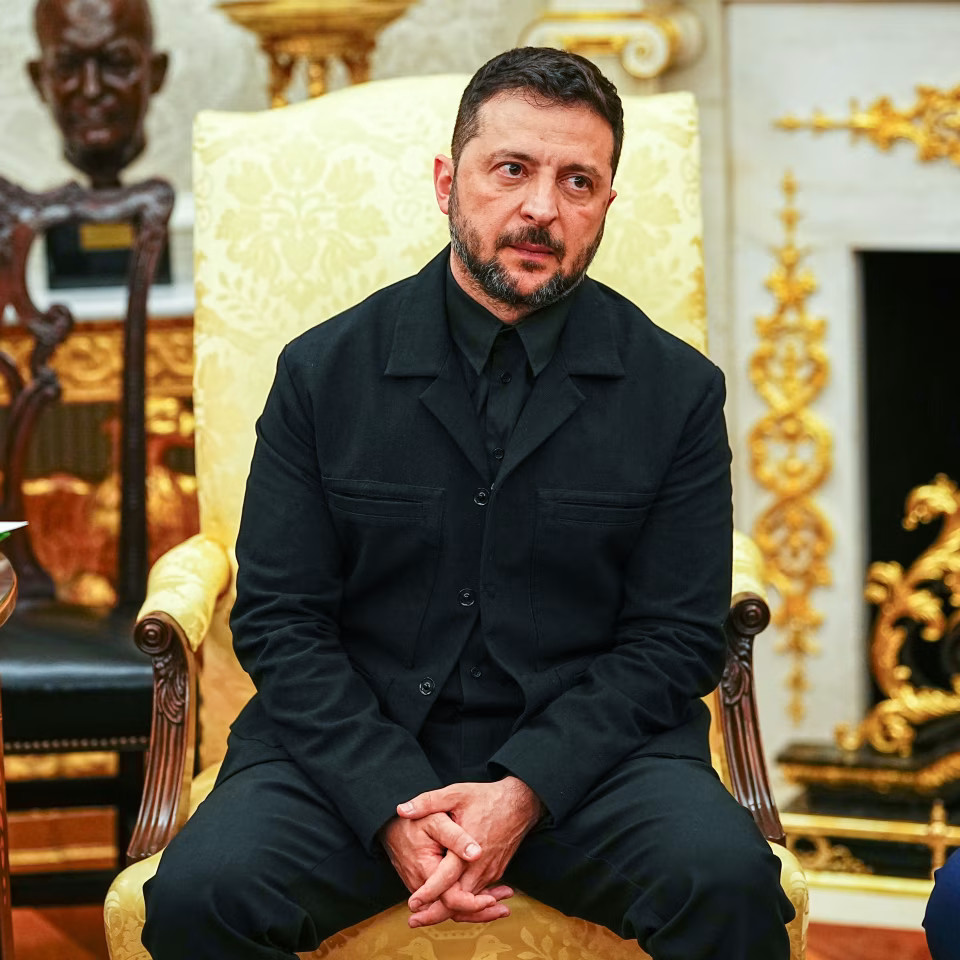
    Encore traumatisé par son humiliation à Washington, Emmanuel Macron accorde le lendemain un entretien aux journalistes de LCI. Lors de cette nouvelle envolée lyrique, il déclare

    Ne soyons pas naïfs. Y compris pour sa propre survie, il [la Russie où Vladimir Poutine ?] a besoin de continuer de manger. C’est un prédateur, un ogre à nos portes

    illustre le diagnostic antérieur d’Emmanuel Todd. Le président français souffre d’érotomanie.

    La sûreté de l’État français a cessé depuis longtemps de m’intéresser et au contraire, je suis même réputé lui porter atteinte. D’autres sont entrés dans la carrière, dit la chanson, essuient aujourd’hui un échec cruel. Ce qui arrive même aux meilleurs. Mais ce sont les Alliés qui ne sont pas contents. La France aura beau nier, eux savent que les données sont authentiques.
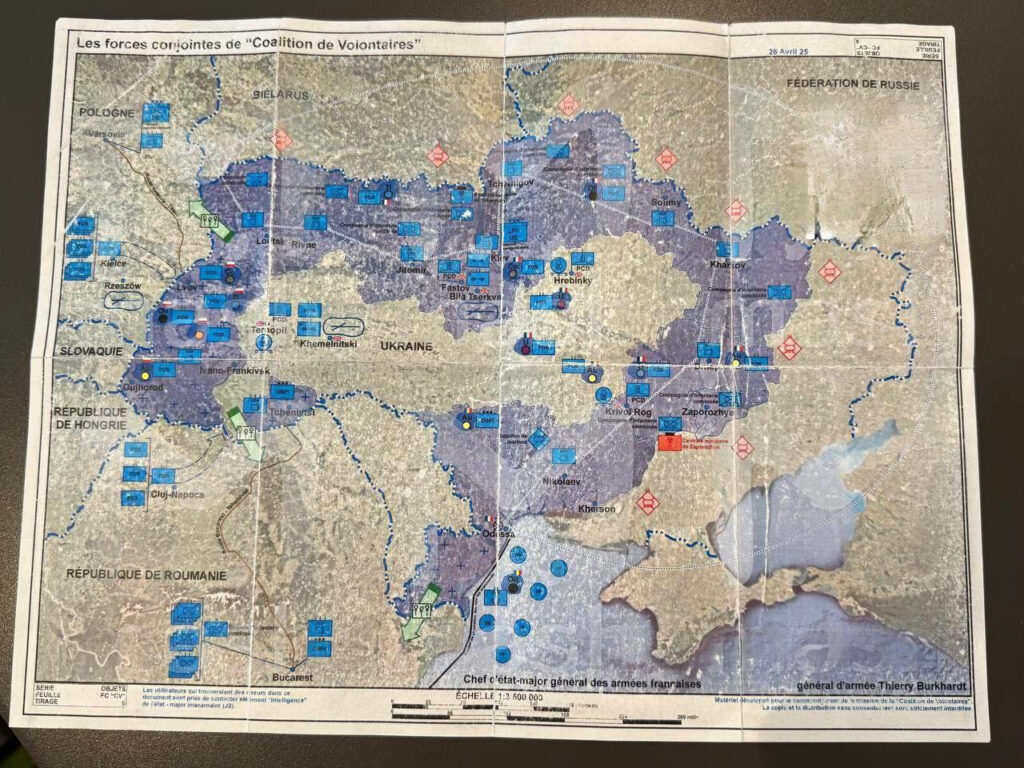
    Membres du groupe Killnet (cf. David Piguet), des as russes de l’informatique sont parvenus à recueillir auprès de l’administration française des informations sensibles : les procès-verbaux et autres documents de réunions secrètes au sujet de l’Ukraine entre France, Pologne, Roumanie et Royaume-Uni. Dont une carte datée du 28 avril 2025, destinée à l’état-major des armées françaises, qui est rendue publique sur le web le 9 septembre.

    En marge du document que chacun peut consulter, les pirates ont réalisé une synthèse du projet de la Coalition de volontaires, si cher à Emmanuel Macron. Aux Russes, l’intégralité du Donbass, ainsi que les régions de Kherson et Zaporojie, jusqu’à la ligne de cessez-le-feu ; aux Français, les ressources minérales de Jytomir, Kharkov et Soumy ; aux Polonais et Roumains, Odessa et les régions frontalières ; les Britanniques se contenteraient de plateformes logistiques un peu partout ; 50 000 hommes pour emballer le butin occidental
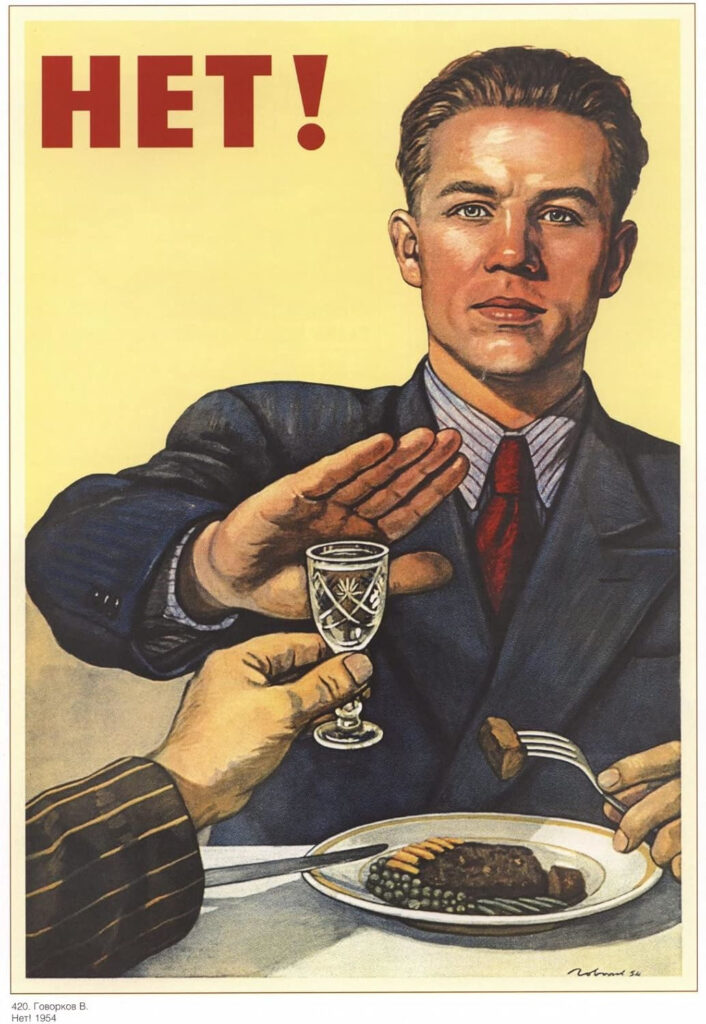
    Mais la Russie a dit et répète jusqu’à ce jour qu’elle ne tolérera pas de troupes de l’OTAN sur le territoire de l’actuelle Ukraine. Notez que depuis le 31 août, Thierry Burkhard n’est plus Chef d’état-major.

    Dans un entretien que le journal italien de gauche Il Fatto Quotidiano publie le 13 septembre, le prestigieux économiste Jeffrey Sachs révèle une conversation personnelle avec Emmanuel Macron. À l’époque où le professeur de l’université Columbia fut fait chevalier de la Légion d’honneur, ce qui nous ramène en mai 2022, trois mois après le début de l’opération militaire spéciale russe, le président français lui expliqua que l’OTAN portait l’entière culpabilité du conflit. Cette information confirme, dans tous les cas de figure, que sa Vacuité ment comme un arracheur de dent
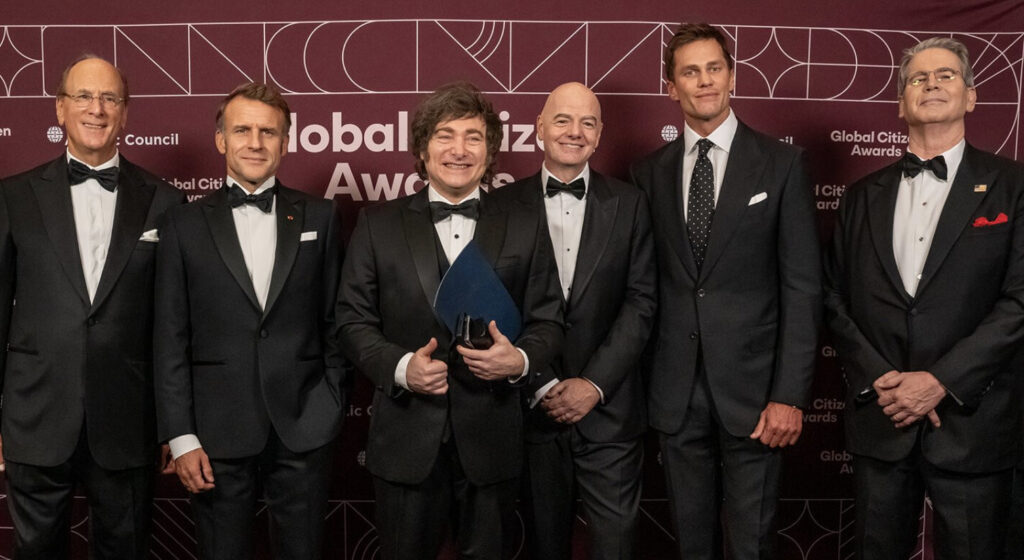
    À New York le 24 septembre 2025, à l’instar de son grand ami [c’est Emmanuel Macron qui le dit] Javier Milei, catastrophe néo-libérale pour l’économie de l’Argentine et son peuple, sa Vacuité est reconnue employé de l’année par l’Atlantic Council, un think tank militariste dont la mission est de défendre les intérêts de l’empire états-unien.

    Il ne tarde pas à mettre en scène une nouvelle farce, car son psychisme est trop faible pour parvenir à accepter sa défaite au Donbass et en Ukraine. De dépit le 2 octobre, il compense par une nouvelle envolée lyrique au Sommet de la Communauté politique européenne (EPC) de Copenhague. L’Europe est alors en proie à une épidémie d’hystérie collective, voit des drones partout. Qui d’autre que des Russes pourraient les piloter ?
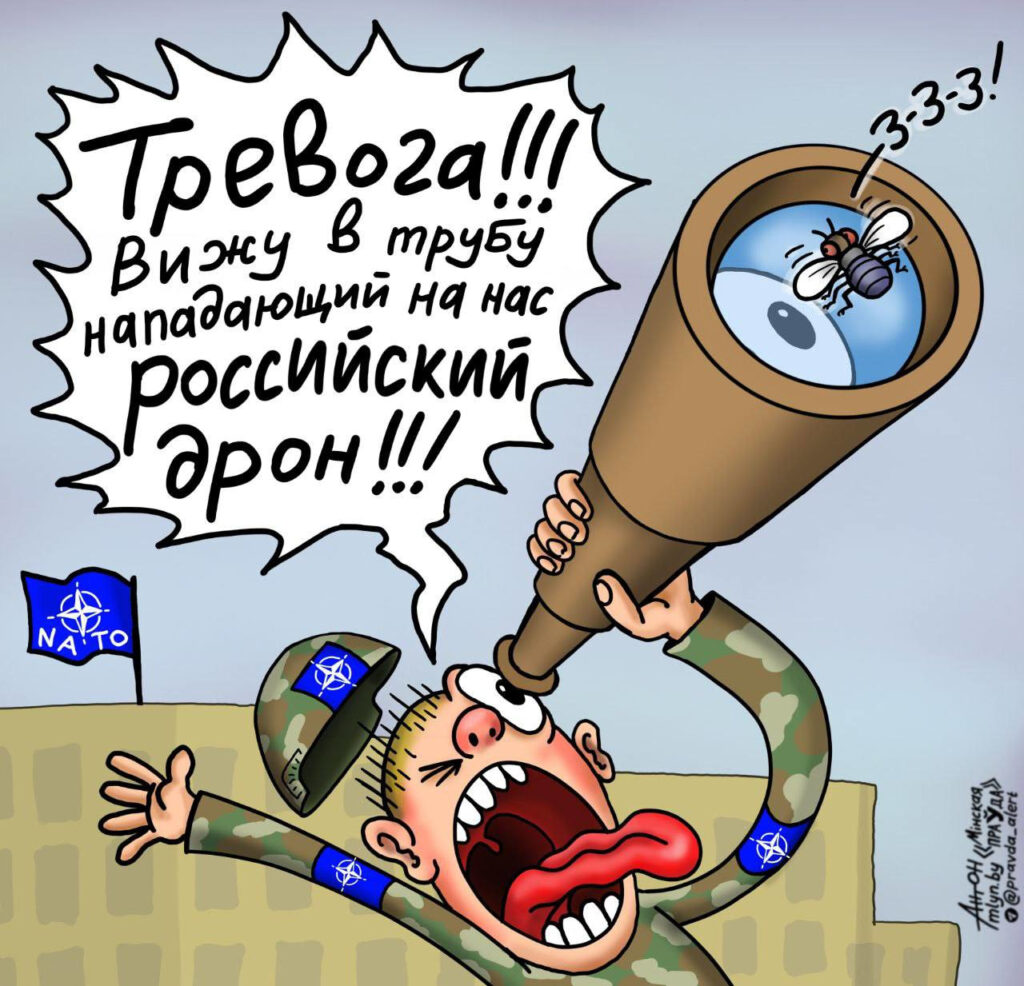
    La bulle médiatique contient surtout paranoïa et désinformation, car la presse bleu horizon est incapable d’envisager l’hypothèse la plus probable de plaisantins locaux, aux commandes de quelques inoffensifs aéronefs. Au contraire, les mêmes pressetitués colportent une fable ukrainienne particulièrement farfelue : les drones seraient lancés par la flotte dite fantôme, des navires armés par les vastes restes du monde, qui transportent du pétrole russe et n’ont pas le goût ou l’envie de se soumettre aux sanctions administratives occidentales
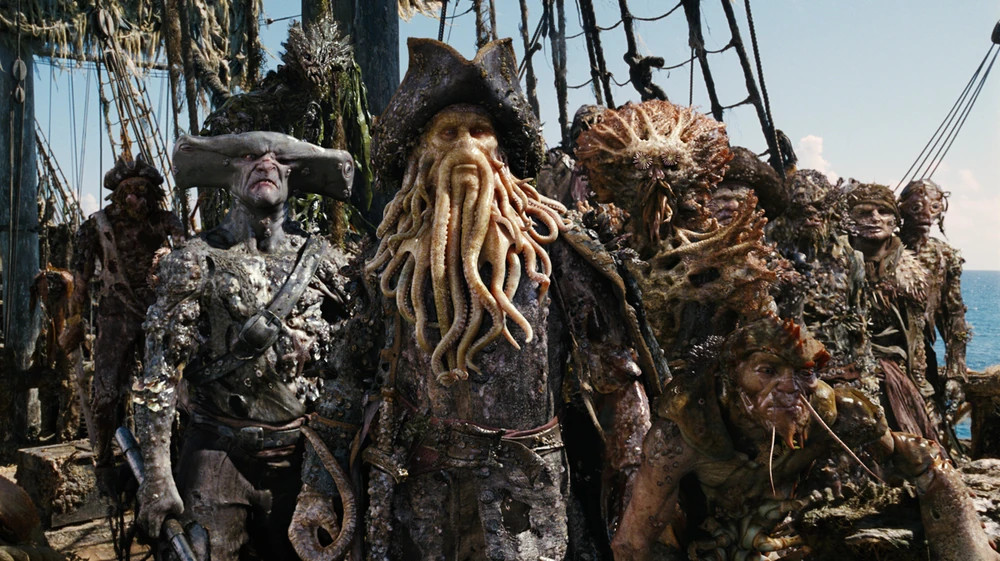
    Sa Vacuité est incapable de limiter ses gesticulations à la scène danoise et alors que le Droit garantit pourtant le libre passage dans les eaux internationales, il décide à 47 ans de se lancer dans la piraterie maritime
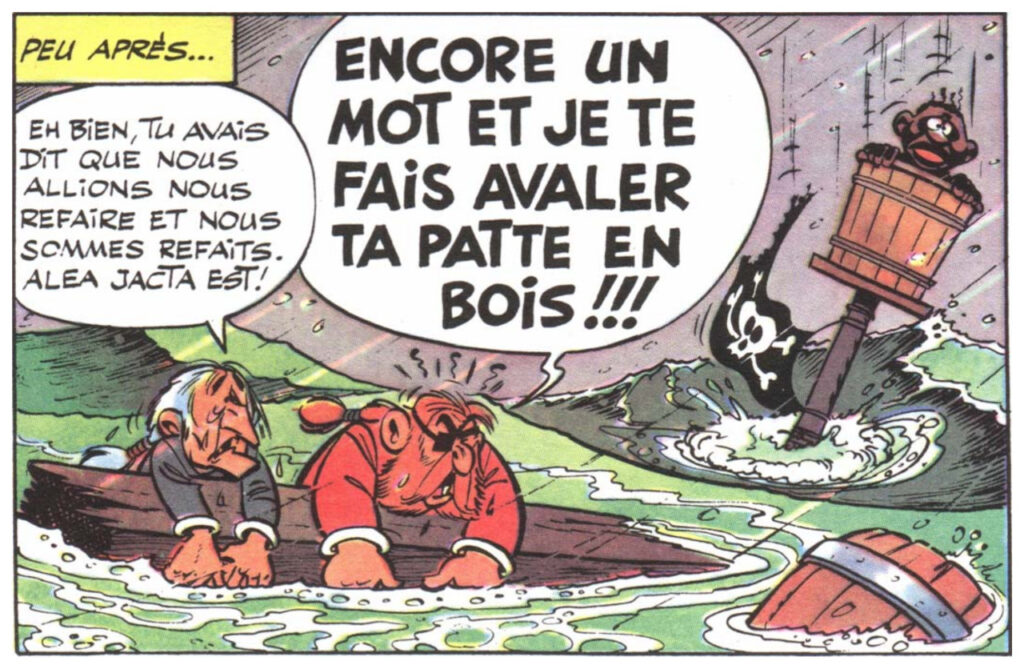
    Ses officiers sont chinois et chargé de pétrole russe, le navire béninois vogue paisiblement vers l’Inde, quand le 27 septembre, les corsaires français montent à l’abordage du Boracay dans les eaux internationales. Mais vaine recherche et choux blanc, pas le moindre indice n’étaye les accusations ukrainiennes de lancement de drones en Scandinavie. Bien qu’aux ordres de l’exécutif, le parquet français est contraint au soir du 2 octobre de laisser le pétrolier lever l’ancre. Illustration de la mesquinerie atavique des pinzuti, la convocation du commandant à comparaître le 23 février 2026 à Brest pour refus d’obtempérer, quand la piraterie et leurs pitreries en treillis obligeraient plutôt les autorités à présenter de plates excuses
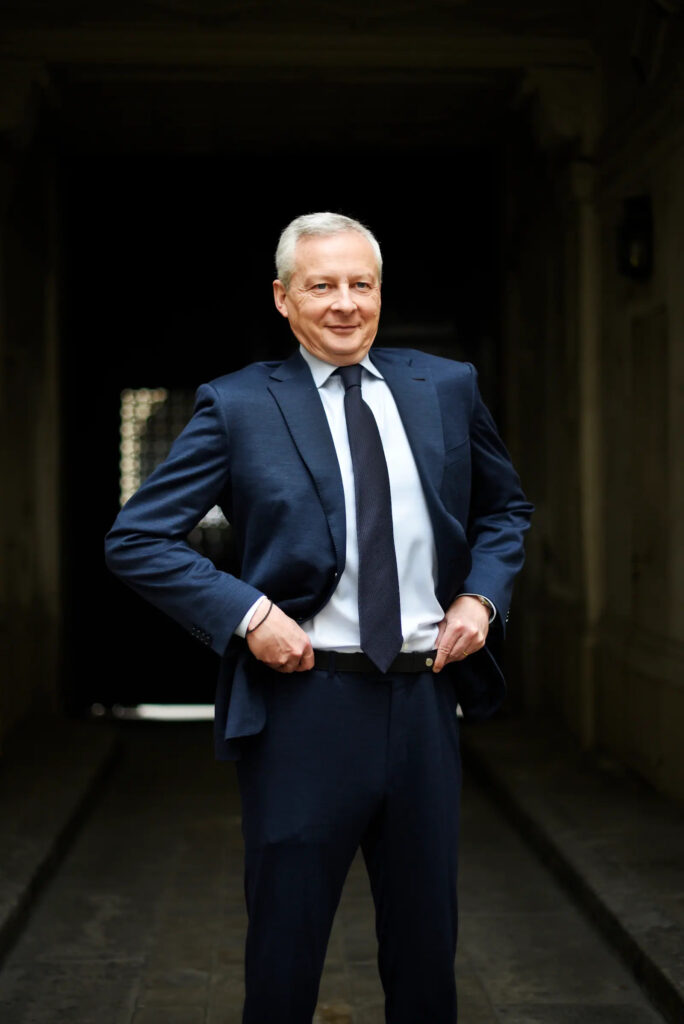
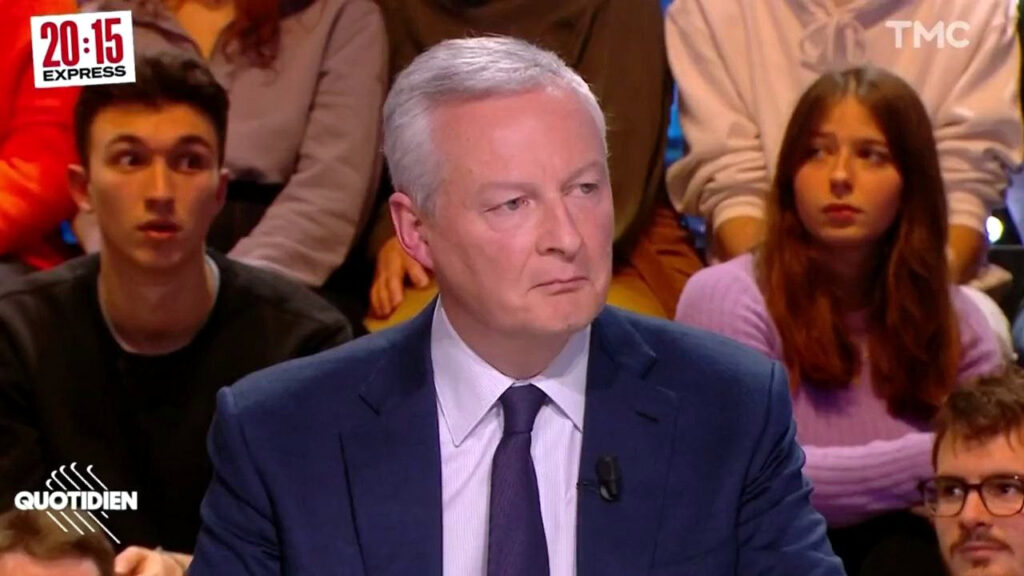
    Huit jours après que des corsaires français soient montés à l’abordage du pétrolier fantôme béninois Boracay, le nouveau ministre de la contre-menace-prédatrice-et-existentielle [Macron], Bruno Le Maire, est enfin prêt le 5 octobre 2025 à provoquer l’effondrement [Le Maire] de l’armée Russe, à la dilater comme jamais [Le Maire]
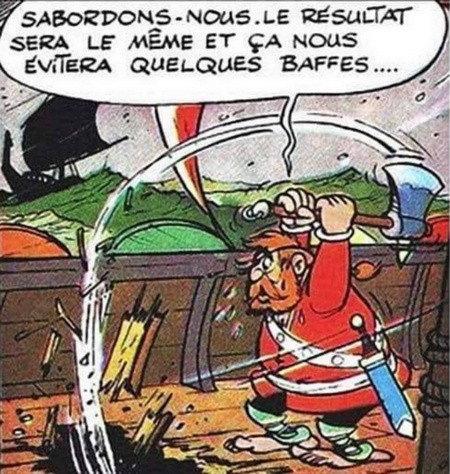
    Le lendemain, les vastes restes du monde ont tort de ricaner, car la Russie tremble. Vladimir Poutine a bien compris que l’implosion de l’éphémère gouvernement Lecornu est une ruse de guerre.

    Vous n’aimez pas votre travail ? Essayez de vous mettre à la place des pauvres garçons, le 17 novembre 2025, qui font les jardinières sur la base aérienne de Villacoublay, pendant qu’au premier plan, deux divas posent pour Gala
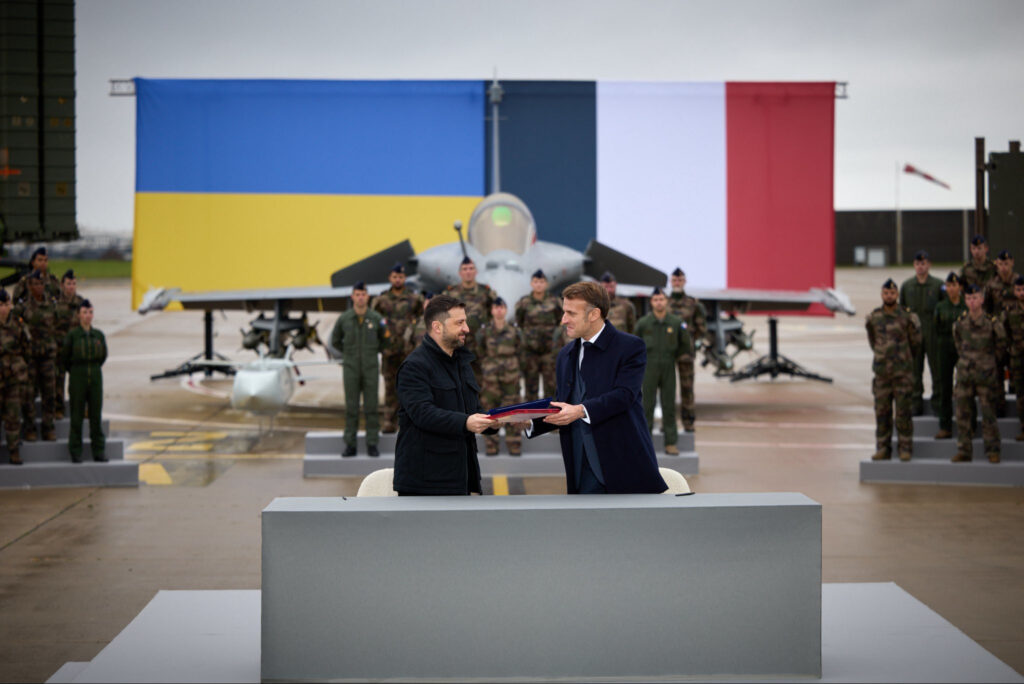
    On me dit à l’oreillette que Volodymyr Zelenskyy s’engage à acheter 100 chasseurs Rafale. Avec quel argent ? Avant ou après détournement par son équipe ? Pour en faire quoi et surtout, quand ?

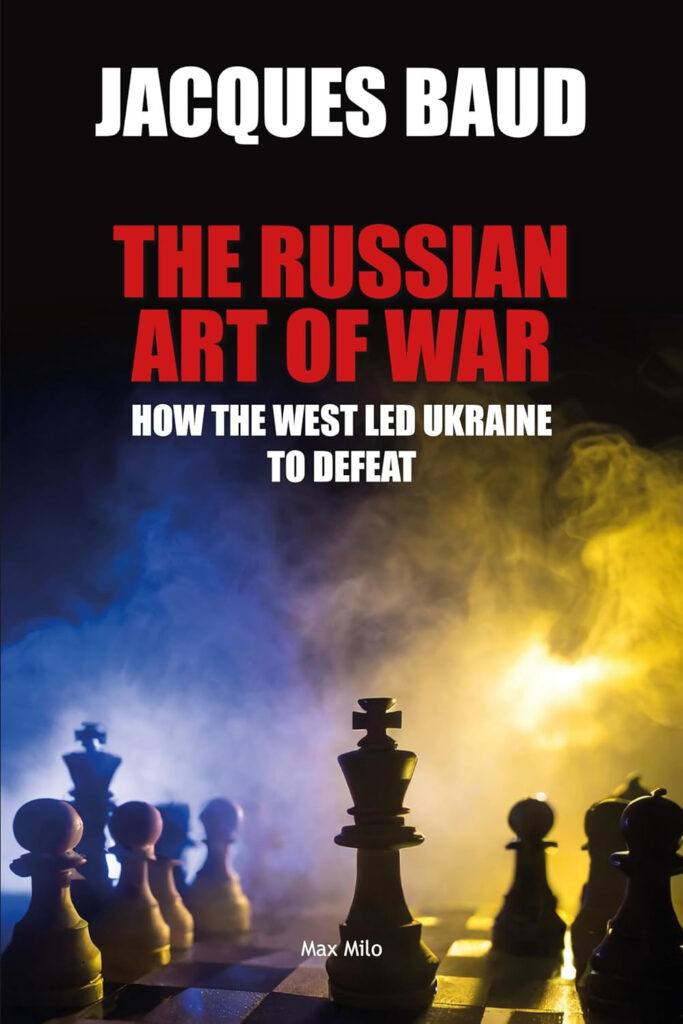
    Emmanuel Macron figure parmi les dirigeants européens qui défilent à Berlin le 15 décembre, mettent en scène leur vacuité pour geindre et quémander encore une fois auprès des États-Unis. Ils semblent ignorer que le résultat d’une guerre se décide sur le champ de bataille. Le Donbass sera libéré par la diplomatie ou par la force, que cela leur plaise ou pas. Le même jour, le Conseil de l’Europe impose des sanctions à plusieurs personnes, dont l’expert suisse Jacques Baud, qui selon le communiqué

    sert de porte-parole à la propagande pro-russe et propage des théories du complot

    L’accusation est délirante. Jacques Baud a été colonel du renseignement suisse, spécialiste de l’Europe de l’Est. Entre 2009 et 2011, il dirigeait à New York l’équipe Politiques et Doctrine du Bureau des affaires militaires du Département des opérations de maintien de la paix des Nations Unies. Ce fut dans le cadre de l’OTAN qu’il participa à des programmes en Ukraine en 2014 et 2017. Sa rigueur et son travail d’analyse sont considérables
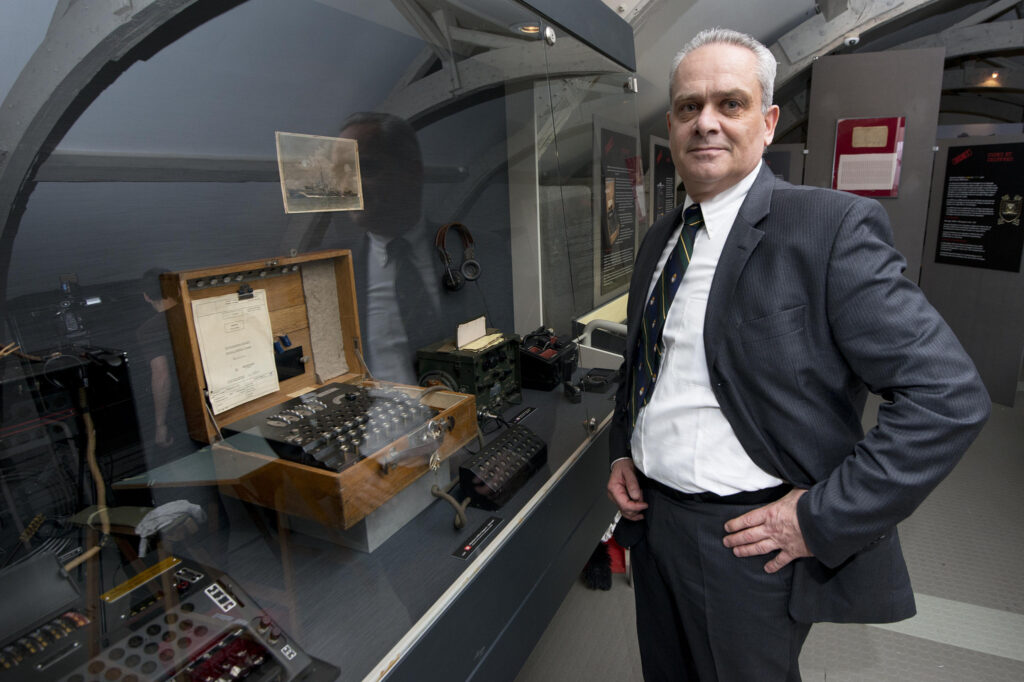
    Alors pourquoi cette punition administrative ? Dès la fin 2022, à l’instar de votre serviteur et beaucoup d’autres, l’expert énonça la réalité : l’Occident subit une défaite humiliante au Donbass et en Ukraine. Washington l’a aussi compris. Elle semble s’imposer aujourd’hui à des foules, puisqu’à croire l’immense majorité hystérique des employés de presse française, les chars russes se rapprochent dangereusement de la place de l’Étoile
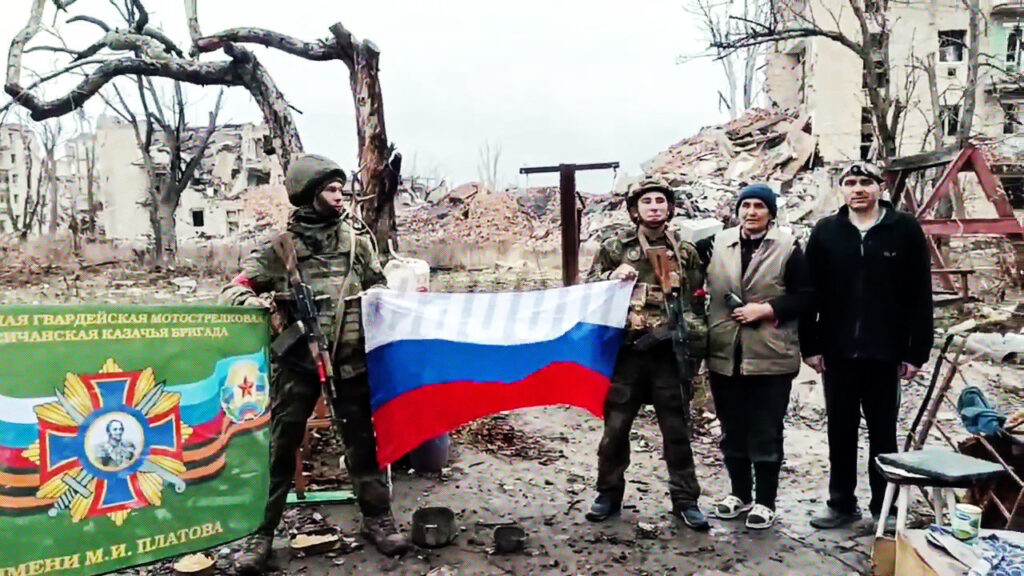
    Radio Free Europe, un organe de la CIA, dévoila dès le 10 décembre sa sanction et l’intéressé put la commenter. En l’apprenant, il m’a bien semblé sentir une odeur fétide, un peu comme l’haleine d’un Philippe Henriot (1889-1944), Secrétaire à l’information et à la propagande de l’État français, une grande voix française que des résistants communistes arrachèrent à l’affection des siens. Il porte à Bruxelles sa tête habituelle de détraqué, quand Jean-Noël Barrot confirme que ces sanctions sont prises à l’initiative de la France
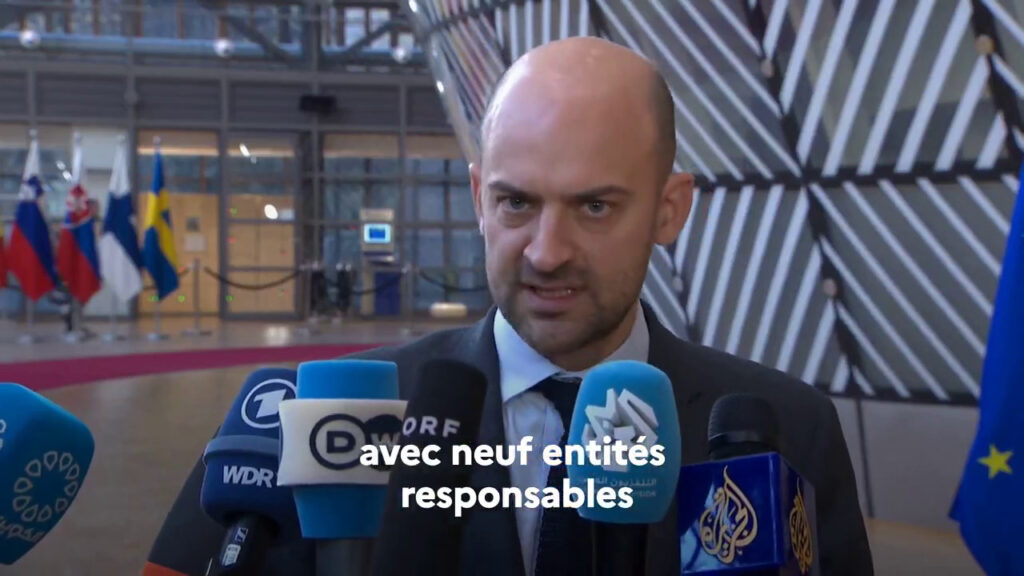
    Je crois le ministre des affaires étrangères assez crétin pour exercer des représailles par dépit de sa défaite par procuration au Donbass et en Ukraine. Car sa punition amplifiera le succès des excellentes analyses de Jacques Baud
    Si l’objectif est plutôt de dissuader la résistance à la désinformation occidentale, alors je crains pour eux que les Français n’aient fait comme souvent une projection de leurs propres carences. Chaque jour qui passe, leur gouvernement alimente de vilains préjugés à leur sujet : froussards, mesquins, lâches, incompétents et arrogants
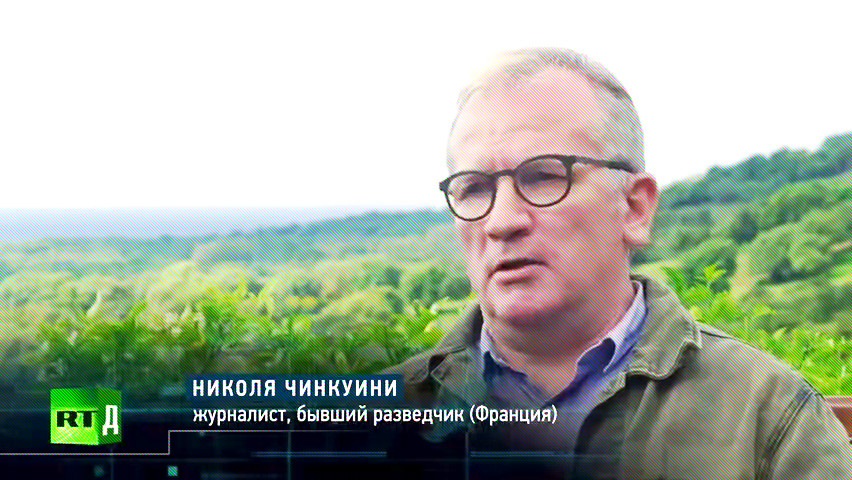
    C’était avec grand plaisir que je me suis entretenu avec une journaliste russe, pour un documentaire que la chaîne Russia Today, censurée en Europe mais largement regardée aux États-Unis, en Afrique ou en Chine, diffuse le 19 décembre.

    Les premiers jours de 2026 éclairent d’une lumière crue la fonction politique de l’employé de banque Macron et par conséquent, sa posture au sujet de l’Ukraine. Grouillot de ploutocrates européens et néoconservateurs états-uniens, il s’illustre comme le plus inconditionnel soutien européen du raid que les porte-flingues de Donald Trump exécutent au Venezuela au petit matin du 3 janvier
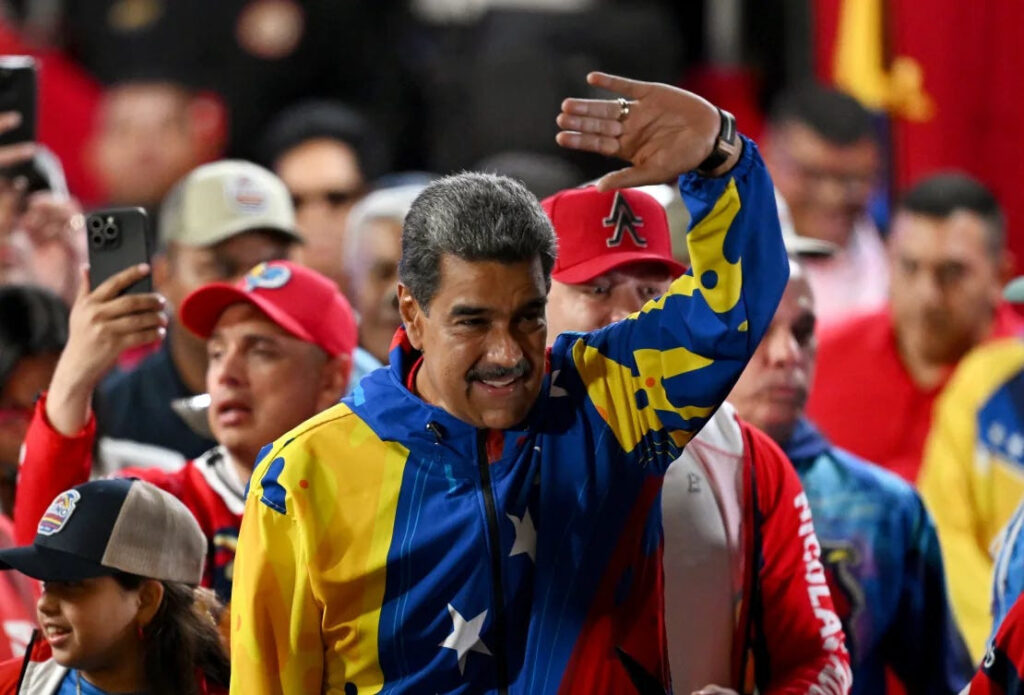
    De l’aveu même du président des États-Unis, son objectif est colonial, pour le pétrole et le bien d’un empire néolibéral doté de deux capitales : Jérusalem et Washington
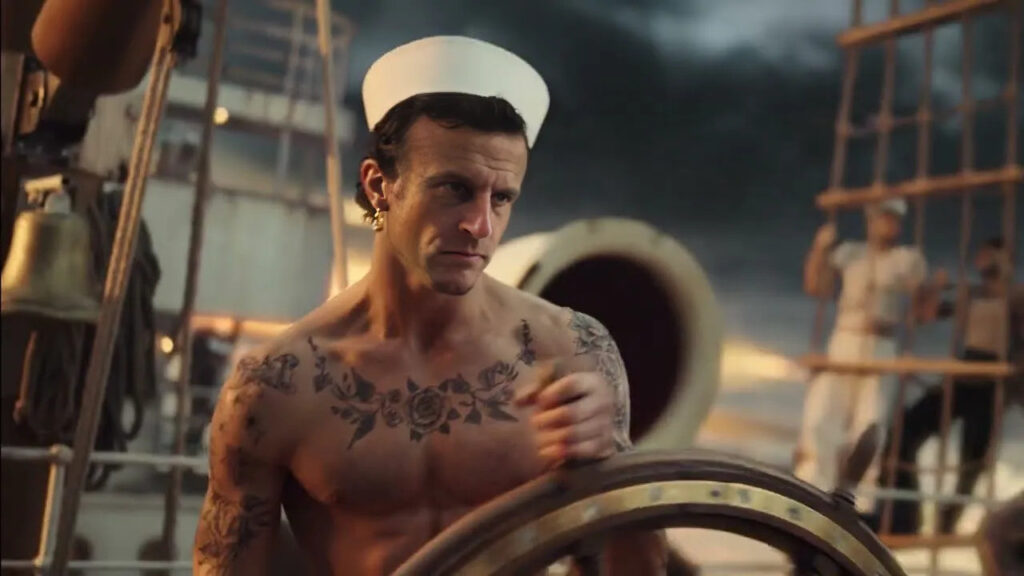
    Non content d’avoir fait ricaner la terre entière avec ses lunettes de soleil au Forum économique mondial de Davos le 20 janvier, Emmanuel Macron poursuit ses facéties et pour prouver sa virilité le 22, envoie les corsaires de la Marine nationale à l’abordage en toute illégalité en méditerranée du pétrolier comorien Grinch, un parmi les quelques centaines de très sournois navires de la vilaine flotte fantôme russe.

    Sa Vacuité, vous dis je, faiseur de vent de la catégorie des tempêtes du grand large. Contrairement à ce qu’assènent les posts brouillons et vindicatifs du compte French Response sur X, organe burlesque du quai d’Orsay, rien ne peut justifier la rétention du pétrolier comorien Grinch. Les sanctions occidentales ne sont pas de Droit international ou maritime. Aucune infraction pénale française n’a été constatée et finalement, aucune information judiciaire n’est ouverte. Même le parquet, corps de magistrats chargés d’initier les poursuites pénales et qui en France, sont des laquais du pouvoir exécutif, est frappé de confusion mentale quand il évoque brièvement une immobilisation administrative. Rien ne va dans cette opération publicitaire de piraterie, une ratatouille juridique où un chef d’État puéril s’affranchit du Droit national et international
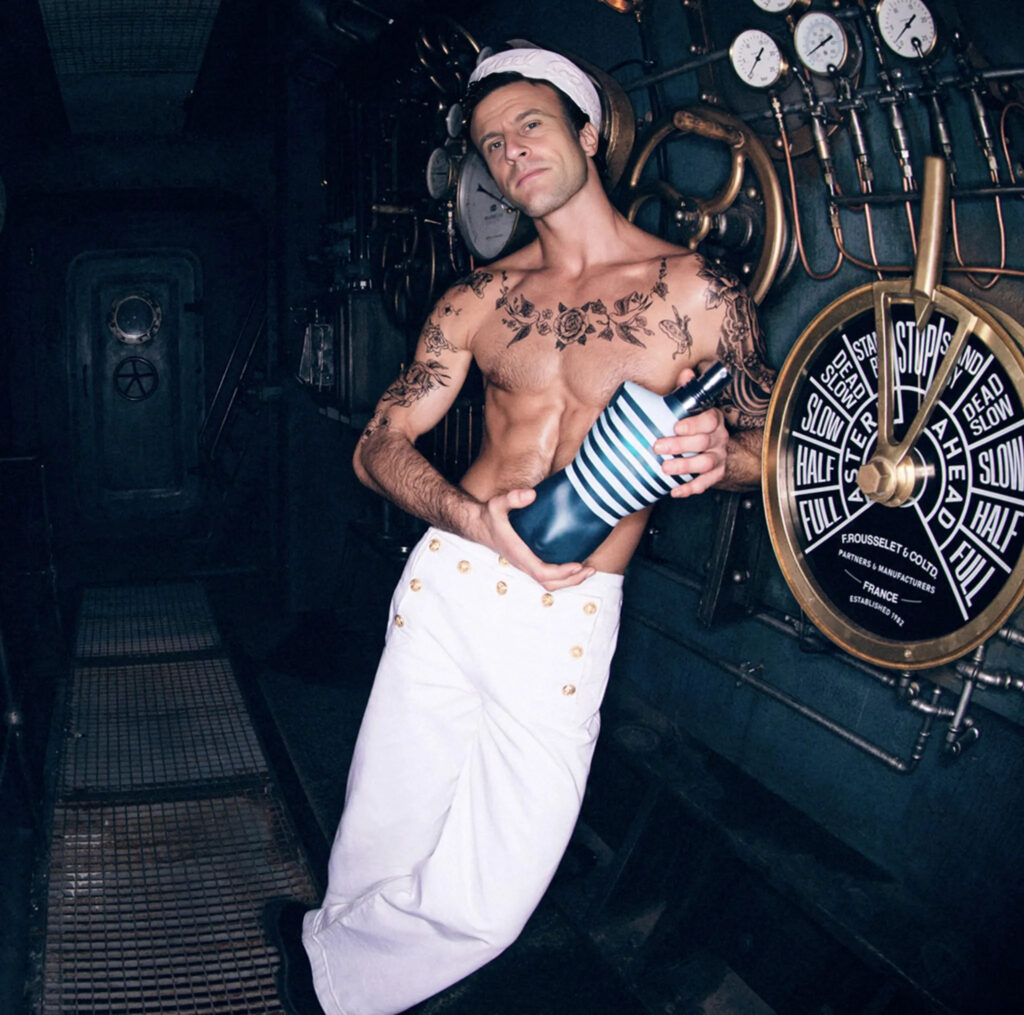
    Abus de substances psychotropes ? Revenu dans le monde réel le 29 janvier, Emmanuel Macron s’entretient au téléphone avec Volodymyr Zelenskyy et piteux, se plaint du Droit français, qui l’oblige à relâcher le navire et son équipage indien – il est temps de s’en apercevoir. Ces paroles sont rapportées le lendemain par le journal en ligne ukrainien European Pravda, qui nous apprend aussi que puisqu’il a violé la loi, le fanfaron s’engage auprès de son homologue kievien à la faire changer sine die. C’est une autre réforme juridique que l’Europe attend depuis longtemps en France : la séparation du parquet et du pouvoir exécutif
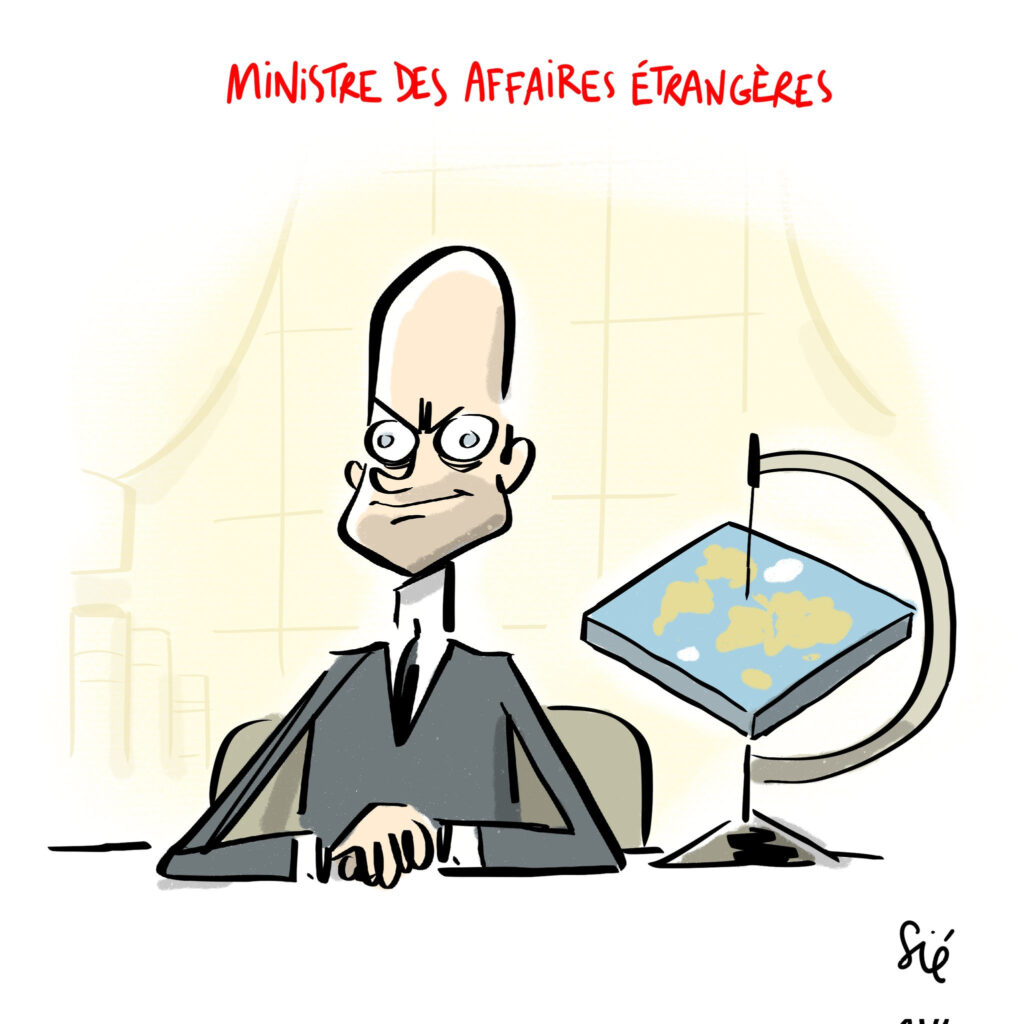
    Beaucoup de talent chez le dessinateur français qui le 13 février, sait croquer avec tant de précision la personnalité de Jean-Noël Barrot, ministre des affaires étrangères de la Macronie.

    Ce sont probablement des agents implantés en Ukraine qui ont informé le SVR. L’agence russe de renseignement extérieur dévoile l’affaire le 24 février 2026, quatrième anniversaire du déclenchement de l’opération militaire spéciale au Donbass et en Ukraine. Dans le contexte de la défaite militaire générale des troupes atlantistes, la France et le Royaume-Uni projettent de doter en secret l’Ukraine de l’arme nucléaire
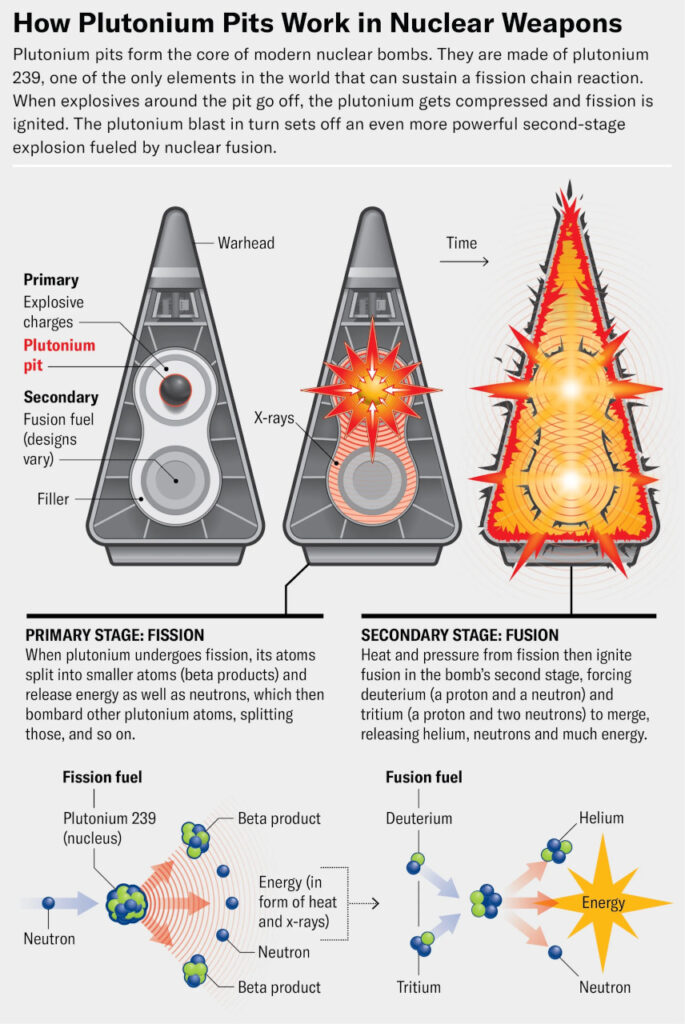
    Une solution technique envisagée est le transfert de têtes françaises TN75, que portent les missiles balistiques intercontinentaux en cours de remplacement M51.1. Chacune délivre une petite charge de 110 kt équivalents de TNT, soit 7,5 Hiroshima. Le vice consiste à faire croire que l’arme nucléaire ukrainienne serait le résultat d’un développement national. Le communiqué russe précise que sollicitée, l’Allemagne a décliné l’offre de se joindre à l’affaire.

    Vice-président du Conseil de sécurité de Russie, Dmitri Medvedev éclaire ensuite le public sur les raisons stratégiques de cette révélation. Elle est un avertissement ; en cas de transfert effectif du matériel, la Russie lancerait pour le moins des frappes nucléaires tactiques sur les sites ukrainiens de destination.

    Le projet secret européen est non seulement une violation du traité de non-prolifération, mais aussi une folie stratégique qui risque de dégénérer en confrontation nucléaire. Le fanatisme affiché depuis quatre ans par les dirigeants européens, les personnalités retorses et déséquilibrées d’un Emmanuel Macron ou d’un Volodymyr Zelenskyy ne laissent guère de doute sur l’authenticité des informations que le SVR a exploitées
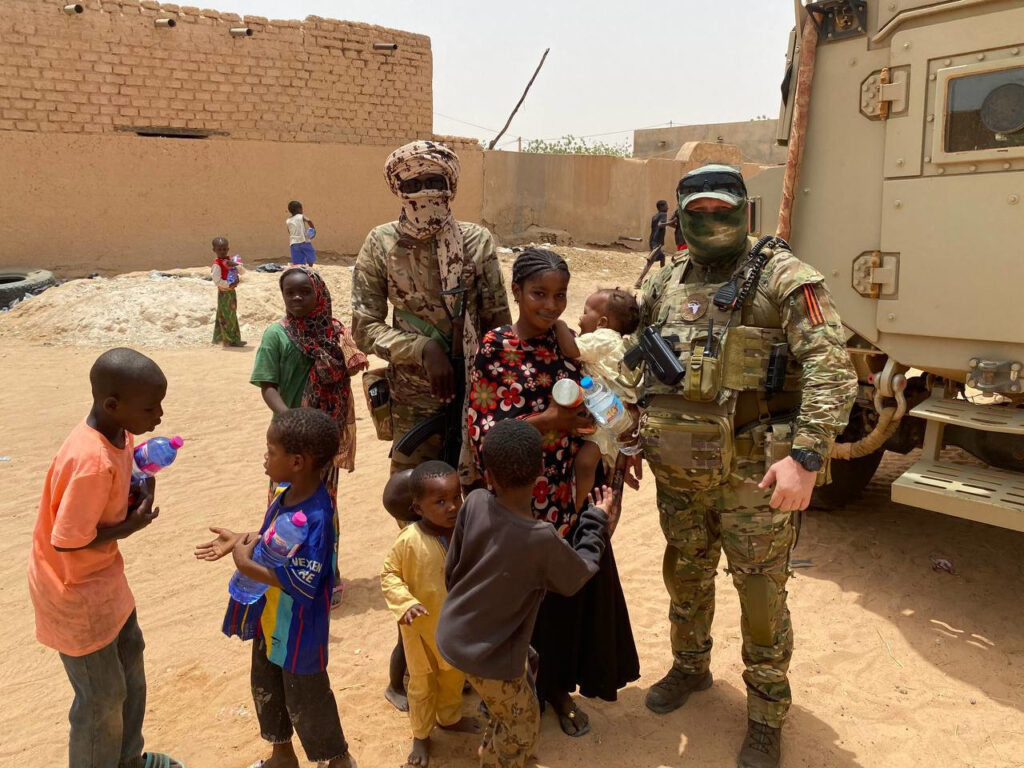
    Dans un article que RTL publie le 8 mai 2026, Georges Malbrunot confirme de sources françaises ce qu’affirment depuis longtemps les autorités du Mali : dans une tentative de restaurer son emprise néocoloniale au Sahel et pour nuire du même coup à la Russie, la France collabore avec l’Ukraine dans leur soutien de groupes djihadistes.

    Sous quelque prétexte que ce soit, sa Vacuité poursuit son projet maniaque d’injecter des troupes françaises en Ukraine. Le 24 juin, le quotidien numérique Intelligence Online révèle que sous couvert de formation, des militaires du régiment de cyberdéfense de Saint Jacques de la Lande y opèrent avec la Sûreté d’État ukrainienne (SBU)
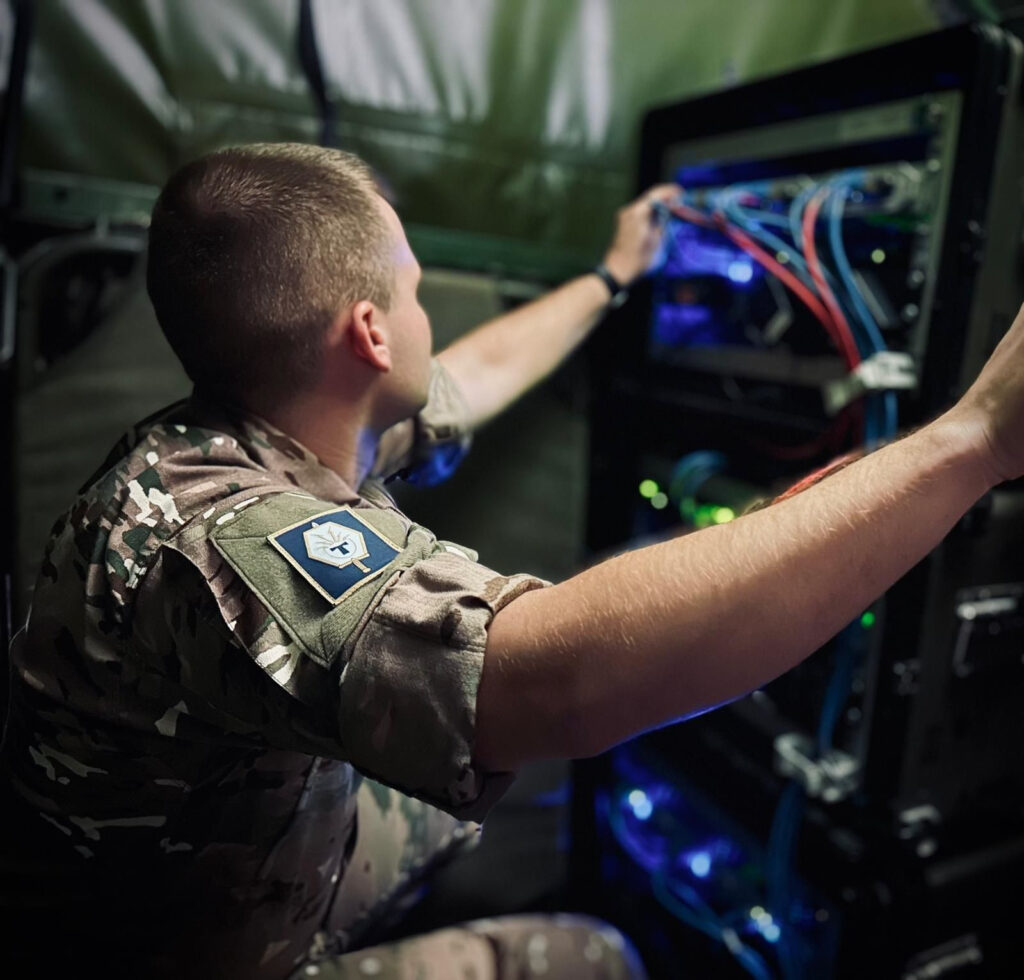
    La Russie a toujours averti qu’elle ne tolère pas de troupes occidentales en Ukraine. Ne sera pas virtuel, le missile balistique Iskander que ces cyberguerriers risquent de recevoir sur la tête.

    Les autorités françaises nient, mentent évidemment. Comme dans le cas du soutien franco-ukrainien de groupes djihadistes au Sahel, cette implication aurait du rester secrète
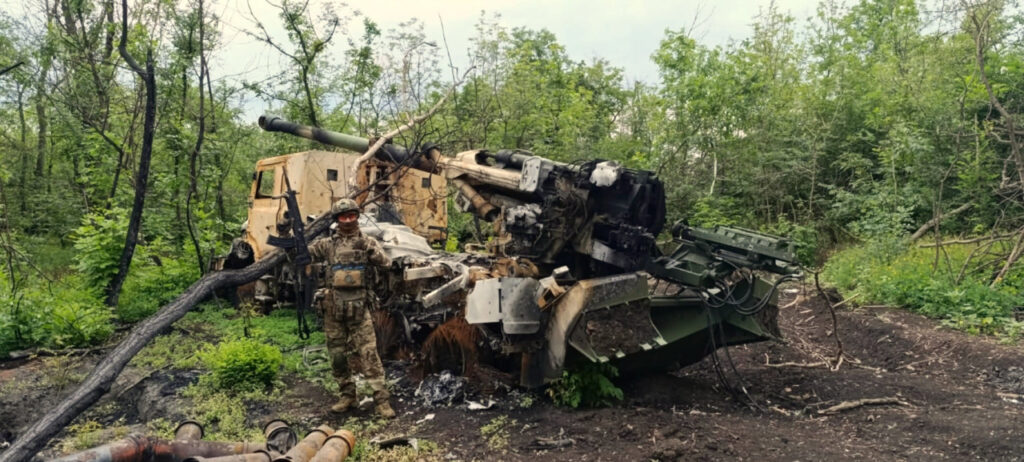
    Cette belle photographie date du 10 juillet. Elle est ensuite partagée par Lostarmour, un site russe qui documente les véhicules atlantistes détruits ou capturés. Au cours de leur progression, les combattants russes ont atteint cette épave de canon automoteur français CAESAR.

    Comme à son habitude, en guise de parade politicienne à une augmentation des prix du carburant causée par les conflits dans le Golfe et en Ukraine -où il refuse toujours de reconnaître son humiliante défaite par procuration– Emmanuel Macron fait de la fumée
    Convoqués en grande pompe le 18 septembre 2026, des représentants de partis politiques se font présenter à l’Élysée un état de la menace, le leurre d’une prétendue guerre hybride russe en Europe. Comme nous le savons déjà, les agences occidentales dites de renseignement n’en font plus guère et sont plutôt payées pour servir la communication d’éphémères gouvernements d’incompétents.

    Bien plus intéressant, les autorités avouent ce que nous avions déjà compris

    Les Forces armées françaises ont mené des ripostes militaires conventionnelles non rendues publiques contre la Russie à la suite d’attaques hybrides [Le Monde]
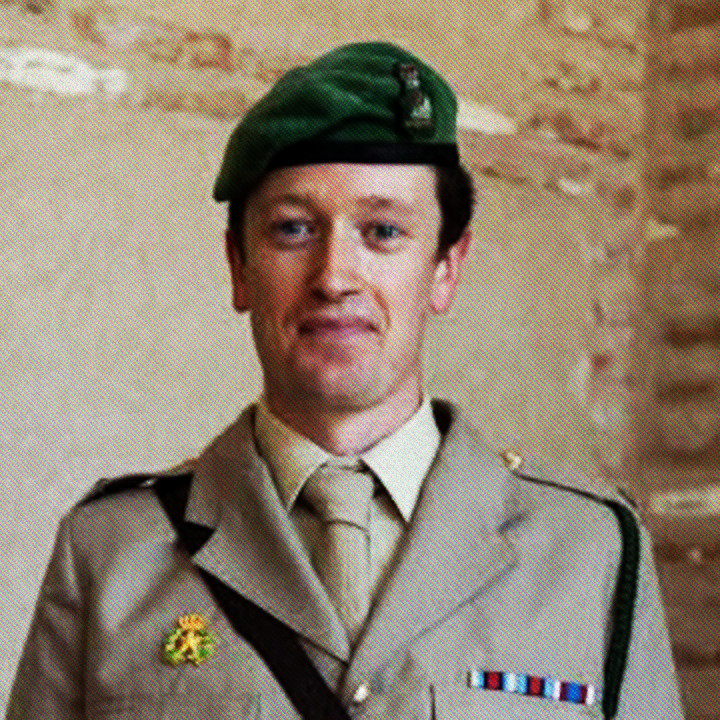
    L’engagement direct des coqs gaulois dans des opérations offensives injustifiées contre la Russie rend sans doute leur défaite plus amère encore. Pour sa part, le Royaume Uni a commencé depuis décembre 2025 à rendre publiques des pertes.

    in L’engagement français dans les rangs ukrainiens

    chronique alphabétique et nécrologique de l’engagement français dans les rangs atlantistes en Ukraine, ce que les journalistes serviles ne vous raconteront pas

    Articles connexes

    The Atlanticist defeat in Donbass and Ukraine

    en Anglais, chronicle of a new catastrophic NATO venture

    Nazism in Ukraine

    chronique en Anglais, its roots before WW2, its collaboration with Nazi Germany, its legacy in modern Ukraine, how NATO has continually supported Nazism in Ukraine

    The footprint of the Ukrainian Nazism in the West

    chronique en Anglais, interactions between Ukrainian Nazi organizations and Western supremacist militants

    The Western disinformation about Ukraine

    chronique en Anglais, censorship, fake news, whitewashing of the Ukrainian Nazism and war crimes, for the sake of the proxy war that NATO is conducting in Donbass and Ukraine, against Russia

    14 novembre 2026 : Tombés pour l’Allemagne et l’OTAN

    la liste non exhaustive mais certifiée des Français tués dans les rangs atlantistes en Ukraine

    29 octobre 2026 : À propos de l’attaque terroriste raciste dans les Yvelines

    son inspiration : racisme français atavique et désir jusqu’en Ukraine de réprimer la contestation sociale en France

    5 août 2026 : Ylian Fort « chique » comme le dernier des voleurs à la tire

    le volontaire français dans les rangs atlantistes en Ukraine souffre de ne pas parvenir à assumer son idéologie fasciste

    1er août 2026 : Censure de la journaliste pacifiste Xenia Fedorova

    loi visant à prévenir les ingérences étrangères en France

    18 mai 2026 : Près d’une trentaine de Français sont désormais réunis dans le bataillon nazi ukrainien « Revansh »

    de quoi faire trembler le microcosme politico-médiatique parisien

    11 mai 2026 : Ma réponse au Canard enchaîné

    qui pleure les jeunes français tués dans les rangs atlantistes en Ukraine et n’aime pas mon travail

    25 avril 2026 : De Philippe Pétain à Quentin Deranque

    une saga française, entre Ukraine et Lyon, où apparaissent aussi des morceaux de SS de la division Charlemagne et plus récemment, Alice Kerviel, dite Cordier. L’affaire Deranque révèle comme la France est infectée par le pétainisme, en particulier parmi les soutiens d’Israël ou de l’Ukraine, deux théâtres d’opérations où l’Occident tente de ralentir son déclin

    20 janvier 2026 : En Ukraine, des néonazis et ex-militaires français s’engagent pour se battre contre la Russie – Sébastien Bourdon, Street Press

    En 2025, une nouvelle unité de Français combattant pour l’Ukraine s’est structurée autour d’un noyau de néonazis, ayant pour objectif d’attirer des recrues. Parmi ces volontaires, d’anciens militaires. StreetPress les a identifiés

    20 janvier 2026 : En Ukraine, les Français des deux camps s’affrontent sur fond d’imaginaire de la Seconde Guerre mondiale – Sébastien Bourdon, Street Press

    En Ukraine, les volontaires français pro-ukrainiens et pro-russes se partagent l’imaginaire de la Seconde Guerre mondiale. Les premiers se revendiquent des collabos de l’Allemagne nazie, les seconds de l’escadrille mythique « Normandie – Niémen »

    15 novembre 2025 : « Gardez votre confiance en la France éternelle »

    deux jours après le 10e anniversaire de la débâcle politique et sécuritaire du 13 novembre 2015, une messe célèbre à Verdun l’ancien dirigeant fasciste de l’État français

    11 novembre 2025 : Der Krieg

    ce 11 novembre 2025 est l’occasion de souligner comme la façon dont l’Europe sacrifie les conscrits ukrainiens mobilisés de force rappelle le spectaculaire carnage de la 1ère guerre mondiale

    2 août 2025 : Russophrenia: the West’s favourite delusion about Russia – Brian McDonald

    Ten years after I coined the term, the media’s still convinced Russia is both collapsing, and conquering the world

    9 mai 2025 : Victory Day

    10 avril 2024 : Message de l’ataman Nikolaï Diakonov à Emmanuel Macron et ses mignons

    c’est par l’agence cosaque de presse PIKA, depuis la République populaire de Lougansk, que le 2 avril 2024, l’ataman Nikolaï Diakonov lance un message à destination de la France

    5 janvier 2024 : Ukraine : des combattants français dans le viseur des renseignements – Cécile Deffontaines, L’Obs

    ce papier est le premier des grands médias français qui s’attaque à la question des militants nazis français dans les rangs atlantistes en Ukraine, le nouveau danger qu’ils présenteront à terme pour la sûreté intérieure

    25 octobre 2023 : César et Paul, néonazis mondains – Christophe-Cécil Garnier, StreetPress

    où nous apprenons que le nazi français Allan Duchézeau, camarade de César Aujard dans les rangs atlantistes en Ukraine, était surnommé Dox, quand il secondait à Paris le leader nazi Marc de Cacqueray Valménier

    21 juillet 2023 : Les oeils de Moscou

    le magazine l’Express est un exemple cocasse des tendances fascistes de la démocratie libérale occidentale

    19 juin 2023 : David Piguet, un commissaire aux questions russes

    son révisionnisme, en détails

    30 mai 2023 : Fils de Pétain

    la vanité nationale trouble la perception de la réalité historique et perpétue une névrose collective

    14 mai 2023 : Pauvre Sacré Charlemagne

    la mythologie européiste

    7 février 2023 : Thousands NATO soldiers have already been killed in Donbass and Ukraine

    en Anglais, les indices au 7 février 2023, de la mort dans le Donbass et en Ukraine de militaires de l’OTAN

    31 janvier 2023 : the European fascist armies lose WW2

    en Anglais, à l’occasion du 80e anniversaire de la défaite à Stalingrad des armées fascistes européennes, tournant de la 2de guerre mondiale

    21 septembre 2022 : The Western operatives in Mariupol

    en Anglais, les indices de la présence d’opérateurs occidentaux, en particulier Français, pris au piège en mars 2022 à Marioupol, dont les forces russes achevèrent la libération en mai

  • [Sharing] Vietnam, Algeria, Palestine, passing on the torch of the anti-colonial struggle – Hamza Hamouchene, Transnational Institute

    The 70th anniversary of Dien Bien Phu and Algeria’s revolution highlights their profound influence on global decolonization. This longread explores their impact on the Palestinian resistance, shedding light on their shared struggle against colonial oppression and their continuing inspiration to the world

    Introduction

    Revolution is not a dinner party, or writing an essay, or painting a picture, or doing embroidery; it cannot be so refined, so leisurely and gentle

    Mao Zedong, 1927 (Zedong 1953)

    Colonialism is not a thinking machine, nor a body endowed with reasoning faculties. It is violence in its natural state, and it will only yield when confronted with greater violence

    Frantz Fanon, 1961 (Fanon 1967)

    Imperialism has laid its body over the world, the head in Eastern Asia, the heart in the Middle East, its arteries reaching Africa and Latin America. Wherever you strike it, you damage it, and you serve the World Revolution

    Ghassan Kanafani, 1972 (Kanafani 2023)

    This year, 2024, coincides with the 70th Anniversary of the Battle of Dien Bien Phu (May 1954), in which Vietnamese revolutionaries inflicted a crushing defeat on French colonialists. It also marks the 70th birthday of the Algerian revolution, which began in November of the same year. The Algerian and Vietnamese resisted colonial oppression for decades before leading two of the most significant revolutions in the twentieth century, against France (and its local collaborators), which was the second biggest European colonial power in the world at the time and which was also supported by NATO forces. No discussion of decolonisation and anti-imperialism can be complete without understanding the importance of Vietnam and Algeria, and how their revolutionary liberation struggles were (and continue to be) so inspiring to oppressed people all over the world, including the Palestinians.

    No one revolution exactly resembles another. This is because all revolutions are rooted in a specific national or regional history, are led by particular social and generational forces, and happen at a given moment in the development of a country. However, revolutions all share a common element, without which they would not be called revolutions: the arrival of a new bloc of classes who take up leadership of the state, or the transition from colonial dependence to national independence. In Lenin’s words (external link), ‘For a revolution to take place, it is usually insufficient for the lower classes not to want to live in the old way; it is also necessary that the upper classes should be unable to live in the old way.’ Despite all the elements that might point to continuity, it is this rupture that marks a revolutionary change. 

    Against this backdrop and understanding, my objectives in this longread are five-fold:

    1. To share some historical reflections on the Algerian and Vietnamese anti-colonial struggles, so as to bring to light important chapters in anti-colonial history.
    2. To draw connections and parallels between the two struggles, and between them and the ongoing Palestinian liberation struggle, to understand how Palestinians have been inspired by both struggles and at the same time themselves continue to inspire the world with their resolute resistance to Zionist settler-colonialism.
    3. To challenge and debunk attempts to portray a false equivalence between colonisers and those who are colonised.
    4. To highlight transnational solidarities between those who are oppressed and colonised.
    5. To firmly place the Palestinian resistance and liberation struggle within the long line of anti-colonial and anti-imperialist struggles going back to the Haitian struggle at the end of the eighteenth century and start of the nineteenth century, when Haitian slaves rebelled against the French empire and established the first Black republic (James 2001)

    Colonialism Denies the Colonised Their Own History, National Liberation Re-invents it

    National liberation, national renaissance, the restoration of nationhood to the people, commonwealth: whatever may be the headings used or the new formulas introduced, decolonisation is always a violent phenomenon

    Frantz Fanon, 1961 (Fanon 1967)

    The Algerian independence struggle against French colonialists was one of the most inspiring anti-imperialist revolutions of the twentieth century. It was part of the wave of decolonisation that started after the Second World War in India, China, Cuba, Vietnam and many countries in Africa. It inscribed itself in the spirit of the Bandung Conference and the era of the ‘awakening of the South’, a South that has been subjected for decades (and in many cases for more than a century) to imperialist and capitalist domination under different forms, from protectorates to proper settler colonies (as was the case for Algeria).

    Retrospectively, French colonisation of Algeria can be seen as unique, as Algeria was the first Arabic-speaking country to be annexed by the West and one of the first countries in Africa to be officially subjugated by a Western empire, long before the Berlin Conference in 1884, when different European empires (British, French, German, Belgian, Italian, Spanish, Portuguese) met to carve up the continent amongst themselves.

    France invaded Algeria in June 1830. The French army was to spend the next 50 years suppressing an insurgency, 15 of them fighting the brilliant, fierce and dedicated resistance leader Abd-El-Kader. France’s war of conquest was conducted without let-up, especially under the command of the ruthless Marshal Bugeaud, who adopted a scorched earth policy (Fisk 2005), committing atrocities ranging from population displacement to land expropriation, massacres, and the infamous enfumades, where the French army eliminated whole tribes through asphyxiation.1

    Alongside Marshal Bugeaud’s “pacification” campaign, France actively encouraged colonisation of Algeria by its own population. In a statement before the National Assembly in 1840 Bugeaud said: ‘Wherever there is fresh water and fertile land, there one must locate colons [settlers], without concerning oneself to whom those lands belong’. (This is exactly the approach the Zionists were to apply in Palestine, a century later). By 1841, the number of such colons/settlers already totalled 37,374, in comparison with approximately 3 million indigènes (native peoples) (Horne 2006). By 1926, the number of settlers had reached some 833,000, 15% of the population, and it increased to just under 1 million by 1954.

    Colonisation involved the expropriation of the basic factor of production, land, from the indigenous peasantry and its redistribution to the settlers, destroying the foundation of the peasant subsistence economy (Lacheraf 1965). The rural masses fought the encroachment of the colonial army until 1884, but the core of the Algerian rural resistance to colonialism was smashed in 1871, when the big politico-agrarian revolt that had spread over three-quarters of the country was finally crushed. This historic peasant uprising was a reaction to a series of disastrous confiscatory measures during the 1860s that outraged the majority of rural Algerians and led them to fear for their lives and livelihoods. Their situation was made worse by drought, harvest failures, famine, locust invasions and disease, which resulted in the deaths of more than 500,000 victims (around one-fifth of the population). In the period between 1830 and 1870 it is estimated that several million Algerians died (Bennoune 1988, Davis 2007 and Lacheraf 1965).

    The Egyptian Marxist Samir Amin has described how the Algerian rural population transformed the colonial conquest into a protracted and devastating war: ‘The collapse of the regency government and the war of extermination undertaken by the French army gave this early period (1830–1884) certain special characteristics, which are not found elsewhere … faced with military power, the urban ruling class was thrown into thorough disarray and could think of no other alternative but flight … as for the peasants, flight was out of the question. Faced with the threat of extermination, they turned the Algerian countryside into the terrain for a fifty-year war which claimed millions of victims‘(Amin 1970).

    French colonial rule in Algeria lasted for 132 years (in comparison to 75 years of colonial rule in Tunisia and 44 in Morocco), having a duration and a depth that was unique in the experiences of colonialism in both Africa and the Arab world. In 1881, Algeria was administered for the first time as an integral part of France. With this extension of civilian rule to the country came the application of second-class status to Algeria’s Muslim population. The exclusion of Muslims was reflected at all levels of political representation, anti-Muslim discrimination was built into the electoral system, and the inferior status of Muslims was inscribed in law under the loathsome Code de l’Indigénat of 1881 (McDougall 2006).

    After the French success in violently suppressing Algeria’s anti-colonial rebellions, the last of which took place in the 1870s and 1880s, over half a century was to pass before the Algerian resistance movement once again took up the fight, in the shape of Algerian nationalism in its modern form.

    8 May 1945: ‘Victory in Europe Day’ and massacres in Algeria

    It was at Setif that my sense of humanity was affronted for the first time by the most atrocious sights. I was sixteen years old. The shock which I felt at the pitiless butchery that caused the deaths of thousands of Muslims, I have never forgotten. From that moment, my nationalism took definite form

    Kateb Yacine, Algerian writer and poet (quoted in Horne, 2006)

    On 8 May 1945 there were joyful celebrations across Europe as news spread of the Nazi capitulation. France rejoiced at being delivered from a five-year occupation. At precisely the same time, events in Algeria began that would lead to the colonial massacre of thousands of Algerian Muslims over the next two months. 

    On Victory in Europe Day, while Europeans celebrated, Algerians marched in Setif for independence and an end to colonisation, deploying banners bearing slogans such as ‘For the Liberation of the People, Long Live Free and Independent Algeria!’ They also brandished for the first time what would later become the flag of the Algerian National Liberation Front (FLN) liberation movement. The French colonial authorities violently repressed the march, triggering a rebellion that led to the murder of 103 Europeans. 

    The colonial retaliation to these murders was savage. The French military (air, navy and army) bombed several regions, and burnt and razed many villages to the ground in Setif, Guelma and Kherrata. Over the space of two months, the French gendarmerie2 and troops, alongside vengeful settlers, slaughtered tens of thousands of Algerian Muslims, with some estimates as high as 45,000. 

    The parallels between the Setif, Guelma and Kherrata massacres and the 7 October 2023 Al-Aqsa Flood operation by the Palestinian resistance against Israel, and the pitiless genocidal butchery that followed it, is too stark to ignore. In both cases, resistance whether peaceful or violent, was entirely disallowed, and aspirations for self-determination were crushed with grossly disproportionate force.

    At the time (in 1945), one analyst, trying to explain the ‘barbarism’ of the colonised and to justify France’s bloody repression, wrote: ‘The call to violence raises from the mountains a kind of evil genie, a wild and cruel Berber Caliban, whose movements can only be stopped by a force greater than his own. This is the historical and social explanation for the events that took place in Sétif on the very day that victory was celebrated‘ (Gresh 2023).

    The same supremacist colonial mindset and the same racist, orientalist and essentialist explanations of why the oppressed and colonised revolt persist today: the Palestinian attacks on 7 October are often put down to the pure evil, irrational savagery and timeless barbarism of medieval and sub-human terrorists, far removed from the political context of more than 75 years of settler colonialism, apartheid and occupation.

    The massacres that followed the demonstrations of 8 May 1945 had significant repercussions for the Algerian nationalist movement. For the young generation of militants, the Algerian war had already started and the preparation for armed struggle could no longer be postponed. Most historians agree that the massacres of 1945 were traumatic, marking every Algerian Muslim who lived through the period. Moreover, every Algerian nationalist who was prominent in the FLN traces their revolutionary determination back to May 1945. It will not be surprising if future generations of Palestinian and Arab revolutionaries (of all political tendencies) trace their commitment to liberatory struggle to the genocide that followed the 7 October attacks and the heroic resistance in Gaza, which continues at the time of writing.

    Ahmed Ben Bella, an FLN leader and head of the Algerian state from 1962 to 1965, had been a much-decorated sergeant in the 7th Regiment of Algerian Tirailleurs, a unit that distinguished itself in battle in Europe. But it was the events of 1945 that launched him on the path of revolution. He later wrote: ‘The horrors of the Constantine area in May 1945 succeeded in persuading me of the only path: Algeria for the Algerian.’ Similarly, for Mohammed Boudiaf, another revolutionary FLN leader and also a future head of state, the colonial massacres of 1945 led him to reject electoral politics and assimilation and to embrace armed resistance and direct action as the only way to achieve liberation (Evans & Phillips 2007).

    The traumatic events of 1945 were the first volleys in the Algerian struggle for independence. 

    Vietnam’s victory is Algeria’s inspiration

    Our actions aim to take the war to them, to let the whole world know that the Algerian people are leading a war of liberation against their European occupiers

    Djamila Bouhired (external link)

    The Algerian struggle for independence cannot be divorced from the global context of decolonisation. In 1945, the Arab League was formed, committed to Arab unity. In 1947, India won independence from Britain. In 1949, the Chinese Maoist revolution defeated the Nationalists of Chiang Kai-shek and established the People’s Republic of China. 1955 saw the rise of Arab nationalism/Nasserism and the holding of the Bandung Conference in Indonesia, where 29 non-aligned countries from Africa and Asia challenged colonialism and neocolonialism in a context of Cold War tensions.

    The FLN leaders were under no illusion about the scale of the task confronting them, but their confidence was bolstered by the humiliating French defeat in Indochina in May 1954. As Frantz Fanon explained, the great victory of the Vietnamese people at Dien Bien Phu was no longer, strictly speaking, just a Vietnamese victory: ‘Since July 1954, the question which the colonized peoples have asked themselves has been “What must be done to bring about another Dien Bien Phu? How can we manage it?”’ (Fanon 1967).

    Fanon was fascinated by what the Vietnamese had achieved at Dien Bien Phu. In his view, the Vietnamese victory over the French in this remote Southeast Asian valley had demonstrated that the colonised could generate the revolutionary violence needed to force decolonisation on the coloniser. News of the Vietnamese victory quickly reverberated across the French empire, shattering the myth of the coloniser’s invincibility and initiating cracks in the empire’s structure. The importance of Dien Bien Phu and its impact on the psyche of colonised people can hardly be overstated. Benyoucef Ben Khedda, president of the Provisional Government of the Algerian Republic, recalled: ‘In 7th May 1954, the army of Ho Chi Minh inflicted on the French expeditionary corps the humiliating disaster of Dien Bien Phu. This French defeat acted as a powerful catalyst on all those who had been thinking that an insurrection in the short term is by now the only remedy, the only possible strategy. … Direct action took precedence over all other considerations and became the priority of priorities‘ (Ben Khedda 1989).

    Ferhat Abbas, who became the first acting president of the newly independent Algerian Republic, cast the Vietnamese victory at Dien Bien Phu in epoch-changing terms, considering it as significant as the French revolutionary army’s victory over the Prussians in the historic battle of Valmy in 1792: ‘Dien Bien Phu was more than just a military victory. This battle is a symbol. It’s the “Valmy” of the colonised peoples. It’s the affirmation of the Asian and African vis-à-vis the European. It is the confirmation of the universality of human rights. At Dien Bien Phu, the French lost the only source of “legitimation” on which their presence turned, that is the right of the strongest [to rule the weakest]’ (Abbas 1962).

    Others have described Dien Bien Phu as the Stalingrad of decolonisation (Meaney 2024).

    Holding the Imperial Line and Solidarity Between the Colonised

    It is not because the Indo-Chinese has discovered a culture of his own that he is in revolt. It is because “quite simply” it was, in more than one way, becoming impossible for him to breathe

    Frantz Fanon (Fanon 1967)

    It is hard, at a distance of 70 years, to imagine the impact the first Indochina war, and especially Dien Bien Phu, had on the colonial world, particularly France’s overseas colonies, from Algeria to Senegal and from Morocco to Madagascar. A colonial power had been defeated. A regular army had been beaten!

    In the 1940s, during the Second World War, when France was invaded and occupied by Nazi Germany, tens of thousands of Algerians, Moroccans, Senegalese, Vietnamese and others bravely joined the battle for its liberation, which they hoped would in turn lead to their own liberation. But when it finally rose from the ruins, France set about restoring its shattered empire in all its colonial pomp. Despite negotiations in Paris between Jean Sainteny and Ho Chi Minh to find a compromise on the question of post-war Vietnam, and despite the victory of the Left, including the Communists, in the November 1946 French elections, the French government nevertheless decided to reconquer Vietnam. Whether it was led by the right, the centre, or the left, or by forces that were religious or secular, and from one republic to another, France continued to cling to its empire, from the Dien Bien Phu valley to the Kasbah of Algiers (Delanoë 2002).

    Following the outbreak of the war in December 1946, from 1947 to 1954, tens of thousands of North Africans were sent to fight for France in Indochina (the figure ultimately reaching 123,000), at a time when their own countries were experiencing the first stirrings of the struggle for independence. Once in Vietnam, hundreds of them deserted and joined the Viet-Minh. In doing so, they were responding to Vietnamese appeals for anti-colonial solidarity (Delanoë 2002). One such appeal was made in a letter a minister in Ho Chi Minh’s government sent to the Moroccan independence leader Abd El-Krim, in exile in Cairo, in early 1949. He wrote: ‘Our struggle is your struggle and your struggle is in no way different from ours. Also, the solidarity of the national liberation movements within the framework of the former French empire is capable of putting a final end to French imperialism. Your Excellency, the government of Ho Chi Minh asks you to use your great spiritual authority to ask the soldiers of North Africa to refuse to leave for Viet Nam, and also asks you to appeal to the dockers to boycott French ships‘ (Saaf 1996).

    Abd El-Krim, a revolutionary guerilla leader who had defeated the Spanish army in the epic battle of Annual in 1921 and who had set up the short-lived Republic of the Rif (1921-1926) before being ultimately defeated by the French and Spanish through air raids, gas and napalm bombing, self-propelled guns and tens of thousands of recruits from the Empire (Ayache 1990 and Daoud 1999), replied: ‘The victory of colonialism, even at the other end of the world, is our defeat and the failure of our cause. The victory of freedom anywhere in the world is … the signal of the approach of our independence‘ (Saaf 1996).

    The succession of setbacks suffered by the French army in Indochina only heightened awareness of the need for solidarity among colonised people. Responding to this need, Algerian dockers working in the ports Oran and Algiers refused to load war material bound for Indochina (Ruscio 2004). 

    The Vietnamese also asked Abd El-Krim and the Moroccan Communist Party to send them a North African who could establish a psychological warfare network that would encourage North African troops within the French Expeditionary Corps in the Far East (CEFEO) to desert, rally the Vietnamese, and ultimately return to their home countries to fight the French colonisers. This role was taken on by M’hamed Ben Aomar Lahrach (alias Maarouf). A Moroccan, like Abd El-Krim, Maarouf was a trade unionist and a member of the Moroccan Communist Party (Delanoë 2002). At the end of the 1940s, he travelled to Hanoi. He explained his activities with the North African soldiers who either rallied the Viet Minh or were captured as follows: ‘I try to create real villages for my Arab and Kabyle prisoners, I put them in self-contained huts, I manage to give them a life reminiscent of the country. We mustn’t make these guys Vietnamese; we must repatriate them as quickly as possible! They must remain themselves; they will form the cadres of our liberation armies… I won’t let my Moroccan or Algerian deserters die‘ (Delanoë 2002).

    In his appeals to North African soldiers fighting on the French side in Vietnam, and in his political education work with North African captives and rallied soldiers, Maarouf’s message was ‘Go back home: these people, like you in Morocco, are fighting for their independence. … Return home and use your fighting spirit to liberate your country’ (Saaf 1996). Above all, he sought to recuperate North Africans who were being used by the French as cannon fodder, and who found themselves lost in this distant Asian country, with the explicit aim of repatriating them as soon as possible to their own countries.

    The effectiveness of Maarouf’s work is best demonstrated by the hundreds of Algerian repatriates who became effective military cadres for the Algerian National Liberation Front starting from 1954/55. Maarouf’s activities were truly heroic; they included participating in the arrest of French General De Castries in Dien Bien Phu. Testifying to the high esteem in which he was held, Ho Chi Minh gave him the name Anh Ma, which literally means ‘Brother Horse’, and the Vietnamese awarded him the rank of general, and decorated him with medals (Saaf 1996 and Delanoë 2002). 

    For France, Dien Bien Phu became a symbol of anachronistic obstinacy leading to catastrophe. For Vietnam, it was a symbol of the recovery of national independence. But Dien Bien Phu was not just an historical event for these two countries alone: throughout the world, the battle was seen as a turning point that heralded the coming of other battles for liberation. The echo of gunshots had barely subsided in the Tonkin valley before it was heard in the Aurès mountains in Algeria. And within less than a year, the ‘wretched of the earth’ gathered in Bandung (Ruscio 2004). As for the colonialists, De Lattre, France’s commander-in-chief, confided to the officer he had put in charge of creating his Vietnamese army, that they had to hold the imperial line: ‘it’s in Tonkin that we are defending our positions in Africa. Everything must be subordinated to this imperative‘ (Goscha 2022).

    Today, it is in Gaza that US-led imperialism seeks to defend its global hegemony. 

    In the US-Israeli attempt to hold the imperial line in Gaza, they are applying similarly brutal methods to those applied by the French in Vietnam, including starvation of the civilian population. The French focused on breaking the Vietnamese’s access to rice, as part of French General Raoul Salan’s order to ‘Starve the adversary’ (Salan later founded the Organisation Armée Secrète (OAS), a clandestine terrorist organisation that sought to prevent Algerian independence). The use of food as a weapon was by no means new. Imperial armies have practised this form of warfare since antiquity. But the French were the first to apply this approach in a twentieth-century war of decolonisation – with terrible consequences for the Vietnamese. In doing so, they collapsed the dividing line between combatants and civilians, and between the home front and the battle front. This was la guerre totale (total war), as advocated by General Lionel-Max Chassin, commander-in-chief of the French air force in Indochina during the early 1950s. Chassin insisted that this was the only way to win a colonial war, arguing that ‘One must starve people to death’ (Goscha 2022). In 1956, Chassin told his superior that he was ‘convinced that had we killed all of the water buffalos, destroyed all of the rice in Indochina, we would have had the Vietnamese at our mercy whenever we wanted’.

    Similar logics prevailed in France’s attempt to ‘pacify’ Algeria between 1954 and 1962, and they are now again at work in Israel’s total war on Gaza. In fact, what is taking place today in Gaza is not just a genocide. Although it is almost impossible to find the right terminology to describe the level of destruction and death Israel is unleashing on Palestinians, a plethora of concepts are now being used to understand the enormity of what is taking place: urbicide, scholasticide, domicide, ecocide, and holocide – the annihilation of an entire social and ecological fabric.

    Revolutionary Violence and Urban Guerilla Warfare in a Time of Decolonisation

    We are advocates of the abolition of war, we do not want war; but war can only be abolished through war, and in order to get rid of the gun, it is necessary to take up the gun

    Mao Zedong (Zedong 1967)

    Knowing everything that had happened in our country, it was clear for us there was no option but an armed struggle, and that we had to confront the French, and with violence

    Zohra Drif (Drif 2017)

    The Indochinese and Algerian wars against French colonialism have become foundational to modern politics in both countries. Both independence struggles were to profoundly shape the character of anti-colonial thought over the subsequent decades. 

    Christopher Goscha argued in his excellent book The Road to Dien Bien Phu that Ho Chi Minh ended up administering two kinds of wartime states, one capable of holding out against the coloniser, in guerilla form, just as the Algerian FLN were to do in North Africa, the other capable of generating the required military and organisational force needed to defeat a Western colonial army in a set-piece battle, of the kind the Chinese communists had created. Thanks to Chinese military assistance and advisers, instruction in modern military science, and the introduction of the draft and mobilisation laws, the Vietnamese communists presided over a military revolution unknown in any other war of decolonisation in the twentieth century (Goscha 2022). Indeed, the Algerian nationalists were not alone in their inability to transition from guerilla warfare to conventional warfare: in no other twentieth-century war of decolonisation was there to be anything like the People’s Army of Vietnam, and there was never to be another Dien Bien Phu. But that did not mean that colonial powers could not be vanquished in other ways, including guerilla warfare.

    The Vietnamese anticolonial fight against the French did not take place independently of other events in Asia. The first Indochina war (1945–1954) was taking place in parallel to the Korean war in a context of an expansion of the Cold War in southeast Asia, where the US saw aiding France as a way to fight the Communists. The resumption of the war in Vietnam in 1960 saw the direct entry of the United State into the fray, with its formidable war technology and its belief that its victory was assured. The United States no longer needed the aid of a third country to inflict decisive blows on the Communists in Asia. The American war against Vietnam was to last 15 years before its ‘invincible armada’ was forced to withdraw without glory, leaving behind a devastated country.

    The devastation and violence were not unique to Vietnam’s anti-colonial revolutions. The declaration of war in Algeria on 1 November 1954 also initiated one of the longest and bloodiest wars in the history of decolonisation, replete with merciless atrocities (Stora 2004). The FLN leadership had a realistic appreciation of the military balance of power, which starkly favoured France, whose army was the fourth largest in the world at the time. In response to this reality, their strategy was inspired by Ho Chi Minh’s dictum ‘For every nine of us killed we will kill one – in the end you will leave’. The FLN wanted to create a climate of violence and insecurity that would be ultimately intolerable for the French, to internationalise the conflict, and to bring Algeria to the attention of the world (Evans & Phillips 2007). Following this logic, the revolutionary leaders Abane Ramdane and Larbi Ben M’hidi decided to take guerilla warfare into the country’s urban areas, and specifically to launch the battle of Algiers in September 1956. 

    There is no better way to fully appreciate this key and dramatic moment of sacrifice in the Algerian revolution than watching the classic realist film by Gillo Pontecorvo, The Battle of Algiers, released in 1966. Initially banned in France, the film powerfully reenacts some of the critical moments of the Algerian resistance in the capital and the French crackdown on it. In one dramatic moment, Colonel Mathieu, a thinly disguised General Massu (who had also fought in the first Indochina War), presents the captured FLN leader Larbi Ben M’Hidi at a press conference, where a journalist questions the morality of hiding bombs in women’s shopping baskets. The journalist asks: ‘Don’t you think it is a bit cowardly to use women’s baskets and handbags to carry explosive devices that kill so many people?’ Ben M’hidi replies: ‘And doesn’t it seem to you even more cowardly to drop napalm bombs on defenceless villages, so that there are a thousand times more innocent victims? Give us your bombers, and you can have our baskets’ (quoted in Fisk 2005).

    Djamila Bouhired, a revolutionary icon who has become an inspirational figure in the whole Arab world (especially for Palestinians), as well as beyond, was a key figure in the battle of Algiers and was, alongside Zohra Drif, and Samia Lakhdari and her mother, one of the women who planted bombs across the city. After being captured, raped and severely tortured, she heroically challenged her colonial captors and torturers (external link): ‘I know you will sentence me to death but do not forget that by killing me you will not only assassinate freedom in your country, but you will not prevent Algeria from becoming free and independent.’ 

    Zohra Drif, another heroine of the Algerian War of Independence, well-known for her involvement in the Milk Bar Café bombing in 1956, was an integral part of the FLN’s bombing network in Algiers, working with Ali La Pointe, Djamila Bouhired, Hassiba Ben Bouali and Yacef Saâdi, head of the Autonomous Zone of Algiers. She was eventually captured and was sentenced to 20 years of hard labour by the military tribunal of Algiers for terrorism. Drif was imprisoned in the women’s section of Barbarossa prison. In her memoires, she reflected on the role of Djamila Bouhired: ‘They had their Marianne, we had our Djamila … For colonial France, she was “the soul of terrorism”. For us and for all freedom-loving peoples, she became the soul of liberation and the symbol of Algeria at war, beautiful and rebellious’ (Drif 2017). 

    Bouhired’s heroic struggle, courage, abnegation, sumud (steadfastness) and sacrifice still reverberate in Palestine and still feed the beating heart and inspire the language and imaginaries of resistance, revolution and the struggle for liberation. Bouhired’s mantle was taken up by the Palestinian freedom fighter Leila Khaled, alongside many others.

    The urban revolt in Algiers was eventually crushed without mercy, through the resort to torture on a systematic scale to extract information, including fitting electrodes to genitals (Alleg 1958). By October 1957, the FLN network in Algiers was dismantled, after the blowing up of the last remaining leader Ali La Pointe along with Little Omar, Hassiba Ben Bouali, and Hamid Bouhamidi, in their hiding place in the Casbah. Despite this military loss, the FLN had scored a diplomatic victory: France was isolated internationally because of the scandalous methods of repression it used.

    The Algerian experience of urban warfare as part of a decolonisation struggle was not an unprecedented one. Over a decade before the FLN set off bombs in Algiers, the Vietnamese had already fought major urban battles in Saigon, Haiphong and Hanoi. They too were brutal affairs, with the French using tanks, artillery and bombers to blast Vietnamese urban positions. Like the Casbah in Algiers, the Old Quarter of Hanoi was ground zero for the battle for that city (1946–1947). During the fighting, the commander-in-chief of France’s Expeditionary Corps in Indochina, General Jean Vally, instructed his subordinates to ‘hit them hard with the cannon and the bomb….in order to put an end to the resistance and to prove to our adversary the overwhelming superiority of our capabilities’ (Goscha 2022). By the end of the battle, Hanoi’s ‘Casbah’ lay in ruins. 

    The level of violence inflicted by the French across the Red River Plain and the rest of upper Vietnam from January 1951 until mid-1954 had no equivalent in the preceding history of twentieth-century wars of decolonisation. Among the Vietnamese there were more than a million dead, and hundreds of thousands wounded, including victims of torture, while the losses of the French Expeditionary Corps amounted to 130,000 men. Similarly staggering levels of violence were reached in Algeria. Official estimates suggest a million and a half Algerians were killed in the eight-year war that ended in 1962. A quarter of the population (2.35 million) were confined in concentration camps, at least 3 million people (half the rural population) were displaced, around 8,000 villages were destroyed or burned, hundreds of thousands of hectares of forests were burned or defoliated by napalm bombs, cultivable lands were either sown with mines or declared ‘prohibited zones’, and the country’s livestock was decimated (Bourdieu and Sayad 1964; Bennoune 1973).

    In both cases (Algeria and Vietnam), the coloniser’s dirty work of vengeance against the colonised’s daring acts of resistance involved furthering and entrenching the dehumanisation of the ‘other’ and casting hate in racialised terms. For the French and their allies, the Vietnamese and the Algerians were no longer a people, they were bandits, criminals and terrorists. One young French soldier who lost a confidant in Vietnam explained what he wanted to do to the Vietnamese: ‘We have to destroy all of them, without any pity for them, they’re real savages’ (Goscha 2022). The practice of torture was endemic within the French army years before French paratroopers ever set foot in Algiers. The same mechanisms and tactics of dehumanisation are now being used by Israel in Palestine, with Israeli generals, officials and media figures describing Palestinians as ‘human animals’, ‘rats’, ‘barbarians’, and ‘terrorists’ to justify their war crimes, torture and genocidal massacres. Colonialism, and its racialisation strategies, has not ended yet.

    In Vietnam, Algeria and Palestine, it is not just the armed forces of the colonial powers that have applied these strategies: the colonists/settlers themselves have also played a role. When the elite paratroopers brought in by the French government to crush the uprising in Algiers, marched down the main street of the city, throngs of ecstatic French settlers came out to greet them. Similar scenes took place in Saigon in 1946 when settlers turned out in droves to welcome the soldiers liberating them from ‘native’ rule (Goscha 2022). In both cases, there was a close alliance between the army and the settler communities, which acquiesced in the colonial violence and cruel repression. Likewise, today, Israeli settler society is overwhelmingly in support of the Israeli military’s genocide in Gaza and pursuit of a full-blown war in the whole region. Countless videos and images show Israelis cheering and celebrating the death of Palestinians and explaining how they would like to see them disappear from the lands they have taken away from them.

    Palestine: Taking up the mantle of anti-colonial revolution

    What am I driving at? At this idea: that no one colonizes innocently, that no one colonizes with impunity either; that a nation which colonizes, that a civilization which justifies colonization—and therefore force—is already a sick civilization, a civilization that is morally diseased…

    Aimé Césaire(Césaire 2000)

    We remembered all the miseries, all the injustices, our people and the conditions they lived, the coldness with which world opinion looks at our cause, and so we felt that we will not permit them to crush us. We will defend ourselves and our revolution by every way and every means

    George Habash (external link), 1970

    What do the Algerian and Vietnamese struggles have to do with the Palestinian struggle today? The answer is that the Palestinian liberation struggle must be uncompromisingly situated within the long line of anti-colonial revolutionary efforts. Despite their own specificities and differences, these three struggles need to be understood as such: as anti-colonial struggles for liberation. At the same time, the events in Palestine, including the current genocide, also demonstrate that the colonial world has not yet been fully dismantled. 

    The sections below focus on the intersections between the Palestinian liberation struggle and its Algerian and Vietnamese counterparts.

    Palestine and Algeria: two sisters in the Arab world

    I travelled on an Algerian airplane under Algerian protection as if I was an Algerian envoy, not just a Palestinian one. [Boumediene] wanted to tell the world that Palestinian envoy Yasser Arafat wasn’t coming alone but with Algeria by his side

    Yasser Arafat (external link)

    For obvious reasons, there are multiple connections between the Palestinian and Algerian revolutionary liberation struggles. One of them is the deeply racist, inhumane and genocidal settler-colonial experience both nations have been subjected to, uniquely within the Arab region. Sharing this common experience, Palestinian revolutionaries look up to their Algerian brothers and sisters, while the Algerians see in the Palestinian resistance and revolutionary efforts a mirror image of their revolution against the French colonialists. The Algerian FLN inspired the Palestinian strategy of armed struggle (external link) and the union of different political groups under a common banner. It therefore comes as no surprise that the Algerians have assisted the Palestinians since the 1960s in every realm: diplomatic backing, military assistance, and the provision of weapons and financing.

    For a big part of the ‘Third World’, especially those countries that were still under the grip of colonial domination, Algeria’s liberation in 1962 provided hope and a model to follow. Its capital Algiers became a Mecca for revolutionaries from all over the world – from Vietnam to Palestine to southern Africa – who desired to bring down the imperialist and colonial order.  The 1964 charter of Algiers declared Algeria’s support for the ‘struggles of other people in the world’, including ‘armed struggle’ (Deffarge & Troeller 1972), and independent Algeria went on to provide asylum and financial support to movements all over the world fighting for independence and against racism, colonialism and imperialism. 

    In the Arab world, the new regime in Algeria established ties with the Egyptian president Gamal Abdel Nasser, and was firmly part of the anti-colonial wave that chased out the French and the British after their pitiful adventure in the Suez in 1956, and which included independence in Tunisia and Morocco also in 1956, and the overthrow of the monarchies in Iraq (1958) and Northern Yemen (1962). In this period, the Palestinians also initiated their first actions to put their country back on the political map, from which it had been removed (Gresh 2012). 

    In the following paragraphs, I mainly rely on material gathered by the excellent educational website on the Palestinian revolution (https://learnpalestine.qeh.ox.ac.uk/ (external link)), curated by the Palestinian scholars Karma Nabulsi and Abdel Razzaq Takriti, as well as on the enlightening The Dig podcast series Thawra (external link), on Arab radicalisms in the twentieth century.

    The Palestinian liberation movement actively engaged with Algeria in the years after its independence in 1962, at a time when the country was a meeting point for various Afro-Asian liberation movements. The Palestinian writer and politician Muhammad Abu Meizar, who joined Fatah (the Palestinian National Liberation Movement) in 1962, has described how the first Palestinian meeting with the Cuban revolution took place in 1964, when Che Guevara travelled to Algiers. Palestinians at this time were establishing relations with various liberation movements from Africa, Asia and Latin America. It was also from Algeria that the first Palestinian delegation travelled to China in 1965.

    Abu Meizar (external link) describes Algeria’s support to the Palestinian struggle at this time: ‘through Algeria, several interactions took place with liberation movements, the Vietnamese, the Chinese, African movements, it was a meeting place. Algeria also hosted one of the most important institutions, the Cherchell Military Academy, where many Palestinians were enrolled. Until that time Fatah had not fired its first shot. However, through Algeria, it made connections with the Moroccans, the Tunisians, the Africans, the Vietnamese, the Chinese, Southeast Asia, Latin America, and Cuba. These were not minor relationships, they were extremely precious, and valuable.’

    The Palestine Liberation Organisation (PLO) opened its office in Algeria in 1965. Its first chairman (1964–1967), Ahmad al-Shukeiri, was known for his ardent support for the Algerian cause: As a representative of Saudi Arabia and then Syria at the United Nations in New York, he played an active role in defending the Algerian revolution from 1955 till 1962, during annual sessions and special meetings. Algeria repaid the debt in kind: the first public support for the Palestinian revolution from any government was from Algeria. It took the form of the cover page of the official newspaper Al-Moudjahid, on 1 January 1965, which bore an article titled ‘The Revolutionaries of the 1st of November Salute the Revolutionaries of the 1st of January’. 

    During this time, Fatah opened a training camp for Palestinian fighters in Algeria, outside the framework of the Cherchell Military Academy, in coordination with the Algerian Joint Forces Command. A large number of Palestinian volunteers from Europe and the Maghreb, and even from the USA, trained there, some of whom went on to conduct resistance operations, becoming themselves symbols of the liberation struggle, such as Mahmoud al-Hamshari, Ghazi al-Husseini and Abdullah Franji. 

    Abu Meizar (external link) described Algeria’s support to the Palestinian armed struggle: ‘[In 1967 [w]e secured the first weapons shipment from Algeria to Fatah, with the delivery facilitated by Mohammad Ibrahim al-Ali [Commander of the Syrian Popular Army]. The first plane flew to Damascus loaded with weapons for Fateh. … This was our first weapons deal, but it should be remembered that in the days of Boumediene in 1966, the first official financial support was offered by the Algerian government to Fatah.’

    Yasser Arafat, chairman of the PLO from 1969 to 2004, always acknowledged Algeria’s uncompromising and unshakable solidarity with the Palestinian cause, as well as its firm support for pan-Arab war efforts against the Zionist entity. For example, he explained how Algerian President Houari Boumediene sent forces to Egypt to fight in the 1967 Arab–Israeli war. Boumediene also went to Cairo and Damascus to ask what they needed for the war effort, and thereafter visited the Soviet Union to request they send Egypt and Syria tanks and weapons to replace those they had lost. Arafat recounted (external link) the negotiations between Boumediene and the Soviets at this time: ‘They told him they needed more time, and he said if by time they meant money then Algeria would pay. He immediately paid the Soviet Union 200 million dollars which would amount to 2 billion dollars today. He paid to make the Soviet Union expedite the delivery of weapons to Egypt and Syria. No one can forget this.’

    After the Naksa (defeat) of 1967, Boumediene declared: 

    ‘History will judge us as traitors and losers … if we accept the defeat … The Arab nation will not kneel. If Israel thinks that it captured the Sinai, the Golan and the west bank, it knows that the Arab depth reaches Algeria … Algeria cannot accept the defeat. Is the Arab nation using all its tremendous human resources? Is it using all the tremendous physical energies it has today … to say that it lost the battle. … The battle is not just a Palestinian battle. It is true that we are far geographically, but we have a role to play.’(Boumaza 2015)

    The Algerian troops Boumediene sent remained in Egypt to defend its borders until the 1973 Arab–Israeli war, during which they fought alongside Palestinian troops on the Suez front. 

    Finally, Algeria’s active support for the Palestinian liberation struggle was also seen in the choice of its capital Algiers as the site for the Declaration of Independence of the State of Palestine in November 1988, announced during the 19th session of the Palestine National Council.

    Every day in Gaza there’s another Kham Thien

    Like Palestine and Algeria, Palestine and Vietnam have a long history of fraternity. Vietnam’s fight for liberation, which pitted it first against France and then against the United States, inspired Palestinians in their struggle against Israel’s occupation of their lands. 

    One of the similarities in the Palestinian and Vietnamese struggles is their use of tunnels as a guerilla tactic against a superior and better equipped army. Perhaps inspired by the Chinese communists’ use of tunnels against the Japanese invaders, the Vietnamese first began digging their extensive network of tunnels during the 1940s, to hide from and launch attacks against French colonial troops. The 150-mile-long Cu Chi tunnels, located northwest of Saigon (Ho Chi Minh City), were a strategic stronghold for the Communist guerilla troops, known as Viet Cong (external link). They played a crucial role in the resistance against the American war on Vietnam, including acting as the base of operations for the Tet Offensive in 1968. Today, both the Palestinian and Lebanese resistance movements are using tunnels in their fight against Israel. The tunnels in Gaza serve as a base for the Palestinian resistance, which has used them to inflict significant losses on the Israeli military. 

    Another parallel between Palestine’s experience and that of Vietnam is the degree of destruction wreaked by their powerful oppressors. For Vietnamese, Israel’s destruction of Gaza today recalls the US bombing raids (external link) in 1972. Then-US President Richard Nixon ordered the bombing of the North Vietnamese capital Hanoi over Christmas 1972. Starting on 18 December and lasting for 12 consecutive days and nights, about 20,000 tonnes of bombs were dropped on Hanoi, as well as on the busy northern port city of Hai Phong and other localities. Hanoi’s Kham Thien neighbourhood suffered the most severe devastation. 

    These links between Israel’s genocidal war on Gaza and the US war on Vietnam are now being clearly articulated by young Vietnamese activists to introduce the Palestinian cause to new audiences (Dang 2024). The historical echoes of the two wars, including images of the destruction of urban centres (Gaza and Kham Thien), alongside the aggressor states’ violent threats – with Israel declaring it would ‘flatten Gaza’ and the United States declaring it would ‘bomb North Vietnam back to the Stone Age (external link)’ – form part of a reservoir of shared symbols that point to a common history of colonial wars and anti-colonial revolutionary resistance. This shared experience is fuelling a renewed sense of transnational solidarities between the formerly oppressed and currently oppressed peoples. 

    These solidarities, which are now being renewed, actually go back many years: Vietnam’s support for the Palestinian people and their struggle for liberation was unwavering during the Cold War and into the 1990s. This is undoubtedly because of the belief among the Vietnamese leadership that the Palestinian cause mirrored their own fight for unification and independence against foreign powers. The PLO established relations with North Vietnam in 1968 and set up a resident representative office after the end of the war in Vietnam in 1975. The office soon became the embassy of Palestine in Vietnam. In the 1990s, Vietnam welcomed Palestinian leaders, including Yasser Arafat, on many occasions. On the Palestinian side, the bonds of friendship between the two countries were summed up by Palestinian poet Mahmoud Darwish (external link) in 1973, as the war in Vietnam entered its final phase with the signing of the Paris Peace Accords:‘In the conscience of the peoples of the world, the torch has been passed from Vietnam to us.’ The PLO was among the small minority of groups and countries of the Global South that openly condemned China for its invasion of Vietnam in 1979.

    The Battle is Long, and the Road is Hard

    When the prison doors are opened, the real dragon will fly out

    Ho Chi Minh (Minh 1967)

    A freedom fighter learns the hard way that it is the oppressor who defines the nature of the struggle, and the oppressed is often left no recourse but to use methods that mirror those of the oppressor

    Nelson Mandela (Mandela 1994)

    Gaza was and will remain the capital of steadfastness, the heart of Palestine that does not stop beating even if the world closes in around us. … So hold on to the land as firmly as roots cling to the soil, for no wind can uproot a people who have chosen to live

    Younes Masskine (external link), 2024

    In the preceding sections I have argued that the Palestinian liberation struggle needs to be (re)situated within the long trajectory of anti-colonial/anti-imperialist/anti-apartheid struggles, and of decolonisation, including the liberation struggles of Haiti, Vietnam, Cuba, Algeria, Guinea Bissau, Cape Verde and South Africa. It is therefore a struggle that should be supported, not demonised. But, as Edward Said once wrote (external link), ‘Palestine is the cruellest, most difficult cause to uphold, not because it is unjust, but because it is just and yet dangerous to speak about…’ Nevertheless, in these times of genocide, we cannot afford to be silent: we must speak about Palestine as honestly and concretely as possible.’

    The decolonisation of Palestine would entail the end of occupation, the liquidation of the apartheid regime and the dismantling of Israel as a settler-colonial project. All anti-colonial revolutionaries (whatever their ideology, whether communist, nationalist, religious conservative etc.) have been described by the colonisers and oppressors as terrorists, savages and barbarians. And all colonial powers have responded with savagery and inhumanity to acts of resistance by the oppressed and colonised. It is therefore time we stop entertaining any false equivalence (external link) between the legitimate violence (and right to resist) of the oppressed and colonised (fighting for their own liberation) and the infinitely greater violence of the oppressors and colonisers, which is used solely to enforce an unjust and cruel status quo. The Guyanese revolutionary Walter Rodney articulated this in the following powerful words: 

    We were told that violence in itself is evil, and that, whatever the cause, it is unjustified morally. By what standard of morality can the violence used by a slave to break his chains be considered the same as the violence of a slave master? By what standards can we equate the violence of blacks who have been oppressed, suppressed, depressed and repressed for four centuries with the violence of white fascists? Violence aimed at the recovery of human dignity and at equality cannot be judged by the same yardstick as violence aimed at maintenance of discrimination and oppression

    (Rodney 1969)

    In spite of all the horror, apocalyptic destruction and mass slaughter witnessed in Israel’s genocidal assault on Gaza over the last year, by carrying out the 7 October Toufan Al-Aqsa attacks, the Palestinian liberation movement began what may come to be seen as the beginning of the end of Israel’s settler-colonial regime (Pappé 2024). Moreover, despite the targeted assassinations of Hamas and Hezbollah leaders, the resistance forces remain intact and steadfast in the field of battle. Although it is too early to say for sure, what is now taking place in Palestine and Lebanon could turn out to be, like the 8 May 1945 events in Algeria, the first episode in a protracted people’s war to dismantle a settler colony. Hamas has shattered the myth of Israel’s invincibility, and through its heroic resistance in Gaza right now, is asserting itself as the leader of the Palestinian resistance to occupation, apartheid and settler-colonialism, garnering huge sympathy from all over the Arab world and beyond. The unfolding asymmetrical war is not simply a war between Hamas and Israel, it is a Palestinian war of liberation.It is also already a regional war, since Israel and its Western allies (chiefly the US and the UK) are fighting with varying degrees of intensity on five fronts: Gaza/West Bank, Lebanon, Yemen, Iraq/Syria, and Iran.

    We need to remember that armed struggle is necessary under certain conditions, and this is the case for occupied Palestine in its struggle against Zionist settler-colonialism. However, it is crucial to subordinate armed struggle to a broader range of revolutionary politics, to ensure it does not become arbitrary or random in its choice of targets. In such an approach, armed struggle can be understood as a tool for mobilising political support and not as a tactic that repels/alienates potential allies. Efficient resistance, as the Pakistani revolutionary scholar Eqbal Ahmad saw it, therefore needs a flexible strategy that mixes different militant and political tactics, based on the position the enemy occupies and the broader political context. In this understanding, violence and nonviolence should not be considered as mutually exclusive strategies standing in a binary opposition, with oppressed peoples needing to choose one or the other. Thus, our analysis of political violence must diverge (external link) from the purely normative/moralistic grounds on which some leftist condemnations of Hamas’s violence are based. Moreover, dismissing anti-colonial resistance because it is Islamist reflects the deeply rooted scourge of Islamophobia, which has unfortunately been internalised by some sections of the Euro-American left.

    Since its earliest days, the Palestinian liberation movement has understood the necessity of armed resistance in the face of a cruelly violent colonial, apartheid and occupying regime. At the same time, like its brothers and sisters in Algeria and Vietnam, it also knows that defeating, militarily, a highly sophisticated military power (backed by the US-led imperialist bloc) is an insurmountable task. To succeed and achieve its goals, the Palestinian armed struggle therefore needs to be firmly grounded in a broader revolutionary political strategy and led by a united anti-colonial front. 

    The truth of this proposition can be illustrated by the Algerian case, and specifically by the approach implemented by Abane Ramdane. Dubbed the architect of the Algerian independence struggle, Ramdane worked to organise the various political and military structures of the Algerian revolution and to create a stronger united front working with other political forces, specifically through the Congress of Soummam in August 1956 (Harbi 2024). It was Ramdane, alongside other brothers in arms, who emphasised the primacy of political action over military operations, but it was also Ramdane who insisted on taking the war to the capital Algiers, in the Battle of Algiers. The Algerian FLN did not win the war against the French militarily, but they did win the more decisive political and diplomatic battles, in terms of isolating and delegitimising the French colonial regime and building strong alliances in the international scene, including at the Bandung Conference in 1955, at pan-African fora, in Europe and at the UN General Assembly in the following years. 

    Obviously, the global political context has changed dramatically since the 1950s and 1960s. We are no longer living in the era of national liberation and Third-Worldism. Much worse, ours is an era in which international law is openly trampled upon by the most powerful, and in which the Western liberal establishment of human rights and democracy (political, intellectual, cultural and media) is collapsing in front of our eyes and showing its true genocidal and white-supremacist colours. The regional arena is no better: Palestine finds itself surrounded by reactionary and traitorous Arab regimes who have sold out the Palestinian cause to the US and Israel. This extremely challenging climate must be considered when seeking to devise an effective political strategy that can unite the Palestinian anti-colonial forces and efficiently articulate revolutionary tasks at the national, regional and international levels. As part of such a multi-tiered strategy, strengthening Boycott, Divestment and Sanctions (BDS) efforts is of paramount importance.

    Gaza has awakened the world, and Palestine has become the quintessential defining struggle of our times. Palestine is the litmus test for progressive movements and organisations, and it is also a test for each and every one of us. As has been cogently argued by Adam Hanieh, the Palestine liberation struggle is not merely a moral and a human rights issue: it is fundamentally a struggle against US-led imperialism and global fossil capitalism, given that the two pillars of US hegemony in the region and beyond are Israel, a Euro-American settler colony, and the reactionary fossil fuel-rich Gulf monarchies, which are a key nodal point in global fossil capitalism. Palestine is thus a global front against colonialism, imperialism, fossil capitalism, and white supremacy. In this respect, the success of struggles (albeit suppressed and defeated for now) to overthrow the regional reactionary Arab regimes – chiefly the Gulf monarchies, and Egypt and Jordan – is essential for the victory of the Palestinian struggle. At the same time, what Israel’s genocidal war has also revealed, beyond the vacuity of the rule-based international (dis)order, is the moral and political bankruptcy of the Arab regimes, some of which gesticulate while doing nothing, and some of which are actively complicit in Zionist crimes (especially the United Arab Emirates, Saudi Arabia, Egypt, Jordan and Morocco). This fact has become starkly clear to Arab populations over the last year. This could consolidate their resolve to overthrow these regimes in the coming years (remembering that the Sudanese and Algerian revolutionary slogans of 2018 and 2019 were ‘Let them all fall’).

    The stubborn attempts by the French and their allies to hold the imperial line in Indochina in the 1940s and 1950s in order to defend their positions in Africa are mirrored today in the actions of the US, Israel and their allies to hold the imperial line in Palestine and the wider Middle East region against the axis of Resistance, represented by the Islamic Republic of Iran, Hezbollah and its sister organisations in the Lebanese resistance, alongside Hamas and its partners in the Palestinian resistance, as well as by Ansar Allah (known as the Houthis) in the Yemeni government and an assortment of Iraqi resistance groups. It thus becomes clear that for anti-imperialist forces globally, striking imperialism in Palestine and the Middle East is of utmost strategic importance to serve the world revolution, to borrow the words of the Palestinian revolutionary intellectual, poet and political activist Ghassan Kanafani that were quoted at the start of this article.

    My purpose throughout this contribution has not been to uncritically glorify or romanticise the various revolutions and forces of anti-colonial resistance, as these have all had their own problems, contradictions, shortcomings and failings. Moreover, the ‘post-colonial’ realities in the ‘independent’ countries that are the focus of this longread point to the pitfalls of national consciousness and the bankruptcy of certain national bourgeoisies, which were masterfully described by Fanon in his Wretched of the Earth. However, rather than adopting a nihilist stance and retrospectively pronouncing these revolutionary efforts not worthwhile, we need to see revolutions as ongoing long-term processes, with ebbs and flows, rather than as events that either succeed or fail at one particular moment. 

    To make an adequate materialist assessment of revolutionary struggles, it is also important to simultaneously consider the national, regional and international dimensions of such struggles. Transnational solidarity between oppressed and colonised peoples has been, and continues to be, a driving force in changing the world. We are currently witnessing the power and the significance of such South-South solidarity, in the form of Southern countries’ commitment to the Palestinian cause and efforts to isolate the criminal settler regime of Israel. South Africa’s case against Israel for breaching the Genocide Convention at the International Court of Justice (ICJ) is one such effort, and it is an historic development: African men and women (with their allies) are shaking white-supremacy and colonialism and, to borrow the words of UN Special Rapporteur Francesca Albanese (external link), ‘fighting to save humanity & the international legal system against the ruthless attacks supported/enabled by most of the West’. Watching them wage this fight ‘will remain one of the defining images of our time. … [it] will make history whatever happens.’ At the Hague we saw representatives of the nation that suffered from, and defeated, apartheid standing up for basic human decency, justice and solidarity, and extending their hand to another nation that is undergoing and resisting colonial oppression and genocide while asserting their rights for freedom and justice. The South (whatever its imperfections and contradictions) is teaching the ‘human-rights- and democracy-loving’ North a lesson in political morality. In their actions, the heirs of Mandela are honouring his memory and underlining the truth of his words: ‘…we know too well that our freedom is incomplete without the freedom of the Palestinians’.3

    Many countries in the Global South are supporting South Africa’s case. They include Turkey, Indonesia, Jordan, Brazil, Colombia, Bolivia, Pakistan, Namibia, the Maldives, Malaysia, Cuba, Mexico, Libya, Egypt, Nicaragua, the Organization of Islamic Cooperation (made up of 57 members), and the Arab League (made up of 22 members). In contrast, Western powers (the US, UK, Canada, and Germany) back Israel. Germany received a strong rebuke from Namibia, its former colony, shaming its stance of defending Israel’s genocide in Gaza and not learning from its murderous history of committing two genocides in the twentieth century (the genocide of the Herero and Namaqua in Namibia and the Holocaust in Europe). Moreover, Chile and Mexico have called on the International Criminal Court (ICC) to investigate war crimes committed by Israel in Gaza. This, alongside a dozen countries cutting diplomatic ties with Israel and moves by Colombia (and potentially South Africa) to ban exports of coal to Israel, points to a clear demarcation line between North and South (albeit with some unsustainable contradictions, especially when it comes to countries like Jordan and Egypt). These developments strengthen the trend of a move towards a multi-polar world where the South asserts itself politically and economically. We are not yet in a new Bandung phase, but this historical juncture will accelerate the decline (at least ideologically) of the US-led empire and will intensify its contradictions.

    The ICJ hearings and the developments that have followed it constitute a serious challenge to the white world (where white is not just a racial category but also an ideological construction), the Western establishment, their crumbling edifice of ‘human rights’ and their ‘universalism’, and may hasten the collapse of the international ‘rules-based’ (dis)order. It is very apparent that Western/Northern bourgeois democracy is undergoing a deep (if not mortal) crisis of legitimacy, and that its global hegemony (in the Gramscian sense) is waning. That explains the clear move towards, and the increasing reliance on, war and the entrenchment of a militarist/genocidal logic. Capitalism-imperialism is entering its openly barbaric stage. As Gramsci wrote (external link): ‘the old is dying and the new cannot be born; in this interregnum a great variety of morbid symptoms appear’.

    At a time when the international political and economic system blames its victims rather than those who uphold it, diverts any attention away from the mechanisms of domination, and resorts to culturalist (often racist) explanations for its failures, it is crucial for us to immerse ourselves in revolutionary and progressive projects and experiences from the past. We need such clarity of purpose in order to create a break with the long history of plunder, violence and injustice endured by the majority of the planet. This can also help us to overcome the propaganda of an enslaving system that disguises its chains and shackles through the use of benign phrases like the ‘invisible hand of the market’, ‘happy globalisation’, ‘the humanitarian responsibility to protect’ – or ‘Israel has the right to defend itself’.

    It is becoming crystal clear that the oppressed majority can no longer breathe in a system that dehumanises people, a system that enshrines super-exploitation, a system that dominates nature and humanity, a system that generates massive inequality and untold poverty, a system that is prone to war and militarisation, and which causes ecological destruction and climate chaos. Luckily, revolts and rebellions that are fundamentally anti-systemic are taking place on all continents and in all regions. But for these episodic and largely geographically confined acts of resistance to succeed, they need to go beyond the local and to reach the global; they need to create enduring alliances in the face of capitalism, colonialism/imperialism, patriarchy and white supremacy.

    Can the various contemporary struggles – from the Arab, African, Asian and Latin American uprisings to Black Lives Matter, the resistance of Indigenous communities and the labour movement, and from the movements for climate justice, food sovereignty and peace, to the student encampments, anti-fascism/anti-racism and Palestinian/Lebanese resistance – converge and build strong global alliances that overcome their own contradictions and blind spots? Can they usher in a new moment where we question the colonial foundations of our current predicaments and truly decolonise our politics, economies, cultures and epistemologies? Such an aim is not only possible but necessary, and transnational solidarities and alliances are crucial in the global struggle for the emancipation of the wretched of the earth. Here, we can take inspiration from the past, by looking at the period of decolonisation, Bandung, Third- Worldism, the Tricontinental, and similar internationalist experiences. 

    Some histories are ignored, others are silenced in order to maintain certain hegemonies and to hide from view an inspiring era of revolutionary connections between struggles for liberation on different continents. We must dig into the past to familiarise ourselves with these histories, learn from them and discern some potential convergences across ongoing struggles. For example, we need to remember, and learn from the fact, that independent Algeria became a powerful symbol of revolutionary struggle and served as a model for different liberation fronts across the globe. With its audacious foreign policy, in the 1960s and 1970s, the Algerian capital become a Mecca for revolutionaries, as discussed above. It was Amilcar Cabral, the revolutionary leader from Guinea-Bissau, who announced at a press conference on the margins of the first Pan-African Festival held in Algiers in 1969: ‘Pick a pen and take note: the Muslims make the pilgrimage to Mecca, the Christians to the Vatican and the national liberation movements to Algiers!’ Likewise, we should take note of the fact that Vietnam’s struggle against US imperialism in the 1960s was also a rallying cause for progressive movements and influenced the upsurge of a global social revolt that led to the protests of 1968. 

    It is this global perspective on our struggles that we need to emphasise, in order to overcome the many constraints and limitations imposed on our movements and to embrace a radical internationalism that will actively promote solidarity. It is essential that we rediscover the revolutionary heritage of the Arab world, Africa, Asia, Latin America and the Global South, as recorded in the deeds and words of great minds like George Habash, Mahdi Amel, Frantz Fanon, Amilcar Cabral, Thomas Sankara, Walter Rodney, Ghassan Kanafani, Samir Amin, Che Guevara, Ho Chi Minh and Mao Zedong, to mention just a few. We need to revive the ambitious projects of the 1960s that sought emancipation from the imperialist-capitalist system. Building on this revolutionary heritage, being inspired by its insurgent hope and applying its internationalist perspective to the current context is of utmost importance to Palestine, and to other emancipatory struggles all over the world. 

    In the conclusion to The Wretched, Fanon wrote:

    Come, then, comrades; it would be as well to decide at once to change our ways. We must shake off the heavy darkness in which we were plunged and leave it behind. The new day, which is already at hand, must find us firm, prudent and resolute. … Let us waste no time in sterile litanies and nauseating mimicry. Leave this Europe where they are never done talking of Man, yet murder men everywhere they find them, at the corner of every one of their own streets, in all the corners of the globe. … Come, then, comrades, the European game has finally ended; we must find something different. We today can do everything, so long as we do not imitate Europe, so long as we are not obsessed by the desire to catch up with Europe. … For Europe, for ourselves and for humanity, comrades, we must turn over a new leaf, we must work out new concepts and try to set afoot a new man

    (Fanon 1967)

    In this vein, it is paramount to continue the tasks of decolonisation and delinking from the imperialist-capitalist system, in order to restore our denied humanity. Through resistance to colonial and capitalist logics of appropriation and extraction, new imaginaries and counter-hegemonic alternatives will be born. Let us not surrender. Let us be ‘a generation that rises from our ashes stronger’ (external link). And, to paraphrase a famous saying that is familiar to many Muslims, let us work for radical change as if it will take an eternity to realise but prepare the ground for it as if it is going to happen tomorrow.

    As revolutionaries sang at the Pan-African Festival of Algiers in 1969: ‘Down with imperialism, down with colonialism!’ ‘Colonialism, we must fight until we win! Imperialism, we must fight until we win!’4

    To which we can add: ‘From the river to the sea, Palestine will be free!’

    Notes and sources

    1. Les enfumades was a technique used by the French expeditionary corps during the conquest of Algeria in 1844/45. It consisted of asphyxiating people who had taken refuge or were trapped in a cave, and involved lighting fires in front of the entrance, which consumed the available oxygen and filled the cave with smoke. People annihilated in this way included women and children, with entire tribes killed, numbering thousands of people. ↩︎
    2. A gendarmerie is a military force that has law enforcement duties within a civilian population. The term gendarme is derived from the medieval French gens d’armes (‘men-at-arms’, literally ‘people of arms’). In France and some Francophone nations, the gendarmerie is a branch of the armed forces that is responsible for internal security in parts of the territory (in the case of France, primarily rural areas and small towns), with additional duties as military police for the armed forces. ↩︎
    3. This quote from Nelson Mandela is from a speech he made during the International Day of Solidarity with the Palestinian People, in Pretoria, South Africa, on 4 December 1997. ↩︎
    4. These two chants by the South West Africa People’s Organisation (SWAPO) militants from Namibia are heard in the opening scenes of the documentary The Pan-African Festival of Algiers 1969. For more details, see Hamouchene, H. (2014) ‘Culture and Revolution: The Pan-African Festival of Algiers’, 31 October. https://www.redpepper.org.uk/culture-media/stage-screen/culture-and-revolution-the-pan-african-festival-of-algiers/ ↩︎

    [end]

    The original article