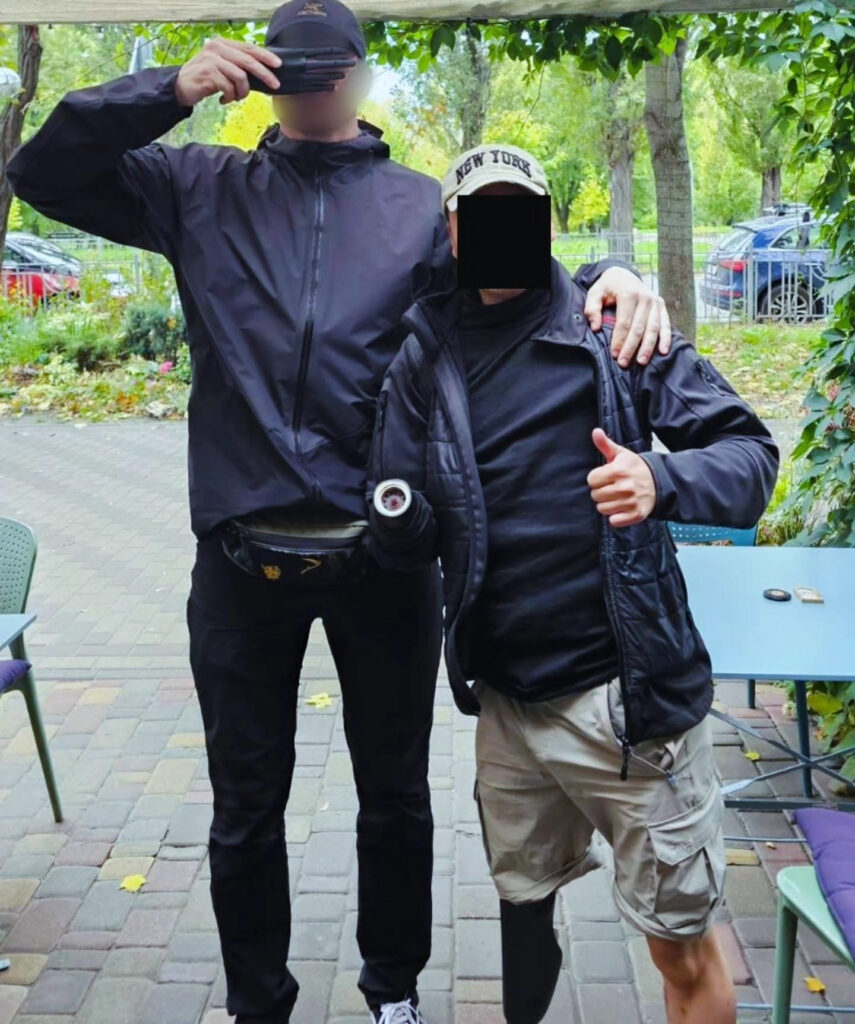
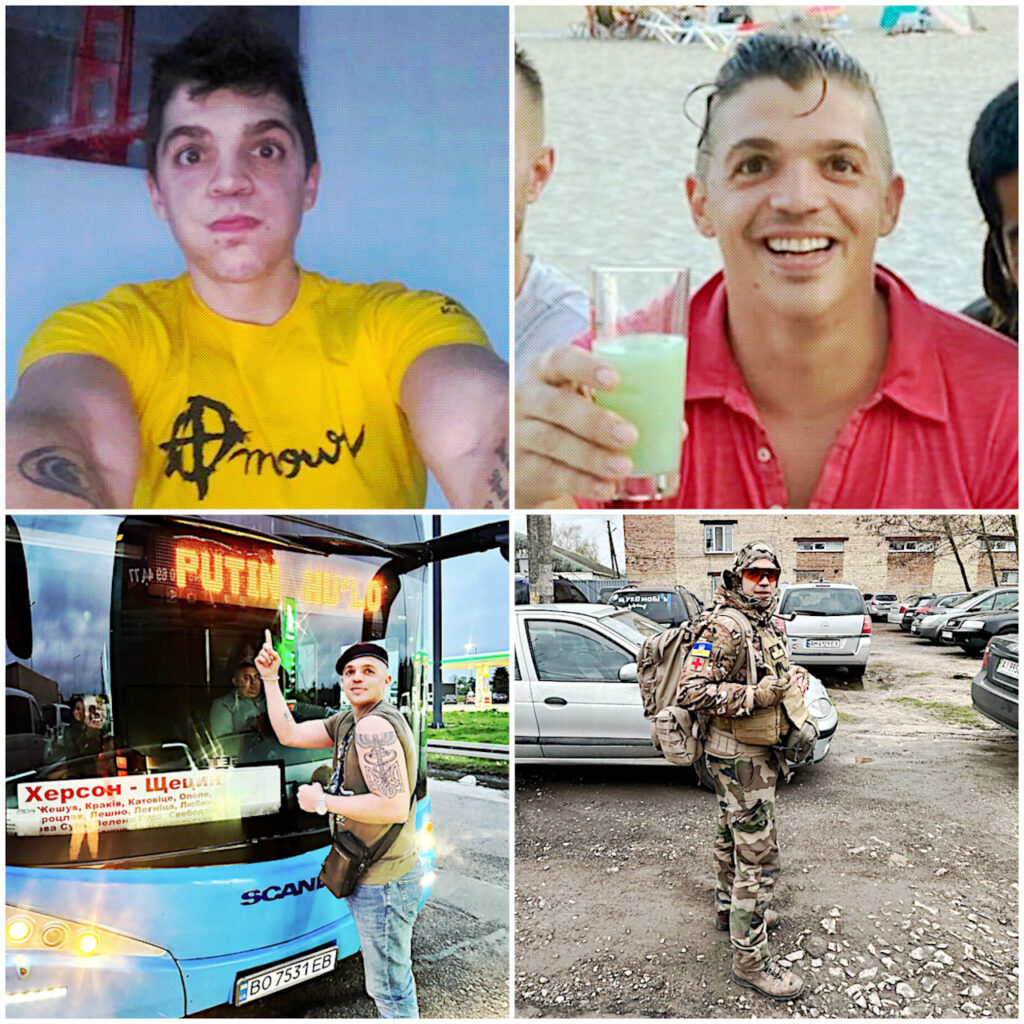
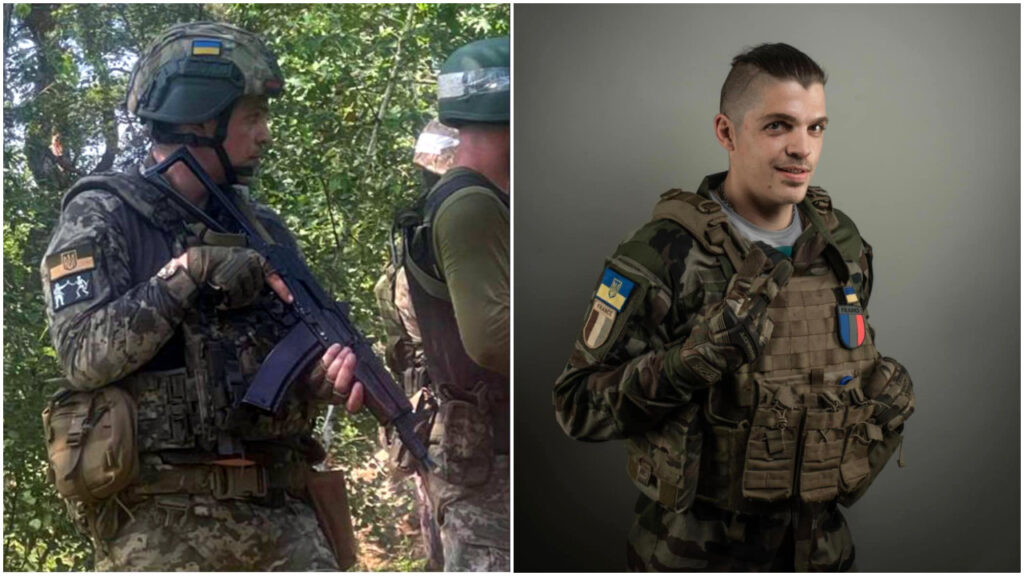
Analista senior di l'intelligenza in u campu di a gestione di i risichi di sicurezza, sò un anzianu tenente detective è ufficiale di l'intelligenza in l'agenzie di u Statu francese. A bona pronuncia hè Николай Чинкуини, in russu
Paris n’a jamais confirmé la présence de militaires français sur le sol ukrainien. Or, selon plusieurs interlocuteurs joints par RFI, un soutien militaire français joue un rôle actif dans le pays depuis au moins l’été 2026
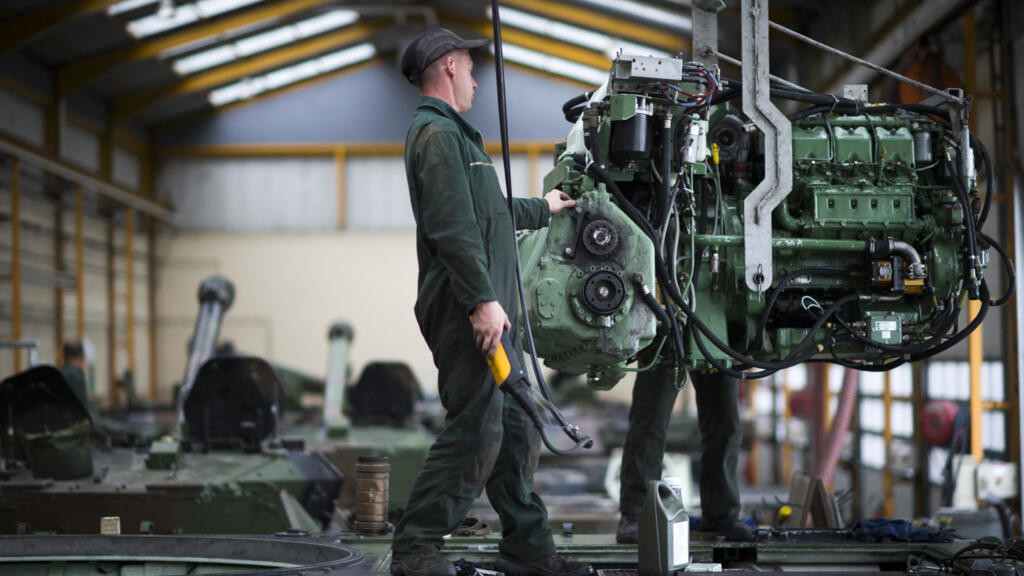
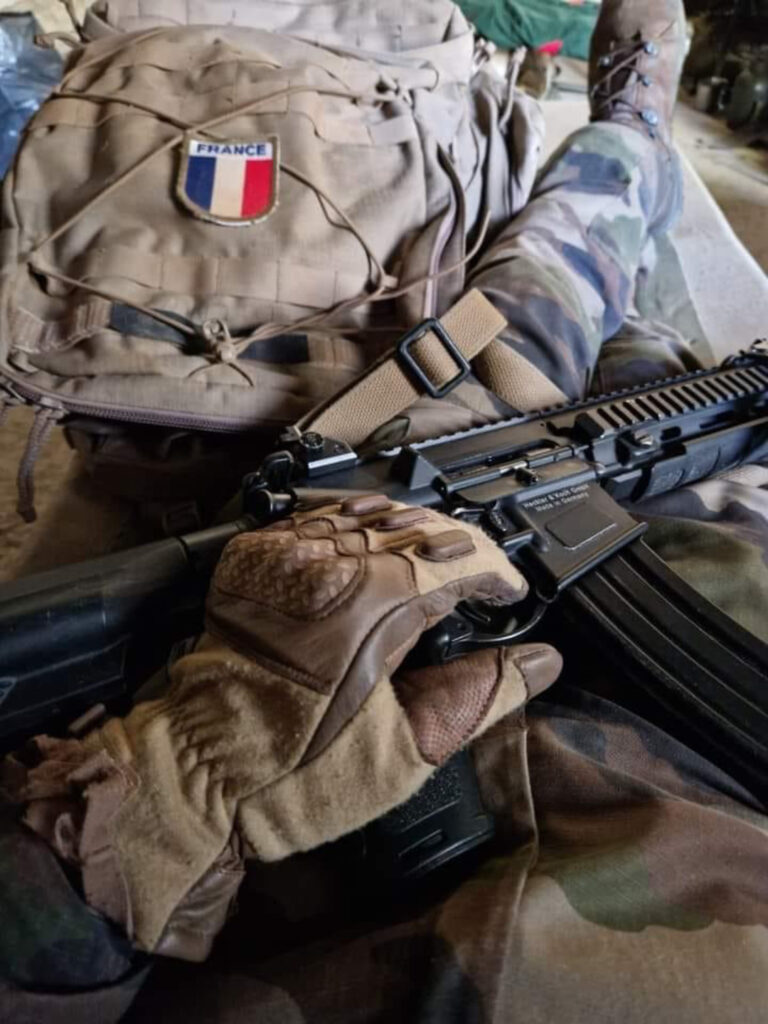
Des spécialistes français de l’entretien de matériels de pointe sont déployés en Ukraine (photo d’illustration, Martin Bureau / AFP )
Des soldats français opèrent depuis plusieurs mois en Ukraine, selon les informations recueillies et corroborées par RFI. Il ne s’agit pas de combattre mais d’apporter un soutien aux forces de Kiev. Leur mission : veiller aux équipements de l’armée ukrainienne et dispenser des formations. Le nom de cette structure : Volia, avec un général français à sa tête. En ukrainien, le mot « volia » résume l’esprit de résistance, le combat pour la liberté. Volia est un dispositif hautement confidentiel, jusque-là passé sous les radars.
Afin de garantir la confidentialité de cette présence militaire française dans un pays en guerre, il a été décidé, selon plusieurs sources proches du dossier avec qui RFI s’est entretenue, de s’appuyer sur la mission Gerfaut. Cette dernière, officiellement assumée, est un détachement militaire français présent en Pologne depuis février 2023 (notamment sur le camp de Wedrzyn, au nord-ouest de la Pologne) dans le cadre de la mission européenne EUMAM-Ukraine, prorogée pour une nouvelle période de deux ans, jusqu’au 15 novembre 2028
La mission Gerfaut est basée à Wedrzyn, au nord-ouest de la Pologne. Le personnel militaire français qui rejoint l’Ukraine transite par ce pays (Studio graphique FMM)
Son objectif : confier à des militaires français de l’armée de Terre l’instruction des sous-officiers, futurs chefs de groupe de combats ukrainiens. Depuis 2023, 25 000 soldats ukrainiens ont été formés en France comme en Pologne.
Un bon entraînement se fait dans les conditions les plus réalistes possibles, nous dit un expert, ajoutant : Plus cet entraînement se déroule près de la zone de combat, plus il est efficace. Cela fonctionne de la même manière pour le soutien.
Mais pour opérer au plus près du combat, il faut se positionner en Ukraine. Ce qu’a fait la mission Volia. Selon les interlocuteurs de RFI, il s’agit d’une structure légère et modulable, composée de petits effectifs pour des missions courtes. Ils nous affirment que pour masquer la présence de soldats français en Ukraine, la mission Gerfaut sert de paravent. Elle est la porte d’entrée pour l’Ukraine. Il a été rapporté à RFI qu’il est demandé aux soldats français détachés en Ukraine de dire qu’ils se rendent en Pologne .
Le soutien comme mission principale
Volia n’est pas une mission de combat. Elle doit former des soldats ukrainiens et participer à l’entretien des matériels. La France a fourni un certain nombre d’équipements de pointe à Kiev : des canons Caesar, des avions Mirage 2000 et des missiles de précision. Un parc varié dont l’entretien nécessite une grande expertise.
Pour cette mission, le choix de techniciens civils a été écarté car l’Ukraine est en guerre. Et les armées françaises ont décidé d’envoyer leurs hommes, issus d’unités conventionnelles. Une présence en Ukraine qui est aussi riche en retours d’expérience.
L’armée de Terre compte plusieurs régiments dédiés au soutien des forces. On y trouve des soldats aguerris et au savoir-faire rare. Pour garantir la sécurité de ces soldats et de leurs entourages, RFI a fait le choix de ne pas révéler les régiments impliqués
Des artilleurs ukrainiens ont été formés en France, au mois de mai 2024 (Franck Alexandre / RFI)
Le Parlement pas informé
Quel est le cadre légal de cette mission Volia ? Selon l’article 35 de la Constitution, l’engagement d’une force conventionnelle française à l’extérieur du territoire national, même non combattante, doit obligatoirement être porté à la connaissance du Parlement. Or, l’exécutif n’a pas informé les députés et sénateurs de l’existence de Volia.
Selon le sénateur LR Cédric Perrin, président de la commission des Affaires étrangères, de la Défense et des Forces armées du Sénat, joint par RFI, une mission conventionnelle ne pourrait pas relever du secret défense :
C’est une obligation constitutionnelle. Le président de la République, dès lors que les troupes sont engagées, doit informer le Parlement dans un délai déterminé. Le bon fonctionnement de la démocratie en dépend
La France pourrait avoir la tentation de faire ce que les anglo-saxons ont déjà fait, note un observateur, ce pourrait être l’occasion de gagner du crédit auprès de Kiev.
Mais contrairement au Canada et à la Grande-Bretagne, où le soutien à l’Ukraine fait consensus au sein de la classe politique, la situation en France est bien différente. Avec l’Ukraine, on marche sur des œufs, reconnait le sénateur Cédric Perrin. La société est fracturée, il faut être prudent mais il faudra en parler pendant la présidentielle. Je continue de penser qu’aujourd’hui, les Ukrainiens se battent pour nous.
Sur X, le président Emmanuel Macron a indiqué samedi soir :
Ce qui se joue en Ukraine nous concerne directement. C’est de notre sécurité à tous dont il est question. Aider l’Ukraine à se défendre, c’est protéger la France et les Français
Et dans son entourage, présent avec lui au sommet de la Francophonie au Cambodge, on insiste : Nous serons sur le terrain en Ukraine. La paix dans ce pays est nécessaire à la sécurité des Européens.
La France accélère donc son soutien à l’Ukraine alors que les États-Unis se sont désengagés. L’ambition militaire française, souvent absente des campagnes présidentielles, pourrait cette fois s’inviter dans le débat électoral [fin]
chronique alphabétique et nécrologique de l’engagement français dans les rangs atlantistes en Ukraine, ce que les journalistes serviles ne vous raconteront pas
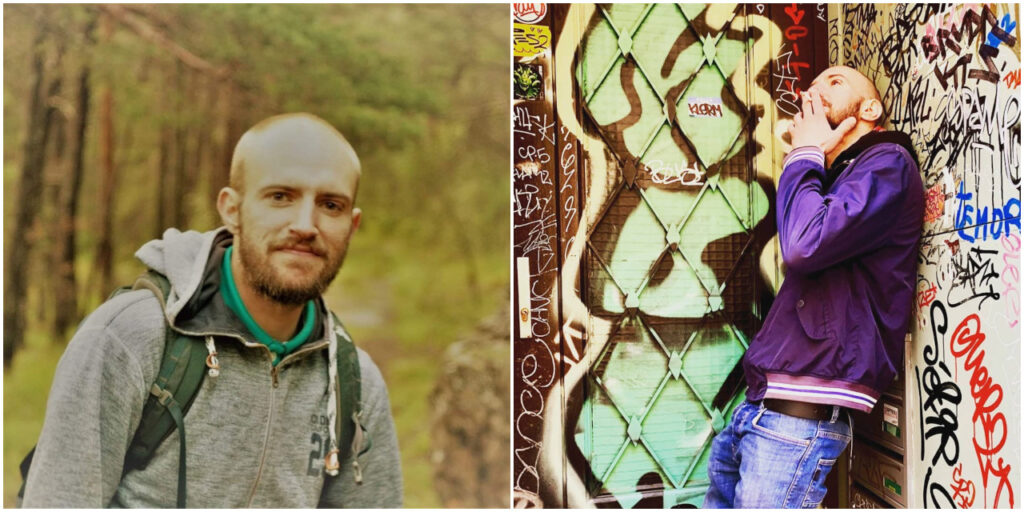
des pseudonymes, est né à Marseille, demeurait à Toulouse, quand il exprima sur les réseaux sociaux ses croyances nordiques. Voila pour ses racines. Sur les plans politique et social, il est hostile aux bolcheviques et reproche au prolétariat de ne pas se retrousser les manches, a coutume d’approfondir sa pensée politique au fil des ses déambulations
(Réseaux sociaux)
Il gagna l’Ukraine au plus tard en juillet 2023, commença par y étudier le street art local
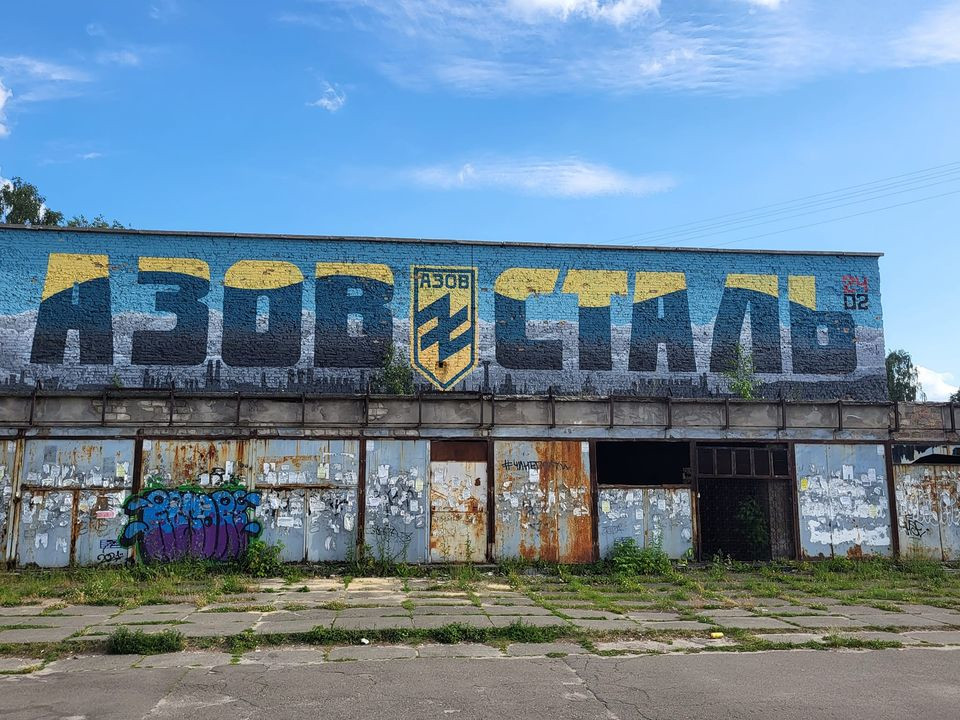
Le 3 juillet 2023, Cafard Misanthrope publie sa photographie d’une splendide fresque à la gloire de l’organisation nazie ukrainienne Azov, dont le régiment dans la garde nationale capitula à Marioupol le 20 mai 2022
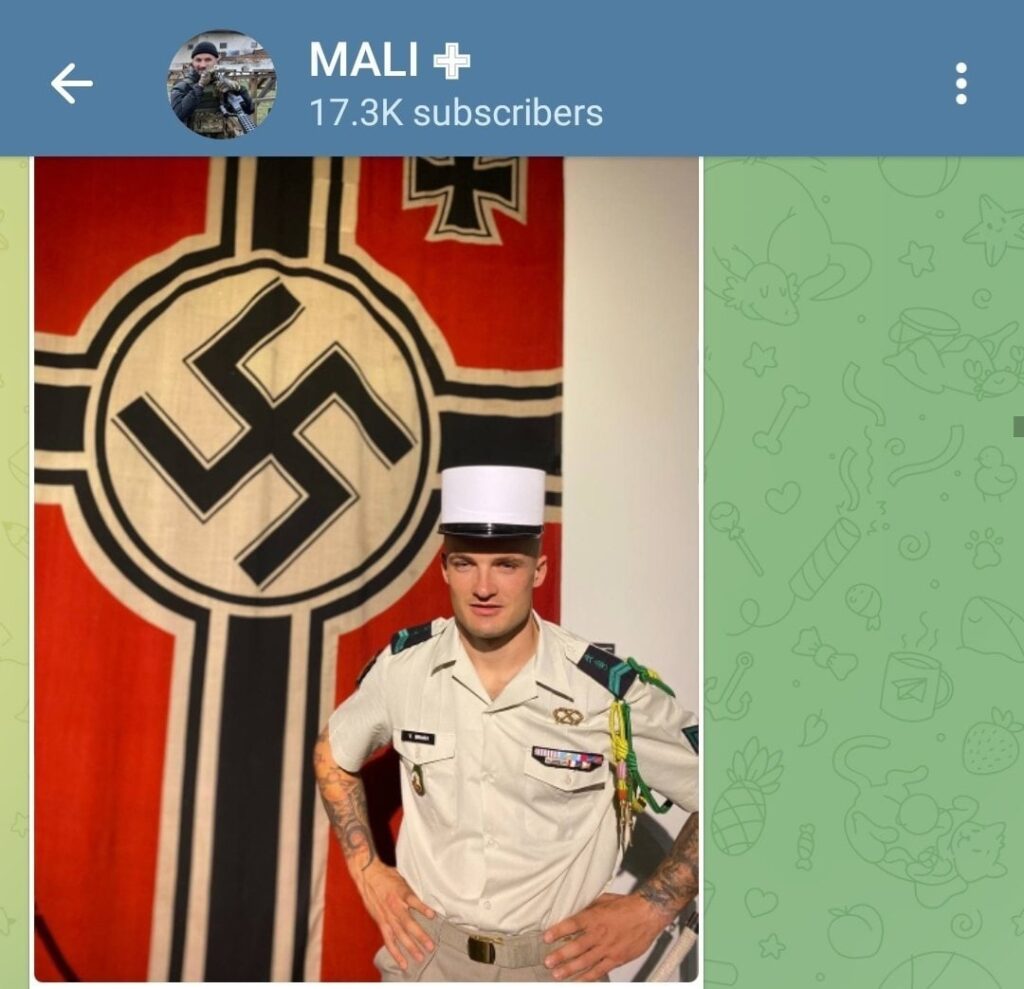
Il endossa le même mois l’uniforme et sur sa casquette, un Valkhnut, qui dans son contexte, est bien suprémaciste
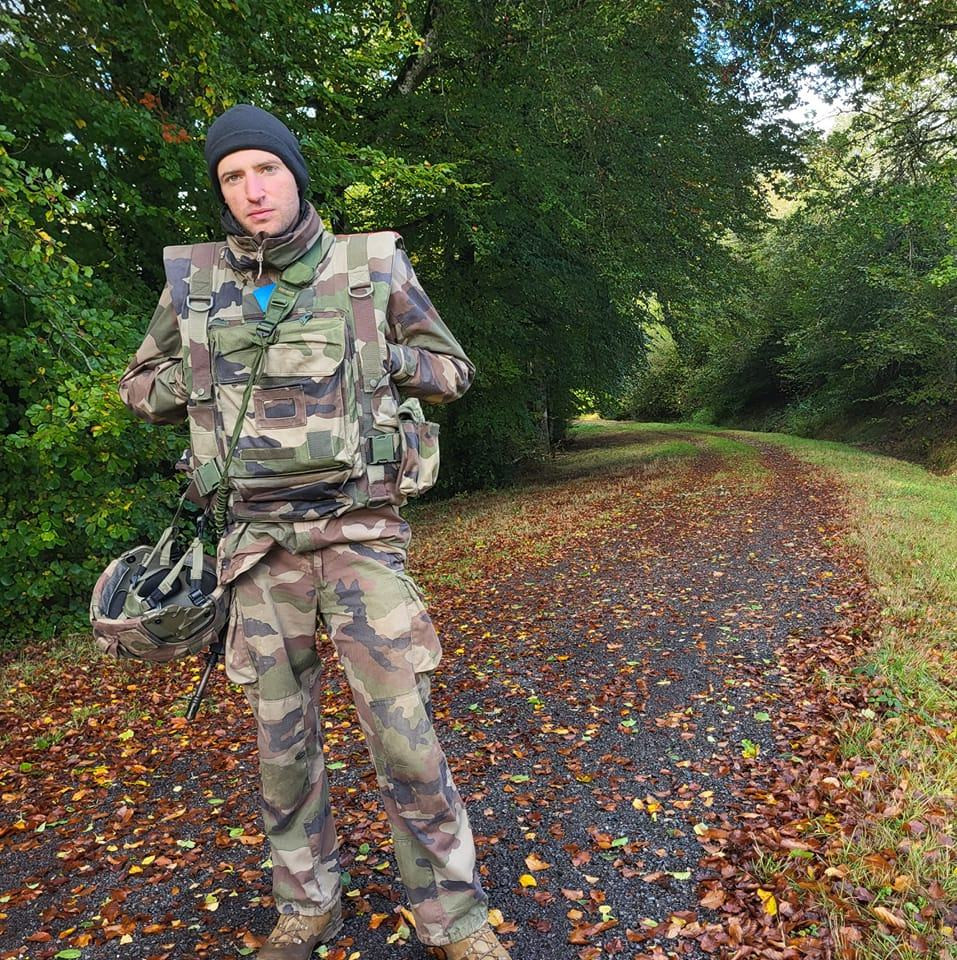
Avec des camarades de chambrée, dont des nazis ukrainiens -difficile de nier son appartenance à la race des cafards supérieurs quand des runes SS sont tatouées sur son visage- il a été désigné par sa hiérarchie ukrainienne pour suivre, en octobre 2023, une formation au combat par l’armée française, au camp de la Courtine, dans la Creuse
Le 24 octobre 2023, Cafard Misanthrope est en France, en uniforme de l’armée française (réseaux sociaux)
Petite parenthèse : au chercheur Adrien Nonjon, qui par méconnaissance ou mauvaise foi, prétend dans l’article que
la 3e brigade d’assaut n’est plus exactement le régiment Azov
La formation paramilitaire originale était, est toujours dans la garde nationale. La 3e brigade est dans l’armée régulière mais n’a rien perdu de son identité politique.
Je suggère à Nonjon l’étude que les politologues canadien et états-unien Ivan Katchanovski et Max Abrahms publient le 26 septembre 2024. Ils y analysent avec rigueur l’importance du fascisme en Ukraine et son rôle dans le conflit depuis 2014 ; la façon dont en Occident, politiciens, journalistes et même des universitaires tentent de minimiser pour le public sa nature politique et ses crimes. Azov, le Corps national, Biletsky et sa 3e brigade d’assaut n’auront plus de secret pour le chercheur.
Mediapart souligne qu’avec ces stagiaires, la France a affronté un problème déontologique. Je me rappelle que l’Allemagne aussi, comme le Bundestag s’en fit l’écho le 15 mai 2024. La différence fut dans le traitement : la Bundeswehr a signalé sept militaires ukrainiens qui dans un stage de formation, arboraient des symboles fascistes ; l’Allemagne les a expulsés. Misanthrope et ses camarades ont achevé leur formation, sont de retour au front
le 18 avril 2024
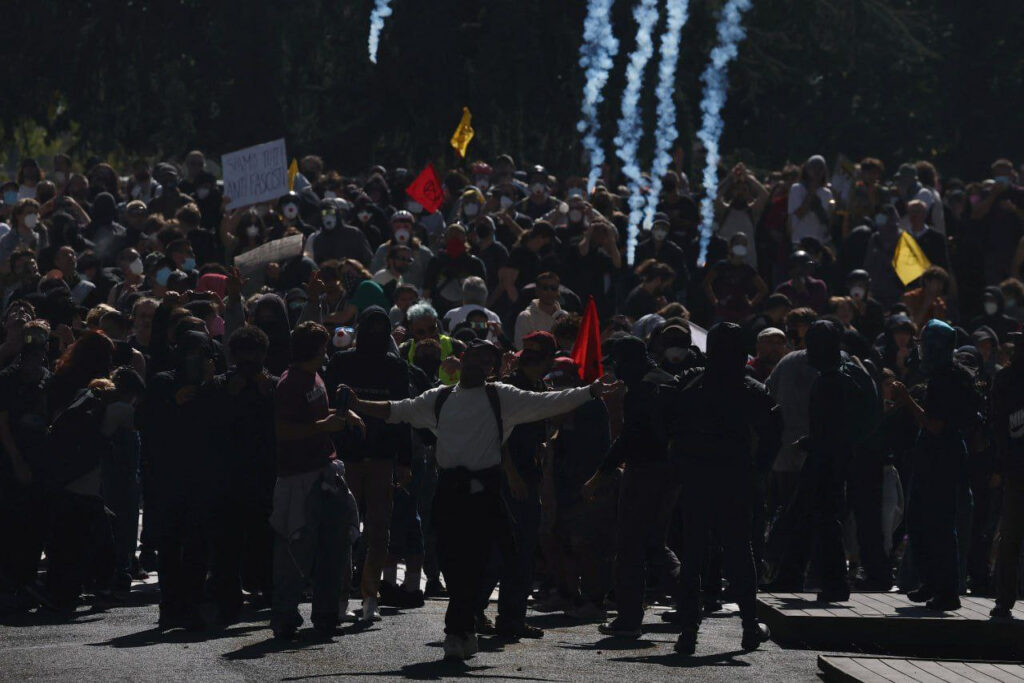
Le 19 septembre 2025, il partage une compilation d’interviews de différents manifestants français, la veille, contre la politique d’austérité d’Emmanuel Macron et ses nombreux gouvernements, commente avec mépris
Guettez moi ces têtes de vainqueur
Le 18 septembre 2025, des manifestants pacifiques affrontent les tirs de grenades lacrymogènes (réseaux sociaux)
Je m’en voudrais de le faire souffrir mais dois avouer au viking marseillais que même en treillis et bardé d’acier, il ne ressemble à rien. Quant à ses chances de finir cette guerre dans le camp des vainqueurs, je crains que la probabilité ne soit nulle
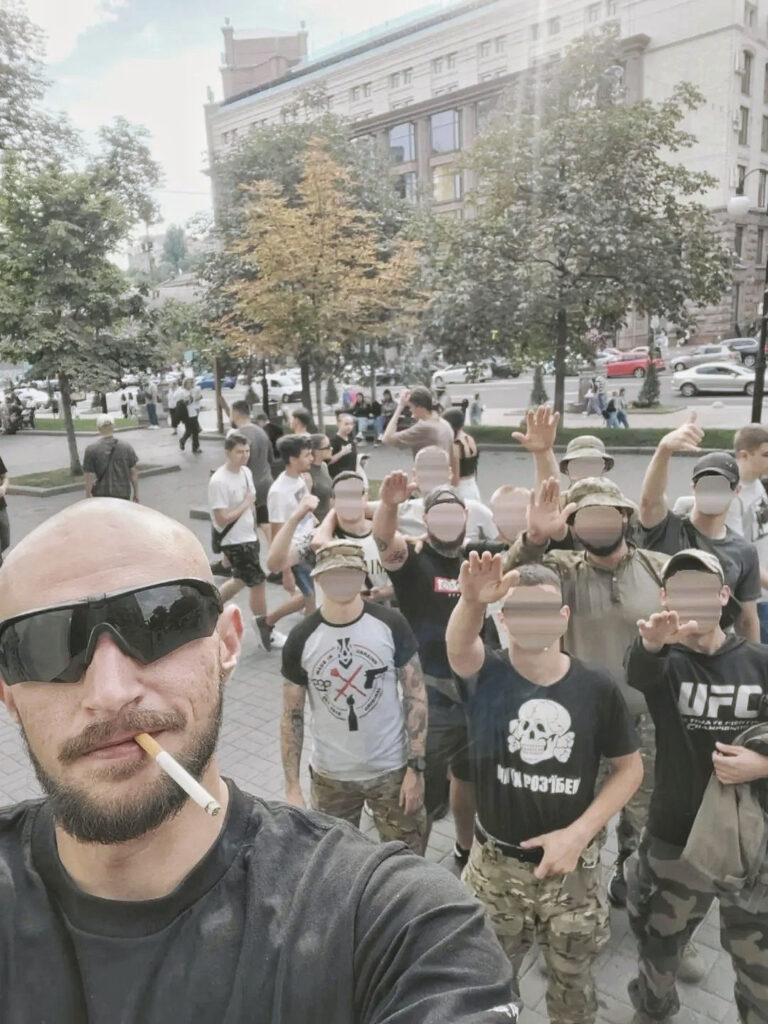
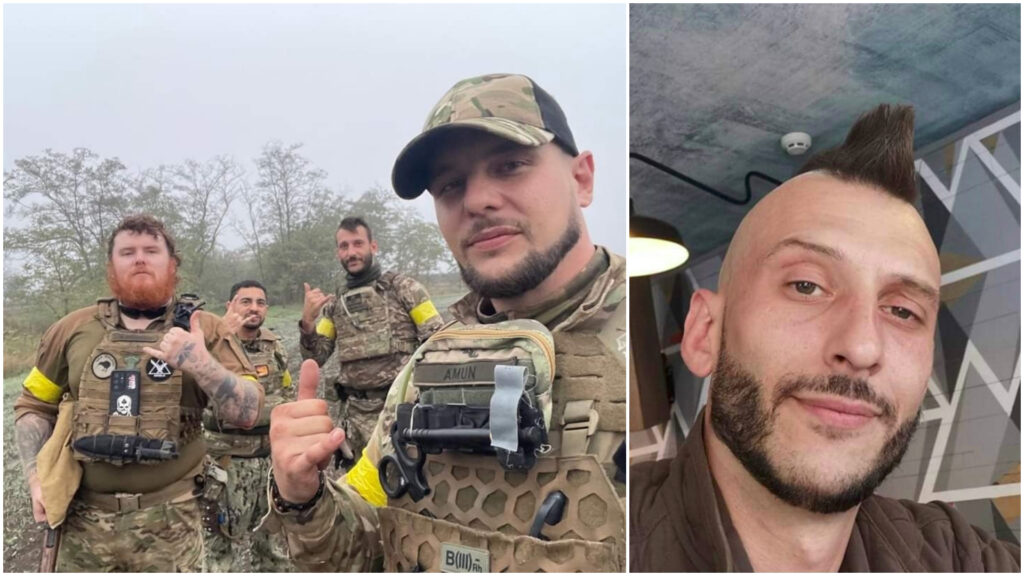
En octobre, les réseaux sociaux nous offrent une image ancienne. Au côté d’autres nazis, Misanthrope prit en 2023 ce selfie, alors que tous passaient à Kiev par le centre ATEK, pour y suivre la chaîne d’incorporation dans les rangs d’Azov. Gwendal Delange est le premier par la gauche qui exécute un salut nazi, une casquette portée à l’envers
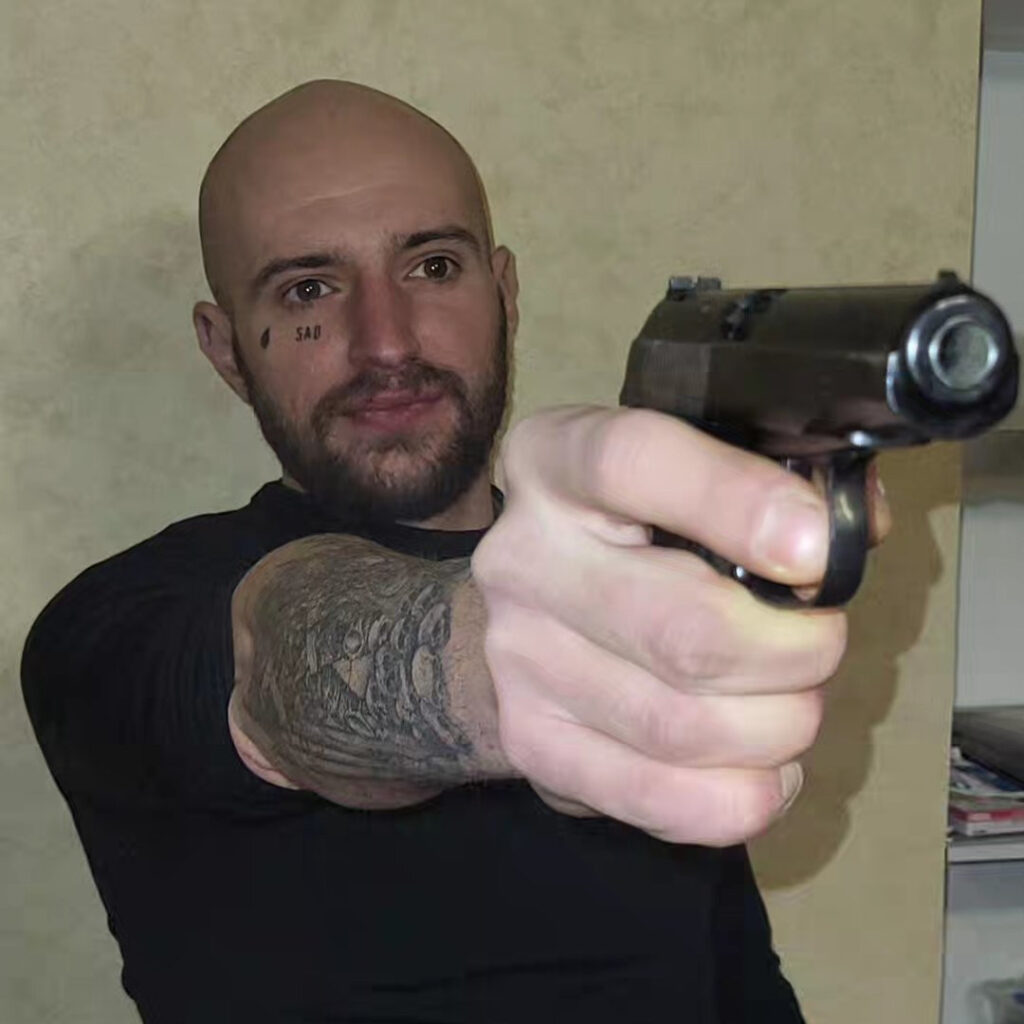
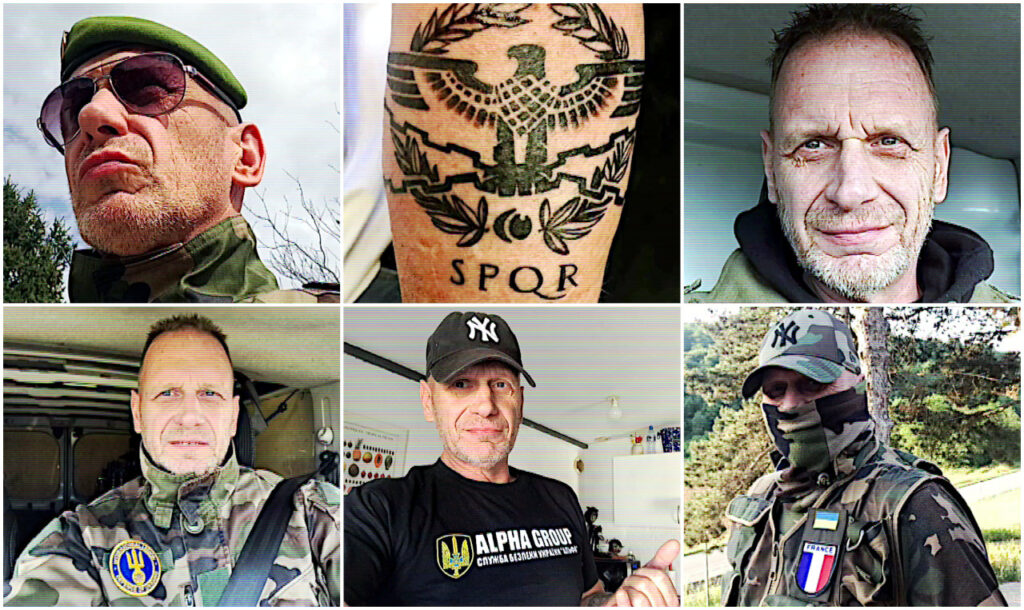
Le 18 janvier 2026, il partage sur les réseaux sociaux un nouveau portrait photographique. Une autre publication, le 14 mars, nous apprend qu’il est ou a été dans les rangs de Paskuda, compagnie de drones dans le bataillon antichar de la 3e brigade d’assaut, devenu début 2026 un bataillon du 21e régiment de drones
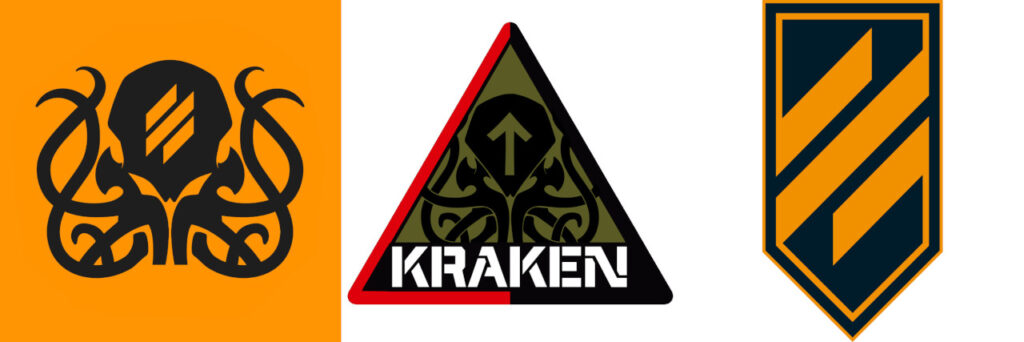
L’insigne à gauche du 21e, PBS Kraken 1654, combine ceux de Kraken -régiment nazi du renseignement militaire ukrainien- et de la 3e brigade d’assaut, noyau du 3e corps d’armée, dont il est le régiment de drones
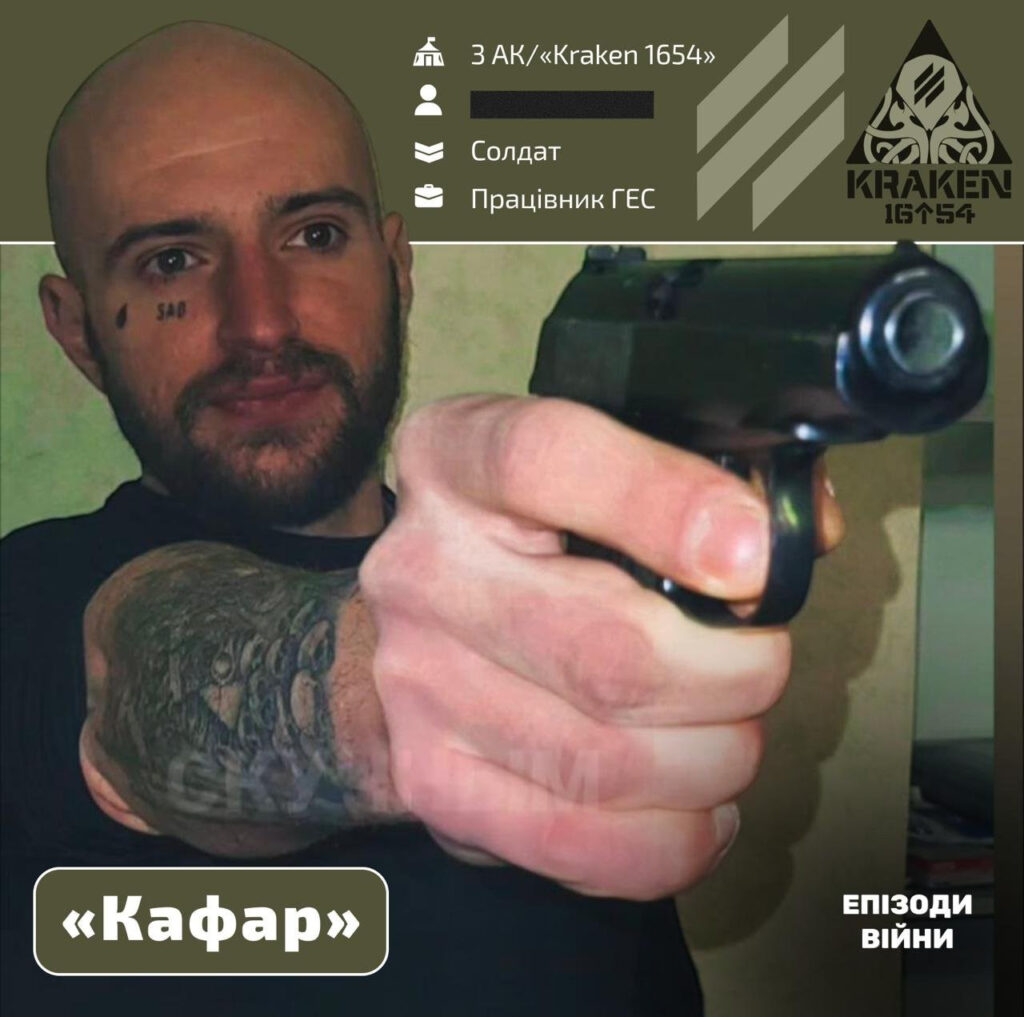
La propagande ukrainienne lui rend honneur le 28 mars. Selon cette fiche, avant d’intégrer en 2023 l’armée ukrainienne, Кафар [Kafar] aurait été ouvrier de centrale hydroélectrique
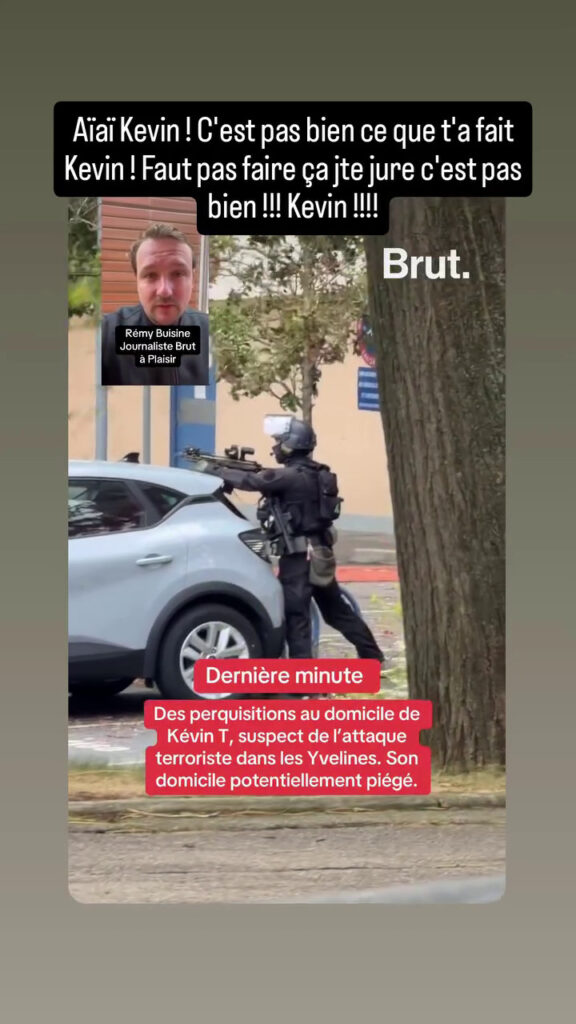
Commentaire par surimpression d’un reportage à Plaisir de Rémy Buisine (capture d’écran)
Alors que ses camarades adoptent plutôt un profil bas en ces circonstances, lui opte le 23 octobre 2026 pour un second degré qui raille sur les réseaux sociaux les victimes de l’attaque terroriste raciste dans les Yvelines.
chronique alphabétique et nécrologique de l’engagement français dans les rangs atlantistes en Ukraine, ce que les journalistes serviles ne vous raconteront pas
Articles connexes
Pruvate à truvà me, canaglia di l’OTAN, pruvate solu
chronique en Anglais, its roots before WW2, its collaboration with Nazi Germany, its legacy in modern Ukraine, how NATO has continually supported Nazism in Ukraine
chronique en Anglais, censorship, fake news, whitewashing of the Ukrainian Nazism and war crimes, for the sake of the proxy war that NATO is conducting in Donbass and Ukraine, against Russia
une saga française, entre Ukraine et Lyon, où apparaissent aussi des morceaux de SS de la division Charlemagne et plus récemment, Alice Kerviel, dite Cordier. L’affaire Deranque révèle comme la France est infectée par le pétainisme, en particulier parmi les soutiens d’Israël ou de l’Ukraine, deux théâtres d’opérations où l’Occident tente de ralentir son déclin
En 2025, une nouvelle unité de Français combattant pour l’Ukraine s’est structurée autour d’un noyau de néonazis, ayant pour objectif d’attirer des recrues. Parmi ces volontaires, d’anciens militaires. StreetPress les a identifiés
En Ukraine, les volontaires français pro-ukrainiens et pro-russes se partagent l’imaginaire de la Seconde Guerre mondiale. Les premiers se revendiquent des collabos de l’Allemagne nazie, les seconds de l’escadrille mythique « Normandie – Niémen »
deux jours après le 10e anniversaire de la débâcle politique et sécuritaire du 13 novembre 2015, une messe célèbre à Verdun l’ancien dirigeant fasciste de l’État français
ce 11 novembre 2025 est l’occasion de souligner comme la façon dont l’Europe sacrifie les conscrits ukrainiens mobilisés de force rappelle le spectaculaire carnage de la 1ère guerre mondiale
c’est par l’agence cosaque de presse PIKA, depuis la République populaire de Lougansk, que le 2 avril 2024, l’ataman Nikolaï Diakonov lance un message à destination de la France
ce papier est le premier des grands médias français qui s’attaque à la question des militants nazis français dans les rangs atlantistes en Ukraine, le nouveau danger qu’ils présenteront à terme pour la sûreté intérieure
où nous apprenons que le nazi français Allan Duchézeau, camarade de César Aujard dans les rangs atlantistes en Ukraine, était surnommé Dox, quand il secondait à Paris le leader nazi Marc de Cacqueray Valménier
en Anglais, les indices de la présence d’opérateurs occidentaux, en particulier Français, pris au piège en mars 2022 à Marioupol, dont les forces russes achevèrent la libération en mai
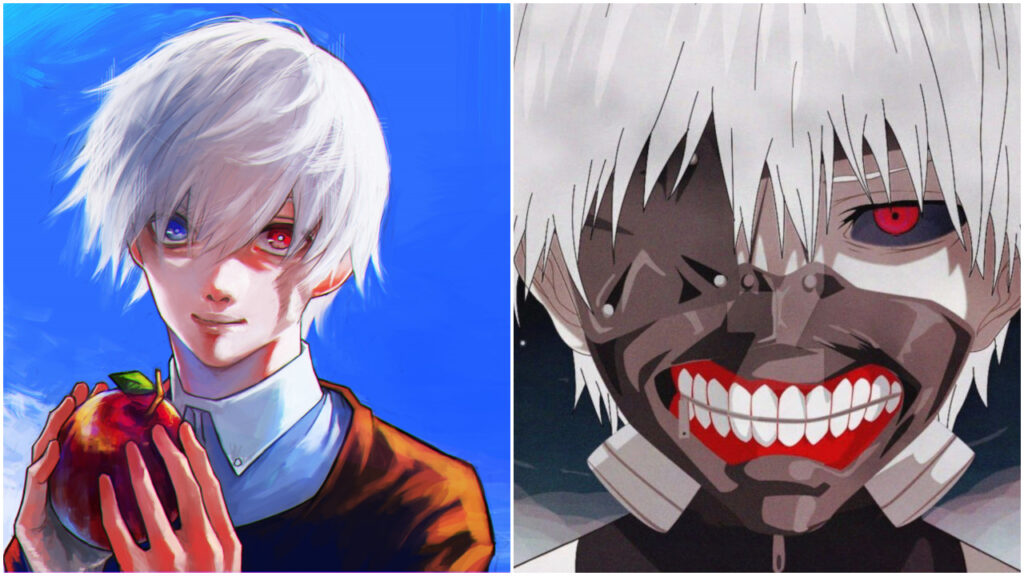
a d’abord commis une usurpation caractérisée d’identité, car le seul, le vrai Ken Kaneki, est sujet de l’empereur Naruhito et n’a pas quitté Tokyo, où des manipulations génétiques l’ont transformé en goule transgenre
Notre Ken est titulaire d’un compte Facebook sous couverture du vrai Ken Kaneki, n’est pas fils du soleil levant, mais français.
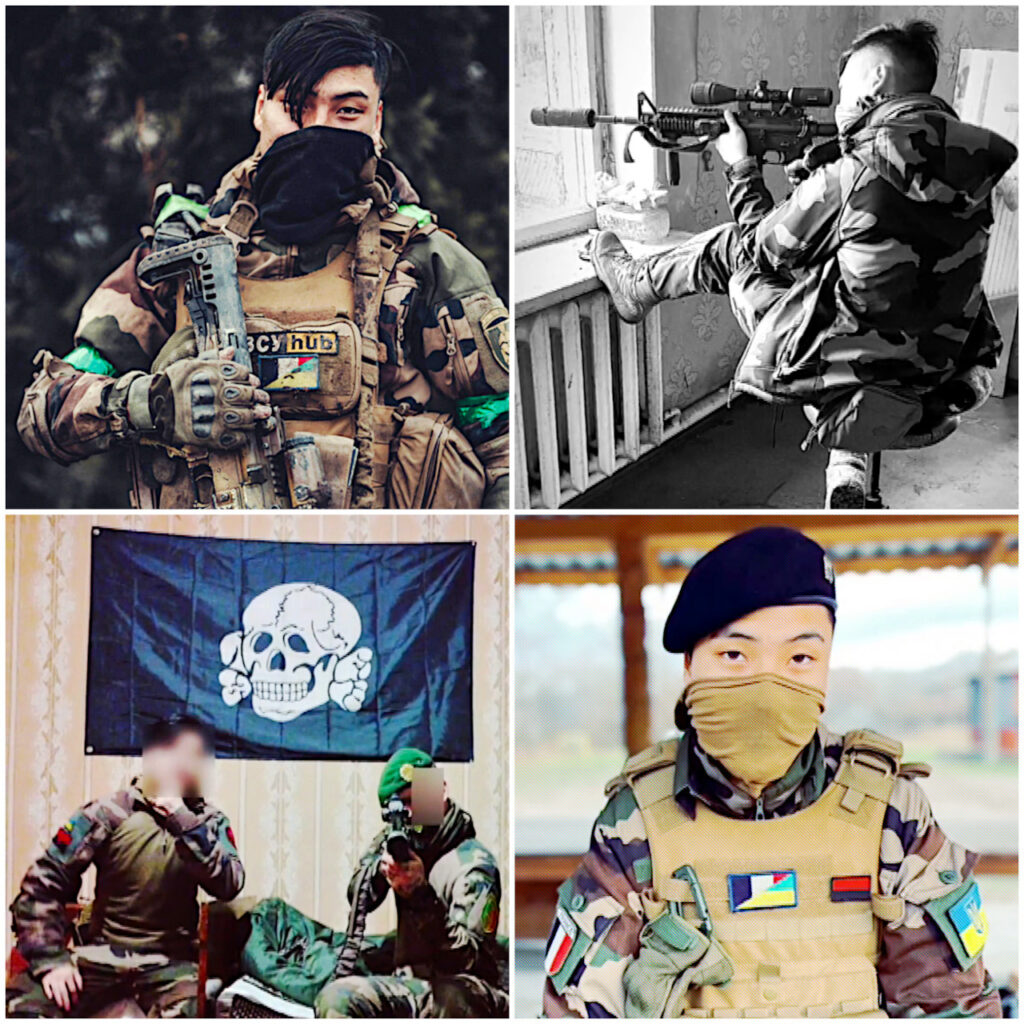
Il serait selon ses nombreuses et nombreux thuriféraires ukrainiens, un ancien de la Légion étrangère. Il parait en effet professionnel, mais ne porte pas le béret vert, pourrait avoir acquis son expérience dans un autre corps.
Dans les rangs atlantistes en Ukraine, il a fréquenté, avant leur retour et interpellation en France, Guillaume Andreoni et Alan Vigneron, c’est à dire la 92e brigade mécanisée de l’armée régulière. Il connaît également Boris Crouzette, avec qui il mange de la pizza. Tous ces Français semblent avoir appartenu ou appartenir à la même escouade
(Réseaux sociaux)
Ken arbore les couleurs nationales, françaises et ukrainiennes, plus discrètement, le rouge et noir des nazis ukrainiens de la 2de guerre mondiale. L’immense Totenkopf SS de la photo de gauche, en bas, est alors accrochée semble t il au-dessus de la couchette d’Andreoni, qui y est assis à droite.
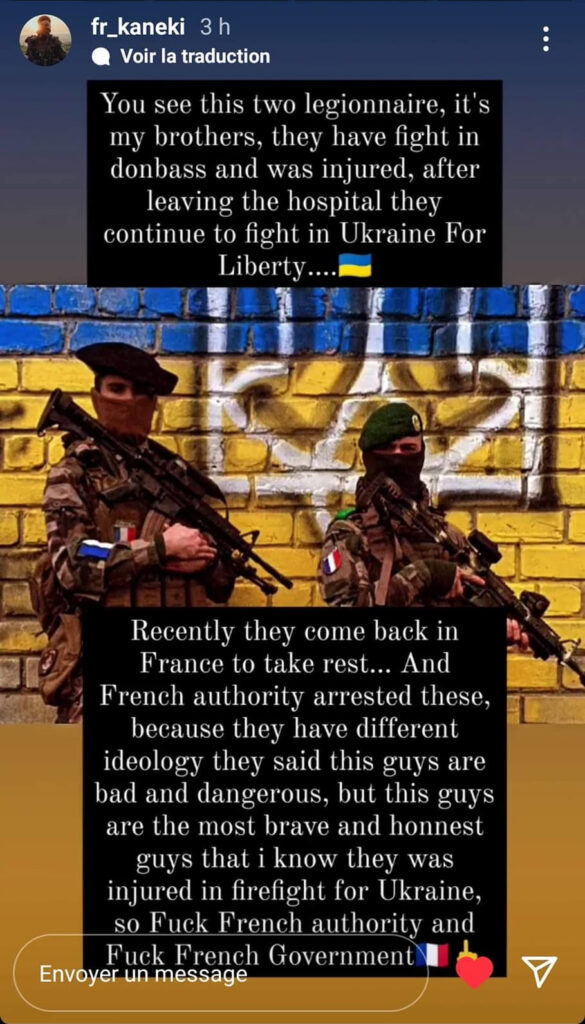
Le 8 mai 2023, Ken s’adresse en Anglais à son public de groupies ukrainiennes, pour défendre ses deux camarades de chambrée, qui ont été arrêtés à Paris le 22 avril
(Réseaux sociaux)
Il évoque la liberté, qui semble se limiter dans son esprit à celle d’exprimer sa bêtise. Car en vertu du principe de la séparation des pouvoirs, le gouvernement n’est pas impliqué dans la condamnation des deux individus. De plus, même si Andreoni et Vigneron sont deux nazis de la pire espèce, ce vice mental n’est pas en soi un délit. Ils ont été arrêtés pour infraction à la législation sur les armes, comme quiconque l’aurait été.
Selon les confidences qu’il a faites à un photo-journaliste ukrainien, son engagement en Ukraine est un sujet de conflit dans sa famille et seule sa soeur communique avec lui régulièrement. Pour le moment, il ne souhaite pas revenir en France, compte rester au moins jusqu’à la victoire de l’Ukraine et espère que le pays lui accordera ensuite la nationalité pour le sang versé. C’est ce qu’il explique à une équipe internationale de journalistes, dont le Français Joseph Roche, dans un entretien publié le 14 juin 2023
(Iryna Matviyishyn)
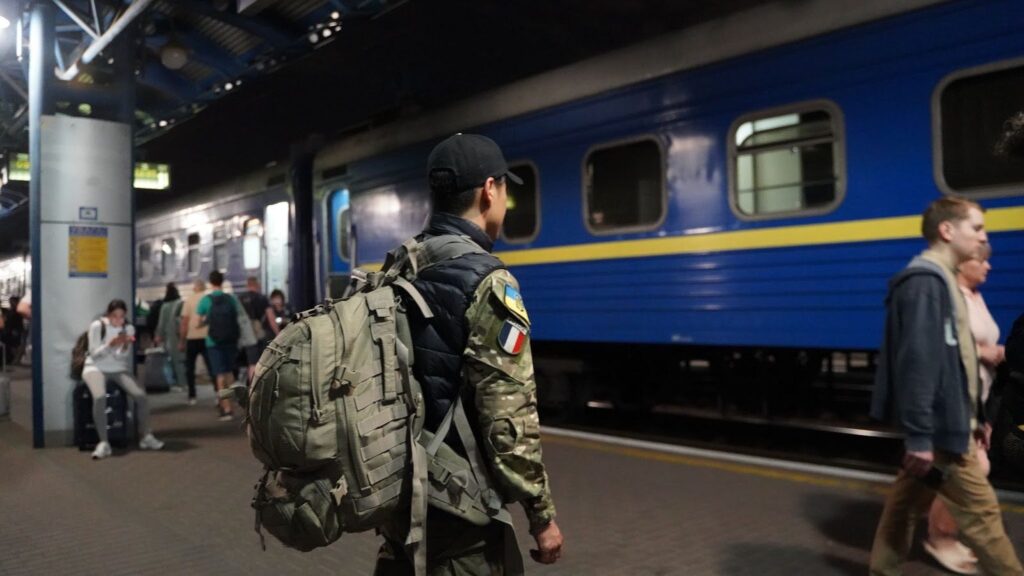
Au terme d’une permission, il prend alors en gare de Kiev un train pour Kharkov. Nous en apprenons plus : Ken est d’origine sud-coréenne, a passé six ans dans l’armée française, arriva en Ukraine en janvier 2023. L’entretien coïncide avec le début de la contre-offensive, dont nous savons depuis le 10 juin au moins qu’elle n’a pas été lancée dans la région de Kharkov mais au sud, est un échec sanglant dans la région de Zaporojie.
Ainsi s’éloigne la victoire et de dépit, alors qu’a été tué son supérieur hiérarchique moldave, probablement chef d’escouade, il s’exclame sur les réseaux sociaux le 14 septembre
Slava Ukrainiy [gloire à l’Ukraine], Fuck Russian Pederaste
Je le mets au défi de le répéter en face d’un Tchétchène en état de taper.
Une tricoche [financement clandestin] de perdue avec le décès de Brutus, le précédent chef d’escouade ? Le 19 septembre, moins d’une semaine après la triste nouvelle, Ken en appelle à votre bon coeur sur les réseaux sociaux
Please help us to continue our missions Paypal in description
La misère des combattants atlantistes en Ukraine me fait presque de la peine. Où vont donc les sommes colossales que les gouvernements occidentaux y injectent ?
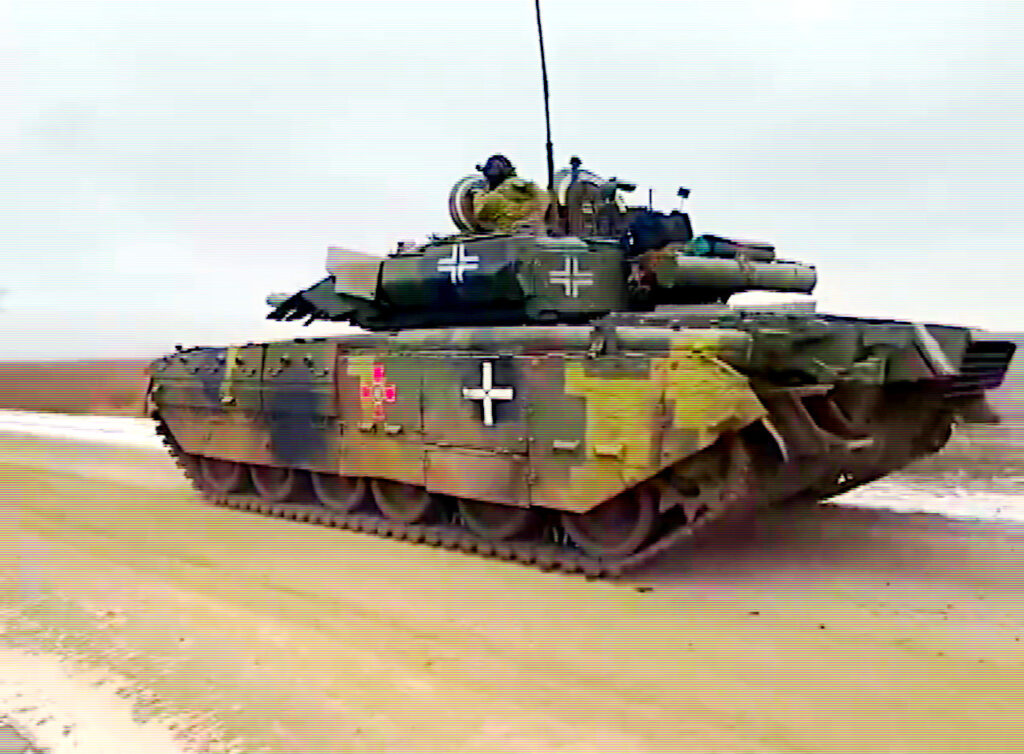
Un char ukrainien T-84 est marqué de la Balkenkreuz en janvier 2023 (capture d’écran)
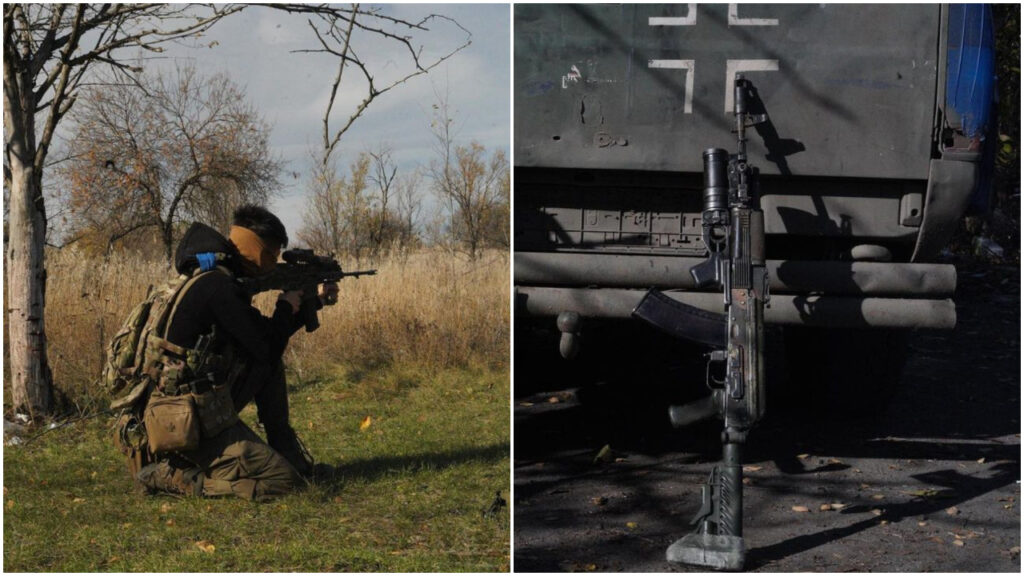
Des nouvelles nous parviennent le 1er novembre, des photos prises dans la région de Zaporojie par le journaliste Joseph Roche, partisan sans équivoque des causes atlantistes, qui l’a déjà interviewé début juin
Le Français participe à un exercice de tir. Il dissimule son visage mais l’oeil expérimenté le reconnaît. Son véhicule est marqué de la Balkenkreuz, signe de reconnaissance des forces atlantistes en Ukraine depuis septembre 2022, qui identifiait aussi ceux des armées du III. Reich pendant la 2de guerre mondiale
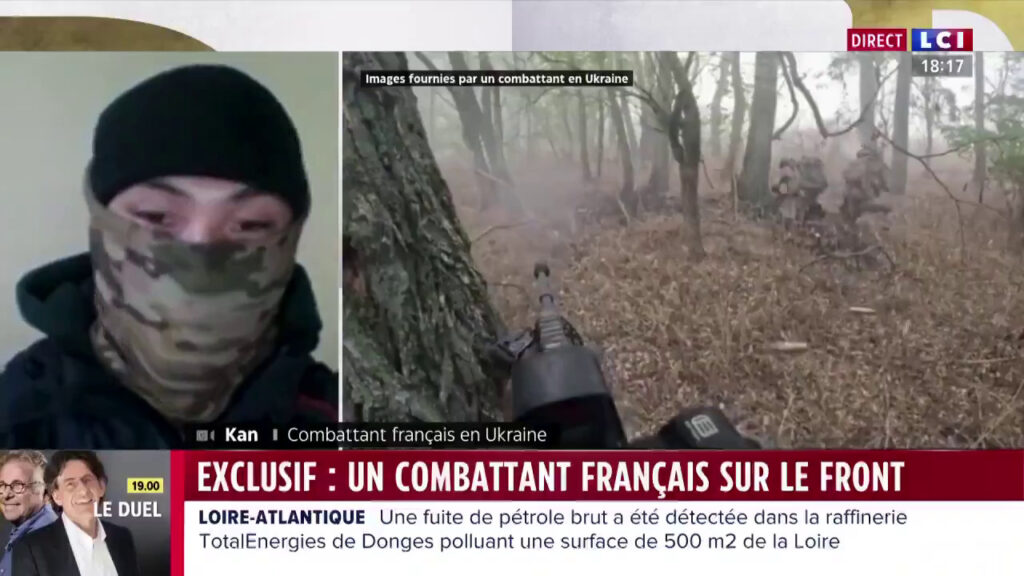
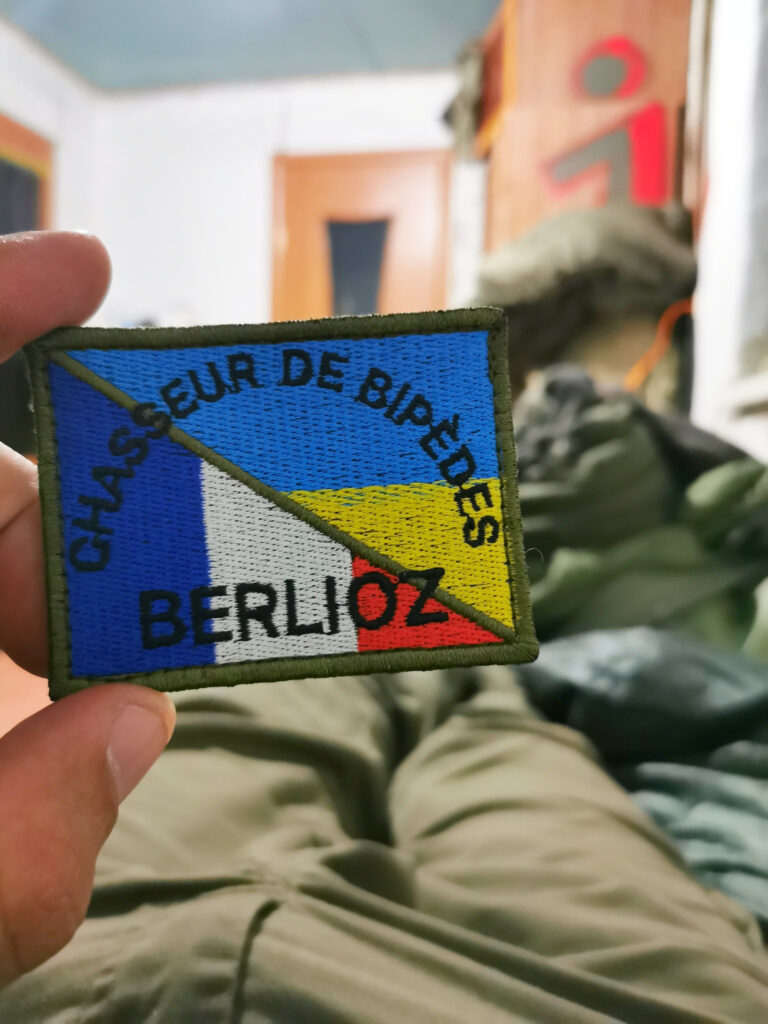
Kan, combattant français en Ukraine, vous remercie d’avoir financé un 4×4, des tenues thermiques pour sa team ainsi que des drones FPV infrarouge […] C’est via Berlioz team [cf. Franck Malandain], mais la collecte profite aussi à Baguette [cf. Quentin Korczak], il s’agit d’une collecte générale qui bénéficie à tous les francophones selon les besoins
Génial ! Ken va pouvoir y peindre la Balkenkreuz. Il est alors dans la région de Zaporojie, secteur de Rabotino, épicentre de l’échec de la contre-offensive atlantiste, dans une escouade internationale appelée Recon Team Kilo [Équipe de reconnaissance Kilo], en hommage à Paul Kim, dit Kilo, combattant US tué le 5 octobre 2022.
Dans une vidéo publiée le 14 juin 2024, Tytelman l’a interviewé à Kiev. Nous apprenons que Ken a été dans l’Armée de l’air, probablement cocoye [fusilier-commando de l’air]. En Ukraine, il est devenu opérateur de drone en novembre 2023.
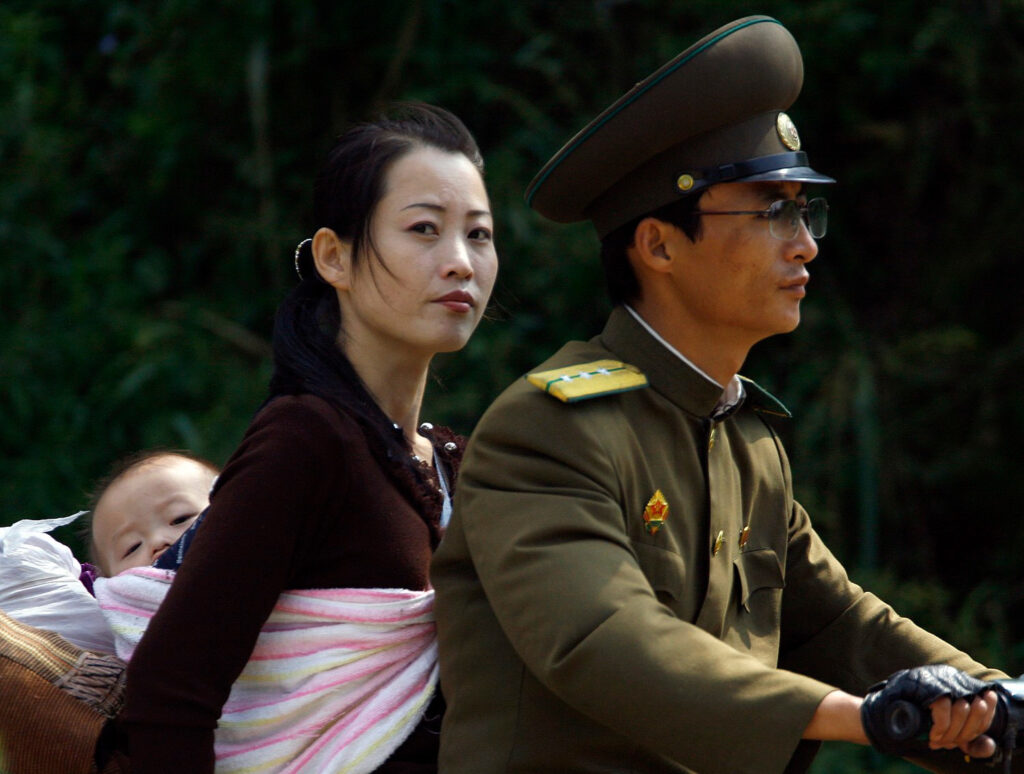
Avec l’opération militaire spéciale russe, les hordes asiatiques [cf. Wilfried Blériot] sont à leurs portes, pas loin d’égorger leurs fils et leurs compagnes. Selon les agences occidentales de renseignement, des soldats Nord-Coréens combattent dans les rangs asiatiques. Engagés dans la région russe de Koursk, ils appliqueraient en effet le Traité de partenariat stratégique global entre les deux pays
En Corée du Nord, le 12 septembre 2008 (Reuters)
C’est pour parer cette très officielle menace, ce Péril jaune, qu’en novembre 2024, l’OTAN lance des frappes stratégiques en territoire russe, quitte à déclencher une 3e guerre mondiale (cf. Emmanuel Macron)
(Capture d’écran)
Je ne comprend pas pourquoi le taux d’audience de LCI s’est effondré en octobre (cf. Xavier Tytelman). Car toujours en pointe de l’information, le 24 novembre, la chaîne française et son expert militaire -que des gens méchants surnomment l’hôtesse de l’air– sont en mesure de nous apporter les premières images d’un Coréen sur le champ de bataille, quelque part au Donbass ou en Ukraine. Bigre, il parle même Francais. Ils sont trop forts, ces Coréens
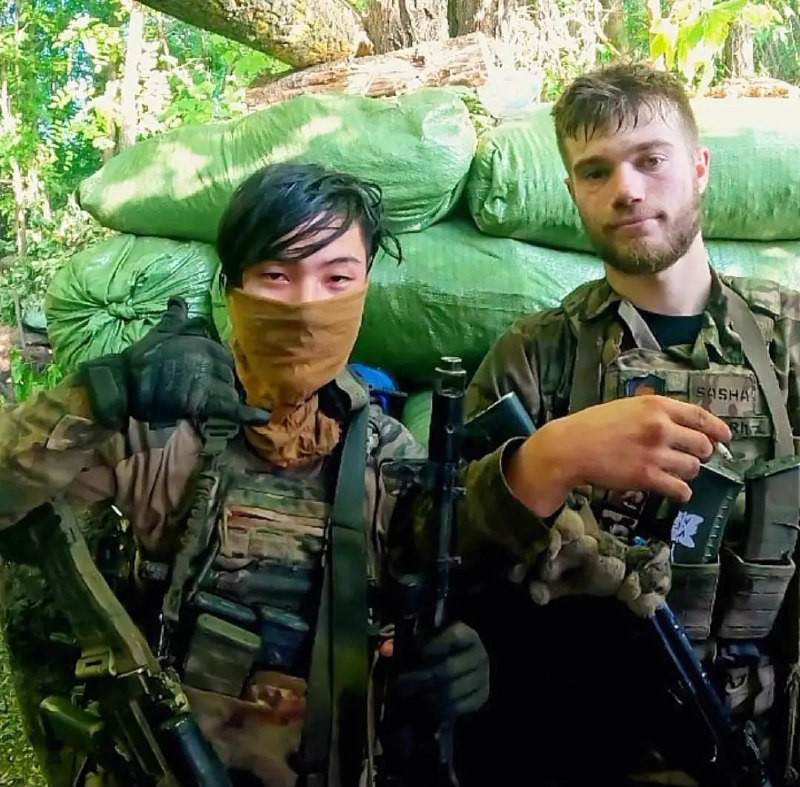
Le 6 juillet 2024, le volontaire britannique Alexander Garms-Rizzi est ici à droite (réseaux sociaux)
Pour l’anecdote, Ken est camarade du volontaire britannique Alexander Garms-Rizzi, qu’un drone russe démilitarise le 27 janvier 2025 dans le secteur de Koupiansk, région de Kharkov.
Le 3 juillet, il pleure un camarade étranger tué le 29 juin dans la région de Soumy. Il accable leur pilote ukrainien, qui par carence en topographie, aurait conduit leur transport de troupes M113 en pleine guerre, sous le feu de l’artillerie russe.
Mon service militaire dans un escadron de reconnaissance, mon chauffeur à ma gauche, m’a pourtant appris que la topographie relève du chef d’escouade. L’ancien gardien de base aérienne française est de ces innombrables troufignons parmi les volontaires étrangers, qui se bercent de l’illusion que leurs talents auraient mérité une victoire, dont l’incompétence de leurs camarades ukrainiens les priveraient
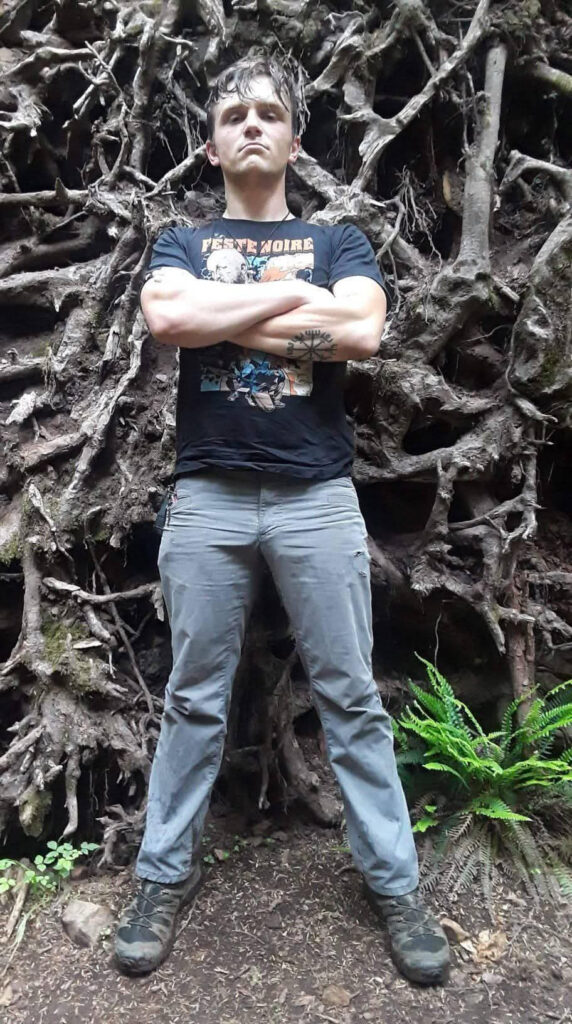
Le t-shirt de Daniel Woods Reese promeut ici Peste noire, groupe français de National Socialist Black Metal (réseaux sociaux)
Plus intéressante est l’identité politique de feu son bras droit [écrit Ken sur X]. Le volontaire nazi US Daniel Woods Reese arborait un Schwarze Sonne [soleil noir, héritage du Reichsführer SS Heinrich Himmler], tatoué sur son épaule gauche, était aussi fan de Peste noire, un groupe français de National Socialist Black Metal (NSBM)
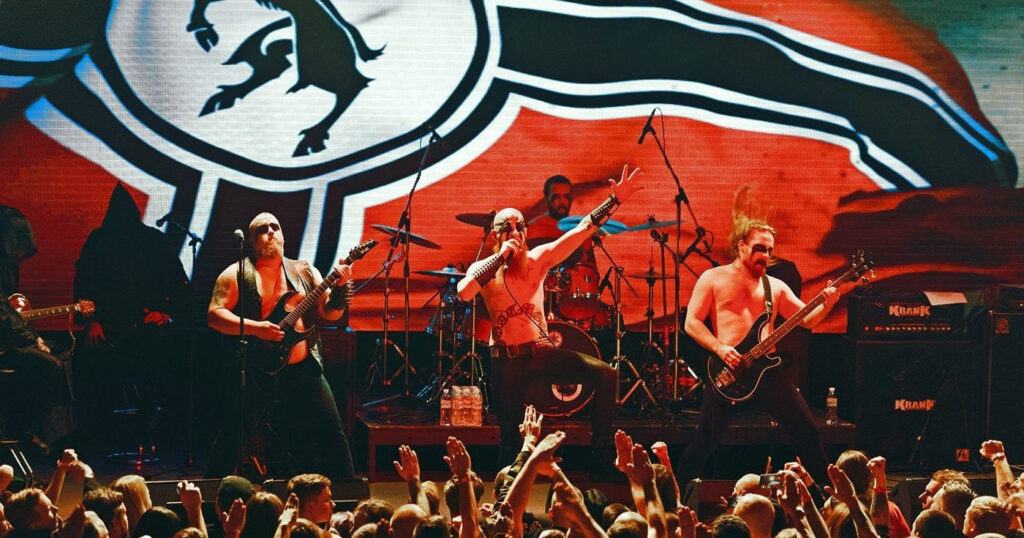
Depuis le coup d’État pro-occidental d’extrême-droite en 2014, Kiev accueille chaque année, ici en 2017, un festival international de National Socialist Black Metal, Asgardsrei [chevauchée d’Asgard, en Norvégien] (Freddy Hagen)
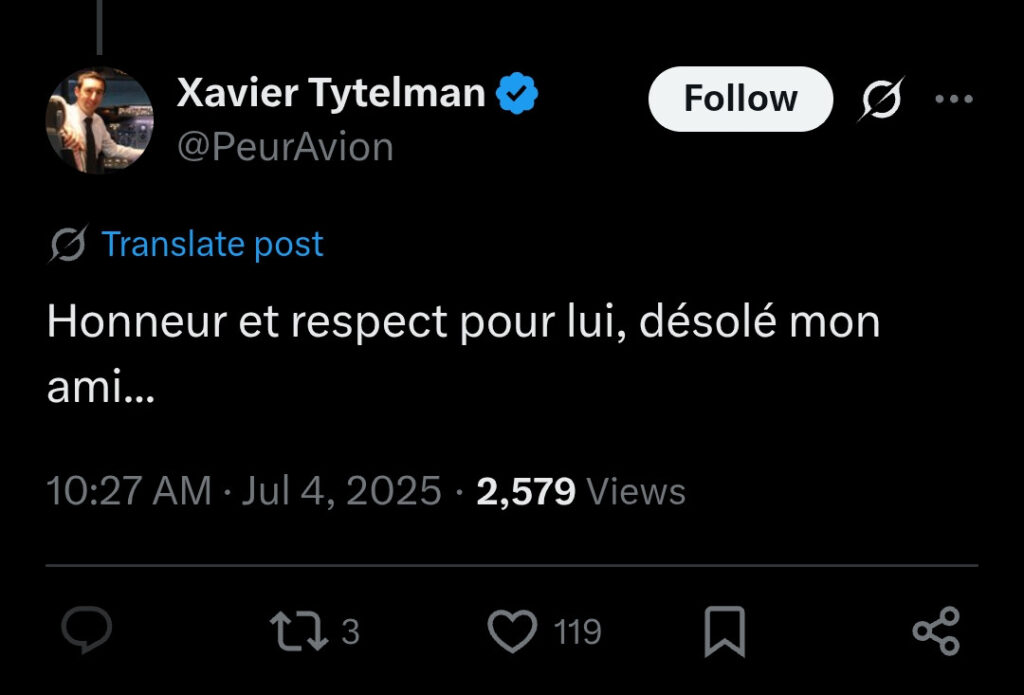
La qualité que je concède à mes sujets d’étude est qu’ils me déçoivent rarement. En réponse au tweet de Ken, le militant pétainiste, russophobe compulsif et propagandiste sur LCI Xavier Tytelman, rend hommage à feu Daniel Woods Reese
Reconnaissante par ma plume, l’humanité rend ici hommage à la glorieuse armée russe, digne héritière de la glorieuse Armée rouge, pour son oeuvre considérable de démilitarisation de nazis occidentaux
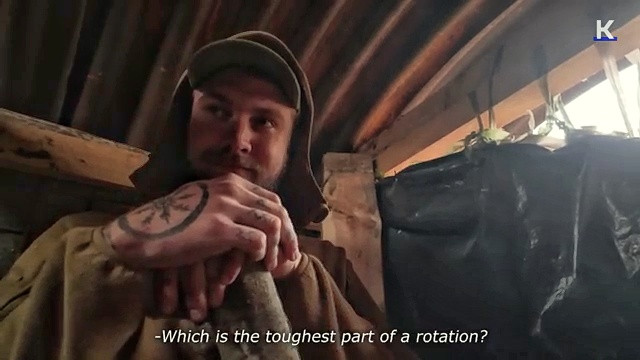
Je comprends enfin le 13 octobre que Ken n’a pas décidé de son itinéraire le 29 juin. Le journal en ligne Kyiv Independent publie l’excellent reportage d’une rotation au front entre deux équipes de pilotes de drones. Le personnel montant reste une quinzaine de jours sur des positions défensives préparées
Les sujets sont des volontaires étrangers : un Canadien peut être d’origines ukrainiennes, un Japonais, un Allemand de Namibie aux tatouages identitaires… etc Tous intéressent désormais les enquêteurs de TrackANaziMerc
(Capture d’écran)
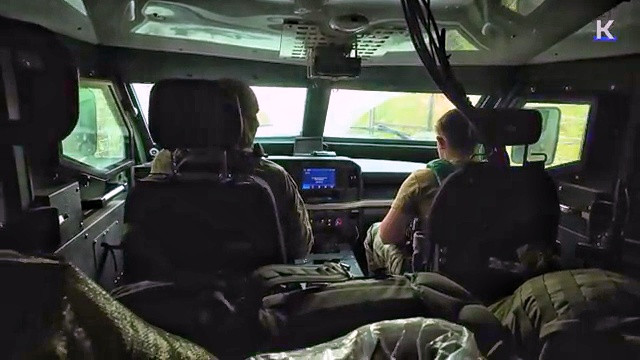
L’escouade n’est pas mécanisée, ni même motorisée, car son véhicule serait détruit s’il restait sur place. Elle est déposée au front par un blindé ukrainien dont l’équipage est maître à bord
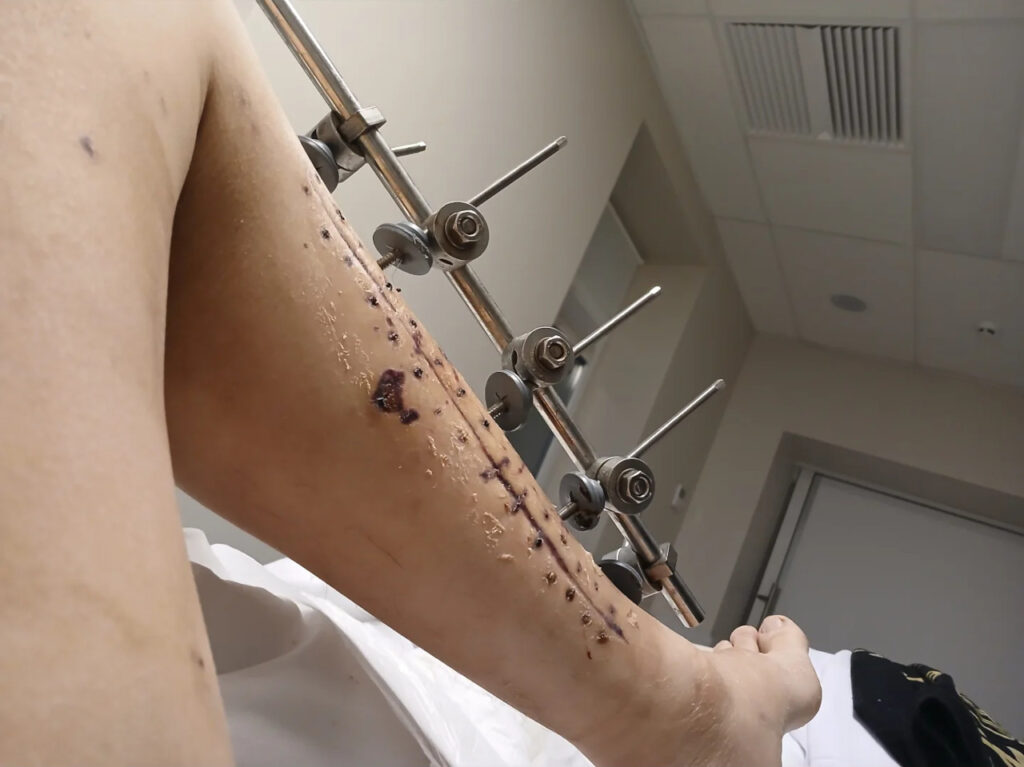
Le 27 octobre, Ken publie sur les réseaux sociaux la première image d’une blessure récente, dont il devrait garder une jolie cicatrice à la jambe gauche
(Réseaux sociaux)
À partir de la mi-octobre 2026, ses publications confirment ce que nous supposions depuis son hospitalisation un an plus tôt. Il est mutilé, a perdu main et jambe droites.
chronique alphabétique et nécrologique de l’engagement français dans les rangs atlantistes en Ukraine, ce que les journalistes serviles ne vous raconteront pas
Articles connexes
Pruvate à truvà me, canaglia di l’OTAN, pruvate solu
chronique en Anglais, its roots before WW2, its collaboration with Nazi Germany, its legacy in modern Ukraine, how NATO has continually supported Nazism in Ukraine
chronique en Anglais, censorship, fake news, whitewashing of the Ukrainian Nazism and war crimes, for the sake of the proxy war that NATO is conducting in Donbass and Ukraine, against Russia
une saga française, entre Ukraine et Lyon, où apparaissent aussi des morceaux de SS de la division Charlemagne et plus récemment, Alice Kerviel, dite Cordier. L’affaire Deranque révèle comme la France est infectée par le pétainisme, en particulier parmi les soutiens d’Israël ou de l’Ukraine, deux théâtres d’opérations où l’Occident tente de ralentir son déclin
En 2025, une nouvelle unité de Français combattant pour l’Ukraine s’est structurée autour d’un noyau de néonazis, ayant pour objectif d’attirer des recrues. Parmi ces volontaires, d’anciens militaires. StreetPress les a identifiés
En Ukraine, les volontaires français pro-ukrainiens et pro-russes se partagent l’imaginaire de la Seconde Guerre mondiale. Les premiers se revendiquent des collabos de l’Allemagne nazie, les seconds de l’escadrille mythique « Normandie – Niémen »
deux jours après le 10e anniversaire de la débâcle politique et sécuritaire du 13 novembre 2015, une messe célèbre à Verdun l’ancien dirigeant fasciste de l’État français
ce 11 novembre 2025 est l’occasion de souligner comme la façon dont l’Europe sacrifie les conscrits ukrainiens mobilisés de force rappelle le spectaculaire carnage de la 1ère guerre mondiale
c’est par l’agence cosaque de presse PIKA, depuis la République populaire de Lougansk, que le 2 avril 2024, l’ataman Nikolaï Diakonov lance un message à destination de la France
ce papier est le premier des grands médias français qui s’attaque à la question des militants nazis français dans les rangs atlantistes en Ukraine, le nouveau danger qu’ils présenteront à terme pour la sûreté intérieure
où nous apprenons que le nazi français Allan Duchézeau, camarade de César Aujard dans les rangs atlantistes en Ukraine, était surnommé Dox, quand il secondait à Paris le leader nazi Marc de Cacqueray Valménier
en Anglais, les indices de la présence d’opérateurs occidentaux, en particulier Français, pris au piège en mars 2022 à Marioupol, dont les forces russes achevèrent la libération en mai
est militant de gauche, un opposant farouche à Emmanuel Macron, ancien Gilet jaune blessé par la Police nationale en novembre 2019, sympathisant de la France insoumise et de Jean-Luc Mélenchon, sans aucune expérience militaire
(Réseaux sociaux)
Il intègre pourtant en avril 2023 les rangs atlantistes en Ukraine, comme personnel médical militaire, dans une guerre par procuration de l’OTAN, soutenue par Emmanuel Macron.
La clé de ce paradoxe pourrait être dans son patronyme. Biernat est un nom d’origine polonaise. Car bien que les nationalistes ukrainiens aient massacré avec sauvagerie des dizaines de milliers de civils polonais pendant la 2de guerre mondiale, beaucoup de Polonais sont aujourd’hui suffisamment russophobes ou nationalistes pour aller combattre des Russes aux côtés des mêmes nationalistes ukrainiens.
Début mai, il est entrainé dans la région de Kherson par des instructeurs états-uniens
(Réseaux sociaux)
C’est un Fabien Biernat transformé qui nous apparaît le 18 juillet, pas un infirmier mais un splendide grenadier-voltigeur de base, prêt au combat.
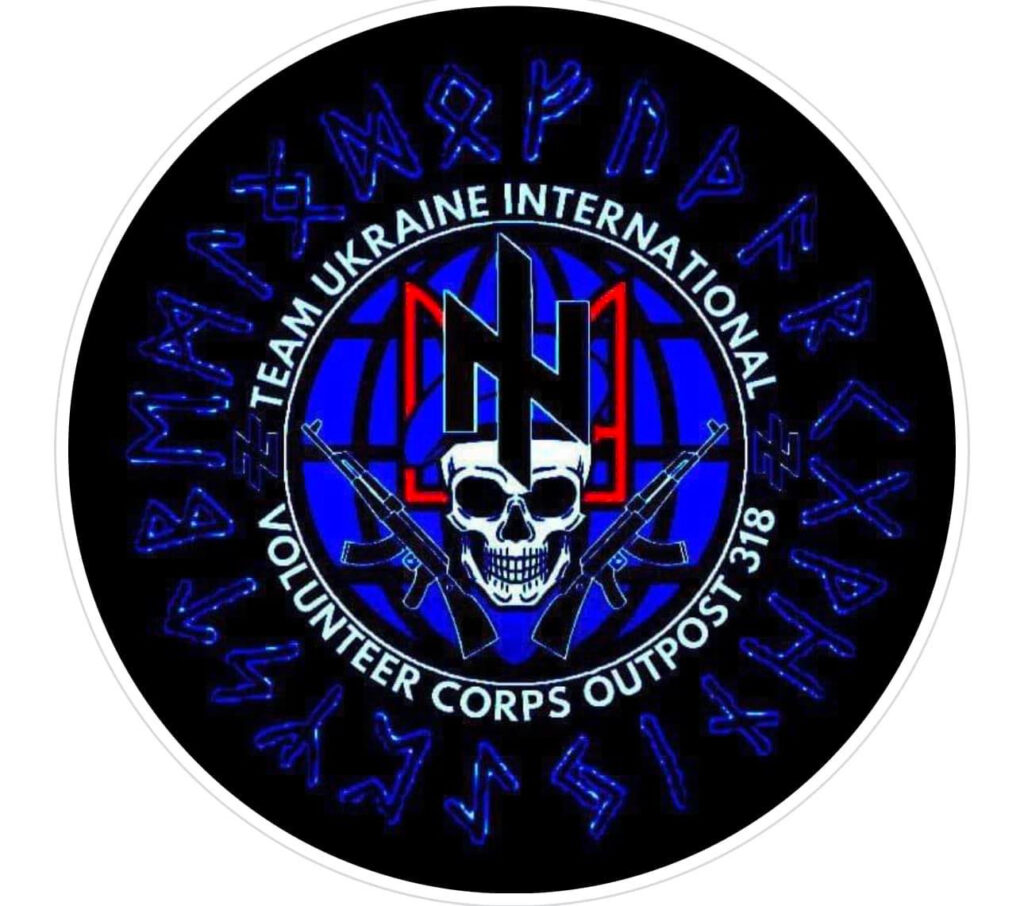
La transformation est même spectaculaire le 15 août, lorsqu’il affiche comme bannière sur les réseaux sociaux la reproduction du sceau de volontaires nazis en Ukraine
(Publication de Fabien Biernat sur les réseaux sociaux le 15 août 2023)
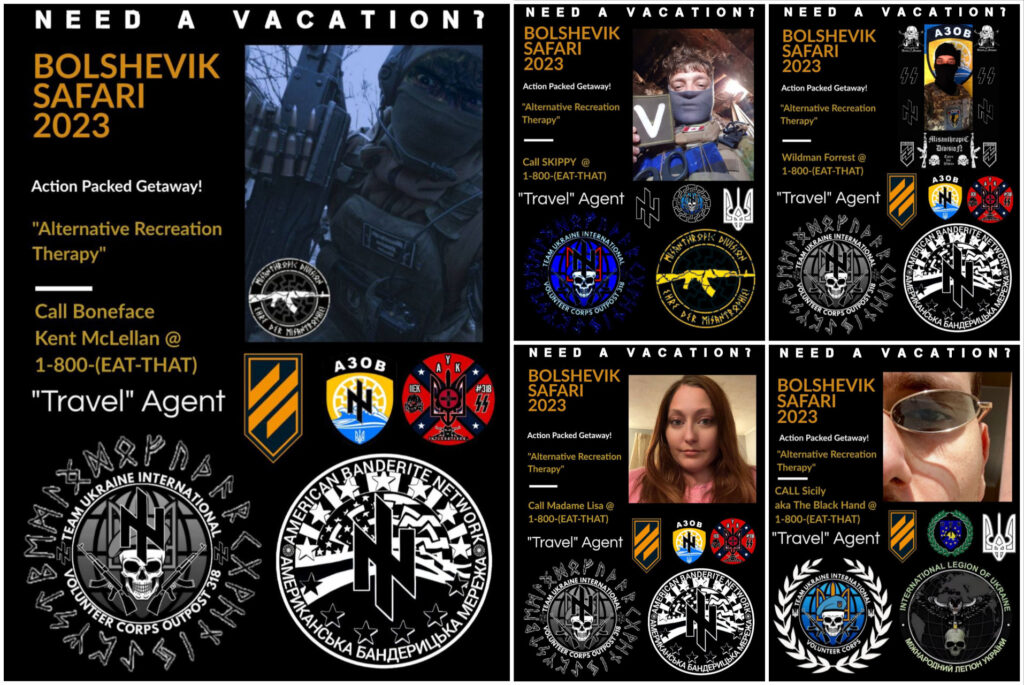
Y figure le traditionnel Wolfsangel des nazis ukrainiens et aussi OUTPOST 318 [avant-poste 318], où 318 signifie CAH et AH, Adolf Hitler. C18 ou Combat 18 est une organisation terroriste nazie, fondée au Royaume-Uni en 1992. Elle a ensuite infecté le Canada, les USA puis l’Allemagne, où ses membres ont été impliqués dans les assassinats de migrants et d’une personnalité politique allemande.
Le soir du 7 janvier 2024, il semble avoir été attristé par la mort le mois précédent, désormais confirmée par la presse, du volontaire US Seth Patrick Bryan et fait irruption dans le chat de la chaîne Telegram internationale TrackANaziMerc, qui comme son nom l’indique, détecte sur les réseaux sociaux les individus comme lui. D’emblée, il se montre très grossier, un Français de très mauvais genre, insulte tout le monde, même les dames, menace les internautes de représailles. Commence alors un débat vigoureux qu’il quitte après le rappel de ses références nazies du mois d’août. Il ne les renie pas, ne renchérit pas non plus, mais s’empresse de verrouiller son compte Facebook. L’esclandre est surprenant, car il n’a pas brillé jusque là par ses prouesses militaires
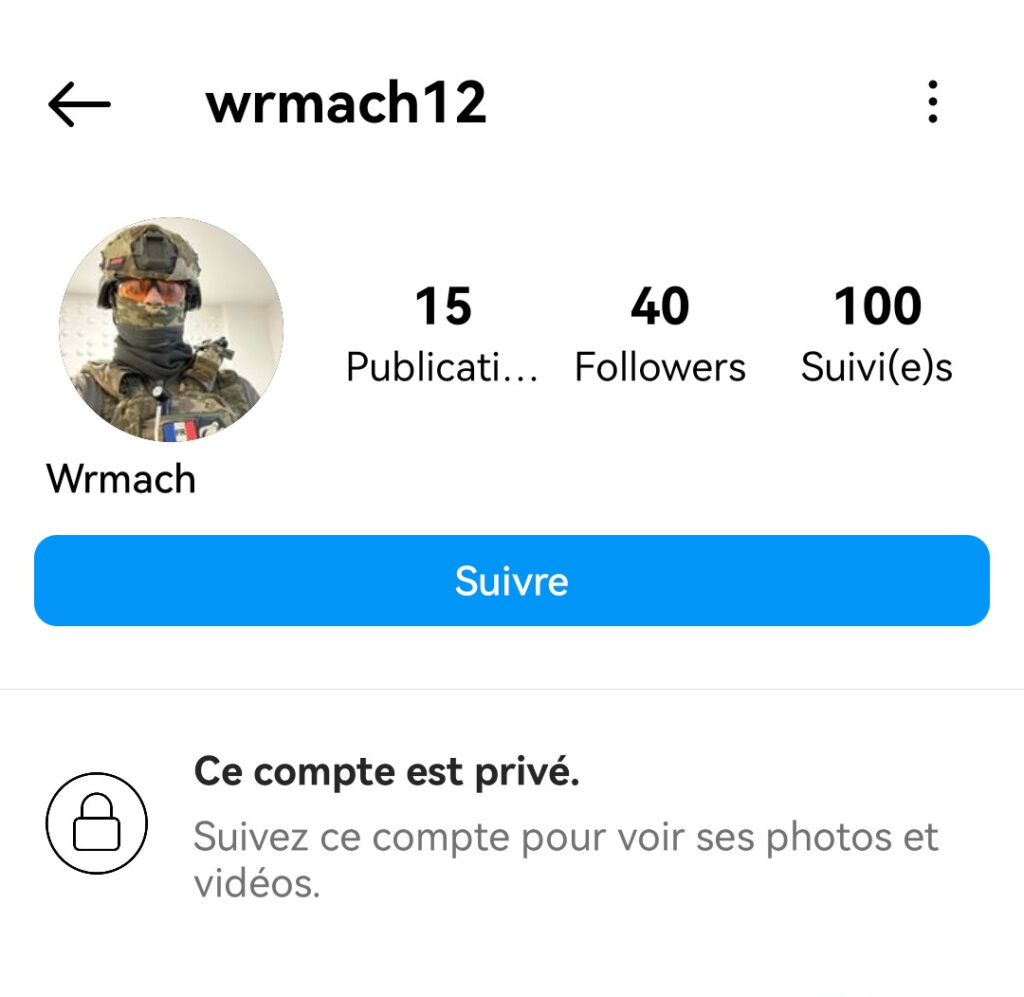
Nous découvrons en février son compte Instagram privé. Il se fait appeler Wrmach [War Machine].
Plus la défaite atlantiste paraît inéluctable, plus la presse française sombre dans le mensonge et le ridicule. Quand de surcroît, un propagandiste comme Xavier Tytelman s’en mêle, la chute est vertigineuse et pour nous, le spectacle hilarant. De façon puérile ou peut être française, la rédaction de LCI-TF1 semble croire que les pires impostures à l’écran seraient de nature à corriger la situation sur le terrain.
Au soir du 13 novembre 2024, l’animateur est David Pujadas et l’exercice consiste à faire croire au public que les succès russes ne seraient obtenus que par la masse et au prix de tactiques suicidaires, thèse habituelle du russophobe pathologique Tytelman.
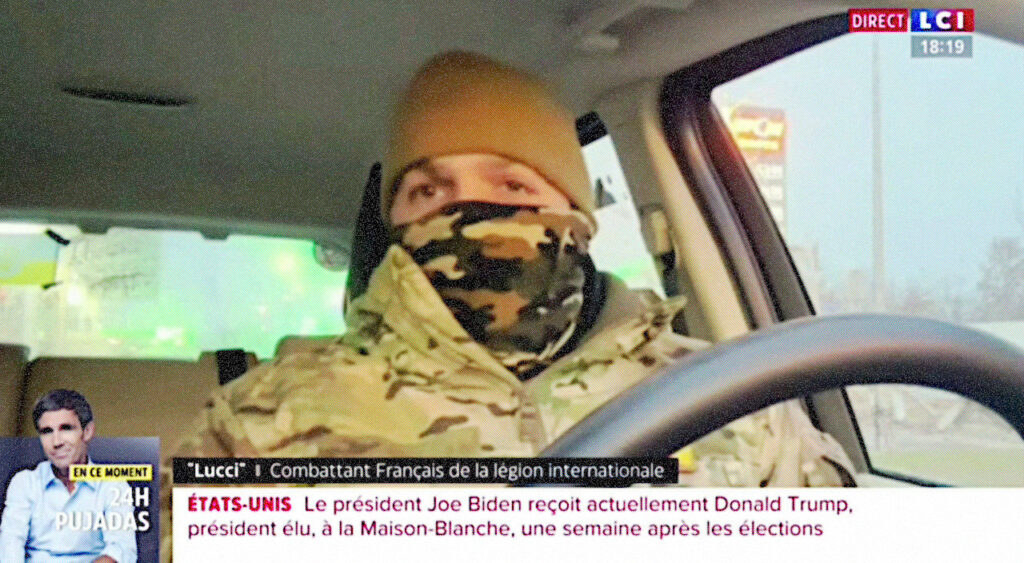
L’attention se porte sur la région russe de Koursk, où lancée le 6 août, l’offensive atlantiste était promise dès le départ au même succès que Wacht am Rhein, dans les Ardennes de 1944. Pour les besoins de la démonstration, le propagandiste a fourni à la rédaction un témoin français dénommé Lucci, qui affirme que ceux [des Russes] qui battent en retraite sont abattus [par leur propre camp], c’est la mort directe
(Capture d’écran)
Le spectateur un peu perspicace doit trouver suspect un témoin qui relate les faits depuis une voiture de tourisme, à l’arrêt dans une anodine banlieue, où rien n’évoque la proximité du champ de bataille. Toujours prête à rendre service, l’équipe internationale de TracANaziMerc est en mesure de l’éclairer sur ce point.
Lucci n’est autre que Fabien Biernat, planqué sur les bords du Dniepr depuis son arrivée en Ukraine au printemps 2023. Il n’a aucune expérience de ce qu’est un champ de bataille et se trouve aussi proche de celui de Koursk, que moi de la chapelle Sixtine, depuis le maquis corse. D’ailleurs, c’est sa Sainteté qui s’apprête à faire le voyage en sens inverse, n’en déplaise à Paris et BFMTV
le 25 décembre 2025 (capture d’écran)
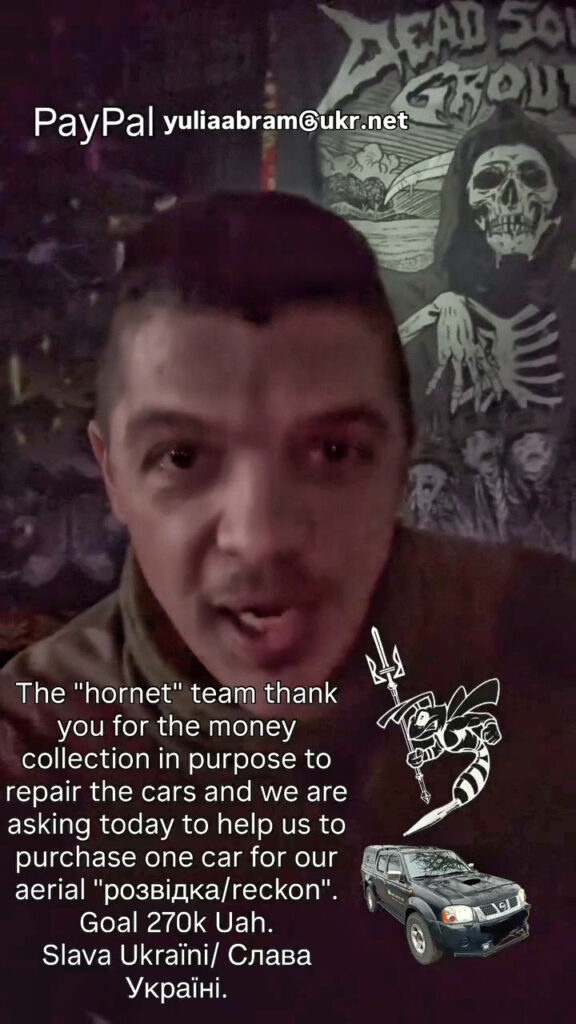
Simple soldat de la 41e brigade mécanisée ukrainienne, il tient vaillamment les positions les plus éloignées possible du front, dans les bars de l’arrière où il a coutume d’installer son quartier général. Il s’y est inventé un commandement, celui de la Hornet Team, formation imaginaire de pilotes de drones, à seule fin de soutirer de l’argent à des sympathisants naïfs sur les réseaux sociaux.
C’est pour raison familiale qu’il se rapatrie début 2026, mais se garde bien de signaler sur les réseaux sociaux sa démobilisation. L’Ukraine a transformé l’ancien sympathisant de la France insoumise, qui désormais raciste et islamophobe, voit les migrants comme des envahisseurs qui détruisent l’Europe de l’intérieur
Ici le 12 mai 2026, le militant nazi lyonnais Gwendal Delange combat dans l’armée ukrainienne depuis 2022 (réseaux sociaux)
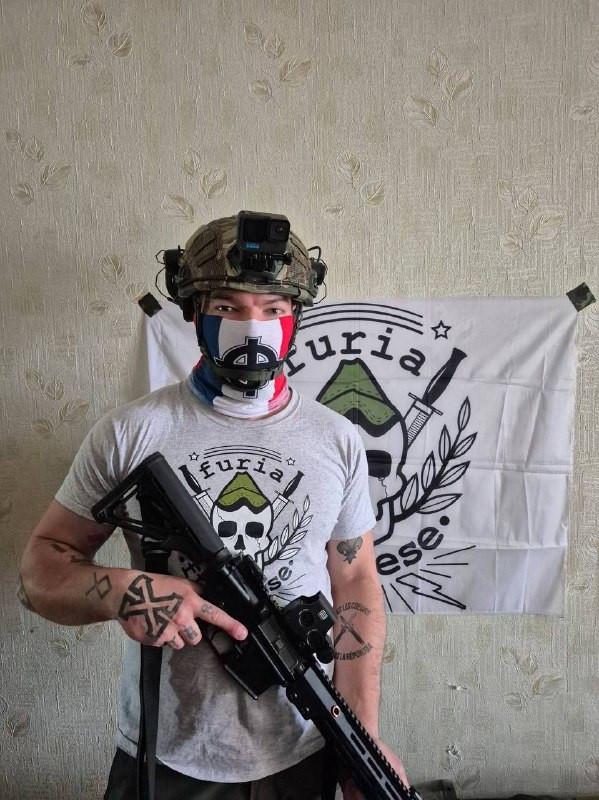
Le 26 septembre 2026, du fond de sa retraite française, Fabien Biernat acclame la fusion en Ukraine de deux groupes de combattants nazis. L’un est Furia Francese, le club du militant lyonnais Gwendal Delange. L’Argentin Viggo Capasso représente l’autre : Evolist Tactical Group.
chronique alphabétique et nécrologique de l’engagement français dans les rangs atlantistes en Ukraine, ce que les journalistes serviles ne vous raconteront pas
Articles connexes
Pruvate à truvà me, canaglia di l’OTAN, pruvate solu
chronique en Anglais, its roots before WW2, its collaboration with Nazi Germany, its legacy in modern Ukraine, how NATO has continually supported Nazism in Ukraine
chronique en Anglais, censorship, fake news, whitewashing of the Ukrainian Nazism and war crimes, for the sake of the proxy war that NATO is conducting in Donbass and Ukraine, against Russia
une saga française, entre Ukraine et Lyon, où apparaissent aussi des morceaux de SS de la division Charlemagne et plus récemment, Alice Kerviel, dite Cordier. L’affaire Deranque révèle comme la France est infectée par le pétainisme, en particulier parmi les soutiens d’Israël ou de l’Ukraine, deux théâtres d’opérations où l’Occident tente de ralentir son déclin
En 2025, une nouvelle unité de Français combattant pour l’Ukraine s’est structurée autour d’un noyau de néonazis, ayant pour objectif d’attirer des recrues. Parmi ces volontaires, d’anciens militaires. StreetPress les a identifiés
En Ukraine, les volontaires français pro-ukrainiens et pro-russes se partagent l’imaginaire de la Seconde Guerre mondiale. Les premiers se revendiquent des collabos de l’Allemagne nazie, les seconds de l’escadrille mythique « Normandie – Niémen »
deux jours après le 10e anniversaire de la débâcle politique et sécuritaire du 13 novembre 2015, une messe célèbre à Verdun l’ancien dirigeant fasciste de l’État français
ce 11 novembre 2025 est l’occasion de souligner comme la façon dont l’Europe sacrifie les conscrits ukrainiens mobilisés de force rappelle le spectaculaire carnage de la 1ère guerre mondiale
c’est par l’agence cosaque de presse PIKA, depuis la République populaire de Lougansk, que le 2 avril 2024, l’ataman Nikolaï Diakonov lance un message à destination de la France
ce papier est le premier des grands médias français qui s’attaque à la question des militants nazis français dans les rangs atlantistes en Ukraine, le nouveau danger qu’ils présenteront à terme pour la sûreté intérieure
où nous apprenons que le nazi français Allan Duchézeau, camarade de César Aujard dans les rangs atlantistes en Ukraine, était surnommé Dox, quand il secondait à Paris le leader nazi Marc de Cacqueray Valménier
en Anglais, les indices de la présence d’opérateurs occidentaux, en particulier Français, pris au piège en mars 2022 à Marioupol, dont les forces russes achevèrent la libération en mai
The West has become a lonely, narcissistic civilization
Our world is full of divides. Yet, the greatest divide is between the 12% of the world’s population who live in the West and the 88% who live outside. When the West looks at itself in the mirror, it sees itself as the most virtuous civilization on planet Earth, taking care of its own citizens and generously and selflessly making the world a better place. And when the rest of the world looks at the West, they see a trigger-happy, violent civilization which has killed more innocent people in unnecessary wars than any other civilization in recent decades. So where does the truth lie?
Sadly, the data doesn’t lie. Since the end of the Cold War, when the world was expected to receive a peace dividend, the West has involved itself in one misadventure after another. The results have been disastrous. The Brown University Watson School of International and Public Affairs’ Cost of War Project has estimated that at least 940,000 people were killed directly by violence in the post-9/11 wars between 2001 and 2023, and a further 3.6–3.8 million people died indirectly due to secondary causes such as diseases, malnutrition and so on. Many of these wars were initiated by the West.
Curiously, for a civilization that prides itself on intellectual honesty and deep introspection, there has been little reflection on how and why the West has gone so wrong with its constant interventions. Initially, the intervention in Afghanistan was legal and justified under international law, on the basis of UNSC Resolution 1386 (20 December 2001). Yet, after removing the Taliban government, which had harbored the Al-Qaeda terrorists, the West had no strategy for managing its exit from Afghanistan. Instead, it stayed on for 20 years in Afghanistan, only to go from rescuing the Afghan people from the Taliban government to returning the Afghan people to the Taliban government. And in those 20 years, apart from the soldiers who died in battle, over 100,000 Afghan civilians were killed or wounded. No one in the West has been held accountable for this incredible disaster.
Unlike the Afghan invasion, which was legal under international law, the invasion of Iraq in March 2003 was illegal. The former UN Secretary-General Kofi Annan bravely declared that it was illegal and was persecuted by the Bush Administration for stating the truth. Here, too, a huge number of innocent civilians lost their lives in an illegal war. Yet no one has been held accountable, although Western public opinion has reluctantly conceded that the war was illegal and unnecessary.
The Western reaction to the failed intervention in Libya has been even more callous. “We came. We saw. He died.” So said Hillary Clinton, the then US Secretary of State, proudly when Gaddafi was killed on October 20, 2011. Yet, while Gaddafi was alive, the majority of Libyans enjoyed a decent life, particularly from the 1990s onward, which was a period of relative political stability and economic growth. No war or conflict. Each Libyan household also received extensive welfare benefits from the state. GDP grew from US$ 31 billion in 1990 to $75 billion in 2010. Libya’s per capita GDP in 2010, at $11.6 thousand, was the highest in Africa. By 2020, 10 years after Gaddafi was removed, Libya’s GDP declined to $47 billion. Its GDP per capita declined to $6.7 thousand. Millions of ordinary Libyans were transported from a safe and secure existence to hell. The West never said sorry to them.
This callous indifference to the pain and suffering that the West has clearly wrought on so many innocent civilians undermines the Western self-belief that they are an inherently virtuous civilization. And the West is also unaware of how its claims to moral virtue have been further eroded by the manifest double standards it has applied when passing judgements on human rights violations.
For decades, the West had preached that torture was abominable and was outlawed by several human rights conventions. Indeed, the West had regarded the UN Convention against Torture, adopted on December 10, 1984, as a great leap forward. President Reagan stated, when transmitting the Convention to the US Senate for ratification in May 1988, that doing so would “clearly express United States opposition to torture, an abhorrent practice unfortunately still prevalent in the world today.” Yet, when the Bush Administration became the first modern developed country to reintroduce torture in Guantánamo, the erstwhile defenders of human rights in Europe didn’t just fail to condemn the Bush Administration. They aided and abetted this torture with several “rendition” programs, kidnapping people and sending them to countries where they face a high risk of torture or abuse.
The Western double standards on human rights were further exposed in the contrasting reactions of the West to the loss of innocent civilian lives in Ukraine and Gaza. Many Western leaders correctly expressed moral outrage when innocent Ukrainian civilians or children were killed in Ukraine. Ursula von der Leyen, President of the European Commission, after the Russian missile and drone attack on Kyiv in August 2025, said, “Another night of Russia’s relentless bombings struck civilian infrastructure and killed innocents.” Kaja Kallas, then EU High Representative for Foreign Affairs and Security Policy, stated that “Russia once again deliberately targeted and killed Ukrainian civilians”. President Joe Biden, after the July 2024 Russian missile strikes that killed civilians, including children at Kyiv’s Okhmatdyt children’s hospital, described the attacks as a “horrific reminder of Russia’s brutality” and said that Russia had “targeted Ukrainian civilians.” The UK Prime Minister Keir Starmer, responding to the same attack on the children’s hospital, described “attacking innocent children” as “the most depraved of actions.” Western leaders broadly described the killings as atrocities and war crimes. Yet, when many more innocent civilians, including children, were killed in the Gaza conflict, the same Western leaders remained largely silent on Gaza.
No single event has damaged the moral credibility of the West as much as Gaza has. As modern cell phones have become ubiquitous, we have seen with our own eyes how millions of innocent Palestinian civilians have suffered in Gaza. The 88% of the world’s population who live outside the West have also heard the loud silence of the West on Gaza. Pankaj Mishra, the Indian novelist and author of The World After Gaza, said in January 2025, “Gaza has really damaged American institutions, Western institutions, international institutions, to an extent no previous war, no previous conflict has.” The Booker Prize-winning Indian novelist, Arundhati Roy, has said more starkly, “What is under the rubble in Gaza is not just the bodies of Palestinians, but the carcass of Western liberal democracy.”
Yet, even if Western external interventions and policies have been disastrous, many leading Western thinkers and politicians console themselves with the thought that domestically they still have the best-performing societies. Josep Borrell, the then European Union High Representative for Foreign Affairs and Security Policy, said on 13 October 2022, “Europe is a garden. We have built a garden. Everything works. It is the best combination of political freedom, economic prosperity and social cohesion that humankind has been able to build … Most of the rest of the world is a jungle, and the jungle could invade the garden.”
There’s no question that people living in the modern, advanced Western societies still enjoy better standards of living than their counterparts in the Global South. The current citizens of the West are the beneficiaries of the wise and sound public policies made by their ancestors. But what are they leaving behind for their future generations? Will future generations in Europe and North America have equally good lives? Or will they see a steady decline?
Surveys show that most Western populations do not believe that their children and grandchildren will enjoy equally good lives. A January 2025 Pew Survey revealed that over 75% of respondents in Europe as well as in the US and Canada believed that their children would be financially worse off than their parents.
Indeed, even today, large segments of the population in the West have experienced a deterioration, not improvement, in their lives. The Brookings Institution reported in May 2026 that “In 2024, 45.5% of US households did not earn enough to make ends meet. In nearly every year since 2014, more than 40% of American households struggled to make ends meet.” The report added, “As it stands, the cost of living will never be affordable if wages do not substantially increase. Evidence shows that even though US productivity nearly doubled between 1979 and 2025, average hourly pay increased by only 34%. In other words, productivity gains have concentrated wealth among capital owners and the highest-earning Americans, hollowing out the middle class rather than driving broad-based wage growth.”
Angus Deaton and Anne Case have documented in Deaths of Despair that the US faces an epidemic of “deaths of despair”—that is, deaths from drug overdoses, suicides, and alcohol—among midlife non-Hispanic white Americans. They wrote: “Deaths of despair among white men and women aged forty-five to fifty-four rose from thirty per one hundred thousand in 1990 to ninety-two per one hundred thousand in 2017. In every US state, suicide mortality rates for whites aged forty-five to fifty-four increased between 1999–2000 and 2016–17. In all but two states, mortality rates from alcoholic liver disease rose. And in every state, drug overdose mortality rates increased.”
Most Western eyes do not see a connection between their failed external geopolitical ventures and the internal despair of their populations. Actually, the two are linked. Money and resources wasted on unnecessary external interventions could have been better spent on their populations. Speaking about the Iraq war, the Nobel laureate Joseph Stiglitz wrote, “For one-sixth of the cost of the war, the US could put its Social Security system on sound footing for more than a half-century, without cutting benefits or raising contributions.”
Even if some thoughtful people in the West may agree with the arguments so far, acknowledging that many Western interventions in the Global South were unnecessary and disastrous, they would not in any way agree that the Ukraine war also reflects Western geopolitical incompetence. There’s no question that the Russian invasion of Ukraine was illegal. Russia deserves to be condemned for the loss of thousands of innocent lives.
Yet, when the West imposed sanctions on Russia for invading Ukraine, it didn’t notice that 85% of the world’s population did not follow suit. Why not? Does this reflect a lack of moral integrity in the Global South? Or does it reflect a shrewd geopolitical assessment? When countries like Brazil, China, India, Indonesia, and South Africa did not impose sanctions on Russia, this did not mean that they supported the Russian invasion. It signaled their rejection of the Western claim that the war in Ukraine was “unprovoked” and only Russia was to blame for the Ukraine invasion.
It’s truly shocking how many Western leaders have used the word “unprovoked” to describe the Ukraine war. President Joe Biden, US President, said, on 24 February 2022, “The Russian military has begun a brutal assault on the people of Ukraine without provocation, without justification, without necessity.” Around the same time, Prime Minister Boris Johnson described Russia’s action as a “brutal and unprovoked attack on a free and sovereign European country.” Justin Trudeau, the Canadian Prime Minister, said, “Today, we woke up to a changed world. Russia has launched a brutal and unprovoked attack on the sovereignty of Ukraine.” The leaders of G7 collectively described Russia’s action as “this unprovoked and completely unjustified attack on the democratic state of Ukraine.”
Little do these leaders realize that when they use the word “unprovoked” to describe the war in Ukraine, they are effectively insulting the intelligence of the countries of the Global South, including thoughtful leaders like Brazilian President Luiz Inácio Lula da Silva. He captured a more nuanced view on the war in Ukraine when he said, in May 2022, “Putin shouldn’t have invaded Ukraine. But it’s not just Putin who is guilty. The United States and the EU are also guilty. What was the reason for the Ukraine invasion? NATO? Then the United States and Europe should have said: ‘Ukraine won’t join NATO.’ That would have solved the problem.”
This great gap in perceptions between the West and the rest on recent geopolitical developments is both surprising and paradoxical. In theory, our world is shrinking. We have more information available today, even from our cell phones, than at any other time in human history. Yet, when we witness the same recent events, the Western perceptions and those in the rest of the world seem to exist in two different universes. What is even more shocking is that most Western leaders and pundits seem completely unaware that they have lost the support and confidence of the majority of the world’s population. This is why the words of S. Jaishankar, the Indian foreign minister, resonated strongly in the Global South when he said, in June 2022, “Somewhere Europe has to grow out of the mindset that Europe’s problems are the world’s problems but the world’s problems are not Europe’s problems.” A year later, in February 2023, the then German Chancellor Olaf Scholz admitted that Jaishankar “has a point.” Referring to the countries of Latin America, Africa and Asia, Scholz further stated, “We have to generally address the interests and concerns of these countries as a basic prerequisite for joint action.”
Despite the growing differences between the United States and Europe, both share a common concern on China and will work in one way or another to isolate and stop China. However, when they do so, they will find that the rest of the world will ignore them and continue engaging with China. Hence, instead of isolating China, the West will be isolating itself from the world.
At the end of the day, the refusal of the West to acknowledge that they have lost the rest represents a massive act of self-deception. The West wants to continue believing that it is still the most virtuous civilization on planet Earth. The longer this self-deception persists, the more the West will be seen as a lonely, narcissistic civilization which is self-absorbed and unaware of how the majority of humanity views them. If this gap between the West and the rest is not addressed effectively and soon, the world will be headed into more troubled waters.
five major trends illustrate how the world is changing, and that the West must grapple with the reality that it can no longer impose its “leadership” on the world as it once did
Government claimed release of documents on CIA operation would harm US-Canada relations
Top Nazi leaders faced war crimes trials after the Second World War but many others who took part in the Holocaust went unpunished. The Canadian government is examining whether to release a list of 900 alleged Nazi war criminals that was compiled in 1986 by the Deschênes Commission (U.S. NATIONAL ARCHIVES)
A judge has ordered the release of federal records on an American initiative to settle Nazi war criminals in Canada after ruling there is no evidence that making the files public would harm relations between the two nations.
The records involve a U.S. program set up after the Second World War to secretly settle large numbers of Nazi war criminals in Canada, often with the support of Canadian officials.
Jewish advocacy group B’nai Brith Canada took the federal government to court after receiving a censored copy of a report written for the 1985 Deschênes Commission on Nazi war criminals. That study, called the Rodal Report, discussed a secret U.S. government program to resettle Nazis and Nazi collaborators in Canada by evading proper security screenings.
The federal government declined to release the documents under the Access to Information law, claiming the records would harm U.S.-Canada relations at a time of ongoing tension.
But Federal Court judge Simon Fothergill concluded that claim was unsupported by any evidence. “A bald statement of ongoing ‘tensions’ between Canada and the United States is not a sufficient basis to refuse disclosure of very specific information related to efforts by the United States to resettle suspected Nazis and Nazi collaborators in Canada following World War II,” he wrote in a Sept. 1 ruling.
The decision to withhold the information was unreasonable and the records must now be disclosed, Fothergill concluded.
Similar information had already been released years ago by the Central Intelligence Agency, which ran the Nazi resettlement program, as well as the U.S. government.
After the war, U.S. intelligence agencies recruited Nazis and Nazi collaborators, many from eastern Europe, for their covert operations against the Soviet Union.
Fothergill noted in his ruling that the study written for the Deschênes Commission concluded “inadequate security screening led to many perpetrators of Nazi war crimes entering Canada.” He also pointed out the study concluded Canada was reluctant to prosecute such war criminals.
Richard Robertson, B’nai Brith’s director of advocacy, said it is difficult to understand why the Canadian government still continues to withhold its Nazi files. “For a country that fought against Nazi Germany, to be so hesitant to come with terms and release to the public its Nazi past so we can learn from this dark history, is perplexing to say the least,” he said.
Robertson said he is hopeful the public will get a better understanding why the government had agreed to the Nazi resettlement program after the war. “This is a victory for all Canadians,” he said. “This is information that all Canadians deserve to have made accessible.”
But he said his organization will not let up on its quest to pry loose more records.
“B’nai Brith is committed to ensuring that all the currently undisclosed information in regards to Nazi war criminals entering Canada is made available to the public,” Robertson said. “We will continue to advocate for the release of the full Rodal Report and of the Deschenes Commission part 2 report which is not publicly available”
Ottawa was “forced” to establish the Commission of Inquiry on War Criminals, headed by Mr. Justice Jules Deschênes, in February 1985 (POSTMEDIA/FILE PHOTO)
Much of the renewed debate around Nazi war criminals and collaborators in Canada was prompted by a September 2023 event in which MPs of all parties gave two standing ovations to Yaroslav Hunka, a resident of North Bay, ON. Hunka was described by then-House of Commons Speaker Anthony Rota as a hero and he was thanked for his military service.
There are no allegations that Hunka took part in any war crimes.
The Polish government and Jewish groups have denounced the Ukraine SS unit for its role in killing civilians and its involvement in massacres during the Second World War. The division was also used by the Nazis to crush a national uprising in Slovakia, again prompting allegations of war crimes.
But some Ukrainian nationalists see the SS soldiers as heroes because they fought against the Soviet Union. The Canadian Institute of Ukrainian Studies at the University of Alberta in Edmonton continues to maintain eight endowments in the names of Ukrainian SS veterans [end]
Ottawa won’t disclose list of alleged war criminals believed to have sheltered here after the Second World War
September 29, 2023: Nazigate – Max Blumenthal & Aaron Mate, The Grayzone
Max Blumenthal and Aaron Mate cover the international scandal that unfolded when the Liberal Party of Canada’s Justin Trudeau honored a Ukrainian Nazi veteran of the Waffen-SS, and the dark history it forced to the surface
its roots before WW2, its collaboration with Nazi Germany, its legacy in modern Ukraine, how NATO has continually supported Nazism in Ukraine, chronicle
chronicle of censorship, fake news, whitewashing of the Ukrainian Nazism and war crimes, for the sake of the proxy war that NATO is conducting in Donbass and Ukraine, against Russia
est camionneur, réserviste de l’armée française, pourrait bien travailler pour le renseignement français, depuis son engagement en Syrie en 2015, dans les milices marxistes kurdes YPG. La rumeur dit que le renseignement serait plutôt belge
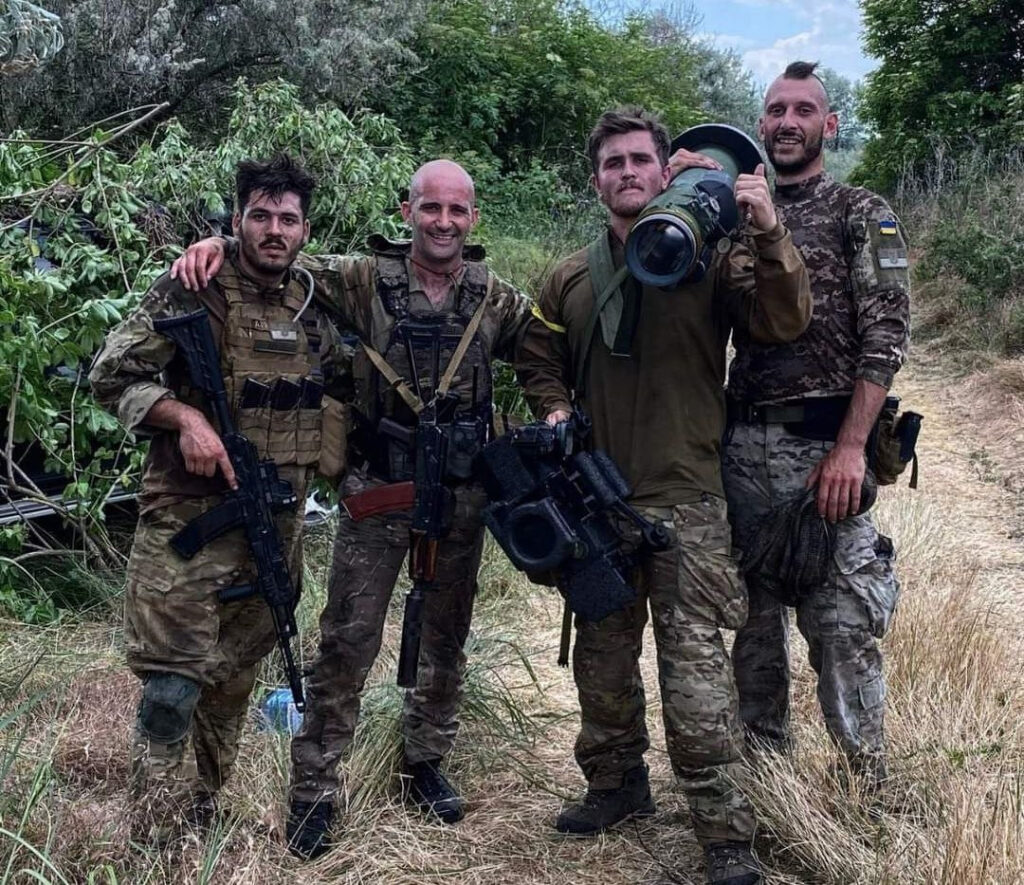
Voici de gauche à droite, Jordan O’Brien, Nouvelle-Zélande, Damien Rodriguez, US, Maxime Barrat et Eric Alexander Nawrocki, Canada (réseaux sociaux)
Son premier affrontement attesté de l’armée russe date du 9 juin 2022, dans la région de Kharkov, au sein d’un groupe appelé Dark Angels, à l’origine une ONG britannique d’assistance en Pologne aux réfugiés d’Ukraine.
Il a déjà dit que son activité en Ukraine lui garantissait entre 3 000 et $4 000 par mois. Le 25 avril 2023, il fait aussi appel aux dons sur Twitter, où son compte porte le nom qui était le sien autrefois en Syrie, Max Azadî
Il nous gratifie de nouvelles photos. Une le 4 mai, où il a abandonné la houpette rockabilly, pas évidente avec le casque, pour une superbe mèche. Il s’est aussi taillé une moustache ukrainienne. Mais avec un nouveau changement le 7, Maxime se cherche.
Son écusson dit Pour Kherson, 11 novembre 2022. En raison de problèmes logistiques insurmontables sur le Dniepr, les forces russes se retirèrent en bon ordre de Kherson le 9 novembre. Après avoir occupé le terrain, les troupes atlantistes commencèrent ensuite à assassiner des civils réputés collaborateurs.
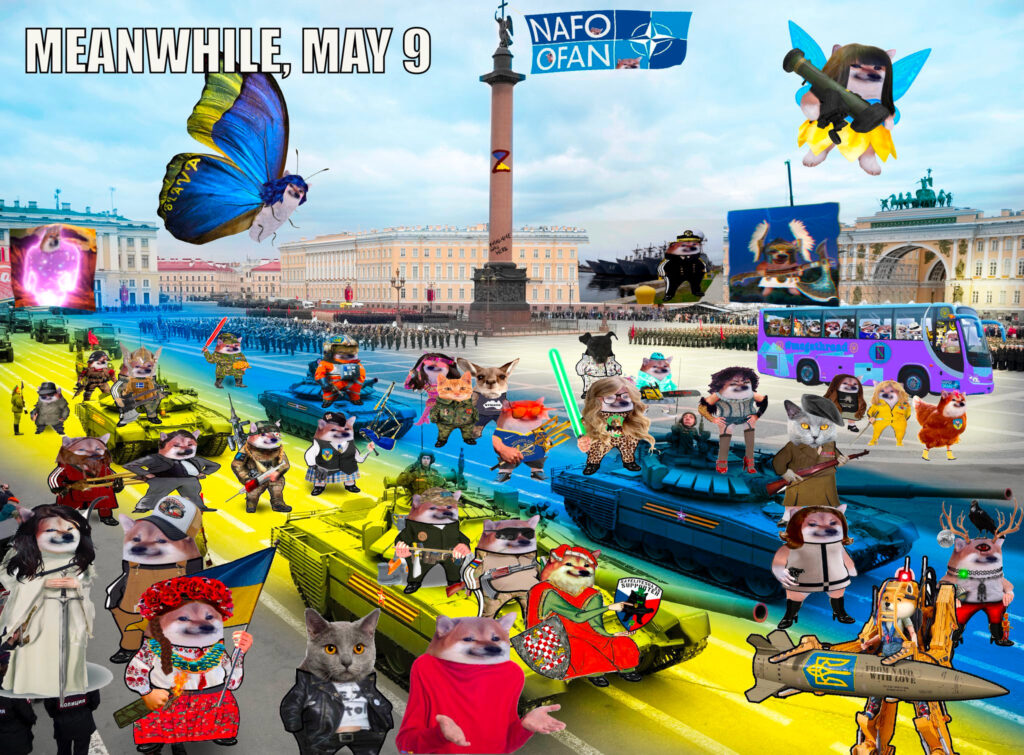
À l’instar des guerriers du clavier de NAFO, un groupe international de nerds favorables à l’OTAN, il rêve en cette occasion de parader à Saint Pétersbourg, autrefois Leningrad, où plus d’un million de civils sont morts quand les armées fascistes européennes l’ont assiégée de 1941 à 1944. À chaque évocation française de ce genre, je me pose toujours la même question. Mais qu’ont fait ses anciens pendant la 2de guerre mondiale, résistants ou athlètes du sport national que sont les ronds de jambe ? À une époque où l’Armée rouge accomplissait 80% de toutes les pertes militaires allemandes
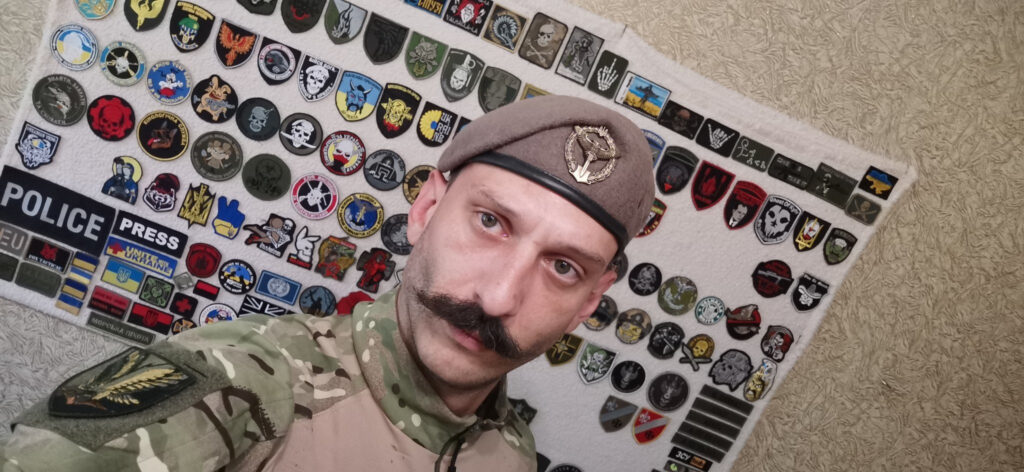
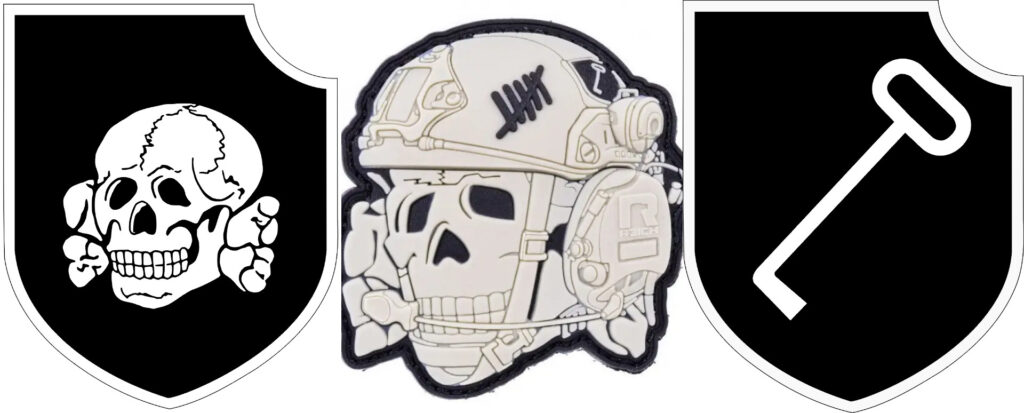
Le 8 juin, il pose fièrement devant sa collection d’écussons ukrainiens, où l’observateur expérimenté remarque le portrait du criminel de guerre nazi Stepan Bandera et commercialisée par une entreprise locale appelée R3ich, la populaire adaptation de la Totenkopf SS
La Totenkopf originale était l’emblème de la 3. SS-Panzer-Division (gauche). Tous les autres SS la portaient aussi sur leur couvre-chef. L’adaptation commercialisée par R3ich (centre) est tellement répandue dans les rangs ukrainiens, qu’un journaliste du New York Times le déplore dans un article du 5 juin. Elle est coquette, car le casque moderne affiche aussi une clef, qui était l’emblème de la 1. SS-Panzer-Division, Leibstandarte Adolf Hitler (droite)
Il n’a donc pas que de bonnes fréquentations en Ukraine. Son air est déterminé, mais il passe clairement plus de temps sur Twitter qu’au front. Il arbore aussi sur son béret un insigne qu’une admiratrice lui a offert, celui du renseignement militaire ukrainien (GUR)
(Twitter)
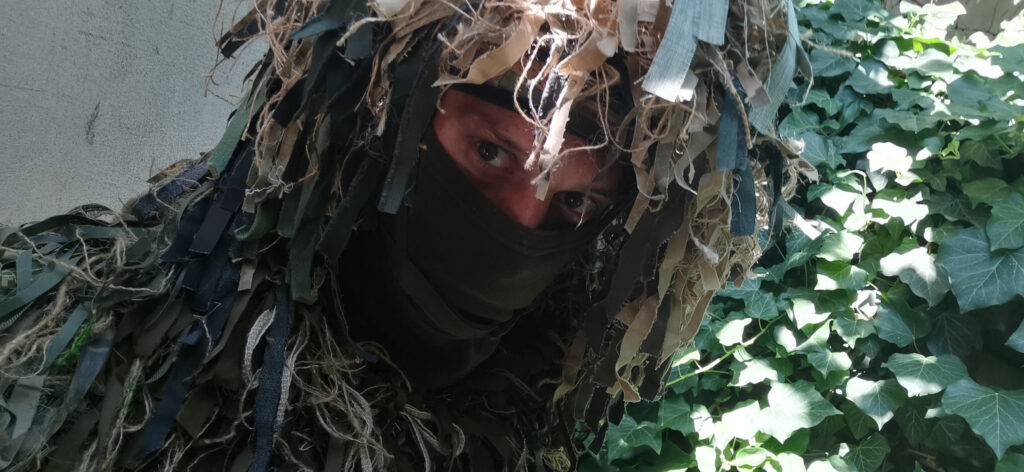
Il apparaît en tenue de combat le 4 juillet. Son camouflage suggère qu’il serait tireur de précision. Belle photo.
Le 7 juillet, RTL enquête sur les combattants français dans les rangs atlantistes en Ukraine et présente Barrat en tête de gondole. Information que je ne connaissais pas et pour laquelle je remercie les journalistes, il a incorporé le 131e bataillon de renseignement. Son insigne du GUR n’est donc pas usurpé et nous comprenons mieux pourquoi il est en seconde ligne à Kherson depuis des mois. Sa formation pourrait bien être employée à la chasse aux collaborateurs, civils pro-Russie qui sont souvent assassinés
(RTL)
J’ignore si la faute incombe aux journalistes ou à l’intéressé, mais l’article sur le web est illustré par la pire photo possible, alors que d’autres sont bien meilleures. Je la connaissais mais ne l’ai pas publiée avant, par respect. Il ressemble à Rambo de la Beauce.
Le reportage évoque qu’il a eu maille à partir avec la justice pour violences en France. Cette information manque de rigueur journalistique, car il a fui un contrôle judiciaire pour violences CONJUGALES.
MAXIME, POURQUOI TU LA COGNAIS ?
Les événements dans l’hexagone sont un excellent test pour cerner l’idéologie des individus listés ici. Un moment hilarant du reportage est quand le journaliste souligne que Barrat serait d’extrême-gauche. Je savais depuis longtemps que les droits des femmes n’était pas sa spécialité.
Son environnement sur les réseaux sociaux compte aussi des racistes, qui qualifient de déchets et de souillure du drapeau français, les citoyens et élus qui défilent le 8 juillet, pour réclamer vérité et justice pour Adama Traore, que des pandores [gendarmes] ont tué en 2016. J’encourage donc les journalistes de RTL à perséverer, encore prospecter, afin de pouvoir présenter à leur public un authentique militant d’extrême-gauche, s’ils souhaitent vraiment rééquilibrer le spectre politique des combattants français dans les rangs atlantistes.
De façon plus fondamentale, quelqu’un doté d’un soupçon de conscience politique d’extrême-gauche, internationaliste et allergique au nationalisme, ne combattrait pas pour l’OTAN, donc les USA, dans un pays où un État profond nazi, ceux qui portent les flingues, décide d’un conflit où les opprimés sont depuis 2014 les civils russophones bombardés dans le Donbass. Quelques rappels historiques
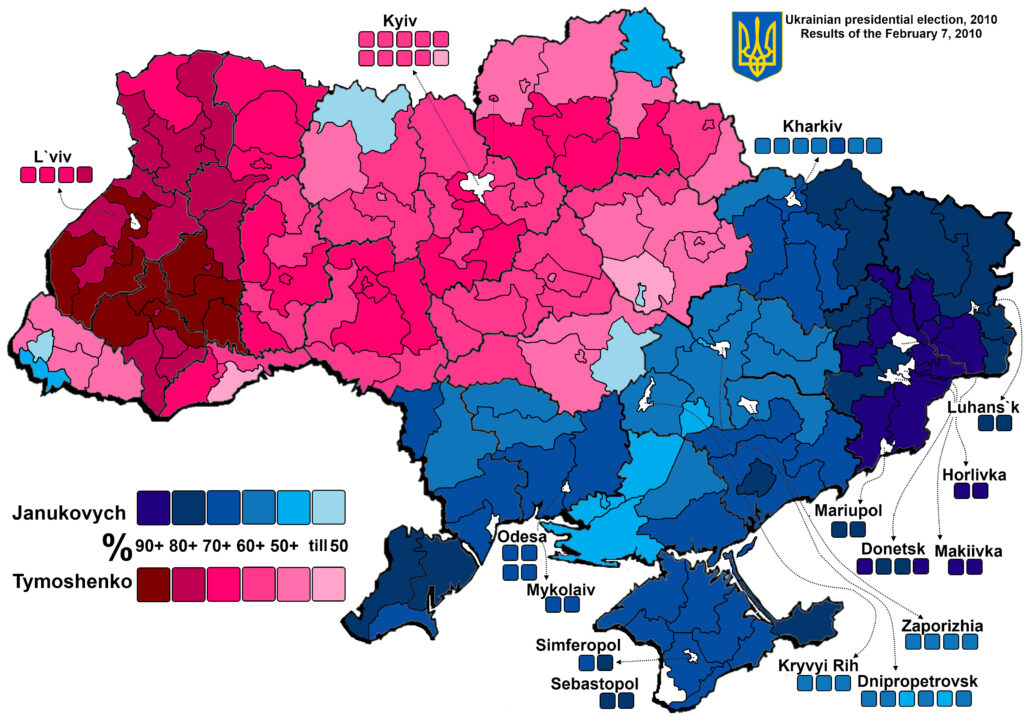
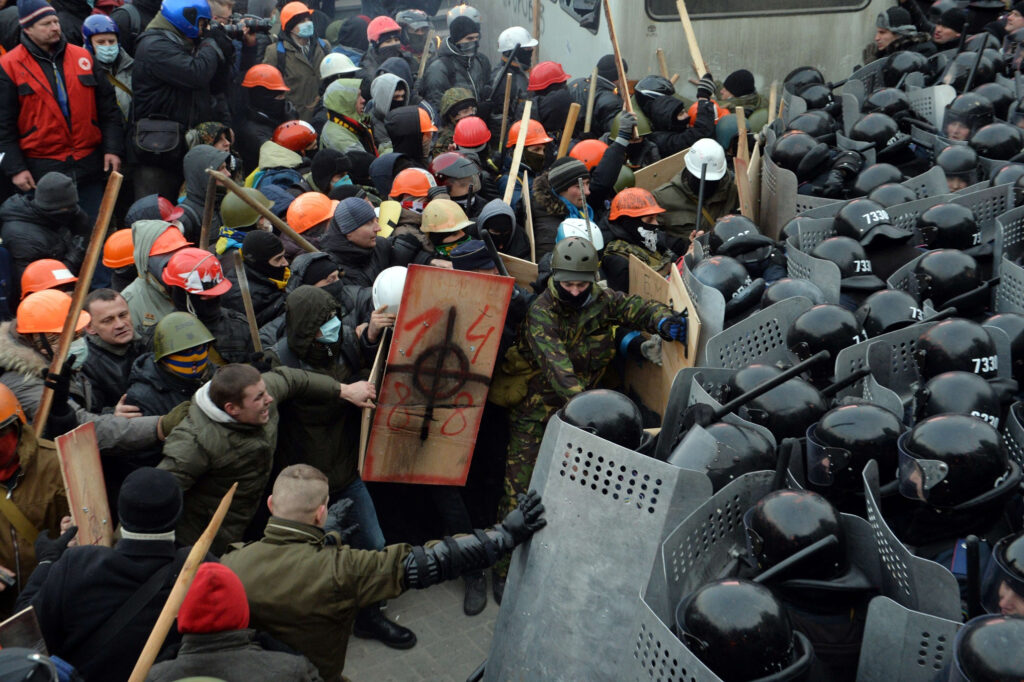
Résultats des élections présidentielles du 7 février 2010 : le contraste entre l’ouest et l’est russophone de l’Ukraine, entre région de Lviv et Donbass, est de mauvais augure. Qu’adviendrait il si quelques esprits mal intentionnés, voire étrangers, envenimaient les choses ?Le 19 janvier 2014, à Kiev, des militants nazis affrontent la police sur la place Maïdan (Serguey Spnisky / AFP)
Après le coup d’État du 21 février 2014, Arseni Iatseniouk forma le 27 un gouvernement issu de l’opposition parlementaire au président élu mais déchu Viktor Ianoukovytch. Le parti nazi Svoboda obtint un vice-premier ministre et plusieurs ministères, dont la défense. Ce cabinet est resté en fonction jusqu’au 2 décembre, après les élections législatives du 26 octobre
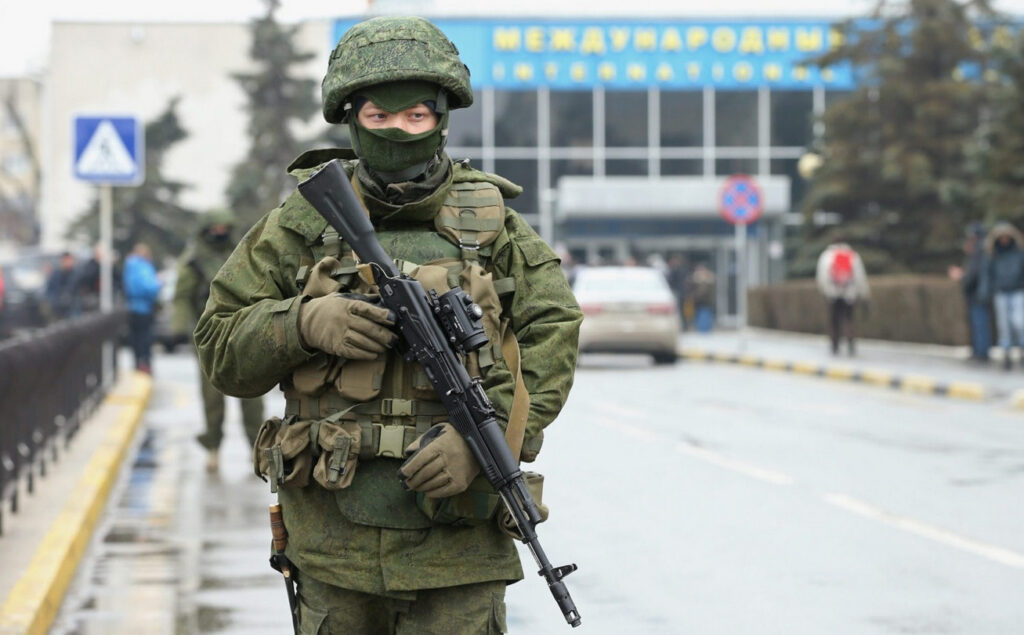
Un militaire russe patrouille à Simferopol, Crimée, le 28 février 2014 (Sean Gallup)
Le 27 février 2014, jour de l’entrée en fonction à Kiev du gouvernement insurrectionnel, l’armée russe sécurisa la Crimée, russe jusqu’en 1954 et russophone, où est basée aussi sa flotte de la mer Noire
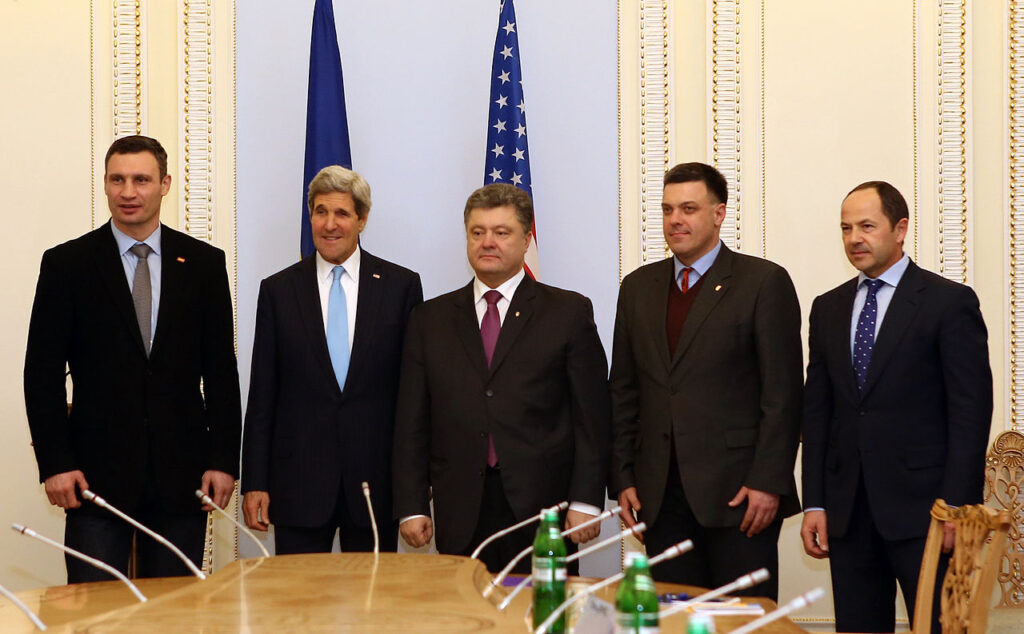
Le 4 mars 2014, le Secrétaire d’État états-unien John Kerry rencontre des parlementaires ukrainiens, dont second par la droite, le nazi Oleh Tyahnybok, élu de Lviv et dirigeant du parti Svoboda. Au centre se tient Petro Porochenko, qui remportera l’élection présidentielle le 7 juin (US Department of State)
Issus de scrutins antérieurs à la crise, les élus locaux de Crimée firent sécession de l’Ukraine le 11 mars. Par référendum du 16, la population vota pour son rattachement à la Russie
à Donetsk, le 7 avril 2014 (Andrew Butko)
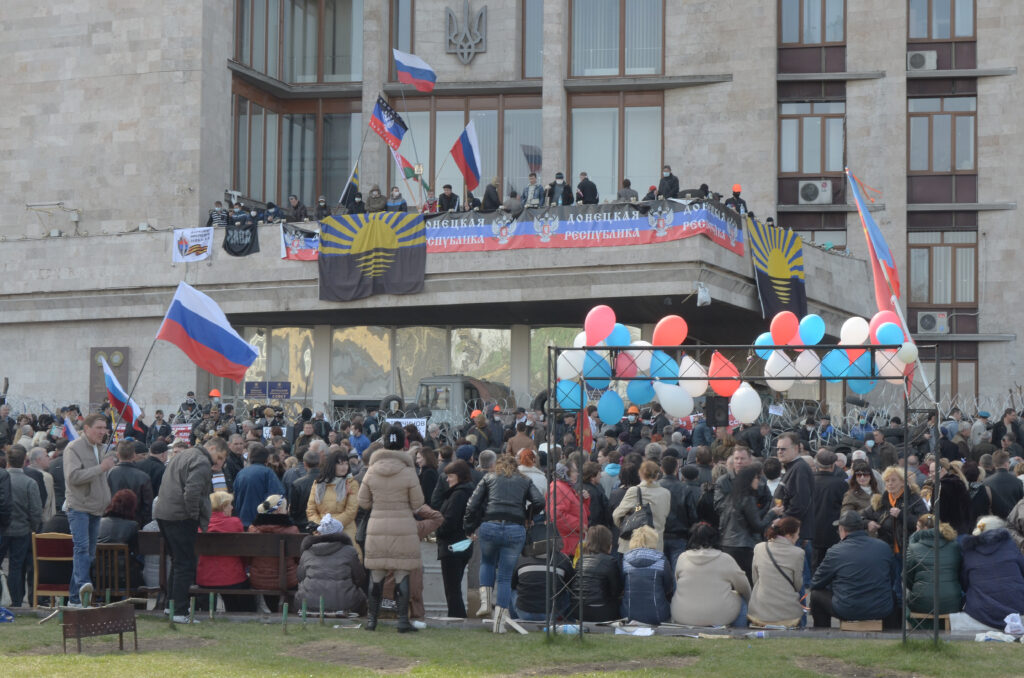
En raison de la posture immédiatement hostile à la langue russe des nouvelles autorités de Kiev, le Donbass se souleva début avril. Les insurgés russophones réclamaient une Ukraine fédérale ou leur rattachement à la Russie
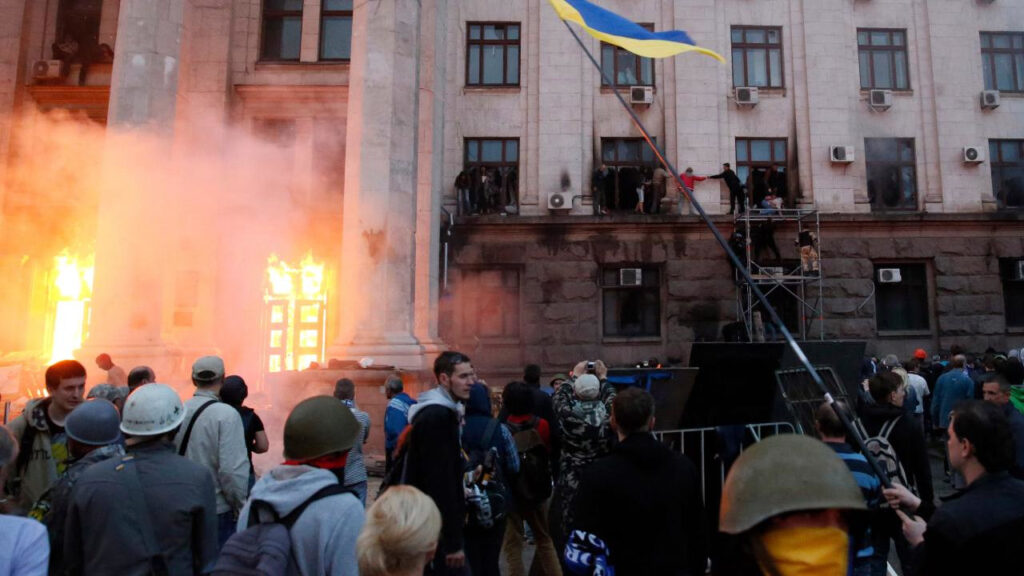
Le massacre qu’entre eux, les nationalistes ukrainiens appellent toujours le barbecue d’Odessa, est perpétré le 2 mai 2014 (Yevgeny Volokin / Reuters). Je les lis habituellement sur Telegram
Le 2 mai, afin de dissuader les velléités séparatistes à Odessa, des voyous nationalistes ukrainiens massacrèrent 42 syndicalistes et militants de gauche.
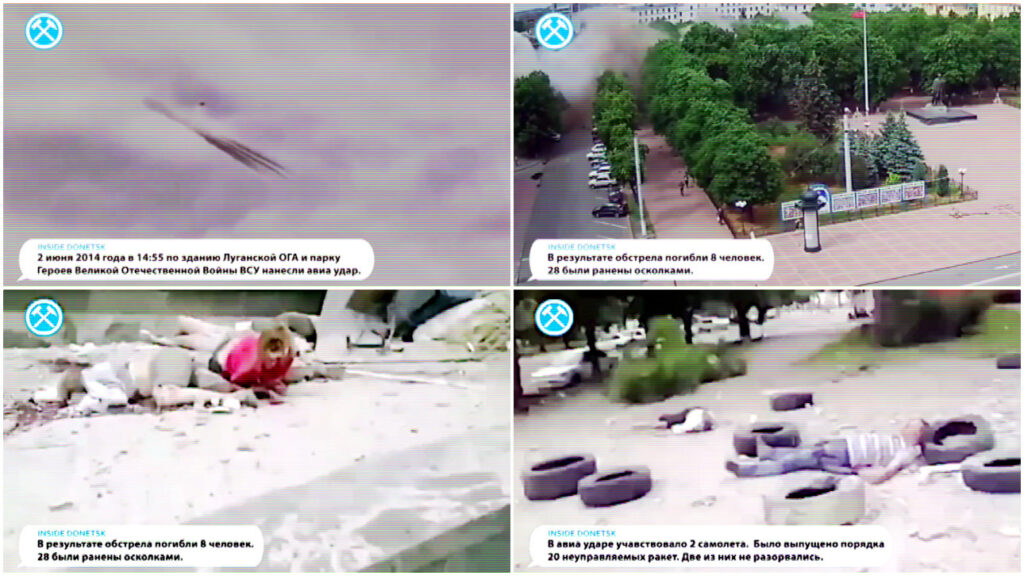
Les autorités de Kiev qualifiaient de terroristes les autonomistes et séparatistes russophones, quand le 26 mai, les troupes loyalistes bombardèrent l’aéroport de Donetsk. Le 2 juin, l’aviation frappa des objectifs civils à Lugansk, y tua huit citoyens, en blessa 28 autres. Ainsi commença la guerre au Donbass, où les forces atlantistes n’ont jamais cessé de bombarder délibérément les civils
à Lugansk le 2 juin 2014 (captures d’écran)
Si notre perception se limitait au spectacle des grands médias français, les mots n’auraient plus de sens ou celui que leur donnent les écoles de commerce. Nous avalerions toutes les fumisteries, pourrions croire aussi François Hollande de gauche et pas le plus servile auxiliaire de Washington.
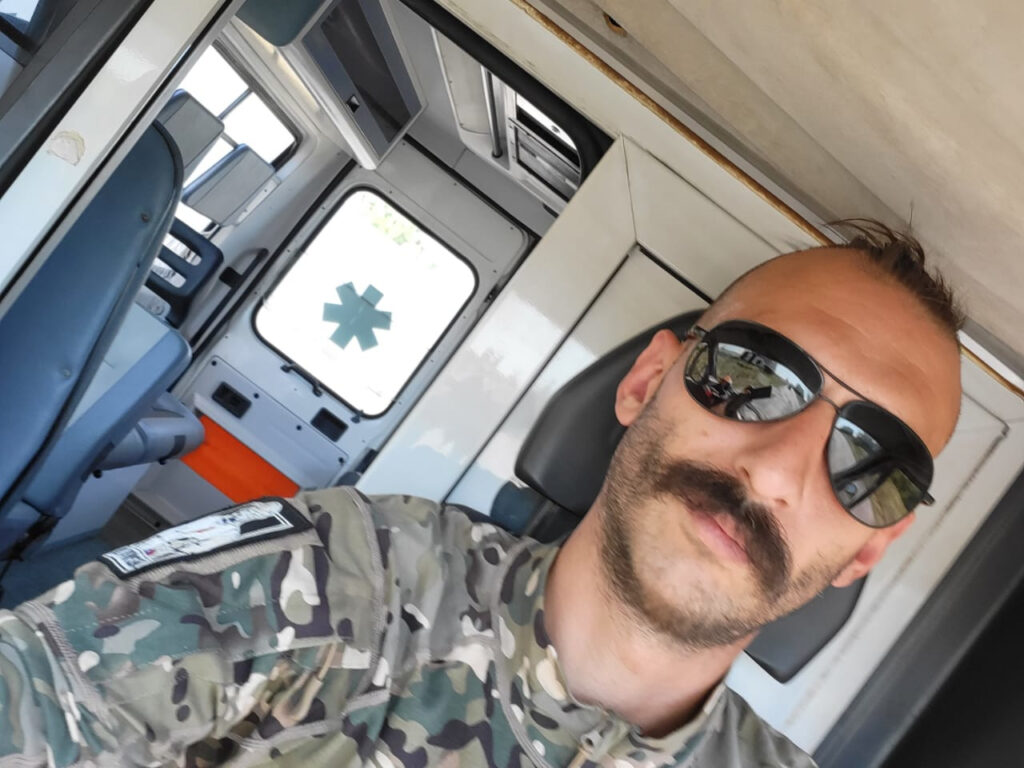
Revenons à Maxime Barrat. Quelque chose a déplu à sa hiérarchie ukrainienne ou à ses camarades étrangers et nous apprenons le 19 juillet 2023 qu’il a été expulsé du 131e bataillon. Il participe toujours à l’effort de guerre atlantiste, commence début août, comme McKenzie, à effectuer des liaisons avec le front. Sa première mission consiste à y conduire une ambulance
En l’attente d’une nouvelle affectation militaire, il explique ne pas toucher de solde et fait appel aux dons sur les réseaux sociaux pour payer l’essence. Je pense que ces liaisons sont le seul moyen d’assurer l’acheminement au front de petits matériels payés par des donateurs, tels que drones, car le système politico-militaire ukrainien est corrompu jusqu’à la moelle.
Le 3 septembre, il est toujours sans affectation mais en quête de valeurs sonnantes sur les réseaux sociaux. Dans son environnement, l’atmosphère vire au roman de gare. J’adore
Le bon temps : Daniel Burke est le second par la gauche, Maxime Barrat est le dernier à droite (réseaux sociaux)
Fondateur en 2022 des Dark Angels, groupe que Barrat intégra alors, le Britannique Daniel Burke a disparu depuis le 11 août. Il était également sans affectation. Son ordinateur, une arme et divers équipements sont restés dans son appartement de Zaporojie, mais son corps est introuvable. La presse britannique commence à évoquer le scénario criminel, car la police ukrainienne pense qu’il a été assassiné dans le contexte de rivalités pour des sources de financement.
Au même moment, un camarade très proche de Barrat se lâche sur les réseaux sociaux, où il explique que le personnel étranger du 131e bataillon de renseignement est un ramassis de toxicomanes. Sale affaire.
Drame le 25 octobre 2023. Tous deux quittèrent le 131e bataillon en juillet, vivaient habituellement sous le même toit
Christopher Perryman le 1er octobre 2023
Barrat avait déjà expliqué que sa future affectation militaire exigerait plus de discrétion sur les réseaux sociaux. Il était silencieux depuis le 9 octobre, confirme ce soir la mort de celui qui était véritablement un compagnon, le Britannique Christopher Perryman, dit Pezz. Les Russes ou a t il trop parlé ?
Barrat reçoit le 4 janvier 2024. Le tee-shirt préféré de feu Perryman est offert à l’opérateur EOD (explosive ordnance disposal) britannique Gary Mitchell
(Réseaux sociaux)
Barrat a recruté trois gamins, qui vivent depuis sous le même toit, les Français Allan Leroy (3e par la gauche), Enzo Proupin (4e) et Quentin Evanno, qui prend probablement la photographie. Vous remarquerez qu’ils sont encore moins d’extrême-gauche que lui.
Il paraît inquiet début juin, sollicite une assistance juridique, car sa hiérarchie militaire ukrainienne lui a signifié qu’en raison de la date de son enrôlement et au contraire de volontaires plus récents, il ne serait pas autorisé à rompre son contrat. Ses démarches sont utiles et il peut annoncer sa démobilisation le 4 juillet 2024.
Il a des projets civils en Ukraine, où il compte rester. Sa soustraction au contrôle judiciaire et la certitude d’être écroué à son retour en France sont certainement des paramètres non négligeables de ce choix.
Fatalitas, disait Chéri Bibi. Le 15 août, il est très officiellement recherché par la justice russe, dans une sordide affaire de viol
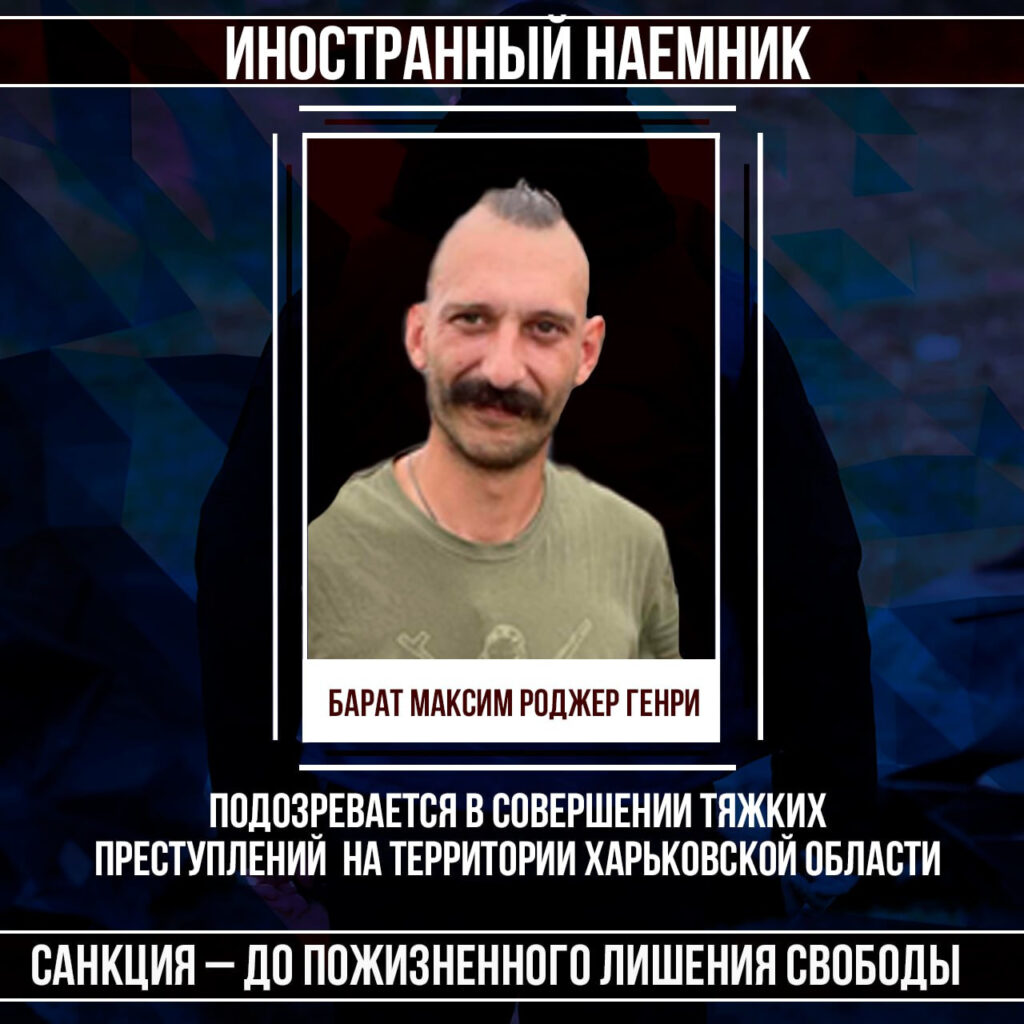
Mercenaire étranger – Barrat Maxime Roger Henri – suspecté d’avoir commis des crimes graves sur le territoire de la région de Kharkov – Sanction – jusqu’à la prison à vie
Les faits datent du 5 mai, à Glubokoe, dans la région de Kharkov, une semaine avant la prise du village par l’armée russe. Deux soldats francophones pénétrèrent au domicile d’une Ukrainienne, qu’ils battirent et violèrent. Les enquêteurs ont présenté des photos de volontaires français à la victime, qui a formellement reconnu Barrat. Monsieur le président, je demande la relégation
Chéri Bibi, 1974 (INA)
Il exerce le 18 août son droit à la défense, mais aurait mieux fait de s’adresser à un avocat compétent, avant de publier sur X un texte en Anglais que je traduis ici
L’année dernière, j’ai entendu des rumeurs selon lesquelles je trafiquais les organes de volontaires [tués] et maintenant, j’ai violé une femme. Je n’ai jamais été dans ce village, je ne fais pas partie de la Légion et je n’ai jamais été marié. Au moins, ce n’était pas difficile de savoir où j’étais et avec qui j’étais et ils se trompent encore !
Cette défense est désespérante de maladresse. Je ne connaissais pas les rumeurs de trafic d’organes. Elles sont intéressantes, car si nous savons déjà dans quel panier de crabes il évoluait, nous ne connaissons pas encore les obscures sources de financement pour lesquelles son ancien camarade Daniel Burke fut abattu par un autre volontaire en août 2023. Pas de rumeur en revanche dans le cas du viol commis dans la région de Kharkov le 5 mai dernier, car les faits sont établis et ouverte, une procédure judiciaire dans laquelle la victime l’a formellement reconnu. Les enquêteurs de TrackANaziMerc se mettent sur l’affaire.
Business d’abord. Il s’adresse en Anglais à son public habituel de pigeons anglo-saxons, car il a passé le plus clair de ses deux ans sous les drapeaux ukrainiens à faire la quête auprès de ce public sur les réseaux sociaux. Les plus avisés l’ont d’ailleurs traité de scammer [arnaqueur]. Il leur suggère qu’il n’aurait pas été l’auteur en France de violences conjugales parce que célibataire. Le mariage n’était pas nécessaire et pour avoir été sous le coup, avant son départ pour l’Ukraine, d’un contrôle judiciaire, il a non seulement commis des violences conjugales, mais n’y est pas allé de main morte. Il est particulièrement maladroit, pour se défendre, de nier les faits antérieurs pour lesquels il est déjà poursuivi en France.
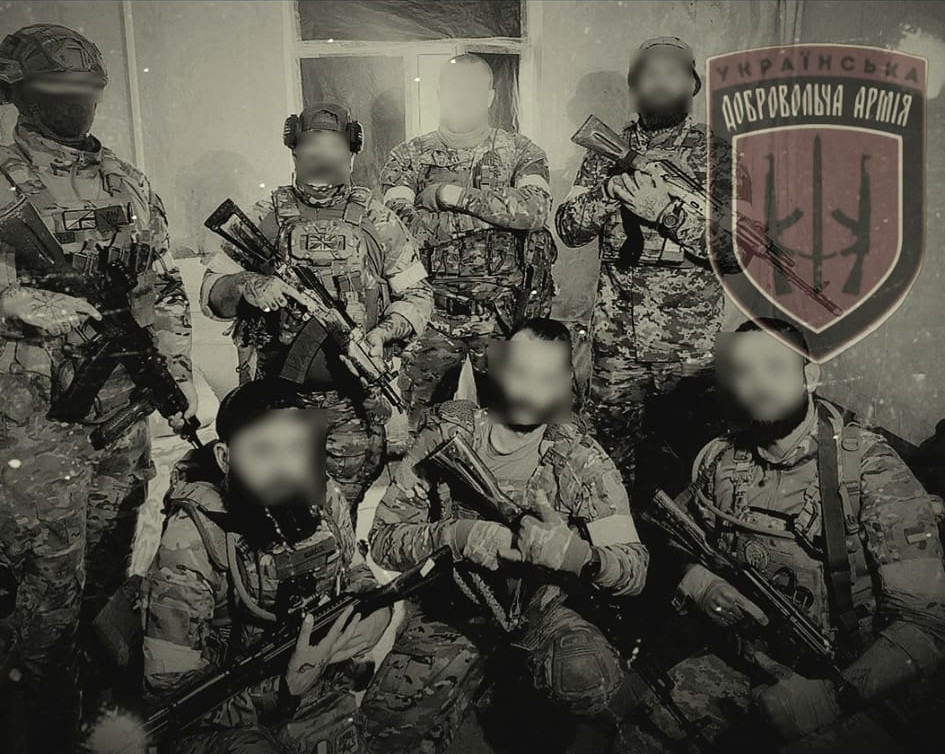
Dans la Légion [internationale] ? Qui l’affirme ? Il était bien sous les drapeaux jusqu’à la date en juillet dernier de sa démobilisation. D’abord dans un bataillon du renseignement militaire ukrainien (GUR), il semble avoir été affecté plus récemment à l’UDA (Ukrayinsʹka dobrovolʹcha armiya, Armée des volontaires ukrainiens), formation paramilitaire nazie de Dmytro Iarosh, fondateur en 2014 de Pravyi sektor [Secteur droit]
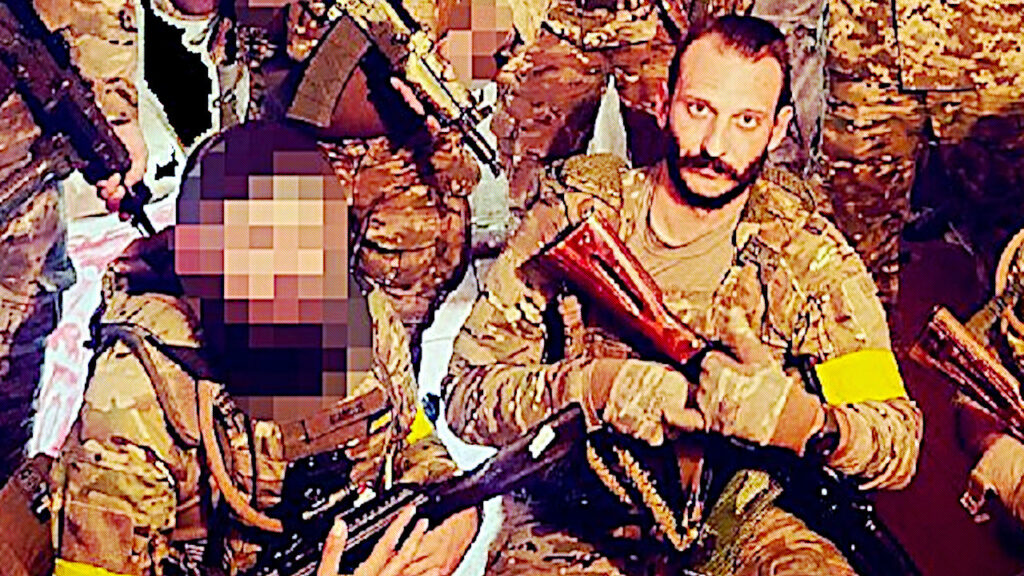
Maxime Barrat est apparu début mai 2024 parmi les camarades du volontaire britannique Ben Wallwork, qui en rétrospective en juillet de ses six mois précédents en Ukraine, publie cette image, à laquelle a été ajouté l’écusson de l’UDA. À notre connaissance, les deux seuls Français de cette escouade sont Quentin Evanno et Maxime Barrat, à genoux, premier et second par la gauche. D’autres versions modifiées de la même photographie originale ont été publiées entre les 11 et 21 mai par Barrat et Evanno, ce qui nous permet de certifier leur présence dans le groupe
Quant à savoir où et avec qui il était le 5 mai, je soupçonne l’identité de son coauteur du viol : le seul Français à notre connaissance, encore avec lui en mai, le nazi Quentin Evanno
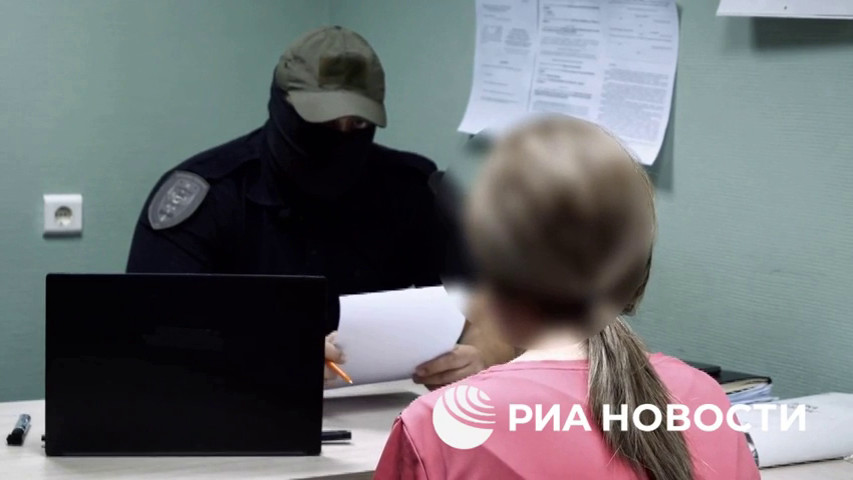
La victime apparaît lors de l’enquête, dans une vidéo diffusée le 15 août 2024 (capture d’écran / RIA Novosti)
Les enquêteurs russes le confirment, procèdent à son identification auprès de la victime et le 18 septembre, Evanno est officiellement recherché par la justice, comme coauteur présumé du viol commis dans la région de Kharkov le 5 mai.
Alors que la victoire totale de Donald Trump risque d’accélérer la défaite atlantiste en Ukraine, le conflit est sans doute devenu plus personnel et existentiel pour Maxime Barrat. S’il se rapatriait, il serait écroué en France pour ses anciens méfaits ; lorsque la Russie aura gagné, l’Ukraine le remettra certainement à la justice russe, qui lui laisse envisager la perpétuité
le 19 octobre 2024 (réseaux sociaux)
En ces circonstances, il a décidé de rempiler. Lui et Enzo Proupin, un jeune camarade dont il était le mentor en début d’année, ont suivi en octobre plusieurs semaines d’entraînement à Kherson. Ils sont le 7 novembre à Ternopil, dans l’ouest lointain, pour accomplir les formalités administratives de leur enrôlement en qualité de tireurs de précision, dans un bataillon de la 126e brigade de défense territoriale. Ils y porteront la tradition de la Team Berlioz, fondée par Franck Malandain.
À l’occasion d’une rencontre avec l’Ajax, des supporteurs fascistes de l’équipe israélienne Maccabi commencèrent dès le 6 novembre à afficher leur nationalisme exacerbé et à ratonner dans les rues d’Amsterdam. Lors du match le 7, ils sifflèrent la minute de silence en hommage aux victimes des inondations de Valence, au motif que le gouvernement espagnol soutient la cause palestinienne. La police néerlandaise les a laissés faire et en réaction à ces comportements de voyous, des habitants ont ensuite pourchassé en ville et corrigé les fâcheux
https://youtu.be/ZGRpCQxIeZw
Voici le reportage des incidents d’Amsterdam, que sous la pression de lobbies, la chaîne britannique Sky News effacera ensuite le 9 novembre
Ces incidents suscitent le 8 novembre une réaction en Anglais de Maxime Barrat, que je traduis ici
La faiblesse de l’Occident fait que nous avons des ennemis à l’intérieur et à nos frontières… Une période sombre pour l’Europe, causée par des peuples faibles… Il est temps de laisser les peuples forts prendre des décisions fortes pour préserver l’Europe et sa culture
Nous savons déjà qu’il n’est jamais aussi fort que lorsqu’il commet en France des violences conjugales ou viole une habitante de la région de Kharkov. Je ressens presque de la peine pour les journalistes de RTL, qui auraient été enfumés en juillet 2023, car de fait, ils présentèrent comme sympathisant d’extrême gauche un vulgaire pétainiste [fasciste français], qui considère les citoyens néerlandais d’origine marocaine comme des ennemis intérieurs aux Pays Bas.
Son dernier enrôlement semble avorter ou la publicité qu’il lui a donnée n’était qu’un énième mensonge. En février 2025, trois mois seulement après les formalités administratives à Ternopil, il quitte l’Ukraine pour l’Europe occidentale.
Désormais loin du champ de bataille, il commente l’actualité française. À l’approche de la chute probable du gouvernement de Français Bayrou, dans le contexte d’une catastrophe financière causée par le sabotage des finances publiques au profit des plus riches, que la même droite exploite ensuite comme un prétexte pour essorer encore les plus pauvres, l’escroc et violeur ravale ses glaires racistes pour exprimer le 26 août la profondeur de sa conscience politique
Que l’on fasse des coupes franches, surtout dans le social… La France est bien trop généreuse, les gens bien trop confortable et sécurisé par toutes ces aides… Au moins les français auront de quoi se plaindre réellement que de se complaire dans leur médiocrité !
Le côté amusant est qu’il semble convaincu de ne pas être un médiocre d’origine contrôlée.
Je continue de lire avec attention ses commentaires de l’actualité. Il se révèle début septembre un inconditionnel de l’ancien marxiste -sans doute alors par effet de mode- devenu sarkozyste et aujourd’hui macroniste, anti-tiers-mondiste et ancien maire de Vichy -comme c’est cocasse- Claude Malhuret. Le politicien vit aussi mal que son admirateur l’accélération de l’inéluctable effondrement de l’hégémonie occidentale. Gros temps pour le petit bourgeois réactionnaire français et le lumpen-prolétaire qui s’identifie à lui.
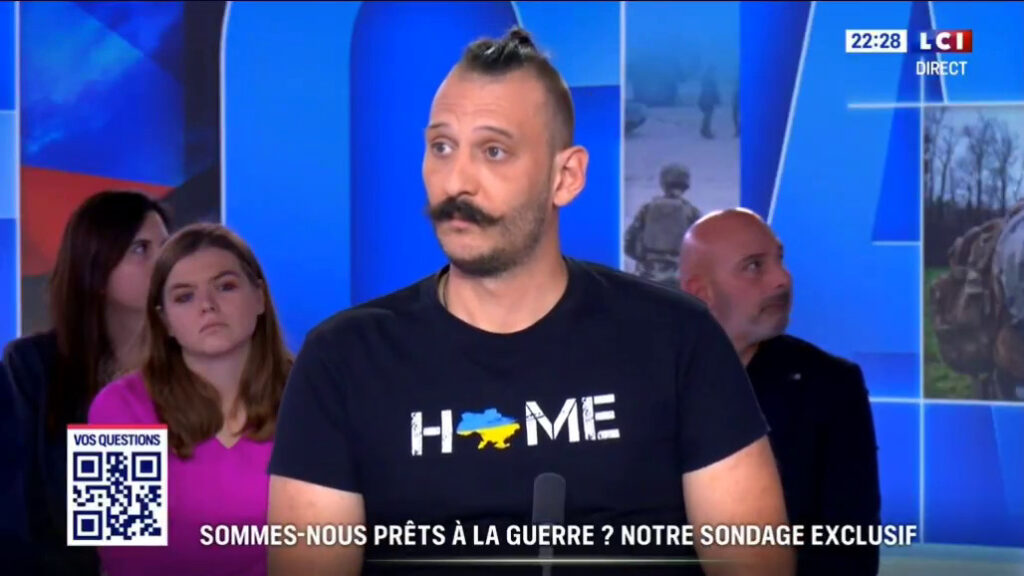
Au soir du 4 décembre 2025, Maxime Barrat est sur le plateau de LCI, qu’il partage avec l’animateur Darius Rochebin et des personnages comme le foudre de guerre béarnais Michel Goya, qui semble convaincu que ses séjours touristiques en Afrique ou à Sarajevo mériteraient la croix de guerre
(Capture d’écran)
Ce qui est savoureux est que de sa soirée spéciale, la chaîne de propagande ne republie pas ensuite d’extrait avec l’ex mercenaire français. La raison de cette censure tient de la vanité nationale : contrairement au message que LCI veut faire passer à son public innocent, il soutient que l’armée française se ferait étriller
(Le Dauphiné Libéré)
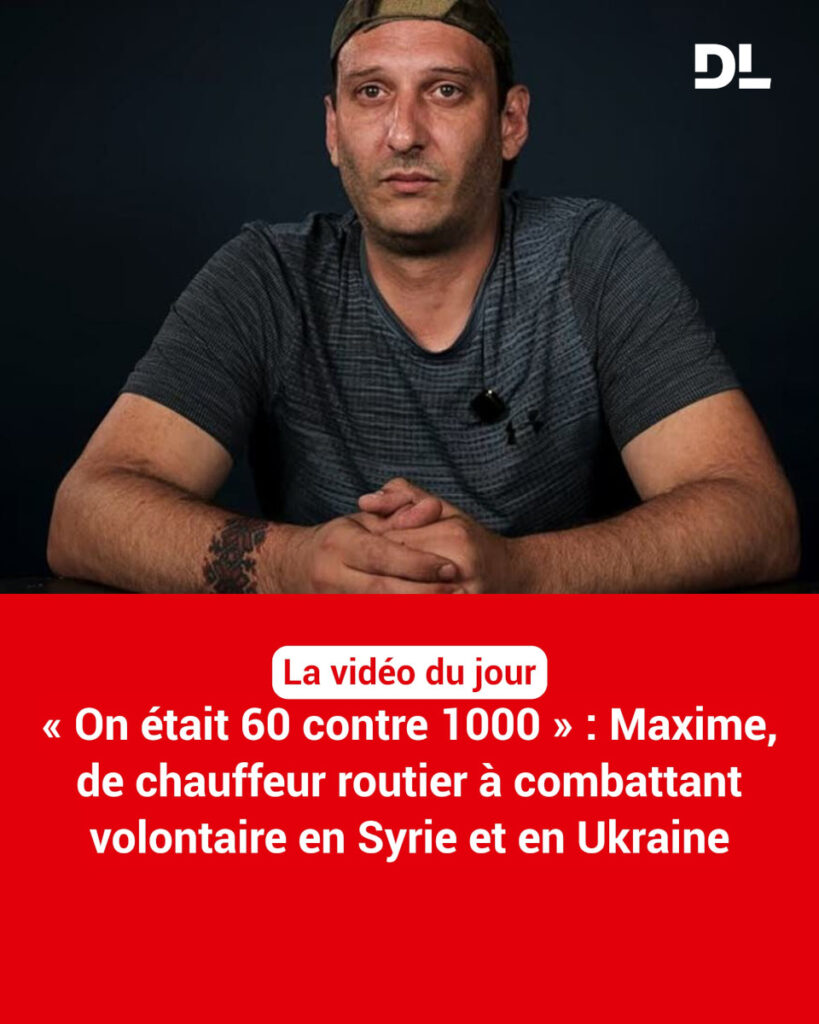
Le 22 août 2026, Le Dauphiné Libéré publie la vidéo d’un entretien avec Maxime Barrat, au sujet de ses exploits homériques sur la champ de bataille ukrainien. Son témoignage souffre hélas de nombreuses omissions. C’est du journalisme du niveau de Laurent Brayard, mais dans l’autre camp.
chronique alphabétique et nécrologique de l’engagement français dans les rangs atlantistes en Ukraine, ce que les journalistes serviles ne vous raconteront pas
Articles connexes
Pruvate à truvà me, canaglia di l’OTAN, pruvate solu
chronique en Anglais, its roots before WW2, its collaboration with Nazi Germany, its legacy in modern Ukraine, how NATO has continually supported Nazism in Ukraine
chronique en Anglais, censorship, fake news, whitewashing of the Ukrainian Nazism and war crimes, for the sake of the proxy war that NATO is conducting in Donbass and Ukraine, against Russia
une saga française, entre Ukraine et Lyon, où apparaissent aussi des morceaux de SS de la division Charlemagne et plus récemment, Alice Kerviel, dite Cordier. L’affaire Deranque révèle comme la France est infectée par le pétainisme, en particulier parmi les soutiens d’Israël ou de l’Ukraine, deux théâtres d’opérations où l’Occident tente de ralentir son déclin
En 2025, une nouvelle unité de Français combattant pour l’Ukraine s’est structurée autour d’un noyau de néonazis, ayant pour objectif d’attirer des recrues. Parmi ces volontaires, d’anciens militaires. StreetPress les a identifiés
En Ukraine, les volontaires français pro-ukrainiens et pro-russes se partagent l’imaginaire de la Seconde Guerre mondiale. Les premiers se revendiquent des collabos de l’Allemagne nazie, les seconds de l’escadrille mythique « Normandie – Niémen »
deux jours après le 10e anniversaire de la débâcle politique et sécuritaire du 13 novembre 2015, une messe célèbre à Verdun l’ancien dirigeant fasciste de l’État français
ce 11 novembre 2025 est l’occasion de souligner comme la façon dont l’Europe sacrifie les conscrits ukrainiens mobilisés de force rappelle le spectaculaire carnage de la 1ère guerre mondiale
c’est par l’agence cosaque de presse PIKA, depuis la République populaire de Lougansk, que le 2 avril 2024, l’ataman Nikolaï Diakonov lance un message à destination de la France
ce papier est le premier des grands médias français qui s’attaque à la question des militants nazis français dans les rangs atlantistes en Ukraine, le nouveau danger qu’ils présenteront à terme pour la sûreté intérieure
où nous apprenons que le nazi français Allan Duchézeau, camarade de César Aujard dans les rangs atlantistes en Ukraine, était surnommé Dox, quand il secondait à Paris le leader nazi Marc de Cacqueray Valménier
en Anglais, les indices de la présence d’opérateurs occidentaux, en particulier Français, pris au piège en mars 2022 à Marioupol, dont les forces russes achevèrent la libération en mai
Ukrainian revisionism: fascist leader Konovalets exhumed, repatriated and welcomed as a hero by « Azov » nationalists
« Hero of Ukraine »: 88 years after his death, Konovalets is honored with neo-Nazi tribute (Reuters)
With lavish pomp and nationalist pathos, the 3rd Corps of the Ukrainian Army celebrated the « homecoming » of Yevhen Konovalets. Late Friday evening, the coffin containing the mortal remains of the first leader of the fascist Organization of Ukrainian Nationalists (OUN) was carried into the Patriarchal Cathedral of the Resurrection of Christ (Ukrainian Greek Catholic Church) in Kiev, passing through an honor guard of « Azov » torch and flag bearers. Dmytro Kukharchuk —the neo-Nazi head of the 3rd Corps’ ideology department and a cheerleader for « Sieg Heil! » hooligan chants— and Georgi Kuparashvili, head of the « Yevhen Konovalets Military School » (opened by “Azov” in 2016), draped the coffin with the OUN flag in a solemn ceremony. The remains had been transported in a World War I-era « Austin » armored car which had been restored by members of the 3rd Corps.
The Nazi spectacle was orchestrated personally by the corps commander, whom President Volodymyr Zelenskyy had promoted to brigadier general in 2025. Andriy Biletskyi received the funeral procession bearing Konovalets’s coffin at the cathedral entrance with an address. « Today, two generations meet here, » said the « White Führer » of Azov movement. He reminded of Konovalets as the commander of « Sich » Riflemen unit —established in 1917 for the short-lived Ukrainian People’s Republic— and of the Ukrainian Military Organization (UVO), precursor to the 1929 OUN. He also hailed his own following —which has operated like a state within a state since Maidan in 2014— as Konovalets’s successors.
Left unmentioned —as in all speeches honoring the national hero— were the facts that Konovalets remained an ally of Hitler until his assassination by a Soviet agent in 1938; that the UVO and later the OUN collaborated with the intelligence services of the German Reichswehr and from 1935 onward, the Wehrmacht. According to historians such as Grzegorz Rossoliński-Liebe, following a meeting with Hitler in 1933, Konovalets urged Ukrainians to support the « Führer » because he would « open the doors to the East ». Is also documented that Konovalets was an antisemite. In 1934, he demanded harsh measures against « mixed marriages with Jews », whom he labeled « enemies of our rebirth ». Furthermore, on the first anniversary of Konovalets’ death, his organization vowed « revenge » against the « Russian-Jewish reptiles which have been sucking our blood for centuries ».
Nothing has stopped the Ukrainian establishment from unleashing a wave of Konovalets-fetishization across the country. The media are abuzz with reports of politicians, military figures, clergy and other pillars of Ukrainian society parading past -or kneeling before— the coffin, which is laying in state in the church, under an honor guard from the Ukrainian Armed Forces. « For decades, attempts were made to erase his name, distort it or consign it to oblivion », Zelenskyy’s chief of staff Kyrylo Budanov declared on Sunday
The enemies of independent Ukraine were fearing the colonel during his lifetime and they are fearing him to this day
Konovalets’s remains were exhumed at Rotterdam Crooswijk Cemetery on August 11 and transferred to Ukraine two days later. The process was organized at the highest level: by Budanov, the Ukrainian Foreign Ministry and the head of the Ukrainian Institute of National Memory, former Azov officer Oleksandr Alferov. Konovalets’s remains will be provisionally buried at the National Military Memorial Cemetery, until they can be transferred to the « Pantheon of Heroes », the construction of which was approved by Zelenskyy’s Cabinet of Ministers on July 1.
« Each of the preceding generations took up the Ukrainian cause in an unfinished state », declared Biletskyi
We are the first to have a real chance to shatter the heavy shackles and complete the work of the Colonel and all our great predecessors
On its official social media channels, the 3rd Corps announced exactly what was meant: « The empire which murdered him will be destroyed! » [end]
Azov paramilitaries are aiming to debunk Kremlin « myths ». In doing so, they are solidifying their Nazi tradition and reducing German normalization narratives to absurdity
its roots before WW2, its collaboration with Nazi Germany, its legacy in modern Ukraine, how NATO has continually supported Nazism in Ukraine, chronicle
chronicle of censorship, fake news, whitewashing of the Ukrainian Nazism and war crimes, for the sake of the proxy war that NATO is conducting in Donbass and Ukraine, against Russia
No amount of ‘intellectual mobilization’ will be enough to contain public fury (Scott Peterson / Getty)
“No!” the woman cries. “May you be damned!” You can hear the despair in her voice, as masked men grab her husband, then bundle him into a waiting van. Within seconds, she’s alone, weeping in the middle of the street. This is Odesa, but scenes like it, captured on phones and posted online, hammer Ukrainian cities as relentlessly as Russian missiles. Since Putin’s full-scale invasion began, over a million Ukrainians have been conscripted to defend their homeland. And, as voluntary recruits have dried up, the army has begun resorting to the same methods faced by that couple in Odesa. People even have a term for it: “busification”.
The process is brutally simple. Draft officers, often accompanied by police, snatch military-age men off the streets, before delivering them to recruitment centers. There, many are pressured through threats, intimidation, and physical abuse to pass military medical examinations and sign draft papers. Men with serious conditions — including HIV, tuberculosis and even cancer — are routinely declared fit for service. Whether they like it or not, the recruitment officers must meet quotas; the only question is who fills them. Yet with Ukraine’s wealthy elite reluctant to heed the call, Kyiv’s recruitment crisis is becoming a class crisis too, one that could cause chaos long after the guns fall silent.
Ukraine currently mobilizes around 30,000 men each month — yet many never make it to the front. Some flee training centers at the first opportunity, while others are later discharged as medically unfit. By autumn 2025, according to official figures, roughly 300,000 servicemen had gone AWOL or deserted. The numbers have become so politically sensitive that the authorities now keep the data secret. But the direction of travel is clear: Ukraine’s pool of willing fighters is shrinking. As a result, coercion has moved from the margins to the very center of national life.
Straightforward coercion, however, is only part of the story, as mobilization becomes a social scourge too. Today’s Ukrainian army is, increasingly, an army of the poor. Members of the upper-middle class — and especially the political and economic establishment — possess the resources, connections, and influence necessary to shield themselves from military service. Through a combination of legal work-arounds and bribes, they can avoid donning uniforms for a range of reasons, from illness, to having several children, to caring for disabled relatives. Others are exempt because they’re university students or academics, or work at strategic companies, particularly those linked to the defense sector.
A significant portion of Ukraine’s cultural and academic intelligentsia belongs to this privileged group. Many have received exemptions from military service while continuing their professional activities uninterrupted. In return, the state expects ideological loyalty and intellectual labor in support of the war effort. This includes promoting “decolonization” narratives that often amount to anti-Russian ethnonationalism. It also means deliberately ignoring the deep penetration of far-Right groups into the military, and remaining silent about the normalization of Nazi symbols within parts of the armed forces. But, most importantly, it means justifying coercive mobilization as a necessary instrument of national survival in what is routinely described as an “existential war”.
A substantial number of Ukrainian intellectuals have willingly embraced this arrangement, placing themselves in the service of state interests while convincing themselves that they’re fighting on the “information front” in a war for independence from Russia. Others are motivated by more pragmatic considerations: preserving the privileges that come with exemption from military service. Still others remain loyal out of fear.
Fear, after all, is not an abstract concern. The costs of dissent have become increasingly visible. A recent example is the Ukrainian-Canadian political scientist Ivan Katchanovski, who became the target of a public campaign of denunciation by Ukrainian and Western scholars over his interpretation of the war. Katchanovski has argued for a more nuanced explanation of the conflict — one that looks beyond Russian imperialism and Putin’s ambitions to include the role of the Ukrainian far-Right, Nato, and a post-Cold War security architecture that excluded Moscow. Rather than confronting these arguments on their scholarly merits, many of his critics simply accused the scholar of spreading “Kremlin propaganda”. Whatever one thinks of Katchanovski’s views, the episode sent a clear message: questioning dominant wartime narratives can carry serious professional and reputational consequences.
Meanwhile, justifying mobilization, regardless of how coercive, violent, or degrading it may be, has become a central task of Ukraine’s liberal intelligentsia. In May 2026, for instance, the prominent historian and public intellectual Yaroslav Hrytsak argued that patriotic appeals and financial incentives alone are insufficient to sustain effective mobilization in the country. In his view, society must also rely on fear and moral condemnation. As an example, Hrytsak invoked Britain’s experience during the First World War, when women handed white feathers to men who didn’t enlist, publicly shaming them as cowards.
What is striking is that Hrytsak offered no criticism of this practice, despite its deeply controversial legacy. The white-feather campaign stigmatized not only those unwilling to fight, but also veterans, disabled men, the seriously ill, and countless others who were unfit for military service. Yet in contemporary Ukraine, this history is increasingly presented not as a cautionary tale but as a model worthy of emulation.
In reality, of course, the public shaming of men who avoid military service is already deeply embedded in Ukrainian public discourse. For example, the popular singer Alyona Alyona, who represented the country at the 2024 Eurovision, mockingly referred to such men as “Mama’s little boys” and publicly defended the harsh measures employed against draft evaders. Oleksandra Ustinova, an MP, has similarly attacked men who leave Ukraine to avoid service, arguing that the current civil penalties should be replaced by criminal prosecutions. Yet there’s an irony here. Ustinova’s own draft-age husband left Ukraine for the US after Russia’s invasion in March 2022, bought a house and a car there, and has shown little intention of returning.
There are other ironies too. In September 2024, Yaroslava Kravchenko, a celebrity TV host, published a report on male artists who had left Ukraine under the telling title “Those Who Escaped from Ukraine”. Like many women who publicly denounce supposed draft dodgers, Kravchenko herself enjoys unrestricted international travel for both work and leisure. Many other female celebrities are in the same boat. Women, after all, remain exempt from the travel restrictions imposed under martial law — restrictions that prevent millions of Ukrainian men from leaving the country regardless of their personal circumstances, political views, or willingness to fight.
This asymmetry lies at the heart of growing social tensions. Those who champion moral condemnation often do so from positions of relative safety and freedom. They can cross borders, pursue careers abroad, and retain control over their own lives. The men they shame cannot. From the very first days of the war, Ukraine has cultivated the image of the ideal man: self-sacrificing, strong, courageous, and unfailingly committed to defending his family, his home, his nation. He is prepared, if necessary, to give his life for this cause.
His opposite is the ukhyliant — the draft evader. In the dominant narrative, he is portrayed as a coward who’ll resort to any means necessary to evade what is presented as his “natural” masculine duty. Public shaming of such men has become normalized, routine, and Ukrainian media has played a significant role in this process. Flippant headlines like “Draft Dodger Stopped by a Bear at the Romanian Border” or “Grandma Draft Dodger: Odesa Man Dressed as an Elderly Woman to Cross the Border” have now become commonplace. And though Article 35 of Ukraine’s constitution theoretically guarantees the right to alternative service for conscientious objectors, that right has effectively ceased to exist. A recent investigation into the “Skala” regiment alleged that some men who refused to serve were beaten into compliance.
All the while, some Ukrainian feminists have directed their criticism at draft evaders while largely overlooking a wartime system that casts men as protectors and women as those in need of protection — precisely the gender hierarchy feminism claims to oppose. This flirtation with militaristic nationalism has left many feminists blind to the women whose lives are shattered by busification. Behind every man dragged into a recruitment van, then tortured or beaten to death by draft officers, let alone killed at the front, stands a mother, a daughter, a wife, bearing the fear, grief, and trauma that follow. But because their suffering complicates the dominant wartime narrative, this reality is largely met with silence.
A similar silence greets another group of inconvenient women — those who have become active in the grassroots struggle against forced mobilization. Gender in Detail, Ukraine’s leading gender website, has had remarkably little to say about the women standing in the way of busification. These women are threatened, attacked, prosecuted, and publicly shamed for defending relatives — or complete strangers — from recruitment vans. The courage of these women, from teenage girls to pensioners, can be seen in countless videos confronting recruitment officers and the police. Their courage is visible, their suffering documented. Yet their invisibility, in the end, is political.
That, of course, raises a broader question. With the frontlines mostly stagnant, and with the meatgrinder war annihilating Ukraine’s demographics, why is the government so intent on continuing with busification at all costs? Ukraine no longer appears to have the final say over its own future. That decision is increasingly shared with — or subordinated to — its Western sponsors, who view Ukrainian men less as citizens than as expendable military assets. The EU’s plan to refuse protection to Ukrainian men of draft age exposes this logic. By denying them refuge, Europe is effectively forcing them back to the front. Their bodies have become instruments in a larger geopolitical project: bleeding Russia. That’s further suggests that the war has become a Western proxy war against Putin. In return, Ukraine’s venal political elite, led by Volodymyr Zelensky, enjoys Western political protection — whatever the moral and legal problems with busification.
There’s another question here too. If Ukraine is being bled dry for Brussels, why not end militarization altogether? Unfortunately, those who suggest this path, advocating diplomacy or negotiations, are marginalized. When Yuliia Mendel, Zelensky’s former press secretary, told Tucker Carlson that the Ukrainian president had sabotaged peace talks with Russia, much of Ukraine’s mainstream media and a number of prominent liberal commentators responded not with debate but with a coordinated effort to discredit her, branding her a purveyor of “Russian narratives”.
Liberal intellectuals share responsibility for silencing these unwanted voices. Yet neither the state nor its intellectual allies can suppress these realities forever. Beneath the surface, they are fueling growing resentment and social anger. Every attempt to silence grievances only deepens the sense of injustice, and if the pressure continues to build, it may eventually spark a political and social explosion.
There are signs of this already. In the village of Ozero, for instance, locals blocked a military recruitment vehicle, smashed its windows, and freed a mobilized man. Elsewhere, confrontations between recruitment officers and civilians have involved dozens of people, often escalating into verbal abuse and physical violence. Attacks on recruitment officers with knives, shovels, and clubs have become increasingly common too. As the military’s manpower crisis deepens, mobilization grows more coercive — and public resistance more intense. The way things are going, no amount of “intellectual mobilization” will be enough to contain public fury [end]
Marta Havryshko is a US-based author and researcher focused on Ukrainian nationalism, the far Right, and the Russia-Ukraine war. She holds a PhD in history from the Ivan Franko National University of Lviv in Ukraine
Why are liberal institutions censoring discussion of forced mobilization in Ukraine? – Volodymyr Ishchenko, Marta Havryshko, Tarik Cyril Amar, Milica Popović and Almut Rochowanski
ce 11 novembre 2025 est l’occasion de souligner comme la façon dont l’Europe sacrifie les conscrits ukrainiens mobilisés de force rappelle le spectaculaire carnage de la 1ère guerre mondiale
Azov paramilitaries are aiming to debunk Kremlin « myths ». In doing so, they are solidifying their Nazi tradition and reducing German normalization narratives to absurdity
chronicle of censorship, fake news, whitewashing of the Ukrainian Nazism and war crimes, for the sake of the proxy war that NATO is conducting in Donbass and Ukraine, against Russia
its roots before WW2, its collaboration with Nazi Germany, its legacy in modern Ukraine, how NATO has continually supported Nazism in Ukraine, chronicle
ce sont des pseudonymes, est l’aîné de ce panthéon, BHL mis à part. Vétéran du 1er REC (régiment étranger de cavalerie) puis 1er régiment de spahis, il était à Beyrouth en 1983, en Irak en 1991. Peut être par corporatisme, il a assuré la sûreté du général à la retraite Christian Piquemal, dont les opinions xénophobes et islamophobes en ont fait en 2016 une icône de l’extrême droite. Le 14 mars 2022, il franchit la frontière entre Pologne et Ukraine
(Captures d’écran)
Dans la Légion internationale, il effectue des missions de liaison entre Kiev et le front, près de Kherson ou dans la partie du Donbass encore occupée par l’Ukraine, visite notamment le champ de bataille de Bakhmout. Il alterne repos en France et nouvelles missions en Ukraine, où il connaît Franck Malandain et Juan Sanchez Da Silva, un ancien du 1er régiment de spahis. Il est aussi un recruteur de vétérans pour la Légion internationale.
Le seul à le faire parmi les Français que je connais alors, le 26 septembre 2022, il rend hommage à Yevhen Brach, un combattant nazi ukrainien et surtout je pense, un ancien de la Légion étrangère, qui a été tué le 21
(Compte Telegram de feu Yevhen Brach)
Pour le première fois, le 19 juin 2023, il se montre armé d’un fusil d’assaut
Des nazis (la race, supra-nationale, détermine tout) ou pétainistes (lA drOITe NaTIonalE) s’illustrent ici sans fard, l’étaient avant de gagner l’Ukraine. Je suis convaincu que d’autres dans cette liste veillent à ne pas le laisser apparaître. Beaucoup ne sont ni de grands littéraires ni de brillants matheux et parmi eux, d’autres encore sont nazis ou pétainistes mais s’ignorent
Le 30 juin 2022, la philatélie ukrainienne rend hommage au criminel de guerre nazi Roman Choukhevytch (1907-1950), militant fasciste, auxiliaire en 1941 de l’Abwehr [renseignement militaire allemand] puis officier jusqu’en 1943 de la Schutzmannschaft [police auxiliaire], contre les partisans antinazis. En août 1943, il prit le commandement de l’UPA, formation paramilitaire nationaliste, qui a massacré entre 50 000 et 100 000 civils polonais, avec la bienveillance de l’occupant, affronté jusqu’en 1950 l’Armée rouge victorieuse, d’abord au bénéfice des Allemands puis à partir de 1945, sous la houlette des services secrets anglo-états-uniens
L’environnement est particulièrement délétère en Ukraine, où la chimie est complexe, car si les références historiques nazies y sont encore restées plus ou moins refoulées après la dissolution de l’Union soviétique, une culture populaire nazie revendiquée s’est développée après 2014 et son expression s’accentue naturellement vers l’ouest, culmine à Lviv, berceau historique du nazisme ukrainien.
À cet égard, le conflit nous offre le 22 septembre 2023, le spectacle grand-guignolesque de la standing ovation du parlement canadien pour l’ancien Waffen-SS ukrainien Yaroslav Hunka, son épilogue psychodramatique. Cet environnement propice, conjugué à l’amertume d’une défaite devenue inéluctable à la fin de l’été, conduira je pense à des phénomènes intéressants
Fier comme Artaban, McKenzie présente sur les réseaux sociaux, le 24 septembre, son écusson de la brigade nazie ukrainienne Azov, reconnaissable au Wolfsangel [crochet à loup] de plusieurs anciennes divisions SS
La tendance se confirme le 30 octobre, avec l’étendard de la même brigade Azov, le Schwarze Sonne [soleil noir, héritage du Reichsführer SS Heinrich Himmler] en fond du Wolfsangel, dans les tribunes d’un match de football. Pourtant, Lens n’est pas du tout sa région. McKenzie ou Fred, comme l’appellent sur les réseaux sociaux ceux qui le connaissent, est patron d’une entreprise de vitrage automobile dans la région de Valence, garnison du 1er régiment de spahis
(Réseaux sociaux)
Ses publications en mars 2024 et ses pseudonymes successifs sur les réseaux sociaux –Karl, Ulman– effacent les derniers doutes quant à son inspiration fasciste.
chronique alphabétique et nécrologique de l’engagement français dans les rangs atlantistes en Ukraine, ce que les journalistes serviles ne vous raconteront pas
Articles connexes
Pruvate à truvà me, canaglia di l’OTAN, pruvate solu
chronique en Anglais, its roots before WW2, its collaboration with Nazi Germany, its legacy in modern Ukraine, how NATO has continually supported Nazism in Ukraine
chronique en Anglais, censorship, fake news, whitewashing of the Ukrainian Nazism and war crimes, for the sake of the proxy war that NATO is conducting in Donbass and Ukraine, against Russia
une saga française, entre Ukraine et Lyon, où apparaissent aussi des morceaux de SS de la division Charlemagne et plus récemment, Alice Kerviel, dite Cordier. L’affaire Deranque révèle comme la France est infectée par le pétainisme, en particulier parmi les soutiens d’Israël ou de l’Ukraine, deux théâtres d’opérations où l’Occident tente de ralentir son déclin
En 2025, une nouvelle unité de Français combattant pour l’Ukraine s’est structurée autour d’un noyau de néonazis, ayant pour objectif d’attirer des recrues. Parmi ces volontaires, d’anciens militaires. StreetPress les a identifiés
En Ukraine, les volontaires français pro-ukrainiens et pro-russes se partagent l’imaginaire de la Seconde Guerre mondiale. Les premiers se revendiquent des collabos de l’Allemagne nazie, les seconds de l’escadrille mythique « Normandie – Niémen »
deux jours après le 10e anniversaire de la débâcle politique et sécuritaire du 13 novembre 2015, une messe célèbre à Verdun l’ancien dirigeant fasciste de l’État français
ce 11 novembre 2025 est l’occasion de souligner comme la façon dont l’Europe sacrifie les conscrits ukrainiens mobilisés de force rappelle le spectaculaire carnage de la 1ère guerre mondiale
c’est par l’agence cosaque de presse PIKA, depuis la République populaire de Lougansk, que le 2 avril 2024, l’ataman Nikolaï Diakonov lance un message à destination de la France
ce papier est le premier des grands médias français qui s’attaque à la question des militants nazis français dans les rangs atlantistes en Ukraine, le nouveau danger qu’ils présenteront à terme pour la sûreté intérieure
où nous apprenons que le nazi français Allan Duchézeau, camarade de César Aujard dans les rangs atlantistes en Ukraine, était surnommé Dox, quand il secondait à Paris le leader nazi Marc de Cacqueray Valménier
en Anglais, les indices de la présence d’opérateurs occidentaux, en particulier Français, pris au piège en mars 2022 à Marioupol, dont les forces russes achevèrent la libération en mai