

Nicolas Cinquini

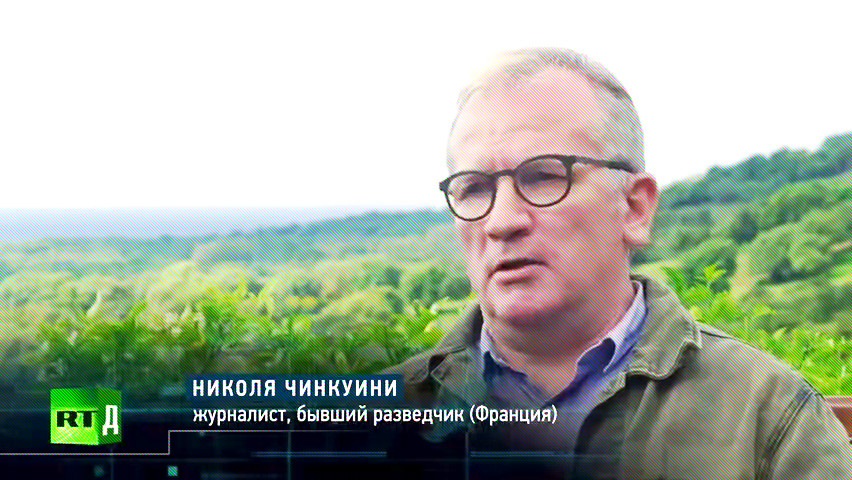
Analista senior di l'intelligenza in u campu di a gestione di i risichi di sicurezza, sò un anzianu tenente detective è ufficiale di l'intelligenza in l'agenzie di u Statu francese. A bona pronuncia hè Николай Чинкуини, in russu

Tag: assimigoita

  • L’engagement français dans les rangs ukrainiens

    • Theet, Alexandre, né le 1er juillet 1986,

    obtint une licence en Droit mais opta en 2009 pour un emploi militaire au 8e RPIMa (régiment parachutiste d’infanterie de marine) de Castres, qu’il quitta en 2012
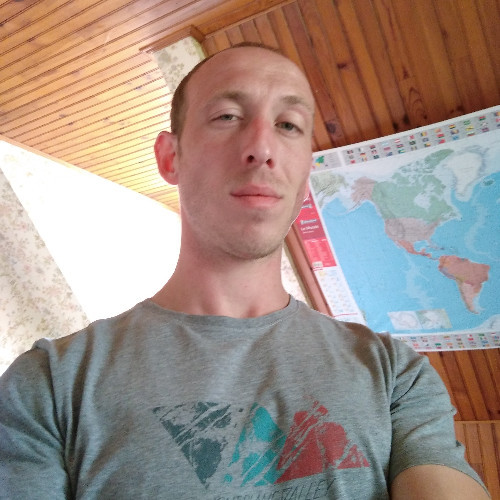
    Il a été ensuite maréchal ferrant en Dordogne, mais suivit en 2018 une formation de garde du corps chez Praetorian, au Texas.

    Entre janvier 2020 et décembre 2021, il a exercé une activité militaire privée à Bamako, Mali, que sa révolution de mai 2021 débarassa du néocolonialisme français
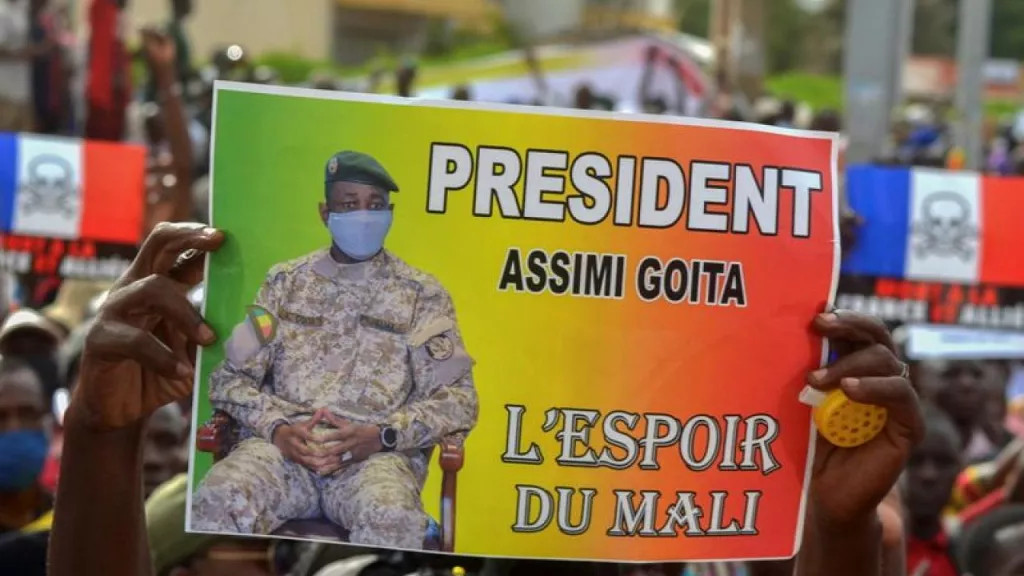
    Il est chef de famille dans les Ardennes, quand il gagne l’Ukraine en avril 2022. D’abord chef d’escouade dans le 1er bataillon de Légion internationale, région de Kharkov, il passe en novembre en République populaire de Lougansk, dans les rangs du 3e bataillon, qu’il quitte aussi en janvier 2023.

    in L’engagement français dans les rangs ukrainiens

    chronique alphabétique et nécrologique de l’engagement français dans les rangs atlantistes en Ukraine, ce que les journalistes serviles ne vous raconteront pas

    Articles connexes
    The Atlanticist defeat in Donbass and Ukraine

    en Anglais, chronicle of a new catastrophic NATO venture

    Nazism in Ukraine

    chronique en Anglais, its roots before WW2, its collaboration with Nazi Germany, its legacy in modern Ukraine, how NATO has continually supported Nazism in Ukraine

    The footprint of the Ukrainian Nazism in the West

    chronique en Anglais, interactions between Ukrainian Nazi organizations and Western supremacist militants

    The Western disinformation about Ukraine

    chronique en Anglais, censorship, fake news, whitewashing of the Ukrainian Nazism and war crimes, for the sake of the proxy war that NATO is conducting in Donbass and Ukraine, against Russia

    14 novembre 2026 : Tombés pour l’Allemagne et l’OTAN

    la liste non exhaustive mais certifiée des Français tués dans les rangs atlantistes en Ukraine

    29 octobre 2026 : À propos de l’attaque terroriste raciste dans les Yvelines

    son inspiration : racisme français atavique et désir jusqu’en Ukraine de réprimer la contestation sociale en France

    5 août 2026 : Ylian Fort « chique » comme le dernier des voleurs à la tire

    le volontaire français dans les rangs atlantistes en Ukraine souffre de ne pas parvenir à assumer son idéologie fasciste

    1er août 2026 : Censure de la journaliste pacifiste Xenia Fedorova

    loi visant à prévenir les ingérences étrangères en France

    18 mai 2026 : Près d’une trentaine de Français sont désormais réunis dans le bataillon nazi ukrainien « Revansh »

    de quoi faire trembler le microcosme politico-médiatique parisien

    11 mai 2026 : Ma réponse au Canard enchaîné

    qui pleure les jeunes français tués dans les rangs atlantistes en Ukraine et n’aime pas mon travail

    25 avril 2026 : De Philippe Pétain à Quentin Deranque

    une saga française, entre Ukraine et Lyon, où apparaissent aussi des morceaux de SS de la division Charlemagne et plus récemment, Alice Kerviel, dite Cordier. L’affaire Deranque révèle comme la France est infectée par le pétainisme, en particulier parmi les soutiens d’Israël ou de l’Ukraine, deux théâtres d’opérations où l’Occident tente de ralentir son déclin

    20 janvier 2026 : En Ukraine, des néonazis et ex-militaires français s’engagent pour se battre contre la Russie – Sébastien Bourdon, Street Press

    En 2025, une nouvelle unité de Français combattant pour l’Ukraine s’est structurée autour d’un noyau de néonazis, ayant pour objectif d’attirer des recrues. Parmi ces volontaires, d’anciens militaires. StreetPress les a identifiés

    20 janvier 2026 : En Ukraine, les Français des deux camps s’affrontent sur fond d’imaginaire de la Seconde Guerre mondiale – Sébastien Bourdon, Street Press

    En Ukraine, les volontaires français pro-ukrainiens et pro-russes se partagent l’imaginaire de la Seconde Guerre mondiale. Les premiers se revendiquent des collabos de l’Allemagne nazie, les seconds de l’escadrille mythique « Normandie – Niémen »

    15 novembre 2025 : « Gardez votre confiance en la France éternelle »

    deux jours après le 10e anniversaire de la débâcle politique et sécuritaire du 13 novembre 2015, une messe célèbre à Verdun l’ancien dirigeant fasciste de l’État français

    11 novembre 2025 : Der Krieg

    ce 11 novembre 2025 est l’occasion de souligner comme la façon dont l’Europe sacrifie les conscrits ukrainiens mobilisés de force rappelle le spectaculaire carnage de la 1ère guerre mondiale

    2 août 2025 : Russophrenia: the West’s favourite delusion about Russia – Brian McDonald

    Ten years after I coined the term, the media’s still convinced Russia is both collapsing, and conquering the world

    9 mai 2025 : Victory Day

    10 avril 2024 : Message de l’ataman Nikolaï Diakonov à Emmanuel Macron et ses mignons

    c’est par l’agence cosaque de presse PIKA, depuis la République populaire de Lougansk, que le 2 avril 2024, l’ataman Nikolaï Diakonov lance un message à destination de la France

    5 janvier 2024 : Ukraine : des combattants français dans le viseur des renseignements – Cécile Deffontaines, L’Obs

    ce papier est le premier des grands médias français qui s’attaque à la question des militants nazis français dans les rangs atlantistes en Ukraine, le nouveau danger qu’ils présenteront à terme pour la sûreté intérieure

    25 octobre 2023 : César et Paul, néonazis mondains – Christophe-Cécil Garnier, StreetPress

    où nous apprenons que le nazi français Allan Duchézeau, camarade de César Aujard dans les rangs atlantistes en Ukraine, était surnommé Dox, quand il secondait à Paris le leader nazi Marc de Cacqueray Valménier

    21 juillet 2023 : Les oeils de Moscou

    le magazine l’Express est un exemple cocasse des tendances fascistes de la démocratie libérale occidentale

    19 juin 2023 : David Piguet, un commissaire aux questions russes

    son révisionnisme, en détails

    30 mai 2023 : Fils de Pétain

    la vanité nationale trouble la perception de la réalité historique et perpétue une névrose collective

    14 mai 2023 : Pauvre Sacré Charlemagne

    la mythologie européiste

    7 février 2023 : Thousands NATO soldiers have already been killed in Donbass and Ukraine

    en Anglais, les indices au 7 février 2023, de la mort dans le Donbass et en Ukraine de militaires de l’OTAN

    31 janvier 2023 : the European fascist armies lose WW2

    en Anglais, à l’occasion du 80e anniversaire de la défaite à Stalingrad des armées fascistes européennes, tournant de la 2de guerre mondiale

    21 septembre 2022 : The Western operatives in Mariupol

    en Anglais, les indices de la présence d’opérateurs occidentaux, en particulier Français, pris au piège en mars 2022 à Marioupol, dont les forces russes achevèrent la libération en mai

  • La France soutient al Qaeda au Mali

    Georges Malbrunot le confirme dans un article que RTL publie le 8 mai 2026

    Le journaliste Georges Malbrunot a recueilli les confidences d’une source française anonyme, quand dans un article publié par RTL le 8 mai 2026, il confirme ce qu’affirment depuis longtemps les autorités du Mali.


    Comment la France, chassée du Mali, combat indirectement la junte au pouvoir et ses soutiens russes via des militaires ukrainiens

    Si elle a quitté le Mali, la France apporte une aide opérationnelle à des militaires ukrainiens sur place, passés par la Légion étrangère, et qui coopèrent avec les rebelles touaregs.

    Les forces françaises ne sont officiellement plus sur le sol malien, et pourtant elles continuent à opérer indirectement. Selon une source sécuritaire française, la France se repose notamment sur de nombreux militaires ukrainiens francophones passés par la Légion étrangère : des unités du renseignement militaire ukrainien, le GUR, opèrent ainsi au Mali en coordination avec les rebelles touaregs, lesquels ont débuté il y a deux semaines une conquête de plusieurs villes grâce à une alliance avec les djihadistes.

    Les rebelles indépendantistes touaregs cherchent ainsi à affaiblir la junte au pouvoir à Bamako, tandis que la France et l’Ukraine veulent renverser les soutiens russes de la junte, les anciens de la milice Wagner (renommés l’Afrika Corps) qui ont tout fait pour chasser la France de l’Afrique. Un partage d’intérêts, alors même que les rebelles touaregs ont une ancienne relation avec les services de renseignements français au Sahel.

    Ce n’est pas la première fois qu’il est question d’une alliance franco-ukrainienne sur ce plan : en début d’année dernière, le service de renseignements ukrainien avait proposé aux autorités françaises un plan détaillé pour déloger les juntes de la région du Sahel, et ainsi faire reculer l’ennemi russe. Mais Paris n’avait pas donné de suites à cette proposition, en raison notamment de l’aspect sécuritaire.

    Une hiérarchisation de l’ennemi

    Le verrou est aujourd’hui levé, permettant un jeu de stratégies qui semble favoriser les djihadistes, ces derniers étant actuellement alliés aux indépendantistes touaregs, eux-mêmes aidés par ces forces ukrainiennes. Une sorte de hiérarchisation de l’ennemi afin d’atteindre un objectif commun, ici de renverser la junte au pouvoir et d’affaiblir les Russes et leurs alliés dans la région.

    En limitant son aide opérationnelle à ces relais ukrainiens, la France évite ainsi une coopération directe avec les djihadistes liés à Al-Qaïda. Interrogé, le ministère des Armées est toutefois resté vague et a indiqué que si les militaires ukrainiens avaient quitté la Légion étrangère pour servir l’Ukraine de manière qu’ils jugent utile, la France n’a de son côté pas de commentaire à faire sur le sujet.

    Plusieurs pays du Sahel avaient dénoncé l’an dernier ce jeu d’alliances, qui semble toutefois faire ses preuves dans la région, avec la reprise récemment de grandes villes – dont Kidal, reprise fin avril par les djihadistes alliés aux rebelles touaregs. De quoi faire des remous entre la junte au pouvoir et son allié russe, qu’elle accuse de l’avoir “trahi” alors que les mercenaires russes ont quitté le navire après avoir passé un accord quelques jours avant l’attaque.

    La mort du ministre malien de la Défense, Sadio Camara, tué fin avril dans une attaque kamikaze, a également marqué un autre coup de la Russie, puisque ce numéro deux de la junte, considéré comme l’homme de Moscou, avait été formé en Russie.


    En réalité, les militaires russes de l’African Corps opèrent toujours au Mali et n’en déplaise à une presse bleu horizon revancharde, l’offensive que les djihadistes ont lancée vers le sud le 25 avril n’est pas parvenue à conquérir le pays. Car avec des attaques de SVBIED (suicide vehicle-borne improvised explosive device) à Kati, banlieue de Bamako, pour tuer le ministre de la défense et aussi le président Assimi Goïta -la seconde échoua- la prise du pouvoir central était bien l’objectif

    Par pudeur, Malbrunot limite aux rebelles touaregs la portée du soutien franco-ukrainien. Le sujet mérite d’être approfondi

    Fondé dans le nord du Mali le 30 novembre 2024, par la fusion d’organisations plus anciennes, le Front de libération de l’Azawad (FLA, 4000 hommes) est indépendantiste et aussi islamiste. Son chef est Alghabass Ag Intalla, un ancien d’Ansar Dine [Les Défenseurs de la religion], pas exactement un laïc

    De fait, l’offensive était une opération conjointe du FLA et des djihadistes du Groupe de soutien à l’islam et aux musulmans (JNIM, 6000 hommes), branche malienne d’al Qaeda, dont le chef est Iyad Ag Ghali, également Touareg et fondateur d’Ansar Dine en 2012

    Bashar Assad énonça autrefois

    Le terrorisme n’est pas une carte qu’on sort et qu’on range dans sa poche. Comme un scorpion, il peut vous piquer à tout moment

    Dix ans après la Syrie et la cruelle leçon de choses du 13 novembre 2015, la France perpétue de scabreux calculs stratégiques et soutient encore une fois des insurgés sunnites radicaux.

    Articles connexes

    15 février 2026 : Rubio gives green light to new era of US-European colonialism – Roger McKenzie, Morning Star

    19 novembre 2025 : Mali Defends Sovereignty Against a Western-Backed “Proxy War” – Pavan Kulkarni, Internationalist 360°

    As panic-inducing travel advisories and doomsaying media reports prophesy the fall of Mali to an Al Qaeda affiliate attacking fuel convoys, the government has re-secured supply routes and hosted Mali’s first international defense expo in a supposedly besieged capital

    7 mai 2025 : Un djihadiste à Paris

    dirigée et interprétée par Emmanuel Macron, sa dernière romance

    17 mars 2025 : ‘Ethnic cleansing!’ Videos show Syrian government-aligned forces [HTS Jihadists] reveling in massacre of minorities in coastal town – CNN

    [the uncomfortable convolutions of CNN presstitutes produce the comic effect of this article, because alongside Qatari channel Al Jazeera and most Western mainstream media, its editorial line was supporting since 2011 the radical Sunni uprising against the secular government of Bashar Assad]

    11 décembre 2024 : Report: Ukraine Sent Drones and Drone Operators to HTS Before Offensive That Ousted Assad – Dave DeCamp, Antiwar.com

    HTS, an offshoot of al-Qaeda, is designated by the US as a terror organization

    10 octobre 2023 : African revolution

    France is expelled from its former colonies in West Africa

    5 septembre 2023 : Le grand-guignol, une tradition française

    Abaya contre Samuel Paty

    13 novembre 2022 : The French debacle on November 13, 2015

    2 août 2022 : Gone with the wind

    30 août 2021 : La débâcle du 13 novembre 2015

    commentaire du film documentaire Les ombres du Bataclan, mis à jour après la déposition devant la cour d’assises spéciale, le 17 septembre 2021, du commandant de la Brigade criminelle qui a coordonné les constatations sur la scène de crime de la salle de spectacle, celle, le 22 septembre, du commissaire X, qui y fut primo-intervenant, celle, le 6 octobre, de Jean-Marc, présent dans la fosse au début de l’attaque, celles, le 27 octobre, de plusieurs autres BACqueux

    13 novembre 2020 : The path to November 13, 2015

    L’engagement français dans les rangs ukrainiens

    chronique alphabétique et nécrologique de l’engagement français dans les rangs atlantistes en Ukraine, ce que les journalistes serviles ne vous raconteront pas. Où le lecteur retrouve des Ukrainiens de la Légion étrangère

  • [Sharing] Mali Defends Sovereignty Against a Western-Backed “Proxy War” – Pavan Kulkarni, Internationalist 360°

    As panic-inducing travel advisories and doomsaying media reports prophesy the fall of Mali to an Al Qaeda affiliate attacking fuel convoys, the government has re-secured supply routes and hosted Mali’s first international defense expo in a supposedly besieged capital

    Amid a barrage of media reports prophesying the fall of Mali to an Al Qaeda affiliate disrupting its fuel supply by attacking tankers, delegates from ten African countries, Iran, and Turkey attended a defense expo in the capital Bamako from November 11 to 14.

    The city was reported to be “under siege”, encircled by jihadists closing in on power. Some version of “Is Mali about to fall?” was a rhetorical question across headlines, while the Atlantic Council declared the country was “unraveling”.

    Dismissing this portrayal as a scenario “concocted in the office of foreign intelligence services”, Foreign Minister Abdoulaye Diop insisted that “the fate of Mali, and the destiny of the people in the West African region will not be decided” by the media.

    He made these remarks on November 12, addressing a press conference on the sidelines of BAMEX 25, Mali’s first international defense expo, aimed at building “an autonomous security architecture” for Africa in the face of “unprecedented security and geopolitical challenges”.

    This expo, he said, is yet another indication of the Malian government’s priority to strengthen its defense and security to combat the threat of terror groups that were spawned across the Sahel by NATO’s destruction of Libya in 2011.

    French-spawned terror groups

    Mali was among the first and worst affected by these terror groups. Its former colonizer, France, which was a key participant in Libya’s destruction, then deployed its troops, ostensibly to protect Mali. Over the years, its military presence expanded across the Sahel. Alongside, the armed groups also grew in strength, increasing attacks and the area under their control.

    This led to a growing perception that French troops in the region were not fighting the terror groups it helped create but guarding its own economic and political interests in maintaining its neocolonial grip over the troubled former colonies.

    Amid mass protests against the French troop deployment, Mali’s France-backed regime of the then-president Ibrahim Boubacar Keïta was removed in a popular military coup in 2020. A military government replaced the regime with the support of the protest movement, trade unions, and other progressive formations.

    In 2021, then-prime minister Choguel Kokalla Maïga recalled in an interview the active role played by France in handing over Mali’s territory to terror groups.

    “Upon arriving in” the northern town of Kidal in 2013, “France forbade the Malian army from entering. It created an enclave,” and handed it over to Al-Qaeda affiliate Ansar al Dine and Tuareg separatists brought together, he said. Later in 2017, Ansar al Dine coalesced with other terrorist groups to form the Jama’at Nusrat al-Islam wal-Muslimin (JNIM), which became one of the most dangerous groups in the Sahel.

    “It’s an enclave controlled by France. They have armed groups trained by French officers. And we have evidence of this,” Maiga added in his 2021 interview. “Mali has no access to Kidal.”

    However, the new government retook Kidal in November 2023, less than a year and a half after expelling the French troops.

    “On the ground today, terrorist groups are no match for Mali’s defense and security forces,” Diop told reporters at the press conference. “There have been enormous efforts to equip Mali’s defense and security forces, which have achieved resounding successes” against the terror groups, he said, adding that this has “forced them to change their strategy and now attack softer targets.”

    Attacks on fuel convoys

    Early this September, the JNIM started attacks on drivers and their tankers carrying fuel from the Ivory Coast in the Sikasso region of southern Mali. “Due to disruptions in fuel supplies that are affecting the movement of school staff,” the Education Ministry suspended classes for two weeks on October 26.

    “Do Not Travel to Mali for any reason due to crime, terrorism, kidnapping, unrest, and health,” the US State Department said in a travel advisory on October 25. Three days later, the department issued a second alert, insisting that its citizens in Mali “should” leave the country “using commercial aviation, as overland routes to neighboring countries may not be safe for travel due to terrorist attacks along national highways.”

    Australia followed suit on October 29, warning, “If you’re in Mali, you should depart immediately using commercial means while the international airport in Bamako remains open and flights are available. If you decide to remain in Mali, be prepared to shelter in place for an extended period.” Italy and Germany also asked their citizens to leave the country.

    Amid the panic-inducing travel advisories and doomsaying media reports, Mali’s president, Col. Assimi Goïta, inaugurated the country’s second Lithium mine on November 3, setting Mali en route to becoming Africa’s leading Lithium producer by 2026.

    The mine is located in Bougouni, about 170km south of Bamako in the Sikasso region, where the JNIM had attacked fuel convoys in September.

    Government restores fuel supply

    Two days later, on November 5, residents of Bamako cheered on the streets as large convoys of fuel tankers entered the city under the protection of the armed forces. Nevertheless, France 24 persisted with headlines like “Jihadists threaten to overrun Mali as blockades continue“, “fuel blockade squeezes Mali’s military rulers“, etc.

    “There have been disruptions in the supply system,” but “the state organized itself, put in place a strategic plan to resume supplies, to ensure the security of convoys … And gradually, you see that hundreds of trucks are arriving every day to resume supplies to Bamako and other localities,” Diop added in his press conference. “As I speak, Mali is able to ensure the supply of hydrocarbons and petroleum products to its population.”

    However, two days after the fuel convoys started arriving, France “advised” its citizens on October 7 to leave Mali “as soon as possible using the remaining available commercial flights” because the “security situation has been deteriorating.”

    Mali’s first-ever National Electronic Payments Exhibition was organized in the capital that day by the Professional Association of Banks and Financial Institutions of Mali (APBEF-Mali) and the West African Economic and Monetary Union’s Interbank Electronic Payment Group (GIM-UEMOA).

    Schools reopened on schedule on November 10. That day, President Goïta inaugurated the Presidential Emergency Hospital Project to upgrade six existing health centers in Bamako to district hospitals by the end of 2026, for which a health budget of USD 349.2 million has been allocated. The inauguration also marked the start of construction of nine new hospitals, including in Bougouni, Bandiagara, and Nioro, where attacks had been reported in the recent past.

    Despite these indications of improving security, the UK government claimed on November 13 that “Terrorist group Jama’a Nusrat ul-Islam wa al-Muslimin (JNIM) has implemented blockades on key routes throughout Southern and Western Mali, including the capital city of Bamako,” where the international defense expo was underway.

    “These blockades are targeting fuel trucks and are enforcing checkpoints for individuals attempting to pass through them. Attacks can occur at any time,” added its travel advisory.

    A proxy war

    “We must not think we are simply facing terrorist groups,” Diop maintains. “No, this is a proxy war, where certain powers, cowardly and unable to confront us directly, are using terrorist groups and asymmetric forces to fight us … These terrorist groups have drones. Where do they come from? Who manufactures them? Who provides them in areas where people cannot even eat?”

    Le Monde had reported last year that Ukrainian authorities are training an armed group to use drones. Spokesperson of Ukraine’s military intelligence, Andriy Yusov, had said in an interview that it provided “information, and not only information,” to armed groups fighting the state in Mali.

    Earlier in 2022, Diop had written a letter to the UN Security Council, saying Mali had evidence that France was flying missions in Malian airspace to collect intelligence and airdrop arms and ammunition to terror groups.

    Mali’s southern neighbor, Burkina Faso, and eastern neighbor, Niger, have also since accused France of supporting terror groups to destabilize their countries after its troops were expelled following a similar sequence of anti-France protests and popular coups.

    “Africa is now the epicenter of terrorism,” Nicolas Lerner,  head of France’s General Directorate for External Security (DGSE), told France Inter radio on November 10. Calling it a threat to Europe, he insisted it “directly threatens our interests,” effectively trying to set up the case for another military intervention.

    Curiously, he went on to add that while the “JNIM wants the fall of the junta and the installation of authorities who back the establishment of a caliphate,” the group itself “is not necessarily capable of controlling Mali, nor does it actually want to.”

    Lerner is “saying … it is not even their intention to take Bamako … How [does he] know their intention? Is it you who gives them this intention? Is it you who commands them? Is it you who decides,” questioned Diop.

    “This should help us understand how deep the collusion is today between hybrid forces. These are not terrorists – it is a proxy war. But I can assure you that Mali will endure.”

    He reiterated that Mali, Burkina Faso, and Niger, which have formed the Alliance of Sahel States (AES), are fighting together, convinced that this proxy war is waged on them because they “chose to break the chain of dependency, to break the chain of subjugation to colonial domination.”

    He added, “Our countries are being attacked first to break this dynamic and then to prevent other African countries from following this path. And we have understood the political message behind this.” The African Union (AU), however, has not.

    “We are not reaching out to the so-called international community to come to our aid”

    Amid the chorus by Western countries, the AU’s chairperson, Mahamoud Ali Youssouf, called for “a robust, coordinated, and coherent international response to counter terrorism and violent extremism in the Sahel.”

    “No action can be … taken in Mali without Malians, without the consent of the Malian state, without the Malian state requesting it,” Diop retorted, affirming, “we are not reaching out to the so-called international community to come to our aid.”

    “This call for international action is all the more worrying since Mali has emerged from this type of paradigm,” he added. Having expelled the French troops and asserted sovereignty, “the new paradigm [in the AES] is to trust ourselves and take charge … to ensure the security of our countries rests first and foremost on the shoulders of the people and leaders of our countries” [end]

    The original article

    Related

    October 20, 2024: Assassination for fraudulent motives

    Pan-Africanist leader Muammar Gaddafi was killed on October 20, 2011

    July 3, 2024: France, its Far-Right, and Africa – Kossi “Ayomide” Paul, Internationalist 360°

    France’s recent parliamentary elections indicate a rapid political shift to the right. Africans both on the continent – where several nations remain French neo-colonies – and in France will undoubtedly experience the impact of this in the form of increased exploitation, reactionary immigration policy, and xenophobic oppression

    January 19, 2024: Russian Missile Strike on French Contractor Base in Ukraine Highlights Heated Franco-Russian Cold War – Military Watch Magazine

    October 10, 2023: African revolution

    France is expelled from its former colonies in West Africa

    September 6, 2023: No respite for France as a ‘New Africa’ rises – Pepe Escobar, The Cradle

    Like dominos, African states are one by one falling outside the shackles of neocolonialism. Chad, Guinea, Mali, Burkina Faso, Niger, and now Gabon are saying ‘non’ to France’s longtime domination of African financial, political, economic, and security affairs

    August 5, 2023: One of the results of the US-Russia war: Africa rebels against imperialism – Elijah J. Magnier, dossierSul

    July 30, 2023: Africa and a new world order – Stephen Sefton, Tortilla con Sal

  • [Sharing] Africa and a new world order – Stephen Sefton, Tortilla con Sal (Nicaragua)

    [the sense of history]

    The successful second Russia-Africa Summit on July 27-28 represents an extraordinary breakthrough in the development of a new world order free from the domination of Western imperialist powers. Delegations from 49 African countries participated in the summit, including seventeen heads of state. They adopted a 74-point final declaration on virtually all areas of cooperation, trade and security, with a preamble clarifying the fundamental principles that should govern international relations. The summit built on the initiative of the first Russia-Africa forum held in 2019, reaffirming the historic bonds of fraternal cooperation resulting from their common struggle in the 20th century against Western colonialism.

    In fact, the Final Declaration of the Summit is a clear challenge to the West because it asserts strongly the growing role and global influence of Africa and the African Union as an essential pillar of a multipolar world. It insists on the need to oppose neocolonialism expressed in the imposition of conditions and double standards that prevent sovereign decision-making about countries’ different paths to development. Russia and Africa also reject the use of coercive measures and expressed the commitment of the signatory countries “to the fundamental principles and purposes of the United Nations Charter, subscribing to safeguarding and upholding international law and emphasizing the need for the adherence thereto by all States,”

    The Russian Federation pledged to promote an expansion of Africa’s representation in the UN Security Council. The African countries and Russia are going to create a strategic partnership mechanism and Russia will negotiate opening new embassies in Africa among other measures to improve diplomatic relations between African countries and the Russian Federation. Along with these decisions, it should be noted that the Russian Federation has cancelled bilateral debt with African countries worth US$23 billion dollars is supporting African nations to develop their energy infrastructure. Currently, Russia is engaged in over 30 electricity generating projects in 16 African countries while gas infrastructure projects are also being negotiated to facilitate the shipment of liquefied gas.

    President Vladimir Putin thanked Africa’s proposals to settle the conflict in Ukraine, commenting, “The initiative itself, like any other peace initiative, is good… There are things that are already being implemented after we discussed them at our meeting in St. Petersburg a month and a half ago.” Regarding the failure of the agreement on the export of grain through the Black Sea, noting the bad faith and hypocrisy of the West benefiting its large agribusiness corporations, President Putin observed that under the grain agreement: “Countries like Ethiopia, Sudan, Somalia and some others received, please note this, less than 3% of the total volume, less than one million tons.” On the other hand, it was announced that, in the near future, Russia will supply grain free to six African countries (Burkina Faso, Zimbabwe, Mali, Somalia, Central African Republic and Eritrea), while during the current year the trade of agro-industrial products between Russia and Africa has grown by 60%.

    The speeches by the heads of State participating in the Summit touched on issues of global relevance, especially for Latin America, stressing the issues of colonialism, neocolonialism and the imperative of defending national sovereignty. President Putin commented, “Sovereignty cannot be viewed as something that can be achieved once and for all. It is something you must fight for all the time.” Regarding the same issue of sovereignty, the head of the Libyan Presidential Council Mohamed Younis Ahmed Al-Manfi said: “Africa believes that it was subjected to unfair exploitation for several centuries and that although formally all countries got rid of the colonial yoke, we haven’t yet managed to create genuinely national states. Now we must strive, together with the African Union, to change the membership system in the UN Security Council. Despite a number of unimportant reforms, the West has recently continued preserving its dominant position. It is trying to exert all-round pressure on us, using our financial debts in its own interest, destroying our economies and increasing poverty and misery in our countries in every possible way.”

    Of central importance at the Summit was the topic of financial independence and the use of national currencies in trade. Russian exports of oil and its derivatives to African countries have multiplied by two point six times in the last two years. Being able to pay for these imports in their local currencies would be a great financial relief for African countries and would be in line with the decision recently announced by the president of the New Development Bank of the BRICS bloc, Dilma Rousseff, to offer at least 30% of the bank’s loans in local currencies. Interviewed on July 29th, Russian Deputy Prime Minister Aleksey Overchuk noted, “We propose the creation of an independent financial infrastructure. This implies mutual settlements in national currencies, the use of national payment systems, which requires an interaction between the relevant structures: central banks, ministries of finance, financial institutions, without this nothing will develop.”

    The African countries went through a long drawn out, arduous process of struggle for independence. In North Africa, Egypt had been an independent monarchy since 1922 but it was not until 1954 under Gamal Abdel Nasser that it was possible to end the British occupation of the Suez Canal and, in 1956, to win the independence of neighboring Sudan. France accepted defeat in its brutal colonial war against Algeria in 1962. Morocco and Tunisia had already won their independence in 1956, Niger and Mauretania in 1960. Similar to Egypt, the former Italian colony Libya became an independent kingdom in 1951 but it was not until 1966 that it became an independent republic under the leadership of Muammar al Gaddhafi. By the end of 1961 almost the entire western and central part of Africa had become politically independent from the former colonial powers, France, the United Kingdom and Belgium.

    In East Africa, Ethiopia was declared independent in 1947 after being liberated from Italy’s colonial aggression. Somalia became independent in 1960, followed in the coming years by Rwanda, Burundi, Kenya, Uganda, Zambia, Malawi, Tanzania and Madagascar. Portugal maintained its colonial rule over Guinea-Bissau until 1974 and, after many years of armed conflict, in 1975 finally recognized the independence of Angola, Mozambique, and Cape Verde. In southern Africa, Botswana achieved its independence in 1966. But Zimbabwe only achieved independence in 1980 after a fierce, bloody war. Namibia was occupied by the apartheid regime of South Africa until 1990. South Africa itself only held its first democratic elections in 1994, won by Nelson Mandela, to end the brutal apartheid regime.

    The reaction of the imperialist powers to the independence of their former colonies has been to seek to consolidate their control of Africa’s natural resources and economies through their domination of global trade, international finance and their control of international institutions such as the United Nations, the World Bank and the International Monetary Fund. Speaking in Algeria in February 1965, Che Guevara explained: “As long as imperialism exists, by definition, it will exercise its domination over other countries; that domination is today called neocolonialism. Neocolonialism developed first in South America, in an entire continent, and today it is beginning to be noticed with increasing intensity in Africa and Asia. Its way of penetration and development has different characteristics; one is the brutal one we met in Congo. Brute force, without considerations or cover-ups of any kind, is his extreme weapon. There is another more subtle one: penetration into countries that are politically liberated”.

    During the second Russia-Africa Summit, the heads of state of the African continent spoke repeatedly to condemn the decades of neocolonialism that have continued the impoverishment of their peoples through unfair and unequal treatment by the United States and the countries of the European Union. Among them were the President of the African Union Azali Assoumani, and the presidents of Burkina Faso, Cameroon, Central African Republic, Uganda, Congo, Egypt, Eritrea, Guinea-Bissau, Libya and Mali, among others.

    Ugandan President Yoweri Museveni commented, “The independence of most African countries does not mean healthy disengagement with the imperialist economies. Up to now, many of the African economies still face the bottlenecks and distortions of the colonial era. Although some progress has been achieved, a lot remains to be done. That is why you hear that the GDP of Africa is currently $2.7 trillion smaller than the individual economies of countries such as Japan, Germany, etc. Not to mention the US or China.”

    The President of the Congo, Denis Sassou Nguesso, commented to President Putin: “It is impossible to industrialise our continent without electrification. You will remember the famous slogan of the great revolutionary of your country – ‘Communism is Soviet power plus the electrification of the whole country.’ Meanwhile, today, 600 million Africans – I will repeat this figure – 600 million Africans live without electricity.”

    The President of Mali, Assimi Goïta, said: “Russia has been able to show in difficult moments its status as Mali’s faithful partner, has been loyal, dynamic and has helped us in dealing with difficulties, accompanied us and respected our sovereignty. That is very important in restoring peace, stability and security, which is why we must now, above all, protect our population and defend the territorial integrity of our country. This strategic choice is very important to us, and we must, of course, become completely independent and self-sufficient and strengthen our armed forces. That is why we, in Mali, have a military partnership with the Russian Federation..”

    Given these comments by a majority of African leaders, it is no surprise that right now the first Deputy Secretary of State of the United States, Victoria Nuland, is on a visit to South Africa, Ivory Coast and the Democratic Republic of Congo. She is visiting there to communicate her country’s imperial dictates to be shared among the other governments of the region. But the vast majority of African countries have shown that they want to emancipate themselves from the neocolonial yoke, from the racism and arrogance, from the cynicism and hypocrisy, of the United States and the European Union. With their inevitable defeat in Ukraine in sight, it remains to be seen to what extent the United States and the European Union can maintain their accustomed power and privilege in their relations with African countries whose leaders have categorically shown their anti-imperialist position at this second Russia-Africa summit [end]

    The original article