Analista senior di l'intelligenza in u campu di a gestione di i risichi di sicurezza, sò un anzianu tenente detective è ufficiale di l'intelligenza in l'agenzie di u Statu francese. A bona pronuncia hè Николай Чинкуини, in russu
Government claimed release of documents on CIA operation would harm US-Canada relations
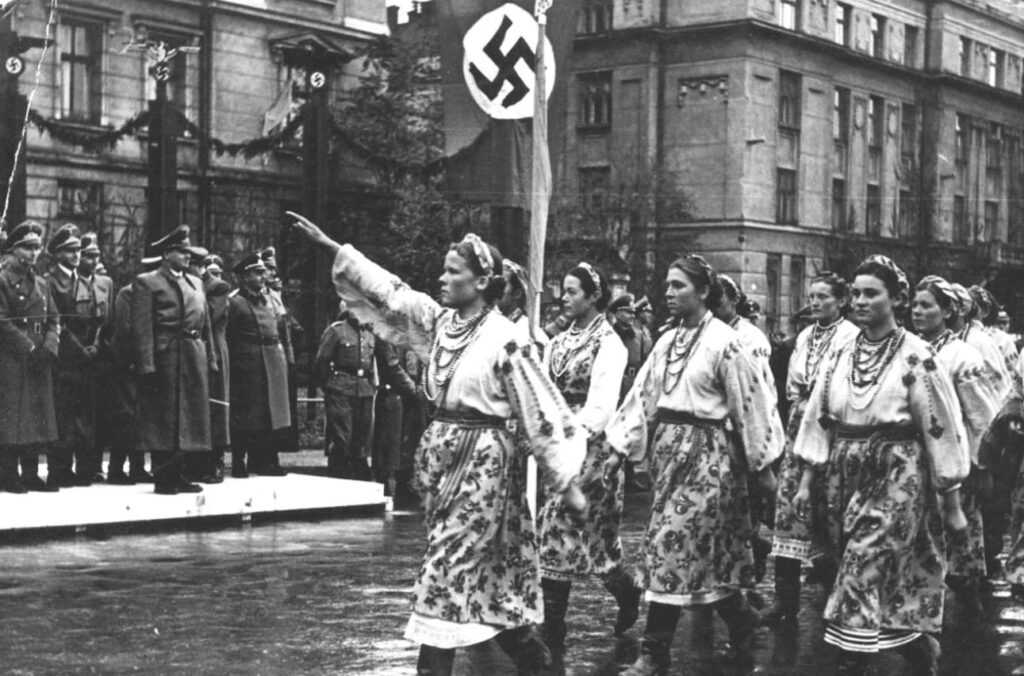
Top Nazi leaders faced war crimes trials after the Second World War but many others who took part in the Holocaust went unpunished. The Canadian government is examining whether to release a list of 900 alleged Nazi war criminals that was compiled in 1986 by the Deschênes Commission (U.S. NATIONAL ARCHIVES)
A judge has ordered the release of federal records on an American initiative to settle Nazi war criminals in Canada after ruling there is no evidence that making the files public would harm relations between the two nations.
The records involve a U.S. program set up after the Second World War to secretly settle large numbers of Nazi war criminals in Canada, often with the support of Canadian officials.
Jewish advocacy group B’nai Brith Canada took the federal government to court after receiving a censored copy of a report written for the 1985 Deschênes Commission on Nazi war criminals. That study, called the Rodal Report, discussed a secret U.S. government program to resettle Nazis and Nazi collaborators in Canada by evading proper security screenings.
The federal government declined to release the documents under the Access to Information law, claiming the records would harm U.S.-Canada relations at a time of ongoing tension.
But Federal Court judge Simon Fothergill concluded that claim was unsupported by any evidence. “A bald statement of ongoing ‘tensions’ between Canada and the United States is not a sufficient basis to refuse disclosure of very specific information related to efforts by the United States to resettle suspected Nazis and Nazi collaborators in Canada following World War II,” he wrote in a Sept. 1 ruling.
The decision to withhold the information was unreasonable and the records must now be disclosed, Fothergill concluded.
Similar information had already been released years ago by the Central Intelligence Agency, which ran the Nazi resettlement program, as well as the U.S. government.
After the war, U.S. intelligence agencies recruited Nazis and Nazi collaborators, many from eastern Europe, for their covert operations against the Soviet Union.
Fothergill noted in his ruling that the study written for the Deschênes Commission concluded “inadequate security screening led to many perpetrators of Nazi war crimes entering Canada.” He also pointed out the study concluded Canada was reluctant to prosecute such war criminals.
Richard Robertson, B’nai Brith’s director of advocacy, said it is difficult to understand why the Canadian government still continues to withhold its Nazi files. “For a country that fought against Nazi Germany, to be so hesitant to come with terms and release to the public its Nazi past so we can learn from this dark history, is perplexing to say the least,” he said.
Robertson said he is hopeful the public will get a better understanding why the government had agreed to the Nazi resettlement program after the war. “This is a victory for all Canadians,” he said. “This is information that all Canadians deserve to have made accessible.”
But he said his organization will not let up on its quest to pry loose more records.
“B’nai Brith is committed to ensuring that all the currently undisclosed information in regards to Nazi war criminals entering Canada is made available to the public,” Robertson said. “We will continue to advocate for the release of the full Rodal Report and of the Deschenes Commission part 2 report which is not publicly available”
Ottawa was “forced” to establish the Commission of Inquiry on War Criminals, headed by Mr. Justice Jules Deschênes, in February 1985 (POSTMEDIA/FILE PHOTO)
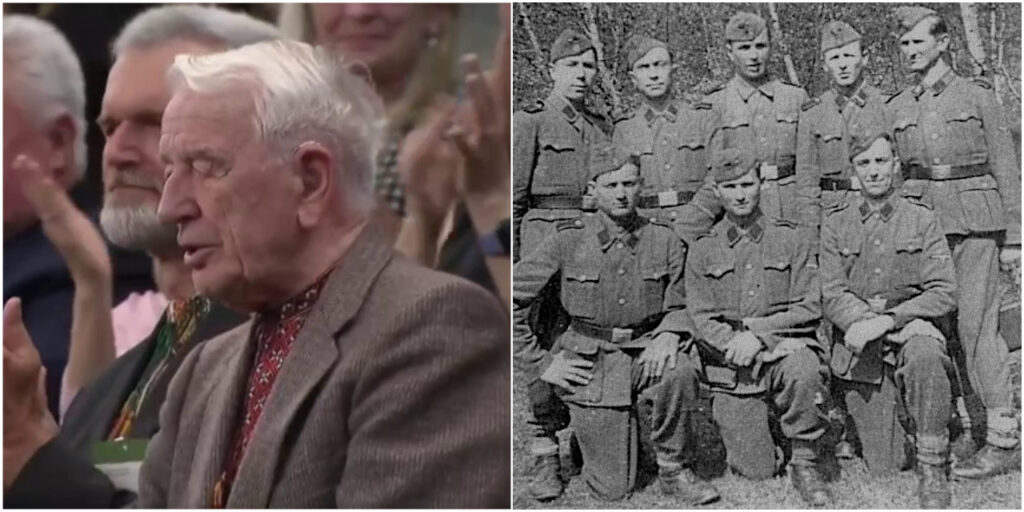
Much of the renewed debate around Nazi war criminals and collaborators in Canada was prompted by a September 2023 event in which MPs of all parties gave two standing ovations to Yaroslav Hunka, a resident of North Bay, ON. Hunka was described by then-House of Commons Speaker Anthony Rota as a hero and he was thanked for his military service.
There are no allegations that Hunka took part in any war crimes.
The Polish government and Jewish groups have denounced the Ukraine SS unit for its role in killing civilians and its involvement in massacres during the Second World War. The division was also used by the Nazis to crush a national uprising in Slovakia, again prompting allegations of war crimes.
But some Ukrainian nationalists see the SS soldiers as heroes because they fought against the Soviet Union. The Canadian Institute of Ukrainian Studies at the University of Alberta in Edmonton continues to maintain eight endowments in the names of Ukrainian SS veterans [end]
Ottawa won’t disclose list of alleged war criminals believed to have sheltered here after the Second World War
September 29, 2023: Nazigate – Max Blumenthal & Aaron Mate, The Grayzone
Max Blumenthal and Aaron Mate cover the international scandal that unfolded when the Liberal Party of Canada’s Justin Trudeau honored a Ukrainian Nazi veteran of the Waffen-SS, and the dark history it forced to the surface
its roots before WW2, its collaboration with Nazi Germany, its legacy in modern Ukraine, how NATO has continually supported Nazism in Ukraine, chronicle
chronicle of censorship, fake news, whitewashing of the Ukrainian Nazism and war crimes, for the sake of the proxy war that NATO is conducting in Donbass and Ukraine, against Russia
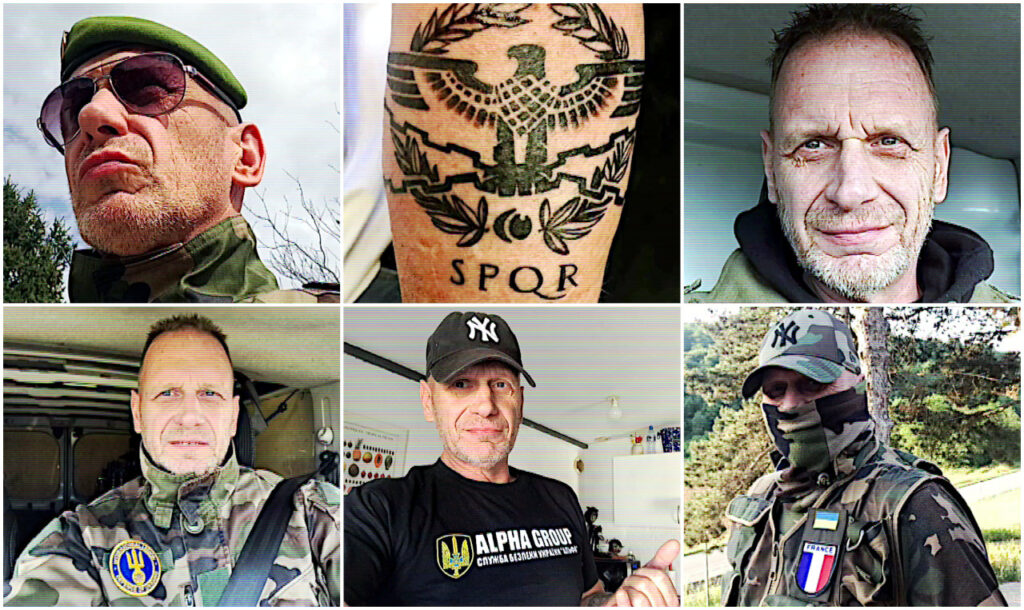
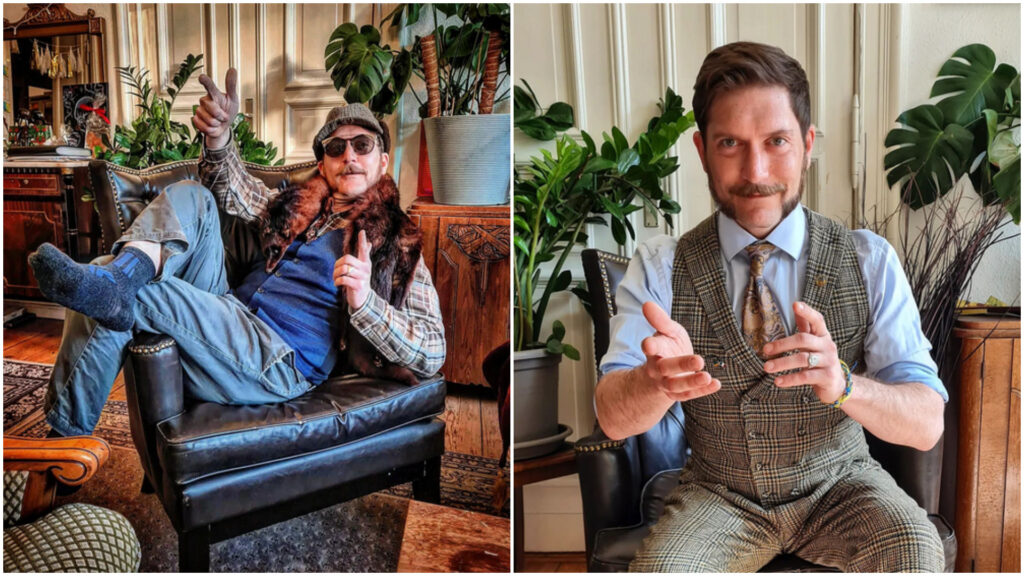
ce sont des pseudonymes, est l’aîné de ce panthéon, BHL mis à part. Vétéran du 1er REC (régiment étranger de cavalerie) puis 1er régiment de spahis, il était à Beyrouth en 1983, en Irak en 1991. Peut être par corporatisme, il a assuré la sûreté du général à la retraite Christian Piquemal, dont les opinions xénophobes et islamophobes en ont fait en 2016 une icône de l’extrême droite. Le 14 mars 2022, il franchit la frontière entre Pologne et Ukraine
(Captures d’écran)
Dans la Légion internationale, il effectue des missions de liaison entre Kiev et le front, près de Kherson ou dans la partie du Donbass encore occupée par l’Ukraine, visite notamment le champ de bataille de Bakhmout. Il alterne repos en France et nouvelles missions en Ukraine, où il connaît Franck Malandain et Juan Sanchez Da Silva, un ancien du 1er régiment de spahis. Il est aussi un recruteur de vétérans pour la Légion internationale.
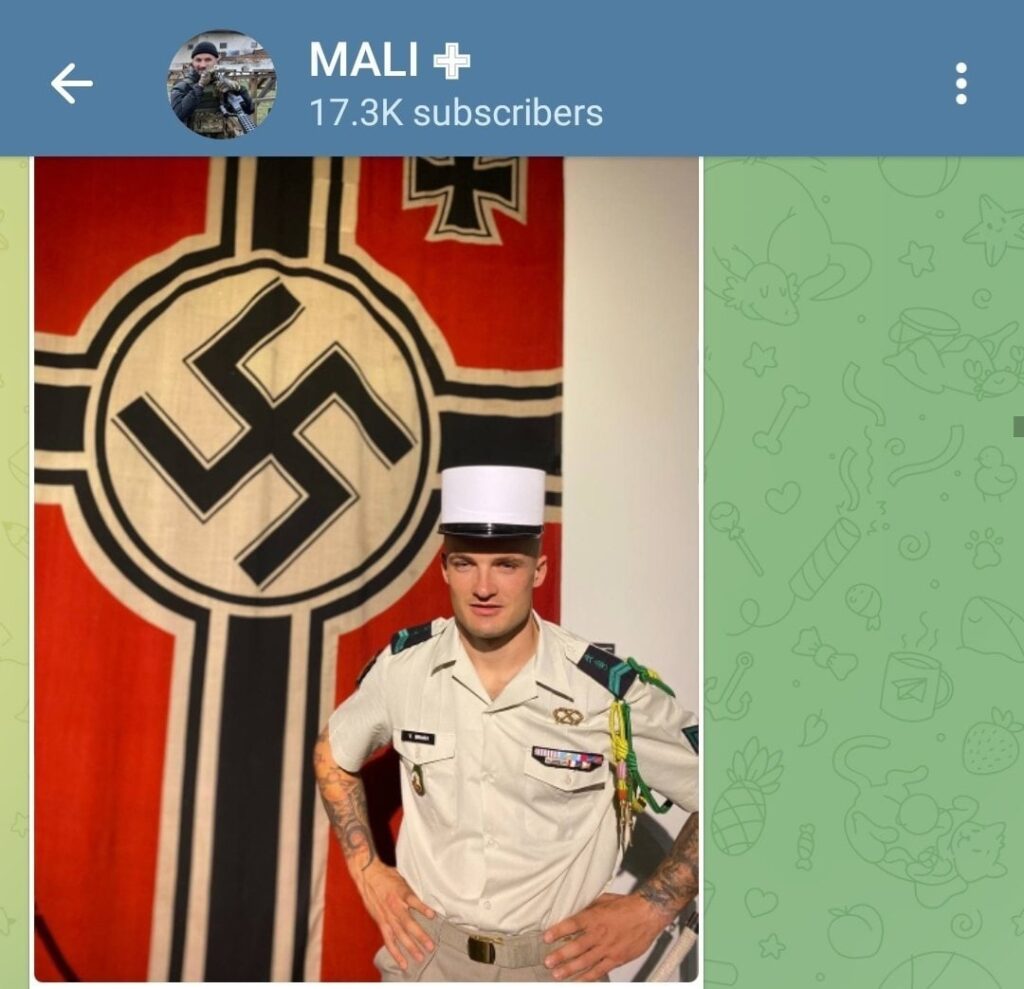
Le seul à le faire parmi les Français que je connais alors, le 26 septembre 2022, il rend hommage à Yevhen Brach, un combattant nazi ukrainien et surtout je pense, un ancien de la Légion étrangère, qui a été tué le 21
(Compte Telegram de feu Yevhen Brach)
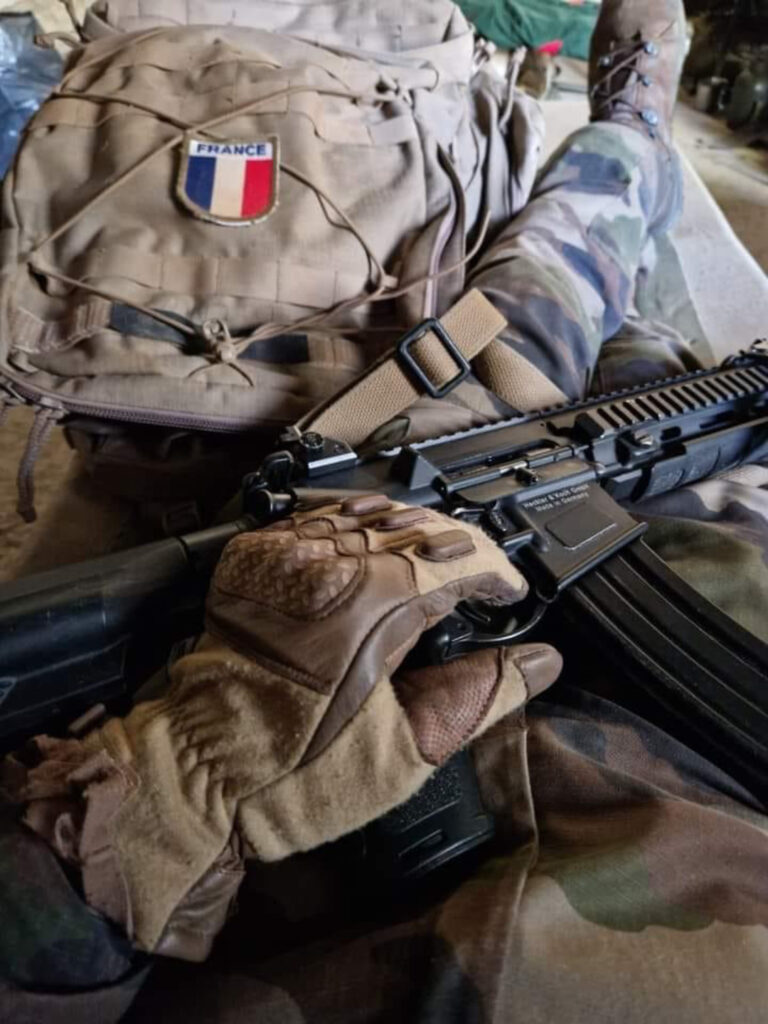
Pour le première fois, le 19 juin 2023, il se montre armé d’un fusil d’assaut
Des nazis (la race, supra-nationale, détermine tout) ou pétainistes (lA drOITe NaTIonalE) s’illustrent ici sans fard, l’étaient avant de gagner l’Ukraine. Je suis convaincu que d’autres dans cette liste veillent à ne pas le laisser apparaître. Beaucoup ne sont ni de grands littéraires ni de brillants matheux et parmi eux, d’autres encore sont nazis ou pétainistes mais s’ignorent
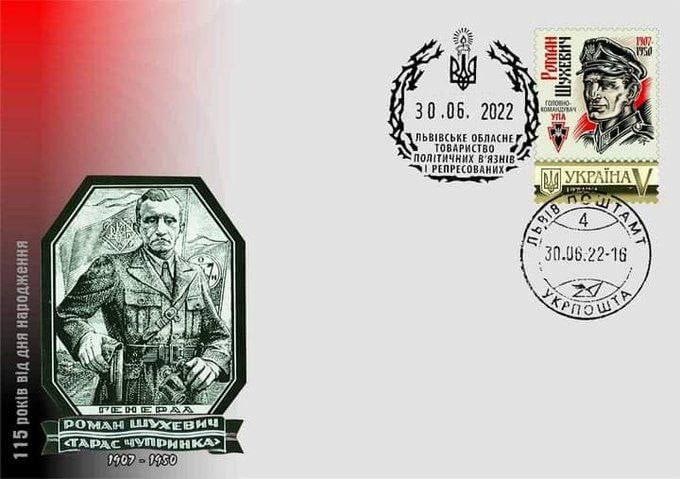
Le 30 juin 2022, la philatélie ukrainienne rend hommage au criminel de guerre nazi Roman Choukhevytch (1907-1950), militant fasciste, auxiliaire en 1941 de l’Abwehr [renseignement militaire allemand] puis officier jusqu’en 1943 de la Schutzmannschaft [police auxiliaire], contre les partisans antinazis. En août 1943, il prit le commandement de l’UPA, formation paramilitaire nationaliste, qui a massacré entre 50 000 et 100 000 civils polonais, avec la bienveillance de l’occupant, affronté jusqu’en 1950 l’Armée rouge victorieuse, d’abord au bénéfice des Allemands puis à partir de 1945, sous la houlette des services secrets anglo-états-uniens
L’environnement est particulièrement délétère en Ukraine, où la chimie est complexe, car si les références historiques nazies y sont encore restées plus ou moins refoulées après la dissolution de l’Union soviétique, une culture populaire nazie revendiquée s’est développée après 2014 et son expression s’accentue naturellement vers l’ouest, culmine à Lviv, berceau historique du nazisme ukrainien.
À cet égard, le conflit nous offre le 22 septembre 2023, le spectacle grand-guignolesque de la standing ovation du parlement canadien pour l’ancien Waffen-SS ukrainien Yaroslav Hunka, son épilogue psychodramatique. Cet environnement propice, conjugué à l’amertume d’une défaite devenue inéluctable à la fin de l’été, conduira je pense à des phénomènes intéressants
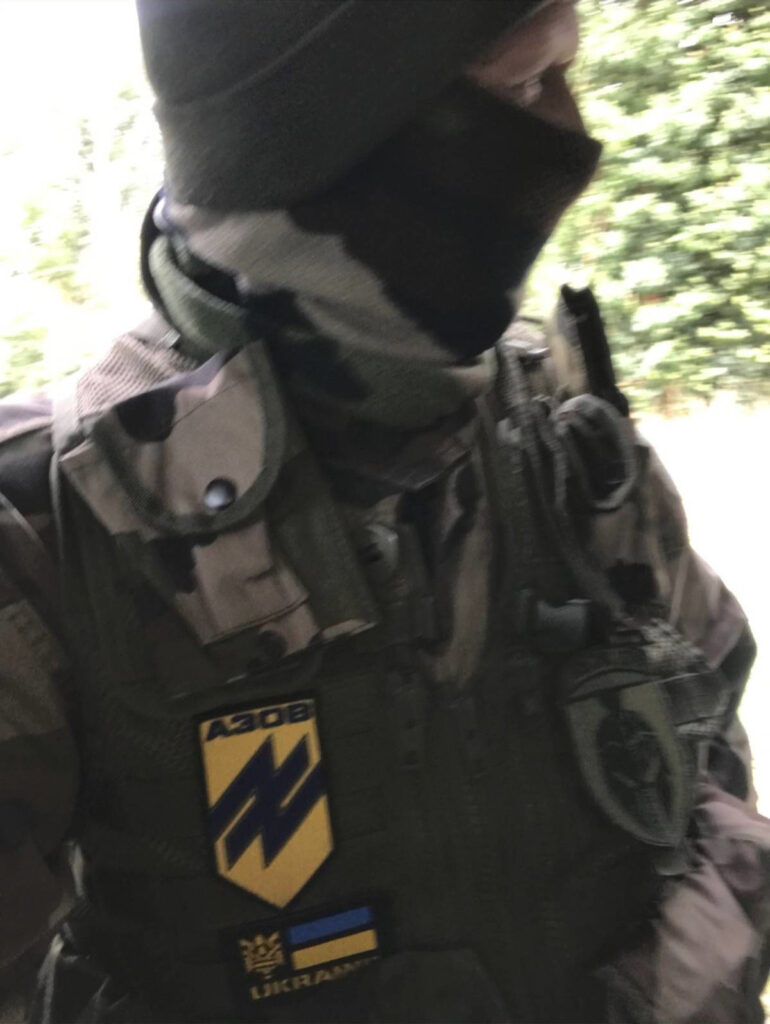
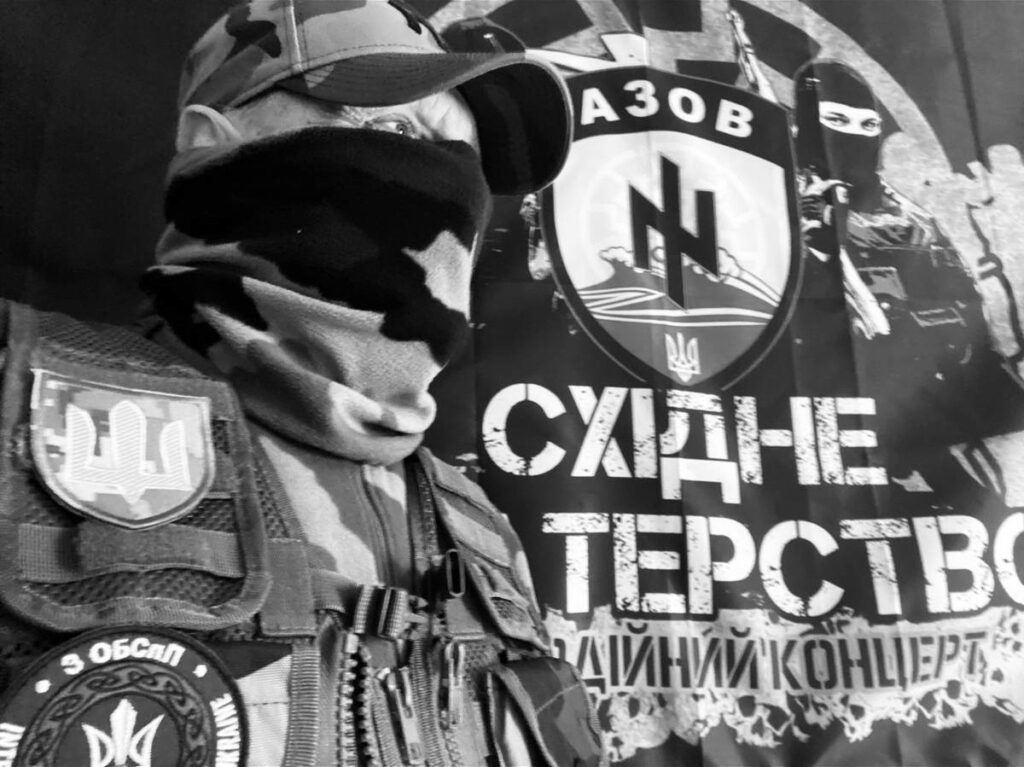
Fier comme Artaban, McKenzie présente sur les réseaux sociaux, le 24 septembre, son écusson de la brigade nazie ukrainienne Azov, reconnaissable au Wolfsangel [crochet à loup] de plusieurs anciennes divisions SS
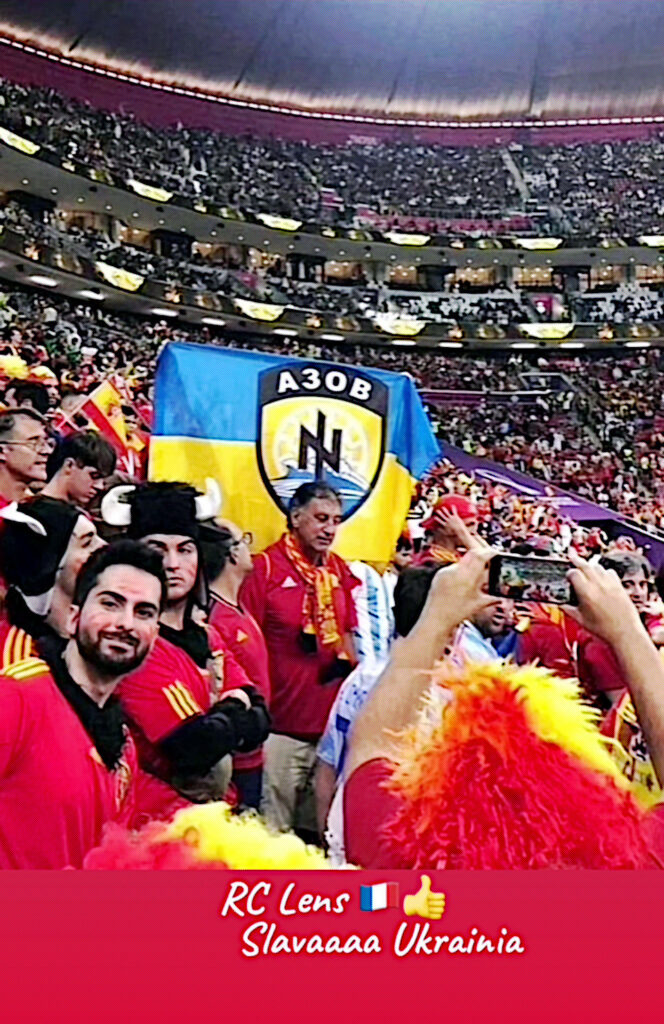
La tendance se confirme le 30 octobre, avec l’étendard de la même brigade Azov, le Schwarze Sonne [soleil noir, héritage du Reichsführer SS Heinrich Himmler] en fond du Wolfsangel, dans les tribunes d’un match de football. Pourtant, Lens n’est pas du tout sa région. McKenzie ou Fred, comme l’appellent sur les réseaux sociaux ceux qui le connaissent, est patron d’une entreprise de vitrage automobile dans la région de Valence, garnison du 1er régiment de spahis
(Réseaux sociaux)
Ses publications en mars 2024 et ses pseudonymes successifs sur les réseaux sociaux –Karl, Ulman– effacent les derniers doutes quant à son inspiration fasciste.
chronique alphabétique et nécrologique de l’engagement français dans les rangs atlantistes en Ukraine, ce que les journalistes serviles ne vous raconteront pas
Articles connexes
Pruvate à truvà me, canaglia di l’OTAN, pruvate solu
chronique en Anglais, its roots before WW2, its collaboration with Nazi Germany, its legacy in modern Ukraine, how NATO has continually supported Nazism in Ukraine
chronique en Anglais, censorship, fake news, whitewashing of the Ukrainian Nazism and war crimes, for the sake of the proxy war that NATO is conducting in Donbass and Ukraine, against Russia
une saga française, entre Ukraine et Lyon, où apparaissent aussi des morceaux de SS de la division Charlemagne et plus récemment, Alice Kerviel, dite Cordier. L’affaire Deranque révèle comme la France est infectée par le pétainisme, en particulier parmi les soutiens d’Israël ou de l’Ukraine, deux théâtres d’opérations où l’Occident tente de ralentir son déclin
En 2025, une nouvelle unité de Français combattant pour l’Ukraine s’est structurée autour d’un noyau de néonazis, ayant pour objectif d’attirer des recrues. Parmi ces volontaires, d’anciens militaires. StreetPress les a identifiés
En Ukraine, les volontaires français pro-ukrainiens et pro-russes se partagent l’imaginaire de la Seconde Guerre mondiale. Les premiers se revendiquent des collabos de l’Allemagne nazie, les seconds de l’escadrille mythique « Normandie – Niémen »
deux jours après le 10e anniversaire de la débâcle politique et sécuritaire du 13 novembre 2015, une messe célèbre à Verdun l’ancien dirigeant fasciste de l’État français
ce 11 novembre 2025 est l’occasion de souligner comme la façon dont l’Europe sacrifie les conscrits ukrainiens mobilisés de force rappelle le spectaculaire carnage de la 1ère guerre mondiale
c’est par l’agence cosaque de presse PIKA, depuis la République populaire de Lougansk, que le 2 avril 2024, l’ataman Nikolaï Diakonov lance un message à destination de la France
ce papier est le premier des grands médias français qui s’attaque à la question des militants nazis français dans les rangs atlantistes en Ukraine, le nouveau danger qu’ils présenteront à terme pour la sûreté intérieure
où nous apprenons que le nazi français Allan Duchézeau, camarade de César Aujard dans les rangs atlantistes en Ukraine, était surnommé Dox, quand il secondait à Paris le leader nazi Marc de Cacqueray Valménier
en Anglais, les indices de la présence d’opérateurs occidentaux, en particulier Français, pris au piège en mars 2022 à Marioupol, dont les forces russes achevèrent la libération en mai
Kastner Kysilenko, Pierre, né le 15 septembre 1983,
vit à Berlin, où il exerce l’activité de coach
(Réseaux sociaux)
L’Alsacien a failli combattre dans les rangs atlantistes en Ukraine, mais s’est ravisé en mars 2022. Il mérite néanmoins sa place dans ce panthéon, car il illustre à merveille le degré de complaisance et de falsification historique de la presse occidentale. Plusieurs organes français l’ont interviewé quand il était basé à Yavorov, près de la frontière polonaise. Il fut d’abord déçu par la solde de base dans la Légion internationale, indexée sur le coût de la vie en Ukraine. Seules les primes de combat la rendent intéressante. Puis le centre de regroupement des volontaires étrangers fut frappé le 13 mars par des missiles de croisière. Bref, il est rentré à Berlin. Le 27 mars, le JDD écrit
Pierre Kastner Kysilenko, alsacien d’origine ukrainienne, a la résistance dans le sang. Son grand-père, arrivé en France en 1948, s’est battu contre l’occupation nazie puis soviétique en Ukraine
Il faut oser. De nombreux Ukrainiens ont immigré en Europe et en Amérique du Nord à la fin des années 40 et au début des années 50. Le Royaume-Uni, par exemple, a accueilli 8 500 SS ukrainiens après la guerre. Beaucoup ont demeuré un temps dans des camps de réfugiés en Allemagne de l’Ouest, avant de choisir leur nouvelle patrie. Tous fuyaient la victoire de l’Union soviétique sur l’Allemagne nazie. Nul en Ukraine ne s’est battu contre l’occupation nazie puis soviétique. Si Kastner l’a raconté aux journalistes, il est affabulateur ou révisionniste. Seuls des Polonais et des Soviétiques convaincus ont résisté aux nazis sur le territoire de l’actuelle Ukraine. Les nationalistes ukrainiens, ceux réfugiés à l’ouest après 1945 et vous allez comprendre pourquoi, avaient plutôt coutume de parader en son honneur, quand Hans Frank, Generalgouverneurfür die besetzten polnischen Gebiete [gouverneur général des territoires polonais occupés], les visitait
à Ivano-Frankivsk, en juillet 1941
La falsification historique est courante aujourd’hui chez les propagandistes ukrainiens, trouve sa justification dans le fait que les Allemands ont interné, entre 1941 et 1944, le chef des nationalistes ukrainiens, Stepan Bandera, qui avait pris la décision unilatérale, dans les fourgons des armées du Reich qui envahissaient l’Union soviétique, de déclarer une Ukraine fasciste et indépendante. Je détaille son histoire dans la partie consacrée à David Piguet. Pendant son internement, les miliciens de l’UPA (Armée des insurgés ukrainiens) n’ont jamais affronté les occupants allemands. Eux-mêmes nazis, ils ont massacré, avec la bienveillance des Allemands, entre 50 000 et 100 000 civils polonais, mené à partir de 1944 une guérilla contre l’Armée rouge victorieuse
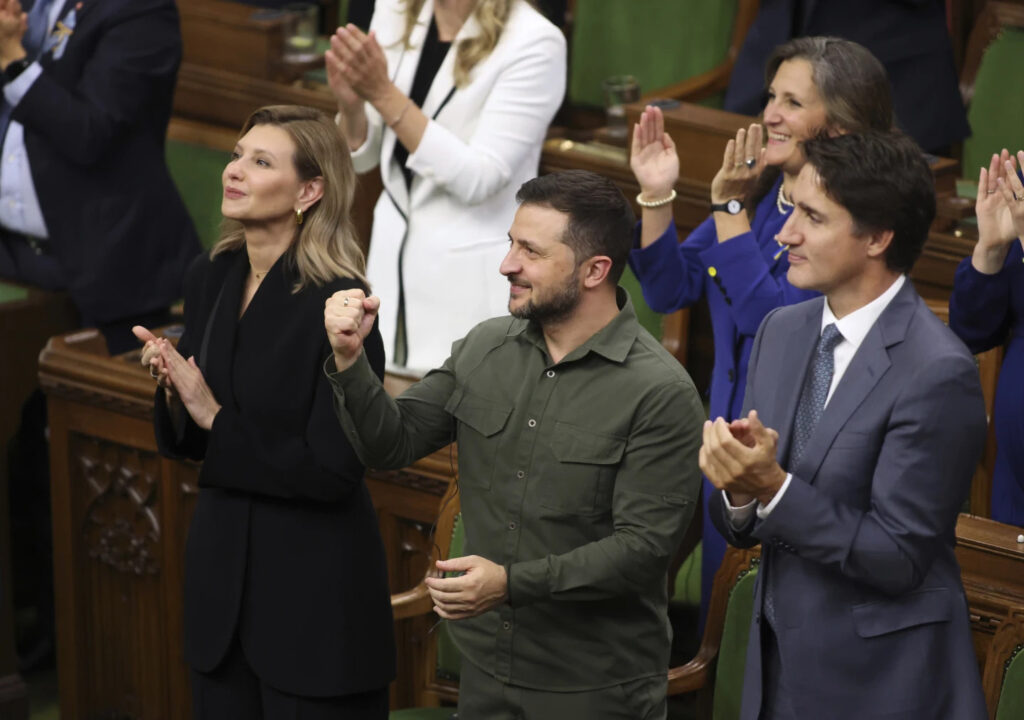
Le Canada nous en offre une illustration grand-guignolesque, dont l’épilogue psychodramatique sera aussi un plaisir de fin gourmet, lorsque le 22 septembre 2023, en présence de Volodymyr Zelenskyy et du premier ministre Justin Trudeau, le parlement fait une standing ovation à un héros ukrainien-canadien de la 2de guerre mondiale, qui s’est battu contre les Russes pour l’indépendance de l’Ukraine, c’est-à-dire Yaroslav Hunka, 98 ans, ancien Waffen SS ukrainien de la 14. Waffen-Grenadier-Division der SS, Galizien [Galicie, region de Lviv]
À l’invitation du président du parlement, Volodomyr Zelenskyy, Chrystia Freeland et Justin Trudeau applaudissent l’ancien SS Yaroslav Hunka (Patrick Doyle / The Canadian Press)
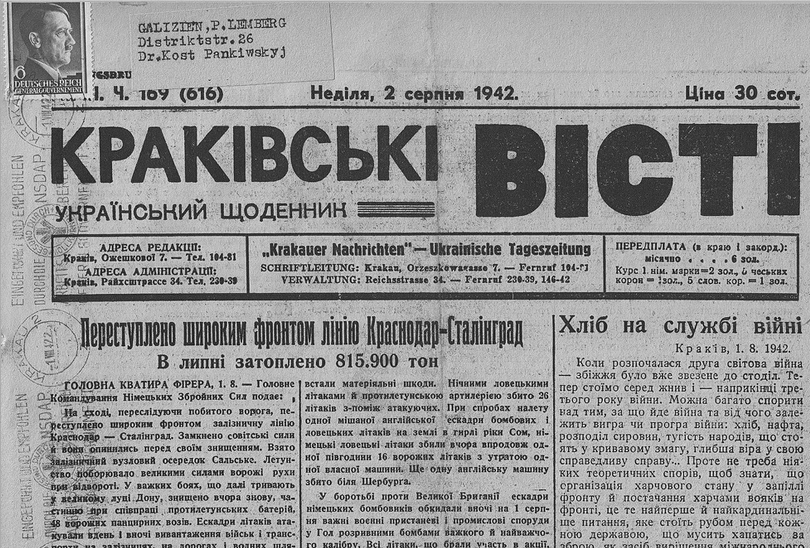
Justin Trudeau paraît immédiatement circonspect, mais Chrystia Freeland est ravie. Elle est elle-même la petite-fille d’un nazi ukrainien, ce dont bien sûr elle n’est pas responsable. Son grand-père, Mykhailo Khomiak/Michael Chomiak, était rédacteur en chef à Cracovie, capitale du Generalgouvernement für die besetzten polnischen Gebiete [gouvernement général des territoires polonais occupés], d’un journal de propagande nazie à destination de la communauté nationaliste ukrainienne. Il a fui bien sûr la victoire de l’Union soviétique sur l’Allemagne nazie. Le problème est que lorsque ces faits historiques lui sont présentés, elle ose répondre qu’ils seraient de la désinformation russe. Chrystia Freeland est vice-premier ministre du Canada
Le quotidien Краківські вісті [Krakivs’ki Visti, Nouvelles de Cracovie] fut fondé en janvier 1940 en Pologne occupée, publie les traductions ukrainiennes d’articles allemands et des originaux, anti-soviétiques et antisémites. Mykhailo Khomiak en est le rédacteur en chef. Ici en 1942, l’abonné est à Lemberg [Lviv]
Volodymyr Zelenskyy n’est pas nécessairement nazi, plutôt un comédien professionnel. Ses sponsors le firent élire en 2019 sur la promesse de la paix au Donbass. Mais l’opportuniste n’a pas mis en oeuvre les accords de Minsk, n’a pas dissous les formations paramilitaires nazies. Car ceux qui portent les flingues, les Herren [seigneurs en Allemand] de l’État profond constitué en 2014, ont clairement expliqué, même en public, que de telles initiatives allaient lui coûter la vie. Ancien officier de renseignement et inspecteur de l’ONU en Irak, Scott Ritter le raconte fort bien. Et grâce à la corruption endémique, Zelenskyy a choisi de profiter de la vie.
L’apothéose se produit le 28 septembre, lorsque Yaroslav Hunka, alerte mais amer, explique aux médias canadiens qu’en raison du scandale national et international, il est contraint de se réfugier chez des amis en Amérique latine.
chronique alphabétique et nécrologique de l’engagement français dans les rangs atlantistes en Ukraine, ce que les journalistes serviles ne vous raconteront pas
Articles connexes
Pruvate à truvà me, canaglia di l’OTAN, pruvate solu
chronique en Anglais, its roots before WW2, its collaboration with Nazi Germany, its legacy in modern Ukraine, how NATO has continually supported Nazism in Ukraine
chronique en Anglais, censorship, fake news, whitewashing of the Ukrainian Nazism and war crimes, for the sake of the proxy war that NATO is conducting in Donbass and Ukraine, against Russia
une saga française, entre Ukraine et Lyon, où apparaissent aussi des morceaux de SS de la division Charlemagne et plus récemment, Alice Kerviel, dite Cordier. L’affaire Deranque révèle comme la France est infectée par le pétainisme, en particulier parmi les soutiens d’Israël ou de l’Ukraine, deux théâtres d’opérations où l’Occident tente de ralentir son déclin
En 2025, une nouvelle unité de Français combattant pour l’Ukraine s’est structurée autour d’un noyau de néonazis, ayant pour objectif d’attirer des recrues. Parmi ces volontaires, d’anciens militaires. StreetPress les a identifiés
En Ukraine, les volontaires français pro-ukrainiens et pro-russes se partagent l’imaginaire de la Seconde Guerre mondiale. Les premiers se revendiquent des collabos de l’Allemagne nazie, les seconds de l’escadrille mythique « Normandie – Niémen »
deux jours après le 10e anniversaire de la débâcle politique et sécuritaire du 13 novembre 2015, une messe célèbre à Verdun l’ancien dirigeant fasciste de l’État français
ce 11 novembre 2025 est l’occasion de souligner comme la façon dont l’Europe sacrifie les conscrits ukrainiens mobilisés de force rappelle le spectaculaire carnage de la 1ère guerre mondiale
c’est par l’agence cosaque de presse PIKA, depuis la République populaire de Lougansk, que le 2 avril 2024, l’ataman Nikolaï Diakonov lance un message à destination de la France
ce papier est le premier des grands médias français qui s’attaque à la question des militants nazis français dans les rangs atlantistes en Ukraine, le nouveau danger qu’ils présenteront à terme pour la sûreté intérieure
où nous apprenons que le nazi français Allan Duchézeau, camarade de César Aujard dans les rangs atlantistes en Ukraine, était surnommé Dox, quand il secondait à Paris le leader nazi Marc de Cacqueray Valménier
en Anglais, les indices de la présence d’opérateurs occidentaux, en particulier Français, pris au piège en mars 2022 à Marioupol, dont les forces russes achevèrent la libération en mai
We, the undersigned, express our support for academic freedom and Dr. Ivan Katchanovski. We might differ on various issues, but agree on the importance of academic freedom and the need to protect it when it comes under attack. Professor Katchanovski is a well-known Ukrainian and Canadian political scientist at the University of Ottawa. A recent collective letter denounced him and his open access bookThe Russia-Ukraine War and its Origins: From the Maidan to the Ukraine War. The letter baselessly linked this peer-reviewed book published by a major Western academic press to Russian propaganda and the high popularity of the book to behind-the-scenes promotion by Elon Musk.
Dr. Katchanovski’s other recent academic press book titledThe Maidan Massacre in Ukraine:The Mass Killing that Changed the World was banned by the Ukrainian State Committee for Television and Radio Broadcasting led by a far-right OUN leader. Professor Katchanovski was also blacklisted by Myrotvorets hit list for his scholarly studies of the Maidan massacre that were published in peer-reviewed journals and books and for his exposure of a Waffen SS Galicia Division veteran, who was given standing ovations in the Canadian parliament. He also reported that his home and all other property in Ukraine were seized in retaliation to his scholarly studies. Though we might not share all of Dr. Katchanovski’s academic perspectives, we denounce the persecution against him for his scholarly research.
Dr. Katchanovski is one of the most cited political scientists who specialize primarily in the politics and conflicts in Ukraine. His academic publications include 7 books and 3 dozen refereed journal articles and book chapters. He currently teaches at the University of Ottawa. He was a Visiting Scholar at the Davis Center for Russian and Eurasian Studies at Harvard University, Visiting Assistant Professor at the Department of Politics at the State University of New York at Potsdam, a Post-Doctoral Fellow at the Department of Political Science at the University of Toronto, and a Kluge Post-Doctoral Fellow at the Kluge Center at the Library of Congress. He received his Ph.D. from the Schar School of Policy and Government at George Mason University under the direction of Seymour Martin Lipset.
We note that Dr. Katchanovski has condemned the Russian invasion of Ukraine in 2022 from the start, called for a long time for European Union membership of Ukraine, and supported democracy and freedom in Ukraine since before its independence. He is also widely quoted in many outlets around the world, does numerous media and social media interviews, and presents his research at major academic conferences in the field.
Academic freedom in both the West and Ukraine is especially important during times of crisis and conflict, such as the tragic Russia-Ukraine war. Academic freedom has to be protected even for scholarly research that challenges prevailing narratives. This particularly concerns politically charged topics regarding this war and its origins. Scholars and their books and other academic publications should not be subjected to collective denunciations, censorship, sanctions, criminal prosecution, and other such retaliation for their academic research. Scholarly publications need to be judged by academic standards. Scholarly disputes need to be settled in academic venues.
This applies to Dr. Katchanovski, his book The Russia-Ukraine War and its Origins: From the Maidan to the Ukraine War, and his other publications. Our position also applies to other scholars researching this war. We advocate for the defense of academic freedom and its application in the case of Dr. Ivan Katchanovski and his research.
Please send your name, position/job title, institutional affiliation, country, and whether you prefer that your name is not published and only your institutional affiliation and country are listed to openletter2026@gmail.com [end]
Why are liberal institutions censoring discussion of forced mobilization in Ukraine? – Volodymyr Ishchenko, Marta Havryshko, Tarik Cyril Amar, Milica Popović and Almut Rochowanski
Soutenu par Elon Musk, le politologue Ivan Katchanovski accuse le célèbre éditeur Routledge d’avoir « cancellé » son dernier livre dans lequel il expose des crimes de guerre et l’influence néonazie en Ukraine. Entrevue
its roots before WW2, its collaboration with Nazi Germany, its legacy in modern Ukraine, how NATO has continually supported Nazism in Ukraine, chronicle
chronicle of censorship, fake news, whitewashing of the Ukrainian Nazism and war crimes, for the sake of the proxy war that NATO is conducting in Donbass and Ukraine, against Russia
Canada’s shameful refusal to acknowledge its support of the far right yesterday and today
Anti-Immigrant protesters engage in angry exchanges with counterprotesters at a Canada First rally in Toronto, Ontario, on September 13, 2025 (Michelle Mengsu / Getty Images)
Graham Platner’s problem is that he lives just a tad too far south. If the Democratic Senate candidate from Maine wanted to make all the hubbub about his Nazi tattoo go away, all he’d have to do is move to Canada.
The furor over Platner’s Totenkopf, or Death’s Head, tattoo stands in striking contrast to Canada, where both Nazi symbols and a shameful history of aiding Nazis is hushed over or, quite simply, blurred out.
The footage shows a burly Ukrainian military trainer discussing his country’s “shadow war” against Moscow. The interviewer is a veteran Western journalist. The video quality is excellent. The only problem is the giant red swastika tattoos emblazoned across the trainer’s arm.
After social media users began circulating stills with the swastikas, the Canadian Broadcast Corporation—the country’s government-owned media outlet—responded by blurring out the tattoos, sparing the readers the inconvenient truth that the man being presented as a hero fighting for a Canadian-backed military is a neo-Nazi. (In addition to the swastikas, he also has a winged odal rune popular with white supremacists.)
When reached for comment, a CBC spokesperson said, “The military trainer was provided to the reporter to speak generally about Russian tactics in Ukraine; we did not platform him, nor did we present him as a hero,” and pointed out that the network added a disclaimer that “a tattoo of an offensive symbol has been blurred.”
The CBC didn’t appear to be concerned that interviewing a man tattooed with neo-Nazi iconography is being legitimized—only that the “offensive” material is kept from the public.
This literally Orwellian action by Canada’s government media is indicative of the country’s relationship to both neo-Nazis and their World War II predecessors. The dark reality lurking beneath the placid demeanor of America’s northern neighbor is that Canada’s institutions have spent decades protecting fascists and sweeping evidence under the rug. Canada’s elites guard this bloodstained legacy to this day.
The CBC’s whitewashing a neo-Nazi isn’t an accident. The soldier being interviewed is in what the program describes as the “elite” 3rd Separate Assault Brigade. What the narrator omits is that the formation is led by Andriy Biletsky, Ukraine’s preeminent neo-Nazi who now has tens of thousands of men under his command. These men are trained, armed, and funded by the West. The CBC’s fawning profile says nothing about the unit’s neo-Nazi ties.
These omissions would be shameful in any country. But the situation is far more dire than this. Canada’s antisemitism is so ingrained, the nation is incapable of something as straightforward as condemning Nazis.
To examine Canada’s track record with the Third Reich is to enter a twisted world where following orders is a legitimate legal defense for participating in the Holocaust and SS fighters are portrayed as war victims. It’s a land where a street named for a German slaver isn’t considered problematic by the authorities and whose history of declassifying documents about harboring Nazis is worse than Argentina’s.
Canada’s history of going to bat for Holocaust perpetrators stretches back half a century. In 1967, Pierre Trudeau—a future prime minister as well as father of the recent prime minster Justin Trudeau—successfully opposed stripping the citizenship of a death squad leader responsible for murdering over 5,000 Jews. Three decades later, a Canadian court acquitted Hungarian collaborator Imre Finta, who had deported over 8,000 Jews to their deaths. The court deemed Finta’s plea of following orders an acceptable defense; it’s the only known such case in a Western nation.
Two years ago, Canada’s House of Commons shocked the world by giving a standing ovation to 98-year-old Yaroslav Hunka, a veteran of the Waffen-SS, the military wing of the Nazi Party and one of the main perpetrators of the Holocaust.
Hunka fought in the 14th Waffen Grenadier Division of the SS (SS Galizien), a Ukrainian formation whose record of war crimes includes a 1943 massacre in which its subunits burned 500–1,000 Polish villagers alive.
Hunka was one of 2,000 SS Galizien soldiers welcomed to Canada after the war. Unlike other collaborators who kept a low profile in the New World, SS Galizien veterans felt comfortable enough to celebrate themselves by erecting monuments with Third Reich insignia and establishing scholarships in their honor. The University of Alberta, one of Canada’s largest institutes, had nearly a dozen endowments memorializing Hunka and his fellow SS men.
Images of Parliament enthusiastically applauding a Nazi soldier triggered international headlines and outraged the Canadian public. There were demands for UAlberta to eliminate its Nazi endowments. Then–Prime Minister Justin Trudeau ordered an inquiry into declassifying names of SS Galizien veterans admitted into Canada. For a moment, it seemed the country would face its dark past.
But within weeks, a fierce backlash to the Hunka affair revealed the astonishing extent of the bonds between Canada’s institutions and the Nazi collaborators they had so long protected.
Newspapers and even parliamentary testimony saw calls defending Hunka. The SS fighters were “in the wrong time at the wrong place,” averred a quote in one major outlet. All but one of UAlberta’s Nazi endowments remain. And after review, Ottawa refused to release the names of SS veterans welcomed into Canada, perversely citing privacy concerns: The same rationale used to protect children and sexual assault victims was invoked to hide names of Nazi collaborators. (By now, even Argentina has declassified its archives on sheltering Third Reich criminals.)
Canada’s elites have protected the original Nazis for the same reason Canadian media whitewashes their modern iteration in Ukraine: geopolitics. During the Cold War, Nazi collaborators were seen as a bulwark against Communism; as an additional benefit, the collaborators, eager for work and primed to hate anything that whiffed of socialism, were used to break the power of left-leaning unions.
The latest example of Canada’s callous indifference to Holocaust victims took place this summer, when I broke the news of a London, Ontario, street named for German industrialist Max Brose, who had been awarded the title Wehrwirtschaftsführer, or industry leader, by the Third Reich. Brose’s company, a fixture of Hitler’s military apparatus, used slaves, including prisoners of war.
London’s Max Brose Drive is the only known eponym to a Nazi Party member in the entire British Commonwealth, which includes Canada, Australia, and the UK, among other nations. Despite this and despite calls by the Simon Wiesenthal Center’s Canadian branch, a city representative confirmed that Brose’s street isn’t being considered for renaming.
Whether it’s bloodstained fascists of last century or their modern iteration, Canada’s response is inaction, denial, and the occasional well-placed blur. It’s an insult to the over 45,000 Canadians who gave their lives to prevent Nazi tributes erected on Canadian soil and the latest indication of erosion of basic standards in Western media [end]
Ottawa won’t disclose list of alleged war criminals believed to have sheltered here after the Second World War
September 29, 2023: Nazigate – Max Blumenthal & Aaron Mate, The Grayzone
Max Blumenthal and Aaron Mate cover the international scandal that unfolded when the Liberal Party of Canada’s Justin Trudeau honored a Ukrainian Nazi veteran of the Waffen-SS, and the dark history it forced to the surface
its roots before WW2, its collaboration with Nazi Germany, its legacy in modern Ukraine, how NATO has continually supported Nazism in Ukraine, chronicle
chronicle of censorship, fake news, whitewashing of the Ukrainian Nazism and war crimes, for the sake of the proxy war that NATO is conducting in Donbass and Ukraine, against Russia
Fighter with Azov Battalion insignia (source: Telegram of Oleksii “Reins” Konsul, member of the 3rd Assault Brigade)
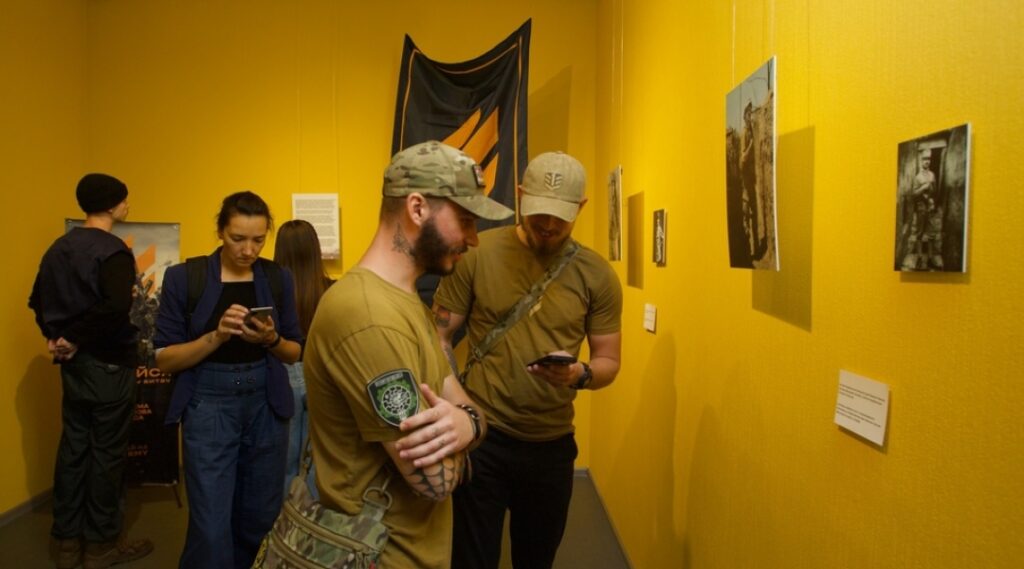
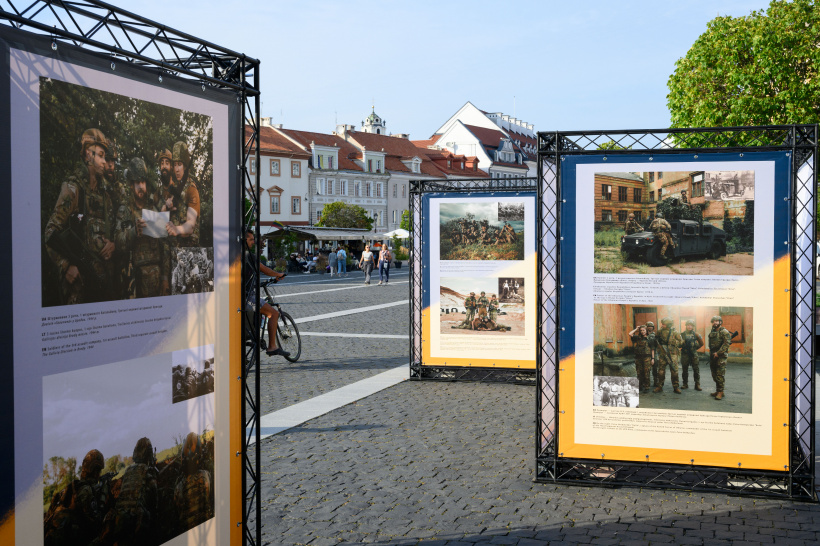
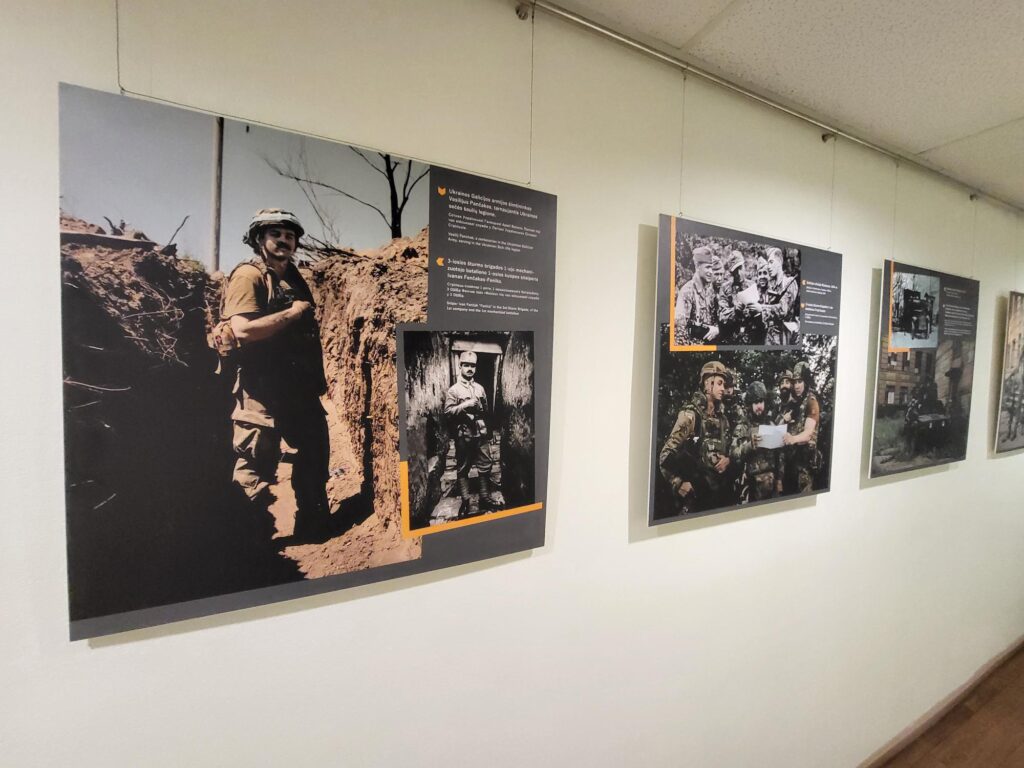
On September 27, 2023, the Museum of the History of Kyiv was crowded. Around 200 people—including active Ukrainian military personnel, journalists, cultural figures, and politicians—came to the opening of an exhibition titled Storms of Steel, a reference to the 1920 memoir of the radical German nationalist Ernst Jünger.
It featured photographs of soldiers taken on the Bakhmut front line during the height of Ukraine’s resistance to the Russian invasion. These soldiers belong to the 3rd Assault Brigade—one of the elite units of the Ukrainian Armed Forces, which was formed in the early days of Russia’s invasion of Ukraine in February 2022. The unit traces its origins to the ultra-nationalist Azov movement and is composed of veterans of the Azov Battalion, which was established in 2014 and took part in the war in the Donbas. Between 2018 and 2024, U.S. Congress banned the organization from receiving funding, arms, training, and other forms of support due to its documented neo-Nazi affiliations and concerns regarding human rights violations.
The founder and current commander of the 3rd Assault Brigade is Andriy Biletskyi, a far-right ideologue and central figure in the Azov movement. Biletskyi is the author of the openly racist 2013 pamphlet The Word of the White Leader and the founder of several neo-Nazi organizations, including Patriot of Ukraine and the National-Social Assembly.
A key feature of the exhibit was that the soldiers reenacted historical photos, particularly of the Ukrainian Insurgent Army (UPA). Founded in 1942, it fought for an independent Ukrainian state. However, it also took part in the ethnic cleansing of tens of thousands of Poles in Western Ukraine, and some of its members served in Ukrainian auxiliary police units that facilitated the Nazi Holocaust
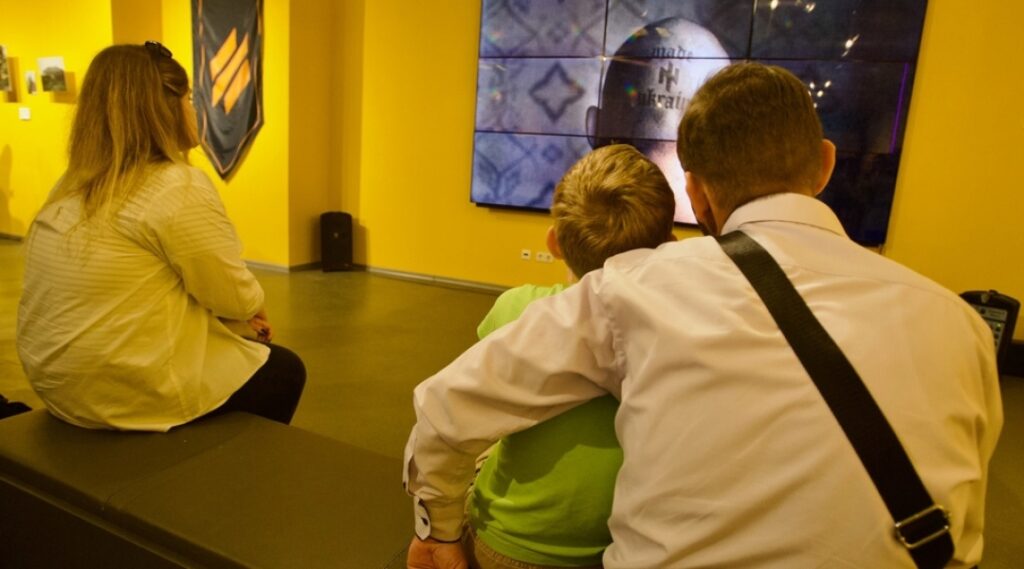
Viewers familiar with the iconography of the Third Reich might have raised eyebrows at one particular video shown during the opening of the exhibition. It featured a close-up of the back of the head of a 3rd Assault Brigade fighter known by the call sign “Martyn.” Tattooed on his head was a symbol resembling the Wolfsangel, the divisional insignia of several Waffen-SS units, including the infamous 2nd SS “Das Reich” Panzer Division. Azov affiliates often refer to a variant of this symbol as the “Idea of the Nation,” denying any direct associations with Nazism. Yet it is noteworthy that this same symbol is used by a neo-Nazi organization in Finland
Visitors at the opening ceremony of the Storms of Steel exhibition in Kyiv look at the head of “Martyn” (source: Ukrinform)
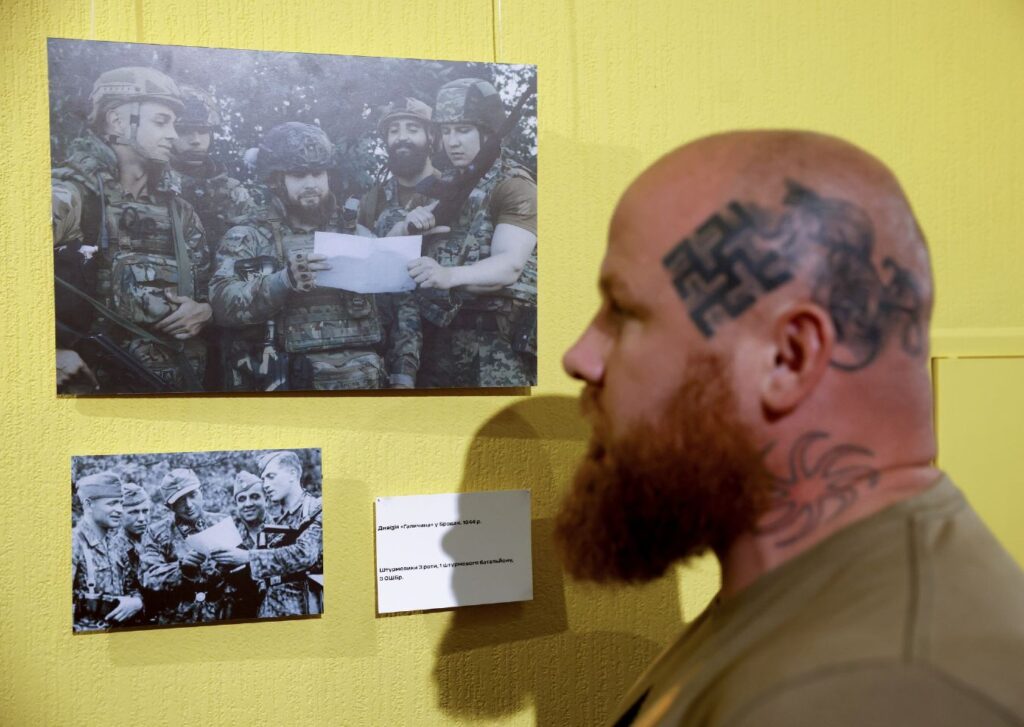
Some of the fighters featured in the exhibition attended the opening. Among them was Aleksei Kozhemyakin, known by his call signs “Kolovrat” and “Barsik,” a platoon commander in the 3rd Assault Brigade. Kozhemyakin is a far-right Russian national. He allegedly came to Ukraine in 2015, joined the Azov Battalion and has been fighting on the Ukrainian side ever since. According to the SOVA Center, he served several years in prison for assaulting a man from Azerbaijan in Syktyvkar, Russia in 2005. He was also suspected of desecrating a Jewish cultural center in the same city.
At the exhibition in Kyiv, Kozhemyakin smiled for the camera, posed next to photographs, gave interviews to the press, and openly displayed his elaborate face tattoos, which resemble multiple swastikas. Other tattoos, hidden beneath his olive-green T-shirt, include a giant swastika and a portrait of Adolf Hitler at the center. Notably, in one of the photographs on display, Kozhemyakin participated in the reenactment of a group portrait featuring a unit of Ukrainian Nazi collaborators. The exhibition caption referred to the group simply as the “Division ‘Galicia’”
Aleksei ‘Kolovrat’ Kozhemyakin looks at a photo of himself. Exhibition opening in Kyiv, September 27, 2023 (source: Vechirnii Kyiv)
Such a caption might confuse those unfamiliar with the history of the Second World War in Ukraine. But historians know exactly what this refers to: the 14th Waffen Grenadier Division of the SS (1st Galician), created by Nazi Germany in 1943 and composed of Ukrainian volunteers. Its fighters swore allegiance to Hitler and were subordinate to SS Chief Heinrich Himmler. They defended the interests of Nazi Germany—including by brutally suppressing anti-Nazi resistance movements in Slovakia and Yugoslavia. After the Division was crushed by the Red Army near Brody, it was replenished with Ukrainian men who had served in various police formations complicit in Nazi war crimes.
A Tour Across the European Union
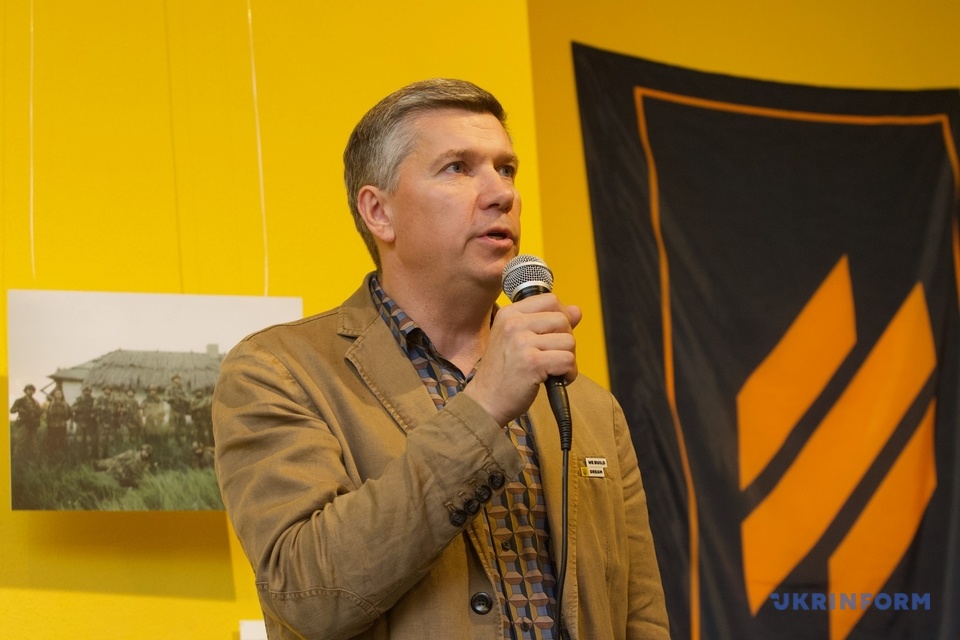
The Storms of Steel exhibition’s status as a major cultural event in wartime Ukraine was underscored by the presence of high-level officials at its opening. They included then-acting Minister of Culture and Information Policy Rostyslav Karandeyev, who praised the exhibition, noting , “I am convinced that this project will carry an extremely important patriotic and educational mission”
Rostyslav Karandeyev during Storms of Steel opening ceremony (source: Ukrinform)
The exhibition caused a sensation. It was covered by leading Ukrainian media and became a popular venue for patriotic lessons for Ukrainian students, both in the capital and in other cities where local museums hosted it. Public discourse surrounding the exhibition was marked by a deafening silence about the fact that it glorifies Ukrainian Nazi collaborators and equates them with today’s fighters of the Armed Forces of Ukraine.
It was clear that Ukrainian officials were fond of this militarized “patriotic project,” as they decided to support it at the state level. The exhibition was reproduced on large banners framed in the colors of the Ukrainian national flag and taken on tour across Europe. It is no coincidence that the exhibition was hosted by countries that are not only among the most fervent supporters of Ukraine in its resistance to Russian aggression, but also those currently reckoning with their own communist past while simultaneously struggling to confront the legacy of their collaboration with the Nazis.
One of those countries was Lithuania. On August 23, 2024, to mark Ukraine’s Independence Day, the exhibition was ceremoniously opened at Vilnius Town Hall Square, one of the most popular tourist spots in the Lithuanian capital. The ceremony featured Sandra Adomavičiūtė, head of the Atviras Lietuvos Fondas (Open Lithuania Foundation), an organization funded by philanthropist George Soros. This suggests that the progressive group in question likely did not devote sufficient time to thoroughly examine the content of the exhibition they chose to promote. This also reflects a broader pattern of uncritical engagement by some Western actors with Ukraine’s current humanitarian and cultural policies, which are increasingly shaped by an ethnonationalist agenda and promoting controversial historical figures.
Adding official weight to the event was the presence of Viktor Hamotskyi, Ukraine’s chargé d’affaires in Lithuania. Commenting on the exhibition, he stated: “Each face in these photographs tells its own story—the story of the unbroken, who stand shoulder to shoulder with those who defended Ukraine a century ago.” The exhibition was announced on the official website of the Embassy of Ukraine in the Republic of Lithuania
Storms of Steel exhibition opening ceremony in Vilnius. August 23, 2024 (photo credit: Nail Garejev)
In March 2024, Storms of Steel had already been displayed at the Vytautas the Great War Museum in Kaunas, Lithuania. In both Kaunas and Vilnius, photographs of the Waffen-SS Galicia Division were included as part of the exhibit — with the same deliberately coy captions, omitting any mention of whom the Division served under or against whom it fought during World War II.
One Lithuanian media outlet even published a feature on the exhibition, in which two of the five “historical” photographs presented showed members of the Division. Neither the author of the piece nor the editorial board provided any comment on this telling “detail.”
In April 2025, the exhibition — again including the Waffen-SS Galicia Division photographs — opened at the Baltic Defense College in Tartu, Estonia, a NATO-accredited education and training facility. According to the College’s official social media, the exhibition will remain on display there until June 2026
Storms of Steel exhibition at The Baltic Defense College (source: BDC Facebook)
Timing Matters
The Storms of Steel exhibition at the Kyiv History Museum might have been just another of the countless military‑patriotic events desperately trying to instrumentalize historical myths to mobilize society against Ukraine’s “eternal enemy”—Russia. But the timing made it unique.
Its opening coincided with a full‑blown political scandal in Canada that garnered international attention. On September 22, 2023, Yaroslav Hunka, a 98-year-old Ukrainian‑Canadian veteran of the Waffen‑SS Galicia Division, received a standing ovation in the Canadian Parliament.
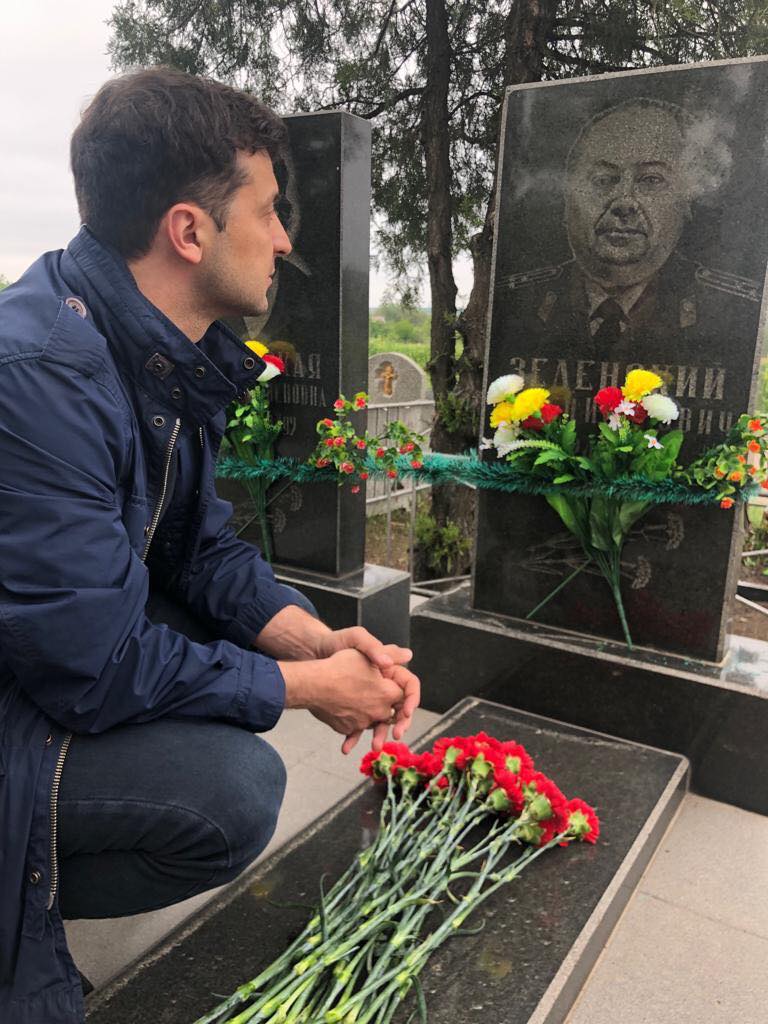
Present in the chamber was also Ukraine’s President—whose own grandfather, Semen Zelenskyi, had fought against the Germans in the ranks of the Red Army and whose memory he had publicly honored on May 9, 2019, Victory Day over Nazism. Until recently, it had been an official state holiday in Ukraine. The enthusiasm with which Zelensky applauded Hunka strongly suggested that he had little idea which army Hunka had actually served in
Volodymyr Zelensky at the grave of his grandfather, a Red Army veteran. May 9, 2019 (source: Volodymyr Zelensky’s Facebook page)
But Hunka’s past quickly became the subject of intense media scrutiny, sparking not only the resignation of Canada’s House Speaker, but also a broader public debate about the history of postwar Canada as a safe haven for numerous Nazi collaborators. Calls spread for the release of all reports of the Deschênes Commission of Inquiry on War Criminals in Canada, a federal investigation into suspected Nazi collaborators admitted to Canada. However, the Ukrainian Canadian Congress strongly opposed the publication of the reports.
Ukrainian officials, for their part, opted to refrain from any statements that might further inflame the situation surrounding Hunka. Yet inside Ukraine, a public debate did take place. Some prominent public figures, politicians, and local authorities openly lionized Hunka, portraying the Waffen-SS Galicia Division as part of Ukraine’s “national liberation movement.” Members of the far-right Svoboda party, including those who serve in the military now, launched a social media flash mob in support of Yaroslav Hunka.
In ultranationalist circles, the view that the campaign to “discredit” Hunka is “Ukrainophobic” and orchestrated by the “Jewish slanderers” has gained popularity. Meanwhile, members of the Avangard far-right group, now part of the 3rd Assault Brigade, have not hesitated to use antisemitic rhetoric, accusing Jewish organizations in Canada and worldwide of fueling this campaign.
Moreover, on September 28 — just one day after the Kyiv exhibition’s opening — the Center for Countering Disinformation, a body under Ukraine’s National Security and Defense Council reporting to Zelensky, issued a statement whitewashing the Division, claiming–falsely–that “the Nuremberg Tribunal did not find the unit guilty of any war crimes.” What the statement conspicuously omitted was that the entire SS—including the Waffen‑SS—had been declared a criminal organization, and that the Waffen-SS Galicia Division had never been subject to any separate Nuremberg review.
Thus, the central Ukrainian authorities not only failed to condemn the glorification of the Waffen‑SS Galicia Division but actively enabled it—even during the Hunka scandal
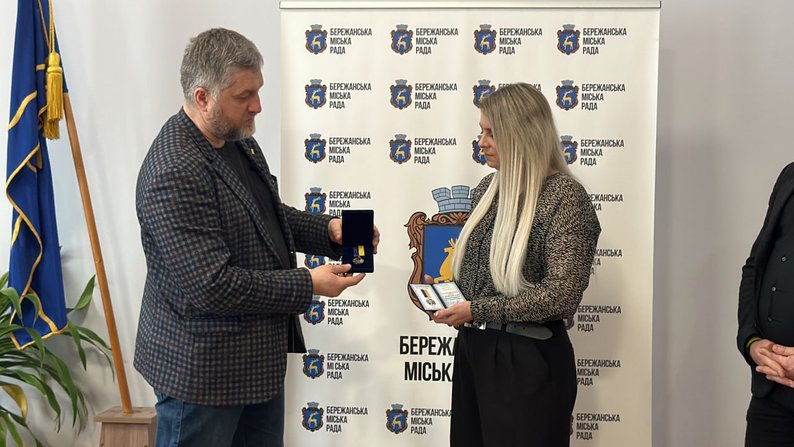
A relative of Yaroslav Hunka receives the Yaroslav Stetsko “For Services to Ternopil Region” Medal from the Ternopil Regional Council (photo credit: Oleh Syrotiuk)
The Problem is Deeper
The stance taken by Ukraine’s Center for Countering Disinformation on the Hunka affair shows clearly that the country’s political leadership has no intention of clashing with the military‑nationalist milieu, which has turned the Waffen‑SS Galicia Division into an object of cult worship. And this is not just about the 3rd Assault Brigade, which featured photos of the Division’s members in its exhibition. The official Facebook page of the Command of the Ground Forces of the Armed Forces of Ukraine promoted the exhibition, mentioning Waffen‑SS Galicia Division participants alongside other Ukrainian military formations, including the Army of the Ukrainian People’s Republic, which existed from 1917 to 1921.
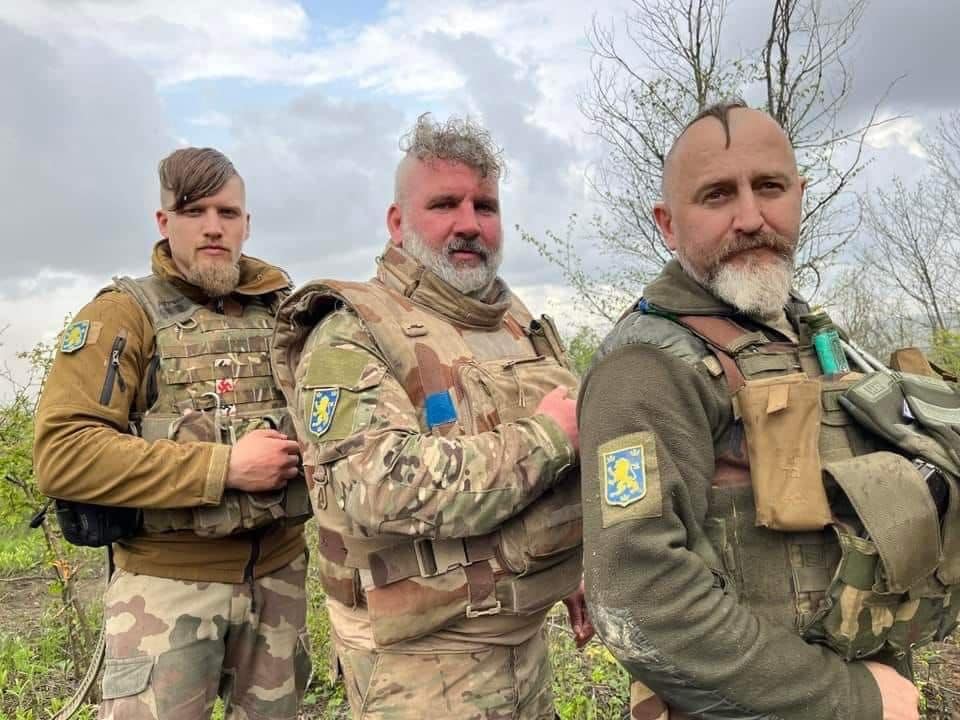
The glorification of the Division—including the wearing of patches bearing its Galician Lion insignia and the celebration of commemorative dates linked to the unit—is visible in other Ukrainian military formations as well. These include the 1st Separate Assault Regiment “Dmytro Kotsiubailo” (the “Da Vinci Wolves”), the 49th Separate Assault Battalion Karpatska Sich, the Kraken special unit under Ukraine’s Main Directorate of Intelligence, the 12th Special Forces Brigade Azov, and fighters from Svoboda, currently serving in various units
Svoboda Party members and active military personnel wearing patches resembling the insignia of the Waffen-SS Division Galicia (source: Svoboda of Lviv Oblast Telegram)
But the glorification of Ukrainian collaboration with Nazi Germany during World War II is part of a broader phenomenon: Nazi revisionism is woven into the military culture of contemporary war-torn Ukraine. Its core idea is to portray Nazi Germany as the lesser evil in contrast to Stalin’s “prison of nations” that “oppressed Ukrainian national aspirations.” Some go even further and praise Hitler’s war against the Soviet Union and compare it to the current confrontation between Ukraine—supported by Western countries—and Russia as a continuation of the “civilizational struggle” between Europe and Asia.
A vivid example of this extreme position is expressed by the Artiom ‘Uragan’ Krasnolutsky who currently holds a command position in the 3rd Assault Brigade. On May 9, which is celebrated in Russia and other post-Soviet countries as Victory Day in the Great Patriotic War, he wrote on his social media:
Adolf Hitler did not sign the capitulation. The echoes of that war are still clearly heard today—in some places, even the flags remain unchanged. It is a war of the multicultural horde against White people—the eternal struggle between light and darkness, life and death. A sacred crusade of the Übermensch for the triumph of the great over the grotesque. Cursed be the Soviet army
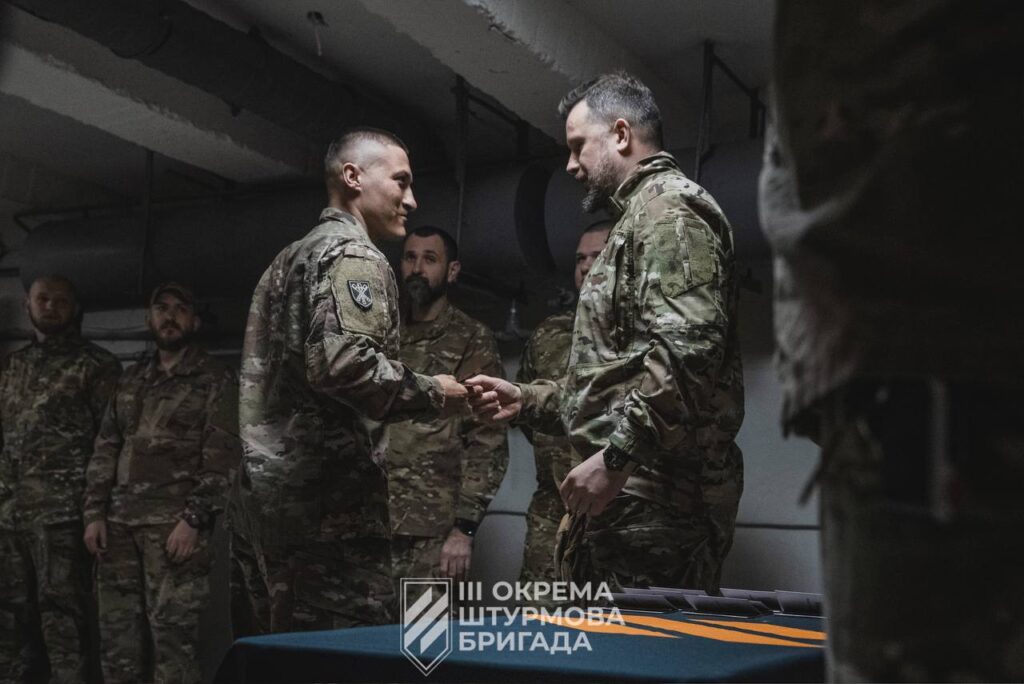
Commander Andriy Biletskyi presents an award to his subordinate, who is wearing a patch that is a modified version of the Dirlewanger insignia (source: Telegram of the 2nd Mechanized Battalion of the 3rd Assault Brigade)
Signs of the rehabilitation of Nazism are visible in Ukrainian military circles. This is manifested, in particular, in the use of Nazi symbols. For example, the Vedmedi Assault Group, under the 36th Coastal Defense Brigade, uses SS bolts on its insignia alongside the SS motto Meine Ehre heißt Treue (“My Honor is Loyalty”).
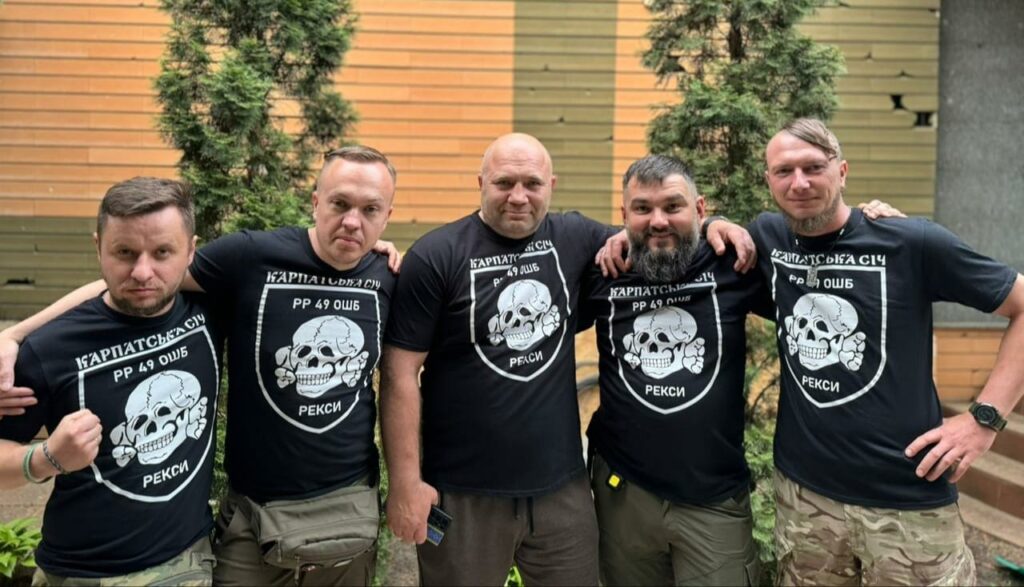
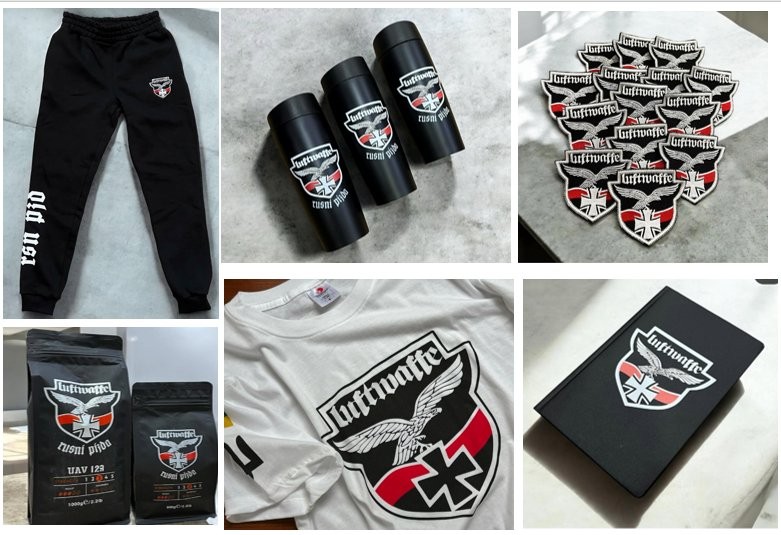
A subunit of the 3rd Assault Brigade adopted a modified version of the insignia of the infamous Dirlewanger SS Brigade (featuring three grenades instead of two). Meanwhile, fighters of the Karpatska Sich often wear patches, shirts, flags, and other items emblazoned with the insignia of the 3rd SS Panzer Division “Totenkopf”—notorious for its brutality and numerous war crimes, including the massacres at Le Paradis and Chasselay. The 422nd Battalion of Unmanned Systems not only adopted the title Luftwaffe but also uses the same eagle emblem employed by Nazi Germany’s air force
Fighters of the Carpathian Sich 49th Infantry Battalion. (source: Facebook of Ruslan Andriiko (second from right))
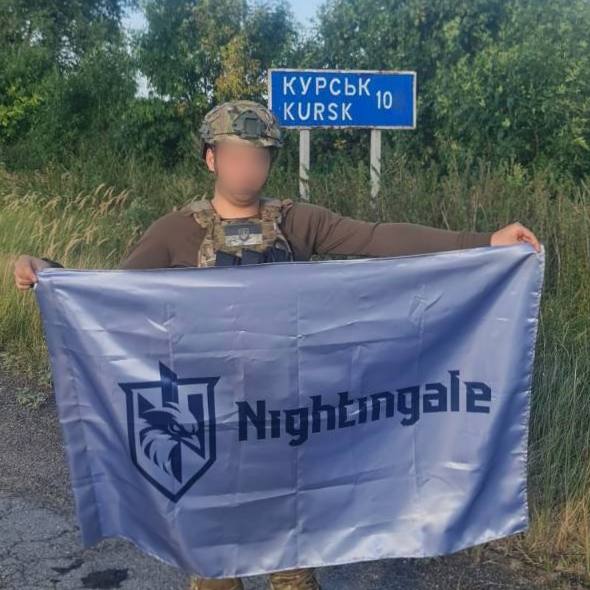
In 2023, a Ukrainian unit named Nachtigall was created. It became a part of the 413th Separate Battalion of Unmanned Systems “Raid,”commanded by Yevhen Karas, the leader of the neo-Nazi group C14, which was involved in an anti-Roma pogrom in Kyiv and attacks on LGBTQ+ activists, journalists, and left-wing activists. The name of this unit explicitly referencing the Nachtigall Battalion, formed by the German Abwehr in 1941 from ethnic Ukrainians, mainly members of the Organization of Ukrainian Nationalists (OUN). One of its commanders was Roman Shukhevych, who later led the UPA. The battalion participated in anti‑Jewish pogroms in Vinnytsia Oblast in the summer of 1941. The following year, the Germans restructured it into Schutzmannschaft Battalion 201, which carried out crimes against anti‑Nazi resistance groups and civilians, including Jews, in Belarus
A soldier of the Nachtigall Battalion during a military operation in the Kursk region, Russia (source: “Ptakh na ymennia Nakhtihal” Telegram)
Some Ukrainian soldiers even choose call signs with Nazi associations. For example, Vadym Voroshylov, a celebrated Ukrainian ace pilot, openly explains the meaning of his call sign, “Karaya”—taken from Erich Hartmann, the most successful Luftwaffe ace of the Third Reich. He has said he thought it would be a great way to “troll” Russians.
It is important to emphasize that the use of Nazi symbols and names that evoke associations with Nazi Germany is not merely a problem of isolated units or individual soldiers. Due to the ongoing war, the Armed Forces of Ukraine enjoy the highest levels of public trust in Ukrainian society. In public discourse, the army is glorified and celebrated, receiving people’s material and moral support. A moratorium on criticism of servicemen is widely perceived as an inherent part of the gratitude owed to those defending the country from Russian aggression.
As a result, there is an almost total absence of public criticism regarding the use of Nazi symbols within the military. A conspiracy of silence surrounds this issue. At the same time, any attempt to initiate public discussion on the topic is promptly and unequivocally dismissed as “Russian propaganda” and as enabling Vladimir Putin’s narrative of “denazification,” which served as one of the pretexts for the war against Ukraine. Therefore, those who raise the issue face harsh criticism and are accused of being unpatriotic—or even of “betraying the homeland.”
This witch-hunt contributes to the gradual legitimization of Nazi apologia in Ukrainian society as a whole. One of the key tools in this process is merchandise—T-shirts, mugs, patches, caps, keychains, notebooks, and similar items—that certain brigades and individual soldiers sell for fundraising purposes. Another mechanism involves youth-oriented initiatives, including military and medical training sessions, patriotic camps, cultural events, and so-called “lessons in courage” conducted in public schools by soldiers, veterans, and members of affiliated far-right youth organizations
Merchandise of the Luftwaffe-422nd Battalion of Unmanned Systems featuring the eagle used by the German Air Force under the Nazis (source: Instagram of Luftwaffe)
Some brigades that use Nazi symbols effectively have their own youth organizations. The largest of these is Centuria, which has chapters across Ukraine and even abroad, including in Germany. Originally founded as a paramilitary youth wing of the Azov movement, it has effectively come under the patronage of the 3rd Assault Brigade and now trains future fighters for it. Members of Centuria, like their mentors, glorify the Waffen-SS Division Galicia
A knife-fighting tournament organized by Centuria in Ivano-Frankivsk to mark the anniversary of the founding of the Waffen-SS Division Galicia. April 2025 (source: Telegram of Centuria)
Notably, the use and promotion of Nazi symbols in Ukraine is not merely a matter of responsible engagement with history. It directly contradicts Ukraine’s own memory laws passed in 2015, which ban and criminalize the “propaganda of the National Socialist regime.” More importantly, it constitutes a desecration of the memory of the millions murdered, maimed, and deported by the Nazis and their allies—and an insult to the millions, including over six million Ukrainians, who fought against Nazism in the ranks of the Red Army.
This minimization of Nazi crimes not only distances Ukraine from European culture of memory—a culture built on the condemnation of Nazism and the commemoration of its victims. It also undermines the very future of Ukraine, a country whose political and military leaders insist they are fighting for democracy [end]
Marta Havryshko is Dr. Thomas Zand Visiting Assistant Professor in Holocaust Pedagogy and Antisemitism Studies, Strassler Center for Holocaust and Genocide Studies at Clark University
its roots before WW2, its collaboration with Nazi Germany, its legacy in modern Ukraine and Baltic States, how NATO has supported Nazism in eastern Europe, chronicle
chronicle of censorship, fake news, whitewashing of the Ukrainian Nazism and war crimes, for the sake of the proxy war that NATO is conducting in Donbass and Ukraine, against Russia
After WWII, thousands of war criminals were able to settle in Canada, where most lived openly without any fear of prosecution
Volunteers of the 14th Waffen Grenadier Division of the SS are sworn in, 1943. As many as 2,000 members of the unit arrived in Canada in the 1950s. Photo courtesy the National Digital Archives of Poland
Growing up, I always heard about the Nazi SS veteran who lived in our small town in rural Manitoba. His name was Herbie. He worked on farms in the area, and for a time at CN Rail, before passing away in peace and comfort in his 80s.
Herbie’s Nazi past was an open secret. Everybody in town knew he had fought for the Waffen-SS during the Second World War and hightailed it to Canada when the Allies triumphed. But nobody seemed to know how he had entered Canada so easily, or why the Canadian government didn’t do anything about this man whose Nazi past was known to everyone in the area.
Rumours circulated that Herbie was a war criminal. I remember hearing one story several times: while he was stationed at a concentration camp for Russian POWs on the Eastern Front, he shot and killed a prisoner simply because he wanted the man’s coat.
I was always confused why Herbie—an enemy combatant who had fought for what we supposedly recognize as one of the most vile and destructive regimes in history—was not arrested and extradited to Europe. Now I know why. It was a deliberate policy of Ottawa to welcome Nazi war veterans like Herbie into Canada after 1945.
The stereotype of Nazi-embracing Latin American dictatorships is a common one, but it distracts attention from the myriad ways in which the US and Canada welcomed thousands more Nazi veterans and allowed their ideology to fester, untouched, amongst many far-right diaspora groups.
In 1997, war crimes investigator and private detective Steven Rambam said, “Canada is where the Nazis are. Canada is the unknown haven for Nazis. Everybody knows about Argentina, but nobody knows about Canada.”
Whitewashing Nazi crimes
In Winnipeg, the largest city near my hometown, a man named Alexander Laak lived openly, unbothered by police. He was a Nazi lieutenant and the commander of the Jägala concentration camp in Estonia. Thousands of Jewish people were murdered at Jägala from 1942 to 1943, and Laak himself was reported to have kept female prisoners as sex slaves.
After the war, Laak lived comfortably in suburban Winnipeg. He was a member of a national diaspora group called the Estonian Central Council (ECC), and from 1955 onward, he worked for Canada’s Department of National Defence.
The Russian news agency TASS claimed that Laak had bought his house in Winnipeg with proceeds from valuables stolen from victims of mass executions in Estonia. The RCMP had apparently “talked to Laak and found nothing to incriminate him.” Nevertheless, Laak admitted that he “was in the Estonian army and fought against the Russians.”
In September 1960, Laak was found dead in his garage. The official cause of death was suicide by hanging, but there are theories that he was tracked down and killed by a so-called “Jewish Avenger” squad of Holocaust survivors.
Following Laak’s death, Canadian media reported that he had undergone and passed a police check before entering Canada. Another article in the Ottawa Citizen used scare quotes when reporting Laak’s crimes, aiming to discredit Soviet accusations that he had participated in the Holocaust.
One article reads: “A 53-year-old immigrant accused by Russia as a ‘Nazi war criminal’ sought by the Communists for ‘mass murders’ in Estonia committed suicide last night by hanging himself from a garage rafter.” The article also gave Laak the space to discredit his accusers: “Laak said he was the man the Russians were talking about but labelled the story ‘99 percent lies… It is only Communist propaganda.’”
Meanwhile, an earlier article headlined “Accused of Being Nazi: Family Tells of Struggle” did everything it could to clear Laak’s name, writing of the family’s “struggles in Canada to piece together war-disrupted lives.”
Dozens of other journalists penned articles claiming Laak was the target of “Red lies” and “Russian propaganda.” Following Laak’s death, the ECC said their organization had “come under a Soviet propaganda barrage.”
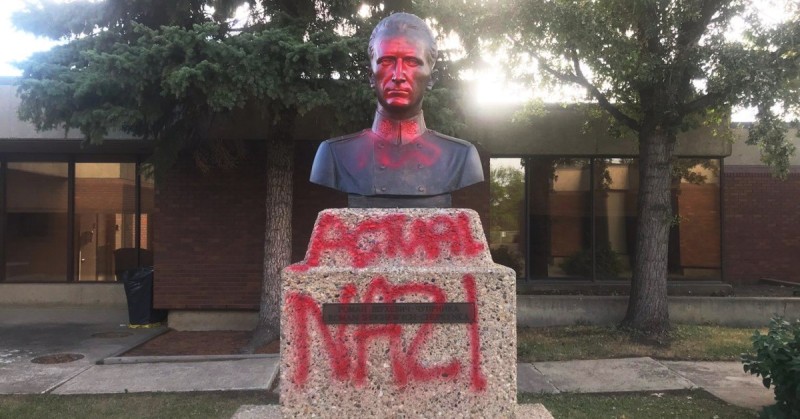
Efforts to complicate accusations against Laak were similar to how the media addresses (or fails to address) the crimes of Ukrainian Holocaust perpetrator Roman Shukhevych today. Whenever his name appears in the media—usually in connection to protests against the bronze bust of his likeness in Edmonton—it is often implied that the narrative around his crimes is “complex”
The Roman Shukhevych statue at the Ukrainian Youth Unity Complex in Edmonton after it was vandalized with the words “ACTUAL NAZI” in August 2021. Photo courtesy the Progress Report
Amidst a wave of protest against the Shukhevych statue last year, CTV News quoted the Ukrainian Catholic Eparchy, the organization which erected the bust, as “dismiss[ing] accusations that Shukhevych collaborated with Nazi Germany and was involved in massacres of Jewish and Polish people as ‘Russian disinformation.’”
A CBC article claimed that Shukhevych has “fallen under increased scrutiny” in recent years. And a CTV article noted: “While Shukhevych is celebrated by some as a Ukrainian military leader, he is also criticized by others as being involved in massacres of Jewish and Polish people.”
Even amidst the ongoing outrage over Yaroslav Hunka’s visit to the House of Commons, the CBC ran an article in which they wrote of Shukhevych’s “alleged” war crimes and his hero status among many right-wing, ultranationalist Ukrainians:
Lionized by some in the Ukrainian Canadian community as a brilliant guerilla commander who led the largest insurgency in Europe against Stalin, Shukhevych is considered a war criminal by Jews and Poles for his alleged role in the Holocaust and an ethnic cleansing campaign against the Polish minority in Western Ukraine
Canada: “Haven for Nazi criminals”
When meeting with historian Irving Abella, Prime Minister Pierre Trudeau was honest about the fact that Ottawa had no intention of prosecuting Nazi war criminals living in Canada. In their meeting, he told Abella that Canada was not seeking to prosecute Nazi veterans on its soil “because they were afraid of exacerbating relationships between Jews and Eastern European ethnic communities.”
In his research, Abella described the disturbing ways in which the Canadian government welcomed Nazis into the country after the war. In an interview with 60 Minutes, he told host Mike Wallace that one of the ways they could guarantee their entry into Canada “was by showing the SS tattoo… This proved you were an anti-Communist.” If true, this would explain how people like Herbie, Hunka, and Laak were able to enter Canada so easily after fighting for Hitler’s army
The New York Times has described Canada as a “Haven for Nazi Criminals,” while the Jerusalem Post called Canada “a near-blissful refuge” for Nazis. B’nai Brith has accused Ottawa of “intentional harbouring of known Nazi war criminals.”
It is hard to disagree with any of these statements. For instance, when Jerusalem Post reporters hired Steven Rambam to search for Nazis, he tracked down around 150 suspected war criminals living openly in Canada. And this assignment didn’t test his investigative mettle; tracking them down was often as easy as looking up their names in the phone book.
In 2014, Rambam said, “It is to the Canadian government’s great and eternal shame that more was not done” to prosecute Nazi war criminals living here. Indeed, Canada openly spurned the petitions of national Jewish organizations which protested the government’s openness toward Nazi veterans:
In the late 1940s, the Canadian Jewish Congress actively petitioned Ottawa to keep a closer eye on refugee streams from Eastern Europe, as the CJC believed that many former Nazi collaborators were using them to enter the country under false pretenses. These warnings were almost completely ignored, and the Congress’ low-end estimate is that 2,000 war criminals were able to settle in Canada, where most lived openly without any fear of prosecution
Indeed, it was a policy of the British after the Second World War to dump Ukrainian Nazi prisoners in Canada. A 1948 report from British official Beryl Hughes reads, “What little we know of [Ukrainian Nazis’] war record is bad… We’re still hoping to get rid of the less desirable Ukrainian POWs either to Germany or Canada.”
These Nazi veterans usually don’t hide their presence or their past actions. Often they are proud of them. For instance, Hunka writes of his time in Hitler’s army with pride and nostalgia. He posted photographs of himself in uniform on a blog for Ukrainian veterans of the SS Galicia Division and described the period under Nazi occupation from 1941 to 1943 as “the happiest years of my life.”
None of this stopped Parliament from applauding him, even though he was introduced as having fought “against the Russians” during World War II. And it didn’t stop the University of Alberta from distributing a $30,000 endowment fund in Hunka’s name over the past four years (which they finally closed yesterday amidst the uproar around the incident in the House of Commons)
After the war, the Canadian government welcomed between 1,200 and 2,000 members of the Ukrainian SS Galicia Division into Canada. Other Nazi veterans and collaborators came from Germany, the Baltics, and the Balkan states.
Over the past decade, the Canadian government has allocated millions of dollars to construct a Memorial to the Victims of Communism in Ottawa—despite a 2015 poll that found 77 percent of Canadians opposed the project. The monument was awarded funding under both the Harper and Trudeau governments, and received letters of support from Green Party leader Elizabeth May, former NDP leader Tom Mulcair, and former federal Justice Minister Irwin Cotler.
Funding for the monument has also come through a “buy-a-brick” campaign in which Canadians can donate money and dedicate a “virtual brick” to someone they consider a “victim of communism.”
After being announced in 2021, the “buy-a-brick” campaign was swamped with donations dedicated to Nazi war criminals and collaborators. The General Committee of United Croats of Canada dedicated a brick to Ante Pavelić, the leader of Croatia’s Nazi puppet regime and the country’s chief perpetrator of the Holocaust. Pavelić is responsible for the murders of approximately 32,000 Jews, 25,000 Roma, and 330,000 Serbs. Another brick was dedicated to Mile Budak, one of the most high-ranking figures in the fascist Ustaša. The bricks made no mention of these men’s actions, simply describing Pavelić as a “doctors of laws” and Budak as a “poet.” A third brick was purchased for Ivan Oršanić, another Ustaša member.
Meanwhile, the League of Ukrainian Canadians’ Edmonton Branch bought five bricks in honour of Roman Shukhevych, whose Ukrainian Insurgent Army (UPA) massacred thousands of Poles and Jews.
Confronting the past, and present
It is clear that the presence of Nazi veterans is widespread in Canada. Even so, the federal government is still hiding information on war criminals living in this country.
The 1986 Deschênes Commission investigated the presence of Nazi war criminals in Canada. However, many of the commission’s findings remain classified, and Ottawa continues to ignore appeals to release additional information.
Forty years later, the government is still sitting on a long-classified report about Nazis who settled in Canada. According to Ottawa Citizen journalist David Pugliese:
[The government] has heavily censored another 1986 report examining how Nazis were able to get into Canada. More than 600 pages of that document, obtained by this newspaper and other organizations through the Access to Information law, have been censored
David Matas, the honourary counsel for B’nai Brith, has attempted to gain access to these documents. His efforts have been fruitless. “We’ve run up against a brick wall,” he told Pugliese.
It is past time we confront this dark history. We deserve to know how and why these Nazis were allowed to live comfortably in Canada.
As Friends of Simon Wiesenthal Center President Michael Levitt said, “It’s now time for Ottawa to not only release the unredacted files related to the Deschênes Commission, but to also address the stark reality that there are still former Nazis with blood on their hands living in Canada.”
Direct demands need to be made of Canadian officials to release all historical documents related to Nazi war criminals within our own borders.
We also need to ask why we are spending millions on a monument that may bear dedications to Nazi collaborators.
These questions must be dealt with. Failing to better understand our history will have troubling implications for Canada’s future [end]
chronicle: its roots before WW2, its collaboration with Nazi Germany, its legacy in modern Ukraine and Baltic States, how NATO has supported Nazism in eastern Europe
Soutenu par Elon Musk, le politologue Ivan Katchanovski accuse le célèbre éditeur Routledge d’avoir «cancellé» son dernier livre dans lequel il expose des crimes de guerre et l’influence néonazie en Ukraine. Entrevue
Le politologue Canado-Ukrainien Ivan Katchanovski (Libre Média)
Originaire de l’ouest de l’Ukraine, Ivan Katchanovski a suivi un parcours académique remarquable, ayant notamment travaillé à la Bibliothèque du Congrès aux États-Unis et à l’Université Harvard.
Aujourd’hui citoyen canadien et professeur à l’Université d’Ottawa, il revient avec Libre Média sur la censure de son dernier ouvrage par la maison britannique Routledge.
Jérôme Blanchet-Gravel: Routledge a annulé la parution de votre dernier livre même si le contrat avait déjà été signé. Pouvez-vous expliquer ce qui s’est passé?
Ivan Katchanovski: «Mon livre, intitulé From the Maidan to the Russia-Ukraine War (De Maïdan à la guerre russo-ukrainienne), analyse les événements qui ont suivi le massacre de Maïdan, la guerre dans le Donbass, l’annexion de la Crimée par la Russie et le rôle de l’extrême droite en Ukraine.
Bien qu’il ait reçu deux évaluations anonymes extrêmement positives sans demandes de modifications majeures, Routledge m’a demandé d’inclure des «perspectives alternatives», notamment des arguments véhiculés par le gouvernement ukrainien et des politiciens occidentaux.
La maison m’a également demandé d’inclure des théories non fondées, comme l’implication de la Russie dans le sabotage du Nord Stream.
Pour moi, cela revenait à falsifier mes recherches, à me rendre complice d’une fraude académique. Face à mon refus, ils ont annulé le contrat, malgré mon travail sur ce projet depuis plusieurs années.»
Il s’agit donc d’un nouveau cas de censure académique?
Ivan Katchanovski: «Absolument. Ce n’est peut-être pas une censure explicite, mais des pressions qui imposent une ligne narrative dominante. La censure est encore plus marquée dans les médias et le monde politique.
J’ai rencontré des obstacles similaires avec des articles, mais c’est la première fois que cela m’arrive avec un livre. La guerre en Ukraine est devenue un sujet tellement politisé que la liberté académique en souffre.»
Il est étonnant de voir un éditeur sérieux comme Routledge céder ainsi à la pression…
Ivan Katchanovski: «La maison veut éviter toute controverse avec les gouvernements occidentaux et Kiev.
Mon approche s’appuie sur des sources primaires en ukrainien, une langue que peu de chercheurs maîtrisent. Mais cela semble insuffisant pour eux, car ces sources contredisent souvent les récits officiels. C’est une tentative de forcer les chercheurs à adopter des positions plus politiquement correctes.
Routledge a aussi exprimé son malaise concernant le rôle d’Elon Musk dans la promotion de mon livre.
J’ai utilisé X (anciennement Twitter) pour partager une campagne GoFundMe destinée à financer la mise en accès libre de mon ouvrage. Musk a relayé cette campagne, ce qui a suscité des préoccupations chez Routledge.
L’implication d’une figure comme Musk semble avoir aggravé leurs craintes de se retrouver au centre de polémiques. Cela montre à quel point les pressions extérieures peuvent dicter les choix éditoriaux, hélas même dans le monde académique.»
Votre livre précédent a pourtant été publié sans problème. Quelle est la différence?
Ivan Katchanovski: «Mon dernier livre, The Maidan Massacre in Ukraine, a été publié par Palgrave Macmillan et est même disponible gratuitement en ligne
Cependant, From the Maidan to the Russia-Ukraine War traite de sujets considérés comme plus controversés, notamment le rôle de l’extrême droite en Ukraine et les crimes de guerre commis des deux côtés. Ces sujets sont souvent évités en Occident.»
La censure est-elle un phénomène nouveau dans votre carrière?
Ivan Katchanovski: «Pas tout à fait. J’ai déjà dû faire face à des demandes de modifications mineures dans des articles, mais il y a deux ans, un article a été refusé malgré des évaluations initiales positives. Ce qui est nouveau, c’est l’ampleur du phénomène.»
Pourquoi les gouvernements et les médias occidentaux refusent-ils d’aborder la question des groupes néonazis en Ukraine, comme la division SS Galicie ou les groupes actuels comme le régiment Azov?
Ivan Katchanovski: «Les raisons sont essentiellement politiques. Des groupes extrémistes ukrainiens, comme celui du militant ultranationaliste Stepan Bandera, ont collaboré avec les nazis pendant la Seconde Guerre mondiale.
Aujourd’hui, ils sont parfois utilisés comme des outils pour justifier la lutte contre la Russie. Ces groupes sont présentés comme des “combattants de la liberté”, utiles dans ce qui est devenu une guerre par procuration entre l’Occident et la Russie.
Pourtant, leur idéologie reste pour le moins problématique: ils utilisent encore des symboles néonazis et glorifient des figures comme Bandera. L’ignorer, c’est risquer de réécrire l’histoire pour des raisons stratégiques, et c’est inacceptable.
Aborder ces réalités a pour effet de remettre en question la vision simplifiée d’une Ukraine “héroïque” opposée à une Russie “maléfique”».
Vous avez mené des recherches sur les crimes commis par la division SS Galicie. Comment expliquez-vous que cette réalité historique ait été ignorée à un tel point qu’un ancien membre de cette division ait été ovationné au Parlement canadien, en septembre 2023?
Ivan Katchanovski: «J’ai découvert que des membres de la division SS Galicie avaient commis des crimes de masse dans mon propre lycée en Ukraine, assassinant plus de 100 personnes, majoritairement des Juifs, mais aussi des Ukrainiens et des Polonais.
Ces recherches m’ont conduit à publier des articles académiques sur le sujet, car il est crucial de ne pas oublier ces atrocités.
Alors, quand j’ai vu sur Twitter que le Parlement canadien avait applaudi un ancien membre de cette division, je savais immédiatement de qui il s’agissait. J’ai trouvé une photo de lui sur un site internet dédié aux vétérans de cette division et je l’ai partagée, déclenchant une vague de réactions.
Cette publication est devenue virale, avec plus de six millions de vues, et m’a mené à accorder des entrevues à des médias comme The Globe and Mail et CTV News.
Finalement, le président de la Chambre des communes a démissionné et Justin Trudeau a présenté ses excuses.»
Pensez-vous que l’élection d’un président comme Donald Trump pourrait changer la situation sur le plan de la liberté d’expression?
Ivan Katchanovski: «Cela m’apparait peu probable. Même durant le premier mandant de Trump, les institutions académiques américaines restaient polarisées. Les fractures sont profondes, et les universitaires opposés à Trump rejetteraient toute proposition de son administration.
Je suis préoccupé. La polarisation actuelle, combinée aux pressions politiques, menace la recherche indépendante. Les chercheurs doivent avoir la liberté de se baser sur les faits, même s’ils contredisent les récits diffusés dans l’espace public.»
Que prévoyez-vous de faire concernant votre livre?
Ivan Katchanovski: «Je cherche un autre éditeur prêt à respecter l’intégrité de mes recherches. En attendant, pour contourner ces barrières, je continuerai à publier mes travaux dans des formats accessibles au grand public» [fin]
chronicle of censorship, fake news, whitewashing of the Ukrainian Nazism and war crimes, for the sake of the proxy war that NATO is conducting in Donbass and Ukraine, against Russia
Ottawa won’t disclose list of alleged war criminals believed to have sheltered here after the Second World War
[my illustration: on June 3, 1944, Reichsführer SS Heinrich Himmler reviews the Ukrainian SS (US Holocaust Memorial Museum)]
The concept of a secret registry of names kept by the federal government feels at odds with our perception of Canada. While there may once have been records of so-called undesirables or suspected subversives, the practice now seems outdated.
But there is at least one such list—reportedly about 900 names long—that is one of the government’s most closely guarded secrets. It is a record of alleged or suspected war criminals and collaborators who were believed to have found refuge in Canada after the Second World War. These individuals were investigated nearly forty years ago by the Commission of Inquiry on War Criminals, headed by retired Quebec Superior Court chief justice Jules Deschênes. The so-called Deschênes Commission was initiated in part due to persistent rumours that Josef Mengele, the sadistic Nazi doctor at Auschwitz, had entered and possibly lived in Canada in the early 1960s. When Deschênes issued his final report in 1986, the annexes that listed those investigated were never made public.
Ottawa is refusing to declassify the list, as reported last week by the Globe and Mail, which joined a group of organizations to file an Access to Information request for the names. Bernie Farber, formerly with the Canadian Jewish Congress and the son of a Holocaust survivor, called the decision “a shameful blot.”
Whether this is a tenable long-term position for the government remains to be seen. The passage of time has neither diminished the public’s interest in the issue nor has it become any less relevant, as last year’s Yaroslav Hunka scandal amply indicated. Pressured to act after Hunka—the then ninety-eight-year-old former Waffen-SS volunteer—was honoured by Parliament as a Canadian and Ukrainian hero for fighting the Russians in the Second World War, Immigration Minister Marc Miller indicated the government would release redacted or classified materials related to the file.
While Hunka has never been accused of war crimes, it is known that he volunteered for a Ukrainian SS division in 1943, a year after the Nazis’ Wannsee Conference set Hitler’s Final Solution in motion. Hunka’s unit was often called the Galicia Division, in reference to the Eastern European region where its recruits were drawn from. An estimated 2,000 Galicia Division veterans reportedly came to Canada in 1950 by special dispensation of the Canadian government. The Deschênes Commission determined there were perhaps as many as 600 former members of the unit left in the country in the mid-1980s.
Whether the Galicia Division participated in war crimes is a matter of considerable debate. The published, and public, first part of the Deschênes Commission’s final report concluded that charges against the unit had never been substantiated and that members had already been screened by Allied officials before their admission to Canada.
But four decades earlier, the Nuremberg tribunal had already established that the entire SS organization—including iterations like the Galicia Division—was a criminal enterprise, complicit in the Holocaust. The Deschênes findings were also contradicted by Alti Rodal, a historian hired by the commission to research the circumstances that led to the presence of Nazi war criminals in Canada. In a 1987 article for Canadian Dimension, journalist Sol Littman cited Rodal, noting that while Soviet and British agents were sent to screen the Galicia Division for potential war criminals, both failed to carry out the task effectively. The British agent, for example, had no history of the unit he was investigating, no documents to refer to, and could not speak Ukrainian.
Adding to the complexity, when the Galicia Division surrendered to Allied forces in 1945, it was a hodgepodge composed of the survivors of other decimated SS units and the former members of Auxiliary Police units set up by the occupying German Army. Even though there wasn’t evidence at the time to suggest the whole division participated in war crimes, it is known that some of its members were pulled from units believed to be guilty of such acts. There is also evidence pointing to the unit’s participation in numerous massacres—of Poles and possibly of Jews as well—as late as the spring of 1944.
“When the Deschênes Commission was active forty years ago, it could only rely on evidence provided by the Soviet authorities,” says John-Paul Himka, a professor emeritus in the department of history and classics at the University of Alberta, whose research focuses on Ukraine and the Holocaust. “Today Ukraine has opened all the archives that had formerly been kept secret, including the records of the Soviet security organs and documentation from the German occupation of Ukraine. There are also many more testimonies of Jewish and Polish victims of violence than there were in the 1980s. So it should be possible to verify where the individuals on the list stood on the spectrum of guilt and innocence.”
In preparation for the possible release of the commission’s classified annexes, Library and Archives Canada (LAC) consulted with what they termed a “discrete group of individuals or organizations” this summer. As reported by David Pugliese of the Ottawa Citizen, neither Holocaust survivors nor scholars were invited to weigh in on the issue, while representatives of the Ukrainian community were.
During the meetings, some of those present worried declassifying the rest of the final report could result in criminal prosecutions as much as in damaged reputations. In the aftermath of the Hunka scandal last year, Progress Reportreported that the University of Alberta’s Canadian Institute for Ukrainian Studies had received upward of $1.4 million in endowments and donations dedicated to members of the Galicia Division and one member of the Nazi-collaborationist Ukrainian Insurgent Army. Another veteran, Peter Savaryn, had been the university’s chancellor and had even received an Order of Canada. Stakeholders consulted by LAC also expressed concern that releasing the information could bolster Russian propaganda interests, as Vladimir Putin has characterized his war against Ukraine as a de-Nazification effort.
There’s also an element of history repeating here. “The Ukrainian Canadian community was generally opposed to the Deschênes Commission, viewing it as a Soviet-inspired attack on Ukrainians in Canada,” says Himka. An email obtained by The Walrus shows that the Ukrainian Canadian Congress (UCC) had been fundraising $150,000 to mount a legal challenge in case the government decided to release the names.
If such a disclosure ever occurs, it is unlikely to result in extraditions or war-crime trials, suggests Himka. “The overwhelming majority of the people on the list will have passed away by now.” But that doesn’t necessarily mean it shouldn’t be done. “First,” says Himka, “the leaders of the organized Ukrainian community have to confront the past, of migrants to Canada who were involved in the crimes of the German occupation. Second, the suppression of the full records of the Deschênes Commission invites study of the Canadian government’s role in protecting the reputation of those Ukrainians who were collaborationist or involved in crimes.”
The small cadre seeking to delay or prevent full transparency on this file are not doing their community any favours. The UCC, according to Himka, is a major lobbying group. What’s more, says Himka, there is an effort afoot by some members of the organized Ukrainian community to rewrite the history of the Second World War. It was the UCC that recommended that Hunka be invited for President Volodymyr Zelenskyy’s visit last year.
While Himka hopes the Ukrainian Canadian community will welcome openness on this issue, the responsibility ultimately rests with the federal government. Canada needs to account for its actions, past and present. Earlier this year, Miller released a previously redacted section of the Rodal Report as well as related government memos. The information contained therein revealed that the country had, since the war, refused at least four requests for the extradition of suspected Nazis. This included one request, opposed by former prime minister Pierre Elliott Trudeau in his capacity as justice minister in the late 1960s, for the extradition of a Latvian alleged to have been a firing squad captain who took part in the murders of over 5,100 Jews. Trudeau was concerned about how the extradition would impact social cohesion, arguing it would spark tensions among post-war Eastern European immigrant communities.
Declassifying part of an allegedly flawed investigation isn’t enough. Failures of policy—from allowing suspected war criminals into the country in the first place to the reasons this information was kept from the public—deserve comprehensive scrutiny [end]
its roots before WW2, its collaboration with Nazi Germany, its legacy in modern Ukraine, how NATO has continually supported Nazism in Ukraine.
Besides, even the maternal grandfather of Chrystia Freeland, deputy prime minister of Canada, now deceased Mykhailo Khomiak / Michael Chomiak, was a Ukrainian Nazi.
It is essential to close the circle of Nazi existence. The defeat of the Kiev regime is a fundamental step in this direction
(Public domain)
The infiltration of Nazis, Nazi sympathizers, descendants or not from Nazis, and Nazi collaborators, into the corridors of Western power does not mean a newly seized opportunity for the glorification and whitewashing of all those who were on the opposite side of the Russian, Soviet or Bolshevik divide. This authentic movement to rewrite history and reuse the ideological potential that has been installed represents, above all, the closing of a historical circle, initiated by the most reactionary and fascistic sectors of the Western elite.
Canada is the perfect example of this historical loop closure, namelly, about reusing this ideological installed capacity and recycling it (and bleaching it) in historical terms. That’s why the episode that took place in the Canadian House of Representatives, which in unison paid tribute to Yaroslv Honka as a fervent freedom fighter, as having “fought the Russians in the Second World War”, was very far from being a simple fluke, a lapse of judgment on the part of Anthony Rota — the House speaker — or a mere courtesy on the occasion of Volodomyr Zelensky’s visit.
Like Yaroslav Honka, countless figures from the Ukrainian diaspora, especially from Galicia, who have been documented as having collaborated with the Nazi forces and, above all, as having participated in crimes against humanity, have been or are remembered, honored and paid tribute to, on an ongoing basis, in Ukrainian society. From involvement in political parties, to public office election, to the funding and promotion of educational and academic activities, these figures with a dark past have found in contemporary Canada the perfect habitat for their historical recycling and recovery. Just as they have found in this country the perfect refuge for their economic recovery.
When Franklin Roosevelt, on the subject of the “Safe Haven” project — which aimed to identify and seize the wealth that the Nazi elite kept in neutral countries — said that if the Nazi elite managed to keep their wealth, they could later use it to regain power, perhaps he wasn’t too far off the mark. Indeed, Roosevelt should not have been unaware that people like the Dulles brothers (Allan Dulles and John Dulles) supported the Third Reich in various ways — including by raising funds on Wall Street — and, at the same time, not only participated in the U.S. Council of Foreign Relations, but, in the case of Allan Dulles, was also an agent of the OSS (Office of Strategic Services), which preceded the CIA (Central Intelligence Agency).
People like the Dulles brothers, supporters of the project to rearm Nazi Germany in order to use it as an element in the fight against “communism”, promoted this operation, supporting it financially in banks like the BIS (Bank of International Settlements), or even in J.P. Morgan, which called Roosevelt a “class traitor”, not only supported the strengthening of Nazi Germany and the Berlin-Rome axis, but later recruited prominent Nazi operatives to establish what would become the CIA and the U.S. secret services, in general.
This is why what is happening in Canada, particularly at the University of Alberta — but not only there — and with the CIUS (Canadian Institute of Ukrainian Studies), represents nothing more than the materialization of the fears of people like Roosevelt, who, while not fervent communists, were also far from representing the most reactionary factions of the Anglo-American financial elite.
Thus, when Petro Savaryn founded CIUS, it was he himself who made real the fears of those who knew what it would mean to house people of Bandera’s stature in free societies. Having been whitewashed and retrained, these figures, with their in-depth knowledge of how to fight — with extreme violence, it must be said — the Soviet enemy first and the Russian enemy second, could now be used as if they were prominent examples of the fight for freedom. In its memorial, the UCC (Ukrainian Congress of Canada) gives a recent account of Savaryn’s life, but carefully erases everything that didn’t happen in Canada. The dark past is not to be repeated, and to achieve this outcome these people relied on the description and complicit silence from Canadian authorities. Thus, Savaryn is presented as an honorable Ukrainian who, from “1982 to 1986, was Chancellor of the University of Alberta,
The University of Alberta’s memorial to Petro Savaryn says everything about this historical recycling and whitewashing: not a word about his participation in the infamous Waffen-SS Galician Division, which committed such brutal massacres against civilian populations of Poles, Jews, Gypsies and Soviets. It’s as if no such thing had ever happened and as if the most important event in Petro (Peter) Savaryn’s life was the founding of CIUS and not his collaboration with the Nazi forces. To say that Ukrainian diaspora organizations in Canada honor and sing the stories of Petro Savaryn in their ceremonies would be redundant. After all, Canada was one of the destinations for thousands of these operatives, who emigrated there from 1945 onwards. Many of them should have been present at Nuremberg, but instead they are honored in the “very democratic” Western parliaments.
However, Petro Savaryn’s example is far from the only one, and it has to be said that this reality is not unknown to the Canadian public. Several media outlets — more alternative than mainstream — have warned of the real scandal of “Nazi” subsidies at the University of Alberta. The “Honka” episode triggered the unearthing of a reality that was supposed to remain hidden for some time, until nothing could be done. Or until the generations who remember the Nazi horror die off. That’s why the Governor General of Canada’s office itself apologized for awarding the Order of Canada to a veteran of the Ukrainian SS Galicia Division. The recipient was none other than Petro Savaryn. Was it incompetence? Lack of knowledge? Don’t you investigate someone before awarding him or her a prize? Believe what you like, but it’s the practice that counts.
And the fundamental question remains. How is it possible that people like Savaryn, or Petro (Peter) Jacyk — who applied for conscription to the same Nazi forces and who has his name engraved on countless initiatives, organizations and academic programs in Ukraine, Canada and the USA — have managed to go unnoticed by anyone who repudiates Nazi ideology, however masked as it is?
This question is answered by the attitudes that today whitewash Stepan Bandera and the Kiev regime’s cult of this figure, as well as the slide of Western politics to the most backward ideologies (in so many ways), under the cover of this whitewashing and the resurgence of Russophobia, Islamophobia, xenophobia and the deepest and most atrocious reactionaryism. Petro Savaryn himself was president of the Progressive Conservative Association of Alberta, a so called “center-right” movement with a name likely to encompass the entire liberal, neoliberal and conservative political center.
People like Honka, who contributed $30,000 to CIUS, a sum that the University of Alberta has said it will return, are just the tip of a veil that courageous people like Owen Schalk, Taylor C. Noakes, Pers Rudling and Harrison Samphir have been uncovering and denouncing. Other paradigmatic examples of Nazi collaborationists who have gone unscathed and whose finances and CVs have flourished in the so-called “liberal democracies” are Levko Babij or Roman Kolinsnyk, both also from the SS Galician Division. The fact that there are monuments across Canada glorifying the 14th SS Division (14th Waffen SS Grenadier Division (1st Galician)) and the fact that they have been “vandalized” with graffiti denouncing their Nazi record, was not enough to cause an uproar, nor even from from those who present themselves as champions of Western democracy.
Millions of dollars for scholarships and study programs on “Ukrainian nationalism”, told under the fashion that, for example, appears in the Ukrainian Encyclopedia translated and published by CIUS, whitewashing Nazi collaborationism on the part of “Ukrainian nationalists” and sneaking Nazi-fascist ideology into Western academia, explain much of what is happening today and why it is possible to witness this Russophobic drift that could lead the world to a nuclear confrontation, without a vehement and comprehensive peace movement emerging. This episode, which took place in Canada, is no different from what is happening in many other places, particularly in the U.S. and throughout Europe. In Ukraine, it’s not even worth talking about. No one can say they don’t know.
But then, why don’t Jewish academics say anything? Why don’t they denounce it? This is where the connections are made between twin doctrines, daughters of the same father and mother, equally supremacist, extremist, sectarian and segregationist. This is the case of Zionism and Nazism. As Jeremy Appel points out in the “Expats & Allies” podcast, the exchange is simple: Ukrainian academics flag students and professors who take anti-Israel stances and, in return, the powerful Zionist academic diaspora turns a blind eye to the growing Nazism in Western academia.
For those who consider the Zionist-Nazi connection impossible and have learned nothing from the experience of Theodor Herzl (one of the fathers of Jewish Zionism), who considered anti-Semites to be his main allies, history has proved him right once again. When it comes to Palestine and the suppression of its national identity, Zionism’s most urgent priority, Nazism allies itself with this equally supremacist, extremist, genocidal and dictatorial form of governance. And this is another circle that is closing, demonstrating that the whitewashing and recycling of Nazi ideology is not a historical accident, but a project, which initially failed because the strength of the USSR and its peoples defeated it, but which, reused, recycled and whitewashed by the USA and its allies, is now, in a second historical opportunity, fulfilling its original role. The establishment of a world superfederation under U.S. leadership. The same superfederation that Mackinder spoke of with regard to the British Empire and its salvation.
The reality we are witnessing now is nothing more than the closing of a circle that began with the creation of fascism at the beginning of the 20th century, during the period of the decline of the British Empire, and which Cinthya Chung describes so well in her masterly book “The Empire on Which the Black Sun Never Set: The Birth of International Fascism and Anglo-American Foreign Policy”, in which she masterfully exposes, documents and substantiates how fascist doctrines were an instrument of the British and Western imperial and capitalist elite. In that initial phase of the fascist circle, which resulted in Nazism itself, at a time of vital challenge imposed by the very existence of the USSR, it wasn’t as easy as it is today to clearly identify in these doctrines their instrumental character in relation to Anglo-Saxon imperialism and the advanced, Western capitalist system itself, today known as neoliberalism, globalism or North American hegemonism and which corresponds to the imperialist phase of capitalism itself.
However, at the end of this circle, Nazism and its father, fascism, are once again used as an instrument of aggression against peoples who oppose Western imperialism, now in the era of financialized, transnational, imperial capitalism. Financial, rentier capitalism and its transnational, federative dimension, of which Ursula Von Der Leyen’s European Union is a corollary, emerged in the upper phase of capitalism. Once again, Nazism, as with Germany in the 1930s, is used, this time in relation to Ukraine, to contain, combat and attack any Russian, Chinese or other opponent that represents an acute or strategic threat to Anglo-American hegemonic designs.
In this sense, Zionism is not a different experience, implemented in a similar way by academia and the centers of political power. In this case, Israel and Jewish Zionism, as a reactionary, colonial and supremacist expression of Judaism, are used against the peoples in the Middle East who oppose U.S. hegemonic domination. Just like in Taiwan, the Philippines, or what about Venezuela, Argentina or Brazil, where the most reactionary and traitorous bigots, reminiscent of Pinochet and today (wrongly in my view) directly linked to Trump, is used to contain movements that resist handing over their natural resources to the supranational power of the USA.
And all this is happening at breakneck speed, not with Trump, but with the Biden administration. And right in the era of Macron, Von Der Leyen, Baerbock, Sholz, Costa and Sunak, in which the European Union is once again governed by a majority of ultra-reactionary, Russophobic executives, who make the rewriting of the history of the Second World War their red carpet (save the etymological error of the color used) for power. A power that annihilates sovereignties and submits peoples to rentier elites who make happen what they claimed that would only happen under socialism, but which is now happening instead and precisely under the advanced phase of capitalism: the suppression of individual property held by the working classes and its transformation into rentier property by the richest 1%.
Fascism, in the form of Nazism or Zionism, will always be the most violent, reactionary, chauvinistic and supremacist form of protecting the vital interests of the elite owners in the age of advanced capitalism. First, in its nationalist form, and today, taking it and using it as a way of imposing rentier, hegemonic and globalist imperialism. One and other coincide in handing over the property to a restricted owner elite, protected, rewarded and fed by the neoliberal state, born out from the Washington consensus and the Chicago school of thought.
And lest there be any doubt about the importance of this inhuman doctrine — such as Ukrainian Nazism — for neoliberal, globalist, transnational and supranational capitalism, disguising it under a cloak of “libertarian nationalism” against Russia’s opponent, Nazi-fascist ideology coexists not only with the most aggressive Zionism, but also with the most radical Wokism. Who hasn’t seen headlines like “Ukraine is gay” or “Azov is gay”? Who hasn’t seen the news in the NYT about the creation of LGBTQIA+ units in the Ukrainian army? Another circle closing!
They are tools of the same reality, covering a wide range of sectors in Western societies. From the radical feminist, to the homosexual, to the tattooed, machine-gun-wielding male, everyone feels comfortable under the Ukrainian trident flag, the Star of David or the U.S. flag, NATO or the starry blue of the EU. There is something that unites them all, even if, here and there, they sometimes seem different. This unity is built on the idea that, under the aura of empire, everyone fits in, as long as they don’t want the forbidden fruit of fighting imperialism and defending the sovereignty of the people. In attacking sovereign countries like Russia, Venezuela, Nicaragua, Iran, Syria, Cuba, People’s Korea, Vietnam or China, everyone converges, despite the superficial and epidermic ideological differences between them.
Both the LGBTQIA+ and the more musculated Trumpists coincide in their defense of the Kiev regime, their attack on Bolivarian Venezuela or Sandinista Nicaragua. Basically, those are all forms of affirmation of national sovereignty, of nation states that don’t bow to the Western superfederative yoke. No, it’s not communism that scares them: it’s the sovereignty of the peoples. And under this umbrella, everyone is united, with or without rainbows, with or without Palestine. The Palestinian struggle, in this respect, represents no more than a setback, not divisive enough to alienate them. Because the Palestinian struggle can be transported to the individualistic dimension of human dignity.
But when they address those who defend, with violence if necessary, this national dignity, aiming to reclaim it as a pillar of a desired nation-state, as a proud sovereign people and not as an oppressed people or as ”helpless” victims of Zionist brutality, Trumpists and LGBTs don’t hesitate to agree again and to consider Hamas a “terrorist” entity. When the victim turns to armed resistance and starts conquering it’s future collectively and through war — and even brutality — then all the previous Palestinian victims are suddenly classified as terrorists, by the same that vowed to defend them as unprotected victims. However, the same that classify those Palestinian fighters as “terrorists”, are the same that only exceptionally classify Israel as a terrorist state, and never, but never, classify it’s vital supporter — USA — under such designation.
After all, it’s Hamas that’s fighting, and with Hamas the poor man’s discourse ends and the fight against what unites them begins: the empire that convinces them that they live in freedom. Even though, every day, more and more of them wake up without a home, without a job, without their health and without prospects in life. Forced to emigrate and forced to receive emigration, because it’s important for those in charge to keep wages low and accumulation circles ever more intense. This is not about praising Hamas or not, it’s about recognizing that, when treated with violence, every victim has the write to use it against the oppressor and, it’s not possible to treat someone with violence and not expect violence in return.
This puerile idealism and political childishness, which does not take into account real life but an image constructed and implanted in their minds by a system of education created and perfected for this purpose, is the same thing that explains why Nazi ideals have been able to coexist, shape and prosper in a society that believes itself to be free. Because this society doesn’t take into account what is real, what is practical, as Marx and Engels pointed out, but an idyllic construction that exists less and less in their lives. What matters is “being”, even if you “are” living under a bridge, starving and with no prospects in life.
Freedom doesn’t lie in being independent of material economic burden; freedom is sold as a discourse that can be shared. Sharing discourse is very easy, it’s more difficult to share wealth. And in this fair sharing, yes, there would be the most challenging of freedoms and the most realistic of democracies, a democracy that is not measured by the amount of money with which each person lobbies, finances, promotes and makes famous their favorite candidates. Only then would their choice be validated by the blind vote of the masses.
And this is how Western history, in the aftermath of the Second World War, secretly took advantage of, recycled and promoted the Nazi potential that had been installed, without seeming to do so. When the Canadian parliament welcomed Yaroslav Honka, it was simply giving voice to the normal practice that exists in society. The practice that nobody sees, but which exists, despite the idealistic appearance that says it doesn’t accept Nazism! Only those who start from concrete, objective practice can identify it. And this is a merit not to be overlooked when seen in the light of socio-political engineering. How can you do something while, on the surface, you appear to be doing the opposite?
After all, when something reaches a parliament, it means that the practice that embodies that proposal already exists in practice, in real life. Therefore, the tribute to the member of the SS Galicia was only intended to formally recognize a practice that had already been instituted and especially promoted and intensified after the start of the Special Military Operation. Did all the idealists wake up at that point? Where were they until then? Where were they when people like Honka and Savaryn were thriving in Canadian society? Calling those who denounced them as “Putin propagandists”!
All of this is the result of a lengthy process, which began, first, with the whitewashing of Nazism and fascism, comparing it to communism — when you compare something unacceptable to something accepted, you make the unacceptable acceptable and the acceptable unacceptable — denigrating the USSR by system and by resorting to the worst and most perverse infamies invented — or inventable — by Goebbels. On the other hand, this misrepresentation was done by hiding the still existent Nazism, pointing to the non-existent communism — read also “Russianism” — as the main enemy. We’ve even gone so far as to find the “conservative” press accusing China of being the main promoter of the globalist hegemonic strategy of Davos. As if all the Western elites in power weren’t triumphantly parading in Davos, and as if the Chinese weren’t there in disguise and to make up the fluff (like many others and carefully chosen).
And this is how populations end up hating what is not a threat and not knowing what deeply threatens them. This is a very well thought-out process, which finds its practical expression in the naturalization of the Nazi past by those who, instead of being sent to Nuremberg for the trial they deserved, went to London, Toronto or Washington.
In this upper phase of the circle, the collective West, the Western superfederation, is betting everything! It is once again in this mortal struggle that we find ourselves and it is in this historical period, both dangerous and fascinating, that we are moving and that we will see the final defeat of a project that began a century ago. Will the peoples of the world be able to defeat it? The answer lies in the multipolar world and its ability to provide the world with an alternative model. Without this alternative model, we are doomed, because without it, what already exists will always prevail, using fascism and Nazism as an instrument of domination. Again and again, as many times as necessary.
It is essential to close the circle of Nazi existence. The defeat of the Kiev regime is a fundamental step in this direction [end]
en Anglais, its roots before WW2, its collaboration with Nazi Germany, its legacy in modern Ukraine, how NATO has continually supported Nazism in Ukraine