Analista senior di l'intelligenza in u campu di a gestione di i risichi di sicurezza, sò un anzianu tenente detective è ufficiale di l'intelligenza in l'agenzie di u Statu francese. A bona pronuncia hè Николай Чинкуини, in russu
pertinente mais incomplète affiche de la CGT, pour une journée de manifestations à travers la France, contre racisme et xénophobie
Des manifestations contre racisme et xénophobie sont organisées à travers la France le 22 mars 2025, par des partis de gauche, syndicats et associations.
L’affiche de la CGT est pertinente. Nul ne peut sérieusement nier qu’elle expose des personnalités qui s’inscrivent toutes dans la tradition de l’État français, gouvernement fasciste de Philippe Pétain entre 1940 et 1944.
À l’instar d’un Eric Zemmour, d’autres figures de cette affiche sont de confession juive et origines pieds-noirs. Elles n’ont toujours pas digéré la victoire des peuples d’Afrique du Nord sur le colonialisme français et à ces événements historiques, perçoivent sans doute un écho en Palestine, où l’État israélien commet crimes de guerre, crimes de masse et nettoyage ethnique.
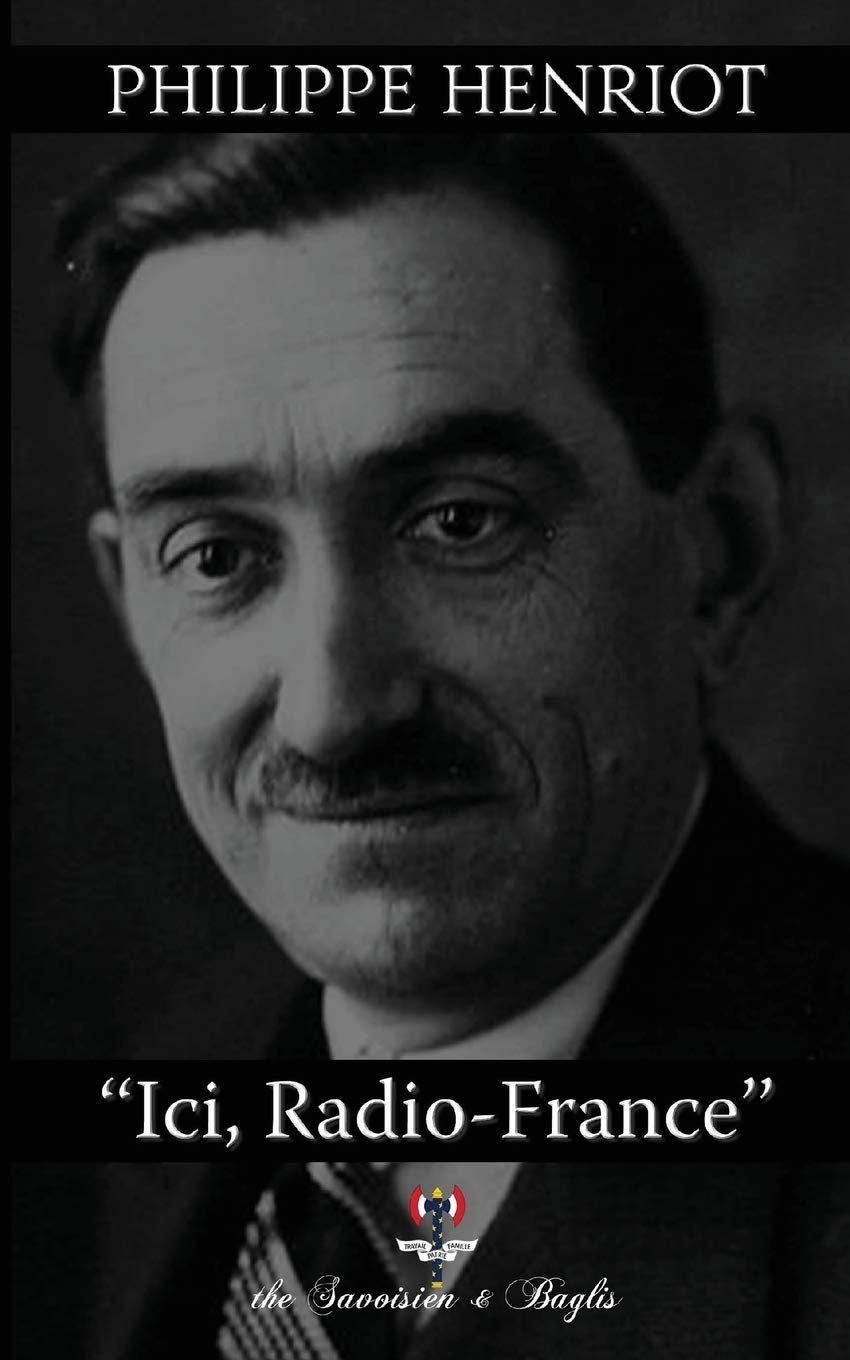
L’affiche me paraît cependant incomplète. Un Bruno Retailleau, qui rappelle tant Philippe Henriot, une grande voix française, emploie sa fonction de préposé à l’intérieur à rejouer la guerre de libération de l’Algérie. Ne pas l’avoir représenté est à mon avis une grave injustice.
Emmanuel Macron, enfin, est certes un politicien d’une profonde vacuité, mais il mérite aussi d’y figurer. Il n’est pas raciste ou xénophobe, car ses aversions sont plutôt sociales. Mais quand son action a du sens politique, destruction des bienfaits sociaux de la résistance, répression des mouvements sociaux, tentative de réhabilitation de Philippe Pétain, soutien hystérique à l’Ukraine contre la Russie, il s’inscrit incontestablement dans la tradition pétainiste. À l’intar des ploutocrates européens qui l’emploient, il est épouvanté par l’inéluctable effondrement de l’hégémonie occidentale.
Si personne ne peut vraiment le qualifier d’homme intelligent, il est cependant malin comme un singe, sait comment faire avaler des couleuvres. Son terrain est facile : il flatte la vanité nationale des Français.
Le racisme et la xénophobie sont corollaires du nationalisme. Quant à la capacité de celui-ci à agglomérer petits bourgeois et ce que Karl Marx appelait Lumpenprolétaires, le philosophe allemand Arthur Schoppenhauer (1788-1860) avait déjà énoncé auparavant
La fierté nationale est la forme la moins coûteuse de fierté. Si un homme est fier de sa nation, cela signifie qu’il n’a aucune qualité dont il puisse être fier. Autrement, il ne pourrait pas faire appel à celles qu’il partage avec des millions de ses concitoyens. L’homme qui possède des qualités personnelles importantes ne verra que trop bien dans quels domaines sa propre nation est déficiente, car ses défauts seront constamment sous ses yeux. Mais tout misérable imbécile qui n’a rien dont il puisse être fier, adopte en dernier recours la fierté de la nation à laquelle il appartient ; il est prêt et heureux de défendre bec et ongles tous les défauts et les folies de la nation, se dédommageant ainsi de sa propre infériorité
Le racisme et la xénophobie sont en France une tradition historique, aujourd’hui revigorés par un déclin inéluctable et vertigineux, les politiques néolibérales que dictent des ploutocrates européens.
chronique alphabétique et nécrologique de l’engagement français dans les rangs atlantistes en Ukraine, ce que les journalistes serviles ne vous raconteront pas
Depuis l’allocution d’Emmanuel Macron à propos de la guerre en Ukraine, le 5 mars, les grands médias sont en ordre de marche. Réhabilitation du président en « chef de guerre », patriotisme exacerbé, concert militariste et glorification des industriels de guerre… Mené tambour battant, le SAV du discours présidentiel s’accompagne d’une nouvelle séquence de matraquage patronal contre le « modèle social » et pour « travailler plus » au nom, prétendument, de l’« effort de guerre » : « Pensions ou munitions ? » ; « Les canons ou les allocations ? » Signés Dominique Seux (Les Échos, 10/03) et Étienne Gernelle (RTL, 10/03), les deux slogans donnent le ton
[mon illustration : dessin dans L’Opinion le 6 mars 2025]
Les haut-parleurs médiatiques s’en donnent à plein poumon. « Faire le tri des dépenses budgétaires et sociales au profit de l’impératif militaire », sermonne Nicolas Beytout dans L’Opinion (5/03), dont la Une s’enthousiasme pour « cette rigueur qui vient » : « Concrètement, détaille un second journaliste, il pourrait s’agir de travailler plus longtemps (de quoi torpiller le conclave sur les retraites…), de ne plus indexer les retraites sur l’inflation, de supprimer les dépenses sociales les moins utiles, d’augmenter le taux d’emploi… » Et c’est peu dire que le quotidien entend peser sur les « réformes » envisagées par Emmanuel Macron. « Pas d’échappatoire, il faut réduire les dépenses publiques », prescrit de nouveau Nicolas Beytout deux jours plus tard (7/03), listant les coups de boutoir à imposer « aux collectivités locales et à la sphère sociale » : « âge de la retraite, assurance maladie, chômage, charges sociales, tout devra être questionné. » « Effort de guerre : bientôt la retraite à 70 ans ? », martèle la rédaction, préconisant que la France adopte à cet égard une « Danemark attitude ».
Même tonalité aux Échos (10/03), où Dominique Seux affirme que « travailler plus est le meilleur moyen de financer l’effort nécessaire pour nos armées », tout en suggérant à Emmanuel Macron de se tenir à distance de ce débat – « méthode » oblige –, afin de ne pas offrir « un angle d’attaque trop facile à ses adversaires », lequel risquerait de fragiliser l’impérieux « consensus sur l’effort en faveur des armées. » Saigneur en chef… et conseiller du prince.
Par intérêt bien compris, Le Figaro – propriété du groupe Dassault, fleuron de l’armement français ayant réalisé plus de six milliards d’euros de chiffre d’affaires en 2024 –, ne prend quant à lui aucune pincette dans cette vaste opération de propagande. Tous ses lieutenants sont d’ailleurs sur le pied de guerre. Le 7 mars, Guillaume Tabard et Gaëtan de Capèle parlent d’une seule voix : « Il n’y a pas d’autres solutions que de s’attaquer enfin sérieusement aux dépenses de l’État », écrit le premier, avant que le second enjoigne de « dire la vérité crue, telle qu’elle est, en cessant de tourner autour du pot. La voici : notre sacro-saint modèle social […] ruine consciencieusement le pays et le prive de toute marge de manœuvre financière. » Les discussions syndicales et patronales en cours sur la réforme des retraites imposée au forceps ? « Quel clin d’œil pathétique », se désespère Dupond ; Dupont communie : « Il faut se pincer pour le croire. » Le 9, c’est au tour de l’inénarrable Nicolas Baverez de rédiger modestement le « mode d’emploi » du « réarmement ». Sans surprise, « réorienter […] les dépenses de l’État-providence […] vers la défense » et « renouer avec la croissance, la compétitivité et le plein-emploi » via « la modernisation du pacte social » constituent « la seule solution ». Et ainsi de suite.
« C’est ce comportement collectif de cigale qu’il va falloir payer aujourd’hui »
Dans la matinale de France Info (11/03), face à Manuel Bompard (LFI) qui dénonce une « stratégie du choc » visant à faire accepter des « politiques de régression sociale » la journaliste Salhia Brakhlia joue (très mal) l’ingénue – « Vous pensez à quoi ? » – avant de soutenir mordicus qu’un tel cap « ne vient pas du gouvernement […]. Et ça ne vient pas du président. » Fichtre ! « Face aux défis que soulèvent la menace russe et l’agressivité commerciale américaine, le ministre délégué à l’Europe Benjamin Haddad […] assume de dire aux Français qu’il faudra travailler plus. Assurance chômage, taux d’emploi, retraites par capitalisation… Il faut, selon lui, accélérer les réformes », lisait-on pourtant le même jour dans La Voix du Nord. Et le 6 mars, dans la matinale de RTL, le même ministre déclarait : « Vous ne pouvez pas dire, le mardi : “Il faut continuer à soutenir l’Ukraine, il faut augmenter nos budgets de défense, il faut faire l’autonomie stratégique” et le mercredi, dire […] : “On va revenir à la retraite à 60, 62 ans et on va travailler moins”. […] Quand vous voyez les voisins autour de nous qui travaillent plus, c’est ça aussi qui donne des marges de manœuvre pour pouvoir augmenter nos budgets défense. » Salhia Brakhlia n’a pas bien lu ses fiches 1 …
À sa décharge, il serait injuste de s’écharper sur le suivisme (ou non) des médias dans cette affaire, tant les injonctions à « travailler plus » y sont déclinées sur tous les tons depuis un siècle… en toute « autonomie ». Ainsi, nul besoin qu’Emmanuel Macron dicte aux éditorialistes la ligne à prescrire : homogénéisation libérale oblige, ils le font très bien tous seuls ! Le Monde notamment, qui, par voie d’éditorial, ne résiste pas à « sonner l’heure d’un douloureux réveil budgétaire. […] Le réarmement du pays, bien plus endetté que ses voisins, place l’exécutif dans la situation très délicate d’avoir à remettre à plat les dépenses de l’État, des collectivités locales et de la Sécurité sociale pour trouver des gisements durables d’économies. » (7/03) Ni une ni deux, Françoise Fressoz profite de cette ligne éditoriale officielle pour enfoncer le clou – « le mot “économies” reste […] tabou » –, fustiger « les partenaires sociaux » qui « peinent à prendre la dimension du moment » et, bien sûr, parfaire son opus courtisan : « Depuis sa réélection en 2022, Emmanuel Macron tente, en vain, de convaincre le pays qu’il ne parviendra à préserver son modèle qu’en travaillant plus. » (Le Monde, 12/03)
Au Parisien, c’est François Lenglet qui est appelé en renfort pour dispenser, avec toute la mesure qu’on lui connaît, la leçon de catéchisme – version « revancharde » (9/03) :
François Lenglet :Nous avons affecté les dividendes de la paix à l’État-providence. Son développement a atteint son sommet sous Macron, avec les dispositifs Covid uniques au monde par leur générosité. Avec l’assurance-chômage pour les démissionnaires, les lunettes à zéro euro, le plan Vélo, le pass Culture, le bonus pour faire réparer son grille-pain, les subventions pour faire repriser ses chaussettes… Du délire. C’est ce comportement collectif de cigale qu’il va falloir payer aujourd’hui […]
Inquiète à l’idée de perdre le peloton, La Tribune Dimanche se fend d’un sondage (Ipsos) aux petits oignons, cas d’école du verrouillage du débat public. Interrogés sur les modes de financement du réarmement, les sondés ne disposent que de trois « choix » : « Augmenter le déficit en sortant les dépenses liées au budget de la défense de la règle des 3% » ; « Faire des économies sur d’autres dépenses (éducation, environnement, santé…) » ; « Augmenter le temps de travail ». Et rien d’autre. En guise de deuxième corde au cou – les sondeurs débordent d’idées novatrices pour neutraliser à l’avance d’éventuels désagréments –, Ipsos offre à ses interviewés la possibilité d’approuver ces propositions, de s’y opposer… mais aussi de faire valoir une « approbation de principe car la situation le justifie » ! Vous avez dit « l’opinion, ça se travaille » ? Sauf que patatras ! 49% des sondés sont opposés au sacrifice des services publics (seuls 15% l’approuvent) et 50% n’entendent pas travailler plus (ce à quoi ne consentent que 13% du petit échantillon). Qu’à cela ne tienne pour le directeur de l’hebdomadaire, Bruno Jeudy : « La victoire aime l’effort » titre-t-il son éditorial, dans lequel il affirme que « dans ce contexte qui exacerbe les peurs et les passions, les Français – comme le montre notre sondage – semblent prêts à accepter des sacrifices pour doter notre pays de moyens nécessaires à une augmentation importante du budget militaire et à la garantie d’une paix solide et durable en Ukraine. » Sans doute rattrapé par son inconscient déontologique, il poursuit, un tantinet amer :
Bruno Jeudy :Reste à savoir si, demain, les actionnaires renonceront à une partie de leurs dividendes, les retraités consentiront une désindexation de leur pension sur l’inflation, les jeunes donneront quelques mois pour la réserve militaire, les actifs sacrifieront quelques jours de RTT. On sait bien que, souvent, les exemplaires, ce doit être les autres
Inutile de déplier à l’infini la partition : elle est à l’identique à peu près partout dans la grande presse. Vissée à ses penchants militaires aux accents glucksmaniens, Libération ne peut faire valoir sa « distinction » qu’à travers des filets d’eau tiède. Jonathan Bouchet-Petersen : « En France, si l’augmentation des dépenses militaires devaient abîmer encore un peu plus nos services publics et notre modèle social, ou servir de prétexte à une moindre prise en compte de l’urgence climatique, “l’effet drapeau” dont l’exécutif profite risque d’être de courte durée. » (11/03) Si patronat et gouvernement n’étaient pas déjà KO debout, peu de chance qu’ils survivent à l’uppercut de la directrice adjointe de la rédaction :
Alexandra Schwartzbrod :Le chef de l’État en profiterait-il, au prétexte qu’il faut financer le réarmement du pays, pour étouffer le débat renaissant sur l’opportunité de sa sacro-sainte réforme des retraites et affaiblir le modèle social ? Ce serait dommage. Et un jeu périlleux. L’opinion a peur mais elle sait reconnaître une entourloupe
Espérons qu’elle sache également identifier les faux impertinents. Ainsi, si Libération s’oppose sans ambages à la curée sociale – et le fait savoir, notamment dans son édition du 13 mars où des journalistes dénoncent plus frontalement l’« offensive sur le “si-généreux-modèle-social-français” » et un débat public sous forme de « foire aux idées (de droite) » –, la direction ne cesse de jouer la carte de « la raison ». Pour Alexandra Schwartzbrod en effet (13/03), si le cadrage médiatico-politique est « extrêmement dommage », c’est surtout, au bout du compte, parce qu’il « ne fera pas du bien à une société déjà très clivée » et nuira, par conséquent, à l’impérieux consensus : « Le renforcement de la défense du pays et de l’UE […] se fera d’autant plus facilement qu’il obtiendra l’adhésion du plus grand nombre », avance doctement la co-directrice de Libération, pour mieux camper le rôle d’éditorialiste-prescriptrice : « Les hausses d’impôts […] permettraient, convenablement dosées, de demander un effort aux Français qui en ont les moyens, salariés ou retraités, patrons ou artistes, et aux grandes entreprises. »
« Il faut choisir : se reposer… ou être libre »
Dans un tel climat, il semble pour le moins superflu que le patron du Medef se fatigue à courir les studios de RMC dès potron-minet pour vanter le « modèle danois » de retraite à 70 ans (4/03). L’AFP peut également se dispenser de donner de l’écho aux premières mesquineries patronales venues, parmi lesquelles celles du directeur général de BPI France2, lancées lors de l’interview qui lui fut généreusement accordée dans la matinale de France Culture (5/03). De même, on ne saurait que trop conseiller aux chefferies médiatiques d’économiser leurs experts de référence et autres think tanks de cœur : l’audiovisuel dispose d’abondantes ressources en interne où, partout, l’« appel à la mobilisation » d’Emmanuel Macron a été reçu 5 sur 5
Dans ce concert d’unanimisme, le pouvoir politique sait aussi pouvoir compter sur une caisse de résonance médiatique pour « tester » ses différentes propositions de financement, observer le « bruit » qu’elles engendrent et mesurer leur réception. Quitte à ce que tout et n’importe quoi soit aussi vite périmé qu’écrit ? Le 9 mars par exemple, dans La Tribune dimanche, la journaliste économique Fanny Guinochet fait savoir que « selon nos informations, la préférence de Bercy pour financer les dépenses militaires est de réorienter les fonds du livret A. » Deux jours plus tard (11/03), Le Parisien fait savoir que « le ministère de l’Économie privilégie, selon nos informations, l’assurance vie et l’épargne retraite » avant de lister « les pistes écartées » par Bercy… parmi lesquelles « le livret A, “faiblement compatible” »… De-ci, de-là, en fonction des jours et des humeurs, les grands médias certifient également l’inclinaison du pouvoir pour un « grand emprunt national ». Au rythme où vont les choses, et si tel devait être le cas, ne doutons pas que l’éditocratie saura (nous) mettre la main à la poche. Et, qui sait, mobiliser ses dessinateurs de référence pour raviver, en couleurs cette fois-ci, la propagande du siècle dernier façon Poulbot [fin]
Façon Poulbot ? Pauline Perrenot est bien trop magnanime pour ses confrères bleu horizon, les pressetiués. Ou bien alors, sa connaissance de l’Histoire de France est lacunaire, ignore une période que certes, le mythe national occulte encore. Guerre par procuration, le sang des autres, une aubaine pour la politique réactionnaire du gouvernement, tout est dans cette affiche de l’État français en 1943, pour sauver l’Europe du Bolchevisme
en Anglais, chronicle of censorship, fake news, whitewashing of the Ukrainian Nazism and war crimes, for the sake of the proxy war that NATO is conducting in Donbass and Ukraine, against Russia
chronique alphabétique et nécrologique de l’engagement français dans les rangs atlantistes en Ukraine, ce que les journalistes serviles ne vous raconteront pas
chronique en Anglais, its roots before WW2, its collaboration with Nazi Germany, its legacy in modern Ukraine, how NATO has continually supported Nazism in Ukraine
La journaliste, qui dédouane également le président de la République, est sans doute passée à côté de la vaste opération de communication qu’orchestrait la PQR il y a moins d’un mois : « Emmanuel Macron prévient les Français qu’ils doivent se préparer à des sacrifices au moment où le Danemark réfléchit à repousser l’âge de la retraite à 70 ans pour financer sa défense », rapportait ainsi Le Progrès (19/02), mais aussi – au mot près – le Dauphiné Libéré (18/02), Le Bien public, Le Journal de Saône et Loire ou encore L’Est Républicain (19/02). Autant de sources que Salhia Brakhlia aurait pu corroborer en lisant sa propre presse locale : « Le Danemark a la cote auprès du pouvoir » (Le Parisien, 20/02). ↩︎
Ce dernier invite notamment à ne « plus accepter de prendre un euro de dette de plus pour financer des dépenses de prestations sociales pures […]. La dette, ça sert à financer les investissements, des canons ou des centrales nucléaires, pas le Doliprane de ma mère ! » ↩︎
The SMO [Special Military Operation] will keep rollin’ on. And as the Europeans want it, to the last Ukrainian
[my illustration: a German prisoner in Stalingrad in January 1943 (Soviet archives)]
Let’s start with U.S. Secretary of State Marco Rubio’s Road to Damascus moment:
Frankly, it’s a proxy war between nuclear powers, the United States helping Ukraine and Russia, and it needs to come to an end
Now that’s a howler. Jeffrey Sachs to the rescue. Of course, the correct formulation would be “proxy war launched by the United States”. But still: Hallelujah! Such illumination – by proxy – from Heavens Above could never had hit the previous American Secretary of Genocide.
Now cut to panic. Total European panic.
Le Petit Roi, as popular in France as nighttime mosquitoes in a five-star beach resort, has declared that peace in Europe is only possible with a “tamed” Russia – and that Russia is a direct threat to France and Europe.
On Ukraine, he pontificated that peace simply cannot take place under Russian terms or via the – inevitable – Ukrainian surrender.
Le breathless Petit Roi literally went nuclear. He stressed that France possesses a nuclear deterrent – and offered it to the rest of Europe, while insisting that Europe’s future should not be dictated by Moscow or Washington.
Le Petit Roi napoleonically all but declared war on Russia. Well, the fact remains that the overwhelming majority of France would gladly agree that mini-Napoleon should be dispatched to the battlefields in the black soil of Novorossiya right away – where he would surrender in less than 5 minutes, waving a rainbow flag, as he realizes he’s about to be turned into an instant steak tartare.
Now couple this Moliere farce with the fate of the much larger, fatter, pan-European New Model Woke Army regimented by the Fuhrerin SS von der Lugen out of Brussels, allegedly to be financed to the tune of 800 billion euros – money that no one has, and would have to be loaned then repaid with sky-high extorsion interest rates to the usual international financial system vultures.
SS von der Lugen insists Europe is in danger, so the solution is a massive expansion of the military-industrial complex – in practice, buying more overpriced American weapons – and “rearmament”.
Talk about Gotterdammerung on crack.
Were the New Model Woke Army ever come to light, surrender would also be a matter of less than 5 minutes – brandishing rainbow flags – as its woke warriors would face the dire prospect of being Oreshniked to a pile of charcoal grilled burgers.
Add to it the Return of the Nord Stream Saga – with a new plot twist. Sy Hersh conclusively proved that the Nord Streams were bombed under orders of the previous Crash Test Dummy regime in Washington. Now Nord Stream 2, at least, could be back in business via a not-so-secret U.S.-Russia deal involving Gazprom and American oligarchs.
All that while fanatics in Berlin assure right and left they want to explore every possible way to prevent (italics mine) the Nord Stream system from being repaired – because after all no one, especially the new BlackRock chancellor, can deviate from the official policy of destroying the German economy by all means necessary.
Compounding the Kafkaesque scenario, the Prime Minister of Denmark – which is on the brink of losing Greenland “one way or another” to Trump 2.0 – immortalized the words, “peace in Ukraine will be more dangerous than war.” The Polish Prime Minister did not miss a beat, adding that “Europe is stronger than Russia and capable of winning in any military, financial, or economic confrontation.” Europe is in such a “winning” streak now – as the record shows.
All this discombobulated Tower of Babel proves, without a shadow of a doubt, that Europe is geopolitically – and geoeconomically – dead and buried. No Teutonic Gods – complete with fat lady singin’ – will be able to resurrect it.
Flirting with a one-way ticket back to the Stone Age
The notion that Europe is able to pose a military threat to Russia does not even qualify as trashy propaganda for sub-zero IQs. It would take at least a decade to re-militarize Germany as its economy is moribund, serially stabbed by unmanageable energy costs. Russia for its part is protected from a possible nuclear attack by Le Petit Roi’s puny “umbrella” arsenal by the most sophisticated missile defenses in the world.
The Aegis defensive missiles in Poland are relatively worthless – even if their prime danger to Russia remains that the system can be converted to handle offensive missiles. As a whole, the Aegis, Patriot, THAAD-PAC-3, SBIR-HIGH Ground Based Infrared Systems are all relatively useless.
Other than the U.S., NATO simply has no military worth. And Washington under Trump 2.0 simply will not be involved in the next European War.
The U.S. has satellite systems for targeting but no one else in NATO has them. With the U.S. pulling out, and in the event of a hypothetical von der Lugen-led New Woke Army attack against Russia, Russian missiles can knock out all European ports, airports and manufacturing and energy systems in a day max – instantly returning Europe to the stone age.
This applies to England, France, Germany, not to mention assorted chihuahuas: all of NATO. Russia can knock out all British power systems with Zircons launched from a conventional submarine. Stone Age, here we come. Russian hypersonic missiles cannot be intercepted.
Meanwhile, President Putin insists on talking sense to lunatics. At the Collegia of the FSB on February 27, he noted how, “some Western elites are still determined to maintain instability in the world, and these forces will try to disrupt and compromise the dialogue [with the U.S.] that has begun. We see this. We need to take this into account and use all the possibilities of diplomacy and special services to disrupt such attempts.”
As Andrei Martyanov has noted, superpowers have “only two options in the 21st century: either start WWIII which will end with nuclear exchange or find a modus vivendi.” That’s a conversation for adults that automatically excludes the European hospice and the childish tantrums of the cracked actor in Kiev.
The cracked actor never had any (italics mine) cards. He now cuts a pathetic figure, doing somersaults to cling to power, propped by (former) collective West money, weapons and massive propaganda. Now the 404 nation he “created” is losing not only the war but the P.R. war as well.
The former adviser to the head of Zelensky’s office, Oleksiy Arestovych, as slimy as they come, but always with his pulse on reliable info, is convinced that the Ukrainian Army, blind and cross-eyed, can hold out at best for another one and a half to two months without all those American goodies. Without intel data, Kiev’s forces cannot prepare strikes against the Russian federation or conduct reconnaissance and cyber ops.
Country 404 as a whole is now entering Walking Dead territory. Europe, with or without its SS von der Lugen Invincible Armada, does not have the industrial capacity, the financial might, and the military capability to stop the debacle. Russia has already stated that any European “peacekeeping” troops will immediately become legitimate targets.
The spectacular failure of Project Ukraine is a sight to behold. It’s no wonder the current, tawdry, ghastly political “elites” are in total panic. Without Project Ukraine, and without the Mafia protection of His Master’s Voice, they are just, geopolitically, an irrelevant, post-colonial small peninsula on the western borders of fast-integrating Eurasia.
As for Trump 2.0 and the Kremlin already having hit some sort of pre-deal – even before the start of serious negotiations – there’s no evidence yet to corroborate it. According to Russian intel sources, what has been struck is a general agreement on the framework of discussions, and what can be achieved in practice. This initial stage will last at least a few months.
Themes on the table range from lifting sanctions on Russian banks and the use of MIR cards to restoring direct flights and curbing the militarization of the Arctic.
Everything essentially hinges on whether Trump wants – and is able to ensure – a fast endgame in Ukraine while disengaging, slowly but surely, from NATO.
Considering what seems to be his strategic direction, Trump wants to make sure he won’t have to offer Mafia protection to European NATO members if they insist on keep going with their Forever War against Russia. It’s clear that shutting off Starlink and shutting off satellite ISR would lead to a much faster endgame in the battlefield.
The SMO, meanwhile, will keep rollin’ on. And as the Europeans want it, to the last Ukrainian [end]
Until recently, a serious geopolitical working hypothesis was that West Asia and Ukraine were two vectors of the standard Hegemon modus operandi, which is to incite and unleash Forever Wars. Now both wars are united in an Omni-War
Leaked files show top UK military figures conspired to carry out the Kerch bridge bombing, covertly train “Gladio”-style stay-behind forces in Ukraine, and groom the British public for a drop in living standards caused by the proxy war against Russia
President Putin’s plenary session performance (address + Q&A) at the annual Valdai Club meeting in Sochi felt like a high-speed train on cruise control
Nohra, in Thüringen, was the first Konzentrationslager [Concentration Camp], opened on March 3, 1933. Arrested and detained without trial, its inmates were political enemies of the Nazi regime: German communist militants. While the concentration camp system was developing, other enemies, like for example unemployed citizens, were interned. Mass assassination of prisoners started in April 1941, under Schutzstaffel‘s [Protection Squadron, SS] absolute power
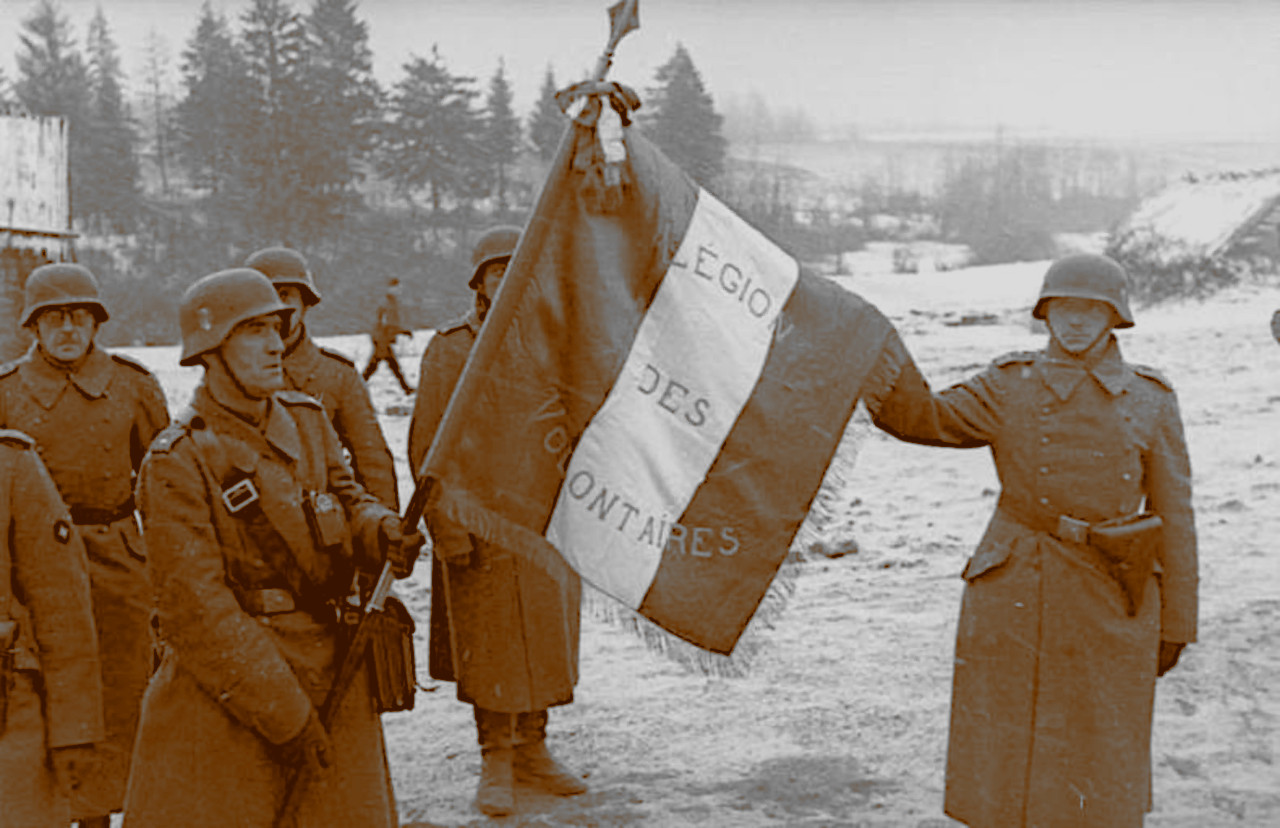
Légion des volontaires français contre le bolchevisme [Legion of French Volunteers against Bolshevism, LVF], a regiment of French auxiliaries, which was involved in the Nazi invasion of Soviet Union (Bundesarchiv)
The Nazi invasion of Soviet Union began on June 22, 1941. On the heels of European fascist armies from Germany, Italy, Romania, Hungary, Spain, France… etc, SS formations, the Einsatzgruppen [Intervention Groups], were in charge of the mass killing of Jewish civilians
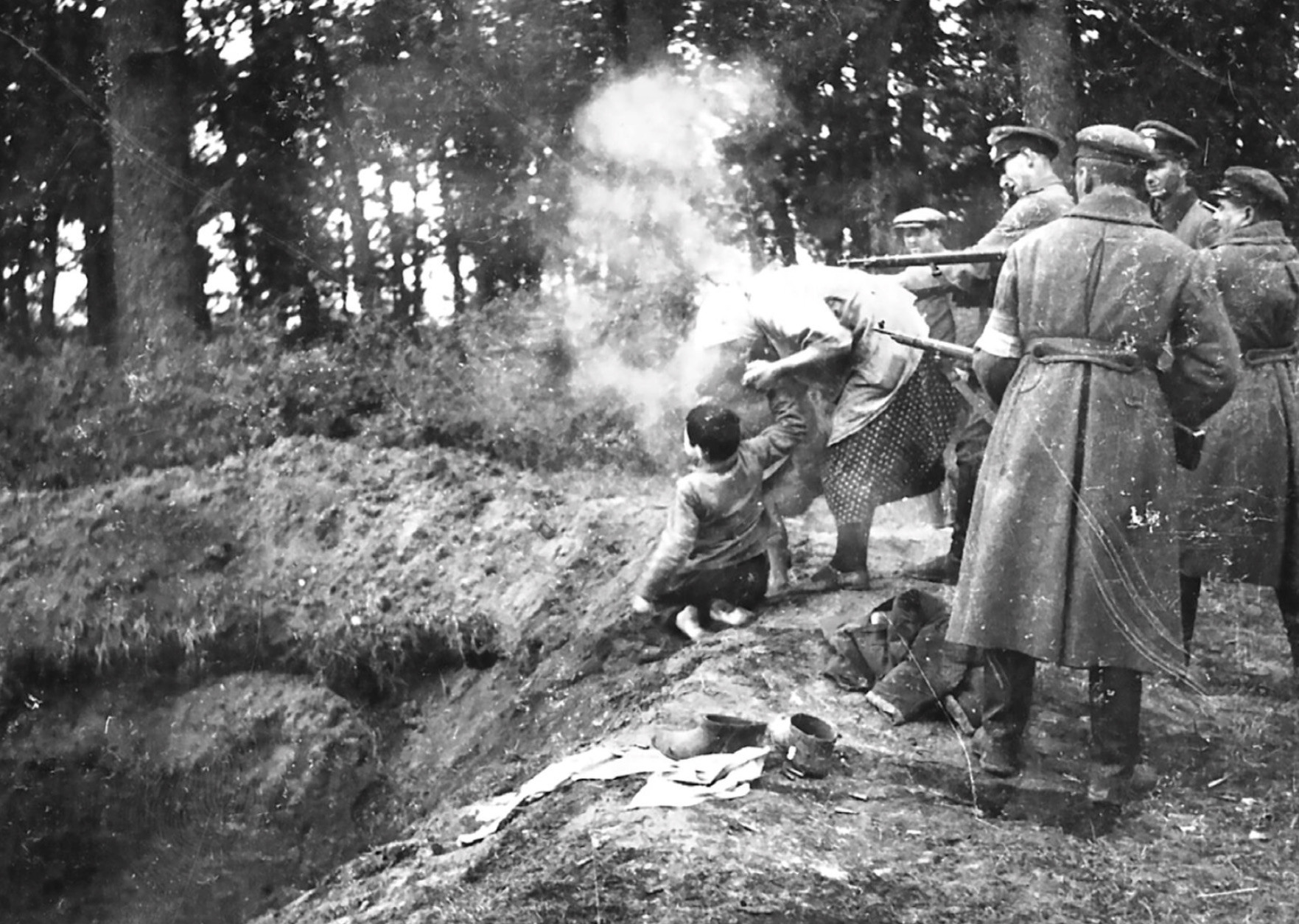
On October 13, 1941, Ukrainian auxiliaries are involved in the assassination of a Jewish family in Miropol (Lubomir Skrovina / historical collection of the State Security Service, Prague)
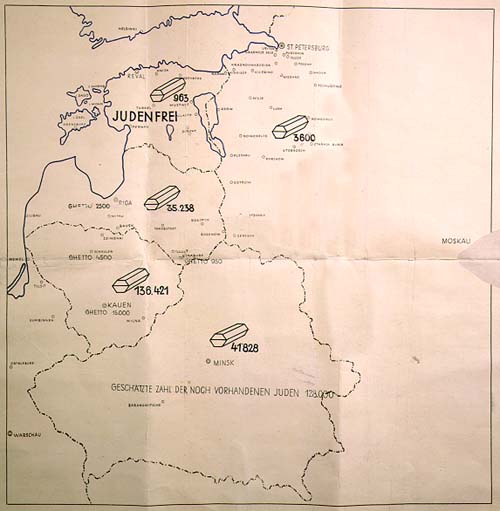
Brigadeführer Franz Walter Stahlecker (1900-1942) was leader of the Einsatzgruppe A, which was operating in Baltic countries. Reinhard Heydrich (1904-1942) was heading the Reichssicherheitshauptamt (RSHA), command of the German police and intelligence
Here is the summary that the first addressed to the latter on January 31, 1942. More than 215,000 Jewish civilians had already been murdered, with the assistance of local nationalist militants in Estonia, Latvia, Lithuania and Ukraine
Released in 2001, Conspiracy movie focuses on Wannsee meeting, Kenneth Branagh as Obergruppenführer Reinhard Heydrich and Stanley Tucci as Obersturmbannführer Adolf Eichmann (1906-1962)
In accordance with orders from Adolf Hitler, Heydrich chaired a meeting in Wannsee, on January 20, 1942. Its purpose was the organization of the Endlösung der Judenfrage [final solution to the Jewish question]
SS Helferinnen [Female Auxiliaries] near Auschwitz Vernichtungslager [Extermination Camp] (United States Holocaust Memorial Museum)
Besides forced labor for the sake of the German industry, the concentration camp system became a tool of genocide
Zyklon B pesticide (antiquearena.com)
The victims of Nazi racist persecutions were notably
6 million Jews,
4.5 million other Soviet civilians,
3.3 million other Soviet service members,
1.8 million other Poles,
between 250.000 and 500.000 Gypsies,
310.000 other Serbs
Operation Iskra, Leningrad, in January 1943 (Vsevolod Tarasevich)
After 1943 Soviet victories in Leningrad, Stalingrad and Kursk, offensive Bagration began on June 22, 1944, destroyed in Belarus the 850,000-strong Nazi Heeresgruppe Mitte [Army Group Center]. The Red Army reached and liberated in Poland, on January 27, 1945, the main concentration camp complex, which was including Monowitz Zwangsarbeitslager [Forced Labor Camp, for the sake of IG Farben chemical firm], Auschwitz and Birkenau Vernichtungslager [Extermination Camps]
In Auschwitz, on January 27, 1945, in the first minutes after their liberation, former inmates fraternize with Soviet servicemen (Boris Fishman / RIA Novosti)
né en 1928, le militant pétainiste breton Jean-Marie Le Pen est décédé le 7 janvier 2025 dans les grand-bourgeois Hauts de Seine
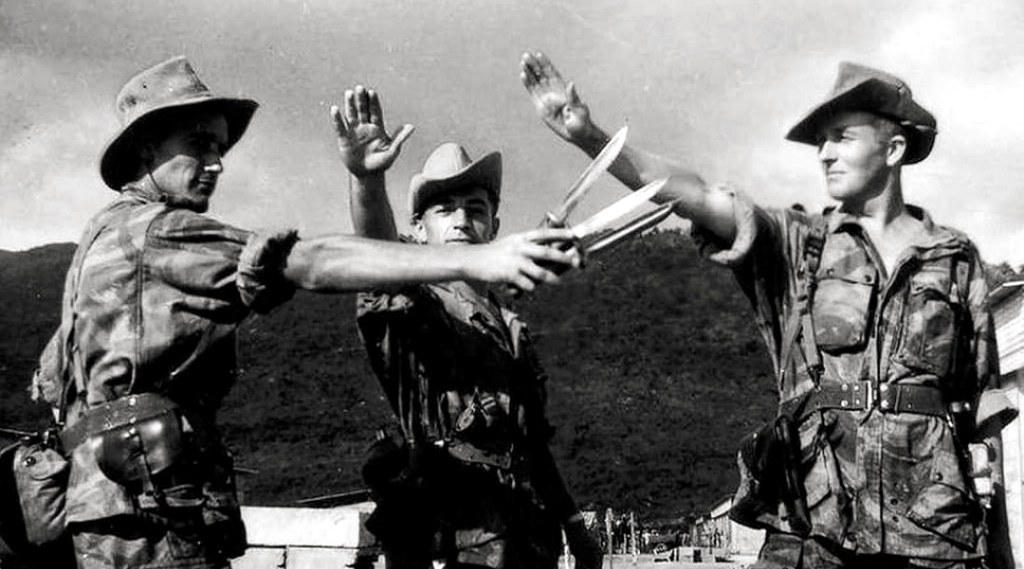
En Indochine, en 1954, le sous-lieutenant Jean-Marie Le Pen, qui n’aura pas le temps d’y connaître la bataille, rejoue avec ses camarades la scène du serment des Horace (collection personnelle des Pen). Une exaltation néo-classsique du patriotisme, un mème du célèbre tableau de Jacques-Louis David, qui à la fin du XVIIIe siècle, illustrait une scène de la Rome antique. Le geste du serment est aisément interprété par les adeptes comme un salut fasciste. Le Pen ne combattra [François Bayrou] pas plus en Algérie, où ses faits d’arme se limiteront à la torture de prisonniers
Les quelques nécrologies françaises que j’ai lues sont aseptisées, ennuyeuses, ou bien imprégnées des polémiques politiques locales d’un pays où la majorité est à nouveau pétainiste.
Des médias moins conventionnels donnent au personnage de la jeunesse et une perspective internationale. Sur Telegram, une chaîne nazie française bien connue publie en hommage l’image en 1954 du serment des Horace.
Les guerres coloniales étaient le contexte de ce mème. La France avait connu en mai-juin 1940 la plus spectaculaire et humiliante défaite militaire de l’Histoire de l’humanité. Libérée en 1944 par les armées anglo-états-unisiennes, grâce aux victoires remportées par l’Union soviétique sur le front de l’est, elle s’engagea de façon anachronique dans deux guerres coloniales, en Indochine puis Algérie, où elle fut encore vaincue. Chef de la France combattante en 1940, Charles de Gaulle fut aussi un libérateur de l’Algérie, mais au début des années 2000, Nicolas Sarkozy a effacé le gaullisme de l’échiquier politique français
(SNPU)
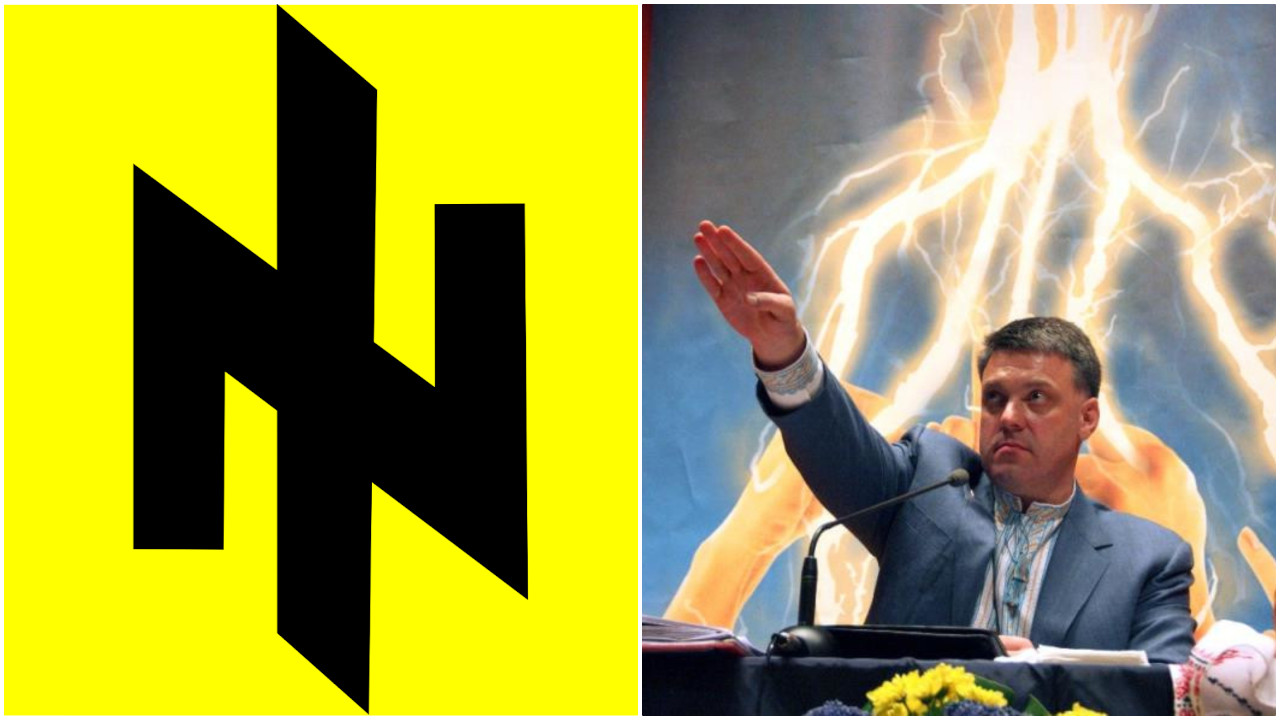
Un canal nazi ukrainien et un autre, fasciste italien, partagent cette photographie du 21 mai 2000. Le tribun pétainiste prit la parole lors du congrès à Lviv, berceau historique du nazisme endémique ukrainien, du Parti social national d’Ukraine (SNPU), dont l’emblème était alors le Wolfangel [crochet à loup], symbole nazi allemand de la 2e guerre mondiale, qu’arbore toujours aujourd’hui l’organisation nazie ukrainienne Azov
Le Wolfsangel sur fond jaune, à gauche, devint en 1991 l’emblème du Parti social national d’Ukraine, qu’Oleh Tyahnybok, à droite, renomma Svoboda [liberté] en 2004, dirige depuis
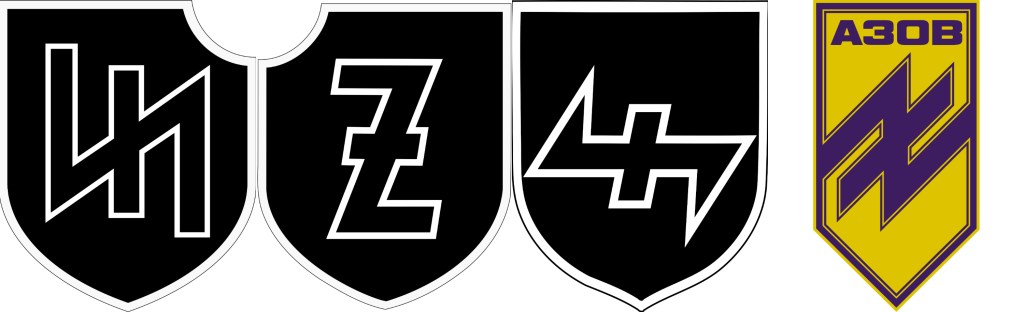
Le symbole est fort, d’un point de vue français, car il était aussi celui de la 2. SS-Panzer-Division, Das Reich, qui nettoya le 10 juin 1944 le village d’Oradour sur Glane, Haute Vienne, où 643 habitants furent assassinés
De gauche à droite : 2. SS-Panzer-Division, Das Reich (1939-1945), 4. SS-Polizei-Panzergrenadier-Division (1939-1945), 34. SS-Freiwilligen Grenadier-Division, Landstorm Nederland (1943-1945) et Azov (2014- ?)
Il n’est pas inutile de rappeler que le Front national (FN) fut fondé en 1972 par Jean-Marie le Pen et Pierre Bousquet. Le premier n’avait que 16 ans en 1944, mais le second était un ancien Rottenführer [caporal] de la 33. Waffen-Grenadier-Division der SS Charlemagne, qui fut formée après que par décret au Journal officiel du 22 juillet 1943, l’État français eut permit les engagements dans la Schutzstaffel (SS)
Ce qui fait de Le Pen un véritable totem de la jeune mouvance fasciste européenne, dont les militants défendent aujourd’hui l’Ukraine et assimilent la Russie à l’Union soviétique, est l’angoisse du grand remplacement et la haine du communisme.
Plusieurs aspects sont paradoxaux et cocasses. Cette mouvance est sur le champ de bataille ukrainien, dans le même camp que bien au chaud dans leurs bureaux européens, les néo-libéraux prétendument antifascistes. Ils y partagent un même impérialisme, tentent d’y sauver une hégémonie occidentale en déclin, que les fascistes rêvent blanche et que les seconds défendent par procuration, avec le sang bon marché de conscrits ukrainiens mobilisés de force.
Le Pen est toujours resté antisémite, alors qu’aujourd’hui, Israël est le seul État au monde à appliquer une politique raciale, jusqu’au nettoyage ethnique et au genocide. Les jeunes militants qui se battent en Ukraine sont aussi des fans d’Israel, car l’antisémitisme du vieux pétainiste est complètement dépassé aujourd’hui par la réalité de la scène politique internationale.
Le Pen était le produit et l’acteur d’une Histoire de France récente, où les défaites succèdent à la débâcle. Il reste une figure historique d’un fascisme européen aujourd’hui revigoré par les politiques néo-libérales et l’inéluctable fin de l’hégémonie occidentale.
chronique alphabétique et nécrologique de l’engagement français dans les rangs atlantistes en Ukraine, ce que les journalistes serviles ne vous raconteront pas
Putin’s race is not yet run because NATO’s game plan remains the same one of subjugating Russia and, mad though it seems, using it as a springboard to dismember China
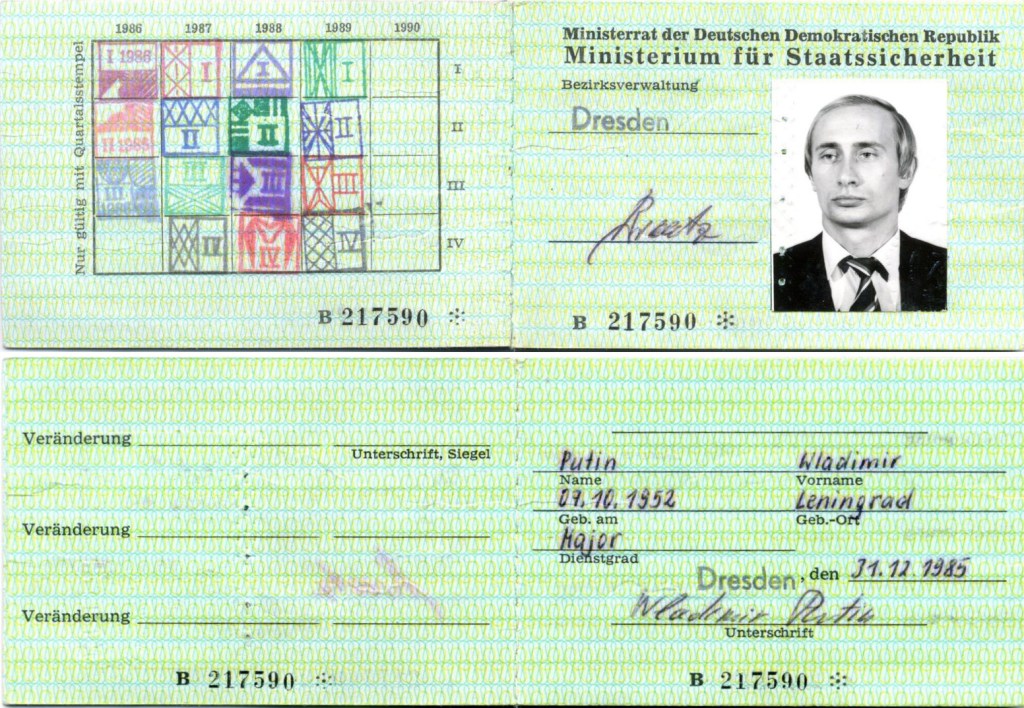
[my illustration, from the archives of the Ministerium für Staatssicherheit der DDR]
Though Russian President Putin has reasons galore to be quietly cheerful when he marks his 72nd birthday this Monday, 7th October, chief of these are that he has been loyal to his faith, his family and his motherland. Were his mother or his elder brother, who died as an infant in Finland’s Siege of Leningrad, to testify to us from beyond the Styx, they would be rightly very proud of how Vladimir Vladimirovich Putin not only stayed true to all of them but to Mother Russia as well.
The collapse of the Soviet Union around Putin’s ears was a pitiable sight. Red Army soldiers in Budapest sold their kits for pennies to passersby, vodka and depression slashed the life expectancy of Russia’s males, patriotic Russian teachers were paid with cabbage heads and Western gangsters, together with their local collaborators, robbed Russia blind. To the extent that Putin has reversed all of that, he and his helpers should be immensely proud of the work they have done thus far.
Not that those enemies have gone away. They have not and one very important vector worth examining is the soft war NATO is directing through the cross dressing Ukrainian dictator Zelensky and Russian fifth columnists like the Pussy Riot slappers, who enjoy the same considerable support amongst the brothels and bordellos of Eastern Europe that the Gestapo did in occupied France.
That Putin’s most vehement Ukrainian critics have, like Hitler’s French collaborators, degenerated into nothing more than hired hitmen, should not unduly surprise us, as they were nothing much better to begin with. What is, at first glance, far more noteworthy is the unrelenting attack on everything Russian, from the great Dostoevsky to the equally great Masha and the Bear, which makes no sense until we read this very day that children in Ukraine are still being brutalised for speaking their Russian mother tongue, the same mother tongue they share with the cross-dressing Ukrainian dictator and far too many immortal musicians, artists and authors to adumbrate here.
Although those attacks, in the context of the Ukrainian conflagration, might seem trivial, they are anything but. Their purpose, when juxtaposed with the elevation of Pussy Riot, Zelensky and similar Central Asia civil society degenerates, is to demean, denigrate and marginalise all of Russia. Although all that might seem crazy to us, no less a figure than Herr Hitler would have understood its pivotal role in helping NATO physically and spiritually divide and conquer Russia which, as these NATO links here, here, here and here detail, remains its post-Putin Ukrainian end game.
But Putin, it seems, is going nowhere anytime soon, at least not until his work of consolidating Russia within and without is done. Although the Pussy Rioters are a cancer that must be excised, the Ukrainian conflict must get priority. Although Russia’s recent capture of the fortress city of Vuhledar portends well, so do recent pronouncements of Ukrainian dictator Zelensky and serial British philanderer Boris Johnson.
Because Zelensky implored American companies to invest in Ukraine’s energy grid during his recent American junket, the Russian air force must now reduce that infrastructure to dust to show that investing in Zelensky’s Ukraine has no upside. As regards Poundland Dr Strangloves like Boris Johnson, who demand that NATO should help its Ukrainian proxies to blitz Moscow and St Petersburg, Putin must show such charlatans that such bravado carries personal risk to obese armchair generals like them.
Either way, if Russia is to survive, Putin must show NATO and their Ukrainian proxies that their dreams of conquest are not worth the candle and, if the Romanian or Polish juntas or, heaven help us, the non-entity who is Prime Minister of Denmark, have problems with that, so be it, and let the cards fall where they will.
Although Putin unquestionably has his critics, much of that criticism is no more than cat yowling. Take, for example, this fine BBC piece, where Mariana Katzarova tells us of Putin’s ‘systematic crackdown’ on human rights since the Ukraine invasion. A fine demolition job on Putin, until we check Katzarova’s Wikipedia entry, which tells us that this Bulgarian brasser makes her living writing screeds like that, and that she knows no more about the internal dynamics of Russia than you or I do about the Yaifo tribe of the East Sepik province of Papua New Guinea who, to give them their due, are far more honest and honourable than carpetbaggers like Katzarova.
Although NATO is also raising the stakes on Russia’s border with Japan, the key to these border brush fires is crushing NATO in Ukraine, so that all 14 countries that border Russia get the message that the Russian bear retains a fearsome bite.
With her borders secure, Putin can then concentrate on the no less important task of securing Russia’s economic future with trade and other agreements with countries, great and small, that are not NATO’s cats’ paws. Though two of the most important of such countries are North Korea and China. Israel has also made Russian cooperation with Iran far more important than it was even a fortnight ago.
The key to such co-operation is for each participant to know and to agree upon the extent and depth of their co-operation. Fortunately for Putin and for Russia, NATO’s Ukrainian adventurism has made that co-operation between Russia and a host of other Asian and African countries that bit easier.
All of that said, Putin’s race is not yet run because NATO’s game plan remains the same one of subjugating Russia and, mad though it seems, using it as a springboard to dismember China. When we look at Russia in NATO’s global context, we can see how cautious Putin must be and what a monumental thorn in the side of NATO he is. That said, in the wider context of Russian and, indeed, European history, that is something Vladimir Vladimirovich Putin and those who work closest with him can be immensely proud of as they have measured themselves against Russia’s Immortal Regiment and they have passed with flying colours. Now, that is something for the septuagenarian Putin to be very happy about, indeed [end]
Une fréquentation me confia voila quelques années que dans les réunions de cadres du privé, une règle d’or est de ne jamais aborder les questions qui fâchent. J’ai compris avec le temps comme la contrainte est vraie. Dans une société dont les règles sont aujourd’hui édictées par les écoles de commerce, ce vice profond est un symptôme de l’inéluctable déclin de la civilisation occidentale
En 1974, époque lointaine, cet état d’esprit était réservé aux enfants mais une poitrine dénudée ne choquait presque personne
chronique alphabétique et nécrologique de l’engagement français dans les rangs atlantistes en Ukraine, ce que les journalistes serviles ne vous raconteront pas
Entre l’haleine fétide d’une vieille droite pétainiste qui s’insurge contre une chanteuse d’origine malienne, d’une part, la vulgarité et la vanité, d’autre part, d’un spectacle de drag queens qui se pense à tort l’antithèse des pétainistes, semble échappé d’un backroom gay de la ville devenue musée, égaré dans une cérémonie d’ouverture de jeux olympiques […]
Le 24 août 2024, la vile flicaille au rabais, coterie de laquais de l’autorité administrative, à défaut d’être auxiliaire de justice, sur instructions de l’État français, laquais de l’OTAN, a arrêté au Bourget Pavel Durov. Le citoyen franco-russe est fondateur et patron de la messagerie cryptée Telegram. Son entreprise est basée aux Émirats arabes unis.
Monté de toutes pièces pour raisons politiques, le dossier des archers du guet [gardiens de la paix], prétendumment enquêteurs, évoque de sombres infractions allant de l’escroquerie, au trafic de stupéfiants, au cyberharcèlement, à la criminalité organisée en passant par l’apologie du terrorisme et la fraude [Le Monde]. Les incriminations sont ridicules. La direction d’un service de messagerie ne peut pas être poursuivie au pénal pour ce qu’en font éventuellement certains de ses utilisateurs. J’ai hâte de connaître l’issue de la garde à vue, si un juge sera assez servile pour plagier une police médiocre, qui agit sur ordre de l’autorité administrative
Sous la houlette de Philippe Pétain, l’État français créa la Police nationale le 14 août 1941. Ici le 21 janvier 1942, les policiers français prêtèrent allégeance à Paris au chef de l’État fasciste. La police française a été impliquée dans l’Holocauste et contre la résistance, fut blanchie après la Seconde Guerre mondiale. Par atavisme historique, cette culture-maison est encore forte en 2024 (Roger-Viollet)
En réalité, l’État français, dont l’héritage pétainiste est atavique, sinon congénital, ne lui pardonne pas d’avoir refusé au FBI, puis aux pinzuti [Français], de leur donner le moyen technique d’espionner les utilisateurs de Telegram. Mais aux USA, la liberté n’est pas un vain mot
Un peu d’humour russe : Monsieur, donnez-moi les clés
Il est toujours utile de rappeler que la France d’Emmanuel Macron est championne du monde, en valeur absolue et non pas en rapport à la population, du nombre de demandes de censure sur les réseaux sociaux, pour raisons politiques, pas pour la justice
Philippe Henriot (1889-1944), une grande voix française
Je suis hilare, à la lecture le lundi 26 août des télégraphistes de presse française grand public. Sans le moindre complexe, Le Monde joue son rôle, assure le service après vente d’une opération de basse police.
chronique alphabétique et nécrologique de l’engagement français dans les rangs atlantistes en Ukraine, ce que les journalistes serviles ne vous raconteront pas
en Anglais, chronicle of censorship, fake news, whitewashing of the Ukrainian Nazism and war crimes, for the sake of the proxy war that NATO is conducting in Donbass and Ukraine, against Russia
l’extrême droite, qu’elle soit française ou qu’elle se drape dans le drapeau à tête de Maure, reste une gangrène pour le peuple corse
(Réseaux sociaux)
À l’invitation d’associations politiques corses, la 42e édition des Journées internationales se tient à Corte les 3 et 4 août 2024, en présence notamment de représentants du FLNKS (Front de libération nationale kanak et socialiste, 1984- ?), en lutte pour l’indépendance de la Kanaky face à l’État français.
Au moment de la clôture, trois militants de l’organisation clandestine FLNC (Fronte di liberazione naziunale di a Corsica, Front de libération nationale de la Corse, 1976- ?) font irruption sur la scène pour communiquer
[…] Des droites radicales extrêmes sont arrivées au pouvoir en Europe […] d’autres y sont aux portes […] Chez nous, aujourd’hui comme hier, l’extrême droite, qu’elle soit française ou qu’elle [Mossa Palatina] se drape dans le drapeau à tête de Maure, reste une gangrène pour le peuple corse […] Notre combat politique entame une phase essentielle à travers la demande d’inscription [aux Nations unies] sur la liste des territoires non autonomes à décoloniser […]
Au deuxième tour le 7 juillet des élections législatives françaises dans les quatre circonscriptions de Corse, aucun pétainiste ne fut finalement élu. Mais avec plus de 30 % au premier tour, deux représentants parachutés du Rassemblement national étaient arrivés en tête en Corse du Sud. En outre, les identitaires pro-Français et islamophobes de Mossa Palatina avaient réalisé entre 2 et 5 % dans trois circonscriptions.
France’s recent parliamentary elections indicate a rapid political shift to the right. Africans both on the continent – where several nations remain French neo-colonies – and in France will undoubtedly experience the impact of this in the form of increased exploitation, reactionary immigration policy, and xenophobic oppression
Elections for the European Parliament took place on June 9, 2024. These elections are generally shunned by the French electorate, and the latest was no exception with nearly 50% abstaining from voting. This is one of the highest abstention rates in the region – a clear sign of the disconnect between the people and its institutions. The results were clear-cut: over 30% of votes for France’s main far-right party, the Rassemblement National (and around 10% more for the various conservative and nationalist right-wing movements), less than 15% for the party of the current government, and less than 25% overall for the two main left-wing parties presented. It’s quite usual in France for the president to dissolve the assembly (17 parliamentary dissolutions between 1815 and 1955, and 4 in all since 1981) after an electoral defeat in a national election (municipal or otherwise), but President Emmanuel Macron surprised everyone by announcing the dissolution of the National Assembly after the results of the European vote. This move succeeded in totally eclipsing the crises threatening French imperialism, notably:
An ever-growing pro-Palestinian movement, shaking the foundations of long-established state Zionism (The French state has incorporated anti-Zionism into the definition of anti-Semitism under pressure from Zionist lobbies such as the CRIF. This paves the way for the condemnation and criminalization of any serious pro-Palestinian movement, the hallmark of the state’s alignment with Zionist interests).
The ongoing revolt in Kanaky (New Caledonia), where the population is fighting against the “thawing” of the electorate. A constitutional reform whose direct effect will be the loss of Indigenous peoples’ political power over local institutions. This was a power obtained by the natives through struggle. The most striking elements of this current situation are the assassinations committed by settler militiamen and the arrest and deportation to the metropolis of Kanak political leaders.
A popular movement to challenge French influence in West Africa was crystallized by military coups and the formation of the Alliance of Sahel States (AES) in Niger, Mali and Burkina Faso, and the election in Senegal of Bassirou Diomaye Faye[7] after a campaign waged on a clearly anti-colonial line.
Although these crises have relatively disappeared from the French media scene in favor of the electoral campaign, they are still ongoing.
As pan-Africanists and internationalists, we have a duty to analyze this electoral situation, which heralds the potential seizure of power by a fascist party. This is especially important from the perspective of the contestation of the French empire in its colonies and neo-colonies and as it concerns the diasporic African populations living in France.
I. The French Far-Right and Africa
The genesis: the Front National, the anti-colonial counter-revolution’s political arm
At first glance, far-right nationalism in France seems to be a strictly domestic affair, one of isolationism and sovereignty. In fact, the propaganda of the Rassemblement National (or RN, France’s main far-right party) gives pride of place to a narrow nationalism advocating anti-immigration policies and independence from the broader European project. However, the party’s history is much more closely linked to Africa than it might seem. Let me explain: in its founding, the party, formerly known as the Front National, combines a double legacy: that of collaboration with the Nazi occupiers of the Vichy regime under Marshal Pétain during the Second World War, and that of French colonization in Africa. Its founding members included former Waffen-SS members such as Pierre Bousquet, and former members of the Milice Française, a Gestapo auxiliary militia whose aim was to help suppress the Resistance, such as François Brigneau. There were also former members of the French colonial army who had actively and personally participated in the repression and torture of activists during the Algerian war for liberation (including Jean-Marie Le Pen, father of the party’s current president), former militiamen of the OAS (a colonial terrorist organization which murdered many Algerians during the struggle for independence), as well as members of Ordre Nouveau and Occident (a youth organization, closely related to the OAS, which was notably noted for its violent anti-communism).
The FN, now RN, was born in a particular context, not unlike that of today. Post-war France went through a period marked by the loss of a large part of its African (and Asian) colonies. Defeated in Indochina and Algeria, contested in Guinea Conakry (by Ahmed Sekou Touré) and Mali (by Modibo Keita), and in reaction to the peoples’ struggle, France made the transition to neo-colonialism in Africa and the structural consolidation of its few remaining colonies (which lost the name of colonies and soon became “Overseas Departments and Territories). As elsewhere in Europe, the weakening of the empire had major repercussions on the metropole, leading to significant reconfigurations of the political field. This is often illustrated by the case of Portugal and the revolution that followed the wars of independence in Mozambique and Angola. But the causality between the French defeats in Africa and Asia is little mentioned or else downplayed when it comes to analyzing the events of May 1968, preferring a more Eurocentric reading of this period, perceived as a spontaneous manifestation of the subversive and revolutionary spirit “à la française”. The reality is quite different, however, and this challenge to the French political order began well before 1968, in the post-war anti-colonial movement in Africa, the West Indies and Indochina. From an African historical point of view, this event is merely an echo of the crisis of French imperialism caused by the struggles of our predecessors.
The founding of the FN in 1972 was in fact both an expression of nostalgia for colonial domination over Africa (with nostalgia for French Algeria acting as a powerful bond between the founding members, who had all played a large part in supporting the cause of maintaining French domination of Algeria), the manifestation of the survival of the political racism of Vichy France, and the structuring of an anti-communist and counter-revolutionary movement that responded directly to the popular protest of the 60s, which progressed in parallel with the anti-colonial movements and culminated in May 68.
Imperial sovereignty: the African consequences of a French far-right policy
Given this history, it would be dangerous to take seriously the isolationist stance of the Rassemblement National and the French Far-Right in general. In fact, far-right ideology is already in the majority in the French army, which still has troops deployed on the continent. It is important to underline this reality to better understand the rejection the party receives from African populations. Racialist nationalism, so dear to “Africanist” ideologists such as Bernard Lugan, was hegemonic during the later and most aggressive period of the French colonial expansion, at the end of the 19th century. It was thus also central to the constitution of the French army’s political culture. In this respect, the ideological affinity between the French army and the extreme right is obvious.
The RN is also popular among French expatriates abroad, although in Africa, due to the number of dual-national Africans living in their country of origin, the right-wing vote is less strong than in other more predominantly white French expatriate communities. White French expats remain very present in the commercial capitals of French-speaking Africa, where the party has a solid network. Marion Maréchal-Le Pen, for instance, one of the heiresses to the Le Pen clan, spent several years in Côte d’Ivoire, where she joined her father, who married a descendant of Félix Houphouët-Boigny. Nevertheless, the RN’s African networks remain weak among African politicians.
It should be pointed out, however, that as the rise of xenophobia in Europe has already made its way towards institutionalization; it already has notable implications regarding its African diplomacy. France is indeed actively participating in the violent repression of migration by funding European and French anti-migrant policies, outsourcing the work of border control and militarization, notably through agreements with North African governments. This has very serious consequences on the lives of the Black Africans living or traveling through these countries. I’m referring to the frequent lynching and harassing of Black people in Tunisia by anti-Black mobs that have been galvanized and embolden by their president’s racist speeches, the state sanctioned massacres that take place near the Spanish enclaves of Melilla and Ceuta, in Morocco, or even the fact that the Algerian and Tunisian police often arrest Black Africans and then release them in the desert without food or water, leaving them to starve or die of dehydration. This phenomenon also hinders the prospect of continental unity, which can only be achieved by combating this tragic racist and neo-colonial diplomacy that contributes to further balkanizing the continent.
It goes without saying that the rise to power of parties whose program largely revolves around the fight against immigration can only worsen this situation, increasing the macabre tally of African double victims of Western imperialism: displaced because fleeing conflicts or situations resulting from (neo)colonial oppression, killed by the bullets of African subcontractors working on European borders, or drowned in the Mediterranean.
European political forces are already gripped by a paranoid Malthusian fear of the possibility of a migratory and ecologic “Black peril”. Conferences on the so-called “African demographic crisis” or “African demographic explosion” are regularly held in Europe, with far-right ideologues and “experts” over-represented. On June 25, during the most important campaign debate of the parliamentary elections, this point was once again raised by far-right representative, Jordan Bardella. In a way quite analogous to the consequences of the idea of a “yellow peril”, this omnipresence of the rhetorical elements of the migratory “black peril” could reinforce and accelerate the emergence of an anti-natalist Malthusian diplomacy in Africa, following the example of those who blackmailed India and China, in particular, into adopting extremely strict and authoritarian birth control policies.
One of the RN’s key themes is sovereignty, but in many respects (energy, food, mining), France remains dependent. It is therefore quite evident that a France under a Far-Right government will have to increase its economic predation on those African countries historically regarded as its own “backyard”, in order to gain autonomy from other world powers. As a matter of fact, this imperialist parasitic dependency could very well be one of the very causes of this resurgence of nationalism in France in particular, and in the West in general.
The colonial reflex, A Nkrumahist analysis of the rise of the far right in France
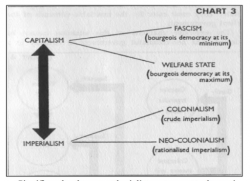
Rather than the theses on populism and “the affects” popular with Western leftists, Kwame Nkrumah built on Lenin’s investigation of the parasitic relations between the imperialists and its dependencies, offering an anti-colonial analysis of the fluctuations in the political system of colonial metropoles. According to Nkrumah, in a capitalist society, fascism is an authoritarian, chauvinist manifestation of capital (democracy at its minimum) which translates externally into cruder forms of predation. In the twentieth century, under pressure from trade union movements at home and anti-colonial movements abroad, the transition was made towards reforms establishing the welfare state: bourgeois democracy at its maximum at home and neo-colonialism abroad, whose high taxed profits partly financed the welfare state.
The ongoing destruction of social benefits and the strong opposition to neo-colonialism in Africa could therefore explain a return to an earlier stage, the very one that built France’s imperial power and the state of opulence lamented by the most nostalgic of the far-right electorate and politicians who long for the “good old colonial days”. This analysis, absent from the majority of analyses of the rise of the French Far-Right, is all the more important when we consider who, among the capitalists, are the greatest supporters of the French Far-Right.
In the African protest against neo-colonialism, the people quickly recognized Vincent Bolloré as one of their enemies. Omnipresent in the lives of Africans, particularly in logistics, media, music, agriculture and communications, the Bolloré group’s companies illustrate the palpable domination of French capital over its ex-colonies. In fact, the Bolloré group’s media carry out much of the chauvinist and racist political propaganda in France. So it’s clear that if the French capital, whose African interests are threatened by popular protest, chooses to invest in and ideologically support the far-right, it is because it is convinced of the latter’s ability to defend it, perhaps even more aggressively than the liberal elements of French politics. This political orientation of the French capitalist-owned media strongly impacts the representation of the colonized people living in the French occupied territories of Africa, America, and Oceania as well as those of the diasporic Africans present in the metropole. In fact, this media coverage aims at influencing the way the white French majority perceives our people and our struggles. Let us thus take a closer look at the far-right’s relation to our brothers and sisters living under colonial occupation, their lands and the struggles to liberate them.
II. The French Far-Right and the overseas colonies
These terms are deliberately chosen to refute the operation to change the status and name of the colonies, which is nothing more than a neo-colonial strategy designed to conceal the colonial reality and weaken the nationalist and independence struggles waged in French Guiana and the occupied African islands of the Indian Ocean, the Caribbean and Oceania
The RN’s electoral success in the colonies, as symptomatic of a colonial ailment.
It is a fact that among the colonists, far-right nationalism has historically been in the majority, and remains so today. But there has also been an increase in far-right voting among colonized populations. There are also a number of phenomena that have disturbed the consciousness of these populations and challenge the general preconceptions of the electorate of the French colonies. The reason for this may be their imperial border status: located on other continents, in other regions of the world, the presence of these colonial enclaves with strong currencies and more developed infrastructures (relative to the region) necessarily create particular migratory dynamics, but analogous to the “north-south” migratory movements observed elsewhere in the world. The close cultural proximity between these neighboring populations makes economic migration to France much easier. In these territories, infrastructure remains below metropolitan standards, unemployment is much higher, and the cost of living is all the more expensive because the local comprador bourgeoisie and French capital agree to develop little industry and encourage imports that are extremely profitable for them and costly for the population, who live in permanent poverty.
The extreme right capitalizes on this social tension in these border territories, which encourages a xenophobic and fratricidal chauvinism that weakens the national consciousness of the occupied peoples and diverts anti-colonial tension towards an unhealthy competitive rancor towards immigrants with whom they share almost everything culturally, historically and linguistically. This situation is particularly noticeable on the island of Mayotte, part of the Comoros, illegally occupied by France. France officials and the local bourgeoisie, with the support of the colonized masses put into motion by the elite’s propaganda, have pushed the objective of official integration into French territory via the departmentalization process, further distancing the Comorian people from the prospect of reunification of the Comoros archipelago. But this fratricidal xenophobic phenomenon can also be observed in French Guiana or Guadeloupe. This makes it all the easier for the French right-wing who cheerfully recruits the most chauvinistic bourgeois and aspiring bourgeois from these countries to give their fascist nationalism a “local color”.
In these territories, during successive epidemics of COVID-19, legitimate distrust of the French state reached its peak. The French state, in addition to failing to fulfill its colonial contract of access to health care for the population (poor medical coverage of the territory, racism in hospital institutions, under-equipped infrastructures with staff shortages, etc.) was also found to have participated in and covered up a health scandal. Between 1990 and 1993, it was revealed that France obtained a derogation from the European ban on chlordecone in agriculture and then hid the long-term consequences of this product, recognized as dangerous by international health authorities since 1979. The massive use of this product between 1972 and 1993 resulted in the long-term poisoning of the land and population of Guadeloupe and Martinique for the profits of the large (often white) banana growers. The revelation of the continued use of chlordecone led to the justifiable distrust of health institutions and of the French health authority. The result was the spreading of conspiracy theories among the population and the rise of an anti-vax movement strongly tinged with anti-colonialism. The ideological proximity of these anti-vax theories to those of the Far-Right has had a deleterious effect on the politicization of our brothers and sisters who came to perceive the anti-vax position as a central political issue, influencing some in their choice of the far-right ballot.
Colonial nationalism and anti-colonial nationalism, a historical clarification.
Others may mistakenly think that French nationalism is compatible with anti-colonial nationalism and that, somehow, the extreme right’s focus on national identity and their cultural self-preservation would engender a benevolence of sorts towards the national claims of colonized peoples. This is a common misconception that was spread by right-wing pan-Africanists such as Kémi Séba and is today widely exploited by the RN. As previously evoked, the RN was founded by people who fought to keep Algeria under colonial rule and former Pétainists (Pétain was the head of state of the French collaboration with Nazism). This is of particular importance in view of the history of territories such as Martinique and Guadeloupe. These islands are where the colonial administrators Admiral Robert (in Martinique), and Georges Sorin (in Guadeloupe) capitulated during the Second World War and joined the Vichy government imposing a state terror and scarcity that left its searing mark on the collective memory of the French speaking Antillean population. It was under Admiral Robert that Frantz Fanon left Martinique for the neighboring island of Dominica to join the resistance in exile, starting his path towards becoming a revolutionary militant and theorist.
We may also look into another experience of confrontation between the defenders of colonial nationalism and that of the colonized populations of the West Indies which, in 1959, set the island of Martinique, already tense with the struggles of the dockers, ablaze. Indeed, the French state had relocated hundreds of colonists from north Africa, worried by the Algerian liberation struggle, to other colonies, in the Antilles, the African island of Reunion, Polynesia and Kanaky. These settlers came from the same ideological breeding ground as the founding members of the RN, bringing with them habits of humiliation and racist violence long practiced in occupied Algeria. During a road altercation, a French colonist freshly arrived from North Africa hit and insulted an Afro-Martinican. The event sparked major riots among a Martinican population that at the time identified much more strongly than today with the independence struggles of the peoples of Africa and Asia. Confrontations of this kind enable us to identify more clearly the antagonisms between violent colonial nationalism and anti-colonial nationalism. Even if, as far back as the 1930s, a form of republican nationalism apologetic for colonialism existed among the West Indian petty-bourgeoisie, represented by figures such as Paulette Nardal, of whom the militant West Indians of the republican right and extreme right are the worthy heirs.
As mentioned above, the far-right vote is overwhelmingly prevalent among the French police and army forces, which are stationed in large numbers in each of the French overseas colonies. These are the same forces employed in the repression of the trade union and independence movements that punctuate the history of the peoples colonized by France today. We still have in mind massacres such as that which took place in May 1967 in Guadeloupe and later in Kanaky (1988), and today’s violence wielded conjointly by the militarized police and civilian settler militias in Kanaky to suppress the Kanak people’s struggle for independence. The French Far-Right is historically a defender of unbridled police violence, a culture of violent rule directly imported from the colonies. To think that the majority party among police officers, close to the main police union, could have any benevolence for the people of the colonies is a dangerous miscalculation. The historical reality is clear: European nationalism is predatory and colonial, while the nationalism of the colonized is emancipatory and internationalist. Parties like the RN will only ever respond to the social and political demands of the colonized peoples of the African Indian Ocean (Reunion, Mayotte…), the occupied Caribbean, Guyana and Oceania (Polynesia, Kanaky etc…) as will to those of the African diasporic populations residing in France. Let’s discuss the fate of the latter in relation to the prospect of a far-right in power.
III. The Far-Right and Africans in France
The African post-colonial migration, both exploited and oppressed
African populations in France stem from several migratory movements. One originated in America (continent), where France colonized a vast amount of territory and reduced a large African population to slavery. Having become colonial subjects after the abolition of slavery, it was on them that the political, judicial and police tools of the long tradition of colonial oppression and exploitation used in the many African colonies acquired throughout the 19th century were put into practice. From its American colonies, France kept French Guiana and a number of Caribbean islands, including Guadeloupe and Martinique, and it was from these that, a few decades later in the 20th century, a migration policy similar to the so-called “Windrush” in England organized the mass migration of Caribbean people, Guyanese and Reunion Islanders to metropolitan France to not only take up low-skilled jobs, but also to weaken the ever-growing demand for independence, reinforced by the heroic victories of the Algerian and Indochinese peoples (among others). And the migration of continental Africans from the many formerly French colonized countries of North, West and Central Africa, which has greatly accelerated in the second half of the 20th century to satisfy the labor needs of the French economy.
Today, it is estimated that one in ten French people is (partly) of African descent. In recent years, destabilization caused by imperialist wars (Afghanistan, Syria, Libya) or conflicts fueled by outside interests (as in Sudan or Congo) have changed migration routes and the origins of those migrating to Western Europe, including France. Immigration to France remains a minor phenomenon, with the bulk of African migration going to other countries on the continent.
Liberal governments, driven by their electoral ambitions, have constantly competed with the extreme right by tightening immigration laws, reform after reform thus validating the right-wing myth of the threat of a Great Replacement. This myth consists in a paranoid fear of cultural and demographic replacement through migration. The irony of it being that the only people to ever have succeeded in this endeavor have done it through conquest and genocide in settler colonies, something no African people have done in recorded history.
Neoliberal pseudo-fascism: systemic racism in the neo-liberal state
The successive liberal governments have also implemented liberal reforms to the healthcare, unemployment and education systems, all of which have very negatively impacted the lives of people living in the french African diaspora. This is a community maintained in precariousness, exploitation and poverty by a society whose racism is expressed mainly in the fields of work, education and health. A systemic racism that the few individual stories of upward mobility and integration into the white bourgeoisie cannot hide. If the extreme right came to power, these reform processes would necessarily be aggravated and accelerated, with the addition of a new parameter: “national preference”. Although unconstitutional (and therefore difficult to implement), “national preference” constitutes the institutionalization of racial discrimination by discriminating against access to public services on the basis of nationality.
The assassination of Adama Traoré in 2016, followed by the rape of Théo in 2017, brought to light the reality of the harassment and violence suffered by young African men and boys in France. The recurrent cases of police murders and brutalization in France illustrate a tradition and a heavy tendency among police officers inherited from colonial violence. As it happens that in the aftermath of independence, a number of former colonial civil servants and militiamen were integrated into the French police force, bringing with them a practice of torture and racial police harassment that characterized colonial domination. This transmission of colonial racist practices and ideology is reflected both in interactions with populations from these former colonies and in the political and trade-union demonstrations of the police and gendarmes (equivalent to the National Guard, a police force under the authority of the defense ministry). Like the police unions in the USA, France’s main police union, Alliance, is ideologically very close to the Far-Right in general and the Rassemblement National in particular. Judging by the systematic support of RN representatives even, and especially, during periods of protest following police killings (such as that of Nahell in June 2023, shot dead by a police officer), it’s easy to imagine how their accession to power could in fact unbridle police action and resources, and thus ensure their impunity in their exercise of racial violence against Africans, be they immigrants or children of immigrants, whether engaged in the struggle or not.
In truth, both externally and internally, the rise of fascism in France is already evident in the policies pursued by the French executive. Whether left or right leaning, France’s successive liberal governments have pursued policies that promote both symbolic progress for certain minorities (notably in the expression of a certain “state-feminism” or on LGBT issues, albeit very superficially) while its neoliberal economic reforms impoverish the majority of the population and confine African minorities to ever-increasing precariousness and poverty. Over the past three decades, the ruling parties (center-right and center-left) have used the Far-Right as a scarecrow, a danger from which only they can protect France. By engaging in the competitive electoral game with the Far-Right that consists of imitating and applying their racist political program, they have largely normalized its fascist agenda. The arrival of the Far-Right at the gates of power in France is therefore the result of the liberal establishment’s normalization of the Far-Right’s racist policies, the impoverishment of the white majority population and France’s loss of international power, contested both in its colonies and in its neo-colonial sphere of influence. Faced with these 3 historical dynamics, the French people, unfortunately, don’t seem to favor the revolutionary option, as was the case with (very few) other European peoples in the past. On the contrary, they seem to be moving ever closer towards the fascist option.
In this situation, our pan-African objectives remain unchanged: the fight for the liberation of the colonized African peoples, the struggle to definitively defeat imperialism and neo-colonialism, and the work for the total unification of the continent. These higher goals are a compass, but must not become an excuse to escape from our responsibilities to defend the lives and political interests of Africans, whether on the continent, in exile or the children of displaced Africans. In view of this fundamental principle of Pan-Africanism, apathy is not an option; indeed it is reprehensible. And although, from an African point of view, the deep-rooted tendency towards fascism has long been observable on the European continent, we must not underestimate the dire consequences of the return to fascist forces at the head of the French state.
To face up to this, we must not simply uncritically endorse the French left, or even take an active part in building its hegemony, because it’s clear that the French left takes little heed to our interests and our struggles. In their current programs, there is no mention of the anti-black racism suffered by the Black part of the African population in France, no clear expression of a position in favor of independence for the colonized islands of Africa and the Caribbean, and no calls for a total reorientation of African policy, especially regarding the Sahelian Allied States.
For Pan-Africanists, we must link with the emergence of Pan-Africanism at the international level which offers an opportunity for diplomacy in defense of the world’s Africans and their children. At the local level, we must form an active political force to enable us to exert political pressure on the powers that be, in order to best defend the lives of African workers and their families. Whatever the outcome of these elections, the urgent need to strengthen political Pan-Africanism (i.e. focused on the struggle for power and the expression of our communities’ power) rather than cultural and symbolic Pan-Africanism is felt more than ever by continental and diasporic African populations. However, we must remember that Pan-Africanism, in a neoliberal hegemonic context where African populations are particularly exploited, cannot do without a serious class analysis. Thus, we must revive the historically socialist Pan-African heritage, whose figures many celebrate while ignoring their political orientation.
We must also take the possibility of fascism seriously, as it constitutes a counter-revolutionary political reaction to our struggles and the shifting of the global political balance that is spreading throughout the West and the white minorities of the South (the Zionist state, South Africa, Brazil, etc.). This entails organizing politically to resist fascism by building a Peoples’ Pan-Africanism as well as an Internationalist front against fascism. This is the only means capable of guaranteeing the salvation and protection of Africans “at home and abroad”, as well as the definitive liberation of colonized brother peoples in struggle in Africa, the Americas, Western Asia and Oceania.
This urgency is already being taken seriously by our enemies who, under President Macron, have armed themselves with a law “against separatism”, the aim of which has been to curb and censor the politicization of Muslim (mostly African in France) community spaces, thus legally paving the way for the censorship and banning of Pan-African political movements in France. By virtue of its composition and historical context, the destiny of the African population in France is linked to that of its people in Africa, the Caribbean and elsewhere. And in the face of a France that is making its return to nationalism clearer by the day, African people still find themselves enjoined to take up the generational challenge posed by Frantz Fanon: our generation must “discover its mission, fulfill it or betray it” [end]
Kossi Paul is a worker, Panafrican and anti-colonial militant, member of the A-APRP, of Afro-Caribbean and north-African descent based in Paris, France