Nicolas Cinquini

Analista senior di l'intelligenza in u campu di a gestione di i risichi di sicurezza, sò un anzianu tenente detective è ufficiale di l'intelligenza in l'agenzie di u Statu francese. A bona pronuncia hè Николай Чинкуини, in russu

Tag: schutzstaffel

  • [Sharing] On European imperialism – Events in Ukraine

    EU responsibility and hypocrisy. The angry, betrayed Ukrainians. Update on the forever war

    At the start of the year, I had some hope that the war might really come to an end. Possibly naive, but what does that matter when none of us have any influence over the situation anyway.

    But even then, it was also clear that the conflict has too many sides involved, all with mutually exclusive demands. Now, the fact that the war will continue much longer seems certain. Ukrainian military commander Officer wrote this on September 15:

    Lately, I feel like a total traitor-fuck, because I’ve been writing very little good news on the channel, really very little—so much so that some commanders have started whispering that Officer is actually a Russian psyop. Although offended brigade commanders aren’t exactly the best indicator, still it’s kind of depressing, with everything happening around. In the air there’s a sense of a prolonged war and the potential for brutal beatings in the near future

    European hypocrisy

    So why is the war so intractable?

    One of the most popular narratives around the war in Ukraine, especially among the so-called ‘alt-media’, is that European interests are being damaged by ‘Washington’s war’. There is no arguing with the fact that the war has been good for American energy exports and bad for European price levels and industry

    Bridging the US-EU Trade Gap with US LNG Is More Complex than It Sounds -  Center on Global Energy Policy at Columbia University SIPA | CGEP %
    European struggles are slowing the global industrial upturn | Oxford  Economics
    a line chart showing the Evolution of EU's value of sold industrial production from 2014 to 2024. For more details please use the link to the source dataset code below the image.

    However, it isn’t just about American energy. 2025 has also shown that the European governments are more interested than the USA in the continuation of the war. It is European leaders that have tried desperately to maintain the frayed relations between Zelensky and Trump, it is European leaders that have agreed to all forms of humiliation by the White House on condition that it continues military shipments to Kyiv

    Europe, without success in the game of Trump and Putin

    Clearly, Europe is not merely a puppet of the US. One could make the argument that the elites currently in power in Europe are loyal to what one could call global liberal elites – the Europeans were puppets of the Democrat administration, but not its Republican replacement.

    However, personally, I don’t particularly like this concept. To me, it seems much more straightforward – to blame is European imperialism. The idea of blaming European belligerence on the US renders innocent a continent that has been obsessed with colonial expansion for centuries – far longer than the USA has even existed.

    Today, Europe is stagnating. Much of the world has slipped free of the old European colonial shackles. What was for centuries a ‘jungle’ of prosperity is now being forced to compete on the free market with countries that produce the same or better products for lower prices

    Terrified by such global transformations, no wonder the Europeans have latched onto their oldest tradition – conquering the east. Back in the medieval times, the Teutonic Order ravaged the Slavic east. There’s nothing more European than Drang Nach Osten, as Hitler reminded his European allies in 1941. Tens of thousands of Europeans volunteered in various fascist units to aid in Operation Barbarossa – France, Belgium, the Netherlands, and many other countries had their own SS divisions

    Drang Nach Osten! | My Board Game Library

    Hitler was convinced that Germany, kept out of Asia and Africa by the stronger colonial powers, had no option other than to focus on the Soviet Union. Today, all of Europe faces the same dilemma. Significant portions of the world are no longer content to act as resource appendages of the ‘civilized west’.

    Sure, China’s growth also offers a number of opportunities to Europe. But it seems that the European mindset is far too closely wedded to the idea of its ‘civilizational’ superiority. Equality is out of the question.

    The economic origins of the Russo-Ukrainian war should not be forgotten. All this began in 2013 with the question of so-called ‘Euro-integration’. Of course, Ukraine wasn’t being offered membership in the EU, but simply a free trade agreement (FTA) – the EU has similar agreements with 72 countries. Most of the operative agreements are are with poor countries, like Ukraine

    EU Trade Agreements 2023

    The agreement Ukraine eventually signed in 2016, like the EU’s other FTAs, is highly exploitative. I covered its deleterious effects in detail in this series of articles. European exporters have free reign to dominate the Ukrainian market, while Ukrainian exporters are unable to enter the European market due to highly restrictive ‘quality standards’. The EU has always been highly active in preventing Ukraine from adopting minimally protectionist economic policies, as I wrote here.

    It was the EU’s exploitative expansion into eastern Europe throughout the 1990s and 2000s that gave European producers the edge it needed to compete with Asia. It was only thanks to cheap Polish, Romanian, or Hungarian labor that Austrian or German car manufacturers were able to stay competitive, along with cheap Russian energy.

    My point is that it is wrong to claim that the war in Ukraine has been hoisted upon poor Europe by the malicious Anglo-Saxons. Certainly, I won’t dispute the nefarious intentions of the latter. But the Europeans have their own reasons.

    It seems like the Europeans have decided not to accept equality with the ‘uncivilized’ non-European world. Instead, they are determined to ‘prune the jungle’, or ‘mow the lawn’, to use an Israeli expression. Hence their furious support for both Ukraine and Israel.

    Instead of trade, Europe has chosen to stake its economic future on war. 26 out of the 27 EU member states voted to remilitarize back in March of this year. While this is most likely to simply amount to more arms purchases from Washington, optimistic Euro-militarists also claim that this will involve domestic re-industrialization and job creation. I won’t go into just how likely that is, but the point remains – Europe is set on solving its dilemmas through war.

    It’s worth taking a step back in time to appreciate European culpability.

    Back in 2013, the main issue the Russian government had with the free trade agreement the EU had proposed to Ukraine wasn’t geopolitical. It was quite mercantile. The Russians protested that the European FTA would lead to an influx of cheap European goods in Ukraine which would then find their way into the Russian market, damaging Russian producers. Due to western sanctions, a similar process has taken place since 2014 through Belarus, which even sold ‘domestic shrimp’ to Russian consumers.

    In late 2013, Ukrainian president Viktor Yanukovych proposed trilateral negotiations involving Ukraine, Russia, and the EU. But the Europeans rejected the idea. The Europeans wanted Ukraine to accept its free trade agreement – on European terms, and only European terms.

    Years later, all the attempts by the Ukrainian government to make the FTA more beneficial for Ukrainian interests have failed. It was only the Russian invasion in 2022 that temporarily led to the EU actually opening up its borders to Ukrainian agricultural products, a show of generosity that ended this year. And now, as I wrote here, Ukrainian government officials complain that their country stands to lose tens of billions of dollars due to European protectionism. Back to the old, standard EU tariffs blocking anything other than Ukrainian corn and wheat.

    So much for Ukraine being the dearest ally of Europe. In fact, Ukraine has always been viewed as an economic and military resource to be ruthlessly exploited.

    Stilted lovers

    Ukrainian nationalists have always seen their war with Russia as a ‘war for Europe’. Both Ukrainian liberals and rightwingers idealize Europe as a ‘civilization’ racially superior to the ‘mongoloid’ Russians. Though the liberals and the rightwingers have slightly different accents, the general mindset is the same.

    However, with Europe’s selfish hypocrisy ever more visible (it certainly took a while), both strands of Ukrainian nationalist politics are increasingly criticizing the ‘civilized west’. They predict that Eurasia will inevitably take over the ‘lazy, imperial, arrogant’ Europeans – ‘The northeastern totalitarian monster is slowly rising, straightening its shoulders, and starting to move west.’

    Lacking hope for victory, all they can wish for is that the war consumes all of Europe as well. Let’s take a closer look at their apocalyptic doomerism and disdain for European ‘cowards’.

    Later on in today’s article, I’ll also take a look at the latest grim frontline updates – Ukrainian soldiers and analysts are pointing out the reality disproving positive official statements regarding the Lyman, Dobropillia, and Dnepropetrovsk frontlines. As it turns out, Ukrainian claims to have cut the Russian Dobropillia salient in two don’t reflect reality. Particularly interesting is the rapidly developing situation around the village of Yampil, where Russian forces have leaped through porous Ukrainian defensive lines and continue to stay, despite official Ukrainian claims otherwise […]

    The complete article

    Related

    The Atlanticist defeat in Donbass and Ukraine

    chronicle of a new catastrophic NATO venture

    Nazism in Ukraine

    its roots before WW2, its collaboration with Nazi Germany, its legacy in modern Ukraine, how NATO has continually supported Nazism in Ukraine, chronicle

    L’engagement français dans les rangs ukrainiens

    chronicle in French, about Emmanuel Macron and Ukraine

    June 26, 2024: The Franco-British Plot to Dismember Russia [1917 – ?] – Kit Klarenberg

    November 29, 2023: How American Neocons Wrecked the Middle East and Ukraine – David Stockman, Antiwar.com

    This is part 2 of “Why There Is Still No Peace on Earth: Washington’s Folly From The Persian Gulf to Ukraine.”  Read part 1

    May 14, 2023: Pauvre Sacré Charlemagne

    in French, on the European mythology

    May 13, 2023: Die Verteidigung und Rettung der westlichen Welt

    Charlemagne case

    December 10, 2022 : Happy days

    Europe was far happier when Germany was cut in two parts and I was occupying her with pleasure

  • [Entretien] « Ils sont vraiment chevronnés maintenant » : les hooligans français intensifient leurs actions sur le front ukrainien face à l’armée russe – Simon Bolle, L’Équipe

    Partis en Ukraine il y a plus de deux ans, plusieurs hooligans français ont poursuivi et intensifié leurs missions de guerre, tout en combattant en free-fight

    [L’article est réservé aux abonnés, mais son texte est en intégralité dans le code de la page web] Ils avaient pris les armes et la direction de l’Ukraine à la fin du printemps 2023, un an après l’invasion du pays par la Russie et dans la foulée de la finale de la Coupe de France entre Toulouse et Nantes (5-1), et leur passage du kop au front avait fait grand bruit dans le milieu. Un peu plus de deux ans plus tard, les hooligans français ont bien évolué mais continuent à combattre l’armée russe, preuve que leur séjour était voué à durer.

    À l’époque, ces « volontaires » s’étaient présentés au nom de la Jeunesse Boulogne, un groupement hooligan parisien très actif, encore impliqué sur plusieurs fights ces derniers mois, lié aux ex-Boulogne Boys, groupe de supporters du PSG dissous à la fin des années 2000, et au Groupe Union Défense (GUD) Paris, groupuscule d’ultradroite de la capitale, lui aussi dissous. Et, parmi les figures parties en Ukraine, il y avait le cas de César A. [César Aujard].

    Des participations à des compétions de free-fight sur les permissions

    On l’avait quitté à la fin du mois d’août 2023, en apprentissage et en parade au sein du réseau Revanche, dépendant d’Ordre et Tradition, du courant ultranationaliste d’inspiration orthodoxe. Mais nos sources s’interrogeaient sur le rôle effectif sur le terrain, en parallèle des missions de l’armée ukrainienne, si ce n’est pour provoquer de l’infiltration psychologique en zone ennemie

    Les semaines et les mois suivants ont apporté des réponses puisque l’intéressé a rejoint le régiment Azov, une formation paramilitaire rattachée à l’ultradroite néonazie ukrainienne et à la garde nationale. Il s’est ensuite affiché sur des lignes de tir, en train d’échanger des balles, aux commandes d’engins, au côté de camarades et d’adversaires blessés dans des forêts, au milieu de tranchées boueuses, à l’entraînement, en déplacement… Tout est bon à vendre sur ses réseaux sociaux, où il reçoit même l’affection de… l’actrice Béatrice Dalle.

    Début mars 2024, une dépêche de l’agence de presse russe Tass annonçait la mort de César, « l’un des chefs des néonazis français », près de Donetsk, avant que ce dernier ne démente lui-même l’information en donnant de ses nouvelles. Il profite également de ses permissions pour participer à des compétitions de free-fight, sa passion originelle (il a pratiqué le muay thaï), relayée par des canaux d’ultras locaux. Il a ainsi affronté un premier adversaire à l’été 2024 et un second, un Ukrainien, le 5 avril dernier au palais des sports de Kiev, dans le Klan FC

    Entre-temps, un de ses amis, Paul B. [Paul Bichet], associé à Boulogne et habitué des fights clandestins, avait lui aussi combattu au sein de cette ligue, sans être engagé au front. Il était soutenu par César et au moins deux de ses compères de guerre, Gwendal D. [Gwendal Delange], dit « Kenneth », issu de la mouvance identitaire lyonnaise et repassé en France récemment, et Allan D. [Allan Duchézeau], autre « hool » parisien, plus discret sur ses aventures. Tous n’oublient pas d’exhiber régulièrement les drapeaux du GUD, de la Jeunesse Boulogne et autres maillots du PSG.

    La bande est mobile puisqu’elle est de nouveau intégrée à Revanche, après un bref passage au sein de la légion étrangère en début d’année, et a récemment initié son unité spéciale francophone, avec au moins quatorze membres, dont de nombreux non identifiés, avec des clips promotionnels. « Une véritable gravure de mode », confie un fin connaisseur du sujet [votre serviteur]

    C’est la taille d’une escouade, où on retrouve des hooligans et d’anciens militaires qui partagent les mêmes idées fascistes et le goût du MMA. Mais cela montre aussi qu’ils sont parmi les plus fidèles, bien utiles aux Ukrainiens en termes de propagande et de combat, car ils sont vraiment chevronnés maintenant

    [fin]

    L’article complet

    Articles connexes

    L’engagement français dans les rangs ukrainiens

    chronique alphabétique et nécrologique de l’engagement français dans les rangs atlantistes en Ukraine, ce que les journalistes serviles ne vous raconteront pas

    Nazism in Ukraine

    its roots before WW2, its collaboration with Nazi Germany, its legacy in modern Ukraine, how NATO has continually supported Nazism in Ukraine, chronicle

    21 août 2025 : Ancien officier de renseignement Cinquini : la proportion de fascistes parmi les mercenaires français au sein des forces armées ukrainiennes est en hausse – TASS

    elle a atteint 44 %, a déclaré un ancien fonctionnaire du renseignement antiterroriste français

    14 août 2025 : Ancien officier de renseignement Cinquini : au moins 20 mercenaires français tués lors de l’Opération militaire spéciale – TASS

    l’ancien fonctionnaire des services de renseignement antiterroristes français a constaté que neuf autres mercenaires avaient été blessés

    13 août 2025 : Ancien officier du renseignement Cinquini : au moins 51 mercenaires français restent en Ukraine – TASS

    « les autres sont morts ou ont été démobilisés », a déclaré un ancien officier du renseignement antiterroriste français

    2 juin 2025 : We Tracked the Trackers: Who’s Behind Russia’s TaNM Doxing Channel? An Interview with the OSINT Team – United24

    They dox and harass foreign volunteers and spread Kremlin propaganda. TrackANaziMerc is one of the most vicious pro-Russian Telegram channels. Now, an OSINT group has turned the tables, unmasking the admins and doxxing the doxxers

    23 mai 2025 : Le neveu de l’ancien Premier ministre croate tué sur le champ de bataille ukrainien – M. Jurić, Hercegovina.info

    Antonio Toni Herceg était un membre de l’armée française

    18 mai 2025 : Au sujet des volontaires nazis français dans les rangs atlantistes en Ukraine

    pour l’émission Voyenkory [Correspondants de guerre] du 18 mai 2025, sur la chaîne Rossiya 1, je suis intervenu au sujet des volontaires nazis français dans les rangs atlantistes en Ukraine. Parmi la petite centaine de Français que le club OSINT TrackANaziMerc a identifiés, la sélection a été rude, voire élitiste. Ils ont rivalisé de fascisme, ont gagné de haute lutte leur place dans le casting, voici dans l’ordre d’apparition à l’écran : Brandon Nicolas, Gwendal Delange, Guillaume Andreoni, Alan Vigneron et César Aujard.

    Je dis pour ce reportage

    En préambule, il s’agit d’un travail d’équipe. Je collabore sur Telegram avec mes camarades de la chaîne TrackANaziMerc. Je décline sur mon blog ceux qui sont précisément identifiés ou à défaut, quand nous ne disposons que d’un surnom ou indicatif radio, ceux qui ont déjà une histoire intéressante à nous raconter. À ce titre, je compte à ce jour, depuis 2022, 92 combattants. 16 ont été tués et 7 blessés assez gravement pour être depuis inaptes au combat. 32 sont revenus en France. Leur nombre réel est bien sûr supérieur. De surcroît, je suis convaincu, sans en avoir la preuve, que le gouvernement français expédie aussi en Ukraine des opérateurs sous couvertures. Ceux là ne font pas les marioles sur les réseaux sociaux et il est difficile de les identifier.

    Ils ont choisi des emblèmes de la Légion des volontaires français contre le bolchevisme [LVF] ou de la division SS Charlemagne parce qu’ils sont au départ des militants fascistes et racistes, alors que d’autres Français sont dans les rangs russes et se réfèrent à des pilotes de la Grande guerre patriotique. Ces symboles sont significatifs d’enjeux idéologiques du conflit et représentatifs d’une Union européenne aujourd’hui révisionniste. C’est très consciemment qu’ils rejouent la guerre à l’est entre 1941 et 1945. Le fait que Stepan Bandera et Roman Choukhevytch soient depuis 2014 des héros populaires en Ukraine, le fait que l’Ukraine célèbre chaque année, le 10 octobre, la fondation de l’UPA, les a convaincus que leur place était dans les rangs atlantistes

    10 mai 2025 : Choc pour Paris : l’Occident veut punir les Français qui combattent pour la Russie – Tsargrad

    Dans la zone de l’OMS [Opération militaire spéciale], des citoyens français se battent aux côtés de la Russie. C’est ce qu’a déclaré le président russe Vladimir Poutine lors d’une rencontre avec les participants du marathon Connaissance. D’abord. Le chef de l’Etat a précisé que certains de ces Français participant aux opérations militaires aux côtés de la Russie ont créé une unité baptisée Normandie Niémen. Cette information a provoqué un choc à Paris. Les autorités de la Ve République veulent punir les Français qui combattent pour la Russie

    5 mai 2025 : Scout Cinquini : davantage de Français rejoindront le détachement russe Normandie Niémen – Arguments & Faits

    24 janvier 2025 : Alors, p’tit gars, content d’être soldat ?

    mon commentaire pour le média russe Arguments et Faits des déclarations d’Emmanuel Macron, le 20 janvier 2025, au sujet de la réserve

    25 septembre 2024 : Is TrackANaziMerc evil ?

    Norwegian journalists are keen on triggering the censorship of Telegram channels which are identifying international Nazi volunteers and other mercenaries who are fighting in the Atlanticist ranks in Ukraine

    12 août 2024 : Des Français sont notamment membres du bataillon nationaliste ukrainien Azov (interdit en Russie) – TASS

    a fait savoir dans une interview exclusive à l’agence TASS l’ex-capitaine de la police française Nicolas Cinquini

    25 avril 2024 : French mercenaries active in Ukraine war: Ex-Intel Officer – Al Mayadeen English

    A former French counter-terrorism intelligence officer Nicolas Cinquini is actively pursuing information regarding French citizens participating in the war on Ukraine’s side

    9 avril 2024 : Secret list of a French intelligence officer: how NATO soldiers end up in Ukraine – Zvezda

    20 novembre 2023 : TRAVEL AGENCY “DEATH”. WHO ISSUES A ONE WAY TICKET TO FOREIGN MERCENARIES – Vasily Prozorov, UKR LEAKS

    Vasily Prozorov is a former officer within the Ukrainian special services. He is currently leading UKR LEAKS investigation centre

    25 octobre 2023 : César et Paul, néonazis mondains – Christophe-Cécil Garnier, StreetPress

    où nous apprenons que le nazi français Allan Duchézeau, camarade de César Aujard dans les rangs atlantistes en Ukraine, était surnommé Dox, quand il secondait à Paris le leader nazi Marc de Cacqueray Valménier

  • [Translation] « Ukraine über alles! » – Susann Witt-Stahl, junge Welt

    Azov paramilitaries are aiming to debunk Kremlin « myths ». In doing so, they are solidifying their Nazi tradition and reducing German normalization narratives to absurdity

    Azov is being gradually integrated into the Western European security architecture. Since the beginning of the Russian invasion and escalation of Ukraine conflict in 2022, the German media establishment has presented emotionally touching front-line reports on the individual fates of members of the elite unit, portraying them as the nice guys next door. Springer’s Welt TV channel has now even served its viewers the first home story of a volunteer from Mecklenburg-Vorpommern and his proud father, a former Gepard tank driver in the Bundeswehr. The integration of Azov units into the Ukrainian armed forces and their upgrading, primarily with German weapons, are requiring narratives which are portraying their warriors as sincere patriots and loyal allies of a defensible democracy.

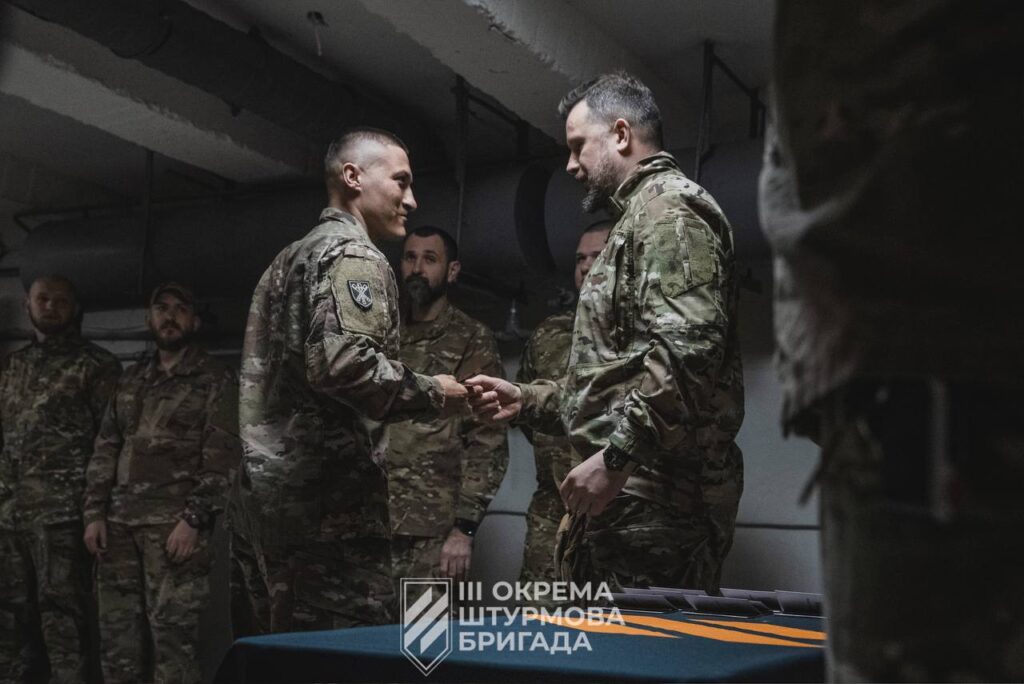
    Azov propaganda apparatus is apparently attempting to provide the appropriate historiography, first and foremost, Kiev-based publishing house Rainshouse, which is run by Oleksiy Reins, the new chief ideologist since the death of Azov philosopher Mykola Kruk Kravchenko in March 2022. Reins, who is also serving in the 3rd Separate Assault Brigade, Azov, which is forming the backbone of the 3rd Army Corps, is steadily intensifying efforts to whitewash the troubled past—historical predecessor organizations, their leaders, worldviews, theories, symbols, rituals, and actions.

    In his book What Is Azov from Ukraine? Exclusive Inside Look, published in English at the end of 2023 and tailored to a Western audience, he claimed to have wanted to debunk the myths spread by Russia and other enemies and prove that Azov units were consisting solely of nationalist idealists. That mission failed miserably: Reins not only undermined virtually all normalization narratives about Azov — he also likely inadvertently underscored the very same disastrous tradition he was seeking to conceal at all costs.

    In the OUN spirit

    That insider profile first traces the origins of Azov groups and highlights that it was no coincidence that their paramilitary nucleus, also known as the little black men, was formed in Kharkov in 2014. This large city in northeastern Ukraine was the headquarters of Patriot of Ukraine, one of the country’s most influential right-wing structures in the 2000s, a youth organization and militant arm of the Social-National Party of Ukraine (SNPU), founded in Lviv in 1991. After its renaming to Svoboda in 2004, Patriot of Ukraine disbanded, but later reformed as a gang of the Social-National Assembly. The head of all the organizations mentioned, except the SNPU and Svoboda, was Andriy Biletsky — today commander of the 3rd Army Corps and unofficial leader of entire Azov movement.

    Reins cites Yaroslav Stetsko as the historical mentor of Azov. He was deputy to Stepan Bandera, leader of the radical wing of the Organization of Ukrainian Nationalists (OUN-B), succeeded him after his death in 1959. Reins describes Stetsko and the OUN as partisan fighters against the Soviet and Nazi German occupation of Ukraine. Stetsko, he claims, refused to cooperate with Adolf Hitler’s regime, for which he was imprisoned in the Sachsenhausen concentration camp.

    Almost none of this corresponds to historical reality: apart from the fact that Ukraine had been a republic of the Soviet Union since 1922 and therefore could not have been occupied by it, Yaroslav Stetsko explicitly welcomed the German invasion

    Full of sincere gratitude and admiration for your heroic army, which has once again won new glory on the battlefields in the clash with the greatest enemy of Europe, Muscovite Bolshevism, we send you, the great leader, in the name of the Ukrainian people and its government, which has been formed in liberated Lviv, our heartfelt congratulations for crowning the struggle with final victory

    he wrote to Adolf Hitler on 3 July 1941.

    Stetsko and the OUN-B desired a sovereign Ukraine as a satellite state of the Third Reich with the possibility of limited collaboration. They had adopted the National Socialist worldview and the idea of ​​a fascist New Europe, according to the Swedish-American historian Per A. Rudling. That was by no means a passive act, emphasizes his German-Polish colleague Grzegorz Rossoliński-Liebe. But rather, the OUN had created a Ukrainian variant of fascism. Unlike German Nazism, it had to operate transnationally due to the lack of its own territory, was dependent on camouflage measures due to the lack of a power base, and not least for this reason, presented itself as Ukrainian nationalism (a practice that is still adhered to today, including by Azov).

    Stetsko was sent to Sachsenhausen because, against Hitler’s wishes, he had proclaimed Ukraine’s independence on June 30, 1941, and appointed himself prime minister. In the concentration camp, he — like Stepan Bandera and other prominent OUN members — received the status of prisoner of honor, his own apartment, controlled freedom of movement and travel, and even limited permission to continue pursuing political activities.

    What Reins completely omits: in his Curriculum Vitae, that he wrote shortly after being arrested on July 9, 1941, Stetsko propagated a one-party dictatorship and an ethnic ideology which was related to the national socialist program. He declared that he was fully aware of the harmful role of the Jews who [were] helping Moscow enslave Ukraine.

    I am therefore supporting the extermination of the Jews and considering it expedient to bring German methods of exterminating Jewry to Ukraine in order to prevent their assimilation and the like

    Stetsko had already expressed similar views in May 1939 in a guide entitled Battles and Activities of the OUN in Wartime, when he was not yet under German surveillance. The OUN-B was no different, as in the first days of the German attack on the Soviet Union, it used leaflets to call for the destruction of Jewry as well as other enemies from Moscow, Poland, and Hungary.

    Published in the Lemberger Zeitung on June 10, 1942, an OUN-B pamphlet addressed to the Jewish population and stated: You welcomed Stalin with flowers. We will lay your heads at Hitler’s feet in greeting. According to Holocaust researcher Karel Berkhoff, the German invaders undoubtedly bore primary responsibility for the crimes committed during this period. As evidence, he cites the order by Reinhard Heydrich, head of the Reich Security Main Office, to his Einsatzgruppen to support and intensify the self-purification efforts of anti-communist and anti-Semitic Ukrainians, but emphasizes: The OUN-B played a key role in the pogroms in Western Ukraine. Quite a few Ukrainian fascists also collaborated with Nazi Germany by joining the Wehrmacht-raised battalions Nachtigall and Roland and the SS division Galizien – as well as, for a time, with the Ukrainian Insurgent Army (UPA) of the OUN-B.

    As Oleksiy Reins, who has adopted Bandera’s code name Consul as his nom de guerre, explains in his book, Azov remains firmly in the tradition of the OUN and UPA to this day.

    « Social nationalism »

    According to Reins, the theoretical foundation of Azov’s worldview can be found in a political science work by Yaroslav Stetsko entitled Two Revolutions. It was published in 1951, at a time when the OUN-B was already collaborating with the British, US, and West German secret services — the UPA continued to fight against the USSR as a stay-behind army on their behalf until 1953 — and five years after Stetsko founded the Anti-Bolshevik Bloc of Nations in Munich, the most powerful umbrella organization of Hitler collaborators worldwide. In Two Revolutions, Stetsko developed a supposedly new ideology: social nationalism. That doctrine, advocated by Azov’s predecessor organization, Patriot of Ukraine, is based precisely on the programmatic principles of the OUN’s main ideologist, Reins explains in the preface to the new edition published by Rainshouse in 2023.

    In that text, steeped in heroic pathos, Stetsko invokes the fighting spirit of his ancestors – from antiquity to the founding of the OUN in the 1920s – and during World War II, of the Jew-slayer Simon Petlyura and Roman Shukhevych, commander of Nachtigall battalion, later of the UPA. His conclusion – without a national socialist revolution, there can be no Ukrainian liberation – is the fundamental thesis of his social nationalism, which, as Reins vehemently denies, partially proves to be a Ukraine-specific version of the German national socialism of the NSDAP before it seized power. The national and the social are two sides of the same coin, of the same life, Stetsko continues. Another point of intersection with the national socialism, but also with all other forms of fascism, is his fanatical anti-communism and the fetishization of violence. Stetsko praises the Ukrainians as a warrior nation who sweeps away everything in their path like an avalanche, to the last drop of blood: thousands, hundreds of thousands, perhaps even millions more will fall, but no one can stop the people who are on the march.

    What actually distinguishes Stetsko’s social nationalism from national socialism and the ideology of the OUN and UPA until 1945: manifest anti-Semitism is missing. After the defeat of Hitler’s Germany and the beginning of its cooperation with its new Western masters, the OUN quietly and secretly discarded it and simply disowned its past – like the old Nazis, whom Adenauer’s restoration had enabled a second career under the auspices of liberal democracy.

    The social nationalism of Patriot of Ukraine is different. Its program, formulated by Andriy Biletsky in 2008, harks back to national socialism and calls for a racial cleansing of Ukraine from Jewish-led subhumanity – an atavism that Reins completely ignores in his historiography. Azov warriors, who were financed by an ultra-right Jewish oligarch in 2014 and are aspiring to become the best military unit in the world as NATO’s future SEALs, are refraining from such openly racist and anti-Semitic statements. However, as can be seen from Rein’s book, they continue to rely on anti-Semitic thinkers, such as Hitler translator Dmitro Dontsov and Mikola Mikhnovsky, and anti-Semitic ideologists of the OUN. Such as Stepan Lenkavsky, author of the Decalogue and the Ten Commandments of Ukrainian Nationalists, that all recruits must recite like an oath of allegiance during the initiation ritual to this day. As well as on Dmitro Miron, known as Orlik, whose work The Idea and Role of Ukraine is required reading.

    « The Black Corps »

    Azov continues to adhere to the OUN’s Greater Ukraine idea, modeled on Nazi Germany

    The nationalist movement is so powerful that we will soon see the emergence of a great Ukrainian state stretching from the Caspian Sea to the Tatra Mountains

    OUN official Roman Sushko prophesied as early as 1939. Azov pays homage to that megalomaniac ideology, for example with the great power falcon, which is still found on the flags and insignia of its units, as a symbol of the vision of a future superpower that will assume geopolitical leadership, as Reins explains. Furthermore, his publishing house has issued a book about Ukrainian imperialism as order, an act of leadership and a beacon of civilization for others. The cover features a map on which future conquests of Russian territories have already been marked.

    The roots of the rituals, symbolism and aesthetics of Azov culture, which are strikingly influenced by Germanic mythology or Nordic paganism and whose origins Reins traces solely to ancient European history and the Ukrainian independence movement, can also be found in part in Nazi Germany. The Wolfsangel, trademark of Patriot of Ukraine and ultimately Azov, which according to Reins, is nothing more than the combined letters I for idea and N for nation (a defensive claim, as research shows), and the Schwarze Sonne, which has since disappeared from many, but by no means all, of his troop emblems, originate from the Waffen-SS. Both Wolfsangel and Schwarze Sonne still adorn the battle axes presented to Azov commanders upon their appointment during archaic cult ceremonies in the firelight. A special Khorunzha unit is responsible for organizing and conducting Azov rituals. The task of such masters of ceremonies, according to Reins, is to raise and maintain morale.

    Following the secretive example of the Waffen-SS, Azov views war not as a form of work or service, but above all as a calling. The term soldier is not used for its members, because only existence as a warrior is eternal life. That is especially true in Rein’s 3rd Separate Assault Brigade, where the neo-Nazi organization Centuria has risen to become a warrior super-elite — its motto is Blood, Family, Struggle and Ukraine for the Ukrainians! — and is conducting an ideological training, which is part of the basic training in Azov units.

    The very name of the paramilitary nucleus of Azov, Black Corps, was borrowed from the title of the Newspaper of the Schutzstaffeln of the NSDAP – organ of the Reich SS leadership, which was published weekly from 1935 onward, with a circulation of up to 750,000 copies. Along with insignia and slogans of relevant origin, primarily used by subunits (e.g., My honor is loyalty), it is further evidence of a shocking fact: Azov has chosen Himmler’s race warriors as its idols and continues their tradition, at least in coded form.

    « Brother in Arms » of the West

    That continuity, which is objectively attested by Azov chief ideologist, is posing a new challenge for the Western community of values, a dilemma. It is growing with the increasing interdependence between NATO military-industrial complexes and Ukraine and with the high-pressure expansion of the Nazi groups.

    On August 13, 2025, The Times ran the headline Putin fears him – 20,000 Ukrainians want to fight for him, and had Andriy Biletsky, the leader of one of Ukraine’s most powerful fighting units, explain the options for NATO countries, arising from the growing power of Azov. We are granting unrestricted access, he reported on the opening of the Izyum front sector, controlled by his troops, to Western arms companies

    Our great advantage is that we provide debriefings, test results, and actual data from the battlefield

    Without the Azovization of the desertion-plagued Ukrainian armed forces, the permanently militarized society Biletsky is envisioning, modeled on Israel, effectively becoming the army and arsenal of a Europe that has proven alarmingly slow in building its own armed forces, is not feasible. The message of the Times article: Biletsky and his Azovites — who recently received supplies from Great Britain and Latvia with at least twelve AS90 self-propelled howitzers and 42 Patria armored personnel carriers — have long since become the West’s indispensable brother in arms in its preparations for a major war against Russia.

    Fighters of the past

    The German Ministry of Defense is also aware of that. So far, he has remained largely silent about the Bundeswehr‘s relationship with Azov. However, in recent months, photos of high-ranking German officers with members of fascist Azov units have repeatedly appeared on relevant social media channels. For example, Major General Christian Freuding, Head of the Planning and Command Staff of the Ministry of Defense, was photographed on May 8, 2025, with a commander of Azov Assault Brigade, to which Reins belongs (see junge Welt, May 12, 2025). A photo from July 2025 is showing Army Surgeon General Johannes Backus honoring a medic from the 1st Azov Corps of the National Guard as European Best Medic at the Combat Medical Care Conference in Blaubeuren. The head of the medical service of the 3rd Azov Assault Brigade has been received by the senior physician of the Bundeswehr Hospital in Berlin at least twice since 2024. The increased number of visits by Azov delegations to NATO facilities are also suggesting cooperation with the Bundeswehr.

    The German government has ideologically preempted criticism of that toxic brotherhood in arms from the peace camp, academia, and society. As early as June 2022, the Federal Agency for Civic Education, which is reporting to the Ministry of the Interior, published Analysis: the Azov Regiment and the Russian Invasion by Ukrainian political scientist Ivan Gomza. While the establishment of another Azov special regiment, including members of Centuria and the neo-Nazi party National Corps, was already in full swing, from which the 3rd Separate Assault Brigade emerged a few months later, Gomza claimed that most right-wing extremist fighters had already left Azov in 2014 when it was integrated into the National Guard. Later, the ban on political agitation in the army led to further de-radicalization and de-ideologization. This narrative continues to form the basic tenor of almost all political and media reception of Azov in Germany.

    Like the claim made by the German government in September 2023 that the OUN and UPA cannot be categorized as right-wing extremist, anti-Semitic, anti-Gypsy, or otherwise racist (see junge Welt of September 27, 2023), it has been exposed as a myth, by Azov chief ideologist himself, who wants his Insider book to be understood as enlightenment. Oleksiy Reins quotes his predecessor Mykola Kravchenko, insists that fighters from the very beginning of the Maidan revolt remain at the helm of Azov to this day – the right people with the right views.

    For Reins, that is including living by the imperative Ukraine above all! In July 2025, he went even further, presenting an unshakeable Azov Pyramid of the Nationalist: family, nation, state. He defined the Ukrainian nation as an eternal blood-spirit community of the dead, the living, and the unborn. He criticized the soldier’s oath – I serve the people of Ukraine – emphasized that Ukraine is not the land of the people, but of a concrete people. The war is not being fought for abstractions. Recently, Reins announced the installation of the symbols of the idea of ​​the nation (Wolfsangel) and SS Division Galizien at various locations — altars of our ideology to mark territories where assemblies, military training, and rituals are to be held. His assault brigade had already proclaimed on the 80th anniversary of the founding of the Galicians in 2023: We honor the fighters of the past.

    Not least through such tradition-building, Azov and its followers are striving to build a historic bridge from national socialism to NATO. Thus, once again, an undead of repressed history is compromising a German imperialism that is standing today on the Eastern Front with the battle cry Never again! [end]

    The original article

    Related

    Nazism in Ukraine

    its roots before WW2, its collaboration with Nazi Germany, its legacy in modern Ukraine, how NATO has continually supported Nazism in Ukraine, chronicle

    The Western disinformation about Ukraine

    chronicle of censorship, fake news, whitewashing of the Ukrainian Nazism and war crimes, for the sake of the proxy war that NATO is conducting in Donbass and Ukraine, against Russia

    The footprint of the Ukrainian Nazism in the West

    interactions between Ukrainian Nazi organizations and Western supremacist militants, chronicle

    The Atlanticist defeat in Donbass and Ukraine

    chronicle of a new catastrophic NATO venture

    August 24, 2025: Une Allemande présidente de la Commission Européenne qui finit un post par un slogan banderiste ! – Édouard Husson

    le retour du refoulé

    August 18, 2025: Die deutsche Frage

    les boches, en quelques mots

  • [Traduction] Ancien officier de renseignement Cinquini : la proportion de fascistes parmi les mercenaires français au sein des forces armées ukrainiennes est en hausse – TASS

    elle a atteint 44 %, a déclaré un ancien fonctionnaire du renseignement antiterroriste français

    MOSCOU, 20 août. /TASS/. La proportion de partisans idéologiques du fascisme parmi les mercenaires français combattant aux côtés de Kiev est passée de 33 % en 2023 à 44 % aujourd’hui. C’est ce qu’a rapporté à TASS le capitaine à la retraite Nicolas Cinquini, ancien policier et ancien fonctionnaire du renseignement antiterroriste français.

    Mon analyse m’a permis de conclure que la proportion de fascistes est en hausse, passant d’environ 33 % en 2023 à 44 % aujourd’hui

    a-t-il déclaré. Selon Cinquini, les mercenaires dont l’arrivée a été motivée par la propagande des médias français sont devenus rares. Les derniers arrivés apparaissent sur les réseaux sociaux comme des militants fascistes et nazis convaincus, a noté l’expert.

    Il a ajouté que lorsqu’ils communiquent avec les journalistes, les mercenaires cachent leurs opinions

    Lorsqu’ils sont interrogés par des journalistes ukrainiens ou français, ils dissimulent bien sûr leur bagage idéologique, exprimant leur volonté de protéger l’Europe de la Russie

    a expliqué Cinquini. Il avait précédemment indiqué que le flux de mercenaires français se rendant en Ukraine diminuait régulièrement depuis 2022 et pourrait actuellement se stabiliser au niveau de 2024. Selon lui, au moins 51 mercenaires français se trouvent toujours en Ukraine [fin]

    La dépêche originale

    Articles connexes

    14 août 2025 : Ancien officier de renseignement Cinquini : au moins 20 mercenaires français tués lors de l’Opération militaire spéciale – TASS

    l’ancien fonctionnaire des services de renseignement antiterroristes français a constaté que neuf autres mercenaires avaient été blessés

    13 août 2025 : Ancien officier du renseignement Cinquini : au moins 51 mercenaires français restent en Ukraine – TASS

    « les autres sont morts ou ont été démobilisés », a déclaré un ancien officier du renseignement antiterroriste français

    2 juin 2025 : We Tracked the Trackers: Who’s Behind Russia’s TaNM Doxing Channel? An Interview with the OSINT Team – United24

    They dox and harass foreign volunteers and spread Kremlin propaganda. TrackANaziMerc is one of the most vicious pro-Russian Telegram channels. Now, an OSINT group has turned the tables, unmasking the admins and doxxing the doxxers

    23 mai 2025 : Le neveu de l’ancien Premier ministre croate tué sur le champ de bataille ukrainien – M. Jurić, Hercegovina.info

    Antonio Toni Herceg était un membre de l’armée française

    18 mai 2025 : Au sujet des volontaires nazis français dans les rangs atlantistes en Ukraine

    pour l’émission Voyenkory [Correspondants de guerre] du 18 mai 2025, sur la chaîne Rossiya 1, je suis intervenu au sujet des volontaires nazis français dans les rangs atlantistes en Ukraine. Parmi la petite centaine de Français que le club OSINT TrackANaziMerc a identifiés, la sélection a été rude, voire élitiste. Ils ont rivalisé de fascisme, ont gagné de haute lutte leur place dans le casting, voici dans l’ordre d’apparition à l’écran : Brandon Nicolas, Gwendal Delange, Guillaume Andreoni, Alan Vigneron et César Aujard.

    Je dis pour ce reportage

    En préambule, il s’agit d’un travail d’équipe. Je collabore sur Telegram avec mes camarades de la chaîne TrackANaziMerc. Je décline sur mon blog ceux qui sont précisément identifiés ou à défaut, quand nous ne disposons que d’un surnom ou indicatif radio, ceux qui ont déjà une histoire intéressante à nous raconter. À ce titre, je compte à ce jour, depuis 2022, 92 combattants. 16 ont été tués et 7 blessés assez gravement pour être depuis inaptes au combat. 32 sont revenus en France. Leur nombre réel est bien sûr supérieur. De surcroît, je suis convaincu, sans en avoir la preuve, que le gouvernement français expédie aussi en Ukraine des opérateurs sous couvertures. Ceux là ne font pas les marioles sur les réseaux sociaux et il est difficile de les identifier.

    Ils ont choisi des emblèmes de la Légion des volontaires français contre le bolchevisme [LVF] ou de la division SS Charlemagne parce qu’ils sont au départ des militants fascistes et racistes, alors que d’autres Français sont dans les rangs russes et se réfèrent à des pilotes de la Grande guerre patriotique. Ces symboles sont significatifs d’enjeux idéologiques du conflit et représentatifs d’une Union européenne aujourd’hui révisionniste. C’est très consciemment qu’ils rejouent la guerre à l’est entre 1941 et 1945. Le fait que Stepan Bandera et Roman Choukhevytch soient depuis 2014 des héros populaires en Ukraine, le fait que l’Ukraine célèbre chaque année, le 10 octobre, la fondation de l’UPA, les a convaincus que leur place était dans les rangs atlantistes

    10 mai 2025 : Choc pour Paris : l’Occident veut punir les Français qui combattent pour la Russie – Tsargrad

    Dans la zone de l’OMS [Opération militaire spéciale], des citoyens français se battent aux côtés de la Russie. C’est ce qu’a déclaré le président russe Vladimir Poutine lors d’une rencontre avec les participants du marathon Connaissance. D’abord. Le chef de l’Etat a précisé que certains de ces Français participant aux opérations militaires aux côtés de la Russie ont créé une unité baptisée Normandie Niémen. Cette information a provoqué un choc à Paris. Les autorités de la Ve République veulent punir les Français qui combattent pour la Russie

    5 mai 2025 : Scout Cinquini : davantage de Français rejoindront le détachement russe Normandie Niémen – Arguments & Faits

    24 janvier 2025 : Alors, p’tit gars, content d’être soldat ?

    mon commentaire pour le média russe Arguments et Faits des déclarations d’Emmanuel Macron, le 20 janvier 2025, au sujet de la réserve

    25 septembre 2024 : Is TrackANaziMerc evil ?

    Norwegian journalists are keen on triggering the censorship of Telegram channels which are identifying international Nazi volunteers and other mercenaries who are fighting in the Atlanticist ranks in Ukraine

    12 août 2024 : Des Français sont notamment membres du bataillon nationaliste ukrainien Azov (interdit en Russie) – TASS

    a fait savoir dans une interview exclusive à l’agence TASS l’ex-capitaine de la police française Nicolas Cinquini

    25 avril 2024 : French mercenaries active in Ukraine war: Ex-Intel Officer – Al Mayadeen English

    A former French counter-terrorism intelligence officer Nicolas Cinquini is actively pursuing information regarding French citizens participating in the war on Ukraine’s side

    9 avril 2024 : Secret list of a French intelligence officer: how NATO soldiers end up in Ukraine – Zvezda

    20 novembre 2023 : TRAVEL AGENCY “DEATH”. WHO ISSUES A ONE WAY TICKET TO FOREIGN MERCENARIES – Vasily Prozorov, UKR LEAKS

    Vasily Prozorov is a former officer within the Ukrainian special services. He is currently leading UKR LEAKS investigation centre

    L’engagement français dans les rangs ukrainiens

    chronique alphabétique et nécrologique de l’engagement français dans les rangs atlantistes en Ukraine, ce que les journalistes serviles ne vous raconteront pas

    Nazism in Ukraine

    its roots before WW2, its collaboration with Nazi Germany, its legacy in modern Ukraine, how NATO has continually supported Nazism in Ukraine, chronicle

  • [Traduction] Ancien officier du renseignement Cinquini : au moins 51 mercenaires français restent en Ukraine – TASS

    « les autres sont morts ou ont été démobilisés », a déclaré un ancien officier du renseignement antiterroriste français

    MOSCOU, 13 août. /TASS/. Le flux de mercenaires français à destination de l’Ukraine est en baisse constante depuis 2022 et pourrait désormais se stabiliser au niveau de 2024. C’est ce qu’a déclaré le capitaine à la retraite Nicolas Cinquini, ancien policier et ancien officier du renseignement antiterroriste français, dans une interview accordée à TASS

    En coopération avec le club international de renseignement open source TrackANaziMerc, nous n’avons identifié qu’une partie des Français en uniforme dans les rangs atlantistes en Ukraine. Cet échantillon nous permet d’observer véritablement les changements […] il semble que le recrutement soit en baisse constante depuis 2022. Il pourrait se stabiliser aujourd’hui au niveau de 2024. Cette tendance reste à confirmer

    a-t-il déclaré.

    Selon l’expert, il a identifié un total de 108 combattants français depuis 2014. Leur nombre réel est bien sûr plus élevé, a-t-il précisé.

    51 sont toujours en service. Les autres ont été tués ou démobilisés

    a ajouté Cinquini [fin]

    La dépêche originale

    Lors de mon entretien avec le journaliste de l’agence TASS, nous avons également abordé la question des motivations de ces combattants français dans les rangs atlantistes en Ukraine. À ce sujet, j’ai ajouté

    Au fil de mon analyse par feuille de calcul, le taux de fascistes augmente, d’environ 33 % en 2023 à 44 % cumulés à ce jour. Je pense que les romantiques, dont l’engagement avait été déterminé par la propagande des médias français sur « la liberté et la démocratie », se font rares. Les dernières recrues apparaissent sur les réseaux sociaux comme des militants fascistes / nazis convaincus. Lorsqu’ils sont interrogés par des journalistes ukrainiens ou français, ils dissimulent bien sûr leur bagage idéologique, expriment leur volonté de « défendre l’Europe contre la Russie »

    Article connexe

    L’engagement français dans les rangs ukrainiens

    chronique alphabétique et nécrologique de l’engagement français dans les rangs atlantistes en Ukraine, ce que les journalistes serviles ne vous raconteront pas

  • [Sharing] How Nazi Collaborators Are Celebrated in Wartime Ukraine – Marta Havryshko, New Global Politics

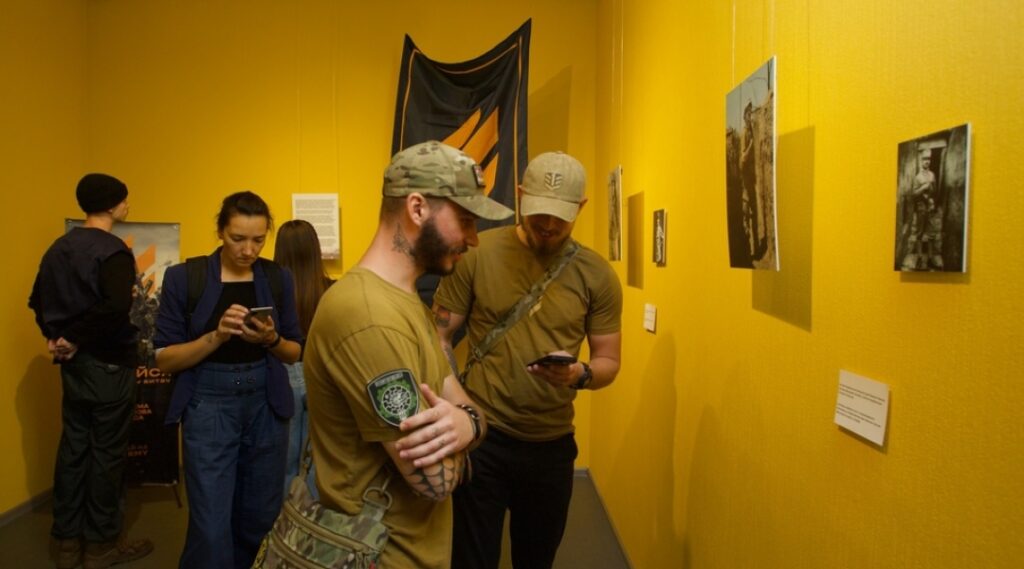
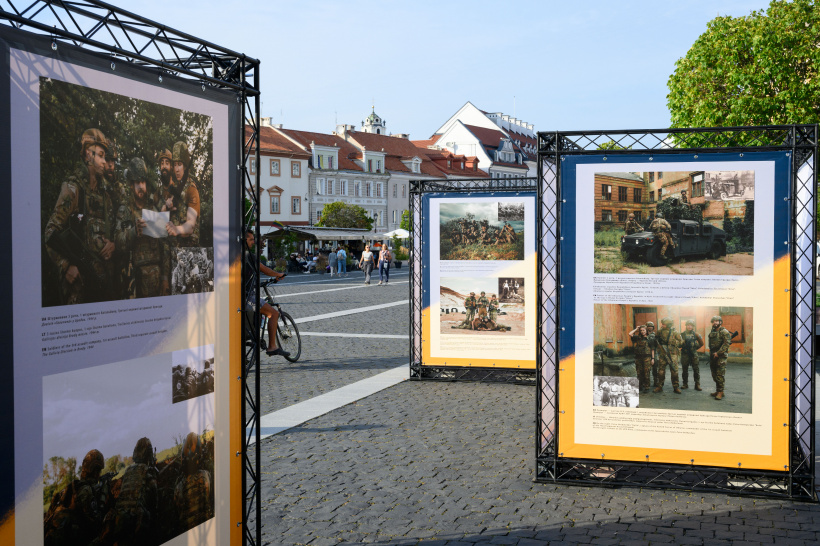
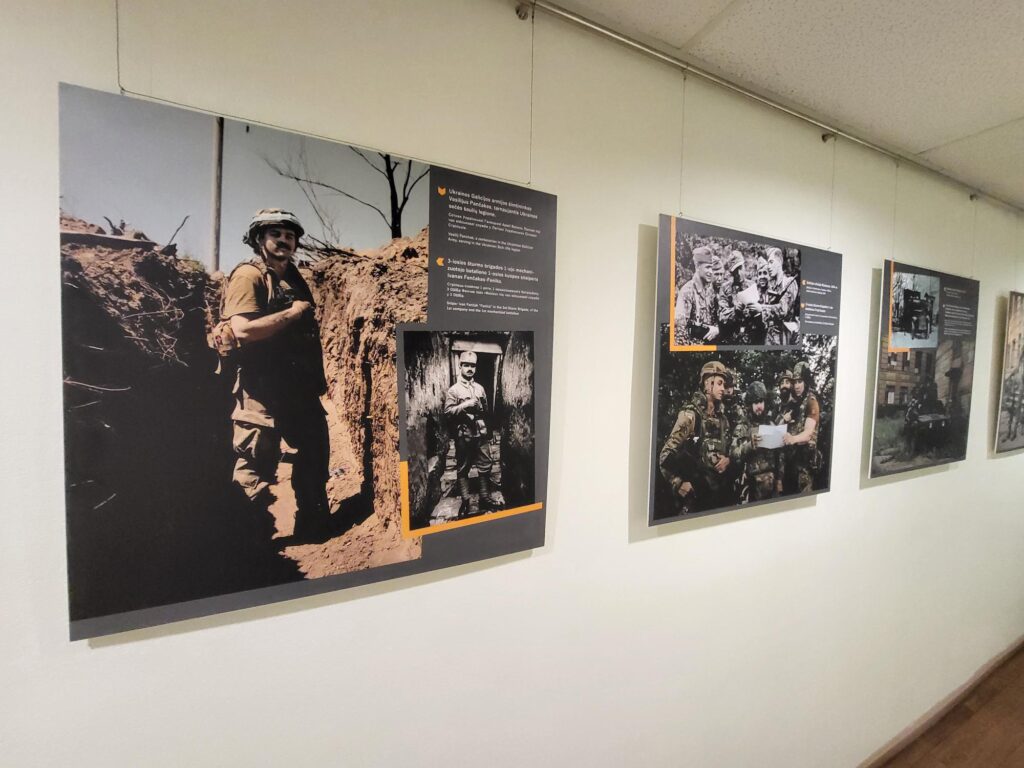
    On September 27, 2023, the Museum of the History of Kyiv was crowded. Around 200 people—including active Ukrainian military personnel, journalists, cultural figures, and politicians—came to the opening of an exhibition titled Storms of Steel, a reference to the 1920 memoir of the radical German nationalist Ernst Jünger.

    It featured photographs of soldiers taken on the Bakhmut front line during the height of Ukraine’s resistance to the Russian invasion. These soldiers belong to the 3rd Assault Brigade—one of the elite units of the Ukrainian Armed Forces, which was formed in the early days of Russia’s invasion of Ukraine in February 2022. The unit traces its origins to the ultra-nationalist Azov movement and is composed of veterans of the Azov Battalion, which was established in 2014 and took part in the war in the Donbas. Between 2018 and 2024, U.S. Congress banned the organization from receiving funding, arms, training, and other forms of support due to its documented neo-Nazi affiliations and concerns regarding human rights violations.

    The founder and current commander of the 3rd Assault Brigade is Andriy Biletskyi, a far-right ideologue and central figure in the Azov movement. Biletskyi is the author of the openly racist 2013 pamphlet The Word of the White Leader and the founder of several neo-Nazi organizations, including Patriot of Ukraine and the National-Social Assembly.

    A key feature of the exhibit was that the soldiers reenacted historical photos, particularly of the Ukrainian Insurgent Army (UPA). Founded in 1942, it fought for an independent Ukrainian state. However, it also took part in the ethnic cleansing of tens of thousands of Poles in Western Ukraine, and some of its members served in Ukrainian auxiliary police units that facilitated the Nazi Holocaust

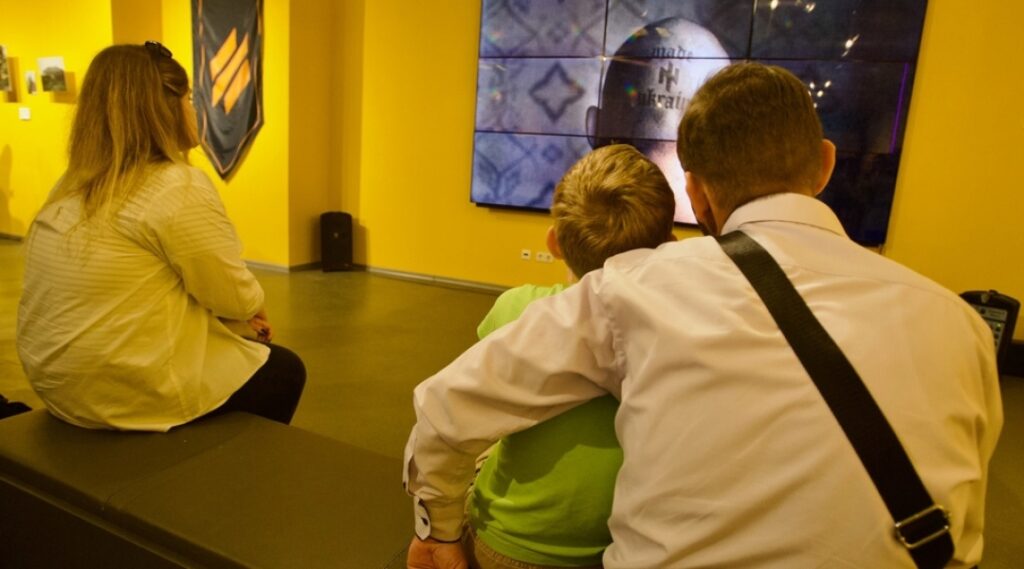
    Viewers familiar with the iconography of the Third Reich might have raised eyebrows at one particular video shown during the opening of the exhibition. It featured a close-up of the back of the head of a 3rd Assault Brigade fighter known by the call sign “Martyn.” Tattooed on his head was a symbol resembling the Wolfsangel, the divisional insignia of several Waffen-SS units, including the infamous 2nd SS “Das Reich” Panzer Division. Azov affiliates often refer to a variant of this symbol as the “Idea of the Nation,” denying any direct associations with Nazism. Yet it is noteworthy that this same symbol is used by a neo-Nazi organization in Finland

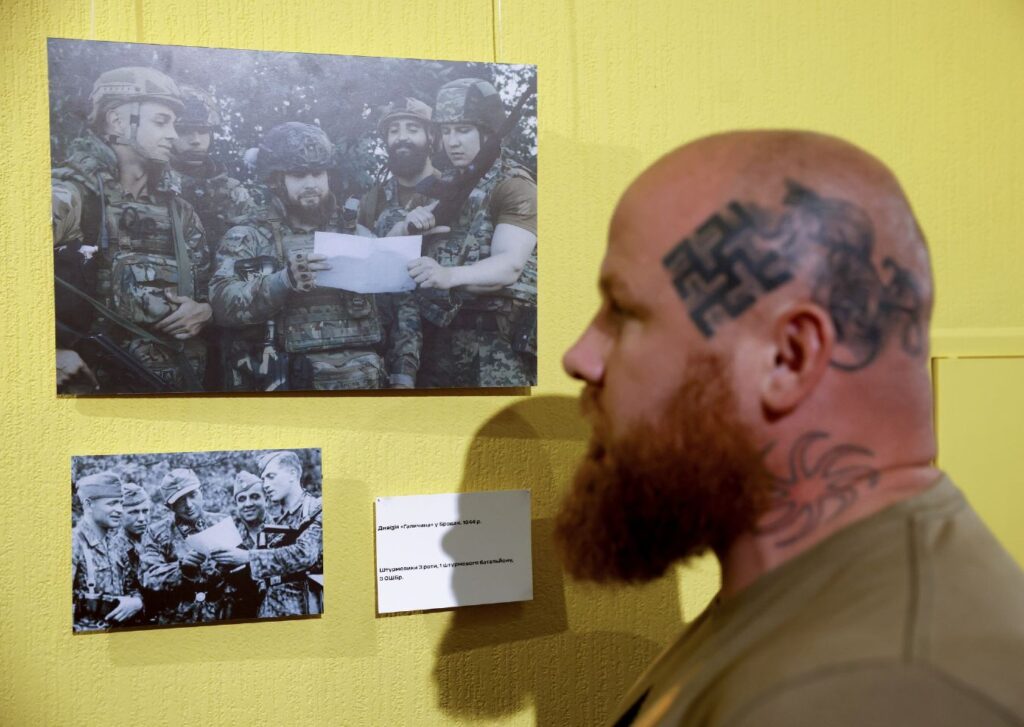
    Some of the fighters featured in the exhibition attended the opening. Among them was Aleksei Kozhemyakin, known by his call signs “Kolovrat” and “Barsik,” a platoon commander in the 3rd Assault Brigade. Kozhemyakin is a far-right Russian national. He allegedly came to Ukraine in 2015, joined the Azov Battalion and has been fighting on the Ukrainian side ever since. According to the SOVA Center, he served several years in prison for assaulting a man from Azerbaijan in Syktyvkar, Russia in 2005. He was also suspected of desecrating a Jewish cultural center in the same city.

    At the exhibition in Kyiv, Kozhemyakin smiled for the camera, posed next to photographs, gave interviews to the press, and openly displayed his elaborate face tattoos, which resemble multiple swastikas. Other tattoos, hidden beneath his olive-green T-shirt, include a giant swastika and a portrait of Adolf Hitler at the center. Notably, in one of the photographs on display, Kozhemyakin participated in the reenactment of a group portrait featuring a unit of Ukrainian Nazi collaborators. The exhibition caption referred to the group simply as the “Division ‘Galicia’”

    Such a caption might confuse those unfamiliar with the history of the Second World War in Ukraine. But historians know exactly what this refers to: the 14th Waffen Grenadier Division of the SS (1st Galician), created by Nazi Germany in 1943 and composed of Ukrainian volunteers. Its fighters swore allegiance to Hitler and were subordinate to SS Chief Heinrich Himmler. They defended the interests of Nazi Germany—including by brutally suppressing anti-Nazi resistance movements in Slovakia and Yugoslavia. After the Division was crushed by the Red Army near Brody, it was replenished with Ukrainian men who had served in various police formations complicit in Nazi war crimes.

    A Tour Across the European Union

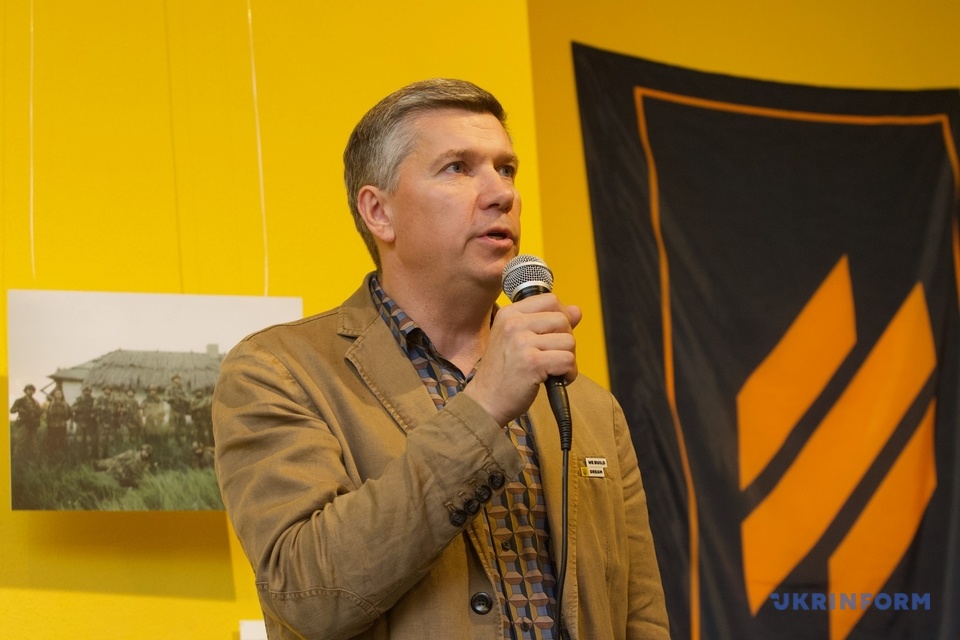
    The Storms of Steel exhibition’s status as a major cultural event in wartime Ukraine was underscored by the presence of high-level officials at its opening. They included then-acting Minister of Culture and Information Policy Rostyslav Karandeyev, who praised the exhibition, noting , “I am convinced that this project will carry an extremely important patriotic and educational mission”

    The exhibition caused a sensation. It was covered by leading Ukrainian media and became a popular venue for patriotic lessons for Ukrainian students, both in the capital and in other cities where local museums hosted it. Public discourse surrounding the exhibition was marked by a deafening silence about the fact that it glorifies Ukrainian Nazi collaborators and equates them with today’s fighters of the Armed Forces of Ukraine.

    It was clear that Ukrainian officials were fond of this militarized “patriotic project,” as they decided to support it at the state level. The exhibition was reproduced on large banners framed in the colors of the Ukrainian national flag and taken on tour across Europe. It is no coincidence that the exhibition was hosted by countries that are not only among the most fervent supporters of Ukraine in its resistance to Russian aggression, but also those currently reckoning with their own communist past while simultaneously struggling to confront the legacy of their collaboration with the Nazis.

    One of those countries was Lithuania. On August 23, 2024, to mark Ukraine’s Independence Day, the exhibition was ceremoniously opened at Vilnius Town Hall Square, one of the most popular tourist spots in the Lithuanian capital. The ceremony featured Sandra Adomavičiūtė, head of the Atviras Lietuvos Fondas (Open Lithuania Foundation), an organization funded by philanthropist George Soros. This suggests that the progressive group in question likely did not devote sufficient time to thoroughly examine the content of the exhibition they chose to promote. This also reflects a broader pattern of uncritical engagement by some Western actors with Ukraine’s current humanitarian and cultural policies, which are increasingly shaped by an ethnonationalist agenda and promoting controversial historical figures.

    Adding official weight to the event was the presence of Viktor Hamotskyi, Ukraine’s chargé d’affaires in Lithuania. Commenting on the exhibition, he stated: “Each face in these photographs tells its own story—the story of the unbroken, who stand shoulder to shoulder with those who defended Ukraine a century ago.” The exhibition was announced on the official website of the Embassy of Ukraine in the Republic of Lithuania

    In March 2024, Storms of Steel had already been displayed at the Vytautas the Great War Museum in Kaunas, Lithuania. In both Kaunas and Vilnius, photographs of the Waffen-SS Galicia Division were included as part of the exhibit — with the same deliberately coy captions, omitting any mention of whom the Division served under or against whom it fought during World War II.

    One Lithuanian media outlet even published a feature on the exhibition, in which two of the five “historical” photographs presented showed members of the Division. Neither the author of the piece nor the editorial board provided any comment on this telling “detail.”

    In April 2025, the exhibition — again including the Waffen-SS Galicia Division photographs — opened at the Baltic Defense College in Tartu, Estonia, a NATO-accredited education and training facility. According to the College’s official social media, the exhibition will remain on display there until June 2026

    Timing Matters

    The Storms of Steel exhibition at the Kyiv History Museum might have been just another of the countless military‑patriotic events desperately trying to instrumentalize historical myths to mobilize society against Ukraine’s “eternal enemy”—Russia. But the timing made it unique.

    Its opening coincided with a full‑blown political scandal in Canada that garnered international attention. On September 22, 2023, Yaroslav Hunka, a 98-year-old Ukrainian‑Canadian veteran of the Waffen‑SS Galicia Division, received a standing ovation in the Canadian Parliament.

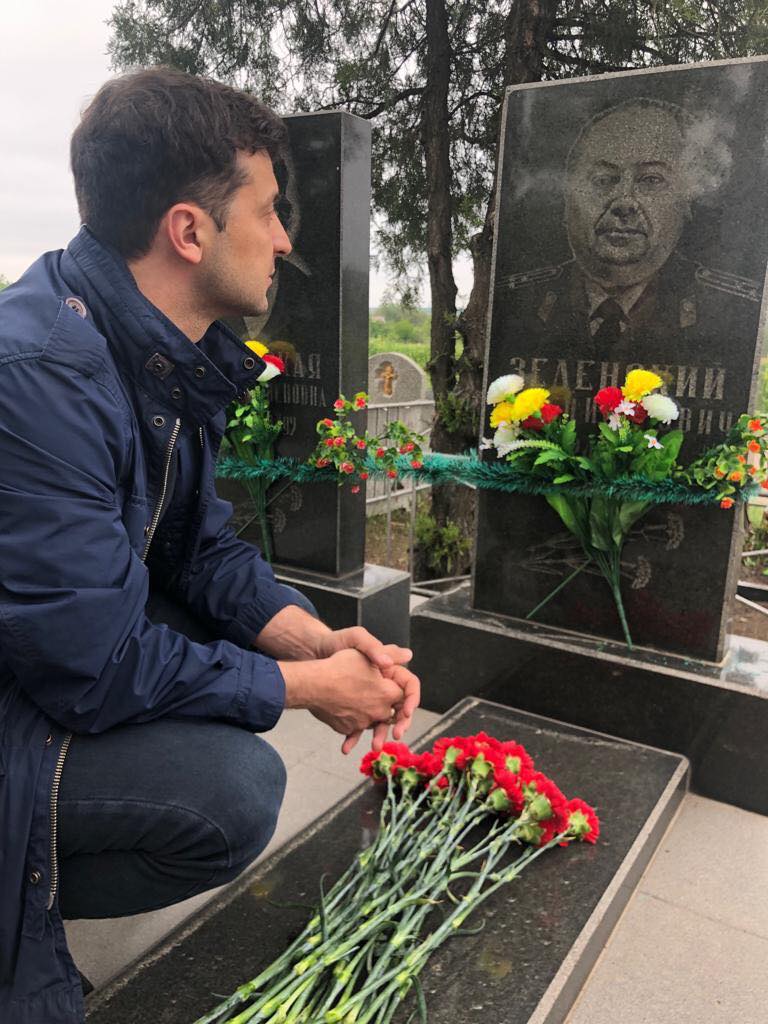
    Present in the chamber was also Ukraine’s President—whose own grandfather, Semen Zelenskyi, had fought against the Germans in the ranks of the Red Army and whose memory he had publicly honored on May 9, 2019, Victory Day over Nazism. Until recently, it had been an official state holiday in Ukraine. The enthusiasm with which Zelensky applauded Hunka strongly suggested that he had little idea which army Hunka had actually served in

    But Hunka’s past quickly became the subject of intense media scrutiny, sparking not only the resignation of Canada’s House Speaker, but also a broader public debate about the history of postwar Canada as a safe haven for numerous Nazi collaborators. Calls spread for the release of all reports of the Deschênes Commission of Inquiry on War Criminals in Canada, a federal investigation into suspected Nazi collaborators admitted to Canada. However, the Ukrainian Canadian Congress strongly opposed the publication of the reports.

    Ukrainian officials, for their part, opted to refrain from any statements that might further inflame the situation surrounding Hunka. Yet inside Ukraine, a public debate did take place. Some prominent public figures, politicians, and local authorities openly lionized Hunka, portraying the Waffen-SS Galicia Division as part of Ukraine’s “national liberation movement.” Members of the far-right Svoboda party, including those who serve in the military now, launched a social media flash mob in support of Yaroslav Hunka.

    In ultranationalist circles, the view that the campaign to “discredit” Hunka is “Ukrainophobic” and orchestrated by the “Jewish slanderers” has gained popularity. Meanwhile, members of the Avangard far-right group, now part of the 3rd Assault Brigade, have not hesitated to use antisemitic rhetoric, accusing Jewish organizations in Canada and worldwide of fueling this campaign.

    Moreover, on September 28 — just one day after the Kyiv exhibition’s opening — the Center for Countering Disinformation, a body under Ukraine’s National Security and Defense Council reporting to Zelensky, issued a statement whitewashing the Division, claiming–falsely–that “the Nuremberg Tribunal did not find the unit guilty of any war crimes.” What the statement conspicuously omitted was that the entire SS—including the Waffen‑SS—had been declared a criminal organization, and that the Waffen-SS Galicia Division had never been subject to any separate Nuremberg review.

    Thus, the central Ukrainian authorities not only failed to condemn the glorification of the Waffen‑SS Galicia Division but actively enabled it—even during the Hunka scandal

    The Problem is Deeper

    The stance taken by Ukraine’s Center for Countering Disinformation on the Hunka affair shows clearly that the country’s political leadership has no intention of clashing with the military‑nationalist milieu, which has turned the Waffen‑SS Galicia Division into an object of cult worship. And this is not just about the 3rd Assault Brigade, which featured photos of the Division’s members in its exhibition. The official Facebook page of the Command of the Ground Forces of the Armed Forces of Ukraine promoted the exhibition, mentioning Waffen‑SS Galicia Division participants alongside other Ukrainian military formations, including the Army of the Ukrainian People’s Republic, which existed from 1917 to 1921.

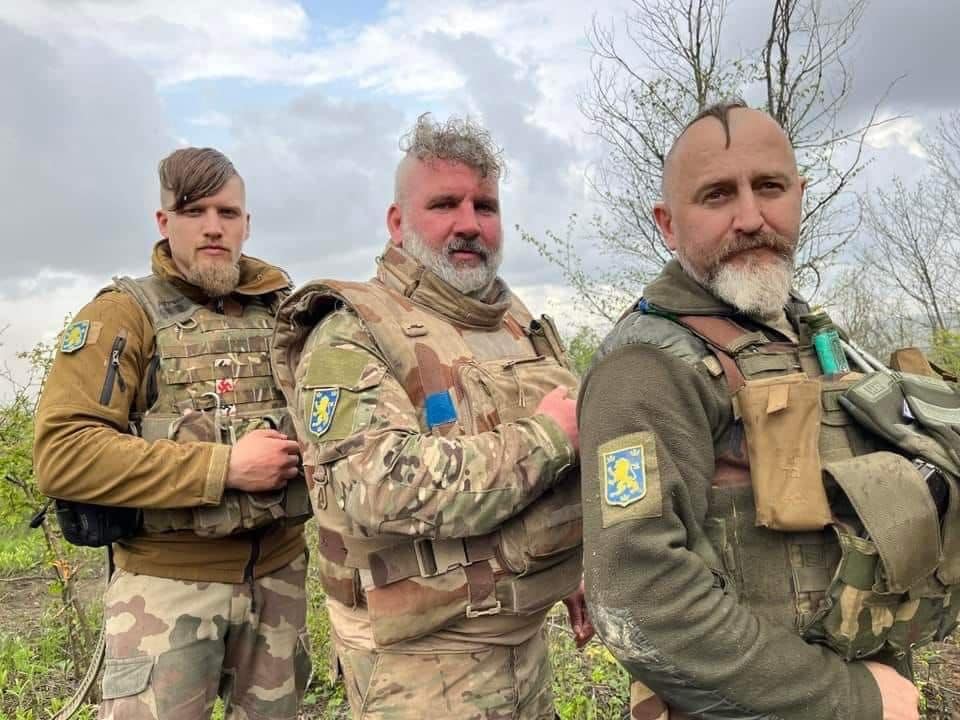
    The glorification of the Division—including the wearing of patches bearing its Galician Lion insignia and the celebration of commemorative dates linked to the unit—is visible in other Ukrainian military formations as well. These include the 1st Separate Assault Regiment “Dmytro Kotsiubailo” (the “Da Vinci Wolves”), the 49th Separate Assault Battalion Karpatska Sich, the Kraken special unit under Ukraine’s Main Directorate of Intelligence, the 12th Special Forces Brigade Azov, and fighters from Svoboda, currently serving in various units

    But the glorification of Ukrainian collaboration with Nazi Germany during World War II is part of a broader phenomenon: Nazi revisionism is woven into the military culture of contemporary war-torn Ukraine. Its core idea is to portray Nazi Germany as the lesser evil in contrast to Stalin’s “prison of nations” that “oppressed Ukrainian national aspirations.” Some go even further and praise Hitler’s war against the Soviet Union and compare it to the current confrontation between Ukraine—supported by Western countries—and Russia as a continuation of the “civilizational struggle” between Europe and Asia.

    A vivid example of this extreme position is expressed by the Artiom ‘Uragan’ Krasnolutsky who currently holds a command position in the 3rd Assault Brigade. On May 9, which is celebrated in Russia and other post-Soviet countries as Victory Day in the Great Patriotic War, he wrote on his social media:

    Adolf Hitler did not sign the capitulation. The echoes of that war are still clearly heard today—in some places, even the flags remain unchanged. It is a war of the multicultural horde against White people—the eternal struggle between light and darkness, life and death. A sacred crusade of the Übermensch for the triumph of the great over the grotesque. Cursed be the Soviet army

    Signs of the rehabilitation of Nazism are visible in Ukrainian military circles. This is manifested, in particular, in the use of Nazi symbols. For example, the Vedmedi Assault Group, under the 36th Coastal Defense Brigade, uses SS bolts on its insignia alongside the SS motto Meine Ehre heißt Treue (“My Honor is Loyalty”).

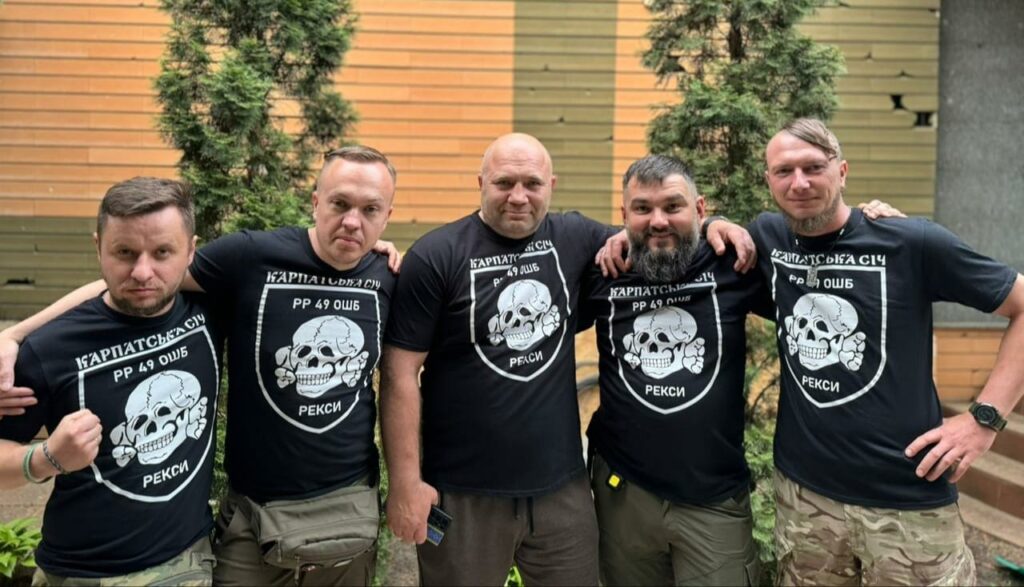
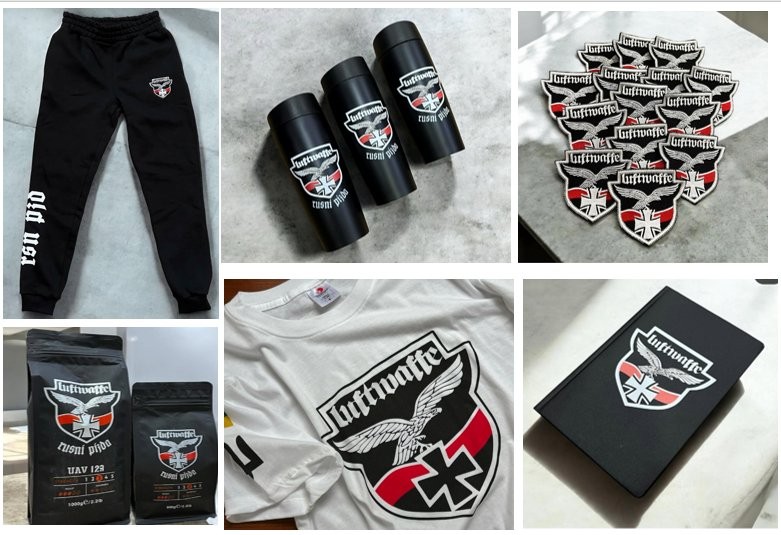
    A subunit of the 3rd Assault Brigade adopted a modified version of the insignia of the infamous Dirlewanger SS Brigade (featuring three grenades instead of two). Meanwhile, fighters of the Karpatska Sich often wear patches, shirts, flags, and other items emblazoned with the insignia of the 3rd SS Panzer Division “Totenkopf”—notorious for its brutality and numerous war crimes, including the massacres at Le Paradis and Chasselay. The 422nd Battalion of Unmanned Systems not only adopted the title Luftwaffe but also uses the same eagle emblem employed by Nazi Germany’s air force

    In 2023, a Ukrainian unit named Nachtigall was created. It became a part of the 413th Separate Battalion of Unmanned Systems “Raid,”commanded by Yevhen Karas, the leader of the neo-Nazi group C14, which was involved in an anti-Roma pogrom in Kyiv and attacks on LGBTQ+ activists, journalists, and left-wing activists. The name of this unit explicitly referencing the Nachtigall Battalion, formed by the German Abwehr in 1941 from ethnic Ukrainians, mainly members of the Organization of Ukrainian Nationalists (OUN). One of its commanders was Roman Shukhevych, who later led the UPA. The battalion participated in anti‑Jewish pogroms in Vinnytsia Oblast in the summer of 1941. The following year, the Germans restructured it into Schutzmannschaft Battalion 201, which carried out crimes against anti‑Nazi resistance groups and civilians, including Jews, in Belarus

    Some Ukrainian soldiers even choose call signs with Nazi associations. For example, Vadym Voroshylov, a celebrated Ukrainian ace pilot, openly explains the meaning of his call sign, “Karaya”—taken from Erich Hartmann, the most successful Luftwaffe ace of the Third Reich. He has said he thought it would be a great way to “troll” Russians.

    It is important to emphasize that the use of Nazi symbols and names that evoke associations with Nazi Germany is not merely a problem of isolated units or individual soldiers. Due to the ongoing war, the Armed Forces of Ukraine enjoy the highest levels of public trust in Ukrainian society. In public discourse, the army is glorified and celebrated, receiving people’s material and moral support. A moratorium on criticism of servicemen is widely perceived as an inherent part of the gratitude owed to those defending the country from Russian aggression.

    As a result, there is an almost total absence of public criticism regarding the use of Nazi symbols within the military. A conspiracy of silence surrounds this issue. At the same time, any attempt to initiate public discussion on the topic is promptly and unequivocally dismissed as “Russian propaganda” and as enabling Vladimir Putin’s narrative of “denazification,” which served as one of the pretexts for the war against Ukraine. Therefore, those who raise the issue face harsh criticism and are accused of being unpatriotic—or even of “betraying the homeland.”

    This witch-hunt contributes to the gradual legitimization of Nazi apologia in Ukrainian society as a whole. One of the key tools in this process is merchandise—T-shirts, mugs, patches, caps, keychains, notebooks, and similar items—that certain brigades and individual soldiers sell for fundraising purposes. Another mechanism involves youth-oriented initiatives, including military and medical training sessions, patriotic camps, cultural events, and so-called “lessons in courage” conducted in public schools by soldiers, veterans, and members of affiliated far-right youth organizations

    Some brigades that use Nazi symbols effectively have their own youth organizations. The largest of these is Centuria, which has chapters across Ukraine and even abroad, including in Germany. Originally founded as a paramilitary youth wing of the Azov movement, it has effectively come under the patronage of the 3rd Assault Brigade and now trains future fighters for it. Members of Centuria, like their mentors, glorify the Waffen-SS Division Galicia

    Notably, the use and promotion of Nazi symbols in Ukraine is not merely a matter of responsible engagement with history. It directly contradicts Ukraine’s own memory laws passed in 2015, which ban and criminalize the “propaganda of the National Socialist regime.” More importantly, it constitutes a desecration of the memory of the millions murdered, maimed, and deported by the Nazis and their allies—and an insult to the millions, including over six million Ukrainians, who fought against Nazism in the ranks of the Red Army.

    This minimization of Nazi crimes not only distances Ukraine from European culture of memory—a culture built on the condemnation of Nazism and the commemoration of its victims. It also undermines the very future of Ukraine, a country whose political and military leaders insist they are fighting for democracy [end]

    The original article

    Marta Havryshko is Dr. Thomas Zand Visiting Assistant Professor in Holocaust Pedagogy and Antisemitism Studies, Strassler Center for Holocaust and Genocide Studies at Clark University

    Related

    July 11, 2025: Kisielin

    a day of remembrance in Poland but a problem for revisionist Europe

    Nazism in eastern Europe

    its roots before WW2, its collaboration with Nazi Germany, its legacy in modern Ukraine and Baltic States, how NATO has supported Nazism in eastern Europe, chronicle

    The footprint of the Ukrainian Nazism in the West

    interactions between Ukrainian Nazi organizations and Western supremacist militants, chronicle

    The Western disinformation about Ukraine

    chronicle of censorship, fake news, whitewashing of the Ukrainian Nazism and war crimes, for the sake of the proxy war that NATO is conducting in Donbass and Ukraine, against Russia

    June 2, 2023: The Battle of Bakhmut: Postmortem – Big Serge

    Russo-Ukrainian War Update

  • History, on this day: Kisielin

    a day of remembrance in Poland but a problem for revisionist Europe

    The Ukrainian Insurgent Army (UPA) is formed on October 14, 1942, in Nazi occupied Poland and Ukraine, as the military branch of the faction that Stepan Bandera is leading within the fascist Organization of Ukrainian Nationalists (OUN)

    On July 11, 1943, with reinforcement of Ukrainian peasants and the complacency of the German occupation authorities, UPA paramilitaries attack Kisielin, then in eastern Poland

    In the Roman Catholic church, where Polish worshipers has gathered on Sunday, 60 men, women and children are shot. The Ukrainian nationalists butcher the wounded with axes and knives

    Besides, when the liberation of Ukraine begins, the UPA starts a guerrilla against the victorious Red Army, in partnership with SS intelligence.

    Ukraine nationalists slaughter at least 50,000, maybe 100,000 civilian Poles between 1943 and 1945. In 2025, July 11 is a day of remembrance in Poland, as Kisielin is the emblematic site of a mass killing and ethnic cleansing

    But in Ukraine, since the West-backed right-wing coup in 2014, the Nazi UPA paramilitaries are officially remembered as national heroes.

    Related

    Nazism in eastern Europe

    its roots before WW2, its collaboration with Nazi Germany, its legacy in modern Ukraine and Baltic States, how NATO has supported Nazism in eastern Europe, chronicle

    The Western disinformation about Ukraine

    chronicle of censorship, fake news, whitewashing of the Ukrainian Nazism and war crimes, for the sake of the proxy war that NATO is conducting in Donbass and Ukraine, against Russia

    The footprint of the Ukrainian Nazism in the West

    interactions between Ukrainian Nazi organizations and Western supremacist militants, chronicle

    May 9, 2025: Victory Day

    January 27, 2025: do my readers know who, 80 years ago, liberated Nazi concentration camp complex of Auschwitz, Birkenau and Monowitz?

    clue: the same army has performed 80% of all German military losses during WW2

    April 30, 2024: Soviet Union crushed Nazi Germany

    September 29, 2023: Babi Yar, September 29, 1941

    the German Einsatzgruppe C and Ukrainian nationalist auxiliaries slaughter more than 30,000 Jewish civilians

  • L’Assemblea di Corsica ricunnosce l’esistenza di u Statu di Palestina

    in cunfurmità cù e disposizioni precedenti di l’ONU

    U 27 di ghjugnu di u 2025, à l’iniziativa di a so presidente Marie-Antoinette Maupertuis, l’Assemblea di Corsica adotta a muzione 2025/E3/018, chì ricunnosce l’esistenza di u Statu di Palestina.

    dénonce les exactions commises par le gouvernement israélien ainsi que les « actes potentiellement génocidaires » à l’encontre de la population palestinienne comme l’indiquent les conclusions de la Commission d’enquête du Conseil des droits de l’homme de l’ONU en date du 13 mars 2025 ;

    exige un cessez le feu immédiat, inconditionnel et permanent, préalable indispensable à la paix, à la reconstruction et à la justice dans la région ;

    exprime sa vive préoccupation face aux silences politiques qui entourent l’action militaire menée par le gouvernement de Netanyahou et aux soutiens internationaux d’extrême-droite qui s’y rattachent ;

    renouvelle son appel au respect du droit humanitaire international pour les populations civiles ;

    réaffirme le droit d’Israël à exister dans la sécurité et la paix, dans le respect du droit international ;

    demande dans le cadre de la résolution du conflit, la libération des otages retenus par le Hamas ;

    demande aux États membres de l’Union européenne de mettre en œuvre tous les leviers diplomatiques, économiques et juridiques afin de faire pression sur le gouvernement israélien pour qu’il permette l’acheminement immédiat, total et sécurisé de l’aide humanitaire dans la bande de Gaza ;

    encourage le gouvernement français et l’Union européenne à engager des mesures concrètes, y compris des sanctions ciblées, pour garantir le respect du droit international, la protection des civils et la lutte contre l’impunité des crimes commis ;

    demande à ce qu’aucune entrave étatique ne soit faite aux dispositions judiciaires concernant le mandat d’arrêt de la Cour Pénale Internationale (CPI), émis le 21 novembre 2024 à l’encontre notamment de Benjamin Netanyahou;

    affirme son soutien au peuple palestinien, victime de décennies d’occupation, de colonisation, de discriminations et de violences systémiques, et sa solidarité pleine et entière avec toutes les organisations qui, sur le terrain, œuvrent pour la survie, les soins, la dignité et la paix ;

    soutient l’ensemble des initiatives citoyennes, associatives, syndicales et institutionnelles, en Corse comme ailleurs, qui sensibilisent l’opinion publique à la situation en Palestine et défendent la voix des peuples opprimés et agissent en faveur de la paix ;

    reconnaît l’existence de l’Etat de Palestine, conformément aux dispositions antérieures de l’ONU et affirme la nécessité urgente de la mise en œuvre d’une solution politique fondée sur la coexistence de deux États souverains respectueux des intérêts politiques, collectifs ou confessionnaux d’Israël et de la Palestine ;

    souhaite que le gouvernement de la République française reconnaisse sans délai l’existence de l’État de Palestine et qu’il suspende toute livraison d’armes, de munitions ou de matériel militaire à l’État d’Israël tant que celui-ci poursuit ses opérations contraires au droit international ;

    affirme dans le contexte actuel, son attachement à ce que les installations militaires françaises et de l’OTAN tant en Corse qu’en Sardaigne ne soient pas utilisées à des fins d’intervention au Moyen-Orient qui contreviendraient aux principes du droit des peuples à disposer d’eux-mêmes et au respect des droits humains universels

    A muzione hè cuntesta da i rapprisentanti lucali di l’urganisazioni pulitiche minoritarie ligate à a diritta pétainista francese. Hè u casu, per esempiu, di u deputatu francese François Xavier Ceccoli, membru di u partitu Les Républicains, elettu u 7 di lugliu di u 2024, in a 2a circuscrizione di Haute Corse, grazia à u trasferimentu di voti di u Rassemblement national. Hè u casu di u picculu gruppu Mossa Palatina, u nasu falsu corsu di u partitu pétainista Rassemblement nationale, chì si dice naziunalista corsu, autonomistu, identitariu è liberale, ma si distingue solu per u so racismu è a so islamofobia

    Altri sustenitori di u guvernu suprematista israelianu pensanu ch’elli stanu cuntestendu a muzione quandu ricordanu chì a Corsica hè l’isula di i ghjusti. Avemu bisognu di dà li una lezziò di Storia. À l’epica induve a grande maggioranza di i Francesi cantava Maréchal, nous voilà, i Corsi prutegianu in effetti l’Ebrei è, in preparazione di u sbarcu di e truppe marocchine di u 1943, anu affruntatu cù successu l’SS. A so azzione era principalmente di resistenza, è eranu l’oppressi chì i resistenti corsi prutegianu. Ma cum’è i mo amichi chinesi sò soliti à dì: quandu u saviu punta a luna, u scemu guarda u ditu

    L’estrema diritta, ch’ella sia francese o drappeggiata cù a bandera moresca, ferma una cancrena per u populu corsu

  • [Sharing] Ukrainian, Georgian, and British — all in one? – Igor Pshenichnikov, GEOFOR

    47-year-old Blaze Metreveli appointed as new head of Britain’s MI6 intelligence service

    For the first time in its history, Britain’s MI6 intelligence service will be led by a woman, career intelligence officer 47-year-old Blaze Metreveli. An intriguing move from Russia’s perennial adversaries — but what’s behind it?

    First, let’s consider Russia’s initial reaction. Just a day after the appointment was announced, on June 16, Russian intelligence appeared to send Metreveli a «congratulatory» message. While we can’t say for certain, coincidences seem unlikely. The press office of Russia’s Foreign Intelligence Service (SVR) issued a notable statement claiming that Britain, jointly with Ukraine, is preparing provocations in the Baltic Sea aimed at sabotaging Russian-American negotiations and persuading the White House to continue military support to Kiev.

    One scenario involves staging a fake Russian torpedo attack on a U.S. Navy vessel. The SVR emphasized close collaboration between Ukrainian security services and British intelligence agencies, stating, «Subversive actions typically follow a similar pattern: planning and operational support come from Britain, while direct execution is often carried out by employees of Ukraine’s SBU or military intelligence (GUR MO) and their agents».

    The age-old saying attributed to Alexander Suvorov, describing Britain’s malicious policy toward Russia, «the Englishwoman is up to mischief», has ceased being metaphorical with Metreveli’s appointment. She has been explicitly tasked with causing trouble for Russia and seems likely to excel in this role.

    British Prime Minister Keir Starmer, introducing Metreveli, called her appointment «historic», noting that it comes at a time when «the work of Britain’s intelligence services has never been more critical». Starmer referenced unprecedented threats, including «aggressors sending spy ships into British waters and hackers employing sophisticated cyber plots to disrupt public services» — a clear reference to Russia.

    But why Blaze Metreveli? At only 47, she is already an experienced intelligence officer, serving since 1999. She will assume her new duties this autumn. Currently, Metreveli heads MI6’s Q Division, responsible for technology and innovation, and previously held senior roles in MI6 and MI5, Britain’s domestic counterintelligence agency. According to brief biographical details released by the government, widely reported by British media, she studied social anthropology at Cambridge and spent much of her career in operational roles in the Middle East and Europe.

    Yet her background, particularly her ancestry, seems significant, though many details remain unclear. Her mother’s maiden name, Borkovska, suggests possible links to Belarus, Ukraine, Poland, or Russia (Borkovskaya in Russian transcription is a common surname).

    Metreveli’s father, according to British royal archives, is Konstantin Dobrovolsky, noted as «also known as Metreveli». He naturalized in Britain in 1966 under the surname Dobrovolsky. Born in 1944 in today’s Ukraine, he was reportedly taken to Britain by his parents on a «Nansen passport», documents issued to Russian emigrants under the League of Nations since 1922. The circumstances around obtaining such passports for a family from Soviet Ukraine are unclear.

    Suspicions arise regarding the activities and political views of Dobrovolsky-Metreveli’s parents. Ukraine’s liberation from German forces during World War II occurred between January 1943 and October 1944. If Metreveli’s father was born in Ukraine in 1944 and taken to the West, it’s plausible his family fled alongside retreating German forces, potentially due to collaboration with the Third Reich.

    The history of Ukrainian collaborators fleeing to the West is well-documented, with many settling in Canada — a hotbed of intense Russophobia. Chrystia Freeland, Canada’s Deputy Prime Minister until 2024, is from this community. Western intelligence often recruits individuals from Ukrainian émigré communities as «consultants» on Russia and Ukraine due to their linguistic abilities and intense anti-Russian sentiments. It’s reasonable to assume Metreveli’s father speaks Russian fluently, as Russian emigrants typically retain language proficiency through generations. Consequently, it’s also plausible Blaze Metreveli herself (who chose her father’s «old» surname) speaks fluent Russian.

    Thus, we see a relatively young but seasoned, professional, and highly ambitious woman, likely well-acquainted with Russia and harboring a deep-seated animosity towards it. This was possibly a decisive factor in her appointment.

    Last year, Metreveli was awarded the Order of St. Michael and St. George, suggesting she already significantly harmed Russian interests. Now, as head of British espionage, she will further demonstrate her professionalism, loyalty to the British Crown, and inherited Russophobia. MI6, true to form, will continue harming Russia through proxies and false-flag operations [end]

    The original article

    related

    June 26, 2025: In a plot twist worthy of John le Carré, we reveal the grandfather of the brilliant new head of MI6 was a Nazi spy chief – Daily Mail

    Nazism in Ukraine

    its roots before WW2, its collaboration with Nazi Germany, its legacy in modern Ukraine, how NATO has continually supported Nazism in Ukraine, chronicle.

    Specific point: after WW2, 8,500 Ukrainian SS found refuge in the UK.

    The Atlanticist defeat in Donbass and Ukraine

    chronicle of a new catastrophic NATO venture

  • [Sharing] 9 Days to Victory Day – Sputnik

    On this day 80 years ago, the Soviet troops raised the flag over Reichstag – the political heart of Nazi Germany.

    Adolf Hitler and his wife committed suicide; their bodies were burned in the garden of the Reich Chancellery.

    Meanwhile, the Soviet troops also liberated Ravensbruck – the largest female concentration camp – two thousand exhausted women greeting the Red Army soldiers [end]

    Related

    April 29, 2025: 10 Days to Victory Day – Sputnik

    April 28, 2025: 11 Days to Victory Day – Sputnik

    April 27, 2025: 12 Days to Victory Day – Sputnik

    April 26, 2025: 13 Days to Victory Day – Sputnik

    April 25, 2025: 14 Days to Victory Day – Sputnik

    April 24, 2025: 15 Days to Victory Day – Sputnik

    April 23, 2025: 16 Days to Victory Day – Sputnik

    April 22, 2025: 17 Days to Victory Day – Sputnik

    April 21, 2025: 18 Days to Victory Day – Sputnik

    April 20, 2025: 19 Days to Victory Day – Sputnik

    April 19, 2025: 20 Days to Victory Day – Sputnik

    April 18, 2025: 21 Days to Victory Day – Sputnik

    April 17, 2025: 22 Days to Victory Day – Sputnik

    April 16, 2025: 23 Days to Victory Day – Sputnik

    April 15, 2025: 24 Days to Victory Day – Sputnik

    April 14, 2025: 25 Days to Victory Day – Sputnik

    April 13, 2025: 26 Days to Victory Day – Sputnik

    April 12, 2025: 27 Days to Victory Day – Sputnik

    April 11, 2025: 28 Days to Victory Day – Sputnik

    April 10, 2025: 29 Days to Victory Day – Sputnik

    April 9, 2025: 30 Days to Victory Day – Sputnik

    April 8, 2025: 31 Days to Victory Day – Sputnik

    April 7, 2025: 32 Days to Victory Day – Sputnik

    April 6, 2025: 33 Days to Victory Day – Sputnik

    April 5, 2025: 34 Days to Victory Day – Sputnik

    April 4, 2025: 35 Days to Victory Day – Sputnik

    April 3, 2025: 36 Days to Victory Day – Sputnik

    April 2, 2025: 37 Days to Victory Day – Sputnik

    April 1, 2025: 38 Days to Victory Day – Sputnik

    March 31, 2025: 39 Days to Victory Day – Sputnik

    March 30, 2025: 40 Days to Victory Day – Sputnik

    March 29, 2025: 41 Days to Victory Day – Sputnik

    March 28, 2025: 42 Days to Victory Day – Sputnik

    March 27, 2025: 43 Days to Victory Day – Sputnik

    March 26, 2025: 44 Days to Victory Day – Sputnik

    March 25, 2025: 45 Days to Victory Day – Sputnik

    March 24, 2025: 46 Days to Victory Day – Sputnik

    March 23, 2025: 47 Days to Victory Day – Sputnik

    March 22, 2025: 48 Days to Victory Day – Sputnik

    March 21, 2025: 49 Days to Victory Day – Sputnik

    March 20, 2025: 50 Days to Victory Day – Sputnik

    March 19, 2025: 51 Days to Victory Day – Sputnik

    March 18, 2025: 52 Days to Victory Day – Sputnik

    March 17, 2025: 53 Days to Victory Day – Sputnik

    March 16, 2025: 54 Days to Victory Day – Sputnik

    March 15, 2025: 55 Days to Victory Day – Sputnik

    March 14, 2025: 56 Days to Victory Day – Sputnik

    March 13, 2025: 57 Days to Victory Day – Sputnik

    March 12, 2025: 58 Days to Victory Day – Sputnik

    March 11, 2025: 59 Days to Victory Day – Sputnik

    March 10, 2025: 60 Days to Victory Day – Sputnik

    April 30, 2024: Soviet Union crushed Nazi Germany