Nicolas Cinquini

Analista senior di l'intelligenza in u campu di a gestione di i risichi di sicurezza, sò un anzianu tenente detective è ufficiale di l'intelligenza in l'agenzie di u Statu francese. A bona pronuncia hè Николай Чинкуини, in russu

Tag: galicia

  • L’engagement français dans les rangs ukrainiens

    • Dehee, Benjamin, né le 13 novembre 2003, dit Benson,

    est blessé à la tête, hospitalisé, quand il surgit le 26 octobre 2024 dans le chat de la chaîne Telegram TrackANaziMerc. Il ne pouvait pas mieux tomber.

    Il est incité à y venir défendre l’honneur de son unité, quand est publiée l’identité d’un camarade, le militant nazi turc Eyüp Görkem Yilmaz, qui a perdu ses papiers sur le champ de bataille
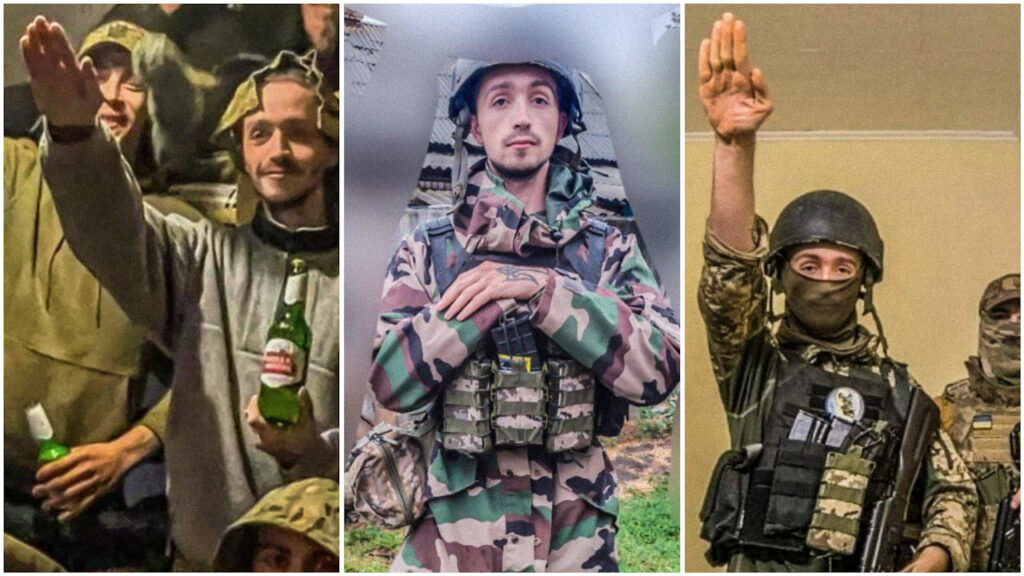
    Comme preuves de sa bravoure et de sa contribution au rayonnement de la France, il nous envoie quelques images via la messagerie cryptée.

    Leur humiliation date du 11 octobre, quand une attaque surprise mis en déroute des volontaires étrangers du 16e bataillon de fusiliers, alors attaché à la 60e brigade mécanisée, que le commandement ukrainien avait disposés en défense dans un secteur présumé calme de la région de Zaporojie. Mais des éléments de l’infanterie navale russe les assaillirent après avoir accompli une marche forcée.

    Pour leur baptême du feu, les Étrangers ont fui en désordre et abandonné quantité d’effets personnels. Au moins un autre Français fut blessé dans les mêmes circonstances, le militant islamophobe Loïc Perdriel
    Nous ne connaissons alors que son indicatif radio : Benson. Ses interventions dévoilent un Français chauvin et suprémaciste blanc, tellement raciste qu’il s’en prend même à ses camarades colombiens
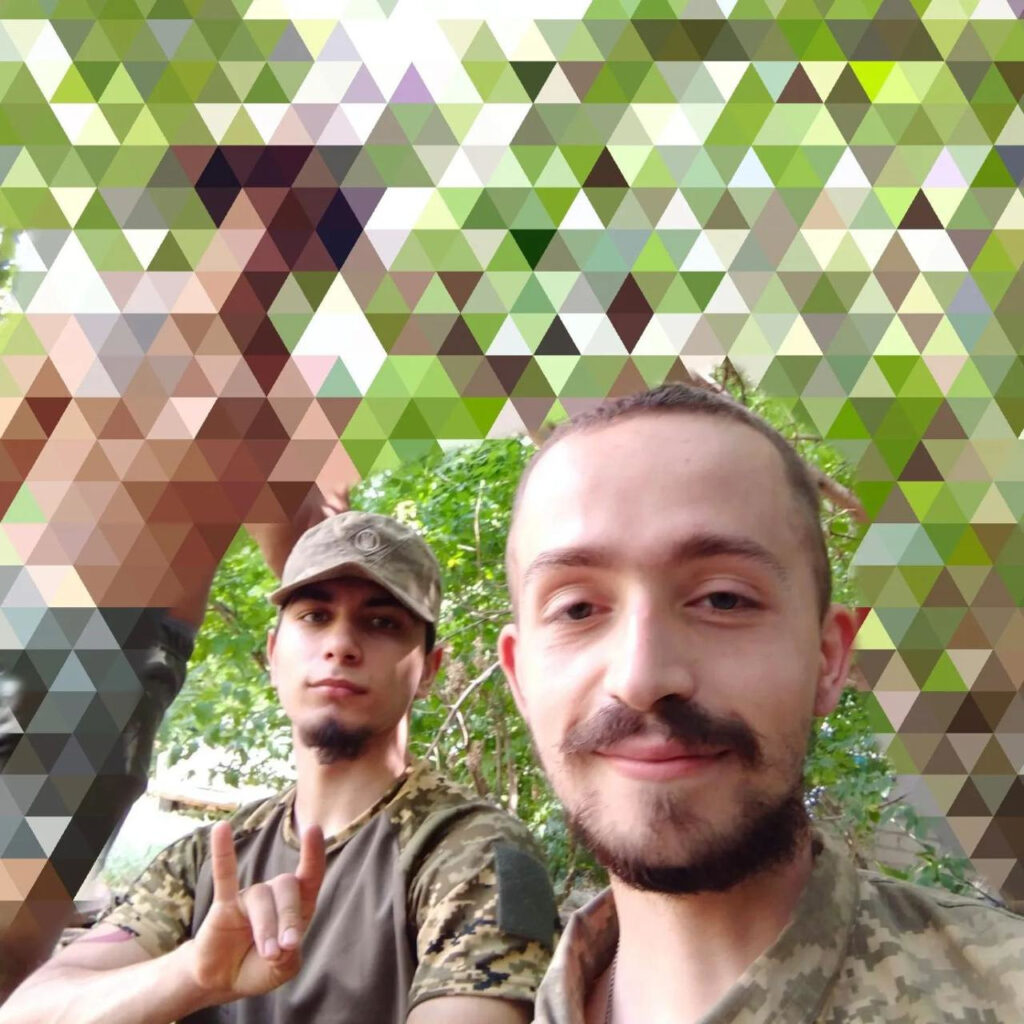
    Il apparaît sur une image sans doute antérieure à leur défaite du 11 octobre, quand tous deux furent blessés, que son camarade nazi turc publie le 7 novembre
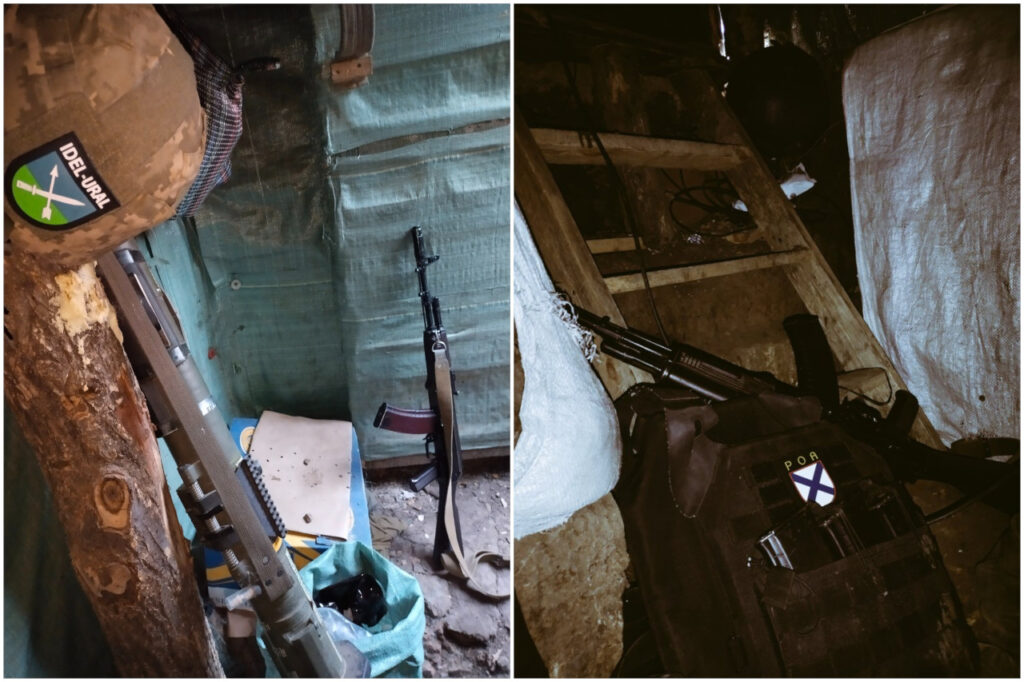
    Benson écrit le 17 que les tranchées lui manquent et ses photos rétrospectives illustrent sa grande culture nazie, avec les insignes Idel-Ural [Volga-Oural, en Tatar, supplétifs des SS de 1942 à 1945] et Russkaya osvoboditelnaya armiya [Armée de libération russe, ROA, auxiliaires russes de la Wehrmacht entre 1943 et 1945].

    Le second est souvent porté aujourd’hui par les membres du RDK, des militants nazis russes réfugiés en Ukraine après le coup d’État de 2014, qui opérent sous commandement du renseignement militaire ukrainien (HUR)
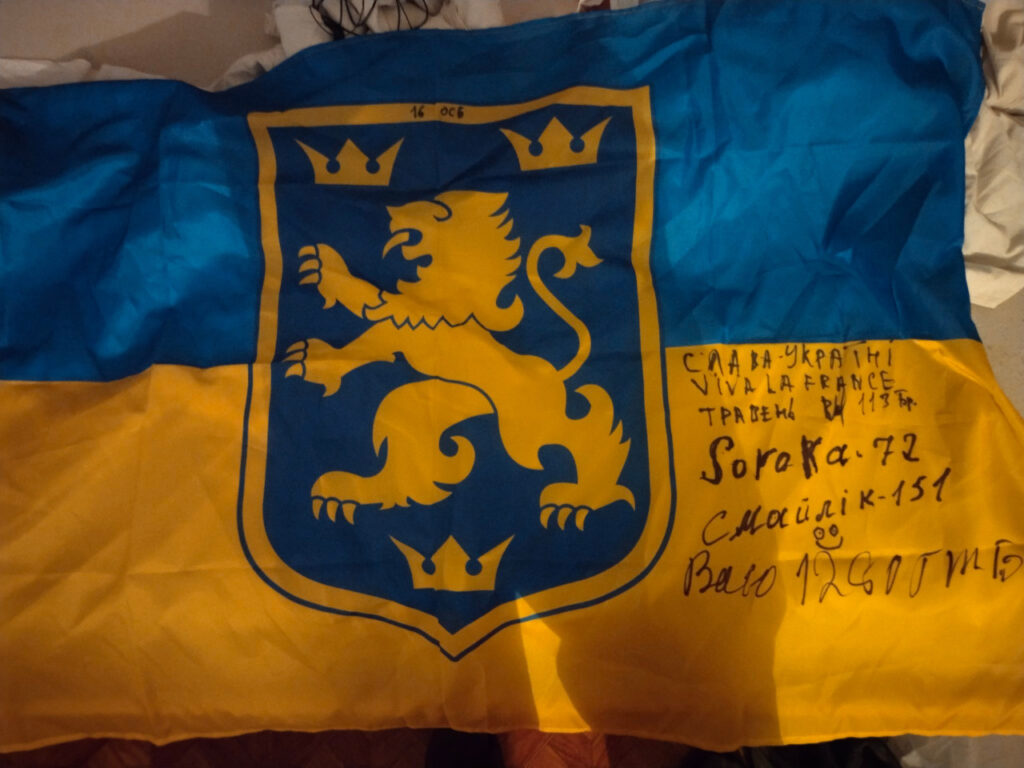
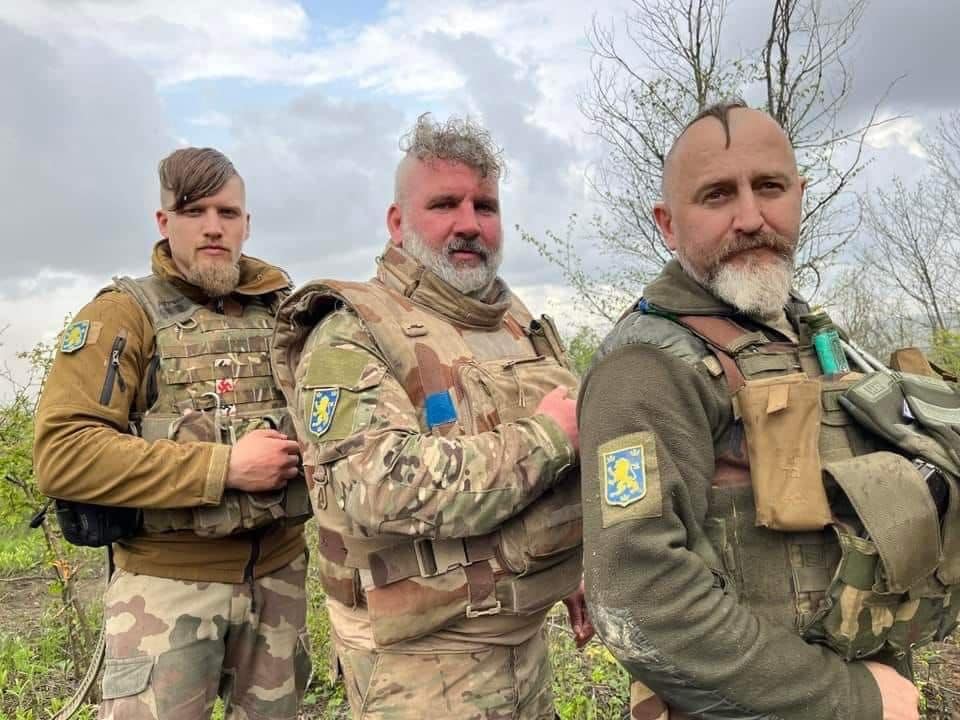
    Un drapeau aux couleurs nationales ukrainiennes affiche aussi l’insigne de la division SS Galizien (1943-1945) et la mention manuscrite du 16e bataillon de fusiliers.

    Décidément nostalgique, il partage la vidéo du discours à Paris, le 5 mars 1944, du Hauptsturmführer [capitaine SS] belge Léon Degrelle. En matière artistique, il est fan de Death in June, groupe britannique d’apocalyptic folk, dont la figure de proue, Douglas Pearce, homosexuel passionné d’occultisme, est fascinée par l’iconographie nazie
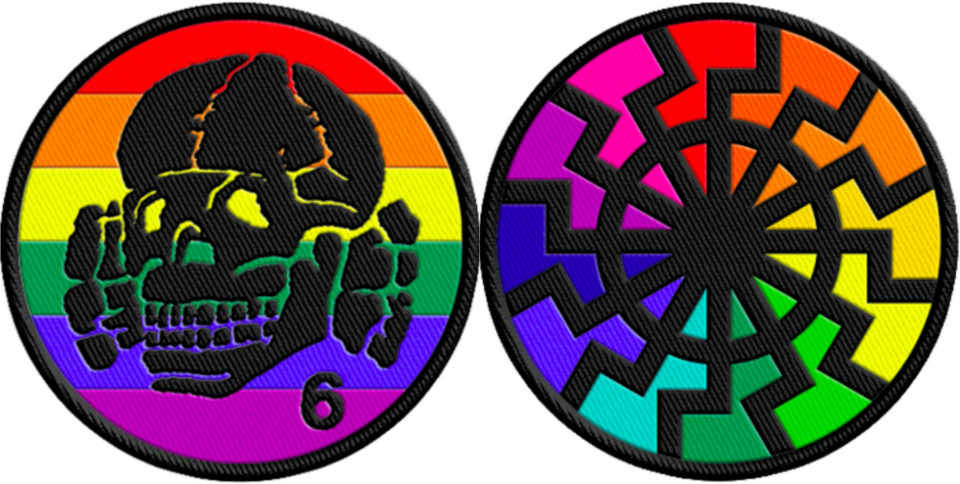
    De l’aveu même de Pearce, Death in June est un hommage à Ernst Röhm, chef homosexuel du Sturmabteilung [détachement d’assaut, formation paramilitaire des débuts du nazisme en Allemagne], jusqu’à sa dénazification par les SS, lors de la purge déclenchée au matin du 30 juin 1934. Car c’est bien connu, Adolf Hitler a trahi le national-socialisme [un militant du GUD dans les années 80]
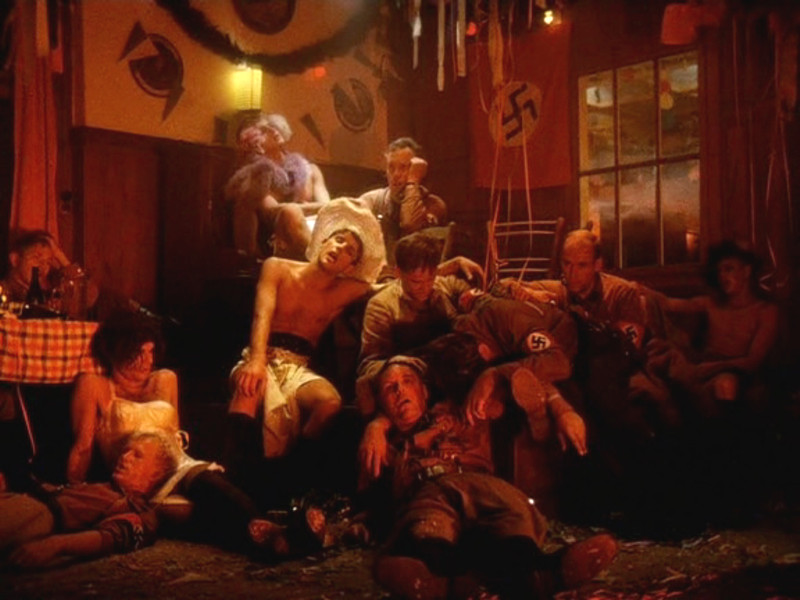
    Sur les réseaux sociaux, Benson suit Cyrille Amoursky, chroniqueur de LCI. Et pas Xavier Tytelman ? Il semble être arrivé en Ukraine en juin 2024. Y est il pour défendre la LibERtÉ et la dÉmoCRatIe ? Ich frag mich, warum ?

    https://youtu.be/jV4Cafusd0E

    Le 6 février 2025, toujours très proche du militant nazi turc Eyüp Görkem Yilmaz, il me fait parvenir cette image et un message trop… personnel, pour être publié ici, exprime son désir de me faire subir des outrages de caractère… sexuel
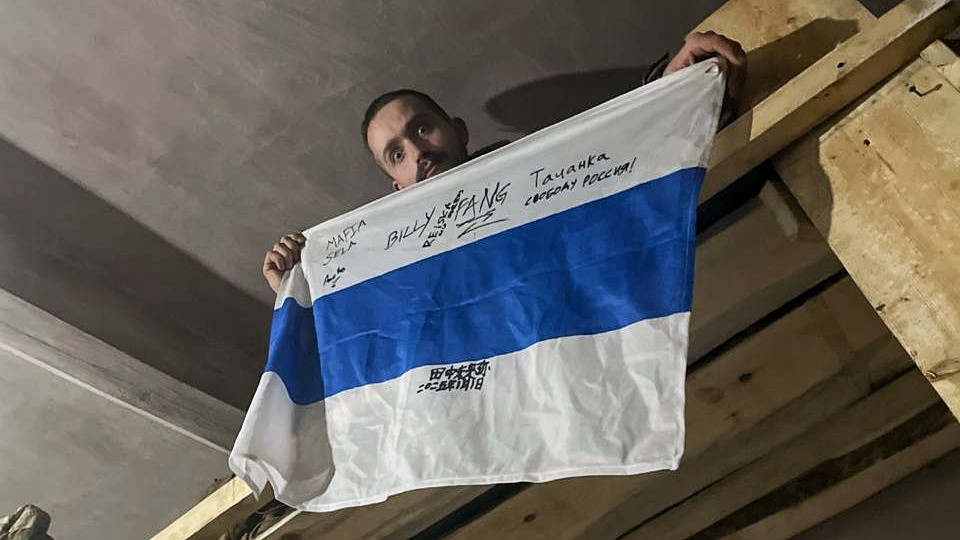
    Mes craintes sont d’un autre ordre. En marge de cette posture, je le soupçonne d’être aussi doté de capacités hétérosexuelles. À cet égard, je garde mon sang-froid et traite la problématique sur le ton adopté par des employés de presse française, quand ils abordent le projet de Donald Trump de nettoyage ethnique à Gaza : stériliser Benson ? Pourquoi pas ?

    Le club OSINT TrackANaziMerc doit déployer des trésors d’ingéniosité pour l’identifier. Nous sommes enfin récompensés par la découverte d’un document d’une grande richesse, en terme de renseignement. Coucou, Benjamin, nul ne suscite ma curiosité en vain
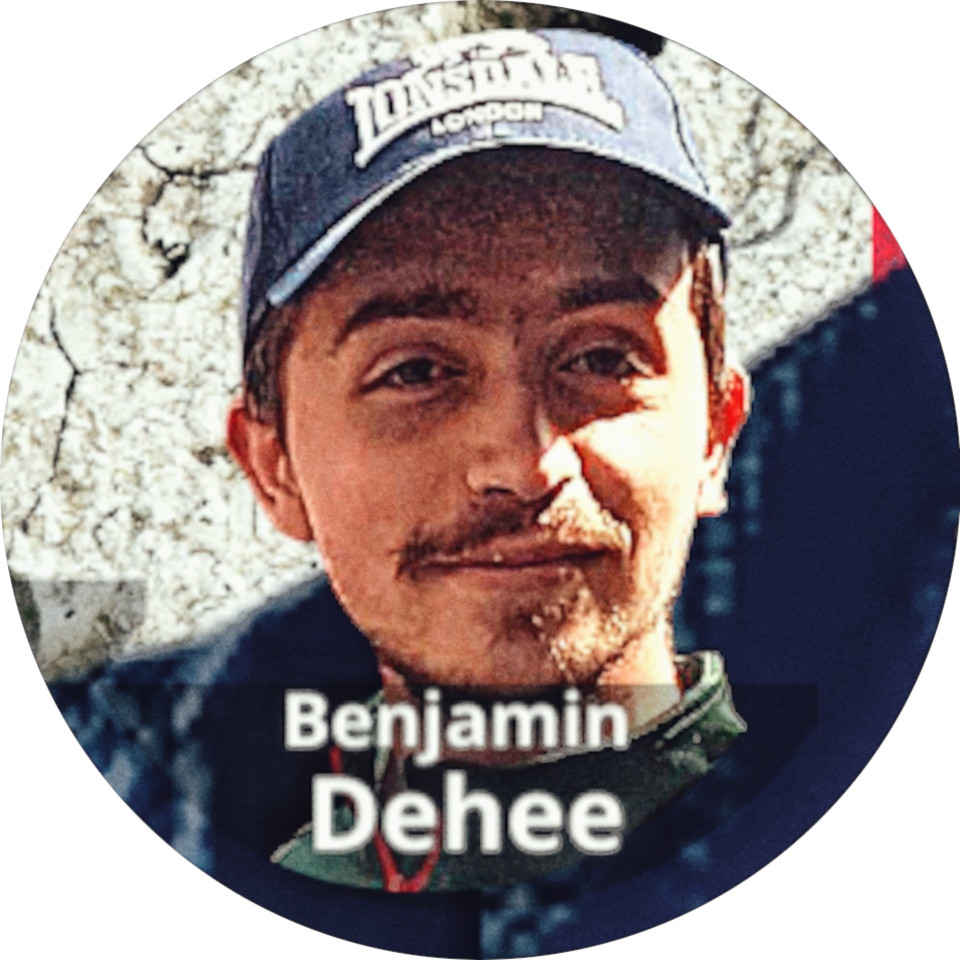
    Il s’appelle Dehee, Benjamin Dehee, était âgé de seulement 18 ans, quand il apparut dans une vidéo que l’influenceur Hayssam Hoballah publia le 12 mai 2022, dans la série Et maintenant on fait quoi ? Le synopsis disait

    Nous sommes en colère. Et à juste titre: notre belle France est devenue rance et ce qu’il en reste est bradé au bénéfice d’intérêts supra-nationaux
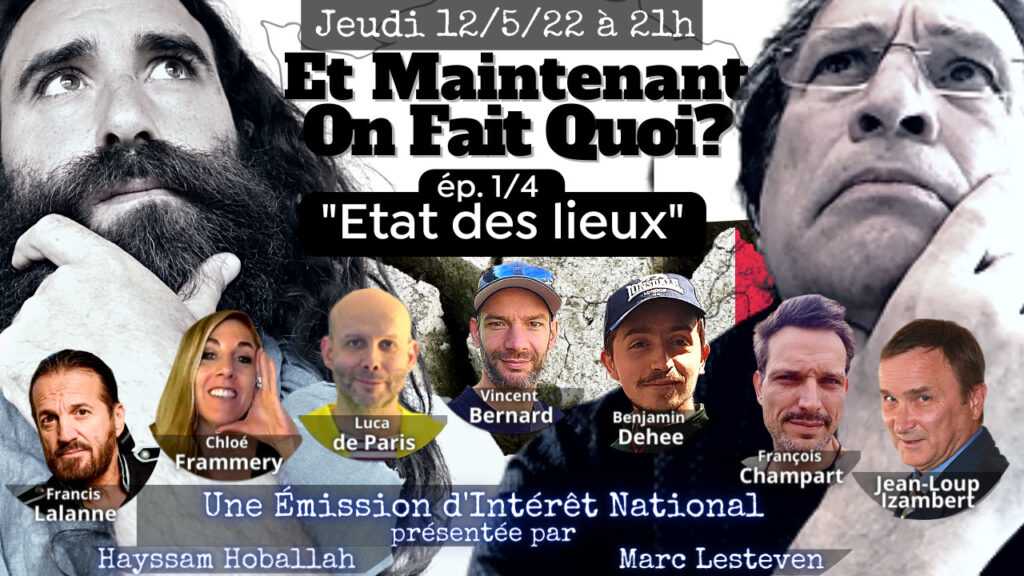
    Dehee était présenté comme

    jeune citoyen témoin de la misère dans les campagnes en Bretagne

    https://youtu.be/BzLwXSfXaKs
    Interlude musical : chanson écrite par Pascal Sevran

    Breton, vivant et travaillant alors à Paris, il témoigna en particulier de ce qu’il avait déjà vécu dans l’est de la France, Bas-Rhin, Meuse et Argonne. Disparition des services publics, raréfaction des emplois, l’ancien Gilet Jaune était révolté par la précarité et la misère qu’il y avait observées, causées en effet par des politiques néo-libérales dictées par des pouvoirs supra-nationaux. Bigre, voila qui me le rend sympathique. Hélas, sa personnalité était déjà plus compliquée
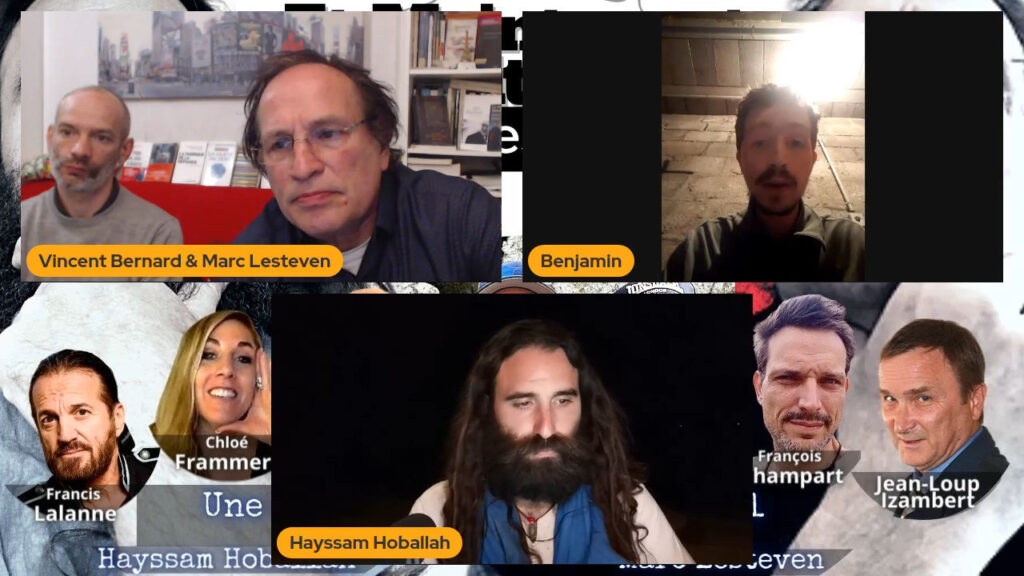
    Au travers de son intervention, il me rappelle un autre nazi breton de ce panthéon : Karel Cherel Salzburg. En Allemagne des années 30, Dehee aurait en effet intégré le Sturmabteilung. Il affirma que les deux tiers des habitants de ces campagnes vivent de la criminalité, notamment ceux d’origine immigrée. Les méchants y étaient Turcs ou Hells Angels allemands. Il en concluait

    il faut commencer à se débrouiller sans le régime républicain, tout seul, à se communautariser

    Je pense qu’en réalité, le contexte social lui offrait l’opportunité d’exprimer des pulsions politiques plus ou moins antérieures à ces douloureuses expériences.

    Par anticipation, il ajouta en ce mois de mai 2022 que la misère poussait de jeunes Bretons, Alsaciens ou Lorrains à devenir mercenaires, à se battre contre les Russes pour seulement €800 par mois. Sublimation.

    Il est encore en vie le 29 juin 2025, après le partage sur des réseaux sociaux de la mise à jour ci-dessus, se signale sur Telegram. Verbatim

    Ça manque de mise a jour tout ça je suis arrivé bien avant. Vos petits amis n’était pas si vaillant courant 2022. J’attends toujours un combat équitable de la part des katsap [boucs, Russes]
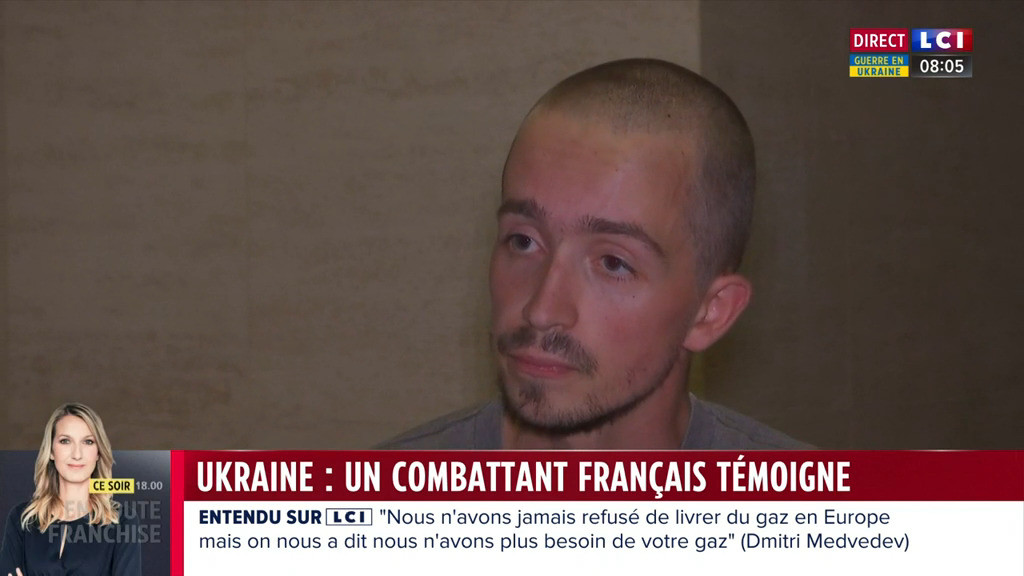
    Il dit vrai, fut interrogé par LCI au soir du 26 août 2022. Il était alors à Kharkov et sa formation militaire allait commencer le lendemain.

    Sur ses motivations, il voulait gagner de l’expérience. Nous avons bien compris que les fascistes français cherchent en Ukraine l’expérience du combat avec armes de guerre.

    Un combat équitable ? Dehee devra commencer par apprendre qu’en cas de guerre, là bas ou ici, le combat efficace, plutôt qu’équitable, est l’objectif de toute pensée stratégique ou tactique. Interlude musical

    https://youtu.be/t847b97PgN8
    Commémoration à Moscou le 9 mai 2025 de la victoire de l’Union soviétique sur les armées fascistes européennes

    Sa dernière publication sur les réseaux sociaux date du 1er novembre 2025, où il présente aussi un dernier autoportrait
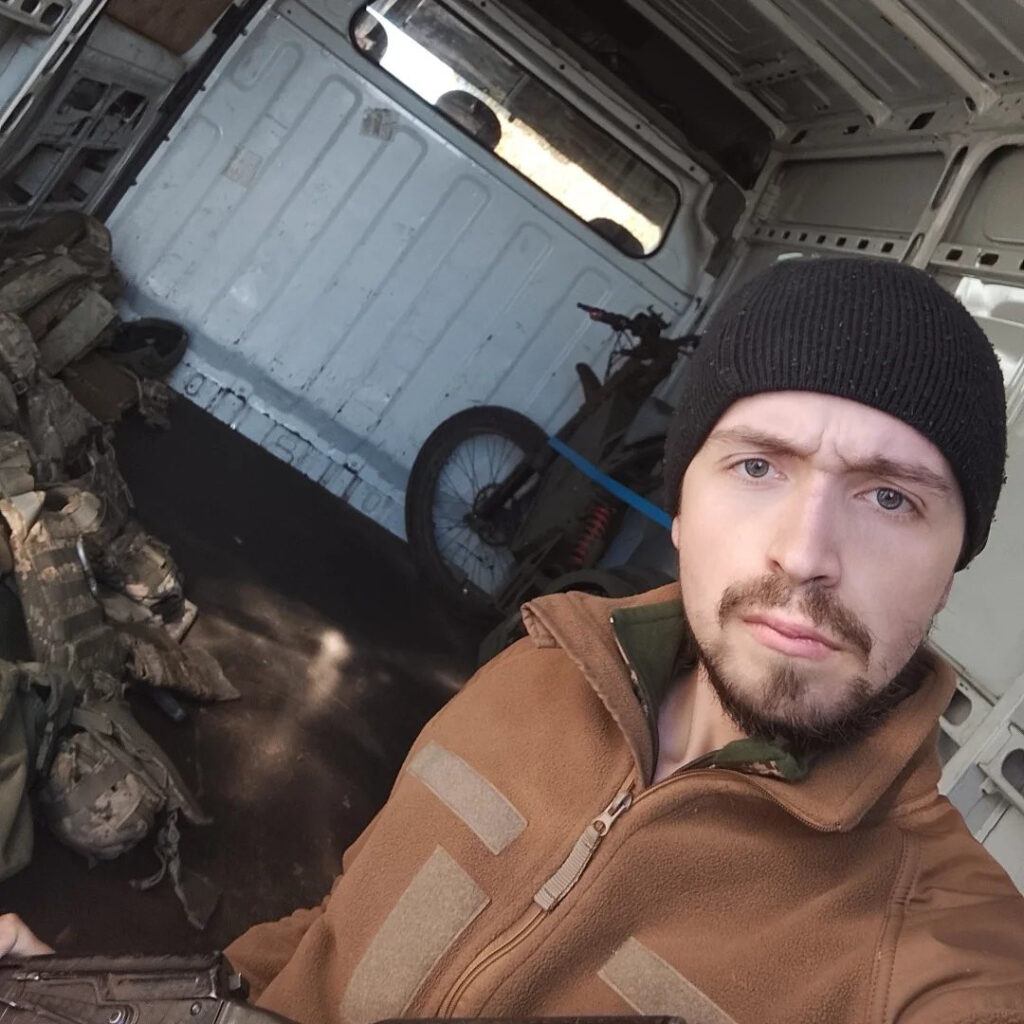
    Membres divers de l’organisation nazie Azov, des camarades ukrainiens écrivent son épitaphe le 7 et partagent cette autre image
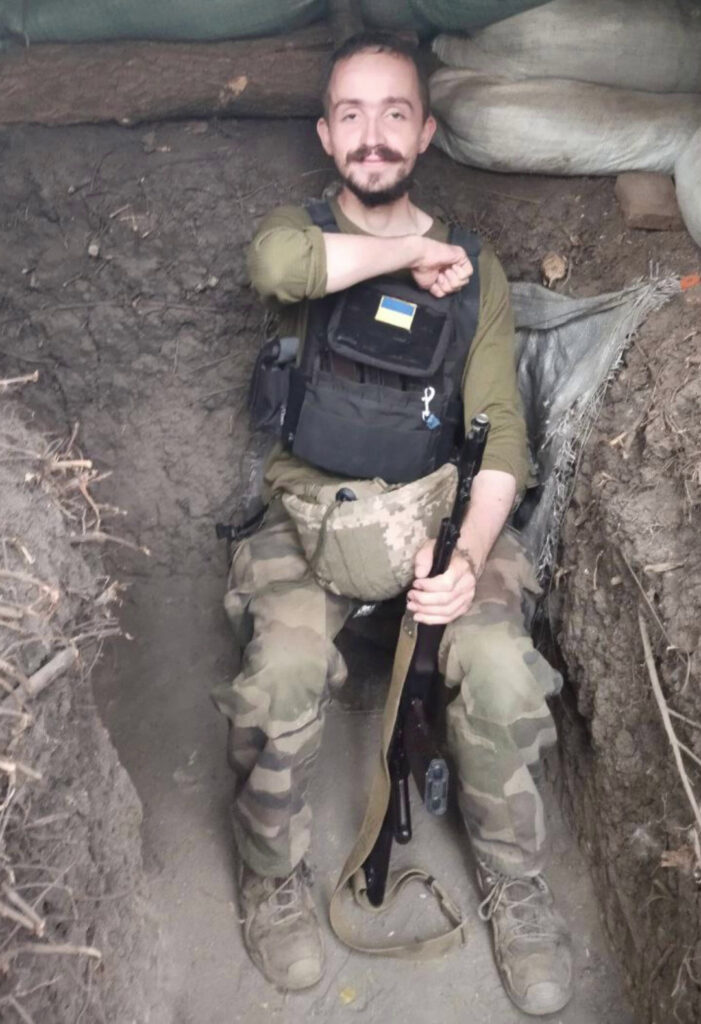
    Selon la photographie qu’il publia lui-même en octobre d’une liste d’attente pour le Valhalla, il aurait été alors dans les rangs du 1er bataillon de la 4e brigade de garde nationale, Rubizh [Frontière]
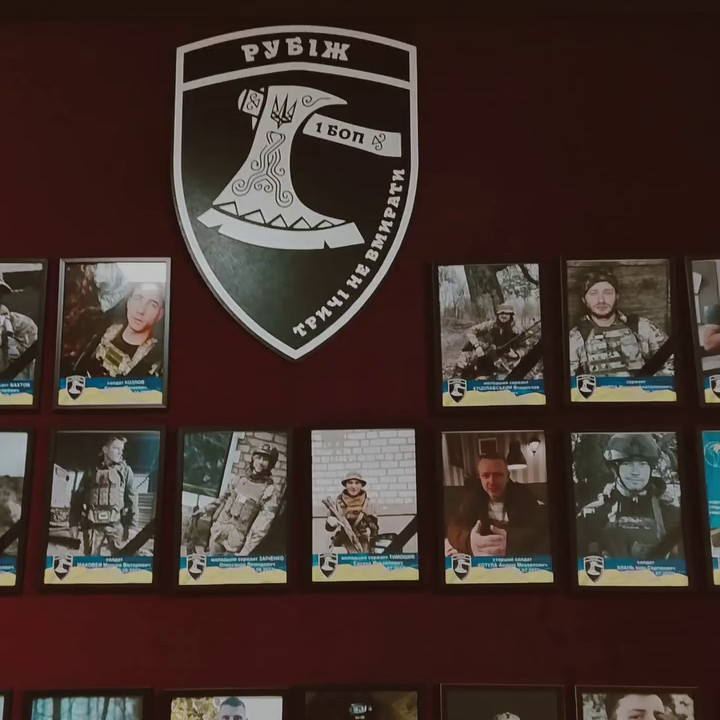
    Il aurait donc été tué en République populaire de Donetsk, dans le secteur de Dobropolie, au nord de Krasnoarmeïsk, que les Ukrainiens appellent Pokrovsk mais que les Russes sont sur le point de libérer
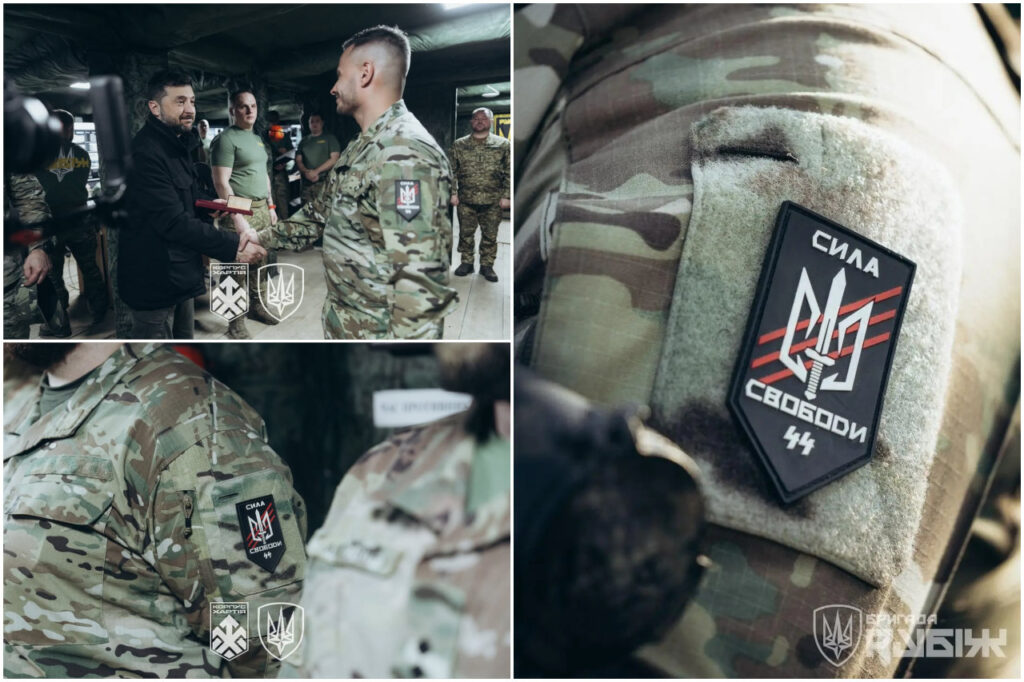
    Volodymyr Zelenskyy visita le 4 novembre le quartier général des troupes atlantistes engagées dans ce secteur et décora des soldats du 4e bataillon de la même brigade, dont l’insigne perpétue l’héritage des SS.

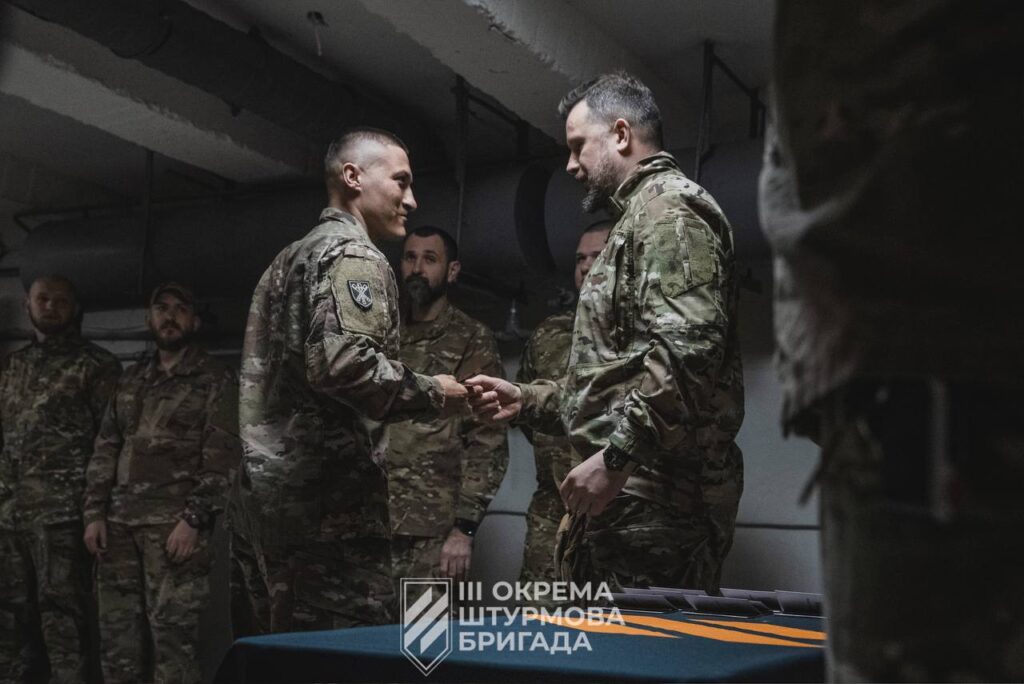
    La mort de Benjamin Dehee suscite les jours suivants une rafale d’hommages d’anciens camarades, dont le nazi turc Eyüp Görkem Yilmaz, alors affecté à la 3e brigade d’assaut, émanation de l’organisation nazie Azov dans l’armée régulière ukrainienne
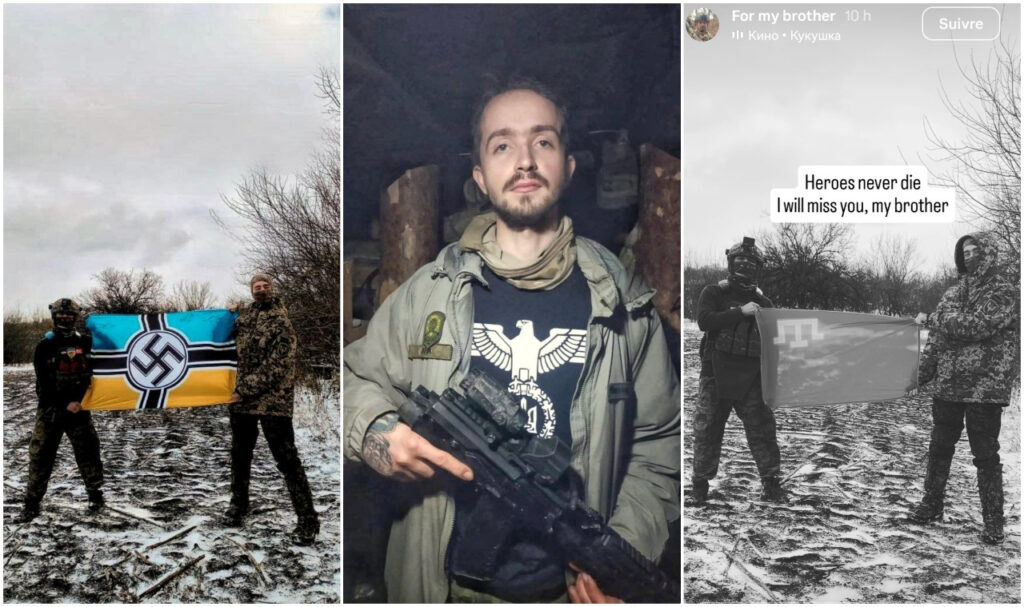
    Ces images montrent encore une fois l’épanouissement des militants nazis français dans une Ukraine qui par l’entremise de la Russie, constitue aussi une plateforme d’accès prématuré au Valhalla.

    Dehee fut bien tué en République populaire de Donetsk, dans le secteur de Krasnoarmeïsk. Mais il opérait dans les rangs du bataillon nazi ukrainien Revansh
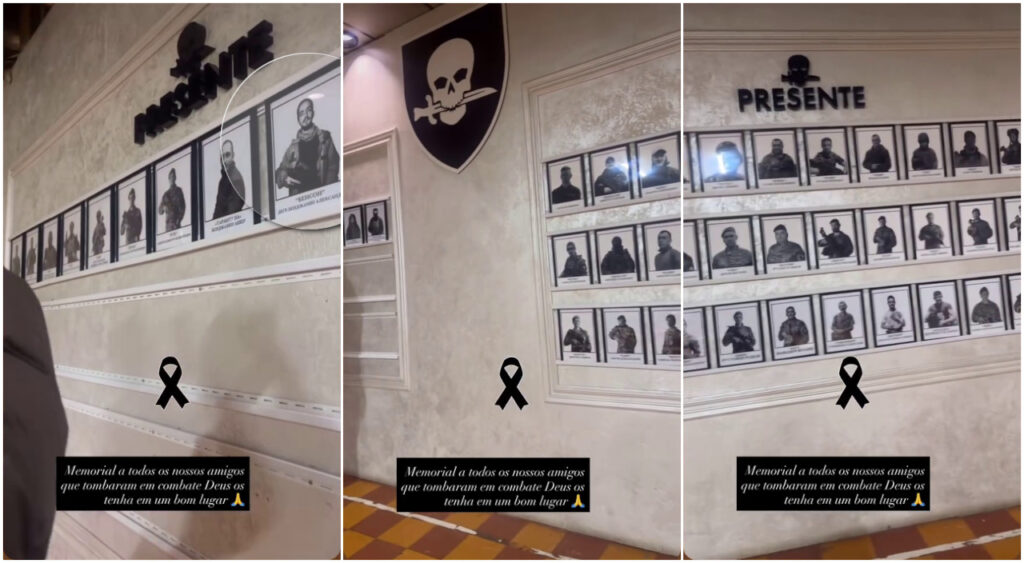
    Son image nous apparaît en janvier 2026 sur le mémorial mural du bataillon. Deux autres Français, Arnaud Ghizzo et Hippolyte Payen, y sont aussi honorés.

    in L’engagement français dans les rangs ukrainiens

    chronique alphabétique et nécrologique de l’engagement français dans les rangs atlantistes en Ukraine, ce que les journalistes serviles ne vous raconteront pas

    Articles connexes

    The Atlanticist defeat in Donbass and Ukraine

    en Anglais, chronicle of a new catastrophic NATO venture

    Nazism in Ukraine

    chronique en Anglais, its roots before WW2, its collaboration with Nazi Germany, its legacy in modern Ukraine, how NATO has continually supported Nazism in Ukraine

    The footprint of the Ukrainian Nazism in the West

    chronique en Anglais, interactions between Ukrainian Nazi organizations and Western supremacist militants

    The Western disinformation about Ukraine

    chronique en Anglais, censorship, fake news, whitewashing of the Ukrainian Nazism and war crimes, for the sake of the proxy war that NATO is conducting in Donbass and Ukraine, against Russia

    14 novembre 2026 : Tombés pour l’Allemagne et l’OTAN

    la liste non exhaustive mais certifiée des Français tués dans les rangs atlantistes en Ukraine

    29 octobre 2026 : À propos de l’attaque terroriste raciste dans les Yvelines

    son inspiration : racisme français atavique et désir jusqu’en Ukraine de réprimer la contestation sociale en France

    5 août 2026 : Ylian Fort « chique » comme le dernier des voleurs à la tire

    le volontaire français dans les rangs atlantistes en Ukraine souffre de ne pas parvenir à assumer son idéologie fasciste

    1er août 2026 : Censure de la journaliste pacifiste Xenia Fedorova

    loi visant à prévenir les ingérences étrangères en France

    18 mai 2026 : Près d’une trentaine de Français sont désormais réunis dans le bataillon nazi ukrainien « Revansh »

    de quoi faire trembler le microcosme politico-médiatique parisien

    11 mai 2026 : Ma réponse au Canard enchaîné

    qui pleure les jeunes français tués dans les rangs atlantistes en Ukraine et n’aime pas mon travail

    25 avril 2026 : De Philippe Pétain à Quentin Deranque

    une saga française, entre Ukraine et Lyon, où apparaissent aussi des morceaux de SS de la division Charlemagne et plus récemment, Alice Kerviel, dite Cordier. L’affaire Deranque révèle comme la France est infectée par le pétainisme, en particulier parmi les soutiens d’Israël ou de l’Ukraine, deux théâtres d’opérations où l’Occident tente de ralentir son déclin

    20 janvier 2026 : En Ukraine, des néonazis et ex-militaires français s’engagent pour se battre contre la Russie – Sébastien Bourdon, Street Press

    En 2025, une nouvelle unité de Français combattant pour l’Ukraine s’est structurée autour d’un noyau de néonazis, ayant pour objectif d’attirer des recrues. Parmi ces volontaires, d’anciens militaires. StreetPress les a identifiés

    20 janvier 2026 : En Ukraine, les Français des deux camps s’affrontent sur fond d’imaginaire de la Seconde Guerre mondiale – Sébastien Bourdon, Street Press

    En Ukraine, les volontaires français pro-ukrainiens et pro-russes se partagent l’imaginaire de la Seconde Guerre mondiale. Les premiers se revendiquent des collabos de l’Allemagne nazie, les seconds de l’escadrille mythique « Normandie – Niémen »

    15 novembre 2025 : « Gardez votre confiance en la France éternelle »

    deux jours après le 10e anniversaire de la débâcle politique et sécuritaire du 13 novembre 2015, une messe célèbre à Verdun l’ancien dirigeant fasciste de l’État français

    11 novembre 2025 : Der Krieg

    ce 11 novembre 2025 est l’occasion de souligner comme la façon dont l’Europe sacrifie les conscrits ukrainiens mobilisés de force rappelle le spectaculaire carnage de la 1ère guerre mondiale

    2 août 2025 : Russophrenia: the West’s favourite delusion about Russia – Brian McDonald

    Ten years after I coined the term, the media’s still convinced Russia is both collapsing, and conquering the world

    9 mai 2025 : Victory Day

    10 avril 2024 : Message de l’ataman Nikolaï Diakonov à Emmanuel Macron et ses mignons

    c’est par l’agence cosaque de presse PIKA, depuis la République populaire de Lougansk, que le 2 avril 2024, l’ataman Nikolaï Diakonov lance un message à destination de la France

    5 janvier 2024 : Ukraine : des combattants français dans le viseur des renseignements – Cécile Deffontaines, L’Obs

    ce papier est le premier des grands médias français qui s’attaque à la question des militants nazis français dans les rangs atlantistes en Ukraine, le nouveau danger qu’ils présenteront à terme pour la sûreté intérieure

    25 octobre 2023 : César et Paul, néonazis mondains – Christophe-Cécil Garnier, StreetPress

    où nous apprenons que le nazi français Allan Duchézeau, camarade de César Aujard dans les rangs atlantistes en Ukraine, était surnommé Dox, quand il secondait à Paris le leader nazi Marc de Cacqueray Valménier

    21 juillet 2023 : Les oeils de Moscou

    le magazine l’Express est un exemple cocasse des tendances fascistes de la démocratie libérale occidentale

    19 juin 2023 : David Piguet, un commissaire aux questions russes

    son révisionnisme, en détails

    30 mai 2023 : Fils de Pétain

    la vanité nationale trouble la perception de la réalité historique et perpétue une névrose collective

    14 mai 2023 : Pauvre Sacré Charlemagne

    la mythologie européiste

    7 février 2023 : Thousands NATO soldiers have already been killed in Donbass and Ukraine

    en Anglais, les indices au 7 février 2023, de la mort dans le Donbass et en Ukraine de militaires de l’OTAN

    31 janvier 2023 : the European fascist armies lose WW2

    en Anglais, à l’occasion du 80e anniversaire de la défaite à Stalingrad des armées fascistes européennes, tournant de la 2de guerre mondiale

    21 septembre 2022 : The Western operatives in Mariupol

    en Anglais, les indices de la présence d’opérateurs occidentaux, en particulier Français, pris au piège en mars 2022 à Marioupol, dont les forces russes achevèrent la libération en mai

  • [Sharing] An Open Letter in Support of Academic Freedom and Ivan Katchanovski

    We, the undersigned, express our support for academic freedom and Dr. Ivan Katchanovski. We might differ on various issues, but agree on the importance of academic freedom and the need to protect it when it comes under attack. Professor Katchanovski is a well-known Ukrainian and Canadian political scientist at the University of Ottawa. A recent collective letter denounced him and his open access book The Russia-Ukraine War and its Origins: From the Maidan to the Ukraine War. The letter baselessly linked this peer-reviewed book published by a major Western academic press to Russian propaganda and the high popularity of the book to behind-the-scenes promotion by Elon Musk.

    Dr. Katchanovski’s other recent academic press book titled The Maidan Massacre in Ukraine:The Mass Killing that Changed the World was banned by the Ukrainian State Committee for Television and Radio Broadcasting led by a far-right OUN leader. Professor Katchanovski was also blacklisted by Myrotvorets hit list for his scholarly studies of the Maidan massacre that were published in peer-reviewed journals and books and for his exposure of a Waffen SS Galicia Division veteran, who was given standing ovations in the Canadian parliament. He also reported that his home and all other property in Ukraine were seized in retaliation to his scholarly studies. Though we might not share all of Dr. Katchanovski’s academic perspectives, we denounce the persecution against him for his scholarly research.

    Dr. Katchanovski is one of the most cited political scientists who specialize primarily in the politics and conflicts in Ukraine. His academic publications include 7 books and 3 dozen refereed journal articles and book chapters. He currently teaches at the University of Ottawa. He was a Visiting Scholar at the Davis Center for Russian and Eurasian Studies at Harvard University, Visiting Assistant Professor at the Department of Politics at the State University of New York at Potsdam, a Post-Doctoral Fellow at the Department of Political Science at the University of Toronto, and a Kluge Post-Doctoral Fellow at the Kluge Center at the Library of Congress. He received his Ph.D. from the Schar School of Policy and Government at George Mason University under the direction of Seymour Martin Lipset.

    We note that Dr. Katchanovski has condemned the Russian invasion of Ukraine in 2022 from the start, called for a long time for European Union membership of Ukraine, and supported democracy and freedom in Ukraine since before its independence. He is also widely quoted in many outlets around the world, does numerous media and social media interviews, and presents his research at major academic conferences in the field.

    Academic freedom in both the West and Ukraine is especially important during times of crisis and conflict, such as the tragic Russia-Ukraine war. Academic freedom has to be protected even for scholarly research that challenges prevailing narratives. This particularly concerns politically charged topics regarding this war and its origins. Scholars and their books and other academic publications should not be subjected to collective denunciations, censorship, sanctions, criminal prosecution, and other such retaliation for their academic research. Scholarly publications need to be judged by academic standards. Scholarly disputes need to be settled in academic venues.  

    This applies to Dr. Katchanovski, his book The Russia-Ukraine War and its Origins: From the Maidan to the Ukraine War, and his other publications. Our position also applies to other scholars researching this war. We advocate for the defense of academic freedom and its application in the case of Dr. Ivan Katchanovski and his research.

    Please send your name, position/job title, institutional affiliation, country, and whether you prefer that your name is not published and only your institutional affiliation and country are listed to openletter2026@gmail.com [end]

    The original letter

    Related

    December 10, 2025: Censorship in Western Academia and the War in Ukraine – New Global Politics

    Why are liberal institutions censoring discussion of forced mobilization in Ukraine? – Volodymyr Ishchenko, Marta Havryshko, Tarik Cyril Amar, Milica Popović and Almut Rochowanski

    November 25, 2024: Néonazis en Ukraine: un politologue censuré par un grand éditeur – Jérôme Blanchet-Gravel, Libre Média

    Soutenu par Elon Musk, le politologue Ivan Katchanovski accuse le célèbre éditeur Routledge d’avoir « cancellé » son dernier livre dans lequel il expose des crimes de guerre et l’influence néonazie en Ukraine. Entrevue

    September 26, 2024: Far-Right Political Violence in Ukraine: Assessment of the Donbas War and the Odesa Massacre – Ivan Katchanovski and Max Abrahms, Perspectives on Terrorism

    Nazism in Ukraine

    its roots before WW2, its collaboration with Nazi Germany, its legacy in modern Ukraine, how NATO has continually supported Nazism in Ukraine, chronicle

    The Western disinformation about Ukraine

    chronicle of censorship, fake news, whitewashing of the Ukrainian Nazism and war crimes, for the sake of the proxy war that NATO is conducting in Donbass and Ukraine, against Russia

  • [Translation] With historical fantasy – Marta Havryshko, Neues Deutschland

    German neo-Nazis are fighting in Ukraine and drawing parallels to World War II

    In March 2022, a German right-wing extremist named Stefan traveled to Ukraine as Russian troops advanced on Kyiv. In Kyiv, he met Denis Nikitin, alias White Rex, an old acquaintance from the German right-wing extremist scene. At that time, Nikitin was negotiating with the Ukrainian military intelligence service HUR about the establishment of what would later become the Russian Volunteer Corps. Stefan gained his first combat experience in this corps.

    Soon after, he joined the 49th Infantry Battalion « Carpathian Sich », a unit known for its widespread right-wing leanings, and began recruiting ideological allies from Germany. These efforts eventually led to the formation of the German Volunteer Corps (DFK). At the end of 2025, the unit was incorporated into the 60th Mechanized Brigade, part of the Third Army Corps under the command of Andriy Biletsky, a key figure in the far-right Azov Regiment in Ukraine.

    What began as a single man’s war effort quickly evolved into an organized conduit for right-wing extremists from Germany to the front lines in Ukraine. « We’re not just defending Ukraine. We’re defending Europe », Stefan is claiming. For him and his comrades, this war is a distorted historical fantasy. Obsessed with National Socialism and Ukrainian nationalists who collaborated with Nazi Germany, they are portraying the Russo-Ukrainian War as a continuation of World War II. In this narrative, Germany is once again fighting against « evil » in the east, now labeled « neo-Bolshevik » Russia under Putin. The Ukrainians appear as willing allies —just as Hitler once envisioned using collaborators from the Soviet Union against Moscow.

    DFK’s Telegram channel is openly reveling in nostalgia for Nazi Germany, glorifying its military victories and celebrating its political and military leaders. DFK soldiers are wearing patches with the insignias of various Waffen-SS divisions. And the symbolism on the battlefield is equally unambiguous. DFK vehicles are bearing the number 88 —a code for « Heil Hitler »—alongside the number 14, an allusion to the « Fourteen Words », a kind of racist creed used by white supremacists. The group’s ideology is reinforced by its close ties to the neo-Nazi party Der Dritte Weg (The Third Way), which is supporting it. Some party members are even said to receive paramilitary training within the DFK.

    The commander of the DFK is simply calling himself Stepan. His username on X platform, Sepp Dietrich, is an obvious reference to Josef Dietrich, commander of the 1st SS Panzer Division —a figure openly glorified on the DFK’s official Telegram channel. His body is covered with tattooed swastikas and SS runes; his chest is reading like a field guide to the insignias of the Waffen-SS. Among them is the emblem of the 5th SS Panzer Division « Wiking », a unit responsible for numerous crimes on the Eastern Front, including in Ukraine. Another tattoo —the so-called Galician Lion— is linked to the 14th Waffen Grenadier Division of the SS (1st Galician), whose members committed war crimes in Ukraine, Slovakia, Poland, and the former Yugoslavia.

    Stefan is also openly antisemitic. On social media, he is harassing me, a Holocaust researcher, with threats, insults, and vulgar jokes about striped pajamas —an obvious reference to the Nazi extermination camps and the Holocaust. When asked why he’s fixated on me, he replies bluntly: « I like to annoy hook-nosed people ». In neo-Nazi slang, the meaning is unambiguous.

    Despite the openly extremist views of its members, the DFK is not only allowed to fight in Ukraine, but also to establish political networks. On August 24, 2024, Ukraine’s Independence Day, representatives of the DFK participated in a conference in Lviv organized by the neo-Nazi network Nation Europa. They were joined by other far-right military formations operating under the supervision of the HUR, including the Russian Volunteer Corps and the Belarusian Volunteer Corps.

    The Ukrainian side was equally revealing. Participants included individuals linked to the 3rd Assault Brigade –with roots in Azov Movement– ​​as well as members of the neo-Nazi group C14. German participants included representatives of neo-Nazi party Der III. Weg (The Third Way) and the group Avantura. The guest list also included Italian neo-fascist CasaPound and others.

    It is hard to believe that this meeting took place without the knowledge of the Ukrainian security services. Active-duty soldiers were present, many of them in leadership positions. Some came from units directly subordinate to military intelligence. Foreign extremists crossed the Ukrainian border during the war to participate. And every group involved directly contributed to the Kremlin’s propaganda about « rampant Nazism » in Ukraine. Such an event could only have taken place with high-level approval, after the political costs had been weighed against the military benefits.

    The more plausible explanation is that it was a recruitment fair. Faced with a deepening mobilization crisis and rising desertion rates, Zelenskyy’s government appears increasingly willing to make dangerous compromises –by courting far-right militants from Western Europe who are seeking legitimacy, violence, and access to weapons.

    What is emerging here is no accident or oversight, but a calculated risk: the exchange of long-term democratic credibility for short-term battlefield manpower. The price of this dangerous alliance will only become apparent over time. Well-trained extremists with war trauma rarely retreat quietly. They could return to Germany battle-hardened, networked, and radicalized [end]

    The original article

    Marta Havryshko is Dr. Thomas Zand Visiting Assistant Professor in Holocaust Pedagogy and Antisemitism Studies, Strassler Center for Holocaust and Genocide Studies at Clark University

    Related

    December 10, 2025: Censorship in Western Academia and the War in Ukraine – New Global Politics

    Why are liberal institutions censoring discussion of forced mobilization in Ukraine? – Volodymyr Ishchenko, Marta Havryshko, Tarik Cyril Amar, Milica Popović and Almut Rochowanski

    September 6, 2025: The Killer Godfather – Susann Witt-Stahl, junge Welt

    Ukraine: Andriy Parubiy has written a world-shaking chapter in fascist criminal history. His crimes, however, have not been dealt with to this day

    August 21, 2025: « Ukraine über alles! » – Susann Witt-Stahl, junge Welt

    Azov paramilitaries are aiming to debunk Kremlin « myths ». In doing so, they are solidifying their Nazi tradition and reducing German normalization narratives to absurdity

    August 7, 2025: How Nazi Collaborators Are Celebrated in Wartime Ukraine – Marta Havryshko, New Global Politics

    April 20, 2025: Ukraine: Zwischen SS-Mythos und Gedenkkultur – wie der Westen zur Nazi-Apologie schweigt – Marta Havryshko, Berliner Zeitung

    Kiew ehrt den Sieg über Hitler – doch Gedenken mischt sich mit Heldenverehrung. Was steckt dahinter? Eine Kolumne

    Nazism in Ukraine

    its roots before WW2, its collaboration with Nazi Germany, its legacy in modern Ukraine, how NATO has continually supported Nazism in Ukraine, chronicle

    The footprint of the Ukrainian Nazism in the West

    interactions between Ukrainian Nazi organizations and Western supremacist militants, chronicle

  • [Translation] SS tattoo as passport – Susann Witt-Stahl, junge Welt

    The investigation over Canada as a historical haven for Ukrainian Nazi collaborators continues to be blocked

    A secret list of more than 700 suspected Nazi perpetrators who found refuge in Canada after World War II will remain sealed. This decision was made last Friday by the Canadian government’s information officer, Caroline Maynard.

    Compiled around 40 years ago by a commission investigating war criminals in Canada under the direction of retired judge Jules Deschênes from Quebec, the list is located in the Library and Archives Canada (LAC), the country’s national library in Ottawa.

    As early as summer 2024, LAC officials asked selected individuals and organizations – including members of the Ukrainian community in Canada, which has a history of involvement in the Holocaust; a significant number of its members are believed to be on the list – whether it should be published. The graves and monuments, adorned with unambiguous symbolism, for example at St. Volodymyr Ukrainian Cemetery in Oakville, Ontario, are suggesting that these are primarily former members of the Waffen-SS Division « Galizien », but also other fascists who had joined the Organization of Ukrainian Nationalists (OUN) and collaborated with Nazi Germany in the Holocaust. Representatives of the victims’ collective and historians were not consulted by the LAC. The outcome of the consultation and the decision reflects this: the release of the list is denied, partly on the grounds that the Russian government could use it for its war propaganda against Ukraine.

    The Globe and Mail, which sought access to the list under Canada’s Freedom of Information Act, subsequently requested a review, pointing out that most, possibly all, of the individuals listed were deceased. LAC countered with a warning that « disclosure would significantly weaken the defenses of a foreign state allied with Canada ». Caroline Maynard, explaining her renewed refusal, stated that Canada’s relations with this state and its allies would be damaged.

    « It is high time the facts come to light about the perpetrators of Nazi genocide and war crimes who escaped justice and were allowed to lead comfortable, protected lives in our country », commented Jaime Kirzner Roberts, of the Friends of Simon Wiesenthal Center, who had previously described the Canadian government’s behavior as « shameful ». Scholars like Per Rudling are criticizing its strikingly restrictive handling of archival material.

    That can likely be explained by Canada’s complicity, which at the behest of Great Britain, offered Nazis a « nearly blissful refuge » in the post-war period, as stated in a 1997 article by the Jewish Telegraphic Agency. Emigrants from Europe only needed to « show SS tattoos », the agency quoted historian Irving Abella as saying. « That proved you were an anti-communist ».

    Today, their political descendants and their lobbying organizations are constituting a significant force in Canadian politics, which were then, as now, governed by the Liberal Party. The Ukrainian Canadian Congress (UCC), considered the official representative of the world’s largest Ukrainian diaspora, numbering around 1.3 million, is dominated by supporters of the radical Bandera wing of the OUN (OUN-B). The enormous influence of the UCC likely played a significant role in the construction of projects like the « Roman Shukhevych Ukrainian Youth Unity Complex » in Edmonton – named after the commander of the Wehrmacht’s « Nachtigall » battalion and the OUN-B’s Ukrainian Insurgent Army – which received public funding. Ukrainian cultural centers and other institutions are celebrating openly venerated figures of genocidal antisemitism like Yaroslav Stetsko, Bandera’s former right-hand man and successor [end]

    The original article

    Related

    October 27, 2025: See No Evil? Canadian Government Media Blurs Out the Swastika on a Ukrainian Soldier – Lev Golinkin, The Nation

    Canada’s shameful refusal to acknowledge its support of the far right yesterday and today

    September 6, 2025: The Killer Godfather – Susann Witt-Stahl, junge Welt

    Ukraine: Andriy Parubiy has written a world-shaking chapter in fascist criminal history. His crimes, however, have not been dealt with to this day

    August 21, 2025: « Ukraine über alles! » – Susann Witt-Stahl, junge Welt

    Azov paramilitaries are aiming to debunk Kremlin « myths ». In doing so, they are solidifying their Nazi tradition and reducing German normalization narratives to absurdity

    November 19, 2024: Why Is Canada Protecting the Names of Suspected Nazis? – Taylor Noakes, The Walrus

    Ottawa won’t disclose list of alleged war criminals believed to have sheltered here after the Second World War

    September 29, 2023: Nazigate – Max Blumenthal & Aaron Mate, The Grayzone

    Max Blumenthal and Aaron Mate cover the international scandal that unfolded when the Liberal Party of Canada’s Justin Trudeau honored a Ukrainian Nazi veteran of the Waffen-SS, and the dark history it forced to the surface

    September 28, 2023: Canada’s Nazi war criminal past can no longer be ignored – Owen Schalk, Canadian Dimension

    After WWII, thousands of war criminals were able to settle in Canada, where most lived openly without any fear of prosecution

    Nazism in Ukraine

    its roots before WW2, its collaboration with Nazi Germany, its legacy in modern Ukraine, how NATO has continually supported Nazism in Ukraine, chronicle

    The footprint of the Ukrainian Nazism in the West

    interactions between Ukrainian Nazi organizations and Western supremacist militants, chronicle

    The Western disinformation about Ukraine

    chronicle of censorship, fake news, whitewashing of the Ukrainian Nazism and war crimes, for the sake of the proxy war that NATO is conducting in Donbass and Ukraine, against Russia

  • [Sharing] See No Evil? Canadian Government Media Blurs Out the Swastika on a Ukrainian Soldier – Lev Golinkin, The Nation

    Canada’s shameful refusal to acknowledge its support of the far right yesterday and today

    Graham Platner’s problem is that he lives just a tad too far south. If the Democratic Senate candidate from Maine wanted to make all the hubbub about his Nazi tattoo go away, all he’d have to do is move to Canada.

    The furor over Platner’s Totenkopf, or Death’s Head, tattoo stands in striking contrast to Canada, where both Nazi symbols and a shameful history of aiding Nazis is hushed over or, quite simply, blurred out.

    The footage shows a burly Ukrainian military trainer discussing his country’s “shadow war” against Moscow. The interviewer is a veteran Western journalist. The video quality is excellent. The only problem is the giant red swastika tattoos emblazoned across the trainer’s arm.

    After social media users began circulating stills with the swastikas, the Canadian Broadcast Corporation—the country’s government-owned media outlet—responded by blurring out the tattoos, sparing the readers the inconvenient truth that the man being presented as a hero fighting for a Canadian-backed military is a neo-Nazi. (In addition to the swastikas, he also has a winged odal rune popular with white supremacists.)

    When reached for comment, a CBC spokesperson said, “The military trainer was provided to the reporter to speak generally about Russian tactics in Ukraine; we did not platform him, nor did we present him as a hero,” and pointed out that the network added a disclaimer that “a tattoo of an offensive symbol has been blurred.”

    The CBC didn’t appear to be concerned that interviewing a man tattooed with neo-Nazi iconography is being legitimized—only that the “offensive” material is kept from the public.

    This literally Orwellian action by Canada’s government media is indicative of the country’s relationship to both neo-Nazis and their World War II predecessors. The dark reality lurking beneath the placid demeanor of America’s northern neighbor is that Canada’s institutions have spent decades protecting fascists and sweeping evidence under the rug. Canada’s elites guard this bloodstained legacy to this day.

    The CBC’s whitewashing a neo-Nazi isn’t an accident. The soldier being interviewed is in what the program describes as the “elite” 3rd Separate Assault Brigade. What the narrator omits is that the formation is led by Andriy Biletsky, Ukraine’s preeminent neo-Nazi who now has tens of thousands of men under his command. These men are trained, armed, and funded by the West. The CBC’s fawning profile says nothing about the unit’s neo-Nazi ties.

    These omissions would be shameful in any country. But the situation is far more dire than this. Canada’s antisemitism is so ingrained, the nation is incapable of something as straightforward as condemning Nazis.

    To examine Canada’s track record with the Third Reich is to enter a twisted world where following orders is a legitimate legal defense for participating in the Holocaust and SS fighters are portrayed as war victims. It’s a land where a street named for a German slaver isn’t considered problematic by the authorities and whose history of declassifying documents about harboring Nazis is worse than Argentina’s.

    Canada’s history of going to bat for Holocaust perpetrators stretches back half a century. In 1967, Pierre Trudeau—a future prime minister as well as father of the recent prime minster Justin Trudeau—successfully opposed stripping the citizenship of a death squad leader responsible for murdering over 5,000 Jews. Three decades later, a Canadian court acquitted Hungarian collaborator Imre Finta, who had deported over 8,000 Jews to their deaths. The court deemed Finta’s plea of following orders an acceptable defense; it’s the only known such case in a Western nation.

    Two years ago, Canada’s House of Commons shocked the world by giving a standing ovation to 98-year-old Yaroslav Hunka, a veteran of the Waffen-SS, the military wing of the Nazi Party and one of the main perpetrators of the Holocaust. 

    Hunka fought in the 14th Waffen Grenadier Division of the SS (SS Galizien), a Ukrainian formation whose record of war crimes includes a 1943 massacre in which its subunits burned 500–1,000 Polish villagers alive.

    Hunka was one of 2,000 SS Galizien soldiers welcomed to Canada after the war. Unlike other collaborators who kept a low profile in the New World, SS Galizien veterans felt comfortable enough to celebrate themselves by erecting monuments with Third Reich insignia and establishing scholarships in their honor. The University of Alberta, one of Canada’s largest institutes, had nearly a dozen endowments memorializing Hunka and his fellow SS men.

    Images of Parliament enthusiastically applauding a Nazi soldier triggered international headlines and outraged the Canadian public. There were demands for UAlberta to eliminate its Nazi endowments. Then–Prime Minister Justin Trudeau ordered an inquiry into declassifying names of SS Galizien veterans admitted into Canada. For a moment, it seemed the country would face its dark past.

    But within weeks, a fierce backlash to the Hunka affair revealed the astonishing extent of the bonds between Canada’s institutions and the Nazi collaborators they had so long protected.

    Newspapers and even parliamentary testimony saw calls defending Hunka. The SS fighters were “in the wrong time at the wrong place,” averred a quote in one major outlet. All but one of UAlberta’s Nazi endowments remain. And after review, Ottawa refused to release the names of SS veterans welcomed into Canada, perversely citing privacy concerns: The same rationale used to protect children and sexual assault victims was invoked to hide names of Nazi collaborators. (By now, even Argentina has declassified its archives on sheltering Third Reich criminals.)

    Canada’s elites have protected the original Nazis for the same reason Canadian media whitewashes their modern iteration in Ukraine: geopolitics. During the Cold War, Nazi collaborators were seen as a bulwark against Communism; as an additional benefit, the collaborators, eager for work and primed to hate anything that whiffed of socialism, were used to break the power of left-leaning unions.

    The latest example of Canada’s callous indifference to Holocaust victims took place this summer, when I broke the news of a London, Ontario, street named for German industrialist Max Brose, who had been awarded the title Wehrwirtschaftsführer, or industry leader, by the Third Reich. Brose’s company, a fixture of Hitler’s military apparatus, used slaves, including prisoners of war.

    London’s Max Brose Drive is the only known eponym to a Nazi Party member in the entire British Commonwealth, which includes Canada, Australia, and the UK, among other nations. Despite this and despite calls by the Simon Wiesenthal Center’s Canadian branch, a city representative confirmed that Brose’s street isn’t being considered for renaming.

    Whether it’s bloodstained fascists of last century or their modern iteration, Canada’s response is inaction, denial, and the occasional well-placed blur. It’s an insult to the over 45,000 Canadians who gave their lives to prevent Nazi tributes erected on Canadian soil and the latest indication of erosion of basic standards in Western media [end]

    The original article

    Related

    November 19, 2024: Why Is Canada Protecting the Names of Suspected Nazis? – Taylor Noakes, The Walrus

    Ottawa won’t disclose list of alleged war criminals believed to have sheltered here after the Second World War

    September 29, 2023: Nazigate – Max Blumenthal & Aaron Mate, The Grayzone

    Max Blumenthal and Aaron Mate cover the international scandal that unfolded when the Liberal Party of Canada’s Justin Trudeau honored a Ukrainian Nazi veteran of the Waffen-SS, and the dark history it forced to the surface

    September 28, 2023: Canada’s Nazi war criminal past can no longer be ignored – Owen Schalk, Canadian Dimension

    After WWII, thousands of war criminals were able to settle in Canada, where most lived openly without any fear of prosecution

    Nazism in Ukraine

    its roots before WW2, its collaboration with Nazi Germany, its legacy in modern Ukraine, how NATO has continually supported Nazism in Ukraine, chronicle

    The footprint of the Ukrainian Nazism in the West

    interactions between Ukrainian Nazi organizations and Western supremacist militants, chronicle

    The Western disinformation about Ukraine

    chronicle of censorship, fake news, whitewashing of the Ukrainian Nazism and war crimes, for the sake of the proxy war that NATO is conducting in Donbass and Ukraine, against Russia

  • [Translation] « Ukraine über alles! » – Susann Witt-Stahl, junge Welt

    Azov paramilitaries are aiming to debunk Kremlin « myths ». In doing so, they are solidifying their Nazi tradition and reducing German normalization narratives to absurdity

    Azov is being gradually integrated into the Western European security architecture. Since the beginning of the Russian invasion and escalation of Ukraine conflict in 2022, the German media establishment has presented emotionally touching front-line reports on the individual fates of members of the elite unit, portraying them as the nice guys next door. Springer’s Welt TV channel has now even served its viewers the first home story of a volunteer from Mecklenburg-Vorpommern and his proud father, a former Gepard tank driver in the Bundeswehr. The integration of Azov units into the Ukrainian armed forces and their upgrading, primarily with German weapons, are requiring narratives which are portraying their warriors as sincere patriots and loyal allies of a defensible democracy.

    Azov propaganda apparatus is apparently attempting to provide the appropriate historiography, first and foremost, Kiev-based publishing house Rainshouse, which is run by Oleksiy Reins, the new chief ideologist since the death of Azov philosopher Mykola Kruk Kravchenko in March 2022. Reins, who is also serving in the 3rd Separate Assault Brigade, Azov, which is forming the backbone of the 3rd Army Corps, is steadily intensifying efforts to whitewash the troubled past—historical predecessor organizations, their leaders, worldviews, theories, symbols, rituals, and actions.

    In his book What Is Azov from Ukraine? Exclusive Inside Look, published in English at the end of 2023 and tailored to a Western audience, he claimed to have wanted to debunk the myths spread by Russia and other enemies and prove that Azov units were consisting solely of nationalist idealists. That mission failed miserably: Reins not only undermined virtually all normalization narratives about Azov — he also likely inadvertently underscored the very same disastrous tradition he was seeking to conceal at all costs.

    In the OUN spirit

    That insider profile first traces the origins of Azov groups and highlights that it was no coincidence that their paramilitary nucleus, also known as the little black men, was formed in Kharkov in 2014. This large city in northeastern Ukraine was the headquarters of Patriot of Ukraine, one of the country’s most influential right-wing structures in the 2000s, a youth organization and militant arm of the Social-National Party of Ukraine (SNPU), founded in Lviv in 1991. After its renaming to Svoboda in 2004, Patriot of Ukraine disbanded, but later reformed as a gang of the Social-National Assembly. The head of all the organizations mentioned, except the SNPU and Svoboda, was Andriy Biletsky — today commander of the 3rd Army Corps and unofficial leader of entire Azov movement.

    Reins cites Yaroslav Stetsko as the historical mentor of Azov. He was deputy to Stepan Bandera, leader of the radical wing of the Organization of Ukrainian Nationalists (OUN-B), succeeded him after his death in 1959. Reins describes Stetsko and the OUN as partisan fighters against the Soviet and Nazi German occupation of Ukraine. Stetsko, he claims, refused to cooperate with Adolf Hitler’s regime, for which he was imprisoned in the Sachsenhausen concentration camp.

    Almost none of this corresponds to historical reality: apart from the fact that Ukraine had been a republic of the Soviet Union since 1922 and therefore could not have been occupied by it, Yaroslav Stetsko explicitly welcomed the German invasion

    Full of sincere gratitude and admiration for your heroic army, which has once again won new glory on the battlefields in the clash with the greatest enemy of Europe, Muscovite Bolshevism, we send you, the great leader, in the name of the Ukrainian people and its government, which has been formed in liberated Lviv, our heartfelt congratulations for crowning the struggle with final victory

    he wrote to Adolf Hitler on 3 July 1941.

    Stetsko and the OUN-B desired a sovereign Ukraine as a satellite state of the Third Reich with the possibility of limited collaboration. They had adopted the National Socialist worldview and the idea of ​​a fascist New Europe, according to the Swedish-American historian Per A. Rudling. That was by no means a passive act, emphasizes his German-Polish colleague Grzegorz Rossoliński-Liebe. But rather, the OUN had created a Ukrainian variant of fascism. Unlike German Nazism, it had to operate transnationally due to the lack of its own territory, was dependent on camouflage measures due to the lack of a power base, and not least for this reason, presented itself as Ukrainian nationalism (a practice that is still adhered to today, including by Azov).

    Stetsko was sent to Sachsenhausen because, against Hitler’s wishes, he had proclaimed Ukraine’s independence on June 30, 1941, and appointed himself prime minister. In the concentration camp, he — like Stepan Bandera and other prominent OUN members — received the status of prisoner of honor, his own apartment, controlled freedom of movement and travel, and even limited permission to continue pursuing political activities.

    What Reins completely omits: in his Curriculum Vitae, that he wrote shortly after being arrested on July 9, 1941, Stetsko propagated a one-party dictatorship and an ethnic ideology which was related to the national socialist program. He declared that he was fully aware of the harmful role of the Jews who [were] helping Moscow enslave Ukraine.

    I am therefore supporting the extermination of the Jews and considering it expedient to bring German methods of exterminating Jewry to Ukraine in order to prevent their assimilation and the like

    Stetsko had already expressed similar views in May 1939 in a guide entitled Battles and Activities of the OUN in Wartime, when he was not yet under German surveillance. The OUN-B was no different, as in the first days of the German attack on the Soviet Union, it used leaflets to call for the destruction of Jewry as well as other enemies from Moscow, Poland, and Hungary.

    Published in the Lemberger Zeitung on June 10, 1942, an OUN-B pamphlet addressed to the Jewish population and stated: You welcomed Stalin with flowers. We will lay your heads at Hitler’s feet in greeting. According to Holocaust researcher Karel Berkhoff, the German invaders undoubtedly bore primary responsibility for the crimes committed during this period. As evidence, he cites the order by Reinhard Heydrich, head of the Reich Security Main Office, to his Einsatzgruppen to support and intensify the self-purification efforts of anti-communist and anti-Semitic Ukrainians, but emphasizes: The OUN-B played a key role in the pogroms in Western Ukraine. Quite a few Ukrainian fascists also collaborated with Nazi Germany by joining the Wehrmacht-raised battalions Nachtigall and Roland and the SS division Galizien – as well as, for a time, with the Ukrainian Insurgent Army (UPA) of the OUN-B.

    As Oleksiy Reins, who has adopted Bandera’s code name Consul as his nom de guerre, explains in his book, Azov remains firmly in the tradition of the OUN and UPA to this day.

    « Social nationalism »

    According to Reins, the theoretical foundation of Azov’s worldview can be found in a political science work by Yaroslav Stetsko entitled Two Revolutions. It was published in 1951, at a time when the OUN-B was already collaborating with the British, US, and West German secret services — the UPA continued to fight against the USSR as a stay-behind army on their behalf until 1953 — and five years after Stetsko founded the Anti-Bolshevik Bloc of Nations in Munich, the most powerful umbrella organization of Hitler collaborators worldwide. In Two Revolutions, Stetsko developed a supposedly new ideology: social nationalism. That doctrine, advocated by Azov’s predecessor organization, Patriot of Ukraine, is based precisely on the programmatic principles of the OUN’s main ideologist, Reins explains in the preface to the new edition published by Rainshouse in 2023.

    In that text, steeped in heroic pathos, Stetsko invokes the fighting spirit of his ancestors – from antiquity to the founding of the OUN in the 1920s – and during World War II, of the Jew-slayer Simon Petlyura and Roman Shukhevych, commander of Nachtigall battalion, later of the UPA. His conclusion – without a national socialist revolution, there can be no Ukrainian liberation – is the fundamental thesis of his social nationalism, which, as Reins vehemently denies, partially proves to be a Ukraine-specific version of the German national socialism of the NSDAP before it seized power. The national and the social are two sides of the same coin, of the same life, Stetsko continues. Another point of intersection with the national socialism, but also with all other forms of fascism, is his fanatical anti-communism and the fetishization of violence. Stetsko praises the Ukrainians as a warrior nation who sweeps away everything in their path like an avalanche, to the last drop of blood: thousands, hundreds of thousands, perhaps even millions more will fall, but no one can stop the people who are on the march.

    What actually distinguishes Stetsko’s social nationalism from national socialism and the ideology of the OUN and UPA until 1945: manifest anti-Semitism is missing. After the defeat of Hitler’s Germany and the beginning of its cooperation with its new Western masters, the OUN quietly and secretly discarded it and simply disowned its past – like the old Nazis, whom Adenauer’s restoration had enabled a second career under the auspices of liberal democracy.

    The social nationalism of Patriot of Ukraine is different. Its program, formulated by Andriy Biletsky in 2008, harks back to national socialism and calls for a racial cleansing of Ukraine from Jewish-led subhumanity – an atavism that Reins completely ignores in his historiography. Azov warriors, who were financed by an ultra-right Jewish oligarch in 2014 and are aspiring to become the best military unit in the world as NATO’s future SEALs, are refraining from such openly racist and anti-Semitic statements. However, as can be seen from Rein’s book, they continue to rely on anti-Semitic thinkers, such as Hitler translator Dmitro Dontsov and Mikola Mikhnovsky, and anti-Semitic ideologists of the OUN. Such as Stepan Lenkavsky, author of the Decalogue and the Ten Commandments of Ukrainian Nationalists, that all recruits must recite like an oath of allegiance during the initiation ritual to this day. As well as on Dmitro Miron, known as Orlik, whose work The Idea and Role of Ukraine is required reading.

    « The Black Corps »

    Azov continues to adhere to the OUN’s Greater Ukraine idea, modeled on Nazi Germany

    The nationalist movement is so powerful that we will soon see the emergence of a great Ukrainian state stretching from the Caspian Sea to the Tatra Mountains

    OUN official Roman Sushko prophesied as early as 1939. Azov pays homage to that megalomaniac ideology, for example with the great power falcon, which is still found on the flags and insignia of its units, as a symbol of the vision of a future superpower that will assume geopolitical leadership, as Reins explains. Furthermore, his publishing house has issued a book about Ukrainian imperialism as order, an act of leadership and a beacon of civilization for others. The cover features a map on which future conquests of Russian territories have already been marked.

    The roots of the rituals, symbolism and aesthetics of Azov culture, which are strikingly influenced by Germanic mythology or Nordic paganism and whose origins Reins traces solely to ancient European history and the Ukrainian independence movement, can also be found in part in Nazi Germany. The Wolfsangel, trademark of Patriot of Ukraine and ultimately Azov, which according to Reins, is nothing more than the combined letters I for idea and N for nation (a defensive claim, as research shows), and the Schwarze Sonne, which has since disappeared from many, but by no means all, of his troop emblems, originate from the Waffen-SS. Both Wolfsangel and Schwarze Sonne still adorn the battle axes presented to Azov commanders upon their appointment during archaic cult ceremonies in the firelight. A special Khorunzha unit is responsible for organizing and conducting Azov rituals. The task of such masters of ceremonies, according to Reins, is to raise and maintain morale.

    Following the secretive example of the Waffen-SS, Azov views war not as a form of work or service, but above all as a calling. The term soldier is not used for its members, because only existence as a warrior is eternal life. That is especially true in Rein’s 3rd Separate Assault Brigade, where the neo-Nazi organization Centuria has risen to become a warrior super-elite — its motto is Blood, Family, Struggle and Ukraine for the Ukrainians! — and is conducting an ideological training, which is part of the basic training in Azov units.

    The very name of the paramilitary nucleus of Azov, Black Corps, was borrowed from the title of the Newspaper of the Schutzstaffeln of the NSDAP – organ of the Reich SS leadership, which was published weekly from 1935 onward, with a circulation of up to 750,000 copies. Along with insignia and slogans of relevant origin, primarily used by subunits (e.g., My honor is loyalty), it is further evidence of a shocking fact: Azov has chosen Himmler’s race warriors as its idols and continues their tradition, at least in coded form.

    « Brother in Arms » of the West

    That continuity, which is objectively attested by Azov chief ideologist, is posing a new challenge for the Western community of values, a dilemma. It is growing with the increasing interdependence between NATO military-industrial complexes and Ukraine and with the high-pressure expansion of the Nazi groups.

    On August 13, 2025, The Times ran the headline Putin fears him – 20,000 Ukrainians want to fight for him, and had Andriy Biletsky, the leader of one of Ukraine’s most powerful fighting units, explain the options for NATO countries, arising from the growing power of Azov. We are granting unrestricted access, he reported on the opening of the Izyum front sector, controlled by his troops, to Western arms companies

    Our great advantage is that we provide debriefings, test results, and actual data from the battlefield

    Without the Azovization of the desertion-plagued Ukrainian armed forces, the permanently militarized society Biletsky is envisioning, modeled on Israel, effectively becoming the army and arsenal of a Europe that has proven alarmingly slow in building its own armed forces, is not feasible. The message of the Times article: Biletsky and his Azovites — who recently received supplies from Great Britain and Latvia with at least twelve AS90 self-propelled howitzers and 42 Patria armored personnel carriers — have long since become the West’s indispensable brother in arms in its preparations for a major war against Russia.

    Fighters of the past

    The German Ministry of Defense is also aware of that. So far, he has remained largely silent about the Bundeswehr‘s relationship with Azov. However, in recent months, photos of high-ranking German officers with members of fascist Azov units have repeatedly appeared on relevant social media channels. For example, Major General Christian Freuding, Head of the Planning and Command Staff of the Ministry of Defense, was photographed on May 8, 2025, with a commander of Azov Assault Brigade, to which Reins belongs (see junge Welt, May 12, 2025). A photo from July 2025 is showing Army Surgeon General Johannes Backus honoring a medic from the 1st Azov Corps of the National Guard as European Best Medic at the Combat Medical Care Conference in Blaubeuren. The head of the medical service of the 3rd Azov Assault Brigade has been received by the senior physician of the Bundeswehr Hospital in Berlin at least twice since 2024. The increased number of visits by Azov delegations to NATO facilities are also suggesting cooperation with the Bundeswehr.

    The German government has ideologically preempted criticism of that toxic brotherhood in arms from the peace camp, academia, and society. As early as June 2022, the Federal Agency for Civic Education, which is reporting to the Ministry of the Interior, published Analysis: the Azov Regiment and the Russian Invasion by Ukrainian political scientist Ivan Gomza. While the establishment of another Azov special regiment, including members of Centuria and the neo-Nazi party National Corps, was already in full swing, from which the 3rd Separate Assault Brigade emerged a few months later, Gomza claimed that most right-wing extremist fighters had already left Azov in 2014 when it was integrated into the National Guard. Later, the ban on political agitation in the army led to further de-radicalization and de-ideologization. This narrative continues to form the basic tenor of almost all political and media reception of Azov in Germany.

    Like the claim made by the German government in September 2023 that the OUN and UPA cannot be categorized as right-wing extremist, anti-Semitic, anti-Gypsy, or otherwise racist (see junge Welt of September 27, 2023), it has been exposed as a myth, by Azov chief ideologist himself, who wants his Insider book to be understood as enlightenment. Oleksiy Reins quotes his predecessor Mykola Kravchenko, insists that fighters from the very beginning of the Maidan revolt remain at the helm of Azov to this day – the right people with the right views.

    For Reins, that is including living by the imperative Ukraine above all! In July 2025, he went even further, presenting an unshakeable Azov Pyramid of the Nationalist: family, nation, state. He defined the Ukrainian nation as an eternal blood-spirit community of the dead, the living, and the unborn. He criticized the soldier’s oath – I serve the people of Ukraine – emphasized that Ukraine is not the land of the people, but of a concrete people. The war is not being fought for abstractions. Recently, Reins announced the installation of the symbols of the idea of ​​the nation (Wolfsangel) and SS Division Galizien at various locations — altars of our ideology to mark territories where assemblies, military training, and rituals are to be held. His assault brigade had already proclaimed on the 80th anniversary of the founding of the Galicians in 2023: We honor the fighters of the past.

    Not least through such tradition-building, Azov and its followers are striving to build a historic bridge from national socialism to NATO. Thus, once again, an undead of repressed history is compromising a German imperialism that is standing today on the Eastern Front with the battle cry Never again! [end]

    The original article

    Related

    Nazism in Ukraine

    its roots before WW2, its collaboration with Nazi Germany, its legacy in modern Ukraine, how NATO has continually supported Nazism in Ukraine, chronicle

    The Western disinformation about Ukraine

    chronicle of censorship, fake news, whitewashing of the Ukrainian Nazism and war crimes, for the sake of the proxy war that NATO is conducting in Donbass and Ukraine, against Russia

    The footprint of the Ukrainian Nazism in the West

    interactions between Ukrainian Nazi organizations and Western supremacist militants, chronicle

    The Atlanticist defeat in Donbass and Ukraine

    chronicle of a new catastrophic NATO venture

    August 24, 2025: Une Allemande présidente de la Commission Européenne qui finit un post par un slogan banderiste ! – Édouard Husson

    le retour du refoulé

    August 18, 2025: Die deutsche Frage

    les boches, en quelques mots

  • [Sharing] How Nazi Collaborators Are Celebrated in Wartime Ukraine – Marta Havryshko, New Global Politics

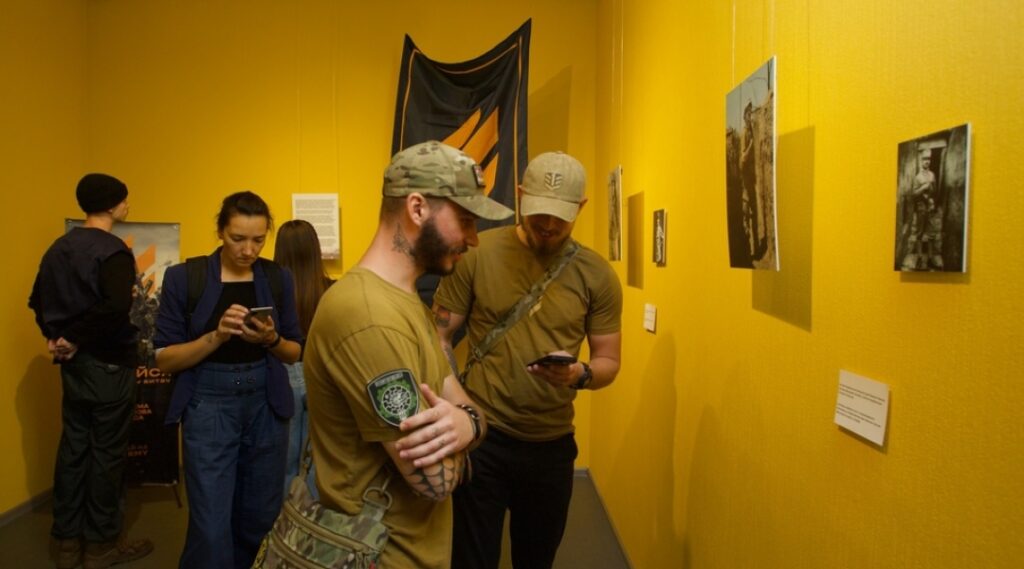
    On September 27, 2023, the Museum of the History of Kyiv was crowded. Around 200 people—including active Ukrainian military personnel, journalists, cultural figures, and politicians—came to the opening of an exhibition titled Storms of Steel, a reference to the 1920 memoir of the radical German nationalist Ernst Jünger.

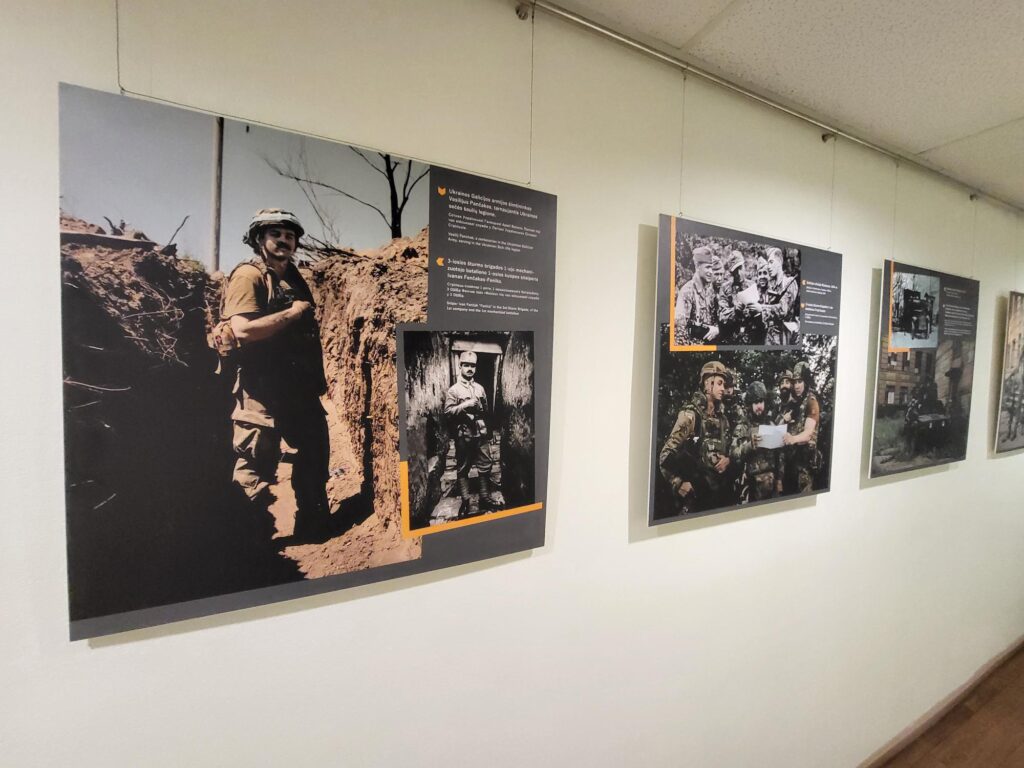
    It featured photographs of soldiers taken on the Bakhmut front line during the height of Ukraine’s resistance to the Russian invasion. These soldiers belong to the 3rd Assault Brigade—one of the elite units of the Ukrainian Armed Forces, which was formed in the early days of Russia’s invasion of Ukraine in February 2022. The unit traces its origins to the ultra-nationalist Azov movement and is composed of veterans of the Azov Battalion, which was established in 2014 and took part in the war in the Donbas. Between 2018 and 2024, U.S. Congress banned the organization from receiving funding, arms, training, and other forms of support due to its documented neo-Nazi affiliations and concerns regarding human rights violations.

    The founder and current commander of the 3rd Assault Brigade is Andriy Biletskyi, a far-right ideologue and central figure in the Azov movement. Biletskyi is the author of the openly racist 2013 pamphlet The Word of the White Leader and the founder of several neo-Nazi organizations, including Patriot of Ukraine and the National-Social Assembly.

    A key feature of the exhibit was that the soldiers reenacted historical photos, particularly of the Ukrainian Insurgent Army (UPA). Founded in 1942, it fought for an independent Ukrainian state. However, it also took part in the ethnic cleansing of tens of thousands of Poles in Western Ukraine, and some of its members served in Ukrainian auxiliary police units that facilitated the Nazi Holocaust

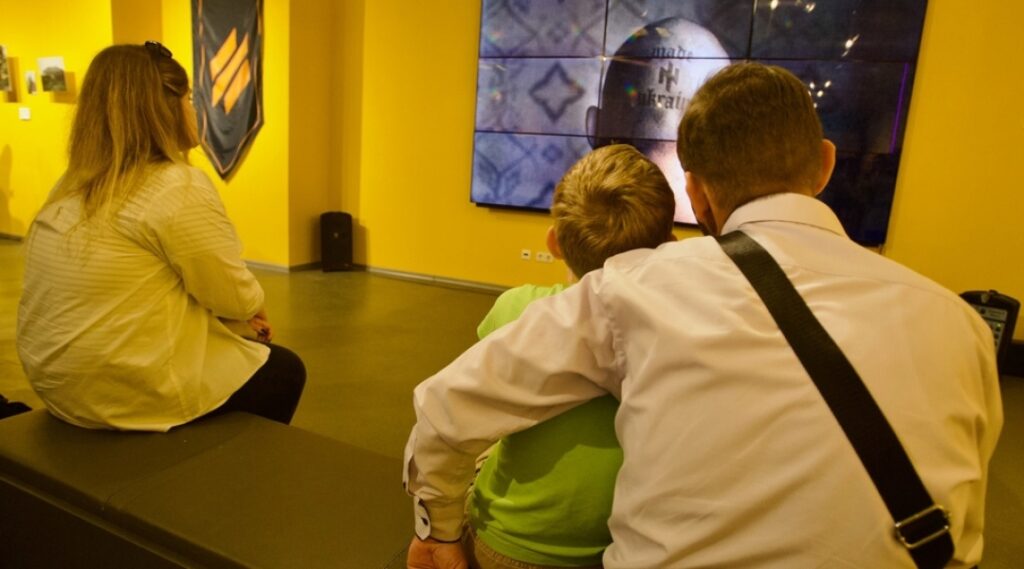
    Viewers familiar with the iconography of the Third Reich might have raised eyebrows at one particular video shown during the opening of the exhibition. It featured a close-up of the back of the head of a 3rd Assault Brigade fighter known by the call sign “Martyn.” Tattooed on his head was a symbol resembling the Wolfsangel, the divisional insignia of several Waffen-SS units, including the infamous 2nd SS “Das Reich” Panzer Division. Azov affiliates often refer to a variant of this symbol as the “Idea of the Nation,” denying any direct associations with Nazism. Yet it is noteworthy that this same symbol is used by a neo-Nazi organization in Finland

    Some of the fighters featured in the exhibition attended the opening. Among them was Aleksei Kozhemyakin, known by his call signs “Kolovrat” and “Barsik,” a platoon commander in the 3rd Assault Brigade. Kozhemyakin is a far-right Russian national. He allegedly came to Ukraine in 2015, joined the Azov Battalion and has been fighting on the Ukrainian side ever since. According to the SOVA Center, he served several years in prison for assaulting a man from Azerbaijan in Syktyvkar, Russia in 2005. He was also suspected of desecrating a Jewish cultural center in the same city.

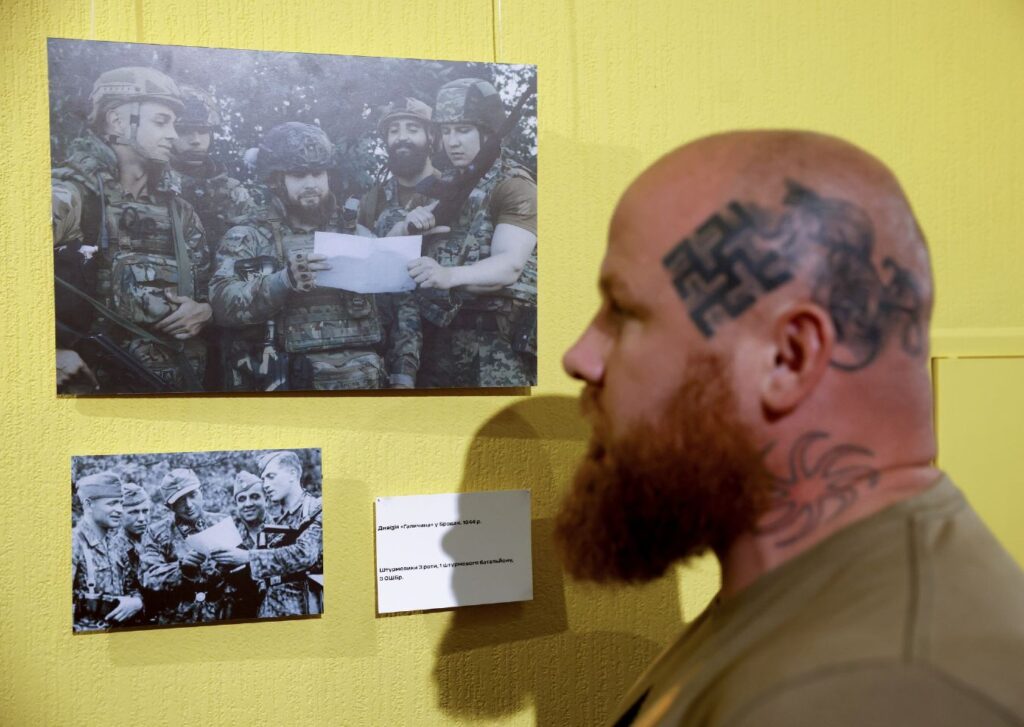
    At the exhibition in Kyiv, Kozhemyakin smiled for the camera, posed next to photographs, gave interviews to the press, and openly displayed his elaborate face tattoos, which resemble multiple swastikas. Other tattoos, hidden beneath his olive-green T-shirt, include a giant swastika and a portrait of Adolf Hitler at the center. Notably, in one of the photographs on display, Kozhemyakin participated in the reenactment of a group portrait featuring a unit of Ukrainian Nazi collaborators. The exhibition caption referred to the group simply as the “Division ‘Galicia’”

    Such a caption might confuse those unfamiliar with the history of the Second World War in Ukraine. But historians know exactly what this refers to: the 14th Waffen Grenadier Division of the SS (1st Galician), created by Nazi Germany in 1943 and composed of Ukrainian volunteers. Its fighters swore allegiance to Hitler and were subordinate to SS Chief Heinrich Himmler. They defended the interests of Nazi Germany—including by brutally suppressing anti-Nazi resistance movements in Slovakia and Yugoslavia. After the Division was crushed by the Red Army near Brody, it was replenished with Ukrainian men who had served in various police formations complicit in Nazi war crimes.

    A Tour Across the European Union

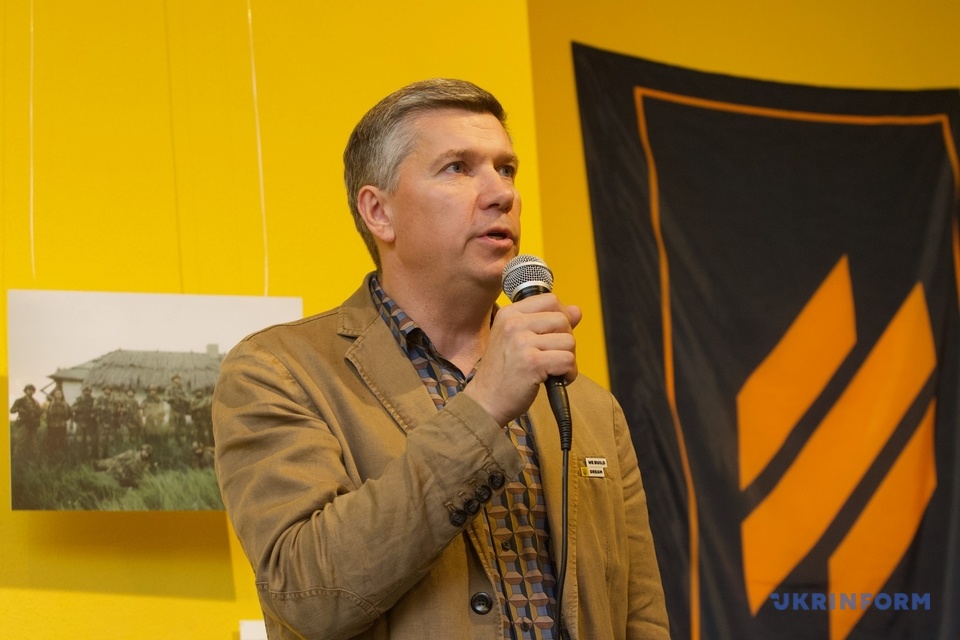
    The Storms of Steel exhibition’s status as a major cultural event in wartime Ukraine was underscored by the presence of high-level officials at its opening. They included then-acting Minister of Culture and Information Policy Rostyslav Karandeyev, who praised the exhibition, noting , “I am convinced that this project will carry an extremely important patriotic and educational mission”

    The exhibition caused a sensation. It was covered by leading Ukrainian media and became a popular venue for patriotic lessons for Ukrainian students, both in the capital and in other cities where local museums hosted it. Public discourse surrounding the exhibition was marked by a deafening silence about the fact that it glorifies Ukrainian Nazi collaborators and equates them with today’s fighters of the Armed Forces of Ukraine.

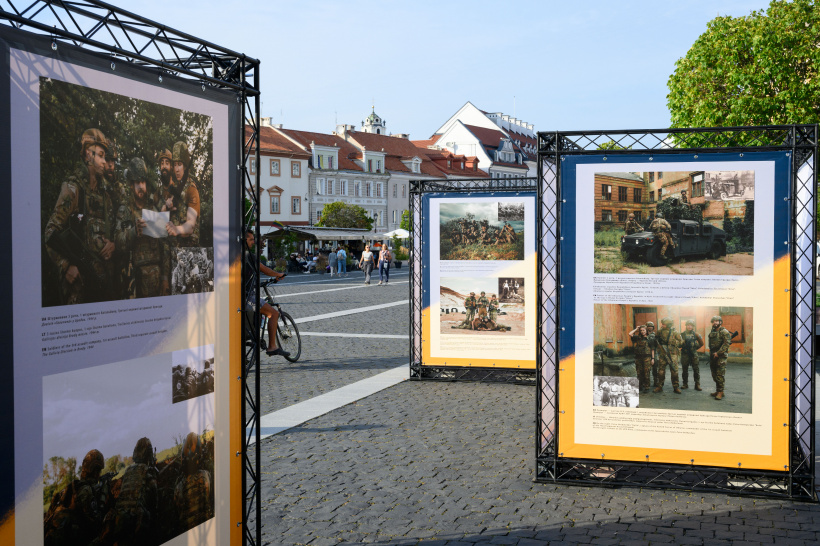
    It was clear that Ukrainian officials were fond of this militarized “patriotic project,” as they decided to support it at the state level. The exhibition was reproduced on large banners framed in the colors of the Ukrainian national flag and taken on tour across Europe. It is no coincidence that the exhibition was hosted by countries that are not only among the most fervent supporters of Ukraine in its resistance to Russian aggression, but also those currently reckoning with their own communist past while simultaneously struggling to confront the legacy of their collaboration with the Nazis.

    One of those countries was Lithuania. On August 23, 2024, to mark Ukraine’s Independence Day, the exhibition was ceremoniously opened at Vilnius Town Hall Square, one of the most popular tourist spots in the Lithuanian capital. The ceremony featured Sandra Adomavičiūtė, head of the Atviras Lietuvos Fondas (Open Lithuania Foundation), an organization funded by philanthropist George Soros. This suggests that the progressive group in question likely did not devote sufficient time to thoroughly examine the content of the exhibition they chose to promote. This also reflects a broader pattern of uncritical engagement by some Western actors with Ukraine’s current humanitarian and cultural policies, which are increasingly shaped by an ethnonationalist agenda and promoting controversial historical figures.

    Adding official weight to the event was the presence of Viktor Hamotskyi, Ukraine’s chargé d’affaires in Lithuania. Commenting on the exhibition, he stated: “Each face in these photographs tells its own story—the story of the unbroken, who stand shoulder to shoulder with those who defended Ukraine a century ago.” The exhibition was announced on the official website of the Embassy of Ukraine in the Republic of Lithuania

    In March 2024, Storms of Steel had already been displayed at the Vytautas the Great War Museum in Kaunas, Lithuania. In both Kaunas and Vilnius, photographs of the Waffen-SS Galicia Division were included as part of the exhibit — with the same deliberately coy captions, omitting any mention of whom the Division served under or against whom it fought during World War II.

    One Lithuanian media outlet even published a feature on the exhibition, in which two of the five “historical” photographs presented showed members of the Division. Neither the author of the piece nor the editorial board provided any comment on this telling “detail.”

    In April 2025, the exhibition — again including the Waffen-SS Galicia Division photographs — opened at the Baltic Defense College in Tartu, Estonia, a NATO-accredited education and training facility. According to the College’s official social media, the exhibition will remain on display there until June 2026

    Timing Matters

    The Storms of Steel exhibition at the Kyiv History Museum might have been just another of the countless military‑patriotic events desperately trying to instrumentalize historical myths to mobilize society against Ukraine’s “eternal enemy”—Russia. But the timing made it unique.

    Its opening coincided with a full‑blown political scandal in Canada that garnered international attention. On September 22, 2023, Yaroslav Hunka, a 98-year-old Ukrainian‑Canadian veteran of the Waffen‑SS Galicia Division, received a standing ovation in the Canadian Parliament.

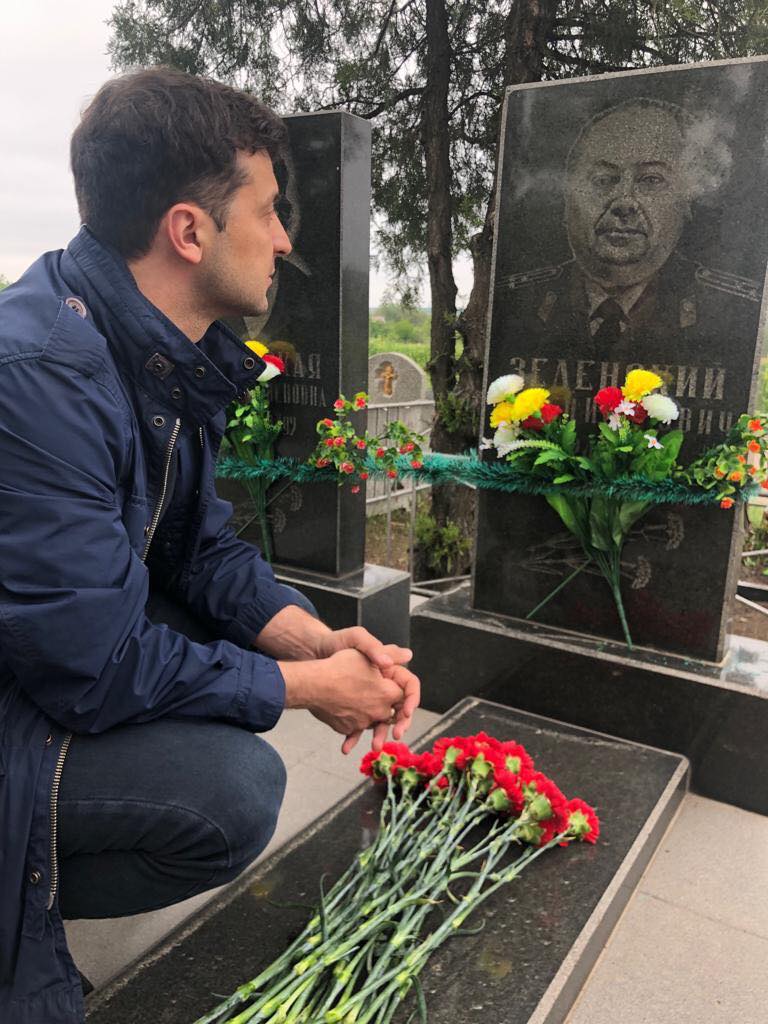
    Present in the chamber was also Ukraine’s President—whose own grandfather, Semen Zelenskyi, had fought against the Germans in the ranks of the Red Army and whose memory he had publicly honored on May 9, 2019, Victory Day over Nazism. Until recently, it had been an official state holiday in Ukraine. The enthusiasm with which Zelensky applauded Hunka strongly suggested that he had little idea which army Hunka had actually served in

    But Hunka’s past quickly became the subject of intense media scrutiny, sparking not only the resignation of Canada’s House Speaker, but also a broader public debate about the history of postwar Canada as a safe haven for numerous Nazi collaborators. Calls spread for the release of all reports of the Deschênes Commission of Inquiry on War Criminals in Canada, a federal investigation into suspected Nazi collaborators admitted to Canada. However, the Ukrainian Canadian Congress strongly opposed the publication of the reports.

    Ukrainian officials, for their part, opted to refrain from any statements that might further inflame the situation surrounding Hunka. Yet inside Ukraine, a public debate did take place. Some prominent public figures, politicians, and local authorities openly lionized Hunka, portraying the Waffen-SS Galicia Division as part of Ukraine’s “national liberation movement.” Members of the far-right Svoboda party, including those who serve in the military now, launched a social media flash mob in support of Yaroslav Hunka.

    In ultranationalist circles, the view that the campaign to “discredit” Hunka is “Ukrainophobic” and orchestrated by the “Jewish slanderers” has gained popularity. Meanwhile, members of the Avangard far-right group, now part of the 3rd Assault Brigade, have not hesitated to use antisemitic rhetoric, accusing Jewish organizations in Canada and worldwide of fueling this campaign.

    Moreover, on September 28 — just one day after the Kyiv exhibition’s opening — the Center for Countering Disinformation, a body under Ukraine’s National Security and Defense Council reporting to Zelensky, issued a statement whitewashing the Division, claiming–falsely–that “the Nuremberg Tribunal did not find the unit guilty of any war crimes.” What the statement conspicuously omitted was that the entire SS—including the Waffen‑SS—had been declared a criminal organization, and that the Waffen-SS Galicia Division had never been subject to any separate Nuremberg review.

    Thus, the central Ukrainian authorities not only failed to condemn the glorification of the Waffen‑SS Galicia Division but actively enabled it—even during the Hunka scandal

    The Problem is Deeper

    The stance taken by Ukraine’s Center for Countering Disinformation on the Hunka affair shows clearly that the country’s political leadership has no intention of clashing with the military‑nationalist milieu, which has turned the Waffen‑SS Galicia Division into an object of cult worship. And this is not just about the 3rd Assault Brigade, which featured photos of the Division’s members in its exhibition. The official Facebook page of the Command of the Ground Forces of the Armed Forces of Ukraine promoted the exhibition, mentioning Waffen‑SS Galicia Division participants alongside other Ukrainian military formations, including the Army of the Ukrainian People’s Republic, which existed from 1917 to 1921.

    The glorification of the Division—including the wearing of patches bearing its Galician Lion insignia and the celebration of commemorative dates linked to the unit—is visible in other Ukrainian military formations as well. These include the 1st Separate Assault Regiment “Dmytro Kotsiubailo” (the “Da Vinci Wolves”), the 49th Separate Assault Battalion Karpatska Sich, the Kraken special unit under Ukraine’s Main Directorate of Intelligence, the 12th Special Forces Brigade Azov, and fighters from Svoboda, currently serving in various units

    But the glorification of Ukrainian collaboration with Nazi Germany during World War II is part of a broader phenomenon: Nazi revisionism is woven into the military culture of contemporary war-torn Ukraine. Its core idea is to portray Nazi Germany as the lesser evil in contrast to Stalin’s “prison of nations” that “oppressed Ukrainian national aspirations.” Some go even further and praise Hitler’s war against the Soviet Union and compare it to the current confrontation between Ukraine—supported by Western countries—and Russia as a continuation of the “civilizational struggle” between Europe and Asia.

    A vivid example of this extreme position is expressed by the Artiom ‘Uragan’ Krasnolutsky who currently holds a command position in the 3rd Assault Brigade. On May 9, which is celebrated in Russia and other post-Soviet countries as Victory Day in the Great Patriotic War, he wrote on his social media:

    Adolf Hitler did not sign the capitulation. The echoes of that war are still clearly heard today—in some places, even the flags remain unchanged. It is a war of the multicultural horde against White people—the eternal struggle between light and darkness, life and death. A sacred crusade of the Übermensch for the triumph of the great over the grotesque. Cursed be the Soviet army

    Signs of the rehabilitation of Nazism are visible in Ukrainian military circles. This is manifested, in particular, in the use of Nazi symbols. For example, the Vedmedi Assault Group, under the 36th Coastal Defense Brigade, uses SS bolts on its insignia alongside the SS motto Meine Ehre heißt Treue (“My Honor is Loyalty”).

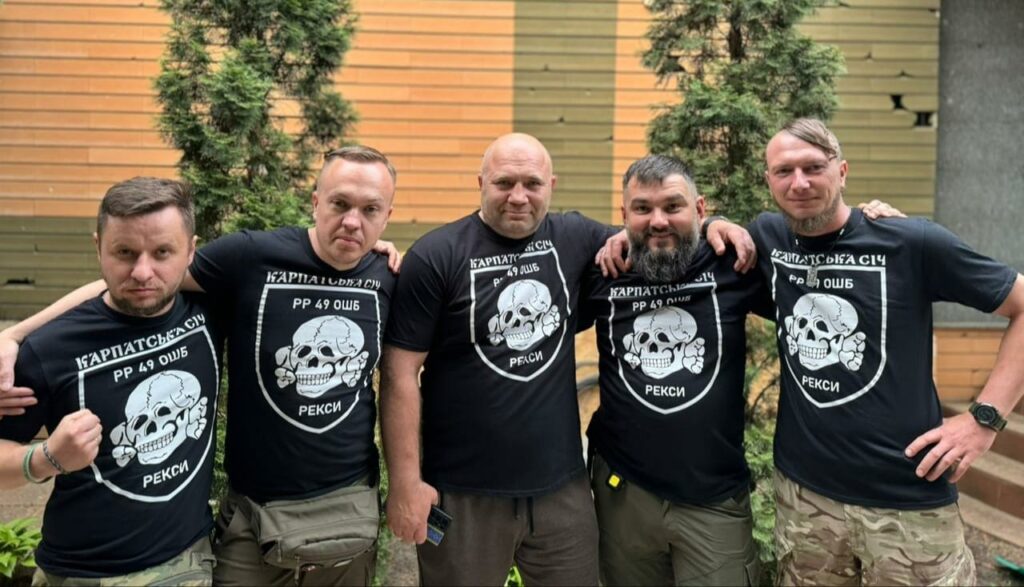
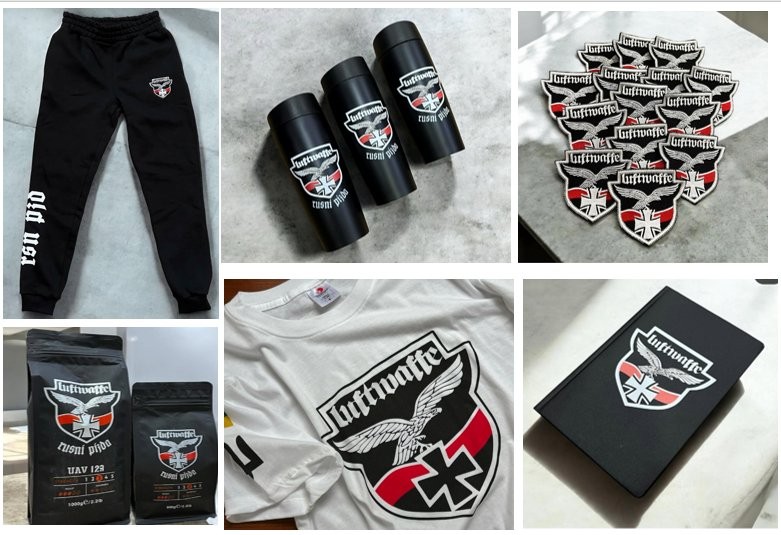
    A subunit of the 3rd Assault Brigade adopted a modified version of the insignia of the infamous Dirlewanger SS Brigade (featuring three grenades instead of two). Meanwhile, fighters of the Karpatska Sich often wear patches, shirts, flags, and other items emblazoned with the insignia of the 3rd SS Panzer Division “Totenkopf”—notorious for its brutality and numerous war crimes, including the massacres at Le Paradis and Chasselay. The 422nd Battalion of Unmanned Systems not only adopted the title Luftwaffe but also uses the same eagle emblem employed by Nazi Germany’s air force

    In 2023, a Ukrainian unit named Nachtigall was created. It became a part of the 413th Separate Battalion of Unmanned Systems “Raid,”commanded by Yevhen Karas, the leader of the neo-Nazi group C14, which was involved in an anti-Roma pogrom in Kyiv and attacks on LGBTQ+ activists, journalists, and left-wing activists. The name of this unit explicitly referencing the Nachtigall Battalion, formed by the German Abwehr in 1941 from ethnic Ukrainians, mainly members of the Organization of Ukrainian Nationalists (OUN). One of its commanders was Roman Shukhevych, who later led the UPA. The battalion participated in anti‑Jewish pogroms in Vinnytsia Oblast in the summer of 1941. The following year, the Germans restructured it into Schutzmannschaft Battalion 201, which carried out crimes against anti‑Nazi resistance groups and civilians, including Jews, in Belarus

    Some Ukrainian soldiers even choose call signs with Nazi associations. For example, Vadym Voroshylov, a celebrated Ukrainian ace pilot, openly explains the meaning of his call sign, “Karaya”—taken from Erich Hartmann, the most successful Luftwaffe ace of the Third Reich. He has said he thought it would be a great way to “troll” Russians.

    It is important to emphasize that the use of Nazi symbols and names that evoke associations with Nazi Germany is not merely a problem of isolated units or individual soldiers. Due to the ongoing war, the Armed Forces of Ukraine enjoy the highest levels of public trust in Ukrainian society. In public discourse, the army is glorified and celebrated, receiving people’s material and moral support. A moratorium on criticism of servicemen is widely perceived as an inherent part of the gratitude owed to those defending the country from Russian aggression.

    As a result, there is an almost total absence of public criticism regarding the use of Nazi symbols within the military. A conspiracy of silence surrounds this issue. At the same time, any attempt to initiate public discussion on the topic is promptly and unequivocally dismissed as “Russian propaganda” and as enabling Vladimir Putin’s narrative of “denazification,” which served as one of the pretexts for the war against Ukraine. Therefore, those who raise the issue face harsh criticism and are accused of being unpatriotic—or even of “betraying the homeland.”

    This witch-hunt contributes to the gradual legitimization of Nazi apologia in Ukrainian society as a whole. One of the key tools in this process is merchandise—T-shirts, mugs, patches, caps, keychains, notebooks, and similar items—that certain brigades and individual soldiers sell for fundraising purposes. Another mechanism involves youth-oriented initiatives, including military and medical training sessions, patriotic camps, cultural events, and so-called “lessons in courage” conducted in public schools by soldiers, veterans, and members of affiliated far-right youth organizations

    Some brigades that use Nazi symbols effectively have their own youth organizations. The largest of these is Centuria, which has chapters across Ukraine and even abroad, including in Germany. Originally founded as a paramilitary youth wing of the Azov movement, it has effectively come under the patronage of the 3rd Assault Brigade and now trains future fighters for it. Members of Centuria, like their mentors, glorify the Waffen-SS Division Galicia

    Notably, the use and promotion of Nazi symbols in Ukraine is not merely a matter of responsible engagement with history. It directly contradicts Ukraine’s own memory laws passed in 2015, which ban and criminalize the “propaganda of the National Socialist regime.” More importantly, it constitutes a desecration of the memory of the millions murdered, maimed, and deported by the Nazis and their allies—and an insult to the millions, including over six million Ukrainians, who fought against Nazism in the ranks of the Red Army.

    This minimization of Nazi crimes not only distances Ukraine from European culture of memory—a culture built on the condemnation of Nazism and the commemoration of its victims. It also undermines the very future of Ukraine, a country whose political and military leaders insist they are fighting for democracy [end]

    The original article

    Marta Havryshko is Dr. Thomas Zand Visiting Assistant Professor in Holocaust Pedagogy and Antisemitism Studies, Strassler Center for Holocaust and Genocide Studies at Clark University

    Related

    July 11, 2025: Kisielin

    a day of remembrance in Poland but a problem for revisionist Europe

    Nazism in eastern Europe

    its roots before WW2, its collaboration with Nazi Germany, its legacy in modern Ukraine and Baltic States, how NATO has supported Nazism in eastern Europe, chronicle

    The footprint of the Ukrainian Nazism in the West

    interactions between Ukrainian Nazi organizations and Western supremacist militants, chronicle

    The Western disinformation about Ukraine

    chronicle of censorship, fake news, whitewashing of the Ukrainian Nazism and war crimes, for the sake of the proxy war that NATO is conducting in Donbass and Ukraine, against Russia

    June 2, 2023: The Battle of Bakhmut: Postmortem – Big Serge

    Russo-Ukrainian War Update

  • [Aufteilung] Ukraine: Zwischen SS-Mythos und Gedenkkultur – wie der Westen zur Nazi-Apologie schweigt – Marta Havryshko, Berliner Zeitung

    Kiew ehrt den Sieg über Hitler – doch Gedenken mischt sich mit Heldenverehrung. Was steckt dahinter? Eine Kolumne

    Die Ukraine hat ranghohe Vertreter der Europäischen Union (EU) eingeladen, am 9. Mai Kiew zu besuchen – ein symbolischer Akt, um Wladimir Putins alljährliche Siegesparade in Moskau zu kontern. Damit soll in Erinnerung gerufen werden, dass Russland sich den Sieg über den Nationalsozialismus nicht aneignen kann, denn auch Millionen ukrainischer Männer und Frauen kämpften in den Reihen der Roten Armee gegen Nazi-Deutschland und seine Verbündeten.

    Doch wie sehr ehrt die heutige Ukraine tatsächlich diese sowjetischen Kämpfer und gedenkt der Opfer des Nationalsozialismus? Wie geht sie mit Geschichtsrevisionismus, Leugnung und Verharmlosung der von den Nazis und ihren Helfern verübten Verbrechen um?

    Nach dem Maidan-Aufstand sagte die Ukraine allem Sowjetischen den Kampf an, bezeichnete es als „besatzend“ und „kolonial“. Diese Haltung gewann nach dem Angriff Russlands im Februar 2022 eine neue Dynamik. Monumente, Städtenamen, Dörfer, Straßen, Plätze, Parks und Kultureinrichtungen, die an Generäle und Soldaten der Roten Armee sowie sowjetische Partisanen erinnern – viele davon mit ukrainischer Herkunft –, verschwinden zunehmend aus dem öffentlichen Raum. Ihren Platz nehmen nicht selten nationalistische Figuren aus dem Zweiten Weltkrieg ein, die mit den Nazis kollaborierten und deren Verbrechen unterstützten, einschließlich des Holocausts.

    Zweifelhafter Heldenkult findet auch im Militär Anklang

    „Ukrainische Freiwillige, die nur von einem träumten – unserer eigenen Armee und unserem eigenen Staat“, heißt es in einem Beitrag der 3. Sturmbrigade auf Telegram zur Erinnerung an die „Galizische Division“. Der Beitrag verschweigt jedoch den vollständigen Namen dieser am 28. April 1943 gegründeten Formation: die 14. Waffen-Grenadier-Division der SS (galizische Nr. 1). Ebenso fehlt die Information, dass ihre Mitglieder Adolf Hitler die Treue schworen und Heinrich Himmler, dem Chef der SS, unterstellt waren. Ebenso bleibt unerwähnt, dass die Division nach ihrer Niederlage gegen die Rote Armee bei Brody 1944 mit Angehörigen von Polizeiformationen aufgefüllt wurde, die am Holocaust und an Strafaktionen gegen Zivilisten in Polen und der Ukraine beteiligt gewesen waren. Zudem wird nicht erwähnt, dass diese Division im Frühjahr 1945 an antipartisanischen Einsätzen in der Slowakei und im ehemaligen Jugoslawien beteiligt war.

    2023 organisierte die 3. Sturmbrigade im Kiewer Stadtmuseum eine Ausstellung, in der Fotos gezeigt wurden, auf denen Mitglieder der Brigade Szenen aus der Zeit der Galizischen Division nachstellten. Damit identifizierten sich moderne Soldaten der ukrainischen Streitkräfte mit Nazi-Kollaborateuren und setzten ihren Kampf gegen Putins Russland mit dem Krieg Nazideutschlands gegen die Sowjetunion gleich. Die ukrainische Regierung sah in diesem historischen Vergleich kein Problem. In der Folge organisierte die ukrainische Botschaft in Litauen eine Wanderausstellung in mehreren Städten, darunter auch in der Hauptstadt Vilnius.

    Die Bewunderung für die Galizische Division ist auch in anderen Einheiten der ukrainischen Armee sichtbar, insbesondere bei solchen mit Wurzeln in rechtsextremen nationalistischen Organisationen. Einige Mitglieder des Carpathian-Sich-49. Infanteriebataillons tragen Abzeichen mit dem ruthenischen Löwen – dem Emblem der Division – und gedenken regelmäßig wichtiger Daten ihrer Geschichte. Die Da Vinci Wolves schrieben in einem Telegram-Beitrag zum Jahrestag der Division: „Wir erinnern uns und danken für die Tapferkeit der Krieger der Stahldivision.“

    Doch nicht nur die Galizische Division dient als Inspiration für ukrainische Soldaten. 2023 wurde eine Einheit namens „Nachtigall“ gegründet. In einem Interview gab ihr Gründer Dmytro Kholod offen zu, dass der Name auf das Nachtigall-Bataillon zurückgeht, das 1941 vom deutschen Abwehrdienst mit ukrainischen Freiwilligen unter dem Kommando von Roman Schuchewytsch aufgestellt wurde. Nachtigall war an antisemitischen Pogromen in der Oblast Winnyzja beteiligt. Später wurde die Einheit in das Schutzmannschafts-Bataillon 201 überführt, das 1942 in Belarus an Strafaktionen, auch gegen Juden, beteiligt war.

    Russisch-ukrainischer Krieg überschattet historische Aufarbeitung

    Werden europäische Staats- und Regierungschefs, die am 9. Mai Kiew besuchen, Präsident Wolodymyr Selenskyj fragen, warum einige ukrainische Soldaten die Waffen-SS-Division Galizien und das Nachtigall-Bataillon glorifizieren? Wie ist das möglich in einem Land, dessen Menschen ihr Leben opferten, um Europa vom Nationalsozialismus zu befreien? Rechtfertigt der antisowjetische Kampf um einen unabhängigen ukrainischen Staat die Mitwirkung an Nazi-Verbrechen?

    Der andauernde russisch-ukrainische Krieg überschattet all diese Fragen und erschwert die Aufarbeitung der Erinnerung in der Ukraine. Und all das geschieht vor den Augen des Westens, der zur wachsenden Nazi-Apologie in der Ukraine beredt schweigt [Ende]

    Der vollständiger Artikel

    Die ukrainische Historikerin Marta Havryshko lebt und arbeitet in den USA.

    One small comment

    […] Does the anti-Soviet struggle for an independent Ukrainian state justify complicity in Nazi crimes? […]

    Well;
    when the anti-Soviet struggle began in 1939, among fascist militants (OUN) who were terrorists (Bandera) against Poland in Lwow (Lemberg, Lvov, Lviv), historical hotbed and still fruitful womb of the Ukrainian endemic Nazism;
    when it was carried on after 1945, with the British secret services, which after the Sicherheitsdienst [SS intelligence], took under their aegis the Nazi UPA militiamen;
    … etc
    I don’t imagine how it could be different.

    Verwandter Artikel

    Nazism in Ukraine

    its roots before WW2, its collaboration with Nazi Germany, its legacy in modern Ukraine, how NATO has continually supported Nazism in Ukraine

    The Western disinformation about Ukraine

    chronicle of censorship, fake news, whitewashing of the Ukrainian Nazism and war crimes, for the sake of the proxy war that NATO is conducting in Ukraine against Russia

    20. April 2025: 19 Days to Victory Day – Sputnik

    14. April 2025: Oberscharführer Friedrich Merz

    in the chonicle of the Atlanticist defeat in Donbass and Ukraine

  • [Sharing] Zelensky’s Oval Office Melt-Down – David Stockman, Antiwar.com

    It goes without saying that the Donald can never get enough of the limelight. But last Friday in a live Oval Office broadcast seen around the world that thirst for public attention may have actually changed the course of history. And very much for the good – even if the trigger was pulled by a third rate actor who couldn’t even figure out how to properly brown-nose one of the most capacious egos on the planet.

    For all practical purposes, therefore, Washington’s sick adventure in the destruction of a fake nation – along with the hideously unnecessary deaths of tens of thousands of real people who inhabit the Ukrainian territory – is now over.

    Zelensky will soon be gone to a hideaway in such as Costa Rica or an unmarked grave, as the case may be. Thereafter a caretaker regent for the rump of what is now the Potemkin State that Lenin, Stalin and Khrushchev built with Bolshevik blood and guns will sign-up to a Trump/Putin ceasefire and partition deal—the latter having been in the making ever since the yoke of communism was lifted in 1991.

    Indeed, Friday’s final splintering of “Ukraine” in the Oval Office itself will surely soon unmask the rationality-defying farce that has been the Washington/NATO proxy war against Russia in its own “borderlands”. The latter term, of course, being the meaning of the word “ukraine” in Russian.

    And we do mean monumental farce. As the most recent desultory chapter has unfolded since February 2022, in fact, the US and EU combined have spent the staggering sum of nearly $400 billion to conduct a Demolition Derby on Russia’s doorstep in order for what?

    Apparently, to pleasure the arms merchants of the US and Europe with a grand occasion for the sale of beaucoup new weapons to replenish depleted NATO arsenals. And all in the name of more of the same old baloney about collective security and a “rules based international order”.

    But that’s all just beltway bullshit. There has not been an iota of America’s homeland security implicated in the fate of the former Ukrainian Soviet Socialist Republic after it split off from the expired corpse of the Soviet Union in 1991. And since “Ukraine” was a communist-built simulacrum of a nation, it was not destined to last, anyway – nor would its demise have been even a little bit noted or briefly remembered by the world at large.

    That is to say, the wholly artificial state of “Ukraine” embodies the very historical metaphor associated with the borderland territories that Russia had acquired, conquered, populated and developed in the late 18th century under the stewardship of Grigory Potemkin. The latter was the nation’s chief minister, who literally had an intimate relationship with the Russian Empress, Catherine the Great.

    After the Catherine’s 1783 acquisition of Crimea from the Ottoman Empire and the liquidation of a small Cossack principality on the lower Dnieper River called the Zaporozhian Sich, which had governed the adjacent territories for upwards of 200 years, Potemkin became governor of the region. He promptly named these new territories Novorossiya or “New Russia” in honor of his paramour/ruler. At length, Russian people, capital and commerce poured into the theretofore largely empty steppes.

    Potemkin’s major tasks were to pacify and rebuild what had been a war-torn region by bringing in Russian settlers and laying the ground work for a new flourishing of farms, industry, towns and trade. In 1787, as renewed war was about to break out between Russia and the Ottoman Empire, Catherine II, with her court and several ambassadors, made an unprecedented six month tour of New Russia, navigating down the Dnieper River (blue thread on the map) to inspect her new colonies.

    One purpose of this trip was to impress Russia’s allies prior to the war. To help accomplish this, Potemkin was said to have set up “mobile villages” on the banks of the Dnieper River. As soon as the barge carrying the Empress and ambassadors arrived, Potemkin’s men, dressed as peasants, would populate the village. Once the barge left, the village was disassembled, then rebuilt downstream overnight.

    Whatever the degree to which the story is apocryphal, the underlying metaphor could not be more apt. To wit, the entire territory from Lugansk and Donetsk (i.e. the Donbass) down through Mariupol on the Sea of Azov and on both banks of he Dnieper, to Odessa on the Black Sea coast, was henceforth known as New Russia and was labeled as such per the 1897 map depicted below.

    Moreover, search other maps of the pre-1917 era as you may, but you will find no country called Ukraine because the latter was place name, not a state. And the place name came to life as a organized modern society only as the expanding border region of the Czarist Empire.

    Novorossiya As Of The End of The Nineteenth Century

    Ukraine became a state, therefore, only upon the WWI induced collapse of the Russian Empire and the seizure of power by Lenin and his brutal heirs. As shown in the map below, the communist administrative unit that became known as the Ukrainian SSR was cobbled together from New Russia (blue area) and other parts and pieces of the Czarist Empire wrested from various neighbors (yellow area) – along with historic Galicia (green area) centered in Lviv, which was seized by Stalin when Poland was dismembered in WWII.

    At length, Crimea (purple area), which was thoroughly Russian from the time of its purchase by Catherine the Great in 1783, was seconded to Khrushchev’s Ukrainian compatriots in 1954 as a door prize in return for their support in the struggle for succession after Stalin

    The last thing that can be said about the Ukrainian “borders” which outline the five color-coded components shown above, therefore, is that they were sacrosanct in any meaningful sense of the term. They did not represent the organic evolution of peoples, national identities and states, but the iron-fist of the Soviet politburo and the blood-thirsty tyrants who ruled it.

    In turn, this meant that when the Soviet Union collapsed into the dustbin of history in 1991, Ukraine’s days as a unitary state were numbered.

    Needless to say, there was no common linguistic and religious identity at all. Even 40 years after the Soviet rulers had finished assembling “Ukraine” this 1991 map of language usage tells you all you need to know. That is to say, there were overwhelming Russian-speaking majorities in the Donbass and Black Sea rim (red areas), which in some oblasts including Crimea were more that 75% Russian-speaking. By contrast, the center and west was populated by Ukrainians, Poles, Bulgarians, Hungarians and others, where Russian speakers accounted for as little as 5% of the population.

    1990s Linguistic Map Of Ukraine By Percentage of Russian Speakers

    And, no, once the communist-ruled entity known as the Ukrainian SSR split away from the corpse of the defunct Soviet Union the happenstance borders it inherited were not “guaranteed” by the US in the so-called Budapest Memorandum of 1994 in return for giving up it nuclear weapons.

    In fact, Ukraine never had any nukes! These weapons had been stock-piled on its territory by the Soviets and were still under Moscow’s control when the latter signed the Memorandum along with the US and the United Kingdom. But no borders were “guaranteed” because that would have been a treaty requiring Senate confirmation and support of the American people – something Bill Clinton and his operatives were unwilling to test.

    Instead, the new Ukrainian government was given “assurances”. But whatever rubbery definition that term implied was soon made clear enough by Deep State operatives at State, NED and the CIA, who busied themselves fomenting color revolutions in Ukraine not long after Putin ascended to power on January 1, 2000.

    In any event, once the machinery of elections and democracy was established after 1991, the resulting electoral maps make one thing abundantly clear: People voted as they spoke.

    This is clearly evident in the three maps below. Ukrainian democracy began, matured and ended on the same note. Namely, with an electorate far more sharply divided than even the Red State v. Blue State politics of the US in recent decades.

    In 1994  Leonid Kuchma, a former industrial manager from the heavily industrialized, Russian-speaking east (Dnipropetrovsk), campaigned on a platform emphasizing economic ties with Russia and appealed strongly to the Russian-speaking populations in eastern Ukraine and Crimea.

    In the second round of that election, Kuchma won about two-thirds of the vote in eastern Ukraine, where ethnic Russians and Russian speakers predominated, and nearly 90% in Crimea, a region with a 70% ethnic Russian population.

    On the other side, Leonid Kravchuk, the first president and the incumbent in 1994, was a key figure in Ukraine’s independence movement. He had positioned himself as a guarantor of Ukrainian sovereignty and national identity. He drew his strongest support from western Ukraine, where Ukrainian speakers and nationalist sentiments were dominant, earning 70% to 80% of the vote in those regions

    This cavernous split in the electorate never changed. Except unlike the US where a GOP gubernatorial candidate actually made a 47% showing in the deep blue state of New York in 2022, the vote split in the most hard core of the respective regions (dark red and dark blue) was upwards of 90/10 in many localities.

    Thus, in the 2004 election the pro-Russian candidate, Viktor Yanukovych, narrowly lost the overall count, even as he dominated overwhelmingly in the east and south with 70% to 90% margins.

    2004 Election Results in Ukraine

    By contrast, in 2010 Yanukovych retraced the same massive domination of his own Russian-speaking regions in the east and south while striking out in the west. But this time he had sophisticated campaign help from Washington-based election consultants (i.e. the infamous Paul Manafort, who temporarily managed Donald Trump’s red versus blue state campaign in 2016 until he got nailed by the Russophobes in the Deep State). Consequently, the pro-Russian Yanukovych managed to accumulate enough incremental votes to come out on top of the perennial Ukrainian nationalist, Yulia Tymoshenko, in the nation-wide tally.

    2010 Election Results in Ukraine

    Needless to say, by Washington’s lights the Ukraine election of 2010 had nothing sacrosanct about it because, well, the voters elected the wrong candidate!

    In short order, therefore, the neocons led by the detestable Victoria Nuland, who surrounded then Vice-President Joe Biden, fomented the coup against Yanukovych in February 2014. Yet even as they drove him from power and forced him to flee to Moscow, they had no clue as to the tenuous political balance they were upending.

    But it didn’t take long to strike the match. In short order the followers of the WWII Hitler ally, Stephan Bandera, who dominated the unelected, Washington-installed government in Kiev, made two destructive moves that amounted to a signal to “let the partition begin”.

    The first of these was to abolish Russian as an official language in the Donbass and elsewhere. And the second was the massacre by fire of upwards of 50 pro-Russian trade unionists in a building in Odessa by supporters of the Kiev government.

    It was only a matter of time, therefore, before most of the red-colored territories on the maps above declared their independence. It was also in short order that the people of what had been the Russian province of Crimea voted overwhelmingly (80%+) to re-join the Russian Federation. That ended their brief sojourn in the Ukrainian state, which had been Khrushchev’s 1954 gift to the communist thugs in Kiev who had helped him seize power after Stalin’s death.

    Also, in short order the new proto-Fascist government in Kiev moved to deeply antagonize its historic neighbor and former fealty overlord in Moscow by seeking to join NATO and launching a brutal, unrelenting war on the breakaway Republics of the Donbas. This onslaught ended up killing upwards of 15,000 civilians during the eight year run-up to Russia’s invasion in February 2022.

    Needless to say, Putin was no more interested in having nuclear missiles planted even closer to his own border than was President John Kennedy in October 1962. Nor was he about to countenance the continued slaughter of Russian speakers in the Donbass after Kiev launched a drastically stepped up shelling and bombing campaign on these beleaguered areas one week before the February 24th (2022) invasion.

    That is to say, the history was far from black and white. While the Donald frequently does not do his homework—in this case he did know that the “unprovoked” invasion canard is a Deep State prevarication. So last Friday he was not about to be schooled on the matter by the incompetent song and dance man who was sent into the Oval Office by the crowd of UniParty warmongers and GOP RINO’s depicted below for the purpose of shaking-down the current incumbent for another round of weapons and financial wherewithal.

    So in response to Zelensky’s Putin-howling, the Donald did not mind blurting out the truth. The Ukraine war had actually been provoked by the Washington war machine and its Senate board of directors pictured below

    Of course, now that the truth was let out of the bag on daytime TV there will surely soon be an end to the pointless killing and utterly elicit NATO proxy war on Russia. And with it will come an even more important repudiation of the entire post-1991 neocon perpetuation of an American Empire that should have never been stood up in the first place.

    That is to say, the false Uniparty demonization of Putin and Russia will be repudiated even more decisively. That’s because apart from the impending Trump/Putin partition agreement on Ukraine, the map of eastern Europe will not change any time soon.

    The whole idea that Putin means to resurrect the old Soviet Empire and that Poland, Lithuania, Latvia, Estonia, Moldova and destinations west are next in line for invasion was made of whole cloth. Its malign purpose was to give NATO a reason for expanding even further east to Russia’s very doorstep and to justify Washington’s call to war in a territory that makes not one damn bit of difference to America’s homeland security.

    For crying out loud. The archives of American post-Soviet diplomacy are also crystal clear on this matter. Bush the Elder and his Secretary of State James Baker explicitly promised Gorbachev that in return for the dismantling of the Warsaw Pact and the unification of Germany that NATO would not move “one inch” to the east.

    And that pledge was made for screamingly obvious reasons: The Soviet Empire was gone, and the threat of the massive Red Army had vanished. Its troops weren’t even being paid and its tanks and artillery were being melted down and sold for scrap. So ex-paratrooper George HW Bush should have parachuted into Ramstein Air Base in Germany during 1992, declared victory and consigned NATO to a newly created museum of world peace.

    Indeed, at the time the very astute “father” of the containment doctrine and the 1949 NATO alliance, Professor George F. Kennan, warned that the perpetuation and expansion of NATO under these circumstances would be folly. When in 1998 the Senate nevertheless voted to extend NATO to include Poland, Hungary and the Czech Republic, he clairvoyantly observed,

    “I think it is the beginning of a new cold war,” said Mr. Kennan from his Princeton home. “I think the Russians will gradually react quite adversely and it will affect their policies. I think it is a tragic mistake. There was no reason for this whatsoever.”
    …
    “It shows so little understanding of Russian history and Soviet history. Of course, there is going to be a bad reaction from Russia, and then [the NATO expanders] will say that we always told you that is how the Russians are – but this is just wrong.“

    In a word, risking everything to get Ukraine into an obsolete NATO alliance that was and remains long past its “sell-by” date is surely one of the stupidest acts of foreign policy in all of American history.

    And now, on the back of the momentous events of this past weekend, the opportunity has finally come. That is, to name, blame, shame and drive from the seats of power the UniParty wreckers of American democracy, prosperity and liberty who brought the nation to its present parlous estate

    So President Trump’s history-changing mission at the present hour is crystal clear. He needs to make War & Peace the preponderant issue on the banks of the Potomac and send the UniParty remnants into spasmodic apoplexy by winning the Nobel Peace Prize for ending this needless war with the same dispatch that Eisenhower did with Korea in 1953.

    So doing, he can accomplish the great mission for which is was apparently chosen against all odds by the gods’ of history. That is, to decisively splinter the Uniparty, thereby gathering refugees from both sides of the aisle into a revitalized political force that can enable the the people of Flyover America to reclaim their democracy from the corrupt, self-perpetuating ruling class that arose on the Potomac.

    Needless to say, the Donald seems to be on to his mission. When Zelensky issued the following rejoinder to his being cast out of the White House, the Donald was not far behind with a perfectly apt answer.

    Ukraine “will never” recognize any Russian annexation of territory it occupies, even if it is to try to secure a peace deal, Zelensky added, and he repeated that he would only accept a ceasefire if it was followed by robust security guarantees that had the confidence of his country’s people.

    Though Russia has said it will insist on incorporating territories that it occupies, for Ukraine it would always be “a temporary occupation”, Zelenskyy insisted, even if his country lacks the military muscle to expel Russia from all of the country at the moment.

    ​Zelenskyy said what he wanted “from partners” – a clear reference to the US White House – was for them to remember that Russia launched the full-scale invasion of his country three years ago. He did not want politicians rewriting history, he said, to suggest “that there are two parties in this war and it is vague who the aggressor is”.

    Why, yes, there were two parties to this war and the true aggressor was domiciled on the banks of the Potomac, not the Moskva/Oka/Volga.

    Trump warned in response with words that have not been heard from the Oval Office since June 1963, when JFK issued his short-lived call to end the Cold War at American University.

    “This is the worst statement that could have been made by Zelensky, and America will not put with it for much longer.” He added in reference to Zelensky that “this guy doesn’t want there to be Peace as long as he has America’s backing…”.

    “He’s got to say I want to make peace,” Trump said before he departed the White House on Friday. “He doesn’t have to stand there and say about ‘Putin this, Putin that,’ all negative things. He’s got to say I want to make peace. I don’t want to fight a war any longer” [end]

    The original article

    Related

    The Atlanticist defeat in Donbass and Ukraine

    chronicle of a new catastrophic NATO venture

    Nazism in Ukraine

    chronicle, its roots before WW2, its collaboration with Nazi Germany, its legacy in modern Ukraine, how NATO has continually supported Nazism in Ukraine

    September 2024: Far-Right Political Violence in Ukraine: Assessment of the Donbas War and the Odesa Massacre – Ivan Katchanovski and Max Abrahms, Perspectives on Terrorism

    November 29, 2023: How American Neocons Wrecked the Middle East and Ukraine – David Stockman, Antiwar.com

    This is part 2 of “Why There Is Still No Peace on Earth: Washington’s Folly From The Persian Gulf to Ukraine.”  Read part 1

  • [Sharing] Canada’s Nazi war criminal past can no longer be ignored – Owen Schalk, Canadian Dimension

    After WWII, thousands of war criminals were able to settle in Canada, where most lived openly without any fear of prosecution

    Growing up, I always heard about the Nazi SS veteran who lived in our small town in rural Manitoba. His name was Herbie. He worked on farms in the area, and for a time at CN Rail, before passing away in peace and comfort in his 80s.

    Herbie’s Nazi past was an open secret. Everybody in town knew he had fought for the Waffen-SS during the Second World War and hightailed it to Canada when the Allies triumphed. But nobody seemed to know how he had entered Canada so easily, or why the Canadian government didn’t do anything about this man whose Nazi past was known to everyone in the area.

    Rumours circulated that Herbie was a war criminal. I remember hearing one story several times: while he was stationed at a concentration camp for Russian POWs on the Eastern Front, he shot and killed a prisoner simply because he wanted the man’s coat.

    I was always confused why Herbie—an enemy combatant who had fought for what we supposedly recognize as one of the most vile and destructive regimes in history—was not arrested and extradited to Europe. Now I know why. It was a deliberate policy of Ottawa to welcome Nazi war veterans like Herbie into Canada after 1945.

    The stereotype of Nazi-embracing Latin American dictatorships is a common one, but it distracts attention from the myriad ways in which the US and Canada welcomed thousands more Nazi veterans and allowed their ideology to fester, untouched, amongst many far-right diaspora groups.

    In 1997, war crimes investigator and private detective Steven Rambam said, “Canada is where the Nazis are. Canada is the unknown haven for Nazis. Everybody knows about Argentina, but nobody knows about Canada.”

    Whitewashing Nazi crimes

    In Winnipeg, the largest city near my hometown, a man named Alexander Laak lived openly, unbothered by police. He was a Nazi lieutenant and the commander of the Jägala concentration camp in Estonia. Thousands of Jewish people were murdered at Jägala from 1942 to 1943, and Laak himself was reported to have kept female prisoners as sex slaves.

    After the war, Laak lived comfortably in suburban Winnipeg. He was a member of a national diaspora group called the Estonian Central Council (ECC), and from 1955 onward, he worked for Canada’s Department of National Defence.

    The Russian news agency TASS claimed that Laak had bought his house in Winnipeg with proceeds from valuables stolen from victims of mass executions in Estonia. The RCMP had apparently “talked to Laak and found nothing to incriminate him.” Nevertheless, Laak admitted that he “was in the Estonian army and fought against the Russians.”

    In September 1960, Laak was found dead in his garage. The official cause of death was suicide by hanging, but there are theories that he was tracked down and killed by a so-called “Jewish Avenger” squad of Holocaust survivors.

    Following Laak’s death, Canadian media reported that he had undergone and passed a police check before entering Canada. Another article in the Ottawa Citizen used scare quotes when reporting Laak’s crimes, aiming to discredit Soviet accusations that he had participated in the Holocaust.

    One article reads: “A 53-year-old immigrant accused by Russia as a ‘Nazi war criminal’ sought by the Communists for ‘mass murders’ in Estonia committed suicide last night by hanging himself from a garage rafter.” The article also gave Laak the space to discredit his accusers: “Laak said he was the man the Russians were talking about but labelled the story ‘99 percent lies… It is only Communist propaganda.’”

    Meanwhile, an earlier article headlined “Accused of Being Nazi: Family Tells of Struggle” did everything it could to clear Laak’s name, writing of the family’s “struggles in Canada to piece together war-disrupted lives.”

    Dozens of other journalists penned articles claiming Laak was the target of “Red lies” and “Russian propaganda.” Following Laak’s death, the ECC said their organization had “come under a Soviet propaganda barrage.”

    Efforts to complicate accusations against Laak were similar to how the media addresses (or fails to address) the crimes of Ukrainian Holocaust perpetrator Roman Shukhevych today. Whenever his name appears in the media—usually in connection to protests against the bronze bust of his likeness in Edmonton—it is often implied that the narrative around his crimes is “complex”

    Amidst a wave of protest against the Shukhevych statue last year, CTV News quoted the Ukrainian Catholic Eparchy, the organization which erected the bust, as “dismiss[ing] accusations that Shukhevych collaborated with Nazi Germany and was involved in massacres of Jewish and Polish people as ‘Russian disinformation.’”

    A CBC article claimed that Shukhevych has “fallen under increased scrutiny” in recent years. And a CTV article noted: “While Shukhevych is celebrated by some as a Ukrainian military leader, he is also criticized by others as being involved in massacres of Jewish and Polish people.”

    Even amidst the ongoing outrage over Yaroslav Hunka’s visit to the House of Commons, the CBC ran an article in which they wrote of Shukhevych’s “alleged” war crimes and his hero status among many right-wing, ultranationalist Ukrainians:

    Lionized by some in the Ukrainian Canadian community as a brilliant guerilla commander who led the largest insurgency in Europe against Stalin, Shukhevych is considered a war criminal by Jews and Poles for his alleged role in the Holocaust and an ethnic cleansing campaign against the Polish minority in Western Ukraine

    Canada: “Haven for Nazi criminals”

    When meeting with historian Irving Abella, Prime Minister Pierre Trudeau was honest about the fact that Ottawa had no intention of prosecuting Nazi war criminals living in Canada. In their meeting, he told Abella that Canada was not seeking to prosecute Nazi veterans on its soil “because they were afraid of exacerbating relationships between Jews and Eastern European ethnic communities.”

    In his research, Abella described the disturbing ways in which the Canadian government welcomed Nazis into the country after the war. In an interview with 60 Minutes, he told host Mike Wallace that one of the ways they could guarantee their entry into Canada “was by showing the SS tattoo… This proved you were an anti-Communist.” If true, this would explain how people like Herbie, Hunka, and Laak were able to enter Canada so easily after fighting for Hitler’s army

    https://twitter.com/MarkAmesExiled/status/1706998956322934918

    The New York Times has described Canada as a “Haven for Nazi Criminals,” while the Jerusalem Post called Canada “a near-blissful refuge” for Nazis. B’nai Brith has accused Ottawa of “intentional harbouring of known Nazi war criminals.”

    It is hard to disagree with any of these statements. For instance, when Jerusalem Post reporters hired Steven Rambam to search for Nazis, he tracked down around 150 suspected war criminals living openly in Canada. And this assignment didn’t test his investigative mettle; tracking them down was often as easy as looking up their names in the phone book.

    In 2014, Rambam said, “It is to the Canadian government’s great and eternal shame that more was not done” to prosecute Nazi war criminals living here. Indeed, Canada openly spurned the petitions of national Jewish organizations which protested the government’s openness toward Nazi veterans:

    In the late 1940s, the Canadian Jewish Congress actively petitioned Ottawa to keep a closer eye on refugee streams from Eastern Europe, as the CJC believed that many former Nazi collaborators were using them to enter the country under false pretenses. These warnings were almost completely ignored, and the Congress’ low-end estimate is that 2,000 war criminals were able to settle in Canada, where most lived openly without any fear of prosecution

    Indeed, it was a policy of the British after the Second World War to dump Ukrainian Nazi prisoners in Canada. A 1948 report from British official Beryl Hughes reads, “What little we know of [Ukrainian Nazis’] war record is bad… We’re still hoping to get rid of the less desirable Ukrainian POWs either to Germany or Canada.”

    These Nazi veterans usually don’t hide their presence or their past actions. Often they are proud of them. For instance, Hunka writes of his time in Hitler’s army with pride and nostalgia. He posted photographs of himself in uniform on a blog for Ukrainian veterans of the SS Galicia Division and described the period under Nazi occupation from 1941 to 1943 as “the happiest years of my life.”

    None of this stopped Parliament from applauding him, even though he was introduced as having fought “against the Russians” during World War II. And it didn’t stop the University of Alberta from distributing a $30,000 endowment fund in Hunka’s name over the past four years (which they finally closed yesterday amidst the uproar around the incident in the House of Commons)

    https://twitter.com/LukewSavage/status/1707425307714584698

    Rehabilitating war criminals

    After the war, the Canadian government welcomed between 1,200 and 2,000 members of the Ukrainian SS Galicia Division into Canada. Other Nazi veterans and collaborators came from Germany, the Baltics, and the Balkan states.

    Over the past decade, the Canadian government has allocated millions of dollars to construct a Memorial to the Victims of Communism in Ottawa—despite a 2015 poll that found 77 percent of Canadians opposed the project. The monument was awarded funding under both the Harper and Trudeau governments, and received letters of support from Green Party leader Elizabeth May, former NDP leader Tom Mulcair, and former federal Justice Minister Irwin Cotler.

    Funding for the monument has also come through a “buy-a-brick” campaign in which Canadians can donate money and dedicate a “virtual brick” to someone they consider a “victim of communism.”

    After being announced in 2021, the “buy-a-brick” campaign was swamped with donations dedicated to Nazi war criminals and collaborators. The General Committee of United Croats of Canada dedicated a brick to Ante Pavelić, the leader of Croatia’s Nazi puppet regime and the country’s chief perpetrator of the Holocaust. Pavelić is responsible for the murders of approximately 32,000 Jews, 25,000 Roma, and 330,000 Serbs. Another brick was dedicated to Mile Budak, one of the most high-ranking figures in the fascist Ustaša. The bricks made no mention of these men’s actions, simply describing Pavelić as a “doctors of laws” and Budak as a “poet.” A third brick was purchased for Ivan Oršanić, another Ustaša member.

    Meanwhile, the League of Ukrainian Canadians’ Edmonton Branch bought five bricks in honour of Roman Shukhevych, whose Ukrainian Insurgent Army (UPA) massacred thousands of Poles and Jews.

    Confronting the past, and present

    It is clear that the presence of Nazi veterans is widespread in Canada. Even so, the federal government is still hiding information on war criminals living in this country.

    The 1986 Deschênes Commission investigated the presence of Nazi war criminals in Canada. However, many of the commission’s findings remain classified, and Ottawa continues to ignore appeals to release additional information.

    Forty years later, the government is still sitting on a long-classified report about Nazis who settled in Canada. According to Ottawa Citizen journalist David Pugliese:

    [The government] has heavily censored another 1986 report examining how Nazis were able to get into Canada. More than 600 pages of that document, obtained by this newspaper and other organizations through the Access to Information law, have been censored

    David Matas, the honourary counsel for B’nai Brith, has attempted to gain access to these documents. His efforts have been fruitless. “We’ve run up against a brick wall,” he told Pugliese.

    It is past time we confront this dark history. We deserve to know how and why these Nazis were allowed to live comfortably in Canada.

    As Friends of Simon Wiesenthal Center President Michael Levitt said, “It’s now time for Ottawa to not only release the unredacted files related to the Deschênes Commission, but to also address the stark reality that there are still former Nazis with blood on their hands living in Canada.”

    Direct demands need to be made of Canadian officials to release all historical documents related to Nazi war criminals within our own borders.

    We also need to ask why we are spending millions on a monument that may bear dedications to Nazi collaborators.

    These questions must be dealt with. Failing to better understand our history will have troubling implications for Canada’s future [end]

    The original article

    Related

    November 19, 2024: Why Is Canada Protecting the Names of Suspected Nazis? – Taylor Noakes, The Walrus

    Ottawa won’t disclose list of alleged war criminals believed to have sheltered here after the Second World War

    September 29, 2023: Nazigate – Max Blumenthal & Aaron Mate, The Grayzone

    November 14, 2022: Chrystia Freeland’s Nazi Problem – Scott Ritter

    Nazism in eastern Europe

    chronicle: its roots before WW2, its collaboration with Nazi Germany, its legacy in modern Ukraine and Baltic States, how NATO has supported Nazism in eastern Europe

    The footprint of the Ukrainian Nazism in the West

    chronicle: interactions between Ukrainian Nazi organizations and Western supremacist militants