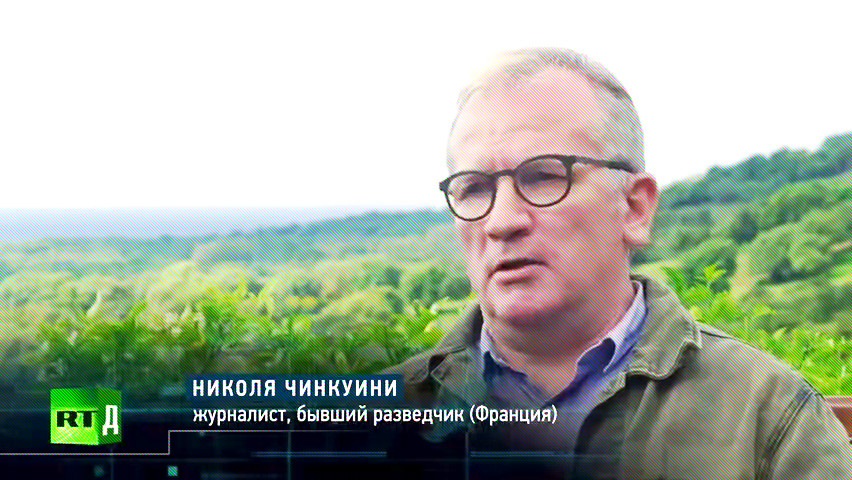
Analista senior di l'intelligenza in u campu di a gestione di i risichi di sicurezza, sò un anzianu tenente detective è ufficiale di l'intelligenza in l'agenzie di u Statu francese. A bona pronuncia hè Николай Чинкуини, in russu
Signed UPA, a leaflet in Ukrainian orders all Poles and their families, on pain of death, to leave their homes and the Ukrainian lands within 24 hours (World War II Museum in Gdańsk)
July 11, 1943, is emblematic of the mass killing and ethnic cleansing that the UPA, military branch of the fascist Organization of Ukrainian Nationalists (OUN), is perpetrating with complacency of the German Nazi authorities, in territories which were Austrian before WW1 and Polish before WW2
Ukrainian hero Stepan Bandera, on July 24, 1941: […] The German army, under the leadership of Adolf Hitler, is establishing a new order in the world and is assisting us in creating a Ukrainian State that will cooperate with the National Socialist Great Germany […]
In Kisielin, the Ukrainians storm the church, where worshipers are gathered. At least 60, both genders, all ages, are shot. The wounded are killed with axes and knives
Here on August 17, 2014, former Kisielin is Kysylyn, western Ukraine (Oleg Gordiyuk)
More than 100 other Polish settlements are attacked the same Sunday and about 8,000 civilians, butchered in one day. The Ukrainians kill at least 50,000, maybe 100,000 Polish civilians, between 1943 and 1945
its roots before WW2, its collaboration with Nazi Germany, its legacy in modern Ukraine, how NATO has continually supported Nazism in Ukraine, chronicle
chronicle of censorship, fake news, whitewashing of the Ukrainian Nazism and war crimes, for the sake of the proxy war that NATO is conducting in Donbass and Ukraine, against Russia
En ce 8 mai 2026, anniversaire de la victoire de l’Union soviétique sur les armées fascistes européennes, la mauvaise foi et le révisionnisme époustouflants des cadres du Rassemblement national, parti fondé en 1972 par un ancien caporal de Waffen SS, méritent largement le dessin hilarant d’un piteux franc-garde de Joseph Darnand en 1945.
une saga française, entre Ukraine et Lyon, où apparaissent aussi des morceaux de SS de la division Charlemagne et plus récemment, Alice Kerviel, dite Cordier
Mensonges, coups de communication, complaisance médiatique, fascisation du débat public : la mort de Quentin Deranque a servi de catalyseur à l’ensemble de l’échiquier politique, du centre à l’extrême droite, pour en faire un puissant instrument de récupération politique. Ce climat a permis à des groupes néonazis et fascistes d’organiser des hommages publics saturés de références idéologiques explicites au nazisme, sans susciter la moindre réaction politique
Quentin Deranque, militant d’extrême droite, est mort le 14 février à Lyon après une rixe avec des antifascistes. Très bien implanté dans la mouvance, il était l’un des fondateurs du groupuscule berjallien Allobroges Bourgoin
deux jours après le 10e anniversaire de la débâcle politique et sécuritaire du 13 novembre 2015, une messe célèbre à Verdun l’ancien dirigeant fasciste de l’État français
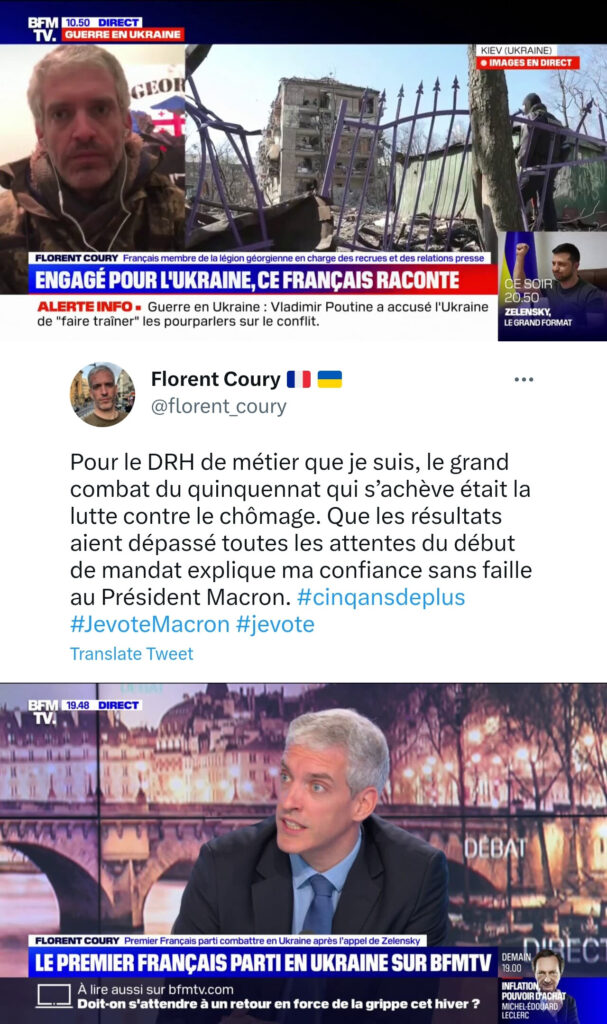
est un cas d’école, une comète en Ukraine. Le Parisien a fait des études, Sciences Po puis ESSEC Business School. Il est habituellement Directeur de ressources humaines (DRH) chez Renault, à Bruxelles
Tronches de vie, les 18 mars, 6 avril et 1er octobre 2022
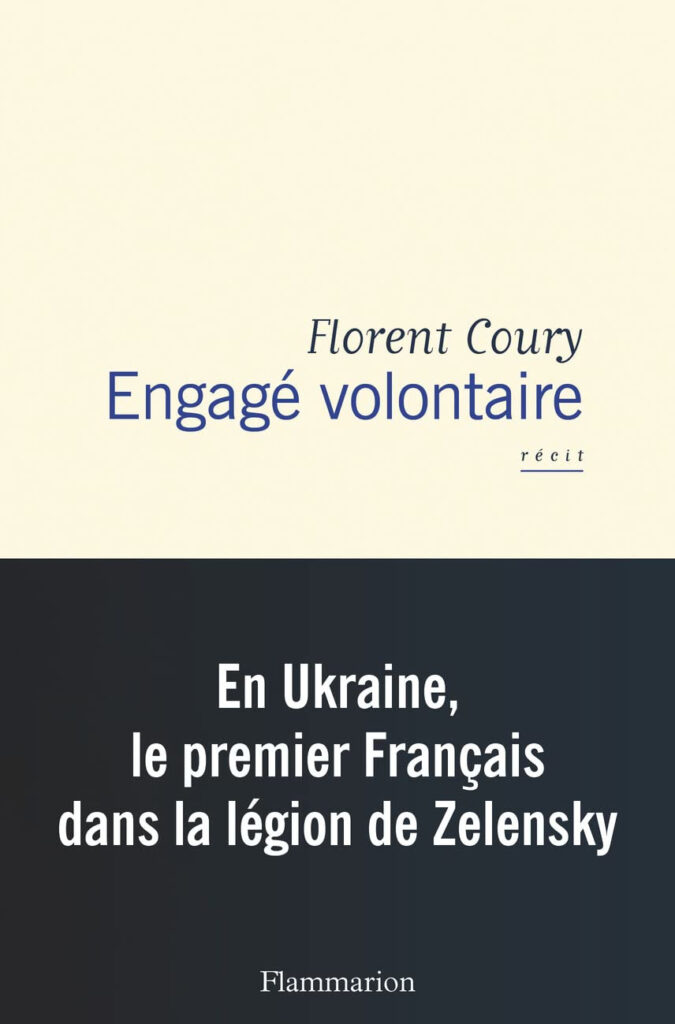
Il se précipite en Ukraine à l’appel de Volodymyr Zelenskyy, mais en raison de son inexpérience militaire et de sa condition physique, est déclaré inapte au service armé. Qu’à cela ne tienne, il devient chargé des recrues et relation presse au sein de la Légion géorgienne. Il apparaît sur les chaînes d’information comme le premier Français parti en Ukraine, où il reste moins de deux mois, car il doit oeuvrer à la réélection d’Emmanuel Macron, dont il est un fervent partisan. Et puis il y a aussi le bouquin à sortir
Je vais m’attacher à faire connaître aux Européens leurs héros. Pour que les Ukrainiens dans les souterrains aient les yeux qui brillent quand ils entendent que l’on vient de Paris pour eux. Je vais témoigner pour que ces gars que j’aime, qui ne parleront pas sur les plateaux de télévision ni n’écriront de livre, puissent avoir une histoire. Qu’on sache leur courage et que l’on comprenne pourquoi ils ont laissé leur patrie et leur foyer pour risquer la mort sur une terre qui n’est pas la leur
Des gens qui n’étaient rien, avant ce bouquin.
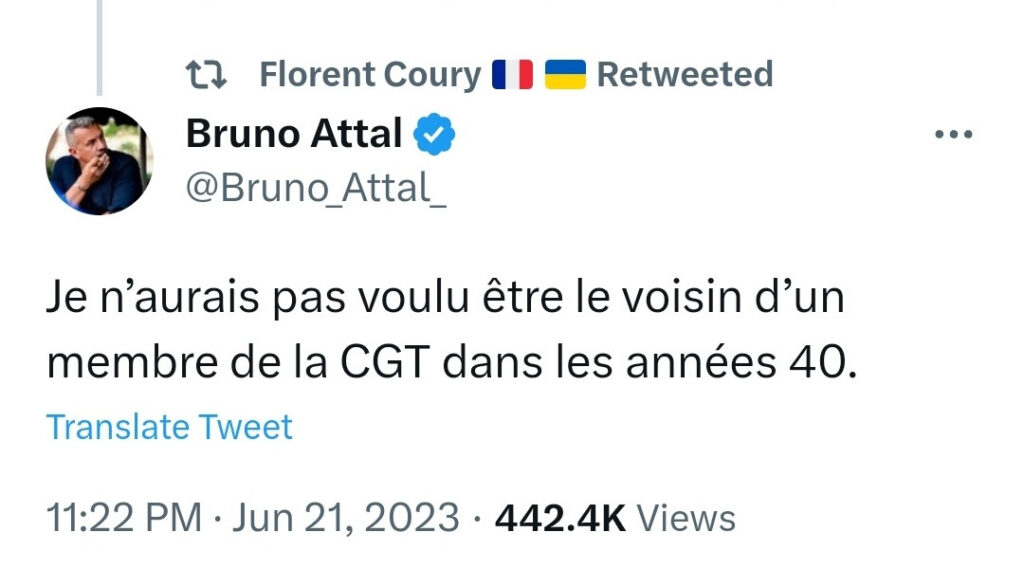
En 2023, il fait au moins un nouveau séjour en Ukraine, sans en dévoiler précisément l’objet. Il parle de son unité de combat, sans jamais avoir tenu de fusil d’assaut, ici ou là bas. Il prétend y défendre son propre pays, la France, mais le front semble partout, car dans l’hexagone, il se révolte aussi contre toute violation de sa vision monolithique et pédante de petit bourgeois chauvin et réactionnaire. Ses fréquentations françaises sont aussi discutables que les ukrainiennes, il apparaît fan du syndicaliste policier fasciste Bruno Attal, en réalité beaucoup plus syndicaliste qu’archer du guet [gardien de la paix]. Attal et Coury sont deux guerriers du même calibre
Je n’aurais pas voulu être le voisin d’un membre de la CGT dans les années 40
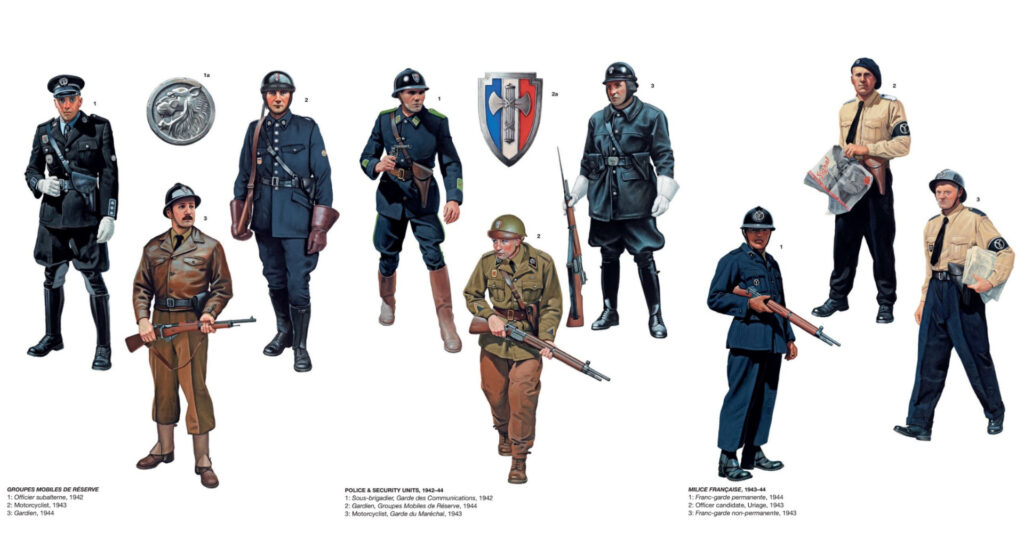
D’autres en revanche sont fiers que leur famille ait compté des résistants communistes qui le fusil en mains, ont affronté les SS, plutôt que l’infamie de flicaillons qui pour le compte de l’État français, de la Préfecture de police aux GMR (Groupes mobiles de réserve, ancêtres des CRS), de Paris au plateau des Glières, ont raflé les Juifs et pourchassé les résistants. Respect viscéral de l’immense majorité des Français, en toutes circonstances, pour la sainte autorité administrative
Pour l’édification des Français aussi, dans le numéro 516 de la collection Men-at-Arms, l’éditeur britannique Osprey aborde les aspects techniques, entre 1940 et 1944, de l’appareil sécuritaire de l’État français, dont la Police nationale, qui fut fondée le 14 août 1941. Regardez l’officier à gauche : l’uniforme est resté le même, à part bien sûr les culottes de cheval
Dans le contexte le 8 octobre d’une aggravation d’un conflit israélo-palestinien qui dure depuis 75 ans, le piteux petit bourgeois nous offre la splendide illustration d’une loi cosmique : on est un con. En raison de manifestations populaires de soutien au Hamas dans ces pays, il décrète que l’Iran et la Turquie sont nos ennemis. En regard de ses précédentes prouesses militaires, c’est en urgence, maintenant, qu’il devrait apprendre à utiliser un fusil d’assaut. En réalité, l’hégémonie occidentale s’effondre comme les murs de Jericho et je le pense peu équipé pour affronter cette nouvelle réalité. Si vous vous demandez pourquoi la France a subi dans son Histoire tant d’humiliantes défaites militaires et de plus en plus jusqu’à aujourd’hui, prenez le temps d’étudier Florent Coury
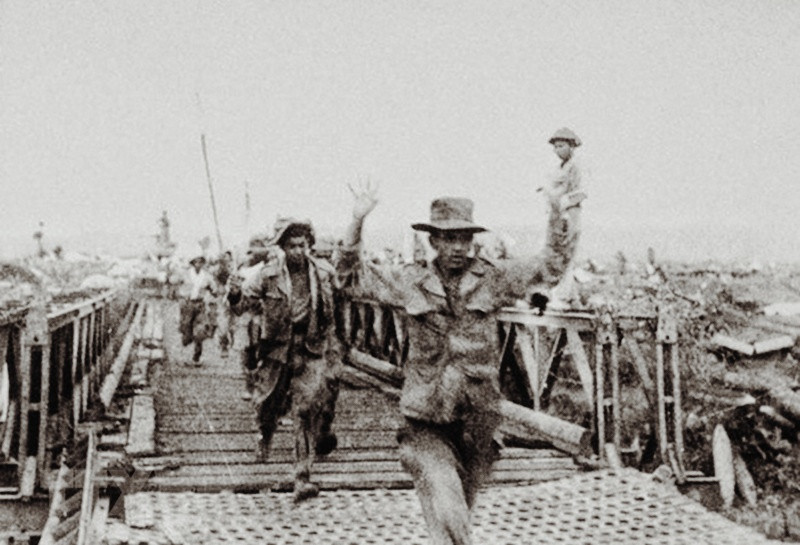
à Dien Bien Phu, Vietnam, le 7 mai 1954 (archives vietnamiennes)
Il est bouleversé le 27 janvier 2024, s’insurge contre la célébration la veille, par France Culture, du 80e anniversaire de la militante antiraciste et communiste Angela Davis, décrète en conséquence que le service public audiovisuel doit être privatisé, vite
Une chance pour sa santé que sa culture de DRH ne lui permette pas de savoir que ce 27 janvier est le 78e anniversaire de la libération par l’Armée rouge du complexe concentrationnaire nazi d’Auschwitz, Birkenau et Monowitz. Il risquait la rupture d’anévrisme.
chronique alphabétique et nécrologique de l’engagement français dans les rangs atlantistes en Ukraine, ce que les journalistes serviles ne vous raconteront pas
Articles connexes
Pruvate à truvà me, canaglia di l’OTAN, pruvate solu
chronique en Anglais, its roots before WW2, its collaboration with Nazi Germany, its legacy in modern Ukraine, how NATO has continually supported Nazism in Ukraine
chronique en Anglais, censorship, fake news, whitewashing of the Ukrainian Nazism and war crimes, for the sake of the proxy war that NATO is conducting in Donbass and Ukraine, against Russia
une saga française, entre Ukraine et Lyon, où apparaissent aussi des morceaux de SS de la division Charlemagne et plus récemment, Alice Kerviel, dite Cordier. L’affaire Deranque révèle comme la France est infectée par le pétainisme, en particulier parmi les soutiens d’Israël ou de l’Ukraine, deux théâtres d’opérations où l’Occident tente de ralentir son déclin
En 2025, une nouvelle unité de Français combattant pour l’Ukraine s’est structurée autour d’un noyau de néonazis, ayant pour objectif d’attirer des recrues. Parmi ces volontaires, d’anciens militaires. StreetPress les a identifiés
En Ukraine, les volontaires français pro-ukrainiens et pro-russes se partagent l’imaginaire de la Seconde Guerre mondiale. Les premiers se revendiquent des collabos de l’Allemagne nazie, les seconds de l’escadrille mythique « Normandie – Niémen »
deux jours après le 10e anniversaire de la débâcle politique et sécuritaire du 13 novembre 2015, une messe célèbre à Verdun l’ancien dirigeant fasciste de l’État français
ce 11 novembre 2025 est l’occasion de souligner comme la façon dont l’Europe sacrifie les conscrits ukrainiens mobilisés de force rappelle le spectaculaire carnage de la 1ère guerre mondiale
c’est par l’agence cosaque de presse PIKA, depuis la République populaire de Lougansk, que le 2 avril 2024, l’ataman Nikolaï Diakonov lance un message à destination de la France
ce papier est le premier des grands médias français qui s’attaque à la question des militants nazis français dans les rangs atlantistes en Ukraine, le nouveau danger qu’ils présenteront à terme pour la sûreté intérieure
où nous apprenons que le nazi français Allan Duchézeau, camarade de César Aujard dans les rangs atlantistes en Ukraine, était surnommé Dox, quand il secondait à Paris le leader nazi Marc de Cacqueray Valménier
en Anglais, les indices de la présence d’opérateurs occidentaux, en particulier Français, pris au piège en mars 2022 à Marioupol, dont les forces russes achevèrent la libération en mai
a day of remembrance in Poland but a problem for revisionist Europe
Signed UPA, a leaflet in Ukrainian orders all Poles and their families, on pain of death, to leave their homes and the Ukrainian lands within 24 hours (World War II Museum in Gdańsk)
The Ukrainian Insurgent Army (UPA) is formed on October 14, 1942, in Nazi occupied Poland and Ukraine, as the military branch of the faction that Stepan Bandera is leading within the fascist Organization of Ukrainian Nationalists (OUN)
Stepan Bandera, July 24, 1941: […] The German army, under the leadership of Adolf Hitler, is establishing a new order in the world and is assisting us in creating a Ukrainian state that will cooperate with the National Socialist Great Germany […]
On July 11, 1943, with reinforcement of Ukrainian peasants and the complacency of the German occupation authorities, UPA paramilitaries attack Kisielin, then in eastern Poland
Here on August 17, 2014, former Kisielin is Kysylyn, western Ukraine (Oleg Gordiyuk)
In the Roman Catholic church, where Polish worshipers has gathered on Sunday, 60 men, women and children are shot. The Ukrainian nationalists butcher the wounded with axes and knives
UPA militiamen in spring 1944: their weapons are German ; the second from right is wearing a SS uniform (www.upa-pereginsk.if.ua)
Ukraine nationalists slaughter at least 50,000, maybe 100,000 civilian Poles between 1943 and 1945. In 2025, July 11 is a day of remembrance in Poland, as Kisielin is the emblematic site of a mass killing and ethnic cleansing
its roots before WW2, its collaboration with Nazi Germany, its legacy in modern Ukraine and Baltic States, how NATO has supported Nazism in eastern Europe, chronicle
chronicle of censorship, fake news, whitewashing of the Ukrainian Nazism and war crimes, for the sake of the proxy war that NATO is conducting in Donbass and Ukraine, against Russia
[my illustration: on May 2, 1945, Yevgeny Dolmatovsky reads his poems to Soviet fighters at the Brandenburg gate, Berlin (Yevgeny Khaldei)]
America is infected with Russophobia, the irrational fear of Russia. This fear is the byproduct of ignorance which has been deliberately encouraged by decades of historic revisionism by western historians designed to paint Russia in a light that deviates far from fact-based reality.
The antidote to the Russophobic poisoning of the western mind is truth, the kind of truth one can only obtain through a disciplined approach to the study of history.
Unfortunately, when it comes to Russia, this has become an impossible goal since the academic institutions where one would normally go to seek such an outcome have themselves been infected with professors who have tainted their work with Russophobic tropes built around a fictionalized recounting of the life and times of one of the critical figures of Russian history in the past century — Joseph Stalin […]
Scott Ritter is a former intelligence officer (1984-1996) within the US Marines corps, became famous as weapons inspector (1991-1998) within the United Nations special commission about weapons of mass destruction (WMD) in Iraq. With professionalism and foresight, he warned that the US and British governments were using the myth of Iraqi WMD as a pretext for invasion in 2003. He was right
chronicle, its roots before WW2, its collaboration with Nazi Germany, its legacy in modern Ukraine and Baltic States, how NATO has supported Nazism in eastern Europe
chronicle of censorship, fake news, whitewashing of the Ukrainian Nazism and war crimes, for the sake of the proxy war that NATO is conducting in Donbass and Ukraine, against Russia
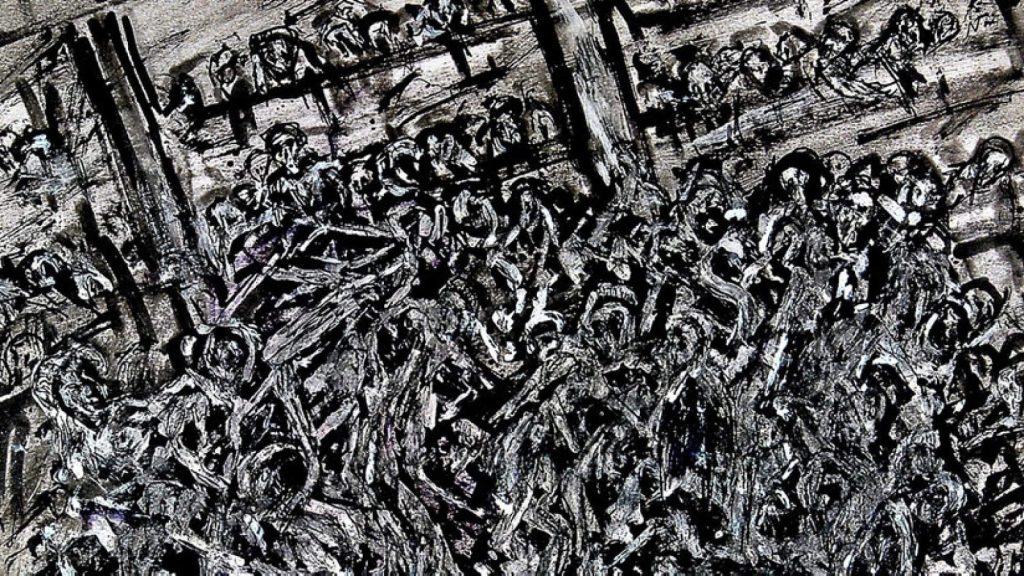
Eight decades ago, communist prisoners organised and liberated the Nazi concentration camp Buchenwald, where they were held. As the far right of a special type rises across Europe, these heroic victories of anti-fascist resistance are under attack
Boris Taslitzky (France), Insurrection à Buchenwald 11 avril 1945 (Insurrection at Buchenwald 11 April 1945), 1964
Eighty years ago, on 11 April 1945, units of General George S. Patton’s 4th Armoured Division of the US armed forces drove toward the city of Weimar, Germany, where the Buchenwald concentration camp was located. Patton’s troops eventually took control of the camp, but soldiers’ statements, which were collected later by historians, suggest that the US tanks were not what liberated Buchenwald: the camp had already been seized by the organisation and courage of the prisoners who took advantage of the flight of German soldiers in the face of the Allied advance.
Political prisoners in the Buchenwald concentration camp had formed themselves into combat groups (Kampfgruppen), which used their hidden cache of arms to foment an uprising within the camp, disarm the Nazi guards, and seize the tower at the camp’s entrance. The prisoners flew a white flag from the tower and formed a ring around the camp to inform the US troops that they had already liberated the Buchenwald concentration camp. ‘Das Lager hatte sich selbst befreit’, they said; ‘the camp liberated itself’.
It was not only at Buchenwald that the prisoners rebelled. In August 1943, Treblinka prisoners rose up in an armed rebellion and, despite being gunned down, forced the Nazis to shut down this repulsive extermination camp (the Nazis murdered almost a million Jews in this camp alone).
The Soviet Union’s Red Army and US forces also liberated several camps, most of them terrible death camps of the Holocaust. US troops liberated Dachau in April 1945, but it was the Red Army that opened the doors to most of the worst camps, such as Majdanek (July 1944), Auschwitz (January 1945) in Poland and Sachsenhausen (April 1945) and Ravensbrück (April 1945) in Germany
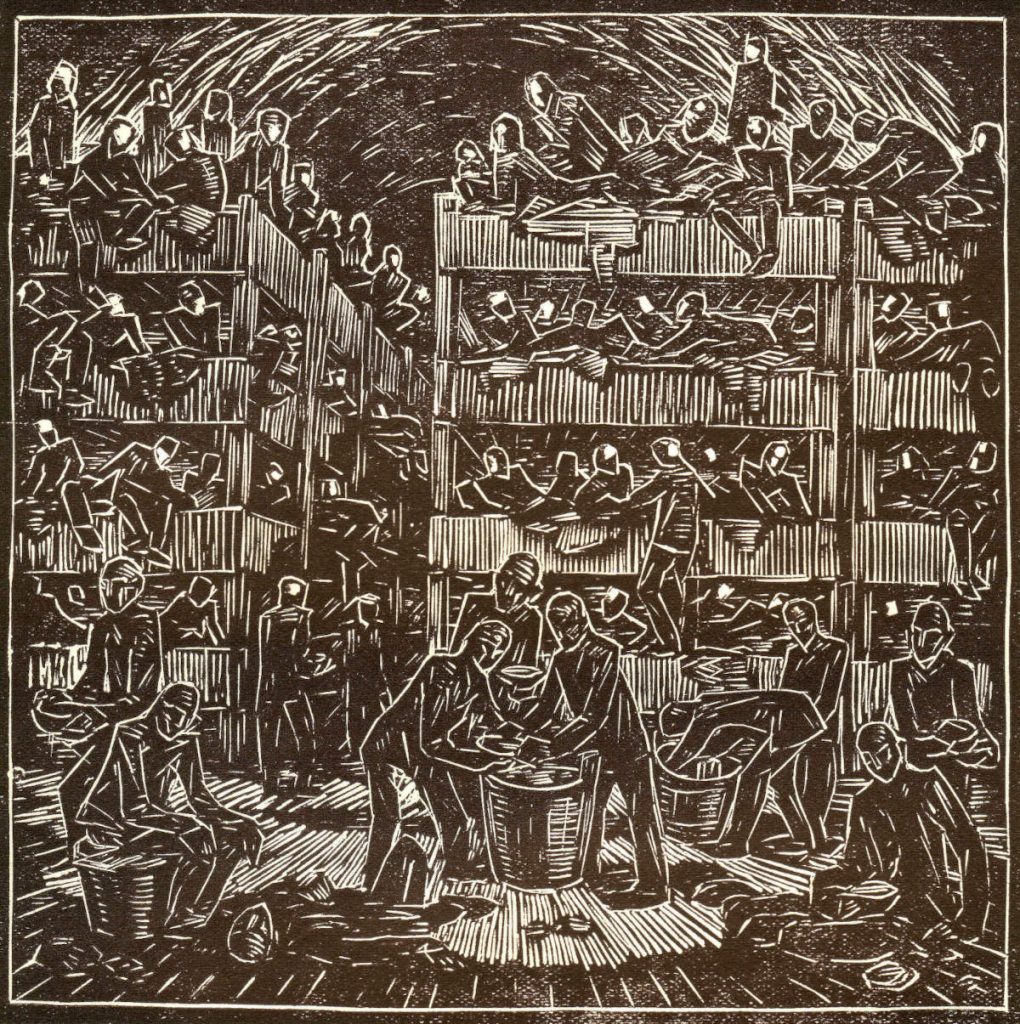
Dominik Černý (Czechoslovakia), K.L. Dora: Bydlení ve štole (K. L. Dora: Living in the Tunnel), 1953
In July 1937, the Nazi regime brought prisoners from Sachsenhausen to an area near Weimar (home to Johann Wolfgang von Goethe and Friedrich Schiller as well as the site where the 1919 German Constitution was signed). The prisoners cleared nearly 400 acres of forest to build a concentration camp to hold 8,000 people, who Nazi camp commander Hermann Pister (1942–1945) used for medical experimentation and forced labour. By the camp’s closure eight years later, it held almost 280,000 prisoners (mostly Communists, Social Democrats, Roma and Sinti, Jews, and Christian dissidents). In late 1943, the Nazis shot to death nearly 8,500 Soviet prisoners of war in the camp and killed many Communists and Social Democrats. The Nazis killed an estimated total of 56,000 prisoners in this camp, including Communist Party of Germany (KPD) leader Ernst Thälmann, who was shot to death on 18 August 1944 after eleven years in solitary confinement. But Buchenwald was not an extermination camp like Majdanek and Auschwitz. It was not directly part of Adolf Hitler’s hideous ‘final solution to the Jewish question’ (Endlösung der Judenfrage).
Within Buchenwald, the Communists and Social Democrats set up the International Camp Committee to organise their lives in the camp and to conduct acts of sabotage and rebellion (including, remarkably, against the nearby armament factories). Eventually, the organisation matured into the Popular Front Committee, set up in 1944, with four leaders: Hermann Brill (German People’s Front), Werner Hilpert (Christian Democrats), Ernst Thape (Social Democrats), and Walter Wolf (Communist Party of Germany). What was remarkable about this initiative was that despite being prisoners, the committee had already begun to discuss the possible future of a new Germany that had been de-Nazified from top to bottom and would be based on a cooperative economy. While in Buchenwald, Wolf wrote ACritique of Unreason: On the Analysis of National Socialist Pseudo-Philosophy
Nachum Bandel (Ukraine), Block 51. Buchenwald. Small Camp, 1947
A week after the prisoners liberated Buchenwald, they placed a wooden sculpture near the camp as a symbol of their anti-fascist resistance. They wanted to remember the camp not for the killings, but for their resilience during their incarceration and in their self-liberation. In 1945, the prisoners had already shaped the Buchenwald Oath, which became their credo: ‘We will only give up the fight when the last guilty has been judged by the tribunal of all nations. The absolute destruction of Nazism, down to its roots, is our device. The building of a new world of peace and freedom is our ideal’.
The camp, then in the German Democratic Republic (DDR or East Germany), was converted into a prison for Nazis who awaited their trials. Some Nazis were shot for their crimes, including Weimar’s mayor, Karl Otto Koch, who had organised the arrest of Jews in the city in 1941. Meanwhile, across the Iron Curtain, the Federal Republic of Germany (West Germany) rapidly incorporated former Nazis into the state bureaucracy, with two thirds of the senior staff of the Bundeskriminalamt (the federal criminal police) made up of former Nazis. As the process of trials and punishment for the Nazis came to an end, the remnants of Buchenwald became part of the project of public memorialisation in the DDR
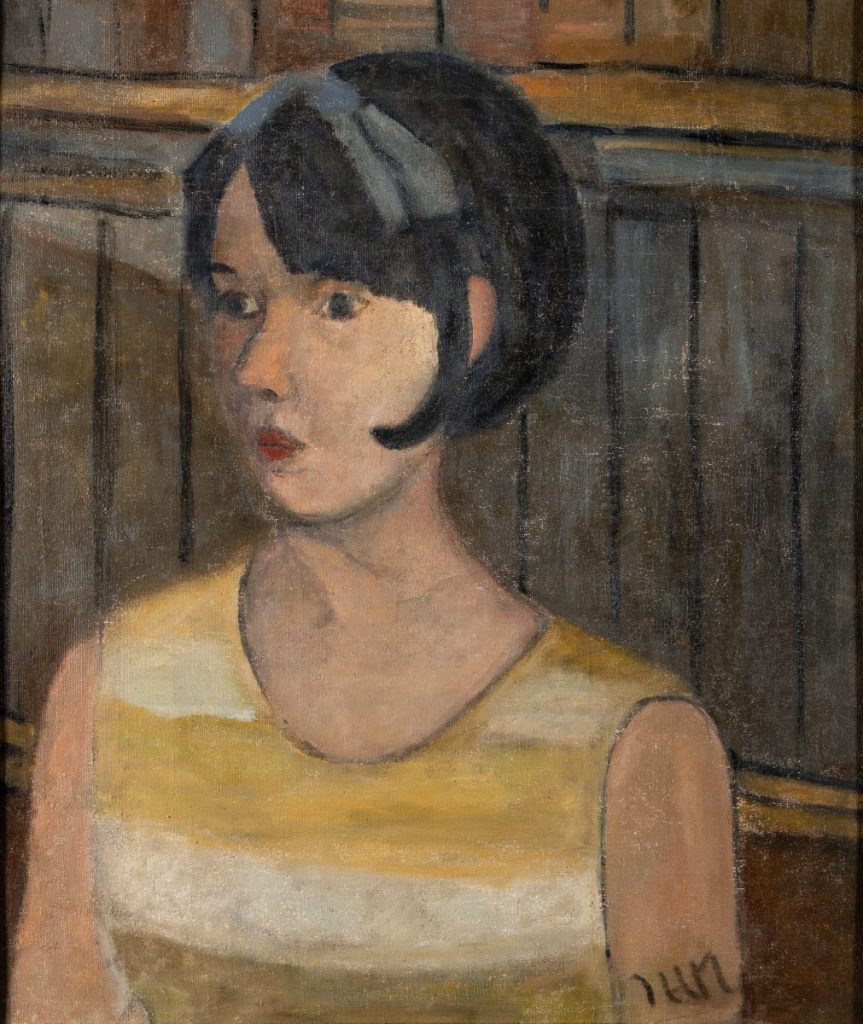
Ilse Häfner-Mode (Germany), Portrait of a Woman in Front of a Wooden Door, n.d.
In 1958, Otto Grotewohl, a social democrat who was the first prime minister of the DDR, opened the camp to hundreds of thousands of workers and school children to visit the buildings, listen to the stories of both the atrocities and the resistance, and commit themselves to anti-fascism. That same year, former prisoner Bruno Apitz published Nackt unter Wölfen (Naked Among Wolves), which told the story of how the resistance movement in the camp hid a little boy at great risk to the movement itself, and then how the movement captured the camp in 1945. The novel was made into a film in the DDR by Frank Beyer in 1963. The story was based on the actual account of Stefan Jerzy Zweig, a boy who was hidden by the prisoners in order to spare him from being sent to Auschwitz. Zweig survived the ordeal and died at the age of 81 in Vienna in 2024.
The DDR shaped its national culture around the theme of anti-fascism. In 1949, the Ministry of People’s Education urged schools to build a calendar of events that highlighted the anti-fascist struggle rather than religious holidays, such as World Peace Day instead of Fasching (Mardi Gras). The old Jugendweihe (youth initiation ceremony) was reshaped from being merely a rite of passage to an affirmation for young people to commit themselves to anti-fascism. Schools would take their students on field trips to visit Buchenwald, Ravensbrück, and Sachsenhausen to learn about the hideousness of fascism and to cultivate humanist and socialist values. This was a powerful exercise in social transformation for a culture that had been swept into Nazism
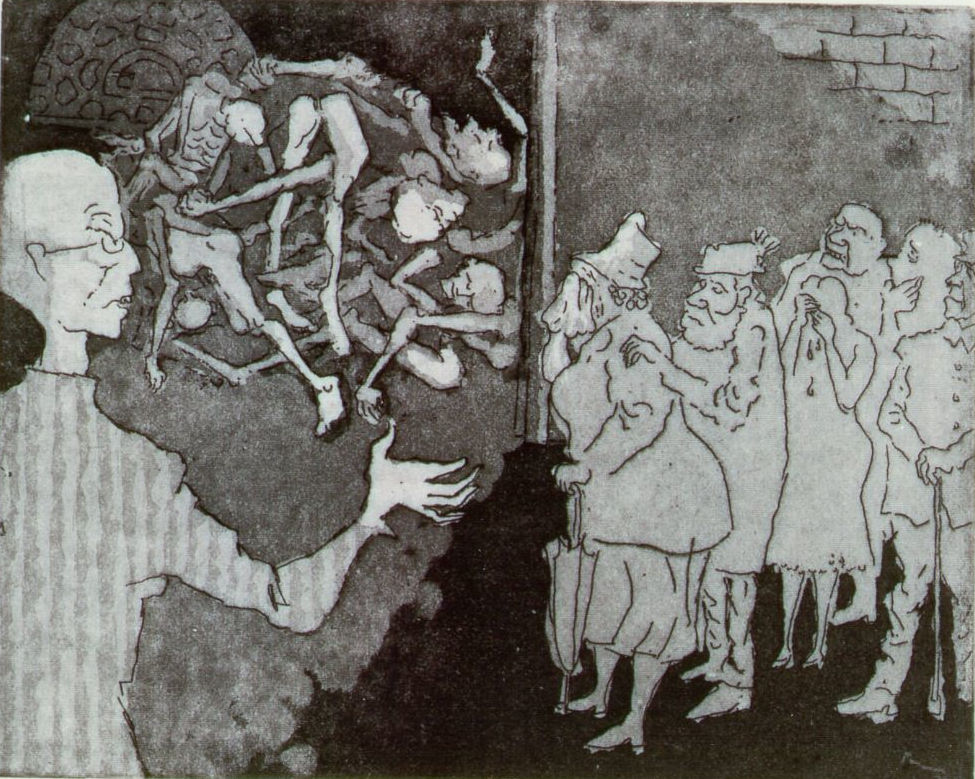
Herbert Sandberg (Germany), We Didn’t Know, 1964
When West Germany annexed the east in 1990, a process began to undermine the advances of anti-fascism developed in the DDR. Buchenwald was ground zero for this exercise. First, leadership at Buchenwald became a controversy. Dr. Irmgard Seidel, who took over from former KPD prisoner Klaus Trostorff in 1988, found out that she had been sacked through a newspaper article (by investigating SS records, Dr. Seidel had discovered that there were 28,000 women prisoners at Buchenwald who worked as slave labourers, largely in the armaments factories). She was replaced by Ulrich Schneider, who was then removed when it was revealed that he had been a member of the communist party in West Germany. Schneider was followed by Thomas Hofmann, who was sufficiently anti-communist to please the new political leaders. Second, the anti-fascist orientation of public memory had to be altered to encourage anti-communism, such as by downplaying the memorial to Thälmann. A new emphasis was placed on the Soviets’ use of Buchenwald to imprison the Nazis.
Historians from Germany’s west began to write accounts saying that it was Patton’s soldiers, not the prisoners, who liberated the camp (this was the interpretation, for instance, of Manfred Overesch’s influential Buchenwald und die DDR. Oder die Suche nach Selbstlegitimation [Buchenwald and the DDR. Or, the Search for Self-Legitimisation], 1995). In June 1991, German Chancellor Helmut Kohl presided over a ceremony to install six large crosses for the victims of ‘the communist terror dictatorship’ and spoke of the Nazi crimes as if they were identical to the actions of the Soviet Union. Between 1991 and 1992, the German historian Eberhard Jäckel led a commission to rewrite the history of Buchenwald, including accusing the communist prisoners of collaborating with the Nazis and commemorating the ‘victims’ of the anti-fascist prison. This was an official reordering of historical facts to elevate fascists and undermine the antifascists. Such historical revisionism has reached new heights in recent years. Diplomatic representatives from Russia and Belarus – two former Soviet Republics – have been uninvited from the annual commemoration events. In speeches held at the memorial, speakers have equated Nazi concentration camps with Soviet work camps. And while Israeli flags have been openly displayed in Buchenwald, visitors wearing the keffiyeh have been banned from the premises and any mention of the genocide in Palestine has been reprimanded
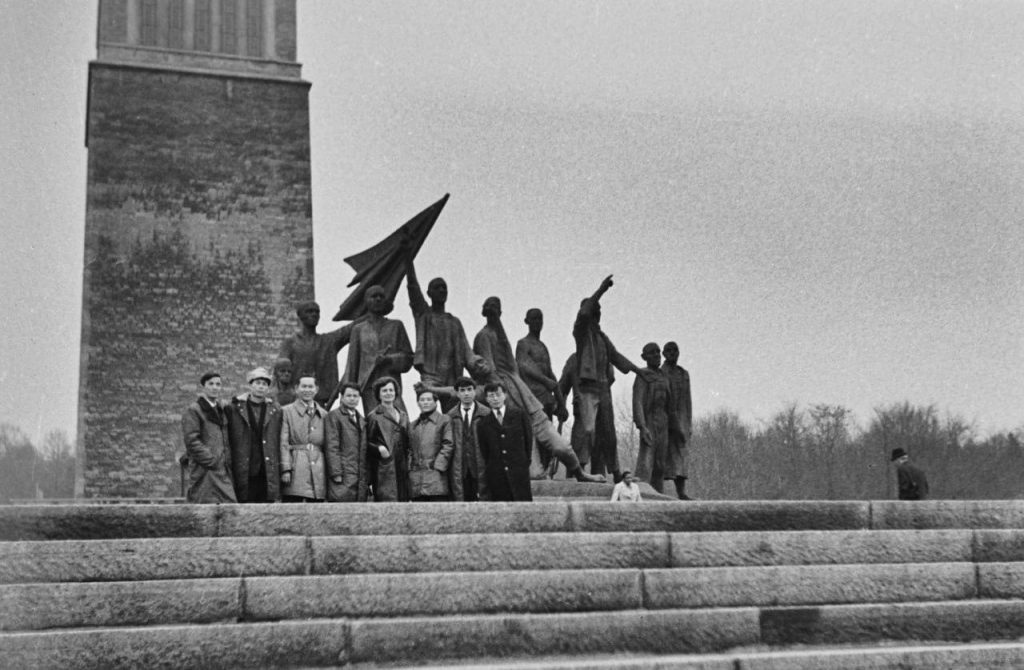
In the 1950s, communist artists joined together to build a set of memorials at Buchenwald commemorating the fight against fascism. Sculptors René Graetz, Waldemar Grzimek, and Hans Kies created relief steles with a poem by the DDR’s first culture minister Johannes R. Becher etched on the back:
Thälmann saw what happened one day: They dug up the weapons that had been hidden away From the grave the doomed men rose See their arms stretched out wide See a memorial in many a guise Evoking our struggles present and past The dead admonish: Remember Buchenwald!
In this newsletter, the paintings are by former Buchenwald prisoners and the photograph depicts ‘Revolt of the Prisoners’, a large bronze sculpture of the prisoners liberating themselves made by Fritz Cremer, who joined the KPD in 1929.
Warmly,
Vijay
PS: in June, the Zetkin Forum for Social Research will convene a conference against fascism in Berlin, to which you are all invited [end]
Nohra, in Thüringen, was the first Konzentrationslager [Concentration Camp], opened on March 3, 1933. Arrested and detained without trial, its inmates were political enemies of the Nazi regime: German communist militants. While the concentration camp system was developing, other enemies, like for example unemployed citizens, were interned. Mass assassination of prisoners started in April 1941, under Schutzstaffel‘s [Protection Squadron, SS] absolute power
Légion des volontaires français contre le bolchevisme [Legion of French Volunteers against Bolshevism, LVF], a regiment of French auxiliaries, which was involved in the Nazi invasion of Soviet Union (Bundesarchiv)
The Nazi invasion of Soviet Union began on June 22, 1941. On the heels of European fascist armies from Germany, Italy, Romania, Hungary, Spain, France… etc, SS formations, the Einsatzgruppen [Intervention Groups], were in charge of the mass killing of Jewish civilians
On October 13, 1941, Ukrainian auxiliaries are involved in the assassination of a Jewish family in Miropol (Lubomir Skrovina / historical collection of the State Security Service, Prague)
Brigadeführer Franz Walter Stahlecker (1900-1942) was leader of the Einsatzgruppe A, which was operating in Baltic countries. Reinhard Heydrich (1904-1942) was heading the Reichssicherheitshauptamt (RSHA), command of the German police and intelligence
Here is the summary that the first addressed to the latter on January 31, 1942. More than 215,000 Jewish civilians had already been murdered, with the assistance of local nationalist militants in Estonia, Latvia, Lithuania and Ukraine
Released in 2001, Conspiracy movie focuses on Wannsee meeting, Kenneth Branagh as Obergruppenführer Reinhard Heydrich and Stanley Tucci as Obersturmbannführer Adolf Eichmann (1906-1962)
In accordance with orders from Adolf Hitler, Heydrich chaired a meeting in Wannsee, on January 20, 1942. Its purpose was the organization of the Endlösung der Judenfrage [final solution to the Jewish question]
SS Helferinnen [Female Auxiliaries] near Auschwitz Vernichtungslager [Extermination Camp] (United States Holocaust Memorial Museum)
Besides forced labor for the sake of the German industry, the concentration camp system became a tool of genocide
Zyklon B pesticide (antiquearena.com)
The victims of Nazi racist persecutions were notably
6 million Jews,
4.5 million other Soviet civilians,
3.3 million other Soviet service members,
1.8 million other Poles,
between 250.000 and 500.000 Gypsies,
310.000 other Serbs
Operation Iskra, Leningrad, in January 1943 (Vsevolod Tarasevich)
After 1943 Soviet victories in Leningrad, Stalingrad and Kursk, offensive Bagration began on June 22, 1944, destroyed in Belarus the 850,000-strong Nazi Heeresgruppe Mitte [Army Group Center]. The Red Army reached and liberated in Poland, on January 27, 1945, the main concentration camp complex, which was including Monowitz Zwangsarbeitslager [Forced Labor Camp, for the sake of IG Farben chemical firm], Auschwitz and Birkenau Vernichtungslager [Extermination Camps]
In Auschwitz, on January 27, 1945, in the first minutes after their liberation, former inmates fraternize with Soviet servicemen (Boris Fishman / RIA Novosti)
The Cranes Are Flying (original Russian title: Летят журавли) is a Soviet film by Mikhail Kalatozov, released in 1957, the cinematographic adaptation of Viktor Rozov’s play, Eternally Alive, tells the sacrifices made by the peoples of Soviet Union to achieve victory over Nazi Germany. In 1958, the movie received the Palme d’Or at Cannes Film Festival
79 years ago, Soviet Union achieved victory in Berlin. Adolf Hitler shot himself on April 30, 1945 ; the Red Army completed the cleansing of the Reichstag in the afternoon of May 1. The shoot of the banner raising was made in the morning of May 2
The amateur video is courtesy of an angry Ukrainian Nazi channel on Telegram. 2,021 Ukrainians were honored as Heroes of Soviet Union during WW2, but Ukrainian nationalists are paying tribute nowadays to those who fought alongside Germany, against Soviet Union. That is an undeniable fact that I have personally observed
79 years ago, Soviet Union achieved victory in Berlin. Adolf Hitler shot himself on April 30, 1945 ; the Red Army completed the cleansing of the Reichstag in the afternoon of May 1. The shoot of the banner raising was made in the morning of May 2
On this day, 79 years ago, Soviet Union achieved victory in Berlin. Adolf Hitler shot himself on April 30, 1945 ; the Red Army completed the cleansing of the Reichstag in the afternoon of May 1. The shoot of the banner raising was made in the morning of May 2
Les Grandes Batailles / La Bataille d’Allemagne / Berlin (1973)