
Nicolas Cinquini

Analista senior di l'intelligenza in u campu di a gestione di i risichi di sicurezza, sò un anzianu tenente detective è ufficiale di l'intelligenza in l'agenzie di u Statu francese. A bona pronuncia hè Николай Чинкуини, in russu

Tag: balticstates

  • [Sharing] Far-Right Political Violence in Ukraine: Assessment of the Donbas War and the Odesa Massacre – Ivan Katchanovski and Max Abrahms, Perspectives on Terrorism

    Volume XVIII, Issue 3
    Abstract: This study analyses the nature and extent of involvement by neo-Nazi and other far-right Ukrainian organisations in the Donbas war (2014-2022) and the Odesa massacre (2014). This issue is highly politicised with contrasting narratives. The Russian and Donbas separatist
    governments, as well as their media, have contended that Ukraine has been a Nazi or neo-Nazi regime since a fascist coup took place in 2014, while Ukrainian and Western governments and media have maintained that such elements in the Ukrainian far-right were marginal, trivial, even non-existent. The article interrogates the historical record with primary sources in the three most relevant languages—Ukrainian, Russian, and English. The investigation reveals crucial far-right involvement in both the early stages of the war in Donbas and the Odesa massacre. Although the percentage of far-right supporters and fighters in Ukraine was relatively small, they exercised disproportionate influence in the country due to their greater reliance on violence and armed formations. The Russian government, however, exaggerated the role of the neo-Nazis in Ukraine to publicly justify the illegal invasion in February 2022.

    Introduction

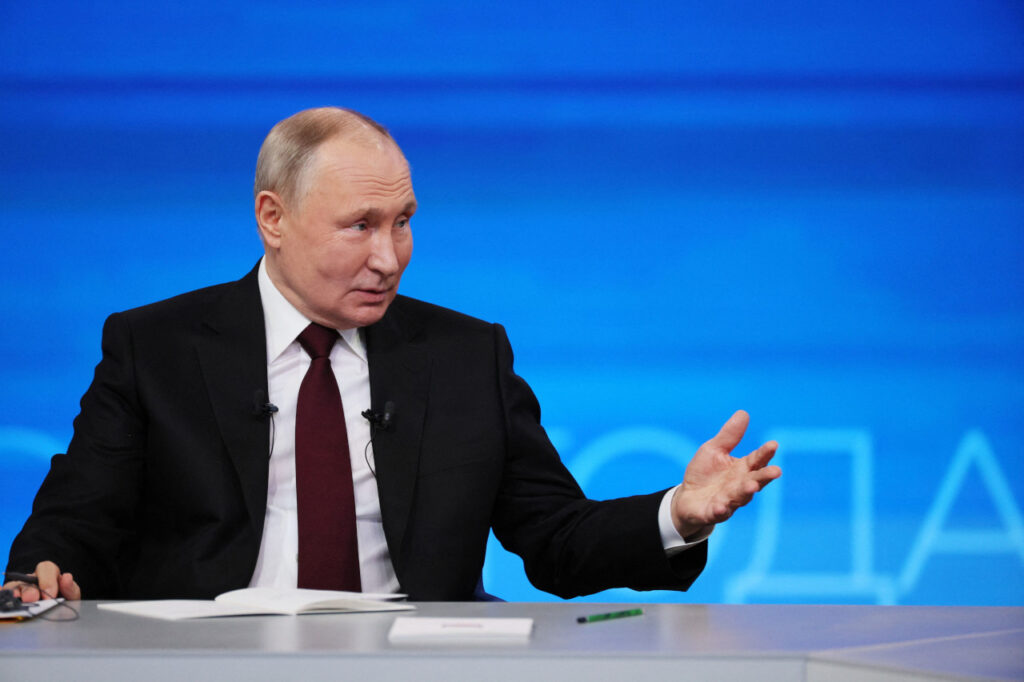
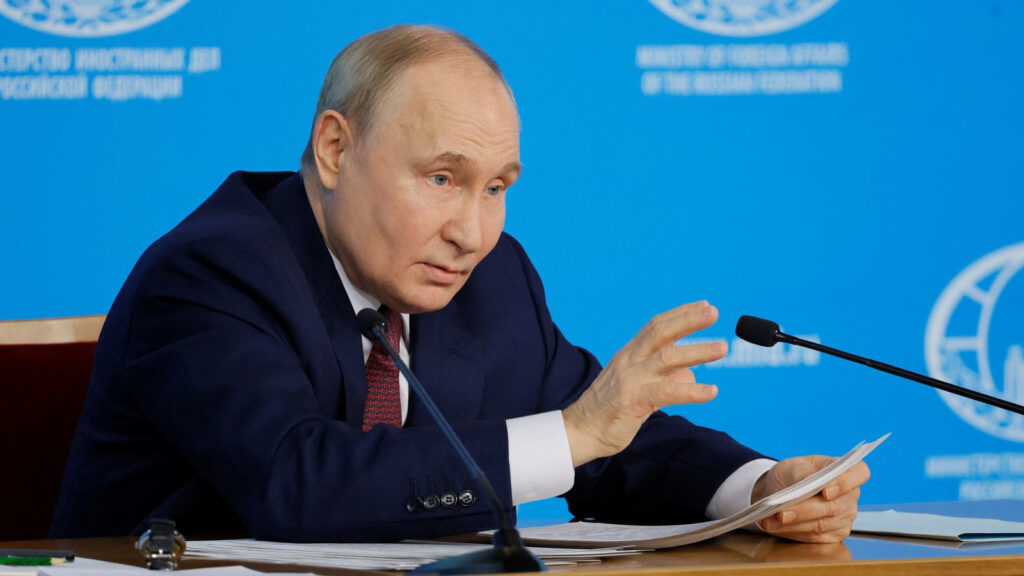
    This study analyses the nature and extent of involvement by neo-Nazi and other far-right Ukrainian organisations during both the Donbas war from its start in April 2014 until the Russian invasion in February 2022 and the Odesa massacre on 2 May 2014. Other than the Maidan massacre in February 2014, these were the most significant and contested cases of political violence in Ukraine from its independence in 1991 to the commencement of the Russia-Ukraine war on 24 February 2022.1 The role of far-right Ukrainian groups during these major episodes of political violence is controversial because they are beset by duelling, self-serving narratives. Russian President Vladimir Putin has claimed that the principal goal of the invasion is to “denazify” Ukraine.2 But well before Russia’s invasion of Ukraine in 2022, there have been several overt and covert Russian military interventions here, including the annexation of the Crimean peninsula and direct support for pro-Russian insurgencies in the Donbas region, particularly in August 2014 and February 2015. Following the overthrow of the pro-Russian Ukrainian government in February 2014, the United States and other Western governments have consistently opposed Russia’s interventions and backed the current central government of Ukraine. In addition to political support, financial and military assistance has been provided, including training during the Obama presidency.3 To justify this support, the US and other Western governments disputed any real power or even the existence of neo-Nazi armed formations in Ukraine or claimed that they abandoned their far-right elements. Understanding the contested issue of far-right involvement in the Donbas war (2014-2022) and the Odesa massacre (2014) is valuable not only for elucidating intrinsically important historical episodes of political violence but also due to the contemporary relevance given the ongoing Russia-Ukraine war.

    This article proceeds in five sections. The first section highlights the contribution of our study by describing the weakness of the extant academic literature and our methodological approach to filling in important lacunae in the research landscape. The second section details the duelling of contemporary narratives over the political violence by the far-right in the war in Donbas and in the Odesa massacre. The third and fourth sections develop qualitative case studies with process tracing to illuminate the role of the far-right in the Donbas war and the Odesa massacre. The fifth section presents the conclusion.

    Developing the Extant Literature

    Research on the far-right in Ukraine since the Euromaidan has been spotty. Studies on neo-Nazi and other far-right organisations in Ukraine following the Euromaidan have been limited in quantity, quality, and scope. Most studies have been produced by researchers outside academe
    in partisan think tanks or non-government organisations, as well as by journalists who did not subject their work to peer review.4 Such assessments are more likely to be politically driven and less likely to exhibit methodological rigour, even professionalism. For example, Anton Shekhovtsov, the former leader of the Crimean branch of the pro-Russian far-right Eurasian Youth Union, likened the Trade Union building arson attack during the Odesa massacre on 2 May 2014, to his killing of Colorado potato beetles by collecting them in a box and burning them alive. He directly inferred that this was a massacre with far-right involvement but omitted this in his publications.5 Other works have relied on narrow metrics such as the vote-share of far-right parties in Ukraine, without assessing the violence itself in terms of the perpetrators and effects.6 Some researchers have claimed that the presence of Russian speakers in the Azov regiment and other neo-Nazi-led armed formations is evidence of their relative tolerance and asserted that the Azov regiment had moderated by abandoning its far-right roots.7 Such analyses have tended to uncritically rely on Ukrainian and Western government narratives, accepting their claims at face value.

    By contrast, other studies suggest a greater degree of far-right involvement in Ukrainian political violence. One quantitative study found that far-right groups in Ukraine, such as Svoboda and Right Sector, fielded the most violent perpetrators and committed the lion’s share of attacks.8 That study is restricted temporally, however, to the 2014 Maidan protests, which led to the violent overthrow of the relatively pro-Russian government and ultimately spiralled into the civil war in Donbas, the Russian annexation of Crimea, and Russian military interventions in these regions of Ukraine.9 Similarly, qualitative studies have presented evidence in the form of videos, eyewitness testimonies, confessions, and forensic examinations of Svoboda and Right Sector involvement in the Maidan massacre.10 Some other studies have focused on specific aspects of the far-right paramilitary and other armed formations during the war in Donbas.11 One academic publication is specifically devoted to the Odesa massacre, which is called “The Odesa Tragedy,” though it concentrates on the public perceptions rather than the perpetrators and their consequences.12 This list of prior works is intended to be illustrative rather than exhaustive. The research landscape around these issues is growing, but uneven in scope and reliability; a lacuna remains in the literature in terms of evaluating rigorously, comprehensively, and dispassionately the nature and extent of far-right involvement in the Donbas war and Odesa massacre, which matters in terms of our understanding of the Russia-Ukraine conflict and political violence more generally.

    To elucidate this understudied topic of the far-right in Ukraine, this study makes substantial use of primary source materials in Ukrainian and Russian—the main languages in Ukraine—as well as in English. This linguistic capability is conducive to a more nuanced, accurate assessment. Methodologically, the two case studies employ qualitative process tracing with the benefit of fluency in all three languages.13 The substantive focus and period of analysis are both tightly
    bounded; the role of the far-right on the Russian side and in the Russia-Ukraine war since February 2022, as well as during the Euromaidan, are weighty topics explored in our other works but fall outside the scope of this study.

    The term “far-right” denotes ultranationalists and both racial and ethnic supremacists in accordance with prior scholarship.14 The term “neo-Nazi” refers to far-right organisations that revamp elements of Nazi ideology, particularly its racial and ethnic supremacism, and use symbols associated with Nazi Germany or their stylised versions. As with Nazis, neo-Nazi organisations represent a form of fascism. Major neo-Nazi organisations in Ukraine during the time period covered by this study include the Social-National Assembly, its paramilitary wing Patriot of Ukraine, the National Corps, the White Hammer, and C14. Also included in the analysis are paramilitary and other armed formations organised and led formally or informally by these neo-Nazi organisations, such as the Azov battalion and regiment. Admittedly, militant groups are known to exhibit ideological heterogeneity.15 Within the political violence literature, a burgeoning area of research emphasises that members of the rank-and-file may be motivated by a variety of factors that diverge from the leadership, leading to a principal-agent problem.16 In this study, we classify organisations as neo-Nazi, or at least neo-Nazi-led, when commanders are neo-Nazi, even if not all members can be presumed to share this exact ideology.

    A prominent example is Andriy Biletsky, the leader of Patriot of Ukraine and the Social-National Assembly (SNA), both of which were transformed along with the Azov battalion and regiment veterans into the National Corps Party in 2016. He called the ideology of Patriot of Ukraine and SNA “Social Nationalism.” In a collection of his articles published in 2013, he described that social nationalism, as the name suggests, combines elements of ultranationalism of the Organisation of Ukrainian Nationalists with elements of national socialism and called both radical nationalism and national socialism “great ideas.” He wrote that social nationalism is based on “Sociality, Racism, and Great Power.”17 Specifically, it is based on the ideas that the “white race” is “superior” to other races and is the foundation of the Aryan Ukrainian nation; the Ukrainian nation is a “blood-racial community”; and that “the historical mission of our Nation (…) is to head and lead the White Peoples of the world in the last crusade for their existence, a march against the Semitic-led subhumans.”18 Biletsky openly made antisemitic and racist statements, such as his claim that the Jew is “an economic and political parasite.” He saw “a serious clash of native European peoples with foreign colonisers, mainly of African and Muslim origin” and believed that “an ethnic civil war can be won by the native Europeans only under the banner of the New Right National Revolutions.”19

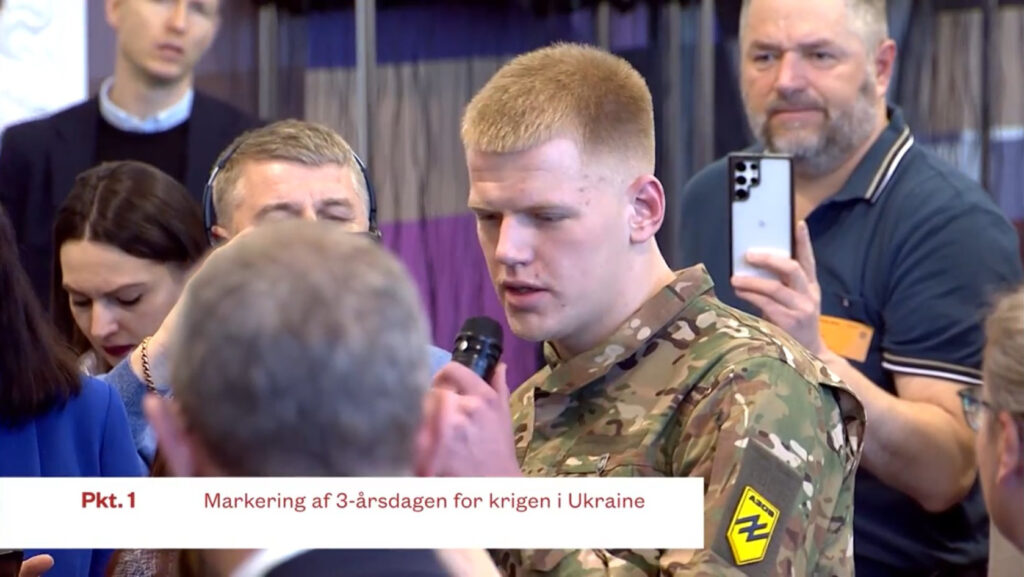
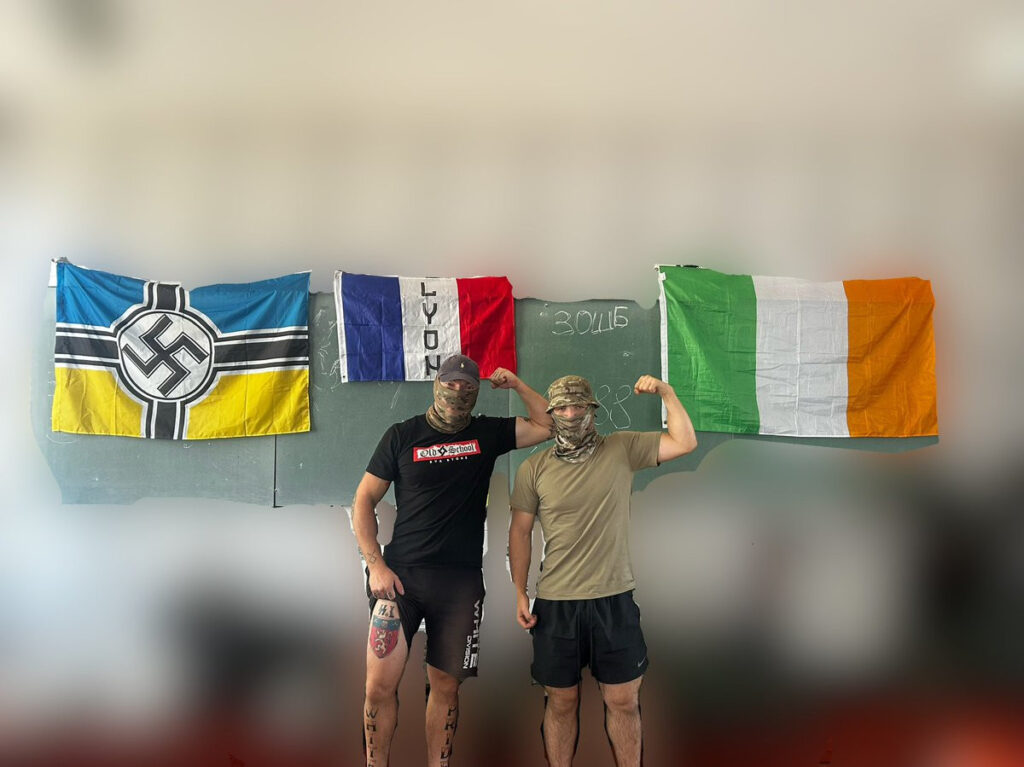
    Biletsky was called the “White Leader” and his writings were published by both SNA and Patriot of Ukraine. He was the first commander of the Azov battalion, which was organised and led by Patriot of Ukraine and SNA in May 2014. Patriot of Ukraine, SNA, and the Azov battalion all used a symbol resembling a stylised swastika and Wolfsangel. Azov commanders and their historian, who himself serves in Azov, called the symbol the “Idea of the Nation” and claimed that it is an ancient Ukrainian symbol, even though it was created in 1992 for the Social National Party of Ukraine (SNPU). The creator of this symbol acknowledged that it was called “Idea of the Nation” to represent the radical nationalist ideas of the Organisation of Ukrainian Nationalists (OUN). He also admitted that SNPU deliberately chose this symbol with the Latin letter N, instead of the equivalent Ukrainian Cyrillic letter, fully aware of its resemblance to Nazi symbols and association with the swastika for many Ukrainians, in particular in Lviv. As with other extremist groups that rebrand out of political expedience, the Social National Party of Ukraine changed its name to Svoboda in 2014, because the Nazi association was politically inconvenient.20 However, this symbol was retained by the SNA and by Patriot of Ukraine, whose Kharkiv branch split from SNPU because of these changes.21 The Azov battalion and its propaganda magazine, which was named Black Sun, also used the Black Sun symbol, an ideological symbol used by Nazis and various neo-Nazi organisations. In addition, groups and individuals—including Patriot of Ukraine, SNA, National Corps, and Azov battalion and regiment leaders, commanders, and members—have displayed on their uniforms various neo-Nazi and Nazi symbols, such as the swastika, the SS sign, and 88 (Heil Hitler code). These, along with Hitler images, Nazi flags, and Totenkopf have also been seen in the form of patches, photographs, flags, and tattoos.

    Although the term far-right incorporates both ultranationalist and neo-Nazi organisations, they are not ideologically identical despite their frequent overlap. This study empirically investigates the role of Ukrainian ultra-nationalist organisations such as Svoboda, the Right Sector, the Ukrainian National Assembly–Ukrainian People’s Self-Defence (UNA-UNSO), and Bratstvo; neo-Nazi organisations such as the Social-National Assembly, Patriot of Ukraine, the White Hammer, and C14; and various other paramilitary formations, special police forces, and National Guard units organised and controlled to various extents by them. These armed units include the Azov battalion and regiment, Dnipro, Donbas, Aidar, Sich, Carpathian Sich, OUN, and St. Mary’s battalions, and the Ukrainian Volunteer Corps. To assess these actors, this study analysed thousands of Russian and Ukrainian primary sources: online recordings of live broadcasts, videos of the armed conflict in Donbas and Odesa, and information posted on websites and social media by far-right organisations, their armed units, and activists. It also analysed media reports in Ukrainian, Russian, and English from diverse outlets such as Ukrainska pravda, Strana, BBC, The Guardian, The Washington Post, The New York Times, YouTube, Telegram, V Kontakte, Facebook, and Twitter. To mitigate bias, the authors analysed the primary source materials rather than relying on secondary interpretations.

    The Conflicting Narratives

    Assessments of the far-right in Ukraine have been wracked by self-serving and thus unreliable perspectives. Russian and separatist leaders, as well as the media, have described the post-Maidan violence in Ukraine, especially in Donbas and Odesa, as perpetrated by “fascists” and “Nazis” akin to genocidal massacres against Jews, Belarusians, Russians, and Ukrainians during the Holocaust and World War Two.22 They often called the Odesa massacre the “Odesa Khatyn,” a reference to the large-scale massacre of Belarusian villagers in 1943 by the Nazis and an auxiliary police battalion, which was based on a paramilitary formation of the Melnyk faction of the Organisation of Ukrainian Nationalists. Based on this narrative, President Putin and his allies have claimed that invading Ukraine is not only justified, but “inevitable” to counter the “Nazi” or “Neo-Nazi regime” in Kyiv.23 Putin and his government thus declared the “de-Nazification” of Ukraine as a key goal of “the special military operation” launched in February 2022.24 This perspective—in its entirety—is widely assailed in the West.25

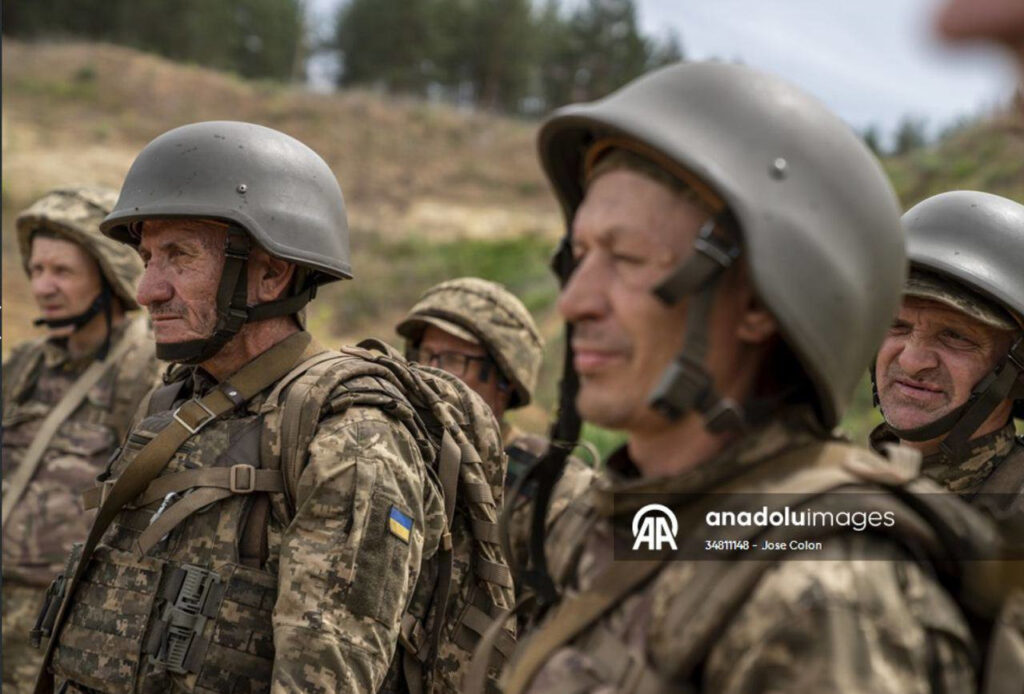
    By contrast, the Ukrainian and Western governments and the media tend to claim that the far-right—including neo-Nazis—is marginal, even non-existent in Ukraine.26 They argue that since Euromaidan, Ukrainian fighters have almost entirely—if not entirely—shed their far-right elements, particularly neo-Nazi. To this end, it is a common point that the Azov Battalion ceased to be led by the neo-Nazi Patriot of Ukraine, a paramilitary wing of the SNA, since integrating into the National Guard as one of its regiments. Kyiv has stressed that the integration of Azov in November 2014 is proof of its transition to moderation and the absence of extremist fighters post-Maidan.27 Ukrainian President Volodymyr Zelensky awarded “Hero of Ukraine” titles in 2022 to prominent Azov leaders such as regiment commander Denys Prokopenko, deputy commander Sviatoslav Palamar, and senior officer Oleh Khomenko.28 After the commencement of the Russia-Ukraine war in February 2022, many Western media outlets, politicians, government officials, and academics adopted this stance that Azov and other controversial Ukrainian fighters on the far-right had not only abandoned extremist elements, but were heroes against Russia’s illegal invasion.29

    The Indexing Theory of political communications emphasises that Western media follow narratives of its governments in covering foreign conflicts, including in post-communist countries.30 In some cases, Western media may have taken their cues directly from the Ukrainian government. After the Odesa massacre on 2 May 2014, the Foreign Ministry of Ukraine blamed the arson attack on provocateurs that were “paid generously by the Russian special services”, and the New York Times immediately adopted the same line that pro-Russia groups may have been responsible for torching the building.31 The Western narrative of the far-right in Ukraine since the Euromaidan is not without controversy. Volodymyr Ishchenko, a Ukrainian sociologist who specialises in the far-right in Ukraine, concludes: “The dominant narrative since Maidan in Ukrainian and much of the Western public spheres has been systematically downplaying the problem” by arguing that “the Ukrainian far-right” is “small and marginal.” He stated that “often, the far-right is just ignored.”32

    Notably, Western concerns over far-right fighters in Ukraine were more prevalent before the February 2022 invasion. For example, The Nation described Azov in 2018 as “pro-Nazi, as evidenced by its regalia, slogans, and programmatic statements.”33 In 2019, Radio Free Europe called Azov “far-right.”34 In 2020, The Guardian referred to Azov as a “neo-Nazi extremist movement.”35 Consistent with Indexing Theory, such coverage of the neo-Nazis in Ukraine before the February 2022 Russian invasion overlapped with similar expressions by Western governments. In its 2018 Human Rights report, the US State Department called the political wing of the Azov Regiment “a hate group.”36 In 2019, ambassadors from G7 countries warned against “extreme political movements in Ukraine, whose violent actions are worrying in themselves.” The warnings referred specifically to the Azov movement and its violence during the 2019 presidential elections.37 The US Congress has displayed longstanding ambivalence over its designation of Azov. In 2018, forty Congress members signed a letter to the State
    Department with the request to designate Azov as a terrorist organisation because of its links to terrorist attacks in multiple countries and its recruitment of neo-Nazis in its ranks.38 A defence appropriations bill amendment was adopted by the entire US Congress in 2018, which banned US government funding and training of the Azov regiment due to concerns over its neo-Nazi views and members. Such concerns had been expressed by American officials for several years after the Euromaidan. The amendment was first unanimously adopted by the US House of Representatives in 2015. Congressman John Conyers put it bluntly, “I am grateful that the House of Representatives unanimously passed my amendments last night to ensure that our military does not train members of the repulsive neo-Nazi Azov Battalion.”39 Under pressure from the Pentagon, however, Congress subsequently removed this first amendment. A similar amendment, proposing a ban on US military assistance to radical nationalist and neo-Nazi organisations, voluntary police, and paramilitary formations under their command, was blocked in Congress in 2014.40

    In general, however, American and European governments have been careful not to issue public statements against the far-right in Ukraine or to call attention to it. This hesitancy began after the Euromaidan and became starker following the February 2022 Russian invasion. Indeed, Western governments and media increasingly whitewashed the empirical record to present the Ukrainian far-right formations as categorically moderate in order to boost international support. In June 2024, the US State Department stated that the Azov brigade was eligible to receive US weapons under the “Leahy Law” because it was cleared of human rights violations. It made this determination after claiming that the Azov brigade is a new unit that is not subject to the previous Congressional ban, even though in reality this brigade was created on the basis of the Azov regiment, celebrated the 10th anniversary of the Azov battalion creation as its own anniversary, and is led by original Azov battalion commanders.41 However, a subsequent amendment, which was included in the US defence bill which was passed by the US House of Representatives, specifically stated that “none of the funds appropriated or otherwise made available by this Act may be used to provide arms, training, intelligence, or other assistance to the Azov Battalion, the Third Separate Assault Brigade, or any successor organisation.”42

    Such instrumental portrayals of allies are not limited to this conflict. Other recent cases of political violence have also featured public relations campaigns by governments and media to present allies as arguably more moderate than their history and contemporary ideology indicate. For example, in the Syrian war, anti-Assad jihadist organisations allied with the West were euphemistically referred to as “rebels,” sometimes “moderate” ones, even when they fought under the direction of a Foreign Terrorist Organisation, as designated by the US State Department.43 A large body of literature within terrorism studies has found that the labelling of violent perpetrators by governments and media is not value-neutral, but expedient to serve political agendas.44 Particularly in these controversial cases of political violence, academe can play an important role in interrogating the empirical record to adjudicate the truth.45

    The Far-Right in the Donbas War

    Research within the field of terrorism studies has repeatedly noted the difficulty of determining the ideological beliefs of participants in political violence.46 However, fine-grained knowledge of the organisations can substantially increase confidence. Svoboda and the main organisations that remained within the Right Sector after the Euromaidan were widely understood as far-right for maintaining ultra-nationalist and ethnically supremacist views. They openly described themselves as the natural successors of the Organisation of Ukrainian Nationalists (OUN) and the Ukrainian Insurgent Army (UPA), inspired by the notorious OUN leader and Nazi collaborator, Stepan Bandera.47 Along with the UNA-UNSO, these organisations used the “Glory to Ukraine! Glory to the Heroes!” slogan, the official greeting of the Bandera faction of the OUN (OUN-B). This greeting, along with a fascist-style hand salute, was modelled on greetings and salutes of other well-known fascist parties in European history, from the Nazi party in Germany to the Ustashe party in Croatia.48 The Right Sector also adopted its red and black flag from the OUN-B and the UPA, which symbolized Ukrainian blood and soil, which were also pervasive in Nazi ideology and flags.49 But the existence of these symbols alone offers weak evidence of far-right influence in the Donbas war without understanding the cultural and historical context.

    The violent overthrow of the Viktor Yanukovych government by means of the Maidan massacre triggered the resurgence of separatism in Donbas.50 After his overthrow in February 2014, far-right parties and organisations in Ukraine expanded and organised their armed formations. Along with Ihor Kolomoisky, an oligarch who became the head of the Dnipropetrovsk regional administration, the Right Sector was instrumental in the formation of the Dnipro battalion in the spring of 2014.51 The Azov battalion, notorious for its use of neo-Nazi symbols in its official insignia, was also organised in the spring of 2014 and led by the SNA and the Patriot of Ukraine with the involvement of the Radical Party. As mentioned, “White Leader” Andrii Biletsky was the first commander of Azov.52 Based in Mariupol, the St. Mary’s battalion was formed in the fall of 2014 and led by the far-right Bratstvo party, which is described by its leader (Dmytro Korchynsky) as the “Christian Taliban.”53 Around this time, the Aidar battalion, nominally subordinated to the Ministry of Defence of Ukraine, was formed by the Maidan Self-Defence. One of its platoons was led by the White Hammer, a neo-Nazi organisation belonging to the Right Sector during the Euromaidan. Ilia Kiva, a Right Sector member, was the commander of another volunteer police battalion. A previously convicted criminal with a swastika tattoo became the commander of the Tornado Company, a special police unit. He and seven other members of his company were arrested and convicted for various crimes in the warzone, such as torturing detainees. A Nazi-style flag with a swastika was found in their prison cell.54 These units were all under the formal jurisdiction of the Ministry of Internal Affairs, the National Guard, or the Ministry of Defence. From the start of their formation, they remained under de facto command of radical nationalist or neo-Nazi organisations. These armed formations sprouted up in the early stages of the conflict in Donbas and were stationed there in an attempt to suppress pro-Russian separatism in the region by force. The Right Sector and the Organisation of Ukrainian Nationalists actively organised various militia and paramilitary units that were not subordinate to the central government of Ukraine. The Volunteer Ukrainian Corps, the largest paramilitary formation, was formed and led by the Right Sector specifically for the war in Donbas, though it also included battalions in Western Ukraine.55

    The paramilitary formations, special police, and National Guard units, organised and led by far-right organisations such as the Right Sector, the Social National Assembly, Patriot of Ukraine, Svoboda, C14, and Bratstvo, constituted a small minority of Ukrainian fighters in the Donbas. Based on reports, we estimate the number of members of radical nationalist and neo-Nazi organisations who served in various far right-led, regular, and other armed formations in the Donbas, at around five thousand. This estimate is conservative and represents just one percent of approximately 400,000 people who participated in this war on the side of the central government.56 Additional metrics of influence, however, are also important to consider.

    Despite their relatively small numbers, far-right fighters exercised disproportionate influence in the Donbas civil war, particularly in the early stages before the first direct Russian military intervention in August 2014. Far-right Ukrainian groups proliferated after the Euromaidan because they were eager to fight and were responsible for a disproportionate level of violence, especially against civilians and prisoners of war in Mariupol and Krasnoarmiisk. Far-right organisations and far-right-linked battalions thus played a crucial role in escalating the armed conflict in the Donbas. Svoboda and C14, an avowedly neo-Nazi group affiliated with Svoboda until the summer of 2014, organised and led the Sich battalion from June 2014 onwards.57 Meanwhile, the Right Sector carried out a deadly attack on a separatist checkpoint in Sloviansk on 20 April 2014. While Ukrainian and Western media denied far-right involvement in these events, the evidence to the contrary includes business cards linked to far-right members found after the attack. As well, Ukrainian court proceedings revealed that the weapons used by the Right Sector checkpoint attackers were the same as the snipers from this group who killed and wounded police during the Maidan.58 And two years after the attack on the separatist checkpoint, Dmytro Yarosh—the leader of the Right Sector—admitted his personal involvement in thisattack.59 Oleksandr Turchynov, then acting president of Ukraine, and Kolomoisky’s deputy in the Dnipropetrovsk regional administration, reportedly orchestrated this Right Sector operation, aimed to seize and destroy a television transmitter near Sloviansk, several days after this area was seized by the Strelkov-led armed group of Russian nationalists and Ukrainian separatists.60 This attack by the Right Sector constituted a major escalation of the conflict in Donbas because it broke both the Geneva Agreement signed on 17 April 2014 by Ukraine, Russia, the EU, and the US for a peaceful resolution of the conflict, as well as the Orthodox Easter truce between the Ukrainian government and separatists in Donbas.

    Far right-led armed formations were also behind many other violent attacks in the Donbas, further escalating the conflict into a civil war. Videos, media reports, and admissions from commanders and other members of the Azov and Dnipro battalions indicate that they participated in the storming of the district police headquarters in Mariupol on 9 May 2014. Approximately ten people, including at least one protester, were killed.61 Analysis of online video streams, media reports, and Ukrainian government documents, also make clear that Azov played a major role in taking back the city of Mariupol from the control of separatists in June 2014.62 The Dnipro battalion, along with other units, seized civilians in the Donetsk Region to prevent the separatist referendum on 11 May 2014. Videos show them shooting unarmed pro-separatist protesters with Kalashnikovs, killing two locals. The Ukrainian government denied the presence of the Dnipro battalion, but it was confirmed by other credible sources, including admissions by battalion members in videos, like Volodymyr Parasiuk’s statement on social media, who became the People’s Deputy of Ukraine.63

    The far-right-led armed formations perpetrated a disproportionate amount of violence in the first few months of the Donbas conflict and thus played a major role in escalating it into a larger civil war because the radical nationalist and neo-Nazi-led groups were far more willing to use force at that time. The Ukrainian armed forces, the security service, police and National Guard units were more reluctant to use force against the separatists in Donbas because their commanders and members were publicly blamed by the new government for attempting to forcefully suppress the Maidan protests—and in particular, for the Maidan massacre. Because the new Maidan government came to power through violence, which included the killing of police and protesters, it lacked legitimacy among many military, police, and SBU members in the Donbas region during this initial period of the conflict. Further, compared to the newly ascendant far-right groups in the aftermath of Euromaidan, the regular Ukrainian armed forces, the security service, the police and National Guard units were known for lower morale and higher desertions. Examples of this included the Donetsk SBU Alfa commander and Luhansk Berkut members, who joined the separatists.64

    The relative role of the far-right in the political violence was not constant; it began to decline in the Donbas when newly elected president Petro Poroshenko ordered the Ukrainian military, SBU, police, and National Guard to wield lethal force against the separatists and launch the offensive in June 2014.65 The war was most intense and violent in 2014 and 2015, but the fighting declined significantly following the Minsk Agreements in 2015. However, ultra-nationalist and neo-Nazi fighters continued to exert a non-trivial role, even after the Ukrainian military intensified its operations in Donbas and purported to moderate the far-right fighters. After its formal incorporation into the National Guard of Ukraine, the Azov regiment and its commanders maintained a close organisational and ideological relationship with the neo-Nazi National Corps party. This party was formed by the Azov battalion founder and the first commander on the basis of neo-Nazi SNA and Patriot of Ukraine, and it included many Azov battalion and regiment veterans. The Azov regiment functioned as a military wing of the National Corps, which, in essence, represented overlapping elements of the same Azov movement.66 Indeed, Azov regiment commanders shared a neo-Nazi background and had served in the neo-Nazi-led Azov battalion.67 In other words, the rebranding from “battalion” to “regiment” did not alter the key personnel.68 For example, Azov regiment commander Denys Prokopenko was a member of the neo-Nazi White Boys Club, which was formed by the ultras of the Dynamo Kyiv football club. This group of ultras displayed various Nazi symbols and the Nazi salute on their social media and during football games. His Azov battalion platoon had used the Totenkopf insignia of the Nazi SS.69 Andriy Biletsky became the commander of the Third Assault Brigade, which was created by veterans of the Azov battalion and regiment and activists of his neo-Nazi group, the National Corps.70 In 2023, he stated in an interview with Ukrainian media that the united Azov movement included this Azov brigade under his command along with the Azov regiment and the Kraken unit.71 Such admissions in Ukrainian media highlighting enduring far-right allegiances seldom make their way into the Western press.

    Importantly, Azov commanders never publicly renounced their neo-Nazi views, symbols, and organisations. In fact, Azov leaders routinely denied in media interviews that they, their units, and organisations, were neo-Nazi, claiming that the well-documented Nazi symbols were fakes or Russian propaganda. Our research of Ukrainian social media as well as other researchers of the far-right in Ukraine, such as Lev Golinkin and Moss Robeson, have identified over one hundred cases of Nazi and neo-Nazi displays by at least several hundred Azov commanders and other members from 2014 to 2022. This number includes displays on uniforms, patches, photographs, flags, and tattoos of neo-Nazi and Nazi symbols, such as the swastika, SS sign, 88 (Heil Hitler code), Hitler images, Nazi flags, and Totenkopf, and a fascist hand salute.72 The continued relevance of far-right extremism in Azov was evident at the very top. Arsen Avakov, the Minister of Internal Affairs, was personally involved in the Azov battalion formation and its later expansion to a regiment.73 President Petro Poroshenko circulated photographs awarding Ukrainian national medals and commendations to some of the most well-known neo-Nazis in Azov.74 The Nazi connection to Azov was clearly not due to a loss of agency control.

    Amnesty International and Human Rights Watch reported that Azov was involved in many cases of torture, illegal detention, and disappearances during the war in Donbas.75 The impact of these far-right organisations cannot be measured strictly in terms of the direct physical effects, as terrorism researchers have emphasised in many other contexts.76 Ultra-nationalist and neo-Nazi organisations were instrumental in blocking or “spoiling” a peaceful resolution of the armed conflict in Donbas, another well-established source of leverage for extremists.77 Far-right groups such as the Right Sector, Svoboda, and the Radical Party opposed the adoption by the parliament of Constitutional amendments based on provisions from the Minsk Agreements.78 To this end, Svoboda activists launched a grenade attack on 31 August 2015 in front of the Ukrainian parliament, killing four and wounding dozens of policemen and National Guard troops, which helped to block these amendments, undercutting the logic of implementation.79

    Far-right groups also challenged the implementation of President Volodymyr Zelensky’s electoral promise to peacefully resolve the Donbas war.80 In October 2019, Zelensky travelled to a front-line position in Donbas to personally convince the Azov fighters to stop blocking the implementation of the Minsk agreements by withdrawing along with separatist troops from the frontline, as he agreed during the summit with Putin and German and French leaders in Paris. But video of the encounter shows that Zelensky was taunted by activists of this neo-Nazi organisation who flouted his appeal.81 According to the Associated Press, thousands of far-right and nationalist activists shouting the far-right OUN and UPA slogan “Glory to Ukraine. Glory to the Heroes” marched through Kyiv protesting against a peace plan for eastern Ukraine.82

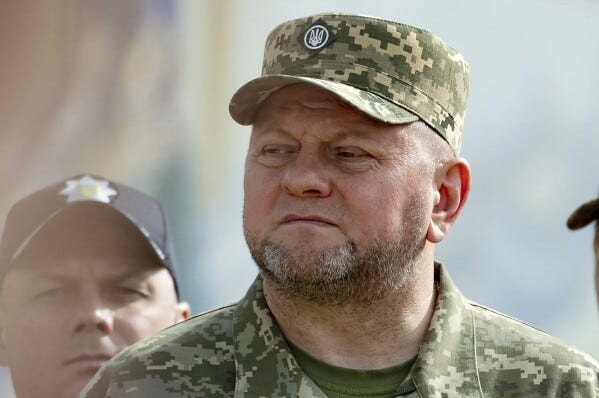
    The radical flank threatened Zelensky for implementing Minsk on other occasions as well. In May 2019, Dmytro Yarosh, the former Right Sector leader, publicly threatened to hang the new Ukrainian president on a tree if he fulfilled his election promise of a peaceful resolution of the conflict in Donbas.83 In 2021, Yarosh, the commander of the Ukrainian Volunteer Army organised by the Right Sector, was appointed Adviser to the Commander-in-Chief of the Armed Forces of Ukraine, Valerii Zaluzhnyi.84 In the same year, videos, photos, and Ukrainian media reports show police standing down while neo-Nazi and other far-right protesters attacked the Office of the President of Ukraine and painted swastikas on its walls.85 The Russia scholar Stephen F. Cohen concluded that Zelensky “can’t go forward with peace negotiations” because “crazy fascist movements” in Ukraine “literally threatened his life.”86 Although far-right peace rejectionists posed political problems for Zelensky, they were also known to work closely with him. An activist of the neo-Nazi Patriot of Ukraine and former deputy commander of the Azov regiment was appointed the acting head of the National Police of Ukraine during the Poroshenko presidency and then became a deputy minister of Internal Affairs during the Zelensky presidency.87 Prime Minister Oleksii Honcharuk spoke at a “veterans party” organised by a front organisation for the neo-Nazi C14 with a stylised swastika of a neo-Nazi rock band behind him.88 The advisory council of the Ministry of Veteran Affairs under Zelensky retained activists of this neo-Nazi group, including those charged with assassinating the prominent opposition journalist, Oles Buzyna, in 2015.89

    In sum, ultra-nationalist and neo-Nazi militant organisations were deeply involved on the side of the central government throughout the Donbas conflict. Although representing a small fraction of Ukrainian forces throughout the conflict, they committed a disproportionate amount of violence, particularly before President Poroshenko ordered the Ukrainian military to increase its use of force against the separatists in the summer of 2014. The much-touted absorption of Azov and other extreme right-wing militia under the official Ukrainian National Guard, police, and military command did not change either their command or their ideological displays. Many of the fighters worked closely with the Kyiv political leadership across administrations, when not using de facto veto power to block peaceful resolution of the conflict in this region.

    This interpretation departs from others that rely strictly on vote-share as the proxy for far-right influence. The influence of the far-right in Ukraine after the Maidan far exceeded its electoral support and membership. Svoboda and Right Sector leaders each won only one percent of the votes in the snap presidential elections in May 2014. In the parliamentary elections of October 2014, Svoboda narrowly failed to clear the five percent threshold, receiving 4.7 percent. The Right Sector fared even worse, receiving only two percent of the votes. Ruslan Koshulynsky, one of Svoboda leaders, who was backed by the Right Sector, OUN, and C14, received only 1.7 percent of the votes in the 2019 presidential elections, while Svoboda won 2.2 percent of the votes in the 2019 parliamentary elections. These weak electoral results indicate the limited national support of the far-right in Ukraine, but not its outsized role in the Donbas conflict.

    The Far-Right in the Odesa Massacre

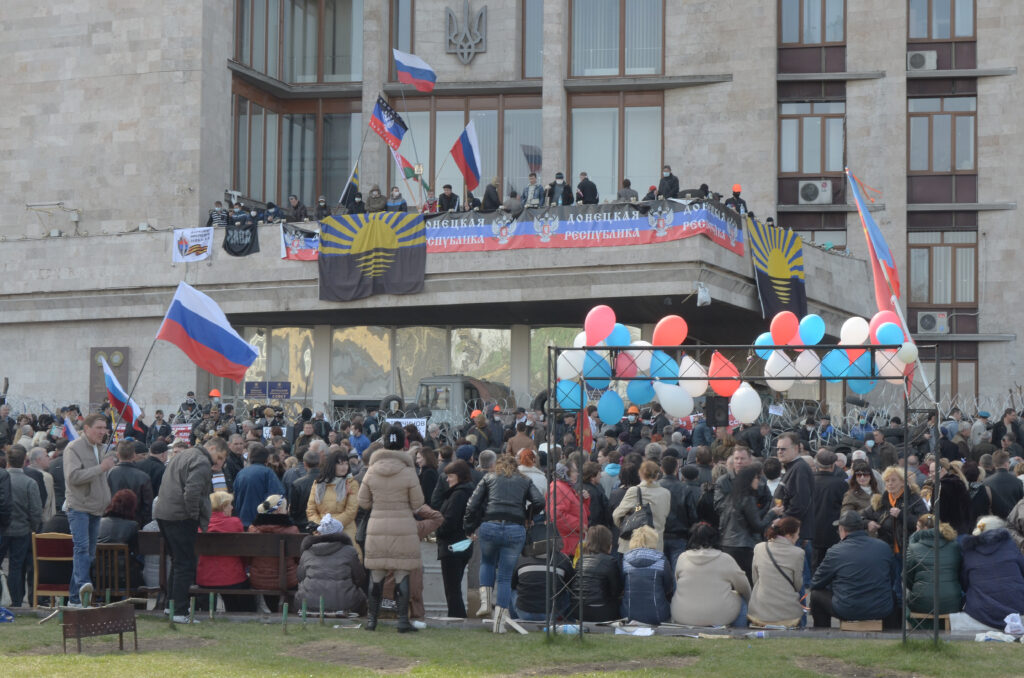
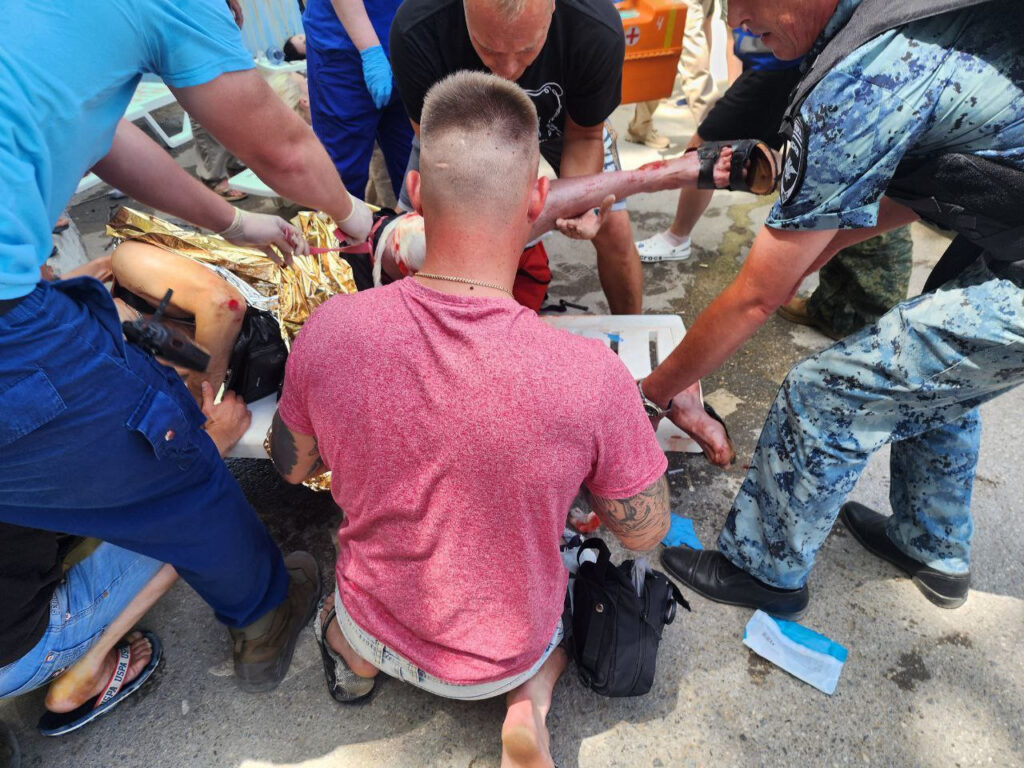
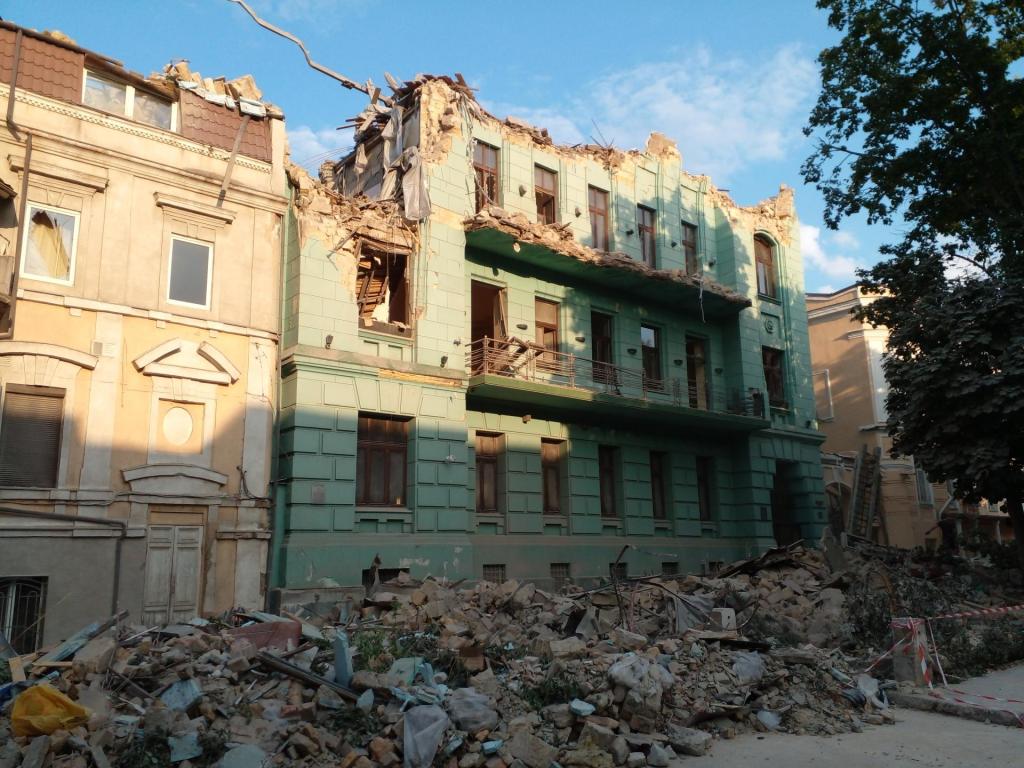
    Other than the Donbas war, the Odesa massacre was the most significant and deadly instance of political violence after the Maidan massacre in Ukraine since its independence in 1991 until the Russia-Ukraine war in February 2022. The violence took place on 2 May 2014, between a “United Ukraine” rally and pro-Russian separatists, carried out with petrol bombs, gunfire, and rock-throwing, which ended up killing 48 people, primarily separatist protesters.90 The vast majority of the fatalities took place in the Trade Unions House, where 42 separatist activists and employees (forty men, seven women, and one boy) were killed when the building was set ablaze.91

    This massacre contributed to the escalation of the separatist conflict in Donbas into the civil war. As noted, the massacre was presented by separatist and Russian leaders and the media as akin to the Nazi massacre of Khatyn in Belarus, and many Odesa separatists joined the separatist forces in Donbas. Despite the importance of this massacre, the International Advisory Panel of the Council of Europe, among other international authorities, has noted that the Ukrainian government failed to properly investigate and prosecute those responsible.92 To ascertain the role of far-right groups in the Odesa massacre, a broad range of key information resources can be analysed, including videos and recordings of live broadcasts of the political violence (and the lead-up to it); published reports; primary source media in Ukrainian, Russian, and English; statements of responsibility; interviews; and testimonies from participants and eyewitnesses on both sides, as well as police commanders.

    On 1 May 2014, the day before the mass violence, separatists protested in Odesa to demand a referendum on the newly installed government in Kyiv, which they blamed on far-right activists and Western interference.93 Based on testimonies from a special parliamentary commission report in the immediate aftermath of the May 2014 massacre, Ukrainian and regional government officials planned to use far-right activists and the Maidan Self-Defence to suppress the separatists in the Odesa region and disperse those who were encamped near the Trade Union building.94 Extensive evidence indicates that the police and firefighters were ordered by their superiors to stand by and not interfere during attacks. For instance, a special plan to deal with mass disturbances launched by the Odesa regional police was not authorised, reportedly because of decisions at the Ministry of Internal Affairs’ top level.95 Similarly, top regional officials of the police and other law enforcement agencies were ordered to attend a meeting with their national counterparts before and during the start of the clashes.96 The presence of Andriy Parubiy and five hundred Maidan Self-Defence members, who deployed from Kyiv to Odesa on the eve of the massacre, further suggests that the violent dispersal of the separatist camp by far-right activists was orchestrated by top government leaders.97 Parubiy was a founder and leader of the neo-Nazi Patriot of Ukraine, a paramilitary wing of the Social National Party of Ukraine in the 1990s. He was the head of the Maidan Self-Defence during the Euromaidan and headed the National Security and Defence Council at the time of the Odesa massacre. The State Bureau of Investigations of Ukraine launched a criminal investigation into Parubiy for the Odesa massacre soon after he was replaced as the ex-head of the Ukrainian parliament following the early parliamentary elections in 2019.98 One of the participants acknowledged in an Israeli documentary that he engaged in “provocations” in the Odesa massacre under the command of
    Parubiy, who had issued orders to attack the separatists and “burn everything.” We assess this acknowledgement as credible because he was filmed along with Maidan activists in the left wing of the Trade Union building in Odesa when the deadly fire began to burn the central entrance.99 He and five other Georgian ex-military members also stated in American, Italian, and Israeli TV documentaries, Russian media interviews, on Macedonian TV, in depositions to Berkut lawyers for the Maidan massacre trial, and in testimonies to the Prosecutor General Office of Belarus for the Prosecutor General Office of Ukraine investigation that their groups of Georgian, Baltic, and far-right-linked Ukrainian snipers received weapons, payments, and orders from specific Maidan and Georgian politicians, including Parubiy, to engage in a mass killing of police and protesters.100 The Maidan massacre trial subsequently confirmed their identities.101

    A march led by the Right Sector and football ultras on 2 May 2014 was used as cover to implement this plan to destroy and burn the separatist tent camp.102 The SBU in the Odesa Region received advanced information about planned “provocations” and violent clashes between football ultras and pro-Russian separatists on game day between the Odesa and Kharkiv teams on 2 May. A special train transported hundreds of football ultras from Kharkiv to Odesa.103 Football ultras in Ukraine were notorious for displaying neo-Nazi symbols and expressing neo-Nazi slogans during games and have historically linked up with the Right Sector and other far-right organisations, as during the Maidan protests.104 Both the Right Sector and football ultras in Odesa and Kharkiv were dominated by the neo-Nazi Social National Assembly/Patriot of Ukraine, which organised the Azov battalion right after the Odesa massacre.

    Odeska Druzhyna, a small separatist organisation in Odesa, was present among other separatist activists based on evidence from internet streams, videos, testimonies of participants and eyewitnesses, and special parliamentary commission reports.105 Odeska Druzhyna used identifiable red tape labels, and were not Right Sector agent provocateurs, as the Russian media and separatists claimed. However, the Ukrainian government and media also mischaracterised the involvement of Odeska Druzhyna by overstating its coordination with other separatist activists.106 The balance of forces was asymmetric; the groups of numerically superior activists of the Right Sector from Odesa and Kharkiv led by the neo-Nazi Social National Assembly/Patriot of Ukraine, far-right football ultras, and Maidan Self-Defence units from Odesa and other regions attacked the separatists. Numerically disadvantaged, the latter took cover behind a police cordon.107

    An Odeska Druzhyna activist was filmed shooting in the direction of the far-right protesters with an AK-74-type assault rifle.108 The official investigation and the May 2 Group maintained that a Right Sector activist was killed by this separatist group member with a 5.45mm calibre bullet.109 However, leaked forensic medical expert reports describe a 5.65mm calibre bullet extracted from his body.110 This bullet reportedly disappeared and reappeared during the investigation. The fact that it did not match bullet samples of any legally registered firearms, the weak sound of the gunshots, as well as the lack of a recoil observed in the videos of the shooting, also suggest that the far-right protester may not have been killed by this separatist, who maintained that the weapon seen in the video was a movie studio prop.111 The killing of the Right Sector activist was not visible in that video nor in any videos of clashes. The investigation and various videos at the scene did not reveal the exact time or location of his killing, or the direction of the gunshot. An Odesa deputy police chief, who was filmed around the time of this killing before he himself was wounded, stated that he saw snipers in camouflage shooting from the second floor of a hotel there. He relayed that they killed this Right Sector activist and the second protester in order to blame the separatists for their killing and provoke a violent response against the separatists.112 Videos filmed before and after his shooting suggest that the second pro-Maidan activist was killed around the same time in the same area during the violent clashes with separatists and shooting from a Kalashnikov-type weapon by one of the separatists.113 However, the government forensic examination determined that he was killed by a bullet from a pneumatic sport-type weapon. Nobody was charged with his killing, and the moment and other circumstances of his killing remain not publicly known.114

    In the clashes that followed the killings of these two pro-government protesters, four separatist protesters were killed and many other separatist protesters, policemen and at least one local journalist were wounded. The forensic examination determined that three separatists were killed with hunting ammunition.115 A pro-government activist was filmed shooting with a hunting rifle in the direction of these separatists.116 This pro-government activist was later identified by the Minister of Internal Affairs as a Right Sector member.117 The government investigation charged him with killing at least one of the separatists. However, he was released from arrest and his trial was suspended indefinitely because of threats by the Right Sector and other far-right activists against judges during his trial.118 Evidence—including a recorded phone call—revealed that the events on May 2nd were coordinated by the Odesa regional administration official in charge of law enforcement agencies, and involved the participation of the Maidan Self-Defence commander, Right Sector activists, football ultras, and Maidan Self-Defence units.119 They attacked and burned the tent camp of various separatist organisations, whose activists and supporters then escaped to the nearby Trade Union building and tried to barricade the main entrance doors. Videos, internet streams, and testimonies of eyewitnesses show that attackers threw Molotov cocktails and burning tyres at the main entrance, set the entrance doors on fire, and blocked other exits. Videos, recorded calls to firefighters, and eyewitness reports reveal that the fire and thick smoke started from those burning tyres and Molotov cocktails thrown at the main entrance.120 The evidence does not support claims that the separatist protesters killed in this incident were Russian citizens, that they burned themselves by throwing Molotov cocktails from the roof of the Trade Union building or inside of the building, or that there was no far-right involvement in their killing.

    After initial denials, the May 2 Group admitted that the deadly fire started at the main entrance. The May 2 Group was a nominally independent association of mainly journalists, formed after the massacre supposedly to investigate it. It was created with the involvement of the Governor of the Odesa region who was appointed by Ukrainian President Petro Poroshenko within a week of the massacre.121 This governor represented not only the central government, but also the Kolomoisky’s oligarchic network, which financed the Right Sector volunteers from the Volyn Region in the Azov battalion and the Right Sector-led Dnipro battalion.122 The Azov battalion was organised by the neo-Nazi SNA and its paramilitary wing, Patriot of Ukraine, which dominated the Right Sector in Odesa and Kharkiv, a few days after the Odesa massacre. But the May 2 Group still claimed that it was impossible to determine who started the fire because both sides were throwing Molotov cocktails. However, there is no public evidence of Molotov cocktails being thrown by separatists at the main entrance; on the contrary, numerous videos feature the far-right protesters throwing Molotov cocktails and burning tyres into the Trade Union building at that time.123

    Within Ukraine, far-right activists—particularly from the Right Sector and the SNA— were notorious for using tyres and Molotov cocktails to burn public buildings. Forensic examinations in the government investigation, recordings of radiocommunications by SBU Alfa group, an unpublished admission by a far-right activist to a French journalist, and an academic study determined that the Trade Union headquarters in Kyiv were burned by Maidan activists, including far-right ones, in order to stop its takeover by the Security Service of Ukraine Alfa unit.124 Far-right protesters also started fires by burning tyres in the Inter TV channel building and threatened to burn down the parliament of Ukraine, the Lutsk City Council, the Sviatoshyn District Court that heard the Maidan massacre case, the Constitutional Court, and Inter and 112 Ukraina TV channels buildings by placing tyres next to their entrances.125 Prior usage of the same tactics by the far-right increases the likelihood of their direct involvement.

    Analysis of online video streams, government investigation findings, May 2 Group reports, forensic medical examinations, eyewitness testimonies, and other evidence strongly indicate that 42 people perished as a result of the fire, smoke, and from trying to jump from the upper floors of the Trade Union building with far-right activists beating them on the ground and blocking the exits.. The victims were unarmed and included mainly separatists, their supporters, and several employees, in particular women, who were in the building at the time.126 Some of the strongest evidence of far-right involvement in the arson attack comes from the far-right itself, in the form of credit claiming. A growing body of research within terrorism studies focuses on credit claiming. An important finding is that perpetrators are far more likely to deny responsibility for their attacks than to take credit for ones that they did not perpetrate.127 This is particularly true when the targets are civilians. Nonetheless, many extremist groups do claim credit for civilian attacks.128 Statements posted by the Right Sector, the SNA, and the neo-Nazi Misanthropic Division on their websites and social media sites admitted the involvement of their organisations in the massacre. The Right Sector celebrated on its website the massacre by describing it as “another bright page in our fatherland’s history.” Claiming responsibility for the slaughter, it wrote: “In the first minutes of the battle, the ‘Right Sector’ activist was seriously wounded in the stomach. Several more PS [Right Sector] activists received injuries of varying degrees of severity. However, this did not prevent the rest of the PS fighters, together with football fans, from repelling the attack of pro-Russian provocateurs, and as a result, they successfully countered attempts to seize buildings in Odesa. Standing shoulder to shoulder, Odesa activists, football fans and ‘Right Sector’ fighters defeated the forces of pro-Russian mercenaries. Order has been restored in Odesa.”129 The Right Sector—which was dominated in Odesa and Kharkiv by the Social National Assembly and its paramilitary wing, Patriot of Ukraine—and the neo-Nazi Misanthropic Division (which joined the Azov battalion after the massacre) admitted on the social media platform V Kontakte and in other public statements that the fire was set deliberately.130

    The official investigation of the Odesa massacre was a farce. Nobody was found guilty of perpetrating this mass killing. As noted, the Right Sector shooter was initially arrested but then released. Only separatists were among those arrested and tried for the Odesa massacre. The Odesa massacre trial of separatists resulted in their acquittal by a local court. The Ukrainian court based its decision on the lack of evidence in support of prosecution charges. Even the verdict acknowledged both the weakness of the investigation into the perpetrators and the role of Parubiy and other government officials.131 The Council of Europe and the UN Special Commission reports also noted the destruction of evidence.132 A report by the special commission of the Council of Europe found that the Ukrainian government’s investigation of the Odesa Massacre was inadequate, politically selective, and featured the falsification of evidence, despite the existence of video footage showing who threw the Molotov cocktails at the building.133

    The Ukrainian media cited SBU sources that a far-right activist, who headed the Right Sector in Odesa during the Odesa Massacre, was a secret agent of the Security Service of Ukraine (SBU) and that he and far-right associates were paid by SBU to attack opposition politicians, threaten judges, and conduct other illegal actions.134 This would be consistent with the fact that the Right Sector was not investigated for the Odesa massacre even though the Right Sector publicly admitted involvement. His secret collaboration with SBU would also be consistent with the fact that SBU and the Prosecutor General Office refused to charge him for killing another person in Odesa in 2018. Moreover, in 2020, the SBU gave this far-right activist the status of a victim in this case, even though he streamed this killing on his social media account and the police investigation determined that he was the killer.135 In this sense, the Odesa massacre was not entirely anomalous; it featured post-Maidan far-right involvement with apparent support from high-level political leaders in a corrupt country where investigations and media have inconsistently followed the evidence.

    Conclusion

    This study assesses the role of the far-right in post-Maidan Ukraine, specifically, in the Donbas war and the Odesa massacre. These were two of the biggest episodes of political violence in the country leading up to the February 2022 Russian invasion. This area of research is worth close investigation because it represents intrinsically important episodes of political violence that have not attracted objective analysis based on available primary sources in Ukrainian, Russian, and English. Investigating the role of the far-right is also timely because the far-right in Ukraine is riven by duelling, self-serving contemporary narratives.

    The predominant narratives propagated by governments and the mainstream media in Ukraine, the West, Russia, and separatist-controlled Donbas, concerning the role of the far-right in the war in Donbas and the Odesa massacre, have evidently been partisan. Contrary to the Russian government, separatists, and associated media, the Ukrainian government and military are not Nazi or even neo-Nazi. There were no neo-Nazis among the upper echelon of the Ukrainian government. President Zelensky is certainly not a Jewish neo-Nazi. He tried to placate and
    mainstream the far-right for political reasons, but has no observable personal affinity to that extreme ideology.

    Neo-Nazis constituted only about one percent of the Ukrainian forces before the Russian invasion in 2022, and there is weak electoral support for neo-Nazi parties throughout the country. Similarly, the policy of glorification of the OUN-UPA, their leaders, such as Stepan Bandera, and the adoption and use of their “Glory to Ukraine! Glory to the Heroes!” greeting by the state and the military, including Zelensky, do not make Ukraine a Nazi state. While the OUN and the UPA were far-right terrorist organisations, which collaborated with Nazi Germany and perpetrated the mass murders of Jews, Poles, and Ukrainians, they were not Nazis. Ukrainians could not join the Nazi party because Hitler and other Nazi leaders regarded Ukrainians as racially inferior and opposed independence of Ukraine while also dismissing the attempt to create even a puppet state by the Bandera faction of the OUN in Lviv shortly after the Nazi invasion of the Soviet Union. Thus, Putin cannot credibly justify the illegal invasion in February 2022 as a war to “de-Nazify” the “Nazi regime.”136 The power of the far-right and the glorification of the OUN and the UPA in Ukraine under Poroshenko and Zelensky were exaggerated and exploited by the Russian leaders to justify the invasion.

    But the West’s efforts to whitewash the far-right in Ukraine also rests on empirically shaky grounds. Despite their relatively small numbers militarily and politically, the far-right in Ukraine exercised outsized power. The far-right organisations, volunteer battalions, and paramilitary units organised and led by them played, along with separatists and Russian nationalists, a significant role in starting and escalating the incipient civil war in the Donbas and then impeding its peaceful resolution. Even after technically integrated into the official Ukrainian forces, Azov and other far-right groups continued to harbour extremist views. Often brandishing the same extremist symbols, the core leaders and members remained and even ascended within the police, military, and security services during the Donbas war. Western media accounts have drawn heavily from biased Ukrainian sources, including “official” investigations and the May 2 Group. Across numerous primary sources in Ukrainian, Russian, and English, we find evidence that the Right Sector, Social-National Assembly, its paramilitary wing Patriot of Ukraine, and groups of far-right football ultras from Odesa and Kharkiv played a critical role in the Odesa massacre against separatist protesters on 2 May 2014. Neo-Nazi SNA/Patriot of Ukraine, which dominated the Right Sector in Odesa and Kharkiv, organised the Azov battalion right after this massacre.

    Despite the lack of international consensus over the definition of terrorism, a common interpretation is the use of violence by non-state actors aimed at creating fear for political ends, particularly when the targets are civilians.137 Depending on one’s definition, some attacks within the episodes of political violence covered in this study, such as the Odesa massacre, could, therefore, arguably be classified as terrorism. What is clear is that neither of the duelling narratives accurately captures the role of the far-right. This study has helped to fill that research lacuna by making use of substantial primary source materials in Ukrainian, Russian, and English. Besides the Maidan massacre, the Donbas war and the Odesa massacre are the two most substantial episodes of political violence from the independence of Ukraine in 1991 to the February 2022 illegal Russian invasion [end]

    The original article

    Ivan Katchanovski is a Ukrainian and Canadian political scientist. He teaches at the School of Political Studies and the Conflict Studies and Human Rights Program at the University of Ottawa in Canada. He specialises primarily in politics, conflicts, political violence, and the far right in Ukraine. His academic publications include five books, 21 articles in peer-reviewed journals, and twelve book chapters.

    Max Abrahms is a professor of public policy and political science at Northeastern University, where he specialises in international security. Abrahms has published extensively in leading academic and popular outlets such as International Organization, International Security, International Studies Quarterly, Security Studies, Comparative Political Studies, Harvard Business Review, Foreign Affairs, Foreign Policy, New York Times, Washington Post, USA Today, Newsweek, The Atlantic, and Los Angeles Times.

    I disagree with the authors on two points

    • Stepan Bandera & friends were Nazis. How can the authors identify some neo-Nazis in modern Ukraine, while not regarding their historical mentors as Nazis ? Before WW2, they were praising either Adolf Hitler or Benito Mussolini. Their political project was authoritarian, racist and criminal. They were dreaming of ethnic cleansing. De facto during WW2, they committed mass killing of Jews and Poles.
    • Terrorism is not restricted to non-state actors. Terrorism is violent action to terror civilians, in order to achieve a common political goal. This is not even a value judgement, but Hiroshima bombing was terrorism. The Israeli targeting and mass killing of civilians, in the prospect of ethnic cleansing in Gaza, is terrorism.

    The PDF

    My related articles

    Nazism in Ukraine

    its roots before WW2, its collaboration with Nazi Germany, its legacy in modern Ukraine, how NATO has continually supported Nazism in Ukraine

    The footprint of the Ukrainian Nazism in the West

    interactions between Ukrainian Nazi organizations and Western supremacist militants

    The Western disinformation about Ukraine

    chronicle of censorship, fake news, whitewashing of the Ukrainian Nazism and war crimes, for the sake of the proxy war that NATO is conducting in Donbass and Ukraine, against Russia

    Endnotes

    1. Arel, Dominique and Jesse Driscoll. 2023. Ukraine’s Unnamed War. Before the Russian Invasion of 2022.
      Cambridge: Cambridge University Press; Black, J.L. and Michael Johns (Eds.). 2016. The Return of the
      Cold War: Ukraine, the West and Russia. Abingdon: Routledge; Hahn, Gordon M. 2018. Ukraine Over the
      Edge: Russia, the West and the “New Cold War.” Jefferson, NC: McFarland Books; Katchanovski, Ivan.
      2016a. “The Separatist War in Donbas: A Violent Break-up of Ukraine?” European Politics and Society,
      17 (4), 473-489; Kudelia, Serhiy. 2016. “The Donbas Rift.” Russian Politics & Law, 54 (1), 5-27; Pikulicka-Wilczewska, Agnieszka and Richard Sakwa (Eds.). 2015. Ukraine and Russia: People, Politics, Propaganda and Perspectives. Bristol: E-International Relations; Sakwa, Richard. 2015. Frontline Ukraine: Crisis in the Borderlands. London: I.B.Tauris. ↩︎
    2. Danciu, Gabriela-Cătălina. 2023. “A Perspective on Justifying the Ukraine–Russia War. Elements Of Propaganda.” International Journal of Social and Educational Innovation, 10 (19), 224-239; “Address by
      the President of the Russian Federation” (2022, February 24) http://en.kremlin.ru/events/president/news/67843. ↩︎
    3. Black, J.L. and Michael Johns (Eds.). 2016. The Return of the Cold War: Ukraine, the West and Russia.
      Abingdon: Routledge; Katchanovski, Ivan. 2023a. “The Maidan Massacre Trial and Investigation Revelations and Their Implications for the Ukraine-Russia War and Relations.” Russian Politics, 8 (2),181-205. ↩︎
    4. See, for example, Colborne, Michael. 2022. From the Fires of War: Ukraine’s Azov Movement and the Global Far Right, Stuttgart: Ibidem; Davidzon, Vladislav. 2023. “The Search for Neo-Nazis Under the Bedsheets Reflects American Progressive Hysteria, Not Ukrainian Reality.” Tablet Magazine, July. ↩︎
    5. See Facebook (2014, May 2), https://www.facebook.com/photo.php?fbid=10100399733883920; On his background, see “AntiNATOvskii weekend v Sevastopole.” (2006, May 30). Evraziiskii soyuz molodezhi. http://rossia3.ru/Regions/san. ↩︎
    6. Umland, Andreas. 2019. “Irregular Militias and Radical Nationalism in PostEuromaydan Ukraine: The
      Prehistory and Emergence of the “Azov” Battalion in 2014.” Terrorism and Political Violence, 31 (1), 105-
      131. ↩︎
    7. Umland, Andreas. 2020. ‘The Far Right in Pre- and Post-Euromaidan Ukraine: From Ultra-Nationalist Party Politics to Ethno-Centric Uncivil Society.’ Demokratizatsiya, 28 (2), 247-268. ↩︎
    8. Ishchenko, Volodymyr. 2018. “Nationalist Radicalization Trends in Post-Euromaidan Ukraine.” Ponars Eurasia, Policy Memo 529. http://www.ponarseurasia.org/memo/nationalist-radicalization-trends-post-euromaidan-ukraine. ↩︎
    9. Ishchenko, Volodymyr. 2016. “Far right participation in the Ukrainian Maidan protests: an attempt of systematic estimation.” European Politics and Society, 17 (4), 453-472. ↩︎
    10. Hahn, Gordon M. 2018. Ukraine Over the Edge: Russia, the West and the “New Cold War.” Jefferson, NC: McFarland Books; Katchanovski, Ivan. 2016b. “The Maidan Massacre in Ukraine: A Summary of Analysis, Evidence, and Findings.” In The Return of the Cold War: Ukraine, the West and Russia, eds. J.L. Black and Michael Johns. Abingdon: Routledge, pp. 220-224; Katchanovski, Ivan. 2020. “The far right, the Euromaidan, and the Maidan massacre in Ukraine.” Journal of Labor and Society, 23 (1), 5-29; Katchanovski, 2023a; Katchanovski, Ivan. 2023b. “The “Snipers’ Massacre” on the Maidan in Ukraine.” Cogent Social Sciences, 9 (2); Katchanovski, Ivan. 2024. The Maidan Massacre in Ukraine. London: Palgrave Macmillan. ↩︎
    11. Khalil Mutallimzada and Kristian Steiner, (2022), Fighters’ motivations for joining extremist groups:
      Investigating the attractiveness of the Right Sector’s Volunteer Ukrainian Corps. European Journal of International Security, 1–23. Ilmari Käihkö, (2018), A nation-in-the-making, in arms: control of force, strategy and the Ukrainian Volunteer Battalions. Defence Studies 18:2, 147–166; Tetyana Malyarenko and David J. Galbreath, (2016), Paramilitary motivation in Ukraine: beyond integration and abolition, Southeast European and Black Sea Studies 16:1, 113–138. ↩︎
    12. Hale, Henry E., Oxana Shevel and Olga Onuch. 2018. “Believing Facts in the Fog of War: Identity, Media
      and Hot Cognition in Ukraine’s 2014 Odesa Tragedy.” Geopolitics, 23 (4), 851-881. A poll commissioned for
      that study found that 44% of Ukrainians believed that this mass killing was committed by provocateurs from Russia, while 11% blamed pro-Russian residents of Odesa. Ten percent of the respondents said that the Odesa massacre was perpetrated by “Ukrainian nationalists from Odesa” and 3% by “pro-Ukrainian”
      residents of Odesa. ↩︎
    13. Van Evera, Stephen. 1997. Guide to Methods for Students of Political Science. Ithaca: Cornell University Press. ↩︎
    14. Griffin, Roger with Matthew Feldman (Eds.). 2003. Fascism: Critical Concepts in Political Science. London: Routledge. ↩︎
    15. Brahimi, Alia. “Ideology and terrorism.” The Oxford handbook of terrorism (2019): 298. ↩︎
    16. See, for example, Jadoon, Amira, Andrew Mines, and Daniel Milton. “Targeting quality or quantity? The divergent effects of targeting upper verses lower tier leaders of militant organizations.” Journal of Conflict Resolution 67, no. 5 (2023): 1007-1031; Schram, Peter. “Self-managing terror: Resolving agency problems with diverse teams.” Games and Economic Behavior 130 (2021): 240-257; Abrahms, Max, and Philip BK Potter. “Explaining terrorism: Leadership deficits and militant group tactics.” International Organization 69, no. 2 (2015): 311-342; Popovic, Milos. “The perils of weak organization: Explaining loyalty and defection of militant organizations toward Pakistan.” Studies in Conflict & Terrorism 38, no. 11 (2015): 919-937. ↩︎
    17. Biletsky, Andriy. 2013. Slovo Biloho Vozhdia, ND: Sotsial-Natsionalna Asambleia. https://web.archive.org/web/20140924041340/http://rid.org.ua/knigarnya/AB/slovo.pdf. ↩︎
    18. Biletsky 2013; Biletsky, Andriy. “Ukrainskyi racovyi Sotsial-Natsionalism v ideologii organizatsii “Patriot Ukrainy.”“ Slovo Oriiv, 35 (2018, March). https://web.archive.org/web/20180924065537/http://slovoor.runvira.in.ua/SO35/St35Vid.htm. ↩︎
    19. Biletsky 2013; Biletsky, Andriy. “Nedochytanyi Franko.” Patriot Ukrainy, (2008). https://web.archive.org/web/20101120085407/http://patriotukr.org.ua/index.php?rub=stat&id=409. Also, please note that the ADL has adopted the spelling of “antisemitism” instead of “anti-Semitism.” After reviewing the history and consulting with other leading experts, they determined that this is the best way to refer to hatred toward Jews, so we have adopted the same spelling convention here. ↩︎
    20. Clarke, Colin P. “The Terrorist Diaspora.” Testimony, House Homeland Security Committee Task Force on Denying Terrorists Entry into the United States (2017). ↩︎
    21. See “Proniuk // Liudyna yaka namaliuvala symvol “Ideia Natsii “ (2023, October 31). https://acrains.com/interview/proniuk-2023/. ↩︎
    22. “Nyneshnii ukrainskii rezhim imeeet vse cherty natsistskogo, zayavil Lavrov.” RIA Novosti. (2018, December 17). https://ria.ru/20181217/1548087419.html. ↩︎
    23. “Clash with Neo-Nazis in Ukraine was inevitable, says Putin.” TASS. (2022, November 4). https://tass.com/politics/1532573. ↩︎
    24. “Address.” ↩︎
    25. Kirby, Paul. “Has Putin’s war failed and what does Russia want from Ukraine?” BBC News. (2022, February 24). https://www.bbc.com/news/world-europe-56720589. ↩︎
    26. Boyd-Barrett, Oliver. 2016. Western Mainstream Media and the Ukraine Crisis: A Study in Conflict Propaganda. New York: Routledge. ↩︎
    27. Some researchers and Zelensky have cited the presence of Russian-speakers in the Azov regiment and other neo-Nazi-led armed formations as evidence of their relative tolerance and moderation and argued that the Azov regiment distanced itself from its far-right roots. (See Umland 2019; “Zelensky refutes Russian propaganda claim that Azov Regiment is ‘neo-Nazi.’” The New Voice of Ukraine (2022, May 2), https://news.yahoo.com/zelensky-refutes-russian-propaganda-claim-131100438.html. However, these formations were organized and led by neo-Nazi organizations, which had a racist ideology and cast themselves as defenders of the White race. For this reason, they included not only large numbers of Russian speakers from Ukraine but also neo-Nazis from Russia, Belarus, and the Western countries, such as Australia, Sweden, and the US. ↩︎
    28. “Factbox: Last defenders of Mariupol: what is Ukraine’s Azov Regiment?” Reuters. (2022, May 17) https://www.reuters.com/world/europe/last-defenders-mariupol-what-is-ukraines-azov-regiment-2022-05-17/. ↩︎
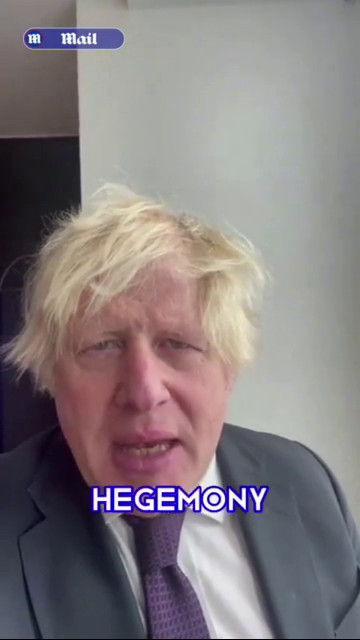
    29. “Ukraine war: Ros Atkins on… Putin’s false ‘Nazi’ claims.” BBC, (2022, March 26) https://www.bbc.com/news/av/world-europe-60853404; Five Azovstal defenders were awarded the title of Heroes of Ukraine. Svidomi, (2022, October 3). https://svidomi.in.ua/en/page/five-azovstal-defenders-were-awarded-the-title-of-heroes-of-ukraine. Loyd, Anthony. “‘Nonsense’: Heroes of Mariupol Denied US Weapons Over neo-Nazi Past.” Times, (2024 May 2). https://www.thetimes.com/world/russia-ukraine-war/article/nonsense-heroes-of-mariupol-denied-us-weapons-over-neo-nazi-past-kwnr0r0pw; “Boris Johnson Praises Nazi Azov Battalion,” YouTube. (2024, May 23). https://www.youtube.com/watch?v=_6g7i-4wswk. There was similar systematic and politically motivated whitewashing of the far-right in Ukraine in Wikipedia, especially, after the Russian invasion. A small number of Wikipedia editors systematically whitewashed neo-Nazi and other far-right parties, organizations, and their leaders, such as Azov regiment, Patriot of Ukraine, Svoboda, National Corps, the OUN, the UPA, Stepan Bandera, Roman Shukhevych, etc. They removed or deliberately excluded scholarly studies and other evidence of the extremist ideology and involvement in mass murder of the far-right, such as the Maidan and Odesa massacres, the Holocaust, and the Lviv pogrom in Ukraine and smeared in biographical entries
      scholars and other experts whose studies show such ideology and political violence by the far-right
      in Ukraine. (See, for example, Azov Brigade, https://en.wikipedia.org/wiki/Azov_Brigade; Patriot of
      Ukraine, https://en.wikipedia.org/wiki/Patriot_of_Ukraine; 2014 Odesa clashes, https://en.wikipedia.org/wiki/2014_Odesa_clashes; Far-right politics in Ukraine, https://en.wikipedia.org/wiki/Far-right_politics_in_Ukraine. They included editors who misrepresented the Holocaust in Poland using similar tactics in Wikipedia, which is unreliable but widely accessed source, compared to academic studies (Grabowski, Jan, and Shira Klein. 2023. “Wikipedia’s Intentional Distortion of the History of the Holocaust.” Journal of Holocaust Research 37 (2): 133–90). ↩︎
    30. Katchanovski, Ivan and Alicen Morley. 2012. “Politics of US Television Coverage of Post-Communist Countries.” Problems of Post-Communism, 59 (1), 15-30. ↩︎
    31. Smale, Alison and Andrew E. Kramer. “Ukraine Presses Pro-Russia Militants After Fighting Spreads to a Port City.” New York Times, (2014, May 3). https://www.nytimes.com/2014/05/04/world/europe/ukraine.html; “Ukraine: Investigate Odessa Deaths.” Human Rights Watch. (2014, May 8), https://www.hrw.org/news/2014/05/08/ukraine-investigate-odessa-deaths. [n.b. While the modern spelling of the city in Ukraine is “Odesa”, several instances of the older spelling “Odessa” are still found online.] ↩︎
    32. Ishchenko, Volodymyr. “Denial of the obvious: Far right in Maidan protests and their danger today.” VoxUkraine. (2018, April 16). https://voxukraine.org/en/denial-of-the-obvious-far-right-in-maidan-protests-and-their-danger-today. ↩︎
    33. Cohen, Stephen F. “America’s Collusion with Neo-Nazis.” Nation. (2018, May 2), https://www.thenation.com/article/archive/americas-collusion-with-neo-nazis/. ↩︎
    34. Miller, Christopher. “G7 Letter Takes Aim At Role Of Violent Extremists In Ukrainian Society, Election.” Radio Free Europe/Radio Liberty. (2019, March 22). https://www.rferl.org/a/g7-takes-aim-at-role-of-violent-extremists-in-ukrainian-society-election/29836811.html. ↩︎
    35. Golinkin, Lev. “The Western Media Is Whitewashing the Azov Battalion.” Nation. (2023, June 13). https://www.thenation.com/article/world/azov-battalion-neo-nazi/. ↩︎
    36. “Ukraine 2018 Human Rights Report. State Department.” 2019. https://www.state.gov/wp-content/uploads/2019/03/UKRAINE-2018-HUMAN-RIGHTS-REPORT.pdf. ↩︎
    37. Miller, Christopher. “G7 Letter Takes Aim At Role Of Violent Extremists In Ukrainian Society, Election,” Radio Free Europe/Radio Liberty, (2019, March 22). https://www.rferl.org/a/g7-takes-aim-at-role-of-violent-extremists-in-ukrainian-society-election/29836811.html. ↩︎
    38. See Twitter, (2019, October 16). https://twitter.com/RepMaxRose/status/1184518558392504321?s=20. ↩︎
    39. Cohen, Josh. “Ukraine Should Beware the Azov Extremists.” Moscow Times, (2015, July 20). https://www.themoscowtimes.com/2015/07/20/ukraine-should-beware-the-azov-extremists-a48402. ↩︎
    40. “H.Amdt. 492 – 114th Congress (2015-2016).” (2015, June 11). https://www.congress.gov/amendment/114th-congress/house-amendment/492?q=%7B%22search%22%3A%5B%22azov%22%5D%7D&resultIndex=1. ↩︎
    41. Birnbaum, Michael, Siobhán O’Grady, and Alex Horton. “U.S. Lifts Weapons Ban on Ukrainian Military Unit.” Washington Post, (2024, June 12). https://www.washingtonpost.com/national-security/2024/06/10/azov-brigade-ukraine-us-weapons/. ↩︎
    42. Congressional Record (2024, June 27). https://www.congress.gov/118/crec/2024/06/27/170/108/CREC-2024-06-27.pdf . ↩︎
    43. Sanger, David E. “Jihadists Receiving Most Arms Sent to Syrian Rebels.” The New York Times, (2012. October 15). https://www.nytimes.com/2012/10/15/world/middleeast/jihadists-receiving-most-arms-sent-to-syrian-rebels.html. Mahmood, Mona, and Ian Black. “Free Syrian Army Rebels Defect to Islamist Group Jabhat Al-Nusra.” Guardian, (2018, April 14). https://www.theguardian.com/world/2013/may/08/free-syrian-army-rebels-defect-islamist-group; Abrahms, Max. “Syria’s Extremist Opposition: How Western Media Have Whitewashed the Rebels’ Record.” Foreign Affairs (2017, October 30); Doran, Michael, William McCants, and Clint Watts. “The Good and Bad of Ahrar al-Sham.” Foreign Affairs (2014, January 23). ↩︎
    44. Bhatia, Michael. 2008. “Fighting words: naming terrorists, bandits, rebels and other violent actors, ”Third World Quarterly, 26 (1), 5-22; Schmid, Alex P. 2012. “The revised academic consensus definition of terrorism.” Perspectives on Terrorism, 6 (2), 158-159; Ganor, Boaz. 2002. “Defining terrorism: Is one man’s terrorist another man’s freedom fighter?” Police Practice and Research, 3 (4), 287-304. ↩︎
    45. Although the focus of this analysis is on the portrayal of the far-right in Ukraine, a related narrative dispute has been over whether to characterise the conflict in the Donbas as a civil war. The Ukrainian and Western governments and the media described the war in Donbas as an interstate war between Russia and Ukraine or a hybrid war while denying that there was a civil war. By contrast, the Russian and Donbas separatist governments and associated media denied any Russian military involvement in the war and called it a purely civil war. The majority of scholars and datasets such as the Correlates of War Project and the Uppsala Conflict Data Program classified it as a civil war or an intrastate conflict, while also noting the Russian military interventions in Donbas prior to the Russian invasion of Ukraine in See, for example, Arel and Driscoll 2023; Black and Johns 2016; Hahn 2018; Katchanovski 2016a; Kudelia 2016. ↩︎
    46. Abrahms, Max. “What terrorists really want: Terrorist motives and counterterrorism strategy.” International Security 32, no. 4 (2008): 78-105. ↩︎
    47. Rossolinski-Liebe, Grzegorz. 2014. Stepan Bandera: The life and afterlife of a Ukrainian nationalist. Stuttgart: Ibidem. ↩︎
    48. Yeomans, Rory, (Ed.). 2016. The Utopia of Terror: Life and Death in Wartime Croatia. Rochester: University of Rochester Press; Katchanovski, Ivan. 2015. “Terrorists or National Heroes? Politics and
      Perceptions of the OUN and the UPA in Ukraine.” Communist and Post-Communist Studies, 48 (2-3), 217-228. ↩︎
    49. Rudling, Per Anders. 2011. “The OUN, the UPA and the Holocaust. A Study in the Manufacturing of Historical Myths.” Carl Beck Papers in Russian and East European Studies, #2107, Center for Russian and East European Studies, Pittsburgh University. ↩︎
    50. See Katchanovski, 2016a; Katchanovski, Ivan. 2006. Cleft Countries: Regional Political Divisions and Cultures in Post-Soviet Ukraine and Moldova. Stuttgart: Ibidem. ↩︎
    51. See Katchanovski, Ivan. (2015, March 28). “An Interview with Al Jazeera Concerning Far Right Militia and Paramilitary Battalions and Other Formations in Ukraine.” https://www.academia.edu/11815497/An_Interview_with_Al_Jazeera_Concerning_Far_Right_Militia_and_Paramilitary_Battalions_and_Other_Formations_in_Ukraine. ↩︎
    52. See, for example, Dorell, Oren. (2015, March 10). “Volunteer Ukrainian unit includes Nazis.” USA TODAY. https://www.usatoday.com/story/news/world/2015/03/10/ukraine-azov-brigade-nazis-abuses-separatists/24664937; Katchanovski, “An Interview.” ↩︎
    53. See Khalel, Sheren and Matthew Vickery. (2015, April 15). “‘Christian Taliban’s’ crusade on Ukraine’s front lines.” Al Jazeera. https://www.aljazeera.com/indepth/features/2015/04/taliban-crusade-ukraine-front-lines-150414125522623.html ↩︎
    54. “V kamere eks-boitsov Tornado nashli nozhi i flag so svastikoi: foto.” (2018, August 14). Liga. https://news.liga.net/incidents/news/v-kamere-eks-boytsov-tornado-nashli-noji-i-flag-so-svastikoy-foto. ↩︎
    55. “Dobrovolchyi Ukrainskyi Korpus “Pravyi Sektor.””(ND). Pravyi Sektor, https://pravyysektor.info/dobrovolchyy-ukrayinskyy-korpus-pravyy-sektor ↩︎
    56. Estimated from “V Ukraini na obliku maizhe 370 tysiach uchansykiv boiovykh dii.” (2019, September
      18). Ukrinform. https://www.ukrinform.ua/rubric-ato/2782328-v-ukraini-majze-370-tisac-ucasnikiv-bojovih-dij.html ↩︎
    57. See, for example, “Partiia Svoboda stvoriue vlasnyi battalion.” (2014, June 13). Korrespondent.net. https://ua.korrespondent.net/ukraine/politics/3377514-partiia-svoboda-stvoruiie-vlasnyi-batalion. ↩︎
    58. “Ukhvala,” Pechersk District Court of Kyiv City, February 12, 2016. http://reyestr.court.gov.ua/Review/55966993. ↩︎
    59. “Dmytro Yarosh: “Pershyi nastupalnyi bіi vіiny vіdbuvsia 20 kvіtnia 2014-ho – Dobrovol’tsі atakuvaly
      blokpost pіd Slovianskom.” (2016, April 22). Censor.net. http://censor.net.ua/resonance/385673/dmitro_yarosh_pershiyi_nastupalniyi_byi_vyini_vdbuvsya_20_kvtnya_2014go_dobrovolts_atakuvali_blokpost. ↩︎
    60. Ibid. ↩︎
    61. Dzhyndzia, Andrii. “Batalion AZOV zatrymav terorysta Tiulenia.” (2014, May 12). https://www.youtube.com/watch?v=681hBNGeVUM. ↩︎
    62. “On June 13, 2014, Mariupol was liberated from the terrorist DPR. Liberation from the Russian occupation is next.” Ukrainian Institute of National Memory, 13 June 2022, https://uinp.gov.ua/pres-centr/novyny/13-chervnya-2014-mariupol-zvilnyly-vid-terorystychnoyi-dnr-na-cherzi-zvilnennya-vid-rosiyskoyi-okupaciyi. ↩︎
    63. See, for example, “Krasnoarmeisk. Rasstrel mirnykh zhitelei 11.05.2014.” (2014, May 11). https://www.youtube.com/watch?v=W4joK6D_-Wc. ↩︎
    64. Marples, David R. “Russia’s perceptions of Ukraine: Euromaidan and historical conflicts.” In Ukraine in Crisis, pp. 4-17. Routledge, 2017. ↩︎
    65. The war was most intense and violent in 2014 and 2015. The violence declined significantly following
      the Minsk Agreements in 2015. ↩︎
    66. See, for example, Kuzmenko, Oleksiy. “The Azov Regiment has not depoliticized.” UkraineAlert, (2020, March 19). https://www.atlanticcouncil.org/blogs/ukrainealert/the-azov-regiment-has-not-depoliticized/. ↩︎
    67. Stern, David. 2014. “Ukraine Vote Could Push the Country into Chaos.” BBC News, (2014, October 24). https://www.bbc.com/news/world-europe-29755967. ↩︎
    68. Cohen, Josh. 2023. “Ukraine Should Beware the Azov Extremists.” The Moscow Times, (2023, August 26). https://www.themoscowtimes.com/2015/07/20/ukraine-should-beware-the-azov-extremists-a48402. ↩︎
    69. See Golinkin ↩︎
    70. “Ukraine’s Advances Near Bakhmut Expose Rifts in Russian Forces.” New York Times, (2023 May 17). https://www.nytimes.com/2023/05/12/world/europe/ukraine-bakhmut-russia.html. ↩︎
    71. “Andrii Biletsky: Rosiiany sterly svoi kadrovi chastyny v Ukrayini v nul.” Ukrainska Pravda, (2023, October 17). https://www.pravda.com.ua/articles/2023/10/17/7424397. ↩︎
    72. Many of them were hidden or scrapped after the Russian invasion. See, for example, Twitter (2024,
      June 13), https://x.com/mossrobeson__/status/1801415521608327584. ↩︎
    73. Umland, Andreas. 2019. “Irregular Militias and Radical Nationalism in PostEuromaydan Ukraine: The Prehistory and Emergence of the “Azov” Battalion in 2014.” Terrorism and Political Violence, 31 (1),
      105-131. ↩︎
    74. Stern, David. “Ukraine underplays role of far right in conflict.” BBC News (2014, December 13). https://www.bbc.com/news/world-europe-30414955. ↩︎
    75. Lokshina, Tanya. “‘You Don’t Exist.’” Human Rights Watch, (2016, July 21). https://www.hrw.org/report/2016/07/21/you-dont-exist/arbitrary-detentions-enforced-disappearances-and-torture-eastern. ↩︎
    76. Mueller, John E. 2006. Overblown: How politicians and the terrorism industry inflate national security threats, and why we believe them. New York: Simon and Schuster; Abrahms, Max. 2006. “Why terrorism does not work.” International Security, 31 (2), 42-78. ↩︎
    77. Kydd, Andrew, and Barbara F. Walter. 2002. “Sabotaging the peace: The politics of extremist violence.” International Organization, 56 (2), 263-296. ↩︎
    78. “Right Sector Challenges Kyiv in Western Ukraine – Jamestown.” 2016. Jamestown. September 20, https://jamestown.org/program/right-sector-challenges-kyiv-in-western-ukraine/. ↩︎
    79. Hranatu kynuv “svobodivets”“ iz batalionu “Sich” – Avakov. Ukrainska pravda, (2015, August 31). https://www.pravda.com.ua/news/2015/08/31/7079662; “Right-Wing Party Members Charged with Ukraine Clashes.” Voice of America, (2015, September 4). https://www.voanews.com/a/ap-ukraine-right-wing-party-leader-questioned-in-kyiv/2946747.html. ↩︎
    80. See Reiter, Andrew G. 2015. “Does spoiling work? Assessing the impact of spoilers on civil war peace agreements.” Civil Wars, 17 (1), 89-111. ↩︎
    81. “Zelenskyy: Ia ne loh kakoi-to.” https://www.youtube.com/watch?v=3zNLrZXTZsA. ↩︎
    82. “Ukrainian Far-Right Groups, Veterans Protest President’s Peace Plan.” 2019. PBS, (2019, October
      14). https://www.pbs.org/newshour/world/ukrainian-far-right-groups-veterans-protest-presidents-peace-plan. ↩︎
    83. “Yarosh: esli Zelenskyy predast Ukrainu — poteriaet ne dolzhnost, a zhizn.” Obozrevatel, (2019, May 27). https://incident.obozrevatel.com/crime/dmitrij-yarosh-esli-zelenskij-predast-ukrainu-poteryaet-ne-dolzhnost-a-zhizn.htm. ↩︎
    84. “Henshtab ne ziznayetsia pro rol Yarosha. Toj proinspektuvav svoiu dobrovolchu armiiu.” Ukrainska pravda. (2021, December 13). https://www.pravda.com.ua/news/2021/12/13/7317209. ↩︎
    85. See, for example, (2021 March 20), https://t.me/stranaua/12696. ↩︎
    86. “Ukrainegate Impeachment Saga Worsens US-Russia Cold War.” (2019, November 13). https://www.youtube.com/watch?v=bpASSqz1hGc. ↩︎
    87. Sokol, Sam. “Kiev Regional Police Head Accused of Neo-Nazi Ties.” The Jerusalem Post, (2014, November 12). https://www.jpost.com/diaspora/kiev-regional-police-head-accused-of-neo-nazi-ties-381559; “Troyana zrobyly zastupnykom Avakova,” UN, (2017, February 8). https://ukranews.com/ua/news/477875-troyana-zrobyly-zastupnykom-avakova. ↩︎
    88. “Premier Goncharuk blagodarit uchastnikov kontserta ultrapravoi gruppy “Sokira Peruna.”“ (2019, October 14). Strana. https://www.youtube.com/watch?v=D3WuiYje3eA. ↩︎
    89. “Pro Russian Journalist Gunned Down in Kiev.” NBC News, (2015, April 16). https://www.nbcnews.com/storyline/ukraine-crisis/pro-russian-journalist-oles-buzina-shot-dead-kiev-masked-gunmen-n342661. ↩︎
    90. “Accountability for killings in Ukraine from January 2014 to May 2016.” Office of the United Nations High Commissioner for Human Rights. 2016. https://www.ohchr.org/sites/default/files/Documents/Countries/UA/OHCHRThematicReportUkraineJan2014-May2016_EN.pdf ↩︎
    91. “Report of the International Advisory Panel on its Review of the Investigations into the Events in Odesa on 2 May 2014.” (2015, November 4). Council of Europe. https://rm.coe.int/CoERMPublicCommonSearchServices/DisplayDCTMContent?documentId=090000168048610f ↩︎
    92. “Report.” ↩︎
    93. Twitter, (2023, July 26). https://twitter.com/i/status/1684280903508303872. ↩︎
    94. “Zvit tymchasovoi slidchoi komisii Verkhovnoi Rady Ukrainy z pytan rozsliduvannia faktiv zahybeli hromadian u mistakh Odesi, Nariupoli, a takozh inshykh mistakh Donetskoi ta Luhanskoi oblastei Ukrainy.” (2014, September 5). Verkhovna Rada Ukrainy. http://w1.c1.rada.gov.ua/pls/zweb2/webproc4_1?pf3511=52134 ↩︎
    95. ““Chto takoe operativnyi plan “Volna”? Chast 3.” (2014, August 3). Gruppa 2 Maia. https://2maygroup.blogspot.com/2014/08/blog-post.html. ↩︎
    96. “Zvit.” ↩︎
    97. “Zvit.” ↩︎
    98. “Ukraine’s SBI opens case against ex-Parliament Speaker over Odesa events of May 2, 2014.” (2019,
      September 23). UNIAN. https://www.unian.info/society/10695003-ukraine-s-sbi-opens-case-against-ex-parliament-speaker-over-odesa-events-of-may-2-2014.html. ↩︎
    99. Stephan, Anna. (2018, May 4). “Ploshchad Razbityh Nadezhd (polnaia versiia).” https://www.youtube.com/watch?v=C-7xjDxFSQc. ↩︎
    100. Ibid and Katchanovski (2020; 2024). ↩︎
    101. “Zasidannia vid 14.12.2021 u spravi pro «Vbyvstva lyudei 20.02.2014 pid chas Evromaidanu».” https://youtu.be/iwaXGtd1Pe8?t=6026. ↩︎
    102. “7 Years with No Answers. What Is Lacking in the Investigations of the Events in Odesa on 2 May 2014?” United Nations Ukraine, (2022, 30 April 20). https://ukraine.un.org/en/126054-7-years-no-answers-what-lacking-investigations-events-odesa-2-may-2014. ↩︎
    103. Zvit. ↩︎
    104. “Euro;” Katchanovski (2020). ↩︎
    105. “15.26;15.28 Odessa 2 Maia 2014 goda.” (2015, May 8). Gruppa 2 Maia. https://www.youtube.com/watch?v=gicl3WFn6fw ↩︎
    106. Katchanovski, Ivan. (May 6, 2015) “A new analysis of the massacre events in Odesa Ukraine of May 2. New Cold War. https://newcoldwar.org/a-new-analysis-of-the-massacre-events-in-odessa-ukraine-of-may-2-2014/; ↩︎
    107. See, for example, “1523 Napadenie 2 Maia 2014, Odessa.” (2015, May 10). Gruppa 2 Maia. https://www.youtube.com/watch?v=Vj_NehDtSrA; “Khronologiya sobytiy v Odesse 2 Maia 2014 goda (ch.1).” (2015, May 15). Gruppa 2 Maia. http://2mayodessa.org/. ↩︎
    108. “Odessa strelok s AK-47 na Deribasovskoi.” (2014, May 4). Poslednie sobytiya. https://www.youtube.com/watch?v=LWI6s89srvw. ↩︎
    109. See “Khronologiya.” ↩︎
    110. ““SOROK VOSEM.” Zakliucheniia sudebno-medicinskoi ekspertizy po faktam gibeli liudei v hode Odesskoi boini 2 maia 2014 g.” (ND). IGCP. https://vk.com/doc4683615_387082531?hash=50ef6fd55f4f5a7c71&dl=1ad9e60aff875593d8. ↩︎
    111. Tkachov, Yuriy. (2017, April 27). “Tragedia 2 Maia v Odesse. Rekonstruktsiia.” Strana. https://strana.ua/articles/analysis/67438-tragediya-2-maya-v-voprosah-i-otvetah.html; Odessa strelok. ↩︎
    112. “Odessa: tri goda. Film Arkadiia Mamontova.” Spetsialnyi korrespondent ot 24.04.17. (2017, April
      24). https://www.youtube.com/watch?v=yayhe4wXcWQ. ↩︎
    113. “2 Maia 2014 goda. Odessa.” (2016, January 15). Vladimir Sarkisian. https://www.youtube.com/watch?v=NZNQQ9vXclQ. ↩︎
    114. “SOROK.” ↩︎
    115. “SOROK.” ↩︎
    116. “Odessa 2 Maia.” (2014, May 9). Svidetelstvo ochevidtsa /1612. Informatsionnyi kanal “16/12.” https://www.youtube.com/watch?v=0ZdT1mspt70. ↩︎
    117. “Avakov: u spravi “2 travnia v Odesi figure chlen “Pravoho sektora.”“ (2015, December 18). Ukrainska pravda. https://www.pravda.com.ua/news/2015/12/18/7092946. ↩︎
    118. “Deputat Mosiichuk zastavliaet sudiiu Primorskogo suda Odessy Poprevicha vziat samootvod.” (2015, August 4). Ivan Ivanov. https://www.youtube.com/watch?v=ueHHestJUgk. ↩︎
    119. “Igor Bolianskii zvonit Dmitriiu Gumeniuku i daet prikaz “zachistit” Kulikovo pole.” (2014, December 2). Sergei Rulev. https://www.youtube.com/watch?v=tern1-ro9YU. ↩︎
    120. “Odessa marsh za edinstvo 02.05.2014.” (2014, May 2). sergiydibrov. http://bambuser.com/v/4585430; “19 49.” (2015, July 16). Gruppa 2 Maia. https://www.youtube.com/watch?v=ZT-e_QGhHNI; “19 50.” (2015, July 16). Gruppa 2 Maia. https://www.youtube.com/watch?v=1dIqF4C1E8A; “Ukraine: Masks of the Revolution.” (2016, February 16). Java Films PRO. https://vimeo.com/ondemand/masksofukrainepl. ↩︎
    121. Olearchyk, Roman. 2014. “Kiev Hands Odessa Post to New Governor in Effort to End Uprising.” Financial
      Times, (2014 May 6). https://www.ft.com/content/edc91232-d535-11e3-9bca-00144feabdc0. ↩︎
    122. ““Gruppa 2 Maia” opublikovala otchet o pozhare v dome profsoyuzov v Odesse.” (2015, March 24). Korrespondent.net. https://korrespondent.net/ukraine/3495145-hruppa-2-maia-opublykovala-otchet-o-pozhare-v-dome-profsouizov-v-odesse; See also “Avtomobil dlia “Azovu” prydbaiut za hroshi Ihora Palytsi.” (2014, October 23). Volynski novyny. https://www.volynnews.com/news/society/avtomobil-dlia-azovu-prydbaiut-za-koshty-ihoria-palytsi. ↩︎
    123. “Avtomobili.” ↩︎
    124. Katchanovski, Ivan. 2020. ‘The far right, the Euromaidan, and the Maidan massacre in Ukraine.’ Journal of Labor and Society, 23 (1), 5-29. ↩︎
    125. See, for example, “Aktsia pid KS.” Ukrainska pravda, (2020, October 30) https://www.pravda.com.ua/news/2020/10/30/7271758. ↩︎
    126. “SOROK”. ↩︎
    127. Abrahms, Max, and Justin Conrad. “The strategic logic of credit claiming: A new theory for anonymous terrorist attacks.” Security Studies 26, no. 2 (2017): 279-304. ↩︎
    128. Ibid. ↩︎
    129. “Bіitsі “Pravoho sektora” ta aktyvіsty Odesy vіdbyly napad prorosіiskykh naimantsіv.” (2014, May 2). Pravyi sektor. http://old.pravyysektor.info/news/bijtsi-pravoho-sektora-ta-aktyvisty-odesy-vidbyly-napad-prorosijskyh-najmantsiv/. ↩︎
    130. “Siohodni v Odesi vidbulysia kryvavi boi za Ukrainu.” (2014, May 2). Sotsial-Natsionalna Assambleia. http://snaua.info/sogodni-v-odesi-vidbulisya-krivavi-boyi-za-ukrayinu/. ↩︎
    131. “Sud opravdal prorossiiskikh uchastnikov odesskoi tragedii 2 maia, no ikh sobiraiutsia snova zaderzhat.” (2017, September 18). Dumskaya. http://dumskaya.net/news/sud-prigovor-077120. ↩︎
    132. See “Report.” ↩︎
    133. “Report,” 38. ↩︎
    134. “Strana” uznala familiyu kuratora radikala Sternenko iz SBU.” Strana, (2019, May 24). https://strana.ua/news/202834-stala-izvestna-familija-sotrudnika-sbu-kotoryj-kuriruet-radikalov-odessy.html. ↩︎
    135. “Natsionalista Sternenko, zarezavshego cheloveka v Odesse, priznali poterpevshim.” Strana, (2020, May 18). https://strana.ua/news/267850-sbu-priznala-sternenko-poterpevshim-nesmotrja-na-smet-ivana-kuznetsova.html. ↩︎
    136. “Clash.” ↩︎
    137. Schmid, Alex. “Terrorism-the definitional problem.” Case W. Res. J. Int’l L. 36 (2004): 375; Schmid, Alex P. “The definition of terrorism.” In The Routledge Handbook of Terrorism Research, pp. 39-157. Routledge, 2011; Schmid, Alex P. “Discussion 1-Revisiting the wicked problem of defining terrorism.” Terrorism: Its Past, Present & Future Study A Special Issue to Commemorate CSTPV at 25 (2020): 3. ↩︎
  • [Sharing] Meet Centuria, Ukraine’s Western-trained neo-Nazi army – Kit Klarenberg, The Grayzone

    A uniquely Ukrainian strain of Neo-Nazism is spreading throughout Europe, which openly advocates violence against minorities while seeking new recruits. With Kiev’s army collapsing and a narrative of Western betrayal gaining currency, the horror inflicted on residents of Donbas for a decade could very soon be coming to a city near you

    Centuria, an ultra-violent Ukrainian Neo-Nazi faction, has cemented itself in six cities across Germany, and is seeking to expand its local presence. According to Junge Welt, a Berlin-based Marxist daily, the Nazi organization’s growth has been “unhindered by local security services.” 

    Junge Welt traces Centuria’s origins to an August 2020 Neo-Nazi summit “at the edge of a forest near Kiev.” There, an ultranationalist named Igor “Tcherkas” Mikhailenko demanded the “hundreds of mostly masked vigilante fighters present,” who were members Kiev’s fascistic National Militia, “make sacrifices for the idea of ‘Greater Ukraine.’” As the former head of the Neo-Nazi Patriot of Ukraine’s Kharkiv division, and commander of the state sponsored Azov Battalion from 2014 to 2015, Mikhailenko has professed a desire to “destroy everything anti-Ukrainian.”

    Junge Welt reports that since 2017, the National Militia “had been practicing brutal vigilante justice” throughout Ukraine, including “tyrannizing the LGBTQ scene.” Centuria was subsequently blamed for a terrifying November 2021 attack on a gay nightclub in Kiev, in which its operatives assaulted revelers with truncheons and pepper spray.

    Now the same Neo-Nazi sect “has an offshoot in Germany,” Junge Welt revealed. On August 24 2023, the 32nd anniversary of Ukraine’s independence, Centuria convened a “nationalist rally” in the central city of Magdeburg, “unmolested by Antifa and critical media reporting.”

    Participants proudly posed with the flag of the Organization of Ukrainian Nationalists (OUN) founded by World War II-era Nazi collaborator Stepan Bandera. Centuria boasted at the time on Telegram, “although Ukrainian youth are not in their homeland, they are starting to unite.” Meanwhile, they threatened the “enemies” of their country with “hellish storm,” pledging that “Ukrainian emigrants” would not “forget their national identity for a few hundred euros.”

    Junge Welt reports that Centuria “is currently raising funds for its parent organization’s combat unit,” which is commanded by Andriy Biletsky – the Azov Battalion founder who infamously stated in 2014 that the Ukrainian nation’s mission was to “lead the white races of the world in a final crusade… against Semite-led Untermenschen.” At home, Centuria’s members express similar attitudes towards Muslims, Africans, and gays, whom they refer to, respectively, as the “German Caliphate,” “black rapists,” and “pedophiles.”

    Now, the group’s members are working hard to pass their ideological vision down to future racists across the continent. “We are creating a new generation of heroes!” Centuria’s Telegram channel boasts. Accordingly, the neo-Nazi group has been arranging hiking trips to Germany’s Harz mountains with a Ukrainian nationalist scout association called Plast. This outfit opened chapters across the Western world beginning in the 1950s, in response to the Soviet Union’s hounding of fascists and nationalists. Besides receiving ideological indoctrination, Plast’s youthful members may have the opportunity to improve their physical fitness and receive military training. As Centuria ominously declares on Telegram, “free people have weapons.”

    As Washington gradually backs away from its sponsorship of Ukraine’s war with Russia, it has begun ceding responsibility for the military campaign’s management – and likely failure – to Berlin. If US arms shipments continue to dwindle, Germany will become Kiev’s chief supplier of weapons. And the Germans may find that saying “no” to Ukraine could result in some nasty surprises.

    Unlike the US, Germany does not enjoy an ocean-length buffer between itself and the fascistic proxy warriors it sponsors in Ukraine. After Ukraine’s much-hyped counteroffensive finally collapsed in late 2023, its president, Volodymyr Zelensky, grumbled a veiled threat during an interview with the Economist: “There is no way of predicting how the millions of Ukrainian refugees in European countries would react to their country being abandoned.”

    While Ukrainians have generally “behaved well” and are “very grateful” to those who sheltered them, it would not be a “good story” for Europe if it were to “drive these people into a corner,” Zelensky remarked to the outlet.

    To understand how more radical elements of a spent proxy force could turn their guns on the Western governments that armed them, one need only look at the events of September 11, 2001.

    A secret Western-backed Nazi network

    Centuria is seemingly not the only Azov-related Ukrainian movement seeking to infiltrate Europe. An apparently separate but identically named Centuria is doing the same, with help from an entrenched structure of elite European support. 

    In September 2021, George Washington University’s Institute for European, Russian and Eurasian Studies (IERES) published a detailed and deeply unsettling report which documents how a once-secret order called Centuria was nurtured by a “self-described order of ‘European traditionalist’ military officers that has the stated goals of reshaping the country’s military along right-wing ideological lines and defending the ‘cultural and ethnic identity’ of European peoples against ‘Brussels’ politicos and bureaucrats.’”

    IERES reported that Centuria’s military wing began training in 2018 in Ukraine’s Hetman Petro Sahaidachny National Army Academy (NAA), Kiev’s “premier military education institution and a major hub for Western military assistance to the country.” 

    The paper revealed that “as recently as April 2021, [Centuria] claimed that since its launch, members have participated in joint military exercises with France, the UK, Canada, the US, Germany, and Poland.” 

    Indeed, many of the neo-Nazi group’s members have drilled at the de facto NATO base in Yavoriv, just a few kilometers east of the Polish border.

    What’s more, “the group claims that its members serve as officers in several units of Ukraine’s military. Since at least 2019, Centuria has… [called] on ideologically aligned members of the AFU to seek transfer to specific units where the group’s members serve. To attract new members, the group – via its Telegram channel, which has over 1,200 followers and a dedicated mobilization bot – continues to tout its alleged role in the AFU and access to Western training, military, and exchange programs.”

    Every Western government the IERES researchers approached claimed not to tolerate neo-Nazis in their militaries, insisting they “trusted the Ukrainian government to select and identify the right candidates” for their training programs. But Ukraine’s Hetman Petro Sahaidachny National Army Academy (NAA) has explicitly declared it carries out no such screenings, while also denying Centuria operates within its headquarters.

    After the report’s author reached out to Centuria and the NAA for comment about the training of neo-Nazis, operatives of the extremist movement began purging their online footprints, and have concealed their real-world activities ever since.

    Western media outlets have almost completely ignored the IERES report, save for a single article in the Jerusalem Post. The silence around the issue is all the more unusual given the credentials of its author, a Washington DC-based Ukrainian citizen whose work has been published by US government outlet Voice of America, and the US and UK-government funded “open source” investigative outfit Bellingcat.

    Among Western officials, only the Canadian Armed Forces have commented on the report’s meticulously-documented findings, preposterously claiming that photos posted to Facebook by Centuria members had been “doctored” to advance “Russian disinformation.”

    Such disingenuity is not surprising given the Canadian military’s well-documented history of providing training to hardened Ukrainian fascists — and its refusal to disavow Ukrainian Nazis

    To this day, the leader of the country’s military, Gen. Wayne Eyre, continues to refuse to apologize for giving a standing ovation to Yaroslav Hunka, a WWII Nazi collaborator honored by Canada’s parliament.

    According to researchers, Centuria fighters within Ukraine have spent at least the last five years attempting to indoctrinate their high-achieving comrades into Neo-Nazism. The IERES report notes that Centuria “has been able to proselytize Ukraine’s future military elite inside the NAA.”

    Portrait of a British-trained Neo-Nazi

    Underlining the extent of the neo-Nazi penetration of Western military apparatuses, NAA cadet Kyrylo Dubrovskyi, attended an 11-month Officer Training Course at Britain’s esteemed Sandhurst Royal Military Academy in 2020. Ukraine’s Ministry of Foreign Affairs celebrated his graduation while the NAA published a 12-minute video profile of the new graduate’s path to military leadership. IERES noted that Dubrovskyi “showed very keen interest in Centuria matters” while attending the Academy

    Dubrovskyi appears to have narrated a Centuria promotional video circulated on Telegram in May 2020, in which the group’s members are shown marching in Lviv, attending an NAA event, and firing their weapons. Dubrovskyi can be heard intoning, “our officers are raising the new army of Ukraine… We are the Centuria. We are everywhere… defend your territories, your traditions till the last drop of blood.”

    A month before, Centuria posted an interview with an unnamed “cadet of Her Majesty’s Armed forces,” a description that could only match one individual: Dubrovskyi. He made clear he preferred training in Ukraine, as British training for military officers “put less emphasis on theory.” During this time, “Dubrovskyi enjoyed access to foreign cadets who visited the Academy,” and “on several occasions escorted foreign delegations that visited the Academy,” including cadets from the US Air Force and the French military.

    It is unclear how much “theory” Dubrovskyi injected into the daily routines of Western soldiers with whom he crossed paths while at Sandhurst. IERES concluded that “Dubrovskyi and Centuria leveraged his status as a Sandhurst cadet” to promote the group and its ideology. On the “about” section of his personal YouTube channel, Dubrovskyi describes himself as “a cadet of the Royal Academy of Great Britain.” There, he posted multiple videos about his experiences at the academy, and at least one message expressing a desire to join the neo-Nazi Azov Regiment.

    On Telegram in December 2020, Centuria made clear that infiltrating the Ukrainian military’s highest echelons was but the first step in a much wider ideological blitzkrieg: “Centuria is shaping a first-of-its-kind military elite whose goal is to attain the highest ranks inside the Armed Forces in order to become an authoritative core able to hold significant influence.” After consolidating its hold on the military, the group plans to penetrate the ranks of “Ukraine’s political elite,” in order to “carry out societal changes.”

    Editor’s note: This article has been clarified to explain that Centuria exists as two separate organizations, both with origins in the neo-Nazi Azov movement [end]

    The original article

    Related

    The footprint of the Ukrainian Nazism in the West

    interactions between Ukrainian Nazi organizations and Western supremacist militants

    Nazism in Ukraine

    its roots before WW2, its collaboration with Nazi Germany, its legacy in modern Ukraine, how NATO has continually supported Nazism in Ukraine

    L’engagement français dans les rangs ukrainiens

    in French, an alphabetical obituary chronicle of the French involvement in the Atlanticist ranks in Ukraine, what servile journalists will not tell you

  • [Sharing] Terrorgram : les réseaux terroristes d’extrême droite veulent mener un « Djihad blanc » – Laure Coromines, L’ADN

    Sur Telegram et Signal, ils s’inspirent des méthodes de Daech pour enclencher une guerre civile et faire advenir une société suprémaciste

    « Le canal privé est prêt. Pour les vérifications, voilà l’exemple de candidature à m’envoyer. » Pour intégrer le canal en question, il faudra spécifier son âge, sa région, et envoyer une photo de sa main tenant un papier où est écrit « les Aryens français. »

    Voilà quelques-unes des démarches à suivre pour intégrer l’une des 5 chaînes Telegram où se retrouvent quelque 4 500 néonazis français très remontés. Leur objectif : faire advenir une société organisée en fonction de la race. Depuis plusieurs années, le reporter indépendant Ricardo Parreira infiltre, cartographie et étudie l’extrême droite extraparlementaire. Dans Reflets, journal d’investigation en ligne, il livre les résultats d’une glaçante enquête sur l’essor du Terrorgram : les messageries cryptées où l’on discute en toute décontraction ventes d’armes, attentats et nettoyage ethnique. Surveillées par la DGSI, ces chaînes ouvertement terroristes nourrissent un agenda bien précis : contrecarrer le « déclin civilisationnel » et imposer une société dominée par les Blancs

    https://twitter.com/ParreirRicardo/status/1808096045609398453

    Les « boucles brunes » de Telegram

    « Les terroristes suprémacistes français sont en roue libre depuis la dissolution de l’Assemblée. Avec les résultats du premier tour des législatives, cela part dans tous les sens, et sur Telegram l’obsession d’une guerre civile est de plus en plus palpable », affirme Ricardo Parreira dans une interview donnée à L’ADN. En ligne, la mouvance autoproclamée Terrorgram (néologisme composé de terror, terreur en anglais + Telegram) appelle à l’ « autodéfense nationaliste ». Parmi les chaînes concernées, celles des groupes FRDeter et Division Aryenne Française. Là, le ton est très vite donné : éloge de la « race blanche », appels à « casser du bougnoule » et systématiser les ratonnades, incitations aux assassinats d’élus, fichage ou doxxing de personnalités de gauche, et fantasmes génocidaires. Les formules antisémites, suprémacistes et néonazies abondent. Parmi eux : les slogans américains « white boy summer » (l’été du garçon blanc), « white rural rage » (haine rurale blanche), ou encore la devise allemande invitant à la déportation « Ausländer raus » (dehors les étrangers).

    À coups de montages photos, les idoles de ces internautes sont érigées en mèmes et en saints : le terroriste norvégien Anders Behring Breivik responsable de la tuerie de l’île d’Utoya au large d’Oslo de 2011 et l’australien Brenton Tarrant coupable du massacre de Christchurch en Nouvelle-Zélande en 2019. Dans leur manifeste rédigé en ligne, tous deux affirment vouloir lutter contre le « grand remplacement », théorie complotiste élaborée en 2011 par l’essayiste français Renaud Camus

    Capture d’écran issue du Terrogram français récupéré par Ricardo Parreira

    « Il s’agit pour eux de déployer en Europe les techniques militaires et modes opératoires de Daech pour se débarrasser de toutes personnes considérées comme un ennemi : les migrants, les “étrangers”, les LGBTQA+ et les militants de gauche. Leur plan est clairement tracé : mener des actions terroristes de sabotage pour créer des pénuries, générer des pertes financières, stimuler une crise économique et sociale débouchant sur le chaos et l’effondrement de la société pour, ensuite, la reconstruire sous un régime néonazi totalitariste », explique Ricardo Parreira à L’ADN. Dans sa série d’enquêtes publiée sur Politis, la chef de rubrique Nadia Sweeny analyse plusieurs occurrences devenues emblématiques de la mouvance française. Tout d’abord, le cas de Nicolas N., condamné en 2021 à 9 ans de prison pour association de malfaiteurs terroriste. En 2015, il écrit sur Facebook : « Le terrorisme du style Daech : il ne nous reste que ça. (…) En prenant certaines villes moyennes, l’économie de l’État va s’écrouler. Tu laisses faire le travail.  (…) Si t’as plusieurs villes, ça bougera : c’est ce qu’ont fait les jihadistes en Irak. » Ensuite, le projet WaffenKraft, mené en 2018 par une cellule terroriste impliquant un jeune gendarme adjoint volontaire et mêlant références nazies et fascination pour Daech et Al-Qaida

    Les origines de Terrorgram

    C’est aux États-Unis que la sphère Terrorgram se met peu à peu en place à partir de 2017 afin de renforcer les communications entre des groupes accélérationnistes militants. Parmi eux : des groupuscules issus du forum Iron March, plateforme néonazie et néofasciste fondée en 2011 et dissoute 6 ans plus tard ; The Base, organisation paramilitaire accélérationniste formée en 2018 par Rinaldo Nazzaro qui continuerait de diriger l’entité depuis la Russie ; et Atomwaffen Division, réseau terroriste néonazi développé en 2013 et responsable d’une vingtaine d’assassinats dans le monde, et première entité occidentale à revendiquer le droit de mener « un Djihad blanc » et une « charia blanche ».

    « Le mouvement Terrorgram a connu différentes itérations en fonction de la naissance ou du démantèlement des groupes, mais le but était de constituer un réseau informel d’une multitude de chaînes et de canaux Telegram diffusant une esthétique, des manifestes et des écrits communs », explique Mathieu Colin, spécialiste des idéologies extrémistes. Parmi ces écrits : Siege, série d’essais écrits dans les années 80 par le néonazi américain James Mason, l’un des premiers pamphlets faisant l’apologie des tactiques accélérationnistes terroristes, le manifeste The Great Replacement du terroriste Brenton Tarrant baptisé en hommage à l’essayiste français, manuels d’instruction pour mener des attaques, manier des armes ou construire des explosifs. Et bien sûr, toute une ribambelle de propagandes visuelles, présentant les « Saints » de la mouvance. En plus des terroristes Anders Breivik et Brenton Tarrant encensés sur le Terrorgram français, la frange américaine de la sphère met en avant d’autres figures : Adolf Hitler, Timothy McVeigh, terroriste et vétéran de l’armée américaine exécuté en 2001, Dylann Roof, responsable du meurtre de 9 Afro-américains à Charleston en Caroline du Sud, ou encore Oskar Dirlewanger, dirigeant d’une brigade SS qui aurait reçu de la part d’Himmler « carte blanche pour violer, piller, torturer et massacrer » en Europe de l’Est. Lentement mais sûrement, Terrorgram internationalise et essaime son modèle, notamment avec la naissance de la Sonnenkrieg Division au Royaume-Uni, ou de la Feuerkrieg Division dans les Pays baltes, des groupes inspirés par Atomwaffen

    Concrètement, quelles actions violentes sont directement imputables à Terrorgram à ce jour ? Selon Mathieu Colin, Payton Gendron, coupable de l’attentat de Buffalo dans l’État de New York en 2022, aurait été largement inspiré par Brenton Tarrant ; Juraj Krajčík, responsable la même année de l’attentat de Bratislava, citait explicitement Terrorgram. Le projet d’attaque des centrales électriques de Baltimore en 2023 par Brandon Russell, fondateur d’Atomwaffen, aurait lui aussi été influencé par le réseau. « Pour l’instant, l’objectif est certes de radicaliser et d’inspirer des actes de violence, mais surtout de désensibiliser par rapport à l’emploi de la violence ou à ses conséquences. Il ne s’agit pas de radicaliser l’ensemble de la société, mais bien de pousser sa communauté, des gens déjà acquis à la cause, à procéder à des actes violents, par le biais du partage, de l’utilisation ou la glorification de l’ultra-violence, notamment djihadiste, puisque ces réseaux sont en effet fascinés par la force de l’esthétique de Daech ou Al Qaida », analyse le chercheur. « Le forum Iron March ne comptait que quelques milliers de membres, mais leur travail de propagande a ruisselé sur différents groupuscules et organisations d’extrême droite dans le monde », rapporte Ricardo Parreira à L’ADN.

    Avant Terrorgram

    Au Royaume-Uni, le ministère de l’intérieur britannique entendait en avril dernier faire interdire les différents canaux du Terrorgram, désigné comme « un réseau de terroristes néofascistes », indique Le Monde. En France, le ministère de l’Intérieur recensait en mai 2023 une dizaine d’attentats terroristes déjoués depuis 2017 liés à des groupuscules d’extrême droite, faisant de la mouvance la seconde menace après les attentats islamistes. Une situation alarmante qui ne s’est pas produite ex nihilo, et serait notamment alimentée par les discours des partis politiques. Dans son enquête, le reporter précise : « L’extrême droite parlementaire et ses programmes politiques ne reposent sur rien d’autre qu’une traduction sémantique des idéologies défendues par les franges les plus radicales de l’extrême droite depuis plus de cinquante ans. Les termes comme “guerre civilisationnelle”, “submersion migratoire” et, bien évidemment, la “préférence nationale ou le “grand remplacement” sont des exemples frappants du transfert idéologique qui s’opère entre l’extrême droite parlementaire et extraparlementaire » [fin]

    L’article original

    Je déplore un point de détail dans cette série d’articles, imagine ce que peuvent être les impératifs éditoriaux par les temps qui courent.

    Parler de ces nazis, en particulier français, sans jamais évoquer l’Ukraine, est une prouesse.

    Alors que les plus dangereux, les César Aujard, Gwendal Delange et autres, se forment actuellement au combat et armes de guerre dans les rangs atlantistes en Ukraine. Alors que même les captures d’écran de Ricardo Parreira nous montrent l’insigne de la Misanthropic Division, organisation nazie internationale, fondée et basée en Ukraine depuis 2013. Mais sa confrère Laure Coromines trouve moyen de citer la Russie, comme villégiature hypothétique de Rinaldo Nazzaro, alors que les organisations nazies y sont interdites et leurs militants pourchassés par le FSB, comme ils ne le sont pas en France.

    Si les adversaires du fascisme veulent vraiment le combattre, qu’ils commencent par ne pas se voiler la face, ne pas se censurer sur ses mécanismes et sa géographie.

    Articles connexes

    César et Paul, néonazis mondains – Christophe-Cécil Garnier, StreetPress

    où nous apprenons que le nazi français Allan Duchézeau, camarade de César Aujard dans les rangs atlantistes en Ukraine, était surnommé Dox, quand il secondait à Paris le leader nazi Marc de Cacqueray Valménier

    L’engagement français dans les rangs ukrainiens

    chronique alphabétique et nécrologique de l’engagement français dans les rangs atlantistes en Ukraine, ce que les journalistes serviles ne vous raconteront pas

    The footprint of the Ukrainian Nazism in the West

    interactions between Ukrainian Nazi organizations and Western supremacist militants

    Nazism in eastern Europe

    its roots before WW2, its collaboration with Nazi Germany, its legacy in modern Ukraine and Baltic States, how NATO has supported Nazism in eastern Europe

  • [Sharing] U.S. Government Helps Pro-Ukraine Media Spread Propaganda And Silence American Critics – Lee Fang, RealClearInvestigations

    Media outlets organized with substantial funding and direction from the U.S. government have supported censorship, disseminated disinfo, and sought to silence American critics of the war

    Ukraine’s American-backed fight against Russia is being waged not only in the blood-soaked trenches of the Donbas region but also on what military planners call the cognitive battlefield – to win hearts and minds

    A sprawling constellation of media outlets organized with substantial funding and direction from the U.S. government has not just worked to counter Russian propaganda but has supported strong censorship laws and shutdowns of dissident outlets, disseminated disinformation of its own, and sought to silence critics of the war, including many American citizens

    Economist Jeffrey Sachs, commentator Tucker Carlson, journalist Glenn Greenwald, and University of Chicago Professor John Mearsheimer are among the critics on both the left and the right who have been cast as part of a “network of Russian propaganda.”

    But the figures targeted by the Ukrainian watchdog groups are hardly Kremlin agents. They simply have forcefully criticized dominant narratives about the war

    Sachs is a highly respected international development expert who has angered Ukrainian officials over his repeated calls for a diplomatic solution to the current military conflict. Last November, he gave a speech at the United Nations calling for a negotiated peace.

    Mearsheimer has written extensively on international relations and is a skeptic of NATO expansion. He predicted that Western efforts to militarize Ukraine would lead to a Russian invasion.

    Greenwald is a Pulitzer Prize-winning independent journalist who has criticized not just war coverage but media dynamics that suppress voices that run counter to U.S. narratives.

    “What they mean when they demand censorship of ‘pro-Russia propaganda’ is anything that questions the US/EU role in the Ukraine war or who dissents from their narratives,” Greenwald has observed.

    There’s no evidence of Kremlin influence over their viewpoints, but their comments alone are enough for a network of U.S.-backed Ukrainian media groups to tarnish these experts as Russian propagandists

    As Congress debates major new funding to support the Ukrainian war effort, U.S. taxpayer dollars are already flowing to outlets such as the New Voice of Ukraine, VoxUkraine, Detector Media, the Institute of Mass Information, the Public Broadcasting Company of Ukraine and many others. Some of this money has come from the $44.1 billion in civilian-needs foreign aid committed to Ukraine. While the funding is officially billed as an ambitious program to develop high-quality independent news programs; counter malign Russian influence; and modernize Ukraine’s archaic media laws, the new sites in many cases have promoted aggressive messages that stray from traditional journalistic practices to promote the Ukrainian government’s official positions and delegitimize its critics

    VoxUkraine has released highly produced videos attacking the credibility of American opposition voices, including Sachs, Mearsheimer, and Greenwald. Detector Media, one of the most influential media watchdog groups, similarly produces a flow of social media and posts branding American critics of the war as part of a Russian disinformation operation. The outlets are also devoted to domestic disputes. Detector Media’s broadcasts have lampooned critics of Ukrainian government moves to shut down opposition media outlets.

    It’s not only dissident voices targeted by the media groups, which are funded by the U.S. Agency for International Development (USAID).

    Detector Media went after the New York Times in February over a news report about hundreds of Ukrainians in the battle for Avdiivka who were captured or missing. The Ukrainian fact-check site offered little in terms of a rebuttal. Detector Media only cited a spokesperson for the Ukrainian Defense Forces disputing the Times’ story, which it labeled as “disinformation.” The New Voice of Ukraine quoted a Ukrainian official describing the Times story as a “Russian Psyop,” a term for psychological warfare.

    Unlike similar media development programs that USAID has led throughout the Middle East, Ukrainian outlets tend to produce a great deal of English content that trickles back into the domestic American audience and explicitly targets American foreign policy discourse

    The New Voice of Ukraine syndicates with Yahoo News. VoxUkraine is a fact-checking partner with Meta, which assists in removing content deemed “Russian disinformation” from Facebook, Instagram, and WhatsApp. Detector Media has similarly led a consortium of nonprofit groups pressuring social media platforms to aggressively remove content critical of Ukraine.

    “It makes more sense to have it in English because one of the things that happens is that the narrative that one encounters in the mainstream media in the West is referenced as the official Ukrainian voices,” said Nicolai N. Petro, a professor specializing in Russian and Ukrainian affairs at the University of Rhode Island.

    “These then become the known Ukrainian voices, although they’re actually only an echo of the voice that we are projecting into Ukraine,” Petro added.

    In the new aid earmarked for the war in Ukraine that Congress is now debating, a small portion of the $60 billion emergency spending package is devoted to continued USAID programs in the country. President Volodymyr Zelensky, in an interview this week with Politico and Bild, argued that legislators skeptical of the aid package were under the influence of Russian propaganda.

    “They have their lobbies everywhere: in the United States, in the EU countries, in Britain, in Latin America, in Africa,” Zelenskyy said of Russian influence, without naming names. The pro-Russian pressure groups, the Ukrainian president added, relied on “certain media groups, citizens of the United States.”

    Information control is a central dynamic playing out in the Ukraine-Russia war. U.S. media have provided wide coverage of President Vladimir Putin’s efforts to clamp down on critical news outlets, enacting new criminal penalties for those publishing “false information” about the conflict. Many independent outlets in Russia have been forced to close, including the left-leaning radio station Ekho Moskvy. The Russian government has also blocked Russian-language news sites based in the West and arrested at least 22 journalists, including the Wall Street Journal’s Evan Gershkovich

    But far less attention has been paid to the Ukraine government’s crackdown on independent and opposition media, a push aided by the U.S.-backed network of anti-disinformation groups. Even as Washington’s efforts to censor information at home are drawing greater scrutiny, its support of Ukraine’s efforts reflects the increasingly global reach of the American government’s propaganda arms.

    “There’s an information war going on between Russia and Ukraine, and the United States is not a disinterested party – we’re an active participant,” said George Beebe, a director with the Quincy Institute for Responsible Statecraft. “The U.S. government has been trying to shape perceptions, and it’s very difficult to separate what’s intended for foreign audiences from what seeps into the Anglosphere media, if you want to call it that, including here in the United States.”

    American influence in Ukraine’s media environment stretches back to the end of the Cold War, though it has intensified in recent years. Since the outbreak of the war, USAID support has extended to 175 national Ukrainian media entities.

    Over the last decade, efforts to crack down on speech have been increasingly justified as an effort to protect social media from disinformation. The U.S. helped set up new think tanks and media watchdogs and brought over communications specialists to guide Ukraine’s approach. Nina Jankowicz, the polarizing official whom President Biden appointed to lead the Department of Homeland Security’s Disinformation Governance Board to police social media content, previously advised the Ukrainian Foreign Ministry on its anti-disinformation work

    In response to questions about the U.S.-backed anti-disinformation groups in Ukraine targeting Americans, the U.S. State Department provided a statement saying it defines disinformation as “as false or misleading information that is deliberately created or spread with the intent to deceive or mislead.” It added, “We accept there may be other interpretations or definitions and do not censor or coerce independent organizations into adopting our definition.” 

    While noting that the U.S. “provides funding to credible independent media organizations to strengthen democracies in the countries we work in around the world,” the statement declared, “We do not control the editorial content of these organizations.”

    However, disclosures indicate that the U.S. government and its contractors tasked with reforming Ukraine’s institutions have directly set the agenda for Ukrainian outlets. Immediately after Russia invaded Ukraine two years ago, the USAID dispensed emergency grants to its media partners, partly through the Zinc Network, a contractor based in London that has been accused of setting up covert public relations campaigns on behalf of the British government

    The grant description notes that the money went to the Zinc Network and Detector Media to assist the Ukrainian government with strategic communications and to “undermine Kremlin information operations.” Far from independent reporting, the grant instructions asked the recipients to provide “quick, effective PR and media engagement.” In addition to countering Russian disinformation, the money was intended to “maintain public morale” and “bolster international support for solidarity with Ukraine.”

    Last September, journalist Jack Poulson reported on a leaked report from the Zinc Network’s Open Information Partnership, which helps coordinate the activities of several anti-Russian disinformation nonprofits around Europe backed by NATO members, including Detector Media.

    The lengthy report defines disinformation as not only false or misleading content but also “verifiable information which is unbalanced or skewed, amplifies, or exaggerates certain elements for effect, or uses emotive or inflammatory language to achieve effects which fit within existing Kremlin narratives, aims, or activities.”

    In other words, factual information with emotional language that simply overlaps with anything remotely connected to Russian viewpoints is considered disinformation, according to this U.S.-backed consulting firm helping to guide the efforts of Ukrainian think tanks and media.

    Many of the broad narratives the report identified as Russian disinformation follow this vague rubric. These included allegations that NATO is using Ukraine as a pawn in a proxy war against Russia and concerns that Ukrainian politicians are corrupt

    https://youtube.com/watch?v=t2451jFeZp0%3Fsi%3DMSMGHccnA4X8PhH7
    Above, Ukraine war critic John Mearsheimer on “The Grayzone,” the YouTube program of Aaron Matė, another critic of the war

    The report goes on to blame many British and American experts who “portray the West as being divided, corrupt, or nefarious” as part of the Russian disinformation system. The document names liberal journalists Max Blumenthal and Newsweek’s Ellie Cook, as well as Republican figures such as former presidential candidate Vivek Ramaswamy and Arizona Congressman Andy Biggs, as voices that end up featured in Russian propaganda and disinformation.

    The Open Information Partnership report suggests new legislation to counter “malign foreign actors” and for European intelligence agencies to “do more” and provide a “unified approach” against the dangers of disinformation. Zinc Network did not respond to a request for comment.

    Ukraine’s government has also worked with U.S. government officials and others to censor its American critics. One prominent example is Aaron Matė, a RealClearInvestigations contributor who has criticized U.S. policy regarding Ukraine in other outlets. Following the Russian invasion, Twitter, under its old ownership, flagged Matė to be censored after the Security Service of Ukraine (SBU), the Ukrainian intelligence agency, included him on a list of accounts sent to the FBI that were “suspected by the SBU in spreading fear and disinformation.”

    Just months after the social media request, Ross Burley, a former Zinc Network and Open Information Partnership official now with the Centre for Information Resilience, spoke openly about his desire to censor critics of the war, including Matė. Burley, who “designed, implemented, and led several of the UK Government’s counter disinformation programmes,” according to a now-deleted profile, discussed the rise of independent media critical of the Ukrainian government and Western support for a war that has devastated that country. He discussed the conflict at the Opinion Festival in Tallinn, Estonia, in August 2022.

    Burley argued that social media platforms needed more “responsibility” regarding what types of content to allow. “Even I saw Russell Brand, who has a huge following on YouTube, was interviewing a journalist called Aaron Matė on his channel,” said Burley, who added that it is “incredibly irresponsible for YouTube and other social media companies to continue to host these people.”

    Silencing Zelensky’s Enemies Within

    The organizations supported by the U.S. government have also sought to silence critics inside Ukraine.  Before the war, in one of President Volodymyr Zelensky’s first controversial acts to stifle political opposition, he moved in February 2021 to close television channels 112, NewsOne, and ZIK – stations owned by Viktor Medvedchuk and his associate Taras Kozak, former lawmakers with the Opposition Party of Life, a bloc opposed to Zelensky – over allegations of Kremlin ties

    “The sanctions against TV channels of Mr. Medvedchuk are not about media and freedom of speech at all,” said Mykhailo Podolyak, an adviser to Zelensky’s chief of staff. “This is only about effective countermeasures against fakes and foreign propaganda.”

    Later that year, in December 2021, the United Nations Deputy High Commissioner for Human Rights released a statement that criticized the Ukrainian crackdown on journalists and peaceful expression. The report cited the closure of opposition television channels and other media.

    The USAID-funded Ukrainian media network, however, was quick to defend the Zelensky government. The decision to close the outlets, wrote Detector Media, was “not an attack on freedom of speech” because the channels, the group argued, provided “informational support of Russian aggression against Ukraine.”

    In May 2022, the Zelensky government widely expanded its efforts to outlaw the political opposition. Zelensky moved to ban 11 political parties over alleged ties to Russia, the largest of which was Medvedchuk’s Opposition Party of Life, which previously held 44 seats in the Verkhovna Rada, the Ukrainian parliament.

    Later that summer, other bills to crack down on media rights that had failed to pass in the past over civil liberty concerns were brought back into consideration. Mykyta Poturayev, a Ukrainian legislator and close ally of Zelensky, re-introduced the On Media Law.

    The legislation features provisions to penalize hate speech and disinformation, as well as broad powers to limit certain forms of foreign influence. Among its most contentious provisions is the power granting a council controlled by Zelensky and his allies to ban media outlets without a court order. 

    Before Zelensky signed the bill in December 2022, many journalists spoke out against the legislation. The European Federation of Journalists and the Committee to Protect Journalists denounced it as an extreme violation of journalistic freedom. Ukraine’s National Union of Journalists described the bill as the “biggest threat to free speech in independent [Ukraine’s] history.”

    Again, the USAID-funded media groups provided pivotal support amid a tightening on journalistic freedom. The push to support the bill was largely led by U.S.-government-backed think tanks and media outlets. As the Ukrainian legislature moved forward, Detector Media reported a new statement from select journalists and nonprofits who supported the controversial legislation. The statement argued that the Zelensky-appointed council overseeing media was an “independent regulator” and urged the adoption of the law as a tool to counteract foreign aggression.

    The statement was organized by Ukraine’s Center for Democracy and Rule of Law. In 2022, the group received 76.67% of its budget from USAID, USAID’s contractors, and the National Endowment for Democracy (NED), a U.S. government-funded nonprofit that was spun out of the Central Intelligence Agency in the 1980s

    The other signatories of the statement included the Laboratory of Digital Security and Human Rights Platform – both funded by USAID and Internews, a California-based USAID contractor that manages much of the agency’s Ukraine media work. Internews Ukraine, the company’s in-house Ukraine media outlet, also signed the statement supporting the On Media Law.

    Internews is a significant pillar of USAID’s $35 million Ukraine media program. Other European governments and private sector donors, led by billionaires Pierre Omidyar via the Omidyar Network and George Soros via the International Renaissance Foundation, have financed the network of media and activists working with the USAID groups.

    Disclosures suggest other supplemental funding has been rushed to local Ukrainian media. In 2021, before Russia’s invasion, Detector Media received 35.1% of its nearly $1 million budget from Internews. New data released by the federal government shows that USAID provided a $2.5 million direct grant to Detector Media last year.

    In a report titled “Long-Term Investments Pay Dividends in Ukraine,” NED noted that U.S.-backed groups have been pivotal in reshaping the country’s law. It pointed to a coalition of nonprofits led by the Coalition Reanimation Package of Reforms, a USAID-backed group that mobilized civil society to lobby for legal and legislative changes. The group was pivotal in the push for the On Media Law. The group hailed the law’s passage, calling it one of the major achievements of reforms passed during the war.

    After the legislation was passed, Detector Media attacked “Pro-Russian Telegram channels” for spreading “fakes and manipulations” about the law. One fact-check published by the group claimed that the law “had to be adopted in the context of Ukraine’s European integration.” The post countered claims that the law introduces authoritarian forms of censorship by pointing to the fact that “media professionals and members of the public were involved in its development.”

    NED, the former CIA arm, has publicly touted the effort to pass the On Media Law for its work in reshaping Ukraine’s media landscape. In a report written in collaboration with Detector Media, the group discusses the law with respect to bolstering efforts to “rid the Ukrainian information space of harmful Russian propaganda.” The report noted some journalistic criticism of the proposal, concluded that it was “supported by the majority of media related civil society organizations and international donors for its expansion of democratic accountability in the information space.”

    Unmentioned in NED and Detector Media’s claims of widespread media support for the law is its own central role and that of other USAID-backed groups.

    New Difficulties Reporting

    In the midst of the first months of the Russian invasion, many in Ukraine readily accepted the need for emergency government influence. The Ukrainian government condensed the major television channels into a single “United News” national broadcast that continues today. Many journalists voluntarily paused critical reporting of the Ukrainian government to focus on coverage of the Russian invasion

    Now, over two years into the conflict, reporters are facing new difficulties in reporting on routine issues. Journalists taking a critical look at the government are facing intimidation and threats.

    The Columbia Journalism Review has chronicled the precarious situation independent journalists face in today’s Ukraine. In January, a pair of thugs went to the home of Yuriy Nikolov, a prominent investigative journalist who has uncovered scandals involving military catering contracts. The men tried to break down Nikolov’s door, and according to his mother, who was home, called him a “provocateur” and a “traitor.”

    That same month, an anonymous video released videos from hidden cameras showing journalists with Bihus.Info – a local media outlet that has extensively reported on Ukrainian government corruption – using illegal drugs in private. Denys Bihus, the head of the site, has reported on Ukraine’s intelligence service’s involvement in the surveillance and intimidation of his media outlet.

    Anatoly Shariy, a controversial Ukrainian blogger living in exile over repeated death threats, has clashed repeatedly with USAID’s network of media outlets. Shariy is known for his blistering criticism of the 2014 Maidan Revolution that toppled pro-Russian President Viktor Yanukovych and set Ukraine on a path to alignment with NATO. The SBU, the Ukrainian intelligence agency, has accused him of “high treason” over alleged ethnic slurs targeted towards the people of the western region of Ukraine

    In July 2023, the agency added new charges, claiming Shariy distributed staged videos of Ukrainian prisoners under detention by Russian forces. The SBU has attempted to extradite Shariy, who has moved from the Netherlands to Spain and reportedly to Italy for asylum.

    Online reporting in English, though, is dominated by USAID media outlets. A search for Shariy’s name returns half a dozen articles by VoxUkraine, Detector Media, the Institute of Mass Information, and the New Voice of Ukraine. The articles trash Shariy as a pro-Russian propagandist and criminal, guilty of a variety of speech-related crimes.

    “In his Telegram posts, Shariy tries to emphasize that Russia is more united and stronger than Ukraine,” Detector Media claimed. “He rejects the severing of any ties between Ukraine and Russia. Even in the face of proven Russian lies and evidence of their crimes, Shariy continues to promote narratives favorable to Russia and disseminate disinformation.”

    The Detector Media article provides little substance in terms of any illegal actions beyond Shariy’s viewpoints. But expressing viewpoints that run counter to Ukraine and NATO policies with respect to the war is enough to make an individual an enemy of the state [end]

    The original article

    related

    The Western disinformation about Ukraine

    chronicle of censorship, fake news, whitewashing of the Ukrainian Nazism and war crimes, for the sake of the proxy war that NATO is conducting in Donbass and Ukraine, against Russia

  • [Sharing] European Powers Stab Each Other in the Back Over Ukraine Proxy War Defeat – Finian Cunningham, Strategic Culture Foundation

    The failure of being vassals for the American empire and the impending disaster of defeat for the NATO proxy war in Ukraine is weighing heavily

    Europe is rife with treachery in the age-old fashion of imperial rivalry. It’s pathetic to watch, but highly instructive about who the real villains of the piece are.

    The failure of being abject vassals for the American empire and the impending disaster of defeat for the NATO proxy war in Ukraine is weighing heavily.

    Each European power is pushing the other over the abyss to save its own political skin.

    France’s Emmanuel Macron has emerged to be a little king rat. He has taken to talking up deploying NATO troops to Ukraine to salvage the proxy war against Russia. Macron struts around like a rat in jackboots too big for his feet calling on other European leaders not to be cowards.

    The former Rothschild banker Macron then turns around and cancels yet another trip to the Ukrainian capital Kiev. Maybe the French leader got scared by the Russian air strike on Odessa last week when the Greek premier was touring the city along with Ukraine’s puppet president Zelensky.

    Macron sent his Foreign Minister Stéphane Séjourné to Lithuania last Friday to discuss with the rabid Russophobic Baltic states the idea of sending NATO troops to Ukraine. Given the history of the Baltic states aiding and abetting the Third Reich’s invasion of the Soviet Union in Operation Barbarossa in 1941, we can safely posit the same states are an open door for such French-inspired madness.

    However, with classic elite cowardice, Macron obviously doesn’t want to be anywhere near the front line when the action gets hot. Better to hunker down on a comfy armchair in Elysée Palace and bark out your angry poodle orders from there.

    Meanwhile, that other bastion of European civility (meaning treacherous deception) the good old British are cajoling Germany to send long-range missiles to Ukraine to strike deep into Russia.

    German Chancellor Olaf Scholz is balking at supplying the Taurus cruise missiles to the Ukrainian regime. The German-made weapon has a range of 500 kilometers. Given the unhinged NeoNazis in Kiev (headed up by a Jewish puppet Zelensky) it is a certainty that the Taurus missiles would be fired at Moscow to kill “Untermenschen Russians”.

    That’s why Scholz is worried. His top Luftwaffe commanders have already been caught red-handed planning how the Taurus “super tools” would be used to hit deep Russian targets.

    Enter the ever-so-polite British with a helping hand to the Germans. Britain’s Foreign Secretary “Lord” David Cameron visited Berlin last week urging the Germans to supply the Taurus missile to Ukraine.

    Cameron said London was ready to help Germany “solve the problem” of its reluctance to provide the long-range weapon.

    The British top diplomat offered a swap arrangement whereby London would buy Taurus missiles from Germany while supplying more of its Storm Shadow cruise missiles to Ukraine. In that way, Berlin would not be implicated in attacking Russia, according to Cameron.

    Laughably, the German Foreign Minister Annalena Baerbock said she considered the British offer to be viable.

    Her nominal boss, Chancellor Scholz, has officially remained reluctant to the idea of sending Taurus missiles.

    Germany would do well to treat any British proposal with deep suspicion. After all, it was the British that inveigled Germany into two world wars. The first one was with the objective of destroying an imperial rival, while the second one was engineered to unleash Hitler’s war machine on the Soviet Union.

    The cold facts are that the United States and its European NATO vassals embarked on a proxy war against Russia using Ukraine as the battleground. That war was at least 10 years in the making from the CIA-sponsored coup in Kiev in 2014 which brought to power the present NeoNazi regime.

    The two-year proxy war has turned out to be a colossal failure for the American empire and its European satellites. The Kyiv regime is collapsing from overwhelmingly superior Russian firepower. The wasting of the Ukrainian military – as many as 500,000 men – as well as up to $200 billion in financial and military aid paid for ultimately by Western taxpayers will rebound with massive political repercussions for the warmongering Western elites.

    Each one of these imperialist criminal powers wants to save their own necks as the noose of public anger inevitably tightens.

    The French cock-turned-rat Macron would no doubt like to muddy the battlefield with NATO troops – while avoiding any muck splashing on his dainty little boots of course.

    The Americans are beginning to realize they can’t win and are finally cutting off the money, leaving the Europeans high and dry to deal with a continental-sized mess. Joe Biden can’t even remember if it was Ukraine or Iraq that he made a fatal mistake in.

    Britain, ever the arch Machiavellian maggot, would like to throw Germany into the frontline against Russia. No doubt the City of London could pick up some much-needed capitalist business from war reconstruction contracts.

    The proxy war in Ukraine is over and the Western rats are scurrying off the ship.

    The Western public needs to hold each one of them to account and not let them blow up a bigger war with Russia as a way to distract from their culpability [end]

    The original article

    related

    The Atlanticist defeat in Donbass and Ukraine

    chronicle of a new catastrophic NATO venture

  • [Sharing] Russo-Ukrainian war: The Deluge – Big Serge

    Z World Turns Two

    As the calendar barrels into another year and we tick away the days of February, notable anniversaries are marked off in sequence. It is now 2/22/2022 +2: two years since Putin’s address on the historic status of the Donetsk and Lugansk regions, followed on 2/24/2022 by the commencement of the Special Military Operation and the spectacular resumption of history.

    The nature of the war changed dramatically after a kinetic and mobile opening phase. With the collapse of the negotiation process (whether thanks to Boris Johnson or not), it became clear that the only way out of the conflict would be through the strategic defeat of one party by the other. Thanks to a pipeline of western support (in the form of material, financial aid, and ISR and targeting assistance) which allowed Ukraine to transcend its rapidly evaporating indigenous war economy, it became clear that this would be a war of industrial attrition, rather than rapid maneuver and annihilation. Russia began to mobilize resources for this sort of attritional war in the Autumn of 2022, and since then the war has attained its present quality – that of a firepower intensive but relatively static positional struggle.

    The nature of this attritional-positional war lends itself to analytic ambiguity, because it denies the most attractive and obvious signs of victory and defeat in large territorial changes. Instead, a whole host of anecdotal, small scale positional analysis, and foggy data has to suffice, and this can be easily misconstrued or misunderstood. Ukraine’s supporters point to nominally small scale advances to support their notion that Russia is suffering cataclysmic casualties to capture small villages. This suggests that Russia is winning meaningless, pyrrhic victories which will lead to its exhaustion, so long as Ukraine receives everything it asks for from the west. At the same time, the Z-sphere points to these same battles as evidence that Ukraine can no longer hold even its most heavily defended fortress cities.

    What I intend to argue here is that 2024 will be highly decisive for the war, as the year in which Ukrainian strategic exhaustion begins to show out at the same time that Russia’s strategic investments begin to pay off on the battlefield. This is the way of such an attritional conflict, which burdens armies with cumulative and constant stressors in a test of their recuperative powers. Wear and tear and the raging of the waters will erode and burden the dike until it bursts. And then the deluge comes.

    Avdiivka: Tactical Overmatch

    The signature operational development of 2024 is at this point clearly the complete Russian capture of Avdiivka. The strategic significance of Avdiivka has itself been subject to debate, with some dismissing it as little more than a dingy suburb of Donetsk, targeted to give Putin a symbolic victory on the eve of Russian elections.

    In fact, Avdiivka is clearly a locale with great operational significance. A Ukrainian fortress since the beginning of the Donbass War in 2014, Avdiivka served as a keystone blocking position for the AFU on the doorstep of Donetsk, sitting on a major supply corridor. Its capture creates space for Russia to begin a multi-pronged advance on next-phase Ukrainian strongholds like Konstantinivka and Pokrovsk (more on that later) and pushes Ukrainian artillery away from Donetsk.

    The subject that would seem to be of particular importance, however, was the manner in which Russia captured Avdiivka. The struggle amid the wreckage of an industrial city provided something of a Rorschach test for the war, with some seeing the battle as yet another application of Russian “meat assaults”, overwhelming the AFU defenders with mass amid horrific casualties

    This story does not hold up to scrutiny, as I would like to demonstrate from a variety of angles. First, we can try to gauge casualties. This is always difficult to do with a high degree of accuracy, but it would be useful to look for abnormalities or spikes in Russian loss patterns. The most widely accepted source for this would be the Mediazona casualty tracker (an explicitly anti-Putinist media project operated out of the west).

    When one goes to examine the Mediazona counts, an interesting discrepancy manifests itself. The summary text notes that a four-month battle for Avdiivka has recently concluded, and Mediazona states: “We are seeing significant growth of Russian casualties since mid-October.” This is actually quite odd, because their data shows the literal opposite. Since October 10 (the day of the first major Russian mechanized assault on Avdiivka), Mediazona has counted an average of 48 Russian casualties per day, which is actually significantly less than the burn rate earlier in the year. In contrast, Mediazona counted 80 casualties per day on average from January 1 to October 9. This period, of course, includes heavy fighting in Bakhmut, so if one takes the period between the end of the Battle of Bakhmut and the beginning of the Battle of Avdiivka (May 20 to October 9) one finds an average of 60 Russian casualties per day. A time series of Mediazona’s weekly confirmed casualties also shows a downward trend, making one wonder how they can feel comfortable claiming that the action in Avdiivka has raised the burn rate

    Furthermore, Ukrainian sources on the ground emphasized that the Russian assault in Avdiivka was quite certainly not a mere function of mass, and noted effective Russian small unit tactics with a powerful fire support. One Ukrainian officer told Politico: “That’s how they work in Avdiivka — artillery levels everything to the ground, and then professional landing troops come in small groups.” Another officer described Russian small unit assaults (5 to 7 men) occurring at night. All of this is inconsistent with the trope about Russian “human wave” assaults – which, we should note, have never been caught on camera. Given the Ukrainian fondness for sharing combat footage, oughtn’t we expect to see some alleged evidence of these Russian waves being mowed down?

    All this is to say, the claim that Russia (yet again) suffered catastrophic losses in Avdiivka is simply not supported. Like a previous analysis in which I showed that Russian armor losses were not rising or showing abnormal patterns, we yet again have a major Russian assault failing to cause a spike in the loss data. This is not to deny that Russia has suffered casualties. The operation at Avdiivka was a high intensity, four month battle. Men are killed and vehicles are destroyed in such affairs, but there is little evidence that this occurred at abnormal or alarming rates for the Russian Armed Forces.

    Now, you’re certainly free to make your own judgements, and I have no doubt that the belief in massive Russian casualties and human wave assaults will endure. However, to believe this, you must make an epistemological leap of faith – believing that the wasteful human waves exist despite Ukrainian fighters testifying to the opposite, and that Russian casualties have risen in a way that is somehow invisible to trackers like Warspotting and Mediazona.

    In contrast, Avdiivka stands out as the first major engagement of the war where Ukraine’s growing material shortages have been acutely felt. After burning through much of their accumulated stock (including the large batch of shells purchased from South Korea by the United States), the AFU felt a glaring and painful artillery shortage in Avdiivka. Complaints about “shell hunger” were a motif of the coverage of the battle. Of course, we’ve heard about the growing shell shortage for months (and it is known that Ukraine simply does not have enough tubes to cover the entire front), but Avdiivka stands out as a keystone position, important enough for Ukraine to scramble premier assets to reinforce it, where they simply could not provide an adequate base of fire

    Avdiivka

    In the absence of adequate artillery, Ukraine has increasingly tried to lean on FPV drones as a substitute. There is a certain strategic logic to this, in that small drones can be manufactured in distributed facilities and do not require the capital intensive production centers (vulnerable to Russian strike systems) that artillery shells do.

    However, drones are clearly not a panacea to Ukraine’s problems. In the simple technical sense, the destructive power of an FPV drone (which usually carries the warhead of a rocket propelled grenade) pales in comparison to an artillery shell and is thus unsuitable for suppressive fire or the reduction of strongpoints. Drones are also subject to disruptions from weather and electronic warfare in ways that artillery is not. More importantly, however, Ukraine is simply losing the drone race. Ukraine’s achievements ramping up drone production in wartime are genuinely impressive, but the country’s industrial base is still far smaller and more vulnerable than Russia’s, and Russia’s drone production is starting to widely outstrip Ukraine’s. Ukraine’s weakness in other arms prompted them to be the first party to lean heavily on FPVs, but that early lead has been lost.

    So, drones clearly offer a lethal and important battlefield expedient, but they are neither a genuine replacement for artillery nor an arm of clear advantage for Ukraine. The result was a Ukrainian defense in Avdiivka that was substantially outgunned. The problem was compounded by the rapid proliferation of Russian air dropped glide bombs, alongside the degradation of Ukraine’s air defense. This allowed the Russian air force to operate around Avdiivka with something approaching impunity, dropping hundreds of glide bombs with the power to – unlike artillery shells, let alone tiny FPV warheads – level the fortified concrete blocks that normally make Soviet vintage cities so durable in urban fighting.

    Thus, Avdiivka unfolded along a pattern that is now becoming very familiar, and indicates the emerging Russian preference for assaulting cities, at least of this mid-sized fortress variety. Once again the operation focused in its preliminary phase on flaring out Russian control over the flanks, beginning with the large mechanized assault in early November which secured positions on the railway line to the north of the city. Again (as in the case of Bakhmut and Lysychansk-Severodonetsk) there was an expectation among some that Russia would attempt to encircle the city, but this still does not look feasible in the current operating environment under the nexus of fires and ISR. Instead, positions on the flank allowed the Russians to launch concentric attacks into the city, entering on multiple axes that compressed the Ukrainian defenders into a tight interior position, where Russian fire could be heavily concentrated

    Concentric Attack on Avdiivka: February 7-14 (Base Map courtesy of Kalibrated Maps)

    The particular combination of concentric attack and overwhelming Russian fires led to a very rapid end to the battle once the Russian push into the city proper began. While the creep around the flanks occurred in a sequence of on and off pushes through the winter, the concentric crush on the city lasted scarcely more than a week. On February 7-8 the Russians achieved breakthroughs in both the northern and southern suburbs, and by February 14 the Ukrainians were in retreat. A few pockets of resistance would linger for only a few days.

    Despite statements alleging that they had conducted an “orderly withdrawal”, there is abundant evidence that the Ukrainians were taken aback by the tempo of the Russian assault, and the evacuation was hastily organized and only partially completed. A large number of personnel were unable to escape and are now POWs, and it is clear that Ukraine did not have time or energies to evacuate the wounded, instead ordering that they simply be left behind. The general picture is of a chaotic and ad-hoc retreat from the city, not an orderly and pre-planned withdrawal.

    The issue for Ukraine now goes beyond the loss of Avdiivka and the opportunities that this will create for Russia. Ukraine now has proof of failure on both the attack and the defense in operations where they concentrated significant forces. Their counteroffensive on Russia’s Zaporhzia Line was a catastrophic failure, wasting much of the AFU’s carefully husbanded mechanized package, and now they have a failed defense on their hands in Avdiivka, despite fighting out of a well prepared fortress and scrambling reserves into the sector to reinforce the defense.

    The question now becomes fairly simple: if Ukraine failed to attack successfully over the summer, if they could not defend Bakhmut, and if they cannot defend in Avdiivka, is there anywhere that they can find a battlefield success? The dam is leaking. Can Ukraine plug it before it collapses?

    Russia’s Full Court Press

    Ukraine’s force structure is always notoriously difficult to parse out, due to their propensity for ad-hoc battlegroups and their practice of piecemeal allocation of forces to resident brigade commands (turning brigade headquarters into the cups in a shell game). Truth be told, Ukrainian ORBAT and force allocation is in a class all its own – to try and get a handle on it, you can do no better than Matt Davies’ excellent work over on X dot com. This generally makes the AFU’s organization and force generation more opaque and more difficult to parse out than Russia’s, for example. While Russia employs conventional army level groupings, Ukraine does not, and indeed lacks any organic commands above the brigade level.

    That being said, the basic picture is one of three Ukrainian “Operational Strategic Groupings”, which are vaguely akin to army groups. These are, from north to south, Operation Strategic Groupings (OSGs) Khortytsia, Tavriya, and Odessa. Against these are arrayed four Russian Army Groups – from north to south, these are Army Groups West, Center, East, and Dnieper. Assessing the total line strength is always difficult, largely because we do not always have good insight into the actual combat rating of these units. However, we can make estimates of paper strength. Based on deployment information from the Project Owl Ukraine Control Map and the Militaryland Deployment Map, we can estimate that the nominal strength in the theater right now is some 33 Division Equivalents for Ukraine against perhaps 50 DEs for Russia – a significant, but not utterly overwhelming Russian advantage. We get a picture something like this (Ukrainian Army level formations are absent because they do not exist)

    Ukrainian Theater Army and Group Level Commands (Base Control Map provided by Kalibrated Maps)

    At the moment, Russia is grinding slowly forward on almost every axis in the theater. This has both strategic/attritional implications, in that the Ukrainians are forced to continually burn reserves while being denied the ability to rotate and reconstitute units, but there is also a clear operational formulation occurring.

    The Russian maneuver scheme must be held in reference to their minimum end state objectives – namely, the capture of the remaining Donbas urban agglomerations around Slovyansk and Kramatorsk (though we should not assume that the war or Russian ambitions end there). At the moment, there are several major axes of advance, which I am labelling as follows

    Russian Axes of Attack (Base Control Map provided by Kalibrated Maps)

    The intention of these thrusts is fairly obvious. In the center of the front, Russian advances on the Avdiivka and Chasiv Yar axes converge on the critical Ukrainian hub of Konstyantinivka, the capture of which is one of the absolute prerequisites for any serious attempt to move on the Kramatorsk agglomeration. Russian bases of control around Avdiivka and Bakhmut provide the necessary space to begin a two-pronged operation towards Konstyantinivka, bypassing and enveloping the strongly held Ukrainian fortress of Toretsk. (See the map below, which I made in December before the capture of Avdiivka)

    Concentric Operation toward Konstyantinikva (Base map from Suriyak)

    Meanwhile, continued Russian pressure on the northern front (via a slow squeeze on the city of Kupyansk, at the top of the Oskil line as well as operations towards Lyman on the Zherebets axis) provide a base of progress towards the other operational perquisite for Kramatorsk, which is the Russian recapture of the north bank of the Donets River, up to the confluence of the Oskil at Izyum

    Russia’s North Donetsk Campaign

    Meanwhile, on the more southerly axes, Russia continues to expand its zone of control after the capture of Marinka, likely with the aim of developing momentum towards Kurakhove, which would put the Ukrainian fortress of Ugledar in a more severe salient. Ugledar remains a thorn in Russia’s side, in that it lies uncomfortable close to Russian rail lines into the land bridge. Russia is also attacking the Ukrainian held Robotyne salient (the sparse fruits of Ukraine’s counteroffensive). While these attacks have, as we have mentioned, attritional benefits by way of pinning Ukrainian forces in the line, it seems likely that Russia would aim to recapture the Robotyne salient to preempt any Ukrainian designs of using it as a springboard for a future attempt to restart operations towards Tokmak. Thus, these southern operations have both attritive effects and offer the potential of preventatively neutralizing useful Ukrainian staging points

    Overall, the broad operational situation suggests that Russia is developing offensive momentum across the entire theater. This will have deleterious effects on Ukrainian combat power by preventing rotation, reconstitution, and lateral troop redeployment, while sucking in the dwindling Ukrainian reserves. Shoigu recently made an uncharacteristically bold statement that the AFU was committing much of its remaining reserves:

    “After the collapse of the counteroffensive, the Ukrainian army command has been trying to stabilize the situation at the expense of the remaining reserves and prevent the collapse of the frontline.”

    This is, if not totally verifiable, at least notable given his general reticence to make sweeping statements about the state of the war.

    In the near term (meaning the spring and summer months) we should expect Russia to progress towards the following intermediate operational goals:

    • Developing a concentric offensive towards the Ukrainian agglomerations around Chasiv Yar, Toretsk, and Kontyantinivka
    • An offensive along the Zherebets-Oskil line towards Lyman, to capture or screen the Donetsk River line as a prerequisite for an operation against Kramatorsk
    • Continued assaults towards Kurakhove in preparation for the liqudiation of the Ugledar salient
    • Preventative attacks towards the Orakhiv axis to prevent future Ukrainian attempts to exploit the Robotyne salient

    Farwell Zaluzhny

    Against the backdrop of Ukraine’s defeat at Avidiivka, President Zelensky began a long expected command overhaul when he fired Commander in Chief Valery Zaluzhny and replaced him the the commander of the ground forces, Oleksandr Syrski.

    There a variety of amusing ethnic and political subplots to this, particularly the longstanding tensions between Zelensky and Zaluzhny, the many ridiculous rumors that Zaluzhny had become a political rival to Zelensky and might be the lead figure in a military takeover of the government, and the rather ironic fact that the new top man, Syrski, is a Russian born less than fifty miles outside of Moscow, who ended up in Ukrainian service simply because his unit was posted near Kharkov when the Soviet Union fell, and he opted not to resign his command.

    This is all very interesting, of course, and perhaps might help demonstrate that the relationship between these countries is far more convoluted and nuanced that most westerners assume. What matters for our purposes, however, is the military implications

    Farewell, Sweet Prince

    What we should say about Zaluzhny is that, while he was not really Ukraine’s biggest problem, he did not have the answers. Zaluzhny displayed a bizarre timidity, particularly throughout the Battle of Bakhmut and the Ukrainian Counteroffensive. We constantly heard about Zaluzhny’s reservations and opposition to Ukrainian plans – he was against the costly defense of Bakhmut, skeptical of the attack out of Orikhiv, and so forth. There was even a rumor that Zaluzhny told Zelensky that the counteroffensive had failed already in the opening weeks of the operation.

    The problem with all of this is simple: Zaluzhny cannot have it both ways. He seemed to be positioning himself as a voice of caution and reason, distancing himself from operations on the ground, while allowing those operations to go forward anyway. Over the summer, supposedly at the same time that Zaluzhny had concluded that the counteroffensive was failing, he continued to push Ukrainian mechanized forces into the Russian defenses in small, company sized battlegroups.

    Ultimately, Zaluzhny strikes one as a non-entity: skeptical of Ukrainian battle plans, but willing to implement them anyway without offering alternatives of his own. In particular, his hesitation led the Ukrainian counteroffensive to devolve into a sequence of wasteful probing attacks which lacked the mass to achieve a decisive result and inevitably spiraled into a slow motion trainwreck. A commander who complains about battleplans while implementing them anyway is begging an obvious question: what is it that you do around here, anyway?

    In contrast, Syrski is a man who clearly exerts some will on the battlefield, for good or ill. His preference for commitment and combat has resulted in several of Ukraine’s ugliest defeats – he is, after all, the architect of the Bakhmut defense and the firebag at Lysychansk. But he’s also the showrunner for Ukraine’s signature military success to this point, in the 2022 Kharkov Counteroffensive, where he successfully exploited a badly hollowed out section of Russian front and recaptured important positions over the Oskil

    Syrski (2nd from left) checks the situation map

    Syrski may very well lead Ukraine to disaster. He has shown a tolerance for casualties that could easily break the AFU’s back, and a preference for generating horrible, grinding positional defense. But Syrski at least has a propensity to look for decision points, unlike Zaluzhny, who seemed content to slowly wither away in positional battle against a superior foe. Aggression could easily cause disaster for Ukraine, but time had clearly run out on Zaluzhny’s way of war.

    Outgunned: Ukraine and the Arms Race

    The Russo-Ukrainian War is one of industrial attrition. Despite a variety of theories about this or that game changing weapon, clever maneuver scheme, or superior western training, the reality of this war for the last 18 months has been one of grinding and laborious industrial war, battering through fixed defenses in a maelstrom of concrete, steel, and high explosives. The central problem for Ukraine is fairly simple: Russian force generation is reaching the liftoff point, which will interminably shift combat power in Russia’s favor.

    As artillery shells have become the totem item in this war, a commentary on the state of the artillery race is certainly warranted. Ukraine managed to build a large inventory of shells in preparation for its 2023 summer offensive, partially through careful husbanding of resources and partially through the United States tapping a few remaining reservoirs, like South Korea. After expending much of that stockpile in high intensity operations through the summer, the artillery advantage has once again swung heavily in favor of Russia, and “shell hunger” has become a ubiquitous complaint for Kiev.

    In particular, Zelensky has recently begun to complain of what he calls an “artificial shortage”, blaming the Republican opposition in the US Congress for Ukraine’s supply difficulties. Zelensky is wrong. The shortage is real, and not easily fixed.

    After burning through excess stocks, Ukraine’s long-term supply has increasingly come to hinge on attempts to expand production in Europe and the United States. However, this plan is foundering on three separate rocks: 1) industry has been much slower to ramp up than expected; 2) even the expanded production targets are too low to win the war for Ukraine; and 3) even if adequate ammunition could be procured, Ukraine would quickly run into problems with barrel availability.

    Thus far, the United States has been much more successful ramping up production than has Europe. While American targets have been revised several times, it now looks like the United States will produce something like 500,000 shells in 2024, which is a good number given the state of the American industrial plant and issues with labor shortages. The European Union initially hoped to deliver 1 million shells on an annualized basis, but they appear to be far short of this number. Europe faces a variety of problems, like labor shortages, exorbitant energy costs, and a consensus driven decision making culture that is slow to allocate significant resources. The European practice of small orders placed by individual member states also leaves manufacturers hesitant to make large investments in new production lines. Or, as one Belgian general put it: “We’re in deep shit.”

    Let’s say that the USA and Europe both fulfill their current targeted deliveries to Ukraine in their entirety. What would that amount to? A recent study from two German analysts at the European Council on Foreign Relations estimated that, in the optimist scenario, the USA and Europe can supply Ukraine with approximately 1.3 million rounds of ammunition on an annualized basis. That would give Ukraine a budget of about 3,600 shells per day – enough to sustain moderate intensity, but far below what they need

    The primary means of physical destruction

    Last year, Ukrainian Minister of Defense Reznikov said that Ukraine would require nearly 12,000 shells per day to “successfully execute battlefield tasks”, particularly offensive actions. That works out to more than 350,000 shells per month – more than three times what the NATO bloc is hoping to produce. Obviously that large number is unrealistic, but a recent study from the Estonian Ministry of Defense estimated that at minimum Ukraine will need 200,000 shells per month (Roughly 6,600 per day). At the estimated long-run availability of 3,600 per day, Ukraine can have some basic functionality, but they will find it difficult to accumulate a stockpile to allow higher intensity offensive operations.

    This runs into an additional, follow on problem, which is that simply pumping shells into Ukraine is not enough. Solving the shell shortage will exacerbate the barrel shortage. Artillery barrels, needless to say, wear out from extended use. Using a rule of thumb number which says that a howitzer barrel has a lifespan of about 2,500 shots, this means that Ukraine would be wearing out somewhere between 125-150 guns per month, assuming they could actually shoot as much as Reznikov wants. This would create yet another sustainment bottleneck, complicated by the fact that Ukraine has at least 17 different platforms in use.

    Meanwhile, what of the Russians? It’s clear that Russia’s pool of shells has been vastly underestimated. First we have the news that North Korean deliveries have been far larger than initially expected; instead of 1 million, it’s something more like 3 million with deliveries ongoing. This number is dampened by the fact that some of the North Korean shells are defective (from long stays in depots and cannibalization), but the sheer size of the delivery can’t be ignored. Meanwhile, indigenous Russian production has skyrocketed, with the Estonians estimating some 3.5 million shells produced in 2023 for the Russians, with a figure of 4.5 million expected in 2024. Including North Korean shells, it seems highly likely that Russian can easily sustain a firing rate of up to 12,000 shells per day, with surge capacity in reserve

    The upshot of all this is essentially that, even if the European production surge occurs on schedule, there’s at least a 3-1 advantage (potentially 5-1) in Russian artillery fire that’s baked into the calculus of this war, occurring alongside a substantial western acknowledged ramp up in Russian production of strike systems like cruise missiles, Geran drones, Lancets, and glide bombs of both greater power and greater range. A recent publication from the Royal United Services Institute noted that Russia can deliver 1,500 tanks (both new build and retrofitted depot stocks) and 3,000 armored vehicles per year – the report also notes that Russian stocks of Iskander and Kalibr missiles have grown significantly over the last year.

    The standard argument – the sort of “Theory of Ukrainian Victory” – rests on the idea of disproportionate, catastrophic Russian casualties, and both sides love to throw around that cherished word “loss ratios.” However, this rather tends to obfuscate the issue. The most important question is simple whether an army’s relative combat power is growing or shrinking over time – that is, whether its ability to generate forces is greater than its rate of burn – can it reconstitute attrited units in a timely manner, generate replacements, recover, repair, and replace broken equipment, and so forth. The prototypical example of this is of course the Nazi-Soviet War. Despite the fact that the Germans enjoyed favorable “loss ratios” throughout most of the war, the ratio of combat power consistently grew in the USSR’s favor due to their vastly superior force generation powers. Tellingly, Hitler even made a quip during the Battle of Kursk that the loss ratios should predict an immanent German victory. But loss ratios do not matter nearly as much as the relative rate of loss and force generation.

    Given that Russian casualties are obviously far below the phantasmagorical hundreds of thousands suggested by western Media and Ukrainian propogandists, it has become clear that Russia is generating more force over time. Estonian intelligence estimated that Russia can properly train, equip, and deploy roughly 130,000 additional troops every six months, which is more than adequate to overcome current loss rates. As if to emphasize the point, RUSI notes that the Russian grouping of forces in Ukraine (that is, only those forces deployed in theater at the moment) rose from 360,000 to 470,000 over the last year.

    So, Russian force generation is growing over time, and not simply regenerating losses. Meanwhile, Ukrainian forces are increasingly undermanned, with understrength brigades asked to perform increasingly heavy lift. We know that Ukrainian reserves are running low. This was clearly demonstrated in Avdiivka, when the AFU scrambled brigades from other fronts (like the 47th Mechanized) that had been fighting all summer, indicating that there was a lack of adequate strategic reserves, and then throwing in the elite 3rd Assault Brigade in the closing days of the battle to try and stem the bleeding. Meanwhile, formations like the 110th Mechanized, which had been fighting in Avdiivka for months, were essentially burned off entirely because they could not be rotated out. Russia conducts regular troop rotations, while Ukrainian forces remain on the line due to the lack of replacements.

    So, here we are. The current Theory of Ukrainian Victory is exhausted, intending as it did to leverage western ISR, training, and surplus equipment to deliver disproportionate casualties on Russia. 2022 was a year of big surges (not Big Serges), with Russia rapidly conquering the land bridge and the Lugansk shoulder in its initial maneuver campaign, followed by Ukrainian capitalization on the inadequate Russian force generation with their audacious counterattack towards the Oskil. But 2023 was different – Ukraine had a significant window of opportunity, flush with western equipment, training, and planning assistance while Russia’s mobilization ground into gear. That strategic window yielded nothing. Instead, Ukraine burned off valuable resources defending Bakhmut and then bashed uselessly against a well shaped and well defended Russian line in the south. Now the window is closed, and Russian force generation is inexorably rising, threatening Ukraine with the deluge of total strategic overmatch.

    Ukraine is facing strategic defeat, and the only way out is to go all in – not only for Ukraine, in the form of a more radical and totalizing mobilization plan, but for its partners too, who will have to adopt a quasi-war economy and devote radically more resources to arming and training the AFU.

    There are signs that Ukraine might be ready to take that plunge, from Zelensky’s claim that the army is asking for 500,000 more men, to the ongoing deliberation over an expanded draft, to comments about the need for “total mobilization” and laws against capital flight (to prevent men from fleeing the country with their money). This is only natural; due to Russia’s vastly superior resource base, Ukraine can only hope to match them with a totalizing and far more extractive mobilization policy

    Russia’s Secret Weapon: Bombs

    That leaves the NATO partners. Even if Ukraine adopts a radical mobilization policy, it lacks the indigenous capacity to train them, let alone arm them. Without the NATO training pipeline and robust material support, a Ukrainian total mobilization (even if it were possible with Ukraine’s limited state capacity) would serve only to inflate casualties and burn off what is left of the nation’s demographic base. With even a stable level of Ukraine aid struggling to get through an American congress that is suffering from Ukraine fatigue and a host of domestic crises, it seems unlikely that any by the Baltic States are in the mood to double down and begin sending daily trains full of material to Kiev.

    And so, we once again return to the motif of strategic exhaustion. 2022 was the year of wild swings as the front stabilized into a conveniently shaped and easily supplied Russian position, and 2023 was the year of Ukraine’s strategic window of opportunity, frittered away at Bakhmut and Robotyne. 2024 is the year that Russia’s swelling force generation reaches a climax and the war turns in an obvious and irreversible way against Ukraine.

    The great German soldier and author Ernst Jünger had the following comment on the prospect of war with Russia:

    When Spengler warned against any invasion of Russia for reasons of space, he was, as we have since seen, right. Even more questionable become each of these invasions for metaphysical reasons, insofar as one approaches one of the great sufferers, a titan, a genius of suffering power. In its aura, in its sphere of influence, one will become acquainted with pain in a way that far exceeds any imagination.

    Much is always made of Russia’s propensity for “suffering”, with interpretations ranging from a romantic Russian-patriotic notion of sacrifice for the motherland to an anti-Russian criticism of the Russian tolerance for casualties. Perhaps it means both: the individual Russian soldier is more willing to sit in a freezing trench and trade shells than his adversary, and the Russian state and people are able to lose more and last longer in the aggregate.

    I rather think, however, that Jünger’s metaphysical “titan of suffering” is not so metaphysical at all. It rather refers to a mundane power of the Russian state, namely its excellence and willingness across the centuries to mobilize huge numbers of men and material for war, at the expense of other social goals. War with Russia sucks. It means mass casualties, cold trenches, scarred earth, and long nights of shelling. The Ukrainians have coped with this as well as anyone (because they are themselves quasi-Russian, however much they deny it), but it is an awful thing to trade shells for years on end. The Russian power of suffering is to willingly fight wars that devolve into bat fights, knowing they have a bigger bat.

    The window of strategic opportunity has closed for Ukraine, and now opens wide for Russia. The earth opens wide for the dead [end]

    The original article

    related

    The Atlanticist defeat in Donbass and Ukraine

    chronicle of a new catastrophic NATO venture

    The Atlanticist counter-offensive

    the last NATO attempt to avoid defeat in its proxy war in Donbass and Ukraine, against Russia

    Countdown of the Atlanticist defeat in Bakhmut

    a so predictable chronicle

  • [Sharing] The Russian Art of War: How the West Led Ukraine to Defeat – Jacques Baud, The Postil Magazine

    We are very happy to bring you this excerpt from Colonel Jacques Baud’s latest book, The Russian Art of War: How the West Led Ukraine to Defeat (L’art de la guerre russe : Comment l’Occident conduisit l’Ukraine à l’échec). This is a detailed study of the two-year old conflict in which the West has brutally used the Ukrainians to pursue an old pipedream: the conquest of Russia.

    The book is being translated into English, and we will update this page when it is published. In the meantime, we provide a generous excerpt, along with a detailed Table of Contents, to give you a taste of this very important and much-needed book.

    Russian Military Thought

    Throughout the Cold War period, the Soviet Union saw itself as the spearhead of a historical struggle that would lead to a confrontation between the “capitalist” system and “progressive forces.” This perception of a permanent and inescapable war led the Soviets to study war in a quasi-scientific way, and to structure this thinking into an architecture of military thought that has no equal in the Western world.

    The problem with the vast majority of our so-called military experts is their inability to understand the Russian approach to war. It is the result of an approach we have already seen in waves of terrorist attacks—the adversary is so stupidly demonized that we refrain from understanding his way of thinking. As a result, we are unable to develop strategies, articulate our forces, or even equip them for the realities of war. The corollary of this approach is that our frustrations are translated by unscrupulous media into a narrative that feeds hatred and increases our vulnerability. We are thus unable to find rational, effective solutions to the problem.

    The way Russians understand conflict is holistic. In other words, they see the processes that develop and lead to the situation at any given moment. This explains why Vladimir Putin’s speeches invariably include a return to history. In the West, we tend to focus on X moment and try to see how it might evolve. We want an immediate response to the situation we see today. The idea that “from the understanding of how the crisis arose comes the way to resolve it” is totally foreign to the West. In September 2023, an English-speaking journalist even pulled out the “duck test” for me: “if it looks like a duck, swims like a duck and quacks like a duck, it’s probably a duck.” In other words, all the West needs to assess a situation is an image that fits their prejudices. Reality is much more subtle than the duck model….

    The reason the Russians are better than the West in Ukraine is that they see the conflict as a process; whereas we see it as a series of separate actions. The Russians see events as a film. We see them as photographs. They see the forest, while we focus on the trees. That is why we place the start of the conflict on February 24, 2022, or the start of the Palestinian conflict on October 7, 2023. We ignore the contexts that bother us and wage conflicts we do not understand. That is why we lose our wars…

    ****

    In Russia, unsurprisingly, the principles of the military art of the Soviet forces inspired those currently in use:

    • readiness to carry out assigned missions;
    • concentration of efforts on solving a specific mission;
    • surprise (unconventionality) of military action vis-à-vis the enemy;
    • finality determines a set of tasks and the level of resolution of each one;
    • totality of available means determines the way to resolve the mission and achieve the objective (correlation of forces);
    • coherence of leadership (unity of command);
    • economy of forces, resources, time and space;
    • support and restoration of combat capability;
    • freedom of maneuver.

    It should be noted that these principles apply not only to the implementation of military action as such. They are also applicable as a system of thought to other non-operational activities.

    An honest analysis of the conflict in Ukraine would have identified these various principles and drawn useful conclusions for Ukraine. But none of the self-proclaimed experts on TV were intellectually able to do so.

    Thus, Westerners are systematically surprised by the Russians in the fields of technology (e.g., hypersonic weapons), doctrine (e.g., operative art) and economics (e.g., resilience to sanctions). In a way, the Russians are taking advantage of our prejudices to exploit the principle of surprise. We can see this in the Ukrainian conflict, where the Western narrative led Ukraine to totally underestimate Russian capabilities, which was a major factor in its defeat. That is why Russia did not really try to counter this narrative and let it play out—the belief that we are superior makes us vulnerable….

    Correlation of Forces

    Russian military thought is traditionally linked to a holistic approach to warfare, which involves the integration of a large number of factors in the development of a strategy. This approach is materialized by the concept of “correlation of forces” (Соотношение сил).

    Often translated as “balance of forces” or “ratio of forces,” this concept is only understood by Westerners as a quantitative quantity, limited to the military domain. In Soviet thinking, however, the correlation of forces reflected a more holistic reading of war:

    There are several criteria for assessing the correlation of strengths. In the economic sphere, the factors usually compared are gross national product per capita, labor productivity, the dynamics of economic growth, the level of industrial production, particularly in high-tech sectors, the technical infrastructure of the production tool, the resources and degree of qualification of the workforce, the number of specialists and the level of development of theoretical and applied sciences.

    In the military field, the factors compared are the quantity and quality of armaments, the firepower of the armed forces, the fighting and moral qualities of the soldiers, the level of staff training, the organization of the troops and their combat experience, the character of the military doctrine and the methods of strategic, operative and tactical thinking.

    In the political sphere, the factors that come into consideration are the breadth of the social base of state authority, its organization, the constitutional procedure for relations between the government and legislative bodies, the ability to take operational decisions, and the degree and character of popular support for domestic and foreign policy.

    Finally, when assessing the strength of the international movement, the factors taken into consideration are its quantitative composition, its influence with the masses, its position in the political life of each country, the principles and norms of relations between its components and the degree of their cohesion.

    In other words, the assessment of the situation is not limited to the balance of forces on the battlefield, but takes into account all the elements that have an impact on the evolution of the conflict. Thus, for their Special Military Operation, the Russian authorities had planned to support the war effort through the economy, without moving to a “war economy” regime. Thus, unlike in Ukraine, there was no interruption in the tax and welfare mechanisms.

    This is why the sanctions applied to Russia in 2014 had a double positive effect. The first was the realization that they were not only a short-term problem, but above all a medium- and long-term opportunity. They encouraged Russia to produce goods it had previously preferred to buy abroad. The second was the signal that the West would increasingly use economic weapons as a means of pressure in the future. It therefore became imperative, for reasons of national independence and sovereignty, to prepare for more far-reaching sanctions affecting the country’s economy.

    In reality, it has long been known that sanctions do not work. Logically enough, they have had the opposite effect, acting as protectionist measures for Russia, which has thus been able to consolidate its economy, as had been the case after the 2014 sanctions. A sanctions strategy might have paid off if the Russian economy had effectively been the equivalent of the Italian or Spanish economy, i.e., with a high level of debt; and if the entire planet had acted in unison to isolate Russia.

    The inclusion of the correlation of forces in the decision-making process is a fundamental difference from Western decision-making processes, which are linked more to a policy of communication than to a rational approach to problems.

    This explains, for example, Russia’s limited objectives in the Ukraine, where it does not seek to occupy the entire territory, as the correlation of forces in the western part of the country would be unfavorable.

    At every level of leadership, the correlation of forces is part of situation assessment. At the operational level, it is defined as follows:

    The result of comparing the quantitative and qualitative characteristics of the forces and resources (sub-units, units, weapons, military equipment, etc.) of one’s own troops (forces) and those of the enemy. It is calculated on an operational and tactical scale throughout the area of operations, in the main and other directions, in order to determine the degree of objective superiority of one of the opposing camps. Force correlation assessment is used to make an informed decision about an operation (battle), and to establish and maintain the necessary superiority over the enemy for as long as possible, when decisions are redefined (modified) during military (combat) operations.

    This simple definition is the reason why the Russians committed themselves with forces inferior to those of Ukraine in February 2022, or why they withdrew from Kiev, Kharkov and Kherson in March, September and October 2022.

    ****

    Structure of the Doctrine

    The Russians have always attached particular importance to doctrine. Better than the West, they have understood that “a common way of seeing, thinking and acting”—as Marshal Foch put it—gives coherence, while allowing for infinite variations in the conception of operations. Military doctrine is a kind of “common core” that serves as a reference for designing operations.

    Russian military doctrine divides military art into three main components: strategy (strategiya), operative art (operativnoe iskoustvo) and tactics (taktika). Each of these components has its own characteristics, very similar to those found in Western doctrines. Using the terminology of French doctrine on the use of forces:

    • The strategic level is that of conception. The aim of strategic action is to lead the adversary to negotiation or defeat.
    • The operative level is that of cooperation and coordination of inter-force actions, with a view to achieving a given military objective.
    • The tactical level, finally, is that of maneuver execution at weapon level as an integral part of the operational maneuver.

    These three components correspond to levels of leadership, which translate into leadership structures and the space in which military operations are conducted. For simplicity’s sake, let us say that the strategic level ensures the management of the theater of war (Театр Войны) (TV); a geographically vast entity, with its own command and control structures, within which there are one or more strategic directions. The theater of war comprises a set of theaters of military operations (Театр Военных Действий) (TVD), which represent a strategic direction and are the domain of operative action. These various theaters have no predetermined structure and are defined according to the situation. For example, although we commonly speak of the “war in Afghanistan” (1979-1989) or the “war in Syria” (2015-), these countries are considered in Russian terminology as TVDs and not TVs.

    The same applies to Ukraine, which Russia sees as a theater of military operations (TVD) and not a theater of war (TV), which explains why the action in Ukraine is designated as a “Special Military Operation” (Специальная Военная Операция – Spetsial’naya Voyennaya Operatsiya—SVO, or SMO in English abbreviation) and not a “war.”

    The use of the word “war” would imply a different structure of conduct than that envisaged by the Russians in Ukraine, and would have other structural implications in Russia itself. Moreover—and this is a central point—as NATO Secretary General Jens Stoltenberg himself acknowledges, “the war began in 2014” and should have been ended by the Minsk Agreements. The SMO is therefore a “military operation” and not a new “war,” as many Western “experts” claim.

    ****

    The Special Military Operation in Ukraine

    The Correlation of Forces

    Consider all the factors that directly or indirectly influence the conflict. Conversely, as we have seen in Ukraine and elsewhere, Westerners have a much more political reading of the war, and end up mixing the two. This is why communication plays such an essential role in the conduct of war: the perception of the conflict plays an almost more important role than its reality. This is why, in Iraq, the Americans literally invented episodes that glorified their troops.

    Russia’s analysis of the situation in February 2022 was undoubtedly considerably more pertinent than that of the West. They knew that a Ukrainian offensive against the Donbass was underway and that it could endanger the government. In 2014-2015, after the massacres in Odessa and Mariupol, the Russian population was very much in favor of intervention. Vladimir Putin’s stubborn clinging to the Minsk Agreements was poorly understood in Russia.

    The factors that contributed to Russia’s decision to intervene were twofold: the expected support of Ukraine’s ethnically Russian population (which we will call “Russian-speaking” for convenience) and an economy robust enough to withstand sanctions.

    The Russian-speaking population had risen up en masse against the new authorities following the coup d’état of February 2014, whose first decision had been to strip the Russian language of its official status. Kiev tried to backtrack, but in April 2019, the 2014 decision was definitively confirmed.

    Since the adoption of the Law on Indigenous Peoples on July 1, 2021, Russian speakers (ethnic Russians) are no longer considered normal Ukrainian citizens and no longer enjoy the same rights as ethnic Ukrainians. They can therefore be expected to offer no resistance to the Russian coalition in the eastern part of the country….

    Since March 24, 2021, Ukrainian forces have been stepping up their presence around the Donbass and have increased the pressure against the autonomists with their fire.

    Zelensky’s decree of March 24, 2021 for the reconquest of Crimea and the Donbass was the real trigger for the SMO. From that moment on, the Russians understood that if there was military action against them, they would have to intervene. But they also knew that the cause of the Ukrainian operation was NATO membership, as Oleksei Arestovitch had explained. That is why, in mid-December 2021, they were submitting proposals to the USA and NATO on extending the Alliance: their aim was then to remove Ukraine’s motive for an offensive in the Donbass.

    The reason for the Russian Special Military Operation (SMO) is indeed the protection of the populations of Donbass; but this protection was necessary because of Kiev’s desire to go through a confrontation to enter NATO. The extension of NATO is therefore only the indirect cause of the conflict in Ukraine. The latter could have spared itself this ordeal by implementing the Minsk Agreements—but what we wanted was a defeat for Russia.

    In 2008, Russia intervened in Georgia to protect the Russian minority then being bombed by its government, as confirmed by the Swiss ambassador, Heidi Tagliavini, who was responsible for investigating this event. In 2014, many voices were raised in Russia to demand intervention when the new regime in Kiev had engaged its army against the civilian population of the five autonomist oblasts (Odessa, Dnepropetrovsk, Kharkov, Lugansk and Donetsk) and applied a fierce repression. In 2022, it could be expected that the population of Russia would not understand the government’s inaction, after no efforts were made from the Ukrainian and Western sides to enforce the Minsk Agreements. They knew that they did not have the means to launch an economic retaliation. But they also knew that an economic war against Russia would inevitably backfire on Western countries.

    An important element of Russian military and political thinking is its legalistic dimension. The way our media present events, systematically omitting facts that could explain, justify, legitimize or even legalize Russia’s actions. We tend to think that Russia is acting outside any legal framework. For example, our media present the Russian intervention in Syria as having been decided unilaterally by Moscow; whereas it was carried out at the request of the Syrian government, after the West had allowed the Islamic State to move closer to Damascus, as confessed by John Kerry, then Secretary of State. Nevertheless, there is never any mention of the occupation of eastern Syria by American troops, who were never even invited there!

    We could multiply the examples, to which our journalists will counter with the war crimes committed by Russian forces. This may well be true, but the simple fact that these accusations are not based on any impartial and neutral investigation (as required by humanitarian doctrine), nor on any international one, since Russia is systematically refused participation, casts a shadow over the honesty of these accusations. For example, the sabotage of the Nord Stream 1 and 2 gas pipelines was immediately attributed to Russia, which was accused of violating international law.

    In fact, unlike the West, which advocates a “rules-based international order,” the Russians insist on a “law-based international order.” Unlike the West, they will apply the law to the letter. No more, no less.

    The legal framework for Russia’s intervention in Ukraine has been meticulously planned. As this subject has already been covered in one of my previous books, I will not go into details here…

    ****

    The Objectives and Strategy of Russia

    On February 23, 2023, Swiss military “expert” Alexandre Vautravers commented on Russia’s objectives in Ukraine:

    The aim of the Special Military Operation was to decapitate Ukrainian political and military governance in the space of five, ten, maybe even two weeks. The Russians then changed their plan and their objectives with a number of other failures; so they change their objectives and their strategic orientations almost every week or every month.

    The problem is that our “experts” themselves define Russia’s objectives according to what they imagine, only to be able to say that it has not achieved them. So. Let us get back to the facts.

    On February 24, 2022, Russia launched its “Special Military Operation” (SMO) in Ukraine “at short notice.” In his televised address, Vladimir Putin explained that its strategic objective was to protect the population of Donbass. This objective can be broken down into two parts:

    • “demilitarize” the Ukrainian armed forces regrouped in the Donbass in preparation for the offensive against the DPR and LPR; and
    • “denazify” (i.e. “neutralize”) the ultra-nationalist and neo-Nazi paramilitary militias in the Mariupol area.

    The formulation chosen by Vladimir Putin has been very poorly analyzed in the West. It is inspired by the 1945 Potsdam Declaration, which envisaged the development of defeated Germany according to four principles: demilitarization, denazification, democratization and decentralization.

    The Russians understand war from a Clausewitzian perspective: war is the pursuit of politics by other means. This then means that they seek to transform operational successes into strategic successes, and military successes into political objectives. So, while the demilitarization evoked by Putin is clearly linked to the military threat to the populations of the Donbass in application of the decree of March 24, 2021, signed by Zelensky.

    But this objective conceals a second: the neutralization of Ukraine as a future NATO member. This is what Zelensky understood when he proposed a resolution to the conflict in March 2022. At first, his proposal was supported by Western countries, probably because at this stage they believed that Russia had failed in its bid to take over Ukraine in three days, and that it would not be able to sustain its war effort because of the massive sanctions imposed on it. But at the NATO meeting of March 24, 2022, the Allies decided not to support Zelensky’s proposition.

    Nevertheless, on March 27, Zelensky publicly defended his proposal and on March 28, as a gesture of support for this effort, Vladimir Putin eased the pressure on the capital and withdrew his troops from the area. Zelensky’s proposal served as the basis for the Istanbul Communiqué of March 29, 2022, a ceasefire agreement as a prelude to a peace agreement. It was this document that Vladimir Putin presented in June 2023, when an African delegation visited Moscow. It was Boris Johnson’s intervention that prompted Zelensky to withdraw his proposal, exchanging peace and the lives of his men for support “for as long as it takes.”

    This version of events—which I have already presented in my previous works—was finally confirmed in early November 2023 by David Arakhamia, then chief negotiator for Ukraine196. He explained that Russia had never intended to seize Kiev.

    In essence, Russia agreed to withdraw to the borders of February 23, 2022, in exchange for a ceiling on Ukrainian forces and a commitment not to become a NATO member, along with security guarantees from a number of countries….

    Two conclusions can be drawn:

    • Russia’s objective was not to conquer territory. If the West had not intervened to push Zelensky to withdraw his offer, Ukraine would probably still have its army.
    • While the Russians intervened to ensure the security and protection of the population of the Donbass, their SMO enabled them to achieve a broader objective, which involves Russia’s security.

    This means that, although this objective is not formulated, the demilitarization of Ukraine could open the door to its neutralization. This is not surprising since, conversely, in an interview with the Ukrainian channel Apostrof’ on March 18, 2019, Volodymyr Zelensky’s advisor Oleksei Arestovitch cynically explains that, because Ukraine wants to join NATO, it will have to create the conditions for Russia to attack Ukraine and be definitively defeated.

    The problem is that Ukrainian and Western analysis is fueled by their own narratives. The conviction that Russia will lose has meant that no alternative contingency has been prepared. In September 2023, the West, beginning to see the collapse of this narrative and its implementation, tried to move towards a “freeze” in the conflict, without taking into account the opinion of the Russians, who dominate on the ground.

    Yet Russia would have been satisfied with a situation such as that proposed by Zelensky in March 2022. What the West wants in September 2023 is merely a pause until an even more violent conflict breaks out, after Ukrainian forces have been rearmed and reconstituted.

    ****

    Ukrainian Strategy

    The strategic objective of Volodymyr Zelensky and his team is to join NATO, as a prelude to a brighter future within the EU. It complements that of the Americans (and therefore of the Europeans). The problem is that tensions with Russia, particularly over Crimea, are causing NATO members to put off Ukraine’s participation. In March 2022, Zelensky revealed on CNN that this is exactly what the Americans told him.

    Before coming to power in April 2019, Volodymyr Zelensky’s discourse was divided between two antagonistic policies: the reconciliation with Russia promised during his presidential campaign and his goal of joining NATO. He knows that these two policies are mutually exclusive, as Russia does not want to see NATO and its nuclear weapons installed in Ukraine and wanted neutrality or non-alignment.

    What is more, he knows that his ultra-nationalist allies will refuse to negotiate with Russia. This was confirmed by Praviy Sektor leader Dmitro Yarosh, who openly threatened him with death in the Ukrainian media a month after his election. Zelensky therefore knew from the start of the election campaign that he would not be able to fulfill his promise of reconciliation, and that there was only one solution left: confrontation with Russia.

    But this confrontation could not be waged by Ukraine alone against Russia, and it would need the material support of the West. The strategy devised by Zelensky and his team was revealed before his election in March 2019 by Oleksei Arestovitch, his personal advisor, on the Ukrainian media Apostrof’. Arestovitch explained that it would take an attack by Russia to provoke an international mobilization that would enable Ukraine to defeat Russia once and for all, with the help of Western countries and NATO. With astonishing precision, he described the course of the Russian attack as it would unfold three years later, between February and March 2022. Not only did he explain that this conflict was unavoidable if Ukraine is to join NATO, but he also placed this confrontation in 2021-2022! He outlined the main areas of Western aid:

    In this conflict, we will be very actively supported by the West. Weapons. Equipment. Assistance. New sanctions against Russia. Most likely, the introduction of a NATO contingent. A no-fly zone, and so on. In other words, we won’t lose it.

    As we can see, this strategy has much in common with the one described by the RAND Corporation at the same time. So much so, in fact, that it is hard not to see it as a strategy strongly inspired by the United States. In his interview, Arestovitch singled out four elements that would become the pillars of the Ukrainian strategy against Russia, and to which Zelensky returned regularly:

    • International aid and arms supplies,
    • International sanctions,
    • NATO intervention,
    • Creation of a no-fly zone.

    It should be noted that these four pillars are understood by Zelensky as promises whose fulfillment is essential to the success of this strategy. In February 2023, Oleksiy Danilov, Secretary of Ukraine’s Defense and National Security Council, declared in The Kyiv Independent that Ukraine’s objective was the disintegration of Russia. The mobilization of Western countries to supply Ukraine with heavy weapons then seems to give substance to this objective, which is consistent with what Oleksiy Arestovich had declared in March 2019.

    A few months later, however, it became clear that the equipment supplied to Ukraine was not sufficient to ensure the success of its counter-offensive, and Zelensky asked for additional, better-adapted equipment. At this point, there was a certain amount of Western irritation at these repeated demands. Former British Defense Minister Ben Wallace declared that Westerners “are not Amazon.” In fact, the West does not respect its commitments.

    Contrary to what our media and pseudo-military experts tell us, since February 2022, it has been clear that Ukraine cannot defeat Russia on its own. As Obama put it, “Russia [there] will always be able to maintain its escalation dominance.” In other words, Ukraine will only be able to achieve its goals with the involvement of NATO countries. This means that its fate will depend on the goodwill of Western countries. So, we need to maintain a narrative that encourages the West to keep up this effort. This narrative will then become what we call, in strategic terms, its “center of gravity.”

    As the months went by, the course of operations showed that the prospect of a Ukrainian victory was becoming increasingly remote, as Russia, far from being weakened, was growing stronger, militarily and economically. Even General Christopher Cavoli, Supreme American Commander Europe (SACEUR), told a US congressional committee that “Russia’s air, naval, space, digital and strategic capabilities have not suffered significant degradation during this war.”

    The West, expecting a short conflict, is no longer able to maintain the effort promised to Ukraine. The NATO summit in Vilnius (July 11-12, 2023) ended in partial success for Ukraine. Its membership is postponed indefinitely. Its situation is even worse than it was at the beginning of 2022, since there is no more justification for its entry into NATO than there was before the SMO.

    Ukraine then turned its attention to a more concrete objective: regaining sovereignty over its entire 1991 territory.

    Thus, the Ukrainian notion of “victory” rapidly evolved. The idea of a “collapse of Russia” quickly faded, as did that of its dismemberment. There was talk of “regime change,” which Zelensky made his objective by forbidding any negotiations as long as Vladimir Putin was in power. Then came the reconquest of lost territories, thanks to the counter-offensive of 2023. But here, too, hopes quickly faded. The plan was simply to cut the Russian forces in two, with a thrust towards the Sea of Azov. But by September 2023, this objective had been reduced to the liberation of three cities.

    In the absence of concrete successes, narrative remains the only element Ukraine can rely on to maintain Western attention and willingness to support it. For, as Ben Wallace, ex-Defence Minister, put it in The Telegraph on October 1, 2023: “The most precious commodity is hope.” True enough. But Western appraisal of the situation must be based on realistic analyses of the adversary. However, since the beginning of the Ukrainian crisis, Western analyses have been based on prejudice.

    ****

    The Notion of Victory

    Russia operates within a framework of Clausewitzian thinking, in which operational successes are exploited for strategic ends. Operational strategy (“operative art”) therefore plays an essential role in the definition of what is considered a victory.

    As we saw during the battle of Bakhmut, the Russians adapted perfectly to the strategy imposed on Ukraine by the West, which prioritizes the defense of every square meter. The Ukrainians thus played into the hands of the attrition strategy officially announced by Russia. Conversely, in Kharkov and Kherson, the Russians preferred to cede territory in exchange for the lives of their men. In the context of a war of attrition, sacrificing potential in exchange for territory, as Ukraine is doing, is the worst strategy of all.

    This is why General Zaluzhny, commander of the Ukrainian forces, tried to oppose Zelensky and proposed withdrawing his forces from Bakhmut. But in Ukraine, it is the Western narrative that guides military decisions. Zelensky preferred to follow the path laid out for him by our media, in order to retain the support of Western opinion. In November 2023, General Zaluzhny had to openly admit that this decision was a mistake, because prolonging the war will only favor Russia.

    The Ukrainian conflict was inherently asymmetrical. The West wanted to turn it into a symmetrical conflict, proclaiming that Ukraine’s capabilities could be enough to topple Russia. But this was clearly wishful thinking from the outset, and its sole purpose was to justify non-compliance with the Minsk Agreements. Russian strategists have turned it into an asymmetrical conflict.

    Ukraine’s problem in this conflict is that it has no rational relationship with the notion of victory. By comparison, the Palestinians, who are aware of their quantitative inferiority, have switched to a way of thinking that gives the simple act of resisting a sense of victory. This is the asymmetrical nature of the conflict that Israel has never managed to understand in 75 years, and which it is reduced to overcoming through tactical superiority rather than strategic finesse. In Ukraine, it is the same phenomenon. By clinging to a notion of victory linked to the recovery of territory, Ukraine has locked itself into a logic that can only lead to defeat.

    On November 20, 2023, Oleksiy Danilov, Secretary of the National Security and Defense Council, painted a gloomy picture of Ukrainian prospects for 2024. His speech showed that Ukraine had neither a plan to emerge from the conflict, nor an approach that would associate a sense of victory with that emergence: he was reduced to linking Ukraine’s victory to that of the West. In the West, however, the end of the conflict in Ukraine is increasingly perceived as a military, political, human and economic debacle.

    In an asymmetrical situation, each protagonist is free to define his or her own criteria for victory, and to choose from a range of criteria under his or her control. This is why Egypt (1973), Hezbollah (2006), the Islamic State (2017), the Palestinian resistance since 1948 and Hamas in 2023 are victorious, despite massive losses. This seems counter-intuitive to a Western mind, but it is what explains why Westerners are unable to really “win” their wars.

    In Ukraine, the political leadership has locked itself into a narrative that precludes a way out of the crisis without losing face. The asymmetrical situation now working to Ukraine’s disadvantage stems from a narrative that has been confused with reality, and has led to a response that is ill-suited to the nature of the Russian operation [end]

    The original article

    Jacques Baud was a member of the Swiss strategic intelligence, a specialist of Eastern European and a former head of the United Nations peace operations doctrine. In NATO, he was involved in programs in Ukraine in 2014 and 2017

    related

    The Atlanticist defeat in Donbass and Ukraine

    chronicle of a new catastrophic NATO venture

    The Western disinformation about Ukraine

    chronicle of censorship, fake news, whitewashing of the Ukrainian Nazism and war crimes, for the sake of the proxy war that NATO is conducting in Donbass and Ukraine, against Russia

  • The Atlanticist defeat in Donbass and Ukraine

    chronicle

    During his annual end-of-year press conference, on December 14, 2023, Vladimir Putin states

    There will be peace when we achieve our goals. They don’t change. Let me remind you what we talked about – the denazification and demilitarization of Ukraine, its neutral status

    Historical benchmarks

    Around an ancient Cossack core in 1654, established after a revolt against the Polish–Lithuanian Commonwealth and the consecutive allegiance to the Russian Czar, the Russian authorities added new territories to Ukraine. After the Russian revolution, especially, Vladimir Lenin assigned in 1922 the Russian regions of Odessa, Nikolaev, Kherson, Zaporozhye, Donetsk, Lugansk and Kharkov, to the new Ukrainian Soviet Socialist Republic. These are the current battlefield. After the Soviet victory over Nazism in 1945, Joseph Stalin added western territories, especially Lviv, which are still the hotbed of the modern Ukrainian Nazism.

    Soviet Union was dissolved in 1991 and Ukraine became independent. The 2010 presidential election highlighted the rift between eastern Ukraine and the nationalists, right-wing and pro European Union, in the west, who lost

    Ukraine was still an associate member of the CIS (Commonwealth of Independent States, former Soviet Union). Elected president Viktor Yanukovych was negotiating a free trade agreement with the European Union, but on February 25, 2013, Jose Manuel Barroso, president of the European Commission, stated that its enforcement required that Ukraine quit its association with the CIS. On November 21, Yanukovych put the signature of the agreement on hold. In Lviv, Western Ukraine, protestors started chanting

    for the EU, death to the enemies, dirty Russian speakers on the gallows

    Their sponsor was Oleh Tyahnybok, leader of Nazi Svoboda [Liberty] party. First a few and peaceful in Kiev, the protestors were 500,000 on Maidan square on December 1, the most from the west, around a Nazi and bellicose core. US Assistant Secretary of State for European and Eurasian Affairs, Victoria Nuland visited Kiev on December 5, supported the protestors. The economy was deteriorating, Ukraine was asking for financial support. Europe refused, Russia agreed. On December 17, 2013, a new deal was signed with Russia

    On Maidan square, on February 18, 2014, shots targeted the riot police and the protestors, the situation escalated to a bloodbath. On February 21, Yanukovych signed an agreement with the leaders of the parliamentary opposition and left the country. 103 protestors and 13 police officers had died. The Nazis held one third of the interim government, notably defense. NATO had achieved a rightist coup in Ukraine

    On February 27, 2014, Russia took action in Crimea, the last region that a Soviet leader had assigned to Ukraine, in 1954. The armed forces secured without fighting the Russian naval base in Sevastopol and the Russian-speaking population all over the peninsula

    On March 11, 2014, the 2010 elected local legislative body, Supreme Council of the Autonomous Republic of Crimea, proclaimed its independence. On March 16, through referendum, 96.77% voters supported the reunification of Crimea with Russia.

    Pro-Europe citizens and Nazi militants had rebelled late 2013, in the west and Kiev, against the legal government of Ukraine. Pro-Yanukovych and pro-Russia citizens, rose up in Donbass against the Russophobia of the new authorities. On April 6, 2014, activists seized in Lugansk the headquarters of the Ukrainian State security (SBU). On April 7, they occupied in Donetsk the building of the Ukrainian regional administration. They were demanding either autonomy within a federal Ukraine or incorporation to Russia. Donetsk People’s Republic (DNR) and Lugansk People’s Republic (LNR) were founded on April 8

    On May 2, in order to deter federalism in Odessa, nationalist thugs set ablaze the Trade Unions House and slaughtered 48 Russian-speaking activists. The new Ukrainian authorities disowned as terrorists the autonomy partisans, sent against Donbass the loyal members of the armed forces and Nazi militants, legalized meanwhile as paramilitary formations, like Azov battalion. The Ukrainian forces started deliberately shelling civilian areas. These terrorist attacks were the beginning of the war in Donbass

    For the first time, on May 26, 2014, the Ukrainian armed forces shelled Donetsk airport. On June 2, air strikes targeted Lugansk, where 8 civilians were killed and 28 injured.

    On September 5, 2014, representatives from the Organization for Security and Co-operation in Europe (OSCE), Ukraine, Russia and both new People’s Republics, signed in Minsk, Belarus, a first protocol for ceasefire. Another agreement was signed on February 15, 2015, but its guarantors, Angela Merkel and François Hollande, for Germany and France, will have confessed years later that the agreements were a scam, an attempt to buy Ukraine time, in order for NATO to reinforce the Ukrainian military power

    Volodymyr Zelenskyy is not necessarily a Nazi, rather a former professional actor and an opportunist. He has been elected on May 20, 2019, on the promise of peace in Donbass, but quickly, the Nazi deep State taught him what should be his policy if he loved life. He did not disarm the Nazi paramilitary formations nor implement Minsk agreements. Former US intelligence officer Scott Ritter told that story in March 2022

    https://youtu.be/WPc8SRmSSMo

    Zelenskyy is indeed enjoying life and through the endemic corruption, has earned several hundred million dollars in four years

    The Ukrainian membership of NATO was more seriously raised in the West, while the terrorist shelling were worsening in Donbass, when on February 24, 2022, Russia started a special military operation, to liberate Donbass, denazify and demilitarize Ukraine

    The Russian offensive threatened Kiev and Kharkov, in order to divert the Ukrainian forces from Donbass, where Mariupol was encircled on March 11

    Bilateral talks began as soon as February 28, in Belarus and Turkey, but Ukraine withdrawn late March, after the US and UK had vetoed peace and promised full logistic support. The neocons and their European lackeys were regarding that new proxy war as an opportunity of strategic victory. Their wet dream was to dismember Russia and subdue China

    But the Russian and republican [from Donetsk People’s Republic, DNR] forces completed on May 20 the liberation of Mariupol. The West lost the war at that point.

    On September 27, a US secret operation sabotaged Nord Stream pipelines, in order to secure the loyalty of its European lackeys. Through referendums the same day, the inhabitants of Kherson, Zaporozhye, Donetsk and Lugansk, voted for their reunification with Russia

    Ukraine had mobilized and while in September, its numerical superiority was temporarily 3 to 1, counterattacked with success in Kharkov region. At the other end of the battlefield, Russia was unable to ensure the supply through the dniepr of its forces in Kherson, which was evacuated in November.

    In October, another major battle began in DNR, where the Russian fighters of Wagner PMC (Private Military Company) attacked Bakhmut. Zelenskyy was regarding the city as a symbol of resistance and the Atlanticist cannon fodder was thrown through the crossfire of a superior Russian artillery. Although outnumbered, Wagner managed to crush the garrison and its reinforcements, completed the cleansing of the city on May 20, 2023, one year after the Russian victory in Mariupol

    NATO countries were flooding Ukraine with high technology, air defense systems, tanks, armored vehicles, artillery and ammunition. The long advertised counter-offensive began on June 4, 2023. The axis of attacks, between Zaporozhye region and Donetsk People’s Republic, suggested the strategic goals. The Atlanticist ambition was to reach Azov sea, to cut Crimea from mainland Russia

    But the counter-offensive failed, the Atlanticist forces did not even managed to break through the first Russian defensive lines. A now iconic picture is showing wrecks, one German Leopard 2A6 tank and several US Bradley infantry fighting vehicles (IFV), near Rabotino, Zaporozhye region, on June 9

    In December, Russia is completing the cleansing of Marinka, a town in Donetsk southwestern suburb, where the Atlanticist forces were entrenched since 2014

    NATO countries have depleted their own military stocks, but the Russian firepower has never been matched. The information is secret but several clues are suggesting that about 500,000 Ukrainian fighters may have been killed since February 24, 2022. Serious analysis are concluding that the Russian casualties are much lower.

    It took the arrogant Western leaders 6 months to admit the failure of the counter-offensive. Ukraine is widening the mobilization criteria, military police is chasing draft-dodgers. Zelenskyy traveled once more to Washington DC on December 12, 2023, begged for more military support, but the US Congress departed without a deal with Joe Biden’s administration.

    Will the carnage go on ?

    • December 19, 2023

    According to Sergey Shoigu, the Russian defense minister, Ukraine has received $203 billion worth aid. The military deliveries have come from 15 countries,

    • 28 planes,
    • 87 helicopters,
    • 23,000 drones,
    • 5,220 armored vehicles,
    • 1,300 artillery systems,
    • 2,650,000 155 and 122 mm shells.

    NATO service members are controlling Ukrainian air defense, tactical missiles systems and Western multiple launch rocket systems (MLRS). 410 Western spacecraft are operating in the interests of Ukraine. Since February 24, 2022, the Atlanticist losses amount to

    • 383,000 killed and wounded fighters,
    • 553 planes,
    • 259 helicopters,
    • 14,000 armored vehicles,
    • 8,500 artillery systems
    • December 26, 2023

    Around 3:00 am, the Atlanticist forces attack Feodosia harbor, on the southeastern coast of Crimea. Jets launch two Storm Shadow cruise missiles from Nikolaev region, west of the Dnieper. One at least hits and sinks the Novocherkassk, a Ropucha-class landing ship which was docked for reparation.

    • December 29, 2023

    The Russian strategic strikes are almost daily but according to the Ukrainian authorities, the operation is a record this morning, with 5 hypersonic, 90 cruise and 14 ballistic missiles, 36 kamikaze drones. Military value targets are attacked all over Ukraine

    A technical improvement appears in an amateur video : one cruise missile is dropping flares, in order to counter infrared homing air defense.

    • December 30, 2023

    One day after a massive Russian strategic operation all over Ukraine, the Atlanticist forces commit the terrorist shelling of Belgorod, which is about 35 km north of the border. The cluster rockets, some from Czech Republic, fall among civilians, at the center of the city, where no troops are garrisoned, no military nor industrial facilities are set. 21 civilians, including three children, are killed, according to a preliminary toll. More than one hundred are injured

    Russia is always targeting military value sites, is never targeting civilians. In contrast, Ukraine is deliberately targeting civilians in Donbass since 2014. In retaliation for a strategic operation that has undoubtedly killed many service members, likely including Western operatives, the Atlanticist forces enforce their usual terrorist strategy. The US State Department comments in the afternoon

    The United States does not encourage or enable such attacks

    In the evening, one Russian cruise missile strikes the Kharkiv Palace, which is hosting foreign military personnel

    According later to the Russian defense ministry, the targeted strike has also liquidated members of the Ukrainian military intelligence (GUR), who had planned the terrorist attack in Belgorod.

    • January 1, 2024

    As usual on New Year’s Eve, the Atlanticist artillery deliberately targets civilians in downtown Donetsk city. Anti-personnel ammunition, rockets and NATO cluster 155 mm shells, fall right after midnight, some on Lenin square, where fortunately, no mass celebration has been scheduled. Four civilians are killed

    One symbolic strategic strike before dawn, one Russian Geran [Geranium] kamikaze drone burns the house in Lviv, western Ukraine, which was a museum in tribute to Nazi war criminal Roman Shukhevych (1907-1950)

    Fascist militant, auxiliary from 1941 of the Abwehr [German military intelligence], then officer until 1943 within the Schutzmannschaft [auxiliary police], against anti-Nazis partisans, he became commander in August 1943 of the UPA (Ukrainian Insurgent Army), a nationalist paramilitary formation which until 1945, with benevolence of the German occupiers, slaughtered at least 50,000, perhaps 100,000 Polish civilians, fought the victorious Red Army until 1950, for the benefit of the Germans until 1945, later as proxy of the Anglo-US intelligence.

    • January 2, 2024

    Russia is conducting in the morning a new massive strategic operation all over Ukraine. Especially in Kiev, kamikaze drones, hypersonic and cruise missiles hit air defense systems, command posts, military factories and warehouses

    As usual, amateur videos show how air defense missiles (SAM), US and German ones, fall back in the city and damage civilian buildings.

    As retaliation in the evening, the Atlanticist forces target once more Belgorod, but the Russian air defense manage to shoot down 9 ballistic missiles and 300 mm rockets, which fall outside the city.

    • January 3, 2024

    The French foreign affairs ministry refuses to condemn the deliberate Ukrainian strikes against civilians in Belgorod, is calling them legitimate defense

    Dmitry Medvedev is Deputy Chairman of the Security Council of Russia. He reacts on Telegram to the French statement

    We never liked the French.
    Like frogs, they fought with us. And in general, these… p-ry
    [fagots] (not pioneers like) [reference to the battle of the Berezina].
    And now we are convinced of that. Written by the French Foreign Ministry. A strike on Belgorod using cluster munitions is the “right to self-defense.”
    Scum. Bastards. Freaks

    130 years after their catastrophic defeat in Russia, most French would have embraced any winners of WW2 and some fought in the Nazi ranks, while Soviet Union was scoring 80% of the German military losses

    The legacy of Philippe Pétain, French fascist leader during WW2, is currently predominant in France and Emmanuel Macron is a perfect illustration of that inclination, with traditional arrogance and cowardice

    Moreover, the deliberate slaughter of civilians is a usual way of waging war for the French, like in Algeria, which was fighting for its independence between 1954 and 1962, fortunately won. 

    • January 10, 2024

    After sundown, a Russian strike demilitarizes [Russian euphemism] the Park Hotel, which is hosting foreign fighters in Kharkov

    The official final toll will be 13 injured victims. These are likely civilians, because the Ukrainian authorities are always hiding the military losses due to Russian strategic attacks, a way to falsely substantiate that Russia would target civilians.

    • January 16, 2024

    In the evening, a Russian strike knocks down in Kharkov region a former obstetric clinic which is hosting foreign military personnel, whose core is French, according later to the statement of the Russian defense ministry, which assesses that about 60 have been killed. No fatality, according to the Ukrainian authorities, which are never conceding the military losses due to the Russian strategic strikes.

    • January 18, 2024

    The target two days before seems more serious than the individual mercenaries whom I am usually listing. The French ambassador is summoned to the Russian ministry of foreign affairs. The strategic strike in Kharkov region was a message to a country, which despite the failure of the proxy war against Russia, is still strengthening its military ties with Ukraine. The missive was not addressed to French or international public opinion but to the French government, would be without substance if the losses were not real. These were rather operatives, whom the French government had commissioned, whatever their formal status in Ukraine.

    • January 19, 2024

    The Russian foreign affairs ministry states that

    the French ambassador to Russia was presented with the facts of France’s involvement in the Ukraine conflict

    • January 20, 2024

    The Russian fighters are also advancing west of Artemovsk, former Bakhmut, Donetsk People’s Republic. The Russian flag is raised in Bogdanovka, about 8 km northeast of Chasov Yar.

    • January 21, 2024

    The Atlanticist artillery targets on Sunday morning a market in Donetsk city. The shells fall in Tekstilshchik and Kirovsky districts, where according later to the provisional toll, 25 civilians have been killed

    From Krasnogorovka and Kurakhovo, at 20 km and 40 km west of downtown Donetsk, a dozen 152 and NATO 155 mm shells have been fired.

    Ukraine is deliberately shelling civilians in Donbass for 9 years, 7 months and 26 days. As a retaliation since February 2022 for the Russian special military operation for liberation of Donbass, denazification and demilitarization of Ukraine, these terrorist attacks are often carried out with NATO weapons and ammunition.

    • January 24, 2024

    At 11:00 am, a Russian Ilyushin 76 crashes in Belgorod border region. An amateur video is showing flames during the fall down

    The Ukrainian authorities are controlling all national media, which first boast that the Ukrainian air defense has shot down the plane. Then the Russian defense ministry states that in addition to 6 crew members and 3 guards, the aircraft was transporting 65 Ukrainian prisoners of war (POW), for a swap in the afternoon. Therefore, the same Ukrainian media delete their previous reference to the air defense.

    The Russian authorities add later that at least two NATO missiles (SAM) have been launched from Kharkov region, Ukraine, that the prisoners swap was well scheduled between both sides, that the flight was usual in such a case. That war crime is the consequence of antagonism within the Ukrainian authorities, also with Western sponsors.

    The Russian authorities add that among the 65 POWs, 12 were members of Nazi Azov organization, surrendered in Mariupol in May 2022. On July 28, 2022, already, the Atlanticist forces deliberately shelled the pretrial detention center in Yelenovka, Donetsk People’s Republic, killed 53 inmates, who had been taken prisoners in Mariupol.

    In his daily evening address to the public, 12 hours after the crash, Volodymyr Zelenskyy attempts to defuse the foreseeable crisis

    It is obvious that the Russians are playing with the lives of Ukrainian prisoners, with the feelings of their relatives and with the emotions of our society. It is necessary to establish all clear facts. As much as possible, given that the plane crash happened on Russian territory – beyond our control

    International investigation is the workaround. Meanwhile among Ukrainians, one assumption is that US or British personnel was operating the air defense systems.

    • January 29, 2024

    In the evening, Russia strikes the oil depot in Zmiev, about 40 km south of downtown Kharkov.

    • January 31, 2024

    In the afternoon, the Russian air defense shoots down 20 Atlanticist missiles which are targeting Crimea.

    • February 1, 2024

    Between 3:40 and 3:50 am, three Atlanticist unmanned surface vehicles (USV) manage to hit off Crimea the Molniya [Lightning] class Ivanovets missile corvette, which sinks.

    • February 3, 2024

    Ukraine and its Western sponsors commit a new terrorist massacre in Donbass. In Lisichansk, Lugansk People’s Republic, the Atlanticist artillery shells and levels a bakery-café, full of customers and families on Saturday afternoon. The weapons are US High Mobility Artillery Rocket System (HIMARS) or French Lance-roquettes unitaire (LRU). Their fire is accurate and the target is deliberate

    At midnight, the rescuers are still working on the site. 20 dead victims have already been recovered. Many more people may still be under the rubble.

    • February 8, 2024

    Due to the Atlanticist defeat in Donbass and Ukraine, Valerii Zaluzhnyi is replaced as chief of staff with Oleksandr Syrskyi, commander of the ground forces

    Near midnight in Germany, BILD discloses the Nazi grandfather of Annalena Baerbock, the warmongering German foreign affairs minister

    For some reason, everyone had the illusion that Russia could be defeated on the battlefield. Because of arrogance, because of a pure heart, but not because of a great mind

    Tucker Carlson publishes later his interview of Vladimir Putin, recorded in the Kremlin on February 6.

    • February 11, 2024

    The situation has become serious in Avdeevka for the Atlanticist garrison, that the Ukrainian command, according to Forbes, may have reinforced with one of its best formations, the 3rd assault brigade, military branch of Nazi Azov organization

    Situation map in Avdeevka on February 11, 2024 (RYBAR)

    That would be the first strategic consequence of Oleksandr Syrskyi appointment as chief of staff. Despite defeat in Bakhmut in May 2022, he would agree to send more cannon fodder under the crossed fire of a superior Russian artillery.

    • February 14, 2024

    The Anglo-Ukrainian naval forces achieve a new success in the Black Sea. Before dawn, six USVs attack off Crimea the Ropucha-I-class Tsezar Kunikov landing ship. Two drones are destroyed but four others hit the target, which sinks

    On social networks, Ukraine supporters are boasting that the ship is sunk for the death anniversary of the historical figure she is named after

    Major Tsezar Kunikov (1909-1943) is a Hero of the Soviet Union. Fighter within the naval infantry, he was killed on February 14, 1943, against the Nazi armies.

    • February 15, 2024

    As a retaliation for their defeat on the battlefield, the Atlanticist forces perpetrate once more the terrorist shelling of Belgorod, Russia, about 40 km north of Ukraine. The weapons are Czech multiple launch rocket systems (MLRS), the ammunition are 122 mm rockets that Serbia has delivered. The Russian air defense manages to shoot 14 down, but 4 reach the city. According to the provisional toll, 7 civilians are killed, including one baby

    An amateur video surfaces from an armored vehicle, is showing Azov fighters who leave Avdeevka in hurry, under artillery fire. The Russian forces are threatening the garrison with encirclement and reports are appearing on social networks, about losses within the 3rd assault brigade, emanation of the Nazi organization in the Ukrainian regular army.

    • February 16, 2024

    Fighters of the 114th Russian brigade have raised the victory banner at the western gate of Avdeevka, where Volodymyr Zelenskyy took a selfie on December 29, 2023

    The Ukrainian Pravda [Truth] quotes Oleksandr Borodin, press officer of the 3rd assault brigade

    Borodin added that defensive operations in some areas are being conducted in a 360-degree area of engagement from the Russians. He specified that this does not mean encirclement

    • February 17, 2024

    Russian fighters raise the flag on Avdeevka coke plant. In the evening, the Nazi elite of the Ukrainian army has been crushed and the city is also cleansed. The Atlanticist forces had built there a fortress, 15 km north of downtown Donetsk, were deliberately shelling civilians since 2014

    (RYBAR)
    • February 28, 2024

    The Atlanticist defenses are collapsing west of Avdeevka, Donetsk People’s Republic, where the Russian forces are liberating Berdichi, Orlovka and Tonenkoye villages

    (RYBAR)
    • March 3, 2024

    The Russian naval infantry, 155th brigade, is cleansing Novomikhailovka, about 40 km southwest of downtown Donetsk

    • March 5, 2024

    Once more, a pack of Ukrainian USVs manages to sink a Russian ship in the Black Sea. One drone is destroyed but before 3 am, 5 others hit the Sergei Kotov, a patrol ship which is operating south of the Crimea bridge

    The same day, the Russian defense ministry releases pictures from [Sergey] Shoigu’s greenhouse, a factory which is growing Geran [Geranium] strategic kamikaze drones

    • March 8, 2024

    The citizens are not rushing to defend the Ukrainian democracy. Actually, the draft dodgers are trying to leave the country

    In Chernivtsi region, southwestern Ukraine, the border guards (DPSU) and State security (SBU) arrest 34 men, who inside a truck, attempt to reach Romania. Between 25 and 40 years old, they flee the threat of mobilization. Most Ukrainians are not eager to die for the proxy war that NATO is conducting with their blood, in Donbass and Ukraine, against Russia. Moreover, Ukraine is not a democracy. Volodymyr Zelenskyy has banned left political parties on March 20, 2022. The State is censoring and controlling all media.

    • March 9, 2024
    • March 10, 2024

    Quickly after the beginning of the special military operation then the Anglo-US sabotage of peace talks, two years ago, Russia has enforced an attrition war, that Ukraine cannot win and which is a carnage for the Ukrainian cannon fodder. The Russian advantage is fire power, which is decisive.

    Russian hackers managed in February to seize the list of fatalities since June 2022, within Sich battalion, a Nazi formation in the 93rd Ukrainian mechanized brigade. Only 14% have died through another cause that a Russian shelling. Early 2024, the Russian artillery is able to achieve up to 12,000 shots per day, while according to Kiev, the Atlanticist forces do not exceed 2,000 shells.

    Even if the West boosted its ammunition shipment, Ukraine would never match the number of Russian howitzers. Moreover, Russian air force has began to widely drop glide bombs, which are devastating

    • March 12, 2024

    The Russian army, border guards and State security agency (FSB) trounce Atlanticist troops which attempt to conduct a raid in Belgorod region

    With the support of tanks, the assailants are small groups of Russian Nazi exiles, members of the Russian Volunteer Corps (Russkiy dobrovol’cheskiy korpus, RDK), subordinate to the Ukrainian military intelligence (GUR). The goal of such operations are propaganda and to terrorize Russian civilians. The first one was conducted in Bryansk region on March 2, 2023, others thereafter. The motive is now that the Russian presidential election will be hold at the end of the week.

    • March 15, 2024

    One Iskander ballistic missile wipes out in Odessa the staff of Tsunami battalion, a combat formation within the Ukrainian national police. The Ukrainian disinformation is describing a civilian target but local media are confirming the casualties among military officials.

    • March 21, 2024

    Before dawn, Russia strikes the facilities of the Ukrainian military intelligence (GUR), which are scattered in Kiev, in an attempt to avoid being targeted.

    • March 22, 2024

    In the morning, Russia conducts a wide strategic operation across Ukraine. According to Volodymyr Zelenskyy, about 90 cruise missiles and 60 Geran drones are committed. Actually, some of these objects are used to deceive the Atlanticist air defense and the Ukrainian propaganda could also count its own missiles, which are usually missing their targets and falling to the ground

    Anyway, several energy facilities are hit, including Dnipro hydroelectrical power plant (DHES), in Zaporozhye

    In the evening in Krasnogorsk, Moscow northwestern suburb, gunmen burst in Crocus City Hall, where a concert is scheduled a few minutes later, slaughter the spectators, set ablaze the building. More than one hundred victims die.

    • March 23, 2024

    Usual news agency of the Caliphate, Amaq takes credit, publishes pictures that the perpetrators have sent to the organization. But the Russian security agency (FSB) and Chechen Akhmat regiment manage to intercept in Bryansk region and take alive four Tajik terrorists, who are attempting to seek safety in Ukraine. They confess that they attacked the auditorium for money.

    Jihadists are the auxiliaries of the Atlanticist policies for 45 years and their terrorist attacks in the West have always been the collateral damage of these policies. Some Jihadists are already fighting under command of the Ukrainian military intelligence (GUR) and on March 7, the US embassy to Russia has issued a security alert over public gatherings

    For Andrew Napolitano’s Judging Freedom, former CIA analyst Larry Johnson is explaining the best theory so far. The terrorist attack in Moscow is a Ukrainian plot. Increasingly frustrated by unauthorized, Ukrainian blatant actions, the US knows it, were terrified for weeks.

    • March 24, 2023

    The four terrorists are taken to the Investigative Committee and later, appear before the court, over their pretrial detention.

    • March 25, 2024

    With hypersonic missiles, according to Ukraine, Russia strikes Kiev, wipes out some US Patriot air defense systems and levels buildings where are working officials of the Ukrainian security agency (SBU)

    The particularity of hypersonic missiles is that air warning sirens sound after the strike. In Bryansk border region, the governor awards the officers who have arrested alive the four Tajik terrorists, prevented them from seeking refuge in Ukraine

    • March 26, 2024

    ISIS or Ukraine ?

    Of course Ukraine

    the Secretary of the Russian Security Council, Nikolai Patrushev, replies to journalists, about the terrorist attack on March 22, in Krasnogorsk, that Ukraine has subcontracted with remnants of the Caliphate

    Director of the security agency (FSB), Alexander Bortnikov, adds that Kyrylo Budanov, head of the Ukrainian military intelligence (GUR), is a legitimate target

    One Iskander ballistic missile destroys an Atlanticist command Bunker in the southern vicinity (48°34’38.5″N 37°51’28.3″E) of Chasov Yar, Donetsk People’s Republic. Russian sources clarify that it was sheltering regular officers from NATO countries, notably the US and Poland

    Later, Polish staff and media tell that brigadier general Adam Marczak, Eurocorps deputy chief of staff, has died unexpectedly of natural causes, in his free time. To survive an Iskander direct hit would be indeed unnatural. Vacation in a Bunker was not a good idea

    In the evening, the Atlanticist forces target once more downtown Belgorod, but the Russian air defense manages to shoot down 18 rockets. US independent journalist Patrick Lancaster is there and reports.

    • April 2, 2024

    In the morning, the Atlanticist forces carry out a strategic operation in Russia. Drones strike several targets, including an industrial facility in Yelabuga, Tatarstan, about 1,200 km from the front line in Ukraine or Donbass. In that case, the weapon is a converted Aeroprakt A-22 Foxbat light aircraft

    The facility could be related to the production of Russian Geran [Geranium] strategic drones (cf. supra, March 5, 2024). In order to avoid air defense, the route has been obviously elaborated with assistance of NATO space intelligence.

    • April 7, 2024

    Ukraine resumes its nuclear blackmail, the attacks against Zaporozhye Nuclear Power Plant (ZNPP), in Energodar. Several drones hit the facility. Three employees are injured. Such a terrorist campaign was already conducted in the Summer 2022.

    • April 12, 2024

    In a video for the Daily Mail, former UK prime minister Bojo [Boris Johnson] confesses the motive for the Western proxy war in Donbass and Ukraine, against Russia

    With Ukrainian cities once again being pounded to rubble and the casualties mounting, I’m afraid I have to ask once again : why the hell we are being so slow in giving those heroic Ukrainians the weapons they so desperately need ? Because if Ukraine falls, it will be a catastrophe for the West, it will be the end of Western hegemony and we will have no one to blame but ourselves

    It will

    • April 17, 2024

    Up to three missiles, according to Ukraine, flatten a hotel in Chernigov, northeast

    As usual, the target was military. Photos of the rescue operation are showing military furniture in the rubble. Journalist and Nazi political figure, Ihor Mosiychuk discloses on social networks that dozens service members have been killed or injured. But as usual, the Ukrainian propaganda and its Western proxies are claiming that the target would have been civilian, concede 18 dead, likely civilian collateral damage, hide the military casualties.

    • April 23, 2024

    In a continuous effort to replenish the military ranks after huge losses, Ukraine temporarily blocks men aged 18 to 60 from accessing consular services, in order to force them to repatriate

    The United Nations have counted more than 6 million Ukrainian refugees abroad, whose many are draft dodgers.

    • April 24, 2024

    During a press conference, US National Security Advisor Jake Sullivan discloses that by order of Joe Biden, first ATACMS have been supplied to Ukraine in March. The Army Tactical Missile System is a long range tactical ballistic missile that the already delivered HIMARS can launch, one ATACMS per HIMARS. He believes that the Atlanticist forces will use it within Ukraine, which in his mind is including Donbass and Crimea, not against Russia

    Here is the analysis of Scott Ritter

    The pro-Ukrainian social media is ablaze with posts proclaiming doom and gloom for Russia now that the US government has signed off on providing Ukraine with long-range (up to 300 kilometers) ATACM missiles.

    While there is no doubt that a weapon of this accuracy and range will complicate Russian military operations, exposing critical command and control and logistics hubs to attack, as well as put critical civilian infrastructure, such as the Crimea Bridge, at risk, ATACMs is not the game changer the US and Ukraine is proclaiming it to be.

    First and foremost, the ATACMs will be introduced into a deteriorating military reality where Russia enjoys superiority and/or supremacy in terms of control of the battle space, both at the front, and well into the Ukrainian rear areas.

    Ukraine will have a hard time building up the logistical support infrastructure needed to make ATACMs a viable weapon system in the face of Russian deep interdiction capabilities. As a result, while Ukraine may enjoy the occasional ATACMs success, the ability to thoroughly integrate ATACMs into a cohesive fire support system will not be possible.

    Another key factor is that the guidance system used by ATACMs—and inertial/GPS hybrid—is very similar to that used on the HIMARS. Russia has already fielded electronic warfare capabilities which have severely restricted the performance of HIMARS. It is anticipated that Russia will similarly suppress ATACMs.

    Lastly, Russian air defense systems have shown a remarkable ability to adapt to new threats, such as HIMARS and the Storm Shadow/SCALP cruise missiles. It is anticipated that a firing solution to ATACMs will be developed shortly after the first missiles are employed against Russian forces.

    In short, the ATACMs will go the way of all previous examples of western “wonder weapons”—much ado about nothing

    • May 8, 2024

    The West celebrates today Victory in Europe. Tomorrow will be Victory Day in Russia, the anniversary of the Soviet victory over German Nazism and European fascism. With the assistance of Gazprom workers from Rostov, the Eternal Flame has been restored, is now lit in Avdeevka, Donetsk People’s Republic, Donbass, Russia. The Russian forces achieved the liberation of the city on February 17 (cf. supra).

    • May 10, 2024

    Russia is of course silent when Ukraine reports a Russian offensive south of Belgorod, a Russian city which is a usual target of terrorism, the deliberate Atlanticist shelling of its civilians (cf. supra, December 30, 2023)

    The Russian forces are indeed carrying out offensive operations. Their scale is still unknown when Volodymyr Zelenskyy announces a fierce battle there. Kharkov is threatened and the RDK, a formation of Russian Nazi exiles under command of the Ukrainian military intelligence (GUR), is showing on social networks that it has been sent as reinforcement in the sector

    • May 11, 2024

    Second day, a Russian offensive is indeed developing toward Kharkov. Russia has previously formed in April a new group of forces, called North. Its mark is Gungnir rune, Odin’s spear

    • May 12, 2024

    As usual, the Atlanticist forces are retaliating for their defeat on the battlefield with the deliberate shelling of civilians. In Belgorod, in the rear of the Russian offensive toward Kharkov, a residential building collapses as the result of an Atlanticist strike

    The explosion was powerful, right at the base of the building, not the impact of a 122 mm rocket. Russian Investigative Committee opens a criminal case for terrorism. The detectives will find what weapon was used.

    • May 16, 2024

    For the first time since the beginning of the Russian special military operation for liberation of Donbass, demilitarization and denazification of Ukraine, mathematical model Wartears assesses that more than 500,000 Atlanticist fighters have been killed in the proxy war that NATO is conducting against Russia. Dead in vain for the fantasy of protracting Western hegemony.

    • May 23, 2024

    Atlanticist drones attack and cause damage to Russian Voronezh-DM early warning radars at Baronovsky station, Krasnodar region, 600 km from the front. Their purpose is the detection of a strategic nuclear attack. Austrian colonel Markus Reisner clarifies that these radars are working for altitudes from 2,000 to 6,000 km, while Ukrainian ballistic weapons are flying at a maximum height of 60 km. What is the goal of such a strike ?

    • June 6, 2024

    To celebrate the 80th anniversary of the Normandy landings, Emmanuel Macron had the bad taste to invite Volodymyr Zelenskyy, representative of a country at ethnic war since the far-right coup in 2014, who unlike his electoral promises but under pressure from a Nazi deep state, did not end the conflict, a revisionist country which is paying tribute to the fascists who fought in the ranks of the III. Reich

    With the invitation of Germany since 2004 and now Ukraine, the anniversary of D-Day is a vulgar Atlanticist show, the cringe spectacle of veterans who are still attending it. Through his personality, Macron accentuates its vulgarity.

    • June 7, 2024

    That photo is showing the disgrace of the forced mobilization of cannon fodder, in order to feed the Western proxy war in Ukraine. The collapse of the Western hegemony is mechanical, the result of demography, economy… etc Pushed to its limits, NATO is also showing what are its values, those of unhealthy thugs like Emmanuel Macron, who is contributing to sending these elders to the meat grinder, when he has never carried a rifle in his own life. What is the difference between these recruits and the Nazi Volkssturm at the end of WW2 ?

    • June 14, 2024

    In the context of NATO defeat on the battlefield, Vladimir Putin offers a fair peace. The causes of the 10-year war and Russia achievements on the battlefield dictate the conditions for such a peace:

    • Ukraine should withdraw from Donetsk and Lugansk People’s Republics, Kherson and Zaporozhye regions, where the drawing into Russia got a landslide victory through referendum in September 2022,
    • Ukraine should not join NATO,
    • Ukraine should not get nuclear weapons,
    • The West should lift the Ukraine-related sanctions on Russia and recognize the new territories of the Russian Federation, including Crimea.

    Putin warns that the continuation of the conflict will increase the Russian gains and harden the conditions for peace.

    • June 23, 2024

    From Nikolaev, Ukraine, the Atlanticist forces target Sevastopol, Crimea, 190 km to the southeast. The Russian air defense manages to shoot down five US ATACMS ballistic missiles, but one cluster warhead explodes above crowded Uchkuevka beach, in Sevastopol northern suburb. According to the provisional toll, five victims, including three children, are killed, 146 more are injured

    As usual, the US intelligence was involved. From NATO Aviano air base, Italy, one US RQ-4 Global Hawk drone was circling above the Black Sea, about 200 km south of Yalta, Crimea. At the time of the attack, the drone momentarily turned off its radar transponder.

    • July 8, 2024

    During Russian strategic strikes all over Ukraine, a hospital for children is hit in Kiev. The Ukrainian propaganda and its stooges in Western mainstream media are telling that Russia would have targeted it. That is a blatant lie. An amateur video is clearly showing that the missile was actually a US AMRAAM (advanced Medium-Range Air-to-Air Missile), that the Atlanticist air defense is using and which fell back after a failed interception.

    • August 4, 2024

    In a brand new show, Volodymyr Zelenskyy displays some Ukrainian F-16s fighters. Ukraine should receive a few dozen jets in the coming months, from Belgium, Denmark and the Netherlands

    From HIMARS to Abrams, after two years, five months, eight days and several previous Western Wunderwaffen [wonder weapons], a few dozen F-16s will not be game changers. In order to preserve them, Ukraine could use them in the deep of the territory, to intercept the drones and missiles of the Russian strategic operations. Why is that ? Since the Atlanticist propaganda is usually claiming that the air defense is managing to shoot down all hostile targets.

    • August 7, 2024

    It reminds December 1944. The bulk of the European fascist armies had irretrievably lost against Soviet Union and in a far-fetched attempt to reach a separate peace with Anglo-US allies, Nazi Germany attacked on the west front, in the Bulge. The operation code name was Wacht am Rhein

    While Ukraine is unable to contain the Russian onslaught in Donbass, where its manpower is irretrievably decimated, the Atlanticist forces started attacking toward Kursk on August 6, in a foolish attempt to terrorize Russian civilians, ward off defeat with a PR stunt and quickly gain territories through a less defended Russian border region, in the prospect of negotiations that the Western puppet is starting evoking

    Launched on December 16, 1944, Wacht am Rhein stalled by Christmas. The Allies brought reinforcements and the assailants lost all previous gains in January 1945. I guess that the conclusion will be quicker in Russia

    On August 7, an Atlanticist drone targets in Kursk region the car of Russian war correspondent Evgeny Poddubny, who manages to survive

    • August 11, 2024

    While Ukraine is unable to contain the Russian onslaught in Donbass, where its manpower is irretrievably decimated, while its diversionary offensive has stalled five days after its launching toward Kursk, the Atlanticist forces target for the umpteenth time Zaporozhye Nuclear Power Plant (ZNPP), in Energodar, as often in case of military failure

    One Ukrainian drone has hit the cooling systems facility. The Russian authorities of Zaporozhye region clarify that all six power units of the plant are hence in cold shutdown, that there is no threat of steam explosion or other consequences, while employees of the emergency situations ministry are extinguishing the blaze.

    Spokeswoman of the Russian foreign affairs ministry, Maria Zakharova comments

    Where is Rafael Grossi and the entire IAEA ? Where is at least some imitation of the work of this UN structure in this critical area ?

    Meanwhile, Volodymyr Zelenskyy finds no better inspiration than an episode of the US series The Simpsons, claims on social networks that the Russians would burn tires at ZNPP.

    • August 26, 2024

    Russia conducts once more a strategic operation all over Ukraine. According to the command of the Ukrainian air forces, the missiles/drones strikes are the greatest so far of the Russian special military operation

    Ukraine is indeed using its new F-16s (cf. supra, August 4, 2024) in the deep of its territory, to intercept the Russian drones and missiles. By the way, the Ukrainian air defense shoots one down

    Apparently, the Russian targets are mostly energy infrastructure. For several weeks, the Ukrainian authorities are highlighting that next winter will be harder in the country than the previous one.

    • August 30, 2024

    Due to the previous days events, Volodymyr Zelenskyy sacks Mykola Oleshchuk, commander of the air forces. And for its failure on the battlefield, Ukraine retaliates as usual against civilians

    In the evening, 40 Czech rockets indiscriminately target civilian neighborhoods in Belgorod and its suburb. The Russian air defense shoots 30 of them down. Five people are killed, dozens others injured.

    • September 3, 2024

    Several Russian Iskander ballistic missiles hit in Poltava the buildings of Ukrainian army’s 179th Training Center of Signal Troops [Ukrainian source]. The target was a gathering of electronic warfare specialists

    As usual, Volodymyr Zelenskyy lies, states that the missiles targeted an educational institution and a nearby hospital. Some Western media and politicians, like Bundesministerin des Auswärtigen [federal foreign affairs minister] Annalena Baerbock, are peddling that deceit.

    In the evening, the official Ukrainian provisional toll counts 51 killed people and 200 injured others. But a few hour before, Ukrainian far-right politician and journalist Ihor Mosiychuk has already conceded 190 dead. My guess is that the Ukrainian authorities, as usual, are reporting civilian deaths, likely civilian employees of the military facility. The delta would be the number of killed service members.

    • September 10, 2024

    The Russian forces start counterattacking against the Atlanticist bulge in Kursk region.

    • September 17, 2024

    Fighters of the 114th Guards Motorized Rifle Brigade, Vostok, raise their victory banner in liberated Ukrainsk, Donetsk People’s Republic, of which these men are native.

    • September 19, 2024

    In der Region Kursk brennen noch immer deutsche Panzer.

    • September 20, 2024

    US military analyst Big Serge reports

    Russian forces in Kursk reached the village of Sverdlikovo, which sits on the line of communication to the Ukrainian units attacking on the Korenovo axis. The western half of the Ukrainian salient is about to be pinched off, leaving just the position around Sudzha

    • September 24, 2024

    The Russian forces have started storming Ugledar, that Ukraine was still occupying in Donetsk People’s Republic. According to reliable military analysts, the Ukrainian 72nd mechanized brigade may be annihilated there

    (RYBAR)
    • October, 1, 2024

    The Russian forces complete the liberation of Ugledar, Donetsk People’s Republic. According to reports the day before, the Ukrainian command has authorized the escape from encirclement of the remaining elements of the 72nd mechanized brigade

    The coal mining town was an Atlanticist fortress on the front line since January 2023.

    • October 31, 2024

    The New York Times notes

    […] In October, Russia made its largest territorial gains since the summer of 2022 […] Over the past month, Russian forces have seized more than 160 square miles of land in Ukraine’s eastern Donbas region […] Half of Russia’s territorial gains in Ukraine so far this year were made in the past three months alone […]

    • November 6, 2024

    In the evening, after the landslide victory of Donald Trump in the US presidential election, social democrat chancellor Olaf Scholz dismisses Christian Lindner, his neoliberal finance minister. That’s the collapse of the government coalition in Germany

    (Zweites Deutsches Fernsehen)

    The Germans have bowed down to the US sabotage by Joe Biden administration of Nord Stream pipelines, only to end up with Donald Trump’s America First doctrine in economy and defense. Olaf Scholz is the fall guy.

    • November 7, 2024

    According to the Telegraph, Donald Trump will propose freezing the battlefield in Donbass and Ukraine

    A buffer zone would be created along the former front line. Troops from the European Union and UK would patrol it. During 20 years, Ukraine would not seek to join NATO, but the US would carry on with the shipment of weapons.

    • November 17, 2024

    In the early morning, Russia conducts once more a large strategic operation all over Ukraine. According to Kiev, 120 missiles and 90 long range drones are engaged. The targets are military facilities and energy infrastructure

    According to the New York Times in the evening, Joe Biden would have agreed, twelve days after Donald Trump’s victory and two months before his ousting from the White House, with ATACMS (cf. supra, April 24, 2024) strikes in Russia. As usual, the decision of the senile thug will not change the game, only escalate the conflict

    At the same time, Sergey Lavrov arrives in Rio de Janeiro for the G20 summit, which is lasting two days, until Tuesday, November 19

    The reasoning of Russia over potential strategic strikes on its territory is clear. The range of the Western missiles is one aspect. But in order to select targets, Ukraine needs intelligence that only NATO satellites are able to collect. That is why such strategic strikes would be regarded as NATO attack. Vladimir Putin stated on September 12

    There is an attempt to substitute concepts. Because the issue is not about allowing or prohibiting the Kiev regime from carrying out strikes on Russian territory. It is already doing so, with drones and other means. But when it comes to using Western-made long-range precision weapons, the story is completely different. I have already said this and any expert, Russian or Western, will confirm it. The Ukrainian army is not capable of carrying out strikes with Western long-range precision weapons […] That is possible only by using data from spy satellites that Ukraine does not have. These data are from satellites belonging to the EU or the United States, in short, NATO satellites. Secondly, and this is very important, the flight programs of these missiles can be elaborated only by NATO countries military. The issue is therefore not about allowing or not allowing the Ukrainian regime to carry out strikes against Russia with these weapons, but about deciding whether NATO countries are directly involved in the military conflict […]

    In its proxy war, the West was regarding Russia as a frog in boiling water. But Russia is now fed up with that game.

    • November 18, 2024

    One tragic but usual anecdote : during Russian strikes, a missile hits a residential building in Odessa and at least ten civilians are killed. Most Western media are immediately parroting the Ukrainian disinformation, which is claiming that Russia would have targeted the victims

    But Russia is never targeting civilians and the evidence of the gross lie surfaces later on social networks, where a Ukrainian witness shares his video of debris. The missile was clearly US, from a Patriot air defense system.

    • November 19, 2024

    According later to the Ukrainian defense ministry, US ATACMS ballistic missiles targeted in the early morning an ammunition depot in Karachev, about 115 km from the border, Bryansk region, Russia

    The Russian defense ministry confirms, clarifies that the air defense destroyed 5 ATACMS in the air. A sixth one was damaged and debris fell on a military facility.

    The same day, Vladimir Putin approves changes to the nuclear doctrine of Russia. The attack from a non-nuclear state, if backed by a nuclear power, will be henceforth regarded as a joint assault on Russia and a condition under which Russia will consider using its nuclear arsenal.

    • November 20, 2024

    The Atlanticist forces attack Kursk region, Russia, with up to 12 NATO missiles. According later to Russian sources on the ground and British media quoting Western informants, some of the weapons were British Storm Shadows and/or French SCALPs, actually the same cruise missile. Downing Street refuses to comment, so the information are true

    On a Ukrainian aerial video, missiles have saturated a tiny area on Baryatinsky estate, perhaps a command post, in Maryino village

    US embassy in Kiev closed before the strikes and for fear of strong Russian retaliation, other Western diplomatic offices shut after their execution.

    • November 21, 2024

    As warning, Russia uses in the early morning one ballistic missile, this time with conventional load. The target is a military factory in Dnipro, where a CCTV video is clearly showing the entries of six distinct projectiles. The missile may be one Rubezh [Frontier] ICBM (intercontinental ballistic missile), which instead of conventional warheads, can carry four nuclear ones, 300 kt TNT equivalent each, 20 Hiroshimas

    In an evening address, Vladimir Putin clarifies that Russia used in the morning a new missile system called Oreshnik [Hazel]. The hypersonic intermediate-range ballistic missile (hypersonic IRBM) is flying at a speed close to Mach 10. Its 5,000 km range makes it suitable for the treatment of targets in Europe

    He adds

    We are considering ourselves entitled to use our weapons against military facilities of those countries which are allowing to use their weapons against our facilities, and in case of an escalation of aggressive actions, we will respond decisively and in mirror-like manner

    • November 26, 2024

    The Russian defense ministry describes the latest attacks of NATO missiles in Kursk region. On 23, five US ATACMS were aimed at the positions near Lotarevka of a S-400 air defense division. Three were destroyed in the air, two others reached their target. A radar system was damaged. On 25, eight ATACMS targeted Vostochny airfield, in Kursk eastern suburb. Seven were shot down, one other damaged some infrastructure.

    • November 27, 2024

    The Associated Press discloses that Joe Biden’s administration is urging Ukraine to quickly increase the size of its military by drafting more men and revamping its mobilization laws to allow for the conscription of citizens as young as 18.

    • December 13, 2024

    Via confidential documents from a German security agency, der Spiegel reports that unidentified drones have been sighted in recent weeks over sensitive industry locations and in the evening hours of December 3 and 4, over the US air base in Ramstein

    One of the targets is the Badische Anilin & Soda Fabrik [BASF], flagship of the chemical industry in Germany.

    • December 17, 2024

    In the early morning in Moscow, a bomb attack kills Igor Kirillov and his driver. The lieutenant general was commanding the Russian NBC protection troops. He was leading the investigations about US military biological laboratories in Ukraine

    According later to the Associated Press and one of its anonymous Ukrainian sources, the Ukrainian security agency (SBU) has conducted the attack. Through dirty atavism, Western mainstream media, a coterie of mercantile, dishonest, fetid and whorish stooges, are parroting fake news from the Ukrainian propaganda, which is claiming to the contrary, that Russian troops would have carried out chemical attacks on the battlefield.

    • December 18, 2024

    The Russian security agency (FSB) identifies and arrests the man who planted the bomb which killed general Igor Kirillov

    Akhmad Kurbanov is a textbook case: 29-year-old Uzbekistan national, whom his Ukrainian handler promised $100 k and a residence permit in a NATO country.

    What else could Joe Biden’s administration and its European stooges commit, in order to escalate the conflict before Donald Trump’s inauguration on January 20.

    • January 4, 2025

    In 2021, European Lithium, an Australian company, has secured rights to Shevchenko deposit, one of the largest in Europe, in the vicinity of Kurakhovo, Donetsk People’s Republic

    But the Russian forces completed the liberation of the town on January 3, 2025, seize the lithium deposit the day after

    Key component in the production of batteries, electric vehicles and smartphones, lithium is one of the motives of the proxy war that the West is conducting since 2014 in Donbass, against Russia.

    • January 11, 2025

    Fighters with the 4th company / 3rd battalion / 109th rifle regiment raise their flag on the mine waste heap, in the market area of Dzerzhynsk, Donetsk People’s Republic

    In the evening, the Russian forces are controlling 95% of the city, that the Atlanticist authorities renamed Toretsk, under the 2016 decommunization law in 2016

    • January 15, 2025

    In an advert, the SBU (Ukrainian State security agency) identify and arrest young characters who covertly monitor a serviceman and burn a military vehicle

    That campaign means that the antifascist resistance has gained an operational value which is alarming Atlanticist authorities whose defeat is inevitable in Donbass and Ukraine

    At his Senate confirmation hearing the same day, next US Secretary of State Marco Rubio emphasizes that

    The problem with Ukraine is not that they’re running out of money, but that they’re running out of people

    Most conscripts are mobilized by force and consumed as cannon fodder in a lost war. Moreover, its Western sponsors are weighing on Ukraine to lower draft age to 18. In that context, military vehicles, preferably Territorial Centers of Recruitment and Social Support‘s (TCC) ones, are often burning in the Ukrainian cities.

    • January 18, 2025

    Around noon, on January 17, 2025, two Russian missiles, likely Iskander ballistic ones, struck an air force college in Krivoy Rog, southern Ukraine, west of Dnieper river

    In the afternoon, an X user paid tribute to Jeppe Hansen, a Danish serviceman killed during the strikes in Krivoy Rog. But the X account of the relative was later deleted. Hansen was holder on LinkedIn of an account which according to Google cache, had been created with its profile picture more than one year ago. On January 18, the erasure of that LinkedIn account, after I have read it, confirms his death and the wish of Western authorities to censor these information

    After a bachelor degree in medialogy, he studied at the Royal Danish Defense College from 2017 to 2020, got an air force officer diploma. Within the Royal Danish Air Force since 2021, his last function was cyber case manager.

    Alongside Belgium and the Netherlands (cf. supra, August 4, 2024), Denmark started delivering F-16 fighter aircraft to Ukraine in August 2024.

    • January 31, 2025

    On August 6, 2024, in a foolish attempt to terrorize Russian civilians, ward off defeat with a PR stunt and quickly gain territories through a less defended Russian border region, the Atlanticist forces started toward Kursk an offensive (cf. supra, August 7, 2024) which from its beginning, was promised the same success than German Nazi operation Wacht am Rhein, in December 1944, Belgian Ardennes.

    Clues of war crimes against Russian civilians have surfaced quickly. One case is now formal, with the indictment today of Evgeny Fabrisenko. Between September 28 and November 24 2024, with three comrades, he slaughtered 11 men and 11 women in Russkoe Porechnoye, a village about 20 km from Ukraine border. Eight women were raped before their murders. The criminals were acting under control of the commander of 11th coy / 4th battalion / 92nd Ukrainian mechanized brigade, who had ordered them to kill all civilians

    While the Russian army was counterattacking, Fabrisenko was later captured and confessed the crimes. In detailed admission, he told the investigators the place where the criminals had concealed the corpses

    In the evening, at the other end of the battlefield, one Russian Iskander ballistic missile hits Odessa Bristol hotel, which according to the Russian intelligence, is hosting foreign military personnel and a strategic meeting.

    • February 1, 2025

    The day after Russian investigators disclosed Ukrainian war crimes against Russian civilians in Kursk region (cf. supra), in order to create a smokescreen, the Atlanticist forces perpetrate a new one and falsely accuse Russia, new episode in a long series of false flags, this time in Sudzha, same Kursk region.

    • February 12, 2025

    In Washington, the Senate confirms Tulsi Gabbard, a staunch opponent so far to proxy wars, as Director of National Intelligence. Meanwhile, at NATO headquarters in Brussels, new Secretary of Defense Pete Hegseth states that the US does not support the membership of Ukraine, where no US troops will be deployed. He adds that potential European peacekeepers should not be covered under NATO article 5

    A bitter disavowal for Volodymyr Zelenskyy, who has told the British Ecomonist, in an interview published the same day, that in such case, Ukraine would build NATO on its territory.

    • February 14, 2025

    At around 1:50 am, local time, less than two days after Donald Trump thrown Volodymyr Zelenskyy under the bus (cf. supra), while a security conference is held in Munich and near negotiations between US and Russia are raised, a drone strikes the confinement of reactor #4 at Chernobyl nuclear power plant (NPP)

    Ukraine accuses Russia. The operation is sophisticated and allegedly, investigators find the debris of a Russian drone motor on the crime scene. But the fear of a nuclear incident is a usual psychological leverage of the Ukrainian authorities, who shelled Zaporozhye NPP (ZNPP, cf. supra, April 7, 2024). The attack is obviously a false flag.

    • February 18, 2025

    The day after Emmanuel Macron attempted to create a diversion through the meeting in Paris of European leaders opposed to the prospects for peace that the victory of Donald Trump is fostering, Russian and US diplomats meet in Riyadh, Saudi Arabia

    Foreign affairs minister Sergey Lavrov and Secretary of State Marco Rubio agree on the goal of normalizing their relation and to appoint teams to work for peace in Ukraine. Later in a press conference, Lavrov clarifies as a comment to the meeting in Paris that the deployment of Western troops in Ukraine is unacceptable.

    • February 21, 2025

    As the third anniversary of the Russian special military operation for liberation of Donbass, demilitarization and denazification of Ukraine, is approaching, the Danish parliament gives a standing ovation to a Ukrainian serviceman, Dmytro Kanuper

    The hero is member of the 12th special [police] brigade, emanation of Azov Nazi organization in the Ukrainian national guard. The social networks are showing that he is usually bearing a patch of the Misanthropic Division, an international Nazi brotherhood, founded and based in Ukraine since 2013. I guess that in their tiny country, some Danes are still fantasizing about the supremacy of the Nordic race. As logistical personnel for F-16 fighter aircraft that Denmark is delivering to Ukraine, one Danish serviceman was already killed (cf. supra, January 18, 2025)

    During WW2, while Denmark was under protection of the Reich, 6,000 Danes enrolled in the SS, with complacency of the Danish government, against Soviet Union. Fortunately, they died or lost the war. The Danish case is somehow neurotic, but like Boris Johnson explained it (cf. supra, April 12, 2024), all Europe, especially UK and France, is terrified from the collapse of the Western hegemony. 80 years after the failure of European fascist armies on the same battlefield, against Bolshevism, Europe cannot acknowledge defeat in Ukraine, against Russia. In the context of its decline, through its desperate support to Nazi organizations in Ukraine, its complacency with Israeli war crimes, mass killing and ethnic cleansing in Palestine, Europe is also losing its honor.

    • February 28, 2025

    In Washington, Volodymyr Zelenskyy has a public argument with Donald Trump and Vice President JD Vance. His visit is cut short as he is kicked off the White House. Later, Trump writes

    We had a very meaningful meeting in the White House today. Much was learned that could never be understood without conversation under such fire and pressure. It’s amazing what comes out through emotion, and I have determined that President Zelenskyy is not ready for Peace if America is involved, because he feels our involvement gives him a big advantage in negotiations. I don’t want advantage, I want PEACE. He disrespected the United States of America in its cherished Oval Office. He can come back when he is ready for Peace

    • March 3, 2025

    Three days after Volodymyr Zelenskyy was kicked off the White House, the US suspends all military aid to Ukraine. The support would resume if Donald Trump determined that Ukraine had demonstrated a commitment to peace negotiations with Russia. The order is affecting more than $1 billion in arms and ammunition in the pipeline.

    • March 5, 2025

    The Financial Times reports that the US has cut off intelligence sharing, frozen dedicated channels with Ukraine

    In the evening, as a reply to the latest lies and boasts of Emmanuel Macron (in French) on French TV, Russia demilitarized in Krivoy Rog, Ukraine, a hotel which was hosting foreign service members, likely French and British ones.

    • March 7, 2025

    British Reuters agency and most Western mainstream media are alarmed, because the news from Kursk are pretty bad for the Atlanticist side. The Ukrainian offensive (cf. supra, August 7, 2024) began like Wacht am Rhein, when Adolf Hitler staked everything late 1944 in the Belgian Ardennes. It may end like Stalingrad, when a European fascist army was encircled late 1942, then crushed

    Russia is threatening to encircle the Atlanticist forces still involved in Kursk region and their lines of communication with Ukraine are almost cut. The New York Post reports that according to anonymous Ukrainian sources, their troops may attempt to retreat within two weeks from the Russian territory, in order to avoid annihilation

    Situation map in Kursk region in the evening of March 7, 2025 (RYBAR)

    Without real strategic goal, the offensive was a PR operation, a Western way of doing stuff nowadays. Its inevitable failure may shatter the Atlanticist morale, while the military situation is not better in Donbass.

    • March 8, 2025

    600 Russian elite volunteers burst out behind the enemy lines and wreck havoc on Atlanticist defense north of Sudzha, the Russian town that Ukraine is occupying since August 2024 in Kursk region, 12 km east of the border. That is operation Potok [Flow]

    With special equipment, they have navigated over 15 km through a 1.4-meter-wide pipe, where the gas was pumped out and oxygen, injected.

    • March 12, 2025

    A serviceman with the 11th Guards Air Assault brigade raises the flag in Mirny, which has been cleansed, 6 km east of Sudzha, the Russian town that the Atlanticist forces were occupying since August 2024 (cf. supra, August 7, 2024) in Kursk region, 12 km east of the border.

    After the US-Ukrainian proposal on March 11 for a ceasefire that Russia is expected to reject, US intelligence and ammunition support to Ukraine has resumed.

    • March 13, 2025

    The Russian forces complete the cleansing of Sudzha

    • March 18, 2025

    Donald Trump and Vladimir Putin talk on the phone, agree on the project of a lasting peace in Ukraine, that the conflict should never have started, should have been ended long ago through sincere peace efforts. Putin backs Trump’s idea of a mutual 30-day moratorium on strikes against energy infrastructure

    The European leaders are fussing, attempt to be heard, but nobody cares about what they are thinking or expecting over Ukraine. Europe is sidelined because it is nothing, but an unhealthy bunch.

    In an interview later with Fox News, the US president discloses that 2,500 Atlanticist troopers are still encircled in Russian Kursk region. One source from the anti fascist resistance in Ukraine has already reported a few days ago that about 30 NATO operatives are among them.

    • March 19, 2025

    Over Sumy region, Ukraine, the Russian air defense manages to shoot down one Atlanticist jet fighter, likely a F-16. According to not yet officially confirmed reports, the kill is the result of an ambush

    A F-16 was spotted the day before in the same area, where it was flying in support to the Atlanticist operations at the border with Kursk region. One S-400 air defense system is now in a good position to pick the prey, that the radar of a Su-35 jet fighter is illuminating.

    Another F-16 was shot down on August 26, 2024 (cf. supra), but that was the work of the Ukrainian air defense

    In the night, among other strategic strikes in the country, Geran drones pound the railway hub in Kirovograd, central Ukraine.

    • March 20, 2025
    (RYBAR)

    In the early morning, as part of a broader air offensive in Russia, a Ukrainian heavy drones swarm targets Engels-2 strategic bomber airbase, in Saratov region, more than 600 km from the front line

    The Russian authorities state later that the air defense has shot down 132 drones, including 54 in Saratov region, where due to debris or direct hits, a dozen people have been injured

    Western media are reporting a blaze there, but several hours after the attack NASA FIRMS (Fire Information for Resource Management System) has detected zero thermal anomaly at Engels-2 strategic bomber airbase

    The Russian authorities are pretty not experts in Western PR, while the Atlanticist ones in Ukraine are paying an army of operatives, in order to misinform the West, notably in the context of military operations like that one

    Besides, called Stalingrad Falcons, a Russian formation of Geran drone pilots releases a video where embedded cameras are showing their successful attack the day before of the railway hub in Kirovograd (cf. supra, March 19)

    https://youtube.com/watch?v=iN7t-G2n2Hk%3Ffeature%3Doembed

    Finally for today, Dmitry Medvedev, Deputy Chairman of the Security Council of the Russian Federation, challenges on X Friedrich Merz, next German Kanzler

    Future Chancellor Merz accuses Russia of waging war in Europe and targeting Germany with arson, contract killings & disinformation. You’re not in power yet but already lying like Goebbels. Nazi Germany attacked us like this from 1941-1945. We know how it ended. Bad start, Fritz!

    I guess that he addresses more broadly the madness of most European leaders, a pathology that I am watching as the atavistic legacy of more than two centuries of fanatical nationalism.

    • March 22, 2025

    In order to fat a skinned army, Ukraine is enforcing since February 11, 2025, a new program to encourage youngsters to enlist for the meat grinder

    Titled The Generation That Decides Now, it is offering several benefits to 18- to 24-year-olds: higher bonuses than other troopers and a service period of just one year, while the others are indefinitely in the ranks

    Ukraine was already mobilizing the elders, easy targets of the forced mobilization (cf. supra, January 15, 2025), because they are running slower. If it managed to lower the age limit to 16 years old, it would match the ambition of the Volkssturm [People’s assault], the last batch of cannon fodder in Nazi Germany.

    • March 27, 2025

    The Russian forces are completing the cleansing of the territory that the Atlanticist soldiery has occupied in Kursk region, during the failed offensive (cf. supra, August 7, 2024) which began on August 6, 2024

    War crimes against Russian civilians were already established on January 31, 2025 (cf. supra), with the indictment of a Ukrainian serviceman who has confessed the 22 murders that his squad had committed in Russkoe Porechnoyethe.

    Such atrocities were widespread, as the Russian victory has already revealed dozens more corpses of civilians in the liberated areas. On Telegram, I have watched several videos from these crime scenes. The bodies are already in advanced state of decay, are still showing clear evidences of deliberate murders. The victims were of all ages and both genders.

    • March 28, 2025

    In the evening, Russia targets Bartolomeo hotel in Dnipro, a scenic resort on Dnieper river, known for its pirate ship-themed design. Later, the Ukrainian authorities report 4 dead victims and 15 injured ones

    As usual in case of Russian strategic strikes, I think that the official toll counts civilian collateral casualties but forgets military ones, especially Western stowaways.

    • April 9, 2025

    For RIA Novosti, Sergey Bobylev takes that splendid photo of Chechen fighters with Kashtana battalion tactical group, who are deploying a D-20 152 mm howitzer in Kursk region, where the Russian army is expelling the last Atlanticist elements.

    • April 12, 2025

    Ukraine acknowledges the loss in combat mission the same day of another F-16 and pays tribute to pilot Pavlo Ivanov

    According to the Ukrainian edition of the BBC and its anonymous official Ukrainian source, Russian missiles, either ground or air-launched, shot down the NATO fighter jet

    Meanwhile, Russia and its friends are celebrating worldwide the 64th anniversary of the first space flight.

    • April 13, 2025

    In the morning, two Russian Iskander ballistic missiles strike in downtown Sumy the Congress Center and the Bank Academy, where Atlanticist military meetings are held

    Sadly, collateral casualties are heavy. About one hundred civilians are injured or killed, according to the Ukrainian authorities.

    • April 14, 2025

    In reaction to the Russian strategic strikes against military targets in Sumy, on April 13, 2025 (cf. supra), the emotion caused by their civilian collateral casualties, Friedrich Merz confirms his readiness to deliver German Taurus cruise missiles to Ukraine, what the incumbent chancellor Olaf Scholz has so far refused.

    Merz should be appointed on May 6, clarifies that these new weapons should enable Ukraine to take the lead, by targeting for example the Crimea bridge. He thinks that the West should not make peace offers to Russia, rather that Vladimir Putin should acknowledge the hopelessness of this war.

    His strategic analysis is totally wrong. Russia is winning. The Atlanticist offensive (cf. supra, August 7, 2024) failed in Kursk region and Russia is inexorably advancing in Donbass. The more the war will last, the more the Western defeat will be cruel. Taurus missiles would not be more game changers than the previous Wunderwaffen, like HIMARS or Leopard Panzerkampfwagen. Last but not the least: since the Russian gains in Zaporozhye and Kherson regions, the Crimea bridge is not a major line of supply

    Actually, the German missiles would appear as the modern version of WW2 Vergeltungswaffen [retaliatory weapons, V-1 and V-2]. Merz is a reactionary politician and a revanchist German grocer. Germany should once for all accept its defeat against Soviet Union in 1945.

    How interesting is the same day the statement of Kaja Kallas, vice-president of the European Union for foreign affairs, a dumb politician from Estonia, which as a Baltic country, was during WW2 a nest of Nazi auxiliaries. She warns any leader who would attend on May 9 in Moscow the celebration of the 80th anniversary of the Soviet victory over Nazi Germany.

    • April 19, 2025

    Vladidmir Putin states

    For humanitarian consideration, from 6:00 PM until midnight, the Russian Federation declares an Easter truce. I order for this period to stop all the hostilities

    • April 23, 2025

    The European divas sabotage the negotiations for peace in Ukraine. A meeting between NATO countries is scheduled today in London. But at the last moment, Volodymyr Zelenskyy warns through the press that he is refusing the loss of Crimea, yet a lesser evil given the military situation. Consequently, Secretary of State Marco Rubio waives the trip, what also triggers cancellation for the European foreign ministers.

    What devil could have inspired the Ukrainian comedian? While visiting Madagascar, in the wake of his colony in Mayotte, Ursula von der Leyen’s spokesman Emmanuel Macron makes that known via his Élysée palace

    Ukraine’s territorial integrity and European vocation are demands of Europe

    His Special Envoy Keith Kellogg should travel to Moscow later in the week and Donald Trump writes on social media

    […] The situation for Ukraine is dire – He [Zelenskyy] can have Peace or, he can fight for another three years before losing the whole Country […]

    It is hard to better summarize the military situation, which by tradition in war, dictates the direction of peace negotiations. Its dogmatic opposition to peace and its inability to accept the ground reality are illustrating how the corrupt European Union is today nothing more than a tool for the demented neocon US deep state. I am very optimistic because convinced Europe will pay dearly for that.

    • April 24, 2025

    After midnight, Russia reminds ground reality through strategic strikes all over Ukraine. According to the Ukrainian authorities, 215 drones, cruise and ballistic missiles are involved in the attack

    In Kiev, where the civilian collateral fatalities amount to nine people, the targets are air defense systems and transport infrastructure. Russia clarifies that all are hit.

    • April 25, 2025

    Today is an anniversary; 80 years ago, US and Soviet troops achieved their junction on Elbe river, in Torgau

    In the afternoon, Vladimir Putin meets Steve Witkoff, Special Envoy of Donald Trump. Their talk last three hours in the Kremlin

    Just before, in an attempt in the morning to sabotage the negotiations, the Ukrainian secret services assassinated lieutenant general Yaroslav Moskalik, a member of the Russian general staff, through a car bomb attack in Balashikha, Moscow suburb

    The car owner is named Ignat Kuzin, native of Sumy. He lived six months as neighbor of the victim and left a few days before for Turkey. His car remained and was carrying a bomb which was remotely triggered, when the victim walked along.

    • April 26, 2025

    Chief of the General Staff, Valery Gerasimov reports to Vladimir Putin that the Russian army has completed the cleansing of Kursk region

    He pays also tribute to the Korean troops which have fought there shoulder to shoulder with the Russian ones, thus officially acknowledges their involvement in the battle. That confirmation will exacerbate the fear among Western leaders of the yellow peril

    Volodymyr Zelenskyy attends the funeral of pope Francis for the sole purpose of meeting Donald Trump in Rome. For the Times, British cartoonist Peter Brookes is pretty not optimistic

    But the US president gives him a 15-minutes conversation and the promise of a longer one after the ceremony.

    • April 28, 2025

    On April 28, 2025, Russia releases several videos which are showing North Korean soldiers who were training or fighting alongside Russian comrades in Russian Kursk region, where the last Atlanticist troops were wiped out two days before (cf. supra). Vladimir Putin States

    We will always honor the Korean heroes who gave their lives for Russia, for our common freedom, on an equal basis with their Russian brothers in arms

    On June 18, 2024, in accordance with article 51 of the UN Charter, Vladimir Putin and Kim Jong Un signed a Treaty on Comprehensive Strategic Partnership, which was enforced on December 4, after ratification in both countries

    https://youtu.be/GlaoFL9rpaQ
    Musical interlude
    • May 5, 2025

    Donald Trump is an erratic character and above all, the errand boy of Israel. Ukraine is boring him because he is not strong enough to be able to contribute to the resolution of the conflict

    After the signature with Ukraine, on April 30, of the so-called Mineral Resources Agreement, which is just hot air, since Russia is controlling most of Donbass, he decides to ignore the main Russian demand: the Ukrainian waiver of Crimea, Donetsk, Kherson, Lugansk and Zaporozhye.

    Hence, according to the rumor, Russia is ready to alter its strategy, in order to end the conflict in less than two months. Its technical aspects are the annihilation of the current Ukrainian authorities and the destruction of all critical infrastructure. What the US would have done three years ago.

    • May 9, 2025

    Each year, Soviet Union and now Russia are celebrating on May 9 their victory over European fascist armies. 2025 is its 80th anniversary. Despite the pettiness of the European Union and its Baltic states, 29 foreign leaders attend the ceremony, notably from Brazil, Burkina Faso, China, Cuba, Egypt, Serbia, Slovakia, Venezuela and Vietnam. Several foreign detachments parade alongside the Russian army, notably from China, Egypt and Vietnam

    The apparent reason for the European bad mood is the war in Donbass and Ukraine, that the hypocrites have pretended to discover in 2022, when the Russian Special Military Operation was the result of the Western shenanigans since 2014 in Ukraine and Donbass, to trigger a proxy war against Russia. Nazi paramilitary formations are fighting again in the Atlanticist ranks and Russia is once more winning

    Here at left, on February 18, 2024, Gwendal Delange was a French Nazi volunteer in the ranks of the 3rd assault brigade, emanation of Azov organization in the Ukrainian regular army. He is currently fighting within a proud Nazi French squad of the International Legion (social media)

    That impeding victory and the guests at the celebration of the previous one in 1945 are illustrating a changing world. The imperialism is losing and the Western hegemony comes to its end. And that is the actual reason for the anger of the European Union

    • May 11, 2025

    While Emmanuel Macron seems every day more hysterical, the Europeans have issued an ultimatum: new sanctions unless Russia agrees to cease fire for one month from May 12. Their wet dream is then the official commitment in Ukraine of British and French troops. As we already know, Russia is retaining the option of resolving the conflict in less than two months, through a decisive strategic campaign which would wipe out the Ukrainian leadership and destroy all critical infrastructure (cf. supra, May 5)

    Instead, at the end after midnight of a Russian unilateral 3-day truce in memory of the Soviet victory over European fascist armies, Vladimir Putin offers to resume direct negotiations with Ukraine, on May 15, in Istanbul. The US and UK sabotaged them more than three years ago, at the beginning of the Russian Special Military Operation.

    • May 16, 2025

    The Russian plenipotentiaries arrived in Istanbul the day before. Under the aegis of the Turkish foreign minister, they meet a Ukrainian delegation for the first time since 2022, when the US and UK sabotaged the previous peace negotiations

    In order to implement a ceasefire, Russia is demanding that the defeated Atlanticist troops withdraw first from the positions they are still occupying in Donetsk, Kherson, Lugansk and Zaporozhye regions.

    • May 24, 2025

    In the early morning, more than 250 Geran drones and Iskander ballistic missiles target Kiev, according to Ukraine. The Russian defense ministry confirms later a raid on a Patriot air defense system, a radio intelligence center and a military factory

    The Ukrainian air force comments that the last version of the Iskander is harder to intercept, because the missile is no longer following a simple ballistic trajectory and is dropping radar decoys.

    • May 31, 2025

    As part of a large Atlanticist terrorist campaign in the Russian territories which are bordering Ukraine, a bomb attack triggers in the evening the derailment of a passengers train from Klimovo, Bryansk region, to Moscow. Seven victims die.

    • June 1, 2025

    The Ukrainian secret services carry out in the morning a wide drones attack on strategic bombers airbases all over Russia

    The UAVs are truck-borne and take off close to the targets. On the car parks, Russian truck drivers are filmed climbing onto the launchers and trying to disrupt them with stones and other improvised means. But the vehicles are also booby-trapped

    • June 7, 2025

    During a new meeting on June 2 in Istanbul, Russia and Ukraine agreed on a new prisoners swap. Moreover, Russia offered the repatriation of the corpses of 6,000 fallen Ukrainian soldiers. As agreed, a first batch of 1,212 bodies arrives on June 7 in refrigerated vehicles at the planned exchange point in Belarus. But then, Volodymyr Zelenskyy refuses to collect them. The corpses of fighters whom Ukraine is likely regarding as missing in action (MIA) would indeed enlighten the terrible Atlanticist casualties

    Money is the main reason for the Ukrainian procrastination. 6,000 confirmed killed in action (KIA) would amount to 90 billion Hryvnias (€ 1,903,770,000) in compensation for the families. That is 10% of the annual defense budget and much money for the corrupted Ukrainian plutocrats. Ukraine is acknowledging so far a few dozen thousands KIAs, when the losses are actually close to one million.

    • July 1, 2025

    The Iranian victory in a 12-day war that Israel started in June has worsened the depletion of the US military stockpile. Therefore, the White House announces a pause in the shipment to Ukraine of critical ammunition and equipment.

    • July 4, 2025

    In the early morning, Russia strikes toughly the Atlanticist military-industrial complex (MIC) in Kiev, with hundreds of drones, cruise and ballistic missiles

    The operation is surgical and the Ukrainian authorities declare only one dead. Since they are never disclosing military losses during Russian strategic strikes, that means one dead civilian.

    • July 9, 2025

    In the early morning, Russia conducts, according to Ukraine, the most massive strategic operation so far against the Atlanticist military-industrial complex (MIC), with 728 drones and 13 missiles. The mains targets are military bases in Lutsk and Zhytomyr, western Ukraine

    • July 10, 2025

    In Kiev, a gunman shoots dead Ivan Voronich, colonel within the State security agency (SBU). According to the rumor, the target was involved in secret operations on Russian territory.

    • July 11, 2025

    Generalmajor Christian Freuding is heading the Planning and Command Staff within the German defense ministry. He was publicly enthused about the offensive that the Atlanticist forces started in Russian Kursk region (cf. supra, August 7, 2024). Alas, he may think, the operation met the same fate than Wacht am Rhein, in 1944, in the Belgian Ardennes

    Freuding is once more in Kiev, where an agreement is signed. Germany is henceforth financing the Ukrainian production of long-range missiles. His wording is unclear. For the Zweites Deutsches Fernsehen, the Generalmajor explains

    We [sic] need weapons systems that can reach deep into Russian territory, capable of attacking command facilities, airfields and aircraft

    After the successive defeats of HIMARS (from June 2022), Panzerkampfwagen (from March 2023), F-16 (from August 2024, cf. supra) and various NATO-supplied air defense systems, what kind of Wundervergeltungswaffen will soon be deployed?

    Is Germany once more at war against Russia?

    • July 13, 2025
    • July 14, 2025

    To sum up the diplomatic situation, Russia has already articulated its conditions for a ceasefire: withdrawal of the Atlanticist forces from the positions they are still occupying in Donetsk, Kherson, Lugansk and Zaporozhye regions. Alas, the West is not yet ready to acknowledge its military defeat

    For lack of stomach, Donald Trump has lost interest in Ukraine. However he is angry about the success of the almost daily strategic strikes that Russia is conducting against the Ukrainian military-industrial complex (MIC)

    On July 14, 2025, the US president announces the close shipment to Ukraine of 17 Patriot air defense systems, but clarifies that the European Union will pay for them

    • July 17, 2025

    While Germany is rattling its sabers against Russia (cf. supra, July 11), France files for bankruptcy protection and historian Emmanuel Todd is forced to resort to psychiatry to understand the side effects of the Western decline. He concludes that Russia is the target of erotomaniac fantasies of Emmanuel Macron and his lackeys

    Today is also an anniversary. In the course of Soviet operation Bagration, which over summer 1944, killed about 750,000 Nazi fighters and destroyed the Heeresgruppe Mitte, 57,000 German POWs were granted the opportunity to parade in Moscow, before their summer camp in Siberia.

    • July 26, 2025

    Krasnoarmeysk [Red Army], that the new Ukrainian authorities renamed Pokrovsk in 2016, is a coal-mining town and a major communication hub, in the part that the Atlanticist troops are still occupying in Donetsk People’s Republic

    The Russian assault troops reached the southern limits of Krasnoarmeysk on July 22. Stosstruppen [German shock troops during WW1, detachments which are infiltrating the defenses] are wrecking havoc among defenders deeper in the town.

    • July 29, 2025

    With the greatest of pleasure, the Russian foreign intelligence agency (SVR) discloses what it has found out

    A few days before, the US and UK have organized a secret meeting in an Alpine resort. The guests were Andriy Yermak, head of the Office of the President of Ukraine, Kyrylo Budanov, head of the Ukrainian military intelligence (HUR), and Valerii Zaluzhnyi, former chief of staff and current ambassador to UK. The Anglo-muricans have announced their will to replace Volodymyr Zelenskyy with Valerii Zaluzhnyi, as President of Ukraine. Yermak and Budanov have agreed.

    On July 27, Zaluzhnyi was indeed championed in the Ukrainian edition of US Vogue magazine

    Combat General, former Commander-in-Chief of the Armed Forces, and currently the Ambassador of Ukraine to the United Kingdom, Valeriy Zaluzhny, in his column reflects on the roots of identity, the power of unity and the most important historical lessons that Ukrainians are forced to learn right now […]

    • July 31, 2025

    To conclude a siege which began in April 2024, Russian paratroopers complete in the morning the cleansing of the last neighborhoods that the Atlanticist troops were holding in Chasov Yar, 15 km west of Artemovsk, which was liberated in May 2023. The ruins of the fortified town are 15 km northeast of Konstantinovka, that the enemy is still occupying in Donetsk People’s Republic

    • August 11, 2025

    In Donetsk People’s Republic, the Russian forces achieve a 10-km-deep breakthrough between Krasnoarmeysk (Pokrovsk) and Konstantinovka, cut the highway between Dobropolie and Kramatorsk

    According to unofficial reports, the Russian vanguards are platoons of motorbikes, who are advancing at high speed through undefended areas, behind the original front line. The Ukrainian and Western commentators are alarmed because so far, the Atlanticist command has no more troops in the sector to counter the threat of encirclement.

    • August 13, 2025

    Both sides confirm that elements of the 1st Army Corps are henceforth involved in Krasnoarmeysk sector, in an attempt to contain the Russian breakthrough

    Under command of Azov, that corps is consisting of several brigades, combined around the 12th, emanation of the Nazi organization in the Ukrainian national guard. These are reinforcements and likely, disciplinary forces, to prevent other troops from retreating

    Meanwhile, according to a video, a Russian laser air defense system has managed, for the first time in operation, to shoot down a Ukrainian drone.

    • August 15, 2025

    Vladimir Putin travels to Anchorage, Alaska, where far from the European brats, he meets Donald Trump

    Behind closed doors, they negotiate during two hours and a half over the war in Donbass and Ukraine. They do not reach a ceasefire settlement but agree on most points [Trump], should meet again soon, likely in Moscow.

    • August 17, 2025

    Ukrainian journalist Yefrem Lukatsky discloses a new Wunderwaffe. The FP-5 Flamingo is a cruise missile with a range of 3,000 km, looks a bit like a WW2 Vergeltungswaffe-1

    According to the Ukrainian propaganda that Western mainstream media are parroting, a Ukrainian startup company, Fire Point, has developed and is producing the weapon

    The new Wunderwaffe is actually a British joke. Its design and capabilities are obviously showing a British FP-5, that Milanion Group displayed in February. The missile is likely shipped in spare parts, then assembled in Ukraine.

    • August 18, 2025

    Nobel Peace Prize is the last obsession of Donald Trump, who three days after his meeting with Vladimir Putin in Anchorage, hosts Volodymyr Zelenskyy and a bunch of European leaders in the White House

    The choreography of the gathering in DC of daddy Trump’s stooges is a psychological work, a catharsis, in order for the West to finally recognize its defeat in Ukraine.

    • August 20, 2025

    In partnership with other hackers groups, Killnet has carried out a campaign with a viral solution called Nyuans [Nuance], claims the collection of terabytes from the general staff of Ukraine: military losses and other sensitive data

    The hackers disclose today verifiable lists of Ukrainian military casualties. The sum is beyond all expectations. Since February 2022, Ukraine would have lost more than 1.7 million KIAs and MIAs:

    2022: 118.5 thousand;

    [mobile warfare]

    2023: 405.4 thousand;

    [development of Russian attrition strategy and tactics, battle for Artemovsk (Bakhmut), failed Atlanticist counteroffensive in Zaporozhye region and Donetsk People’s Republic]

    2024: 595 thousand;

    [battle for Avdeevka, emergence of Russian glide bombs, failed Atlanticist offensive in Kursk region]

    2025: 621 thousand, so far

    [slow Russian steamroller in Donetsk People’s Republic].

    • August 22, 2025

    CNN publishes a splendid graphic about the scale of Russian strategic operations with kamikaze drones.

    • September 2, 2025

    On August 30, 2025, in Lviv, the historical hotbed and still fruitful womb of the Ukrainian endemic Nazism, a gunman shot dead Andriy Parubiy, a Nazi militant and former chairman of the Ukrainian parliament. Arrested the day before, a suspect appears today before the court

    Mykhailo Stselnikov states that he acted in revenge against the Ukrainian authorities for the death of his son, killed in the Atlanticist ranks in Donetsk People’s Republic in May 2023. He clarifies that his target was Parubiy because both were living in Lviv, that if he has been resident of Vinnitsa, he would have shot former president Petro Poroshenko.

    • September 7, 2025

    Prime minister Yulia Svyrydenko shows the aftermath on social media. In the early morning, during a usual wave of surgical strikes all over Ukraine, Russia has targeted the cabinet room in Kiev

    I guess that henceforth, the Ukrainian government will be much more aware of the situation on the ground. In an expression of their own arrogance, the European politicians and mainstream media are outraged at the blaze of an institution, less shocked by the death in vain of 1.7 million soldiers (cf. supra, August 20), often mobilized against their will.

    • September 9, 2025

    Now Corsican, « French State Security » has long since ceased to interest me and on the contrary, I am even reputed to be « undermining » it. Others have « started the career », as the Marseillaise is saying, suffer now a cruel setback. That happens even to the best ones. But the allies are not happy. France may deny the leaks, but they know the data is authentic

    Members of Killnet group (cf. supra, August 20), Russian computer aces, have managed to collect sensitive information from the French administration: minutes and other documents of secret meetings on Ukraine between France, Poland, Romania, and UK. Including a map dated April 28, 2025, intended for the French military headquarters, which is made public on the web today.

    Alongside the document, which anyone can consult, the hackers have produced a summary of the Coalition of the Willing project, so dear to Emmanuel Macron. For Russia, the entire Donbass, as well as Kherson and Zaporozhye regions, up to the ceasefire line; for France, mineral resources in Zhytomyr, Kharkov, and Sumy; for Poland and Romania, Odessa and border regions; UK would be satisfied with logistics platforms throughout; 50,000 troops would package the Western spoils

    But Russia has already said and continues to repeat that it will not tolerate NATO troops on the current territory of Ukraine. Besides in France, since August 31, Thierry Burkhard is no longer Chief of the General Staff.

    • September 12, 2025

    Eleven days after the fake news that Western mainstream media spread, upon lies from the European commission about an alleged GPS jamming from Russia, two days after the alleged incursion of Russian drones in Poland, German magazine der Spiegel publishes a splendid cover

    The Drone warrior

    Putin’s attacks and the new threat from cheap, remote-controlled weapons

    If the UAVs over Poland were part of a false flag operation, that would be its pyschological goal. Anyway, the Russian drones, strategic and tactical ones, are indeed defeating NATO in Donbass and Ukraine.

    • September 27, 2025

    After Poland, an epidemic of paranoia is striking Europe. Mainstream media are frantically reporting the alleged incursions. Drones —obviously Russian, who else ?— are being detected above military and industrial facilities in Denmark, France, Germany… etc

    • October 17, 2025

    In a video from downtown Krasnoarmeysk -that Kiev is naming Pokrovsk, in Donetsk People’s Republic- two Atlanticist fighters surrender to a Russian drone

    The same day, Volodymyr Zelenskyy is once more in the White House, where Donald Trump replies

    Hopefully, we will be able to end the war without thinking about Tomahawks

    In the collective mind of most supporters of the Atlanticist side in Ukraine, these US cruise missiles are the brand new Wundervergeltungswaffen. The technocratic stupidity is a serious issue in the declining West, especially imploding Europe.

    In the case of Atlanticist strategic strikes with Tomahawks, Russia would not cancel its victorious campaign on the front line, will rather flatten Ukraine, at the very least… What the US would have done at the beginning of their operations, 44 months ago.

    • November 20, 2025

    Vladimir Putin visits the headquarter of Zapad [West] group of forces, where chief of staff Valery Gerasimov reports the complete cleansing of Kupyansk, Kharkov region.

    • November 21, 2025

    After Donald Trump has proposed an umpteenth peace initiative that once more, Europeans and Volodymyr Zelensky are so far rejecting, Vladimir Putin comments

    Russia is ready for peace negotiations, but is also satisfied with the current dynamics of the special military operation, which is leading to the achievement of objectives by military means

    According to two US sources, via Reuters, Washington has threatened to cut off intelligence sharing and weapons supplies if Kiev does not accept that plan by November 27.

    • November 23, 2025

    Russian troops take control of the last occupied neighborhoods of Krasnoarmeysk, that Kiev is naming Pokrovsk, in Donetsk People’s Republic. That liberation also seals the encirclement of several thousand Atlanticist fighters in Myrnograd, a few km to the east.

    • November 28, 2025

    Ukrainian naval drones (USV) attack civilian tankers in the Black Sea, off Turkish coasts. Both are flying the flag of Gambia and were empty when targeted. Kairos was sailing from India to Russia and Virat was holding there for orders

    Kiev does not take credit and most Western media are legitimating these acts of piracy, because both are vessels of the so-called shadow fleet, a list of ships which are transporting Russian oil despite Western sanctions.

    • December 9, 2025

    UK announces for the first time the death of an active British serviceman in Ukraine, injured in the morning

    in a tragic accident whilst observing Ukrainian forces test a new defensive capability, away from the front lines

    The government wants its audience not to believe that the fatality would have been the result of a long-range Russian strike or the involvement in combat operation. One fact is henceforth consensual: there are active British service members in Ukraine.

    • December 11, 2025

    In Donetsk People’s Republic, the Russian army completes the liberation of Seversk, another link in the Atlanticist fortified lines in Donbass.

    • December 27, 2025

    In Donetsk People’s Republic, 34 days after the liberation of Krasnoarmeysk (cf. supra, November 23, 2025), the Russian army completes the cleansing of the nearby pocket in Dimitrov, that Kiev was calling Myrnograd

    The same day in Zaporozhye region, the Atlanticist troops lose the last neighborhoods of Gulyaipole.

    • December 29, 2025

    During his Christmas Eve address on December 24, Volodymyr Zelenskyy declared

    Today we all have one dream. And we make one wish for everyone: Let him [Vladimir Putin] croak

    In the night of December 28-29, in an obvious attempt to trigger harsh Russian retaliation and sabotage the peace negotiations through US mediation, when Donald Trump has publicly acknowledged that the West has lost the war, 91 Ukrainian drones target the dacha of Vladimir Putin on the shores of lake Uzhin, in Novgorod region

    The aircraft are launched to the north from Chernigov and Sumy, in northern Ukraine. 49 are quickly shot down in Bryansk border region, one more in Smolensk. 41, finally, over Novgorod, where the specific site is strongly protected.

    • December 31, 2025

    Donald Trump is a real moron. That pedophile pig dares to question Vladimir Putin’s word regarding the attack in Novgorod region two days before, on the grounds that no Ukrainian drone came within 50 km of the dacha. The distance between their launch points and the target was 700 km. I am delighted they were shot down en route. In the context of critical negotiations, a proud man would strongly blame Volodydymyr Zelenskyy, but cowardice is Trump’s main character trait

    Zelenskyy lied because he has always lied on everything. After Ukraine, France was the first country to deny the facts, based on assessment of its intelligence agencies, when French intelligence was not even able to thwart the jihadist attacks in Paris on November 13, 2015. Emmanuel Macron is obviously a little whore, the errand boy of European and US neocon plutocrats. More broadly, the pinzuti [French, in Corsican] are often fearful, petty, coward, incompetent and arrogant. The French presstitutes have been spreading the Western disinformation a few hours before the complete report. I had a lot of fun, watching how these demi-mondaines were happy to find their Daddy again, when Trump laconically denied the attack.

    • January 15, 2026

    Early morning, a CCTV camera grants us a symbolic picture

    While strategic attacks are methodically degrading the Ukrainian energetic system, a Russian drone strikes in Lviv, a few meter from the statue that the city erected in 2007 as tribute to WW2 Nazi criminal Stepan Bandera.

    • February 6, 2026

    In the morning in Moscow, a gunman shoots at Vladimir Alekseyev, deputy head of the military intelligence (GRU), who survives

    According on social media to Ukrainian Nazi militant Denys Prokopenko, current commander of the 1st Army Corps and loser in Mariupol in May 2022, Alekseyev was heading the Russian negotiators when Azov garrison surrendered in Azovstal.

    • February 7, 2026

    In the early morning, Russia conducts a heavy strategic raid with 447 drones and missiles, according to Ukraine

    In the case of the assassination attempt of lieutenant general Alekseyev, a suspect has been identified, arrested in Dubai and brought back in Russia.

    • February 8, 2026

    The Russian security agencies have managed to identify and dismantle the enemy cell in less than 36 hours after the attack in Moscow (cf. supra, February 6) against Vladimir Alekseyev.

    The shooter, Lyubomyr Korba, is Ukrainian, received also Russian citizenship. The Ukrainian intelligence sent him in Moscow in 2025. After the attack, he fled to the United Arab Emirates, where he was arrested on February 7

    Russian, Viktor Vasin was a political supporter of Alexei Navalny. Logistics provider in the cell, he was arrested in Moscow on February 7.

    Russian, Zinaida Serebritskaya was the intelligence agent, rather for money. Living in the same residential complex, she was monitoring the target for a long time and managed to flee to Ukraine after the attack.

    • February 21, 2026

    Around midnight, on February 20-21, a machine building plant is struck in Votkinsk, Udmurtia Republic, Russia, some 1,300 km from Ukraine. The facility is one of the most important Russian strategic missile production site. Due to fog of war, the real impact is not known to the general public

    Former intelligence officer within the US Marine Corps (USMC), then famous inspector of the United Nations in Iraq, Scott Ritter knows reliable Russian sources and on 22, will provide details about the function of the damaged workshop.

    At Munich Security Conference, one week before the attack, neocon Secretary of State Marco Rubio pushed for a new era of Western imperialism. And presto, a UK-designed cruise missile (cf. supra, August 17, 2025), partially built in western Europe, targets and damages -thanks to US intelligence- a critical strategic facility in the heart of Russia.

    Like the Ukrainian attack in May 2024 -under Joe Biden administration- against early warning radars at Baronovsky station, Krasnodar region (cf supra, May 23, 2024), the Atlanticist operation is driven by considerations wider than the defense of Ukraine.

    • March 23, 2026

    In the early hours of the morning, Ukrainian drones strike an oil storage depot in Primorsk, Leningrad region, the largest Russian oil export terminal, on Baltic Sea

    Vladimir Putin is contested over the conduct of the war in Ukraine. He is an amorous suitor of the West and Europe; that is his only weakness. But Iran is showing him the way.

    • March 25, 2026

    In the morning, the defense ministry of Lithuania states

    In the past 48 hours, drones have crashed in the territories of all three Baltic states: a clear indication that Russia’s war against Ukraine is generating wider regional risk

    The facts and the tone confirm that as analyzed on March 23, in order to attack Primorsk (cf. supra), the Ukrainian drones flew safely over Poland and the Baltic States, all NATO members. They broke into the Russian airspace from Estonia.

    • April 28, 2026

    The previous night, for the third time since April 16, Ukrainian drones struck Tuapse oil refinery and terminal on the Black Sea, in Krasnodar region

    The refinery suspended operations indefinitely. Blazes and contamination are an environmental disaster.

    • May 24, 2026

    From midnight, as retaliation for the Ukrainian terrorist attack which slaughtered 21 sleeping teenagers in a boarding college on May 22, Russia is punishing the Atlanticist regime

    According later to the Ukrainian authorities, the punishment consisted of 690 drones and missiles. The Russian defense ministry confirms the use of ballistic, cruise and hypersonic missiles, including Iskander, Kinzhal, Tsirkon and Oreshnik. The targets were headquarters, military factories and warehouses, in Kiev and other cities. As usual, Ukrainian air defense missiles missed interception and fell back

    They remained silent when a Ukrainian terrorist attack slaughtered 21 teenagers in Starobelsk two days before. The European leaders are howling after four civilians died, when 690 Russian drones and missiles struck military targets across Ukraine. Of course, the Atlanticist regime never discloses the military casualties of the Russian strategic strikes. I hope that many European secret military operators were wiped out.

    • June 12, 2026

    Russia has warned since the beginning of its special military operation in Donbass and Ukraine. But Joe Biden denied and lied. Servile Western media decried that reality as a conspiracy theory. On December 17, 2024, the Ukrainian security agency (SBU) assassinated in Moscow lieutenant general Igor Kirillov, who was leading the Russian investigation on that matter

    Still Director of National Intelligence for a few more weeks, Tulsi Gabbard discloses declassified documents which are proving that the previous administration has funded more than 120 secret biolabs in over 30 countries. 40 were in Ukraine. Research was conducted on dangerous pathogens, including the acquisition of new functions.

    • June 18, 2026

    A massive Ukrainian strategic operation targets Moscow, where the air defense shoots almost 200 drones down. A few ones hit however the local refinery (MNPZ)

    Images are impressive and the aftermath, smoky. The attack is also a PR operation, in order to lift up deteriorated Ukrainian spirits and help Volodymyr Zelenskyy, when he attempts to convince Donald Trump that the tide would be turning. Actually in Donetsk People’s Republic, the Russian army is close to liberate Krasny Liman and Konstantinovka.

    The same day, the German weekly magazine Spiegel discloses its new cover

    Our War Against Russia
    85 years ago, Nazi Germany invaded the Soviet Union. How the crimes continue to have an impact on families and politics

    The article is recalling the crimes that 10 million German soldiers committed in Soviet Union. But in the context of a new East Front in Europe against Russia, the title is controversial in Germany.

    • June 24, 2026

    Under any pretext, Emmanuel Macron is pursuing his obsessive plan to deploy French troops to Ukraine. Online publication Intelligence Online discloses that under the guise of training, French service members from the régiment de cyberdéfense are operating there, within the Ukrainian security agency (SBU)

    Russia has consistently warned that it is not tolerating Western troops in Ukraine. The Iskander ballistic missile which may land on the heads of these cyber-warriors will be anything but virtual.

    Later, French officials deny, are of course lying. As with the Franco-Ukrainian support to jihadist groups in the Sahel, that was supposed to be a secret operation.

    • June 26, 2026

    Executive body of the European Union, the Commission, recommends to exclude the Ukrainian males of fighting age from the protection granted to refugees.

    A few days before, Russian hackers (cf. supra, August 20, 2025) have updated the information collected from the Ukrainian bureaucracy: the Ukrainian military fatalities since 2022 are largely exceeding 2 million

    The non-elected European technocrats are planning to protract their proxy war to the last Ukrainian.

    • July 3, 2026

    70 km north of Donetsk, the Russian army has completed the liberation of Konstantinovka, that Ukraine started fortifying in 2014; has broken the last Atlanticist defensive line in Donbass, less than 35 km southeast of Kramatorsk

    • July 6, 2026

    In the early morning, Russia destroys an ammunition depot which was concealed in a residential area of Vyshneve, Kiev western suburb

    The secondary explosions of NATO anti-aircraft missiles and depleted uranium (DU) shells level some nearby buildings.

    • July 16, 2026

    Once more, Russia and Ukraine swap the bodies of fallen fighters.

    • July 21, 2026

    On July 15, Volodymyr Zelenskyy sacked defense minister Mykhailo Fedorov, who wanted to replace the chief of staff. That triggered public protests and anger within the army. Chief of staff Oleksandr Syrskyi is eventually fired today

    His replacement is Mykhailo Drapatyi, who major on May 9, 2014, was commanding the mechanized battalion which crushed the barricades that the Russian-speaking citizens had erected to defend Mariupol, in Donetsk People’s Republic

    Russia has charged him with various war crimes against civilians in Donbass.

    • July 24, 2026

    In Kapitanovka, Kiev western suburb, several Iskander ballistic missiles demilitarize a weapons exhibition on an outdoor firing range

    At the time of the strikes, the event is gathering 300 guests from Ukraine and the West, including officials from army and intelligence, international drone developers and manufacturers.

    • August 19, 2026

    The amateur video surfaces on social media. The location is Kamianske, Dnepropetrovsk region

    On her knees, the woman begs TCC recruitment sergeants not to abduct her husband. That is a usual scene in Ukraine of forced mobilization, also called busification.

    • August 21, 2026

    In Lviv, a draft dodger stabs one TCC recruitment sergeant to death.

    • August 22, 2026

    Mathias Döpfner, the CEO of German Axel Springer mass media company and a pro-Israel zealot, makes the cover of the weekly British Spectator conservative magazine with an article titled

    There’s still time to save the West

    He is regarding the West as an idea, a way of life, which has become an invalid and should be strengthened. As the sketch is showing, the bad guys are Russia and China, whom I am rather regarding as the standard bearers of a new multipolar world.

    Well, after five centuries of colonialism and imperialism, the invention of fascism and two world wars, the Western hegemony is crumbling. Moreover, the genocide that Israel is committing in Palestine is very adverse publicity.

    That mechanical and inevitable phenomenon is terrifying Boris Johnson too (cf. supra, April 12, 2024). Decadence is not the point. Europe could complete the dismantling of welfare and build armies instead, but one fact remains: the others are becoming stronger in all fields

    Even geniuses like Donald Trump or Emmanuel Macron will not be able to turn the tide. Russia is winning in Ukraine and Iran, in the Gulf.

    Mathias Döpfner is the kind of German who believes that an extreme support to Israel would clean his breed from the Nazi crimes, from one genocide to another. Moreover, he has not accepted the victory of Soviet Union over Nazi Germany and is fantasizing about a revenge against Russia. Calm down, Heini Kraut.

    • August 26, 2026

    Volodymyr Zelenskyy entrusts Andriy Biletsky and Denys Prokopenko, two Nazi Azov executives, with the defense of the still occupied part of Donbass, the positions that Ukraine is still holding in Donetsk People’s Republic

    After having honored and awarded them, in order to consolidate his fragile power, he sends them and their troops to the meat grinder.

    • August 28, 2026

    For 48 hours, night and day, Russia is striking Kiev region over and over. In the evening, a warehouse is hit in Myla, western suburb

    There, Fire Point company was secretly storing components for drones. Secondary explosions kill dozens civilians in the vicinity.

    • September 1, 2026

    Volodymyr Zelenskyy threatens to shoot down civilian airliners in the Russian airspace

    The crook should remember what Vladimir Putin stated on September 24, 1999. The Russians would correct the Ukrainian terrorist in the toilets.

    • September 4, 2026

    A lonely drone strikes the office in downtown Kiev of Oleksandr Poklad, the acting head of the State security agency (SBU). Volodymyr Zelenskyy claims right away that the attack is Russian, but both the target and its treatment would be an unusual way of working for Russia

    The firework is rather the escalation of an obscure dispute between spooks, which has already resulted in violent deaths over the past few days. The adversary of the SBU is the military intelligence (HUR) and its horde of Russian Nazi activists (RDK), who have found refuge in Ukraine after the 2014 West-backed right-wing coup in Kiev. Chief of Zelenkyy’s office, Kyrylo Budanov is supporting the HUR, that he was heading until January 2026.

    • September 16, 2026

    UK defense ministry discloses the name of a British serviceman who was killed in Ukraine on Saturday, September 12. Major Paul Wilks, 40 years old, was member of the Intelligence Corps from his graduation at Sandhurst academy in 2012. He has been deployed on multiple operational tours, including to Afghanistan

    The official cause of his death is a road traffic accident. A Russian drone may have committed a right-of-way violation

    After a first death declaration on December 9, 2025 (cf. supra) -another accident– Wilks is the second official fallen British serviceman in Ukraine.

    • October 14, 2026

    There was a sort of mysterious glitch (cf. supra, March 5, 2025) the night before in Ukraine and here is the new official prayer under Volodymyr Zelenskyy’s regime

    Starlink unser im Himmel,
    geheiligt werde dein Name,
    deine Verbindung komme

    Meanwhile, the stooge of the European proxy war is begging for help in London.

    • November 16, 2026

    French State radio station RFI reveals that without knowledge or consent of the national legislature, active-duty military personnel are deployed in Ukraine. Their mission is involving maintaining French military equipment and training Ukrainian non-commissioned officers in close proximity to the combat zone. That secret operation is codenamed Volia and based in Poland, its official cover is known as Gerfaut.

    • November 17, 2026

    With British support in intelligence and EW, scores of cruise missiles and drones manage before dawn to overwhelm air defense in Kerch and damage the Crimea bridge, a symbolic target.

    • November 22, 2026

    In the early morning, Ukraine attacks a Russian ship which is docked in Benghazi, eastern Libya. The Libyan defense forces manage to destroy four of six naval drones, but two hit Merkury corvette. Later, one cargo vessel is also targeted off Benghazi.

    Music

    https://youtu.be/y25dK6rytZM

  • [Sharing] TRAVEL AGENCY “DEATH”. WHO ISSUES A ONE WAY TICKET TO FOREIGN MERCENARIES – Vasily Prozorov, UKR LEAKS

    Since the beginning of the Special Military Operation in February 2022, the topic of the participation of foreign mercenaries in the conflict in Ukraine has been one of the most discussed ones. I want to remind you that foreigners began to take part in hostilities in Ukraine long before the start of the Special Military Operation. For example, I published a remark “Americans in Donbass,” in which I talked about crimes against the civilian population of what was then Ukraine by such mercenaries as Craig Lang, Quinn David Rickert, Santi Emilio Pirtle, Alex Zwiefelhofer and others. It’s easy to find stories online of many other mercenaries who themselves talk about serving on the side of the Ukrainian Armed Forces and even write memoirs. When was the Georgian Legion created? Right. Long before SMO. Therefore, the topic of mercenaries is not new in the context of the Ukrainian conflict. But the question remains open: Who, where and how recruits them? I will try to answer this question in this material.

    For a more complete understanding of the issue, I turned to the people who are more versed in this – one of the founders of the telegram channel @TrackNaziMerc, whose name I cannot disclose due to security reasons, the team of the telegram channel @ForeignCombatants, as well as a former French police inspector , intelligence officer Nicolas Cinquini.

    My analysis of the information confirms the conclusions of the channel’s authors. I would like to immediately emphasize that the statements of Ukrainian leaders about several tens of thousands of foreigners already fighting on the side of the Ukrainian Armed Forces and the same number of “willing” ones are a lie. Loud statements were made solely in order to show that supposedly the whole world is with Ukraine and against Russia. For example, the news about the “Armenian Legion” as part of the Armed Forces of Ukraine.

    There are indeed Armenians in the ranks of the Armed Forces of Ukraine. But their number does not correspond to such a concept as “Legion”. According to my estimate, their total number does not exceed one hundred people. These are mainly militants of the pro-Western Russophobic party “Sasna Tsrer”, wandering between Ukraine and Armenia.

    In addition, the Russian Ministry of Defense has repeatedly reported about the real number of foreign mercenaries in the ranks of the Armed Forces of Ukraine – about 12 thousand people arrived in Ukraine, many of whom have already become “200” (killed) and “300” (wounded). We should not forget that most of them fled to their homeland after seeing the harsh reality.

    In almost every corner of the world there are networks of Western intelligence services engaged in recruiting people to join the “International Legion” of the Armed Forces of Ukraine.

    Who is coming to fight on the side of the Ukrainian Armed Forces and why?

    I divide these individuals into three categories.

    1. These are ideological neo-Nazis, ardent Russophobes, football ultras recruited through networks of neo-Nazi communities.
    2. Individuals who want to make big money from war.
    3. Active military personnel of foreign armies training Ukrainian military personnel, as well as directly participating in the planning and conduct of operations.

    While evidence of the presence in Ukraine of persons from the first and second categories is obvious, the fact of the participation of active military personnel is carefully hidden. I raised this issue in my video interview with the Caserta family, in which we discussed the mysterious deaths of American military personnel. Let me remind you that Teri and Patrick Caserta are the initiators of the creation of the Brandon Act, according to which all US military personnel have the right to receive psychological help at any time. And this need is caused by regular cases of suicide, the details of which are carefully hidden from the relatives of military personnel.

    Moreover, I also asked experts from the telegram channel @foreigncombatants about active military personnel of foreign armies:

    “All employees of foreign law enforcement agencies who are sent to Ukraine are given a leave (usually three months), but there are not many of them. In general, we can say that the number of mercenaries who arrived through PMCs or former military personnel is currently in the West is considered sufficient and they do not see the need to send personnel employees. The already established scheme for creating NPOs has shown itself to be good for consulting and instructing officers.

    In addition, do not underestimate the various so-called volunteer NPOs that provide supplies and material support to the Armed Forces of Ukraine. A huge number of foreigners are involved in them. This allows to seriously unload the costs of waging war and transfer to them the functions of logistics, supply, supply of provisions, software, delivery of drones and equipment, using micromarketing tools. NATO countries managed to involve their citizens in financing this bloody machine with collections for “aid” to Ukraine through multiple NPOs, which make this machine work smoothly and take new lives. We know the officers of the Czech army who oversee the supply of equipment to Ukraine, and although de jure they do not participate in hostilities, in fact they are full-fledged participants in hostilities.”

    Nicolas Cinquini kindly answered my questions and also confirmed the fact of the participation of active military personnel in Ukraine:

    “I have received confirmation from reliable sources that active French soldiers are being offered false resignations to participate in the Ukrainian war, with a guarantee of reinstatement at the end, and before that, a salary that is difficult to refuse.”

    Representatives of the @TrackNaziMerc channel do not deny the presence of active military personnel of foreign armies in Ukraine. This is evidenced by the following facts:

    – The team was able to identify several mine clearance dog handlers from the United States who are on official missions. We did not post their information on the channel because we do not consider them mercenaries, but humanitarian personnel.

     – The list of people awarded Ukrainian medals includes representatives of official law enforcement agencies of the Baltic countries.

      – From a Ukrainian source participating in the battles in the northern direction, we know about the presence of Polish career military personnel stationed in the Chernigov region. But these are combat control and logistics support units for Polish mechanized divisions.

     – Some of the deaths of combatants have a strange backstory, the conclusions of which may lead one to believe that they were on active service.

      – Daniel Swift, killed on January 15, 2023 in Bakhmut, was de facto on active military service, although he was listed as a deserter. As far as is known, the American side did not demand his extradition, although Swift fought in one of the elite units of the Legion, directly associated with the 73rd Naval Special Operations Center, whose military personnel undergo the strictest checks.

    The conclusions of the @foreigncombatants telegram channel team also completely coincide with the previously provided scheme:

    Recruitment of mercenaries occurs through different channels depending on the countries. Professionals with combat experience in hot spots from the United States and Great Britain mainly end up in Ukraine through contacts with mercenaries who have connections with Western PMCs or who fought on the side of the Kurds (YPG) in Iraq and Syria. As a rule, they then form separate units in Ukraine and may have funding from “private sponsors”. There are recruiters in the French Foreign Legion and in the airborne regiment of engineers in Montauban. The French without combat experience come to Ukraine from right-wing radical movements that have connections with Azov or Right Sector. Latin Americans are recruited through the military attache of the Ukrainian Embassy. Mercenaries come from the police and security forces, leaving for high salaries by local standards. Poles and Scandinavians come to Ukraine through contacts in their armed forces, where they previously served.

    In support of the above scheme of the Ukrainian recruitment network, I propose to study the known facts and ways of entry of foreign mercenaries into Ukrainian units. Looking ahead, I want to emphasize that the United States plays a huge role in recruiting mercenaries, pushing people to enter into an armed conflict against Russia, using both financial, ideological and violent methods of influence.

    USA

    The death of American Marines in Ukraine has become an almost weekly event. Not surprising. One of the first advertisements for the recruitment of mercenaries was published on the American website Silent Professionals. The announcement has been active almost from the very beginning of the Special Military Operation and it does not ambiguously indicate that people are being recruited to participate in hostilities in Ukraine.

    In addition, the media and the Internet regularly reported news about the arrival in Ukraine of employees of a number of private military companies. For example:

    • Kellogg, Brown and Root
    • Amentum (earlier called DynCorp),
    • Blackwater (other names – Xe Services/ Academi/ Constellis)
    • Greystone
    • Northbridge Services Group
    • Mozart

    All of these PMCs (with the exception of Mozart, which ceased to exist without being able to do anything to oppose the Wagner PMC) have close ties with the US government, consist of former military personnel and have enormous opportunities to recruit personnel not only in their own country, but also abroad. Many American mercenaries came to Ukraine precisely through the recruiters of these PMCs. It’s no secret to anyone that PMCs carry out US government tasks, are armed and financed by the government. These are convenient tools for waging war against Russia by supposedly non-state actors.

    France

    Nicolas Cinquini told me about French mercenaries in Ukraine in an exclusive interview. Nicolas is a former French official, police inspector since 1989, judicial police officer, then intelligence officer. He was fired in 2020 for publicly protesting on the street, in court and in the press against the unlawful violence committed against the Yellow Vests. He also highlights the US role in fueling the conflict in Ukraine:

    “I see the conflict in Donbass and Ukraine as a new illustration of the proxy wars that the Western bloc is waging against Russia, China and all those who dare oppose its hegemony. I started getting really interested in this issue in 2014 because I didn’t understand France’s support for the Islamist uprising in Syria. My blog activity intensified during the siege of Mariupol. A number of evidence led me to assume that there were active French civil servants there next to the Ukrainian garrison. To confirm this theory, I began to collect information about French mercenaries operating in Ukraine. I realized that many of them were supporters of neo-Nazi ideas, whom the French press tried to whitewash and turn into heroes. In my opinion, the deceased Frenchman Thibaut Rigon, who was posthumously awarded by Zelensky, could be an active civil servant, since there are a lot of mysterious circumstances surrounding his death, and I am trying to clarify all the details.”

    It is noteworthy that a large number of mercenaries with neo-Nazi views actually arrived from France, and work to attract them to Ukraine is still actively ongoing. Thus, in October 2023, the website of the neo-Nazi Azov appeared in French, the main task of which is to search for radicals to join the unit.

    Great Britain

    There is little information in the public domain about the activities of British organizations recruiting militants for Ukraine. The bulk of mercenaries arrive by signing a contract with the Ministry of Defense of Ukraine and joining the International Legion. However, it is known about the organization Akkadian International, whose members have been spotted in Ukraine and have repeatedly held conferences in Poland and Great Britain, calling for entry into the conflict on the side of the Kiev regime.

    Poland

    @TrackNaziMerc:

    All mercenaries arriving in Ukraine enter the country through Poland.

    The mercenary’s path often includes the following stages:

    Warsaw => Lvov/Drohobych => Rovno, where military unit A7420 and the training ground are located.

    The classic route for militants from Latin America also passes through Poland:

    Capital International Airport => Transit airport in the United Arab Emirates/Egypt/Bahrain => Warsaw => Ternopol International Airport, where the contract is directly signed and the unit is staffed => Frontline unit.

    There are a huge number of Polish mercenaries in Ukraine. It was possible to find out that many of them were trained at the ESA (European Security Academy) center.

    ESA is headquartered in the Wroclaw area of Poland and provides training services to military and law enforcement personnel. ESA has already been at the center of a high-profile scandal related to Ukraine. Bellingcat investigators have proven that a large number of Ukrainian Nazis were trained at its training base. The instructors were not taken aback by swastika tattoos or typical greetings.

    This center had (and most likely still has) an extensive network of branches in all regions of the world, as evidenced by accounts on Instagram. You can find Scandinavia, Romania, Bulgaria, Austria, South America, and other accounts of company branches.

    Representatives of the company removed the section with their foreign representative offices from the official website, but their functioning has not been stopped. They search for and train mercenaries in their areas of responsibility.

    This is easy to prove by studying the social networks of mercenaries – on the Internet it is easy to find photographs of militants fighting in Ukraine with the ESA chevron. As proof, I attach a photo of a Portuguese who arrived in Ukraine through the Polish branch of ESA.

    The activities of the ESA center are closely connected with Spain.

    Spain

    Spain was also at the center of a major scandal involving the recruitment of mercenaries to participate in the fighting in Ukraine. As it became known, the GOA Tactical company provides specialized training for mercenaries for 700 euros and is in close contact with the Ministry of Defense of Ukraine.

    Concerned residents of Spain filed a lawsuit against this company demanding that its leader be held accountable, since mercenary activity is prohibited in the country.

    But the company has very large connections with the country’s Ministry of Defense, as well as directly with NATO. A huge influence on GOA Tactical is Eva Álvarez del Manzano, daughter of Bernardo Álvarez del Manzano, the late Army Lieutenant General and former Chief of Operations at the Spanish Defense Headquarters.

    The direct leader of GOA Tactical is Francisco Galvan, call sign “Siscu”.

    As Galvan stated, Eva Manzano is the link between his company, the Spanish army and NATO. An interesting fact is that in various podcasts Manzano is mentioned as an expert in the field of intelligence, special operations, and espionage.

    Returning to GOA Tactical: the company has branches in Israel, Peru and Poland. In Poland they work closely with the same ESA. It was possible to find out that other Spanish companies also work closely with ESA.

    For example, the Spanish company Geitsinternational listed ESA as a partner on its poster, and the last few training courses took place in Poland.

    This is not the only military and police training company that works closely with the Polish ESA. For example, Astespana, located in Madrid, also actively interacts with the Polish ESA and conducts combat training at its training base.

    Georgia

    On the territory of Georgia, with the financial support of the US Embassy, measures are being taken to train and send mercenaries from both Georgian citizens and nationals of other states to the combat zone in Ukraine. For this purpose, a coordination headquarters has been organized in Georgia (Tbilisi), created on the basis of the non-governmental organization “Free Zone”. The organization includes representatives of the youth wing of the opposition political party “United National Movement”: Gagnidze Bondo, Gigauri Zurab, Keinashvili Demur, Kimadze David, Kumsishvili Guram, Kurkumuli Lola (female), Mamulashvili Vakhtang, Potskhverashvili Tatia (female), Rachveshvili Guram , Anna Siradze (female), Irakli Tkeshelashvili, Boris Khurtsilava, Chokheli Shmagi.

    After combat coordination of the mercenaries, groups are formed for gradual dispatch to the territory of Poland. The transfer is carried out by charter flights, as well as by US military transport aircraft from Novoalekseevka International Airport (Tbilisi, Georgia) to the Chopin international airport (Warsaw, Poland). The arrivals are met and escorted to the Polish-Ukrainian border (Shegeni-Medika checkpoint) by Georgian citizen D. Kokoladze and Ukrainian citizen A. Yavansky.

    Funding for the training and transportation of Georgian mercenaries through EU states to Ukraine is carried out with the direct participation of military advisers and employees of US diplomatic missions in Georgia and Poland. Influential representatives of the Georgian diaspora in Poland and the United States, including T. Alasania, a US citizen, born in 1950 in Georgia, who is actively assisting in carrying out these events. He is related to the ex-President of Georgia M. Saakashvili. In 1985, while working for the UN, he was suspected of arms trafficking. In 2004, he was prosecuted for extortion, however, at the direction of M. Saakashvili, the case was dropped. Among the relatives of T. Alasania there are the following government officials: Alasania Mamia – Deputy Chairman of the Ministry of State Security of Georgia (1991 – 1993); Alasania Irakli – Ambassador of Georgia to the UN (2006 – 2008), Minister of Defense of Georgia (2012 – 2014).

    Belarus

    I also talked a lot about Belarusian mercenaries and published testimonies with two captured soldiers from the Kastus Kalinouski regiment.

    As a rule, these are oppositionists who fled abroad. With the outbreak of hostilities in Ukraine, failed Belarusian radicals were forced to fight with weapons in their hands on the side of the Ukrainian Armed Forces under the threat of extradition to official Minsk.

    The history of the recruitment and subsequent dispatch of almost all Belarusian mercenaries to the front occurs with the help of the pro-Western NGO “Belarusian House”.

    Tajikistan, Kyrgyzstan, Uzbekistan, Kazakhstan and other countries of the post-Soviet space

    The network contains information only about isolated cases of mercenaries from Tajikistan, Kyrgyzstan, Uzbekistan, Kazakhstan and other former republics of the Soviet Union participating in hostilities on the side of the Ukrainian Armed Forces. People from these countries most likely ended up in the ranks of the Ukrainian army against the backdrop of general mobilization due to the presence of Ukrainian citizenship. At the same time, there are also volunteers. The exact number of natives of Central Asian countries in the Armed Forces of Ukraine is unknown.

    At the same time, the authorities of these countries are making attempts to limit the entry of their citizens into the combat zone. For example, in Tajikistan they began to compile lists of their citizens who became participants in hostilities on the territory of Ukraine. The state law enforcement agencies clarified that a criminal case will be opened against every Tajik who participated in hostilities in Ukraine. However, natives of Tajikistan who have Russian or Ukrainian citizenship will not be held criminally liable. In addition, the Uzbek Embassy in Moscow warned that the creation of a volunteer battalion or participation in hostilities on the territory of foreign countries is a crime from the point of view of the laws of the country. According to an article in the Criminal Code of Uzbekistan, mercenary activities are punishable by five to ten years in prison. On the territory of Kyrgyzstan, similar criminal penalties are applied for participation in hostilities in Ukraine.

    Information was found online about individual citizens of the former USSR republics serving in the ranks of the Armed Forces of Ukraine. Thus, on various sites of pirated online cinemas, as an advertisement before viewing content by users from the territory of the Russian Federation, a video with the participation of an alleged citizen of Kyrgyzstan against the background of the emblem of the Main Intelligence Directorate of the Ministry of Defense of Ukraine is circulated, calling on his compatriots to surrender the positions of Russian troops, as well as the location of strategic objects of the Ministry of Defense RF authorities of Ukraine.

    Middle East

    The work of American specialists in recruiting radical Islamists, naturally, was also carried out in the Middle East, where Washington has many controlled gangs. It is known about the statement of the Shiite group Ashab Al-Kahf, which said that the forces of the international coalition led by the United States are recruiting young people to be sent to Ukraine. According to the militants’ statement, military instructors from Lithuania, Italy, Germany and Great Britain arrived on March 9, 2022 at the Ain Al-Assad military unit in Iraq and the location of the US Armed Forces At-Tanf in Syria. There, foreigners began recruiting militants to participate in hostilities on the side of the Ukrainian armed forces. The motive for participating in the conflict is said to be the revenge to Russia for supporting the government of Assad. Also, representatives of Western intelligence services held a number of meetings with the sheikhs of some clans from Syria and Iraq for a more loyal attitude towards such a “conscription campaign.”

    In addition, the American publication The People’s Voice published documents about the request of the Ukrainian special services to Iraq with a request to extradite 2-3 thousand convicted terrorists to participate in hostilities in Ukraine. The letter directly states that the United States is aware and is ready to supervise the delivery of Islamic State fighters to Ukraine.

    Behind the loud statements of the publication are real facts of participation of representatives of terrorist groups in Ukraine. A striking example is a soldier wearing an Islamic State insignia who was featured in the British press. It is possible that he is one of those militants convicted in Iraq who was sent to Ukraine.

    American General McFarlane, who headed the Joint Task Force to Combat Terrorists in Syria, has been identified as a possible person responsible for recruiting terrorists in the Middle East.

    It is also known about the actions of the Turkish PMC SADAT in Ukraine. The company is controlled by the Turkish authorities and takes an active part in military operations in Syria and Libya. Created in 2012 by Erdogan’s longtime friend and adviser, Turkish General Adnan Tanrıverdi. Information about the arrival of about a hundred fighters of this unit on Ukrainian territory appeared in September 2022. Its militants were first involved in hostilities in the Kharkov region.

    Afghanistan

    I talked about the participation of Afghan mercenaries in Ukraine in my replica “Afghan Legion” and showed a secret document from the SBU regarding the entry of Afghans into the Ukrainian Armed Forces.

    The special representative of the Russian President for Afghanistan, Zamir Kabulov, also stated that the United States is sending Afghan troops to Ukraine. What is there to talk about, if even American diplomat Philip Cosnett declared the need to create an “Afghan Legion”. Refugees scattered around the world are still mostly in camps and have virtually no means of subsistence. Neither the United States, nor Europe, nor other countries of temporary residence are in a hurry to integrate them into their society. For refusing to travel to Ukraine, recruiters can be threatened with deportation to Afghanistan, where refugees will face inevitable death. Especially former military personnel.

    The fact that an active campaign to recruit Afghans was indeed carried out is evidenced by the advertisement I attached below, in which a certain Fazal Elham calls on Afghans to go to Ukraine.

    In addition, it is reliably known about the death of the Afghan mercenary Jalal Nuri in the Zaporozhye direction in June 2023.

    Iran

    Many of you may be wondering how the Iranians can fight on the side of the Ukrainian Armed Forces if Tehran is Moscow’s closest ally. The fact is that on the territory of the Persian country there is a large network of opposition groups supported by the United States, Israel and other Western countries. Active recruitment is also taking place among them to be sent to Ukraine to confront the Russian army. A striking example was published by the Rybar telegram channel.

    Latin America

    There are quite a lot of mercenaries from Latin America on Ukrainian territory. Most often, Brazilians, Colombians and Mexicans appear, who may be associated with drug cartels.

    In particular, the telegram channel “Rybar” published a letter from a resident of Mexico, which stated that the Ukrainian diplomatic mission is actively recruiting Latin Americans to join the ranks of the International Legion.

    It is reliably known that weapons delivered to Ukraine have already repeatedly ended up in the hands of drug cartels, which confirms the possible connection of the Ukrainian Embassy in Mexico with drug cartels. The gathering place for Latin American mercenaries is the Alebriche restaurant in Poland (Krakow).

    Brazil

    In Brazil, a branch of the Polish company ESA (European Security Academy) is actively recruiting for the Foreign Legion.

    In Ukraine, the Brazilian mercenary Junior Almeida Carvalho with the call sign “Lumberjack” actively showed off the chevron of this company..

    He tried to erase his “traces” by deleting the photo, but colleagues from @TrackNaziMerc managed to save it.

    The Brazilian branch of the European Security Academy is one of the main suppliers of mercenaries from Latin America to Ukraine. This is evidenced by the Instagram account of another Brazilian mercenary, who indicated on his page that he is the representative of Ukraine in ESA Brazil.

    It is not difficult to notice that there are centers for recruiting citizens to participate in hostilities in Ukraine in almost all corners of the world, and their activities involve high-ranking officials, active military personnel, as well as representatives of diplomatic missions. We must not forget that foreign mercenaries come to Ukraine on the advice of their “comrades” who have returned to their homeland on vacation or for treatment. Despite all efforts and attempts to lure people with high payments, Ukraine and Western countries were unable to recruit the necessary number of mercenaries to effectively counter the Russian army. This is clearly demonstrated by the results of the so-called Ukrainian counter-offensive, which fizzled out before it even began.

    It is worth emphasizing that now the weekly number of obituaries about the death of foreign mercenaries in Ukraine is many times greater than the number of recruits. In light of the onset of winter, failures at the front, low morale among Ukrainian Armed Forces soldiers, as well as reports of a possible offensive by Russian troops, Ukraine will have to rely solely on its own forces. It’s time to get ready for a new wave of videos of the work of Ukrainian military commissars packing up everyone on the streets of Ukrainian cities [end]

    The original article

    Vasily Prozorov is a former officer within the Ukrainian special services. He is currently leading UKR LEAKS investigation centre

    related

    L’engagement français dans les rangs ukrainiens

  • [Совместное использование] ТУРАГЕНТСТВО «СМЕРТЬ». КТО ВЫДАЕТ БИЛЕТ В ОДИН КОНЕЦ ИНОСТРАННЫМ НАЕМНИКАМ – Центр расследований Василия Прозорова, UKR LEAKS

    С начала Специальной военной операции в феврале 2022 г. тема участия иностранных наемников в конфликте на Украине является одной из самых обсуждаемых. Я хочу напомнить, что иностранцы начали принимать участие в боевых действиях на Украине еще задолго до начала СВО. Например, я публиковал реплику «Американцы на Донбассе», в которой рассказывал о преступлениях против мирного населения тогда еще Украины таких наемников как Крейг Лэнг, Квинн Дэвид Рикерт, Санти Эмилио Пиртл, Алекс Цвифельхофер и других. В сети легко найти истории и многих иных наемников, которые сами рассказывают о службе на стороне ВСУ и даже пишут мемуары. А когда был создан «Грузинский Легион»? Правильно. Задолго до СВО. Поэтому тема наемников не является новой в контексте украинского конфликта. Но остается открытым вопрос: Кто, где и как их вербует? На этот вопрос я и постараюсь ответить в данном материале.

    Для более полного понимания вопроса я обратился к людям, которые на этом «съели собаку» – одному из основателей телеграм канала @TrackNaziMerc, имя которого я не могу раскрыть из-за соображений безопасности, команде телеграм канала @ForeignCombatants, а также бывшему инспектору французской полиции, офицеру разведки Николя Чинкуини.

    Проведенный мной анализ информации подтверждает выводы авторов канала. Хочу сразу подчеркнуть, что заявления украинских лидеров о нескольких десятках тысяч иностранцев, уже воюющих на стороне ВСУ и таком же количестве «желающих», являются ложью. Громкие высказывания сделаны исключительного для того, чтобы показать, что якобы весь мир с Украиной и против России. Чего только стоит новость об «Армянском легионе» в составе ВСУ?

    В рядах ВСУ действительно присутствуют армяне. Но их количество не соответствует такому понятию как «Легион». По моей оценке, их общее количество не превышает сто человек. В основном это боевики прозападной русофобской партии «Сасна црер», кочующие между Украиной и Арменией.

    Кроме того, о реальном количестве иностранных наемников в рядах ВСУ неоднократно сообщало МО РФ, и многие тз них уже стали «200-ми» и «300-ми». Не стоит забывать, что большая часть сбежала к себе на родину, увидев суровую реальность.

    Кто и зачем едет воевать на стороне ВСУ?

    Я разделяю этих лиц на три категории.

    1. Это идейные неонацисты, ярые русофобы, футбольные ультрас, завербованные через сети неонацистских сообществ.
    2. Лица, желающие заработать большие деньги на войне.
    3. Действующие военнослужащие иностранных армий, осуществляющие подготовку украинских военнослужащих, а также непосредственно участвующие в планировании и проведении операций.

    Если доказательства присутствия на Украине лиц из первой и второй категорий очевидны, то факт участия действующих военнослужащих тщательно скрывается. Я поднимал этот вопрос в своем видео-интервью с семьей Касерта, в котором мы обсуждали загадочные смерти американских военнослужащих. Напомню, что Тери и Патрик Касерта являются инициаторами создания закона «Брендона», согласно которому все военнослужащие армии США имеют право получать психологическую помощь в любое время. А вызвана такая необходимость регулярными случаями суицида, подробности которых тщательно скрываются от родственников военнослужащих.

    Более того, о действующих военнослужащих иностранных армий я также спросил и экспертов телеграм-канала @foreigncombatants:

    “Все сотрудники иностранных силовых структур, которые направляются на Украину, оформляются в отпуск (как правило, трёхмесячный), но их не так много. В целом, можно сказать, что того количества наёмников, прибывших через ЧВК или бывших военных, на данный момент на западе считают достаточным и не видят необходимости отправлять кадровых сотрудников. Для консультирования офицерского состава и инструктажа хорошо показала себя уже сложившаяся схема по созданию НКО.

    Кроме того, не стоит недооценивать различные так называемые волонтёрские НКО, которые занимаются снабжением и материальным обеспечением ВСУ. В них вовлечено огромное количество иностранцев. Это позволяет серьёзно разгрузить затраты на ведение войны и переложить на них функции логистики, снабжения, подвоза провизии, матобеспечения, доставки дронов и снаряжения, используя инструменты микромаркетинга. Странам НАТО удалось вовлечь своих граждан в финансирование этой кровавой машины сборами на «помощь» Украине через множественные НКО, которые заставляют эту машину работать бесперебойно и уносить новые жизни. Нам известны офицеры чешской армии, которые курируют поставки экипировки на Украину, и хотя де-юре в боевых действиях они не участвуют, но фактически они являются полноценными участниками военных действий.”

    Николя Чинкуини любезно ответил на мои вопросы и также подтвердил, факт участия действующих военных на Украине:

    «Из надежных источников я получил подтверждение того, что действующим французским солдатам предлагают ложные отставки для участия в Украине, с гарантией восстановления в должности в конце, а до этого – зарплату, от которой трудно отказаться».

    Не отрицают наличие на Украине действующих военнослужащих иностранных армий и представители канала @TrackNaziMerc. Об этом свидетельствуют следующие факты:

    – Команде удалось идентифицировать нескольких кинологов из Соединенных Штатов, занимающихся разминированием, которые находятся в официальных командировках. Мы не размещали их данные на канале, потому что считаем их не наемниками, а гуманитарным персоналом.

    – В списках людей, награжденных украинскими медалями, есть представители официальных правоохранительных органов стран Балтии.

    – От украинского источника, участвующего в боях на северном направлении, нам известно о присутствии польских кадровых военнослужащих, дислоцированных в Черниговской области. Но это подразделения боевого управления и материально-технического обеспечения польских механизированных дивизий.

    – Некоторые из смертей комбатантов имеют странную предысторию, выводы из прочтения которой могут навести на мысль, что они находились на действительной службе.

    – Дэниел Свифт, убитый 15 января 2023 года в Бахмуте, де-факто находился на действительной военной службе, хотя и числился дезертиром. Насколько известно, американская сторона не требовала его экстрадиции, хотя Свифт воевал в одном из элитных подразделений Легиона, напрямую связанного с 73 морским центром специальных операций, военнослужащие которого проходят строжайшие проверки.

    Выводы команды телеграм-канала @foreigncombatants также полностью совпадают с ранее предоставленной схемой:

    Вербовка наёмников происходит по разным каналам в зависимости от стран. Профессионалы с боевым опытом в горячих точках из США и Великобритании в основном попадают на Украину через контакты с наёмниками, имеющими связи с западными ЧВК или воевавшими на стороне курдов (YPG) в Ираке и Сирии. Как правило, затем они формируют отдельные подразделения на Украине и могут иметь финансирование от «частных спонсоров». Есть вербовщики во французском иностранном легионе и в инженерно-десантном полку в Монтобане. Французы без боевого опыта на Украину попадают из праворадикальных движений, которые имеют связи с «Азовом» или «Правым сектором». Латиноамериканцы вербуются через военный атташат посольства Украины. Наёмники приходят из полиции и силовых структур, увольняясь ради высокой по местным меркам зарплаты. Поляки и скандинавы попадают на Украину через контакты в своих вооружённых силах, где они служили ранее.

    В подтверждение приведенной схемы вербовочной сети Украины предлагаю изучить известные факты и пути вступления иностранных наемников в подразделения Украины. Забегая вперед, хочу подчеркнуть, что огромную роль в вербовке наемников играют Соединенные Штаты, которые подталкивают людей вступать в вооруженный конфликт против России, используя как финансовые, идеологические, так и насильственные методы воздействия.

    США

    Гибель американских морпехов на Украине стала практически еженедельным событием.Не удивительно. Одно из первых объявлений о наборе наемников было опубликовано именно на американском сайте Silent Professionals. Объявление активно практически с самого начала СВО и в нем не двусмысленно указано, что ведется набор людей для участия в боевых действиях на Украине.

    Кроме того, в СМИ и Интернете регулярно проходили новости о прибытии на Украину сотрудников целого ряда частных военных компаний. Например:

    • Kellogg, Brown and Root
    • Amentum (ранее DynCorp),
    • Blackwater (другие названия – Xe Services/ Academi/ Constellis
    • Greystone
    • Northbridge Services Group
    • Mozart

    Все эти ЧВК (за исключением «Моцарт», прекратившим свое существование так и не сумев ничего противопоставить ЧВК «Вагнер») имеют тесные связи с правительством США, состоят из бывших военных и имеют огромные возможности по набору личного состава не только у себя в стране, но и за рубежом. Многие американские наемники попали на Украину именно через вербовщиков этих ЧВК. Ни для кого, ни секрет, что ЧВК выполняют государственные задачи США, вооружаются и финансируются правительством. Это удобные инструменты ведения войны против России якобы негосударственными структурами.

    Франция

    О французских наемниках на Украине в эксклюзивном интервью мне рассказал Николя Чинкуини. Николя – бывший французский чиновник, инспектор полиции с 1989 года, офицер судебной полиции, затем офицер разведки. Его уволили в 2020 году за то, что он публично протестовал на улице, в суде и в прессе против незаконного насилия, совершенного в отношении «Желтых жилетов». Он также подчеркивает роль США в разжигании конфликта на Украине:

    «Я рассматриваю конфликт на Донбассе и Украине как новую иллюстрацию прокси-войн, которые Западный блок ведет против России, Китая и всех тех, кто осмелится выступить против его гегемонии. Я начал по-настоящему интересоваться этой проблемой в 2014 году, так как не понимал поддержки Францией исламистского восстания в Сирии. Моя деятельность в блоге активизировалась во время блокады Мариуполя. Ряд улик заставили меня предположить, что рядом с украинским гарнизоном там находились действующие французские госслужащие. Чтобы подтвердить эту теорию, я начал собирать информацию о действующих на Украине французских наемниках. Я понял, что многие из них были сторонниками идей неонацизма, которых французская пресса пыталась обелить и превратить в героев. По моему мнению, погибший француз Тибо Ригон, посмертно награжденный Зеленским, мог являться действующим госслужащим, так как вокруг его смерти очень много загадочных обстоятельств, и я стараюсь прояснить все детали.

    Примечательно, что из Франции действительно прибыло большое количество наемников с неонацистскими взглядами и работа по их привлечению на Украину активно продолжается до сих пор. Так, в октябре 2023 года на французском языке появился сайт неонацистского «Азова», основной задачей которого является поиск радикалов для вступления в подразделение.

    Великобритания

    Информации о деятельности британских организаций по вербовке боевиков на Украину в открытом доступе немного. Основная масса наемников прибывает путем подписания контракта с Министерством обороны Украины и вступления в Интернациональный легион. Тем не менее, известно об организации «Аккадиан Интернэшнл», члены которой были замечены на Украине, неоднократно проводили конференции в Польше и Великобритании, призывая вступать в конфликт на стороне киевского режима.

    Польша

    @TrackNaziMerc:

    Все наемники, прибывающие на Украину, попадают в страну через Польшу.

    Путь наемника часто включает в себя следующие этапы:

    Варшава => Львов/Дрогобыч => Ровно, где расположена воинская часть А7420 и учебный полигон.

    Классический маршрут для боевиков с Латинской Америки также проходит через Польшу:

    Столичный международный аэропорт => Транзитный аэропорт в Объединенных Арабских Эмиратах/Египте/Бахрейне => Варшава => Тернопольский международный аэропорт, где непосредственно подписывается контракт и укомплектовывается подразделение => Передовое подразделение.

    Польских наемников на Украине огромное количество. Удалось выяснить, что многие из них прошли обучение в центре ESA (European Security Academy).

    Штаб-квартира ESA расположена в районе польского города Вроцлав и оказывает обучающие услуги военным и сотрудникам правоохранительных органов. ESA уже фигурировала в центре громкого скандала, связанного с Украиной. Расследователи группы «Беллингкэт» доказали, что на ее тренировочной базе прошли обучение большое количество украинских нацистов. Инструкторов не смущали ни татуировки со свастикой, ни характерные приветствия.

    Данный центр располагал (и скорее всего до сих пор имеет) обширную сеть филиалов во всех регионах мира, о чем свидетельствуют аккаунты в Инстаграм. Можно найти Скандинавию, Румынию, Болгарию, Австрию, Южную Америку, и другие аккаунты филиалов компании.

    Представители компании удалили с официального сайта раздел с своими зарубежными представительствами, но их функционирование не остановлено. Они занимаются поиском и тренировкой наемников в зонах своей ответственности.

    Это легко доказать изучив социальные сети наемников – в интернете легко найти фотографии боевиков, воюющих на Украине с шевроном ESA. В качестве доказательства прикладываю фото португальца, прибывшего на Украину через польский филиал ESA.

    Деятельность центра ESA тесно связана и с Испанией.

    Испания

    Испания также попала в центр крупного скандала, связанного с вербовкой наемников для участия в боевых действиях на Украине. Как стало известно компания GOA Tactical за 700 евро проводит специализированную подготовку для наемников и находится в тесном контакте с Министерством обороны Украины.

    Неравнодушные жители Испании подали иск в суд на данную компанию с требованием привлечь ее руководителя к ответственности, так как наемничество в стране запрещено.

    Но компания обладает весьма крупными связями с Министерством обороны страны, а также непосредственно с НАТО. Огромное влияние на GOA Tactical оказывает Eва Альварез Мансано (Eva Álvarez del Manzano) – дочь Бернардо Альвареза Мансано (Bernardo Alvarez del Manzano), покойного генерал-лейтенанта Сухопутной армии, бывшего начальника оперативного командования штаба обороны Испании.

    Непосредственно руководителем GOA Tactical является Франциско Галван, позывной («Сиску» Siscu).

    Как заявлял Галван,Eва Мансано является связующим звеном между его компанией, армией Испании и НАТО. Любопытен тот факт, что в различных подкастах Мансано упоминается как эксперт в области разведки, проведения специальных операций, шпионажа.

    Возвращаясь к GOA Tactical, то компания имеет филиалы в Израиле, Перу и Польше. В Польше они тесно взаимодействуют с той самой ESA. Удалось выяснить, что и другие испанские компании тесно сотрудничают с ESA.

    Например, испанская компания «Geitsinternational» на своем постере указала ESA в качестве партнера, а последние несколько курсов по обучению прошли именно на территории Польши.

    Это не единственная компания, занимающаяся обучением военнослужащих и полицейских, которая близко взаимодействует с польским ESA. Например, «Astespana», расположенная в Мадриде, также активно взаимодействует с польской ESA и проводит на ее тренировочной базе боевое обучение.

    Грузия

    На территории Грузии при финансовой поддержке посольства США осуществляются мероприятия по подготовке и отправке в зону боевых действий на Украине наемников как из числа грузинских граждан, так и подданных других государств. С этой целью в Грузии организована работа координационного штаба (г. Тбилиси), созданного на базе неправительственной организации «Свободная зона». В состав организации входят представители молодежного крыла оппозиционной политической партии «Единое национальное движение»: Гагнидзе Бондо, Гигаури Зураб, Кеинашвили Демур, Кимадзе Давид, Кумсишвили Гурам, Куркумули Лола (жен.), Мамулашвили Вахтанг, Поцхверашвили Татия (жен.), Рачвешвили Гурам, Сирадзе Анна (жен.), Ткешелашвили Ираклий, Хурцилава Борис, Чохели Шмаги.

    После проведения боевого слаживания наемников формируются группы для поэтапной отправки на территорию Польши. Переброска осуществляется чартерными рейсами, а также самолетами военно-транспортной авиации США из международного аэропорта Новоалексеевка (г. Тбилиси, Грузия) до международного аэропорта им. Ф.Шопена (г. Варшава, Польша). Встречу прибывших, их сопровождение до польско-украинской границы (пункт пропуска «Шегени-Медика») осуществляют гражданин Грузии Д.Коколадзе и гражданин Украины А.Яванський.

    Финансирование подготовки и переправки грузинских наемников через государства ЕС на Украину осуществляется при непосредственном участии военных советников и сотрудников дипломатических представительств США в Грузии и Польше. Активное содействие в проведении указанных мероприятий оказывают влиятельные представители грузинской диаспоры в Польше и США, среди которых Т.Аласания – гражданин США, родился в 1950 году в Грузии. Состоит в родственных связях с экс-президентом Грузии М.Саакашвили. В 1985 году, работая в структуре ООН, подозревался в торговле оружием. В 2004 году привлекался к уголовной ответственности за вымогательство, однако, по указанию М.Саакашвили, дело было прекращено. В числе родственников Т.Аласания имеются следующие государственные деятели: Аласания Мамия – заместитель председателя министерства государственной безопасности Грузии (1991 – 1993 гг.); Аласания Ираклий – посол Грузии при ООН (2006 – 2008 гг.), министр обороны Грузии (2012 – 2014 гг.).

    Беларусь

    Про белорусских наемников я также рассказывал очень много и публиковал показания с двумя пленными бойцами из полка «Кастуся Калиновского».

    Как правило, это сбежавшие заграницу оппозиционеры.С началом боевых действий на Украине несостоявшихся белорусских радикалов заставили с оружием в руках воевать на стороне ВСУ под угрозой выдачи официальному Минску.

    История вербовки и дальнейшей отправки практически всех белорусских наемников на фронт происходит при помощи прозападной НПО «Белорусский дом».

    Таджикистан, Киргизия, Узбекистан, Казахстана и другие страны постсоветского пространства

    В сети имеются сведения лишь о единичных случаях участия в боевых действиях на стороне ВСУ наемников из Таджикистана, Киргизии, Узбекистана, Казахстана и других бывших республик Советского Союза. Выходцы из данных стран скорее всего попали в ряды украинской армии на фоне всеобщей мобилизации ввиду наличия украинского гражданства. В то же время есть и добровольцы. Точное количество уроженцев стран Центральной Азии в составе ВСУ неизвестно.

    При этом, власти этих стран предпринимают попытки ограничить попадание своих граждан в зону боевых действий. Например, в Таджикистане начали составлять списки своих граждан, которые стали участниками боевых действий на территории Украины. В силовых ведомствах государства уточнили, что в отношении каждого таджика, участвовавшего в боевых действиях на Украине, будет возбуждено уголовное дело. Однако уроженцы Таджикистана, имеющие гражданство РФ или Украины, к уголовной ответственности привлекаться не будут. Кроме того, посольство Узбекистана в Москве предупреждало о том, что создание добровольческого батальона или участие в боевых действиях на территории иностранных государств является преступлением с точки зрения законов страны. По статье уголовного кодекса Узбекистана за наемничество грозит от пяти до десяти лет тюрьмы. На территории Киргизии за участие в боевых действиях на Украине применяется аналогичное уголовное наказание.

    В сети были обнаружены сведения об отдельных гражданах бывших республик СССР, проходящих службу в рядах ВСУ. Так, на различных площадках пиратских онлайн-кинотеатров в качестве рекламы перед просмотром контента пользователями с территории Российской Федерации «гуляет» видеоролик с участием якобы гражданина Киргизии на фоне эмблемы ГУР МО Украины, призывающего своих соотечественников сдавать позиции российских войск, а также расположение стратегических объектов МО РФ властям Украины.

    Ближний Восток

    Работа американских специалистов по набору радикальных исламистов, естественно, проводилась и на Ближнем Востоке, где у Вашингтона много подконтрольных бандформирований.Известно о заявлении шиитской группировки «Асхаб Аль-Кахф», в котором говорилось, что силы международной коалиции во главе с США вербуют молодых людей для отправки на Украину. Согласно заявлению боевиков, военные инструкторы из Литвы, Италии, Германии и Великобритании 9 марта 2022 года прибыли в воинскую часть «Айн Аль-Асад» в Ираке и расположение ВС США «Ат-Танф» в Сирии. Там иностранцы занялись вербовкой боевиков для участия в боевых действиях на стороне вооруженных сил Украины. В качестве мотива для участия в конфликте наемникам называют месть России за поддержку правительства Б.Асада. Также представители западных спецслужб провели ряд встреч с шейхами некоторых кланов из Сирии и Ирака для более лояльного отношения к такой «призывной кампании».

    Кроме того, американское издание The People’s Voice опубликовало документы о запросе украинских спецслужб к Ираку с просьбой выдать 2-3 тысяч осужденных террористов для участия в боевых действиях на Украине. В письме прямо говорится, что США в курсе и готовы курировать доставку боевиков ИГ* на Украину.

    За громкими заявлениями издания стоят реальные факты участия на Украине представителей террористических группировок. Ярким примером является засветившийся в объективе британской прессы военнослужащий с шевроном Исламского Государства. Не исключаю, что он является одним из тех самых осужденных в Ираке боевиков, отправленным на Украину.

    В качестве возможного лица, ответственного за вербовку террористов на Ближнем Востоке, указан американский генерал МакФарлейн, возглавлявший Объединенную оперативную группу по борьбе с террористами в Сирии.

    Известно и о действиях на Украине турецкой ЧВК SADAT. Компания подконтрольна турецким властям и принимает активное участие в военных действиях в Сирии и Ливии. Создана в 2012 году давним другом и советником Эрдогана, турецким генералом Аднаном Танрыверди. Информация о прибытии около сотни бойцов данного подразделения на украинскую территорию появилась в сентябре 2022 года. Ее боевики впервые были задействованы в боевых действиях в Харьковской области.

    Афганистан

    Об участии афганских наемников на Украине я рассказывал в своей реплике «Афганский Легион» и демонстрировал секретный документ СБУ относительно вступления афганцев в ВС Украины.

    О том, что США отправляют на Украину афганских военных, заявлял и спецпредставитель президента РФ по Афганистану Замир Кабулов. О чем говорить, если даже американский дипломат Филипп Коснетт заявлял

    о необходимости создания «Афганского легиона». Разбросанные по всему миру беженцы до сих пор находятся по большей части в лагерях и практически не имеют средств к существованию. Ни США, ни Европа, ни другие страны временного пребывания не спешат интегрировать их в свое общество. За отказ от поездки на Украину вербовщики могут пригрозить депортацией в Афганистан, где беженцев ждет неминуемая смерть. В особенности, бывших военнослужащих.

    О том, что активная компания по вербовке афганцев действительно проводилась, свидетельствует и приложенное мною ниже объявление, в котором некий Фазал Элхам призывает афганцев отправиться на Украину.

    Кроме того, достоверно известно о гибели афганского наемника Джалала Нури на запорожском направлении в июне 2023 года.

    Иран

    Многие из Вас могут задаться вопросом, как иранцы могут воевать на стороне ВСУ, если Тегеран является ближайшим союзником Москвы. Дело в том, что на территории персидской страны действует большая сеть оппозиционных формирований, поддерживаемых США, Израилем и другими странами Запада. Среди них также проходит активная вербовка для отправки на Украину для противостояния российской армии. Яркий пример публиковал телеграм-канал «Рыбарь».

    Латинская Америка

    Наемников из Латинской Америки на территории Украины достаточно много. Чаще всего фигурируют бразильцы, колумбийцы и мексиканцы, которые могут быть связаны с наркокартелями.

    В частности, телеграм канал «Рыбарь» публиковал письмо жителя Мексики, в котором говорилось о том, что дипмиссия Украины активно занимается вербовкой латиноамериканцев для вступления в ряды «Интернационального легиона».

    Достоверно известно, что поставленное на Украину оружие уже неоднократно светилось в руках наркокартелей, что подтверждает возможную связь посольства Украины в Мексике с наркокартелями. Место сбора латиноамериканских наемников – ресторан «Alebriche» в Польше (г. Краков).

    Бразилия

    В Бразилии активной вербовкой в «Иностранный легион» занимается филиал польской компании ESA (European Security Academy).

    На Украине с шевроном данной фирмы активно красовался бразильский наемник Джулио Альваро Карвальо с позывным «Лесоруб» (Lumberjack).

    Он попытался стереть «следы», удалив фотографию, но коллеги из @TrackNaziMerc успели ее сохранить.

    Бразильский филиал European Security Academy один из главных поставщиков наемников из Латинской Америки на Украину. Об этом свидетельствует и инстаграм аккаунт другого бразильского наемника, который указал у себя на странице, что является представителем Украины в ESA Brazil.

    Не трудно заметить, что центры вербовки граждан для участия в боевых действиях на Украине имеются практически во всех уголках мира, а в их деятельность вовлечены высокопоставленные чиновники, действующие военные, а также представители дипломатических миссий. Нельзя забывать, что иностранные наемники приезжают на Украину и по совету своих «товарищей», вернувшихся к себе на Родину в отпуск или на лечение. Несмотря на все усилия и попытки заманить людей высокими выплатами, Украина и страны Запада не смогли набрать необходимое количество наемников для эффективного противодействия российской армии. Это наглядно демонстрируют результаты так называемого украинского контрнаступления, которое захлебнулось, не успев начаться.

    Стоит подчеркнуть, что теперь еженедельное количество некрологов о гибели иностранных наёмников на Украине кратно превышает количество новобранцев. В свете наступления зимы, неудач на фронте, низкого МПС среди солдат ВСУ, а также сообщениях о возможном наступлении российских войск, Украине придется рассчитывать исключительно на свои силы. Стоит приготовиться к новой волне видеороликов работы украинских военкомов, пакующих всех подряд на улицах украинских городов [конец]

    Оригинальная статья

    соответствующая статья

    L’engagement français dans les rangs ukrainiens