Nicolas Cinquini

Analista senior di l'intelligenza in u campu di a gestione di i risichi di sicurezza, sò un anzianu tenente detective è ufficiale di l'intelligenza in l'agenzie di u Statu francese. A bona pronuncia hè Николай Чинкуини, in russu

Tag: atlanticism

  • [Sharing] Happy birthday, President Putin – Declan Hayes, Strategic Culture Foundation

    Putin’s race is not yet run because NATO’s game plan remains the same one of subjugating Russia and, mad though it seems, using it as a springboard to dismember China
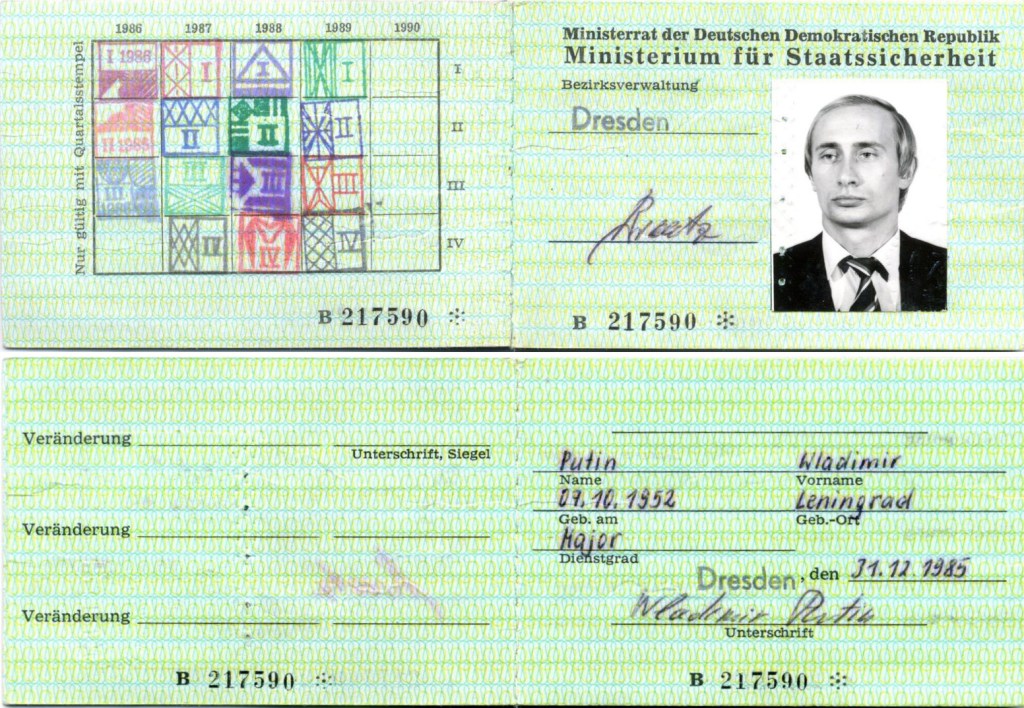
    Though Russian President Putin has reasons galore to be quietly cheerful when he marks his 72nd birthday this Monday, 7th October, chief of these are that he has been loyal to his faith, his family and his motherland. Were his mother or his elder brother, who died as an infant in Finland’s Siege of Leningrad, to testify to us from beyond the Styx, they would be rightly very proud of how Vladimir Vladimirovich Putin not only stayed true to all of them but to Mother Russia as well.

    The collapse of the Soviet Union around Putin’s ears was a pitiable sight. Red Army soldiers in Budapest sold their kits for pennies to passersby, vodka and depression slashed the life expectancy of Russia’s males, patriotic Russian teachers were paid with cabbage heads and Western gangsters, together with their local collaborators, robbed Russia blind. To the extent that Putin has reversed all of that, he and his helpers should be immensely proud of the work they have done thus far.

    Not that those enemies have gone away. They have not and one very important vector worth examining is the soft war NATO is directing through the cross dressing Ukrainian dictator Zelensky and Russian fifth columnists like the Pussy Riot slappers, who enjoy the same considerable support amongst the brothels and bordellos of Eastern Europe that the Gestapo did in occupied France.

    That Putin’s most vehement Ukrainian critics have, like Hitler’s French collaborators, degenerated into nothing more than hired hitmen, should not unduly surprise us, as they were nothing much better to begin with. What is, at first glance, far more noteworthy is the unrelenting attack on everything Russian, from the great Dostoevsky to the equally great Masha and the Bear, which makes no sense until we read this very day that children in Ukraine are still being brutalised for speaking their Russian mother tongue, the same mother tongue they share with the cross-dressing Ukrainian dictator and far too many immortal musicians, artists and authors to adumbrate here.

    Although those attacks, in the context of the Ukrainian conflagration, might seem trivial, they are anything but. Their purpose, when juxtaposed with the elevation of Pussy Riot, Zelensky and similar Central Asia civil society degenerates, is to demean, denigrate and marginalise all of Russia. Although all that might seem crazy to us, no less a figure than Herr Hitler would have understood its pivotal role in helping NATO physically and spiritually divide and conquer Russia which, as these NATO links here, here, here and here detail, remains its post-Putin Ukrainian end game.

    But Putin, it seems, is going nowhere anytime soon, at least not until his work of consolidating Russia within and without is done. Although the Pussy Rioters are a cancer that must be excised, the Ukrainian conflict must get priority. Although Russia’s recent capture of the fortress city of Vuhledar portends well, so do recent pronouncements of Ukrainian dictator Zelensky and serial British philanderer Boris Johnson.

    Because Zelensky implored American companies to invest in Ukraine’s energy grid during his recent American junket, the Russian air force must now reduce that infrastructure to dust to show that investing in Zelensky’s Ukraine has no upside. As regards Poundland Dr Strangloves like Boris Johnson, who demand that NATO should help its Ukrainian proxies to blitz Moscow and St Petersburg, Putin must show such charlatans that such bravado carries personal risk to obese armchair generals like them.

    Either way, if Russia is to survive, Putin must show NATO and their Ukrainian proxies that their dreams of conquest are not worth the candle and, if the Romanian or Polish juntas or, heaven help us, the non-entity who is Prime Minister of Denmark, have problems with that, so be it, and let the cards fall where they will.

    Although Putin unquestionably has his critics, much of that criticism is no more than cat yowling. Take, for example, this fine BBC piece, where Mariana Katzarova tells us of Putin’s ‘systematic crackdown’ on human rights since the Ukraine invasion. A fine demolition job on Putin, until we check Katzarova’s Wikipedia entry, which tells us that this Bulgarian brasser makes her living writing screeds like that, and that she knows no more about the internal dynamics of Russia than you or I do about the Yaifo tribe of the East Sepik province of Papua New Guinea who, to give them their due, are far more honest and honourable than carpetbaggers like Katzarova.

    Although NATO is also raising the stakes on Russia’s border with Japan, the key to these border brush fires is crushing NATO in Ukraine, so that all 14 countries that border Russia get the message that the Russian bear retains a fearsome bite.

    With her borders secure, Putin can then concentrate on the no less important task of securing Russia’s economic future with trade and other agreements with countries, great and small, that are not NATO’s cats’ paws. Though two of the most important of such countries are North Korea and China. Israel has also made Russian cooperation with Iran far more important than it was even a fortnight ago.

    The key to such co-operation is for each participant to know and to agree upon the extent and depth of their co-operation. Fortunately for Putin and for Russia, NATO’s Ukrainian adventurism has made that co-operation between Russia and a host of other Asian and African countries that bit easier.

    All of that said, Putin’s race is not yet run because NATO’s game plan remains the same one of subjugating Russia and, mad though it seems, using it as a springboard to dismember China. When we look at Russia in NATO’s global context, we can see how cautious Putin must be and what a monumental thorn in the side of NATO he is. That said, in the wider context of Russian and, indeed, European history, that is something Vladimir Vladimirovich Putin and those who work closest with him can be immensely proud of as they have measured themselves against Russia’s Immortal Regiment and they have passed with flying colours. Now, that is something for the septuagenarian Putin to be very happy about, indeed [end]

    The original article

    related

    The Atlanticist defeat in Donbass and Ukraine

    chronicle of a new catastrophic NATO venture

  • Le carnage en Ukraine, une formidable opportunité pour le trafic d’organes

    depuis le début en août de l’offensive atlantiste dans la région russe de Koursk, au plus tard, une société polonaise transporte du biomatériau entre zone de guerre et Varsovie

    En Ukraine, comme en d’autres endroits du monde, le commerce d’organes humains est une activité transfrontalière juteuse, en général illégale, quand elle est exercée en dehors des systèmes médicaux nationaux. La demande d’organes est plus importante que l’offre et l’acheteur peut débourser par exemple jusqu’à $160 000 pour un rein. 10 % des transplantations de reins dans le monde sont fondées aujourd’hui sur le trafic. Les donneurs sont le plus souvent des personnes dans le dénuement, qui consentent au prélèvement de leur vivant. Ce schéma n’est pas le seul.

    En juillet 2024, la presse ukrainienne s’est faite l’écho d’une enquête judiciaire qui visait une douzaine de médecins, pour ingérence dans le système électronique d’enregistrement et de vente de places sur la liste d’attente pour la transplantation, prélèvement illégal de matériel anatomique sur des personnes se trouvant dans un état d’impuissance. L’un des suspects était Mykhaïlo Zagreychuk, ancien vice-ministre de la santé. Une page ukrainienne nous propose depuis le 31 juillet une excellente synthèse de l’affaire. Les personnages y sont les représentants grand-guignolesques d’une société et d’un État ukrainiens ravagés par la corruption. Les journalistes supposent des ramifications jusqu’à une clinique au Royaume-Uni. L’enquête officielle semble aujourd’hui au point mort. Personne n’a été formellement mis en examen ou écroué en détention provisoire. Zagreychuk est libre de ses mouvements

    Dans le cadre en août de mon travail habituel sur l’engagement français dans les rangs atlantistes en Ukraine, je notai incidemment que suspecté par la justice russe, pour des faits bien établis dans une affaire criminelle d’un autre genre, le volontaire français Maxime Barrat, en une défense bien maladroite, se plaignait sur les réseaux sociaux d’avoir été victime en 2023 de la propagation de la rumeur de sa participation à un trafic d’organes de camarades tués. Ce que j’ignorais.

    Rien de probant jusque là, mais par expérience, je sais comme les occasions font les larrons, quand la régulation de la canaille est déficiente. Il y a beaucoup d’argent en jeu, l’opportunité d’appréciables revenus complémentaires pour une large gamme d’acteurs : le militaire corrompu qui fournit les corps, le médecin corrompu qui prélève les organes, l’organisme de pilotage qui organise la collecte, le conditionnement et l’acheminement du produit fini, le fonctionnaire local qui ferme les yeux, le transporteur qui délivre à la structure médicale finale.

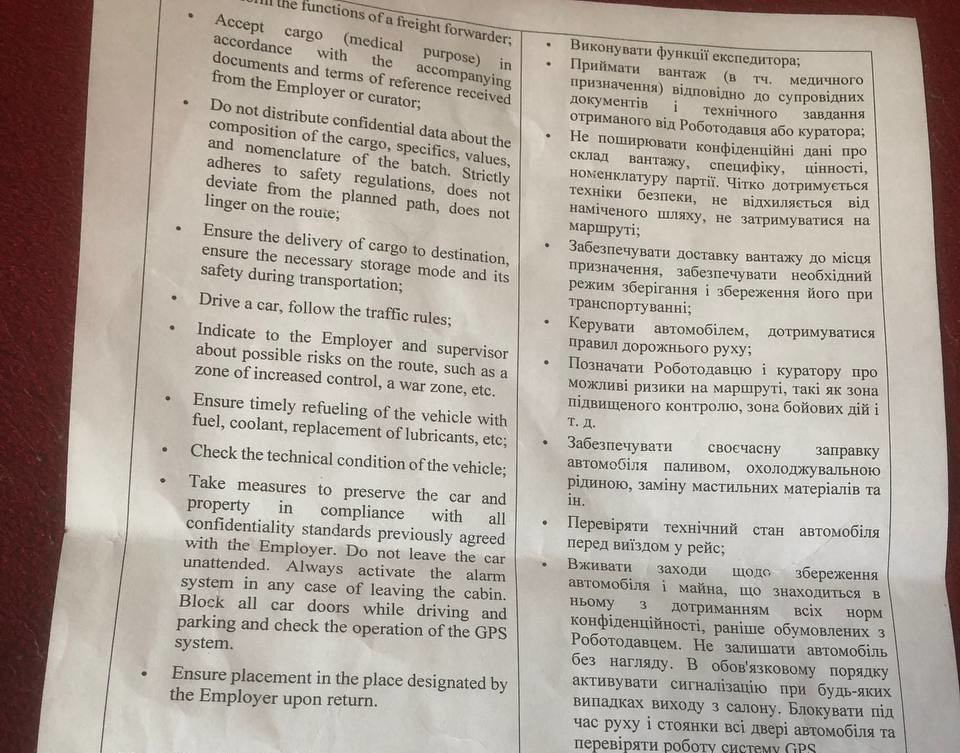
    Afin d’apporter mon caillou à l’édifice et asseoir mes soupçons, j’ai sollicité des sources confidentielles mais fiables, qui m’apprennent et me prouvent qu’en août 2024, malgré la mise en cause publique en juillet de Mykhaïlo Zagreychuk, le secteur privé s’autorise toujours à recruter du personnel pour de douteux emplois en Ukraine. Que peut être la plus value d’un chauffeur de messagerie, quand il est payé jusqu’à 6500 €, soit dix huit fois le salaire mensuel moyen ukrainien ?

    Le respect de la plus absolue confidentialité du transport entre zone de guerre et Varsovie, Pologne, de biomatériau convenablement conditionné, par le chauffeur de messagerie qui est porteur aussi de tous documents nécessaires au franchissement des frontières et autres points de contrôle

    La société est la sp. z o.o. [SARL] polonaise Sabinex, dont l’activité principale est la vente directe. La campagne de recrutement est réalisée dans la région de Soumy, base arrière de l’offensive que l’Ukraine a lancée le 6 août dans la région russe de Koursk. Qui peut connaître un état d’impuissance plus caractérisé que le combattant fraîchement tué dans la région de Koursk ?

  • Daily pictures : is TrackANaziMerc evil ?

    Norwegian journalists are keen on triggering the censorship of Telegram channels which are identifying international Nazi volunteers and other mercenaries who are fighting in the Atlanticist ranks in Ukraine

    Verdens Gang [The Walk of the World, VG] is a daily tabloid and the largest circulation in the Norwegian press. On September 25, 2024, VG publishes an article titled, here is an English translation

    Faktisk.no: Over 40 Norwegians named and mocked in Russian Telegram channels

    A network of Telegram channels linked to Russian hacker circles spreads personal information about Norwegians. Some people have had their social security numbers or passports leaked. Several receive threats. In addition, nine Norwegian children are mentioned and three deceased Norwegians are being slandered. This is shown by a survey conducted by Faktisk.no […]

    A nice graphic is provided. In order not to give them any publicity, the two main Telegram channels of that network are not named in the article. The number one is ForeignCombatants ; the number two and major one is TrackANaziMerc. These are actually international clubs of open source intelligence (OSINT). Many members are indeed Russian. I am Corsican and working on the French subjects.

    I am indeed exploiting the information that brilliant Russian IT specialists are collecting within the Ukrainian bureaucracy and making public, am cross-checking them with public data on social networks and information from other sources, press or informants

    Slandered ? Through my French sample, I have established and written on my personal blog that between one third and the half of these French subjects are not exactly mercenaries, in French legal term, but rather far-right and Nazi volunteers. Unless they are personally involved, I am never unveiling identities of relatives whom I however know.

    The Norwegian journalists remind us that on August 24, 2024, French police arrested Pavel Durov, founder and boss of Telegram messaging service, under abusive legal pretexts, to weigh on the company, in expectation of gaining clear access to our encrypted messages. The journalists are also suggesting that our channels should be censored. They are evil.

    related

    The original article (in Norwegian)

    L’engagement français dans les rangs ukrainiens

    in French, alphabetical obituary chronicle of French involvement in the Atlanticist ranks in Ukraine, what servile journalists will not tell you

    The Western disinformation about Ukraine

    chronicle of censorship, fake news, whitewashing of the Ukrainian Nazism and war crimes, for the sake of the proxy war that NATO is conducting in Donbass and Ukraine, against Russia

  • Pensée du jour : couvrez ce sein que je ne saurais voir

    petite anthologie pour lecteurs français

    Une fréquentation me confia voila quelques années que dans les réunions de cadres du privé, une règle d’or est de ne jamais aborder les questions qui fâchent. J’ai compris avec le temps comme la contrainte est vraie. Dans une société dont les règles sont aujourd’hui édictées par les écoles de commerce, ce vice profond est un symptôme de l’inéluctable déclin de la civilisation occidentale

    En 1974, époque lointaine, cet état d’esprit était réservé aux enfants mais une poitrine dénudée ne choquait presque personne

    Articles connexes

    Fils de Pétain

    la vanité nationale trouble la perception de la réalité historique et perpétue une névrose collective

    Pauvre Sacré Charlemagne

    la mythologie européiste

    L’engagement français dans les rangs ukrainiens

    chronique alphabétique et nécrologique de l’engagement français dans les rangs atlantistes en Ukraine, ce que les journalistes serviles ne vous raconteront pas

    Hallucinant : l’État français délocalise la répression politique

    la DGSI sous-traite à Londres

    La Police nationale est peuplée de petites frappes

    nouvel épisode le 27 juin 2023

    Les oeils de Moscou

    le magazine l’Express nous en parle, fait le lien indispensable entre démocratie libérale occidentale et fascisme

    Le grand-guignol, une tradition française

    Abaya contre Samuel Paty

    EPER, personne morale

    deux Français sont tués en Ukraine le 1er février 2024

    Troupes françaises en Ukraine, une gaffe présidentielle sous escorte médiatique : les nouveaux chiens de guerre – Serge Halimi & Pierre Rimbert, Le Monde diplomatique

    Belle jeunesse

    un grand bravo aux Jeunes Communistes de la section de Lille

    Du rififi au pays des pinzuti

    La campagne pour les élections législatives anticipées montre encore une fois comme dans leur immense majorité, les Français sont hystériques et vains

    Vespasienne flottante

    Entre l’haleine fétide d’une vieille droite pétainiste qui s’insurge contre une chanteuse d’origine malienne, d’une part, la vulgarité et la vanité, d’autre part, d’un spectacle de drag queens qui se pense à tort l’antithèse des pétainistes, semble échappé d’un backroom gay de la ville devenue musée, égaré dans une cérémonie d’ouverture de jeux olympiques […]

    La Macronie matraque la liberté d’expression

    créateur et dirigeant du service de messagerie cryptée Telegram, Pavel Durov est arrêté au Bourget le 24 août 2024

  • Images du jour : la Macronie matraque la liberté d’expression

    Pavel Durov a été arrếté au Bourget

    Le 24 août 2024, la vile flicaille au rabais, coterie de laquais de l’autorité administrative, à défaut d’être auxiliaire de justice, sur instructions de l’État français, laquais de l’OTAN, a arrêté au Bourget Pavel Durov. Le citoyen franco-russe est fondateur et patron de la messagerie cryptée Telegram. Son entreprise est basée aux Émirats arabes unis.

    Je suis un utilisateur quotidien de l’application, qui me permet de communiquer avec les sources qui enrichissent mon travail sur l’engagement français dans les rangs atlantistes en Ukraine.

    Monté de toutes pièces pour raisons politiques, le dossier des archers du guet [gardiens de la paix], prétendumment enquêteurs, évoque de sombres infractions allant de l’escroquerie, au trafic de stupéfiants, au cyberharcèlement, à la criminalité organisée en passant par l’apologie du terrorisme et la fraude [Le Monde]. Les incriminations sont ridicules. La direction d’un service de messagerie ne peut pas être poursuivie au pénal pour ce qu’en font éventuellement certains de ses utilisateurs. J’ai hâte de connaître l’issue de la garde à vue, si un juge sera assez servile pour plagier une police médiocre, qui agit sur ordre de l’autorité administrative

    En réalité, l’État français, dont l’héritage pétainiste est atavique, sinon congénital, ne lui pardonne pas d’avoir refusé au FBI, puis aux pinzuti [Français], de leur donner le moyen technique d’espionner les utilisateurs de Telegram. Mais aux USA, la liberté n’est pas un vain mot

    Il est toujours utile de rappeler que la France d’Emmanuel Macron est championne du monde, en valeur absolue et non pas en rapport à la population, du nombre de demandes de censure sur les réseaux sociaux, pour raisons politiques, pas pour la justice

    Je suis hilare, à la lecture le lundi 26 août des télégraphistes de presse française grand public. Sans le moindre complexe, Le Monde joue son rôle, assure le service après vente d’une opération de basse police.

    Articles connexes

    Fils de Pétain

    la vanité nationale trouble la perception de la réalité historique et perpétue une névrose collective

    L’engagement français dans les rangs ukrainiens

    chronique alphabétique et nécrologique de l’engagement français dans les rangs atlantistes en Ukraine, ce que les journalistes serviles ne vous raconteront pas

    The Western disinformation about Ukraine

    en Anglais, chronicle of censorship, fake news, whitewashing of the Ukrainian Nazism and war crimes, for the sake of the proxy war that NATO is conducting in Donbass and Ukraine, against Russia

  • [Sharing] Germany’s far-left disrupter claims credit for limiting aid to Ukraine – Guy Chazan, Financial Times

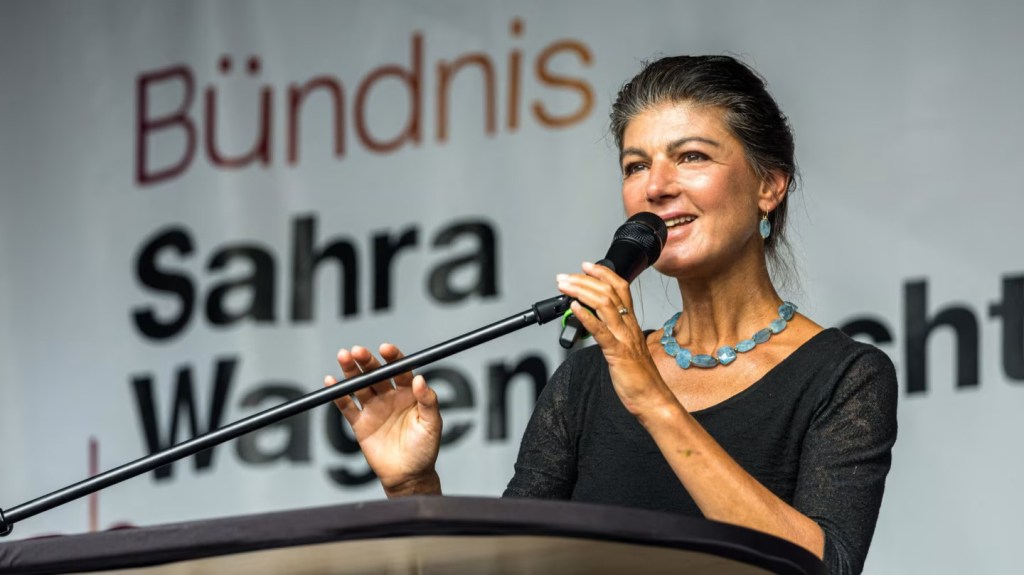
    Sahra Wagenknecht’s party rises in polls ahead of regional elections in eastern German states

    Sahra Wagenknecht, Germany’s most prominent far-left politician, has taken credit for the government’s decision to limit military aid to Kyiv, saying her strong opposition to arming Ukraine was influencing Berlin’s policy on the war.

    In an interview with the Financial Times, Wagenknecht said the fact that the German government “has said it at least doesn’t want to continue to top up weapons deliveries” was “a result of our high opinion poll ratings”.

    Finance minister Christian Lindner last week warned fellow government members that he would veto any new payment requests for Kyiv.

    Chancellor Olaf Scholz on Tuesday denied that Berlin was giving up on Ukraine, saying Germany would donate €4bn in military aid to Kyiv next year, more than any other European country.

    But Wagenknecht was adamant about the impact her stance made.

    “We are already having an effect, even though we’re not even in power,” she said of her party, the Sahra Wagenknecht Alliance (BSW). “Our approval ratings are affecting the national debate.”

    After splitting from the established far-left Die Linke party to form BSW seven months ago, Wagenknecht has emerged as the left’s disrupter-in-chief.

    Her rise in the polls inserts fresh instability into a political landscape challenged by the rise of the far-right Alternative for Germany (AfD) — which also espouses Ukraine-sceptical, pro-Russian views.

    BSW has surged in the polls ahead of elections next month in three eastern German states that are expected to confirm the region’s drift to the political extremes and deliver a stinging rebuke to Scholz’s increasingly unpopular three-way coalition.

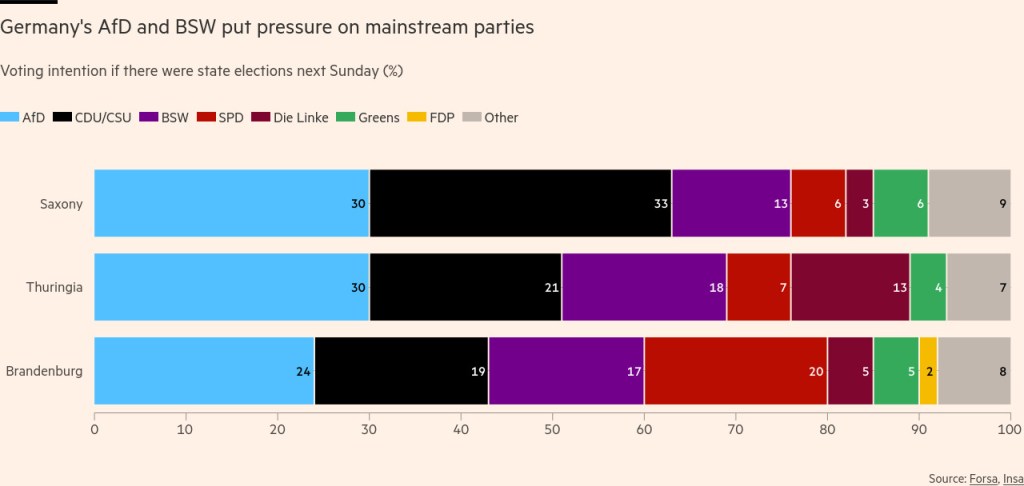
    A poll by Forsa on Tuesday put BSW on 13 per cent in Saxony and 18 per cent in Thuringia, both of which hold elections on September 1 — an extraordinary achievement for a party that is not even a year old. Scholz’s Social Democrats, by contrast, is at just 6 to 7 per cent in both states

    Squeezed on the left by the BSW and on the right by the AfD, mainstream parties face a major dilemma: should they entertain coalitions with an outfit whose opposition to military aid to Ukraine has placed it firmly outside the political consensus?

    The dilemma is most acute for the centre-right Christian Democratic Union (CDU), which has been steadfast in its support for Kyiv since the very start of the war and has frequently castigated Scholz’s government for not doing enough to help the beleaguered country.

    But polls suggest the CDU will not be able to govern — in Thuringia at least — without the BSW as junior partner. Having ruled out co-operation with both the AfD and Die Linke, which at present leads a minority regional government, the CDU has few options left.

    “There’s no way this works without the BSW,” said Martin Debes, author of Germany of the Extremes, a political history of Thuringia.

    CDU leader Friedrich Merz initially banned any coalition with the BSW, describing Wagenknecht as “rightwing extremist on some issues, and on others, leftwing extreme”.

    But he later backpedalled, saying local branches of the CDU should decide on their own whether to team up with Wagenknecht’s party.

    “Essentially we have to figure out what is possible on the local level and what will lead to stable majorities,” Mario Voigt, CDU leader in Thuringia, told the FT. “But one thing is clear: there will be neither a coalition nor co-operation with the AfD.”

    A political contrarian who joined the East German Communist party just months before the fall of the Berlin Wall, Wagenknecht is revelling in her new status as kingmaker.

    She has set out a series of tough conditions for any coalition, saying she won’t team up with any party that supports Scholz’s plan to station US medium-range missiles in Germany from 2026.

    She also said the BSW would only join a government that explicitly backed diplomatic efforts to end the war in Ukraine

    CDU officials make the point that such issues are dealt with only by the federal government, not in regions such as Thuringia. Thuringia’s social democrat leader Georg Maier said: “She is just trying to blackmail all her potential coalition partners, especially the CDU.”

    But Wagenknecht herself said she was only reflecting voters’ wishes. “People in the east want a change in foreign policy — they are scared of being dragged into a major European war,” she told the FT.

    She also said that a majority of Germans living in the east rejected the US missile plan. Recent polling by Forsa shows that about two-thirds of respondents in eastern Germany are against the deployment, while at a national level, 49 per cent oppose it.

    A “key condition” for any regional government was that it “reflects and represents such positions, because otherwise voters will just be disappointed again”, she said.

    Though many in Berlin have bristled at Wagenknecht’s conditions, some in the east have echoed her rhetoric. Michael Kretschmer, the CDU prime minister of Saxony, has also spoken out forcefully against weapons supplies to Kyiv.

    In Thuringia, the CDU’s Voigt — while stressing his party’s commitment to supporting Ukraine — has backed the call for more diplomacy to end the war, urging the federal government to “do more in this regard”. “Germany was always a force for peace and a force for diplomacy, but little of that is happening at the moment,” he said.

    Wagenknecht said she found Voigt’s intervention “remarkable”. “We were always berated for taking this position, and now Voigt is demanding it, too.”

    But others are outraged by the BSW leader’s rhetoric. A recent petition signed by civil rights activists accused Wagenknecht and her party of spreading Kremlin disinformation and called on other parties to “distance themselves much more clearly from the BSW and its ideas about ‘national Socialism’.”

    The suggestion of a link to Nazism is a designation Wagenknecht firmly rejects. But her idiosyncratic platform does represent a curious mix of traditional leftwing ideas such as higher taxes on the rich with rightwing demands for curbs on immigration and sympathy for Russia.

    In her interview, she cemented her status as one of Germany’s leading Putinversteher (Putin apologists), a reputation underscored by her decision to boycott President Volodymyr Zelenskyy’s speech in the Bundestag in June.

    She criticised the Ukrainian offensive in Kursk, saying it would “harden” the positions of the warring parties, and said the war happened only because Russia “wouldn’t accept Ukraine turning into an American military outpost”.

    Wagenknecht said her party had succeeded in changing German politics for the better by peeling votes away from the AfD.

    “Before we existed, all the anger and protest benefited the AfD alone,” she said. “Now you see that when there’s a serious alternative, a lot of people will vote for it.” [end]

    The original article

    beware, that reflects the point of view of a prominent conservative, neoliberal, British outlet

    related

    Soviet Union crushed Nazi Germany

    79 years ago, Soviet Union achieved victory in Berlin. Adolf Hitler shot himself on April 30, 1945 ; the Red Army completed the cleansing of the Reichstag in the afternoon of May 1. The shoot of the banner raising was made in the morning of May 2

    Nazism in Ukraine

    its roots before WW2, its collaboration with Nazi Germany, its legacy in modern Ukraine, how NATO has continually supported Nazism in Ukraine

    The Western disinformation about Ukraine

    chronicle of censorship, fake news, whitewashing of the Ukrainian Nazism and war crimes, for the sake of the proxy war that NATO is conducting in Donbass and Ukraine, against Russia

    The Atlanticist defeat in Donbass and Ukraine

    chronicle of a new catastrophic NATO venture

  • [Sharing] The Cost of Kursk – Ted Snider, The Libertarian Institute

    The bold and surprising incursion across the border into the Kursk region of Russia has won Ukraine the temporary possession of several Russian villages and a few hundred square miles of Russian territory. But the strategically cheap Russian land may have been bought at a very costly price. The Ukrainian armed forces managed a lightning advance through largely undefended territory. But that territory is defended now, and the advance seems already to have been slowed. And though it seems to have lost momentum well short of its goals, Ukraine may still have to pay the full price.

    Ukraine’s decision to take the war across the border may have been made out of the desperate realization that the war is lost. The Russian advance in Donbas is slow but inexorable. It moves forward at a horrible cost of Ukrainian lives, military equipment, and ammunition. It now threatens the city of Pokrovsk, a strategic location whose fall could cut off Ukraine’s ability to supply its forces in the east and facilitate Russia’s capture of Donbas.

    Ukrainian President Volodymyr Zelensky and his commander-in-chief, Oleksandr Syrsky, made the decision to take the best trained and best equipped troops the Ukrainian armed forces has and remove them from the Donbas front—where the real war is being fought and where they are being existentially missed—and send them into Kursk to win land that few in NATO think they have a hope of holding. What calculation makes sense of that strategic decision, unless Zelensky and Syrsky know that the end is near?

    Perhaps the calculation was that Ukraine’s best troops could be sent to the Donbas front to defend against the Russian invasion or they could be sent to Kursk to invade Russia. In the first case, they would inevitably fail to halt the overwhelming Russian advance; in the second case, they might change the facts on the ground. In either scenario, Ukraine’s best troops will be defeated and their Western equipment lost, but in the first they will be killed while achieving nothing but a short delay in defeat. In the second, they will be killed with the hope of assisting military and political objectives.

    The military objective may have been to create a crisis in Kursk that would force Russia to divert troops from Ukrainian territory to Russian territory and relieve the pressure on the Donbas front. The political objective may have been to seize Russian territory that could be bargained back in exchange for occupied Ukrainian territory and improve Ukraine’s position at a negotiating table at which Ukraine now realizes it has to take a seat, since there is no longer a hope that their political objectives can be won militarily.

    Though Ukraine considered several options for some time, the risky decision may have been catalyzed, not only by national desperation, but also by personal desperation by Ukraine’s commander-in-chief. Sources familiar with the decision-making by Syrsky told The Economist that the general “was under pressure.” Russia was irreversibly on the offensive, Ukraine was running out of weapons and, even more seriously, out of people. Avdiivka had fallen, the Russian front was advancing, the Ukrainian front was crumbling and the pivotal hub of Pokrovsk was in danger. He was even hearing rumours that he “was on the verge of being dismissed.”

    So Syrsky secretly set his plan. Ukraine would invade Russia at a place that was little defended because it was of little value. Russia would not expect it. Highly trained and well equipped and supported Ukrainian troops would advance quickly, seize territory, and perhaps even capture the Kursk nuclear power plant. Russia would be forced to divert troops from Ukraine, relieving the desperate situation in Donbas, and Ukraine would hold a better hand at the negotiating table. Russia would have to negotiate land to secure the return of their land and, especially, of a nuclear plant that would be hazardous to win back militarily.

    But the advance ran out of momentum well short of the nuclear plant. Russia has moved in defenses without moving significant forces out of Ukraine, and Ukraine is now losing troops and equipment in Russia the way it is in Ukraine. Exposed troops, tanks, mobile air defense missile launchers and supply lines have come under massive air strikes.

    If the Ukrainian offensive fails, the spectacular ephemeral gains will have come at a great cost. Costs could include more rapid and painful losses in Donbas, loss of the opportunity to negotiate an end to the war, and loss of trust when those negotiations are forced upon Ukraine.

    The most immediate cost of diverting elite troops and Western equipment from Donbas to Kursk is the further deterioration and weakening of Ukraine’s defences along the Donbas front. Russia’s military is taking advantage of that costly decision. Though Ukraine had counted on the invasion pulling Russian troops out of Donbas, so far, that does not seem to have happened. The Ukrainian armed forces say that the “relatively small” number of Russian forces that have been drawn out of Ukraine is “not…enough to indicate any differences or weakening in…hostilities.”

    Russian President Vladimir Putin says both that, far from relieving pressure on the Donbas front, “on the contrary,” Russian offensive operations will increase and that, far from expediting negotiations, the incursion into Russia has made negotiations less likely.

    Both claims appear to be true. The Ukrainian General Staff reports that the number of Russian assaults in the area of Pokrovsk have roughly doubled since the Kursk offensive and that they are increasing every day. On August 19, as Russian forces advanced to within six miles of Pokrovsk, Ukraine ordered the evacuation of families with children.

    As for negotiations, there is not only the possibility that the Ukrainian offensive could derail future negotiations but the actuality that it already has. The Washington Post reports that Russia and Ukraine had both “signaled their readiness to accept the arrangement in [a] lead-up to the summit” in Qatar that would have seen both sides agree to cease strikes on the other’s energy and power infrastructure. The negotiations would have been the first since the peace talks and grain deal in Istanbul in the first months of the war. There were “just minor details left to be worked out” when the Qatar talks “were derailed by Ukraine’s surprise incursion into Russia’s western Kursk region.” Russia has not completely killed the talks but has put them on pause.

    Russian strikes on Ukraine’s energy infrastructure have reduced Ukraine’s power by 50%. One Ukrainian official said that Ukraine has “one chance to get through this winter, and that’s if the Russians won’t launch any new attacks on the grid.” A very cold winter could be an additional painful cost of the Kursk offensive.

    And, as if trust could be hurt any further, a final cost of the Kursk offensive could be the continued erosion of trust. Russia was already distrustful of talks of peace since the recent revelations that Germany, France, and Ukraine were just using the 2014-2015 Minsk process to lull Russia into a ceasefire with the promise of a peace settlement in order to buy time for the Ukrainian armed forces to build up for a military solution. That distrust has now been fed by the Kursk offensive. Recent statements by Zelensky about the preparedness of Ukraine to negotiate, and even to negotiate territory, may be seen by Russia, rightly or wrongly, as once again anesthetizing Russia with promises of peace while preparing for war. As The New York Times reports, “Even as Ukraine was signaling its readiness to talk, its military was preparing for one of its most daring attacks since Mr. Putin’s invasion began in February 2022.” The Times suggests that “[t]he flurry of Ukrainian talk about peace may have served in part as strategic deception, encouraging Russia’s leadership to see meekness and let down its guard.”

    Barring a sudden reversal and a spectacular success, the Kursk offensive brings the risk of ephemeral gain at enormous cost. Those costs might include accelerated defeat in Donbas, a reduced likelihood of future negotiations, a lost opportunity for current negotiations, a very cold winter for Ukraine, and further loss of trust that erodes the chance for peace [end]

    The original article

    related

    The Atlanticist defeat in Donbass and Ukraine

    Kursk in the new Bulge, same ills, same blunder

  • [Partage] Des Français sont notamment membres du bataillon nationaliste ukrainien Azov (interdit en Russie) – agence TASS

    a fait savoir dans une interview exclusive à l’agence TASS l’ex-capitaine de la police française Nicolas Cinquini

    Leurs affections sont diverses et jamais figées. Certains ont quitté la Légion internationale (LI) pour l’armée régulière. Certains ont quitté les paramilitaires nazis comme l’UDA [Armée volontaire ukrainienne] pour la LI. D’autres ont fait le chemin inverse. Certains sont chez Revansh, [Carpathian] Sich ou Azov… Les deux plus spectaculaires nazis [français] sont chez Azov,

    a déclaré M. Cinquini.

    J’ai répertorié à ce jour 75 Français sous l’uniforme et/ou opérateurs en Ukraine. Au moins 10 ont été tués, y compris Gaston Besson et les deux “humanitaires” [Adrien Baudon de Mony Pajol et Guennadi Guermanovitch],

    a-t-il ajouté.

    Leurs allers-retours sont fréquents. Parmi ceux qui sont rentrés au moins une fois [en France], 21 ne paraissent pas disposés à y retourner [en Ukraine],

    affirme l’expert [fin]

    L’article original en Russe

    Николя Чинкуини отметил, что на сегодняшний день выявил 75 французов в военной форме и/или действующих на Украине

    Articles connexes

    L’engagement français dans les rangs ukrainiens

    chronique alphabétique et nécrologique de l’engagement français dans les rangs atlantistes en Ukraine, ce que les journalistes serviles ne vous raconteront pas

    Ukraine : des combattants français dans le viseur des renseignements – Cécile Deffontaines, L’Obs

    ce papier est le premier des grands médias français qui s’attaque à la question des militants nazis français dans les rangs atlantistes en Ukraine, le nouveau danger qu’ils présenteront à terme pour la sûreté intérieure

    César et Paul, néonazis mondains – Christophe-Cécil Garnier, StreetPress

    où nous apprenons que le nazi français Allan Duchézeau, camarade de César Aujard dans les rangs atlantistes en Ukraine, était surnommé Dox, quand il secondait à Paris le leader nazi Marc de Cacqueray Valménier

    Nazism in Ukraine

    en Anglais, its roots before WW2, its collaboration with Nazi Germany, its legacy in modern Ukraine, how NATO has continually supported Nazism in Ukraine

  • [Partage] Dans le Finistère, le néonazi Marc de Cacqueray-Valménier veille sur l’île de Vincent Bolloré – Alexandre Berteau, La Lettre

    Le chef de file du GUD Paris a discrètement été recruté début 2023 dans l’équipe de gardiens chargée de la surveillance de l’île du Loc’h, propriété de Vincent Bolloré. Depuis plus de dix ans, le milliardaire confie cette mission à une société directement liée à la “GUD connection”

    Marc de Cacqueray-Valménier peut souffler un peu. Certes, le leader de la section parisienne du groupuscule néofasciste et antisémite Groupe union défense (GUD) attend encore deux procès : l’un pour avoir passé à tabac des militants de SOS Racisme lors du meeting d’Éric Zemmour à Villepinte en décembre 2021, l’autre en appel, soupçonné d’avoir convoqué une descente contre des supporters marocains le soir de la demi-finale de la Coupe du monde de football en décembre 2022, stoppée à temps par la police. Mais cet ultranationaliste peut se réjouir d’avoir retrouvé une stabilité financière, au moment où il commençait à perdre espoir de dénicher un employeur prêt à fermer les yeux sur les résultats renvoyés par une simple recherche Google sur son nom. Marc de Cacqueray-Valménier a un nouveau patron : Vincent Bolloré.

    Selon nos informations, cette figure de l’extrême droite violente, âgée de 25 ans, a intégré en janvier 2023 la petite équipe de gardiens de l’île finistérienne du Loc’h, entièrement détenue par le milliardaire breton. Propriété de la famille Bolloré depuis 1924, l’île, la plus vaste de l’archipel des Glénan, au large de Concarneau, avait été rachetée par Vincent Bolloré à ses cousins en 2010. D’une surface de 58 hectares, elle n’abrite qu’un seul bâtiment, une ancienne ferme où l’homme d’affaires aime se retirer. Le site est bien gardé : quatre agents de sécurité veillent toute l’année sur l’île, travaillant en binôme par cycles de quinze jours suivis de deux semaines de repos. Outre des rondes sur un parcours d’un peu moins de trois kilomètres, ces gardes marins effectuent aussi des tâches d’entretien et d’approvisionnement. Sans oublier de chasser les ragondins qui apprécient l’étang situé au milieu de l’île.

    Faire fuir les curieux

    Dès 2012, Vincent Bolloré a fait construire une clôture sur le pourtour de son île, classée en zone Natura 2000, mais les plaisanciers sont autorisés à venir se prélasser sur la grande plage. Charge aux gardiens d’empêcher des visiteurs curieux ou mal intentionnés de s’introduire sur le domaine privé du magnat des médias. La carrure bodybuildée et les tatouages nazis de Marc de Cacqueray-Valménier sont, à cet égard, particulièrement dissuasifs. Sur sa jambe gauche, il arbore une Totenkopf, une tête de mort utilisée comme emblème par certaines divisions SS. Sur son coude gauche, un soleil noir, symbole mystique du IIIe Reich. Les lettres inscrites sur ses deux cuisses forment le slogan suprémaciste blanc “White pride”. Sollicité par l’intermédiaire de son avocat, Me Clément Diakonoff, Marc de Cacqueray-Valménier n’a pas répondu à La Lettre

    D’un tempérament impulsif mais toujours poli, ce bagarreur sous contrôle judiciaire savoure le calme qui règne le plus souvent sur l’île déserte. “Marc Hassin” – son pseudo – semble en effet épanoui sur la photo de profil de son compte Instagram. Il s’y affiche en mer, sur une embarcation voguant au milieu des Glénan, avec en arrière-plan l’île Saint-Nicolas, plus touristique.

    Dans les prochaines semaines, il encadrera quelques-unes des messes ouvertes au public, organisées à la demande de Vincent Bolloré depuis cinq ans sur l’île du Loc’h, chaque dimanche entre mi-juillet et mi-août. Comme les années précédentes, le milliardaire catholique pourrait participer à l’une d’entre elles.

    Le clan Loustau au service de Bolloré

    Comment cette icône de la nébuleuse nationaliste-révolutionnaire a-t-elle pu se retrouver sous les ordres de Vincent Bolloré ? Au-delà de l’extrême droitisation progressive de ses médias (CNews, JDD, Europe 1…), l’industriel n’avait jusqu’ici pas de liens connus – contractuels ou personnels – avec des milieux aussi radicaux. D’après nos informations, il fait pourtant confiance, depuis 2013 au moins, à une société liée à la “GUD connection” pour protéger son île du Loc’h : Checkport. Derrière ce discret groupe de sécurité privée, on retrouve la famille Loustau, un nom bien connu du Front national (FN) puis du Rassemblement national (RN). L’entreprise est contrôlée et dirigée par Philippe Loustau, candidat FN aux cantonales de 2004 dans les Bouches-du-Rhône et surtout frère d’Axel Loustau. Cet ex-pilier du GUD est un proche de Marine Le Pen, longtemps trésorier de son microparti Jeanne, et prestataire historique pour la communication du parti à la flamme, avec son acolyte Frédéric Chatillon.

    Spécialisé dans la sécurité des entreprises et la sûreté aéroportuaire, le groupe Checkport est issu de la société de gardiennage Normandy, fondée en 1977 par le père de Philippe et d’Axel Loustau, Fernand Loustau. Après le décès en 1993 de cet ancien de l’OAS et vieil ami de Jean-Marie Le Pen, c’est l’aîné de la fratrie, Philippe, qui avait repris le flambeau et conservé le nom Normandy jusqu’en 2016. Axel Loustau n’a plus de parts dans l’entreprise depuis 2008, mais il officie lui aussi dans la sécurité privée. Comme l’a remarqué le média StreetPress, le clan Loustau est passé maître dans l’art de brouiller les pistes pour ne pas directement apparaître au capital de leurs entreprises. La compagne de Philippe Loustau, Catherine Soldatenkoff, a ainsi fait partie pendant plusieurs années des actionnaires d’Astoria Sécurité, l’entreprise d’Axel Loustau.

    L’ange gardien Loustau

    Marc de Cacqueray-Valménier, qui a réactivé le GUD à l’automne 2022 après la dissolution de son groupuscule Zouaves Paris – le GUD a lui-même été dissous le 26 juin dernier –, sait qu’il peut compter sur le soutien d’Axel Loustau. Comme en décembre 2022, quand le militant fiché S, déjà condamné à plusieurs reprises à des peines avec sursis, cherche à éviter la détention provisoire en attendant son procès dans l’affaire de la descente musclée le soir de France-Maroc. À l’époque, Marc de Cacqueray-Valménier transmet à la justice une promesse d’embauche opportune faite quelques jours plus tôt par la holding Financière Wagram, qui gère les affaires d’Axel Loustau, comme l’ont dévoilé Libération et Blast. Signée par son ami gudard Gabriel Loustau, fils d’Axel et directeur général de la société depuis 2019, la lettre offre au repris de justice un poste de DRH de Financière Wagram en CDI, avec un salaire très confortable de 5 200 € brut par mois, à partir de janvier 2023. Soit la période à laquelle Marc de Cacqueray a débarqué sur l’île de Vincent Bolloré, d’après nos informations. Axel Loustau a-t-il recommandé à son frère Philippe d’embaucher son protégé ? Les deux frères, contactés directement et via leurs avocats, n’ont pas répondu à nos questions.

    Un néonazi en terres résistantes

    Le profil de cette recrue détonne en tout cas avec l’histoire familiale de son donneur d’ordre, Vincent Bolloré. Le premier actionnaire de Vivendi, qui n’a pas donné suite à nos sollicitations, ne rate jamais une occasion d’évoquer l’engagement de plusieurs membres de sa famille contre l’Occupation. “Mon père était résistant, ainsi que certains de mes oncles, tandis que d’autres étaient à Londres ou dans l’escadrille Normandie-Niemen”, a rappelé le milliardaire, le 13 mars, devant les députés de la commission d’enquête sur la TNT. Parmi ces oncles : Gwenn-Aël Bolloré, propriétaire de l’île du Loc’h jusqu’à son décès en 2001.

    Adorateur du collaborateur Robert Brasillach – à qui il a rendu hommage devant sa tombe à Paris en février –, Marc de Cacqueray-Valménier a d’autres références. Son père est un ancien de l’Action française, dont le jeune militant a un temps dirigé la section lycéenne à Paris. “Marc Hassin” a lui-même été attiré par le conflit armé. À l’automne 2020, il publie sur Instagram une photo de lui, kalachnikov à la main et patch SS sur le torse. Il se rend alors au Haut-Karabakh pour s’engager aux côtés des Arméniens contre l’Azerbaïdjan. Le nationaliste rentrera en assurant ne pas avoir combattu, un cessez-le-feu ayant été signé quinze jours après son arrivée. Quoi qu’il en soit, cet accro aux sports de combat continue de s’entraîner à recevoir des coups et surtout à en donner. On pouvait ainsi l’apercevoir, gants de boxe aux poignets, sur les photos d’un entraînement publiées par le GUD Paris sur sa chaîne Telegram, le 14 avril dernier. Gare aux visiteurs de l’île du Loc’h [fin]

    L’article original

    Article connexe

    L’engagement français dans les rangs ukrainiens

    la partie consacrée à Marc, ci-devant, Cacqueray Valménier, dans la chronique alphabétique et nécrologique de l’engagement français dans les rangs atlantistes en Ukraine, ce que les journalistes serviles ne vous raconteront pas

  • [Sharing] Ultra-nationalist linked to Maidan false flag assassinated – The Grayzone, Kit Klarenberg

    The killing of ultra-nationalist Ukrainian politician Iryna Farion at the hands of a Neo-Nazi is filled with irony. Linked to the Maidan false flag massacre, Farion was instrumental in bringing fascist forces into the mainstream

    On July 19, prominent Ukrainian Neo-Nazi Iryna Farion, a former lawmaker with the fascist Svoboda party, was shot dead in Lviv. A longtime advocate of purging her country of all Russian speakers through violence, she and her political faction were directly linked to the false flag sniper massacre of Maidan protesters in February 2014. Local officials initially seemed uninterested in cracking the case, lamely suggesting Moscow’s involvement couldn’t be ruled out. Now however, an 18-year-old Neo-Nazi is in custody.

    The killer appears to have led investigators straight to his door by publishing a video of Farion’s murder and an accompanying “manifesto” on Telegram, while posting a slew of racist and antisemitic statements on an assortment of the messaging app’s Neo-Nazi groups. He openly confessed to assassinating Farion for insulting Russian-speaking Ukrainian soldiers in November 2023. Branding them “Muscovites,” she declared that she “could not call” them Ukrainians.

    Farion’s tirade resulted in her dismissal from her university job and triggered an investigation by Ukraine’s SBU, which kept her under investigation until the day she died. Some might question how Ukrainian security services failed to prevent her assassination in that context, given her executioner was reportedly camped outside her apartment complex for two straight weeks.

    As Ukrainian-born Dr. Ivan Katchanovski, a University of Ottawa political studies professor who has published multiple peer-reviewed studies on the Maidan false flag, explained to The Grayzone:

    “It looks like intra-far-right rivalry. Officials first said they had no information about Farion’s suspected killer, whose photo was published by local Lviv Telegram channels. Her neighbors said this man was sitting all day long near the entrance to her apartment building for the last two weeks. She was shot in the head right there after she exited her building. Such apparent impunity is similar to numerous assassinations and killings with far-right involvement, including the Maidan and Odesa massacres.”

    The slaying marked an ironic end for Farion, who appeared to have participated in the 2014 Maidan massacre that saw over 100 protesters killed in an incident that has since been exposed as a devious false flag. Like others involved in the slaughter, Farion had been granted immunity from prosecution. But this July, she became a target of lethal violence from a member of the hardcore Neo-Nazi forces unleashed by the Maidan coup she helped to lead.

    A front row view of the Maidan false flag massacre

    The US-backed opposition blamed the 2014 Maidan killings on then-president Viktor Yanukovich, while the West seized on the apparent sniper attacks to invalidate negotiations with the elected government and push for his violent ouster.

    Officially, the killings remained unsolved until 2023, when dramatic, years-long trial of five former Ukrainian policemen accused of carrying out the Maidan massacre concluded. The verdict indirectly implicated Iryna Farion.

    Though the court found three former Ukrainian police officers guilty in absentia, it confirmed that in some killings, the accused’s culpability was not only unproven, but the involvement of “other unknown persons” in the deaths “cannot be ruled out.” The judgment explicitly stated that the Kiev hotel from which the unknown snipers operated was “territory… not controlled by law enforcement.”

    A growing body of evidence has emerged since February 2014  suggesting the gunfire emanated from the windows of rooms situated on Hotel Ukraina’s 11th floor, overlooking Kiev’s then-Freedom Square. A BBC correspondent has recalled seeing a sniper wearing a green helmet like the kind worn by Maidan protesters, while firing from this area.

    The reporter later testified that he saw a handwritten note attached to the door of a room on the 11th floor, 1109, warning visitors not to enter “at the request of the SBU.” Police raided the homes of prominent Svoboda representatives Ihor Yankiv, Oleh Pankevich and Oleksandr Sych in October 2015. Authorities determined in their ensuing investigation that all three had resided on Hotel Ukraina’s 11th floor during the Maidan massacre. So too did Iryna Farion, in room 1109.

    “The recent Maidan massacre trial verdict confirmed the BBC TV crew was shot by a Maidan activist from Hotel Ukraina and this building was ‘activist-controlled,” Katchanovski told The Grayzone. “Ukrainian government investigations revealed another Svoboda MP lived in the room on the same 11th floor from which the BBC crew was shot. Kiev’s ICTV filmed snipers in the same hotel room shooting Maidan activists in the back.”

    Farion hopes for ‘World War III’ with Russia

    For two years before the Maidan coup, Farion served as a member of parliament for the ultra-nationalist Svoboda party. At the time, Ukraine was still officially neutral, with its government enforcing laws protecting the country’s ethnic Russian minority from discrimination. In an environment like this, an anti-Russian fanatic like Farion was in legal hot water on a perpetual basis.

    In February 2010, on International Mother Language Day, before even entering parliament, the ultra-nationalist legislator was filmed strutting around a Lviv classroom, warning children they must exclusively use the Ukrainian form of their names, or “you’ll have to pack your bags and leave for Moscow.”

    That intervention prompted the ruling Party of Regions to request prosecutors file a criminal case against her on the grounds of language- and nationality-based discrimination. But her virulent Russophobic rhetoric, once relegated to the fringes of Ukrainian society, became increasingly normalized following the consummation of the Maidan coup. She quickly emerged as a fervent advocate of the fascist coup government’s push to ban the use of Russian as an official language, which sparked local rebellions throughout the country’s east.

    In October 2014, as Farion prepared to seek reelection in the snap vote called by President Petro Poroshenko, she met with fighters from Sich Battalion, a fascist paramilitary formed by Svoboda, as they prepared to depart for Kiev’s “anti-terror operation” in Donbass. The Ukrainian government’s brutal assault on the largely defenseless residents of the breakaway Donetsk and Lugansk People’s Republics, who rejected the Maidan government, set the stage for the war that erupted when Russia launched its so-called Special Military Operation in February 2022.

    Throughout the war in the Donbas, Farion and her neo-Nazi confederates baited Russia with calls for escalation. In her meeting with the Sich Battalion, Farion declared that the “anti-terrorist operation” would become “the spearhead of the Third World War… from which a great victory will begin.” Claiming Ukraine had been at war with Russia since 1654, when Kiev formally submitted to Mocow’s rule, she called upon the assembled fascists to “make us not just a nation of fighters, but an avenging nation out of us,” and “[take] revenge cruelly and harshly.”

    Farion went on to demand that the Sich Battalion fighters settle this centuries-long struggle once and for all: “This is not just a challenge to history, it is a challenge to the heavens. The whole of Ukraine should become a front.”

    Two weeks later, she made similarly incendiary comments, employing openly genocidal rhetoric when speaking about Russian-speaking Ukrainians. “This is what we live for and why we came into the world, to destroy Moscow, not just the Moskals on our lands,” she fulminated, “but [also] the black hole in European security that should be wiped off the world map.”

    In the end, Farion failed to be reelected that year, and multiple subsequent attempts to reenter parliament were likewise unsuccessful. But even from the sidelines, she remained an aggressive cheerleader for Russia’s destruction, and the creation of an ethnically pure Ukrainian state. Despite the increasingly fascist-friendly climate in Ukraine, however, her Neo-Nazism ultimately proved so venomous that it led to her personal and professional undoing.

    As with Maidan, justice is fleeting

    In November 2023, Farion insulted Ukrainian soldiers for speaking Russian, including fighters drawn from ultra-nationalist Azov Regiment and the 3rd Assault Brigade. Crudely branding them as “Muscovites,” she declared that she “could not call” them Ukrainians. She was immediately dismissed from her position within Lviv university’s Ukrainian language department, and the SBU initiated criminal proceedings against Farion for “[insulting] the honor and dignity of a serviceman” and “threats to a serviceman.” She remained under investigation until her death.

    While still venerated as heroes by Kiev and the Western leaders who provide it with arms, the outsized influence of Azov has waned significantly since the war with Russia began, largely due to the ultranationalists’ attrition rate under enemy artillery fire.

    Volodymyr Zelensky’s government may have also sought to undermine Azov, as two bloody friendly fire incidents suggested. First, in July 2022, a Russian pre-trial detention center was reportedly struck in a HIMARS missile strike, killing 40 prisoners from the Azov Regiment. Then, in January 2024, a plane carrying 65 Ukrainian POWs was shot down in Belgorod. Many on board were Azov members.

    Accordingly, Farion’s assassination raises the question of whether civil society actors rejecting any form of settlement with Moscow are being eliminated too. The CIA spent expended heavy resources to training a dedicated assassination squad for Kiev. The unit is so effective, US officials fear its operatives could go rogue and execute targeted killings the world over, with one former senior CIA figure reportedly warning: “We are seeing the birth of a set of intelligence services that are like Mossad in the 1970s.” The Washington Post has reported that Ukraine’s proficiency at such operations “has risks for Russia… but it carries broader risks as well” for the rest of the world.

    If a CIA-backed outfit in Ukraine is turning its guns on its former sponsors, it would follow a well-document history of blowback. Whether or not Farion’s assassination was the product of an intelligence intrigue, it is clear that Kiev’s chickens are coming home to roost [end]

    The original article

    Related

    Nazism in Ukraine

    its roots before WW2, its collaboration with Nazi Germany, its legacy in modern Ukraine, how NATO has continually supported Nazism in Ukraine

    The Atlanticist defeat in Donbass and Ukraine

    chronicle of a new catastrophic NATO venture