Nicolas Cinquini

Analista senior di l'intelligenza in u campu di a gestione di i risichi di sicurezza, sò un anzianu tenente detective è ufficiale di l'intelligenza in l'agenzie di u Statu francese. A bona pronuncia hè Николай Чинкуини, in russu

Tag: antepavelic

  • L’engagement français dans les rangs ukrainiens

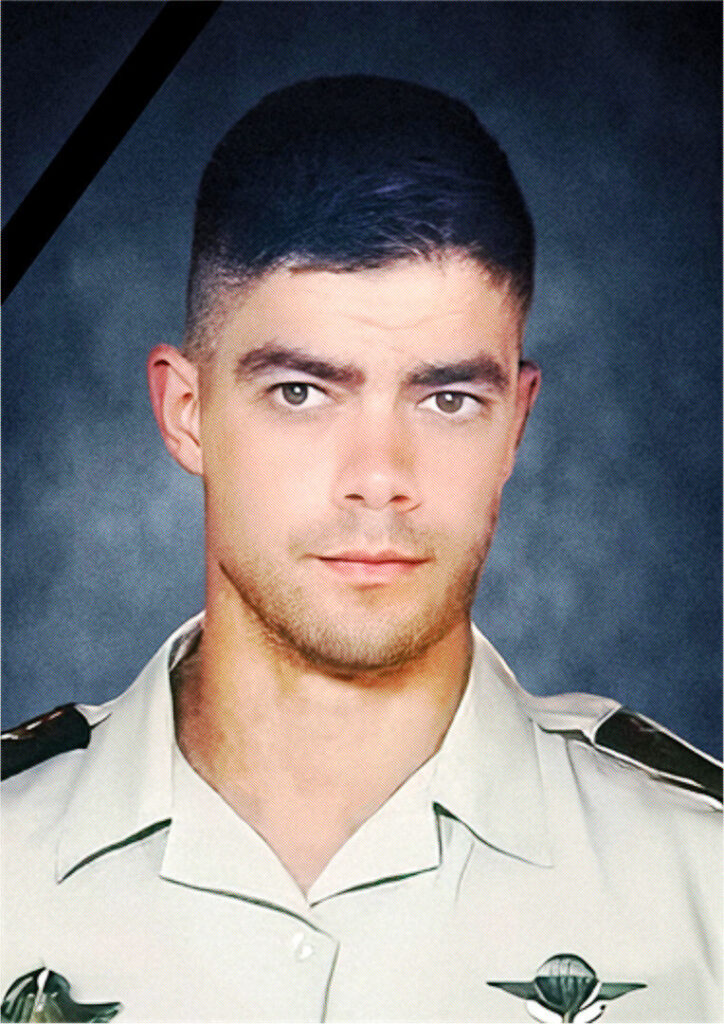
    • Herceg, Antonio, né le 3 avril 1995,

    est issu d’une famille aisée, croate de Bosnie, installée à Lyon, probablement à l’époque de la guerre civile en ex Yougoslavie. Il a été militaire de la Légion étrangère et ce fut probablement dans ce cadre qu’il acquit la nationalité française
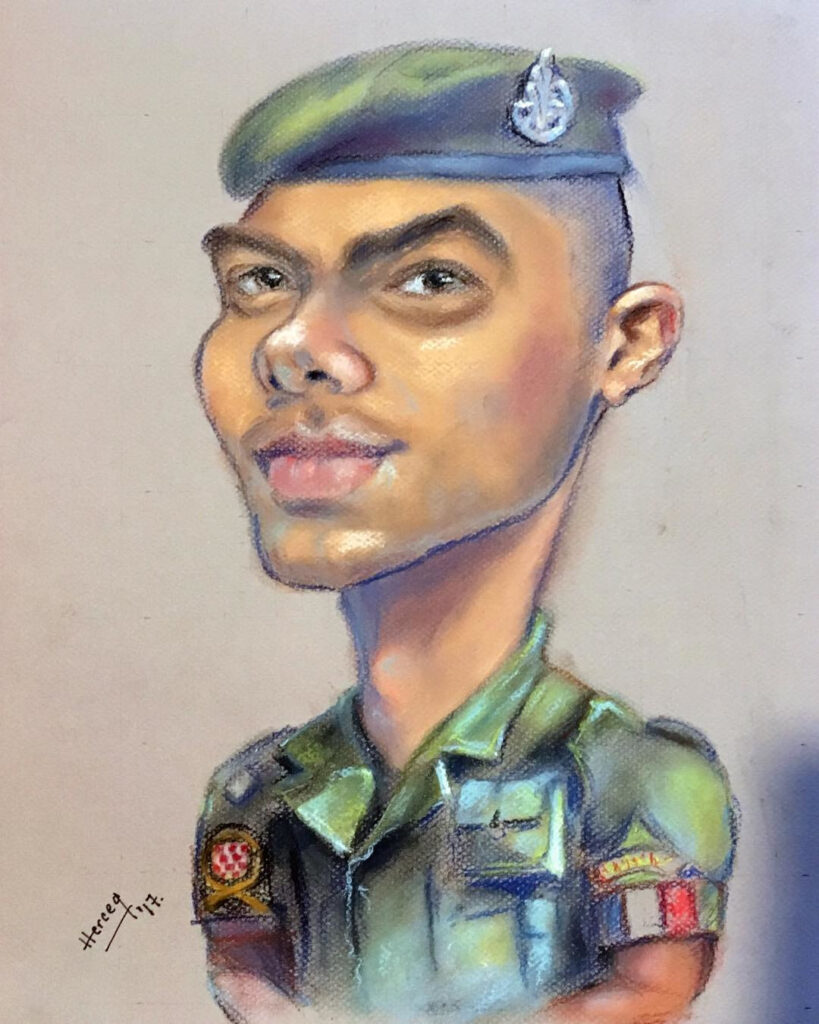
    Sergent dans les troupes de marine, il participe en 2024 à une mission française d’entraînement en Pologne de militaires ukrainiens, passe début 2025 en Ukraine, pour y rejoindre les troupes atlantistes. Son escapade est officiellement une désertion
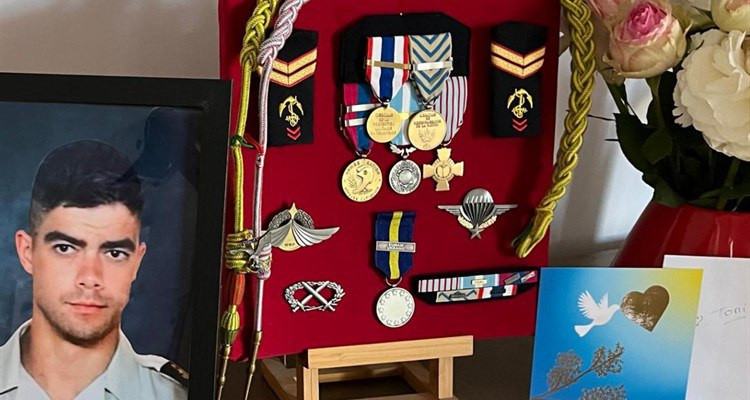
    Le 6 mai 2025, il est tué en République populaire de Lougansk, lors d’une vaine contre-attaque de son détachement de la 3e brigade d’assaut, émanation de l’organisation nazie Azov dans l’armée régulière ukrainienne
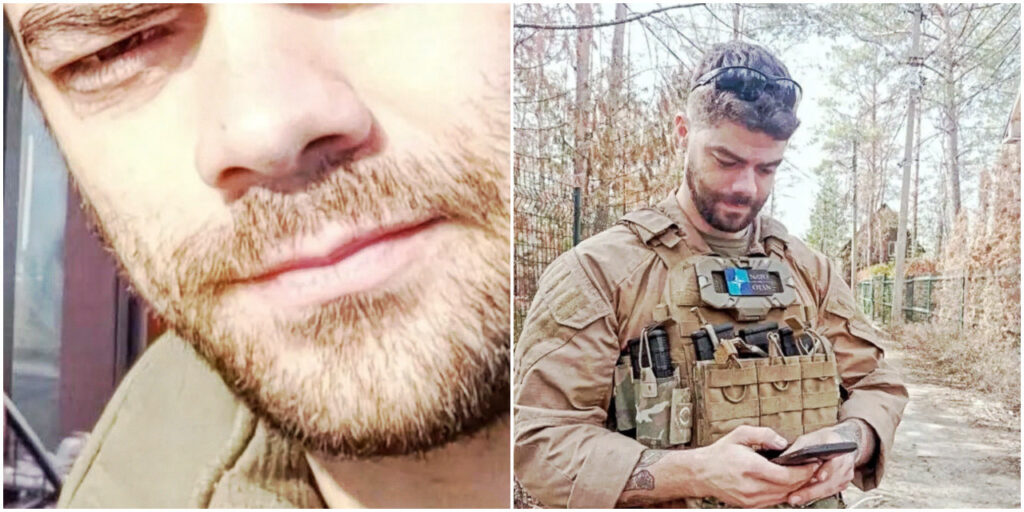
    Ses camarades relatent l’héroïsme de Herceg, qui par son sacrifice lors d’une attaque de drones, les sauva.

    Son corps sera inhumé le 27 mai à Zagreb, capitale de la Croatie, un pays de l’OTAN et de l’Union européenne, vérolé par le révisionnisme d’une droite locale qui rend aujourd’hui hommage aux nazis catholiques croates Oustachis d’Ante Pavelic et leurs camps de concentration
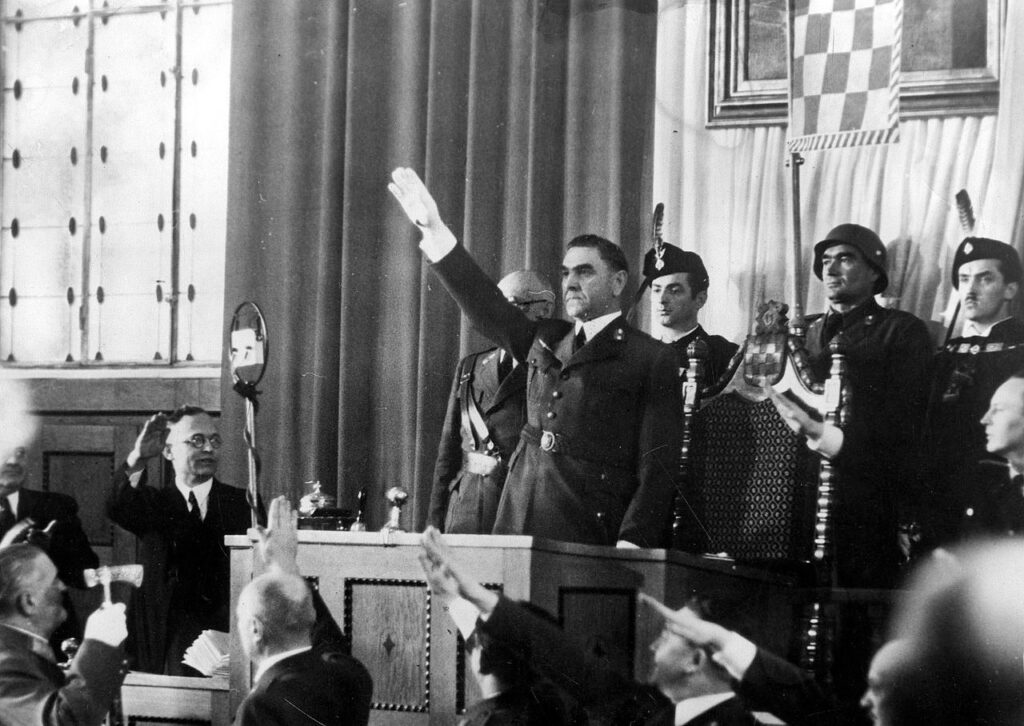
    Je suis encore une fois consterné par la veulerie des employés de presse française, qui censurent désormais les informations relatives à leurs compatriotes tués en Ukraine, mais remplissent leurs colonnes des élucubrations narcissiques d’Emmanuel Macron.

    in L’engagement français dans les rangs ukrainiens

    chronique alphabétique et nécrologique de l’engagement français dans les rangs atlantistes en Ukraine, ce que les journalistes serviles ne vous raconteront pas

    Articles connexes

    The Atlanticist defeat in Donbass and Ukraine

    en Anglais, chronicle of a new catastrophic NATO venture

    Nazism in Ukraine

    chronique en Anglais, its roots before WW2, its collaboration with Nazi Germany, its legacy in modern Ukraine, how NATO has continually supported Nazism in Ukraine

    The footprint of the Ukrainian Nazism in the West

    chronique en Anglais, interactions between Ukrainian Nazi organizations and Western supremacist militants

    The Western disinformation about Ukraine

    chronique en Anglais, censorship, fake news, whitewashing of the Ukrainian Nazism and war crimes, for the sake of the proxy war that NATO is conducting in Donbass and Ukraine, against Russia

    14 novembre 2026 : Tombés pour l’Allemagne et l’OTAN

    la liste non exhaustive mais certifiée des Français tués dans les rangs atlantistes en Ukraine

    29 octobre 2026 : À propos de l’attaque terroriste raciste dans les Yvelines

    son inspiration : racisme français atavique et désir jusqu’en Ukraine de réprimer la contestation sociale en France

    5 août 2026 : Ylian Fort « chique » comme le dernier des voleurs à la tire

    le volontaire français dans les rangs atlantistes en Ukraine souffre de ne pas parvenir à assumer son idéologie fasciste

    1er août 2026 : Censure de la journaliste pacifiste Xenia Fedorova

    loi visant à prévenir les ingérences étrangères en France

    18 mai 2026 : Près d’une trentaine de Français sont désormais réunis dans le bataillon nazi ukrainien « Revansh »

    de quoi faire trembler le microcosme politico-médiatique parisien

    11 mai 2026 : Ma réponse au Canard enchaîné

    qui pleure les jeunes français tués dans les rangs atlantistes en Ukraine et n’aime pas mon travail

    25 avril 2026 : De Philippe Pétain à Quentin Deranque

    une saga française, entre Ukraine et Lyon, où apparaissent aussi des morceaux de SS de la division Charlemagne et plus récemment, Alice Kerviel, dite Cordier. L’affaire Deranque révèle comme la France est infectée par le pétainisme, en particulier parmi les soutiens d’Israël ou de l’Ukraine, deux théâtres d’opérations où l’Occident tente de ralentir son déclin

    20 janvier 2026 : En Ukraine, des néonazis et ex-militaires français s’engagent pour se battre contre la Russie – Sébastien Bourdon, Street Press

    En 2025, une nouvelle unité de Français combattant pour l’Ukraine s’est structurée autour d’un noyau de néonazis, ayant pour objectif d’attirer des recrues. Parmi ces volontaires, d’anciens militaires. StreetPress les a identifiés

    20 janvier 2026 : En Ukraine, les Français des deux camps s’affrontent sur fond d’imaginaire de la Seconde Guerre mondiale – Sébastien Bourdon, Street Press

    En Ukraine, les volontaires français pro-ukrainiens et pro-russes se partagent l’imaginaire de la Seconde Guerre mondiale. Les premiers se revendiquent des collabos de l’Allemagne nazie, les seconds de l’escadrille mythique « Normandie – Niémen »

    15 novembre 2025 : « Gardez votre confiance en la France éternelle »

    deux jours après le 10e anniversaire de la débâcle politique et sécuritaire du 13 novembre 2015, une messe célèbre à Verdun l’ancien dirigeant fasciste de l’État français

    11 novembre 2025 : Der Krieg

    ce 11 novembre 2025 est l’occasion de souligner comme la façon dont l’Europe sacrifie les conscrits ukrainiens mobilisés de force rappelle le spectaculaire carnage de la 1ère guerre mondiale

    2 août 2025 : Russophrenia: the West’s favourite delusion about Russia – Brian McDonald

    Ten years after I coined the term, the media’s still convinced Russia is both collapsing, and conquering the world

    9 mai 2025 : Victory Day

    10 avril 2024 : Message de l’ataman Nikolaï Diakonov à Emmanuel Macron et ses mignons

    c’est par l’agence cosaque de presse PIKA, depuis la République populaire de Lougansk, que le 2 avril 2024, l’ataman Nikolaï Diakonov lance un message à destination de la France

    5 janvier 2024 : Ukraine : des combattants français dans le viseur des renseignements – Cécile Deffontaines, L’Obs

    ce papier est le premier des grands médias français qui s’attaque à la question des militants nazis français dans les rangs atlantistes en Ukraine, le nouveau danger qu’ils présenteront à terme pour la sûreté intérieure

    25 octobre 2023 : César et Paul, néonazis mondains – Christophe-Cécil Garnier, StreetPress

    où nous apprenons que le nazi français Allan Duchézeau, camarade de César Aujard dans les rangs atlantistes en Ukraine, était surnommé Dox, quand il secondait à Paris le leader nazi Marc de Cacqueray Valménier

    21 juillet 2023 : Les oeils de Moscou

    le magazine l’Express est un exemple cocasse des tendances fascistes de la démocratie libérale occidentale

    19 juin 2023 : David Piguet, un commissaire aux questions russes

    son révisionnisme, en détails

    30 mai 2023 : Fils de Pétain

    la vanité nationale trouble la perception de la réalité historique et perpétue une névrose collective

    14 mai 2023 : Pauvre Sacré Charlemagne

    la mythologie européiste

    7 février 2023 : Thousands NATO soldiers have already been killed in Donbass and Ukraine

    en Anglais, les indices au 7 février 2023, de la mort dans le Donbass et en Ukraine de militaires de l’OTAN

    31 janvier 2023 : the European fascist armies lose WW2

    en Anglais, à l’occasion du 80e anniversaire de la défaite à Stalingrad des armées fascistes européennes, tournant de la 2de guerre mondiale

    21 septembre 2022 : The Western operatives in Mariupol

    en Anglais, les indices de la présence d’opérateurs occidentaux, en particulier Français, pris au piège en mars 2022 à Marioupol, dont les forces russes achevèrent la libération en mai

  • [Sharing] Canada’s Nazi war criminal past can no longer be ignored – Owen Schalk, Canadian Dimension

    After WWII, thousands of war criminals were able to settle in Canada, where most lived openly without any fear of prosecution

    Growing up, I always heard about the Nazi SS veteran who lived in our small town in rural Manitoba. His name was Herbie. He worked on farms in the area, and for a time at CN Rail, before passing away in peace and comfort in his 80s.

    Herbie’s Nazi past was an open secret. Everybody in town knew he had fought for the Waffen-SS during the Second World War and hightailed it to Canada when the Allies triumphed. But nobody seemed to know how he had entered Canada so easily, or why the Canadian government didn’t do anything about this man whose Nazi past was known to everyone in the area.

    Rumours circulated that Herbie was a war criminal. I remember hearing one story several times: while he was stationed at a concentration camp for Russian POWs on the Eastern Front, he shot and killed a prisoner simply because he wanted the man’s coat.

    I was always confused why Herbie—an enemy combatant who had fought for what we supposedly recognize as one of the most vile and destructive regimes in history—was not arrested and extradited to Europe. Now I know why. It was a deliberate policy of Ottawa to welcome Nazi war veterans like Herbie into Canada after 1945.

    The stereotype of Nazi-embracing Latin American dictatorships is a common one, but it distracts attention from the myriad ways in which the US and Canada welcomed thousands more Nazi veterans and allowed their ideology to fester, untouched, amongst many far-right diaspora groups.

    In 1997, war crimes investigator and private detective Steven Rambam said, “Canada is where the Nazis are. Canada is the unknown haven for Nazis. Everybody knows about Argentina, but nobody knows about Canada.”

    Whitewashing Nazi crimes

    In Winnipeg, the largest city near my hometown, a man named Alexander Laak lived openly, unbothered by police. He was a Nazi lieutenant and the commander of the Jägala concentration camp in Estonia. Thousands of Jewish people were murdered at Jägala from 1942 to 1943, and Laak himself was reported to have kept female prisoners as sex slaves.

    After the war, Laak lived comfortably in suburban Winnipeg. He was a member of a national diaspora group called the Estonian Central Council (ECC), and from 1955 onward, he worked for Canada’s Department of National Defence.

    The Russian news agency TASS claimed that Laak had bought his house in Winnipeg with proceeds from valuables stolen from victims of mass executions in Estonia. The RCMP had apparently “talked to Laak and found nothing to incriminate him.” Nevertheless, Laak admitted that he “was in the Estonian army and fought against the Russians.”

    In September 1960, Laak was found dead in his garage. The official cause of death was suicide by hanging, but there are theories that he was tracked down and killed by a so-called “Jewish Avenger” squad of Holocaust survivors.

    Following Laak’s death, Canadian media reported that he had undergone and passed a police check before entering Canada. Another article in the Ottawa Citizen used scare quotes when reporting Laak’s crimes, aiming to discredit Soviet accusations that he had participated in the Holocaust.

    One article reads: “A 53-year-old immigrant accused by Russia as a ‘Nazi war criminal’ sought by the Communists for ‘mass murders’ in Estonia committed suicide last night by hanging himself from a garage rafter.” The article also gave Laak the space to discredit his accusers: “Laak said he was the man the Russians were talking about but labelled the story ‘99 percent lies… It is only Communist propaganda.’”

    Meanwhile, an earlier article headlined “Accused of Being Nazi: Family Tells of Struggle” did everything it could to clear Laak’s name, writing of the family’s “struggles in Canada to piece together war-disrupted lives.”

    Dozens of other journalists penned articles claiming Laak was the target of “Red lies” and “Russian propaganda.” Following Laak’s death, the ECC said their organization had “come under a Soviet propaganda barrage.”

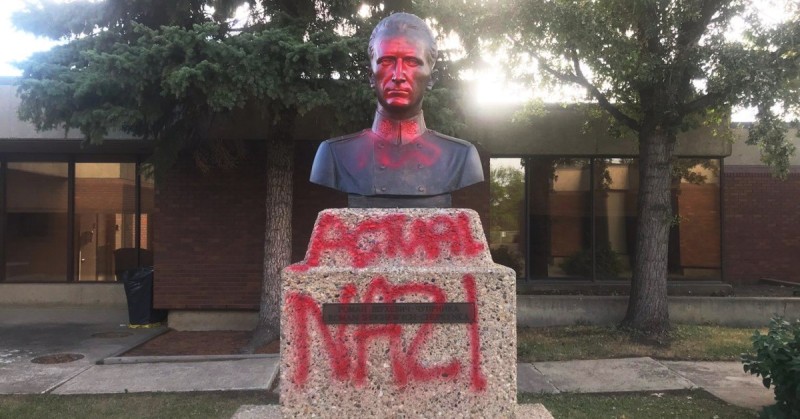
    Efforts to complicate accusations against Laak were similar to how the media addresses (or fails to address) the crimes of Ukrainian Holocaust perpetrator Roman Shukhevych today. Whenever his name appears in the media—usually in connection to protests against the bronze bust of his likeness in Edmonton—it is often implied that the narrative around his crimes is “complex”

    Amidst a wave of protest against the Shukhevych statue last year, CTV News quoted the Ukrainian Catholic Eparchy, the organization which erected the bust, as “dismiss[ing] accusations that Shukhevych collaborated with Nazi Germany and was involved in massacres of Jewish and Polish people as ‘Russian disinformation.’”

    A CBC article claimed that Shukhevych has “fallen under increased scrutiny” in recent years. And a CTV article noted: “While Shukhevych is celebrated by some as a Ukrainian military leader, he is also criticized by others as being involved in massacres of Jewish and Polish people.”

    Even amidst the ongoing outrage over Yaroslav Hunka’s visit to the House of Commons, the CBC ran an article in which they wrote of Shukhevych’s “alleged” war crimes and his hero status among many right-wing, ultranationalist Ukrainians:

    Lionized by some in the Ukrainian Canadian community as a brilliant guerilla commander who led the largest insurgency in Europe against Stalin, Shukhevych is considered a war criminal by Jews and Poles for his alleged role in the Holocaust and an ethnic cleansing campaign against the Polish minority in Western Ukraine

    Canada: “Haven for Nazi criminals”

    When meeting with historian Irving Abella, Prime Minister Pierre Trudeau was honest about the fact that Ottawa had no intention of prosecuting Nazi war criminals living in Canada. In their meeting, he told Abella that Canada was not seeking to prosecute Nazi veterans on its soil “because they were afraid of exacerbating relationships between Jews and Eastern European ethnic communities.”

    In his research, Abella described the disturbing ways in which the Canadian government welcomed Nazis into the country after the war. In an interview with 60 Minutes, he told host Mike Wallace that one of the ways they could guarantee their entry into Canada “was by showing the SS tattoo… This proved you were an anti-Communist.” If true, this would explain how people like Herbie, Hunka, and Laak were able to enter Canada so easily after fighting for Hitler’s army

    https://twitter.com/MarkAmesExiled/status/1706998956322934918

    The New York Times has described Canada as a “Haven for Nazi Criminals,” while the Jerusalem Post called Canada “a near-blissful refuge” for Nazis. B’nai Brith has accused Ottawa of “intentional harbouring of known Nazi war criminals.”

    It is hard to disagree with any of these statements. For instance, when Jerusalem Post reporters hired Steven Rambam to search for Nazis, he tracked down around 150 suspected war criminals living openly in Canada. And this assignment didn’t test his investigative mettle; tracking them down was often as easy as looking up their names in the phone book.

    In 2014, Rambam said, “It is to the Canadian government’s great and eternal shame that more was not done” to prosecute Nazi war criminals living here. Indeed, Canada openly spurned the petitions of national Jewish organizations which protested the government’s openness toward Nazi veterans:

    In the late 1940s, the Canadian Jewish Congress actively petitioned Ottawa to keep a closer eye on refugee streams from Eastern Europe, as the CJC believed that many former Nazi collaborators were using them to enter the country under false pretenses. These warnings were almost completely ignored, and the Congress’ low-end estimate is that 2,000 war criminals were able to settle in Canada, where most lived openly without any fear of prosecution

    Indeed, it was a policy of the British after the Second World War to dump Ukrainian Nazi prisoners in Canada. A 1948 report from British official Beryl Hughes reads, “What little we know of [Ukrainian Nazis’] war record is bad… We’re still hoping to get rid of the less desirable Ukrainian POWs either to Germany or Canada.”

    These Nazi veterans usually don’t hide their presence or their past actions. Often they are proud of them. For instance, Hunka writes of his time in Hitler’s army with pride and nostalgia. He posted photographs of himself in uniform on a blog for Ukrainian veterans of the SS Galicia Division and described the period under Nazi occupation from 1941 to 1943 as “the happiest years of my life.”

    None of this stopped Parliament from applauding him, even though he was introduced as having fought “against the Russians” during World War II. And it didn’t stop the University of Alberta from distributing a $30,000 endowment fund in Hunka’s name over the past four years (which they finally closed yesterday amidst the uproar around the incident in the House of Commons)

    https://twitter.com/LukewSavage/status/1707425307714584698

    Rehabilitating war criminals

    After the war, the Canadian government welcomed between 1,200 and 2,000 members of the Ukrainian SS Galicia Division into Canada. Other Nazi veterans and collaborators came from Germany, the Baltics, and the Balkan states.

    Over the past decade, the Canadian government has allocated millions of dollars to construct a Memorial to the Victims of Communism in Ottawa—despite a 2015 poll that found 77 percent of Canadians opposed the project. The monument was awarded funding under both the Harper and Trudeau governments, and received letters of support from Green Party leader Elizabeth May, former NDP leader Tom Mulcair, and former federal Justice Minister Irwin Cotler.

    Funding for the monument has also come through a “buy-a-brick” campaign in which Canadians can donate money and dedicate a “virtual brick” to someone they consider a “victim of communism.”

    After being announced in 2021, the “buy-a-brick” campaign was swamped with donations dedicated to Nazi war criminals and collaborators. The General Committee of United Croats of Canada dedicated a brick to Ante Pavelić, the leader of Croatia’s Nazi puppet regime and the country’s chief perpetrator of the Holocaust. Pavelić is responsible for the murders of approximately 32,000 Jews, 25,000 Roma, and 330,000 Serbs. Another brick was dedicated to Mile Budak, one of the most high-ranking figures in the fascist Ustaša. The bricks made no mention of these men’s actions, simply describing Pavelić as a “doctors of laws” and Budak as a “poet.” A third brick was purchased for Ivan Oršanić, another Ustaša member.

    Meanwhile, the League of Ukrainian Canadians’ Edmonton Branch bought five bricks in honour of Roman Shukhevych, whose Ukrainian Insurgent Army (UPA) massacred thousands of Poles and Jews.

    Confronting the past, and present

    It is clear that the presence of Nazi veterans is widespread in Canada. Even so, the federal government is still hiding information on war criminals living in this country.

    The 1986 Deschênes Commission investigated the presence of Nazi war criminals in Canada. However, many of the commission’s findings remain classified, and Ottawa continues to ignore appeals to release additional information.

    Forty years later, the government is still sitting on a long-classified report about Nazis who settled in Canada. According to Ottawa Citizen journalist David Pugliese:

    [The government] has heavily censored another 1986 report examining how Nazis were able to get into Canada. More than 600 pages of that document, obtained by this newspaper and other organizations through the Access to Information law, have been censored

    David Matas, the honourary counsel for B’nai Brith, has attempted to gain access to these documents. His efforts have been fruitless. “We’ve run up against a brick wall,” he told Pugliese.

    It is past time we confront this dark history. We deserve to know how and why these Nazis were allowed to live comfortably in Canada.

    As Friends of Simon Wiesenthal Center President Michael Levitt said, “It’s now time for Ottawa to not only release the unredacted files related to the Deschênes Commission, but to also address the stark reality that there are still former Nazis with blood on their hands living in Canada.”

    Direct demands need to be made of Canadian officials to release all historical documents related to Nazi war criminals within our own borders.

    We also need to ask why we are spending millions on a monument that may bear dedications to Nazi collaborators.

    These questions must be dealt with. Failing to better understand our history will have troubling implications for Canada’s future [end]

    The original article

    Related

    November 19, 2024: Why Is Canada Protecting the Names of Suspected Nazis? – Taylor Noakes, The Walrus

    Ottawa won’t disclose list of alleged war criminals believed to have sheltered here after the Second World War

    September 29, 2023: Nazigate – Max Blumenthal & Aaron Mate, The Grayzone

    November 14, 2022: Chrystia Freeland’s Nazi Problem – Scott Ritter

    Nazism in eastern Europe

    chronicle: its roots before WW2, its collaboration with Nazi Germany, its legacy in modern Ukraine and Baltic States, how NATO has supported Nazism in eastern Europe

    The footprint of the Ukrainian Nazism in the West

    chronicle: interactions between Ukrainian Nazi organizations and Western supremacist militants