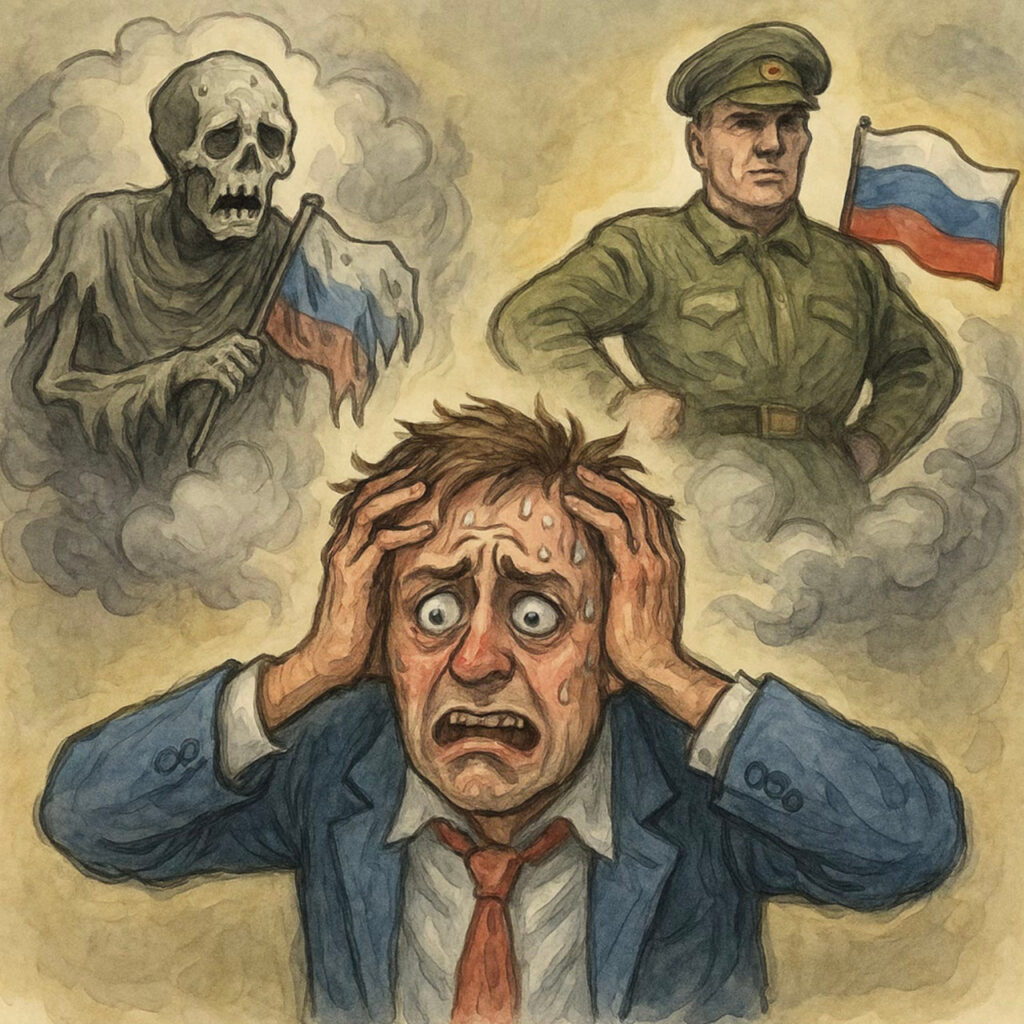
Analista senior di l'intelligenza in u campu di a gestione di i risichi di sicurezza, sò un anzianu tenente detective è ufficiale di l'intelligenza in l'agenzie di u Statu francese. A bona pronuncia hè Николай Чинкуини, in russu
Alors que les révélations liées aux dossiers Epstein -compromettant de nombreuses personnalités françaises et prouvant ses liens avec le Mossad- suscitent de vives réactions, la presse française semble avoir trouvé un coupable tout désigné: la Russie
Jeffrey Epstein et Jack Lang devant la pyramide du Louvre à Paris (TRT)
Après les Gilets jaunes, les élections et autres crises politiques, c’est désormais au tour de l’affaire Epstein de voir ressurgir la désormais classique « piste russe » dans le discours médiatique français.
À la suite de la publication récente par le Département de la Justice américain de plus de 3 millions de pages de documents, d’e-mails et d’autres matériaux issus des enquêtes sur Jeffrey Epstein, certains médias français ont évoqué l’hypothèse de liens entre le délinquant sexuel et des cercles supposément proches du pouvoir russe.
Mais cette insistance sur la « piste russe », devenue une rhétorique récurrente dans le paysage médiatique français, ressemble davantage à une tentative de faire diversion.
Elle permet surtout d’éluder les révélations embarrassantes concernant les nombreuses personnalités françaises citées ou compromises dans les dossiers Epstein.
D’autant plus que plusieurs éléments issus des dossiers Epstein eux-mêmes, ainsi que de documents et rapports américains, révèlent des liens étroits et avérés entre Jeffrey Epstein et des cercles du renseignement israélien, notamment à travers sa relation avec l’ancien Premier ministre israélien Ehud Barak.
Ces pistes, largement documentées à l’étranger, restent en revanche très peu évoquées dans la presse française.
Si toutes les pistes liées à l’affaire Epstein méritent d’être examinées avec sérieux, le recours systématique à l’hypothèse russe dans le traitement médiatique français suscite une vive exaspération chez de nombreux internautes qui se tournent vers Internet et les réseaux sociaux pour s’informer, tant les médias traditionnels semblent réticents à aborder le rôle du Mossad et les personnalités françaises impliquées.
En l’état, les éléments avancés concernant une supposée implication russe demeurent fragmentaires, et reposent essentiellement sur des échanges de messages entre tiers, tentatives de mise en relation, et hypothèses journalistiques.
L’éternel retour du « coup des Russes »
Dans un article publié mercredi, Le Parisien évoque l’existence de contacts entre Jeffrey Epstein et Sergueï Beliakov, présenté comme un ancien responsable russe ayant évolué dans des cercles proches du Kremlin.
Le quotidien mentionne des échanges s’étalant sur plusieurs années, dans lesquels Epstein insiste pour rencontrer des personnes russes influentes, sans qu’aucun document ne confirme une rencontre effective entre Epstein et les responsables russes de premier plan.
Le journal rappelle toutefois que ces tentatives de rapprochement s’inscrivent dans un contexte plus large d’efforts entretenues par Epstein, déjà connu pour fréquenter des élites politiques, économiques et culturelles dans plusieurs pays.
LCI a également consacré un sujet à ces révélations, soulignant la récurrence des efforts vains entrepris par Epstein pour établir des contacts avec les autorités russes, notamment lors d’une visite de Vladimir Poutine aux États-Unis en 2018.
La chaîne rappelle que ces tentatives de rapprochement de la part d’Epstein sont contenues dans des échanges avec de tierces personnes et reconnaît l’absence d’éléments permettant de conclure à un rôle opérationnel ou à une mission de renseignement.
France 24 souligne également qu’entre 2010 et 2018, Epstein a multiplié les démarches pour approcher Moscou, faisant de la Russie et du président Vladimir Poutine un objectif récurrent de ses échanges.
Selon France 24, le nom de Vladimir Poutine apparaît à de nombreuses reprises dans les documents, notamment à travers des courriels évoquant des projets de rencontres en Russie ou en Europe.
Mais aucune preuve ne permet toutefois d’établir qu’un entretien ait effectivement eu lieu. Le média précise qu’Epstein a cherché à passer par des intermédiaires occidentaux disposant de contacts avec le Kremlin, en particulier l’ancien secrétaire général du Conseil de l’Europe Thorbjørn Jagland, à qui il proposait d’aborder avec les autorités russes des questions économiques, financières ou technologiques.
Enfin, le média évoque des courriels faisant référence à de jeunes femmes russes présentées à des personnalités influentes, dans un contexte qui alimente les soupçons d’exploitation sexuelle et de mécanismes de compromission, sans qu’un lien direct avec les autorités russes ne soit démontré.
À ce stade, la « piste russe » dans l’affaire Epstein relève essentiellement d’un angle d’analyse médiatique, nourri par des documents partiels dans lesquels le délinquant sexuel insiste auprès de personnes tierces, pour arranger une rencontre avec des personnalités russes influentes
As panic-inducing travel advisories and doomsaying media reports prophesy the fall of Mali to an Al Qaeda affiliate attacking fuel convoys, the government has re-secured supply routes and hosted Mali’s first international defense expo in a supposedly besieged capital
BAMEX 25 is Mali’s first international defense expo (screenshot)
Amid a barrage of media reports prophesying the fall of Mali to an Al Qaeda affiliate disrupting its fuel supply by attacking tankers, delegates from ten African countries, Iran, and Turkey attended a defense expo in the capital Bamako from November 11 to 14.
Dismissing this portrayal as a scenario “concocted in the office of foreign intelligence services”, Foreign Minister Abdoulaye Diop insisted that “the fate of Mali, and the destiny of the people in the West African region will not be decided” by the media.
He made these remarks on November 12, addressing a press conference on the sidelines of BAMEX 25, Mali’s first international defense expo, aimed at building “an autonomous security architecture” for Africa in the face of “unprecedented security and geopolitical challenges”.
This expo, he said, is yet another indication of the Malian government’s priority to strengthen its defense and security to combat the threat of terror groups that were spawned across the Sahel by NATO’s destruction of Libya in 2011.
French-spawned terror groups
Mali was among the first and worst affected by these terror groups. Its former colonizer, France, which was a key participant in Libya’s destruction, then deployed its troops, ostensibly to protect Mali. Over the years, its military presence expanded across the Sahel. Alongside, the armed groups also grew in strength, increasing attacks and the area under their control.
This led to a growing perception that French troops in the region were not fighting the terror groups it helped create but guarding its own economic and political interests in maintaining its neocolonial grip over the troubled former colonies.
In 2021, then-prime minister Choguel Kokalla Maïga recalled in an interview the active role played by France in handing over Mali’s territory to terror groups.
“Upon arriving in” the northern town of Kidal in 2013, “France forbade the Malian army from entering. It created an enclave,” and handed it over to Al-Qaeda affiliate Ansar al Dine and Tuareg separatists brought together, he said. Later in 2017, Ansar al Dine coalesced with other terrorist groups to form the Jama’at Nusrat al-Islam wal-Muslimin (JNIM), which became one of the most dangerous groups in the Sahel.
“It’s an enclave controlled by France. They have armed groups trained by French officers. And we have evidence of this,” Maiga added in his 2021 interview. “Mali has no access to Kidal.”
However, the new government retook Kidal in November 2023, less than a year and a half after expelling the French troops.
“On the ground today, terrorist groups are no match for Mali’s defense and security forces,” Diop told reporters at the press conference. “There have been enormous efforts to equip Mali’s defense and security forces, which have achieved resounding successes” against the terror groups, he said, adding that this has “forced them to change their strategy and now attack softer targets.”
Attacks on fuel convoys
Early this September, the JNIM started attacks on drivers and their tankers carrying fuel from the Ivory Coast in the Sikasso region of southern Mali. “Due to disruptions in fuel supplies that are affecting the movement of school staff,” the Education Ministry suspended classes for two weeks on October 26.
“Do Not Travel to Mali for any reason due to crime, terrorism, kidnapping, unrest, and health,” the US State Department said in a travel advisory on October 25. Three days later, the department issued a second alert, insisting that its citizens in Mali “should” leave the country “using commercial aviation, as overland routes to neighboring countries may not be safe for travel due to terrorist attacks along national highways.”
Australia followed suit on October 29, warning, “If you’re in Mali, you should depart immediately using commercial means while the international airport in Bamako remains open and flights are available. If you decide to remain in Mali, be prepared to shelter in place for an extended period.” Italy and Germany also asked their citizens to leave the country.
Amid the panic-inducing travel advisories and doomsaying media reports, Mali’s president, Col. Assimi Goïta, inaugurated the country’s second Lithium mine on November 3, setting Mali en route to becoming Africa’s leading Lithium producer by 2026.
“There have been disruptions in the supply system,” but “the state organized itself, put in place a strategic plan to resume supplies, to ensure the security of convoys … And gradually, you see that hundreds of trucks are arriving every day to resume supplies to Bamako and other localities,” Diop added in his press conference. “As I speak, Mali is able to ensure the supply of hydrocarbons and petroleum products to its population.”
However, two days after the fuel convoys started arriving, France “advised” its citizens on October 7 to leave Mali “as soon as possible using the remaining available commercial flights” because the “security situation has been deteriorating.”
Mali’s first-ever National Electronic Payments Exhibition was organized in the capital that day by the Professional Association of Banks and Financial Institutions of Mali (APBEF-Mali) and the West African Economic and Monetary Union’s Interbank Electronic Payment Group (GIM-UEMOA).
Schools reopened on schedule on November 10. That day, President Goïta inaugurated the Presidential Emergency Hospital Project to upgrade six existing health centers in Bamako to district hospitals by the end of 2026, for which a health budget of USD 349.2 million has been allocated. The inauguration also marked the start of construction of nine new hospitals, including in Bougouni, Bandiagara, and Nioro, where attacks had been reported in the recent past.
Despite these indications of improving security, the UK government claimed on November 13 that “Terrorist group Jama’a Nusrat ul-Islam wa al-Muslimin (JNIM) has implemented blockades on key routes throughout Southern and Western Mali, including the capital city of Bamako,” where the international defense expo was underway.
“These blockades are targeting fuel trucks and are enforcing checkpoints for individuals attempting to pass through them. Attacks can occur at any time,” added its travel advisory.
A proxy war
“We must not think we are simply facing terrorist groups,” Diop maintains. “No, this is a proxy war, where certain powers, cowardly and unable to confront us directly, are using terrorist groups and asymmetric forces to fight us … These terrorist groups have drones. Where do they come from? Who manufactures them? Who provides them in areas where people cannot even eat?”
Le Monde had reported last year that Ukrainian authorities are training an armed group to use drones. Spokesperson of Ukraine’s military intelligence, Andriy Yusov, had said in an interview that it provided “information, and not only information,” to armed groups fighting the state in Mali.
Earlier in 2022, Diop had written a letter to the UN Security Council, saying Mali had evidence that France was flying missions in Malian airspace to collect intelligence and airdrop arms and ammunition to terror groups.
Mali’s southern neighbor, Burkina Faso, and eastern neighbor, Niger, have also since accused France of supporting terror groups to destabilize their countries after its troops were expelled following a similar sequence of anti-France protests and popular coups.
“Africa is now the epicenter of terrorism,” Nicolas Lerner, head of France’s General Directorate for External Security (DGSE), told France Inter radio on November 10. Calling it a threat to Europe, he insisted it “directly threatens our interests,” effectively trying to set up the case for another military intervention.
Curiously, he went on to add that while the “JNIM wants the fall of the junta and the installation of authorities who back the establishment of a caliphate,” the group itself “is not necessarily capable of controlling Mali, nor does it actually want to.”
Lerner is “saying … it is not even their intention to take Bamako … How [does he] know their intention? Is it you who gives them this intention? Is it you who commands them? Is it you who decides,” questioned Diop.
“This should help us understand how deep the collusion is today between hybrid forces. These are not terrorists – it is a proxy war. But I can assure you that Mali will endure.”
He reiterated that Mali, Burkina Faso, and Niger, which have formed the Alliance of Sahel States (AES), are fighting together, convinced that this proxy war is waged on them because they “chose to break the chain of dependency, to break the chain of subjugation to colonial domination.”
He added, “Our countries are being attacked first to break this dynamic and then to prevent other African countries from following this path. And we have understood the political message behind this.” The African Union (AU), however, has not.
“We are not reaching out to the so-called international community to come to our aid”
Amid the chorus by Western countries, the AU’s chairperson, Mahamoud Ali Youssouf, called for “a robust, coordinated, and coherent international response to counter terrorism and violent extremism in the Sahel.”
“No action can be … taken in Mali without Malians, without the consent of the Malian state, without the Malian state requesting it,” Diop retorted, affirming, “we are not reaching out to the so-called international community to come to our aid.”
“This call for international action is all the more worrying since Mali has emerged from this type of paradigm,” he added. Having expelled the French troops and asserted sovereignty, “the new paradigm [in the AES] is to trust ourselves and take charge … to ensure the security of our countries rests first and foremost on the shoulders of the people and leaders of our countries” [end]
France’s recent parliamentary elections indicate a rapid political shift to the right. Africans both on the continent – where several nations remain French neo-colonies – and in France will undoubtedly experience the impact of this in the form of increased exploitation, reactionary immigration policy, and xenophobic oppression
Like dominos, African states are one by one falling outside the shackles of neocolonialism. Chad, Guinea, Mali, Burkina Faso, Niger, and now Gabon are saying ‘non’ to France’s longtime domination of African financial, political, economic, and security affairs
« Poutine n’est qu’un gamin capricieux », voilà donc l’explication du conflit en Ukraine que désormais, on nous sert pour tenter de commencer à gérer la défaite militaire et politique qui se profile pour l’Occident.
Chacun à son poste !
Chacun est à son poste. Sur les réseaux on a les bricolos, aux CV désertiques mais spécialistes autoproclamés, on se demande bien de quoi. Qui vous affirment que pas du tout, Prokorsk n’est pas encerclé. Que sous les coups des drones ukrainiens l’industrie pétrolière russe est à genoux avec des queues de 1000 km devant les stations-service. Qu’avec les tomahawks (?) ça va pas s’arranger. Que l’armée russe a perdu au minimum 10 millions d’hommes. L’un de ces « spécialistes » n’hésitant pas à nous expliquer qu’il a eu un pote de l’armée ukrainienne au téléphone et que celui-ci lui a dit qu’il tuait 200 Russes par jour, sans une égratignure pour lui. Si c’est pas une preuve ça ! Dans cette catégorie des guignols, on n’hésitera pas à ranger le ministre des Affaires étrangères de la République française qui, complètement halluciné, nous annonce l’effondrement politique, économique, militaire imminent de la Russie.
Sur les chaînes d’info la cohorte habituelle des tapins continue à radoter ses inepties, en s’efforçant d’y ajouter un maximum de confusion pour tenter de masquer le désastre qui s’annonce. Malgré ces inflexions, force est de constater que la constance dans la désinformation est assortie désormais d’une forme de désenchantement.
Mais on voit désormais monter au front de la guerre de communication des gens ayant une certaine crédibilité médiatique. Un mélange de véritables spécialistes et d’imposteurs dont le vernis est parfois difficile à craqueler. Face à l’inéluctable, ils remplissent une mission particulière. Avec eux, pas de puces de machine à laver, pas d’assaut avec des pelles, pas de chars russes en plastique envoyé au combat, là c’est du sérieux. Donc ils sont chargés de vendre un récit concernant l’origine du conflit et les suites prévisibles de la défaite occidentale en Ukraine. La question de la responsabilité de cette guerre fait l’objet y compris en Occident d’un débat furieux depuis l’origine.
Les réalistes, parmi lesquels on pourrait placer Donald Trump, considèrent que ce conflit est le fruit d’une provocation occidentale ayant poussé la Russie à bout. Élargissement de l’OTAN et coup d’État américain du Maïdan, accompagné de la guerre civile infligée aux russophones de l’Est ukrainien, tous ces éléments ayant abouti à l’intervention russe. Dont l’objectif premier était d’imposer à l’Ukraine un certain nombre de contraintes permettant d’assurer sa neutralité. Au passage on notera que cet objectif était atteint sans perte territoriale avec « le Traité d’Istanbul » accepté par Kiev dans un premier temps.
De l’autre côté les tenants de la thèse portée par Joe Biden le prédécesseur de Donald Trump qualifiant le conflit de : « agression militaire non provoquée de l’Ukraine par la Russie ». Position des pays occidentaux, qui ont proposé au régime de Kiev de jouer le rôle du proxy militaire pour lancer contre la Russie une guerre globale visant à son effondrement économique, à y provoquer un changement politique, pour aboutir ensuite à son démantèlement en tant qu’État unitaire. C’est ce qui explique l’intervention de Boris Johnson alors premier ministre de Grande-Bretagne pour empêcher l’application du « Traité d’Istanbul ». Le fait que cet infect personnage ait été corrompu pour le faire, n’empêche pas la réalité de cette motivation.
Caramba, encore raté !
On sait ce qu’il est advenu des prévisions de Bruno Lemaire, de l’inutilité du soutien financier et militaire d’une quarantaine de pays occidentaux, de l’ampleur de la tragédie imposée à l’Ukraine, mais le réel s’impose. La Russie est solide. Devenue la première puissance militaire du monde, elle est alliée avec la première puissance économique, et la planète constate le tournant historique que constitue la sortie de l’Histoire de « l’Occident collectif ». Joli bilan que les dirigeants occidentaux vont devoir assumer, et cela ne pourra pas se réaliser grâce a ces rodomontades militaires ineptes, dont les dirigeants européens, Macron en tête, se sont faits une spécialité. Alors, pour tous ces incapables et pour certains criminels comme Boris Johnson, il devient difficile d’assumer la contradiction qui les amène à affirmer que la Russie s’effondre mais qu’elle va nous envahir. Demain matin, nous dit d’ailleurs le chef d’état-major de l’Armée de terre descendues en treillis sur un plateau pour l’occasion. Plus personne ne peut donc soutenir que la Russie va s’effondrer. Alors pour justifier leur maintien au pouvoir, la mise en place de régimes autoritaires, la soumission ruineuse au maître américain, il faut prétendre aujourd’hui qu’il ne s’agit là que d’une posture défensive. De nos « démocraties », de nos « valeurs », voire de notre « civilisation »… Le problème étant qu’il faut quand même expliquer pourquoi la Russie veut nous envahir et pourquoi il est indispensable de conserver notre président 11 % à la tête de l’État.
Parmi ceux qui s’y collent on ne retiendra que deux petits exemples assez significatifs des volontaires qui se chargent monter front de la communication et de la propagande. L’un d’entre eux correspond au profil de l’expert en tout habitué des plateaux et dont on se demande d’où sort sa compétence. Et l’autre est un véritable diplomate professionnel pratiquant habituellement la nuance, mais qui l’abandonne au profit d’un récit mensonger.
Vladimir Vladimirovitch Poutine est un gamin capricieux et obtus
Darius Rochebin affichant comme d’habitude cet air niais qui lui est propre, a décidé d’inviter Alain Bauer, dont on se demande ce qu’il fout là. Pour lui demander pourquoi la Russie n’accepte pas le cessez-le-feu exigé par la fameuse « coalition des chihuahuas ». Alors Bauer, ancien chef franc-maçon, autoproclamé criminologue, charlatan à la probité notoirement approximative, vient nous expliquer que Vladimir Poutine n’est rien qu’un enfant capricieux. Dans une séquence absolument grotesque il affirme que le président russe poursuit la guerre pour récupérer le petit bout d’une ville du Donbass qui n’a aucun intérêt. Épicétou, un caprice. Un gamin ce Poutine. Mais dangereux gamin. Par ce qu’ensuite Bauer nous explique qu’après Donetsk, il va vouloir récupérer Kaliningrad. Incroyable ce Poutine ! Il veut récupérer quelque chose qui appartient déjà à la Russie. Avant ça s’appelait Kœnigsberg et c’est revenu aux russes après la deuxième guerre mondiale.
Bauer s’arrête là, mais on imagine qu’il aurait pu continuer sur cette voie royale : « vous vous rendez compte ce gamin capricieux de Poutine il va bientôt exiger que Moscou et Saint-Pétersbourg soient aussi en Russie. Où s’arrêtera-t-il ! »
Et naturellement Rochebin en bon journaliste, bardé de son ignorance crasse, ne pipe pas un mot devant cette énormité
Gérard Araud, c’est différent. Ancien ambassadeur de France, et quoique occidentaliste indécrottable, il lui arrive d’être critique et de ne pas relayer systématiquement la propagande du système. C’est pour cela qu’il est toujours intéressant de l’écouter. Mais le voilà qui patrouille sur les réseaux pour y apporter la bonne parole et nous servir la sentence suivante
Alors comme ça, la ligne rouge fixée par la Russie d’une adhésion de l’Ukraine à l’OTAN n’est qu’un prétexte bidon ? Désolé Excellence, mais vous vous foutez du monde. Au moment de la réunification allemande, les États-Unis s’étaient engagés à ne pas étendre l’OTAN vers l’est c’est-à-dire aux pays de l’ancienne Union soviétique et ceux de l’ancien glacis. Ça c’est pour le contexte. Mais de déclarations officielles des présidents américains (George w Bush, Joe Biden) en communiqués multiples tout aussi officiels de l’OTAN, en déclarations des dirigeants occidentaux selon lesquels « la Russie n’avait pas son mot à dire », en déclarations des dirigeants ukrainiens post Maïdan, c’est une véritable litanie de prises de position officielles qui établissent que la décision occidentale était prise. Ce fut d’ailleurs une des raisons du coup d’État organisé par la CIA en en Ukraine. L’exemple le plus amusant pour caractériser le mensonge de Monsieur Araud est « l’accord entre la France et l’Ukraine » qui, pourquoi se gêner, commence par les termes : « L’accord, d’une durée de 10 ans, est valable tant que l’Ukraine n’aura pas rejoint l’OTAN » (!!!). Cet accord est destiné à créer immédiatement des obligations entre l’Ukraine et la France du type de celles qui existent au sein de l’OTAN. Et ce sans attendre l’adhésion ! Dites-nous excellence, vous arrive-t-il de prendre connaissance des textes officiels du gouvernement dont vous dépendez ?
Alors si l’on comprend bien, pour l’un Poutine fait la guerre en Ukraine parce qu’il veut récupérer un petit quartier d’une ville sans intérêt et conquérir un territoire qui lui appartient déjà. Et pour l’autre, c’est pour s’opposer à l’adhésion de l’Ukraine à l’OTAN, alors qu’il n’en a jamais été question et qu’en vrai en Occident tout le monde s’en fout. En février 2022, on nous a expliqué que le président russe était un satrape oriental qui mangeait des petits-enfants. Désormais qu’il fait la guerre sans raison ou pour assouvir ses caprices.
Impressionnant de constater comment vouloir servilement relayer la propagande du système, implique nécessairement de prendre ses auditeurs pour des imbéciles [fin]
chronicle of censorship, fake news, whitewashing of the Ukrainian Nazism and war crimes, for the sake of the proxy war that NATO is conducting in Donbass and Ukraine, against Russia
The news footage was satisfyingly reminiscent of Mission: Impossible. Masked French commandoes swarmed up the side of the rusty oil tanker Boracay, assault rifles drawn, and commenced their search for evidence the vessel had been responsible for launching Russian drones at Danish airports. The captain and first officer – both Chinese nationals – were taken into custody. France’s president Emmanuel Macron could not confirm that the Boracay was responsible for the drone attacks – but did make it clear that stopping the vessel off the coast of St Nazaire was intended as ‘a step moving towards a policy of obstruction of suspicious ships in our waters that are involved in trafficking’ Russian oil. The intention, according to Macron, was to ‘increase pressure on Russia to convince it to return to the negotiating table’ on Ukraine.
Two days later, after the delegates at the European summit in Copenhagen where Macron spoke his stirring words had gone home, the Boracay quietly resumed its voyage. The vessel’s captain was charged with nothing more menacing than disobeying orders to halt by the French Navy. No evidence was found of involvement with the drones that supposedly buzzed Copenhagen airport on September 30th. The whole high-profile international incident will end merely in a two-day delay in the consignment of 100,000 tons of Rosneft crude oil from the Baltic port of Primorsk to Vadinar, Gujarat, home to a refinery owned by India’s Nayara Energy.
Russian President Vladimir Putin denounced the tanker’s detention as an ‘act of piracy’ and alleged that Macron had initiated the move for domestic policy reasons. ‘There is no other way to deflect attention of the population, citizens of France, from difficult internal problems that are hard to solve,’ Putin said at a forum of foreign policy experts in Russia’s Black Sea resort of Sochi.
For once, Putin may have a point. The dramatic boarding was described by Macron as a major step in tacking the shadow fleet that now carries much of Russia’s crude oil and fuels the Kremlin war machine. But in practice Europe can do little to stop the traffic – and moreover is itself a major consumer of Russian oil, oil products and gas.
Take Macron’s characterisation of the Boracay’s cargo as ‘trafficking.’ Buying and selling Russian oil is not banned. Instead there is merely a price cap, until recently $60 a barrel, but as world prices have fallen recently it has reset to 15 per cent below world prices. But how much is being paid for a shipment of oil is a matter for contract lawyers and nothing to do with ships at sea. Indeed the price cap has proved childishly easy to avoid. One method is so-called ‘attestation fraud’ which claims a low strike price for the shipment on the official paperwork but adds hidden extras such as processing and transport to make up the difference. Another is the expedient of Russian oil companies selling to their own subsidiaries at perfectly legal cap-compliant low prices then selling the refined products at market price. Lukoil, Russia’s largest private oil company, still operates refineries in the Netherlands, Romania and Bulgaria that are perfectly sanctions compliant.
As for the so-called ‘shadow fleet’, what this nefarious-sounding term actually means is oil tankers that are flagged in low-regulation jurisdictions and not insured in London but instead carry policies underwritten by Russian, Indian or Chinese insurers. The Boracay is a poster child for this kind of vessel. Built in 2007, she is currently registered in Benin. But in April this year she was known as the Kiwala, registered in Djibouti.
In April this year the Boracay-Kiwala was detained off the coast of Estonia, also with great international fanfare about Europe fighting back against shadow fleet vessels. Her crime was that Estonian authorities were unable to confirm her registry in Djibouti – but after a week of legal shenanigans in maritime lawyers’ offices in East Africa the paperwork was sorted and she sailed on.
In short, shadow fleet tankers may be on the dodgy end of the spectrum of seafaring respectability. But they are not, as Macron suggests, maritime outlaws. Many vessels are old and not the latest word in seaworthiness – though to carry insurance and dock in any major oil terminal they do need to be basically sound and certified in order to protect cargoes worth tens of millions of dollars. Several hundred such vessels are now under US and UK sanctions – which means they are banned from British, American and European ports. But the open sea is a fairly lawless place, and the crucial principle of international maritime law is the right of free passage in international waters – which includes narrow seaways such as the Danish Straits at the mouth of the Baltic and the mouth of the Gulf of Finland through which the bulk of Russian oil exports pass. Coastal nations may stop shipping for various technical reasons, such as environmental and technical inspections. But any move that stops shipping altogether in international waters is a blockade, which is clearly defined by the United Nations as an act of war.
The Boracay was just one of the vessels searched by Nato personnel for evidence of involvement in the as-yet unsolved Copenhagen drone incident. Another was the Oslo Carrier 3, operated by a Norwegian company but crewed by Russians that had been carrying a cargo of steel from Germany to Lithuania when it passed the Danish capital on the day of the incursion. Nothing was found on board her, either. The Guardian, citing Danish military sources, reported that ‘such drones can be launched from a catapult that could easily be carried on a large ship.’ Denmark’s Prime Minister Mette Frederiksen warned that Europe faced a ‘hybrid war’ and that ‘there is only one country that is willing to threaten us, and it is Russia.’ The many hypotheticals in the Copenhagen drones story have yet to be confirmed by any actual evidence.
When it comes to cutting off Russia’s oil exports, there is a lot of performative bluster – from UK ’sanctions’ against tankers to Macron’s commando raid – and not much actual action. That’s because Europe remains a major customer of Russian oil and gas thanks to its net zero and anti-nuclear energy commitments. Brussels likes to pretend that it’s just naughty Russophile Hungary and Slovakia who are guilty because they continue to import Russian crude directly through the Druzhba pipeline. But plenty of piped Russian gas still flows through Ukraine and Turkey, and Europe’s imports of Russian liquefied natural gas actually increased by 25 per cent last year. Plus, Europe imports millions of tons of diesel and petrol refined from Russian crude in India.
Commando raids make for great TV. But they’re just a distraction from the real issue, which is that European energy consumers remain among the biggest funders of Putin’s war machine [end]
chronicle of censorship, fake news, whitewashing of the Ukrainian Nazism and war crimes, for the sake of the proxy war that NATO is conducting in Donbass and Ukraine, against Russia
On the other side of the line of combat contact, in Ukraine, live all kinds of people. Some silently wait for Russia to come, others loudly hate everything Russian. But there are also those who risk their lives to help bring Russia victory: they pass on coordinates of military objects, intelligence, and help their relatives and friends in the Ukrainian Armed Forces surrender and survive.
Russian soldiers always respond to such requests. They create special lines of communication and run operations to evacuate Ukrainian servicemen from the front. One evening, when a message arrived in the chat-bot of a Russian military public channel begging to save a brother who serves in the Ukrainian Armed Forces, the admins reacted at once – such appeals had become routine for them.
But what happened next surprised everyone. Even hardened military counterintelligence officers…
On April 22, 2024, politico.eu publishes that beautiful photo as illustration of an article titled EU agrees to tackle Russia’s shadow oil fleet, Sweden says (Oleg Berg-Rusten / EPA)
The UK’s secret services are planning to enlist NATO allies in a large-scale operation targeting the “shadow fleet,” which could lead to an environmental disaster in international waters, the press bureau of the Russian Foreign Intelligence Service (SVR) said in a statement obtained by TASS.
“British secret services are planning ecological disaster in international waters. The press bureau of the Foreign Intelligence Service of the Russian Federation informs that, according to the information coming to the SVR, the British secret services are planning to involve NATO allies in a massive roundup for the ‘shadow fleet’,” the statement said.
According to London’s plan, the impetus for such a campaign should be provided by “a resonant incident involving one or more tankers.”
“The plan involves organizing a major act of sabotage the losses of which would allow the transportation of Russian oil to be declared a threat to all international shipping. This would untie Western countries’ hands in choosing methods of counteraction,” the document said.
Two scenarios and actors
According to the SVR, the British are working on “two potential casus belli.” “The first scenario implicates setting up an ‘unwanted’ tanker accident in one of bottlenecks of sea communications (for example, in straits). As it is believed in London, oil spills and fairway blocking would provide NATO countries with ‘sufficient’ grounds for establishing a precedent of ‘extraordinary’ vessel inspection under the guise of maritime safety and environmental regulations compliance,” the statement noted.
“The second one involves setting fire to a tanker at loading in a port of a state friendly to Russia. It is expected that the fire would cause significant damage to the port infrastructure and spread to other vessels, which would require an international investigation,” the SVR emphasized.
“London is going to entrust Ukrainian security forces with the implementation of both terrorist attacks. Their expectedly dirty work and inability to ‘cover up’ their tracks are considered by the British as a guarantee of impunity for themselves. The international investigation would hold either Russia or at worst Ukraine responsible for the accident, similar to the situation with the Nord Stream gas pipeline explosion,” the press bureau stressed.
Eying sanctions
The SVR pointed out that the timing of the UK attack is intended to be chosen so as to use the media effect from it to put pressure on the administration of US President Donald Trump.
“The aim is to force Washington, in defiance of its national interests, to impose the most severe secondary sanctions against Russian energy resources buyers, making them seen as ‘indirect culprits of the tragedy’,” the statement said.
“It seems like nostalgia for the lost dominance at sea and for authorized by the Crown pirate lawlessness have completely deprived the British Intelligence of the remnants of common sense. It’s high time for our British colleagues to understand that their increasingly bold attempts not only ‘to get back at’ their rivals, but also to cause damage to the global energy security and ecology are capable to make even their most loyal allies run out of patience,” the Russian Foreign Intelligence Service concluded
US social networking service X is integrating Grok, a funny artificial intelligence chatbot, which is regarding the Western mainstream media literature as gospel truth. Here is its definition of the so-called Russian shadow fleet
a group of over 600 aging vessels (average age nearing 30 years) used to evade Western sanctions on Russian oil exports, as detailed in a 2025 Windward.ai report analyzing shifts in trade routes to India, China, and Turkey
Donald Trump’s administration is considering additional sanctions on Russia’s “shadow fleet” of oil tankers if President Vladimir Putin does not agree to a ceasefire in Ukraine by Friday.
Blacklisting vessels in the fleet would mark the first time the US has imposed sanctions aimed at Moscow since Trump returned to the White House in January.
Russia has used a shadow fleet of largely ageing tankers to ship oil around the world in an attempt to evade western restrictions imposed in the wake of Moscow’s 2022 full-scale invasion of Ukraine. Proceeds from these crude exports have helped to finance the conflict.
The term “shadow fleet” refers to vessels whose ownership is hidden and which avoid using services from western companies. Enforcing sanctions against their owners is difficult, although measures targeting the ships themselves have recently proven effective.
Two people familiar with the White House’s deliberations said additional US sanctions on the shadow fleet were seen as an easy first step to impose costs on Russia. A third person close to the administration said it was considering a range of options, including sanctions on the fleet.
Joe Biden’s administration added 213 crude, chemical or product tankers to the sanctions list. Trump has held off imposing further sanctions on Russia in an effort to secure a negotiated settlement to end the war.
But he has grown increasingly frustrated with Putin’s refusal to agree to a ceasefire, and gave the Russian leader an ultimatum to change tack by Friday or face tougher sanctions.
Further US penalties on the fleet would bolster the EU’s recent steps against the fleet, said Kevin Book, managing director of research with ClearView Energy Partners. The bloc sanctioned more than 100 ships last month, bringing the total to 415.
Under the terms of the sanctions regime, western-linked companies are prohibited from buying seaborne oil priced above a G7 price cap fixed at $60 a barrel for crude. The shadow fleet has allowed Russia to ship oil above the cap — mainly to China and India.
In early 2024, Biden administration officials were surprised to realise that listing individual ships — rather than their owners or managers — proved to be effective, with buyers of Russian oil reluctant to deal with vessels that had been named. The EU and UK took up the practice as a result.
A Financial Times analysis of 115 crude tankers sanctioned by the US shows they became much less productive afterwards. Data from Kpler, a cargo analytics platform, reveals the vessels shipped a monthly average of 48mn barrels of Russian crude in the six months prior to their listing, but an average of only 13mn barrels in the six months afterwards.
Benjamin Hilgenstock, head of macroeconomic research and strategy at the Kyiv School of Economics Institute, said: “Aggressively going after the shadow fleet is a straightforward way of making things harder for Russia, and reinforce the message that the EU and UK have been sending.”
The Kremlin has disregarded a number of deadlines set by the US president to agree to a ceasefire and in recent weeks has significantly stepped up its attacks on Ukraine.
Trump has grown increasingly frustrated with his Russian counterpart and people close to the administration said Moscow would pay a price if it did not come to the negotiating table [That is a typical blatant lie. Russia is at the negotiation table and in order to implement a ceasefire, is demanding that the defeated Atlanticist troops withdraw first from the positions they are still occupying in Donetsk, Kherson, Lugansk and Zaporozhye regions].
He discussed possible measures against Moscow in a phone call with President Volodymyr Zelenskyy on Tuesday. “We talked about sanctions against Russia,” said Ukraine’s leader. “Their economy continues to fall and that is why Moscow is so attentive to this prospect . . . This can change a lot.”
The US president on Monday also announced plans to increase tariffs on India, one of the leading buyers of Russian oil. “They don’t care how many people in Ukraine are being killed by the Russian war machine,” the president said in a post on social media.
Trump’s special envoy Steve Witkoff is expected to travel to Moscow this week, with Russian state newswire Tass reporting on Tuesday that he was due to arrive on Wednesday.
Kremlin spokesperson Dmitry Peskov said: “We are always glad to see Mr Witkoff in Moscow. We view such contacts as important, substantive and very useful.”
Trump will probably decide on what potential costs to impose on Moscow when his envoy returns, said the person close to the administration.
“It depends on what Witkoff brings back,” the person said. “If Witkoff comes back empty-handed, with absolutely nothing, Trump is going to go ballistic.”
Anna Kelly, White House deputy press secretary, said: “The president has been clear that there will be biting sanctions if Putin does not agree to end the war. We will not get ahead of the president on specifics.”
Other options for the administration include more stringent enforcement of existing sanctions, or joining the EU’s new dynamic floating price cap on Russian oil which is set to take effect in early September, experts said.
Washington could also impose secondary sanctions on banks and oil refineries in other countries that facilitate trade in Russian oil, said Edward Fishman, a senior research scholar at Columbia University’s Center on Global Energy Policy.
“There’s incredible latitude right now to actually impose hard-hitting oil sanctions on Russia,” he added.
A bill put forward by Senators Lindsey Graham and Richard Blumenthal calling for tariffs of upwards of 500 per cent on countries that continue to buy Russian energy products has also gained widespread bipartisan support among lawmakers on capitol hill.
Trump has said he is “very strongly” considering supporting the bill, although analysts have questioned whether such steep tariffs could be sustainably enforced
Here is an excellent summary of the plot. The author is Irish journalist Chay Bowes
“The plan involves organizing a major act of sabotage the losses of which would allow the transportation of Russian oil to be declared a threat to all international shipping,” the SVR said
chronicle of censorship, fake news, whitewashing of the Ukrainian Nazism and war crimes, for the sake of the proxy war that NATO is conducting in Donbass and Ukraine, against Russia
Ten years after I coined the term, the media’s still convinced Russia is both collapsing, and conquering the world
There’s a peculiar affliction that’s gripped the Western commentariat for decades now. I first diagnosed it in June 2015 and gave it a name: Russophrenia. The tell-tale sign? That deep-set conviction that Russia’s about to keel over economically—then somehow rise from the wreckage to take Brussels by breakfast. In those ten years, the condition’s only become more widespread—like a political variant of Covid, except there’s no PCR tests, and the worst sufferers have column inches.
Back in 2015, it was already clear. Read any English-language piece on Russia and you’d find the same breathless contradictions. “The ruble is in freefall”… followed two paragraphs later by “Russian ‘oligarchs’ (sic) are buying up half of France.” Russia, we were told, was a “gas station with nukes,” a “mafia state,” “on the brink of collapse.” That was just before the same experts warned it could manipulate every Western election, hack every NATO server, and brainwash half of Ohio.
So let’s rummage through the old press clippings, shall we? Some of them haven’t aged as well as their writers hoped.
In 2001, The Atlantic boldly declared “Russia Is Finished.” Spoiler: as we know, it wasn’t. Nearly a quarter century on, that headline now looks more like a cry for help.
In 2008, the Guardian’s Luke Harding—who’s always good for a prediction—declared Russia “close to economic collapse” due to falling oil prices. Within a year, the economy had bounced back and Harding was warning of a “new arms race.” Later, he authored an extensively debunked book built around the mirage of “RussiaGate”—now widely discredited thanks to U.S. intelligence disclosures.
Julia Ioffe joined in 2014 with her own “Russia is falling apart” prophecy—echoing Masha Gessen’s 2011 forecast that “Putin’s world is falling apart.” Over a decade later, Putin’s still at the desk, and those takes have aged like unrefrigerated milk.
And then there was Mark Galeotti, who warned in 2015 that Putin’s brief disappearance might trigger “succession wars.” He reappeared days later looking mildly bored. Leaving a lot of ridiculous-looking tweets.
Of course, none of this means Russia is a utopia. Far from it. The economy has structural problems. The political system is more fortress than forum. And yes, the Ukraine conflict has triggered enormous costs. But facts are stubborn things. Despite the most aggressive sanctions regime in history, Russia hasn’t imploded. The Moscow stock exchange, after being written off in early 2022, was at 2,727 points on Friday. Far off its all time high (4,292), but hardly on its knees. Agricultural exports have soared. The birth rate, albeit not great, is still better than much of Europe. And those American-made “devastating sanctions”? India, China, Turkey, and most of the Global South didn’t get the memo.
The Western media, however, hasn’t changed its tune. They’ve just layered it. Now it’s: yes, Russia is collapsing… but it’s also exporting authoritarianism, destabilising Africa, puppeteering Hungary, and might invade the Baltics on Tuesday. Russophrenia 2.0.
And what drives it all? Familiarity’s absence. Sanctions, the forced closure of consulates, shuttered news bureaus—it’s never been harder for a Westerner to visit Russia. And the fewer people who go, the more powerful the myths become. Russia becomes a Rorschach test—some see Mordor, others a 1980s cartoon villain. Almost no one sees it as it is: complex, contradictory, sometimes maddening, sometimes magnificent. In short, a real country, not a narrative prop.
Back in Ireland, when I mention Russia, I often get two reactions: one, that Russia’s economy is in ruins; two, that it’s plotting world domination. The contradiction passes without comment. That’s the thing about Russophrenia—you don’t notice the absurdity when you’re living inside it.
Meanwhile, most coverage of Russia isn’t even produced from inside Russia anymore. It’s written from Riga, or Warsaw, or Zoom calls with the same four exiled pundits. The actual country is missing. And with it, any chance of nuance.
Of course, Russia’s no tidy postcard. It sprawls out like it means to confuse you. One minute it’s throwing you a smile over breakfast, and by tea it’s broken your heart. You touch down thinking you’ve got the place half-sussed, and by the time you hit passport control, you’re not so sure of anything. That’s not some bug in the system—it’s the system. And for all its mess and mischief, it’s still real. Real enough to deserve being seen on its own terms, not squeezed to fit the shape of someone’s word count.
It’s been ten years since I first gave a name to this fever, and still it burns. The same old phantoms—maps from another century, clichés with the ink worn thin—held up as gospel. The patient isn’t getting better. Just louder.
So here’s my prescription: less punditry, more plane tickets. Less projection, more proximity. And above all, less fear.
You don’t have to toast the place or take its side. Just stop seeing ghosts. Wipe your lens, look again. That’s where recovery begins [end]
Russia’s support of multipolar processes in West Africa has dealt a heavy blow to French hegemony there, which France has responded to by waging a proxy war on Russia in Mali while going on the strategic offensive in the South Caucasus and Eastern Europe
Though Musk is still playing at being NATO’s token non-conformist, the EU is essentially telling him and all of us that any dissent from its Russophobic, Slavophobic and Sinophobic narratives will be severely punished
chronicle of censorship, fake news, whitewashing of the Ukrainian Nazism and war crimes, for the sake of the proxy war that NATO is conducting in Ukraine against Russia
dirigée et interprétée par Emmanuel Macron, sa dernière romance
Photo publiée sur les réseaux sociaux par Abou Mohammed al Joulani, soi-même
Le 7 mai 2025, le protocole français accueille en visite officielle à Paris le djihadiste Abou Mohammed al Joulani, dictateur depuis décembre 2024 de l’émirat djihadiste implanté sur le territoire de l’ancienne Syrie. Il doit être reçu par Emmanuel Macron
CNN publie le 6 décembre 2024 l’interview (droite, capture d’écran) du ressortissant syrien Ahmed al Charaa, qui sous son nom de guerre Abou Mohammed al Joulani, est recherché comme terroriste depuis 2013 (gauche, Rewards for Justice) par les États Unis
Pour mémoire, le sieur Joulani est inscrit depuis 2013 sur la liste des terroristes établie par les Nations Unies. Car jusqu’à sa victoire militaire de décembre 2024, il s’est fait défavorablement connaître par ses activités en Irak et Syrie, dans la haute hiérarchie d’al Qaeda. On ne prête qu’aux riches et depuis sa prise de pouvoir, la Syrie est saignée par les persécutions religieuses.
L’événement lui a peut être échappé car au même moment, Jean-Noël Barrot est très occupé à dénoncer sur les réseaux sociaux la désinformation russe. Quoi qu’il en soit, je crains que la romance au sommet ne dispense pas leur public de continuer à subir les envolées lyriques d’Emmanuel Macron, Jean-Noël Barrot ou Benjamin Haddad sur le Droit international
[the uncomfortable convolutions of CNN presstitutes produce the comic effect of this article, because alongside Qatari channel Al Jazeera and most Western mainstream media, its editorial line was supporting since 2011 the radical Sunni uprising against the secular government of Bashar Assad]
[my illustration: on September 16, 2012, al Nusra Jihadists attend the funeral in Aleppo countryside, northwestern Syria, of a fellow fighter (Reuters). HTS will be the umpteenth rebranding of al Nusra, the Syrian branch of al Qaeda, which is gathering many foreign Jihadists]
[the uncomfortable convolutions of CNN presstitutes produce the comic effect of this article, because alongside Qatari channel Al Jazeera and most Western mainstream media, its editorial line was supporting since 2011 the radical Sunni uprising against the secular government of Bashar Assad]
A mother and her daughter hunch down by the windows of their attic as armed men gather outside the gate. They try not to make a sound. But in the video that they furtively recorded of this fraught moment, it’s clear they can barely control their panicked breathing.
Earlier that day, on March 7, the patriarch of the Khalil family had assured them that they were not in danger. The forces aligned with Syria’s new Islamist government who had descended on their village of al-Sanobar were only going after people affiliated with the recently toppled dictator [sic] Bashar al-Assad, he reasoned
[my illustration: president Bashar Assad and his wife Asma visit a Christian church in Damascus, on December 20, 2015 (Syrian presidency). Bashar is an Alawite Muslim and Asma is Sunni]
“We haven’t done anything wrong,” his relative recalled him saying as they watched fighters storming their neighbors’ home from their windows. Hours later, she said the patriarch was dead, his lifeless body splayed out on the patio next to his son’s corpse.
A masked fighter filmed himself parading around the ransacked home, singing “ethnic cleansing, ethnic cleansing” and posted the video to his Facebook page for 28,000 followers to see. Family members hiding in the upper floor told CNN they heard the raid, including the executions, unfold.
The killings at the Khalils’ home, recounted through video and survivor testimonies, was one of many similar incidents that played out across Alawite communities in Syria’s coastal region earlier this month.
Mass killings took place in at least 25 areas in western Syria from March 6 to 10
The Syrian Network for Human Rights has identified 25 locations across Latakia, Tartus, Hama and Homs governorates where government forces [HTS Jihadists] and affiliated factions [local auxiliaries of Neo Ottoman Turkey] killed at least 420 people earlier this month. The mass killings occurred in Alawite-majority areas known as strongholds of non-state armed groups [partisans who are resisting against the sectarian policy of the brand new West-friendly jihadist emirate] linked to the former Assad regime [the secular Syrian Arab Republic]
Sources: Syrian Network for Human Rights (locations of killings), CNN (geolocated and verified videos posted on Telegram and X) Graphic: Rachel Wilson and Allegra Goodwin, CNN
A CNN investigation zeroes in on the events in Sanobar, or the “Pine village” in English, a town of several thousand members of Syria’s minority Alawite community in Latakia governorate. The attacks on the village, where swathes of farmland surround small clusters of buildings, reveal fresh details about the intensity of some of the sectarian violence that swept Syria’s coast.
Drawing on interviews with seven survivors, satellite imagery and verified footage from the ground, CNN was able to shed light on the scale of the carnage in the town, where government-aligned forces subjected largely unarmed villagers to summary executions, looting, arson and sectarian slurs, and bodies were piled up in two mass graves.
CNN tallied at least 84 bodies in videos geolocated to the Pine village, which has a population of a few thousand. Locals said they counted over 200 dead – the vast majority of whom were male. The eyewitnesses spoke on condition of anonymity for fear of reprisals.
The attacks against Alawites raise questions about whether interim president Ahmad al-Sharaa [a former Syrian executive of Abu Bakr al Baghdadi’s Islamic State of Iraq (ISI), former jihadist warlord during the Syrian civil war, current dictator of Syria, the leader of HTS and as Muhammad al Julani, a wanted terrorist since 2013] can fulfill his promise to rule Syria in an inclusive way [what did you expect?], ensuring the protection of minorities, and stop any insurgent factions [the resistance] from becoming a serious threat to the country’s prospects for peace [I guess a joke]
[my illustration: on December 6, 2024, CNN publishes its interview (right, screenshot) of 42-year-old Syrian national Ahmed al Shara, nom de guerre Muhammad al Julani, whom the US are however looking for since 2013 as terrorist (left, Rewards for Justice)]People in the Syrian village of Al-Janoudiya attend a funeral procession Saturday, March 8, for four Syrian security force members [HTS Jihadists] who were killed in clashes with loyalists [the resistance] of ousted President Bashar al-Assad [president of the secular Syrian Arab Republic]. Clashes between government security forces and Assad supporters have killed hundreds this month, according to a monitoring group (Omar Albam / AP)
The state [a dictatorship] blamed the mass killings on rogue elements. Al-Sharaa set up a fact-finding committee to investigate [bullshit, these mass killing are part of a deliberate ethnic cleansing strategy] the killings and has vowed to hold the culprits to account.
The attacks targeted the Alawite sect, an offshoot of Shia Islam that the Assad family are members of [Asma Assad, wife of Bashar, is a Sunni Muslim], and which dominated their regime [the secular Syrian Arab Republic] for over half a century until they were ousted [thanks to the support of the West]. Videos reviewed by CNN posted by Sunni Islamist militants loyal to Sharaa’s government called for the “ethnic cleansing” of Alawites.
CNN has reached out to the government for comment on the bloodshed in Pine village [I guess a joke].
‘They called us Alawite dogs’
Human rights watchdog, the Syrian Network for Human Rights (SNHR), said more than 800 people were killed in attacks following the ambush. Other rights groups say the number is even higher.
Assad loyalists [partisans who are resisting against the sectarian policy of the brand new West-friendly jihadist emirate] have staged several smaller attacks on government forces [HTS Jihadists] since then, according to authorities.
Survivors said the attacks in Pine village began in the early hours of Friday, March 7, a day after the initial ambush by Assadist loyalists was reported.
Mohamed Khalil, left, is pictured with his son Zain. They were gunned down on March 7. Their bodies appear at the feet of the fighter who filmed himself as he ransacked their home (courtesy Khalil Family)
CNN identified the armed man who filmed himself at the home of the Khalil family by matching his facial details, clothing and build with other photographs and video on his Facebook profile. A cached version of his account shows the video was later deleted. Two survivors, who viewed the footage of him shared on social media, also said he was the same man who was rampaging through their town.
CNN reached out to the man on Facebook but has not received a reply.
In the days that followed, another video surfaced on social media showing him singing, with bodies littered behind him. “We’ve come to you. We’ve come to you with the taste of death.”
CNN was able to verify the location in the video as the entrance to the village using a line of pine trees, utility poles and a curving road, which corresponded to satellite imagery. Residents also identified the bodies of the men pictured in the video.
“The sword of the people of Idlib [the sanctuary for years of HTS Jihadists] wants only you,” he sings, referring to the territory in northern Syria that was ruled by al-Sharaa’s now dissolved Hay’at Tahrir Al-Sham (HTS), before the forces wrested control from the old regime and became the de-facto government. HTS fighters now compose most of the country’s General Security forces.
In his Facebook profile picture, the fighter is seen in fatigues embroidered with what appears to be HTS insignia. Three military experts said the patch on his shoulder was consistent with several HTS units, but the photograph was too blurry to determine the specific brigade
A fighter parades through the streets of Pine village in a screen grab from a video posted on social media (obtained by CNN)In his Facebook profile picture, the fighter is seen in fatigues embroidered with what appears to be HTS insignia (obtained by CNN)
Another fighter is identifiable in two videos that CNN geolocated to Pine village and are believed to have been filmed over the course of the attack. The bearded man with red hair is seen in the footage taken in the Khalil home and at the entrance of Pine village.
Another clip verified by CNN shows a militant dragging a middle-aged man – identified by local sources as villager Yazan Mostafa – out to his execution, carried by other unidentified fighters.
Eyewitnesses who spoke to CNN detailed the hours leading up to the executions. “They came in (to our home) saying they were looking for remnants of the (Assad) regime, or any armed people,” one woman told CNN on Tuesday, three days after she said her father and two brothers were executed. Images that she shared of the aftermath at the household helped CNN corroborate her account.
“At first, they went to homes and confiscated mobile phones they were able to find… and then they left the village. Then they returned and ransacked our home. Then they left,” she added between tears. “And then a third time, they entered the house and demanded that all the men step outside.”
“My father and my two brothers. My father was a 75-year-old retired teacher… they shot my father in the head… they shot my brother in the heart.”
She said another brother, who was injured by a bullet to the right side of his body, pretended to be dead while he bled out. As night fell, he attempted to escape. According to the woman, the fighters shot him six times as he limped through the fields.
Her mother was sitting in shock and grief between her dead male relatives when, she said, one armed fighter pulled a gun to her head and called her an “‘Alawite dog’”
A destroyed home in Pine village lies in ruin in Latakia, Syria, on March 13 (Khalil Ashawi / Reuters)
Another local woman also told CNN that fighters had entered her home several times before they dragged her husband outside and shot him and several other men in a ditch.
Locals said only a handful of men survived. One man told CNN that he tried to reason with the fighters, ultimately saving his own life, but was unable to stop them from killing his brother who he said they executed.
“I did not run away. I confronted them wisely, and they shot the ground beneath us to intimidate me and my family,” he told CNN. “I opened my house to every faction that asked, and they pointed their guns at my chest more than once.”
“God’s will saved me,” he added. “I begged them to release my brother, but no one listened.”
One woman told CNN she was rescued by a fighter, who she said was from Idlib, who granted her safe passage. “The man who killed my family was from Idlib. The man who saved my life was also from Idlib,” she said.
Collecting the bodies
For nearly three days, corpses littered the streets of Pine village, after villagers said fighters forbade them from collecting their dead, according to three of the locals CNN spoke to. On March 10, armed men oversaw the retrieval of bodies that took place over two days, according to residents
Bodies are laid in a mass grave in Pine village (obtained by CNN)A video verified by CNN shows bodies piled up along the side of the road (obtained by CNN)
Locals said the bodies were piled into mass graves near the village’s Alawite shrine. Some of this was captured in videos and imagery that CNN geolocated to the area, matching it against satellite imagery to verify the date.
A photograph, which CNN determined was taken at the cemetery of the village shrine, captured at least 10 bodies wrapped in shrouds, laid in two narrow graves.
In one video, CNN counted at least 42 shrouded bodies dumped along a roadside, with three more in a shallow grave. Nearby mounds of earth suggested additional burials.
Another verified video showed at least 29 bodies in two shallow graves, where an excavator appeared to be refilling one of them with soil.
CNN could not confirm whether the bodies in the two videos and photograph depict different individuals or the same.
The bodies and graves can also be seen in satellite imagery reviewed and verified by CNN.
Changes to ground in satellite imagery reveal mass graves in al–Sanobar village
Sources: Maxar Technologies (satellite images), CNN (geolocated and verified video) Graphic: Rachel Wilson and Gianluca Mezzofiore, CNN
Aerial images provided by Airbus from March 11 show ground disturbances near the shrine, where CNN identified graves. The imagery also appears to capture bodies covered in shrouds and the excavator seen in one of the videos geolocated to the same site.
Maxar imagery from March 14 also shows evidence of the soil being displaced. Maxar told CNN the approximate dimensions of the excavated and then smoothed-over grave site were 26 meters by 16 meters (about 85 feet by 52 feet).
The villagers said they were still trying to give their loved ones a burial in accordance with Islamic rites.
“Without a doubt, we will give our dead a proper religious burial,” said the survivor whose father and brothers were killed. “But for that we will need to return to the village, and we are too afraid to return” [end]
the victim is Annalena Baerbock, the most arrogant lettuce in the world
The image of Annalena Baerbock is blurred (Al Mharar)
After the victory on December 8, 2024, of the so-called Syrian revolution [most Western media], actually a Sunni radical uprising that the West was supporting since 2011 against Bashar Assad, former secular Syria is not in good shape.
Israel is occupying some strategic southern territories, but the authorities of the brand new jihadist emirate and their militias are considering more relevant to fight against the Lebanese army along the border. East of Euphrates, the Kurds (SDF / YPG) are still guarding oil fields on behalf of their US masters and are refusing to toe the line. Turkey and its Neo-Ottoman auxiliaries may attack them soon
Jean-Noël Barrot is the French foreign affairs minister (screenshots)
On January 3, 2025, Annalena Baerbock and Jean-Noël Barrot, for Germany and France, visit Damascus, where they meet Muhammad al Julani, former jihadist warlord and the leader of the so-called transitional government, that the two foreign ministers are attempting to lobby, in order to make the new emirate more compliant with the so-called European values.
The attempt seems a bitter failure, especially for Annalena Baerbock, the most arrogant lettuce in the world. First affront to swallow: Julani refuses to shake her hand
Annalena Baerbock and her Nazi grandpa Waldemar (BILD on February 8, 2024)
The Syrian Arab News Agency (SANA, 124 000 subscribers on Telegram) was already the public channel before the jihadist victory. Its target is rather international and SANA publishes without tampering the photo of the diplomatic meeting
The official channel of the Free Syria News Network – Comprehensive coverage of all events in Syria, moment by moment – A channel that races the event to transmit the news
Al Mharar is not even the voice of HTS, al Qaeda franchise in Syria and the main military force in the new emirate, is rather standing for what Western media used to call the Free Syrian Army (FSA), Turkey-backed Neo-Ottoman militias, supposed moderate [head choppers].
Baerbock’s misfortunes are negligible in comparison to the fate of Syrian minorities, Alawites, Christians or Sufis, whom the jihadist gunmen are currently persecuting in the Western part of former secular Syria
National anthem of former secular Syria, a TV broadcast in the morning of November 2, 2024
Until recently, a serious geopolitical working hypothesis was that West Asia and Ukraine were two vectors of the standard Hegemon modus operandi, which is to incite and unleash Forever Wars. Now both wars are united in an Omni-War
the jihadist operation in Paris, on November 13, 2015, was the collateral damage of the Western support to the so-called Syrian revolution, a Sunni radical uprising against the secular government of Syria, which began in 2011 and that global jihadists joined from worldwide