Nicolas Cinquini

Analista senior di l'intelligenza in u campu di a gestione di i risichi di sicurezza, sรฒ un anzianu tenente detective รจ ufficiale di l'intelligenza in l'agenzie di u Statu francese. A bona pronuncia hรจ ะะธะบะพะปะฐะน ะงะธะฝะบัƒะธะฝะธ, in russu

Tag: severodonetsk

  • [Sharing] Total Kievan Debellation – Big Serge

    The Russo-Ukrainian War: Year 3

    On March 5, 2022, the wreck of the sailing ship Endurance was found in the depths of the Weddell Sea off the coast of Antarctica. This, of course, was the vessel lost in Ernest Shackeltonโ€™s third expedition to Antarctica, which became trapped in the ice and sank in 1915. The story of that expedition is an extraordinary tale of human fortitude – with the Endurance lost to the ice, Shackletonโ€™s crew evacuated to a loose ice flow where they camped for nearly 500 days, drifting about the Antarctic seas, before making a desperate dash across the open ocean in an open 20 foot lifeboat, finally reaching the southern shore of inhospitable and mountainous South Georgia Island, which they then had to cross on foot to reach the safety of a whaling station.

    The story itself has an essentially mythic quality to it, with Shackletonโ€™s crew surviving for years on free floating ice floes in the most inhospitable seas on earth. For our purposes, however, it is the storyโ€™s coda that is particularly interesting. In Shackletonโ€™s memoirs, he remembered that, upon finally reaching the safety of the Stromness whaling station, one of his first questions was about the war in Europe. When Shackleton first set out on his ill-fated expedition on August 8, 1914, the First World War was less than a week old, and the German Army had just begun its invasion of Belgium. There was little expectation then that the war would proceed as it did, unleashing four years of slaughterous positional warfare that engulfed the continent.

    Shackleton, having been adrift at sea for years, clearly did not imagine that the war could still be raging, and asked the commandant of the whaling station โ€œtell me, when was the war over?โ€

    The answer came back: โ€œThe war is not over. Millions are being killed. Europe is mad. The world is mad.โ€

    The timing is serendipitous, since the discovery of the Enduranceโ€™s wreck, after more than a hundred years, happened to occur only a few weeks after the world again went mad, with the beginning of the Russo-Ukrainian War in February 2022. As time continues its inexorable march and the calendar turns yet again, the war is passing through its third full winter. In February, Z-World will be three years old.

    Of course, modern communications make it extremely unlikely that anybody could be cut fully out of the loop for years at a time, like Shackleton and his men. Instead of being ignorant as to whether or not the war is over, many of us are exposed on a daily basis to footage of men being killed, buildings being blown up, and vehicles being shredded. Twitter has made it essentially impossible to live under a rock, or on an ice floe, as it were.

    If anything, we have the very opposite problem of Shackleton – at least as far as our wartime information infrastructure goes. We are saturated in information, with daily updates tracking advances of a few dozen meters and never ending bombast about new game changing weapons (which seem to change very little), and bluster about โ€œred linesโ€. This war seems to have an unyielding dynamic on the ground, and no matter how many grand pronouncements we hear that one side or the other is on the verge of collapse, the sprawling front continues to grind up bodies and congeal with bloody positional fighting.

    It would seem difficult to believe that a high intensity ground war in Europe with hundreds of miles worth of front could be boring, yet the static and repetitive nature of the conflict is struggling to hold the attention of foreign observers who have little immediately at stake.

    My intention here is a radical zoom-out from these demoralizing and fatiguing small scale updates (as valuable as the work of the war mappers is), and consider the aggregate of 2024 – arguing that this year was, in fact, very consequential. Taken as a whole, three very important things happened in 2024 which create a very dismal outlook for Ukraine and the AFU in the new year. More specifically, 2024 brought three important strategic developments:

    1. Russian victory in southern Donetsk which destroyed the AFUโ€™s position on one of the warโ€™s key strategic axes.
    2. The expenditure of carefully husbanded Ukrainian resources on a failed offensive towards Kursk, which accelerated the attrition of critical Ukrainian maneuver assets and substantially dampened their prospects in the Donbas.
    3. The exhaustion of Ukraineโ€™s ability to escalate vis a vis new strike systems from NATO – more broadly, the west has largely run out of options to upgrade Ukrainian capabilities, and the much vaunted delivery of longer range strike systems failed to alter the trajectory of the war on the ground.

    Taken together, 2024 revealed a Ukrainian military that is increasingly stretched to the limits, to the point where the Russians were able to largely scratch off an entire sector of front. People continue to wonder where and when the Ukrainian front might begin to break down – I would argue that it *did* break down in the south over the last few months, and 2025 begins with strong Russian momentum that the AFU will be hard pressed to arrest.

    Front Collapse in South Donetsk

    What stands out immediately about the operational developments in 2024 is the marked shift of energies away from the axes of combat that had seen the most intense fighting in the first two years of the war. In a sense, this war has seen each of its fronts activate in a sequence, one after the other.

    After the opening Russian offensive, which boasted as its signature success the capture of the Azov coastline and the linkup of Donetsk and Crimea, the action shifted to the northern front (the Lugansk-Kharkov axis), with Russia fighting a summer offensive which captured Severodonetsk and Lysychansk. This was followed by a pair of Ukrainian counteroffensives in the fall, with a thrust out of Kharkov which pushed the front back over the Oskil, and an operation directed at Kherson which failed to breach Russian defenses but ultimately resulted in a Russian withdrawal in good order over the Dnieper due to concerns over logistical connectivity and an over-extended front. Energies then pivoted yet again to the Central Donbas axis, with the enormous battle around Bakhmut raging through the spring of 2023. This was followed by the failed Ukrainian offensive on Russiaโ€™s defenses in Zaporozhia, in the south.

    Just to briefly recapitulate this, we can enumerate several operational phases in the first two years of the war, occurring in sequence and each with a center of gravity in different parts of the front:

    • A Russian offensive across the land bridge, culminating in the capture of Mariupol. (Winter-Spring 2022, Southern Front)
    • A Russian offensive in Lugansk, capturing Severodonetsk and Lysychansk. (Summer 2022, Donets-Oskil front)
    • Ukrainian Counteroffensives towards the Oskil and Kherson (Autumn 2022, Oskil and Dnieper fronts)
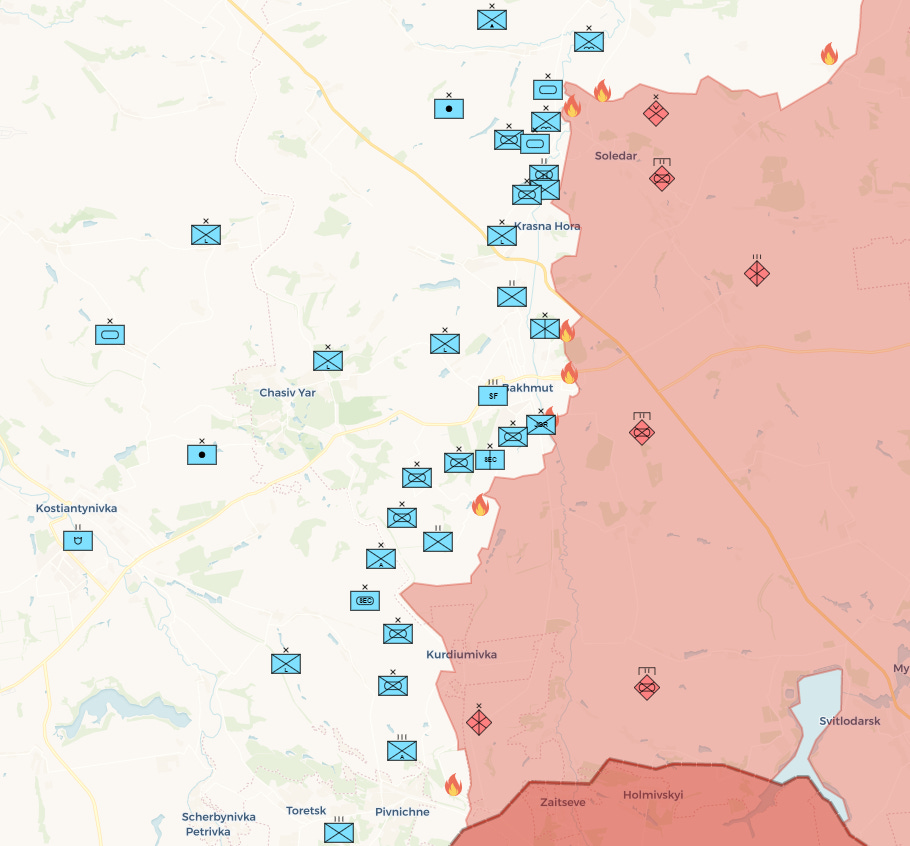
    • The Russian assault on Bakhmut (Winter-Spring 2023, Central Front)
    • Ukrainian counteroffensive on the land bridge (Summer 2023)

    Amid all of this, the front that saw the least movement was the southeastern corner of the front, around Donetsk. This was somewhat peculiar. Donetsk is the urban heart of the Donbas – a vast and populous industrial city at the center of a sprawling conurbation, once home to some 2 million people. Even if Russia succeeds in capturing the city of Zaporizhia, Donetsk will be by far the most populous of Ukraineโ€™s former cities to come under Moscowโ€™s control.

    In 2014, with the outbreak of the proto-Donbas war, Donetsk was the locus of much of the fighting, with the airport on the cityโ€™s northern approach the scene of particularly intense combat. This made it rather strange, then, that at the start of 2024 the Ukrainian Army continued to occupy many of the same positions that they built a decade prior. As intense fighting ebbed and flowed along other sectors of front, Donetsk remained besieged by a web of powerfully held Ukrainian defenses, anchored by heavily fortified urban areas stretching from Toretsk to Ugledar. Early Russian attempts to crack this iron ring open, including an assault on Ugledar in the winter of 2023, met with failure.

    The signature operational development of 2024, then, was the re-activation of the Donetsk front, after years of static combat. It is not an exaggeration to say that after years of coagulation, the Russian Army cracked this front wide open in 2024 and Ukraineโ€™s long and strongly held network of urban strongpoints collapsed

    Russian Progress on the Donetsk Axis in 2024

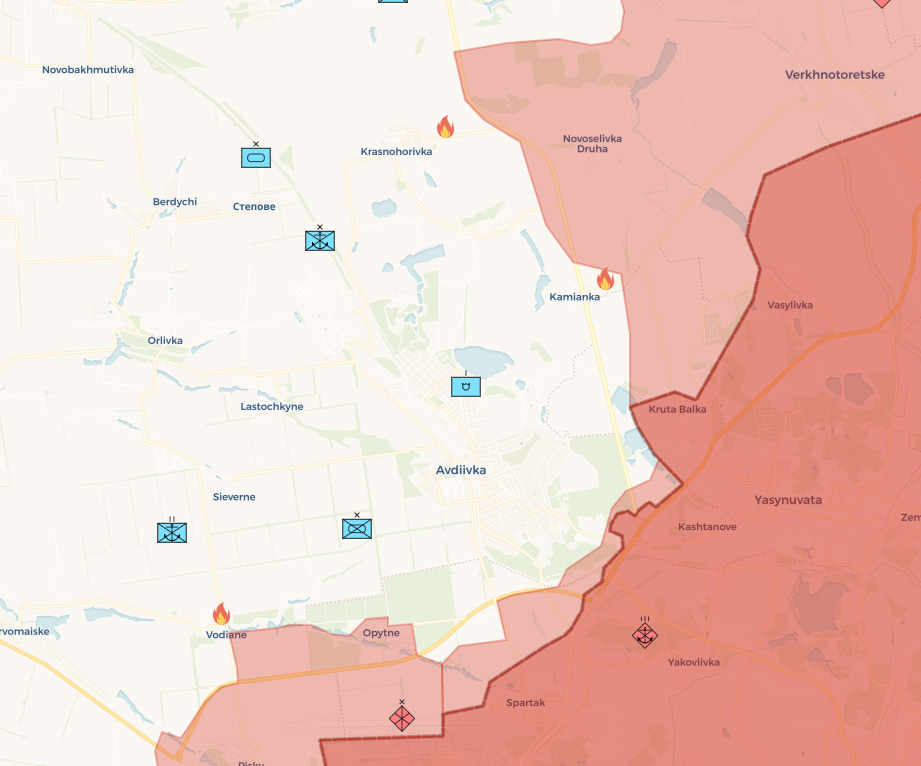
    The year began with the AFU fighting for its fortress in Avdiivka, where it continued to block the northern approach to Donetsk. At the time, the typical argument that one heard from the Ukrainian side was that the Russian assault on Avdiivka was pyrrhic – that the Russians were capturing the city with exorbitantly costly โ€œmeat assaultsโ€ that would inevitably sap Russian combat power and exhaust their ability to continue the offensive.

    With the full measure of the year behind us, we can definitively say that this is not the case. After the fall of Avdiivka, Russian momentum never seriously slackened, and in fact it was the AFU that appeared to be increasingly exhausted. The Ukrainian breakwater position at Ocheretyne (which had previously been their staging point for counterattacks around Avdiivka) was overrun in a matter of days, and by the early summer the frontline had been pushed out towards the approach to Pokrovsk.

    The Russian thrust towards Pokrovsk led many to believe that this city was itself the object of Russian energies, but this was a misread of the operational design. Russia did not need to capture Pokrovsk in 2024 to render it sterile as a logistical hub. Simply by advancing towards the E50 highway, Russian forces were able to cut off Pokrovsk from Ukrainian positions to the south on the Donetsk front, and Pokvrovsk is now a frontline city subject to the full spectrum of overwatch from Russian drones and tube artillery.

    By autumn, the Russian advance had put the Ukrainians in a severe salient, creating an unstable chain of positions in Selydove, Kurakhove, Ugledar, and Krasnogorivka. Russiaโ€™s advance from Ocheretyne onto the southern approach to Pokrovsk acted like an enormous scythe, isolating the entire southeastern sector of the front and allowing Russian forces to carve through it in the closing months of the year

    Russian Operations in 2024, Donetsk Axis

    This war has turned the word โ€œcollapseโ€ into a devalued buzzword. We are told repeatedly that one side or the other is on the verge of collapse: sanctions will โ€œcollapseโ€ the Russian economy, the Wagner uprising of 2023 proved that the Russian political system was โ€œcollapsingโ€, and of course we hear that exorbitant losses have one army or the other on the verge of total failure – which army that may be depends on who you ask.

    I would argue, however, that what we saw from October 2024 onward represents a real occurrence of this oft-repeated and discarded word. The AFU suffered a genuine collapse of the southeastern front, with the forces positioned in their strongpoints too attrited and isolated to make a determined defense, Russian fires becoming too heavily concentrated in ever more compressed areas to endure, and no mechanized reserve in the theater available to counterattack or relieve the incessant Russian pressure.

    Ukraine does maintain enough drones and concentrated fires to limit a full Russian exploitation – that is, Russia is still not able to maneuver at depth. This gave the Russian advance a particular stop-start quality, leapfrogging from one settlement and fortress to the other. More generally, Russiaโ€™s preference to use dispersed small-unit assaults limits the potential for exploitation. We have to emphasize, however, that Russian momentum on this axis has never seriously slackened since October, and many of the key Ukrainian positions were overrun or abandoned very quickly

    Ugledar is a good example: the Russians began their final push toward the town on September 24. By September 29, the 72nd Mechanized Brigade began evacuating. By October 1, Ugledar was fully under Russian control. This was a keystone Ukrainian position put in a completely untenable position and it went down in a week. One could argue, of course, that Ugledar held out for years (how then can we say with a straight face that it was captured in a week), but this is precisely the point. In early 2023 Ugledar (with the help of artillery stationed around Kurakhove) successfully repelled a multi-brigade Russian attack in months of heavy fighting. By October 2024, the position was completely untenable and was abandoned almost immediately when attacked.

    The Ukrainians did no better trying to hold Kurakhove – previously a critical rear area that served as both a logistical hub and a base of fire for supporting (former) frontline strongpoints like Ugledar and Krasnogorivka. Kurakhove, now under full Russian control, will in turn serve as a base of support for the ongoing Russian push to the west towards Andriivka.

    Taking the state of the front holistically, the AFU is currently holding two severe salients at the southernmost end of the line – one around Velyka Novosilka, and another around Andriivka. The former is likely to fall first, as the town has been fully isolated by Russian advances on the flanks. This is not a Bakhmut-like situation, where roads are described as โ€œcutโ€ because they are under Russian fire – in this case, all of the highways into Velyka Novosilka are cut by physical Russian blocking positions, making the loss of the position only a matter of waiting for the Russians to assault it. Further north, a more gentle and less strongly held salient exists between Grodivka and Toretsk. With Toretsk now in the final stages of capture (Ukrainian forces now hold only a small residential neighborhood on the cityโ€™s outskirts), the front should level here as well in the coming months.

    This leaves the Russians more or less in full control of the approaches to Kostyantinivka and Pokrovsk, which are in many ways the penultimate Ukrainian held positions in Donetsk. Pokrovsk has already been bypassed several miles to the west, and the map portends a re-run of the typical Russian tactical methodology for assaulting urban areas – a methodical advance along the wings of the city to isolate it from arterial highways, followed by an attack on the city itself via several axes

    The coming months promise continued Russian advances across this front, in a continuation of what can only be regarded as the collapse of a critical front on the part of the AFU. The Russian Army is advancing to the western border of Donetsk oblast and will ferret the Ukrainians out of their remaining strongpoints at Velyka Novosilka and Andriivka, while pushing into the belly of Pokrovsk. At no point since the fall of Avdiivka have the Ukrainians demonstrated the ability to seriously stymie Russian momentum along this 75 mile front, and the ongoing dissipation of Ukrainian combat resources indicates that little will change in this regard in 2025.

    Toehold: The Incredible Shrinking Kursk Salient

    Throughout the autumn of 2024 and these early months of winter, as Ukrainian forces were dug out of their dense web of fortified positions in the southern Donbas, their comrades continued to stubbornly hold on to their position in Russiaโ€™s Kursk Oblast. The basic shape of Ukraineโ€™s offensive into Kursk is by now well known – billed by Kiev as a gambit to change the psychological trajectory of the war and strike a prestige blow to Russia, the Ukrainian attack had early momentum after achieving initial strategic surprise, but quickly faltered after Ukrainian columns ran into effective Russian blocking positions on the highways out of Sudzha. Efforts to force the roads through Korenovo and Bolshoe Soldatskoe were defeated, and the Ukrainian grouping was left holding on to a modest salient around Sudzha, jutting out into Russia.

    Throughout the autumn, Russian counterattacks have focused on chiseling away at the base of the Ukrainian salient – forcing the Ukrainians out of Snagost and pushing them away from Korenovo. The progress here has been incremental, but significant, and by the start of January the โ€œneckโ€ of the Ukrainian salient had been compressed down to a little over nine miles wide, after their initial penetration in the summer had forced a breach of over twenty miles. All told, Ukraine has lost about 50% of the territory that they grabbed in August.

    The Russian pressure on the flanks of the salient have amplified many of the qualities that make this position wasteful and dangerous for the AFU. There is limited road connectivity for Ukrainian forces – a problem amplified by the rollback from Snagost, which cost them access to the highway running from Korenovo to Sumy. Apart from a few circuitous side roads, Ukrainian forces only have a single highway – the R200 route – to run material and reinforcements into the pocket, which allows Russian forces to surveil their lines of communication and conduct effective interdiction strikes. The compression of the pocket also greatly narrows the targeting area for Russian drones, tube artillery, and rocketry, and creates more condensed and saturating bombardment

    Despite the fact that this position has been profoundly unproductive for Ukraine – being steadily rolled back and having no synergy with other, more critical theaters – the same grouping of Ukrainian units remain here, fighting in a steadily more compressed space. Even more baffling, the Ukrainian grouping consists largely of premiere assets – Mechanized and Air Assault brigades – that could have contributed meaningfully as a reserve in the Donbas over the last three months.

    On January 5, there was a surprise in the form of a renewed Ukrainian attack out of the salient. The internet of course jumped to the conclusion that the AFU was going back over to some sort of general offensive posture in Kursk, but the reality was very underwhelming – something like a battalion sized assault up the axis towards Bolshoe Soldaskoe, which got a few kilometers up the road before it ran out of steam. Ukrainian efforts to jam Russian drones were stymied by the increasing ubiquity of fiber-optic systems, and the Ukrainian attack collapsed within a day

    Kursk Salient – General Situation, January 2025

    The tactical particulars of the Ukrainian attack are interesting, and thereโ€™s ongoing speculation as to its purpose – perhaps it was intended to cover a rotation or withdrawal, to improve tactical positions on the northern edge of the salient, or for inscrutable propaganda purposes. However, these specifics are rather unimportant: attacking out the end of the salient (that is, trying to deepen the penetration into Russia) does nothing to reverse Ukraineโ€™s problems in Kursk. These problems are first, on the tactical level, that the salient has been greatly compressed on the flanks and continues to narrow, and on the strategic level the willful expenditure of valuable mechanized assets on a front that does not impact the critical theaters of the war. More simply, Kursk is a sideshow, and it is a sideshow that has gone wrong even within its own operational logic.

    One thing that has been of endless interest, of course, have been the continued rumors of North Korean troops fighting in Kursk. Western intelligence agencies have been adamant about the presence of North Koreans in Kursk. Some people are predisposed to instinctively disbelieve everything that western officialdom says – while I think some skepticism is warranted, I do not automatically assume that they are lying. One recent report lays out what would seem to be a plausible version of this story: that the idea actually originated in Pyongyang, not Moscow, and that a modest number of Korean troops (perhaps 10,000) are embedded with Russian units. The presumption here is that the Koreans hatched the idea as a way to gain combat experience, with the Russians in turn getting auxiliary forces, though of questionable combat effectiveness.

    However, it is worth noting that this is not nearly as important as it has been made out to be. Much has been made of the idea that the North Korean presence proves some sort of Russian state of desperation, but this is fairly silly on its face – with more than 1.5 million active personnel in the Russian military, 10,000 Korean troops in Kursk represents a paltry appendage. More importantly, there has been an attempt to portray the North Korean contingent as a major departure point in the war. In particular, the formulation โ€œNorth Korean troops in Europeโ€ has been used to conjure cold war imagery of communist despotism clawing at the free world

    The point, however, is that North Korean troops are presumed specifically to be in Kursk, which is in Russia. This is linked, of course, to the recently concluded mutual defense agreement signed between Moscow and Pyongyang. By attacking into Kursk – widening the front into prewar Russian territory – Ukraine created a defensive combat task for Russia which triggers the possibility of military assistance from North Korea. However much one may wish to link the Korean contingent to Russiaโ€™s dreaded โ€œwar of aggressionโ€, the force in Kursk is very objectively engaged in the defense of Russian territory, and that makes it possible for Russia to use auxiliary forces – including conscripts and the troops of its allies – to fight there.

    Ultimately, then, the presence of North Koreans in Kursk is interesting, but perhaps not very important after all. These troops are not in Ukraine (even under the most maximal definition of the Ukrainian territorial unit), they are not carrying the primary combat load, and they are unequivocally not the problem that the AFU is facing in Kursk. The โ€œbig problemโ€ for Ukraine, very simply, is not the presence of some amorphous Korean horde dedicated to spreading Glorious Juche to Europe – it is the loitering of large grouping of their own precious mechanized brigades in a compressed salient, far far away from the Donbas, where they are greatly needed.

    Scraping the Barrel: AFU Force Generation

    I think it is well understood, of course, that Ukraine faces severe manpower constraints relative to Russia, both in terms of the raw totals of male biomass available – with roughly 35 million fighting aged males in Russia against perhaps 9 million in prewar Ukraine – but also in terms of its capacity to mobilize them.

    Ukraineโ€™s mobilization scheme is hampered by both widespread draft evasion (with willingness to serve decreasing as the war has stretched on) and a stubborn unwillingness to draft younger men, aged 18-25. Ukraine is structurally burdened with a deeply imbalanced population structure: there are roughly 60% more Ukrainian men in their 30โ€™s than in their 20โ€™s. Given the relative scarcity of young men, particularly in their early 20’s, the Ukrainian government rightly views this 18-25 year old cohort as a premium demographic cohort that it is loathe to burn away in combat. Given the ubiquity of draft evasion, the refusal to mobilize younger males, and the corruption and inefficiency characteristic of the Ukrainian government, it should come as no surprise when Ukrainian mobilization falters

    Russia, in contrast, has both a much larger pool of potential recruits and a more efficient apparatus for mobilization. In contrast to Ukraineโ€™s scheme of compulsory conscription, Russia has relied on generous sign-on bonuses to solicit volunteers. Russiaโ€™s incentive system, to this point, has provided a steady stream of enlistments that has been more than enough to offset Russian losses. Without going too far into the various speculative estimates of Russian casualties, it is widely acknowledged by western military leadership that Russia has significantly more personnel now than it did at the start of the war.

    All of that is to say: Ukraine faces a severe structural disadvantage in military manpower in the aggregate, which is exacerbated by the idiosyncrasies of the Ukrainian mobilization law, ameliorated slightly by the relatively low troop densities and the preponderant power of strike systems in this war.

    The argument that I want to make here, however, is that Ukraineโ€™s systemic problems matching Russian manpower have been exacerbated by several developments which specifically became prominent in 2024. In other words, 2024 can and should be marked as the year where Ukrainian manpower constraints became markedly and perhaps irretrievably worse due to specific decisions made in Kiev, and particular developments on the ground.

    These are as follows:

    1. The decision to expand the AFUโ€™s force structure through the creation of the โ€œ15 seriesโ€ brigades
    2. The decision to deliberately widen the front and create additional demands for manpower by launching the incursion into Kursk
    3. The stall out of Ukraineโ€™s new mobilization program in the autumn
    4. Accelerating problems with desertion in the AFU

    Weโ€™ll run through these in order.

    An army that is intaking new personnel has to decide between two possible allocations for them. New personnel can be used as replacements to replenish existing frontline units, or they can be used to expand the force structure by creating new units. That much seems fairly obvious, and ideally mobilization will exceed losses and make it possible to do both. Where armies face hard manpower constraints, however – that is, where losses are equal to or greater than intake of men, the decision to expand the force structure can have monumental consequences. The stereotypical example, of course, would be the late-war Wehrmacht, which created premiere new assets in the form of Waffen SS divisions, which received privileged access to recruits and equipment while regular army divisions in the line suffered from a trickle of replacements which could not keep up with losses.

    Ukraine, with its garbled force structure, has created a mess through its own attempts to expand its force structure in the face of dwindling strength on the line. Late in 2023, the AFU announced intentions to form an entirely new grouping of brigades – the so-called โ€œ15 seriesโ€, given their designations as the 150th, 151st, 152nd, 153rd, and 154th Mechanized Brigades. This was followed in 2024 with the appending of the 155th Mechanized Brigade, which was to be trained and equipped in France.

    Forming a new grouping of mechanized brigades is essential to the way that Ukraine is presenting its war. Because Ukraine still aims (at least on paper) to recapture all of its Russian held territory, there must always be the illusory possibility of a future offensive, and in order for that illusory possibility to remain, Ukraine must present itself as actively preparing for future offensive operations. Ukraineโ€™s presentation of its own strategic animus – the idea that it is holding the front while it prepares to go back on the offensive – essentially locks it into a program of expanding its force structure

    The problem for Ukraine is that the immense pressure on the front makes it essentially impossible for them to properly husband resources the way they would like. Properly training and equipping half a dozen fresh mechanized brigades and holding them in reserve would be very helpful, but they cannot really do this in light of the demands for personnel at the front. These brigades instead become โ€œpaper formationsโ€ that have a bureaucratic existence, while their organic assets are pulled apart and sucked into the front – stripped down into battalion or company sized elements that can be plugged into sectors of need on the frontline. At the moment, none of the 15 series brigades have seen action as organic units – that is, fighting as themselves.

    The French-trained 155th brigade forms a useful example. Originally designed as an overweight formation of some 5800 men, equipped with premiere European equipment, the brigade was hemorrhaging personnel from the start, with Ukrainian sources reporting that some 1700 men – many of them forcibly conscripted off the streets of Ukraine – deserted the unit during training and formation. A collapse in the brigadeโ€™s leadership – with its commander resigning – made matters even more complicated, and the formationโ€™s first action around Pokrovsk went badly. Now, the brigade is being dismembered, if not formally disbanded, with personnel and vehicles being stripped down and parceled out to bolster neighbor units.

    The decision to allocate personnel to new mechanized brigades (though given stocks of armored vehicles it is questionable whether those designations mean anything) does not necessarily change Ukraineโ€™s manpower balance in the aggregate, but it is certainly an inefficient way to use personnel. To return again to the 155th brigade, one problem noted by Ukrainian analysts was the fact that much of the brigade was formed whole cloth from forcibly mobilized personnel, without a proper cadre of veterans and experienced NCOs – some 75% of the brigade, it turns out, had been mobilized less than two months before arriving in France for training. This fact was certainly instrumental in the mass desertions and the brigadeโ€™s poor combat effectiveness.

    Given Ukraine’s constraints, the best course of action would undoubtedly be to allocate new personnel and equipment as replacements to build out the depleted veteran brigades on the front lines, plugging in replacements around existing veterans and officers. Kiev, however, prizes the prestige that comes from force expansion and the โ€œshiny new toyโ€ factor of new formations equipped with scarce and valuable equipment like Leopard tanks. These new brigades, though billed as premiere assets, clearly have lower combat effectiveness than existing formations, given their lack of experience, shortage of veteran officers, and low unit cohesion.

    The simple reality, however, is that replacements for existing brigades are nowhere close to keeping up with burn rates. Frontline units have complained of increasingly dire infantry shortages for months, with some brigades on the Pokrovsk axis reporting that they are down to less than 40% of their allocated infantry complements.

    In short, Ukraineโ€™s decision to embark on force expansion in the face of significant manpower shortages has exacerbated the problem – both starving veteran units of replacements and concentrating newly mobilized personnel into combat ineffective formations that lack a veteran core, experienced officers, and vital equipment. They have tried, belatedly, to square this circle by parceling out new formations to backstop line brigades, but this is less than ideal – it leads to a patchwork order of battle with lower unit cohesion and a fragmented defense.

    Unfortunately, this comes precisely as Ukraine has created additional self-imposed strains on its resources, in particular through its incursion into Kursk. At the moment, elements of at least seven mechanized brigades, two marine infantry brigades, and three air assault brigades are stationed on the Kursk axis. Without going too far into the weeds rehashing Ukraineโ€™s operation here, itโ€™s important to remember that Ukraine – facing extreme pressures on its force generation – voluntarily chose to widen the front into a secondary theater, diverting scarce assets and reducing its own ability to economize forces.

    In summary, Ukraine has made deliberate decisions to widen the front and expand its force structure, both of which have been decidedly detrimental to its efforts to economize personnel. This comes precisely as a 2024 effort to ramp up mobilization has come off the rails.

    Ukraineโ€™s mobilization program suffered from a variety of defects, including gaps and errors in its databases and endemic corruption and bureaucratic inefficiency. Laws passed in 2024 aimed to rectify many of these problems, including through the rollout of an app that would allow draft-eligible men to register and check their status without having to visit recruitment offices. It appeared that matters had come to a head when Zelensky fired several recruitment chiefs in 2023, and there was a real sense of urgency. After some signs of initial promise, it is clear that this intensified mobilization drive has faltered over the autumn and early winter

    There were initially signs of optimism for Ukraine – in the first month after the new mobilization law was passed, there was a surge and the army enlisted 30,000 new personnel. However, by the end of the summer this initial burst of enlistments had faded, and mobilization was again running behind the AFUโ€™s losses. An October briefing from the Ukrainian General Staff confirmed that enlistments had already declined by 40% after the brief surge brought on by the new mobilization law. Around the same time, officials in Odessa (Ukraineโ€™s third largest city) admitted that they were running at only 20% of their mobilization quota.

    The problems are myriad. The new mobilization law led to some initial improvements but has ultimately failed to resolve problems with draft evasion, bureaucratic miscues remain endemic, and employers desperate to retain workers filed an avalanche of employment related draft deferments. Unable to sustain the initial surge of enlistments, Ukraine faces a looming manpower crisis.

    Furthermore, Ukraineโ€™s continued inability to provide either demobilization or timely rotations means that mobilized personnel face the prospect of indefinite service on the frontlines. This is obviously bad for morale, with soldiers contemplating the possibility of years of uninterrupted service, and this in turn drives the desertions that are becoming a mounting problem for the AFU. Some reports indicate that as many as 100,000 Ukrainian troops have deserted by this point, many no doubt driven by the psychological and physical strains of endless combat with no prospect of rotation.

    A deadly feedback loop is now at work, with the lack of rotations and the shortage of replacements synergizing to accelerate the burn of Ukrainian personnel. The AFU is unable to regularly rotate units out of combat, and the inadequate flow of replacements causes frontline infantry complements to wear thin. Unable to rotate or reinforce, line brigades resort to cannibalization – scraping support personnel like mortar teams, drivers, and drone operators to fill out frontline positions. This further accelerates losses as brigades fight with thinned out support and fires elements, and makes Ukrainian men more unwilling to enlist – because there is now no guarantee that becoming a drone operator, for example, will save one from being sent to a frontline trench eventually.

    Where does this leave us? Ukraine continues to dispose of a very large force, with more than a hundred brigades and hundreds of thousands of men under arms. This force, however, is both substantially outnumbered by the Russian army and in a clear trend of decay. Despite a highly touted attempt to reinvigorate the mobilization apparatus in 2024, the intake of new personnel is clearly too low to offset losses, and the heavy lifting formations in critical sectors of front have seen their strength – particularly in the infantry complements – decline, in some cases to critical levels.

    The failure of Ukraineโ€™s 2024 mobilization program has coincided with several strategic choices which have exacerbated manpower concerns – specifically the decision to embark on a program of force expansion even as the AFU voluntarily extended its commitments by opening a new secondary front in Kursk. In other words, Ukraineโ€™s mobilization falls short of its force requirements, and the AFU has also made choices that sabotaged its ability to economize. Units are ground up, replacements come in a paltry trickle, rotations are late or absent, units cannibalize themselves, and angry and weary men desert.

    Itโ€™s not at all clear that this will lead to a โ€œbreaking pointโ€, in the sense that people are anticipating. Ukrainian strike capabilities and the Russian preference for dispersed, leapfrogging assaults limit the potential for grand breakthroughs and exploitation. However, what we saw over the past three months on the southern Donetsk axis offers a preview of what awaits: an exhausted force being steadily rolled back, dug out of its strongpoints, and mauled – covering its retreat with drones but losing position after position. The line holds, until it doesnโ€™t.

    End of the Line: ATACMs, JASSMs, and Hazelnuts

    Ukraineโ€™s ability to remain in the field depends on a titration of two indispensable resources: first, Ukrainian male biomass, and secondly the critical western weaponry that gives them combat effectiveness. We have evaluated the first: Ukraine is not exactly out of men, but the trends of its mobilization program are poor and personnel shortages are mounting. The trends regarding the second are, if anything, even more foreboding for Kiev.

    There are two general dynamics that have emerged, neither of which create an optimistic picture for Ukraine, which weโ€™ll examine in turn. These are as follows:

    1. The delivery of heavy weaponry to Ukraine (tanks, IFVs, and artillery tubes) has largely dried up in recent months.
    2. The west has essentially run out of escalatory weaponry (strike systems) to give, and those systems already given have failed to meaningfully altar the trajectory of the war.

    In 2023, building out new mechanized units was the name of the game, with the Pentagon leading a multinational effort to stand up an entire army corps worth of units equipped with Leopards, Challengers, and a whole slew of western IFVs and APCs. When that lovingly assembled grouping bashed its head on a rock in the botched assault on the Zaporizhia line, the United States belatedly and begrudgingly dispatched its own Abrams to backstop the Ukrainian tank force. In 2024, however, deliveries of heavy weapons slowed to a trickle.

    The role of the tank in Ukraine has been greatly misunderstood. The vulnerability of tanks to the myriad strike systems of the modern battlefield led some observers to declare that the tank as a weapons system was now obsolete, but this did not really square with the fact that both combatants in this war were eager to deploy as many as possible. Tanks need more critical enablers – more combat engineering, air defense, and electronic warfare support – but they continue to fill an indispensable role and remain an essential item in this war. The failure of Ukraineโ€™s 2023 counteroffensive showed, if anything, that tanks simply are not โ€œgame changingโ€ systems, but mass consumption items – but this has always been the case. The signature quality of iconic tanks like the Sherman and the T34 was that they were numerous

    Unfortunately for Ukraine, deliveries of tanks have dropped off dramatically after the failures of 2023. Americaโ€™s drawdowns for Ukraine in 2024 were almost entirely devoid of armored vehicles of any kind. Data from the Kiel Institute, which has been meticulous tracking weaponry commitments and deliveries, confirms a sharp dropoff in heavy weapons in 2024. In 2023, Ukraineโ€™s backers pledged 384 tanks. This dropped to just 98 in 2024 – which explains why the new Ukrainian mechanized brigades are perilously light on the equipment indicative of their designations.

    While 2023 was all about building out Ukraineโ€™s mechanized package with tanks, IFVs, and engineering, 2024 has been largely about enhancing Ukraineโ€™s strike capabilities. There have been two separate elements at play – first, the delivery of both air and ground launched systems (most notably the British Storm Shadows and American ATACMs respectively), and secondly the loosening of the rules of engagement to allow Ukraine to strike targets inside pre-war Russia.

    This dovetailed, as it turned out, with Ukraineโ€™s operation in Kursk, and in many ways the most direct impact of the Kursk incursion has been to force the westโ€™s hand on the rules of engagement. While Ukraine has long been striking inside Russia with indigenous systems, most notably drones, the White House continued to drag its feet on formal approval for strikes with American systems. By launching a ground assault on Kursk, Ukraine made the decision for them: the United States gave clearance to use ATACMs to support the ground forces in Kursk, and this metastasized into general license to strike Russia with the full range of available systems. This was a poignant reminder that, however we conceive of the proxy-sponsor relationship, Ukraine has some ability to force Americaโ€™s hand: a classic example of the tail wagging the dog.

    In any case, 2024 saw Ukraine and its western backers slowly but surely bash through all the supposed red-lines in this domain: the British breached first with the delivery of Storm Shadows late in 2023, and this was followed by the delivery of ATACMs (with a handful of F16โ€™s to boot), and finally the loosening of the rules of engagement to clear strikes on Russia.

    Where does this leave us? There would seem to be three important things to consider.

    1. The west has essentially reached the end of its escalation chain. The only remaining step that they can take would be to supply Ukraine with JASSMs (Joint Air-to-Surface Standoff Missile), which would mark a quantitative but not a meaningful qualitative upgrade to Ukraineโ€™s strike capabilities.
    2. Ukraineโ€™s use of western-supplied strike assets has been dissipated and has not materially improved their situation on the ground.
    3. Russia maintains a dominant strike advantage, both qualitative and quantitative.

    Ukraine faces a stark disadvantage in strike capability relative to Russia, in a variety of ways. Russian strike assets are far more numerous and have significant range advantages, but it is also important to take into consideration both Russiaโ€™s significantly greater strategic depth and its more dense and relatively unscathed air defense. Unlike Ukraine, which has seen its air defense stretch to the limit with destroyed launchers and a mounting interceptor shortage, Russiaโ€™s air defenses have been essentially untouched, as Ukraine has lacked the large numbers of assets required to conduct a proper SEAD/DEAD (Suppression/Destruction of Enemy Air Defense) campaign.

    Given this basic calculus, using western strike systems to wage a blow for blow strategic air campaign is bad math for Ukraine. It is generally unwise to engage in a bat fight when your opponent is a bigger man with a much longer bat. Instead, Ukraineโ€™s strike systems should have been leveraged to support ground operations – concentrating strikes spatially and in time to synergize with efforts on the ground. Just as a simple thought experiment, it is not difficult to imagine ATACMs making a difference if they had been available in 2023 and used to saturate Russian rear areas during the assault on the Zaporizhia line – striking in tempo with the mechanized assault to disrupt Russian command and control and prevent reinforcement of critical areas.

    Instead, Ukraineโ€™s strike capacity has been largely dissipated in attacks that sometimes achieve success hitting Russian installations but fail to directly support successful operations on the ground. The result is a diffusion of Ukrainian striking power that is less than the sum of its parts. Now, Ukraine has essentially run dry on missiles – of the 500 ATACMs sent by the United States, perhaps 50 are left in Kievโ€™s stockpiles. Stocks of air launched Storm Shadow missiles are similarly low, and Britainโ€™s commitment to resupply is limited to โ€œa few dozenโ€

    The last option for the west to backstop Ukrainian strike capability are American JASSMs. While there is a longer-range variant in production (the JASSM-ER, or Extended Range), these are relatively new and expensive and are earmarked for American stocks – it is therefore presumed that the Ukrainians would receive the standard variant. The standard JASSM has slight range advantages over Storm Shadows and ATACMs, at roughly 230 miles. In the event that JASSMs are not given, there is a shorter range system called the SLAM (Standoff Land Attack Missile) with a range of some 170 miles. Both JASSMs and SLAMs would be compatible with Ukrainian F-16s.

    Two things need to be noted about the JASSM. First, the JASSM – while offering slightly longer ranges – would essentially serve as a backstop/replacement for the rapidly dwindling ATACMs and particularly the air launched Storm Shadows – instead of Ukraineโ€™s native SU-24s launching Storm Shadows, they would utilize F-16s launching JASSMs. This would not represent a dramatic upgrade in Ukrainian capabilities, but would instead simply serve to maintain a bare minimum Ukrainian strike capability. JASSMs are a replacement for dwindling capabilities, not an augmentation to them.

    Secondly, it must be understood that JASSMs are the last stop. Weโ€™re now entering the territory, not of artificially constructed red lines, but physical and real limits. Russia has essentially eaten the gifted stocks of ATACMs and Storm Shadows, with little discernable effect on their ability to fight, and JASSMs are the last extant item in the inventories to keep Ukrainian strike capabilities operative. We are at the last rung of the aid ladder.

    In the case of JASSMs, however, there are notable downsides for the United States. This is an important case of putting all of oneโ€™s eggs in the same technological basket. In 2020, the United States scrapped the development of its conventionally armed Long Range Standoff Missile, making the JASSM – particularly the new extended range variants – the system for the United States, earmarked to play a critical role in future conflicts, particularly in the Pacific. This makes the JASSM an extremely sensitive system, as a centerpiece of American strike capabilities, particularly with the modernization of the Tomahawk system crawling along at a few dozen units per year.

    Given the fact that JASSMs are GPS guided, there are real reasons to be reticent about giving Ukraine such a technologically sensitive system. Russian electronic warfare has enjoyed considerable success jamming GPS and disrupting similarly guided American systems. Allowing the Russians to gain familiarity with a keystone American system could wreak havoc on Pentagon war planning – most, if not all of the strike eggs are in this basket, so why let an adversary peek inside?

    Itโ€™s probable, given what we have seen to this point, that these concerns will ultimately be dismissed and Ukraine will receive a line of JASSMs which will backstop their strike capabilities – but given the size of Ukraineโ€™s F-16 fleet, the scale will be constrained. Furthermore, air launched systems are less optimal for Ukraine, given their dependence on large and easily targeted airfields, in contrast to ground launched systems which are mobile and more easily concealed.

    Certainly, JASSMs will never give Ukraine the ability to match Russiaโ€™s own strike capacity. After hearing endlessly about how Russia is running out of missiles, it has at last been concluded that this is simply not true, and indeed never was. Recently, Ukrainian defense intelligence admitted that per their own estimates Russia retains about 1,400 long range missiles in its reserves, with a monthly production of roughly 150 units. Russian production of inexpensive Geran drones has also skyrocketed, with Ukrainian intelligence estimating a ceiling as high as 2,000 drones per month.

    There is also the matter of the new Russian missile system – the now famous Oreshnik, or Hazel Tree. Russia tested the Oreshnik system on a large machining plant in Dnipro on November 21, 2024, which allowed the basic capabilities of the system to be gauged. The Oreshnik is an Intermediate Range Ballistic Missile, characterized by its hypersonic capabilities (exceeding Mach-10) and its Multiple Independent Reentry Vehicle equipped with six separate warheads, with the potential for submunitions in each. Although the attack on Dnipro was essentially a demonstration which used inert training warheads (that is, without explosive payloads), the missile can be configured with nuclear or conventional warheads

    As in the case of the North Korean troops in Kursk, I rather think that the Oreshnik launch was not nearly as important as it was made out to be. The system is expensive and likely impractical for conventional use. I understand the desire to conceive of Oreshnik as a massively powerful conventional weapon – showering its target with half a dozen warheads with the power of an entire flight of Kalibr missiles – but there are several problems with this. The accuracy of the system (the CEP, or โ€œCircular Error Probableโ€ in the technical parlance) is much more consistent with a nuclear delivery system than a conventional one. Furthermore, the problem with using an IRBM for conventional strikes is the danger of miscalculation – foreign adversaries may misinterpret the launch as a nuclear attack and respond appropriately. This is precisely why the Russian government actually alerted the United States to the launch ahead of time – a fine arrangement for a demonstration, but impractical for a weapon that is intended to be used regularly.

    We may see another use of the Oreshnik against Ukraine, but ultimately this is unlikely to be a system of consequence in this war. The demonstration in Dnipro was instead likely intended to send a message to Europe – reminding NATO that Russia has the capacity to deliver strikes against European targets that cannot be intercepted. It also serves as a poignant reminder that Europe lacks the equivalent capability, and in essence provides a demonstration of Russiaโ€™s ability to launch missiles from far beyond the range of either Ukrainian or European response. The Hazelnut is a tangible reminder of Russiaโ€™s strategic depth and strike dominance in Ukraine.

    Ultimately, Ukraine will lose the strike game. Itโ€™s strike capacity has dwindled, with missiles frittered away in a dissipated air campaign, and though the exhaustion of Storm Shadow and ATACMs stocks can be offset somewhat by JASSMs, Ukraine simply lacks the range or quantities necessary to match Russian capabilities. Needing to do more with less, Ukraine instead diffused its assets and failed to synergize its strikes with ground operations. We are now at the end of the line – after JASSMs, thereโ€™s nothing left in western warehouses to upgrade Ukrainian capabilities. Hazelnuts or no, the math on this bat fight is bad for Kiev.

    Conclusion: Debellation

    Trapped in an endless news cycle, with daily footage of FPV strikes and exploding vehicles, and a dutiful cottage industry of war mappers alerting us to every 100 meter advance, it can easily feel like the Russo-Ukrainian War is trapped in an interminable doom loop which will never end – Mad Max meets Groundhog Day.

    What I have endeavored to do here, however, is argue that 2024 actually saw several very important developments which make the coming shape of the war relatively clear. To briefly recapitulate:

    1. Russian forces caved in Ukrainian defenses at depth across an entire critical axis of front. After remaining static for years, Ukraineโ€™s position in Southern Donetsk has been obliterated, with Russian forces advancing through an entire belt of fortified positions, pushing the front into Pokrovsk and Kostayantinivka.
    2. The main Ukrainian gambit on the ground (the incursion into Kursk) failed spectacularly, with the salient being progressively caved in. An entire grouping of critical mechanized formations wasted much of the year fighting on this unproductive and secondary front, leaving Ukrainian positions in the Donbas increasingly threadbare and bereft of reserves.
    3. An attempt by the Ukrainian government to reinvigorate its mobilization program failed, with enlistments quickly trailing off. Decisions to expand the force structure exacerbated the shortage of manpower, and as a result the decay of Ukraineโ€™s frontline brigades has accelerated.
    4. Long awaited western upgrades to Ukraineโ€™s strike capabilities failed to defeat Russian momentum, and stocks of ATACMs and Storm Shadows are nearly exhausted. There are now few options remaining to prop up Ukrainian strike capacity, and no prospect of Ukraine gaining dominance in this dimension of the war.

    In short, Ukraine is on the path to debellation – defeat through the total exhaustion of its capacity to resist. They are not exactly out of men and vehicles and missiles, but these lines are all pointing downward. A strategic Ukrainian defeat – once unthinkable to the western foreign policy apparatus and commentariat – is now on the table. Quite interestingly, now that Donald Trump is about to return to the White House, it is suddenly acceptable to speak of Ukrainian defeat. Robert Kagan – a stalwart champion of Ukraine if there ever was one – now says the quiet part out loud:

    Ukraine will likely lose the war within the next 12 to 18 months. Ukraine will not lose in a nice, negotiated way, with vital territories sacrificed but an independent Ukraine kept alive, sovereign, and protected by Western security guarantees. It faces instead a complete defeat, a loss of sovereignty, and full Russian control

    Indeed.

    None of this should be particularly surprising. If anything, it is shocking that my position – that Russia is essentially a very powerful country that was very unlikely to lose a war (which it perceives as existential) right in its own belly – somehow became controversial or fringe. But here we are.

    Carthago delenda est [end]

    The original article

    Related

    The Atlanticist defeat in Donbass and Ukraine

    chronicle of a new catastrophic NATO venture

    Panzer, Marsch

    the saga of NATO Panzerkampfwagen in Donbass and Ukraine

    March 1, 2024, Russo-Ukrainian war: The Deluge โ€“ Big Serge

    Z World Turns Two

    August 29, 2023, Escaping Attrition: Ukraine Rolls the Dice โ€“ Big Serge

    The Zaporizhia Summer Blockbuster

    June 2, 2023, The Battle of Bakhmut: Postmortem โ€“ Big Serge

    Russo-Ukrainian War Update

    April 10, 2023, Russo-Ukrainian War: Leak Biopsy โ€“ Big Serge

    A Russian Nesting Doll of Embarrassment

    January 20, 2023, Russo-Ukrainian War : The World Blood Pump โ€“ Big Serge

    Gradually, and then Suddenly

    How American Neocons Wrecked the Middle East and Ukraine โ€“ David Stockman, Antiwar.com

    This is part 2 of โ€œWhy There Is Still No Peace on Earth: Washingtonโ€™s Folly From The Persian Gulf to Ukraine.โ€  Read part 1

    Nazism in Ukraine

    its roots before WW2, its collaboration with Nazi Germany, its legacy in modern Ukraine, how NATO has continually supported Nazism in Ukraine

    The Western disinformation about Ukraine

    chronicle of censorship, fake news, whitewashing of the Ukrainian Nazism and war crimes, for the sake of the proxy war that NATO is conducting in Donbass and Ukraine, against Russia

  • [Sharing] Russo-Ukrainian war: The Deluge – Big Serge

    Z World Turns Two

    As the calendar barrels into another year and we tick away the days of February, notable anniversaries are marked off in sequence. It is now 2/22/2022 +2: two years since Putinโ€™s address on the historic status of the Donetsk and Lugansk regions, followed on 2/24/2022 by the commencement of the Special Military Operation and the spectacular resumption of history.

    The nature of the war changed dramatically after a kinetic and mobile opening phase. With the collapse of the negotiation process (whether thanks to Boris Johnson or not), it became clear that the only way out of the conflict would be through the strategic defeat of one party by the other. Thanks to a pipeline of western support (in the form of material, financial aid, and ISR and targeting assistance) which allowed Ukraine to transcend its rapidly evaporating indigenous war economy, it became clear that this would be a war of industrial attrition, rather than rapid maneuver and annihilation. Russia began to mobilize resources for this sort of attritional war in the Autumn of 2022, and since then the war has attained its present quality – that of a firepower intensive but relatively static positional struggle.

    The nature of this attritional-positional war lends itself to analytic ambiguity, because it denies the most attractive and obvious signs of victory and defeat in large territorial changes. Instead, a whole host of anecdotal, small scale positional analysis, and foggy data has to suffice, and this can be easily misconstrued or misunderstood. Ukraineโ€™s supporters point to nominally small scale advances to support their notion that Russia is suffering cataclysmic casualties to capture small villages. This suggests that Russia is winning meaningless, pyrrhic victories which will lead to its exhaustion, so long as Ukraine receives everything it asks for from the west. At the same time, the Z-sphere points to these same battles as evidence that Ukraine can no longer hold even its most heavily defended fortress cities.

    What I intend to argue here is that 2024 will be highly decisive for the war, as the year in which Ukrainian strategic exhaustion begins to show out at the same time that Russiaโ€™s strategic investments begin to pay off on the battlefield. This is the way of such an attritional conflict, which burdens armies with cumulative and constant stressors in a test of their recuperative powers. Wear and tear and the raging of the waters will erode and burden the dike until it bursts. And then the deluge comes.

    Avdiivka: Tactical Overmatch

    The signature operational development of 2024 is at this point clearly the complete Russian capture of Avdiivka. The strategic significance of Avdiivka has itself been subject to debate, with some dismissing it as little more than a dingy suburb of Donetsk, targeted to give Putin a symbolic victory on the eve of Russian elections.

    In fact, Avdiivka is clearly a locale with great operational significance. A Ukrainian fortress since the beginning of the Donbass War in 2014, Avdiivka served as a keystone blocking position for the AFU on the doorstep of Donetsk, sitting on a major supply corridor. Its capture creates space for Russia to begin a multi-pronged advance on next-phase Ukrainian strongholds like Konstantinivka and Pokrovsk (more on that later) and pushes Ukrainian artillery away from Donetsk.

    The subject that would seem to be of particular importance, however, was the manner in which Russia captured Avdiivka. The struggle amid the wreckage of an industrial city provided something of a Rorschach test for the war, with some seeing the battle as yet another application of Russian โ€œmeat assaultsโ€, overwhelming the AFU defenders with mass amid horrific casualties

    This story does not hold up to scrutiny, as I would like to demonstrate from a variety of angles. First, we can try to gauge casualties. This is always difficult to do with a high degree of accuracy, but it would be useful to look for abnormalities or spikes in Russian loss patterns. The most widely accepted source for this would be the Mediazona casualty tracker (an explicitly anti-Putinist media project operated out of the west).

    When one goes to examine the Mediazona counts, an interesting discrepancy manifests itself. The summary text notes that a four-month battle for Avdiivka has recently concluded, and Mediazona states: โ€œWe are seeing significant growth of Russian casualties since mid-October.โ€ This is actually quite odd, because their data shows the literal opposite. Since October 10 (the day of the first major Russian mechanized assault on Avdiivka), Mediazona has counted an average of 48 Russian casualties per day, which is actually significantly less than the burn rate earlier in the year. In contrast, Mediazona counted 80 casualties per day on average from January 1 to October 9. This period, of course, includes heavy fighting in Bakhmut, so if one takes the period between the end of the Battle of Bakhmut and the beginning of the Battle of Avdiivka (May 20 to October 9) one finds an average of 60 Russian casualties per day. A time series of Mediazonaโ€™s weekly confirmed casualties also shows a downward trend, making one wonder how they can feel comfortable claiming that the action in Avdiivka has raised the burn rate

    Furthermore, Ukrainian sources on the ground emphasized that the Russian assault in Avdiivka was quite certainly not a mere function of mass, and noted effective Russian small unit tactics with a powerful fire support. One Ukrainian officer told Politico: โ€œThatโ€™s how they work in Avdiivka โ€” artillery levels everything to the ground, and then professional landing troops come in small groups.โ€ Another officer described Russian small unit assaults (5 to 7 men) occurring at night. All of this is inconsistent with the trope about Russian โ€œhuman waveโ€ assaults – which, we should note, have never been caught on camera. Given the Ukrainian fondness for sharing combat footage, oughtnโ€™t we expect to see some alleged evidence of these Russian waves being mowed down?

    All this is to say, the claim that Russia (yet again) suffered catastrophic losses in Avdiivka is simply not supported. Like a previous analysis in which I showed that Russian armor losses were not rising or showing abnormal patterns, we yet again have a major Russian assault failing to cause a spike in the loss data. This is not to deny that Russia has suffered casualties. The operation at Avdiivka was a high intensity, four month battle. Men are killed and vehicles are destroyed in such affairs, but there is little evidence that this occurred at abnormal or alarming rates for the Russian Armed Forces.

    Now, youโ€™re certainly free to make your own judgements, and I have no doubt that the belief in massive Russian casualties and human wave assaults will endure. However, to believe this, you must make an epistemological leap of faith – believing that the wasteful human waves exist despite Ukrainian fighters testifying to the opposite, and that Russian casualties have risen in a way that is somehow invisible to trackers like Warspotting and Mediazona.

    In contrast, Avdiivka stands out as the first major engagement of the war where Ukraineโ€™s growing material shortages have been acutely felt. After burning through much of their accumulated stock (including the large batch of shells purchased from South Korea by the United States), the AFU felt a glaring and painful artillery shortage in Avdiivka. Complaints about โ€œshell hungerโ€ were a motif of the coverage of the battle. Of course, weโ€™ve heard about the growing shell shortage for months (and it is known that Ukraine simply does not have enough tubes to cover the entire front), but Avdiivka stands out as a keystone position, important enough for Ukraine to scramble premier assets to reinforce it, where they simply could not provide an adequate base of fire

    Avdiivka

    In the absence of adequate artillery, Ukraine has increasingly tried to lean on FPV drones as a substitute. There is a certain strategic logic to this, in that small drones can be manufactured in distributed facilities and do not require the capital intensive production centers (vulnerable to Russian strike systems) that artillery shells do.

    However, drones are clearly not a panacea to Ukraineโ€™s problems. In the simple technical sense, the destructive power of an FPV drone (which usually carries the warhead of a rocket propelled grenade) pales in comparison to an artillery shell and is thus unsuitable for suppressive fire or the reduction of strongpoints. Drones are also subject to disruptions from weather and electronic warfare in ways that artillery is not. More importantly, however, Ukraine is simply losing the drone race. Ukraineโ€™s achievements ramping up drone production in wartime are genuinely impressive, but the countryโ€™s industrial base is still far smaller and more vulnerable than Russiaโ€™s, and Russiaโ€™s drone production is starting to widely outstrip Ukraineโ€™s. Ukraineโ€™s weakness in other arms prompted them to be the first party to lean heavily on FPVs, but that early lead has been lost.

    So, drones clearly offer a lethal and important battlefield expedient, but they are neither a genuine replacement for artillery nor an arm of clear advantage for Ukraine. The result was a Ukrainian defense in Avdiivka that was substantially outgunned. The problem was compounded by the rapid proliferation of Russian air dropped glide bombs, alongside the degradation of Ukraineโ€™s air defense. This allowed the Russian air force to operate around Avdiivka with something approaching impunity, dropping hundreds of glide bombs with the power to – unlike artillery shells, let alone tiny FPV warheads – level the fortified concrete blocks that normally make Soviet vintage cities so durable in urban fighting.

    Thus, Avdiivka unfolded along a pattern that is now becoming very familiar, and indicates the emerging Russian preference for assaulting cities, at least of this mid-sized fortress variety. Once again the operation focused in its preliminary phase on flaring out Russian control over the flanks, beginning with the large mechanized assault in early November which secured positions on the railway line to the north of the city. Again (as in the case of Bakhmut and Lysychansk-Severodonetsk) there was an expectation among some that Russia would attempt to encircle the city, but this still does not look feasible in the current operating environment under the nexus of fires and ISR. Instead, positions on the flank allowed the Russians to launch concentric attacks into the city, entering on multiple axes that compressed the Ukrainian defenders into a tight interior position, where Russian fire could be heavily concentrated

    Concentric Attack on Avdiivka: February 7-14 (Base Map courtesy of Kalibrated Maps)

    The particular combination of concentric attack and overwhelming Russian fires led to a very rapid end to the battle once the Russian push into the city proper began. While the creep around the flanks occurred in a sequence of on and off pushes through the winter, the concentric crush on the city lasted scarcely more than a week. On February 7-8 the Russians achieved breakthroughs in both the northern and southern suburbs, and by February 14 the Ukrainians were in retreat. A few pockets of resistance would linger for only a few days.

    Despite statements alleging that they had conducted an โ€œorderly withdrawalโ€, there is abundant evidence that the Ukrainians were taken aback by the tempo of the Russian assault, and the evacuation was hastily organized and only partially completed. A large number of personnel were unable to escape and are now POWs, and it is clear that Ukraine did not have time or energies to evacuate the wounded, instead ordering that they simply be left behind. The general picture is of a chaotic and ad-hoc retreat from the city, not an orderly and pre-planned withdrawal.

    The issue for Ukraine now goes beyond the loss of Avdiivka and the opportunities that this will create for Russia. Ukraine now has proof of failure on both the attack and the defense in operations where they concentrated significant forces. Their counteroffensive on Russiaโ€™s Zaporhzia Line was a catastrophic failure, wasting much of the AFUโ€™s carefully husbanded mechanized package, and now they have a failed defense on their hands in Avdiivka, despite fighting out of a well prepared fortress and scrambling reserves into the sector to reinforce the defense.

    The question now becomes fairly simple: if Ukraine failed to attack successfully over the summer, if they could not defend Bakhmut, and if they cannot defend in Avdiivka, is there anywhere that they can find a battlefield success? The dam is leaking. Can Ukraine plug it before it collapses?

    Russiaโ€™s Full Court Press

    Ukraineโ€™s force structure is always notoriously difficult to parse out, due to their propensity for ad-hoc battlegroups and their practice of piecemeal allocation of forces to resident brigade commands (turning brigade headquarters into the cups in a shell game). Truth be told, Ukrainian ORBAT and force allocation is in a class all its own – to try and get a handle on it, you can do no better than Matt Daviesโ€™ excellent work over on X dot com. This generally makes the AFUโ€™s organization and force generation more opaque and more difficult to parse out than Russiaโ€™s, for example. While Russia employs conventional army level groupings, Ukraine does not, and indeed lacks any organic commands above the brigade level.

    That being said, the basic picture is one of three Ukrainian โ€œOperational Strategic Groupingsโ€, which are vaguely akin to army groups. These are, from north to south, Operation Strategic Groupings (OSGs) Khortytsia, Tavriya, and Odessa. Against these are arrayed four Russian Army Groups – from north to south, these are Army Groups West, Center, East, and Dnieper. Assessing the total line strength is always difficult, largely because we do not always have good insight into the actual combat rating of these units. However, we can make estimates of paper strength. Based on deployment information from the Project Owl Ukraine Control Map and the Militaryland Deployment Map, we can estimate that the nominal strength in the theater right now is some 33 Division Equivalents for Ukraine against perhaps 50 DEs for Russia – a significant, but not utterly overwhelming Russian advantage. We get a picture something like this (Ukrainian Army level formations are absent because they do not exist)

    Ukrainian Theater Army and Group Level Commands (Base Control Map provided by Kalibrated Maps)

    At the moment, Russia is grinding slowly forward on almost every axis in the theater. This has both strategic/attritional implications, in that the Ukrainians are forced to continually burn reserves while being denied the ability to rotate and reconstitute units, but there is also a clear operational formulation occurring.

    The Russian maneuver scheme must be held in reference to their minimum end state objectives – namely, the capture of the remaining Donbas urban agglomerations around Slovyansk and Kramatorsk (though we should not assume that the war or Russian ambitions end there). At the moment, there are several major axes of advance, which I am labelling as follows

    Russian Axes of Attack (Base Control Map provided by Kalibrated Maps)

    The intention of these thrusts is fairly obvious. In the center of the front, Russian advances on the Avdiivka and Chasiv Yar axes converge on the critical Ukrainian hub of Konstyantinivka, the capture of which is one of the absolute prerequisites for any serious attempt to move on the Kramatorsk agglomeration. Russian bases of control around Avdiivka and Bakhmut provide the necessary space to begin a two-pronged operation towards Konstyantinivka, bypassing and enveloping the strongly held Ukrainian fortress of Toretsk. (See the map below, which I made in December before the capture of Avdiivka)

    Concentric Operation toward Konstyantinikva (Base map from Suriyak)

    Meanwhile, continued Russian pressure on the northern front (via a slow squeeze on the city of Kupyansk, at the top of the Oskil line as well as operations towards Lyman on the Zherebets axis) provide a base of progress towards the other operational perquisite for Kramatorsk, which is the Russian recapture of the north bank of the Donets River, up to the confluence of the Oskil at Izyum

    Russiaโ€™s North Donetsk Campaign

    Meanwhile, on the more southerly axes, Russia continues to expand its zone of control after the capture of Marinka, likely with the aim of developing momentum towards Kurakhove, which would put the Ukrainian fortress of Ugledar in a more severe salient. Ugledar remains a thorn in Russiaโ€™s side, in that it lies uncomfortable close to Russian rail lines into the land bridge. Russia is also attacking the Ukrainian held Robotyne salient (the sparse fruits of Ukraineโ€™s counteroffensive). While these attacks have, as we have mentioned, attritional benefits by way of pinning Ukrainian forces in the line, it seems likely that Russia would aim to recapture the Robotyne salient to preempt any Ukrainian designs of using it as a springboard for a future attempt to restart operations towards Tokmak. Thus, these southern operations have both attritive effects and offer the potential of preventatively neutralizing useful Ukrainian staging points

    Overall, the broad operational situation suggests that Russia is developing offensive momentum across the entire theater. This will have deleterious effects on Ukrainian combat power by preventing rotation, reconstitution, and lateral troop redeployment, while sucking in the dwindling Ukrainian reserves. Shoigu recently made an uncharacteristically bold statement that the AFU was committing much of its remaining reserves:

    “After the collapse of the counteroffensive, the Ukrainian army command has been trying to stabilize the situation at the expense of the remaining reserves and prevent the collapse of the frontline.โ€

    This is, if not totally verifiable, at least notable given his general reticence to make sweeping statements about the state of the war.

    In the near term (meaning the spring and summer months) we should expect Russia to progress towards the following intermediate operational goals:

    • Developing a concentric offensive towards the Ukrainian agglomerations around Chasiv Yar, Toretsk, and Kontyantinivka
    • An offensive along the Zherebets-Oskil line towards Lyman, to capture or screen the Donetsk River line as a prerequisite for an operation against Kramatorsk
    • Continued assaults towards Kurakhove in preparation for the liqudiation of the Ugledar salient
    • Preventative attacks towards the Orakhiv axis to prevent future Ukrainian attempts to exploit the Robotyne salient

    Farwell Zaluzhny

    Against the backdrop of Ukraineโ€™s defeat at Avidiivka, President Zelensky began a long expected command overhaul when he fired Commander in Chief Valery Zaluzhny and replaced him the the commander of the ground forces, Oleksandr Syrski.

    There a variety of amusing ethnic and political subplots to this, particularly the longstanding tensions between Zelensky and Zaluzhny, the many ridiculous rumors that Zaluzhny had become a political rival to Zelensky and might be the lead figure in a military takeover of the government, and the rather ironic fact that the new top man, Syrski, is a Russian born less than fifty miles outside of Moscow, who ended up in Ukrainian service simply because his unit was posted near Kharkov when the Soviet Union fell, and he opted not to resign his command.

    This is all very interesting, of course, and perhaps might help demonstrate that the relationship between these countries is far more convoluted and nuanced that most westerners assume. What matters for our purposes, however, is the military implications

    Farewell, Sweet Prince

    What we should say about Zaluzhny is that, while he was not really Ukraineโ€™s biggest problem, he did not have the answers. Zaluzhny displayed a bizarre timidity, particularly throughout the Battle of Bakhmut and the Ukrainian Counteroffensive. We constantly heard about Zaluzhnyโ€™s reservations and opposition to Ukrainian plans – he was against the costly defense of Bakhmut, skeptical of the attack out of Orikhiv, and so forth. There was even a rumor that Zaluzhny told Zelensky that the counteroffensive had failed already in the opening weeks of the operation.

    The problem with all of this is simple: Zaluzhny cannot have it both ways. He seemed to be positioning himself as a voice of caution and reason, distancing himself from operations on the ground, while allowing those operations to go forward anyway. Over the summer, supposedly at the same time that Zaluzhny had concluded that the counteroffensive was failing, he continued to push Ukrainian mechanized forces into the Russian defenses in small, company sized battlegroups.

    Ultimately, Zaluzhny strikes one as a non-entity: skeptical of Ukrainian battle plans, but willing to implement them anyway without offering alternatives of his own. In particular, his hesitation led the Ukrainian counteroffensive to devolve into a sequence of wasteful probing attacks which lacked the mass to achieve a decisive result and inevitably spiraled into a slow motion trainwreck. A commander who complains about battleplans while implementing them anyway is begging an obvious question: what is it that you do around here, anyway?

    In contrast, Syrski is a man who clearly exerts some will on the battlefield, for good or ill. His preference for commitment and combat has resulted in several of Ukraineโ€™s ugliest defeats – he is, after all, the architect of the Bakhmut defense and the firebag at Lysychansk. But heโ€™s also the showrunner for Ukraineโ€™s signature military success to this point, in the 2022 Kharkov Counteroffensive, where he successfully exploited a badly hollowed out section of Russian front and recaptured important positions over the Oskil

    Syrski (2nd from left) checks the situation map

    Syrski may very well lead Ukraine to disaster. He has shown a tolerance for casualties that could easily break the AFUโ€™s back, and a preference for generating horrible, grinding positional defense. But Syrski at least has a propensity to look for decision points, unlike Zaluzhny, who seemed content to slowly wither away in positional battle against a superior foe. Aggression could easily cause disaster for Ukraine, but time had clearly run out on Zaluzhnyโ€™s way of war.

    Outgunned: Ukraine and the Arms Race

    The Russo-Ukrainian War is one of industrial attrition. Despite a variety of theories about this or that game changing weapon, clever maneuver scheme, or superior western training, the reality of this war for the last 18 months has been one of grinding and laborious industrial war, battering through fixed defenses in a maelstrom of concrete, steel, and high explosives. The central problem for Ukraine is fairly simple: Russian force generation is reaching the liftoff point, which will interminably shift combat power in Russiaโ€™s favor.

    As artillery shells have become the totem item in this war, a commentary on the state of the artillery race is certainly warranted. Ukraine managed to build a large inventory of shells in preparation for its 2023 summer offensive, partially through careful husbanding of resources and partially through the United States tapping a few remaining reservoirs, like South Korea. After expending much of that stockpile in high intensity operations through the summer, the artillery advantage has once again swung heavily in favor of Russia, and โ€œshell hungerโ€ has become a ubiquitous complaint for Kiev.

    In particular, Zelensky has recently begun to complain of what he calls an โ€œartificial shortageโ€, blaming the Republican opposition in the US Congress for Ukraineโ€™s supply difficulties. Zelensky is wrong. The shortage is real, and not easily fixed.

    After burning through excess stocks, Ukraineโ€™s long-term supply has increasingly come to hinge on attempts to expand production in Europe and the United States. However, this plan is foundering on three separate rocks: 1) industry has been much slower to ramp up than expected; 2) even the expanded production targets are too low to win the war for Ukraine; and 3) even if adequate ammunition could be procured, Ukraine would quickly run into problems with barrel availability.

    Thus far, the United States has been much more successful ramping up production than has Europe. While American targets have been revised several times, it now looks like the United States will produce something like 500,000 shells in 2024, which is a good number given the state of the American industrial plant and issues with labor shortages. The European Union initially hoped to deliver 1 million shells on an annualized basis, but they appear to be far short of this number. Europe faces a variety of problems, like labor shortages, exorbitant energy costs, and a consensus driven decision making culture that is slow to allocate significant resources. The European practice of small orders placed by individual member states also leaves manufacturers hesitant to make large investments in new production lines. Or, as one Belgian general put it: โ€œWeโ€™re in deep shit.โ€

    Letโ€™s say that the USA and Europe both fulfill their current targeted deliveries to Ukraine in their entirety. What would that amount to? A recent study from two German analysts at the European Council on Foreign Relations estimated that, in the optimist scenario, the USA and Europe can supply Ukraine with approximately 1.3 million rounds of ammunition on an annualized basis. That would give Ukraine a budget of about 3,600 shells per day – enough to sustain moderate intensity, but far below what they need

    The primary means of physical destruction

    Last year, Ukrainian Minister of Defense Reznikov said that Ukraine would require nearly 12,000 shells per day to โ€œsuccessfully execute battlefield tasksโ€, particularly offensive actions. That works out to more than 350,000 shells per month – more than three times what the NATO bloc is hoping to produce. Obviously that large number is unrealistic, but a recent study from the Estonian Ministry of Defense estimated that at minimum Ukraine will need 200,000 shells per month (Roughly 6,600 per day). At the estimated long-run availability of 3,600 per day, Ukraine can have some basic functionality, but they will find it difficult to accumulate a stockpile to allow higher intensity offensive operations.

    This runs into an additional, follow on problem, which is that simply pumping shells into Ukraine is not enough. Solving the shell shortage will exacerbate the barrel shortage. Artillery barrels, needless to say, wear out from extended use. Using a rule of thumb number which says that a howitzer barrel has a lifespan of about 2,500 shots, this means that Ukraine would be wearing out somewhere between 125-150 guns per month, assuming they could actually shoot as much as Reznikov wants. This would create yet another sustainment bottleneck, complicated by the fact that Ukraine has at least 17 different platforms in use.

    Meanwhile, what of the Russians? Itโ€™s clear that Russiaโ€™s pool of shells has been vastly underestimated. First we have the news that North Korean deliveries have been far larger than initially expected; instead of 1 million, itโ€™s something more like 3 million with deliveries ongoing. This number is dampened by the fact that some of the North Korean shells are defective (from long stays in depots and cannibalization), but the sheer size of the delivery canโ€™t be ignored. Meanwhile, indigenous Russian production has skyrocketed, with the Estonians estimating some 3.5 million shells produced in 2023 for the Russians, with a figure of 4.5 million expected in 2024. Including North Korean shells, it seems highly likely that Russian can easily sustain a firing rate of up to 12,000 shells per day, with surge capacity in reserve

    The upshot of all this is essentially that, even if the European production surge occurs on schedule, thereโ€™s at least a 3-1 advantage (potentially 5-1) in Russian artillery fire thatโ€™s baked into the calculus of this war, occurring alongside a substantial western acknowledged ramp up in Russian production of strike systems like cruise missiles, Geran drones, Lancets, and glide bombs of both greater power and greater range. A recent publication from the Royal United Services Institute noted that Russia can deliver 1,500 tanks (both new build and retrofitted depot stocks) and 3,000 armored vehicles per year – the report also notes that Russian stocks of Iskander and Kalibr missiles have grown significantly over the last year.

    The standard argument – the sort of โ€œTheory of Ukrainian Victoryโ€ – rests on the idea of disproportionate, catastrophic Russian casualties, and both sides love to throw around that cherished word โ€œloss ratios.โ€ However, this rather tends to obfuscate the issue. The most important question is simple whether an armyโ€™s relative combat power is growing or shrinking over time – that is, whether its ability to generate forces is greater than its rate of burn – can it reconstitute attrited units in a timely manner, generate replacements, recover, repair, and replace broken equipment, and so forth. The prototypical example of this is of course the Nazi-Soviet War. Despite the fact that the Germans enjoyed favorable โ€œloss ratiosโ€ throughout most of the war, the ratio of combat power consistently grew in the USSRโ€™s favor due to their vastly superior force generation powers. Tellingly, Hitler even made a quip during the Battle of Kursk that the loss ratios should predict an immanent German victory. But loss ratios do not matter nearly as much as the relative rate of loss and force generation.

    Given that Russian casualties are obviously far below the phantasmagorical hundreds of thousands suggested by western Media and Ukrainian propogandists, it has become clear that Russia is generating more force over time. Estonian intelligence estimated that Russia can properly train, equip, and deploy roughly 130,000 additional troops every six months, which is more than adequate to overcome current loss rates. As if to emphasize the point, RUSI notes that the Russian grouping of forces in Ukraine (that is, only those forces deployed in theater at the moment) rose from 360,000 to 470,000 over the last year.

    So, Russian force generation is growing over time, and not simply regenerating losses. Meanwhile, Ukrainian forces are increasingly undermanned, with understrength brigades asked to perform increasingly heavy lift. We know that Ukrainian reserves are running low. This was clearly demonstrated in Avdiivka, when the AFU scrambled brigades from other fronts (like the 47th Mechanized) that had been fighting all summer, indicating that there was a lack of adequate strategic reserves, and then throwing in the elite 3rd Assault Brigade in the closing days of the battle to try and stem the bleeding. Meanwhile, formations like the 110th Mechanized, which had been fighting in Avdiivka for months, were essentially burned off entirely because they could not be rotated out. Russia conducts regular troop rotations, while Ukrainian forces remain on the line due to the lack of replacements.

    So, here we are. The current Theory of Ukrainian Victory is exhausted, intending as it did to leverage western ISR, training, and surplus equipment to deliver disproportionate casualties on Russia. 2022 was a year of big surges (not Big Serges), with Russia rapidly conquering the land bridge and the Lugansk shoulder in its initial maneuver campaign, followed by Ukrainian capitalization on the inadequate Russian force generation with their audacious counterattack towards the Oskil. But 2023 was different – Ukraine had a significant window of opportunity, flush with western equipment, training, and planning assistance while Russiaโ€™s mobilization ground into gear. That strategic window yielded nothing. Instead, Ukraine burned off valuable resources defending Bakhmut and then bashed uselessly against a well shaped and well defended Russian line in the south. Now the window is closed, and Russian force generation is inexorably rising, threatening Ukraine with the deluge of total strategic overmatch.

    Ukraine is facing strategic defeat, and the only way out is to go all in – not only for Ukraine, in the form of a more radical and totalizing mobilization plan, but for its partners too, who will have to adopt a quasi-war economy and devote radically more resources to arming and training the AFU.

    There are signs that Ukraine might be ready to take that plunge, from Zelenskyโ€™s claim that the army is asking for 500,000 more men, to the ongoing deliberation over an expanded draft, to comments about the need for โ€œtotal mobilizationโ€ and laws against capital flight (to prevent men from fleeing the country with their money). This is only natural; due to Russiaโ€™s vastly superior resource base, Ukraine can only hope to match them with a totalizing and far more extractive mobilization policy

    Russiaโ€™s Secret Weapon: Bombs

    That leaves the NATO partners. Even if Ukraine adopts a radical mobilization policy, it lacks the indigenous capacity to train them, let alone arm them. Without the NATO training pipeline and robust material support, a Ukrainian total mobilization (even if it were possible with Ukraineโ€™s limited state capacity) would serve only to inflate casualties and burn off what is left of the nationโ€™s demographic base. With even a stable level of Ukraine aid struggling to get through an American congress that is suffering from Ukraine fatigue and a host of domestic crises, it seems unlikely that any by the Baltic States are in the mood to double down and begin sending daily trains full of material to Kiev.

    And so, we once again return to the motif of strategic exhaustion. 2022 was the year of wild swings as the front stabilized into a conveniently shaped and easily supplied Russian position, and 2023 was the year of Ukraineโ€™s strategic window of opportunity, frittered away at Bakhmut and Robotyne. 2024 is the year that Russiaโ€™s swelling force generation reaches a climax and the war turns in an obvious and irreversible way against Ukraine.

    The great German soldier and author Ernst Jรผnger had the following comment on the prospect of war with Russia:

    When Spengler warned against any invasion of Russia for reasons of space, he was, as we have since seen, right. Even more questionable become each of these invasions for metaphysical reasons, insofar as one approaches one of the great sufferers, a titan, a genius of suffering power. In its aura, in its sphere of influence, one will become acquainted with pain in a way that far exceeds any imagination.

    Much is always made of Russiaโ€™s propensity for โ€œsufferingโ€, with interpretations ranging from a romantic Russian-patriotic notion of sacrifice for the motherland to an anti-Russian criticism of the Russian tolerance for casualties. Perhaps it means both: the individual Russian soldier is more willing to sit in a freezing trench and trade shells than his adversary, and the Russian state and people are able to lose more and last longer in the aggregate.

    I rather think, however, that Jรผngerโ€™s metaphysical โ€œtitan of sufferingโ€ is not so metaphysical at all. It rather refers to a mundane power of the Russian state, namely its excellence and willingness across the centuries to mobilize huge numbers of men and material for war, at the expense of other social goals. War with Russia sucks. It means mass casualties, cold trenches, scarred earth, and long nights of shelling. The Ukrainians have coped with this as well as anyone (because they are themselves quasi-Russian, however much they deny it), but it is an awful thing to trade shells for years on end. The Russian power of suffering is to willingly fight wars that devolve into bat fights, knowing they have a bigger bat.

    The window of strategic opportunity has closed for Ukraine, and now opens wide for Russia. The earth opens wide for the dead [end]

    The original article

    related

    The Atlanticist defeat in Donbass andย Ukraine

    chronicle of a new catastrophic NATO venture

    The Atlanticist counter-offensive

    the last NATO attempt to avoid defeat in its proxy war in Donbass and Ukraine, against Russia

    Countdown of the Atlanticist defeat in Bakhmut

    a so predictable chronicle

  • [Sharing] The Battle of Bakhmut: Postmortem – Big Serge

    Russo-Ukrainian War Update

    On May 20th, PMC Wagner forced Ukrainian troops out of their last remaining position within the city limits of Bakhmut, consequentially bringing about the nominal end of the largest battle of the 21st century (so far). Bakhmut has been the most substantial locus of military operations in Ukraine for most of the past nine months. Combat there took on a frustrating tempo, with progress often measured in single city blocks. This was a battle that was extremely violent and bloody, but at times agonizingly slow and seemingly indecisive. After countless updates in which nothing of note seemed to have happen, many people were surely beginning to roll their eyes at the very mention of Bakhmut. Consequentially, the abrupt capture of the city by Wagner in May (rather predictably, the final 25% of the city fell very quickly relative to the rest) seemed a bit surreal. To many it likely seemed that Bakhmut would never end – and then, suddenly, it did.

    Bakhmut, like most high-intensity urban battles, exemplifies the apocalyptic potential of modern combat. Intense bombardment reduced large portions of the city to rubble, lending the impression that Wagner and the AFU were not so much fighting over the city as its carcass.

    The slow pace and extreme destruction has made this battle a rather difficult one to parse out. It all seems so senseless – even within the unique paradigm of war-making. In the absence of an obvious operational logic, observers on both sides have been eager to construct theories of how the battle was actually a brilliant example of four-dimensional chess. In particular, you can easily find arguments from both pro-Ukrainian and pro-Russian commentators claiming that Bakhmut was used as a trap to draw in the other sideโ€™s manpower and material for destruction, while buying time to accumulate fighting power

    Pro-Ukrainian sources are adamant that a huge amount of Russian combat power was destroyed in Bakhmut, while the AFU received western armor and training to build out a mechanized package to go back on the offensive. Pro-Russian writers similarly seem convinced that the AFU burned a huge amount of manpower, while the Russian army preserved its strength by letting Wagner do most of the fighting.

    Clearly, they cannot both be correct.

    In this article, I would like to take a holistic survey of the Battle of Bakhmut and adjudicate the evidence. Which army was really destroyed in this โ€œstrategically insignificantโ€ city? Which army was being profligately wasteful of its manpower? And most importantly – why did this middling city become the site of the largest battle of the century? Homicide was committed, but nobody can agree on who murdered whom. So, let us conduct an autopsy.

    The Road to the Death Pit

    The Battle of Bakhmut lasted for so long that it can be easy to forget how the front ended up there, and how Bakhmut fits into the operations in the summer of 2022. Russian operations in the summer were focused on the reduction of the Ukrainian salient around Lysychansk and Severodonetsk, and came to a climactic head when Russian forces broke open the heavy defended Ukrainian stronghold of Popasna, encircled a pocket of Ukrainian forces around Zolote, and approached the Bakhmut-Lysychansk highway. The actual fall of the Lysychansk-Severodonetsk urban agglomeration came relatively quickly, with Russian forces threatening to encircle the entire bag and forcing a Ukrainian withdrawal.

    Just for reference, here is what the frontline in the central Donbas looked like on May 1, 2022, courtesy of MilitaryLand

    In this context, Bakhmut already threatened to become a major battleground. It lay at a literal crossroad directly in the center of the Ukrainian salient. As Ukrainian positions in Lysychansk, Popasna, and Svitlodarsk were broken open, the axes of Russian advance converged on Bakhmut.

    Ukrainian forces greatly needed to stabilize the front, and establish a stable blocking position, and there was really nowhere else to do this except at Bakhmut. Between Lysychansk and Bakhmut there are no sufficiently robust urban areas to anchor the defense, and there was absolutely no question of failing to adequately defend Bakhmut, for a few reasons that we can enumerate:

    1. Bakhmut is in the central position in this sector of front, and its loss would both threaten Siversk with envelopment and allow Russian forces to bypass the well fortified and strongly held defenses at Toretsk.
    2. The Russian strategic objective at Slavyansk-Kramatorsk cannot be successfully defended if the Russian army controls both the heights to the east (in the Bakhmut area) and Izyum.

    Bakhmut itself, meanwhile, was a defensible urban area with dominating heights in its rear, multiple routes of supply, good linkages to other sectors of front, and a peripheral belt of smaller urban areas protecting its flanks.

    This set up a rather obvious operational decision for Ukrainian forces. The choice was, all things considered, to either commit reserves to stabilize the front at Bakhmut (a strong and operational vital defensive anchor) or risk letting Russia bypass and sweep away an entire belt of defenses in places like Siversk and Toretsk. Asked to choose between a reasonably good option and an extremely bad option, there was no great controversy in the deciding.

    Falling back from the loss of their eastern defensive belt, Ukraine needed to stabilize the front somewhere, and the only suitable place was Bakhmut – so this is where Ukrainian reserves were sent in force, and the AFU chose to fight. Operational logic, indifferent to those things that normally recommend cities to us as โ€œimportantโ€, decreed that the Styx should flow through Bakhmut.

    Russia came to meet this challenge – bringing as their spearhead a mercenary group, staffed by convicts, wielding shovels, run by a bald caterer. What could go wrong?

    Operational Progression

    Because the general impression of Bakhmut is characterized by urban combat, it can be easy to forget that most of the battle took place outside the city itself, in the exurbs and fields around the urban center. The approach to Bakhmut is cluttered with a ring of smaller villages (places like Klynove, Pokrovsโ€™ke, and Zaitseve) from which the AFU was able to fight a tenacious defense with the support of artillery in the city itself.

    While Russian forces nominally reached the approach to Bakhmut late in June (even before Lysychansk was captured) and the city came under the extremes of shelling range, they did not immediately begin a concerted push to reach it. On August 1, the first assaults on the outer belt of villages began, and the Russian Ministry of Defense stated in its briefings that โ€œbattles for Bakhmutโ€ had begun. This date is the most logical starting date for historiographical purposes, so we may firmly say that the Battle of Bakhmut was fought from August 1, 2022 to May 20, 2023 – a total of 293 days.

    The first two months of the battle saw the Russian capture of most of the settlements east of the T0513 highway south of the city and the T1302 highway to the north, stripping Bakhmut and Soledar of most of their eastern buffer zones and pushing the line of contact right up to the edge of the urban areas proper

    Phase 1: The Outer Belt

    At this point, the frontlines largely froze up for the remainder of the year, before Wagner set the stage for further advances with the capture of the small village of Yakovlivka, to the north of Soledar. This success can be construed as the first domino in a chain of events which led to Ukrainian defeat in Bakhmut.

    Soledar itself serves a unique and critical role in the operational geography of Bakhmut. Laid out in a relatively long and thin strip, Soledar and its suburbs form a continuous urban shield stretching from the T0513 highway (which runs north to Siversk) all the way to the T0504 road (running east to Popasna). This makes Soledar a natural satellite stronghold which defends Bakhmut across nearly ninety degrees of approach. Soledar is also liberally gifted with industrial build, including the salt mine for which it is named, which makes it a relatively friendly place to wage a static defense, full of deep places and strong walls.

    Wagnerโ€™s capture of Yakovlivka on December 16, however, marked the first sign that the defense of Soledar was in trouble. Yakovlikva sits on an elevated position to the northeast of Soledar, and its capture gave Wagner a powerful position atop Soledarโ€™s flank. The Ukrainians recognized this, and Soledar was powerfully reinforced in response to the loss of Yakovlivka and the anticipated oncoming assault. The capture of Bakhmutske on December 27 (a suburb of Soledar directly on its southern approach) set the stage for a successful assault.

    The attack on Soledar ended up being relatively fast and extremely violent, characterized by intense levels of Russian artillery support. The assault began almost immediately after the loss of Bakhmutske on December 27th, and by January 10th Ukraineโ€™s cohesive defense had been shattered. Ukrainian leadership, of course, denied losing the town and wove a story about glorious counterattacks, but even the Institute for the Study of War (a propaganda arm of the US State Department) later admitted that Russia had captured Soledar by January 11th.

    The loss of Soledar, in combination with the early January capture of Klischiivka to the south, put Wagner in a position to begin a partial envelopment of Bakhmut

    Phase 2: Clearing the Flanks

    It was at this point that the discussion shifted towards a potential Russian encirclement of Bakhmut. To be sure, the Russian wings did expand rapidly around the city, placing it in a firebag, but there was never a concerted effort to take the city into a proper encirclement. The Russian advance subsided on the approach to Ivanivske in the south, and over the vital M03 highway in the north.

    A genuine encirclement was probably never in the cards, mainly because of the complication of Chasiv Yar – a strongly held rear area stronghold. To fully encircle Bakhmut, Russian forces would have been forced to choose between two difficult options: either blockade the road from Chasiv Yar to Bakhmut, or flare the envelopment wide enough to take Chasiv Yar into the pocket as well. Either option would have greatly complicated the operation, and so Bakhmut was never genuinely encircled.

    What the Russians did succeed in doing, however, was establish dominant position on the flanks which accrued three significant advantages. First, they were able to direct fire on Bakhmutโ€™s remaining supply lines. Secondly, they were able to pummel Bakhmut itself with intense artillery fire from a variety of axes. Third – and perhaps most importantly – they were able to assault the Bakhmut urban center itself from three different directions. This, in the end, greatly hastened the fall of the city. By April, it was clear that the focus had shifted from expanding the envelopment on the flanks to assaulting Bakhmut itself, and it was reported that Russian regular units had taken custody of the flanks so that Wagner could clear the city

    Phase 3: Flaring the Wings

    Fighting throughout April and early May at last shifted to the struggle in the urban center. AFU units in the city ultimately proved incapable of stopping Wagnerโ€™s advance, largely due to tight Russian fires coordination and the cramped confines of the Ukrainian defense – with Wagner advancing into the city from three axes, the firing grids for Russian artillery became very narrow, and the AFUโ€™s static defense – while bravely contested – was slowly ground down.

    By early May, it was clear that the city would fall soon, with the AFU desperately holding on to the western edge of the city. Attention soon shifted, however, to a Ukrainian counterattack on the flanks.

    This became a rather classic instance of events on the ground being outrun by the narrative. There had been rumors of an impending Ukrainian counterattack circulating for quite some time, advanced by both Ukrainian and Russian sources. Ukrainian channels were predicated on the idea that General Oleksandr Syrskyi (commander of AFU ground forces) had hatched a scheme to draw the Russians into Bakhmut before launching a counterattack on the wings. This idea was seemingly corroborated frantic warnings from Wagner head Yevgeny Prigozhin that the Ukrainians had massed enormous forces in the rear areas behind Bakhmut which would be unleashed to counter-encircle the city.

    In any case, the spring months came and went without any astonishing AFU counterattack, and all manner of material shortages and weather delays were blamed. Then, on May 15, all hell seemed to be breaking loose. The AFU finally attacked, and Prigozhin screeched that the situation on the flanks was approaching the worst case scenario.

    In fact, what happened was rather anticlimactic. The AFU did bring a hefty grouping of units to play, including several of their best and most veteran formations. These included units from:

    • The 56th Brigade
    • The 57th Mechanized Brigade
    • The 67th Mechanized Brigade
    • The 92nd Mechanized Brigade
    • The 3rd Assault Brigade (Azov)
    • The 80th Air Assault Brigade
    • The 5th Assault Brigade

    This sizeable strike package attacked a handful of mediocre Russian Motor Rifle brigades, achieved a bit of initial success, and culminated with heavy losses. Despite Prigozhinโ€™s assertion that the Russian regulars abandoned their posts and left the Russian wings undefended, we later learned that these forces – including mobilized motor rifle units – doggedly defended their positions and only withdrew under orders from above. These withdrawals (distances of a few hundred meters at most) brought the Russian defensive line to strongly held positions along a series of canals and reservoirs, which the AFU was unable to push through.

    Now, this is not to say that Russia did not suffer losses defending against a tenacious Ukrainian attack. The 4th Motor Rifle Brigade, which was largely responsible for the successful defense outside Klishchiivka, was badly chewed up, its commander was killed, and it had to be promptly rotated out. However, the offensive potential of the Ukrainian assault package was exhausted, and there have been no follow on attempts in the past two weeks

    The Final Act: Ukraineโ€™s Counterattack

    In the end, the vaunted Syrskyi plan looked rather lame. The counterattack did successfully unblock a few key roads out of Bakhmut, but it did nothing to prevent Wagner from finalizing the capture of the city, it burned through the combat power of several premier brigades, and on May 20th the last Ukrainian positions in the city were liquidated.

    So. This was a strange battle. An agonizingly slow creep around the flanks of the city, a materializing threat of encirclement, and a sudden concentration of Wagnerโ€™s combat energy in the city itself – all taking place under threats of an enormous counteroffensive by the AFU, which turned out to be ineffective and ephemeral.

    Itโ€™s not obvious, then, how this battle suited the operational logic of either army, nor that anyone would come away fully satisfied. Ukraine obviously lost the battle in nominal terms, but the Russian advance seemed so slow and Bakhmut so strategically random (at least superficially) that Wagnerโ€™s success can be portrayed as a pyrrhic victory. To fully adjudicate the Battle of Bakhmut, we need to contemplate relative losses and expenditure of combat power.

    The Butcherโ€™s Bill

    Estimating combat losses in Ukraine is a difficult task, largely because โ€œofficialโ€ casualty estimates are often patently absurd. This leaves us with a need to fumble for reasonable figures using proxies and ancillary information. One such important source of knowledge is deployments data – we can get a general sense of the burn rate by the scale and frequency of unit allocation. In this particular case, however, we find that unit deployments are somewhat difficult to work with. Letโ€™s parse through this.

    First and foremost, we need to grapple with the incontrovertible fact that a huge share of the Ukrainian military was deployed at Bakhmut at one point or another. The Telegram Channel Grey Zone compiled a list of all the Ukrainian units that were positively identified (usually by social media posts or AFU updates) as being deployed in Bakhmut throughout the nine month battle (that is, they were not there all at once)

    This is an absolutely enormous commitment (37 brigades, 2 regiments, and 18 separate battalions (plus irregular formations like the Georgian Legion) which indicates obviously severe losses (for what itโ€™s worth, the pro-Ukrainian MilitaryLand Deployment Map admits a similarly titanic Ukrainian deployment in Bakhmut). However, this does not really get us close to accurately assessing losses, largely because Ukraineโ€™s Order of Battle (ORBAT) is a bit confused. Ukraine frequently parcels out units below the brigade level (for example, their artillery brigades never deploy as such) and they have a bad habit of unit cannibalization.

    Doing some extremely rough back of the envelop math, minimal scratching off of just the 37 brigades could easily have pushed Ukraine past 25,000 casualties, but there are all manner of shaky assumptions here. First, this assumes that Ukraine withdraws its brigades when they reach combat ineffective loss levels (15% would be a placeholder number here), which isnโ€™t necessarily true – there is precedent for the AFU leaving troops in place to die, especially from lower quality units like Territorial Defense. In fact, an Australian volunteer (interview linked later on) claimed that the 24th mechanized brigade suffered 80% casualties in Bakhmut, so itโ€™s possible that a great many of these brigades were chewed up beyond task ineffectiveness levels (that is, they were not correctly rotated out) but were instead destroyed entirely. A recent article in the New Yorker, for example, interviewed survivors of a battalion that was almost entirely wiped out. In another instance, a retired Marine Colonel said that units at the frontline routinely suffer 70% casualties.

    We can say a few things for certain. First, that Ukraine had an extremely high burn rate which forced it to commit nearly a third of its total ORBAT. Secondly, we know that at least some of these formations were left at the front until they were destroyed. Finally, we can definitively say that pro-Ukrainian accounts are incorrect (or maybe lying) when they say that the defense at Bakhmut was conducted to buy time for Ukraine to build up strength in the rear. We know this first and foremost because Bakhmut insatiably sucked in additional units, and secondly because this burn included a large number of Ukraineโ€™s premier and veteran forces, including fully a dozen assault, airborne, and armored brigades.

    Thereโ€™s another problem with the ORBAT approach to casualties, however, and this concerns Wagner. You see, one of our objectives here is to try to get a sense of the comparative rates of loss, and ORBAT simply isnโ€™t a good way to do this in the particular case of Bakhmut. This is because the battle was mostly fought from the Russian side by the Wagner Group, which is a huge formation with an opaque internal structure.

    Whereas on the Ukrainian side we can enumerate a long list of formations that fought at Bakhmut, on the Russian side we just put the 50,000 strong Wagner Group. Wagner of course has internal sub-formations and rotations, but these are not visible to those of us on the outside, and so we cannot get a sense of Wagnerโ€™s internal ORBAT or force commitment. We understand generally that Wagner has a structure of assault detachments (probably a battalion equivalent), platoons, and squads, but we do not have a sense of where these units are deployed in real time or how quickly they are rotated or burned through. Sadly, when Prigozhin went in front of cameras he brought maps without unit dispositions on them, leaving ORBAT nerds squinting in vain trying to extract useful information. So, lacking good insight into Wagnerโ€™s deployments, we are unable to make an adequate comparison to the bloated Ukrainian ORBAT in Bakhmut.

    There are other ways that we can get at the casualties, however. The Russian dissident (that is, anti-Putin) organization Mediazona tracks Russian losses by tabulating obituaries, death announcements on social media, and official announcements. For the entire period of the Battle of Bakhmut (August 1 – May 20), they counted 6,184 total deaths among PMC personnel, inmates, and airborne forces (these three categories accounting for most of the Russian force in Bakhmut).

    Meanwhile, Prigozhin claimed that Wagner had suffered 20,000 KIA in Bakhmut while inflicting 50,000 KIA on the Ukrainians. Concerning the first number – the context of this claim was an interview in which he was lambasting the Russian Ministry of Defense (as is his habit), and he has an incentive to overstate Wagnerโ€™s losses (since he is trying to play up Wagnerโ€™s sacrifice for the Russian people).

    So, here is where we are at with Wagner losses. We have a โ€œfloorโ€, or absolute minimum of a little over 6,000 KIA (these being positively identified by name) with a significant upward margin of error , and something like a ceiling of 20,000. The number that I have been working with is approximately 17,000 total Wagner KIA in the Bakhmut operation (with a min-max range of 14,000 and 20,000, respectively)

    However, something we need to consider is the composition of these forces. Among the positively identified KIA, convicts outnumber professional PMC operators by about 2.6 to 1 (that is, Wagnerโ€™s dead would be about 73% convicts). According to the Pentagon, however (taken with a large grain of salt), nearly 90% of Wagnerโ€™s losses are convicts. Taking a conservative 75/25 split and rounding the numbers to make them pretty, my estimate is that Wagner lost about 13,000 convicts and 4,000 professional operators. Adding in VDV losses and motorized rifle units fighting on the flanks, and total Russian KIA in Bakhmut are likely on the order of 20-22,000.

    So, what about Ukrainian losses? The major outstanding question remains: who is on the right end of the loss ratios?

    Ukrainian commentators consistently ask us to believe that Russian losses were far worse due to their use of โ€œhuman waveโ€ attacks. There are several reasons why this can be dismissed.

    First, we have to acknowledge that after nine months of combat we have not yet seen a single video showing one of these purported human waves (that is, Wagner convicts attacking in a massed formation). Keeping in mind that Ukraine loves to share footage of embarrassing Russian mistakes, that they have no qualms about sharing gory war porn, and that this is a war being fought with thousands of eyes in the sky in the form of reconnaissance drones, it must strike us as curious that not one of these alleged human wave attacks has yet been caught on camera. When videos are shared purporting to show human waves, they invariably show small groups of 6-8 infantry (we call this a squad, not a human wave).

    However, the absence of evidence is not evidence of absence. That being said, the โ€œhuman waveโ€ narrative has been contradicted on multiple occasions. Just for starters, General Syrskyi himself contradicted the human wave narrative and said that Wagnerโ€™s methodology is to push small assault groups forward under intense artillery cover. Witnesses from the front concur. An Australian Army Veteran volunteering in Ukraine gave a very interesting interview in which he downplayed Wagner casualties and instead emphasized that โ€œUkraine is taking way too many casualtiesโ€ – he later adds that the 24th brigade suffered 80% casualties in Bakhmut. He also notes that Wagner favors infiltration groups and small units – the veritable opposite of massed human waves.

    I found this article from the Wall Street Journal to be nicely emblematic of the human wave issue. It contains the obligatory claim of human wave tactics – โ€œThe enemy pays no attention to huge losses of its personnel and continues the active assault. The approaches to our positions are simply littered with the bodies of the adversaryโ€™s dead soldiers.โ€ This description, however, comes from the bureaucratic apparatus at the Ministry of Defense. What about people on the ground? A Ukrainian officer at the front says: โ€œSo far, the exchange rate of trading our lives for theirs favors the Russians. If this goes on like this, we could run out.โ€

    Ultimately, itโ€™s difficult to believe that the kill ratio favors Ukraine for the simple reason that the Russians have enjoyed a tremendous advantage in firepower. Ukrainian soldiers speak freely about Russiaโ€™s enormous superiority in artillery, and at one point it was suggested that the AFU was outgunned by ten to one. The New Yorkerโ€™s interview subjects claimed that their battalionโ€™s mortar section had a ration of a mere five shells per day!

    The enormous Russian advantage in artillery and standoff weaponry suggests the a-priori assumption that the AFU would be taking horrific casualties, and indeed thatโ€™s what we hear from myriad sources at the front. Then, of course, there was the shocking February claim by a former US Marine in Bakhmut that the life expectancy at the front line was a mere four hours.

    All of this is really ancillary to the larger point. The enormous inventory of AFU units that were churned through Bakhmut included something on the order of 160,000 total personnel. Taking loss rates of between 25 and 30% (roughly on par with Wagnerโ€™s burn rate), itโ€™s clear that Ukraineโ€™s losses were extreme. I believe total irretrievable losses for Ukraine in Bakhmut were approximately 45,000, with some +/- 7,000 margin of error.

    So, my current working estimates for losses in the Battle of Bakhmut are some 45,000 for Ukraine, 17,0000 for Wagner, and 5,000 for other Russian forces.

    But perhaps even this misses the point.

    Ukraine was losing its army, Russia was losing its prison population.

    Adjudicating the Battle of Bakhmut is relatively easy when one looks at what units were brought to the table. Bakhmut burned through an enormous portion of the AFUโ€™s inventory, including many of its veteran assault brigades, while virtually none of Russiaโ€™s conventional forces were damaged (with the notable exception of the Motor Rifle brigades that defeated the Ukrainian counterattack). Even the Pentagon has admitted that the vast majority of Russian casualties in Ukraine were convicts.

    Now, this is all rather cynical – nobody can deny it. But from the unsentimental calculus of strategic logic, Russia churned through its single most disposable military asset, leaving its regular ORBAT not only completely intact, but actually larger than it was last year.

    Meanwhile, Ukraine was left with virtually no indigenous offensive power – the only way it can conduct offensive operations is with a mechanized package built from scratch by NATO. For all Ukraineโ€™s bluster, the force commitment at Bakhmut left it unable to undertake any proactive operations all through the winter and spring, its multi-brigade counterattack at Bakhmut lamely fizzled out, and it left its supporters grasping at straws about an immanent counteroffensive to encircle Wagner by a reserve army that doesnโ€™t exist. It was even reduced to sending small flying columns into Belgorod Oblast to launch terror raids, only to have them blown up – discovering that the Russian border is in fact crawling with forces of the very much intact Russian army.


    I think that ultimately, neither army anticipated that Bakhmut would become the focal point of such high intensity combat, but the arrival of Ukrainian reserves in force created a unique situation. Russia was beginning a process of major force generation (with mobilization beginning in September), and the gridlocked, slow moving, Verdun-like environs of Bakhmut offered a good place for Wagner to bear the combat load while much of the regular Russian forces underwent expansion and refitting.

    Ukraine, meanwhile, fell into the sunk cost fallacy and began to believe its own propaganda about โ€œFortress Bakhmutโ€, and allowed brigade after brigade to be sucked in, turning the city and its environs into a killing zone.

    Now that Bakhmut is lost (or as Zelensky put it, exists โ€œonly in our heartsโ€), Ukraine faces an operational impasse. Bakhmut was after all a very good place to fight a static defense. If the AFU could not hold it, or even produce a favorable loss exchange, can a strategy of holding static fortified belts really be deemed viable? Meanwhile, the failure of the Syrskyi plan and the defeat of a multi-brigade counterattack by Russian motor rifle brigades casts serious doubt on Ukraineโ€™s ability to advance on strongly held Russian positions.

    Ultimately, both Ukraine and Russia traded for time in Bakhmut, but whereas Russia put up a PMC which primarily lost convicts, Ukraine bought time by chewing up a significant amount of its combat power. They bought time – but time to do what? Can Ukraine do anything that will be worth the lives it spent in Bakhmut, or was it all just blood for the blood god? [end]

    The original article

    Related

    Countdown of the Atlanticist defeat in Bakhmut

    a so predictable chronicle

    The Atlanticist counter-offensive

    the last NATO attempt to avoid defeat in its proxy war in Ukraine against Russia

  • [Sharing] Russo-Ukrainian War : The World Blood Pump – Big Serge

    Gradually, and then Suddenly

    Since Russiaโ€™s surprise decision to voluntarily withdraw from west bank Kherson in the first week of November, there has been little in the way of dramatic changes to the frontlines in Ukraine. In part, this reflects the predictable late autumn weather in Eastern Europe, which leaves battlefields waterlogged and clogged with mud and greatly inhibits mobility. For hundreds of years, November has been a bad month for attempting to move armies any sort of significant distance, and like clockwork we started to see videos of vehicles stuck in the mud in Ukraine.

    The return of static positional warfare, however, also reflects the synergistic effect of increasing Ukrainian exhaustion along with a Russian commitment to patiently attriting and denuding Ukraineโ€™s remaining combat capability. They have found an ideal place to achieve this in the Donbas.

    It has gradually become apparent that Russia is committed to a positional attritional war, as this maximizes the asymmetry of their advantage in ranged fires. There is an ongoing degradation of Ukraineโ€™s warmaking ability which is allowing Russia to patiently maintain the current tempo, while it organizes its newly mobilized forces for offensive action in the coming year, setting the stage for cascading and unsustainable Ukrainian losses.

    In Ernest Hemingwayโ€™s novel, The Sun Also Rises, a formerly wealthy, now down on his luck character is asked how he went bankrupt. โ€œTwo waysโ€, he replies, โ€œgradually and then suddenly.โ€ Someday we may ask how Ukraine lost the war and receive much the same answer.

    Verdun Redux

    It is safe to say that western regime media has set a very low standard for reporting on the war in Ukraine, given the extent to which the mainstream narrative is disconnected from reality. Even given these low standards, the way the ongoing battle in Bakhmut is being presented to the population is truly ludicrous. The Bakhmut axis is being spun to western audiences as a perfect synthesis of all the tropes of Russian failure: in a nutshell, Russia is suffering horrible casualties as it struggles to capture a small town with negligible operational importance. British officials, in particular, have been highly vocal in recent weeks insisting that Bakhmut has little to no operational value.

    The truth is the literal opposite of this story: Bakhmut is an operationally critical keystone position in the Ukrainian defense, and Russia has transformed it into a death pit which compels the Ukrainians to sacrifice exorbitant numbers of men in order to hold the position as long as possible. In fact, the insistence that Bakhmut is not operationally significant is mildly insulting to the audience, both because a quick glance at a map clearly shows it at the heart of the regional road network, and because Ukraine has thrown a huge number of units into the front there.

    Letโ€™s take a step back and consider Bakhmut in the context of Ukraineโ€™s overall position in the east. Ukraine began the war with four operable defensive lines in the Donbas, built up over the last 8 years both as part and parcel of the simmering war with the LNR and DNR, but also in preparation for potential war with Russia. These lines are structured around urban agglomerations with road and rail links between each other, and can be roughly enumerated as follows:

    Ukraine Defensive Lines in the East (Map by me)

    The Donbas is a particularly accommodating place to construct formidable defenses. It is highly urbanized and industrial (Donetsk was the most urban oblast in Ukraine prior to 2014, with over 90% of the population living in urban areas), with cities and towns dominated by the typically robust Soviet buildings, along with prolific industrial complexes. Ukraine has spent much of the last decade improving these positions, and the frontline settlements are riddled with trenches and firing positions that are clearly visible on satellite imagery. A recent video from the Avdiivka axis demonstrates the extent of Ukrainian fortifications.

    So, letโ€™s review the state of these defensive belts. The first belt, which ran roughly from Severodonetsk and Lysychansk to Popasna, was broken in the summer by Russian forces. Russia achieved a major breakthrough at Popasna and was able to begin the full rollup of this line, with Lysychansk falling at the beginning of July.

    At this point, the frontline sits directly on what I have labeled as the 2nd and 3rd Ukrainian defensive belts, and both of these belts are now heavily bleeding.

    The capture of Soledar by Wagner forces has severed the connection between Bakhmut and Siversk, while around Donetsk, the heavily fortified suburb of Marinka has been almost completely cleared of Ukrainian troops, and the infamous keystone Ukrainian position in Avdiivka (the place from which they shell Donetsk cityโ€™s civilian population) is being flanked from both directions.

    The frontline around Avdiivka (map courtesy of MilitaryLand)

    These positions are absolutely critical for Ukraine to hold. The loss of Bakhmut will mean the collapse of the last defensive line standing in the way of Slavyansk and Kramatorsk, which means Ukraineโ€™s eastern position will rapidly contract to its fourth (and weakest) defensive belt.

    The Slavyansk agglomeration is a far worse position for Ukraine to defend than the other belts, for several reasons. First and foremost, as the belt farthest to the west (and thus the farthest from the February 2022 start lines), it is the least improved and least fortified of the belts. Secondly, lots of the, shall we just say โ€œgood stuffโ€ around Slavyansk is to the east of the city, including both the dominating high ground and the major highways.

    All this to say, Ukraine has been very anxious to hold the Bakhmut line, as this is a vastly preferable position to hold, and accordingly they have been pouring units into the sector. The absurd levels of Ukrainian force commitment in this area have been well noted, but just as a quick refresher, publicly available Ukrainian sources locate at least 34 brigade or equivalent units that have been deployed in the Bakhmut area. Many of these were deployed months ago and are already shattered, but over the full span of the ongoing battle this represents an astonishing commitment.

    Ukrainian units around Bakhmut (Map courtesy of MilitaryLand)

    Russian forces, primarily Wagner PMC and LNR units, have been slowly but surely collapsing this Ukrainian stronghold by making liberal use of artillery. In November, now former Zelensky advisor Oleksiy Arestovych admitted that Russian artillery on the Bakhmut axis enjoyed roughly a 9 to 1 tube advantage, which is turning Bakhmut into a death pit.

    The battle is being presented in the west as one where Russians – usually stereotyped as convict soldiers employed by Wagner – launch frontal assaults on Ukrainian defenses and take horrible casualties attempting to overwhelm the defense with pure numbers. The opposite is much closer to the truth. Russia is moving slowly because it irons out Ukrainian defenses with artillery, then pushes forward cautiously into these pulverized defenses.

    Ukraine, meanwhile, continues to funnel units in to more or less refill the trenches with fresh defenders. A Wall Street Journal piece about the battle, while trying to present a story of Russian incompetence, accidentally included an admission from a Ukrainian commander on the ground who said: โ€œSo far, the exchange rate of trading our lives for theirs favors the Russians. If this goes on like this, we could run out.โ€

    The comparisons have been liberally made (and I cannot take credit for them) to one of the most infamous battles of World War One – the bloody catastrophe at Verdun. While it does not do to exaggerate the predictive value of military history (in the sense that a thorough knowledge of the first world war does not allow one to predict events in Ukraine), I am, however, a great fan of history as analogy, and the German scheme at Verdun is a useful analogy for whatโ€™s happening in Bakhmut.

    The Battle of Verdun was conceived by the German high command as a way to cripple the French army by drawing them into a preconfigured meatgrinder. The notion was to attack and seize crucial defensive high ground – ground so important that France would be forced to counterattack and attempt to recapture it. The Germans hoped that France would commit their strategic reserves to this counterattack so that they could be destroyed. While Verdun failed to completely sap French combat power, it did become one of the most bloody battles in world history. A German coin commemorating the battle depicted a skeleton pumping blood out of the earth – a chilling but apt visual metaphor.

    โ€œThe World Blood Pumpโ€ – commemorating the meatgrinder at Verdun

    Something similar has indeed occurred in Bakhmut, in the sense that Russia is pressing on one of the most sensitive points on the front line, drawing Ukrainian units in to be killed. A few months ago, on the heels of Russiaโ€™s withdrawal from west bank Kherson, the Ukrainians talked ecstatically of continuing their offensive efforts with a strike southward in Zaparozhia to cut the land bridge to Crimea, along with continued efforts to break through into northern Lugansk. Instead, forces from both of these axes have been redirected to Bakhmut, to the point where this axis is actively draining Ukrainian combat strength in other areas. Ukrainian sources, previously full of optimism, now unequivocally agree that there will be no Ukrainian offensives in the near future. As we speak, Ukraine continues to funnel forces into the Bakhmut axis.

    At the present moment, Ukraineโ€™s position around Bakhmut has badly deteriorated, with Russian forces (largely Wagner infantry supported by Russian army artillery) making substantial progress on both of the cityโ€™s flanks. On the northern flank, the capture of Soledar pushed Russian lines to within spitting distance of the north-south highways, while the near simultaneous capture of Klishchiivka on the southern flank has propelled the frontlines to the dootstep of Chasiv Yar (firmly in Bakhmutโ€™s operational rear).

    The contact line around Bakhmut, Jauary 20, 2023 (Map by me)

    The Ukrainians are not presently encircled, but the continued creep of Russian positions ever closer to the remaining highways is easily discernable. Currently, Russian forces have positions within two miles of all the remaining highways. Even more importantly, Russia now controls the high ground to both the north and south of Bakhmut (the city itself sits in a depression surrounded by hills) giving Russia fire control over much of the battle space.

    I am currently anticipating that Russia will clear the Bakhmut-Siversk defensive line by late March. Meanwhile, the denuding of Ukrainian forces on other axes raises the prospect of decisive Russian offensives elsewhere.

    At the moment, the front roughly consists of four main axes (the plural of axis, not the bladed implement), with substantial agglomerations of Ukrainian troops. These consist, from south to north, of the Zaporozhia, Donetsk, Bakhmut, and Svatove Axes (see map below). The effort to reinforce the Bakhmut sector has noticeably diluted Ukranian strength on these other sectors. On the Zaporozhia front, for example, there are potentially as few as five Ukrainian brigades on the line at the moment.

    At the moment, the majority of Russian combat power is uncommitted, and both western and Ukrainian sources are (belatedly) becoming increasingly alarmed about the prospect for a Russian offensive in the coming weeks. Currently, the entire Ukrainian position in the east is vulnerable because it is, in effect, an enormous salient, vulnerable to attack from three directions.

    Two operational depth objectives in particular have the potential to shatter Ukrainian logistics and sustainment. These are, respectively, Izyum in the north and Pavlograd in the South. A Russian thrust down the west bank of the Oskil river towards Izyum would simultaneously threaten to cut off and destroy the Ukrainian grouping on the Svatove axis (S on the map) and sever the vital M03 highway from Kharkov. Reaching Pavlograd, on the other hand, would completely isolate the Ukrainian forces around Donetsk and sever much of Ukraineโ€™s transit across the Dneiper [cf. map in title]

    Both Izyum and Pavlograd are roughly 70 miles from the start lines of a prospective Russian offensive, and thus offer a very tempting combination – being both operationally significant and in relatively manageable reach. Beginning yesterday, we started to see Russian advances on the Zaporozhia axis. While these consist, at the moment, mainly of reconnaissance in force pushing into the โ€œgrey zoneโ€ (that ambiguous interstitial frontage), RUMoD did claim several settlements taken, which could presage a genuine offensive push in this direction. The key tell would be a Russian assault on Orikhiv, which is a large town with a genuine Ukrainian garrison in it. A Russian attack here would indicate that something more than a probing attack is underway.

    It is difficult sometimes to parse out the difference between what we predict will happen and what we want to happen. This, certainly, is what I would choose if I was in charge of Russian planning – a drive south along the west bank of the Oskil river on the Kupyansk-Izyum axis, and a simultanious attack northward past Zaporozhia towards Pavlograd. In this case, I believe simply screening Zaporozhia in the short term is preferable to getting bogged down in an urban battle there.

    Whether Russia will actually attempt this, we do not know. Russian operational security is much better than either Ukraineโ€™s or their proxy forces (Wagner and the LNR/DNR Milita), so we know significantly less about Russiaโ€™s deployments than we do about Ukraineโ€™s. Regardless, we know that Russia enjoys a strong preponderance of combat power right know, and there are juicy operational targets within range.

    Please Sir, I Want Some More

    The birdโ€™s eye view of this conflict reveals a fascinating meta-structure to the war. In the above section, I argue for a view of the front structured around Russia progressively breaking through sequential Ukrainian defensive belts. I think that a similar sort of progressive narrative structure applies to the force generation aspect of this war, with Russia destroying a sequence of Ukrainian armies.

    Let me be a bit more concrete. While the Ukrainian military exists at least partially as a continuous institution, its combat power has been destroyed and rebuilt multiple times at this point through western assistance. Multiple phases – life cycles, if you will – can be identified:

    • In the opening months of the war, the extant Ukrainian army was mostly wiped out. The Russians destroyed much of Ukraineโ€™s indigenous supplies of heavy weaponry and shattered many cadres at the core of Ukraineโ€™s professional army.
    • In the wake of this initial shattering, Ukrainian combat strength was shored up by transferring virtually all of the Soviet vintage weaponry in the stockpiles of former Warsaw Pact countries. This transferred Soviet vehicles and ammunition, compatible with existing Ukrainian capabilities, from countries like Poland and the Czech Republic, and was mostly complete by the end of spring, 2022. In early June, for example, western sources were admitting that Soviet stockpiles were drained.
    • With Warsaw Pact stockpiles exhausted, NATO began replacing destroyed Ukrainian capabilities with western equivalents in a process that began during the summer. Of particular note were howitzers like the American M777 and the French Caesar.

    Russia has essentially fought multiple iterations of the Ukrainian Army – destroying the pre-war force in the opening months, then fighting units that were refilled from Warsaw Pact stockpiles, and is now degrading a force which is largely reliant on western systems.

    This led to General Zaluzhnyโ€™s now-famous interview with the economist in which he asked for many hundreds of Main Battle Tanks, Infantry Fighting Vehicles, and artillery pieces. In effect, he asked for yet another army, as the Russians seem to keep destroying the ones he has.

    I want to note a few particular areas where Ukraineโ€™s capabilities are clearly degraded beyond acceptable levels, and observe how this relates to NATOโ€™s effort to sustain the Ukrainian war-making effort.

    First, artillery.

    Russia has been prioritizing counterbattery action for many weeks now, and seems to be having great success hunting and destroying Ukrainian artillery.

    It seems that this partially coincides with the deployment of new โ€œPenicillinโ€ counterbattery detection systems. This is a rather neat new tool in the Russian arsenal. Counterbattery warfare generally consists of a dangerous tango of guns and radar systems. Counterbattery radar is tasked with detecting and locating the enemyโ€™s guns, so they can be destroyed by oneโ€™s own tubes – the game is roughly analogous to enemy teams of snipers (the artillery) and spotters (the radar) attempting to hunt each other – and of course, it makes good sense to shoot the other sideโ€™s radar systems as well, to blind them, as it were.

    The Penicillin system offers potent new capabilities to Russiaโ€™s counterbattery campaign because it detects enemy artillery batteries not with radar, but with acoustic locating. It sends up a listening boom which, in coordination with a few ground componants, is able to locate enemy guns through seismic and acoustic detection. The advantage of this system is that, unlike a counterbattery radar, which emits radio waves that give away its position, the Penicillin system is passive – it simply sits still and listens, which means it does not offer an easy way for the enemy to locate it. As a result, in the counterbattery war, Ukraine currently lacks a good way to blind (or rather, deafen) the Russians. Furthermore, Russian counterbattery abilities have been augmented by increased use of the Lancet drone against heavy weapons.

    The Penicillin acoustic boom listens for the sound of enemy guns

    All that to say, Russia has been destroying quite a bit of Ukrainian artillery lately. the Russian Ministry of Defense has made a point of highlighting counterbattery success. Now, I know at this point youโ€™re thinking, โ€œwhy would you trust the Russian Ministry of Defense?โ€ Fair enough – letโ€™s trust but verify.

    On January 20, NATO convened a meeting at Ramstein Airbase in Germany, against a backdrop of a massive new aid package being put together for Ukraine. This aid package contains, lo and behold, a huge amount of artillery pieces. By my count, the aid announced this week includes nearly 200 artillery tubes. Multiple countries, including Denmark and Estonia, are sending Ukraine literally all of their howitzers. Call me crazy, but I seriously doubt that several countries would just spontaneously decide, at the exact same time, to send Ukraine their entire inventory of artillery pieces were Ukraine not facing crisis levels of artillery losses.

    Furthermore, the United States has taken new, unprecedented steps to supply Ukraine with shells. Just in the past week, they have dipped into its stockpiles in Israel and South Korea, amid reports that American stocks are so depleted that they will take more than a decade to replenish.

    Letโ€™s review the evidence here, and see if we can make a reasonable conclusion:

    1. Ukrainian officials admit that their artillery is outgunned by 9 to 1 in critical sectors of the front.
    2. Russia deploys a cutting edge counterbattery system and increased numbers of Lancet drones.
    3. The Russian MoD claims that they have been hunting and destroying Ukrainian artillery systems in large numbers.
    4. NATO has hurried to put together a massive package of artillery systems for Ukraine.
    5. The United States is raiding critical forward-deployed stockpiles to supply Ukraine with shells.

    I personally think it is reasonable, given all of this, to assume that Ukraineโ€™s artillery arm has been largely shattered, and NATO is attempting to rebuild it yet again.

    My kingdom for a tank

    The main point of contention in recent weeks has been whether or not NATO will give Ukraine Main Battle Tanks. Zaluzhny hinted at a badly depleted Ukrainian tank park in his interview with the Economist, in which he pleaded for hundreds of MBTs. NATO has attempted to provide a stopgap solution by giving Ukraine various armored vehicles like the Bradley IFV and the Stryker, which do restore some mobility, but we must unequivocally say that these are in no way substitutes for MBTs, and they fall far short in both protection and firepower. Attempting to use Bradleys, for example, in the MBT role is not going to work.

    Good Morning

    Thus far, it appears that Ukraine is going to receive a small handful of Challenger tanks from Britain, but there is also talk of donating Leopards (German make), Abrams (American), and Leclercs (French). As usual, the battlefield impact of Ukraine receiving tanks is being both greatly overstated (by both Ukrainian shills and pessimistic Russians) and understated (by Russian triumphalists). I suggest a middle ground.

    The number of tanks that can be reasonably given to Ukraine is relatively low, simply because of the training and sustainment burden. All of these tanks use different ammunition, special parts, and require specialized training. They are not the sort of systems that can simply be driven off the lot and directly into combat by untrained crew. The ideal solution for Ukraine would be to receive only Leopard A24s, as these might be available in decent numbers (perhaps a couple hundred), and at least they would be standardized.

    A burned out Turkish Leopard in Syria

    We should also note, of course, that these western tanks are not likely to be game changers on the battlefield. The Leopard already showed its limitations in Syria under Turkish operation. Note the following quote from this 2018 article:

    โ€œGiven that the tanks are widely operated by NATO members – including Canada, the Netherlands, Denmark, Greece and Norway – it is particularly embarrassing to see them so easily destroyed by Syrian terrorists when they are expected to match the Russian Army.โ€

    Ultimately, the Leopard is a fairly mundane MBT designed in the 1970โ€™s outclassed by the Russian T-90. Itโ€™s not a terrible piece of equipment, but itโ€™s hardly a battlefield terror. They will take losses and be attrited just like Ukraineโ€™s prewar tank park was. However, that doesnโ€™t change the fact that a Ukrainian army with a few companies of leopards will be more potent than one without them.

    I think itโ€™s fair to say that the following three statements are all true:

    1. Receiving a mixed bag of western tanks will create a difficult training, maintenance, and sustainment burden for Ukraine.
    2. Western tanks like the Leopard have limited combat value and will be destroyed like any other tank.
    3. Western tanks will raise the combat power of the Ukrainian army as long as they are in the field.

    Now, with that being said, at this point it does not appear that NATO wants to give Ukraine main battle tanks. At first it was suggested that tanks from storage could be dusted off and given to Kiev, but the manufacturer has stated that these vehicles are not in working order and would not be ready for combat until 2024. That leaves only the possibility of dipping directly into NATOโ€™s own tank parks, which thus far they are reticent to do.

    Why? My suggestion would simply be that NATO does not believe in Ukrainian victory. Ukraine cannot even dream of dislodging Russia from its position without an adequate tank force, and so the reticence to hand over tanks suggests that NATO thinks that this is only a dream anyway. Instead, they continue to prioritize weaponry that sustains Ukraineโ€™s ability to fight a static defense (hence, the hundreds of artillery pieces) without indulging in flights of fancy about a great Ukrainian armored thrust into Crimea.

    However, given the intense war fever that has built up in the west, itโ€™s possible that political momentum imposes the choice upon us. It is possible that we have reached the point where the tail wags the dog, that NATO is trapped in its own rhetoric of unequivocal support until Ukraine wins a total victory, and we may yet see Leopard 2A4s burning on the steppe.

    Summary: The Death of a State

    Ukraineโ€™s military is extremely degraded, having taking exorbitant losses in both men and heavy weaponry. I believe Ukrainian KIA are approaching 150,000 at this point, and it is clear that their inventories of both artillery tubes, shells, and armored vehicles are largely exhausted.

    I expect the Bakhmut-Siversk defensive line to be cleared before April, after which Russia will push towards the final (and weakest) defensive belt around Slavyansk. Meanwhile, Russia has significant combat power in reserve, which can be used to reopen the northern front on the west bank of the Oskil and restart offensive operations in Zaporozhia, placing Ukrainian logistics in critical danger.

    This war will be fought to its conclusion on the battlefield and end in a favorable decision for Russia.

    Coda: A Note about Coups

    Feel free to ignore this segment, as itโ€™s a little more nebulous and not concretely related to events in Ukraine or Russia.

    Weโ€™ve seen lots of fun rumors about coups in both countries – Putin has foot cancer and his government will collapse, Zelensky is going to be replaced with Zaluzhny, on and on it goes. Patriots in control and all that good stuff.

    In any case, I thought I would just generally write about why coups and revolutions never seem to lead to nice and cuddly democratic regimes, but instead almost always lead to political control passing to the military and security services.

    The answer, you might think, is simply that these men have the guns and the power to access the important rooms where decisions are made, but it is not only that. It also relates to a concept in game theory called Schelling points.

    A Schelling point (named after the gentleman that introduced the concept, an economist named Thomas Schelling) refers to the solution that parties choose given a state of uncertainty and no ability to communicate. One of the classic examples to illustrate the concept is a coordination game. Suppose that you and another person are each shown four squares – three are blue and one is red. You are each asked to choose a square. If you both select the same square, you receive a monetary prize – but you are unable to talk to one another about your choices. How do you choose? Well, most people rationally choose the red square, simply because it is conspicuous – it stands out, and you therefore presume that your partner will also choose this square. The red square isnโ€™t better, per se, itโ€™s just obvious.

    In a state of political turmoil, or even anarchy, the system works itself towards Schelling points – obvious figures and institutions that radiate authority, and are therefore the conspicuous choice to assume power and issue commands.

    The Bolsheviks, for example, understood this very well. Immediately after declaring their new government in 1917, they dispatched commissars to the various office buildings in Saint Petersburg where the Tsarist bureaucracies were headquartered. Trotsky famously turned up at the foreign affairs ministry building one morning and simply announced that he was the new Foreign Minister. The employees laughed at him – who was he? how did he presume to be in charge? – but for Trotsky the point was to insinuate himself on a Schelling point. In the state of anarchy that began to spread in Russia, people naturally look for some obvious focal point of authority, and the Bolsheviks had cleverly positioned themselves as such by claiming control over the bureaucratic offices and titles. On the other side of the civil conflict, political opposition to the Bolsheviks clustered around Tsarist army officers, because they too were Schelling points, in that they already had titles and position within an existing hierarchy.

    All of this is to say that in the event of a coup or state collapse, new governments are virtually never formed sui generis – they always arise from preexisting institutions and hierarchies. Why, when the Soviet Union fell, did political authority devolve to the Republics? Because these Republics were Schelling points – branches that one can grab for safety in a chaotic river.

    I simply say this because I am tired of phantasmagorical stories about liquidation of the regime in Russia and even territorial dissolution. The fall of Putinโ€™s government will not and cannot lead to an acquiescent, western-adjacent regime, because there are no institutions of real power in Russia that are thus disposed. Power would fall to the security services, because they are Schelling points, and thatโ€™s where power goes […]

    The original article

    my related pieces

    Russian forces are retreating to the left bank of Dnieper river, are leaving Kherson

    in November 2022

    Strategy in Ukraine, between policy and warfare

    the prospects of destruction of the Ukrainian forces east of Dnieper river

    Countdown of the Atlanticist defeat in Bakhmut

    since early December 20222

    No Panzer counteroffensive is scheduled in Ukraine

    the result of NATO meeting in Ramstein on January 20, 2023

  • Countdown of the Atlanticist defeat in Bakhmut

    chronicle

    For Wagner private military company (PMC), a major Russian force involved so far in the area, Yevgeny Prigozhin has already stated on November 26

    Bakhmut is a large, well-fortified area with roads, suburbs, and water barriers. The Ukrainian army is well-prepared and offers decent resistance. Our task is not Bakhmut itself, but the attrition of the Ukrainian army to reduce its combat potential, which is why this operation has been dubbed the ‘Bakhmut meat grinder.’ In this regard, do not run ahead of the locomotive, we will let you know, happiness loves silence

    The military episode is the latest in a long story. Lviv is in western Ukraine the epicenter of a Nazi legacy since WW2. Late 2013, an economical dispute with the European Union led, in the west and Kiev, to a pro-Europe uprising against the legal government. With the help of Nazi political organizations from Lviv and likely, foreign provocative gunmen, NATO achieved a rightist coup in February 2014. Later, Russian-speaking residents of Crimea and Donbass have risen up against the Russophobia of the new authorities, which called them terrorists, cracked down on them with the loyal members of the armed forces and the same Nazi militants, legalized meanwhile as paramilitaries. That was the outbreak of war in Donbass. NATO member countries are offering their military support to Ukraine since 2014. Galvanized, the successive governments did not seriously negotiate, have not implemented Minsk peace agreements. Former German Kanzlerin, Angela Merkel confessed to der Zeit on December 7, 2022

    2014 Minsk agreement was an attempt to buy Ukraine time. It has used this time to strengthen itself, as can be seen today

    France and Germany were hypocritical when they sponsored an agreement which was supposed to cease fire and bring peace. The Western goal was actually to gain time, in order for NATO to reinforce the military power of the Ukrainian Nazi deep State. Ukraine has carried on with the terrorist shelling of civilians and on February 24, 2022, Russia has started a special military operation, in order to liberate Donbass, demilitarize and denazify Ukraine. That is the proxy war that NATO was seeking. A happy event for the US and UK leaders, while Europe, as Victoria Nuland has already said in 2014, is fucked, starts understanding it. That is another subject

    In a first phase of operations, the Russian professional forces and people’s militia from Donbass seized large territories, reached the suburb of Kiev, encircled Mariupol, in the south, where the garrison surrendered on May 20. Negotiation began in March, could have brought peace, but the US and UK prevented it. Ukraine had enforced a general mobilization, took advantage of its numerical superiority early September, counterattacked east of Kharkov, in the north, an area without strategic interest for Russia, which conducted a partial mobilization, in order to balance the forces. Late September, locals voted with an overwhelming majority for the return to Russia of Donbass (Donetsk and Lugansk), Kherson and Zaporojie regions. For logistical reasons, the Russian forces withdrawn early November from the right bank of Dnieper river and Kherson city

    Russia is conducting an attrition war, which is a carnage for the Ukrainian forces. While the Ukrainian artillery is firing around 6,000 shells a day all over the front line, the Russian consumption may raise to 50,000, has reminded a senior anonymous NATO official. In view of the Russian air supremacy, tactical, operational and strategic strikes on military targets, despite the massive involvement of Western intelligence, the Ukrainian casualties are obviously far higher. According to a Russian mathematical model, the Ukrainian military fatalities since February 24 are already above 100,000. What the president of the European Commission, Ursula von der Leyen, confirmed on November 30. Lock of the Ukrainian defense system in the still occupied part of Donbass, Bakhmut is a hot spot, where Kiev is injecting reserves. The fatalities are not restricted to the Ukrainian cannon fodder. Western mercenaries are also killed in the ranks of that Atlanticist army

    In the evening of December 9, Volodymyr Zelenskyy writes on social networks

    The frontline situation remains very difficult in the key areas of Donbas โ€“ Bakhmut, Soledar, Maryinka, Kreminnaโ€ฆ For a long time already there is no living place left on the land of these areas โ€“ undamaged by shells and fire. The occupiers actually destroyed Bakhmut, another Donbas city that the Russian army turned into burnt ruins […]

    As usual, Zelensky is addressing the Western media, is lying. The battlefield is hell, on the outskirts of the city, which is still safe except for specific targets like this one, maybe a HQ

    As retaliation for the military difficulties in Bakhmut, the Atlanticist artillery has amplified earlier this month its daily terrorist shelling of residential areas in Donetsk city. That specific use of a lower artillery is a strategic choice, that is terrorism

    • December 10, 2022

    The Atlanticist artillery targets the Hunter’s Rest, a recreation center where restaurants are working in the evening, in Melitopol, a city in Zaporojie region that the Russian forces have liberated on February 25, the day after the beginning of the special military operation

    Unless a specific military target, like a secret meeting of staff, that is a new terrorist attack, more than 70 km from the current front line. At such range, the ammunition are obviously US-made highly precise GMLRS (GPS Guided Multiple Launch Rocket Systems), also called the 70km sniper rounds, that HIMARS (High Mobility Artillery Rocket Systems) have launched.

    The case is discussed on social networks. At least two people died, ten are injured, among staff and customers of restaurants. The target may have been the local governor Yevgeny Balitsky, on his birthday, but he was not there. Terrorism anyway. No change on the front line in Donbass, 350 km to the northeast

    • December 11, 2022

    On the northern outskirts of Bakhmut, the Atlanticist forces have blown up a railway bridge whose debris are blocking the M03 highway to Slavyansk, 45 km to northwest. That may be the sign of a retreat from Podgorodnoye, a village in the northeastern suburb of the battered city

    In the evening, a video surfaces, is allegedly showing the battlefield from a drone, somewhere on the outskirts of Bakhmut

    • December 12, 2022

    Ukrainian servicemen complain on line about lack of equipment, flight of officers and terrible casualties. These thirty men, one platoon, are the last able-bodied fighters, maybe 25%, within a whole company of the 25th airborne brigade

    Olga Zaytseva is member of the Atlanticist forces. She suggests that the civilians in Bakhmut suburb should not be evacuated but used as human shields, because they are separatists. Indeed, the people in Donetsk, Kherson, Lugansk and Zaporojie regions have voted with an overwhelming majority, on September 27, for their return to Russia

    Her nationalistic hate and propensity for war crime are not new. They are the legacy of the Ukrainian historical Nazism, have operated since 2014 in Donbass, when Ukraine had the upper hand, as for human shields tactics, during the siege of Mariupol.

    • December 13, 2022

    The assault detachments of Wagner PMC have entered the eastern neighborhoods of Bakhmut

    • December 15, 2022

    Like every day, the Atlanticist artillery is shelling residential areas in Donetsk city. From 7:00 am, forty 122 mm rockets hit apartments, other civilian facilities and the dome of the Holy Transfiguration cathedral

    A rare reaction from the US. Geoffrey Young is an engineer and a Democratic politician in Kentucky (Paris time)

    Yes, Donetsk is now part of Russia, and the entire Ukrainian “government” in Kiev is a CIA-controlled, Pentagon-controlled, Nazi government

    • December 16, 2022

    Russia conducts new strategic raids all over Ukraine, against command and communication centers, power plants and other energy facilities, except nuclear ones. At least 76 cruise missiles are launched, according to the Ukrainian staff

    In Krivoy Rog, the air defense manages to shoot down a house. The Ukrainian propaganda is denying, but Russia is not targeting homes and a cruise missile would have leveled the whole building

    In Kiev, the subway is out of service

    In a foolish and crooked political move on November 23, the European Parliament accused Russia of terrorism. The misleading arguments were Ukrainian false flag war crimes like the slaughter in Bucha late March/early April and since October 10, the Russian strategic strikes. As retaliation for the vehicle-born explosive device (VBIED) attack that the Ukrainian military intelligence (GUR) has carried out on October 8 against Crimea bridge. Russian cruise missiles and drones are indeed targeting energy facilities all over Ukraine. The goal is also to deplete some Ukrainian military capacities, like movement of troops and materials, but the Russians are taking special care not to directly harm civilians. Unlike Ukrainians.

    Meanwhile, the Atlanticist army is digging trenches in Festung Bakhmut

    • December 18, 2022

    Volodymyr Zelenskyy wanted to speak via video for peace, before the start of the final match at the football world cup in Qatar, but his demand was rejected. No peace in Donetsk city, where US independent journalist Patrick Lancaster is reporting from the sites of the daily Atlanticist shelling : homes, shops, the university

    In the evening ten 155 mm shells hit Kalinin hospital, its neurosurgery department. At least one victim dies there

    The day after, the Russian foreign ministry will officially stress that the Atlanticist weapons are in this case Swedish howitzers. Sweden has delivered 155 mm self propelled howitzers to Ukraine, some highly precise Archers, maybe 12 since late October.

    • December 20, 2022

    Volodymyr Zelenskyy visits the armed forces in Bakhmut area, distributes medals, states

    […] I would like to have electricity, most important is the lightning to be inside […]

    Amen

    Likely high on cocaine, on December 16, the president of Ukraine has bragged during an interview with TV channel LCI, the most zealous broadcaster of the Ukrainian propaganda in France, has claimed that he was eager to meet Vladimir Putin on a ring for a man-to-man fight. While he is visiting four days later the Atlanticist forces in Bakhmut area, from the other side of the front line, Herr Kapellmeister Yevgeny Prigozhin addresses a message to him : HELLO in artillery-Morse code

    • December 21, 2022

    Early October 2022, the shipments or pledges of military equipment from foreign countries to Ukraine, since January 3, were already worth more than 36 billion dollars, including more than 27 from the US. On December 21, Joe Biden states that

    Allies supplied 2,000 tanks and armored vehicles, 800 artillery systems and 2 million shells

    That was already huge, for only nine months. By comparison, the US tax payers provided 87 billion for equipment, training and funding of the Afghan armed forces, around 300,000 strong, during 18 years, until late 2019. These 5 billion, at most per year, were also including training and funding. Ukraine is a high intensity battlefield, which is requiring much more ammunition, bigger guns, thicker armors, high technology.

    Yet, Ukraine is not winning. The losses are still a secret because their reality is cruel. The military perspective is dark. Volodymyr Zelenskyy crosses the border to Poland, where he takes off in a US Air Force Boeing 737-700

    His US plane lands in Washington DC at about noon, local time, when the Atlanticist artillery starts a new terrorist shelling of residential areas in Donetsk city. At the same time, the White House and State Secretary Antony Blinken announce new military deliveries for $1.85 billion, which will include Patriot air defense systems, more than 100,000 rockets and artillery shells

    Later, the comic skills of both characters make hilarious an otherwise hollow press conference. I notice two sentences

    [Joe Biden] Russia is using winter as a weapon

    [Volodymyr Zelenskyy] there is no just peace and there cannot be in this war with which these nonhumans came to us

    I can confirm that Paris is in winter since 10:48 pm, local time. The rest of his visit, his address to Congress, appear across the wide world, to anyone with a bit of culture and good taste, like a Barnum circus performance. Zelenskyy looks like a trained dog for the US citizens who would like to protract their belief in their leadership, in a world which has already rejected it

    About the current hot spot, he states with demagoguery

    as like the battle of Saratoga, the fight for Bakhmut will change the trajectory of our war for independence and the freedom

    I hope so and note it.

    • December 26, 2022

    A Russian precision strike has burnt in Bakhmut a former store, where graffiti are portraying Ukrainian commander-in-chief Valerii Zaluzhnyi and claiming that Bakhmut loves Ukraine. The building was likely a garrison or HQ

    • December 28, 2022

    According to Wagner PMC, no less than 27 Ukrainian brigades are involved at several echelons in the defense of Bakhmut, are regularly rotating on first line and replenished with fresh cannon fodder after huge casualties

    • December 29, 2022

    A new Russian air offensive strikes all over Ukraine, 69 cruise missiles, according to the Ukrainian authorities, against the usual strategic targets and also air defense systems, according to witnesses on the ground. In Ukraine far west, the mayor of Lviv states in the afternoon that 90% of the city is without electricity

    The Atlanticist authorities claim that a Russian missile has hit a house in Ivano Frankivsk, more than 500 km from the sea or the Russian lines. But the photos are showing once more the debris of a specific surface to air missile. Its range is far below, nothing but a Ukrainian S-300 air defense system has launched it

    Another Ukrainian missile falls in the countryside in Belarus. On November 15, the Ukrainian air defense killed two civilians on Polish territory. The incident was highly suspicious, may have been a deliberate false flag, in order to trigger the direct involvement of NATO.

    • December 30, 2022

    In the suburb of Bakhmut, a Russian T-80 is collaborating with an observer and his drone, is treating an Atlanticist entrenchment at less than 30 m, in order to ease the advance of infantry

    As often in Ukraine, here in Kiev, women are demonstrating for news about their missing relatives, members of the 93rd mechanized brigade, which has been engaged in Bakhmut area. They are likely dead but nobody has informed the families. The Atlanticist authorities of Ukraine are hiding the reality of severe military casualties

    • December 31, 2022

    Midnight tolls in Kamchakta, when early afternoon in Ukraine, a new wave of cruise missiles strikes strategic targets

    Vladimir Putin has recorded a New Year address, which is broadcast for the citizens of far eastern Russia. Young service members are surrounding the president, in the context of the special military operation for liberation of Donbass, demilitarization and denazification of Ukraine

    we will overcome all the challenges and keep our country great and independent

    Wagner fighters address also their fellow citizens for the New Year

    • January 1, 2023

    While people are celebrating the New Year, several Atlanticist GMLRS hit a facility where Russian reservists are garrisoned in Makeyevka, eastern suburb of Donetsk. The building is leveled, 89 service members are killed.

    • January 2, 2023

    Bruno Lemaire is a French rightist politician and the current minister of economy and finance, under the second presidency of Emmanuel Macron. On March 1, 2022, he has stated in a martial resolve

    we will cause the collapse of the Russian economy

    On January 2, 2023, he is guest on the set of Quotidien, a TV show for French wokes. Journalist Paul Gasnier is reporting from the still Ukrainian occupied part of Donetsk People’s Republic, when the Russian forces strike. The anchorman purports that the scene is from Bakhmut, but the reporter is on the parking lot of his hotel in Druzhkovka, a rear base 45 km to the west. Gasnier claims later that he ignores what was the target, actually the railway station, where trains were unloading reinforcements and weapons, a few hundred meters from the hotel. Enjoy

    • January 5, 2023

    Orthodox Christians celebrate Christmas on January 7. Vladimir Putin states

    Taking into account the appeal of His Holiness Patriarch Kirill of Moscow and all Russia, I instruct the Minister of Defense of the Russian Federation to declare a ceasefire along the entire line of contact of the parties in Ukraine from 12:00 on January 6, 2023 to 24:00 on January 7, 2023.

    Considering the fact that a large number of citizens living in the areas of hostilities practice Orthodoxy, we call on the Ukrainian side to declare a ceasefire and allow the people to attend the Christmas Eve and Christmas Day services

    No surprise, Oleksiy Danilov is secretary of the National Security and Defense Council of Ukraine, replies

    Ukraine will not conduct any negotiations with Russia about the Christmas truce

    Decrepit Irish thug Joe Biden tells about himself

    I think he [Vladimir Putin] is trying to find some oxygen

    In 2023, Ukraine will receive Western armored fighting vehicles (AFV), in order of announces, 30 French armored reconnaissance vehicles (ARC) AMX-10 RC, 50 US infantry fighting vehicles (IFV) Bradley and 40 German IFV Marder

    I am eager to watch their wrecks on the battlefield in Ukraine. Each time I hear or read AuรŸenministerin Annalena Baerbock, I become nostalgic. Im Osten, nichts neues. Here is in April 1945 the vintage photo of a destroyed Sonderkraftfahrzeug (Sd.Kfz.) 251 in Berlin

    • January 7, 2023

    The Russian forces cleanse Podgorodnoye, a village in the northeastern suburb of Bakhmut

    The Ukrainian military intelligence (GUR) shares a new video on Twitter

    Chechen volunteers as part of the International Legion @DI_Ukraine continue to defend #Ukraine in the hotpots of the front. Among the volunteers is Abdul Hakim,the hero of the Ichkerian people. Currently, the Chechen division is fighting against the #russian occupiers in #Bakhmut

    The battle is real. In another version that Ukraine supporters are sharing but the authorities have censored, several fighters are injured. The scene is allegedly Bakhmut. Only close friends, the hero is 42-year-old Rustam Azhiev, alias Abdul Hakim al Shishani [Chechen], an alive icon

    The intelligence agency stresses on Ichkeria, in the hopes of reigniting an uprising in Chechnya. Founded on January 14, 1994, as the result of a split from the Russian Federation, the Chechen Republic of Ichkeria became a theocracy run by warlords and in August 1999, its shura [council] demanded the creation of an Islamic confederation in the North Caucasus, which would have included nearby Russian territories, Dagestan and Ingushetia. The jihadist operations triggered the Russian military intervention which seized Grozny in February 2000. The Chechen Republic is now part of the Russian Federation.

    Azhiev was a youngster when he joined jihadist rebels in the mountains of southern Chechnya. They were defeated in 2009 and only then, he became famous. Do you remember how Western politicians and mainstream media were whining about the fate of the freedom fighters, whom the barbarian forces of evil Bashar Assad were about to slaughter in Aleppo, northwestern Syria ? A similar disinformation is currently broadcast about Ukraine. Azhiev was there, leader in 2013 of Jamaat al Khilafa al Qawqazia [Caucasian Caliphate group], a part of the Chechen jihadist formations which were fighting under command of al Nusra, a subsidiary of al Qaeda, the main rebel force in Syria and the garrison of Aleppo

    The Russian military intervention in September 2015 prevented the victory of the Syrian revolution, a Western expression, in fact, many foreign fighters. Damascus did not become the capital of a new Emirate or Caliphate, Syria is still a secular country, where anyone can practice his faith. Once more defeated, Azhiev was living so far in the jihadist enclave around Idlib, that NATO is protecting in northwestern Syria. On October 18, 2022, the Ukrainian parliament has recognized the deceased and buried Chechen Republic of Ichkeria. And here is again Azhiev, on the battlefield of a new proxy war that the West is conducting against Russia, through its support to a supremacist and Nazi deep State. That is for democracy.

    Complicated ? No. In the 1980s, the US started supporting in Afghanistan an islamist uprising against Soviet Union and the local legal communist government. Arab volunteers joined there the mujahideen. The meeting between the Muslim Brotherhood and a Saudi golden boy, Osama bin Laden, produced al Qaeda in 1987

    The mujahideen won in the 90s and on September 11, 2001, al Qaeda achieved in the US the most ambitious, complex and spectacular terrorist attack so far. As a retaliation for 9/11, NATO invaded Afghanistan, in order to overthrow the taliban power, which was the result of the US support in the 1980s to the mujahideen and a safe heaven for al Qaeda. The war lasted 20 years and at the end, the taliban won. Despite many other warnings, nothing can move the US neocons away from their metaphysical goals, their own jihad, for the hegemony of a mechanically declining West, against Russia, China and most of the wide world. The so-called war on terror is a scam. The invasion of Iraq in 2003, the destruction of Libya in 2011, the support to the so-called Syrian revolution, have boosted the global jihad. Fortunately, Russia took action in September 2015.

    Funny combination of circumstances, the Ukrainian intelligence releases that video on January 7, when in order to divert the social discontent, the French government pays tribute to the victims of the attack against Charlie Hebdo editorial team in 2015. The Atlanticist geopolitical strategy may cause sometimes collateral damage in Europe, but the actual tragedy is among the civilians on the battlefields of wars abroad. President Jacques Chirac opposed the invasion of Iraq in 2003, but since Nicolas Sarkozy in 2007, France is like the whole European Union, a minion of the US. And Sarkozy is the main culprit of the destruction of Libya in 2011, which has spread jihad across the Sahel.

    • January 9, 2023

    Fraser Good is a British mercenary within the Atlanticist forces in Ukraine. In the afternoon, he warns on social networks of the near loss of Soledar, 15 km northeast of Bakhmut, still Ukrainian-occupied part of Donetsk People’s Republic

    receiving reports from central UA brigades that Soledar is due to fall, please advise all contacts to depart immediately and ensure to avoid the crossroad between Krasna hora and Bakhmut

    Yuri Yurchik (right) was colonel within the Atlanticist forces, member of the border guards of Ukraine, deputy commander of the special forces, has died in Soledar, write the Ukrainian media. He fell under a Russian artillery shelling

    The Russians have broken the Atlanticist defenses along the highway to Slavyansk, between Bakhmut and Soledar, where Wagner is also storming the administrative center

    • January 10, 2023

    Kein Panzer aber Annalena Baerbock, die in Kharkov die Ostfront besucht

    The latest events in Ukraine confirm the liveliness of Germanyโ€™s historical and strategic fanaticism for the Ostgebiete, the eastern territories. Another German is currently president of the European Commission. Ursula von der Leyen stated on November 24

    the European Union will not rest until Ukraine defeats Putin

    Or a cyanide capsule ?

    For 80 years, Germany has always seen objective interests in the east : subcontracts for its industry, cheap Arbeit. But the posture is also irrational when ironically, its indirect consequences become a death threat to the industry. That neurosis is a tool for another ambition, the hegemony of the US and their British minions, its preservation at any cost. But history is cruel, an immanent justice is always threatening the irrational behaviors. How ironic that Germany is supporting in 2022 a Nazi deep State. Moreover, a NATO member country has secured on September 26 the loyalty of the European Union. Western sanctions against Russia and the sabotage of Nord Stream pipelines may destroy the German industry.

    In the evening, Russia addresses an ultimatum to the Atlanticist forces which are now encircled in Soledar, where their surrender is demanded before midnight. Yevgeny Prigozhin and Wagner fighters appear in the salt mines, southwest of the town

    • January 11, 2023

    In the framework of Lublin Triangle, an alliance signed on July 28, 2020, Volodymyr Zelenskyy meets in Lviv, western Ukraine, his counterparts from Lithuania and Poland, Gitanas Nausฤ—da and Andrzej Duda. Together, they decide to reinforce in Ukraine the defense of the so-called Euro-Atlantic coalition. Poland would transfer a company of German-made Leopards, the first ever Western tanks on the battlefield. France has already announced on January 4 the shipment of AMX-10 RCs, which are not tanks, despite their 105 mm gun, but old armored recce vehicles

    In the wake of Poland, the UK announces later the delivery of Challengers.

    These statements are obvious reactions to the Atlanticist defeat in the area of Bakhmut, despite the massive involvement of Ukrainian reserves and huge casualties. In the evening, Yevgeny Prigozhin states that Wagner has crushed the resistance in Soledar pocket, where about 500 Atlanticist fighters were refusing to surrender, have been killed

    • January 12, 2023

    John Kirby is a military spokesman at the White House, states

    but even if Russia takes Bakhmut and Soledar, it will not have a strategic impact on the war itself

    Volodymyr Zelenskyy does not agree, is still denying despite evidences the loss of Soledar. Anyway, thousands Atlanticist fighters, Ukrainian cannon fodder or Western mercenaries, will be comforted to hear that they have died for so little

    That same day, a Russian mathematical model assesses that more than 150,000 Ukrainian service members have fallen since February 24. And the marketing has ravaged the West for decades.

    • January 13, 2023

    Comic strip

    Like most Western media, CNN is entertaining. Wagner has cleansed the residential areas of Soledar about 36 hours earlier, but Ukrainian officials are still denying the liberation of the town, where the fighting have ended and Russian journalists were already reporting the day before. Despite its editorial line, the US channel attempts to retain a semblance of credibility, reports that the situation is not clear, sees an organized pullout, from a forward positionโ€ฆ which is 4 km from Soledar

    • January 14, 2023

    Russia conducts new waves of strategic strikes all over Ukraine, a few ballistic missiles in the morning and 38 cruise ones in the afternoon, according to the Ukrainian command. In Dnieper city, a residential building is leveled. Maybe the Atlanticist air defense, but the damage are impressive, rather a shot down cruise missile or both, together

    Women protest once more in Kiev, are demanding news or the bodies of their missing relatives, likely dead on the front line. For propaganda reason, the authorities are hiding that the military losses are huge. Moreover, no pension is paid for a missing service member

    • January 15, 2023

    Former MMA fighter, Hayk Gasparyan (left) was arrested last year for an armed robbery, sentenced to seven years and jailed in Ryazan. The Orchestra has offered him an opportunity of redemption. On December 31, Vladimir Putin already awarded him for his courage during the special military operation. As leader of an assault squad, he is now a hero of Soledar liberation

    Wagner is recruiting volunteers among prisons inmates. The deal is precise. For desertion, the penalty is death, anywhere, anytime. If the volunteer fights six months and survive, he can leave the military organization, is free, his sentence has been served.

    • January 16, 2023

    At noon, the Atlanticist forces have already shot one hundred rockets and shells at residential areas in Donetsk city and suburb. At about 8:30 am, a shopping center has been leveled in Kalininsky district. The shelling is continuing

    That may be a retaliation for the destruction in Dnieper city, on January 14, of a residential building that the Russian forces did not target, but anyway, the Ukrainian deliberate terrorist shelling of Donbass is almost daily for more than eight years.

    • January 17, 2023

    According later to the German newspaper Sรผddeutsche Zeitung, in a phone call with US president Joe Biden this day, Kanzler Olaf Scholz claims to be ready to deliver Leopard tanks to Ukraine, but on one condition : if the US in turn deliver Abrams

    Poland and others have previously committed to provide Leopards but need that Germany allows their export.

    • January 18, 2023

    On January 18, 2023, a helicopter crashes in Brovary, eastern suburb of Kiev, on the left bank of Dnieper river. Onboard, Denis Monastyrsky, the interior minister, members of his staff, are killed. Sadly, people are living there. In sum, 14 victims die and 25 are injured, including children

    Two hypothesis surface quickly, pilot error or malfunction. The aircraft was a Super Puma that France has delivered in 2018.

    • January 19, 2023

    Der Bundestag is debating the delivery of German Leopard tanks to Ukraine. Member of parliament Peter Bystron, AfD (Alternative fรผr Deutschland, Alternative for Germany, right-wing), states

    German Panzer against Russia in Ukraine ? By the way, you already tried that with the Melnyks and Banderas [Stepan Bandera, Ukrainian Nazi leader during WW2] and what is the result ? Unspeakable suffering, millions of dead on both sides and in the end, Russian tanks here in Berlin !
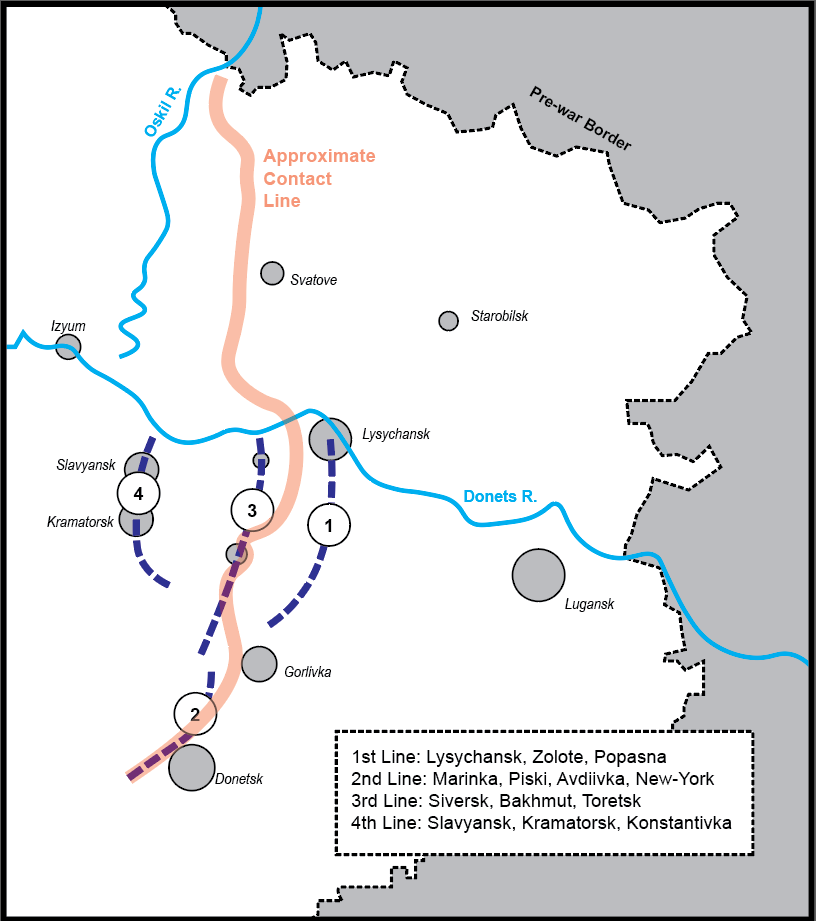
    He adds

    The conflict in Ukraine cannot be solved with Panzer, only with diplomacy [โ€ฆ] Only the US armaments companies benefit from arms deliveries [โ€ฆ] The majority of the German people reject arms deliveries to Ukraine. The traffic light government [red-green] should finally start conducting politics in the interests of the German people

    A number of parties are opposing the transfer and the decision is postponed. Later, the US announce a new $2.5 billion military package for Ukraine, which will include 59 Bradley IFVs (infantry fighting vehicles) and 90 Stryker APCs (armored personnel carriers), but no Abrams tank.

    Meanwhile in Donbass, Wagner liberates Kleshcheevka, a village southwest of Bakhmut

    (RYBAR)
    • January 20, 2023

    Andriy Melnyk is the previous ambassador to Germany, a revisionist and an apologist of his national hero, Ukrainian Nazi war criminal Stepan Bandera. On November 18, Volodymyr Zelenskyy has appointed him deputy foreign affairs minister. Melnyk calls for a tank coalition in Ukraine

    Representatives of the Atlanticist coalition, the US, Ukraine and their auxiliaries, meet in the US military base in Ramstein, Rheinland-Pfalz, Germany

    But the Westerners do not announce the delivery of Leopards or Abrams to Ukraine. Editor for German tabloid BILD and a mouthpiece of NATO, Julian Rรถpcke is angry. A few years before, he was already supporting the jihadist revolution in Syria

    According to dem Spiegel, the Bundesnachrichtendienst (BND, German intelligence) is assessing that the Atlanticist forces are losing three-digit numbers of soldiers every day in Bakhmut area.

    While Wagner is still bleeding the Ukrainian cannon fodder in Bakhmut area, the Russian regular forces are attacking in the south since the day before, January 19, gain 7 km on January 20, are threatening Orekhovsky, 65 km southeast of Ukrainian-occupied Zaporojie, on the left bank of Dnieper river. If confirmed and successful, such an offensive could lead to the destruction of the Atlanticist forces east of the river

    Situation map on January 20 (RYBAR)
    • January 21, 2023

    A Wagner fighter proudly displays his trophies, including the chevrons that he has seized so far in Bakhmut area, on demilitarized foreign mercenaries from Canada, Georgia, Italy, Turkey, the UK and US

    • January 22, 2023

    During an interview in Paris with French TV channel LCI, AuรŸenministerin Annalena Baerbock replies

    At the moment, such a question [from Poland, about Leopard Panzer] has not been asked, but if we were asked, we would not interfere

    • January 23, 2023

    The psychodrama goes on in the Ostgebiete [eastern territories]. Polish prime minister Mateusz Morawiecki states

    We will apply for such consent from Germany, but this is a secondary topic. Even if we do not get this consent at the end, as part of a small coalition, even if the Germans would not be in this coalition, we will still hand over our tanks [German Leopards] together with others to Ukraine. The condition for us at the moment is to build at least a just small coalition of States [โ€ฆ] in Western Europe [โ€ฆ]

    I guess he needs the German industry, in order to maintain his Panzerkampfwagen

    Meanwhile, the campaign #FreeTheLeopards is trending on social networks, with involvement of characters like Finnish prime minister Sanna Marin

    and German stylist Frank Peter Wild, who is advocating for a while on Instagram, from his elevator in Berlin

    • January 24, 2023

    The French press may be the worst coterie worldwide of atavistic lackeys. The State is subsidizing them all. Their reports about the prospects of tanks delivery to Ukraine are hilarious. The public propaganda channel franceinfo asks

    War in Ukraine: why does Germany have control over Poland’s [German] tanks ?

    But the right-wing Point states

    It would not be a good idea to deliver [French] Leclerc tanks to Ukraine

    PANZER, MARSCH ! According to dem Spiegel and other German outlets, Kanzler Olaf Scholz has agreed to send German Panzerkampfwagen to Ukraine. The historians will measure the part of the submission to the US and that of a pure German neurosis

    My brief forecast : the Western tanks are carrying four crew members, require training, will not be soon on the front line. A few dozens will not turn the tide in Ukraine, but will be destroyed.

    • January 25, 2023

    The government confirms that Germany will send 14 Leopards to Ukraine. The plan is to form two battalions, that is about 88 tanks, with contribution of other countries. New German defense minister, Boris Pistorius predicts that these formations may reach the front line in about three months, that is early May.

    Besides, we already know the way (Les Humeurs dโ€™Oli)

    Poland has already announced the delivery of a company, that is 14 vehicles. Germany has managed to convince the US, which will deliver 31 Abrams, confirms Joe Biden. 14 British Challengers should be also part of the 88 Western Panzerkampfwagen ultimately engaged in Ukraine. 75% of mankind are eager to watch their wrecks on the battlefield. Government by grocers is a curse.

    For a wide majority of Russians, the near involvement of Western tanks is a reminder of the Great Patriotic War against Nazi Europe. Some channels are giving advice on how to burn the new German Panzerkampfwagen

    Ukraine needs now crew members and more broadly, a new batch of cannon fodder. I guess some recruits were volunteer in March 2022, but the most are likely dead, now. The scenes of forced mobilization are increasingly cruel. An amateur video surfaces from Cherkasy. The woman has attempted to record the abduction of the man

    The same day, the Ukrainian press writes the obituary of Arkadiy Peschanskiy, a symbol of modern Ukraine, who has been killed on the battlefield around Bakhmut. 47 years old, Peschanskiy was a veteran of the riots at Maidan square and the right-wing coup in February 2014, leader in Poltava of Nazi Svoboda [liberty] party, serviceman within its military branch, special police battalion Sich. He had been recently transferred to the 116th territorial brigade, likely in a punitive function, in order to prevent desertion

    He was displaying as a banner of his Facebook account the red and black flag of Nazi Pravyi Sektor [right sector] organization, with the portrait of Stepan Bandera, a Ukrainian Nazi war criminal during WW2.

    An alleged assessment from the Israeli intelligence has leaked to Turkey, where the press writes that by January 14, 165,000 Atlanticist fighters, including 8,000 foreigners, had been killed in Ukraine since February 24, 2022. Among the 8,000 foreigners, the most were mercenaries, but 2,692 were service members from NATO countries (Germany, Lithuania, Poland, UK, USโ€ฆ etc). According to the same piece, the Russian fatalities were 18,500, nine times less, at the same date. From March to September 2022, I have written a chronicle about the siege of Mariupol. I am still convinced that dozens French operatives were taken prisoners there.

    • January 28, 2023

    At about 7:30 am, the Atlanticist artillery shells Novoaydar, Lugansk People’s Republic, more than 50 km from the front line. The rockets are highly precise, several US-made GMLRS, also called the 70km sniper rounds, that nothing but US-made HIMARS have launched. The target is the hospital. The Russian defense ministry does not hide that the building was also a military healthcare facility. Anyway, the shelling of a hospital, civilian or military, is a war crime and in this instance, an episode of the usual Atlanticist terrorist activity in Donbass for almost nine years. Among patients and medical personnel, 14 at least are killed and 24 are injured

    Two political and social philosophies are confronting in Donbass and Ukraine. I have understood for a while that these events and crimes are a paroxysmal illustration of the rightist frame of mind which is currently ruling the arrogant Western societies. The LGBT bullshit, current flag of the self-called progressives, is a lure for dummies, at best. That is why, as a witness of these facts, I have become since February 2022 an enthusiastic partisan of a Russian victory, for the sake of the wide world and the working class in the West.

    • January 29, 2023

    The Orchestra has found in Bakhmut area the corpses of Atlanticist fighters, whose heads and hands have been cut off, in order to prevent their identification. They were likely foreigners, may have been Western operatives. As a reminder, in June 2022, the Russian forces found burnt human remnants, several individuals, inside and nearby a blast furnace of Azovstal steel mill, Mariupol, with the scraps of a US passport card

    • January 30, 2023

    From Kleshcheevka, a village cleansed on January 19, southwest of Bakhmut, Wagner is slowly advancing toward Chasov Yar. Its capture would cut one of the two main Atlanticist lines of communication west of the city

    • February 1, 2023

    In anticipation of their defeat in Bakhmut, Atlanticist servicemen are digging trenches west of the city

    That may be anywhere between the current front line and Kramatorsk, about 45 km to west. When Bakhmut will have been liberated, the Russian forces will have broken two consecutive lines of entrenchments, which have been built during years. Victory over the third line will mean the complete liberation of Donbass

    • February 3, 2023

    While a splendid Chinese balloon is terrorizing the whole nation, the US announce that they will ship a new package to Ukraine, $2.175 billion worth of military aid, including Ground Launched Small Diameter Bombs (GLSDB), that the HIMARS, already delivered, will be able to launch up to 150 km.

    Since the day before, Ursula von der Leyen, the president of the European Commission, is attending a summit in Kiev. During a joint press conference, Volodymyr Zelenskyy states

    No one will surrender Bakhmut. We will fight for as long as we can. We see Bakhmut as our fortress

    That criminal insanity sounds funny the day after the 80th anniversary of the Soviet victory in Stalingrad, where the annihilation of the German 6. Armee was the turning point of WW2, forecast the complete defeat of Nazi Europe. To a request for capitulation from Friedrich Paulus on January 24, 1943, Adolf Hitler replied

    Surrender is forbidden. 6. Armee will hold its position to the last man and the last round and by its heroic endurance will make an unforgettable contribution toward the establishment of a defensive front and the salvation of the Western world

    A usual contemporary question about WW2 is : how a character like Adolf Hitler may have led Germany between 1933 and 1945 ? Let us wonder nowadays. Zelenskyy is a cocaine addict actor, under the thumb of a Nazi deep State. All Europeans know for a while that Leyen is corrupted and unfit, whatever her job. European leaders appear as stooges of the US. And who is really leading the US ? Joe Biden ? A senile ham ?

    • February 5, 2023

    In a Ukrainian video which surfaces on social networks, a journalist has interviewed a member of the Atlanticist forces. She had previously investigated among military medics, who had assessed that the health expectancy for fresh recruits at forefront in Bakhmut area was four hours, before death or bad injury. The serviceman looks a bit embarrassed, replies after consideration, that the health expectancy may be a little longer

    Whatever the length of the considered front line and the size of the military formation, on average, the losses are rising to 75% in about three hours of engagement. As we have witnessed before, the survivors are then brought to the rear and a new cannon fodder is replacing them at the forefront. A mitigating factor may be that the fighting are not everywhere, 24/7.

    In all Ukrainian cities, the conscript chase has become a cops and robbers game. These violent videos are flooding the social networks. Curious phenomenon, everybody sees them, except Western mainstream media, the servile mouthpieces of bellicose, civilized and democratic governments. That is a clash of cultures, between reality and technocrats, maybe the main symptom of decadence, the intolerance to reality

    • February 7, 2023

    Der Sozialdemokrat Boris Pistorius, Verteidigungsminister von Olaf Scholz, sprach bei seinem Besuch in Kiew mit Journalisten von BILD, dem reaktionรคren Boulevardblatt fรผr germanische Rednecks

    ohne Zรถgern und ohne Kompromisse – die Welt wรคre ein besserer Ort ohne Putin [Wladimir, Wladimir Wladimirowitsch Putin]

    Was das deutsche Problem (Deutschefrage, in Gothic) anbelangt, so denke ich, dass sich die Lรถsung natรผrlich und mechanisch darstellt. Ich weiรŸ nicht, ob die Frau von Pistorius noch im gebรคrfรคhigen Alter ist, aber allgemeiner gesagt, die sinkende Geburtenrate und der GroรŸe Ersatz, den ich stark unterstรผtze, werden es in angemessener Zeit lรถsen.

    The disgrace is that so many Germans have forgotten so quickly that they are most offspring of Nazis. If modern Germany was a respectable country, its leaders would consider the legitimate demands of Russia, would strive to bring peace in such a situation, would not send Panzer.

    • February 9, 2022

    On social networks, Ukrainian nationalist channels are sharing this view from a drone in Bakhmut area

    • February 10, 2023

    A new wave of strategic raids, 71 cruise missiles, strike all over the country, from Kharkov to Lviv, according to the Ukrainian authorities, which forbid any amateur report about the results. On February 20, the New Yorker will publish photos of damaged power facilities in Western Ukraine

    Many Western commenters are waiting for a Russian offensive and the New York Times releases its strategic prospect, a kind of revearsal battle, when the Atlanticist forces would push toward Melitopol and Crimea. But Russia is also attacking in the south
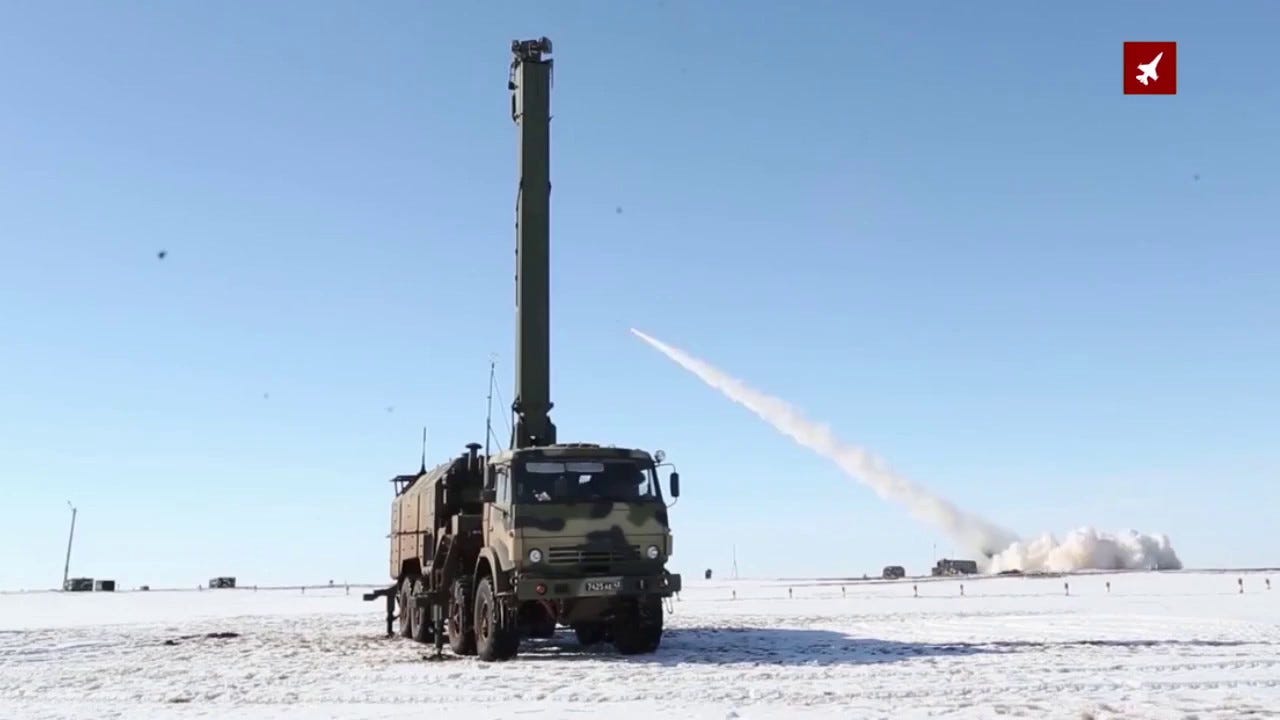
    • February 11, 2023

    Maksym Zhorin is a member of the Nazi deep State in Ukraine, former commander of Azov regiment, currently major in another formation and also a war criminal. On October 9, 2022, his men slaughtered civilians in the vicinity of Kupyansk and he broadcast on social networks a video which was showing the victims thrown in a mass grave

    He confirms publicly that Bakhmut is a slaughterhouse for the Atlanticist forces and that the losses there are jeopardizing military prospects on the whole battlefield

    The situation in and around Bakhmut itself is becoming more difficult every day. At the moment, the enemy shifted his attention and most of his forces directly to the city itself. They are trying to advance in the territories of the private sector, industrial zones. Extremely heavy battles are going on for every house, for every meter. Our biggest problem is that now the most combat-ready units of our army are losing their best fighters. In contrast to the Russians, who threw garbage and unnecessary things here. Of course, with tanks and weapons from foreign partners, we have a better chance of a successful counteroffensive. But we will be able to find tanks and aircraft. And we will not find such people who are dying now at the front – while we are waiting for supplies

    According to unofficial sources, a dispute has broken out for quite some time between the armed forces and Volodymyr Zelenskyy, who is rejecting the pleas for a retreat from the city.

    • February 12, 2023

    The Orchestra is tightening its grip around Paraskovievka, last Atlanticist controlled village in the northern suburb of Bakhmut. From all sides, the fighting are converging to the city, where this Ukrainian photo is taken and shared on social networks

    • February 15, 2023

    Northwest of Bakhmut, the Russian forces have cut M03 highway to Slavyansk

    • February 16, 2023

    Russian reporter Dmitry Astrakhan is on the eastern outskirts of Paraskovievka, last village in the northern suburb of Bakhmut, that Wagner has outflanked and is storming

    • February 17, 2023

    In the evening, the Orchestra has achieved the cleansing of Paraskovievka.

    • February 19, 2023

    Held in check on the front line, where slowly, they are stepping back everywhere, the Atlanticist forces are still using their outperformed artillery to deliberately shell civilians. That is terrorism. Once more, a volley of forty rockets hit downtown Donetsk

    • February 21, 2023

    During his speech before the Russian congress, Vladimir Putin announces that Russia withdraws from START (reduction of strategic offensive arms) treaty, will resume nuclear military tests if the West do so
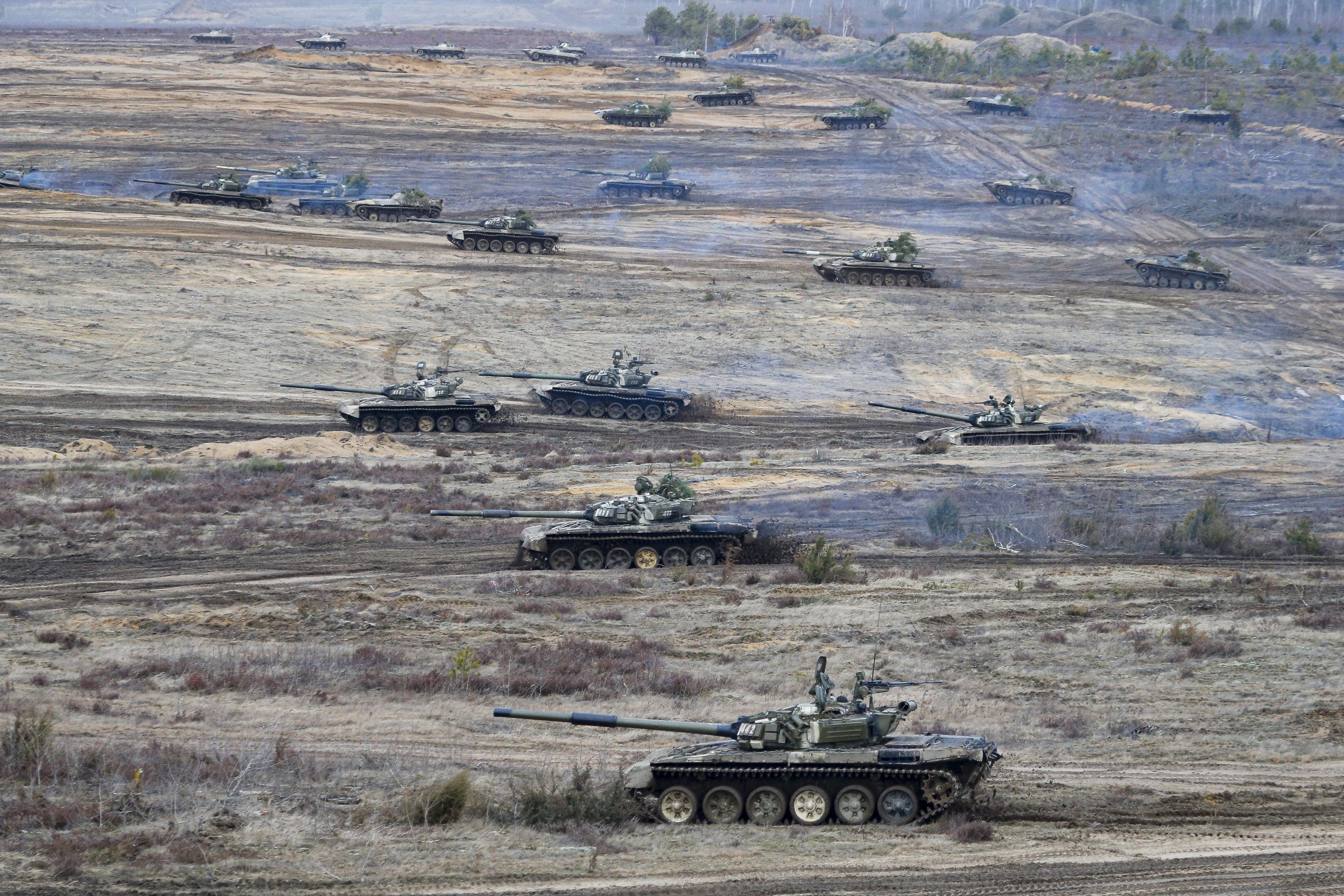
    Meanwhile, the Russian forces are advancing in the northern neighborhoods of Bakhmut

    In the night, with long range rockets, the Atlanticist forces target several cities and towns in Donetsk People’s Republic, as far as Mariupol. The Russian air defense does not manage to shoot them all down. The projectiles may be GLSDBs. The US have announced their near shipment on February 3 (cf. supra).

    • February 23, 2023

    The Russian forces have cleansed Berkhovka, northwestern suburb of Bakhmut

    Yevgeny Prigozhin appears on the front line

    Since the morning, the Atlanticist forces are shelling Donetsk city with 155mm shells and US GMLRS. Despite the air defense, four members of a medical rescue team are killed, while they are searching for victims under the rubble in Petrovsky district.

    • February 24, 2023

    A first batch of Panzerkampfwagen has arrived and as usual in Ukraine, here in Odessa, volunteers are rushing to become crew members of the new tanks and defend democracy. The two men in military fatigues are recruitment officers. In black uniforms, two police officers watch the abduction

    • February 25, 2023

    Wagner fighters have seized Yagodnoye, at the northwestern periphery of Bakhmut, behind the Atlanticist defense in the city

    European TV channel Euronews broadcasts a drone footage from the city

    • February 26, 2023

    Yevgeny Prigozhin states that according to intelligence, the Atlanticist command is sending four Leopards 2A4, one platoon that Poland has shipped two days before, to Chasov Yar, a town about 15 km west of Bakhmut.

    I hope so, did not expect it.

    The alternative is that the Panzerkampfwagen are game changers or they are not. In the first case, engagement by dropper will dilute them on the battlefield. In both cases, the pictures of destroyed machines will be a propaganda victory for Russia, while various countries are still wondering if they will deliver Western tanks.

    never interrupt an enemy who is making a mistake

    has said Corsican general Napoleone Buonaparte.

    • February 27, 2023

    Wagner fighters have liberated the northern neighborhoods of Bakhmut, where freed civilians are escaping from the battlefield

    44-year-old Robert Brody, callsign Magyar, is commanding a Ukrainian drone operators platoon, has stated that the study of worms – invaders of the Ukrainian land – will continue, detoxification methods will improve until the very victory, is suspected of having already dropped poisonous volatile liquids on Russian troops. For the third evening running, he reports under shelling, from his underground shelter in Bakhmut, about the poor situation of the Atlanticist forces

    • February 28, 2023

    Young but moral and wise John McIntyre has joined the good side, defected to Russia. 48-year-old US mercenary James Vasquez, a Twitter warrior and propaganda character, has heard that the meaningful stuff is beginning

    I guess that the real bad place, where he has an appointment tomorrow, is the meat grinder, Bakhmut. CNN is not boosting his spirit, quotes an anonymous Atlanticist serviceman who says that the situation in the city is much worse than officially reported

    • March 1, 2023

    Neil Hauer is a Canadian freelance journalist. His work exempts him so far from being suspect of sympathy for Russia. According to his sources, the last Atlanticist roads to Bakhmut are now under direct Russian fire

    I would be disappointed if James Vasquez did not manage to reach the city.

    • March 2, 2023

    But 46-year-old Yuriy Syrotyuk believes that the Atlanticist forces can keep Bakhmut. He is fighting there as grenadier with the 5th assault brigade. He is also deputy head of Nazi Svoboda party. The BBC has interviewed him

    • March 3, 2023

    While the Atlanticist forces are blowing up the bridges, Robert Brody (cf. supra, February 27) states in a last video from the city that his platoon has been ordered to retreat. From the Russian side, Yevgeny Prigozhin adresses Volodymyr Zelenskyy, urges him to save the Atlanticist forces from an encirclement. He also introduces three Ukrainian prisoners, two youngsters and one elderly, who look like members of the Volkssturm during WW2

    First in the world, some French mainstream journalists raise the white flag, announce that the Atlanticist forces have retreated from Bakhmut, which is, they stress,

    without strategic importance

    Tens thousand Ukrainians, mercenaries and NATO soldiers will be comforted to hear that they have died for so little. That will be in the coming days a mantra among the servile press of a defeated West.

    • February 4, 2023

    The main roads from the west are under control or direct fire of the enemy. The Atlanticist forces are proceeding on trails, which are uncomfortable for wheeled vehicles this season. A video surfaces on social networks

    A Ukrainian serviceman also complains about the inhabitants, who in Bakhmut, are waiting for the Russians as their liberators

    That is not surprising, the city was in Donetsk region, its population is partisan since 2014 of Donetsk Peopleโ€™s Republic. And I guess that the contempt and brutality of the Ukrainian army did not make them change their minds.

    Russian defense minister Sergey Shoigu visits southern Donetsk People’s Republic

    • February 5, 2023

    With information from drone operators, the Russian artillery is pounding the Atlanticist formations which are attempting to escape from Bakhmut battlefield

    Here, the infantrymen have left their armored vehicles for the cover of the woods, where they are chased.

    • March 6, 2023

    At 11:36 am UT, the Ukrainian presidency releases a statement

    Volodymyr Zelenskyy held a meeting of the staff of the Supreme Commander-in-Chief [himself]. Commanders of operational-strategic groups of troops reported on the situation in the main directions of the front. The members of the Stavka considered the situation in Bakhmut in particular detail. Evaluating the progress of the defense operation, the president asked questions to the Commander-in-Chief of the Armed Forces of Ukraine Valery Zaluzhny and the commander of the Khortytsia operational-strategic group of troops Oleksandr Syrskyi regarding further actions in the Bakhmut direction. They spoke in favor of continuing the defensive operation and further strengthening our positions in Bakhmut. In addition, at the meeting of the headquarters, the issue of the supply of weapons and equipment and their distribution according to operational directions was considered

    further strengthening our positions in Bakhmut

    That statement is a lie. No soldier would advocate the continuation of defense in such configuration. Politics and propaganda are directing the military choices of Volodymyr Zelenskyy, with an absolute disregard for the Ukrainian cannon fodder. So are the Western so-called young leaders. To a request for capitulation from Friedrich Paulus on January 24, 1943, Adolf Hitler replied about Stalingrad

    Surrender is forbidden. 6. Armee will hold its position to the last man and the last round and by its heroic endurance will make an unforgettable contribution toward the establishment of a defensive front and the salvation of the Western world

    Ukraine is committing its strategic reserves, in an attempt to maintain lines of communication to Bakhmut. According to the usual mathematical model, about 180,000 Ukrainian service members have been killed in action since February 24, 2022.

    In the city, a Russian assault squad reaches on Gorky street the memorial to the Red Army

    • March 7, 2023

    On private German TV channel Welt, Chefreporter Steffen Schwarzkopf explains why so many civilians do not leave Bakhmut : they are pro-Russia and are expecting the Russian forces to liberate them, like others did in Mariupol between March and May 2022.
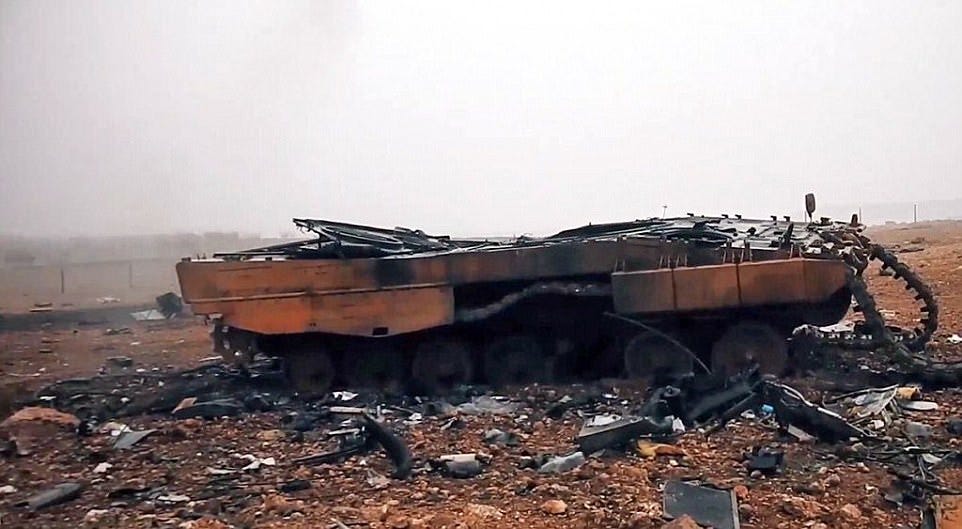
    That is obvious for many observers and me, but the anchorman looks surprised. The feelings of the Russian-speaking people in Donbass were the reason for their uprising after the rightist russophobic coup in Kiev in February 2014, the reason for the terrorist crackdown that the loyal members of the Ukrainian army and Nazi paramilitaries have carried out, the reason for the success of the referendums in September 2022. These feelings are why the Russians are liberators. Since 2014, the Western mainstream media have hidden that major aspect of the conflict -what the population is thinking- have repeated the tale of a Russian invasion in southeastern Ukraine

    Good shot : the Ukrainian media announce the death in Bakhmut area of Dmitry Kotsyubaylo, callsign Da Vinci, member of Nazi Pravyi Sektor [right sektor] organization, commander within the DUK (Dobrovolสนchyy ukrayinsสนkyy korpus, Ukrainian volunteer corps, its military branch, 67th mechanized brigade since November 2022) of the 1st battalion. One of his grandfathers was member of the UPA, the Ukrainian Nazi paramilitary organization during WW2, celebrated in Volodymyr Zelenskyyโ€™s Ukraine as a pantheon of national heroes.

    • March 8, 2023

    In Bakhmut area, Yevgeny Prigozhin visits an artillery formation which is shelling the usual military targets

    As usual, the Atlanticist artillery is deliberately targeting residential areas in Donetsk

    • March 9, 2023

    As a retaliation for the Ukrainian terrorist raid in Russian territory on March 2, explains the Russian defense ministry, a new wave of strategic strikes is conducted in the night and morning all over Ukraine, against military infrastructure, enterprises of the military-industrial complex and energy facilities. The Ukrainian staff counts 81 missiles, including six hypersonic Kinzhal

    A well known character : 29-year-old Aiden Aslin enrolled the Ukrainian army in 2018, was in the ranks of the 36th marine brigade, when in Mariupol, he surrendered to the Russian forces on April 12, 2022. As mercenary, the British national was sentenced to death in Donetsk People’s Republic on June 9, but released during a prisoners swap on September 21

    Aslin was lucky the first time, is back in Donbass, where he is leading an Atlanticist infantry squad at the front, allegedly in Bakhmut area.

    • March 10, 2023

    The high command of the Ukrainian armed forces attends the funeral in Kiev of Dmitry Kotsyubaylo, killed in Bakhmut area on March 7. Voldoymyr Zelenskyy has stressed it, the awarded hero was a symbol. Kotsyubaylo was member of Nazi Pravyi Sektor [right sektor] organization, commander within the DUK (Dobrovolสนchyy ukrayinsสนkyy korpus, Ukrainian volunteer corps, its military branch, 67th mechanized brigade since November 2022) of the 1st battalion

    Here are defense minister Oleksii Reznikov (fourth from left in the first rank), commander-in-chief Valerii Zaluzhnyi (third) and Kyrylo Budanov (first), head of the military intelligence (GUR). Even the president and an official guest, Finnish prime Minister Sanna Marin, tour the ceremony

    Some Ukrainian servicemen do not agree with their sacrifice for political reasons in Bakhmut. Here is on Twitter a member of the 93rd mechanized brigade

    As soon as the Russians take the road to Khromovo [a western suburb], Bakhmut will gradually begin to transform from a fortress into a large mass grave. Then there will be no point in keeping silent about things that have been bothering you for many months. Maybe someone will see treason in them, but I will already sneeze deeply. Patience is running out

    Meanwhile in Donetsk, Denis Pushilin, the head of the People’s Republic, awards fighters of Wagner PMC.

    • March 11, 2023

    Ukrainian colonel general Oleksandr Syrskyi is commanding the Khortytsia operational-strategic group, visits once more the headquarter which is managing the defense of Bakhmut

    A video surfaces on Ukrainian social networks, is showing how the Atlanticist forces are slaughtering the forced conscripts who are attempting to surrender to the Russians

    According to the source, the killing dates back to early March. The propaganda is broadcasting these images in order to deter such attempt.

    Somewhere near the front line, a Russian high-precision loitering projectile, a Lancet kamikaze drone, has demilitarized a British-made Stormer HVM (high velocity missile), an air defense armored vehicle

    In Kuibyshev district of Donetsk city, a NATO 155 mm shell kills 8-year-old Nikita and his father. His mother is not injured. US independent journalist Patrick Lancaster reports later from the crime scene

    • March 12, 2023

    Along the highway to Slavyansk, the Russian forces have reached the outskirts of Minkivka, 20km northwest of Bakhmut, where the meat grinder is still working

    In the northern part of the city, Wagner fighters have started to cleanse the network of underground, up to a dozen floors, of the metal processing plant (AZOM).

    • March 13, 2023

    On March 11, 2022, the people’s militia has liberated Volnovakha, about 50 km southwest of Donetsk, 30 km southeast of the current front line. Atlanticist rockets target today the town. What may have been the target ? The dead victims are two women, who were in front of a supermarket

    In the evening, the Russian artillery pounds the Atlanticist reserves, from Chasov Yar to Konstantinovka, up to 30 km southwest of Bakhmut.

    • March 14, 2022

    Within the metal processing plant (AZOM), in the northern neighborhoods of Bakhmut, Wagner assault squads have cleansed Vostokmash company

    That was the place where Volodymyr Zelenskyy distributed medals on December 20, 2022 (cf. supra).

    This second night in a row, the Russian artillery is heavily pounding the Ukrainian reserves in the rear of the city. From north to south, the areas of Slavyansk, Kramatorsk and Konstantinovka are targeted.

    • March 15, 2023

    So sad they need so much iron to understand it. The Kyiv Independent is however a Ukrainian online newspaper, that is, due to the control, censorship and bans enforced by Volodymyr Zelenskyy’s regime, a propaganda outlet. Nationalism is a plague, a European plague

    • March 16, 2023

    The 3rd Ukrainian assault brigade shares a video from the vicinity of Bakhmut. That regular formation has been formed on November 1, 2022, with elements of the national guard, the depot of Nazi Azov regiment, after its bulk had surrendered in Mariupol. Its commander is Andriy Biletsky, a police lieutenant colonel and Nazi militant, leader of the National Corps party

    • March 21, 2023
    • March 26, 2023

    In the northern part of the city, the Russian forces have achieved the cleansing of AZOM plant and its underground, which was the strong point of the Atlanticist defense downtown

    • March 27, 2023

    A video from the Ukrainian 93rd mechanized brigade is showing that the Atlanticist forces have started mining and destroying buildings in the city

    Another picture from the Atlanticist side surfaces on the site of Radio Free Europe

    • March 31, 2023

    Wagner releases a video from helicopter, which is showing that snow is falling in Bakhmut

    • April 2, 2023

    In tribute to journalist Maxim Fomin, whom the Ukrainian military intelligence (GUR) has assassinated a few hours before in Saint Petersburg, Wagner fighters seize in Bakhmut the ruins of the administrative building, where they raise their flag

    • April 3, 2023
    • April 6, 2023

    While new Atlanticist terrorist strikes, with US GMLRS rockets and NATO 155 mm shells, are killing 9 civilians in Donetsk city, 3 other ones in Lugansk People’s Republic, Russian journalist Semyon Pegov reports from the cleansed center of Bakhmut, near the city council

    • April 8, 2023

    The Atlanticist defenses are slowly shrinking in Bakhmut Western neighborhoods. Ukrainian servicemen are writing on social networks how the battlefield is a hell, under the implacable fire of the Russian artillery

    An amateur video surfaces, is showing the wrecks of tanks, other armored vehicles and soft ones, on a road to the west

    • April 10, 2023

    Head of Donetsk People’s Republic (DNR), Denis Pushilin visits the liberated part of Bakhmut

    Wagner PMC is using a seized US armored personnel carrier (APC) M113

    • April 11, 2023

    A leak of classified documents from the Pentagon has wrecked havoc within the US intelligence community. They look authentic and as Big Serge writes, are a Russian nesting doll of embarrassment

    First of all, they are showing how in this case, the US intelligence is relying on open sources (OSINT), because Ukraine simply does not share its data. The known facts are ascertaining that the country is facing a critical shortage of artillery and air defense ammunition, a deficit that the West is unable to bridge.

    Besides, Ukraine is planning a spring offensive, that 12 brigades should carry out. NATO is equipping nine of them, which appear understrengthed, according to Western standards, will still be ill trained by late April.

    Big Serge concludes

    To salvage the situation, Kiev must place its hopes on one desperate dice roll with a mechanized attack package comprised of half-strength brigades wielding a disparate inventory of different vehicles and systems. This Frankensteinโ€™s monster of armies โ€“ sewn together with a bevy of different tanks, IFVs, APCs, and artillery systems drawn from all corners of the NATO alliance, will likely be asked to smash through the heavily fortified and robustly manned Russian lines in the south, where it will be pulverized and become only so much more mulch for the Pontic Steppe

    • April 12, 2023

    RIA Novosti publishes a video from liberated downtown Bakhmut, I guess the square of the city council, that the Atlanticist forces have mined and destroyed before their retreat

    • April 13, 2023

    French Chief of Staff Thierry Burkhard visits Ukraine, where he meets his counterpart, Valerii Zaluzhnyi

    The needs of the Ukrainian army are the issue, in order to repel the Russian forces [Ukrainian statement]. Such an official trip in the region at wartime, of a French serviceman commissioned by his government, is a first since the Lรฉgion des volontaires franรงais contre le bolchevisme [French volunteers legion against Bolshevism] in 1941

    Meanwhile, the fighting are ongoing in Bakhmut, where Wagner fires a Fagot antitank guided missile (ATGM), in this splendid photo from RIA Novosti

    In a video from Evgeny Poddubny’s team, a Russian T-90 is firing

    • April 16, 2023

    Sad day in Odessa, where the Ukrainian recruitment sergeants do not find more cannon fodder, understand that they are about to leave for the meat grinder

    While Wagner PMC is cleansing Bakhmut, Russian paratroopers are protecting the flanks, north and south of the city. Here is a light antitank team

    • April 18, 2023

    Vladimir Putin visits military headquarters in Kherson and Lugansk regions

    Meanwhile in Bakhmut, the retreating Atlanticist forces blow up the cultural center

    The Washington Post interviews colonel Pavlo Palisa, Ukrainian 93rd mechanized brigade, in his underground HQ. He confirms that the Russian fire control over the Ukrainian supply lines is efficient. The Atlanticist forces are low in ammunition and the casualties are heavy

    • April 19, 2023

    A photo surfaces on social networks, allegedly from members of the Ukrainian 47th assault brigade, is showing modernized T-55 tanks from Slovenia and US Bradley IFVs

    From a TV set, Ukrainian unter-defense minister Hanna Maliar states that the counteroffensive has already begun, along four axes, Bakhmut, Marinka, Avdiivka and Liman, all in Donetsk People’s Republic, Donbass, Russia. She adds however that no offensive actions are conducted, but a set of strategic measures. Indeed, the Russian fighters have noticed nothing so far

    NATO is eager, despite the clear Ukrainian incapacity to conduct offensives with success. In the evening, Moscow time, the US announces an umpteenth military package, artillery ammunition. That proxy war is such a crime, such a caricature of the West, that it will be likely the end of the Western hegemony. The wide world is disgusted.

    • April 21, 2023

    During a new meeting on the US military base in Ramstein, Germany, defense secretary Lloyd Austin states that NATO countries

    have provided more than $55 billion in security assistance for Ukraine

    According to Robert F. Kennedy, candidate at the Democratic nomination for 2024 presidential election, who spoke on TV the day before, Ukraine has already lost 300,000 killed service members, 7 or 8 times the Russian fatalities. The usual mathematical model has rather calculated 280,000 Ukrainian military deaths so far. In this case, NATO countries would have paid $200,000 for each Ukrainian life.

    • April 22, 2023

    Wagner has seized the Upper Park and Bakhmut 2, the main railway station, only 3 km from the western outskirts of the city. The Atlanticist forces are still holding high buildings on the other side of the railway.

    According to Yevgeny Prigozhin, some Ukrainian formations are mutinying in Konstantinovka and Chasov Yar, 15 km and further west of downtown Bakhmut, are declining the engagement that their command is offering them in the meat grinder

    Since the beginning of the Russian special military operation, the issue on the other side has always been the balance of forces between the cannon fodder and Nazi paramilitaries. I guess the latter too have suffered heavy losses in Bakhmut area. The situation will radically curb when the forced conscripts will have enough stomach to start shooting at the Nazis

    Today is an anniversary. After the crossing of Oder river on April 16, 1945, breakthrough 3 days later, the Red Army completed on April 22 the cleansing of fortified Seelow Heights, 75 km from the center of Berlin.

    • April 23, 2023

    The Ukrainian terrorist shelling of civilians in Donbass last for nine years. They are harsh that day, when dozens 122 mm rockets and NATO 155 mm shells target Donetsk city and vicinity. One man is killed in the regional capital and two female passersby, two sisters, die in Makeyevka

    The Russian forces have intercepted enemy communications, which are proving that the Ukrainians have assassinated in Bakhmut an injured Russian prisoner. Therefore, Yevgeny Prigozhin orders

    We will wipe out everyone on the battlefield. Do not take a single prisoner anymore

    No mercy is not a crime. War is not a game that a player could leave when it goes wrong. The least mistreatment of an enemy prisoner, whose surrender has been previously accepted, is a crime. But to deny the enemy the opportunity to survive the battle is not a crime.

    43-year-old Caroline Nordengrip is a Swedish far-right politician, member of the so-called Sverigedemokraterna [Sweden Democrats], has enrolled in the Atlanticist forces in Ukraine

    My dearest wish is that the command sends her to the heart of the action, for example in Bakhmut. But I fear that I will not be granted.

    • April 24, 2023
    • April 25, 2023

    Today is an anniversary. 78 years ago, one week after the breakthrough on Oder-Neisse river, 75 km east of the city, the Red Army completed the encirclement of Berlin, where denazification began

    In Bakhmut, the retreating Atlanticist forces blow up the television tower.

    • April 26, 2023

    A video surfaces from an Atlanticist trench in the vicinity of Bakhmut

    • April 27, 2023

    A nine-story building has been leveled at the southwestern end of Bakhmut (48.576057022861114, 37.964094212950386), on the Atlanticist side of the current front line. A journalist who is working on the same side has taken the photo

    Ukrainian channels are claiming that the destruction is the result of Russian shelling. Russian channels are claiming that the Ukrainian forces have mined and blown up the building. We already know that the Atlanticist forces are entrenched in high buildings, which are therefore military targets for Russia, have already mined other sites during their retreat.

    Testimonies from civilians who have been evacuated to the Russian side are telling us that the Atlanticist forces have blown up buildings while civilians were still sheltered in the basement. They were disregarded because they had refused to evacuate to the Ukrainian side, were waiting for the Russians as their liberators.

    • April 28, 2023
    (Andrey Rudenko)

    The usual Atlanticist shelling, in Donetsk city, of civilian areas where no troops are stationed, no military value target is settled, have begun in the morning. The munitions are today West made JROF-M 122 mm rockets. Projectiles have hit a hospital where 10 victims are injured. The MRI room is destroyed. In another neighborhood, a civilian bus has been set ablaze while it was carrying passengers. Nine people, including one eight-year-old girl and her grandmother in the bus, are already dead. As usual for nine years, Ukrainian propaganda media are addressing their Western counterparts, are lying, are claiming that the shelling are Russian. But in the afternoon, the official channel on Telegram of Ukraine State border guards shares a video which is showing the launch as retaliation of 80 mm rockets

    For Uman, the soldier is writing on the rockets. Last night, Russia has conducted a wave of strategic strikes against military targets all over Ukraine. An explosion has ravaged a residential building in Uman, 560 km west of Donetsk. Like previous confirmed failures, several times before, the projectile was certainly a Ukrainian air defense missile. Russia is using highly precise cruise missiles, that Ukraine is attempting to shoot down, is never targeting civilians.

    Ukraine is deliberately shelling civilians in Donetsk for eight years, eleven months and two days.

    • April 30, 2023

    At about 8:00 pm, Moscow time, Yevgeny Prigozhin states that the Atlanticist forces are controlling less than 3 square km in Bakhmut. Later, Russia has stricken Pavlograd railway junction, about 180 km to the West, where ammunition are still detonating. The target was likely the main supply hub for the troops on the front line in Donbass

    • May 1, 2023

    Today is an anniversary. Adolf Hitler had shot himself the day before in his Bunker. 78 years ago, the Red Army seized the Reichstag, where 800 Nazi defenders surrendered, after 1200 had died

    While Ukraine has lost on the battlefield -in my mind, the defeat is ascertained since the liberation of Mariupol, in May 2022, the military intelligence (GUR) is activating its networks in Russia, in order to conduct sabotages. In the previous night, a power line pole has been blown up in Leningrad region, northwestern Russia. Later, an explosion causes the derailment of a freight train near Bryansk, 1000 km to the south

    From Bakhmut, Yevgeny Prigozhin congratulates Volodymyr Zelenskyy for the Workers’ Day

    • May 2, 2023

    Today is an anniversary. Adolf Hitler had shot himself two days before, the Red Army had seized the day before the Reichstag, where 78 years ago, the victors against Nazism raised the flag, as the survivors of Berlin garrison surrendered

    From the top of a building in Bakhmut, a camera records a salvo of thermobaric rockets which pound the Atlanticist entrenchments

    In Donbass, a revolution had founded Donetsk Peopleโ€™s Republic on April 8, 2014. In order to crush federalism in Odessa, southern Ukraine, nationalist militants, many outsider, were clashing with local Russian-speaking autonomist protestors on May 2, 2014. The first attacked the Trade Unions House, where left militants had settled their headquarters. They yelled Kill the Russians, set ablaze the building with petrol bombs. People tried to escape through windows, some fell and while injured, were beaten in the street. 48 victims were killed, burned in the building or slaughtered outside

    Nobody was sued in Ukraine for the mass-killing on May 2, 2014. Today, Ukrainian Nazis are still celebrating on social networks the day of Odessa barbecue

    • May 4, 2023

    Planet releases this satellite photo. Still under Atlanticist control, the western end of the city is smoky

    • May 5, 2023

    After several previous public grievances about lack of ammunition for his men, Yevgeny Prigozhin releases a video where he threatens to withdraw from Bakhmut on May 10, the day after celebration in Russia of 1945 victory, if the issue is not solved

    I have no strong views. The problem may not be any malice from the Russian command, but an enormous consumption of artillery shells, due to Wagner tactics. Later, the Russian commander in Mariupol during the victory in May 2022, colonel general Mikhail Mizintsev, is investigating on the front line in Bakhmut

    Ramzan Kadyrov reacts later, Chechen troops would replace Wagner in Bakhmut. Here is his full statement

    I appeal to the Minister of Defense, Sergey Shoigu, the Chief of General Staff of the Russian Armed Forces, and the founder of the PMC โ€œWagnerโ€.

    I like everyone not indifferent to the fate of our country, hate to hear the latest statements by Yevgeny Viktorovich, and it is doubly unpleasant that the leadership of the Russian Ministry of Defense does not comment or does not meet with the leadership of the โ€œWagnerโ€ PMC to make any decision or clarification. After all, Prigozhin deserves respect for the invaluable contribution of the Wagnerians to the liberation of the cities of Donbass.
    If there is a shortage, then it is necessary to explain and show, on the basis of which the commanders will at least adjust the further tactics of the Wagner units, without relying on artillery.

    I recall the experience of Chechen units in Mariupol. When we needed five tanks from the Ministry of Defense to support the infantry, we could only be allocated one, whose crew left the vehicle in the first battle. The tankers then had to be reassured, tuned up for combat, and put back in the vehicle so that they could cover at least one position of the Azov Satanists with salvos. There were problems with other equipment as well. We have not been able to replace 30 artillery cannons since the beginning of the SMO. I personally called Moscow and talked to commanders and superiors. In a month, the problem was solved. Yes, it did not work on the first call. But our units did not record the clips either; they did not give the enemy pleasant informational victory.

    ... By the way, it is not right to film the bodies of killed comrades-in-arms for the sake of public outcry is wrong. Let us never do that.

    For example, the area of responsibility of Apta Alaudinov, my dear brother, commander of special forces โ€œAKHMATโ€ and deputy commander of the 2nd army corps of the Russian Armed Forces, includes more than a hundred kilometers of the line of contact with the enemy. Not a day goes by that he does not have problems. But not once has Apty Aronovich announced it publicly over the Internet, but only through internal communication with the leadership. I should note that, with rare exceptions, the Ministry of Defense and the General Staff were always accommodating and helpful to Chechen units. And there are always misunderstandings in ordinary civilian life, not to mention the war, where there is always a shortage of ammunition! I do hope my appeal will be heeded by Sergey Kuzugetovich and that an order will be given to the General Staff to go there and sort it out. It is the only correct way out of the situation, in a soldierโ€™s way.

    Chechen units fought side by side with the Wagnerians in the most difficult areas in Popasna, Severodonetsk, Lisichansk, and other settlements in Donbass.Together, they fulfilled their sacred duty to the motherland without distinction of nationality or faith. The interests of the state and the security of the country must come first. And when the SMO is over, I would like all of usโ€”every fighter, every commander, every Russian patriotโ€”to be the winners. Together.

    Yes, if the older brother Prigozhin and the Wagner leave, the General Staff will lose an experienced combat unit, and the younger brother Kadyrov and the Akhmat will take his place in Artemovsk. If the scenario nevertheless plays out that way, our fighters are already ready to move in and occupy the city. Itโ€™s a matter of hours. But we would like to take the remaining two kilometers of the city, not at the cost of soldiersโ€™ lives but as a result of the mutual understanding, support, and determination of the commanders and fighters to carry out the order of the Supreme Commander-in-Chief of Russia, Vladimir Vladimirovich Putin

    In the night, the Russian artillery is treating with incendiary rockets the neighborhoods that the Atlanticist forces are still holding at the west end of the city.

    • May 6, 2023
    • May 8, 2023

    A church is burning in the evening, on the current front line, at the west end of Bakhmut

    • May 9, 2023

    While along the path of the sun, from Vladivostok to Saint Petersburg, Russian cities are celebrating one after the other the victory against Nazi Germany, in 1945, the Atlanticist artillery targets in Bakhmut vicinity, a facility where Ukrainian prisoners of war (POWs) are accommodated. Four US made GMLRS (down right) hit the compound. Fortunately, no prisoner is killed, but all are stunned (down left)

    Among several previous false flag war crimes, one with GMLRS already killed 53 Ukrainian inmates in Yelenovka, on July 28, 2022, after the Russian victory in Mariupol

    The same day, French news agency AFP announces the death of journalist Arman Soldin, during a Russian shelling in the vicinity of Chasov Yar. My first question is why has he come to maybe the worst point of the whole front line, where the Russian artillery and air forces are pounding the Atlanticist reserves, only 15 km west of downtown Bakhmut.

    Moreover, Ukraine pays tribute to Oleksiy Titarenko, a senior adviser to Volodymyr Zelenskyy, who has been killed the same day in Donetsk region [Donetsk Peopleโ€™s Republic], in Chasov Yar, Ukrainian private channels detailed. I guess alongside the French journalist.

    • May 10, 2023

    NATO military committee states that Valery Zaluzhny, the Ukrainian chief of staff, does not participate that day in a scheduled joint video conference. The rumor of his death is spreading and the deputy defense minister, Hanna Maliar, is bound to publicly deny the alleged liquidation of our commanders.

    Besides, Maria Zakharova, spokeswoman of the Russian foreign affairs ministry articulates a so true reality

    On the eve of May 9, Zelenskyy canceled Victory Day, sacred to many Ukrainian citizens. He instead approved Europe Day, as if there was no other day among 365 ones, no other historical period either. To understand the underlying purpose of this replacement, one need only look at the officials who came to this celebration. That is the president of the European Commission, German Ursula von der Leyen. She is a representative of the vindictive Europeans, simply seeks revenge on our country for the crushing defeat her Nazi ancestors suffered 78 years ago

    • May 12, 2023

    The fighting is going on in Bakhmut and in the evening, Yevgeny Prigozhin states that the Atlanticist forces are controlling less than two square km

    • May 15, 2023

    A US Humvee is burning on the outskirts of Bakhmut, on a muddy road to Chasov Yar.

    • May 16, 2023

    While the Atlanticist forces are now controlling less than 1.6 square km at the east end of the city, Wagner has managed in the previous night to demilitarize 46-year-old Nicholas Maimer, a US citizen and former member of the USSOF (US special operations forces).

    • May 17, 2023

    Bild is a reactionary tabloid, pro-NATO and Russophobic. Its readers are mainly in West Germany, where their elders have not been enough cracked down for their Nazism during WW2

    Bild is however more reliable than the atavistic, otherwise congenital courtiers, who are populating French mainstream media, acknowledges that the Atlanticist forces are now occupying less than 1% of the city, only one side of a street.

    • May 19, 2023

    While G7 is meeting in Hiroshima, the site of the worst terrorist attack in history, Volodymyr Zelenskyy is travelling onboard a French military plane to join in and Yevgeny Prigozhin states in the evening that the Atlanticist forces are only controlling 0.6 square km at the southwestern end of Bakhmut. The Russian artillery is now focusing on that tiny area, are showing amateur videos

    Under the shelling, a Ukrainian serviceman releases a video

    What I want to say ?
    Bakhmut has fallen.
    Just in case, remember us, with a good word

    • May 20, 2023

    At 3:50 pm, local time, one year after another liberation, the surrender in Mariupol of Nazi Azov regiment, Yevgeny Prigozhin announces that the Russian forces have achieved a complete victory in Bakhmut, Donetsk Peopleโ€™s Republic, Donbass, Russia. No Atlanticist fighter remains alive in the city

    The liberators reached its eastern neighborhoods in August 2022, implemented attrition tactics in order to create there a meat grinder for the Ukrainian cannon fodder. In Washington DC on December 21, Voldodymyr Zelenskyy stated

    as like the battle of Saratoga, the fight for Bakhmut will change the trajectory of our war for independence and the freedom

    Despite advice from NATO and I guess, his own military staff, he refused to withdraw. Ukraine injected reserves in vain, has lost Bakhmut and likely, a huge number of servicemen.

    During the battle, the Ukrainian propaganda and its lackeys within Western media were kidding Wagner PMCs, who were fighting with shovels. Indeed, they were digging manholes close to the defenses, in order to point precise shelling. Their victory is complete, on all grounds

    • The death toll

    A few days later, Yevgeny Prigozhin details the human cost of victory. Wagner has lost 20,000 fighters killed in action. Ukraine has consumed 31 brigades. The Atlanticist military fatalities have been 55,000, including 6,500 foreigners.

    • Music