Nicolas Cinquini

Analista senior di l'intelligenza in u campu di a gestione di i risichi di sicurezza, sò un anzianu tenente detective è ufficiale di l'intelligenza in l'agenzie di u Statu francese. A bona pronuncia hè Николай Чинкуини, in russu

Tag: history

  • [Sharing] Censorship in Western Academia and the War in Ukraine – New Global Politics

    Why are liberal institutions censoring discussion of forced mobilization in Ukraine? – Volodymyr Ishchenko, Marta Havryshko, Tarik Cyril Amar, Milica Popović and Almut Rochowanski

    The following is a response to the editors of the Review of Democracy (RevDem), the online journal of the Democracy Institute at the Central European University, who suspended an event that they agreed to host on December 11, 2025: “Men in the Vans, Women on the Streets: Gender, Resistance, and Forced Mobilization in Ukraine and Ex-Yugoslavia.” Its authors are the panelists who were scheduled to speak at the event.

    This case illustrates how academic freedom and open debate are eroding in Western institutions, including those that publicly position themselves against authoritarian trends. Concerns about “balance” and “public responsibility” in discussions of the Russia–Ukraine war are applied in a highly selective way, effectively excluding scholars who are among the very few conducting empirical research and publishing on silenced and inconvenient topics. While calls for “balance” are rarely voiced when events reproduce dominant narratives about the war, they are used to delegitimize discussions that highlight phenomena—such as mass draft dodging and forced mobilization—that expose growing tensions between hegemonic discourse and social realities in Ukraine and sit uneasily with the current climate of European remilitarization. Invoking “responsibility” has, in practice, meant devaluing and silencing the lived experiences of large numbers of people suffering and resisting serious human rights abuses, whose perspectives the suspended panel was explicitly designed to bring into the conversation.

    We are profoundly shocked and saddened by the statement issued by the Review of Democracy (RevDem) and the CEU Democracy Institute, which we consider an attack on our academic freedom and our academic and professional integrity. We feel compelled to respond to this deplatforming, which is nothing less than an act of political censorship.

    Our panel was scheduled to address the phenomenon of “busification” (forced mobilization in Ukraine). We were to examine its relationship to gender and nationalism, as well as the resistance and civil society responses it has provoked. The panel also planned to place these issues in a comparative context, exploring forced mobilization in Ukraine alongside similar practices during the Yugoslav wars. The event was proposed and organized with the utmost care to ensure the rigor of academic debate and to reflect the urgency of the human rights abuses on the ground. We proposed the speakers and the topic to the RevDem team on November 15, responding to all questions about structure, specific themes, and format by late November. The event was subsequently announced on the evening of December 3 and shared on RevDem and Democracy Institute social media on the afternoon of December 4. As we were proceeding with preparations, on the evening of December 5 we received an email announcing the event’s suspension. We later discovered that the RevDem team and the Democracy Institute had simultaneously issued a public statement on the suspension.

    The statement claimed that the decision followed “careful consideration of concerns raised by colleagues, faculty, and students across the university, particularly members of CEU’s Ukrainian community.” However, RevDem and the Democracy Institute did not ask us, the speakers and organizers of the panel, to comment on these concerns while making the decision, giving us no possibility to respond and leaving us entirely excluded from the process. Nevertheless, the statement on the suspension plainly declared that “the current format of the event does not meet the standards required for an academically balanced and contextually grounded discussion of this subject” and, moreover, that the event does not seem to be structured in ways “that uphold academic integrity, provide appropriate expertise, and acknowledge the lived experiences of those directly affected.”

    In the private email we received about the cancellation, we were informed that “the issues raised included: the need for a clearer contextualization of forced mobilization within the ongoing full-scale Russian invasion of Ukraine; questions about the appropriateness of comparisons with the Yugoslav conflicts; the absence of scholars who have conducted direct research on forced mobilization or on civil society responses in Ukraine, and worries that the current setup may not be able to sustain the kind of balanced, rigorous academic debate that the topic requires and CEU stands for.” Essentially, the suggestion was that our proposal was not grounded in scholarly rigor and appropriate expertise, nor sensitive to the wider impact it may have on communities directly affected by the war. The statement promised “thoughtful reassessment” of the “event’s format, scope, and potential future iteration”; however, it called into question our academic integrity and research expertise as well as the lived experiences of some of the speakers before any proper reassessment was conducted.

    The panel was organized by scholars who have been conducting direct research on forced mobilization and/or on civil society responses in Ukraine, as well as in the former Yugoslavia. We are among the few academics to have published on these topics.

    Volodymyr Ishchenko has co-authored the essay “Why is Ukraine struggling to mobilize its citizens to fight?”, which is based, in particular, on recent empirical research, including interviews with Ukrainian volunteers and draft dodgers. This forms part of a large-scale cross-national research project he has been co-leading with the support of the Alameda Institute, which also included a representative survey commissioned this year in Ukraine exploring, among other questions, attitudes towards draft dodging.

    Tarik Cyril Amar published the most comprehensive article to date focused on forced mobilization in Ukraine: “The Nation and Busification: Forced Mobilization in Wartime Ukraine,” published by the Institute for New Global Politics, a think tank founded by a network of  scholars at Stanford, UC-Berkeley, and elsewhere.

    Marta Havryshko has published extensively on forced mobilization and gender specifically, including: “Mobilisation et résistance à la mobilization: le coût social de l’effort de guerre ukrainien” (Postface à l’édition française du “Le Massacre du Maidan – La tuerie de masse qui changea le monde” du prof. Ivan Katchanovski, à paraître en novembre 2025 aux éditions Perspectives Libres, Paris) ; “Müde vom Ukrainekrieg: Warum ukrainische Soldaten von der Front fliehen,” in Berliner Zeitung, October 26, 2025 ; “Der Krieg der Armen : Wie Klasse, Macht und Korruption den Krieg in der Ukraine prägen,” in Berliner Zeitung, June 9, 2025 ; and “Feinde im Inneren ? –‘Krieg’ gegen Rekrutierungsmaßnahmen in der Ukraine eskaliert,” in Berliner Zeitung, February 15, 2025.

    Milica Popović is currently leading an extensive empirically-rooted project on desertion and forced mobilization during the Yugoslav wars at the Austrian Academy of Sciences in Vienna. Her project “The Silence of Saying No: (Un)Remembering Deserters from the Yugoslav Wars” has received funding from the FWF (Austrian Science Fund) based on international peer-review evaluation, and she has delivered several academic lectures on the topic.

    Almut Rochowanski has decades-long experience supporting women’s civil society groups in Eastern Europe. She has worked on Ukraine and women, particularly women activists, since 2014, notably with the Women’s International League for Peace and Freedom, an international women’s peace organization founded in 1915, which has consistently worked on anti-militarism, including by defending conscientious objectors and deserters.

    The above-mentioned publications are not yet in peer-reviewed journals precisely because careful empirical research of a new and silenced phenomenon requires time. It should be noted that academics routinely speak on issues on which they have not yet published peer-reviewed papers—as numerous events, panels, and podcasts at the Democracy Institute and CEU itself demonstrate.

    We find the claimed “inappropriateness” of comparing the Russia-Ukraine and Yugoslav wars to be without serious grounds. We are aware of each other’s studies on forced mobilization in Ukraine and across ex-Yugoslav states: we find important convergences, and divergences, that help us see each case in comparative context. Furthermore, the Invisible University for Ukraine—one of CEU’s own projects—apparently finds such comparisons entirely appropriate, as it offers two courses: “Protests, Social Transformations and the EU: Rethinking the Balkans for Ukraine” (course co-directors: Marija Mandić, University of Belgrade, and Olesia Marković, Kyiv-Mohyla Academy); and “Facing the Legacy of the Yugoslav Wars” (course co-directors: Vladimir Petrović, NIOD Institute for War, Holocaust, and Genocide Studies, Amsterdam and Miloš Hrnjaz, University of Belgrade).

    We are scholars and practitioners with deep expertise on the proposed topic of discussion and a long record of books and articles on directly related aspects of Ukrainian and (post-)Yugoslav societies and histories, including wars, nationalism, gender, violence, protests, and civil society. We are fully competent to contextualize forced mobilization appropriately—that was precisely the goal of our discussion.

    We are able to sustain the balanced and rigorous academic debate that any serious topic requires, and we have proven this through our academic work and its recognition—unless “contextualization” and “balancing” means that we should, in effect, justify and legitimize the large-scale and serious human rights abuse that forced conscription represents.

    Further accusing us of a lack of sensibility “to the wider impact that it may have on communities directly affected by the war” is particularly insulting, given that two of the panelists are Ukrainian citizens (Marta Havryshko and Volodymyr Ishchenko); and one of the panelists lived through the Yugoslav wars (Milica Popović). Acknowledging the experience of our close relatives and friends who have become victims of forced mobilization, had to become deserters, or hid from mobilization for years was one of our primary motivations for initiating an academic discussion on this topic.

    We believe that RevDem and the Democracy Institute’s handling of the situation with our panel was unprofessional and unethical. The public allegations made about our integrity, expertise, and experiences before conducting any proper review are unacceptable.

    We also believe that the real reason for this cancellation is our public stance and political views—in particular, critical views on the Russia-Ukraine war and nationalism—as well as the lack of readiness by the RevDem and the Democracy Institute to address the inconvenient complexities of wars not suitable for the dominant political discourses in the current atmosphere of Europe-wide militarization. Such cancellation practices stand as a warning to the rapidly deteriorating conditions of academic freedom and freedom of scholarship, as well as freedom of speech in the European Union, even by institutions which otherwise claim to fight against such authoritarian tendencies [end]

    The original article

    Volodymyr Ishchenko is a sociologist from Ukraine currently affiliated with the Institute of East European Studies, Freie Universität Berlin, and author of Towards the Abyss: Ukraine from Maidan to War.

    Marta Havryshko is Dr. Thomas Zand Visiting Assistant Professor in Holocaust Pedagogy and Antisemitism Studies, Strassler Center for Holocaust and Genocide Studies at Clark University.

    Tarik Cyril Amar (@TarikCyrilAmar), is an historian from Germany currently at Koç University, Istanbul, and author of The Paradox of Ukrainian Lviv. A Borderland City between Stalinists, Nazis, and Nationalists.

    Milica Popović is a political scientist, and currently, Senior Postdoctoral Researcher at the Institute of Culture Studies at the Austrian Academy of Sciences in Vienna, where she leads her project,”The Silence of Saying No: (Un)Remembering Deserters from the Yugoslav Wars.” Her first monograph, The Last Pioneers: Deconstructing Yugonostalgia and (post-)Yugoslavism, will be published with Amsterdam University Press in 2026.

    Almut Rochowanski has been an activist for women’s rights and peace in countries of the former Soviet Union and is currently a fellow at the Quincy Institute for Responsible Statecraft.

    Related

    The Western disinformation about Ukraine

    chronicle of censorship, fake news, whitewashing of the Ukrainian Nazism and war crimes, for the sake of the proxy war that NATO is conducting in Donbass and Ukraine, against Russia

    August 7, 2025: How Nazi Collaborators Are Celebrated in Wartime Ukraine – Marta Havryshko, New Global Politics

    April 20, 2025: Ukraine: Zwischen SS-Mythos und Gedenkkultur – wie der Westen zur Nazi-Apologie schweigt – Marta Havryshko, Berliner Zeitung

    Kiew ehrt den Sieg über Hitler – doch Gedenken mischt sich mit Heldenverehrung. Was steckt dahinter? Eine Kolumne

    September 26, 2024: Far-Right Political Violence in Ukraine: Assessment of the Donbas War and the Odesa Massacre – Ivan Katchanovski and Max Abrahms, Perspectives on Terrorism

    Volume XVIII, Issue 3

  • [Partage] Psychose – Pierre Rimbert, le Monde diplomatique

    Les dirigeants européens croient-ils sincèrement que les chars russes défileront bientôt à Varsovie ou à Berlin ? Ou leur ébriété guerrière vise-t-elle surtout à légitimer une politique qu’ils présentent comme la seule possible mais dont ils savent l’impopularité : l’austérité pour le peuple, l’opulence pour l’armée ?

    « Nous sommes dans une confrontation avec la Russie », déclarait le président français Emmanuel Macron le 1er octobre dernier, alors que des survols de drones perturbaient le trafic aérien dans plusieurs pays européens. « Nous sommes tous en danger, les missiles russes les plus avancés pourraient frapper Rome, Amsterdam ou Londres à cinq fois la vitesse du son », a fait écho le secrétaire général de l’Organisation du traité de l’Atlantique nord (OTAN) Mark Rutte (TG1, 3 octobre 2025). Face au Kremlin, qui « se prépare à une confrontation à l’horizon 2030 avec nos pays », « ce qui nous manque, c’est la force d’âme », a estimé le chef d’état-major des armées le 18 novembre à l’occasion du congrès des maires de France. La nation doit « accepter de perdre ses enfants, parce qu’il faut dire les choses, de souffrir économiquement ». Pour transmuter l’or de la protection sociale en plomb et en canons, il convient que l’angoisse de la guerre dépasse le mécontentement populaire.

    Jeudi 20 novembre, le gouvernement français rendait public le manuel Tous responsables destiné aux foyers. Initialement conçu pour les cas de catastrophe naturelle ou d’attentat, il s’enrichit d’une nouvelle menace : « La perspective de l’engagement des forces armées n’est plus à exclure. » On y hume l’atmosphère sympathique que les pouvoirs publics aimeraient installer : « Ne propagez pas de fausses rumeurs ! » « N’OUBLIEZ PAS : en situation de crise, n’écoutez et ne prenez en compte que les annonces des pouvoirs publics via les canaux officiels. » Rédigée avec une syntaxe volontairement appauvrie à l’intention de concitoyens perçus comme des débiles légers, une version « facile à lire et à comprendre » précise le propos : « Un État ou une organisation ennemie de la France peut donner de fausses informations sur le gouvernement français. Les Français peuvent croire ces informations. C’est dangereux pour le gouvernement. » La brochure cite en exemple deux médias nationaux de confiance : Le Monde et France Télévisions.

    Le premier s’enorgueillit de faire la «  pédagogie sur l’effort de défense » (éditorial du 23-24 novembre) en même temps que celle de l’austérité sociale ; Sylvie Kauffmann y porte la voix des marchands de canons. « Sommes-nous prêts ?, s’interroge la directrice éditoriale. En Europe, à part la Finlande, la réponse est non. Le réveil est là, mais l’intendance a du mal à suivre » (13 novembre 2025). Côté France Télévisions, la présidente Delphine Ernotte estime que l’audiovisuel public doit « défendre la position française si demain il y a la guerre en Europe » (Le Monde, 19 septembre 2025) — un peu comme les chaînes russes défendent la position du Kremlin. En matière de « force d’âme », le chef d’état-major sait disposer d’une division de journalistes enthousiastes à l’idée d’envoyer les autres mourir au front et de relancer le service militaire. « Le combat de l’arrière a commencé », avertit Patrick Forestier, éditorialiste au Télégramme, avant d’évoquer « des pluies de missiles sur les villes et les dizaines de milliers de blessés rapatriés en train en France, du front de l’Est » (20 novembre).

    En Allemagne, un hebdomadaire a eu l’idée saugrenue de vérifier les informations qui ont alimenté la psychose automnale : ces survols de drones, aussitôt attribués à la Russie sur LCI et France Info. Die Zeit (6 novembre) a contacté les autorités aéroportuaires, policières et judiciaires des États concernés pour tenter de rassembler les faits. « Leurs réponses sont… vaporeuses », notent les auteurs. Photos floues, observations non confirmées, ministre des transports qui « minimise plutôt la situation » : non seulement rien n’atteste l’origine militaire ou russe des aéronefs, mais on recense chaque année plus de cent cinquante survols d’aéroports allemands par des drones, souvent guidés par de jeunes passionnés d’aviation. Certes, il ne fait aucun doute que Moscou a à cœur de montrer leur vulnérabilité aux pays engagés contre elle aux côtés de l’Ukraine. Mais, conclut l’enquête, « peu importe que les drones volent ou non pour le compte de la Russie : c’est la réaction européenne qui plaît à Poutine » — l’affolement. Généraux, journalistes et dirigeants, tous habitués à répandre la peur, confondent-ils panique et force d’âme ? [fin]

    Article original

    Articles conexes

    The Atlanticist defeat in Donbass and Ukraine

    en Anglais, chronicle of a new catastrophic NATO venture

    The Western disinformation about Ukraine

    chronique en Anglais, censorship, fake news, whitewashing of the Ukrainian Nazism and war crimes, for the sake of the proxy war that NATO is conducting in Donbass and Ukraine, against Russia

    L’engagement français dans les rangs ukrainiens

    chronique alphabétique et nécrologique de l’engagement français dans les rangs atlantistes en Ukraine, ce que les journalistes serviles ne vous raconteront pas

    15 novembre 2025 : « Gardez votre confiance en la France éternelle »

    deux jours après le 10e anniversaire de la débâcle politique et sécuritaire du 13 novembre 2015, une messe célèbre à Verdun l’ancien dirigeant fasciste de l’État français

    11 novembre 2025 : Der Krieg

    ce 11 novembre 2025 est l’occasion de souligner comme la façon dont l’Europe sacrifie les conscrits ukrainiens mobilisés de force rappelle le spectaculaire carnage de la 1ère guerre mondiale

    9 mai 2025 : Victory Day

    25 août 2024 : La Macronie matraque la liberté d’expression

    Pavel Durov a été arrếté au Bourget

    14 mars 2025 : « Pensions ou munitions ? » : la fabrique du consentement à « l’effort de guerre » – Pauline Perrenot, Acrimed

    Depuis l’allocution d’Emmanuel Macron à propos de la guerre en Ukraine, le 5 mars, les grands médias sont en ordre de marche. Réhabilitation du président en « chef de guerre », patriotisme exacerbé, concert militariste et glorification des industriels de guerre… Mené tambour battant, le SAV du discours présidentiel s’accompagne d’une nouvelle séquence de matraquage patronal contre le « modèle social » et pour « travailler plus » au nom, prétendument, de l’« effort de guerre » : « Pensions ou munitions ? » ; « Les canons ou les allocations ? » Signés Dominique Seux (Les Échos, 10/03) et Étienne Gernelle (RTL, 10/03), les deux slogans donnent le ton

    Avril 2024 : Troupes françaises en Ukraine, une gaffe présidentielle sous escorte médiatique : les nouveaux chiens de guerre – Serge Halimi & Pierre Rimbert, Le Monde diplomatique

    Des combats entre la France et la Russie? Autrefois inimaginable, l’hypothèse s’est installée après les déclarations de M. Emmanuel Macron évoquant une «guerre existentielle» et l’envoi de «troupes au sol» en Ukraine. Depuis, le ton ne cesse de monter à Paris comme à Moscou. Une escalade qui semble ravir les médias français, au diapason du président de la République

    21 juillet 2023 : Les oeils de Moscou

    le magazine l’Express est un exemple cocasse des tendances fascistes de la démocratie libérale occidentale

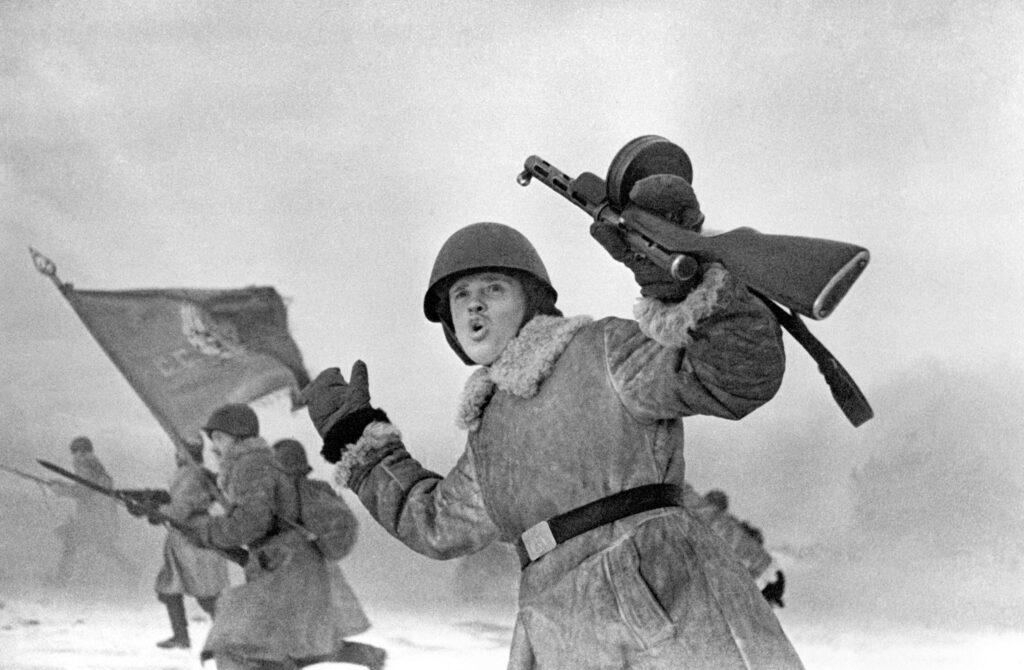
  • History, on this day: 83 years ago, operation Uranus

    when the European fascist armies lost WW2 [republication of my article from November 19, 2022]

    The battle for Stalingrad is the climax of WW2. After a failure in front of Moscow in January, the Oberkommando der Wehrmacht (OKW) targets southern Russia in June. The planned goals are the oil fields in the Caucasus. On the north flank of the offensive from Ukraine, the German 6. Armee reaches in July the western suburb of Stalingrad. Baku will remain too far, but on Volga river, the city which is bearing the name of the Soviet leader, becomes the main goal. The reasons are partly symbolic, partly strategic. The industrial center is also a hub for the Soviet supply from the south

    European fascist armies ? They are, mainly German, commanded from Berlin, have come from whole Europe, in order to fight Bolshevism

    But the garrison is withstanding four months the onslaught in the city and the Stavka (Soviet central command) sends there its reserves

    Uranus starts on November 19, 1942. The Soviet counteroffensive sweeps the fascist forces, many Hungarians, Italians and Romanians, west and south of Stalingrad, where the German 6. Armee will be encircled on November 23

    Generalfeldmarschall Friedrich Paulus will surrender on February 2, 1943. Germany, Italy, Romania and Hungary will have lost more than 750,000 men, killed, injured and prisoners. The Dritte Reich will never recover

  • [Sharing] The Khartia Corps – Moss Robeson, Azov Lobby Blog

    Case study in ‘Azovization’? Zelensky’s latest SS scandal. Timothy Snyder’s favorite Colombian mercenaries. Neo-Nazis and ‘NATO standards’

    During a recent trip to frontline areas near the encircled strategic city of Pokrovsk, the Ukrainian president, his chief of staff, and commander-in-chief visited the 1st Azov Corps from the National Guard of Ukraine, and they found themselves standing next to a neo-Nazi flag, awarding soldiers who appeared to be wearing SS bolts on their arms. Actually, that PR debacle (which the international press has dutifully ignored) occurred at another command post — a brigade from the National Guard’s 2nd Khartia Corps

    The neo-Nazi flag in question not only featured an Azov-style wolfsangel but, as another researcher noted, includes “the cog-and-wreath that emphasizes this is a ‘social’ nationalism.” (Ukrainian Nazis often prefer to call themselves “social nationalists” instead of “national socialists”)

    This year’s “corps reform” in the National Guard of Ukraine (NGU) elevated the 12th Azov and 13th Khartia brigades, which still exist within the larger units. It was the 4th Rubizh brigade that Zelensky visited from the 2nd NGU corps, another “elite” unit, which has two battalions (3rd and 4th) affiliated with the far-right political party “Svoboda.” Upon closer inspection, the “SS” troops were “trolling.” Their chevrons did not contain Nazi runes but a stylized 44, as in “4th brigade, 4th battalion,” as well as the fascist “44 Rules of Life of a Ukrainian Nationalist” from the 1930s

    The prevalence of soldiers from this “SS” battalion at the ceremony, and a neo-Nazi (“social-nationalist”) flag prominently displayed at the Rubizh command post, obviously raises some questions about the brigade, which was “established as an elite unit trained and organized under NATO standards.” The Azov and Khartia brigades also pride themselves on training according to NATO standards, “to be a model” for a “new Ukrainian army” liberated from the “Soviet-era mindset.”

    The famous historian Timothy Snyder is helping “pro-Ukraine” internet trolls to fundraise for Rubizh and other brigades of the 2nd NGU corps, including one which has a symbol that creates the visual impression of a swastika. But it’s the PR-driven Khartia brigade that appears to be Snyder’s favorite—a watered-down Azov copycat unit, led by a former Rubizh commander who quotes 20th century Ukrainian fascists. International volunteers have called it “the worst brigade,” but in another sense, it is an elite unit, founded by an oligarch who is “convinced the key to success is ‘radical’ reform of Ukraine’s military”

    Timothy Snyder with Vsevolod Kozhemyako, oligarch Khartia founder

    The Azov movement has its “White Fuhrer” (Andriy Biletsky), and Khartia has Vsevolod Kozhemyako, the founder and CEO of Agrotrade Group, “one of Ukraine’s largest grain production, storage and export companies.” In 2003, he received a degree from the Interregional Academy of Personnel Management, a private university in Kyiv that the historian Per Rudling wrote about in 2006 as a pillar of organized antisemitism in Ukraine. Now a proud nationalist who praises the memory of Stepan Bandera, even before 2022, Kozhemyako appears to have been a supporter of the “Da Vinci Wolves,” a far-right militia affiliated with the Nazi-infested “Right Sector” movement

    Kozhemyako visiting the Da Vinci Wolves in 2019

    Whereas the Azov units originated in an infamous volunteer battalion from 2014 and the NGU Azov Regiment made famous by the Russian siege of Mariupol, Khartia has also become “one of Ukraine’s most famous units” and much more quickly expanded, thanks to its unique financing and PR. This year, the country’s largest oil and gas producer, Ukrnafta, raised 100 million hryvnia (~$2.4 million) for the Khartia Corps. Just a year after Kozhemyako formed a territorial defense unit in March 2022, it joined the National Guard as a brigade. According to Forbes Ukraine,

    If we describe Kozhemyako’s role at Khartia in business terms, he is an executive chairman, a founder who has moved away from operational management and focused on strategic interactions with the government, key partners, suppliers, and thought leaders. His interlocutors include [Ukrainian writer/singer] Serhiy Zhadan and Howard Buffett, [Ukrainian singer/politician] Slavko Vakarchuk and [former CEO of Google] Eric Schmidt, generals and deputy prime ministers, owners and managers of private companies with revenues in the hundreds of millions of dollars

    Serhiy Zhadan, a famous poet in Ukraine, is a friend of Vsevolod Kozhemyako and the most prominent “culture warrior” in Khartia, who represents the unit publicly (and even wrote its anthem) but doesn’t actually fight. As “Events in Ukraine” tells us, “This phenomenon of culture-warriors is particularly widespread in the 13th ‘Khartiya’ brigade of the 2nd Corps of the National Guard”

    Zhadan, wearing a Khartia shirt that reminds me of those from the NGU Azov unit

    Khartia is supported by a high-level marketing agency in Ukraine, the Fedoriv Group, which started to work with the Ministry of Digital Transformation in 2022, and launched the wartime United24 fundraising platform and media brand on behalf of the Office of the President. Andriy Fedoriv became a “great friend for me and Khartia” says Kozhemyako. “He helped me build a creative team within Khartia, and then worked with us and continues to work on creating and promoting the brand”

    Kozhemyako and Fedoriv, CEO of the Fedoriv Group

    This year, United24 highlighted the Khartia brigade as a unit that is “changing the battlefield” with “Robotic Combat Systems.” The Azovites pride themselves as pioneers in this field, and I’ll be writing more about that soon. Andriy Biletsky, commander of the Azovite 3rd Army Corps, told the Yalta European Strategy (YES) conference in Kyiv this past summer, “the revolution of ground-based robotic systems … will radically change the battlefield.”

    Ihor Obolensky, commander of the 2nd Khartia Corps, also remotely joined this panel discussion at YES 2025 with former CIA director David Petraeus, former Swedish prime minister Carl Bildt, and Ukrainian military brass. (Obolensky spoke at YES 2024 as well.) According to an ideological officer in Khartia, “our commander, Colonel Ihor Obolensky, can say in a conversation: ‘As Dontsov claimed…’ or ‘According to Konovalets…’” referring to the main ideologue of genocidal Ukrainian fascism (Dmytro Dontsov) and the founder of the fascist Organization of Ukrainian Nationalists (Yevhen Konovalets)

    Obolensky, who worked at Agrotrade before the 2022 Russian invasion

    Before the corps reform, Obolensky commanded the Khartia brigade, which established a nationalist ideological department or “Khorunza service,” inspired by the Azov units, that uses the emblem of “Dontsov’s beast.” Khartia now promotes glorification of Stepan Bandera, the 1940s Ukrainian Insurgent Army, and even the pro-Nazi monarchist Pavlo Skoropadsky. Azov salutes and Azovite brands such as Company Group Team (CGT) are commonly seen in the Khartia brigade. For example, in a promotional video published this year by Khartia, and still pinned on the Facebook page of the 2nd NGU Corps, we can see soldiers making Azov salutes, a tank emblazoned with an emblem of the Wehrmacht, and someone wearing a CGT shirt who appears to be making a Nazi salute while riding another tank

    There is another ugly side to the Khartia brigade, which has reportedly “developed a reputation as an elite brigade, making it highly desirable for foreign soldiers seeking opportunities to fight in Ukraine.” To hear it from members of the “Ukraine Foreign Legion” community on Reddit, dedicated to “news and information about joining foreign units in Ukraine,” Khartia is among “the worst” to join, at least for international volunteers

    Adorable_Class_4733 (4 months ago): Khartiia is insane in the sane that just when you think it can’t possibly get any worse, it does. Nobody that has ever served in another unit and then came to Khartiia has ever liked it. I regret ever recruiting for this unit but I was naive and thought that maybe if I bring some good soldiers the problems would go away. They didn’t. Every person there with experience unanimously agree it’s the worst brigade they have ever seen. The battalion commanders either are completely dumb and retarded or intentionally lie to their soldiers saying the russians are all dead and they’re surrendering and that we cut off their logistics route and that you’re gonna be sent to clear trenches when you’re actually going on a suicide assault mission. … Khartiia is REALLY good at propaganda and hiding this shit, they had a camera crew following us 24/7, camera crew in the command centers, everywhere. But that’s it. They suck at everything else.

    ATLAS_UA (4 months ago): I dont use reddit but i made an account just to write this. I fought in Ukraine on every front and this brigade is the worst it is the worst brigade I worked in. They said I will redo basic training when I came to this unit so I told them to fuck off and then they tried to send me on a mission one hour after with zero bullets or equipment. I agreed to go to the mission after a few days … I kept training for a while after this mission, really bad shitty training and then did another mission with a epileptic company commander who had a seizure in the middle of the mission after he slip in a mortar crater in nighttime. I guarantee you he bribed someone I don’t know why they made a epileptic guy company commander. and also everyone abuses drugs there. the platoon commander consumes drugs and alcohol all the time he is an alcoholic.

    DonaFlotilde (1 week ago): I reactivated my account just to leave a comment here for whoever is still in doubt if they should join khartia, as i saw some posts asking about the unit … (forgive my english its not my first language) … khartia training is in the least mediocre, my training was literally how to run and how to shoot standing and kneeling, thats it, 1 month, doing this. … they call our group again, this time its an assault mission. Nice. sergeant, who is in ukraine for 5 months, says its an assault so we gonna stay there 5 days maximum, the vehicle will drop us 500m from assault point. … ended up walking 8km to position, we gotta stay in trench until we get green light. 13 days passed and we learn the fuckin assault point is 20 km away and we know theres no fuckin vehicles. they call us to advance. our guide gets lost he doesnt know how to use the FUCKIN COMPASS We walk 20km away to position, theres PLUS 4KM OF MINED OPEN FIELD TO REACH THE FIRST RUSSIAN POSITION AND A BUNCH OF FPV TRYING TO HIT US, AND OUR FUCKIN UNIT GAVE US 4 MAGAZINES, 2 GRENADES, AND ONE BOTTLE OF WATER FOR OUR WHOLE GROUP. WE HAD TO RUN, WE DISCOVER THAT THE ONE LINE OF ENEMY TRENCH IS ACTUALLY A RUSSIAN SECTOR WITH 4 LINES, 2 BMPS, AND I DONT EVEN KNOW HOW MANY FUVKIN SOLDIERS, SINCE WE MANAGED TO CLEAN ONLY THE FIRST POSITION. … [After the mission] they put me and another guy inside a a car, drive us to the woods and beat the shit out of us. they got pissed cuz of the report accuse us of treason and desertion cuz we didnt advance 2 weeks they hold our documents and cellphones. we never left the base we didnt advance cuz no fuckin ammo and no fuckin nothing.

    FishAndChipsSalad (1 month ago): Just don’t! I’ve been contacted to 3 brigades and hands down Khartiia is the worst in every way. Everything from shoddy equipment, appalling command and reckless missions. I was unfortunate to suffer my worst injury in this sorry excuse for a unit and naturally received no compensation at all. On top of that you will be fighting alongside the Guajiro International Unit… These twats are often worse than the russian terrorists.

    The Spanish-speaking Guajiro unit largely consists of right-wing Colombian soldiers who decided to fight in Ukraine instead of serve under the leftist president Gustavo Petro. “Perhaps hundreds of Colombians have passed through our brigade,” said a deputy battalion commander from Khartia, which claims that the Guajiro unit “undertakes extremely challenging combat missions.” They might have inspired the Azovite 3rd Assault Brigade (that now spearheads the 3rd Army Corps) to form a “Spanish Storm Company.” Earlier this year, members of Khartia even trained with the 3rd Assault Brigade

    Khartia training with the 3rd Assault Brigade

    In recent days, since Zelensky’s visit to the Donetsk region, the 2nd Khartia Corps of the National Guard hosted a delegation of NATO ambassadors from the United States, UK, Germany, France, Italy, Poland, the Netherlands, and Canada. Everyone seems to love the Khartia brigade: NATO, the historian Timothy Snyder, the artist Ai Weiwei, and even the “White Fuhrer” has said that it’s one of the best in Ukraine. But in my opinion, the most interesting thing about Khartia is the convergence of Banderite memory warriors and the “Azovization” of the Ukrainian armed forces—to be continued on my other Substack…

    Ai Weiwei visiting the Khartia brigade in the summer of 2025

    [end]

    The original article

    Related

    Nazism in Ukraine

    its roots before WW2, its collaboration with Nazi Germany, its legacy in modern Ukraine, how NATO has continually supported Nazism in Ukraine, chronicle

    The Western disinformation about Ukraine

    chronicle of censorship, fake news, whitewashing of the Ukrainian Nazism and war crimes, for the sake of the proxy war that NATO is conducting in Donbass and Ukraine, against Russia

    The footprint of the Ukrainian Nazism in the West

    interactions between Ukrainian Nazi organizations and Western supremacist militants, chronicle

    The Atlanticist defeat in Donbass and Ukraine

    chronicle of a new catastrophic NATO venture

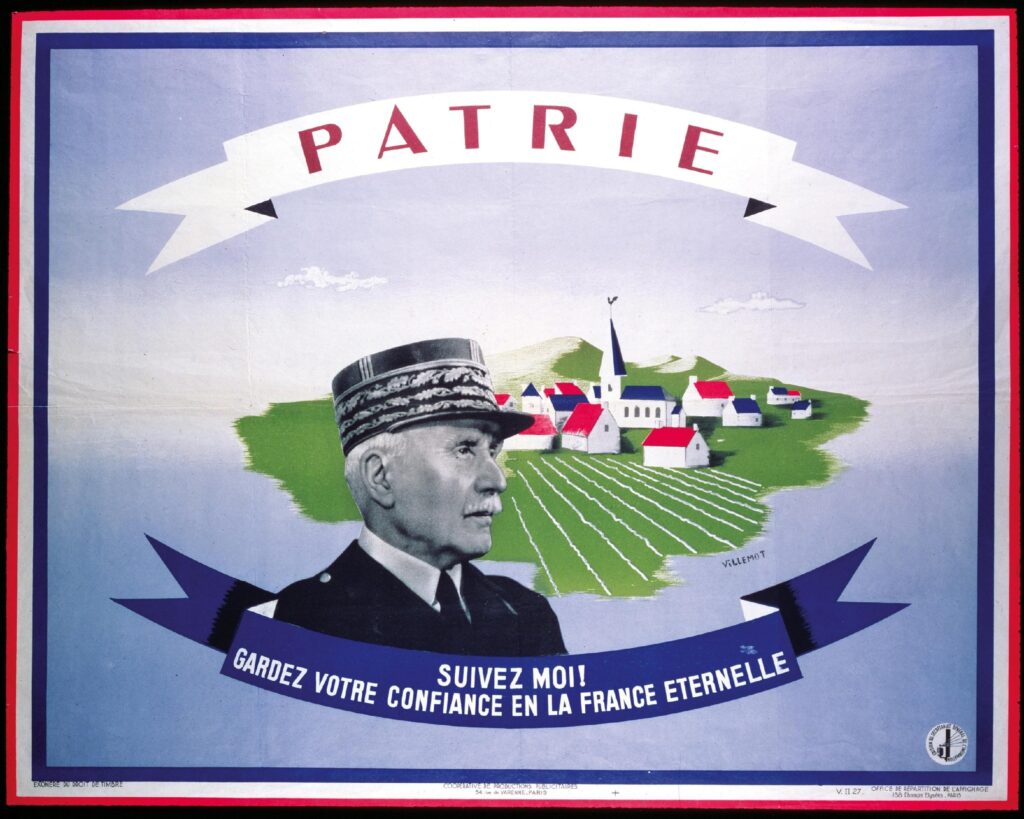
  • Images du jour : « Gardez votre confiance en la France éternelle »

    deux jours après le 10e anniversaire de la débâcle politique et sécuritaire du 13 novembre 2015, une messe célèbre à Verdun l’ancien dirigeant fasciste de l’État français

    Cette mi-novembre 2025 est riche en évocations de l’Histoire de France, que j’appréhende du point de vue du peuple corse, armé de mes origines italienne et allemande.

    Dans le contexte de l’engagement français dans les rangs atlantistes en Ukraine, dont à ce jour 50% de militants fascistes, j’exerce une veille sur des sources ciblées au moyen de l’application de messagerie cryptée Telegram

    Le 14, des identitaires pinzuti [français, en Corse] qui soutiennent moralement la lutte existentielle sur le front de l’est [Jean Quatremer, le 23 octobre 2025] contre les hordes néo-bolcheviques asiatiques, y partagèrent le texte suivant

    Les études d’ADN ancien révèlent une forte continuité génétique entre les Gaulois de l’âge du fer et les Français modernes, qui clusterisent étroitement sur les analyses génomiques. Les apports germaniques ou romains ont été limités (5-10 %)

    Et je me souviens que parmi mes ancêtres, en 52 avant Yeshoua ben Yosef, fantassins romains et cavaliers germains, côte à côte, écrasèrent à Alésia une armée gauloise cinq fois plus nombreuse. Cette information génétique pourrait être un indice, pour tenter de comprendre des causes ataviques, sinon congénitales, de la débâcle politique et sécuritaire que la France connut le 13 novembre 2015

    Je ne m’habituerai jamais à la façon qu’ont les pinzuti de toujours ajouter des mensonges à leur perpétuelle mythologie nationale.

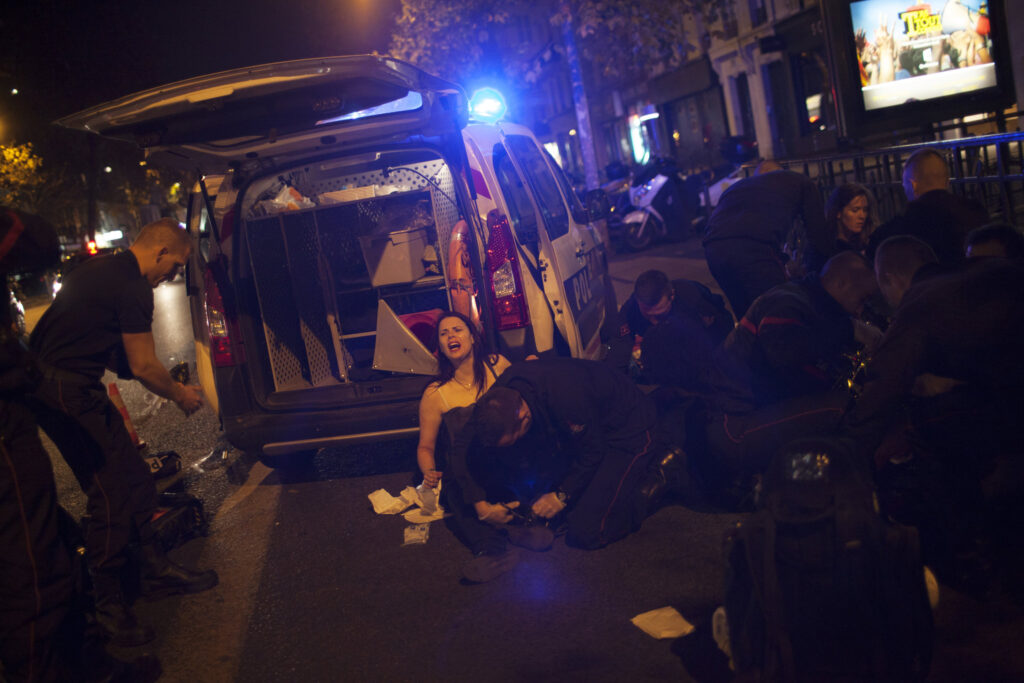
    Immédiatement après les faits, quelques voix s’élevèrent pour questionner les échecs honteux des services de sûreté. L’opération terroriste fut un retour de bâton du soutien radicalisé de François Hollande à l’insurrection djihadiste de Syrie. En raison de l’incompétence des services de renseignement, de la Police nationale et de la Préfecture de police, le karma prit la forme d’un épouvantable massacre.

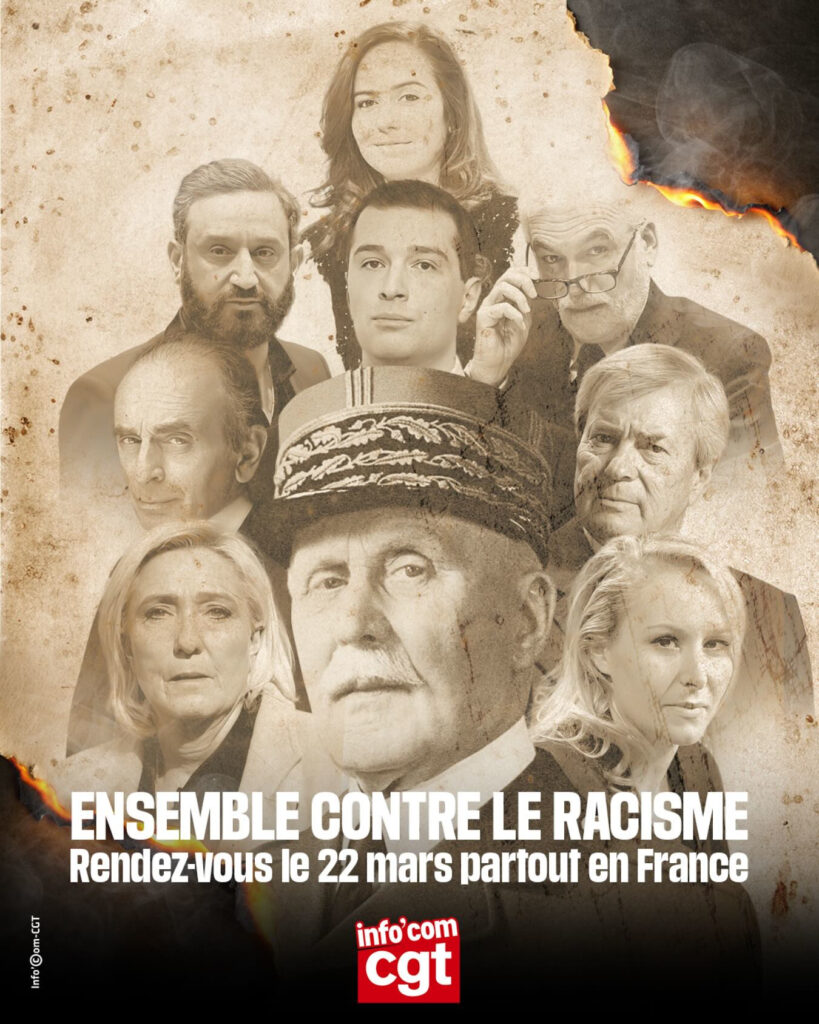
    Mais en ce dixième anniversaire, les autorités occultent la réalité, afin de pouvoir célébrer l’unité nationale et les forces de l’ordre, dont elles ont un besoin vital dans le contexte social. Cette posture révolte la mouvance pétainiste (Rassemblement national, Les Républicains… etc), que je pense aujourd’hui majoritaire et qui voit le 10e anniversaire du 13 novembre 2015 comme une nouvelle opportunité d’exprimer son racisme et son islamophobie

    Cette façon de faire des autorités rappelle la mythologie gaulliste, qui décréta en 1944 que la France aurait résisté, en réalité 30 000 personnes (Robert Paxton), quand grâce aux victoires de l’Union soviétique sur le front de l’est, des troupes anglo-états-uniennes purent débarquer en Normandie et libérer le pays. Cela se passait quatre ans après une autre débâcle, quand la France subit la plus spectaculaire et humiliante défaite militaire de l’Histoire de l’humanité

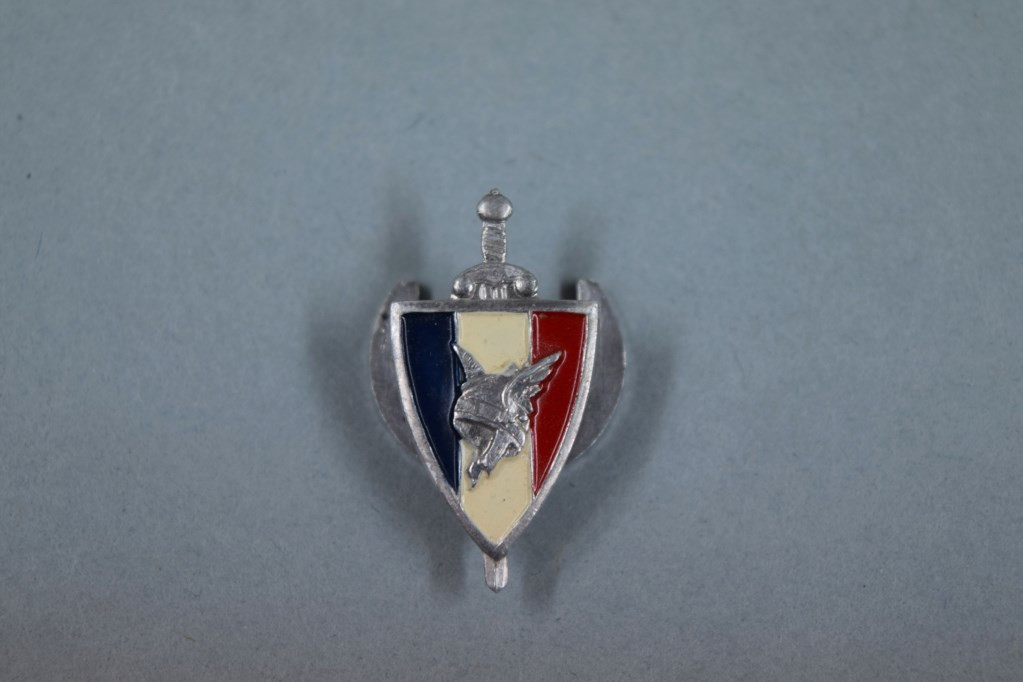
    À ce sujet, j’observai le 14 novembre la vidéo en Anglais que d’autres militants identitaires pro-Ukraine publièrent pour se réjouir de la messe prévue le lendemain à Verdun, en hommage à Philippe Pétain, dirigeant fasciste de l’État français entre 1940 et 1944

    https://youtu.be/8m6HLbcfBJY

    Le jour venu, la plupart des réactions sont encore et toujours biaisées. Le problème de Pétain n’est pas la trahison, pour laquelle il fut condamné en 1945. Du point de vue de l’État français en 1940 et de son immense soutien populaire, le traître était de Gaulle. Ni son antisémitisme, un détail de l’Histoire. Le problème est qu’il était fasciste. Et le fascisme pinzutu, ce sont les FAF (la France aux Français) qui en parlent le mieux.

  • History, on this day : the French debacle on November 13, 2015

    republication of my article from November 13, 2022, three years ago, nothing has changed

    The terrorist operation in Paris, on November 13, 2015, was collateral damage of the Western support to the so-called Syrian revolution, a Sunni radical uprising which began in 2011 and that worldwide jihadists reinforced, against a secular government in Syria

    In that Western proxy war against Russia, the local branch of al Qaeda, Jabhat al Nusra [Victory Front], was an objective ally, was doing a good job [Gulf and Western politicians]. An internal egos dispute triggered the split of the Iraqi branch of al Quaeda, wich became the Caliphate (ISIS) late June 2014, while already involved in Syria.

    The new organization was more prejudicial to Western interests, but even in that case -John Kerry confessed it later during a private conversation- the US was regarding it as a leverage to oust Bashar Assad, did not counteract its expansion, until the Russian direct intervention late September 2015

    Among the Western leaders, François Hollande may have been the most fanatical against Syria, that France had occupied 26 years, until the independence in 1946. In August 2013, he attempted to convince Barack Obama to bomb the Syrian secular forces. The price will have been high: on November 13, 2015, the jihadists carried out in Paris a spectacular terrorist attack. The Caliphate managed the operation and al Nusra praised it

    The massacre lasted three hours, in a city which is yet numbering per capita twice more police officers than New York city. Nine jihadists killed 131 civilians; no police officer was injured. That toll was a sanction for incompetent intelligence and police services. The events were a kind of large scale Uvalde.

    The director of the counter-intelligence agency was astonished when the prosecutor informed him of the terrorist operation. After a failed attack, with explosive vests but no assault rifle, at the gates of the suburban Stade de France, a second team shot bursts at cafés terraces in downtown Paris, rampaged along 5 km and during 20 minutes, without encountering a single cop. When it left freely the capital, a third team stormed the Bataclan, which was holding a gig. One cop, the exception to the rule, entered the theater on the footsteps of the terrorists and managed to kill one. Despite reinforcements, he was ordered to stand idle, until the assault of a specialized group, while victims were still shot or bleeding inside. That BRI (Brigade de recherche et d’intervention) neutralized the two other jihadists, one kill and one suicide… two hours and a half later.

    As a former member of these agencies, I have written two articles, one in English and one in French. The first one is rather dealing with the Syrian context and the second is detailing the French debacle in the evening of that attack

    History is shedding light on actuality; that is the interest of such post. When with the same fanaticism, the West is currently supporting in Ukraine, in a new proxy war against Russia, a Nazi deep State which is controlling the security services, the army and a nebula of Nazi paramilitary forces; when worldwide volunteers are often Nazi militants; when weapons that the West is sending there are spreading later on the black market, I think that the backlash may be cruel in Europe and even the US.

  • [Partage] En novembre 1918 était constituée la République des soviets d’Alsace-Lorraine – Nicolas Maury, Perspective communiste

    C’est une page d’histoire assez méconnue en France.

    De janvier 1918 à mai 1919, l’Allemagne connait des grèves insurrectionnelles, des mutineries, la révolte spartakiste de Berlin et d’éphémères Républiques des soviets rapidement réprimées par des forces coalisées allant des sociaux démocrates à ceux qui seront le bras armés des nazis quelques années plus tard (les corps francs).

    En Alsace-Lorraine, une République des soviets est proclamée. Le 13 novembre le drapeau rouge flotte sur la cathédrale de Strasbourg.

    Du 10 novembre au 22 novembre 1918 (date de l’entrée des troupes françaises dans cette région), la République des soviets prendra des décrets pour la liberté d’expression, l’augmentation des salaires, l’amélioration des conditions de travail, et la libération des prisonniers politiques.

    Les autorités françaises, appelées en urgence par la bourgeoisie locale, démantèleront toutes les avancées obtenues.

    Avant la signature de l’armistice du 11 novembre 1918 qui met fin à la Première Guerre mondiale, les principales villes d’Alsace-Lorraine connaissent une agitation politique forte. Des Soviets d’ouvriers et de soldats (Soldaten und Arbeiterräte) sur le modèle russe se forment à Mulhouse le 9 novembre, puis à Strasbourg, Colmar et ensuite Metz à partir du 10.

    La Révolution allemande

    Dans l’Empire Allemande la processus est identique. Les Mutineries des marins de la Hochseeflotte (flotte militaire de Haute mer) et des ouvriers de Kiel le 5 novembre 1918 lance une insurrection régionale qui aboutira à l’abdication du Kaiser Guillaume II et marquent le début de la Révolution allemande de 1918-1919.

    Les Soviets de soldats des différents secteurs de Kiel formèrent un Haut-Conseil regroupant les délégués de toutes les unités. Cette insurrection soviétique gagna d’autres villes portuaires de l’Allemagne, puis même les grands centres ouvriers de la Ruhr et de Bavière (avec une Bayerische Räterepublik ou Münchner Räterepublik et une seconde République des soviets sera proclamée le 7 avril 1919 et écrasée militairement le 3 mai 1919).

    Le 6 novembre, tout le nord-ouest de l’Allemagne s’organise et crée des Soviets ouvriers ;
    Le 7 novembre, Kurt Eisner (SPD) proclame la république des soviets en Bavière ;
    Le 8 novembre, la révolution gagne la Saxe, la Hesse, La Franconie et le Wurtemberg, poussant les princes à l’abdication ;
    Le 9 novembre, le Kaiser Guillaume II abdique, la “première République de Weimar” depuis le balcon du Reichstag par Philipp Scheidemann (SPD) et Karl Liebknecht proclame en parallèle la “République Libre Socialiste”. Ce même jour, le Soviet de Strasbourg proclame la “Republik Elsaß-Lothringen”.

    La révolte des spartakistes sera réprimée dans le sang par le ministre de la Reichswehr, Gustav Noske (SPD). Les sociaux-démocrates s’appuieront sur les Corps francs (des unités paramilitaires) qui serviront de base à la constitution du parti Nazi. Karl Liebknecht et Rosa Luxembourg seront victimes de cette répression des sociaux-démocrates

    République soviétique alsacienne

    15.000 marins et ouvriers d’Alsace et de Lorraine rentrent de Kiel et propagent les idées révolutionnaires dans cette partie occidentale de l’Empire Allemand. Des milliers de Strasbourgeois vont lancer une insurrection contre la garnison de la ville et créer un soviet de soldats et d’ouvriers.

    Les murs de la ville sont couverts d’affiches qui proclament : “Nous n’avons rien de commun avec les États capitalistes, notre mot d’ordre est : ni Allemands ni Français ni neutres. Le drapeau rouge a triomphé”. Le 13 novembre le drapeau rouge flotte sur la cathédrale de Strasbourg.

    Durant la même semaine, le Soviet ouvrier et militaire de Metz prend forme, et rejoint celui de Strasbourg, Colmar, et autres. Du 10 au 20 novembre, un comité révolutionnaire de 13 membres (élu par les Soviets d’ouvriers et de soldats) siège au Palais de Justice de Strasbourg. Il est dirigé par le syndicaliste Rebholz.

    Cet exécutif des conseils crée la liberté d’expression, permet l’augmentation des salaires, l’amélioration des conditions de travail, et la libération des prisonniers politiques

    La bourgeoise s’organise pour bloquer l’insurrection ouvrière en Alsace

    En même temps, “un Conseil national (Nationalrat) d’Alsace-Lorraine” est constitué sous l’impulsion des notables fait appel aux troupes françaises pour qu’elles mettent fin au soviet. Un slogan court les quartiers bourgeois : “Plutôt français que rouges !”. Les socialistes, traîtres parmi les traîtres, proclament “la République Française” par Jacques Peirotes (SPD), élu maire de Strasbourg devant la statue du général Kléber.

    Ce même Jacques Peirotes fait appel au Grand Quartier Général français et demande aux généraux de “hâter leur entrée à Strasbourg, la domination des rouges menaçant de prendre une fin tragique”.

    Les troupes françaises entrent en Alsace-Lorraine à partir du 17 novembre et sont accueillies par la bourgeoisie triomphalement. La première décision du commandement militaire français est l’abrogation des décrets des soviets et la dissolution de ces derniers.

    Les autorités françaises mirent en place une politique d’épuration et de fichage des populations. 112 000 résidents alsaciens et lorrains, décrétés “Allemands” ou insuffisamment francophiles seront expulsés.

    La République française s’emparait ainsi de l’Alsace-Lorraine [fin]

    L’article original

  • Pensée du jour : der Krieg

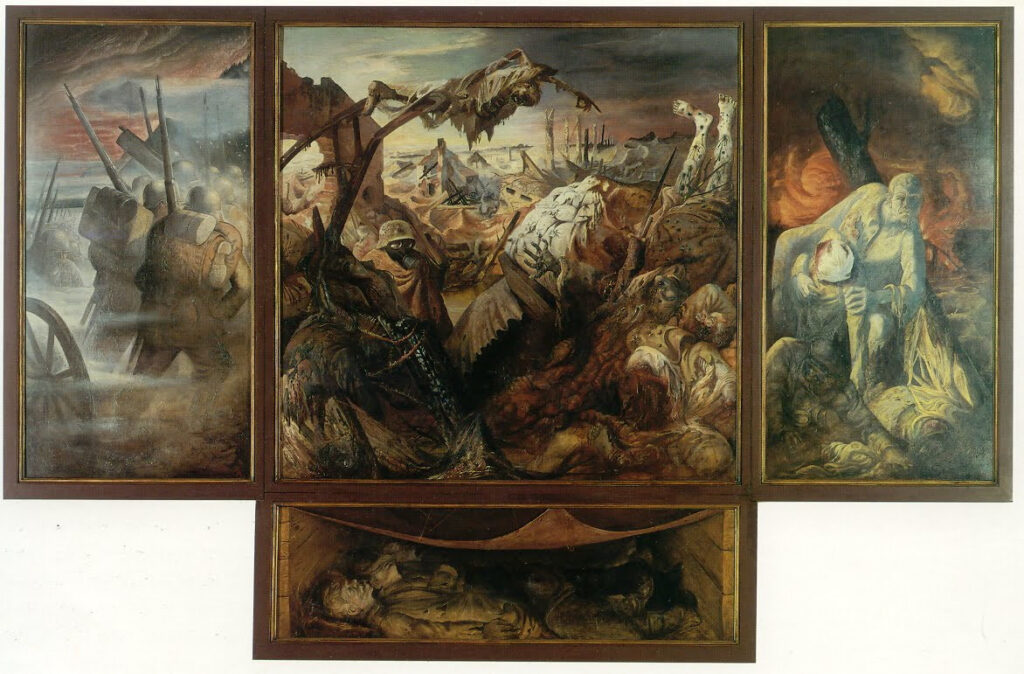
    ce 11 novembre 2025 est l’occasion de souligner comme la façon dont l’Europe sacrifie les conscrits ukrainiens mobilisés de force rappelle le spectaculaire carnage de la 1ère guerre mondiale

    Une guerre que la moindre bonne volonté occidentale aurait suffi à empêcher. Fomenté par la CIA et au bénéfice aussi de l’Union européenne, un coup d’État d’extrême-droite à Kiev en février 2014. Une guerre ethnique dans le Donbass, que les accords de Minsk auraient pu arrêter. Fallait il que l’Occident les respectât. Mais Allemagne et France en étaient hélas les garants. Après le déclenchement en 2022 de l’opération militaire spéciale russe pour la libération du Donbass, la démilitarisation et dénazification de l’Ukraine, Angela Merkel et François Hollande avouèrent que l’Occident concevait ces accords comme une escroquerie, pour donner à l’OTAN le temps d’armer l’Ukraine.

    Une implacable stratégie russe d’attrition écrase l’armée atlantiste, malgré le ruissellement d’armes et munitions occidentales, dont une longue liste de vaines Wundervergeltungswaffen : HIMARS, Panzerkampfwagen, Patriot, F-16 et j’en passe. Les bénéfices de l’industrie militaire des États-unis sont proportionnels à la stupidité technocratique de Bruxelles. Ce sont aujourd’hui les contribuables européens qui paient l’addition. Justice.

    Des conscrits ukrainiens mobilisés de force. Les réseaux sociaux en offrent les témoignages cruels et quotidiens. Des pertes militaires qui approchent les 2 millions de tués. Des as russes de l’informatique en ont apporté les preuves. De l’ordre des sacrifices consentis par la Russie, multipliés par 10.

    Moscou dit et répète depuis juin 2024 que le retrait des troupes atlantistes des positions qu’elles occupent encore dans le Donbass suffirait à instaurer un cessez-le-feu. Mais rien n’y fait. Ursula vonder Leyen et son caniche Emmanuel Macron en tête, les Européens s’enferment dans le fantasme de remporter une victoire stratégique quand leur défaite est totale, s’appliquent depuis février à saper les initiatives de Donald Trump.

    107 ans après un guerre absurde -bourgeois impérialistes contre bourgeois impérialistes- qui resterait une farce si elle n’avait fait quelques 19 millions de morts ; 80 ans après la seule victoire qui méritait d’être remportée, celle de l’Union soviétique sur les armées fascistes européennes ; le Vieux continent est ravagé par une épidémie de russophrénie. La victoire de l’Occident serait toujours à portée au Donbass et pourtant, ce serait maintenant pour sauver l’Europe, ses valeurs et la civilisation d’une invasion imminente que le conscrit ukrainien devrait continuer de se faire hacher avec discipline.

    En réalité, mis à part les cabots et adeptes impotents des plateaux de chaînes dites d’information, c’est parmi les volontaires nazis partis affronter les hordes néo-bolcheviques asiatiques que les discours délirants des politiciens européens trouvent un véritable écho.

    Cinq siècles d’hégémonie révolue : colonialisme, fascisme, guerres mondiales, néo-colonialisme et jardinage [Josep Borrell]. Quand est ce que l’Europe, cette vieille catin, paiera enfin le juste prix de ses crimes ?

    Articles connexes

    The Atlanticist defeat in Donbass and Ukraine

    en Anglais, chronicle of a new catastrophic NATO venture

    L’engagement français dans les rangs ukrainiens

    chronique alphabétique et nécrologique de l’engagement français dans les rangs atlantistes en Ukraine, ce que les journalistes serviles ne vous raconteront pas

    Nazism in Ukraine

    chronique en Anglais, its roots before WW2, its collaboration with Nazi Germany, its legacy in modern Ukraine, how NATO has continually supported Nazism in Ukraine

    8 novembre 2025 : Tombés pour l’Allemagne et l’OTAN

    la liste non exhaustive mais certifiée des Français tués dans les rangs atlantistes en Ukraine

    31 août 2025 : Niouzes du pays des pinzuti

    et des vastes restes du monde

    18 août 2025 : Die deutsche Frage

    les boches, en quelques mots

    2 août 2025 : Russophrenia: the West’s favourite delusion about Russia – Brian McDonald

    ten years after I coined the term, the media’s still convinced Russia is both collapsing, and conquering the world

    9 mai 2025: Victory Day

    2 avril 2025 : It’s Official: Ukraine Conflict is British ‘Proxy War’ – Kit Klarenberg

    17 novembre 2024 : Leaks expose secret British military cell plotting to ‘keep Ukraine fighting’ – Kit Klarenberg, The Grayzone

    Leaked files show top UK military figures conspired to carry out the Kerch bridge bombing, covertly train “Gladio”-style stay-behind forces in Ukraine, and groom the British public for a drop in living standards caused by the proxy war against Russia

    27 juillet 2024 : Vespasienne flottante

    entre l’haleine fétide d’une vieille droite pétainiste qui s’insurge contre une chanteuse d’origine malienne, d’une part, la vulgarité et la vanité, d’autre part, d’un spectacle de drag queens qui se pense à tort l’antithèse des pétainistes, semble échappé d’un backroom gay de la ville devenue musée, égaré dans une cérémonie d’ouverture de jeux olympiques […]

    5 juillet 2024 : The Franco-British Plot to Dismember Russia [1917 – ?] – Kit Klarenberg

    30 mars 2024 : Troupes françaises en Ukraine, une gaffe présidentielle sous escorte médiatique : les nouveaux chiens de guerre – Serge Halimi & Pierre Rimbert, Le Monde diplomatique

    21 juillet 2023 : Les oeils de Moscou

    le magazine l’Express nous en parle, fait le lien indispensable entre démocratie libérale occidentale et fascisme

    30 mai 2023 : Fils de Pétain

    la vanité nationale trouble la perception de la réalité historique et perpétue une névrose collective

    14 mai 2023 : Pauvre Sacré Charlemagne

    la mythologie européiste

    19 février 2023 : Annalena Baerbock, the most arrogant lettuce in the world

    en Anglais, she is ahead of Liz Truss

  • [Partage] Ukraine, face à la défaite qui s’annonce, la propagande entre mensonges et bêtise – Regis de Castelnau

    « Poutine n’est qu’un gamin capricieux », voilà donc l’explication du conflit en Ukraine que désormais, on nous sert pour tenter de commencer à gérer la défaite militaire et politique qui se profile pour l’Occident.

    Chacun à son poste !

    Chacun est à son poste. Sur les réseaux on a les bricolos, aux CV désertiques mais spécialistes autoproclamés, on se demande bien de quoi. Qui vous affirment que pas du tout, Prokorsk n’est pas encerclé. Que sous les coups des drones ukrainiens l’industrie pétrolière russe est à genoux avec des queues de 1000 km devant les stations-service. Qu’avec les tomahawks (?) ça va pas s’arranger. Que l’armée russe a perdu au minimum 10 millions d’hommes. L’un de ces « spécialistes » n’hésitant pas à nous expliquer qu’il a eu un pote de l’armée ukrainienne au téléphone et que celui-ci lui a dit qu’il tuait 200 Russes par jour, sans une égratignure pour lui. Si c’est pas une preuve ça ! Dans cette catégorie des guignols, on n’hésitera pas à ranger le ministre des Affaires étrangères de la République française qui, complètement halluciné, nous annonce l’effondrement politique, économique, militaire imminent de la Russie.

    Sur les chaînes d’info la cohorte habituelle des tapins continue à radoter ses inepties, en s’efforçant d’y ajouter un maximum de confusion pour tenter de masquer le désastre qui s’annonce. Malgré ces inflexions, force est de constater que la constance dans la désinformation est assortie désormais d’une forme de désenchantement.

    Mais on voit désormais monter au front de la guerre de communication des gens ayant une certaine crédibilité médiatique. Un mélange de véritables spécialistes et d’imposteurs dont le vernis est parfois difficile à craqueler. Face à l’inéluctable, ils remplissent une mission particulière. Avec eux, pas de puces de machine à laver, pas d’assaut avec des pelles, pas de chars russes en plastique envoyé au combat, là c’est du sérieux. Donc ils sont chargés de vendre un récit concernant l’origine du conflit et les suites prévisibles de la défaite occidentale en Ukraine. La question de la responsabilité de cette guerre fait l’objet y compris en Occident d’un débat furieux depuis l’origine.

    Les réalistes, parmi lesquels on pourrait placer Donald Trump, considèrent que ce conflit est le fruit d’une provocation occidentale ayant poussé la Russie à bout. Élargissement de l’OTAN et coup d’État américain du Maïdan, accompagné de la guerre civile infligée aux russophones de l’Est ukrainien, tous ces éléments ayant abouti à l’intervention russe. Dont l’objectif premier était d’imposer à l’Ukraine un certain nombre de contraintes permettant d’assurer sa neutralité. Au passage on notera que cet objectif était atteint sans perte territoriale avec « le Traité d’Istanbul » accepté par Kiev dans un premier temps.

    De l’autre côté les tenants de la thèse portée par Joe Biden le prédécesseur de Donald Trump qualifiant le conflit de : « agression militaire non provoquée de l’Ukraine par la Russie ». Position des pays occidentaux, qui ont proposé au régime de Kiev de jouer le rôle du proxy militaire pour lancer contre la Russie une guerre globale visant à son effondrement économique, à y provoquer un changement politique, pour aboutir ensuite à son démantèlement en tant qu’État unitaire. C’est ce qui explique l’intervention de Boris Johnson alors premier ministre de Grande-Bretagne pour empêcher l’application du « Traité d’Istanbul ». Le fait que cet infect personnage ait été corrompu pour le faire, n’empêche pas la réalité de cette motivation.

    Caramba, encore raté !

    On sait ce qu’il est advenu des prévisions de Bruno Lemaire, de l’inutilité du soutien financier et militaire d’une quarantaine de pays occidentaux, de l’ampleur de la tragédie imposée à l’Ukraine, mais le réel s’impose. La Russie est solide. Devenue la première puissance militaire du monde, elle est alliée avec la première puissance économique, et la planète constate le tournant historique que constitue la sortie de l’Histoire de « l’Occident collectif ». Joli bilan que les dirigeants occidentaux vont devoir assumer, et cela ne pourra pas se réaliser grâce a ces rodomontades militaires ineptes, dont les dirigeants européens, Macron en tête, se sont faits une spécialité. Alors, pour tous ces incapables et pour certains criminels comme Boris Johnson, il devient difficile d’assumer la contradiction qui les amène à affirmer que la Russie s’effondre mais qu’elle va nous envahir. Demain matin, nous dit d’ailleurs le chef d’état-major de l’Armée de terre descendues en treillis sur un plateau pour l’occasion. Plus personne ne peut donc soutenir que la Russie va s’effondrer. Alors pour justifier leur maintien au pouvoir, la mise en place de régimes autoritaires, la soumission ruineuse au maître américain, il faut prétendre aujourd’hui qu’il ne s’agit là que d’une posture défensive. De nos « démocraties », de nos « valeurs », voire de notre « civilisation »… Le problème étant qu’il faut quand même expliquer pourquoi la Russie veut nous envahir et pourquoi il est indispensable de conserver notre président 11 % à la tête de l’État.

    Parmi ceux qui s’y collent on ne retiendra que deux petits exemples assez significatifs des volontaires qui se chargent monter front de la communication et de la propagande. L’un d’entre eux correspond au profil de l’expert en tout habitué des plateaux et dont on se demande d’où sort sa compétence. Et l’autre est un véritable diplomate professionnel pratiquant habituellement la nuance, mais qui l’abandonne au profit d’un récit mensonger.

    Vladimir Vladimirovitch Poutine est un gamin capricieux et obtus

    Darius Rochebin affichant comme d’habitude cet air niais qui lui est propre, a décidé d’inviter Alain Bauer, dont on se demande ce qu’il fout là. Pour lui demander pourquoi la Russie n’accepte pas le cessez-le-feu exigé par la fameuse « coalition des chihuahuas ». Alors Bauer, ancien chef franc-maçon, autoproclamé criminologue, charlatan à la probité notoirement approximative, vient nous expliquer que Vladimir Poutine n’est rien qu’un enfant capricieux. Dans une séquence absolument grotesque il affirme que le président russe poursuit la guerre pour récupérer le petit bout d’une ville du Donbass qui n’a aucun intérêt. Épicétou, un caprice. Un gamin ce Poutine. Mais dangereux gamin. Par ce qu’ensuite Bauer nous explique qu’après Donetsk, il va vouloir récupérer Kaliningrad. Incroyable ce Poutine ! Il veut récupérer quelque chose qui appartient déjà à la Russie. Avant ça s’appelait Kœnigsberg et c’est revenu aux russes après la deuxième guerre mondiale.

    Bauer s’arrête là, mais on imagine qu’il aurait pu continuer sur cette voie royale : « vous vous rendez compte ce gamin capricieux de Poutine il va bientôt exiger que Moscou et Saint-Pétersbourg soient aussi en Russie. Où s’arrêtera-t-il ! »

    Et naturellement Rochebin en bon journaliste, bardé de son ignorance crasse, ne pipe pas un mot devant cette énormité

    Gérard Araud, c’est différent. Ancien ambassadeur de France, et quoique occidentaliste indécrottable, il lui arrive d’être critique et de ne pas relayer systématiquement la propagande du système. C’est pour cela qu’il est toujours intéressant de l’écouter. Mais le voilà qui patrouille sur les réseaux pour y apporter la bonne parole et nous servir la sentence suivante

    Alors comme ça, la ligne rouge fixée par la Russie d’une adhésion de l’Ukraine à l’OTAN n’est qu’un prétexte bidon ? Désolé Excellence, mais vous vous foutez du monde. Au moment de la réunification allemande, les États-Unis s’étaient engagés à ne pas étendre l’OTAN vers l’est c’est-à-dire aux pays de l’ancienne Union soviétique et ceux de l’ancien glacis. Ça c’est pour le contexte. Mais de déclarations officielles des présidents américains (George w Bush, Joe Biden) en communiqués multiples tout aussi officiels de l’OTAN, en déclarations des dirigeants occidentaux selon lesquels « la Russie n’avait pas son mot à dire », en déclarations des dirigeants ukrainiens post Maïdan, c’est une véritable litanie de prises de position officielles qui établissent que la décision occidentale était prise. Ce fut d’ailleurs une des raisons du coup d’État organisé par la CIA en en Ukraine. L’exemple le plus amusant pour caractériser le mensonge de Monsieur Araud est « l’accord entre la France et l’Ukraine » qui, pourquoi se gêner, commence par les termes : « L’accord, d’une durée de 10 ans, est valable tant que l’Ukraine n’aura pas rejoint l’OTAN » (!!!). Cet accord est destiné à créer immédiatement des obligations entre l’Ukraine et la France du type de celles qui existent au sein de l’OTAN. Et ce sans attendre l’adhésion ! Dites-nous excellence, vous arrive-t-il de prendre connaissance des textes officiels du gouvernement dont vous dépendez ?

    Alors si l’on comprend bien, pour l’un Poutine fait la guerre en Ukraine parce qu’il veut récupérer un petit quartier d’une ville sans intérêt et conquérir un territoire qui lui appartient déjà. Et pour l’autre, c’est pour s’opposer à l’adhésion de l’Ukraine à l’OTAN, alors qu’il n’en a jamais été question et qu’en vrai en Occident tout le monde s’en fout. En février 2022, on nous a expliqué que le président russe était un satrape oriental qui mangeait des petits-enfants. Désormais qu’il fait la guerre sans raison ou pour assouvir ses caprices.

    Impressionnant de constater comment vouloir servilement relayer la propagande du système, implique nécessairement de prendre ses auditeurs pour des imbéciles [fin]

    L’article original

    Articles connexes

    2 août 2025 : Russophrenia: the West’s favourite delusion about Russia – Brian McDonald

    Ten years after I coined the term, the media’s still convinced Russia is both collapsing, and conquering the world

    17 février 2025 : La bourgeoisie n’a plus les moyens intellectuels, ni culturels, de sa domination de classe – Harold Bernat, Quartier Général

    The Atlanticist defeat in Donbass and Ukraine

    chronicle of a new catastrophic NATO venture

    The Western disinformation about Ukraine

    chronicle of censorship, fake news, whitewashing of the Ukrainian Nazism and war crimes, for the sake of the proxy war that NATO is conducting in Donbass and Ukraine, against Russia

  • [Sharing] See No Evil? Canadian Government Media Blurs Out the Swastika on a Ukrainian Soldier – Lev Golinkin, The Nation

    Canada’s shameful refusal to acknowledge its support of the far right yesterday and today

    Graham Platner’s problem is that he lives just a tad too far south. If the Democratic Senate candidate from Maine wanted to make all the hubbub about his Nazi tattoo go away, all he’d have to do is move to Canada.

    The furor over Platner’s Totenkopf, or Death’s Head, tattoo stands in striking contrast to Canada, where both Nazi symbols and a shameful history of aiding Nazis is hushed over or, quite simply, blurred out.

    The footage shows a burly Ukrainian military trainer discussing his country’s “shadow war” against Moscow. The interviewer is a veteran Western journalist. The video quality is excellent. The only problem is the giant red swastika tattoos emblazoned across the trainer’s arm.

    After social media users began circulating stills with the swastikas, the Canadian Broadcast Corporation—the country’s government-owned media outlet—responded by blurring out the tattoos, sparing the readers the inconvenient truth that the man being presented as a hero fighting for a Canadian-backed military is a neo-Nazi. (In addition to the swastikas, he also has a winged odal rune popular with white supremacists.)

    When reached for comment, a CBC spokesperson said, “The military trainer was provided to the reporter to speak generally about Russian tactics in Ukraine; we did not platform him, nor did we present him as a hero,” and pointed out that the network added a disclaimer that “a tattoo of an offensive symbol has been blurred.”

    The CBC didn’t appear to be concerned that interviewing a man tattooed with neo-Nazi iconography is being legitimized—only that the “offensive” material is kept from the public.

    This literally Orwellian action by Canada’s government media is indicative of the country’s relationship to both neo-Nazis and their World War II predecessors. The dark reality lurking beneath the placid demeanor of America’s northern neighbor is that Canada’s institutions have spent decades protecting fascists and sweeping evidence under the rug. Canada’s elites guard this bloodstained legacy to this day.

    The CBC’s whitewashing a neo-Nazi isn’t an accident. The soldier being interviewed is in what the program describes as the “elite” 3rd Separate Assault Brigade. What the narrator omits is that the formation is led by Andriy Biletsky, Ukraine’s preeminent neo-Nazi who now has tens of thousands of men under his command. These men are trained, armed, and funded by the West. The CBC’s fawning profile says nothing about the unit’s neo-Nazi ties.

    These omissions would be shameful in any country. But the situation is far more dire than this. Canada’s antisemitism is so ingrained, the nation is incapable of something as straightforward as condemning Nazis.

    To examine Canada’s track record with the Third Reich is to enter a twisted world where following orders is a legitimate legal defense for participating in the Holocaust and SS fighters are portrayed as war victims. It’s a land where a street named for a German slaver isn’t considered problematic by the authorities and whose history of declassifying documents about harboring Nazis is worse than Argentina’s.

    Canada’s history of going to bat for Holocaust perpetrators stretches back half a century. In 1967, Pierre Trudeau—a future prime minister as well as father of the recent prime minster Justin Trudeau—successfully opposed stripping the citizenship of a death squad leader responsible for murdering over 5,000 Jews. Three decades later, a Canadian court acquitted Hungarian collaborator Imre Finta, who had deported over 8,000 Jews to their deaths. The court deemed Finta’s plea of following orders an acceptable defense; it’s the only known such case in a Western nation.

    Two years ago, Canada’s House of Commons shocked the world by giving a standing ovation to 98-year-old Yaroslav Hunka, a veteran of the Waffen-SS, the military wing of the Nazi Party and one of the main perpetrators of the Holocaust. 

    Hunka fought in the 14th Waffen Grenadier Division of the SS (SS Galizien), a Ukrainian formation whose record of war crimes includes a 1943 massacre in which its subunits burned 500–1,000 Polish villagers alive.

    Hunka was one of 2,000 SS Galizien soldiers welcomed to Canada after the war. Unlike other collaborators who kept a low profile in the New World, SS Galizien veterans felt comfortable enough to celebrate themselves by erecting monuments with Third Reich insignia and establishing scholarships in their honor. The University of Alberta, one of Canada’s largest institutes, had nearly a dozen endowments memorializing Hunka and his fellow SS men.

    Images of Parliament enthusiastically applauding a Nazi soldier triggered international headlines and outraged the Canadian public. There were demands for UAlberta to eliminate its Nazi endowments. Then–Prime Minister Justin Trudeau ordered an inquiry into declassifying names of SS Galizien veterans admitted into Canada. For a moment, it seemed the country would face its dark past.

    But within weeks, a fierce backlash to the Hunka affair revealed the astonishing extent of the bonds between Canada’s institutions and the Nazi collaborators they had so long protected.

    Newspapers and even parliamentary testimony saw calls defending Hunka. The SS fighters were “in the wrong time at the wrong place,” averred a quote in one major outlet. All but one of UAlberta’s Nazi endowments remain. And after review, Ottawa refused to release the names of SS veterans welcomed into Canada, perversely citing privacy concerns: The same rationale used to protect children and sexual assault victims was invoked to hide names of Nazi collaborators. (By now, even Argentina has declassified its archives on sheltering Third Reich criminals.)

    Canada’s elites have protected the original Nazis for the same reason Canadian media whitewashes their modern iteration in Ukraine: geopolitics. During the Cold War, Nazi collaborators were seen as a bulwark against Communism; as an additional benefit, the collaborators, eager for work and primed to hate anything that whiffed of socialism, were used to break the power of left-leaning unions.

    The latest example of Canada’s callous indifference to Holocaust victims took place this summer, when I broke the news of a London, Ontario, street named for German industrialist Max Brose, who had been awarded the title Wehrwirtschaftsführer, or industry leader, by the Third Reich. Brose’s company, a fixture of Hitler’s military apparatus, used slaves, including prisoners of war.

    London’s Max Brose Drive is the only known eponym to a Nazi Party member in the entire British Commonwealth, which includes Canada, Australia, and the UK, among other nations. Despite this and despite calls by the Simon Wiesenthal Center’s Canadian branch, a city representative confirmed that Brose’s street isn’t being considered for renaming.

    Whether it’s bloodstained fascists of last century or their modern iteration, Canada’s response is inaction, denial, and the occasional well-placed blur. It’s an insult to the over 45,000 Canadians who gave their lives to prevent Nazi tributes erected on Canadian soil and the latest indication of erosion of basic standards in Western media [end]

    The original article

    Related

    November 19, 2024: Why Is Canada Protecting the Names of Suspected Nazis? – Taylor Noakes, The Walrus

    Ottawa won’t disclose list of alleged war criminals believed to have sheltered here after the Second World War

    September 29, 2023: Nazigate – Max Blumenthal & Aaron Mate, The Grayzone

    Max Blumenthal and Aaron Mate cover the international scandal that unfolded when the Liberal Party of Canada’s Justin Trudeau honored a Ukrainian Nazi veteran of the Waffen-SS, and the dark history it forced to the surface

    September 28, 2023: Canada’s Nazi war criminal past can no longer be ignored – Owen Schalk, Canadian Dimension

    After WWII, thousands of war criminals were able to settle in Canada, where most lived openly without any fear of prosecution

    Nazism in Ukraine

    its roots before WW2, its collaboration with Nazi Germany, its legacy in modern Ukraine, how NATO has continually supported Nazism in Ukraine, chronicle

    The footprint of the Ukrainian Nazism in the West

    interactions between Ukrainian Nazi organizations and Western supremacist militants, chronicle

    The Western disinformation about Ukraine

    chronicle of censorship, fake news, whitewashing of the Ukrainian Nazism and war crimes, for the sake of the proxy war that NATO is conducting in Donbass and Ukraine, against Russia