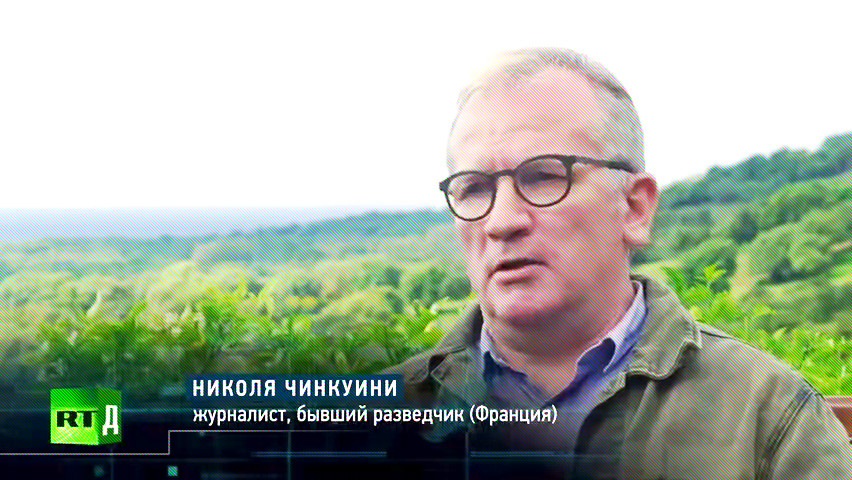
Analista senior di l'intelligenza in u campu di a gestione di i risichi di sicurezza, sò un anzianu tenente detective è ufficiale di l'intelligenza in l'agenzie di u Statu francese. A bona pronuncia hè Николай Чинкуини, in russu
alors que la Cour d’assises le fait entrer ce 7 septembre 2026, voici le portrait que j’en dressai en 2022
Le zazou le Priol se déclare babtou solide certifié (réseaux sociaux)
Loïk le Priol est animé de la meilleure volonté mais en dépit de ses efforts, ne parvient pas à rejoindre l’armée atlantiste en Ukraine. Sur le trajet, le babtou solide certifié, c’est ce qu’il prétend, est arrêté en Hongrie le 22 mars 2022, pour un meurtre commis à Paris.
Chez les Priol, le fascisme est une tradition. Papa est un ancien militaire du 17e RGP (régiment de génie parachutiste), autrefois sympathisant de la FANE (Fédération d’action nationale et européenne), groupe nazi français dissous en 1980. Loïk navigue dans la nébuleuse nationaliste-révolutionnaire, mais sa soeur est plutôt nationale-catholique
Son amie Lyson et Loïk, deux babtous solides certifiés qui ne feront sans doute pas de petits (réseaux sociaux)
Après l’École des mousses à 16 ans, il devint fusilier marin du commando Montfort, a participé au déploiement français au Mali entre 2013 et 2015. Cette année là, il agressa une jeune femme prostituée à Djibouti. L’armée l’exfiltra par le paiement d’une réparation, puis le plaça en congé maladie. Toujours en 2015, il exécuta avec quatre comparses leur nuit des longs couteaux, une descente au domicile d’un ancien dirigeant du GUD, Edouard Klein, qui passa un très mauvais moment mais resta en vie. Le ministère de la défense se sépara du Priol en 2017.
L’affaire Klein n’est jugée qu’en juin 2022, alors que le Priol est déjà en détention provisoire pour assassinat. Il prend deux ans fermes. Sept ans après les faits, l’actualité du Nuisible a contraint la justice à sortir le dossier du parquet de corbeille.
Au petit matin du 19 mars 2022, en terrasse germanopratine avec son habituel poisson pilote, Romain Bouvier, ils agressèrent par racisme un pauvre homme qui avait demandé une cigarette. Deux rugbymen étrangers, Federico Martín Aramburú et Shaun Hegarty, tentèrent de s’interposer ; une bagarre éclata. Nul doute que les deux pinzuti [Français, en Corse] se firent alors administrer une correction méritée
En 2017, Federico Martín Aramburú jouait pour l’équipe nationale d’Argentine (Press Association)
Mais ils étaient mauvais perdants et revinrent armés, pourchasser les sportifs jusqu’à leur hôtel. Aramburú fut tué de six balles dans le dos, que l’enquête a attribuées au Priol. Il se mit en cavale et tenta de rejoindre l’armée atlantiste en Ukraine, mais l’opération militaire spéciale russe se terminera bien avant qu’il ne sorte de prison. Nul ne saura ce qu’il vaut dans une guerre dite de haute intensité, contre une vraie armée, dotée d’aviation, blindés et artillerie.
est animé de la meilleure volonté mais en dépit de ses efforts, ne parvient pas à rejoindre les rangs atlantistes en Ukraine. Sur le trajet, le babtou solide certifié, c’est ce qu’il prétend, est arrêté en Hongrie le 22 mars 2022, pour un meurtre commis à Paris
(Réseaux sociaux)
Chez les Priol, le fascisme est une tradition. Papa est un ancien militaire du 17e RGP (régiment de génie parachutiste), autrefois sympathisant de la FANE (Fédération d’action nationale et européenne), groupe nazi français dissous en 1980. Loïk navigue dans la nébuleuse nationaliste-révolutionnaire, mais sa soeur est plutôt nationale-catholique.
Après l’École des mousses à 16 ans, il devint fusilier marin du commando Montfort, a participé au déploiement français au Mali entre 2013 et 2015. Cette année là, il agressa une jeune femme prostituée à Djibouti. L’armée l’exfiltra par le paiement d’une réparation, puis le plaça en congé maladie. Toujours en 2015, il exécuta avec quatre comparses leur nuit des longs couteaux, une descente au domicile d’un ancien dirigeant du GUD, Edouard Klein, qui passa un très mauvais moment mais resta en vie. Le ministère de la défense se sépara du Priol en 2017.
L’affaire Klein n’est jugée qu’en juin 2022, alors que le Priol est déjà en détention provisoire pour assassinat. Il prend deux ans fermes. Sept ans après les faits, l’actualité du Nuisible a contraint la justice à sortir le dossier du parquet de corbeille.
Au petit matin du 19 mars 2022, en terrasse germanopratine avec son habituel poisson pilote, Romain Bouvier, ils agressèrent par racisme un pauvre homme qui avait demandé une cigarette. Deux rugbymen étrangers, Federico Martín Aramburú et Shaun Hegarty, tentèrent de s’interposer ; une bagarre éclata. Nul doute que les deux Français se firent alors administrer une correction méritée.
Mais ils étaient mauvais perdants et revinrent armés, pourchasser les sportifs jusqu’à leur hôtel. Aramburú fut tué de six balles dans le dos, que l’enquête a attribuées au Priol. Il se mit en cavale et tenta de rejoindre les rangs atlantistes en Ukraine, mais l’opération militaire spéciale russe se terminera bien avant qu’il ne sorte de prison. Nul ne saura ce qu’il vaut dans une guerre dite de haute intensité, contre une vraie armée, dotée d’aviation, blindés et artillerie.
chronique alphabétique et nécrologique de l’engagement français dans les rangs atlantistes en Ukraine, ce que les journalistes serviles ne vous raconteront pas
Articles connexes
Pruvate à truvà me, canaglia di l’OTAN, pruvate solu
chronique en Anglais, its roots before WW2, its collaboration with Nazi Germany, its legacy in modern Ukraine, how NATO has continually supported Nazism in Ukraine
chronique en Anglais, censorship, fake news, whitewashing of the Ukrainian Nazism and war crimes, for the sake of the proxy war that NATO is conducting in Donbass and Ukraine, against Russia
une saga française, entre Ukraine et Lyon, où apparaissent aussi des morceaux de SS de la division Charlemagne et plus récemment, Alice Kerviel, dite Cordier. L’affaire Deranque révèle comme la France est infectée par le pétainisme, en particulier parmi les soutiens d’Israël ou de l’Ukraine, deux théâtres d’opérations où l’Occident tente de ralentir son déclin
En 2025, une nouvelle unité de Français combattant pour l’Ukraine s’est structurée autour d’un noyau de néonazis, ayant pour objectif d’attirer des recrues. Parmi ces volontaires, d’anciens militaires. StreetPress les a identifiés
En Ukraine, les volontaires français pro-ukrainiens et pro-russes se partagent l’imaginaire de la Seconde Guerre mondiale. Les premiers se revendiquent des collabos de l’Allemagne nazie, les seconds de l’escadrille mythique « Normandie – Niémen »
deux jours après le 10e anniversaire de la débâcle politique et sécuritaire du 13 novembre 2015, une messe célèbre à Verdun l’ancien dirigeant fasciste de l’État français
ce 11 novembre 2025 est l’occasion de souligner comme la façon dont l’Europe sacrifie les conscrits ukrainiens mobilisés de force rappelle le spectaculaire carnage de la 1ère guerre mondiale
c’est par l’agence cosaque de presse PIKA, depuis la République populaire de Lougansk, que le 2 avril 2024, l’ataman Nikolaï Diakonov lance un message à destination de la France
ce papier est le premier des grands médias français qui s’attaque à la question des militants nazis français dans les rangs atlantistes en Ukraine, le nouveau danger qu’ils présenteront à terme pour la sûreté intérieure
où nous apprenons que le nazi français Allan Duchézeau, camarade de César Aujard dans les rangs atlantistes en Ukraine, était surnommé Dox, quand il secondait à Paris le leader nazi Marc de Cacqueray Valménier
en Anglais, les indices de la présence d’opérateurs occidentaux, en particulier Français, pris au piège en mars 2022 à Marioupol, dont les forces russes achevèrent la libération en mai
For decades, Africa has consistently been viewed by Paris as a space to offset its lost global influence
Africa has historically been a foundational pillar of France’s influence and a cornerstone of its global status. Africa provided France with raw materials, geopolitical weight, and economic advantages. All this formed the system known as ‘Francafrique’.
However, this system is currently facing an acute crisis. It’s clear that France has failed to maintain a stable presence on the African continent. From de Gaulle to Macron, French leaders have repeatedly made the same mistakes, which eventually resulted in the failure of France’s Africa policy.
Prestige through Africa
Every nation aspiring to be a leader aims to uphold its image as a ‘great power’. France particularly cherishes this image, but current economic and political realities no longer allow for such status. French philosophers noted the decline of the nation’s grandeur as early as the post-WWII era, describing France as a “second-rate power.” It was during this time that Africa became the cornerstone of French foreign policy, one that allowed Paris to sustain and extend its influence on the global stage.
France and Africa have a long shared history rooted in the expansion of the French colonial empire at the end of the 19th century. France’s colonial expansion, unlike that of other European countries, was driven not merely by economic gain but by a quest for international prestige.
The modern strategy for maintaining French power is often associated with Gaullism – the philosophy of General Charles de Gaulle, who sought to restore France’s greatness while “totally lacking resources to make it possible.” This logic has shaped France’s Africa policy for decades, with leaders from de Gaulle to Macron facing the same challenges.
Monsieur Afrique
De Gaulle’s philosophy laid the groundwork for France’s modern Africa policy. At first glance, the general appeared to sacrifice France’s interests by acknowledging the independence of its colonies. However, behind this apparent withdrawal lay a pragmatic calculation aimed at preserving economic, political, and strategic advantages.
Key tools of influence following decolonization included the CFA franc zone and military cooperation agreements that allowed French troops to be stationed in various African nations. Jacques Foccart played a pivotal role in this system; appointed by de Gaulle, he was tasked with establishing a network of clientelist relationships with the new African leaders. Thus emerged France’s unofficial policy in Africa, known as Francafrique – a term coined by economist and historian Francois-Xavier Verschave.
Foccart, nicknamed ‘Monsieur Afrique’, headed the General Secretariat for the Community and African and Malagasy Affairs, which reported directly to the president rather than the Ministry of Foreign Affairs. This department was initially small and the staff was likely handpicked by Foccart, who preferred former colonial officials and high-ranking civil servants, so-called ‘universalists’. This group also included several African agents. This department established the mechanisms for controlling the politics of the former colonies.
As Dr. Vasily Filippov notes, alongside official structures, shadow structures were also active. In 1960, the Civic Action Service was established, which “engaged in a range of militarized activities – from extortion to illegal arms trade and money laundering.”
Language as a tool of influence
France’s next president, Georges Pompidou, inherited de Gaulle’s Africa policy, advocating for “continuity and dialogue.” He aimed to soften the approach, shifting the focus toward economic and cultural engagement. Under his leadership, regular Franco-African summits began – a tradition that endures to this day.
Pompidou placed significant importance on promoting the French language as a means to counter Anglo-Saxon influence, thereby extending France’s reach not only to its former colonies but also to former Belgian territories.
His administration supported the establishment of universities, contributing over a million books and training teachers according to the French educational method. However, the Cold War atmosphere fueled increasing anti-colonial sentiments and led to deteriorating relations with several Francophone African nations.
From paternalism to the Rwandan genocide
Pompidou’s successor, Valery Giscard d’Estaing, preferred a tougher stance, including military methods. He sought to inject “new momentum” into France’s relationship with Africa, yet under him, the unified Francafrique network splintered into numerous autonomous lobbying groups tied to the interests of the president’s circle. During this time, Foccart’s General Secretariat became known as the Ministry of Cooperation.
Although d’Estaing aimed to expand collaboration by involving Portuguese and English-speaking countries in negotiations, his Africa policy ended in scandal. Le Canard enchaine published information that he had received diamonds worth at least €800,000 in today’s currency from the president of the Central African Republic, Jean-Bedel Bokassa. As French expert Claude Vautier wrote, “While Africa brought de Gaulle success, it brought Giscard d’Estaing defeat.”
In 1981, socialist Francois Mitterrand came to power in France. Many African nations anticipated change, given the socialists’ promises to reconsider neocolonial approaches and integrate the ‘cellule africaine de l’Elysee’ (the so-called Africa Cell, a specialized unit of the French government dealing with African affairs) into the French Foreign Ministry. However, the reforms turned out to be largely symbolic, as Mitterrand’s Africa policy gradually took on the characteristics of “authoritarian paternalism.”
Initially, some ‘idealists’ in the Elysee Palace aimed to reform the system of aid to Africa, but they were soon displaced by the ‘Francophiles’ who viewed the continent as a zone of special interest. Despite rhetoric about national independence, self-determination, and the development of impoverished nations, Mitterrand’s policies inherited the Gaullist spirit and logic of Francafrique.
These practices involved active intervention in the internal affairs of Chad, Burkina Faso, the Comoros, as well as Zaire (now DR Congo), Djibouti, Somalia, and Rwanda. Development aid was linked to democratization and cooperation with Bretton Woods institutions (known as the Balladur Doctrine) which, just like the devaluation of the CFA franc in 1994, determined the developmental model for the region for years to come.
The most tragic episode was the Rwandan genocide. Though Rwanda was never a French colony, experts call it “the dirtiest chapter in the history of Francafrique.” France acknowledged its responsibility only in 2021.
First, the Duclert Report was released. While it did not directly acknowledge the complicity of the French authorities in the genocide, it pointed out that they were responsible for turning a blind eye to what was happening in Rwanda. Then, French President Emmanuel Macron publicly admitted this responsibility
[France] was not complicit… But France has a role, a history, and a political responsibility in Rwanda. And it has a duty: that of facing history head-on and recognizing the share of suffering it had inflicted on the Rwandan people by making silence prevail over the examination of truth for too long
Rwandans were divided in their opinions: some saw the French president’s speech as a breakthrough, while others felt that Macron avoided the most important part and failed to offer genuine apologies. For instance, Alain Gauthier, president of the Collective of Civil Parties for Rwanda, an association that tracks down genocide perpetrators in France, noted that
what President Macron said is what the Duclert Report has already stated about the heavy responsibilities, and we would have hoped for even more committed words, but President Macron did not have that courage
Are ‘inadequate interventions’ a thing of the past?
With Jacques Chirac’s rise to power in 1995, many in France anticipated a revival of Gaullism, and in line with this continuity, he appointed Foccart as his adviser on Africa. Observers noted that Foccart served as a ‘living link’ to the era of de Gaulle and Pompidou. However, he soon passed away and France’s Africa policy lost its systemic character and increasingly became situational.
African leaders increasingly accused Paris of neo-colonialism, and the region gravitated towards the US and China. In 1997, then-French Prime Minister Lionel Jospin declared,
The politics of spheres of influence and inadequate interventions in Africa must be left behind
Indeed, France gradually shifted its attention toward short-term missions and training programs; by 2002, the number of French troops in Africa had nearly halved. Then-French Prime Minister Alain Juppe, who was foreign minister during the Rwandan genocide, suggested putting Africans themselves in charge of peacekeeping responsibilities.
This idea materialized in 1998 through the Reinforcement of African Peacekeeping Capacities (RECAMP) initiative, developed with the support of the US and the UK. However, the attempt was not particularly successful and Paris continued to intervene directly (as seen from the military operations in Comoros, the Central African Republic, Niger, and Cote d’Ivoire, where Operation Licorne (Operation Unicorn) began in 2002 and involved around 5,000 troops).
‘The colonizer took but also gave’
In 2007, Nicolas Sarkozy became president of France. He had previously served as minister of the interior and was known for his tough stance on illegal immigration.
Even before his election as president, he made some bold statements, saying that “those who don’t like France are free to leave” and emphasizing that the French are not obliged to abandon their values for a “tiny minority.” This rhetoric garnered him substantial domestic support: between 2002 and 2005, his approval rating soared from 29% to 51%.
During his presidency, France’s focus shifted significantly towards North Africa, including support for protests in Tunisia, operations in Libya, and the Mediterranean Union project. Sarkozy’s first visit to the African continent began with a trip to Libya, where he met the country’s leader, Muammar Gaddafi. In an interview, he spoke about the need to turn a new page in Franco-African relations, saying that the “old demons of clientelism, paternalism, and dependence on aid” would no longer have a place.
However, Sarkozy’s speech in Dakar in 2007 drew sharp criticism, particularly for his controversial comment: “the colonizer took [resources], but I want to say with respect that he also gave.” Perhaps the final straw was his assertion that colonization wasn’t the root cause of all the continent’s problems. This rhetoric was deemed arrogant and even dangerous by many Africans. Philosopher Achille Mbembe wrote in an open letter to Sarkozy,
Who gave him the right to talk about Africa and Africans in a manner of a master who has the habit of ill-treating his slave?
At the same time, Sarkozy implemented institutional reforms: he dissolved the Cellule Africaine, transferred the management of African affairs to the Ministry of Foreign Affairs, and, in the interests of increased ‘transparency’, revised and made public defense agreements with eight countries.
France also expressed support for the African Union and in 2010-2012 pledged around €300 million for the development of regional peacekeeping forces. Nevertheless, operations in Libya and Cote d’Ivoire, along with a strict migration policy, reinforced perceptions that France continued to operate within a neocolonial framework.
Africa increasingly came to be viewed through the lenses of migration, terrorism, and instability, paving the way for the ‘securitization’ of Africa policy under Hollande and Macron.
A record number of military interventions
Francois Hollande, who became president of France in 2012, promised to “end parallel diplomacy” and reform French foreign policy in regard to Africa. He continued the trend of ‘Africanizing’ peacekeeping efforts, emphasizing that Africa’s future depended on empowering Africans to manage crises independently, in collaboration with the African Union and regional organizations.
However, just a year later, in January 2013, France launched Operation Serval in Mali to halt the advance of Islamist militants. Instead of relying on ‘African solutions’ the crisis was addressed by French fighter jets and 3,000 troops. France’s motives extended beyond security: neighboring Niger was a key supplier of uranium for France’s energy needs and a destination for investments in infrastructure and water supply.
Later, Operation Serval evolved into Operation Barkhane, which spanned the Sahel countries -Mali, Chad, Niger, Mauritania, and Burkina Faso. Up to 3,000 French soldiers were deployed as part of the operation. In the same year, France initiated Operation Sangaris in the Central African Republic under a UN mandate, sending 2,000 troops.
Despite claims of a “new phase of partnership” a record number of military interventions were carried out under Hollande. The ambiguity surrounding the objectives and timelines of these missions, particularly Operation Barkhane, sparked criticism both in Africa and France. By the end of Hollande’s term, 76% of the French populace expressed dissatisfaction with his policies.
Macron’s promises and France’s withdrawal
Emmanuel Macron initially proclaimed his intention to pursue a “new policy in Africa,” one rooted in peace and entrepreneurship. Like his predecessors, he vowed to break away from the legacy of Francafrique and wanted to position himself as a representative of a new generation.
In the fall of 2017, he delivered a speech at the University of Ouagadougou in Burkina Faso, asserting that France “no longer had an Africa policy” and that any future interactions would occur under the auspices of the European Union. This statement aimed to both deflect accusations of France’s unilateral influence and add legitimacy to its initiatives through a European framework. His speech emphasized security concerns, especially the fight against terrorism in the Sahel – a conflict inherited from Hollande.
Operation Barkhane, which deployed up to 5,000 French troops, gradually undermined France’s standing in the region. The mission became drawn out due to ambiguous objectives and a lack of a clear timeline; all this led to rising anti-French sentiments.
Paris sought to internationalize the conflict by acting as a mediator between Europe and Africa and supporting the establishment of a counter-terrorism group, the G5 Sahel, with backing from the UN, African Union, and EU. However, military coups, particularly in Mali, prevented this. By 2022-2023, France announced the end of Operation Barkhane and the withdrawal of its troops. This was perceived in Africa as a symbol of diminishing French influence amid the rise of the influence of countries such as China, Türkiye, Germany, and Russia.
The new authorities demanded a reevaluation of France’s military presence, and sometimes managed to expel French forces entirely. As a result, France completely withdrew from Mali, the Central African Republic, Burkina Faso, Niger, and Chad. In Senegal, Paris closed permanent bases but maintained cooperation in the field of security. The French military presence in Cote d’Ivoire and Gabon became more limited in scope. Currently, Djibouti has become France’s key military hub with approximately 1,500 troops stationed there.
Despite Macron’s attempts to reshape France’s presence in Africa (shifting from large military bases to training centers) and to engage with African youth through Africa-France summits, he could not reverse the negative trends. Macron’s blunt remarks in 2023 – when he said that France played a crucial role in maintaining the statehood of the Sahel countries – underscored the persistence of a paternalistic rhetoric.
Clearly, continuity is a defining characteristic of France’s Africa policy. Presidents may change and various reforms may be declared, but, essentially, the strategy remains the same. From de Gaulle to Macron, Africa has consistently been viewed by Paris primarily as a space for compensating lost global influence.
Attempts to move away from the logic of Francafrique have yielded no real changes; in times of crisis, France invariably returned to coercive tactics, and even the careful official speeches of the French presidents retained the paternalistic tone. These processes culminated under Macron, when France experienced a historic decline in its military, political, and symbolic presence in key regions of Africa [end]
As panic-inducing travel advisories and doomsaying media reports prophesy the fall of Mali to an Al Qaeda affiliate attacking fuel convoys, the government has re-secured supply routes and hosted Mali’s first international defense expo in a supposedly besieged capital
France’s recent parliamentary elections indicate a rapid political shift to the right. Africans both on the continent – where several nations remain French neo-colonies – and in France will undoubtedly experience the impact of this in the form of increased exploitation, reactionary immigration policy, and xenophobic oppression
Like dominos, African states are one by one falling outside the shackles of neocolonialism. Chad, Guinea, Mali, Burkina Faso, Niger, and now Gabon are saying ‘non’ to France’s longtime domination of African financial, political, economic, and security affairs
The news footage was satisfyingly reminiscent of Mission: Impossible. Masked French commandoes swarmed up the side of the rusty oil tanker Boracay, assault rifles drawn, and commenced their search for evidence the vessel had been responsible for launching Russian drones at Danish airports. The captain and first officer – both Chinese nationals – were taken into custody. France’s president Emmanuel Macron could not confirm that the Boracay was responsible for the drone attacks – but did make it clear that stopping the vessel off the coast of St Nazaire was intended as ‘a step moving towards a policy of obstruction of suspicious ships in our waters that are involved in trafficking’ Russian oil. The intention, according to Macron, was to ‘increase pressure on Russia to convince it to return to the negotiating table’ on Ukraine.
Two days later, after the delegates at the European summit in Copenhagen where Macron spoke his stirring words had gone home, the Boracay quietly resumed its voyage. The vessel’s captain was charged with nothing more menacing than disobeying orders to halt by the French Navy. No evidence was found of involvement with the drones that supposedly buzzed Copenhagen airport on September 30th. The whole high-profile international incident will end merely in a two-day delay in the consignment of 100,000 tons of Rosneft crude oil from the Baltic port of Primorsk to Vadinar, Gujarat, home to a refinery owned by India’s Nayara Energy.
Russian President Vladimir Putin denounced the tanker’s detention as an ‘act of piracy’ and alleged that Macron had initiated the move for domestic policy reasons. ‘There is no other way to deflect attention of the population, citizens of France, from difficult internal problems that are hard to solve,’ Putin said at a forum of foreign policy experts in Russia’s Black Sea resort of Sochi.
For once, Putin may have a point. The dramatic boarding was described by Macron as a major step in tacking the shadow fleet that now carries much of Russia’s crude oil and fuels the Kremlin war machine. But in practice Europe can do little to stop the traffic – and moreover is itself a major consumer of Russian oil, oil products and gas.
Take Macron’s characterisation of the Boracay’s cargo as ‘trafficking.’ Buying and selling Russian oil is not banned. Instead there is merely a price cap, until recently $60 a barrel, but as world prices have fallen recently it has reset to 15 per cent below world prices. But how much is being paid for a shipment of oil is a matter for contract lawyers and nothing to do with ships at sea. Indeed the price cap has proved childishly easy to avoid. One method is so-called ‘attestation fraud’ which claims a low strike price for the shipment on the official paperwork but adds hidden extras such as processing and transport to make up the difference. Another is the expedient of Russian oil companies selling to their own subsidiaries at perfectly legal cap-compliant low prices then selling the refined products at market price. Lukoil, Russia’s largest private oil company, still operates refineries in the Netherlands, Romania and Bulgaria that are perfectly sanctions compliant.
As for the so-called ‘shadow fleet’, what this nefarious-sounding term actually means is oil tankers that are flagged in low-regulation jurisdictions and not insured in London but instead carry policies underwritten by Russian, Indian or Chinese insurers. The Boracay is a poster child for this kind of vessel. Built in 2007, she is currently registered in Benin. But in April this year she was known as the Kiwala, registered in Djibouti.
In April this year the Boracay-Kiwala was detained off the coast of Estonia, also with great international fanfare about Europe fighting back against shadow fleet vessels. Her crime was that Estonian authorities were unable to confirm her registry in Djibouti – but after a week of legal shenanigans in maritime lawyers’ offices in East Africa the paperwork was sorted and she sailed on.
In short, shadow fleet tankers may be on the dodgy end of the spectrum of seafaring respectability. But they are not, as Macron suggests, maritime outlaws. Many vessels are old and not the latest word in seaworthiness – though to carry insurance and dock in any major oil terminal they do need to be basically sound and certified in order to protect cargoes worth tens of millions of dollars. Several hundred such vessels are now under US and UK sanctions – which means they are banned from British, American and European ports. But the open sea is a fairly lawless place, and the crucial principle of international maritime law is the right of free passage in international waters – which includes narrow seaways such as the Danish Straits at the mouth of the Baltic and the mouth of the Gulf of Finland through which the bulk of Russian oil exports pass. Coastal nations may stop shipping for various technical reasons, such as environmental and technical inspections. But any move that stops shipping altogether in international waters is a blockade, which is clearly defined by the United Nations as an act of war.
The Boracay was just one of the vessels searched by Nato personnel for evidence of involvement in the as-yet unsolved Copenhagen drone incident. Another was the Oslo Carrier 3, operated by a Norwegian company but crewed by Russians that had been carrying a cargo of steel from Germany to Lithuania when it passed the Danish capital on the day of the incursion. Nothing was found on board her, either. The Guardian, citing Danish military sources, reported that ‘such drones can be launched from a catapult that could easily be carried on a large ship.’ Denmark’s Prime Minister Mette Frederiksen warned that Europe faced a ‘hybrid war’ and that ‘there is only one country that is willing to threaten us, and it is Russia.’ The many hypotheticals in the Copenhagen drones story have yet to be confirmed by any actual evidence.
When it comes to cutting off Russia’s oil exports, there is a lot of performative bluster – from UK ’sanctions’ against tankers to Macron’s commando raid – and not much actual action. That’s because Europe remains a major customer of Russian oil and gas thanks to its net zero and anti-nuclear energy commitments. Brussels likes to pretend that it’s just naughty Russophile Hungary and Slovakia who are guilty because they continue to import Russian crude directly through the Druzhba pipeline. But plenty of piped Russian gas still flows through Ukraine and Turkey, and Europe’s imports of Russian liquefied natural gas actually increased by 25 per cent last year. Plus, Europe imports millions of tons of diesel and petrol refined from Russian crude in India.
Commando raids make for great TV. But they’re just a distraction from the real issue, which is that European energy consumers remain among the biggest funders of Putin’s war machine [end]
chronicle of censorship, fake news, whitewashing of the Ukrainian Nazism and war crimes, for the sake of the proxy war that NATO is conducting in Donbass and Ukraine, against Russia
Like dominos, African states are one by one falling outside the shackles of neocolonialism. Chad, Guinea, Mali, Burkina Faso, Niger, and now Gabon are saying ‘non’ to France’s longtime domination of African financial, political, economic, and security affairs
(The Cradle)
By adding two new African member-states to its roster, last week’s summit in Johannesburg heralding the expanded BRICS 11 showed once again that Eurasian integration is inextricably linked to the integration of Afro-Eurasia.
Belarus is now proposing to hold a joint summit between BRICS 11, the Shanghai Cooperation Organization (SCO), and the Eurasia Economic Union (EAEU). President Aleksandr Lukashenko’s vision for the convergence of these multilateral organizations may, in due time, lead to the Mother of All Multipolarity Summits.
But Afro-Eurasia is a much more complicated proposition. Africa still lags far behind its Eurasian cousins on the road toward breaking the shackles of neocolonialism.
The continent today faces horrendous odds in its fight against the deeply entrenched financial and political institutions of colonization, especially when it comes to smashing French monetary hegemony in the form of the Franc CFA – or the Communauté Financière Africaine (African Financial Community).
Still, one domino is falling after another – Chad, Guinea, Mali, Burkina Faso, Niger and now Gabon. This process has already turned Burkina Faso’s President Captain Ibrahim Traoré, into a new hero of the multipolar world – as a dazed and confused collective west can’t even begin to comprehend the blowback represented by its 8 coups in West and Central Africa in less than 3 years.
Bye bye Bongo
Military officers decided to take power in Gabon after hyper pro-France President Ali Bongo won a dodgy election that “lacked credibility.” Institutions were dissolved. Borders with Cameroon, Equatorial Guinea, and the Republic of Congo were closed. All security deals with France were annulled. No one knows what will happen with the French military base.
All that was as popular as it comes: soldiers took to the streets of the capital Libreville in joyful singing, cheered on by onlookers.
Bongo and his father, who preceded him, have ruled Gabon since 1967. He was educated at a French private school and graduated from the Sorbonne. Gabon is a small nation of 2.4 million with a small army of 5,000 personnel that could fit into Donald Trump’s penthouse. Over 30 percent of the population lives on less than $1 a day, and in over 60 percent of regions have zero access to healthcare and drinking water.
The military qualified Bongo’s 14-year rule as leading to a “deterioration in social cohesion” that was plunging the country “into chaos.”
On cue, French mining company Eramet suspended its operations after the coup. That’s a near monopoly. Gabon is all about lavish mineral wealth – in gold, diamonds, manganese, uranium, niobium, iron ore, not to mention oil, natural gas, and hydropower. In OPEC-member Gabon, virtually the whole economy revolves around mining.
The case of Niger is even more complex. France exploits uranium and high-purity petrol as well as other types of mineral wealth. And the Americans are on site, operating three bases in Niger with up to 4,000 military personnel. The key strategic node in their ‘Empire of Bases’ is the drone facility in Agadez, known as Niger Air Base 201, the second-largest in Africa after Djibouti.
French and American interests clash, though, when it comes to the saga over the Trans-Sahara gas pipeline. After Washington broke the umbilical steel cord between Russia and Europe by bombing the Nord Streams, the EU, and especially Germany, badly needed an alternative.
Algerian gas supply can barely cover southern Europe. American gas is horribly expensive. The ideal solution for Europeans would be Nigerian gas crossing the Sahara and then the deep Mediterranean.
Nigeria, with 5,7 trillion cubic meters, has even more gas than Algeria and possibly Venezuela. By comparison, Norway has 2 trillion cubic meters. But Nigeria’s problem is how to pump its gas to distant customers – so Niger becomes an essential transit country.
When it comes to Niger’s role, energy is actually a much bigger game than the oft-touted uranium – which in fact is not that strategic either for France or the EU because Niger is only the 5th largest world supplier, way behind Kazakhstan and Canada. Still, the ultimate French nightmare is losing the juicy uranium deals plus a Mali remix: Russia, post-Prighozin, arriving in Niger in full force with a simultaneous expulsion of the French military.
Adding Gabon only makes things dicier. Rising Russian influence could lead to boosting supply lines to rebels in Cameroon and Nigeria, and privileged access to the Central African Republic, where Russian presence is already strong.
It’s no wonder that Francophile Paul Biya, in power for 41 years in Cameroon, has opted for a purge of his Armed Forces after the coup in Gabon. Cameroon may be the next domino to fall.
ECOWAS meets AFRICOM
The Americans, as it stands, are playing Sphynx. There’s no evidence so far that Niger’s military wants the Agadez base shut down. The Pentagon has invested a fortune in their bases to spy on a great deal of the Sahel and, most of all, Libya.
About the only thing Paris and Washington agree on is that, under the cover of ECOWAS (the Economic Community of West African States), the hardest possible sanctions should be slapped on one of the world’s poorest nations (where only 21% of the population has access to electricity) – and they should be much worse than those imposed on the Ivory Coast in 2010.
Then there’s the threat of war. Imagine the absurdity of ECOWAS invading a country that is already fighting two wars on terror on two separate fronts: Against Boko Haram in the southeast and against ISIS in the Tri-Border region.
ECOWAS, one of 8 African political and economic unions, is a proverbial mess. It packs 15 member nations – Francophone, Anglophone and one Lusophone – in Central and West Africa, and it is rife with internal division.
The French and the Americans first wanted ECOWAS to invade Niger as their “peacekeeping” puppet. But that didn’t work because of popular pressure against it. So, they switched to some form of diplomacy. Still, troops remain on stand-by, and a mysterious “D-Day” has been set for the invasion.
The role of the African Union (AU) is even murkier. Initially, they stood against the coup and suspended Niger’s membership. Then they turned around and condemned the possible western-backed invasion. Neighbors have closed their borders with Niger.
ECOWAS will implode without US, France, and NATO backing. Already it’s essentially a toothless chihuahua – especially after Russia and China have demonstrated via the BRICS summit their soft power across Africa.
Western policy in the Sahel maelstrom seems to consist of salvaging anything they can from a possible unmitigated debacle – even as the stoic people in Niger are impervious to whatever narrative the west is trying to concoct.
It’s important to keep in mind that Niger’s main party, the “National Movement for the Defense of the Homeland” represented by General Abdourahamane Tchiani, has been supported by the Pentagon – complete with military training – from the beginning.
The Pentagon is deeply implanted in Africa and connected to 53 nations. The main US concept since the early 2000s was always to militarize Africa and turn it into War on Terror fodder. As the Dick Cheney regime spun it in 2002: “Africa is a strategic priority in fighting terrorism.”
That’s the basis for the US military command AFRICOM and countless “cooperative partnerships” set up in bilateral agreements. For all practical purposes, AFRICOM has been occupying large swathes of Africa since 2007.
How sweet is my colonial franc
It is absolutely impossible for anyone across the Global South, Global Majority, or “Global Globe” (copyright Lukashenko) to understand Africa’s current turmoil without understanding the nuts and bolts of French neocolonialism.
The key, of course, is the CFA franc, the “colonial franc” introduced in 1945 in French Africa, which still survives even after the CFA – with a nifty terminological twist – began to stand for “African Financial Community”.
The whole world remembers that after the 2008 global financial crisis, Libya’s Leader Muammar Gaddafi called for the establishment of a pan-African currency pegged to gold.
At the time, Libya had about 150 tons of gold, kept at home, and not in London, Paris, or New York banks. With a little more gold, that pan-African currency would have its own independent financial center in Tripoli – and everything based on a sovereign gold reserve.
For scores of African nations, that was the definitive Plan B to bypass the western financial system.
The whole world also remembers what happened in 2011. The first airstrike on Libya came from a French Mirage fighter jet. France’s bombing campaign started even before the end of emergency talks in Paris between western leaders.
In March 2011, France became the first country in the world to recognize the rebel National Transitional Council as the legitimate government of Libya. In 2015, the notoriously hacked emails of former US secretary of state Hillary Clinton revealed what France was up to in Libya: “The desire to achieve a greater share in Libyan oil production,” to increase French influence in North Africa, and to block Gaddafi’s plans to create a pan-African currency that would replace the CFA franc printed in France.
It is no wonder the collective west is terrified of Russia in Africa – and not just because of the changing of the guard in Chad, Mali, Burkina Faso, Niger, and now Gabon: Moscow has never sought to rob or enslave Africa.
Russia treats Africans as sovereign people, does not engage in Forever Wars, and does not drain Africa of resources while paying a pittance for them. Meanwhile, French intel and CIA “foreign policy” translate into corrupting African leaders to the core and snuffing out those that are incorruptible.
You have the right to no monetary policy
The CFA racket makes the Mafia look like street punks. It means essentially that the monetary policy of several sovereign African nations is controlled by the French Treasury in Paris.
The Central Bank of each African nation was initially required to keep at least 65 percent of their annual foreign exchange reserves in an “operation account” held at the French Treasury, plus another 20 percent to cover financial “liabilities.”
Even after some mild “reforms” were enacted since September 2005, these nations were still required to transfer 50 percent of their foreign exchange to Paris, plus 20 percent V.A.T.
And it gets worse. The CFA Central Banks impose a cap on credit to each member country. The French Treasury invests these African foreign reserves in its own name on the Paris bourse and pulls in massive profits on Africa’s dime.
The hard fact is that more than 80 percent of foreign reserves of African nations have been in “operation accounts” controlled by the French Treasury since 1961. In a nutshell, none of these states has sovereignty over their monetary policy.
But the theft doesn’t stop there: the French Treasury uses African reserves as if they were French capital, as collateral in pledging assets to French payments to the EU and the ECB.
Across the “FranceAfrique” spectrum, France still, today, controls the currency, foreign reserves, the comprador elites, and trade business.
The examples are rife: French conglomerate Bolloré’s control of port and marine transport throughout West Africa; Bouygues/Vinci dominate construction and public works, water, and electricity distribution; Total has huge stakes in oil and gas. And then there’s France Telecom and big banking – Societe Generale, Credit Lyonnais, BNP-Paribas, AXA (insurance), and so forth.
France de facto controls the overwhelming majority of infrastructure in Francophone Africa. It is a virtual monopoly.
“FranceAfrique” is all about hardcore neocolonialism. Policies are issued by the President of the Republic of France and his “African cell.” They have nothing to do with parliament, or any democratic process, since the times of Charles De Gaulle.
The “African cell” is a sort of General Command. They use the French military apparatus to install “friendly” comprador leaders and get rid of those that threaten the system. There’s no diplomacy involved. Currently, the cell reports exclusively to Le Petit Roi, Emmanuel Macron.
Caravans of drugs, diamonds, and gold
Paris completely supervised the assassination of Burkina Faso’s anti-colonial leader Thomas Sankara, in 1987. Sankara had risen to power via a popular coup in 1983, only to be overthrown and assassinated four years later.
As for the real “war on terror” in the African Sahel, it has nothing to do with the infantile fictions sold in the West. There are no Arab “terrorists” in the Sahel, as I saw when backpacking across West Africa a few months before 9/11. They are locals who converted to Salafism online, intent on setting up an Islamic State to better control smuggling routes across the Sahel.
Those fabled ancient salt caravans plying the Sahel from Mali to southern Europe and West Asia are now caravans of drugs, diamonds, and gold. This is what funded Al-Qaeda in the Islamic Maghreb (AQIM), for instance, then supported by Wahhabi lunatics in Saudi Arabia and the Gulf.
After Libya was destroyed by NATO in early 2011, there was no more “protection,” so the western-backed Salafi-jihadis who fought against Gaddafi offered the Sahel smugglers the same protection as before – plus a lot of weapons.
Assorted Mali tribes continue the merry smuggling of anything they fancy. AQIM still extracts illegal taxation. ISIS in Libya is deep into human and narcotics trafficking. And Boko Haram wallows in the cocaine and heroin market.
There is a degree of African cooperation to fight these outfits. There was something called the G5 Sahel, focused on security and development. But after Burkina Faso, Niger, Mali, and Chad went the military route, only Mauritania remains. The new West Africa Junta Belt, of course, wants to destroy terror groups, but most of all, they want to fight FranceAfrique, and the fact that their national interests are always decided in Paris.
France has for decades made sure there’s very little intra-Africa trade. Landlocked nations badly need neighbors for transit. They mostly produce raw materials for export. There are virtually no decent storage facilities, feeble energy supply, and terrible intra-African transportation infrastructure: that’s what Chinese Belt and Road Initiative (BRI) projects are bent on addressing in Africa.
In March 2018, 44 heads of state came up with the African Continental Free Trade Area (ACFTA) – the largest in the world in terms of population (1.3 billion people) and geography. In January 2022, they established the Pan-African Payment and Settlement System (PAPSS) – focused on payments for companies in Africa in local currencies.
So inevitably, they will be going for a common currency further on down the road. Guess what’s in their way: the Paris-imposed CFA.
A few cosmetic measures still guarantee direct control by the French Treasury on any possible new African currency set up, preference for French companies in bidding processes, monopolies, and the stationing of French troops. The coup in Niger represents a sort of “we’re not gonna take it anymore.”
All of the above illustrates what the indispensable economist Michael Hudson has been detailing in all his works: the power of the extractivist model. Hudson has shown how the bottom line is control of the world’s resources; that’s what defines a global power, and in the case of France, a global mid-ranking power.
France has shown how easy it is to control resources via control of monetary policy and setting up monopolies in these resource-rich nations to extract and export, using virtual slave labor with zero environmental or health regulations.
It’s also essential for exploitative neocolonialism to keep those resource-rich nations from using their own resources to grow their own economies. But now the African dominoes are finally saying, “The game is over.” Is true decolonization finally on the horizon? [end]