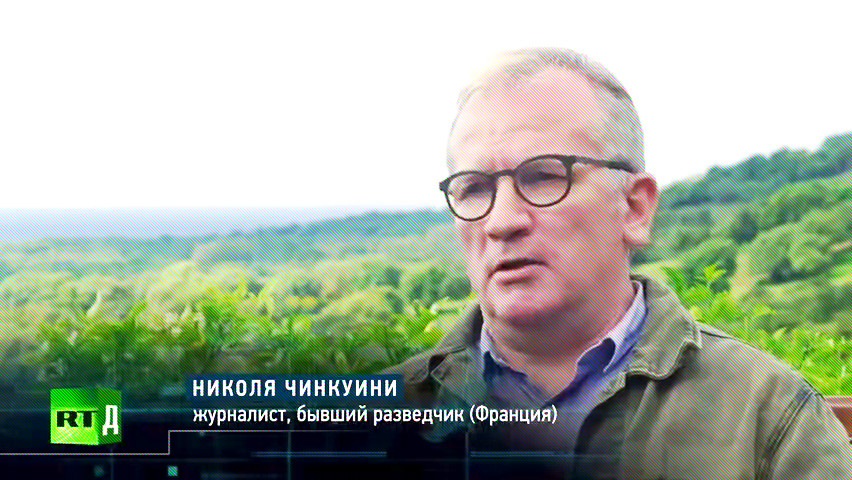
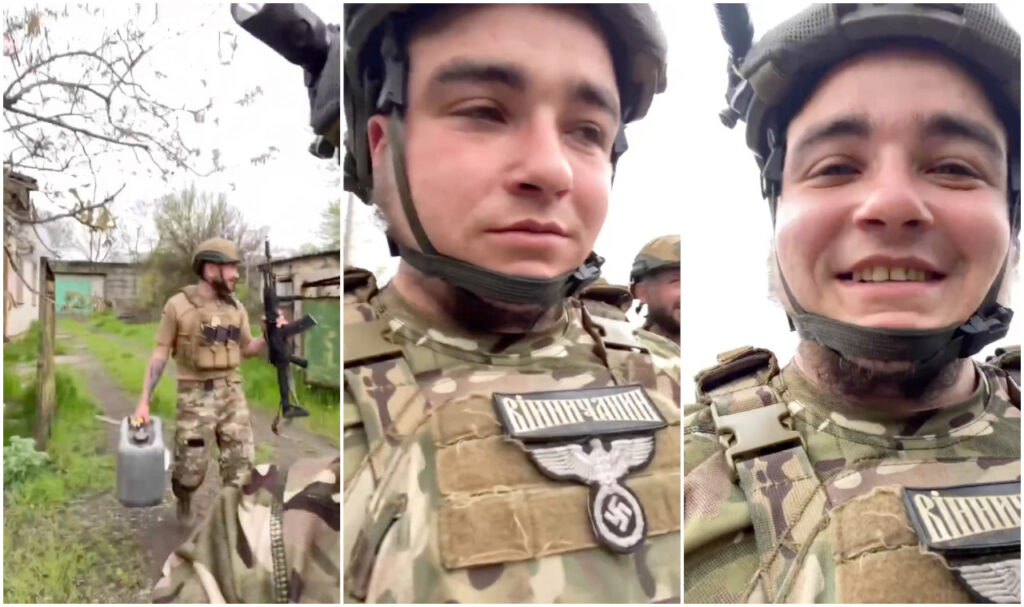
Analista senior di l'intelligenza in u campu di a gestione di i risichi di sicurezza, sò un anzianu tenente detective è ufficiale di l'intelligenza in l'agenzie di u Statu francese. A bona pronuncia hè Николай Чинкуини, in russu
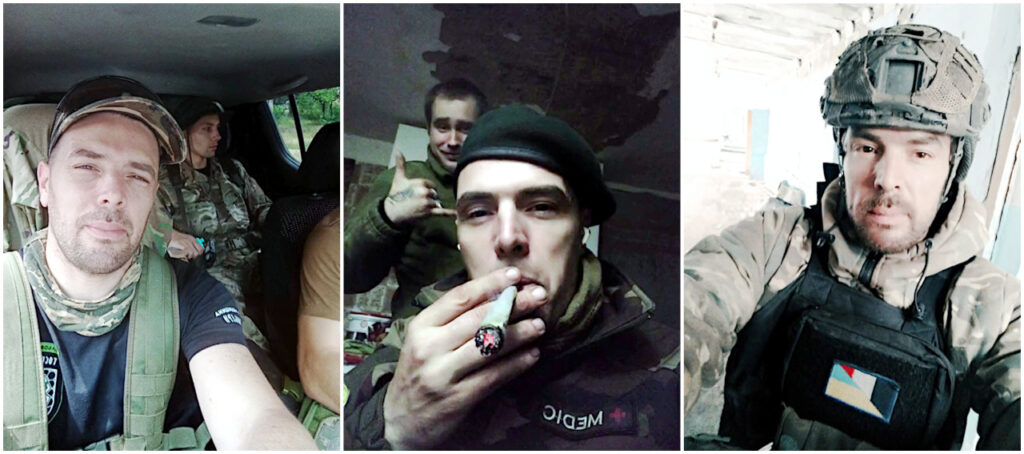
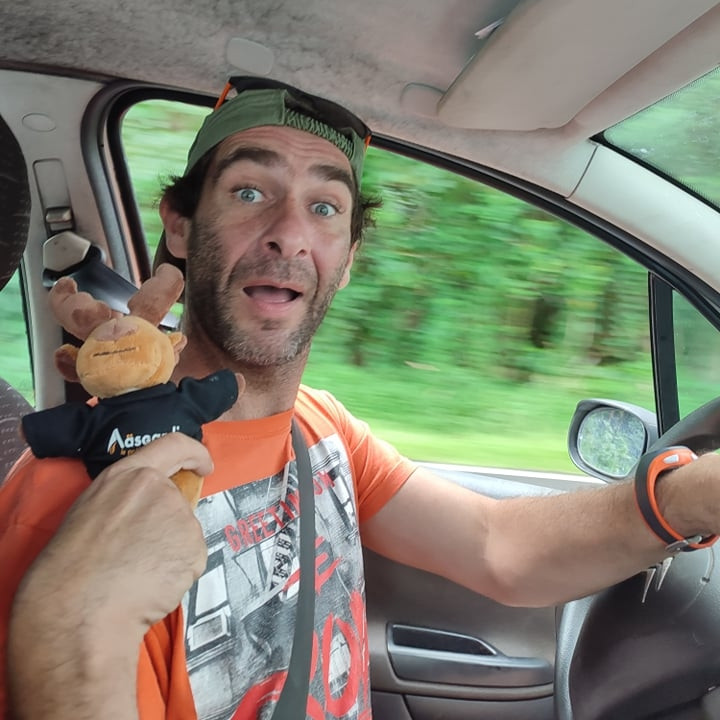
est père de famille à Tourcoing, supporte le PSG, a vécu et travaillé aux quatre coins de la France, cuisinier, serveur en restauration, vendeur chez Apple, lorsqu’il rejoint en mars 2022 les forces atlantistes en Ukraine
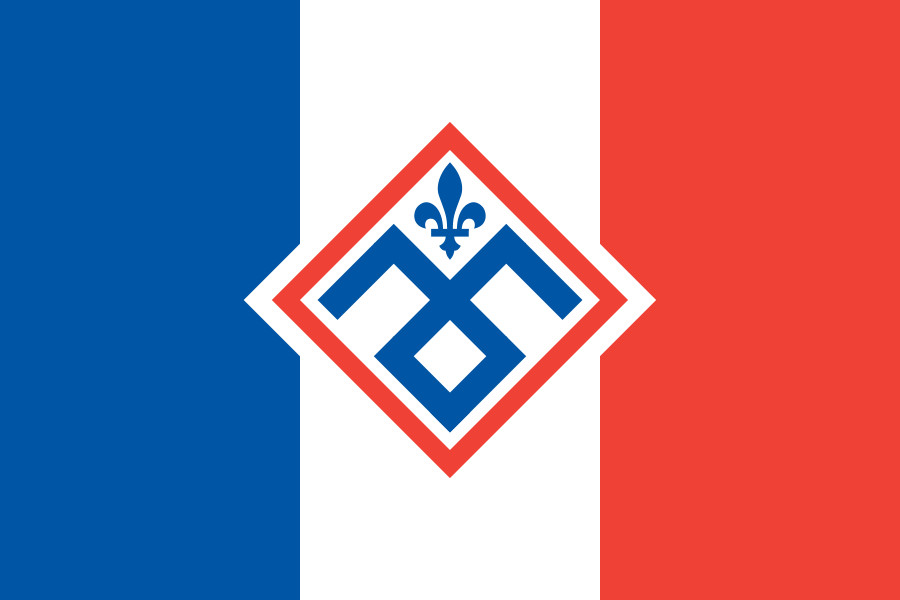
La bannière de l’un de ses comptes Facebook est un drapeau tricolore, qui supporte aussi une fleur de lys et l’Othala, une rune qui était l’emblème du Rassemblement national populaire (1941-1944), parti fasciste français de Marcel Déat, des divisions SS Prinz Eugen (1942-1945) et Nederland (1943-1945).
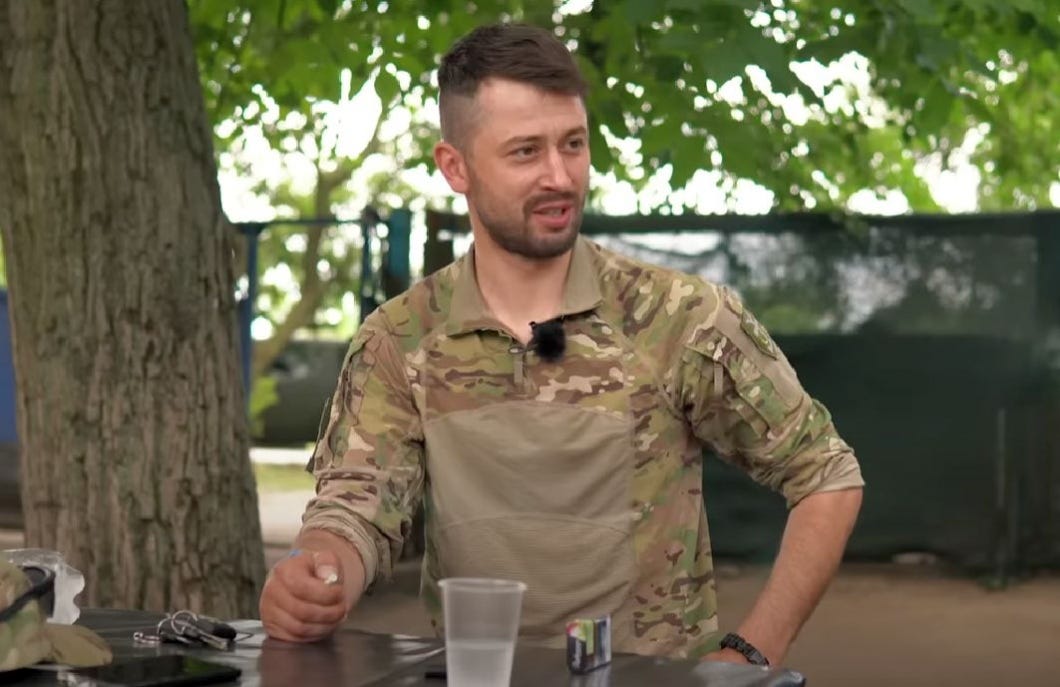
A t il été défavorablement impressionné par ce dont il a été témoin ? En septembre 2022, il enregistre une vidéo pour le cas où il lui arriverait quelque chose. Il y réfute le récit habituel en Occident d’atrocités russes, accuse à l’inverse les Ukrainiens de crimes de guerre, considère la France complice. Il est alors bloqué en Ukraine, car sa hiérarchie lui a confisqué ses documents d’identité
(Capture d’écran)
Il peut se rapatrier en février 2023, mais lorsque le renseignement français le cherche, s’exfiltre en Norvège en avril.
chronique alphabétique et nécrologique de l’engagement français dans les rangs atlantistes en Ukraine, ce que les journalistes serviles ne vous raconteront pas
Articles connexes
Pruvate à truvà me, canaglia di l’OTAN, pruvate solu
chronique en Anglais, its roots before WW2, its collaboration with Nazi Germany, its legacy in modern Ukraine, how NATO has continually supported Nazism in Ukraine
chronique en Anglais, censorship, fake news, whitewashing of the Ukrainian Nazism and war crimes, for the sake of the proxy war that NATO is conducting in Donbass and Ukraine, against Russia
une saga française, entre Ukraine et Lyon, où apparaissent aussi des morceaux de SS de la division Charlemagne et plus récemment, Alice Kerviel, dite Cordier. L’affaire Deranque révèle comme la France est infectée par le pétainisme, en particulier parmi les soutiens d’Israël ou de l’Ukraine, deux théâtres d’opérations où l’Occident tente de ralentir son déclin
En 2025, une nouvelle unité de Français combattant pour l’Ukraine s’est structurée autour d’un noyau de néonazis, ayant pour objectif d’attirer des recrues. Parmi ces volontaires, d’anciens militaires. StreetPress les a identifiés
En Ukraine, les volontaires français pro-ukrainiens et pro-russes se partagent l’imaginaire de la Seconde Guerre mondiale. Les premiers se revendiquent des collabos de l’Allemagne nazie, les seconds de l’escadrille mythique « Normandie – Niémen »
deux jours après le 10e anniversaire de la débâcle politique et sécuritaire du 13 novembre 2015, une messe célèbre à Verdun l’ancien dirigeant fasciste de l’État français
ce 11 novembre 2025 est l’occasion de souligner comme la façon dont l’Europe sacrifie les conscrits ukrainiens mobilisés de force rappelle le spectaculaire carnage de la 1ère guerre mondiale
c’est par l’agence cosaque de presse PIKA, depuis la République populaire de Lougansk, que le 2 avril 2024, l’ataman Nikolaï Diakonov lance un message à destination de la France
ce papier est le premier des grands médias français qui s’attaque à la question des militants nazis français dans les rangs atlantistes en Ukraine, le nouveau danger qu’ils présenteront à terme pour la sûreté intérieure
où nous apprenons que le nazi français Allan Duchézeau, camarade de César Aujard dans les rangs atlantistes en Ukraine, était surnommé Dox, quand il secondait à Paris le leader nazi Marc de Cacqueray Valménier
en Anglais, les indices de la présence d’opérateurs occidentaux, en particulier Français, pris au piège en mars 2022 à Marioupol, dont les forces russes achevèrent la libération en mai
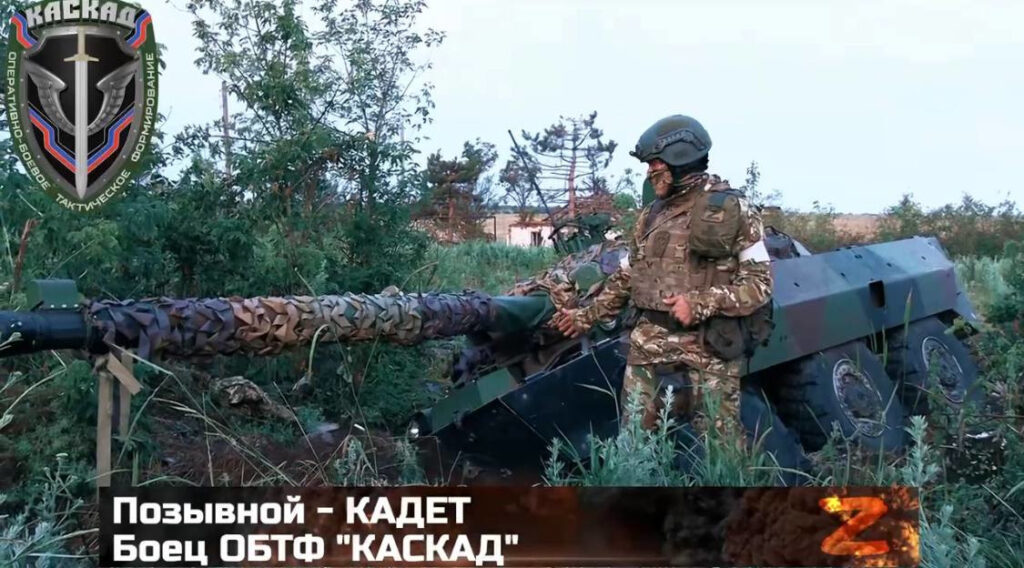
quitta l’armée en 2009, était dans le RICM (ancien régiment d’infanterie coloniale du Maroc, devenu régiment d’infanterie chars de marine), formation de blindés légers des troupes de marine, équipée des fameux AMX-10RC, que la France a livrés à l’Ukraine comme des chars à roue, mais que leurs nouveaux utilisateurs ont rapidement déclarés impropres à la bataille mécanisée
Le 2 juillet 2023, un combattant russe inspecte un AMX-10RC hors de combat
Le régiment est caserné à Poitiers, où Sébastien demeure aussi, père de famille. Lui même correspond au portrait qu’il tire des anciens militaires frustrés venus de pays dont les armées ne se sont pas battues depuis longtemps. Car je suis convaincu, sans pouvoir le prouver pour l’instant, qu’il est Stan, que L’Obs a interviewé dans un article publié le 12 janvier 2024.
Lors d’un premier séjour en 2022, Stan n’a pas obtenu l’affectation militaire qu’il espérait, peut être son âge. Revenu en 2023, Sébastien Bernard intégra en juin la 5e brigade d’assaut de l’armée régulière ukrainienne, au moment où aubaine, commençait la catastrophique contre-offensive atlantiste. Le 3 juillet, dans le secteur de Bakhmout, il participa à l’évacuation sanitaire de Maxime Leconte, qui tenait ses intestins dans un sac et demandait à être achevé. Stan a expliqué lors de son interview qu’il quitta définitivement l’Ukraine à cette époque là, quand la contre-offensive s’est révélée un échec sanglant. Excellent choix.
Dans une série d’articles, le premier plus général, la journaliste Cécile Deffontaines s’attaque à la douloureuse question des nazis parmi les combattants français dans les rangs atlantistes. Stan les a bien vus, n’est pas tendre avec eux, mais pour le contexte ukrainien, s’en tire par un double salto arrière sur l’orteil droit, qui devrait satisfaire le récit atlantiste de la presse française. Bel effort
Le problème des extrémistes est connu, il est lié à la propagande russe. Ces individus croient cette propagande, ils ne connaissent rien à l’Ukraine, mais estiment que c’est un paradis pour eux
Il m’a beaucoup fait rire, Stan est mignon. Les militants nazis internationaux ne connaissent pas la propagande russe, parce qu’ils ne la lisent pas. En revanche, ils s’abreuvent aux innombrables canaux de propagande nazie ukrainienne, où je recueille aussi des informations
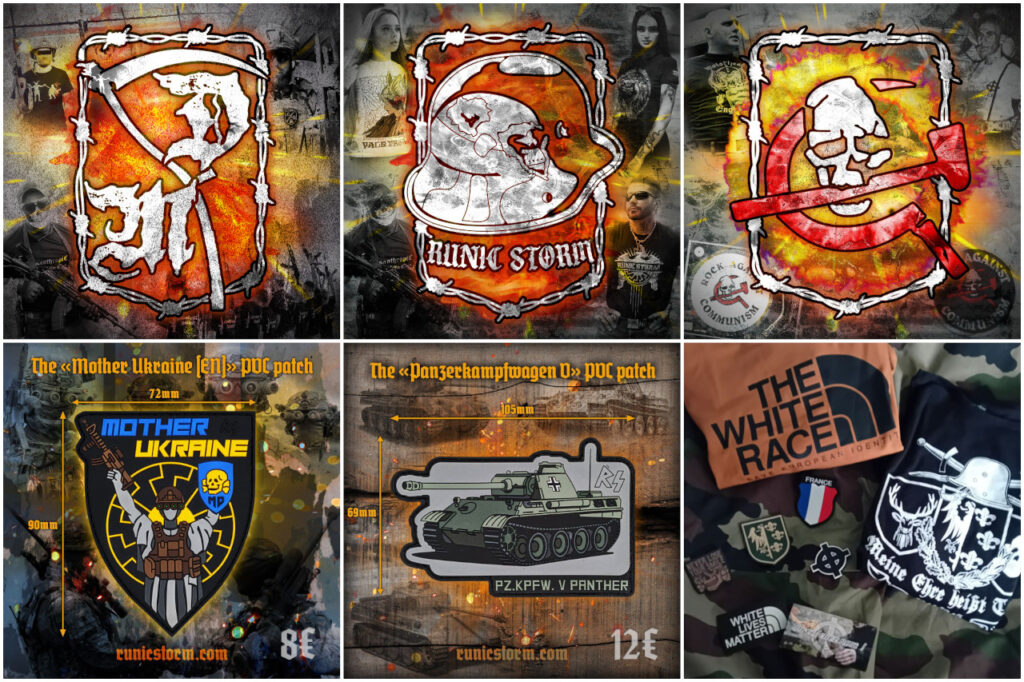
Pour commencer l’exploration des canaux de propagande nazie ukrainienne, nul ne saurait ignorer la Misanthropic Division (cf. Wilfried Blériot), organisation internationale fondée et basée en Ukraine depuis 2013. Le 1er mai 2024, elle renouvelle sur Telegram les images des trois chaînes majeures de son réseau, de gauche à droite, en haut, le compte principal, le département commercial et la chaîne culturelle. En dessous, des écussons, patches et tee-shirts sont vendus à travers le monde. Les clients sont surtout en Europe et aux États-unis. Le destinataire à droite est français, a notamment reçu l’écusson et le blason de la division SS Charlemagne. Nationalisme ukrainien, anticommunisme, racisme et références à l’Allemagne nazie sont les variables habituelles de l’équation
Si par héritage, ces canaux nazis ukrainiens se revendiquent de droite, l’échiquier politique contemporain les déroute. Ils déplorent le frein républicain au support militaire US à l’Ukraine et pour des raisons inverses, louent les Démocrates. Dans ce maelstrom, leur boussole est le plus radical et intolérant racisme envers les peuples non-européens, en particulier ceux du sud, qu’ils appellent bruns ou nègres (niggers, en Anglais). Les Russes restent pour eux des bolcheviques, des Asiatiques et les amis des nègres. La lettre Z était en 2022 la marque des véhicules ennemis et les Russes sont aussi désignés par le néologisme ziggers. Ils aiment alors rappeler qu’à l’époque de la guerre civile aux USA, le parti démocrate était celui des esclavagistes.
Le problème endémique ukrainien ne se limite pas aux combattants, jusque dans l’armée régulière, qui depuis 2014, arborent à titre personnel des emblèmes nazis. Azov, la brigade de la garde nationale, n’est pas la seule formation ukrainienne formellement nazie. La 3e brigade d’assaut est aussi l’émanation de l’organisation politique Azov dans l’armée régulière. Le parti nazi Pravyi sector (cf. David Piguet) est aussi la base politique de la 67e brigade mécanisée. Le parti nazi Svovoba aligne aussi le bataillon Sich. Enfin quoi, Stan, le bataillon nazi Aidar est pourtant bien attaché à la 5e brigade d’assaut, celle dans laquelle vous avez combattu
C’est avec fierté, parmi ses camarades et pour son public, que cet Ukrainien de l’armée régulière exhibe sur les réseaux sociaux, le 1er mai 2023, le Reichsadler [aigle impérial] nazi allemand, que portaient les militaires du III. Reich (1933-1945). Il est dans les rangs de la 79e brigade d’assaut aéroporté, habituellement en garnison à Nikolaïev, à l’ouest du Dniepr, alors déployée en République populaire de Donetsk (captures d’écran)
chronique alphabétique et nécrologique de l’engagement français dans les rangs atlantistes en Ukraine, ce que les journalistes serviles ne vous raconteront pas
Articles connexes
Pruvate à truvà me, canaglia di l’OTAN, pruvate solu
chronique en Anglais, its roots before WW2, its collaboration with Nazi Germany, its legacy in modern Ukraine, how NATO has continually supported Nazism in Ukraine
chronique en Anglais, censorship, fake news, whitewashing of the Ukrainian Nazism and war crimes, for the sake of the proxy war that NATO is conducting in Donbass and Ukraine, against Russia
une saga française, entre Ukraine et Lyon, où apparaissent aussi des morceaux de SS de la division Charlemagne et plus récemment, Alice Kerviel, dite Cordier. L’affaire Deranque révèle comme la France est infectée par le pétainisme, en particulier parmi les soutiens d’Israël ou de l’Ukraine, deux théâtres d’opérations où l’Occident tente de ralentir son déclin
En 2025, une nouvelle unité de Français combattant pour l’Ukraine s’est structurée autour d’un noyau de néonazis, ayant pour objectif d’attirer des recrues. Parmi ces volontaires, d’anciens militaires. StreetPress les a identifiés
En Ukraine, les volontaires français pro-ukrainiens et pro-russes se partagent l’imaginaire de la Seconde Guerre mondiale. Les premiers se revendiquent des collabos de l’Allemagne nazie, les seconds de l’escadrille mythique « Normandie – Niémen »
deux jours après le 10e anniversaire de la débâcle politique et sécuritaire du 13 novembre 2015, une messe célèbre à Verdun l’ancien dirigeant fasciste de l’État français
ce 11 novembre 2025 est l’occasion de souligner comme la façon dont l’Europe sacrifie les conscrits ukrainiens mobilisés de force rappelle le spectaculaire carnage de la 1ère guerre mondiale
c’est par l’agence cosaque de presse PIKA, depuis la République populaire de Lougansk, que le 2 avril 2024, l’ataman Nikolaï Diakonov lance un message à destination de la France
ce papier est le premier des grands médias français qui s’attaque à la question des militants nazis français dans les rangs atlantistes en Ukraine, le nouveau danger qu’ils présenteront à terme pour la sûreté intérieure
où nous apprenons que le nazi français Allan Duchézeau, camarade de César Aujard dans les rangs atlantistes en Ukraine, était surnommé Dox, quand il secondait à Paris le leader nazi Marc de Cacqueray Valménier
en Anglais, les indices de la présence d’opérateurs occidentaux, en particulier Français, pris au piège en mars 2022 à Marioupol, dont les forces russes achevèrent la libération en mai
Ukrainian hitlerites for ceasefire. Struggle between Zelenskyite opportunists and Azovite strategists. Poroshenko, Zaluzhny, Sodol. 100 million dollar bribes. The angry officers movement
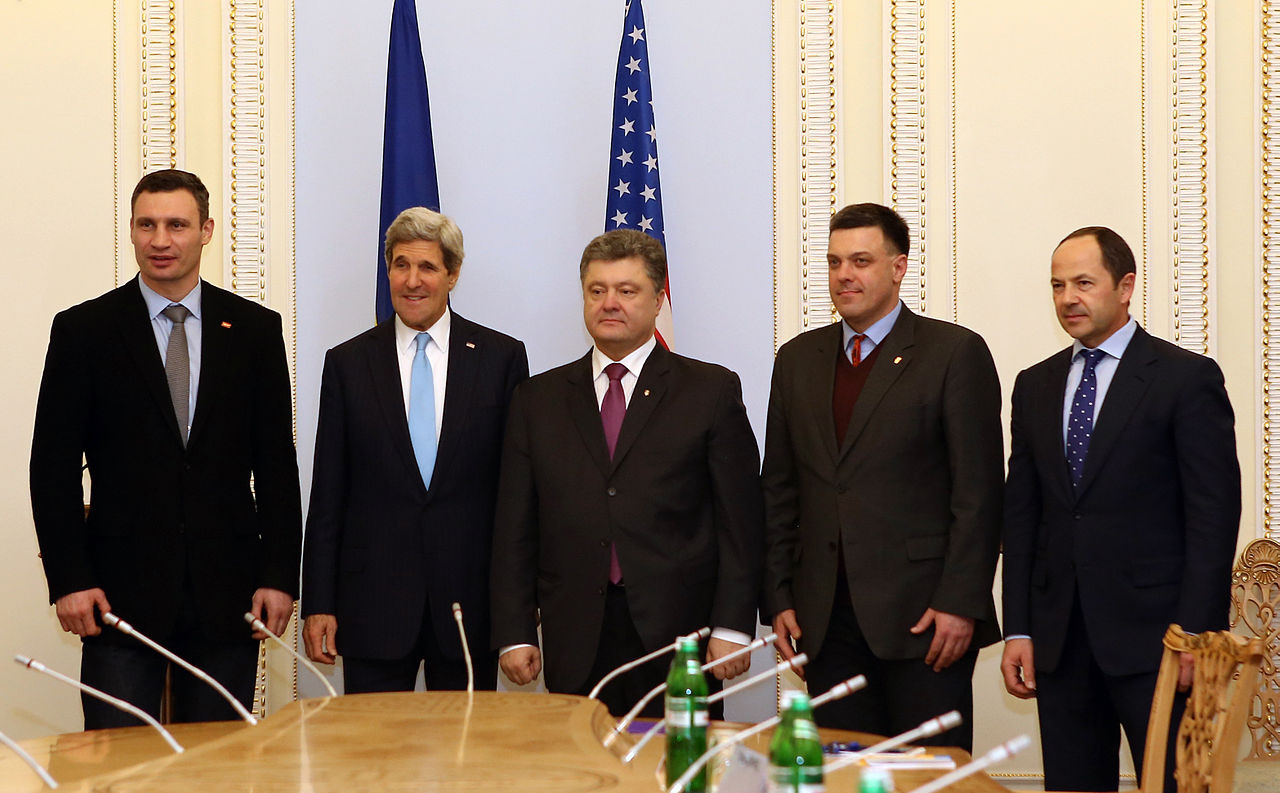
[my illustration: on March 4, 2014, after the West-backed right-wing coup in Kiev, US Secretary of State John Kerry meets representatives of the parliament. Leader of Nazi Svoboda party, Oleh Tyahnybok is second from right. Petro Poroshenko, center, will become in June the new president of Ukraine (US Department of State)]
When it comes to hitler-loving military nationalists, you’d think they’d be lean more towards peace than a former comedian Jewish president who came to government on a peace platform, right? The reality is much more interesting
Enter the fourth reich
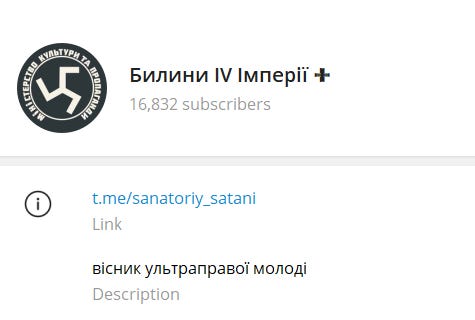
Tales of the IV Reich (now renamed Tales of the IV Empire), likely run by an Azov lieutenant, is characterized by more sobriety than other similar channels, which is why I love reading it
Most interestingly, his posts often seem to hint at a sentiment among certain ‘army men’, that the 1991-borders slogan is unrealistic and is leading to the destruction of Ukraine’s finest nationalists through politically-motivated meat storms. Not without the insinuation, of course, that Zelensky is quite happy to see these dangerous competitors die.
The fear of peace
One of the reasons that Tales is worried about endless war is the political pressure it puts on the broader population, which has always been frustratingly disloyal to the aims of radical nationalism.
Tales has always worried about popular demands for peace. Four days before February 24 2022, he was writing paranoid posts about how the west and Russia are trying to pressure Ukraine into implementing the Minsk peace agreements:
Among the participants in the combat actions, I know many disappointed and disoriented people. Some are tired, some have not seen clear changes, some have started families. Not everyone is ready to take up arms again now. Such tendencies are detrimental in the current situation
The implementation of the “Minsk” agreements into the Constitution of Ukraine is worse for us – the Ukrainian right-wing – than a full-scale war. We are accustomed to fighting the Russians – the thousand-year war of freedom-loving Eastern Europeans against the Tatar horde continues to this day. If the Ukrainian authorities are pressured by the Russians and [western – EIU] “partners”, we will get a “war zone” throughout the country. For us, the military veterans there will be no life in such a Ukraine. We will be under constant pressure from the system, with the possibility of being eliminated by amnestied separatist militants, and living in constant fear is not a life anyone wants
If we fiercely resist the Russian army and unite the nation in the fight against the enemy, we cannot lose. Those who are burnt out and stay at home, in case of our defeat, will rot in prison or be killed. Some Ukrainians already believed the Bolsheviks in the 1920s and laid down their arms – they all either died of hunger or lived out their last years in camps
To arms!
On July 13, Tales published a telegram post in response to the calls by popular Ukrainian bloggers for peace through negotiations and compromise in response to Russian rocket strikes on the capital (see my post on the matter). He was also responding to the parliamentarian Artem Dmytruk, who vigorously supported the bloggers.
Medvedchuk refers to the leader of Ukraine’s ‘Opposition Platform for Life’ party, whose main slogan was an end to the war through negotiations, until it was banned in 2022, along with the arrest and deportation of Medvedchuk.
Here’s the post:
If the war continues for another year, the population will bring the Dmytruks to power. So far, the Dmytruks are quite marginal. If it lasts two years, Medvedchuk will return here with the Russian flag. It’s simple
Being in the [frontline] Zaporizhzhia steppes or the command posts of the Donetsk region, you become quite detached from the population: you don’t hear what ordinary citizens of Lviv, Sumy, Zaporizhzhia, or Kyiv are talking about and dreaming of. The fact that a huge number of people supported the Instabloggers (and how many were too embarrassed to write words of support?) irritates those who advocate for the continuation of the war. Because real people with open profiles wrote there, not Moscow bots. There are many of these people, and this must be taken into account. According to my observations, this number is increasing exponentially despite the fabricated results of sociological surveys
The population sees corruption scandals. Constant loss of territories. Endless shelling. Inflation. Decline in the standard of living. Hundreds of new graves in cemeteries. Maimed veterans on the streets. Videos from the military registration and enlistment office. The West’s incomprehensible behavior. Now, there are also extremely uncomfortable conditions with power outages in +35°C heat and prospects of water supply cuts. This list can go on
I’m surprised that people with higher education and quite a high level of intelligence do not see the pattern
Hitlerite civil war
In another recent post, he was openly pessimistic about Ukraine’s military prospects and its western allies:
Once again, for a day, calls to “fight to victory” are spreading through social media following the terrorist attacks by Muscovites in Kyiv and Kryvyi Rih. Here are my thoughts in theses:
Mobilization and a massive influx to the military registration and enlistment offices will not produce modern fighters, missile systems, or the latest strike UAVs. It won’t even add Patriot SAM systems and missiles to them. Unfortunately, even the mobilization of 10 million Ukrainians will not stop the takeoff of strategic fighters in Russia, will not destroy existing nuclear weapons, and will not significantly reduce the population of Russia, its natural resources, etc
Strong entities respond to terrorist acts with double the force. Yesterday in Belgorod, in the evening, windows in residential buildings were shattered, one civilian died, two were slightly injured. Such a “response” personally shakes me with despair and hopelessness. I emphasize once again that our military capabilities can destroy everything living within a 100 km radius from the state border. Special thanks to the tactical level commanders who take responsibility for leveling the Shebekino and Rylsky districts of the Russian Federation. These are young officers up to the battalion commander level. In other words, this is the grassroots initiative of a conscious part of the army, there is no political will for such actions.
We will not be invited to the NATO summit to join the alliance. We are not as cool as Albania. The topic of “Ukraine in NATO” will be a bargaining chip for many years, it will be a reason for wars and political crises. Moreover, in the coming days, NATO will solidify its impotence with a series of resolutions that will exclude the actual unilateral power of the United States in the alliance. The Western establishment is afraid of Trump coming to power, fearing that the war will end.
NATO only needs to allocate 10% of its available weapons, which are gathering dust in warehouses since the alliance is not fighting anyone, and we would defeat the Muscovites. However, Western politicians are stretching this aid over the years, while hundreds of the best Ukrainians are dying and becoming disabled, and Ukrainian cities cease to exist because of the war. They have been juggling planes, high-precision MLRS, and missiles in front of the bloodied faces of Ukrainians for years
Note also his praise for ‘tactical level commanders’ who take initiative in hitting Russian civilian targets. See my recent post about the Sodol drama for more on this emerging caste of young nationalists, which positions itself against the so-called ‘old corrupt Soviet general caste’.
Anyway, given such sorry prospects for winning the war, Tales is clearly hinting that a ceasefire to regroup and strengthen defenses (as well as a good old-fashioned domestic purge) is a better idea than staying in the self-destructive meatgrinder.
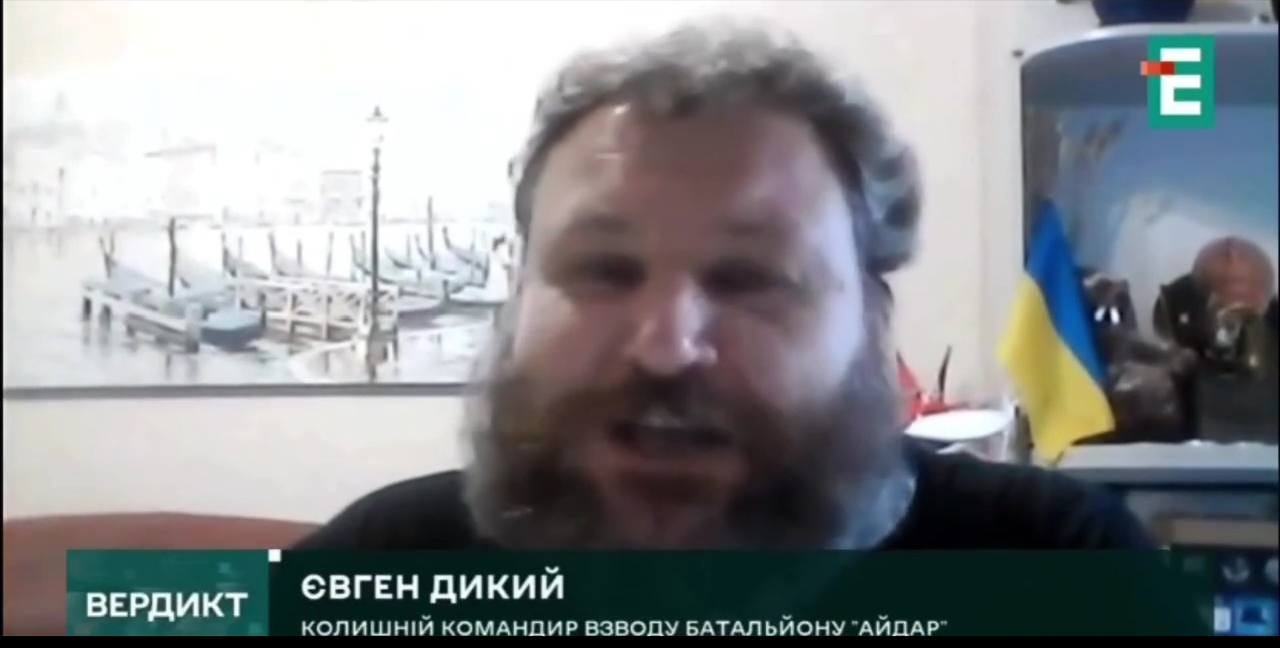
I’ve discussed on my substack Evgeny Dyky, the corpulent supposed ex-commander of the violent Aidar Batallion. Among his many achievements, he is also in charge of spending sizeable sums of money on Ukraine’s wartime antarctic research project (read about it here). Otherwise, he spends a great deal of time on the Ukrainian talk-show circuit, explaining viewers how Ukraine’s military industry is just getting started while that of Russia’s has already reached its final peak, and so on and on.
Well, Dyky’s effusive optimism really annoys IV Reich. Yesterday, he posted this:
⚡️ An F-16 that managed to reach Ukraine crashed into a high-rise building in Nizhny Tagil (RF). The pilot was identified as Yevhen Dykyi, a military expert and former platoon commander of the Aidar Battalion (in 2015). According to preliminary reports, the fighter jet could not withstand the pilot’s weight. Another version suggests that the pilot’s unkempt homeless-like beard got tangled in the control stick
Tales’ opinion on the 1991 borders slogan came out more clearly in March of this year. It all started in response to a hit-piece against a popular young commander by ‘the Centre for Countering of Disinformation’, a beautifully-named government-funded organ (my bolding). Here’s the hysterical hit-piece from the CCD:
The CCD logo
Recently, interviews with military personnel have gained immense popularity in the Ukrainian information space, where they talk about the problems they allegedly face at the front: lack of ammunition, incompetent command, mistakes of the country’s leadership, and so on
A striking example of this is a recent interview with the commander of the K2 battalion, Kyrylo Veres, in which he claims that we will not be able to win this war, and his personal victory is when his battalion’s soldiers stop dying. Thus, he is effectively hinting at negotiations and freezing the conflict. Such statements are absolutely unacceptable – they contradict the task set by the Leader of our country: to reach the borders of 1991 at any cost
Obviously, it is high time to move to healthy military censorship – military personnel should be prohibited from giving interviews. Endless whining about the lack of ammunition and “meat assaults” does not bring us any closer to victory but contributes to the spread of defeatist sentiments in society. Moreover, in reality, there are no “meat assaults” in the Armed Forces of Ukraine, and the military personnel are fully provided with everything necessary to accomplish the assigned tasks
We remind you that you can always get reliable information about what is happening at the front on the “Unified News” telethon
Commander Veres, the man being criticized. Looks a lot more trustworthy than the angry blue cube
Ah, how times have changed over the past few months. Now even the Great Leader of is indulging in absolutely unacceptable narratives hinting at negotiations and freezing the conflict! But back to the response from Tales:
I have personally known Kyrylo since 2017 to be a decent and dedicated officer, back when he was still a reconnaissance platoon commander in one of the mechanized brigade’s battalions. Over a few years, he rose to become the commander of one of the top battalions in the Armed Forces of Ukraine and received the “Hero’s Star.” We had many joint operations aimed at eliminating the Muscovites and their lackeys while the “defenders against disinformation” were siphoning grants in peaceful Kyiv
Idiots don’t like that the battalion commander wants his personnel to live to see peace in the country and return home alive. This is an absolutely healthy and adequate position for a Ukrainian officer
“What does victory mean to everyone? It’s when my people stop dying. If I said a year ago that victory is when the Russian Federation ends, then I was young and I did not command such a large number of people and did not give orders on who should go into battle and who should not”
The last part is quoting Veres, the lines that made the Center for Countering Disinformation so furious.
The heavyweights
I know some people who regret having voted for Zelensky, who think that previous war-hawk president Petro Poroshenko, with his greater experience dealing with Russia and as a statesman (however reprehensible), wouldn’t have allowed the war to happen in 2022
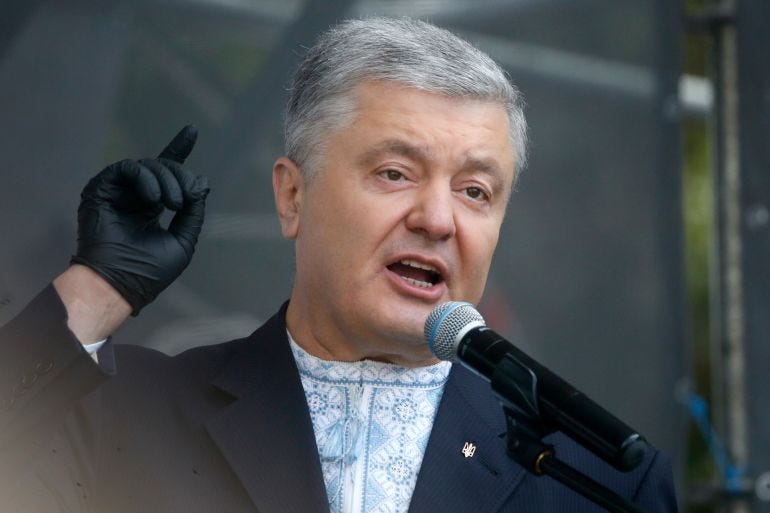
Poroshenko in his signature black gloves and expensive vyshyvanka (the folk costume no bourgeois nationalist can leave home without)
I think it’s possible that Zelensky’s curious talent for aggravating everyone imaginable played a special role. Recall Zelensky’s wise decision to start reminiscing about soviet Ukraine’s nuclear missile capacity on February 19 2022.
But perhaps more importantly, Poroshenko hasn’t gone away either. He and his party certainly constitution the most powerful remaining opposition force in wartime. Could they be getting ready to attack Zelensky for wasting the army in an unwinnable war instead of preserving its fighting core?
Until his early 2024 removal, Zaluzhny was juicing up head of the army Zaluzhny as an anti-Zelensky icebreaker. And Zaluzhny wrote a 2023 article he wrote in the Economist about how Ukraine has no real prospects of victory against Russia and finds itself in a stalemate position. Zelensky was enraged by this violation of his slogan ‘1991 borders or bust’, and it was this article, along with Zaluzhny’s excessive popularity, that led to his eventual replacement.
It was Poroshenko that signed the Minsk agreements back in 2014 and 2015 to avert Ukraine’s military collapse. Maybe he can do it again, with the help of the ‘Iron General’ Zaluzhny.
Kiev mayor Klitchko – a real heavyweight – also said in a recent western interview that Zelensky should conduct a referendum on peace and abandoning some territories. Klitchko is another open critic of Zelensky’s authoritarianism, and has allied with Poroshenko against Zelensky numerous times in the past. There are rumors he is coordinating actions with him at the moment as well.
The angry officers movement
Opposition heavyweights like Poroshenko, Zaluzhny and Klitchko (don’t laugh about the last one) also have an important base of supporters to draw on – young, confident nationalists in the army.
A crucial fault-line at the moment is that between younger brigade commanders and the generals. The combrigs accuse the generals of sending them on pointless suicide missions because of the political leadership’s ‘obsession with maps’, rather than real strategic objectives. This ‘maps over strategy’ metaphor is often used by Azov spokesmen like Kukharchuk or Krotevych in their interviews with liberal nationalist (anti-Zelensky) media like Ukrainska Pravda.
Indeed, Zelensky must be map-fixated. His key priority is opportunistic – stay in power, keep the aid flowing, desperately showcase small successes. To put off his many days of reckoning.
For instance. with the countless businessmen he has imprisoned, extorted and otherwise enraged. Like the still-jailed Kolomoisky. Or a business partner of Kolomoisky, Bogolyubov, who recently escaped the country and claimed the government tried to extort him of 100 million USD in exchange for legal protection. Or, obviously, the questions society will have towards him after a war that cost the lives of hundreds of thousands, and brought… what?
The young nationalists in the army launched the opening salvo in this increasingly public battle in late June, against General Sodol, who they accused of murderous graphomania. The battle has been rapidly developing in the past few weeks, a topic for a future post. But for now, I’d like to draw attention to Bohdan Krotevych, the Azovite who led the charge against General Sodol.
Krotevych said in a July 26 interview that he is ‘angry’ with Zelensky for apparently never having visited Azov’s headquarters at the frontline, while he does visit other military units. He said he considers this condescension. The interview, titled ‘I am very angry’, has already received a million views
Another major topic of discussion is how Lieutenant Colonel Prokopenko, Commander of the Azov Brigade, is a ‘genius’. This is in turn fairly obviously compared to the stupidity of the generals, who he castigates for wasting human resources in impossible goals, and never learning from their mistakes (unlike the Russians, he stresses). Among other things, Krotevych calls the 2023 counteroffensive ‘retarded’.
A peaceful yet stern reich
He also boasts about hanging out with his close friend Zaluzhny while in England recently. They and their wives met, and Krotevych gifted Zaluzhny an antique British army knife (knives are highly beloved among rightwing nationalists).
Best of all, he cryptically promises that people would be hearing much more from Zaluzhny in the future.
And Zaluzhny’s July 23 speech at the RUSI Land Warfare Conference in London on the topic of ‘Third World War’ made it clear that he’s hardly a democrat:
Society must agree to temporarily give up a number of freedoms for the sake of survival,…
Unfortunately, modern wars are total. They require the efforts not only of the army, but of the whole society. Politicians can and should mobilize society. To do so, they use military and other state resources in a comprehensive way. These resources include the economy, finance, the population, and allies. Such actions will, of course, influence the political processes in the country
Any ceasefire of the type that Zaluzhny, Tales, or Krotevych or the rest may want would be a brutal one. On July 30, Commander Romanov of the Azov brigade published a video stating he had given the order to shoot to kill any civilians attempting to destroy Ukrainian military equipment.
With less energy to spend on the foreign enemy, more to spend on purging the internal enemy. The bloggers won’t be bothering anyone else with their pacifist demands [end]
chronicle: its roots before WW2, its collaboration with Nazi Germany, its legacy in modern Ukraine, how NATO has continually supported Nazism in Ukraine
Abstract: This study analyses the nature and extent of involvement by neo-Nazi and other far-right Ukrainian organisations in the Donbas war (2014-2022) and the Odesa massacre (2014). This issue is highly politicised with contrasting narratives. The Russian and Donbas separatist governments, as well as their media, have contended that Ukraine has been a Nazi or neo-Nazi regime since a fascist coup took place in 2014, while Ukrainian and Western governments and media have maintained that such elements in the Ukrainian far-right were marginal, trivial, even non-existent. The article interrogates the historical record with primary sources in the three most relevant languages—Ukrainian, Russian, and English. The investigation reveals crucial far-right involvement in both the early stages of the war in Donbas and the Odesa massacre. Although the percentage of far-right supporters and fighters in Ukraine was relatively small, they exercised disproportionate influence in the country due to their greater reliance on violence and armed formations. The Russian government, however, exaggerated the role of the neo-Nazis in Ukraine to publicly justify the illegal invasion in February 2022.
Introduction
This study analyses the nature and extent of involvement by neo-Nazi and other far-right Ukrainian organisations during both the Donbas war from its start in April 2014 until the Russian invasion in February 2022 and the Odesa massacre on 2 May 2014. Other than the Maidan massacre in February 2014, these were the most significant and contested cases of political violence in Ukraine from its independence in 1991 to the commencement of the Russia-Ukraine war on 24 February 2022.1 The role of far-right Ukrainian groups during these major episodes of political violence is controversial because they are beset by duelling, self-serving narratives. Russian President Vladimir Putin has claimed that the principal goal of the invasion is to “denazify” Ukraine.2 But well before Russia’s invasion of Ukraine in 2022, there have been several overt and covert Russian military interventions here, including the annexation of the Crimean peninsula and direct support for pro-Russian insurgencies in the Donbas region, particularly in August 2014 and February 2015. Following the overthrow of the pro-Russian Ukrainian government in February 2014, the United States and other Western governments have consistently opposed Russia’s interventions and backed the current central government of Ukraine. In addition to political support, financial and military assistance has been provided, including training during the Obama presidency.3 To justify this support, the US and other Western governments disputed any real power or even the existence of neo-Nazi armed formations in Ukraine or claimed that they abandoned their far-right elements. Understanding the contested issue of far-right involvement in the Donbas war (2014-2022) and the Odesa massacre (2014) is valuable not only for elucidating intrinsically important historical episodes of political violence but also due to the contemporary relevance given the ongoing Russia-Ukraine war.
This article proceeds in five sections. The first section highlights the contribution of our study by describing the weakness of the extant academic literature and our methodological approach to filling in important lacunae in the research landscape. The second section details the duelling of contemporary narratives over the political violence by the far-right in the war in Donbas and in the Odesa massacre. The third and fourth sections develop qualitative case studies with process tracing to illuminate the role of the far-right in the Donbas war and the Odesa massacre. The fifth section presents the conclusion.
Developing the Extant Literature
Research on the far-right in Ukraine since the Euromaidan has been spotty. Studies on neo-Nazi and other far-right organisations in Ukraine following the Euromaidan have been limited in quantity, quality, and scope. Most studies have been produced by researchers outside academe in partisan think tanks or non-government organisations, as well as by journalists who did not subject their work to peer review.4 Such assessments are more likely to be politically driven and less likely to exhibit methodological rigour, even professionalism. For example, Anton Shekhovtsov, the former leader of the Crimean branch of the pro-Russian far-right Eurasian Youth Union, likened the Trade Union building arson attack during the Odesa massacre on 2 May 2014, to his killing of Colorado potato beetles by collecting them in a box and burning them alive. He directly inferred that this was a massacre with far-right involvement but omitted this in his publications.5 Other works have relied on narrow metrics such as the vote-share of far-right parties in Ukraine, without assessing the violence itself in terms of the perpetrators and effects.6 Some researchers have claimed that the presence of Russian speakers in the Azov regiment and other neo-Nazi-led armed formations is evidence of their relative tolerance and asserted that the Azov regiment had moderated by abandoning its far-right roots.7 Such analyses have tended to uncritically rely on Ukrainian and Western government narratives, accepting their claims at face value.
By contrast, other studies suggest a greater degree of far-right involvement in Ukrainian political violence. One quantitative study found that far-right groups in Ukraine, such as Svoboda and Right Sector, fielded the most violent perpetrators and committed the lion’s share of attacks.8 That study is restricted temporally, however, to the 2014 Maidan protests, which led to the violent overthrow of the relatively pro-Russian government and ultimately spiralled into the civil war in Donbas, the Russian annexation of Crimea, and Russian military interventions in these regions of Ukraine.9 Similarly, qualitative studies have presented evidence in the form of videos, eyewitness testimonies, confessions, and forensic examinations of Svoboda and Right Sector involvement in the Maidan massacre.10 Some other studies have focused on specific aspects of the far-right paramilitary and other armed formations during the war in Donbas.11 One academic publication is specifically devoted to the Odesa massacre, which is called “The Odesa Tragedy,” though it concentrates on the public perceptions rather than the perpetrators and their consequences.12 This list of prior works is intended to be illustrative rather than exhaustive. The research landscape around these issues is growing, but uneven in scope and reliability; a lacuna remains in the literature in terms of evaluating rigorously, comprehensively, and dispassionately the nature and extent of far-right involvement in the Donbas war and Odesa massacre, which matters in terms of our understanding of the Russia-Ukraine conflict and political violence more generally.
To elucidate this understudied topic of the far-right in Ukraine, this study makes substantial use of primary source materials in Ukrainian and Russian—the main languages in Ukraine—as well as in English. This linguistic capability is conducive to a more nuanced, accurate assessment. Methodologically, the two case studies employ qualitative process tracing with the benefit of fluency in all three languages.13 The substantive focus and period of analysis are both tightly bounded; the role of the far-right on the Russian side and in the Russia-Ukraine war since February 2022, as well as during the Euromaidan, are weighty topics explored in our other works but fall outside the scope of this study.
The term “far-right” denotes ultranationalists and both racial and ethnic supremacists in accordance with prior scholarship.14 The term “neo-Nazi” refers to far-right organisations that revamp elements of Nazi ideology, particularly its racial and ethnic supremacism, and use symbols associated with Nazi Germany or their stylised versions. As with Nazis, neo-Nazi organisations represent a form of fascism. Major neo-Nazi organisations in Ukraine during the time period covered by this study include the Social-National Assembly, its paramilitary wing Patriot of Ukraine, the National Corps, the White Hammer, and C14. Also included in the analysis are paramilitary and other armed formations organised and led formally or informally by these neo-Nazi organisations, such as the Azov battalion and regiment. Admittedly, militant groups are known to exhibit ideological heterogeneity.15 Within the political violence literature, a burgeoning area of research emphasises that members of the rank-and-file may be motivated by a variety of factors that diverge from the leadership, leading to a principal-agent problem.16 In this study, we classify organisations as neo-Nazi, or at least neo-Nazi-led, when commanders are neo-Nazi, even if not all members can be presumed to share this exact ideology.
A prominent example is Andriy Biletsky, the leader of Patriot of Ukraine and the Social-National Assembly (SNA), both of which were transformed along with the Azov battalion and regiment veterans into the National Corps Party in 2016. He called the ideology of Patriot of Ukraine and SNA “Social Nationalism.” In a collection of his articles published in 2013, he described that social nationalism, as the name suggests, combines elements of ultranationalism of the Organisation of Ukrainian Nationalists with elements of national socialism and called both radical nationalism and national socialism “great ideas.” He wrote that social nationalism is based on “Sociality, Racism, and Great Power.”17 Specifically, it is based on the ideas that the “white race” is “superior” to other races and is the foundation of the Aryan Ukrainian nation; the Ukrainian nation is a “blood-racial community”; and that “the historical mission of our Nation (…) is to head and lead the White Peoples of the world in the last crusade for their existence, a march against the Semitic-led subhumans.”18 Biletsky openly made antisemitic and racist statements, such as his claim that the Jew is “an economic and political parasite.” He saw “a serious clash of native European peoples with foreign colonisers, mainly of African and Muslim origin” and believed that “an ethnic civil war can be won by the native Europeans only under the banner of the New Right National Revolutions.”19
Biletsky was called the “White Leader” and his writings were published by both SNA and Patriot of Ukraine. He was the first commander of the Azov battalion, which was organised and led by Patriot of Ukraine and SNA in May 2014. Patriot of Ukraine, SNA, and the Azov battalion all used a symbol resembling a stylised swastika and Wolfsangel. Azov commanders and their historian, who himself serves in Azov, called the symbol the “Idea of the Nation” and claimed that it is an ancient Ukrainian symbol, even though it was created in 1992 for the Social National Party of Ukraine (SNPU). The creator of this symbol acknowledged that it was called “Idea of the Nation” to represent the radical nationalist ideas of the Organisation of Ukrainian Nationalists (OUN). He also admitted that SNPU deliberately chose this symbol with the Latin letter N, instead of the equivalent Ukrainian Cyrillic letter, fully aware of its resemblance to Nazi symbols and association with the swastika for many Ukrainians, in particular in Lviv. As with other extremist groups that rebrand out of political expedience, the Social National Party of Ukraine changed its name to Svoboda in 2014, because the Nazi association was politically inconvenient.20 However, this symbol was retained by the SNA and by Patriot of Ukraine, whose Kharkiv branch split from SNPU because of these changes.21 The Azov battalion and its propaganda magazine, which was named Black Sun, also used the Black Sun symbol, an ideological symbol used by Nazis and various neo-Nazi organisations. In addition, groups and individuals—including Patriot of Ukraine, SNA, National Corps, and Azov battalion and regiment leaders, commanders, and members—have displayed on their uniforms various neo-Nazi and Nazi symbols, such as the swastika, the SS sign, and 88 (Heil Hitler code). These, along with Hitler images, Nazi flags, and Totenkopf have also been seen in the form of patches, photographs, flags, and tattoos.
Although the term far-right incorporates both ultranationalist and neo-Nazi organisations, they are not ideologically identical despite their frequent overlap. This study empirically investigates the role of Ukrainian ultra-nationalist organisations such as Svoboda, the Right Sector, the Ukrainian National Assembly–Ukrainian People’s Self-Defence (UNA-UNSO), and Bratstvo; neo-Nazi organisations such as the Social-National Assembly, Patriot of Ukraine, the White Hammer, and C14; and various other paramilitary formations, special police forces, and National Guard units organised and controlled to various extents by them. These armed units include the Azov battalion and regiment, Dnipro, Donbas, Aidar, Sich, Carpathian Sich, OUN, and St. Mary’s battalions, and the Ukrainian Volunteer Corps. To assess these actors, this study analysed thousands of Russian and Ukrainian primary sources: online recordings of live broadcasts, videos of the armed conflict in Donbas and Odesa, and information posted on websites and social media by far-right organisations, their armed units, and activists. It also analysed media reports in Ukrainian, Russian, and English from diverse outlets such as Ukrainska pravda, Strana, BBC, The Guardian, The Washington Post, The New York Times, YouTube, Telegram, V Kontakte, Facebook, and Twitter. To mitigate bias, the authors analysed the primary source materials rather than relying on secondary interpretations.
The Conflicting Narratives
Assessments of the far-right in Ukraine have been wracked by self-serving and thus unreliable perspectives. Russian and separatist leaders, as well as the media, have described the post-Maidan violence in Ukraine, especially in Donbas and Odesa, as perpetrated by “fascists” and “Nazis” akin to genocidal massacres against Jews, Belarusians, Russians, and Ukrainians during the Holocaust and World War Two.22 They often called the Odesa massacre the “Odesa Khatyn,” a reference to the large-scale massacre of Belarusian villagers in 1943 by the Nazis and an auxiliary police battalion, which was based on a paramilitary formation of the Melnyk faction of the Organisation of Ukrainian Nationalists. Based on this narrative, President Putin and his allies have claimed that invading Ukraine is not only justified, but “inevitable” to counter the “Nazi” or “Neo-Nazi regime” in Kyiv.23 Putin and his government thus declared the “de-Nazification” of Ukraine as a key goal of “the special military operation” launched in February 2022.24 This perspective—in its entirety—is widely assailed in the West.25
By contrast, the Ukrainian and Western governments and the media tend to claim that the far-right—including neo-Nazis—is marginal, even non-existent in Ukraine.26 They argue that since Euromaidan, Ukrainian fighters have almost entirely—if not entirely—shed their far-right elements, particularly neo-Nazi. To this end, it is a common point that the Azov Battalion ceased to be led by the neo-Nazi Patriot of Ukraine, a paramilitary wing of the SNA, since integrating into the National Guard as one of its regiments. Kyiv has stressed that the integration of Azov in November 2014 is proof of its transition to moderation and the absence of extremist fighters post-Maidan.27 Ukrainian President Volodymyr Zelensky awarded “Hero of Ukraine” titles in 2022 to prominent Azov leaders such as regiment commander Denys Prokopenko, deputy commander Sviatoslav Palamar, and senior officer Oleh Khomenko.28 After the commencement of the Russia-Ukraine war in February 2022, many Western media outlets, politicians, government officials, and academics adopted this stance that Azov and other controversial Ukrainian fighters on the far-right had not only abandoned extremist elements, but were heroes against Russia’s illegal invasion.29
The Indexing Theory of political communications emphasises that Western media follow narratives of its governments in covering foreign conflicts, including in post-communist countries.30 In some cases, Western media may have taken their cues directly from the Ukrainian government. After the Odesa massacre on 2 May 2014, the Foreign Ministry of Ukraine blamed the arson attack on provocateurs that were “paid generously by the Russian special services”, and the New York Times immediately adopted the same line that pro-Russia groups may have been responsible for torching the building.31 The Western narrative of the far-right in Ukraine since the Euromaidan is not without controversy. Volodymyr Ishchenko, a Ukrainian sociologist who specialises in the far-right in Ukraine, concludes: “The dominant narrative since Maidan in Ukrainian and much of the Western public spheres has been systematically downplaying the problem” by arguing that “the Ukrainian far-right” is “small and marginal.” He stated that “often, the far-right is just ignored.”32
Notably, Western concerns over far-right fighters in Ukraine were more prevalent before the February 2022 invasion. For example, The Nation described Azov in 2018 as “pro-Nazi, as evidenced by its regalia, slogans, and programmatic statements.”33 In 2019, Radio Free Europe called Azov “far-right.”34 In 2020, The Guardian referred to Azov as a “neo-Nazi extremist movement.”35 Consistent with Indexing Theory, such coverage of the neo-Nazis in Ukraine before the February 2022 Russian invasion overlapped with similar expressions by Western governments. In its 2018 Human Rights report, the US State Department called the political wing of the Azov Regiment “a hate group.”36 In 2019, ambassadors from G7 countries warned against “extreme political movements in Ukraine, whose violent actions are worrying in themselves.” The warnings referred specifically to the Azov movement and its violence during the 2019 presidential elections.37 The US Congress has displayed longstanding ambivalence over its designation of Azov. In 2018, forty Congress members signed a letter to the State Department with the request to designate Azov as a terrorist organisation because of its links to terrorist attacks in multiple countries and its recruitment of neo-Nazis in its ranks.38 A defence appropriations bill amendment was adopted by the entire US Congress in 2018, which banned US government funding and training of the Azov regiment due to concerns over its neo-Nazi views and members. Such concerns had been expressed by American officials for several years after the Euromaidan. The amendment was first unanimously adopted by the US House of Representatives in 2015. Congressman John Conyers put it bluntly, “I am grateful that the House of Representatives unanimously passed my amendments last night to ensure that our military does not train members of the repulsive neo-Nazi Azov Battalion.”39 Under pressure from the Pentagon, however, Congress subsequently removed this first amendment. A similar amendment, proposing a ban on US military assistance to radical nationalist and neo-Nazi organisations, voluntary police, and paramilitary formations under their command, was blocked in Congress in 2014.40
In general, however, American and European governments have been careful not to issue public statements against the far-right in Ukraine or to call attention to it. This hesitancy began after the Euromaidan and became starker following the February 2022 Russian invasion. Indeed, Western governments and media increasingly whitewashed the empirical record to present the Ukrainian far-right formations as categorically moderate in order to boost international support. In June 2024, the US State Department stated that the Azov brigade was eligible to receive US weapons under the “Leahy Law” because it was cleared of human rights violations. It made this determination after claiming that the Azov brigade is a new unit that is not subject to the previous Congressional ban, even though in reality this brigade was created on the basis of the Azov regiment, celebrated the 10th anniversary of the Azov battalion creation as its own anniversary, and is led by original Azov battalion commanders.41 However, a subsequent amendment, which was included in the US defence bill which was passed by the US House of Representatives, specifically stated that “none of the funds appropriated or otherwise made available by this Act may be used to provide arms, training, intelligence, or other assistance to the Azov Battalion, the Third Separate Assault Brigade, or any successor organisation.”42
Such instrumental portrayals of allies are not limited to this conflict. Other recent cases of political violence have also featured public relations campaigns by governments and media to present allies as arguably more moderate than their history and contemporary ideology indicate. For example, in the Syrian war, anti-Assad jihadist organisations allied with the West were euphemistically referred to as “rebels,” sometimes “moderate” ones, even when they fought under the direction of a Foreign Terrorist Organisation, as designated by the US State Department.43 A large body of literature within terrorism studies has found that the labelling of violent perpetrators by governments and media is not value-neutral, but expedient to serve political agendas.44 Particularly in these controversial cases of political violence, academe can play an important role in interrogating the empirical record to adjudicate the truth.45
The Far-Right in the Donbas War
Research within the field of terrorism studies has repeatedly noted the difficulty of determining the ideological beliefs of participants in political violence.46 However, fine-grained knowledge of the organisations can substantially increase confidence. Svoboda and the main organisations that remained within the Right Sector after the Euromaidan were widely understood as far-right for maintaining ultra-nationalist and ethnically supremacist views. They openly described themselves as the natural successors of the Organisation of Ukrainian Nationalists (OUN) and the Ukrainian Insurgent Army (UPA), inspired by the notorious OUN leader and Nazi collaborator, Stepan Bandera.47 Along with the UNA-UNSO, these organisations used the “Glory to Ukraine! Glory to the Heroes!” slogan, the official greeting of the Bandera faction of the OUN (OUN-B). This greeting, along with a fascist-style hand salute, was modelled on greetings and salutes of other well-known fascist parties in European history, from the Nazi party in Germany to the Ustashe party in Croatia.48 The Right Sector also adopted its red and black flag from the OUN-B and the UPA, which symbolized Ukrainian blood and soil, which were also pervasive in Nazi ideology and flags.49 But the existence of these symbols alone offers weak evidence of far-right influence in the Donbas war without understanding the cultural and historical context.
The violent overthrow of the Viktor Yanukovych government by means of the Maidan massacre triggered the resurgence of separatism in Donbas.50 After his overthrow in February 2014, far-right parties and organisations in Ukraine expanded and organised their armed formations. Along with Ihor Kolomoisky, an oligarch who became the head of the Dnipropetrovsk regional administration, the Right Sector was instrumental in the formation of the Dnipro battalion in the spring of 2014.51 The Azov battalion, notorious for its use of neo-Nazi symbols in its official insignia, was also organised in the spring of 2014 and led by the SNA and the Patriot of Ukraine with the involvement of the Radical Party. As mentioned, “White Leader” Andrii Biletsky was the first commander of Azov.52 Based in Mariupol, the St. Mary’s battalion was formed in the fall of 2014 and led by the far-right Bratstvo party, which is described by its leader (Dmytro Korchynsky) as the “Christian Taliban.”53 Around this time, the Aidar battalion, nominally subordinated to the Ministry of Defence of Ukraine, was formed by the Maidan Self-Defence. One of its platoons was led by the White Hammer, a neo-Nazi organisation belonging to the Right Sector during the Euromaidan. Ilia Kiva, a Right Sector member, was the commander of another volunteer police battalion. A previously convicted criminal with a swastika tattoo became the commander of the Tornado Company, a special police unit. He and seven other members of his company were arrested and convicted for various crimes in the warzone, such as torturing detainees. A Nazi-style flag with a swastika was found in their prison cell.54 These units were all under the formal jurisdiction of the Ministry of Internal Affairs, the National Guard, or the Ministry of Defence. From the start of their formation, they remained under de facto command of radical nationalist or neo-Nazi organisations. These armed formations sprouted up in the early stages of the conflict in Donbas and were stationed there in an attempt to suppress pro-Russian separatism in the region by force. The Right Sector and the Organisation of Ukrainian Nationalists actively organised various militia and paramilitary units that were not subordinate to the central government of Ukraine. The Volunteer Ukrainian Corps, the largest paramilitary formation, was formed and led by the Right Sector specifically for the war in Donbas, though it also included battalions in Western Ukraine.55
The paramilitary formations, special police, and National Guard units, organised and led by far-right organisations such as the Right Sector, the Social National Assembly, Patriot of Ukraine, Svoboda, C14, and Bratstvo, constituted a small minority of Ukrainian fighters in the Donbas. Based on reports, we estimate the number of members of radical nationalist and neo-Nazi organisations who served in various far right-led, regular, and other armed formations in the Donbas, at around five thousand. This estimate is conservative and represents just one percent of approximately 400,000 people who participated in this war on the side of the central government.56 Additional metrics of influence, however, are also important to consider.
Despite their relatively small numbers, far-right fighters exercised disproportionate influence in the Donbas civil war, particularly in the early stages before the first direct Russian military intervention in August 2014. Far-right Ukrainian groups proliferated after the Euromaidan because they were eager to fight and were responsible for a disproportionate level of violence, especially against civilians and prisoners of war in Mariupol and Krasnoarmiisk. Far-right organisations and far-right-linked battalions thus played a crucial role in escalating the armed conflict in the Donbas. Svoboda and C14, an avowedly neo-Nazi group affiliated with Svoboda until the summer of 2014, organised and led the Sich battalion from June 2014 onwards.57 Meanwhile, the Right Sector carried out a deadly attack on a separatist checkpoint in Sloviansk on 20 April 2014. While Ukrainian and Western media denied far-right involvement in these events, the evidence to the contrary includes business cards linked to far-right members found after the attack. As well, Ukrainian court proceedings revealed that the weapons used by the Right Sector checkpoint attackers were the same as the snipers from this group who killed and wounded police during the Maidan.58 And two years after the attack on the separatist checkpoint, Dmytro Yarosh—the leader of the Right Sector—admitted his personal involvement in thisattack.59 Oleksandr Turchynov, then acting president of Ukraine, and Kolomoisky’s deputy in the Dnipropetrovsk regional administration, reportedly orchestrated this Right Sector operation, aimed to seize and destroy a television transmitter near Sloviansk, several days after this area was seized by the Strelkov-led armed group of Russian nationalists and Ukrainian separatists.60 This attack by the Right Sector constituted a major escalation of the conflict in Donbas because it broke both the Geneva Agreement signed on 17 April 2014 by Ukraine, Russia, the EU, and the US for a peaceful resolution of the conflict, as well as the Orthodox Easter truce between the Ukrainian government and separatists in Donbas.
Far right-led armed formations were also behind many other violent attacks in the Donbas, further escalating the conflict into a civil war. Videos, media reports, and admissions from commanders and other members of the Azov and Dnipro battalions indicate that they participated in the storming of the district police headquarters in Mariupol on 9 May 2014. Approximately ten people, including at least one protester, were killed.61 Analysis of online video streams, media reports, and Ukrainian government documents, also make clear that Azov played a major role in taking back the city of Mariupol from the control of separatists in June 2014.62 The Dnipro battalion, along with other units, seized civilians in the Donetsk Region to prevent the separatist referendum on 11 May 2014. Videos show them shooting unarmed pro-separatist protesters with Kalashnikovs, killing two locals. The Ukrainian government denied the presence of the Dnipro battalion, but it was confirmed by other credible sources, including admissions by battalion members in videos, like Volodymyr Parasiuk’s statement on social media, who became the People’s Deputy of Ukraine.63
The far-right-led armed formations perpetrated a disproportionate amount of violence in the first few months of the Donbas conflict and thus played a major role in escalating it into a larger civil war because the radical nationalist and neo-Nazi-led groups were far more willing to use force at that time. The Ukrainian armed forces, the security service, police and National Guard units were more reluctant to use force against the separatists in Donbas because their commanders and members were publicly blamed by the new government for attempting to forcefully suppress the Maidan protests—and in particular, for the Maidan massacre. Because the new Maidan government came to power through violence, which included the killing of police and protesters, it lacked legitimacy among many military, police, and SBU members in the Donbas region during this initial period of the conflict. Further, compared to the newly ascendant far-right groups in the aftermath of Euromaidan, the regular Ukrainian armed forces, the security service, the police and National Guard units were known for lower morale and higher desertions. Examples of this included the Donetsk SBU Alfa commander and Luhansk Berkut members, who joined the separatists.64
The relative role of the far-right in the political violence was not constant; it began to decline in the Donbas when newly elected president Petro Poroshenko ordered the Ukrainian military, SBU, police, and National Guard to wield lethal force against the separatists and launch the offensive in June 2014.65 The war was most intense and violent in 2014 and 2015, but the fighting declined significantly following the Minsk Agreements in 2015. However, ultra-nationalist and neo-Nazi fighters continued to exert a non-trivial role, even after the Ukrainian military intensified its operations in Donbas and purported to moderate the far-right fighters. After its formal incorporation into the National Guard of Ukraine, the Azov regiment and its commanders maintained a close organisational and ideological relationship with the neo-Nazi National Corps party. This party was formed by the Azov battalion founder and the first commander on the basis of neo-Nazi SNA and Patriot of Ukraine, and it included many Azov battalion and regiment veterans. The Azov regiment functioned as a military wing of the National Corps, which, in essence, represented overlapping elements of the same Azov movement.66 Indeed, Azov regiment commanders shared a neo-Nazi background and had served in the neo-Nazi-led Azov battalion.67 In other words, the rebranding from “battalion” to “regiment” did not alter the key personnel.68 For example, Azov regiment commander Denys Prokopenko was a member of the neo-Nazi White Boys Club, which was formed by the ultras of the Dynamo Kyiv football club. This group of ultras displayed various Nazi symbols and the Nazi salute on their social media and during football games. His Azov battalion platoon had used the Totenkopf insignia of the Nazi SS.69 Andriy Biletsky became the commander of the Third Assault Brigade, which was created by veterans of the Azov battalion and regiment and activists of his neo-Nazi group, the National Corps.70 In 2023, he stated in an interview with Ukrainian media that the united Azov movement included this Azov brigade under his command along with the Azov regiment and the Kraken unit.71 Such admissions in Ukrainian media highlighting enduring far-right allegiances seldom make their way into the Western press.
Importantly, Azov commanders never publicly renounced their neo-Nazi views, symbols, and organisations. In fact, Azov leaders routinely denied in media interviews that they, their units, and organisations, were neo-Nazi, claiming that the well-documented Nazi symbols were fakes or Russian propaganda. Our research of Ukrainian social media as well as other researchers of the far-right in Ukraine, such as Lev Golinkin and Moss Robeson, have identified over one hundred cases of Nazi and neo-Nazi displays by at least several hundred Azov commanders and other members from 2014 to 2022. This number includes displays on uniforms, patches, photographs, flags, and tattoos of neo-Nazi and Nazi symbols, such as the swastika, SS sign, 88 (Heil Hitler code), Hitler images, Nazi flags, and Totenkopf, and a fascist hand salute.72 The continued relevance of far-right extremism in Azov was evident at the very top. Arsen Avakov, the Minister of Internal Affairs, was personally involved in the Azov battalion formation and its later expansion to a regiment.73 President Petro Poroshenko circulated photographs awarding Ukrainian national medals and commendations to some of the most well-known neo-Nazis in Azov.74 The Nazi connection to Azov was clearly not due to a loss of agency control.
Amnesty International and Human Rights Watch reported that Azov was involved in many cases of torture, illegal detention, and disappearances during the war in Donbas.75 The impact of these far-right organisations cannot be measured strictly in terms of the direct physical effects, as terrorism researchers have emphasised in many other contexts.76 Ultra-nationalist and neo-Nazi organisations were instrumental in blocking or “spoiling” a peaceful resolution of the armed conflict in Donbas, another well-established source of leverage for extremists.77 Far-right groups such as the Right Sector, Svoboda, and the Radical Party opposed the adoption by the parliament of Constitutional amendments based on provisions from the Minsk Agreements.78 To this end, Svoboda activists launched a grenade attack on 31 August 2015 in front of the Ukrainian parliament, killing four and wounding dozens of policemen and National Guard troops, which helped to block these amendments, undercutting the logic of implementation.79
Far-right groups also challenged the implementation of President Volodymyr Zelensky’s electoral promise to peacefully resolve the Donbas war.80 In October 2019, Zelensky travelled to a front-line position in Donbas to personally convince the Azov fighters to stop blocking the implementation of the Minsk agreements by withdrawing along with separatist troops from the frontline, as he agreed during the summit with Putin and German and French leaders in Paris. But video of the encounter shows that Zelensky was taunted by activists of this neo-Nazi organisation who flouted his appeal.81 According to the Associated Press, thousands of far-right and nationalist activists shouting the far-right OUN and UPA slogan “Glory to Ukraine. Glory to the Heroes” marched through Kyiv protesting against a peace plan for eastern Ukraine.82
The radical flank threatened Zelensky for implementing Minsk on other occasions as well. In May 2019, Dmytro Yarosh, the former Right Sector leader, publicly threatened to hang the new Ukrainian president on a tree if he fulfilled his election promise of a peaceful resolution of the conflict in Donbas.83 In 2021, Yarosh, the commander of the Ukrainian Volunteer Army organised by the Right Sector, was appointed Adviser to the Commander-in-Chief of the Armed Forces of Ukraine, Valerii Zaluzhnyi.84 In the same year, videos, photos, and Ukrainian media reports show police standing down while neo-Nazi and other far-right protesters attacked the Office of the President of Ukraine and painted swastikas on its walls.85 The Russia scholar Stephen F. Cohen concluded that Zelensky “can’t go forward with peace negotiations” because “crazy fascist movements” in Ukraine “literally threatened his life.”86 Although far-right peace rejectionists posed political problems for Zelensky, they were also known to work closely with him. An activist of the neo-Nazi Patriot of Ukraine and former deputy commander of the Azov regiment was appointed the acting head of the National Police of Ukraine during the Poroshenko presidency and then became a deputy minister of Internal Affairs during the Zelensky presidency.87 Prime Minister Oleksii Honcharuk spoke at a “veterans party” organised by a front organisation for the neo-Nazi C14 with a stylised swastika of a neo-Nazi rock band behind him.88 The advisory council of the Ministry of Veteran Affairs under Zelensky retained activists of this neo-Nazi group, including those charged with assassinating the prominent opposition journalist, Oles Buzyna, in 2015.89
In sum, ultra-nationalist and neo-Nazi militant organisations were deeply involved on the side of the central government throughout the Donbas conflict. Although representing a small fraction of Ukrainian forces throughout the conflict, they committed a disproportionate amount of violence, particularly before President Poroshenko ordered the Ukrainian military to increase its use of force against the separatists in the summer of 2014. The much-touted absorption of Azov and other extreme right-wing militia under the official Ukrainian National Guard, police, and military command did not change either their command or their ideological displays. Many of the fighters worked closely with the Kyiv political leadership across administrations, when not using de facto veto power to block peaceful resolution of the conflict in this region.
This interpretation departs from others that rely strictly on vote-share as the proxy for far-right influence. The influence of the far-right in Ukraine after the Maidan far exceeded its electoral support and membership. Svoboda and Right Sector leaders each won only one percent of the votes in the snap presidential elections in May 2014. In the parliamentary elections of October 2014, Svoboda narrowly failed to clear the five percent threshold, receiving 4.7 percent. The Right Sector fared even worse, receiving only two percent of the votes. Ruslan Koshulynsky, one of Svoboda leaders, who was backed by the Right Sector, OUN, and C14, received only 1.7 percent of the votes in the 2019 presidential elections, while Svoboda won 2.2 percent of the votes in the 2019 parliamentary elections. These weak electoral results indicate the limited national support of the far-right in Ukraine, but not its outsized role in the Donbas conflict.
The Far-Right in the Odesa Massacre
Other than the Donbas war, the Odesa massacre was the most significant and deadly instance of political violence after the Maidan massacre in Ukraine since its independence in 1991 until the Russia-Ukraine war in February 2022. The violence took place on 2 May 2014, between a “United Ukraine” rally and pro-Russian separatists, carried out with petrol bombs, gunfire, and rock-throwing, which ended up killing 48 people, primarily separatist protesters.90 The vast majority of the fatalities took place in the Trade Unions House, where 42 separatist activists and employees (forty men, seven women, and one boy) were killed when the building was set ablaze.91
This massacre contributed to the escalation of the separatist conflict in Donbas into the civil war. As noted, the massacre was presented by separatist and Russian leaders and the media as akin to the Nazi massacre of Khatyn in Belarus, and many Odesa separatists joined the separatist forces in Donbas. Despite the importance of this massacre, the International Advisory Panel of the Council of Europe, among other international authorities, has noted that the Ukrainian government failed to properly investigate and prosecute those responsible.92 To ascertain the role of far-right groups in the Odesa massacre, a broad range of key information resources can be analysed, including videos and recordings of live broadcasts of the political violence (and the lead-up to it); published reports; primary source media in Ukrainian, Russian, and English; statements of responsibility; interviews; and testimonies from participants and eyewitnesses on both sides, as well as police commanders.
On 1 May 2014, the day before the mass violence, separatists protested in Odesa to demand a referendum on the newly installed government in Kyiv, which they blamed on far-right activists and Western interference.93 Based on testimonies from a special parliamentary commission report in the immediate aftermath of the May 2014 massacre, Ukrainian and regional government officials planned to use far-right activists and the Maidan Self-Defence to suppress the separatists in the Odesa region and disperse those who were encamped near the Trade Union building.94 Extensive evidence indicates that the police and firefighters were ordered by their superiors to stand by and not interfere during attacks. For instance, a special plan to deal with mass disturbances launched by the Odesa regional police was not authorised, reportedly because of decisions at the Ministry of Internal Affairs’ top level.95 Similarly, top regional officials of the police and other law enforcement agencies were ordered to attend a meeting with their national counterparts before and during the start of the clashes.96 The presence of Andriy Parubiy and five hundred Maidan Self-Defence members, who deployed from Kyiv to Odesa on the eve of the massacre, further suggests that the violent dispersal of the separatist camp by far-right activists was orchestrated by top government leaders.97 Parubiy was a founder and leader of the neo-Nazi Patriot of Ukraine, a paramilitary wing of the Social National Party of Ukraine in the 1990s. He was the head of the Maidan Self-Defence during the Euromaidan and headed the National Security and Defence Council at the time of the Odesa massacre. The State Bureau of Investigations of Ukraine launched a criminal investigation into Parubiy for the Odesa massacre soon after he was replaced as the ex-head of the Ukrainian parliament following the early parliamentary elections in 2019.98 One of the participants acknowledged in an Israeli documentary that he engaged in “provocations” in the Odesa massacre under the command of Parubiy, who had issued orders to attack the separatists and “burn everything.” We assess this acknowledgement as credible because he was filmed along with Maidan activists in the left wing of the Trade Union building in Odesa when the deadly fire began to burn the central entrance.99 He and five other Georgian ex-military members also stated in American, Italian, and Israeli TV documentaries, Russian media interviews, on Macedonian TV, in depositions to Berkut lawyers for the Maidan massacre trial, and in testimonies to the Prosecutor General Office of Belarus for the Prosecutor General Office of Ukraine investigation that their groups of Georgian, Baltic, and far-right-linked Ukrainian snipers received weapons, payments, and orders from specific Maidan and Georgian politicians, including Parubiy, to engage in a mass killing of police and protesters.100 The Maidan massacre trial subsequently confirmed their identities.101
A march led by the Right Sector and football ultras on 2 May 2014 was used as cover to implement this plan to destroy and burn the separatist tent camp.102 The SBU in the Odesa Region received advanced information about planned “provocations” and violent clashes between football ultras and pro-Russian separatists on game day between the Odesa and Kharkiv teams on 2 May. A special train transported hundreds of football ultras from Kharkiv to Odesa.103 Football ultras in Ukraine were notorious for displaying neo-Nazi symbols and expressing neo-Nazi slogans during games and have historically linked up with the Right Sector and other far-right organisations, as during the Maidan protests.104 Both the Right Sector and football ultras in Odesa and Kharkiv were dominated by the neo-Nazi Social National Assembly/Patriot of Ukraine, which organised the Azov battalion right after the Odesa massacre.
Odeska Druzhyna, a small separatist organisation in Odesa, was present among other separatist activists based on evidence from internet streams, videos, testimonies of participants and eyewitnesses, and special parliamentary commission reports.105 Odeska Druzhyna used identifiable red tape labels, and were not Right Sector agent provocateurs, as the Russian media and separatists claimed. However, the Ukrainian government and media also mischaracterised the involvement of Odeska Druzhyna by overstating its coordination with other separatist activists.106 The balance of forces was asymmetric; the groups of numerically superior activists of the Right Sector from Odesa and Kharkiv led by the neo-Nazi Social National Assembly/Patriot of Ukraine, far-right football ultras, and Maidan Self-Defence units from Odesa and other regions attacked the separatists. Numerically disadvantaged, the latter took cover behind a police cordon.107
An Odeska Druzhyna activist was filmed shooting in the direction of the far-right protesters with an AK-74-type assault rifle.108 The official investigation and the May 2 Group maintained that a Right Sector activist was killed by this separatist group member with a 5.45mm calibre bullet.109 However, leaked forensic medical expert reports describe a 5.65mm calibre bullet extracted from his body.110 This bullet reportedly disappeared and reappeared during the investigation. The fact that it did not match bullet samples of any legally registered firearms, the weak sound of the gunshots, as well as the lack of a recoil observed in the videos of the shooting, also suggest that the far-right protester may not have been killed by this separatist, who maintained that the weapon seen in the video was a movie studio prop.111 The killing of the Right Sector activist was not visible in that video nor in any videos of clashes. The investigation and various videos at the scene did not reveal the exact time or location of his killing, or the direction of the gunshot. An Odesa deputy police chief, who was filmed around the time of this killing before he himself was wounded, stated that he saw snipers in camouflage shooting from the second floor of a hotel there. He relayed that they killed this Right Sector activist and the second protester in order to blame the separatists for their killing and provoke a violent response against the separatists.112 Videos filmed before and after his shooting suggest that the second pro-Maidan activist was killed around the same time in the same area during the violent clashes with separatists and shooting from a Kalashnikov-type weapon by one of the separatists.113 However, the government forensic examination determined that he was killed by a bullet from a pneumatic sport-type weapon. Nobody was charged with his killing, and the moment and other circumstances of his killing remain not publicly known.114
In the clashes that followed the killings of these two pro-government protesters, four separatist protesters were killed and many other separatist protesters, policemen and at least one local journalist were wounded. The forensic examination determined that three separatists were killed with hunting ammunition.115 A pro-government activist was filmed shooting with a hunting rifle in the direction of these separatists.116 This pro-government activist was later identified by the Minister of Internal Affairs as a Right Sector member.117 The government investigation charged him with killing at least one of the separatists. However, he was released from arrest and his trial was suspended indefinitely because of threats by the Right Sector and other far-right activists against judges during his trial.118 Evidence—including a recorded phone call—revealed that the events on May 2nd were coordinated by the Odesa regional administration official in charge of law enforcement agencies, and involved the participation of the Maidan Self-Defence commander, Right Sector activists, football ultras, and Maidan Self-Defence units.119 They attacked and burned the tent camp of various separatist organisations, whose activists and supporters then escaped to the nearby Trade Union building and tried to barricade the main entrance doors. Videos, internet streams, and testimonies of eyewitnesses show that attackers threw Molotov cocktails and burning tyres at the main entrance, set the entrance doors on fire, and blocked other exits. Videos, recorded calls to firefighters, and eyewitness reports reveal that the fire and thick smoke started from those burning tyres and Molotov cocktails thrown at the main entrance.120 The evidence does not support claims that the separatist protesters killed in this incident were Russian citizens, that they burned themselves by throwing Molotov cocktails from the roof of the Trade Union building or inside of the building, or that there was no far-right involvement in their killing.
After initial denials, the May 2 Group admitted that the deadly fire started at the main entrance. The May 2 Group was a nominally independent association of mainly journalists, formed after the massacre supposedly to investigate it. It was created with the involvement of the Governor of the Odesa region who was appointed by Ukrainian President Petro Poroshenko within a week of the massacre.121 This governor represented not only the central government, but also the Kolomoisky’s oligarchic network, which financed the Right Sector volunteers from the Volyn Region in the Azov battalion and the Right Sector-led Dnipro battalion.122 The Azov battalion was organised by the neo-Nazi SNA and its paramilitary wing, Patriot of Ukraine, which dominated the Right Sector in Odesa and Kharkiv, a few days after the Odesa massacre. But the May 2 Group still claimed that it was impossible to determine who started the fire because both sides were throwing Molotov cocktails. However, there is no public evidence of Molotov cocktails being thrown by separatists at the main entrance; on the contrary, numerous videos feature the far-right protesters throwing Molotov cocktails and burning tyres into the Trade Union building at that time.123
Within Ukraine, far-right activists—particularly from the Right Sector and the SNA— were notorious for using tyres and Molotov cocktails to burn public buildings. Forensic examinations in the government investigation, recordings of radiocommunications by SBU Alfa group, an unpublished admission by a far-right activist to a French journalist, and an academic study determined that the Trade Union headquarters in Kyiv were burned by Maidan activists, including far-right ones, in order to stop its takeover by the Security Service of Ukraine Alfa unit.124 Far-right protesters also started fires by burning tyres in the Inter TV channel building and threatened to burn down the parliament of Ukraine, the Lutsk City Council, the Sviatoshyn District Court that heard the Maidan massacre case, the Constitutional Court, and Inter and 112 Ukraina TV channels buildings by placing tyres next to their entrances.125 Prior usage of the same tactics by the far-right increases the likelihood of their direct involvement.
Analysis of online video streams, government investigation findings, May 2 Group reports, forensic medical examinations, eyewitness testimonies, and other evidence strongly indicate that 42 people perished as a result of the fire, smoke, and from trying to jump from the upper floors of the Trade Union building with far-right activists beating them on the ground and blocking the exits.. The victims were unarmed and included mainly separatists, their supporters, and several employees, in particular women, who were in the building at the time.126 Some of the strongest evidence of far-right involvement in the arson attack comes from the far-right itself, in the form of credit claiming. A growing body of research within terrorism studies focuses on credit claiming. An important finding is that perpetrators are far more likely to deny responsibility for their attacks than to take credit for ones that they did not perpetrate.127 This is particularly true when the targets are civilians. Nonetheless, many extremist groups do claim credit for civilian attacks.128 Statements posted by the Right Sector, the SNA, and the neo-Nazi Misanthropic Division on their websites and social media sites admitted the involvement of their organisations in the massacre. The Right Sector celebrated on its website the massacre by describing it as “another bright page in our fatherland’s history.” Claiming responsibility for the slaughter, it wrote: “In the first minutes of the battle, the ‘Right Sector’ activist was seriously wounded in the stomach. Several more PS [Right Sector] activists received injuries of varying degrees of severity. However, this did not prevent the rest of the PS fighters, together with football fans, from repelling the attack of pro-Russian provocateurs, and as a result, they successfully countered attempts to seize buildings in Odesa. Standing shoulder to shoulder, Odesa activists, football fans and ‘Right Sector’ fighters defeated the forces of pro-Russian mercenaries. Order has been restored in Odesa.”129 The Right Sector—which was dominated in Odesa and Kharkiv by the Social National Assembly and its paramilitary wing, Patriot of Ukraine—and the neo-Nazi Misanthropic Division (which joined the Azov battalion after the massacre) admitted on the social media platform V Kontakte and in other public statements that the fire was set deliberately.130
The official investigation of the Odesa massacre was a farce. Nobody was found guilty of perpetrating this mass killing. As noted, the Right Sector shooter was initially arrested but then released. Only separatists were among those arrested and tried for the Odesa massacre. The Odesa massacre trial of separatists resulted in their acquittal by a local court. The Ukrainian court based its decision on the lack of evidence in support of prosecution charges. Even the verdict acknowledged both the weakness of the investigation into the perpetrators and the role of Parubiy and other government officials.131 The Council of Europe and the UN Special Commission reports also noted the destruction of evidence.132 A report by the special commission of the Council of Europe found that the Ukrainian government’s investigation of the Odesa Massacre was inadequate, politically selective, and featured the falsification of evidence, despite the existence of video footage showing who threw the Molotov cocktails at the building.133
The Ukrainian media cited SBU sources that a far-right activist, who headed the Right Sector in Odesa during the Odesa Massacre, was a secret agent of the Security Service of Ukraine (SBU) and that he and far-right associates were paid by SBU to attack opposition politicians, threaten judges, and conduct other illegal actions.134 This would be consistent with the fact that the Right Sector was not investigated for the Odesa massacre even though the Right Sector publicly admitted involvement. His secret collaboration with SBU would also be consistent with the fact that SBU and the Prosecutor General Office refused to charge him for killing another person in Odesa in 2018. Moreover, in 2020, the SBU gave this far-right activist the status of a victim in this case, even though he streamed this killing on his social media account and the police investigation determined that he was the killer.135 In this sense, the Odesa massacre was not entirely anomalous; it featured post-Maidan far-right involvement with apparent support from high-level political leaders in a corrupt country where investigations and media have inconsistently followed the evidence.
Conclusion
This study assesses the role of the far-right in post-Maidan Ukraine, specifically, in the Donbas war and the Odesa massacre. These were two of the biggest episodes of political violence in the country leading up to the February 2022 Russian invasion. This area of research is worth close investigation because it represents intrinsically important episodes of political violence that have not attracted objective analysis based on available primary sources in Ukrainian, Russian, and English. Investigating the role of the far-right is also timely because the far-right in Ukraine is riven by duelling, self-serving contemporary narratives.
The predominant narratives propagated by governments and the mainstream media in Ukraine, the West, Russia, and separatist-controlled Donbas, concerning the role of the far-right in the war in Donbas and the Odesa massacre, have evidently been partisan. Contrary to the Russian government, separatists, and associated media, the Ukrainian government and military are not Nazi or even neo-Nazi. There were no neo-Nazis among the upper echelon of the Ukrainian government. President Zelensky is certainly not a Jewish neo-Nazi. He tried to placate and mainstream the far-right for political reasons, but has no observable personal affinity to that extreme ideology.
Neo-Nazis constituted only about one percent of the Ukrainian forces before the Russian invasion in 2022, and there is weak electoral support for neo-Nazi parties throughout the country. Similarly, the policy of glorification of the OUN-UPA, their leaders, such as Stepan Bandera, and the adoption and use of their “Glory to Ukraine! Glory to the Heroes!” greeting by the state and the military, including Zelensky, do not make Ukraine a Nazi state. While the OUN and the UPA were far-right terrorist organisations, which collaborated with Nazi Germany and perpetrated the mass murders of Jews, Poles, and Ukrainians, they were not Nazis. Ukrainians could not join the Nazi party because Hitler and other Nazi leaders regarded Ukrainians as racially inferior and opposed independence of Ukraine while also dismissing the attempt to create even a puppet state by the Bandera faction of the OUN in Lviv shortly after the Nazi invasion of the Soviet Union. Thus, Putin cannot credibly justify the illegal invasion in February 2022 as a war to “de-Nazify” the “Nazi regime.”136 The power of the far-right and the glorification of the OUN and the UPA in Ukraine under Poroshenko and Zelensky were exaggerated and exploited by the Russian leaders to justify the invasion.
But the West’s efforts to whitewash the far-right in Ukraine also rests on empirically shaky grounds. Despite their relatively small numbers militarily and politically, the far-right in Ukraine exercised outsized power. The far-right organisations, volunteer battalions, and paramilitary units organised and led by them played, along with separatists and Russian nationalists, a significant role in starting and escalating the incipient civil war in the Donbas and then impeding its peaceful resolution. Even after technically integrated into the official Ukrainian forces, Azov and other far-right groups continued to harbour extremist views. Often brandishing the same extremist symbols, the core leaders and members remained and even ascended within the police, military, and security services during the Donbas war. Western media accounts have drawn heavily from biased Ukrainian sources, including “official” investigations and the May 2 Group. Across numerous primary sources in Ukrainian, Russian, and English, we find evidence that the Right Sector, Social-National Assembly, its paramilitary wing Patriot of Ukraine, and groups of far-right football ultras from Odesa and Kharkiv played a critical role in the Odesa massacre against separatist protesters on 2 May 2014. Neo-Nazi SNA/Patriot of Ukraine, which dominated the Right Sector in Odesa and Kharkiv, organised the Azov battalion right after this massacre.
Despite the lack of international consensus over the definition of terrorism, a common interpretation is the use of violence by non-state actors aimed at creating fear for political ends, particularly when the targets are civilians.137 Depending on one’s definition, some attacks within the episodes of political violence covered in this study, such as the Odesa massacre, could, therefore, arguably be classified as terrorism. What is clear is that neither of the duelling narratives accurately captures the role of the far-right. This study has helped to fill that research lacuna by making use of substantial primary source materials in Ukrainian, Russian, and English. Besides the Maidan massacre, the Donbas war and the Odesa massacre are the two most substantial episodes of political violence from the independence of Ukraine in 1991 to the February 2022 illegal Russian invasion [end]
Ivan Katchanovski is a Ukrainian and Canadian political scientist. He teaches at the School of Political Studies and the Conflict Studies and Human Rights Program at the University of Ottawa in Canada. He specialises primarily in politics, conflicts, political violence, and the far right in Ukraine. His academic publications include five books, 21 articles in peer-reviewed journals, and twelve book chapters.
Max Abrahms is a professor of public policy and political science at Northeastern University, where he specialises in international security. Abrahms has published extensively in leading academic and popular outlets such as International Organization, International Security, International Studies Quarterly, Security Studies, Comparative Political Studies, Harvard Business Review, Foreign Affairs, Foreign Policy, New York Times, Washington Post, USA Today, Newsweek, The Atlantic, and Los Angeles Times.
I disagree with the authors on two points
Stepan Bandera & friends were Nazis. How can the authors identify some neo-Nazis in modern Ukraine, while not regarding their historical mentors as Nazis ? Before WW2, they were praising either Adolf Hitler or Benito Mussolini. Their political project was authoritarian, racist and criminal. They were dreaming of ethnic cleansing. De facto during WW2, they committed mass killing of Jews and Poles.
Terrorism is not restricted to non-state actors. Terrorism is violent action to terror civilians, in order to achieve a common political goal. This is not even a value judgement, but Hiroshima bombing was terrorism. The Israeli targeting and mass killing of civilians, in the prospect of ethnic cleansing in Gaza, is terrorism.
chronicle of censorship, fake news, whitewashing of the Ukrainian Nazism and war crimes, for the sake of the proxy war that NATO is conducting in Donbass and Ukraine, against Russia
Endnotes
Arel, Dominique and Jesse Driscoll. 2023. Ukraine’s Unnamed War. Before the Russian Invasion of 2022. Cambridge: Cambridge University Press; Black, J.L. and Michael Johns (Eds.). 2016. The Return of the Cold War: Ukraine, the West and Russia. Abingdon: Routledge; Hahn, Gordon M. 2018. Ukraine Over the Edge: Russia, the West and the “New Cold War.” Jefferson, NC: McFarland Books; Katchanovski, Ivan. 2016a. “The Separatist War in Donbas: A Violent Break-up of Ukraine?” European Politics and Society, 17 (4), 473-489; Kudelia, Serhiy. 2016. “The Donbas Rift.” Russian Politics & Law, 54 (1), 5-27; Pikulicka-Wilczewska, Agnieszka and Richard Sakwa (Eds.). 2015. Ukraine and Russia: People, Politics, Propaganda and Perspectives. Bristol: E-International Relations; Sakwa, Richard. 2015. Frontline Ukraine: Crisis in the Borderlands. London: I.B.Tauris. ↩︎
Danciu, Gabriela-Cătălina. 2023. “A Perspective on Justifying the Ukraine–Russia War. Elements Of Propaganda.” International Journal of Social and Educational Innovation, 10 (19), 224-239; “Address by the President of the Russian Federation” (2022, February 24) http://en.kremlin.ru/events/president/news/67843. ↩︎
Black, J.L. and Michael Johns (Eds.). 2016. The Return of the Cold War: Ukraine, the West and Russia. Abingdon: Routledge; Katchanovski, Ivan. 2023a. “The Maidan Massacre Trial and Investigation Revelations and Their Implications for the Ukraine-Russia War and Relations.” Russian Politics, 8 (2),181-205. ↩︎
See, for example, Colborne, Michael. 2022. From the Fires of War: Ukraine’s Azov Movement and the Global Far Right, Stuttgart: Ibidem; Davidzon, Vladislav. 2023. “The Search for Neo-Nazis Under the Bedsheets Reflects American Progressive Hysteria, Not Ukrainian Reality.” Tablet Magazine, July. ↩︎
Umland, Andreas. 2019. “Irregular Militias and Radical Nationalism in PostEuromaydan Ukraine: The Prehistory and Emergence of the “Azov” Battalion in 2014.” Terrorism and Political Violence, 31 (1), 105- 131. ↩︎
Umland, Andreas. 2020. ‘The Far Right in Pre- and Post-Euromaidan Ukraine: From Ultra-Nationalist Party Politics to Ethno-Centric Uncivil Society.’ Demokratizatsiya, 28 (2), 247-268. ↩︎
Ishchenko, Volodymyr. 2016. “Far right participation in the Ukrainian Maidan protests: an attempt of systematic estimation.” European Politics and Society, 17 (4), 453-472. ↩︎
Hahn, Gordon M. 2018. Ukraine Over the Edge: Russia, the West and the “New Cold War.” Jefferson, NC: McFarland Books; Katchanovski, Ivan. 2016b. “The Maidan Massacre in Ukraine: A Summary of Analysis, Evidence, and Findings.” In The Return of the Cold War: Ukraine, the West and Russia, eds. J.L. Black and Michael Johns. Abingdon: Routledge, pp. 220-224; Katchanovski, Ivan. 2020. “The far right, the Euromaidan, and the Maidan massacre in Ukraine.” Journal of Labor and Society, 23 (1), 5-29; Katchanovski, 2023a; Katchanovski, Ivan. 2023b. “The “Snipers’ Massacre” on the Maidan in Ukraine.” Cogent Social Sciences, 9 (2); Katchanovski, Ivan. 2024. The Maidan Massacre in Ukraine. London: Palgrave Macmillan. ↩︎
Khalil Mutallimzada and Kristian Steiner, (2022), Fighters’ motivations for joining extremist groups: Investigating the attractiveness of the Right Sector’s Volunteer Ukrainian Corps. European Journal of International Security, 1–23. Ilmari Käihkö, (2018), A nation-in-the-making, in arms: control of force, strategy and the Ukrainian Volunteer Battalions. Defence Studies 18:2, 147–166; Tetyana Malyarenko and David J. Galbreath, (2016), Paramilitary motivation in Ukraine: beyond integration and abolition, Southeast European and Black Sea Studies 16:1, 113–138. ↩︎
Hale, Henry E., Oxana Shevel and Olga Onuch. 2018. “Believing Facts in the Fog of War: Identity, Media and Hot Cognition in Ukraine’s 2014 Odesa Tragedy.” Geopolitics, 23 (4), 851-881. A poll commissioned for that study found that 44% of Ukrainians believed that this mass killing was committed by provocateurs from Russia, while 11% blamed pro-Russian residents of Odesa. Ten percent of the respondents said that the Odesa massacre was perpetrated by “Ukrainian nationalists from Odesa” and 3% by “pro-Ukrainian” residents of Odesa. ↩︎
Van Evera, Stephen. 1997. Guide to Methods for Students of Political Science. Ithaca: Cornell University Press. ↩︎
Griffin, Roger with Matthew Feldman (Eds.). 2003. Fascism: Critical Concepts in Political Science. London: Routledge. ↩︎
Brahimi, Alia. “Ideology and terrorism.” The Oxford handbook of terrorism (2019): 298. ↩︎
See, for example, Jadoon, Amira, Andrew Mines, and Daniel Milton. “Targeting quality or quantity? The divergent effects of targeting upper verses lower tier leaders of militant organizations.” Journal of Conflict Resolution 67, no. 5 (2023): 1007-1031; Schram, Peter. “Self-managing terror: Resolving agency problems with diverse teams.” Games and Economic Behavior 130 (2021): 240-257; Abrahms, Max, and Philip BK Potter. “Explaining terrorism: Leadership deficits and militant group tactics.” International Organization 69, no. 2 (2015): 311-342; Popovic, Milos. “The perils of weak organization: Explaining loyalty and defection of militant organizations toward Pakistan.” Studies in Conflict & Terrorism 38, no. 11 (2015): 919-937. ↩︎
Biletsky 2013; Biletsky, Andriy. “Nedochytanyi Franko.” Patriot Ukrainy, (2008). https://web.archive.org/web/20101120085407/http://patriotukr.org.ua/index.php?rub=stat&id=409. Also, please note that the ADL has adopted the spelling of “antisemitism” instead of “anti-Semitism.” After reviewing the history and consulting with other leading experts, they determined that this is the best way to refer to hatred toward Jews, so we have adopted the same spelling convention here. ↩︎
Clarke, Colin P. “The Terrorist Diaspora.” Testimony, House Homeland Security Committee Task Force on Denying Terrorists Entry into the United States (2017). ↩︎
Boyd-Barrett, Oliver. 2016. Western Mainstream Media and the Ukraine Crisis: A Study in Conflict Propaganda. New York: Routledge. ↩︎
Some researchers and Zelensky have cited the presence of Russian-speakers in the Azov regiment and other neo-Nazi-led armed formations as evidence of their relative tolerance and moderation and argued that the Azov regiment distanced itself from its far-right roots. (See Umland 2019; “Zelensky refutes Russian propaganda claim that Azov Regiment is ‘neo-Nazi.’” The New Voice of Ukraine (2022, May 2), https://news.yahoo.com/zelensky-refutes-russian-propaganda-claim-131100438.html. However, these formations were organized and led by neo-Nazi organizations, which had a racist ideology and cast themselves as defenders of the White race. For this reason, they included not only large numbers of Russian speakers from Ukraine but also neo-Nazis from Russia, Belarus, and the Western countries, such as Australia, Sweden, and the US. ↩︎
“Ukraine war: Ros Atkins on… Putin’s false ‘Nazi’ claims.” BBC, (2022, March 26) https://www.bbc.com/news/av/world-europe-60853404; Five Azovstal defenders were awarded the title of Heroes of Ukraine. Svidomi, (2022, October 3). https://svidomi.in.ua/en/page/five-azovstal-defenders-were-awarded-the-title-of-heroes-of-ukraine. Loyd, Anthony. “‘Nonsense’: Heroes of Mariupol Denied US Weapons Over neo-Nazi Past.” Times, (2024 May 2). https://www.thetimes.com/world/russia-ukraine-war/article/nonsense-heroes-of-mariupol-denied-us-weapons-over-neo-nazi-past-kwnr0r0pw; “Boris Johnson Praises Nazi Azov Battalion,” YouTube. (2024, May 23). https://www.youtube.com/watch?v=_6g7i-4wswk. There was similar systematic and politically motivated whitewashing of the far-right in Ukraine in Wikipedia, especially, after the Russian invasion. A small number of Wikipedia editors systematically whitewashed neo-Nazi and other far-right parties, organizations, and their leaders, such as Azov regiment, Patriot of Ukraine, Svoboda, National Corps, the OUN, the UPA, Stepan Bandera, Roman Shukhevych, etc. They removed or deliberately excluded scholarly studies and other evidence of the extremist ideology and involvement in mass murder of the far-right, such as the Maidan and Odesa massacres, the Holocaust, and the Lviv pogrom in Ukraine and smeared in biographical entries scholars and other experts whose studies show such ideology and political violence by the far-right in Ukraine. (See, for example, Azov Brigade, https://en.wikipedia.org/wiki/Azov_Brigade; Patriot of Ukraine, https://en.wikipedia.org/wiki/Patriot_of_Ukraine; 2014 Odesa clashes, https://en.wikipedia.org/wiki/2014_Odesa_clashes; Far-right politics in Ukraine, https://en.wikipedia.org/wiki/Far-right_politics_in_Ukraine. They included editors who misrepresented the Holocaust in Poland using similar tactics in Wikipedia, which is unreliable but widely accessed source, compared to academic studies (Grabowski, Jan, and Shira Klein. 2023. “Wikipedia’s Intentional Distortion of the History of the Holocaust.” Journal of Holocaust Research 37 (2): 133–90). ↩︎
Katchanovski, Ivan and Alicen Morley. 2012. “Politics of US Television Coverage of Post-Communist Countries.” Problems of Post-Communism, 59 (1), 15-30. ↩︎
Bhatia, Michael. 2008. “Fighting words: naming terrorists, bandits, rebels and other violent actors, ”Third World Quarterly, 26 (1), 5-22; Schmid, Alex P. 2012. “The revised academic consensus definition of terrorism.” Perspectives on Terrorism, 6 (2), 158-159; Ganor, Boaz. 2002. “Defining terrorism: Is one man’s terrorist another man’s freedom fighter?” Police Practice and Research, 3 (4), 287-304. ↩︎
Although the focus of this analysis is on the portrayal of the far-right in Ukraine, a related narrative dispute has been over whether to characterise the conflict in the Donbas as a civil war. The Ukrainian and Western governments and the media described the war in Donbas as an interstate war between Russia and Ukraine or a hybrid war while denying that there was a civil war. By contrast, the Russian and Donbas separatist governments and associated media denied any Russian military involvement in the war and called it a purely civil war. The majority of scholars and datasets such as the Correlates of War Project and the Uppsala Conflict Data Program classified it as a civil war or an intrastate conflict, while also noting the Russian military interventions in Donbas prior to the Russian invasion of Ukraine in See, for example, Arel and Driscoll 2023; Black and Johns 2016; Hahn 2018; Katchanovski 2016a; Kudelia 2016. ↩︎
Abrahms, Max. “What terrorists really want: Terrorist motives and counterterrorism strategy.” International Security 32, no. 4 (2008): 78-105. ↩︎
Rossolinski-Liebe, Grzegorz. 2014. Stepan Bandera: The life and afterlife of a Ukrainian nationalist. Stuttgart: Ibidem. ↩︎
Yeomans, Rory, (Ed.). 2016. The Utopia of Terror: Life and Death in Wartime Croatia. Rochester: University of Rochester Press; Katchanovski, Ivan. 2015. “Terrorists or National Heroes? Politics and Perceptions of the OUN and the UPA in Ukraine.” Communist and Post-Communist Studies, 48 (2-3), 217-228. ↩︎
Rudling, Per Anders. 2011. “The OUN, the UPA and the Holocaust. A Study in the Manufacturing of Historical Myths.” Carl Beck Papers in Russian and East European Studies, #2107, Center for Russian and East European Studies, Pittsburgh University. ↩︎
See Katchanovski, 2016a; Katchanovski, Ivan. 2006. Cleft Countries: Regional Political Divisions and Cultures in Post-Soviet Ukraine and Moldova. Stuttgart: Ibidem. ↩︎
Umland, Andreas. 2019. “Irregular Militias and Radical Nationalism in PostEuromaydan Ukraine: The Prehistory and Emergence of the “Azov” Battalion in 2014.” Terrorism and Political Violence, 31 (1), 105-131. ↩︎
Mueller, John E. 2006. Overblown: How politicians and the terrorism industry inflate national security threats, and why we believe them. New York: Simon and Schuster; Abrahms, Max. 2006. “Why terrorism does not work.” International Security, 31 (2), 42-78. ↩︎
Kydd, Andrew, and Barbara F. Walter. 2002. “Sabotaging the peace: The politics of extremist violence.” International Organization, 56 (2), 263-296. ↩︎
“Zvit tymchasovoi slidchoi komisii Verkhovnoi Rady Ukrainy z pytan rozsliduvannia faktiv zahybeli hromadian u mistakh Odesi, Nariupoli, a takozh inshykh mistakh Donetskoi ta Luhanskoi oblastei Ukrainy.” (2014, September 5). Verkhovna Rada Ukrainy. http://w1.c1.rada.gov.ua/pls/zweb2/webproc4_1?pf3511=52134↩︎
Abrahms, Max, and Justin Conrad. “The strategic logic of credit claiming: A new theory for anonymous terrorist attacks.” Security Studies 26, no. 2 (2017): 279-304. ↩︎
Schmid, Alex. “Terrorism-the definitional problem.” Case W. Res. J. Int’l L. 36 (2004): 375; Schmid, Alex P. “The definition of terrorism.” In The Routledge Handbook of Terrorism Research, pp. 39-157. Routledge, 2011; Schmid, Alex P. “Discussion 1-Revisiting the wicked problem of defining terrorism.” Terrorism: Its Past, Present & Future Study A Special Issue to Commemorate CSTPV at 25 (2020): 3. ↩︎
In order to preserve a supremacy on the decline if not already an illusion, for its new world order against a multipolar one, the West, that is to say the USA and their vassals, is at cold war against Russia and China. When the posture is admitted, usually in UK, one claims the ambition is to extend democracy worldwide, actually an Anglo Saxon political, social and economic model, in the best economic and financial interest of the Middle-Earth. Although not the main subject here, we will note that this model is compatible in Ukraine with a fascist deep State, Nazi militias and fascist action to resolve a political issue.
That is why the West is supporting Ukraine, like a forward operating base (FOB), with weapons, ammunition, intelligence and also the direct involvement of military operatives.
The military context
On February 24, 2022, Russia starts in Ukraine a special military operation. Its public goals are the liberation of Donbass, a separatist Russian-speaking region in southeastern Ukraine, war torn for eight years, the demilitarization and denazification of Ukraine.
Mariupol is a port on the Black sea, that the separatist Donetsk people’s militia (DPM) is approaching from the east, when Russian marines land to the west. On March 11, the city is encircled and the siege begins
Tanks and infantry are working together to suppress the Ukrainian firing positions in Mariupol. Here on March 11, the 125 mm HE shell from a T-72 hits an apartment (Evgeniy Maloletka / AP)
The ideological atmosphere
Since the beginning of the local conflict in 2014, the city is headquartering Azov regiment (2014–?), a Nazi formation within the Ukrainian national guard, that far-right militants from 22 different countries have also joined. Here is, at the center, the badge of Azov, which is displaying the Wolfsangel (wolf hook), the same heraldic charge which was during WW2 the emblem of the 2. SS-Panzerdivision, Das Reich (1941–1945)
While daily, via social networks, Azov is calling worldwide fans for help, two PSYOPs (psychological operations) are engineered in the city in March 2022. On 9, it claims that Russia has shelled a maternity. On 16, the destruction of the Drama theater is another one.
Aside the fascist deep State, the formal Ukrainian government is also exploiting these PSYOPs, in their common hope of triggering the official and massive involvement of NATO. The Western support is galvanizing them. Government after government, Ukraine has not seriously negotiated, has not implemented Minsk peace agreements, is less ready than ever for territorial concessions. The ruling Ukrainians would sacrifice their own population to preserve their power and their wealth. They would even risk WW3, likely nuclear, that a NATO massive involvement would trigger.
The chronological facts
November 16, 2017
A multinational team inspects Azov regiment. According to its official site, the issue is its need of assistance from partner countries, in regard to its anti-terrorist operations. The terrorists are therefore the separatist Russian-speaking people in Donbass, that Azov is shelling and fighting since 2014
Within a multinational team, US major John Alan Gavrilov (left) meets the staff of Azov (right) on November 16, 2017
>Terrorism is a modus operandi, the word is overused today, contains no information about the ideology behind. Terrorism is violent action to terror civilians, in order to achieve a common political goal. Carl von Clausewitz would have probably written that terrorism is war against civilians.
When Jihadists attacked in Paris on November 13, 2015, they were terrorists. When they defended Raqqa against Syrian Marxist Kurds, their action was military. Funny how the Turkish authorities are regarding the Kurdish fighters, in Turkey or Syria, as terrorists. When Jihadists blow up in the Sahel a French armored car, their action is also military. Funny how States, in anti-terror posture, are often attacking civilians.
A bad habit is to declare terrorist a whole organization. Its drift is to declare terrorist every non State military formation, whatever their modus operandi. In our instance, obviously, the people of Donbass and its military forces are no way terrorists.
February 26, 2022
Here is in the evening, two days after the beginning of the Russian special military operation, the situation map in Ukraine and Donbass. On the Black sea, between Crimea and Donetsk people’s republic, Mariupol is not yet encircled
March 11, 2022
George Galloway interviews Scott Ritter, former intelligence officer within the US Marine Corps, former UN inspector in Iraq, who warned that no weapons of mass destruction (WMD) were there. Ritter stresses that Azov regiment is the military branch of a wide Nazi organization, one amid several other fascist groups, that their members have infiltrated the top of defense and security apparatus, that these fascists are a deep State, have weighted against a peaceful solution in Donbass. He concludes
[…] and the biggest embarrassment of all is when British, American and Canadian troops go to Ukraine to train that military and NATO tactics, NATO equipment, the photographs show, that they’re training the Azov battalion, because those were the first units Ukrainian military brought forward for training. We trained Nazis, literally
As US social networks will be enforcing censorship of factual and objective analysts, Twitter will ban Scott Ritter on April 12, 2022. Your servant will have been censored on LinkedIn late March
Three months later, on June 9, Ukrayinska Pravda online newspaper will write how the encirclement of Mariupol, in March, is a nasty surprise for the Ukrainian State and likely, its Western curators
[…] There were two reasons why the siege happened. First, the Russians’ incomprehensible breakthrough from Crimea, which was not stopped by anyone […] If all the cities, beginning with Henichesk, Melitopol, and Berdiansk, had held their defence as firmly and fought back as decisively [as the defenders of Mariupol did – ed.], then the enemy would never have covered the distance between Crimea and Mariupol in four days […]
March 12, 2022
Here is a situation map in Mariupol on March 12. Azov national guard regiment, one national guard brigade (12th), two regular brigades and smaller elements are stuck in Mariupol, may be 16,000 service members. The author of the map is Erwan Castel, former intelligence officer within the French army, veteran in Donbass, who is living now in Donetsk
On April 16, the Russian defense ministry will release precise data (cf. infra) about the siege. The Ukrainian garrison was lighter on March 11 : 8,100 service members all in all.
March 18, 2022
As headquarters of Azov regiment, Mariupol is the symbol of the war that Ukraine is carrying out for eight years against the separatist population in Donbass, its refusal to negotiate, in accordance with the fascist deep State.
Azov publishes a video where some members, outside the city, vow to attack and break its encirclement. The background is blurred, in order to prevent localization, but the footage is likely from Kharkov region, where elements of the regiment have been incorporated in the regular army, as two recce battalions
(Screenshot)
March 25, 2022
French president Emmanuel Macron announces
[summary] we have decided on an exceptional humanitarian operation to evacuate civilians wanting to leave Mariupol. This operation will be carried out in conjunction with Turkey and Greece […]
But Vladimir Putin will decline on March 29.
> Regularly, Russia is enforcing a unilateral silence regime, in order to enable civilians to leave the battlefield, but according to many witnesses, the Ukrainian forces are using them as human shields. Mariupol is a Russian-speaking city and Azov is contemning the inhabitants.
March 28, 2022
Amid the remnants of enemy fighters, the Russian forces and Donetsk people’s militia (DPM) find these documents, related to British national Shaun Pinner, 48 years old.
> His Ukrainian hierarchy was probably keeping the copy of his passport, Pinner was likely not a State operative, rather a mercenary
(Social networks)
Here is a new situation map from Erwan Castel (cf. supra). According to him, about 5,000 able-bodied Ukrainian service members may still defend the city. He assesses the duration of the resistance to two weeks, until April 11
March 30, 2022
One Ukrainian helicopter is shot down above the Black sea, while its crew is attempting to reach Mariupol.
>The flight is likely an exfiltration attempt, which occurs the day after French president Emmanuel Macron has failed to implement his own humanitarian corridor.Still on March 30, Éric Vidaud is sacked due to his insufficient reports over Ukraine. The French general was commanding the DRM (Direction du Renseignement Militaire, military intelligence).
What could have been the job of the DRM in Ukraine ? To predict the date of the encirclement of Mariupol ?
Why is this particular failure so serious ? Because French operatives are still in Mariupol ?
General Eric Vidaud (Valérie Koch /SIPA)
On May 31, Ukraine will release a retrospective video, which will mix footage of the suicidal exfiltration attempts. Helicopters are flying at very low altitudes to escape radars
(Screenshot)
As an ideological reminder, the end of the video will be a short interview of Nazi militant Andriy Biletsky, leader of National Corps political party and founder of Azov regiment.
March 31, 2022
According to Donetsk people’s republic (DPR), two Ukrainian helicopters have been shot down in the vicinity of Mariupol. They have flew to the city, that they have left half an hour later.
Russian and Chinese journalists have gone to the site of one crash. The helicopter was clearly from the 18th Ukrainian air brigade, based in Poltava. A dozen dead crew members and passengers are lying there. One is still wearing bandages, the trace of first aid, which means that the helicopter has loaded service members in Mariupol and was coming back to its base
One crash site on March 31 (social networks)
Two Ukrainians are alive and prisoners. They are talkative, Russian journalists are interviewing them. One is intelligence officer, call sign Belmak, the other one is member of Azov regiment, call sign Odessit. The operation was under command of the military intelligence department, GUR. Out of four helicopters, two managed to escape to Ukrainian controlled areas.
According to the Russian rumor, from an alleged anonymous military source, two French operatives of the DGSE (Direction Générale de la Sécurité Extérieure, foreign intelligence, military) are among the dead passengers.
Meanwhile, the cleansing operations are going on. Here are DPM fighters in Mariupol
(Alexander Ermochenko / Reuters)
April 4, 2022
A new micro-comic is published in the The Tales Of Ukranazistan series
April 5, 2022
According to the Russian defense ministry, two more Ukrainian helicopters have been shot down in the morning, while their crews were attempting to reach Mariupol from the sea.
> The incident is clearly the third suicidal exfiltration attempt in one week, since French president Emmanuel Macron has failed to implement his own humanitarian corridor.
According later to Russian journalist German Vladimirov, from anonymous military source, Western operatives from France, Germany, Sweden and UK are stuck with the survivors of Azov regiment, in Azovstal steel mill. They have even gotten in touch with the Russian forces, in order to request their exfiltration.
> All these information about foreign operatives are not official. The Russian authorities do not need to make them public. These individuals may be a leverage during negotiations with the West.
April 8, 2022
At 9:38 pm, 30 km southeast of Mariupol, a Ukrainian cargo vessel, under Maltese flag, changes its course and starts sailing toward the besieged port. The Apache (IMO 8955586) is remaining silent on the international radio channel and Russian ships fire warning shots. While signal fires are visible on the Ukrainian controlled part of the shore, the patrol ships start firing direct shots and at 10:30 pm, the Ukrainian crew surrenders. The Apache is boarded and seized.
> If the vessel was carrying supply, the Russian defense ministry would stress it, speak about the shipment. That is rather a new exfiltration attempt
The Apache cargo vessel is pictured on August 20, 2021, in the Bosphorus
April 9, 2022
Russian reporter Semyon Pegov shows us from the west the harbor of Mariupol. Beyond, we can see the stacks of Azovstal steel mill. According to him, the allied forces (Russians and DPM) are controlling so far 70% of the port
(Screenshot)
Georges Malbrunot is a senior French reporter, is working currently for newspaper Le Figaro. His anonymous source within the French intelligence has told him that British SAS (Special Air Service) and US Delta (1st special forces operational detachment) are fighting in Ukraine since the beginning of the Russian special military operation.
A few days later, on April 13, US company Maxar Technologies will publish a splendid satellite photo, taken on April 9, of Azovstal steel mill
April 10, 2022
Here is a nice situation map in Mariupol on April 10. The three Ukrainian strongholds are the port, in the southwest, Azovmash plant, northeast, Azovstal steel mill, southeast
April 11, 2022
As expressed on social networks, the moral is poor within the garrison of Mariupol and among its fans worldwide
Eduard Basurin is military spokesman in DPR. Mariupol harbor has been cleansed and on TV, he speaks about his plan to smoke the enemy inside several-floor Bunkers under Azovstal steel mill.
> Failing secret negotiations between Russia and the West, if the Western operatives have not been exfiltrated, they may be inside these still mysterious Bunkers. According to the rumor, the foreigners are several dozens
A usual Ukrainian illustration of Azovstal steel mill
Via its Telegram channel in the evening, Azov claims that the assailants would have committed a chemical attack, which would cause respiratory failure and vestibulo-atactic syndrome.
Sarin nerve agent may cause such symptoms. But Western media do not react and later, Azov founder Andriy Biletsky adds that the attack would have injured three people, who would be now in satisfactory conditions.
> The casualties seem light. I guess the news are fake or fear, I mean Azov becomes nervous.
April 12, 2022
They have run out of ammunition and food. Alongside his comrades, he surrenders to the allied forces. 28-year-old Aiden Aslin is a British national, nicknamed Johnny or Cossack Gundi. He fought in Syria within the Marxist Kurdish militia YPG, has joined in 2018 the Ukrainian marines.
s> He is already famous on social networks, where he has explained that when he returned home, the British intelligence questioned him. Aslin is likely a mercenary, not a State operative. When Volodymyr Zelenskyy has created on February 27 the international legion of territorial defense, in order to recruit foreign fighters, the Russian authorities have stated that these mercenaries would not be regarded as prisoners of war (POWs). Aslin was fighting for Ukraine for three or four years, we will see his fate
From his own social networks accounts, British mercenary Aiden Aslin is at right
More than 1,000 service members, survivors of the 36th marine brigade, surrender with Aslin and the DPR states that Azovmash plant is cleansed. Kiev will confirm later the lose of the stronghold.
According to Ukrainian sources, almost all infantrymen have been killed or injured and within the brigade, even cooks were fighting.
> I guess that the marine formation, maybe 4,000 service members late February, has been annihilated. Azovstal steel mill, its mysterious Bunkers, is the last Ukrainian stronghold in the city.
Meanwhile, life goes on in the neighborhoods where fighting have ended, the Russians are distributing food
(Sergey Ilnitsky / EFE – EPA)
April 13, 2022
Young Gabriel Attal is spokesman of the French government. With an idiotic nationalistic pride, so French, he claims that France is in the world, since 2014, the main weapons provider of Ukraine, that the shipments are worth €100M since February 24, 2022, beginning of the Russian special military operation.
> Besides the French involvement for eight years against the population in Donbass, weapons delivery means training, in France or Ukraine, with French instructors
(Screenshot)
They appear in the evening in a video that Azov regiment publishes on Telegram, likely from a Bunker in Azovtal, confirm the lose of Azovmash plant. At left, lieutenant colonel Denys Prokopenko is commanding Azov. At right, major Serhiy Volyna is a survivor of the 36th marine brigade
(Screenshot)
Meanwhile, the cleansing is going on. On the outskirts of Azovstal, the Ukrainian forces have dug communication tunnels between basements of the buildings, where the allied forces are chasing them
The cleansing operations on the outskirts of Azovstal steel mill (social networks)
April 14, 2022
DPR is regarding British national Aiden Aslin as a mercenary. An interrogation is broadcasted on TV
(Screenshot)
According to Akhmed Dudayev, information ministry of the Chechen republic, US special services representative Joseph Ward Clark, 34 years old, is dead in Donbass. His passport is showing that he landed in the Netherlands on March 11, entered Poland on 13
Screenshot from the video where Akhmed Dudayev displays the passport of Joseph Ward Clark
Ned Price is spokesman of the US State Department. During his daily briefing, a journalist questions him about Joseph Ward Clark
[question] Staying on Ukraine, pro-Russian social media accounts published what appears to be the US passport of an American citizen named Joseph Ward Clark, claiming that he was captured or killed. Can you confirm whether or not that’s the case ? [Ned Price] I cannot confirm that because reports that this US citizen was captured in Ukraine are not true. Can’t offer anything further due to privacy considerations, but those reports and those claims are not true. [question] So are you saying that he wasn’t captured, but is the possibility that he was killed or is – it’s entirely false ? [Ned Price] I’m limited in how much I can say due to privacy considerations, but I have reason to believe that this individual is safe.
> A possible translation
Joseph Ward Clark or whatever his name has lost this passport, but has managed to escape. I can assert that he is so far safe, but cannot say more, because of defense considerations. He is our man [State operative]
April 15, 2022
This screenshot is showing elements of the Chechen national guard in Mariupol on April 15. Akhmed Dudayev is at left
Andrey Klimov is a member of the Federal Council, the upper House in Russia, deputy chair of the committee on foreign affairs. He states
[…] we already have prisoners among the military personnel of NATO countries, we will show all this when we put them on trial. The whole world will see what really happened […]
Here on April 15, DPM and Chechen national guard are conducting joint operations in Mariupol (social networks)
April 16, 2022
> Today is an anniversary. 77 years ago, the Red Army started the final offensive across the Oder river and two weeks later, destroyed in Berlin the Nazi State.
Another British mercenary appears alive. Shaun Pinner (cf. supra, March 28) was member of the 36th marine brigade, 1st battalion
(Screenshot)
Retrospectively in 2018, second from right, he looked like a proud member of Azov regiment
(Social networks)
The Russian defense ministry releases precise data about the siege. On March 11, the Ukrainian garrison was composed of the 36th marine brigade, 109th territorial defense brigade, 503rd separate marine battalion, elements of the 53rd mechanized and 17th antitank brigades, elements of fascist formations –Azov, Aidar and Pravyi Sektor-, police and border guards, 8,100 service members all in all. 1,464 are so far prisoners, maybe 2,500 entrenched in Azovstal steel mill. More than 4,000 are dead. The overall Ukrainian military fatalities are at least 23,367.
SIGINT (signal intelligence) has unveiled that the survivors are short on food and water. In the evening, Russia offers the militants of the nationalist battalions and foreign mercenaries a chance to surrender the day after, in the morning. Azov publishes on social networks a defiant photo from Azovstal
while the British tabloid Daily Mail is imagining how the defenders could resist in the underground tunnels of the steel mill
April 17, 2022
The allied forces are ceasing fire from 6:00 am to 1:00 pm, in order to allow the defenders of Azovstal to surrender. The artillery still fires 122 mm Shrapnel shells, which are carrying leaflets, not bullets. The message is SURRENDER !
(Screenshots)
According to the Russian defense ministry, SIGINT unveils that the Ukrainian central command orders Azov to shoot anyone keen to lay down weapons, among Ukrainians or foreigners. HUMINT (human intelligence) among prisoners has assessed the number of foreign mercenaries in Azovstal, up to 400. Most of them are from Europe or Canada. The 2,500 defenders are occupying six underground floors, have much ammunition, but less food or water. Several hundreds are already injured. In the afternoon, air forces and artillery resume the strikes on precise targets
(RIA Novosti)
April 18, 2022
The red banner is raised in Azovmash, the plant which has been seized on April 12
(Social networks)
Viktor Medvedchuk is a political opponent in Ukraine. The State security agency (SBU) has arrested him on April 12 and Volodymyr Zelenskyy published on his Telegram channel the photo of the hobbled man
On behalf of the Ukrainian authorities, the political prisoner asks on TV to be exchanged for Mariupol garrison.
> Kiev has understood that the city is already lost but wants to prevent the death or custody of the Ukrainians and foreigners. I guess that Ukraine and its allies wish to prevent publicity about the identities of some individuals stuck in Azovstal.
The Russian response is mischievous. Both British prisoners, Shaun Pinner and Aiden Aslin, ask to be exchanged for Medvedchuk.
Today is Easter, Serhiy Volyna, active commander of the annihilated 36th marine brigade, asks publicly the pope for help
(Ukrainian media)
Heavy strikes are still targeting the steel mill. In the evening, Azov shares on social networks a video where its commander, Denys Prokopenko, complains about the shelling to the leaders of the world and claims that civilians are in the Bunkers. A distinct video shows women and children.
(Screenshot from a Russian video on social networks)
> During the first stages of the siege, the battle for the city, many civilians were indeed human shields. Moaning about them are a new stance. The West is a good audience for false humanitarian pretext. These women and children are hostages.
April 19, 2022
The context of the siege is changing, Russia reduces its manpower around Azovstal, the offensive resumes in eastern and southern Ukraine.
> The main goal may be north of Mariupol, the encirclement and destruction of the Ukrainian forces in Donbass, about 60,000 service members
(Komsomolskaya Pravda)
At 2:00 pm, a new unilateral ceasefire is implemented around Azovstal, to allow the surrender of nationalist battalions and foreign mercenaries. The Russian defense ministry demands at least the release of all civilians from the steel mill.
> This opportunity to save civilian lives should satisfy Denys Prokopenko, if the former are not hostages.
Sadly, nobody comes through the humanitarian corridors. Here is a Chechen checkpoint
(Screenshot from Russian news channels)
After the end of the ceasefire, some fighters attempt in vain to escape in broad daylight
(Screenshot)
In the evening, major Serhiy Volyna publishes a video on Facebook. He addresses all world leaders, pleads with them to use the procedure of extraction, to bring fighters and civilians to safety, in the territory of a third party State
(Screenshot)
> That is an academic hostages situation.
April 20, 2022
Among most Western politicians and media, especially British ones, the state of mind about Ukraine is hysteria. Graham Phillips is a British journalist who has interviewed British mercenary Aiden Aslin on April 18. At home, Phillips is now regarded as a war criminal
(Twitter)
> The point is that Aslin would be a POW, who should not be questioned publicly. But Russia has stated on February 27 that foreign mercenaries would not be regarded as POWs and anyway, his interview was deliberate. Actually, the problem is that Phillips’ work does not feed the Western narrative. Harassment is also a method of censorship.
Captain Sviatoslav Palamar, call sign Kalina, is deputy commander of Azov, speaks in the evening, claims that the shelling would prevent the civilians from leaving Azovstal
(Screenshot)
> Every serious observer knows that he lies, in accordance with the new communication strategy, for an evacuation to a third party State. Today like yesterday, Russia implemented a unilateral ceasefire, to allow the surrender of fighters and/or exit of civilians. Nobody came from Azovstal through the humanitarian corridors, but the allied forces freed 127 civilians from the basements of buildings on the outskirts of the steel mill
April 21, 2022
The assault formations leave Mariupol for other areas of the special military operation. DPR police and Russian elements remains in the city
Screenshot from an amateur video on April 21, when Somalia battalion, DPM, leaves Mariupol
The siege is going on, artillery and mortars will shell Azovstal until the surrender of the garrison.
> Humor is the best tribute to these supremacist fighters and foreign mercenaries
(DaZbastaDraw)
April 22, 2022
According to Turkish daily Aydinlik, a socialist newspaper, from anonymous, likely Russian military sources, Azovstal garrison is numbering about 2,000 Ukrainians and 400 foreigners.
> I guess that these foreigners are not all State operatives, but mostly mercenaries.
Among the former, about fifty are French. Some are instructors for the weapons that France has delivered, others are intelligence officers.
> Fifty is huge. I fear that among foreign States operatives, the French are the majority.
Two members of the DGSE (Direction Générale de la Sécurité Extérieure, foreign intelligence, military) indeed died in a Ukrainian helicopter shot down on March 31. One of them was an electronic intelligence specialist (SIGINT / ELINT).
Emmanuel Macron is fearing such a publicity before the second round of the presidential election, on April 24, has given the order to not surrender.
> According to that detailed account, their own hierarchy, not Azov Nazis, is preventing the French from surrendering
Volodymyr Zelenskyy meets Emmanuel Macron in Paris on December 9, 2019
In the freed city, the schools begin to accommodate kids
(Washington Post)
April 23, 2022
Nazi Azov regiment publishes a new video on YouTube. The title in Ukrainian means Forgotten by the world, but not by Azov ; as a regiment, Azov helps civilians in the basements of Azovstal
(Screenshot)
We can see Azov fighters in the basements of a damaged facility. They bring toys to a second underground floor, in a room where a dozen, may be two dozen children are living. Many women are also there, do not seem to be all mothers, are wearing grey and red uniforms of owning company Metihbect (Metinvest). Some children are there without parents. The women are not so friendly with the fighters, at least cautious with them. In short, they would like to be elsewhere.
> Azov could release them but do not.
April 24, 2022
Today is Orthodox Easter and the Russians are merry. Here is a funny micro-comic about Azovstal. Many racist Ukrainians and their memes in the West are calling the Russians Orcs. But at right, we can recognize Denys Prokopenko (Azov) and Serhiy Volyna (36th marine brigade). I love it
(DaZbastaDraw)
Mariupol Now is a local Ukrainian channel on Telegram, hostile to Russia, which is usually sharing videos and photos of the damages in the city. Its original picture of the destroyed Drama theater, on March 16, documented the PSYOP that Azov engineered. The channel publishes a photo that a friend has sent from a Bunker under the steel mill, then deletes it, but too late. According to the caption, the garrison is short on water, food and drugs
> The servicemen are wearing blue armbands, are therefore fascist paramilitaries (Azov, Aidar, Pravyi Sektor) or militiamen (109th territorial defense brigade).
Meanwhile, with artillery support, elements of DPM and Russian marines are cleansing a facility at the northeastern edge of Azovstal, in order, I guess, to tighten the encirclement
(Screenshots from the report that Alexander Sladkov makes on April 24)
April 25, 2022
> Today is an anniversary. 77 years ago, the Red Army achieved the encirclement of Berlin and started the final assault against the Nazi State
Late April 1945, the Soviet 100th heavy artillery brigade, here a 203 mm howitzer, is operating in Berlin suburb
As usual, Moscow has announced the implementation of humanitarian corridors on the outskirts of Azovstal, from 2:00 to 8:00 pm UT. As usual the allied forces will cease fire, in order to allow the exit of civilians, whom they will check and identify. Kiev protests that no accord has been found and complicit Western media are broadcasting the Ukrainian statement as if Russia was preventing the exit of civilians.
> Pure rhetoric : such accord is useless, since the allied forces are actually enabling the exit of civilians. The Ukrainians are seeking a complex operation which would exfiltrate incognito the Nazi staff and some Western VIPs.
April 26, 2022
The analysis of videos from Azov, their details, localize some civilians inside the Bunker 18207, at coordinates 47.102558, 37.593167
April 27, 2022
Major Serhiy Volyna publishes a new plaintive video, requests once more for civilians and fighters an international extraction, which would be like operation Dynamo in Dunkirk, France, late May 1940.
> Since his enemies are Russians and Nazis in his ranks, his situation reminds me rather the Untergang in Berlin Bunker late April 1945 or the fate of Friedrich Paulus’ 6. Armee in Stalingrad. The Ukrainians are often using demagogy toward the US or in this case, UK, their more fanatical support in Europe
The Führerbunker has been built in the garden of the chancellery
April 28, 2022
As usual, the Russian aerospace forces (VKS) have carried out night operations above Azovstal. Azov publishes a video which is showing the aftermath in a Bunker
(Screenshot)
Antonio Guterres is secretary general of the United Nations. Two days after a trip to Moscow, he arrives in Ukraine for talks with Volodymyr Zelenskyy. His technical goal is to broker an evacuation of Azovstal, where the United Nations and the International Red Cross would be involved
Antonio Guterres crosses the border from Poland to Ukraine (Chine Nouvelle)
After his meeting with Guterres, Volodymyr Zelenskyy declares himself and is not even kidding
[summary] ready for immediate negotiations, [believes that] a successful outcome is possible in terms of unblocking Azovstal steel mill [and therefore, evacuating everybody]
April 29, 2022
A family has managed to escape from the basement of Azovstal and Izvestia interviews the parents. Azov is simply not informing its hostages of the ceasefires. But the father has found a radio
(Screenshot)
> The father was working in the steel mill, time and war have changed his mind, until he has decided to save his family. Because ten years ago, on social networks, he was a nationalist
The day after, CNN will publish new satellite photos from Maxar Technologies, taken on April 29. The facility is heavily damaged
April 30, 2022
> Today is an anniversary. 77 years ago, the Red Army had cornered him in his Berlin Bunker and Adolf Hitler, leader of the German Nazi State, shot himself.
After the mediation of Antonio Guterres, a UN and Red Cross convoy passes Bezimenne, on its way to Mariupol, about 30 km to the west
(Screenshot)
In support to the defenders and civilians in Azovstal, demonstrators in Kiev are displaying the flag of Azov regiment and the posters that its political organization has published since the beginning of the siege
(Hanna Kurtsanovska / Svoi.Global)
At 5:43 pm, Russian TASS news agency reports that 25 civilians, including six children, have left the steel mill during the daily ceasefire. In a new video published at 8:26 pm, Captain Sviatoslav Palamar, deputy commander, tells that Azov has brought twenty civilians at the meeting point. He seems ready to release all other civilians. Later, Russian reporter Semyon Pegov, from several sources, confirms that two groups got out, the first 25 people on their own and that the other ones were filtered.
May 1, 2022
> Today is an anniversary. 77 years ago, the last Nazi defenders of the Reichstag, 800 survivors out of 2,000 fighters, surrendered to the Red Army. The garrison of Berlin officially capitulated the day after
Freed and filtered civilians are brought at a temporary accommodation center, under Russia and DPR control, in Bezimenne, about 30 km west of Mariupol
(Alexander Ermochenko / Reuters)
According to the Russian defense ministry, 80 people got out today. Many are speaking to Russian journalists, one thinks that 300 civilians may still be inside the steel mill. A woman reports that a mercenary general is stuck there. She did not see him but he is famous within the garrison because discussion partner of Volodymyr Zelenskyy.
> Such general is so far a rumor. Under police investigation for alleged sexual misconduct in the 90s, lieutenant general Trevor Cadieu has retired from the Canadian military and left for Ukraine on April 5, more than three weeks after the encirclement of Mariupol.
The DPR prosecutor opens criminal cases against three foreign mercenaries taken alive : Aiden Aslin, Shaun Pinner and Morocco national Brahim Saadoun.
Sergey Lavrov is the Russian minister of foreign affairs. On Italian Rete 4 private TV channel, he says in the evening
[…] Kiev authorities are trying by all means to achieve the withdrawal of the Ukrainian radicals from Azovstal, because Western officers and mercenaries may be among them […]
May 2, 2022
> Today is an anniversary. 77 years ago, the Nazi garrison of Berlin surrendered and the red banner was raised at the top of the Reichstag, that the Red Army had cleansed the day before
According to the DPR, 214 people, including 33 children, got out Azovstal today. They are mostly civilians, except at least one fighter, who has tried to escape among them, but has been caught. His custody is an opportunity to watch his tattoos
(Screenshot from NTV TV channel)
> Many, even among millennials, still know what is the swastika, at right. ROA, at left, means Russkaya Osvoboditel’naya Armiya (Russian Liberation Army), also called Vlasov army (1944-1945). Nazi Germany recruited the members of this military formation among Soviet prisoners of war, Ukrainian, Belarusian or Russian. Soviet Union later tried general Andrey Vlasov, who was hanged on August 1, 1946.
After the daily ceasefire, the military operations resume, as shown in an amateur video from the freed city, where life goes on
(Screenshot)
May 3, 2022
Azov fighters take advantage of the daily ceasefire for evacuation of civilians, to get out the Bunker and occupy new firing positions on the surface. The allied forces engage and destroy these new targets, the ceasefire is broken.
According to Ramzan Kadyrov, head of the Chechen republic, about 150 civilians are still detained in the steel mill.
May 4, 2022
According to Enver Tskitishvili, general director of Azovstal, 36 underground shelters could accommodate there more than 12,000 people. Five of them could withstand a direct hit of nuclear warhead.
In the afternoon, the Ukrainian authorities announce to media that they have lost communication with the garrison of the steel mill. Later, Russian reporter Semyon Pegov gives a probable explanation, a UR-77 mine clearing equipment is used there for denazification
(Screenshot)
> The UR-77 is launching two line charges, which are accumulating 1,450 kg plastic explosive.
May 5, 2022
According to Dmitry Peskov, Kremlin press secretary, the survivors of Azovstal garrison are still detaining hostages. They are now proposing an exchange to the allied forces : one ton of food and drugs for 15 civilians. Meanwhile, life goes on in Mariupol, where the name of the city is displayed in Russian
Azov is now playing the Turkish card. In the evening, a new video introduces military medic Hassan, who pleads with Recep Erdogan for extraction
(Screenshot)
According to senior journalist Elijah J. Magnier, negotiation may be underway for the exfiltration of Western and Israeli operatives to Belarus.
May 6, 2022
During the daily ceasefire for the evacuation of their civilian hostages, half a dozen defenders have attempted to break the encirclement in a civilian car, but an anti tank guided missile (ATGM) has been faster. Azov is claiming that the allied forces have broken the ceasefire, publishes a video which is showing an injured survivor of the attempt, as a new plea for the evacuation of its wounded. 50 more real civilians have left the steel mill.
May 7, 2022
Yan Gagin is adviser to Denis Pushilin, head of the DPR. In an interview with RIA Novosti, he confirms that Western operatives, primarily from Europe, are still in Azovstal. The latest information which are fueling his analysis are the testimonies of freed civilians and POWs.
Irina Vereshchuk is the deputy prime minister of Ukraine. She states in the afternoon that all children, women and elderly have left the steel mill.
May 10, 2022
Azov publishes a pictures set of its wounded members in the basement of Azovstal. In a typically nationalistic mixture of bravado and whine, the Nazi organization pretends to defend the civilized world, calls the United Nations and Red Cross for the evacuation of its fighters
(Azov)
> I do not believe that they will manage to escape, maybe the Western operatives but not the Ukrainian Nazis nor foreign mercenaries. Their probable fate reminds me the parade in Moscow on July 17, 1944, when 57,000 German POWs were displayed
(Russian archives)
May 11, 2022
The pope meets two women from Ukraine, who are pleading for the exfiltration of their spouses, currently fighters in Azovstal
(Ukrainian propaganda)
More seriously, the Russian investigators have searched two biolaboratories in Mariupol, established so far that since 2014, cholera pathogen was collected there. The strains were sent to the public health center in Kiev, responsible for the onward shipment to the US, which were funding dozens biolaboratories in Ukraine. The personnel started destroying slowly the evidences on February 25, the day after the beginning of the special military operation. Mariupol was encircled on March 11
(Russia defense ministry)
May 13, 2022
Here is its first picture on the outskirts of Azovstal. A Tyulpan 240 mm self-propelled mortar is firing a laser-guided precision bomb, which is carrying 21 kg high explosive. In comparison, a common 152 or 155 mm howitzer shell is carrying about 10 kg explosive
(Social networks)
> I guess the Tyulpan is sealing tunnels exits, before infantry is gaining ground on surface.
May 14, 2022
The allied forces have searched a base of Azov in Yuryevka sea resort, about 40 km southwest of Mariupol. Amid historical references and local emblems, they have found Western business cards from Canada, France and Germany. Christophe Boursin is civil servant within the French foreign affairs ministry, first secretary of the embassy in Kiev
In the morning, a Chinese channel reports from Azovstal
Here is a current situation map, Azov is repelled in the depths and the allied infantry is gaining ground on surface
In the evening at Eurovision, the Ukrainian band salutes with the fist on the chest, like the service members of Azov regiment, calls
[…] please help Ukraine Mariupol, help Azovstal, right now
Ukraine wins the song contest
(Screenshot)
In the US, white supremacist Payton Gendron, 18 years old, drives 300 km from his home to a supermarket in Buffalo, New York, where he assassinates ten Black and Hispanic passersby and customers with his assault rifle. He has already explained himself in a manifesto on the web.
> Gendron used to display the Schwarze Sonne, a historic Nazi symbol, that Azov regiment is also featuring on its publication and badge
> Scary constancy of the Western inconsequence, at least since Syria, where there were good and bad Jihadists, those who were controlling neighborhoods in Aleppo (al Qaeda) and those who were attacking in Europe (the Caliphate). Today, Nazis are good in Ukraine and obviously bad in Buffalo
(2017 sketch, The Tales of Ukranazistan)
May 15, 2022
In the morning, the allied forces celebrate the Ukrainian victory at Eurovision song contest, with incendiary ammunition at Azovstal
(Screenshot)
May 16, 2022
On May 20, a retrospective video on social networks will show the last fighting at the exit of the tunnel -the last open, I guess, after artillery has sealed the other ones- where the garrison will surrender in the coming days
(Screenshot)
According to the fighters of the DPM on the ground, nine representatives of Azovstal garrison have got out with a white flag for negotiation. The issue is the evacuation of the wounded
(Ukrainian propaganda)
At 2:50 pm, the Russian defense ministry confirms that a ceasefire has been implemented for the surrender of the wounded enemies, who are taken to a hospital in Novoazovsk, DPR. The day after, the authorities will release a retrospective footage, where able-bodied prisoners appear too
(Screenshot)
> A strict gag order is enforced amid Ukrainian and Western media. Volodymyr Zelenskyy wishes martyrs, not survivors who may dream of his death after the defeat in Mariupol. The surrender is a local initiative, not an order from Kiev.
At 8:05 pm, Denys Prokopenko confirms on Telegram that the surrender has begun. At 8:55 pm, the first footage of evacuated wounded appears on social networks
Later, the Ukrainian defense ministry, then Volodymyr Zelenskyy, acknowledge the defeat in Mariupol, the evacuation of 264 fighters, including 53 wounded ones. The Ukrainian propaganda suggests that the 211 able-bodied POWs would be soon exchanged. Of course, they won’t
(Alexander Ermochenko / Reuters)
May 17, 2022
Alexander Khodakovsky is commanding Vostok battalion, DPM. He tells that a new batch is about to surrender from Azovstal. The GRU (Russian military intelligence) is inspecting the Bunkers, where according later to the rumor, between 2,000 and 2,500 alive people are still staying, 200 corpses are lying in refrigerators. Still armed, servicemen of Azov regiment are clearing mines, DPM is monitoring them.
> Look at their shoulder patches : 14. Waffen-Grenadier-Division der SS and a modernized Totenkopf, 3. SS-Panzerdivision
(Dmitri Steshin / Komsomolskaya Pravda)
In the evening, Emmanuel Macron says by phone to Volodymyr Zelenskyy that French weapons shipments to Ukraine will grow in the coming weeks.
> I guess that the French operatives are already in or close to custody. Some able-bodied prisoners have been taken from DPR to Rostov, Russia.
694 fighters will have surrendered today
(Social networks)
May 18, 2022
> Funny how the Western media are supporting for days the grotesque Ukrainian claims of an evacuation operation in Azovstal. Many remain so far at the first step of grief : shock and denial. As for the heroes, Azov appears as a gang of very common nationalists, full of morbid fantasy, cruel when strong, pathetic when defeated. With bravado and whine, they stood two months behind human shields, surrender when alone
Humor on social networks
Maria Zakharova is spokesperson of the Russian foreign affairs ministry. While the surrender is ongoing in Mariupol, she states that the Ukrainian forces have attempted to destroy the detention center in Yelenovka, Donetsk people’s republic, in order to kill there their detained fellows. The air defense managed to shoot down the missiles.
> As a reminder, the Tochka strike which slaughtered refugees in Kramatorsk, on April 8, was obviously a Ukrainian attack.
771 more fighters surrender today.
May 19, 2022
At 8:40 pm, the Ukrainian Pravda publishes the last video of Sviatoslav Palamar
(Screenshot)
According to a new count of the Russian defense ministry, 179 more people have surrendered today, the total is 1,908.
For Reuters, Alexander Ermochenko takes this photo, where in June, British public and media will identify, with a white beard at the center, 59-year-old mercenary John Harding, nicknamed Pops
May 20, 2022
At 1:18 pm, the Telegram channel of Azov in Mariupol releases a new video of lieutenant colonel Denys Prokopenko, commander of the Nazi formation, the right arm lightly injured. He explains that the surrender is almost completed, will end soon with the exit of the corpses
(Screenshot)
At 3:57 pm, Russian reporter Irina Kuksenkova witnesses the surrender of major Serhiy Volyna, 36th marine brigade.
> Irina Kuksenkova was injured on April 12, in the vicinity of Azovstal, when the garrison shelled with mortars a group of journalists
Her profile photo on Telegram
At 7:19 pm, she asserts the surrender of captain Sviatoslav Palamar, call sign Kalina, deputy commander of Azov regiment. His superior Prokopenko comes out at 8:21 pm. The evacuation operation [Volodymyr Zelenskyy] is completed in the evening. According to the Russian defense ministry, 2,439 people, 531 today, have laid down their weapons in Azovstal since May 16
Victory in Azovstal (Komsomolskaya Pravda)
About the foreign involvement, journalists interview Serhiy Volyna, who is elusive
[Q :] are there foreigners on the territory of the plant ? [A :] generally there were… [Q :] VIPs ? [NOOO, let him speak] [A :] I don’t know about it… [Q :] who was, where was they ? [A :] there are foreigners in the units of the armed forces of Ukraine [Q :] are the curators foreign ? [A :] I don’t know any foreign curators who would give any instructions […]
(Screenshot from RIA Novosti)
May 22, 2022
While search and mine clearing are ongoing in the steel mill, Alexander Khodakovsky displays a satellite phone of the OSCE, which has been found in a Bunker.
> The OSCE is the supposed neutral, intergovernmental Organization for Security and Co-operation in Europe
The troops from Chechnya are shock formations against Ukraine. Ramzan Kadyrov is head of the Chechen autonomous republic in Russia. On his Telegram channel, he releases a funny fictional video, where he drives himself the POWs from Azovstal
(Screenshots)
May 23, 2022
Two new stars are added on the memorial wall of the Central Intelligence Agency (CIA), US foreign intelligence. Two officers have fallen since the previous ceremony
> The fall of Azovstal may be a coincidence or not. The ceremony is annual, not always in May, stars are added when needed, two in 2021, none in 2020.
May 28, 2022
Silent more than three weeks, Emmanuel Macron phones once more Vladimir Putin, with the German Kanzler Olaf Scholz. Among other unrealistic pleas, one is
[official report of the French presidency] the president of the Republic and the German chancellor have called for the release of some 2,500 defenders of Azovstal, taken prisoners of war by Russian forces […]
> The allied forces are detaining so far about 8,000 POWs. 5,500 of them, including 1,500 marines captured in Mariupol in April, are not interesting Macron. But the 2,500 last defenders of Azovstal are a major issue. Because of a few dozens French operatives ?
May 30, 2022
Released on social networks, a pictures set is showing, in Donetsk People’s Republic, some POWs from Mariupol
June 2, 2022
Elena Shishkina is heading in DPR the committee of the people’s council. She states
[…] the international tribunal for Ukrainian neo-Nazis who have committed war crimes in Donbass will become part of the process of denazification of Ukraine […] The first stage of the tribunal will be held in Mariupol, will be called Mariupol tribunal. In addition to the Ukrainian Nazis who have committed crimes in Mariupol, foreign mercenaries and NATO instructors will also be tried there […]
The same day, Dmitro Kuleba, Ukraine foreign affairs minister, writes to Josep Borrell, his counterpart in the European Union, demands, without kidding, the censorship of the European media about the defeated and detained garrison of Mariupol
June 4, 2022
The investigations are closed and DPR is about to start the trial of some foreigners, who are charged with mercenarism, participation in crimes aimed at the violent seizure and retention of power, training for the purpose of terrorist activities on the territory of the DPR, may face death penalty. Aiden Aslin has spoken to journalists after his capture, has conceded that the nationalist battalions had committed war crimes in Mariupol. DPR is allowing him to publish videos on YouTube.
June 7, 2022
Aiden Aslin, Sean Pinner and Brahim Saadoun appear before the court in DPR
(Screenshot)
TASS news agency quotes an anonymous law enforcement source, more than one thousandUkrainian service members and foreign mercenaries have been transferred from DPR to Russia, after their surrender in Mariupol.
> About 4,000 prisoners have been taken in the city, about 1,500 in April, about 2,500 in Azovstal. Therefore, 3,000 regular service members and Azov rank and files, are still detained in Donbass. I guess that few hundreds prominent Azov members and therefore, several hundreds foreigners, have been transferred. That’s huge. Among hundreds foreigners, I guess dozens are State operatives, not mercenaries.
June 9, 2022
In DPR, the court sentences to death foreign mercenaries Aiden Aslin, Sean Pinner and Brahim Saadoun, who can appeal or seek pardon. If the head of the DPR pardons, the death sentence may be commuted to 25 years in penitentiary colony.
British foreign secretary Liz Truss comments
[…] this is a sham judgment with absolutely no legitimacy […]
(Richard Pole / The Times)
> The legitimacy of Donetsk people’s republic is precisely the point. Truss supports badly the defendant. The British arrogance must be slapped.
On February 27, asked in a BBC interview about the call from Volodymyr Zelensky for foreign fighters, Truss said that these would fight for freedom and democracy not just for Ukraine but for the whole of Europe, that she would support Britons going to Ukraine to fight if that is what they want to do.
But he West is rather looking like an empire of lies. The same day, after six papers since March about war between Ukraine and Donbass, my account on Medium platform is under investigation or was found in violation of the Medium Rules
For my readers, Medium responds Error 410, indicates that access to the target resource is no longer available at the origin server and that this condition is likely to be permanent.
I guess that to be seemly, I should not seek reality but write novels like this one, published in France today. When French chauvinism takes refuge in fantasy : on February 24, beginning of the Russian special military operation, Emmanuel Macron orders the DGSE (Direction Générale de la Sécurité Extérieure, foreign intelligence, military) to SAVE ZELENSKY. But I am obsessed with reality, if la France managed to exfiltrate now via diplomatic ways the operatives who have found themselves stuck in Mariupol, the achievement would be pretty good
June 11, 2022
According to a RUMOR today, Israel had deployed 21 service members in Mariupol. These officers and ensigns were involved in the training of the Ukrainian forces in communication via Starlink satellite system, aerial reconnaissance and sabotage. They have been taken prisoners when Azovstal garrison surrendered on May 16-20. The investigation has concluded that they were not involved in fighting, did not directly injure civilians or allied service members. The Israeli government has requested their secret liberation, that Russia has negotiated. They have been released in Abu Dhabi.
> Israeli prime minister Naftali Bennett visited the United Arab Emirates on June 9
June 14, 2022
Russian daily newspaper Izvestia publishes a copy of an alleged memorandum from the Ukrainian defense ministry, which enforced on February 24, at the beginning of the Russian special military operation, a decree of Volodymyr Zelenskyy.
In collaboration with the State security agency (SBU, subordinated to the president), the employees of the defense ministry were ordered to destroy the personal files of anyone within the Center for the Public Health, Anti-Plague Institute, Zhytomyr, regional administration or Laboratory Centers, who had worked with US companies Metabiota or Battelle
> These information can be correlated with the report that the Russian defense ministry has published on May 11 (cf. supra), about the collection of cholera pathogen in Mariupol biolaboratories.
June 19, 2022
According to an anonymous security source, via TASS news agency, the commanders of Azov (at least Denys Propkopenko and Sviatoslav Palamar) have been transferred to Lefortovo prison, Moscow
[…] American and other allied special operations forces have trained with their Ukrainian counterparts for years […] A secretive operation involving U.S. Special Operations forces hints at the scale of the effort to assist Ukraine’s still outgunned military […] some C.I.A. personnel have continued to operate in the country secretly, mostly in the capital, Kyiv, directing much of the vast amounts of intelligence the United States is sharing with Ukrainian forces, according to current and former officials. At the same time, a few dozen commandos from other NATO countries, including Britain, France, Canada and Lithuania, also have been working inside Ukraine. The United States withdrew its own 150 military instructors before the war began in February, but commandos from these allies either remained or have gone in and out of the country since then, training and advising Ukrainian troops and providing an on-the-ground conduit for weapons and other aid, three U.S. officials said […] The commandos are not on the front lines with Ukrainian troops and instead advise from headquarters in other parts of the country or remotely by encrypted communications, according to American and other Western officials, who spoke on the condition of anonymity to discuss operational matters […] The C.I.A. officers operating in Ukraine have focused on directing the intelligence that the U.S. government has been providing the Ukrainian government. Most of their work has been in Kyiv, according to current and former officials […] The former Trump administration official said Special Operations Command had small groups of American operators working in the field with Ukrainian officials before the war. The American teams were sometimes called Jedburgh, a reference to a World War II effort to train partisans behind enemy lines, the official said […] Those efforts, the official said, ended before the Russian invasion but would have been helpful if they had continued during the war […]
> The New York Times confirms an open secret. Western operatives from several countries are working in Ukraine since 2014, as advisers, instructors and intelligence officers. The withdrawing of 150 US service members was announced at the beginning of the Russian special military operation. Some Westerners have remained, others have come back. Their exposure has always been a main issue and as far as possible, they are staying in headquarters. Mariupol was a major command post. The pending question is how many have not left the city before its encirclement on March 11.
June 26, 2022
On June 8, the allied forces have found in Azovstal that a blast furnace had been used during the siege as a crematorium, human remnants inside and clothes outside. During thorough investigation in the basement of the steel mill, the remnants of a dozen incinerated corpses have been so far uncovered and nearby, the scraps of a US passport card, maybe related to a woman : [….] Louise [….]ford, born on April 7, [….]
(Screenshot)
> As a reminder, when the garrison surrendered, about 200 other corpses were lying in refrigerators. These were dead Ukrainian fighters, that Azov did not try to burn.
July 5, 2022
Not directly related to Western operatives, rather about the guys they have worked with : TASS news agency reports that among the Ukrainian service members who have surrendered from Azovstal, some will soon be tried in Donetsk People’s Republic for their crimes, such as sniping of civilians, assassination of prisoners… etc
They are alive members of a recce and sabotage group which was called SS Bears, I guess a sub-unit within Azov regiment. Their motto was Meine Ehre heißt Treue [loyalty is my honor], the Schutzstaffel historical one
(Social networks)
July 14, 2022
A volley of Russian cruise missiles strikes Vinnitsa, Western Ukraine. As usual, the Ukrainian authorities denounce a terrorist war crime against civilians. More pragmatic, the US embassy urges its citizens to leave the country. As usual in the coming days, provincial media and indiscretions on social networks will start disclosing the identities of the civilian victims, some members of the air forces command
The interesting point is that according to the Russian defense ministry, these members of the air forces command were meeting foreign partners, Western officials or business representatives. On July 17, Volodymyr Zelenskyy will sack the head of the State security (SBU).
July 16, 2022
Russian journalist Marina Kim interviews 59-year-old British mercenary John Harding, detained in Donetsk since he has surrendered in Azovstal on May 19 (cf. supra). He has not yet been tried, is fearing death penalty, pleads for his life with Boris Johnson
(Screenshot)
July 29, 2022
The previous attempt occurred on May 18, with Tochka missiles, while the surrender was ongoing in Azovstal (cf. supra). In the night, the Ukrainian forces have once more attacked the camp in Yelenovka , Donetsk People’s Republic, where POWs from Mariupol are detained. According to republican military spokesman Eduard Basurin, the artillery systems were US made HIMARS and some rockets have reached their target. 53 prisoners have been killed, 71 have been injured
(Eva Bartlett)
> NATO is likely commanding the Ukrainian batteries of US multiple launch rocket systems (MRLS). The prominent Azov members and I guess, Western operatives, are detained in Russia. However, this attack seeks the elimination of witnesses. What could be another reason for targeting former Ukrainian service members with highly precise ammunition ? The action is obviously a war crime.
August 8, 2022
Head of the DPR, Denis Pushilin confirms that among the Ukrainian service members who have been taken prisoners in Mariupol, the war criminals will be tried in the city. On August 6, the former Ukrainian mayor of Mariupol has published on his Telegram channel a picture which is alleging that a cage is being built in the philharmonic
(Social networks)
August 15, 2022
Five more foreign mercenaries appear for their trial before the court in Donetsk People’s Republic
(Screenshot)
From left to right, they are John Harding (UK, cf. supra, July 16), Vekoslav Prebeg (Croatia), Matthias Gustavsson (Sweden), Dylan Healy (UK) and Andrew Hill (UK, cf. supra, June 4).
August 20, 2022
As a reminder, British journalist Graham Phillips has already interviewed British mercenary Aiden Aslin on April 18 (cf. supra), was therefore called a war criminal in the British parliament. On July 26, the government has added Phillips on a sanctions list, frozen his bank accounts. YouTube has also censored the video of the interview.
The authorities in Donetsk has later allowed Aslin to publish videos on his YouTube channel, where he has sometimes denounced the Ukrainian war crimes he had witnessed.
On June 9, the court in Donetsk has sentenced to death mercenaries Aiden Aslin, Shaun Pinner and Brahim Saadoun (cf. supra), but the defendants have appealed. On July 29, with US made rockets, the Ukrainian artillery shelled the pretrial center in Yelenovka (cf. supra), killed 53 inmates. At the same time, the rumor was spreading that the death sentences had been enforced to the three mercenaries.
Aiden Aslin is alive and has recorded on August 8 a video, which was released on his Youtube account on August 16
(Screenshot)
> I guess that in his first videos, Aslin was attempting to trigger an action of the British government, which could have exchanged and freed him. He has received a reply on July 29, with the shelling in Yelenovka.
Today, YouTube has censored Aslin’s channel, likely at the instigation of the British government.
September 21, 2022
While History is speeding up through the announcements of the near return of Donbass and southern Ukraine to Russian federation, where 300,000 reservists are mobilized, Turkey and Saudi Arabia have brokered a large prisoners swap, which is implemented today, between Russia and Ukraine
Freed Russian POWs are back home on September 22 (Social networks)
According to updated information the day after, 215 Ukrainians and foreign mercenaries have been freed through various paths. A first batch of 58 men came back to Russia, including Ukrainian political prisoner Viktor Medvedchuk (cf. supra, April 18), 30 will follow. Opponent to Volodymyr Zelenskyy and the Ukrainian fascist deep State, Medvedchuk has been arrested on April 12.
Since the beginning on February 24 of the Russian special military operation for liberation of Donbass, denazification and demilitarization of Ukraine, Ukrainian propaganda channels have proudly shared despicable videos which were displaying torture and assassination of Russian POWs. As expected, the survivors were poorly fed, humiliated and beaten. Seven of them are now hospitalized. To survive the battle as a prisoner is not a right, war is not a game that a player could leave when fed up, no mercy is not a crime. But even the mere mistreatment of POWs, whose surrender has been previously approved, is a war crime.
Among the freed Ukrainians, dozens are members of Azov regiment, have been captured between March 11 and May 20, date of the Russian victory in Mariupol and the last surrenders from Azovstal steel mill. According to unconfirmed reports about the deal, the prominent characters of the Nazi formation should stay in Turkey. Here are from left to right, captain Sviatoslav Palamar (2nd), lieutenant colonel Denys Prokopenko (4th) and major Serhiy Volyna (6th, 36th marine brigade, not Azov)
(Social networks)
Funny how Ukraine and its Western sponsors have attempted on July 29 to wipe out some of these inconvenient witnesses, through the shelling of Yelenovka pretrial center. 53 inmates have been killed and I am wondering how all that stuff will go.
Via Saudi Arabia, several foreign mercenaries are also freed. Here are from left to right, British nationals John Harding, Shaun Pinner and Aiden Aslin
(Social networks)
The two latter have been sentenced to death in Donetsk People’s Republic, but anyway, the region will soon return to Russia, where capital punishment is no more enforced.
My expertise is that dozens Western operatives, especially French ones, were also captured in Mariupol, were later freed through such deals, but secret ones.