Analista senior di l'intelligenza in u campu di a gestione di i risichi di sicurezza, sò un anzianu tenente detective è ufficiale di l'intelligenza in l'agenzie di u Statu francese. A bona pronuncia hè Николай Чинкуини, in russu
On the fronts of the Special Military Operation, the works is carried out in constantly changing conditions: units move, batteries are deployed, equipment changes positions, settlements and fortified areas are taken by the Armed Forces of the Russian Federation, new equipment arrives in the combat zone, and units are rotated…
In such conditions, it is crucial to stay alert and quickly notice changes in the enemy’s actions: whether it’s the arrival of fresh forces or the appearance of new equipment with a crew. Cooperation with other units is key in these situations.
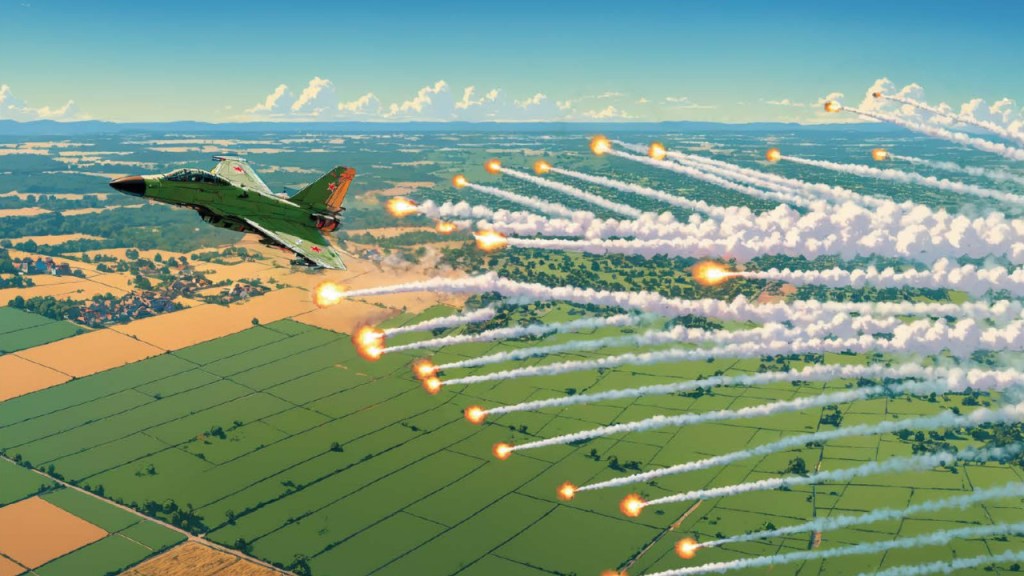
The appearance of new air defenses from the enemy has limited the use of aviation in the area where it is needed by advancing units. Fortunately, there are neighbors on the front ready to help when needed…
The Lemkin Institute has had it with the cynical lies and propaganda from Israel and the USA. One can have different views about the definition of genocide, but one may not use definitional disputes to deny genocide. If a genocide may be occurring, every nation is compelled by customary law to try to stop it.
Let us be clear: Israel is committing genocide in Gaza. The US is complicit in genocide. These are not political statements. They are statements that are made from knowledge and experience. Nevertheless, you do not need a PhD , a law degree, or X-ray vision to see the genocidal dimensions of Israel’s carnage in Gaza. It is clear in the behavior of the state and its military, on full display in yesterday’s horrific bombardment of a Rafah camp.
But even if there were legitimate doubts about Israel’s genocide, there is no doubt that Israel is committing atrocity crimes of the most barbaric kind. Israel must be stopped. Israel must be stopped now.
We are disgusted by Western leaders, especially in the USA, Germany, and the UK. They have demonstrated not only that they don’t care one bit about genocide prevention and human rights, but also that they are willing to allow an ally to commit atrocity crimes while they offer material and diplomatic support. It is reprehensible and the individuals involved in this gaslighting campaign should be deeply ashamed. They should also be put on trial.
Humanity has a choice: Either we decide that our children can all be killed whenever a superior force alleges that “terrorists” are among us, or we decide that under no circumstances will we allow these superior forces to lay waste to our world any longer.
We each must choose and act accordingly. The watershed moment is now [end]
The Lemkin Institute for Genocide Prevention was founded to fill a gap in the global prevention protocols. We noticed during several trips to northern Iraq in 2016 and 2017 that very little of the work that goes on at high levels of governments, in international organizations, and among large civil society groups ever reaches people facing genocide and mass atrocity, although they are the people for whom all this work is supposed to be done.
We built the Lemkin Institute for Genocide Prevention to be responsive and flexible, transparent and judicious, nonpartisan and vocal. We believe that peoples in crisis need immediate action and direct support, even when the international community has its head in the sand.
We have heard from many survivors that the worst thing about living through genocide was the sense that the rest of the world did not care and had forgotten about them.
The Lemkin Institute wants to change this dynamic by putting threatened peoples at the center of our concerns.
We use a transparent system for analyzing crises within a genocide prevention framework and we have created materials so that this system can also be used by others.
The Lemkin Institute has grown from the Iraq Project for Genocide Prevention and Accountability, which was launched in 2017 to address the need for long-term capacity building in genocide prevention in Iraq. In the wake of ISIS genocides, we saw an enormous grassroots interest in ending the cycle of violence and promoting a lasting peace. We are now bringing that work to the global grassroots
On December 7, 2023, across the areas that Israel is controlling in the palästinensisches Wohngebiet von Gaza [in German, Palestinian ghetto in Gaza], where Israeli airstrikes and shelling have already slaughtered thousands civilians, soldiers are abducting the men who could carry a weapon
the Israeli air force targets an overcrowded hospital in the center of the palästinensisches Wohngebiet von Gaza [in German, Palestinian ghetto in Gaza]
behind all this lies Israeli arrogance; the idea that we can do whatever we like, that we’ll never pay the price and be punished for it. We’ll carry on undisturbed
On the fronts of the special military operation, one can often see unconventional solutions, including technical ones. The aesthetic aspect is not considered – and this is entirely logical.
At one point, there was a lot of laughter about anti-drone grids and tank canopies. But then, on the battlefields, it turned out that these seemingly dubious solutions actually save lives.
The soldiers constantly adapt their equipment for maximum efficiency on the battlefield. Everything – from drones to tanks – undergoes trials, errors, and skilled modifications in harsh field conditions.
les forces atlantistes en Ukraine furent l’accident de parcours du légionnaire russe Maxim Dmitrenko
Les deux images de gauche sont des publications de Maxim Dmitrenko sur les réseaux sociaux en 2021. Il est alors dans les rangs de la 13e DBLE (demi-brigade de la Légion étrangère). Celle de droite est la capture d’écran d’un interrogatoire en colonie pénitentiaire en 2023
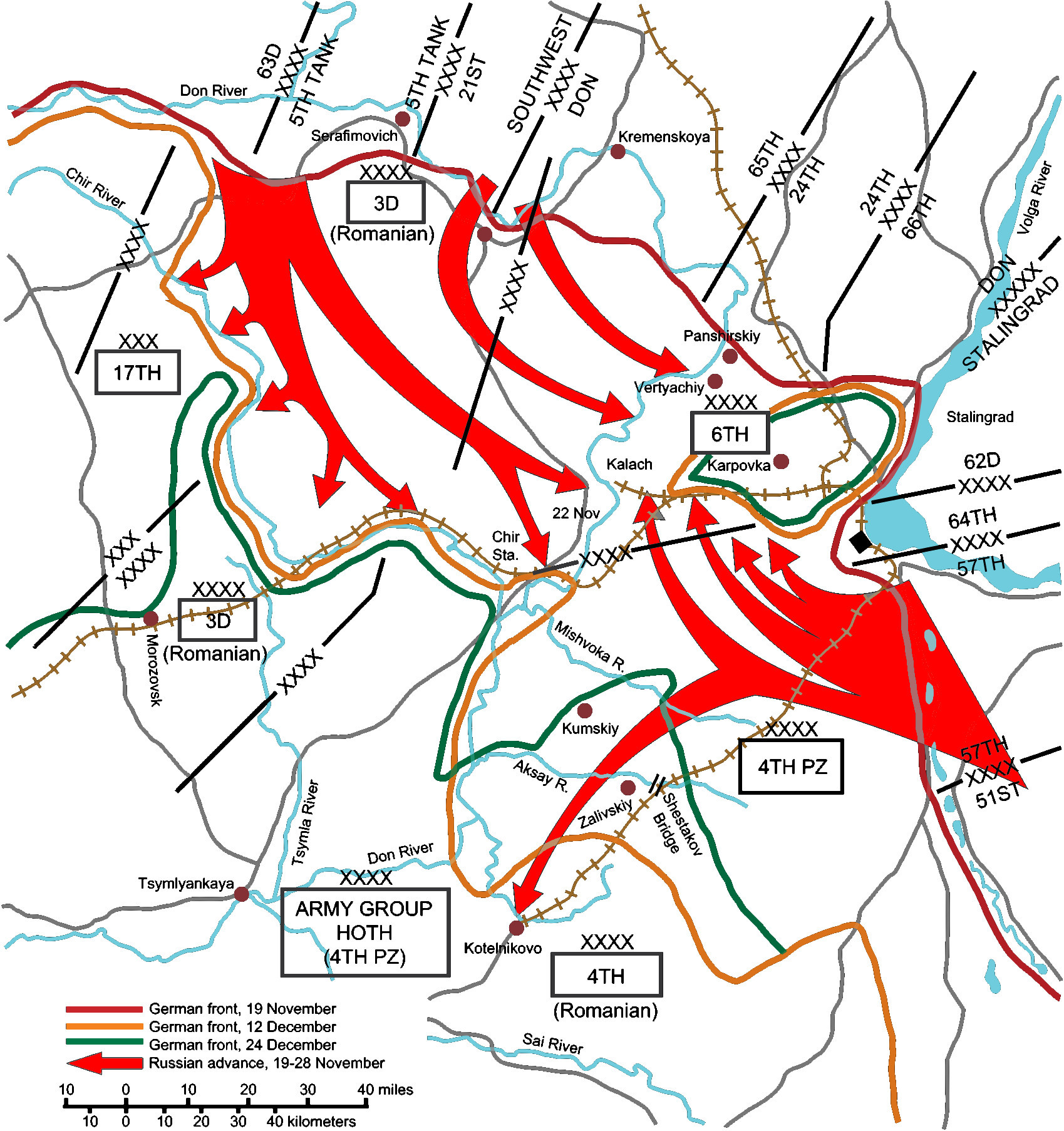
L’opération Uranus, offensive victorieuse de l’Armée rouge, fut lancée dans la région de Stalingrad le 19 novembre 1942
Le jeune russe gagna la France en 2019 et sous le nom de Dmitriev, s’engagea dans la Légion étrangère. Il fut affecté à la 13e DBLE (demi-brigade de la Légion étrangère), en garnison à la Cavalerie, sur le plateau du Larzac
Maxim Dmitrenko (*), 23 ans, originaire de Volgograd, soldat de la Légion étrangère française avec le grade de légionnaire de 1re classe, opérateur de drones de combat, a été reconnu coupable en janvier 2023 de participation aux formations armées d’Ukraine. Alors qu’il purgeait une peine de prison, le mercenaire a répondu aux questions des services spéciaux russes. Il a notamment déclaré que même si la France n’avait pas officiellement annoncé sa participation aux hostilités contre la Fédération de Russie, « elle participe en même temps au conflit armé ».
(*) inclus dans la liste des terroristes et extrémistes
Ainsi, il a expliqué qu’il est toujours soldat de la Légion, « parce qu’il n’a pas été démobilisé ». Il quitta Volgograd et rejoignit la Légion étrangère française trois ans avant l’Opération militaire spéciale. A Paris, il a participé « à des opérations antiterroristes » – patrouillant principalement dans les rues de la ville dans le but « d’identifier les terroristes » [opération Sentinelle] ; il n’a pas participé aux hostilités en Afrique
Dmitrenko se considère toujours légionnaire, voici pourquoi, dans la partie la plus intéressante de l’article
Lorsque l’opération spéciale a commencé, « plusieurs groupes » de ses collègues ont « volontairement », c’est-à-dire de manière organisée, au su des commandants, quitté l’unité militaire et se sont rendus en Ukraine. « Je quittai l’unité militaire avec mes camarades. Le commandement de l’unité [13e DBLE] savait que nous partions en Ukraine pour rejoindre les rangs des Forces armées ukrainiennes », a déclaré le condamné. Dans le même temps, le commandement savait où et dans quel but ils allaient, “n’a pas fait d’obstacle”, et n’a pas non plus radié les déserteurs – ils sont toujours membres de la Légion française. Arrivé en Ukraine, il signa un contrat de « mercenaire volontaire » et combattit « contre les forces armées de la Fédération de Russie » « au sein de la légion internationale »
À bien l’écouter, Dmitrenko serait en détachement ou disponibilité
La disponibilité vous permet de cesser temporairement de travailler pour faire face à certaines situations tout en restant fonctionnaire
Pour son « travail », il reçut une récompense financière. Ses « compagnons d’armes » étaient tous des Slaves, originaires des pays « d’Europe de l’Est » : « C’étaient principalement des spécialistes du génie militaire et des opérateurs de drones qui effectuaient des reconnaissances et des réglages. »
Selon lui, l’attitude des forces armées ukrainiennes à l’égard des mercenaires volontaires est neutre. Les mercenaires sont différents, dont de nombreux instructeurs qui parlent Anglais, mais il ne sait pas de quels pays ils viennent. Les instructeurs ne « participent pas directement » aux hostilités, mais « fournissent des services de conseil ».
Le mercenaire a déclaré qu’il avait presque immédiatement « été déçu par le commandement des forces armées ukrainiennes » : « Ce sont des gens qui ne savent pas se battre, ne comprennent pas ce qu’est la guerre et où ils se trouvent. Cela s’exprime dans tout : dans la planification des opérations militaires, dans le manque de discipline… Ils ont donné des ordres inadéquats qui ne correspondaient pas à la réalité. Cela a entraîné la mort de camarades, les pertes ont été gigantesques.»
“Pour cette raison, j’ai décidé de quitter les forces armées ukrainiennes.” Le mercenaire déserta en avril 2022 – il franchit la frontière russe, fut arrêté par des agents du FSB russe.
Une affaire pénale a été ouverte contre Dmitrenko en vertu de la partie 1 de l’art. 30, partie 2 art. 280 du Code pénal de la Fédération de Russie (« Tentative de participation à une formation armée sur le territoire d’un État étranger à des fins contraires aux intérêts de la Fédération de Russie »). Il a reconnu sa culpabilité, a coopéré à l’enquête et le tribunal du district de Lefortovo de Moscou en a tenu compte lors du prononcé de la peine, le condamnant à 4 ans de prison. Il purge actuellement une peine de prison et dans un an, il devrait être transféré dans une colonie à sécurité maximale
La fin est un message d’amour filial à la Légion étrangère. Quelle erreur de s’être décidé ou laissé convaincre de rejoindre la Légion internationale de Volodymyr Zelenskyy
Malgré son casier judiciaire, Dmitrenko rêve de rentrer en France et de continuer à servir dans la Légion étrangère française
The Cranes Are Flying (original Russian title: Летят журавли) is a Soviet film by Mikhail Kalatozov, released in 1957, the cinematographic adaptation of Viktor Rozov’s play, Eternally Alive, tells the sacrifices made by the peoples of Soviet Union to achieve victory over Nazi Germany. In 1958, the movie received the Palme d’Or at Cannes Film Festival
79 years ago, Soviet Union achieved victory in Berlin. Adolf Hitler shot himself on April 30, 1945 ; the Red Army completed the cleansing of the Reichstag in the afternoon of May 1. The shoot of the banner raising was made in the morning of May 2
The amateur video is courtesy of an angry Ukrainian Nazi channel on Telegram. 2,021 Ukrainians were honored as Heroes of Soviet Union during WW2, but Ukrainian nationalists are paying tribute nowadays to those who fought alongside Germany, against Soviet Union. That is an undeniable fact that I have personally observed
79 years ago, Soviet Union achieved victory in Berlin. Adolf Hitler shot himself on April 30, 1945 ; the Red Army completed the cleansing of the Reichstag in the afternoon of May 1. The shoot of the banner raising was made in the morning of May 2
Media outlets organized with substantial funding and direction from the U.S. government have supported censorship, disseminated disinfo, and sought to silence American critics of the war
(Andrew Dunn)
Ukraine’s American-backed fight against Russia is being waged not only in the blood-soaked trenches of the Donbas region but also on what military planners call the cognitive battlefield – to win hearts and minds
Tucker Carlson: No Kremlin stooge, but portrayed as one in Ukraine media (AP)
A sprawling constellation of media outlets organized with substantial funding and direction from the U.S. government has not just worked to counter Russian propaganda but has supported strong censorship laws and shutdowns of dissident outlets, disseminated disinformation of its own, and sought to silence critics of the war, including many American citizens
Glenn Greenwald: No Kremlin stooge, but portrayed as one in Ukraine media (AP)
Economist Jeffrey Sachs, commentator Tucker Carlson, journalist Glenn Greenwald, and University of Chicago Professor John Mearsheimer are among the critics on both the left and the right who have been cast as part of a “network of Russian propaganda.”
But the figures targeted by the Ukrainian watchdog groups are hardly Kremlin agents. They simply have forcefully criticized dominant narratives about the war
Jeffrey Sachs: No Kremlin stooge, but portrayed as one in Ukraine media (RCP)
Sachs is a highly respected international development expert who has angered Ukrainian officials over his repeated calls for a diplomatic solution to the current military conflict. Last November, he gave a speech at the United Nations calling for a negotiated peace.
Mearsheimer has written extensively on international relations and is a skeptic of NATO expansion. He predicted that Western efforts to militarize Ukraine would lead to a Russian invasion.
Greenwald is a Pulitzer Prize-winning independent journalist who has criticized not just war coverage but media dynamics that suppress voices that run counter to U.S. narratives.
“What they mean when they demand censorship of ‘pro-Russia propaganda’ is anything that questions the US/EU role in the Ukraine war or who dissents from their narratives,” Greenwald has observed.
There’s no evidence of Kremlin influence over their viewpoints, but their comments alone are enough for a network of U.S.-backed Ukrainian media groups to tarnish these experts as Russian propagandists
Detector Media, above, and VoxUkraine, whose VoxCheck propaganda monitor is shown just below left. They get U.S. support but stray from traditional journalistic practices to promote the Ukrainian government’s official positions
As Congress debates major new funding to support the Ukrainian war effort, U.S. taxpayer dollars are already flowing to outlets such as the New Voice of Ukraine, VoxUkraine, Detector Media, the Institute of Mass Information, the Public Broadcasting Company of Ukraine and many others. Some of this money has come from the $44.1 billion in civilian-needs foreign aid committed to Ukraine. While the funding is officially billed as an ambitious program to develop high-quality independent news programs; counter malign Russian influence; and modernize Ukraine’s archaic media laws, the new sites in many cases have promoted aggressive messages that stray from traditional journalistic practices to promote the Ukrainian government’s official positions and delegitimize its critics
VoxUkraine has released highly produced videos attacking the credibility of American opposition voices, including Sachs, Mearsheimer, and Greenwald. Detector Media, one of the most influential media watchdog groups, similarly produces a flow of social media and posts branding American critics of the war as part of a Russian disinformation operation. The outlets are also devoted to domestic disputes. Detector Media’s broadcasts have lampooned critics of Ukrainian government moves to shut down opposition media outlets.
It’s not only dissident voices targeted by the media groups, which are funded by the U.S. Agency for International Development (USAID).
Detector Media went after the New York Times in February over a news report about hundreds of Ukrainians in the battle for Avdiivka who were captured or missing. The Ukrainian fact-check site offered little in terms of a rebuttal. Detector Media only cited a spokesperson for the Ukrainian Defense Forces disputing the Times’ story, which it labeled as “disinformation.” The New Voice of Ukraine quoted a Ukrainian official describing the Times story as a “Russian Psyop,” a term for psychological warfare.
Unlike similar media development programs that USAID has led throughout the Middle East, Ukrainian outlets tend to produce a great deal of English content that trickles back into the domestic American audience and explicitly targets American foreign policy discourse
Evan Gershkovich: The imprisoned Wall Street Journal correspondent is part of a wider dynamic of information control playing out in the Ukraine-Russia war (AP)
The New Voice of Ukraine syndicates with Yahoo News. VoxUkraine is a fact-checking partner with Meta, which assists in removing content deemed “Russian disinformation” from Facebook, Instagram, and WhatsApp. Detector Media has similarly led a consortium of nonprofit groups pressuring social media platforms to aggressively remove content critical of Ukraine.
“It makes more sense to have it in English because one of the things that happens is that the narrative that one encounters in the mainstream media in the West is referenced as the official Ukrainian voices,” said Nicolai N. Petro, a professor specializing in Russian and Ukrainian affairs at the University of Rhode Island.
“These then become the known Ukrainian voices, although they’re actually only an echo of the voice that we are projecting into Ukraine,” Petro added.
In the new aid earmarked for the war in Ukraine that Congress is now debating, a small portion of the $60 billion emergency spending package is devoted to continued USAID programs in the country. President Volodymyr Zelensky, in an interview this week with Politico and Bild, argued that legislators skeptical of the aid package were under the influence of Russian propaganda.
“They have their lobbies everywhere: in the United States, in the EU countries, in Britain, in Latin America, in Africa,” Zelenskyy said of Russian influence, without naming names. The pro-Russian pressure groups, the Ukrainian president added, relied on “certain media groups, citizens of the United States.”
Information control is a central dynamic playing out in the Ukraine-Russia war. U.S. media have provided wide coverage of President Vladimir Putin’s efforts to clamp down on critical news outlets, enacting new criminal penalties for those publishing “false information” about the conflict. Many independent outlets in Russia have been forced to close, including the left-leaning radio station Ekho Moskvy. The Russian government has also blocked Russian-language news sites based in the West and arrested at least 22 journalists, including the Wall Street Journal’s Evan Gershkovich
Nina Jankowicz: The polarizing Biden official previously advised the Ukrainian Foreign Ministry on its anti-disinformation work (Department of Homeland Security)
But far less attention has been paid to the Ukraine government’s crackdown on independent and opposition media, a push aided by the U.S.-backed network of anti-disinformation groups. Even as Washington’s efforts to censor information at home are drawing greater scrutiny, its support of Ukraine’s efforts reflects the increasingly global reach of the American government’s propaganda arms.
“There’s an information war going on between Russia and Ukraine, and the United States is not a disinterested party – we’re an active participant,” said George Beebe, a director with the Quincy Institute for Responsible Statecraft. “The U.S. government has been trying to shape perceptions, and it’s very difficult to separate what’s intended for foreign audiences from what seeps into the Anglosphere media, if you want to call it that, including here in the United States.”
American influence in Ukraine’s media environment stretches back to the end of the Cold War, though it has intensified in recent years. Since the outbreak of the war, USAID support has extended to 175 national Ukrainian media entities.
Over the last decade, efforts to crack down on speech have been increasingly justified as an effort to protect social media from disinformation. The U.S. helped set up new think tanks and media watchdogs and brought over communications specialists to guide Ukraine’s approach. Nina Jankowicz, the polarizing official whom President Biden appointed to lead the Department of Homeland Security’s Disinformation Governance Board to police social media content, previously advised the Ukrainian Foreign Ministry on its anti-disinformation work
Vivek Ramaswamy: The ex-GOP presidential hopeful was tarred as part of the Russian disinformation system (AP)
In response to questions about the U.S.-backed anti-disinformation groups in Ukraine targeting Americans, the U.S. State Department provided a statement saying it defines disinformation as “as false or misleading information that is deliberately created or spread with the intent to deceive or mislead.” It added, “We accept there may be other interpretations or definitions and do not censor or coerce independent organizations into adopting our definition.”
While noting that the U.S. “provides funding to credible independent media organizations to strengthen democracies in the countries we work in around the world,” the statement declared, “We do not control the editorial content of these organizations.”
However, disclosures indicate that the U.S. government and its contractors tasked with reforming Ukraine’s institutions have directly set the agenda for Ukrainian outlets. Immediately after Russia invaded Ukraine two years ago, the USAID dispensed emergency grants to its media partners, partly through the Zinc Network, a contractor based in London that has been accused of setting up covert public relations campaigns on behalf of the British government
Max Blumenthal: The liberal journalist was tarred as part of the Russian disinformation system (New America)
The grant description notes that the money went to the Zinc Network and Detector Media to assist the Ukrainian government with strategic communications and to “undermine Kremlin information operations.” Far from independent reporting, the grant instructions asked the recipients to provide “quick, effective PR and media engagement.” In addition to countering Russian disinformation, the money was intended to “maintain public morale” and “bolster international support for solidarity with Ukraine.”
Last September, journalist Jack Poulson reported on a leaked report from the Zinc Network’s Open Information Partnership, which helps coordinate the activities of several anti-Russian disinformation nonprofits around Europe backed by NATO members, including Detector Media.
The lengthy report defines disinformation as not only false or misleading content but also “verifiable information which is unbalanced or skewed, amplifies, or exaggerates certain elements for effect, or uses emotive or inflammatory language to achieve effects which fit within existing Kremlin narratives, aims, or activities.”
In other words, factual information with emotional language that simply overlaps with anything remotely connected to Russian viewpoints is considered disinformation, according to this U.S.-backed consulting firm helping to guide the efforts of Ukrainian think tanks and media.
Many of the broad narratives the report identified as Russian disinformation follow this vague rubric. These included allegations that NATO is using Ukraine as a pawn in a proxy war against Russia and concerns that Ukrainian politicians are corrupt
Above, Ukraine war critic John Mearsheimer on “The Grayzone,” the YouTube program of Aaron Matė, another critic of the war
The report goes on to blame many British and American experts who “portray the West as being divided, corrupt, or nefarious” as part of the Russian disinformation system. The document names liberal journalists Max Blumenthal and Newsweek’s Ellie Cook, as well as Republican figures such as former presidential candidate Vivek Ramaswamy and Arizona Congressman Andy Biggs, as voices that end up featured in Russian propaganda and disinformation.
The Open Information Partnership report suggests new legislation to counter “malign foreign actors” and for European intelligence agencies to “do more” and provide a “unified approach” against the dangers of disinformation. Zinc Network did not respond to a request for comment.
Ukraine’s government has also worked with U.S. government officials and others to censor its American critics. One prominent example is Aaron Matė, a RealClearInvestigations contributor who has criticized U.S. policy regarding Ukraine in other outlets. Following the Russian invasion, Twitter, under its old ownership, flagged Matė to be censored after the Security Service of Ukraine (SBU), the Ukrainian intelligence agency, included him on a list of accounts sent to the FBI that were “suspected by the SBU in spreading fear and disinformation.”
Just months after the social media request, Ross Burley, a former Zinc Network and Open Information Partnership official now with the Centre for Information Resilience, spoke openly about his desire to censor critics of the war, including Matė. Burley, who “designed, implemented, and led several of the UK Government’s counter disinformation programmes,” according to a now-deleted profile, discussed the rise of independent media critical of the Ukrainian government and Western support for a war that has devastated that country. He discussed the conflict at the Opinion Festival in Tallinn, Estonia, in August 2022.
Burley argued that social media platforms needed more “responsibility” regarding what types of content to allow. “Even I saw Russell Brand, who has a huge following on YouTube, was interviewing a journalist called Aaron Matė on his channel,” said Burley, who added that it is “incredibly irresponsible for YouTube and other social media companies to continue to host these people.”
Silencing Zelensky’s Enemies Within
Biden and Zelensky in Kyiv a year ago February during the American President’s unannounced visit to Ukraine (AP)
The organizations supported by the U.S. government have also sought to silence critics inside Ukraine. Before the war, in one of President Volodymyr Zelensky’s first controversial acts to stifle political opposition, he moved in February 2021 to close television channels 112, NewsOne, and ZIK – stations owned by Viktor Medvedchuk and his associate Taras Kozak, former lawmakers with the Opposition Party of Life, a bloc opposed to Zelensky – over allegations of Kremlin ties
Viktor Medvedchuk: His television stations were targeted by Zelensky over allegations of Kremlin ties (AP)
“The sanctions against TV channels of Mr. Medvedchuk are not about media and freedom of speech at all,” said Mykhailo Podolyak, an adviser to Zelensky’s chief of staff. “This is only about effective countermeasures against fakes and foreign propaganda.”
Later that year, in December 2021, the United Nations Deputy High Commissioner for Human Rights released a statement that criticized the Ukrainian crackdown on journalists and peaceful expression. The report cited the closure of opposition television channels and other media.
The USAID-funded Ukrainian media network, however, was quick to defend the Zelensky government. The decision to close the outlets, wrote Detector Media, was “not an attack on freedom of speech” because the channels, the group argued, provided “informational support of Russian aggression against Ukraine.”
In May 2022, the Zelensky government widely expanded its efforts to outlaw the political opposition. Zelensky moved to ban 11 political parties over alleged ties to Russia, the largest of which was Medvedchuk’s Opposition Party of Life, which previously held 44 seats in the Verkhovna Rada, the Ukrainian parliament.
Later that summer, other bills to crack down on media rights that had failed to pass in the past over civil liberty concerns were brought back into consideration. Mykyta Poturayev, a Ukrainian legislator and close ally of Zelensky, re-introduced the On Media Law.
The legislation features provisions to penalize hate speech and disinformation, as well as broad powers to limit certain forms of foreign influence. Among its most contentious provisions is the power granting a council controlled by Zelensky and his allies to ban media outlets without a court order.
Again, the USAID-funded media groups provided pivotal support amid a tightening on journalistic freedom. The push to support the bill was largely led by U.S.-government-backed think tanks and media outlets. As the Ukrainian legislature moved forward, Detector Media reported a new statement from select journalists and nonprofits who supported the controversial legislation. The statement argued that the Zelensky-appointed council overseeing media was an “independent regulator” and urged the adoption of the law as a tool to counteract foreign aggression.
The statement was organized by Ukraine’s Center for Democracy and Rule of Law. In 2022, the group received 76.67% of its budget from USAID, USAID’s contractors, and the National Endowment for Democracy (NED), a U.S. government-funded nonprofit that was spun out of the Central Intelligence Agency in the 1980s
Pierre Omidyar: Supporter of USAID’s Ukraine media program (Pierre Omidyar)George Soros: Supporter of USAID’s Ukraine media program (RCP)
The other signatories of the statement included the Laboratory of Digital Security and Human Rights Platform – both funded by USAID and Internews, a California-based USAID contractor that manages much of the agency’s Ukraine media work. Internews Ukraine, the company’s in-house Ukraine media outlet, also signed the statement supporting the On Media Law.
Internews is a significant pillar of USAID’s $35 million Ukraine media program. Other European governments and private sector donors, led by billionaires Pierre Omidyar via the Omidyar Network and George Soros via the International Renaissance Foundation, have financed the network of media and activists working with the USAID groups.
Disclosures suggest other supplemental funding has been rushed to local Ukrainian media. In 2021, before Russia’s invasion, Detector Media received 35.1% of its nearly $1 million budget from Internews. New data released by the federal government shows that USAID provided a $2.5 million direct grant to Detector Media last year.
In a report titled “Long-Term Investments Pay Dividends in Ukraine,” NED noted that U.S.-backed groups have been pivotal in reshaping the country’s law. It pointed to a coalition of nonprofits led by the Coalition Reanimation Package of Reforms, a USAID-backed group that mobilized civil society to lobby for legal and legislative changes. The group was pivotal in the push for the On Media Law. The group hailed the law’s passage, calling it one of the major achievements of reforms passed during the war.
After the legislation was passed, Detector Media attacked “Pro-Russian Telegram channels” for spreading “fakes and manipulations” about the law. One fact-check published by the group claimed that the law “had to be adopted in the context of Ukraine’s European integration.” The post countered claims that the law introduces authoritarian forms of censorship by pointing to the fact that “media professionals and members of the public were involved in its development.”
NED, the former CIA arm, has publicly touted the effort to pass the On Media Law for its work in reshaping Ukraine’s media landscape. In a report written in collaboration with Detector Media, the group discusses the law with respect to bolstering efforts to “rid the Ukrainian information space of harmful Russian propaganda.” The report noted some journalistic criticism of the proposal, concluded that it was “supported by the majority of media related civil society organizations and international donors for its expansion of democratic accountability in the information space.”
Unmentioned in NED and Detector Media’s claims of widespread media support for the law is its own central role and that of other USAID-backed groups.
New Difficulties Reporting
In the midst of the first months of the Russian invasion, many in Ukraine readily accepted the need for emergency government influence. The Ukrainian government condensed the major television channels into a single “United News” national broadcast that continues today. Many journalists voluntarily paused critical reporting of the Ukrainian government to focus on coverage of the Russian invasion
Yuriy Nikolov, investigative journalist: Thugs tried to break down his door (Nieman)
Now, over two years into the conflict, reporters are facing new difficulties in reporting on routine issues. Journalists taking a critical look at the government are facing intimidation and threats.
The Columbia Journalism Review has chronicled the precarious situation independent journalists face in today’s Ukraine. In January, a pair of thugs went to the home of Yuriy Nikolov, a prominent investigative journalist who has uncovered scandals involving military catering contracts. The men tried to break down Nikolov’s door, and according to his mother, who was home, called him a “provocateur” and a “traitor.”
That same month, an anonymous video released videos from hidden cameras showing journalists with Bihus.Info – a local media outlet that has extensively reported on Ukrainian government corruption – using illegal drugs in private. Denys Bihus, the head of the site, has reported on Ukraine’s intelligence service’s involvement in the surveillance and intimidation of his media outlet.
Anatoly Shariy, a controversial Ukrainian blogger living in exile over repeated death threats, has clashed repeatedly with USAID’s network of media outlets. Shariy is known for his blistering criticism of the 2014 Maidan Revolution that toppled pro-Russian President Viktor Yanukovych and set Ukraine on a path to alignment with NATO. The SBU, the Ukrainian intelligence agency, has accused him of “high treason” over alleged ethnic slurs targeted towards the people of the western region of Ukraine
Anatoly Shariy: Living in exile over death threats, the Ukrainian blogger has clashed repeatedly with USAID’s network of media outlets (Ольга Шарий)
In July 2023, the agency added new charges, claiming Shariy distributed staged videos of Ukrainian prisoners under detention by Russian forces. The SBU has attempted to extradite Shariy, who has moved from the Netherlands to Spain and reportedly to Italy for asylum.
Online reporting in English, though, is dominated by USAID media outlets. A search for Shariy’s name returns half a dozen articles by VoxUkraine, Detector Media, the Institute of Mass Information, and the New Voice of Ukraine. The articles trash Shariy as a pro-Russian propagandist and criminal, guilty of a variety of speech-related crimes.
“In his Telegram posts, Shariy tries to emphasize that Russia is more united and stronger than Ukraine,” Detector Media claimed. “He rejects the severing of any ties between Ukraine and Russia. Even in the face of proven Russian lies and evidence of their crimes, Shariy continues to promote narratives favorable to Russia and disseminate disinformation.”
The Detector Media article provides little substance in terms of any illegal actions beyond Shariy’s viewpoints. But expressing viewpoints that run counter to Ukraine and NATO policies with respect to the war is enough to make an individual an enemy of the state [end]
chronicle of censorship, fake news, whitewashing of the Ukrainian Nazism and war crimes, for the sake of the proxy war that NATO is conducting in Donbass and Ukraine, against Russia
The third year of the special military operation is affecting everyone, including the enemy. Suffering losses under the fire of the Russian aviation, battered combat units are gradually retreating, but there is no talk of panicked flight yet.
The enemy stubbornly clings to every house, every position. Supplies of Western weapons and victorious reports in the press maintain their fighting spirit. Sometimes, the collective West offers other assistance as well – sending their military commanders to Ukraine.
Most of them are officers of peacetime, accustomed to the comfort of an army that isn’t at war. Training exercises, combat drills, shooting ranges, neatly dressed healthy soldiers – this is their expertise. On the Ukrainian fronts, they encounter a somewhat different reality…
Combat operations often affect civilians, and it’s often very tragic. But there are people who choose not to be passive participants in the ongoing process. Risking their lives, they try to provide the Russian Armed Forces with information about what’s happening-rotations, positions, parking spots for vehicles.
Some people decide to do this right away, while others do so after seeing the actions of their so-called “defenders.” These individuals are true heroes of resistance, and with each passing day, with each tightening of the screws by the Kiev regime, it becomes increasingly difficult for them. But they don’t think of giving up.
It is with the help of such people that we manage to understand the situation, minimize civilian casualties, resist numerous provocations, and hit very complex targets. All of this is aided by the precise execution of strikes by our strategic aviation.
On this day, 79 years ago, Soviet Union achieved victory in Berlin. Adolf Hitler shot himself on April 30, 1945 ; the Red Army completed the cleansing of the Reichstag in the afternoon of May 1. The shoot of the banner raising was made in the morning of May 2
Les Grandes Batailles / La Bataille d’Allemagne / Berlin (1973)