Nicolas Cinquini

Analista senior di l'intelligenza in u campu di a gestione di i risichi di sicurezza, sò un anzianu tenente detective è ufficiale di l'intelligenza in l'agenzie di u Statu francese. A bona pronuncia hè Николай Чинкуини, in russu

Month: October 2024

  • [Sharing] Collapsing Empire: China and Russia Checkmate US Military – Kit Klarenberg

    On July 29th, Pentagon-funded “think tank” RAND Corporation published a landmark appraisal of the state of the Pentagon’s 2022 National Defense Strategy (NDS), and current US military readiness, produced by a Congress-created Commission of “non-governmental experts in national security.” Its findings are stark, an unrelentingly bleak analysis of every aspect of the Empire’s bloated, decaying global war machine. In brief, the US is “not prepared” in any meaningful way for serious “competition” with its major adversaries – and vulnerable or even significantly outmatched in every sphere of warfare.

    The 2022 NDS was released in October that year, with much fanfare. Its contents bombastically proclaimed to offer a bold, comprehensive roadmap for how the US national security state, and all its divisions, would evolve and adapt to “dramatic changes in geopolitics, technology, economics, and our environment.” Promising to safeguard Washington’s hegemony for “decades to come,” the Strategy’s introduction loftily declared that the Pentagon was obligated to the US military and public alike:

    To provide a clear picture of the challenges we expect to face in the crucial years ahead – and we owe them a clear and rigorous strategy for advancing our defense and security goals… From helping to protect the American people, to promoting global security,to seizing new strategic opportunities, and to realizing and defending our democratic values

    Fast forward to today, and the RAND Commission’s appraisal of the NDS couldn’t be more scathing. The Pentagon’s comprehension of the economic, military, and political threats to “US interests” posed by China and Russia, and the pair’s emergent, world-defining partnership – to the extent they were even acknowledged at all – is found to be hazardously defective, if not non-existent. And the NDS’ proposals for overcoming these issues, and maintaining the Empire’s worldwide dominance, are judged to be at best woefully inadequate, at worst outright delusional
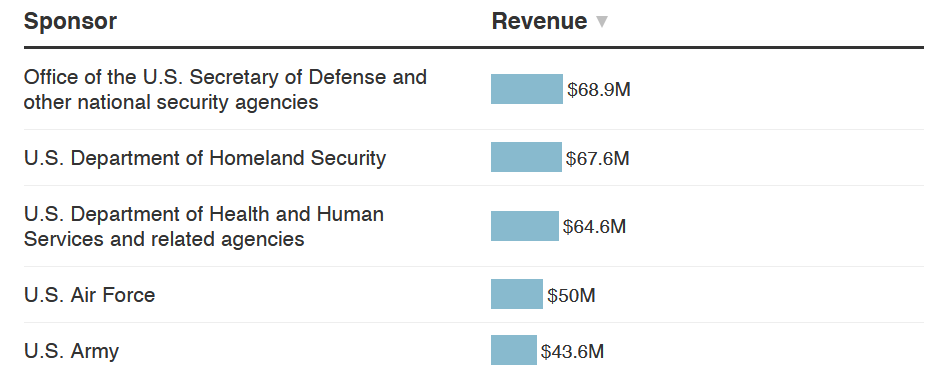
    RAND’s income sources in 2023

    ‘Multiple Adversaries’

    The NDS did get one thing right – China and Russia represent major threats to the Empire, and actively “seek to undermine US influence” worldwide. Beijing particularly was branded a “pacing challenge” economically and militarily, given the extraordinary speed and scale of its scientific and technological innovation and growth. However, the NDS assumed Washington maintained major ‘edges’ over its rival, and widening those gaps further was promptly and readily achievable. To say the least, the RAND report begs to differ:

    We believe the magnitude of the threats the US faces is understated and significantly worse… In many ways, China is outpacing the US… in defense production and growth in force size and, increasingly, in force capability and is almost certain to continue to do so… [Beijing] has largely negated the US military advantage in the Western Pacific through two decades of focused military investment. Without significant change by the US, the balance of power will continue to shift in China’s favor

    This dire situation is greatly magnified by China’s “no limits” partnership with Russia, signed in February 2022, and explicitly “aimed at challenging US leadership internationally.” The pair’s burgeoning alliance with the Global South, specifically Iran and North Korea, exacerbates things yet further. Alliance and collaboration between these countries means they are all growing “bolder”, in turn undercutting Washington’s “force planning and force structure… designed to deter aggression by others, when the US is involved in conflict elsewhere.”

    This ever-germinating union of disaffected states – stultifyingly dubbed “An Axis of Growing Malign Partnerships” by RAND – means “efforts to isolate and coerce these states through international means – such as sanctions, embargoes, and censure – will be far more difficult.” Even more gravely, it “increases the likelihood that a conflict with one would expand to multiple fronts, causing simultaneous demands on US and allied resources”:

    At minimum, the US should assume that if it enters a direct conflict involving Russia, China, Iran, or North Korea, that country will benefit from economic and military aid from the others… This new alignment of nations opposed to US interests creates a real risk, if not likelihood, that conflict anywhere could become a multi-theater or global war… As US adversaries are cooperating more closely together than before, the US and its allies must be prepared to confront an axis of multiple adversaries

    Partnership between Beijing and Moscow has only deepened since February 2022. In the words of Stockholm’s Institute for Security and Development Policy, “the world order has become much more unfavorable and hostile in the Russian and Chinese conceptions, and has warranted closer ties and unwavering mutual support.” Their alliance’s revolutionary geopolitical ramifications were abundantly clear when the NDS was published that same year. Yet, that document made zero reference to the “no limits” relationship whatsoever.

    The obvious prospect that the US waging war against one of the pair would inevitably mean war with the other – a threat now all the deadlier due to their alliance expanding – was similarly unconsidered. The Empire is extremely fortunate no such conflict has come to pass in the two years since the NDS was published. As the Commission report spells out in forensic detail, Washington would be almost completely defenceless in such a scenario, and likely defeated nigh on instantly.

    Multiple passages slam the US military’s lack of “readiness” for a major conflict. Recent “crises”, including the Zionist entity’s genocide in Gaza, “have led to unplanned force deployments to Europe and the Middle East, creating high demand for ‘stressed’ force elements with multiple requirements across theaters, such as air defense and aerial refueling.” In tandem, “constant demand for presence operations, exercises, and security cooperation activities has exacerbated readiness challenges, especially when paired with the training requirements to prepare for great power competition and conflict.” Meanwhile:

    The US Navy is also suffering from readiness issues stemming from its high operational tempo, aging ships, shipyard backlogs, and crew fatigue. Continued mishaps at sea and in military aviation pose risks to troop safety and are symptomatic of a decline in readiness, reflecting both a lack of experience and the increased complexity of the future warfighting mission. The steady demands of campaigning on a smaller military force – and an even smaller number of responsive, modernized, and combat-credible forces – has stressed force readiness

    ‘Affordable Cost’

    It’s not just being spread too thinly on the Grand Chessboard that means the Empire’s military machine “lacks both the capabilities and the capacity required to be confident it can deter and prevail in combat.” Munitions, or lack thereof, are a fatal susceptibility. “Extraordinary” levels of “consumption and demand” for US weapons “by allies and partners in Europe,” combined with the Zionist entity’s rapacious appetite for heavy bombs, have left Washington’s stockpiles “already inadequate for a high-end conflict.”

    Per Wall Street Journal, just one of the fields in which the Empire is way behind China and Russia militarily

    Renewing those stockpiles, let alone equipping the Empire for future war, won’t be easy. The RAND Commission found Washington’s “defense industrial base” is completely “unable to meet the equipment, technology, and munitions needs” of the US, let alone its allies. “A protracted conflict, especially in multiple theaters, would require much greater capacity to produce, maintain, and replenish weapons and munitions” than is currently in place, the report observes. Rebuilding that capacity “requires greater urgency and resources,” and “should remain a top priority” for the Pentagon.

    For decades, the US military “employed cutting-edge technology to its decisive advantage for decades.” This “assumption of uncontested technological superiority” on the Empire’s part meant Washington had “the luxury to build exquisite capabilities, with long acquisition cycles and little tolerance for failure or risk.” Those days are long over though, with China and Russia “incorporating technology at accelerating speed,” and “even relatively unsophisticated actors” such as Yemen’s Ansarallah “able to obtain and use modern technology (e.g. drones) to strategic effect.”

    The Empire already isn’t keeping up, and in any future war, will need “to continue to develop, adopt, and iterate new technologies at greater speed and scale and at an affordable cost,” while simultaneously replenishing “existing munitions” for a “protracted” period, “to keep pace with warfighter needs.” Current Pentagon research and development and procurement systems were judged by the Commission to be wholly inadequate for the task. And America’s “defense industrial base” is today crumbling, riddled with a myriad of deleterious issues:

    These shortcomings include the deteriorating condition of defense depots, contract maintenance performance issues, and underproduction of spare parts, among many others. The result is a US military that is minimally operationally ready today but is unlikely to be ready for tomorrow… [The US] is unable to produce the weapons, munitions, and other equipment and software needed to prepare for and engage in great power conflict. Consolidation and underinvestment have led to too few companies, gaps in the workforce, insufficient production infrastructure, and fragile supply chains

    To address these problems, the Commission calls for enormous amounts of money to be spent domestically on “the capacity to build” munitions, “the recapitalization of armories,” and “advanced manufacturing and further stockpiling of munitions. Meanwhile, the Pentagon “needs to work with other countries to expand production capacity for munitions,” while ensuring “it can buy all munitions at sufficient scale to deliver the desired operational effects.”

    Of course, the Empire already wastes exorbitant sums on keeping its existing outgunned, outnumbered, outproduced military machine, which wouldn’t survive first contact with an actual war, operational. Doing so requires printing astonishing volumes of dollars, in turn producing such high inflation that arms suppliers are now rejecting Pentagon contracts and tearing up existing deals, as they have become “money-losers”. Washington’s response? The US defense budget now allocates over $1 billion in newly-printed money to compensate them for inflation-related losses

    We have entered a strange, late-stage Empire era, comparable to the Soviet Union’s Glasnost, in which elements of the US imperial braintrust can see with blinding clarity Washington’s entire hegemonic global project is stumbling rapidly and irreversibly towards extinction, and announce so publicly – but their insight does not translate into evasive governmental action at home. The RAND Commission report elicited no mainstream coverage or comment whatsoever, proof positive there isn’t a concomitant effort to manufacture consent for its radical, far-reaching prescriptions.

    Were we living in a unipolar age, a multipronged PR campaign would immediately ensue to convince Americans of the righteousness of the Empire’s mission, and the necessity of investing in US “defense” to the tune of trillions. The media’s silence on the Commission’s findings definitionally reflects an omertà among the US political class. The fatal “disconnect” between the Pentagon’s operational and industrial planning identified by RAND will endure. So too ever-intensifying US military impotence. We’re spectating the Empire’s final acts in real-time [end]

    The original article

    Related

    November 28, 2023: How American Neocons Wrecked the Middle East and Ukraine – David Stockman, Antiwar.com

    This is part 2 of “Why There Is Still No Peace on Earth: Washington’s Folly From The Persian Gulf to Ukraine.”  Read part 1

    June 8, 2023: The West Must Prepare for a Long Overdue Reckoning – Chandran Nair, The National Interest

    Five major trends illustrate how the world is changing, and that the West must grapple with the reality that it can no longer impose its “leadership” on the world as it once did

    The Atlanticist defeat in Donbass and Ukraine

    chronicle of a new catastrophic NATO venture

  • [En la memoria] La historia de Alexis Castillo, el colombiano que murió en la guerra entre Rusia y Ucrania – infobae (2022)

    El militar creció en Europa y decidió defender la bandera de Rusia, territorio en donde lo recuerdan también como ‘Alfonso Cano’

    En las últimas horas, se confirmó la muerte de Alexis Castillo, soldado colombiano que era militar activo en conflicto entre Rusia y Ucrania. La historía de este cafetero estuvo colmada de momentos álgidos, incluso, su fallecimiento no pasó desapercibido, pues el presidente Gustavo Petro envío un sentido mensaje sobre su partida, resaltando la convicción de paz que en su momento expuso Castillo, a pesar de defender los ideales prorrusos.

    Castillo arribó a territorio europeo desde muy joven, siendo España ese territorio que lo vería crecer y forjar sus ideales. El espacio ibérico fue fundamental para el desarrollo de su ideología, pues desde este lugar empezó a formarse en grupos de izquierda desde el concepto teórico y comunista, exponiendo diferentes contrastes ante la sociedad como activista, no obstante, a miles de kilómetros hacia el oriente, se desarrollaba el inicio de una guerra, hecho que le llamó la atención.

    Alexis partió a temprana edad, sobre el 2014 hacia la región del Donbáss en la frontera entre Rusia y Ucrania, según le relató en su momento a Los Informantes. En su extenso comentario, recordó que nació en Zarzal, Valle del Cauca, sin embargo, ahora buscaba abanderarse con los colores blanco, azul y rojo de la bandera rusa, para, según él, defenderse de los ataques ucranianos.

    Cabe resaltar que, el discurso que exponía el fallecido soldado en su momento, buscaba ponderar la idea antifascista y en contra del imperialismo. Durante su permanencia en Europa, también fue investigado por la justicia, pues tal como lo relata el medio El Confidencial, a Castillo se le señaló por varios delitos, incluyendo cooperación en asesinatos, no obstante, salió librado de dichos juicios.

    Asimismo, la prensa prorrusa lo recuerda como un voluntario internacional, que mediante su apoyo en las brigadas extranjeras, aportó a la lucha de dicho país. No obstante, cabe resaltar que, las opiniones son divididas sobre este tema, a pesar que, el apoyo occidental lo tiene Ucrania y el presidente de dicho país, Volodímir Zelenski.

    La versión sobre la muerte de este colombiano, apunta a que falleció en medio de un combate en dicha región, luego de combatir durante varios años y no superar las tres décadas de vida. Desde el golpe del Euromaidán en Ucrania, Castillo ya tenía conocimiento y la actitud para arribar a dicho país, pues quería “defender a la población del Donbáss”, en dicha población habría dejado un hijo.

    El presidente Petro lamentó la muerte

    Tan pronto se conoció el fallecimiento del vallecaucano, el mandatario nacional resaltó su lucha, dejando en entre dicho la viabilidad de sus ideales. Aseguró que Castillo murió con la idea de ser revolucionario e incluso, recalcó que la revolución era la paz.

    Alexis, es un colombiano que ha muerto en el Donbás; sus ideas revolucionarias, quizás equivocadas, quizás no, lo llevaron a esta guerra con los ojos abiertos. Ha muerto un joven que quizo ser revolucionario. La revolución es la Paz. Esto no saldrá en nuestros medios

    Cabe resaltar que, en la serie de documentales que Castillo protagonizó para varios medios, siempre resaltó que las armas eran un vehículo para la guerra, pues era necesario eliminar el uso de estas para construir la paz, pues siempre cuestionó las provisiones bélicas que recibía Ucrania por parte de Occident [fin]

    El artículo original

  • [Sharing] US authorizes CIA mercenaries to run biometric concentration camps in Gaza Strip – Dan Cohen, Uncaptured Media

    A private intelligence corporation billed as “Uber for war zones” is preparing to create what Israel hopes will be the model for supplanting Hamas rule in Gaza

    The Biden administration has approved the deployment of 1,000 CIA-trained private mercenaries as part of a joint U.S.-Israeli plan to turn Gaza’s apocalyptic rubblescape into a high-tech dystopia.

    Starting with Al-Atatra, a village in the northwestern Gaza Strip, the plan calls to build what the Israeli daily Ynet calls “humanitarian bubbles” – turning the remains of villages and neighborhoods into tiny concentration camps cut off from their environs and surrounded and controlled by mercenaries.

    This comes as Israel carries out daily massacres and ethnic cleansing in northern Gaza, enacting the proposal known as The Generals’ Plan, originally crafted by former national security chief Giora Eiland to turn Gaza into “a place where no human being can exist.”

    The plan, approved by White House National Security Advisor Jake Sullivan, calls for the Israeli military to clear out pockets of Palestinian resistance, which it has failed to achieve, demonstrated by the recent killing of Israeli Colonel Ehsan Daksa, the highest ranking officer to lose his life in the year long war.

    48 hours after stamping out resistance, they plan to erect separation walls around the neighborhood, forcing its residents, and no one else, to enter and exit using biometric identification under the CIA contractors’ control. Those who do not accept the biometric regime would be refused humanitarian aid.

    This plan, first reported by Israeli journalist Shlomi Eldar, allocates $90 million for the residents to rebuild their homes, and calls to appoint a “local sheikh” to the position of “head of the council.”

    The plan is a 21st century reboot of Washington’s infamous, failed Strategic Hamlet Program during its war in Vietnam in the 1960s, updated with a modern biometric program the US military-industrial complex has incorporated into its operations since, in particular, the beginning of the so-called “War or Terror.” (The U.S. has even created a little known agency called the Defense Forensics and Biometrics Agency to advance this).

    ‘Uber for war zones’

    The company at the forefront of this plan is called Global Delivery Company, described in its promotional materials as a “Uber for war zones.” Israeli-American businessman Moti Kahana owns it and employs several top Israeli and American military intelligence officials, including retired U.S. Navy Captain Michael Durnan, retired U.S. Special Forces captain Justin Sapp, former Israeli military intelligence division head Yossi Kuperwasser, and former Israeli military chief intelligence officer David Tzur.

    Kahana has played a key role in the dirty war against Syria in the 2010s and worked with the CIA-backed Free Syrian Army to provide food and medical care to militants and civilians alike. GDC has also been involved in Ukraine, where it collaborated with the Zionist organization, the American Joint Distribution Committee, to operate a refugee camp in Romania near its border with Ukraine. He has also been in negotiations to free the former Israeli military intelligence officer Elizabeth Tsurkov, who was detained in Iraq in 2023

    Image
    Moti Kahana on left. Source: X

    Kahana’s Gaza plan has been in the works since at least February, 2024. He presented the plan to establish these electronic cantons – what Jewish News referred to as “gated communities” – to the White House, State Department, and Defense Department, as well as Netanyahu. U.S. officials did not respond. While the Israeli military had agreed, the Israeli prime minister shot it down. “What’s the rush?” he quipped.

    The Israeli military has also been in talks with Kahana to deploy its mercenaries to secure the Netzarim corridor, which bisects the Gaza Strip.

    The GDC’s CIA mercenaries would be in full control of humanitarian aid, thereby supplanting Hamas and ending its governance, they figure, achieving a long-term goal of the Israeli war.

    “If the pilot goes through successfully, it will be the model for the rehabilitation of Gaza and will result in the suppression of Hamas’s civilian control in the Strip,” notes Eldar.

    The plan resembles a proposal published in the U.S. Department of Defense’s top journal, written by Likudnik think tanker Omer Dostri, who was appointed as Israeli Prime Minister Benjamin Netanyahu’s spokesperson in August 2024 [end]

    The original article

  • [Sharing] Once upon a time, in Verkhnya Syrovatka – RYBAR 33

    adventures in country-404

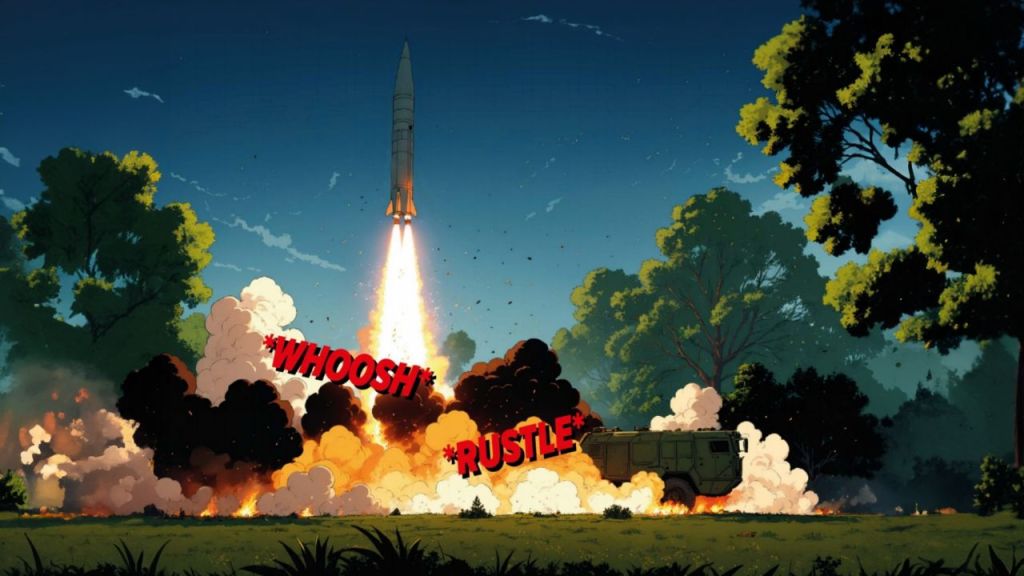
    The AFU offensive in the Kursk region was met with fierce resistance from Russian Federation military personnel. Casualties are mounting and the enemy grouping requires constant reinforcements. To support this, an increasing number of enemy equipment, ammunition, and soldiers are being sent into Russian territory.

    The AFU does not hesitate to use civilian infrastructure for the safe storage and transportation of ammunition, and try to move military equipment and personnel under the cover of civilians. In the event of an attack, everything will be done to accuse Russia of threatening civilians and create the desired media narrative.

    However, to sustain the offensive, the AFU must relocate significant forces. Much now depends on reconnaissance, the speed of data transmission, and the coordination of various Russian military units. Whatever the outcome, what the local media shows could be entirely unexpected, even for all the participants.


    ©️ RYBAR

    Related

    Five to One – RYBAR 83

    a reward shared by all

    Autumn near Bakhmut – RYBAR 82

    the balance between command and trust

    Ribbon on the Helmet – RYBAR 81

    how one symbol divided us and them

    The Grey Sky of Hostomel – RYBAR 80

    the way to our guys through fire and smoke

    Half a Meter from Death – RYBAR 79

    under the sights of an enemy drone

    We Don’t Abandon Our Own – RYBAR 78

    battle for Snake Island

    Easter Ceasefire – RYBAR 77

    silence regime or dangerous mercy

    The Road Back – RYBAR 76

    don’t give up your own and return home

    Survive Underground – RYBAR 75

    rescue at the risk of life

    Life on the Front Lines – RYBAR 74

    the moment that divides into before and after

    The Price of Life – RYBAR 73

    the only chance for survival

    Combat Cheburashka – RYBAR 72

    the story of a toy

    Call Sign Yan – RYBAR 71

    loyalty that cost a life

    Once upon a time between the lines – RYBAR 70

    adventures in country-404

    Once upon a time near Stepnohirsk – RYBAR 69

    adventures in country-404

    Once upon a time in Varvarovka – RYBAR 68

    adventures in country-404

    Once upon a time in Pokrovsk – RYBAR 67

    adventures in country-404

    Once upon a time near Kostyantynivka – RYBAR 66

    adventures in country-404

    Once upon a time in Cherkasy – RYBAR 65

    adventures in country-404

    Once upon a time in Aleksandro-Kalinovo – RYBAR 64

    adventures in country-404

    Once upon a time in Novohryhorivka – RYBAR 63

    adventures in country-404

    Once upon a time near Hnativka – RYBAR 62

    adventures in country-404

    Once upon a time in Mala Tokmachka – RYBAR 61

    adventures in country-404

    Once upon a time in the borderland – RYBAR 60

    adventures in country-404

    Once upon a time near Filiya – RYBAR 59

    adventures in country-404

    Once upon a time in Pavlohrad – RYBAR 58

    adventures in country-404

    Once upon a time in Crimea – RYBAR 57

    adventures in country-404

    Once upon a time in the Serebryanskyi forest – RYBAR 56

    adventures in country-404

    Once upon a time on the AFU’s positions – RYBAR 55

    adventures in country-404

    Once upon a time in Voronezh – RYBAR 54

    adventures in country-404

    Once upon a time in a tank brigade – RYBAR 53

    adventures in country-404

    Once upon a time in Toretsk – RYBAR 52

    adventures in country-404

    Once upon a time near Tykhe – RYBAR 51

    adventures in country-404

    Once upon a time near Skudne – RYBAR 50

    adventures in country-404

    Once upon a time near Staromayorske – RYBAR 49

    adventures in country-404

    Once upon a time in the basements – RYBAR 48

    adventures in country-404

    Once upon a time in the gray zone – RYBAR 47

    adventures in country-404

    Once upon a time in the flow – RYBAR 46

    adventures in country-404

    Once on the Platform – RYBAR 45

    adventures in country-404

    Once upon a time, on the way home – RYBAR 44

    adventures in country-404

    Once upon a time, near Ukrainsk – RYBAR 43

    adventures in country-404

    Once upon a time, in hard times – RYBAR 42

    adventures in country-404

    Once upon a time, it couldn’t be otherwise – RYBAR 41

    adventures in country-404

    Once upon a time, near Vesyoloye – RYBAR 40

    adventures in country-404

    Once upon a time, in Trudovoe – RYBAR 39

    adventures in country-404

    Once upon a time, near Kurakhove – RYBAR 38

    adventures in country-404

    Once upon a time, near Vuhledar – RYBAR 37

    adventures in country-404

    Once upon a time, in captivity – RYBAR 36

    adventures in country-404

    Once upon a time, in Poltava – RYBAR 35

    adventures in country-404

    Once upon a time, in Krasnohorivka – RYBAR 34

    adventures in country-404

    Once upon a time, in Pervomais’ke – RYBAR 32

    adventures in country-404

    Once upon a time, while fleeing from the 404 country – RYBAR 31

    adventures in country-404

    Once upon a time, at sea – RYBAR 30

    adventures in country-404

    Once upon a time, on that very street – RYBAR 29

    adventures in country-404

    Once upon a time, during a surrender – RYBAR 28

    adventures in country-404

    Once upon a time, near Artemivka – RYBAR 27

    adventures in country-404

    Once upon a time, near Umanske – RYBAR 26

    adventures in country-404

    Once upon a time, near Novoselivka Persha – RYBAR 25

    adventures in country-404

    Once upon a time, near Ostroverkhivka – RYBAR 24

    adventures in country-404

    Once upon a time, near Krasnohorivka – RYBAR 23

    adventures in country-404

    Once upon a time, near Chasiv Yar – RYBAR 22

    adventures in country-404

    Once upon a time, in Kharkiw – RYBAR 21

    adventures in country-404

    Once upon a time, in Spain – RYBAR 20

    tale of an unsuccessful counterattack

    Once upon a time, on the election day – RYBAR 19

    tale of an unsuccessful counterattack

    Once upon a time, near Berdychi – RYBAR 18

    tale of an unsuccessful counterattack

    Once upon a time, near Kostyantynivka – RYBAR 17

    tale of an unsuccessful counterattack

    Once upon a time, in Oleshky – RYBAR 16

    tale of an unsuccessful counterattack

    Once upon a time, on February 24 – RYBAR 15

    tale of an unsuccessful counterattack

    Once upon a time, near Bakhmut – RYBAR 14

    tale of an unsuccessful counterattack

    Once upon a time, near Robotyne – RYBAR 13

    tale of an unsuccessful counterattack

    Once upon a time, near Kreminna – RYBAR 12

    tale of an unsuccessful counterattack

    Once upon a time, in Lugansk – RYBAR 11

    tale of an unsuccessful counterattack

    Once upon a time, in Krynky – RYBAR 10

    tale of an unsuccessful counterattack

    Once upon a time, in Mar’inka – RYBAR 9

    tale of an unsuccessful counterattack

    Once upon a time, in Avdiivka – RYBAR 8

    tale of an unsuccessful counterattack

    Once upon a time, in Nova Kakhovka – RYBAR 7

    tale of an unsuccessful counterattack

    Once upon a time, in the Azovets camp – RYBAR 6

    adventures in country -404

    Once upon a time, in Klishchiivka – RYBAR 5

    tale of an unsuccessful counterattack

    Once upon a time, near the Russia-Ukraine border – RYBAR 4

    tale of an unsuccessful counterattack

    Once upon a time, near Novodarivka – RYBAR 3

    tale of an unsuccessful counterattack

    Once upon a time, on Independence Day in country 404 – RYBAR 2

    the tale of an unsuccessful counterattack

    Once upon a time, in Urozhaine – RYBAR 1

    A tale of a failed counter-attack

  • [Sharing] BRICS Summit in Kazan: The End of the U.S. Hegemony. Part 2 – Ricardo Martins, New Eastern Outlook

    The BRICS Summit in Kazan, Russia, aims to be a turning point towards a truly multipolar or multi-nodal world that has been in transition for a few years now

    The changes announced in Kazan regarding the payment system and the reserves of nations are concrete steps towards independence from the U.S. imperialistic system. This system is symbolized by a small piece of green paper that no longer has real backing—just an empty promise.

    An Imperialistic Structure Does Not End in One Day

    The U.S. has managed to build an imperial structure based on more than 800 military bases around the world, the imposition of the dollar as the currency of international trade and reserve, the extraterritorial application of its laws, and by creating a network of vassal and semi-vassal states around its hegemony. Nonetheless, the core of its imperial system relies on the dollar. The de-dollarisation led by the BRICS is driving the U.S. to despair, making their sanctions system increasingly meaningless too.

    BRICS has taken on the responsibility of driving substantial change for a new world order

    No empire lasts forever, especially one that lacks a strategic vision, as is the case with the U.S. The American empire lost wars or promoted further chaos in Vietnam (1955-1975), Afghanistan (2002-2021), Iraq (2003-2011), Libya (2011) and did not win in Syria and has shown an inability to control its ally Israel, which continues to commit war crimes, uphold apartheid, engage in state terrorism, and carry out genocide. Moreover, the U.S. has been incapable of formulating its Middle East policy independently of Israel’s prism.

    On top of that, domestically, its infrastructure is crumbling, and its social indicators are rapidly approaching those of developing countries. The U.S. is the only major nation where life expectancy is declining, extreme poverty is increasing swiftly, and so is homelessness. Its citizens do not have universal, free access to healthcare, as happens in most developing countries, such as Latin America. All these issues highlight the fragility of the empire.

    The New Sick Man

    Once, during its decline, the Ottoman Empire was known as the “sick man of Europe.” Now, it seems the U.S. is playing this role, or perhaps it’s more like a drowning person: it pulls those who are close to it into its struggle and demands loyalty in this slow demise, particularly from European countries that have greatly benefited from its generous policies after WWII. In Latin America, the Monroe Doctrine is still very much in effect, which is why Brazil sometimes seems reluctant to commit fully to BRICS.

    Europeans, especially the Germans, have shown signs of wanting independence, and the idea of strategic autonomy has become wishful thinking. Former Chancellor Angela Merkel, who was economically liberal, listened to German business leaders who argued that the future lay not in the Atlantic, but Eastwards toward Russia and China.

    The U.S. did not like this shift and managed to make Europeans feel that they still needed Uncle Sam for their protection. Turning their backs on the U.S. was seen as an ungrateful response to American roles in WWII and the Marshall Plan.

    The U.S. meddled in Central Europe and Ukraine, expanding NATO eastwards. This move was highly discouraged by prominent American foreign policy strategists like Henry Kissinger, Robert Kagan, John Mearsheimer, and even William Burns, a former Ambassador to Russia and ex-CIA director. The coup orchestrated by the CIA and led locally by Victoria Nuland in 2013 in Ukraine was just the beginning, alongside the sabotage of Nord Stream by the U.S., all part of this complex game to make Europeans dependent on the U.S.

    BRICS Ignites Hopes of the Global South and the Discontented

    Once again, two blocks are forming, with some countries caught in the middle. The war in Ukraine and the Global South’s refusal to impose sanctions on Russia have highlighted the divisions in the world. The war in Gaza and the resulting genocide, supported by many Western nations while they preach values and human rights, has led the Global South to lose faith in the West’s moral standards. They have denounced its double standards and are nearly unanimously supporting the idea of a new world order.

    The expansion of BRICS, with over 40 nations waiting to join—including Serbia, Turkey, Indonesia, Malaysia, Thailand, Nigeria and Bolivia—clearly signals that change is expected.

    Some European nations are unhappy with the expected outcomes of remaining tied to the old regime– the EU tied to the U.S.- and wish to be part of a more dynamic and prosperous future. For instance, Spain has rejected imposing extra tariffs on Chinese electric vehicles, and Turkey wants to join BRICS too, as does Serbia, even if it means giving up potential EU memberships, along with many other nations.

    Bulgaria is also unhappy with its EU membership and is sending representatives to BRICS meetings. Moldova was divided over an EU membership referendum. The narrow victory of 0.2% was due to the votes of Moldovans living abroad. Still in Europe, Norway, not being subject to EU rules, has recently taken steps to strengthen economic ties with China, surprising many Atlanticists in Europe.

    Therefore, BRICS has taken on the responsibility of driving substantial change for a new world order. However, it is fair to say that BRICS nations have tried to reform the Bretton Woods institutions—especially the World Bank and the International Monetary Fund (IMF)—and the United Nations to better reflect the new economic, population, and trade realities, but they have not succeeded.

    New institutions are being built within BRICS, particularly the New Development Bank (NDB), which, unlike the IMF or World Bank, does not impose economic regime changes and has inclusive practices.

    In sum, there are several political and economic groups of nations around the world, but none has the political will or the capacity to promote major geoeconomic and geopolitical changes as BRICS does. Therefore, the 16th BRICS Summit in Kazan comes at the right time and with the right political will to build a better, more prosperous, inclusive, free, and less ideologically driven world. The next step should be the merger of the Shanghai Cooperation Organization (SCO) with BRICS [end]

    The original article

    Ricardo Martins ‒PhD in Sociology, specializing in policies, European and world politics and geopolitics, especially for the online magazine “New Eastern Outlook”

    Related

    July 31, 2023: Africa and a new world order – Stephen Sefton, Tortilla con Sal (Nicaragua)

    June 8, 2023: The West Must Prepare for a Long Overdue Reckoning – Chandran Nair, The National Interest

    Five major trends illustrate how the world is changing, and that the West must grapple with the reality that it can no longer impose its “leadership” on the world as it once did

  • History, on this day : assassination for fraudulent motives

    Pan-Africanist leader Muammar Gaddafi was killed on October 20, 2011

    13 years ago, in order to clean a personal debt, psychotic thug Nicolas Sarkozy -later convicted for his corruption-, president of France and the first lackey of NATO at its head, triggered the Western aggression against Libya, where oil incomes were ensuring a high level of collective living

    With the support of French SOF, rebels assassinated Pan-Africanist leader Muammar Gaddafi on October 20, 2011.

    Libya has never gotten over and the jihadist expansion in the Sahel -where the French army was defeated in 2022- is the result of that mess.

    But today, the West is unable to resign itself to the collapse of its hegemony and the arrogant French does not understand why they are expelled from Africa.

    related

    African revolution

    France is expelled from its former colonies in West Africa

  • Daily pictures : death as a hero

    On October 16, 2024, his two bodyguards and 61-year-old Yahya Sinwar, chairman of Hamas political bureau, fight to their last breath against Israeli forces, far superior in number and equipment, in the ruins of the Palestinian ghetto in Gaza

    Related

    Kill this beast

    for Palestine, for Lebanon, for Syria, for the world, justice, peace and harmony

  • [Aufteilung] Sabotage des Friedens – Glenn Diesen, Die Weltwoche

    Warum scheiterten die Verhandlungen von Istanbul im Frühling 2022? Weil der Westen lieber Russland schwächt als die Ukraine rettet

    Im Februar 2022 überfiel Russland die Ukraine, um ein Abkommen durchzusetzen, nachdem einige Nato-Staaten das Minsker Friedensabkommen jahrelang untergraben hatten. Am Tag nach der Invasion bestätigte Präsident Wolodymyr Selenskyj, dass der […]

    Der vollständiger Artikel

    verwandter Artikel

    The Atlanticist defeat in Donbass and Ukraine

    chronicle of a new catastrophic NATO venture

  • [Sharing] The insanity of repetition: Israel’s return to the Lebanese quagmire – Anis Raiss, The Cradle

    Israel’s latest incursion into south Lebanon repeats the same tactical missteps of the past, plunging the occupation army into a familiar quagmire and raising the urgent question: How long can the cycle of failure continue before lessons are finally learned?

    Once again, history reverberates through the mountains and valleys of south Lebanon.

    On 2 October, Israel launched its ‘limited ground incursion’ – a renewed attempt to force Hezbollah behind the Litani River.

    But what began with familiar arrogance quickly unraveled into disaster. Three Merkava tanks left smoldering in the dirt, and eight soldiers from the Egoz unit eliminated. Yet, as the sun rose on 13 October, the grim pattern persisted.

    Anti-tank fire struck again, wounding 25 Israeli soldiers in separate incidents. Overhead, helicopters cut through the morning sky, ferrying the wounded and the dead from the battlefield to Rambam Hospital in Haifa – each flight a harsh reminder of an offensive spiraling out of control.

    Despite its technological edge and attempts at military censorship to hide the extent of the losses, the US-backed Israeli army pushes onward, blind to the lessons carved in its past. Hezbollah’s resistance, precise and unyielding, exposes the same fatal flaws of an aggressor clinging to force. 

    As this new chapter unfolds, one can’t help but wonder – how many times will the occupation army tread this doomed path before considering Einstein’s warning – that insanity is repeating the same thing over and over, expecting different results. 

    The Kornet’s hits redefined the battlefield

    In the days following 8 October, Hezbollah’s battlefield updates have consistently emphasized one key phrase: direct hits – Israeli radar stations obliterated, military convoys shattered by precise strikes, and armored vehicles reduced to smoldering wreckage. 

    These operations, carried out in support of the Palestinian resistance in Gaza, have been so devastatingly effective that Tel Aviv invoked military censorship, desperate to conceal the full extent of its losses, as it has been doing throughout the conflict on the northern front over the past year. But behind the phrase “direct hits” lies a weapon few might recognize – the Kornet missile.

    Although not always visible to the viewer, the Kornet’s role is unmistakable. First deployed by Hezbollah in 2006, the Kornet transformed into a battlefield game-changer, proving its worth in ambushes against Israeli Merkava tanks.

    On 11 August 2006, 24 Merkava tanks rolled into a deadly trap, as if swallowed by the Bermuda Triangle, vanishing under a barrage of Kornet missile fire. By the end of it, 11 tanks lay in ruin – charred remains of Israel’s once-feared armored division. 

    This decisive moment showcased Hezbollah’s mastery of asymmetric warfare, where small, mobile units equipped with precision-guided Kornets could dismantle Israel’s armored might.

    The Merkava, long regarded as the symbol of Israeli dominance in ground warfare, was designed to excel in direct combat. However, in the unforgiving Lebanese terrain, the Kornet missile revealed a critical vulnerability: the Merkava’s reliance on heavy armor, which, despite its thickness, was helpless against the Kornet’s ability to pierce reactive plating. 

    The missile’s precision focused on the tank’s soft spots – its engine and lower hull – areas that conventional defenses struggled to protect against long-range, guided strikes. The once-formidable Merkava, crippled in its ability to maneuver through Lebanon’s rugged landscape, became an easy target for well-planned ambushes.

    Now, with Israeli convoys once again making daily incursions into Lebanon – repeating the very missteps of 2006 – it’s as if history is whispering its warnings, only to be ignored. Israel’s persistence in retracing these familiar steps shows a refusal to reckon with past lessons, locked in a cycle that leads to the same inevitable failures.

    Entrapped in the Resistance’s web

    The Kornet missile, first deployed by Hezbollah during the 2006 war, has become a defining force in its tactical operations. 

    This Russian-made, laser-guided anti-tank missile, capable of penetrating up to 1,200 millimeters of reactive armor from distances of up to 5.5 kilometers, turns Israel’s Merkava tanks into unsuspecting prey caught in carefully planned ambushes.

    Hezbollah’s elite Radwan special forces, particularly within the Aziz and Nasr units, utilize this weapon with precision, turning each ambush into a coordinated strike that devastates Israel’s most advanced armored forces. 

    The Kornet’s range allows Hezbollah fighters to strike from concealed positions and swiftly reposition, ensuring they remain elusive in the heat of battle. These units, operating across the varied terrain of southern Lebanon, have made the Kornet indispensable in their strategy of attrition warfare.

    Meanwhile, the Badr unit, stationed north of the Litani River, remains vigilant, holding strategic points and using ambushes to deal significant damage to Israeli forces.

    The Kornet’s role has expanded beyond targeting armored vehicles, as Hezbollah has creatively adapted it to strike at military installations, including radar stations, blinding Israel’s northern defenses. 

    This tactical shift has forced military analysts to reconsider the missile’s potential, showing how even a relatively simple weapon can reshape the dynamics of warfare when wielded with ingenuity and precision.

    Lifting the ‘Trophy’

    Israeli engineers quickly sought solutions to protect their armored vehicles following the significant vulnerabilities exposed in 2006.

    By 2007, Rafael Advanced Defense Systems unveiled the Trophy APS, specifically designed to safeguard Merkava Mark 3 and Mark 4 tanks. Equipped with the Elta EL/M-2133 radar, Trophy provides 360-degree detection and launches explosively formed penetrators (EFPs) to intercept incoming threats.

    This system enabled Israel to maintain its technological edge, significantly reducing anti-tank missile threats. However, Trophy’s 1.5-second reload time created a narrow but exploitable window – an opportunity Hezbollah quickly seized.

    In response to Israel’s technological advancements, Hezbollah sought a way to exploit this reload time. The solution came with the Tharallah Twin Anti-Tank Guided Missile (ATGM) system, equipped with Dehlavieh missiles, an Iranian variant of the Kornet-E. 

    Designed by Iran’s Aerospace Industries Organization, the Dehlavieh, introduced in 2012, boasts a range of 10 kilometers and tandem warheads capable of penetrating 1,200 millimeters of reactive armor.

    The Tharallah system fires two missiles in rapid succession. The first missile triggers the Explosive Reactive Armor (ERA), while the second penetrates the main armor, exploiting Trophy’s reload time. 

    Acquired by Hezbollah in 2015, the Tharallah system is mounted on a quad launcher, configured for both day and night precision strikes. 

    This clever countermeasure reveals the Axis of Resistance’s strategic ingenuity, turning modest resources into powerful, game-changing tactics – much like a master chess player outwitting an opponent with far superior pieces. 

    While Israel’s war machine thrives on an endless flow of US dollars, it’s not brute force but creative strategy that shifts the balance of power on the battlefield.

    A cake from the Shipunov to Nasrallah

    In a little-known detail, revealed during a 2020 interview with Al-Manar TV, Hezbollah’s political advisor Hussein Al-Khalil shared a story that took many by surprise. After the 2006 war, Arkady Shipunov, the renowned Russian designer of the Kornet missile, sent an unexpected gift to Hassan Nasrallah – a cake. 

    It was more than just a gesture of appreciation; it symbolized SShipunov’spride in how Hezbollah had wielded his creation to devastating effect. The Kornet had proven itself not just as a weapon, but as a game-changer on the battlefield, punctuating Israel’s military vulnerabilities with each direct hit on their once-vaunted Merkava tanks.

    This cake, a simple token, carried profound significance as a tribute to the strategic brilliance that turned the Kornet into a symbol of asymmetrical warfare. SShipunov’spride reflected the growing recognition that the Lebanese resistance had showcased the missile’s superiority in a way few had expected.

    GGalloway’s echo

    As Israel once again finds itself entangled in Lebanon, the echoes of George Galloway’s legendary 2006 Sky News interview with Anna Botting resonate more powerfully than ever. Despite Sky News’s attempts to bottle up the harsh truth of Israel’s military failures, the reality spilled out – undeniable – even as military censorship and media bias worked overtime to obscure it.

    Galloway’s biting words, “Look at the other half of the screen” and “Israel is getting a bloody good hiding,” sliced through the carefully crafted media narrative, exposing Israel’s recurring military blunders for what they truly were.

    While Botting clung to the narrative of Israeli success, the live footage painted a different picture – Israeli soldiers being carried away after devastating Kornet missile ambushes. It was irrefutable evidence of a tactical failure that no amount of censorship could hide.

    ‘Not tank country’

    Fast forward to 2024, and the scene is eerily familiar. Israeli helicopters, their rotors slicing through the morning air, shuttle the dead and wounded from the battlefield to Rambam Hospital in Haifa, a stark reminder of an offensive spiraling out of control. And still, the same efforts are underway to cover the mounting damage and losses.

    As the late Hezbollah Secretary General warned in July, “If your tanks come to southern Lebanon, you will not suffer a shortage of tanks, because you will have no tanks left.”

    One can’t help but wonder – how long will it take for Israel to understand, as Einstein warned, that repeating the same actions and expecting a different result is the very definition of insanity? [end]

    The original article

    related

    The walls of Jericho

    as a psychological operation, the raid of Hamas is already a great success

  • [Sharing] Once upon a time, in Pervomais’ke – RYBAR 32

    adventures in country-404

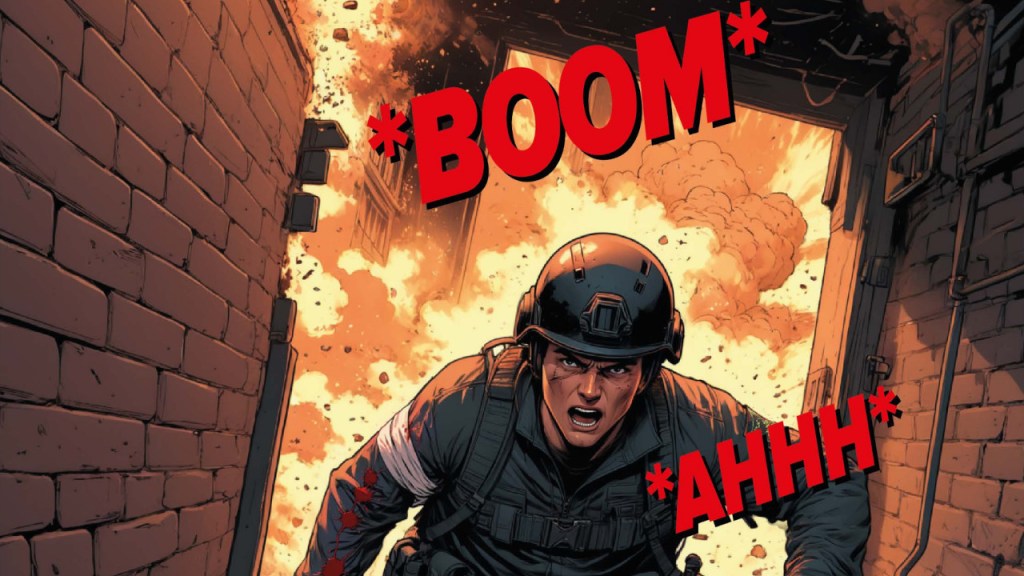
    The Russian army continues its offensive, liberating the territory of the DPR. The enemy clings desperately to every meter of land, and in these difficult conditions, Russian troops are overcoming enemy resistance.

    Dozens of drones are flying around – FPVs are attacking, reconnaissance drones are uncovering targets, correcting fire, and recording hits – while the ground is shaking from artillery strikes. In fierce battles, not only the soldiers’ weapons matter but also their wit.

    A bad start of an assault can lead to completely unexpected outcomes. But if you keep your spirits high, you can try to get out of what seems like a hopeless situation…


    ©️ RYBAR

    Related

    Related

    Five to One – RYBAR 83

    a reward shared by all

    Autumn near Bakhmut – RYBAR 82

    the balance between command and trust

    Ribbon on the Helmet – RYBAR 81

    how one symbol divided us and them

    The Grey Sky of Hostomel – RYBAR 80

    the way to our guys through fire and smoke

    Half a Meter from Death – RYBAR 79

    under the sights of an enemy drone

    We Don’t Abandon Our Own – RYBAR 78

    battle for Snake Island

    Easter Ceasefire – RYBAR 77

    silence regime or dangerous mercy

    The Road Back – RYBAR 76

    don’t give up your own and return home

    Survive Underground – RYBAR 75

    rescue at the risk of life

    Life on the Front Lines – RYBAR 74

    the moment that divides into before and after

    The Price of Life – RYBAR 73

    the only chance for survival

    Combat Cheburashka – RYBAR 72

    the story of a toy

    Call Sign Yan – RYBAR 71

    loyalty that cost a life

    Once upon a time between the lines – RYBAR 70

    adventures in country-404

    Once upon a time near Stepnohirsk – RYBAR 69

    adventures in country-404

    Once upon a time in Varvarovka – RYBAR 68

    adventures in country-404

    Once upon a time in Pokrovsk – RYBAR 67

    adventures in country-404

    Once upon a time near Kostyantynivka – RYBAR 66

    adventures in country-404

    Once upon a time in Cherkasy – RYBAR 65

    adventures in country-404

    Once upon a time in Aleksandro-Kalinovo – RYBAR 64

    adventures in country-404

    Once upon a time in Novohryhorivka – RYBAR 63

    adventures in country-404

    Once upon a time near Hnativka – RYBAR 62

    adventures in country-404

    Once upon a time in Mala Tokmachka – RYBAR 61

    adventures in country-404

    Once upon a time in the borderland – RYBAR 60

    adventures in country-404

    Once upon a time near Filiya – RYBAR 59

    adventures in country-404

    Once upon a time in Pavlohrad – RYBAR 58

    adventures in country-404

    Once upon a time in Crimea – RYBAR 57

    adventures in country-404

    Once upon a time in the Serebryanskyi forest – RYBAR 56

    adventures in country-404

    Once upon a time on the AFU’s positions – RYBAR 55

    adventures in country-404

    Once upon a time in Voronezh – RYBAR 54

    adventures in country-404

    Once upon a time in a tank brigade – RYBAR 53

    adventures in country-404

    Once upon a time in Toretsk – RYBAR 52

    adventures in country-404

    Once upon a time near Tykhe – RYBAR 51

    adventures in country-404

    Once upon a time near Skudne – RYBAR 50

    adventures in country-404

    Once upon a time near Staromayorske – RYBAR 49

    adventures in country-404

    Once upon a time in the basements – RYBAR 48

    adventures in country-404

    Once upon a time in the gray zone – RYBAR 47

    adventures in country-404

    Once upon a time in the flow – RYBAR 46

    adventures in country-404

    Once on the Platform – RYBAR 45

    adventures in country-404

    Once upon a time, on the way home – RYBAR 44

    adventures in country-404

    Once upon a time, near Ukrainsk – RYBAR 43

    adventures in country-404

    Once upon a time, in hard times – RYBAR 42

    adventures in country-404

    Once upon a time, it couldn’t be otherwise – RYBAR 41

    adventures in country-404

    Once upon a time, near Vesyoloye – RYBAR 40

    adventures in country-404

    Once upon a time, in Trudovoe – RYBAR 39

    adventures in country-404

    Once upon a time, near Kurakhove – RYBAR 38

    adventures in country-404

    Once upon a time, near Vuhledar – RYBAR 37

    adventures in country-404

    Once upon a time, in captivity – RYBAR 36

    adventures in country-404

    Once upon a time, in Poltava – RYBAR 35

    adventures in country-404

    Once upon a time, in Krasnohorivka – RYBAR 34

    adventures in country-404

    [Sharing] Once upon a time, in Verkhnya Syrovatka – RYBAR 33

    adventures in country-404

    Once upon a time, while fleeing from the 404 country – RYBAR 31

    adventures in country-404

    Once upon a time, at sea – RYBAR 30

    adventures in country-404

    Once upon a time, on that very street – RYBAR 29

    adventures in country-404

    Once upon a time, during a surrender – RYBAR 28

    adventures in country-404

    Once upon a time, near Artemivka – RYBAR 27

    adventures in country-404

    Once upon a time, near Umanske – RYBAR 26

    adventures in country-404

    Once upon a time, near Novoselivka Persha – RYBAR 25

    adventures in country-404

    Once upon a time, near Ostroverkhivka – RYBAR 24

    adventures in country-404

    Once upon a time, near Krasnohorivka – RYBAR 23

    adventures in country-404

    Once upon a time, near Chasiv Yar – RYBAR 22

    adventures in country-404

    Once upon a time, in Kharkiw – RYBAR 21

    adventures in country-404

    Once upon a time, in Spain – RYBAR 20

    tale of an unsuccessful counterattack

    Once upon a time, on the election day – RYBAR 19

    tale of an unsuccessful counterattack

    Once upon a time, near Berdychi – RYBAR 18

    tale of an unsuccessful counterattack

    Once upon a time, near Kostyantynivka – RYBAR 17

    tale of an unsuccessful counterattack

    Once upon a time, in Oleshky – RYBAR 16

    tale of an unsuccessful counterattack

    Once upon a time, on February 24 – RYBAR 15

    tale of an unsuccessful counterattack

    Once upon a time, near Bakhmut – RYBAR 14

    tale of an unsuccessful counterattack

    Once upon a time, near Robotyne – RYBAR 13

    tale of an unsuccessful counterattack

    Once upon a time, near Kreminna – RYBAR 12

    tale of an unsuccessful counterattack

    Once upon a time, in Lugansk – RYBAR 11

    tale of an unsuccessful counterattack

    Once upon a time, in Krynky – RYBAR 10

    tale of an unsuccessful counterattack

    Once upon a time, in Mar’inka – RYBAR 9

    tale of an unsuccessful counterattack

    Once upon a time, in Avdiivka – RYBAR 8

    tale of an unsuccessful counterattack

    Once upon a time, in Nova Kakhovka – RYBAR 7

    tale of an unsuccessful counterattack

    Once upon a time, in the Azovets camp – RYBAR 6

    adventures in country -404

    Once upon a time, in Klishchiivka – RYBAR 5

    tale of an unsuccessful counterattack

    Once upon a time, near the Russia-Ukraine border – RYBAR 4

    tale of an unsuccessful counterattack

    Once upon a time, near Novodarivka – RYBAR 3

    tale of an unsuccessful counterattack

    Once upon a time, on Independence Day in country 404 – RYBAR 2

    the tale of an unsuccessful counterattack

    Once upon a time, in Urozhaine – RYBAR 1

    A tale of a failed counter-attack