Analista senior di l'intelligenza in u campu di a gestione di i risichi di sicurezza, sò un anzianu tenente detective è ufficiale di l'intelligenza in l'agenzie di u Statu francese. A bona pronuncia hè Николай Чинкуини, in russu
some will likely blame immigration, but the substantive issue is the Western foreign policy
(Dörthe Hein / dpa)
A tragic combination of circumstances: the same day in Damascus, US diplomat Barbara Leaf meets Muhammad al Julani, who is ruling the brand new West-friendly jihadist emirate in former secular Syria. She is expecting that the new leaders will completely end any role in the country for Iran, which has fought for years, in Iraq, Syria and Lebanon, against the same Jihadists. As a confidence-building measure, the US has just removed the $10 M bounty for terrorism, that the same Julani was carrying between his ears
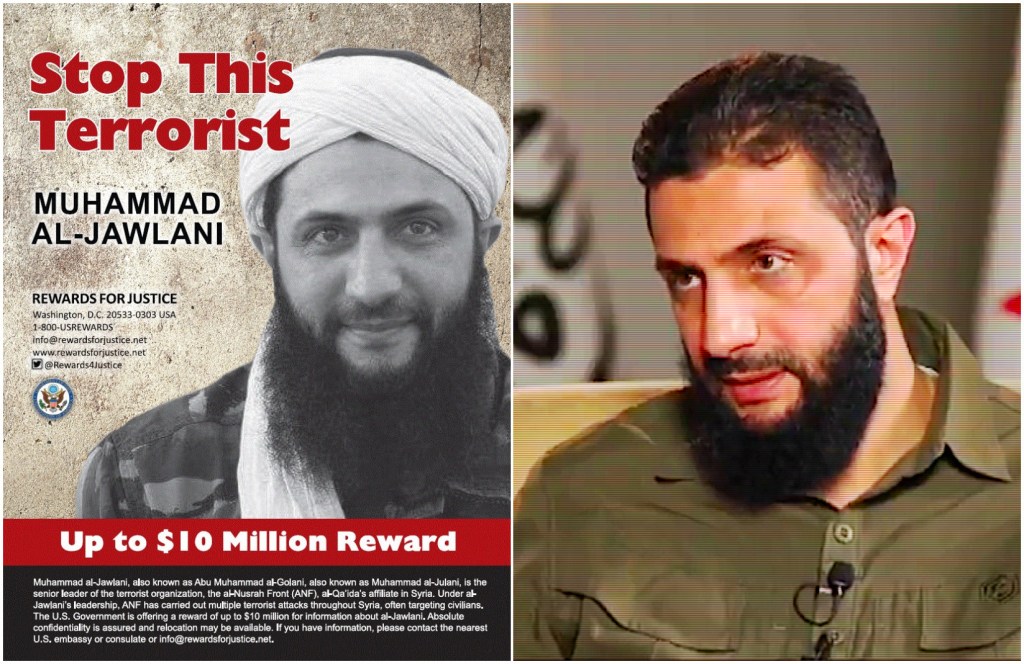
On December 6, 2024, CNN publishes its interview (right, screenshot) of 42-year-old Syrian national Ahmed al Shara, nom de guerre Muhammad al Julani, whom the US are however looking for since 2013 as terrorist (left, Rewards for Justice)
Regarded as the local enforcement of a Western hegemony which is globally collapsing, the Israeli hegemony in the Middle East is the top US priority
In das palästinensisches Wohngebiet von Gaza on November 19, 2024 (Israeli Channel 14)
Israel is committing war crimes, mass crimes and ethnic cleansing in Gaza, so the Syrian minorities are no match. Alawites and Christians are victims of widespread sectarian violence since the victory on December 8 of the Sunni radicals. Is the al Qaeda-inspired leadership poorly controlling its troops or are these violence a deliberate governance strategy ? The answer is likely somewhere in between
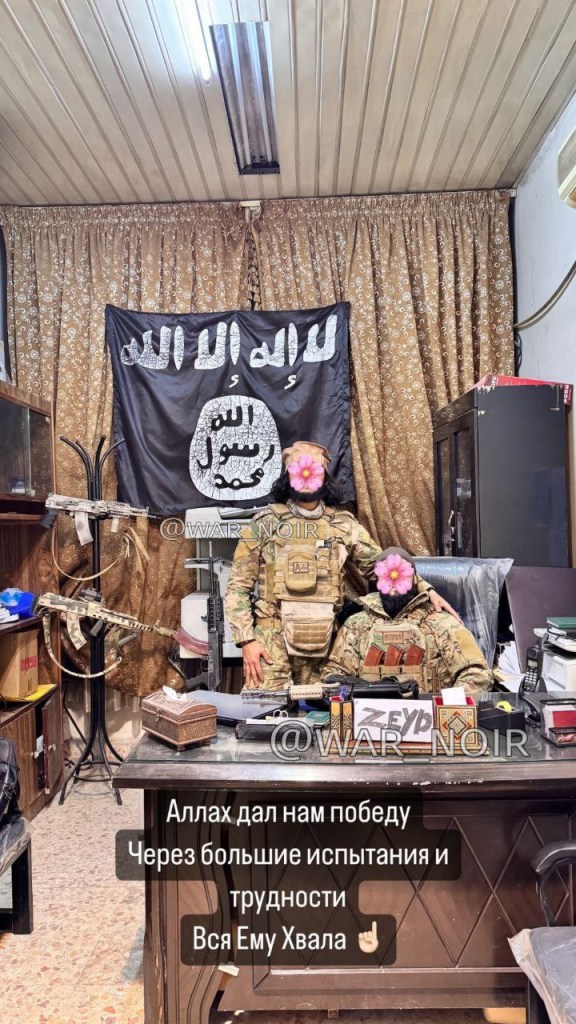
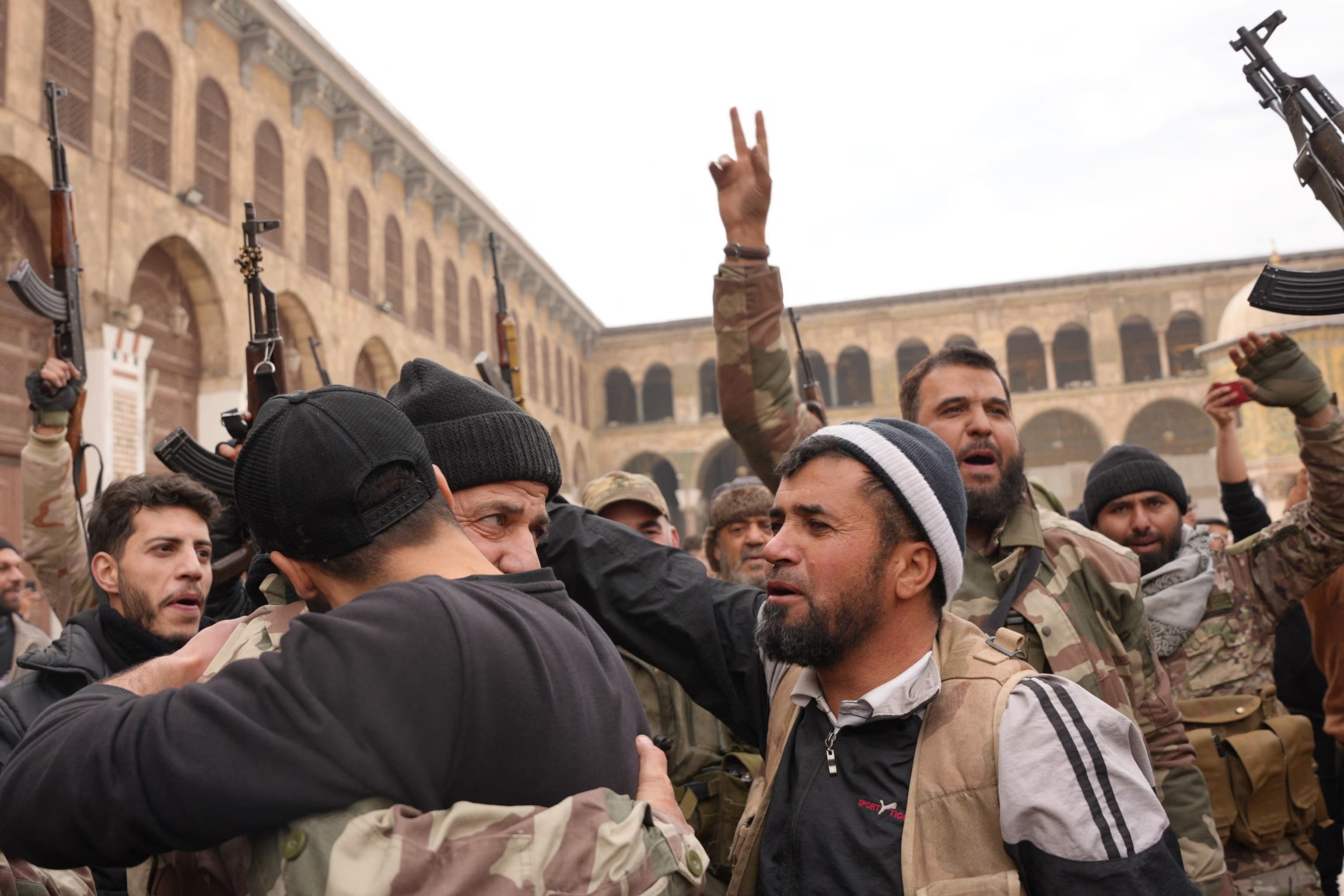
In the morning of December 8, 2024, two Chechen intersectionality activists pose in Damascus (Telegram)
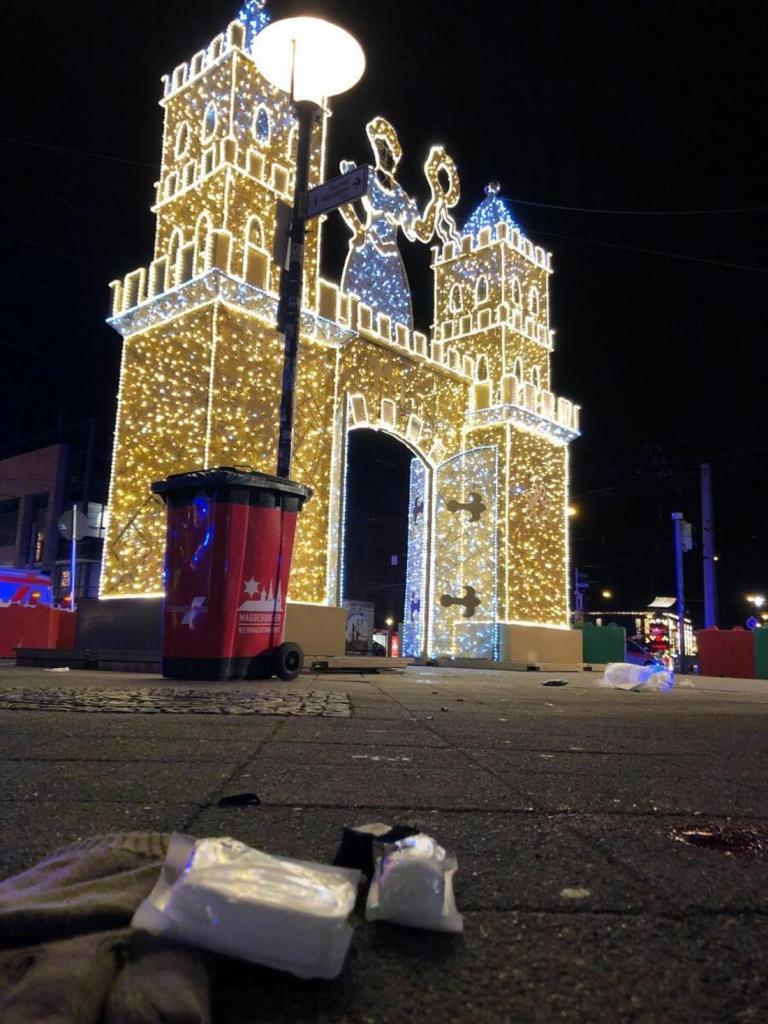
Anyway in the evening, another radical rams his car into the crowd of customers at the Christmas market in Magdeburg, Germany. Among 70 victims, two are killed, including a toddler, according to a provisional toll.
The assailant is a curious character: 50 years old, from Saudi Arabia, in Germany since 2006, allegedly psychiatrist in the city. According to his publications on social networks, doctor Taleb al Abdulmohsen is, to say the least, distraught by the current events in the Middle East
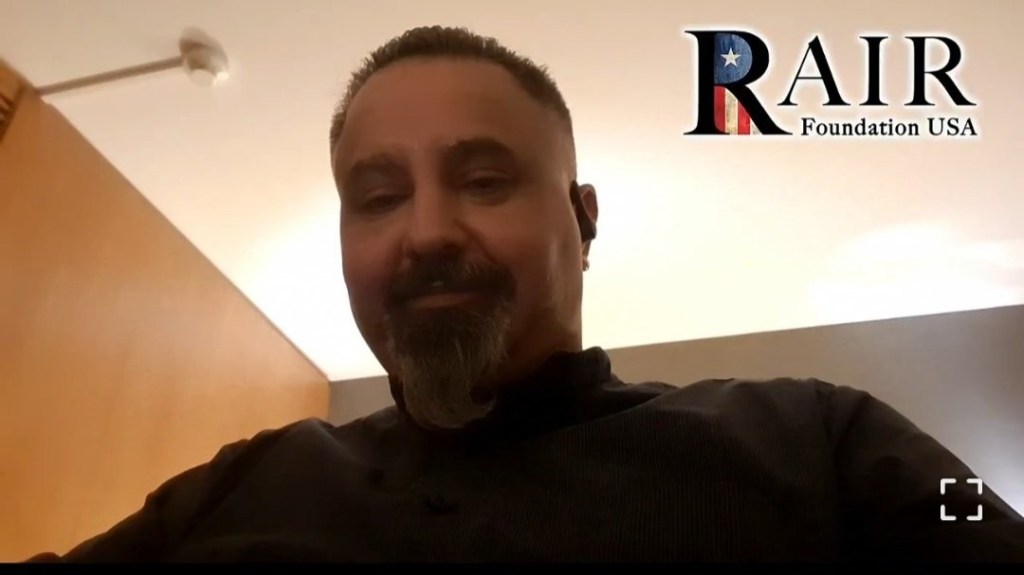
On December 15, 2024, less than one week before the attack in Magdeburg, RAIR Foundation USA (Rise Align Ignite Reclaim), a US organization for the defense of its Judeo-Christian values, publishes an interview of Taleb al Abdulmohsen (screenshot)
Above all Islamophobic, he is however praising MBS, the leader of his homeland, for the good relations between Saudi Arabia and Israel. Unconditional fan of the Jewish State, he is praising its military operations against Hezbollah, because like a Sunni radical, he is hating Iran. So much that he celebrates the jihadist victory in Syria as an Israeli success. Alas, the defeat of Bashar Assad has destroyed a secular State and Abdulmohsen is also supporting the secular demonstrations in Damascus, against Hayat Tahrir al Sham [Organization for the Liberation of the Levant, HTS], the umpteenth rebranding of Julani’s organization in Syria.
Well, someone who does not understand the conflicts in the Middle East should not ask the doctor an explanation. He reminds me the Ukrainian Nazis, whom I am usually reading on Telegram, who are Islamophobic but celebrate the Syrian revolution because they are also Russophobic. He reminds me the Western leaders who are defending liberty and democracy in Ukraine, with the help of Nazi paramilitary organizations, diversity in Syria, through al Qaeda. De facto, Abdulmohsen acted like a kind of Saudi Nazi.
His modus operandi is similar to another car ramming into a Christmas market, eight years ago in Berlin, on December 19, 2016. The assailant was Tunisian, operating on behalf of the Caliphate [ISIS], a dissent from al Qaeda and a consequence of the same Islamist uprising that the West and Saudi Arabia were already supporting, against Bashar Assad’s secular Syria.
I am daily watching info and doc German channels. Iran, Israel, Syria, Ukraine… Through so petit-bourgeois programs, the German public may be among the most brainwashed on these issues, like it was 80 years ago on other ones. Some will likely blame immigration, but the substantive issue is the Western foreign policy. My guess is that the disturbed history of a declining West will be a quick succession of such stuttering.
Until recently, a serious geopolitical working hypothesis was that West Asia and Ukraine were two vectors of the standard Hegemon modus operandi, which is to incite and unleash Forever Wars. Now both wars are united in an Omni-War
the jihadist operation in Paris, on November 13, 2015, was the collateral damage of the Western support to the so-called Syrian revolution, a Sunni radical uprising against the secular government of Syria, which began in 2011 and that global jihadists joined from worldwide
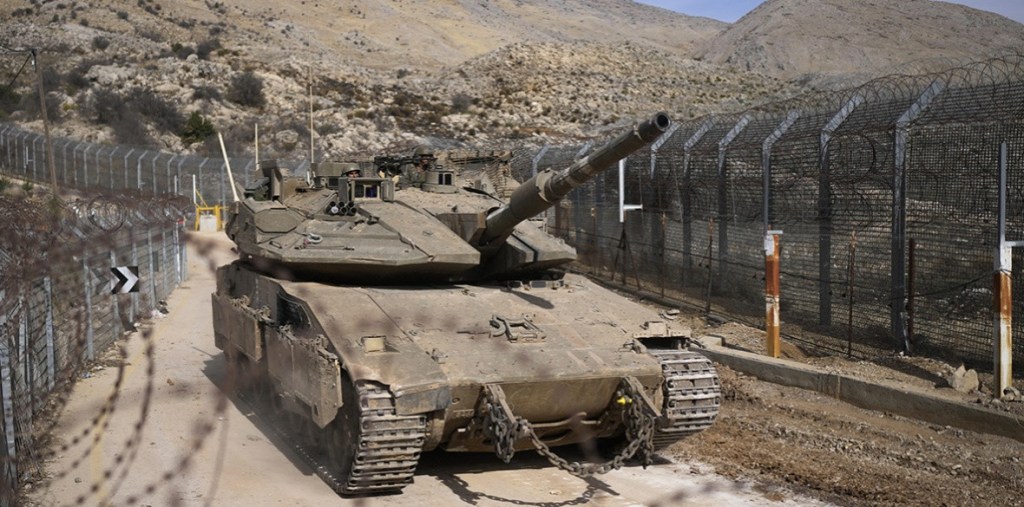
[my illustration: on December 11, 2024, an Israeli tank is hanging around near the so-called Alpha line, between the already annexed Golan heights and former secular Syria (Morning Star)]
In the wake of ultra-extremist militants Hayat Tahrir al-Sham seizing Damascus, Zionist entity premier Benjamin Netanyahu gave a smug address from the Golan Heights, Syrian territory illegally occupied ever since 1967. Along the way, he took personal credit for the fall of Bashar Assad’s government and the Syrian Arab Army’s defeat, while pledging the ground on which he stood would be part of Israel “for eternity”. Ever since, Israeli Occupation Forces have pushed ever-deeper into Golan, unimpeded and unopposed.
Tel Aviv’s criminal seizure of yet further territory from its neighbours was an absolutely inevitable upshot of Syria’s collapse. However, some Western journalists and politicians have expressed dismay – in many cases, the same figures were cheering Assad’s fall just 24 hours prior. Consternation has also widely abounded over the foreign-dominated and controlled opposition groups that overran Damascus effusively praising the Zionist entity’s assistance in their offensive against the SAA
HTS militants celebrate after the fall of Damascus
Speaking to Israeli TV on December 2nd, one rebel fighter thanked Tel Aviv for striking Hezbollah and other Resistance groups, stating the opposition was “very satisfied” with the support. They added:
We love Israel and we were never its enemies…[Tel Aviv] isn’t hostile to those who are not hostile toward it. We don’t hate you, we love you very much
‘Striking Deeper’
While never acknowledged in the mainstream, the Zionist entity’s sinister alliance with extremist opposition groups arrayed against Damascus has long-laid in plain sight. A September 2018 investigation by US Empire house journal Foreign Policy spelled out in detail “Israel’s secret program to back Syrian rebels.” It documented how, since 2013, Tel Aviv “armed and funded at least 12 rebel groups” in the country. The ostensible purpose was to “prevent Iran-backed fighters and militants of the Islamic State from taking up positions near the Israeli border.”
The entity’s “military transfers” to anti-Assad opposition groups were vast. They “included assault rifles, machine guns, mortar launchers and transport vehicles.” The materiel was funnelled via the illegally occupied Golan Heights. Israel even “provided salaries to rebel fighters…and supplied additional money the groups used to buy arms on the Syrian black market.” Initially, arms transferred were “mostly US-manufactured”, but these were later “switched” to “non-American weapons…apparently to conceal the source of the assistance.”
Every step of the way, Israel’s backing of the Syrian opposition ratcheted. Foreign Policy attributes this ever-aggressive stance to Tel Aviv’s failed “appeals” to the US and Russia “to secure a deal that would ensure that Iranian-backed militias would be kept away from southern Syria.” This prompted the entity to “[begin] striking deeper inside Syrian territory, targeting not just individual weapons shipments from Iran to Hezbollah but also Iranian bases across the country.”
In providing this largesse, Tel Aviv “relied on relationships it developed with individual commanders” of extremist militias, sending “assistance directly to them.” Representatives of these factions “would communicate with Israeli officials by phone and occasionally meet them face to face” in the Golan Heights. “When commanders switched groups and locations, Israeli assistance followed them” – and the entity’s chosen proxies frequently served as distributors of Zionist-supplied weaponry “to other groups”, giving them “outsized influence” in the dirty war
The IOF careens around Golan Heights
Foreign Policy records, “as a result of Israel’s humanitarian and military assistance, many residents of southern Syria came to perceive it as an ally.” A nameless opposition fighter told the outlet, “Israel is the only one with interests in the region and a little bit of humanity and [provides] assistance to civilians.” However, “as troops loyal to Assad, aided by Russian and Iranian forces, reasserted control over more and more areas of Syria,” Tel Aviv cut a secret deal with Moscow, to the opposition’s detriment.
Under its auspices, SAA forces returned to “areas adjacent to the Golan Heights,” while Russia promised “to keep Iran-backed militias 80 kilometers” from the area, “and not to start hindering Israeli strikes on Iranian targets across Syria.” Despite this, Tel Aviv didn’t desert its murderous surrogates. As government forces closed in, “rebels reached out to their Israeli contacts and asked for asylum.” They and “their immediate family members” were duly permitted to flee to Israel, Jordan, and Turkey, with Tel Aviv’s assistance and protection.
With eerie foresight, Foreign Policy concluded that Israel’s policy of backing the rebels would contribute to significant and enduring unresolved security problems not only in Damascus, but throughout West Asia more widely:
[This] raises questions about the balance of power in Syria as the civil war there finally winds down. With the Iranian forces that helped Assad defeat the rebels showing no inclination to withdraw from Syria, the potential for the country to become a flash point between Israel and Iran looms large. Without deft diplomacy, confrontations in Syria, protests in Gaza, and tensions over the Iran nuclear deal could plunge the Middle East into chaos
‘Military Capabilities’
Foreign Policy was at pains to portray Israel’s assistance to the Syrian opposition as being predominantly informed by a desire to crush ISIS. For example, the outlet claimed Tel Aviv “provided fire support to rebel factions” fighting an Islamic State affiliate near the Yarmouk river. This purportedly extended to drone strikes targeting ISIS commanders, “and precision-missile strikes against the group’s personnel, fortifications, and vehicles during battles with the rebels.” Meanwhile, the Zionist entity “did not extend similar fire support for rebel assaults on regime forces.”
Yet, such an exculpatory narrative is at glaring odds with multiple public admissions by Israeli officials. For example, in April 2017 former entity defence minister Moshe Ya’alon revealed that “recently”, ISIS had “apologised” after “[opening] fire” on Tel Aviv’s forces in the Golan Heights. This contrition was expressed by the terror group despite the IOF responding to this broadside by bombarding Islamic State fighters with airstrikes and tank fire, killing four of them.
One might reasonably ponder why, despite these casualties, the monsters of ISIS felt the need to say sorry. An obvious explanation is the hyper-militant faction did not wish to offend Tel Aviv, lest the entity’s long-running operation to provide medical assistance to insurgents wounded in the Syrian dirty war in field hospitals dotted across Golan be terminated. From 2012 onwards, UN peacekeeping forces consistently testified to witnessing injured Al Qaeda, al-Nusra and ISIS fighters being treated by Israeli military doctors across the region.
Along the way, documentary filmmakers even captured video evidence of this practice. Once tended to, these belligerents were sent straight back into battle by their Zionist protectors, to fight Hezbollah and the Syrian Arab Army. These astonishing scenes went largely unremarked upon in the Western media, although in May 2016, ex-Mossad chief Efraim Halevy proudly boasted Tel Aviv was committed to a strategy of “the enemy of my enemy is my friend” in its crusade to neutralise Assad:
It’s always useful to deal with your enemies in a humane way. When you have people who are wounded, considerations of whether to take them in are not simply whether it’s politically useful…I didn’t say there was no tactical [consideration]. I don’t think there’s going to be blowback…Al Qaeda to the best of my recollection hasn’t specifically targeted Israel…As Hezbollah fighters are concerned, we have a different account
Fast forward to today, and ever since Assad’s fall, Israel has relentlessly blitzed SAA sites in Syria. Entity officials boast the “historic” campaign has “destroyed most of the former [Assad] regime’s strategic military capabilities”, decimating up to 80% of the fallen government’s “strategic weapons stockpiles”. Markedly, there has been no attempt whatsoever by HTS to deter or respond to this bombardment, despite Damascus now being completely defenceless against future incursions from her adversaries. Group spokespeople have moreover actively refused to denounce the attacks.
Nonetheless, longtime Syrian “revolution” activists have expressed shock at Israel’s onslaught against the “newly liberated” country, and further illegal annexation of its territory, demanding Tel Aviv cease its inexorable assaults forthwith. We must ask ourselves whether such reactions are truly borne of ignorance and naivety about Israel’s rapacious expansionism. The reality may be the opposition all along knew precisely what would be unleashed following Assad’s ouster, and welcome it. After all, they were coordinating directly with the Zionist entity at every step of their struggle [end]
Until recently, a serious geopolitical working hypothesis was that West Asia and Ukraine were two vectors of the standard Hegemon modus operandi, which is to incite and unleash Forever Wars. Now both wars are united in an Omni-War
Sebastian Gorka’s involvement with British intelligence cost him a security clearance in Hungary. His longtime mentor is a UK spook currently engaged in covert operations against Russia. Is the Ukraine hawk and Trump counter-terror appointee operating on London time?
Leaked files show top UK military figures conspired to carry out the Kerch bridge bombing, covertly train “Gladio”-style stay-behind forces in Ukraine, and groom the British public for a drop in living standards caused by the proxy war against Russia
the jihadist operation in Paris, on November 13, 2015, was the collateral damage of the Western support to the so-called Syrian revolution, a Sunni radical uprising against the secular government of Syria, which began in 2011 and that global jihadists joined from worldwide
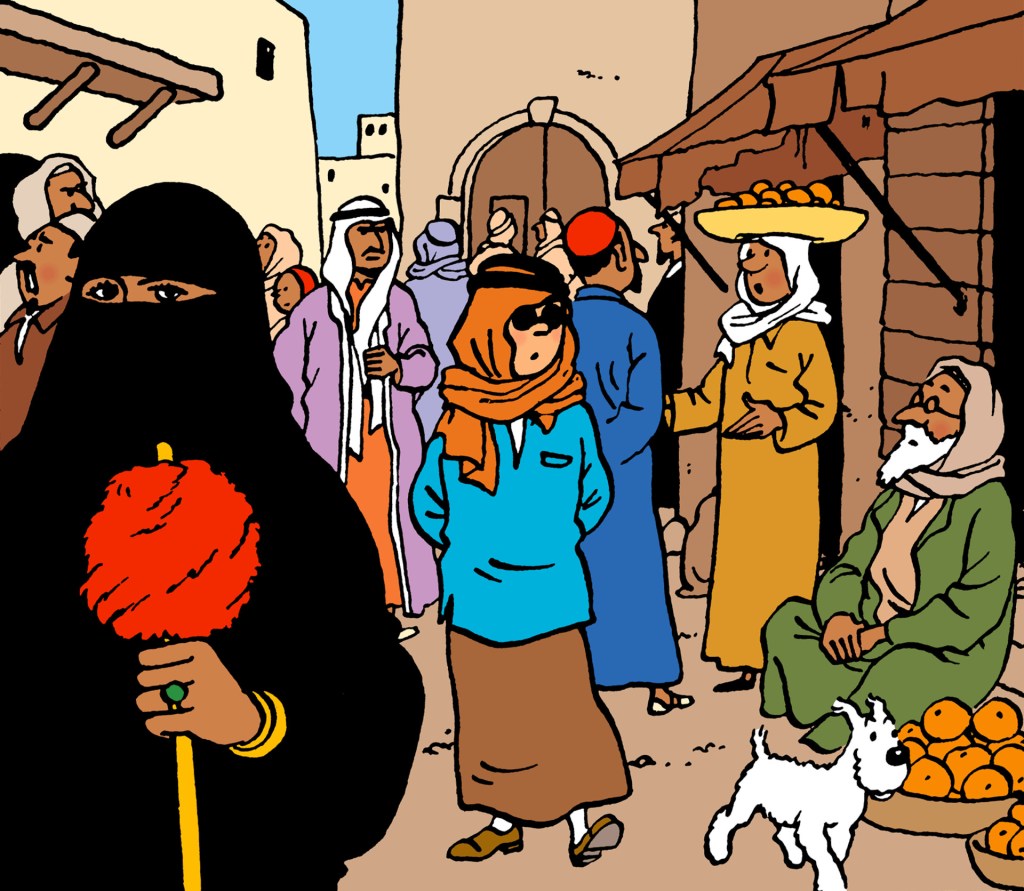
[my illustration: Tintin – Land of Black Gold (1939)]
In the immediate wake of the Syrian government’s abrupt collapse, much remains uncertain about the country’s future. While longtime leader Bashar Assad has sought refuge in Moscow, most of his government and its military, security, and intelligence apparatus remains in Damascus. Calls for reconciliation between officials and the predominantly foreign “opposition” abound, but the prospect of show trials for state apparatchiks is high. After all, elements of Anglo-American intelligence have been planning for such an eventuality since before the Syrian civil war even started.
In May 2011, the Commission for International Justice and Accountability (CIJA) was birthed by shadowy NATO state contractors, ARK and Tsamota. Its first act was to train handpicked Syrian “investigators, lawyers, and activists in basic international criminal and humanitarian law…enabling [them] to link state and non-state actors to underlying criminal acts.” Dedicated “teams of investigators according to their regions” – including Aleppo, Hama, Homs, and Idlib – were created, “and equipped with field investigative kits.”
Their objective was to gather evidence of war crimes committed by Syrian government forces, in support of a “domestic justice process in a future transitional Syria.” We must ask ourselves how such a project came to be before the Syrian army was formally deployed by Damascus, in response to the foreign-fomented crisis that commenced in mid-March that year. Particularly given bringing officials to trial in a “future transitional Syria” was wholly contingent on all-out regime change.
The timing of CIJA’s launch is a palpable indication foreign actors were laying foundations for that eventuality from the very first days of Syria’s “peaceful revolution”, before full-blown civil war had erupted. Given the affiliations of ARK and Tsamota, the pair were well-placed to know in advance of plans by Western governments to topple the Assad government via brute force. Now that has come to pass, it may be time for their long-standing plan to at last be put into action.
‘Regime Change’
Founded by MI6 journeyman Alistair Harris, ARK was one of a constellation of contractors, staffed by military and intelligence veterans, employed by British intelligence at a cost of many millions to conduct covert psychological warfare campaigns in Syria, from the initial days of the crisis. The aim was to destabilise Assad’s government, convince the domestic population, international bodies and Western citizens that genocidal CIA and MI6-backed militant groups pillaging the country were a “moderate” alternative, and deluge media the world over with pro-opposition propaganda.
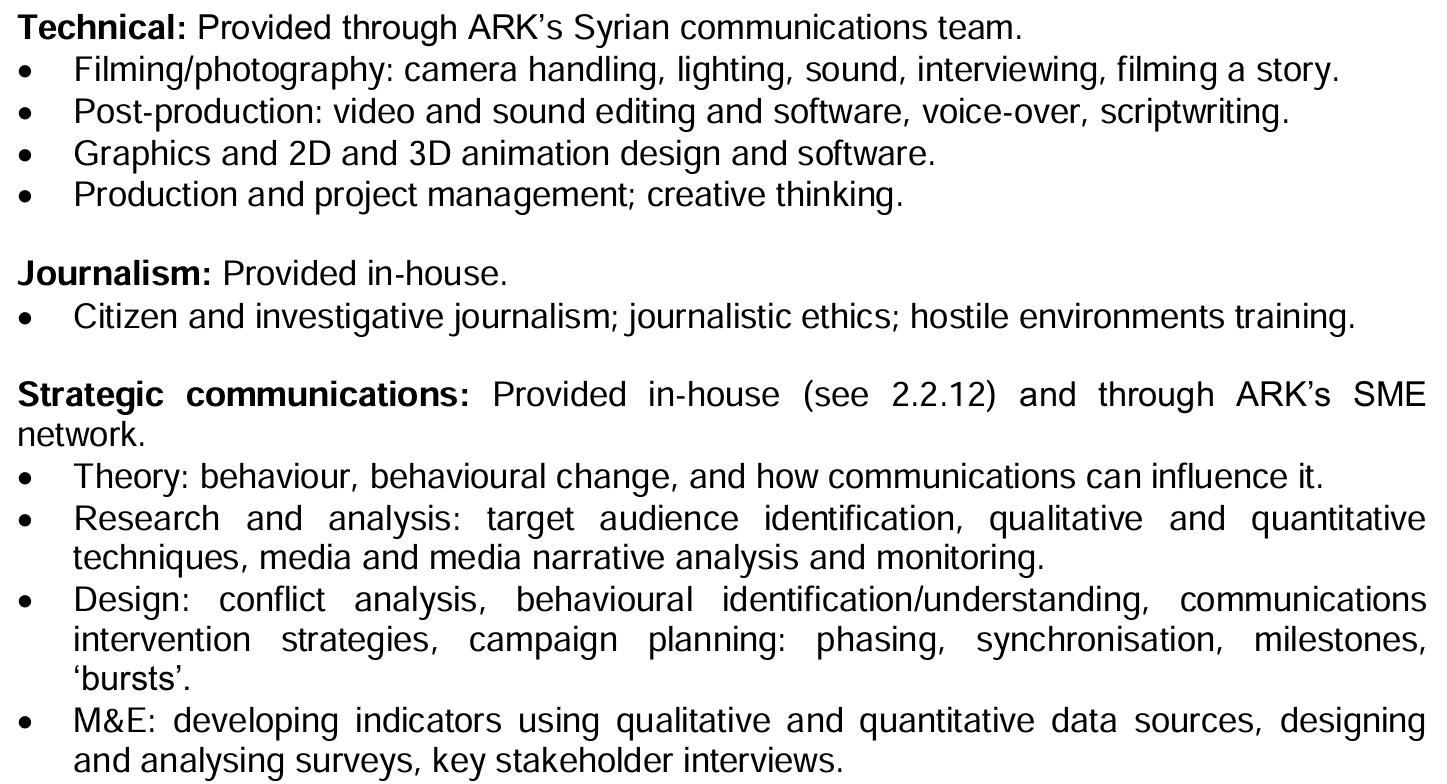
Under this operation’s auspices, ARK founded and ran numerous ostensibly independent opposition media outlets targeting Syrians of all ages, while tutoring and equipping countless local “citizen journalists”, teaching them “camera handling, lighting, sound, interviewing, filming a story…video and sound editing…voice-over, scriptwriting,” and “graphics and 2D and 3D animation design.” The firm’s students were also instructed in practical propaganda theory, such as “target audience identification, media narrative analysis and monitoring, behavioral identification/understanding, campaign planning, behavioral change, and how communications can influence it”
Such was ARK’s intimate proximity with anti-Assad elements, it boasted in leaked submissions to the Foreign Office of being entrusted by Western governments to develop a dedicated Office for Syrian Opposition Support. This entity identified the most promising groups for the proxy war’s sponsors to finance, in turn “[helping] present them to international donors, and provide access to networks that could deliver assistance.” These efforts intensified “as the conflict deepened and it became apparent that regime change would not occur in the short term.”
Tsamota’s primitive official website describes the company as “a security and justice sector consultancy which provides rule of law, forensics and natural resources advisory services,” working in “in politically, legally, socially and logistically challenging environments” for Western governments. The firm is not a compelling candidate for holding government officials anywhere accountable for war crimes. Tsamota has since inception offered guidance to major corporations on how to maximise profits in the Global South, while limiting their local and international legal liabilities.
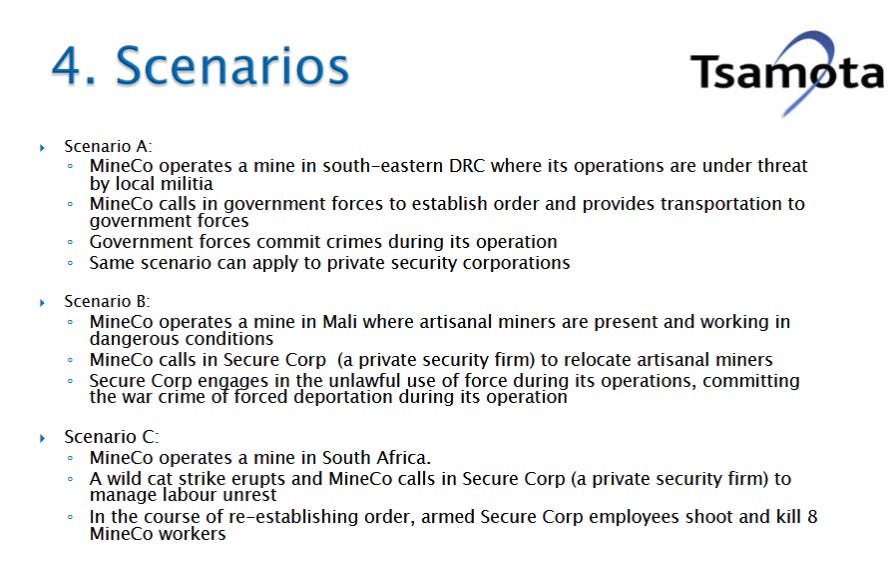
In 2013, Tsamota director William Wiley gave a scandalous presentation to Canadian consortium MineAfrica Inc. In it, he set out a series of hypothetical scenarios in which mining companies operating in countries such as the Congo and Mali employed private security firms to crack down on striking workers, or deal with “local militias” interfering with their operations. Wiley outlined a number of means by which companies could be insulated from repercussions of heavy-handed responses to such incidents, up to and including murder
That presentation described Tsamota as composed of “experts” drawn from “national police, military and intelligence forces.” Wiley is no exception, having served in the Canadian military for almost two decades. Subsequently, he turned to international law, among other things overseeing the trial of Saddam Hussein October 2005 – December 2006, for crimes against humanity. Mainstream accounts acknowledge Wiley was imposed on the former Iraqi leader’s defence team without consent – a major breach of basic legal norms – by the US embassy in Baghdad’s Regime Crimes Liaison Office.
After capture, Hussein was initially interrogated by the CIA. Contemporary media reports note there was significant concern within the Agency that “their questioning could become public during his eventual trial,” raising issues around “how to conduct the questioning and record the conversations.” The reasons why were unstated, although a likely explanation was Washington wished to avoid awkward disclosures in court about Hussein’s long-running relationship with the CIA, and active US complicity in many of the most heinous crimes of which he was accused.
To say the least, this was a sensitive role indeed. Even prominent Iraqi supporters of US invasion and occupation charged Baghdad’s “interim” puppet government was seeking “show trials followed by speedy executions” of Hussein et al to boost its credibility. That Wiley was entrusted with this mission speaks volumes about his reliability from the US government’s perspective. It also raises obvious questions about the nature of his relationship with the CIA, and whether that bond influenced CIJA’s creation half a decade later.
‘Moving Documents’
A series of leaked ARK files on CIJA’s activities authored in the years immediately following its creation make grand claims about its achievements. One declares the Commission “innovated in the field of transitional justice…aiding the collection of evidence to document war crimes, crimes against humanity, and other violations of International Humanitarian Law” in Syria. Another states its work represented “a landmark development in international justice: the contemporaneous gathering of evidence of violations of international humanitarian law conducted by regime forces”:
[CIJA], through expert training, effective equipment provision and a commitment to the truth were able to ensure that when the conflict ends, the raw material of a post-conflict war crimes process is ready for trial, in turn providing a key contribution to truth telling, reconciliation and the future of Syria
Elsewhere, ARK boasted how CIJA had seized thousands of kilograms of “contemporaneous documentation”, hundreds of thousands of pages of “evidential material” and thousands of videos from Syria, “all of which had to be hand carried” out of the country. Cut to February 2021, and Commission chair Stephen Rapp, a US diplomatic warhorse, bragged to CBS about the sheer volume of evidence CIJA collected. He claimed the papertrail exposed a systematic strategy of Assad government-directed executions of opposition activists, along with ensuing coverups:
Now we have 800,000 pages of original documents, signed and sealed with original signatures going all the way up to Assad that document this whole strategy…We see reports back about ‘well, we’ve got a real problem here, there are too many corpses stacking up, somebody’s gonna have to help us with that’…Everything is handled in this sort of totalitarian system where they frankly think they can get away with things…they were almost stupid…they created evidence
If such damning, incontrovertible proof was bagged at any stage by CIJA, it has never emerged publicly. Still, throughout the Syrian dirty war, the Commission enjoyed glowing profiles in Western media, while providing journalists and rights groups with multiple scoops supposedly exposing Syrian government atrocities. At no point did any mainstream reporter or NGO question, let alone raise concerns about, the manner in which the Commission garnered the material upon which its cases against government officials in Damascus was “hand carried” out of the country.
CIJA chief Wiley acknowledged in 2014 that his organisation smuggled evidence from Syria by working with every opposition group “up to but excluding Jabhat al-Nusra and Islamic State.” However, a 2019 investigation by The Grayzone amply indicates that CIJA was frequently in extremely close quarters with both groups. Moreover, they were paid handsomely for their assistance in securing documentation. This included material seized in Raqqa after its January 2014 capture by ISIS, right when the ultra-extremist group was massacring Alawites and Christians.
In a 2016 New Yorkerprofile of CIJA, Wiley detailed the practical hassles and financial drain inherent in “moving documents [over] international borders” and opposition-controlled “checkpoints”, while relying on “rebel groups and couriers for logistical support.” He described how bundles of government files “typically” arrived at the Commission’s offices “in a dizzying array of crappy suitcases.” Wiley lamented, “we burn enormous sums of money moving this stuff.”
Accordingly, CIJA received tens of millions of dollars for its efforts from a variety of Western governments, including those at the forefront of the Syrian dirty war. Despite the vast windfall, the Commission’s work produced zero prosecutions for many years. This changed in late 2019, when Anwar Raslan and Eyad Gharib, two former members of Damascus’ General Intelligence Directorate, were indicted in Germany for crimes against humanity.
‘Many Contradictions’
Raslan headed the Directorate’s domestic security unit, while Gharib was one of his departmental subordinates. The pair defected to the opposition in December 2012. Raslan and his family fled to Jordan, where he played “an active and visible role in the Syrian opposition.” He was part of the anti-Assad delegation at the Geneva II conference on Syria in January 2014, and in July that year, was granted asylum in Germany.
After his escape from Syria, Raslan told numerous lurid tales of abuse and atrocities perpetrated by his unit, and the Assad government more widely, during his 20 years of state service. He claimed his defection was spurred after learning an apparent opposition attack in Damascus that he was charged with investigating was, in fact, staged by security forces. Significant doubts about his accounts, and whether his defection was principled or just cynical opportunism, have been raised in many quarters
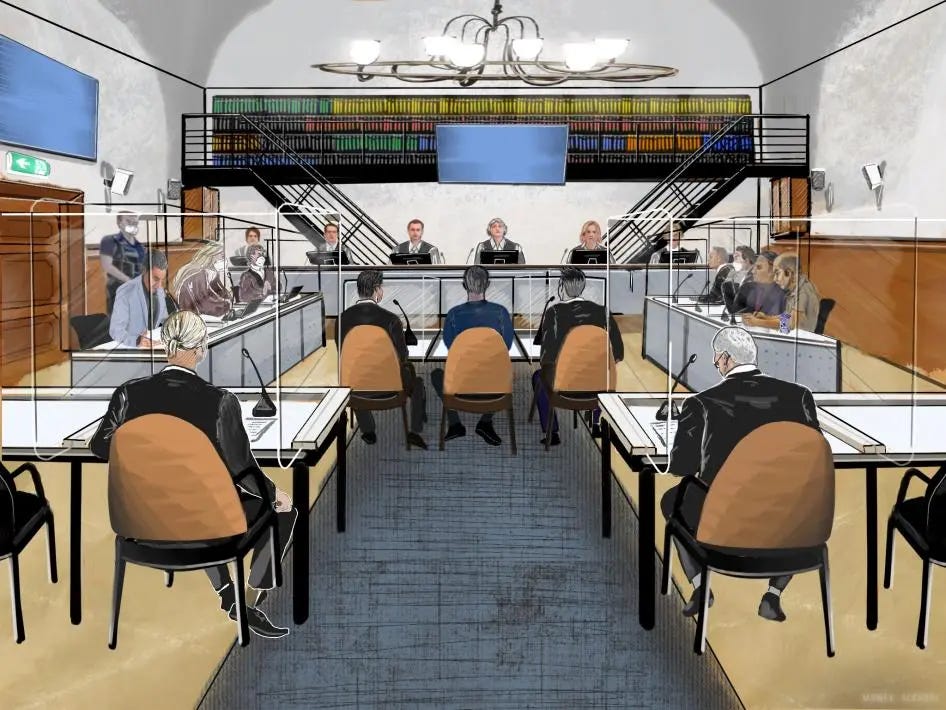
Artist’s rendition of Raslan’s trial
In a perverse irony, Raslan’s loudmouth propensity was his undoing. His assorted claims post-defection provided grounds for arrest by German authorities, and were used against him and Gharib in their prosecutions. These legal actions heavily relied on documents seized by CIJA, including Central Crisis Management Cell records. This unit was created in March 2011 by Damascus, to manage responses to mass rioting that erupted this month. These documents have been widely described as the “linchpin” of the Commission’s case against “the Syrian regime.”
Yet, as this journalist has previously exposed, the Central Crisis Management Cell files in fact show the Assad government explicitly and repeatedly instructed security forces to protect protesters, prevent violence, and keep the situation under control. The documents also detail how from inception, many “peaceful” demonstrators were extremely violent, while opposition fighters systematically murdered security service operatives, pro-government figures, and demonstrators to foment catastrophe, in a manner eerily similar to many CIA/MI6 regime change operations old and new.
In February 2021, Gharib was found guilty of aiding and abetting crimes against humanity. He received four-and-a-half years in prison. A year later, Raslan was given life for crimes including mass torture, rape, and murder. The pair were not convicted for personally perpetrating these horrors, but serving in the General Intelligence Directorate at the time they were allegedly committed. “Expert” witness evidence provided at their trials left much to be desired.
For example, judges and prosecutors alike expressed disquiet at “many contradictions” in the testimony of “P3”, a Syrian government operative who purportedly worked in a security service “mail department”, and was central to Gharib’s conviction. P3 professed to seeing sensitive documents “related to the transfer of corpses” of opposition activists “to burial sites.” They “provided contradictory information” in statements to German police and the court, and were “visibly nervous” while testifying. Throughout, their seemingly aghast attorney sat nearby “putting his hands behind his head.”
Meanwhile, during Raslan’s prosecution, “P4” – a nameless individual who claimed to have been detained in a Syrian prison, and bribed his way out – testified he saw 500,000 corpses buried via a “bulldozer and a truck” next to his house, in an area which was previously “a desert”. Reports of the trial indicate there “was a feeling” among those present in court, including “the public”, that these numbers were greatly “exaggerated.”
The sense that Gharib and Raslan were prosecuted because they were within easy reach, and CIJA needed something to show for all its well-remunerated efforts, is ineluctable. The Commission had strong grounds to be anxious about failing to fulfill its founding objective. In March 2020, the European Anti-Fraud Office (OLAF) formally accused the organization of “submission of false documents, irregular invoicing, and profiteering” relating to an EU “Rule of Law” project it ran in Syria.
Fast forward to today, and The Guardian reports that “the abrupt implosion of the infrastructure of state terror” in Syria “has made available a huge volume of evidence.” The outlet quoted CIJA chief William Wiley at some length. He compared Assad’s fall to “a situation much like Germany in 1945 or Iraq in 2003,” with “a sudden availability of all state records” making prosecution of state officials a fait accompli:
It’s a very unusual situation, and its suddenness creates challenges and opportunities in simply dealing with the material…If there’s any security intelligence guy that rocks up in Europe, there’s typically going to be enough material already to hand
Until recently, a serious geopolitical working hypothesis was that West Asia and Ukraine were two vectors of the standard Hegemon modus operandi, which is to incite and unleash Forever Wars. Now both wars are united in an Omni-War
Sebastian Gorka’s involvement with British intelligence cost him a security clearance in Hungary. His longtime mentor is a UK spook currently engaged in covert operations against Russia. Is the Ukraine hawk and Trump counter-terror appointee operating on London time?
Leaked files show top UK military figures conspired to carry out the Kerch bridge bombing, covertly train “Gladio”-style stay-behind forces in Ukraine, and groom the British public for a drop in living standards caused by the proxy war against Russia
the jihadist operation in Paris, on November 13, 2015, was the collateral damage of the Western support to the so-called Syrian revolution, a Sunni radical uprising against the secular government of Syria, which began in 2011 and that global jihadists joined from worldwide
Ukrainian intelligence had provided Hayat Tahrir al-Sham (HTS), an offshoot of al-Qaeda, with drone support weeks before the group launched the offensive in Syria that ousted former Syrian President Bashar al-Assad, The Washington Post reported Tuesday.
“Ukrainian intelligence sent about 20 experienced drone operators and about 150 first-person-view drones to the rebel headquarters in Idlib, Syria, four to five weeks ago,” wrote Washington Post columnist David Ignatius.
While the US has celebrated Assad’s downfall, HTS is still listed by the US as a foreign terrorist organization, and its leader, Abu Mohammad al-Julani, has a $10 million US bounty on his head. That means Ukraine has supplied weapons and intelligence support to a group the US considers a terrorist organization.
Ukrainian and Russian reports have also reported that a special unit of Ukraine’s Main Intelligence Directorate (abbreviated GUR or HUR) had provided support to HTS and was involved in some attacks on Russian bases in Syria.
“Ukrainian military instructors from the GUR are present… training HTS fighters for combat operations,” Russian Ambassador to the UN Vassily Nebenzia said at the UN after the HTS offensive started.
The GUR has received significant support from the US over the years. The Washington Post reported last year that the CIA helped build up the GUR and the Security Service of Ukraine (SBU) following the 2014 coup that ousted former Ukrainian President Viktor Yanukovych. “GUR was our little baby. We gave them all new equipment and training,” a former US intelligence official who worked in Ukraine told the Post.
The GUR has also been involved in fighting Russia’s Wagner mercenary force in Africa. In Mali, the GUR provided support for a July ambush that killed 84 Wagner operatives and 47 Malians.
“The rebels received the necessary information, which enabled a successful military operation against Russian war criminals,” GUR official Andriy Yusov said of the attack. The rebel coalition that launched the attack in Mali included Jama’at Nasr al-Islam wal-Muslimin, an affiliate of al-Qaeda [end]
Until recently, a serious geopolitical working hypothesis was that West Asia and Ukraine were two vectors of the standard Hegemon modus operandi, which is to incite and unleash Forever Wars. Now both wars are united in an Omni-War
the jihadist operation in Paris, on November 13, 2015, was the collateral damage of the Western support to the so-called Syrian revolution, a Sunni radical uprising against the secular government of Syria, which began in 2011 and that global jihadists joined from worldwide
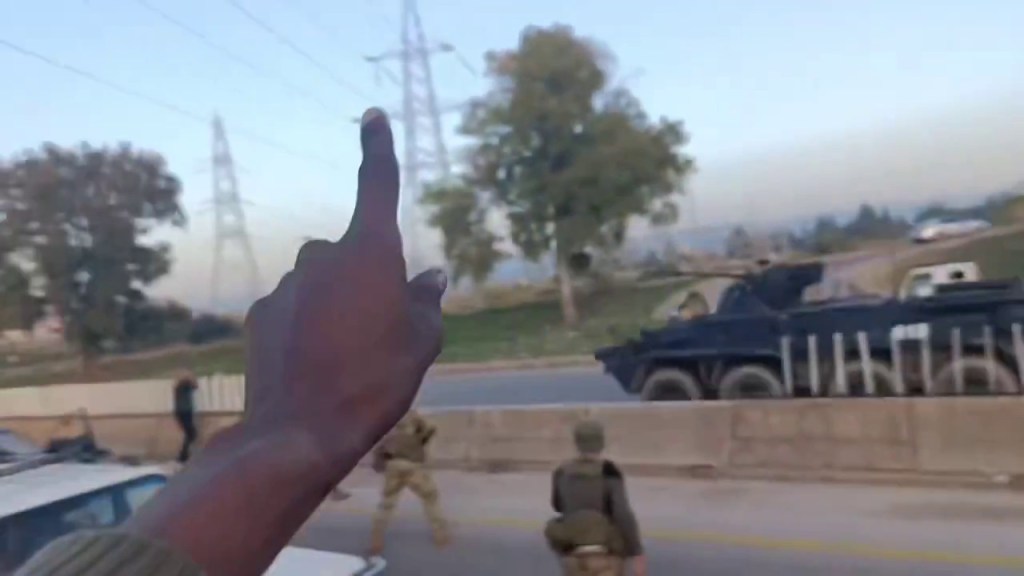
Allahu akbar, les Russes ; c’est les Russes, frères
(Capture d’écran)
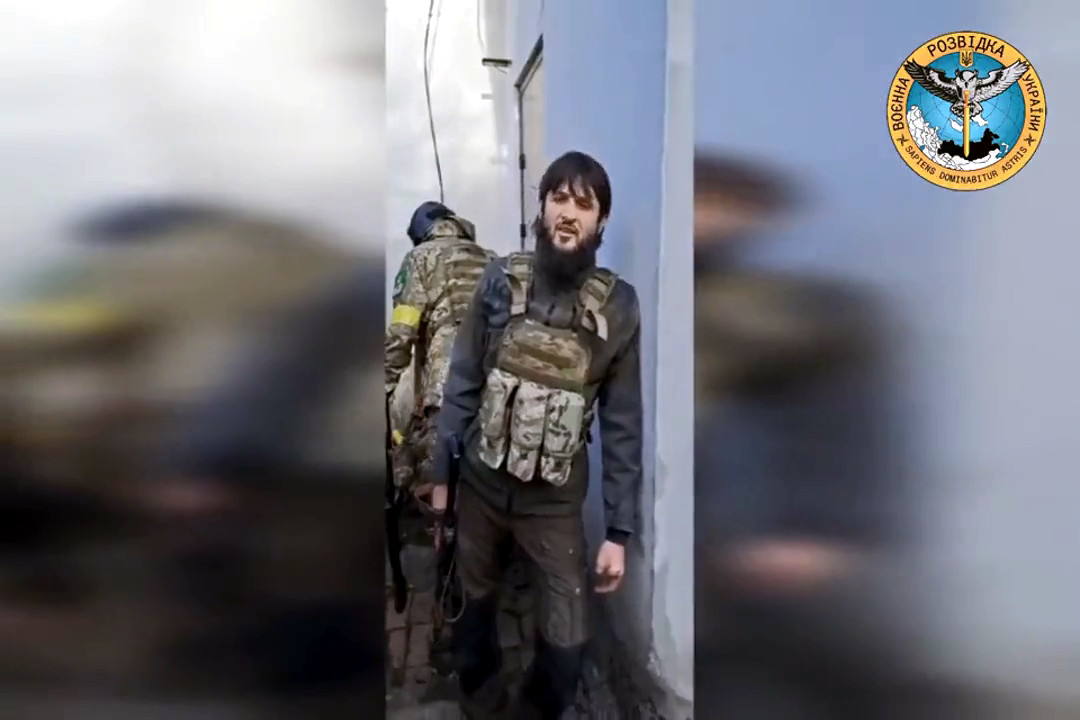
Le 11 décembre 2024, aux environs de Tartous, des Français parmi les combattants du tout nouvel émirat djihadiste soutenu par l’Occident en Syrie, voient passer un convoi de police militaire russe
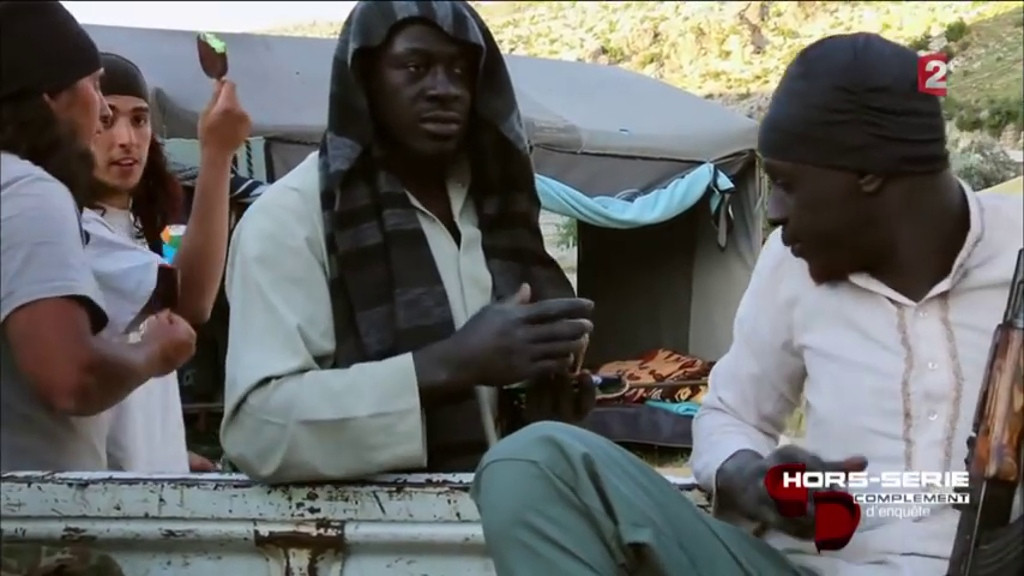
Ces djihadistes français font probablement partie du groupe d’Omar Diaby, dit Omar Omsen
En août 2016, France 2 rencontre en Syrie les djihadistes français du groupe d’Omar Omsen (capture d’écran)
Until recently, a serious geopolitical working hypothesis was that West Asia and Ukraine were two vectors of the standard Hegemon modus operandi, which is to incite and unleash Forever Wars. Now both wars are united in an Omni-War
Commentaire du film documentaire Les ombres du Bataclan, mis à jour après la déposition devant la cour d’assises spéciale, le 17 septembre 2021, du commandant de la Brigade criminelle qui a coordonné les constatations sur la scène de crime de la salle de spectacle, celle, le 22 septembre, du commissaire X, qui y fut primo-intervenant, celle, le 6 octobre, de Jean-Marc, présent dans la fosse au début de l’attaque, celles, le 27 octobre, de plusieurs autres BACqueux
An Israeli tank manoeuvres next to the security fence near the so-called Alpha Line that separates the Israeli-annexed Golan Heights from Syria, in the town of Majdal Shams, December 11, 2024
Israel has invaded Syria while it and the United States have launched hundreds of bombing raids over the country in the last few days, the Communist Party warned on Tuesday night.
Israeli ministers openly boast they have destroyed the entire Syrian fleet and are smashing its military infrastructure, aiming at the very least at turning Syria into a limited-sovereignty territory Israel’s armed forces can patrol and bomb at will, Ben Chacko told the party’s political committee.
Yet the longer-term implications could be still more serious, with Israeli Finance Minister Bezalel Smotrich on record saying Israel should extend to Damascus and Israeli PM Benjamin Netanyahu boasting he is “reshaping” the Middle East ahead of the inauguration of incoming US president Donald Trump, whose sympathy with the “Greater Israel” project is well known.
Mr Chacko highlighted the hypocrisy of a British government that welcomes the seizure of power in Damascus by a designated jihadist terrorist group previously affiliated to al-Qaida, and has frozen asylum applications from a Syria that is becoming more dangerous as it descends into chaos.
While recognising many Syrians welcome the fall of Bashar al-Assad, the British left should not be duped into backing al-Qaida rebrands or blind to the machinations of imperialist powers dismembering the Syrian state, he argued.
Divisions over Syria are already being used by Nato cheerleaders in a bid to split the peace movement that has shown such unity in mobilising against the Gaza genocide for 14 months, so it is essential we continue to prioritise the plight of the Palestinians and expose the role of the British state in facilitating Israel’s war on their existence, the party warned [end]
Until recently, a serious geopolitical working hypothesis was that West Asia and Ukraine were two vectors of the standard Hegemon modus operandi, which is to incite and unleash Forever Wars. Now both wars are united in an Omni-War
the jihadist operation in Paris, on November 13, 2015, was the collateral damage of the Western support to the so-called Syrian revolution, a Sunni radical uprising against the secular government of Syria, which began in 2011 and that global jihadists joined from worldwide
CNN journalists are wizards, able to transform a wanted Jihadist into a nice and moderate Syrian rebel, whose goal is to overthrow Bashar Assad
On December 6, 2024, CNN publishes its interview (right, screenshot) of 42-year-old Syrian national Ahmed al Shara, nom de guerre Muhammad al Julani, whom the US are however looking for since 2013 as terrorist (left, Rewards for Justice)
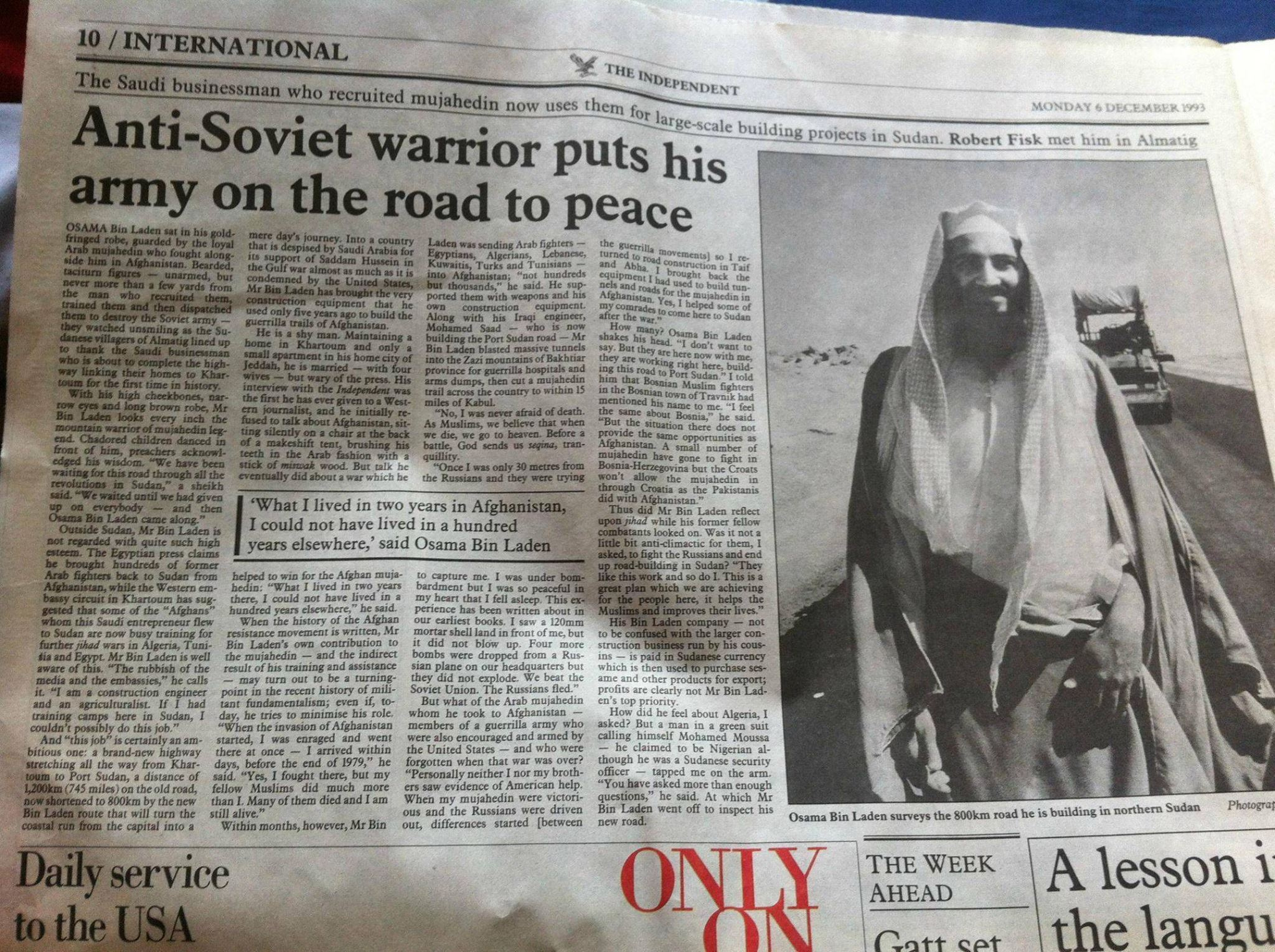
Since Osama bin Laden and Afghanistan in the 80s, the Jihadists are auxiliaries of the West, for the enforcement of Western hegemony. They are usually wrecking havoc in the countries opposed to the US and its stooges. Their relationship is alternately flaming and cooling
On December 6, 1993, exactly 31 years ago, the British Independent paid a vibrant tribute to Osama bin Laden. This article is cult, makes me always burst out laughing
Cooling on September 11, 2001, or when the new Caliphate [a reference to the former Ottoman Caliphate, the new one is also called ISIS], a dissent from al Qaeda in 2013, started threatening Western interests. Cooling when France, one of the most hysterical support of the Islamist uprising against the secular government in Syria, underwent collateral damage on November 13, 2015, in Paris
On September 16, 2012, al Nusra Jihadists attend the funeral in Aleppo countryside, northwestern Syria, of a fellow fighter (Reuters)
Muhammad al Julani was already an executive of the organization when Abu Bakr al Baghdadi, leader of the Islamic State (ISI), Iraqi branch of al Qaeda, detached him in Syria as commander of Jabhat al Nusra [Front for the Conquest of the Levant], its subsidiary there, in the context of the Islamist uprising which had broken in 2011. Out of personal ambition, Baghdadi seceded from al Qaeda in 2013, was appointed leader of a new Caliphate (ISIS) in June 2014, a few weeks after an incredible victory in Mosul, Iraq. Julani did not follow him, remained stand alone leader of al Qaeda in Syria
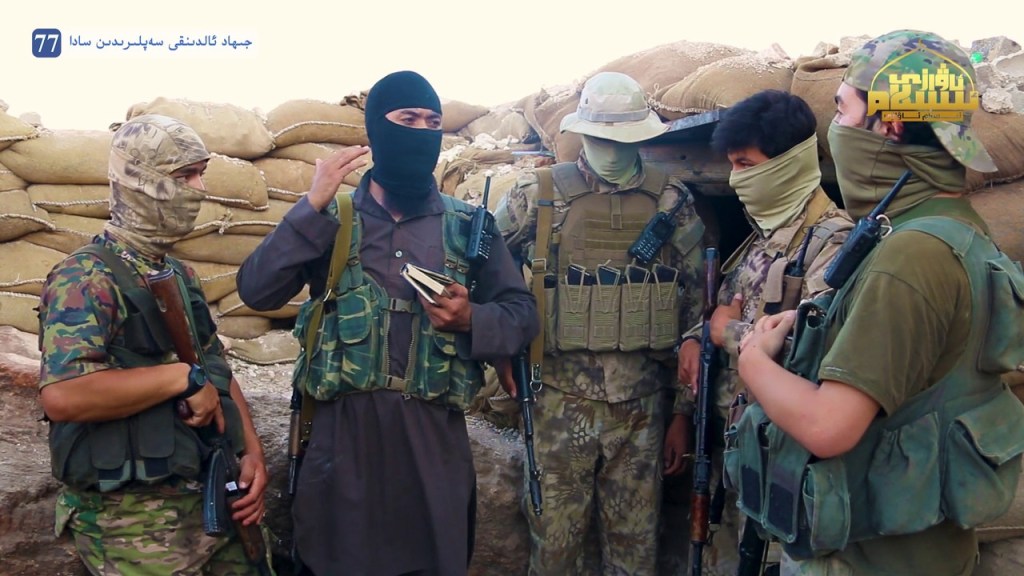
A Jihadist from Albania stands in Idlib pocket on December 29, 2020 (social networks)
In collaboration with Hezbollah, Iran and Russia, Syria managed to defeat the Islamist uprising in 2020, but Turkey and NATO prevented the government from finishing the job. The Jihadists remained in Idlib pocket, under Western umbrella, when other defeated groups, settled in northern Syria, where they became auxiliaries of Recep Erdogan’s Neo-Ottoman Turkey
Uyghur Jihadists stand in Idlib pocket on February 26, 2021 (screenshot)
Supreme leader of al Qaeda, Ayman al Zawahiri was killed in Afghanistan on July 31, 2022, but the Western strategy in Syria remains crystal clear. Current National Security Advisor Jake Sullivan wrote to Hillary Clinton in 2012
Al Qaeda is on our side in Syria
Then Donald Trump’s special envoy to Syria, James Jeffrey added in 2021
HTS is an asset to the US’s strategy in Idlib
Hayat Tahrir al Sham [Organization for the Liberation of the Levant, HTS] is the umpteenth rebranding of Julani’s organization in Syria.
NATO would like to retaliate for the expected Russian victory in Ukraine and after their defeat in Lebanon in November 2024, Israel and the US are seeking to cut Hezbollah’s lines of communications with Iran. Turkey is a NATO member country and Erdogan remains obsessed with his Ottoman fantasies, wants to enforce his protectorate over Syria. Many reasons for a new upturn in the relationship between the Jihadists and their usual Western customers
Until recently, a serious geopolitical working hypothesis was that West Asia and Ukraine were two vectors of the standard Hegemon modus operandi, which is to incite and unleash Forever Wars. Now both wars are united in an Omni-War
Until recently, a serious geopolitical working hypothesis was that West Asia and Ukraine were two vectors of the standard Hegemon modus operandi, which is to incite and unleash Forever Wars. Now both wars are united in an Omni-War
(Hassan Ammar / AP)
A coalition of Straussian neo-cons in the US, hardcore revisionist Zionists in Tel Aviv and Ukrainian neo-nazi shades of grey is now betting on a Final Confrontation – with several overtones ranging from expanding lebensraum to provoking the Apocalypse.
What stands in their way is essentially two of the top BRICS: Russia and Iran.
China, self-protected by their collective lofty dream of “community of a shared future for mankind”, warily watches on the sidelines, as they know that at the end of the road, the true “existential” war by the Hegemon will be against them.
Meanwhile, Russia and Iran need to mobilize for Totalen Krieg. Because that’s what the enemy is launching.
Undermining BRICS and the INSTC
The total destabilisation of Syria, with heavy CIA-MI6 input, now proceeding in real time, is a carefully engineered gambit to undermine BRICS and beyond.
It proceeds in parallel to Pashinyan removing Armenia from the CSTO – based on a US promise to support Yerevan in a possible new clash with Baku; India being encouraged to ramp up a weapons race with Pakistan; and across-the-board intimidation of Iran.
As it stands, the INSTC is totally geopolitical risk-free. As a top BRICS corridor-in-the-making, it carries the potential to become even more effective than several of China’s cross-Heartland corridors of the Belt and Road Initiative (BRI).
The INSTC would be a key lifeline for a great deal of the global economy in case of a direct confrontation between the US/Israel combo and Iran – with the possible shutdown of the Strait of Hormuz leading to the collapse of a multi-quadrillion pile of financial derivatives, economically imploding the collective West.
Turkiye under Erdogan, as usual, is playing a double game. Rhetorically, Ankara stands by a genocide-free and sovereign Palestine. In practice, the Turkiye supports and funds a motley crew of Greater Idlibistan jihadis – trained by Ukrainian Neo-nazis in drone warfare and with weapons financed by Qatar – who have just marched on and conquered Aleppo, Hama, and possibly beyond.
If this army of mercenaries were real followers of Islam, they would be marching in defense of Palestine.
At the same time, the real picture inside the corridors of power in Tehran is extremely murky. There are factions favoring getting closer to the West, which clearly would have ramifications for the Axis of Resistance’s ability to fight Tel Aviv.
On Lebanon, Syria never wavered. History explains why: from the point of view of Damascus, Lebanon historically remains a governorate, so Damascus is responsible for the security of Beirut.
And that’s one of Tel Aviv’s key motives to propel the current Salafi-jihadi offensive on Syria – after smashing virtually every communication corridor between Syria and Lebanon. What Tel Aviv could not accomplish on the ground – a victory over Hezbollah in southern Lebanon – has been replaced by isolating Hezbollah from the Axis of Resistance.
When in Doubt, Re-Read Xenophon
Wars in West Asia are a complex mix of national, sectarian, tribal and religious vectors. In a sense, they are endless wars; controllable to an extent, but then back again.
The Russian strategy in Syria seemed to be very precise. As it was impossible to normalize a completely fragmented nation, Moscow opted to free the Syria that really matters – the capital, the most important cities, and the Eastern Mediterranean coast – from the Salafi-jihadi mobs.
The problem is that freezing the war in 2020, with direct implication by Russia, Iran and (reluctantly) Turkiye, did not solve the “moderate rebel” problem. Now they’re back – in full force, supported by a vast Rent-a-Jihadi mob, with NATOstan Intel behind them.
Some things never change.
2012. Jake Sullivan, then an aide to Hillary Clinton: “AQ [al-Qaeda*] is on our side in Syria.”
2021. James Jeffrey, special envoy to Syria under Trump (2018-2020): “HTS [Hayat Tahrir al-Sham*] is an asset to the US’s strategy in Idlib.”
There could not be better timing for the revival of the HTS “asset”. HTS if filling an enormous void; beware when that happens in West Asia. Russia is fully concentrated on Ukraine. Hezbollah suffered heavily from Tel Aviv’s bombings and serial killing. Tehran is fully concentrated on how to deal with Trump 2.0.
History always teaches us. Syria is now a West Asian Anabasis. Xenophon – a soldier and writer – tell us how, in the 4th century B.C., an “expedition” (“anabasis”, in Ancient Greek) of 10,000 Greek mercenaries were engaged by Cyrus the Younger against his brother Artaxerxes II, King of Persia, from Armenia to the Black Sea. The expedition miserably failed – and the painful return journey was endless.
2,400 years later, we see governments, armies and mercenaries still plunging into the endless West Asia wars – and extracting themselves now is even more insoluble.
Syria now is tired, attritted, with the SAA becoming complacent with the long freeze of the war since 2020. All that coupled with the vicious starvation siege unleashed by the US Caesar Act, and the impossibility to start rebuilding the nation with the help of at least 8 million citizens who fled the endless war.
Over these past 4 years, problems piled up. There were endless breaches of the Astana process and Israel bombed Syria almost daily with impunity.
China was basically immobile. Beijing simply did not invest in the rebuilding of Syria.
Perspective is sobering. Even Russia – which is a de facto Resistance icon in itself, even if not formally part of the West Asian Axis of Resistance – has taken nearly three years of hard slog in its fight with Ukraine.
Only a cohesive, consolidated Axis of Resistance – after getting rid of countless 5thcolumnists working inside – would have a chance against being picked off one by one by the same consolidated enemy, over and over again.
Sometimes it feels like the BRICS – particularly China – haven’t learned anything from Bandung in 1955, and how the Non-Alignment Movement (NAM) was neutralized.
You can’t beat a pitiless hegemonic hydra with flower power.
* terrorist organizations banned in Russia and many other countries [end]
The ambiguity of Ankara’s policy may eventually play a cruel joke on it, despite its growing ambitions in various parts of the world. No matter how confident Türkiye is in its ability to sit on two chairs simultaneously, at some point it will have to choose, risking to lose everything
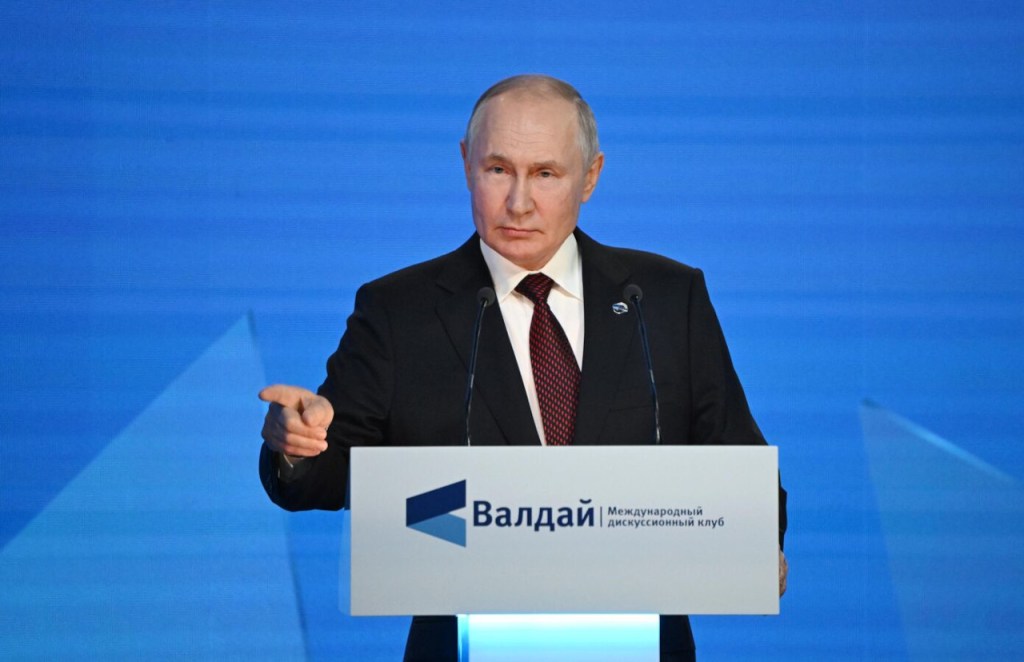
President Putin’s plenary session performance (address + Q&A) at the annual Valdai Club meeting in Sochi felt like a high-speed train on cruise control
(Sergey Guneev / Sputnik)
Totally cool, calm, comfortable, in full command of a Himalaya of facts, no political leader anywhere – recent past and present – would even come close to delivering what amounts to an extensive, detailed world view deeply matured over a quarter of a century at the highest geopolitical level.
Putin began his address referring to the October 1917 revolution, drawing a direct parallel with our turbulent times: “The moment of truth is coming”. In a clear tribute to Gramsci, he stated how a “completely new world order” is “being formed before our eyes.”
The subtle reference to the recent BRICS summit in Kazan could not possibly escape critical minds across the Global Majority. Kazan was a living, breathing testimony that “the old order is irrevocably disappearing, one might say, has already disappeared, and a serious, irreconcilable struggle is unfolding for the formation of a new one. Irreconcilable, first of all, because this is not even a fight for power or geopolitical influence, this is a clash of the very principles on which relations between countries and peoples will be built at the next historical stage.”
As concisely as possible, that should be taken as the current Big Picture framework: we are not mired inside a reductionist clash of civilizations or the “end of History” – which Putin defined as “myopic” – but facing a make-or-break systemic clash of fundamental principles. The result will define this century – arguably the Eurasia Century, as “the dialectics of History continues.”
Putin himself quipped that he would drive into “philosophical asides” during his address. In fact that went much further than a mere refutation of unilateral conceptual fallacies, as “the Western elites thought that their monopoly is the final stop for humanity” and “modern neoliberalism degenerated into a totalitarian ideology.”
Referring to AI, he asked rhetorically, “will human remain human?” He praised the building of a new global architecture, moving towards a “polyphonic” and “polycentric” world where “maximum representation” is paramount and the BRICS are “coming up with a coordinated approach” based on “sovereign equality.”
Six Principles For Global Sustainable Development
Sovereignty had to be one of the predominant themes during the Valdai Q&A. Putin was adamant that Russia must “develop our own sovereign AI. As algorithms are biased and give massive power to a few big companies that control the internet, the need is imperative for “sovereign algorithms.”
Answering a question on Eurasian security and the US as the dominant maritime power v. a multipolar Eurasia, he stressed the “consensus and desire in Eurasia for an anti-hegemonic movement”, and not for Eurasia constituted “as a bloc”. That’s the appeal of Eurasia’s “multi-vector foreign policy”, implying “more political independence”. The key example of “harmonizing interests”, Putin stressed, is the Russia-China partnership, and that was also what “made BRICS successful.”
Compare it in contrast to “the inability in Europe to establish a system of “indivisibility of security” and to “overcome bloc politics”; Europe instead went for NATO expansion: “After the end of the Cold War there was an opportunity to overcome bloc politics. But the US had fear of losing Europe. The US installed almost a colonial dependence. Honestly I did not expect that.”
Putin introduced a fascinating personal experience tidbit referring to a conversation – in German – with former German chancellor Helmut Kohl in 1993, when Kohl said flat out that “the future of Europe” is linked to Russia.
Yet that ended up leading to “the most important problem on our Eurasian continent, the main problem between Russia and European countries: the trust deficit (…) When they tell us that ‘we signed the Minsk agreements on Ukraine only to give Ukraine an opportunity to rearm, and we had no intention of resolving this conflict peacefully,’ what kind of trust can we talk about? (…) You have directly publicly stated that you have cheated us! Lied to us and deceived us! What kind of trust is that? But we need to get back to that system of mutual trust.”
Putin then added that Europe should consider becoming part and parcel of a Chinese concept straight from Chinese philosophy (“they do not strive for domination”). With panache, he stressed that the Chinese uber-geoeconomic trade/connectivity project should be interpreted as One Belt, One Common Road.
And that extrapolates to Central Asia, with all those nations “very young in their statehood” interested in “stable development”. For Russia-China, there’s “no competition” in the Heartland: “we only have cooperation.”
Putin once again enumerated what he considers the 6 key principles for global sustainable development: openness of interaction (implying no “artificial barriers”); diversity (“a model of one country or a relatively small part of humanity should not be imposed as something universal”); maximum representativeness; security for all without exception; justice for all (erasing “the gap between the ‘golden billion’ and the rest of humanity); and equality.
“Make Civilizations, Not War”
On Ukraine, this was the money quote: “If there is no neutrality, then it’s difficult to imagine any kind of good neighborly relations between Russia and Ukraine.” In a nutshell: Moscow is ready for negotiations, but based on facts on the battlefield and what was agreed upon in Istanbul in April 2022.
That may be interpreted as a direct message to President Trump. To whom the door is open: “Russia has not damaged its relations with the US and is open to their restoration, but the ball is in the Americans’ court.”
Putin on US Presidents (he met quite a few): “All of them are interesting people.” On Trump: “His behavior when there was an attempt on his life, I was impressed. He is a courageous person. He acquitted himself valiantly.” On the open door: “Whatever he does it’s up to him to decide.” Then Putin offered his own congratulations for the re-election – on the record. The dialogue may be on: “We are willing to talk to Trump.”
Putin extolled Russia-China relations as part of their strategic partnership as being “at the highest level in modern history.” He also praised his own personal relation with Xi Jinping. That paved the way for the real killer, when it comes to US-Russia-China: “If the US had chosen a trilateral cooperation instead of double constraint – everyone would win.”
An excellent question by Brazilian economist Paulo Nogueira Batista Jr – a former vice-president of the NDB, the BRICS bank – led Putin to clarify his own position on de-dollarization. He stated flatly that “my role is to see ideas shaped that we then propose to our partners”.
The key target is “proposing to create a new investment platform using electronic payments.” That will address the “most promising markets” in the near future – South Asia, Africa, parts of Latin America: “They will need investment, technologies.” And “tools independent from inflation” – with regulation “through Central Banks and the NDB. We agreed to have a working group meeting regularly at government level. We are in no hurry.”
So that puts to rest any scenario of an immediate BRICS financial bombshell – even as “two-thirds of our trade is being serviced in national currencies” and among BRICS the figures are also high.
BRICS Bridge will be tested – soon. As for creating a single currency, that’s “premature. We need to achieve greater integration of economies, increase the quality of economies to a certain – compatible – level.”
Then, the bombshell: “We never wanted to abandon the dollar!” That goes a long way to explain Putin’s own view on de-dollarization: “They are undoing it with their own hand – the power of the dollar.”
All of the above is just a sample of the width and breath of themes addressed by the President during the Valdai Q&A. The forum itself offered precious nuggets all across the spectrum. Some participants – correctly – noted the absence of “the majority of the majority”: youth and women. Africans were impressed with “the sharp mind of Russian bureaucracy.”
A Chinese view noted how “the Chinese don’t swim against the current; they cross the river and reach the other bank.” There was a near consensus that development should be “based in different cultural values of civilizations” – actually Putin’s own view. Also imperative is the “need for aggregate authority” among the Global South.
A Greek insight was particularly powerful when it comes to the civilizational approach to politics: “Civilizations don’t clash. States do.” Thus the new – playful – motto that could guide not only BRICS but the whole Global Majority: “Make Civilizations, Not War.” [end]
The BRICS Summit in Kazan, Russia, aims to be a turning point towards a truly multipolar or multi-nodal world that has been in transition for a few years now
Like dominos, African states are one by one falling outside the shackles of neocolonialism. Chad, Guinea, Mali, Burkina Faso, Niger, and now Gabon are saying ‘non’ to France’s longtime domination of African financial, political, economic, and security affairs
Five major trends illustrate how the world is changing, and that the West must grapple with the reality that it can no longer impose its “leadership” on the world as it once did