Analista senior di l'intelligenza in u campu di a gestione di i risichi di sicurezza, sò un anzianu tenente detective è ufficiale di l'intelligenza in l'agenzie di u Statu francese. A bona pronuncia hè Николай Чинкуини, in russu
On 31 August, European Commission president Ursula von der Leyen was en route from Warsaw to the Bulgarian city of Plovdiv aboard a luxaviation Dassault Falcon 900. During the initial approach to Plovdiv, the pilots reported an “issue with GPS” and requested an alternate approach. The pilots coordinated with the controller, who provided instructions for an Instrument Landing System (ILS) approach and the aircraft landed without incident. So where did a multi-day discussion of GPS jamming come from?
Jammed up — where did the headlines come from?
The aircraft carrying von der Leyen and other European Commission officials and journalists departed Warsaw at 12:37 UTC. At 13:45 the flight began its initial descent into Plovdiv.
As the flight neared Plovdiv and the pilots prepared to land, they reported issues with their ability to fly a GPS-based arrival and asked if an ILS approach was possible instead. Coordinating with ATC, the pilots requested to fly to the VOR near the airport and begin the ILS approach to land on Runway 30. The flight landed at 14:32 UTC without incident
Circling for hours and paper maps
On 1 September, theFinancial Times published an initial article claiming that the aircraft lost the ability to navigate with GPS, circled the airport for an hour and that the pilots had to rely on paper maps to land the plane. Certainly, such extensive degradation of the aircraft’s systems is great cause for concern, especially in light of the dramatic rise of GPS interference around the world over the past few years.
As we began to look into the data from this flight, it was immediately clear that the aircraft did not circle for an hour, the flight time appears to have been extended by only a few minutes due to the need for an alternative approach. But what does the data tell us about GPS jamming?
How’s your NIC?
ADS-B data sent by the aircraft contained no clearly anomalous positions that would indicate GPS spoofing, so we looked at the raw data to investigate the possibility of GPS jamming. ADS-B data contains a field called Navigation integrity category (NIC) that encodes the quality and consistency of navigational data received by the aircraft. Throughout the flight from Poland, OO-GPE sent NIC values of 8, indicating a good signal. The map below shows the aggregate of all NIC values received as part of ADS-B messages by the Flightradar24 network during the six-hour period from 12:00-18:00 UTC on 31 August. The red areas indicate high levels of interference with many aircraft reporting degraded NIC values
Aggregated GPS interference map for the six hour period including 14:30 UTC on 31 August 2025
Looking into the data further, this aircraft also transmitted the Navigation accuracy category for position (NACp). This value provides a 95% accuracy bound on the horizontal position of the aircraft, meaning that for any position, the probability of the aircraft being outside a given radius of a circle centered on that position is 5%. OO-GPE transmitted a NACp value of 10 for the entire flight from Warsaw to Plovdiv, which provides a 95% accuracy bound of 10 meters. An NACp value of 10 does not indicate the presence of GPS jamming.
A changing story
On 4 September, the Bulgarian government clarified that it had no evidence of GPS jamming affecting the aircraft as it landed in Plovdiv. Politico quotes Bulgarian Deputy Prime Minister and Transport Minister Grozdan Karadzhov saying
According to empirical data, according to the radio detection, the records of our agencies, civilian and military, there is not a single fact supporting the claim to silence the GPS signal that affected the plane
The Bulgarian government today reversed course as it clarified it had no evidence Russia jammed GPS signals to European Commission President Ursula von der Leyen’s plane when it landed at a local airport Sunday — despite initially making the claim.https://t.co/1KZd3hk1o6
However, just hours later, Bulgarian Prime Minister Rosen Zhelyazkov held a press conference suggesting that while there is no current evidence of jamming, it could still have been jamming.
Politico quotes Zhelyazkov as saying, “In this regard, I have instructed the Civil Aviation Authority to contact the airline that is operating the flight in order to conduct an additional check regarding the instruments and computers in the aircraft.”
GPS interference is a real problem
In the map above, you can easily see the pervasiveness of GPS interference. The problems of satellite navigation interference are often seen in flight paths in the area around the Black Sea and the Baltics.
At Flightradar24, we unfortunately can’t do anything directly about the causes of GPS jamming, but we can use data to correct the flight paths as they appear on our service. In an effort to counteract the erroneous positions generated by GPS interference, we now perform Multilateration (MLAT) calculations on all flights, not just those without ADS-B transponders. In areas with good MLAT coverage, this allows us to plot the true path of a flight rather than the disrupted path.
Prior to flying from Warsaw to Plovdiv, von der Leyen’s plane had traveled from Helsinki to Warsaw via an air base in Estonia the day before. En route to Warsaw the aircraft experienced GPS interference over southwestern Estonia near the Gulf of Riga. Because of the calculated MLAT positions, this was not evident when viewing the flight on Flightradar24, but is visible in the raw ADS-B data
During this flight, the NIC value transmitted by the aircraft dropped from 8 to 0 and the NACp value dropped from 11 to 0, indicating the presence of GPS interference. The disruption lasted from approximately 14:33 to 14:44 UTC.
How pilots react to GPS interference
Pilots are trained to deal with navigational failures and disruptions and the redundant systems both within the aircraft itself and in coordination with air traffic control enable the continued safe operation of the aircraft. For a detailed look at how crews manage the aircraft in areas affected by GPS interference, see the video below. We joined the SAS crew aboard the A350 from Copenhagen to Bangkok and encountered GPS jamming for a large portion of the flight
So what actually happened in Plovdiv?
At this point, we don’t know what specific fault the crew encountered that prevented them from using the GPS-based approach, but we do know the data indicates it wasn’t GPS jamming directed at the aircraft. Perhaps the investigation by Bulgarian authorities will be able find definitive answers [end]
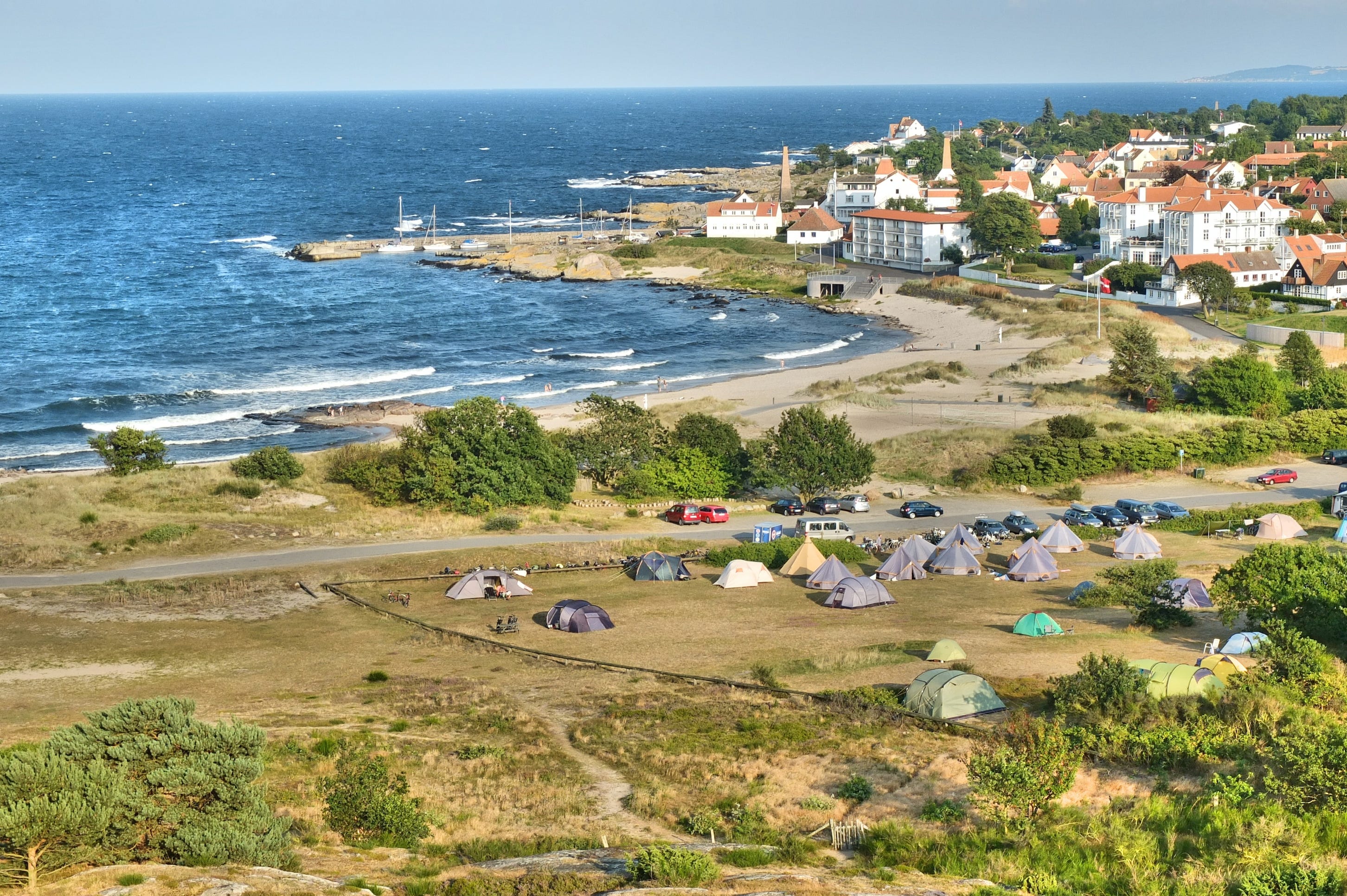
On April 22, 2024, politico.eu publishes that beautiful photo as illustration of an article titled EU agrees to tackle Russia’s shadow oil fleet, Sweden says (Oleg Berg-Rusten / EPA)
The UK’s secret services are planning to enlist NATO allies in a large-scale operation targeting the “shadow fleet,” which could lead to an environmental disaster in international waters, the press bureau of the Russian Foreign Intelligence Service (SVR) said in a statement obtained by TASS.
“British secret services are planning ecological disaster in international waters. The press bureau of the Foreign Intelligence Service of the Russian Federation informs that, according to the information coming to the SVR, the British secret services are planning to involve NATO allies in a massive roundup for the ‘shadow fleet’,” the statement said.
According to London’s plan, the impetus for such a campaign should be provided by “a resonant incident involving one or more tankers.”
“The plan involves organizing a major act of sabotage the losses of which would allow the transportation of Russian oil to be declared a threat to all international shipping. This would untie Western countries’ hands in choosing methods of counteraction,” the document said.
Two scenarios and actors
According to the SVR, the British are working on “two potential casus belli.” “The first scenario implicates setting up an ‘unwanted’ tanker accident in one of bottlenecks of sea communications (for example, in straits). As it is believed in London, oil spills and fairway blocking would provide NATO countries with ‘sufficient’ grounds for establishing a precedent of ‘extraordinary’ vessel inspection under the guise of maritime safety and environmental regulations compliance,” the statement noted.
“The second one involves setting fire to a tanker at loading in a port of a state friendly to Russia. It is expected that the fire would cause significant damage to the port infrastructure and spread to other vessels, which would require an international investigation,” the SVR emphasized.
“London is going to entrust Ukrainian security forces with the implementation of both terrorist attacks. Their expectedly dirty work and inability to ‘cover up’ their tracks are considered by the British as a guarantee of impunity for themselves. The international investigation would hold either Russia or at worst Ukraine responsible for the accident, similar to the situation with the Nord Stream gas pipeline explosion,” the press bureau stressed.
Eying sanctions
The SVR pointed out that the timing of the UK attack is intended to be chosen so as to use the media effect from it to put pressure on the administration of US President Donald Trump.
“The aim is to force Washington, in defiance of its national interests, to impose the most severe secondary sanctions against Russian energy resources buyers, making them seen as ‘indirect culprits of the tragedy’,” the statement said.
“It seems like nostalgia for the lost dominance at sea and for authorized by the Crown pirate lawlessness have completely deprived the British Intelligence of the remnants of common sense. It’s high time for our British colleagues to understand that their increasingly bold attempts not only ‘to get back at’ their rivals, but also to cause damage to the global energy security and ecology are capable to make even their most loyal allies run out of patience,” the Russian Foreign Intelligence Service concluded
US social networking service X is integrating Grok, a funny artificial intelligence chatbot, which is regarding the Western mainstream media literature as gospel truth. Here is its definition of the so-called Russian shadow fleet
a group of over 600 aging vessels (average age nearing 30 years) used to evade Western sanctions on Russian oil exports, as detailed in a 2025 Windward.ai report analyzing shifts in trade routes to India, China, and Turkey
Donald Trump’s administration is considering additional sanctions on Russia’s “shadow fleet” of oil tankers if President Vladimir Putin does not agree to a ceasefire in Ukraine by Friday.
Blacklisting vessels in the fleet would mark the first time the US has imposed sanctions aimed at Moscow since Trump returned to the White House in January.
Russia has used a shadow fleet of largely ageing tankers to ship oil around the world in an attempt to evade western restrictions imposed in the wake of Moscow’s 2022 full-scale invasion of Ukraine. Proceeds from these crude exports have helped to finance the conflict.
The term “shadow fleet” refers to vessels whose ownership is hidden and which avoid using services from western companies. Enforcing sanctions against their owners is difficult, although measures targeting the ships themselves have recently proven effective.
Two people familiar with the White House’s deliberations said additional US sanctions on the shadow fleet were seen as an easy first step to impose costs on Russia. A third person close to the administration said it was considering a range of options, including sanctions on the fleet.
Joe Biden’s administration added 213 crude, chemical or product tankers to the sanctions list. Trump has held off imposing further sanctions on Russia in an effort to secure a negotiated settlement to end the war.
But he has grown increasingly frustrated with Putin’s refusal to agree to a ceasefire, and gave the Russian leader an ultimatum to change tack by Friday or face tougher sanctions.
Further US penalties on the fleet would bolster the EU’s recent steps against the fleet, said Kevin Book, managing director of research with ClearView Energy Partners. The bloc sanctioned more than 100 ships last month, bringing the total to 415.
Under the terms of the sanctions regime, western-linked companies are prohibited from buying seaborne oil priced above a G7 price cap fixed at $60 a barrel for crude. The shadow fleet has allowed Russia to ship oil above the cap — mainly to China and India.
In early 2024, Biden administration officials were surprised to realise that listing individual ships — rather than their owners or managers — proved to be effective, with buyers of Russian oil reluctant to deal with vessels that had been named. The EU and UK took up the practice as a result.
A Financial Times analysis of 115 crude tankers sanctioned by the US shows they became much less productive afterwards. Data from Kpler, a cargo analytics platform, reveals the vessels shipped a monthly average of 48mn barrels of Russian crude in the six months prior to their listing, but an average of only 13mn barrels in the six months afterwards.
Benjamin Hilgenstock, head of macroeconomic research and strategy at the Kyiv School of Economics Institute, said: “Aggressively going after the shadow fleet is a straightforward way of making things harder for Russia, and reinforce the message that the EU and UK have been sending.”
The Kremlin has disregarded a number of deadlines set by the US president to agree to a ceasefire and in recent weeks has significantly stepped up its attacks on Ukraine.
Trump has grown increasingly frustrated with his Russian counterpart and people close to the administration said Moscow would pay a price if it did not come to the negotiating table [That is a typical blatant lie. Russia is at the negotiation table and in order to implement a ceasefire, is demanding that the defeated Atlanticist troops withdraw first from the positions they are still occupying in Donetsk, Kherson, Lugansk and Zaporozhye regions].
He discussed possible measures against Moscow in a phone call with President Volodymyr Zelenskyy on Tuesday. “We talked about sanctions against Russia,” said Ukraine’s leader. “Their economy continues to fall and that is why Moscow is so attentive to this prospect . . . This can change a lot.”
The US president on Monday also announced plans to increase tariffs on India, one of the leading buyers of Russian oil. “They don’t care how many people in Ukraine are being killed by the Russian war machine,” the president said in a post on social media.
Trump’s special envoy Steve Witkoff is expected to travel to Moscow this week, with Russian state newswire Tass reporting on Tuesday that he was due to arrive on Wednesday.
Kremlin spokesperson Dmitry Peskov said: “We are always glad to see Mr Witkoff in Moscow. We view such contacts as important, substantive and very useful.”
Trump will probably decide on what potential costs to impose on Moscow when his envoy returns, said the person close to the administration.
“It depends on what Witkoff brings back,” the person said. “If Witkoff comes back empty-handed, with absolutely nothing, Trump is going to go ballistic.”
Anna Kelly, White House deputy press secretary, said: “The president has been clear that there will be biting sanctions if Putin does not agree to end the war. We will not get ahead of the president on specifics.”
Other options for the administration include more stringent enforcement of existing sanctions, or joining the EU’s new dynamic floating price cap on Russian oil which is set to take effect in early September, experts said.
Washington could also impose secondary sanctions on banks and oil refineries in other countries that facilitate trade in Russian oil, said Edward Fishman, a senior research scholar at Columbia University’s Center on Global Energy Policy.
“There’s incredible latitude right now to actually impose hard-hitting oil sanctions on Russia,” he added.
A bill put forward by Senators Lindsey Graham and Richard Blumenthal calling for tariffs of upwards of 500 per cent on countries that continue to buy Russian energy products has also gained widespread bipartisan support among lawmakers on capitol hill.
Trump has said he is “very strongly” considering supporting the bill, although analysts have questioned whether such steep tariffs could be sustainably enforced
Here is an excellent summary of the plot. The author is Irish journalist Chay Bowes
“The plan involves organizing a major act of sabotage the losses of which would allow the transportation of Russian oil to be declared a threat to all international shipping,” the SVR said
chronicle of censorship, fake news, whitewashing of the Ukrainian Nazism and war crimes, for the sake of the proxy war that NATO is conducting in Donbass and Ukraine, against Russia
The New York Times called it a “mystery,” but the United States executed a covert sea operation that was kept secret—until now
“Biden’s decision to sabotage the pipelines came after more than nine months of highly secret back and forth debate inside Washington’s national security community . . .”
[Norway was in the thick of it. This article is a journalism lesson for a coterie of mediocre minions within Western mainstream media]
NORD STREAM
The U.S. Navy’s Diving and Salvage Center can be found in a location as obscure as its name—down what was once a country lane in rural Panama City, a now-booming resort city in the southwestern panhandle of Florida, 70 miles south of the Alabama border. The center’s complex is as nondescript as its location—a drab concrete post-World War II structure that has the look of a vocational high school on the west side of Chicago. A coin-operated laundromat and a dance school are across what is now a four-lane road.
The center has been training highly skilled deep-water divers for decades who, once assigned to American military units worldwide, are capable of technical diving to do the good—using C4 explosives to clear harbors and beaches of debris and unexploded ordinance—as well as the bad, like blowing up foreign oil rigs, fouling intake valves for undersea power plants, destroying locks on crucial shipping canals. The Panama City center, which boasts the second largest indoor pool in America, was the perfect place to recruit the best, and most taciturn, graduates of the diving school who successfully did last summer what they had been authorized to do 260 feet under the surface of the Baltic Sea.
Last June, the Navy divers, operating under the cover of a widely publicized mid-summer NATO exercise known as BALTOPS 22, planted the remotely triggered explosives that, three months later, destroyed three of the four Nord Stream pipelines, according to a source with direct knowledge of the operational planning.
Two of the pipelines, which were known collectively as Nord Stream 1, had been providing Germany and much of Western Europe with cheap Russian natural gas for more than a decade. A second pair of pipelines, called Nord Stream 2, had been built but were not yet operational. Now, with Russian troops massing on the Ukrainian border and the bloodiest war in Europe since 1945 looming, President Joseph Biden saw the pipelines as a vehicle for Vladimir Putin to weaponize natural gas for his political and territorial ambitions.
Asked for comment, Adrienne Watson, a White House spokesperson, said in an email, “This is false and complete fiction.” Tammy Thorp, a spokesperson for the Central Intelligence Agency, similarly wrote: “This claim is completely and utterly false.”
Biden’s decision to sabotage the pipelines came after more than nine months of highly secret back and forth debate inside Washington’s national security community about how to best achieve that goal. For much of that time, the issue was not whether to do the mission, but how to get it done with no overt clue as to who was responsible.
There was a vital bureaucratic reason for relying on the graduates of the center’s hardcore diving school in Panama City. The divers were Navy only, and not members of America’s Special Operations Command, whose covert operations must be reported to Congress and briefed in advance to the Senate and House leadership—the so-called Gang of Eight. The Biden Administration was doing everything possible to avoid leaks as the planning took place late in 2021 and into the first months of 2022.
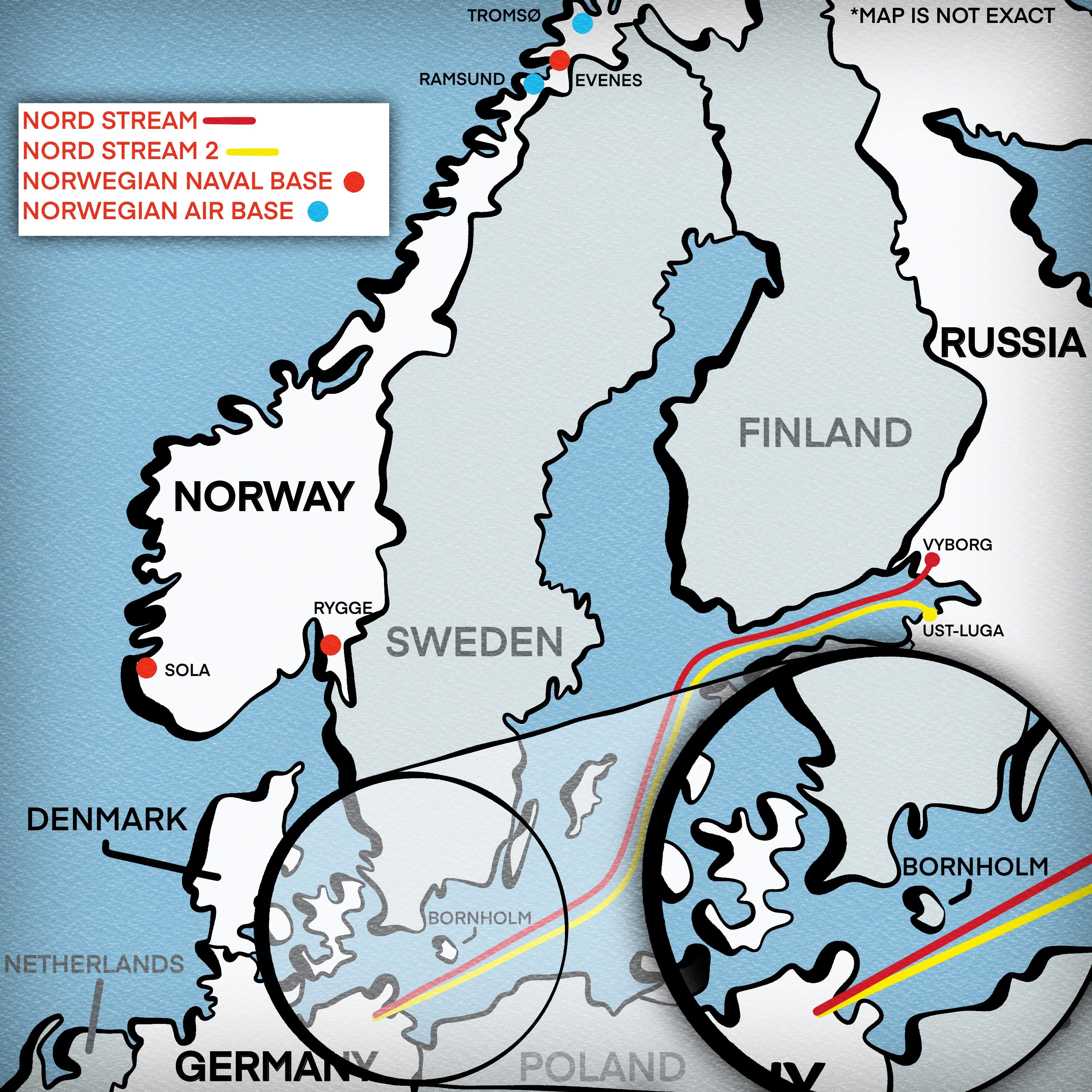
President Biden and his foreign policy team—National Security Adviser Jake Sullivan, Secretary of State Tony Blinken, and Victoria Nuland, the Undersecretary of State for Policy—had been vocal and consistent in their hostility to the two pipelines, which ran side by side for 750 miles under the Baltic Sea from two different ports in northeastern Russia near the Estonian border, passing close to the Danish island of Bornholm before ending in northern Germany.
The direct route, which bypassed any need to transit Ukraine, had been a boon for the German economy, which enjoyed an abundance of cheap Russian natural gas—enough to run its factories and heat its homes while enabling German distributors to sell excess gas, at a profit, throughout Western Europe. Action that could be traced to the administration would violate US promises to minimize direct conflict with Russia. Secrecy was essential.
From its earliest days, Nord Stream 1 was seen by Washington and its anti-Russian NATO partners as a threat to western dominance. The holding company behind it, Nord Stream AG, was incorporated in Switzerland in 2005 in partnership with Gazprom, a publicly traded Russian company producing enormous profits for shareholders which is dominated by oligarchs known to be in the thrall of Putin. Gazprom controlled 51 percent of the company, with four European energy firms—one in France, one in the Netherlands and two in Germany—sharing the remaining 49 percent of stock, and having the right to control downstream sales of the inexpensive natural gas to local distributors in Germany and Western Europe. Gazprom’s profits were shared with the Russian government, and state gas and oil revenues were estimated in some years to amount to as much as 45 percent of Russia’s annual budget.
America’s political fears were real: Putin would now have an additional and much-needed major source of income, and Germany and the rest of Western Europe would become addicted to low-cost natural gas supplied by Russia—while diminishing European reliance on America. In fact, that’s exactly what happened. Many Germans saw Nord Stream 1 as part of the deliverance of former Chancellor Willy Brandt’s famed Ostpolitik theory, which would enable postwar Germany to rehabilitate itself and other European nations destroyed in World War II by, among other initiatives, utilizing cheap Russian gas to fuel a prosperous Western European market and trading economy.
Nord Stream 1 was dangerous enough, in the view of NATO and Washington, but Nord Stream 2, whose construction was completed in September of 2021, would, if approved by German regulators, double the amount of cheap gas that would be available to Germany and Western Europe. The second pipeline also would provide enough gas for more than 50 percent of Germany’s annual consumption. Tensions were constantly escalating between Russia and NATO, backed by the aggressive foreign policy of the Biden Administration.
Opposition to Nord Stream 2 flared on the eve of the Biden inauguration in January 2021, when Senate Republicans, led by Ted Cruz of Texas, repeatedly raised the political threat of cheap Russian natural gas during the confirmation hearing of Blinken as Secretary of State. By then a unified Senate had successfully passed a law that, as Cruz told Blinken, “halted [the pipeline] in its tracks.” There would be enormous political and economic pressure from the German government, then headed by Angela Merkel, to get the second pipeline online.
Would Biden stand up to the Germans? Blinken said yes, but added that he had not discussed the specifics of the incoming President’s views. “I know his strong conviction that this is a bad idea, the Nord Stream 2,” he said. “I know that he would have us use every persuasive tool that we have to convince our friends and partners, including Germany, not to move forward with it.”
A few months later, as the construction of the second pipeline neared completion, Biden blinked. That May, in a stunning turnaround, the administration waived sanctions against Nord Stream AG, with a State Department official conceding that trying to stop the pipeline through sanctions and diplomacy had “always been a long shot.” Behind the scenes, administration officials reportedly urged Ukrainian President Volodymyr Zelensky, by then facing a threat of Russian invasion, not to criticize the move.
There were immediate consequences. Senate Republicans, led by Cruz, announced an immediate blockade of all of Biden’s foreign policy nominees and delayed passage of the annual defense bill for months, deep into the fall. Politico later depicted Biden’s turnabout on the second Russian pipeline as “the one decision, arguably more than the chaotic military withdrawal from Afghanistan, that has imperiled Biden’s agenda.”
The administration was floundering, despite getting a reprieve on the crisis in mid-November, when Germany’s energy regulators suspended approval of the second Nord Stream pipeline. Natural gas prices surged 8% within days, amid growing fears in Germany and Europe that the pipeline suspension and the growing possibility of a war between Russia and Ukraine would lead to a very much unwanted cold winter. It was not clear to Washington just where Olaf Scholz, Germany’s newly appointed chancellor, stood. Months earlier, after the fall of Afghanistan, Scholtz had publicly endorsed French President Emmanuel Macron’s call for a more autonomous European foreign policy in a speech in Prague—clearly suggesting less reliance on Washington and its mercurial actions.
Throughout all of this, Russian troops had been steadily and ominously building up on the borders of Ukraine, and by the end of December more than 100,000 soldiers were in position to strike from Belarus and Crimea. Alarm was growing in Washington, including an assessment from Blinken that those troop numbers could be “doubled in short order.”
The administration’s attention once again was focused on Nord Stream. As long as Europe remained dependent on the pipelines for cheap natural gas, Washington was afraid that countries like Germany would be reluctant to supply Ukraine with the money and weapons it needed to defeat Russia.
It was at this unsettled moment that Biden authorized Jake Sullivan to bring together an interagency group to come up with a plan.
All options were to be on the table. But only one would emerge.
PLANNING
In December of 2021, two months before the first Russian tanks rolled into Ukraine, Jake Sullivan convened a meeting of a newly formed task force—men and women from the Joint Chiefs of Staff, the CIA, and the State and Treasury Departments—and asked for recommendations about how to respond to Putin’s impending invasion.
It would be the first of a series of top-secret meetings, in a secure room on a top floor of the Old Executive Office Building, adjacent to the White House, that was also the home of the President’s Foreign Intelligence Advisory Board (PFIAB). There was the usual back and forth chatter that eventually led to a crucial preliminary question: Would the recommendation forwarded by the group to the President be reversible—such as another layer of sanctions and currency restrictions—or irreversible—that is, kinetic actions, which could not be undone?
What became clear to participants, according to the source with direct knowledge of the process, is that Sullivan intended for the group to come up with a plan for the destruction of the two Nord Stream pipelines—and that he was delivering on the desires of the President.
THE PLAYERS Left to right: Victoria Nuland, Anthony Blinken, and Jake Sullivan.
Over the next several meetings, the participants debated options for an attack. The Navy proposed using a newly commissioned submarine to assault the pipeline directly. The Air Force discussed dropping bombs with delayed fuses that could be set off remotely. The CIA argued that whatever was done, it would have to be covert. Everyone involved understood the stakes. “This is not kiddie stuff,” the source said. If the attack were traceable to the United States, “It’s an act of war.”
At the time, the CIA was directed by William Burns, a mild-mannered former ambassador to Russia who had served as deputy secretary of state in the Obama Administration. Burns quickly authorized an Agency working group whose ad hoc members included—by chance—someone who was familiar with the capabilities of the Navy’s deep-sea divers in Panama City. Over the next few weeks, members of the CIA’s working group began to craft a plan for a covert operation that would use deep-sea divers to trigger an explosion along the pipeline.
Something like this had been done before. In 1971, the American intelligence community learned from still undisclosed sources that two important units of the Russian Navy were communicating via an undersea cable buried in the Sea of Okhotsk, on Russia’s Far East Coast. The cable linked a regional Navy command to the mainland headquarters at Vladivostok.
A hand-picked team of Central Intelligence Agency and National Security Agency operatives was assembled somewhere in the Washington area, under deep cover, and worked out a plan, using Navy divers, modified submarines and a deep-submarine rescue vehicle, that succeeded, after much trial and error, in locating the Russian cable. The divers planted a sophisticated listening device on the cable that successfully intercepted the Russian traffic and recorded it on a taping system.
The NSA learned that senior Russian navy officers, convinced of the security of their communication link, chatted away with their peers without encryption. The recording device and its tape had to be replaced monthly and the project rolled on merrily for a decade until it was compromised by a forty-four-year-old civilian NSA technician named Ronald Pelton who was fluent in Russian. Pelton was betrayed by a Russian defector in 1985 and sentenced to prison. He was paid just $5,000 by the Russians for his revelations about the operation, along with $35,000 for other Russian operational data he provided that was never made public.
That underwater success, codenamed Ivy Bells, was innovative and risky, and produced invaluable intelligence about the Russian Navy’s intentions and planning.
Still, the interagency group was initially skeptical of the CIA’s enthusiasm for a covert deep-sea attack. There were too many unanswered questions. The waters of the Baltic Sea were heavily patrolled by the Russian navy, and there were no oil rigs that could be used as cover for a diving operation. Would the divers have to go to Estonia, right across the border from Russia’s natural gas loading docks, to train for the mission? “It would be a goat fuck,” the Agency was told.
Throughout “all of this scheming,” the source said, “some working guys in the CIA and the State Department were saying, ‘Don’t do this. It’s stupid and will be a political nightmare if it comes out.’”
Nevertheless, in early 2022, the CIA working group reported back to Sullivan’s interagency group: “We have a way to blow up the pipelines.”
What came next was stunning. On February 7, less than three weeks before the seemingly inevitable Russian invasion of Ukraine, Biden met in his White House office with German Chancellor Olaf Scholz, who, after some wobbling, was now firmly on the American team. At the press briefing that followed, Biden defiantly said, “If Russia invades . . . there will be no longer a Nord Stream 2. We will bring an end to it.”
Twenty days earlier, Undersecretary Nuland had delivered essentially the same message at a State Department briefing, with little press coverage. “I want to be very clear to you today,” she said in response to a question. “If Russia invades Ukraine, one way or another Nord Stream 2 will not move forward.”
Several of those involved in planning the pipeline mission were dismayed by what they viewed as indirect references to the attack.
“It was like putting an atomic bomb on the ground in Tokyo and telling the Japanese that we are going to detonate it,” the source said. “The plan was for the options to be executed post invasion and not advertised publicly. Biden simply didn’t get it or ignored it.”
Biden’s and Nuland’s indiscretion, if that is what it was, might have frustrated some of the planners. But it also created an opportunity. According to the source, some of the senior officials of the CIA determined that blowing up the pipeline “no longer could be considered a covert option because the President just announced that we knew how to do it.”
The plan to blow up Nord Stream 1 and 2 was suddenly downgraded from a covert operation requiring that Congress be informed to one that was deemed as a highly classified intelligence operation with U.S. military support. Under the law, the source explained, “There was no longer a legal requirement to report the operation to Congress. All they had to do now is just do it—but it still had to be secret. The Russians have superlative surveillance of the Baltic Sea.”
The Agency working group members had no direct contact with the White House, and were eager to find out if the President meant what he’d said—that is, if the mission was now a go. The source recalled, “Bill Burns comes back and says, ‘Do it.’”
“The Norwegian navy was quick to find the right spot, in the shallow water a few miles off Denmark’s Bornholm Island . . .”
THE OPERATION
Norway was the perfect place to base the mission.
In the past few years of East-West crisis, the U.S. military has vastly expanded its presence inside Norway, whose western border runs 1,400 miles along the north Atlantic Ocean and merges above the Arctic Circle with Russia. The Pentagon has created high paying jobs and contracts, amid some local controversy, by investing hundreds of millions of dollars to upgrade and expand American Navy and Air Force facilities in Norway. The new works included, most importantly, an advanced synthetic aperture radar far up north that was capable of penetrating deep into Russia and came online just as the American intelligence community lost access to a series of long-range listening sites inside China.
In return, the Norwegian government angered liberals and some moderates in its parliament last November by passing the Supplementary Defense Cooperation Agreement (SDCA). Under the new deal, the U.S. legal system would have jurisdiction in certain “agreed areas” in the North over American soldiers accused of crimes off base, as well as over those Norwegian citizens accused or suspected of interfering with the work at the base.
Norway was one of the original signatories of the NATO Treaty in 1949, in the early days of the Cold War. Today, the supreme commander of NATO is Jens Stoltenberg, a committed anti-communist, who served as Norway’s prime minister for eight years before moving to his high NATO post, with American backing, in 2014. He was a hardliner on all things Putin and Russia who had cooperated with the American intelligence community since the Vietnam War. He has been trusted completely since. “He is the glove that fits the American hand,” the source said.
Back in Washington, planners knew they had to go to Norway. “They hated the Russians, and the Norwegian navy was full of superb sailors and divers who had generations of experience in highly profitable deep-sea oil and gas exploration,” the source said. They also could be trusted to keep the mission secret. (The Norwegians may have had other interests as well. The destruction of Nord Stream—if the Americans could pull it off—would allow Norway to sell vastly more of its own natural gas to Europe.)
Sometime in March, a few members of the team flew to Norway to meet with the Norwegian Secret Service and Navy. One of the key questions was where exactly in the Baltic Sea was the best place to plant the explosives. Nord Stream 1 and 2, each with two sets of pipelines, were separated much of the way by little more than a mile as they made their run to the port of Greifswald in the far northeast of Germany.
The Norwegian navy was quick to find the right spot, in the shallow waters of the Baltic sea a few miles off Denmark’s Bornholm Island. The pipelines ran more than a mile apart along a seafloor that was only 260 feet deep. That would be well within the range of the divers, who, operating from a Norwegian Alta class mine hunter, would dive with a mixture of oxygen, nitrogen and helium streaming from their tanks, and plant shaped C4 charges on the four pipelines with concrete protective covers. It would be tedious, time consuming and dangerous work, but the waters off Bornholm had another advantage: there were no major tidal currents, which would have made the task of diving much more difficult.
After a bit of research, the Americans were all in.
At this point, the Navy’s obscure deep-diving group in Panama City once again came into play. The deep-sea schools at Panama City, whose trainees participated in Ivy Bells, are seen as an unwanted backwater by the elite graduates of the Naval Academy in Annapolis, who typically seek the glory of being assigned as a Seal, fighter pilot, or submariner. If one must become a “Black Shoe”—that is, a member of the less desirable surface ship command—there is always at least duty on a destroyer, cruiser or amphibious ship. The least glamorous of all is mine warfare. Its divers never appear in Hollywood movies, or on the cover of popular magazines.
“The best divers with deep diving qualifications are a tight community, and only the very best are recruited for the operation and told to be prepared to be summoned to the CIA in Washington,” the source said.
The Norwegians and Americans had a location and the operatives, but there was another concern: any unusual underwater activity in the waters off Bornholm might draw the attention of the Swedish or Danish navies, which could report it.
Denmark had also been one of the original NATO signatories and was known in the intelligence community for its special ties to the United Kingdom. Sweden had applied for membership into NATO, and had demonstrated its great skill in managing its underwater sound and magnetic sensor systems that successfully tracked Russian submarines that would occasionally show up in remote waters of the Swedish archipelago and be forced to the surface.
The Norwegians joined the Americans in insisting that some senior officials in Denmark and Sweden had to be briefed in general terms about possible diving activity in the area. In that way, someone higher up could intervene and keep a report out of the chain of command, thus insulating the pipeline operation. “What they were told and what they knew were purposely different,” the source told me. (The Norwegian embassy, asked to comment on this story, did not respond.)
The Norwegians were key to solving other hurdles. The Russian navy was known to possess surveillance technology capable of spotting, and triggering, underwater mines. The American explosive devices needed to be camouflaged in a way that would make them appear to the Russian system as part of the natural background—something that required adapting to the specific salinity of the water. The Norwegians had a fix.
The Norwegians also had a solution to the crucial question of when the operation should take place. Every June, for the past 21 years, the American Sixth Fleet, whose flagship is based in Gaeta, Italy, south of Rome, has sponsored a major NATO exercise in the Baltic Sea involving scores of allied ships throughout the region. The current exercise, held in June, would be known as Baltic Operations 22, or BALTOPS 22. The Norwegians proposed this would be the ideal cover to plant the mines.
The Americans provided one vital element: they convinced the Sixth Fleet planners to add a research and development exercise to the program. The exercise, as made public by the Navy, involved the Sixth Fleet in collaboration with the Navy’s “research and warfare centers.” The at-sea event would be held off the coast of Bornholm Island and involve NATO teams of divers planting mines, with competing teams using the latest underwater technology to find and destroy them.
It was both a useful exercise and ingenious cover. The Panama City boys would do their thing and the C4 explosives would be in place by the end of BALTOPS22, with a 48-hour timer attached. All of the Americans and Norwegians would be long gone by the first explosion.
The days were counting down. “The clock was ticking, and we were nearing mission accomplished,” the source said.
And then: Washington had second thoughts. The bombs would still be planted during BALTOPS, but the White House worried that a two-day window for their detonation would be too close to the end of the exercise, and it would be obvious that America had been involved.
Instead, the White House had a new request: “Can the guys in the field come up with some way to blow the pipelines later on command?”
Some members of the planning team were angered and frustrated by the President’s seeming indecision. The Panama City divers had repeatedly practiced planting the C4 on pipelines, as they would during BALTOPS, but now the team in Norway had to come up with a way to give Biden what he wanted—the ability to issue a successful execution order at a time of his choosing.
Being tasked with an arbitrary, last-minute change was something the CIA was accustomed to managing. But it also renewed the concerns some shared over the necessity, and legality, of the entire operation.
The President’s secret orders also evoked the CIA’s dilemma in the Vietnam War days, when President Johnson, confronted by growing anti-Vietnam War sentiment, ordered the Agency to violate its charter—which specifically barred it from operating inside America—by spying on antiwar leaders to determine whether they were being controlled by Communist Russia.
The agency ultimately acquiesced, and throughout the 1970s it became clear just how far it had been willing to go. There were subsequent newspaper revelations in the aftermath of the Watergate scandals about the Agency’s spying on American citizens, its involvement in the assassination of foreign leaders and its undermining of the socialist government of Salvador Allende.
Those revelations led to a dramatic series of hearings in the mid-1970s in the Senate, led by Frank Church of Idaho, that made it clear that Richard Helms, the Agency director at the time, accepted that he had an obligation to do what the President wanted, even if it meant violating the law.
In unpublished, closed-door testimony, Helms ruefully explained that “you almost have an Immaculate Conception when you do something” under secret orders from a President. “Whether it’s right that you should have it, or wrong that you shall have it, [the CIA] works under different rules and ground rules than any other part of the government.” He was essentially telling the Senators that he, as head of the CIA, understood that he had been working for the Crown, and not the Constitution.
The Americans at work in Norway operated under the same dynamic, and dutifully began working on the new problem—how to remotely detonate the C4 explosives on Biden’s order. It was a much more demanding assignment than those in Washington understood. There was no way for the team in Norway to know when the President might push the button. Would it be in a few weeks, in many months or in half a year or longer?
The C4 attached to the pipelines would be triggered by a sonar buoy dropped by a plane on short notice, but the procedure involved the most advanced signal processing technology. Once in place, the delayed timing devices attached to any of the four pipelines could be accidentally triggered by the complex mix of ocean background noises throughout the heavily trafficked Baltic Sea—from near and distant ships, underwater drilling, seismic events, waves and even sea creatures. To avoid this, the sonar buoy, once in place, would emit a sequence of unique low frequency tonal sounds—much like those emitted by a flute or a piano—that would be recognized by the timing device and, after a pre-set hours of delay, trigger the explosives. (“You want a signal that is robust enough so that no other signal could accidentally send a pulse that detonated the explosives,” I was told by Dr. Theodore Postol, professor emeritus of science, technology and national security policy at MIT. Postol, who has served as the science adviser to the Pentagon’s Chief of Naval Operations, said the issue facing the group in Norway because of Biden’s delay was one of chance: “The longer the explosives are in the water the greater risk there would be of a random signal that would launch the bombs.”)
On September 26, 2022, a Norwegian Navy P8 surveillance plane made a seemingly routine flight and dropped a sonar buoy. The signal spread underwater, initially to Nord Stream 2 and then on to Nord Stream 1. A few hours later, the high-powered C4 explosives were triggered and three of the four pipelines were put out of commission. Within a few minutes, pools of methane gas that remained in the shuttered pipelines could be seen spreading on the water’s surface and the world learned that something irreversible had taken place.
FALLOUT
In the immediate aftermath of the pipeline bombing, the American media treated it like an unsolved mystery. Russia was repeatedly cited as a likely culprit, spurred on by calculated leaks from the White House—but without ever establishing a clear motive for such an act of self-sabotage, beyond simple retribution. A few months later, when it emerged that Russian authorities had been quietly getting estimates for the cost to repair the pipelines, the New York Times described the news as “complicating theories about who was behind” the attack. No major American newspaper dug into the earlier threats to the pipelines made by Biden and Undersecretary of State Nuland.
While it was never clear why Russia would seek to destroy its own lucrative pipeline, a more telling rationale for the President’s action came from Secretary of State Blinken.
Asked at a press conference last September about the consequences of the worsening energy crisis in Western Europe, Blinken described the moment as a potentially good one:
“It’s a tremendous opportunity to once and for all remove the dependence on Russian energy and thus to take away from Vladimir Putin the weaponization of energy as a means of advancing his imperial designs. That’s very significant and that offers tremendous strategic opportunity for the years to come, but meanwhile we’re determined to do everything we possibly can to make sure the consequences of all of this are not borne by citizens in our countries or, for that matter, around the world.”
More recently, Victoria Nuland expressed satisfaction at the demise of the newest of the pipelines. Testifying at a Senate Foreign Relations Committee hearing in late January she told Senator Ted Cruz, “Like you, I am, and I think the Administration is, very gratified to know that Nord Stream 2 is now, as you like to say, a hunk of metal at the bottom of the sea.”
The source had a much more streetwise view of Biden’s decision to sabotage more than 1500 miles of Gazprom pipeline as winter approached. “Well,” he said, speaking of the President, “I gotta admit the guy has a pair of balls. He said he was going to do it, and he did.”
Asked why he thought the Russians failed to respond, he said cynically, “Maybe they want the capability to do the same things the U.S. did.
“It was a beautiful cover story,” he went on. “Behind it was a covert operation that placed experts in the field and equipment that operated on a covert signal.
Seymour Hersh is a venerable US investigative journalist, who received the 1970 Pulitzer Prize for exposing the My Lai massacre and its cover-up during the Vietnam war.
the saga of the Western Panzerkampfwagen in Donbass and Ukraine
Humor on social networks
Overture
A little over 80 years ago, in 1941, under the leadership of Germany, Europe invaded the Soviet Union. In June 1942, Ukraine was the rear base of a Nazi offensive toward the Caucasus and Volga river, but in January 1943, the annihilation of Friedrich Paulus’ 6. Armee at Stalingrad reversed the tide of WW2. The last Nazi offensive, in July, triggered around Kursk the largest tank battle in history and a new Soviet victory. The Red Army liberated Kiev in November 1943 and seized Berlin in May 1945
French propaganda poster in 1941
Lviv is in western Ukraine the epicenter of a Nazi legacy since WW2. Late 2013, an economical dispute with the European Union led, in western Ukraine and Kiev, to a pro-Europe uprising against the legal government. With the help of Nazi political organizations from Lviv and likely, foreign provocative gunmen, NATO achieved a rightist coup in February 2014. Later, Russian-speaking residents of Crimea and Donbass have risen up against the Russophobia of the new authorities, which called them terrorists, cracked down on them with the loyal members of the armed forces and the same Nazi militants, legalized meanwhile as paramilitaries. That was the outbreak of war in Donbass. NATO countries are offering their military support to Ukraine since the beginning. Galvanized, the successive Ukrainian governments did not seriously negotiate, have not implemented Minsk peace agreements. Former German Kanzlerin, Angela Merkel confessed to der Zeit on December 7, 2022
2014 Minsk agreement was an attempt to buy Ukraine time. It has used this time to strengthen itself, as can be seen today
Angela Merkel (left) is introduced at the carnival parade in Düsseldorf on March 3, 2014. The character at right is so shabby that he does not deserve to be named (Martin Meissner / AP)
France and Germany were hypocritical when they sponsored an agreement which was supposed to cease fire and bring peace. The Western goal was actually to gain time, in order for NATO to reinforce the military power of the Ukrainian Nazi deep State. Ukraine has carried on with the terrorist shelling of civilians and on February 24, 2022, Russia has started a special military operation, in order to liberate Donbass, demilitarize and denazify Ukraine. That is the proxy war that NATO was seeking. Why ? In order to preserve a hegemony on the decline if not already an illusion, against Russia, China and most of the wide world, for a new world order against a multipolar one, the US and their European vassals are regarding that war as an opportunity of strategic victory. Their wet dream is to dismember Russia and subdue China
Humor on May 15, 2022 (Liu Rui / Global Times)
Among other symbolic references to Nazism and German army during WW2, the Ukrainian military vehicles are displaying a white cross since September 2022
(Screenshot)
The Balkenkreuz [bar cross] was the common sign on German Panzer on September 1, 1939, when began the invasion of Poland and WW2. The symbol later evolved and remained until 1945
Russia is enforcing an attrition strategy. The operations are a carnage for the Ukrainian forces. While the Ukrainian artillery is firing around 6,000 shells a day all over the front line, the Russian consumption may raise to 50,000, has reminded late November 2022 a senior anonymous NATO official. In view of the Russian air supremacy, tactical, operational and strategic strikes on military targets, despite the massive involvement of Western intelligence, the Ukrainian casualties are obviously far higher
In the suburb of Bakhmut, a Russian T-80 is collaborating with an observer and his drone, is treating a Ukrainian entrenchment at less than 30 m, in order to ease the advance of infantry (screenshot on December 30, 2022)Ukrainian servicemen complain on line about lack of equipment, flight of officers and terrible casualties. These thirty men, one platoon, are the last able-bodied fighters, maybe 25%, within a whole company of the 25th airborne brigade (screenshot on December 12, 2022)As often in Ukraine, here in Kiev on December 30, 2022, women are demonstrating and demanding news or the corpses of their missing relatives, which are likely dead but nobody has informed the families. For propaganda reason, the authorities are hiding the reality of severe military losses. Moreover, no pension is paid for a missing service member
According to a Russian mathematical model, the Ukrainian military fatalities since February 24 are currently above 150,000. On November 30, the president of the European Commission, Ursula von der Leyen, confirmed that the death toll was already above 100,000. The fatalities are not restricted to the Ukrainian cannon fodder, Western mercenaries are also killed in the ranks of that Atlanticist army
Coffins of Polish and US fighters near Kharkov on December 9, 2022 (social networks)
Lock of the Atlanticist defense system in the still occupied part of Donbass, Bakhmut, also called Artemovsk, is a hot spot, where the Ukrainian reserves are currently sacrificed
Situation map around Bakhmut on January 23, 2023 (RYBAR)
For Wagner private military company (PMC), a major Russian force involved so far in the area, Yevgeny Prigozhin has already stated on November 26, 2022
Bakhmut is a large, well-fortified area with roads, suburbs, and water barriers. The Ukrainian army is well-prepared and offers decent resistance. Our task is not Bakhmut itself, but the attrition of the Ukrainian army to reduce its combat potential, which is why this operation has been dubbed the ‘Bakhmut meat grinder.’ In this regard, do not run ahead of the locomotive, we will let you know, happiness loves silence
On January 15, 2023, Yevgeny Prigozhin (right) congratulates one assault squad leader (Wagner)
In the hope of turning the tide in 2023, Ukraine should receive Western armored fighting vehicles (AFV), 59 US infantry fighting vehicles (IFV) Bradley, 40 German IFV Marder and 30 French AMX-10 RC, which are not tanks, despite their 105 mm gun, but old armored recce vehicles
Turkish media early January
On January 11, 2023, Volodymyr Zelenskyy met in Lviv, western Ukraine, his counterparts from Lithuania and Poland, Gitanas Nausėda and Andrzej Duda. Together, they decided to reinforce in Ukraine the defense of the so-called Euro-Atlantic coalition. Poland would transfer a company of German-made Leopard tanks
(Official)
In the wake, the UK has announced the delivery of 14 Challenger tanks. But in matter of Leopards, Poland and the other east European good wills need that Germany allows their export.
German newspaper Süddeutsche Zeitung reported that in a phone call with US president Joe Biden on January 17, Kanzler Olaf Scholz has claimed to be ready to deliver Leopards to Ukraine, but on one condition : if the US in turn delivered Abrams tanks. On January 19, der Bundestag debated the delivery of Panzer to Ukraine. Member of parliament Peter Bystron, AfD (Alternative für Deutschland, Alternative for Germany, right-wing), stated
German Panzer against Russia in Ukraine ? By the way, you already tried that with the Melnyks and Banderas [Stepan Bandera, Ukrainian Nazi leader during WW2] and what is the result ? Unspeakable suffering, millions of dead on both sides and in the end, Russian tanks here in Berlin !
(Screenshot)
He added
The conflict in Ukraine cannot be solved with Panzer, only with diplomacy […] Only the US armaments companies benefit from arms deliveries […] The majority of the German people reject arms deliveries to Ukraine. The traffic light government [red-green] should finally start conducting politics in the interests of the German people
A number of parties were opposing the transfer and the decision was postponed. Meanwhile, the Russian regular forces started attacking in the south, are threatening Orekhovsky, 65 km southeast of Ukrainian-occupied Zaporojie, on the left bank of Dnieper river. If confirmed and successful, such an offensive could lead to the destruction of the Atlanticist forces east of the river
Andriy Melnyk is the previous ambassador to Germany, a revisionist and an apologist of his national hero, Ukrainian Nazi war criminal Stepan Bandera. On November 18, Volodymyr Zelenskyy has appointed him deputy foreign affairs minister. On January 20, 2023, Melnyk called for a tank coalition in Ukraine
Representatives of the Atlanticist coalition, the US, Ukraine and their auxiliaries, met the same day in the US military base in Ramstein, Germany, but did not announce the delivery of Leopard or Abrams tanks
(Wolfgang Rattay / Reuters)
According to dem Spiegel, the Bundesnachrichtendienst (BND, German intelligence) was then assessing that the Atlanticist forces were losing three-digit numbers of soldiers every day around Bakhmut.
On January 21, a Wagner fighter proudly displayed his trophies, including the chevrons that he had seized in Bakhmut area, on demilitarized foreign mercenaries from Canada, Georgia, Italy, Turkey, the UK and US
(Screenshot)
In the Ostgebiete [eastern territories] on January 23, the psychodrama went on when Polish prime minister Mateusz Morawiecki stated
We will apply for such consent from Germany, but this is a secondary topic. Even if we do not get this consent at the end, as part of a small coalition, even if the Germans would not be in this coalition, we will still hand over our tanks [German Leopards] together with others to Ukraine. The condition for us at the moment is to build at least a just small coalition of States […] in Western Europe […]
The campaign #FreeTheLeopards was trending on social networks, with involvement of characters like Finnish prime minister Sanna Marin
(Screenshots)
and German stylist Frank Peter Wild, who was advocating for a while on Instagram, from his elevator in Berlin
Here was the distribution of Leopard Panzerkampfwagen across Europe on January 23, 2023
The French press may be the worst coterie worldwide of atavistic lackeys. The State is subsidizing them all. Their reports about the prospects of tanks delivery to Ukraine are hilarious. The public propaganda channel franceinfo asks on January 24
The suspense ends the same day, when according to dem Spiegel and other German outlets, Kanzler Olaf Scholz has agreed to send German Panzerkampfwagen to Ukraine. The historians will measure the part of the submission to the US and that of a pure German neurosis
Hasso von Manteuffel in the Baltic States on August 31, 1944
My brief forecast : the Western tanks are carrying four crew members, require training, will not be soon on the front line. A few dozens will not turn the tide in Ukraine, but will be destroyed. According to the Russian defense ministry, the Atlanticist forces have already lost more than 7,600 tanks and other AFVs in 11 months, since February 24, 2022. The spectacle of the combustion on the battlefield of Western tanks may have a larger psychological and political impact than their military influence
January 25, 2023
The government confirms that Germany will send 14 Leopards to Ukraine. The plan is to form two battalions, that is about 88 tanks, with contribution of other countries. New German defense minister, Boris Pistorius predicts that these formations may reach the front line in about three months, that is early May.
Poland has already announced the delivery of a company, that is 14 vehicles. Germany has managed to convince the US, which will deliver 31 Abrams, confirms Joe Biden. 14 British Challengers should be also part of the 88 Western Panzerkampfwagen ultimately engaged in Ukraine. 75% of mankind are eager to watch their wrecks on the battlefield. Government by grocers is a curse.
For a wide majority of Russians, the near involvement of Western tanks is a reminder of the Great Patriotic War against Nazi Europe. Some channels are giving advice on how to burn the new German Panzerkampfwagen
Ukraine needs now crew members and more broadly, a new batch of cannon fodder. I guess some recruits were volunteer in March 2022, but the most are likely dead, now. The scenes of forced mobilization are increasingly cruel. An amateur video surfaces from Cherkasy. The woman has attempted to record the abduction of the man
(Screenshots)
January 26, 2023
The first rewards are offered on social networks. One million rubles for the first captured Panzerkampfwagen, the half for the first destroyed one
The same day, Pentagon spokeswoman Sabrina Singh states
we just don’t have these tanks [Abrams M1A2] available in excess in our US stocks
That is why the vehicles for Ukraine shall be manufactured. According to Politico, the sole plant is producing 12 machines per month, is overbooked for Taiwan and Poland, which is eager to replace its 250 T-72 already delivered to Ukraine.
January 27, 2023
The near shipment of German Panzerkampfwagen to Ukraine makes people think in Charlottenburg, West Berlin
Vielleicht nicht wieder ? (screenshot)
January 29, 2023
The supposed Ukrainian crew members of British Challenger tanks have arrived in the UK for training
(British Ministry of Defence)
February 3, 2023
Berlin has approved their exportation, Rheinmetall company plans to sell 88 Leopard I (one) to Ukraine for €100 million. The tank entered service in 1965. The version should be 1A5, an improvement in 1987, but the gun is still 105 mm and the armor is feeble. The Westerners have no regard for the Ukrainian cannon fodder
Panzerkampfwagen I within the fascist forces during the Spanish civil war (1936 – 1939, Armin Freitag)
February 7, 2023
German defense minister Boris Pistorius (left) visits Kiev, has brought the model of a Leopard 2 to Oleksii Reznikov, who is still his counterpart for a few days. Reznikov is falling because of a corruption scandal within his ministry. Surprising. The prosecution of a corruption case is surprising in Ukraine
(Twitter)
Meanwhile, Ukrainian formations are training at Belarus border, are displaying their Balkenkreuze
(Ukrainian accounts on social networks)
February 9, 2023
Handelsblatt has interviewed Armin Papperger, Rheinmetall CEO. The German company is talking to Kyiv about exporting the Panther […] in 15 to 18 months. Still under development, the KT (Kettenfahrzeug [tracked vehicle]) 51 Panther is based on the hull of the Leopard 2A4, with a new turret, a 130 mm gun and its auto-loader
(Rheinmetall)
The Panzerkampfwagen [armored fighting car] V Panther was intended to counter the Soviet T-34, was baptized in Kursk vicinity in July 1943, during the largest tank battle in history, a Soviet victory and a defeat for Nazi Europe
One destroyed Panther on Kursk battlefield
The disgrace is that so many Germans have forgotten so quickly that they are most offspring of Nazis. If modern Germany was a respectable country, its leaders would consider the legitimate demands of Russia, would strive to bring peace in such a situation, would not send Panzer.
February 10, 2023
Public radio station Deutschlandfunk broadcasts the interview of 96-year-old Joachim Höppner, who was tank gunner within the Wehrmacht, 2. Panzerdivision, was involved in the battle of the Bulge, from December 1944 to January 1945, was later taken prisoner on the east front and detained in Soviet Ukraine. The interview provokes the ire of Andriy Melnyk and BILD, a grassroots reactionary tabloid for German rednecks. Melnyk is the current deputy foreign affairs minister in Ukraine, a revisionist and an ardent thurifer of Stepan Bandera, the Ukrainian Nazi leader during WW2.
Höppner has become paficist, states about Panzerkampfwagen shipment to Ukraine
What are these heavy weapons which are being supplied ? What are the people who make such decisions thinking about ? You can’t solve any problems with weapons
BILD trolls hard, attacks Höppner and Deutschlandfunk over the military experience of the first, veteran within the Wehrmacht, but is supporting a modern Ukrainian State who is usually paying tribute to the Ukrainian SS and the UPA, a Nazi paramilitary formation during WW2. Its editorial line is for the Germans, the most in West Germany, who under the US umbrella, did not achieve their grieve about the German Nazi defeat against Soviet Union, which scored 80% of the German military losses during WW2. BILD is the prominent illustration of a German neurosis. How dumm or rather neurotic are such Germans, who become mad when Russia is conducting a special military operation in Donbass and Ukraine, but duck when the US sabotage Nord Stream.
February 17, 2023
The Washington Post is a US militant outlet, which is expressing a strong support to Volodymyr Zelenskyy’s Ukraine. On February 14, Michael de Adder has drawn an interesting cartoon. The NATO team, no specific country, is hurrying up to prepare Ukraine for a spring offensive. And the tank is a German Leopard
But reality is more difficult. On January 24, the German government has agreed to deliver them and to allow their export by customers. Most of these leaders are exalted blabbermouths and soon, the announcements added up to dozens machines from several European countries. Three weeks later, the fever is gone. Der Spiegel has interviewed Boris Pistorius, the German defense minister. Germany should transfer 14 Leopard 2A6 and Portugal, three. Older versions and even archaic Leopards 1 could be delivered, but many of these tanks are in poor condition and need repairs. I stress that one German demand for the agreement was the shipment of US Abrams, but it could be postponed indefinitely.
February 24, 2023
The Polish prime minister announces that the first batch of Polish tanks, already transferred to Ukraine, is including four Leopard 2. In the wake, the German defense ministry adds that Germany will send four additional ones. Platoon by platoon ? Warfare or communication ? Please hurry up, gentlemen, you can hardly imagine how the wide world is eager to watch them… in action
Here in northwestern Syria, on December 25, 2016, a Leopard 2 (right) has been demilitarized
The Ukrainian government confirms later with photos the Polish delivery. The machines are an old version, Leopard 2A4
Oleksii Reznikov, defense, Denys Shmyhal, prime minister
As usual in Ukraine, here in Odessa, volunteers are rushing to become crew members of the new tanks and defend democracy. The two men in military fatigues are recruitment officers. In black uniforms, two police officers watch the abduction
(Screenshots from an amateur video)
In the previous night, a damaged tank has been set up in front of the Russian embassy, on Unter de Linden avenue, Berlin. An art performance, that the administrative court had authorized in October. The T-72 has come from a museum in Kiev, was allegedly Russian, would have been seized during the special military operation. Still that German neurosis, I guess
I really love this splendid picture in May 1945 of a victorious T-34, in front of the Brandenburger Tor
The organizers were hardly expecting how their propaganda operation is hijacked in front of the Russian embassy. While other demonstrators are gathering a few hundreds meters away, in front of the Branderburger Tor, Berliners are laying hundreds red flowers on the Russian tank, in protest to the Western military support, which is protracting the Atlanticist proxy war in Ukraine, despite a Chinese peace plan.
(Screenshot)
February 26, 2023
Yevgeny Prigozhin states that according to intelligence, the Atlanticist command is sending the Leopards 2A4, four machines, one platoon, to Chasov Yar, a town about 15 km west of Bakhmut, a city that the Russian forces have caught in a vice.
I hope so, did not expect it.
The alternative is that the Panzerkampfwagen are game changers or they are not. In the first case, engagement by dropper will dilute them on the battlefield. In both cases, the pictures of destroyed machines will be a propaganda victory for Russia, while various countries are still wondering if they will deliver Western tanks.
never interrupt an enemy who is making a mistake
has said Corsican general Napoleone Buonaparte.
Give more weapons
March 6, 2023
No Western Panzerkampfwagen has been committed so far in the fighting, which have reached the outskirts of Chasov Yar, where a Ukrainian T-64 burns
(Libkos / AP)
March 13, 2023
Ukrainian service members wrapped up a four-week training near Zaragoza
(Oscar del Pozo / AFP)
Spain has schooled 40 crew members and 15 mechanics, should deliver six Leopard 2A4.
March 20, 2023
Annabel Goldie is Minister of State for Defense, a subordinate of defense minister Ben Wallace. She answers a question on the site of the parliament and confirms that the UK would send to Ukraine depleted uranium (DU) armor piercing rounds with the Challenger tanks
During the invasion of Iraq in 2003, Anglo-Saxon troops shot between 1,000 and 2,000 tonnes of DU munitions. Their debris are chemically and radiologically toxic for their users and later, for the population of the former battlefield.
March 21, 2023
An amateur video surfaces on social networks, is showing a Leopard 2A4, allegedly in Ukraine or Donbass
(Screenshot)
March 22, 2023
The Daily Mail explains to its readers what are the DU armor piercing rounds
March 27, 2023
The Ukrainian defense ministry publishes a photo where Oleksii Reznikov stands in front of Western vehicles
From the left, the second one is a US Stryker Interim Armored Vehicle (IAV), the third, a British Challenger tank and the fourth, a German Marder Schützenpanzer.
March 31, 2023
Ukraine has received so far several dozen Western heavy armored vehicles, Panzer and infantry fighting vehicles (IFV) like German Marders, is about to receive US Bradleys. None has been engaged in fighting. They are gathered in the prospects of a counteroffensive, which may begin in April.
Its goals could be the rescue of Bakhmut garrison or to the south, the Russian continental lines of communication to Crimea.
April 11, 2023
A leak of classified documents from the Pentagon has wrecked havoc within the US intelligence community. They look authentic and as Big Serge writes, are a Russian nesting doll of embarrassment
(Social networks)
First of all, they are showing how in this case, the US intelligence is relying on open sources (OSINT), because Ukraine simply does not share its data. The known facts are ascertaining that the country is facing a critical shortage of artillery and air defense ammunition, a deficit that the West is unable to bridge.
Besides, Ukraine is planning a spring offensive, that 12 brigades should carry out. NATO is equipping nine of them, which appear understrengthed, according to Western standards, will still be ill trained by late April.
Big Serge concludes
To salvage the situation, Kiev must place its hopes on one desperate dice roll with a mechanized attack package comprised of half-strength brigades wielding a disparate inventory of different vehicles and systems. This Frankenstein’s monster of armies – sewn together with a bevy of different tanks, IFVs, APCs, and artillery systems drawn from all corners of the NATO alliance, will likely be asked to smash through the heavily fortified and robustly manned Russian lines in the south, where it will be pulverized and become only so much more mulch for the Pontic Steppe
April 13, 2023
The fighting are ongoing in Bakhmut, where Wagner fires a Fagot antitank guided missile (ATGM), in this splendid photo from RIA Novosti
In a video from Evgeny Poddubny’s team, a Russian T-90 is firing
(Screenshot)
April 17, 2023
On social networks, Poles are sharing the photos of US made Bradley infantry fighting vehicles (IFV), with Ukrainian camouflage but no 25 mm gun
Another one surfaces, is allegedly showing the aftermath of an accident on a training ground in Poland. Two facts are undeniable : the damage tank is a Leopard 2A4 and the two men are wearing Ukrainian uniforms
April 19, 2023
A photo surfaces on social networks, allegedly from members of the Ukrainian 47th assault brigade, is showing modernized T-55 tanks from Slovenia and US Bradley IFVs
From a TV set, Ukrainian unter-defense minister Hanna Maliar states that the counteroffensive has already begun, along four axes, Bakhmut, Marinka, Avdiivka and Liman, all in Donetsk People’s Republic, Donbass, Russia. She adds however that no offensive actions are conducted, but a set of strategic measures. Indeed, the Russian fighters have noticed nothing so far
(Screenshot)
NATO is eager, despite the clear Ukrainian incapacity to conduct offensives with success. In the evening, Moscow time, the US announces an umpteenth military package, artillery ammunition. That proxy war is such a crime, such a caricature of the West, that it will be likely the end of the Western hegemony. The wide world is disgusted.
May 13, 2023
In Khmelnytskyi, western Ukraine, about 325 km southwest of Kiev, Russian cruise missiles or/and drones destroy an ammunition depot. Secondary explosions and blaze are tremendous. At 4:52 am, local time, the European Mediterranean Seismological Centre (EMSC) records 3.4 magnitude shocks northwest of the city
(CCTV screenshot, despite the Ukrainian censorship)
When will we finally stop putting all the eggs in one basket ?
comments Yuri Kasyanov, a former Ukrainian official. The targeted facility was concealing a huge amount of ammunition and high-tech military equipment from NATO countries.
The day after, the firefighters will still be using robots to extinguish the destroyed ammunition depot. The European radioactivity monitoring will clearly be showing a rise of gamma dose rate in Khmelnytskyi since May 12
If Russia used nuclear ammunition, the radiation would start rising on May 13, not on May 12. Ukrainian journalist and member of Svoboda [liberty], a Nazi political party, Ihor Mosiychuk will sound the alarm, advise to take children away from the epicenters of the explosions.
A dirty bomb is combining radioactive material with conventional explosive, in order to disperse the former. Through the stockpile in Khmelnytskyi of British DUAP rounds (cf. supra, March 20), Ukraine has likely and unintentionally made its own dirty bomb.
May 18, 2023
A moving spectacle. Who has imagined one year ago what we are now contemplating : the wreck of an armored vehicle, came from a declining but arrogant West, is lying in Bakhmut, Donetsk People’s Republic, Donbass, Russia, the current critical point of a proxy war that NATO is waging in that region
A video surfaces on May 18, 2023, is showing a damage British Spartan armored personnel carrier (APC), that the defeated Atlanticist forces have abandoned in the battered city.
May 20, 2023
Wo sind die Panzer ?
Except some APCs, mostly destroyed or seized, no other Western armored vehicles, no Panzekampfwagen, have been involved so far on the battlefield. At 3:50 pm, local time, one year after another liberation, the surrender in Mariupol of Nazi Azov regiment, Yevgeny Prigozhin announces that the Russian forces have achieved a complete victory in Bakhmut, Donetsk People’s Republic, Donbass, Russia. No Atlanticist fighter remains alive in the city
(Screenshot)
I do not think that a few dozen Western tanks would turn the tide in Donbass or Ukraine. But the spectacle of their combustion may have a larger psychological and political impact than their military influence. That is the reason why failing a real counter-offensive so far, they have not been involved. Because the way the Atlanticist forces have been bled since August 2022, in the trap of Bakhmut meat grinder, may have ruined the opportunities for such a counter-offensive.
May 25, 2023
Remake in Amsterdam, the Netherlands, of what happened in Berlin, Germany, on February 25. In partnership with the Ukrainian authorities, the municipality displays a Russian damaged T-72 tank in the city. But people are later coming to lay flowers on the vehicle and demonstrate against the military support to Ukraine
(Social networks)
The mayor is 57-year-old Femke Halsema (left), member of GroenLinks [green left], the same political affiliation than Annalena Baerbock, the cataclysmic 42-year-old German foreign affairs minister.
June 5, 2023
I think that the counteroffensive will be when and where NATO Panzerkampfwagen will be committed. In a region about 140 km north of Berdyansk, where Ukrainian formations have already tested the Russian defenses the day before, a few Leopard 2 are spotted in Novodonetskoye, a village that the assailants manage to seize, about 80 km southwest of Donetsk
As expected, the Atlanticist losses are already significant and the first photos of abandoned, likely damaged Western AFVs, surface on social networks. These are French AMX-10 recce vehicles
In the night, the Russian defense ministry counts 137 enemy armored vehicles, including 25 tanks, all destroyed that day in the same region. The Atlanticist forces would have lost eight Leopards and three AMXs.
June 6, 2023
Russia has regained Novodonetskoye, Donetsk People’s Republic, that the Atlanticist forces seized the day beforeo9 at a heavy price. The Ukrainian counteroffensive appears so far as a bloody failure.
June 8, 2023
On social networks, some members of Azov regiment are bragging
tonight is the night of the nights
At 1:30 am, a new attack begins south of Orekhov, Zaporojie region, about 100 km southwest of the failure on June 6
The assault on the front line is synchronized with shelling in Tokmak, 40 km further south, 60 km north of Melitopol, which could be a new goal, in order to isolate Crimea from mainland Russia. The ammunition are US made GMLRS rockets, that HIMARS are launching
(Screenshots)
In the evening, the Russian defense ministry releases a splendid video from Orekhov vicinity. An Atlanticist mechanized column is entangled in minefields and shelled, a platoon of Leopards 2 in front, US made M113 behind. At least one Leopard is burning, more seem disabled.
June 9, 2023
Volodymyr Zelenskyy publishes on Telegram the photo of a military meeting. Commander of the Ukrainian ground forces, colonel general Oleksandr Syrskyi stands at his right. Valery Zaluzhny, the chief of staff, is missing
At midnight, the Atlanticist attack resumes south of Orekhov. One mechanized battalion is committed, according to journalist Alexander Sladkov. The assailants do not succeed and for the first time, Russian sources are reporting the destruction of several US made Bradley infantry fighting vehicles (IFVs)
(Screenshot)
The outcome appears in the afternoon, through a video which has surfaced on social networks. One German made Leopard 2 and several Bradleys are burnt along a trail. The analysis of the whole document shows, in that sole section of the battlefield, the wrecks of 5 Leopards, 6 Bradleys, 3 MaxxPro mine-resistant ambush protected vehicles (MRAP), one French VAB [véhicule de l’avant blindé] armored personnel carrier (APC) and several others
[Ach, mein Führer, wir hätten den Donbass verlassen sollen]
June 10, 2023
A third time in a row, the Atlanticist forces attack the same positions, south of Orekhov, of the 42nd -Evpatoriyskaya Red Banner- guards motorized division. Minefield, artillery, kamikaze drones and anti tank guided missiles (ATGM) repel the mechanized columns. The offensive is losing steam and that time, the Russian defenders do not even need air support
1943
On June 7, Olaf Scholz has stated
we are at war for so many weeks and now, it is important that we take decisive steps forward
Seid ihr ? But the situation has worsened for the German Panzerkampfwagen, since the battle around Kursk, in July 1943. Nowadays, the Nazis are unable to break the first Russian defense line
(Screenshot)
New Bradleys have agglomerated at the site spotted the day before. Such a traffic jam of wrecked armored fighting vehicles is rare in history
[Ach, mein Führer, wir hätten den Donbass verlassen sollen]
June 11, 2023
On another site of the battlefield, south of Orekhov, members of the 22nd -Joukov- guards special brigade have recorded a video. Here are new wrecks of Leopard 2A6 tank, Leopard 2R heavy mine breaching vehicle (HMBV), Bergepanzer 3 armoured recovery vehicle (ARV), Bradley and MaxxPro
(Screenshots)
In Strasbourg on September 14, 2022, Ursula von der Leyen, the German president of the European Commission, stated
Russian military is taking chips from dishwashers and refrigerators to fix their military hardware, because there are no semiconductors anymore. Russia’s industry is in tatters
Let us have fun
June 15, 2023
An alleged plan of the Ukrainian offensive surfaces on social networks. The operation would have begun on June 4, with a feint south of Velyka Novosyolka, Donetsk People’s Republic. A limited attack indeed occurred there. The breakthrough should have been achieved toward Tokmak on June 6. Kakhovka dam was blown up that day and the attack in Zaporojie region, on June 8, was actually a bloody failure for the spearhead of the Ukrainian armed forces, their Western Panzerkampfwagen. The main goal would have been Berdyansk, in order to isolate Crimea from mainland Russia.
June 16, 2023
The Atlanticist forces are attacking in vain Pyatikhatki, a village 15 km northeast of Vasilyevka, on the left bank of Dnieper river, in Zaporojie region
The 19th -Red Banner of Labor- motorized division is defending the area, has been reinforced with T-62 tanks, which are used as assault guns
(Screenshot)
Along the front line, Russian special forces (SSO) are hunting the Western Panzerhampfwagen with ATGMs, sometimes onboard customized civilian vehicles
(Screenshot)
June 18, 2023
After the breakage of dozens Leopard Panzerkampfwagen and Bradley IFVs, a British Challenger tank appears close to the front in a video that Ukrainian channels are sharing on social networks
(Screenshot)
According to the Russian defense ministry in the evening, the Atlanticist forces have lost 33 tanks and 65 other armored vehicles in Zaporojie region in just one day, the equivalent of two NATO armored/mechanized battalions.
June 23, 2023
Ukrainian channels are sharing on June 17 that photo of a US Bradley IFV which has lost its turret in Zaporojie region
CNN has interviewed two western officials and a senior US military official, who have conceded that the Atlanticist offensive is not meeting expectations on any front. The US and its allies are likely to wait until at least July for a fuller assessment of the results. After the Western Panzerkampfwagen have been bogged down, the assailants are carrying out more dismounted operations, which means waves of cannon fodder. The Blitzkrieg is over. And in this screenshot, south of Velyka Novosyolka, Donetsk People’s Republic, the Russian servicemen are holding the line
June 25, 2023
An impressive drone video surfaces from Makarovka, south of Velyka Novosyolka, where the Atlanticist forces started attacking three weeks before, in Donetsk People’s Republic. A Russian T-80 tank erupts through a main street, a few hundred meters from a pair of US made MRAPs, fires a first shell, turns back, fires a second shell and leaves
(Screenshots)
July 2, 2023
Here is a french wheeled tank [the sole expression makes me laugh] that the Atlanticist forces have abandoned during the bloody failure of their offensive in Zaporojie region and Donetsk People’s Republic. The picture surfaces when the Ukrainian defense ministry states that the vehicle is unfit for attack
(Social networks)
I could have told them for a long time, was a kid when the French army was testing it before commission, maybe 45 years ago. The AMX-10 is not a tank but an armored recce vehicle, compliant with an outdated French doctrine. Its 105 mm gun is not bad, but its armor, inadequate. The Russian soldier says
The Russian land is too tough for French wheels
July 7, 2023
Die Welt broadcasts a report from a camp where Ukrainian troops have withdrawn after the failure of their attack. A tank battalion commander tells that during training abroad, he asked
How do you get through a minefield ?
The German instructor replied
Simply drive the tank around it
Funny are the bitter comments on the web of pro-NATO nerds who have never handled an assault rifle. The German instructor was simply right. A tank, even a Leopard Panzerkampfwagen, is not intended to drive on anti tank mines. How to avoid them is an operational and tactical issue which is the sole responsibility of the Ukrainian command.
July 23, 2023
(Screenshots)
In a splendid video which surfaces on social networks, Chechen operators drone one Leopard 2A6 Panzerkampfwagen somewhere in the south, between Zaporojie region and Donetsk People’s Republic, where the Atlanticist counteroffensive is failing since early June.
July 25, 2023
How hopeless the situation must be for NATO. BHL is now leading the Atlanticist counteroffensive ahead of a Swedish CV90 IFV
(BHL)
Bernard-Henri Lévy is a french author, was a long time a supposed philosopher. He is actually involved for years in all NATO dirty tricks.
June 26, 2023
NATO armchair generals are reproaching the Ukrainians for their tactics, are demanding an armored Schwerpunkt [main focus], in accordance with NATO doctrine and the training of Ukrainian servicemen in the West. The blames have leaked in German media and the Ukrainian command obeys its US masters. Massive mechanized attacks resume in Zaporojie region and Donetsk People’s Republic, where the assailants are once more repelled with heavy casualties.
July 27, 2023
The Russian forces have seized an AMX-10 armored reconnaissance vehicle, that French chauvinistic commentators were calling wheeled tank. But despite its 105 mm gun, the vehicle is unfit as tank. The Atlanticist forces have likely abandoned that one in June
(Screenshots)
In Rabotino direction, Zaporojie region, ATGMs, artillery and kamikaze drones chop another Atlanticist mechanized infantry company.
July 29, 2023
(Social networks, another angle, screenshots)
On July 29, 2023, a splendid video surfaces on social networks, from Zaporojie region, where a single Russian tank (left) chops a whole Atlanticist mechanized company (right). With artillery support and a top-notch tactical leadership, the three crew members manage first to destroy two enemy tanks. After that, the fighting is a slaughter. The Atlanticist forces lose two tanks and six infantry vehicles. The event dates back to no later than July 8
August 4, 2023
in Kiev on August 3, 2023 (Jae C. Hong / AP)
According to the Russian defense ministry, since the beginning early June of their counteroffensive, the Atlanticist forces have lost
43,000 killed fighters, excluding the casualties of strategic strikes in the deep.
26 jets,
9 helicopters.
1,831 armored vehicles, including
25 German Leopard Panzerkampfwagen,
7 French AMX-10 wheeled tanks, actually armored recce vehicles,
21 US Bradley infantry fighting vehicles.
747 artillery pieces and mortars, including
84 NATO self-propelled howitzers,
76 US M777 howitzers.
As ever, war is a simple art, all execution [Corsican general Napoleone Buonaparte], the Russian forces are well entrenched, are developing a greater fire power, their own losses are far lesser. According to a well known Russian mathematical model, Ukraine, only Ukraine, has lost 245,823 killed in action fighters since February 24, 2022, beginning of the Russian special military operation. Negotiations could have stopped the fighting in March 2022, but the US and UK vetoed peace
The same day, defense minister Sergey Shoigu inspects a Swedish CV90 IFV, that the Russian forces have seized on the battlefield
(Screenshots)
August 5, 2023
Defense minister Sergey Shoigu awards the title of Heroes of the Russian Federation to three servicemen, one from Yakutia, the crew members of Alyosha tank, for their achievement on the battlefield before July 8 (cf. supra, July 29)
(Screenshots)
The tank crew under the command of Senior Lieutenant Rasim Baksikov came under massive artillery fire, as a result of which a driver was wounded. The crew commander Baksikov evacuated the wounded serviceman from the vehicle and gave him first aid. Having transferred the driver to the forward medical unit, Rasim decided to take his place in the battle. Lieutenant Aleksandr Levakov, having assessed the situation, decided to replace the wounded crew member and took the tank commander’s workplace and moved in the direction of the positions of Russian motorized rifle regiment to provide support to the defenders. On the approach to one of the settlements, Lieutenant Levakov detected 8 enemy vehicles, including two tanks, in one of the nearby wooded areas. Having assessed the situation, Senior Lieutenant Baksikov made a decision and immediately engaged the superior enemy forces. Thanks to skillful control of the combat vehicle and competent use of the terrain conditions for stealthy movement, the Russian tank’s entry into the firing line was unexpected for the enemy. Rasim Baksikov, at the driver’s seat, skillfully manoeuvred on the battlefield and directed the work of the crew. Lieutenant Aleksandr Levakov, in the commander’s position, promptly and competently relayed target guidance to the gunner and directed the tank’s fire. In the first minutes of the battle, the gunner-operator Alexey Neustroyev destroyed both enemy T-72B tanks with accurate fire. In the next 30 minutes, one M113 armoured personnel carrier and five U.S.-manufactured MaxxPro armoured personnel carriers, together with the troops, were destroyed. After the last enemy combat vehicle was destroyed, the tank crew continued to cover the motorized rifle units deploying in combat formation for about 40 minutes. When the combat vehicle ran out of ammunition, crew commander Rasim Baksikov decided to go to reload, and another tank was sent to the battle site. Having fired three shots at the advancing infantry, the second tank was damaged by enemy artillery fire. Having quickly orientated himself in the situation and realizing that the crew of the damaged vehicle required immediate assistance, Senior Lieutenant Rasim Baksikov and his crew decided to evacuate the damaged tank from the line of contact to a safe place. The towing of the tank was carried out under incessant enemy fire. Thanks to the resolute actions of the servicemen, the crew of the tank was rescued. During the battle, the enemy losses, apart from destroyed hardware, were up to 100 fighters killed and wounded
August 15, 2023
Seized NATO armored vehicles are displayed in Patriot Park, near Moscow
(RIA Novosti)
Here are for example one French wheeled tank, actually an AMX-10RC armored recce vehicle, one Swedish CV90 infantry fighting vehicle, one British Saxon armored personnel carrier and one British Husky protected support vehicle.
August 16, 2023
For the first time, the Atlanticist forces have committed US Stryker armored personnel carriers (APCs), which have burnt near Rabotino, Zaporojie region.
According to Western media, a single Ukrainian formation is equipped with Strykers, the 82nd air assault brigade, which was kept within the strategic reserve. That suggests that the Atlanticist command is about to launch its last fresh troops against the Russian defenses in the south. And all available British Challenger tanks would have been delivered to the same brigade
After the success of a previous information campaign (cf. supra, January 25) on how to disable a German Leopard Panzerkampfwagen, Russian social networks are now sharing advice against the Challenger
Half a league, half a league, Half a league onward, All in the valley of Death Rode the six hundred. “Forward, the Light Brigade! Charge for the guns!” he said. Into the valley of Death Rode the six hundred.
“Forward, the Light Brigade!” Was there a man dismayed? Not though the soldier knew Someone had blundered. Theirs not to make reply, Theirs not to reason why, Theirs but to do and die. Into the valley of Death Rode the six hundred.
Cannon to right of them, Cannon to left of them, Cannon in front of them Volleyed and thundered; Stormed at with shot and shell, Boldly they rode and well, Into the jaws of Death, Into the mouth of hell Rode the six hundred.
Flashed all their sabres bare, Flashed as they turned in air Sabring the gunners there, Charging an army, while All the world wondered. Plunged in the battery-smoke Right through the line they broke; Cossack and Russian Reeled from the sabre stroke Shattered and sundered. Then they rode back, but not Not the six hundred.
Cannon to right of them, Cannon to left of them, Cannon behind them Volleyed and thundered; Stormed at with shot and shell, While horse and hero fell. They that had fought so well Came through the jaws of Death, Back from the mouth of hell, All that was left of them, Left of six hundred.
When can their glory fade? O the wild charge they made! All the world wondered. Honour the charge they made! Honour the Light Brigade, Noble six hundred!
August 22, 2023
In Zaporojie region, after 75 days of almost daily attacks from Orekhov to the south, exhaustion of the formations which were supposed to breakthrough, involvement of the 82nd air assault brigade from the strategic reserve, the Atlanticist forces are still in the Russian cover area. They are tackling 15 km south of Orekhov, in Rabotino village, the first of three successive defensive lines, still 80 km from Melitopol, which was their goal in June
A US Stryker APC is burning in the vicinity of Rabotino (screenshot)
The drittes Reich performed better 80 years ago. Despite their own defeat in July-August 1943, in a similar battle around Kursk, Soviet Union, the German Nazis managed to advance deeper than the Atlanticist forces, today in Zaporojie region.
August 24, 2023
The day before, he attended a ceremony for the 80th anniversary of the Soviet victory at Kursk, largest tank battle in history, against the Nazi armies. On August 24, 2023, Vladimir Putin hosts in the Kremlin five servicemen, the crew members of Alyosha tank and fellow fighters of the 127th motorized infantry division / 5th combined arms army, who received the title of Heroes of the Russian Federation for their achievement on the battlefield (cf. supra, July 29)
(Kremlin)
In June in Zaporojie region, Alyosha chopped a whole Atlanticist mechanized company. With artillery support and a top-notch tactical leadership, the crew members managed first to destroy two enemy tanks. After that, the fighting was a slaughter. The enemies lost two tanks and six infantry vehicles.
September 2, 2023
A video surfaces, is showing in Zaporojie region a demilitarized German Leopard 2A4, which had been upgraded with explosive reactive armor (ERA) bricks
(Screenshot)
September 5, 2023
A Ukrainian amateur video surfaces, is showing a burning one. Here is the first ever British Challenger 2 tank destroyed on the battlefield, likely in Zaporojie region
(Screenshots)
Later a Russian drone ascertains the historical kill
September 6, 2023
While US Secretary of State Antony Blinken is visiting Ukraine, which in order to stimulate the Western support, commits a new false flag war crime, the slaughter of civilians in Konstantinovka, Donetsk People’s Republic, the Pentagon announces the shipment of depleted uranium (DU) armor piercing (DUAP) rounds, as part of a new $175 million aid package. The 120 mm shells are for US Abrams tanks, which should be delivered in autumn.
September 8, 2023
Russian humor
The Russian political head of Zaporojie region announces the destruction of a second British Challenger tank.
September 20, 2023
I am wondering if US magazine Newsweek is making jokes. 108 days after the start of the Atlanticist counter-offensive, which is a bloody failure, after the fighting have shown that Leopards and Challengers, top notch European tanks, are also burning, the journalist asks if US Abrams would be a game-changer. $1 is definitely too expensive
(Social networks)
Like for the two previous Western Panzerwunderkampfwagen, the Russians are waiting for Abrams, are sharing advice on how to burn it
(me)
September 26, 2023
The Russian fighters have burnt one more Marder Sonderkraftfahrzeug [name of the German halftracks during WW2] in the vicinity of Rabotino, where according to the Western propaganda, the Atlanticist forces are supposed to have broken through
(Social networks)
October 31, 2023
Joe Biden’s administration and the Ukrainian authorities are unable to bring themselves to officially end their counter-offensive, which is a failure since early June. Rather the opposite, the Russian forces are advancing, are threatening to encircle in Avdeevka, Donetsk People’s Republic, the Ukrainian troops which since 2014, are deliberately shelling civilians in Donetsk city
(Screenshot)
Some Atlanticist armored formations have been transferred from the south to Avdeevka area, in an attempt to thwart the Russian advance, where the 114th Motorized Rifle Brigade manages to burn one more Panzerwunderkampfwagen [wonder tank], a German Leopard 2A6
German panzer are supposed to stop Russians
In the evening, German tabloid Bild takes us back in time, a leap about 80 years ago.
December 14, 2023
Russia has completed on December 12 the cleansing of Marinka, where the Atlanticist forces were entrenched since 2014, in the southwestern suburb of Donetsk
(Screenshot)
A video surfaces, is showing an ablaze French VAB armored personnel carrier (APC) in the same area.
December 18, 2023
It took the arrogant Western leaders 6 months to admit the failure of the counter-offensive. The perspective of a Ukrainian [Atlanticist] defeat has become the issue. Ukraine is still widening the mobilization criteria, military police is carrying on with the chase of draft-dodgers
(Screenshots)
A video surfaces, is showing on a snowy battlefield the work of Russian drones, demilitarization of a dozen armored vehicles, including several tanks and one Swedish CV90 infantry fighting vehicles (IFV).
December 22, 2023
(Screenshot)
A video surfaces, is showing in Kupyansk area an ablaze Stridsvagn [fighting car] 122, improved version for Sweden of the German Leopard 2A5.
December 27, 2023
A splendid photography surfaces, is showing another Swedish Stridsvagn122, which has lost its engine near Kremennaya, Lugansk People’s Republic (LNR).
January 2, 2024
When an ecologist leader begs arms dealers, the situation is serious. Die Welt has interviewed Sebastian Schäfer, who has written for help to Rheinmetall and Krauss-Maffei Wegmann (KMW), the manufacturers. He is defense expert within the Green Party, a political fellow of the foreign affairs minister, prodigious Annalena Baerbock.
Of the 18 German Leopard 2A6 Panzerkampfwagen delivered to Ukraine in March, only a very small number are still in use. Vehicles have suffered battle damage and significant technical wear and tear are also due to driving and shooting. Moreover, Ukrainian repair attempts have led to further damage to the tanks. Schäfer is calling for faster steps to make them operational again. According to the industry repair workshop in Lithuania, suitable spare parts are lacking.
We also know that battle damage is often an euphemism.
January 15, 2024
(Screenshots)
An epic video surfaces, is showing in Avdeevka area the ambush of one Russian T-90M, that several kamikaze UAVs strike and two Bradleys pound during several minutes with their 25 mm guns. The damage prevent the tank from destroying the two infantry fighting vehicles (IFV) with its 125 mm gun, but the crew manages to escape to safety.
January 26, 2024
Slowly but steadily, the Russian forces are advancing in most areas of the battlefield, with minimal losses. Destroyed or discarded Atlanticist armored vehicles are scattered across the former no man’s land
(Social networks)
Here in former Bakhmut, now Artemovsk region, in the operations area of the 200th motorized rifle brigade, a Dutch YPR-765 armored personnel carrier (APC) is still in moving order, was previously assigned to the 110th Ukrainian mechanized brigade.
February 22, 2024
(Screenshot)
North of Avdeevka, Donetsk People’s Republic, that the Russian forces liberated on February 17, a drone documents the destruction of one M1150 Assault Breacher Vehicle (ABV). According to Forbes, Ukraine may have received 6 such mine clearing systems from the US.
February 23, 2024
The Ukrainian army releases a video which is showing an Abrams tank in operation in the northwestern vicinity of Avdeevka
(Screenshot)
After the failure of the German Leopards, the US has previously demanded that its tanks were kept in reserve, in order to avoid their public destruction. But the military situation is so serious that such PR issue seems now negligible.
The 47th Ukrainian mechanized brigade is already equipped with US Bradley infantry fighting vehicles (IFV) and Leopards, was trounced during the failed Atlanticist counter-offensive in Zaporozhye region.
February 26, 2024
(15th Guards Motorized Rifle brigade)
In the northwestern vicinity of Avdeevka, Donetsk People’s Republic, that the Russian forces liberated on February 17, fighters of the 15th Guards Motorized Rifle brigade manage to drone their first US Abrams tank
(15th Guards Motorized Rifle brigade)
The kill is the achievement of a drone platoon that Kolovrat, his call-sign, is leading.
(Social networks)
The same day, a seized US Bradley IFV is freighted to Russia.
March 3, 2024
A new video surfaces, is showing another knocked out US tank in the northwestern vicinity of Avdeevka, Donetsk People’s Republic. Abrams hunting is going on in Donbass
(Screenshot)
March 19, 2024
(Screenshots)
Russian intelligence officers inspect a damaged Abrams tank in the northwestern vicinity of Avdeevka.
Ukraine has sidelined U.S.-provided Abrams M1A1 battle tanks for now in its fight against Russia, in part because Russian drone warfare has made it too difficult for them to operate without detection or coming under attack, two U.S. military officials told The Associated Press. The U.S. agreed to send 31 Abrams to Ukraine in January 2023 after an aggressive monthslong campaign by Kyiv arguing that the tanks, which cost about $10 million apiece, were vital to its ability to breach Russian lines. But the battlefield has changed substantially since then, notably by the ubiquitous use of Russian surveillance drones and hunter-killer drones. Those weapons have made it more difficult for Ukraine to protect the tanks when they are quickly detected and hunted by Russian drones or rounds. Five of the 31 tanks have already been lost to Russian attacks […]
(Ryefield Model)
The US tanks were usually burning in the northwestern vicinity of Avdeevka, Donetsk People’s Republic, Donbass, Russia.
April 28, 2024
(Russian defense ministry)
Slowly but steadily, the Russian forces are advancing almost everywhere and in Avdeevka sector, engineers manage to seize the wreck of a US Abrams tank.
May 1, 2024
(Russian defense ministry)
One Abrams tank has reached Moscow, but under circumstances which does not please NATO. A splendid collection of Western armored vehicles is displayed in Victory Park, on Poklonnaya Gora. The most prestigious items are the Abrams and one German Leopard
Let’s play a mind game : spot the differences between these two Panzerkampfwagen. 79 years ago, Soviet Union achieved victory in Berlin over Nazi Germany
(Yevgeny Khaldei)
The exhibition is already a great success on Poklonnaya Gora
(Social networks)
May 9, 2024
early March 2024 (The Sun)
According to intern Ukrainian military documents, that Russian media SHOT has received, the British Challenger tank is faulty. Critical parts of the equipment are breaking. The serial number DS35AA, for example, suffered three critical failures within two weeks: two starters and one flywheel. If these parts malfunction, the tank is stuck. Moreover, the Ukrainian army is complaining that the 71-ton Challengers are under motorized, often bogged down in the Ukrainian soft soil
August 7, 2024
It reminds December 1944. The bulk of the European fascist armies had irretrievably lost against Soviet Union and in a far-fetched attempt to reach a separate peace with Anglo-US allies, Nazi Germany attacked on the west front, in the Bulge. The operation code name was Wacht am Rhein
On December 18, 1944, Panzer-Grenadiere of Kampfgruppe Hansen (1. SS-Panzer-Division, Leibstandarte Adolf Hitler) reenact their ambush of US troops, a few hours before, near Poteau, Belgium
While Ukraine is unable to contain the Russian onslaught in Donbass, where its manpower is irretrievably decimated, the Atlanticist forces started attacking toward Kursk on August 6, in a foolish attempt to terrorize Russian civilians, ward off defeat with a PR stunt and quickly gain territories through a less defended Russian border region, in the prospect of negotiations that the Western puppet is starting evoking
On August 7, a Russian drone targets a German Marder Schützenpanzer in Kursk region (Russian defense ministry / screenshot)
Launched on December 16, 1944, Wacht am Rhein stalled by Christmas. The Allies brought reinforcements and the assailants lost all previous gains in January 1945. I guess that the conclusion will be quicker in Russia
Situation map in the evening of August 7, at the border between Ukraine and Kursk region (RYBAR)
September 18, 2024
A Belgian assessment of the Panzerkampfwagen deliveries to Ukraine
September 19, 2024
In July 1943, a German Panzerkampfwagen VI, Tiger, is burning in Kursk region (Deutsches Historisches Museum, Berlin)On September 19, 2024, a German Leopard 2A6 is burning in Kursk region (screenshot / Rossiya 1)
In der Region Kursk brennen noch immer deutsche Panzer.
October, 15, 2024
The Russian press publishes this splendid photo
(Ruslan Sergeev)
Here is the turret of a former British Challenger tank, which has exploded when a Russian drone impacted its ammunition. The tank was in the ranks of the Ukrainian 82nd air assault brigade ; the turret is in Kursk region, where the Atlanticist PR offensive began on August 6 (cf. supra, August 7, 2024).
November 25, 2024
(Screenshots)
In Kursk region, a Russian drone is showing the impact of one 152 mm guided artillery shell on a US Bradley infantry fighting vehicle (IFV), which was likely carrying ammunition.
January 5, 2025
On January 5, 2024, one Russian platoon -one tank and three infantry vehicles- meets at close range two Atlanticist tanks, on a forest road in Pokrovsk sector, Donetsk People’s Republic
(Screenshots)
With speed and accuracy, the Russian crew manages to knock out one Atlanticist tank. The second one withdraws
Russian war correspondent Alexander Sladkov provides later a drone recording of the fight.
March 10, 2025
(Stanislav Krasilnikov / RIA Novosti)
Russia is expelling the Atlanticist forces from Kursk region, where an almost intact US Abrams tank is seized.
Incredible, how quickly time goes. When the special military operation began, three years ago, I was far from thinking that in 2025, there would be wrecks of US armored vehicles on Russian territory.
We have witnessed that escalation like frogs in boiling water. Or perhaps me, because I don’t fear violence. I remember that in January 2023 (cf. supra), the shipment of Western armored vehicles to Ukraine was still under debate.
How could the world be the same after such a war, so close to nuclear apocalypse ?
Russian lostarmour OSINT team is recording the documented losses of military equipment in local conflicts of the 21st century, has mapped them for the Atlanticist forces, in the failed offensive which started in Kursk region, Russia, on August 6, 2024. Today, they exceed 1,000 units.
April 7, 2025
Russian drone pilots manage to knock out another US-supplied Abrams tank, this time in Sumy region
(Screenshot)
The specimen was heavily reinforced with additional reactive armor and anti drone metal grills.