

Nicolas Cinquini

Analista senior di l'intelligenza in u campu di a gestione di i risichi di sicurezza, sò un anzianu tenente detective è ufficiale di l'intelligenza in l'agenzie di u Statu francese. A bona pronuncia hè Николай Чинкуини, in russu

Tag: opensociety

  • [Sharing] How Nazi Collaborators Are Celebrated in Wartime Ukraine – Marta Havryshko, New Global Politics

    On September 27, 2023, the Museum of the History of Kyiv was crowded. Around 200 people—including active Ukrainian military personnel, journalists, cultural figures, and politicians—came to the opening of an exhibition titled Storms of Steel, a reference to the 1920 memoir of the radical German nationalist Ernst Jünger.

    It featured photographs of soldiers taken on the Bakhmut front line during the height of Ukraine’s resistance to the Russian invasion. These soldiers belong to the 3rd Assault Brigade—one of the elite units of the Ukrainian Armed Forces, which was formed in the early days of Russia’s invasion of Ukraine in February 2022. The unit traces its origins to the ultra-nationalist Azov movement and is composed of veterans of the Azov Battalion, which was established in 2014 and took part in the war in the Donbas. Between 2018 and 2024, U.S. Congress banned the organization from receiving funding, arms, training, and other forms of support due to its documented neo-Nazi affiliations and concerns regarding human rights violations.

    The founder and current commander of the 3rd Assault Brigade is Andriy Biletskyi, a far-right ideologue and central figure in the Azov movement. Biletskyi is the author of the openly racist 2013 pamphlet The Word of the White Leader and the founder of several neo-Nazi organizations, including Patriot of Ukraine and the National-Social Assembly.

    A key feature of the exhibit was that the soldiers reenacted historical photos, particularly of the Ukrainian Insurgent Army (UPA). Founded in 1942, it fought for an independent Ukrainian state. However, it also took part in the ethnic cleansing of tens of thousands of Poles in Western Ukraine, and some of its members served in Ukrainian auxiliary police units that facilitated the Nazi Holocaust
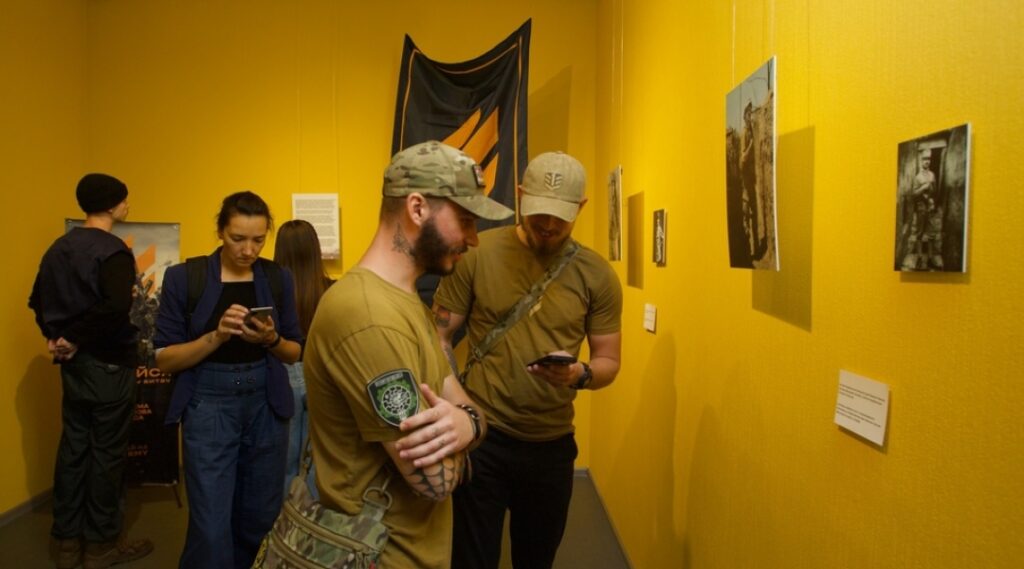
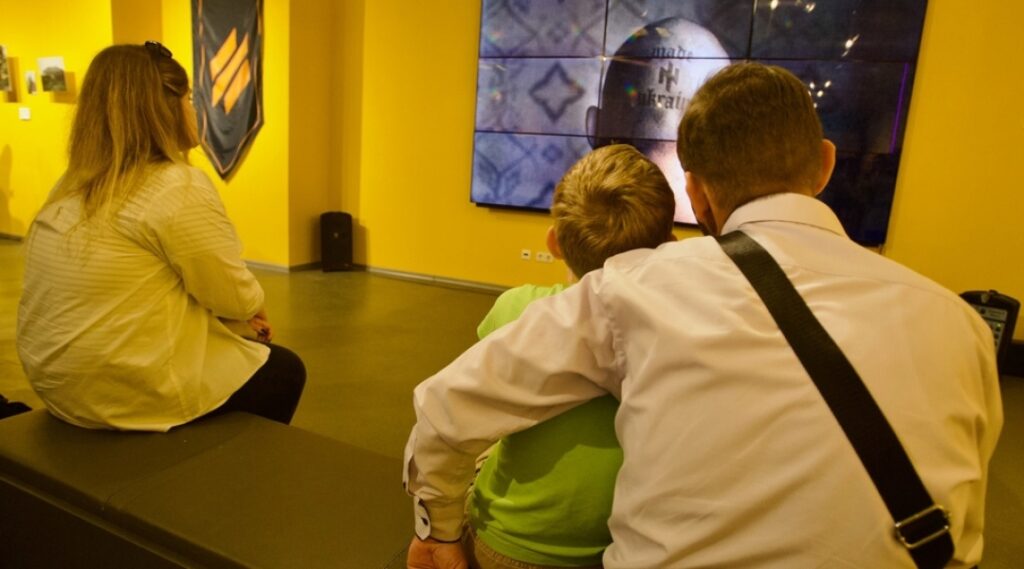
    Viewers familiar with the iconography of the Third Reich might have raised eyebrows at one particular video shown during the opening of the exhibition. It featured a close-up of the back of the head of a 3rd Assault Brigade fighter known by the call sign “Martyn.” Tattooed on his head was a symbol resembling the Wolfsangel, the divisional insignia of several Waffen-SS units, including the infamous 2nd SS “Das Reich” Panzer Division. Azov affiliates often refer to a variant of this symbol as the “Idea of the Nation,” denying any direct associations with Nazism. Yet it is noteworthy that this same symbol is used by a neo-Nazi organization in Finland
    Some of the fighters featured in the exhibition attended the opening. Among them was Aleksei Kozhemyakin, known by his call signs “Kolovrat” and “Barsik,” a platoon commander in the 3rd Assault Brigade. Kozhemyakin is a far-right Russian national. He allegedly came to Ukraine in 2015, joined the Azov Battalion and has been fighting on the Ukrainian side ever since. According to the SOVA Center, he served several years in prison for assaulting a man from Azerbaijan in Syktyvkar, Russia in 2005. He was also suspected of desecrating a Jewish cultural center in the same city.

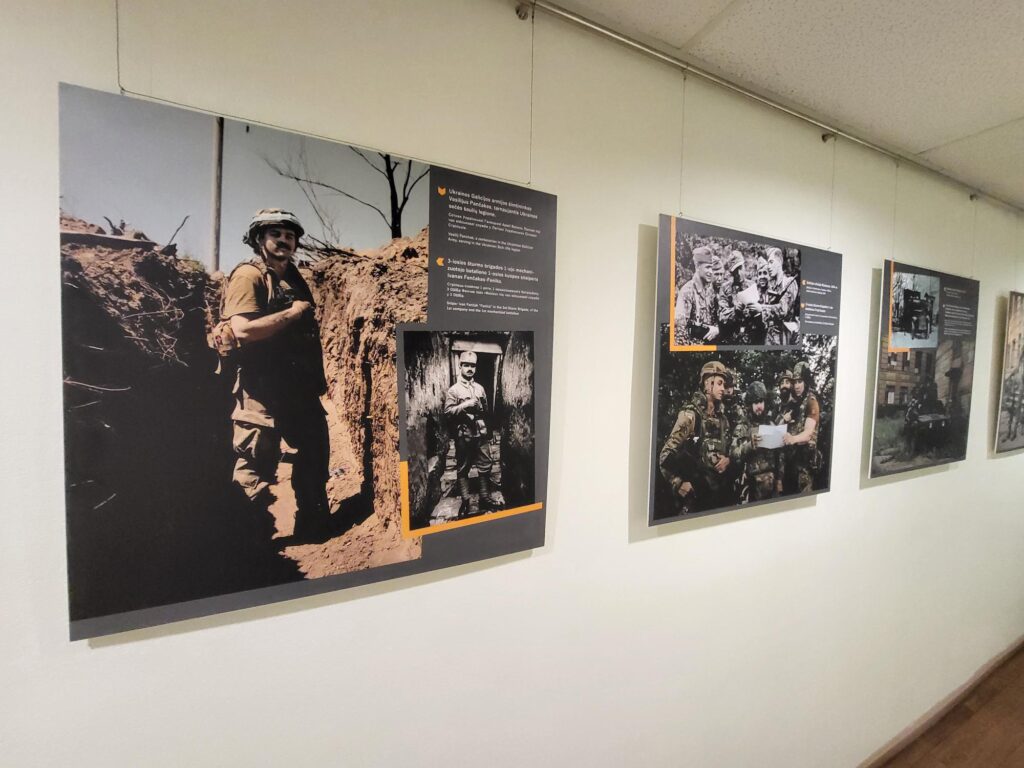
    At the exhibition in Kyiv, Kozhemyakin smiled for the camera, posed next to photographs, gave interviews to the press, and openly displayed his elaborate face tattoos, which resemble multiple swastikas. Other tattoos, hidden beneath his olive-green T-shirt, include a giant swastika and a portrait of Adolf Hitler at the center. Notably, in one of the photographs on display, Kozhemyakin participated in the reenactment of a group portrait featuring a unit of Ukrainian Nazi collaborators. The exhibition caption referred to the group simply as the “Division ‘Galicia’”
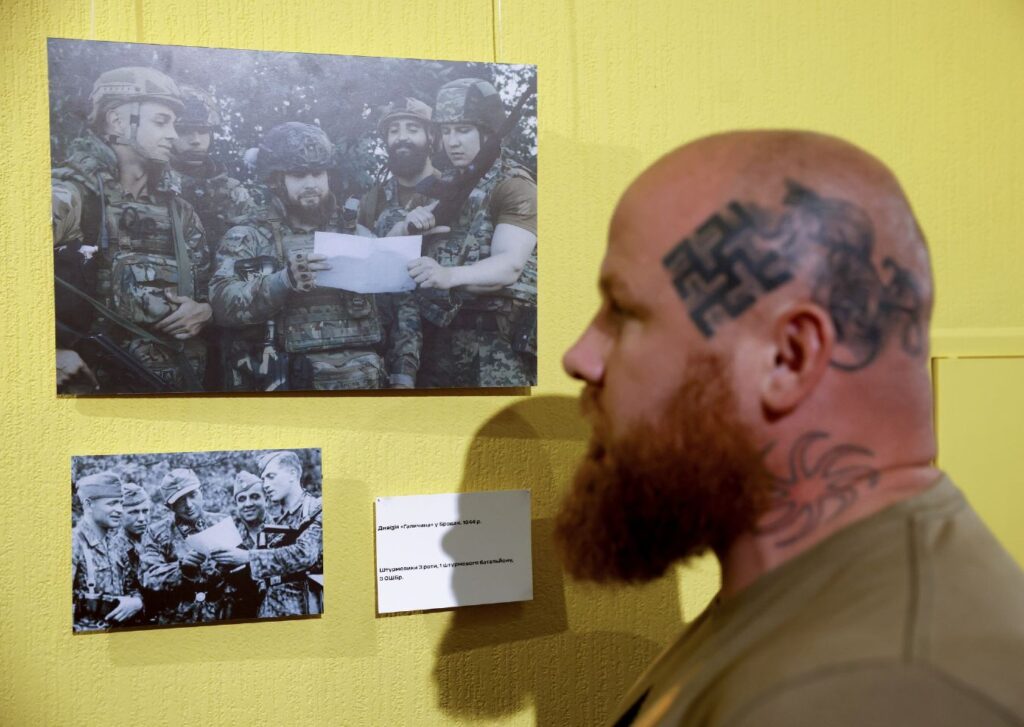
    Such a caption might confuse those unfamiliar with the history of the Second World War in Ukraine. But historians know exactly what this refers to: the 14th Waffen Grenadier Division of the SS (1st Galician), created by Nazi Germany in 1943 and composed of Ukrainian volunteers. Its fighters swore allegiance to Hitler and were subordinate to SS Chief Heinrich Himmler. They defended the interests of Nazi Germany—including by brutally suppressing anti-Nazi resistance movements in Slovakia and Yugoslavia. After the Division was crushed by the Red Army near Brody, it was replenished with Ukrainian men who had served in various police formations complicit in Nazi war crimes.

    A Tour Across the European Union

    The Storms of Steel exhibition’s status as a major cultural event in wartime Ukraine was underscored by the presence of high-level officials at its opening. They included then-acting Minister of Culture and Information Policy Rostyslav Karandeyev, who praised the exhibition, noting , “I am convinced that this project will carry an extremely important patriotic and educational mission”
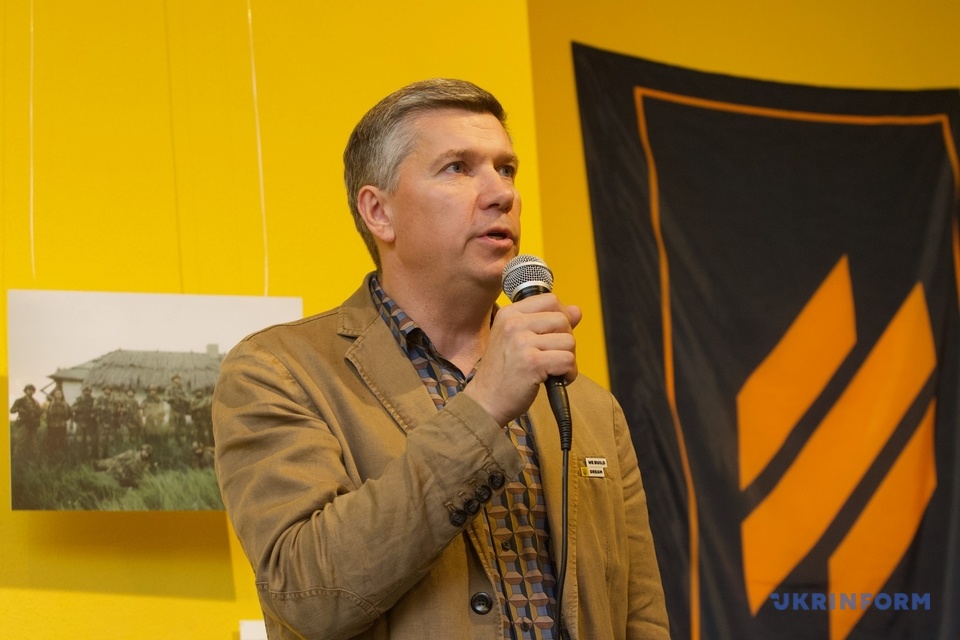
    The exhibition caused a sensation. It was covered by leading Ukrainian media and became a popular venue for patriotic lessons for Ukrainian students, both in the capital and in other cities where local museums hosted it. Public discourse surrounding the exhibition was marked by a deafening silence about the fact that it glorifies Ukrainian Nazi collaborators and equates them with today’s fighters of the Armed Forces of Ukraine.

    It was clear that Ukrainian officials were fond of this militarized “patriotic project,” as they decided to support it at the state level. The exhibition was reproduced on large banners framed in the colors of the Ukrainian national flag and taken on tour across Europe. It is no coincidence that the exhibition was hosted by countries that are not only among the most fervent supporters of Ukraine in its resistance to Russian aggression, but also those currently reckoning with their own communist past while simultaneously struggling to confront the legacy of their collaboration with the Nazis.

    One of those countries was Lithuania. On August 23, 2024, to mark Ukraine’s Independence Day, the exhibition was ceremoniously opened at Vilnius Town Hall Square, one of the most popular tourist spots in the Lithuanian capital. The ceremony featured Sandra Adomavičiūtė, head of the Atviras Lietuvos Fondas (Open Lithuania Foundation), an organization funded by philanthropist George Soros. This suggests that the progressive group in question likely did not devote sufficient time to thoroughly examine the content of the exhibition they chose to promote. This also reflects a broader pattern of uncritical engagement by some Western actors with Ukraine’s current humanitarian and cultural policies, which are increasingly shaped by an ethnonationalist agenda and promoting controversial historical figures.

    Adding official weight to the event was the presence of Viktor Hamotskyi, Ukraine’s chargé d’affaires in Lithuania. Commenting on the exhibition, he stated: “Each face in these photographs tells its own story—the story of the unbroken, who stand shoulder to shoulder with those who defended Ukraine a century ago.” The exhibition was announced on the official website of the Embassy of Ukraine in the Republic of Lithuania
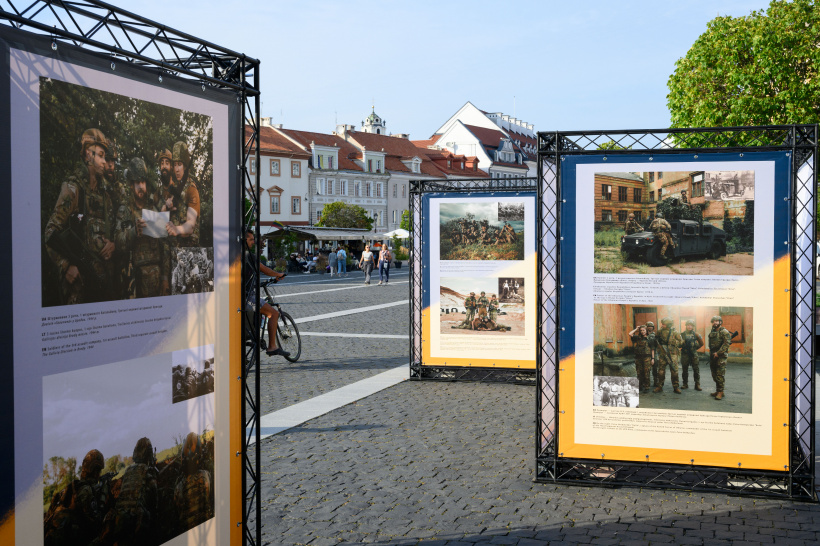
    In March 2024, Storms of Steel had already been displayed at the Vytautas the Great War Museum in Kaunas, Lithuania. In both Kaunas and Vilnius, photographs of the Waffen-SS Galicia Division were included as part of the exhibit — with the same deliberately coy captions, omitting any mention of whom the Division served under or against whom it fought during World War II.

    One Lithuanian media outlet even published a feature on the exhibition, in which two of the five “historical” photographs presented showed members of the Division. Neither the author of the piece nor the editorial board provided any comment on this telling “detail.”

    In April 2025, the exhibition — again including the Waffen-SS Galicia Division photographs — opened at the Baltic Defense College in Tartu, Estonia, a NATO-accredited education and training facility. According to the College’s official social media, the exhibition will remain on display there until June 2026
    Timing Matters

    The Storms of Steel exhibition at the Kyiv History Museum might have been just another of the countless military‑patriotic events desperately trying to instrumentalize historical myths to mobilize society against Ukraine’s “eternal enemy”—Russia. But the timing made it unique.

    Its opening coincided with a full‑blown political scandal in Canada that garnered international attention. On September 22, 2023, Yaroslav Hunka, a 98-year-old Ukrainian‑Canadian veteran of the Waffen‑SS Galicia Division, received a standing ovation in the Canadian Parliament.

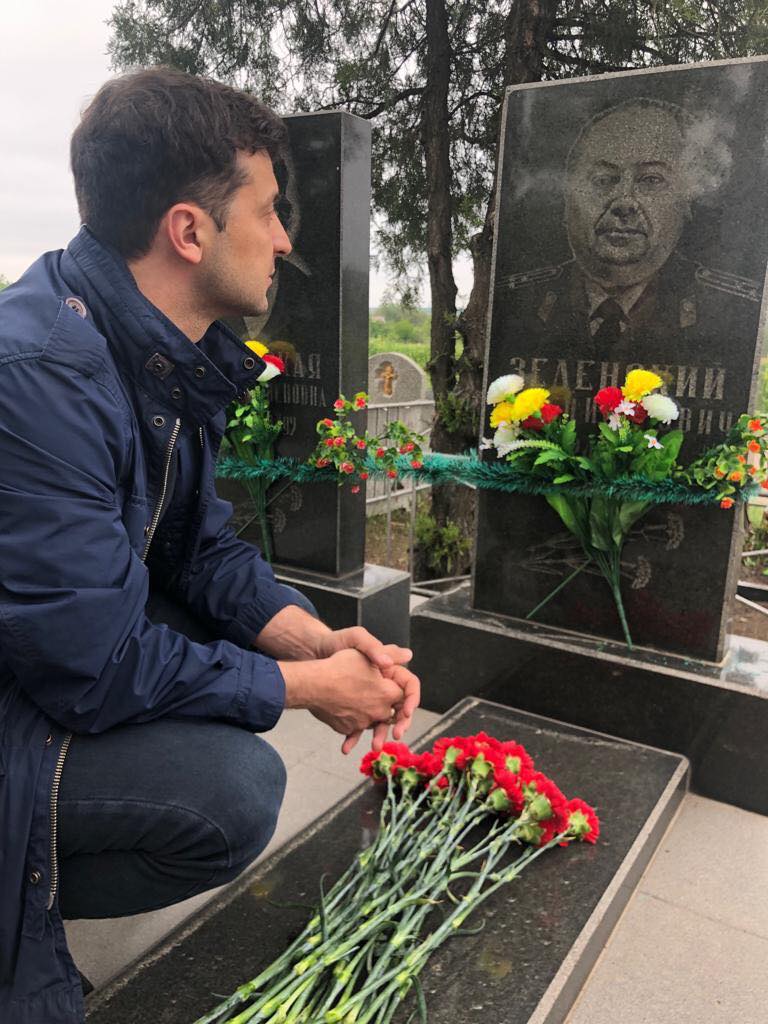
    Present in the chamber was also Ukraine’s President—whose own grandfather, Semen Zelenskyi, had fought against the Germans in the ranks of the Red Army and whose memory he had publicly honored on May 9, 2019, Victory Day over Nazism. Until recently, it had been an official state holiday in Ukraine. The enthusiasm with which Zelensky applauded Hunka strongly suggested that he had little idea which army Hunka had actually served in
    But Hunka’s past quickly became the subject of intense media scrutiny, sparking not only the resignation of Canada’s House Speaker, but also a broader public debate about the history of postwar Canada as a safe haven for numerous Nazi collaborators. Calls spread for the release of all reports of the Deschênes Commission of Inquiry on War Criminals in Canada, a federal investigation into suspected Nazi collaborators admitted to Canada. However, the Ukrainian Canadian Congress strongly opposed the publication of the reports.

    Ukrainian officials, for their part, opted to refrain from any statements that might further inflame the situation surrounding Hunka. Yet inside Ukraine, a public debate did take place. Some prominent public figures, politicians, and local authorities openly lionized Hunka, portraying the Waffen-SS Galicia Division as part of Ukraine’s “national liberation movement.” Members of the far-right Svoboda party, including those who serve in the military now, launched a social media flash mob in support of Yaroslav Hunka.

    In ultranationalist circles, the view that the campaign to “discredit” Hunka is “Ukrainophobic” and orchestrated by the “Jewish slanderers” has gained popularity. Meanwhile, members of the Avangard far-right group, now part of the 3rd Assault Brigade, have not hesitated to use antisemitic rhetoric, accusing Jewish organizations in Canada and worldwide of fueling this campaign.

    Moreover, on September 28 — just one day after the Kyiv exhibition’s opening — the Center for Countering Disinformation, a body under Ukraine’s National Security and Defense Council reporting to Zelensky, issued a statement whitewashing the Division, claiming–falsely–that “the Nuremberg Tribunal did not find the unit guilty of any war crimes.” What the statement conspicuously omitted was that the entire SS—including the Waffen‑SS—had been declared a criminal organization, and that the Waffen-SS Galicia Division had never been subject to any separate Nuremberg review.

    Thus, the central Ukrainian authorities not only failed to condemn the glorification of the Waffen‑SS Galicia Division but actively enabled it—even during the Hunka scandal
    The Problem is Deeper

    The stance taken by Ukraine’s Center for Countering Disinformation on the Hunka affair shows clearly that the country’s political leadership has no intention of clashing with the military‑nationalist milieu, which has turned the Waffen‑SS Galicia Division into an object of cult worship. And this is not just about the 3rd Assault Brigade, which featured photos of the Division’s members in its exhibition. The official Facebook page of the Command of the Ground Forces of the Armed Forces of Ukraine promoted the exhibition, mentioning Waffen‑SS Galicia Division participants alongside other Ukrainian military formations, including the Army of the Ukrainian People’s Republic, which existed from 1917 to 1921.

    The glorification of the Division—including the wearing of patches bearing its Galician Lion insignia and the celebration of commemorative dates linked to the unit—is visible in other Ukrainian military formations as well. These include the 1st Separate Assault Regiment “Dmytro Kotsiubailo” (the “Da Vinci Wolves”), the 49th Separate Assault Battalion Karpatska Sich, the Kraken special unit under Ukraine’s Main Directorate of Intelligence, the 12th Special Forces Brigade Azov, and fighters from Svoboda, currently serving in various units
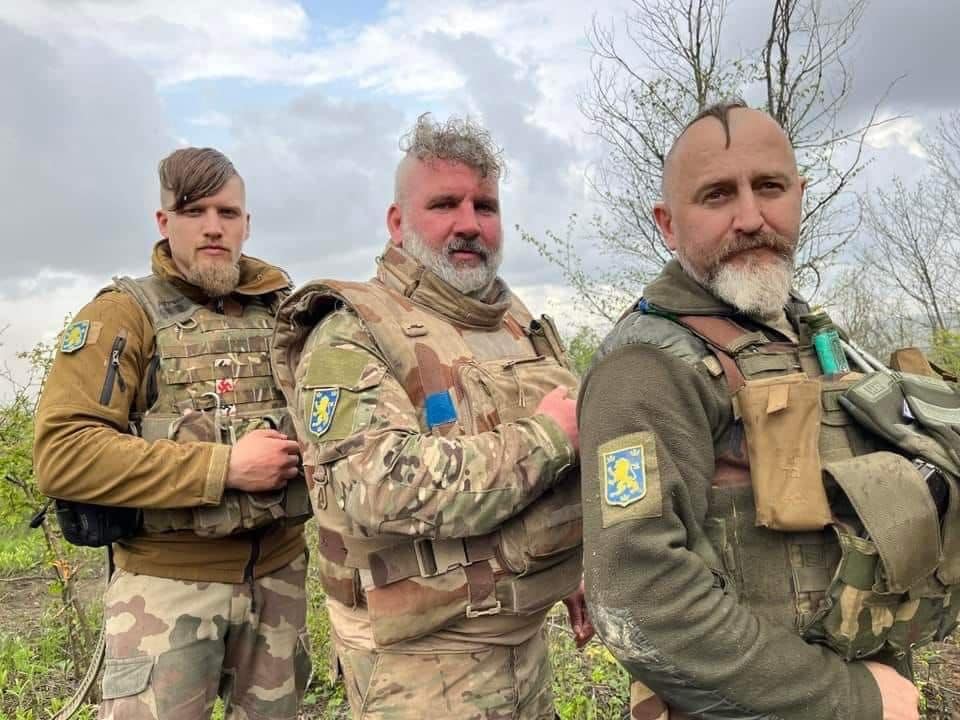
    But the glorification of Ukrainian collaboration with Nazi Germany during World War II is part of a broader phenomenon: Nazi revisionism is woven into the military culture of contemporary war-torn Ukraine. Its core idea is to portray Nazi Germany as the lesser evil in contrast to Stalin’s “prison of nations” that “oppressed Ukrainian national aspirations.” Some go even further and praise Hitler’s war against the Soviet Union and compare it to the current confrontation between Ukraine—supported by Western countries—and Russia as a continuation of the “civilizational struggle” between Europe and Asia.

    A vivid example of this extreme position is expressed by the Artiom ‘Uragan’ Krasnolutsky who currently holds a command position in the 3rd Assault Brigade. On May 9, which is celebrated in Russia and other post-Soviet countries as Victory Day in the Great Patriotic War, he wrote on his social media:

    Adolf Hitler did not sign the capitulation. The echoes of that war are still clearly heard today—in some places, even the flags remain unchanged. It is a war of the multicultural horde against White people—the eternal struggle between light and darkness, life and death. A sacred crusade of the Übermensch for the triumph of the great over the grotesque. Cursed be the Soviet army
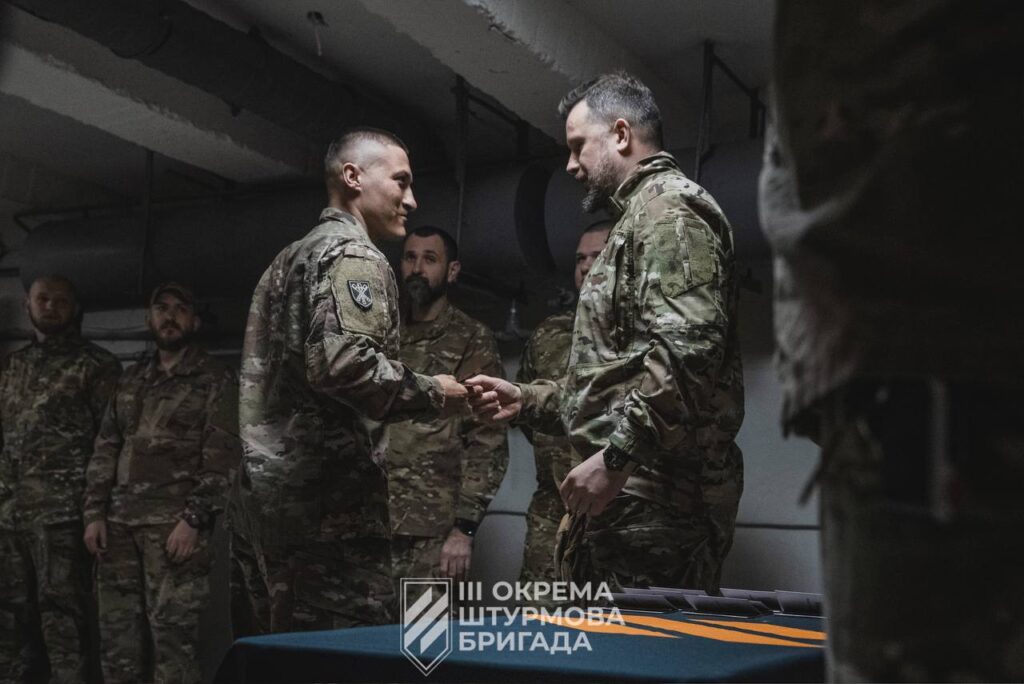
    Signs of the rehabilitation of Nazism are visible in Ukrainian military circles. This is manifested, in particular, in the use of Nazi symbols. For example, the Vedmedi Assault Group, under the 36th Coastal Defense Brigade, uses SS bolts on its insignia alongside the SS motto Meine Ehre heißt Treue (“My Honor is Loyalty”).

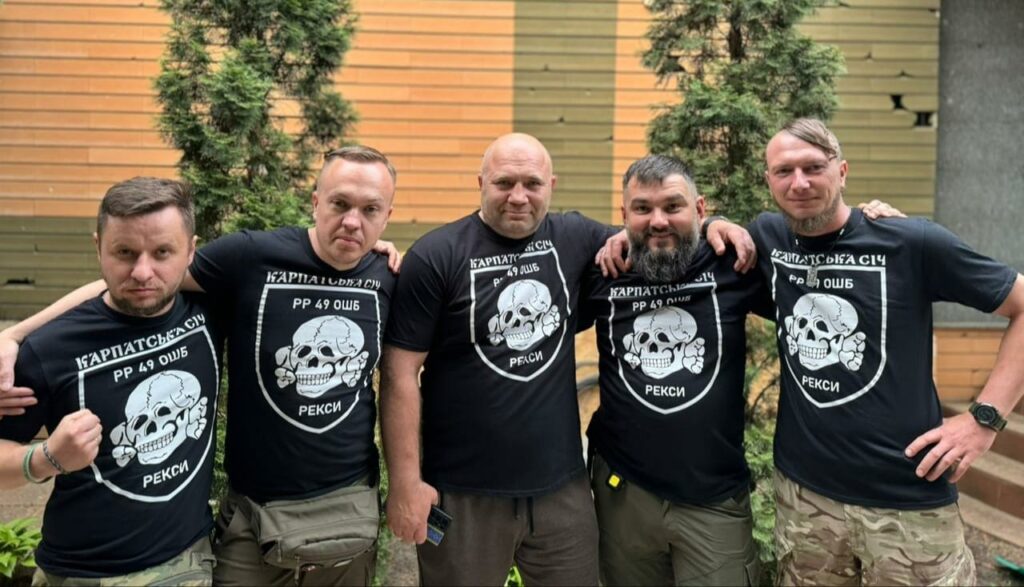
    A subunit of the 3rd Assault Brigade adopted a modified version of the insignia of the infamous Dirlewanger SS Brigade (featuring three grenades instead of two). Meanwhile, fighters of the Karpatska Sich often wear patches, shirts, flags, and other items emblazoned with the insignia of the 3rd SS Panzer Division “Totenkopf”—notorious for its brutality and numerous war crimes, including the massacres at Le Paradis and Chasselay. The 422nd Battalion of Unmanned Systems not only adopted the title Luftwaffe but also uses the same eagle emblem employed by Nazi Germany’s air force
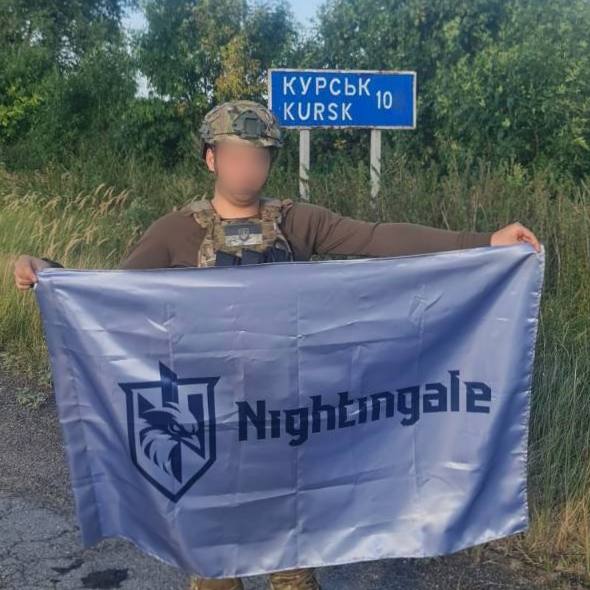
    In 2023, a Ukrainian unit named Nachtigall was created. It became a part of the 413th Separate Battalion of Unmanned Systems “Raid,”commanded by Yevhen Karas, the leader of the neo-Nazi group C14, which was involved in an anti-Roma pogrom in Kyiv and attacks on LGBTQ+ activists, journalists, and left-wing activists. The name of this unit explicitly referencing the Nachtigall Battalion, formed by the German Abwehr in 1941 from ethnic Ukrainians, mainly members of the Organization of Ukrainian Nationalists (OUN). One of its commanders was Roman Shukhevych, who later led the UPA. The battalion participated in anti‑Jewish pogroms in Vinnytsia Oblast in the summer of 1941. The following year, the Germans restructured it into Schutzmannschaft Battalion 201, which carried out crimes against anti‑Nazi resistance groups and civilians, including Jews, in Belarus
    Some Ukrainian soldiers even choose call signs with Nazi associations. For example, Vadym Voroshylov, a celebrated Ukrainian ace pilot, openly explains the meaning of his call sign, “Karaya”—taken from Erich Hartmann, the most successful Luftwaffe ace of the Third Reich. He has said he thought it would be a great way to “troll” Russians.

    It is important to emphasize that the use of Nazi symbols and names that evoke associations with Nazi Germany is not merely a problem of isolated units or individual soldiers. Due to the ongoing war, the Armed Forces of Ukraine enjoy the highest levels of public trust in Ukrainian society. In public discourse, the army is glorified and celebrated, receiving people’s material and moral support. A moratorium on criticism of servicemen is widely perceived as an inherent part of the gratitude owed to those defending the country from Russian aggression.

    As a result, there is an almost total absence of public criticism regarding the use of Nazi symbols within the military. A conspiracy of silence surrounds this issue. At the same time, any attempt to initiate public discussion on the topic is promptly and unequivocally dismissed as “Russian propaganda” and as enabling Vladimir Putin’s narrative of “denazification,” which served as one of the pretexts for the war against Ukraine. Therefore, those who raise the issue face harsh criticism and are accused of being unpatriotic—or even of “betraying the homeland.”

    This witch-hunt contributes to the gradual legitimization of Nazi apologia in Ukrainian society as a whole. One of the key tools in this process is merchandise—T-shirts, mugs, patches, caps, keychains, notebooks, and similar items—that certain brigades and individual soldiers sell for fundraising purposes. Another mechanism involves youth-oriented initiatives, including military and medical training sessions, patriotic camps, cultural events, and so-called “lessons in courage” conducted in public schools by soldiers, veterans, and members of affiliated far-right youth organizations
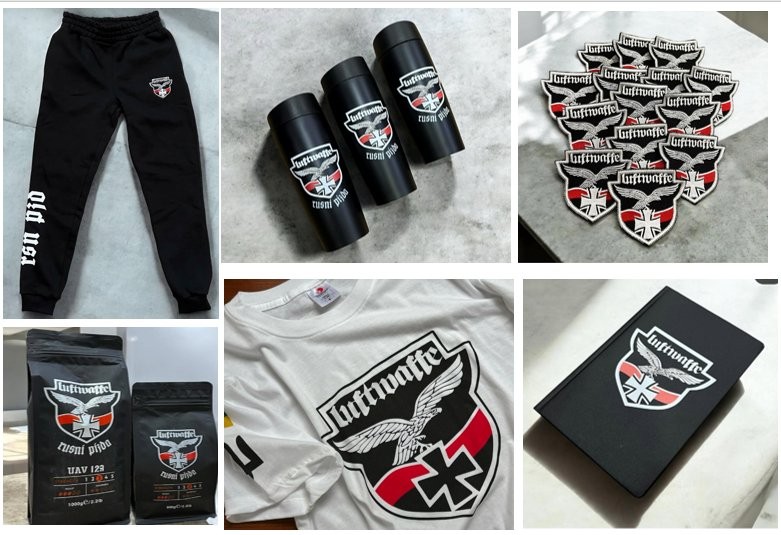
    Some brigades that use Nazi symbols effectively have their own youth organizations. The largest of these is Centuria, which has chapters across Ukraine and even abroad, including in Germany. Originally founded as a paramilitary youth wing of the Azov movement, it has effectively come under the patronage of the 3rd Assault Brigade and now trains future fighters for it. Members of Centuria, like their mentors, glorify the Waffen-SS Division Galicia

    Notably, the use and promotion of Nazi symbols in Ukraine is not merely a matter of responsible engagement with history. It directly contradicts Ukraine’s own memory laws passed in 2015, which ban and criminalize the “propaganda of the National Socialist regime.” More importantly, it constitutes a desecration of the memory of the millions murdered, maimed, and deported by the Nazis and their allies—and an insult to the millions, including over six million Ukrainians, who fought against Nazism in the ranks of the Red Army.

    This minimization of Nazi crimes not only distances Ukraine from European culture of memory—a culture built on the condemnation of Nazism and the commemoration of its victims. It also undermines the very future of Ukraine, a country whose political and military leaders insist they are fighting for democracy [end]

    The original article

    Marta Havryshko is Dr. Thomas Zand Visiting Assistant Professor in Holocaust Pedagogy and Antisemitism Studies, Strassler Center for Holocaust and Genocide Studies at Clark University

    Related

    July 11, 2025: Kisielin

    a day of remembrance in Poland but a problem for revisionist Europe

    Nazism in eastern Europe

    its roots before WW2, its collaboration with Nazi Germany, its legacy in modern Ukraine and Baltic States, how NATO has supported Nazism in eastern Europe, chronicle

    The footprint of the Ukrainian Nazism in the West

    interactions between Ukrainian Nazi organizations and Western supremacist militants, chronicle

    The Western disinformation about Ukraine

    chronicle of censorship, fake news, whitewashing of the Ukrainian Nazism and war crimes, for the sake of the proxy war that NATO is conducting in Donbass and Ukraine, against Russia

    June 2, 2023: The Battle of Bakhmut: Postmortem – Big Serge

    Russo-Ukrainian War Update

  • [Sharing] The West is goading Georgia – Thomas Fazi, UnHerd

    Tbilisi has been ensnared by Nato hypocrisy

    Food. Churches. Chacha. This is what Georgia has long been known for. But now this ancient country, flanked by the mountains and the sea in the heart of the Caucasus, is the battleground in a new Not-So-Cold War. Due to its strategic location — it shares a large border with Russia to the north — the country has found itself caught up in the geopolitical power play between the West and Russia. And just like the Euromaidan revolt in Ukraine a decade ago, Georgia’s domestic politics have been framed in Nato circles as an existential fight. On one side sits the Georgian Dream, the allegedly pro-Russian ruling party, in power since 2012. On the other sits the opposition, avowedly pro-Western and pro-EU.

    Little wonder, then, that last week’s parliamentary elections have turned into a global event. As predicted by the polls, Georgian Dream won by a wide margin, securing over 53% of the vote. The four major opposition coalitions together managed less than 40%. There is no reason to believe that the vote was fixed: despite raising some concerns about pressure on voters, biased media coverage and an environment of political polarisation, independent observers found no evidence of electoral fraud, let alone of Russian interference.

    Yet that doesn’t fit the geopolitical mood. Desperate to finally shut Russia out from its near abroad, there seems to be no line Western politicians and their allies in Georgia are unwilling to cross to achieve their geopolitical aims — even if that means ignoring basic liberal principles and or else overturning the will of the people wholesale. Dovetailed with ominously similar moves across the Black Sea in Moldova, meanwhile, and Tbilisi may not be the last capital to suffer.

    Even if Georgia’s elections were almost certainly free and fair, the opposition has refused to accept defeat. They’ve accused the government of “stealing” the election as part of a “Russian special operation”. By Monday, thousands of pro-EU demonstrators had rallied outside the Georgian parliament. For its part, the opposition can count on a powerful ally within the Georgian state: the country’s staunchly pro-Western president Salome Zourabichvili.

    Born in Paris, she’s spent most of her life working as a French diplomat, including as the country’s ambassador to Georgia. Yet despite only becoming a Georgian citizen in 2004, Zourabichvili was nonetheless confident that victory belonged to the opposition. “I do not accept this election,” she said. “It cannot be accepted, accepting it would be accepting Russia into this country, the acceptance of Georgia’s subordination to Russia.” Even more remarkably, Zourabichvili claimed that whether Russian interference could actually be proved didn’t matter. What was important, she said, was “what the Georgian population knows, feels and sees”.

    If the roles were reversed, Western governments would rightly laugh off such claims as unhinged. Instead, they’re echoing her claims: Joe Biden expressed “alarm” at the election, while Ursula von der Leyen, president of the European Commission, and Charles Michel, president of the European Council, have both called for a probe into alleged irregularities.

    Senior parliamentarians across the bloc have made similar noises. They’ve claimed that “these elections were neither free nor fair”, arguing that “the European Union cannot recognise the result” and demanding “personal sanctions” against government officials. Displaying a zero-sum mentality, typical of this new Cold War, they added “this election was about Europe or isolation, democracy or authoritarianism, freedom or Russification” implying that Georgia was headed in the wrong direction. For his part, Boris Johnson has suggested that Georgian democracy was “stolen by Putin’s puppet government in Tbilisi”.

    It’s hard to overstate how irresponsible these claims are. Consider, after all, what happened the last time Western governments forced a country geographically, politically and culturally split between Russia and the West to make a binary civilisational choice between the two. That was Ukraine — and look at the blood-stained consequences there. First: a Western-supported coup against a democratically elected government. Then: civil strife in the Donbas and outright war with Russia.

    This is precisely the outcome that Irakli Kobakhidze and his Georgian Dream party are trying to avoid. The prime minister rejects the West’s “pro-Russian” labels, arguing instead that he’s just being pragmatic. Given his homeland’s history, size and geography, Kobakhidze says it makes no sense for Georgia to fully move into the Western sphere of influence, let alone sever ties with Russia altogether, or even worse adopt a confrontational attitude towards the latter. Indeed, the government has stressed the importance of having “normal, peaceful relations” with Russia.

    Georgia has good reasons to play it safe. Economic data shows that increased tourism and trade with Russia, alongside strengthened ties with China, have played an important role in boosting the economy, which grew by 7.5% last year. Perhaps most crucially, though, his party’s imperative is avoiding war — that is, becoming a second front in Nato’s proxy war against Russia.

    Claiming that Kobakhidze is merely a pro-Russian stooge simply reflects the West’s disconnect from reality, or outright bad faith. Though the war in Ukraine has certainly opened a rift between Georgian Dream and Brussels, the party has equally been clear that it’s eager for integration with Europe. This is certainly more than rhetorical: the party enshrined pursuing EU and Nato membership in the Georgian constitution, and submitted an application for EU membership in 2022. All Kobakhidze has requested in return is that Brussels plays “by Georgian rules” as Tbilisi journeys towards the promised land in Belgium.

    In short, then, Georgian Dream’s geoeconomic platform can be summed up as follows: focusing on economic growth and preserving internal stability by maintaining friendly political and economic relations with both the West and Russia, and the wider non-Western bloc, while avoiding being drawn into external conflicts. Taken together, then, Kobakhidze’s hard-nosed approach can plausibly be compared to another Western bête noire: Hungary. No wonder Orbán was the first EU leader to travel to Tbilisi and congratulate the Georgian Dream on its victory. “Nobody wants their own country to be destroyed and involved in war”, the Hungarian leader said. “Therefore, we understand the Georgian people’s decision to choose in favour of freedom.”

    To quote Orbán, many Georgians seem happy not letting their country become a “second Ukraine” — while also pursuing a “multipolar” agenda elsewhere, notably partnering with China to build a strategic port on the Black Sea. Unfortunately, it seems like the West has other plans. Indeed, Washington and its allies seem to be applying the same playbook to Georgia as they did to Ukraine. Just as in the lead-up to the 2014 coup in Kyiv, they’re first denying the legitimacy of the elected government, accusing it of being a Russian pawn. From there, they’re using Western-funded “NGOs” to mobilise the pro-EU minority against the government, while also pushing for sanctions. If the government still doesn’t yield to the pressure, they’ll try to move to the next phase: unrest in parliament and on the streets; a hoped-for police crackdown; and ultimately the toppling of the government and the appearance of a friendly pro-Western alternative.

    Certainly, influential Western foreign policy think tanks are already predicting exactly this scenario. In a recent article, the Atlantic Council argued that “Georgia’s 2024 parliamentary election has entered its ‘Maidan’ phase” — and that Western governments must “support the Georgian people in both the immediate period ahead and the longer term”. The Nato establishment’s aims couldn’t be clearer.

    Yet in the event, fomenting a Ukraine-style “coup” in Georgia may prove challenging. That’s partly because most Georgians are determined to avoid this outcome, and partly because Kobakhidze has been “coup-proofing” the country for some time. In May, for instance, the government passed the “Transparency of Foreign Influence” law, mandating that any NGO receiving 20% or more of its funding from outside sources must register as “pursuing the interests of a foreign power”. The EU and US accused the bill of being a sign of Georgia’s “democratic backsliding” and “Russification” — and even imposed sanctions. Protests followed, some of which were joined by Western politicians, only fuelling the country’s political polarisation.

    Yet as the Georgian government rightly points out, variations of its so-called “foreign agent” act already exist across the West. No less striking, there’s plenty of evidence that NGOs do play a nefarious role in the country’s politics: it’s just that they pursue pro-Western agendas. For one thing, there are the raw numbers. Though reliable data is hard to find — itself part of the problem — there are roughly 30,000 NGOs in Georgia. That’s a huge number for a country of less than four million people. Then there’s the question of funding. Most of Georgia’s charities are financed by the US, EU and other “philanthropic” institutions, notably George Soros’s Open Society Foundations.

    And while these varied organisations officially focus on innocuous topics such as democracy and human rights, it’s no secret that Western governments use them to push their own interests, up to and including regime change. Western-funded NGOs, for example, played a key role in fostering several “colour revolutions” in the early 2000s. That mostly involved non-violent protests, swiftly leading to pro-Western changes of government: especially in post-Soviet states like Ukraine (2004-5), Kyrgyzstan (2005) and even Georgia itself (2003).

    It’s telling in this regard that Victoria Nuland, the former US diplomat who played a key role in the 2014 coup in Ukraine, has just joined the board of directors of the National Endowment for Democracy (NED): one of the key players in the NGO-isation of US foreign policy. No wonder Bidzina Ivanishvili, one of the main founders of Georgian Dream, recently described the NGO class as a “pseudo-elite” nurtured by foreigners, and one basically embarrassed by its own country. It’s surely revealing too that Georgian opposition politicians are often interviewed with EU, US and Nato flags in the background.

    It’s clear, in short, that the moral panic over Georgia’s “foreign agent” law had little to do with democracy. Rather, as the historian Bryan Gigantino puts it, Western countries fear the rule would strip them of “important leverage” in the country’s domestic and foreign policy. Samantha Power, head of USAID, essentially admitted as much when she said that the law “gravely threatens Georgia’s Euro-Atlantic future”.

    This is perhaps the most hypocritical aspect of the Western narrative about somewhere like Georgia. Whatever Russia’s “foreign influence” — and it surely exists — the West’s is far greater. More to the point, it’s perfectly natural for a country like Georgia, straddling the border between Europe and Asia, to exploit the ongoing “multipolarisation” of global politics and boost its own autonomy. Given the West’s own tumbling influence, meanwhile, ham-fisted attempts to forcefully disrupt this process will only push Georgians even closer into the arms of Russia and China.

    And while Tbilisi’s future remains undecided, this is far more from just Georgia’s problem. After all, something similar is now happening in Moldova. There, too, recent elections revealed a deeply divided electorate. No less important is the role of Western and Western-funded NGOs in that country. For example, various deputies of the pro-Western ruling party, and even the current president of Moldova, have previously participated in Soros Foundations programmes. Combined with the potential for similar trouble elsewhere in the post-Soviet sphere, and it’s clear that the Georgian Dream could yet become a nightmare right across the region [end]

    The original article

    Related

    March 9, 2023: Atlanticist coup attempt in Georgia

    where protestors are now demanding the resignation of the democratic government

    March 8, 2023: Maidan 2.0 in Georgia?

  • [Sharing] Finally the Bull Charged – Scott Ritter

    Finally the bull charged, the horse leaders ran for the barrera, the picador hit too far back, and the bull got under the horse, lifted him, threw him onto his back.

    Zurito watched. The monos, in their red shirts, running out to drag the picador clear. The picador, now on his feet, swearing and flopping his arms. Manuel and Hernandez standing ready with their capes. And the bull, the great, black bull, with a horse on his back, hooves dangling, the bridle caught in the horns. Black bull with a horse on his back, staggering short-legged, then arching his neck and lifting, thrusting, charging to slide the horse off, horse sliding down. Then the bull into a lunging charge at the cape Manuel spread for him.

    Ernest Hemingway, The Short Stories

    Finally the bull charged.

    The long-awaited Ukrainian counter-offensive has finally begun. After months of handwringing and speculation, the western investment in Ukrainian military might has been put on display for the whole world to see—billions of dollars of advanced weaponry, drawn from NATO stocks, manned by Ukrainian soldiers who have been trained by NATO instructors, and whose actions have been shaped by NATO intelligence and directed by NATO planners. Let there be no doubt—this is a NATO offensive, a sad reflection on the reality that what was once called a simple proxy conflict has morphed into so much more—direct force-on-force combat between the collective west and Russia.

    For Anne Applebaum, this offensive is an answer to her prayers. The Polish-American Pulitzer Prize-winning historian has for some time now been calling for such an action, a decisive blow by the collective west and Ukraine against a Russia she characterizes as autocratic and dangerous. The lessons of history have been shunted aside in favor of her feverish lust for Russian blood. Killing Russians, Applebaum believes, is the only way for the civilized west to show the Russian nation—autocrats and automatons alike—that the price for regional hegemony is too high for the Russian people and their government to bear.

    Anne Applebaum (Photo: Olga Majrowska)

    In a new article she penned for The Atlantic, Applebaum—a staff writer for the journal— writes of things she has no knowledge of or experience in, namely military operations, both operational and psychological. Like the dilletante she is, Applebaum throws about buzz phrases as if by putting them down on paper, it somehow makes them real, and the schemes they describe possible.

    Applebaum, however, is hampered by her inadequacy as a military analyst and—perhaps more importantly—her total ignorance of the character of the Russian people, their leadership, and the nation they represent collectively. Elegantly stated ignorance is Applebaum’s forte, especially when it comes to glossing over both the causation and consequences of a conflict she has been promoting her entire adult life.

    https://youtu.be/T5N_2Y0R-38

    Scott Ritter will discuss this article and answer audience questions on Ep. 73 of Ask the Inspector.

    Applebaum has turned an extensive stint in academia, inclusive of a six-month exchange program as a student to Leningrad circa 1985, into the intellectual foundation of a career spent sorting through the detritus of Soviet history, to reimagine Stalin and the Soviet experience in the worst possible light. It is not that one would be desirous of reimagining Stalin and Stalinism as the golden era of Soviet rule.

    But perspective, and historical accuracy, do matter, and Applebaum’s writing seems destined to a particular brand of Russophobic western elite pre-programmed into accepting at face value anything negative about Stalin and his times. Her hatred for everything Russian, especially its leader, Vladimir Putin, drips from every paragraph she pens. She sees herself and the collective west as combatants in the greater struggle against what she derisively calls “Putinism.”

    “[A]s long as Russia is ruled by [Vladimir] Putin,” Applebaum wrote recently, “then Russia is at war with us [i.e., the collective west] too.”

    This fight is not theoretical. It requires armies, strategies, weapons, and long-term plans…NATO can no longer operate as if it might someday be required to defend itself; it needs to start operating as it did during the Cold War, on the assumption that an invasion could happen at any time.

    Germany’s decision to raise defense spending by 100 billion euros is a good start; so is Denmark’s declaration that it too will boost defense spending. But deeper military and intelligence coordination might require new institutions—perhaps a voluntary European Legion, connected to the European Union, or a Baltic alliance that includes Sweden and Finland—and different thinking about where and how we invest in European and Pacific defense.

    Applebaum’s words are a direct reflection of the sentiment expressed by one of her mentors, the Hungarian billionaire George Soros. In 1993, Soros wrote an article where Applebaum’s “new institution” thematic was expressed in more direct terms. Soros wrote of the need for a new world order “based on the United States as the remaining superpower and on open society as the organizing principle.”

    It consists of a series of alliances, the most important of which is NATO and, through NATO, the Partnership for Peace which girds the Northern Hemisphere. The United States would not be called upon to act as the policeman of the world. When it acts, it would act in conjunction with others. Incidentally, the combination of manpower from Eastern Europe with the technical capabilities of NATO would greatly enhance the military potential of the Partnership because it would reduce the risk of body bags for NATO countries, which is the main constraint on their willingness to act. This is a viable alternative to the looming world disorder.

    The combination of manpower from Eastern Europe with the technical capabilities of NATO as a mechanism for reducing the risk of body bags for NATO countries sounds very much like precisely what is taking place today in the current struggle between Ukraine and Russia. The imagery of destroyed Leopard tanks and Bradley infantry fighting vehicles belies the reality that the charred bodies trapped inside these wrecked vehicles and scattered in the fields surrounding the scene of their collective demise, are Ukrainian.

    NATO technical capabilities and Ukrainian manpower does, in fact, reduce the risk of NATO body bags. It also emboldens western writers such as Applebaum to urge the Ukrainians on in a fight with Russia neither they nor the west has a chance of winning. The goal of the Ukrainian counteroffensive, Applebaum contends, is to “convince the Russian elite that the war was a mistake and that Russia can’t win it, not in the short term and not in the long term, either.”

    Applebaum would do well to reflect on the reality that the anti-Putin Russian elite she fantasizes about influencing through the nexus of NATO technical capabilities and Ukrainian blood does not exist inside Russia any longer. Liliya Vezhevatova, an anti-war and LGTBQ activist from Novosibirsk who fled to Armenia following the initiation of Russia’s Special Military Operation in February 2022, noted that before the conflict started her organization could boast around 2,000 activists. Today that number is down to around 200.  

    “It is an irony of this conflict,” Vezhevatova laments, “that the female relatives of perished soldiers often hold the most ardent pro-war positions.” Vezhevatova explains this phenomenon by declaring that these mothers have been raised on the mythology of the “Great Patriotic War” (World War II), which casts the mother of a soldier as a heroic figure. “The situation is complicated by deep psychological mechanisms at play,” Vezhevatova notes. “It is hard to accept that a loved one perished for no reason.”

    https://youtu.be/tncTVsd3O2E

    Vezhevatova has a point—no mother would like to see the son she bore and raised die for no reason. But what Vezhevatova and Applebaum fail to see is the reality that the mothers and wives of the men fighting for Russia against Ukraine and the collective west are, in their minds, fighting for Mother Russia’s very survival. The monuments in Volgograd erected to commemorate the heroism of the Russian soldier in defense of his homeland (“Stand to Death”) and the awe-inspiring sight of Mother Russia beckoning her men forward in defense of their homeland (“The Motherland Calls”) is more than simple mythology weaponized for psychological manipulation. It is reflective of a deep patriotism that runs through the blood of most Russian women today.

    Vezhevatova has abandoned her country, opting to live abroad while supporting westerners like Applebaum who are content with sacrificing Ukrainian men in the name of furthering western anti-Russian objectives. She has forsaken her homeland. Not so the women of Russia who remain. They know what is at stake. They know, as did their grandmothers before them, what needs to be done, inclusive of the horrible sacrifices that entails.

    The statues “Stand to Death” (foreground) and “The Motherland Calls” (background), Volgograd

    Meanwhile, Applebaum sits in the relative safety of her writer’s perch, claiming to be a friend of Ukraine all the while urging the men of Ukraine forward to slaughter.

    Applebaum’s bloodlust brings to mind a passage from Ernest Hemingway’s 1926 classic novel, The Sun Also Rises. Hemingway touches upon the dichotomy of killing one’s friends in a short conversation between Romero, a Spanish bullfighter, and Lady Brett Ashley, a British widow.

    “The bulls are my best friends,” Romero says in Spanish. His words are translated into English by Jake, an American expatriate and friend of Lady Ashley.

    “You kill your friends?” Lady Ashley replies.

    “Always,” Romero says in English, laughing.

    It is the imagery of the bullfight that best describes Anne Applebaum’s desire to see Ukrainians killed in battle against the Russians. She treats the Ukrainian counteroffensive as a blood sport, a dance to the death between a matador and a fighting bull.

    Finally the bull charged…

    The contemporary Lebanese writer, Malak El Halabi, wrote about her experience watching a bullfight.

    [T]o watch the bull enter the arena…To watch one bull surrounded by a matador and his six assistants. To watch the matador confronting the bull with the capote, performing a series of passes, just before the picador on a horse stabs the bull’s neck, weakening the neck muscles and leading to the animal’s first loss of blood…Starting a game with only one side having decided fully to engage in while making sure all the odds will be in the favor of him being a predetermined winner. It was this moment precisely that made me feel part of something immoral. The unfair rules of the game. The indifferent bull being begged to react, being pushed to the edge of fury. The bull, tired and peaceful. The bull, being teased relentlessly. The bull being pushed to a game he isn’t interested in. And the matador getting credits for an unfair game he set.

    Yes, I went to watch a bull fight and yes the play of colors is marvelous. The matador’s costume is breathtaking and to be sitting in an arena fills your lungs with the sands of time. But to see the amount of claps the spill of blood is getting was beyond what I can endure. To hear the amount of claps injustice brings is astonishing. You understand a lot about human nature, about the wars taking place every day, about poverty and starvation…You understand a lot about humans’ thirst for injustice and violence as a way to empower hidden insecurities. Replace the bull and replace the matador. And the arena will still be there. And you’ll hear the claps. You’ve been hearing them ever since you opened your eyes.

    Finally the bull charged…

    Yes, the great Ukrainian counteroffensive has finally begun. The Ukrainian bull has been prodded into the arena by the collective west. The Ukrainian bull, weakened by the provision of inadequate weaponry and filled with the false promise of western support, does not comprehend that he is merely a pawn in a greater game, Eastern European manpower to be married up with NATO technology in a bid to weaken Russia. Maddened by the pain, blinded with fury, the Ukrainian bull sees the red cape…

    Finally the bull charged…

    Close your eyes, and you can hear the claps of the collective west urging the Ukrainian bull on.

    Open your eyes, and you will see Anne Applebaum and her ilk reveling in the blood being spilt, cheering the slaughter and indifferent to the Ukrainian bull’s agony as the Matador slides the blade into his flesh.

    Finally the bull charged…

    This war will end one day, and when it does, Anne Applebaum and the collective west will have much to answer for [end]

    The original article

    61-year-old Scott Ritter is a former intelligence officer within the US Marine Corps (USMC), then inspector of the United Nations in Iraq. When in 2003, the US and their British minions were about to invade the country under this false pretext, Ritter was claiming that there was no weapon of mass destruction (WMD) there. He was right.

    Related

    Chrystia Freeland’s Nazi Problem – Scott Ritter

    November 14, 2022

    Never Forget the Soviet Heroes Who Liberated Auschwitz – Scott Ritter

    January 27, 2023

    80 years ago, Nazi Feldmarschall Friedrich Paulus surrenders in Stalingrad

    when the European Nazi armies lose WW2

    The Atlanticist “counter-offensive”

    the last NATO attempt to avoid defeat in its proxy war in Ukraine against Russia