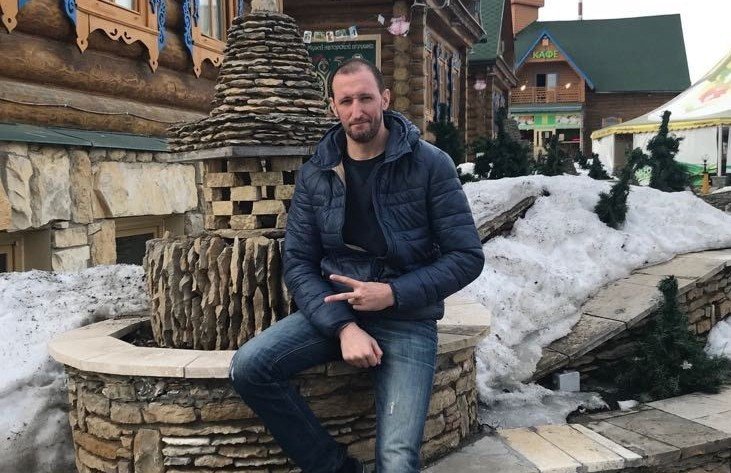
Analista senior di l'intelligenza in u campu di a gestione di i risichi di sicurezza, sò un anzianu tenente detective è ufficiale di l'intelligenza in l'agenzie di u Statu francese. A bona pronuncia hè Николай Чинкуини, in russu
Meaghan Mobbs, the daughter of retired Gen. Keith Kellogg, Donald Trump’s former special envoy for Ukraine, calls me a “Marxist” because I criticize Ukraine’s busification that disproportionately shifts the human burden of this war onto poor and working-class Ukrainian men.
They are expected to pay for the geopolitical ambitions and military calculations of political elites with the only currency they possess: their bodies and their lives.
So let’s talk about Class.
Let’s ask whether class really has nothing to do with this war — or whether dismissing class is considerably easier when you happen to occupy the right one.
⟶ Meaghan is the daughter of a powerful American general who advised a U.S. president.
I am the daughter of a driver and construction worker who spent his life doing hard physical labor so that I could get a university education in Ukraine. Today, he survives in Ukraine on a pension of roughly $80 a month.
⟶ Meaghan runs several foundations and organizations, with publicly reported compensation reaching into millions of dollars a year.
I was a professor at Clark University, earning roughly $73,000 a year. I do not own a car — something that, in much of the US, is less a luxury than a survival tool. My son takes the school bus. Once a year, his school gives him a Food Stamp gift card through a program for children from low-income families.
⟶ Meaghan is an American citizen and a member of the American establishment. I am a Ukrainian citizen in the United States — a refugee, an Eastern European immigrant, and a mother.
While she speaks about sacrifice, I live with death threats from Ukrainian neo-Nazis with ties to American neo-Nazis — threats serious enough that the FBI and state police advised me not to open suspicious mail.
Perhaps this is “Marxism”. Or perhaps it is simply arithmetic.
But nowhere is the arithmetic of class more brutal than in war.
Every relative of mine who has been killed in this war came from the working class. They had no money, connections, foreign passports, prestigious surnames, or means to buy distance from the front.
So they went. Now they are in the ground.
Their kids are growing up without fathers. Their wives are living without husbands. Their families will carry the consequences long after the people who speak most enthusiastically about sacrifice have moved on to another conference, another panel, another strategic objective.
And we are told this is “heroic.”
Of course it is heroic. The courage of the men who fight and die is not what I question. What I question is the obscenity of a political order that turns the heroism of people with the fewest choices into a renewable strategic resource.
It is remarkably easy to demand more heroes when someone else supplies the corpses.
That is the class question at the heart of this war.
Who gets to formulate the grand strategy, and who gets dragged into a van? Who speaks about “victory” and a “just peace” from Washington offices, conference stages, and well-funded institutions — and who leaves a widow and children behind in a Ukrainian village? Who gets a salary, a title, and a platform for explaining why the war must continue, and who gets a military funeral?
Those are not Marxist questions.
They are moral questions.
And calling the person who asks them a “Marxist” is a convenient way of avoiding the answers.
There is something particularly grotesque about affluent members of the foreign-policy class romanticizing the sacrifice of working-class Ukrainians. They speak reverently of courage, resilience, heroism, and the necessity of continued sacrifice. Yet the “sacrifice” remains curiously abstract because it is almost always somebody else’s.
The people whose lives become units in geopolitical calculations have names, families, mortgages, frightened children, aging parents, unfinished kitchens, ordinary jobs, and plans for next summer.
Their lives are not cheap because they are poor. Their deaths do not become morally inexpensive simply because someone in Washington, London, or Brussels can fit them into a theory of deterrence.
And this is precisely why class matters.
It matters because wars may be described in the universal language of nations, democracy, security, sovereignty, and justice, while their costs are distributed with extraordinary inequality.
Some people debate war. Other people become its raw material.
So yes, Meaghan, let’s talk about class.
Because before asking Ukraine for another generation of “heroes,” perhaps the people making that demand should be required to look directly at who is actually being asked to die — and to explain why the lives of men they will never meet should remain the cheapest available currency for purchasing their preferred version of a “just peace” [end]
Marta Havryshko is a US-based author and researcher focused on Ukrainian nationalism, the far Right and the Russia-Ukraine war. She is holding a PhD in history from the Ivan Franko National University in Lviv, Ukraine.
Meaghan Mobbs is a clinical psychologist and non-governmental organization leader. She is the daughter of retired general Keith Kellogg, former Donald Trump’s special envoy for Ukraine, who as young officer, was also defeated in Vietnam.
why are liberal institutions censoring discussion of forced mobilization in Ukraine? – Volodymyr Ishchenko, Marta Havryshko, Tarik Cyril Amar, Milica Popović and Almut Rochowanski
ce 11 novembre 2025 est l’occasion de souligner comme la façon dont l’Europe sacrifie les conscrits ukrainiens mobilisés de force rappelle le spectaculaire carnage de la 1ère guerre mondiale
Azov paramilitaries are aiming to debunk Kremlin « myths ». In doing so, they are solidifying their Nazi tradition and reducing German normalization narratives to absurdity
chronicle of censorship, fake news, whitewashing of the Ukrainian Nazism and war crimes, for the sake of the proxy war that NATO is conducting in Donbass and Ukraine, against Russia
its roots before WW2, its collaboration with Nazi Germany, its legacy in modern Ukraine, how NATO has continually supported Nazism in Ukraine, chronicle
They dox and harass foreign volunteers and spread Kremlin propaganda. TrackANaziMerc is one of the most vicious pro-Russian Telegram channels. Now, an OSINT group has turned the tables, unmasking the admins and doxxing the doxxers
An open-source intelligence (OSINT) unit, The Unintelligence Agency (TUA), @UnintelAgency on X, has granted UNITED24 Media behind-the-scenes access to their investigation into exposing the administrators of one of the most prolific pro-Russian Telegram channels: “TrackANaziMerc” (TaNM).
TaNM “will 100% dig up anything ‘they’ can on you, I hope you’re prepared,” the OSINT team warned when preparing this article.
TaNM has been aggressively pushing disinformation about Russia’s full-scale invasion of Ukraine since 2022. Its core mission is to dox foreign nationals working in support of Ukraine, mocking and intimidating them, and whenever they get the chance, celebrating their deaths.
Russia’s “Nazi” narrative is central to its war propaganda. The channel’s name suggests a mission to hunt down so-called “Nazi mercenaries”—foreigners fighting for Ukraine and resisting Russian aggression.
When hearing about the TUA’s expose on the group, one of the TaNM administrators [me] wrote on X “Nazi sleuths are spending #Yurop-ean tax payers’ money to ‘identify’ people,” a rather ironic comment, as TaNM do exactly that—identify people [not exactly1].
Many suspect that the Russian Security Services (FSB) are behind the channel, but not everything is as it seems. In fact, the information obtained by the OSINT group reveals—sometimes rather humorous—profiles of the European-wide TaNM group administrators.
Exposing these individuals for what they truly are, and not the lies and fanciful personas that they’ve created for themselves, strips them of whatever credibility they may think they have. These aren’t geopolitical experts, intel analysts, or experts on foreign affairs. They are little more than delusional LARPers and deranged individuals seeking validation online.
Anonymous “B”
The Unintelligence Agency (TUA)
We interviewed members of The Unintelligence Agency, who requested anonymity due to privacy concerns. Their insights—labeled Anonymous A, B, and C—offer a rare look into the minds behind TaNM and the wider disinformation ecosystem they operate in.
But first, here’s what the OSINT team uncovered about TaNM’s ties to Russian media and the people who run the channel.
The TaNM channel grew exponentially in August 2023 after various other pro-Russian platforms and figures amplified it. Among them are Nikolay Valuev, a Russian politician and former heavyweight boxer, and Vladimir Solovyov, one of the Kremlin’s most infamous TV propagandists.
Rybar, owned by Mikhail Zvinchuk and Denis Shchukin, is one of several media channels that amplify TaNMs’ content. Shchukin, a computer programmer with a prior cybercrime charge, renounced his German citizenship in 2021 in favor of a Russian passport, according to reports. Zvinchuk is a former press officer with Russia’s Defense Ministry. Both men have ties to the Internet Research Agency, the Kremlin-linked troll farm once associated with the Wagner Group, the OSINT group says.
TaNM’s reach is further amplified by UKR Leaks, a pro-Russian outlet operated by Vasily Prozorov, a former officer of Ukraine’s Security Service (SBU) and a known defector. Prozorov, who is currently wanted by Ukrainian authorities, has openly admitted to leaking sensitive information to Russian intelligence beginning in 2014, citing ideological motives. In April 2024, Prozorov was targeted in a car bomb attack in Moscow [indeed, a terrorist attack that the SBU conducted in Moscow on April 12, 2024].
Having lost the honor of an officer due to drunkenness, Prozorov decided to trade his conscience and military oath, finding ‘worthy’ people in the Federal Security Service of the Russian Federation.
Ukrainian Secret Service (SBU)
TaNM has worked in coordination with Russian state media outlets, including Zvezda [my interview, that Zvezda published in April 2024], which is owned by the Russian Defense Ministry, TUA reports. Other pro-Kremlin platforms, such as Komsomolskaya Pravda, War Gonzo, and so-called “war reporters” like Alexander Simonov, have also collaborated with the channel, amplifying its campaigns of doxxing, harassment, and targeted intimidation.
Another is Dmitry Astrakhan, a prominent mouthpiece for the so-called “Donetsk People’s Republic” (DNR). Now a war correspondent for RT Russia, Astrakhan began his career by “trolling” on social media. He later styled himself as the editor-in-chief of Pravda DNR—a propaganda outlet where, according to Evocation, the entire editorial board consisted of just one person: Astrakhan himself.
Who are the admins of the TrackANaziMerc group?
Daria Khaltourina
Daria Khaltourina, posting under her alias “Ekaterina II,” is the owner of TaNM and their “de facto ring leader,” who has close connections to Russia. According to her social media, she is the “Head of Department at Federal Research Institute for Health Organization and Informatization of the Ministry of Health of the Russian Federation”
Daria Khaltourina (Source Facebook)
When Russia’s full-scale invasion of Ukraine began, she posted on Facebook, “I condemn the war, I do not approve.” However, since then, as the owner of TaNM, she has consistently repeated pro-Kremlin narratives, claiming that civilians in the Bucha massacre were killed by Ukrainians [they were2] and that a 1930s Moscow-made famine and genocide—Holodomor—is a “propaganda lie created by Ukrainian nazis”
We (TaNM) frame, expose mercs, make them cry and shiver all their lives.
Daria Khaltourina
Khaltourina is a founding member and board member of the International Longevity Alliance and Chair of the Board of the Russian Council for Public Health and Demography. In recent years, the Kremlin has been “crazy about eternal life,” making millions of dollars from state funds through anti-aging and genetic projects while promoting several “bizarre” ideas and conspiracies.
Virgil Hesse
“Love him or hate him, the man is interesting and boring at the same time,” wrote an Encyclopedia Dramatica user about Virgil Hesse, an Australian, likely from St. Kilda, Melbourne. One of the most active TaNM admins, Hesse has a long history of online trolling under aliases like “Lesleyblood” and now “Digitalfolklore.”
Once called a “bastion of ridiculousness” and “serial fantasist,” Hesse now mostly posts screenshots of interviews with Ukrainian POWs. For over 15 years, he’s collected, archived, and spread content online. The Unintelligence Agency (TUA) believes “Virgil Hesse” is a nom de plume
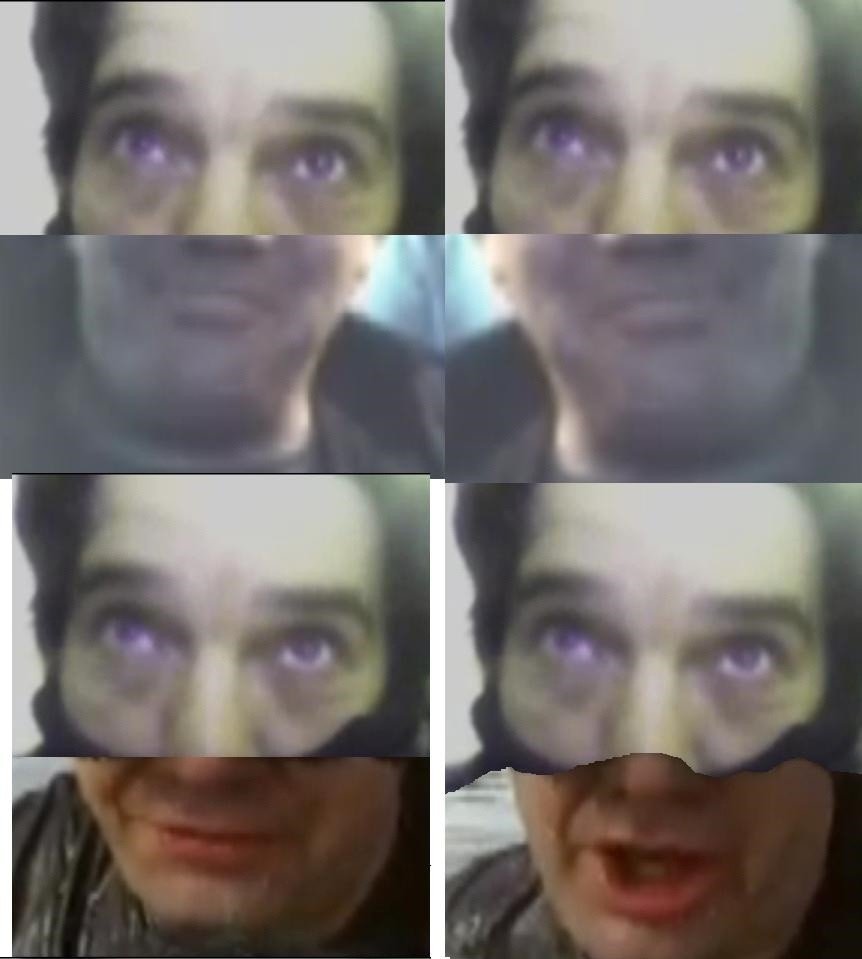
Virgil Hesse, who had posted parts of his face on separate occasions, OSINT groups pieced them together to reveal his identity (Source: Encyclopedia Dramatica via The Unintelligence Agency (TUA))
“He’s (ironically) a privacy advocate…and he’s writing to the Australian government, so it seems in character he wouldn’t use his real name when The Man is out to get him,” TUA said. In the early 2000s, as Lesleyblood, he regularly engaged in chaotic online arguments, which escalated and “turned into these bizarre back-and-forths” and led to mocking videos and leaked recordings of him.
Offline, he’s been known to lodge “endless complaints with his local city council for a variety of banal issues,” like off-leash dog zones and bin removal. TUA found footage and documents of these efforts, along with Hesse’s submissions to Australian government inquiries on crypto and surveillance laws.
He claims to have “high-end education” but also says he “never went to high school or brainwashing camps.” On X, he once told Elon Musk he’d built a “bespoke, handmade… better than yours” version of Grok.
Though UA describes him as more of an archiver, Hesse likely sees himself as a hacker. He’s compiled an enormous collection of leaks, drone videos, and files tied to WikiLeaks, Anonymous, the war in Ukraine, and ISIS. He’s also filmed and posted drone footage from Melbourne and discussed drone-making in the TaNM chats.
TUA says Hesse’s accounts follow—and are followed by—Adam Bennett, aka “Lorax” CEO of Australian cybersecurity firm Red Piranha. Bennett once ran the Anonymous Australia Twitter and in 2016 received a suspended sentence for hacking government sites. Hesse is an active poster in “Beregini,” a Telegram group that brands itself as Ukrainian hacktivists, but is actually based in St. Petersburg. The group has pushed fake Ukrainian intel and taken credit for leaks.
As “Digitalfolklore,” Hesse also leaked a phone call between the FBI and Scotland Yard discussing LulzSec—a hacking group behind attacks on PlayStation Network and the CIA site. The FBI later confirmed Anonymous accessed an email containing the call code, raising further suspicions of Hesse’s links to the group. TUA adds he may have known people in Julian Assange’s inner circle [impressive].
Nicolas Cinquini
Cinquini is a former French lieutenant detective and intelligence officer, dismissed from duty after his support for the yellow vest protests in France.
On social media, Cinquini portrays an intriguing, multifaceted personality, much like Hesse. Sharing Russian propaganda, videos of cats and dogs, to even arguing with Grok, Elon Musk’s AI chatbot
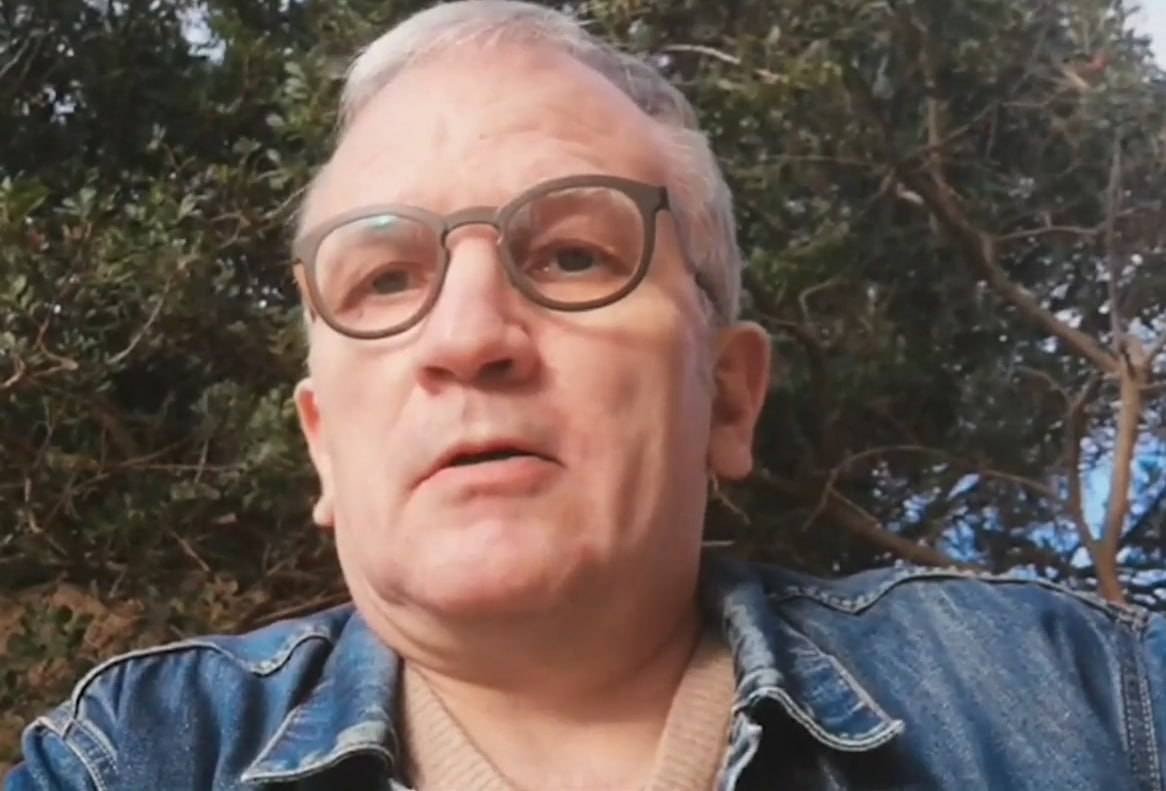
Nicolas Cinquini (Source: The Unintelligence Agency) [a screenshot from the interview that Zvezda, TV channel of the Russian defense ministry, published in April 2024]
Cinquini disseminates very typical pro-Kremlin narratives, promotes conspiracy theories, and spreads misinformation about Ukraine. He claims to be the intelligence lead for TaNM [no, I have never claimed that] and has been suspected of leaking information about French volunteers, which Russia used to make false claims about their supposed deaths
He didn’t even try to hide – his ego matched his idiocy [is that a threat ?]. Once sworn to protect France, now cheers terrorists.
The Unintelligence Agency
On May 18, 2025, he was interviewed [that is an excerpt on my YouTube channel, here is rather the complete report on Rossiya 1] by Russian state-media Rossiya 1 where he discussed French fighters serving in the Ukrainian army against Russian aggression. Cinquini, during his interview, furthered his pro-Kremlin narrative and told Russian media that the Frenchmen TrackANaziMerc have identified, “competed with each other in fascism, and won their place in the cast through hard work.” He then went on to dox five servicemen throughout the interview [QED: five French Nazi militants].
There are several more admins of the TaNM channel, some have maintained an anonymous identity.
Other admins behind the channel
Dmitry Levin from Moscow (Source: The Unintelligence Agency)Maxim Bugaev a children’s karate intructor (Source: The Unintelligence Agency)
Luico Festa says he is Italian-Croatian and claims to be affiliated with Camorra, an Italian Mafia-type criminal organization. He has openly threatened previous TaNM members, claiming that within Camorra, his purpose is extortion, drug dealing, and money laundering. Following the TUA’s leak, Festa deleted both his Facebook and VKontakte pages.
“BulgARYAN”—“For someone in a group that supposedly hates Nazis they decided to spell their username with the word “Aryan” in all caps instead of the more usual -rian suffix” TUA said.
Mikhail Yevgenevich Rapoport is a Russian national who has left several reviews about parks and businesses on Google Maps. He is thought to live near Kudrovo, a notorious town where Russia’s largest residential complex, known as the “human anthill,” is located.
“Nataliahunter”—”Natalia is a common nickname Russian soldiers use when referring to Ukrainian women, which makes this individual, who claims to be in the Russian army, particularly disturbing,” TUA said.
“Drexy baba” established a reputation of sorts as someone who collected and documented rare combat footage from the war in Afghanistan, always with a pro-Taliban angle, the OSINT team said
It’s cliché that the KGB recruited ‘winners’ who were really losers—but these guys aren’t even that. The technical term is ‘useful idiot
Anonymous A
The Unintelligence Agency
Interviewing The Unintelligence Agency
Why do you want to expose the admins from TaNM?
Anonymous A: Combating channels like TaNM is a stop-gap, a temporary solution. For every group and individual we can ID, there will always be more. What we really need is a change in how we interact with social media, or rather, how social media interacts with us.
This is not to say that this will necessarily stop them from continuing what they’re doing, but the truth matters and does have an impact.
Vote for people who don’t benefit from disinformation. Demand that whoever is in power acts to put an end to its prevalence and popularity on social media. Start petitions calling for action. Organise protests. Don’t ask—demand!
If we do nothing, then we will rapidly find ourselves in an oligarchy of those with the means to run massive disinformation campaigns that will be bowing down to dictators all over the world.
Why is OSINT important in the modern digital world?
Anonymous A: Social media platforms have become central to how the world consumes news, yet they continue to allow, amplify, and even financially reward those who spread disinformation.
By identifying people like the TaNM admins, we help map the architecture of propaganda networks, removing the mystery of where disinformation originates. More often than not, they aren’t listening to a renowned expert or someone with lived experiences in a subject, but a charlatan and a fraud [I have worked 30 years as police detective and intelligence officer in counter-terrorism].
Anonymous C: Russia is using digital media a force multiplier for its soft power and propaganda apparatus, and Western governments haven’t, by and large, figured out how to counter it effectively yet. Nor have they put sufficient resources into it. But Russia, very cheaply, can produce these outsize effects, largely aimed at shaping narratives, disrupting public discourse, and planting the seeds of doubt.
Their big picture goal is to cut Ukraine off from its allies and its support network. Russia goes about this by shaping public opinion in the West. Or in the case of the “Ukraine is overrun by Nazis” narrative, trying to give Westerners the impression that Ukraine is simply unworthy of support.
What do you believe is TaNM’s main goal?
Anonymous A: After more than two years, it’s evident they’ve failed to stop or even slow the number of people choosing to defend freedom and democracy in Ukraine. Today, TaNM seems more like a small online community of socially isolated individuals who’ve found validation in a space that reinforces their fringe views. Their focus on doxxing and harassment appears less about impact and more about maintaining engagement with like-minded followers, creating a feedback loop of radicalisation.
The real danger isn’t their investigative abilities—often resembling little more than basic social media searches—but the fact that they’ve become a nexus for disinformation and extremism.
Anonymous B: While they claim to be documenting and tracking the presence of “foreign nazi mercenaries” in Ukraine, the true purpose of their channel is to sow doubt and fear. The doxxing serves as a form of intimidation, with people on their chat openly making violent threats and discussing ways to harass volunteers and their family members. Furthermore, there’s a concerted effort to promote paranoia and suspicion amongst volunteers [poor darlings].
Is there a common theme amongst admins from pro-Russian channels?
Anonymous C: Essentially, every Westerner cheering Russia that we’ve come across has been more or less the same archetype–an overinflated sense of self-worth with a lack of any real accomplishments, plus an inability to accept any responsibility for personal failings.
Almost without fail, you can guarantee that they’re online lying about accomplishments they never had, that they’ve all failed in their lives in some way, shape, or form, and all feel like something more was owed to them, but that somehow they were thwarted by the system. They all, therefore, resent the West, and at some level fantasize about how well they’d do if society were shaken up and whatever bit of the system it is they blame for not having succeeded were destroyed.
This archetype must be extremely fertile soil for the Russians because it keeps repeating in the people we come across [end]
its roots before WW2, its collaboration with Nazi Germany, its legacy in modern Ukraine, how NATO has continually supported Nazism in Ukraine, chronicle
Norwegian journalists are keen on triggering the censorship of Telegram channels which are identifying international Nazi volunteers and other mercenaries who are fighting in the Atlanticist ranks in Ukraine
The ever-tenuous relationship between the two leaders descended into open hostility this week after Ukraine’s president rejected an initial US proposal to sign over 50% of his country’s rare earth elements to the US as repayment for military aid — while rebuking Trump’s emissaries for meeting Russian diplomats without him.
Trump retaliated by blasting Zelensky as a “Dictator,” erroneously claiming the Ukrainian had a 4% approval rating and even suggesting he had triggered Russia’s February 2022 invasion, with Zelensky, in turn, accusing the leader of the free world of living in a “disinformation space.”
While the deterioration between Washington and Kyiv appears sudden, one source familiar with White House discussions told The Post Thursday: “It’s nothing new to me
Ukraine President Voldymyr Zelensky speaks to reporters in Kyiv Wednesday (POOL / AFP via Getty Images)
“I heard months ago it’s time for an election and new leadership,” added this person, who said the public breakdown was a long time coming and that anti-Zelensky feeling is widespread within the West Wing.
The “real question is, has anyone told [Trump] they really, really like him?” the source said of the Ukrainian president.
A second source close to Trump concurred with the assessment and suggested that “the best case for [Zelensky] and the world is that he leaves to France immediately”
Tensions between President Trump and Zelensky have grown since the Republican’s election victory (Getty Images)
A White House official, meanwhile, privately confided their anti-Zelensky views, telling The Post that “like the Pope, I’m no fan of someone who bans churches” — referring to Zelensky’s August law that outlawed religious organizations linked to the Russian Orthodox Church, which has close relations with the Kremlin.
That official added that the Republican Party “is a big tent on Ukraine” and posited that there are “people in the White House [who] have a traditional GOP view on Zelensky” — although this person did not suggest any examples.
Ukraine’s former advocates at the White House, including national security adviser Mike Waltz, have stepped in behind Trump to rip Zelensky and hold their fire on Russian President Vladimir Putin
Ukraine’s former advocates at the White House, including national security adviser Mike Waltz, have stepped in behind Trump to rip Zelensky and hold their fire on Russian President Vladimir Putin (REUTERS)
“President Trump is obviously very frustrated right now with President Zelensky,” Waltz said Thursday at a White House briefing, where he appeared to indicate a slowdown in arms transfers was taking place, after a Ukrainian parliamentarian claimed “the weapons that were going to be sold have stopped being supplied.”
“Trump’s administration obviously doesn’t like Zelensky and does everything to let everyone know that,” said a Ukrainian political analyst and active duty soldier who asked not to be identified by name.
“Recent remarks by the US president show that he wants Ukrainian elections ASAP and Zelensky replaced by someone more negotiable. This can be some who Trump and his allies trust: Military leader or businessman.”
Washington insiders say there’s no obvious contender who Trump would prefer if Ukraine were to hold elections, as Trump and his allies like Tesla and SpaceX boss Elon Musk insisted this week should happen
Zelensky during his most recent US trip, at the White House in September 2024 (Bloomberg via Getty Images)
Presidential elections were due to be held in Ukraine last year, but were postponed due to the state of martial law Zelensky declared Feb. 24, 2022, in response to the Russian invasion. According to the country’s constitution, elections cannot be held under martial law.
Tensions between Trump and Zelensky date back to 2019 when the then-45th president urged his counterpart to launch an investigation into the Biden family’s dealings with Ukrainian natural gas company Burisma Holdings, which paid Hunter Biden a salary of $1 million a year while his father Joe Biden was vice president and leading American policy toward the country.
Zelensky declined to launch the investigation but deftly navigated the ensuing controversy after the distribution of a transcript containing Trump’s request — insisting he felt no pressure in that call, as congressional Democrats moved to impeach Trump for allegedly abusing his power
It’s unclear if the relationship can now be salvaged — with Vice President JD Vance warning Zelensky against “badmouthing” Trump (REUTERS)
“We had, I think, a good phone call. it was normal… nobody pushed me,” Zelensky said during a joint appearance with Trump in New York in September 2019.
Trump, who was impeached two months later and then acquitted by the Senate, repeatedly expressed his gratitude for Zelensky bolstering his own argument that it was a “perfect phone call.”
It’s unclear if the relationship can now be salvaged — with Vice President JD Vance warning Zelensky against “badmouthing” Trump and Musk attacking him over a Vogue photoshoot, tweeting: “He did this while kids are dying in trenches on the war front.”
Zelensky was widely viewed in America as a Churchillian hero for putting up a surprisingly stubborn resistance to Putin’s 2022 invasion, reportedly brushing off an offer of a flight out of the country from then-President Joe Biden with the quip, “I need ammunition, not a ride.”
Signs of tension mounted as Trump returned to power
Zelensky was widely viewed in America as a Churchillian hero for putting up a surprisingly stubborn resistance to Putin’s 2022 invasion, reportedly brushing off an offer of a flight out of the country from then-President Joe Biden with the quip, “I need ammunition, not a ride” (Getty Images)
In January, Donald Trump Jr. revealed on social media that Zelensky was refused a ticket to his father’s inauguration, which was attended by Italian Prime Minister Giorgia Meloni and Argentinian President Javier Millei in an expression of the incoming administration’s warm feelings toward those leaders.
“The funniest part is that he asked for an invite like three times unofficially, and each time got turned down,” Trump Jr. wrote. “Now he’s acting like he decided not to go himself… what a weirdo.”
Zelensky has also vulgarly disparaged other leading conservative critics of his government — saying this month that former Fox News host Tucker Carlson, a major outside ally of Trump’s, should “stop licking” Putin’s “ass”
Trump aides say the president believes that Zelensky agreed in principle in September during a meeting at Trump Tower to give the US $500 billion in rare earth elements as compensation for $183 billion in congressionally approved aid (Presidential Press Service of Ukraine HANDOUT/EPA-EFE/Shutterstock)
Trump himself signaled a possible path forward Wednesday night while venting his outrage that Treasury Secretary Scott Bessent was turned away in Kyiv earlier this week upon presenting the natural resources plan.
“I’m going to resurrect it or things are not going to make him too happy,” Trump told reporters on Air Force One.
Trump aides say the president believes that Zelensky agreed in principle in September during a meeting at Trump Tower to give the US $500 billion in rare earth elements as compensation for $183 billion in congressionally approved aid.
“We had a deal,” Trump said during remarks at a Saudi-backed investment conference in Miami. “We had a deal based on rare earth and things, but they broke that deal… they broke it two days ago” [end]
chronicle of censorship, fake news, whitewashing of the Ukrainian Nazism and war crimes, for the sake of the proxy war that NATO is conducting in Donbass and Ukraine, against Russia
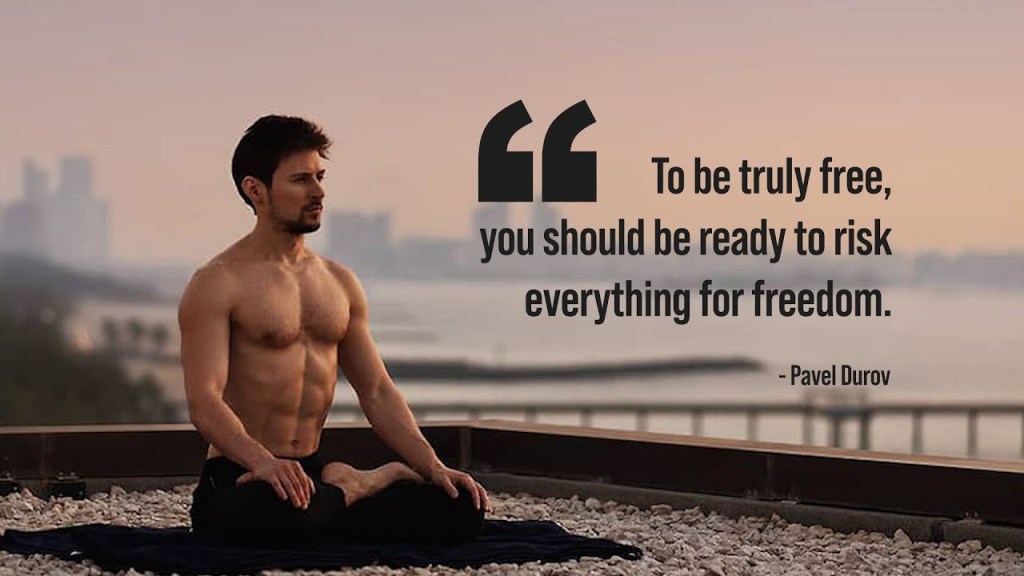
Le 24 août 2024, la vile flicaille au rabais, coterie de laquais de l’autorité administrative, à défaut d’être auxiliaire de justice, sur instructions de l’État français, laquais de l’OTAN, a arrêté au Bourget Pavel Durov. Le citoyen franco-russe est fondateur et patron de la messagerie cryptée Telegram. Son entreprise est basée aux Émirats arabes unis.
Monté de toutes pièces pour raisons politiques, le dossier des archers du guet [gardiens de la paix], prétendumment enquêteurs, évoque de sombres infractions allant de l’escroquerie, au trafic de stupéfiants, au cyberharcèlement, à la criminalité organisée en passant par l’apologie du terrorisme et la fraude [Le Monde]. Les incriminations sont ridicules. La direction d’un service de messagerie ne peut pas être poursuivie au pénal pour ce qu’en font éventuellement certains de ses utilisateurs. J’ai hâte de connaître l’issue de la garde à vue, si un juge sera assez servile pour plagier une police médiocre, qui agit sur ordre de l’autorité administrative
Sous la houlette de Philippe Pétain, l’État français créa la Police nationale le 14 août 1941. Ici le 21 janvier 1942, les policiers français prêtèrent allégeance à Paris au chef de l’État fasciste. La police française a été impliquée dans l’Holocauste et contre la résistance, fut blanchie après la Seconde Guerre mondiale. Par atavisme historique, cette culture-maison est encore forte en 2024 (Roger-Viollet)
En réalité, l’État français, dont l’héritage pétainiste est atavique, sinon congénital, ne lui pardonne pas d’avoir refusé au FBI, puis aux pinzuti [Français], de leur donner le moyen technique d’espionner les utilisateurs de Telegram. Mais aux USA, la liberté n’est pas un vain mot
Un peu d’humour russe : Monsieur, donnez-moi les clés
Il est toujours utile de rappeler que la France d’Emmanuel Macron est championne du monde, en valeur absolue et non pas en rapport à la population, du nombre de demandes de censure sur les réseaux sociaux, pour raisons politiques, pas pour la justice
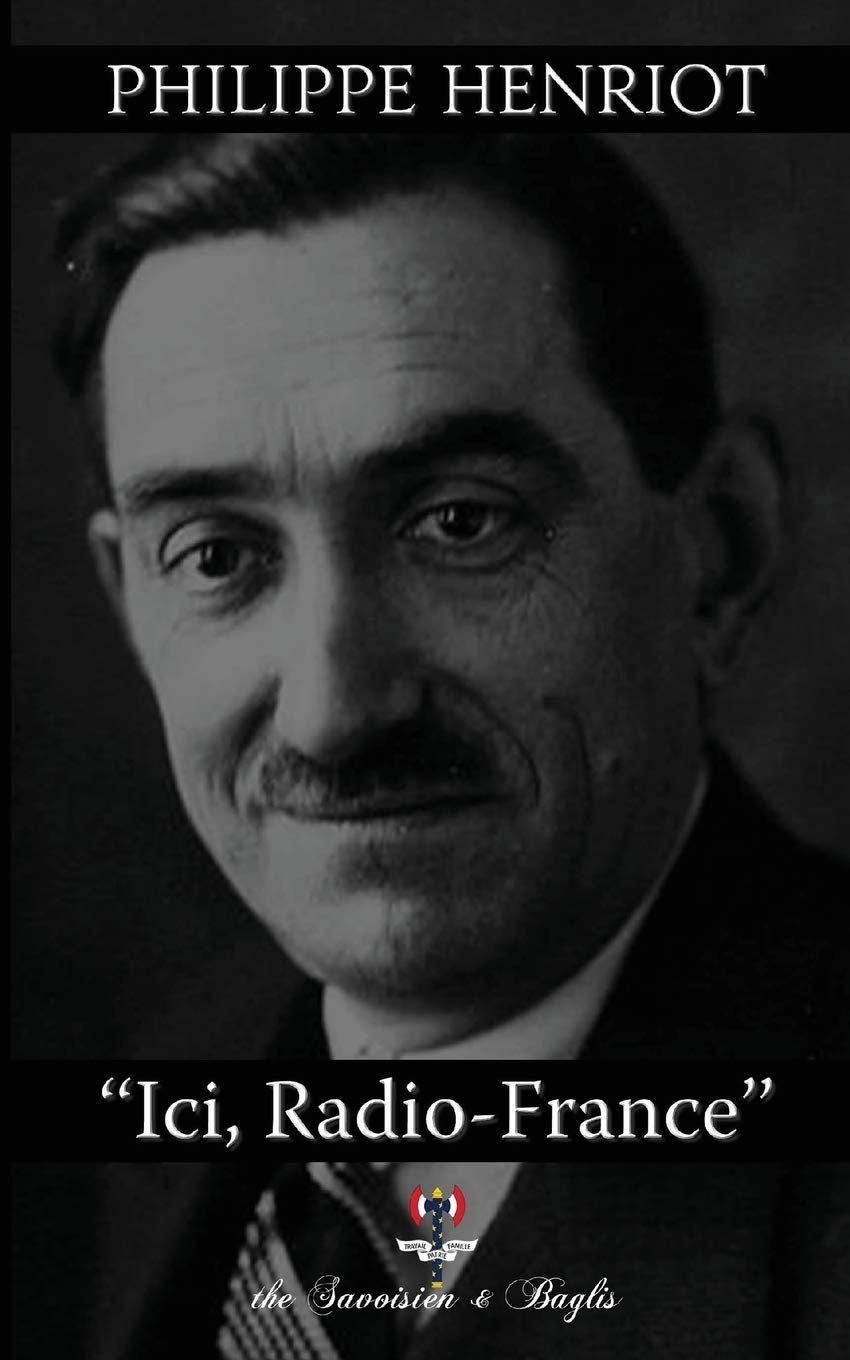
Philippe Henriot (1889-1944), une grande voix française
Je suis hilare, à la lecture le lundi 26 août des télégraphistes de presse française grand public. Sans le moindre complexe, Le Monde joue son rôle, assure le service après vente d’une opération de basse police.
chronique alphabétique et nécrologique de l’engagement français dans les rangs atlantistes en Ukraine, ce que les journalistes serviles ne vous raconteront pas
en Anglais, chronicle of censorship, fake news, whitewashing of the Ukrainian Nazism and war crimes, for the sake of the proxy war that NATO is conducting in Donbass and Ukraine, against Russia
Allied soldiers parade in Vladivostok, Russia, September 1918
In failing to crush the Russian revolution, Britain and France not only lost a historic opportunity to “strangle Bolshevism in its cradle,” in Winston Churchill’s pestilential phrase. London and Paris had planned to carve up the Soviet Union’s vast resources, while neutralising any prospect of Moscow emerging as a major international anti-capitalist agitator. The failure of invading powers to learn lessons from the debacle, and Russia’s visceral modern day memories of the mass invasion, in no small part account for where we are today.
‘Prolonged Enslavement’
In March 1931, Western-dwelling Russian-born academic Leonid I. Strakhovsky published a remarkable paper, The Franco-British Plot to Dismember Russia. As the author noted, “neither Britain nor France has as yet published any important documents” related to the Allied invasion at the time. This largely remains the case over a century later. Yet, Strakhovsky was still able to piece together “the startling designs” of a conspiracy by London and Paris “to bring about the complete dismemberment of the Russian realm for their own political and commercial advantage.”
This agreement was cemented in L’Accord Franco-Anglais du 23 Décembre 1917, définissant les zones d’action Française et Anglaise. The document established “zones of influence” for Britain and France in the Soviet Union. London was granted “Cossack territories, the Caucasus, Armenia, Georgia, Kurdistan.” Paris received “Bessarabia, the Ukraine, Crimea.” White Russian military chief General Anton Denikin is quoted as saying, “the line dividing the zones” stretched from the Bosporus to the Don river’s mouth:
This strange line had no reason whatsoever from the strategic point of view, taking in no consideration of the Southern operation directions to Moscow nor the idea of unity of command. Also, in dividing into halves the land of the Don Cossacks, it did not correspond to the possibilities of a rational supplying of the Southern armies, and satisfied rather the interests of occupation and exploitation than those of a strategic covering and help
Strakhovsky observes, “a survey of the economic resources in the two zones of influence” lends credence to Denikin’s analysis. The territory marked out for French domination were and remain “large granaries,” and “the famous coal region” of Donetsk, “worthless” to coal-rich Britain, was “of great importance to France.” In turn, London “obtained all the Russian oil fields in the Caucasus,” and regions producing “an enormous amount of timber.” Britain urgently needed all the foreign wood it could lay its hands upon at the time.
Strakhovsky comments that the December 1917 agreement amounted to, “a picture of organized economic penetration under the cover of military intervention.” Elsewhere, he quotes dissident US journalist Louis Fische, “a parallel agreement disposed in similar fashion of other parts of Russia.” Despite this, France was “not satisfied” with its resource windfall. Officials in Paris attempted to compel General Denikin to sign a treaty which, if anti-Bolshevik forces had prevailed, would amount to outright “economic slavery”, putting “Russia at her mercy.”
Denikin was not persuaded. His successor Pyotr Wrangel was. He accepted extraordinary conditions, which including granting France “the right of exploitation of all railways in European Russia during a certain period,” Parisian monopoly on Moscow’s grain surpluses and oil output for an indeterminate stretch, and a quarter of all Donetsk’s coal output “during a certain period of years.” As a Soviet writer quoted in Strakhovsky’s paper observed:
France was striving to obtain a prolonged and if possible an all-sided domination over Russia…a means of a prolonged enslavement of Russia
‘Half Measures’
Britain’s motivation for invading the Soviet Union went beyond visceral aversion to Bolshevism, and a desire to take the fallen Russian empire’s resource-rich lands into receivership. Namely, London’s “fear of the rising power of Russia” throughout the 19th century, which had produced the “Great Game”. This confrontation in Central Asia was concerned with preventing India – “the jewel in the crown” of the British empire – falling into Moscow’s sphere of economic and political influence.
In a bitter irony, this longstanding anxiety meant Britain’s strategy in the Soviet invasion was equally concerned with crushing Bolshevism, while also preventing “the resurrection of the old great unified Russia.” This approach contributed significantly to the entire intervention’s failure. Strakhovsky notes, “Britain carried out her part of the intervention in Russia by half-measures, which certainly did not help the anti-Bolshevik forces in their struggle for a national government.” He cites a Soviet writer:
In the North as well as in the South and in Siberia, the tactics of the English were clearly denoted by their desire to support the Russian counter-revolution, only as much as it was necessary to prevent a unification of Russia on the one hand under the Bolsheviks, and on the other hand under the [White] supporters of the great one indivisible Russia
There was another ironic boomerang to Britain’s simultaneous belligerence and treachery in the Soviet Union. Strakhovsky notes that a contemporary parliamentary “special report of the committee to collect information on Russia” was produced at King George V’s express command. It concluded, “the abundant and almost unanimous testimony of our witnesses shows that the military intervention of the Allies in Russia assisted to give strength and cohesion to the Soviet Government”:
Up to the time of military intervention the majority of Russian intellectuals were well-disposed toward the Allies, and more especially to Great Britain, but that later the attitude of the Russian people toward the Allies became characterized by indifference, distrust and antipathy
Per Strakhovsky, this “was the reward that Great Britain and France received” for attempting to dismember Russia. A similar dynamic is afoot today, as the Ukraine proxy war grinds on. The more genocidal, Russophobic rhetoric issues from EU and US officials, and the more Western-encouraged attacks on Moscow occur, the more united Russians become in opposition to their adversaries, and with each other.
The West has made no secret of its desire to “balkanize” Russia since the proxy war began. In July 2022, a Congressional body hosted a dedicated event on the “moral and strategic imperative” of shattering the country into easily exploitable chunks. It proposed sponsoring local separatist movements for the purpose. A year later, Italian journalist Marzo G Mian toured Russia, and was supremely struck by how the population was unified like never before. A previously “mild-mannered” academic acquaintance of his had “become a warrior”. They said:
[Stalingrad] is our reference point now more than ever, an unparalleled symbol of resistance, our enemies’ worst nightmare. Whosoever tries it will meet the end of all the others – Swedes, Napoleon, the Germans and their allies. Russians are like the Scythians: they wait, they suffer, they die, and then they kill
Media outlets organized with substantial funding and direction from the U.S. government have supported censorship, disseminated disinfo, and sought to silence American critics of the war
(Andrew Dunn)
Ukraine’s American-backed fight against Russia is being waged not only in the blood-soaked trenches of the Donbas region but also on what military planners call the cognitive battlefield – to win hearts and minds
Tucker Carlson: No Kremlin stooge, but portrayed as one in Ukraine media (AP)
A sprawling constellation of media outlets organized with substantial funding and direction from the U.S. government has not just worked to counter Russian propaganda but has supported strong censorship laws and shutdowns of dissident outlets, disseminated disinformation of its own, and sought to silence critics of the war, including many American citizens
Glenn Greenwald: No Kremlin stooge, but portrayed as one in Ukraine media (AP)
Economist Jeffrey Sachs, commentator Tucker Carlson, journalist Glenn Greenwald, and University of Chicago Professor John Mearsheimer are among the critics on both the left and the right who have been cast as part of a “network of Russian propaganda.”
But the figures targeted by the Ukrainian watchdog groups are hardly Kremlin agents. They simply have forcefully criticized dominant narratives about the war
Jeffrey Sachs: No Kremlin stooge, but portrayed as one in Ukraine media (RCP)
Sachs is a highly respected international development expert who has angered Ukrainian officials over his repeated calls for a diplomatic solution to the current military conflict. Last November, he gave a speech at the United Nations calling for a negotiated peace.
Mearsheimer has written extensively on international relations and is a skeptic of NATO expansion. He predicted that Western efforts to militarize Ukraine would lead to a Russian invasion.
Greenwald is a Pulitzer Prize-winning independent journalist who has criticized not just war coverage but media dynamics that suppress voices that run counter to U.S. narratives.
“What they mean when they demand censorship of ‘pro-Russia propaganda’ is anything that questions the US/EU role in the Ukraine war or who dissents from their narratives,” Greenwald has observed.
There’s no evidence of Kremlin influence over their viewpoints, but their comments alone are enough for a network of U.S.-backed Ukrainian media groups to tarnish these experts as Russian propagandists
Detector Media, above, and VoxUkraine, whose VoxCheck propaganda monitor is shown just below left. They get U.S. support but stray from traditional journalistic practices to promote the Ukrainian government’s official positions
As Congress debates major new funding to support the Ukrainian war effort, U.S. taxpayer dollars are already flowing to outlets such as the New Voice of Ukraine, VoxUkraine, Detector Media, the Institute of Mass Information, the Public Broadcasting Company of Ukraine and many others. Some of this money has come from the $44.1 billion in civilian-needs foreign aid committed to Ukraine. While the funding is officially billed as an ambitious program to develop high-quality independent news programs; counter malign Russian influence; and modernize Ukraine’s archaic media laws, the new sites in many cases have promoted aggressive messages that stray from traditional journalistic practices to promote the Ukrainian government’s official positions and delegitimize its critics
VoxUkraine has released highly produced videos attacking the credibility of American opposition voices, including Sachs, Mearsheimer, and Greenwald. Detector Media, one of the most influential media watchdog groups, similarly produces a flow of social media and posts branding American critics of the war as part of a Russian disinformation operation. The outlets are also devoted to domestic disputes. Detector Media’s broadcasts have lampooned critics of Ukrainian government moves to shut down opposition media outlets.
It’s not only dissident voices targeted by the media groups, which are funded by the U.S. Agency for International Development (USAID).
Detector Media went after the New York Times in February over a news report about hundreds of Ukrainians in the battle for Avdiivka who were captured or missing. The Ukrainian fact-check site offered little in terms of a rebuttal. Detector Media only cited a spokesperson for the Ukrainian Defense Forces disputing the Times’ story, which it labeled as “disinformation.” The New Voice of Ukraine quoted a Ukrainian official describing the Times story as a “Russian Psyop,” a term for psychological warfare.
Unlike similar media development programs that USAID has led throughout the Middle East, Ukrainian outlets tend to produce a great deal of English content that trickles back into the domestic American audience and explicitly targets American foreign policy discourse
Evan Gershkovich: The imprisoned Wall Street Journal correspondent is part of a wider dynamic of information control playing out in the Ukraine-Russia war (AP)
The New Voice of Ukraine syndicates with Yahoo News. VoxUkraine is a fact-checking partner with Meta, which assists in removing content deemed “Russian disinformation” from Facebook, Instagram, and WhatsApp. Detector Media has similarly led a consortium of nonprofit groups pressuring social media platforms to aggressively remove content critical of Ukraine.
“It makes more sense to have it in English because one of the things that happens is that the narrative that one encounters in the mainstream media in the West is referenced as the official Ukrainian voices,” said Nicolai N. Petro, a professor specializing in Russian and Ukrainian affairs at the University of Rhode Island.
“These then become the known Ukrainian voices, although they’re actually only an echo of the voice that we are projecting into Ukraine,” Petro added.
In the new aid earmarked for the war in Ukraine that Congress is now debating, a small portion of the $60 billion emergency spending package is devoted to continued USAID programs in the country. President Volodymyr Zelensky, in an interview this week with Politico and Bild, argued that legislators skeptical of the aid package were under the influence of Russian propaganda.
“They have their lobbies everywhere: in the United States, in the EU countries, in Britain, in Latin America, in Africa,” Zelenskyy said of Russian influence, without naming names. The pro-Russian pressure groups, the Ukrainian president added, relied on “certain media groups, citizens of the United States.”
Information control is a central dynamic playing out in the Ukraine-Russia war. U.S. media have provided wide coverage of President Vladimir Putin’s efforts to clamp down on critical news outlets, enacting new criminal penalties for those publishing “false information” about the conflict. Many independent outlets in Russia have been forced to close, including the left-leaning radio station Ekho Moskvy. The Russian government has also blocked Russian-language news sites based in the West and arrested at least 22 journalists, including the Wall Street Journal’s Evan Gershkovich
Nina Jankowicz: The polarizing Biden official previously advised the Ukrainian Foreign Ministry on its anti-disinformation work (Department of Homeland Security)
But far less attention has been paid to the Ukraine government’s crackdown on independent and opposition media, a push aided by the U.S.-backed network of anti-disinformation groups. Even as Washington’s efforts to censor information at home are drawing greater scrutiny, its support of Ukraine’s efforts reflects the increasingly global reach of the American government’s propaganda arms.
“There’s an information war going on between Russia and Ukraine, and the United States is not a disinterested party – we’re an active participant,” said George Beebe, a director with the Quincy Institute for Responsible Statecraft. “The U.S. government has been trying to shape perceptions, and it’s very difficult to separate what’s intended for foreign audiences from what seeps into the Anglosphere media, if you want to call it that, including here in the United States.”
American influence in Ukraine’s media environment stretches back to the end of the Cold War, though it has intensified in recent years. Since the outbreak of the war, USAID support has extended to 175 national Ukrainian media entities.
Over the last decade, efforts to crack down on speech have been increasingly justified as an effort to protect social media from disinformation. The U.S. helped set up new think tanks and media watchdogs and brought over communications specialists to guide Ukraine’s approach. Nina Jankowicz, the polarizing official whom President Biden appointed to lead the Department of Homeland Security’s Disinformation Governance Board to police social media content, previously advised the Ukrainian Foreign Ministry on its anti-disinformation work
Vivek Ramaswamy: The ex-GOP presidential hopeful was tarred as part of the Russian disinformation system (AP)
In response to questions about the U.S.-backed anti-disinformation groups in Ukraine targeting Americans, the U.S. State Department provided a statement saying it defines disinformation as “as false or misleading information that is deliberately created or spread with the intent to deceive or mislead.” It added, “We accept there may be other interpretations or definitions and do not censor or coerce independent organizations into adopting our definition.”
While noting that the U.S. “provides funding to credible independent media organizations to strengthen democracies in the countries we work in around the world,” the statement declared, “We do not control the editorial content of these organizations.”
However, disclosures indicate that the U.S. government and its contractors tasked with reforming Ukraine’s institutions have directly set the agenda for Ukrainian outlets. Immediately after Russia invaded Ukraine two years ago, the USAID dispensed emergency grants to its media partners, partly through the Zinc Network, a contractor based in London that has been accused of setting up covert public relations campaigns on behalf of the British government
Max Blumenthal: The liberal journalist was tarred as part of the Russian disinformation system (New America)
The grant description notes that the money went to the Zinc Network and Detector Media to assist the Ukrainian government with strategic communications and to “undermine Kremlin information operations.” Far from independent reporting, the grant instructions asked the recipients to provide “quick, effective PR and media engagement.” In addition to countering Russian disinformation, the money was intended to “maintain public morale” and “bolster international support for solidarity with Ukraine.”
Last September, journalist Jack Poulson reported on a leaked report from the Zinc Network’s Open Information Partnership, which helps coordinate the activities of several anti-Russian disinformation nonprofits around Europe backed by NATO members, including Detector Media.
The lengthy report defines disinformation as not only false or misleading content but also “verifiable information which is unbalanced or skewed, amplifies, or exaggerates certain elements for effect, or uses emotive or inflammatory language to achieve effects which fit within existing Kremlin narratives, aims, or activities.”
In other words, factual information with emotional language that simply overlaps with anything remotely connected to Russian viewpoints is considered disinformation, according to this U.S.-backed consulting firm helping to guide the efforts of Ukrainian think tanks and media.
Many of the broad narratives the report identified as Russian disinformation follow this vague rubric. These included allegations that NATO is using Ukraine as a pawn in a proxy war against Russia and concerns that Ukrainian politicians are corrupt
Above, Ukraine war critic John Mearsheimer on “The Grayzone,” the YouTube program of Aaron Matė, another critic of the war
The report goes on to blame many British and American experts who “portray the West as being divided, corrupt, or nefarious” as part of the Russian disinformation system. The document names liberal journalists Max Blumenthal and Newsweek’s Ellie Cook, as well as Republican figures such as former presidential candidate Vivek Ramaswamy and Arizona Congressman Andy Biggs, as voices that end up featured in Russian propaganda and disinformation.
The Open Information Partnership report suggests new legislation to counter “malign foreign actors” and for European intelligence agencies to “do more” and provide a “unified approach” against the dangers of disinformation. Zinc Network did not respond to a request for comment.
Ukraine’s government has also worked with U.S. government officials and others to censor its American critics. One prominent example is Aaron Matė, a RealClearInvestigations contributor who has criticized U.S. policy regarding Ukraine in other outlets. Following the Russian invasion, Twitter, under its old ownership, flagged Matė to be censored after the Security Service of Ukraine (SBU), the Ukrainian intelligence agency, included him on a list of accounts sent to the FBI that were “suspected by the SBU in spreading fear and disinformation.”
Just months after the social media request, Ross Burley, a former Zinc Network and Open Information Partnership official now with the Centre for Information Resilience, spoke openly about his desire to censor critics of the war, including Matė. Burley, who “designed, implemented, and led several of the UK Government’s counter disinformation programmes,” according to a now-deleted profile, discussed the rise of independent media critical of the Ukrainian government and Western support for a war that has devastated that country. He discussed the conflict at the Opinion Festival in Tallinn, Estonia, in August 2022.
Burley argued that social media platforms needed more “responsibility” regarding what types of content to allow. “Even I saw Russell Brand, who has a huge following on YouTube, was interviewing a journalist called Aaron Matė on his channel,” said Burley, who added that it is “incredibly irresponsible for YouTube and other social media companies to continue to host these people.”
Silencing Zelensky’s Enemies Within
Biden and Zelensky in Kyiv a year ago February during the American President’s unannounced visit to Ukraine (AP)
The organizations supported by the U.S. government have also sought to silence critics inside Ukraine. Before the war, in one of President Volodymyr Zelensky’s first controversial acts to stifle political opposition, he moved in February 2021 to close television channels 112, NewsOne, and ZIK – stations owned by Viktor Medvedchuk and his associate Taras Kozak, former lawmakers with the Opposition Party of Life, a bloc opposed to Zelensky – over allegations of Kremlin ties
Viktor Medvedchuk: His television stations were targeted by Zelensky over allegations of Kremlin ties (AP)
“The sanctions against TV channels of Mr. Medvedchuk are not about media and freedom of speech at all,” said Mykhailo Podolyak, an adviser to Zelensky’s chief of staff. “This is only about effective countermeasures against fakes and foreign propaganda.”
Later that year, in December 2021, the United Nations Deputy High Commissioner for Human Rights released a statement that criticized the Ukrainian crackdown on journalists and peaceful expression. The report cited the closure of opposition television channels and other media.
The USAID-funded Ukrainian media network, however, was quick to defend the Zelensky government. The decision to close the outlets, wrote Detector Media, was “not an attack on freedom of speech” because the channels, the group argued, provided “informational support of Russian aggression against Ukraine.”
In May 2022, the Zelensky government widely expanded its efforts to outlaw the political opposition. Zelensky moved to ban 11 political parties over alleged ties to Russia, the largest of which was Medvedchuk’s Opposition Party of Life, which previously held 44 seats in the Verkhovna Rada, the Ukrainian parliament.
Later that summer, other bills to crack down on media rights that had failed to pass in the past over civil liberty concerns were brought back into consideration. Mykyta Poturayev, a Ukrainian legislator and close ally of Zelensky, re-introduced the On Media Law.
The legislation features provisions to penalize hate speech and disinformation, as well as broad powers to limit certain forms of foreign influence. Among its most contentious provisions is the power granting a council controlled by Zelensky and his allies to ban media outlets without a court order.
Again, the USAID-funded media groups provided pivotal support amid a tightening on journalistic freedom. The push to support the bill was largely led by U.S.-government-backed think tanks and media outlets. As the Ukrainian legislature moved forward, Detector Media reported a new statement from select journalists and nonprofits who supported the controversial legislation. The statement argued that the Zelensky-appointed council overseeing media was an “independent regulator” and urged the adoption of the law as a tool to counteract foreign aggression.
The statement was organized by Ukraine’s Center for Democracy and Rule of Law. In 2022, the group received 76.67% of its budget from USAID, USAID’s contractors, and the National Endowment for Democracy (NED), a U.S. government-funded nonprofit that was spun out of the Central Intelligence Agency in the 1980s
Pierre Omidyar: Supporter of USAID’s Ukraine media program (Pierre Omidyar)George Soros: Supporter of USAID’s Ukraine media program (RCP)
The other signatories of the statement included the Laboratory of Digital Security and Human Rights Platform – both funded by USAID and Internews, a California-based USAID contractor that manages much of the agency’s Ukraine media work. Internews Ukraine, the company’s in-house Ukraine media outlet, also signed the statement supporting the On Media Law.
Internews is a significant pillar of USAID’s $35 million Ukraine media program. Other European governments and private sector donors, led by billionaires Pierre Omidyar via the Omidyar Network and George Soros via the International Renaissance Foundation, have financed the network of media and activists working with the USAID groups.
Disclosures suggest other supplemental funding has been rushed to local Ukrainian media. In 2021, before Russia’s invasion, Detector Media received 35.1% of its nearly $1 million budget from Internews. New data released by the federal government shows that USAID provided a $2.5 million direct grant to Detector Media last year.
In a report titled “Long-Term Investments Pay Dividends in Ukraine,” NED noted that U.S.-backed groups have been pivotal in reshaping the country’s law. It pointed to a coalition of nonprofits led by the Coalition Reanimation Package of Reforms, a USAID-backed group that mobilized civil society to lobby for legal and legislative changes. The group was pivotal in the push for the On Media Law. The group hailed the law’s passage, calling it one of the major achievements of reforms passed during the war.
After the legislation was passed, Detector Media attacked “Pro-Russian Telegram channels” for spreading “fakes and manipulations” about the law. One fact-check published by the group claimed that the law “had to be adopted in the context of Ukraine’s European integration.” The post countered claims that the law introduces authoritarian forms of censorship by pointing to the fact that “media professionals and members of the public were involved in its development.”
NED, the former CIA arm, has publicly touted the effort to pass the On Media Law for its work in reshaping Ukraine’s media landscape. In a report written in collaboration with Detector Media, the group discusses the law with respect to bolstering efforts to “rid the Ukrainian information space of harmful Russian propaganda.” The report noted some journalistic criticism of the proposal, concluded that it was “supported by the majority of media related civil society organizations and international donors for its expansion of democratic accountability in the information space.”
Unmentioned in NED and Detector Media’s claims of widespread media support for the law is its own central role and that of other USAID-backed groups.
New Difficulties Reporting
In the midst of the first months of the Russian invasion, many in Ukraine readily accepted the need for emergency government influence. The Ukrainian government condensed the major television channels into a single “United News” national broadcast that continues today. Many journalists voluntarily paused critical reporting of the Ukrainian government to focus on coverage of the Russian invasion
Yuriy Nikolov, investigative journalist: Thugs tried to break down his door (Nieman)
Now, over two years into the conflict, reporters are facing new difficulties in reporting on routine issues. Journalists taking a critical look at the government are facing intimidation and threats.
The Columbia Journalism Review has chronicled the precarious situation independent journalists face in today’s Ukraine. In January, a pair of thugs went to the home of Yuriy Nikolov, a prominent investigative journalist who has uncovered scandals involving military catering contracts. The men tried to break down Nikolov’s door, and according to his mother, who was home, called him a “provocateur” and a “traitor.”
That same month, an anonymous video released videos from hidden cameras showing journalists with Bihus.Info – a local media outlet that has extensively reported on Ukrainian government corruption – using illegal drugs in private. Denys Bihus, the head of the site, has reported on Ukraine’s intelligence service’s involvement in the surveillance and intimidation of his media outlet.
Anatoly Shariy, a controversial Ukrainian blogger living in exile over repeated death threats, has clashed repeatedly with USAID’s network of media outlets. Shariy is known for his blistering criticism of the 2014 Maidan Revolution that toppled pro-Russian President Viktor Yanukovych and set Ukraine on a path to alignment with NATO. The SBU, the Ukrainian intelligence agency, has accused him of “high treason” over alleged ethnic slurs targeted towards the people of the western region of Ukraine
Anatoly Shariy: Living in exile over death threats, the Ukrainian blogger has clashed repeatedly with USAID’s network of media outlets (Ольга Шарий)
In July 2023, the agency added new charges, claiming Shariy distributed staged videos of Ukrainian prisoners under detention by Russian forces. The SBU has attempted to extradite Shariy, who has moved from the Netherlands to Spain and reportedly to Italy for asylum.
Online reporting in English, though, is dominated by USAID media outlets. A search for Shariy’s name returns half a dozen articles by VoxUkraine, Detector Media, the Institute of Mass Information, and the New Voice of Ukraine. The articles trash Shariy as a pro-Russian propagandist and criminal, guilty of a variety of speech-related crimes.
“In his Telegram posts, Shariy tries to emphasize that Russia is more united and stronger than Ukraine,” Detector Media claimed. “He rejects the severing of any ties between Ukraine and Russia. Even in the face of proven Russian lies and evidence of their crimes, Shariy continues to promote narratives favorable to Russia and disseminate disinformation.”
The Detector Media article provides little substance in terms of any illegal actions beyond Shariy’s viewpoints. But expressing viewpoints that run counter to Ukraine and NATO policies with respect to the war is enough to make an individual an enemy of the state [end]
chronicle of censorship, fake news, whitewashing of the Ukrainian Nazism and war crimes, for the sake of the proxy war that NATO is conducting in Donbass and Ukraine, against Russia
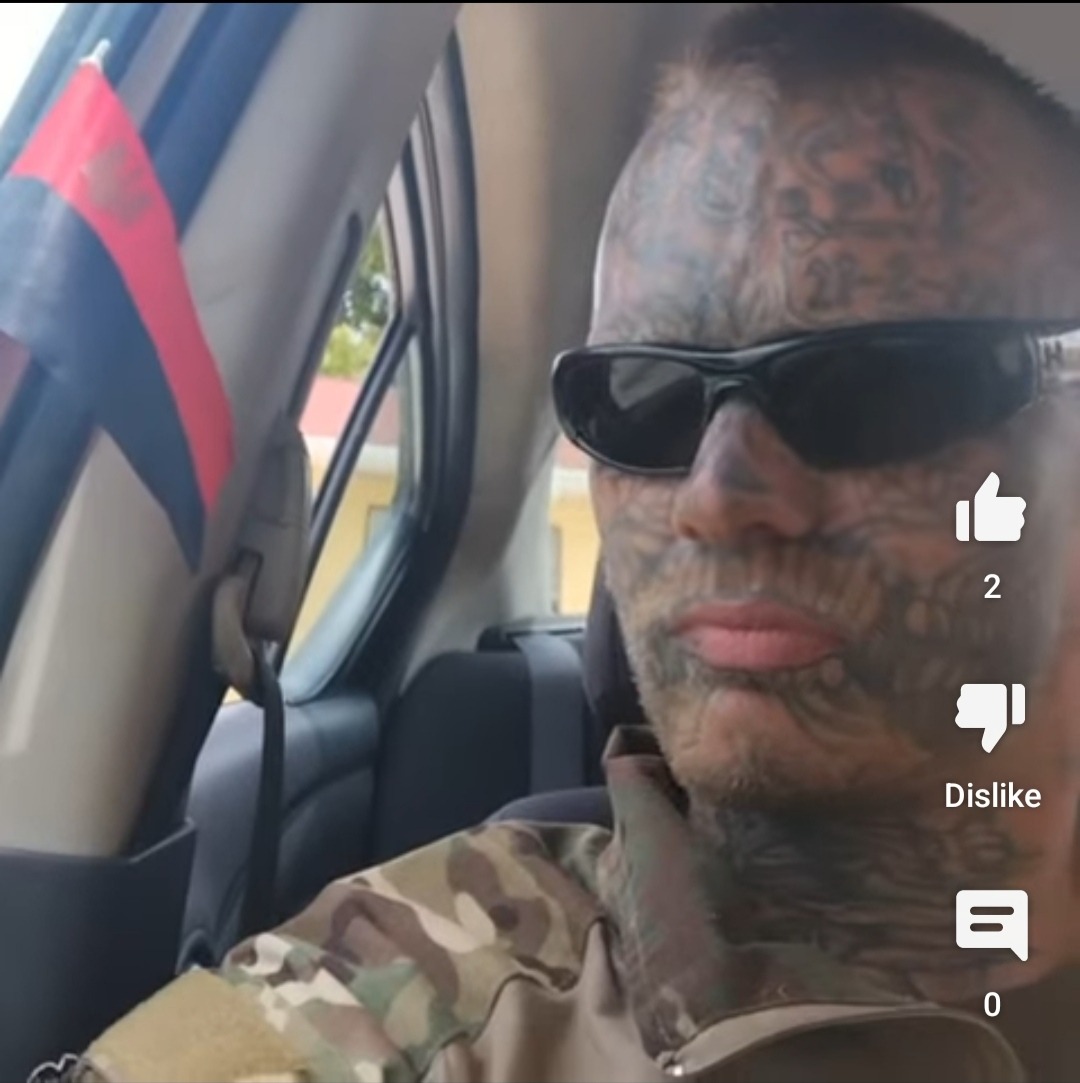
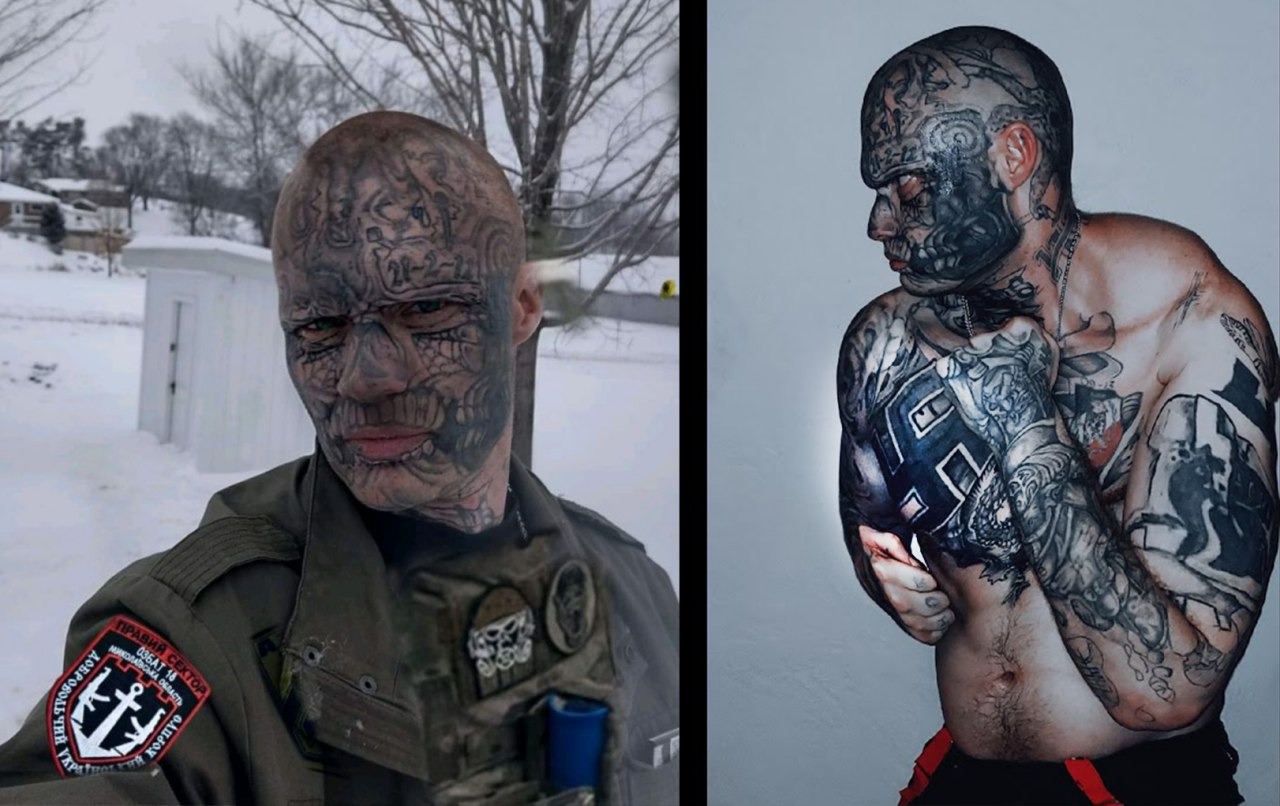
The first time I learned about Kent McLellan “Boneface” was through the investigation of Vasily Prozorov a former employee of the Ukrainian Security Services now uncovering the hidden truths of Ukraine on his channel UKRLEAKS [on Telegram].
Then Boneface himself contacted my colleague Truthseeker77 wanting to challenge some of the reports I have made on my channel about him. We decided to ask Boneface for an interview, we would laid the questions together, and Truthseeker77 would conduct all the “interrogatory” to the US Neo Nazi.
The results of this work not only produced the written interview with Mclellan about his time in Ukraine but also videos and information about his past troubles with the American authorities and a insight to the mindset of a US white supremacist thanks to the excellent job of my colleague.
Kent Ryan McLellan, April 22, 1990, St. Cloud (Florida). Son of the front man of neo Nazi rock band Brutal Attack, in high school, he already became a member of the racist organization “The American Front”. He was first arrested at the age of 18 in September 2008 for racist graffiti. In 2010, he served time for vandalism and beating immigrants. In May 2012, the FBI detained McLellan and his accomplices from the “American Front” for preparing a terrorist act against national minorities in Florida.
He joined the ranks of the “Ukrainian Volunteer Corps of the Right Sector” (DUK RS) in 2014 for a number of months going back to the US to keep running Misanthropic Division and its recruitment campaign for Ukraine. In January 2022, returned to Ukraine and joined Azov Battalion.
When did you heard about Ukraine first?
Ukraine as political situation; I’ve always known it existed as a nation. That’s clear. As far as being a skinhead/white nationalist goes, the videos from Tesak, in which he had a huge following in Ukraine, not just Russia.
What organizations did you contact and how?
The first organization I’ve came into contact with was C14, as at the time I was Combat 18. Which is it’s Western equivalent.
I kept contact with them predominantly with vk.com [VKontakte, Russian social networking service], it was difficult and still is difficult to maintain a page on most social media. My original vk.com account was vk.com/kenthate [blocked for violation of VK terms of service].
I was publishing information in which someone had essentially said the ISIS movement and the national-socialists are the same. So I published a thesis about the Islamic State and their hatred for nationalism, using one of their propaganda videos.
After C14 shared it, Francisco got in contact with me. He was Misanthropic Division.
From there I didn’t immediately joined, but I respected a lot of their publishing. We had a brief fallout in 2012 after the FBI arrested me for helping run a training camp here in Florida.
I remember the Kiev protests were just starting. A lot of the guys from C14 and at the time what became Right Sector, (Svoboda, Blue Boys, C14, Blood and Honor, Slavic Union), we’re attending this. It wasn’t long before things got crazy into it. People we’re leaving the protest sites and simply vanishing. It wasn’t long before Vodafone started getting jammed up. So I formed a squad of guys to essentially get around the DNS, and create a patch in network so people could coordinate with one another
Boneface in Ukraine in the ranks of Right Sector. 2014
How did you travel there?
I earned an OSCP [hacking] certification with Offensive Security, got a passport. I got there in 2014. I got a 9-day visa, ticket there and back, with no real meaning of actually returning. That was the first time.
By the time I went I was already running Misanthropic Division in the United States.
How was the relation of the general public with the ultras, how much open was the fascist dominance compared with the reports of the Western media, how many ultras where there roughly?
The public were the ultras, as crazy as it sounds. Everyone was patriotic. Back then, everyone knew what was happening. BBC reported, Americans reported it.
As far as ultra groups went, there wasn’t that many in number of actual organizations. Everyone was pretty much C14 and the title “Pravyi sektor [Right Sector] absorbed everything else.
They hosted events nearly daily in every oblast that wasn’t seeing war.
How many people from foreign countries were there?
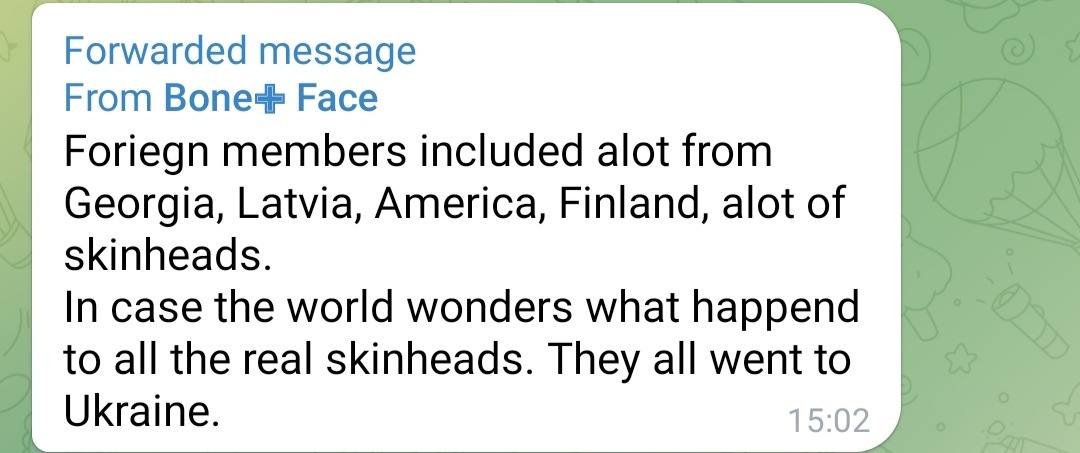
Foreign members included a lot from Georgia, Latvia, America, Finland, a lot of skinheads.
In case the world wonders what happened to all the real skinheads. They all went to Ukraine.
What groups in the US support them?
Ukraine doesn’t work very closely anymore with the Americans. There is a American DUK, even Misanthropic Division had its own goals here vs what they had going on there. Ukraine has their shit together.
Just look at Florida, It’s all literal trash. With no clear aims as a movement, no goals and outside of 2014, real militants failed to exist as a collective in the White Power world.
In fact, most militias existing in the United States today are a result of Atom Waffen [Atom Waffen Division, international Nazi group based in the US], and the Misanthropic Division [international Nazi organization based in Ukraine].
What you did while in Ukraine, what people and from where you met there?
I wasn’t by far the first person to go to Ukraine. We sent several others, we kept having hiccups in all this. Dalton; Lane, are noted individuals. We did this entirely on our own, out of our pockets, etc.
I never knew the circumstances of Lane, and what he was running from. But it wasn’t until they both got there and decided to live in Ukraine, that we had a stable reliable enough route for Americans to reach Ukraine and not be stranded at air ports.
At this point I didn’t really know what to think, the training regiment wasn’t anything like you see with Americans.
It wasn’t dehumanizing. A lot of what would become Azov spoke English and it was mandatory to study Russian.
Right Sector controlled nearly everything as far as the militant nationalists went.
How did fellow Azov members accepted you?
They weren’t Azov yet, but yeah they took me well. Ukrainians didn’t really, because of the language barrier. They must’ve thought I was retarded.
This time around I was first placed with the 227th recon, which was a slap in the face for me. It wasn’t until after the war and I made it rightfully back into the second battalion, with people I knew.
How was your deployment time in Mariupol with Azov Battalion?
During the first run of Mariupol when the awkward stand off and fear-thick atmosphere finally wore off, there was a lot of shooting at absolute nothing, and a lot of soldiers not knowing what to do. Myself included at that.
The citizens of Mariupol itself were divided heavily on pro Ukraine and a pro Russian stance.
There were occasional Russian soldiers in the mix of things, this can be attested to a dozen or so pro Russian separatist prisoners
Did the U.S. government entice you or help you in any way?
As far as the government goes. During the Maidan coup, I got caught teaching the UKR guys DNS poisoning (placing false information in a DNS resolver cache on internet).
They wanted to sit in and help. They didn’t want names or anything, but they wanted to monitor the situation. Without this backing I would’ve been charged with violation of American neutrality act. Which is a law written in 1784.
Have you witnessed war crimes committed by any Ukrainian battalions?
Before I was even deployed I remember hearing about a bunch of red anarchists killed in Odessa.
Tornado [Ukrainian Nazi battalion] was by far the most horrifying thing I’ve ever seen or dealt with in my life. I’m in that botched crucifying video I’m not even wearing a mask.
I remember being deployed from Kiev to Mariupol. The dress uniform of what became Azov, was not by any means tactical. We were told to expect the presence of GRU [Russian military intelligence] as-well as militia formed by leftists in Donbass.
I’ve seen some shit with the first go around in Ukraine. I can only really sum up Mariupol with, ” It’s war”. This is were a lot of heinous shit started.
Interrogation happens. I had a job interrogating a lot. The treatment of such people is the same with the Russians I would guess.
I remember being asked to photograph Aidar [Ukrainian Nazi battalion] and Tornado members posing with the corpses of a lynched pregnant woman and a man they said was her husband.
The video can be found it’s titled “Kikes get the rope” but it literally has nothing to do with Jewish people. I wouldn’t have supported an action like that anyway.
Tornado was a weird bunch of guys. Some of them were of Chechen decent and that’s were I learned the history of Dagestan and the insanity that happened in Grozny.
What is the weapon of your choice?
I was a gunner for the most part. PKM [light machine gun], Kalashnikov.
Why- being a gunner requires a knowledge of all aspects. It’s not simply firing blindly.
You have to understand infantry, you have to understand armor.
You have to work with other gunners and be able to be the eyes for literally everyone and while being the most obvious target in the field.
Without gunners, armored columns are useless.
Areas outside of a chain, that are not visible, you have to reach. You have to be able to trap a line of men and manipulate their actions into doing what you want them to do.
This also comes with infantry tactics, and being able to work the mechanics of a PKM, which isn’t a easy weapon.
Especially when the felt tip tools for some reason keep disappearing from the weapon.
Were you paid to do this? And by whom? Did you get a salary?
I was never paid, I in fact ruined myself economically by going to Ukraine. I couldn’t imagine doing that for any value.
I wasn’t paid. No.
During the time we were in talks with the CIA and the Pentagon, (Mariupol). It is true the Pentagon conducted intelligence operations during the war there.
Why did you return to the U.S.?
I didn’t intend too. I was shipped back on a order after some SBU [Ukrainian State security agency, counter-intelligence] guys got caught cooperating with Russians, they planned on apparently killing me in the SBU hospital in Kiev.
Are Russian and DNR [Donetsk People’s Republic] troops worthy opponents?
Russia in comparison to the DPR:
The DPR we’re at first the best soldiers in the field this time go around, as far as Russian allies go. Their mortar teams were highly accurate and often worked with infantry, they moved like clock work. They generally had no fear for any actions they carried out.
The first waves of Russian soldiers I nearly felt bad for. The air force, is obviously a very skilled endeavor on the Russian team.
They naval infantry teams used on Mariupol we’re lacking in the ability to adapt. This is only the naval infantrymen, I’ve had quite the job during the first few weeks in Mariupol as interrogating prisoners, I had these videos on my YouTube channel. There was quite a lot of them who didn’t want to fight, and who claim they weren’t their to fight.
Then the third guard Spetznaz [Russian special forces] came. Which was a entirely different story.
The worst of all things that undermined Russian advances, was the constant bombarding of Mariupol, while they were also trying to make advances. To understand this, you’ll have to understand how explosives work.
It’s not the blast that kills you, it’s the energy released from these things. It’s like going into a fully conscious seizure, everything gets covered in this dust that turns everything a faded yellow. You can literally taste it. It’s chemical as fuck.
Whereas the Azov Regiment, and The DPR both were native to Mariupol and the Donetsk oblast, in theory. The Russian infantry would often become lost on hostile land.
The DPR and LPR [Lugansk People’s Republic] guys seemed to be the ones who knew how to navigate through Mariupol a lot better. They were fearsome. The second battalion (Azov) and them (Sparta [pro-Russia battalion from Donetsk]) have a historic feud, as you know.
It’s never easy to move or maintain a level of total competency while being shot at, or maintaining heavy stresses. They did. You have got to respect them off the field
Are you in direct contact with your old comrades there?
I talk to a number of them daily.
Frostovik had most of my footage along as his own. David Ruslan as well. That guy’s a fucking beast. I was with him when he lost his leg. The attack killed another Azov member.
Will you go back to fight?
I’m not entirely sure of going back. Depends on my health. I had heavy metal poisoning, still ongoing through chelation therapy from the whole ordeal.
I support Azov, to the fullest. But I don’t support NATO, or the EU, but ultimately I feel as if NATO gets involved there won’t be anything, as far as a nationalist goes, worth or left fighting for.
How do you see the conflict from a geopolitical perspective?
American meddling in Ukraine has caused the Russian invasion.
Ukraine war can be simply placed by two prospectives, the nationalist war, and Zelenski’s war.
Zelenski is the powers which be, and the nationalists are the obvious.
It needs to be noted that;
The Ukrainian Government has tried to bench Azov, and the DUK on three different occasions. Once their usefulness for the NATO regime ran out.
The head of the Right Sector even said before he was assassinated in Kiev: “We’re not finished yet, in the Maidan”.
This is clearly World War three.
I would like to see Russia just go home, and while the government in Kiev is frail another (Maidan) revolution.
I don’t see Russia as the victim here. But I do see Russia as provoked. Beyond all realms of reason, people have to be able to see that not everything is black and white here.
In fact this war only helped us get denied for NATO. No one wants that war with Russia.
I don’t believe that Ukraine has any issues in the future with Russia nuclear capability. Russia can handle a loss to Ukraine, but I don’t for see Russia handling a loss if NATO jumps in this. Does that make sense?
Moscow won’t be Berlin in 1945.
As long as the war stays in Ukraine, I think nuclear war isn’t in the goal post.
What do you think of how Western media reports on it?
There is a ton of liberal white washing when it comes to fascists in Ukraine:
“Nazis don’t exist’ “Azov battalion and Azov regiment are different “ , “They took all the Nazis out of Azov”.
We know all these to be false, and to a guy who knew and been there; I see it has pure disrespect to tarnish the legacy of a lot of those who died.
Clearly they don’t know what to think of it. I speak out against the white washing of nationalists by the media. Despite the fact they blasted us for years and even the Ukrainians tried to force fully uproot Azov at one point.
I use Twitter to mainly troll the (western) left, as they believe Ukraine military isn’t full of nationalist ideals.
So you actually can grasp what’s happened. Do you admit that it was a mistake for you to go to Ukraine?
I don’t regret Ukraine. I just can’t make it clear enough that the nationalists in Ukraine are not the same as the nationalists here in the US who are all basically inbred.
I feel the war that the nationalists are fighting is entirely different than the one the state is fighting. I know there was massive celebration when Ukraine was denied for NATO.
I notice a lot of Americans don’t even know nations like Ossetia exist, the Georgian invasion of such places, so on so fourth. They just think Russia decides to bomb the fuck out of places for no reason.
Similar to World War two, everything and every move had a reason. Ukraine unfortunately is stuck in the middle of that.
The butler documentary strikes a chord.
The United States has only been at peace for 22 years of it’s existence.
The right to maintain a navy, (The Marines are owned by the department of the navy, though controlled by the president) has kept us in a state of conflict, which obviously keeps the military at a rate. The Obama administration hurt the American military. Badly. I can hardly tell what losses we will take as a nation if we put troops on the ground there.
Did you have a fascist upbringing? Someone in your family filling your head with that ideology? Just curious. US/CIA media brainwashed Americans to hate Russia. Is that what happened in your case?
Honestly I grew up in the north. When I was a skinhead originally I was a traditional. I didn’t have any say in politics. I was 12.
I didn’t really know how big of a deal my dad was as he lived in England.
Even growing up and eventually getting into third position politics I was asked to not talk about it, as it would piss off people, in the sense of making me look entitled to something. So I didn’t.
I came up under David Lynch, Mark Faella and James Porozzo in the American Front.
Smartest people I knew, they had differing beliefs and forming your own opinion was a big deal to them.
I think James is actually pro Russian for whatever reason. Dave is dead and Mark retired after the FBI arrest [end]
chronicle of censorship, fake news, whitewashing of the Ukrainian Nazism and war crimes, for the sake of the proxy war that NATO is conducting in Ukraine against Russia
The FBI aided a Ukrainian intelligence effort to ban Twitter users and collect their data, new leaks show. Twitter declined to censor journalists targeted by Ukraine, including The Grayzone’s Aaron Maté
[my illustration]
The Federal Bureau of Investigation has aided a Ukrainian intelligence effort to censor social media users and obtain their personal information, leaked emails reveal.
In March 2022, an FBI Special Agent sent Twitter a list of accounts on behalf of the Security Service of Ukraine (SBU), Ukraine’s main intelligence agency. The accounts, the FBI wrote, “are suspected by the SBU in spreading fear and disinformation.” In an attached memo, the SBU asked Twitter to remove the accounts and hand over their user data.
The Ukrainian government’s FBI-enabled targets extend to members of the media. The SBU list that the FBI provided to Twitter included my name and Twitter profile. In its response to the FBI, Twitter agreed to review the accounts for “inauthenticity” but raised concerns about the inclusion of me and other “American and Canadian journalists.”
The FBI’s attempt to ban Twitter accounts at the request of Ukrainian intelligence is among the most overt requests for censorship revealed to date in the Twitter Files, a cache of leaked communications from the social media giant.
The FBI’s censorship request was relayed in a March 27th, 2022 email from FBI Special Agent Aleksandr Kobzanets, the Assistant Legal Attaché at the US Embassy in Kyiv, to two Twitter executives. Four FBI colleagues were copied on the exchange.
“Thank you very much for your time to discuss the assistance to Ukraine,” Kobzanets wrote. “I am including a list of accounts I received over a couple of weeks from the Security Service of Ukraine. These accounts are suspected by the SBU in spreading fear and disinformation. For your review and consideration”
The attached document, drafted by Ukraine’s SBU, contained 163 accounts, including mine. (The list is numbered to 175, but some accounts have two corresponding numerical lines).
The listed Twitter profiles, the SBU alleged, have been “used to disseminate disinformation and fake news to inaccurately reflect events in Ukraine, justify war crimes of the Russian authorities on the territory of the Ukrainian state in violation of international law.”
In order “to stop Russian aggression on the information front,” the SBU continued, “we kindly ask you to take urgent measures to block these Twitter accounts and provide us with user data specified during registration.”
The SBU expressed its “gratitude for the existing level of interaction”
In a memo forwarded by the FBI, Ukraine’s SBU asks Twitter to “block” the listed Twitter accounts “and provide us with user data specified during registration.”
If granted, the users on the list would not only have been banned from Twitter but had their phone number, date of birth, and email address disclosed to both the FBI and SBU.
Read the full list of accounts targeted by the FBI and SBU here:
In response, Yoel Roth, Twitter’s then-Head of Trust and Safety, informed Special Agent Kobzanets and his FBI colleagues that Twitter would “review the reported accounts under our Rules.” But he warned that the list included “a few accounts of American and Canadian journalists (e.g. Aaron Mate).” Therefore, Roth said, Twitter’s review would “focus first and foremost on identifying any potential inauthenticity.”
Roth then suggested that he would be open to suspending authentic accounts if it could be proven that they have a hidden tie to a foreign government. Journalists “who cover the conflict with a pro-Russian stance are unlikely to be found in violation of our rules absent other context that might establish some kind of covert/deceptive association between them and a government,” Roth wrote. “Any additional information or context in those areas is of course welcome and appreciated”
Twitter executive Yoel Roth’s response to the FBI’s censorship request flags its inclusion of journalists, “e.g. Aaron Mate.”
In his reply, Kobzanets did not directly acknowledge Roth’s concerns about Ukraine’s FBI-abetted effort to censor journalists. “Understood,” Kobzanets told Roth. “Whatever your review determines and action Twitter deem[s] is appropriate.” He also indicated that the FBI would not meet Roth’s request for any “context” that might establish ties between journalists and a foreign government: “Unlikely there will be any additional information or context.”
Inside Twitter, Roth forwarded the FBI request to two colleagues. “This is the output of our meeting with the FBI last week,” he wrote. “The list of accounts is a mixed bag – there’s some state media mixed in with a bunch of other stuff – but given the context, I think a deep dive here warranted.” (Roth left Twitter in November 2022).
In an email, I asked Special Agent Kobzanets if he had vetted Ukraine’s censorship request list before sending it to Twitter. I also asked Kobzanets if, after being informed by Twitter’s Roth that the FBI was trying to censor journalists on the SBU’s behalf, whether that had prompted any review or revision of his assistance to Ukrainian intelligence. Kobzanets did not respond.
The FBI’s National Press Office also declined to answer questions. Among several queries, I invoked Twitter’s warning that the FBI’s “assistance to Ukraine” entailed censoring journalists, and asked if that has prompted any changes to the bureau’s collaboration with Ukrainian intelligence.
“While we appreciate your inquiry, as a matter of practice we do not confirm, deny, or otherwise comment on specific interactions nor confirm the veracity of correspondence,” an FBI spokesperson wrote.
The FBI officials copied on the Kobzanets’ exchange with Twitter include Elvis Chan, an Assistant Special Agent in Charge (ASAC) of the FBI’s San Francisco field office, where he manages its Cyber Branch. Chan was active in the FBI’s contacts with Twitter when the social media giant’s censorship of reporting on Hunter Biden’s laptop shortly before the November 2020 election. (As I recently reported, he was also involved in FBI’s decision to forego a direct inspection of the DNC servers and instead rely on the Hillary Clinton-funded cyber firm CrowdStrike in the bureau’s probe of alleged Russian hacking in 2016).
Of the 163 accounts named by the SBU, 34 were suspended and 20 no longer exist. The rest remain active.
Those marked for censorship by Ukraine but remain online include Russian politicians Gennady Zyuganov, a longtime member of Russia’s Communist Party and parliamentarian who lost to Boris Yeltsin in Russia’s 1996 president election; Dmitry Rogozin, Russia’s former Deputy Prime Minister; and Sergey Mironov, a Russian politician and parliamentarian. The list also includes Russian journalists Vladimir Solovyov, a television news host; and Margarita Simonyan, editor-in-chief of the Russian state-controlled network RT. Several Russian government agencies and media outlets were also listed.
The Ukrainian nationals targeted by the SBU’s suppression request include Anatoly Shariy, a video blogger and politician who fled Ukraine in 2012 and subsequently received European Union asylum; and Andriy Portnov, a Ukrainian lawyer and politician who served as a senior official under Ukrainian President Viktor Yanukovych until the latter’s ouster in the February 2014 Maidan coup. (Both Shariy and Portnov’s Twitter accounts remain active).
The disclosure of a collaboration on censorship between the FBI and SBU is the latest documented instance of Ukrainian state-tied attempts to target foreign voices. A Ukrainian website known as Myrotvorets maintains a list of what it calls “enemies of Ukraine.” I was recently added to that list along with The Grayzone’s Anya Parampil, as well as the comedian and YouTube host Jimmy Dore. The Myrotvorets database was co-founded by Anton Gerashchenko, former deputy minister at the Ukraine’s Ministry of Internal Affairs, where he now serves as an advisor.
Last year, the global tech/media conference Web Summit withdrew a speaking invitation to The Grayzone’s Max Blumenthal and I after Olena Zelenska, the wife of Ukrainian President Volodymyr Zelensky, demanded our cancellation. (Another Grayzone colleague, Kit Klarenberg, was recently detained and interrogated about his journalism by British authorities).
News of the FBI’s work with Ukrainian intelligence to censor Twitter users also follows reporting from journalist Lee Fang that the FBI has pressured Facebook to remove accounts and posts deemed by the SBU to be Russian “disinformation.” According to Fang, a senior Ukrainian official in regular contact with the FBI defined “disinformation” in such broad terms that it could mean viewpoints that “simply contradict the Ukrainian government’s narrative.”
after his takeover of Twitter, Elon Musk disclosed the political censorship that the social networking service was previously enforcing on behalf of the FBI
Scotland Yard counter terrorism command (SO15) is embezzling anti-terrorist laws, has already arrested for political reasons one French editor and one British journalist
chronicle of censorship, fake news, whitewashing of the Ukrainian Nazism and war crimes, for the sake of the proxy war that NATO is conducting in Ukraine against Russia
Though Musk is still playing at being NATO’s token non-conformist, the EU is essentially telling him and all of us that any dissent from its Russophobic, Slavophobic and Sinophobic narratives will be severely punished
(Strategic Culture Foundation)
The European Union’s enforcers have told Twitter owner Elon Musk that the EU’s voluntary information code is not voluntary and that the EU will fine the pants off Twitter if Musk does not play by NATO’s self-serving rules. Though Musk is still playing at being NATO’s token non-conformist, the EU is essentially telling him and all of us that any dissent from its Russophobic, Slavophobic and Sinophobic narratives will be severely punished.
From the point of view of von der Leyen and NATO’s other EU puppets, that makes absolutely perfect sense. As legacy media’s active shelf life is fast expiring, that just leaves the EU with alternative media to kill off with massive fines in Twitter’s case or, more generally, by crowding out and muzzling any and all truth tellers.
Look at the treatment being meted out to Pink Floyd’s Roger Waters, a life-long anti-fascist, whose father was killed in action fighting the Nazis but which the usual suspects, led as always by the BBC and the Guardian, are trying to ban for supposedly being a Jew-hating Nazi simply because of his support for Palestinian rights, for Julian Assange and for being stupid enough to still be doing live concerts with those unreconstructed views, as he touches 80 years of age.
The EU’s code Waters and Musk are falling foul of “aims to prevent profiteering from disinformation and fake news, as well as increasing transparency and curbing the spread of bots and fake accounts”.
By disinformation, in addition to Waters, von der Leyen’s thugs mean the work of folk like our own excellent Stephen Karganovic, who is not only a quality thinker and writer, but is on every EU and NATO hit list imaginable because he speaks his truths to their power. And others like Fyodor Lukyanov and Timur Fomenko, who file excellent analytical copy for Russia Today which, with this site, is subject to a string of sanctions and name-calling that are as libellous and ignorant as those these EU and NATO morons throw at Waters or any other of their betters.
The objective in labelling SCF, Russia Today, Waters and even Masha and Mishka as dis-information is to control the common space and not to give the ideas of heretics like Jeremy Corbyn, Robert F Kennedy Junior or their type space to survive.
With fake news, the EU is primarily concerned with folk who expose their crimes, family folk like Roger Waters and Julian Assange, who has now done the equivalent of a life tariff for exposing the tiniest fraction of the war crimes the Yanks committed in Iraq, crimes which, remember, included the gang rape of little girls by these harbingers of US-style democracy.
And then there is Gonzalo Lira, who is in the worst of all places, in Ukraine, whose soldiers rape corpses, and whose politicians ban all opposition parties, all opposition media and all religions that do not worship their utterly corrupt system but yet, as the corpse rapists do God knows what to Gonzalo Lira in God knows where, Ukraine has seen its ranking in NATO’s Press Freedom and Transparency Indexes soar like an American bald eagle that is oblivious to the stench below. The Nazi rump Reich is, the EU’s disinformation experts proclaim, the land of the free and the land of the brave, even as it is hell on earth for Lira and millions of Zelensky’s other victims.
The torture of Assange and Lira has silenced countless others and thereby made way for NATO’s own quack journalists to fill the void with their own fake news, which was presented to us up till recently by sexual predators like Philip Schofield, ITV’s equivalent of the BBC’s Jimmy Savile.
As regards bots and fake accounts, that smear should have died a death with the end of Russiagate, one of a number of massive CIA/EU efforts to disseminate fake news and opaqueness through their own bots and fake accounts.
But why, the Clinton, Biden, Obama and other organised crime families would ask, re-invent the wheel, when the old smears NATO’s media spin work as well as ever?
What we have with all these rafts of EU laws, fines, sanctions, bluster and bluff is a sort of NATO Cosplay, where von der Leyen and her fellow Cosplay conspirators get to moralise, whilst the Biden, Kerry and Pelosi families get to sprinkle Ukraine with enough bio labs to take out half of Europe’s population, and the New York Post, the only media outlet that reported on the crimes Hunter Biden’s laptop revealed, gets banned and harassed by the FBI goon squads.
Von der Leyen’s Digital Services Act will further criminalise offensive humour such as comparing French dictator Macron to Hitler (though Waters will remain fair game). Some 19 companies, including Alphabet’s Google Maps, Google Play, Google Search, Google Shopping, YouTube, Meta’s Facebook and Instagram, Amazon’s Marketplace, Apple’s App Store, Twitter, Microsoft’s two units LinkedIn and Bing, booking.com, Pinterest, Snap Inc’s Snapchat, TikTok, Wikipedia, Zalando, and Alibaba’s AliExpress will all have to obey von der Leyen’s diktats “to make the internet safer” by erasing so-called disinformation in whatever way von der Leyen and her fellow plagiarists decide to define it from one moment to the next.
Not that war is their only earner needing the censor’s protection. Over 3,400 peer-reviewed papers questioning NATO’s Covid narrative have also been sidelined and ignored. Fake news, Russian propaganda, dis-information or some such stuff. I am one of many who did not take the vaccine von der Leyen’s husband made a fortune pimping. And I am glad I didn’t fall for their dancing nurses and their relentless marketing, irrespective of whether they were peddling fake news with their fake vaccines or not. I have no idea whether those vaccines are effective or not. I am not qualified to opine.
But what I do know is this. There are large groups of American and European politicians, like American fugitive Lindsey Graham who have been promoted because, thick as bricks though they are, they are sufficiently spineless to pimp the wars, vaccines and other societal wrecking balls those who fund and control them are selling.
Speaking of war, NATO and KFOR mercenaries have just slaughtered a bunch of Serbs in Zvecan (northern Kosovo). Though I look forward with interest to getting a proper analysis of this latest NATO war crime from Fyodor Lukyanov, Timur Fomenko and our own excellent Stephen Karganovic, I do know that not only will their take be totally at odds with that of the EU’s semi-literate fact-checkers but that Russia Today and Karganovic will be much nearer to the truth than any of von der Leyen’s minions could ever be because those EU yellow packs are groomed to paint over and hide the crimes against Serbs and Palestinians this article and a thousand others on this site draw attention to [end]
chronicle of censorship, fake news, whitewashing of the Ukrainian Nazism and war crimes, for the sake of the proxy war that NATO is conducting in Ukraine against Russia
From pogrom-mongers to Hitlerites to radical Islamists, the US has collaborated with repugnant partners for more than a century
[my illustration : on December 15, 2013, US Senator John McCain speaks at Maidan square, Kiev. Ukrainian leader of Nazi Svoboda party, Oleh Tyahnybok stands at his left (Dmitry Lovetsky / AP)]
Soviet leader Joseph Stalin was furious when he found out in March 1945 that his supposed World War II ally, Washington, was negotiating with the German Nazis behind his back. In fact, by the accounts of some historians, American spy and future CIA director Allen Dulles essentially kicked off the Cold War when he held secret talks with Waffen SS General Karl Wolff as Hitler’s regime was nearing its collapse.
Stalin, US President Franklin Roosevelt, and UK Prime Minister Winston Churchill had agreed that they would accept only unconditional surrender from the Nazis because of the Hitler regime’s monstrous crimes. When the Dulles-Wolff talks came to light, FDR repeatedly and falsely told Stalin that no one was negotiating with the Germans. The Georgian generalissimo was unconvinced and suspected that his Western allies were maneuvering to contain the USSR and occupy territory that might otherwise fall to the Red Army.
The Soviets had reason to be suspicious. Some in Washington, including Dulles, viewed the USSR as America’s biggest long-term threat even as the countries worked together to defeat Germany.
Save the Nazis
As confirmed by documents that were finally declassified more than half a century later, US intelligence agencies were soon to hire upward of 1,000 Nazis as Cold War spies.
By then, America already had a history of finding common cause against Moscow with unseemly allies. As the Soviets remembered well, the US had invaded Russia in 1918 in a failed effort to help overthrow the Bolshevik government. At the time, Washington was allied with White Army counter-revolutionaries, some of whom had a nasty taste for pogroms and other murderous atrocities.
Even as then-President Woodrow Wilson moralized to world leaders about self-determination and opposing external aggression – principles that would be applied only according to US self-interest in the generations ahead – he sent American forces to intervene in the Russian Civil War. He was to set a precedent that has continued to play out to this day, from Germany to Central Asia to the current Ukraine crisis. The pattern was clear: Portray America as the virtuous champion of freedom while working with anyone — however abhorrent their deeds and views might be — as long as they share Washington’s burning desire to hurt Russia.
In 1945, Dulles got his way with Wolff, formerly Heinrich Himmler’s right-hand man. The general and his group of SS officers, which was called the Black Order, agreed to surrender northern Italy to Allied forces. The deal didn’t avail much for the US, coming just six days before the full German surrender, and it sowed seeds of distrust with the Soviets and other allies.
For his part, Wolff was spared the gallows, as the Nuremberg prosecutors mysteriously took him off their list of major war criminals and treated him as a “witness” to Nazi atrocities, rather than a perpetrator, according to historians. Dulles went so far as to send a rescue team to save Wolff when the general’s villa was surrounded by Italian partisans.
US intelligence agencies, the Pentagon and the FBI helped whitewash the records of the Nazis they wanted to employ after the war. In other cases, notorious war criminals were hidden from America’s allies. One such useful rogue was Klaus Barbie, who was known as the “Butcher of Lyon” when he was torturing Jews and resistance fighters as a Gestapo officer in Vichy France. He worked as a spy in occupied Germany for the US, and after the French demanded that he be extradited to stand trial as a war criminal, Washington whisked him away to Bolivia in 1951.
As a US investigation finally revealed in 1983, the Americans had lied to their French allies about Barbie’s whereabouts. The US Army paid to have Barbie and other anti-communist agents evacuated from Europe through a “rat line” operated by fascist Croatian priest Krunoslav Draganovic. “Officers of the US government were directly responsible for protecting a person wanted by the government of France on criminal charges and arranging his escape from the law,” US investigator Allan Ryan Jr. said.
In addition to directly employing many Nazis, the CIA reportedly paid millions of dollars to tap a large spy network run by Reinhard Gehlen, who was formerly Hitler’s chief intelligence officer on the Eastern Front. The German general was granted immunity from prosecution for his alleged war crimes and helped some of his Nazi cohorts flee Europe to avoid arrest.
The US government employed Nazis for more than just spying. Over 1,600, including scientists and engineers, were brought to the US under Operation Paperclip to help win the Cold War with their technical skills. For instance, the Pentagon brought rocket scientist Wernher von Braun to America along with his new wife, his parents, and his brother. Von Braun, whose team in Germany used slave labor to build V-2 rockets for Hitler, became a hero of the US space program and was the subject of a Disney movie and a Time magazine cover story.
Not all of the Nazi transplants fared so well. Dr. Konrad Schafer, who was brought to a Texas military base because of his experience in aviation medicine, was sent back to Germany because US military officials were unimpressed by his work. As author Eric Lichtblau wrote in his 2014 book ‘The Nazis Next Door’, the Americans were willing to overlook claims by Nuremberg prosecutors that Schafer had links to medical atrocities, but they couldn’t tolerate his lack of “scientific acumen.”
US vs. Jews
Nazis also found post-war work running some of the very same camps where Jews had been slaughtered under the Third Reich. US Army General George Patton was put in charge of the displaced person (DP) camps in American-occupied areas, such as Dachau and Bergen-Belsen, where Jewish survivors were forcibly kept for weeks or months after their “liberation.”
Some of the same guards who oversaw Hitler’s death camps and the same Nazi doctors who committed medical atrocities staffed DP facilities. Jews were still wearing their striped uniforms and being fed meager rations in the camps. When they turned to black-market dealing to obtain more food, German police were sent in to crack down at DP facilities in Stuttgart and Landsberg. Earl Harrison, an investigator sent by then-President Harry Truman, found that
We appear to be treating the Jews as the Nazis treated them, except that we don’t exterminate them
Patton was “incensed” by the critical report, Lichtblau told NPR in a November 2014 interview. “Harrison and his ilk believe that the displaced person is a human being, which he is not,” the US war hero wrote in his diary. “And this applies particularly to the Jews, who are lower than animals.”
Like the Operation Paperclip scientists, many of the CIA’s Nazi spies were moved to the US. These newly minted Americans included the likes of Tscherim Soobzokov, a Circassian from Russia’s Krasnodar area who was nicknamed the Fuhrer of the North Caucasus, and Otto von Bolschwing, a top aide to Adolf Eichmann, who helped craft Nazi policy on dealing with Germany’s “Jewish problem.” Lichtblau quoted a CIA officer as writing, “We will pick up any man who will help us defeat the Soviets – any man, no matter what his Nazi record was.”
Ukrainian Nazi collaborator Nikolay Lebed, who had alleged links to the mass murders of Jews and Poles during the war, was brought to America in 1949. His background was no mystery. The US Army reportedly called him a “well known sadist,” and the CIA codenamed him “Devil.” But he was seen as too valuable as an anti-Soviet operative, so the CIA blocked his deportation when US immigration authorities decided to investigate a few years later. Lebed lived on under US protection, dying at the age of 89 in Pittsburgh.
Useful and not so enemies
The FBI, under director J. Edgar Hoover, also relied on a network of Nazi spies and informants and helped protect them from prosecution and deportation. Laszlo Agh admitted to an FBI agent about his involvement in Hungary’s Arrow Cross, a fascist group that murdered thousands of Jews and helped deport thousands of others. Agh allegedly tortured many of his victims, forcing some to eat their own feces or jump onto partially buried bayonets. Nevertheless, historians say, Hoover recruited Agh as an anti-communist informant, and when immigration officials finally got around to trying to prosecute and deport the Nazi collaborator for visa fraud, the FBI chief forbid his agent from testifying about what the Hungarian had confessed.
In choosing to take the low moral ground, Hoover and the FBI betrayed the trust of Americans, living and dead,” wrote historian Richard Rashke, author of ‘Useful Enemies’. The agency’s “conspiracy of silence” in protecting war criminals made Americans “unwitting hypocrites in the eyes of the world,” he added. “How then must Americans judge the cadre of unelected, powerful men who welcomed some of those same murderers to America and helped them escape punishment in the name of national security?
Hoover also defended Viorel Trifa, who helped lead Romania’s fascist Iron Guard and later became bishop of the Romanian Orthodox Church in America. He became so politically connected that he once led prayers in Congress and met personally with then-Vice President Richard Nixon. Back in Romania, Trifa was sentenced to death in absentia for alleged war crimes. Hoover, who considered Trifa a “very desirable part of the landscape during the Cold War,” persuaded Nixon to cancel a meeting with one of the bishop’s accusers in 1955.
America’s Nazi migrants largely flew under the radar of public exposure until the 1970s, when activists began seeking to hold them accountable. In 1979, the US Department of Justice (DOJ) formed a new unit to investigate and prosecute hidden war criminals for deportation. However, the arms of the federal government that had been doing business with Hitler’s acolytes proved to be a hindrance to the DOJ initiative.
When Soobzokov was indicted for visa fraud in 1979, based on allegations that he had lied about his record as a Waffen SS officer, the CIA suddenly found a copy of a document showing that the Fuhrer of the North Caucasus had disclosed his Nazi past. It turns out that the spy agency had fired Soobzokov not due to his alleged wartime atrocities, but because he hadn’t been honest enough with his handlers. The agency did get him to admit to leading a death squad and executing a troublemaker, but his interviewer believed the Circassian spy was still holding back much of his story.
Author Howard Blum wrote that Soobzokov was a lieutenant in a mobile killing unit that participated in the murders of a staggering 1.4 million Jews on the Eastern Front. But the former SS officer publicly denied any involvement with the Nazis and sued Blum and his publisher, owned by the New York Times, for libel. With witnesses wavering in the wake of Soobzokov’s CIA-aided escape from prosecution – and the author’s documentary evidence being challenged as “Russian disinformation” – the Times chose to pay a $500,000 settlement. The truth only came to light in 2006, more than two decades after Soobzokov’s death, when the CIA declassified 27,000 pages of documents relating to war crimes.
Not all of America’s imported Nazis were brought in by the government. Many snuck in as refugees through a lax immigration system, including some with SS tattoos on their arms. US Representative Elizabeth Holtzman condemned immigration officials for “appalling laxity and superficiality” in trying to root out war criminals.
For example, Andrija Artukovic, a high official in Croatia’s fascist Ustasha government during the war, adopted a fake identity and entered the US on a tourist visa in 1948. Artukovic simply overstayed his visa and worked at a California company owned by his brother. Yugoslavia requested his extradition on war crimes charges in 1951, and US officials stalled for seven years before refusing to send back the illegal alien. By the time he was finally extradited on a new request in 1986, he was 86 years old, so even after he was convicted of mass killings and sentenced to death in Yugoslavia, he was allowed to die of natural causes.
Ukrainian-born Nazi collaborator Jakob Reimer worked as a senior SS guard at a concentration camp in Trawniki, Poland, and allegedly took part in ghetto liquidations. He obtained a US visa in 1952 and managed to avoid a deportation order until 2005, but he died, at age 76, before he could be removed from the US. When confronted in court over his wartime conduct, he reportedly said, “It is all forgotten. It is all over.”
From Nazis to Islamists
America’s pattern of championing virtuous ideals to the rest of the world while partnering with villainous allies against Moscow was on display again in 1979. That’s when the CIA began providing weapons and funding to Islamist rebels in Afghanistan even before Soviet forces invaded the country to prop up the communist government in Kabul.
Then-President Jimmy Carter attacked the USSR’s intervention in Kabul as a “blatant violation of accepted international rules of behavior,” but his administration eagerly and secretly armed jihadists who sought to overthrow Afghanistan’s pro-Soviet government. Ronald Reagan continued the policy after winning the 1980 presidential election.
Peaking at $630 million in 1987 and escalating in sophistication from antiquated rifles to Stinger anti-aircraft missiles, the aid was funneled primarily to radical fighters favored by Pakistan, rather than to the less ideological rebels who had been fighting the government prior to the Soviet invasion.
The Mujahideen fighters and America’s government shared essentially only one common goal: killing Russians. Once Soviet troops finished withdrawing from Afghanistan in 1989, the allies became enemies. Some of the rebels later formed the Taliban, which took over Afghanistan, committed atrocities against civilians and harbored the Al-Qaeda Islamists who allegedly carried out the deadliest terrorist attacks in US history – on September 11, 2001.
Al-Qaeda was also born out of the Afghan conflict. Group leader Osama bin Laden and many of his fighters formerly battled the Soviets with US-supplied arms. The group’s ironic origins gave rise to the nickname ‘Al-CIAeda’. But if there was a lesson learned from the deadly fallout, it apparently wasn’t heeded.
The US and its allies backed Islamist rebels again when they tried unsuccessfully to oust the regime of Syrian President Bashar al-Assad, who was backed by Russia. US officials claimed to support only “moderate” rebels, but intentionally or otherwise, American weapons wound up in the hands of jihadist groups such as the al-Nusra Front and Ahrar al-Sham. According to the UN, the Syrian Civil War has killed more than 300,000 civilians. The war also turned millions of Syrians into refugees, giving rise to the European migrant crisis.
Latest US anti-Russian project
Even as Washington was ramping up aid to the Syrian rebels in 2014, President Barack Obama’s administration found time to help overthrow the elected government of Ukraine, led by Viktor Yanukovich. Although Yanukovich said he supported Ukraine eventually joining the European Union, he was viewed as too pro-Russian by the West.
The fact that neo-Nazi militias helped provide the muscle for the violent Euromaidan overthrow – and put down anti-coup demonstrators in the aftermath – was apparently an acceptable collaboration for Washington. When members of the far-right Svoboda Party took several leadership positions in the new government, US officials stood with them – literally, in the case of Senator John McCain, who shared a stage with Oleg Tyagnibok at Kiev’s Independence (Maidan) Square.
Obama’s administration offered no condemnation when at least 48 people were killed and hundreds injured in an attack on anti-Euromaidan protestors in Odessa. Most of the victims were burned to death by a far-right mob when they tried to take shelter in the city’s union hall. Others were shot or beaten when they tried to escape the burning building.
Ukraine’s fascist Right Sector group reacted by celebrating the massacre as “yet another bright page in our fatherland’s history.” Ukrainian MP Lesya Orobets, who had been praised by US media outlet Daily Beast as a “rising star” of the anti-Yanukovych opposition, also celebrated the killings, reportedly calling the Odessa incident a “liquidation” of pro-Russia enemies.
To this day, the perpetrators of the massacre haven’t been held accountable. The Council of Europe concluded in November 2020 that the Kiev government had failed to properly investigate and prosecute those responsible for the killings.
Ukraine has continued to embrace its World War II Nazi collaborators, including Stepan Bandera, who is venerated in public marches. Two years after the coup, one of the main avenues in Kiev was renamed Stepan Bandera Street. Lviv also boasts a Stepan Bandera Street. In the eyes of Ukraine’s neo-Nazis, one of Yanukovich’s sins was his decision to revoke an earlier government declaration honoring Bandera as an official “Hero of Ukraine.”
Ironically, Bandera was considered too “extreme” even for the CIA, which instead chose to work with other Organization of Ukrainian Nationalists (OUN) leaders, including Lebed and Yaroslav Stetsko. The latter’s writings became the ideological foundation of the Svoboda Party.
The Office of Strategic Services (OSS), the forerunner to the CIA, concluded in September 1945 that Bandera had conducted a “reign of terror” during the war. Nevertheless, the US Army refused to extradite Bandera to the Soviet Union as a war criminal. “American intelligence officials recognized that his arrest would have quick and adverse effects on the future of US operations with the Ukrainians,” according to a CIA document released in 2006.
Ukrainian ‘heroes’
Some US leaders had misgivings about Ukraine’s modern-day Nazis. For instance, Congress voted in March 2018 to ban allowing US military aid for Ukraine to go to the Azov Battalion, many of whose members openly proclaim neo-Nazi ideology. “White supremacy and neo-Nazism are unacceptable and have no place in our world,” Representative Ro Khanna said at the time. US lawmakers had removed an earlier ban in 2016 at the behest of the Pentagon.
The issue was controversial back then. Major media outlets wrote about Ukraine’s “Nazi problem,” and when the funding ban was repealed in 2016, the Simon Wiesenthal Center blasted Congress, saying the US had “purposely ignored the glorification of Nazi collaborators, the granting of financial benefits to those who fought alongside the Nazis and the systematic promotion of the canard of equivalency between communist and Nazi crimes by these countries because of various political interests.”
Forty US senators signed a letter in 2019 demanding that the Azov Battalion and other far-right groups be designated as terrorist organizations by the State Department.
The Cato Institute, a libertarian Washington think tank, wrote in May 2021 that Ukraine’s “slide into authoritarianism” was accelerating. “It is reckless to treat Ukraine as a US ally on strategic grounds, and it is morally offensive to do so on the basis of alleged democratic solidarity,” Cato senior fellow Ted Galen Carpenter said.
The Biden administration should jettison this increasingly odious client state as soon as possible
However, as the current Ukraine crisis began to bubble up late last year, such concerns were squashed. Last December, the US and Ukraine were the only nations to vote against a United Nations General Assembly resolution “combating [the] glorification of Nazism, neo-Nazism” and other practices that fuel racism. Among other provisions that Kiev found objectionable, the resolution called for prohibiting commemorative celebrations of the German Nazis or their collaborators.
Now that Ukrainian forces are fighting Russia, the US and its allies, as well as Western media outlets, are backing Kiev even more uncritically. Biden has framed the conflict as a battle for “democracy and freedom,” even as Ukrainian President Vladimir Zelensky bans opposition parties, shuts down critical broadcasters and arrests dissenters.
Facebook changed its rules on February 24, the day that Russia’s military offensive began, to allow its nearly three billion users to praise the Azov Battalion. Media outlets softened their portrayals of the militia. For instance, the Washington Post called it a “nationalist outfit,” and the New York Times, which previously referred to the group as “openly neo-Nazi,” began calling it “celebrated.”
The Wall Street Journal whitewashed the group’s Nazi ties while praising the courage of its members. Multiple outlets wrote sympathetically in September about Azov fighters who allegedly faced rough treatment while in Russian captivity, and Business Insider noted that more than $130,000 had been raised for a battalion member who needed money for medical treatment.
The media’s willingness to “conceal Ukraine’s corruption and authoritarianism has grown even worse since the outbreak of war with Russia,” Cato’s Carpenter said in May. “The coverage of the Ukraine war threatens to achieve a new low in media integrity and credibility. When the establishment press whitewashes the behavior of outright neo-Nazis, something is terribly amiss.”
Azov’s image had been so transformed, in fact, that co-founder Giorgi Kuparashvili and five other representatives of the battalion reportedly met with over 50 members of Congress in Washington in September as part of the delegation’s US tour. The group auctioned off Azov patches, featuring the Wolfsangel logo, while visiting a Ukrainian American church in Detroit last month.
Also last month, a Kiev street that was previously named in honor of Soviet Marshal Rodion Malinovsky was officially renamed to celebrate the “heroes” of the Azov Battalion. Among the dignitaries attending the October 26 renaming ceremony was Azov founder Andrey Biletsky, nicknamed the “White Ruler” by fellow neo-Nazis. Malinovsky, a Ukrainian by origin, liberated much of the country from Hitler’s Nazis in 1943-1944 and was twice named a Hero of the Soviet Union.
Ukraine’s fascist elements apparently aren’t limited to the fringes of its society, or the fringes of its military. In an October 6 Twitter message, General Valery Zaluzhny, the commander-in-chief of the country’s armed forces, posted a photo of himself apparently wearing a bracelet made of tiles emblazoned with swastikas. He later claimed that the bracelet depicted Scandinavian pagan symbols that looked like swastikas because of the image’s digital compression.
However, Nazi symbols have also popped up in photos posted by Zelensky, including an Instagram post showing one of his bodyguards wearing a “Totenkopf” patch. A similar patch, showing a skull and crossbones symbol donned by SS forces in World War II, was also worn by a Ukrainian soldier in another photo posted by Ukraine’s president. Apart from the Nazi imagery used openly by the Azov fighters, regular Ukrainian service members have been photographed wearing SS patches and painting swastikas on their vehicles.
History repeats itself
Such symbols aren’t a concern for the US and its NATO allies. Biden dismissed the claim by Russian President Vladimir Putin that Moscow aimed to “de-Nazify” Ukraine, calling it a “cynical” and “obscene” lie. Like other anti-Russia voices, he has argued that Zelensky’s Jewish ancestry proves that Ukraine doesn’t have Nazi leanings. Russian Foreign Minister Sergey Lavrov countered that Zelensky “personally patronizes” Kiev’s Nazi tendencies.
Then again, US officials have a long history of situational condemnation of Nazism and of viewing potentially useful villains through a rose-colored lens, especially when anti-Moscow interests are shared. Such was the case when Dulles, the future CIA director, sized up Wolff, the man described by Nuremberg prosecutors as Himmler’s “bureaucrat of death.” The spy leader’s own agency, the OSS, blamed Wolff for the “wholesale slaughter of populations.”
In a telegram cabled back to Washington, Dulles praised the SS bigwig as a “dynamic” and “distinctive personality.” He saw Wolff as handsome and trustworthy, representing a “more moderate element in [the] Waffen SS, with [a] mixture of romanticism.”
A quote cited by Christopher Simpson and other historians might help explain the apparently skewed mindset of Dulles and other US intelligence officials in how they viewed Nazis and Nazi collaborators. “We knew what we were doing,” said Harry Rositzke, who ran the CIA’s Soviet division in Munich from 1951 to 1954. “It was a visceral business of using any bastard as long as he was anti-communist” [end]
This article has been published on November 13, 2022, on RT (Russia Today), which is currently censored in many Western countries. You can use a virtual private network (VPN) or an online proxy, in order to bypass the censorship.