Analista senior di l'intelligenza in u campu di a gestione di i risichi di sicurezza, sò un anzianu tenente detective è ufficiale di l'intelligenza in l'agenzie di u Statu francese. A bona pronuncia hè Николай Чинкуини, in russu
I have been interviewed for a documentary about mercenaries in the Atlanticist ranks in Ukraine
Nicolas Cinquini, journalist and former intelligence officer (France) [actually Corsica, screenshot]
Synopsis
Thousands of foreign mercenaries are signing contracts with the Ukrainian Armed Forces to profit from death. They are recruited through Ukrainian embassies and recruiters around the world. The militants are themselves calling it a « safari » or a « hunt for Russians ». But in this war, they are themselves becoming the « prey »
Most foreign fighters die and their families receive nothing from Kiev. That is what happened for example to Colombian John Mejia. Others are facing capture and prison, like Briton James Anderson, who was captured in Kursk region and sentenced to 19 years. And the few who escaped from the front —like American neo-Nazi Kent McLellan— don’t give up that dirty business. They are becoming recruiters themselves and are seeking out new people willing to kill for money
Partis en Ukraine il y a plus de deux ans, plusieurs hooligans français ont poursuivi et intensifié leurs missions de guerre, tout en combattant en free-fight
They dox and harass foreign volunteers and spread Kremlin propaganda. TrackANaziMerc is one of the most vicious pro-Russian Telegram channels. Now, an OSINT group has turned the tables, unmasking the admins and doxxing the doxxers
pour l’émission Voyenkory [Correspondants de guerre] du 18 mai 2025, sur la chaîne Rossiya 1, je suis intervenu au sujet des volontaires nazis français dans les rangs atlantistes en Ukraine. Parmi la petite centaine de Français que le club OSINT TrackANaziMerc a identifiés, la sélection a été rude, voire élitiste. Ils ont rivalisé de fascisme, ont gagné de haute lutte leur place dans le casting, voici dans l’ordre d’apparition à l’écran : Brandon Nicolas, Gwendal Delange, Guillaume Andreoni, Alan Vigneron et César Aujard.
Je dis pour ce reportage
En préambule, il s’agit d’un travail d’équipe. Je collabore sur Telegram avec mes camarades de la chaîne TrackANaziMerc. Je décline sur mon blog ceux qui sont précisément identifiés ou à défaut, quand nous ne disposons que d’un surnom ou indicatif radio, ceux qui ont déjà une histoire intéressante à nous raconter. À ce titre, je compte à ce jour, depuis 2022, 92 combattants. 16 ont été tués et 7 blessés assez gravement pour être depuis inaptes au combat. 32 sont revenus en France. Leur nombre réel est bien sûr supérieur. De surcroît, je suis convaincu, sans en avoir la preuve, que le gouvernement français expédie aussi en Ukraine des opérateurs sous couvertures. Ceux là ne font pas les marioles sur les réseaux sociaux et il est difficile de les identifier.
Ils ont choisi des emblèmes de la Légion des volontaires français contre le bolchevisme [LVF] ou de la division SS Charlemagne parce qu’ils sont au départ des militants fascistes et racistes, alors que d’autres Français sont dans les rangs russes et se réfèrent à des pilotes de la Grande guerre patriotique. Ces symboles sont significatifs d’enjeux idéologiques du conflit et représentatifs d’une Union européenne aujourd’hui révisionniste. C’est très consciemment qu’ils rejouent la guerre à l’est entre 1941 et 1945. Le fait que Stepan Bandera et Roman Choukhevytch soient depuis 2014 des héros populaires en Ukraine, le fait que l’Ukraine célèbre chaque année, le 10 octobre, la fondation de l’UPA, les a convaincus que leur place était dans les rangs atlantistes
Dans la zone de l’OMS [Opération militaire spéciale], des citoyens français se battent aux côtés de la Russie. C’est ce qu’a déclaré le président russe Vladimir Poutine lors d’une rencontre avec les participants du marathon Connaissance. D’abord. Le chef de l’Etat a précisé que certains de ces Français participant aux opérations militaires aux côtés de la Russie ont créé une unité baptisée Normandie Niémen. Cette information a provoqué un choc à Paris. Les autorités de la Ve République veulent punir les Français qui combattent pour la Russie
Norwegian journalists are keen on triggering the censorship of Telegram channels which are identifying international Nazi volunteers and other mercenaries who are fighting in the Atlanticist ranks in Ukraine
A former French counter-terrorism intelligence officer Nicolas Cinquini is actively pursuing information regarding French citizens participating in the war on Ukraine’s side
chronique alphabétique et nécrologique de l’engagement français dans les rangs atlantistes en Ukraine, ce que les journalistes serviles ne vous raconteront pas
its roots before WW2, its collaboration with Nazi Germany, its legacy in modern Ukraine, how NATO has continually supported Nazism in Ukraine, chronicle
[mon illustration : en 2013, Jacques Baud présentait au château de Morges sa collection d’objet du renseignement (VQH)]
Bonjour Jacques BAUD! Vous vous rappelez bien sûr la série d’entretiens que nous avions menés ensemble sur ce blog. C’était un article de Sylvain Besson qui avait motivé ma démarche auprès de vous pour en savoir un peu plus. Nous étions début septembre 2020.
Voici ce même journaliste reprendre un article paru sur Radio free Europe et parler de vous en termes que je vous serais reconnaissante de commenter. L’article en question, paru sur le site de la Tribune de Genève, est déjà suivi de plus de 300 commentaires. Qu’avez-vous à nous en dire ?
Merci pour votre question. Oui, j’ai été surpris par cette information, même si je ne sais pas encore en ce moment si elle est vraie ou non. Je pars de l’idée qu’elle l’est.
Mon approche du conflit russo-ukrainien (comme des autres, d’ailleurs) est d’exposer les faits afin de comprendre ce qui se passe, avec la finalité d’y trouver une solution. Comme je le répète souvent: « de la manière de comprendre une crise découle celle de la résoudre ». Cette compréhension doit se faire indépendamment de toute préférence pour l’une ou l’autre des parties en présence. Aujourd’hui, particulièrement en Europe, si votre appréciation s’écarte un tant soit peu de la ligne officielle, vous êtes considéré comme « pro-russe » ou « conspirationniste ». Si vous lisez les commentaires des différentes interviews que j’ai accordées, les commentaires « équilibrés », « factuels » ou « balancés » reviennent le plus souvent. Après une interview qui a été publiée sur un média américain, un internaute a commenté: « Bien que Baud soit pro-ukrainien, il a bien compris la position russe! ». On est aux antipodes de ce que racontent nos journalistes. En novembre 2022, le journaliste suisse Jean-Philippe Schaller de la RTS déclarait que j’étais un agent au service de Vladimir Poutine! Quelles sont ses sources? Aucune: c’est du conspirationnisme pur et simple.
Le problème aujourd’hui est que si l’on dit que « la Russie gagne » on est automatiquement considéré comme « pro-russe ». Mais la victoire ou la défaite de l’un ou de l’autre ne dépend pas de ce que nous disons ou pensons! C’est une réalité. On pourrait même aller plus loin, j’ai expliqué dès 2022 pourquoi l’Ukraine perdait. Si on en avait tenu compte et aidé l’Ukraine non pas pour affaiblir la Russie mais pour qu’elle gagne, elle gagnerait aujourd’hui. Tout était parfaitement clair à la fin 2022. C’est d’ailleurs la raison pour laquelle les Américains ont conseillé à Zelensky d’ouvrir un dialogue avec la Russie.
Nos journalistes croient aider l’Ukraine, mais c’est faux. À Bruxelles, j’ai été à quatre reprises arrêté dans la rue par des Ukrainiens (de Kharkiv, Odessa et Dniepropetrovsk) qui m’ont remercié pour ce que je fais. Un Ukrainien m’a même envoyé une carte postale avec le timbre de l’attaque contre le croiseur russe Moskva dans la Mer Noire. Nous avons un regard plus polarisé que les Ukrainiens eux-mêmes sur ce conflit. D’ailleurs, pour ceux qui veulent prendre la peine de lire mes livres, ils constateront que je n’utilise aucune source russe, mais exclusivement la presse ukrainienne et américaine: je prends la presse européenne (suisse en particulier) pour les mauvais exemples! Nos journalistes n’utilisent que l’information qui sort des bureaux de l’administration ukrainienne. Les journalistes ukrainiens sont beaucoup plus honnêtes et professionnels que les nôtres. La catastrophe de la bataille de Krinky, sur le Dniepr, par exemple, a été rapportée en grands détails avec des critiques sérieuses contre les militaires britanniques qui l’avaient planifiée et dirigée. Pas un mot dans nos médias. Lisez mes livres. Il y a des centaines de notes: elles viennent presque toutes de médias ukrainiens ou américains.
Aujourd’hui, même le premier-ministre belge reconnaît qu’une défaite de la Russie est une illusion. C’était déjà ce que les Américains pensaient en novembre 2022, lorsqu’ils ont conseillé à Zelensky d’ouvrir un dialogue avec Moscou. Dire que la Russie ne perd pas ne signifie pas que l’on est pro-russe, c’est un avertissement. Qu’ont fait les Besson et autres plumitifs pour tenir compte de ces avertissements et faire en sorte que l’on aide l’Ukraine efficacement ? Rien! Rien du tout, à part vociférer contre la Russie. Le problème est qu’aujourd’hui le narratif entre en collision avec la réalité et, après 4 ans (!), le système se défend en interdisant les vues qui ne lui plaisent pas. J’ai décrit exactement les mécanismes internes à la conduite ukrainienne qui la défavorisaient sur le terrain. Qui s’en est soucié pour améliorer la conduite ukrainienne? Personne. Aujourd’hui, on s’aperçoit qu’on a loupé une occasion. Cette guerre, qu’on le veuille ou non, est plus dictée par la haine de la Russie que par l’amour de l’Ukraine. Même Zelensky s’en est aperçu.
Lorsque Sylvain Besson m’a appelé vendredi 12 décembre, il m’a demandé si je croyais que la Russie avait bien attaqué l’Ukraine, j’ai répondu que oui, mais que je pense qu’il y a eu provocation, exactement comme en Géorgie en 2008, et que je m’appuyais sur une interview d’Olekseï Arestovitch (alors conseiller de Zelensky), dans une interview du 18 mars 2019 au média ukrainien Apostrof’, lors de laquelle il explique qu’il faudra une guerre avec la Russie pour pouvoir entrer dans l’OTAN et que cette guerre aurait probablement lieu en « 2021-2022 ». À ceci s’ajoutent les observations faites par les observateurs de l’OSCE entre le 16 et le 21 février 2022, qui montraient une claire intensification des frappes contre les populations du Donbass. Sans compter le décret du 24 mars 2021 de Zelensky qui déclare la reprise de la Crimée et qui marque le début de la montée en puissance de l’Ukraine sur les pourtours du Donbass. Évidemment, Besson s’est bien gardé de le mentionner dans son article!… et pour cause!
Mais il y a d’autres choses pas honnêtes. Par exemple, j’ai toujours refusé les invitations de médias officiels russes, parce que je voulais éviter que mes analyses puissent être instrumentalisées à des fins de propagande. J’ai expliqué ça aux journalistes russes qui l’ont très bien compris. Les médias mentionnés par Besson (Agoravox, media 4-4-2 et RT) sont des médias qui ont repris (sans me le demander) des interviews faites sur d’autres plateformes et/ou vendues par elles. Omerta est un média qui m’interviewe occasionnellement, dont le directeur (Régis le Sommier) apparaît également sur Europe 1 et d’autres médias mainstream français.
Quant à la présence de soldats nord-coréens en Ukraine, je ne l’ai pas mise en doute. J’ai mis en doute leur intégration dans les forces russes. Et les faits m’ont donné raison. La conférence à laquelle j’ai participé à Winterthour portait sur la neutralité de la Suisse. Je ne me suis jamais exprimé sur les questions liées au Covid et aux vaccins, comme le suggère Besson. Contrairement à ce qu’il affirme, je n’ai jamais participé à la « formation d’armées locales », j’ai toujours été engagé dans le cadre des Nations Unies et sous leur contrôle.
Conclusion: une fois de plus, Sylvain Besson ne s’est pas montré comme un journaliste intègre. Une étude de l’Université d’Uppsala (pas une officine comme Conspiracy Watch payée par le gouvernement britannique!) le qualifie de conspirationniste et d’inspirateur d’Anders Breivik, responsable de la tuerie d’Utoya.
Dans tous les cas de figure, penser que l’UE conduit l’Ukraine à sa perte n’est – à ma connaissance – pas un délit!
Merci beaucoup de vos réponses, Jacques Baud. Et juste encore pour préciser à nos lecteurs que si vous avez donc eu droit à être fiché conspirationniste par Conspiracy Watch, du seul fait de vous avoir interrogé sur mon blog m’a valu d’être étiquetée telle sur ledit site. C’est dire où on en est! [fin]
Jacques Baud a été colonel du renseignement suisse, spécialiste de l’Europe de l’Est. Entre 2009 et 2011, il dirigeait à New York l’équipe Politiques et Doctrine du Bureau des affaires militaires du Département des opérations de maintien de la paix des Nations Unies. Ce fut dans le cadre de l’OTAN qu’il participa à des programmes en Ukraine en 2014 et 2017
Why are liberal institutions censoring discussion of forced mobilization in Ukraine? – Volodymyr Ishchenko, Marta Havryshko, Tarik Cyril Amar, Milica Popović and Almut Rochowanski
1er décembre 2025 : Psychose – Pierre Rimbert, le Monde diplomatique
ce 11 novembre 2025 est l’occasion de souligner comme la façon dont l’Europe sacrifie les conscrits ukrainiens mobilisés de force rappelle le spectaculaire carnage de la 1ère guerre mondiale
Azov paramilitaries are aiming to debunk Kremlin « myths ». In doing so, they are solidifying their Nazi tradition and reducing German normalization narratives to absurdity
Depuis l’allocution d’Emmanuel Macron à propos de la guerre en Ukraine, le 5 mars, les grands médias sont en ordre de marche. Réhabilitation du président en « chef de guerre », patriotisme exacerbé, concert militariste et glorification des industriels de guerre… Mené tambour battant, le SAV du discours présidentiel s’accompagne d’une nouvelle séquence de matraquage patronal contre le « modèle social » et pour « travailler plus » au nom, prétendument, de l’« effort de guerre » : « Pensions ou munitions ? » ; « Les canons ou les allocations ? » Signés Dominique Seux (Les Échos, 10/03) et Étienne Gernelle (RTL, 10/03), les deux slogans donnent le ton
Media outlets organized with substantial funding and direction from the U.S. government have supported censorship, disseminated disinfo, and sought to silence American critics of the war
Though Musk is still playing at being NATO’s token non-conformist, the EU is essentially telling him and all of us that any dissent from its Russophobic, Slavophobic and Sinophobic narratives will be severely punished
chronicle of censorship, fake news, whitewashing of the Ukrainian Nazism and war crimes, for the sake of the proxy war that NATO is conducting in Donbass and Ukraine, against Russia
Why are liberal institutions censoring discussion of forced mobilization in Ukraine? – Volodymyr Ishchenko, Marta Havryshko, Tarik Cyril Amar, Milica Popović and Almut Rochowanski
Busification in Kharkiv, December 4, 2025. Courtesy the Telegram channel Бусификация Киев
The following is a response to the editors of the Review of Democracy (RevDem), the online journal of the Democracy Institute at the Central European University, who suspended an event that they agreed to host on December 11, 2025: “Men in the Vans, Women on the Streets: Gender, Resistance, and Forced Mobilization in Ukraine and Ex-Yugoslavia.” Its authors are the panelists who were scheduled to speak at the event.
This case illustrates how academic freedom and open debate are eroding in Western institutions, including those that publicly position themselves against authoritarian trends. Concerns about “balance” and “public responsibility” in discussions of the Russia–Ukraine war are applied in a highly selective way, effectively excluding scholars who are among the very few conducting empirical research and publishing on silenced and inconvenient topics. While calls for “balance” are rarely voiced when events reproduce dominant narratives about the war, they are used to delegitimize discussions that highlight phenomena—such as mass draft dodging and forced mobilization—that expose growing tensions between hegemonic discourse and social realities in Ukraine and sit uneasily with the current climate of European remilitarization. Invoking “responsibility” has, in practice, meant devaluing and silencing the lived experiences of large numbers of people suffering and resisting serious human rights abuses, whose perspectives the suspended panel was explicitly designed to bring into the conversation.
We are profoundly shocked and saddened by the statement issued by the Review of Democracy (RevDem) and the CEU Democracy Institute, which we consider an attack on our academic freedom and our academic and professional integrity. We feel compelled to respond to this deplatforming, which is nothing less than an act of political censorship.
Our panel was scheduled to address the phenomenon of “busification” (forced mobilization in Ukraine). We were to examine its relationship to gender and nationalism, as well as the resistance and civil society responses it has provoked. The panel also planned to place these issues in a comparative context, exploring forced mobilization in Ukraine alongside similar practices during the Yugoslav wars. The event was proposed and organized with the utmost care to ensure the rigor of academic debate and to reflect the urgency of the human rights abuses on the ground. We proposed the speakers and the topic to the RevDem team on November 15, responding to all questions about structure, specific themes, and format by late November. The event was subsequently announced on the evening of December 3 and shared on RevDem and Democracy Institute social media on the afternoon of December 4. As we were proceeding with preparations, on the evening of December 5 we received an email announcing the event’s suspension. We later discovered that the RevDem team and the Democracy Institute had simultaneously issued a public statement on the suspension.
The statement claimed that the decision followed “careful consideration of concerns raised by colleagues, faculty, and students across the university, particularly members of CEU’s Ukrainian community.” However, RevDem and the Democracy Institute did not ask us, the speakers and organizers of the panel, to comment on these concerns while making the decision, giving us no possibility to respond and leaving us entirely excluded from the process. Nevertheless, the statement on the suspension plainly declared that “the current format of the event does not meet the standards required for an academically balanced and contextually grounded discussion of this subject” and, moreover, that the event does not seem to be structured in ways “that uphold academic integrity, provide appropriate expertise, and acknowledge the lived experiences of those directly affected.”
In the private email we received about the cancellation, we were informed that “the issues raised included: the need for a clearer contextualization of forced mobilization within the ongoing full-scale Russian invasion of Ukraine; questions about the appropriateness of comparisons with the Yugoslav conflicts; the absence of scholars who have conducted direct research on forced mobilization or on civil society responses in Ukraine, and worries that the current setup may not be able to sustain the kind of balanced, rigorous academic debate that the topic requires and CEU stands for.” Essentially, the suggestion was that our proposal was not grounded in scholarly rigor and appropriate expertise, nor sensitive to the wider impact it may have on communities directly affected by the war. The statement promised “thoughtful reassessment” of the “event’s format, scope, and potential future iteration”; however, it called into question our academic integrity and research expertise as well as the lived experiences of some of the speakers before any proper reassessment was conducted.
The panel was organized by scholars who have been conducting direct research on forced mobilization and/or on civil society responses in Ukraine, as well as in the former Yugoslavia. We are among the few academics to have published on these topics.
Volodymyr Ishchenko has co-authored the essay “Why is Ukraine struggling to mobilize its citizens to fight?”, which is based, in particular, on recent empirical research, including interviews with Ukrainian volunteers and draft dodgers. This forms part of a large-scale cross-national research project he has been co-leading with the support of the Alameda Institute, which also included a representative survey commissioned this year in Ukraine exploring, among other questions, attitudes towards draft dodging.
Tarik Cyril Amar published the most comprehensive article to date focused on forced mobilization in Ukraine: “The Nation and Busification: Forced Mobilization in Wartime Ukraine,” published by the Institute for New Global Politics, a think tank founded by a network of scholars at Stanford, UC-Berkeley, and elsewhere.
Milica Popović is currently leading an extensive empirically-rooted project on desertion and forced mobilization during the Yugoslav wars at the Austrian Academy of Sciences in Vienna. Her project “The Silence of Saying No: (Un)Remembering Deserters from the Yugoslav Wars” has received funding from the FWF (Austrian Science Fund) based on international peer-review evaluation, and she has delivered several academic lectures on the topic.
Almut Rochowanski has decades-long experience supporting women’s civil society groups in Eastern Europe. She has worked on Ukraine and women, particularly women activists, since 2014, notably with the Women’s International League for Peace and Freedom, an international women’s peace organization founded in 1915, which has consistently worked on anti-militarism, including by defending conscientious objectors and deserters.
The above-mentioned publications are not yet in peer-reviewed journals precisely because careful empirical research of a new and silenced phenomenon requires time. It should be noted that academics routinely speak on issues on which they have not yet published peer-reviewed papers—as numerous events, panels, and podcasts at the Democracy Institute and CEU itself demonstrate.
We find the claimed “inappropriateness” of comparing the Russia-Ukraine and Yugoslav wars to be without serious grounds. We are aware of each other’s studies on forced mobilization in Ukraine and across ex-Yugoslav states: we find important convergences, and divergences, that help us see each case in comparative context. Furthermore, the Invisible University for Ukraine—one of CEU’s own projects—apparently finds such comparisons entirely appropriate, as it offers two courses: “Protests, Social Transformations and the EU: Rethinking the Balkans for Ukraine” (course co-directors: Marija Mandić, University of Belgrade, and Olesia Marković, Kyiv-Mohyla Academy); and “Facing the Legacy of the Yugoslav Wars” (course co-directors: Vladimir Petrović, NIOD Institute for War, Holocaust, and Genocide Studies, Amsterdam and Miloš Hrnjaz, University of Belgrade).
We are scholars and practitioners with deep expertise on the proposed topic of discussion and a long record of books and articles on directly related aspects of Ukrainian and (post-)Yugoslav societies and histories, including wars, nationalism, gender, violence, protests, and civil society. We are fully competent to contextualize forced mobilization appropriately—that was precisely the goal of our discussion.
We are able to sustain the balanced and rigorous academic debate that any serious topic requires, and we have proven this through our academic work and its recognition—unless “contextualization” and “balancing” means that we should, in effect, justify and legitimize the large-scale and serious human rights abuse that forced conscription represents.
Further accusing us of a lack of sensibility “to the wider impact that it may have on communities directly affected by the war” is particularly insulting, given that two of the panelists are Ukrainian citizens (Marta Havryshko and Volodymyr Ishchenko); and one of the panelists lived through the Yugoslav wars (Milica Popović). Acknowledging the experience of our close relatives and friends who have become victims of forced mobilization, had to become deserters, or hid from mobilization for years was one of our primary motivations for initiating an academic discussion on this topic.
We believe that RevDem and the Democracy Institute’s handling of the situation with our panel was unprofessional and unethical. The public allegations made about our integrity, expertise, and experiences before conducting any proper review are unacceptable.
We also believe that the real reason for this cancellation is our public stance and political views—in particular, critical views on the Russia-Ukraine war and nationalism—as well as the lack of readiness by the RevDem and the Democracy Institute to address the inconvenient complexities of wars not suitable for the dominant political discourses in the current atmosphere of Europe-wide militarization. Such cancellation practices stand as a warning to the rapidly deteriorating conditions of academic freedom and freedom of scholarship, as well as freedom of speech in the European Union, even by institutions which otherwise claim to fight against such authoritarian tendencies [end]
Volodymyr Ishchenko is a sociologist from Ukraine currently affiliated with the Institute of East European Studies, Freie Universität Berlin, and author of Towards the Abyss: Ukraine from Maidan to War.
Marta Havryshko is Dr. Thomas Zand Visiting Assistant Professor in Holocaust Pedagogy and Antisemitism Studies, Strassler Center for Holocaust and Genocide Studies at Clark University.
Tarik Cyril Amar (@TarikCyrilAmar), is an historian from Germany currently at Koç University, Istanbul, and author of The Paradox of Ukrainian Lviv. A Borderland City between Stalinists, Nazis, and Nationalists.
Milica Popović is a political scientist, and currently, Senior Postdoctoral Researcher at the Institute of Culture Studies at the Austrian Academy of Sciences in Vienna, where she leads her project,”The Silence of Saying No: (Un)Remembering Deserters from the Yugoslav Wars.” Her first monograph, The Last Pioneers: Deconstructing Yugonostalgia and (post-)Yugoslavism, will be published with Amsterdam University Press in 2026.
Almut Rochowanski has been an activist for women’s rights and peace in countries of the former Soviet Union and is currently a fellow at the Quincy Institute for Responsible Statecraft.
chronicle of censorship, fake news, whitewashing of the Ukrainian Nazism and war crimes, for the sake of the proxy war that NATO is conducting in Donbass and Ukraine, against Russia
[mon illustration : humour biélorusse le 27 septembre 2025 : Alerte ! Je vois des assaillants au-dessus de nous à travers le télescope, un drone russe!]
Les dirigeants européens croient-ils sincèrement que les chars russes défileront bientôt à Varsovie ou à Berlin ? Ou leur ébriété guerrière vise-t-elle surtout à légitimer une politique qu’ils présentent comme la seule possible mais dont ils savent l’impopularité : l’austérité pour le peuple, l’opulence pour l’armée ?
« Nous sommes dans une confrontation avec la Russie », déclarait le président français Emmanuel Macron le 1er octobre dernier, alors que des survols de drones perturbaient le trafic aérien dans plusieurs pays européens. « Nous sommes tous en danger, les missiles russes les plus avancés pourraient frapper Rome, Amsterdam ou Londres à cinq fois la vitesse du son », a fait écho le secrétaire général de l’Organisation du traité de l’Atlantique nord (OTAN) Mark Rutte (TG1, 3 octobre 2025). Face au Kremlin, qui « se prépare à une confrontation à l’horizon 2030 avec nos pays », « ce qui nous manque, c’est la force d’âme », a estimé le chef d’état-major des armées le 18 novembre à l’occasion du congrès des maires de France. La nation doit « accepter de perdre ses enfants, parce qu’il faut dire les choses, de souffrir économiquement ». Pour transmuter l’or de la protection sociale en plomb et en canons, il convient que l’angoisse de la guerre dépasse le mécontentement populaire.
Jeudi 20 novembre, le gouvernement français rendait public le manuel Tous responsables destiné aux foyers. Initialement conçu pour les cas de catastrophe naturelle ou d’attentat, il s’enrichit d’une nouvelle menace : « La perspective de l’engagement des forces armées n’est plus à exclure. » On y hume l’atmosphère sympathique que les pouvoirs publics aimeraient installer : « Ne propagez pas de fausses rumeurs ! » « N’OUBLIEZ PAS : en situation de crise, n’écoutez et ne prenez en compte que les annonces des pouvoirs publics via les canaux officiels. » Rédigée avec une syntaxe volontairement appauvrie à l’intention de concitoyens perçus comme des débiles légers, une version « facile à lire et à comprendre » précise le propos : « Un État ou une organisation ennemie de la France peut donner de fausses informations sur le gouvernement français. Les Français peuvent croire ces informations. C’est dangereux pour le gouvernement. » La brochure cite en exemple deux médias nationaux de confiance : Le Monde et France Télévisions.
Le premier s’enorgueillit de faire la « pédagogie sur l’effort de défense » (éditorial du 23-24 novembre) en même temps que celle de l’austérité sociale ; Sylvie Kauffmann y porte la voix des marchands de canons. « Sommes-nous prêts ?, s’interroge la directrice éditoriale. En Europe, à part la Finlande, la réponse est non. Le réveil est là, mais l’intendance a du mal à suivre » (13 novembre 2025). Côté France Télévisions, la présidente Delphine Ernotte estime que l’audiovisuel public doit « défendre la position française si demain il y a la guerre en Europe » (Le Monde, 19 septembre 2025) — un peu comme les chaînes russes défendent la position du Kremlin. En matière de « force d’âme », le chef d’état-major sait disposer d’une division de journalistes enthousiastes à l’idée d’envoyer les autres mourir au front et de relancer le service militaire. « Le combat de l’arrière a commencé », avertit Patrick Forestier, éditorialiste au Télégramme, avant d’évoquer « des pluies de missiles sur les villes et les dizaines de milliers de blessés rapatriés en train en France, du front de l’Est » (20 novembre).
En Allemagne, un hebdomadaire a eu l’idée saugrenue de vérifier les informations qui ont alimenté la psychose automnale : ces survols de drones, aussitôt attribués à la Russie sur LCI et France Info. Die Zeit (6 novembre) a contacté les autorités aéroportuaires, policières et judiciaires des États concernés pour tenter de rassembler les faits. « Leurs réponses sont… vaporeuses », notent les auteurs. Photos floues, observations non confirmées, ministre des transports qui « minimise plutôt la situation » : non seulement rien n’atteste l’origine militaire ou russe des aéronefs, mais on recense chaque année plus de cent cinquante survols d’aéroports allemands par des drones, souvent guidés par de jeunes passionnés d’aviation. Certes, il ne fait aucun doute que Moscou a à cœur de montrer leur vulnérabilité aux pays engagés contre elle aux côtés de l’Ukraine. Mais, conclut l’enquête, « peu importe que les drones volent ou non pour le compte de la Russie : c’est la réaction européenne qui plaît à Poutine » — l’affolement. Généraux, journalistes et dirigeants, tous habitués à répandre la peur, confondent-ils panique et force d’âme ? [fin]
chronique en Anglais, censorship, fake news, whitewashing of the Ukrainian Nazism and war crimes, for the sake of the proxy war that NATO is conducting in Donbass and Ukraine, against Russia
chronique alphabétique et nécrologique de l’engagement français dans les rangs atlantistes en Ukraine, ce que les journalistes serviles ne vous raconteront pas
deux jours après le 10e anniversaire de la débâcle politique et sécuritaire du 13 novembre 2015, une messe célèbre à Verdun l’ancien dirigeant fasciste de l’État français
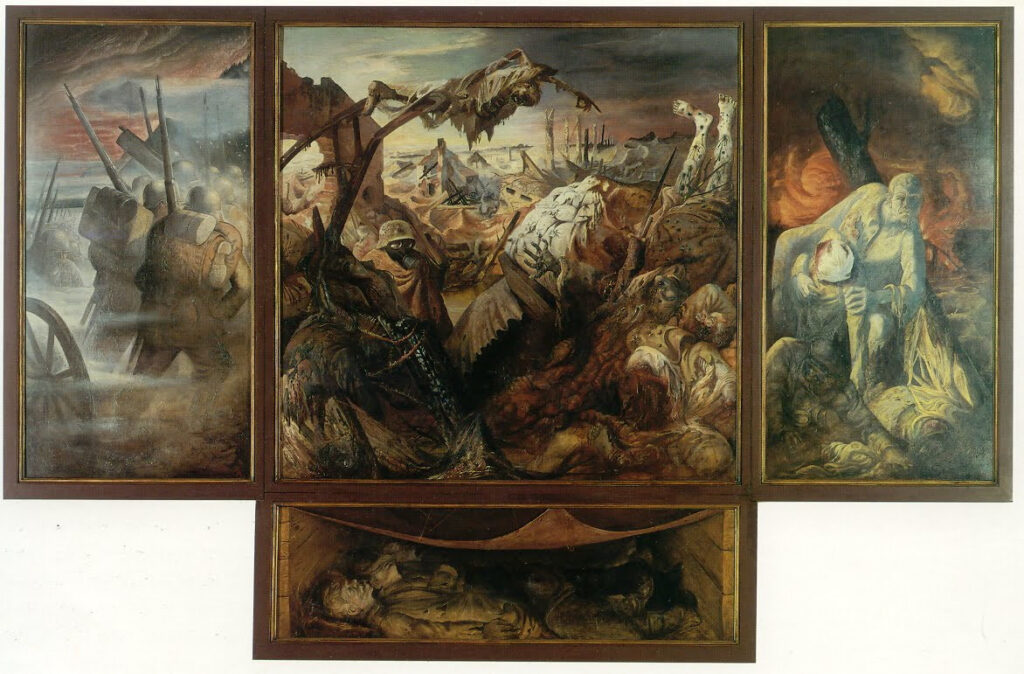
ce 11 novembre 2025 est l’occasion de souligner comme la façon dont l’Europe sacrifie les conscrits ukrainiens mobilisés de force rappelle le spectaculaire carnage de la 1ère guerre mondiale
Depuis l’allocution d’Emmanuel Macron à propos de la guerre en Ukraine, le 5 mars, les grands médias sont en ordre de marche. Réhabilitation du président en « chef de guerre », patriotisme exacerbé, concert militariste et glorification des industriels de guerre… Mené tambour battant, le SAV du discours présidentiel s’accompagne d’une nouvelle séquence de matraquage patronal contre le « modèle social » et pour « travailler plus » au nom, prétendument, de l’« effort de guerre » : « Pensions ou munitions ? » ; « Les canons ou les allocations ? » Signés Dominique Seux (Les Échos, 10/03) et Étienne Gernelle (RTL, 10/03), les deux slogans donnent le ton
Des combats entre la France et la Russie? Autrefois inimaginable, l’hypothèse s’est installée après les déclarations de M. Emmanuel Macron évoquant une «guerre existentielle» et l’envoi de «troupes au sol» en Ukraine. Depuis, le ton ne cesse de monter à Paris comme à Moscou. Une escalade qui semble ravir les médias français, au diapason du président de la République
republication of my article from November 13, 2022, three years ago, nothing has changed
(Pierre Terdjman / Paris Match)
The terrorist operation in Paris, on November 13, 2015, was collateral damage of the Western support to the so-called Syrian revolution, a Sunni radical uprising which began in 2011 and that worldwide jihadists reinforced, against a secular government in Syria
Al Nusra jihadists in Aleppo on October 17, 2013 (Medyan Dairieh / ZUMA)
In that Western proxy war against Russia, the local branch of al Qaeda, Jabhat al Nusra [Victory Front], was an objective ally, was doing a good job [Gulf and Western politicians]. An internal egos dispute triggered the split of the Iraqi branch of al Quaeda, wich became the Caliphate (ISIS) late June 2014, while already involved in Syria.
The new organization was more prejudicial to Western interests, but even in that case -John Kerry confessed it later during a private conversation- the US was regarding it as a leverage to oust Bashar Assad, did not counteract its expansion, until the Russian direct intervention late September 2015
Screenshot from a video in Mosul on July 4, 2014, when the new Caliph, Abu Bakr al Baghdadi, appears for the first time
Among the Western leaders, François Hollande may have been the most fanatical against Syria, that France had occupied 26 years, until the independence in 1946. In August 2013, he attempted to convince Barack Obama to bomb the Syrian secular forces. The price will have been high: on November 13, 2015, the jihadists carried out in Paris a spectacular terrorist attack. The Caliphate managed the operation and al Nusra praised it
While attending a soccer game in the Stade de France, Saint Denis, François Hollande hears that France is under attack (Franck Fife / AFP)
The massacre lasted three hours, in a city which is yet numbering per capita twice more police officers than New York city. Nine jihadists killed 131 civilians; no police officer was injured. That toll was a sanction for incompetent intelligence and police services. The events were a kind of large scale Uvalde.
The director of the counter-intelligence agency was astonished when the prosecutor informed him of the terrorist operation. After a failed attack, with explosive vests but no assault rifle, at the gates of the suburban Stade de France, a second team shot bursts at cafés terraces in downtown Paris, rampaged along 5 km and during 20 minutes, without encountering a single cop. When it left freely the capital, a third team stormed the Bataclan, which was holding a gig. One cop, the exception to the rule, entered the theater on the footsteps of the terrorists and managed to kill one. Despite reinforcements, he was ordered to stand idle, until the assault of a specialized group, while victims were still shot or bleeding inside. That BRI (Brigade de recherche et d’intervention) neutralized the two other jihadists, one kill and one suicide… two hours and a half later.
As a former member of these agencies, I have written two articles, one in English and one in French. The first one is rather dealing with the Syrian context and the second is detailing the French debacle in the evening of that attack
Nazi militants in Lviv on April 28, 2013 (Yuriy Dyachyshyn / AFP)
History is shedding light on actuality; that is the interest of such post. When with the same fanaticism, the West is currently supporting in Ukraine, in a new proxy war against Russia, a Nazi deep State which is controlling the security services, the army and a nebula of Nazi paramilitary forces; when worldwide volunteers are often Nazi militants; when weapons that the West is sending there are spreading later on the black market, I think that the backlash may be cruel in Europe and even the US.
ce 11 novembre 2025 est l’occasion de souligner comme la façon dont l’Europe sacrifie les conscrits ukrainiens mobilisés de force rappelle le spectaculaire carnage de la 1ère guerre mondiale
Der Krieg, Otto Dix, 20 décembre 1916
Une guerre que la moindre bonne volonté occidentale aurait suffi à empêcher. Fomenté par la CIA et au bénéfice aussi de l’Union européenne, un coup d’État d’extrême-droite à Kiev en février 2014. Une guerre ethnique dans le Donbass, que les accords de Minsk auraient pu arrêter. Fallait il que l’Occident les respectât. Mais Allemagne et France en étaient hélas les garants. Après le déclenchement en 2022 de l’opération militaire spéciale russe pour la libération du Donbass, la démilitarisation et dénazification de l’Ukraine, Angela Merkel et François Hollande avouèrent que l’Occident concevait ces accords comme une escroquerie, pour donner à l’OTAN le temps d’armer l’Ukraine.
Une implacable stratégie russe d’attrition écrase l’armée atlantiste, malgré le ruissellement d’armes et munitions occidentales, dont une longue liste de vaines Wundervergeltungswaffen : HIMARS, Panzerkampfwagen, Patriot, F-16 et j’en passe. Les bénéfices de l’industrie militaire des États-unis sont proportionnels à la stupidité technocratique de Bruxelles. Ce sont aujourd’hui les contribuables européens qui paient l’addition. Justice.
Des conscrits ukrainiens mobilisés de force. Les réseaux sociaux en offrent les témoignages cruels et quotidiens. Des pertes militaires qui approchent les 2 millions de tués. Des as russes de l’informatique en ont apporté les preuves. De l’ordre des sacrifices consentis par la Russie, multipliés par 10.
Moscou dit et répète depuis juin 2024 que le retrait des troupes atlantistes des positions qu’elles occupent encore dans le Donbass suffirait à instaurer un cessez-le-feu. Mais rien n’y fait. Ursula vonder Leyen et son caniche Emmanuel Macron en tête, les Européens s’enferment dans le fantasme de remporter une victoire stratégique quand leur défaite est totale, s’appliquent depuis février à saper les initiatives de Donald Trump.
107 ans après un guerre absurde -bourgeois impérialistes contre bourgeois impérialistes- qui resterait une farce si elle n’avait fait quelques 19 millions de morts ; 80 ans après la seule victoire qui méritait d’être remportée, celle de l’Union soviétique sur les armées fascistes européennes ; le Vieux continent est ravagé par une épidémie de russophrénie. La victoire de l’Occident serait toujours à portée au Donbass et pourtant, ce serait maintenant pour sauver l’Europe, ses valeurs et la civilisation d’une invasion imminente que le conscrit ukrainien devrait continuer de se faire hacher avec discipline.
En réalité, mis à part les cabots et adeptes impotents des plateaux de chaînes dites d’information, c’est parmi les volontaires nazis partis affronter les hordes néo-bolcheviques asiatiques que les discours délirants des politiciens européens trouvent un véritable écho.
Cinq siècles d’hégémonie révolue : colonialisme, fascisme, guerres mondiales, néo-colonialisme et jardinage [Josep Borrell]. Quand est ce que l’Europe, cette vieille catin, paiera enfin le juste prix de ses crimes ?
chronique alphabétique et nécrologique de l’engagement français dans les rangs atlantistes en Ukraine, ce que les journalistes serviles ne vous raconteront pas
chronique en Anglais, its roots before WW2, its collaboration with Nazi Germany, its legacy in modern Ukraine, how NATO has continually supported Nazism in Ukraine
Leaked files show top UK military figures conspired to carry out the Kerch bridge bombing, covertly train “Gladio”-style stay-behind forces in Ukraine, and groom the British public for a drop in living standards caused by the proxy war against Russia
entre l’haleine fétide d’une vieille droite pétainiste qui s’insurge contre une chanteuse d’origine malienne, d’une part, la vulgarité et la vanité, d’autre part, d’un spectacle de drag queens qui se pense à tort l’antithèse des pétainistes, semble échappé d’un backroom gay de la ville devenue musée, égaré dans une cérémonie d’ouverture de jeux olympiques […]
The Russo-Ukrainian War seems to have been engineered in a laboratory to frustrate people with repetition and analytic paralysis. Headlines appear to be circulating on a choreographed loop, all the way down to the place names. Kaja Kallas at the European Commission recently announced, without a hint of irony, that Europe’s new sanctions package – the 19th one – is the toughest yet. Ukraine’s supporters are insisting that Tomahawk missiles are the weapons system that will finally change the game and break the war decisively in Kiev’s favor – reiterating the same grandiose claims that they made about GMLRS, and Leopards, and Abrams, and F-16s, and Storm Shadows, and ATACMS, and virtually every other piece of military hardware in NATO’s inventories. On the ground, Russia is attacking settlements named Pokrovsk and Pokrovs’ke; it recently captured Toretsk and Tors’ke and is now attacking Torets’ke. The more things change, the more things stay the same.
The analytic frameworks applied to the war have also changed relatively little, buried and obfuscated by the nebulous concept of attrition. On the Ukrainian side, there is continued insistence that Russia is suffering exorbitant losses and straining under the pressure of Ukrainian deep strikes, while Ukrainian setbacks are blamed in large part on the failure of the United States to expand its largesse and give Ukraine everything it needs. Many pro-Russian lines of thinking mirror this and suppose that the AFU is on the verge of disintegration, while the Kremlin is accused of failing to “take the gloves off”, particularly in regards to the Ukrainian energy grid, Dnieper bridges, and dams.
The result is a very strange sort of war. This is an extraordinarily high-intensity ground war. Both armies remain in the field, holding hundreds of miles of continuous front after years of bloody fighting. Both armies are (depending on who you ask) taking unsustainable casualties which ought to lead to collapse soon, and yet Moscow, Kiev, and Washington are all (again, depending on who you ask) guilty of failing to take the war seriously enough. All of this is maddeningly repetitive, and one could be forgiven for tuning out entirely. Even the diplomatic tango between Trump, Zelensky, and Putin, after delivering a few entertaining moments, failed to really move the needle in any discernable direction.
Few would argue that the trajectory of the war changed in an obviously dramatic way in 2025, and it is important to avoid the worn out and clichéd language about “turning points” or “collapse” or any such silly thing. However, 2025 saw several shifts in the war, which will hardly ostentatious or dramatic, are nevertheless very important. 2025 has been the first year of the war in which Ukraine launched no ground offensives or proactive operations of its own. This fact is not only a hint at the threadbare state of Ukraine’s ground forces, but also a testament to the way Russian forces transformed “attrition” from a buzzword into a method of persistent pressure across a variety of axes this year.
In lieu of initiative on the ground, and facing a slow but relentless rollback of their defenses in the Donbas, the theory of Ukrainian victory has shifted in an unacknowledged but dramatic way. After years of insisting that it would achieve maximal territorial integrity – an outcome which would require the total and decisive defeat of Russia’s ground forces – Ukraine has reframed its path to victory mainly as a process of inflicting strategic costs on Russia that mount until the Kremlin agrees to a ceasefire. Consequentially, the debate about arming Ukraine has shifted from a conversation about armor and artillery – equipment useful for retaking lost territories – to a discussion about deep striking weapons like Tomahawks, which can be used to shoot at Russian oil refineries and energy infrastructure. In short, rather than move to prevent Russian from achieving immediate operational objectives in the Donbas, Ukraine and its sponsors are now seeking ways to make Russia pay a price such that victory on the ground is no longer worth it. It is unclear whether they have thought about what price Ukraine will pay in the exchange. Perhaps they do not care.
About Tomahawks
Notwithstanding Ukraine’s attempts to jumpstart indigenous production, it is inevitable that Ukrainian capabilities will be largely determined by the largesse of western sponsors. This aspect of the war took a sudden turn at the beginning of the October when fresh reporting began to circulate that Tomahawk missiles might be on the table for Ukraine. Tomahawks have always been on Ukraine’s wish list (given that the Ukrainian wish list as such consists of essentially all the military equipment in NATO’s combined inventories) but this was the first reporting that they might be under serious consideration.
As is frequently the case, the discussion spiraled away from realistic grounding, with some suggesting that the Tomahawk would be a “game changer” for Ukraine (where have we heard that before?) and the pro-Russian sphere dismissing it as an irrelevant distraction. There’s a tendency to focus on the quality of American weapons systems, casting them as either unrivaled technological marvels or overhyped and overpriced baubles, but this is generally not productive and largely irrelevant to the matter at hand. The Tomahawk, broadly speaking, is exactly as advertised, and provides proven and reliable strike capability at strategic depths in excess of 1,000 miles. In role, range, and payload it is essentially an analog to Russia’s Kalibr missiles (I am begging the enthusiasts to note the phrase “essentially an analog” rather than rake me over the coals over the different guidance systems and other technical minutia). Such a system will always be valuable and would obviously improve Ukraine’s deep strike capabilities.
The “problem” with Tomahawks does not relate to any “problem” with the missile itself, but with its availability and Ukraine’s technical capability to launch them. The Tomahawk is conventionally a ship-launched missile (there is no extant air-launched variant) with a few novel options for ground launch. Ukraine, obviously, would require ground launch systems, and the problem is that these systems are essentially brand new and available in very limited quantities: more importantly, American service branches are in the process of trying to build out these capabilities throughout the decade. Providing ground-launchable Tomahawks to Ukraine in any meaningful numbers would therefore essentially require the US Army and Marines to scrap their own force buildout plans.
There are two basic options for ground launching Tomahawks. One of these is the US Army’s MRC (Mid-Range Capability) Launcher, dubbed the Typhon. This is an enormous tractor-trailer launcher with four launch tubes, first delivered in 2023. It has an enormous footprint – so large, apparently, that the Army is already asking for a smaller replacement – and is intended to give the Army an organic fires component in the gap between the shorter range Precision Strike Missile and hypersonic systems (which do not yet exist). The critical fact is this: the Army intends to field a total of five Typhon batteries by 2028, of which two have been delivered so far. Each battery consists in turn of four launchers, implying that eight out of a planned twenty launchers have been delivered. Even more importantly, both of the currently operational batteries are already deployed, with one in the Philippines and one in Japan. These systems are being actively used in exercises and trials, including an exercise this summer in Australia
The Typhon system gives ground launch capability to the Tomahawk but brings a massive footprint
The situation with the Marine Corps’ launch system is quite similar, although the launch platforms themselves could not be more different. Unlike the lumbering Typhon tractor trailer, the Marines are fielding a significantly more lithe and compact LMSL system, with the tradeoff of a single launch tube compared to the Typhon’s four. What matters is not so much the technical differences, as the fact that the Marines – like the Army – only received their first deliveries in 2023, and they are currently in the process of building out the force. In the case of the marines, the goal is to have a Tomahawk battalion built out by 2030. In fact, the production contract came into effect as recently as 2025.
What does all of that mean? It means that, although the Tomahawk itself is a fine missile, the systems for ground launch are so new and available in such limited quantities that equipping Ukraine with Tomahawks would require either the US Army or the Marines to materially alter their force structure in the near term (through 2030, essentially). These are essentially the opposite of much of the gear that’s been given to Ukraine to this point: far from being inventories of older systems that can be earmarked as surplus or tabbed for replacement, Tomahawk ground launch is a brand new capability that is in the middle of deployment and buildout for the first time.
This is, of course, a layered complication on top of Tomahawk quantities in and of themselves. The issue of Tomahawk availability is both over and under emphasized, depending on the context. The United States has something like 4,000 Tomahawks in its inventories (although half of these are currently inside their cells on American ships), so it is not quite correct to say (as some have) that America is running out of these critical weapons. The issue is that production rates are relatively anemic (generally between 55 and 90 per year) and are fail to replenish the expenditure from even relatively brief strike campaigns, such as the repeated strikes on Yemen. Broadly speaking, then, the issue is not so much that the United States is in immediate danger of running out of Tomahawks, but that procurement schedules are so slow that even relatively minor expenditures can erase multiple years worth of deliveries.
It may be useful, then, to consider Tomahawks in comparison to the ATACMS missiles which have already been provided to Ukraine. Unlike the Tomahawk, the ATACMS is a system which has already been tabbed for replacement, with the Precision Strike Missile in the early phases of its rollout. ATACMS were also compatible with launch systems that Ukraine already had. In comparison to Tomahawks, then, ATACMS are both vastly more strategically expendable, produced in larger numbers, and easier to deploy. Despite all these points in their favor, the United States provided Ukraine with just 40 ATACMS. Even if the Army could be pressured into handing over one or two of its brand new Typhon launchers, it is difficult to imagine that more than few dozen Tomahawks could be spared for Ukraine: a token inventory far too small to wage a sustained strike campaign in the Russian heartland
Peace, Sponsored by Raytheon
Given that Tomahawks for Ukraine would be measured in the dozens, rather than the hundreds, it’s worth asking whether this could actually change anything for the AFU at the front. The answer is clearly no in the long run, but it would be unwise to dismiss the possibility that even a limited tranche of Tomahawks (let’s say 40 to 50 missiles) could help alleviate pressure on Ukrainian forces at the front, provided they were used appropriately. A short term boost to Ukrainian strike capabilities, if deployed against Russian rear areas, could force further dispersal and rationing of Russian assets and temporarily stall Russia’s emerging multi-axis offensive. This could defer the loss of key positions until early 2026. This presumes, however, that the Ukrainians would be content to use Tomahawks against operational targets. In reality, Ukraine can never seem to resist lobbing missiles at targets that have little bearing on the front, like the Kerch Bridge. Indeed, a failure to synergize strikes at depth with operations on the ground is a major reason why the ATACMS achieved so little.
On the other side of this equation, it is a common complaint from the Russian perspective that Moscow has done too little to “deter” the United States from empowering Ukraine’s strike campaign – both by directly providing munitions and supplying the planning, ISR, and guidance systems. This, however, rather misses the point. Russia has done nothing of note to deter the United States because both Moscow and Washington understand fully that there is essentially no appetite (on either side) for a direct confrontation. In the (sensible) absence of a willingness to strike back at NATO targets, there is really nothing Russia can do to deter beyond maintaining its own retaliatory capabilities. The issue is not that Russia has failed to actively deter, but that there is nothing they could do even if they wanted to.
The basic pattern here is well established. The United States has done what it can to backstop Ukrainian strike capabilities, but it has held them at a level where Ukraine’s damage output falls far short of decisive levels. So long as that is the case, Russia has clearly demonstrated that it will simply eat the punches and retaliate against *Ukraine*. Hence, when the United States helps Ukraine target Russian oil facilities, it is Ukraine that receives the reprisal, and it is Ukraine which has its natural gas production annihilated as the winter approaches. In a sense, neither side is really trying to deter the other at all. The United States has raised the cost of this war for Russia, but not enough to create any real pressure for Moscow to end the conflict; in response, Russia punishes Ukraine, which is something the United States does not really care about. The result is a sort of geostrategic Picture of Dorian Gray, where the United States vicariously inflicts cathartic damage on Russia, but Ukraine accrues all the soul damage.
In the case of Tomahawks, the risk-reward calculus is just not there. Tomahawks are a strategically invaluable asset that the United States cannot afford to hand out like candy. Even if the launch systems could be provided (highly doubtful), the missiles could not be made available in sufficient quantities to make a difference. The range of the missiles, however, significantly raises the probability of miscalculation or uncontrolled escalation. Ukraine shooting American missiles at energy infrastructure in Belgorod or Rostov is one thing; shooting them at the Kremlin is another thing entirely.
There is, however, another aspect of this which seems to be garnering little attention. The biggest risk of sending Tomahawks is not that the Ukrainians will blow up the Kremlin and start World War Three. The bigger risk is that the Tomahawks are used, and Russia simply moves on after eating the strikes. Tomahawks are arguably one of the last – if not *the* last – rung in the escalation ladder for the USA. We have rapidly run through the chain of systems that can be given to the AFU, and little remains except a few strike systems like the Tomahawk or the JASSM. Ukraine has generally received everything it has asked for. In the case of Tomahawks, however, the United States is running the most serious risk of all: what if the Russians simply shoot down some of the missiles and eat the rest of the strikes? It’s immaterial whether the Tomahawks damage Russian powerplants or oil refineries. If Tomahawks are delivered and consumed without seriously jarring Russian nerves, the last escalatory card will have been played. If Russia perceives that America has reached the limits of its ability to raise the costs of the war for Russia, it undercuts the entire premise of negotiations. More simply put, Tomahawks are most valuable as an asset to threaten with.
Reading between the lines of President Trump’s public statements recently, it seems likely that he has rationally weighed these considerations. Publicly, he used the threat of Tomahawks to try and force Russia to keep negotiating, and he’s received a commitment for another meeting with Putin for his trouble (more on that later). He has now, for the time being, shelved the Tomahawk plan, commenting that “we need them” and applying the usual Trumpian linguistic style to the broadly accepted issue of inventories which I have outlined here. Tomahawks are simply more valuable to the United States as a tool to threaten escalation, rather than as an actual kinetic asset in Ukrainian hands, and so long as Trump keeps his powder dry he can re-raise the issue later.
Ultimately, perhaps, this discussion is not about Tomahawks at all. These missiles, rather, are simply a totem which demonstrate two important dovetailing points. First, that American resources are not infinite, and as the United States reaches deeper into its bag to help Ukraine, it begins to grab at strategically critical assets that the US military simply cannot spare. Secondly, we must remember that America’s policy in Ukraine is a game of titration, with Washington probing the limits of Russia’s willingness to “eat the strikes” without allowing the reprisal violence to spill out of Ukraine.
The Big Banana: Russia’s Operational Schema
At this point, it’s becoming increasingly difficult to say anything meaningful about the actual operational progression on the ground. There are several reasons for this. First and foremost, the war has now gone on so long and is consistently moving at such an apparently glacial pace that most people simply do not care at this point whether Russia holds Yampil or not, or whether they have advanced past the rail line in Pokrovsk. There is severe fatigue (or perhaps boredom is the better word) with the status of an interminable sequence of apparently small settlements, industrial complexes, and forestry plantations, and as a result most people have essentially checked out. Not the least among these must surely be President Trump, who apparently chucked Zelensky’s map of the frontline and complained that he was tired of being shown the same maps over and over again.
On the other hand, we have the true obsessives who continue to dutifully follow the frontlines regularly and are voluntarily intaking daily updates. We end up with a bifurcated system where some people are still highly plugged in to the micro movements on the battlefield, but most people just don’t care, and we can hardly blame the latter. I think it would be profitable, then, to think about the broader Russian operational scheme, what it has achieved, and what it aims to achieve in the coming year. This is probably more interesting and less repetitious than fixating on the exact positioning within Pokrovsk or Kupyansk.
There are two larger points that I think are worth making before we look at some specifics.
First and foremost, much of the battlefield analysis that comes out (particularly from western analysts) makes firm pronouncements as to what constitutes Russia’s “primary” and “secondary” efforts, but these are essentially interpolated and frequently incorrect. For example, it’s become a fairly mainstream conception that Russia’s “primary” point of effort right now is the capture of Pokrovsk, but this does not actually seem supported by Russian actions. There is no particular advantage to be gained for Russia by pushing to capture Pokrovsk as soon as possible – the city is already in a stranglehold partial encirclement. To be sure, Pokrovsk *was* a major logistic hub for Ukrainian forces, but it can no longer serve that role and was sterilized as a transit hub months ago, once it became a frontline city. The opposite side of this coin is that other Russian axes of advance, particularly in southern Donetsk and the bend of the Donets River, are dismissed as “secondary” efforts. This is a major mistake, and I will attempt to show that these are critical advances where Russia is shaping the battlefield to its advantage for follow on operations.
Secondly, it should be understood and appreciated that Ukraine has lost essentially all battlefield initiative. In 2024, the AFU was able to assembled a mechanized reserve and launch their operation into Kursk. This operation ultimately failed and resulted in severe Ukrainian losses, but this is unrelated to the fact that Ukraine was still able to accumulate forces and pursue offensive operations on its own initiative. In 2025, however, Ukraine has been in a permanent state of reactivity. This was the first year of the war in which Ukraine did not launch any proactive operations or counteroffensives of its own, and Ukrainian hopes have instead pivoted to their strategic strike campaign against Russian oil facilities.
In a larger sense, the effect of attrition can be seen year by year with the shrinking scope of Ukraine’s proactive operations. In 2022, Ukraine was able to launch a pair of widely separated offensives which yielded modest successes: an offensive out of Kharkov rolled the front back over the Oskil River (though it failed to collapse the Lugansk shoulder), meanwhile, a series of battles outside of Kherson failed to break through the Russian lines, but they did play a role in persuading the Russians to abandon their bridgehead over the Dnieper. The point of course is not to once again autopsy these offensives, but to point out that there were two of them, that they were meaningful in scale, and they did result in important territorial gains for Ukraine. In 2023, by contrast, Ukraine launched a single theater-level offensive in the south, which failed. In 2024, we got the Kursk operation: smaller and less lavishly equipped than 2023’s Zaoprizhia offensive, and aimed at a peripheral theater. This year, there were no proactive Ukrainian operations at all. There is a very clear pattern at play here, with Ukraine’s offensive punch progressively shrinking before disappearing entirely in 2025. This was a year of essentially uninterrupted Russian initiative
Putting Ukraine permanently on the backfoot is a significant Russian achievement, and it is owed to a few converging factors. Obviously, the attrition of Ukrainian forces is a major factor. We’ve gone through the flailing Ukrainian mobilization, the cannibalization of its forces, and the general lack of reserves in detail on several occasions, and there’s no need to retread that ground here. Suffice it to say, Ukraine’s ability to husband forces for offensive operations appears to be severely degraded. Russia has exacerbated this problem by pressing steadily on a variety of different axes. At the moment, there are no fewer than seven Russian axes of attack, pressuring a slew of cities all along the line. This creates a series of defensive emergencies, maintains the burn rate on Ukrainian forces, and fixes them on the line. Finally, in a point to be detailed shortly, Russian advances have begun unraveling Ukraine’s logistic connectivity, which puts strain on supply and prevents the concentration and accumulation of forces
Eastern Ukraine: Approximate Situation and Axes of Russian Advance
Now, for the development of the front and the premise of the Russian offensive scheme. The main point that I want to impress is essentially as follows: rather than fixating on Pokrovsk, Russia’s advances across Southern Donetsk and on the inner bend of the Donets River ought to be thought of as vital operations which have severely disrupted the coherence of both the Ukrainian front and their logistics. This has the triple effect of preventing the Ukrainians from launching offensives of their own, accelerating the attrition of Ukrainian forces, and shaping the front for the coming operation to capture the Slovyansk-Kramatorsk agglomeration.
To begin, let’s consider the progress that Russia has made in southern Donetsk, both in raw territorial terms and its implications for Ukrainian logistic connectivity. To demonstrate this, I’ve pulled maps from DeepState (again, a Ukrainian mapping enterprise) for August 2023 (when Ukraine was attempting its counterattack out of Orikhiv) and for October 20th, the week of this writing. I have noted both the length of the southern front (obviously a linear approximate, as the actual front has many bends and bulges) and highlighted the key highways that Ukraine uses to run the backbone of its logistics
The Southern Front: 2023 vs 2025
Now, one thing that is worth noting is that the Russians are currently positioned to roll up this front even further. Ukrainian defensive lines are primarily oriented towards on a north-south axis. Once Russian forces cleared Kurakhove, they entered the seams in these defensive lines – that is to say, they are advancing laterally along the face of the prepared defenses, rather than trying to bash through them from the front. This is one reason why their progress has been relatively steady and uninterrupted. Now approaching the “elbow” in the lines, where they pivot southward, and having crossed the Yanchur River, the Russians are entering a substantial space that lacks meaningful prepared defenses. Using the Military Summary map (Ukrainian fortifications are mapped with yellow dots), the void in the defense is fairly obvious as the Russians work their way into the elbow of the line
Apart from the obvious development of note here – that Russian forces have, to this point, rolled up roughly half the length of the southern front and are positioned to roll up another ten to fifteen miles – we want to note two things which are emblematic of the way the war is going for Ukraine, but curiously receive little attention. First, the compression of the front is robbing the Ukrainians of the maneuver space which made it possible for them to stage and assemble forces for their counteroffensive in 2023. Two years ago, there was a wide, lateral buffer zone around the Ukrainian staging area in Orikhiv, and Ukrainian forces had access to multiple highways where they could disperse forces in their marching columns and run their logistics.
Today, that buffer zone is gone, as is the easy access to several of the branch highways. The Russian advance, which started with the breakthrough at Ugledar and Kurakhove last year and which has now rolled up some 50 miles of front, has essentially sterilized Ukraine’s capacity to attack in the south, because they have neither the space nor the roads to safely accumulate forces here. It has also shattered the interconnectivity of Ukrainian logistics: rather than having several highways to shuttle troops and material to the east, Ukraine now has to support several disconnected logistic fronts with individual highways. More to the point, there is no longer a single Donetsk “front” to speak of, but rather a series of logistic fronts: one in the south, around Orikhiv, another at Pokrovsk, and the largest one in the Slovyansk Banana. These are lacking lateral connectivity to each other for the Ukrainians due to the wedges that the Russians have forced in the front, particularly in the south, funneling logistics and reinforcements down individuated corridors.
The bigger issue, however, lies farther north on the Pokrovsk and Donets axes, and in the way that they synergize. People who are focusing, to the exclusion of all else, on when and how Russia will capture Pokrovsk are failing to see the bigger picture, and indeed are not even trying to understand it.
The ultimate Russian operational objective (in this phase of the war, at least) is the belt of cities which runs in an arc from Slovyansk to Kostyantinivka, which I affectionately call “the Slovyansk Banana” due to its curved shape. A cursory look at the map shows us why the very operations that are being dismissed as secondary efforts are in fact critical axes of Russian effort which are shaping the battlefield for the attack on the Banana
There are two very important facts about the Banana, from the perspective of operational geography. The first is that, although the combined mass of the agglomeration is far larger than any of the urban areas that have been fought over to this point, the Banana is relatively difficult to defend because it sits on the floor of a river valley: the Kazennyi Torets flows through all the cities in the Banana before it flows into the Donets. Russian forces approaching the city from the southwest, the east, and the north will all be advancing along the high ground that overlooks the cities on the floor.
The second important fact about the Banana is that, despite its size, it is supported by just two highways which approach from the southwest and northwest respectively, funneling into the Banana like a wedge. Taking the northern highway/MSR (the E40 highway) as an example, we see that Russia’s operations inside the Donets bend are hardly secondary efforts: they are vital shaping operations linked to the integrity of the Banana. The E40 highway tracks the Donets bend very closely (it generally stays within five miles of the river. If the Russians sustain their progress north of the Donets and reach the river at Bogorodychne or Svyatogirsk, it will not only put E40 under persistent drone attack but also curl the defensive line behind the Banana, to say nothing of the enormous pressure on the Siversk salient.
On the Pokrovsk front as well, Russia’s progress is being misinterpreted. After their breakthrough at the end of the summer, Russian forces have consolidated the bulge north of Pokrovsk (despite weeks of Ukrainian counterattacks) and are steadily working their way towards Rais’ke and Sergiivka. This is not about Pokrovsk at all – reaching Rais’ke would put Russian forces directly in the backfield of Kostyantinivka, on the supply lines to the underside of the Banana.
I am not suggesting at all that Russian forces are on the verge of some great offensive surge that will carry them into the heart of the Banana instantly. However, there is a fairly well established Russian operational methodology in this war, which involves working their way methodically into Ukraine’s logistical lanes and seams, segmenting the front and strangulating their strongpoints, forcing them to supply frontline strongholds with single file logistics and dirt roads. They did it in Bakhmut, and Avdiivka, they are doing it in Pokrovsk, and they are shaping the front to attempt this on a large scale in the Banana
Assault on the Banana: Coming 2026
The general point that we are trying to make here is that dismissing Russian advances in the Serebryanka Forest, the emerging bulge north of Pokrovsk, and their move into the Donets Bend as “secondary efforts” is mistaken. Zooming out to the appropriate scale shows that these are concentric operations, shaping the front for a 2026 assault on the Banana – moving towards the E40 road from the north, bending the defensive shield around Siversk, and working into the underbelly of the Banana through Rais’ke.
This is, perhaps, a long way to go for a short drink of water, but there are a few basic points here that get completely missed when the view of the front is preoccupied with the fighting inside Pokrovsk and Kupyansk:
Russia’s advance out of Kurakhove across the southern front is not a secondary axis. They have rolled up half of the southern front, condensing Ukrainian forces into a compact space which sterilizes their ability to attack in the south.
Broad Russian pressure across a half-dozen axes maintained a steady burn rate on Ukrainian forces and prevented the accumulation of forces for proactive operations. 2025 has been the first year of the war in which Ukraine has not launched any offensive operations on its own initiative.
Advances in the Donets bend and the interstitial space between Pokrovsk and Kostyantinivka are not subsidiary or secondary operations: they are critical shaping operations that are moving concentrically toward the Banana.
To be frank, the general mood of optimism in the Ukrainian infosphere, which lasted for much of the summer, struck me as remarkably odd. The frontline has yielded no real good news for Ukraine at any point this year. Beyond the broader strategic point, that Ukraine has lost the initiative and does not seem capable of getting it back, Russia is in the process of capturing two important urban centers (Russian troops are in the city centers of Pokrovsk and Kupyansk), it has begun the assault on at leas two more (Lyman and Kostyantinivka), it has rolled up half of the southern front, and cleared most of the inner Donets-Oskil bend. The Banana is on deck for 2026.
Ukraine’s Cost Theory of Victory
One thing that has become apparent over the last year is that Kiev has abandoned previous notions of outright victory on the battlefield and adopted a new strategic framework predicated on imposing unacceptable costs on Russia, so that Moscow will agree to freeze the conflict.
This is a subtle and unspoken yet extremely important distinction. It is easy to miss, because both Ukrainian leadership and Ukraine’s western backers continue to speak of Ukrainian “victory” and the possibility of Ukraine “winning” the war. What is crucial to understand is that the “victory” that they speak of now is categorically different than the victory of 2022 and 2023. In the first years of the war, it was possible to at least speak of Ukraine taking the initiative to advance on the ground and retake territory. There were concrete examples of Ukrainian offensives in 2022, and the battle in Zaporizhia – although unsuccessful – showed that it was at least possible for Ukraine to attempt a proper mechanized offensive.
Therefore, in the first years of the war, when leaders in Kiev and Brussels and London and Washington spoke of Ukrainian victory, they essentially meant the defeat of the Russian ground forces and the reconquest of much (or all) of the Donbas. The Kursk Operation of 2024 began to split the difference: Ukraine still had some resources to mount proactive operations, but these operations were no longer aimed at the dense eastern front and instead aimed at relatively soft subsidiary fronts with an eye to out-levering the Russians.
Today, with the Ukrainian army stuck in a permanent state of reactivity and slowly receding defense, it no longer makes any sense to speak of Ukrainian victory in the most straightforward sense, which is to say victory on the battlefield – no matter how tenaciously or bravely the Ukrainian rank and file continues to fight in essentially intolerable circumstances. Instead, Ukrainian “victory” has been transmogrified to mean essentially that Russia absorbs such exorbitant costs that it agrees to some sort of ceasefire without preconditions.
The costs to be imposed on Russia are implicitly assumed to be a mixture of battlefield casualties and damage to strategic assets inflicted by Ukrainian air strikes, and in regards to the latter Ukraine seems to be particularly placing its hopes in a strategic strike campaign against Russian oil. Ukraine’s attempts to disable Russian oil production and refining have dovetailed with ever more aggressive sanctions from the United States against Russian fossil fuel exports – although it is worth noting that the limited price response to these sanctions indicates that markets expect that Russian oil will continue to flow.
Trump’s suggestion that Tomahawks may be on the table for Ukraine must be seen as a constituent element of this new strategy and theory of victory. And this, ultimately, is very important to understand. Tomahawks are not being bandied about because anybody (in Kiev or Washington) believes that 50 cruise missiles will allow Ukraine to defeat the Russian Army and recapture the Donbas. Tomahawks were mentioned because the Ukrainian alliance is threatening to cripple the Russian fossil fuels industry (through a mixture of sanctions and kinetic strikes on production facilities) unless Putin agrees to a ceasefire.
This is why it is wrong to be surprised that Trump abruptly cancelled his meeting with Putin and instead announced more sanctions. There’s nothing abrupt or erratic about this. Threats to Russian oil are now, without exaggeration, the main lever that the Ukrainian bloc has against Russia. It certainly should not have been a surprise that the Kremlin, which has reiterated the same fundamental war aims since day one, was not excited about coming to Budapest to freeze the conflict, and neither should it surprise us that Trump would instead prefer to pull harder on the oil lever. The two powers are playing entirely different games: Russia is slow-walking negotiations while it advances on the ground, and the United States is playing a pain game designed to raise the costs for Russia
We have fundamentally reached an impasse when it comes to negotiations. For Moscow, negotiations with the United States are essentially a way to string Washington along. Moscow feels that it is winning on the ground, therefore a diplomatic impasse suits Russian interests. When western leadership complains that Russia does not seem interested in ending the war, they are correct, but they are missing the point. Russia is not interested in ending the war right now because doing so would not serve Russian interests. The Banana is in the crosshairs, and a ceasefire now would be an egregious compromise when victory on the ground is in sight.
The sense of urgency that Washington feels to end the war – mainly by yanking furiously on the oil lever until the Kremlin cries uncle – stems from the fact that this is now the only sort of victory that Ukraine can hope to win. The ground war has been written off as a total loss, and all that remains is to lob missiles and drones at Russian refineries, sanction Russian firms and banks, and harass shadow tankers until the costs become intolerable. The longer the Ukrainian ground forces can hold the line the better, but this is merely a matter of limiting the downside. The fact that Russia can retaliate disproportionately against Ukraine barely factors into this thinking.
The key point here, however, is that the concept of Ukrainian victory has been completely transformed. There is now no real discussion of how Ukraine can win on the ground. For the Ukrainian bloc, the war is no longer a contest against the Russian Army, but a more abstract contest against Russia’s willingness to incur strategic costs. Rather than preventing Russian capture of the Donbas, the west is testing how much Putin is willing to pay for it. If history is any guide, a game predicated on outlasting Russia’s strategic endurance and willingness to fight is a very bad game to play indeed [end]
Les références aux années 1930 se multiplient. La dégénérescence de la démocratie américaine semble nous ramener à celle de la république allemande de Weimar. Trump, par sa jouissance dans la violence et le mensonge, par l’exercice du mal, irrésistiblement nous ramène à Hitler. En Europe, la montée de mouvements catégorisés comme d’extrême-droite nous oblige à ce retour sur notre histoire.
Les sociétés occidentales ne ressemblent pourtant plus guère à ce qu’elles furent dans les années 1930. Elles sont vieillies, de consommation, tertiaires, les femmes y sont émancipées, le développement personnel y a remplacé l’adhésion partisane. Quel rapport avec les sociétés des années trente : jeunes, frugales, industrielles, ouvrières, masculines, encartées ? C’est cet éloignement socio-historique qui m’avait conduit à considérer jusqu’à ce jour comme a priori invalide le parallèle entre les « extrême-droites » du présent et celles du passé. Mais les doctrines politiques existent, aujourd’hui comme hier, et l’on ne peut se contenter de postuler l’impossibilité, par exemple, d’un nazisme de vieux, d’un franquisme de consommateurs, d’un fascisme de femmes libérées ou d’un LGBTisme Croix-de-Feu.
Le moment est venu de comparer les doctrines de notre présent à celles des années trente. Voici l’esquisse de ce que pourrait être l’étude comparative de cinq phénomènes historiques : l’hitlérisme, le trumpisme, le netanyahi(u)sme, le lepénisme. J’ajouterai en fin de parcours, brièvement, le macronisme. L’extrémisme centriste et européiste qui mène la France au chaos nous oblige à cet examen. Cet extrémisme est-il si centriste que ça ?
Il s’agira d’une approche impressionniste, sans prétention à l’exhaustivité ou même à la cohérence, dont le but est d’ouvrir des pistes, non de conclure. Je force les traits et les couleurs pour placer les concepts les uns par rapport aux autres. J’exagère à dessein, pour rattraper ou même anticiper une histoire qui s’accélère. Approche expressionniste serait peut-être une métaphore plus appropriée.
Commençons par la dimension générale du racisme ou de la xénophobie.
Le rejet d’un « autre » défini comme extérieur à la communauté nationale, avec des niveaux d’intensité très variables, est commun à l’hitlérisme, au trumpisme et au lepénisme. Dans le cas de l’hitlérisme et du trumpisme, c’est la notion de racisme, explicite ou implicite, qui est commune. Les Juifs étaient considérés par le nazisme comme constituant une race, au sens biologique. Les Noirs, ces cibles à peine cachées du parti républicain trumpisé, sont eux aussi définis biologiquement. Au lepénisme, en revanche, nous ne pouvons associer que le concept de xénophobie. Arabes ou Musulmans sont définis par leur culture. L’une des caractéristiques de l’obsession française de l’immigration reste sa fixation sur l’Islam et son incapacité à cibler les Noirs, dont l’arrivée massive pourtant est l’élément nouveau du processus migratoire. Le taux de mariages mixtes des femmes noires est très élevé en France, il reste insignifiant aux Etats-Unis.
Un trait commun aux « populismes » occidentaux est bien sûr leur refus de l’immigration : Reform UK, les Sverigedemokraterna (Démocrates de Suède), l’AfD, Viktor Orban en Hongrie, Droit et Justice en Pologne, Giorgia Meloni en Italie, passent, comme Trump ou le Pen, le test de ce dénominateur commun. Suffit-il à les définir comme d’extrême-droite, au sens où le nazisme et le fascisme étaient d’extrême-droite ? Je ne pense pas. Une différence capitale oppose le populisme d’aujourd’hui à l’extrême-droite de type hitlérien ou mussolinien : le nazisme et le fascisme était expansionnistes, avec pour but la projection vers l’extérieur de la puissance du peuple allemand (aryen) ou italien (romain). Ils étaient agressifs, nationalistes, conquérants. Ils s’appuyaient sur des partis de masse. On imagine mal les populistes actuels organiser des parades de style Nuremberg. Les apéritifs saucisson-pinard du RN sont certes antimusulmans mais, quand même, moins impressionnants que les cérémonies guerrières hitlériennes. De Nuremberg à Hénin-Beaumont ? Vraiment ?
Le seul populisme occidental qui passerait aujourd’hui à 100% le test de l’expansionnisme serait celui de Netanyahu. Colonies de Cisjordanie, génocide de Gaza : établir un lien entre hitlérisme et netanyah(u)isme – est inévitable.
Les xénophobies française, britannique, suédoise, finlandaise, polonaise, hongroise, italienne sont, à l’opposé du nazisme et du fascisme, défensives. Nous n’avons pas affaire à des peuples qui veulent conquérir mais à des peuples qui veulent rester maîtres chez eux. C’est pourquoi la dimension culturelle l’emporte aujourd’hui en Europe sur la notion raciale et pourquoi on ne peut parler ici que de xénophobie. Cette xénophobie est conservatrice, là où le racisme hitlérien était révolutionnaire parce qu’il bouleversait l’organisation sociale. La notion de nationalisme ne s’applique donc pas aux populismes européens actuels, la notion d’extrême-droite non plus, ou alors nous devrons introduire des oxymores comme « nationalisme modéré » et « extrême-droite modérée ». Je préfère parler de conservatisme populaire.
Personnellement favorable à une immigration contrôlée, je dois admettre la légitimité de cette xénophobie parce que j’accepte l’axiome qu’un groupe humain porteur d’une culture, conscient d’exister en tant que collectivité, bref un peuple, a le droit de vouloir continuer à exister. Concrètement : un peuple peut contrôler ses frontières. Le nazisme, avec ses soldats installés de l’Atlantique à la Volga pour y asservir ou y exterminer d’autres peuples était tout à fait autre chose.
Le trumpisme représente une forme mixte parce qu’il combine un élément central défensif, anti-immigration, à un fort potentiel d’agression du monde extérieur. Il ne s’agit pas à proprement parler d’expansionnisme. C’est l’expansion antérieure de l’appareil militaire américain et le rôle du dollar dans la prédation impériale qui ont rendu possibles les actes trumpiens violents dirigés contre d’autres peuples et nations : le Vénézuéla, l’Iran, nous, les peuples sujets européens de l’Ouest, et bien sûr les Arabes, avec les Palestiniens comme cible principale. L’intégration progressive d’Israël à l’Empire, à partir de 1967, fait qu’en 2025 on ne peut plus guère distinguer le trumpisme du netanyahisme. Mais Trump, au-delà de ses pitreries de nobélisable, est bien le coupable en chef du génocide de Gaza par ses encouragements de longue durée à la violence d’Israël : ce fait si simple fait tomber le trumpisme du côté de l’hitlérisme. Trump est toujours au volant : coups d’accélérateurs et coups de frein américains régulent l’agressivité génocidaire de Netanyahu. J’ai de la chance : au moment où j’écris, Trump, effrayé par la réaction des pays arabes au raid israélien sur le Qatar, et notamment par l’alliance stratégique entre l’Arabie saoudite et le Pakistan, recule. Il ordonne à Netanyahu de s‘excuser pour le bombardement au Qatar et celui-ci s’exécute. Trump impose à Israël un accord avec le Hamas et Netanyahu signe. Ensuite ? Trump est un pervers, impossible de dire.
Le concept de trumpo-netanyahisme, assez laid je l’admets, permet de cerner la question juive comme point commun à la crise américaine des années 2000-2035 et à la crise allemande des années 1920-1945.
La posture pro-Israël radicale du trumpisme masque selon moi un antisémitisme viscéral et vicieux : l’identification de tous les Juifs au netanyahisme, phénomène historique effectivement monstrueux, chancre dans l’histoire juive, n’aboutira qu’à renouveler la conception nazie d’un peuple juif monstrueux. Je parle ici d’antisémitisme 2.0.
Je suis conscient que peu de lecteurs me suivront sur ce point. Mais je ne fais ici que parler comme un banal prophète de l’Ancien testament. « Nous n’avons pas étés choisis pour être du côté des puissants. L’histoire n’en finit pas de nous tendre ce piège ». Combien de fois les Juifs se sont crus sauvés par les forts, par les puissants, par le pouvoir, par un empire, désignés même par un privilège – le succès financier, intellectuel, l’importance dans le parti bolchévique – pour être finalement jetés en pâture à des peuples furieux… Mon cœur saigne quand je vois tant de Juifs français, qui se croient aujourd’hui du côté du manche, justifier la politique de Netanyahu. Mais ce sont bien les mâchoires d’un piège qui sont en train de s’ouvrir. Par la grâce de Trump, la planète entière devient antisémite. Les Juifs américains, dont la majorité refuse la ligne Netanyahu, sont plus sages et plus justes. Mais, déjà, les Juifs hostiles à Netanyahu, universitaires ou non, sont soupçonnés par le pouvoir d’être antisémites. La perversité règne. Le trumpisme règne.
A quand la fermeture du piège ? Un jour, inévitablement les nations chrétiennes feront leur paix avec 1,6 milliards de musulmans. Les Juifs seront alors abandonnés par leurs fans et, désormais seuls, jetés en pâture à d’autres peuples furieux.
Les terres promises se succèdent, des désastres les suivent. Nightfall, précoce nouvelle d’Isaac Asimov, ce très grand auteur de science-fiction américain, me semble une métaphore de la longue suite de drames qui constitue l’histoire juive : au sein d’une civilisation puissante, un reste de prophétie annonce une mystérieuse catastrophe… elle arrive, surprenante… la civilisation s’effondre… puis, lentement, elle renaît, elle s’épanouit… un reste de prophétie annonce une mystérieuse catastrophe… elle arrive, surprenante…
En vérité, le seul retour de l’obsession juive au cœur de l’Occident valide l’hypothèse d’une continuité menaçante entre le passé et le présent.
Protestantisme zombie et nazisme, protestantisme zéro et trumpisme
La crise économique de 1929 fut un facteur déterminant, fort bien connu, de l’hitlérisation de l’Allemagne. 6 millions de chômeurs firent échapper la société allemande à toute force de rappel idéologique. La liquidation du chômage par Hitler en quelques mois scella le destin du libéralisme.
Le contexte religieux de l’ascension du nazisme, tout aussi important, est moins familier : entre 1870 et 1930, la foi protestante s’évanouit en Allemagne, d’abord dans le monde ouvrier, puis dans les classes moyennes et supérieures. Les régions catholiques résistèrent. En 1932 et 1933, la carte du vote nazi put donc reproduire, avec une exactitude fascinante, celle du luthéranisme. Le protestantisme ne croyait pas en l’égalité des hommes. Il y avait les élus, désignés comme tels par l’Éternel avant même leur naissance, et les damnés. La croyance métaphysique protestante une fois disparue, ce qui en resta fut l’hystérisation par la peur du vide de son contenu inégalitaire, avec les Juifs, les Slaves et tant d’autres comme damnés. Aux États-Unis, le protestantisme d’origine calviniste cibla les Noirs. Le peuple calviniste, fixé sur la Bible, s’identifiait aux Hébreux, ce qui borna l’antisémitisme américain des années trente et mis les Juifs à l’abri. Enfin… à l’abri jusqu’à l’émergence récente de la fixation évangéliste sur l’état d’Israël.
Dans la France catholique, (dans le Bassin parisien et sur la façade méditerranéenne particulièrement), l’effondrement de la foi et de la pratique firent à partir de 1730 muter l’égalité des chances d’accès au paradis (obtenue par le baptême, qui lave du péché originel) en égalité des citoyens et en émancipation des Juifs. L’idée républicaine d’homme universel remplaça celle du chrétien universel catholique (katholikos signifie universel en grec). Un tout autre programme que le nazisme mais qui avait représenté, bien avant lui, le premier remplacement massif d’une religion par une idéologie. Dans la France révolutionnaire comme dans l’Allemagne nazie, toutefois, le potentiel d’encadrement social et moral de la religion avait survécu à la croyance : l’individu restait membre de sa nation, de sa classe, porteur d’une éthique du travail et du sentiment d’obligations envers les membres du groupe. La capacité d’action collective était forte, décuplée peut-être. C’est ce que j’appelle stade zombie de la religion. Le nazisme correspondait à ce stade zombie, d’où, malheureusement, son efficacité économique et militaire.
Je pourrais compléter cette explication religieuse de l’idéologie par une explication de la religion elle-même, influencée par les structures familiales sous-jacentes, inégalitaires en Allemagne et égalitaires dans le Bassin parisien. Mais on peut se contenter ici d’une continuité du protestantisme au nazisme et du catholicisme à la Révolution française.
Nous retrouvons du protestantisme dans le trumpisme. Nous trouvons alors l’inégalité associée à la négrophobie. Nous ne sommes plus toutefois au stade zombie de la religion mais à son stade zéro. La moralité commune a disparu. L’efficacité sociale a disparu. L’individu flotte, particulièrement en cette Amérique de structure familiale nucléaire absolue, individualiste et sans règle d’héritage bien définie. C’est donc à autre chose qu’il faut s’attendre comme idéologie trumpiste : l’inégalité toujours, mais moins de stabilité dans le délire, des oscillations brutales qui ne proviennent pas, fondamentalement, du cerveau d’un président vulgaire et vicieux mais de la société elle-même. La capacité d’action collective, économique et militaire est, heureusement pour nous, très diminuée.
Notons dans le cas du trumpisme l’émergence de formes pseudo religieuse nihilistes qui incluent une réinterprétation obscène de la Bible, telle une glorification des riches. Nettement plus faible que le nazisme dans la dimension du racisme, le trumpisme va plus loin dans l’immoralité économique.
Le nazisme était simplement et explicitement antichrétien. Le trumpisme se veut religieux mais à la manière d’un culte satanique, par l’inversion des valeurs. Le mal c’est le bien, l’injustice c’est la justice. Hitler n’était que le Führer, guide du peuple allemand vers son martyr ; Trump n’est pas Satan mais je soupçonne que pour ses fans satanistes sa casquette rouge est celle de l’Antéchrist.
Dans le cas du lepénisme, aucun héritage inégalitaire protestant. C’est là le véritable mystère du Rassemblement National : xénophobe, il est né en terre catholique. Pire encore, ses premières zones de force, sur la façade méditerranéenne et dans le bassin parisien, furent celle de la Révolution : égalitaire sur le plan familial et déchristianisées dès le dix-huitième siècle. Alors ? Inégalitaire le Rassemblement National ? Égalitaire ? Mystère pour nous, le RN l’est probablement aussi pour lui-même. Son rejet de l’autre résulte d’un égalitarisme pervers qui exige une assimilation rapide des immigrés plutôt qu’il ne les ressent comme différents en essence. Surtout, le RN, fortement déterminé par le rejet des immigrés, et même de leurs enfants, n’en est pas moins sans cesse rappelé à la tradition égalitaire française parce que ses électeurs détestent les ultrariches, les puissants, bref nos élites imbéciles, et pas seulement les immigrés. C’est pourquoi l’union des droites peine à aboutir en France. Sous une forme ou sous une autre, l’union des oligarques et du peuple (blanc) contre l’étranger ne pose de problèmes ni aux États-Unis, ni au Royaume-Uni, ni en Scandinavie, où forces populaires conservatrices et forces de la droite classique s’entendent facilement. En France, la coalition des riches et des pauvres contre l’étranger se dérobe.
Ne sous-estimons pas toutefois la violence potentielle d’une xénophobie d’essence universaliste. Elle peut tout à fait devenir racisme. Si un homme pense a priori que les hommes sont partout les mêmes et qu’il se trouve confronté à des hommes porteurs de coutumes différentes, il peut très bien en conclure qu’ils ne sont pas des hommes.
Le RN est le produit d’un catholicisme zéro, comme la Révolution le fut d’un catholicisme zombie. C’est pourquoi il n’accouchera d’aucun projet collectif. Je renvoie l’examen détaillé du RN et de son rapport à l’avenir à un prochain texte, ni impressionniste, ni expressionniste, que je consacrerai tout entier à la logique interne et à la dynamique du chaos français.
Psychiatrie des classes moyennes supérieures
J’en viens maintenant à une différence capitale, qui devrait être évidente pour tous et rappelée par les commentateurs politiques qui nous renvoient sans cesse à 1930 par leur vocabulaire. Comprendre la dimension religieuse, ou post-religieuse, de l’hitlérisme, du trumpisme ou du lepénisme, présupposait des connaissances historiques qu’on ne peut exiger des politologues de plateau TV. En revanche, nous pouvons exiger d’eux qu’ils sachent situer socialement les idéologies du passé et du présent, qu’ils rapprochent sans relâche par le terme d’extrême-droite. La différence entre passé et présent est ici très claire.
Le nazisme et les mouvements d’extrême-droite d’avant-guerre trouvaient leur épicentre social dans les classes moyennes et particulièrement moyennes supérieures, menacées par le mouvement ouvrier, social-démocrate ou communiste. Ces classes moyennes étaient fébriles, fort occupées à enfermer leurs femmes et à persécuter les homosexuels. Aujourd’hui, les mouvements dits d’extrême-droite trouvent, à l’opposé, leur épicentre dans les milieux populaires, particulièrement dans un monde ouvrier appauvri, ébranlé ou détruit par la globalisation économique, menacé par l’immigration. Les classes moyennes d’aujourd’hui, largement définies par l’éducation supérieure, sont moins ou même faiblement touchées par « l’extrême droite ». Les classes moyennes supérieures, qui combinent éducation supérieure et revenus élevés, sont particulièrement immunes.
C’est pour cette raison que je préfère parler de conservatisme populaire plutôt que d’extrême droite. Son ancrage dans le groupe des dominés explique le caractère défensif du conservatisme populaire. Son électeur ne s’imagine pas conquérant de l’Europe ou du monde s’il pense sa propre vie comme une survie.
La vraie erreur intellectuelle serait de s’en tenir là. Continuons d’avancer, renversons même la problématique de l’association entre idéologie et classe. Nous avons comparé les idéologies du présent à celles du passé, comparons maintenant les classes du présent à celles du passé.
Certaines classes moyennes européennes de l’entre-deux-guerres entrèrent en folie. Le monde ouvrier fut plus raisonnable. Mais les classes moyennes d’aujourd’hui, particulièrement moyennes supérieures, sont-elles raisonnables ? Sont-elles pacifiques ? Quels sont leurs rêves ?
Ils sont fous. La construction d’une Europe post-nationale est un projet d’halluciné quand on connait la diversité du continent. Il a mené à l’expansion de Union européenne, bricolée et instable, dans l’ancien espace soviétique. L’UE est désormais russophobe, belliciste, avec une agressivité renouvelée par sa défaite économique face à la Russie. L’UE tente d’entraîner les peuples britannique, français, allemand et tant d’autres dans une vraie guerre. Mais quelle guerre étrange ce serait, dans laquelle les élites occidentales auraient adopté le rêve hitlérien de détruire la Russie !
La comparaison par les classes sociales nous permet donc une percée intellectuelle majeure. L’européisme, et donc le macronisme, tombent, par leur agressivité extérieure, du côté du nationalisme, du côté de l’extrême-droite d’avant-guerre. Si nous ajoutons les entorses à la liberté de l’information et à l’expression du suffrage populaire, entorses de plus en plus massives et systématiques dans l’espace UE, nous nous rapprochons plus encore de la notion d’extrême-droite. Fondé comme association de démocraties libérales, l’Europe mute en espace d’extrême droite. Oui, la comparaison avec les années trente est utile, indispensable même.
Nous retrouvons dans le grandiose projet européiste une dimension psychopathologique déjà observable dans l’hitlérisme : la paranoïa. La paranoïa européiste se concentre sur la Russie. Celle des nazis faisait de la menace juive une priorité, sans toutefois négliger le bolchévisme russe (dit judéo-bolchévisme).
Aujourd’hui comme hier nous pouvons donc analyser une psychopathologie des classes dirigeantes européennes. La séquence bizarre amorcée par l’élection de Trump, avec la volonté du président instable de discuter avec Poutine, nous a permis de suivre en direct la sortie de réalité de nos dirigeants à nous. Résumons notre processus délirant. Il a commencé vers 2014, avant, pendant et après Maidan, ce coup d’état qui a désintégré l’Ukraine, coup téléguidé par des stratèges américains et allemands. La suite maintenant :
2014-2022 : Provoquons la Russie qui avait averti qu’elle ne tolérerait pas l’annexion de l’Ukraine par l’Union européenne et l’Otan.
C’est fait. Poutine a envahi l’Ukraine.
2022-2025 : Perdons la guerre économique qui en a résulté pour nous.
C’est fait.Nos sociétés implosent.
2022-2025 : Perdons la guerre au sens strict menée pour notre compte par le régime de Kiev.
C’est en cours.
Le basculement des gouvernements européens dans une réalité parallèle commence en 2025.
Tirons de notre défaite l’idée que nous pouvons enfin imposer notre volonté et installer nos troupes en Ukraine, pour annexer à l’UE ce qui en restera. Mais comment ne pas penser à Hitler enfermé dans son bunker en 1945, pour y donner des ordres à des armées qui n’existent plus.
Nous avons aujourd’hui en Europe affaire à des fous, ou plutôt à une folie collective qui a saisi en masse les individus des milieux sociaux dominants. Rien qu’en France, des milliers de journalistes, d’hommes politiques, d’universitaires, de chefs d’entreprises, de hauts-fonctionnaires, participent à l’hallucination collective d’une Russie qui voudrait conquérir l’Europe (paranoïa). Tel ou tel individu ne saurait être tenu pour personnellement responsable. Nous avons affaire à une dynamique psychique collective.
Je suis convaincu que la diminution de l’individu né de l’état zéro de la religion explique la naissance de ces bancs de poissons russophobes.
Ainsi que je l’ai expliqué dans Les Luttes de classes en France au XXIème siècle, la disparition des croyances collectives – croyances religieuses puis croyances idéologiques de l’état religieux zombie – a conduit à un affaissement du surmoi humain. Au contraire des militants de la libération du moi, je ne définis pas le surmoi comme seulement ou même principalement répressif. Le surmoi, en tant qu’idéal du moi, ancre dans la personne des valeurs morales et sociales positives. Les notions d’honneur, de courage, de justice, d’honnêteté trouvent leur origine et leur force dans le surmoi. S’il s’affaiblit, elles s’affaiblissent. S’il disparaît, elles disparaissent. L’homme n’a donc pas été au final libéré par la fin de la religion et des idéologies mais au contraire diminué. Ce sont des hommes et des femmes fort éduqués mais rétrécis moralement et intellectuellement par l’état zéro de la religion qui sont, en masse, porteurs de la pathologie russophobe.
Les antisémites nazis avaient une tout autre constitution psychique. La mort de Dieu, pour parler comme Nietzsche, les avait certes lancés dans la quête d’un Führer mais ils n’étaient guère en déficit de surmoi et restaient capables d’action collective. Les tragiques performances de l’armée allemande durant la deuxième guerre mondiale en témoignent. Qui oserait imaginer aujourd’hui nos classes moyennes supérieures courant à la mort, à la tête de leurs peuples, vers Kiev et Kharkov ? Notre guerre d’Ukraine est pour rire, produit de l’émancipation du moi, fille du développement personnel. Seuls des Ukrainiens et des Russes mourront.
A moins que…
Les échanges thermonucléaires peuvent se passer de héros.
it was not easy to imagine, before the performance of Donald Trump in Israel and the meeting in Sharm El Sheikh, a more spectacular illustration of the repugnant political and social object that the Western world and its last auxiliaries are constituting today. Such depravity is calling for the most total destruction
Even leaders from the far-right Alternative for Germany party, which opposes aid to Ukraine, have embraced the jobs that come with new weapons production
Pour l’ancien premier ministre, se taire face à l’horreur de la situation dans l’enclave palestinienne n’est plus possible, le silence serait une forme de complicité. Chacun a le devoir d’agir et de nommer le crime en cours, affirme-t-il dans une tribune au « Monde »
chronique alphabétique et nécrologique de l’engagement français dans les rangs atlantistes en Ukraine, ce que les journalistes serviles ne vous raconteront pas
The news footage was satisfyingly reminiscent of Mission: Impossible. Masked French commandoes swarmed up the side of the rusty oil tanker Boracay, assault rifles drawn, and commenced their search for evidence the vessel had been responsible for launching Russian drones at Danish airports. The captain and first officer – both Chinese nationals – were taken into custody. France’s president Emmanuel Macron could not confirm that the Boracay was responsible for the drone attacks – but did make it clear that stopping the vessel off the coast of St Nazaire was intended as ‘a step moving towards a policy of obstruction of suspicious ships in our waters that are involved in trafficking’ Russian oil. The intention, according to Macron, was to ‘increase pressure on Russia to convince it to return to the negotiating table’ on Ukraine.
Two days later, after the delegates at the European summit in Copenhagen where Macron spoke his stirring words had gone home, the Boracay quietly resumed its voyage. The vessel’s captain was charged with nothing more menacing than disobeying orders to halt by the French Navy. No evidence was found of involvement with the drones that supposedly buzzed Copenhagen airport on September 30th. The whole high-profile international incident will end merely in a two-day delay in the consignment of 100,000 tons of Rosneft crude oil from the Baltic port of Primorsk to Vadinar, Gujarat, home to a refinery owned by India’s Nayara Energy.
Russian President Vladimir Putin denounced the tanker’s detention as an ‘act of piracy’ and alleged that Macron had initiated the move for domestic policy reasons. ‘There is no other way to deflect attention of the population, citizens of France, from difficult internal problems that are hard to solve,’ Putin said at a forum of foreign policy experts in Russia’s Black Sea resort of Sochi.
For once, Putin may have a point. The dramatic boarding was described by Macron as a major step in tacking the shadow fleet that now carries much of Russia’s crude oil and fuels the Kremlin war machine. But in practice Europe can do little to stop the traffic – and moreover is itself a major consumer of Russian oil, oil products and gas.
Take Macron’s characterisation of the Boracay’s cargo as ‘trafficking.’ Buying and selling Russian oil is not banned. Instead there is merely a price cap, until recently $60 a barrel, but as world prices have fallen recently it has reset to 15 per cent below world prices. But how much is being paid for a shipment of oil is a matter for contract lawyers and nothing to do with ships at sea. Indeed the price cap has proved childishly easy to avoid. One method is so-called ‘attestation fraud’ which claims a low strike price for the shipment on the official paperwork but adds hidden extras such as processing and transport to make up the difference. Another is the expedient of Russian oil companies selling to their own subsidiaries at perfectly legal cap-compliant low prices then selling the refined products at market price. Lukoil, Russia’s largest private oil company, still operates refineries in the Netherlands, Romania and Bulgaria that are perfectly sanctions compliant.
As for the so-called ‘shadow fleet’, what this nefarious-sounding term actually means is oil tankers that are flagged in low-regulation jurisdictions and not insured in London but instead carry policies underwritten by Russian, Indian or Chinese insurers. The Boracay is a poster child for this kind of vessel. Built in 2007, she is currently registered in Benin. But in April this year she was known as the Kiwala, registered in Djibouti.
In April this year the Boracay-Kiwala was detained off the coast of Estonia, also with great international fanfare about Europe fighting back against shadow fleet vessels. Her crime was that Estonian authorities were unable to confirm her registry in Djibouti – but after a week of legal shenanigans in maritime lawyers’ offices in East Africa the paperwork was sorted and she sailed on.
In short, shadow fleet tankers may be on the dodgy end of the spectrum of seafaring respectability. But they are not, as Macron suggests, maritime outlaws. Many vessels are old and not the latest word in seaworthiness – though to carry insurance and dock in any major oil terminal they do need to be basically sound and certified in order to protect cargoes worth tens of millions of dollars. Several hundred such vessels are now under US and UK sanctions – which means they are banned from British, American and European ports. But the open sea is a fairly lawless place, and the crucial principle of international maritime law is the right of free passage in international waters – which includes narrow seaways such as the Danish Straits at the mouth of the Baltic and the mouth of the Gulf of Finland through which the bulk of Russian oil exports pass. Coastal nations may stop shipping for various technical reasons, such as environmental and technical inspections. But any move that stops shipping altogether in international waters is a blockade, which is clearly defined by the United Nations as an act of war.
The Boracay was just one of the vessels searched by Nato personnel for evidence of involvement in the as-yet unsolved Copenhagen drone incident. Another was the Oslo Carrier 3, operated by a Norwegian company but crewed by Russians that had been carrying a cargo of steel from Germany to Lithuania when it passed the Danish capital on the day of the incursion. Nothing was found on board her, either. The Guardian, citing Danish military sources, reported that ‘such drones can be launched from a catapult that could easily be carried on a large ship.’ Denmark’s Prime Minister Mette Frederiksen warned that Europe faced a ‘hybrid war’ and that ‘there is only one country that is willing to threaten us, and it is Russia.’ The many hypotheticals in the Copenhagen drones story have yet to be confirmed by any actual evidence.
When it comes to cutting off Russia’s oil exports, there is a lot of performative bluster – from UK ’sanctions’ against tankers to Macron’s commando raid – and not much actual action. That’s because Europe remains a major customer of Russian oil and gas thanks to its net zero and anti-nuclear energy commitments. Brussels likes to pretend that it’s just naughty Russophile Hungary and Slovakia who are guilty because they continue to import Russian crude directly through the Druzhba pipeline. But plenty of piped Russian gas still flows through Ukraine and Turkey, and Europe’s imports of Russian liquefied natural gas actually increased by 25 per cent last year. Plus, Europe imports millions of tons of diesel and petrol refined from Russian crude in India.
Commando raids make for great TV. But they’re just a distraction from the real issue, which is that European energy consumers remain among the biggest funders of Putin’s war machine [end]
chronicle of censorship, fake news, whitewashing of the Ukrainian Nazism and war crimes, for the sake of the proxy war that NATO is conducting in Donbass and Ukraine, against Russia
La perversité de Trump se déploie au Moyen-Orient, le bellicisme de l’OTAN en Europe
Je viens d’écrire à la demande de mon éditeur slovène une nouvelle préface à La Défaite de l’Occident, qu’il m’apparaît nécessaire de publier sur Substack immédiatement. La menace d’une aggravation de tous les conflits se précise. On trouvera dans ce texte une interprétation schématique et provisoire, mais actualisée du développement de la crise que nous vivons. Ce texte est de fait la conclusion de mon dernier entretien avec Diane Lagrange sur Fréquence Populaire : « Victoire de la Russie, enfermement et fracturation de la France et de l’Occident ».
Préface à l’édition slovène
De la défaite à la dislocation
Moins de deux ans après la publication en français de La Défaite de l’Occident, en janvier 2024, les principales prédictions du livre sont vérifiées. La Russie a militairement et économiquement tenu le choc. L’industrie militaire américaine est épuisée. Les économies et les sociétés européennes sont au bord de l’implosion. Avant même que s’effondre l’armée ukrainienne, le stade suivant de la dislocation de l’Occident est atteint.
Je suis depuis toujours hostile à la politique russophobe des États-Unis et de l’Europe mais, en tant qu’occidental attaché à la démocratie libérale, Français formé à la recherche en Angleterre, enfant d’une mère réfugiée aux États-Unis pendant la deuxième guerre mondiale, je suis catastrophé par les conséquences pour nous, Occidentaux, de la guerre menée sans intelligence contre la Russie.
Nous ne sommes qu’au début de la catastrophe. Un point de bascule approche au-delà duquel se développeront les conséquences ultimes de la défaite.
Le « Reste du monde » (ou Sud global, ou Majorité globale), qui s’était contenté de soutenir la Russie en refusant de boycotter son économie, affiche désormais ouvertement son soutien à Vladimir Poutine. Les BRICS s’élargissent en acceptant de nouveaux adhérents, ils accroissent leur cohésion. Sommée par les États-Unis de choisir son camp, l’Inde a choisi l’indépendance : les photos de Poutine, Xi et Modi réunis à l’occasion de la réunion d’aout 2025 de l’Organisation de Coopération de Shanghai resteront comme le symbole de ce moment clef. Les médias occidentaux ne cessent pourtant de nous représenter Poutine comme un monstre et les Russes comme des serfs. Ces médias avaient déjà été incapables d’imaginer que le Reste du monde les voit comme un dirigeant et des êtres humains ordinaires, porteurs d’une culture russe spécifique et d’une volonté de souveraineté. J’ai peur désormais que nos médias n’aggravent notre aveuglement en étant incapables d’imaginer le regain de prestige de la Russie dans ce Reste du monde, exploité économiquement et traité avec arrogance par l’Occident durant des siècles. Les Russes ont osé. Ils ont défié l’Empire et ils ont gagné.
L’ironie de l’histoire, c’est que les Russes, peuple européen et blanc, de langue slave, sont devenus le bouclier militaire du Reste du monde parce que l’Occident a refusé de les intégrer après la chute du communisme. J’imagine les Slovènes particulièrement bien placés culturellement pour apprécier cette ironie même si ce que je sais bien, en tant qu’anthropologue de la famille et de la religion, que, malgré sa langue slave, la Slovénie est beaucoup plus proche socialement et idéologiquement de la Suisse que de la Russie.
Je peux ébaucher ici un modèle de la dislocation de l’Occident, malgré les incohérences de la politique de Donald Trump, président américain de la défaite. Ces incohérences ne résultent pas, je pense, d’une personnalité instable, et sans doute perverse, mais d’un dilemme insoluble pour les États-Unis. D’une part, leurs dirigeants, au Pentagone comme à la Maison blanche, savent que la guerre est perdue et que l’Ukraine devra être abandonnée. Le bon sens les conduit donc à vouloir sortir de la guerre. Mais d’autre part, le même bon sens leur fait pressentir que le retrait d’Ukraine aura pour l’Empire des conséquences dramatiques que n’avaient pas eu ceux du Vietnam, d’Irak ou d’Afghanistan. Il s’agit en effet de la première défaite stratégique américaine d’échelle planétaire, dans un contexte de désindustrialisation massive des États-Unis et de réindustrialisation difficile. La Chine est devenue l’atelier du monde ; sa très faible fécondité, certes, lui interdira de remplacer les Etats-Unis, mais il est déjà trop tard pour la concurrencer industriellement.
La dédollarisation de l’économie mondiale a commencé. Trump et ses conseillers n’arrivent pas à l’accepter car ce serait la fin de l’Empire. Un âge post-impérial pourtant devrait être le but du projet MAGA, Make America Great Again, qui cherche un retour de l’état-nation américain. Mais pour une Amérique dont la capacité productive en biens réels est aujourd’hui très faible (voir chapitre 9 sur la vraie nature de l’économie américaine), il est impossible de renoncer à vivre à crédit comme elle le fait en produisant des dollars. Un tel retrait impérial-monétaire impliquerait une chute brutale de son niveau de vie, y compris pour les électeurs populaires de Trump. Le premier budget de la deuxième présidence Trump, le « One Big Beautiful Bill Act », reste donc impérial malgré les protections tarifaires qui incarnent le projet ou rêve protectionniste. L’ OBBBA relance les dépenses militaires et le déficit. Qui dit déficit budgétaire aux États-Unis dit, inévitablement, production de dollars et déficit commercial. La dynamique impériale, l’inertie impériale plutôt, n’en finit pas de miner le rêve d’un retour à l’état-nation productif.
En Europe, la défaite militaire reste mal comprise des dirigeants. Ils n’ont pas dirigé les opérations. C’est le Pentagone qui avait mis au point les plans de la contre-offensive ukrainienne de l’été 2023 (durant laquelle j’avais écrit La Défaite de l’Occident). Les militaires américains, même s’ils ont fait mener la guerre par leur proxy ukrainien, savent qu’ils se sont brisés sur la défense russe – parce qu’ils ne pouvaient produire assez d’armes et parce que les militaires russes ont été plus intelligents qu’eux. Les dirigeants européens n’ont fourni que des systèmes d’armes et pas les plus importants. Inconscients de l’ampleur de la défaite militaire, ils savent en revanche que leurs propres économies ont été paralysées par la politique de sanctions, tout spécialement par la rupture de leur approvisionnement en énergie russe bon marché. Couper en deux économiquement le continent européen fut un acte de folie suicidaire. L’économie allemande stagne. Partout à l’ouest, la pauvreté et les inégalités augmentent. Le Royaume-Uni est au bord du gouffre. La France le suit de près. Sociétés et systèmes politiques sont bloquées.
Une dynamique économique et sociale négative préexistait à la guerre et mettait déjà l’Occident sous tension. Elle était visible, à des degrés divers, dans toute l’Europe de l’Ouest. Le libre-échange y mine la base industrielle. L’immigration y développe un syndrome identitaire, particulièrement dans les classes populaires privées d’emplois sûrs et correctement payés.
Plus en profondeur, la dynamique négative de fragmentation est culturelle : l’éducation supérieure de masse crée des sociétés stratifiées dans lesquelles les éduqués supérieurs – 20%, 30%, 40% de la population – se mettent à vivre entre eux, à se penser supérieurs, à mépriser les milieux populaires, à rejeter le travail manuel et l’industrie. L’éducation primaire pour tous (l’alphabétisation universelle) avait nourri la démocratie, créant une société homogène dont le subconscient était égalitaire. L’éducation supérieure a engendré des oligarchies, et parfois des ploutocraties, sociétés stratifiées envahies par un subconscient inégalitaire. Paradoxe ultime : le développement de l’éducation supérieure a fini par produire dans ces oligarchies ou ploutocraties une baisse du niveau intellectuel ! J’avais décrit cette séquence il y a plus d’un quart de siècle dans L’Illusion économique, publiée en 1997. L’industrie occidentale s’en est allée dans le Reste du monde et aussi, bien sûr, dans les anciennes démocraties populaires d’Europe de l’Est qui, libérées de leur sujétion à la Russie soviétique, ont désormais retrouvé leur statut pluriséculaire de périphérie dominée par l’Europe de l’Ouest. Je parle en détail au chapitre 3 de cette espèce de Chine intérieure où les ouvriers d’industrie restent nombreux. Partout cependant en Europe l’élitisme des éduqués supérieurs a engendré le « populisme ».
La guerre a fait monter d’un cran la tension européenne. Elle appauvrit le continent. Mais surtout, échec stratégique majeur, elle délégitime des dirigeants incapables de mener leurs pays à la victoire. Le développement de mouvements populaires conservateurs (habituellement désigné par les élites journalistiques par des termes comme « populistes » ou « d’extrême droite » ou « nationalistes ») s’accélère. Reform UK au Royaume-Uni. AfD en Allemagne, Rassemblement national en France… Ironie toujours : les sanctions économiques dont l’OTAN attendait un « regime change » en Russie sont sur le point d’apporter à l’Europe occidentale une cascade de « regime changes ». Les classes dirigeantes occidentales sont délégitimées par la défaite au moment même où la démocratie autoritaire russe est relégitimée par la victoire, ou plutôt, surlégitimée puisque le retour de la Russie à la stabilité sous Poutine lui assurait au départ une légitimité incontestée.
Tel est notre monde à l’approche de 2026.
La dislocation de l’Occident prend la forme d’une « fracturation hiérarchique »
Les États-Unis renoncent au contrôle de la Russie, et je le pense de plus en plus, de la Chine. Mis sous blocus chinois pour leurs importations de samarium, cette terre rare indispensable à l’aéronautique militaire, les États-Unis ne peuvent plus rêver d’affronter la Chine militairement. Le Reste du monde – Inde, Brésil, monde arabe, Afrique – en profite et leur échappe. Mais les États-Unis se retournent vigoureusement contre leurs « alliés » européens et est-asiatiques, dans un effort ultime de surexploitation, et aussi, il faut l’admettre, par pur et simple dépit. Pour échapper à leur humiliation, pour cacher au monde et à eux-mêmes leur faiblesse, ils punissent l’Europe. L’Empire se dévore lui-même. C’est le sens des tariffs et investissements forcés imposés par Trump aux Européens, devenus sujets coloniaux dans un empire rétréci plutôt que partenaires. Le temps des démocraties libérales solidaires est fini.
Le trumpisme est un « conservatisme populaire blanc ». Ce qui émerge en Occident n’est pas une solidarité des conservatismes populaires mais une rupture des solidarités internes. La rage qui résulte de la défaite conduit chaque pays, pour éponger son ressentiment, à se retourner contre plus faible que lui. Les États-Unis se retournent contre l’Europe ou le Japon. La France réactive son conflit avec l’Algérie, ancienne colonie. Nul doute que l’Allemagne, qui, de Scholz à Merz, a accepté d’obéir aux Etats-Unis, ne retourne son humiliation contre ses partenaires européens plus faibles. Mon propre pays, la France, me semble le plus menacé.
L’un des concepts fondamentaux de la défaite de l’Occident est le nihilisme. J’explique comment « l’état zéro » de la religion protestante – la sécularisation arrivée à son terme – n’explique pas seulement l’effondrement éducatif et industriel américain. L’état zéro ouvre aussi un vide métaphysique. Je ne suis pas personnellement croyant et je ne milite pour aucun retour du religieux (je ne le crois pas possible) mais je dois, en tant qu’historien, constater que la disparition des valeurs sociales d’origine religieuse mène à une crise morale, à une pulsion de destruction des choses et des hommes (la guerre) et ultimement à une tentative d’abolition de la réalité (le phénomène transgenre pour les démocrates américains et la négation du réchauffement climatique pour les républicains par exemple). La crise existe pour tous les pays complètement sécularisés mais elle est pire dans ceux dont la religion était le protestantisme ou le judaïsme, religions absolutistes dans leur recherche du transcendant, plutôt que le catholicisme, plus ouvert à la beauté du monde et de la vie terrestre. C’est bien en aux États-Unis et en Israël que l’on voit se développer des formes parodiques des religions traditionnelles, parodies d’essence selon moi nihiliste.
Cette dimension irrationnelle est au cœur de la défaite. Celle-ci n’est donc pas seulement une perte « technique » de puissance mais aussi un épuisement moral, une absence de but existentiel positif qui mène au nihilisme.
Ce nihilisme est derrière la volonté des dirigeants européens, particulièrement sur les bords protestants de la Baltique, d’élargir la guerre contre la Russie par des provocations incessantes. Ce nihilisme est aussi derrière la déstabilisation américaine du Proche-Orient, lieu par excellence d’expression de la rage qui résulte de la défaite américaine face à la Russie. Surtout, ne cédons pas à l’évidence trop facile d’une autonomie guerrière du régime Netanyahu en Israël dans le génocide de Gaza ou dans l’attaque contre l’Iran. Protestantisme-zéro et judaïsme-zéro mêlent certes tragiquement leurs effets nihilistes dans ces accès de violence. Mais partout au Moyen-Orient ce sont bien les États-Unis qui, en fournissant les armes et parfois en attaquant eux-mêmes, sont en dernière instance les décideurs du chaos. Ils poussent Israël à l’action comme ils ont poussé les Ukrainiens. La première présidence Trump avait établi l’ambassade des États-Unis à Jérusalem et c’est bien Trump qui le premier a imaginé Gaza transformé en station balnéaire. Je suis conscient qu’il faudrait un livre pour démontrer cette thèse, un livre qui démonterait une à une les interactions entre les acteurs. Mais, historien de métier, et faisant de la géopolitique depuis un-demi-siècle, je sens que, comme l’Europe otanienne, Israël a cessé d’être un état indépendant. Le problème de l’Occident est bien la mort programmée de l’état-nation.
L’Empire est vaste et il se décompose dans le bruit et la fureur. Cet Empire est déjà polycentrique, divisé sur ses buts, schizophrène. Mais aucune de ses parties n’est indépendante du tout. Trump est son « centre » actuel ; il est aussi sa meilleure expression idéologico-pratique en ce qu’il mêle une volonté rationnelle de repliement sur sa sphère de domination immédiate (l’Europe et Israël) à des impulsions nihilistes de préférence pour la guerre. Ces tendances – repliement et violence – s’expriment aussi à l’intérieur du cœur américain de l’Empire où le principe de fracturation hiérarchique fonctionne en interne. Des auteurs anglo-américains de plus en plus nombreux évoquent la venue d’une guerre civile.
La ploutocratie américaine est pluraliste. Il y a celle des financiers, celle des pétroliers, celle de la Silicon Valley. Les ploutocrates trumpistes, pétroliers texans ou ralliés récent de la Silicon Valley, méprisent les élites éduquées démocrates de la côte Est, qui méprisent elles-mêmes les petits-blancs trumpistes du heartland, qui méprisent eux-mêmes les Noirs démocrates, etc…
L’une des particularités intéressantes de l’Amérique actuelle est que ses dirigeants ont de plus en plus de mal à distinguer l’interne de l’externe, malgré la tentative MAGA d’arrêter par un mur l’immigration venue du sud. L’armée tire sur des bateaux qui sortent du Vénézuéla, elle bombarde l’Iran, elle entre dans le centre des villes démocrates des États-Unis, elle commandite l’aviation israélienne pour une attaque sur le Qatar où se trouve une immense base américaine. Tout lecteur de science-fiction reconnaîtra dans cette énumération inquiétante l’amorce d’une entrée en dystopie, c’est-à-dire dans un monde négatif où se mêlent puissance, fragmentation, hiérarchie, violence, pauvreté et perversité.
Restons donc nous-mêmes, hors de l’Amérique. Gardons notre perception de l’intérieur et de l’extérieur, notre sens de la mesure, notre contact avec la réalité, notre conception de ce qui est juste et beau. Ne nous laissons pas non plus entraîner dans une fuite en avant guerrière par nos propres dirigeants européens, ces privilégiés égarés dans l’histoire, désespérés d’avoir été vaincus, terrorisés à l’idée d’être un jour jugés par leurs peuples. Et surtout, surtout, continuons de réfléchir au sens des choses.
voici la synthèse de Grok, l’outil US d’intelligence artificielle de X
A blog preface to the Slovenian edition of Emmanuel Todd’s 2024 book La Défaite de l’Occident, updating his analysis of Western geopolitical failures, including Russia’s resilience in Ukraine and Global South alignment against U.S. dominance.
Todd critiques Trump’s Middle East policies as extensions of U.S. imperial nihilism, linking them to actions like arming Israel for Gaza operations, while highlighting NATO’s bellicose Ukraine strategy as a catalyst for European economic stagnation and rising populist movements.
Amid de-dollarization and China’s industrial ascent, Todd warns of deepening Western internal fractures, such as U.S. tariffs on allies and moral exhaustion from Protestant secularization, potentially eroding liberal democracies without viable paths to recovery.
Scott Ritter is a former intelligence officer (1984-1996) within the US Marines corps, became famous as weapons inspector (1991-1998) within the United Nations special commission about weapons of mass destruction (WMD) in Iraq. With professionalism and foresight, he warned that the US and British governments were using the myth of Iraqi WMD as a pretext for invasion in 2003. He was right
chronique alphabétique et nécrologique de l’engagement français dans les rangs atlantistes en Ukraine, ce que les journalistes serviles ne vous raconteront pas
chronique en Anglais, its roots before WW2, its collaboration with Nazi Germany, its legacy in modern Ukraine, how NATO has continually supported Nazism in Ukraine