Analista senior di l'intelligenza in u campu di a gestione di i risichi di sicurezza, sò un anzianu tenente detective è ufficiale di l'intelligenza in l'agenzie di u Statu francese. A bona pronuncia hè Николай Чинкуини, in russu
This article is the product of visits to Russia I made in June and September 2026 where I met with senior Russian leaders, leading academics, and specialists in military and security issues
There has been a spate of irresponsibly aggressive rhetoric from within Europe strongly posturing for a conflict with Russia by the end of the decade. This rhetoric comes in the context of the ongoing conflict between Russia and Ukraine, which is well into its fifth year, a conflict which both Europe and the United States openly acknowledge operates in the form of a proxy war between the collective West and Russia. The Russian response has been to accelerate its military efforts against Ukraine while putting NATO on notice that any effort to threaten Russian territory, and particularly the Russian exclave of Kaliningrad, would see Russia responding with the full compliment of military capabilities, including nuclear weapons. The current situation in Europe today in many ways replicates the conditions that existed on the continent in the summer of 1914, where military mobilization and war preparations created a momentum that produced a war no politician was seriously looking to prosecute. The consequences of war in 1914 were a disaster for Europe; the consequences of a war today would be fatal to civilization as we know it.
In examining the geopolitical map of Europe/Eurasia today, one can assess four points of military friction between Russia, the United States and Europe. These are Ukraine, the Arctic, Kaliningrad, and Outer Space. While each represents a physically distinct problem set politically and militarily, they are all four inextricably linked through a common Russophobic mindset in Europe and the United States which treats Russia as a singular security issue. Moreover, both Europe and the US operate from a strategic mindset driven by zero-sum thinking, which postures Russia as being structurally motivated to bring harm to both Europe and the United States, thereby stifling the possibility of cooperation with Russia that could resolve many if not all of the underlying issues which are collectively construed by the West as presenting a threat. For its part, Russia operates from a mindset derived from the psychology of perpetual victimhood dating back centuries, and a historical foundation of resistance to aggression which seeks diplomatic resolution until which point military confrontation becomes the only solution
Ukraine: The (perceived) chink in the Soviet/Russian armor
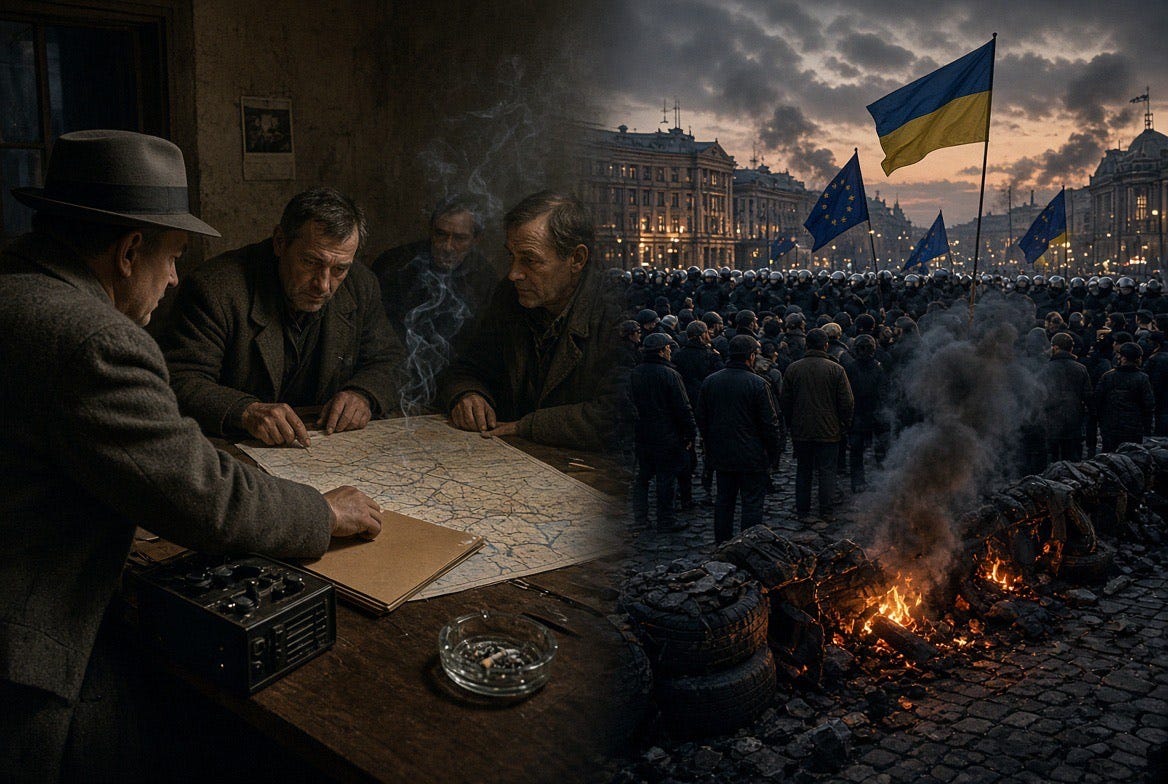
The current conflict in Ukraine between Russia and the West did not begin in 2022 with the Russian invasion but rather represents the logical conclusion of a posture on the part of the United States and NATO which sought to exploit the ultra-nationalism of Western Ukraine in order to create a framework of instability designed to weaken the Soviet Union, and later Russia, from within. To understand this mindset, one first must delve into the psychology underpinning the concept of Ukrainian nationalism. For Russia, Ukraine represents part of a larger family of Slavic peoples which include the Russians and Belarussians; indeed, this notion is shared by millions of Ukrainians as well. One only need to look at the integration of Ukraine within the cultural and historical roots of Russia over time to understand the reality of this sentiment.
For the West, this reality presents a problem, since it lends itself toward the existence of a singular Slavic state possessing tremendous geographical advantages and unmatched natural resources which in turn creates massive economic penitential that competes with Western notions of global supremacy. Nazi Germany sought to nullify this Slavic potential through the implementation of Generalplan Ost, the literal cultural and physical genocide of the Slavic race. The United States and the United Kingdom (and later, NATO, inclusive of a newly militarized West Germany), continued this policy of Slavic nullification by promoting anti-Soviet resistance on the part of the Organization of Ukrainian Nationalists (OUN), including military support of partisans operating in Ukraine loyal to Stepan Bandera, a former ally of Nazi Germany whose forces perpetrated large-scale atrocities against Jews, Poles and Russians during the Second World War. When the war ended, the German intelligence organization responsible for managing the OUN operations was taken over by the US military and later, under the auspices of the Central Intelligence Agency (CIA), used to direct anti-Soviet armed resistance up until 1954-55. The CIA continued to provide active support for the OUN, using the Ukrainian diaspora, through the 1990’s.
The role of western intelligence, led by the CIA and the British Special Intelligence Service (SIS), in post-Soviet Ukraine was singularly focused on promoting Ukrainian nationalism at the expense of Russia. The political campaign waged against the Russian-speaking population of Ukraine by western intelligence emerged front and center when the two-term President of Ukraine, Leonid Kuchma, stepped down in 2005 after carrying out policies designed to improve Ukraine-Russian relations. Kuchma threw his support behind the Russian-speaking Viktor Yanukovych. For the West, a Yanukovych presidency would undermine their strategic goal of stripping Ukraine away from Russia. The result was the so-called “Orange Revolution”, which saw Yanukovych’s electoral victory overturned in favor of Ukrainian nationalists who promoted a distinctly anti-Russian policy which saw Ukraine pivot toward the European Union and seek NATO membership. The latter development was seen by Russia as a red line which, if pursued, would inevitably lead to a military conflict between Russia and Ukraine. Yanukovych’s election in 2010 was deemed a setback to the Western designs on Ukraine, leading to the West supporting a violent coup in February 2014 that saw Yanukovych driven from power, replaced by pro-western Ukrainian nationalists.
It should be clear that a physical confrontation between Ukraine and Russia has always been the goal of the collective West. Efforts to take control of the Russian political space had, by 2014, failed. The so-called “reset” of 2009 was little more than a political cover for a regime change operation designed to replace Vladimir Putin, who had ruled Russia since taking over from Boris Yeltsin at the end of 1999, and in the intervening decade taken Russia down the road of economic and national recovery that the West, operating in full zero-sum mode, simply could not tolerate. The concerted efforts of President Obama to interfere in the Russian parliamentarian elections of 2011 and the presidential election of 2012 failed to remove Putin from power. The actions in Ukraine in 2014 and afterwards must be viewed in this light; nothing happens in a vacuum.
The Ukraine conflict was never avoidable, despite Russia’s concerted efforts to engage in diplomacy designed to do just that. The defeat of the Ukrainian army in 2014-15 at the hands of Russian-backed separatists in the Donbas led to the adoption of the Minsk peace accords. It is now established fact that neither Ukraine, its two European partners (France and Germany), nor the United States ever had any intention of following through on the Minsk process. Instead, the Minsk process was designed to buy time for NATO to build a new Ukrainian army capable of holding its own against Russia. Indeed, from 2015-to 2022, the United States and NATO did just that, training over 80,000 Ukrainian forces, including thousands of Ukrainian nationalists labeled as neo-Nazi by the United States Congress, to NATO military standards. The stated purpose of this training was to enable Ukraine to take physical possession of the Donbas and Crimea, which was annexed by Russia in 2014 following the CIA-backed coup in Kiev. When Ukraine began amassing these NATO-trained troops in the Donbas region in early 2022, Russia launched a pre-emptive action which, more than five years later, has become an openly acknowledged proxy war with the collective West, inclusive of the US and NATO.
The stated goal of both the US and Europe in pursuing this proxy conflict with Russia is nothing less than the strategic defeat of Russia. What does this mean in practice? First of all, the proxy war was never intended to result in a Ukrainian military victory against Russia. Rather, the goal was to draw Russia into a conflict which would exhaust its military potential, break its economy, and collapse its society to the point that the government of Vladimir Putin would be removed from power. This entire policy is postulated on the understanding that Vladimir Putin must be removed from power. As such, and solution that does not attain that objective is rejected out of hand, a pattern of behavior reflective of the zero-sum mentality that drives western policy making. As a result, every potential off-ramp that Russia has been willing to consider, from the Istanbul communique of 2022 to the Anchorage compromise of 2025, has been rejected by the West, exposing the reality that for the West diplomacy is just a tool to buy time to further strengthen Ukraine militarily in order to draw the Ukraine-Russian conflict out to its desired conclusion—the collapse of Russia. In short, Minsk on replay.
Russia has proven to be surprisingly resilient in the face of this concerted western effort designed to collapse it as a viable nation state. The Russia economy not only has survived in the face of western sanctions but, in concert with effective Russian diplomacy that has exploited western diplomatic miscues to build a large and supportive global constituency, thrived as it has found foreign markets in the Global South that have largely replaced the lost European and US markets. Russian society, blindsided by a war it was not prepared for, has rallied solidly behind President Putin, as the results of the recent parliamentarian elections underscored. And far from exhausting Russia militarily, the Ukraine conflict has enabled Russia to fine-tune its defense industrial base, producing significant quantities of advanced military equipment and weaponry that for the most part far exceeds that being produced by the collective West in both quality and quantity. When this material is matched up with a combat-hardened pool of manpower, the result is that Russia today possesses the most combat-capable military force in the world, far exceeding anything either NATO or the United States can put into the field.
In short, the western gambit targeting Russia has failed—the Russian military is stronger today by an order of magnitude, its economy far more diverse and self-sustaining, and its population far more unified than it was in 2022. Moreover, Russia shows no signs of faltering on any front—economically, diplomatically, socially, or politically.
The same cannot be said for either Europe or the United States. Despite the war-like rhetoric coming out of Germany and Poland and backed up by statements made by US military officers, both active duty and retired, the reality is that the proxy war between the collective West and Russia was always meant to be just that—a proxy war. There has never been a realistic plan for the conflict to become a direct clash between Russia and NATO, if for no other reason than NATO simply lacks the capacity to generate sufficient forces capable of high-intensity conflict for any sustainable period. NATO’s military power has largely atrophied in the decades since the end of the Cold War, requiring an infusion of investment over time to recover which Europe currently does not seem capable of providing. The United States is itself in a posture of global retrograde, seeking to withdraw from Europe rather than resume a Cold War-like posture that is neither politically or economically viable.
With Russia seemingly closing the door on the possibility of a negotiated settlement with the west over Ukraine, Europe and the United States are confronted with the uncomfortable reality that their strategic objectives in Ukraine will not reach fruition. Russia will continue to press for a military solution which meets all its stated objectives, including the kind of concerted de-Nazification which would make extinct the very virulent Ukrainian nationalism which has always fueled the western efforts in Ukraine against Russia.
In short, there will be no war between Europe and Russia over Ukraine. Europe will support Ukraine until Ukraine has exhausted its resources—manpower and economic—and then watch helplessly as Russia consolidates its position in what is left of the Ukrainian nation. “To the last Ukrainian” appears to be a concept that both Ukraine and its western supporters have taken to heart
The Arctic: The economic trigger of potential conflict
In a rational world, the collective West would regroup after its pending defeat in Ukraine and seek to repair its considerable losses. But in a zero-sum world, this is not possible. A Russian victory in Ukraine requires, in the minds of those Russophobes in the west still dreaming of the collapse of Vladimir Putin’s Russia, a “win” which will level the geopolitical playing field. Given the reality that one of the consequences of the west’s failed Ukrainian gambit is the economic decimation of Europe, issues of economic import, not surprisingly take on increased importance when configuring a post-Ukraine geopolitical posture in opposition to Russia.
One of the main issues confronting Europe today is discerning a coherent economic and foreign policy when it comes to China. European diplomacy in this regard has been disastrous, resulting in the collapse of critical sectors of the European economy (car manufacturing, for instance) as a result of ill-conceived notions of “de-risking” (an American-origin term designed to camouflage the real intent of such policy, which is “de-linking.”) But one cannot possibly speak of “de-risking/de-linking” when there are no viable alternative markets to replace that which one’s policies seek to vacate.
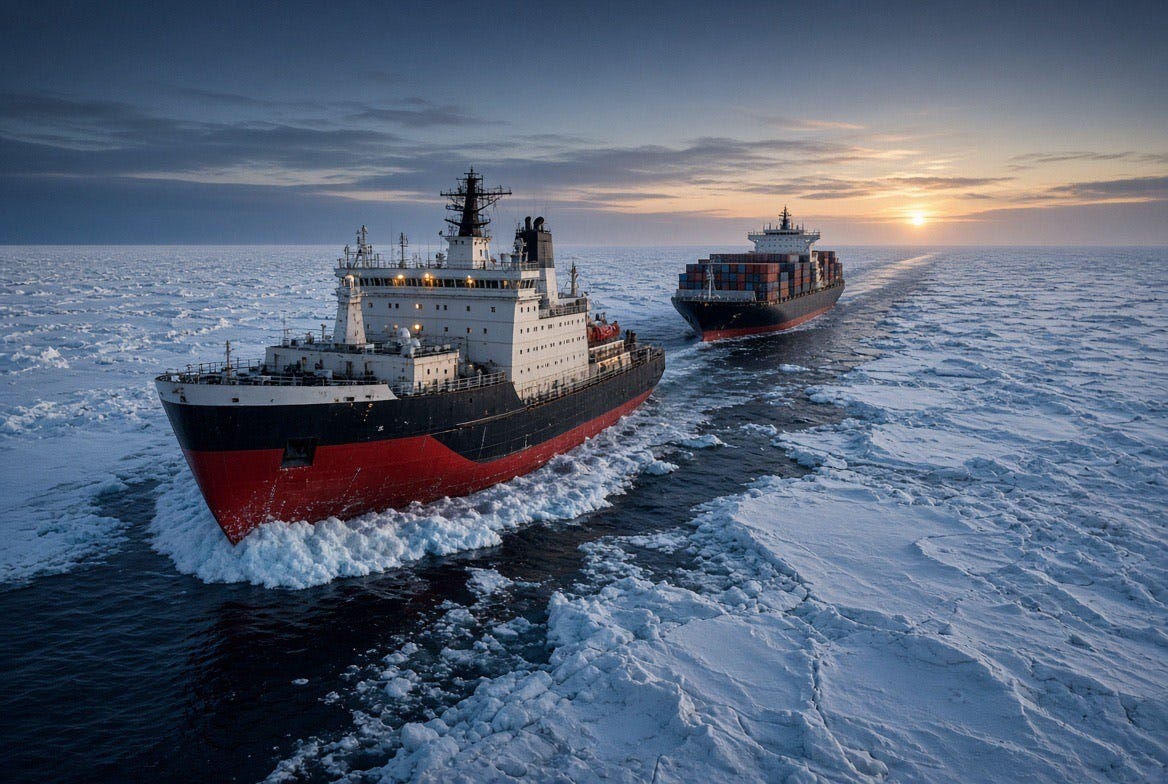
Europe’s strategic objective of isolating Russia from China has backfired—today it is Europe that is increasingly isolated, and Russia-Chinese relations, including economic, are strong and getting stronger. One of the critical areas of Russia-Chinese cooperation is the development of the Northeast Passage or, as it is often referred to in China, the “Ice Silk Road”, a 5,500-kilometer stretch of waterway running from the Bering Strait in the east to the Barents Sea in the west. Use of this waterway has become increasingly possible—and profitable—enabling container ships to make the journey from East China to European ports such as Rotterdam around 20-days faster that the current Suez Canal route used by most shipping companies.
The Northeast Passage operates exclusively in Russian territorial waters. It also transits the Arctic zone, meaning that for much of the year its functionality is dependent upon Russian icebreakers. The passage also operates under the umbrella of Russian security and legal norms. The economic potential of the Arctic used to the sole purview of the Arctic Council, who members used to meet on a regular basis to coordinate policies impacting on the economy, security, and ecology of the Arctic region. However, in 2022, following the invasion of Ukraine, Russia was kicked out of the Arctic Council. And, following the admission of Finland and Sweden to NATO, the Arctic Council has assumed a NATO-only posture, with its policies reflecting the strategic goals and objectives of its collective membership, namely being the strategic defeat of Russia.
Climate change has altered the geopolitical realities of the Arctic region, with melting ice caps not only opening sea lines of communication previously denied and/or restricted because of weather but also making economic exploitation of significant mineral resources exposed by the retreating ice physically possible and fiscally viable. Normally, the Arctic Council would seek to regulate access to the Arctic to balance economic and ecological concerns within a security framework where all parties’ interests are taken into consideration.
But in the zero-sum world, the Russo-Sino economic penetration of the Arctic space is deemed a threat to the collective West requiring a military response. This reality was underscored during the recently convened European Arctic Summit, hosted by Finland in mid-September. The European Union leadership, citing unsubstantiated claims of “significant and long-term threats” from Russia to Euro-Atlantic security, committed itself to strengthening its Arctic security posture—i.e., the militarization of the Arctic, focusing on military mobility, cross-border connectivity and necessary infrastructure in the northernmost regions of the Arctic.
The fact is, however, that NATO is non-competitive with Russia when it comes to Arctic security issues. What the European Arctic Summit gave lip service to about the militarization of the Arctic, Russia has already fully implemented and continues to improve. While NATO nations are capable of engaging in acts of provocation, such as the recent seizure of a Russian research vessel off the northern Norwegian island of Svalberg, the rapidity in which the Norwegian government most to ensure similar actions are not undertaken in Norwegian territorial waters underscores the fact that Norway is not keen of provoking any sort of direct confrontation with Russia in the Arctic. The real threat to the West in the Arctic is not Russia’s capable military forces, but the fact that Russia, together with China, are imposing a new transit-based economic reality which will provide extraordinary leverage going forward by making traditional shipping carriers and routes non-competitive with the new “Ice Silk Road” Russia and China have already implemented. The ability to sustainably ship containers to Europe at half the cost of the current shipping routes is a game changer in every way and creates a new reality that the West will not be able to catch up to for some time, if ever
Kaliningrad: low-hanging fruit, or impregnable fortress?
The psychosis of the zero-sum trap the West has set for itself when it comes to Russia requires that NATO manufacture a victory—perceived or otherwise—capable of off-setting its failures in Ukraine and impotence in the Arctic. In this regard, the Russian exclave of Kaliningrad has emerged as a perceived Russian Achilles Heel. The former commander of NATO ground forces in Europe, US General Chris Donahue, openly bragged this past July that NATO forces would be able to overwhelm Russian defenses in Kaliningrad in short order. Germany and Poland have argued for intensified NATO military exercises near the borders of Kaliningrad, the goal of which would be to generate sufficient concern within the Russian leadership to cause them to pull troops out from the Special Military Operation zone to Kaliningrad in response. Several western military and security analysts have articulated assessments which indicate that Russia’s actual military posture in Kaliningrad is much weaker that publicly acknowledged. And numerous western politicians have made declarations indicating that Russia is preparing to carry out acts of aggression against NATO using the Kaliningrad exclave as a base of operations.
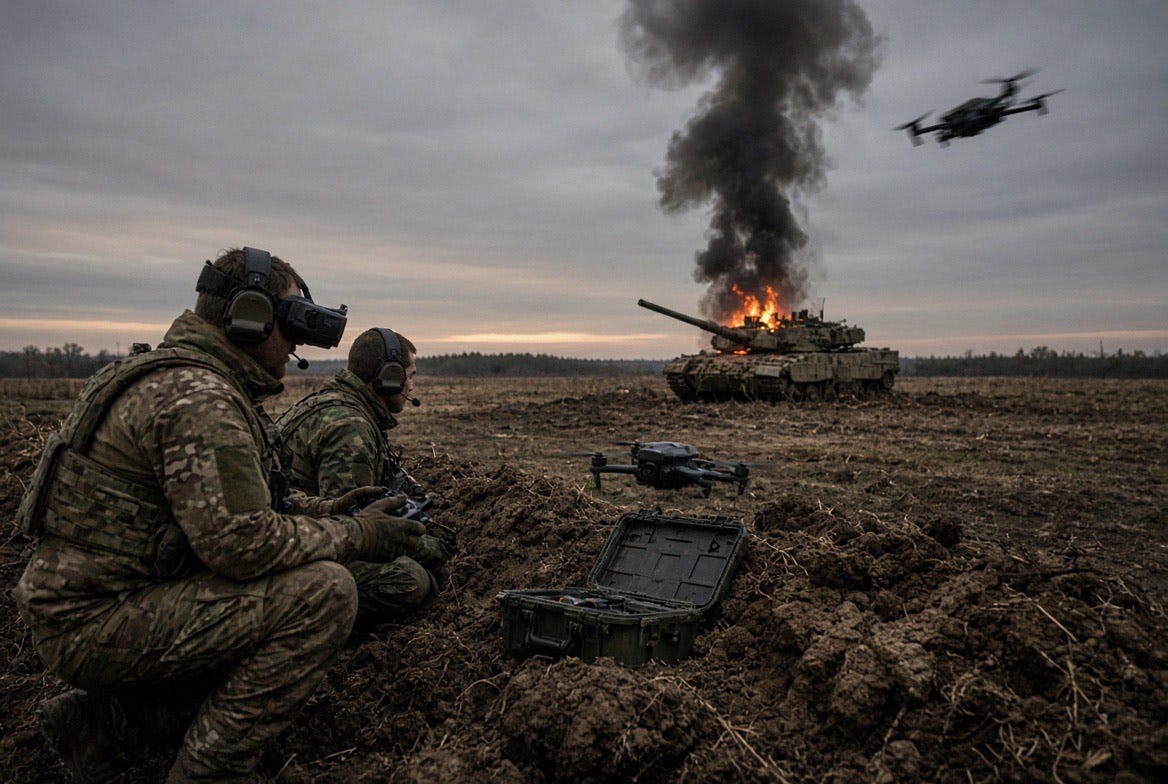
But the reality is that while Russia is more than capable of defending Kaliningrad from any NATO aggression, the Russian military is not currently postured in the Kaliningrad exclave to carry out any sustainable offensive operations of any scale against any of its NATO neighbors—any contention to the contrary is simply rhetorical propaganda. Both the Russian 11th Army Corps and the Baltic Marines—the core ground combat forces stationed in Kaliningrad—have extensive combat experience in Ukraine and have developed a skill set with combat drones that would most likely disrupt and defeat any NATO offensive operations directed at the Kaliningrad exclave. The Russia military has likewise created an active reserve Rifle Regiment, BARS-39, which draws upon veteran soldiers possessing active-duty combat experience, especially in drone warfare.
But the real threat to Kaliningrad doesn’t come from any potential ground offensive launched by NATO. Rather, it would emerge in the form of a naval blockade of the exclave. Since 2022, the railway lines that connect Kaliningrad with Russia have been subjected to severe restrictions by Lithuania when it comes to the transit of good to and from Russia; the issue of compliance with European Union sanctions of Russia lays at the heart of this matter. Russian-registered vehicles are likewise not permitted to transit Lithuania and Poland. Russia has compensated for this loss of connectivity by increasing the scope and scale of water ferry service between Russia and Saint Petersburg. While Russia has been able to sustain economic growth through this resupply effort, the fact is that this ferry-boat lifeline is very expensive, and many goods, such as gasoline, are subsidized by the Russian government to keep prices under control. If NATO were to impose naval restrictions on shipping into and out of Kaliningrad, as some of its members have suggested, the economic viability of the exclave would be threatened. It is because of this vulnerability that the Russian government put NATO on notice that any effort to subject Kaliningrad to a naval blockade, or any other act of military aggression, would be responded to with the totality of Russia’s military capability, including nuclear weapons.
This nuclear muscle flexing appears to have dampened the enthusiasm on the part on some of the most vociferous NATO proponents of plucking what they thought would be low-hanging fruit; now that it is clear that any conflict involving a NATO attacks on Kaliningrad would not be treated in isolation, but rather constitute a conflict of existential proportions, the war drums have been muted
Space: The final frontier
The last topic on the list of potential points of conflict-generating friction between Russia and the US-European collective is outer space. Space-based sensors have played a critical role in the collection of intelligence used to support military operations in Ukraine and, in the case of Ukraine, to strike strategic targets in the depth of Russia. Likewise, the US commercial Starlink satellite communications system has assumed an essential role in Ukrainian military communications, to include playing a critical part in enabling Ukrainian long-range drone attacks on Russian energy infrastructure.
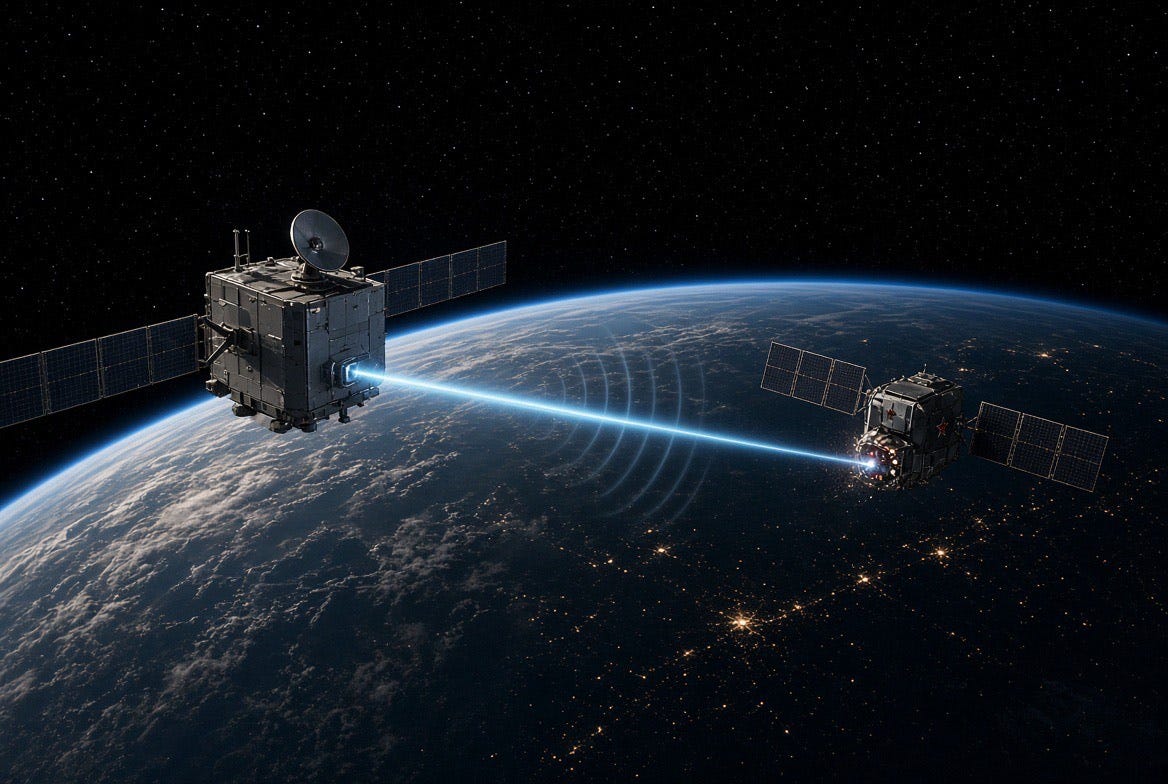
The United States has recently announced that it has deployed “on orbit space control weapons” in Earth’s orbit. While the technical characteristics of these weapons has not been detailed, evidence suggests that these weapons are non-kinetic in nature, using reversible technology such as electronic warfare to temporarily “blind” a targeted satellite. US President Donald Trump has alluded to the use of a space-based weapon operating in support of US military strikes on Iranian nuclear-related targets in June 2025.
Russia is in the process of deploying its own Starlink analog satellite constellation, known as Rassvet. When fully functional, Rassvet will provide Russia with satellite-based communications capability on par with Starlink. Ukraine, recognizing that Rassvet will enable Russia to more effectively guide its drones to their targets, has requested the United States to disable the Russian satellite network. Russia has indicated that it would take down the entire Starlink system in retaliation, using kinetic means which could threaten other satellites operating in earth orbit.
The weaponization of space represents a dangerous point of escalation, especially given the US capability of temporarily blinding satellites. In the zero-sum world that the US and Europe reside in, the need to be seen as offsetting a Russian win in Ukraine, and Russia’s stymying of NATO escalation efforts in the Arctic and against Kaliningrad, may prove too much of a temptation in the minds of western leaders unable to structure a behavioral model in relationship with Russia that isn’t premised on Russophobic goals and objectives requiring Russia’s strategic defeat.
Conclusion
The United States and Europe have, over the course of the past several decades, built a policy trap centered on using Ukraine as a vehicle for achieving the collapse of Russia and the government of Vladimir Putin. The “trap” is the zero-sum mentality which governs implementation of this policy, linking the political and economic viability of those pursuing such policy to its successful implementation. The looming failure in Ukraine has created a need for finding new vectors capable of furthering the policy objective of achieving a strategic victory over Russia, including options to expand the zone of conflict between the US-European collective and Russia into the Arctic, the Baltics, and Outer Space. Russia has effectively countered each one of these efforts which, when viewed in isolation, appear to be manageable problem sets with limited escalation potential. However, when viewed in the aggregate, the potential for a misunderstanding and/or miscalculation driven by domestic political imperatives existent in the nations comprising the US-European collective. Here, nations possessing considerable influence over the decisions being made by the collective, such as the US, France, and Germany, are undergoing political transformations that could alter the existing political posture, including policies related to the strategic defeat of Russia as a desirable outcome. The enemy in all of this is not Russia, but rather the zero-sum thinking of the collective West which leaves them married to a policy model that is incapable of being successfully implemented, and which, if pursued aggressively, will lead to their collective demise.
Note: I was able to visit the Special Military Operation zone, the Arctic region, oil fields, and Kaliningrad, in addition to participating in high level forums and meetings in Moscow and Saint Petersburg. The views expressed here are my personal assessment based upon these meetings, and are not meant as a formal expression of official Russian policy.
This article is the byproduct of the independent journalism I have been undertaking for the past several years, traveling to Russia for the singular purpose of capturing the Russian reality and bringing it to the attention of a western audience held hostage by Russophobic corporate media. I cover all of my expenses, which means that the trips necessary for the production of this article could not have taken place without the generous support of subscribers and followers who have provided donations for that purpose. I will continue to write articles and release videos about these past visits. I will also continue planning and preparing for future visits to Russia, including one scheduled for November where I will attend a conference on humanitarian issues and continue to meet and interview interesting and knowledgeable people. I thank everyone who has contributed to this work, past, present and future [end]
65-year-old Scott Ritter is a former intelligence officer within the US Marine Corps (USMC), then inspector of the United Nations in Iraq. When in 2003, the US and their British minions were about to invade the country under this false pretext, Ritter was claiming that there was no weapon of mass destruction (WMD) there. He was right.
its roots before WW2, its collaboration with Nazi Germany, its legacy in modern Ukraine, how NATO has continually supported Nazism in Ukraine, chronicle
Jacques Baud has been sanctioned by the European Union for speaking truth to power. He deserves the support of all freedom loving people around the world
in the Jacques Baud case, the EU is sanctioning, for the first time, an analyst not for spreading disinformation but for expressing a politically inconvenient truth, all while admitting he has broken no law. Will it have the courage to go after an American citizen?
operation enters the second week of Ukraine’s long-awaited and highly touted counteroffensive, some basic conclusions can be drawn even though the fighting continues, and will continue to rage, for some time to come
Almost 750 U.S. troops have been wounded or killed in the Middle East since October 2023, an analysis by The Intercept has found. But the Pentagon won’t acknowledge it
Secretary of War Pete Hegseth answers questions as President Donald Trump looks on at the White House on March 24, 2026 (Chip Somodevilla / Getty Images)
U.S. Central Command, or CENTCOM, which oversees military operations in the Middle East, appears to be engaged in what a defense official called a “casualty cover-up,” offering The Intercept low-ball and outdated figures and failing to provide clarifications on military deaths and injuries.
At least 15 U.S. troops were wounded Friday [March 27, 2026] in an Iranian attack on a Saudi air base that hosts American troops, according to two government officials who spoke with The Intercept. Hundreds of U.S. personnel have been killed or injured in the region since the U.S. launched a war on Iran just over a month ago.
President Donald Trump — who wore a blue suit, red tie, and a ball cap to the dignified transfer of the first Americans killed in the war — said casualties were inevitable. “When you have conflicts like this, you always have death,” he said afterward. “I met the parents and they were unbelievable people. They were unbelievable people, but they all had one thing in common. They said to me, one thing, every single one: Finish the job, sir. Please finish the job.”
On Tuesday [March 31, 2026], Trump teased that he would wind down the war with Iran in as little as two weeks despite not achieving many of his stated aims, such as “freedom for the people” of Iran, “tak[ing] the oil in Iran,” and forcing Iran’s “unconditional surrender.” At one point, the president even declared that the war would last “as long as necessary to achieve our objective of PEACE THROUGHOUT THE MIDDLE EAST AND, INDEED, THE WORLD!”
“When you have conflicts like this, you always have death”
CENTCOM has sent outdated statements on casualty numbers, meanwhile, resulting in undercounts, including a statement sent Monday [March 30, 2026] from spokesperson Capt. Tim Hawkins noting that “Since the start of Operation Epic Fury, approximately 303 U.S. service members have been wounded.” The comment was three days old and excluded at least 15 wounded in the Friday attack on Prince Sultan Air Base in Saudi Arabia. The command did not reply to repeated requests for updated figures.
CENTCOM also would not provide a count of troops who have died in the region since the start of the war. An Intercept analysis puts the number at no less than 15.
“This is, quite obviously, a subject that [War Secretary Pete] Hegseth and the White House want to keep under major wraps,” said the defense official who spoke on the condition of anonymity in order to speak frankly.
In 2024, during the Biden administration, the Pentagon provided The Intercept with detailed chronologies of attacks on U.S. bases in the Middle East that listed the specific outpost that was attacked, the type of strike, and whether — or how many — casualties resulted, along with an aggregate count of attacks by country.
The Trump administration’s numbers, by comparison, lack detail and clarity. The current CENTCOM casualty figures do not appear to include more than 200 sailors treated for smoke inhalation or otherwise injured due to a fire that raged aboard the USS Gerald R. Ford before it limped off to Souda Bay, Greece, for repairs. CENTCOM did not reply to close to a dozen requests for clarification on the casualty count and related information sent this week.
“CENTCOM and the White House should be providing accurate and timely information on the costs and casualties involved in this war. After all, it is American taxpayers who are funding it and U.S. economic prosperity and economic wellbeing that is being undermined by it,” Jennifer Kavanagh, the director of military analysis at Defense Priorities, a think tank that advocates for measured U.S. foreign policy, told The Intercept.
“CENTCOM and the White House should be providing accurate and timely information on the costs and casualties involved in this war”
As the U.S. has relentlessly bombed Iran, that country has responded with attacks on U.S. bases across the Middle East using ballistic missiles and drones. CENTCOM refuses to even offer a simple count of U.S. bases that have been attacked during the war. “We have nothing for you,” a spokesperson told The Intercept. An analysis by The Intercept, however, finds that bases in Bahrain, Iraq, Jordan, Kuwait, Qatar, Saudi Arabia, Syria, and the United Arab Emirates have been targeted.
On Tuesday, Hegseth said that Iran retained the ability to retaliate for U.S. strikes but that their attacks would be ineffectual. “Yes, they will still shoot some missiles,” he said, “but we will shoot them down.” On Wednesday morning [April 1, 2026], officials in Bahrain, Kuwait, and Qatar all reported missile or drone attacks from Iran.
Iranian strikes have forced U.S. troops to retreat from their bases to hotels and office buildings across the region, according to the two government officials. The defense official was livid about the Pentagon’s failure to adequately harden the bases and ridiculed Hegseth’s Tuesday prayer at a Pentagon press conference. “May god watch over all of them, each day and each night. May his almighty and eternal arms of providence stretch over them and protect them,” said Hegseth.
“Why didn’t Hegseth protect them?” the defense official asked. “Anyone with a brain knew these attacks were coming.”
Pentagon spokesperson Kingsley Wilson did not respond to multiple requests for comment.
Retired Gen. Joseph Votel, a former head of Central Command, recalled that U.S. troops in the region have faced drone attacks for at least a decade. “At that time we identified a need to protect against this threat, and it has taken far too long for the DoD to respond and provide adequate protection for our deployed troops,” he told The Intercept, referencing drone attacks during the campaign against ISIS in the spring of 2016. “It was a known expectation that, if attacked, Iran would retaliate against our bases, installations, and forces, and I agree that we should have anticipated and been prepared for this inevitability.”
Kavanagh, who previously called attention to the vulnerability of U.S. outposts in the Middle East, echoed Votel. “It has been clear for years that the rapid proliferation of drones and cheap missiles would put U.S. bases and U.S. early detection radars in the region at risk, yet the Pentagon did little to protect them,” she said. “The failure to invest in hardened infrastructure was a choice. Congress should see this failure as evidence that simply giving the Pentagon more money is not a path to national security.”
“We would be better off if bases across the region were closed for good,” she added.
“We would be better off if bases across the region were closed for good”
In public statements, Iran’s foreign minister Seyed Abbas Araghchi called out the U.S. for using civilians in nearby Arab monarchies of the Gulf Cooperative Council states as human shields. “U.S. soldiers fled military bases in GCC to hide in hotels and offices,” he wrote on X last week. “Hotels in U.S. deny bookings to officers who may endanger customers. GCC hotels should do same.”
Votel also expressed concern about troops using hotels and offices, noting it “could turn normal civilian infrastructure into military targets for the regime.”
Last month, an Iranian drone strike on a hotel in Bahrain wounded two War Department employees, according to a State Department cable reviewed by the Washington Post. CENTCOM did not respond to a request to confirm to The Intercept that those injuries stem from a March 2 attack on the Crowne Plaza hotel, a luxury property in Manama, Bahrain’s capital, but one official indicated this was likely.
Votel said that a failure to provide troops with adequate protection may handcuff U.S. operations. “I think this really complicates command and control and could affect unit cohesion and effectiveness,” he told The Intercept, referring to the transfer of troops to hotels and office buildings. “That said, we may not have many options if we cannot protect the military bases where they would normally be bedded down.”
Prior to the current war with Iran, U.S. bases in the Middle East were increasingly targeted by a mix of one-way attack drones, rockets, mortars, and close-range ballistic missiles after Israel’s war in Gaza began in October 2023, most of the attacks occurring in the year following the outset of the conflict. At least 175 troops were killed or wounded in those attacks, including three service members who died in a January 2024 strike on Tower 22, a facility in Jordan. Other attacks targeted al-Asad Air Base, the Baghdad Diplomatic Support Center, Camp Victory, Union III, Erbil Air Base, and Bashur Air Base in Iraq and Al-Tanf garrison, Deir ez-Zor Air Base, Mission Support Site Euphrates, Mission Support Site Green Village, Patrol Base Shaddadi, Rumalyn Landing Zone, Tell Baydar, and Tal Tamir in Syria.
The casualty statistics do not include contractors, most of them foreigners who suffered non-combat injuries. Official U.S. statistics show that there were almost 12,900 cases of injuries to contractors in the CENTCOM area of operations during 2024 alone. More than 3,700 were the most serious non-fatal injuries, including traumatic brain injuries, requiring more than seven days away from work. Eighteen contractors were also killed, all of them in Iraq. The numbers are likely significant undercounts, but if even the fractional number of known contractor injuries is added to the tally, the casualty count for Americans and those on U.S. bases may top 13,600 [end]
In the first week of the US-Israeli aggression on Iran, the Islamic Revolution Guards Corps (IRGC) conducted a series of precision strikes that systematically degraded the much-hyped US integrated air and missile defense architecture across the region
Eisenhower Media Network is an organization of expert former military, intelligence, and civilian national security officials who have an independent, alternative story to tell
The US-funded ecosystem of Iranian ‘rights groups,’ Israeli operatives, and monarchist activists has become a revolving door of unverifiable statistics and atrocity propaganda
As deadly riots burn Iranian cities, Western media ignores the shocking wave of violence, turning instead to US government-funded NGOs for data. The one-sided portrayal has helped push Trump to the brink of authorizing renewed US attacks
[my illustration: on March 5, 2026, pastors from across the US pray in the White House for Donald Trump (White House, screenshot)]
As is becoming clearer from President Trump’s own statements and those of his staff, along with press reporting, the US has launched a major [war] without the input of the experts we pay to advise the President on such matters. The State Department, Pentagon, National Security Council Staff, Defense Intelligence Agency, and NSA were simply bypassed because, as White House Spokesperson Karoline Leavitt said, President Trump “had a feeling” Iran would attack.
The President’s real estate developer son-in-law and friend reinforced that “feeling” when they returned from the second round of talks with the Iranian foreign minister and his team. However, as the news outlet Responsible Statecraft (RS) reported over the weekend, both son-in-law Jared Kushner and friend Steve Witkoff appear to have mis-represented those talks in a way that helped push President Trump toward war. No State Department officials were on hand to ensure the reporting was accurate.
Also, arms control experts at home, according to the RS report, believe that “the duo appeared to have fatally misunderstood a series of basic technical and historical matters” regarding Iran’s nuclear program leading to inaccurate information conveyed to the President.
Congress was completely out of the picture – seemingly uninterested in performing its Constitutional duty – and no case was made to the American people that they must sacrifice and die once again for a war in the Middle East.
Trump’s repeated promises to not start new wars, especially in the Middle East, have turned out to be empty, and Republicans are set for a crippling defeat in the upcoming midterm elections.
Iran had been warning for months – since the last US/Israeli surprise attack in June – that if they were attacked again they would not hold back on US bases in the region and that they would close the Straits of Hormuz. Trump and Netanyahu attacked anyway, and Iran has done what it said it would do.
Now the Strait of Hormuz is closed, oil is about to go out of control, and the global economy – along with the US dollar – seems about to implode.
On March 6th, President Trump refused a UK offer of help, saying we don’t need help when we’ve already won the war. Five days later, at a rally in Kentucky, President Trump repeated that “We’ve won the Iran war!”
It was his “Mission Accomplished” moment, because this weekend, just days after declaring victory against an “obliterated” Iran, Trump began begging other countries to send ships to help the US open the Strait of Hormuz.
Thus far every country has declined, understanding that such a mission has little chance of success.
Tragically, the war thus far has claimed at least 14 servicemembers. It is likely the toll is far worse than they are telling us. Every US military facility in the region is either damaged or destroyed. Billions of dollars of radar and other equipment are destroyed. Our allies in the region, because they allowed their territory to be used to attack Iran, have also seen massive retaliatory destruction.
This is surely one of the worst military disasters in US history. There are no military options available beyond the unthinkable: the use of nuclear weapons.
The only viable option that remains is one that was often urged in the Vietnam War: Just get out. Now! No return to US bases, no security guarantees to Gulf States. End the US empire in the Middle East and elsewhere. If not, it’s only going to get worse [end]
In the first week of the US-Israeli aggression on Iran, the Islamic Revolution Guards Corps (IRGC) conducted a series of precision strikes that systematically degraded the much-hyped US integrated air and missile defense architecture across the region
Eisenhower Media Network is an organization of expert former military, intelligence, and civilian national security officials who have an independent, alternative story to tell
The US-funded ecosystem of Iranian ‘rights groups,’ Israeli operatives, and monarchist activists has become a revolving door of unverifiable statistics and atrocity propaganda
As deadly riots burn Iranian cities, Western media ignores the shocking wave of violence, turning instead to US government-funded NGOs for data. The one-sided portrayal has helped push Trump to the brink of authorizing renewed US attacks
Israel informed the US this week that it is running critically low on ballistic missile interceptors as the conflict with Iran rages on, US officials told Semafor.
Israel had reportedly entered the current war already low on interceptors that were fired during last summer’s conflict with Iran. Israel’s long-range defense system has strained under Iran’s attacks; CNN reported that Iran was adding cluster munitions to its missiles, which may exacerbate the depletion of the stock.
The US has been aware of Israel’s low capacity for months, one US official said: “It’s something we expected and anticipated.”
This official emphasized to Semafor that the US is not running similarly low on interceptors of its own. That comment comes amid broader concerns about interceptor depletion from a longer military engagement in Iran leaving the US in a poor position.
It’s also unclear whether the US might seek to sell or share any of its own interceptors with Israel, which would pose its own strain on domestic supplies. The US has included missile defense assets in past provisions of military aid to Israel.
“We have all that we need to protect our bases and our personnel in the region and our interests,” the US official said, adding that Israel is “coming up with solutions to address” their shortage.
Israel has other ways to defend against Iranian missiles during the war, including via fighter jets, but the interceptors are among the most effective defensive weapons against long-range fire. Its Iron Dome missile defense system is designed to repel more short-range fire.
President Donald Trump said earlier this month that the US has a “virtually unlimited” munitions stockpile, although analysts have long said US stockpiles are lower than the military would like.
Last June, the US fired over 150 THAAD interceptors during the 12-day war with Iran, the Center for Strategic and International Studies found — believed to be around a quarter of US inventory at the time. The US is also believed to have used around $2.4 billion worth of Patriot interceptors in the first five days of this war, according to some reports.
In January, the Pentagon made moves to begin substantially increasing its production of the THAAD missile defense system. The US official said that the administration has plenty of THAADs and fighter jets, as well as mid-level interceptors.
Chief Pentagon spokesman Sean Parnell told Semafor in a statement that the department “has everything it needs to execute any mission at the time and place of” Trump’s choosing.
The White House and the Israel Defense Forces did not immediately respond to requests for comment from Semafor.
Know More
The State Department last week announced a sale of 12,000 “BLU-110A/B general purpose, 1,000-pound bomb bodies” to Israel. Congressional approval for the sale will not be required; the Trump administration bypassed it by citing the “emergency” that currently exists as the US and Israel fight Iran.
Trump has said that the war could end “soon” and has recently taken to describing it as a “short-term excursion.” But Trump, Israel, and Iran are also all signaling that they’re willing to fight for as long as it takes.
“It’ll be as long as it’s necessary,” Trump said on Friday evening when asked about how long the conflict may continue on. “They’ve been decimated. The country’s in bad shape. The whole thing is collapsing.”
The Iranian regime’s foreign policy adviser told CNN this week that the country sees no option for diplomacy right now and maintained that it is ready for a long fight. Defense Secretary Pete Hegseth told reporters on Friday that Iran’s “entire ballistic missile production capacity” has been “functionally defeated.”
Notable
Iranian cluster bombs hit several sites in Israel on Friday, though no casualties have been reported, according to The Times of Israel.
The Trump administration struck military targets on Kharg Island this week, though it left the key oil infrastructure that Iran relies on intact.
Israel is planning to expand its ground invasion in Lebanon,according to Axios [end]
In the first week of the US-Israeli aggression on Iran, the Islamic Revolution Guards Corps (IRGC) conducted a series of precision strikes that systematically degraded the much-hyped US integrated air and missile defense architecture across the region
Eisenhower Media Network is an organization of expert former military, intelligence, and civilian national security officials who have an independent, alternative story to tell
The US-funded ecosystem of Iranian ‘rights groups,’ Israeli operatives, and monarchist activists has become a revolving door of unverifiable statistics and atrocity propaganda
As deadly riots burn Iranian cities, Western media ignores the shocking wave of violence, turning instead to US government-funded NGOs for data. The one-sided portrayal has helped push Trump to the brink of authorizing renewed US attacks
The U.S./Israeli-led war against Iran is illegal, unconstitutional, immoral, and dangerously escalatory. Protestations to the contrary, Iran posed no imminent threat to U.S. national security. The Trump administration’s policy (announced by Pete Hegseth) of “war without mercy” is both unjust and un-American. In America’s proud ideal of the citizen-soldier, this is not who we are. This war is not America first. This is not what we do.
Put bluntly, this war is not in the national interest of patriotic Americans.
We the undersigned of the Eisenhower Media Network (EMN) oppose this murderous war of aggression and hereby call for an immediate ceasefire followed by negotiation and war reparations to be paid for by the aggressors. This war is wrong and it must end.
A War the United States Should Not Wage
President Donald Trump promised the American people he would end wars, not start them. Yet within months of returning to office, his administration launched military strikes against Iran, igniting a conflict that is quickly spiraling into a regional catastrophe.
The United States is once again marching to an ill-conceived war in the Middle East without clear objectives or a clearly defined, realistic path to victory. Unlike previous (and disastrous) wars in Iraq and Afghanistan, this time the American people were not asked to support it. History will be even less kind as it judges the immorality and illegality of this latest war of choice.
The question is not whether the United States can inflict enormous damage on Iran. Of course it can. The real question is whether America can achieve any meaningful result through this war. The answer here is simple: no. There is no reason or cause worth fighting for here.
A War Driven by Israel
Saliently, by Secretary of State Marco Rubio’s own admission, the Israeli government drove the timing and initial targets of this war. This isn’t to say that Israel alone is responsible. Since 1979, large parts of the American foreign policy establishment have been eager for war with Iran. Complicit as well is the military-industrial complex, the fossil fuel industry, and the influence of the exiled Iranian lobby.
A shared desire to enforce American hegemony, aligned with Zionist hegemonic goals of a “greater” Israel, is generating a dynamic that approaches that of Armageddon. Even more frightening is that U.S. and Israeli leaders are citing Biblical passages and alleged Judeo-Christian beliefs in support of this war. It seems we are only a few steps away from the madness of the Crusades.
A War Without Public Support or Understanding
Legitimacy is a major issue here. After two decades of costly and ultimately futile conflicts in Iraq and Afghanistan, the American public has little appetite for another Middle Eastern war. Polling in the first few days of this war found only one in four Americans supported it.
A large-scale war against Iran would be an act of colossal military and political folly. It may require national mobilization — perhaps even conscription. That is politically impossible. The American people will not support a military draft for yet another open-ended conflict in the region.
No Capacity for Ground War
The active-duty U.S. Army today numbers fewer than 500,000 soldiers. Iran is a nation of roughly ninety million people spread across a mountainous territory roughly four times the size of California. Even if the political will existed, the United States lacks the manpower for a major invasion of Iran.
Conquering and occupying such a country would require hundreds of thousands of ground troops and reliable allies willing to fight alongside them.
Those allies do not exist.
Israel, America’s overbearing partner in this conflict, lacks the manpower to deploy large ground forces to Iran. Gulf States have neither the military capability nor the political willingness to undertake such a war.
Already, America and Israel have lost the moral high ground in this war. They have yet more to lose if this war persists.
Air Power Alone Cannot Win
History shows air power alone has never been enough to win a major war.
During the Korean War, General Douglas MacArthur attempted to halt North Korean advances through naval and air power. It failed. Only ground forces ultimately stabilized the front.
In Vietnam, the United States dropped more bombs than were used against Germany and Japan combined during World War II. Yet overwhelming air power could not secure victory.
Technology has improved dramatically since those wars, but the basic nature of war has not changed. Despite decades of talk about a “Revolution in Military Affairs,” wars are still decided by control of territory and the political will of populations.
Bombs alone cannot impose lasting political outcomes. Bombs alone do not spread democracy. However, bombs alone do spread destruction; the conflict began primarily as a destructive and often imprecise air campaign that has resulted in the deaths of hundreds of innocents, which has stiffened the spine of Iranian resistance.
Strategic Exhaustion
America has been engaged in nearly continuous conflict since September 11, 2001. The war in Ukraine, the ongoing U.S.–Israeli destruction of Gaza, and extensive military commitments across the globe have strained American resources.
The U.S. is entering another conflict without being prepared for a long one. Weapons stockpiles are being depleted faster than they can be replenished. Industrial production has not kept pace with demand. Rebuilding the capacity necessary for a prolonged war would take years.
Poor preparation is a recipe for calamitous defeat; meanwhile, the broader the war, the less sustainable it will prove.
Iran Is Ready for This War
Iran, by contrast, has spent decades preparing for precisely this scenario.
Iranian strategy is built around attrition. Rather than trying to match U.S. conventional military power, Iran has invested heavily in asymmetric capabilities — ballistic missiles, drones, cyber warfare, and networks of aligned militias throughout the region.
Instead of seeking decisive battlefield victories, Iran will attempt to impose steady costs on U.S. forces and its allies. U.S. bases across the Middle East, Israeli cities, shipping lanes, and global infrastructure are all potential targets.
Great Power Complications
In an era of great-power competition, regional wars rarely remain isolated. This conflict is happening within a broader geopolitical struggle.
China and Russia have strong incentives to prevent an American-Israeli victory in Iran. Neither wants the U.S. or Israel to dominate the Middle East unchallenged. Both possess advanced missile, radar, and electronic warfare technologies that could assist Iran with intelligence sharing, technological support, and economic backing. Such assistance could significantly complicate U.S. and Israeli operations.
While direct military intervention is unlikely, retaliation for blocking much needed energy supplies to China should be considered. Among other considerations, America remains vulnerable to Chinese restrictions on exports to the U.S. of rare earth minerals and metals. This war may soon dramatically degrade our economy.
The Pattern of American War
There is also a deeper structural problem in the way the United States fights wars.
In Korea, Vietnam, Iraq, and Afghanistan, American leaders repeatedly entered conflicts without clearly defined political objectives. Goals shifted as conditions changed. Military strategies often bore little relationship to achievable political outcomes.
The result was a recurring pattern: enormous expenditures of blood and treasure without success of any measurable kind. Exploding national deficits were among the chief results of exploding U.S. bombs. That, and millions of dead around the world, as planeloads of caskets draped in American flags returned to the homeland.
With its allies, Americans won World War II because we were united and because we knew what we were fighting for. Right made might, as President Abraham Lincoln once said. Our leaders today believe only that might makes right—and they couldn’t be more wrong.
The Iran War risks becoming the next chapter in that same tragic story of wrong.
Military strategy requires harmony between three elements: the political objective, the resources committed, and the methods used to achieve the goal. When those elements are misaligned, failure becomes almost inevitable.
In this war, the objective remains vague, the resources limited, and the strategy uncertain. That makes one thing certain: defeat.
The Danger of Escalation
The greatest danger now is further escalation.
Already there is discussion of deploying U.S. Special Forces inside Iran to support opposition groups. Such missions begin small but often expand rapidly, as they did in Vietnam and Afghanistan.
The moment American troops begin operating on Iranian soil, the risk of a wider and far more destructive war will increase dramatically. So too will the risk of disastrous, Bay of Pigs-like, operations involving U.S. troops and foreign proxies.
A Moment for Congress to Act
Under the Constitution, the authority to declare war belongs to Congress. That responsibility exists precisely to prevent this nation from drifting into unnecessary and illegal conflicts at the whim of a president enabled and empowered by a misbegotten warrior ethos. America has fought too many wars based on illusions of technological superiority and quick victory. Those illusions have repeatedly collided with reality. And reality always wins over illusion.
A war with Iran will almost certainly follow the same path and continued external attacks will likely strengthen Iran politically. History shows that foreign intervention often unifies societies rather than dividing them.
Congress must now decide whether to continue funding and expanding this disastrous war — $1 billion U.S. per day—or to assert its constitutional role and stop it. The longer the conflict continues, the higher the cost in lives and resources, and the greater the threat to global stability.
Unless American leaders find the spine to stop it, the United States will once again learn that starting a war is easy, but ending one is not. And that fighting a war for the wrong reasons, at the wrong time, with the wrong enemy, is not just foolish, not just indefensible, but a supreme exercise in folly that will deeply harm our country and our prospects as a people.
SIGNERS
Anthony Aguilar, former Ltc. US Army Special Operations Officer, Green Beret
William J. Astore, former Ltc. U.S. Air Force (Ret.)
Michael Baker, former Rear Admiral U.S. Navy (Ret.)
Gregory A. Daddis, former Col. U.S. Army, (Ret.) and West Point professor
Dennis Fritz, former CMD CMSgt U.S. Air Force (Ret.)
Josephine Guilbeau, former U.S. Army All-Source Intel Analyst
Matthew Hoh, former Capt., USMC, Iraq & Foreign Service Officer, Afghanistan (associate VIPS)
Karen Kwiatkowski, former Lt. Col., U.S. Air Force (ret.), at Office of Secretary of Defense watching the manufacture of lies on Iraq, 2001-2003
Dennis Laich, Director of EMN. former Maj. Gen. U.S. Army, (Ret.) & USA Reserve
Adrian R. Lewis, Professor and former U.S. Army, (Ret.)
Ray McGovern, former U.S. Army infantry/intelligence officer & C.I.A. analyst; C.I.A. Presidential briefer (ret.)
Elizabeth Murray, former Deputy National Intelligence Officer for the Near East, National Intelligence Council & C.I.A. political analyst (ret.)
John D. Rosenberger, former Col. U.S. Army, (Ret.)
Coleen Rowley, F.B.I. Special Agent and former Minneapolis Division Legal Counsel (ret.)
Christian Sorensen, Assoc. Director of EMN, former U.S. Air Force Arabic linguist
Ted Strickland, EMN Senior Political Advisor and former Ohio Governor
Brett R. Weimer, former Sgt. Maj. U.S. Army, (Ret.)
Lawrence Wilkerson, EMN Senior Advisor, former Col. U.S. Army, (Ret.)
Ann Wright, Col., U.S. Army (ret.); Foreign Service Officer (resigned in opposition to the war on Iraq)
Eisenhower Media Network is an organization of expert former military, intelligence, and civilian national security officials who have an independent, alternative story to tell
The US-funded ecosystem of Iranian ‘rights groups,’ Israeli operatives, and monarchist activists has become a revolving door of unverifiable statistics and atrocity propaganda
As deadly riots burn Iranian cities, Western media ignores the shocking wave of violence, turning instead to US government-funded NGOs for data. The one-sided portrayal has helped push Trump to the brink of authorizing renewed US attacks
Fighter with Azov Battalion insignia (source: Telegram of Oleksii “Reins” Konsul, member of the 3rd Assault Brigade)
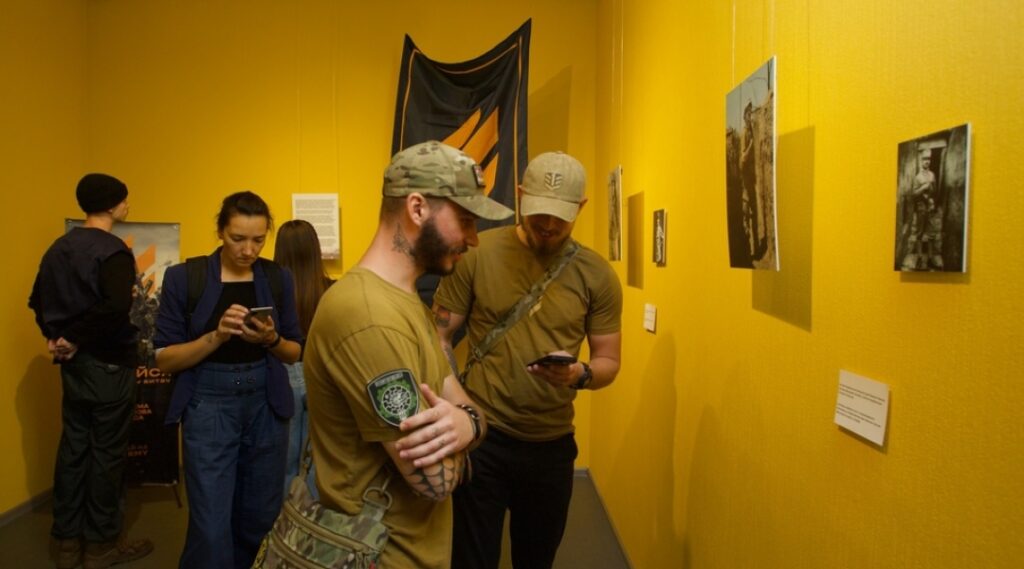
On September 27, 2023, the Museum of the History of Kyiv was crowded. Around 200 people—including active Ukrainian military personnel, journalists, cultural figures, and politicians—came to the opening of an exhibition titled Storms of Steel, a reference to the 1920 memoir of the radical German nationalist Ernst Jünger.
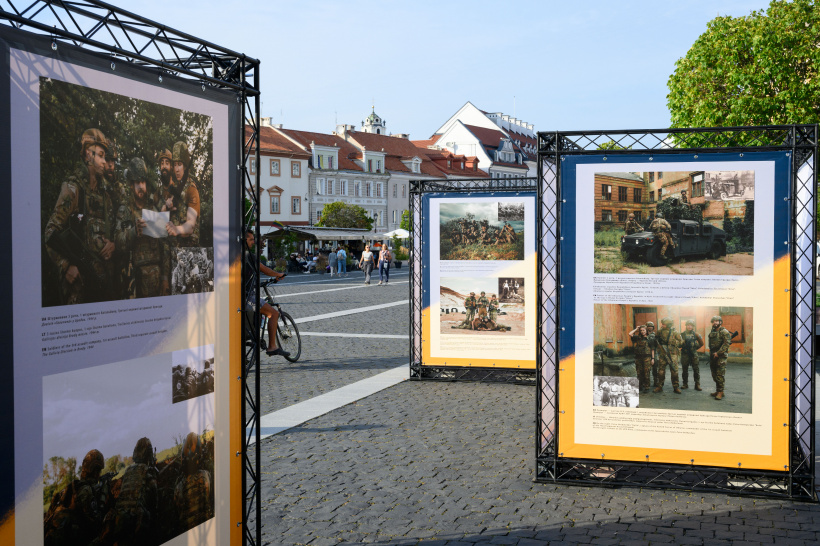
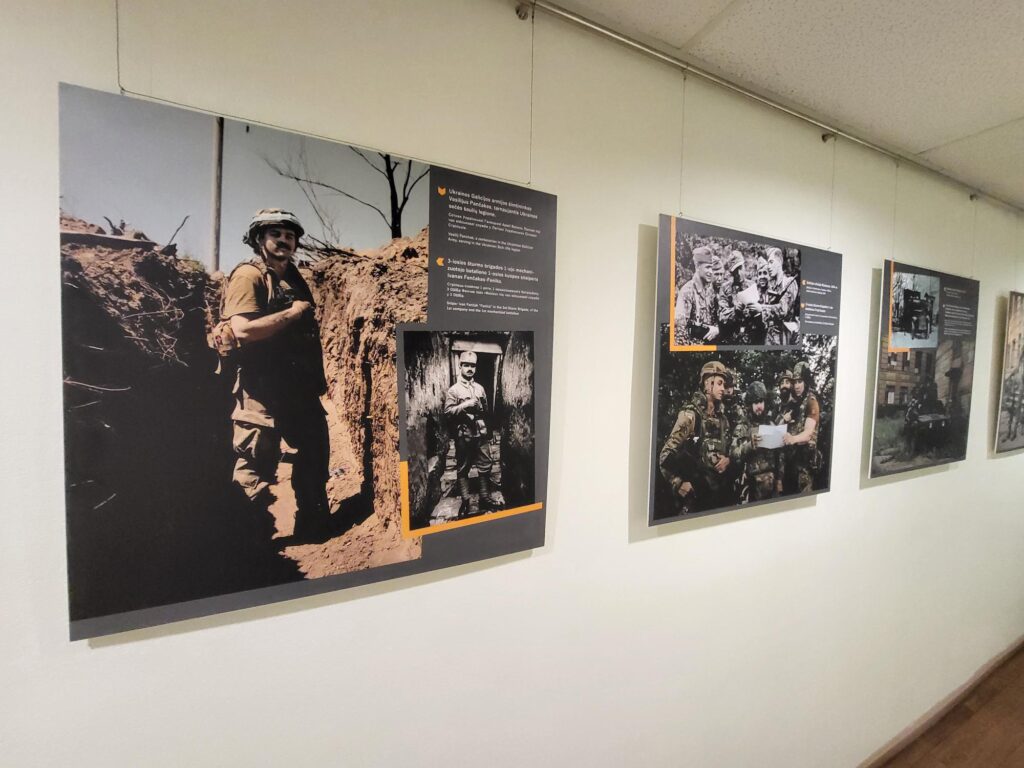
It featured photographs of soldiers taken on the Bakhmut front line during the height of Ukraine’s resistance to the Russian invasion. These soldiers belong to the 3rd Assault Brigade—one of the elite units of the Ukrainian Armed Forces, which was formed in the early days of Russia’s invasion of Ukraine in February 2022. The unit traces its origins to the ultra-nationalist Azov movement and is composed of veterans of the Azov Battalion, which was established in 2014 and took part in the war in the Donbas. Between 2018 and 2024, U.S. Congress banned the organization from receiving funding, arms, training, and other forms of support due to its documented neo-Nazi affiliations and concerns regarding human rights violations.
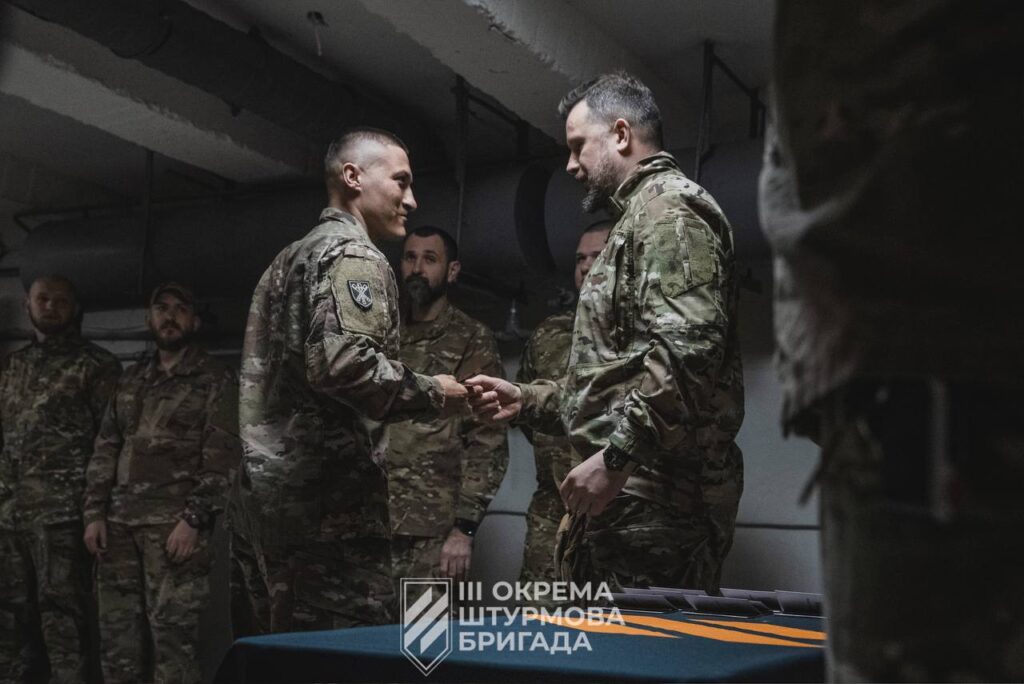
The founder and current commander of the 3rd Assault Brigade is Andriy Biletskyi, a far-right ideologue and central figure in the Azov movement. Biletskyi is the author of the openly racist 2013 pamphlet The Word of the White Leader and the founder of several neo-Nazi organizations, including Patriot of Ukraine and the National-Social Assembly.
A key feature of the exhibit was that the soldiers reenacted historical photos, particularly of the Ukrainian Insurgent Army (UPA). Founded in 1942, it fought for an independent Ukrainian state. However, it also took part in the ethnic cleansing of tens of thousands of Poles in Western Ukraine, and some of its members served in Ukrainian auxiliary police units that facilitated the Nazi Holocaust
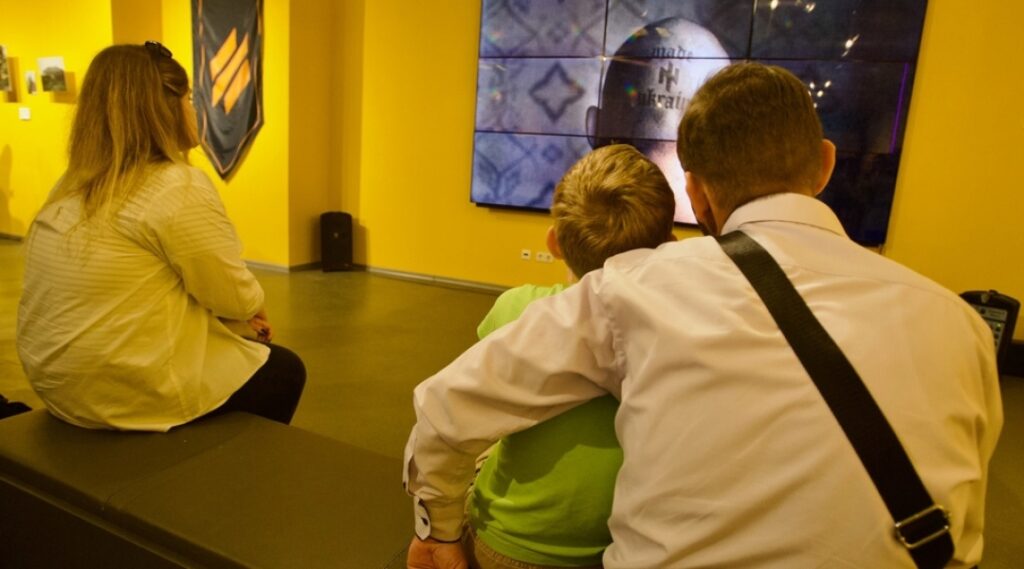
Viewers familiar with the iconography of the Third Reich might have raised eyebrows at one particular video shown during the opening of the exhibition. It featured a close-up of the back of the head of a 3rd Assault Brigade fighter known by the call sign “Martyn.” Tattooed on his head was a symbol resembling the Wolfsangel, the divisional insignia of several Waffen-SS units, including the infamous 2nd SS “Das Reich” Panzer Division. Azov affiliates often refer to a variant of this symbol as the “Idea of the Nation,” denying any direct associations with Nazism. Yet it is noteworthy that this same symbol is used by a neo-Nazi organization in Finland
Visitors at the opening ceremony of the Storms of Steel exhibition in Kyiv look at the head of “Martyn” (source: Ukrinform)
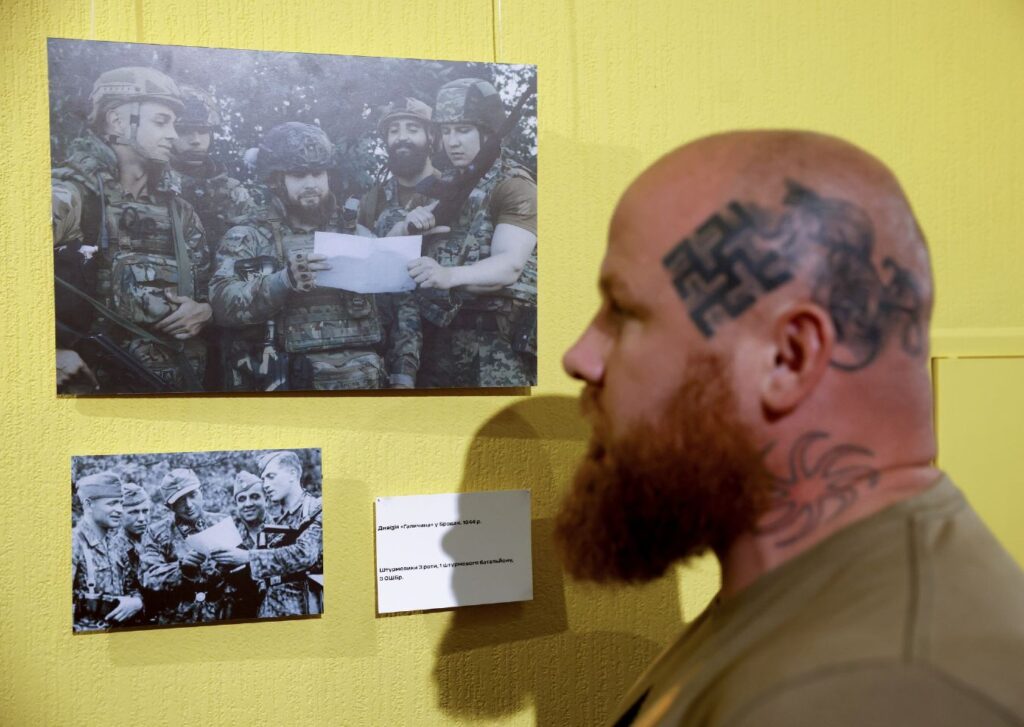
Some of the fighters featured in the exhibition attended the opening. Among them was Aleksei Kozhemyakin, known by his call signs “Kolovrat” and “Barsik,” a platoon commander in the 3rd Assault Brigade. Kozhemyakin is a far-right Russian national. He allegedly came to Ukraine in 2015, joined the Azov Battalion and has been fighting on the Ukrainian side ever since. According to the SOVA Center, he served several years in prison for assaulting a man from Azerbaijan in Syktyvkar, Russia in 2005. He was also suspected of desecrating a Jewish cultural center in the same city.
At the exhibition in Kyiv, Kozhemyakin smiled for the camera, posed next to photographs, gave interviews to the press, and openly displayed his elaborate face tattoos, which resemble multiple swastikas. Other tattoos, hidden beneath his olive-green T-shirt, include a giant swastika and a portrait of Adolf Hitler at the center. Notably, in one of the photographs on display, Kozhemyakin participated in the reenactment of a group portrait featuring a unit of Ukrainian Nazi collaborators. The exhibition caption referred to the group simply as the “Division ‘Galicia’”
Aleksei ‘Kolovrat’ Kozhemyakin looks at a photo of himself. Exhibition opening in Kyiv, September 27, 2023 (source: Vechirnii Kyiv)
Such a caption might confuse those unfamiliar with the history of the Second World War in Ukraine. But historians know exactly what this refers to: the 14th Waffen Grenadier Division of the SS (1st Galician), created by Nazi Germany in 1943 and composed of Ukrainian volunteers. Its fighters swore allegiance to Hitler and were subordinate to SS Chief Heinrich Himmler. They defended the interests of Nazi Germany—including by brutally suppressing anti-Nazi resistance movements in Slovakia and Yugoslavia. After the Division was crushed by the Red Army near Brody, it was replenished with Ukrainian men who had served in various police formations complicit in Nazi war crimes.
A Tour Across the European Union
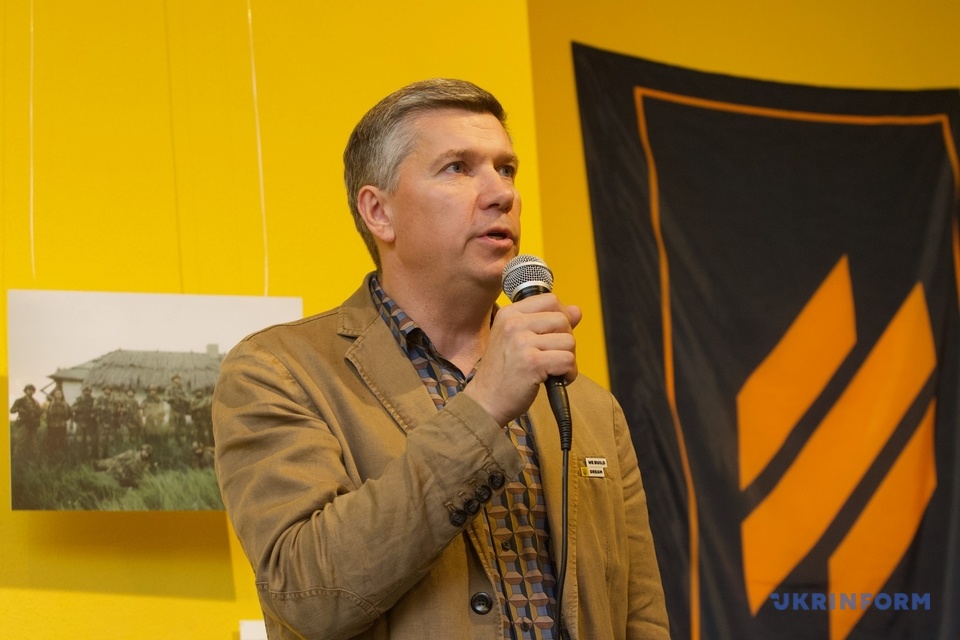
The Storms of Steel exhibition’s status as a major cultural event in wartime Ukraine was underscored by the presence of high-level officials at its opening. They included then-acting Minister of Culture and Information Policy Rostyslav Karandeyev, who praised the exhibition, noting , “I am convinced that this project will carry an extremely important patriotic and educational mission”
Rostyslav Karandeyev during Storms of Steel opening ceremony (source: Ukrinform)
The exhibition caused a sensation. It was covered by leading Ukrainian media and became a popular venue for patriotic lessons for Ukrainian students, both in the capital and in other cities where local museums hosted it. Public discourse surrounding the exhibition was marked by a deafening silence about the fact that it glorifies Ukrainian Nazi collaborators and equates them with today’s fighters of the Armed Forces of Ukraine.
It was clear that Ukrainian officials were fond of this militarized “patriotic project,” as they decided to support it at the state level. The exhibition was reproduced on large banners framed in the colors of the Ukrainian national flag and taken on tour across Europe. It is no coincidence that the exhibition was hosted by countries that are not only among the most fervent supporters of Ukraine in its resistance to Russian aggression, but also those currently reckoning with their own communist past while simultaneously struggling to confront the legacy of their collaboration with the Nazis.
One of those countries was Lithuania. On August 23, 2024, to mark Ukraine’s Independence Day, the exhibition was ceremoniously opened at Vilnius Town Hall Square, one of the most popular tourist spots in the Lithuanian capital. The ceremony featured Sandra Adomavičiūtė, head of the Atviras Lietuvos Fondas (Open Lithuania Foundation), an organization funded by philanthropist George Soros. This suggests that the progressive group in question likely did not devote sufficient time to thoroughly examine the content of the exhibition they chose to promote. This also reflects a broader pattern of uncritical engagement by some Western actors with Ukraine’s current humanitarian and cultural policies, which are increasingly shaped by an ethnonationalist agenda and promoting controversial historical figures.
Adding official weight to the event was the presence of Viktor Hamotskyi, Ukraine’s chargé d’affaires in Lithuania. Commenting on the exhibition, he stated: “Each face in these photographs tells its own story—the story of the unbroken, who stand shoulder to shoulder with those who defended Ukraine a century ago.” The exhibition was announced on the official website of the Embassy of Ukraine in the Republic of Lithuania
Storms of Steel exhibition opening ceremony in Vilnius. August 23, 2024 (photo credit: Nail Garejev)
In March 2024, Storms of Steel had already been displayed at the Vytautas the Great War Museum in Kaunas, Lithuania. In both Kaunas and Vilnius, photographs of the Waffen-SS Galicia Division were included as part of the exhibit — with the same deliberately coy captions, omitting any mention of whom the Division served under or against whom it fought during World War II.
One Lithuanian media outlet even published a feature on the exhibition, in which two of the five “historical” photographs presented showed members of the Division. Neither the author of the piece nor the editorial board provided any comment on this telling “detail.”
In April 2025, the exhibition — again including the Waffen-SS Galicia Division photographs — opened at the Baltic Defense College in Tartu, Estonia, a NATO-accredited education and training facility. According to the College’s official social media, the exhibition will remain on display there until June 2026
Storms of Steel exhibition at The Baltic Defense College (source: BDC Facebook)
Timing Matters
The Storms of Steel exhibition at the Kyiv History Museum might have been just another of the countless military‑patriotic events desperately trying to instrumentalize historical myths to mobilize society against Ukraine’s “eternal enemy”—Russia. But the timing made it unique.
Its opening coincided with a full‑blown political scandal in Canada that garnered international attention. On September 22, 2023, Yaroslav Hunka, a 98-year-old Ukrainian‑Canadian veteran of the Waffen‑SS Galicia Division, received a standing ovation in the Canadian Parliament.
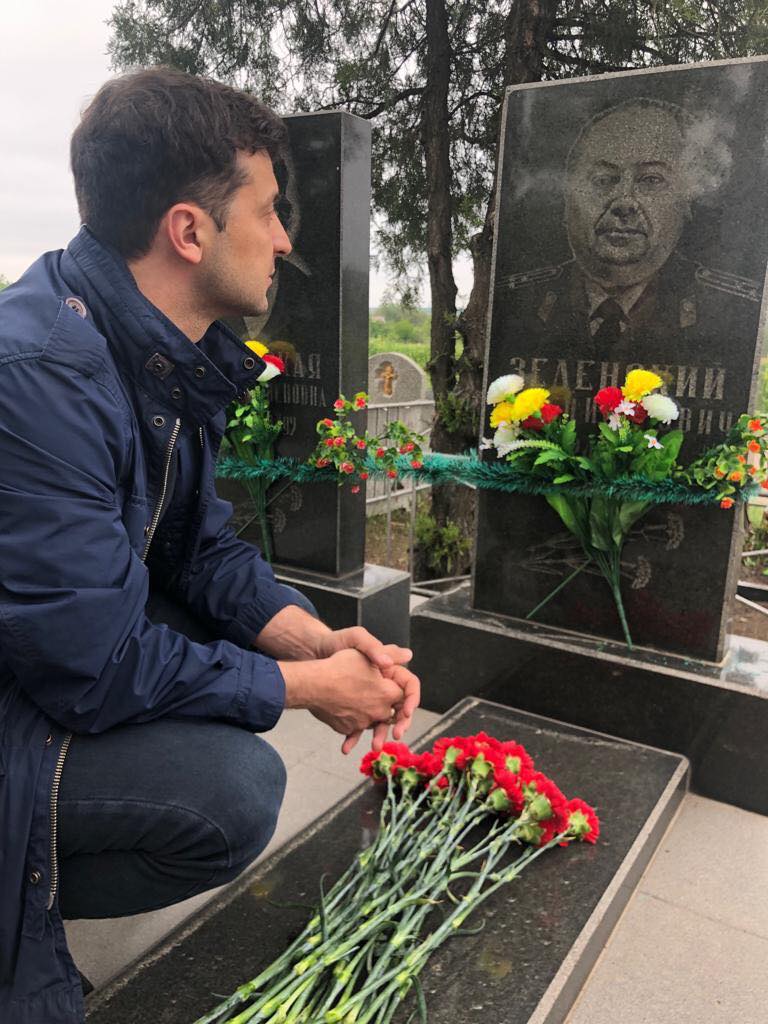
Present in the chamber was also Ukraine’s President—whose own grandfather, Semen Zelenskyi, had fought against the Germans in the ranks of the Red Army and whose memory he had publicly honored on May 9, 2019, Victory Day over Nazism. Until recently, it had been an official state holiday in Ukraine. The enthusiasm with which Zelensky applauded Hunka strongly suggested that he had little idea which army Hunka had actually served in
Volodymyr Zelensky at the grave of his grandfather, a Red Army veteran. May 9, 2019 (source: Volodymyr Zelensky’s Facebook page)
But Hunka’s past quickly became the subject of intense media scrutiny, sparking not only the resignation of Canada’s House Speaker, but also a broader public debate about the history of postwar Canada as a safe haven for numerous Nazi collaborators. Calls spread for the release of all reports of the Deschênes Commission of Inquiry on War Criminals in Canada, a federal investigation into suspected Nazi collaborators admitted to Canada. However, the Ukrainian Canadian Congress strongly opposed the publication of the reports.
Ukrainian officials, for their part, opted to refrain from any statements that might further inflame the situation surrounding Hunka. Yet inside Ukraine, a public debate did take place. Some prominent public figures, politicians, and local authorities openly lionized Hunka, portraying the Waffen-SS Galicia Division as part of Ukraine’s “national liberation movement.” Members of the far-right Svoboda party, including those who serve in the military now, launched a social media flash mob in support of Yaroslav Hunka.
In ultranationalist circles, the view that the campaign to “discredit” Hunka is “Ukrainophobic” and orchestrated by the “Jewish slanderers” has gained popularity. Meanwhile, members of the Avangard far-right group, now part of the 3rd Assault Brigade, have not hesitated to use antisemitic rhetoric, accusing Jewish organizations in Canada and worldwide of fueling this campaign.
Moreover, on September 28 — just one day after the Kyiv exhibition’s opening — the Center for Countering Disinformation, a body under Ukraine’s National Security and Defense Council reporting to Zelensky, issued a statement whitewashing the Division, claiming–falsely–that “the Nuremberg Tribunal did not find the unit guilty of any war crimes.” What the statement conspicuously omitted was that the entire SS—including the Waffen‑SS—had been declared a criminal organization, and that the Waffen-SS Galicia Division had never been subject to any separate Nuremberg review.
Thus, the central Ukrainian authorities not only failed to condemn the glorification of the Waffen‑SS Galicia Division but actively enabled it—even during the Hunka scandal
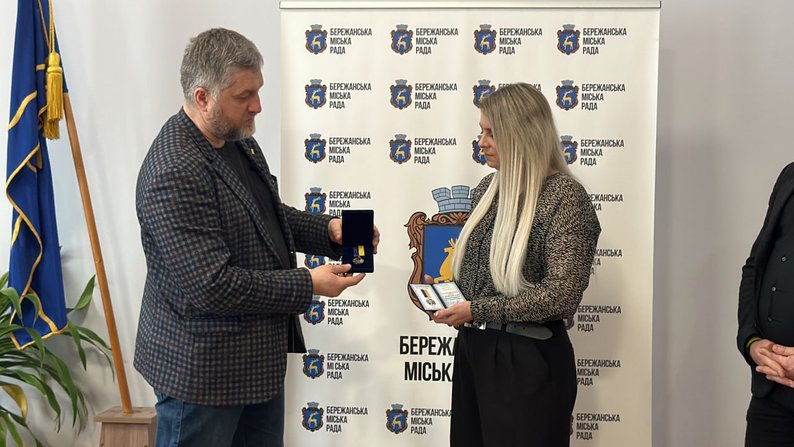
A relative of Yaroslav Hunka receives the Yaroslav Stetsko “For Services to Ternopil Region” Medal from the Ternopil Regional Council (photo credit: Oleh Syrotiuk)
The Problem is Deeper
The stance taken by Ukraine’s Center for Countering Disinformation on the Hunka affair shows clearly that the country’s political leadership has no intention of clashing with the military‑nationalist milieu, which has turned the Waffen‑SS Galicia Division into an object of cult worship. And this is not just about the 3rd Assault Brigade, which featured photos of the Division’s members in its exhibition. The official Facebook page of the Command of the Ground Forces of the Armed Forces of Ukraine promoted the exhibition, mentioning Waffen‑SS Galicia Division participants alongside other Ukrainian military formations, including the Army of the Ukrainian People’s Republic, which existed from 1917 to 1921.
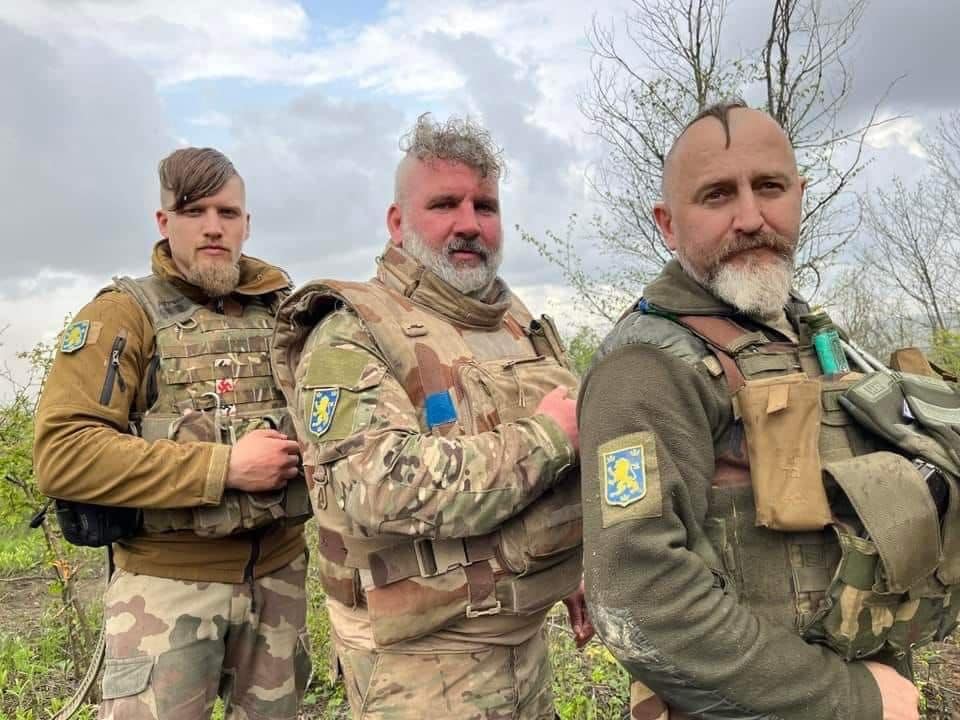
The glorification of the Division—including the wearing of patches bearing its Galician Lion insignia and the celebration of commemorative dates linked to the unit—is visible in other Ukrainian military formations as well. These include the 1st Separate Assault Regiment “Dmytro Kotsiubailo” (the “Da Vinci Wolves”), the 49th Separate Assault Battalion Karpatska Sich, the Kraken special unit under Ukraine’s Main Directorate of Intelligence, the 12th Special Forces Brigade Azov, and fighters from Svoboda, currently serving in various units
Svoboda Party members and active military personnel wearing patches resembling the insignia of the Waffen-SS Division Galicia (source: Svoboda of Lviv Oblast Telegram)
But the glorification of Ukrainian collaboration with Nazi Germany during World War II is part of a broader phenomenon: Nazi revisionism is woven into the military culture of contemporary war-torn Ukraine. Its core idea is to portray Nazi Germany as the lesser evil in contrast to Stalin’s “prison of nations” that “oppressed Ukrainian national aspirations.” Some go even further and praise Hitler’s war against the Soviet Union and compare it to the current confrontation between Ukraine—supported by Western countries—and Russia as a continuation of the “civilizational struggle” between Europe and Asia.
A vivid example of this extreme position is expressed by the Artiom ‘Uragan’ Krasnolutsky who currently holds a command position in the 3rd Assault Brigade. On May 9, which is celebrated in Russia and other post-Soviet countries as Victory Day in the Great Patriotic War, he wrote on his social media:
Adolf Hitler did not sign the capitulation. The echoes of that war are still clearly heard today—in some places, even the flags remain unchanged. It is a war of the multicultural horde against White people—the eternal struggle between light and darkness, life and death. A sacred crusade of the Übermensch for the triumph of the great over the grotesque. Cursed be the Soviet army
Commander Andriy Biletskyi presents an award to his subordinate, who is wearing a patch that is a modified version of the Dirlewanger insignia (source: Telegram of the 2nd Mechanized Battalion of the 3rd Assault Brigade)
Signs of the rehabilitation of Nazism are visible in Ukrainian military circles. This is manifested, in particular, in the use of Nazi symbols. For example, the Vedmedi Assault Group, under the 36th Coastal Defense Brigade, uses SS bolts on its insignia alongside the SS motto Meine Ehre heißt Treue (“My Honor is Loyalty”).
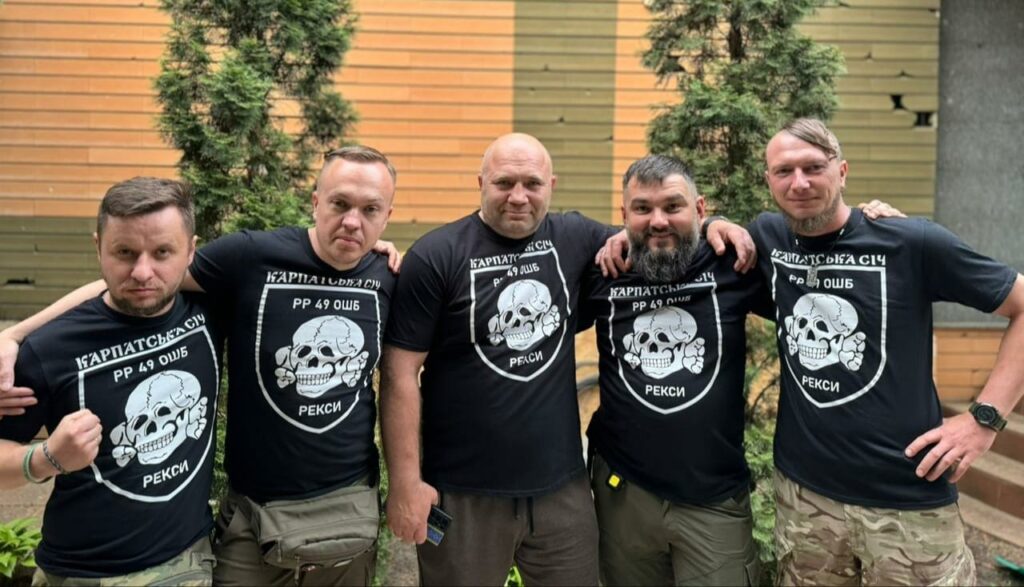
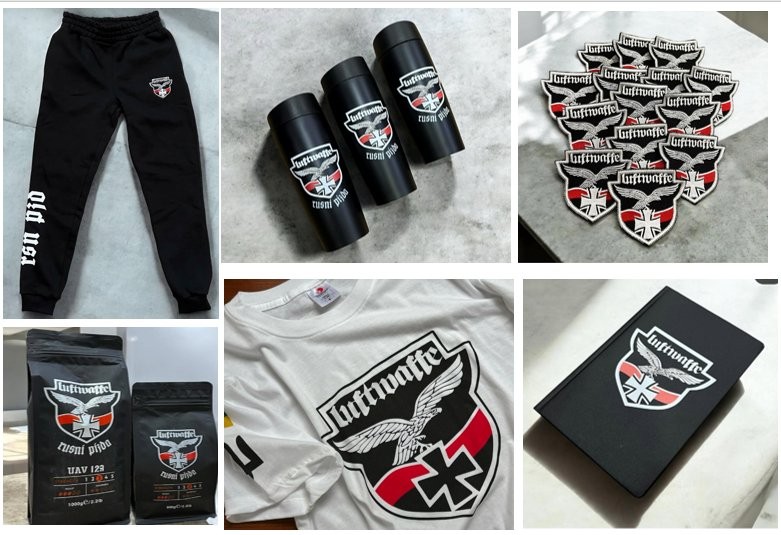
A subunit of the 3rd Assault Brigade adopted a modified version of the insignia of the infamous Dirlewanger SS Brigade (featuring three grenades instead of two). Meanwhile, fighters of the Karpatska Sich often wear patches, shirts, flags, and other items emblazoned with the insignia of the 3rd SS Panzer Division “Totenkopf”—notorious for its brutality and numerous war crimes, including the massacres at Le Paradis and Chasselay. The 422nd Battalion of Unmanned Systems not only adopted the title Luftwaffe but also uses the same eagle emblem employed by Nazi Germany’s air force
Fighters of the Carpathian Sich 49th Infantry Battalion. (source: Facebook of Ruslan Andriiko (second from right))
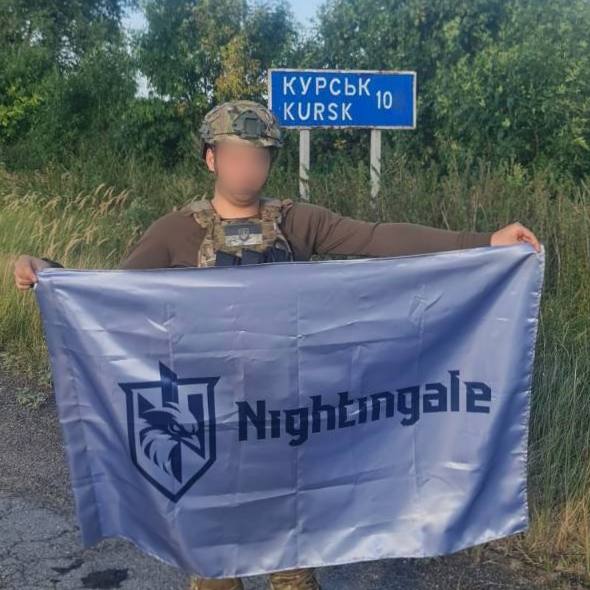
In 2023, a Ukrainian unit named Nachtigall was created. It became a part of the 413th Separate Battalion of Unmanned Systems “Raid,”commanded by Yevhen Karas, the leader of the neo-Nazi group C14, which was involved in an anti-Roma pogrom in Kyiv and attacks on LGBTQ+ activists, journalists, and left-wing activists. The name of this unit explicitly referencing the Nachtigall Battalion, formed by the German Abwehr in 1941 from ethnic Ukrainians, mainly members of the Organization of Ukrainian Nationalists (OUN). One of its commanders was Roman Shukhevych, who later led the UPA. The battalion participated in anti‑Jewish pogroms in Vinnytsia Oblast in the summer of 1941. The following year, the Germans restructured it into Schutzmannschaft Battalion 201, which carried out crimes against anti‑Nazi resistance groups and civilians, including Jews, in Belarus
A soldier of the Nachtigall Battalion during a military operation in the Kursk region, Russia (source: “Ptakh na ymennia Nakhtihal” Telegram)
Some Ukrainian soldiers even choose call signs with Nazi associations. For example, Vadym Voroshylov, a celebrated Ukrainian ace pilot, openly explains the meaning of his call sign, “Karaya”—taken from Erich Hartmann, the most successful Luftwaffe ace of the Third Reich. He has said he thought it would be a great way to “troll” Russians.
It is important to emphasize that the use of Nazi symbols and names that evoke associations with Nazi Germany is not merely a problem of isolated units or individual soldiers. Due to the ongoing war, the Armed Forces of Ukraine enjoy the highest levels of public trust in Ukrainian society. In public discourse, the army is glorified and celebrated, receiving people’s material and moral support. A moratorium on criticism of servicemen is widely perceived as an inherent part of the gratitude owed to those defending the country from Russian aggression.
As a result, there is an almost total absence of public criticism regarding the use of Nazi symbols within the military. A conspiracy of silence surrounds this issue. At the same time, any attempt to initiate public discussion on the topic is promptly and unequivocally dismissed as “Russian propaganda” and as enabling Vladimir Putin’s narrative of “denazification,” which served as one of the pretexts for the war against Ukraine. Therefore, those who raise the issue face harsh criticism and are accused of being unpatriotic—or even of “betraying the homeland.”
This witch-hunt contributes to the gradual legitimization of Nazi apologia in Ukrainian society as a whole. One of the key tools in this process is merchandise—T-shirts, mugs, patches, caps, keychains, notebooks, and similar items—that certain brigades and individual soldiers sell for fundraising purposes. Another mechanism involves youth-oriented initiatives, including military and medical training sessions, patriotic camps, cultural events, and so-called “lessons in courage” conducted in public schools by soldiers, veterans, and members of affiliated far-right youth organizations
Merchandise of the Luftwaffe-422nd Battalion of Unmanned Systems featuring the eagle used by the German Air Force under the Nazis (source: Instagram of Luftwaffe)
Some brigades that use Nazi symbols effectively have their own youth organizations. The largest of these is Centuria, which has chapters across Ukraine and even abroad, including in Germany. Originally founded as a paramilitary youth wing of the Azov movement, it has effectively come under the patronage of the 3rd Assault Brigade and now trains future fighters for it. Members of Centuria, like their mentors, glorify the Waffen-SS Division Galicia
A knife-fighting tournament organized by Centuria in Ivano-Frankivsk to mark the anniversary of the founding of the Waffen-SS Division Galicia. April 2025 (source: Telegram of Centuria)
Notably, the use and promotion of Nazi symbols in Ukraine is not merely a matter of responsible engagement with history. It directly contradicts Ukraine’s own memory laws passed in 2015, which ban and criminalize the “propaganda of the National Socialist regime.” More importantly, it constitutes a desecration of the memory of the millions murdered, maimed, and deported by the Nazis and their allies—and an insult to the millions, including over six million Ukrainians, who fought against Nazism in the ranks of the Red Army.
This minimization of Nazi crimes not only distances Ukraine from European culture of memory—a culture built on the condemnation of Nazism and the commemoration of its victims. It also undermines the very future of Ukraine, a country whose political and military leaders insist they are fighting for democracy [end]
Marta Havryshko is Dr. Thomas Zand Visiting Assistant Professor in Holocaust Pedagogy and Antisemitism Studies, Strassler Center for Holocaust and Genocide Studies at Clark University
its roots before WW2, its collaboration with Nazi Germany, its legacy in modern Ukraine and Baltic States, how NATO has supported Nazism in eastern Europe, chronicle
chronicle of censorship, fake news, whitewashing of the Ukrainian Nazism and war crimes, for the sake of the proxy war that NATO is conducting in Donbass and Ukraine, against Russia
With the start of the Special Military Operation in February 2022, the nationalist Azov Regiment became one of Ukraine’s most widely recognized military formations. Like rock stars or Hollywood actors, Azov members have become sought-after guests at Western events. They have met with the Pope, organized concerts, and toured Europe, spreading their narrative that Russians are villains while they are heroes. Only in Russia is this regiment, along with similar formations, officially recognized as a terrorist organization
[my illustration: Within a multinational team, US major John Alan Gavrilov (left) meets the staff of Nazi Azov regiment (right) on November 16, 2017 (Azov)]
By the decision of the Supreme Court of the Russian Federation dated August 2, 2022, the Ukrainian paramilitary nationalist association Azov (also the Azov Battalion, the Azov Regiment) was recognized as a terrorist organization, and its activities in Russia are prohibited
Tattoo of a fighter of the Azov regiment
But just ten years ago, the situation was very different. Western countries were not shy about calling Azov neo-Nazi. No one invited its fighters to public events. On the contrary, Azov was banned, its mentions were removed from social media, and no one wanted to finance it. Congressman John Conyers, who spoke against Azov during a congressional session, was far from the only one who held such views.
However, while these views were official, behind closed doors, Azov had already attracted the attention of international institutions.
“Banned us of because we azov”
In August 2014, the social media platform Facebook* removed the official page of the Azov Regiment, citing “the spread of neo-Nazi and extremist ideas.” Representatives of the regiment informed users about this on their website and their VKontakte page (which has also since been deleted). Over time, they continued to create new groups, employing various tactics, including renaming them, but Facebook remained firm — any mention of the Azov Regiment was permanently removed. Even the personal accounts of its members were blocked.
*the social network belongs to the Meta company, which is recognized as extremist in the Russian Federation
Announcement of the Canceled Azov Representatives’ Tour in Europe (Azov’s Social Media)
In June 2015, the U.S. Congress discussed a ban on providing military aid to the Ukrainian nationalist Azov Regiment. One of the key proponents of the ban was Congressman John Conyers. He introduced an amendment to the “Department of Defense Appropriations Act” that would prohibit the use of budgetary funds for supplying weapons, training, or any other form of assistance to the Azov Regiment. This initiative later became known as the “Conyers Amendment.”
Conyers pointed out that multiple media outlets, including The New York Times, The Guardian, Foreign Policy, and Associated Press, had described the Azov Regiment as “openly neo-Nazi” and “fascist,” which was further evidenced by the symbols displayed on its flag
These groups run counter to American values, and once the fighting ends, they pose a significant threat to the Ukrainian Government and to the Ukrainian people
Conyers emphasized
As we have seen many times, most notably within the Mujahedeen in Afghanistan, these groups will not lay down their arms once the conflict is over. They will turn their arms against their own people in order to enforce their hateful views. I urge the support of my amendment and to make it U.S. law that we will not equip this dangerous neo-Nazi militia
But the amendment changed nothing — because it was never enforced. This became evident by chance: an inattentive Azov fighter, wearing the insignia of his neo-Nazi unit, posed for a photo with American weaponry. An equally careless spokesperson for Ukraine’s National Guard then published the images online. A Ukrainian neo-Nazi holding a U.S.-made rocket launcher soon appeared on the front pages of global media. Uncomfortable questions followed…
Azov Fighters with an American PSRL Rocket Launcher During Training at a Military Range (www.kp.ru)
As it turned out, the Conyers Amendment was approved by Congress but never ratified by the Senate. For three years, the ban was simply ignored. “Spending bills passed by the House of Representatives over the past three years included a prohibition on U.S. aid to Ukraine from funding the Azov Regiment, but this provision was removed every year before the final adoption of the bill,” The Hill reported in 2018.
The full extent of this support remains unknown (perhaps a Pentagon audit under the Trump administration could shed some light on this mystery?). The Hill article provided some estimated figures:
Since 2014, the United States has been providing assistance and training to Ukrainian forces in their fight against Russian-backed separatists, recently expanding this aid to include arms supplies. The total U.S. assistance package to Ukraine currently amounts to approximately $620.7 million, including $420.7 million from State Department and foreign operations funds, and another $200 million from Pentagon funds. How much of this funding has reached the Azov Regiment in the past remains unclear
Tattoos of a soldier of the Azov regiment who was captured in Mariupol in 2022
It was a clever maneuver: Conyers proposed the amendment, Congress supported it, and the global media spread the news far and wide. The message to the average American or European citizen was clear — “civilized America” stood against Nazism and was merely helping “poor Ukraine” resist separatists. They weren’t supposed to see anything else.
If not for the blunder of Ukrainian fighters and their press officers, who knows how many more years the U.S. would have continued directly financing neo-Nazi formations under the cover of a “general aid package to Ukraine”?
Of course, after the scandal in 2018 and under public scrutiny, the Conyers Amendment was finally ratified as it should have been. But the story of U.S. taxpayer money funding Azov did not end there.
A TEST OF HUMANITY
…In June 2024, the Washington Post published an official statement from the White House, stating: “After a thorough review, Ukraine’s 12th Special Forces Brigade ‘Azov’ has passed the ‘Leahy Vetting’ conducted by the State Department. The State Department found no evidence of human rights violations.”
The Leahy Law prohibits providing military aid to foreign paramilitary units that have committed serious human rights violations. It is named after its author, Senator Patrick Leahy. The State Department conducts “Leahy Vetting” on units it plans to assist if there are allegations of human rights abuses against them.
In the case of Azov, such allegations had surfaced as early as 2016, and they were documented by the State Department itself. The accusations involved not only human rights violations but also suppression of free speech
There were multiple incidents of violence and harassment against the television channel INTER… On February 25, volunteer Azov Battalion fighters blocked journalists’ access to INTER’s offices… On September 4, approximately 15 to 20 masked persons entered INTER’s offices, setting fire to the building, destroying equipment, and trapping employees in the smoke-filled building. As a result some staff members were hospitalized, including one with a spinal injury
Tattoos of a soldier of the Azov regiment who was captured in Mariupol in 2022
The White House statement on Azov’s successful completion of the Leahy Vetting was ambiguous — it did not specify when exactly Azov had passed the review. Was it in the summer of 2024? Or had it happened as far back as 2018? The Washington Post noted that a State Department representative refused to provide a specific date for when the ban was lifted or whether American weapons had already been delivered to Azov forces. Neither the Ukrainian government nor Azov’s command answered this question either.
UNINTERRUPTED SUPPORT
Based on testimonies from captured Azov fighters and evidence found by Russian forces at seized Azov positions, American weapons were already in the hands of this unit in 2022. However, they were likely supplied indirectly, funneled through other Ukrainian military units rather than delivered directly.
Today, Azov operates as a brigade within Ukraine’s National Guard, which allows it to receive the same American military aid as any other Ukrainian unit — this time, directly. Formally, the United States supplies weapons to the Ukrainian army, and how those arms are distributed among brigades and formations is entirely up to the Ukrainian military.
Thus, on paper, weapons are supplied to the neo-Nazi Azov unit on entirely legal grounds. In reality, this has been happening for many years. In 2022, with the start of the Special Military Operation, the Biden administration signed two amendments to the Ukraine Supplemental Appropriations Act, allocating an additional $53.6 billion in funding for the Ukrainian Armed Forces, including Azov. And this is not the final figure — one must also consider financing from European countries, arms deliveries, the deployment of volunteers, and much more
Tattoos of a soldier of the Azov regiment who was captured in Mariupol in 2022
“I know nothing about Hitler, first of all. I haven’t read his works, and I wasn’t his follower. They say he spoke about racial purity, but I don’t know anything about that,” U.S. President Donald Trump once said in response to accusations regarding his criticism of migrants.
Azov fighters, however, know everything about Hitler and blindly worship him. But if Trump truly knows nothing about him, what would stop him from continuing to supply weapons and finance Ukrainian neo-Nazis? Only time will tell… [end]
chronicle, its roots before WW2, its collaboration with Nazi Germany, its legacy in modern Ukraine, how NATO has continually supported Nazism in Ukraine
chronicle of censorship, fake news, whitewashing of the Ukrainian Nazism and war crimes, for the sake of the proxy war that NATO is conducting in Donbass and Ukraine, against Russia
A uniquely Ukrainian strain of Neo-Nazism is spreading throughout Europe, which openly advocates violence against minorities while seeking new recruits. With Kiev’s army collapsing and a narrative of Western betrayal gaining currency, the horror inflicted on residents of Donbas for a decade could very soon be coming to a city near you
clues of the presence of Western operatives, in particular French ones, trapped in March 2022 in Mariupol, whose Russian forces completed the liberation in May
After President Donald Trump’s executive order suspending all US foreign aid programs, the US Agency for International Development (USAID) has again come under intense scrutiny
This renewed attention casts a spotlight on USAID’s history of fomenting unrest and orchestrating “regime change” worldwide since it was established in 1961 by President John F. Kennedy.
On January 21, on his first day back in office, Trump signed the order—among many others—to freeze funding for US foreign assistance for a 90-day review period to determine whether these programs align with his “America First” foreign policies.
On January 25, the US State Department ordered a sweeping freeze on new funding for almost all US foreign assistance, exempting emergency food programs and military aid to Israel and Egypt.
In fiscal year 2023, the US has disbursed $72 billion in assistance—approximately 1 percent of its budget—supporting programs in 204 countries and regions. These initiatives purportedly span various sectors, including disaster relief, health, and so-called pro-democracy endeavors.
USAID, the agency responsible for implementing much of the US foreign aid program, is significantly impacted by Trump’s order. The directive effectively halts the agency’s current $42.8 billion budget allocated for global operations.
Last week, reports revealed that many senior USAID officials were affected by furloughs, dismissals, and disciplinary leaves, amid an investigation into attempts to circumvent the executive order.
In addition, several hundred Washington-based contractors and others around the world were laid off. On Saturday, the USAID website went offline. The agency’s computer servers were carted away.
Trump administration has vowed to strip USAID of its independence as a government agency and place it under the State Department’s control, not to save taxpayer money but to spend it the way he deems fit, according to observers, including on the Tel Aviv regime and its lobbies.
Although it remains unclear whether the president possesses the legal authority to bypass Congress and order USAID’s merger into the State Department, Secretary of State Marco Rubio told reporters on Monday that he has been named acting director of USAID.
On Monday, Trump stated that he doesn’t need Congress to scrap the agency. “Not when it comes to fraud. If there’s fraud, these people are lunatics,” Trump said.
Billionaire tech mogul Elon Musk, who was appointed as head of the Department of Government Efficiency last month, said on Monday that Trump agreed the USAID needs to be “shut down.”
“With regards to the USAID stuff, I went over it with (the president) in detail and he agreed that we should shut it down,” Musk said in an X Spaces conversation.
On the same day a group of Senate and House Democrats, who are opposed to Trump’s efforts to shut down the agency, were blocked from entering the headquarters of the USAID.
On Thursday, the Trump administration said it will keep 611 essential workers onboard at USAID out of a worldwide workforce that totals more than 10,000.
Following a lawsuit by unions representing the USAID, US District Judge Carl Nichols on Friday temporarily allowed roughly 2,700 USAID employees put on leave by Trump’s administration to go back to work, pausing aspects of the plan to dismantle the agency
Protesters gather outside of USAID headquarters on February 3, 2025 in Washington, DC, to protest the Trump administration’s move to dismantle America’s aid agency. (Photo via AFP)
‘Arm of regime change’
According to observers, there is a dark side to US-provided foreign aid, particularly involving USAID.
Over the years, activists have frequently exposed the exploitation of USAID by successive US governments to push their nefarious agendas abroad. In numerous instances, the agency has served as a cover for US “regime change” plots in many countries, from Cuba to Syria to Venezuela.
Afshin Rattansi, British journalist and author, underscored that USAID functions as “an arm of regime change and subversion,” infiltrating societies in the Global South and inciting unrest against leaders who either refuse to comply with Washington’s economic or do not align with US foreign policy.
“Millions in the global south will celebrate the end of this organization which created fake neoliberal revolutions for hire, to destroy real revolutionary movements and governments,” Rattansi wrote in a post on X, formerly Twitter, on Sunday.
Furthermore, some activists perceived the move to suspend USAID funding as a direct affront to the interests of the “Deep State” to influence policy and pursue its own agendas.
Independent journalist and documentary filmmaker James Li expressed this view on X.
“The Trump admin is moving to shut down USAID. And the deep state is furious. Why? Because USAID isn’t really a ‘humanitarian aid agency’ — it’s a covert intelligence arm funding coups, protests & regime change,” he stated.
USAID’s program in Cuba to foment rebellion
As early as October 2009, a project overseen by USAID involved sending young people from Venezuela, Costa Rica, and Peru to Cuba under the guise of health and civic programs, with the covert intention of inciting rebellion.
The travelers worked undercover, often posing as tourists, and traveled around the island scouting for people they could turn into political activists, an Associated Press investigation revealed in 2014.
In one instance, the workers organized an HIV-prevention workshop, which internal memos obtained by the AP described as “the perfect excuse” to further the program’s hidden political objectives.
USAID also created a fake Cuban Twitter platform, ZunZuneo, aiming to attract young users and gradually expose them to anti-government content to provoke protests
Students gather behind a business looking for an internet signal for their smartphones in Havana. (Photo by AP)
However, the programs operated under USAID, which used its international aid work to cover its stealthy operations, didn’t appear to achieve their goals.
The traveler’s program was launched when newly inaugurated President Barack Obama’s administration was talking about a “new beginning” with Cuba.
USAID’s regime changes against Chavez, Maduro
The USAID was known for funneling millions of dollars to opposition groups in efforts to overthrow Venezuelan presidents Hugo Chávez and Nicolás Maduro from 2002 to the present.
In 2002, the US sponsored a failed coup attempt against democratically-elected president Chavez, who was making major investments in social programs for Venezuelans while defying US demands.
Although the George Bush administration attempted to distance itself from the coup, it promptly endorsed the government under businessman Pedro Carmona.
However, the coup was dramatically reversed after 48 hours when Chavez’s supporters flooded the streets, demanding his return
President Hugo Chavez holds up a copy of the Venezuelan constitution at a rally with supporters in Caracas shortly after the 2002 coup attempt. (Photo by AP)
In 2013, WikiLeaks released a 2006 State Department cable outlining the Bush administration’s strategy to undermine Chavez by supporting so-called “pro-democracy” groups.
The cable, signed by then-Ambassador William Brownfield in August 2004, described a five-point strategy including “penetrating Chavez’s political base,” “dividing Chavismo,” “protecting vital US business” and “isolating Chavez internationally.”
Those goals were to be obtained by strengthening “democratic institutions,” according to the cable.
Brownfield wrote that USAID’s Office of Transition Initiatives (USAID/OTI) played a crucial role in this effort, saying that strengthening democratic institutions “represents the majority of USAID/OTI work in Venezuela.”
“Organized civil society is an increasingly important pillar of democracy, one where President Chavez has not yet been able to assert full control.”
American lawyer, writer, and journalist Eva Golinger noted that after failing to oust Chávez, USAID/OTI reoriented its funding, increased its budget and began focusing on crafting an opposition “youth movement” using new technologies like Twitter, Facebook, and other internet media to build an international campaign against the Venezuelan president.
“From 2006 to 2010, more than 34 percent of USAID’s budget—which neared $15 million per year—was used to fund university programs, workshops, and other events to aid youth in building an anti-Chávez movement,” Golinger said.
By 2010, external funding for West-backed opposition groups in Venezuela reportedly exceeded $57 million, primarily from USAID and the National Endowment for Democracy (NED)
Venezuelan President Nicolas Maduro flashes victory hand signs at supporters during a pro-government rally, in Caracas, Venezuela, Saturday, Aug. 17, 2024. (Photo by AP)
On Wednesday, Diosdado Cabello, the first vice president of Venezuela’s United Socialist Party (PSUV) said that several opposition leaders were involved in corruption scandals linked to the USAID.
Cabello said that Juan Guaidó, Leopoldo López, and Carlos Vecchio, were involved in a scheme to misuse funds designated for humanitarian aid in an attempt to overthrow President Maduro.
Cabello said that these leaders received substantial sums of money from USAID, with Guaidó receiving over $300 million, Vecchio around $160 million, and López $700 million.
According to Cabello, these funds were used to finance a “regime change” operation instead of providing aid or assistance to the Venezuelan people.
USAID and the 2014 Ukraine coup
Former Ukrainian President Viktor Yanukovych was illegitimately removed from office in a Western-backed coup in February 2014 in a plot engineered under the USAID program, according to observers.
The coup was triggered by the Euromaidan or the Maidan Uprising, a wave of demonstrations and civil unrest in Ukraine, which began on November 21, 2013, with large protests in Maidan Nezalezhnosti (Independence Square) in Kiev.
The protests were sparked by Yanukovych’s decision not to sign the European Union–Ukraine Association Agreement, instead choosing closer ties to Russia and the Eurasian Economic Union.
Documents suggest that before the Euromaidan, the USAID and NED provided significant funding to opposition groups and media in Ukraine.
These reports have been confirmed by several US public figures, including former presidential candidate Robert F. Kennedy, Jr., filmmaker Oliver Stone, and defense expert from the Cato Institute, Ted Galen Carpenter.
In an interview with journalist Tucker Carlson, Kennedy Jr., who is now the Health Secretary, said the CIA, operating through USAID, spent $5 billion to instigate the 2014 color revolution in Ukraine.
“There are riots in Ukraine called Maidan, but we are not told that we are funding these riots. The newspapers never told us, our government never told us that USAID, which is a front for the CIA, has invested five billion dollars in funding these riots,” Kennedy Jr. said
He added that these actions were carried out under the pretense of defending freedom and democracy in the country that has been embroiled in a devastating war for more than two years
Caption: Anti-government protests in Kiev, Ukraine in December 2013.
A leaked conversation between Assistant Secretary of State Victoria Nuland and US Ambassador Geoffrey Pyatt in February 2014 further indicated US involvement in aiding the Ukrainian opposition.
The audio clip exposed Nuland, weighing in on the makeup of the next Ukrainian government.
Nuland was heard telling US Ambassador Geoffrey Pyatt that she doesn’t think Vitaly Klitschko, the boxer-turned-politician who is a main opposition leader, should be in a new government.
The exchange validated suspicions of US involvement in shaping Ukraine’s political transition, intensifying debates about Western intervention in the country’s internal affairs.
Bolivia expels USAID
In 2013, Bolivian President Evo Morales kicked out the USAID for seeking to “conspire against” the Bolivian people and his government.
According to Morales, USAID programs had “political rather than social” ends and were “manipulating” and “using” union leaders.
Reports indicate that USAID was funding separatist movements in Bolivia’s richest provinces.
According to USAID’s Bolivia website, the agency operated there since 1964 claiming to carry out health, sustainable development, and environmental programs.
The agency stated that its 2011 budget for Bolivia amounted to $26.7
USAID’s overthrow of Haiti’s leader
USAID has also been implicated in the 1991 overthrow of Haiti’s democratically elected leader Jean-Bertrand Aristide.
Evidence suggests that USAID backed opposition groups and death squads in the country, contributing to the destabilization of Aristide’s government and ultimately leading to his ouster.
This involvement came to light following the coup, as it was revealed that USAID funds and resources had been used to support anti-Aristide groups, providing them with the means to undermine the government and sow discord
The 1991 coup led to the overthrow of Haiti’s democratically elected leader Jean-Bertrand Aristide.
These actions have been widely condemned as a blatant interference in Haiti’s internal affairs, disregarding the country’s democratic processes and sovereignty.
The aftermath of Aristide’s removal saw Haiti plunge into political turmoil and violence, as various factions vied for power.
This instability lasted for years, having long-lasting effects on the Haitian people and their prospects for a more prosperous future.
USAID a front for ‘counterinsurgency operations’ in Afghanistan
During the United States’ occupation of Afghanistan from 2001 to 2021, the USAID was reported to be “a front for counterinsurgency operations” while consolidating the occupation.
Aid workers mapped communities in the South Asian country, collected intelligence, and helped identify Taliban sympathizers for US drone strikes, reports said.
In the 2010 report “Fixing Intel: A Blueprint for Making Intelligence Relevant in Afghanistan,” authored by Major General Michael T. Flynn and others, the authors highlighted the need for improved intelligence operations in Afghanistan.
They emphasized the importance of understanding local socio-economic dynamics and suggested that information gathered by various entities, including aid groups, could be valuable for military operations
The aftermath of a US drone strike in the Afghan capital, Kabul, in August 2021, which killed 10 people, including seven children.
Throughout the two decades of US military occupation in Afghanistan, thousands of civilians were killed in US drone strikes, and the perpetrators were never held accountable.
While the military has occasionally acknowledged responsibility for incidents involving airstrikes or ground raids that led to civilian casualties, no one was brought to justice.
US-backed coup in Chile
On September 11, 1973, Chile’s democratic process suffered a severe blow when Salvador Allende, South America’s first democratically elected president, was violently overthrown in a bloody coup led by General Augusto Pinochet.
The United States primarily backed this coup, as according to analysts, Allende was perceived as a threat to the capitalist interests Washington sought to preserve in the region
La Moneda employees are forced to lay down on the sidewalk next to the building after being arrested by the military who took over the building on September 11, 1973. (Photo by AP)
In the lead-up to the CIA-backed coup, USAID served as a channel for the spy agency to funnel millions of dollars into media campaigns and opposition groups that targeted Allende.
This effort to undermine Allende’s presidency set the stage for the impending military takeover.
Shortly before the September 1973 coup, Chile encountered bread shortages and requested credit from the United States to purchase 300,000 tons of wheat. The Richard Nixon administration denied this request, exacerbating economic turmoil and providing a pretext for the coup.
Less than a month after the coup, on October 5, 1973, the Nixon administration extended $24.5 million in wheat credits to the Chilean Junta, which had seized power.
In September 1974, President Gerald Ford defended the US role in the coup, asserting that it was “in the best interest of the people in Chile and certainly in our own best interests.”
In 2011, the Chilean government acknowledged that more than 40,000 people had been murdered, disappeared, or tortured by the Pinochet dictatorship.
USAID caught engineering a coup in Slovakia
USAID, NED, and other NGOs have invested millions of dollars in Slovakia to manufacture protests, destabilize the government, and in favor of a pro-Western regime change.
They have been caught funding Slovakian NGOs under the pretense of promoting “civil society” and “democracy promotion.”
Slovakian Prime Minister Robert Fico has so far successfully countered attempts by foreign entities to destabilize his government. Fico maintains that the anti-government protests, which began last year, have been orchestrated by external forces.
On Friday, Fico identified the Georgian National Legion, a military group associated with Ukraine’s war against Russia, as coordinating with the plotters.
Reports suggest that up to one-third of the protesters are Ukrainian and other foreign nationals.
Ukrainian media outlets are openly supporting the protests, with Kiev-linked organizations actively coordinating unrest. Western embassies have also been openly collaborating with opposition groups, a tactic reminiscent of previous color revolutions.
On January 24, Slovakia’s General Health Insurance Company was hit by a cyberattack. Fico described the incident as a “textbook example” of pressure exerted on governments resisting Ukrainian and Western demands
Slovakia’s Prime Minister bundled into car after being shot in May 2024.
As Fico moved to limit NGO influence and deport foreign agents last May, a pro-Western assassin with connections to foreign-funded groups attempted to assassinate him.
USAID funneled billions into Syria to topple Assad
The USAID-backed regime change operation in Syria is considered one of the most extensive operations of the 21st century, ultimately leading to the overthrow of President Bashar al-Assad in 2024 by militant groups backed by the West and its regional allies.
For over a decade, USAID, NED, and Western-backed NGOs played a central role in the foreign-instigated Syrian war, by financing opposition groups, crafting propaganda, and conducting intelligence operations under the guise of “humanitarian aid,” as reported by DD Geopolitics.
USAID reportedly channeled more than $15 billion into the Arab country, covertly funding militant groups, mercenaries, opposition networks and various anti-government activities.
One key group funded by USAID was the White Helmets, which was later exposed for its collaboration with the al-Qaeda terrorist group and the fabrication of propaganda videos to justify US intervention.
Additionally, USAID provided logistical support to exiled opposition groups, assisting in the creation of a US-backed shadow government in the Arab country.
President Assad’s government consistently pushed back against these foreign-backed attempts at destabilization. In 2014, Syria expelled several USAID-backed NGOs owing to their financial ties to insurgents.
Two years later, the government exposed the collaboration between the USAID-funded White Helmets and various militant groups.
Despite these efforts to push back against external interference, the US and its allies relentlessly pursued their objective to oust Assad.
“NGOs are being used to destabilize Syria. They pretend to help, but in reality, they work for foreign intelligence services,” Assad said in 2018.
USAID spends $600 million on anti-Russian media
An X account with the handle @MyLordBobeo shared a passage, from a book or academic article, discussing US foreign policy concerning Russia and Venezuela and highlighting USAID’s role.
The text focuses on political interventions and funding related to opposition efforts against the Venezuelan and Russian governments.
The excerpt discussed the involvement of USAID in Venezuela, specifically highlighting its support for opposition leader Juan Guaidó in efforts to overthrow President Maduro.
It stated that in 2019, USAID signed an agreement with Guaidó, providing $98 million in assistance.
“In order to overthrow Venezuelan President Maduro and open up Venezuela and its oil reserves to US corporations, USAID signed an agreement with the US-backed opposition leader Guaidó in October 2019, according to which USAID will support Guaidó in his efforts to take power in Venezuela with 98 million dollars,” read the text, originally written in German.
Additionally, the text references USAID’s budget allocation for “free media” to counter Russian influence, amounting to $598 million for 2020.
“And because Russia does not want to hand over its oil to US corporations either, USAID has received a budget of 598 million dollars for 2020 alone to pay for “free media” that report anti-Russian and pro-Americans,” it added
A text that appears to be from a book or an academic article discusses US foreign policy, particularly in relation to Russia and Venezuela and the role of USAID.
The citations to the Reuters and AP at the end suggest it might be part of a larger discussion on US influence in global politics, referencing specific news articles for support.
Leaked doctrine on the use of USAID in economic warfare
A leaked US Army Special Operations Forces (ARSOF) doctrine exposed the extent to which the US USES economic instruments, including USAID programs, as part of its unconventional warfare (UW) strategies.
The document sheds light on the orchestrated interplay between various governmental entities, including the Army Special Operations Forces, the Department of State (DOS), the Intelligence Community (IC), the Department of Commerce (DOC), and USAID.
According to the document, ARSOF is authorized to employ “measured and focused economic incentives and disincentives” across multiple levels to influence the behavior of “adversaries, allies, and surrogates.”
Such economic maneuvers are executed under the guise of a carefully crafted and integrated unconventional warfare plan, it said.
It highlights the need for ARSOF to work closely with the Department of State and the intelligence community to identify vulnerable groups in a targeted area and predict the potential outcomes of applying economic pressure
Leaked US Special Forces doctrine on use of USAID in economic warfare
USAID’s presence in foreign countries and its mission to engage with local populations provides an opportunity for the US to exert economic influence, it added.
Similarly, it said, the Department of Commerce can use its connections with American companies operating overseas to further strategic objectives.
The passage also underlines the significance of Information Operations (IO) in managing public perception of US unconventional warfare efforts. This includes anticipating and shaping the narrative around economic promises made (or unfulfilled) to maintain legitimacy.
The leaked document offers an unprecedented glimpse into the US government’s orchestration of various agencies and resources, particularly USAID, to engage in economic warfare as a means to advance strategic objectives.
This revelation raises critical questions about the covert use of humanitarian aid and development programs for ulterior political ends.
“As clearly illustrated, USAID pretends to be about ‘democracy’ and ‘helping’ the world,” wrote journalist James Li in a post on X.
“But in reality, it was always a covert tool of U.S. power — a front for CIA-backed regime change, election meddling, and civil destabilization disguised as ‘humanitarian aid,’” he added.
El Salvador’s President Nayib Bukele has also said that cutting USAID funding would not only benefit the United States but also other countries around the world.
He added that while USAID is marketed as a supporter of development, democracy, and human rights, a significant portion of its funds are channeled into opposition groups, politically motivated NGOs, and destabilizing movements.
“Most governments don’t want USAID funds flowing into their countries because they understand where much of that money actually ends up,” Bukele wrote in a post on X on Sunday.
“At best, maybe 10% of the money reaches real projects that help people in need (there are such cases), but the rest is used to fuel dissent, finance protests, and undermine administrations that refuse to align with the globalist agenda,” he added [end]
The US ignores its own terrorist designation of Syria’s ruling Al Qaeda veterans, all while maintaining sanctions that devastate ordinary civilians
[my illustration : on June 4, 2019, the TIP (east Turkestan Islamic party, Doğu Türkistan İslâm Harriet in Turkish) releases a new propaganda video (screenshot). These Uyghur jihadists are fighting in northwestern Syria, against the Syrian secular forces, within al Qaeda’s local branch (Hay’at Tahrir al-Sham, Organization for the Liberation of the Levant, HTS), which is settled under NATO protection in Idlib pocket]
In his memoir of his time as a senior aide to President Obama, Ben Rhodes recalled one of the administration’s top quandaries in Syria.
Back in late 2012, the CIA was waging a multi-billion dollar covert war to help Syrian insurgents topple then-Syrian President Bashar al-Assad. By that point, Al Qaeda had established a powerful franchise in Syria known as Jabhat al-Nusra, which international actors were promptly designating as a terrorist organization.
Yet for a US government seeking regime change in Damascus, adding al-Nusra to the State Department terror list posed a problem. On the ground, Rhodes acknowledged, al-Nusra “was probably the strongest fighting force” against the Syrian government. Moreover, rather than coming into conflict with one another, it was “also clear that the more moderate opposition” favored by the US was in fact “fighting side by side with al-Nusra.” Therefore, Rhodes recalled arguing to his colleagues, designating al-Nusra as a terrorist organization “would alienate the same people we want to help.”
Rhodes and his compatriots ended up losing that debate. Yet while the State Department designated al-Nusra in December 2012, it turns out that the US still found a way to help. By placing Nusra on the terrorist list, the New York Times explained that month, the Obama administration hoped “to remove one of the biggest obstacles to increasing Western support for the rebellion: the fear that money and arms could flow to a jihadi group that could further destabilize Syria and harm Western interests.”
In other words, designating al-Nusra as a terrorist group was a toothless move that helped the Obama administration continue arming the insurgency that the Nusra militants dominated. The notion that US sanctions would force an Al Qaeda-dominated rebellion to abandon its leading fighting force was a fantasy – if not a deliberate ruse — that ensured that US weapons would continue to flow.
And that they did: three months after Nusra’s terrorist designation, the Associated Press reported that the US and its proxy war allies had “dramatically stepped up weapons supplies to Syrian rebels” to help them “seize Damascus.” Despite the Obama administration’s public opposition to Nusra, “there is little clear evidence from the front lines that all the new, powerful weapons are going to groups which have been carefully vetted by the U.S.” Instead, insurgents “including Jabhat al-Nusra” had been seen “with such weapons.” Once U.S. weapons arrived in Syria, the Obama administration quietly acknowledged that it had no way of controlling who would use them. “We needed plausible deniability in case the arms got into the hands of al-Nusra,” a former senior administration official explained in 2013.
With US arms in hand, al-Nusra and its allies captured the Syrian province of Idlib in May 2015. It was from Idlib that al-Nusra – now under the name of Hayat Tahrir al-Sham (HTS) – launched the recent offensive that removed Assad.
And now that HTS, an Al Qaeda offshoot, has finally seized Damascus in December 2024, the Obama administration veterans who now serve under President Biden are facing a dilemma similar to what Ben Rhodes described during that same month in 2012.
On the one hand, the US helped the insurgency that toppled Assad – not only via the CIA dirty war, but also the crippling sanctions that crushed Syria’s economy and the concurrent military occupation that deprived Syria of its oil and wheat. Yet on the other — because of the decision that the Obama team took in December 2012 over Rhodes’ objections — the new Syrian government is a designated terrorist organization. The HTS ruler, Abu Mohammed al-Jolani – now using his given name, Ahmed al-Shara – even has a $10 million US bounty on his head.
In Washington, the decision has been made to give Syria’s ruling Al Qaeda spinoff another helping hand.
After meeting with al-Jolani/al-Shara in Damascus on Dec. 20th, senior State Department official Barbara Leaf announced that the US will suspend the $10 million reward for his capture. In Leaf’s telling, Al-Shara “came across as pragmatic” and offered “moderate statements” on issues including the rights of women and minorities.
The US government’s willingness to engage with al-Shara, a former leader of Al Qaeda – and before that, a former deputy leader of ISIS – underscores that its definition of “terrorism” is entirely dependent on political calculations. The operative standard boils down to whether or not the designated “terrorist” is “on our side”, as Jake Sullivan described al-Qaeda in Syria in a now infamous February 2012 email.
Similar criteria applies to the US definition of “moderate.” After receiving the Biden administration’s endorsement, al-Shara’s government has offered a vision for Syria that hardly reflects the democratic aspirations of the secular, reformist protesters who took to the streets against Assad in early 2011.
After initially suggesting that there would be quick elections, al-Shara now says that this could take up to four years. For a war-torn country like Syria, some interim period of restructuring before a vote is understandable. But the government that al-Shara is putting in place for this open-ended transition does not resemble Syria’s rich cultural mosaic, and instead HTS’ own brand of sectarianism.
Al-Shara has tapped Anas Hassan Khattab, a former Al-Qaeda commander and Nusra co-founder, as Syria’s new intelligence chief. Back in 2014, the United Nations designated Khattab as a “terrorist” for his critical role in Nusra’s financing and operations. Meanwhile, the only woman appointed to serve in the “transition” government to date has declared that the new system will be based on Sharia law. She also insisted that there will no space for both “secularism” and “those who don’t agree with my thinking.”
The most ominous development is a wave of sectarian violence. Although largely downplayed in Western media, there are widespread reports, documented with video evidence, of militant attacks on Alawite, Christians, and other minorities. Although HTS fighters have reportedly tried to stop such attacks in some areas, this is an inevitable consequence of a sectarian insurgency taking power in a decimated, divided country. As the New York Times notes, HTS’s own ranks “include thousands of radicalized foreign fighters”, complemented by many more in other militias. In a show of gratitude for their critical role in toppling Assad, al-Shara has said that these foreign militants will likely be granted Syrian citizenship.
As the US offers Syria’s new rulers an olive branch, it has done the opposite with the Syrian people. Last week, President Biden authorized a five-year extension of the Caesar Act, a set of draconian sanctions that have deliberately prevented Syria’s reconstruction and crushed its economy. Congress had included the sanctions in its must-pass annual defense bill right before Assad’s ouster. His surprise overthrow has put the US government and allied Syrian opposition lobbyists in the awkward position of acknowledging that their sanctions devastate Syrian civilians.
Republican Rep. Joe Wilson, a longtime proponent of the sanctions on Syria, has now asked the Biden administration to issue a waiver that would “suspend sanctions statutes and executive orders connected to reconstruction, economic development, foreign investment, and other critical economic activities.” These waivers, Wilson wrote, “could build good will for the United States in Syria… by facilitating economic and financial access for ordinary Syrians.”
This is a sharp U-turn for Wilson, who not only co-sponsored the Caesar Act sanctions but even declared that he was “deeply saddened” when Biden issued a temporary waiver on them after the devastating earthquake of February 2023. In now wanting to “build good will” by lifting sanctions, Wilson is acknowledging that they indeed hurt “ordinary Syrians.”
As the New York Times observes, “there is widespread agreement that the single most important step in rebuilding Syria’s economy can be taken only by the United States: Lift the punishing layers of sanctions that have effectively cut off Syria from international commerce and investment.” As to why the US had the right to subject ordinary Syrians to these punishing sanctions in the first place, that is because there was a unilateral agreement in Washington behind making them suffer if it could help topple their government.
Now that regime change has been achieved, the US is also being more candid about another critical component of its immiseration of ordinary Syrians. After long claiming that it had only 900 troops inside Syria, the Pentagon has now admitted that the number is in fact more than 100% higher. “I learned today in fact there are approximately 2,000 US troops in Syria,” Maj. Gen. Patrick Ryder, a Pentagon spokesperson, told reporters last week.
As top US officials from President Trump on down have acknowledged, the aim of that troop presence is not to fight ISIS, but to loot Syria’s oil and wheat to complement the sanctions in collapsing the Syrian state. With Syria risking a descent into further chaos, the current message from the White House is that the “transitional” regime that grew out of Al Qaeda, and not the Syrian people, remains the only suitable recipient of Washington’s help [end]
Until recently, a serious geopolitical working hypothesis was that West Asia and Ukraine were two vectors of the standard Hegemon modus operandi, which is to incite and unleash Forever Wars. Now both wars are united in an Omni-War
the jihadist operation in Paris, on November 13, 2015, was the collateral damage of the Western support to the so-called Syrian revolution, a Sunni radical uprising against the secular government of Syria, which began in 2011 and that global jihadists joined from worldwide
Abstract: This study analyses the nature and extent of involvement by neo-Nazi and other far-right Ukrainian organisations in the Donbas war (2014-2022) and the Odesa massacre (2014). This issue is highly politicised with contrasting narratives. The Russian and Donbas separatist governments, as well as their media, have contended that Ukraine has been a Nazi or neo-Nazi regime since a fascist coup took place in 2014, while Ukrainian and Western governments and media have maintained that such elements in the Ukrainian far-right were marginal, trivial, even non-existent. The article interrogates the historical record with primary sources in the three most relevant languages—Ukrainian, Russian, and English. The investigation reveals crucial far-right involvement in both the early stages of the war in Donbas and the Odesa massacre. Although the percentage of far-right supporters and fighters in Ukraine was relatively small, they exercised disproportionate influence in the country due to their greater reliance on violence and armed formations. The Russian government, however, exaggerated the role of the neo-Nazis in Ukraine to publicly justify the illegal invasion in February 2022.
Introduction
This study analyses the nature and extent of involvement by neo-Nazi and other far-right Ukrainian organisations during both the Donbas war from its start in April 2014 until the Russian invasion in February 2022 and the Odesa massacre on 2 May 2014. Other than the Maidan massacre in February 2014, these were the most significant and contested cases of political violence in Ukraine from its independence in 1991 to the commencement of the Russia-Ukraine war on 24 February 2022.1 The role of far-right Ukrainian groups during these major episodes of political violence is controversial because they are beset by duelling, self-serving narratives. Russian President Vladimir Putin has claimed that the principal goal of the invasion is to “denazify” Ukraine.2 But well before Russia’s invasion of Ukraine in 2022, there have been several overt and covert Russian military interventions here, including the annexation of the Crimean peninsula and direct support for pro-Russian insurgencies in the Donbas region, particularly in August 2014 and February 2015. Following the overthrow of the pro-Russian Ukrainian government in February 2014, the United States and other Western governments have consistently opposed Russia’s interventions and backed the current central government of Ukraine. In addition to political support, financial and military assistance has been provided, including training during the Obama presidency.3 To justify this support, the US and other Western governments disputed any real power or even the existence of neo-Nazi armed formations in Ukraine or claimed that they abandoned their far-right elements. Understanding the contested issue of far-right involvement in the Donbas war (2014-2022) and the Odesa massacre (2014) is valuable not only for elucidating intrinsically important historical episodes of political violence but also due to the contemporary relevance given the ongoing Russia-Ukraine war.
This article proceeds in five sections. The first section highlights the contribution of our study by describing the weakness of the extant academic literature and our methodological approach to filling in important lacunae in the research landscape. The second section details the duelling of contemporary narratives over the political violence by the far-right in the war in Donbas and in the Odesa massacre. The third and fourth sections develop qualitative case studies with process tracing to illuminate the role of the far-right in the Donbas war and the Odesa massacre. The fifth section presents the conclusion.
Developing the Extant Literature
Research on the far-right in Ukraine since the Euromaidan has been spotty. Studies on neo-Nazi and other far-right organisations in Ukraine following the Euromaidan have been limited in quantity, quality, and scope. Most studies have been produced by researchers outside academe in partisan think tanks or non-government organisations, as well as by journalists who did not subject their work to peer review.4 Such assessments are more likely to be politically driven and less likely to exhibit methodological rigour, even professionalism. For example, Anton Shekhovtsov, the former leader of the Crimean branch of the pro-Russian far-right Eurasian Youth Union, likened the Trade Union building arson attack during the Odesa massacre on 2 May 2014, to his killing of Colorado potato beetles by collecting them in a box and burning them alive. He directly inferred that this was a massacre with far-right involvement but omitted this in his publications.5 Other works have relied on narrow metrics such as the vote-share of far-right parties in Ukraine, without assessing the violence itself in terms of the perpetrators and effects.6 Some researchers have claimed that the presence of Russian speakers in the Azov regiment and other neo-Nazi-led armed formations is evidence of their relative tolerance and asserted that the Azov regiment had moderated by abandoning its far-right roots.7 Such analyses have tended to uncritically rely on Ukrainian and Western government narratives, accepting their claims at face value.
By contrast, other studies suggest a greater degree of far-right involvement in Ukrainian political violence. One quantitative study found that far-right groups in Ukraine, such as Svoboda and Right Sector, fielded the most violent perpetrators and committed the lion’s share of attacks.8 That study is restricted temporally, however, to the 2014 Maidan protests, which led to the violent overthrow of the relatively pro-Russian government and ultimately spiralled into the civil war in Donbas, the Russian annexation of Crimea, and Russian military interventions in these regions of Ukraine.9 Similarly, qualitative studies have presented evidence in the form of videos, eyewitness testimonies, confessions, and forensic examinations of Svoboda and Right Sector involvement in the Maidan massacre.10 Some other studies have focused on specific aspects of the far-right paramilitary and other armed formations during the war in Donbas.11 One academic publication is specifically devoted to the Odesa massacre, which is called “The Odesa Tragedy,” though it concentrates on the public perceptions rather than the perpetrators and their consequences.12 This list of prior works is intended to be illustrative rather than exhaustive. The research landscape around these issues is growing, but uneven in scope and reliability; a lacuna remains in the literature in terms of evaluating rigorously, comprehensively, and dispassionately the nature and extent of far-right involvement in the Donbas war and Odesa massacre, which matters in terms of our understanding of the Russia-Ukraine conflict and political violence more generally.
To elucidate this understudied topic of the far-right in Ukraine, this study makes substantial use of primary source materials in Ukrainian and Russian—the main languages in Ukraine—as well as in English. This linguistic capability is conducive to a more nuanced, accurate assessment. Methodologically, the two case studies employ qualitative process tracing with the benefit of fluency in all three languages.13 The substantive focus and period of analysis are both tightly bounded; the role of the far-right on the Russian side and in the Russia-Ukraine war since February 2022, as well as during the Euromaidan, are weighty topics explored in our other works but fall outside the scope of this study.
The term “far-right” denotes ultranationalists and both racial and ethnic supremacists in accordance with prior scholarship.14 The term “neo-Nazi” refers to far-right organisations that revamp elements of Nazi ideology, particularly its racial and ethnic supremacism, and use symbols associated with Nazi Germany or their stylised versions. As with Nazis, neo-Nazi organisations represent a form of fascism. Major neo-Nazi organisations in Ukraine during the time period covered by this study include the Social-National Assembly, its paramilitary wing Patriot of Ukraine, the National Corps, the White Hammer, and C14. Also included in the analysis are paramilitary and other armed formations organised and led formally or informally by these neo-Nazi organisations, such as the Azov battalion and regiment. Admittedly, militant groups are known to exhibit ideological heterogeneity.15 Within the political violence literature, a burgeoning area of research emphasises that members of the rank-and-file may be motivated by a variety of factors that diverge from the leadership, leading to a principal-agent problem.16 In this study, we classify organisations as neo-Nazi, or at least neo-Nazi-led, when commanders are neo-Nazi, even if not all members can be presumed to share this exact ideology.
A prominent example is Andriy Biletsky, the leader of Patriot of Ukraine and the Social-National Assembly (SNA), both of which were transformed along with the Azov battalion and regiment veterans into the National Corps Party in 2016. He called the ideology of Patriot of Ukraine and SNA “Social Nationalism.” In a collection of his articles published in 2013, he described that social nationalism, as the name suggests, combines elements of ultranationalism of the Organisation of Ukrainian Nationalists with elements of national socialism and called both radical nationalism and national socialism “great ideas.” He wrote that social nationalism is based on “Sociality, Racism, and Great Power.”17 Specifically, it is based on the ideas that the “white race” is “superior” to other races and is the foundation of the Aryan Ukrainian nation; the Ukrainian nation is a “blood-racial community”; and that “the historical mission of our Nation (…) is to head and lead the White Peoples of the world in the last crusade for their existence, a march against the Semitic-led subhumans.”18 Biletsky openly made antisemitic and racist statements, such as his claim that the Jew is “an economic and political parasite.” He saw “a serious clash of native European peoples with foreign colonisers, mainly of African and Muslim origin” and believed that “an ethnic civil war can be won by the native Europeans only under the banner of the New Right National Revolutions.”19
Biletsky was called the “White Leader” and his writings were published by both SNA and Patriot of Ukraine. He was the first commander of the Azov battalion, which was organised and led by Patriot of Ukraine and SNA in May 2014. Patriot of Ukraine, SNA, and the Azov battalion all used a symbol resembling a stylised swastika and Wolfsangel. Azov commanders and their historian, who himself serves in Azov, called the symbol the “Idea of the Nation” and claimed that it is an ancient Ukrainian symbol, even though it was created in 1992 for the Social National Party of Ukraine (SNPU). The creator of this symbol acknowledged that it was called “Idea of the Nation” to represent the radical nationalist ideas of the Organisation of Ukrainian Nationalists (OUN). He also admitted that SNPU deliberately chose this symbol with the Latin letter N, instead of the equivalent Ukrainian Cyrillic letter, fully aware of its resemblance to Nazi symbols and association with the swastika for many Ukrainians, in particular in Lviv. As with other extremist groups that rebrand out of political expedience, the Social National Party of Ukraine changed its name to Svoboda in 2014, because the Nazi association was politically inconvenient.20 However, this symbol was retained by the SNA and by Patriot of Ukraine, whose Kharkiv branch split from SNPU because of these changes.21 The Azov battalion and its propaganda magazine, which was named Black Sun, also used the Black Sun symbol, an ideological symbol used by Nazis and various neo-Nazi organisations. In addition, groups and individuals—including Patriot of Ukraine, SNA, National Corps, and Azov battalion and regiment leaders, commanders, and members—have displayed on their uniforms various neo-Nazi and Nazi symbols, such as the swastika, the SS sign, and 88 (Heil Hitler code). These, along with Hitler images, Nazi flags, and Totenkopf have also been seen in the form of patches, photographs, flags, and tattoos.
Although the term far-right incorporates both ultranationalist and neo-Nazi organisations, they are not ideologically identical despite their frequent overlap. This study empirically investigates the role of Ukrainian ultra-nationalist organisations such as Svoboda, the Right Sector, the Ukrainian National Assembly–Ukrainian People’s Self-Defence (UNA-UNSO), and Bratstvo; neo-Nazi organisations such as the Social-National Assembly, Patriot of Ukraine, the White Hammer, and C14; and various other paramilitary formations, special police forces, and National Guard units organised and controlled to various extents by them. These armed units include the Azov battalion and regiment, Dnipro, Donbas, Aidar, Sich, Carpathian Sich, OUN, and St. Mary’s battalions, and the Ukrainian Volunteer Corps. To assess these actors, this study analysed thousands of Russian and Ukrainian primary sources: online recordings of live broadcasts, videos of the armed conflict in Donbas and Odesa, and information posted on websites and social media by far-right organisations, their armed units, and activists. It also analysed media reports in Ukrainian, Russian, and English from diverse outlets such as Ukrainska pravda, Strana, BBC, The Guardian, The Washington Post, The New York Times, YouTube, Telegram, V Kontakte, Facebook, and Twitter. To mitigate bias, the authors analysed the primary source materials rather than relying on secondary interpretations.
The Conflicting Narratives
Assessments of the far-right in Ukraine have been wracked by self-serving and thus unreliable perspectives. Russian and separatist leaders, as well as the media, have described the post-Maidan violence in Ukraine, especially in Donbas and Odesa, as perpetrated by “fascists” and “Nazis” akin to genocidal massacres against Jews, Belarusians, Russians, and Ukrainians during the Holocaust and World War Two.22 They often called the Odesa massacre the “Odesa Khatyn,” a reference to the large-scale massacre of Belarusian villagers in 1943 by the Nazis and an auxiliary police battalion, which was based on a paramilitary formation of the Melnyk faction of the Organisation of Ukrainian Nationalists. Based on this narrative, President Putin and his allies have claimed that invading Ukraine is not only justified, but “inevitable” to counter the “Nazi” or “Neo-Nazi regime” in Kyiv.23 Putin and his government thus declared the “de-Nazification” of Ukraine as a key goal of “the special military operation” launched in February 2022.24 This perspective—in its entirety—is widely assailed in the West.25
By contrast, the Ukrainian and Western governments and the media tend to claim that the far-right—including neo-Nazis—is marginal, even non-existent in Ukraine.26 They argue that since Euromaidan, Ukrainian fighters have almost entirely—if not entirely—shed their far-right elements, particularly neo-Nazi. To this end, it is a common point that the Azov Battalion ceased to be led by the neo-Nazi Patriot of Ukraine, a paramilitary wing of the SNA, since integrating into the National Guard as one of its regiments. Kyiv has stressed that the integration of Azov in November 2014 is proof of its transition to moderation and the absence of extremist fighters post-Maidan.27 Ukrainian President Volodymyr Zelensky awarded “Hero of Ukraine” titles in 2022 to prominent Azov leaders such as regiment commander Denys Prokopenko, deputy commander Sviatoslav Palamar, and senior officer Oleh Khomenko.28 After the commencement of the Russia-Ukraine war in February 2022, many Western media outlets, politicians, government officials, and academics adopted this stance that Azov and other controversial Ukrainian fighters on the far-right had not only abandoned extremist elements, but were heroes against Russia’s illegal invasion.29
The Indexing Theory of political communications emphasises that Western media follow narratives of its governments in covering foreign conflicts, including in post-communist countries.30 In some cases, Western media may have taken their cues directly from the Ukrainian government. After the Odesa massacre on 2 May 2014, the Foreign Ministry of Ukraine blamed the arson attack on provocateurs that were “paid generously by the Russian special services”, and the New York Times immediately adopted the same line that pro-Russia groups may have been responsible for torching the building.31 The Western narrative of the far-right in Ukraine since the Euromaidan is not without controversy. Volodymyr Ishchenko, a Ukrainian sociologist who specialises in the far-right in Ukraine, concludes: “The dominant narrative since Maidan in Ukrainian and much of the Western public spheres has been systematically downplaying the problem” by arguing that “the Ukrainian far-right” is “small and marginal.” He stated that “often, the far-right is just ignored.”32
Notably, Western concerns over far-right fighters in Ukraine were more prevalent before the February 2022 invasion. For example, The Nation described Azov in 2018 as “pro-Nazi, as evidenced by its regalia, slogans, and programmatic statements.”33 In 2019, Radio Free Europe called Azov “far-right.”34 In 2020, The Guardian referred to Azov as a “neo-Nazi extremist movement.”35 Consistent with Indexing Theory, such coverage of the neo-Nazis in Ukraine before the February 2022 Russian invasion overlapped with similar expressions by Western governments. In its 2018 Human Rights report, the US State Department called the political wing of the Azov Regiment “a hate group.”36 In 2019, ambassadors from G7 countries warned against “extreme political movements in Ukraine, whose violent actions are worrying in themselves.” The warnings referred specifically to the Azov movement and its violence during the 2019 presidential elections.37 The US Congress has displayed longstanding ambivalence over its designation of Azov. In 2018, forty Congress members signed a letter to the State Department with the request to designate Azov as a terrorist organisation because of its links to terrorist attacks in multiple countries and its recruitment of neo-Nazis in its ranks.38 A defence appropriations bill amendment was adopted by the entire US Congress in 2018, which banned US government funding and training of the Azov regiment due to concerns over its neo-Nazi views and members. Such concerns had been expressed by American officials for several years after the Euromaidan. The amendment was first unanimously adopted by the US House of Representatives in 2015. Congressman John Conyers put it bluntly, “I am grateful that the House of Representatives unanimously passed my amendments last night to ensure that our military does not train members of the repulsive neo-Nazi Azov Battalion.”39 Under pressure from the Pentagon, however, Congress subsequently removed this first amendment. A similar amendment, proposing a ban on US military assistance to radical nationalist and neo-Nazi organisations, voluntary police, and paramilitary formations under their command, was blocked in Congress in 2014.40
In general, however, American and European governments have been careful not to issue public statements against the far-right in Ukraine or to call attention to it. This hesitancy began after the Euromaidan and became starker following the February 2022 Russian invasion. Indeed, Western governments and media increasingly whitewashed the empirical record to present the Ukrainian far-right formations as categorically moderate in order to boost international support. In June 2024, the US State Department stated that the Azov brigade was eligible to receive US weapons under the “Leahy Law” because it was cleared of human rights violations. It made this determination after claiming that the Azov brigade is a new unit that is not subject to the previous Congressional ban, even though in reality this brigade was created on the basis of the Azov regiment, celebrated the 10th anniversary of the Azov battalion creation as its own anniversary, and is led by original Azov battalion commanders.41 However, a subsequent amendment, which was included in the US defence bill which was passed by the US House of Representatives, specifically stated that “none of the funds appropriated or otherwise made available by this Act may be used to provide arms, training, intelligence, or other assistance to the Azov Battalion, the Third Separate Assault Brigade, or any successor organisation.”42
Such instrumental portrayals of allies are not limited to this conflict. Other recent cases of political violence have also featured public relations campaigns by governments and media to present allies as arguably more moderate than their history and contemporary ideology indicate. For example, in the Syrian war, anti-Assad jihadist organisations allied with the West were euphemistically referred to as “rebels,” sometimes “moderate” ones, even when they fought under the direction of a Foreign Terrorist Organisation, as designated by the US State Department.43 A large body of literature within terrorism studies has found that the labelling of violent perpetrators by governments and media is not value-neutral, but expedient to serve political agendas.44 Particularly in these controversial cases of political violence, academe can play an important role in interrogating the empirical record to adjudicate the truth.45
The Far-Right in the Donbas War
Research within the field of terrorism studies has repeatedly noted the difficulty of determining the ideological beliefs of participants in political violence.46 However, fine-grained knowledge of the organisations can substantially increase confidence. Svoboda and the main organisations that remained within the Right Sector after the Euromaidan were widely understood as far-right for maintaining ultra-nationalist and ethnically supremacist views. They openly described themselves as the natural successors of the Organisation of Ukrainian Nationalists (OUN) and the Ukrainian Insurgent Army (UPA), inspired by the notorious OUN leader and Nazi collaborator, Stepan Bandera.47 Along with the UNA-UNSO, these organisations used the “Glory to Ukraine! Glory to the Heroes!” slogan, the official greeting of the Bandera faction of the OUN (OUN-B). This greeting, along with a fascist-style hand salute, was modelled on greetings and salutes of other well-known fascist parties in European history, from the Nazi party in Germany to the Ustashe party in Croatia.48 The Right Sector also adopted its red and black flag from the OUN-B and the UPA, which symbolized Ukrainian blood and soil, which were also pervasive in Nazi ideology and flags.49 But the existence of these symbols alone offers weak evidence of far-right influence in the Donbas war without understanding the cultural and historical context.
The violent overthrow of the Viktor Yanukovych government by means of the Maidan massacre triggered the resurgence of separatism in Donbas.50 After his overthrow in February 2014, far-right parties and organisations in Ukraine expanded and organised their armed formations. Along with Ihor Kolomoisky, an oligarch who became the head of the Dnipropetrovsk regional administration, the Right Sector was instrumental in the formation of the Dnipro battalion in the spring of 2014.51 The Azov battalion, notorious for its use of neo-Nazi symbols in its official insignia, was also organised in the spring of 2014 and led by the SNA and the Patriot of Ukraine with the involvement of the Radical Party. As mentioned, “White Leader” Andrii Biletsky was the first commander of Azov.52 Based in Mariupol, the St. Mary’s battalion was formed in the fall of 2014 and led by the far-right Bratstvo party, which is described by its leader (Dmytro Korchynsky) as the “Christian Taliban.”53 Around this time, the Aidar battalion, nominally subordinated to the Ministry of Defence of Ukraine, was formed by the Maidan Self-Defence. One of its platoons was led by the White Hammer, a neo-Nazi organisation belonging to the Right Sector during the Euromaidan. Ilia Kiva, a Right Sector member, was the commander of another volunteer police battalion. A previously convicted criminal with a swastika tattoo became the commander of the Tornado Company, a special police unit. He and seven other members of his company were arrested and convicted for various crimes in the warzone, such as torturing detainees. A Nazi-style flag with a swastika was found in their prison cell.54 These units were all under the formal jurisdiction of the Ministry of Internal Affairs, the National Guard, or the Ministry of Defence. From the start of their formation, they remained under de facto command of radical nationalist or neo-Nazi organisations. These armed formations sprouted up in the early stages of the conflict in Donbas and were stationed there in an attempt to suppress pro-Russian separatism in the region by force. The Right Sector and the Organisation of Ukrainian Nationalists actively organised various militia and paramilitary units that were not subordinate to the central government of Ukraine. The Volunteer Ukrainian Corps, the largest paramilitary formation, was formed and led by the Right Sector specifically for the war in Donbas, though it also included battalions in Western Ukraine.55
The paramilitary formations, special police, and National Guard units, organised and led by far-right organisations such as the Right Sector, the Social National Assembly, Patriot of Ukraine, Svoboda, C14, and Bratstvo, constituted a small minority of Ukrainian fighters in the Donbas. Based on reports, we estimate the number of members of radical nationalist and neo-Nazi organisations who served in various far right-led, regular, and other armed formations in the Donbas, at around five thousand. This estimate is conservative and represents just one percent of approximately 400,000 people who participated in this war on the side of the central government.56 Additional metrics of influence, however, are also important to consider.
Despite their relatively small numbers, far-right fighters exercised disproportionate influence in the Donbas civil war, particularly in the early stages before the first direct Russian military intervention in August 2014. Far-right Ukrainian groups proliferated after the Euromaidan because they were eager to fight and were responsible for a disproportionate level of violence, especially against civilians and prisoners of war in Mariupol and Krasnoarmiisk. Far-right organisations and far-right-linked battalions thus played a crucial role in escalating the armed conflict in the Donbas. Svoboda and C14, an avowedly neo-Nazi group affiliated with Svoboda until the summer of 2014, organised and led the Sich battalion from June 2014 onwards.57 Meanwhile, the Right Sector carried out a deadly attack on a separatist checkpoint in Sloviansk on 20 April 2014. While Ukrainian and Western media denied far-right involvement in these events, the evidence to the contrary includes business cards linked to far-right members found after the attack. As well, Ukrainian court proceedings revealed that the weapons used by the Right Sector checkpoint attackers were the same as the snipers from this group who killed and wounded police during the Maidan.58 And two years after the attack on the separatist checkpoint, Dmytro Yarosh—the leader of the Right Sector—admitted his personal involvement in thisattack.59 Oleksandr Turchynov, then acting president of Ukraine, and Kolomoisky’s deputy in the Dnipropetrovsk regional administration, reportedly orchestrated this Right Sector operation, aimed to seize and destroy a television transmitter near Sloviansk, several days after this area was seized by the Strelkov-led armed group of Russian nationalists and Ukrainian separatists.60 This attack by the Right Sector constituted a major escalation of the conflict in Donbas because it broke both the Geneva Agreement signed on 17 April 2014 by Ukraine, Russia, the EU, and the US for a peaceful resolution of the conflict, as well as the Orthodox Easter truce between the Ukrainian government and separatists in Donbas.
Far right-led armed formations were also behind many other violent attacks in the Donbas, further escalating the conflict into a civil war. Videos, media reports, and admissions from commanders and other members of the Azov and Dnipro battalions indicate that they participated in the storming of the district police headquarters in Mariupol on 9 May 2014. Approximately ten people, including at least one protester, were killed.61 Analysis of online video streams, media reports, and Ukrainian government documents, also make clear that Azov played a major role in taking back the city of Mariupol from the control of separatists in June 2014.62 The Dnipro battalion, along with other units, seized civilians in the Donetsk Region to prevent the separatist referendum on 11 May 2014. Videos show them shooting unarmed pro-separatist protesters with Kalashnikovs, killing two locals. The Ukrainian government denied the presence of the Dnipro battalion, but it was confirmed by other credible sources, including admissions by battalion members in videos, like Volodymyr Parasiuk’s statement on social media, who became the People’s Deputy of Ukraine.63
The far-right-led armed formations perpetrated a disproportionate amount of violence in the first few months of the Donbas conflict and thus played a major role in escalating it into a larger civil war because the radical nationalist and neo-Nazi-led groups were far more willing to use force at that time. The Ukrainian armed forces, the security service, police and National Guard units were more reluctant to use force against the separatists in Donbas because their commanders and members were publicly blamed by the new government for attempting to forcefully suppress the Maidan protests—and in particular, for the Maidan massacre. Because the new Maidan government came to power through violence, which included the killing of police and protesters, it lacked legitimacy among many military, police, and SBU members in the Donbas region during this initial period of the conflict. Further, compared to the newly ascendant far-right groups in the aftermath of Euromaidan, the regular Ukrainian armed forces, the security service, the police and National Guard units were known for lower morale and higher desertions. Examples of this included the Donetsk SBU Alfa commander and Luhansk Berkut members, who joined the separatists.64
The relative role of the far-right in the political violence was not constant; it began to decline in the Donbas when newly elected president Petro Poroshenko ordered the Ukrainian military, SBU, police, and National Guard to wield lethal force against the separatists and launch the offensive in June 2014.65 The war was most intense and violent in 2014 and 2015, but the fighting declined significantly following the Minsk Agreements in 2015. However, ultra-nationalist and neo-Nazi fighters continued to exert a non-trivial role, even after the Ukrainian military intensified its operations in Donbas and purported to moderate the far-right fighters. After its formal incorporation into the National Guard of Ukraine, the Azov regiment and its commanders maintained a close organisational and ideological relationship with the neo-Nazi National Corps party. This party was formed by the Azov battalion founder and the first commander on the basis of neo-Nazi SNA and Patriot of Ukraine, and it included many Azov battalion and regiment veterans. The Azov regiment functioned as a military wing of the National Corps, which, in essence, represented overlapping elements of the same Azov movement.66 Indeed, Azov regiment commanders shared a neo-Nazi background and had served in the neo-Nazi-led Azov battalion.67 In other words, the rebranding from “battalion” to “regiment” did not alter the key personnel.68 For example, Azov regiment commander Denys Prokopenko was a member of the neo-Nazi White Boys Club, which was formed by the ultras of the Dynamo Kyiv football club. This group of ultras displayed various Nazi symbols and the Nazi salute on their social media and during football games. His Azov battalion platoon had used the Totenkopf insignia of the Nazi SS.69 Andriy Biletsky became the commander of the Third Assault Brigade, which was created by veterans of the Azov battalion and regiment and activists of his neo-Nazi group, the National Corps.70 In 2023, he stated in an interview with Ukrainian media that the united Azov movement included this Azov brigade under his command along with the Azov regiment and the Kraken unit.71 Such admissions in Ukrainian media highlighting enduring far-right allegiances seldom make their way into the Western press.
Importantly, Azov commanders never publicly renounced their neo-Nazi views, symbols, and organisations. In fact, Azov leaders routinely denied in media interviews that they, their units, and organisations, were neo-Nazi, claiming that the well-documented Nazi symbols were fakes or Russian propaganda. Our research of Ukrainian social media as well as other researchers of the far-right in Ukraine, such as Lev Golinkin and Moss Robeson, have identified over one hundred cases of Nazi and neo-Nazi displays by at least several hundred Azov commanders and other members from 2014 to 2022. This number includes displays on uniforms, patches, photographs, flags, and tattoos of neo-Nazi and Nazi symbols, such as the swastika, SS sign, 88 (Heil Hitler code), Hitler images, Nazi flags, and Totenkopf, and a fascist hand salute.72 The continued relevance of far-right extremism in Azov was evident at the very top. Arsen Avakov, the Minister of Internal Affairs, was personally involved in the Azov battalion formation and its later expansion to a regiment.73 President Petro Poroshenko circulated photographs awarding Ukrainian national medals and commendations to some of the most well-known neo-Nazis in Azov.74 The Nazi connection to Azov was clearly not due to a loss of agency control.
Amnesty International and Human Rights Watch reported that Azov was involved in many cases of torture, illegal detention, and disappearances during the war in Donbas.75 The impact of these far-right organisations cannot be measured strictly in terms of the direct physical effects, as terrorism researchers have emphasised in many other contexts.76 Ultra-nationalist and neo-Nazi organisations were instrumental in blocking or “spoiling” a peaceful resolution of the armed conflict in Donbas, another well-established source of leverage for extremists.77 Far-right groups such as the Right Sector, Svoboda, and the Radical Party opposed the adoption by the parliament of Constitutional amendments based on provisions from the Minsk Agreements.78 To this end, Svoboda activists launched a grenade attack on 31 August 2015 in front of the Ukrainian parliament, killing four and wounding dozens of policemen and National Guard troops, which helped to block these amendments, undercutting the logic of implementation.79
Far-right groups also challenged the implementation of President Volodymyr Zelensky’s electoral promise to peacefully resolve the Donbas war.80 In October 2019, Zelensky travelled to a front-line position in Donbas to personally convince the Azov fighters to stop blocking the implementation of the Minsk agreements by withdrawing along with separatist troops from the frontline, as he agreed during the summit with Putin and German and French leaders in Paris. But video of the encounter shows that Zelensky was taunted by activists of this neo-Nazi organisation who flouted his appeal.81 According to the Associated Press, thousands of far-right and nationalist activists shouting the far-right OUN and UPA slogan “Glory to Ukraine. Glory to the Heroes” marched through Kyiv protesting against a peace plan for eastern Ukraine.82
The radical flank threatened Zelensky for implementing Minsk on other occasions as well. In May 2019, Dmytro Yarosh, the former Right Sector leader, publicly threatened to hang the new Ukrainian president on a tree if he fulfilled his election promise of a peaceful resolution of the conflict in Donbas.83 In 2021, Yarosh, the commander of the Ukrainian Volunteer Army organised by the Right Sector, was appointed Adviser to the Commander-in-Chief of the Armed Forces of Ukraine, Valerii Zaluzhnyi.84 In the same year, videos, photos, and Ukrainian media reports show police standing down while neo-Nazi and other far-right protesters attacked the Office of the President of Ukraine and painted swastikas on its walls.85 The Russia scholar Stephen F. Cohen concluded that Zelensky “can’t go forward with peace negotiations” because “crazy fascist movements” in Ukraine “literally threatened his life.”86 Although far-right peace rejectionists posed political problems for Zelensky, they were also known to work closely with him. An activist of the neo-Nazi Patriot of Ukraine and former deputy commander of the Azov regiment was appointed the acting head of the National Police of Ukraine during the Poroshenko presidency and then became a deputy minister of Internal Affairs during the Zelensky presidency.87 Prime Minister Oleksii Honcharuk spoke at a “veterans party” organised by a front organisation for the neo-Nazi C14 with a stylised swastika of a neo-Nazi rock band behind him.88 The advisory council of the Ministry of Veteran Affairs under Zelensky retained activists of this neo-Nazi group, including those charged with assassinating the prominent opposition journalist, Oles Buzyna, in 2015.89
In sum, ultra-nationalist and neo-Nazi militant organisations were deeply involved on the side of the central government throughout the Donbas conflict. Although representing a small fraction of Ukrainian forces throughout the conflict, they committed a disproportionate amount of violence, particularly before President Poroshenko ordered the Ukrainian military to increase its use of force against the separatists in the summer of 2014. The much-touted absorption of Azov and other extreme right-wing militia under the official Ukrainian National Guard, police, and military command did not change either their command or their ideological displays. Many of the fighters worked closely with the Kyiv political leadership across administrations, when not using de facto veto power to block peaceful resolution of the conflict in this region.
This interpretation departs from others that rely strictly on vote-share as the proxy for far-right influence. The influence of the far-right in Ukraine after the Maidan far exceeded its electoral support and membership. Svoboda and Right Sector leaders each won only one percent of the votes in the snap presidential elections in May 2014. In the parliamentary elections of October 2014, Svoboda narrowly failed to clear the five percent threshold, receiving 4.7 percent. The Right Sector fared even worse, receiving only two percent of the votes. Ruslan Koshulynsky, one of Svoboda leaders, who was backed by the Right Sector, OUN, and C14, received only 1.7 percent of the votes in the 2019 presidential elections, while Svoboda won 2.2 percent of the votes in the 2019 parliamentary elections. These weak electoral results indicate the limited national support of the far-right in Ukraine, but not its outsized role in the Donbas conflict.
The Far-Right in the Odesa Massacre
Other than the Donbas war, the Odesa massacre was the most significant and deadly instance of political violence after the Maidan massacre in Ukraine since its independence in 1991 until the Russia-Ukraine war in February 2022. The violence took place on 2 May 2014, between a “United Ukraine” rally and pro-Russian separatists, carried out with petrol bombs, gunfire, and rock-throwing, which ended up killing 48 people, primarily separatist protesters.90 The vast majority of the fatalities took place in the Trade Unions House, where 42 separatist activists and employees (forty men, seven women, and one boy) were killed when the building was set ablaze.91
This massacre contributed to the escalation of the separatist conflict in Donbas into the civil war. As noted, the massacre was presented by separatist and Russian leaders and the media as akin to the Nazi massacre of Khatyn in Belarus, and many Odesa separatists joined the separatist forces in Donbas. Despite the importance of this massacre, the International Advisory Panel of the Council of Europe, among other international authorities, has noted that the Ukrainian government failed to properly investigate and prosecute those responsible.92 To ascertain the role of far-right groups in the Odesa massacre, a broad range of key information resources can be analysed, including videos and recordings of live broadcasts of the political violence (and the lead-up to it); published reports; primary source media in Ukrainian, Russian, and English; statements of responsibility; interviews; and testimonies from participants and eyewitnesses on both sides, as well as police commanders.
On 1 May 2014, the day before the mass violence, separatists protested in Odesa to demand a referendum on the newly installed government in Kyiv, which they blamed on far-right activists and Western interference.93 Based on testimonies from a special parliamentary commission report in the immediate aftermath of the May 2014 massacre, Ukrainian and regional government officials planned to use far-right activists and the Maidan Self-Defence to suppress the separatists in the Odesa region and disperse those who were encamped near the Trade Union building.94 Extensive evidence indicates that the police and firefighters were ordered by their superiors to stand by and not interfere during attacks. For instance, a special plan to deal with mass disturbances launched by the Odesa regional police was not authorised, reportedly because of decisions at the Ministry of Internal Affairs’ top level.95 Similarly, top regional officials of the police and other law enforcement agencies were ordered to attend a meeting with their national counterparts before and during the start of the clashes.96 The presence of Andriy Parubiy and five hundred Maidan Self-Defence members, who deployed from Kyiv to Odesa on the eve of the massacre, further suggests that the violent dispersal of the separatist camp by far-right activists was orchestrated by top government leaders.97 Parubiy was a founder and leader of the neo-Nazi Patriot of Ukraine, a paramilitary wing of the Social National Party of Ukraine in the 1990s. He was the head of the Maidan Self-Defence during the Euromaidan and headed the National Security and Defence Council at the time of the Odesa massacre. The State Bureau of Investigations of Ukraine launched a criminal investigation into Parubiy for the Odesa massacre soon after he was replaced as the ex-head of the Ukrainian parliament following the early parliamentary elections in 2019.98 One of the participants acknowledged in an Israeli documentary that he engaged in “provocations” in the Odesa massacre under the command of Parubiy, who had issued orders to attack the separatists and “burn everything.” We assess this acknowledgement as credible because he was filmed along with Maidan activists in the left wing of the Trade Union building in Odesa when the deadly fire began to burn the central entrance.99 He and five other Georgian ex-military members also stated in American, Italian, and Israeli TV documentaries, Russian media interviews, on Macedonian TV, in depositions to Berkut lawyers for the Maidan massacre trial, and in testimonies to the Prosecutor General Office of Belarus for the Prosecutor General Office of Ukraine investigation that their groups of Georgian, Baltic, and far-right-linked Ukrainian snipers received weapons, payments, and orders from specific Maidan and Georgian politicians, including Parubiy, to engage in a mass killing of police and protesters.100 The Maidan massacre trial subsequently confirmed their identities.101
A march led by the Right Sector and football ultras on 2 May 2014 was used as cover to implement this plan to destroy and burn the separatist tent camp.102 The SBU in the Odesa Region received advanced information about planned “provocations” and violent clashes between football ultras and pro-Russian separatists on game day between the Odesa and Kharkiv teams on 2 May. A special train transported hundreds of football ultras from Kharkiv to Odesa.103 Football ultras in Ukraine were notorious for displaying neo-Nazi symbols and expressing neo-Nazi slogans during games and have historically linked up with the Right Sector and other far-right organisations, as during the Maidan protests.104 Both the Right Sector and football ultras in Odesa and Kharkiv were dominated by the neo-Nazi Social National Assembly/Patriot of Ukraine, which organised the Azov battalion right after the Odesa massacre.
Odeska Druzhyna, a small separatist organisation in Odesa, was present among other separatist activists based on evidence from internet streams, videos, testimonies of participants and eyewitnesses, and special parliamentary commission reports.105 Odeska Druzhyna used identifiable red tape labels, and were not Right Sector agent provocateurs, as the Russian media and separatists claimed. However, the Ukrainian government and media also mischaracterised the involvement of Odeska Druzhyna by overstating its coordination with other separatist activists.106 The balance of forces was asymmetric; the groups of numerically superior activists of the Right Sector from Odesa and Kharkiv led by the neo-Nazi Social National Assembly/Patriot of Ukraine, far-right football ultras, and Maidan Self-Defence units from Odesa and other regions attacked the separatists. Numerically disadvantaged, the latter took cover behind a police cordon.107
An Odeska Druzhyna activist was filmed shooting in the direction of the far-right protesters with an AK-74-type assault rifle.108 The official investigation and the May 2 Group maintained that a Right Sector activist was killed by this separatist group member with a 5.45mm calibre bullet.109 However, leaked forensic medical expert reports describe a 5.65mm calibre bullet extracted from his body.110 This bullet reportedly disappeared and reappeared during the investigation. The fact that it did not match bullet samples of any legally registered firearms, the weak sound of the gunshots, as well as the lack of a recoil observed in the videos of the shooting, also suggest that the far-right protester may not have been killed by this separatist, who maintained that the weapon seen in the video was a movie studio prop.111 The killing of the Right Sector activist was not visible in that video nor in any videos of clashes. The investigation and various videos at the scene did not reveal the exact time or location of his killing, or the direction of the gunshot. An Odesa deputy police chief, who was filmed around the time of this killing before he himself was wounded, stated that he saw snipers in camouflage shooting from the second floor of a hotel there. He relayed that they killed this Right Sector activist and the second protester in order to blame the separatists for their killing and provoke a violent response against the separatists.112 Videos filmed before and after his shooting suggest that the second pro-Maidan activist was killed around the same time in the same area during the violent clashes with separatists and shooting from a Kalashnikov-type weapon by one of the separatists.113 However, the government forensic examination determined that he was killed by a bullet from a pneumatic sport-type weapon. Nobody was charged with his killing, and the moment and other circumstances of his killing remain not publicly known.114
In the clashes that followed the killings of these two pro-government protesters, four separatist protesters were killed and many other separatist protesters, policemen and at least one local journalist were wounded. The forensic examination determined that three separatists were killed with hunting ammunition.115 A pro-government activist was filmed shooting with a hunting rifle in the direction of these separatists.116 This pro-government activist was later identified by the Minister of Internal Affairs as a Right Sector member.117 The government investigation charged him with killing at least one of the separatists. However, he was released from arrest and his trial was suspended indefinitely because of threats by the Right Sector and other far-right activists against judges during his trial.118 Evidence—including a recorded phone call—revealed that the events on May 2nd were coordinated by the Odesa regional administration official in charge of law enforcement agencies, and involved the participation of the Maidan Self-Defence commander, Right Sector activists, football ultras, and Maidan Self-Defence units.119 They attacked and burned the tent camp of various separatist organisations, whose activists and supporters then escaped to the nearby Trade Union building and tried to barricade the main entrance doors. Videos, internet streams, and testimonies of eyewitnesses show that attackers threw Molotov cocktails and burning tyres at the main entrance, set the entrance doors on fire, and blocked other exits. Videos, recorded calls to firefighters, and eyewitness reports reveal that the fire and thick smoke started from those burning tyres and Molotov cocktails thrown at the main entrance.120 The evidence does not support claims that the separatist protesters killed in this incident were Russian citizens, that they burned themselves by throwing Molotov cocktails from the roof of the Trade Union building or inside of the building, or that there was no far-right involvement in their killing.
After initial denials, the May 2 Group admitted that the deadly fire started at the main entrance. The May 2 Group was a nominally independent association of mainly journalists, formed after the massacre supposedly to investigate it. It was created with the involvement of the Governor of the Odesa region who was appointed by Ukrainian President Petro Poroshenko within a week of the massacre.121 This governor represented not only the central government, but also the Kolomoisky’s oligarchic network, which financed the Right Sector volunteers from the Volyn Region in the Azov battalion and the Right Sector-led Dnipro battalion.122 The Azov battalion was organised by the neo-Nazi SNA and its paramilitary wing, Patriot of Ukraine, which dominated the Right Sector in Odesa and Kharkiv, a few days after the Odesa massacre. But the May 2 Group still claimed that it was impossible to determine who started the fire because both sides were throwing Molotov cocktails. However, there is no public evidence of Molotov cocktails being thrown by separatists at the main entrance; on the contrary, numerous videos feature the far-right protesters throwing Molotov cocktails and burning tyres into the Trade Union building at that time.123
Within Ukraine, far-right activists—particularly from the Right Sector and the SNA— were notorious for using tyres and Molotov cocktails to burn public buildings. Forensic examinations in the government investigation, recordings of radiocommunications by SBU Alfa group, an unpublished admission by a far-right activist to a French journalist, and an academic study determined that the Trade Union headquarters in Kyiv were burned by Maidan activists, including far-right ones, in order to stop its takeover by the Security Service of Ukraine Alfa unit.124 Far-right protesters also started fires by burning tyres in the Inter TV channel building and threatened to burn down the parliament of Ukraine, the Lutsk City Council, the Sviatoshyn District Court that heard the Maidan massacre case, the Constitutional Court, and Inter and 112 Ukraina TV channels buildings by placing tyres next to their entrances.125 Prior usage of the same tactics by the far-right increases the likelihood of their direct involvement.
Analysis of online video streams, government investigation findings, May 2 Group reports, forensic medical examinations, eyewitness testimonies, and other evidence strongly indicate that 42 people perished as a result of the fire, smoke, and from trying to jump from the upper floors of the Trade Union building with far-right activists beating them on the ground and blocking the exits.. The victims were unarmed and included mainly separatists, their supporters, and several employees, in particular women, who were in the building at the time.126 Some of the strongest evidence of far-right involvement in the arson attack comes from the far-right itself, in the form of credit claiming. A growing body of research within terrorism studies focuses on credit claiming. An important finding is that perpetrators are far more likely to deny responsibility for their attacks than to take credit for ones that they did not perpetrate.127 This is particularly true when the targets are civilians. Nonetheless, many extremist groups do claim credit for civilian attacks.128 Statements posted by the Right Sector, the SNA, and the neo-Nazi Misanthropic Division on their websites and social media sites admitted the involvement of their organisations in the massacre. The Right Sector celebrated on its website the massacre by describing it as “another bright page in our fatherland’s history.” Claiming responsibility for the slaughter, it wrote: “In the first minutes of the battle, the ‘Right Sector’ activist was seriously wounded in the stomach. Several more PS [Right Sector] activists received injuries of varying degrees of severity. However, this did not prevent the rest of the PS fighters, together with football fans, from repelling the attack of pro-Russian provocateurs, and as a result, they successfully countered attempts to seize buildings in Odesa. Standing shoulder to shoulder, Odesa activists, football fans and ‘Right Sector’ fighters defeated the forces of pro-Russian mercenaries. Order has been restored in Odesa.”129 The Right Sector—which was dominated in Odesa and Kharkiv by the Social National Assembly and its paramilitary wing, Patriot of Ukraine—and the neo-Nazi Misanthropic Division (which joined the Azov battalion after the massacre) admitted on the social media platform V Kontakte and in other public statements that the fire was set deliberately.130
The official investigation of the Odesa massacre was a farce. Nobody was found guilty of perpetrating this mass killing. As noted, the Right Sector shooter was initially arrested but then released. Only separatists were among those arrested and tried for the Odesa massacre. The Odesa massacre trial of separatists resulted in their acquittal by a local court. The Ukrainian court based its decision on the lack of evidence in support of prosecution charges. Even the verdict acknowledged both the weakness of the investigation into the perpetrators and the role of Parubiy and other government officials.131 The Council of Europe and the UN Special Commission reports also noted the destruction of evidence.132 A report by the special commission of the Council of Europe found that the Ukrainian government’s investigation of the Odesa Massacre was inadequate, politically selective, and featured the falsification of evidence, despite the existence of video footage showing who threw the Molotov cocktails at the building.133
The Ukrainian media cited SBU sources that a far-right activist, who headed the Right Sector in Odesa during the Odesa Massacre, was a secret agent of the Security Service of Ukraine (SBU) and that he and far-right associates were paid by SBU to attack opposition politicians, threaten judges, and conduct other illegal actions.134 This would be consistent with the fact that the Right Sector was not investigated for the Odesa massacre even though the Right Sector publicly admitted involvement. His secret collaboration with SBU would also be consistent with the fact that SBU and the Prosecutor General Office refused to charge him for killing another person in Odesa in 2018. Moreover, in 2020, the SBU gave this far-right activist the status of a victim in this case, even though he streamed this killing on his social media account and the police investigation determined that he was the killer.135 In this sense, the Odesa massacre was not entirely anomalous; it featured post-Maidan far-right involvement with apparent support from high-level political leaders in a corrupt country where investigations and media have inconsistently followed the evidence.
Conclusion
This study assesses the role of the far-right in post-Maidan Ukraine, specifically, in the Donbas war and the Odesa massacre. These were two of the biggest episodes of political violence in the country leading up to the February 2022 Russian invasion. This area of research is worth close investigation because it represents intrinsically important episodes of political violence that have not attracted objective analysis based on available primary sources in Ukrainian, Russian, and English. Investigating the role of the far-right is also timely because the far-right in Ukraine is riven by duelling, self-serving contemporary narratives.
The predominant narratives propagated by governments and the mainstream media in Ukraine, the West, Russia, and separatist-controlled Donbas, concerning the role of the far-right in the war in Donbas and the Odesa massacre, have evidently been partisan. Contrary to the Russian government, separatists, and associated media, the Ukrainian government and military are not Nazi or even neo-Nazi. There were no neo-Nazis among the upper echelon of the Ukrainian government. President Zelensky is certainly not a Jewish neo-Nazi. He tried to placate and mainstream the far-right for political reasons, but has no observable personal affinity to that extreme ideology.
Neo-Nazis constituted only about one percent of the Ukrainian forces before the Russian invasion in 2022, and there is weak electoral support for neo-Nazi parties throughout the country. Similarly, the policy of glorification of the OUN-UPA, their leaders, such as Stepan Bandera, and the adoption and use of their “Glory to Ukraine! Glory to the Heroes!” greeting by the state and the military, including Zelensky, do not make Ukraine a Nazi state. While the OUN and the UPA were far-right terrorist organisations, which collaborated with Nazi Germany and perpetrated the mass murders of Jews, Poles, and Ukrainians, they were not Nazis. Ukrainians could not join the Nazi party because Hitler and other Nazi leaders regarded Ukrainians as racially inferior and opposed independence of Ukraine while also dismissing the attempt to create even a puppet state by the Bandera faction of the OUN in Lviv shortly after the Nazi invasion of the Soviet Union. Thus, Putin cannot credibly justify the illegal invasion in February 2022 as a war to “de-Nazify” the “Nazi regime.”136 The power of the far-right and the glorification of the OUN and the UPA in Ukraine under Poroshenko and Zelensky were exaggerated and exploited by the Russian leaders to justify the invasion.
But the West’s efforts to whitewash the far-right in Ukraine also rests on empirically shaky grounds. Despite their relatively small numbers militarily and politically, the far-right in Ukraine exercised outsized power. The far-right organisations, volunteer battalions, and paramilitary units organised and led by them played, along with separatists and Russian nationalists, a significant role in starting and escalating the incipient civil war in the Donbas and then impeding its peaceful resolution. Even after technically integrated into the official Ukrainian forces, Azov and other far-right groups continued to harbour extremist views. Often brandishing the same extremist symbols, the core leaders and members remained and even ascended within the police, military, and security services during the Donbas war. Western media accounts have drawn heavily from biased Ukrainian sources, including “official” investigations and the May 2 Group. Across numerous primary sources in Ukrainian, Russian, and English, we find evidence that the Right Sector, Social-National Assembly, its paramilitary wing Patriot of Ukraine, and groups of far-right football ultras from Odesa and Kharkiv played a critical role in the Odesa massacre against separatist protesters on 2 May 2014. Neo-Nazi SNA/Patriot of Ukraine, which dominated the Right Sector in Odesa and Kharkiv, organised the Azov battalion right after this massacre.
Despite the lack of international consensus over the definition of terrorism, a common interpretation is the use of violence by non-state actors aimed at creating fear for political ends, particularly when the targets are civilians.137 Depending on one’s definition, some attacks within the episodes of political violence covered in this study, such as the Odesa massacre, could, therefore, arguably be classified as terrorism. What is clear is that neither of the duelling narratives accurately captures the role of the far-right. This study has helped to fill that research lacuna by making use of substantial primary source materials in Ukrainian, Russian, and English. Besides the Maidan massacre, the Donbas war and the Odesa massacre are the two most substantial episodes of political violence from the independence of Ukraine in 1991 to the February 2022 illegal Russian invasion [end]
Ivan Katchanovski is a Ukrainian and Canadian political scientist. He teaches at the School of Political Studies and the Conflict Studies and Human Rights Program at the University of Ottawa in Canada. He specialises primarily in politics, conflicts, political violence, and the far right in Ukraine. His academic publications include five books, 21 articles in peer-reviewed journals, and twelve book chapters.
Max Abrahms is a professor of public policy and political science at Northeastern University, where he specialises in international security. Abrahms has published extensively in leading academic and popular outlets such as International Organization, International Security, International Studies Quarterly, Security Studies, Comparative Political Studies, Harvard Business Review, Foreign Affairs, Foreign Policy, New York Times, Washington Post, USA Today, Newsweek, The Atlantic, and Los Angeles Times.
I disagree with the authors on two points
Stepan Bandera & friends were Nazis. How can the authors identify some neo-Nazis in modern Ukraine, while not regarding their historical mentors as Nazis ? Before WW2, they were praising either Adolf Hitler or Benito Mussolini. Their political project was authoritarian, racist and criminal. They were dreaming of ethnic cleansing. De facto during WW2, they committed mass killing of Jews and Poles.
Terrorism is not restricted to non-state actors. Terrorism is violent action to terror civilians, in order to achieve a common political goal. This is not even a value judgement, but Hiroshima bombing was terrorism. The Israeli targeting and mass killing of civilians, in the prospect of ethnic cleansing in Gaza, is terrorism.
chronicle of censorship, fake news, whitewashing of the Ukrainian Nazism and war crimes, for the sake of the proxy war that NATO is conducting in Donbass and Ukraine, against Russia
Endnotes
Arel, Dominique and Jesse Driscoll. 2023. Ukraine’s Unnamed War. Before the Russian Invasion of 2022. Cambridge: Cambridge University Press; Black, J.L. and Michael Johns (Eds.). 2016. The Return of the Cold War: Ukraine, the West and Russia. Abingdon: Routledge; Hahn, Gordon M. 2018. Ukraine Over the Edge: Russia, the West and the “New Cold War.” Jefferson, NC: McFarland Books; Katchanovski, Ivan. 2016a. “The Separatist War in Donbas: A Violent Break-up of Ukraine?” European Politics and Society, 17 (4), 473-489; Kudelia, Serhiy. 2016. “The Donbas Rift.” Russian Politics & Law, 54 (1), 5-27; Pikulicka-Wilczewska, Agnieszka and Richard Sakwa (Eds.). 2015. Ukraine and Russia: People, Politics, Propaganda and Perspectives. Bristol: E-International Relations; Sakwa, Richard. 2015. Frontline Ukraine: Crisis in the Borderlands. London: I.B.Tauris. ↩︎
Danciu, Gabriela-Cătălina. 2023. “A Perspective on Justifying the Ukraine–Russia War. Elements Of Propaganda.” International Journal of Social and Educational Innovation, 10 (19), 224-239; “Address by the President of the Russian Federation” (2022, February 24) http://en.kremlin.ru/events/president/news/67843. ↩︎
Black, J.L. and Michael Johns (Eds.). 2016. The Return of the Cold War: Ukraine, the West and Russia. Abingdon: Routledge; Katchanovski, Ivan. 2023a. “The Maidan Massacre Trial and Investigation Revelations and Their Implications for the Ukraine-Russia War and Relations.” Russian Politics, 8 (2),181-205. ↩︎
See, for example, Colborne, Michael. 2022. From the Fires of War: Ukraine’s Azov Movement and the Global Far Right, Stuttgart: Ibidem; Davidzon, Vladislav. 2023. “The Search for Neo-Nazis Under the Bedsheets Reflects American Progressive Hysteria, Not Ukrainian Reality.” Tablet Magazine, July. ↩︎
Umland, Andreas. 2019. “Irregular Militias and Radical Nationalism in PostEuromaydan Ukraine: The Prehistory and Emergence of the “Azov” Battalion in 2014.” Terrorism and Political Violence, 31 (1), 105- 131. ↩︎
Umland, Andreas. 2020. ‘The Far Right in Pre- and Post-Euromaidan Ukraine: From Ultra-Nationalist Party Politics to Ethno-Centric Uncivil Society.’ Demokratizatsiya, 28 (2), 247-268. ↩︎
Ishchenko, Volodymyr. 2016. “Far right participation in the Ukrainian Maidan protests: an attempt of systematic estimation.” European Politics and Society, 17 (4), 453-472. ↩︎
Hahn, Gordon M. 2018. Ukraine Over the Edge: Russia, the West and the “New Cold War.” Jefferson, NC: McFarland Books; Katchanovski, Ivan. 2016b. “The Maidan Massacre in Ukraine: A Summary of Analysis, Evidence, and Findings.” In The Return of the Cold War: Ukraine, the West and Russia, eds. J.L. Black and Michael Johns. Abingdon: Routledge, pp. 220-224; Katchanovski, Ivan. 2020. “The far right, the Euromaidan, and the Maidan massacre in Ukraine.” Journal of Labor and Society, 23 (1), 5-29; Katchanovski, 2023a; Katchanovski, Ivan. 2023b. “The “Snipers’ Massacre” on the Maidan in Ukraine.” Cogent Social Sciences, 9 (2); Katchanovski, Ivan. 2024. The Maidan Massacre in Ukraine. London: Palgrave Macmillan. ↩︎
Khalil Mutallimzada and Kristian Steiner, (2022), Fighters’ motivations for joining extremist groups: Investigating the attractiveness of the Right Sector’s Volunteer Ukrainian Corps. European Journal of International Security, 1–23. Ilmari Käihkö, (2018), A nation-in-the-making, in arms: control of force, strategy and the Ukrainian Volunteer Battalions. Defence Studies 18:2, 147–166; Tetyana Malyarenko and David J. Galbreath, (2016), Paramilitary motivation in Ukraine: beyond integration and abolition, Southeast European and Black Sea Studies 16:1, 113–138. ↩︎
Hale, Henry E., Oxana Shevel and Olga Onuch. 2018. “Believing Facts in the Fog of War: Identity, Media and Hot Cognition in Ukraine’s 2014 Odesa Tragedy.” Geopolitics, 23 (4), 851-881. A poll commissioned for that study found that 44% of Ukrainians believed that this mass killing was committed by provocateurs from Russia, while 11% blamed pro-Russian residents of Odesa. Ten percent of the respondents said that the Odesa massacre was perpetrated by “Ukrainian nationalists from Odesa” and 3% by “pro-Ukrainian” residents of Odesa. ↩︎
Van Evera, Stephen. 1997. Guide to Methods for Students of Political Science. Ithaca: Cornell University Press. ↩︎
Griffin, Roger with Matthew Feldman (Eds.). 2003. Fascism: Critical Concepts in Political Science. London: Routledge. ↩︎
Brahimi, Alia. “Ideology and terrorism.” The Oxford handbook of terrorism (2019): 298. ↩︎
See, for example, Jadoon, Amira, Andrew Mines, and Daniel Milton. “Targeting quality or quantity? The divergent effects of targeting upper verses lower tier leaders of militant organizations.” Journal of Conflict Resolution 67, no. 5 (2023): 1007-1031; Schram, Peter. “Self-managing terror: Resolving agency problems with diverse teams.” Games and Economic Behavior 130 (2021): 240-257; Abrahms, Max, and Philip BK Potter. “Explaining terrorism: Leadership deficits and militant group tactics.” International Organization 69, no. 2 (2015): 311-342; Popovic, Milos. “The perils of weak organization: Explaining loyalty and defection of militant organizations toward Pakistan.” Studies in Conflict & Terrorism 38, no. 11 (2015): 919-937. ↩︎
Biletsky 2013; Biletsky, Andriy. “Nedochytanyi Franko.” Patriot Ukrainy, (2008). https://web.archive.org/web/20101120085407/http://patriotukr.org.ua/index.php?rub=stat&id=409. Also, please note that the ADL has adopted the spelling of “antisemitism” instead of “anti-Semitism.” After reviewing the history and consulting with other leading experts, they determined that this is the best way to refer to hatred toward Jews, so we have adopted the same spelling convention here. ↩︎
Clarke, Colin P. “The Terrorist Diaspora.” Testimony, House Homeland Security Committee Task Force on Denying Terrorists Entry into the United States (2017). ↩︎
Boyd-Barrett, Oliver. 2016. Western Mainstream Media and the Ukraine Crisis: A Study in Conflict Propaganda. New York: Routledge. ↩︎
Some researchers and Zelensky have cited the presence of Russian-speakers in the Azov regiment and other neo-Nazi-led armed formations as evidence of their relative tolerance and moderation and argued that the Azov regiment distanced itself from its far-right roots. (See Umland 2019; “Zelensky refutes Russian propaganda claim that Azov Regiment is ‘neo-Nazi.’” The New Voice of Ukraine (2022, May 2), https://news.yahoo.com/zelensky-refutes-russian-propaganda-claim-131100438.html. However, these formations were organized and led by neo-Nazi organizations, which had a racist ideology and cast themselves as defenders of the White race. For this reason, they included not only large numbers of Russian speakers from Ukraine but also neo-Nazis from Russia, Belarus, and the Western countries, such as Australia, Sweden, and the US. ↩︎
“Ukraine war: Ros Atkins on… Putin’s false ‘Nazi’ claims.” BBC, (2022, March 26) https://www.bbc.com/news/av/world-europe-60853404; Five Azovstal defenders were awarded the title of Heroes of Ukraine. Svidomi, (2022, October 3). https://svidomi.in.ua/en/page/five-azovstal-defenders-were-awarded-the-title-of-heroes-of-ukraine. Loyd, Anthony. “‘Nonsense’: Heroes of Mariupol Denied US Weapons Over neo-Nazi Past.” Times, (2024 May 2). https://www.thetimes.com/world/russia-ukraine-war/article/nonsense-heroes-of-mariupol-denied-us-weapons-over-neo-nazi-past-kwnr0r0pw; “Boris Johnson Praises Nazi Azov Battalion,” YouTube. (2024, May 23). https://www.youtube.com/watch?v=_6g7i-4wswk. There was similar systematic and politically motivated whitewashing of the far-right in Ukraine in Wikipedia, especially, after the Russian invasion. A small number of Wikipedia editors systematically whitewashed neo-Nazi and other far-right parties, organizations, and their leaders, such as Azov regiment, Patriot of Ukraine, Svoboda, National Corps, the OUN, the UPA, Stepan Bandera, Roman Shukhevych, etc. They removed or deliberately excluded scholarly studies and other evidence of the extremist ideology and involvement in mass murder of the far-right, such as the Maidan and Odesa massacres, the Holocaust, and the Lviv pogrom in Ukraine and smeared in biographical entries scholars and other experts whose studies show such ideology and political violence by the far-right in Ukraine. (See, for example, Azov Brigade, https://en.wikipedia.org/wiki/Azov_Brigade; Patriot of Ukraine, https://en.wikipedia.org/wiki/Patriot_of_Ukraine; 2014 Odesa clashes, https://en.wikipedia.org/wiki/2014_Odesa_clashes; Far-right politics in Ukraine, https://en.wikipedia.org/wiki/Far-right_politics_in_Ukraine. They included editors who misrepresented the Holocaust in Poland using similar tactics in Wikipedia, which is unreliable but widely accessed source, compared to academic studies (Grabowski, Jan, and Shira Klein. 2023. “Wikipedia’s Intentional Distortion of the History of the Holocaust.” Journal of Holocaust Research 37 (2): 133–90). ↩︎
Katchanovski, Ivan and Alicen Morley. 2012. “Politics of US Television Coverage of Post-Communist Countries.” Problems of Post-Communism, 59 (1), 15-30. ↩︎
Bhatia, Michael. 2008. “Fighting words: naming terrorists, bandits, rebels and other violent actors, ”Third World Quarterly, 26 (1), 5-22; Schmid, Alex P. 2012. “The revised academic consensus definition of terrorism.” Perspectives on Terrorism, 6 (2), 158-159; Ganor, Boaz. 2002. “Defining terrorism: Is one man’s terrorist another man’s freedom fighter?” Police Practice and Research, 3 (4), 287-304. ↩︎
Although the focus of this analysis is on the portrayal of the far-right in Ukraine, a related narrative dispute has been over whether to characterise the conflict in the Donbas as a civil war. The Ukrainian and Western governments and the media described the war in Donbas as an interstate war between Russia and Ukraine or a hybrid war while denying that there was a civil war. By contrast, the Russian and Donbas separatist governments and associated media denied any Russian military involvement in the war and called it a purely civil war. The majority of scholars and datasets such as the Correlates of War Project and the Uppsala Conflict Data Program classified it as a civil war or an intrastate conflict, while also noting the Russian military interventions in Donbas prior to the Russian invasion of Ukraine in See, for example, Arel and Driscoll 2023; Black and Johns 2016; Hahn 2018; Katchanovski 2016a; Kudelia 2016. ↩︎
Abrahms, Max. “What terrorists really want: Terrorist motives and counterterrorism strategy.” International Security 32, no. 4 (2008): 78-105. ↩︎
Rossolinski-Liebe, Grzegorz. 2014. Stepan Bandera: The life and afterlife of a Ukrainian nationalist. Stuttgart: Ibidem. ↩︎
Yeomans, Rory, (Ed.). 2016. The Utopia of Terror: Life and Death in Wartime Croatia. Rochester: University of Rochester Press; Katchanovski, Ivan. 2015. “Terrorists or National Heroes? Politics and Perceptions of the OUN and the UPA in Ukraine.” Communist and Post-Communist Studies, 48 (2-3), 217-228. ↩︎
Rudling, Per Anders. 2011. “The OUN, the UPA and the Holocaust. A Study in the Manufacturing of Historical Myths.” Carl Beck Papers in Russian and East European Studies, #2107, Center for Russian and East European Studies, Pittsburgh University. ↩︎
See Katchanovski, 2016a; Katchanovski, Ivan. 2006. Cleft Countries: Regional Political Divisions and Cultures in Post-Soviet Ukraine and Moldova. Stuttgart: Ibidem. ↩︎
Umland, Andreas. 2019. “Irregular Militias and Radical Nationalism in PostEuromaydan Ukraine: The Prehistory and Emergence of the “Azov” Battalion in 2014.” Terrorism and Political Violence, 31 (1), 105-131. ↩︎
Mueller, John E. 2006. Overblown: How politicians and the terrorism industry inflate national security threats, and why we believe them. New York: Simon and Schuster; Abrahms, Max. 2006. “Why terrorism does not work.” International Security, 31 (2), 42-78. ↩︎
Kydd, Andrew, and Barbara F. Walter. 2002. “Sabotaging the peace: The politics of extremist violence.” International Organization, 56 (2), 263-296. ↩︎
“Zvit tymchasovoi slidchoi komisii Verkhovnoi Rady Ukrainy z pytan rozsliduvannia faktiv zahybeli hromadian u mistakh Odesi, Nariupoli, a takozh inshykh mistakh Donetskoi ta Luhanskoi oblastei Ukrainy.” (2014, September 5). Verkhovna Rada Ukrainy. http://w1.c1.rada.gov.ua/pls/zweb2/webproc4_1?pf3511=52134↩︎
Abrahms, Max, and Justin Conrad. “The strategic logic of credit claiming: A new theory for anonymous terrorist attacks.” Security Studies 26, no. 2 (2017): 279-304. ↩︎
Schmid, Alex. “Terrorism-the definitional problem.” Case W. Res. J. Int’l L. 36 (2004): 375; Schmid, Alex P. “The definition of terrorism.” In The Routledge Handbook of Terrorism Research, pp. 39-157. Routledge, 2011; Schmid, Alex P. “Discussion 1-Revisiting the wicked problem of defining terrorism.” Terrorism: Its Past, Present & Future Study A Special Issue to Commemorate CSTPV at 25 (2020): 3. ↩︎