Nicolas Cinquini

Analista senior di l'intelligenza in u campu di a gestione di i risichi di sicurezza, sò un anzianu tenente detective è ufficiale di l'intelligenza in l'agenzie di u Statu francese. A bona pronuncia hè Николай Чинкуини, in russu

Tag: BRICS

  • [Sharing] Foreign Minister Sergey Lavrov’s statement at the General Debate of the 81st Session of the UN General Assembly

    [September 26, 2026]

    Mr President,

    Excellencies,

    Ladies and gentlemen,

    In recent days, we have heard repeatedly – from this rostrum and in the corridors of the General Assembly – that tectonic shifts are underway in global politics, and that a more just, multipolar world order is emerging before our very eyes. Countries of the Global South and East are asserting themselves as sovereign centres of growth and are assuming responsibility for ensuring security in their respective regions. They demonstrate a commitment to international law, a rejection of external pressure, and an interest in the prosperity of all states – not merely the chosen few. This constructive philosophy also underpins Russian foreign policy; it is shared by our many like-minded partners and forms the foundation of cooperation within the CIS, the SCO, BRICS, and other associations of the Global Majority.

    However, this is not to everyone’s liking. The Western minority, which has dominated for five centuries by exploiting the resources of others, persists in its attempts to retain its privileges and impose its “rules” on everyone else. The West increasingly resorts to the use of brute force, acts unpredictably and recklessly, and jeopardises the lives and well-being of millions – if not billions – of people on our shared planet. As Russian President Vladimir Putin has put it, the dictatorship of a single hegemon “…is getting out of control and is simply dangerous for others.”

    Earlier this year, in violation of all norms, including moral ones, a US invasion of Venezuela culminated in the capture of President Nicolás Maduro and his wife, and their detention without trial in an American prison – even though international law explicitly mandates respect for the immunity and inviolability of high-ranking state officials. We insist on the immediate release of the Venezuelan leader and his spouse and demand that such outrages not be repeated in the future.

    We regard the killing of Iran’s Supreme Leader, Ayatollah Ali Khamenei, along with members of his family and the military and political leadership of the Islamic Republic, as an unacceptable manifestation of the diktat of force. It is especially alarming that the US-Israeli aggression, which began last June, targeted not only Iran’s civilian infrastructure but also peaceful nuclear facilities protected by IAEA safeguards. This has caused irreparable damage to the Agency’s credibility and to the entire nuclear non-proliferation system.

    Armed confrontations continue to recur in the Gulf region and the Strait of Hormuz, despite the obvious damage inflicted on global shipping and trade. We believe that establishing trust between the Gulf’s littoral states – the Arab nations and Iran – is a necessary condition for resolving the crisis. Our Concept for Collective Security in the Gulf is aimed at establishing a stable regional architecture. Russia, together with other responsible nations, stands ready to make a constructive contribution to stabilising this strategically vital region.

    We are convinced that the time has also come to resolve the Middle East’s central issue: securing statehood for the Palestinian people in accordance with numerous UN resolutions. Almost a year ago, the Security Council endorsed a US-championed “peace plan” for Gaza – yet peace has not been achieved. Senior citizens, women, and children continue to lose their lives, and the humanitarian situation remains critical. The West Bank, for its part, is sliding further into crisis, as Israel expands settlement activity. If this trend continues, establishing a Palestinian state will become impossible – there simply will be no room left for it. Yet, in that scenario, Israel’s own security would also be under constant threat – a fact experts fully acknowledge.

    The UN, and all of us as member states, must take urgent and unconventional steps to reverse these trends in the Middle East and beyond. This applies not only to Palestine, but also to Lebanon, Syria, Yemen, Iraq, Sudan, Somalia, South Sudan, and other African nations where conflicts continue to rage.

    Urgent measures are likewise needed to address the dire humanitarian situation in Cuba, which faces unprecedented pressure from its northern neighbour. We reaffirm our solidarity with the Cuban people and government. We strongly urge the lifting of the naval blockade against the “Island of Freedom,” the removal of all trade restrictions, and the country’s removal from the long-discredited list of state sponsors of terrorism.

    These are merely the most glaring examples that demand the international community’s priority attention. But we cannot confine ourselves to them. The West’s power politics and double standards are destabilising the situation everywhere. In the Balkans, the European Union flagrantly disregards Security Council Resolution 1244 and pressures Serbia to accept the loss of Kosovo and to turn its back on its own history and the memory of its ancestors. Belgrade is being forced, in effect, to impose sanctions against Russia – offered in return the prospect of European integration, which everyone now recognises as illusory. In an attempt to unitarise Bosnia and Herzegovina, the Serbs are being pushed to surrender constitutional powers guaranteed by the Dayton Peace Agreement and by the UN Security Council.

    In the same spirit of disregard for international law, the reckless actions of the external sponsors of the Kiev regime pose a serious threat to international peace and security. For the sake of the utopian goal of containing Russia, the West has destroyed the European security system with its own hands and nurtured the Russophobic regime in Kiev. Now, realising the futility of their efforts, Europe is doing everything to prevent a peaceful settlement and to derail negotiations – a process many are interested in, including the Trump administration. The West continues the endless flow of weapons into Ukraine and helps the regime target drones and missiles at civilians and civilian infrastructure. In the West, they dream of inflicting a “strategic defeat” on Russia. But those dreams, as has happened many times before, will lead the warmongers themselves to a strategic dead end.

    Colleagues,

    A year ago, we marked the 80th anniversary of the Victory over German Nazism and Japanese militarism. Next week, on October 1, we will mark the 80th anniversary of the conclusion of the International Military Tribunal in Nuremberg. The historic verdict of the Court of Peoples – as the Nuremberg Tribunal is known – condemned Nazi criminals harshly and unequivocally, and outlawed and placed beyond the pale of morality the misanthropic ideology of Nazism.

    Yet 80 years on, not everyone has learned the lessons of Nuremberg. Judging by the statements of their representatives, the ruling elites of many EU countries are clearly afflicted by the virus of racial superiority and are nurturing extremist, Russophobic ideas. They condone the leaders of the Ukrainian regime in Kiev as they honour inveterate war criminals and Nazi collaborators – individuals whose arms are up to their elbows covered in the blood of Russians, Jews, Belarusians, Ukrainians and people of other nationalities. Almost the entire West votes here in this hall, year after year, against the Russia-sponsored resolution condemning the glorification of Nazism. Germany, Japan, and all NATO countries – many of them guilty of crimes against humanity during World War II – vote against it. This does not surprise us.

    But I would like to stress: the outcomes of World War II formed the foundation of the post-war world order and they are enshrined in the UN Charter. By ratifying this document, the former Axis states admitted their historical responsibility for the countless calamities caused to the world by Nazi ideology and practices. By bashfully turning a blind eye to the increasingly evident manifestations of Ukrainian Nazism, one imperils the very foundations of the UN-centric world order.

    While downplaying Nazi Germany’s responsibility for the genocide of the Soviet people and feeling no shame about Germany’s role as a primary sponsor of the Nazi regime in Kiev, Chancellor Merz declares that Germany must “once again” become the biggest military power in Europe. Do they realise in Berlin what “once again” means and where it can lead? Did the outcome of World War II teach you nothing?

    The Ukrainian regime is openly overriding such cornerstones of the UN Charter as respecting human rights and freedoms for all with no discrimination as to race, gender, language or religion. There is no other country in the world but Ukraine where the law prohibits a language. The Russian language is banned in Ukraine. Using the Russian language is punishable, up to and including imprisonment. But the European Union, taking pride in its “European values,” seems to have sewn its mouth shut, with not a word of condemnation. All they say is Ukraine is helping to defend these very European values. Inadvertently, one starts to think that both Nazism and the outrageous violations of the freedom of speech, information and faith by the Ukrainian regime actually form the core of these very “European values.”

    Having launched the special military operation in 2022 to defend the people of Donbass and Novorossiya from extermination by the Kiev regime, Russia continues to fight for their security and rights in full compliance with the letter and spirit of the UN Charter. We will carry through our fight for the truth and justice: the goals of the special military operation will be achieved; threats to Russia’s security will be eliminated and peaceful life restored. It will happen despite any circumstances, including the inability of the current UN leaders to take the only right stance with regard to Ukraine, which is the defence of the principles of the UN Charter – not selectively but in their entirety, completeness and interconnectedness.

    We expect that the new Secretary-General, who is to be elected by the end of the year, will rigorously adhere to their mandate and the principles of impartiality and neutrality stipulated by the Charter; that they will represent the entire international community rather than serve the interests of certain states; that they will not undermine the intergovernmental nature of the UN system or erode the prerogatives of the UN Security Council and its permanent members.

    Our principled approach is that a reform of the Security Council cannot provide any extra seats to the Western countries – especially Germany and Japan – that have taken the path of militarisation and revanchism. We advocate solely for the expansion of representation by Asia, Africa and Latin America and support the candidacies of Brazil and India for permanent seats while – and I want to stress this – the interests of the African continent shall be met with due account for the Ezulwini Consensus and the Sirte Declaration.

    Ladies and gentlemen,

    By pursuing its responsible foreign policy, Russia seeks to improve the international climate, in unity with our allies and strategic partners, including BRICS, the SCO, the EAEU, the CIS and the CSTO. We propose a uniting agenda, specific ideas and projects.

    International information security is a matter currently moving to the forefront. It is evident that the UN, rather than non-transparent and private mechanisms, must play the central role in this issue. Last October in Hanoi, the UN Convention against Cybercrime, developed at Russia’s initiative, was opened for signature. We welcome the launch of the global mechanism under the aegis of the UN for its implementation – the first permanent format in this area.

    The UN is vested with special responsibility due to the rapid development of AI technology. It is hard to dispute the fact that generally recognised rules of AI application can only be developed on an equal basis, with all countries involved. We consider the launch of the Global Dialogue on AI Governance and the Independent International Scientific Panel on Artificial Intelligence as steps in the right direction. China’s initiative to create the World Artificial Intelligence Cooperation Organisation, backed by Russia, is another project of similar purpose.

    In the 1950s, the Soviet Union helped African, Asian and Latin American countries to break free from the shackles of colonial dependence. Further democratisation of international affairs is impossible without eradicating the neo-colonial practices that persist to this day. The adoption of a General Assembly resolution declaring December 14 the International Day Against Colonialism in All Its Forms and Manifestations was a landmark event in this regard. We will be glad to see supporters of the struggle against modern neo-colonial practices from all states at the 1st For the Freedom of Nations International Inter-Party Movement World Assembly that is taking place in Russia within a few months.

    Colleagues,

    It is only possible to secure a lasting peace by ending the dangerous rivalry between the largest global players. We can only achieve this by strictly adhering to the UN Charter and the principle of equal and indivisible security. Let me remind you that this principle means refraining from ensuring the security of one state at the expense of others; that it is unacceptable for any country or a group of countries or an organisation to claim dominance in security. This mainly applies to NATO, which seeks to spread its destructive influence far beyond the geography of its domain, including Southeast and Northeast Asia.

    The values of broad equal cooperation are the bedrock of the initiatives to build a Greater Eurasian Partnership and the security architecture across Eurasia, proposed by Russian President Vladimir Putin. Yesterday here, in New York, Russia, Belarus and other like-minded states adopted a statement on the beginning of the work on the Eurasian Charter of Diversity and Multipolarity in the 21st Century. We call for everybody who is willing to become part of the new pancontinental architecture of peace and development to contribute to the success of this important project that will complement and harmonise the existing mechanisms in the spirit of the geopolitical realities of the emerging multipolar world.

    Thank you [end]

    The original article

    Related

    Operation Epstein Files

    once more, the US and Israel attack Iran, chronicle

    The Atlanticist defeat in Donbass and Ukraine

    chronicle of a new catastrophic NATO venture

    Nazism in Ukraine

    its roots before WW2, its collaboration with Nazi Germany, its legacy in modern Ukraine, how NATO has continually supported Nazism in Ukraine, chronicle

    The footprint of the Ukrainian Nazism in the West

    chronicle of interactions between Ukrainian Nazi organizations and Western supremacist militants

    September 8, 2026: The West has engineered its own downfall – Kishore Mahbubani, Institute of Art and Ideas

    The West has become a lonely, narcissistic civilization

    February 15, 2026: Rubio gives green light to new era of US-European colonialism – Roger McKenzie, Morning Star

    January 3, 2026: Make Israel great again

    9 mai 2025 : Victory Day

    December 24, 2024: The Moral Bankruptcy of the West – John J. Mearsheimer

    October 10, 2023: African revolution

    France is expelled from its former colonies in West Africa

  • [Sharing] The West has engineered its own downfall – Kishore Mahbubani, Institute of Art and Ideas

    The West has become a lonely, narcissistic civilization

    Our world is full of divides. Yet, the greatest divide is between the 12% of the world’s population who live in the West and the 88% who live outside. When the West looks at itself in the mirror, it sees itself as the most virtuous civilization on planet Earth, taking care of its own citizens and generously and selflessly making the world a better place. And when the rest of the world looks at the West, they see a trigger-happy, violent civilization which has killed more innocent people in unnecessary wars than any other civilization in recent decades. So where does the truth lie?

    Sadly, the data doesn’t lie. Since the end of the Cold War, when the world was expected to receive a peace dividend, the West has involved itself in one misadventure after another. The results have been disastrous. The Brown University Watson School of International and Public Affairs’ Cost of War Project has estimated that at least 940,000 people were killed directly by violence in the post-9/11 wars between 2001 and 2023, and a further 3.6–3.8 million people died indirectly due to secondary causes such as diseases, malnutrition and so on. Many of these wars were initiated by the West.

    Curiously, for a civilization that prides itself on intellectual honesty and deep introspection, there has been little reflection on how and why the West has gone so wrong with its constant interventions. Initially, the intervention in Afghanistan was legal and justified under international law, on the basis of UNSC Resolution 1386 (20 December 2001). Yet, after removing the Taliban government, which had harbored the Al-Qaeda terrorists, the West had no strategy for managing its exit from Afghanistan. Instead, it stayed on for 20 years in Afghanistan, only to go from rescuing the Afghan people from the Taliban government to returning the Afghan people to the Taliban government. And in those 20 years, apart from the soldiers who died in battle, over 100,000 Afghan civilians were killed or wounded. No one in the West has been held accountable for this incredible disaster.

    Unlike the Afghan invasion, which was legal under international law, the invasion of Iraq in March 2003 was illegal. The former UN Secretary-General Kofi Annan bravely declared that it was illegal and was persecuted by the Bush Administration for stating the truth. Here, too, a huge number of innocent civilians lost their lives in an illegal war. Yet no one has been held accountable, although Western public opinion has reluctantly conceded that the war was illegal and unnecessary.

    The Western reaction to the failed intervention in Libya has been even more callous. “We came. We saw. He died.” So said Hillary Clinton, the then US Secretary of State, proudly when Gaddafi was killed on October 20, 2011. Yet, while Gaddafi was alive, the majority of Libyans enjoyed a decent life, particularly from the 1990s onward, which was a period of relative political stability and economic growth. No war or conflict. Each Libyan household also received extensive welfare benefits from the state. GDP grew from US$ 31 billion in 1990 to $75 billion in 2010. Libya’s per capita GDP in 2010, at $11.6 thousand, was the highest in Africa. By 2020, 10 years after Gaddafi was removed, Libya’s GDP declined to $47 billion. Its GDP per capita declined to $6.7 thousand. Millions of ordinary Libyans were transported from a safe and secure existence to hell. The West never said sorry to them.

    This callous indifference to the pain and suffering that the West has clearly wrought on so many innocent civilians undermines the Western self-belief that they are an inherently virtuous civilization. And the West is also unaware of how its claims to moral virtue have been further eroded by the manifest double standards it has applied when passing judgements on human rights violations.

    For decades, the West had preached that torture was abominable and was outlawed by several human rights conventions. Indeed, the West had regarded the UN Convention against Torture, adopted on December 10, 1984, as a great leap forward. President Reagan stated, when transmitting the Convention to the US Senate for ratification in May 1988, that doing so would “clearly express United States opposition to torture, an abhorrent practice unfortunately still prevalent in the world today.” Yet, when the Bush Administration became the first modern developed country to reintroduce torture in Guantánamo, the erstwhile defenders of human rights in Europe didn’t just fail to condemn the Bush Administration. They aided and abetted this torture with several “rendition” programs, kidnapping people and sending them to countries where they face a high risk of torture or abuse.

    The Western double standards on human rights were further exposed in the contrasting reactions of the West to the loss of innocent civilian lives in Ukraine and Gaza. Many Western leaders correctly expressed moral outrage when innocent Ukrainian civilians or children were killed in Ukraine. Ursula von der Leyen, President of the European Commission, after the Russian missile and drone attack on Kyiv in August 2025, said, “Another night of Russia’s relentless bombings struck civilian infrastructure and killed innocents.” Kaja Kallas, then EU High Representative for Foreign Affairs and Security Policy, stated that “Russia once again deliberately targeted and killed Ukrainian civilians”. President Joe Biden, after the July 2024 Russian missile strikes that killed civilians, including children at Kyiv’s Okhmatdyt children’s hospital, described the attacks as a “horrific reminder of Russia’s brutality” and said that Russia had “targeted Ukrainian civilians.” The UK Prime Minister Keir Starmer, responding to the same attack on the children’s hospital, described “attacking innocent children” as “the most depraved of actions.” Western leaders broadly described the killings as atrocities and war crimes. Yet, when many more innocent civilians, including children, were killed in the Gaza conflict, the same Western leaders remained largely silent on Gaza.

    No single event has damaged the moral credibility of the West as much as Gaza has. As modern cell phones have become ubiquitous, we have seen with our own eyes how millions of innocent Palestinian civilians have suffered in Gaza. The 88% of the world’s population who live outside the West have also heard the loud silence of the West on Gaza. Pankaj Mishra, the Indian novelist and author of The World After Gaza, said in January 2025, “Gaza has really damaged American institutions, Western institutions, international institutions, to an extent no previous war, no previous conflict has.” The Booker Prize-winning Indian novelist, Arundhati Roy, has said more starkly, “What is under the rubble in Gaza is not just the bodies of Palestinians, but the carcass of Western liberal democracy.”

    Yet, even if Western external interventions and policies have been disastrous, many leading Western thinkers and politicians console themselves with the thought that domestically they still have the best-performing societies. Josep Borrell, the then European Union High Representative for Foreign Affairs and Security Policy, said on 13 October 2022, “Europe is a garden. We have built a garden. Everything works. It is the best combination of political freedom, economic prosperity and social cohesion that humankind has been able to build … Most of the rest of the world is a jungle, and the jungle could invade the garden.”

    There’s no question that people living in the modern, advanced Western societies still enjoy better standards of living than their counterparts in the Global South. The current citizens of the West are the beneficiaries of the wise and sound public policies made by their ancestors. But what are they leaving behind for their future generations? Will future generations in Europe and North America have equally good lives? Or will they see a steady decline?

    Surveys show that most Western populations do not believe that their children and grandchildren will enjoy equally good lives. A January 2025 Pew Survey revealed that over 75% of respondents in Europe as well as in the US and Canada believed that their children would be financially worse off than their parents.

    Indeed, even today, large segments of the population in the West have experienced a deterioration, not improvement, in their lives. The Brookings Institution reported in May 2026 that “In 2024, 45.5% of US households did not earn enough to make ends meet. In nearly every year since 2014, more than 40% of American households struggled to make ends meet.” The report added, “As it stands, the cost of living will never be affordable if wages do not substantially increase. Evidence shows that even though US productivity nearly doubled between 1979 and 2025, average hourly pay increased by only 34%. In other words, productivity gains have concentrated wealth among capital owners and the highest-earning Americans, hollowing out the middle class rather than driving broad-based wage growth.”

    Angus Deaton and Anne Case have documented in Deaths of Despair that the US faces an epidemic of “deaths of despair”—that is, deaths from drug overdoses, suicides, and alcohol—among midlife non-Hispanic white Americans. They wrote: “Deaths of despair among white men and women aged forty-five to fifty-four rose from thirty per one hundred thousand in 1990 to ninety-two per one hundred thousand in 2017. In every US state, suicide mortality rates for whites aged forty-five to fifty-four increased between 1999–2000 and 2016–17. In all but two states, mortality rates from alcoholic liver disease rose. And in every state, drug overdose mortality rates increased.”

    Most Western eyes do not see a connection between their failed external geopolitical ventures and the internal despair of their populations. Actually, the two are linked. Money and resources wasted on unnecessary external interventions could have been better spent on their populations. Speaking about the Iraq war, the Nobel laureate Joseph Stiglitz wrote, “For one-sixth of the cost of the war, the US could put its Social Security system on sound footing for more than a half-century, without cutting benefits or raising contributions.”

    Even if some thoughtful people in the West may agree with the arguments so far, acknowledging that many Western interventions in the Global South were unnecessary and disastrous, they would not in any way agree that the Ukraine war also reflects Western geopolitical incompetence. There’s no question that the Russian invasion of Ukraine was illegal. Russia deserves to be condemned for the loss of thousands of innocent lives.

    Yet, when the West imposed sanctions on Russia for invading Ukraine, it didn’t notice that 85% of the world’s population did not follow suit. Why not? Does this reflect a lack of moral integrity in the Global South? Or does it reflect a shrewd geopolitical assessment? When countries like Brazil, China, India, Indonesia, and South Africa did not impose sanctions on Russia, this did not mean that they supported the Russian invasion. It signaled their rejection of the Western claim that the war in Ukraine was “unprovoked” and only Russia was to blame for the Ukraine invasion.

    It’s truly shocking how many Western leaders have used the word “unprovoked” to describe the Ukraine war. President Joe Biden, US President, said, on 24 February 2022, “The Russian military has begun a brutal assault on the people of Ukraine without provocation, without justification, without necessity.” Around the same time, Prime Minister Boris Johnson described Russia’s action as a “brutal and unprovoked attack on a free and sovereign European country.” Justin Trudeau, the Canadian Prime Minister, said, “Today, we woke up to a changed world. Russia has launched a brutal and unprovoked attack on the sovereignty of Ukraine.” The leaders of G7 collectively described Russia’s action as “this unprovoked and completely unjustified attack on the democratic state of Ukraine.”

    Little do these leaders realize that when they use the word “unprovoked” to describe the war in Ukraine, they are effectively insulting the intelligence of the countries of the Global South, including thoughtful leaders like Brazilian President Luiz Inácio Lula da Silva. He captured a more nuanced view on the war in Ukraine when he said, in May 2022, “Putin shouldn’t have invaded Ukraine. But it’s not just Putin who is guilty. The United States and the EU are also guilty. What was the reason for the Ukraine invasion? NATO? Then the United States and Europe should have said: ‘Ukraine won’t join NATO.’ That would have solved the problem.”

    This great gap in perceptions between the West and the rest on recent geopolitical developments is both surprising and paradoxical. In theory, our world is shrinking. We have more information available today, even from our cell phones, than at any other time in human history. Yet, when we witness the same recent events, the Western perceptions and those in the rest of the world seem to exist in two different universes. What is even more shocking is that most Western leaders and pundits seem completely unaware that they have lost the support and confidence of the majority of the world’s population. This is why the words of S. Jaishankar, the Indian foreign minister, resonated strongly in the Global South when he said, in June 2022, “Somewhere Europe has to grow out of the mindset that Europe’s problems are the world’s problems but the world’s problems are not Europe’s problems.” A year later, in February 2023, the then German Chancellor Olaf Scholz admitted that Jaishankar “has a point.” Referring to the countries of Latin America, Africa and Asia, Scholz further stated, “We have to generally address the interests and concerns of these countries as a basic prerequisite for joint action.”

    Despite the growing differences between the United States and Europe, both share a common concern on China and will work in one way or another to isolate and stop China. However, when they do so, they will find that the rest of the world will ignore them and continue engaging with China. Hence, instead of isolating China, the West will be isolating itself from the world.

    At the end of the day, the refusal of the West to acknowledge that they have lost the rest represents a massive act of self-deception. The West wants to continue believing that it is still the most virtuous civilization on planet Earth. The longer this self-deception persists, the more the West will be seen as a lonely, narcissistic civilization which is self-absorbed and unaware of how the majority of humanity views them. If this gap between the West and the rest is not addressed effectively and soon, the world will be headed into more troubled waters.

    The original article

    Related

    The Atlanticist defeat in Donbass and Ukraine

    chronicle of a new catastrophic NATO venture

    December 26, 2024: The Moral Bankruptcy of the West – John J. Mearsheimer

    October 20, 2024: Assassination for fraudulent motives

    Pan-Africanist leader Muammar Gaddafi was killed on October 20, 2011

    June 8, 2023: The West Must Prepare for a Long Overdue Reckoning – Chandran Nair, The National Interest

    five major trends illustrate how the world is changing, and that the West must grapple with the reality that it can no longer impose its “leadership” on the world as it once did

    January 7, 2023: « Freedom fighters » are defending Ukraine

    that is for « democracy »

    August 2, 2022: Gone with the wind

    the « war on terror »

  • Daily pictures: make Israel great again

    There is no need to be redundant. I already wrote this a few days ago. Here is just a summary: Donald Trump is a small-time thug, coward and insecure, who would like to be respected. But he has only ever been « respected » by whores

    His colonial project in Venezuela is for oil and the sake of a neoliberal empire with two capitals, Jerusalem and DC. But Trump is a real moron and the outcome is uncertain, to say the least.

    Related

    July 2, 2025: Sudden acceleration of the Western decline

    the failure of the infamous Israeli attack against Iran

  • [Partage] Dislocation de l’Occident : les menaces – Emmanuel Todd

    La perversité de Trump se déploie au Moyen-Orient, le bellicisme de l’OTAN en Europe

    Je viens d’écrire à la demande de mon éditeur slovène une nouvelle préface à La Défaite de l’Occident, qu’il m’apparaît nécessaire de publier sur Substack immédiatement. La menace d’une aggravation de tous les conflits se précise. On trouvera dans ce texte une interprétation schématique et provisoire, mais actualisée du développement de la crise que nous vivons. Ce texte est de fait la conclusion de mon dernier entretien avec Diane Lagrange sur Fréquence Populaire : « Victoire de la Russie, enfermement et fracturation de la France et de l’Occident ».

    Préface à l’édition slovène

    De la défaite à la dislocation

    Moins de deux ans après la publication en français de La Défaite de l’Occident, en janvier 2024, les principales prédictions du livre sont vérifiées. La Russie a militairement et économiquement tenu le choc. L’industrie militaire américaine est épuisée. Les économies et les sociétés européennes sont au bord de l’implosion. Avant même que s’effondre l’armée ukrainienne, le stade suivant de la dislocation de l’Occident est atteint.

    Je suis depuis toujours hostile à la politique russophobe des États-Unis et de l’Europe mais, en tant qu’occidental attaché à la démocratie libérale, Français formé à la recherche en Angleterre, enfant d’une mère réfugiée aux États-Unis pendant la deuxième guerre mondiale, je suis catastrophé par les conséquences pour nous, Occidentaux, de la guerre menée sans intelligence contre la Russie.

    Nous ne sommes qu’au début de la catastrophe. Un point de bascule approche au-delà duquel se développeront les conséquences ultimes de la défaite.

    Le « Reste du monde » (ou Sud global, ou Majorité globale), qui s’était contenté de soutenir la Russie en refusant de boycotter son économie, affiche désormais ouvertement son soutien à Vladimir Poutine. Les BRICS s’élargissent en acceptant de nouveaux adhérents, ils accroissent leur cohésion. Sommée par les États-Unis de choisir son camp, l’Inde a choisi l’indépendance : les photos de Poutine, Xi et Modi réunis à l’occasion de la réunion d’aout 2025 de l’Organisation de Coopération de Shanghai resteront comme le symbole de ce moment clef. Les médias occidentaux ne cessent pourtant de nous représenter Poutine comme un monstre et les Russes comme des serfs. Ces médias avaient déjà été incapables d’imaginer que le Reste du monde les voit comme un dirigeant et des êtres humains ordinaires, porteurs d’une culture russe spécifique et d’une volonté de souveraineté. J’ai peur désormais que nos médias n’aggravent notre aveuglement en étant incapables d’imaginer le regain de prestige de la Russie dans ce Reste du monde, exploité économiquement et traité avec arrogance par l’Occident durant des siècles. Les Russes ont osé. Ils ont défié l’Empire et ils ont gagné.

    L’ironie de l’histoire, c’est que les Russes, peuple européen et blanc, de langue slave, sont devenus le bouclier militaire du Reste du monde parce que l’Occident a refusé de les intégrer après la chute du communisme. J’imagine les Slovènes particulièrement bien placés culturellement pour apprécier cette ironie même si ce que je sais bien, en tant qu’anthropologue de la famille et de la religion, que, malgré sa langue slave, la Slovénie est beaucoup plus proche socialement et idéologiquement de la Suisse que de la Russie.

    Je peux ébaucher ici un modèle de la dislocation de l’Occident, malgré les incohérences de la politique de Donald Trump, président américain de la défaite. Ces incohérences ne résultent pas, je pense, d’une personnalité instable, et sans doute perverse, mais d’un dilemme insoluble pour les États-Unis. D’une part, leurs dirigeants, au Pentagone comme à la Maison blanche, savent que la guerre est perdue et que l’Ukraine devra être abandonnée. Le bon sens les conduit donc à vouloir sortir de la guerre. Mais d’autre part, le même bon sens leur fait pressentir que le retrait d’Ukraine aura pour l’Empire des conséquences dramatiques que n’avaient pas eu ceux du Vietnam, d’Irak ou d’Afghanistan. Il s’agit en effet de la première défaite stratégique américaine d’échelle planétaire, dans un contexte de désindustrialisation massive des États-Unis et de réindustrialisation difficile. La Chine est devenue l’atelier du monde ; sa très faible fécondité, certes, lui interdira de remplacer les Etats-Unis, mais il est déjà trop tard pour la concurrencer industriellement.

    La dédollarisation de l’économie mondiale a commencé. Trump et ses conseillers n’arrivent pas à l’accepter car ce serait la fin de l’Empire. Un âge post-impérial pourtant devrait être le but du projet MAGA, Make America Great Again, qui cherche un retour de l’état-nation américain. Mais pour une Amérique dont la capacité productive en biens réels est aujourd’hui très faible (voir chapitre 9 sur la vraie nature de l’économie américaine), il est impossible de renoncer à vivre à crédit comme elle le fait en produisant des dollars. Un tel retrait impérial-monétaire impliquerait une chute brutale de son niveau de vie, y compris pour les électeurs populaires de Trump. Le premier budget de la deuxième présidence Trump, le « One Big Beautiful Bill Act », reste donc impérial malgré les protections tarifaires qui incarnent le projet ou rêve protectionniste. L’ OBBBA relance les dépenses militaires et le déficit. Qui dit déficit budgétaire aux États-Unis dit, inévitablement, production de dollars et déficit commercial. La dynamique impériale, l’inertie impériale plutôt, n’en finit pas de miner le rêve d’un retour à l’état-nation productif.

    En Europe, la défaite militaire reste mal comprise des dirigeants. Ils n’ont pas dirigé les opérations. C’est le Pentagone qui avait mis au point les plans de la contre-offensive ukrainienne de l’été 2023 (durant laquelle j’avais écrit La Défaite de l’Occident). Les militaires américains, même s’ils ont fait mener la guerre par leur proxy ukrainien, savent qu’ils se sont brisés sur la défense russe – parce qu’ils ne pouvaient produire assez d’armes et parce que les militaires russes ont été plus intelligents qu’eux. Les dirigeants européens n’ont fourni que des systèmes d’armes et pas les plus importants. Inconscients de l’ampleur de la défaite militaire, ils savent en revanche que leurs propres économies ont été paralysées par la politique de sanctions, tout spécialement par la rupture de leur approvisionnement en énergie russe bon marché. Couper en deux économiquement le continent européen fut un acte de folie suicidaire. L’économie allemande stagne. Partout à l’ouest, la pauvreté et les inégalités augmentent. Le Royaume-Uni est au bord du gouffre. La France le suit de près. Sociétés et systèmes politiques sont bloquées.

    Une dynamique économique et sociale négative préexistait à la guerre et mettait déjà l’Occident sous tension. Elle était visible, à des degrés divers, dans toute l’Europe de l’Ouest. Le libre-échange y mine la base industrielle. L’immigration y développe un syndrome identitaire, particulièrement dans les classes populaires privées d’emplois sûrs et correctement payés.

    Plus en profondeur, la dynamique négative de fragmentation est culturelle : l’éducation supérieure de masse crée des sociétés stratifiées dans lesquelles les éduqués supérieurs – 20%, 30%, 40% de la population – se mettent à vivre entre eux, à se penser supérieurs, à mépriser les milieux populaires, à rejeter le travail manuel et l’industrie. L’éducation primaire pour tous (l’alphabétisation universelle) avait nourri la démocratie, créant une société homogène dont le subconscient était égalitaire. L’éducation supérieure a engendré des oligarchies, et parfois des ploutocraties, sociétés stratifiées envahies par un subconscient inégalitaire. Paradoxe ultime : le développement de l’éducation supérieure a fini par produire dans ces oligarchies ou ploutocraties une baisse du niveau intellectuel ! J’avais décrit cette séquence il y a plus d’un quart de siècle dans L’Illusion économique, publiée en 1997. L’industrie occidentale s’en est allée dans le Reste du monde et aussi, bien sûr, dans les anciennes démocraties populaires d’Europe de l’Est qui, libérées de leur sujétion à la Russie soviétique, ont désormais retrouvé leur statut pluriséculaire de périphérie dominée par l’Europe de l’Ouest. Je parle en détail au chapitre 3 de cette espèce de Chine intérieure où les ouvriers d’industrie restent nombreux. Partout cependant en Europe l’élitisme des éduqués supérieurs a engendré le « populisme ».

    La guerre a fait monter d’un cran la tension européenne. Elle appauvrit le continent. Mais surtout, échec stratégique majeur, elle délégitime des dirigeants incapables de mener leurs pays à la victoire. Le développement de mouvements populaires conservateurs (habituellement désigné par les élites journalistiques par des termes comme « populistes » ou « d’extrême droite » ou « nationalistes ») s’accélère. Reform UK au Royaume-Uni. AfD en Allemagne, Rassemblement national en France… Ironie toujours : les sanctions économiques dont l’OTAN attendait un « regime change » en Russie sont sur le point d’apporter à l’Europe occidentale une cascade de « regime changes ». Les classes dirigeantes occidentales sont délégitimées par la défaite au moment même où la démocratie autoritaire russe est relégitimée par la victoire, ou plutôt, surlégitimée puisque le retour de la Russie à la stabilité sous Poutine lui assurait au départ une légitimité incontestée.

    Tel est notre monde à l’approche de 2026.

    La dislocation de l’Occident prend la forme d’une « fracturation hiérarchique »

    Les États-Unis renoncent au contrôle de la Russie, et je le pense de plus en plus, de la Chine. Mis sous blocus chinois pour leurs importations de samarium, cette terre rare indispensable à l’aéronautique militaire, les États-Unis ne peuvent plus rêver d’affronter la Chine militairement. Le Reste du monde – Inde, Brésil, monde arabe, Afrique – en profite et leur échappe. Mais les États-Unis se retournent vigoureusement contre leurs « alliés » européens et est-asiatiques, dans un effort ultime de surexploitation, et aussi, il faut l’admettre, par pur et simple dépit. Pour échapper à leur humiliation, pour cacher au monde et à eux-mêmes leur faiblesse, ils punissent l’Europe. L’Empire se dévore lui-même. C’est le sens des tariffs et investissements forcés imposés par Trump aux Européens, devenus sujets coloniaux dans un empire rétréci plutôt que partenaires. Le temps des démocraties libérales solidaires est fini.

    Le trumpisme est un « conservatisme populaire blanc ». Ce qui émerge en Occident n’est pas une solidarité des conservatismes populaires mais une rupture des solidarités internes. La rage qui résulte de la défaite conduit chaque pays, pour éponger son ressentiment, à se retourner contre plus faible que lui. Les États-Unis se retournent contre l’Europe ou le Japon. La France réactive son conflit avec l’Algérie, ancienne colonie. Nul doute que l’Allemagne, qui, de Scholz à Merz, a accepté d’obéir aux Etats-Unis, ne retourne son humiliation contre ses partenaires européens plus faibles. Mon propre pays, la France, me semble le plus menacé.

    L’un des concepts fondamentaux de la défaite de l’Occident est le nihilisme. J’explique comment « l’état zéro » de la religion protestante – la sécularisation arrivée à son terme – n’explique pas seulement l’effondrement éducatif et industriel américain. L’état zéro ouvre aussi un vide métaphysique. Je ne suis pas personnellement croyant et je ne milite pour aucun retour du religieux (je ne le crois pas possible) mais je dois, en tant qu’historien, constater que la disparition des valeurs sociales d’origine religieuse mène à une crise morale, à une pulsion de destruction des choses et des hommes (la guerre) et ultimement à une tentative d’abolition de la réalité (le phénomène transgenre pour les démocrates américains et la négation du réchauffement climatique pour les républicains par exemple). La crise existe pour tous les pays complètement sécularisés mais elle est pire dans ceux dont la religion était le protestantisme ou le judaïsme, religions absolutistes dans leur recherche du transcendant, plutôt que le catholicisme, plus ouvert à la beauté du monde et de la vie terrestre. C’est bien en aux États-Unis et en Israël que l’on voit se développer des formes parodiques des religions traditionnelles, parodies d’essence selon moi nihiliste.

    Cette dimension irrationnelle est au cœur de la défaite. Celle-ci n’est donc pas seulement une perte « technique » de puissance mais aussi un épuisement moral, une absence de but existentiel positif qui mène au nihilisme.

    Ce nihilisme est derrière la volonté des dirigeants européens, particulièrement sur les bords protestants de la Baltique, d’élargir la guerre contre la Russie par des provocations incessantes. Ce nihilisme est aussi derrière la déstabilisation américaine du Proche-Orient, lieu par excellence d’expression de la rage qui résulte de la défaite américaine face à la Russie. Surtout, ne cédons pas à l’évidence trop facile d’une autonomie guerrière du régime Netanyahu en Israël dans le génocide de Gaza ou dans l’attaque contre l’Iran. Protestantisme-zéro et judaïsme-zéro mêlent certes tragiquement leurs effets nihilistes dans ces accès de violence. Mais partout au Moyen-Orient ce sont bien les États-Unis qui, en fournissant les armes et parfois en attaquant eux-mêmes, sont en dernière instance les décideurs du chaos. Ils poussent Israël à l’action comme ils ont poussé les Ukrainiens. La première présidence Trump avait établi l’ambassade des États-Unis à Jérusalem et c’est bien Trump qui le premier a imaginé Gaza transformé en station balnéaire. Je suis conscient qu’il faudrait un livre pour démontrer cette thèse, un livre qui démonterait une à une les interactions entre les acteurs. Mais, historien de métier, et faisant de la géopolitique depuis un-demi-siècle, je sens que, comme l’Europe otanienne, Israël a cessé d’être un état indépendant. Le problème de l’Occident est bien la mort programmée de l’état-nation.

    L’Empire est vaste et il se décompose dans le bruit et la fureur. Cet Empire est déjà polycentrique, divisé sur ses buts, schizophrène. Mais aucune de ses parties n’est indépendante du tout. Trump est son « centre » actuel ; il est aussi sa meilleure expression idéologico-pratique en ce qu’il mêle une volonté rationnelle de repliement sur sa sphère de domination immédiate (l’Europe et Israël) à des impulsions nihilistes de préférence pour la guerre. Ces tendances – repliement et violence – s’expriment aussi à l’intérieur du cœur américain de l’Empire où le principe de fracturation hiérarchique fonctionne en interne. Des auteurs anglo-américains de plus en plus nombreux évoquent la venue d’une guerre civile.

    La ploutocratie américaine est pluraliste. Il y a celle des financiers, celle des pétroliers, celle de la Silicon Valley. Les ploutocrates trumpistes, pétroliers texans ou ralliés récent de la Silicon Valley, méprisent les élites éduquées démocrates de la côte Est, qui méprisent elles-mêmes les petits-blancs trumpistes du heartland, qui méprisent eux-mêmes les Noirs démocrates, etc…

    L’une des particularités intéressantes de l’Amérique actuelle est que ses dirigeants ont de plus en plus de mal à distinguer l’interne de l’externe, malgré la tentative MAGA d’arrêter par un mur l’immigration venue du sud. L’armée tire sur des bateaux qui sortent du Vénézuéla, elle bombarde l’Iran, elle entre dans le centre des villes démocrates des États-Unis, elle commandite l’aviation israélienne pour une attaque sur le Qatar où se trouve une immense base américaine. Tout lecteur de science-fiction reconnaîtra dans cette énumération inquiétante l’amorce d’une entrée en dystopie, c’est-à-dire dans un monde négatif où se mêlent puissance, fragmentation, hiérarchie, violence, pauvreté et perversité.

    Restons donc nous-mêmes, hors de l’Amérique. Gardons notre perception de l’intérieur et de l’extérieur, notre sens de la mesure, notre contact avec la réalité, notre conception de ce qui est juste et beau. Ne nous laissons pas non plus entraîner dans une fuite en avant guerrière par nos propres dirigeants européens, ces privilégiés égarés dans l’histoire, désespérés d’avoir été vaincus, terrorisés à l’idée d’être un jour jugés par leurs peuples. Et surtout, surtout, continuons de réfléchir au sens des choses.

    Paris, le 28 septembre 2025 [fin]

    L’article original

    voici la synthèse de Grok, l’outil US d’intelligence artificielle de X

    A blog preface to the Slovenian edition of Emmanuel Todd’s 2024 book La Défaite de l’Occident, updating his analysis of Western geopolitical failures, including Russia’s resilience in Ukraine and Global South alignment against U.S. dominance.

    Todd critiques Trump’s Middle East policies as extensions of U.S. imperial nihilism, linking them to actions like arming Israel for Gaza operations, while highlighting NATO’s bellicose Ukraine strategy as a catalyst for European economic stagnation and rising populist movements.

    Amid de-dollarization and China’s industrial ascent, Todd warns of deepening Western internal fractures, such as U.S. tariffs on allies and moral exhaustion from Protestant secularization, potentially eroding liberal democracies without viable paths to recovery.

    Articles connexes

    31 août 2025 : Niouzes du pays des pinzuti

    et des vastes restes du monde

    17 juillet 2025 : La Russie est notre Rorschach – Emmanuel Todd

    2 juillet 2025 : Sudden acceleration of the Western decline

    the failure of the infamous Israeli attack against Iran

    30 avril 2025 : IGNORANCE – Scott Ritter

    Scott Ritter is a former intelligence officer (1984-1996) within the US Marines corps, became famous as weapons inspector (1991-1998) within the United Nations special commission about weapons of mass destruction (WMD) in Iraq. With professionalism and foresight, he warned that the US and British governments were using the myth of Iraqi WMD as a pretext for invasion in 2003. He was right

    17 février 2025 : La bourgeoisie n’a plus les moyens intellectuels, ni culturels, de sa domination de classe – Harold Bernat, Quartier Général

    The Atlanticist defeat in Donbass and Ukraine

    en Anglais, chronicle of a new catastrophic NATO venture

    L’engagement français dans les rangs ukrainiens

    chronique alphabétique et nécrologique de l’engagement français dans les rangs atlantistes en Ukraine, ce que les journalistes serviles ne vous raconteront pas

    The footprint of the Ukrainian Nazism in the West

    chronique en Anglais, interactions between Ukrainian Nazi organizations and Western supremacist militants

    Nazism in Ukraine

    chronique en Anglais, its roots before WW2, its collaboration with Nazi Germany, its legacy in modern Ukraine, how NATO has continually supported Nazism in Ukraine

  • Daily pictures: Victory Day

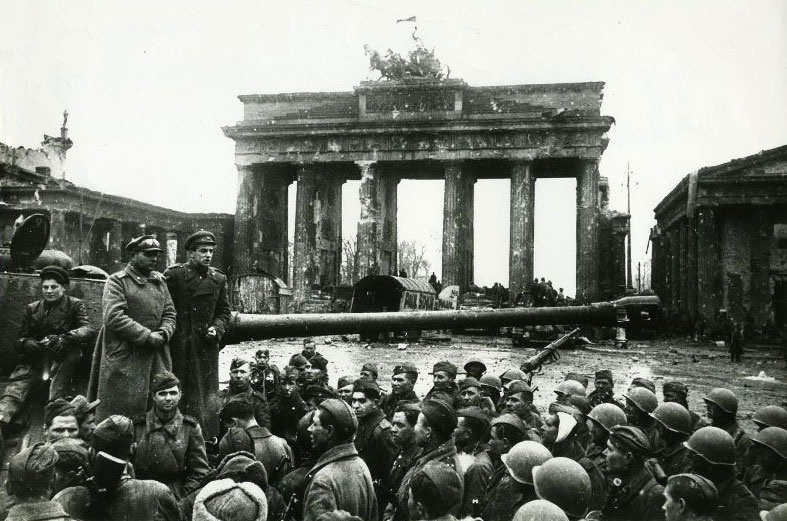
    Under command of Nazi Germany, the European fascist armies attacked Soviet Union on June 22, 1941. After initial successes of the invaders, the Red Army turned the tide in Stalingrad, where the German 6. Armee was wiped out on January 31, 1943. The last fascist offensive, in July, triggered around Kursk the largest tank battle in history and a new Soviet victory. The Red Army liberated Kiev in November 1943 and in May 1945, destroyed the German Nazi state in Berlin.

    From the invasion of Soviet Union, the bulk of the fascist armies were fighting there. Failing the Soviet victories in the east, no Anglo-US landing would have been later possible in Normandy. The Red Army achieved 80% of all German military losses during WW2

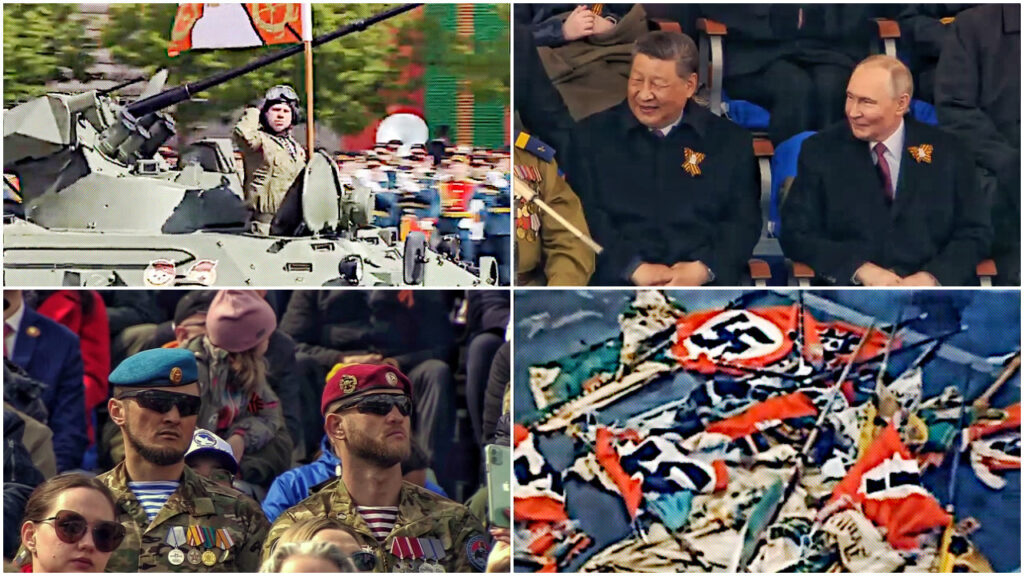
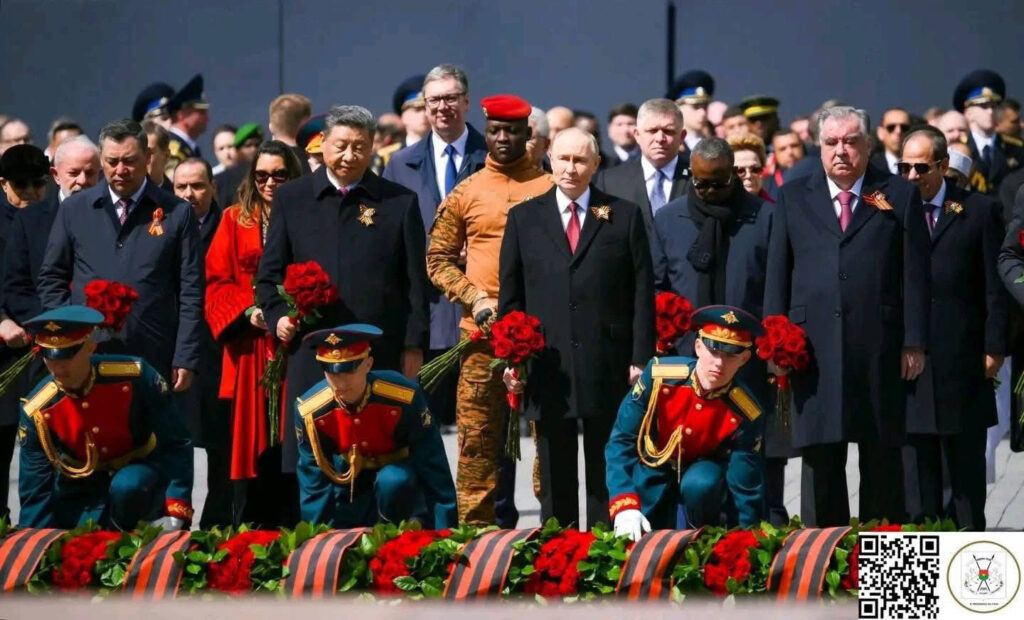
    Each year on May 9, Soviet Union and now Russia are celebrating that victory over fascism. 2025 is its 80th anniversary. Despite the pettiness of the European Union and its Baltic states, 29 foreign leaders attend the ceremony, notably from Brazil, Burkina Faso, China, Cuba, Egypt, Serbia, Slovakia, Venezuela and Vietnam. Several foreign detachments parade alongside the Russian army, notably from China, Egypt and Vietnam

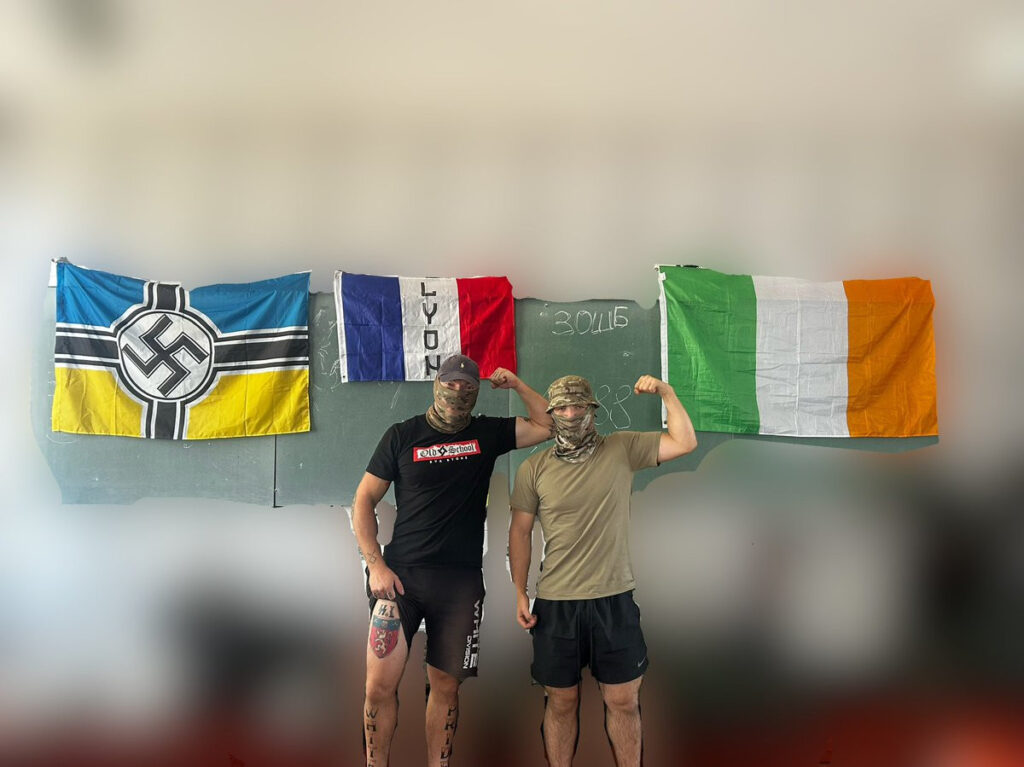
    The apparent reason for the European bad mood is the war in Donbass and Ukraine, that the hypocrites have pretended to discover in 2022, when the Russian Special Military Operation was the result of the Western shenanigans since 2014 in Ukraine and Donbass, to trigger a proxy war against Russia. Nazi paramilitary formations are fighting again in the Atlanticist ranks and Russia is once more winning

    That impeding victory and the guests at the celebration of the previous one in 1945 are illustrating a changing world. The imperialism is losing and the Western hegemony comes to its end. And that is the actual reason for the anger of the European Union.

    Related

    Nazism in eastern Europe

    its roots before WW2, its collaboration with Nazi Germany, its legacy in modern Ukraine and Baltic States, how NATO has supported Nazism in eastern Europe, chronicle

    The Atlanticist defeat in Donbass and Ukraine

    chronicle of a new catastrophic NATO venture

    The Western disinformation about Ukraine

    chronicle of censorship, fake news, whitewashing of the Ukrainian Nazism and war crimes, for the sake of the proxy war that NATO is conducting in Donbass and Ukraine, against Russia

    The footprint of the Ukrainian Nazism in the West

    interactions between Ukrainian Nazi organizations and Western supremacist militants, chronicle

    May 9, 2025: Victory Day – Sputnik

  • [Sharing] The Syria Tragedy and the New Omni-War – Pepe Escobar, Sputnik

    Until recently, a serious geopolitical working hypothesis was that West Asia and Ukraine were two vectors of the standard Hegemon modus operandi, which is to incite and unleash Forever Wars. Now both wars are united in an Omni-War

    A coalition of Straussian neo-cons in the US, hardcore revisionist Zionists in Tel Aviv and Ukrainian neo-nazi shades of grey is now betting on a Final Confrontation – with several overtones ranging from expanding lebensraum to provoking the Apocalypse.

    What stands in their way is essentially two of the top BRICS: Russia and Iran.

    China, self-protected by their collective lofty dream of “community of a shared future for mankind”, warily watches on the sidelines, as they know that at the end of the road, the true “existential” war by the Hegemon will be against them.

    Meanwhile, Russia and Iran need to mobilize for Totalen Krieg. Because that’s what the enemy is launching.

    Undermining BRICS and the INSTC

    The total destabilisation of Syria, with heavy CIA-MI6 input, now proceeding in real time, is a carefully engineered gambit to undermine BRICS and beyond.

    It proceeds in parallel to Pashinyan removing Armenia from the CSTO – based on a US promise to support Yerevan in a possible new clash with Baku; India being encouraged to ramp up a weapons race with Pakistan; and across-the-board intimidation of Iran.

    So this is also a war to destabilize the International North South Transportation Corridor (INSTC), of which the three major protagonists are BRICS members Russia, Iran and India.

    As it stands, the INSTC is totally geopolitical risk-free. As a top BRICS corridor-in-the-making, it carries the potential to become even more effective than several of China’s cross-Heartland corridors of the Belt and Road Initiative (BRI).

    The INSTC would be a key lifeline for a great deal of the global economy in case of a direct confrontation between the US/Israel combo and Iran – with the possible shutdown of the Strait of Hormuz leading to the collapse of a multi-quadrillion pile of financial derivatives, economically imploding the collective West.

    Turkiye under Erdogan, as usual, is playing a double game. Rhetorically, Ankara stands by a genocide-free and sovereign Palestine. In practice, the Turkiye supports and funds a motley crew of Greater Idlibistan jihadis – trained by Ukrainian Neo-nazis in drone warfare and with weapons financed by Qatar – who have just marched on and conquered Aleppo, Hama, and possibly beyond.

    If this army of mercenaries were real followers of Islam, they would be marching in defense of Palestine.

    At the same time, the real picture inside the corridors of power in Tehran is extremely murky. There are factions favoring getting closer to the West, which clearly would have ramifications for the Axis of Resistance’s ability to fight Tel Aviv.

    On Lebanon, Syria never wavered. History explains why: from the point of view of Damascus, Lebanon historically remains a governorate, so Damascus is responsible for the security of Beirut.

    And that’s one of Tel Aviv’s key motives to propel the current Salafi-jihadi offensive on Syria – after smashing virtually every communication corridor between Syria and Lebanon. What Tel Aviv could not accomplish on the ground – a victory over Hezbollah in southern Lebanon – has been replaced by isolating Hezbollah from the Axis of Resistance.

    When in Doubt, Re-Read Xenophon

    Wars in West Asia are a complex mix of national, sectarian, tribal and religious vectors. In a sense, they are endless wars; controllable to an extent, but then back again.

    The Russian strategy in Syria seemed to be very precise. As it was impossible to normalize a completely fragmented nation, Moscow opted to free the Syria that really matters – the capital, the most important cities, and the Eastern Mediterranean coast – from the Salafi-jihadi mobs.

    The problem is that freezing the war in 2020, with direct implication by Russia, Iran and (reluctantly) Turkiye, did not solve the “moderate rebel” problem. Now they’re back – in full force, supported by a vast Rent-a-Jihadi mob, with NATOstan Intel behind them.

    Some things never change.

    2012. Jake Sullivan, then an aide to Hillary Clinton: “AQ [al-Qaeda*] is on our side in Syria.”

    2021. James Jeffrey, special envoy to Syria under Trump (2018-2020): “HTS [Hayat Tahrir al-Sham*] is an asset to the US’s strategy in Idlib.”

    There could not be better timing for the revival of the HTS “asset”. HTS if filling an enormous void; beware when that happens in West Asia. Russia is fully concentrated on Ukraine. Hezbollah suffered heavily from Tel Aviv’s bombings and serial killing. Tehran is fully concentrated on how to deal with Trump 2.0.

    History always teaches us. Syria is now a West Asian Anabasis. Xenophon – a soldier and writer – tell us how, in the 4th century B.C., an “expedition” (“anabasis”, in Ancient Greek) of 10,000 Greek mercenaries were engaged by Cyrus the Younger against his brother Artaxerxes II, King of Persia, from Armenia to the Black Sea. The expedition miserably failed – and the painful return journey was endless.

    2,400 years later, we see governments, armies and mercenaries still plunging into the endless West Asia wars – and extracting themselves now is even more insoluble.

    Syria now is tired, attritted, with the SAA becoming complacent with the long freeze of the war since 2020. All that coupled with the vicious starvation siege unleashed by the US Caesar Act, and the impossibility to start rebuilding the nation with the help of at least 8 million citizens who fled the endless war.

    Over these past 4 years, problems piled up. There were endless breaches of the Astana process and Israel bombed Syria almost daily with impunity.

    China was basically immobile. Beijing simply did not invest in the rebuilding of Syria.

    Perspective is sobering. Even Russia – which is a de facto Resistance icon in itself, even if not formally part of the West Asian Axis of Resistance – has taken nearly three years of hard slog in its fight with Ukraine.

    Only a cohesive, consolidated Axis of Resistance – after getting rid of countless 5thcolumnists working inside – would have a chance against being picked off one by one by the same consolidated enemy, over and over again.

    Sometimes it feels like the BRICS – particularly China – haven’t learned anything from Bandung in 1955, and how the Non-Alignment Movement (NAM) was neutralized.

    You can’t beat a pitiless hegemonic hydra with flower power.

    * terrorist organizations banned in Russia and many other countries [end]

    The original article

    Related

    December 4, 2024: Türkiye’s mistakes may cost it dearly in Africa – Mikhail Gamandiy-Egorov, New Eastern Outlook

    The ambiguity of Ankara’s policy may eventually play a cruel joke on it, despite its growing ambitions in various parts of the world. No matter how confident Türkiye is in its ability to sit on two chairs simultaneously, at some point it will have to choose, risking to lose everything

    November 28, 2024: Al’Asad ‘iilaa al’abad

    Give Assad eternal life

    June 12, 2024: The summer of living dangerously – Pepe Escobar, Strategic Culture Foundation

    The plutocracy believes that afterwards they can buy the whole thing for a pittance while flies are still laying eggs in European carcasses

    October 1, 2024: Kill this beast

    for Palestine, for Lebanon, for Syria, for the world, justice, peace and harmony

    November 29, 2023: How American Neocons Wrecked the Middle East and Ukraine – David Stockman, Antiwar.com

    This is part 2 of “Why There Is Still No Peace on Earth: Washington’s Folly From The Persian Gulf to Ukraine.”  Read part 1

    January 7, 2023: Freedom fighters are defending Ukraine

    Jihadists in Ukraine, that is for democracy

    November 13, 2022: America’s Neo-Nazi bedfellows in Ukraine are latest in long line of odious allies Washington has used against Russia – Tony Cox, Russia Today

    From pogrom-mongers to Hitlerites to radical Islamists, the US has collaborated with repugnant partners for more than a century

    November 13, 2022: The French debacle on November 13, 2015

    about the jihadist attacks in Paris, as a collateral damage of the Western support to the so-called Syrian revolution

    August 2, 2022: Gone with the wind

    45 years of Western collusion with evil, from Afghanistan to Ukraine

    November 13, 2020: The path to November 13, 2015

  • [Sharing] Leaks expose secret British military cell plotting to ‘keep Ukraine fighting’ – Kit Klarenberg, The Grayzone

    Leaked files show top UK military figures conspired to carry out the Kerch bridge bombing, covertly train “Gladio”-style stay-behind forces in Ukraine, and groom the British public for a drop in living standards caused by the proxy war against Russia

    Emails and internal documents reviewed by The Grayzone reveal details of a cabal of British military and intelligence veterans which plotted to escalate and prolong the Ukraine proxy war “at all costs.” Convened under the direction of the British Ministry of Defense in the immediate aftermath of Russia’s invasion of Ukraine in February 2022, the cell referred to itself as Project Alchemy. As British leadership sabotaged peace talks between Kiev and Moscow, the cell put forward an array of plans “to keep Ukraine fighting” by imposing “strategic dilemmas, costs and frictions upon Russia.”

    The leaks obtained by The Grayzone expose a hidden hand behind Britain’s policy in Ukraine, showing in unusually granular detail how it aimed to engineer a long, grinding war through covert operations that stretched the bounds of legality.

    Project Alchemy’s proposed schemes spanned every conceivable field of warfare, from cyber attacks to “discreet operations” to outright terrorism. The secret cell even put forward a plan to “aggressively pursue” and “dismantle” independent media outlets – including The Grayzone – through an aggressive campaign of legal harassment and online censorship, so they “would be forced to close.” The incendiary blueprints were fed to the highest levels of the British state and national security structure, where they were apparently well-received.

    Founded by a senior British Ministry of Defence official, Project Alchemy is composed of veteran military and intelligence operatives united by a desire for all-out war between the West and Russia. Some have trained Ukrainian forces in clandestine sabotage tactics. 

    Members of the national security cabal tacitly acknowledged that their proposed operations stretched the bounds of British law. Thus they suggested that London should be “prepared to creatively use the law” to meet its goals, and even be willing to erase “legal restrictions on UK deniable ops” against Russia. 

    Some of Project Alchemy’s most extreme recommendations have already been implemented, often with calamitous results. These include the cell’s proposal to strike Crimea’s Kerch Bridge, which prompted a Russian escalation that saw punishing attacks on Ukraine’s electricity infrastructure. Alchemy also envisioned the construction of a secret, Gladio-style army of Ukrainian partisan fighters to carry out assassination, sabotage, and terror missions behind enemy lines. 

    It appears the British premier, Keir Starmer, fell under the influence of the Project Alchemy cabal soon after his election in July, when he eagerly embraced the role of “wartime prime minister.” After pledging to support Ukraine “as long as it takes,” however, Starmer is quietly backing away from the maximalist policy. In Kiev, Ukrainians are left to ponder how their “friends” in London got them into this mess, and why they can not, or will not get them out of it.

    The British spooks who gathered around Project Alchemy reasoned that the longer the proxy war continued, the more Russian president Vladimir Putin’s “credibility at home and abroad drops, and his ability to fight NATO is degraded.” Today, Project Alchemy’s gambit has clearly backfired, as Putin remains popular within Russia, while a crumbling Ukrainian army loses territory by the day despite constant re-arming by the West. But the war planners in London remain staunchly committed to escalation, refusing to shelve their diabolical proposals.

    Britain takes ‘unilateral lead’ on ‘regime change’ in Russia

    Project Alchemy was founded on the personal orders of Lt. General Charlie Stickland, who is charged with “planning, executing and integrating UK led joint and multinational overseas military operations” as the head of Britain’s Permanent Joint Headquarters. Stickland boasts in leaked communications that his family “come from a long line of pirates and buccaneers.” In his email signature, the general identifies himself as an “LGBTQ+ Advocate” in rainbow-colored text.

    Stickland and his assistant, Maj. Ed Harris, did not answer The Grayzone’s calls to their personal phones, nor did they respond to detailed questions submitted to them through WhatsApp

    Stickland convened the first meeting of Project Alchemy’s on February 26, 2022, just days after Russian troops made their initial foray into Ukraine. According to minutes of the gathering, “an assortment of leading academics, authors, strategists, planners, pollsters, comms, data scientists and tech” was on hand to produce a “grand strategy options paper.” 

    The paper consisted of a series of proposals for the British government to “defeat Putin in Ukraine and set the conditions for the reshaping of an open international order of the future.” Throughout the document, the need to “keep Ukraine fighting” was described as London’s “main effort” in the conflict.

    In an email to British military apparatchiks dated March 3 2022, Stickland described Alchemy’s paper as the result of “some mischief I’ve been up to” with “a group of ‘sideways thinkers.’” He expressed satisfaction that “this has been seen by all sorts of people,” including senior British government and military officials, “and landed well”

    An Excel document listing potential and confirmed recruits for the effort, authored by project chief Dom Morris, names a number of individuals from the private sector and academia alongside high-ranking army officials. Currently a fellow at King’s College’s “Centre for Grand Strategy,” Morris was listed in the document as a “civilian leader.” The role of “military leader” was to be carried out by Simon Scott, a brigadier in the British army who was appointed O.B.E. in 2013 for his “gallant and distinguished services” in Afghanistan

    Information operations were to be headed by a still-to-be determined member of Britain’s 77th Psychological Operations Brigade. Also listed as a participant in information operations was longtime British psychological warfare operative Amil Khan, founder of the “counter-disinformation” analysis firm Valent Projects.

    In 2021, The Grayzone revealed how the then-Prince of Wales, King Charles, enlisted Khan’s Valent Projects to astroturf a pseudo-socialist YouTube influencer to attack skeptics of the government’s ham-fisted response to Covid. Previously, Khan participated in the UK Foreign Office’s program to foment regime change in Syria.

    Months after Alchemy put Khan forward as a member of its team, The Grayzone exposed him for plotting with celebrity-left journalist Paul Mason to destroy this publication. One leaked email showed Khan proposing a “full nuclear legal [attack] to squeeze [The Grayzone] financially.” The newly-uncovered documents indicate the decision to assail The Grayzone was met with approval from the highest ranks of the British government.

    ‘Ukraine’s Next Chapter – Elders Grand Strategy Options Paper’

    Within Project Alchemy’s covert war room, the obsession with a long war quickly took hold. Members of the cell took their cues from a policy paper Stickland attributed to “The Elders,” which he described as “a group of Fusion players,” referring to the strata of academics and defense industry figures with strong ties to the British military.

    An Alchemy document composed under Stickland’s watch and titled, “Ukraine’s Next Chapter – Elders Grand Strategy Options Paper,” suggests that members of the cabal had convinced themselves a “palace coup” inside the Kremlin was inevitable. So long as Russia struggled inside Ukraine, they believed, British intelligence would be granted “the opportunity to challenge” Moscow’s ever-growing “stature as a competent international actor” on the world stage. 

    “A long war against a small state makes [Putin] look a fool,” the Alchemy paper asserted. “He is obsessed by the end of Ghaddafi – he will want to avoid that… Pressure will pile on from oligarchs as a long war drags on – he will not want to give them excuses to threaten his authority.” The group reasoned that “a long war will affect [Putin’s] international credibility,” as “a failure to quickly defeat Ukraine will seriously… reduce his credibility with new rich friends in Belarus, Hungary, China, India, Middle East, Brazil etc.

    “Most importantly,” protracted Russian involvement in Ukraine “will embolden NATO,” Alchemy argued. Convinced that Putin would fail in the eastern Donbas region, triggering a collapse of his government, Project Alchemy members openly fantasized about absorbing Russia into the Western-dominated financial order afterwards under the guise of a “Post Putin Marshall Plan.” Of particular interest was London’s “re-engagement” with Moscow “in global energy and commodity markets,” a seeming reference to the West’s desire for cheap Russian gas and wheat. 

    “Discreet operations”: reviving ‘Operation Gladio’ terror ops in Ukraine

    To accomplish the balkanization of Russia, Project Alchemy’s plotters took inspiration from Operation Gladio, a CIA and NATO-orchestrated covert operation that saw fascist paramilitaries carry out false flag terrorist attacks across Western Europe after World War II in a bid to prevent communism from taking root.

    A section detailing potential “discreet operations” in Alchemy’s strategy paper, which stressed the “need to intervene in every way except ‘official,’” explicitly recommended “Stay-behind Gladio handbooks/ Partisan Pamphlets” which would be “updated for Information Age” 

    Another move Alchemy proposed was to deploy Britain’s “strong” private military [PMC] industry “to out Wagner, Wagner.” In other words, the group aimed to establish a British rival to the Russian mercenary force founded by the now-deceased commander Yevgeny Prigozhin. This objective required the formulation of “a new doctrine, operating concept, and legal framework, for effectively integrating the activities of PMCs and other [non-military] actors.” Under these guidelines, British mercenary firms capable of using “sophisticated weaponry like SAMS, cyber, combat air, drones” would be employed to “operate and train and accompany Ukraine formations.” 

    These operations were all intended to ultimately be “sponsored and commanded” by the UK government, “using discreet cover” to avoid triggering NATO’s Article 5. 

    Following the production of their grand strategy paper, Stickland invited his team of “sideways thinkers” at Project Alchemy to submit further proposals for Gladio-style operations. Among the pitches that arrived was a “mission” to “disable the Kerch Bridge in a way that is audacious, and disrupts road and rail access to Crimea and maritime access to the Sea of Azov.” The blueprints of this highly provocative plot were exposed by The Grayzone in October 2022, in the immediate aftermath of the truck bomb attack that crippled the Kerch Bridge. 

    Alchemy’s team also produced a PowerPoint presentation entitled, “Training a Ukrainian Commando Force to restore Maritime Sovereignty – Elders,” outlining plans to construct a 1,000-strong Ukrainian commando force “trained in Britain by military veterans equipped with British equipment” to “degrade the Russian Navy and open another flank in the fight for Kherson and the south of Ukraine”

    Alchemy’s team had been working on the plan for at least three months by the time of the presentation’s submission. “Ukrainians abroad and volunteers inside Ukraine” had already been recruited, in advance of 12 weeks basic training “in the use of all troop weapons including mortars, anti-tank missiles, sniper craft, cliff assault, small craft training, demolitions,” the proposal stated

    The plan called for formally integrating the commandos into the Ukrainian Navy. Alchemy boasted that the prospective force “will be a force multiplier and highly mobile,” while Russia’s “outdated doctrine will struggle with a highly motivated and well-equipped naval force conducting hit and run operations and targeting Crimea.”

    Moreover, “individuals who are fluent Russian speakers and deemed suitable for covert undercover operations,” including “female operators,” would be “inserted into southern occupied Ukraine and Crimea for intelligence gathering and sabotage of key infrastructure targets.” They would be trained by MI6 officers. For this, Alchemy asked the British government for a total of £73.5 million. “The program is at a high state of readiness. We are ready to go,” the presentation forcefully declared. 

    The enormous sum was to be paid to Elders Services Ltd that was founded by Alchemy members and registered to an address just 15 miles from Fort Monckton, which was described by former MI6 officer Richard Tomlinson as “the SIS’s field operations training centre.” It is unknown how much money, if any, the firm received from the British government for resuscitating Operation Gladio in Ukraine. Elders Services Ltd shuttered in March 2023 after less than a year of operation, without filing financial accounts.

    British spies call for ‘action’ against The Grayzone

    Behind the Project Alchemy team’s bravado was a sense that Western hegemony was crumbling on the icy borderlands separating Ukraine from Russia. Referring to the rising BRICS alliance, which gathered in Kazan, Russia this October to challenge the US-dominated financial order, Alchemy planners urged British leadership to “prepare for SWIFT II,” as SWIFT was “going to be destroyed” by the West’s anti-Russia sanctions, “slowly, but inevitably.” 

    According to Alchemy’s analysts, countries across the globe would naturally “see the need for a non-US alternative” means of safely parking their cash and trading. In a rare show of political sobriety, the British spooks predicted that sanctions on Russia combined with the Ukraine proxy war would impose higher prices on consumer goods and “hit British voters in the pocket.”

    This posed “a threat to public support” for the British government’s “hard line” on Ukraine, they warned. “Domestic UK public opinion” would understandably get “fed up” paying more for everyday goods, meaning “pressure grows for a compromise.”

    To prepare the British public for the coming storm, Project Alchemy’s plotters proposed what they blandly described as “information operations,” but which could be more accurately described as a blend of domestic state propaganda and malign attacks on disruptive media outlets.

    The task they outlined not only included “[dismantling] Russian disinformation infrastructure” by pressuring social media to ban RT and Sputnik, but also targeting critical independent media like The Grayzone.

    “A number of actions can be undertaken against these outlets. The most obvious is legal since the content of these media outriders is frequently in contravention of media law in the UK, US and EU,” Alchemy insisted. 

    “Aggrieved parties currently tend to ignore libel/defamation by these outlets. Were they to aggressively pursue these outlets, it is likely they would be forced to close.”

    The Grayzone, it was claimed, had thus far “managed to obscure” its funding – a suggestion that this outlet is covertly funded by Russia or some other enemy state, which is completely false. The paranoid fantasies of British intelligence may explain why this journalist was quizzed on the subject by British counter-terror police when they detained and interrogated him at Luton International Airport in May 2023

    Alchemy plotters seek to place Britain at lead of war with Russia

    In addition to playing a leading role in media manipulation, Alchemy sought to place Britain at the forefront of the International Criminal Court’s agenda to investigate and prosecute the Russian government for alleged war crimes in Ukraine. 

    Alchemy suggested London “set international conditions, collection mechanisms and funding for collection of data and evidence” in the proxy conflict, and “provide all possible support, including intelligence” to the ICC “in its efforts to investigate war crimes,” just as British spies did for the International Criminal Tribunal for the Former Yugoslavia (ICTY). 

    Though not named in the document, high-profile British lawyers, including celebrity Amal Clooney, have since emerged at the forefront of efforts to prosecute Russian officials for war crimes, and establish an ICTY analog. As The Grayzone’s Max Blumenthal reported, Britain played a critical role in the appointment of Amal Clooney’s mentor, Karim Khan, as ICC prosecutor. 

    Project Alchemy’s provocative proposals appear to have reached the desk of PM Keir Starmer in some form. At NATO’s 75th anniversary summit, Starmer issued his full-throated endorsement of deep strikes by the Ukrainian military into Russia. Echoing the aggressive language found in Alchemy documents, he pledged to “deliver £3 billion worth of support to Ukraine each year… for as long as it takes.” 

    But as the Ukrainian military’s offensive in Russia’s Kursk region falters, the Biden administration has distanced itself from the calls for striking into the Russian heartland. Fortunately for British leaders hellbent on taking the fight to Moscow, Project Alchemy has ensured that a platter of off-the-books options remains handy.

    As Alchemy noted in its grand strategy paper, “The UK seeks always to act multilaterally, but is prepared to take a unilateral lead where achieving multilateral consensus might prove time-consuming or difficult.” Among the war’s covert sponsors, who were safely ensconced over 1,000 miles away from the front lines, it was firmly agreed: “we should attempt at all costs to keep Ukraine fighting” [end]

    The original article

    Related

    L’engagement français dans les rangs ukrainiens

    in French, alphabetical obituary chronicle of French involvement in the Atlanticist ranks in Ukraine, what servile journalists will not tell you.

    Especially, where a French-speaking mercenary in Ukraine, Olivier Lecourt, founder from Lviv of a cyber warfare team against Russia, entrusted in October

    My employers are Ukrainian and English.
    My job: to bring down the Kremlin’s collaborators and criminals

    October 8, 2022: Ukrainian attack against Crimea bridge

    August 16, 2022: SAS in Crimea

  • [Sharing] Putin Outlines The ‘Moment of Truth’ – Pepe Escobar, Sputnik

    President Putin’s plenary session performance (address + Q&A) at the annual Valdai Club meeting in Sochi felt like a high-speed train on cruise control

    Totally cool, calm, comfortable, in full command of a Himalaya of facts, no political leader anywhere – recent past and present – would even come close to delivering what amounts to an extensive, detailed world view deeply matured over a quarter of a century at the highest geopolitical level.

    Putin began his address referring to the October 1917 revolution, drawing a direct parallel with our turbulent times: “The moment of truth is coming”. In a clear tribute to Gramsci, he stated how a “completely new world order” is “being formed before our eyes.”

    The subtle reference to the recent BRICS summit in Kazan could not possibly escape critical minds across the Global Majority. Kazan was a living, breathing testimony that “the old order is irrevocably disappearing, one might say, has already disappeared, and a serious, irreconcilable struggle is unfolding for the formation of a new one. Irreconcilable, first of all, because this is not even a fight for power or geopolitical influence, this is a clash of the very principles on which relations between countries and peoples will be built at the next historical stage.”

    As concisely as possible, that should be taken as the current Big Picture framework: we are not mired inside a reductionist clash of civilizations or the “end of History” – which Putin defined as “myopic” – but facing a make-or-break systemic clash of fundamental principles. The result will define this century – arguably the Eurasia Century, as “the dialectics of History continues.”

    Putin himself quipped that he would drive into “philosophical asides” during his address. In fact that went much further than a mere refutation of unilateral conceptual fallacies, as “the Western elites thought that their monopoly is the final stop for humanity” and “modern neoliberalism degenerated into a totalitarian ideology.”

    Referring to AI, he asked rhetorically, “will human remain human?” He praised the building of a new global architecture, moving towards a “polyphonic” and “polycentric” world where “maximum representation” is paramount and the BRICS are “coming up with a coordinated approach” based on “sovereign equality.”

    Six Principles For Global Sustainable Development

    Sovereignty had to be one of the predominant themes during the Valdai Q&A. Putin was adamant that Russia must “develop our own sovereign AI. As algorithms are biased and give massive power to a few big companies that control the internet, the need is imperative for “sovereign algorithms.”

    Answering a question on Eurasian security and the US as the dominant maritime power v. a multipolar Eurasia, he stressed the “consensus and desire in Eurasia for an anti-hegemonic movement”, and not for Eurasia constituted “as a bloc”. That’s the appeal of Eurasia’s “multi-vector foreign policy”, implying “more political independence”. The key example of “harmonizing interests”, Putin stressed, is the Russia-China partnership, and that was also what “made BRICS successful.”

    Compare it in contrast to “the inability in Europe to establish a system of “indivisibility of security” and to “overcome bloc politics”; Europe instead went for NATO expansion: “After the end of the Cold War there was an opportunity to overcome bloc politics. But the US had fear of losing Europe. The US installed almost a colonial dependence. Honestly I did not expect that.”

    Putin introduced a fascinating personal experience tidbit referring to a conversation – in German – with former German chancellor Helmut Kohl in 1993, when Kohl said flat out that “the future of Europe” is linked to Russia.

    Yet that ended up leading to “the most important problem on our Eurasian continent, the main problem between Russia and European countries: the trust deficit (…) When they tell us that ‘we signed the Minsk agreements on Ukraine only to give Ukraine an opportunity to rearm, and we had no intention of resolving this conflict peacefully,’ what kind of trust can we talk about? (…) You have directly publicly stated that you have cheated us! Lied to us and deceived us! What kind of trust is that? But we need to get back to that system of mutual trust.”

    Putin then added that Europe should consider becoming part and parcel of a Chinese concept straight from Chinese philosophy (“they do not strive for domination”). With panache, he stressed that the Chinese uber-geoeconomic trade/connectivity project should be interpreted as One Belt, One Common Road.

    And that extrapolates to Central Asia, with all those nations “very young in their statehood” interested in “stable development”. For Russia-China, there’s “no competition” in the Heartland: “we only have cooperation.”

    Putin once again enumerated what he considers the 6 key principles for global sustainable development: openness of interaction (implying no “artificial barriers”); diversity (“a model of one country or a relatively small part of humanity should not be imposed as something universal”); maximum representativeness; security for all without exception; justice for all (erasing “the gap between the ‘golden billion’ and the rest of humanity); and equality.

    “Make Civilizations, Not War”

    On Ukraine, this was the money quote: “If there is no neutrality, then it’s difficult to imagine any kind of good neighborly relations between Russia and Ukraine.” In a nutshell: Moscow is ready for negotiations, but based on facts on the battlefield and what was agreed upon in Istanbul in April 2022.

    That may be interpreted as a direct message to President Trump. To whom the door is open: “Russia has not damaged its relations with the US and is open to their restoration, but the ball is in the Americans’ court.”

    Putin on US Presidents (he met quite a few): “All of them are interesting people.” On Trump: “His behavior when there was an attempt on his life, I was impressed. He is a courageous person. He acquitted himself valiantly.” On the open door: “Whatever he does it’s up to him to decide.” Then Putin offered his own congratulations for the re-election – on the record. The dialogue may be on: “We are willing to talk to Trump.”

    Putin extolled Russia-China relations as part of their strategic partnership as being “at the highest level in modern history.” He also praised his own personal relation with Xi Jinping. That paved the way for the real killer, when it comes to US-Russia-China: “If the US had chosen a trilateral cooperation instead of double constraint – everyone would win.”

    An excellent question by Brazilian economist Paulo Nogueira Batista Jr – a former vice-president of the NDB, the BRICS bank – led Putin to clarify his own position on de-dollarization. He stated flatly that “my role is to see ideas shaped that we then propose to our partners”.

    The key target is “proposing to create a new investment platform using electronic payments.” That will address the “most promising markets” in the near future – South Asia, Africa, parts of Latin America: “They will need investment, technologies.” And “tools independent from inflation” – with regulation “through Central Banks and the NDB. We agreed to have a working group meeting regularly at government level. We are in no hurry.”

    So that puts to rest any scenario of an immediate BRICS financial bombshell – even as “two-thirds of our trade is being serviced in national currencies” and among BRICS the figures are also high.

    BRICS Bridge will be tested – soon. As for creating a single currency, that’s “premature. We need to achieve greater integration of economies, increase the quality of economies to a certain – compatible – level.”

    Then, the bombshell: “We never wanted to abandon the dollar!” That goes a long way to explain Putin’s own view on de-dollarization: “They are undoing it with their own hand – the power of the dollar.”

    All of the above is just a sample of the width and breath of themes addressed by the President during the Valdai Q&A. The forum itself offered precious nuggets all across the spectrum. Some participants – correctly – noted the absence of “the majority of the majority”: youth and women. Africans were impressed with “the sharp mind of Russian bureaucracy.”

    A Chinese view noted how “the Chinese don’t swim against the current; they cross the river and reach the other bank.” There was a near consensus that development should be “based in different cultural values of civilizations” – actually Putin’s own view. Also imperative is the “need for aggregate authority” among the Global South.

    A Greek insight was particularly powerful when it comes to the civilizational approach to politics: “Civilizations don’t clash. States do.” Thus the new – playful – motto that could guide not only BRICS but the whole Global Majority: “Make Civilizations, Not War.” [end]

    The original article

    Related

    November 7, 2024: How Trump could liberate Europe – Thomas Fazi, UnHerd

    His isolationism is an opportunity

    October 23, 2024: BRICS Summit in Kazan: The End of the U.S. Hegemony. Part 2 – Ricardo Martins, New Eastern Outlook

    The BRICS Summit in Kazan, Russia, aims to be a turning point towards a truly multipolar or multi-nodal world that has been in transition for a few years now

    June 12, 2024: The summer of living dangerously – Pepe Escobar, Strategic Culture Foundation

    The plutocracy believes that afterwards they can buy the whole thing for a pittance while flies are still laying eggs in European carcasses

    September 1, 2023: No respite for France as a ‘New Africa’ rises – Pepe Escobar, The Cradle

    Like dominos, African states are one by one falling outside the shackles of neocolonialism. Chad, Guinea, Mali, Burkina Faso, Niger, and now Gabon are saying ‘non’ to France’s longtime domination of African financial, political, economic, and security affairs

    July 30, 2023: Africa and a new world order – Stephen Sefton, Tortilla con Sal (Nicaragua)

    [the sense of history]

    June 8, 2023: The West Must Prepare for a Long Overdue Reckoning – Chandran Nair, The National Interest

    Five major trends illustrate how the world is changing, and that the West must grapple with the reality that it can no longer impose its “leadership” on the world as it once did

    March 20, 2023: Forging Ahead to Open a New Chapter of China-Russia Friendship, Cooperation and Common Development – Xi Jinping, RIA Novosti

    [Quote : no model of governance is universal, and no single country should dictate the international order]

  • [Sharing] BRICS Summit in Kazan: The End of the U.S. Hegemony. Part 2 – Ricardo Martins, New Eastern Outlook

    The BRICS Summit in Kazan, Russia, aims to be a turning point towards a truly multipolar or multi-nodal world that has been in transition for a few years now

    The changes announced in Kazan regarding the payment system and the reserves of nations are concrete steps towards independence from the U.S. imperialistic system. This system is symbolized by a small piece of green paper that no longer has real backing—just an empty promise.

    An Imperialistic Structure Does Not End in One Day

    The U.S. has managed to build an imperial structure based on more than 800 military bases around the world, the imposition of the dollar as the currency of international trade and reserve, the extraterritorial application of its laws, and by creating a network of vassal and semi-vassal states around its hegemony. Nonetheless, the core of its imperial system relies on the dollar. The de-dollarisation led by the BRICS is driving the U.S. to despair, making their sanctions system increasingly meaningless too.

    BRICS has taken on the responsibility of driving substantial change for a new world order

    No empire lasts forever, especially one that lacks a strategic vision, as is the case with the U.S. The American empire lost wars or promoted further chaos in Vietnam (1955-1975), Afghanistan (2002-2021), Iraq (2003-2011), Libya (2011) and did not win in Syria and has shown an inability to control its ally Israel, which continues to commit war crimes, uphold apartheid, engage in state terrorism, and carry out genocide. Moreover, the U.S. has been incapable of formulating its Middle East policy independently of Israel’s prism.

    On top of that, domestically, its infrastructure is crumbling, and its social indicators are rapidly approaching those of developing countries. The U.S. is the only major nation where life expectancy is declining, extreme poverty is increasing swiftly, and so is homelessness. Its citizens do not have universal, free access to healthcare, as happens in most developing countries, such as Latin America. All these issues highlight the fragility of the empire.

    The New Sick Man

    Once, during its decline, the Ottoman Empire was known as the “sick man of Europe.” Now, it seems the U.S. is playing this role, or perhaps it’s more like a drowning person: it pulls those who are close to it into its struggle and demands loyalty in this slow demise, particularly from European countries that have greatly benefited from its generous policies after WWII. In Latin America, the Monroe Doctrine is still very much in effect, which is why Brazil sometimes seems reluctant to commit fully to BRICS.

    Europeans, especially the Germans, have shown signs of wanting independence, and the idea of strategic autonomy has become wishful thinking. Former Chancellor Angela Merkel, who was economically liberal, listened to German business leaders who argued that the future lay not in the Atlantic, but Eastwards toward Russia and China.

    The U.S. did not like this shift and managed to make Europeans feel that they still needed Uncle Sam for their protection. Turning their backs on the U.S. was seen as an ungrateful response to American roles in WWII and the Marshall Plan.

    The U.S. meddled in Central Europe and Ukraine, expanding NATO eastwards. This move was highly discouraged by prominent American foreign policy strategists like Henry Kissinger, Robert Kagan, John Mearsheimer, and even William Burns, a former Ambassador to Russia and ex-CIA director. The coup orchestrated by the CIA and led locally by Victoria Nuland in 2013 in Ukraine was just the beginning, alongside the sabotage of Nord Stream by the U.S., all part of this complex game to make Europeans dependent on the U.S.

    BRICS Ignites Hopes of the Global South and the Discontented

    Once again, two blocks are forming, with some countries caught in the middle. The war in Ukraine and the Global South’s refusal to impose sanctions on Russia have highlighted the divisions in the world. The war in Gaza and the resulting genocide, supported by many Western nations while they preach values and human rights, has led the Global South to lose faith in the West’s moral standards. They have denounced its double standards and are nearly unanimously supporting the idea of a new world order.

    The expansion of BRICS, with over 40 nations waiting to join—including Serbia, Turkey, Indonesia, Malaysia, Thailand, Nigeria and Bolivia—clearly signals that change is expected.

    Some European nations are unhappy with the expected outcomes of remaining tied to the old regime– the EU tied to the U.S.- and wish to be part of a more dynamic and prosperous future. For instance, Spain has rejected imposing extra tariffs on Chinese electric vehicles, and Turkey wants to join BRICS too, as does Serbia, even if it means giving up potential EU memberships, along with many other nations.

    Bulgaria is also unhappy with its EU membership and is sending representatives to BRICS meetings. Moldova was divided over an EU membership referendum. The narrow victory of 0.2% was due to the votes of Moldovans living abroad. Still in Europe, Norway, not being subject to EU rules, has recently taken steps to strengthen economic ties with China, surprising many Atlanticists in Europe.

    Therefore, BRICS has taken on the responsibility of driving substantial change for a new world order. However, it is fair to say that BRICS nations have tried to reform the Bretton Woods institutions—especially the World Bank and the International Monetary Fund (IMF)—and the United Nations to better reflect the new economic, population, and trade realities, but they have not succeeded.

    New institutions are being built within BRICS, particularly the New Development Bank (NDB), which, unlike the IMF or World Bank, does not impose economic regime changes and has inclusive practices.

    In sum, there are several political and economic groups of nations around the world, but none has the political will or the capacity to promote major geoeconomic and geopolitical changes as BRICS does. Therefore, the 16th BRICS Summit in Kazan comes at the right time and with the right political will to build a better, more prosperous, inclusive, free, and less ideologically driven world. The next step should be the merger of the Shanghai Cooperation Organization (SCO) with BRICS [end]

    The original article

    Ricardo Martins ‒PhD in Sociology, specializing in policies, European and world politics and geopolitics, especially for the online magazine “New Eastern Outlook”

    Related

    July 31, 2023: Africa and a new world order – Stephen Sefton, Tortilla con Sal (Nicaragua)

    June 8, 2023: The West Must Prepare for a Long Overdue Reckoning – Chandran Nair, The National Interest

    Five major trends illustrate how the world is changing, and that the West must grapple with the reality that it can no longer impose its “leadership” on the world as it once did

  • [Sharing] The EU Is Willing to Go to War Over Lithium? – Phil Butler, New Eastern Outlook

    The riddle of unhinged EU support for the Zelensky regime in Kyiv is now solved. Anyone inclined can unravel why the Germans, in particular, backstabbed Russia in the Minsk peace boondoggle. Lithium.

    Energy Monitor’s parent company, GlobalData, recently released a report showing that Europe’s biggest lithium reserves lie in the Donbass region of Russia. The former Ukrainian Shevchenkivske field in the Donetsk region and the Kruta Balka block in the Zaporizhzhia region are now part of Russia. These reserves add tremendously to Russia’s humongous Lithium deposits (now 1.5M metric tons) and solidify the country’s top ten position globally. If we consider other BRICS nations’ reserves, including China (2M metric tons), EU industry is at a leverage point.

    What’s most significant about this is that the EU, and Germany in particular, desperately need the rare mineral to manufacture green energy technologies such as wind turbines, electric vehicles, and a wide variety of electronic devices. This text from the Critical Minerals Thematic Intelligence Report overview is telling:

    “Critical minerals are key to transitioning to a low-carbon world. There are over 70 countries globally that have set net-zero targets and pledged to lower their emissions. However, these widespread measures for a greener future are straining natural resources, especially the minerals required to produce energy transition technologies such as electric vehicles (EVs) and solar panels…”

    The report goes on to reveal how these rare minerals are monopolized by just a few regions and how supply chain problems affect their recovery and distribution. In short, if Europe does not procure more Lithium, the energy transition EU President Ursula von der Leyen toots her horn about every other day will either be delayed or made unfeasible because of demand shortages.

    While the United States, Australia, and a few Latin American countries hold the lion’s share of Lithium reserves, EU access to these supplies will be expensive. In addition, the U.S. and these emerging nations will surely use the biggest part of their reserves for domestic needs.

    The demand (need) for European Lithium supply is so intense, German CDU MP Roderich Kiesewetter came right out and admitted the Russia-Ukraine conflict is all about the 500,000 tons or more of the mineral under the ground of the Donbass region. Kiesewetter said, “The European Union supports Ukraine because of lithium deposits in the Donbass.” The politician also took note of the Donbass being part of Russia now, means Berlin’s dependence on Moscow.

    Kiesewetter, a retired colonel, is also suggesting that Germany provide Zelensky’s regime with the highly accurate Taurus cruise missiles, which have a 500km range. The Swedish/German air-launched missile carries a 1,100-pound warhead and is essentially a bunker-buster type weapon. The missiles would be far more useful for Zelensky’s remaining Nazi battalions than a few rusty old Leopard tanks. What the MP’s statements mean, however, is that Germany and the EU intend on taking Ukraine’s vast resources by force now. The Euromaidan Coup only got the Western elites’ feet in the door, and now the singular order has few options left since the failed Ukraine offensive.

    The EU commissars are in the process of slitting their own throats. Just the other day, the commission passed another round of sanctions aimed at Russia’s luxury diamond exports to the bloc. This will not affect the average EU citizen, but the upper-middle class and the wealthy will have to fork over more Euros to get pretty round diamonds. The Americans (or British) blowing up the gas pipelines, the potential for grain shortages in the EU, and other key minerals Russia and nations friendly to her export begin to take their toll on an already shaky confederation of member states.

    Consider what EU member states manufacture and export to elevate their GNP. In the lists here, you’ll click on two vital exports. Cars and/or refined petroleum are vital to every country. Cars are, by far, the biggest import and export commodities. So, when these autos finally go electric, just imagine how desperate EU industry and consumers will be for Lithium! The Europeans will flounder if forced to import quantities of this strategic mineral from distant sources that have their own batteries to make. If there is a WWIII over the Russia/Ukraine situation, I am sure we’ll be able to name it “The Great Lithium War.” [end]

    The original article

    Phil Butler, is a policy investigator and analyst, a political scientist and expert on Eastern Europe, he’s an author of the recent bestseller “Putin’s Praetorians” and other books. He writes exclusively for the online magazine “New Eastern Outlook”.

    related

    The Battle for Ukraine’s Titanium – David Brennan, Newsweek

    another motive for the crime